Cayuga Lake’s Daylilies: A Symbol of Survival and Adaptation

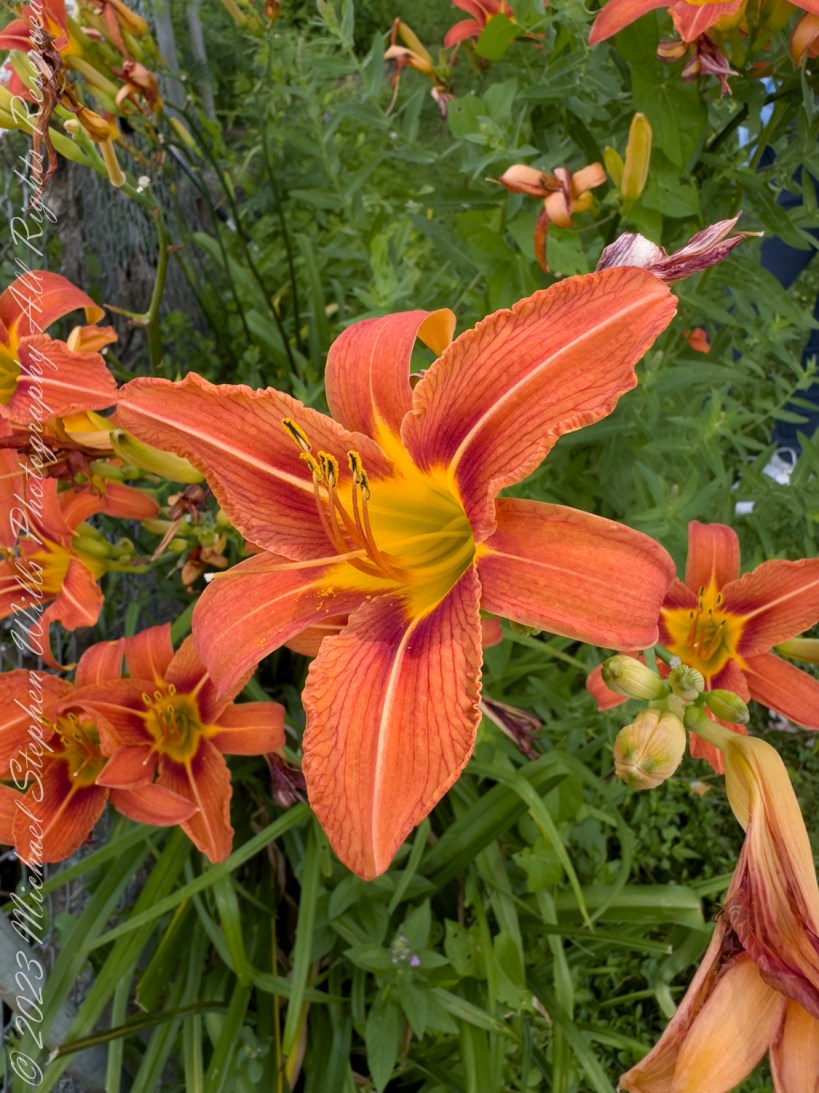
In Stewart Park, the Hemerocallis fulva, or Tawny Daylily, blooms vibrantly.


Stewart Park, Cayuga Lake, Ithaca, New York
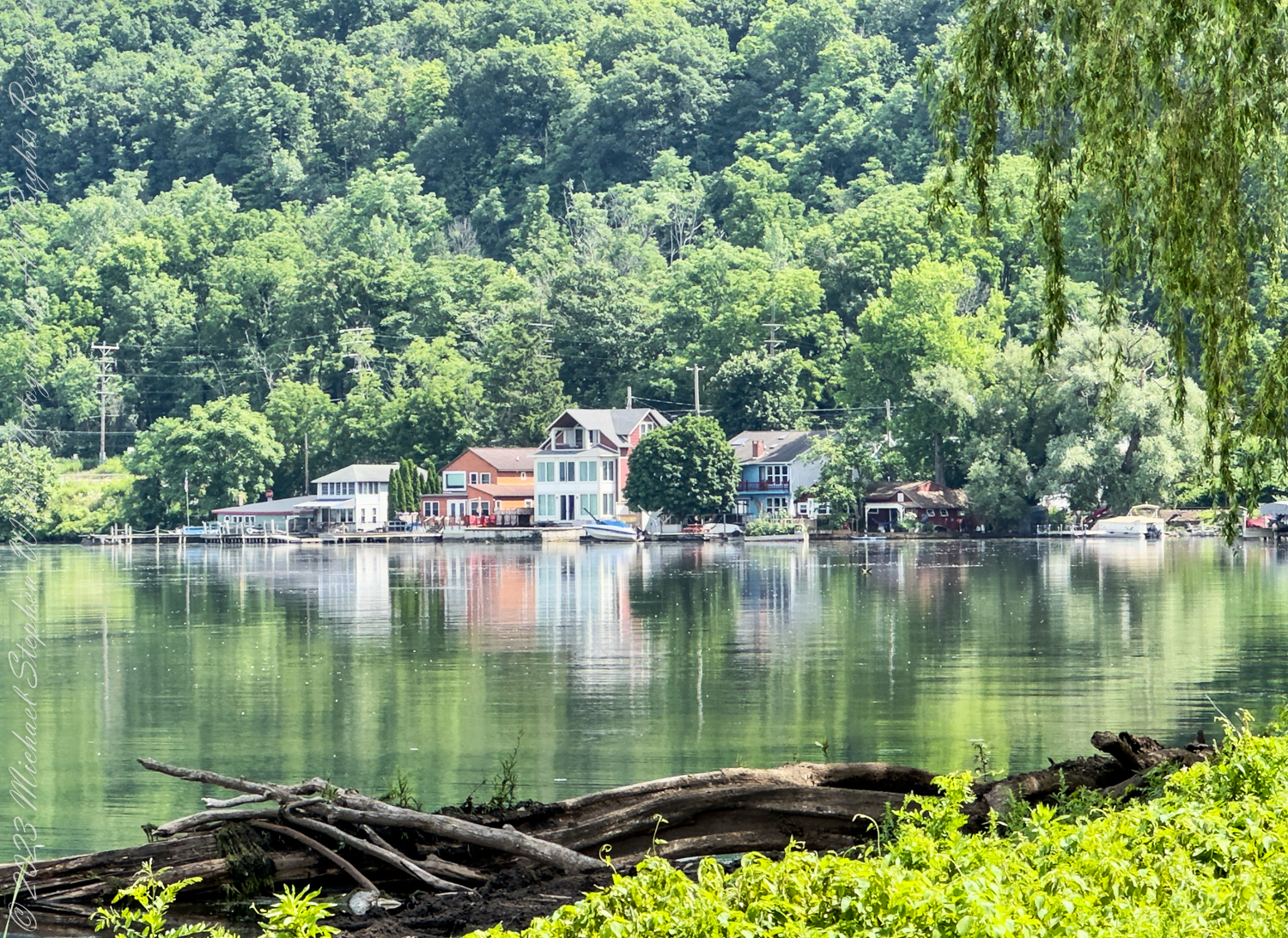
Seen from Stewart Park, these lakefront homes line the southern shore of Cayuga Lake. Tompkins County, Ithaca, New York State. The Finger Lakes Region

On a warm June morning, with the early summer sun casting a golden glow across the shores of Cayuga Lake, Pam and I set out for a walk around Stewart Park. The soft lapping of the water against the shore mixed with the calls of distant birds, and the familiar hum of life in the park settled into a rhythm that has long been a part of this place. As I strolled along a familiar path, a flash of orange caught my eye—the unmistakable brilliance of the Hemerocallis fulva, the Tawny Daylily, in full bloom.

A Glimpse of the Familiar


At first glance, the orange petals of the daylily seemed like small flames scattered across the green of the park, their brightness undimmed by the heat of the day. The sight was both familiar and captivating, for these daylilies are common in garden, parks and roadsides around Ithaca and much of New York State. Despite their prevalence, each encounter feels fresh, like meeting an old friend who always has something new to share.
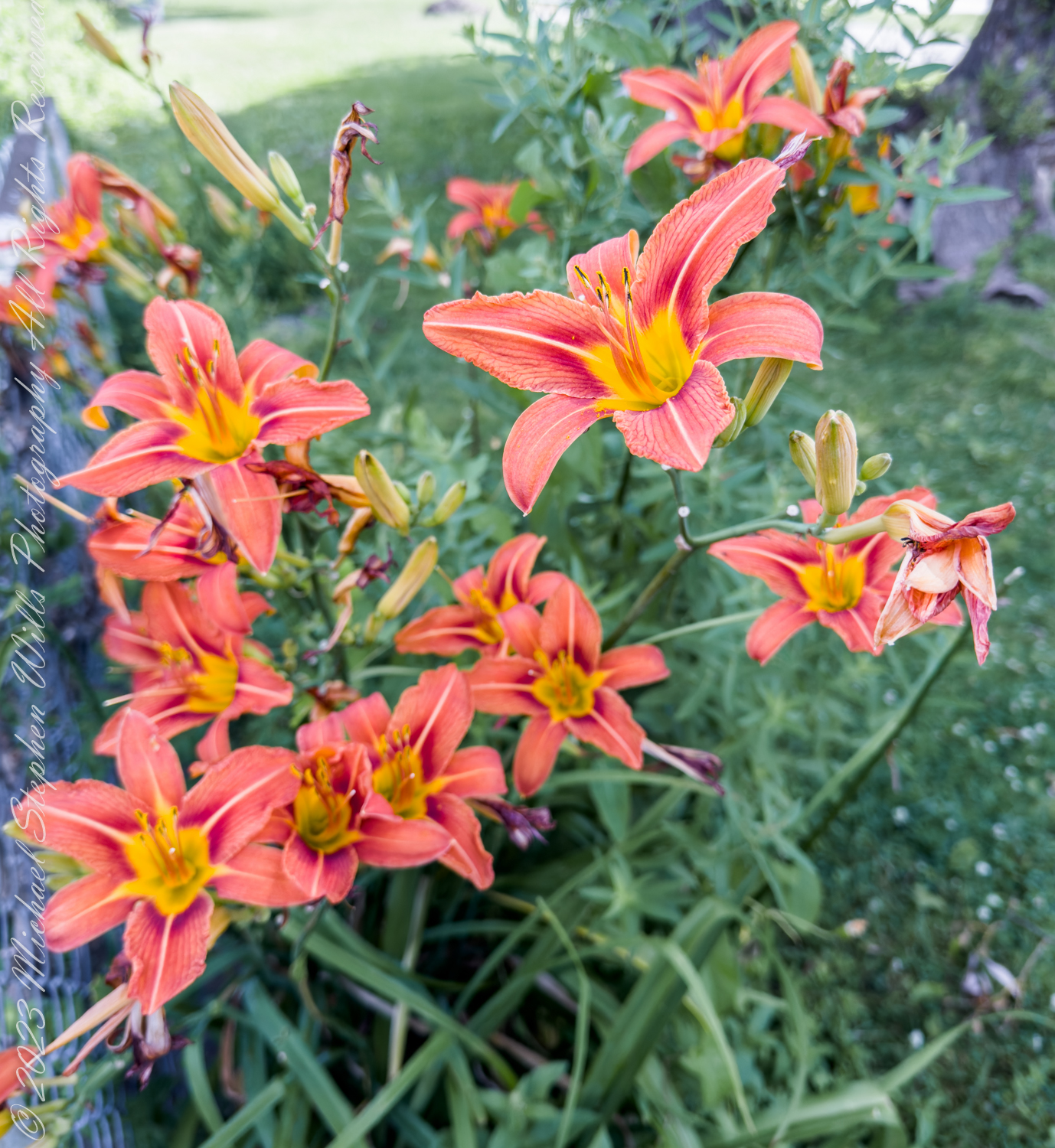
I knelt closer, letting my eyes follow the curve of the petals, which unfurled gracefully from a vibrant yellow throat. The delicate lines streaked down the petals like rays of sunlight. Though each flower lives only a day, I felt the quiet confidence of this plant, as though it knew its bloom was fleeting, yet still essential in the tapestry of summer.

The Resilience of a Traveler


The daylily’s ubiquity belies its status as a traveler from distant lands. Hemerocallis fulva is not native to New York, nor to any part of North America. It came to these shores from Asia, introduced by gardeners who admired its hardiness and vibrant color. Over time, the daylily escaped the bounds of cultivated gardens, spreading to roadsides, fields, and yes, even here, to the edges of Stewart Park.

I find myself reflecting on the journey of this plant, which began in the faraway lands of China, Korea, and Japan. In its homeland, daylilies have long been symbols of devotion and motherhood, their roots used in traditional medicine, their blooms celebrated in art. Now, as I stand in Stewart Park, I marvel at how far the Hemerocallis fulva has come, adapting to new lands and naturalizing in the wild corners of the American landscape.

The irony of its “wild” appearance does not escape me—this orange beauty, so deeply associated with our rural and parkland settings, is still very much an outsider. And yet, in the soft breeze of the morning, it feels as though this plant has always belonged here, as much a part of the park’s landscape as the willows by the lake or the ducks bobbing in the water.

Nature’s Balancing Act


As lovely as they are, daylilies are not without their complications. The very same traits that make Hemerocallis fulva such a beloved garden plant—its resilience, its ability to thrive in poor soil, and its spreading rhizomes—also make it an unintentional invader. Without careful tending, these plants can spread aggressively, pushing out native species and altering the ecological balance of the areas where they take root.
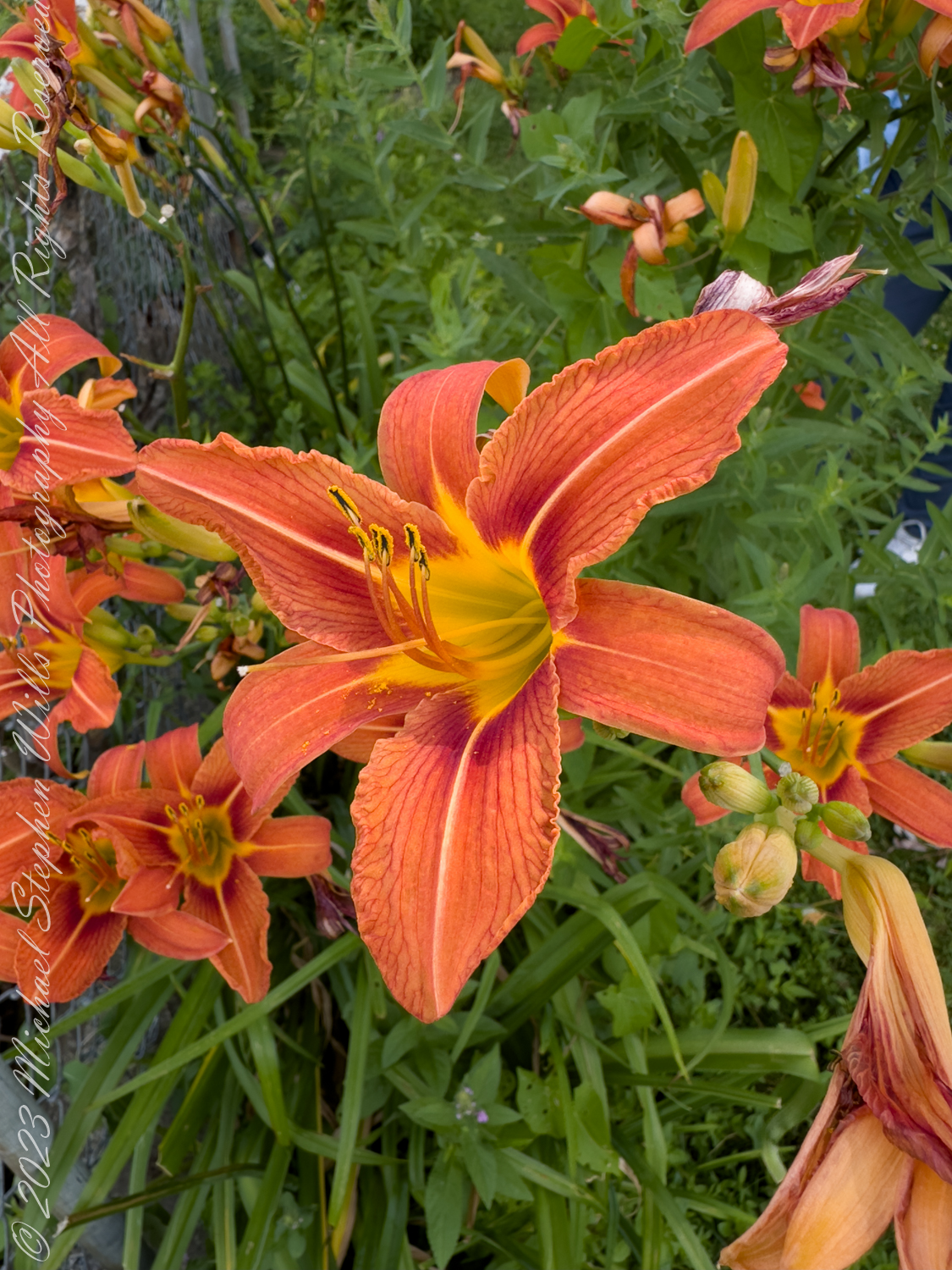
Here in Stewart Park, where cultivated gardens meet the untamed edges of the lake, the daylilies are a reminder of nature’s delicate balance. They offer nectar to bees and butterflies, providing sustenance to the creatures that flit through the morning air and also represent challenge to the native wildflowers that have long called this place home.

I wonder what plants might have once thrived in this very spot before the Hemerocallis fulva arrived. Perhaps native species, like the delicate Asclepias tuberosa—Butterfly Weed—or the sturdy Rudbeckia hirta, the Black-eyed Susan, held court here, their blooms attracting the same bees now drawn to the daylilies.

The Fleeting Bloom


Despite its role as a naturalized non-native, the daylily has a fleeting grace that draws me in. By tomorrow, these orange blooms will have withered and fallen, replaced by new blossoms that will unfurl in their place. Each bloom’s brief life is a reminder of the ephemerality of beauty, and I find myself appreciating the daylily all the more for its transient nature.

We continue our walk, leaving behind the patch of daylilies but taking with me a sense of quiet reflection. As invasive as they may be, these plants offer a meditation on the impermanence of life and the ways in which non-native species can become a part of the landscape’s fabric, for better or worse. The Hemerocallis fulva may not belong here by birthright, but it has made a place for itself, a symbol of survival and adaptation in the ever-changing world around it.

A Lesson from the Daylily


As I near the edge of the lake, watching the sunlight dance across the water’s surface, I think about the lessons that the daylily offers. Life is fleeting, yes, but also full of color and vibrancy, no matter how brief the bloom. And in that brief bloom, there is the possibility of resilience, growth, and belonging, even in a place far from home.

Much like the daylily, we too find ourselves in unfamiliar places at times, learning to adapt, to thrive, and to leave our mark on the world—if only for a day.
Copyright 2024 Michael Stephen Wills All Rights Reserved

Spring Outing IX

Land snail

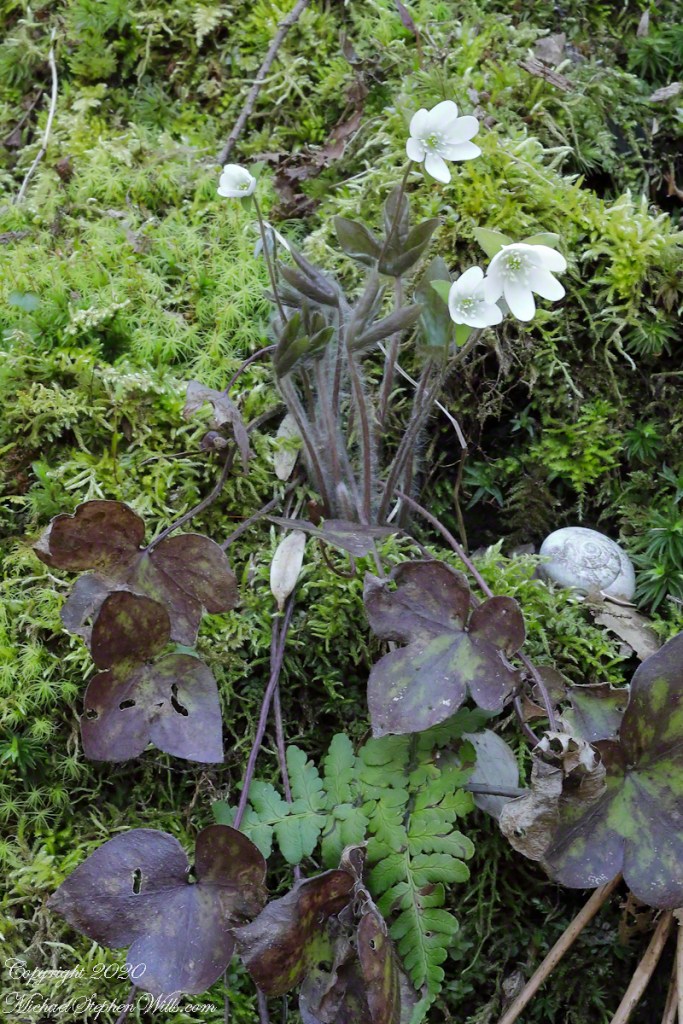
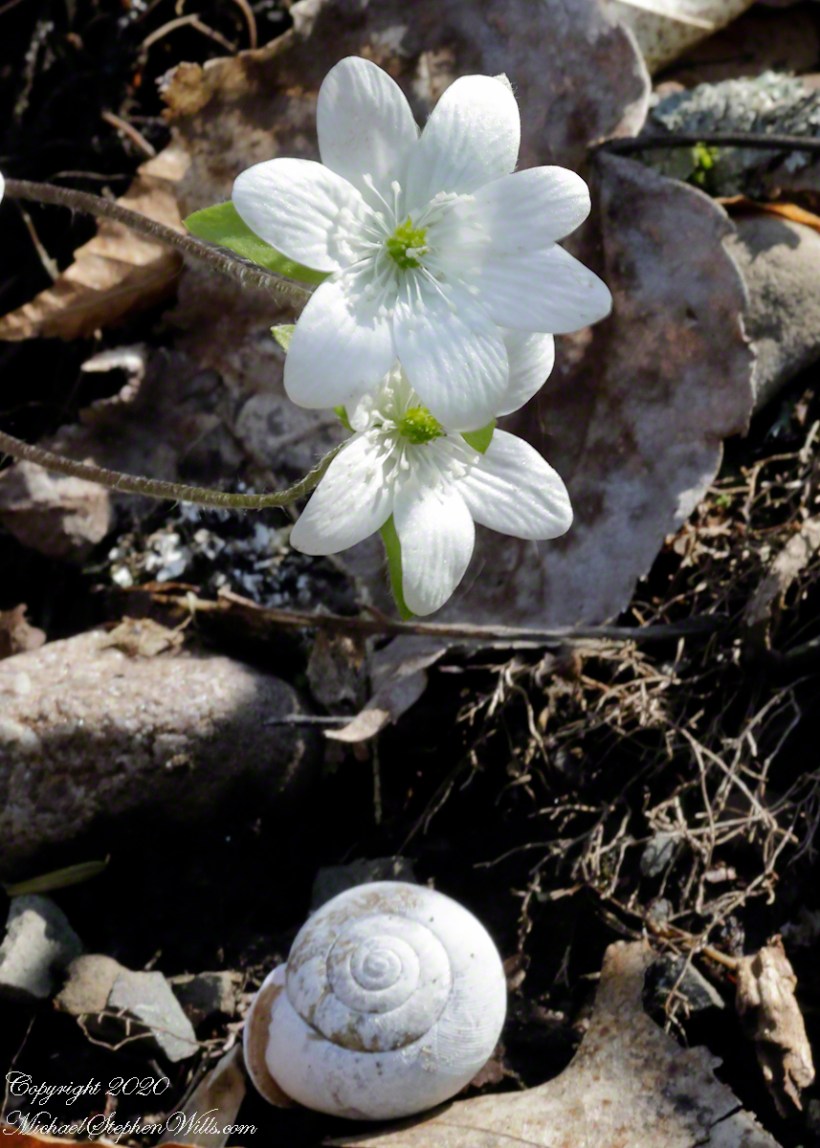
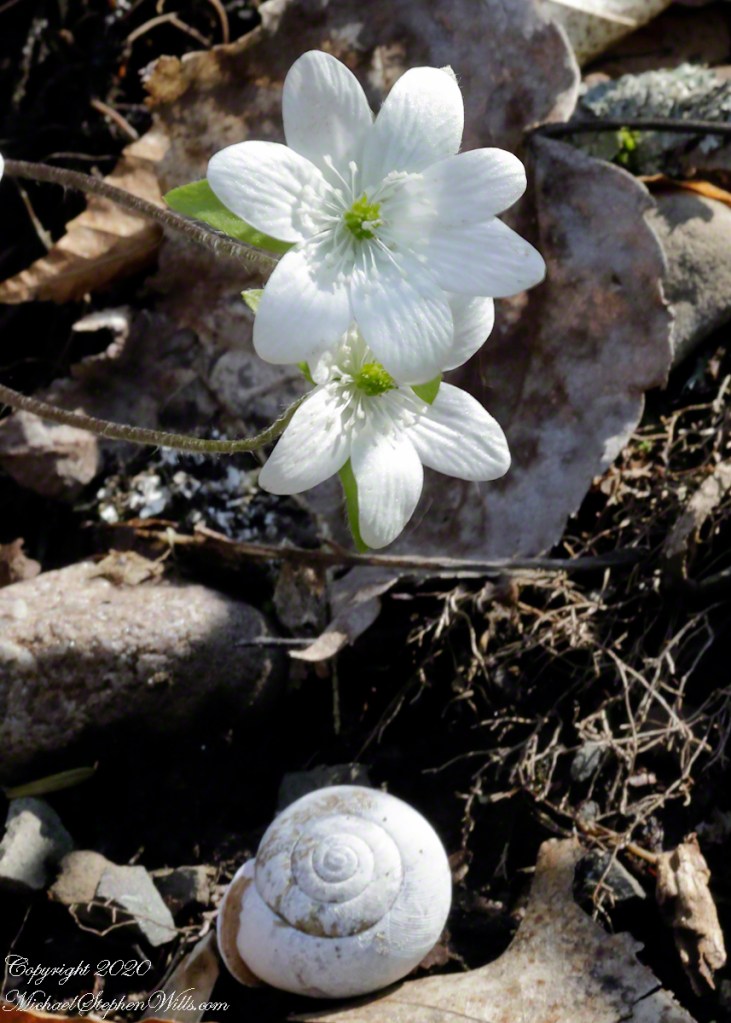
Hepatica blossoms are the focal point here. Two land snail shells rested fortuitously below, a white and dark brown. The white shell (Scientific Name: Neohelix albolabris) is seen here. In life, the shell aperture reflective lip gives the species name, from Latin root words “albo” (white) and “labris” (lip), and the popular name, “Whitelip.” Look closely to see a series of ridges, an identifying feature apparent in this specimen. There was a live specimen in our yard, just yesterday. Busy with chores, no camera at hand.

Click photograph for a larger view. To do this from WordPress Reader, you need to first click the title of this post to open a new page.

Click me for another Hepatica wildflower posting.

Copyright 2024 All Rights Reserved Michael Stephen Wills

224 Steps

Each wall is support for the next flight of stairs

The stairs are cut into a cliff, using switchbacks with landings and strategically placed benches.

Click photograph for a larger view. To do this from WordPress Reader, you need to first click the title of this post to open a new page.

This work was accomplished by the Civilian Conservation Corps in the 1930’s, during the Great Depression.

These shots were hand held. I used a Sony Alpha 700 dslr with a variable “zoom” lens, great for framing compositions.

Robert H. Treman New York State Park.

Click for macro slideshow.

Copyright 2024 All Rights Reserved Michael Stephen Wills

So Like A Christmas Tree

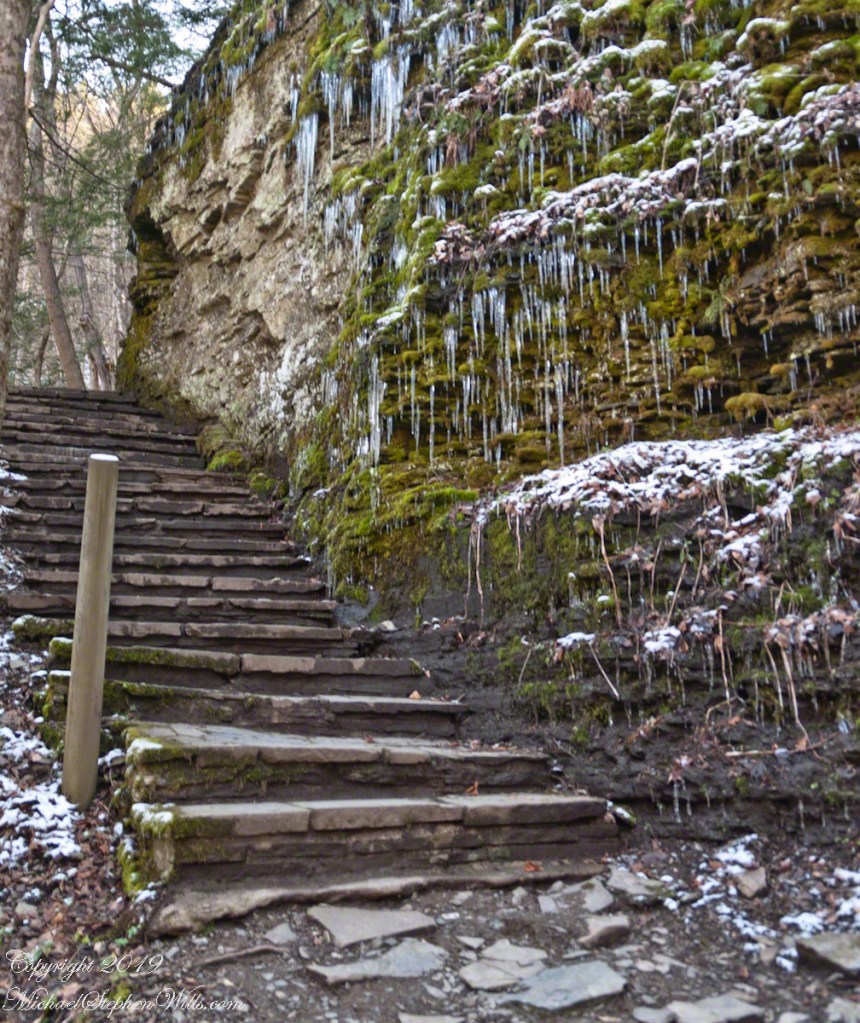
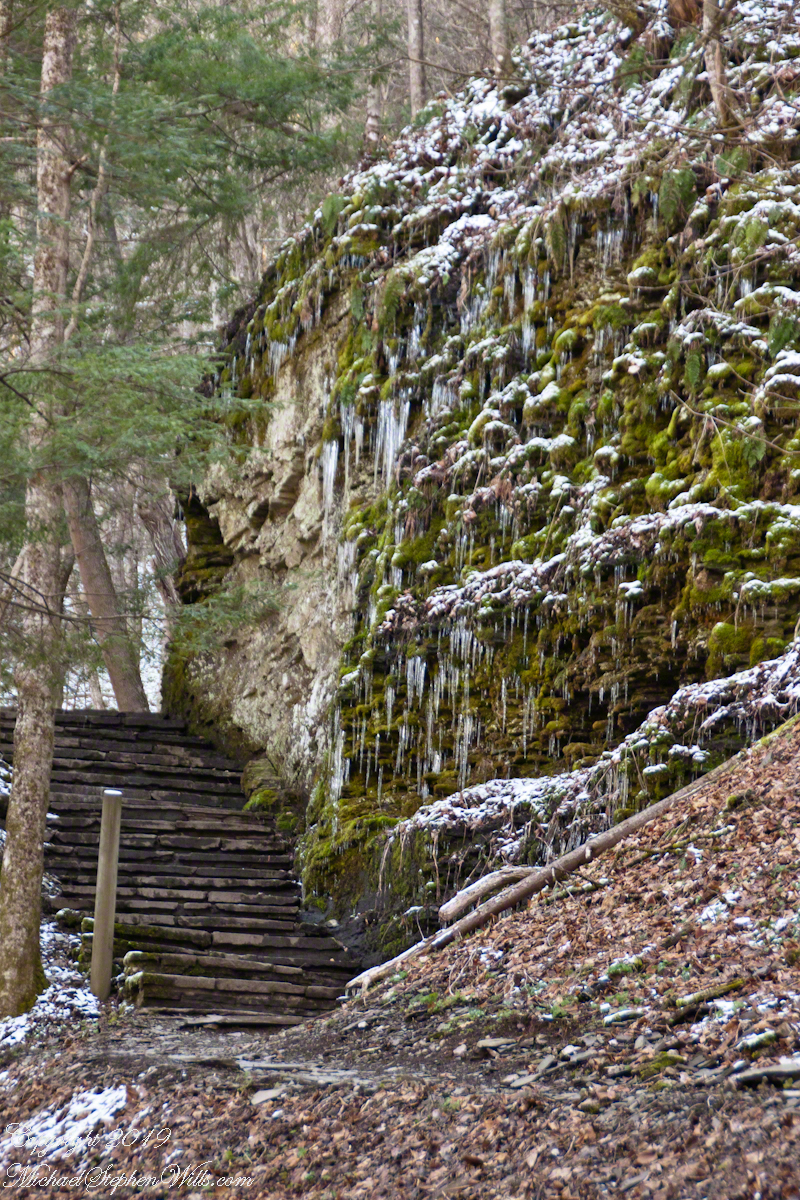
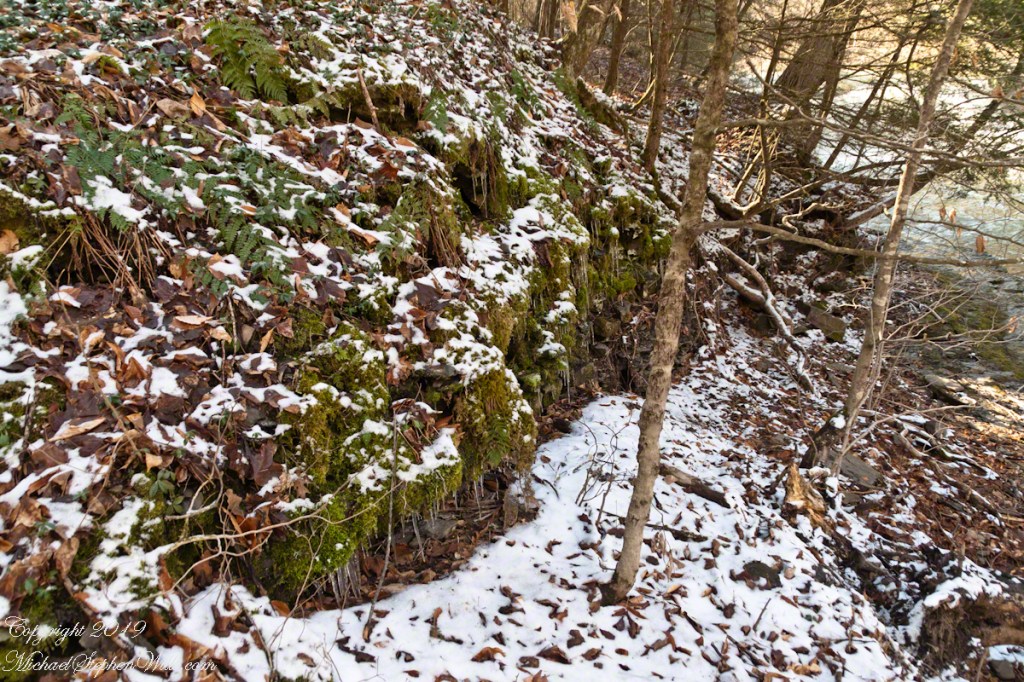
Icicles Catch The Light

Approaching the Cliff Stair after a sudden April frost.

Click photograph for a larger view. To do this from WordPress Reader, you need to first click the title of this post to open a new page.

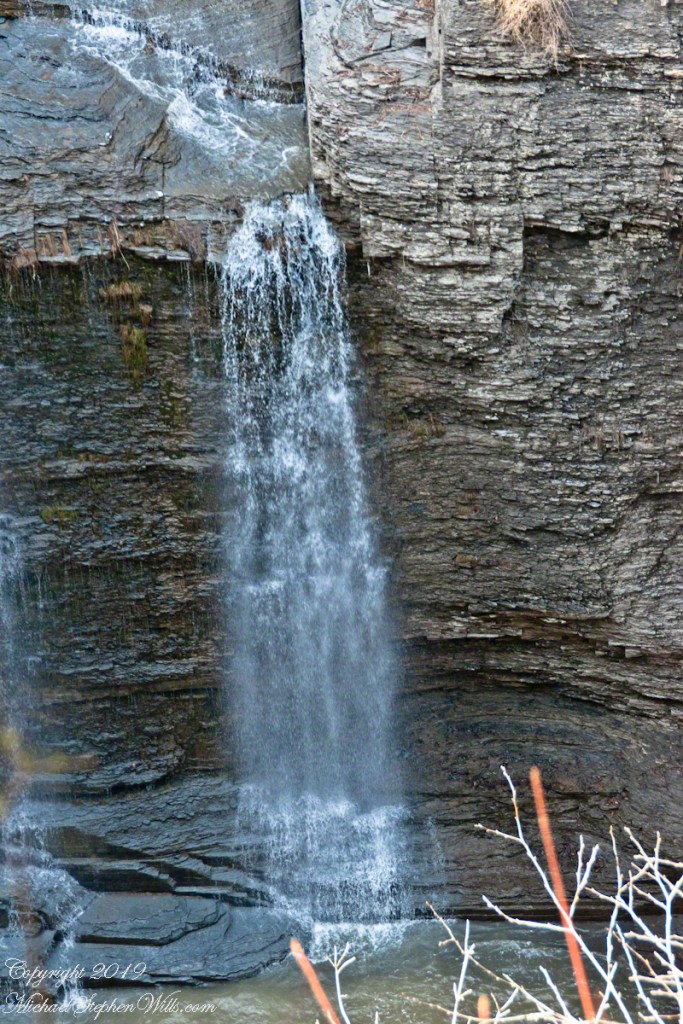
Lucifer Falls in spring flood is a constant roar.

These shots were hand held. I used a Sony Alpha 700 dslr with a variable “zoom” lens, great for framing compositions.

Robert H. Treman New York State Park.

Click for macro slideshow.

Copyright 2024 All Rights Reserved Michael Stephen Wills

Spring Outing X

Please give your opinions of this experiment, via comments. Thank You

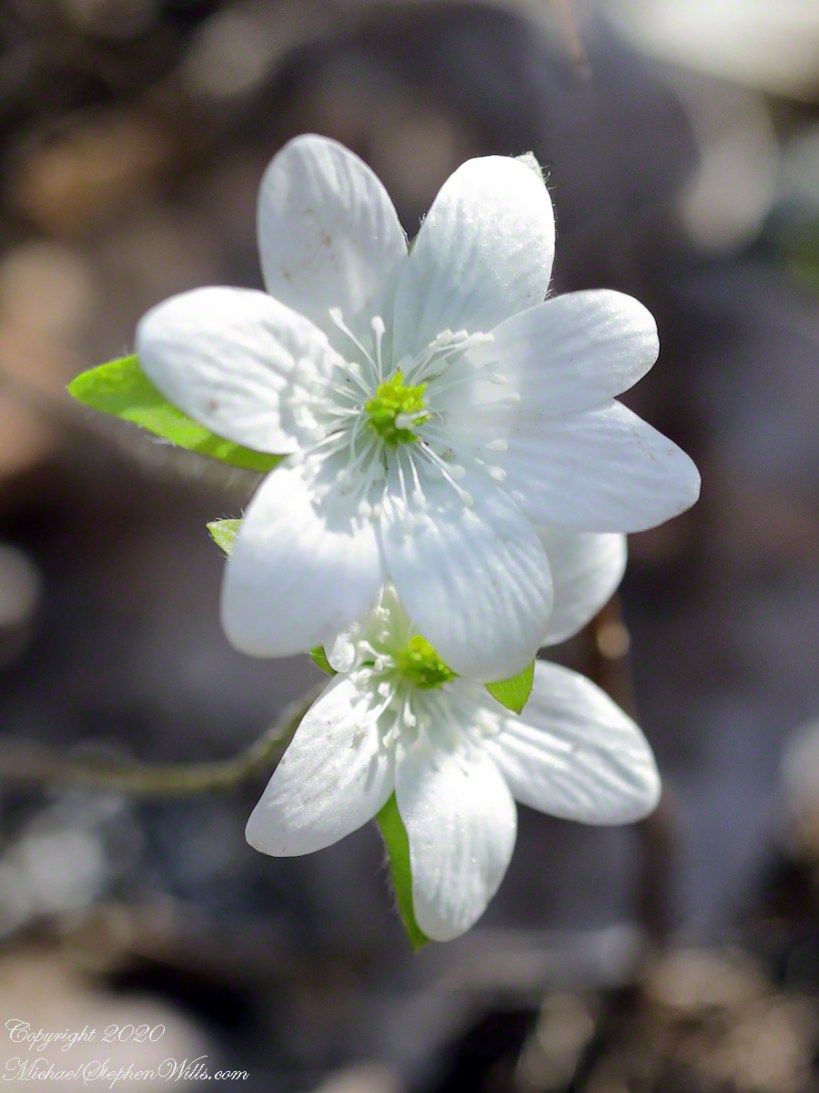
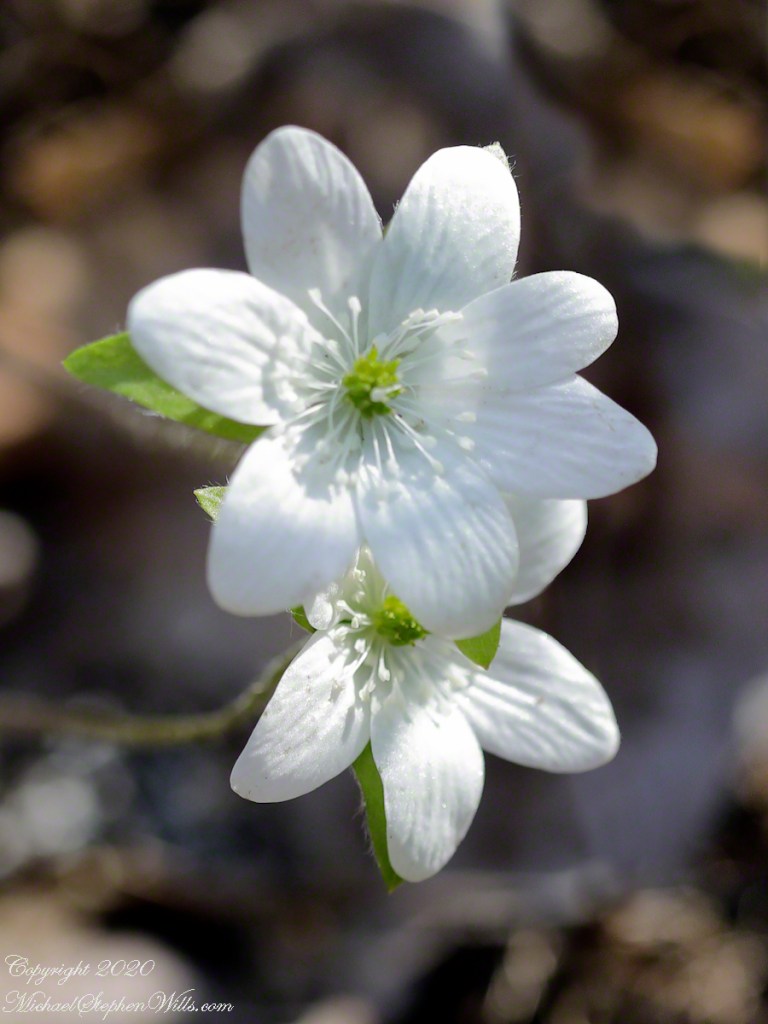
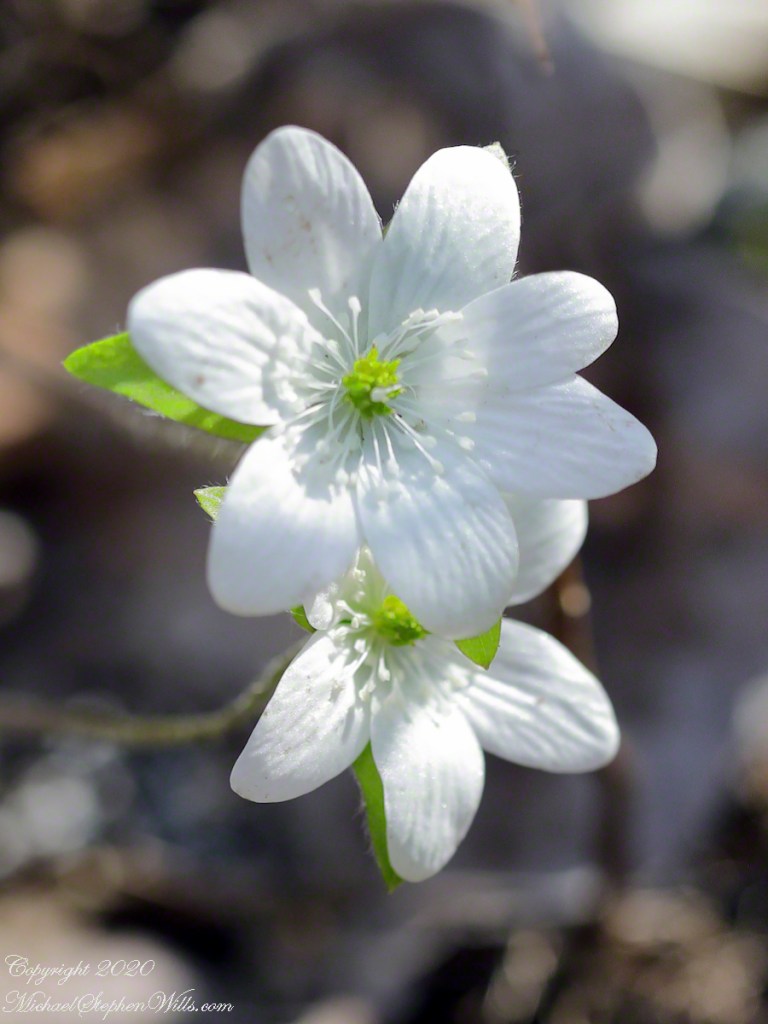
Seconds after taking this shot, at f/4, I changed the f-stop to 29 and captured these blossoms with the environment in focus (yesterday’s posting). At f/4 focus is a challenge and I was not happy with the detail of the foreground blossom.

Click photograph for a larger view. To do this from WordPress Reader, you need to first click the title of this post to open a new page.

I am in the experimentation phase of learning the new camera, so in spite of the 100% file size increase I turned on the Dual Pixel Raw feature. The two photos are from the same file. My impression is the adjustment improved the foreground flower details. Is it my imagination?

Click me for another Hepatica wildflower posting.

Copyright 2024 All Rights Reserved Michael Stephen Wills

Spring Outing VIII

Sun catchers

Click photograph for a larger view. To do this from WordPress Reader, you need to first click the title of this post to open a new page.

Click me for another Hepatica wildflower posting.

Copyright 2024 All Rights Reserved Michael Stephen Wills

Spring Outing VII

Groupings, 1 flora and 1 dangerous

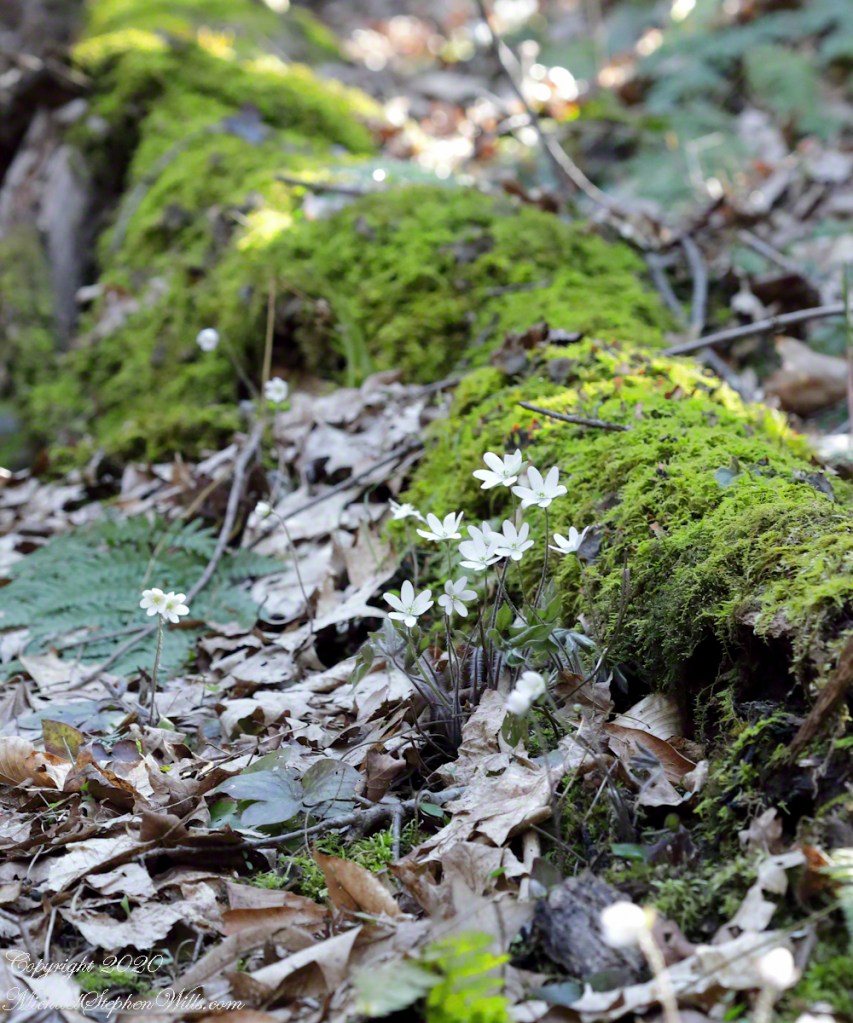
Hepatica positioned perfectly above the trail, sprouting from moss, a grouping of the plant and flowers.

Scientific Name: Hepatica nobilis var. obtusa. I found the two land snail shells this session, I identified it as Neohelix albolabris, and positioned it in this shot to lend interest. In a future posting you will see the shell where it was found.

Click photograph for a larger view. To do this from WordPress Reader, you need to first click the title of this post to open a new page.

Six unrelated young adults, all female and without masks, not following social distancing guidelines, passed as a group just before I set up for this shot. I heard them coming and made plenty of space between them and me. COVID-19 testing in Tompkins continues to find several positive cases each week.

Finding an appropriate combination of settings for this grouping was a puzzle. My goal was to bring the flowers and surrounding into focus with intermittent breezes. The f-stop needed to be high to accommodate the depth with minimal exposure duration as the flowers moved in the slightest breeze. The solution was a high ISO (2500) and f-stop (32), yielding a 1/3 second exposure (Not fast). The compromise was patiently waiting for a break in the breezes.

Copyright 2024 All Rights Reserved Michael Stephen Wills

Spring Outing VI

Just opened wind-flowers

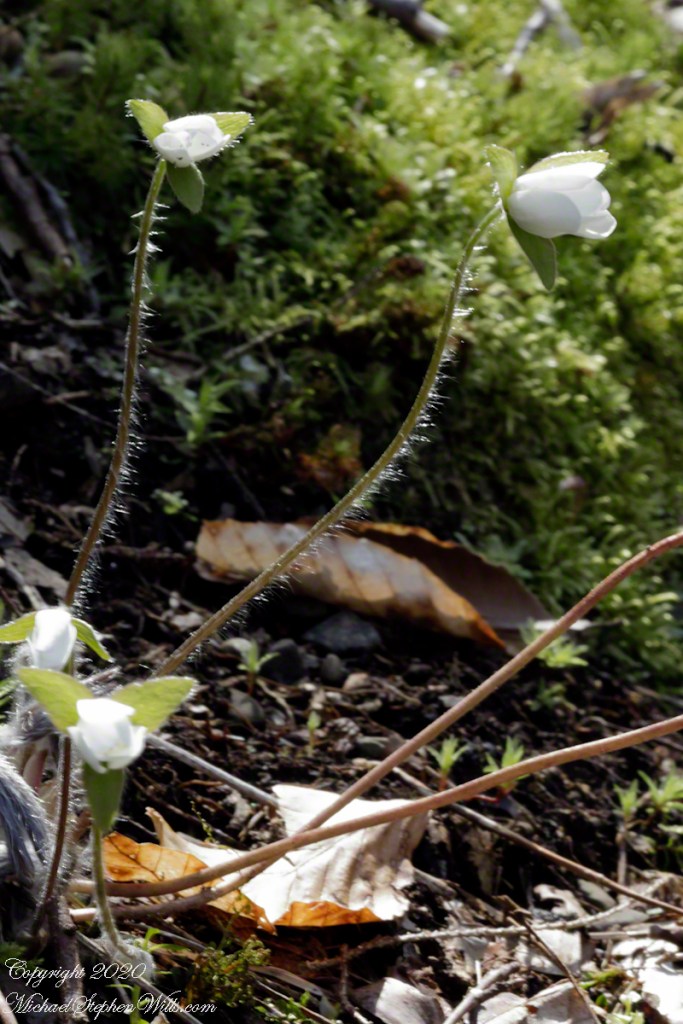
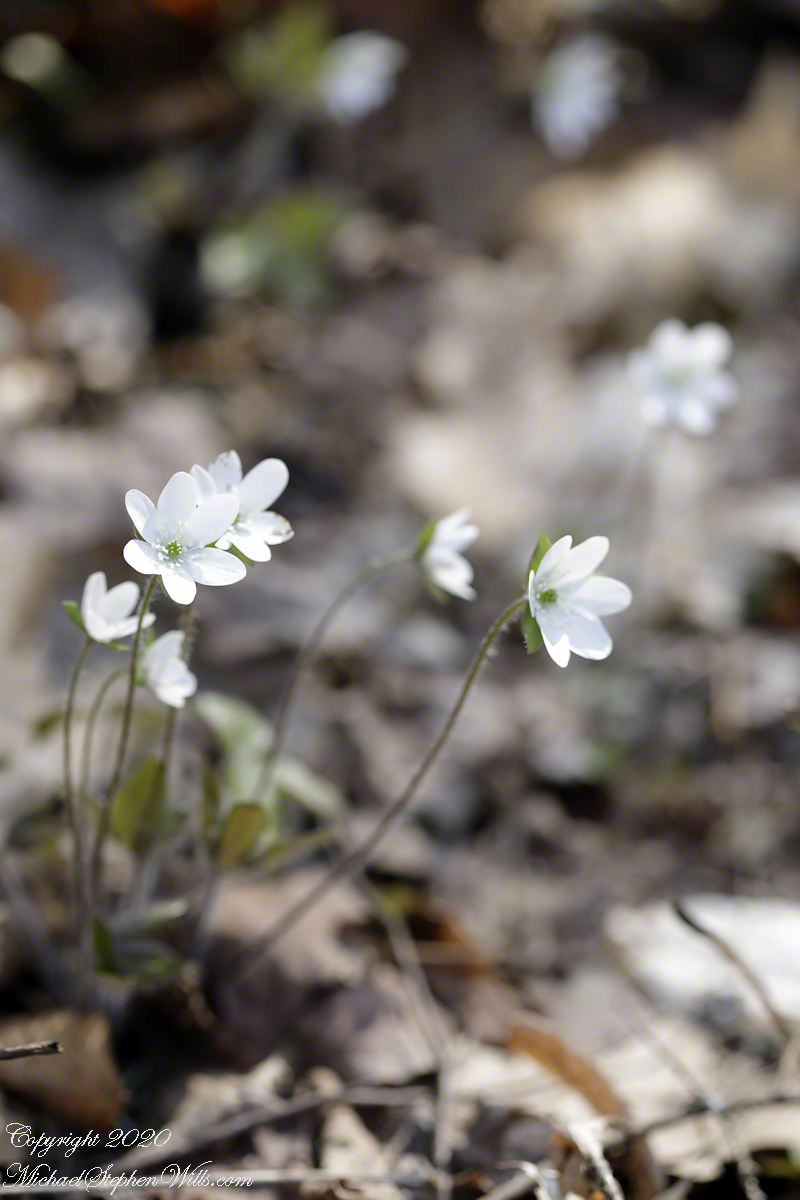
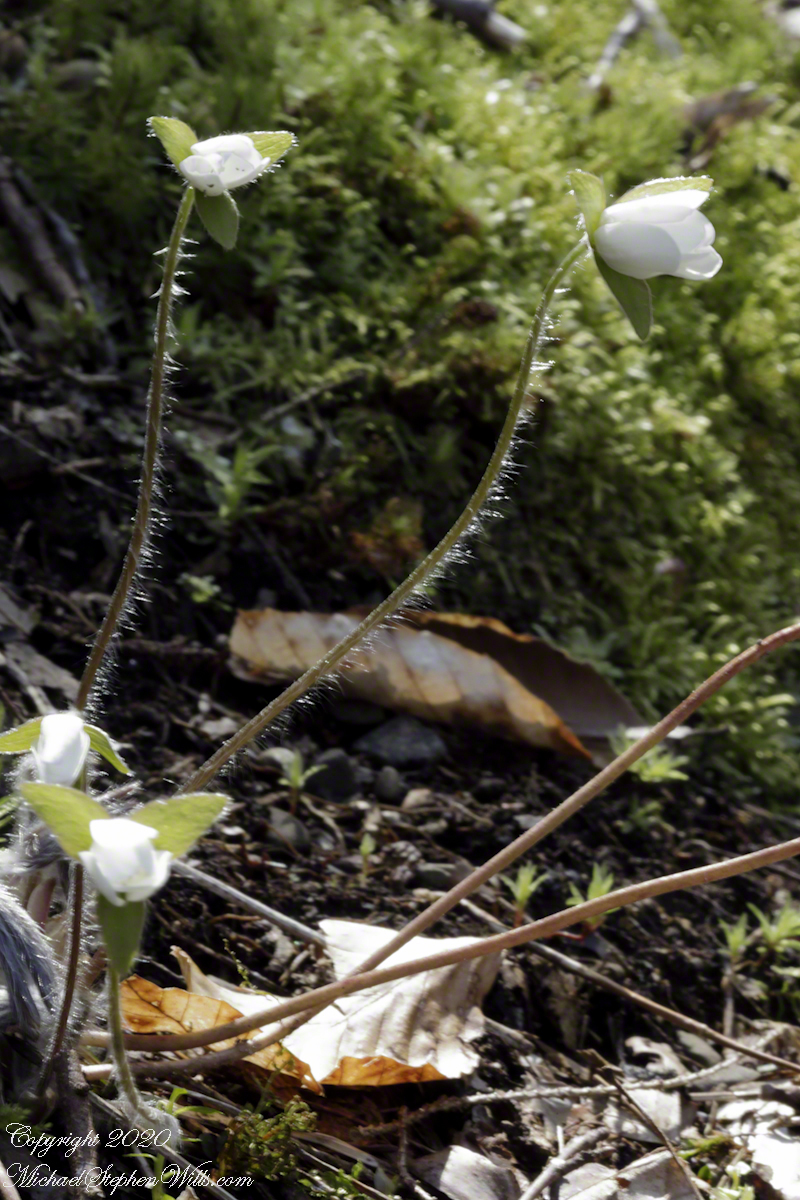
Just opened flowers on long hairy stems, tiny anemones. A crawl and tripod we needed to capture these. The scene scale is revealed by the dried leaves from last autumn.

Click photograph for a larger view. To do this from WordPress Reader, you need to first click the title of this post to open a new page.

I call these anemones from the disputations among taxonomists. All agree there is some relationship and differ in the degree. Classifications add a designation “tribe” before genus (hepatica). Alternatively, the genus is designated Anemone instead of Hepatica . A common name for anemones is “wind-flower” for how the flower is sensitive to a slight breeze, on these long stems.

This is the first hepatica capture of the session. There was no breeze at this time and the ISO is 800, f-stop 29 (lending some definition of the background, less than I’d expect) and a relatively slow exposure of 1/4 second. The 100 mm macro lens on a tripod mounted camera.

Reference: Wikipedia article, “Hepatica.”

Copyright 2024 All Rights Reserved Michael Stephen Wills

Spring Outing V

Wildflower Groupings

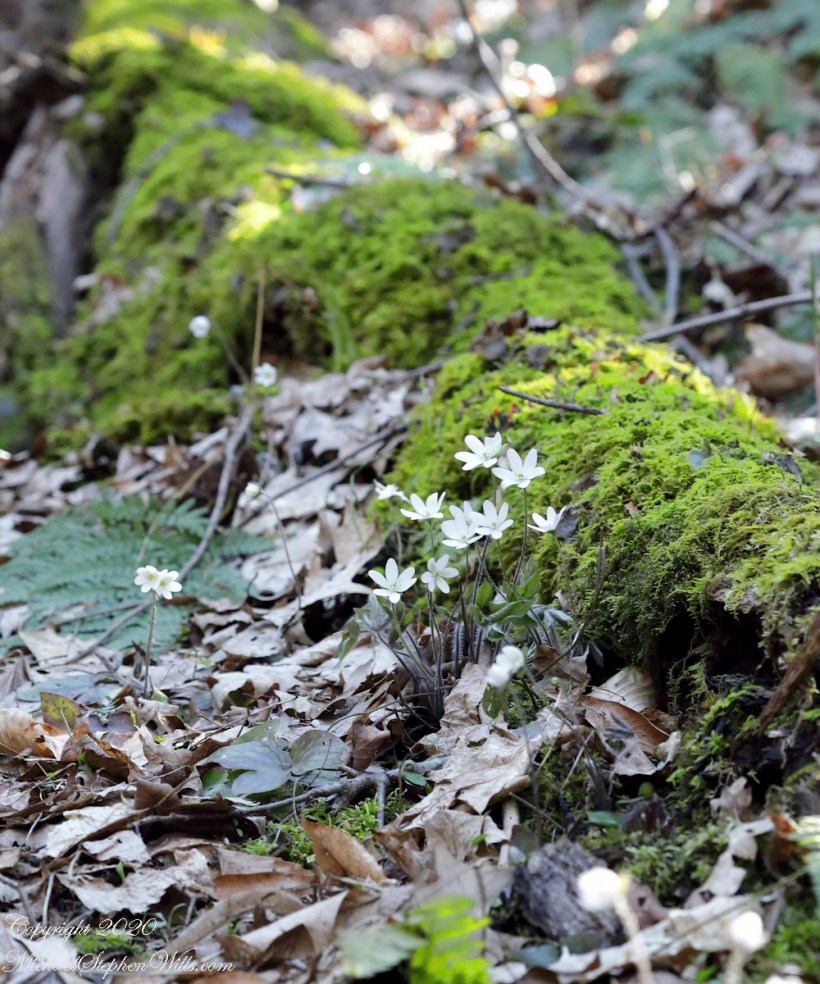
Red Trillium are early bloomers, along with Hepatica. I often photograph them together. Click me for a 2019 Red Trillium post of photographs from 2007 taken in Fillmore Glen Park.

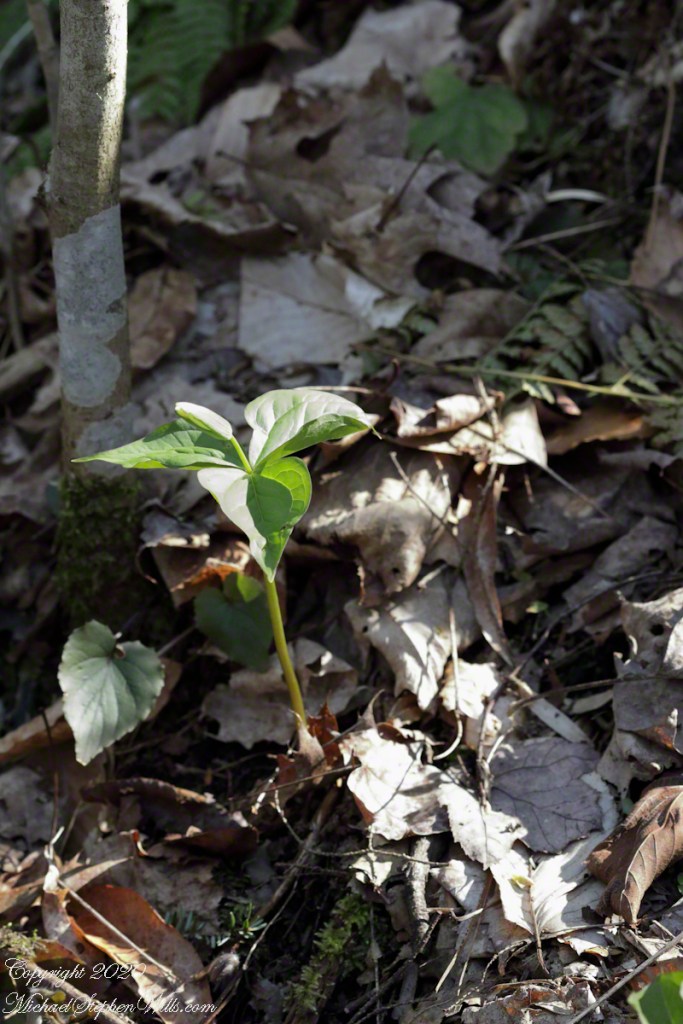
Here we have two photographs from the end of the April 20, 2020 session. I finished a series of macro Hepatica and, tired (emotionally, not physically) and not wanting to step up the slope, captured the following grouping of a single Red Trillium, lit by a bolt of sunlight, White Hepatica, fern and the budding White Trillim from yesterday’s post. Not the same trillium, a continuation of all the individuals in bud.

Click photograph for a larger view. To do this from WordPress Reader, you need to first click the title of this post to open a new page.

These were 15 feet or so up the slope above the South Rim Trail. I used the 100 mm macro lens, with the spring breezes ISO set to 2500, f/5.6 for a 1/200 exposure.

Not far away, also upslope, was this flower grouping against a moss covered log. Park forestry leaves fallen trees in place to return to the soil. Camera settings are the same.

Both photographs were handheld.

Copyright 2024 All Rights Reserved Michael Stephen Wills

Spring Outing IV

Turn to Light

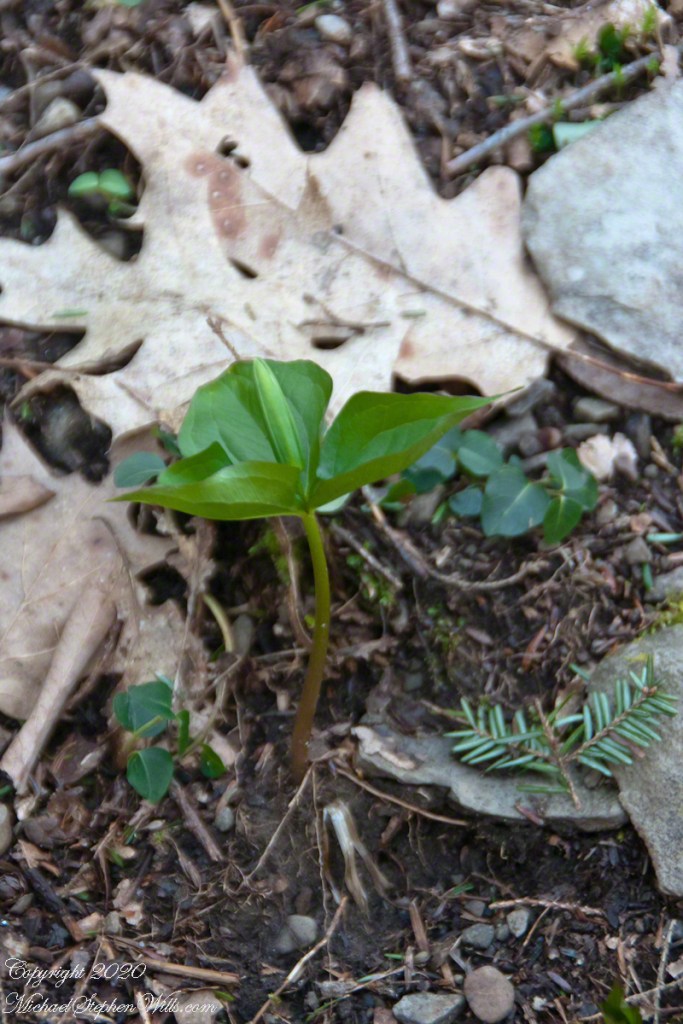
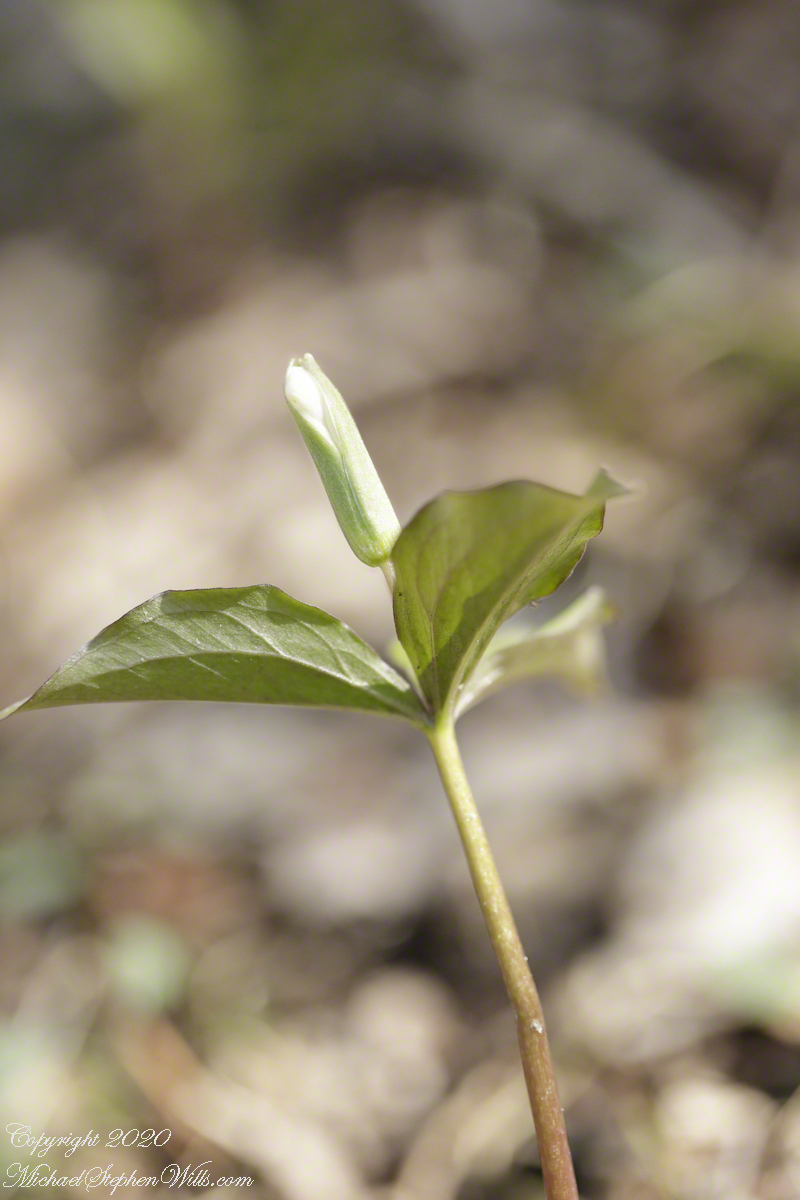
Wildflowers flourished where the slope turned to the north and late afternoon light spread across the small ravine created by a small stream. This early in the season White Trillium buds were forming between three green bracts.

Click photograph for a larger view. To do this from WordPress Reader, you need to first click the title of this post to open a new page.

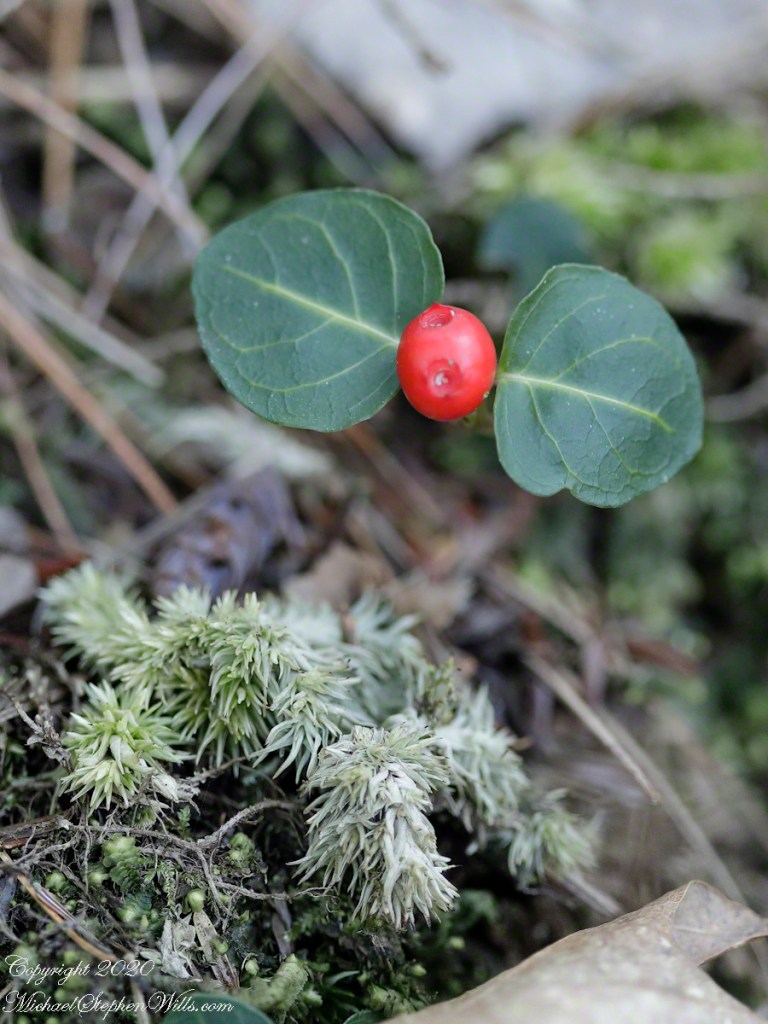
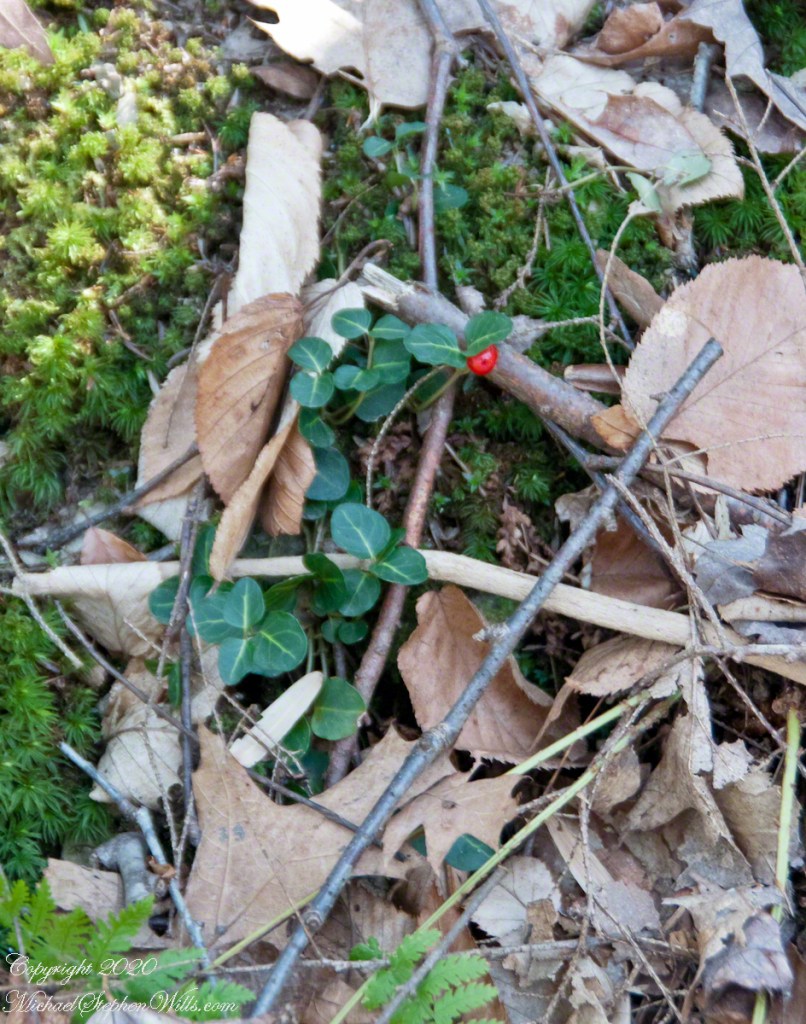
The above photograph taken handheld with a variable zoom lens captures the plant and environment. On the forest floor is twig of hemlock, probably knocked off by squirrels feeding on the tiny cones. Oak leaves from last season frame the dark green bracts. We also see a few wintergreen leaves and the rich soil.

With the low light ISO is 2000, the f-stop of 5.6 allowed crisp details of the hemlock and wintergreen, the focus is soft on the oak leaves. Where is topography allowed sunlight, the White Trillium were a bit further along. Here is a bud opening.

Here I used a travel tripod and a macro lens with f-stop opened up to 3.2, not lens maximum, and all but the forward bract tip are in focus. A lower camera angle places surroundings in distance, allowing all to be blurred unrecognizable: the plant is the star of this shot. ISO 800 with the ample light. I was struggling with the spring breezes, having to wait for a break to take each exposure.

Copyright 2024 All Rights Reserved Michael Stephen Wills