Embark on a journey through the serene Rincon Mountain Wilderness with me. Witness the rugged beauty of the Hedgehog Cactus and the whispering Bear Grass through my lens. Let’s unravel the secrets of the desert together, and find solace in the still life of the Happy Valley Saddle. Join me, and let’s capture the enduring spirit of Arizona’s hidden treasures.
Discover a timeless world through my lens: delve into Arizona’s Rincon Wilderness, where lichens and hedgehog cacti narrate Earth’s enduring, untold story. Join me.
In the embrace of the Rincon Mountains, east of Tucson’s hum, lies the Rincon Wilderness, a tapestry of desert life and geological marvels. These mountains, one of the “Sky Island” ranges cradling the Tucson valley, are less rugged than their siblings, the Santa Catalinas and the Santa Ritas, offering a gentler invitation to explore their secrets.
Happy Valley Saddle’s Floral Jewel
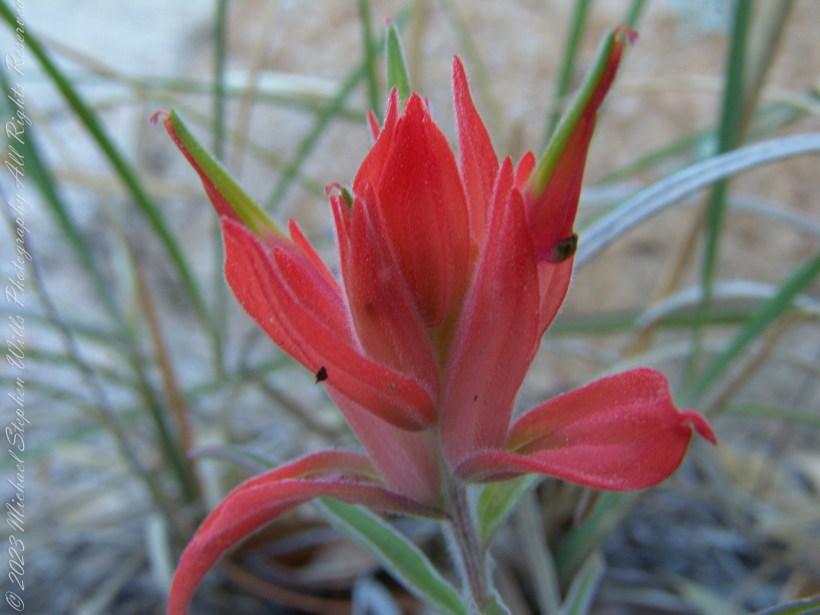
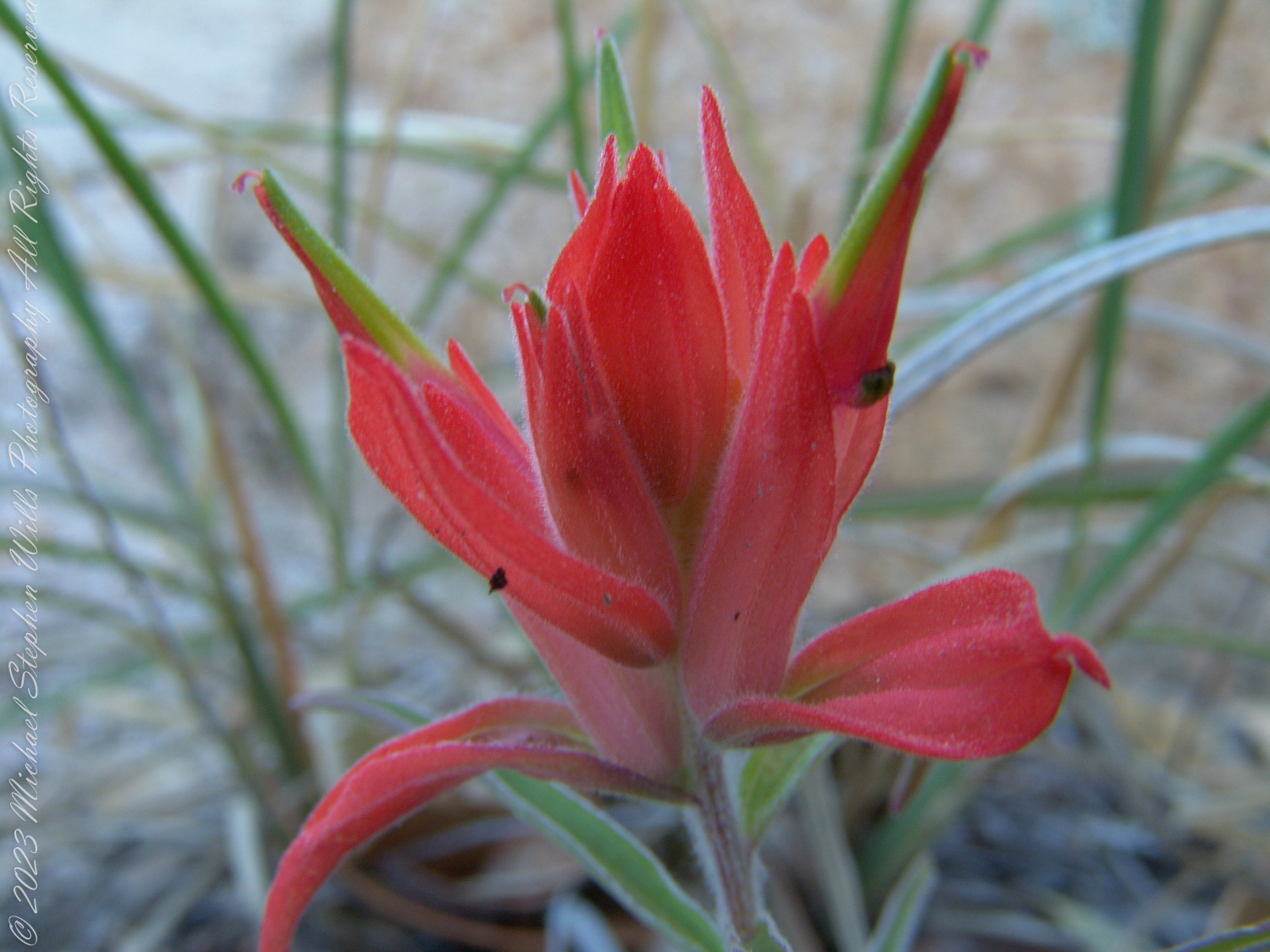
Amidst the rugged beauty of Happy Valley, a hidden corner in the quilt of the Rincon Wilderness, a singular red-orange glow caught my eye. There, among the lichen-encrusted boulders, stood the Southwestern Paintbrush, Castilleja integra, its flamboyant bracts a fiery contrast to the muted greens and grays of its surroundings.
A single Castilleja integra (Southwestern Paintbrush) with a lone flower among host grass, fallen oak leaves, lichen covered granite boulders and sand weathered from the rocks. A small oak is growing among boulders. Happy Valley Saddle, Rincon Wilderness, Pima County, Arizona
Portrait of a Parasite
This herbaceous perennial, with its soft downy coat, is a paradox, both painting the desert with life and leeching it from others as a hemi-parasite. Its roots, entwined with those of other desert dwellers, tell a tale of survival that’s as old as the hills themselves.
The Brushstrokes of Evolution
Castilleja integra (Southwestern Paintbrush) Flower among host grasses. Macro using the Sony DSC F828 camera.
Each leaf, narrow and dusted with hairs, speaks to the adaptive artistry of nature, designed to conserve precious moisture. The flowers, with their extended blooming season and generous nectar, court the hummingbirds who dance between the blooms, pollinators in this ancient symbiosis.
A Symbiotic Canvas
The Southwestern Paintbrush, with its colorful allure, draws more than just winged admirers. Its presence among the rocks is a reminder of the complex ecological web of the Rincon Wilderness, a part of Saguaro National Park’s rich mosaic
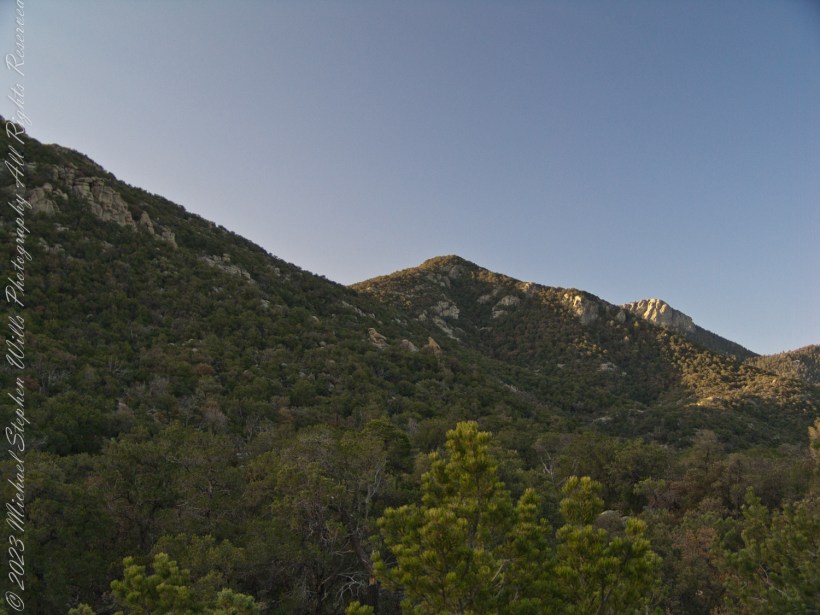
Step into the serene embrace of Happy Valley Saddle through our latest blog post, and wander with us as the dawn unfolds over the majestic Rincon Peak.
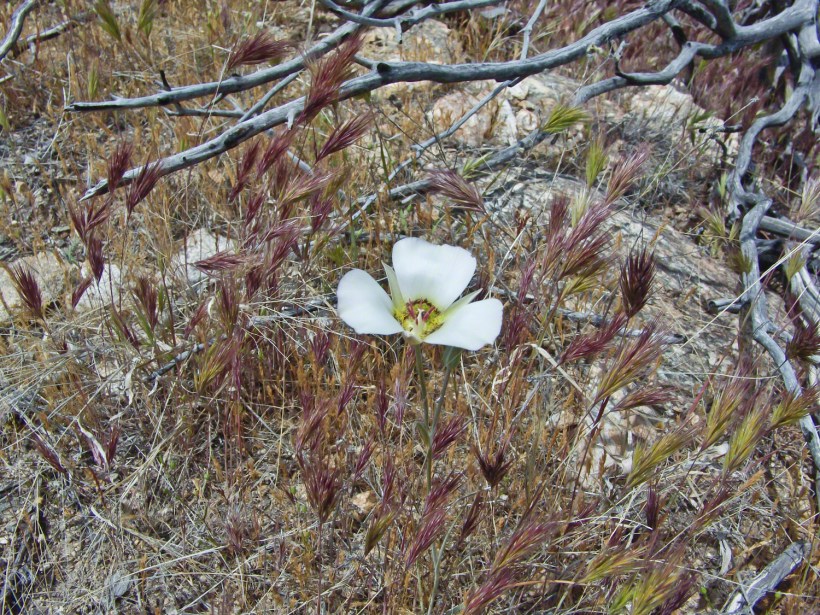
Discover the Sego Lily, Calochortus nuttallii, a symbol of resilience and beauty in the arid deserts of the West. Uncover its role in pioneer survival and its captivating presence on a serene April backpack into the Rincon Wilderness. Join us in exploring the enduring grace of this desert gem.
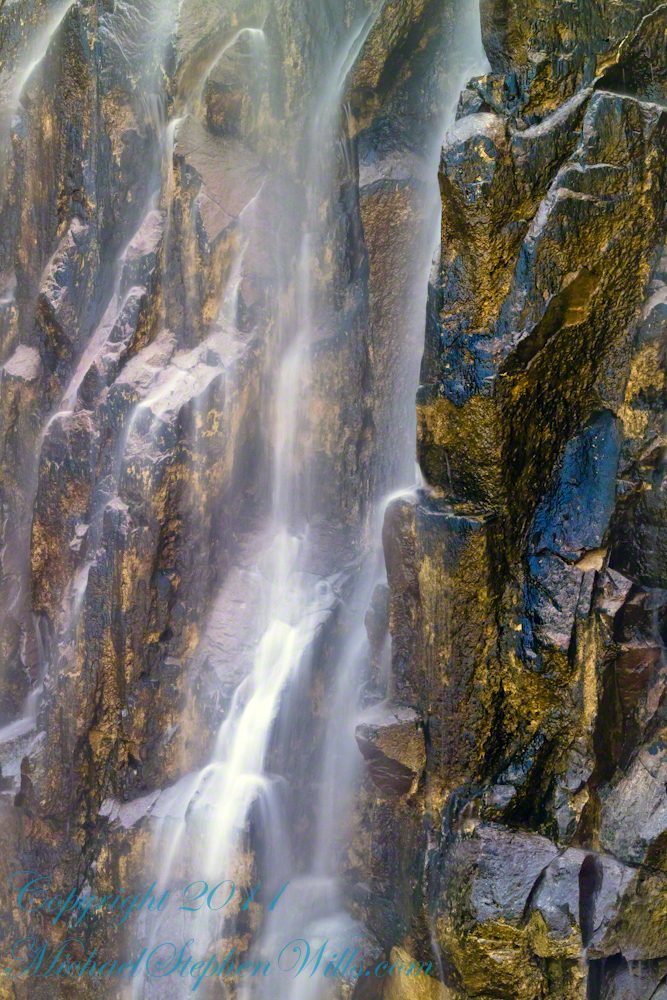
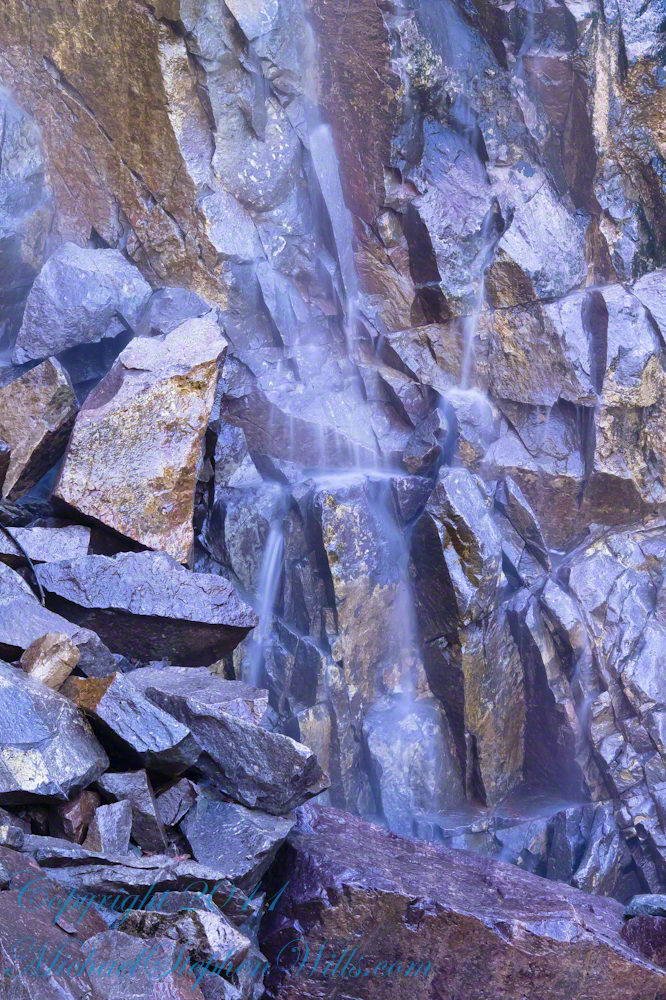
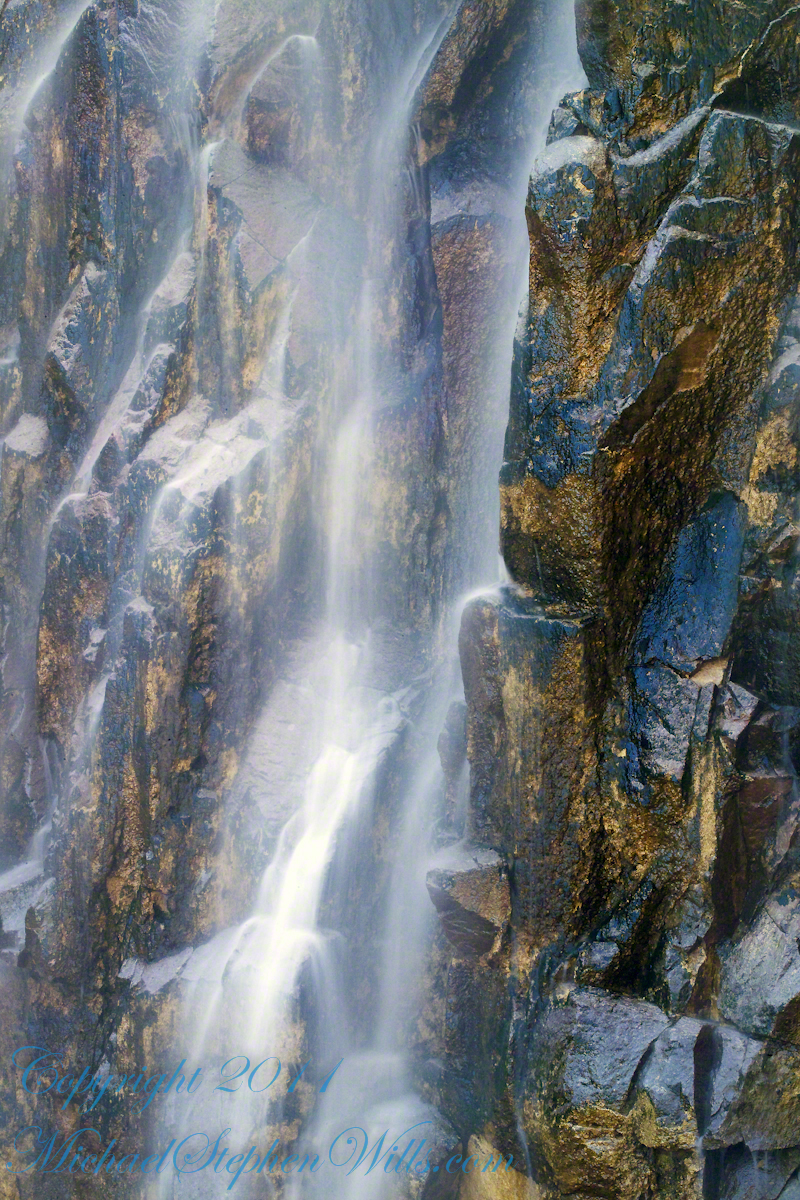
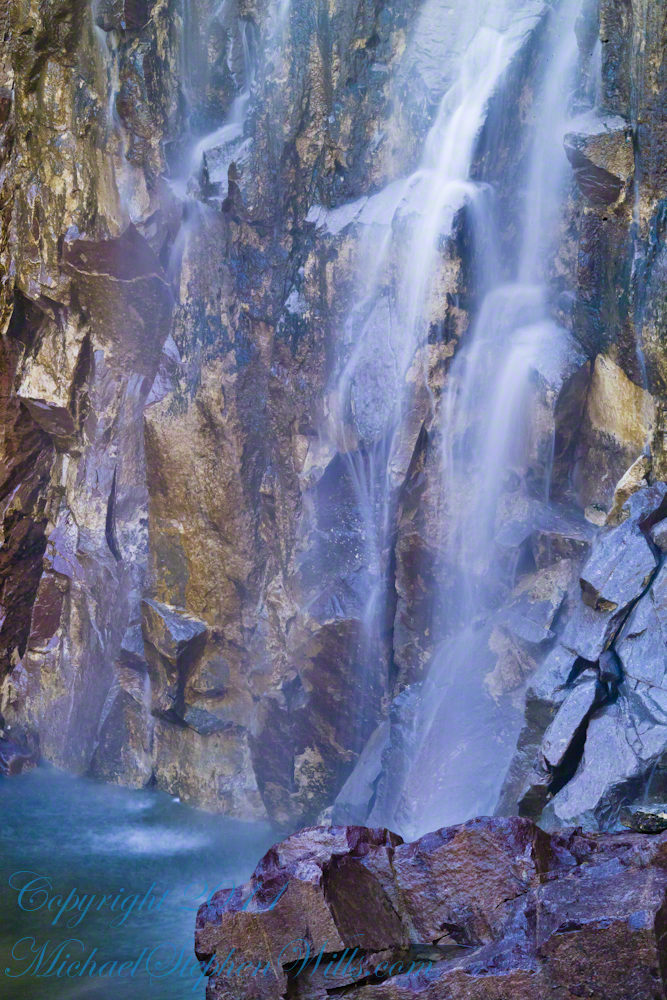
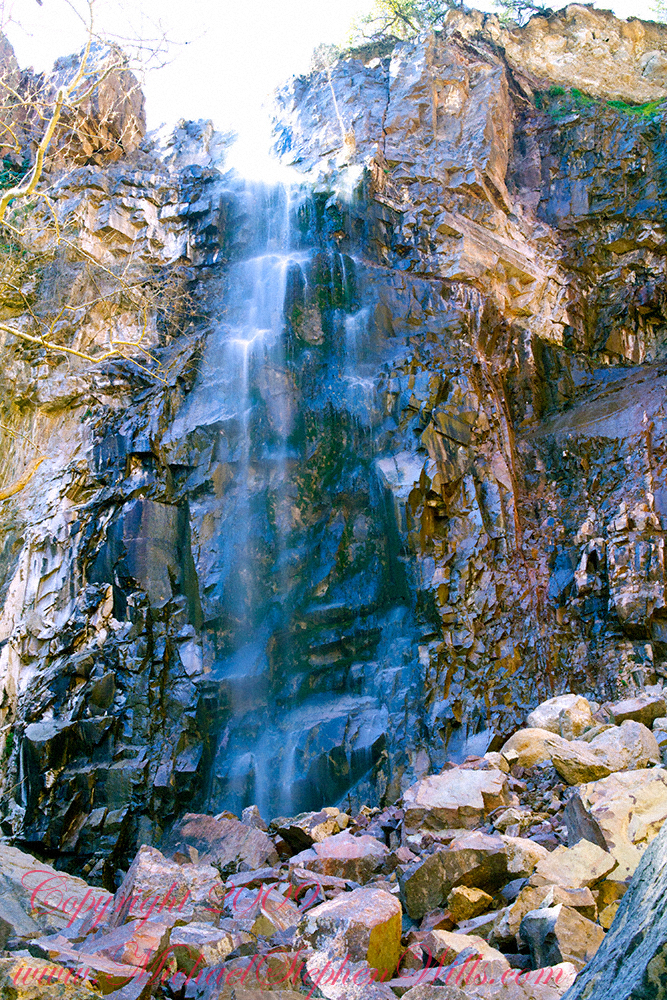
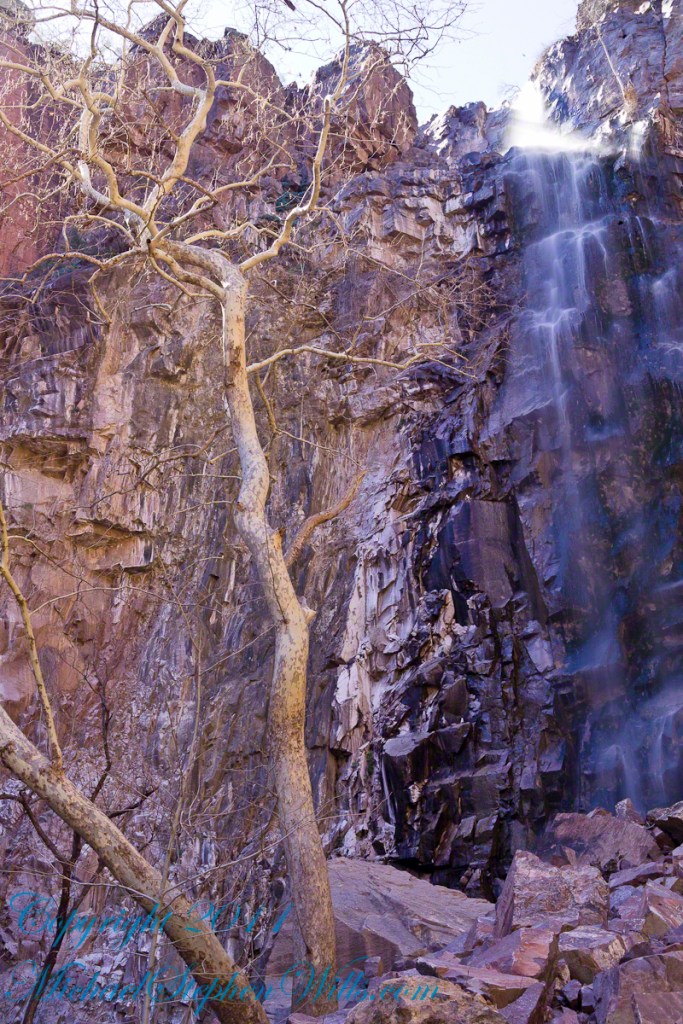
The canyon below 110 foot Reavis Falls is a wild place of transcendent beauty.
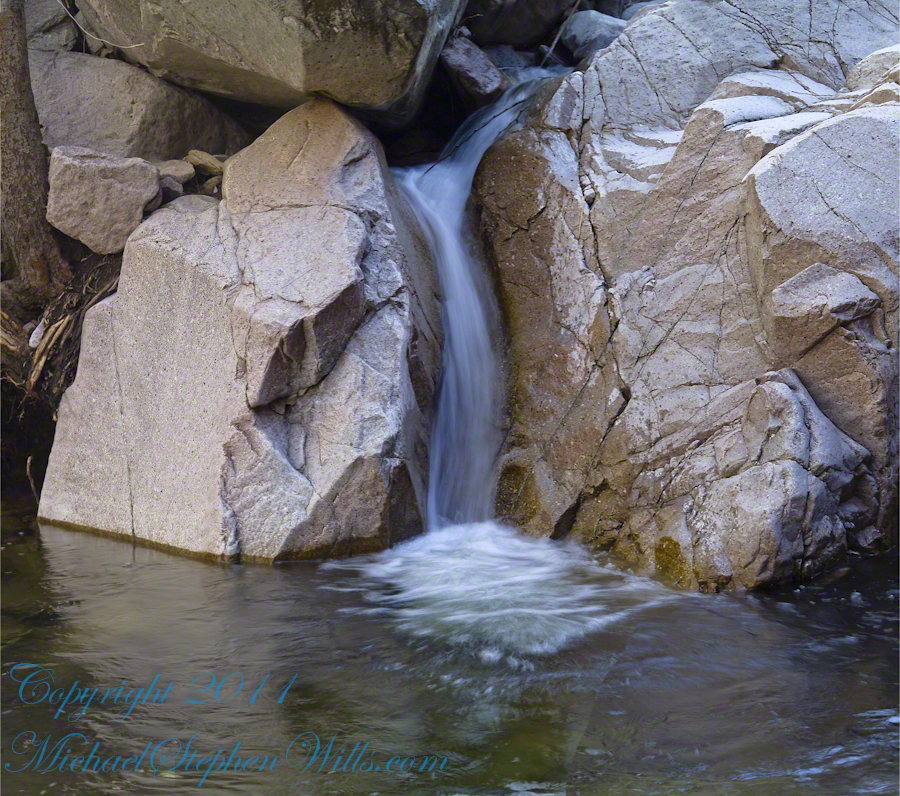
With the afternoon in front of me, the trip back to camp was a slow pleasure. On the way in, I noted several stopping points to capture photographs. Here a natural rock sluice offers a foot tall waterfall, mirroring Reavis Falls, bracketed by white igneous stone.
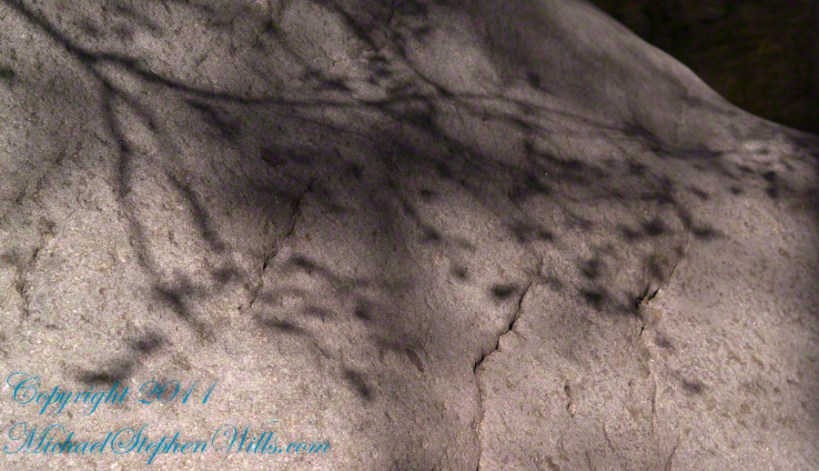
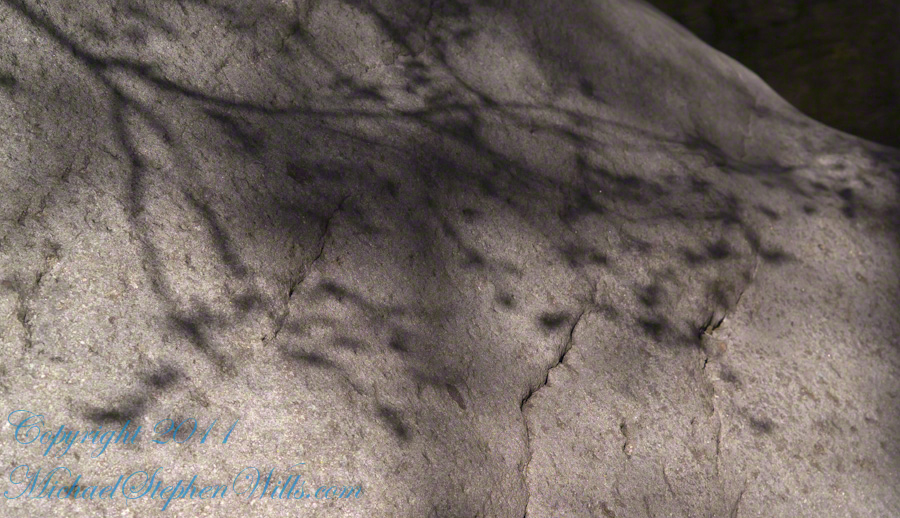
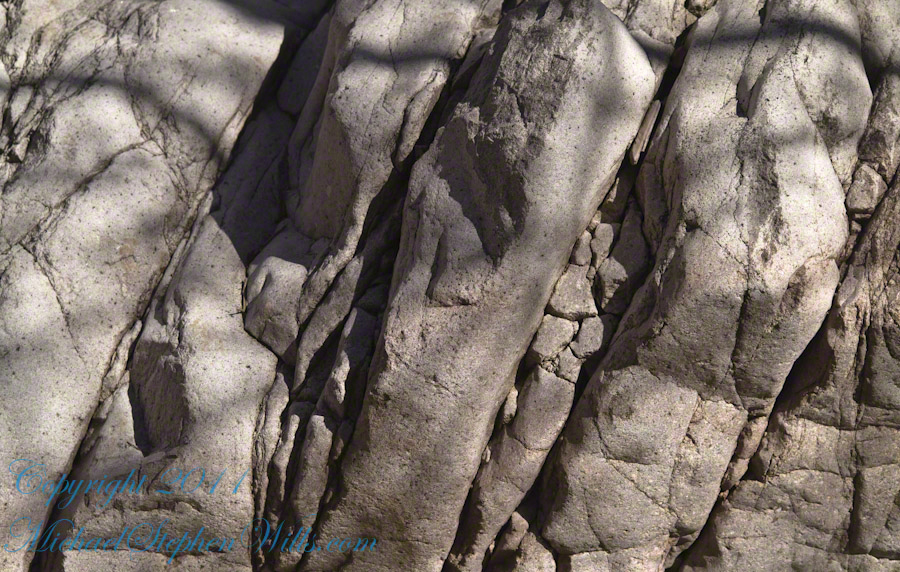
This same stone offers a screen, the bright spring sun throwing the sparse leaves into sharp relief.
Reaching Reavis Falls, once you find the canyon mouth, is three-fourths of a mile of boulder hopping and bushwacking over and around landslides, deep pools and fallen trees. Odds are you will be the only person in the canyon for weeks, if not months. Expect to be surprised. In this chapter you will (finally) visit the falls themselves.
A Camp in the Canyon
Click me for the chapter about the environment around the mouth of Reavis Canyon below the falls.
The Last Mile
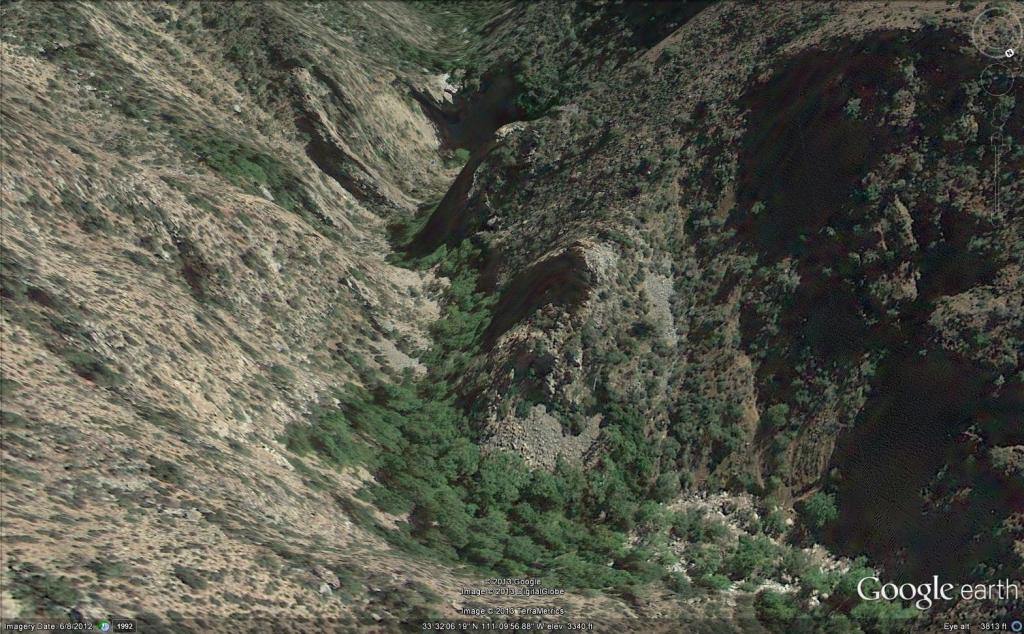
Here is an overview of the last third mile of Reavis Canyon. You can see the wall of the falls nestled in the folds of ridges towards the top, just off center.
On the lower right is a large landslide and, below there, it is complete chaos.
The vegetation grows shoulder to shoulder with interleaved branches. You will not get through there. The solution is to find a way around, usually over and around house-sized boulders.
The image was captured from Google Earth
After almost two hours of picking my way, there was a flicker of light. The fall waters were sparkling in the sunlight high above the cottonwood trees, in full Mach bloom, and the still leafless Arizona Sycamores.
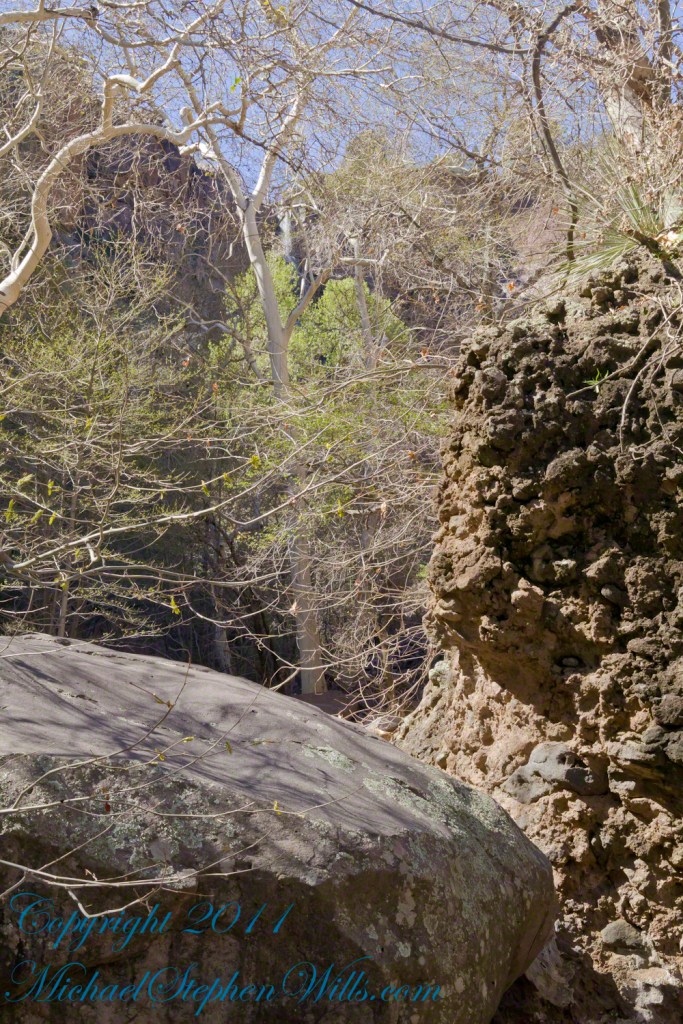
This was my view of Reavis Falls from the canyon on a March day before the Arizona Sycamores have leaved. The falls are the tiny patch of white to the left of midline where the earth meets the sky. Jumbles of infallen boulders and thick growth of sycamores, oaks and fully leaved cottonwoods cloak the falls.
Another 30 minutes of canyoneering brought me to the foot of the falls.
At the Foot of Reavis Falls
Looking up at Reavis Falls from a 20 foot tall mound of talus.
These are boulders washed down at flood time.
The rock wall is thick with microorganisms, fungi and mosses.
After clambering around the talus pile I found this angle….
An Arizona Sycamore, before the spring leafing, at the Foot of Reavis Falls
Talus at the Foot of Reavis Falls
The Reavis Falls talus is large boulders carried down Reavis Creek and washed over the falls at flood time as well as blocks fractured from the cliff face. You can see the base of the Sycamore from the previous photograph.
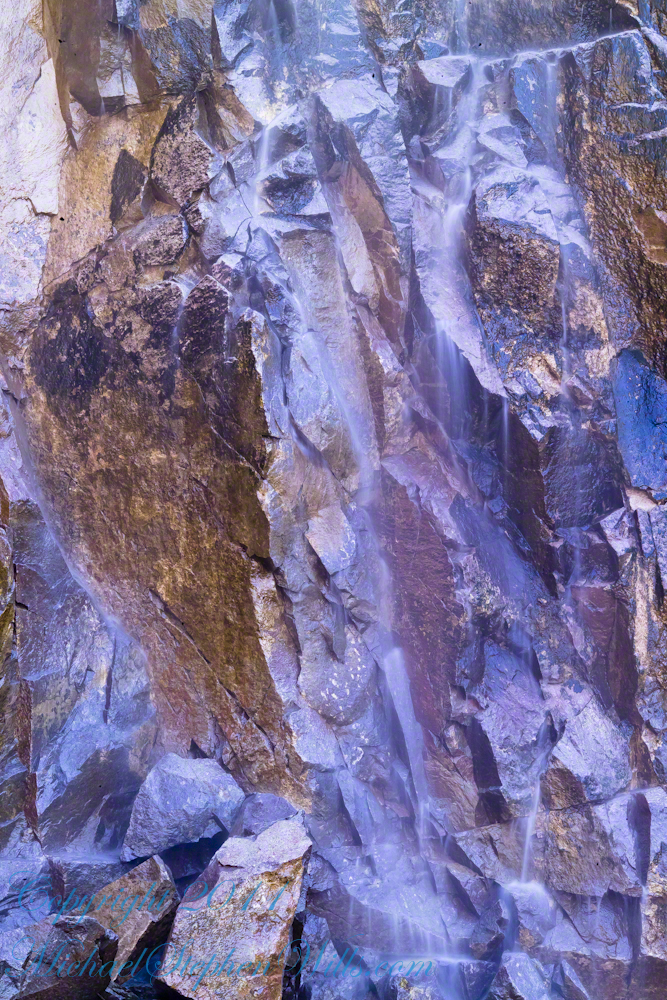
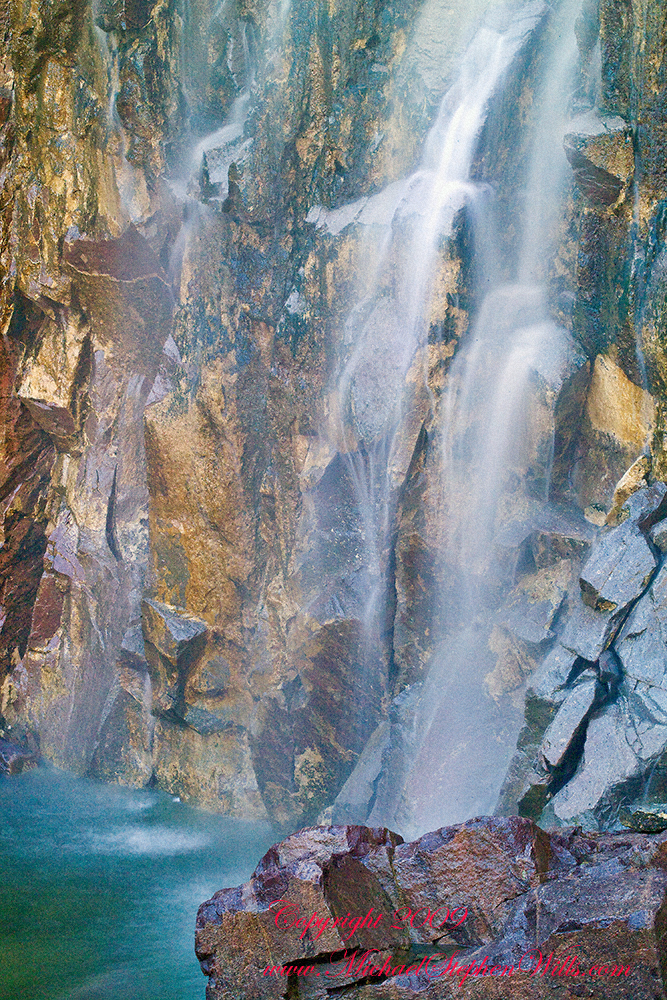
The falls are formed where Reavis Creek flows over a solid mass of rock. The talus is composed mostly of this red rock. From the edge of this cliff to the base, where the falls hit the canyon floor, is all of 140 feet. This is a far as you can proceed into the canyon without some serious climbing skills.
It is possible to climb around the canyon by climbing up the ridge from which I captured the Cedar Basin Hoodoos. See my posts below for this location (you need to work it our for yourself).
This is NOT the last post of the series. From here I will focus on the beauty of Reavis Falls and the canyon that holds them.
It was a four-day expedition so there are a few chapters covering the approach to the Falls:
The Superstition Wilderness was born from volcanic eruption and in some places (Peters Mesa) the earth still rumbles.
Here in Reavis Canyon it is the huge spring runoff that builds the environment, grinding and scouring the canyon. In my chapter The Mouth of Reavis Canyon is the story of this aspect of the canyon.
The history of this spot is written on these volcanic and igneous rocks and boulders, the uprooted tree roots and fresh water.
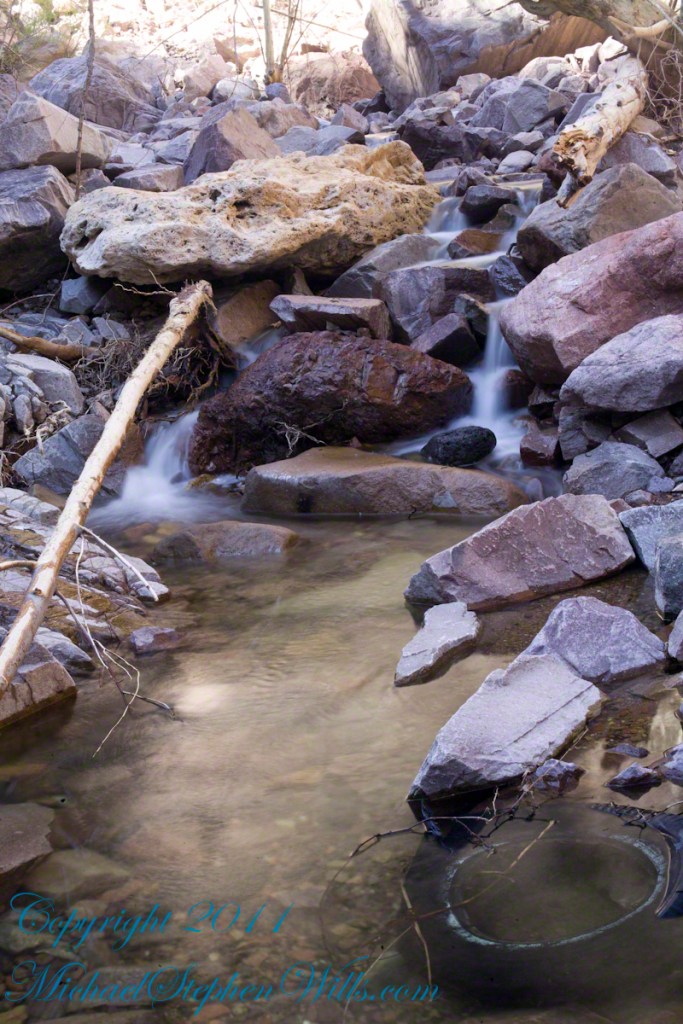
The tire must have washed down from Reavis Ranch.
A Canyon of Wonder and Beauty
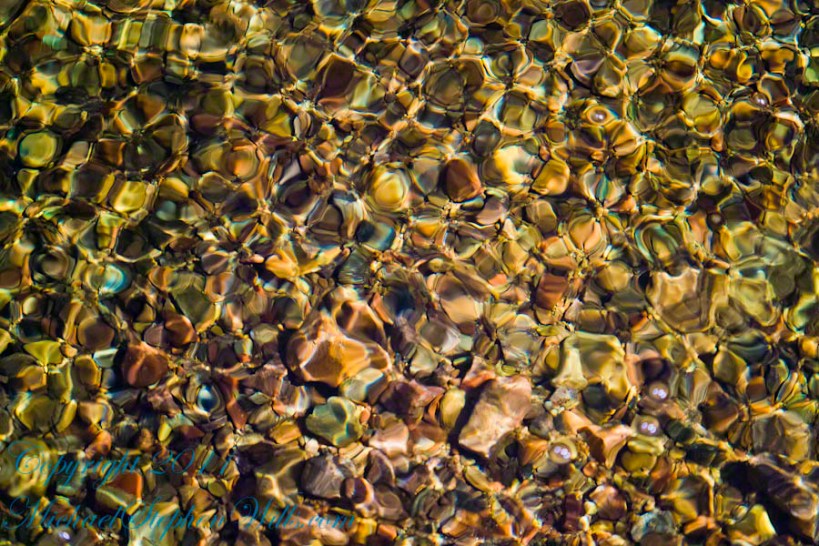
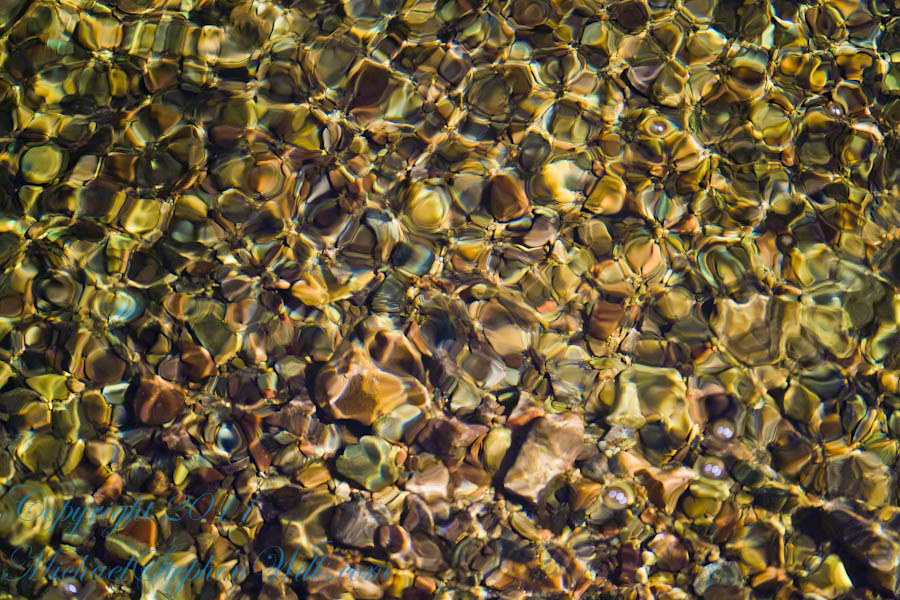
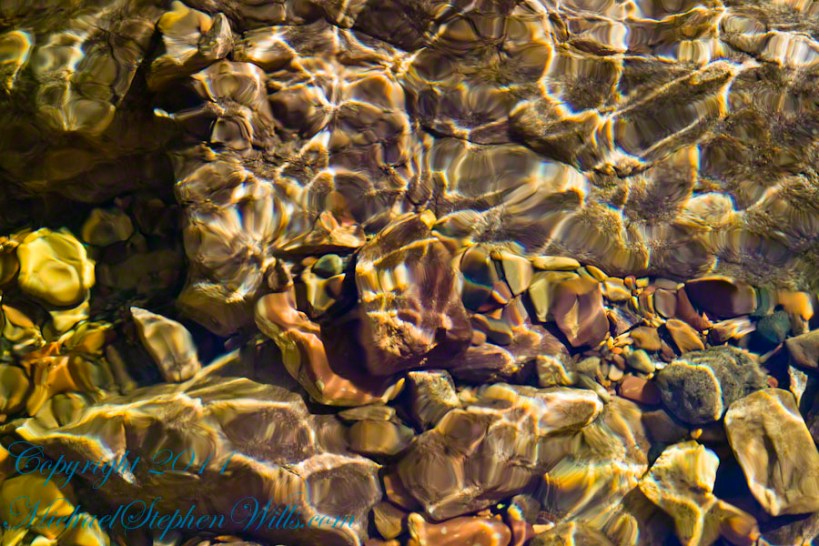
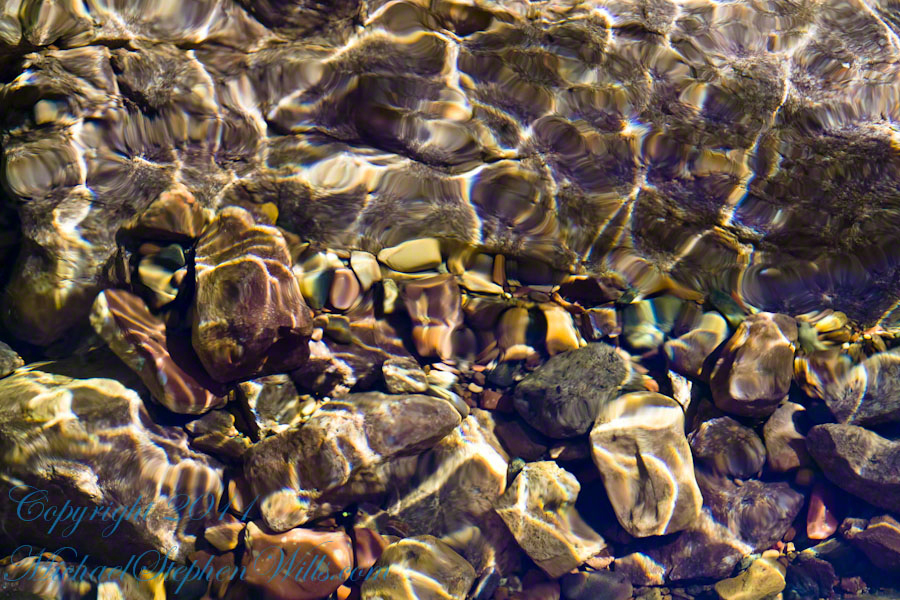
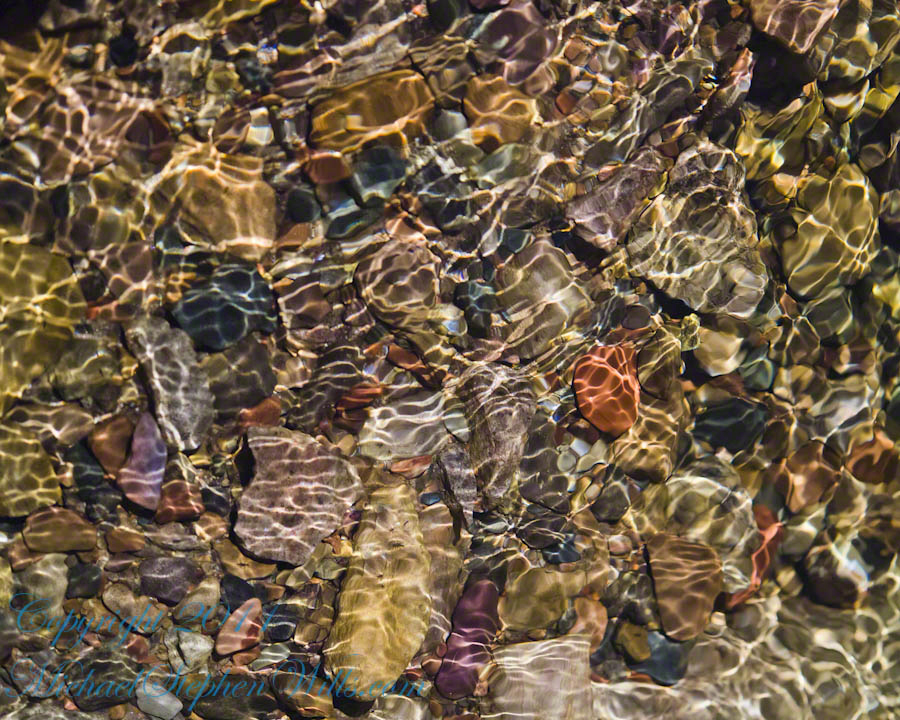
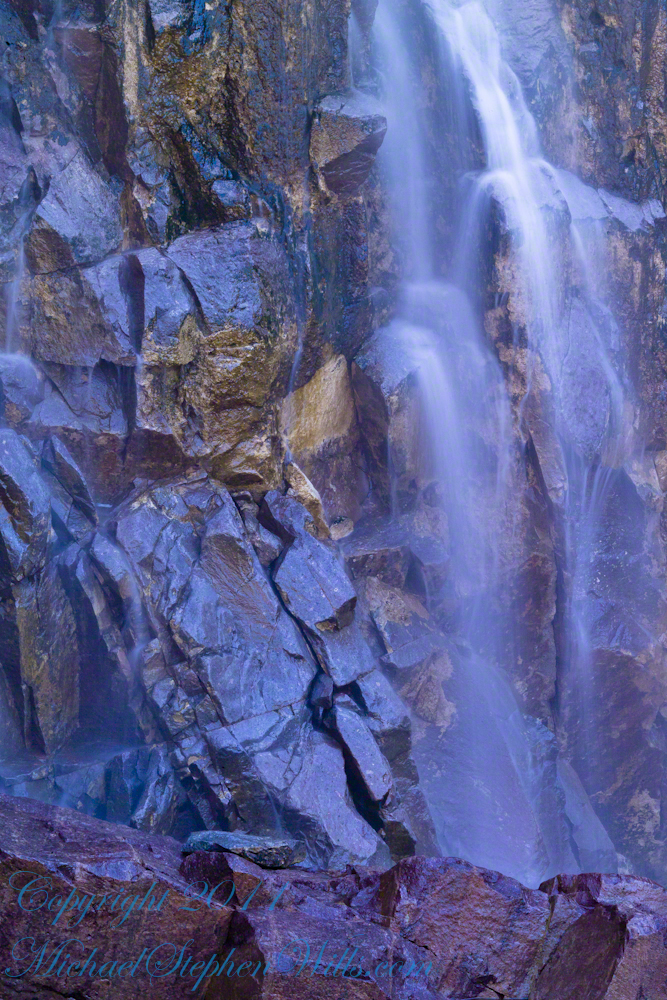
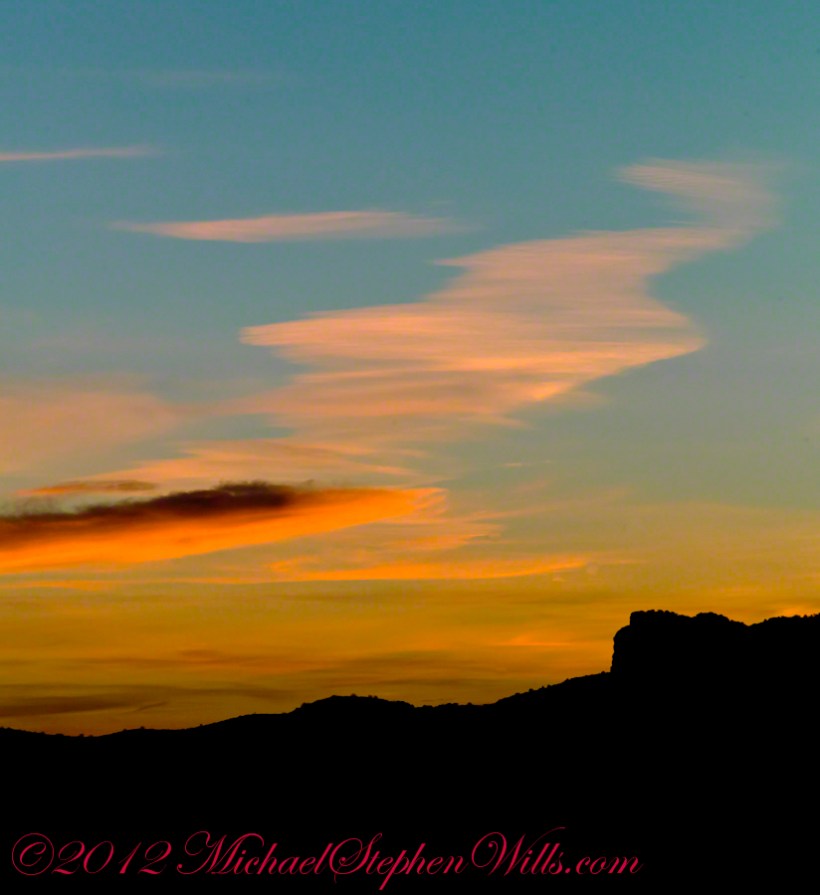
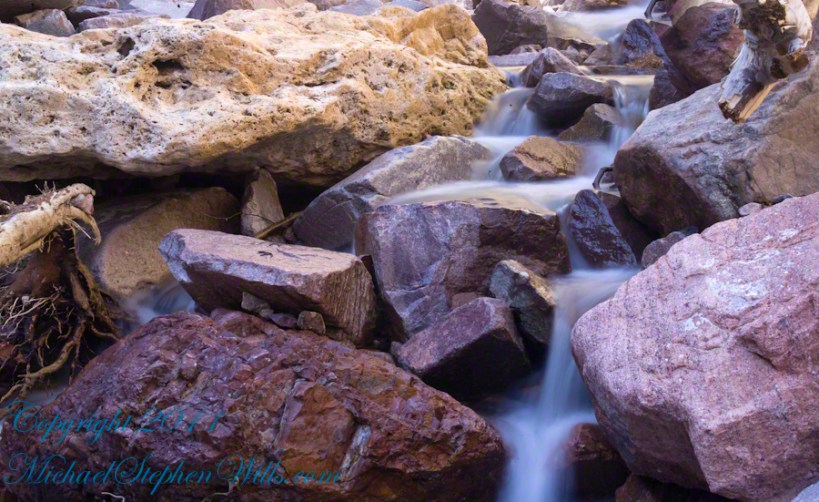
In this chapter I present, in the header, the lovely dawn sky of that day, and a tiny corner of a rock jumble in Reavis Creek. There is a large format version of the sky in my previous post, “The Mouth of Reavis Canyon.”
Rivulets and Rocks
Copyright 2023 Michael Stephen Wills All Rights Reserved


 Michael Stephen Wills Photography