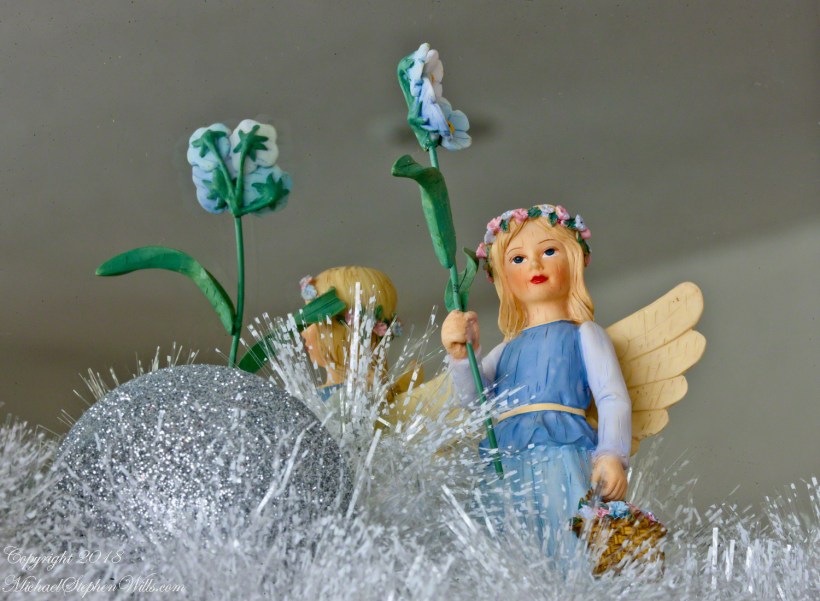


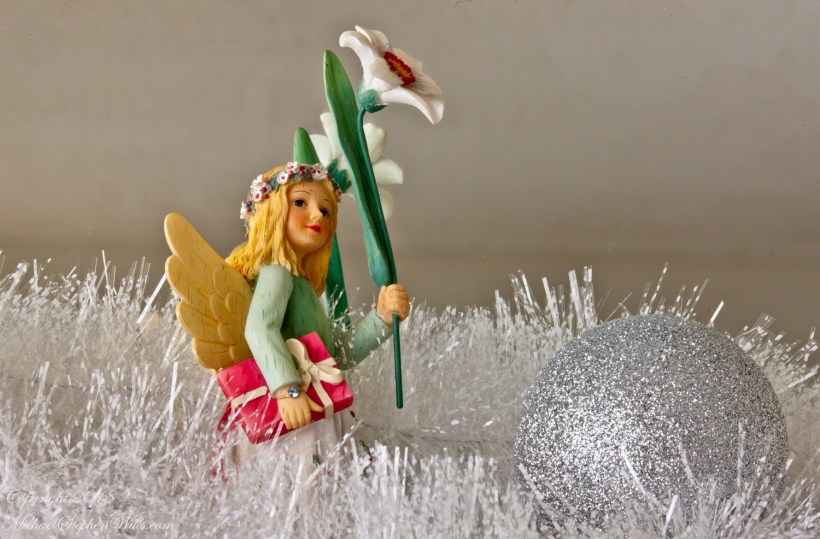
Christmas Ornaments III

Ooen me up to experience this vigilantly poised resin fairy figure, ignoring her floral backdrop, personifying a lambent, defiant spirit.
Continue reading “Christmas Ornaments III”

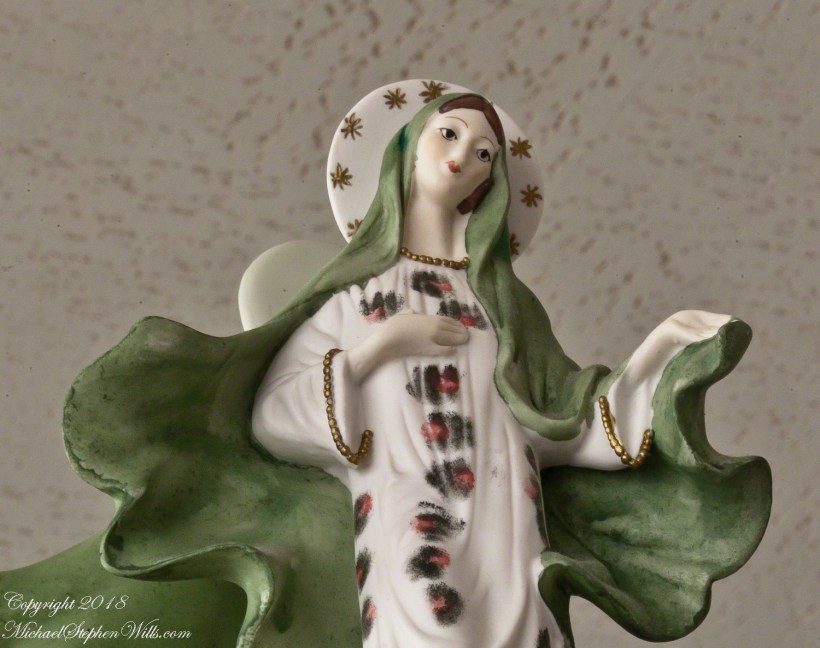
Christmas Ornaments II

Pam incorporated a gifted resin sprite figure into her “Immaculate Conception” Christmas display, symbolizing a season’s emblem.
Continue reading “Christmas Ornaments II”

October Afternoon

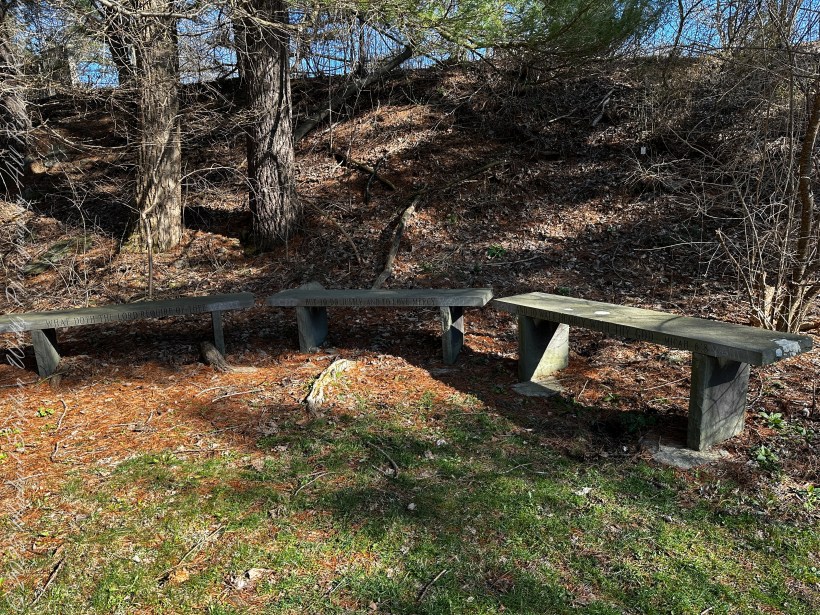
The town of Ithaca evokes serene charm with its blend of history and modernity. Its community spirit is embodied in key symbols such as the local Fire Department and a public apple sculpture, a tribute to nature’s riches. Ithaca’s architectural prowess reflects generational craftsmanship, while the exuberance of local daisies exemplifies optimism. Encapsulating everyday beauty and shared experiences, Ithaca is more than a geographical location—it’s an ongoing narrative.
Continue reading “October Afternoon”

Stone Bench Memorial

Old Testament

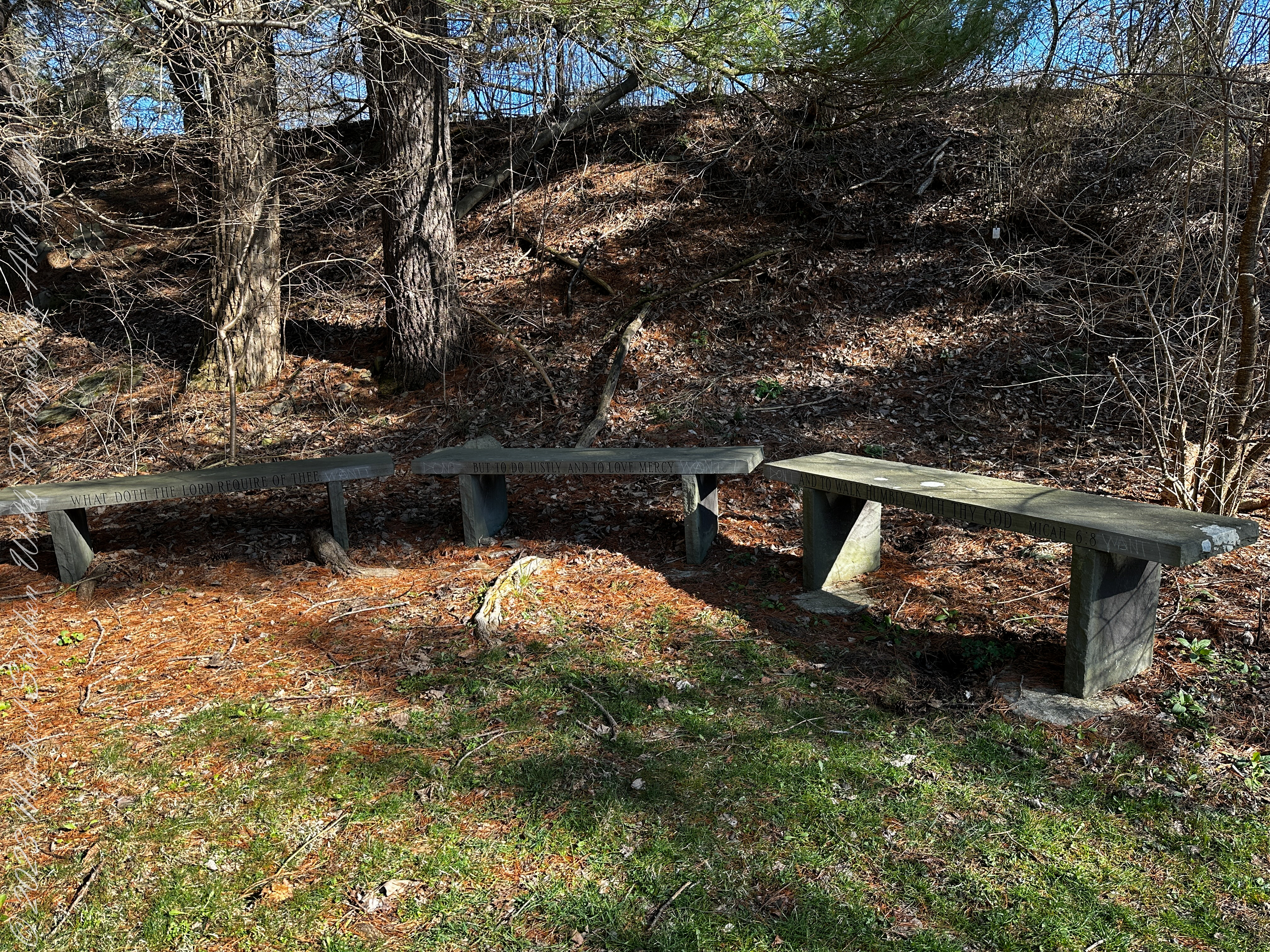
Pam and I ambled around the Arboretum for our Easter 2023 outing. We found a path new to us, with this memorial stone bench, a biblical quote engraved on the seats. Biblical Quote on bench: “What doth the lord require of thee / but to do justly and to love mercy / and to walk with thy god.” Micah 6:8

The Book of Micah is the sixth of the twelve minor prophets in the Hebrew Bible. Ostensibly, it records the sayings of Micah, whose name is Mikayahu (Hebrew: מִיכָיָ֫הוּ), meaning “Who is like Yahweh?”, an 8th-century BCE prophet from the village of Moresheth in Judah (Hebrew name from the opening verse: מיכה המרשתי). The book has three major divisions, chapters 1–2, 3–5 and 6–7, each introduced by the word “Hear,” with a pattern of alternating announcements of doom and expressions of hope within each division. Micah reproaches unjust leaders, defends the rights of the poor against the rich and powerful;[ while looking forward to a world at peace centered on Zion under the leadership of a new Davidic monarch. While the book is relatively short, it includes lament (1.8–16; 7.8–10), theophany (1.3–4), hymnic prayer of petition and confidence (7.14–20), and the “covenant lawsuit” (6.1–8), a distinct genre in which Yahweh (God) sues Israel for breach of contract of the Mosaic covenant.
Click Me for “Finger Lakes Memories” my online gallery.

All photography using the IPhone 14 ProMax triple camera, raw format, edited on the phone.

In the quote tract, (6:6–8), Micah speaks on behalf of the community asking what they should do in order to get back on God’s good side. Micah then responds by saying that God requires only “to do justice, and to love mercy, and to walk humbly with your God.” Thus declaring that the burnt offering of both animals and humans (which may have been practiced in Judah under Kings Ahaz and Manasseh) is not necessary for God.

Reference: “Micah” Wikipedia

Copyright 2023 Michael Stephen Wills All Rights Reserved

A Personable Tree

Gifts from the past

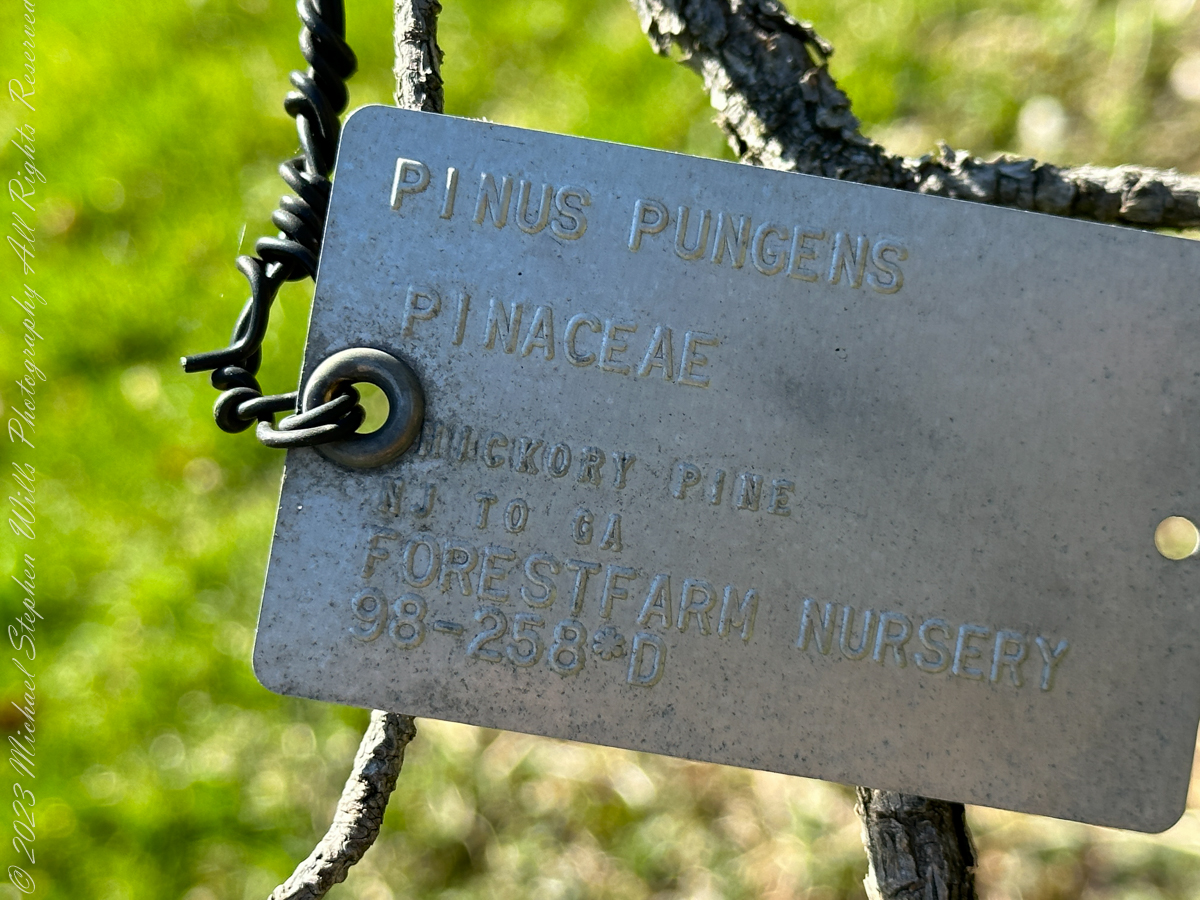
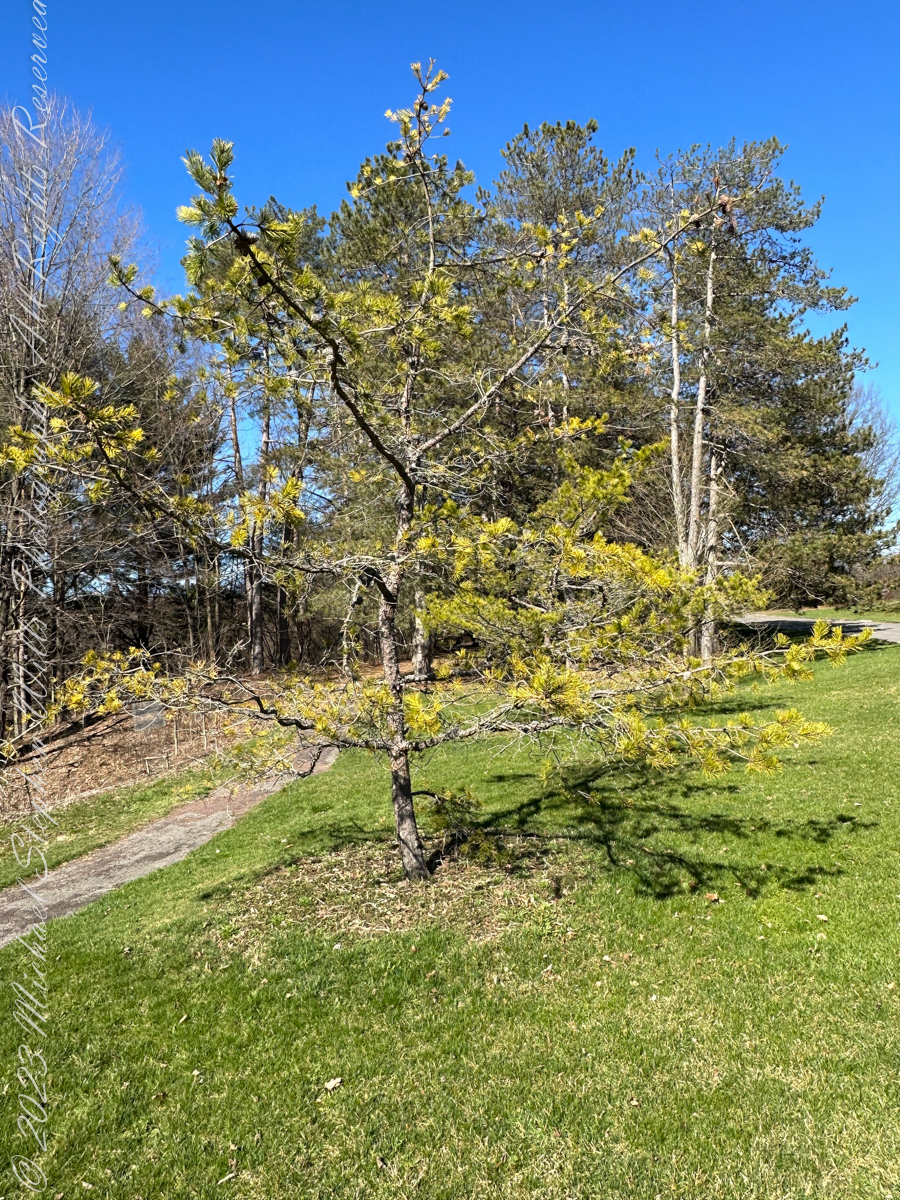
Pam and I ambled around the Arboretum for our Easter 2023 outing. Found here growing outside native range, being the Appalachian Mountains from Georgia to southern Pennsylvania, the Table Mountain Pine is named after the landform, not a particular mountain.
Click Me for “Finger Lakes Memories” my online gallery.

All photography using the IPhone 14 ProMax triple camera, raw format, edited on the phone.

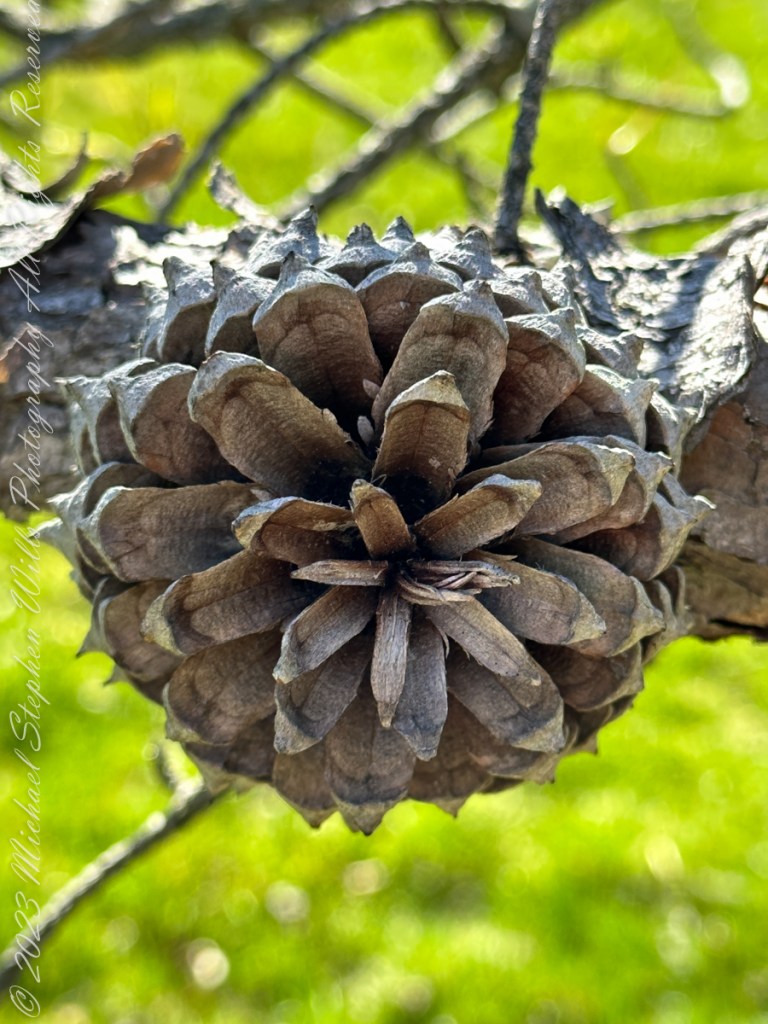
Its pinecones drew me to this scraggly, ungainly, poorly formed tree. All general mankind finds useful in the, scientific name, Pinus pungens, otherwise known as Hickory Pine, Prickly Pine and Mountain Pine, is to grind it up for pulp or chop it for tinder.
Last of the Mohicans

That said, the final scene of the 1992 film The Last of the Mohicans takes place in a nice Pinus pungens stand on a rocky mountaintop in North Carolina.

Personality

The tree has personality. Pinus pungens is the Lonesome Pine of the 1908 novel The Trail of the Lonesome Pine by John Fox, and popularized in the Laurel and Hardy film Way out West: “On the Blue Ridge Mountains of Virginia On the Trail of the Lonesome Pine” Several “Lonesome Pine” hiking trails have been waymarked in the Blue Ridge Mountains and elsewhere in the Appalachians.

Pinecone Bud

Pinus pungens prefers dry conditions and is mostly found on rocky slopes, favoring higher elevations, from 300–1,760 meters (980–5,770 ft) altitude. It commonly grows as single scattered trees or small groves, not in large forests like most other pines, and needs periodic disturbances for seedling establishment. The three tallest known ones are in Paris Mountain State Park, South Carolina; they are 26.85 to 29.96 meters (88 ft 1 in to 98 ft 4 in) tall.
Reference: “Pinus pungens” Wikipedia.

Copyright 2023 Michael Stephen Wills All Rights Reserved

Bluestone Monuments

Gifts from the past

Pam and I ambled around the Arboretum for our Easter 2023 outing. A type of sandstone popular with Cornell monument builders, called “Lenroc” after a mansion build by Cornell’s founder, was used for these benches built into the hillside of the FR Newman Arboretum. The views are more interesting than the bench, the arch of stone in midground in one photo.

Click Me for “Finger Lakes Memories” my online gallery.

All photography using the IPhone 14 ProMax triple camera, raw format, edited on the phone.

The stone is mined locally from surrounding hills. Calling it “Lenroc” (Cornell spelled backward) is a misnomer as the stone is mined widely throughout the region.

Feldspathic Greywacke

“Bluestone from Pennsylvania and New York is a sandstone defined as feldspathic greywacke. The sand-sized grains from which bluestone is constituted were deposited in the Catskill Delta during the Middle to Upper Devonian Period of the Paleozoic Era, approximately 370 to 345 million years ago…..
Glacial Landscape on an early spring day, Easter 2023

Textures

…The Catskill Delta was created from runoff from the Acadian Mountains (“Ancestral Appalachians”). This delta ran in a narrow band from southwest to northeast and today provides the bluestone quarried from the Catskill Mountains and Northeastern Pennsylvania. The term “bluestone” is derived from a deep-blue-colored sandstone first found in Ulster County, New York.”

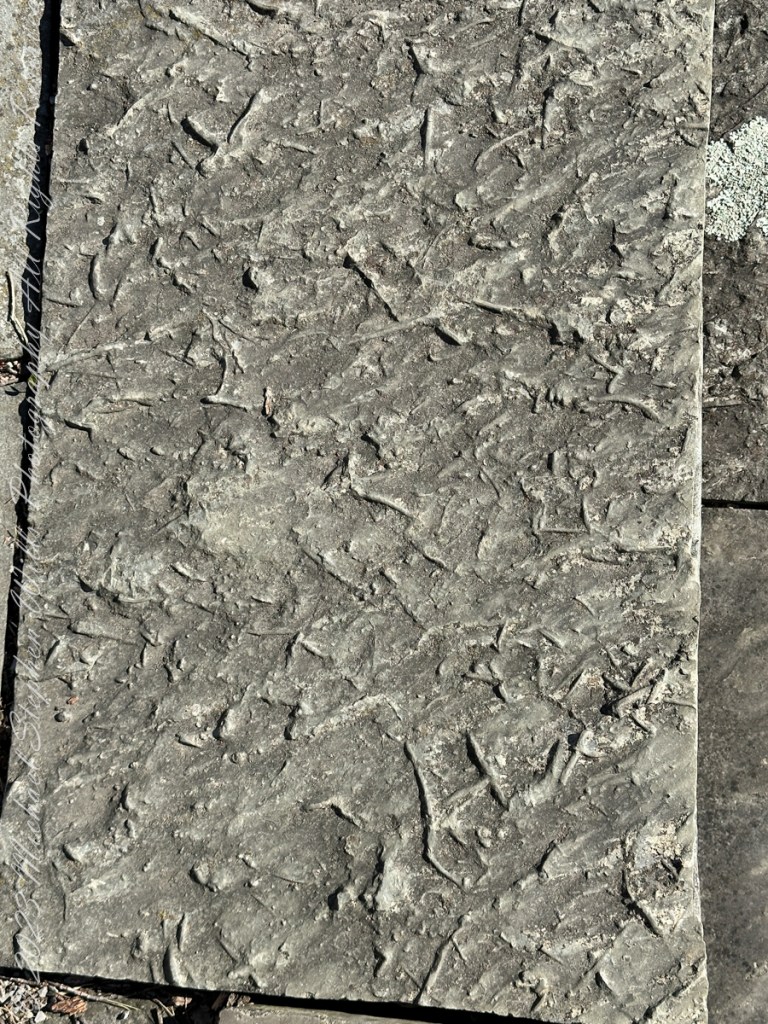
You can feel the origin of this bluestone from these macros of two pavers from a monument bench.
Reference: “Bluestone” Wikipedia.

Copyright 2023 Michael Stephen Wills All Rights Reserved

Winter Magic

a meditation

Found along the Hoyt-Pileated Trail, Sapsucker Woods, Sunday, March 12, 2023.

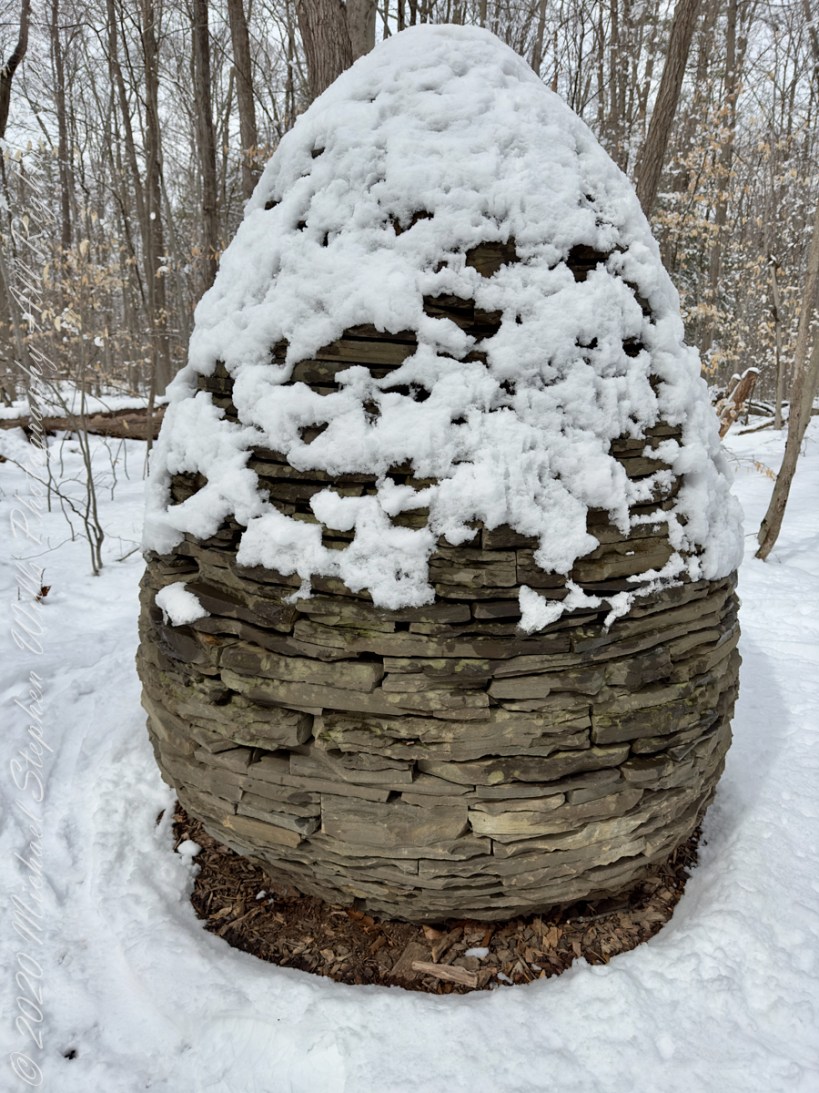
Text of plaque reads: Andy Goldsworthy; British, born 1956; “Sapsucker Cairn” (formerly New York Cone), 1995 – 2008; Llenroc and other local stone; Gift of Sirje Helder Gold and Michael O. Gold, rededicated in memory of their beloved son Maximilian Arnold Gold; Herbert F. Johnson Museum of Art.

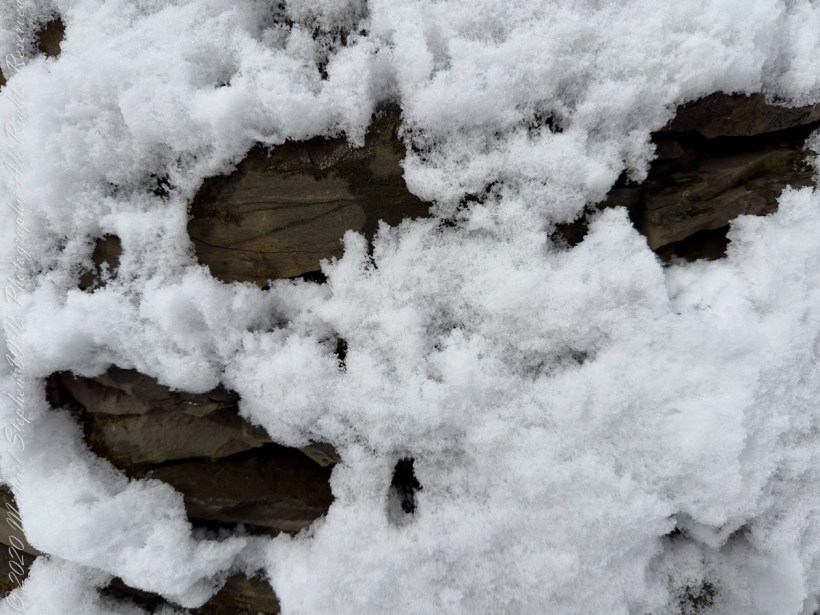
A sculpture transformed by a March snowfall. Notice how the stone, warmed by sunlight filtering through the leafless trees, melts surrounding snow.
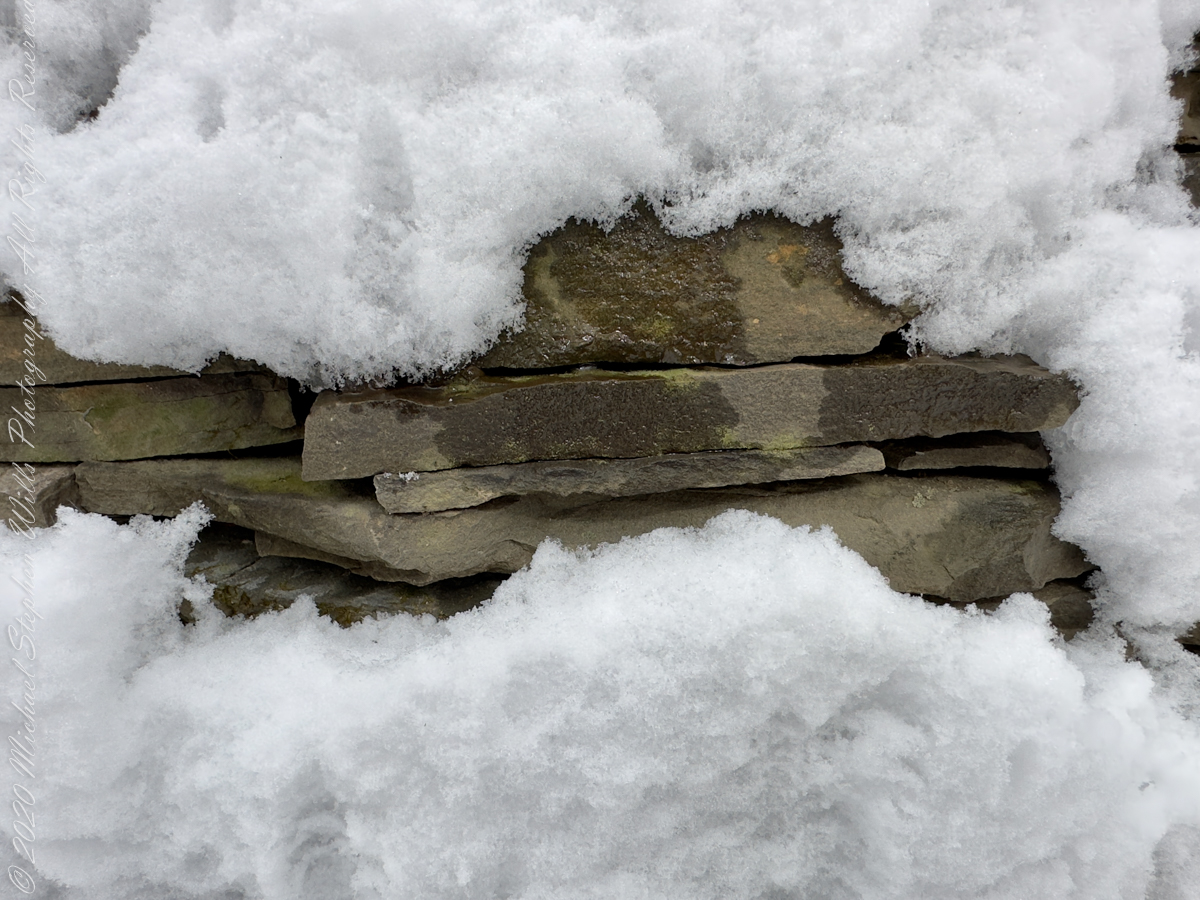
Llenroc (Cornell spelled backwards) stone is a type of bluestone that is quarried in the Finger Lakes region of New York. It has a mix of blue-gray and rust color and is traditionally used on Cornell University’s campus. Llenroc is also the name of a Gothic revival villa built by Ezra Cornell, the founder of Cornell University.
Click Me for “Finger Lakes Memories” my online gallery.

Copyright 2018 Michael Stephen Wills All Rights Reserved

Kiva, Sipapu, Omphalos

Place Sense

Discovery

How many of the Mesa Verde 23 kivas can you identify in this panorama? You many need to read this post before answering.

Cliff Palace panorama from two images

Click me for more Mesa Verde works in my Fine Art Gallery

What is a Kiva?

A kiva is a space used by Puebloans for rites and political meetings, many of them associated with the kachina belief system. Among the modern Hopi and most other Pueblo peoples, “kiva” means a large room that is circular and underground and used for spiritual ceremonies.

The Square Tower with four Kivas

Similar subterranean rooms are found among ruins in the North American South-West, indicating uses by the ancient peoples of the region including the ancestral Puebloans, the Mogollon, and the Hohokam.

A portion of Cliff Palace including many Kivas, the round and square towers.

Those used by the ancient Pueblos of the Pueblo I Period and following, designated by the Pecos Classification system developed by archaeologists, were usually round and evolved from simpler pit-houses.

Two Kivas, one with broken wall.

For the Ancestral Puebloans, these rooms are believed to have had a variety of functions, including domestic residence along with social and ceremonial purposes.

The entire Cliff Palace from the overlook, from a single wide-angle image.

During the late 8th century, Mesa Verdeans started building square pit structures that archeologists call protokivas. They were typically 3 or 4 feet (0.91 or 1.22 m) deep and 12 to 20 feet (3.7 to 6.1 m) in diameter. By the mid-10th and early 11th centuries, these had evolved into smaller circular structures called kivas, which were usually 12 to 15 feet (3.7 to 4.6 m) across.

Sipapu

Mesa Verde-style kivas included a feature from earlier times called a sipapu, which is a hole dug in the north of the chamber that is thought to represent the Ancestral Puebloans’ place of emergence from the underworld

Here is a close-up of the kiva floor of the Balcony House. 

Balcony House Kiva

The sipapu is the smaller pit in the floor to the left (north side) and partially blocked by the kiva wall. The larger is a firepit. The small wall to the right is placed to deflect airflow from a floor vent.

Balcony House Kiva, to the right is the floor vent in wall and deflector stone. There is the firepit and a tiny portion of the sipapu at the left edge.
I count 14 Kivas in the Cliff Palace panorama, including some with broken walls.

What is the Connection, if any, between Omphalos and Sipapu?

The global coordinate system was known to ancient Greeks, in fact they are credited with the discovery a system to locate any place on earth, an insight contained in myths of how Zeus founded Delphi as the “center of the world,” the place from which divinity irrupts, by setting two eagles at opposing ends of the world to fly, starting at the same time, same speed, the central world point identified by where the eagles’ paths crossed.

Bronze Coin from the Ptolemaic Kingdom of Egypt, reign of Ptolemy VI 2nd Century BC with the head of Zeus on one side and double eagles riding a thunderbolt on the other

To signify Delphi as this center a religious stone artifact, called an omphalos, was placed.

Most accounts locate the Delphi omphalos in the adyton (sacred part of the temple) near the Pythia (oracle). The stone sculpture itself  (which may be a copy) is there to this day.  The surface is a carving of a knotted net, the center hollow and widening towards the base. The omphalos represents the stone which Rhea wrapped in swaddling clothes, pretending it was newborn Zeus, in order to deceive Cronus. (Cronus was the father who swallowed his children so as to prevent them from usurping him as he had deposed his own father, Uranus).

The omphalos stone was believed to allow direct communication with the gods.  Historians theorize the stone was hollow to allow intoxicating vapors breathed by the Oracle (priestess) to channel through it. However, understanding of the use of the omphalos is uncertain due to destruction of the site by Theodosius I and Arcadius in the 4th century CE.

That leaves us with the word, omphalos. In Greek the original meaning is navel, the anatomical reminder to humans of their source.

Comparing and contrasting these terms used by cultures separated widely by geography and time:

sipapu is a religious symbol of the place ancestral peoples irrupted, born, into this world, emerging from the earth. From my readings, the word sipapu is a direct reference to the symbol. There are many sipapu, small holes in the floor of kivas (timetimes a hole in a wooden plank), representing a single place.

omphalos is a religious symbol of where the divine irrupts into the world, from the earth, with direct linguistic natal (birth) associations. A single omphalos stone designates a single place.

Copyright 2023 Michael Stephen Wills All Rights Reserved

Flip Flop Reef Fish

Various reef fish set up “cleaning stations” where turtles and other fish come to have parasites nibbled off.

50 recycled flip flops were used by Ocean Sole Africa Project artists to create each Reef Fish sculpture from a 2019/2020 exhibit hosted by McKee Botanical Gardens, Vero Beach, Indian River County, Florida.

Coral reef fish live among or in close relation to coral reefs. Coral reefs form complex ecosystems with tremendous biodiversity. Among the myriad inhabitants, the fish stand out as colorful and interesting to watch. Hundreds of species can exist in a small area of a healthy reef, many of them hidden or well camouflaged.

Reef fish have developed many ingenious specializations adapted to survival on the reefs. Safe habitats, many different species of fish inhabit coral reefs where they are protected from predators and find food. In turn, reef fish eat algae, preventing overgrowth and smothering of the coral animals. Common fish in Caribbean reefs have interesting names: parrot, angel, puffer, surgeon and clown.

Coral reefs occupy less than 1% of the surface area of the world oceans but provide a home for 25% of all marine fish species. Reef habitats are a sharp contrast to the open water habitats that make up the other 99% of the world oceans. Loss and degradation of coral reef habitat, increasing pollution, and overfishing including the use of destructive fishing practices, are threatening the survival of the coral reefs and the associated reef fish.

Copyright 2022 Michael Stephen Wills All Rights Reserved