From Myths to Medicine Unraveling the Tales of False Solomon’s Seal

Step into Treman Gorge and discover the enchanting world of False Solomon’s Seal. Unveil the myths, medicinal uses, and ecological wonders of Smilacina racemosa as it flourishes beneath the forest canopy.

In the shaded woodland of Treman Gorge, near the tumbling waters of Lucifer Falls, the understory blooms with the intriguing presence of Smilacina racemosa, commonly known as false Solomon’s seal. This perennial wildflower’s identity is as layered as the forest floor it adorns, its names—both scientific and common—woven with historical and cultural threads.

Smilacina racemosa—the plant’s scientific name—offers a botanical breadcrumb trail to its identity. “Smilacina” derives from a diminutive form of the Latin word for smile, “smilax”, a reference not to the plant’s demeanor but to its resemblance to the related sarsaparilla plants, which belong to the genus Smilax. The species name “racemosa” speaks directly to its form, describing the characteristic raceme or cluster of flowers that gracefully arch at the end of its stalk, each blossom a delicate dot along the green wand.

The common name, false Solomon’s seal, tells a tale of mistaken identity and botanical homage. The name playfully suggests a sibling rivalry of sorts with its look-alike, the true Solomon’s seal (Polygonatum), which bears its flowers and fruits along the stem, rather than at the tip as in Smilacina. The term “Solomon’s seal” itself is steeped in lore, supposedly referring to the circular seals from King Solomon’s ring—a mark of wisdom and an echo in the circular scars on the rhizome of the true Solomon’s seal. Here, in this false version, the legacy is mimicked in form but remains uniquely distinct in its flowering finale.

As for its cultural tapestry, false Solomon’s seal holds its own chapter in Native American ethnobotany. The plant was not merely a forest decoration but a source of sustenance and medicine. Its young shoots and leaves were often harvested in spring, a woodland asparagus of sorts, eaten raw or cooked. The roots served a more medicinal role, employed in treatments from stomachaches to rheumatic pains, revealing a deep-rooted reverence for this plant’s healing potential.

Beyond its uses, false Solomon’s seal paints a broader stroke in the ecological canvas of Treman Gorge. Flowering in May, its creamy white blossoms are a ballet of light in the dappled shade, attracting a suite of spring pollinators. By autumn, the flowers give way to speckled red berries, a feast for the eyes and a banquet for birds and mammals, knitting itself into the life threads of its woodland home.

Thus, the journey of understanding Smilacina racemosa is as much about unearthing its etymological roots as it is about appreciating its ecological and cultural resonance. A plant of beauty and utility, it stands as a silent sentinel in the history-laden woods of Treman Gorge, its presence a whispered tale in the symphony of spring. As it stretches beneath the towering trees, it invites those who wander to delve deeper into its story, a tale woven through the very fabric of the forest floor.

Copyright 2024 Michael Stephen Wills All Rights Reserved

Discovering the Delicate Beauty of Mitella Diphylla in Treman Gorge

As you wander virtually through Treman Gorge, let yourself be charmed by the delicate Mitella diphylla. Discover this modest yet mesmerizing wildflower, a hidden gem among the forest’s early spring tapestry.

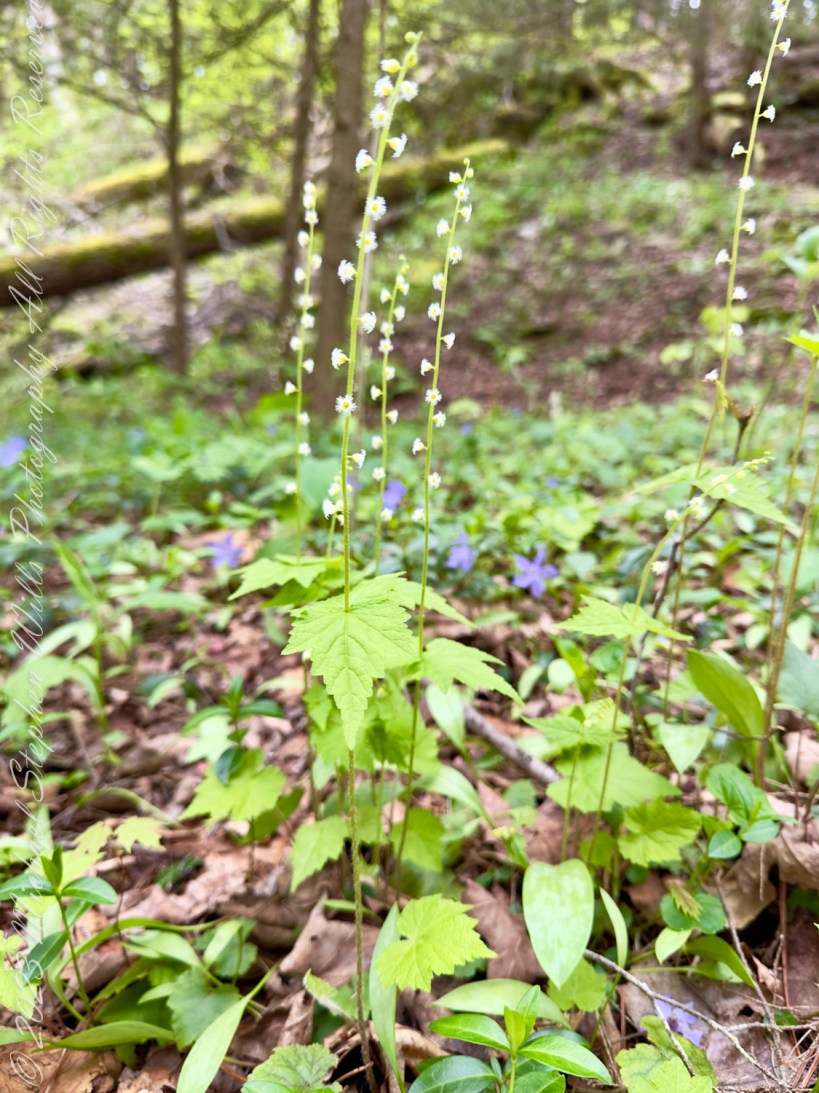
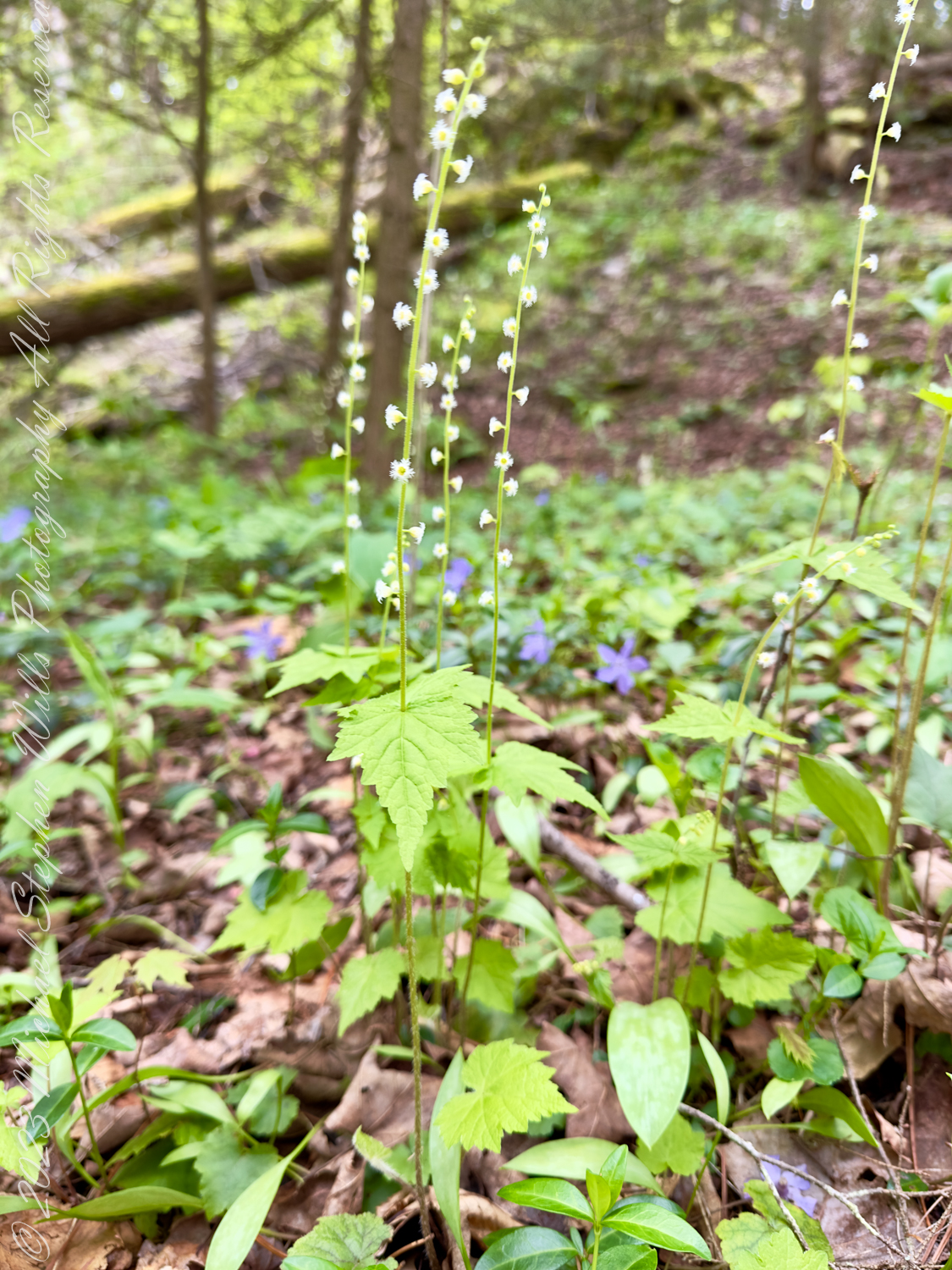
As I rediscover the wonders of Treman Gorge this spring, I stumbled upon a delightful surprise nestled among the leaf litter—an encounter with Mitella diphylla, commonly known as the bishop’s cap or two-leaved miterwort. This charming wildflower, modest yet mesmerizing, seemed to beckon with its understated beauty, provoking a sense of wonder at its delicate presence.

The name Mitella diphylla is a poetic nod to its physical form—’Mitella’ meaning ‘little mitre,’ a reference to the small, mitre-shaped capsules of the fruit, and ‘diphylla,’ meaning ‘two leaves,’ highlighting its characteristic pair of basal leaves. This etymology whimsically captures the essence of the bishop’s cap, a plant whose morphology and name alike hint at a past intertwined with religious symbolism and natural history.

Physically, Mitella diphylla is a study in grace and efficiency. Its slender, upright stems rise unassumingly from the forest floor, crowned by a spire of tiny, star-like white flowers. Each flower, though no more than a whisper on the wind, is a masterpiece of design, with five deeply cut petals that seem to twinkle against the backdrop of the gorge’s dappled light. The leaves, broad and heart-shaped, lay a verdant carpet at the base, completing this picturesque plant profile.

Nestled in the cool, moist understory of Treman Gorge, the bishop’s cap finds its ideal habitat. Here, under the canopy of mature deciduous trees, it plays a subtle yet significant role in the ecosystem. The flowers, though not flamboyant, are a crucial nectar source for early spring pollinators, who are drawn to its discreet charm. The plant’s presence also speaks to the health of its woodland habitat—thriving in undisturbed soil, where it forms part of a complex web of flora and fauna.

Discovering Mitella diphylla in its natural setting was a reminder of the layered complexity and interconnectedness of our ecosystems. Each element, no matter how small or seemingly insignificant, holds a place in the narrative of the natural world. To encounter such a wildflower is to be gifted a moment of connection with the past and a simple, pure joy in the persistence of nature’s subtle beauties.

Copyright 2024 Michael Stephen Wills All Rights Reserved

The Living Tapestry of Treman Gorge

Discover the enchanting world of Treman Gorge through its ancient ferns. Step into a living tapestry where nature’s resilience paints a story of survival and beauty. Dive deeper into this magical realm by reading our latest blog post.

Entering Treman Gorge


As I step into the lush expanse of Treman Gorge, I am enveloped by a verdant cathedral of nature. The gentle murmur of flowing water blends with the chorus of birds, creating a symphony that resonates deep within me. The air is fresh, filled with the earthy aroma of damp foliage, inviting me deeper into its serene embrace.

“The Gallery” entrance to Tremen Gorge from the upper park.

Among Ancient Rocks

The gorge is a geological marvel, sculpted from layers of Devonian shale and sandstone. These sedimentary rocks, formed over 400 million years ago, tower around me, formidable and steeped in history. The stratified patterns on their surfaces tell tales of ancient rivers and seas that once dominated this landscape, leaving behind sediments that would compact into the shale and sandstone seen today.

The Flourish of Life on Stone

Along the damp trails, vibrant mosses and ferns adorn the rock walls, thriving in the moist, shaded nooks. The mosses, lush and green, form thick carpets that breathe life into the stone. Among them, patches of Dicranum moss are notable for their robust, upright growth. Ferns, too, make their home here, with Polystichum acrostichoides, or Christmas fern, prevalent for its evergreen fronds that add year-round color to the grey stone backdrop.

Ephemeral Pools and Nature’s Adaptation

Small pools of water collected in the rock crevices create microhabitats buzzing with life, from aquatic insects to amphibians seeking refuge. These clear, cool pools mirror the verdant foliage and blue skies above, creating tranquil tableaus of the gorge’s hidden depths.

The Role of Ferns and Mosses in Human History

Ferns and mosses, beyond their beauty and ecological roles, have practical applications that have been recognized since ancient times. Ferns have been used in traditional medicines for their anti-inflammatory and pain-relieving properties. Certain species, like the bracken fern, were used by Native Americans for food, medicine, and even bedding during travel.

Mosses also hold significance in human history. Their excellent insulation properties made them a popular choice for lining chinking in log cabins or as a packing material to keep food fresh. In modern times, the absorptive properties of moss are harnessed in ecological projects such as biofiltration, to clean contaminants from water.

Native American Heritage in Treman Gorge

The history of Native Americans in areas like Treman Gorge is rich with culture and deep respect for the natural world. They utilized the gorge’s resources sustainably, understanding the intrinsic value of each plant and animal. For example, the gorge’s abundant moss and fern-covered landscapes provided not only material resources but also spiritual significance. These plants were often used in ceremonial practices, symbolizing life and fertility, and were integral in storytelling and oral traditions that passed vital knowledge through generations.

Enfield Creek in Treman Gorge

Reflections on Resilience and Beauty

With each step through Treman Gorge, I feel a deep connection to the past—each rock, moss patch, and fern frond speaks of endurance and adaptability. In the grand timeline of Earth, my presence is but a fleeting moment, yet it is intertwined with the eons of history embedded in this place.

Devil’s Kitchen Waterfall above Lucifer Falls

Treman Gorge, with its ancient rocks and thriving plant life, stands as a testament to the resilience and beauty of nature. It reminds us of the world’s perpetual motion, of life’s ability to adapt and thrive in the face of time’s relentless passage. Here, amidst the moss-covered rocks and fern-laden paths, I find a sense of peace and continuity, a connection to the Earth that is both humbling and uplifting.

Concluding Thoughts

As I leave Treman Gorge, the echo of the water and the rustle of leaves linger in my mind, a reminder of the timeless dance between nature and those who walk its paths. This place is a living library, holding the secrets of millennia, reminding us of our place in nature’s vast narrative and the enduring legacy of those who walked these paths before us.

Copyright 2024 Michael Stephen Wills All Rights Reserved
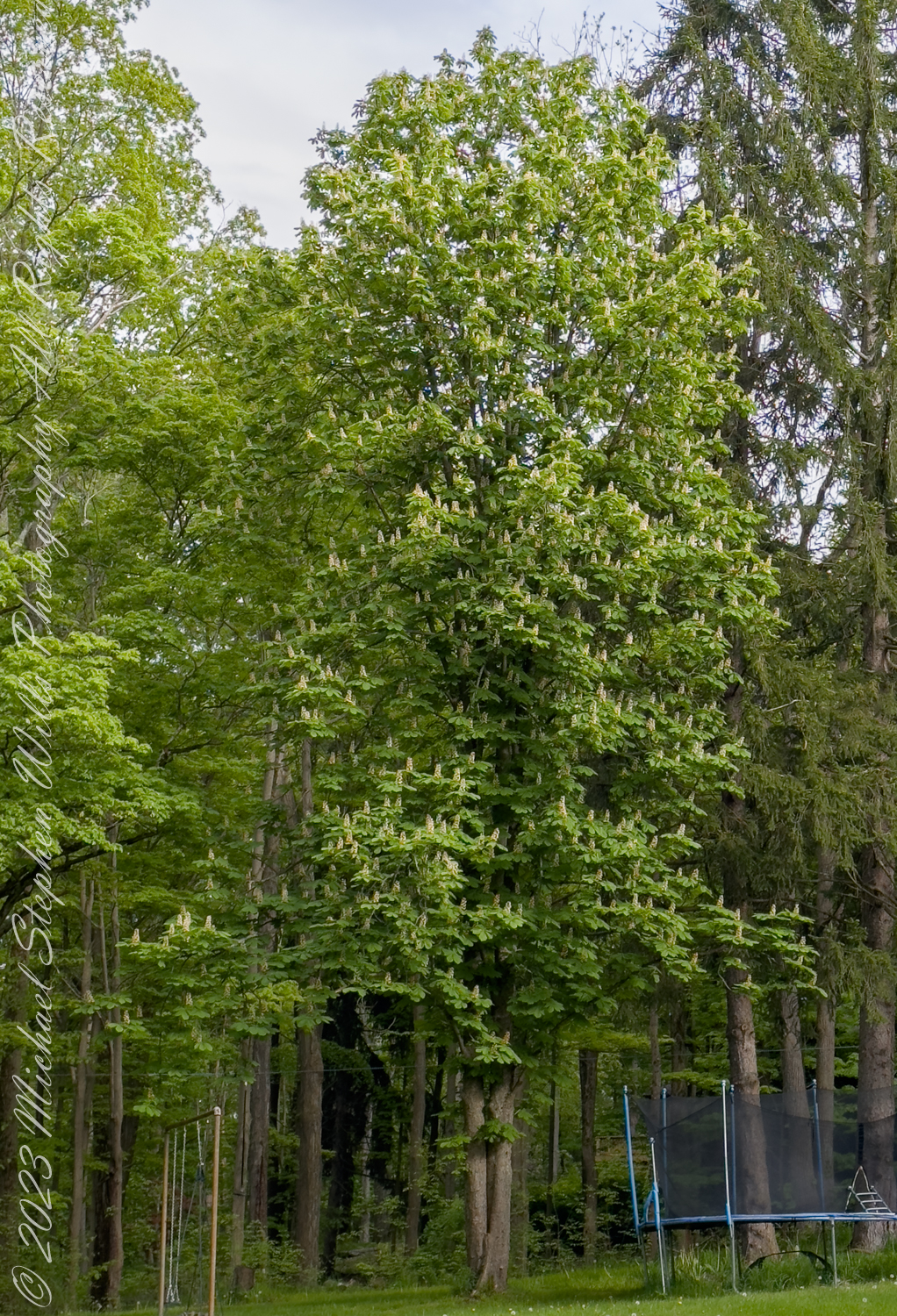
Mother’s Day Amid the Blossoms of the Horse Chestnut

Explore the enchanting world of the Horse Chestnut, its vibrant spring blossoms, and its rich tapestry of historical and ecological significance, as I wander the slopes above Cayuga Lake on a serene Mother’s Day.


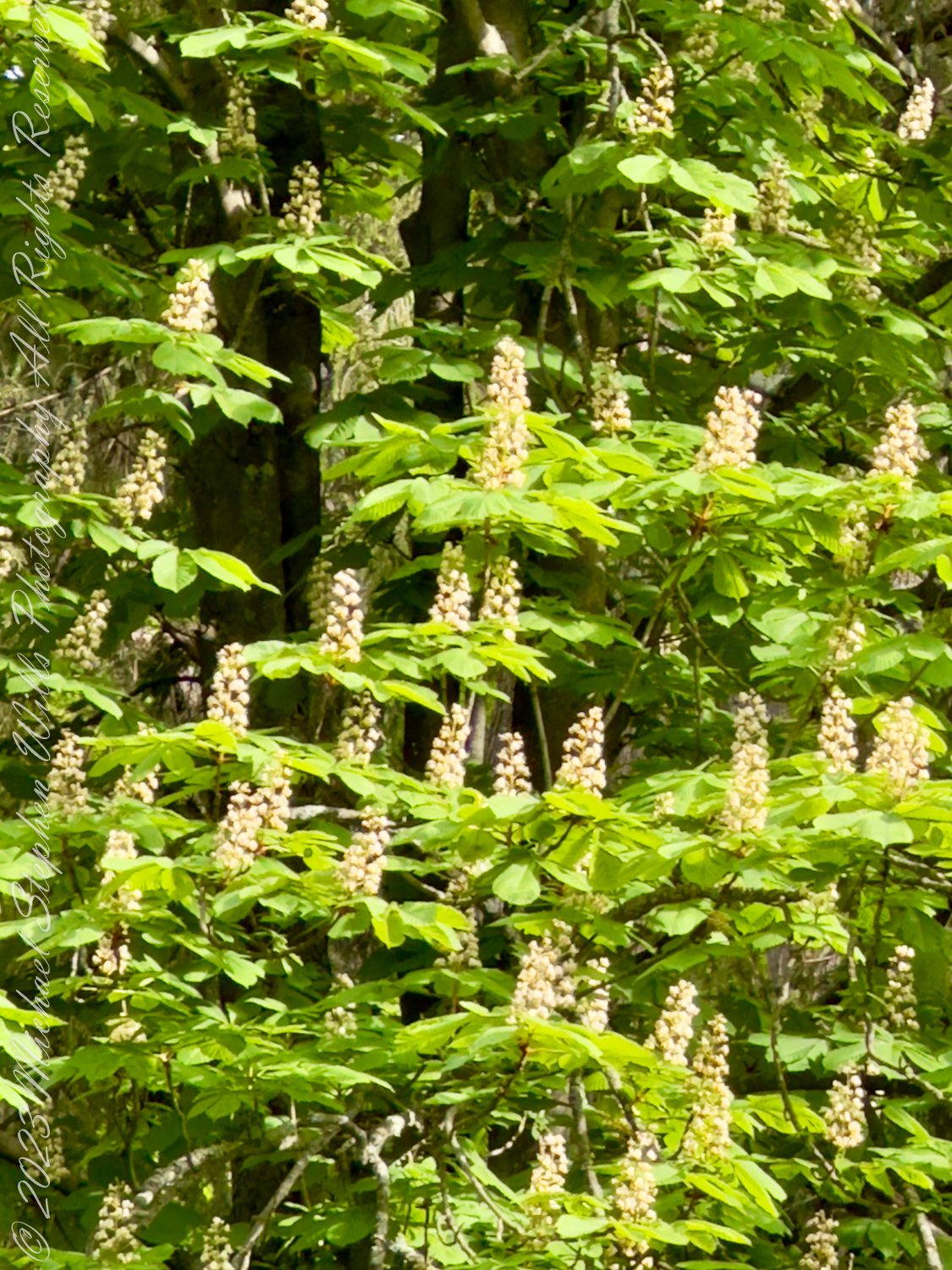
On a serene Mother’s Day in 2024, I found myself walking the slopes above Cayuga Lake, embraced by the spring warmth and the vibrant blossoms of the Horse Chestnut tree (Aesculus hippocastanum). This moment was a seasonal celebration and a deep dive into the botanical and cultural tapestry that this majestic tree weaves.

The Botanical Brilliance of the Horse Chestnut


The Horse Chestnut tree, with its robust stature and radiant floral displays, is a sight to behold, a study in botanical survival and adaptation. Originally native to a small area in the Pindus Mountains mixed forests and the Balkan mixed forests of Southeast Europe, this tree has traversed continents and histories to root itself into diverse landscapes, including the fertile grounds above Cayuga Lake.

Each spring, the Horse Chestnut’s candle-like flower spikes, scientifically known as ‘panicles’, burst forth in a shower of whites and subtle pinks, each petal marked distinctively with a blotch of yellow or red. These blooms are structured to attract a variety of pollinators, playing a crucial role in the local ecological narrative by supporting biodiversity.

Historical Uses and Cultural Significance


The journey of the Horse Chestnut tree from its native lands to the Americas is a tale of practicality and reverence. Native Americans, prior to the arrival of European settlers, were keen observers of their environment but may not have had a direct historical use for the Horse Chestnut, as it was introduced later. However, the European settlers quickly discovered the tree’s multiple uses. The wood, known for its softness and workability, was used to make furniture and boxes, while the bark found its place in the tanning industry due to its rich tannin content.

Most notably, the seeds of the Horse Chestnut were ground and used as a form of laundry detergent and to treat various ailments, a testament to the tree’s utility in pioneering life. This aspect of the Horse Chestnut highlights a broader theme of how both Native Americans and European settlers utilized natural resources for survival and economic purposes, blending the lines between utility and conservation.

A Reflection on the Natural History and Ecology


As I strolled beneath the boughs heavy with spring’s bounty, the historical echoes of the Horse Chestnut’s uses merged with the present chorus of birds nesting in its branches. The tree’s role extends beyond human uses; it is a vital component of the local ecosystems. The dense canopy provides shelter and the flowers feed pollinators, which in turn support the broader food web.

Environmental factors, particularly those influenced by climate change, pose challenges to the Horse Chestnut. Issues such as leaf blotch and the conker tree moth threaten its health and longevity. Observing the Horse Chestnut’s current vibrancy, I am reminded of the resilience and adaptability that this species has demonstrated over centuries.

Conclusion: A Legacy Continues

As the day drew to a close and the sun cast long shadows over Cayuga Lake, the Horse Chestnut stood as a botanical specimen, a living monument to natural history and human ingenuity. The tree’s story is a powerful reminder of our intertwined destinies with the plant kingdom—how plants shape our cultures, sustain our environments, and continue to amaze with their ecological and aesthetic contributions.

Copyright 2024 Michael Stephen Wills All Rights Reserved
A Windy Winter’s Beach Morning

These videos capture a windy morning at Cocoa Beach, showcasing the American flag’s resilience and the beauty of nature.

The sun has barely risen over the horizon, casting a golden hue on the edges of the swaying palm trees. I’ve found my favorite spot on Cocoa Beach, where the sand meets the sea oats, and the Atlantic waves crash endlessly. It’s a windy winter’s morning, with the gusts howling, pulling at my shirt, tugging at the American flag standing tall amidst the dunes.

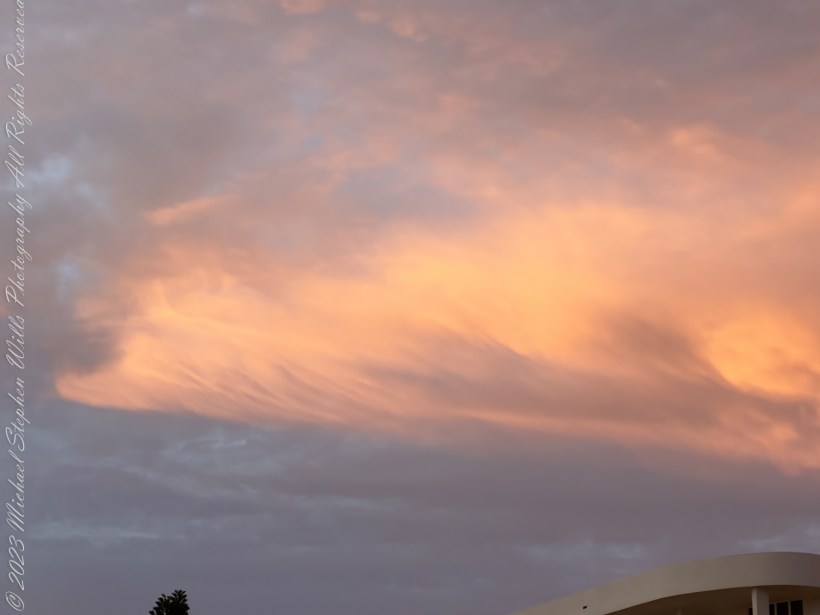
The early light of dawn illuminates clouds with a pink hue on a windy winter’s morning. Cocoa Beach, Brevard County, Florida. The Space Coast.

The flag is massive, its stars and stripes fluttering with conviction against the backdrop of an endless blue sky. Its red, white, and blue are a reminder of the freedom it represents. A symbol of history woven into every thread. In the wind, its fabric dances gracefully, in sync with the whispering leaves and the sea’s rhythm.

This particular flag has been around for years, steadfast on this patch of the Florida coast. The pole, firm and weathered, stands as a sentinel. It’s not just a symbol of patriotism but a beacon for those who wander these shores, a guiding point that has witnessed countless sunrises and sunsets, serving as a reminder of the ideals this country strives for.

Near the end of my video a squad of pelicans glides through, slicing the sky in a perfect formation. They using the wind to their advantage, and their synchronized flight is mesmerizing. Their journey is a testament to the beauty of nature’s choreography, moving with grace and purpose, guided by the same winds that ripple through the flag and carry them along the coast.

The wind is fierce today, blowing sand like fine snow across the beach. It stings my face as I watch the waves roar, driven by the same winds that make the flag soar. These are the south winds, warm and constant, flowing over the Atlantic. They pick up speed across the open waters before reaching the coast, shaping the dunes, bending the palm fronds, and reminding me of the unyielding force of nature.

The south wind is not just a whim of nature; it’s shaped by the currents that flow from the equator, by the rotation of the Earth, and by the heated lands further south. It’s nature’s breath, shifting sands and altering landscapes. This breeze carries with it a hint of salt, a whisper of the tropical climates from which it comes, and a false promise of more warmth on this winter morning.

There’s a certain serenity in being here, watching the elements play. The sea is restless, much like my thoughts. I can’t help but contemplate the forces that have shaped this land, from the explorers who first set foot here to the astronauts who launched themselves to the moon from just a few miles away. This place is steeped in history, and the flag embodies that.

As I look towards the flag again, its fabric shimmering under the sun’s rays, I think about all that it has seen. The gentle lapping of the waves reminds me of the constant change that’s part of life. The flag, though, is a steadfast sentinel, standing tall through it all, enduring the same winds and elements that buffeted it years ago. It speaks of resilience and hope, of standing tall no matter what comes your way.

I pull out my camera, capturing the flag as it flutters in the wind, its stripes rippling like waves on the sea. In a moment, I take a video, recording not just the flag but the beach around it, the sand swirling around my feet, creating transient patterns that the wind will soon erase. The video captures the essence of this place, where the wind and waves weave their own stories.

This morning, like so many before, the wind brings with it a sense of purpose. It whispers tales of the past and hints at the future, pushing me to continue exploring, to keep seeking, and to always remember what this place represents. The American flag, in its majestic flight, is more than fabric; it’s a reminder of the journey and the ideals that guide us, just like this wind pushing along the coast, unrelenting and full of promise.

Copyright 2024 Michael Stephen Wills All Rights Reserved

A Glimpse into Steamboat Landing, Ithaca, New York

Discover the enchanting beauty of Steamboat Landing in Ithaca, New York. From the quiet winter majesty to the vibrant warmth of spring, this historical waterfront is a testament to the city’s rich past and evolving present.


Historical Significance and Transformation


Steamboat Landing in Ithaca, New York, is steeped in historical significance, serving as a testament to the city’s rich past and its evolving present. At the dawn of the 20th century, it was a bustling hub where steamboats carried passengers and freight, linking Ithaca to an ever-growing nation. These vessels were vital for the development of commerce, aiding travelers as they embarked and disembarked on their journeys that continued by stagecoach or later, by train.

In 1790, this spot marked the beginnings of commerce in the area, with the establishment of Ithaca’s first store. Over the years, Steamboat Landing has transformed from a pivotal commerce point to a recreational area, housing Ithaca’s Farmers Market—a vibrant hub that mirrors the liveliness of its heyday.

The Evolving Landscape


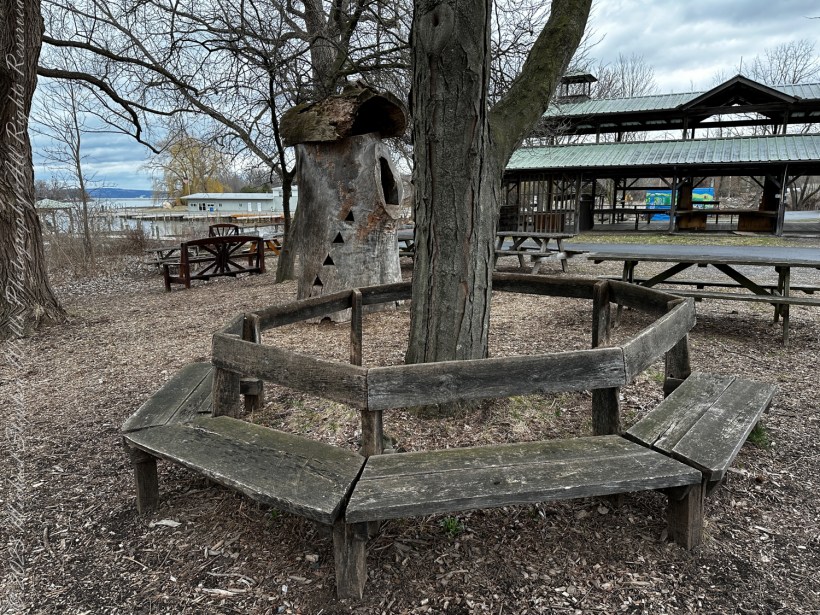
Today, Steamboat Landing is a place of gathering and serenity. My photographs showcase a tranquil setting moving through winter. In one scene, the rustic benches encircle a barren tree, standing as silent guardians of the land. It’s a still image, almost reminiscent of a painting, where the leafless trees stand vigil over the quiet benches.

A circular bench that has seen better days, a hollowed out tree trunk repurposed as a children’s playgound house, picnic benches and, in background, a portion of the Farmer’s Market pavilion, to the right is Johnson Boatyard, Cayuga Inlet and lake. This is the Steamboat Landing, historically the southern port on Cayuga Lake. Cayuga Waterfront Trail, Ithaca, Tompkins County, Finger Lakes Region, New York State.

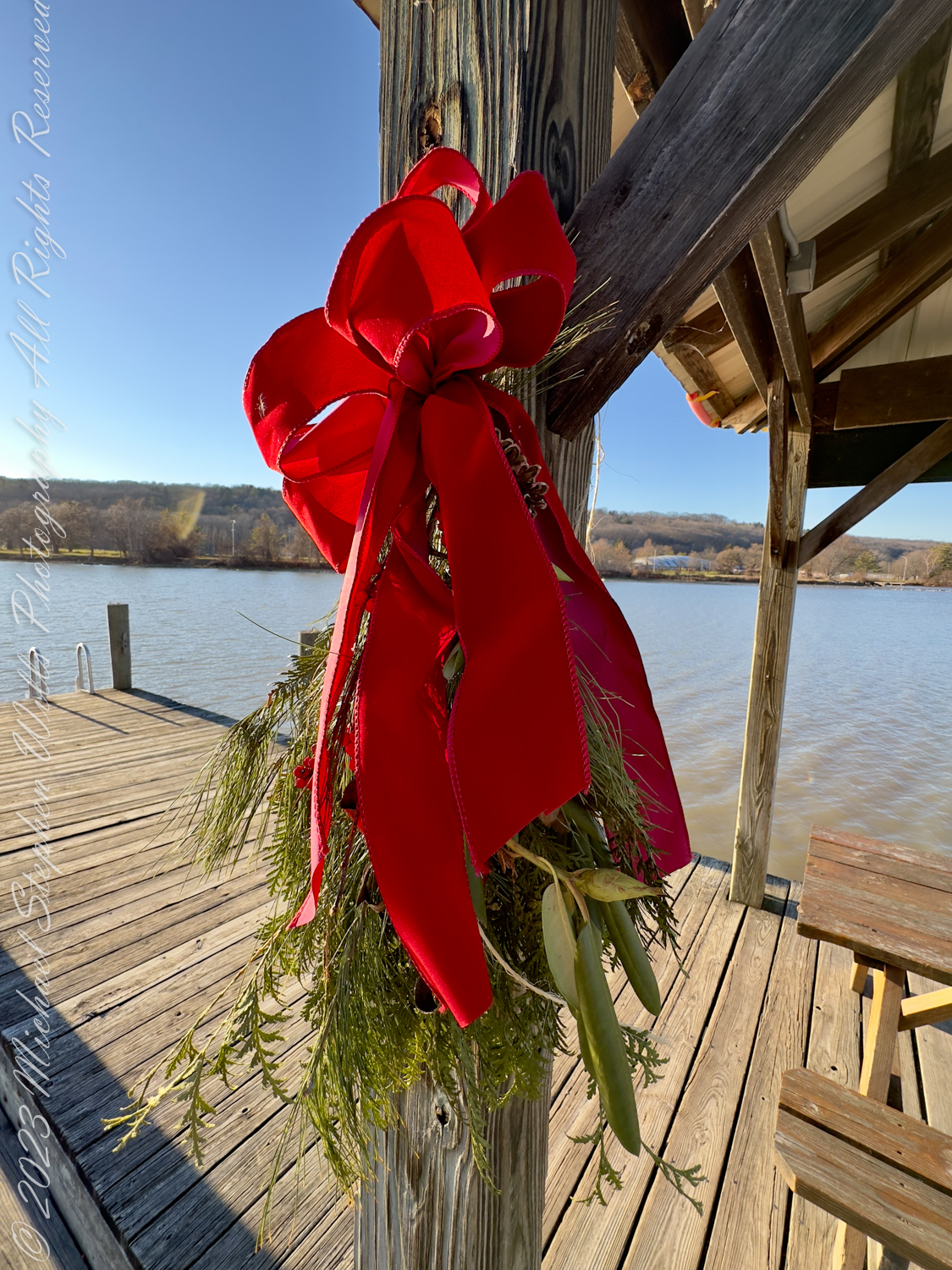
Switching seasons, we see the docks adorned with festive wreaths, injecting life and celebration into the scenery. The bright red ribbons stand out against the crisp blue of the water and the sky, suggesting a community that embraces tradition and the joy of the moment.

Connection with Nature and Community


The pictures depict how the landing is woven into the natural tapestry of the area. It is a place where one can sit and watch the placid waters of Cayuga Lake or stroll along the docks, feeling the crisp air against their skin. The images of the clear skies, the open waters, and the flight of birds in the distance are a subtle reminder of nature’s continuous presence.

Steamboad Landing on the Cayuga Waterfront Trail, Farmers Market, Ithaca, Finger Lakes Region, New York State

The waterfront trail exemplifies the community’s efforts to merge history with modernity, providing a space where people can connect with the environment and each other. The docks, once a stage for industrial exchange, now serve as a peaceful retreat, hinting at the deep-seated human desire for connection—not only to each other but also to the very essence of the environment we inhabit.

Seasonal Beauty and Reflection


The change in seasons at Steamboat Landing brings a unique beauty, which the photographs showcase poignantly. From the barren coldness of winter to the lush warmth of spring, each season imbues the landing with a distinct character. The winter images reveal a quiet majesty, with the bare branches and gray skies reflecting the introspective nature of the season. The springtime shots, however, burst with promise and vitality, as greenery begins to cloak the landscape and the water shimmers under the strengthening sun.

Enduring Legacy and Future Prospects


Steamboat Landing’s legacy as a historical transport hub has set the stage for its future as a cherished community locale. The images and historical texts paint a picture of a place that has embraced its past while looking forward to a vibrant and inclusive future. It is a locale that pays homage to its roots through the Farmers Market and other community events, ensuring that the spirit of the old steamboats continues to thrive in the hearts of Ithacans.

In conclusion, Steamboat Landing is a geographic location and a chronicle of Ithaca’s journey through time. Through its transformation, it has become a place where history breathes, nature speaks, and the community finds its heartbeat. It stands as a beacon of heritage, recreation, and beauty—a corner of the world where past and present dance together in harmony.

Copyright 2024 Michael Stephen Wills All Rights Reserved

Quaker Settlement Series 1

Discover the solemn beauty of Quaker Settlement Cemetery through my lens, where intricate slate headstones whisper tales of early settlers, intertwining family lore with the artistry of marble willows

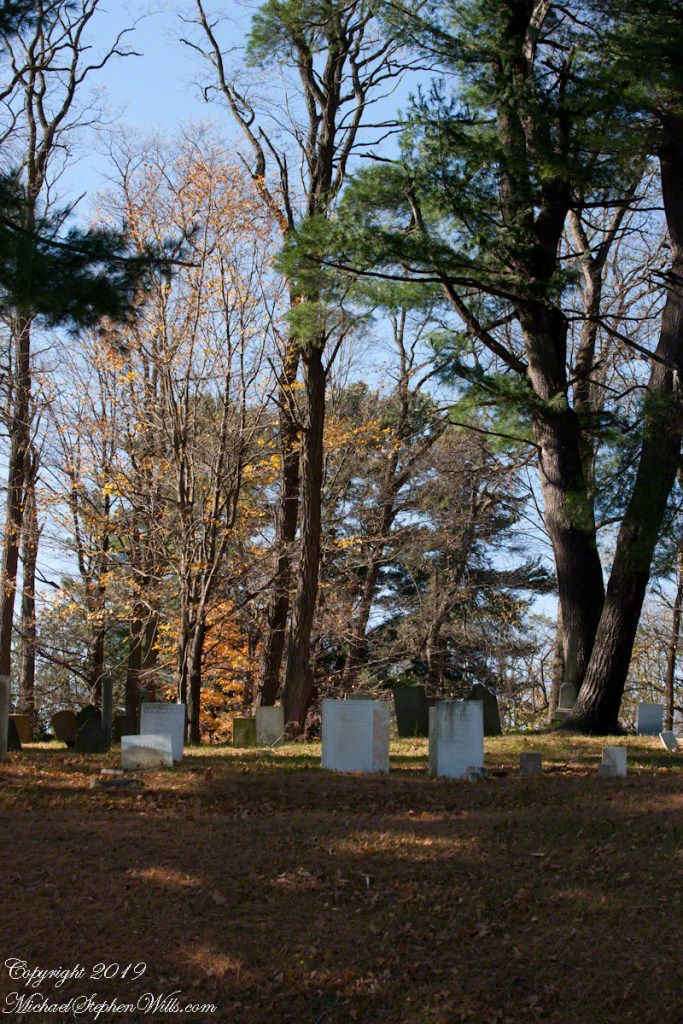
On my way to Taughannock Falls, November 6, 2019 (see my post “Cuteness Break”, the first of that series) I explored a different route and came up this cemetery set among an appealing pine grove.

Click photograph for a larger view. To do this from WordPress Reader, you need to first click the title of this post to open a new page.

Located in the town of Ulysses, New York there is a Quaker Settlement church a few feet further west on Perry City Road. I have Quaker ancestors, so took the opportunity to peruse the family names. The stones were unusually beautiful and touching, mostly local slate, some with intricate carvings.

Here is a headstone for two young people of the same family name. The white marble carved in the form of a willow, from the flowing lines and, knowing how our willows green up springtime, it calls to mind the same youthful greening as appropriate for two young people who lived 22 and 15 years.

Analysis of the dates, given in the following capture, tells the story of an young woman, a baby born 5 months after her death and who followed his aunt 15 years later.

I have a great aunt who also died young with a headstone naming her mother and father. Here is the granite headstone of Mary R. Daughter of George & Margarett Wills Died Oct. 3, 1886 Aged 20 years. Saint Mary of Assumption Cemetery, Sweetwater, New Jersey. My grandfather James Edward Wills was 9 years old at his sister Mary’s passing. He must have attended her church service and internment, standing at this spot.

Copyright 2024 All Rights Reserved Michael Stephen Wills

Spring Renewal and the Buoys of Change

As you glimpse the strewn buoys at Cayuga’s shore, consider the tales they hold—witnesses to history, guiding vessels through New York’s storied waters. Delve into their journey from the Erie Canal’s birth to today’s spring awakening.

As the crisp air of spring begins to soften and the last remnants of winter recede, you might find yourself drawn to the outdoors, eager to participate in the age-old tradition of spring cleaning. It is a time of renewal, of clearing away the old to make way for the new. In Ithaca, this period of rejuvenation extends beyond the confines of cluttered homes and into the expansive natural landscape, as shown in the photograph before you.

Spring cleaning and repair at the Alan H. Treman Marine Boat Park. Ithaca, New York, Tompkins County

Tidying the Shores


There, on the shores of Cayuga Lake, the scene is a stark contrast to the neat rows of daffodils you admired yesterday. Instead, navigation buoys, those steadfast guides of the waterways, lie upended and scattered – casualties of the winter’s harshness or perhaps the diligent work of park employees preparing for the upcoming boating season. These buoys, usually afloat, marking safe passage for vessels, are now being tended to, maintained, and readied. It is an essential process, akin to the annual spring clean, ensuring the safety and smooth sailing in the months to come.

Guardians of the Waterways


Let’s delve into the history these buoys are part of. You, as a curious observer, are witnessing a fragment of a narrative that stretches back over a century. These navigational buoys are descendants of the earliest markers that adorned the inland waters of New York State and the Erie Canal, of which Cayuga Lake is an integral part.

The Erie Canal and Cayuga’s Connection


The Erie Canal, an engineering marvel of the 19th century, opened in 1825, transforming New York and the entire Great Lakes region. It was the superhighway of its time, connecting the Atlantic Ocean to the Great Lakes, and thereby shaping the course of economic and social history in the United States. Cayuga Lake, connected to this system via the Cayuga-Seneca Canal, was part of this vast network of navigable waters.

Navigation Buoys: Beacons of Progress


As commerce flourished, so too did the need for reliable navigation. The buoys, then as now, served as critical signposts, ensuring that vessels could traverse these waterways safely. Imagine the countless boats that relied on these markers – from the large freighters carrying goods to the smaller craft bearing passengers – each buoy a sentinel ensuring their safe passage.

Modern Sentinels


Today, the navigation buoys on Cayuga Lake and other inland waters continue this legacy. They are the modern sentinels of the deep, equipped with the latest technology to guide the way. Just as the Erie Canal once heralded a new era of travel and trade, these buoys now symbolize the enduring importance of safe and efficient water transportation.

The Future of Inland Navigation


As you reflect upon the photograph, consider the ongoing narrative of these buoys and the waterways they mark. In a world increasingly concerned with sustainable modes of transportation, the historical importance of these channels resurfaces. The waterways that once fueled the expansion of a nation may once again play a pivotal role, this time in the quest for greener alternatives to overland routes.

Conclusion: A Cycle of Renewal


The upturned buoys in Cass Park, ready for their spring cleaning, are a microcosm of the cyclical nature of life and progress. They remind you that renewal is not just about beauty; it is also about preserving the functionality and safety that allow society to move forward. Just as the spring cleaning in your home ushers in a new season of clarity and freshness, the maintenance of these navigational aids renews the commitment to a legacy of safe passage – a promise made by the generations that have sailed these waters since the days of the Erie Canal.

Behind the Scenes of the Final Frontier: Our Tour with NASA’s “Launch Director” – 6

Step behind the scenes of space exploration with this dive into the awe-inspiring details of the Space Shuttle Atlantis, its thermal-protected wings to the onboard engines.

Imagine, if you will, stepping onto the grounds of NASA, where the air buzzes with the legacy of space exploration and the spirit of human achievement. It’s a place where dreams of the cosmos turn into reality. Our 2017 Launch Director tour not only brought us face-to-face with the marvels of space travel but allowed me to delve into the intricate details of one of NASA’s most iconic spacecraft: the Space Shuttle Atlantis. In this episode 6 of our adventure, we continue exploring the engineering marvel that is Atlantis, focusing on its wings, rear stabilizer, and onboard engines—elements critical to its legendary missions.

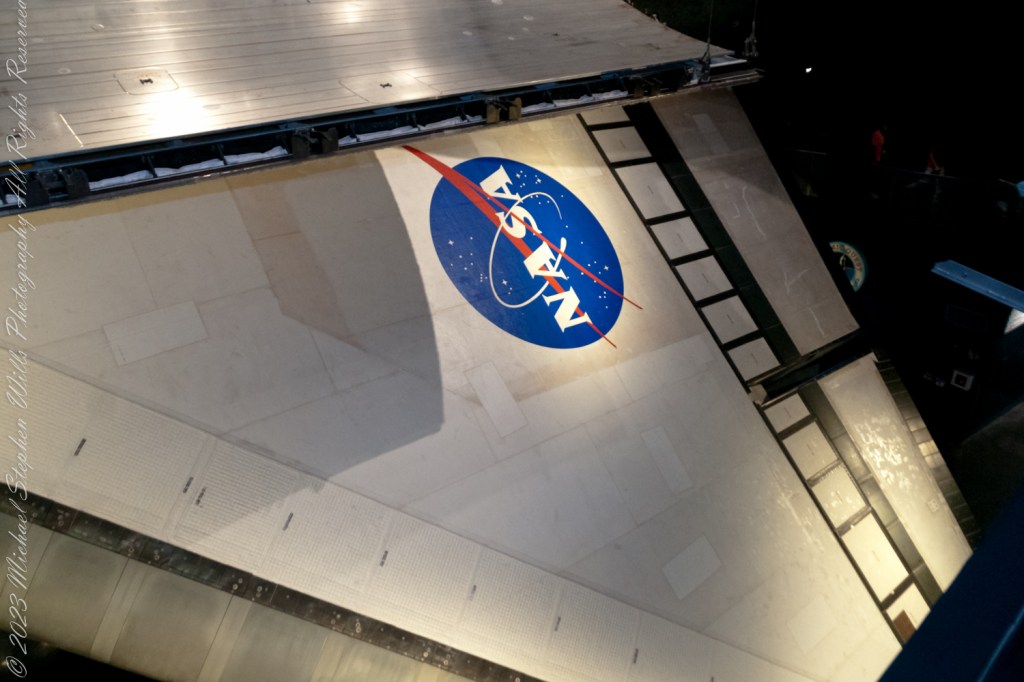
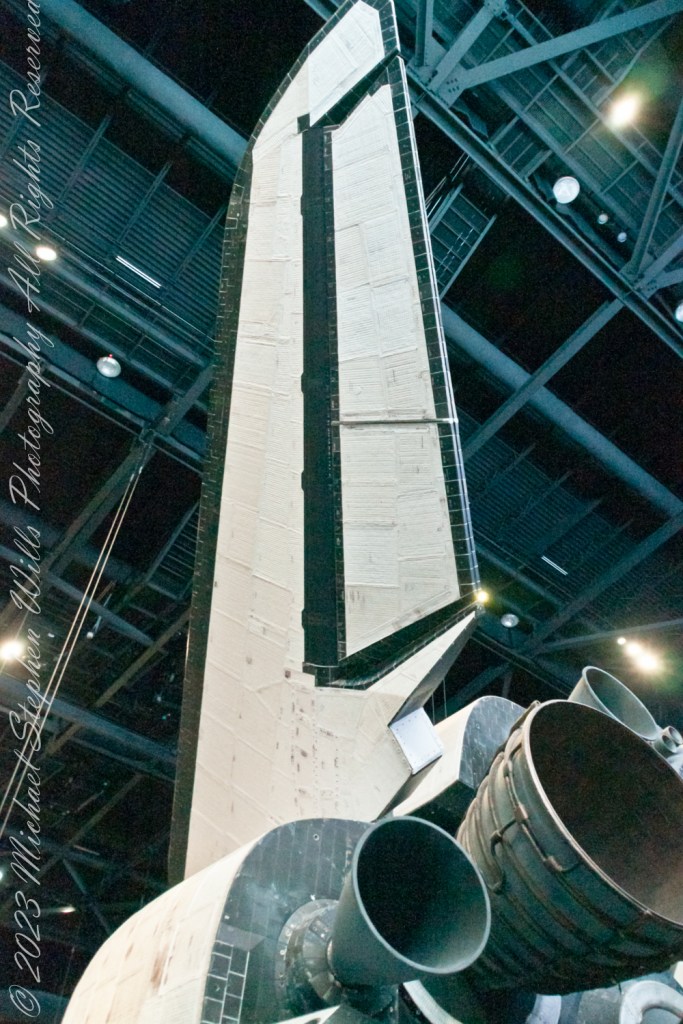
The Space Shuttle Atlantis, a name synonymous with discovery and exploration, represents a pinnacle of human ingenuity. As you walk around the Atlantis exhibit, you can’t help but be awed by the shuttle’s design, particularly its wings. The wings of Atlantis, with a wingspan of about 78 feet, are not just structures of metal and composite materials; they are the shuttle’s lifeline during re-entry into Earth’s atmosphere. These delta-shaped wings are designed to withstand the scorching temperatures of re-entry, allowing Atlantis to glide back to Earth with grace and precision. The material covering the wings, known as the Thermal Protection System (TPS), consists of thousands of heat-resistant tiles and reinforced carbon-carbon panels, safeguarding the shuttle and its crew from temperatures exceeding 1,650 degrees Celsius.

As your gaze shifts towards the rear of Atlantis, the vertical tail fin, or the rear stabilizer, commands attention. Standing about 17 feet tall, this stabilizer is more than just a rudder; it’s a critical component for maintaining the shuttle’s stability during the different phases of its mission. During the launch, it helps keep the shuttle on course as it ascends through the atmosphere. In space, it plays a minimal role, but upon re-entry, it becomes vital again, ensuring the shuttle remains stable and oriented correctly as it descends through the atmosphere, allowing for a safe landing.

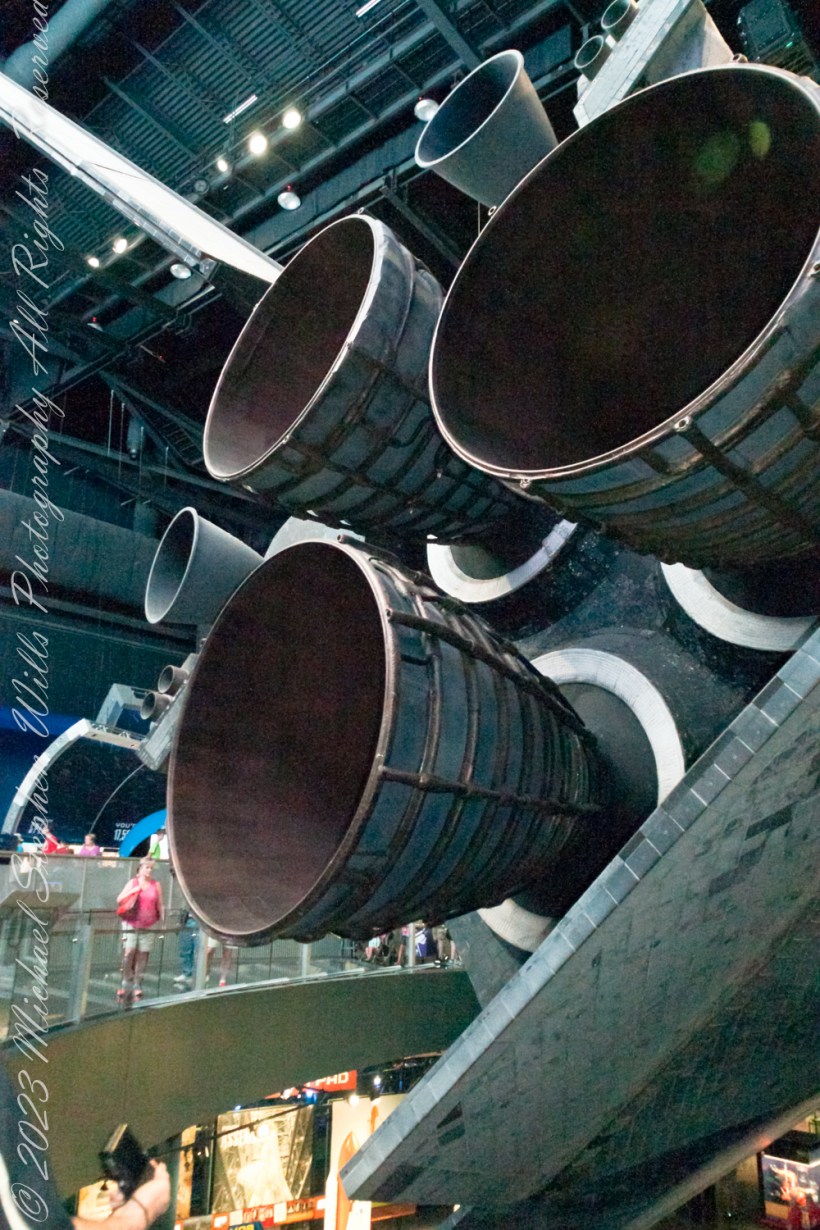
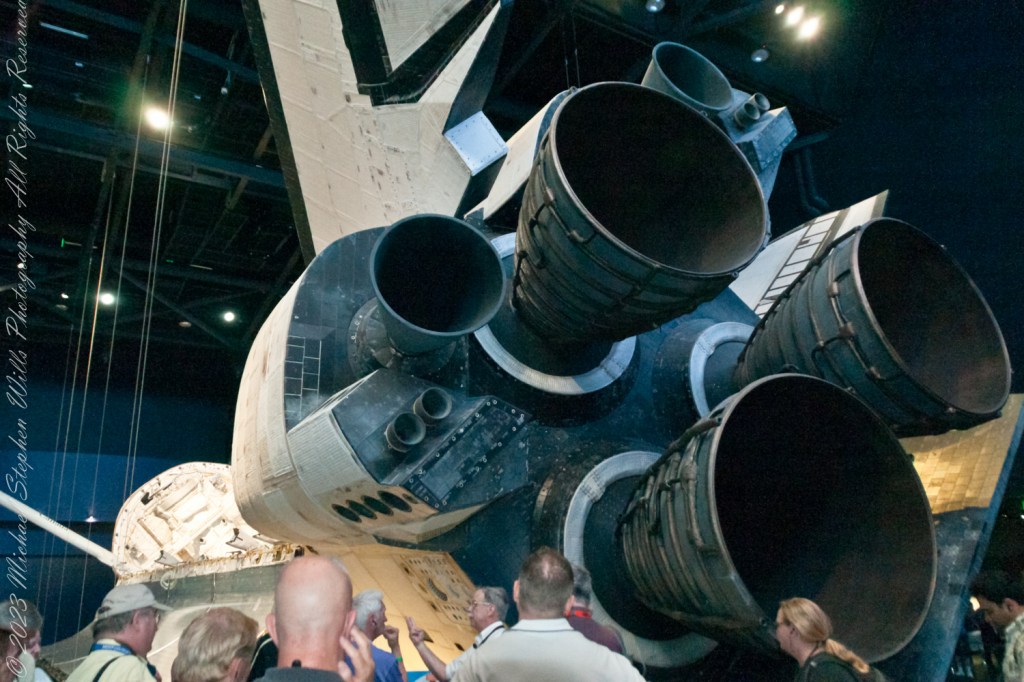
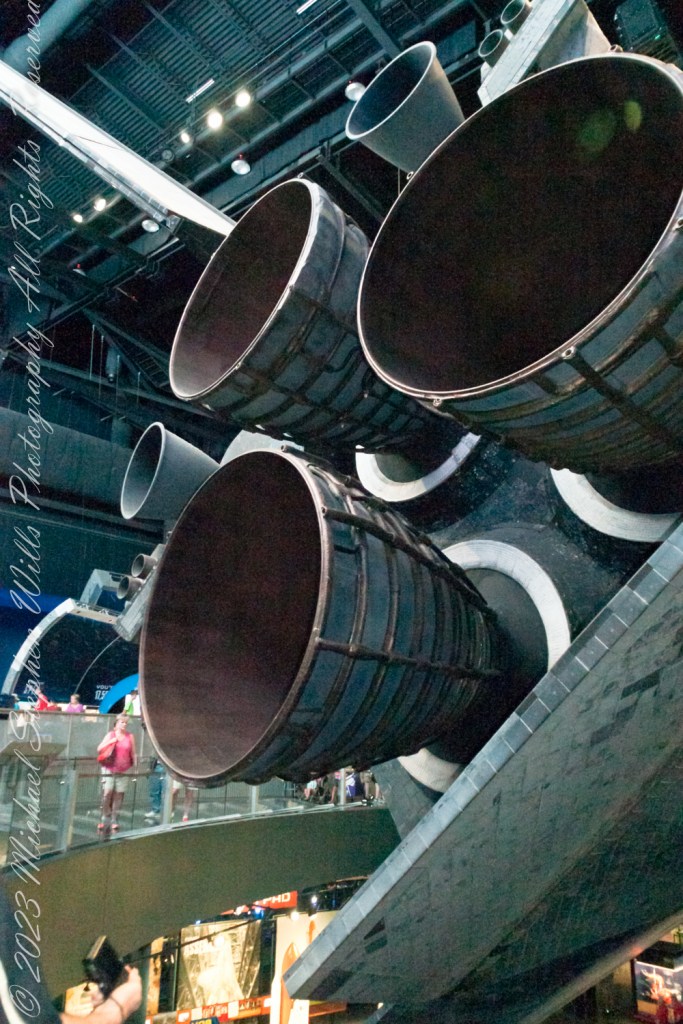
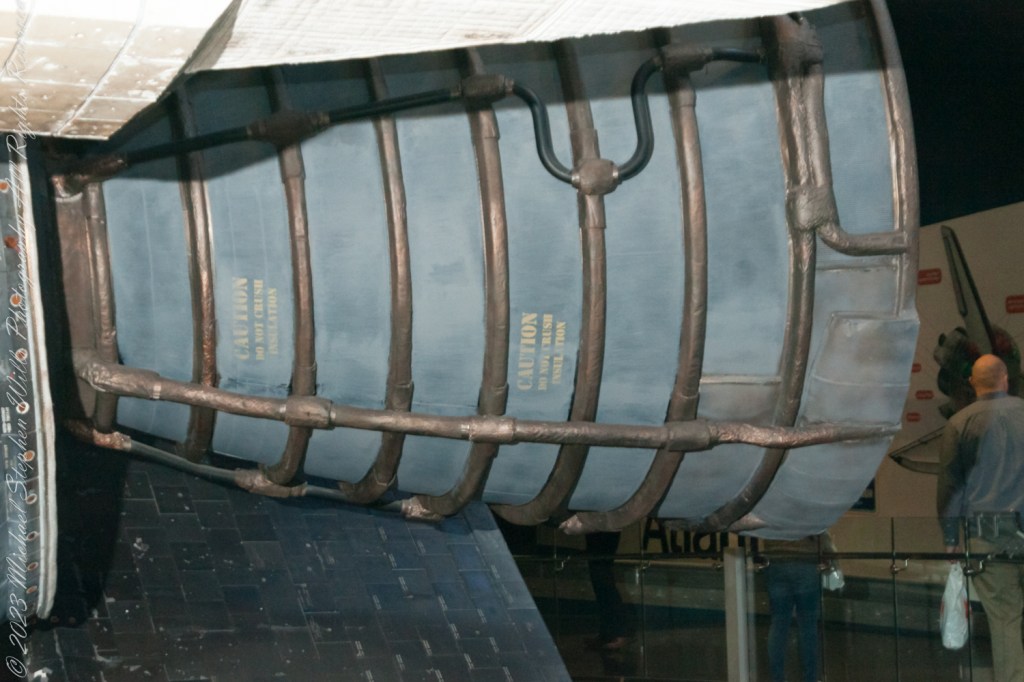
In this exploration of Atlantis, after the wings and stabilizer, we encounter the heart of the shuttle’s propulsion system: its onboard engines. The Space Shuttle Main Engines (SSMEs), three in total, are marvels of engineering, capable of producing a combined thrust of over 1.2 million pounds. These liquid-fueled engines play a crucial role in propelling the shuttle from the launch pad into orbit. What’s fascinating is their ability to throttle up or down depending on the phase of the launch, providing the precise amount of power needed at any given moment. The engines are fed by the External Tank, the only part of the shuttle not reused, which carries the liquid hydrogen and liquid oxygen needed for combustion. Upon reaching orbit, the Orbital Maneuvering System (OMS) engines take over, allowing Atlantis to navigate the vacuum of space with finesse, adjusting its orbit and facilitating the meticulous maneuvers required for satellite deployment or docking with the International Space Station.

Walking away from the Atlantis exhibit, what stays with you is not just the sight of this magnificent spacecraft but an appreciation for the ingenuity and dedication that went into its design. Every wing, every tile on the stabilizer, and every roar from the engines tell a story of human curiosity, the drive to explore beyond our confines, and the relentless pursuit of knowledge. The Space Shuttle Atlantis is more than a machine; it’s a symbol of what humanity can achieve when we dare to dream big and work tirelessly towards those dreams. So, as you look up at the night sky, remember the wings that carried our dreams, the stabilizer that kept us on course, and the engines that propelled us into the unknown, reminding us that the final frontier is not so final after all.

Copyright 2024 Michael Stephen Wills All Rights Reserved

Behind the Scenes of the Final Frontier: Our Tour with NASA’s “Launch Director” – 5

Ever wondered about the iconic robotic arms that gracefully danced in space, tethered to the Space Shuttle? Meet Canadarm, a marvel of engineering that transformed space missions. Born from a NASA invitation to Canada in 1969, this robotic arm did more than just move payloads; it became a symbol of international collaboration in space exploration. After the Columbia disaster, its role expanded, ensuring the safety of astronauts with critical inspections. Dive into the captivating journey of Canadarm, where technology meets the stars. Click to discover how a Canadian innovation became a pivotal part of space history.

The Canadarm

The Canadarm is here extended in the foreground and docked in background

The Canadarm, or Canadarm1, officially known as the Shuttle Remote Manipulator System (SRMS) and sometimes referred to as the SSRMS, represents a series of robotic arms utilized aboard the Space Shuttle orbiters. These arms were instrumental in deploying, manipulating, and retrieving payloads. Following the tragic Space Shuttle Columbia disaster, the use of Canadarm became invariably linked with the Orbiter Boom Sensor System (OBSS). The OBSS played a crucial role in examining the shuttle’s exterior for any damages to its thermal protection system, enhancing the safety of subsequent missions.

The genesis of Canada’s involvement in the Space Shuttle program dates back to 1969 when the National Aeronautics and Space Administration (NASA) extended an invitation to Canada. At the outset, the specifics of Canada’s role were unclear, though the need for a manipulator system was immediately recognized as vital. The Canadian firm DSMA ATCON had previously made strides in robotics with the development of a robot designed to load fuel into CANDU nuclear reactors, capturing NASA’s interest. By 1975, a formal agreement was reached between NASA and the Canadian National Research Council (NRC), under which Canada would undertake the development and construction of the Canadarm.

The NRC subsequently awarded the contract for the manipulator to Spar Aerospace (currently known as MDA), under which three distinct systems were to be developed: an engineering model to aid in design and testing, a qualification model for environmental testing to ensure the design’s suitability for space, and a flight unit destined for use in missions. This collaborative effort marked a significant milestone in the use of robotics in space exploration, showcasing international cooperation in advancing space technology.

Copyright 2024 Michael Stephen Wills All Rights Reserved