Among the Trout Lilies in Sapsucker Woods

On April 22, 2025, a wanderer discovers a trout lily, representing nature’s cycles, patience, and the interconnectedness of life through blooming, pollination, and nutrient cycling.

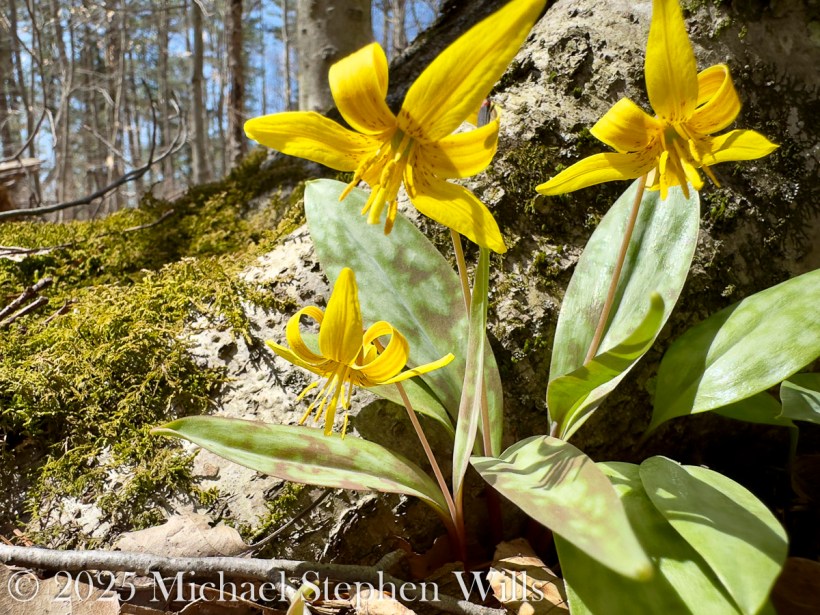
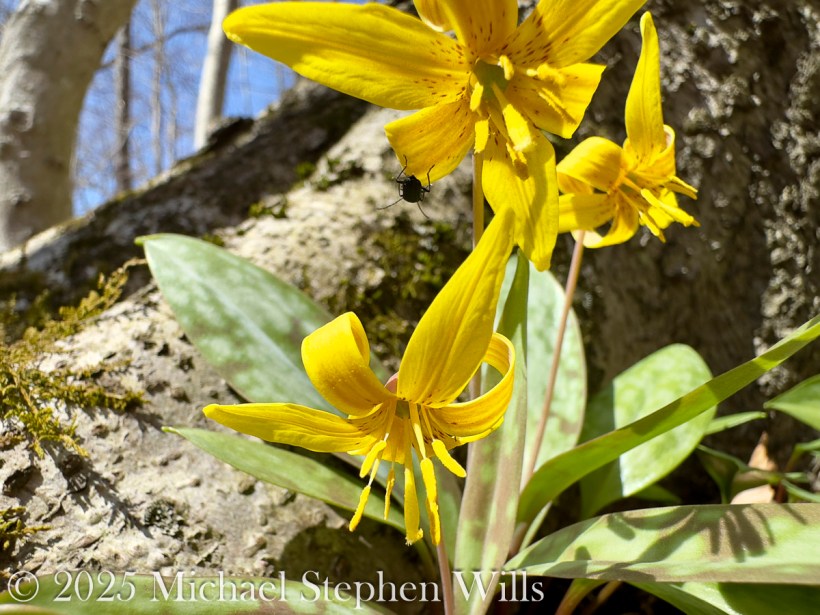
On the bright afternoon of April 22, 2025, I wander slowly through Sapsucker Woods, last year’s oak leaves soft underfoot and the smell of damp earth in the air. The trees stand bare, and somewhere a woodpecker drums as I search the ground for any sign of spring. A flash of gold catches my eye at the mossy base of a tree. Kneeling down, I find among the leaf litter a small wildflower glowing yellow.  It is a trout lily – Erythronium americanum – a solitary, nodding bloom on a slender stem. Six delicate petals flare backward, golden with a few reddish freckles near the throat; long stamens dangle beneath. Two lance-shaped leaves hug the ground, green marbled with burgundy-brown. Their mottled pattern looks like a brook trout’s flank. This flower is known by many names: “trout lily” for its fish-like leaves, “dogtooth violet” for its pointed white bulb 1, and “adder’s tongue” for its tongue-shaped leaf tip.
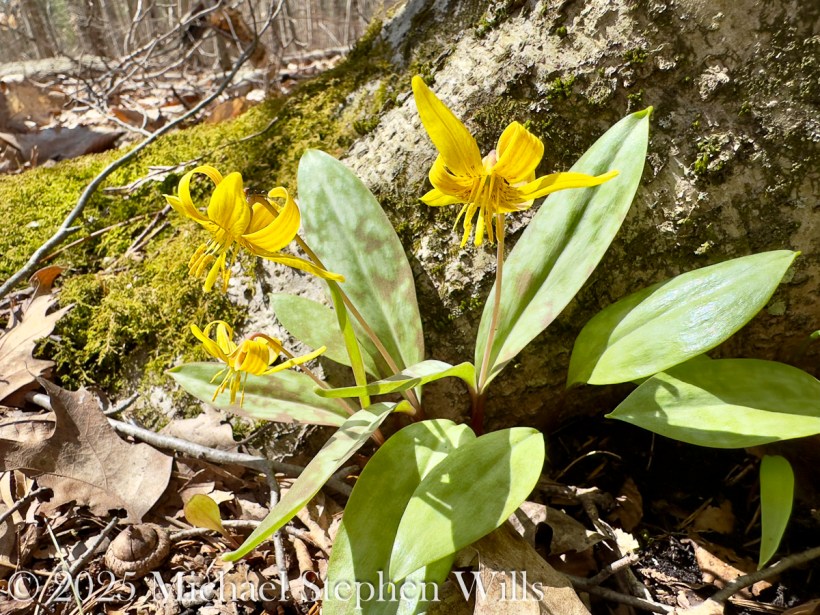
Its formal name, Erythronium americanum, comes from the Greek for “red”2—odd for a yellow bloom until one remembers the purple dogtooth violets of Europe. Americanum simply marks it as native here. I soon realize these trout lilies are not alone – dozens of dappled leaves carpet the damp earth around me. Most show no blossom at all, only a single freckled leaf standing alone. Only the older plants with two leaves manage to lift a yellow flower. In fact, they often form extensive colonies on the forest floor. I’ve learned a trout lily may wait seven years to bloom its first time3. Seasons of patience pass unseen underground, and then one spring it earns the chance to unfurl a golden star. That slow, patient rhythm of growth fills me with wonder.

A tiny black bee—or maybe a fly—lands on the trout lily’s bloom, drawn by its promise of pollen. It disappears into the flower’s downturned bell, brushing against the dusting of pollen inside. In early spring, few other blossoms are open, so this little lily is a lifeline for hungry pollinators4. There is even a solitary “trout lily bee” that times its life to these flowers5. Flower and insect share an ancient pact: the lily feeds the visitor, and the visitor carries the lily’s pollen onward to another bloom.
Within a week, the trout lily’s golden star will wither. By the time the canopy closes overhead, the flower will have curled into a green seedpod that splits open by early summer, releasing its seeds6. Each seed carries a tiny parcel of food irresistible to ants7. Ants haul the seeds to their nest, eat the morsel, and abandon the seed in their tunnels—unwittingly planting the next generation. The name for this circular ecological dance is myrmecochory. Over time, the colony inches across the forest floor, guided by these tiny gardeners. During its short life above ground, this little lily helps the forest. Its roots soak up nutrients from the damp soil, keeping them from washing away in spring rains8. When the plant dies back, those nutrients return to the earth as the leaves decay, nourishing other life. In this way, a patch of trout lilies forms a quiet bridge between seasons—capturing nutrients in spring and returning them by summer’s end. I touch one cool leaf, feeling connected to this cycle.
I rise and take a final look at the little yellow lily. Its brief bloom reminds me that life’s most beautiful moments are fleeting yet return each year. This blossom will vanish in a few days, a blink of the season, but it will come back next spring as faithful as hope. In its patience and generosity, I sense kinship. Like the trout lily, we too have long periods of waiting and rare moments of blooming. We also rely on small kindnesses to help us thrive—like a friend in hard times or a community that carries our dreams to fertile ground. And we are part of a larger cycle, giving and receiving, leaving something of ourselves to nurture the future. As I continue down the trail, I carry the image of that humble flower with me—a gentle assurance that even the smallest life can leave a lasting impression, and that hope will always return with the spring.

Enter your email to receive notification of future postings. I will not sell or share your email address.

Footnotes

  1. wildadirondacks.org Trout lily’s common names: “Trout lily” refers to the trout-like mottling on its leaves, while “dogtooth violet” refers to the tooth-like shape of its underground bulb (despite not being a true violet). It is also sometimes called “adder’s tongue.” ↩
  2. en.wikipedia.org The genus name Erythronium comes from the Greek erythros, meaning “red,” originally referring to the red-purple flowers of the European dogtooth violet (Erythronium dens-canis). The species name americanum denotes that it is native to America. ↩
  3. peacevalleynaturecenter.org Trout lilies often grow in large colonies and most individuals in a colony are non-flowering. A plant typically needs about seven years of growth before it produces its first bloom. ↩
  4. peacevalleynaturecenter.org Spring ephemeral wildflowers like the trout lily provide crucial early nectar and pollen for pollinators (bees, flies, butterflies) emerging in early spring. ↩
  5. appalachianforestnha.org The trout lily miner bee (Andrena erythronii) is a solitary bee whose life cycle is closely tied to the trout lily; it forages primarily on trout lily flowers, making it a specialist pollinator of this species. ↩
  6. wildadirondacks.org After pollination, trout lily flowers are replaced by seed capsules that ripen and split open to release the seeds in late spring. ↩
  7. atozflowers.com Erythronium americanum seeds have a small fleshy appendage called an elaiosome, which attracts ants. The ants carry the seeds to their nests, aiding in dispersal in exchange for the food reward, a mutualism known as myrmecochory. ↩
  8. pubmed.ncbi.nlm.nih.gov By growing and taking up nutrients during the brief spring season, trout lily plants help retain important nutrients (like potassium and nitrogen) in the ecosystem. When the plants die back and decay, those nutrients return to the soil, contributing to the forest’s nutrient cycle. ↩
Monument Valley’s Big Indian: Navajo Wisdom and the Geology of Time

Monument Valley, or Tsé Biiʼ Ndzisgaii, embodies a profound connection between the Diné people and the land, contrasting imposed names with cultural significance and sacred narratives.

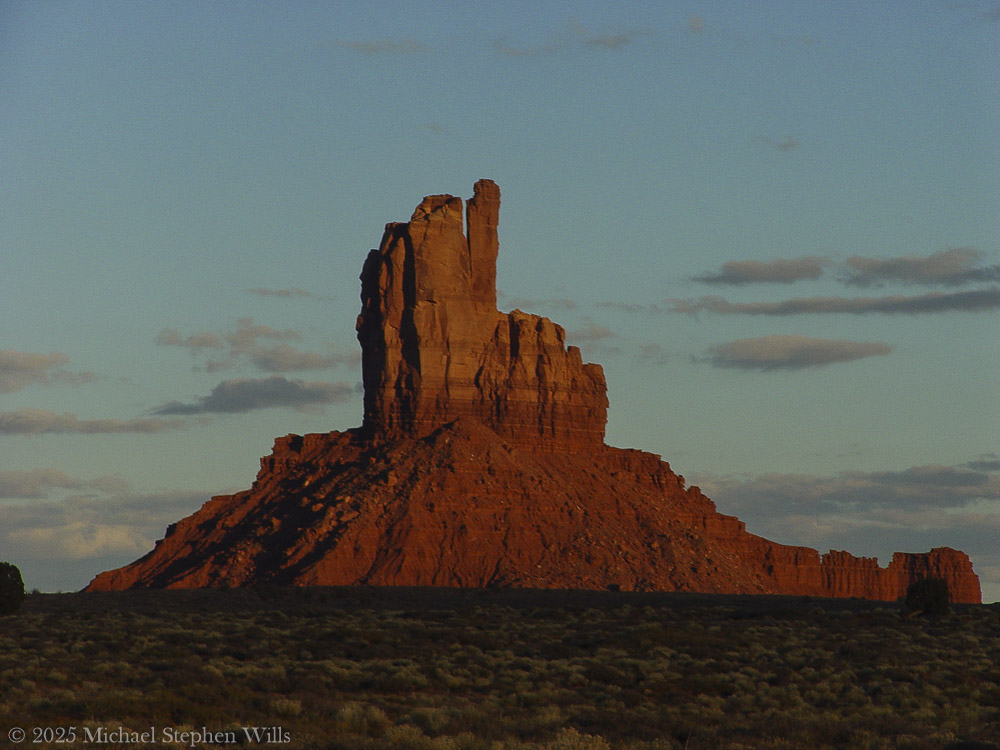
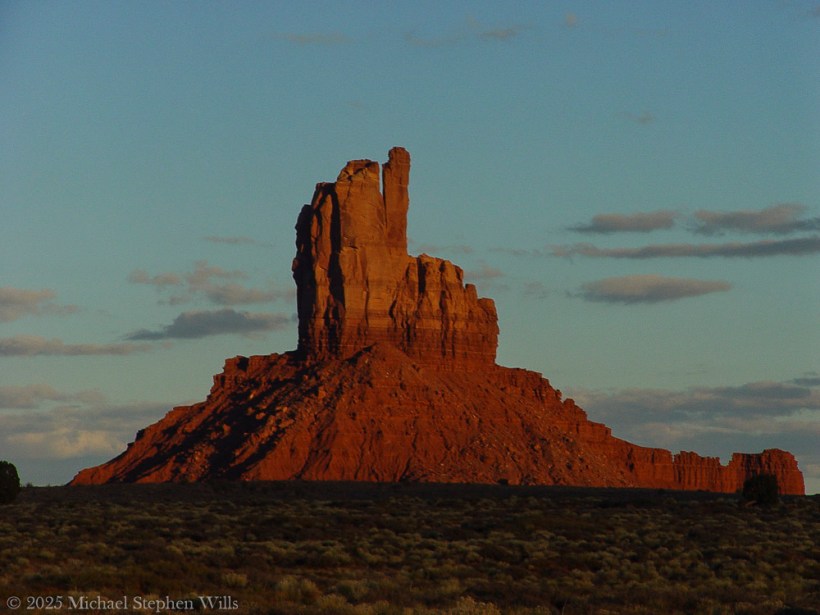
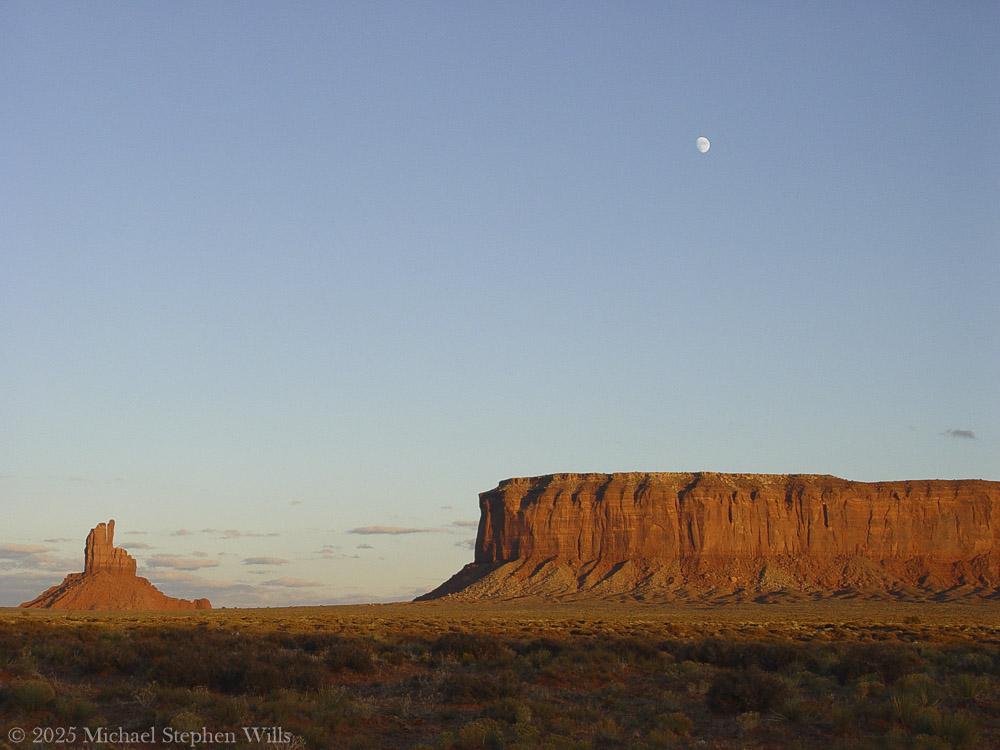
In the golden hush of this November sunset, Monument Valley stretches before us – an endless desert plain punctuated by towering red rock sentinels. The sky is vast and translucent blue, as a pale three-quarter moon rises silently above a solitary spire of sandstone. That spire is known on maps as Big Indian, a stone pillar glowing russet in the low sun. It stands apart from the mesas, its silhouette uncanny against the evening sky. In this serene moment, the land feels alive with presence. And the name “Big Indian” lingers in the air, raising quiet questions about what we call this place – and what it truly is.

From a distance, the spire does suggest a figure: tourists are told to squint, tilt their heads, and “see” the profile of a Native face gazing outward. One can imagine the first person to name it must’ve been a bored prospector, half-delirious from the heat after a lunch of canned beans, declaring: “I swear that rock looks like Uncle Joe in a feathered headdress.” And so the name stuck – a geological Rorschach test gone slightly colonial.

These whimsical titles – Totem Pole, Stagecoach, Big Indian – come not from the land, but from a long habit of outsiders labeling what they didn’t fully understand. “Big Indian” is particularly layered. The term “Indian” itself was born from Columbus’s navigational misfire, mistaking the Caribbean for Asia and its people for “Indios.” The Diné, the people who have lived here for centuries, never called themselves that. So this towering formation now bears the echo of a 15th-century directional blunder —like a name tag on the Sphinx that reads “Buckeye” because someone once thought Egypt was in Ohio. It’s a reminder: names given in haste can cling for centuries, even when they miss the mark entirely.

But beyond the names imposed by mapmakers, the spire simply is, in all its silent grandeur. In Diné lands, this valley has a different name: Tsé Biiʼ Ndzisgaii, often translated as Valley of the Rocks. In the Navajo tongue the name literally evokes “rock within white streaks around” – referring to the light bands of sediment that ring the red buttes​. Those pale streaks wrap the spire like faded paint, remnants of ancient layers of earth. Here the Diné language whispers a description born of the land itself, unlike the English names that often project an outsider’s story. Tsé Biiʼ Ndzisgaii speaks to the truth of the place: stone and light, strata and shadow. As the sun lowers, you can actually see those whitish bands catching the last glow, encircling the butte like old memory. The Diné name honors what the eye sees – the layered geology – rather than imposing an unrelated label. This spire and its neighbors were not built by human hands, though their sheer stature can feel like architecture of the gods. Millions of years of natural artistry shaped Monument Valley.

Long before any person walked here, this land was a low basin collecting sediments​. Layer upon layer of sand and silt hardened into rock, and a slow uplift in the earth heaved the basin into a plateau​. Wind and water became patient sculptors over the last 50 million years, carving the plateau and peeling away the softer material​. What remains today are the skeletal monuments of that erosion: buttes, mesas, and spires rising up to a thousand feet above the desert floor. Each is made of stratified stone – the broader bases of red shale and sandstone, and a cap of harder rock that resists the elements​. Big Indian’s sturdy pedestal and slender crest tell this story of layered resilience. In the red-orange rock, oxides of iron tint the cliffs a deep rust, while streaks of black manganese oxide – “desert varnish” – trace down their sides like natural paint​. Time and the elements have sculpted a masterpiece here.

Standing at its foot, one needs imagine the immeasurable ages of sun and storm that chiseled this lone tower from the earth. And yet, facts of geology alone fail to capture the spirit one feels in Tsé Biiʼ Ndzisgaii. The Diné know that spirit well – this valley is sacred to the Navajo Nation​. To them, these colossal rocks are alive with meaning. The people have lived and wandered among these mesas for centuries, blessing the land with their stories and prayers.

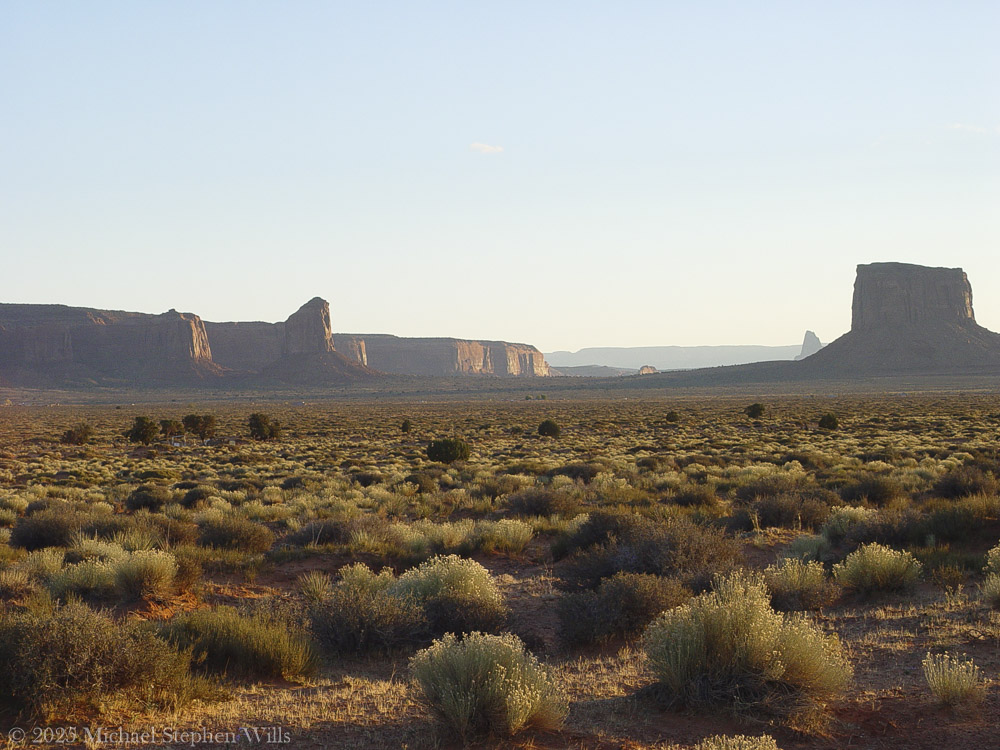
In Navajo cosmology, the landscape itself is imbued with life and purpose. The buttes are often seen as ancestors, guardians, or holy figures watching over the People. For example, the famous twin buttes called the Mittens are said to be a pair of spiritual beings – one male, one female – forever facing each other across the valley, protecting and balancing the land​. Another hulking mesa, Sentinel Mesa, is known as a “door post” of the valley, a guardian at the entrance​, paired with another butte as the opposite door post​. The valley, in the Diné way of seeing, resembles a great hogan, a home blessed by the gods: the mesas at its threshold are like the posts of a doorway, and a butte called The Hub is imagined as the central fire hearth of this immense home​.

In this way, the Diné landscape is a living, storied environment. Even the spindly formations carry sacred narrative. Seven miles southeast from Big Indian stand slender pinnacles known to the Navajo as Yei Bi Chei, named for the masked spiritual dancers who emerge on the last night of a winter healing ceremony​.

Each dawn, as the first light breaks over the mesas, it’s said the Navajo families come out of their hogans to greet the sun with prayers – their doorways always face the east to receive blessings of the day​. In the same way, the great stone hogan of Monument Valley opens eastward, with its door-post buttes and its eternal fireplace. In Diné worldview, earth and sky are intertwined with their lives; they speak of Mother Earth from whom they emerged and to whom they owe care​. Here in Monument Valley, it is possible to feel that harmony – the sense that every column of rock, every whispering juniper shrub, every beam of sunlight and moonrise is part of a whole living tapestry.

We watch as the moon climbs higher above the Big Indian spire, its silvery light softening the rock’s hard edges. This place has known many names and will outlast many more. The Paiute people who roamed here before called it “Valley Amid the Rocks” and wove myths of gods and giants into its features​. Later came the labels of explorers and filmmakers: Monument Valley, a monumental canvas for Western legends. And of course, the simplistic tag Big Indian for this lone rock – a name that says more about those who coined it than about the land itself.

Names, in the end, are stories we tell about the world. The colonial names imposed here are like brief echoes across the ages, while the Diné stories run deep as the red earth. The Diné prefer to call themselves Diné – meaning “the People”​– and they call this land by names that describe its true character. I imagine that to the People, this spire might be thought of not as an “Indian” at all, but perhaps as a sentinel or an old friend standing watch. Its Diné name, if it has one, would likely emerge from its form or its role in a story, spoken with reverence.

As dusk turns to twilight, an immense peace settles. The monolith before me is no longer just Big Indian on a map; it is an ancient entity shaped by time and honored by generations. In the silence, we can almost hear the land speaking in the old language – telling of how it was born from oceans and sand, how it saw the first people wander through, how it endures through centuries of memory. The rock shares with us a moment beyond names: just the whisper of wind, the glow of moon, and a feeling of connection and wonder. This is Monument Valley, Tsé Biiʼ Ndzisgaii, in all its truth. In this contemplative dusk, I bow to the tower of stone, misnamed yet never truly defined by that misnomer. It remains what it has always been – a creation of earth and spirit, a witness to history, a source of humble awe. Tuning to leave, I softly speak a word of thanks – Ahéheeʼ – grateful to have listened, if only briefly, to the sacred voice of the valley.


Bibliography

Encyclopædia Britannica – Tribal Nomenclature: American Indian, Native American, and First Nationbritannica.com (origin of the term “Indian” as a colonial misnomer)

Navajo Nation Parks & Recreation – Monument Valley (Tsé Bii’ Ndzisgaii)navajonationparks.orgnavajonationparks.org (official site detailing Monument Valley’s geology and formation)

Robert S. McPherson – Monument Valley. Utah History Encyclopediauen.orguen.org (history, geology, and indigenous lore of Monument Valley)

Aztec Navajo County – Monument Valley PDF Guideaztecnm.comaztecnm.com (descriptions of formations, including Navajo perspectives on their meanings and names)

Navajo Word of the Day – Tsé Biiʼ Ndzisgaiinavajowotd.com (explanation of the Navajo name for Monument Valley, meaning “white streaks in the rocks”)

Enter your email to receive notification of future postings. I will not sell or share your email address.

The Secret Life of Early Meadow-Rue in Forest Ecosystems

Discover the delicate beauty of early meadow-rue (Thalictrum dioicum) along the Gorge Trail at Robert H. Treman State Park. Explore its unique spring blooms, cultural significance in Native American traditions, and the poetry of its quiet role in the woodland ecosystem.


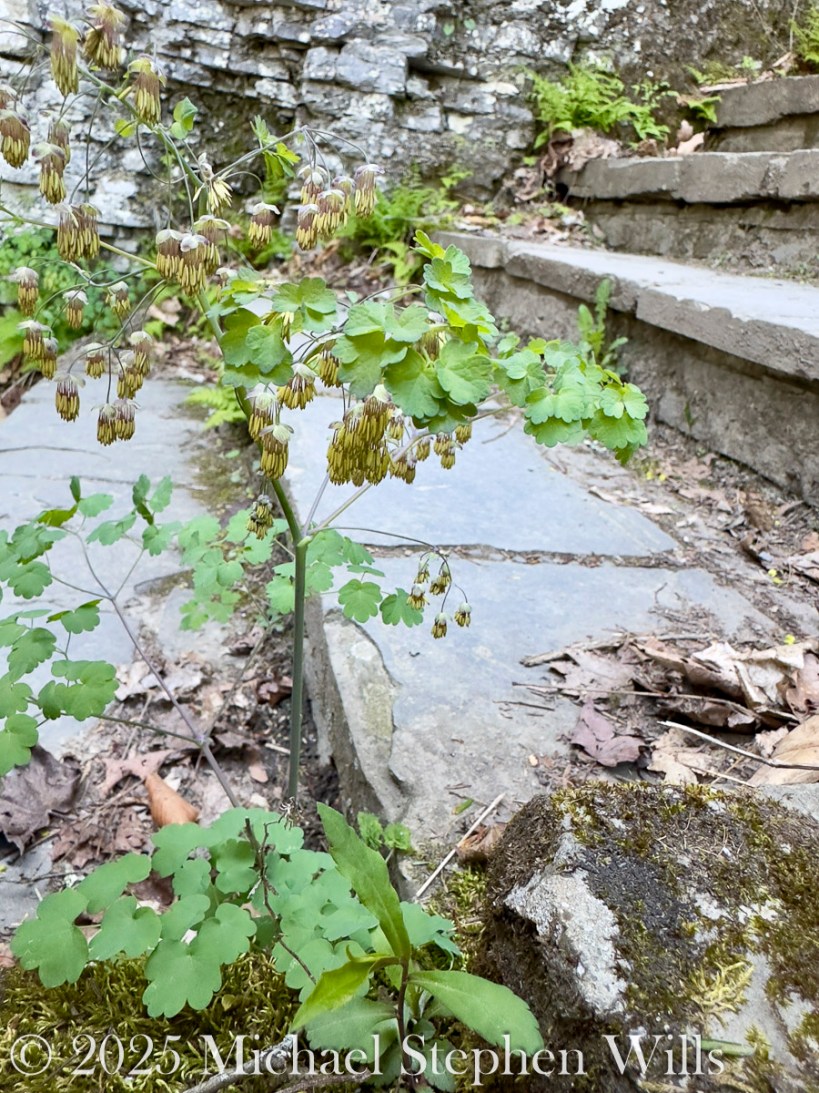
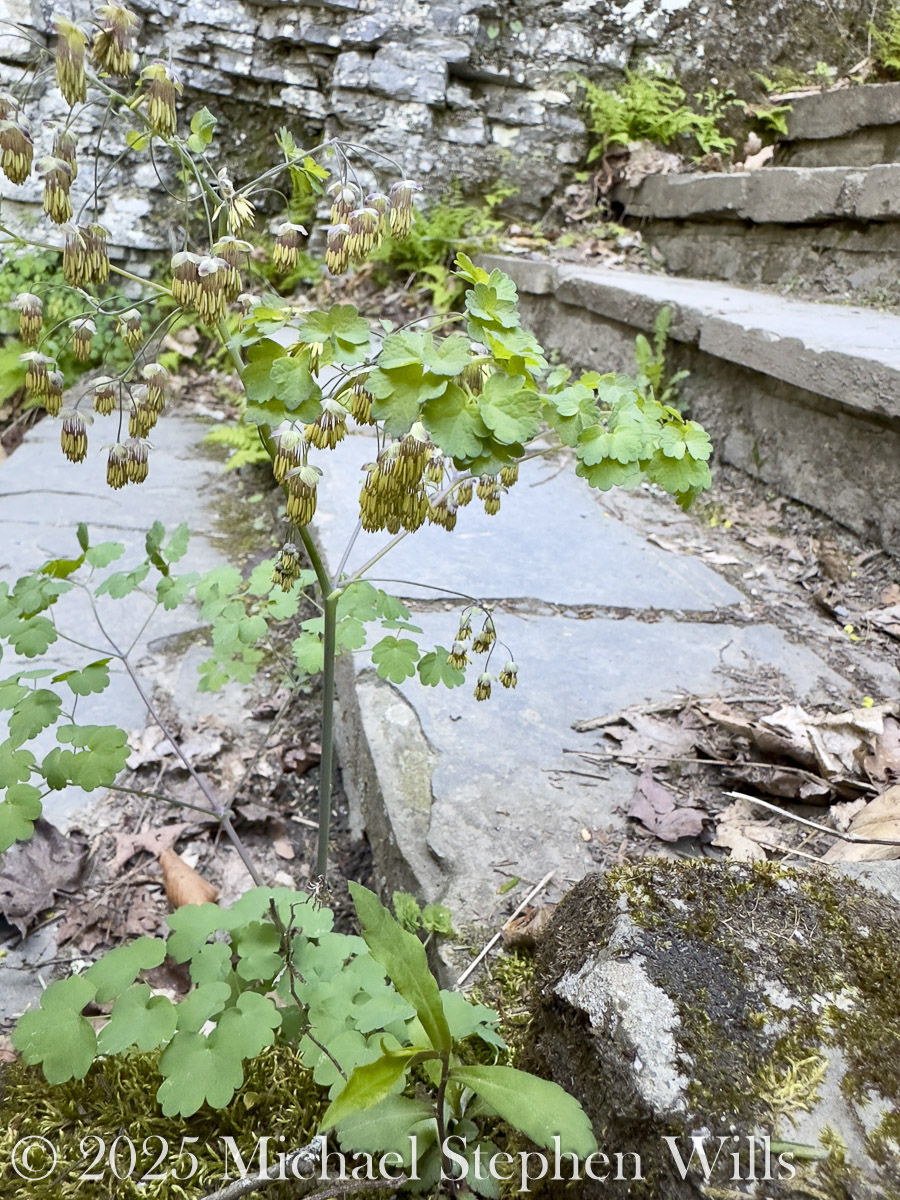
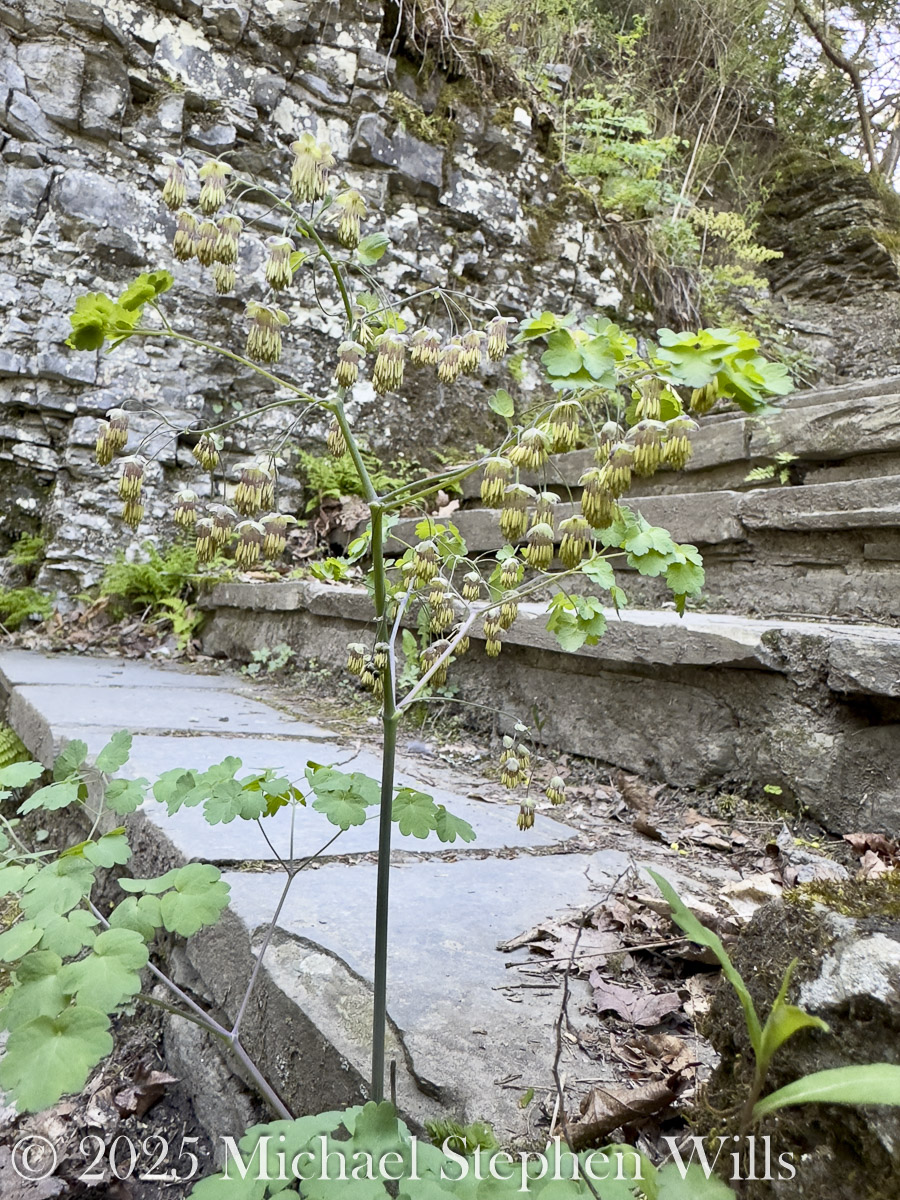
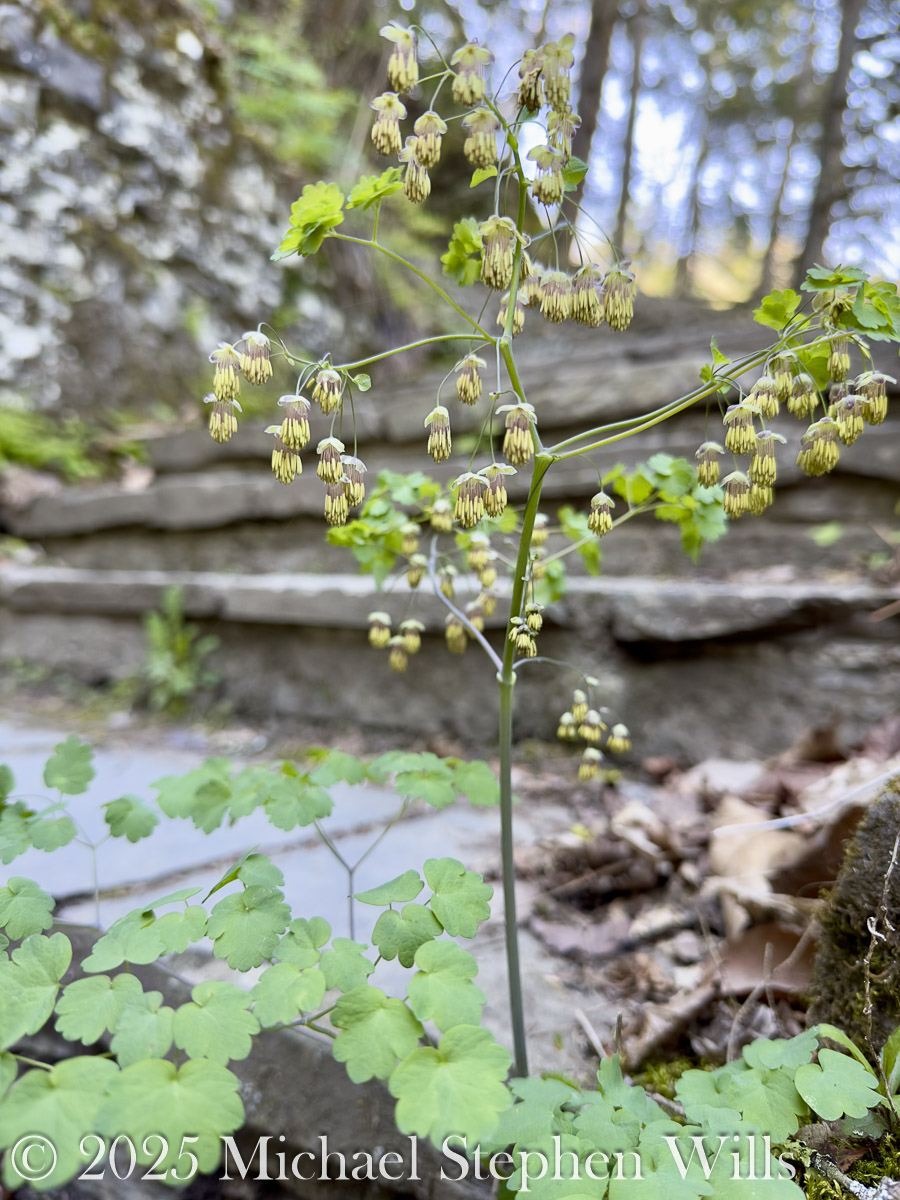
April 28, 2025 – Robert H. Treman State Park, Ithaca, NY. I step lightly along the damp stone stairs of the Gorge Trail, hemmed in by towering rock walls and the whisper of waterfalls. There, at a turn in the path, I encounter an unassuming woodland plant waving in the breeze. Its delicate green foliage could be mistaken for a young fern or columbine, but from its arching stems hang dozens of tiny yellow tassels, swaying like fairy lanterns. This is a male Thalictrum dioicum – commonly known as early meadow-rue, or more whimsically, quicksilver-weed. One of the earliest wildflowers to emerge in spring forests of the Northeast, it offers a subtle spectacle: golden anthers dangling in the cool April breeze, each tiny stamen a pendulum of pollen.

Delicate Botany of a Woodland Rue


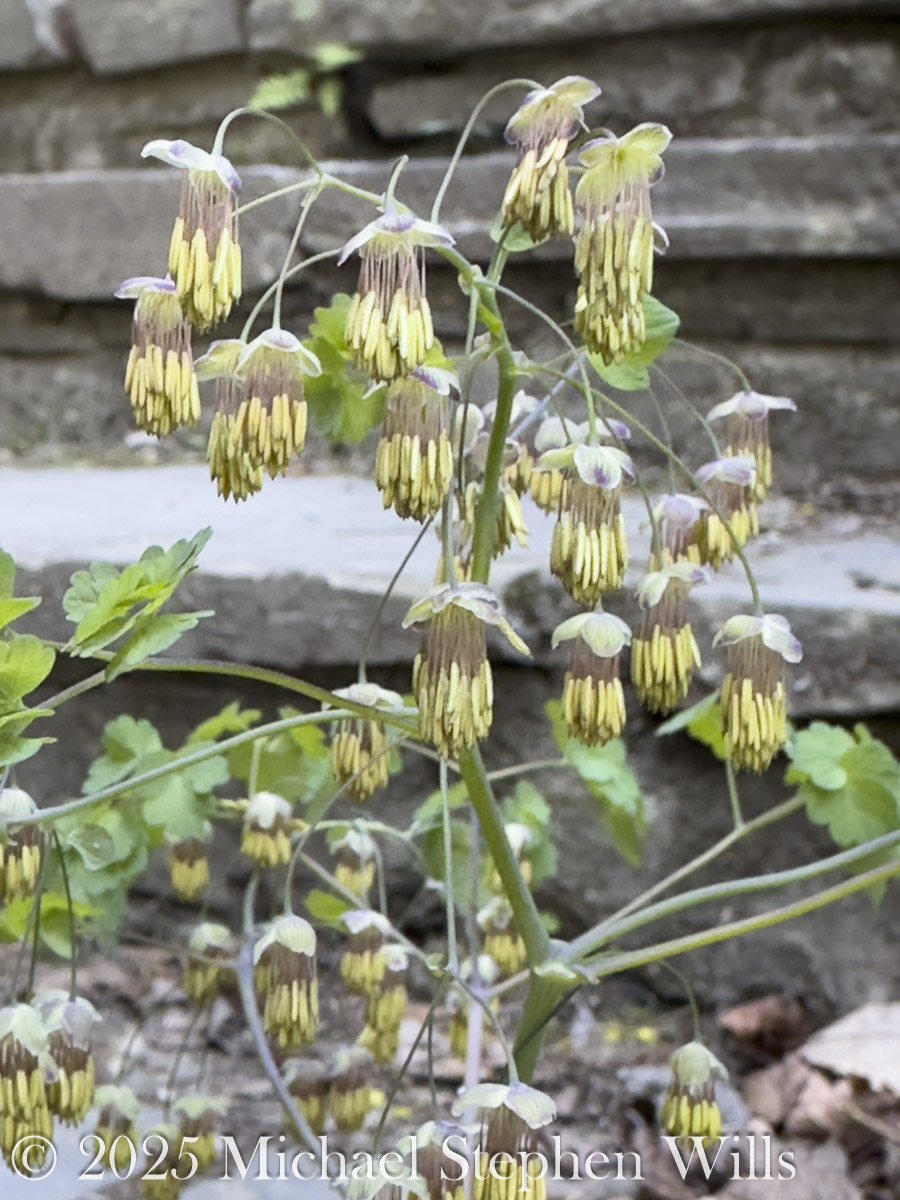
At a glance, Thalictrum dioicum might not shout for attention – standing barely one to two feet tall – yet a closer look reveals intricate beauty. Each male plant is a miniature chandelier of blossoms, the flowers having no petals at all but instead a simple fringe of sepals and a flurry of stamens. In fact, the male flowers are the showiest part of this species, with numerous slender, dangling yellow stamens that earn meadow-rue a second look. These dangles are the anthers – pollen-bearing organs – swinging freely to release golden dust on the wind. Female plants, on separate nearby stalks, are more reserved: their flowers hold up clusters of pale pistils like tiny green stars, which, if wind-blessed with pollen, will swell into achenes (dry fruits) later in the season. The separation of sexes in different “houses” is the trait that gives the species its name dioicum, meaning “of two households” in Greek. Early meadow-rue’s foliage is equally enchanting. The leaves are twice or thrice divided into lobed leaflets that resemble the herb rue (Ruta) – hence the common name “meadow-rue”. A misty green above and silvery underside, the leaflets have a rounded, almost columbine-like form with soft scalloped edges. As botanist Eloise Butler once noted, casual hikers often exclaim “what a pretty fern!” upon seeing the airy foliage before noticing any flowers. Indeed, the plant’s fern-like grace and early spring timing give the forest understory a verdant, lacy trim well before the summer plants take over.

What’s in a Name (Etymology and Lore)

Even the name of this humble wildflower carries poetry. The genus Thalictrum harkens back to the Greek word thaliktron, a term used by the ancient physician Dioscorides to describe plants with finely divided leaves. It’s a fitting nod to the meadow-rue’s delicate foliage. The species name dioicum, as mentioned, translates to “two houses,” nodding to its dioecious nature – male and female flowers on separate plants. As for “quicksilver-weed,” an old folk name, one can only imagine it arose from the plant’s ephemeral shimmer: appearing quickly in spring and perhaps glinting with dew like liquid silver. Early meadow-rue also earns its “early” title by being among the first woodland perennials to bloom as the snow melts – a true harbinger of spring in the eastern North American woods. The “rue” in meadow-rue is a bit of a misnomer botanically (meadow-rue is in the buttercup family, not related to true rue). However, the moniker stuck because of a shared appearance – those divided leaves echo the shape of true rue’s foliage. There’s no strong odor or bitterness here, though. Instead, Thalictrum dioicum is gentle in aspect and entirely non-toxic, making it a welcome companion in shady gardens and wild places alike. Gardeners sometimes cultivate it for its graceful foliage and dangling blooms, a little wild treasure in cultivated shade gardens.

A Quiet Role in the Forest Understory


In its native habitat, early meadow-rue lives a low-key life in the understory. It thrives on dappled woodland slopes, often on rich, rocky soils near streams – exactly the sort of place the Gorge Trail winds through. Preferring partial shade, it is comfortable in both moist and well-drained sites. As a spring ephemeral, it takes advantage of the window before the canopy fully leafs out, unfurling its leaves and flowers in April and May, then quietly dying back by midsummer to wait out the year’s end. This strategy allows it to catch the sunlight of early spring and avoid competition later on. Unlike showy wildflowers that beckon bees and butterflies, meadow-rue’s pollinator is the breeze. Being wind-pollinated (anemophilous), it has no need for bright petals or nectar rewards. Instead, those dangling stamens tremble with each gust, shedding pollen into the air – a dance of chance that some of it will drift over to a waiting female flower nearby. The light, swinging tassels are perfectly adapted to this purpose, increasing the odds of pollen dispersal with every sway. Even without offering nectar, early meadow-rue still contributes to its ecosystem. Its tender leaves provide an early snack for rabbits and deer venturing out after winter. A few specialized moth species also use it as a host plant in their caterpillar stage, nibbling on the foliage. By going dormant in summer, meadow-rue returns nutrients to the soil and opens space for later-emerging plants, maintaining the ebb and flow of diversity in the forest floor community. In autumn and winter, only its fibrous roots and a small caudex (rootstock) persist under the leaf litter, ready to send up new growth when spring returns.

Roots in Culture and Folklore

This demure wildflower has also found its way into human stories and herbal traditions. Native American communities, especially in the Northeast, knew and used early meadow-rue in subtle ways. Though not a superstar of indigenous medicine, it had its roles. Cherokee healers brewed tea from the roots to treat diarrhea and stomach troubles, and to ease vomiting. In Haudenosaunee (Iroquois) lore, a decoction of meadow-rue roots was used as a wash for sore, tired eyes, and even taken to steady a palpitating heart – perhaps the gentle plant lending calm through belief or mild effect. Beyond medicine, Thalictrum dioicum tiptoes into the realm of romance and harmony.

According to ethnobotanical notes, young Blackfoot women in the northern Plains would weave the pretty tassels or seed clusters into their hair, believing it would help them attract the attention of a desired young man – a bit of springtime love charm from the wilds. Among some eastern Woodlands tribes, such as the Ojibwa and Potawatomi, the seeds of meadow-rue were a secret tool for domestic peace: slipping a pinch of seeds into the food of a quarreling couple was thought to help dispel discord and restore harmony to the relationship. Whether through mild pharmacological effect or sheer faith, one imagines it brought a hopeful smile to those administering this folk remedy.

Early meadow-rue even made a brief appearance in early colonial folklore. In Canada, it’s said that some of the First Peoples used the crushed roots to treat venomous snake bites, likely as a poultice. The plant’s leaves were also dropped into spruce beer – the fermented drink made by settlers and Natives alike – perhaps as a flavoring or tonic ingredient. Interestingly, despite these uses, meadow-rue never became a staple in European-American herbal medicine. 19th-century herbal texts noted that American Thalictrums were largely ignored by formal medicine, overshadowed by their European cousins. This lends our Thalictrum dioicum an aura of a plant mostly known by those who dwell close to the land – a quiet ally in the forest, employed in pinch when needed and otherwise simply appreciated for its beauty and symbolism.

Reflections on a Spring Encounter

A close-up of Thalictrum dioicum male flowers, often called “quick-silver weed” for the way these golden tassels catch the light. The plant’s lack of petals is evident – instead, dozens of pollen-laden stamens dangle, ready for the wind’s call.

Encountering this early meadow-rue along the gorge felt like stumbling upon a small secret of the woods. In the waterfall haunted gorge, with slate-gray cliffs towering overhead, these frail yellow tassels swayed and twirled as if performing for an unseen audience. There was a breezy playfulness in that moment – the plant nodding in the wind, pollinating by dancing rather than by the busy work of bees.

I was struck by how ancient and new it all felt: this same species blooming every April for thousands of years, used by generations of indigenous peoples for healing and hope, yet to me on that day it was a delightful surprise, as fresh as the spring itself. As I crouched to take a closer look, I imagined the threads of history and myth that early meadow-rue carries. Its presence here is a sign of a healthy, layered woodland. It whispered of resilience – how something so delicate survives the torrents of spring rain and the deep freezes of winter underground, year after year. In the golden afternoon light of the gorge, those dangling blossoms were like drops of quicksilver sunlight, fleeting and brilliant.

I felt grateful to have noticed this little plant, to share a moment of connection across time and cultures. The next bend of the trail would lead me on, but the image of quicksilver weed in bloom stayed with me – a reminder that even the quietest corners of nature are filled with stories waiting to be noticed.

Enter your email to receive notification of future postings. I will not sell or share your email address.

References

Thalictrum dioicum (Early Meadow-rue) – Wikipedia
Friends of the Wild Flower Garden – Early Meadow-rue (Thalictrum dioicum) plant description and naming
henriettes-herb.com
Institute for American Indian Studies – Medicinal Monday: Early Meadow Rue, blog post (Jan 22, 2024)
Henriette’s Herbal – Thalictrum dioicum excerpt from Drugs and Medicines of North America (1884-1887)
henriettes-herb.com
Friends of the Wild Flower Garden – Eloise Butler’s note on Early Meadow-rue (1911)

Explore Louisa Duemling Meadows: Nature and Conservation

The Louisa Duemling Meadows celebrate conservation and biodiversity, showcasing vibrant flora and honoring Louisa Duemling’s legacy as a steward of nature.

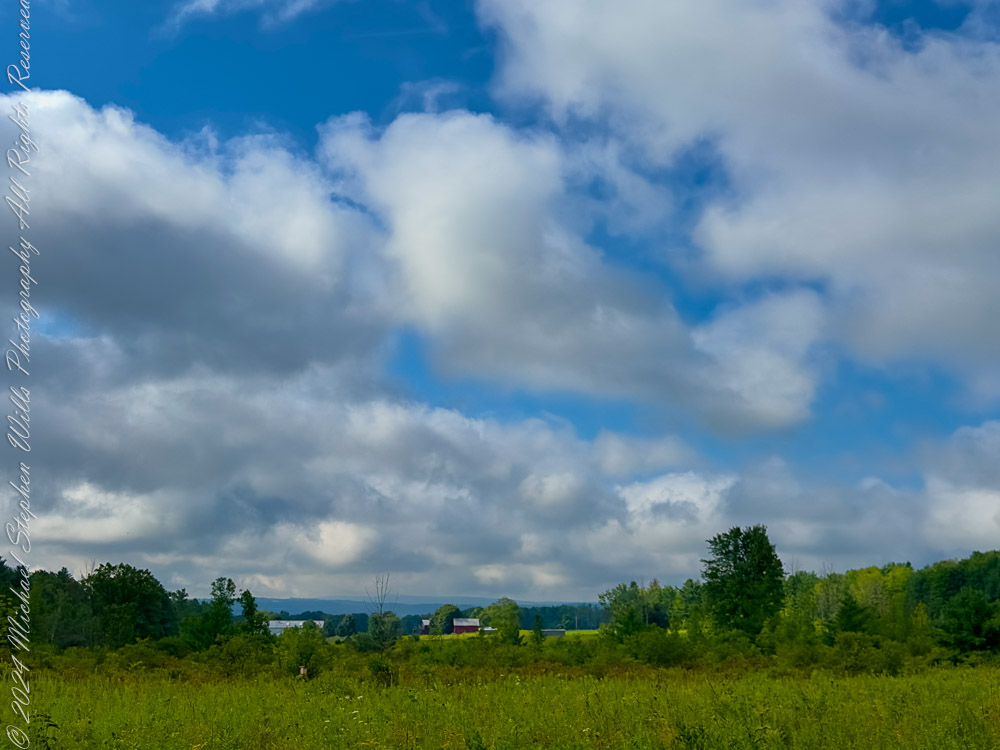
The Louisa Duemling Meadows, nestled within the expansive embrace of Sapsucker Woods, offers a vibrant tableau of life, brimming with opportunities for exploration and a sense of wonder. This new trail, winding through golden fields and punctuated by bursts of wildflowers, whispers tales of the land’s natural and cultural heritage.

Louisa Duemling: A Steward of Nature
Louisa Duemling, the meadows’ namesake, was a dedicated conservationist and philanthropist who supported the Cornell Lab of Ornithology’s mission to protect birds and their habitats. Her legacy lives on in these serene fields, where her commitment to preserving the environment is reflected in every thriving plant and songbird.

Black-eyed Susans: The Meadow’s Golden Treasure
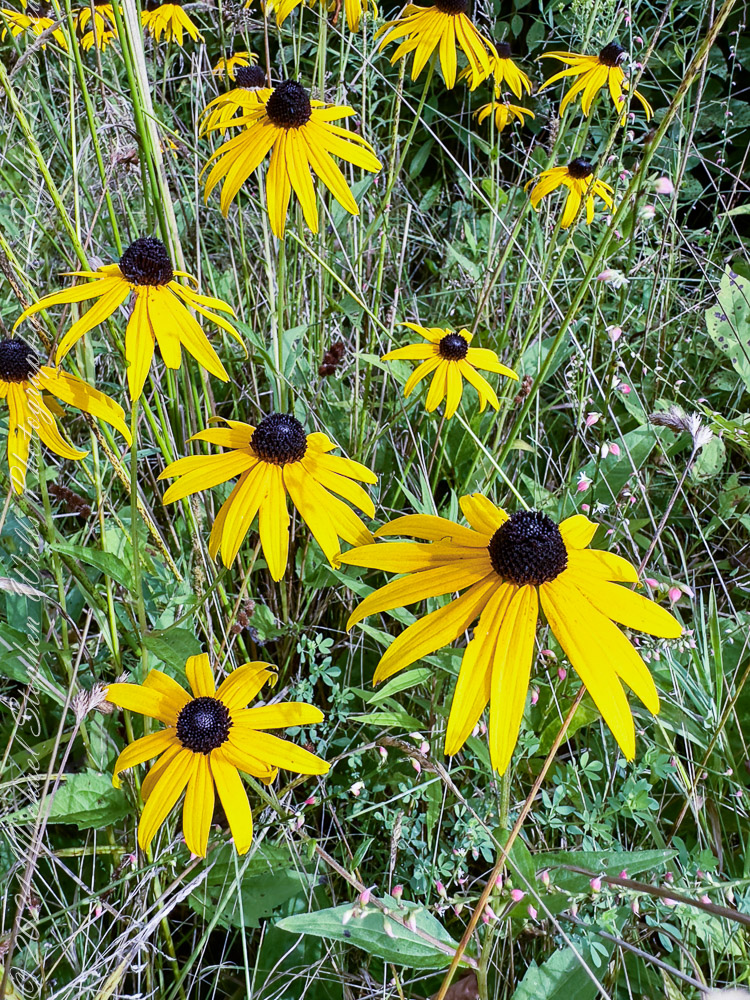
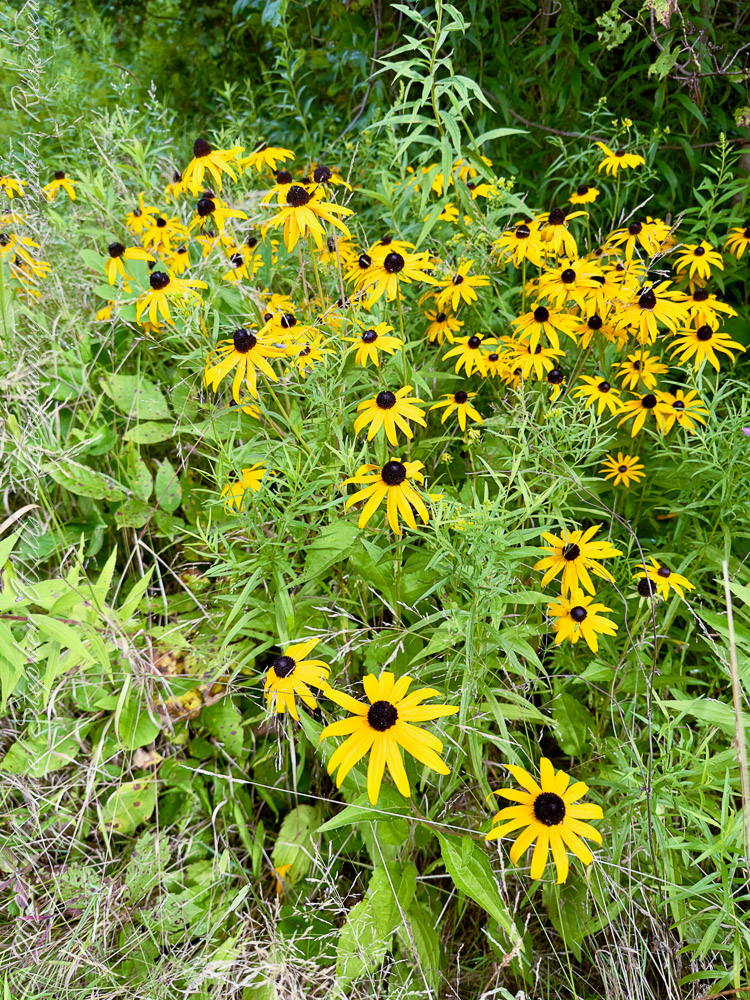
Dominating this summertime landscape with their radiant yellow petals and dark central disks, Black-eyed Susans (Rudbeckia hirta) are a hallmark of the meadows. These cheerful blooms are a delight to the eye, a cornerstone of meadow ecosystems. As members of the Asteraceae family, their composite flowers serve as a rich nectar source for pollinators like bees and butterflies, ensuring the vibrancy of these fields.

Historically, Black-eyed Susans have been used in traditional medicine by Native American tribes for their putative anti-inflammatory properties. Their ability to thrive in diverse conditions also makes them a symbol of resilience and adaptability.

A Symphony of Green and Gold
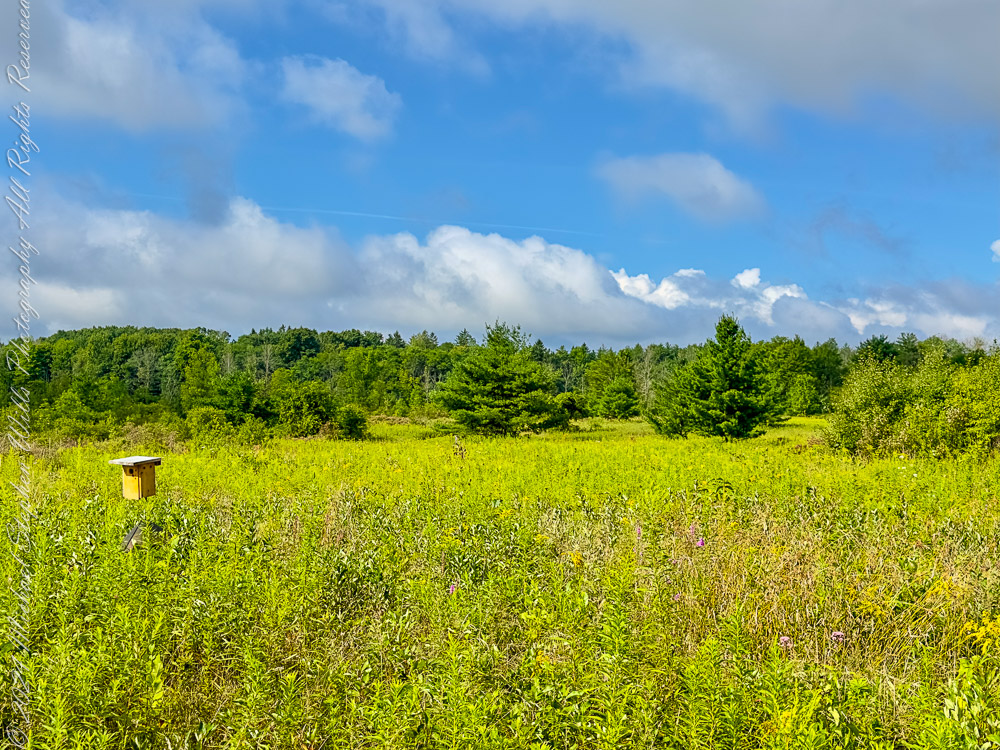
Walking through the trail, one is greeted by the harmonious interplay of goldenrods (Solidago spp.), milkweeds (Asclepias spp.), and asters (Symphyotrichum spp.). Goldenrods, with their feathery clusters of yellow blooms, are often mistaken as allergenic culprits, though it is the inconspicuous ragweed (Ambrosia artemisiifolia) that deserves this reputation. Milkweeds, with their milky sap and delicate pink or white flowers, are vital to monarch butterflies (Danaus plexippus), serving as the sole food source for their larvae.

Among these botanical wonders, the birdhouse stands as a sentinel, a reminder of the intricate relationship between flora and fauna. These wooden structures provide safe havens for cavity-nesting birds like Eastern Bluebirds (Sialia sialis) and Tree Swallows (Tachycineta bicolor), fostering biodiversity within the meadow.

A Horizon Framed by Pines and Clouds
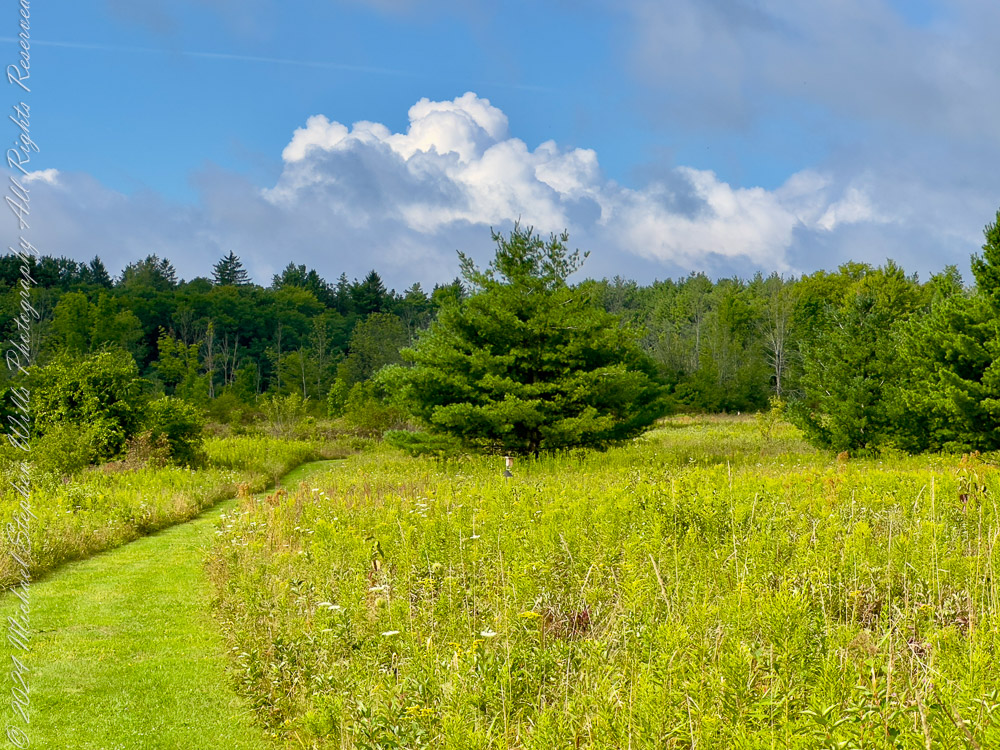
The open meadow trails, flanked by clusters of Eastern White Pines (Pinus strobus) and punctuated by the azure sky, invite reflection and renewal. This is a place where the human spirit can align with the rhythms of nature, where each step reveals new layers of beauty and discovery.

Embracing the Spirit of Discovery
To wander the Louisa Duemling Meadows is to immerse oneself in the timeless dance of life. The trail, carefully marked yet wild in essence, invites visitors to lose themselves in its beauty while finding solace in its quietude. This is not just a path through nature—it is a journey into the heart of conservation and a celebration of the life that thrives under Louisa Duemling’s enduring legacy.

As you leave the meadow, carry with you not just the memory of golden flowers and vibrant skies but the inspiration to cherish and protect the natural world. The Louisa Duemling Meadows are not only a gift to those who walk its trails but a reminder of the profound impact one can have in preserving our planet’s fragile beauty.

Enter your email to receive notification of future postings. I will not sell or share your email address.

The Symbolism of San Xavier del Bac: Faith Through Art

San Xavier del Bac in the Sonoran desert embodies a fusion of indigenous and Spanish symbolism, showcasing devotion through art and imagery that evokes faith, beauty, and spiritual connection.

In the Sonoran Desert near Tucson, Arizona, San Xavier del Bac rises like a vision out of time. Within its adobe walls and domed ceilings lie layers of symbolism—an indigenous inheritance and Spanish colonial fervor merged into a singular living devotion. The photographs presented here, saturated with morning light, guide us through a meditative journey into this mission’s spiritual and aesthetic soul.

The crucifix dominates the first image—the depiction of Christ crucified, emaciated, bruised, crowned with thorns. His suffering is not abstract but visceral, carved in every wound and strained muscle. This figure of Christ, so brutally human, is draped in a tattered loincloth, a humble covering amid divine sacrifice. At his feet rests an offering: a blue artificial flower, incongruent in its brightness yet perfectly placed, a modern votive that expresses both reverence and continuity. It reminds us that humble devotion endures.

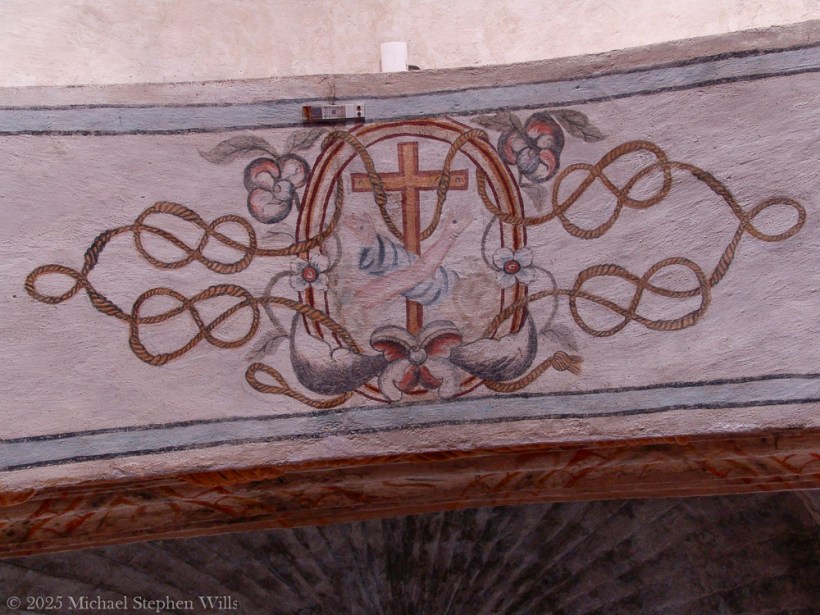
The fresco, with its cross flanked by stylized doves and roses, extends the Passion’s symbolism into sacred geometry. Doves—universal emblems of peace and the Holy Spirit—face one another in symmetrical grace, drawing the eye into the cross they flank. The single length of curling, intertwined golden ropes bind all elements in unity, perhaps reflecting divine infinity. The floral elements speak to rebirth and resurrection, a soft counterpoint to the harshness of the Crucifixion. Here, pain and peace coexist in a visual hymn.

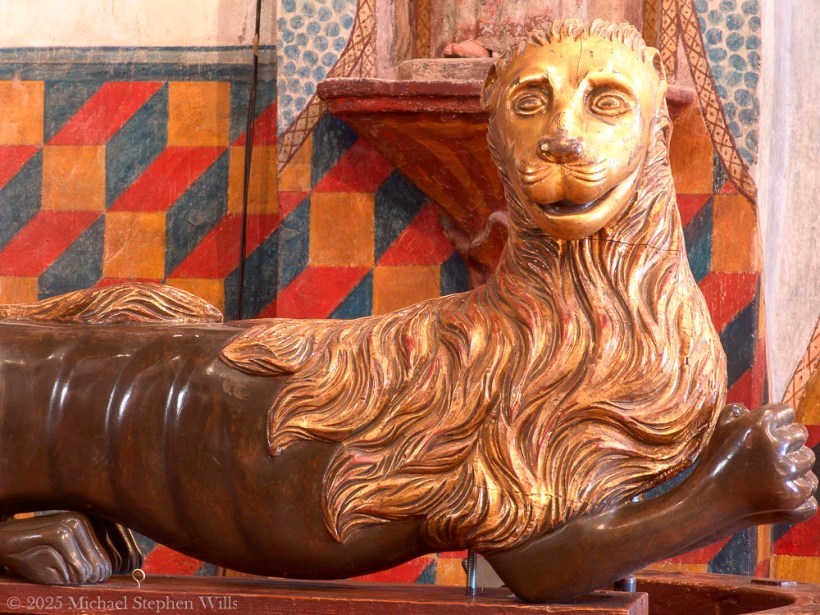
The lion sculpture, oddly cheerful in its golden face, seems at first a puzzle. Yet within Christian iconography, the lion often represents Saint Mark, the Evangelist, or the power and vigilance of God. This lion, rendered with stylized curls and a strong, reclining pose, guards the sanctuary. Its gilded mane mirrors the opulence of heaven, even in this humble desert mission. The lion’s curious gaze invites us to move past fear, toward the mysteries within.

We then meet a robed figure in red—another portrayal of Christ, this time during the Passion, perhaps as the Ecce Homo (“Behold the Man”). His upraised hands and expressive face embody pathos and divine forbearance. The red robe evokes both martyrdom and kingship. He does not plead; he offers. The backdrop is simple but speckled with blue floral motifs, creating a visual bridge to the Virgin’s image nearby.

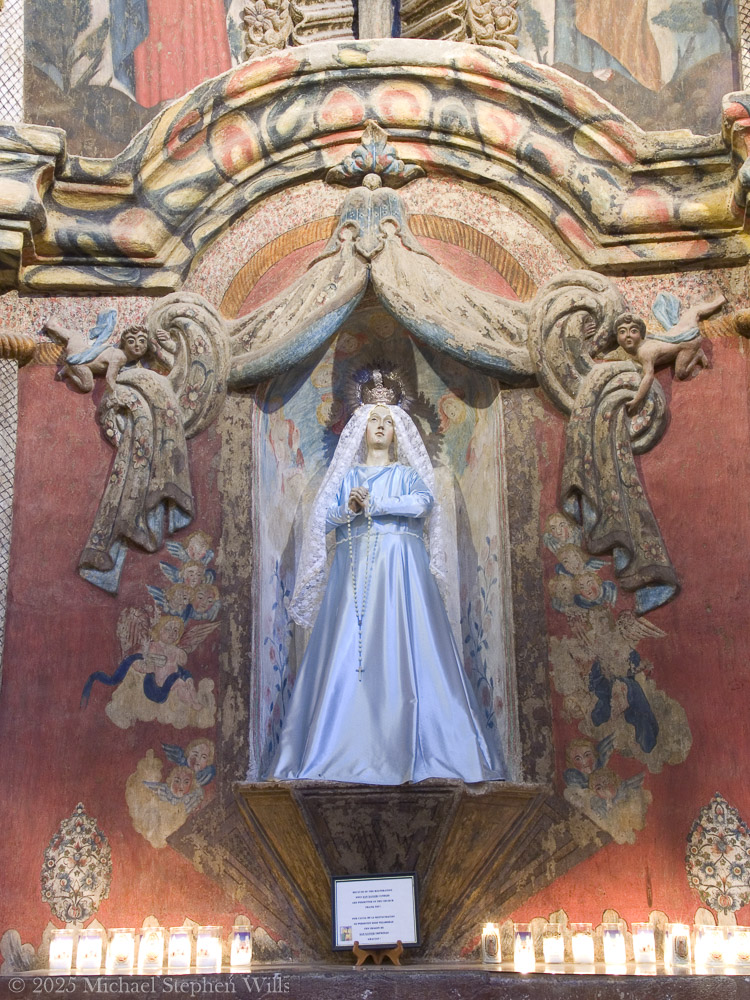
The Virgin Mary appears in blue and white—colors of purity, serenity, and devotion. She stands among votive candles and gazes gently ahead, hands joined in prayer. Her dress flows around her, anchored by a rosary that loops downward like an anchor to the earth. Angels and cherubs flank her in painted stucco, echoing heaven’s embrace. This is not the triumphal Mary of high cathedrals but a deeply human one, a mother, accessible and protective. The candles flickering below affirm that faith is alive here, not simply preserved.

A ceiling medallion next draws us into a more abstract vision. A floral rosette centers on the cross and tools of Christ’s Passion—the nails, spear, and ladder arranged in contemplative symmetry. These instruments of torture are enclosed in beauty, as if the heavens themselves have sanctified the suffering. It is a paradox of faith, this transformation of pain into purpose, death into eternal life.

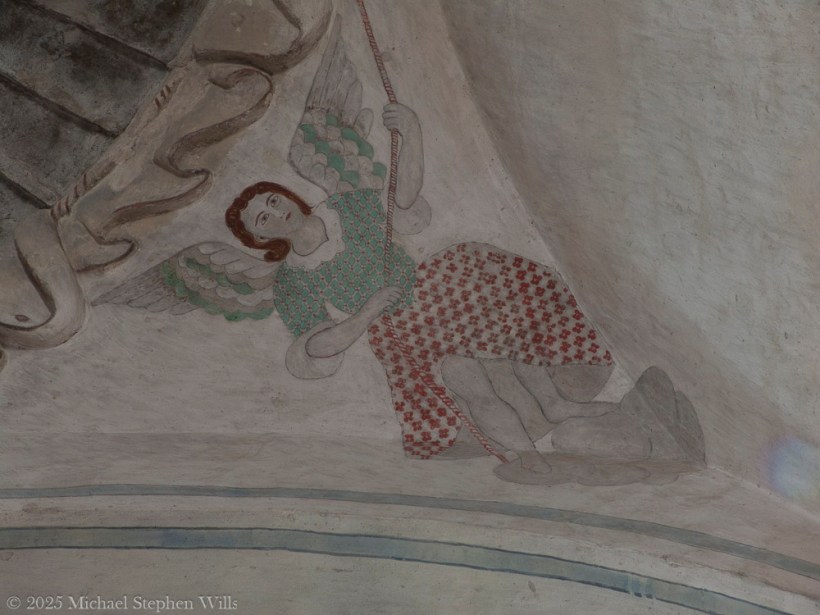
And in the arch’s corner, an angel descends—painted simply, yet with care. The figure pulls at a rope, perhaps to ring a bell or lift a curtain, a symbolic act of revelation or invitation. With wings green and soft, a skirt patterned in red flowers, suggesting femininity, grounding the divine in local textile tradition. The angel bridges the earthly with the divine, echoing the mission’s purpose: to guide and accompany.

Finally, a carved wood panel—plain, aged, and sacred in its wear. The texture of centuries rests in its grain, the indentations of faithful hands passing by. This is the tactile memory of San Xavier: not only what is seen, but what has been touched, prayed over, believed.

Taken together, these images form a tapestry of devotion, colonial artistry, indigenous fusion, and enduring reverence. San Xavier del Bac is a place where symbols still speak, where color and form do more than please the eye—they lift the spirit. In this space, belief is remembered to be continually reborn.

Enter your email to receive notification of future postings. I will not sell or share your email address.

The Mesa Light Captured Them

A father and son journey to Eagle Mesa, experiencing its beauty and silence, reflecting on its history and significance within Navajo culture as the day fades.

They came north out of Chinle with the day already leaning west and the sun fallen low into the drag of horizon dust and the road ran flat and empty past rust hills and mesquite country until, turning into the sun at Mexican Water, after a long hour, at last they pulled into Kayenta where the streets lay quiet under the heavy sun and the windows of the store fronts cast their amber light out across the sand drifting across sidewalks and the wind stirred only faintly and then was still.

They left their bags in the room and turned north again without speaking. The son drove. A man, his father, sat quiet beside him and the sun slid low through the windshield and the sky was pale and cloudless and wide beyond reckoning.

The land began to rise and the road bent and climbed and fell again and then it came into view. Not slowly. Not like a curtain rising. It was simply there.

A shape in the far desert.

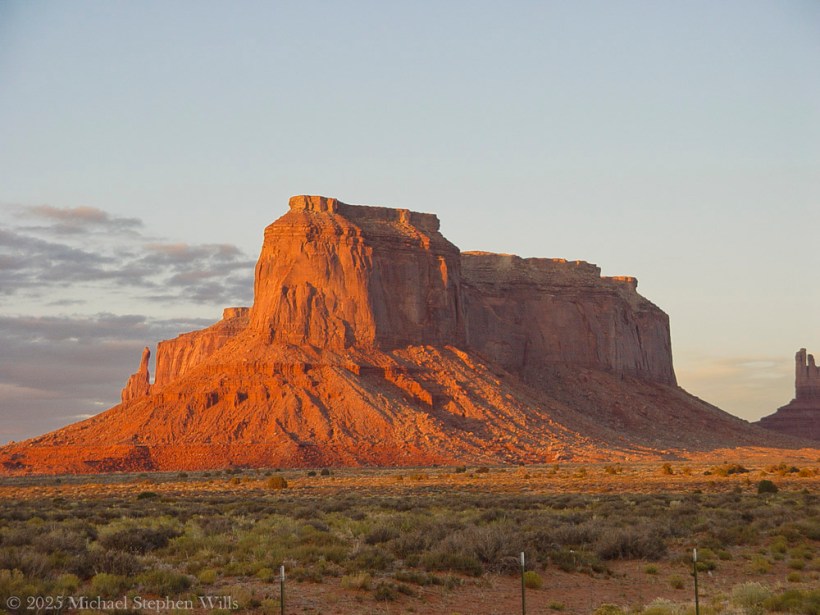
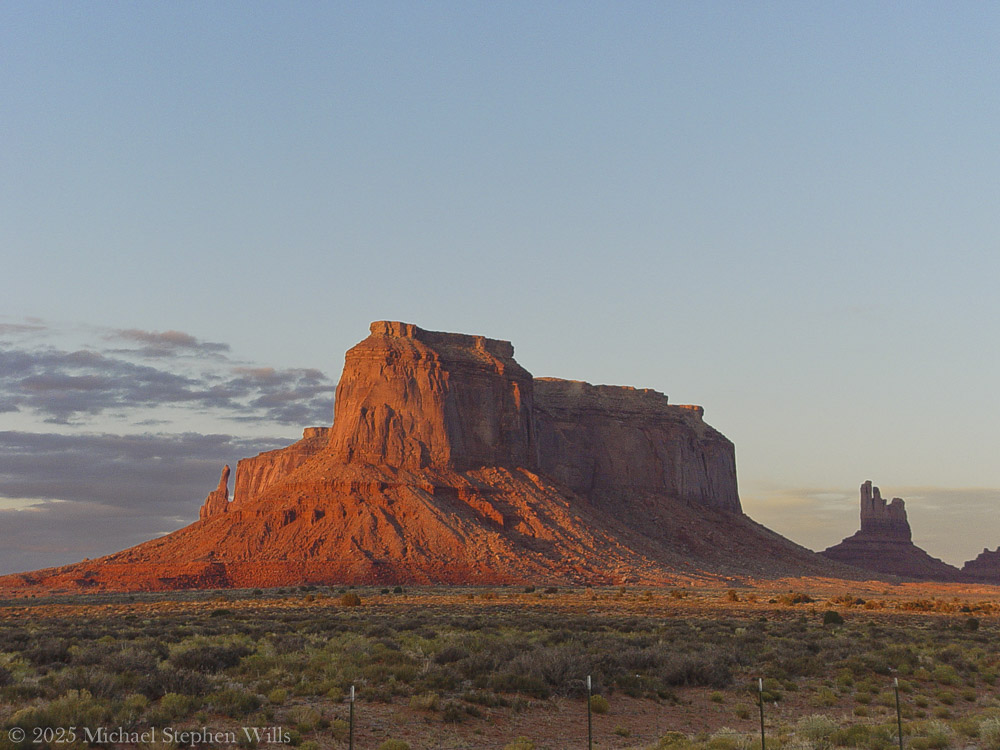
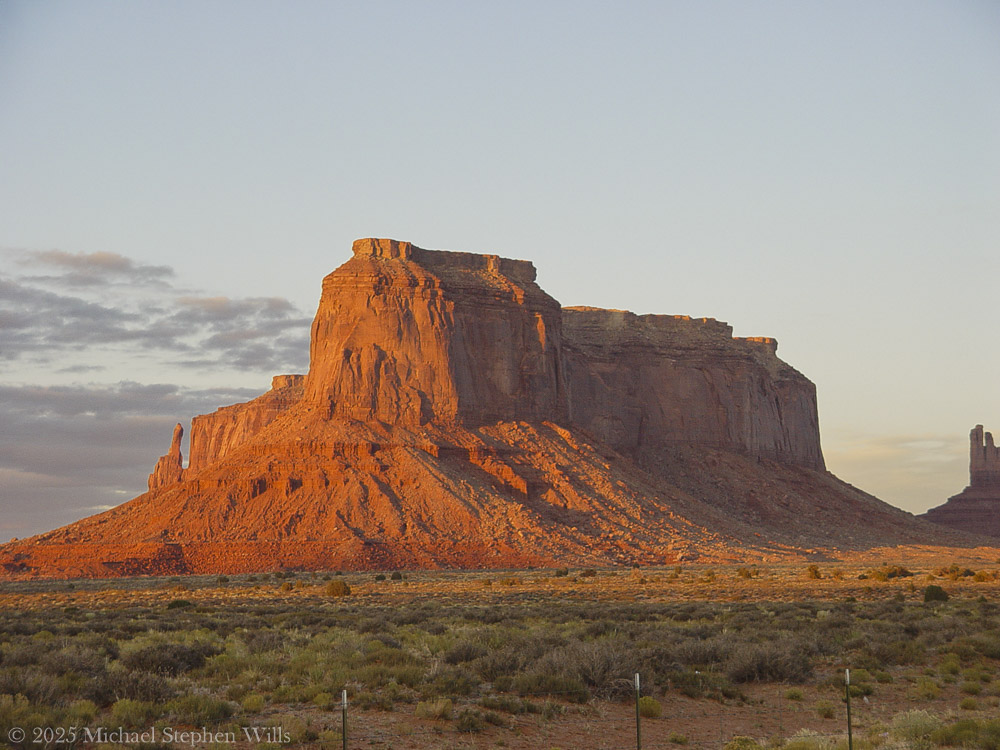
Like a ship that had grounded in a sea long vanished. A sheer mesa the color of blood and ochre and fire where the last of the day spilled westward and caught the rock face and made it burn.

He told the son to pull off. They stopped the car and got out and the sound of the engine fell away, the desert made no sound at all.

The man stood in the road and turned slowly. Eagle Mesa lay before him and the land stretched off in every direction and the fenceposts ran on into silence and the sky seemed to rest upon the buttes as if tired.

There were names for these places. Old names. Navajo names that spoke of eagles roosting and trees once there and water that came and went and did not come again. The mesa they called Wide Rock. The place where spirits go. He did not know the words but he knew the feeling.

On the way to Monument Valley Tribal Park as the sunset for this view on Sullivan Road (Route 163). Navajo County, Arizona. Eagle Mesa is situated 4.5 miles (7.2 km) northeast of Oljato–Monument Valley, Utah, on Navajo Nation land. It is an iconic landform of Monument Valley and can be seen from Highway 163.Precipitation runoff from this mesa’s slopes drains to Mitchell Butte Wash and Train Rock Wash which are both part of the San Juan River drainage basin. Topographic relief is significant as the summit rises 1,100 feet (335 meters) above surrounding terrain in 0.6 mile (1 km). The nearest higher neighbor is Brighams Tomb, 2.05 miles (3.30 km) to the east. This landform’s toponym has been officially adopted by the United States Board on Geographic Names. Navajo names for the mesa are “Wide Rock”, “Where the Eagles Roost”, “Water Basket Sits”, and “Trees Hanging from Surrounding Belt” because there were once numerous trees here. In Navajo mythology, Eagle Mesa is a place where spirits of the deceased may go. Eagle Rock Spire is a 300-ft tower on the northern tip of the mesa which requires class 5.9 climbing skill to reach the summit.Navajo names for this spire which resembles a perched eagle include “Eagle Alongside Mesa”, “Big Finger is Pointed”, and Tsé Łichii Dahazkani (Elevated Red Rock Sitting Up). The first ascent of the spire was made on April 23, 1970, by Fred Beckey and Eric Bjornstad. Geology Eagle Mesa is a mesa composed of three principal strata. The bottom layer is Organ Rock Shale, the next stratum is cliff-forming De Chelly Sandstone, and the upper layer is Moenkopi Formation capped by Shinarump Conglomerate. The rock ranges in age from Permian at the bottom to Late Triassic at the top. The buttes and mesas of Monument Valley are the result of the Organ Rock Shale being more easily eroded than the overlaying sandstone.

The son came and stood beside him and did not speak. The man lifted the camera and took a photograph and then another. The road behind them shimmered with the last heat of day. He took another picture his son, dressed in black, his arms at rest and the red mesa rising behind him and the shadows of their bodies cast long across the gravel and the shoulder of the road.

On the way to Monument Valley Tribal Park as the sunset for this view on Sullivan Road (Route 163). Behind Sean are the landforms Eagle Mesa and behind it Setting Hen, Bringham’s Tomb, to the right. Navajo County, Arizona

They took turns with the camera. The son caught him midstride and smiling lit by sunlight, the land stretching out all around. A man small in a world not made for men.

There was no sound but the click of the shutter and the dry whisper of wind among the sage.

On the way to Monument Valley Tribal Park as the sunset for this view on Sullivan Road (Route 163). Behind Mike are the landforms Eagle Mesa and behind it Setting Hen, Bringham’s Tomb to the right. Navajo County, Arizona

Later he would read that the rock was born of Organ Shale and De Chelly Sandstone and Moenkopi topped with Shinarump. He would know the spire they saw was first climbed by men named Beckey and Bjornstad and that it was called Tsé Łichii Dahazkani by those who’d named it before it ever had another name. He would know the mesa rose eleven hundred feet in less than a mile and that its runoff fed washes that fed rivers that fed nothing now.

But then he only stood and watched and knew it for what it was.

Not a monument to anything but time.

A stillness like prayer. A place that waits.

They lingered until the sun went and the sky turned iron blue and the shadows of the rock reached out across the valley floor and touched them where they stood. Then they climbed back in the car and drove south again and the road unwound behind them black and a single star above and the silence of the place held on inside them long after the valley was gone.

Enter your email to receive notification of future postings. I will not sell or share your email address.

Ecological Significance of False Solomon’s Seal

In Taughannock Falls State Park, False Solomon’s Seal captivates with its beauty, ecological role, and historical medicinal uses.

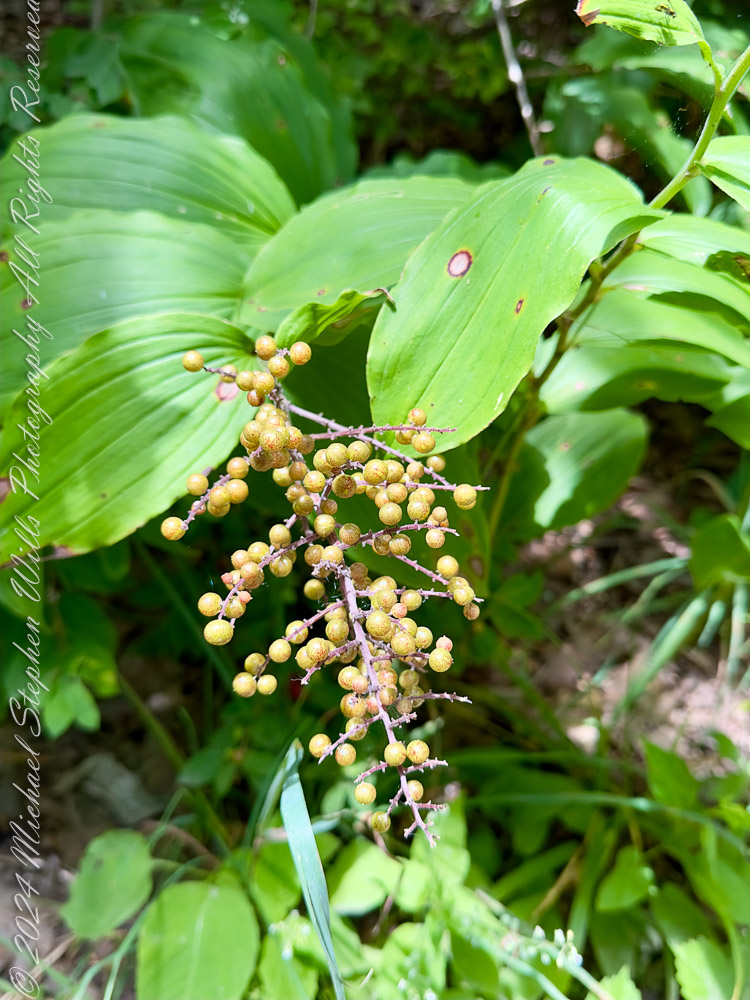
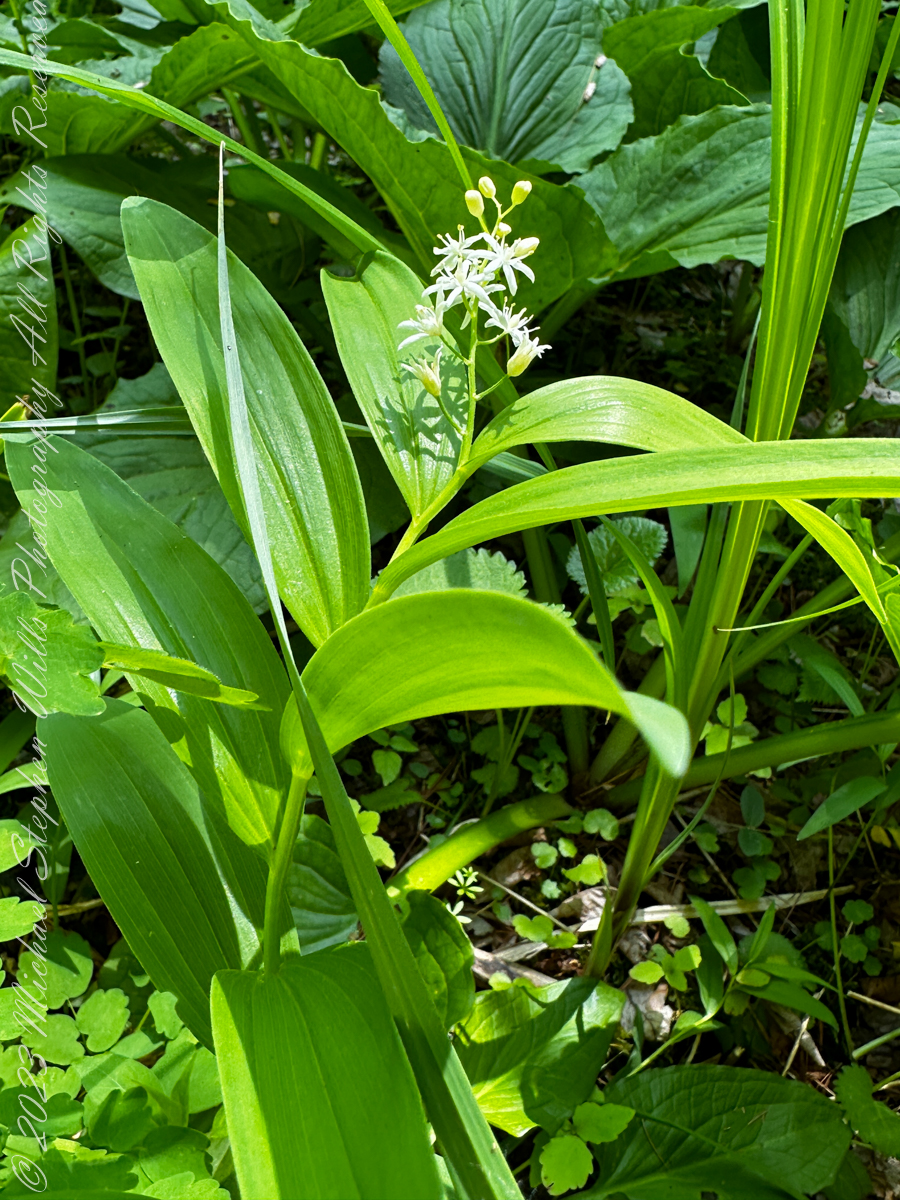
The trails of Taughannock Falls State Park always hold surprises, and on that July day, they did not disappoint. As I paused to take in the tranquility of the woods, my gaze fell upon a plant whose graceful arch and clusters of berries demanded attention. Its broad, lance-shaped leaves alternated along the stem, framing the stem’s terminal cluster of small green berries. Recognizing the plant as Maianthemum racemosum, commonly known as False Solomon’s Seal, I took a moment to admire its understated elegance.

False Solomon’s Seal, scientific name Maianthemum racemosum, is common in the Finger Lakes Region. I found this specimen during a walk with the grandchildren in a local fen among the post-glacial terrain of the Finger Lakes Region. Eames Memorial Natural Area, Cornell Botanic Gardens, Town of Dryden, Tompkins County, Finger Lakes Region, New York State

Characteristics of the Plant

False Solomon’s Seal is a perennial herbaceous plant belonging to the asparagus family (Asparagaceae). It can grow up to three feet tall, its arching stems giving it a unique and recognizable silhouette. The leaves are broad and lance-shaped, with prominent veins running their length, arranged alternately along the stem. At the tip of each stem is a cluster of tiny, spherical green berries, which later in the season ripen to a speckled reddish hue. The plant blooms in late spring to early summer, producing delicate, star-shaped white flowers before transitioning to its fruiting phase.

Found throughout much of North America, Maianthemum racemosum thrives in moist, shaded woodlands, making the lush forests of Taughannock Falls State Park an ideal home. Its ability to grow in the dappled light beneath the forest canopy highlights its adaptability to varying light conditions.

Etymology of the Name

The genus name, Maianthemum, comes from the Greek words “mai” (May) and “anthemon” (flower), reflecting the plant’s tendency to bloom in late spring or early summer. The species name, racemosum, refers to the plant’s inflorescence, which forms a raceme—a cluster of flowers or berries along a single stem. Its common name, False Solomon’s Seal, derives from its superficial resemblance to Solomon’s Seal (Polygonatum spp.), though the latter has bell-shaped flowers hanging beneath its stems, in contrast to the terminal clusters of Maianthemum racemosum.

History and Folklore

False Solomon’s Seal has long been valued for its medicinal and culinary uses by Indigenous peoples and early settlers. The young shoots were harvested and cooked as a vegetable, while the ripe berries were sometimes used in jellies or preserves, though their slightly bitter flavor limited their appeal. Medicinally, teas made from the roots and leaves were used to treat a variety of ailments, including digestive issues, coughs, and sore throats. The roots were also applied as poultices for cuts and bruises, reflecting the deep understanding of natural remedies held by those who lived in harmony with the land.

The plant’s name has sparked legends. While the “false” in its name denotes its distinction from Solomon’s Seal, some folklore suggests that the plant was used to counterfeit the medicinal properties of its namesake. Others believe that its graceful arch and persistent berries symbolize resilience and adaptability, qualities often attributed to those who lived in its native habitats.

Uses and Ecological Role

Although not widely cultivated, Maianthemum racemosum is a valuable plant in its native ecosystems. Its flowers provide nectar for pollinators such as bees and butterflies, while the berries are a food source for birds and small mammals. Its rhizomatous roots also play a role in stabilizing soil in forested environments, preventing erosion and supporting the health of the woodland floor.

For those contemplating harvesting these plants be advised that collection of plants from New York State Parks is prohibited to protect natural resources and maintain ecological balance. According to the New York State Office of Parks, Recreation and Historic Preservation (OPRHP) regulations, “No person shall… remove… any… plant life” within state parks without proper authorization. Therefore, collecting plants in state parks without explicit permission is not allowed. If you have a specific research or educational purpose, you may contact the park administration to inquire about obtaining the necessary permits. However, for casual visitors, it’s best to enjoy the flora from a distance. False Solomon Seal ecological contributions are significant. In addition to its pollinator support and soil stabilization, the plant’s presence is an indicator of a healthy woodland ecosystem.

A Moment of Reflection

As I rose from my crouched position, having taken in the details of Maianthemum racemosum, I felt a quiet gratitude for the opportunity to encounter such a plant. False Solomon’s Seal, with its graceful leaves and unassuming berries, serves as a reminder of the interconnectedness of life in the forest. Its role in the ecosystem, its history with humans, and its understated beauty all speak to the richness of the natural world.

Walking onward, I carried with me a sense of awe for the intricate web of life that thrives in the woods. The False Solomon’s Seal, standing quietly among the ferns and leaf litter, seemed to embody the resilience and balance of the forest—a gentle presence in a vibrant community.

Enter your email to receive notification of future postings. I will not sell or share your email address.

Hylodesmum glutinosum: Characteristics and Ecology

The author reflects on hiking at Taughannock Falls State Park, discovering the Large-Flowered Tick Trefoil’s beauty and ecological significance.

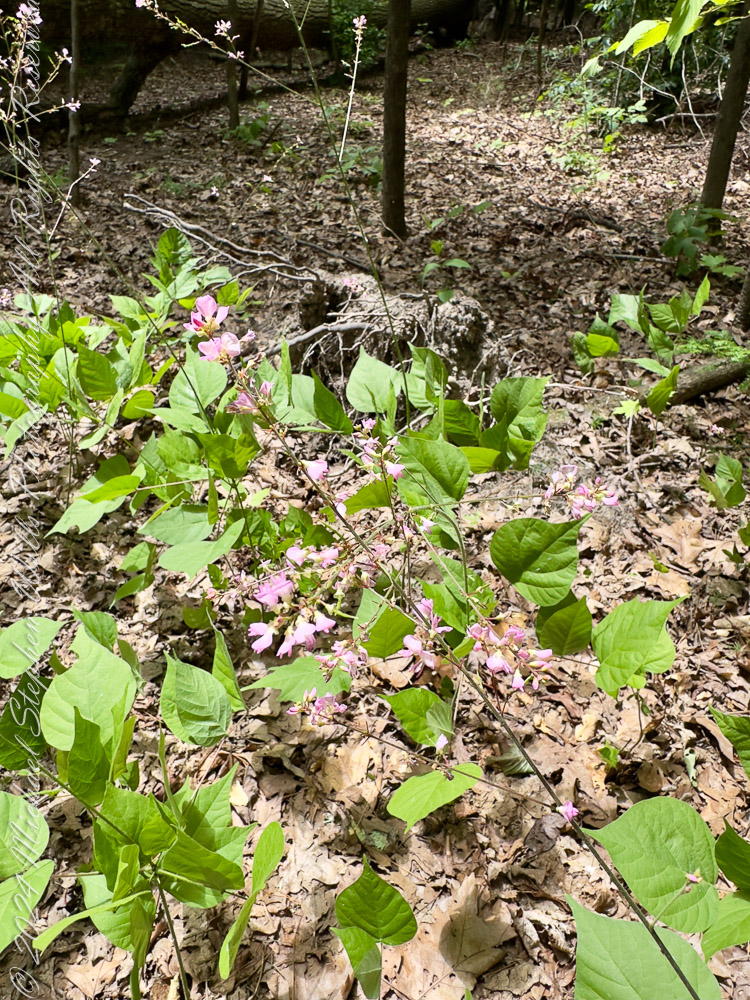
It was a high summer day as I enjoyed a customary hike around of Taughannock Falls State Park on the South and North Rim trails. Here sunlight filtered through the dense canopy, dappling the forest floor with shifting patches of light. Along the trail, my attention was drawn to a cluster of pink blossoms rising on slender, upright stems. Intrigued by their delicate beauty, I crouched down for a closer look. The plant rose above the forest floor, its trifoliate leaves broad and prominently veined, each leaflet slightly larger than I would have expected. These leaves seemed to anchor the plant to the shaded understory, while its flowers reached upward, as though eager to catch the fleeting rays of sun. I captured the plant in this photographs, later used it to identify Hylodesmum glutinosum, or Large-Flowered Tick Trefoil.

Characteristics of the Plant

The Large-Flowered Tick Trefoil is a striking member of the pea family (Fabaceae). Its pink, pea-like flowers are arranged in graceful racemes along the upper portions of its stems, their vibrant color contrasting beautifully with the green foliage around them. The leaves, broad and trifoliate, lend the plant its distinctive appearance. The name “tick trefoil” refers to the plant’s seed pods, which are flat and segmented, equipped with tiny hooks that cling stubbornly to passing animals or hikers, hitchhiking their way to new locations.

The plant is native to eastern North America, including the forests and trails of New York State. Its preference for rich, well-drained soils in partially shaded woodlands makes it a common sight in places like Taughannock Falls State Park. Blooming from mid to late summer, it provides an essential nectar source for bees and other pollinators, playing its part in the intricate web of the forest ecosystem.

Etymology of the Name

The genus name, Hylodesmum, was established only twenty-five years ago when the plant was reclassified from the genus Desmodium to a new genus within the tribe Desmodieae. The name reflects its forested habitat, with “hylo” derived from the Greek word for “wood” or “forest.” Previously described in 1802 as Hedysarum glutinosum and later placed in Desmodium, the species name glutinosum remains unchanged, meaning “sticky” in Latin. This aptly describes the plant’s seed pods, which adhere to anything that brushes past them. Together, these names encapsulate both the botanical structure and the unique dispersal strategy of this plant.

History and Folklore

Native Americans and early settlers were intimately familiar with tick trefoils. The plant’s seeds, notorious for clinging to clothing and fur, earned it a reputation as a nuisance, but its resilience and utility could not be overlooked. Indigenous peoples utilized various parts of the plant for medicinal purposes. The roots and leaves were brewed into teas to treat fevers and digestive ailments, while poultices made from the leaves were applied to wounds to promote healing. Such uses highlight the depth of knowledge early inhabitants had about their environment.

The plant’s sticky seed pods also became the subject of folklore. Children in rural communities would playfully call it “hitchhiker’s weed,” competing to see who could collect the most seeds on their clothing during outdoor adventures. These seeds, so adept at attaching themselves to passersby, were seen as symbols of persistence and adaptability, traits that many admired.

Uses and Ecological Role

While Hylodesmum glutinosum is not commonly cultivated, its ecological contributions are significant. As a member of the Fabaceae family, it has the ability to fix nitrogen in the soil through a symbiotic relationship with rhizobia bacteria in its root nodules. This makes it a valuable plant in maintaining soil fertility in its native ecosystems. Its flowers attract pollinators like bees and butterflies, ensuring that the forest remains vibrant and full of life.

In addition to its ecological importance, the plant’s seeds have a curious modern use: they’ve been studied for their ability to help detect movement in the environment. Researchers have examined the sticky pods’ structure as a natural model for creating adhesives and tracking devices, proving once again that even the smallest details in nature can inspire human ingenuity.

A Moment of Reflection

As I rose to my feet, brushing the leaf litter from my hands, I felt a renewed sense of wonder for the intricate lives of the plants surrounding me. The Large-Flowered Tick Trefoil, with its vivid pink flowers and ingenious seed pods, seemed to embody the essence of the forest: a harmonious blend of beauty, resilience, and interconnection.

Walking away, I carried with me not just the memory of its vibrant blooms, a deep respect for its role in the natural world. In the quiet of Taughannock’s wooded trails, Hylodesmum glutinosum had shared its story, a tale of persistence, adaptation, and the hidden wonders that flourish when we take the time to notice.

Enter your email to receive notification of future postings. I will not sell or share your email address.

Discovering Fogbows: A Coastal Wonder

I had a haunting experience at Cocoa Beach, witnessing a rare fogbow—a ghostly arc formed by fine mist—evoking emotions and reflections on nature’s beauty.

The fog haunted Cocoa Beach for days, softening the edges of the afternoon. I had been walking along Cocoa Beach, feeling the cool ocean breeze on my face, when I noticed a change in the light. It was a little after four, the sun drifting lower in the western sky, its warmth fading into a hazy glow. The air smelled of salt and mist, and waves lapped gently at the shore, their rhythm unbroken by the deepening fog.

And then I saw it.

A pale arc stretched across the horizon, a ghost of a rainbow bending above the waves. At first, I wondered if my eyes were playing tricks on me—where were the usual bright bands of red, orange, and violet? But no, the arc was real, a fogbow, forming where sunlight met the fine sea mist. Unlike the rainbows that appear after summer storms, this one was almost entirely white, as if the ocean had conjured it from air and silence.

Sailors once whispered of such things—a white rainbow at sea, a sign of hidden land or wandering souls. Some believed it to be a bridge between realms, a fleeting passage where the living and the lost might momentarily brush against one another. Others saw it as an omen, a spectral warning of treacherous fog ahead. I wondered what the mariners of old might have thought, standing at the bow of a ship, watching a pale arc rise from the mist, its edges dissolving like breath against glass.

I stood still, watching, as the science of the moment unfolded before me. Unlike traditional rainbows, which form when light bends through large raindrops, fogbows are born from infinitesimally smaller droplets, often less than 0.1 millimeters in diameter. Their size diffuses the light, scattering it so finely that the colors blend together into a spectral whisper rather than a vibrant shout. The physics of it fascinated me—this was diffraction in action, nature bending light in a way that rendered it nearly colorless.

The effect was surreal. The fogbow arched over the breaking waves like something out of a dream, a halo of sea and sky, momentary yet timeless. It seemed to pulse in the shifting mist, visible one moment, fading the next, as if deciding whether to reveal itself fully or slip back into the fog’s embrace.

For several minutes, I just stood there, taking it in. The world felt different inside that mist, quieter, more reflective. The fog dampened the usual sounds of the beach—the calls of shorebirds, the laughter of distant walkers—leaving only the hush of the waves and the distant hum of the ocean’s breath.

I knew that fogbows were rare, requiring just the right balance of thin fog, moisture, and a low-angled sun. I was lucky to be in the right place at the right time, a witness to something subtle yet profound.

And just as silently as it had appeared, the fogbow began to dissolve. The mist thickened, swallowing its arc, the sky shifting back to its usual muted gray. But the memory of it lingered—a white rainbow over the sea, ephemeral and elusive, like a secret the ocean had briefly chosen to share.

Enter your email to receive notification of future postings. I will not sell or share your email address.

The Majestic Cottonwoods of Stewart Park

Discover the timeless beauty of two towering Cottonwood trees along the shores of Cayuga Lake. Explore their natural history, cultural significance, and how they’ve shaped the landscape of Stewart Park for generations.

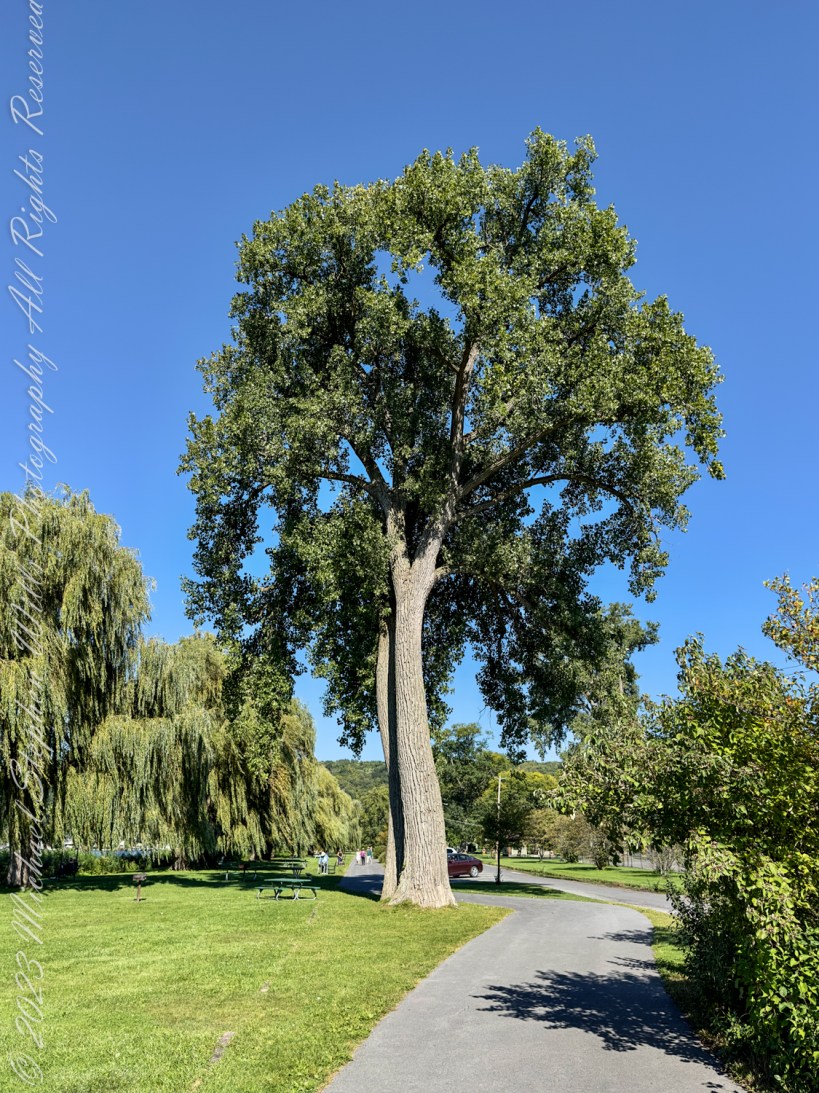
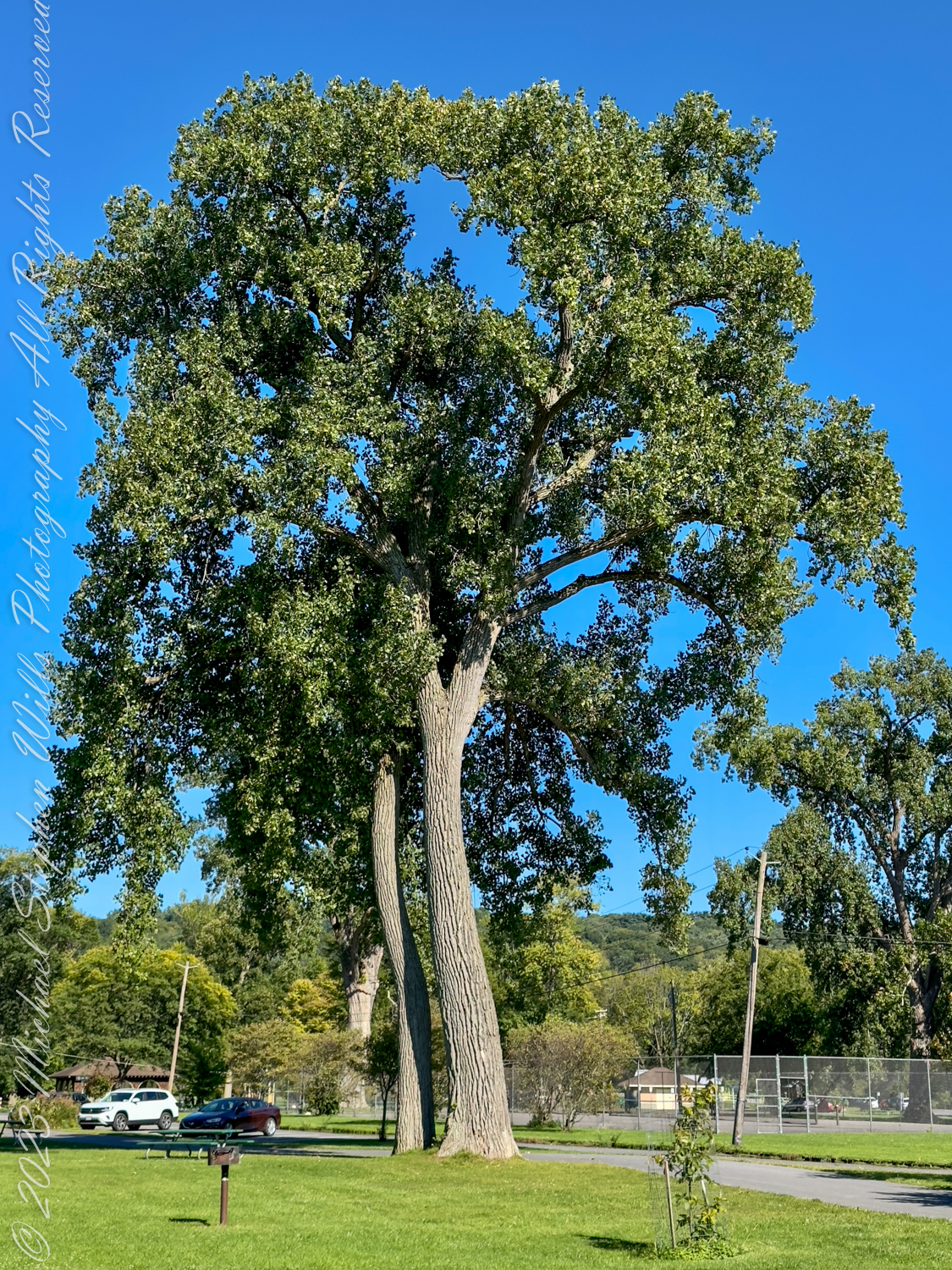
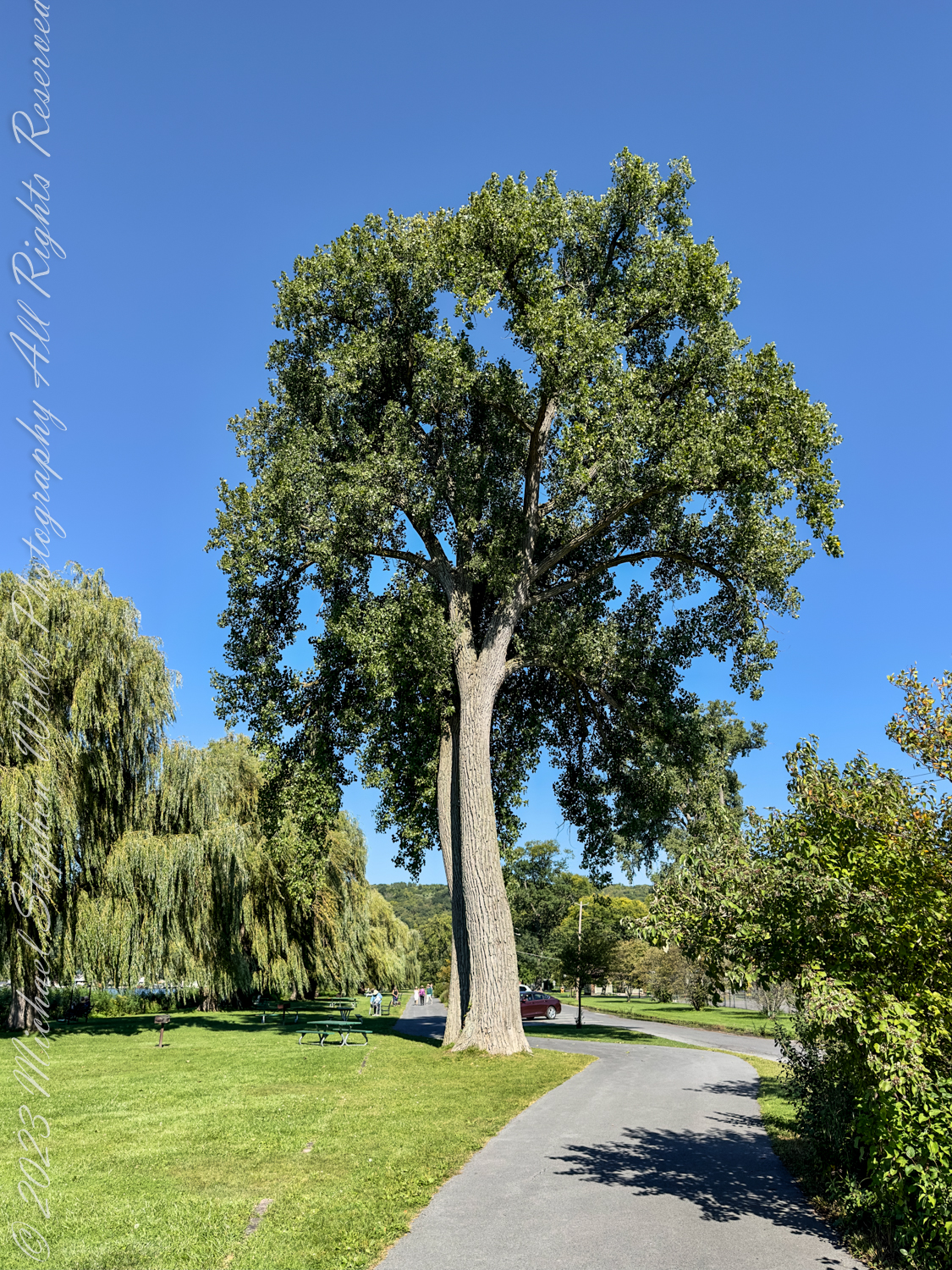
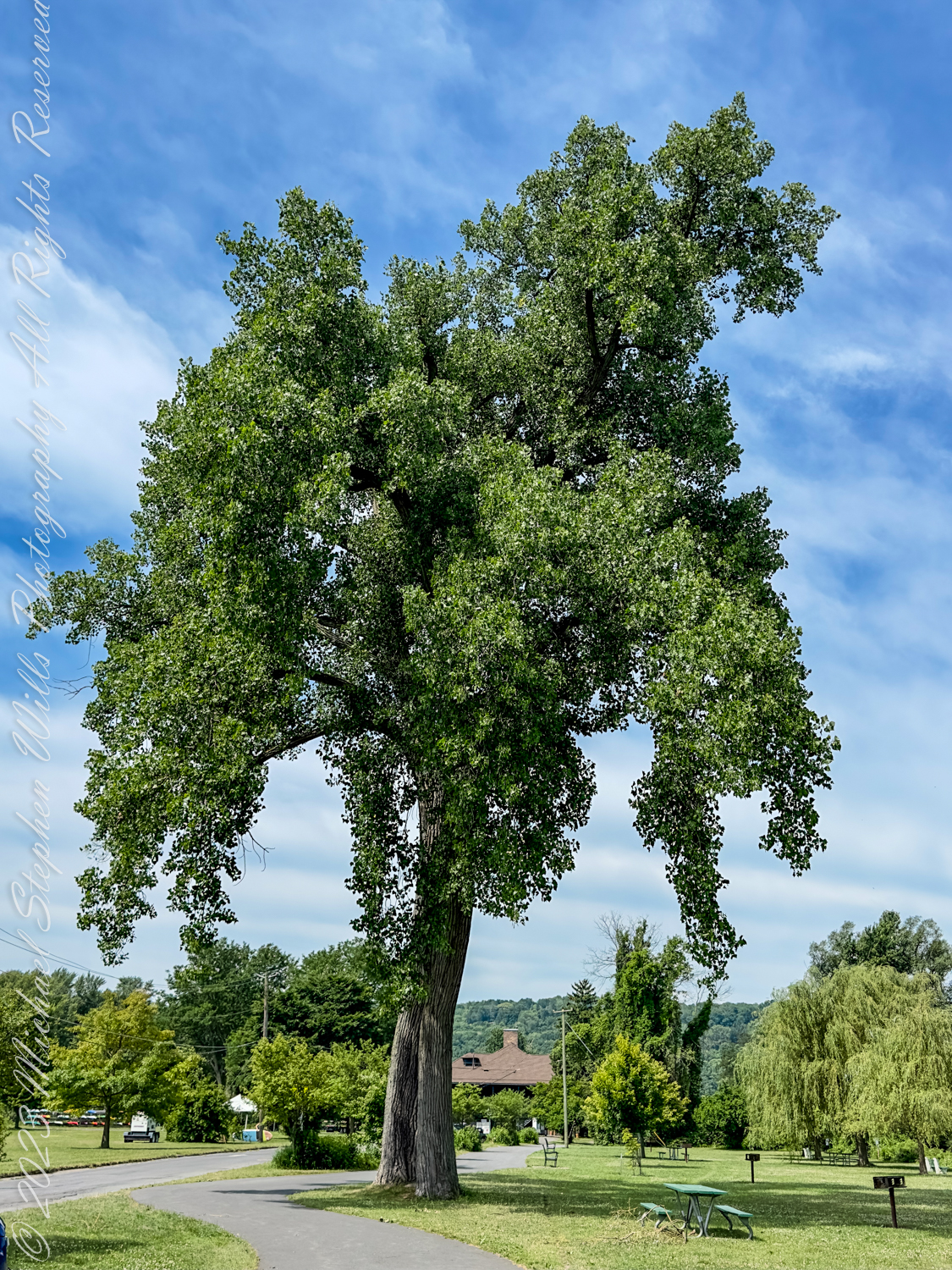
Walking with Pam in Stewart Park, the shores of Cayuga Lake shimmer under the bright September sun, offering a serene setting for reflection. Ahead, two towering Cottonwood trees stand in quiet majesty, their branches spreading wide, casting long shadows over the grass and walkway. Drawn toward them, I find myself in awe of their presence—these two trees, ancient sentinels by the water, who have silently borne witness to the changing world around them.

View Facing East/Southeast, September 10, 2024

Cottonwoods, scientifically known as Populus deltoides, are members of the poplar family and are among the tallest trees in North America. The ones before me have thrived for decades, their thick, furrowed trunks a testament to the endurance of life on the edge of the lake. It’s remarkable to think of all the storms and seasons they’ve weathered—their roots digging deep into the moist earth, nourished by the lake’s constant ebb and flow. I feel as though these trees, standing side by side, companions, connected through the unseen networks of roots beneath the soil. Their relationship to one another seems profound, they have grown up together, providing support and strength as they aged. Their canopies overlapping as though embracing one another.

There’s an undeniable symmetry to their relationship, both in form and function. One can imagine them as silent witnesses to the changing landscape around them—the gradual expansion of the park, the families that come and go, the laughter of children playing nearby, and the quiet conversations of couples walking hand in hand. These trees have become part of the fabric of Stewart Park, deeply entwined with the human history that unfolds here every day.

View Facing East, September 10, 2024

The branches reach skyward, their leaves shimmering in the breeze, producing the characteristic fluttering sound of Cottonwoods. There’s something deeply soothing about this rustling—the way the wind seems to dance through the leaves, creating a rhythm that feels eternal. It reminds me that these trees have long been part of human experience, a backdrop to countless strolls, picnics, and quiet moments of contemplation here at Stewart Park.

Cottonwoods are fast-growing, often found near bodies of water where their shallow roots can tap into consistent moisture. And yet, their rapid growth comes with a trade-off; their wood is soft and brittle, prone to breaking in high winds. But in Stewart Park, these two trees have found a perfect balance, their large, sweeping canopies offering shade and shelter without suffering too much damage from the storms that blow through the Finger Lakes. Their resilience is remarkable—a reminder of nature’s ability to thrive in challenging conditions.

Historically, Cottonwoods have played a significant role in the lives of the people who encountered them. Native Americans once used the bark for medicinal purposes and fashioned the wood into canoes. Early settlers appreciated the trees for their rapid growth and ability to provide shade and timber in otherwise open expanses of the Midwest and Northeast. Even today, their legacy endures as they continue to offer shade and shelter, albeit more for leisure than for survival.

I notice how the pathway itself bends gently to accommodate the Cottonwoods. The paved trail, so clearly designed with these majestic trees in mind, arcs around their broad bases as if to honor their presence. In a world where nature is so often bent to human will, it’s refreshing to see this small, quiet gesture of deference—a reminder that in our modern parks, nature can sometimes lead the way.

View Facing West, June 25, 2024

The path doesn’t cut through or impose upon these trees. Instead, it respects their claim to the land, curving around them in a way that feels organic, almost reverent. The roots of these Cottonwoods must reach far beyond what I can see, extending outward in all directions beneath the soil, beneath the path itself. It’s as though the trees and the human-made elements of the park have reached a compromise—a harmonious balance where both can coexist without either having to sacrifice too much.

In their wisdom, the planners of this park understood that these trees had already laid their claim long before the park’s paths were laid out. It’s a small but profound testament to the enduring power of nature and the foresight of those who designed this space. As I walk along the path, I feel the subtle shift in the landscape—the way the curve of the trail encourages a more leisurely pace, inviting visitors to pause for a moment and take in the grandeur of these ancient trees.

The curve itself creates a sense of flow, as if the path is gently nudging us toward a deeper appreciation of the Cottonwoods. There’s no rush here. The trees stand in their place, rooted and steadfast, while we are invited to move around them, to change our course slightly in order to make space for something larger than ourselves. The path becomes a metaphor for our relationship with nature—we must sometimes bend and yield to its greater forces, rather than insist on our own straight and rigid lines.

This curved path speaks to the broader theme of adaptability—how both nature and humanity have learned to accommodate one another. The Cottonwoods have withstood the test of time, their roots dug deep into the soil, while we have found ways to move alongside them, adjusting our course to allow for their growth. It’s a quiet but powerful reminder of the importance of coexistence and respect, of making space for the natural world rather than always seeking to dominate it.

As we pass by, I notice the texture of their bark—deeply furrowed and rough, a tactile reminder of the passage of time. Each ridge and crevice holds the story of countless seasons—of dry summers, harsh winters, and everything in between. I reach out and touch one of the trunks, feeling the coolness of the bark under my hand. There’s a vitality here that can only be sensed up close, a quiet hum of life that pulses just beneath the surface.

Yet, despite their imposing size and age, the Cottonwoods remain humble in their role. They do not demand attention like a flowering dogwood or a brightly colored maple. Instead, they offer something more enduring—a quiet, steady presence that provides shelter and shade without fanfare. Their leaves turn a brilliant yellow in autumn, adding to the kaleidoscope of colors that make up the Finger Lakes’ fall landscape. But even in winter, when the leaves are gone, their bare branches stand against the cold sky, offering a stark beauty all their own.

As I step back to take in the full view of these two Cottonwoods, I am filled with a sense of gratitude. Their lives, so intimately tied to this place, remind me of the interconnectedness of all living things—the way nature, time, and humanity overlap in ways both seen and unseen. These trees, growing together on the shores of Cayuga Lake, are not just part of the landscape—they are part of the story of Stewart Park and, in a broader sense, the story of this region. They remind me that, like them, we are all shaped by our surroundings, by the people and places that stand beside us as we grow. And in that way, we are never truly alone.

Copyright 2024 Michael Stephen Wills All Rights Reserved