Wednesday, June 15th, we were on a turn to heat and humidity with this day of light breeze, temperature in the 70s making hiking around Tremen Park a joy.
These snapshots, taken on the fly with an IPhone 7, are the high points.
The first is a dandelion look alike with yellow flowers, petals shaped like teeth, though on a long hard stem and multiple flowers on a stalk. Known as meadow hawkweed, yellow hawkweed, field hawkweed, king devil, yellow paintbrush, devil’s paintbrush, yellow devil, yellow fox-and-cubs, and yellow king-devil with two scientific names: Pilosella caespitosa and Hieracium caespitosum.
Click photograph for a larger view. To do this from WordPress Reader, you need to first click the title of this post to open a new page.
Pilosella caespitosa
Click for slideshow.
Copyright 2022 All Rights Reserved Michael Stephen Wills
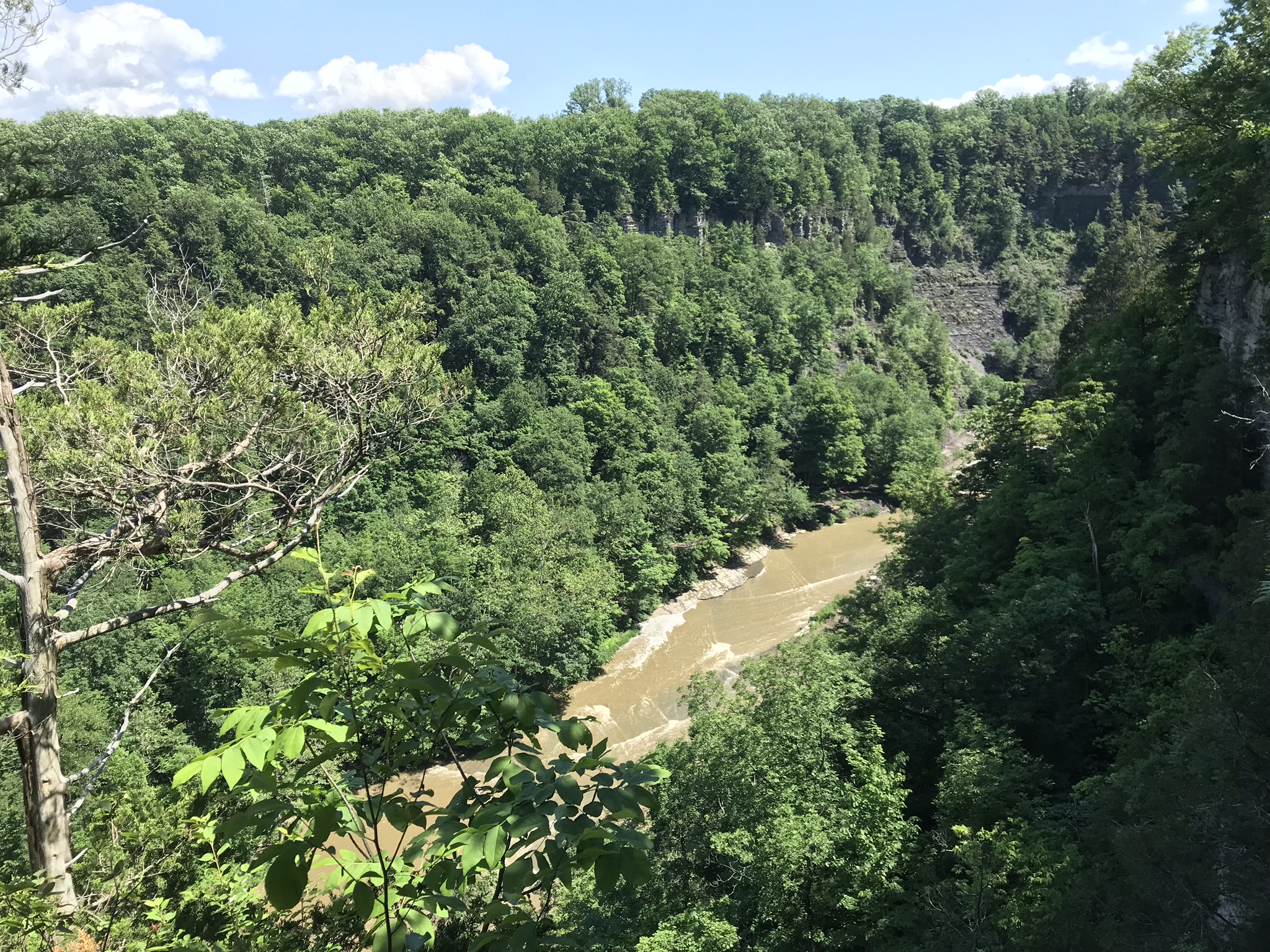
Walking around Taughannock Falls New York State Park on the solstice of 2019 starting from the Black Diamond trail head on Jackson Road, down the South Rim trail, up the North Rim Trail. We had a great deal of rain this week and the water filled the falls the full channel width.
The header photograph is a waterfall of Fillmore Glen, also in the Finger Lakes.
For a full screen view, click on the UTube icon, lower right of the video panel. The resolution is not very good so I also posted the source videos.
The movie is from the following videos and photos from my IPhone. The quality is better than the compilation video. I uploaded the following videos directly to WordPress. I was not able to get the “full view” icon to work on my browser. Enjoy
View of the upper gorge, above the falls, from the South Rim
View into the gorge from the South Rim
Distant view of Taughannock Falls from the South Rim
Click on any of the photographs for a larger view.
The stair down from the gorge South RimView of the forest of the South RimThe stairs up to the North Rim of the gorge
View of the forest of the North Rim
A turkey vulture soars by towards the end of the following.
View of gorge from the North RimView into the gorge from the North Rim
Taughannock Falls and “Ant People” from the overlook
Taughannock Falls from the North Rim
Copyright 2019 All Rights Reserved Michael Stephen Wills
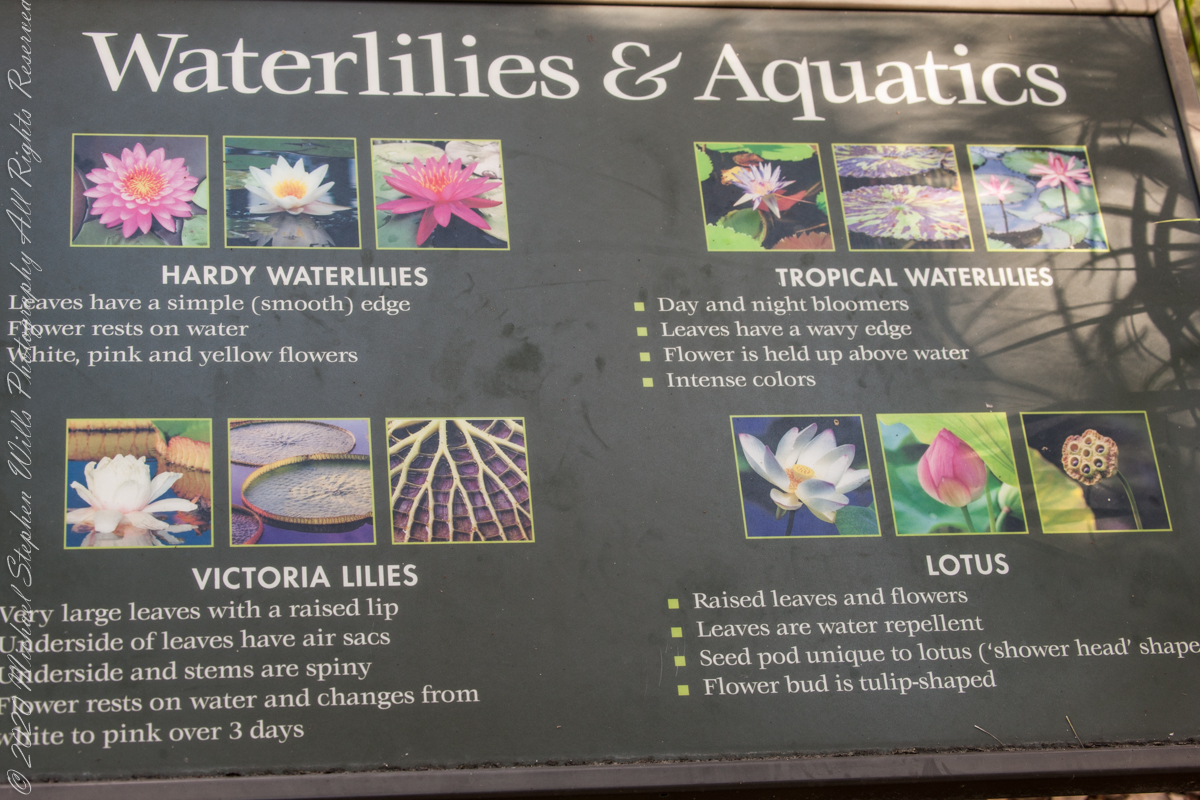
The McKee informative placard divides the Genus Nymphaea into “Hardy” and “Tropical” waterlilies. “Hardy” being plants native to temperate climates, such as New York State. I do not have photos of these from McKee. Nor are there examples of Lotus.
The idiosyncratic categories of McKee Gardens
What I have is an abundance of the “tropical” varieties.
“The family Nymphaeaceae, of which the genus Nymphaea is a part, is thought to be the most basic of all the Angiosperms. A minute flower of the Nymphaea type was found in early Cretaceous deposits in Portugal, dating early waterlilies to at least 115-125 million years ago.“
Bright sunlight washed out the flower, not so for the reflected image
Here is a brightly colored “tropical” flower well above the water surface on an erect stem emerging from the water.
“Angiosperm,” the word referring to all flowering plants, is composed to two greek words angio-. meaning enclosed, and -sperm, meaning seed. “DNA studies indicate the Nymphaeaceae separated from the rest of the angiosperm family tree…..before the separation of the monocots and dicots.” – see reference.
Travelling light, using the IPhone 7during a 4 mile walk on the Gorge and South Rim Trails of Robert H. Treman New York State Park, Finger Lakes Region near Ithaca, New York. A few waterfalls and sights along the way. Distance is from the “Health” app on my phone.
A pool is formed beneath this waterfall by a dam, removed each fall and yet to be placed. Summertime, the water is deliciously cool. It is great fun swimming to the waterfall base and inching along under the spray. This view is the reward for the first climb up from the gorge floor, the South Rim Trail.
The first Foam Flower…..
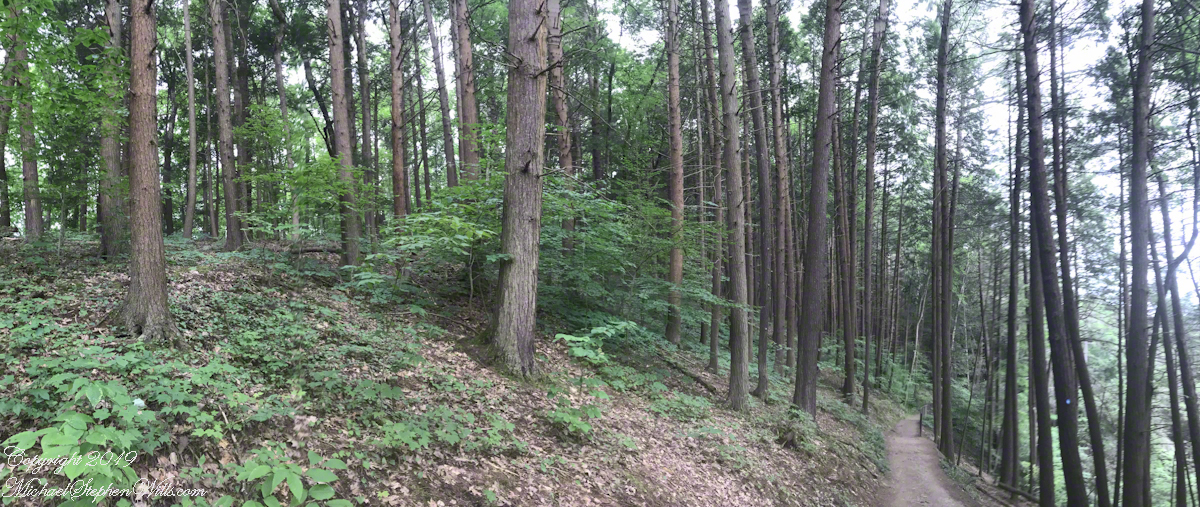
Rim Trail Panorama
This flower grew just off this section of the trail.
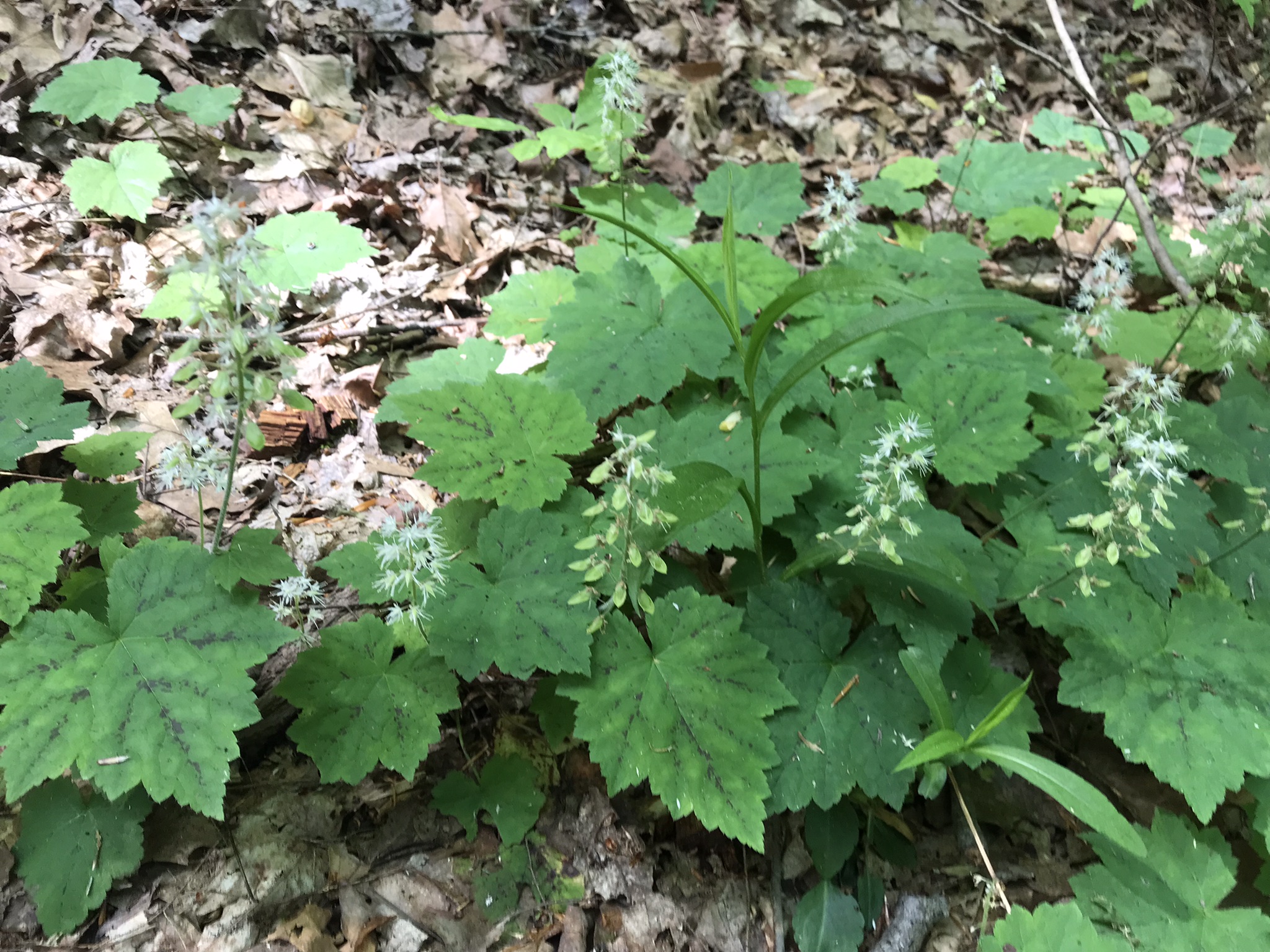
A few hundred feet further along, the Foam Flowers were crowded in clumps. The scientific name, Tiarella cordifolia, is from the heart shaped leaves (cordifolia). Each flower forms a crown like seed, thus “tiarella” from the French.
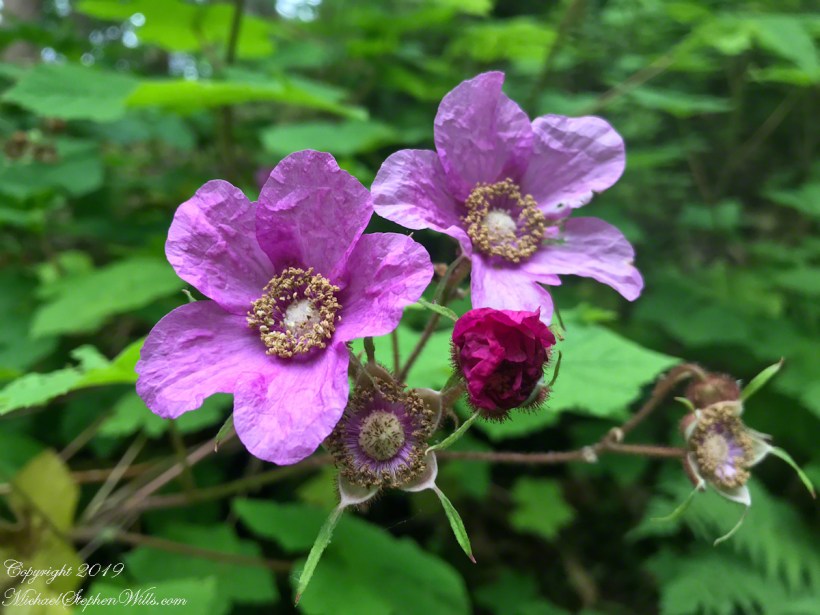
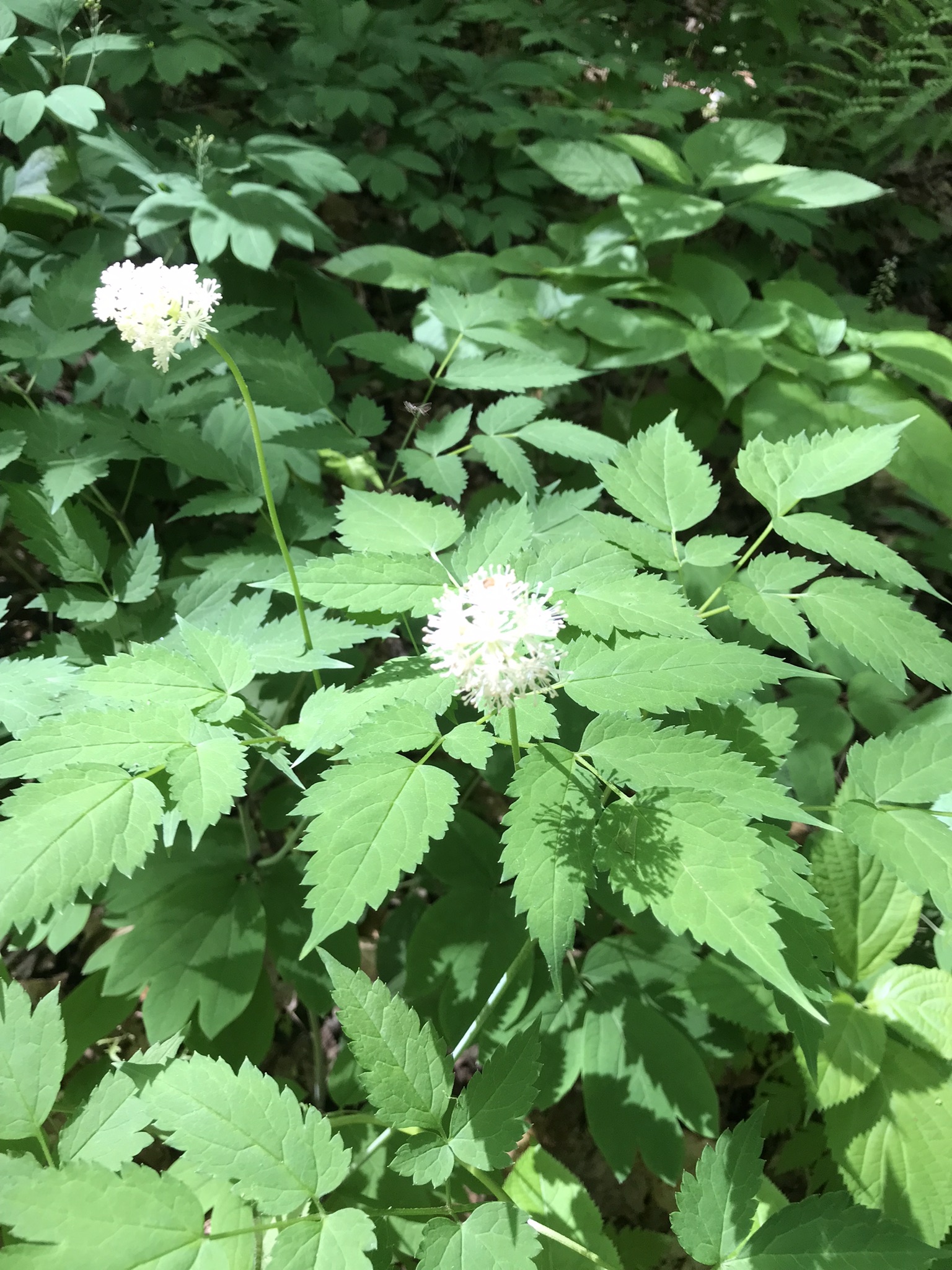
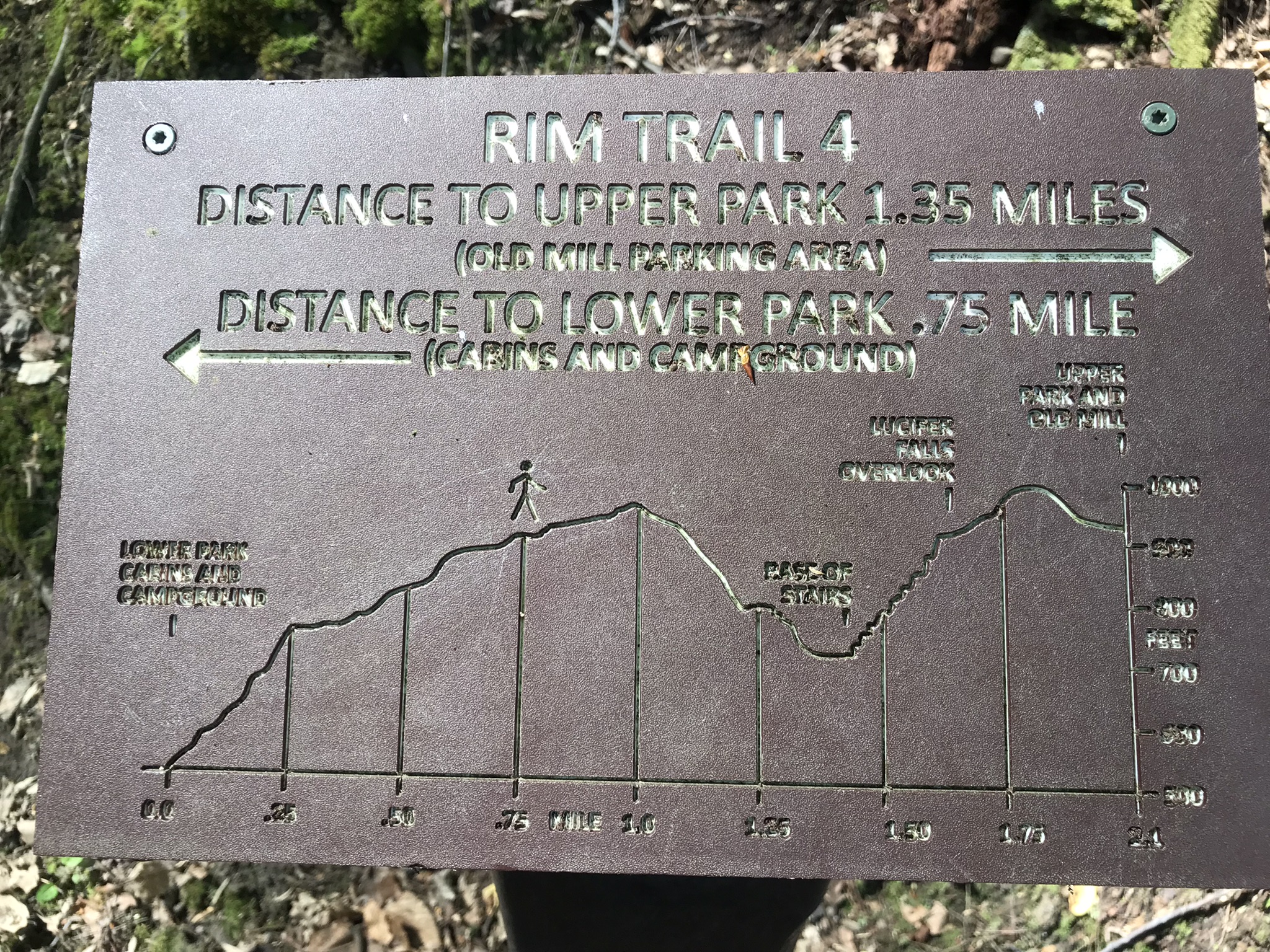
Here I approached the high point of this section of the South Rim Trail. I look forward to summer and Purple Flowering Raspberry, the featured photograph (header) of this post.
Pam eventually caught up to report a breakthrough contact made through casual street interactions. She talked to random strangers on 2nd Street hoping to learn more about her ancestor, Jan Van Loon. The breakthrough was a name and phone number of a woman, the daughter of a new acquaintance, and a tip about an old cemetery.
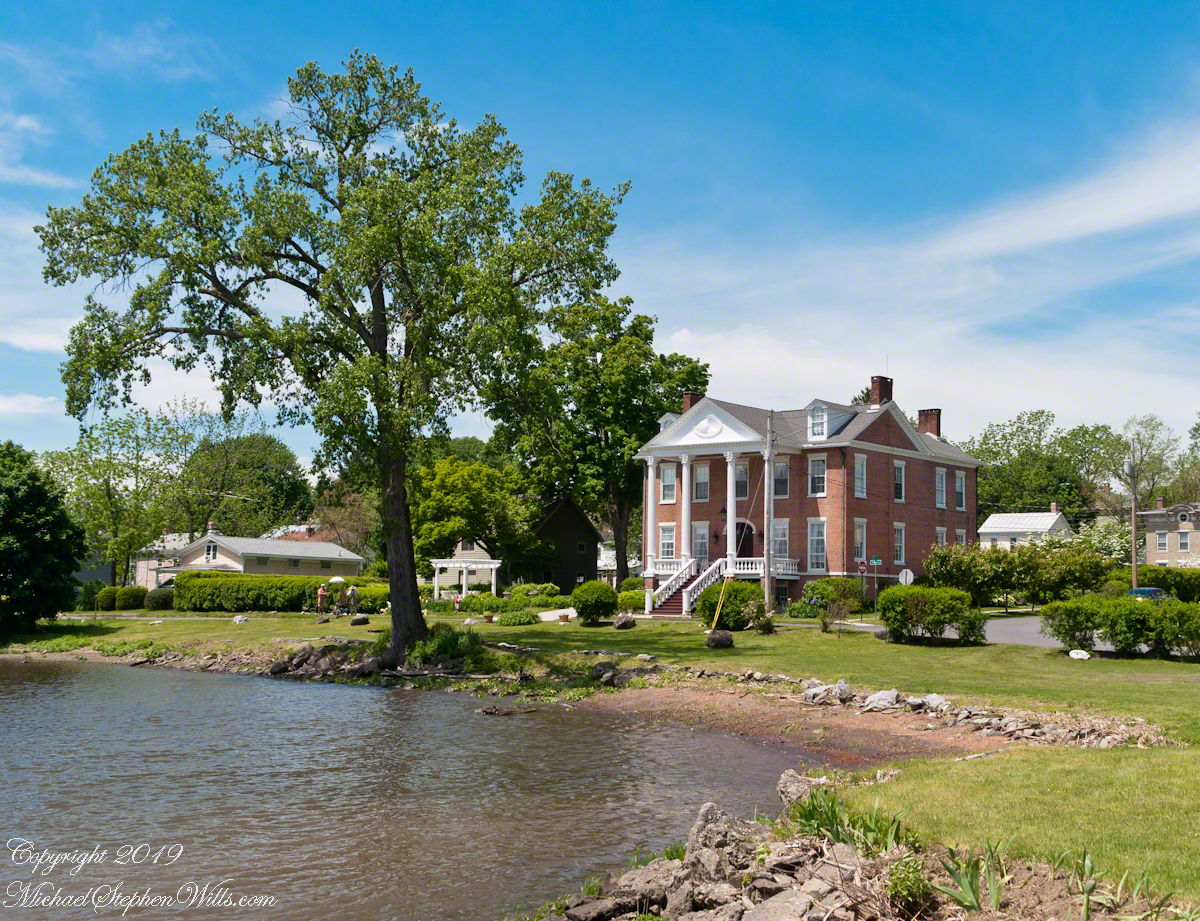
Two people are visible in this first photograph, taken from the south end of Athen’s Riverside Park. Look to the left of the large tree where a artist, under the small white umbrella, is painting while in conversation with a second person. Pam struck up a conversation……
Click any photograph for a larger version
“For Sale: 1825 Federal Home on the Hudson River”
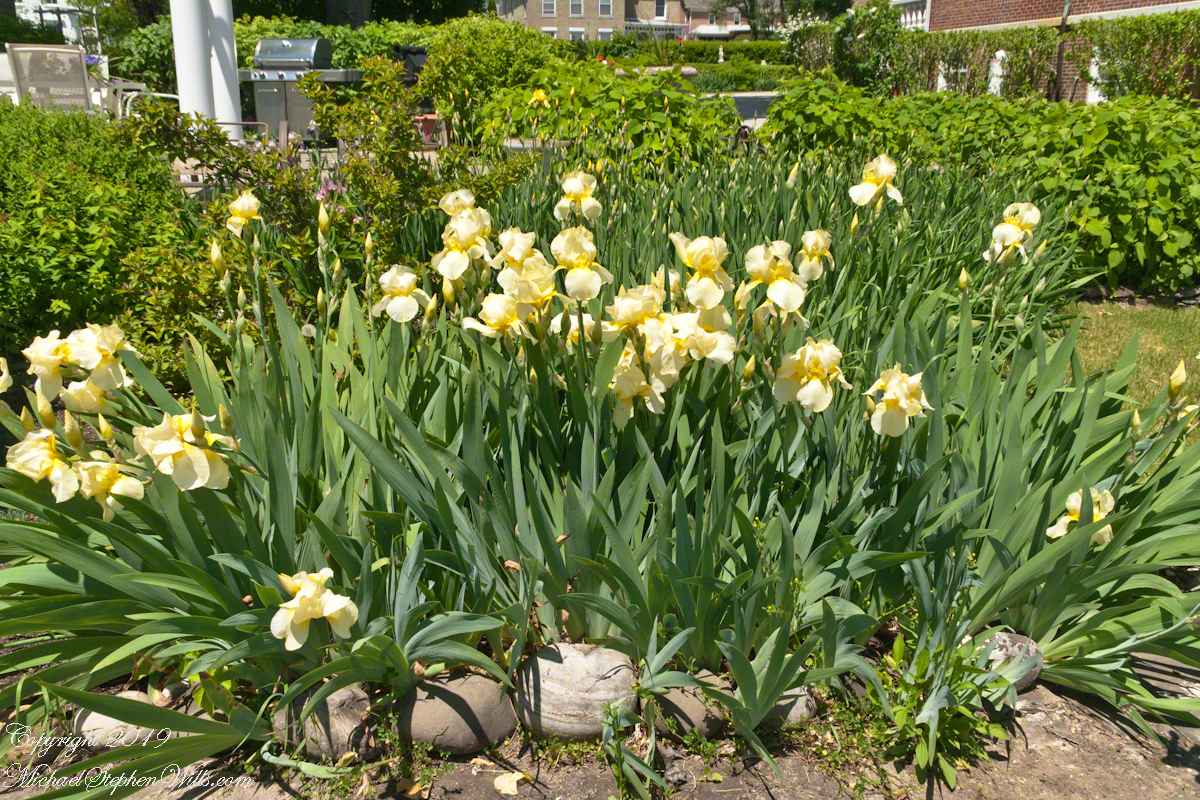
The artist had an easel and a painting in progress, the subjects were yellow irises, part of a formal garden on the grounds of the mansion. We first took it to be a museum or public building of some sort, but were mistaken. It is a home. In the course of a conversation that touched upon Henry Hudson’s 1608 journey up the river (they knew nothing of Jan Van Loon, or of deeper local history in general), and the work of the second man who was the owner of the mansion. Here is more about the place from the Zillow listing. There was no “for sale” sign in evidence.
From the portion of the 12 South Water Street garden on the road. We chatted with the house owners and an artist as he painted these yellow iris blooms.
The Zillow Listing…WOW
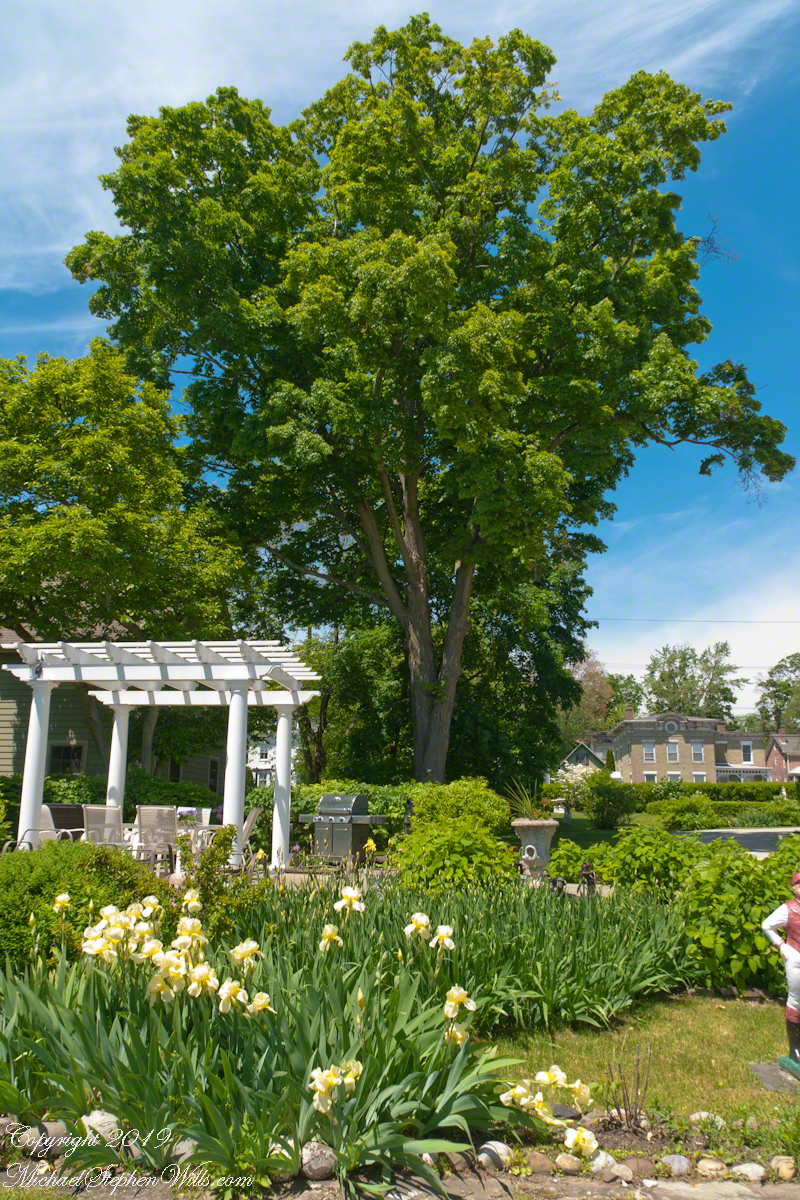
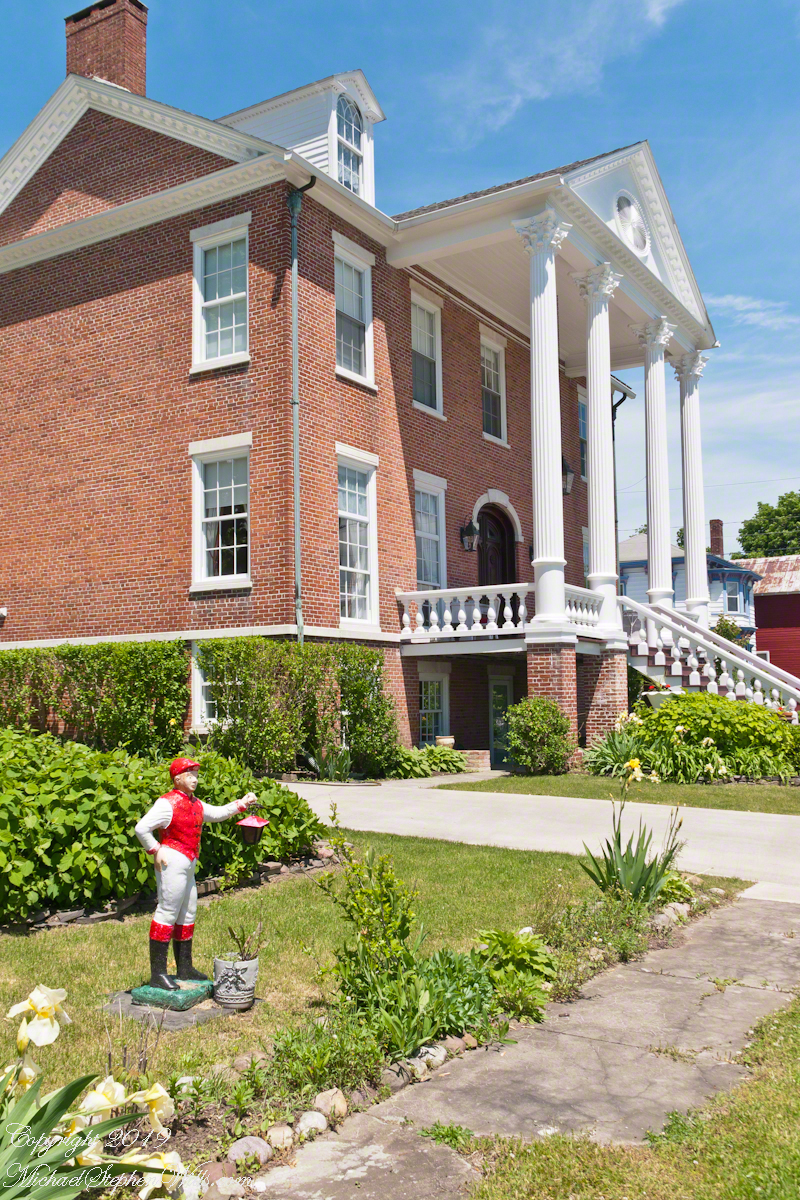
” A freshly renovated home and grounds on the Hudson River, at 12 South Water Street, Athens, New York. Barely visible, to the left of the tree, is an artist, painting large yellow irises while chatting with the owner of the property. Here is what the listing on Zillow has to say, “This majestic 1825 Federal home on the banks of the Hudson River was designed by architect Barnabas Waterman for shipping entrepreneur Anthony Rutgers Livingston. Steeped in history, the house has undergone an extensive – yet sensitive – restoration. Enter into a grand hallway with Double Parlors to the right and a formal DR on the left. Original Federal flourishes abound with acanthus leaf capitals and entablatures, Corinthian columns, and intact mantels and molding. The high ceilings and tall windows provide extraordinary elegance, light and comfort. A thoughtful kitchen renovation and 1/2 Bath for 21st century convenience. Upstairs is a Full Bath and four spacious and airy Bedrooms, the Master with ensuite bath. The walk – out lower level features a family room with fireplace, a full bath and the original kitchen with hearth and beehive oven. A stroll past the box-wood garden leads to a 3-bay Garage with Studio and 1/2 Bath above, perfect for artist, home office or guests. Convenient to Thruway, Catskill, Hudson. 2- hrs NY.”
Formal Garden
Restored Hudson River Mansion
Barely a half mile apart, a great distance separates the homestead of Jan Van Loon and the 12 South Water Street former mansion of a shipping magnate including 125 years and the American Revolution.
Stylized Acanthus Leaves grace these Corinthian Capitals
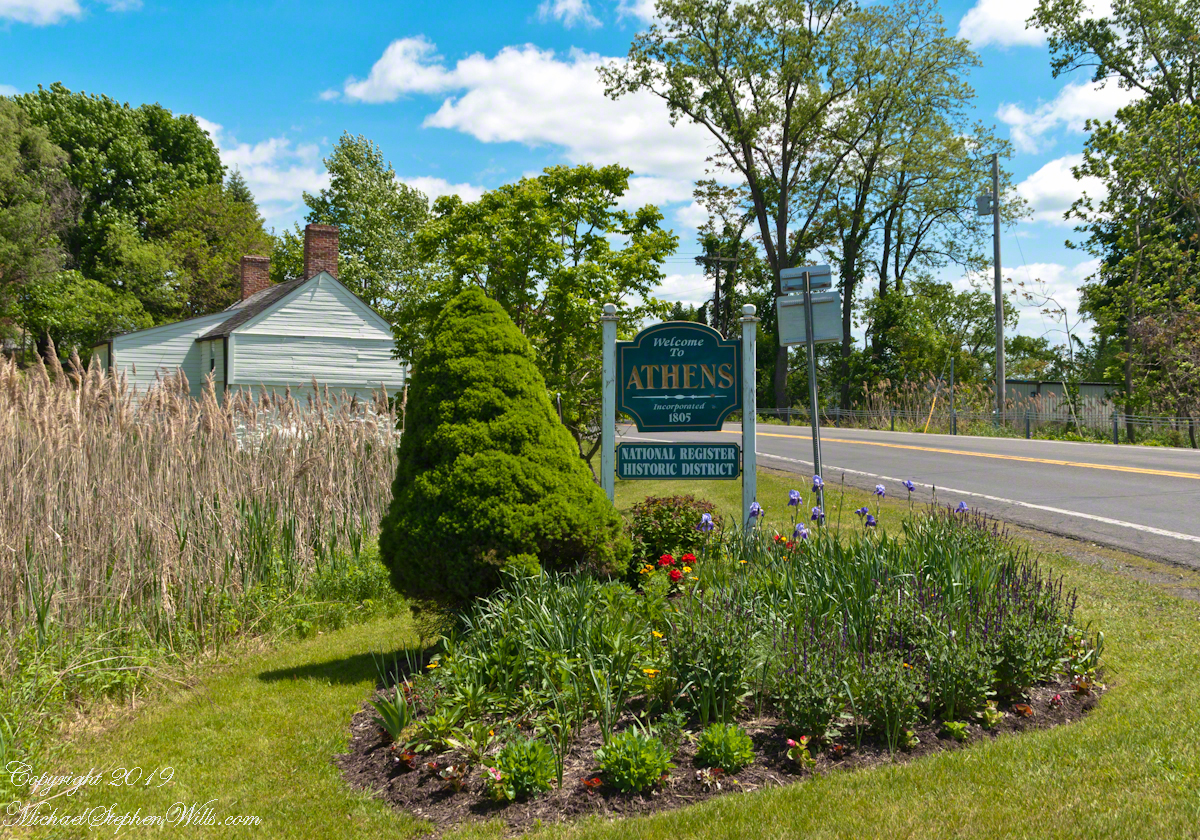
Memorial Day Weekend 2019 Pam and I visited Athens, first settled in the 17th Century by an ancestor through her maternal grandmother. Click me for more about the Van Loons. Jan Van Loon is 10 generations removed from Pam and her siblings and is one of 1024 (512 pairs) of ancestors. Whatever became of the other 1022 people (and all those in between) Pam was there with me that day to enjoy the experience of walking around town and talking about Jan Van Loon’s connection to herself.
Click any photograph for a larger version
Founded as Loonenberg, named after the first settler Jan Van Loon. today,Athens is a lovely destination, a historic village on the Hudson River.
We stopped for a very enjoyable latte at Bonfiglio and Bread on 2nd street. As we ambled south on 2nd street Pam spotted someone to talk to and I proceeded with the goal of the Hudson River, visible at the bottom of the street.
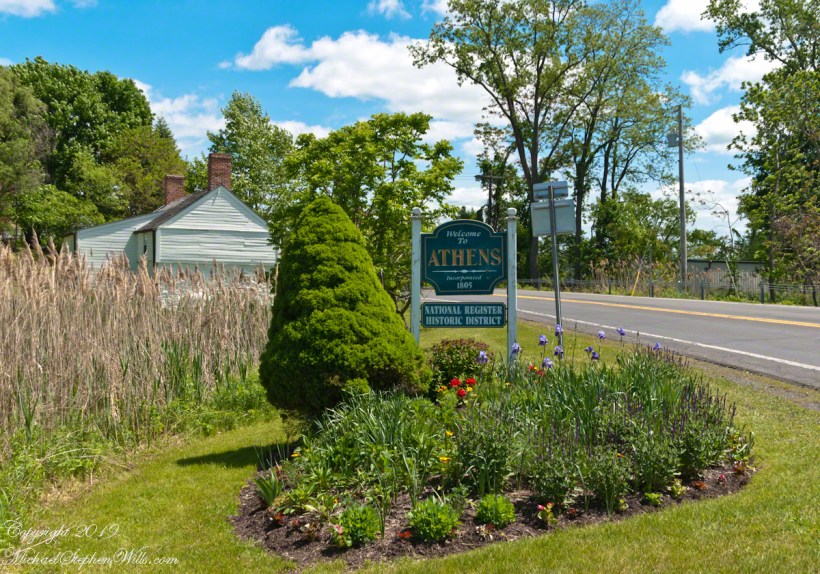
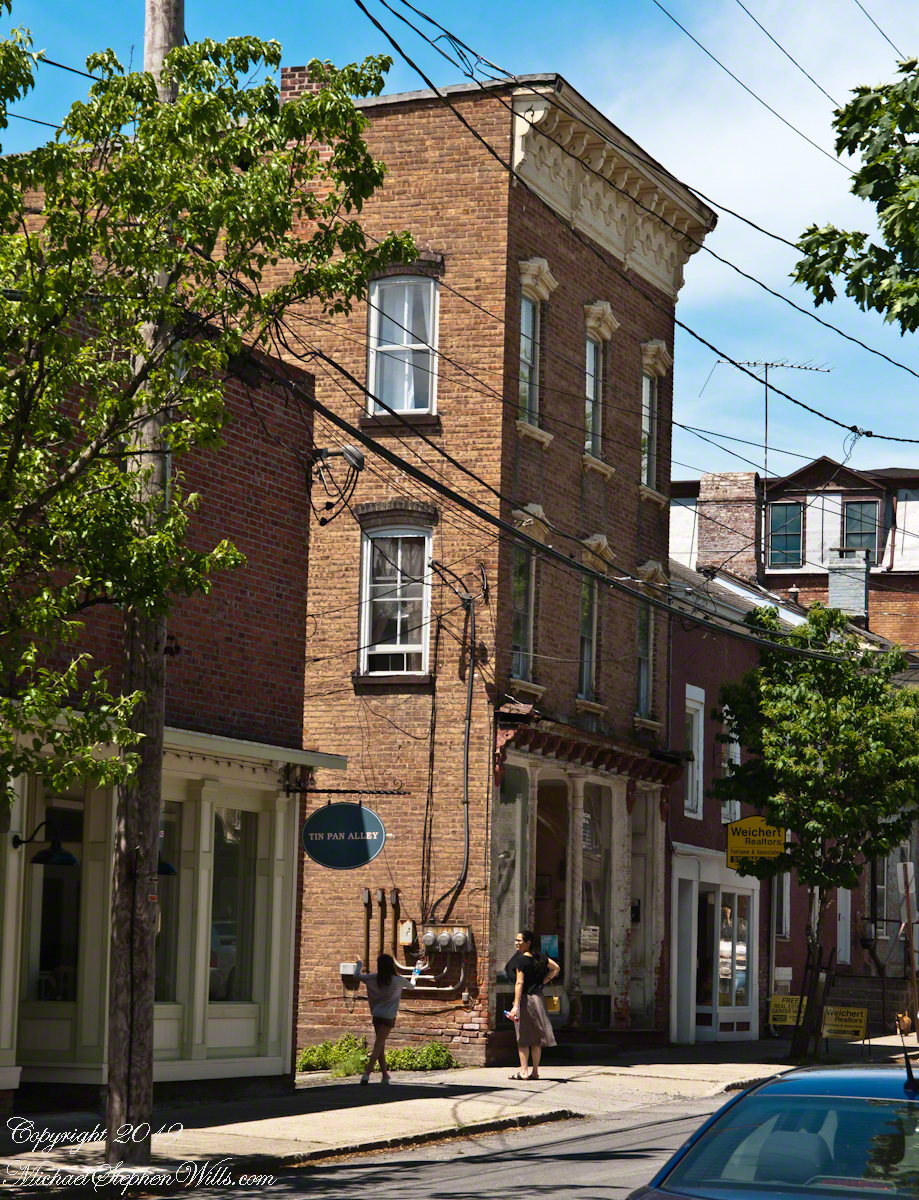
I noticed this architectural specimen and turned to capture this side in a good light and was lucky to capture a young co-admirer of its style with whom I assume is her Mother. Athens, developed as a “National Register Historic Site,” is a charming place to stroll and admire.
Southeast view on 2nd Street between Water and Washington streets. Athens, New York
Hudson Riverfront
Yesterday I did a Red Cross blood donation at an elementary school on Hudson Street here in Ithaca. Henry Hudson, the first European to sail up the river that now bears his name, is memorialized this way across New York State so much so it is unusual to find the “Riverfront Park” named as such.
The city of Hudson, in Columbia County directly across the river named its park “Henry Hudson Riverfront Park.”
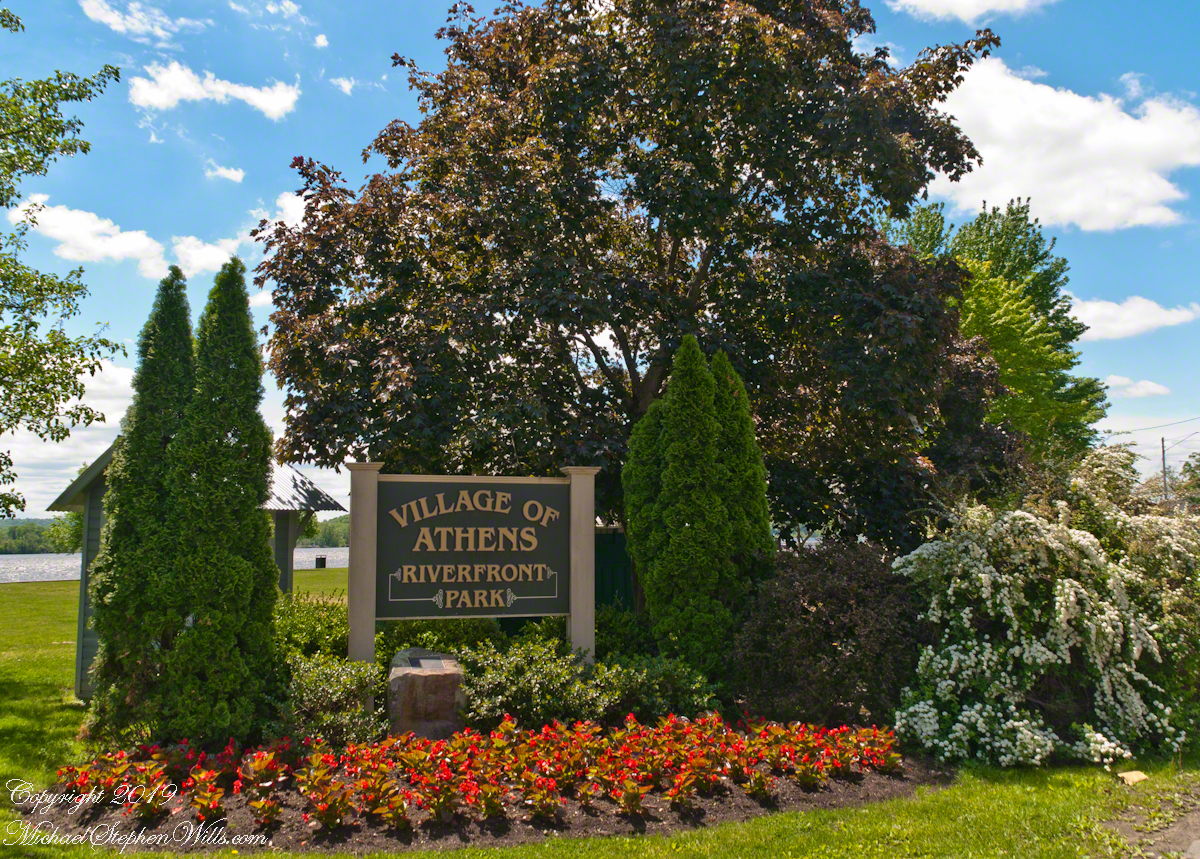
Looking east toward the entrance of the Riverfront Park, Athens, New York. Found at the east end of 2nd Street.
“Peace and Quiet“
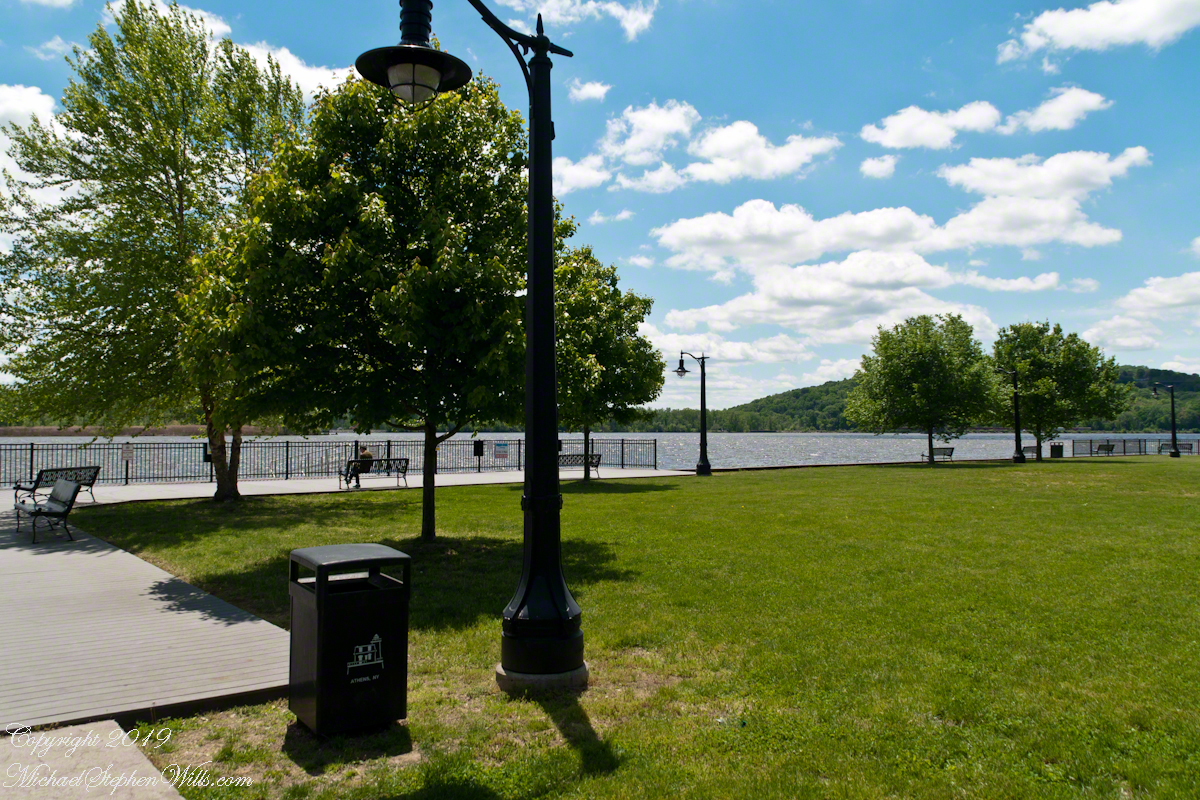
The Athens Park is a gathering place for the village with a large swath of grass, a short boardwalk, benches and generous shade trees along with river…….
The photograph captions will speak for themselves for the rest of today’s post. Enjoy!!
A sole reader enjoys the solitude and view across the Hudson. A large mid-stream island, Middle Ground Flats, provides a swath of green instead of a view of the city Hudson.
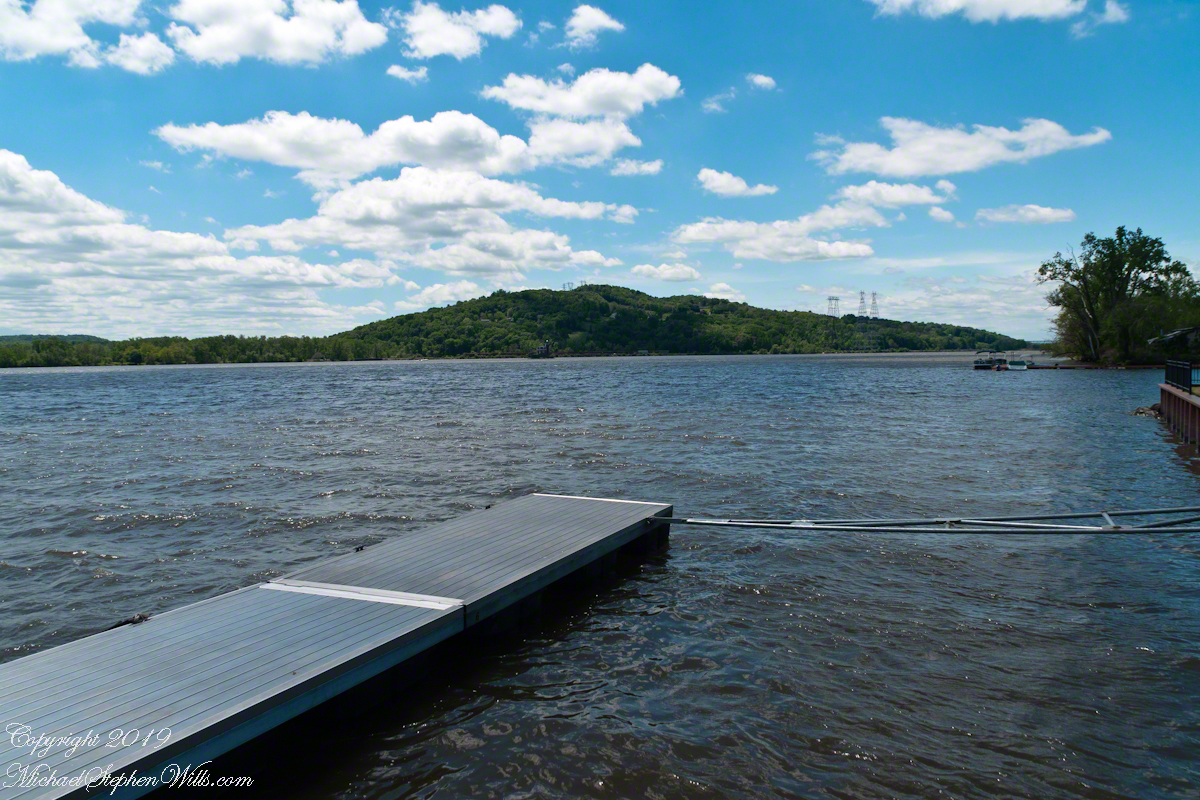
…and a dock.
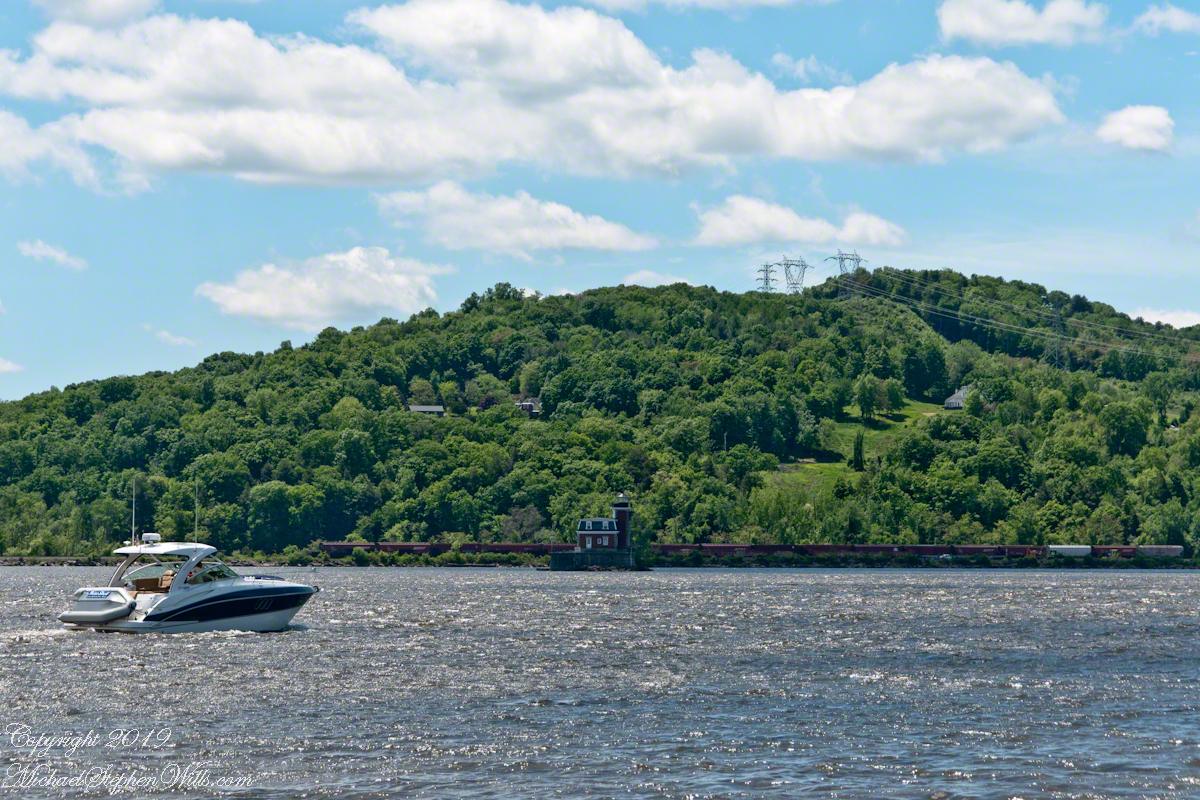
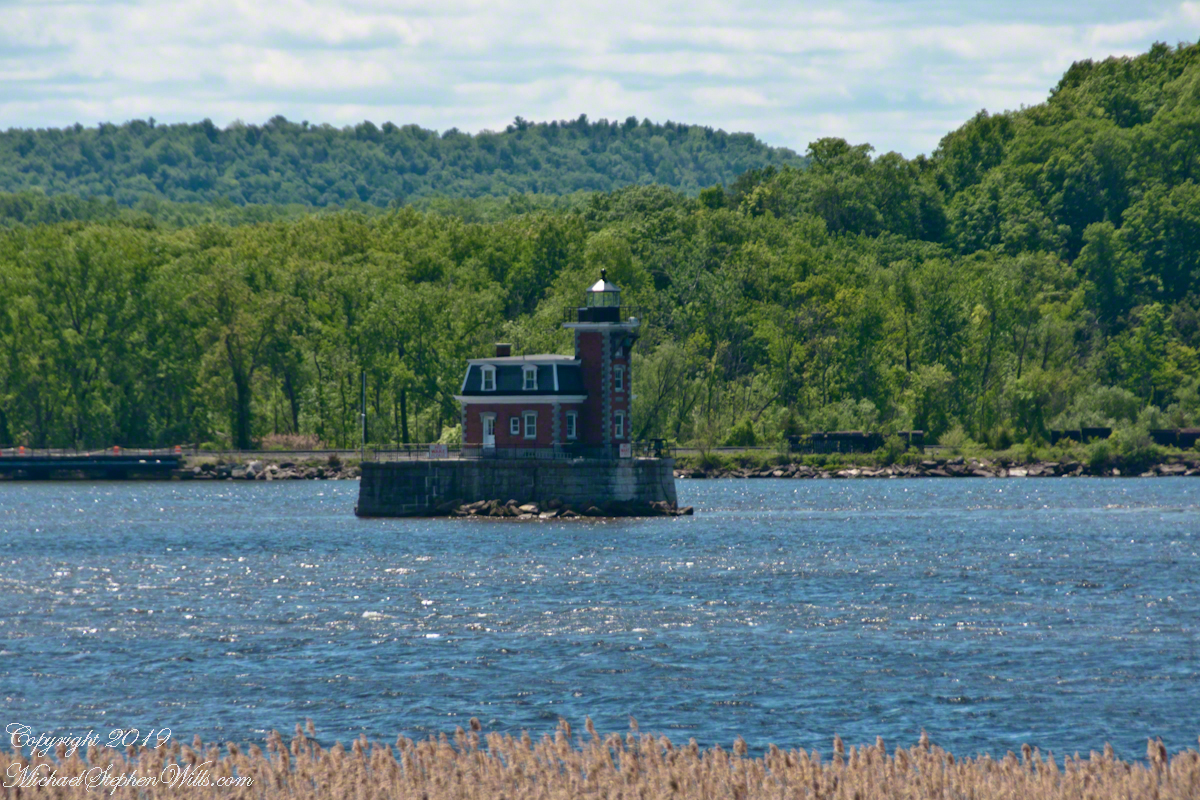
The map shows a dotted line between this dock in the Athens Riverside Park and the Henry Hudson Riverside park of the city of Hudson. Barely visible in front of the wooded hills is the Hudson-Athens lighthouse.A pleasure craft motoring south on the Hudson River passes in front of the Hudson-Athens Lighthouse. On the eastern shore is a line of freight cars. Amtrack uses this line for service between New York City, Albany and beyond. We have enjoyed this Hudson River view from the train and highly recommend that trip.Built 1874, the Hudson-Athens lighthouse guides traffics around the island named “Middle Ground Flats.”
Capturing photographs and videos on the fly using an Iphone, we visited Fillmore Glen State Park, Moravia, New York with our granddaughter, Nia. This is the seventh post of this series. Click me for another springtime post.
Click any photograph for a larger view.
Growing up on Long Island provided limited exposure to the great variety of animal and plant life on planet earth. I remember Canesteo, a town just off the western edge of the Finger Lakes in Steuben County, after moving there in the 1980’s, had a marvelous abundance of different plants in the lawn. It was a welcoming feeling to notice this before the term “monoculture” was circulated.
These days the exuberant variety of ferns and mosses in the Finger Lakes are still alien in the sense noticing the small differences between species is still beyond me; or, rather, I have yet to know well all the later arrivals on the scene, the flowering plants and these command my attention.
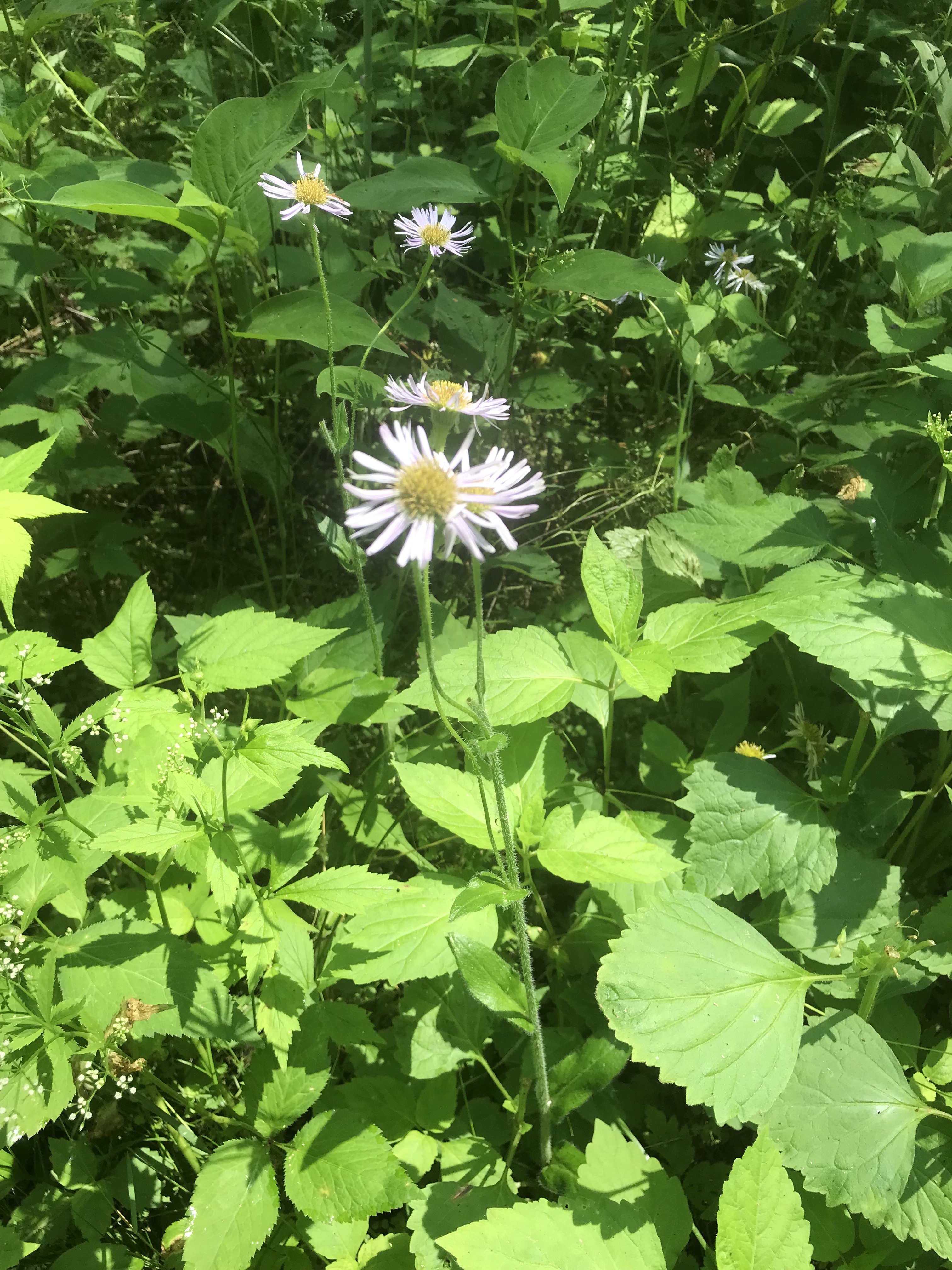
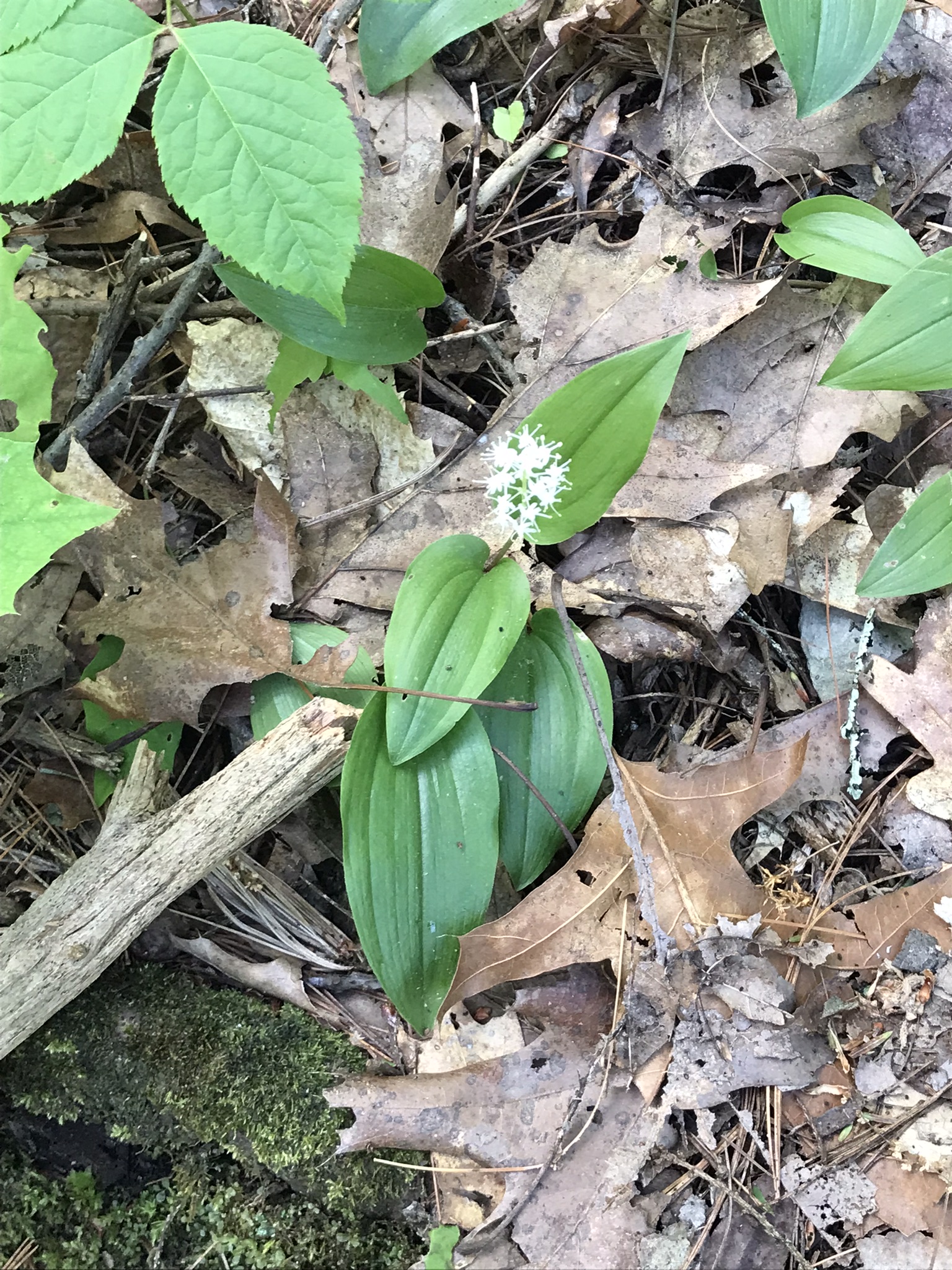
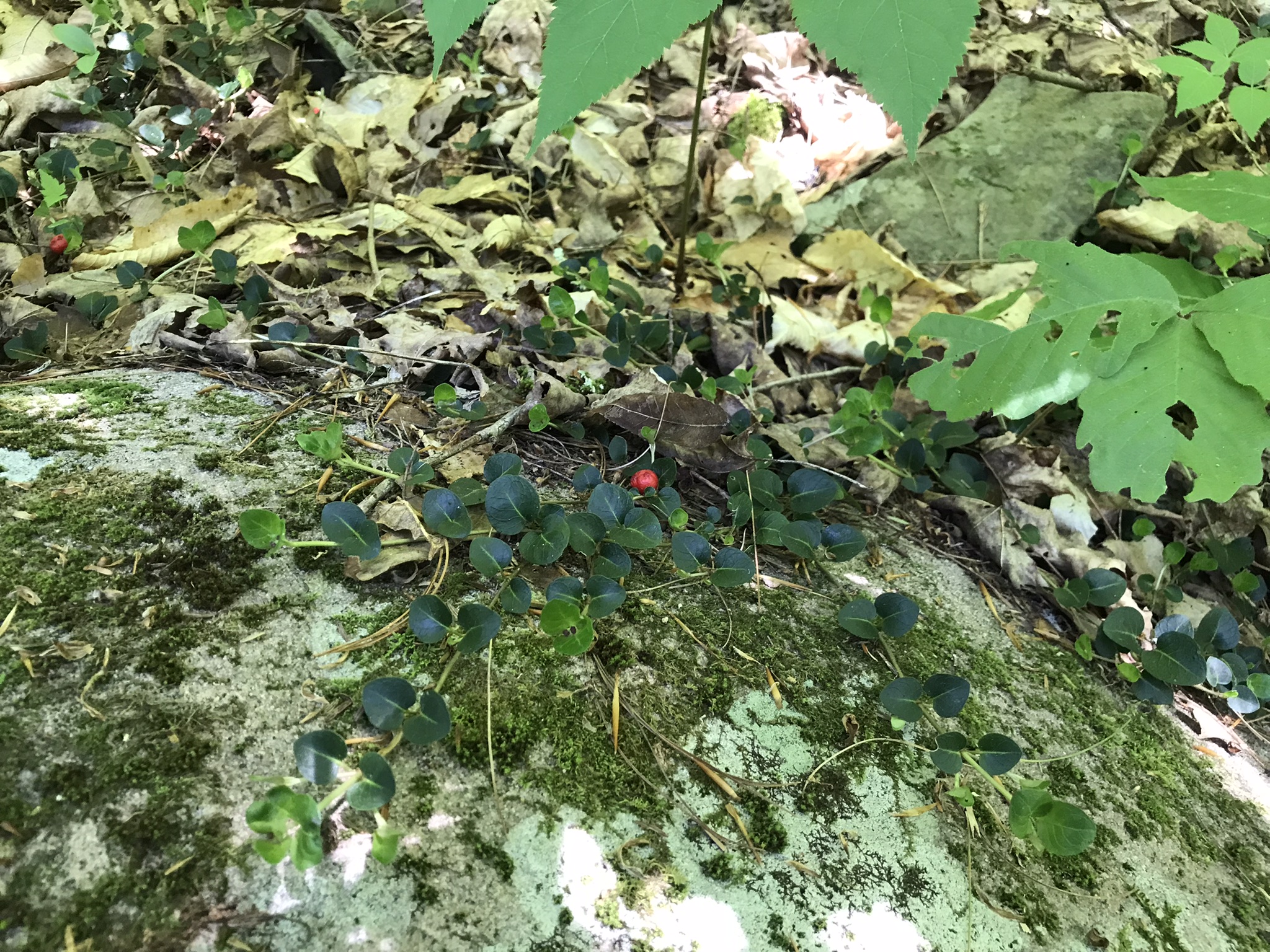
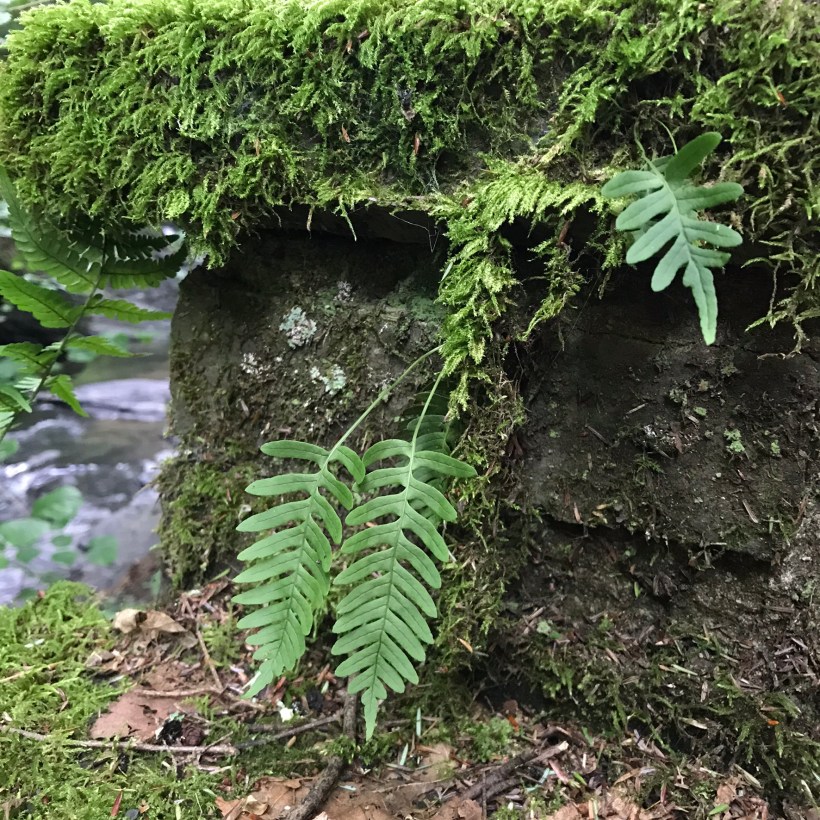
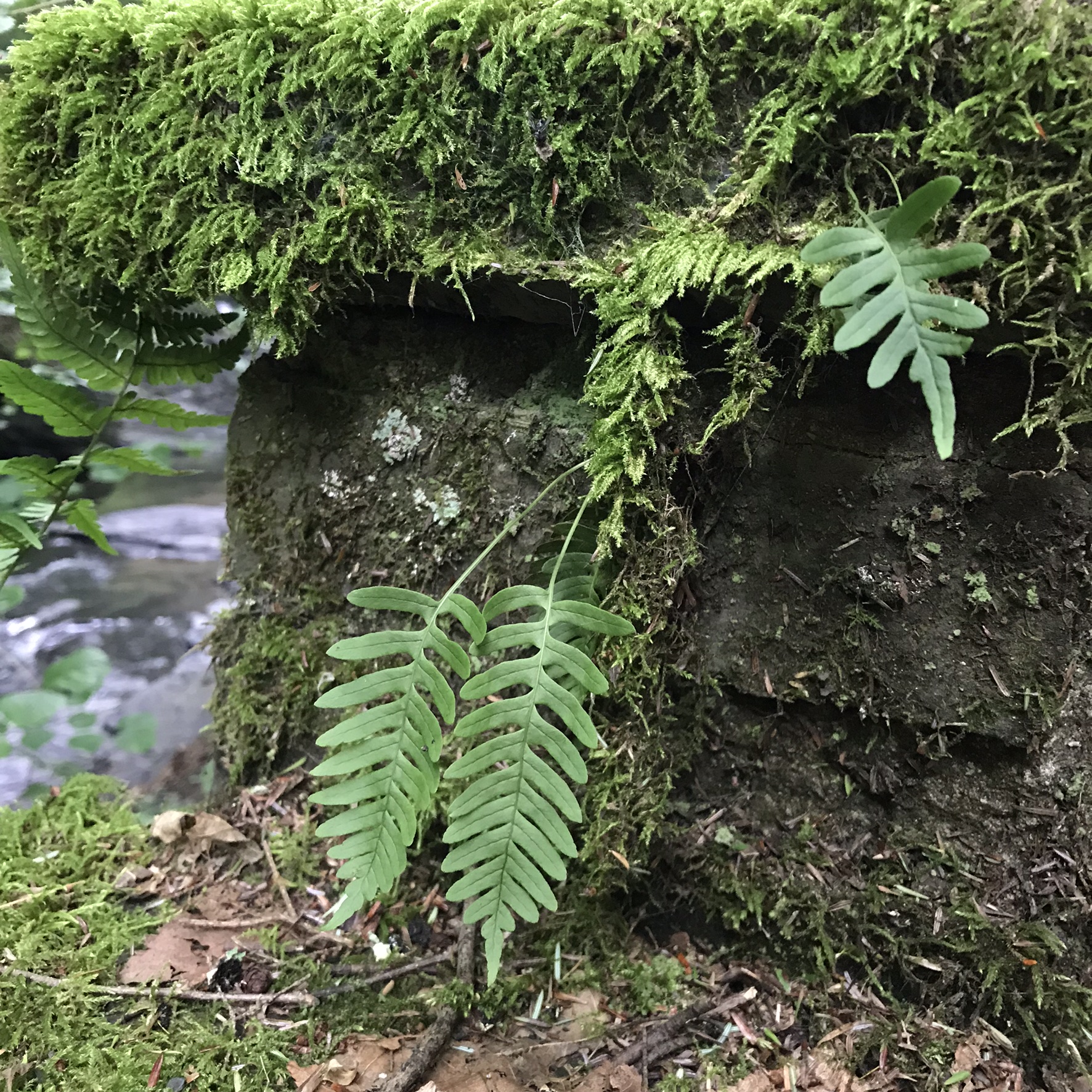
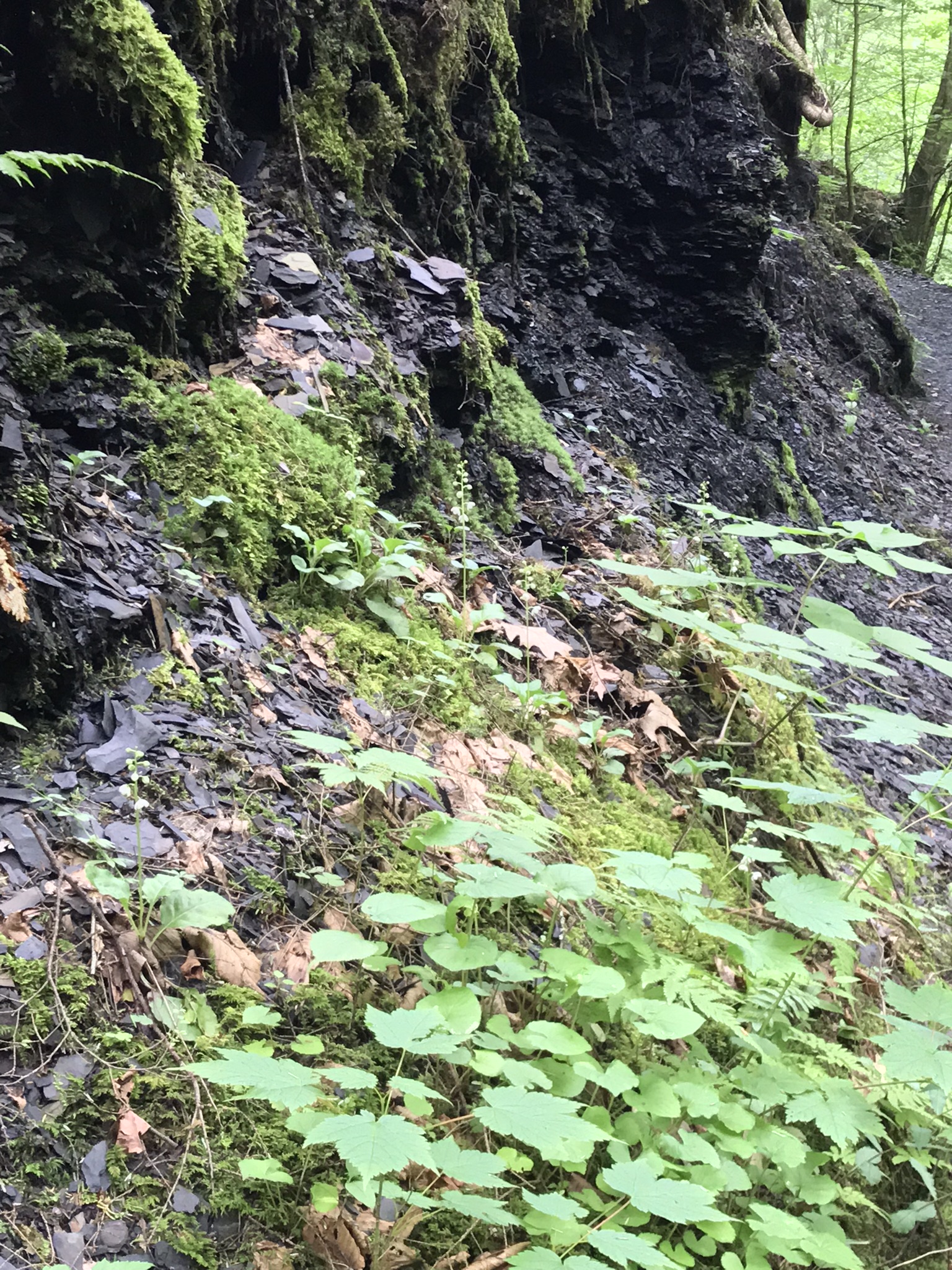
Close by the Sorrell of my post “Glen Shadows” is this inconspicuous flower, common name Shinleaf, seen here growing in spite of the the wet rip rap of shale at the base of the glen wall on the footpath. Much of the characterization of this plant is from the inconspicuous basal leaves from which the raceme of flowers springs.
Evergreen Pears
Moss and Shinleaf are associated in these groupings, I could conclude the moss provided a place for the tiny seeds of the plant to lodge and take root. The plant is a perennial and stays green throughout the winter, leading to another conclusion: there is a substance in the leaf cells that resists freezing. The latin meaning of the (scientific name) genus Pyrola means “Pear”, the shape of the leaf.
Look closely at the flowers to see the small flowers, the style extending beyond the petals like a bell clapper.
The common name, Shinleaf, is from England where the plant is credited with providing relief for minor injury. I am unclear on the grouping of this plant as a wintergreen. Shinleaf might be included as a wintergreen, and possibly attributed with healing properties, because “wintergreen” in the past was a synonym for “evergreen.”
There are species of wintergreens, in a different family, with leaves containing methyl salicilate that metabolizes (changed in our bodies) to a substance related to aspirin and more potent. I am reconsidering my identification of “cranberry” in the previous post “Red” to be a type of wintergreen high in methyl salicilate and growth close to the Shinleaf.
This abundance of life variety must be cherished and preserved, it can be a source of survival for the human species.
Copyright 2022 Michael Stephen Wills All Rights Reserved
Ancient legends speak of the River Lethe, crossed by departing souls. The waters of the Lethe wash away memory, allowing for spiritual rebirth, reincarnation, a return to the world in new form.
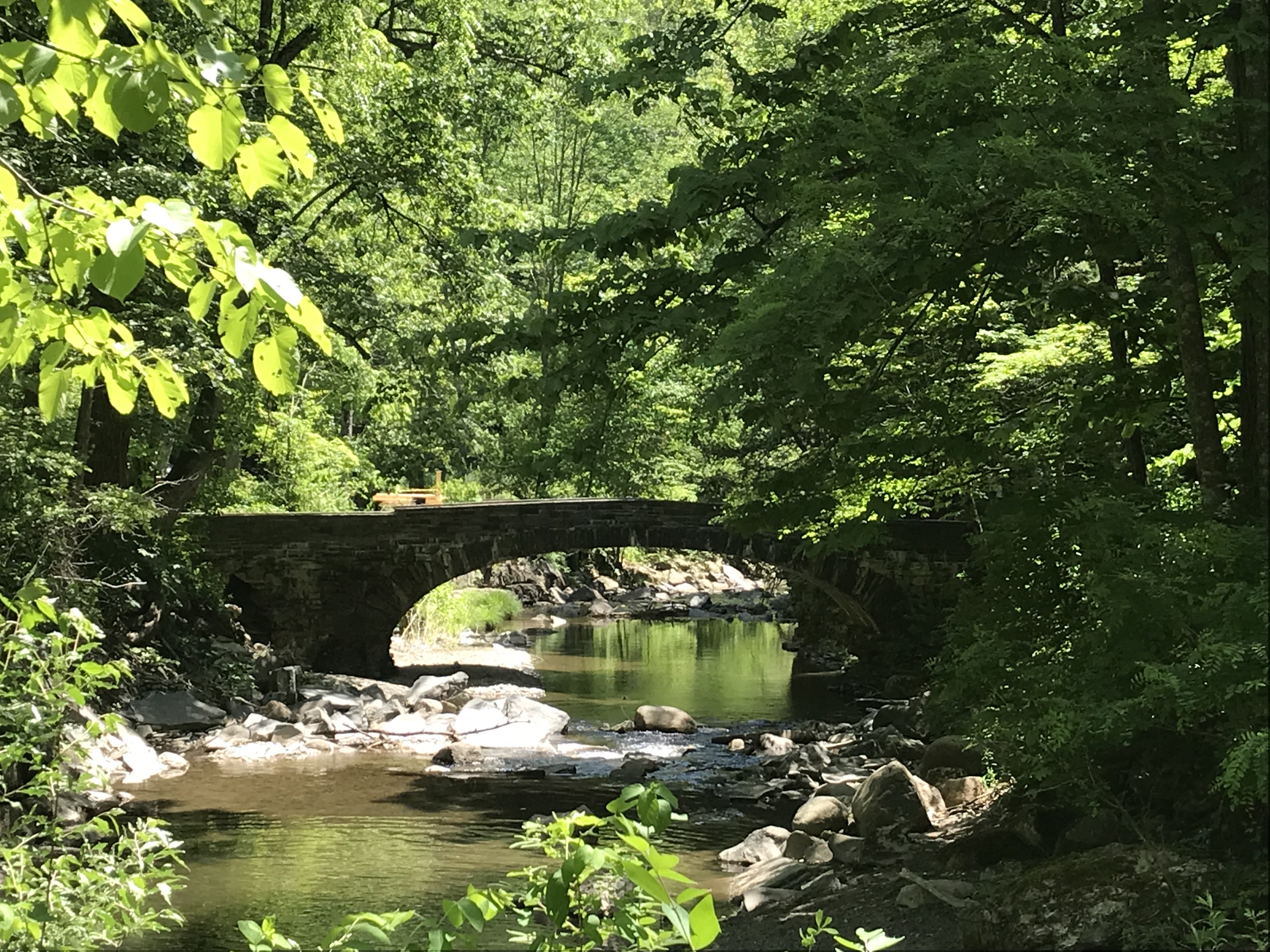
This memory implant represents a bridge over the Lethe.
For those chosen to cross over to the new land in return for
their treasure, lives and selves.
Description
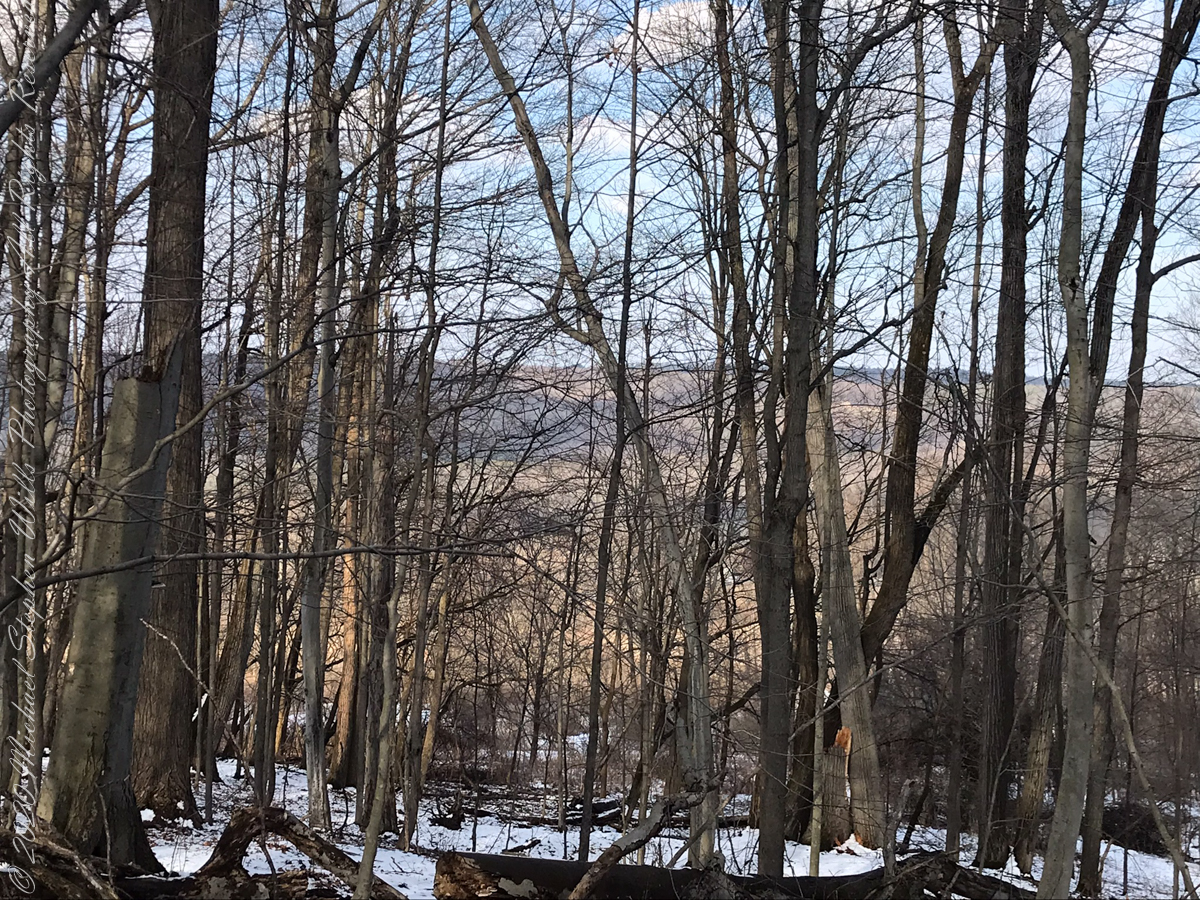
This virtual monoculture glade from the long time of forests,
a place of happy gatherings, of families, plentiful food and water.
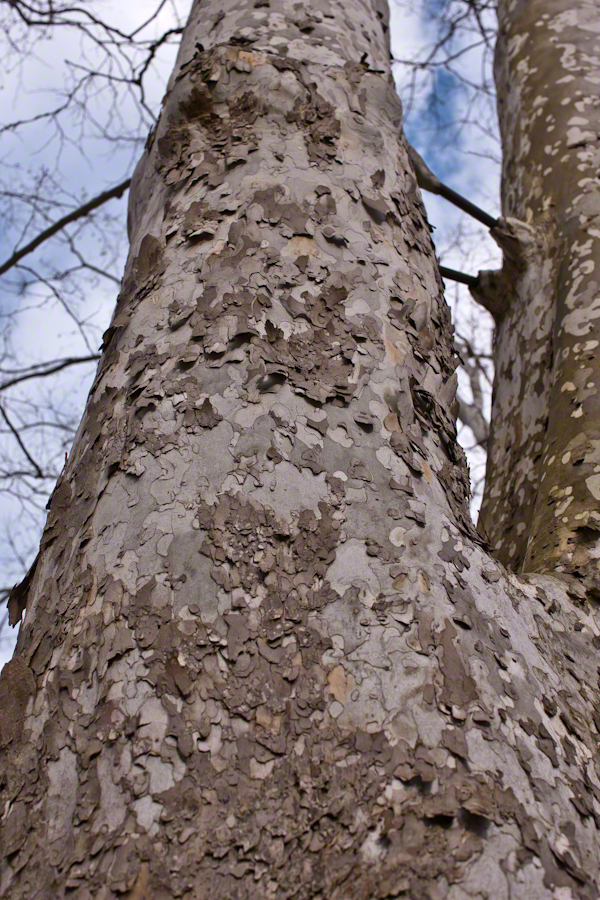
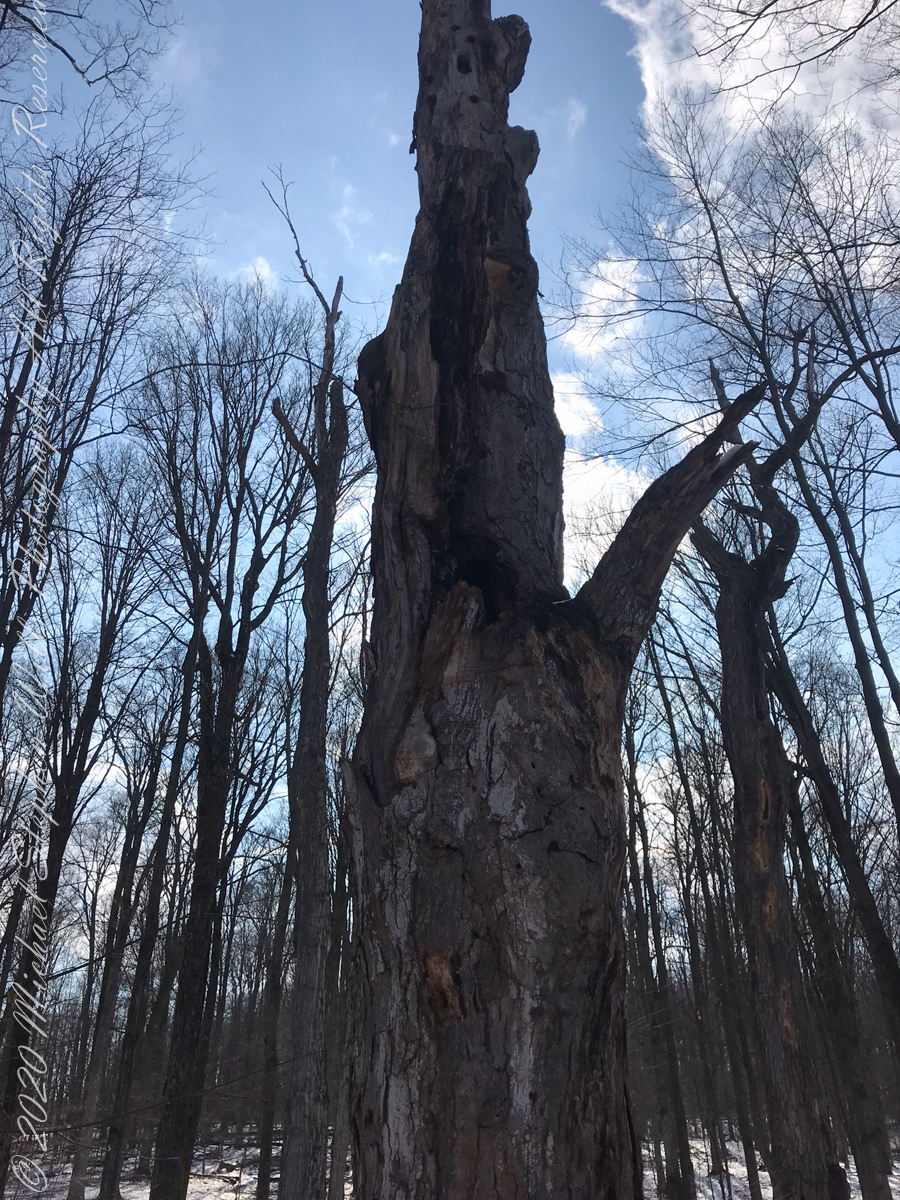
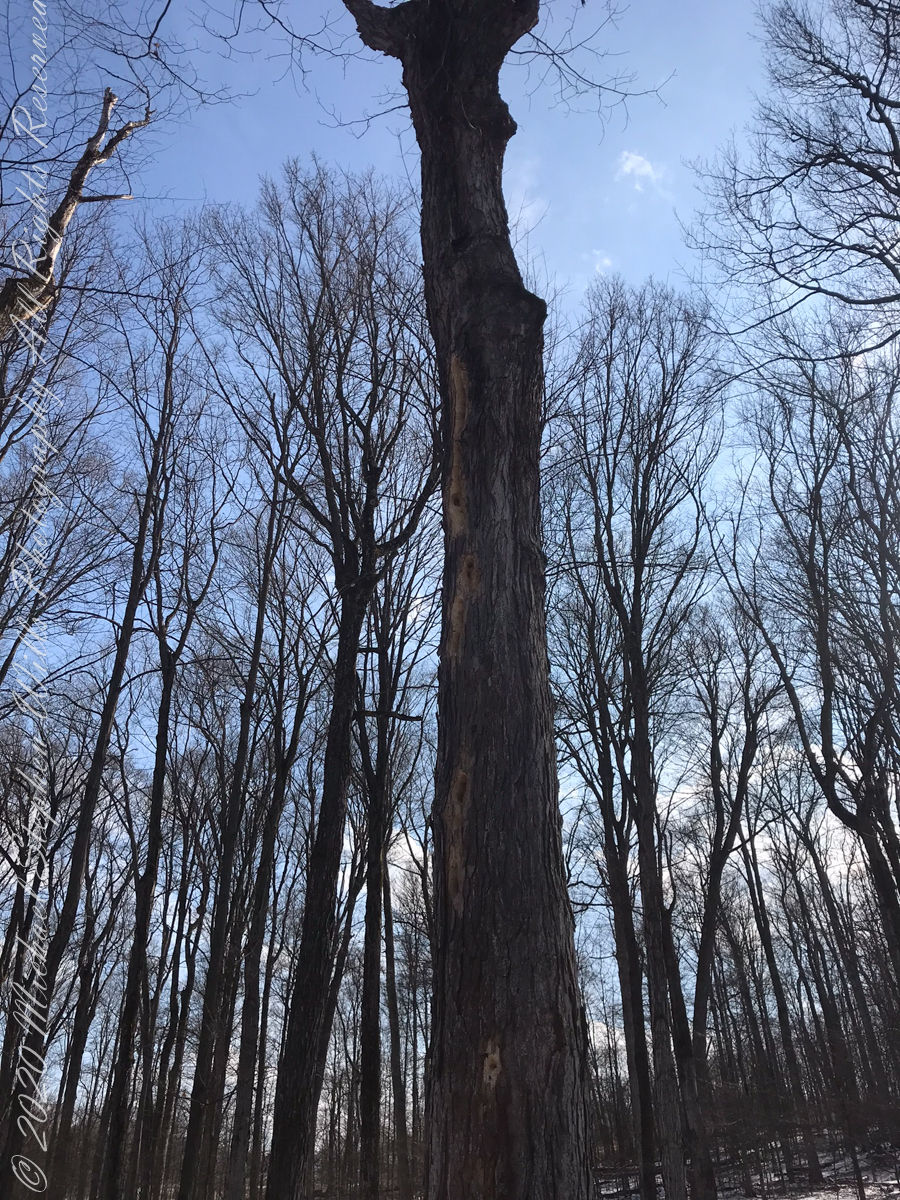
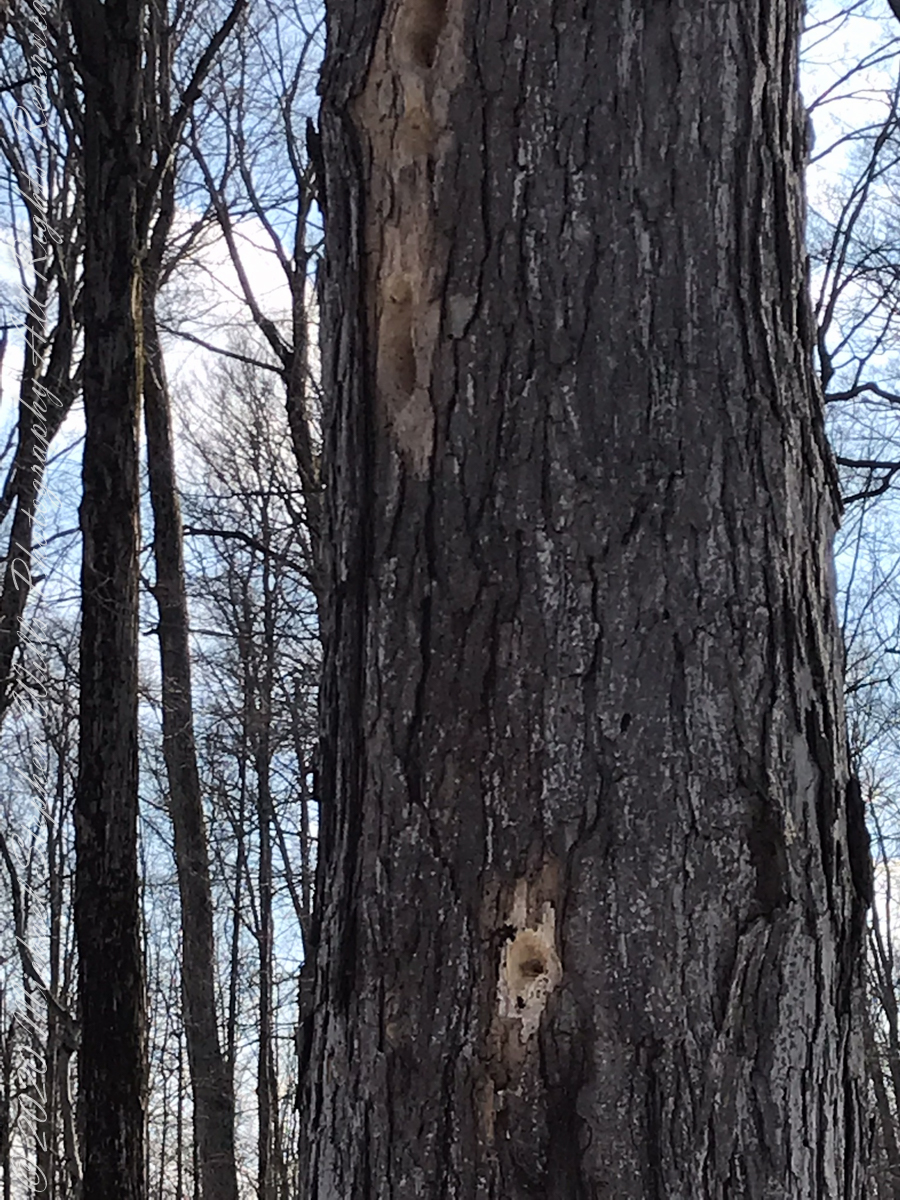
These sycamores grew over centuries, through thousands of days, wider than 10 people,
white with age as the outer covering, called bark, falls away.
forked, trunks
climbing to the sky.
Copyright 2022 Michael Stephen Wills All Rights Reserved
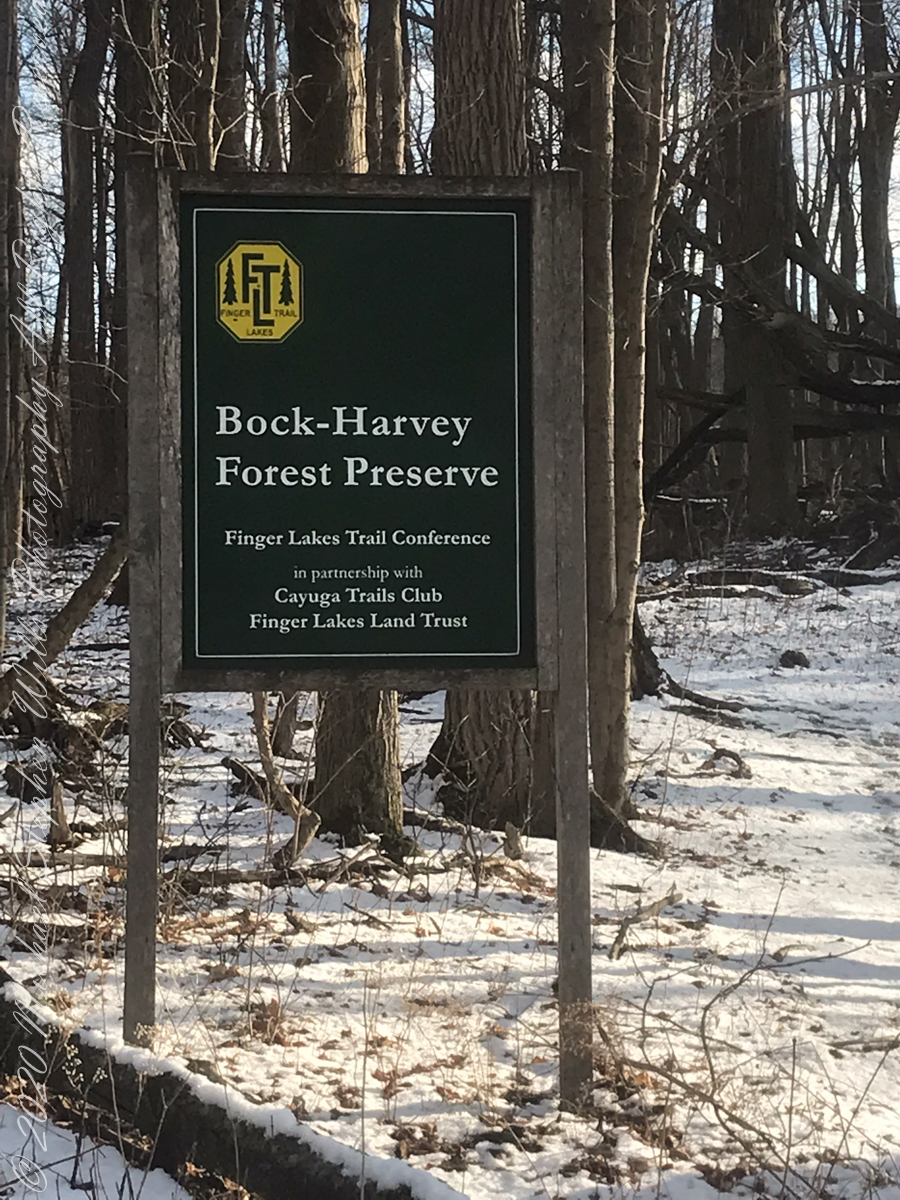
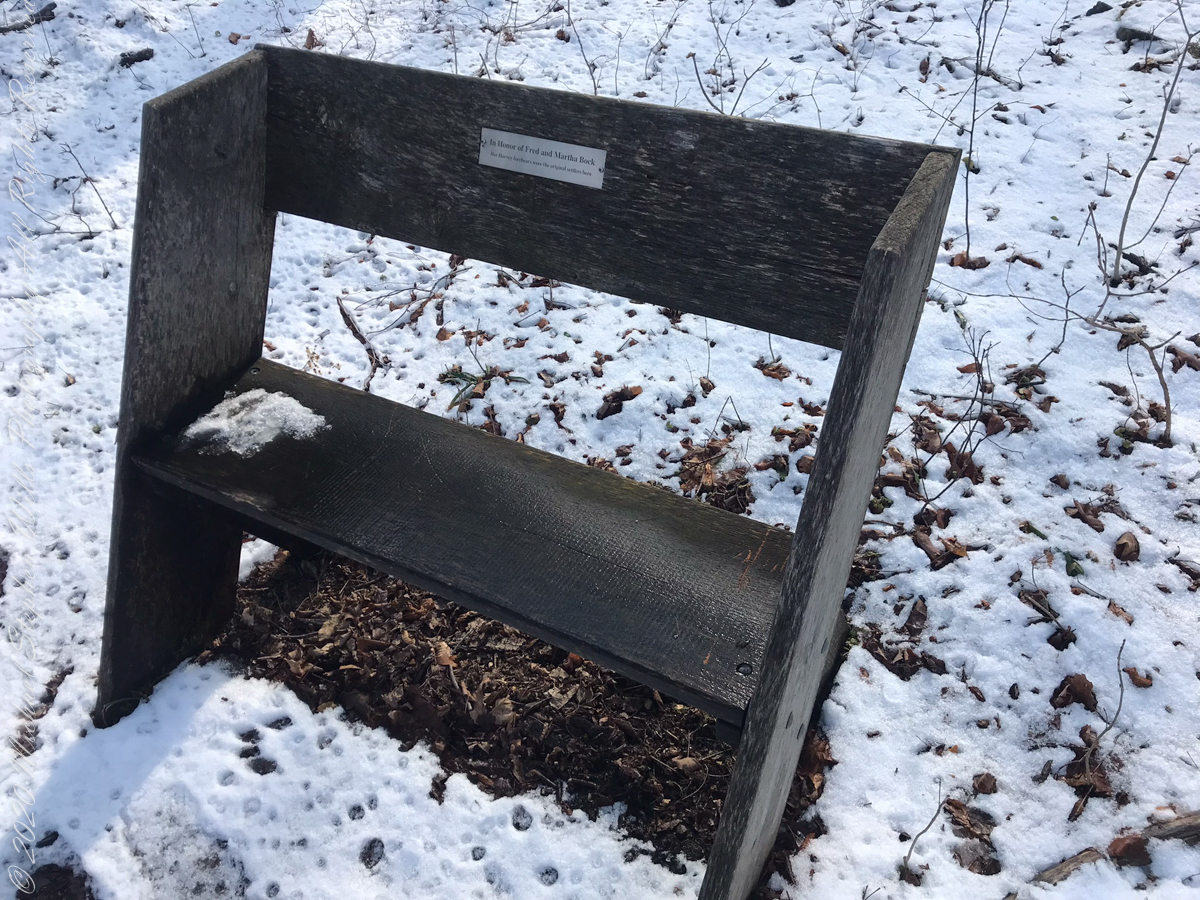
On September 14, 2013, the Bock-Harvey Forest Preserve was dedicated protecting 48 acrea of open meadow, transitional meadow, mixed hardwood forest, a special environmental protection zone and the Finger Lakes Trail. Brock-Harvey Forest Preserve, and all land as far as the eye can see from there, was part of the Military Tract of Central New York, 28 townships given classical Greek and Roman names, each township 100 lots of 600 acres each, approved by the U.S. Congress 1799. Here, the township was Ulysses, encompassing the southern end of Cayuga Lake and surrounding lands. Thus, the city of Ithaca and Hector Street winding up from the valley passing below our home.
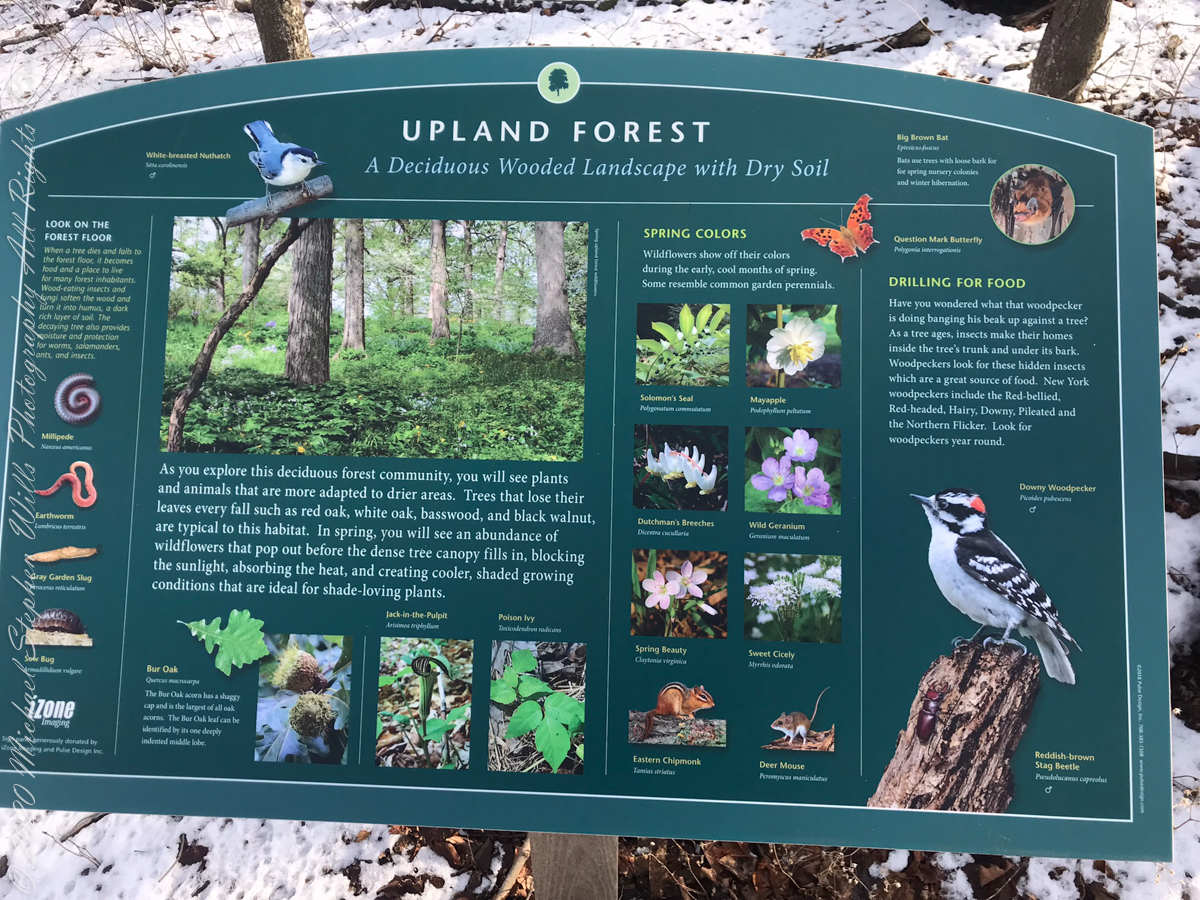
Sign on Rockwell RoadResting Place in forestGreat Information
This land and several other military tracts were purchased by Samuel Harvey. He then gave he lands to his sons including this farm to Silas Harvey, the great-great-great-great grandfather of Megan Barber who led the dedication ceremony of the forest preserve. Megan’s great-grandmother Martha Harvey married Fred Bock and lived on this land used for dairy farming for over 150 years.
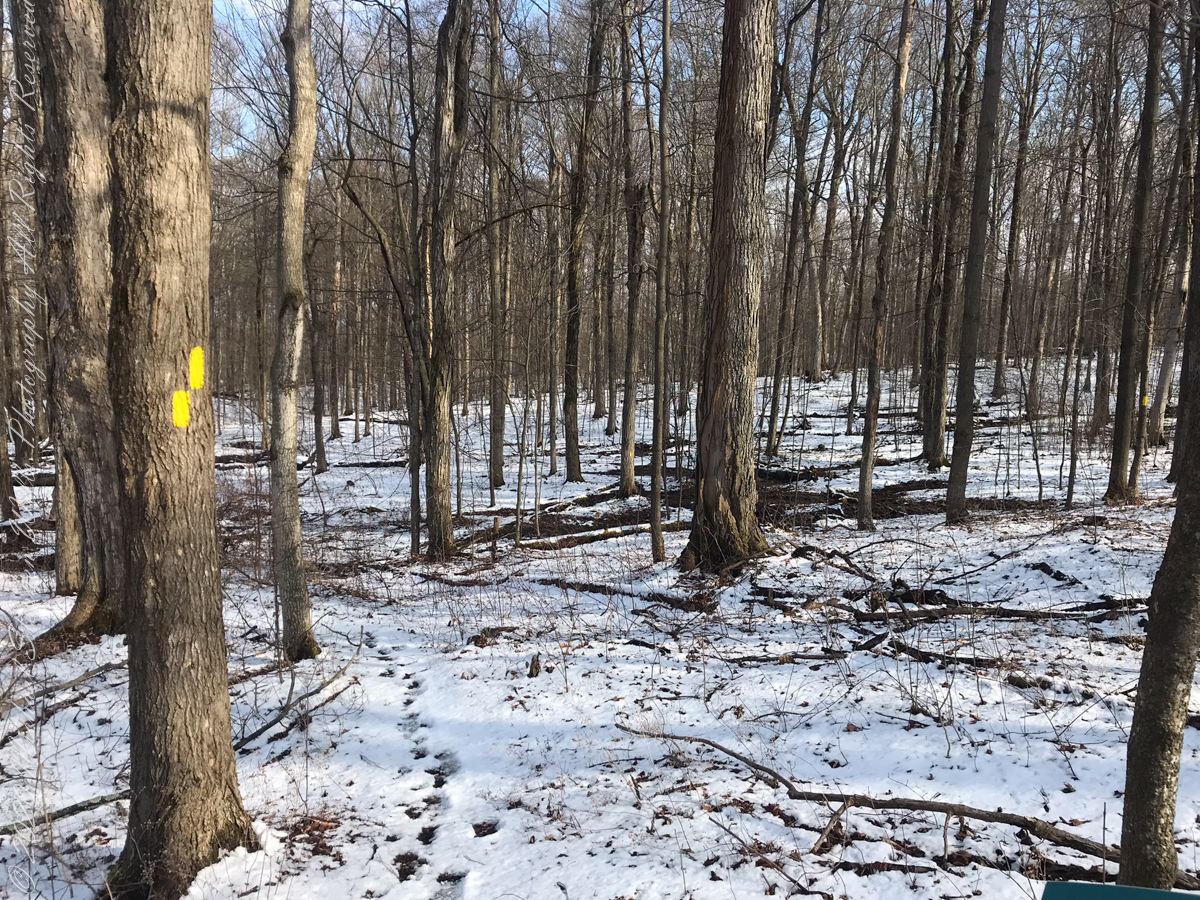
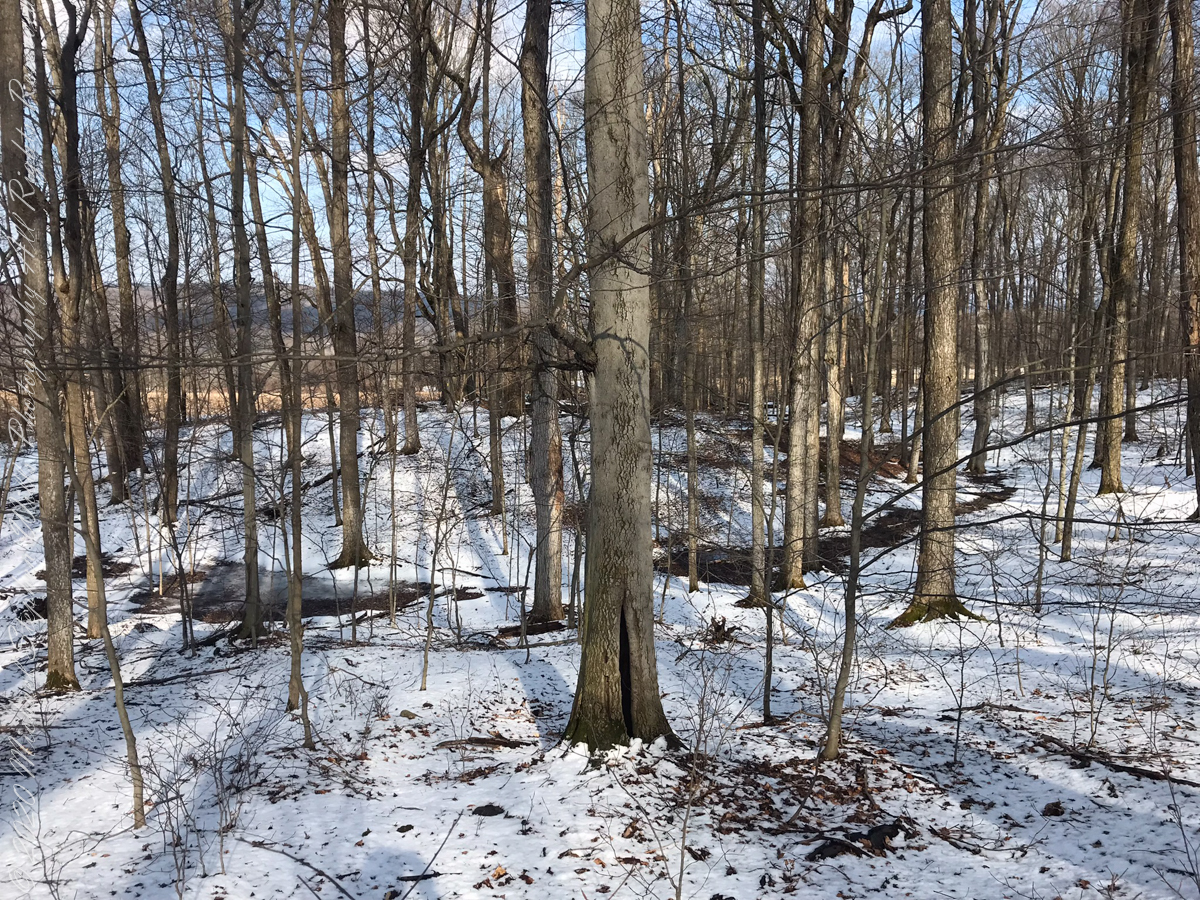
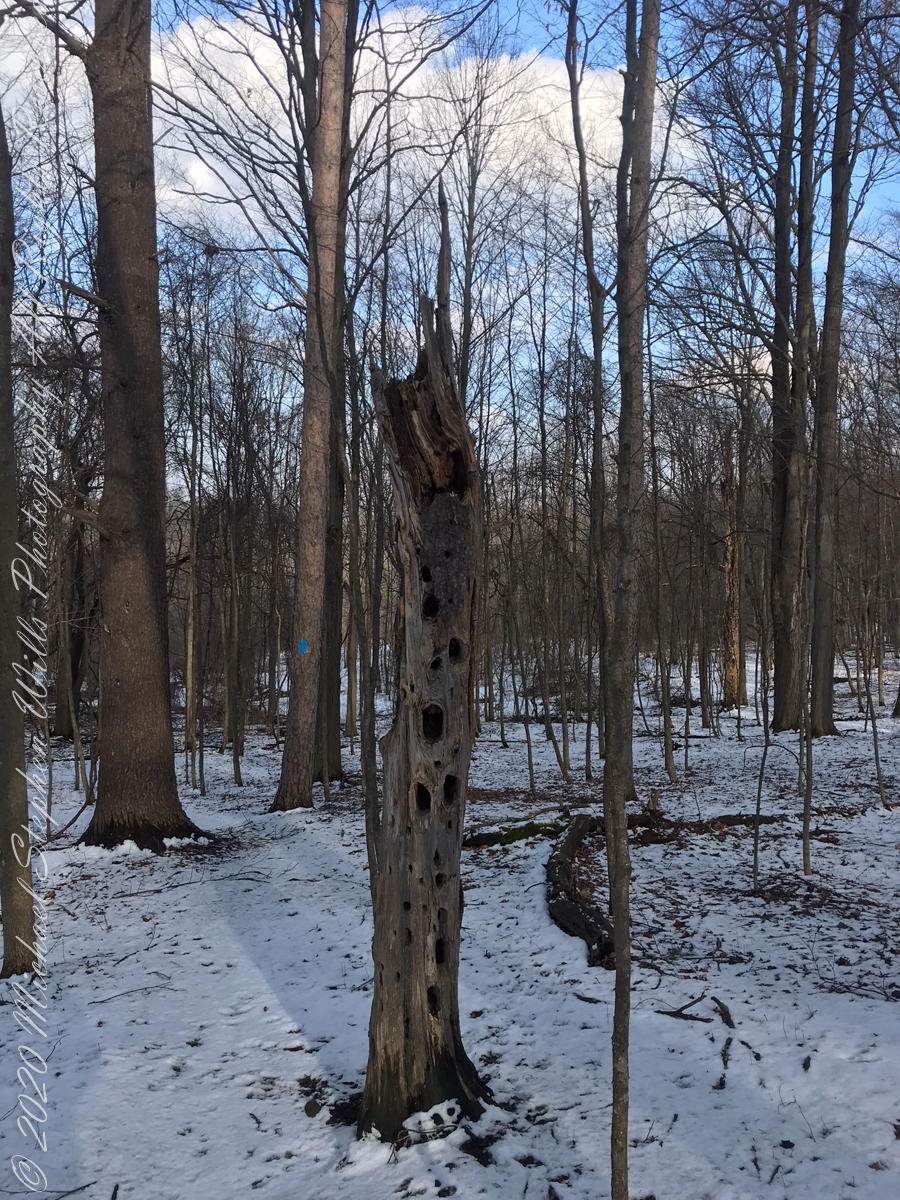
forested uplandvernal poolsnagfull of bird holes
The preserve exceeded my expectations for great upland views.
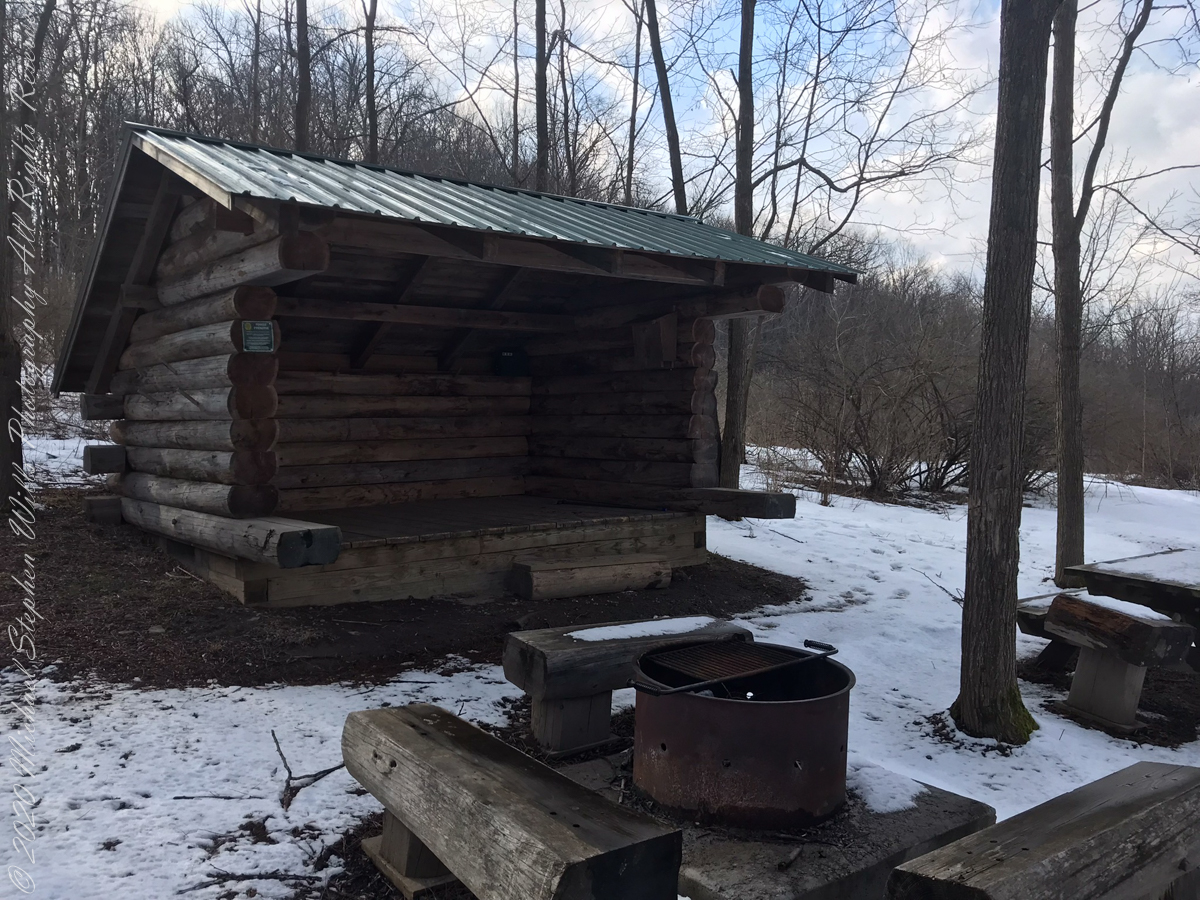
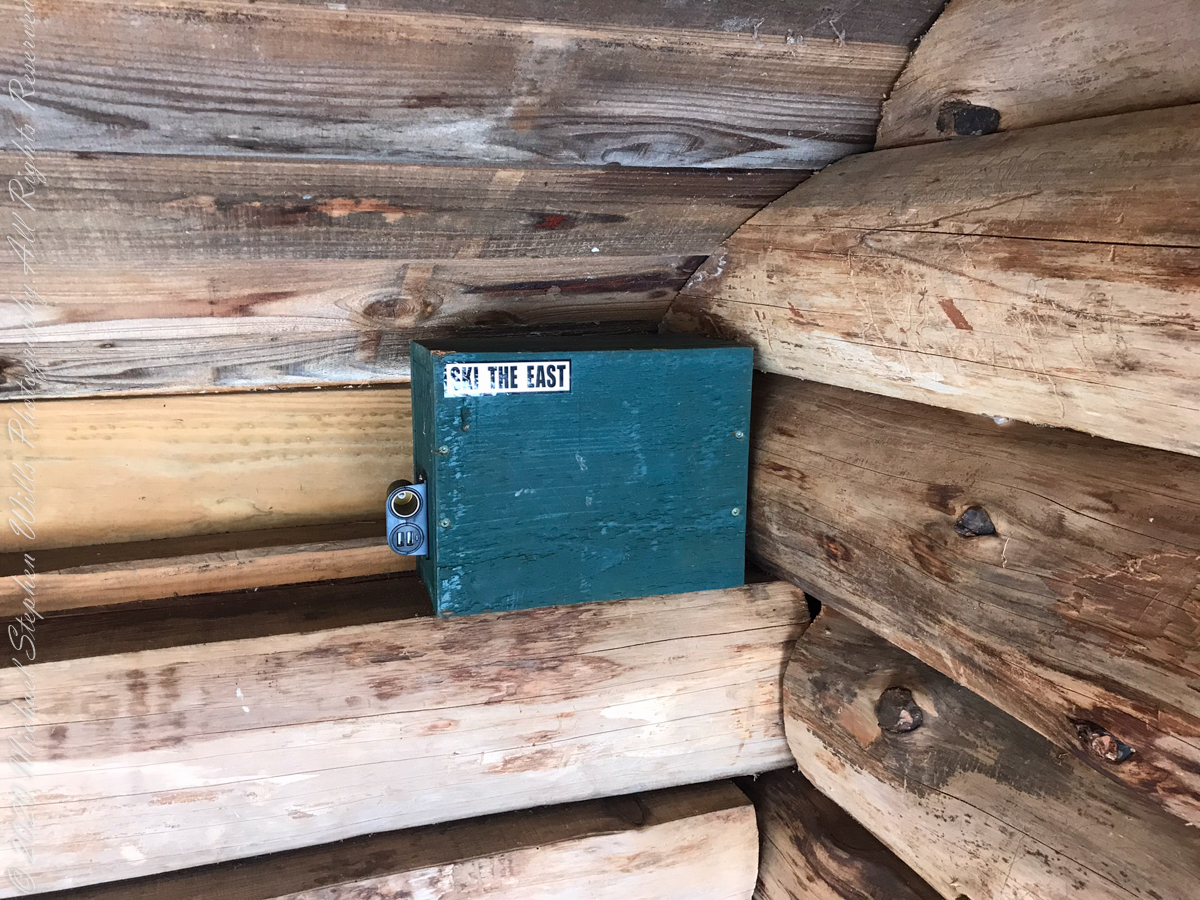
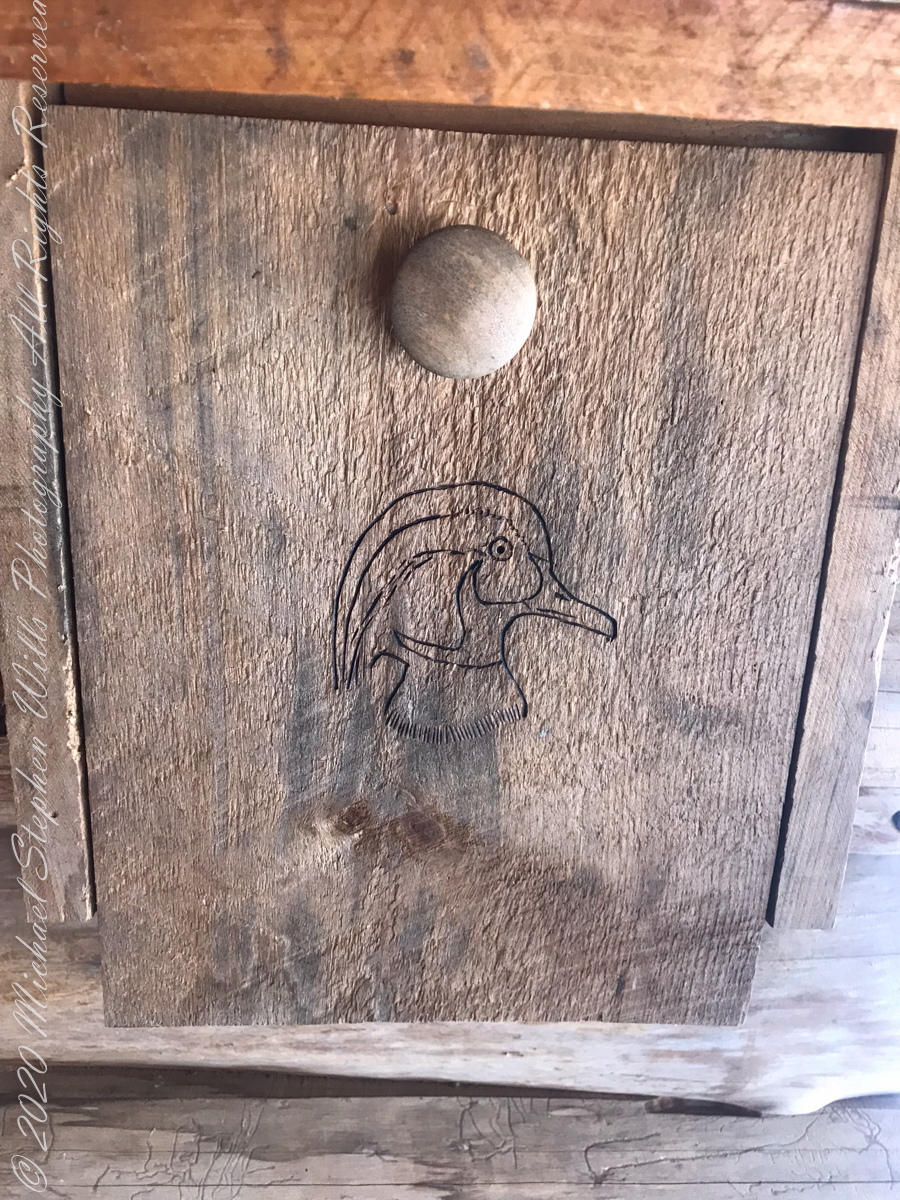
above the lean-topapartment houselean to made from tamarack logs with excellent fire pitsolar powered charging stationdocument box / mouse houseselfie
View from Shelter across the valley of Enfield Creek, the same that flows over Lucifer Falls of Treman State Park
In follow-up to my last post my IStock photograph of Saint Patrick on the Hill of Tara was accepted and is available for viewing (click the link to go there).
Since July 2008 a sea generation tidal turban, “SeaGen”, produces electricity (1.2 MW) for between 18 and 20 hours a day while the tide is forced in and out of Strangeford Lough through the Narrows where the generator is installed. The first large scale commercial production of electricity from the tide, “SeaGen” is located between the Northern Ireland towns of Strangeford and Portaferry, the strength of the tides there were used by the earliest tidal mill known, the Nendrum Monastery mill dating 787 based on archeological excavation.
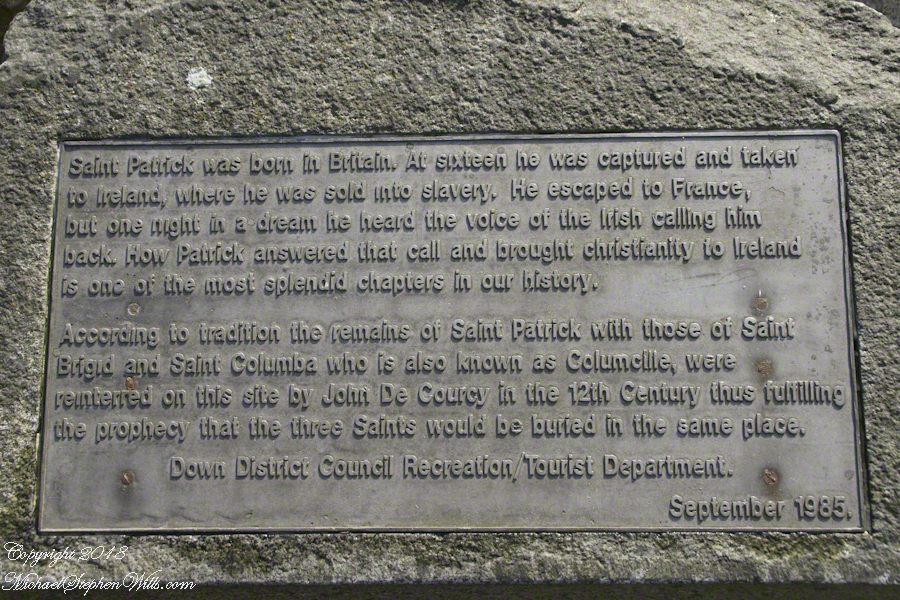
History records Patrick converted the island of Erin (Ireland) to Christianity in the Fifth Century AD as a return to his place of captivity and slavery.
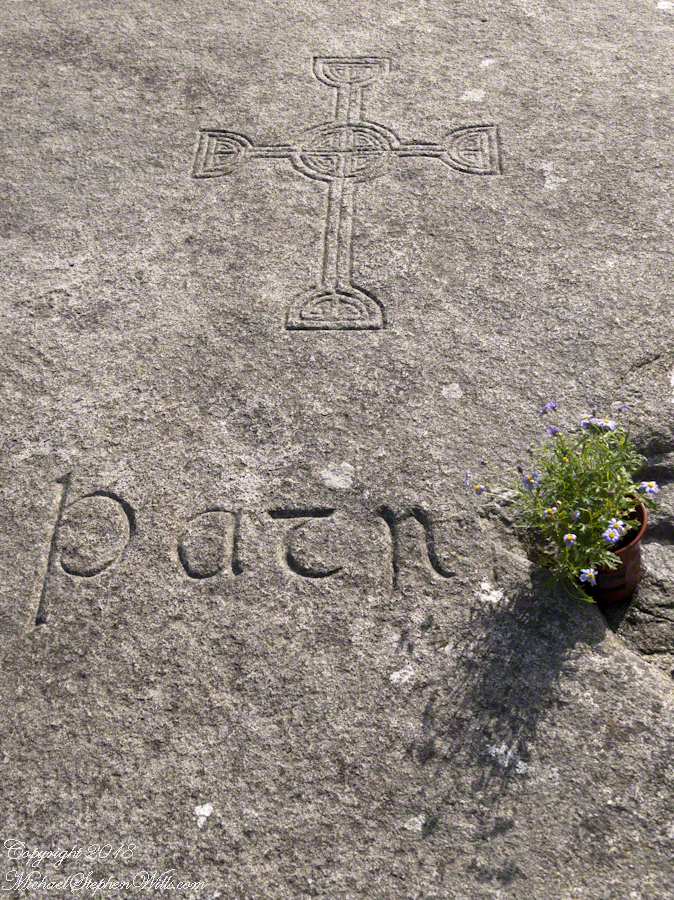
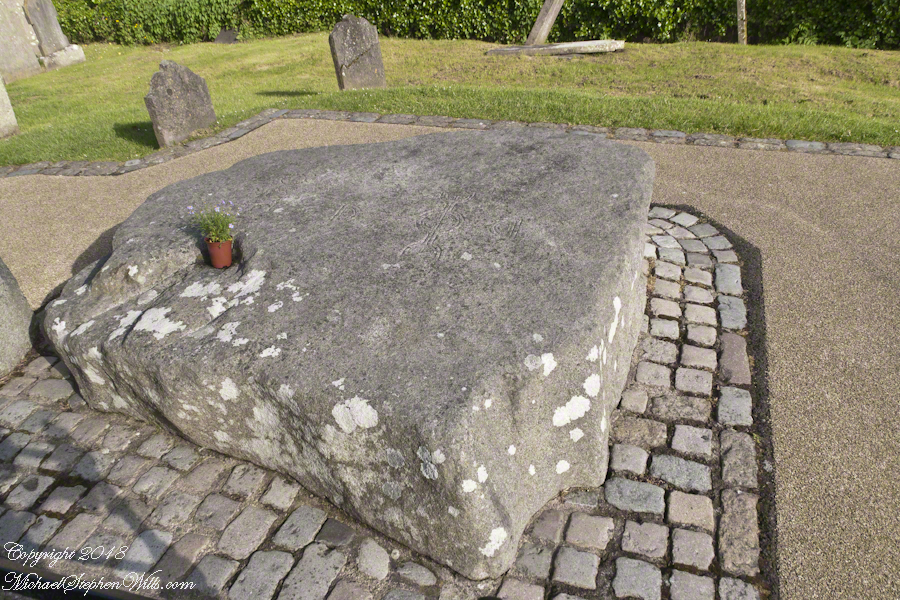
An informational plaque mounted on granite next to the grave of Saint Patrick.
There is a connection between “SeaGen” and the return of Patrick to Ireland. The first sanctuary dedicated by Patrick was at Saul, County Down not far from River Quoile that drains into Strangeford Lough. Historians identify Patrick’s first landing site, upon return, as Wicklow where he was forced to leave by the locals. Heading north in the boats of the time, the strong tide of Strangeford Narrows pulled them into the Lough and, from there, headed up the River Quoile to encounter the local chieftain, Díchu mac Trichim. Patrick’s first Irish convert to Christianity, the feast of Saint Dichu is April 29.
On June 7, 2014 Pam and I visited this area. Here are some photographs of the traditional burial place of Saint Patrick.
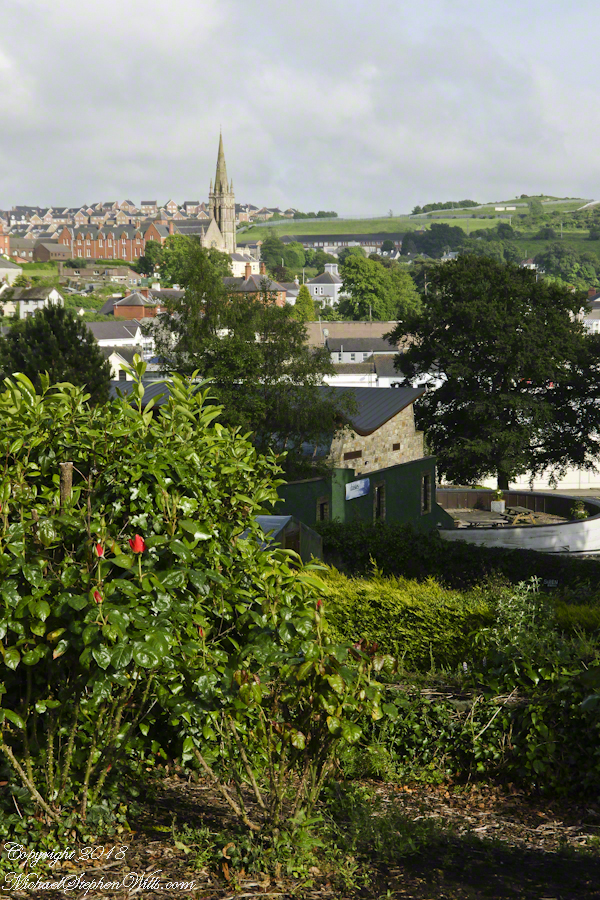
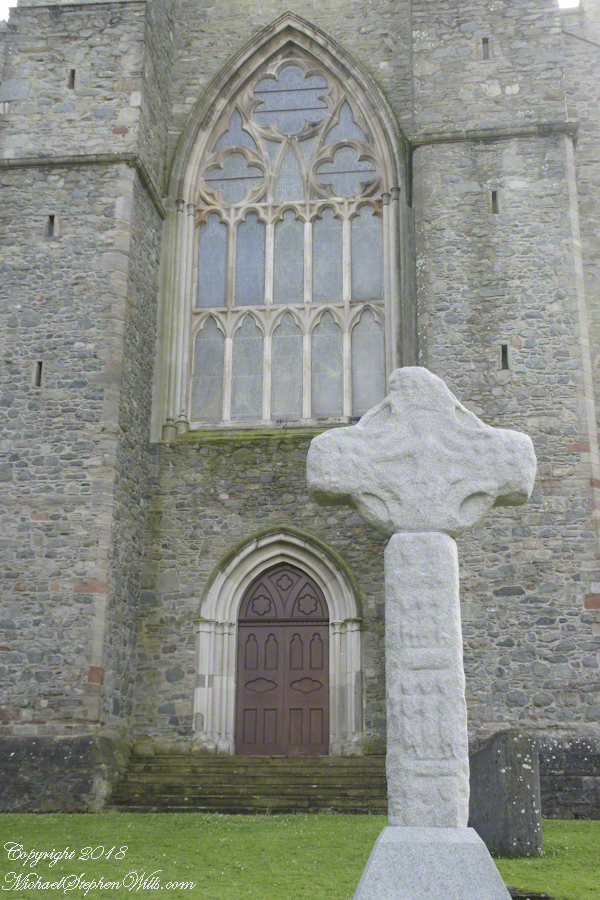
View of Downpatrick from the hill of the Cathedral Church of Holy Trinity (Down Cathedral)The High Cross of Downpatrick fronts Down Cathedral on a hill overlooking the town. The informational placard reads “The granite head and shaft date to about 900 AD and were once re-used as part of a Market Cross at the bottom of English Street. The pieces were found in various places in town, reassembled and presented to the Dean and Chapter of the Cathedral in 1897.”The placard text reads: “A large memorial stone of Mourne granite was place here in 1900 to mark the traditional burial-place of St. Patrick. The stone was quarried at Slieve-na-largie near Castlewellan, and it took 12 men 14 days to cut from the quarry.”Inscription on the upper surface of stone marking grave of Saint Patrick.















 For those chosen to cross over to the new land in return for



 Michael Stephen Wills Photography