Booking our February/March 2016 passage on the Oceania Regatta from Lima, Peru to Buenos Aires, Argentina we started early, Spring 2017. We made two excellent choices: a stateroom with balcony on the port side. Waking each morning we were treated to views of the shoreline. On the morning of February 15, 2016 as we sailed the Chacao Channel toward Puerto Montt I was up 4:15 am before the sun rose to photograph our approach to the city.
I knew a classic 8,701 foot high stratovolcano topped with glaciers, named Orsorno, was out there and, amazingly, appeared on the horizon, seventy five miles distant to the northeast outlined by the gathering dawn. The sky was just brightening from total darkness at this time.
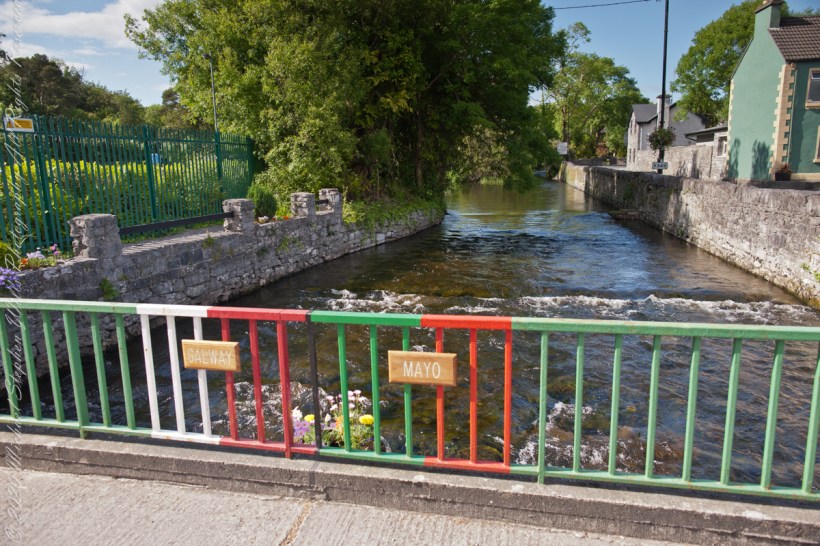
Colorful railings highlight the county border, the centerline of River Cong. To the left is the Cong Salmon Hatchery of County Galway to the right the bridge enters Abby Street of Cong Village, County Mayo. Ahead is where this river, this enormous body of moving water emerges from underground passages through limestone.
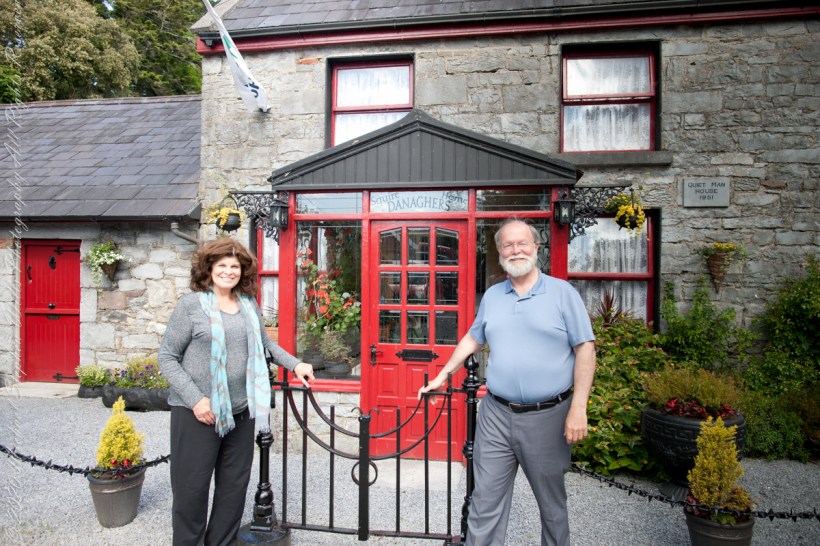
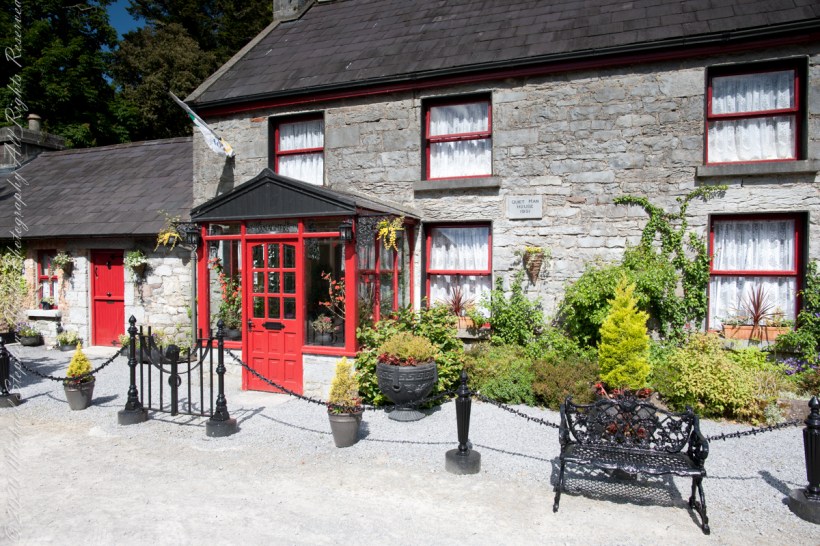
A location from the 1952 film “The Quiet Man”. The house appears on no maps, located on the Ashford Castle grounds. Head toward the Ashford Castle Old School House and you will come upon it. County Mayo, near the Village Cong, Connemara, County Mayo, Republic of Ireland.
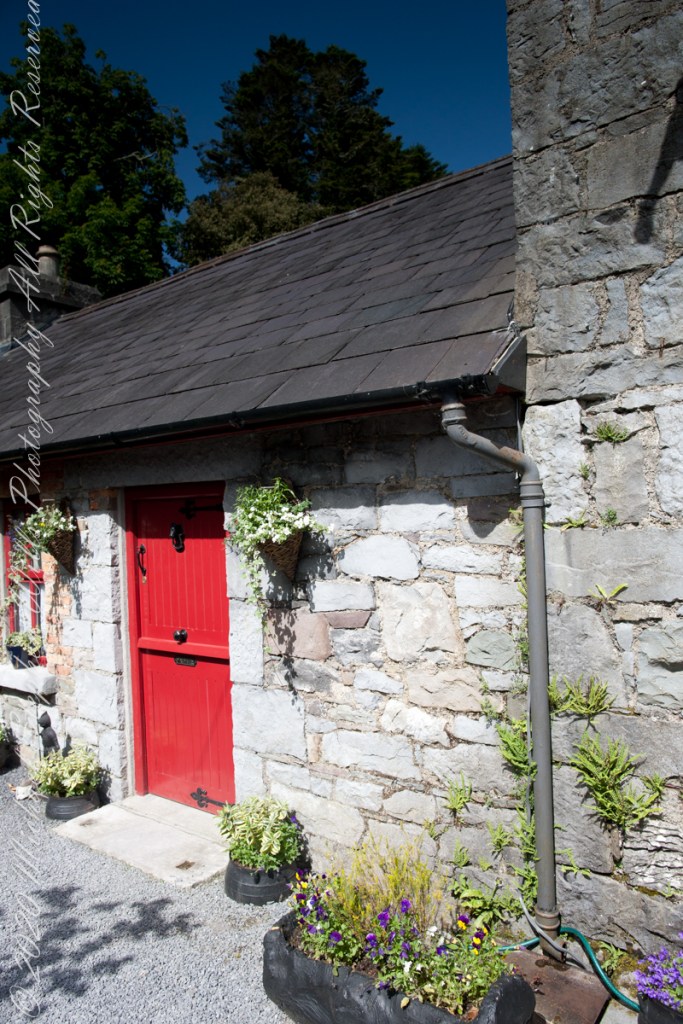
I recall there are scenes from “The Quiet Man” featuring characters using this Dutch door, seen to the left in the above photograph and below in a closer shot.
In this photograph the glass etching on entrance, identifying the home, is clearer. Also note the plaque: “Quiet Man House 1951.” Is the plaque wrong? No, while 1952 was the world-wide film release year, filming commenced on June 7, 1951.
Discover the charm of Cong, Ireland, through a stunning sculpture celebrating The Quiet Man. Join me as I explore the town’s cinematic legacy and reflect on the enduring magic of film.
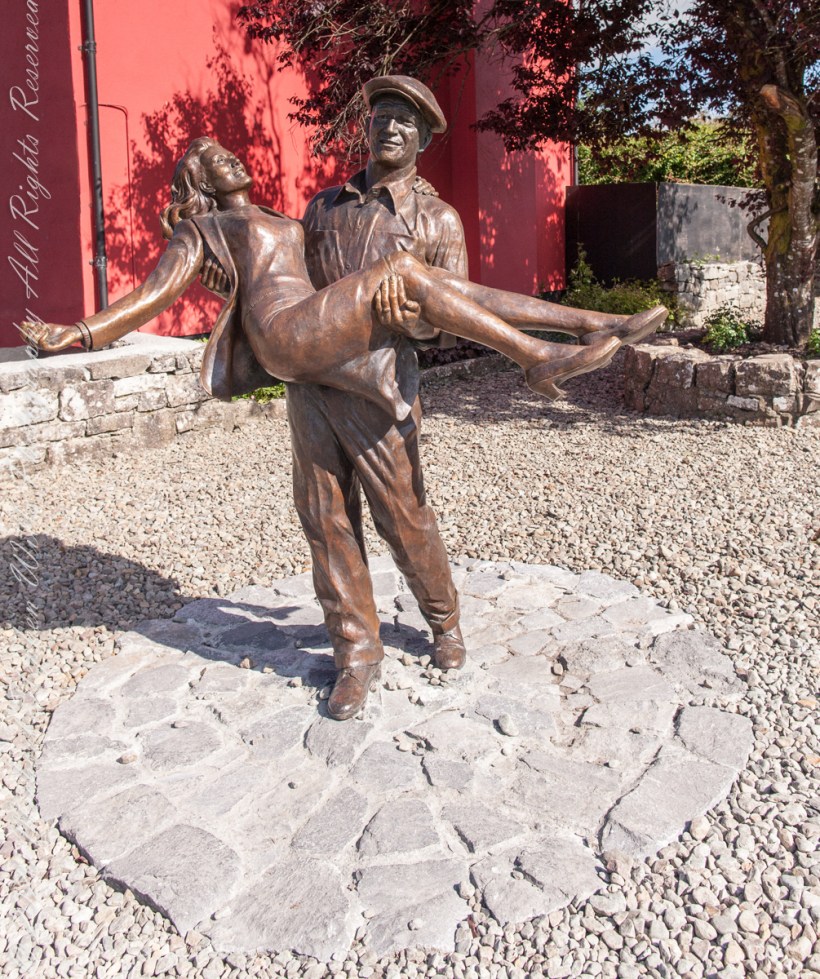
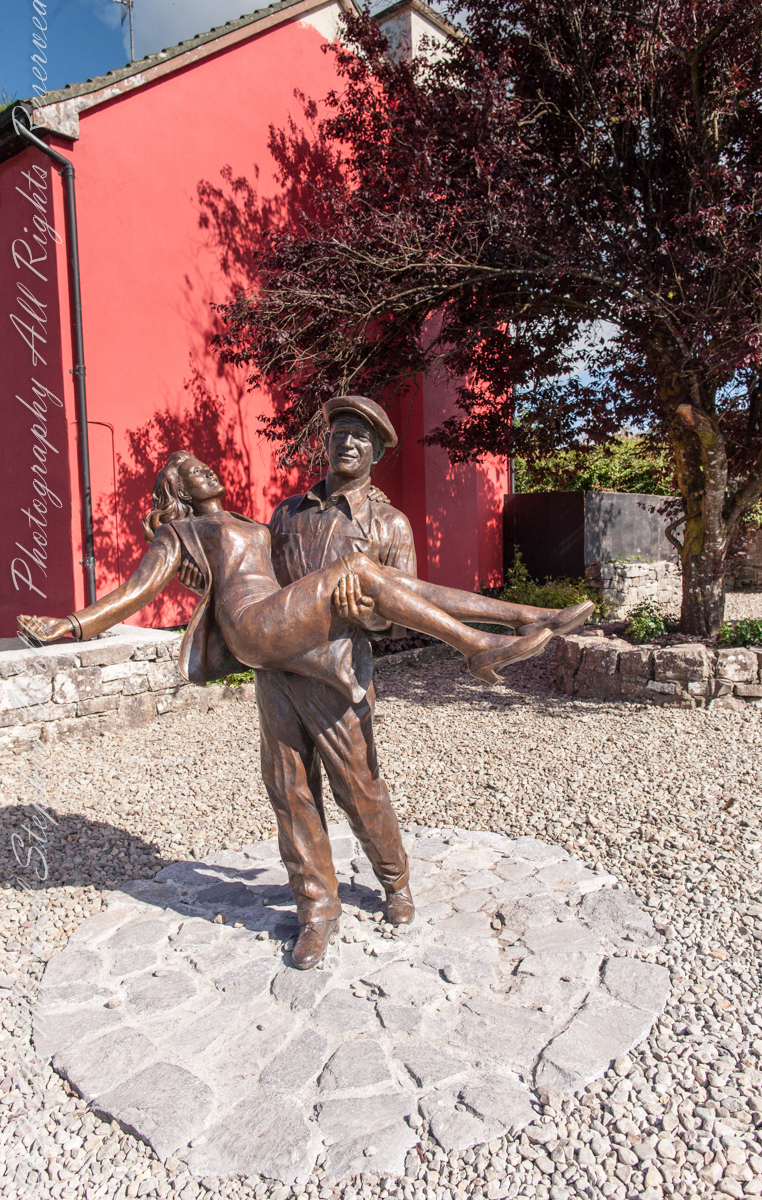
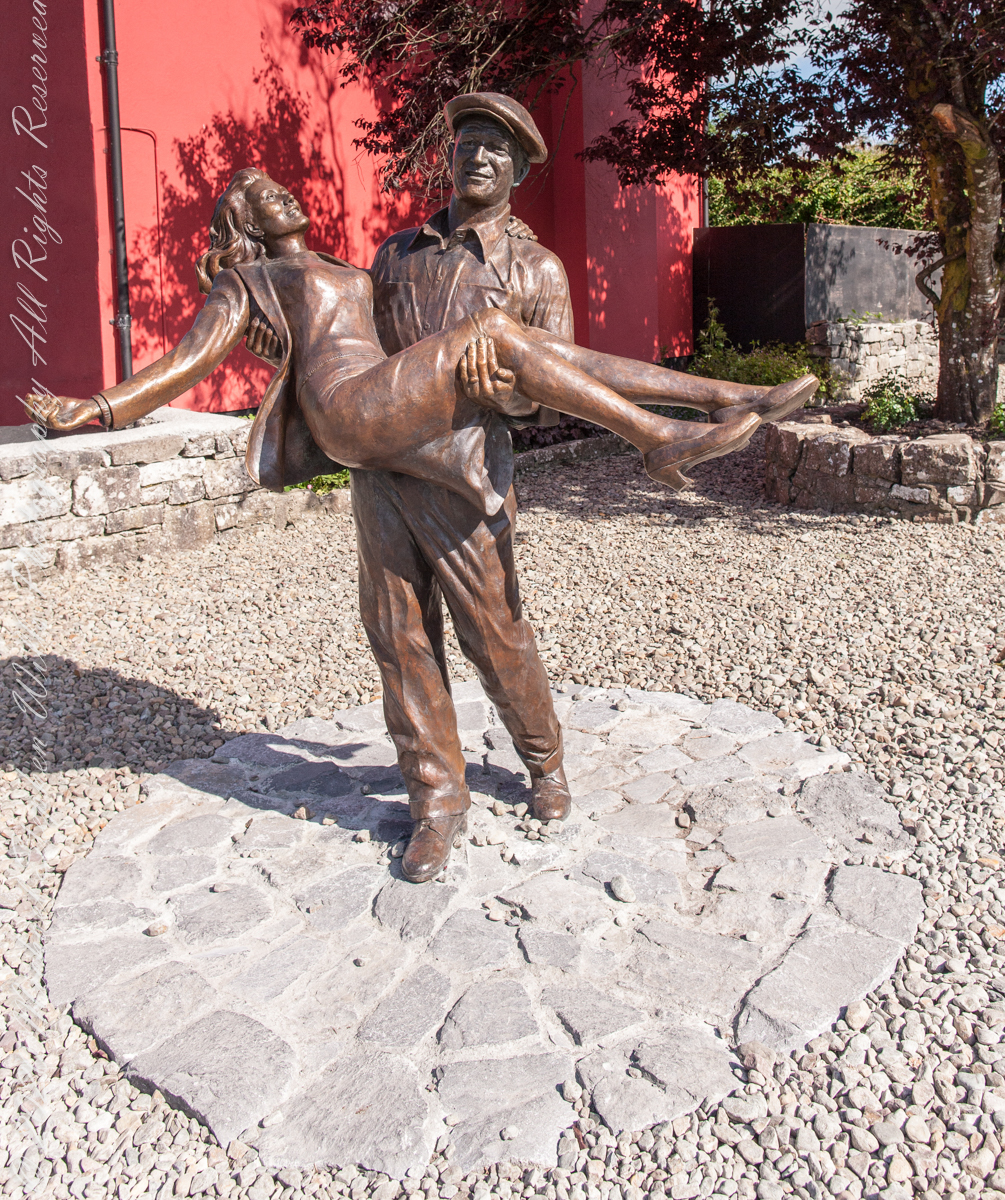
During a May 2014 exploration of the village Cong in County Mayo, Ireland, we encountered this remarkable sculpture that transported me back to one of my favorite classic films, “The Quiet Man.” The bronze statue, depicting John Wayne’s character, Sean Thornton, carrying Maureen O’Hara’s Mary Kate Danaher, stands against the backdrop of the town, a visual homage to the cinematic legacy that has become intertwined with Cong’s identity.
As I stood before the sculpture, memories of watching The Quiet Man flooded back. The Quiet Man, with its vibrant depiction of Irish culture and scenery, had always held a special place in my heart. It’s a story of love, cultural clashes, and the journey of a man returning to his roots, themes that resonate deeply within the lush landscapes of County Mayo. Cong served as the primary filming location, and the town has embraced this legacy wholeheartedly, turning the film into a cornerstone of its identity.
The sculpture, created by Mark Rode, who has a foundry an hour away in Swinford, was installed the year before, 2013, yet it felt as though it had always been there, seamlessly blending with the surroundings. Rode’s work captures the essence of the characters with remarkable detail. In The Quiet Man, the scene where Sean carries Mary Kate in his arms takes place after he retrieves her from the train station. This moment symbolizes their reconciliation and is a pivotal scene in the film, capturing their renewed bond and Sean’s determination to stand up for their relationship. The piece celebrates not just the film, but also the spirit of the town and its connection to cinematic history.
Mark Rode, known for his ability to bring characters to life through sculpture, has a unique talent for capturing the essence of his subjects. His works often reflect a deep understanding of human emotion and storytelling, qualities that shine through in this particular piece. The installation of the sculpture was met with excitement from both locals and visitors, further cementing Cong’s status as a beloved tourist destination.
Reflecting on our visit, I realized how much this small town had embraced its role in cinematic history. The streets of Cong are dotted with nods to The Quiet Man—from themed shops to plaques marking filming locations. Each element serves as a reminder of the film’s impact on the town and its people. The statue stands as a centerpiece, inviting fans of the film to relive its magic while introducing new generations to its charm.
I couldn’t help but meditate on the lasting impact of art and film on a community. The installation of this sculpture not only celebrates a beloved movie but also invigorates the town’s economy through tourism, drawing visitors eager to walk in the footsteps of their favorite characters. It’s a testament to the power of storytelling and its ability to transcend time, connecting people across generations and cultures.
The statue of Sean and Mary Kate in Cong is a symbol of the town’s vibrant history and its enduring connection to the film. Mark Rode’s creation captures this essence beautifully, inviting all who visit to pause, reminisce, and celebrate the intertwining of art and life in this picturesque Irish village.
Here presented are two versions of the same image. One cropped. Please leave a comment stating which you prefer and why. Thank You
Use this slide show, flip back and forth to compare the images, reach a conclusion on which you prefer.
Admittedly, I over-planned the Ireland trip. For every day possible the venues were pre-booked and paid. In theory planning provides more flexibility when life interrupts.
For the Inishmore planning, a perfect day, for me, was tooling around on a bicycle stopping where we pleased with welcome exercise in between. That was unrealistic, the day worked out otherwise.
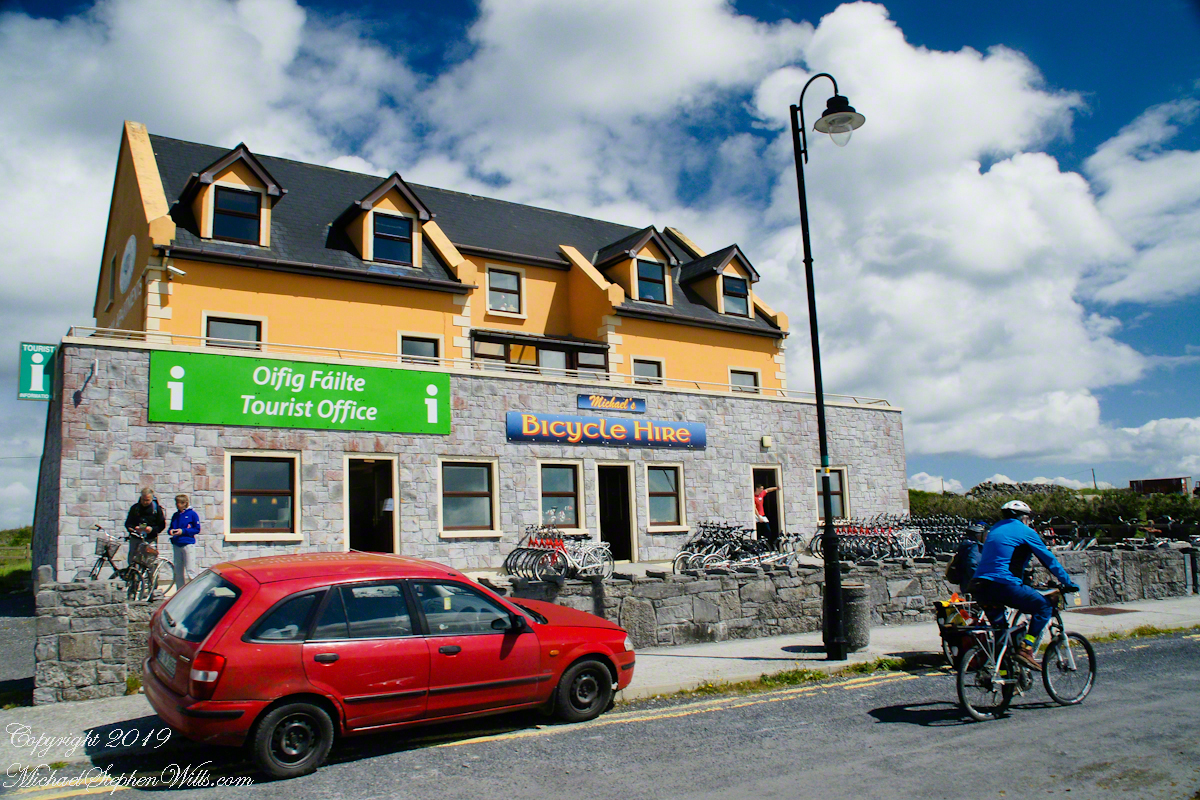
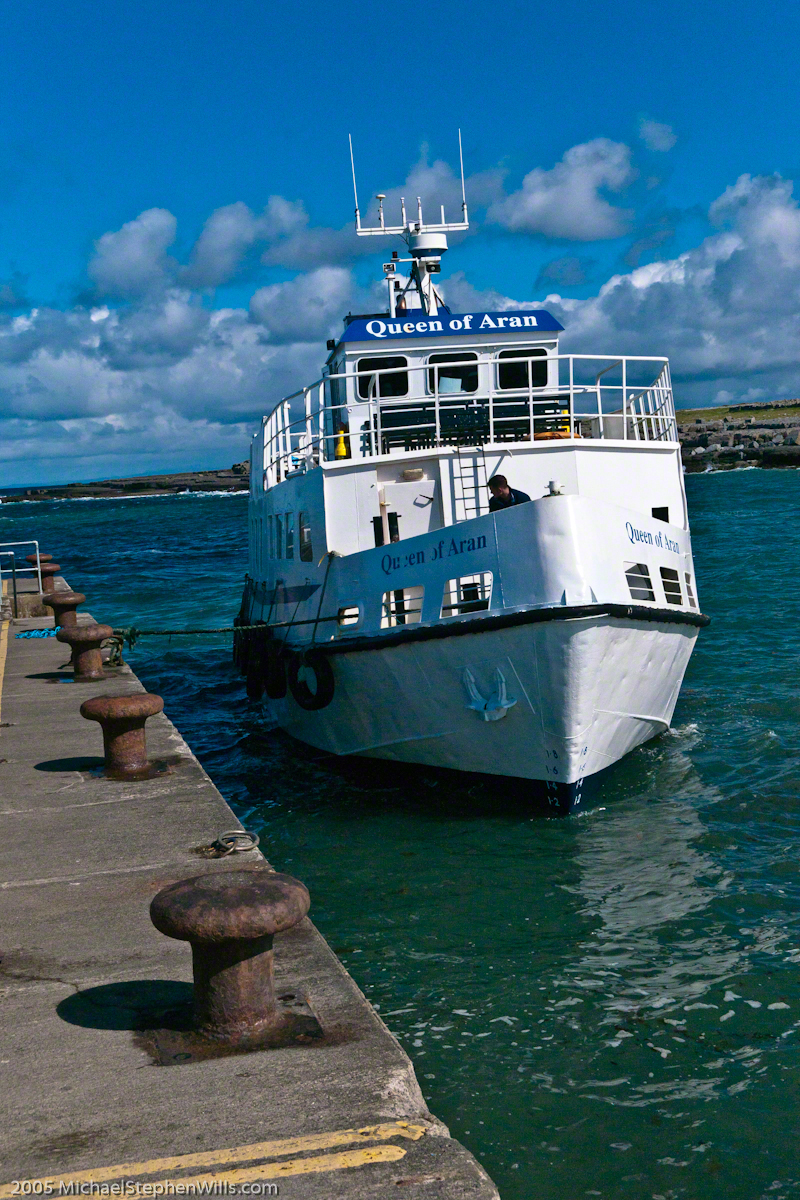
Upon disembarking from Queen of Aran, our ferry out of Doolin, onto the Kilronan quay we walked toward the bicycle rental and Pam refused to bicycle. Her objections were many, safety, impending rain, time. She did have a point about time, the ferry leaves at a set time leaving errant tourists to fend for themselves. We were unused to cycling, still Dun Aonghasa is just over 5 miles from Kilronan, less than an hour round trip. With our starting time of 11:30 am there was 3.5 hours slack for returning to the quay before the 4 pm departure. Plenty of time for wandering the ruins and stopping along the way.
We followed Pam’s advice. Still there were the many bicyclists. Perched on our horse drawn carriage, on the uphill runs, each bicyclist we passed was proof positive to Pam of the wisdom of our choice. I was silently envious of their freedom and overlooked the many mini-buses on the narrow road.
When the day comes to mind, not often, I am left with the guilty feeling of not stopping into the bicycle rental office to cancel the reservation. An email was waiting for me the next day, asking where we were. Thus, the title of this post, “Stiffed.”
Pam’s Response to this post.
Pam’s reasons for not wanting to ride a bicycle around Inishmore: “I hadn’t been on a bike for approximately 20 years. However, if it wasn’t going to rain (it did), if the narrow road was larger, if there weren’t any minibuses loaded to the gills or horse traps sharing the same single lane, I would have considered it. Sitting back and enjoying the beautiful view on our private horse trap and listening to our very knowledgeable tour guide/driver was the highlight of this adventure for me. I am sorry you felt like you didn’t have a choice.”
Pam’s correction of my statement about her being concerned about time: “Time wasn’t a factor in my decision making. I also didn’t have a problem with you biking but there was no way I was going to do that.”
Copyright 2022 Michael Stephen Wills All Rights Reserved
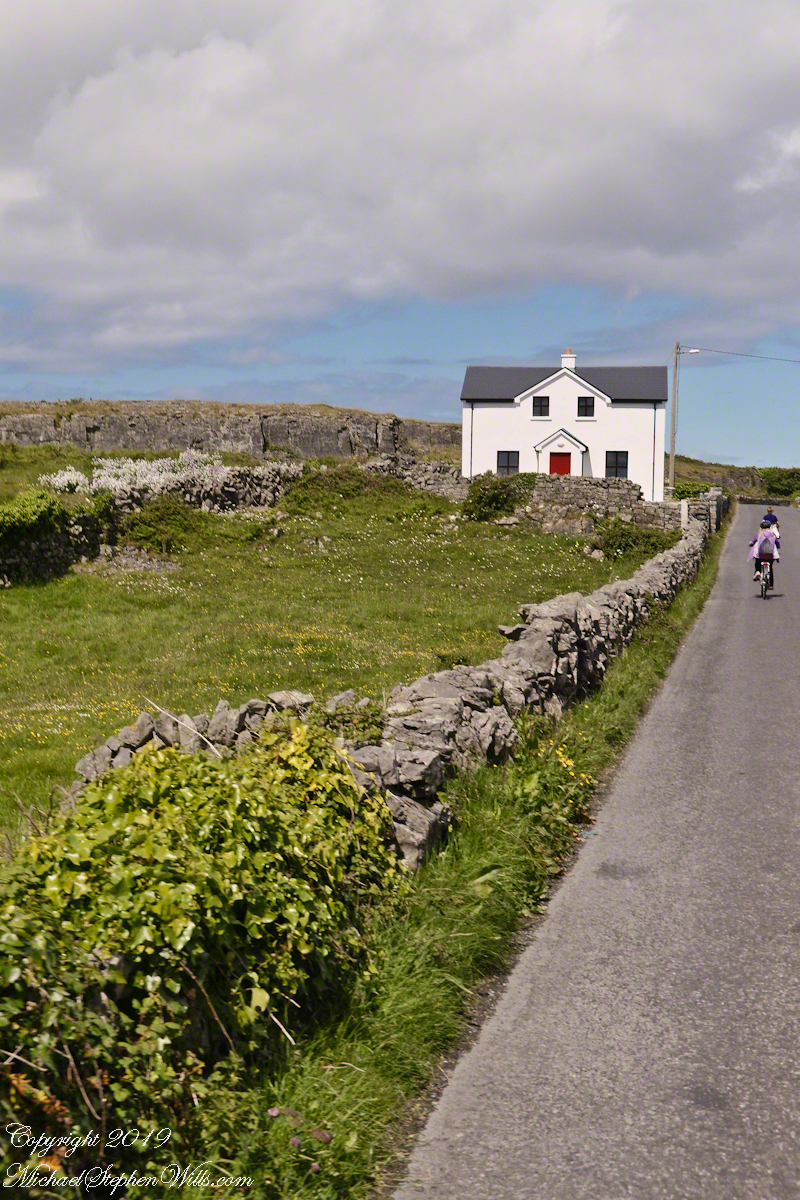
Enjoying travel on a horse trap, a type of carriage, on Inishmore , the largest Aran Island in Galway bay, we headed up Cottage Road from Kilronan, the main island settlement. It was from Kilronan we disembarked from the ferry, hired the driver and trap. Our destination an Iron Age fort, Dun Aengus, and sights along the way.
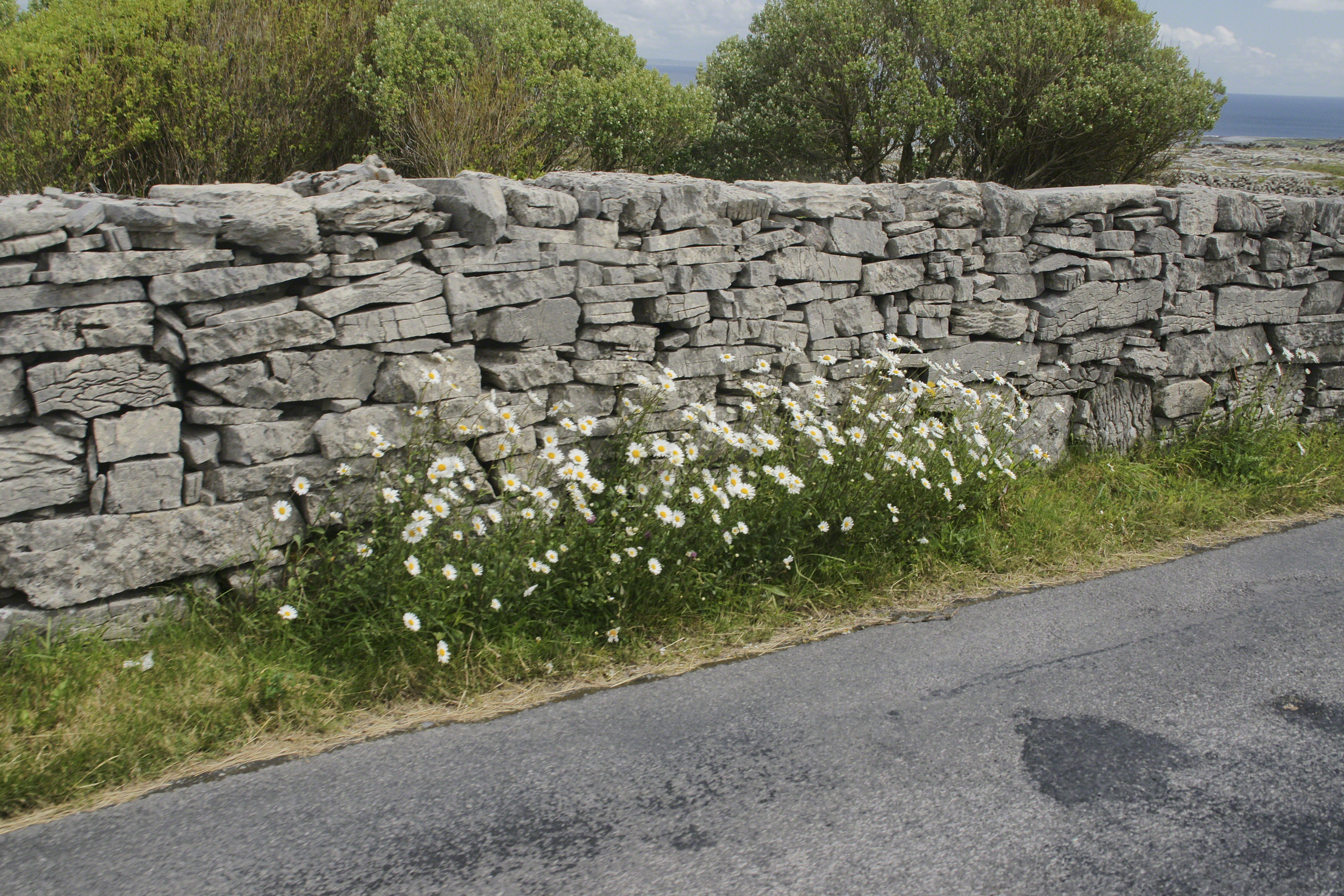
Dry Stone walls abound throughout Ireland. Ancient walls, buried in peat, were discovered in County Mayo and dated to 3,800 BC. This is a field wall on Cottage Road with daisies growing at the wall base.
The wall is composed of stones, not rocks. I have read in places a stone is a rock put to use or shaped by human hands. Other usages have rock and stone used interchangeably. For example, an internet search on “Dry Rock Wall” will return hits on the same. “You pays your money and takes your choice.”
Sources for this post: search Wikipedia for “Dry Stone”.
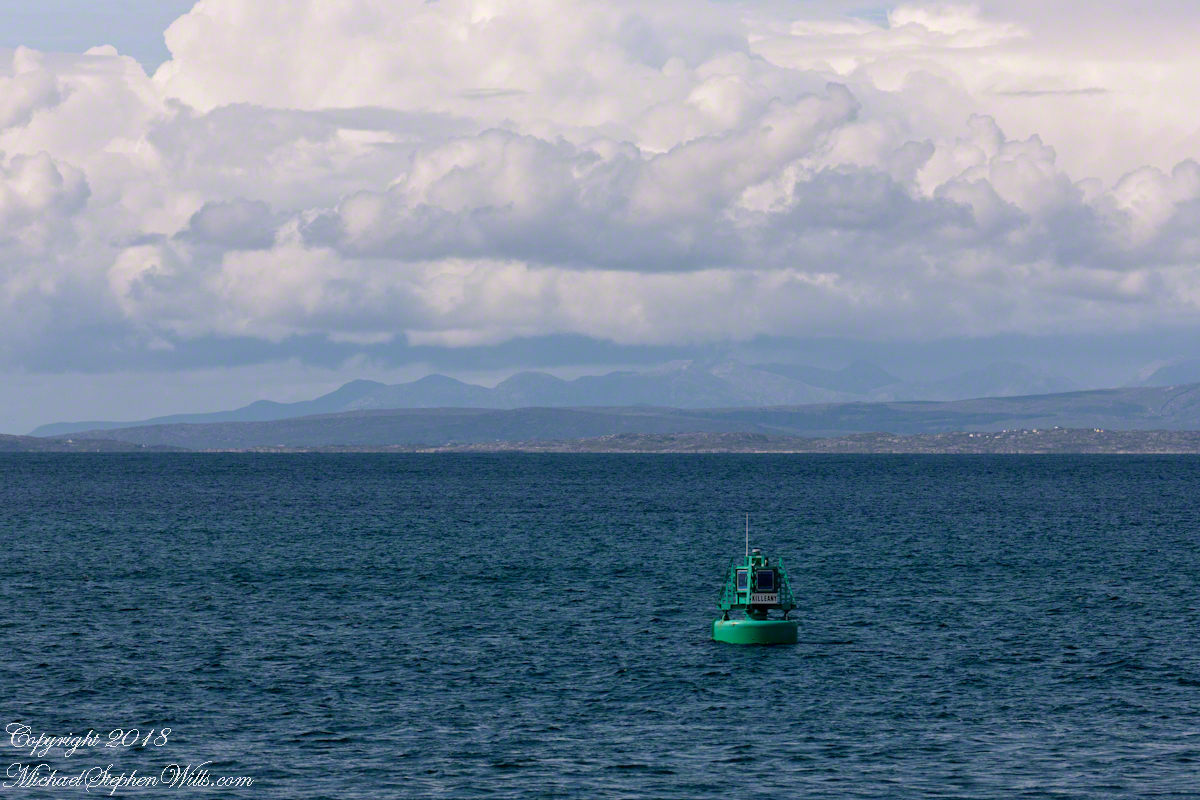
The approach to Killeany Bay of the Aran Island Inishmore is very dangerous, guarded by a Lighthouse on Straw Island to the South and the Killeany buoy to the North.
This view is to the north, northwest from a ferry en route to Inishmaan through Galway Bay. In the distance is the Connemara and the 12 Bens (12 Pins) mountains. Aran Islands, County Galway, Ireland.
There of stories of this buoy coming unmoored. October 27th 2012 it went adrift. An Aran fisherman, Micheál Seóighe (Ml Joyce) and his boat Naomh Beanán tracked it down, hauled it back to the harbor. The buoy was back in service shortly after.
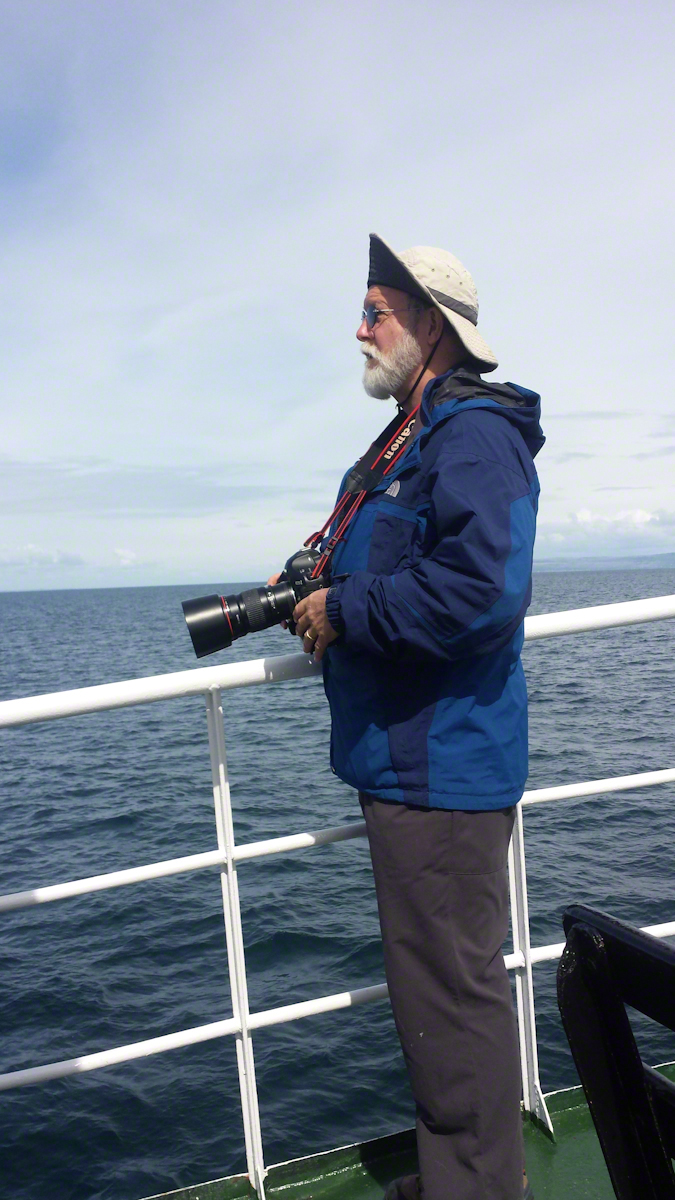
Here is a photograph of me with the camera used. It is a Canon EOS 1Ds Mark III with a Canon lens 200 mm f2.8/L. I am standing on the deck of the Queen of Aran ferry out of Doolin next to the Cliffs of Mohr.
Pam Wills took this photograph with her Samsung Galaxy 4 smart phone.
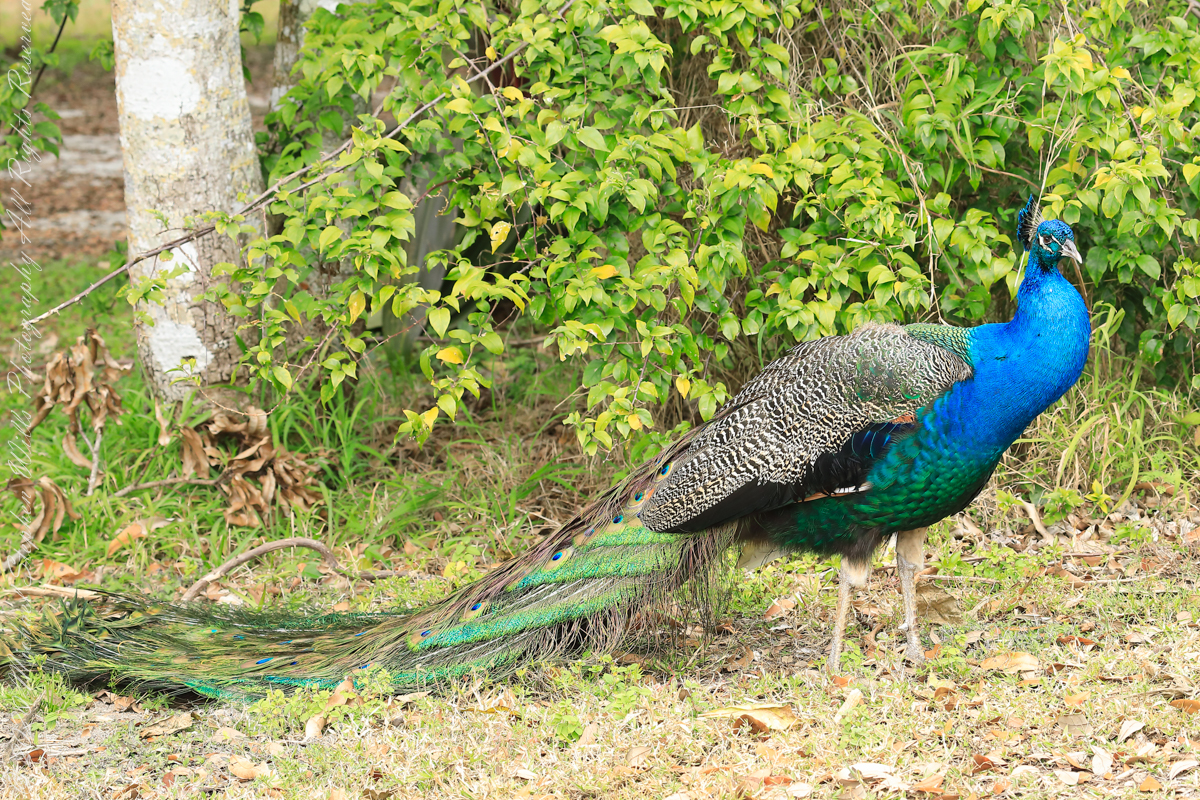
The third of my postings about the peafowl of Cape Canaveral…..we had our most intimate interactions on a Oak Lane, a small unpaved road off a Circle K (roadside convenience store). At one point a peacock approached Pam on the open windowed passenger side and almost pecked her.
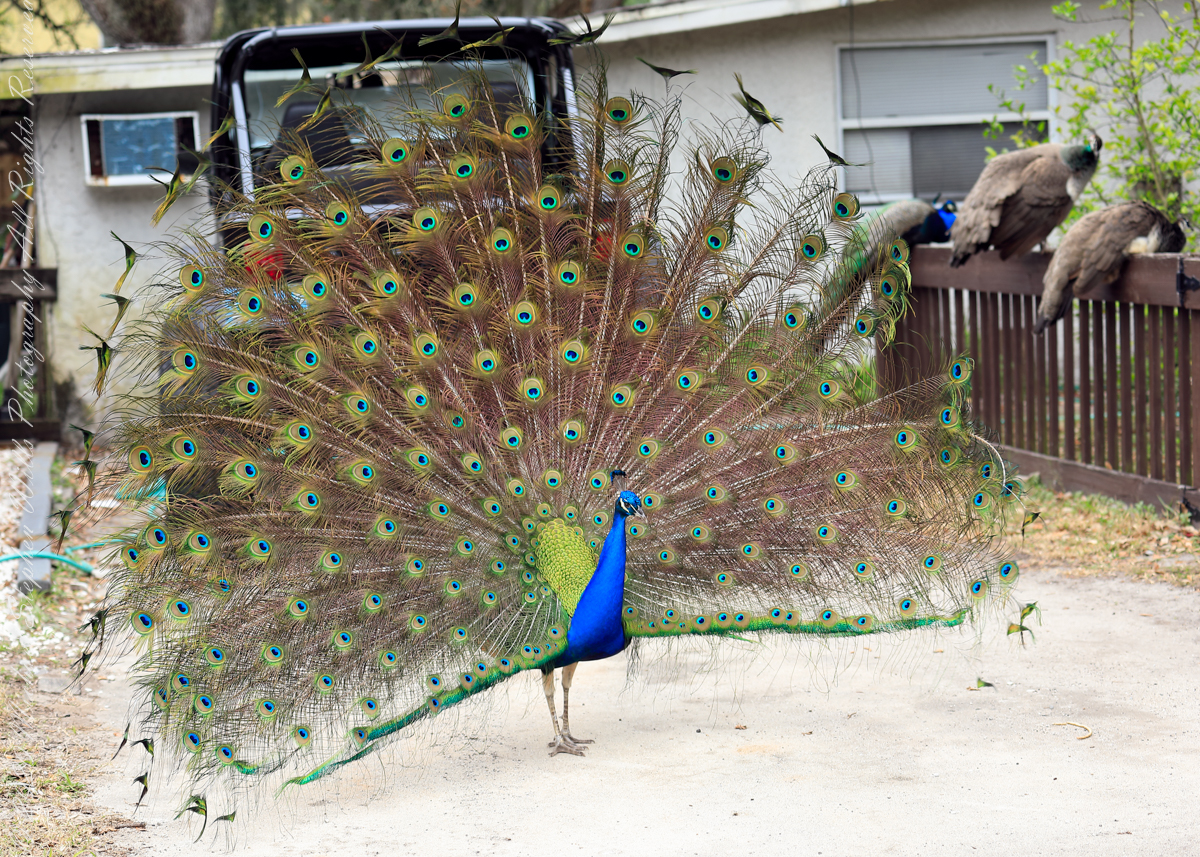
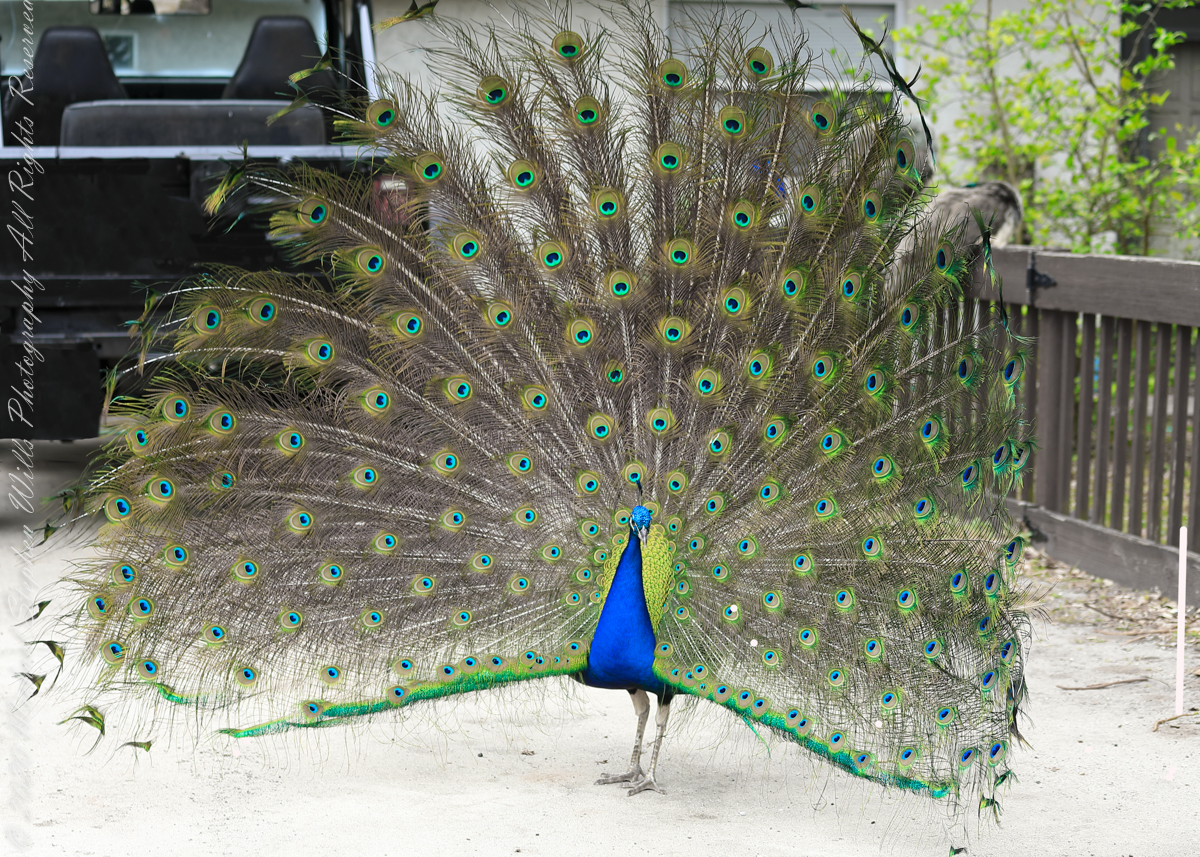
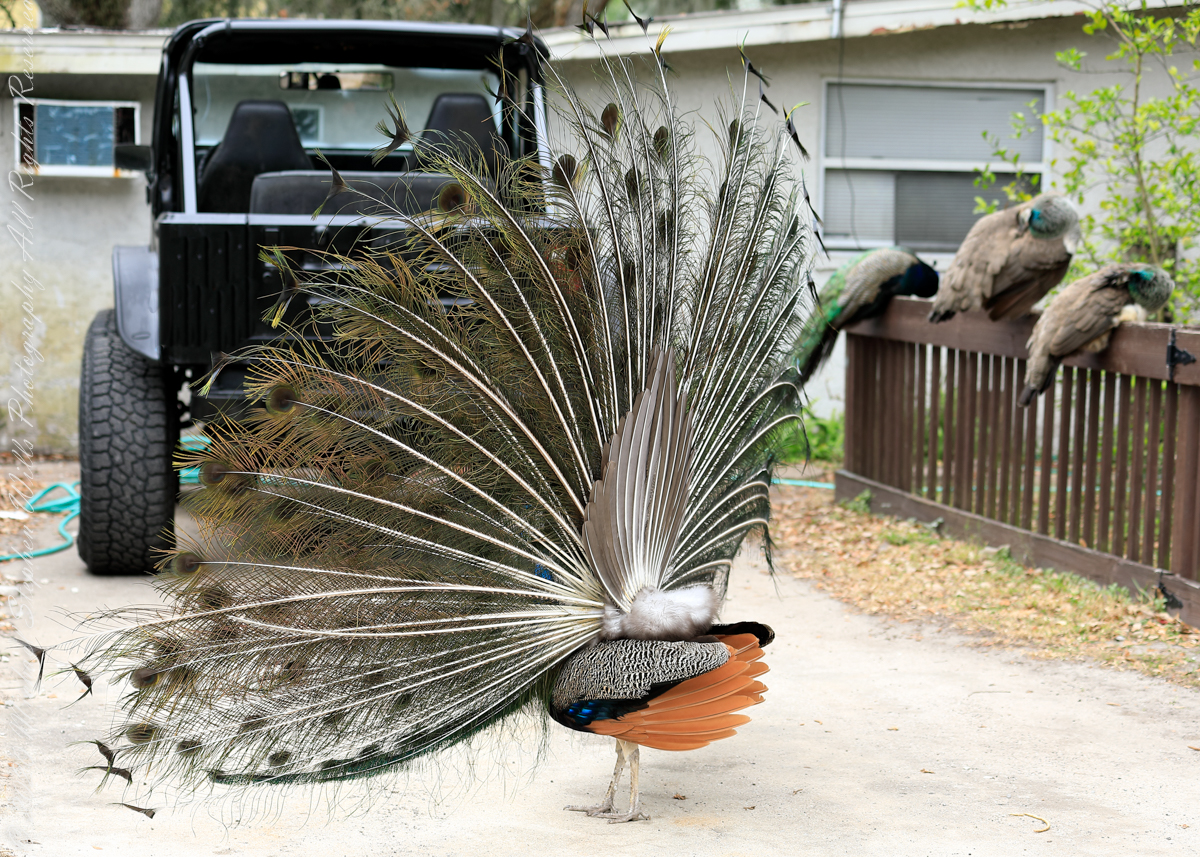
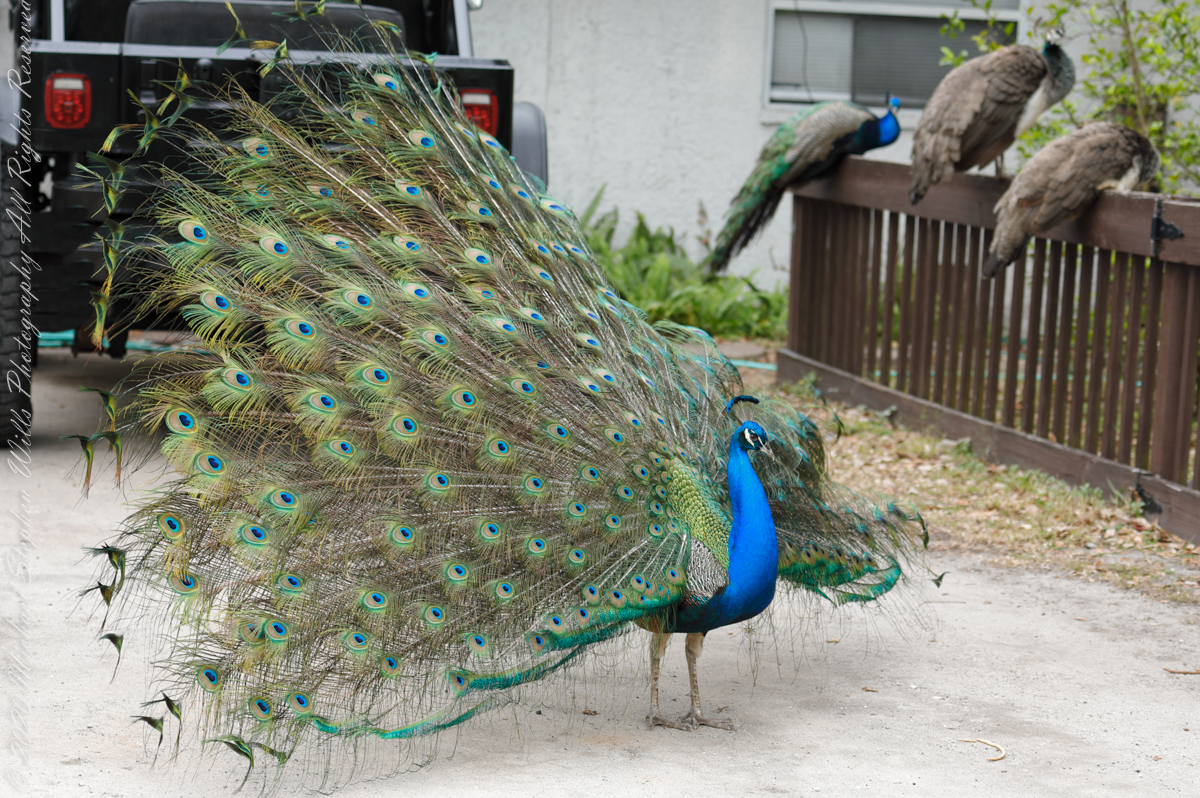
Peacock and audience45 degrees away from face-onAn interesting take on his displayShowboat with a Gladiator (Jeep)
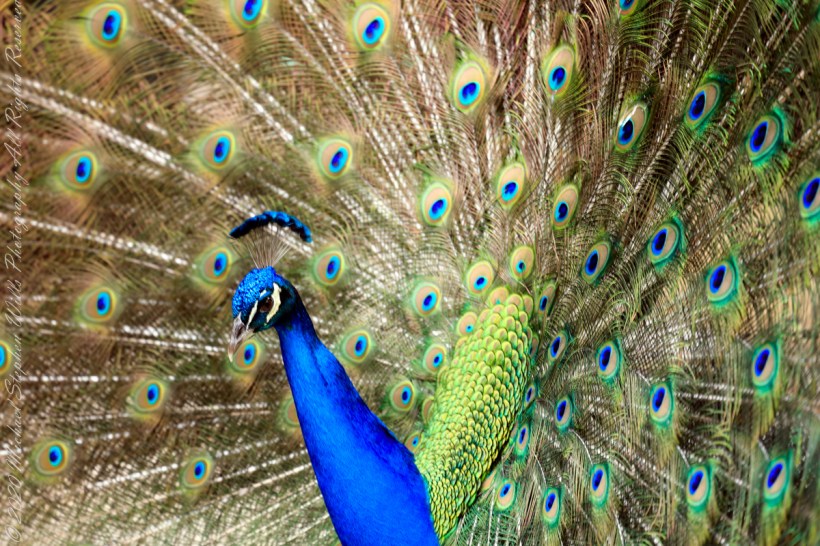
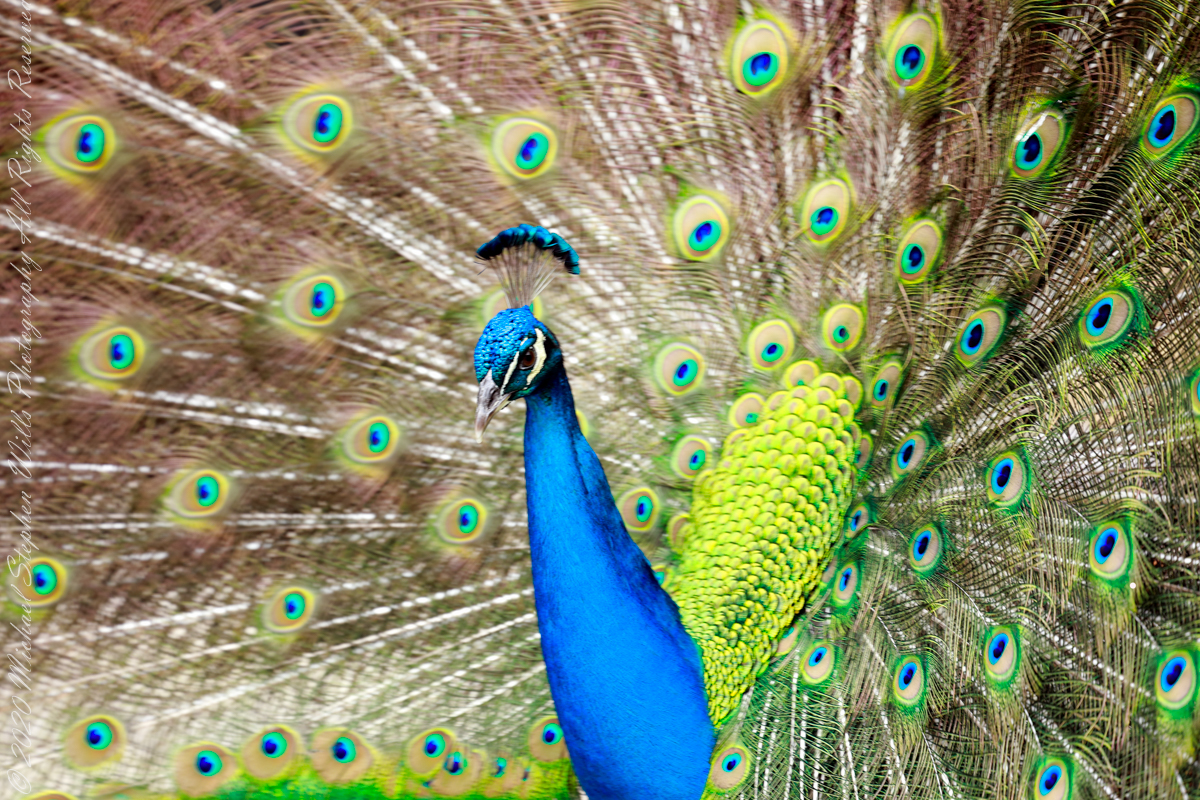
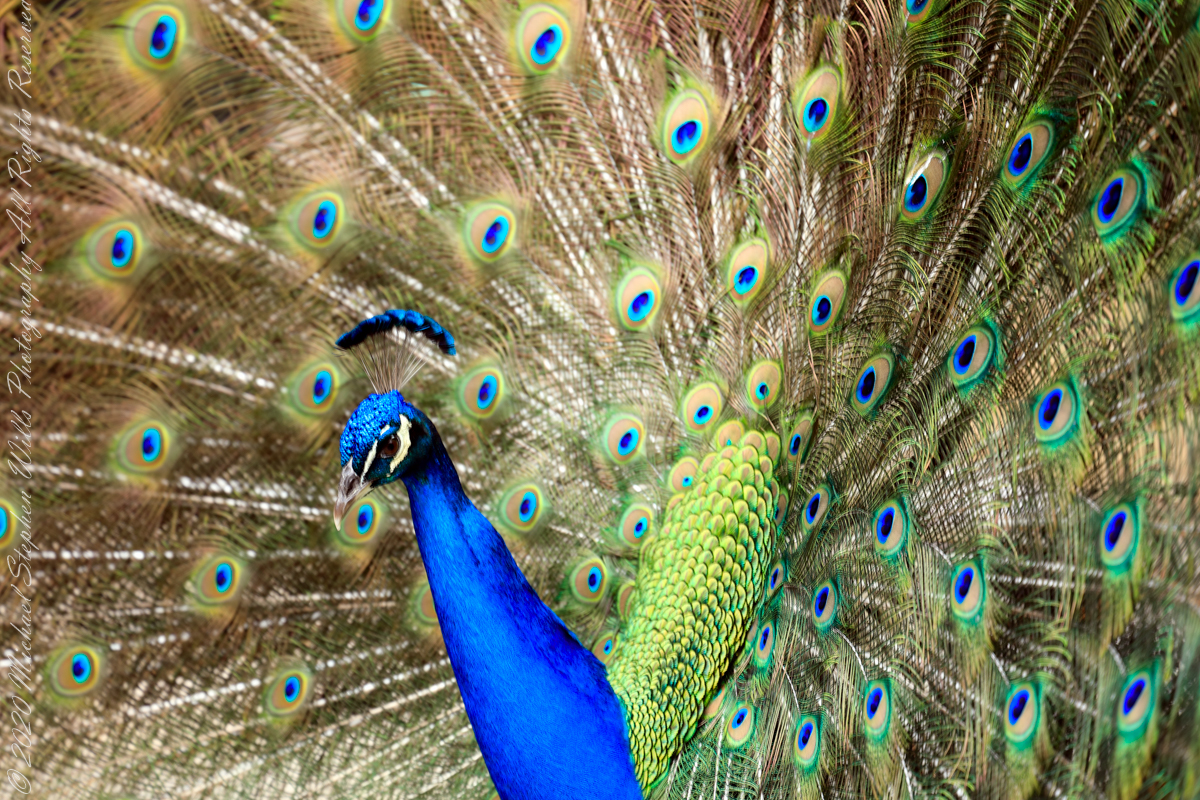
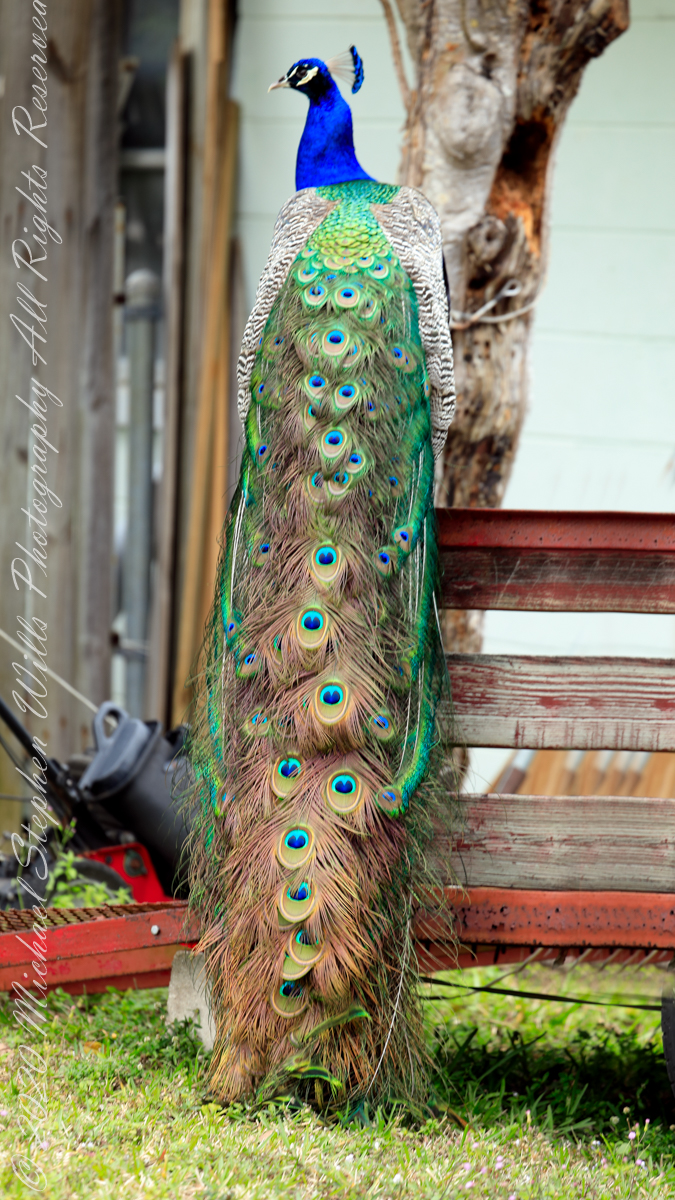
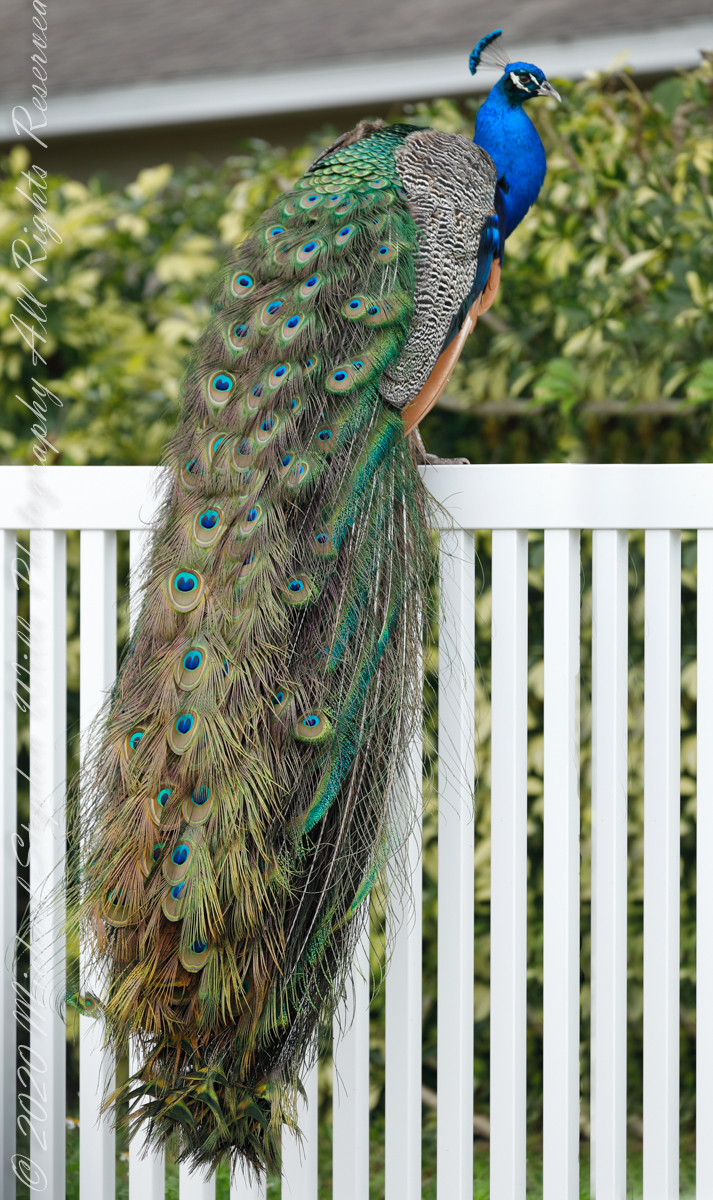
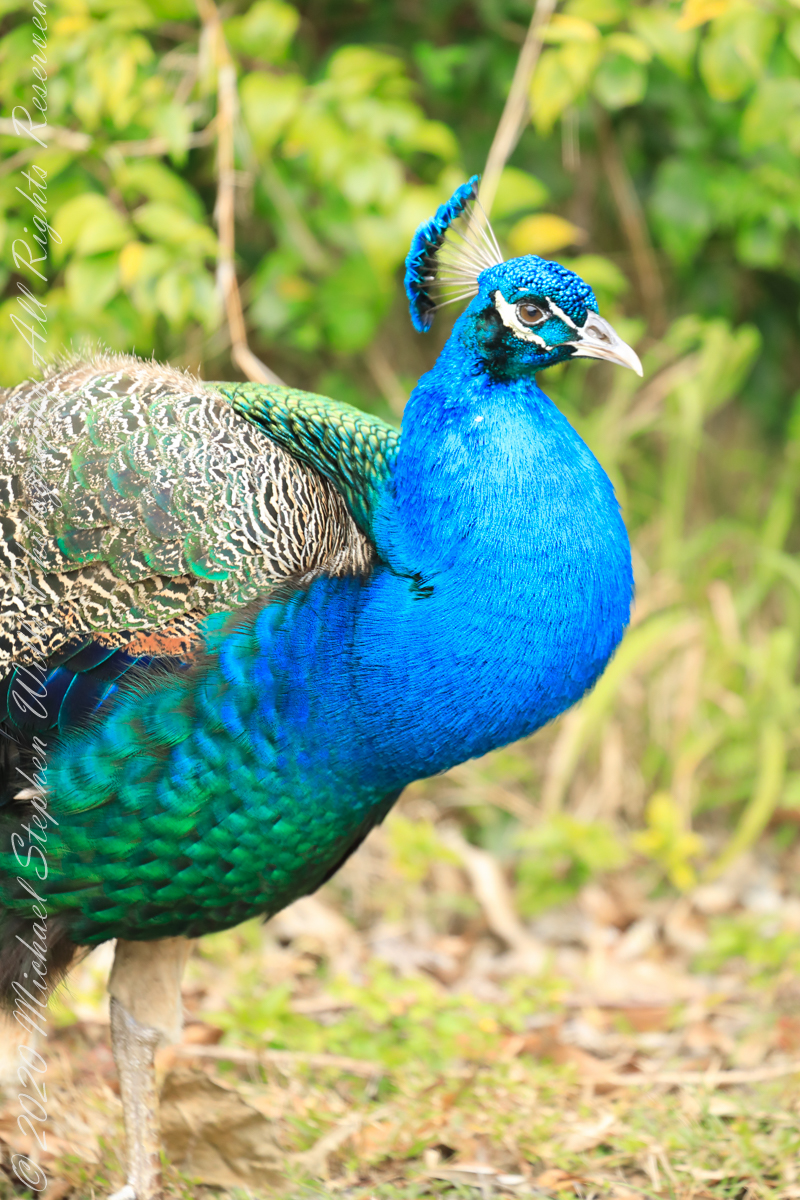
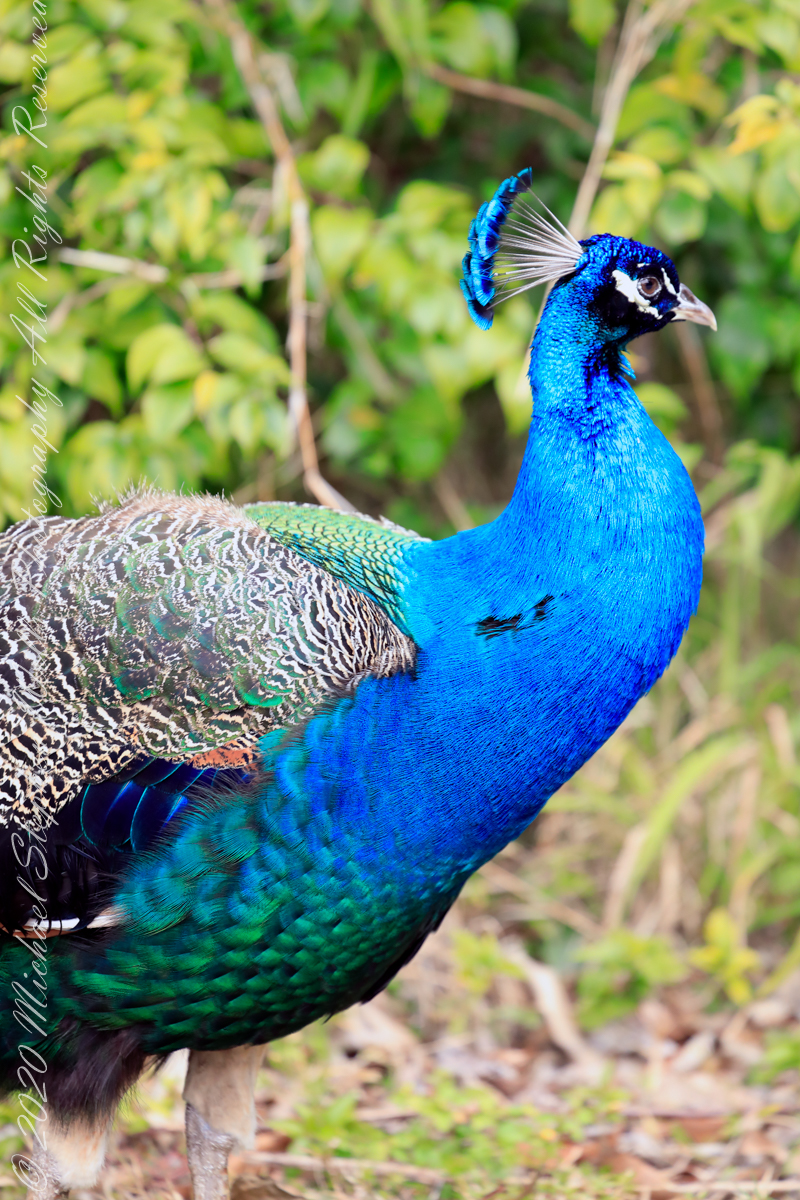
The iridescent coloration is an illusion created by the structure of fine feather elements, called barbules. The impression on peahens varies with viewing angle, between 90 (head on) and 45 degrees to either side. The peacock will shiver his train when faced with a favored peahen.
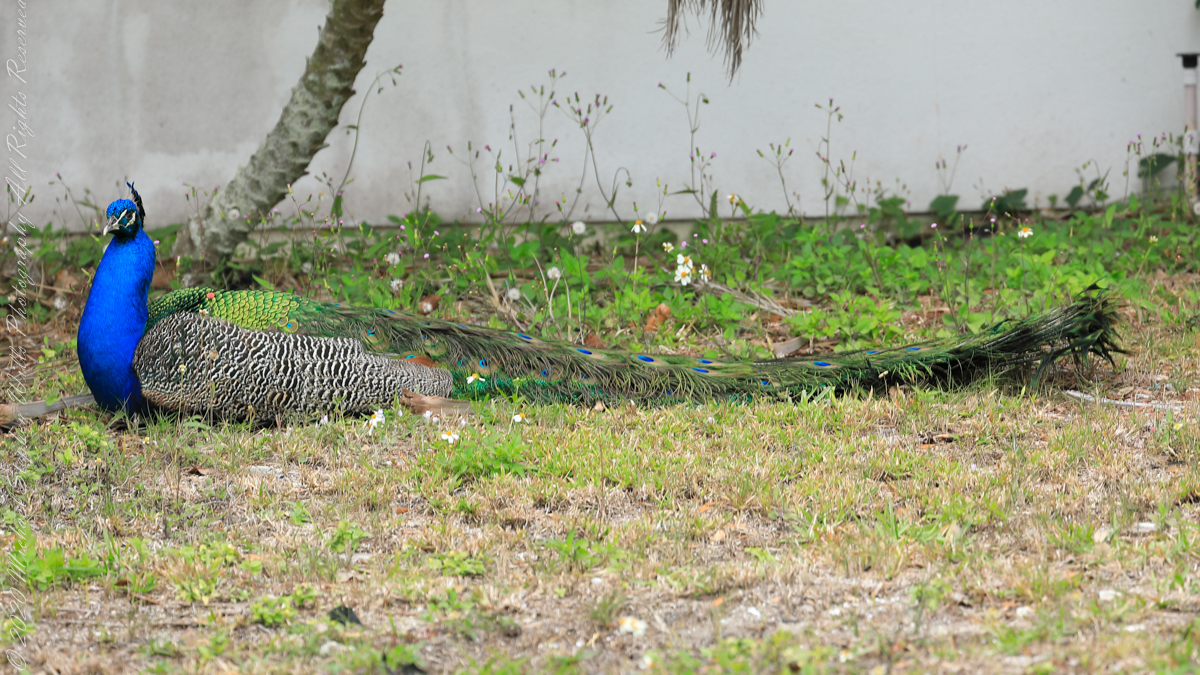
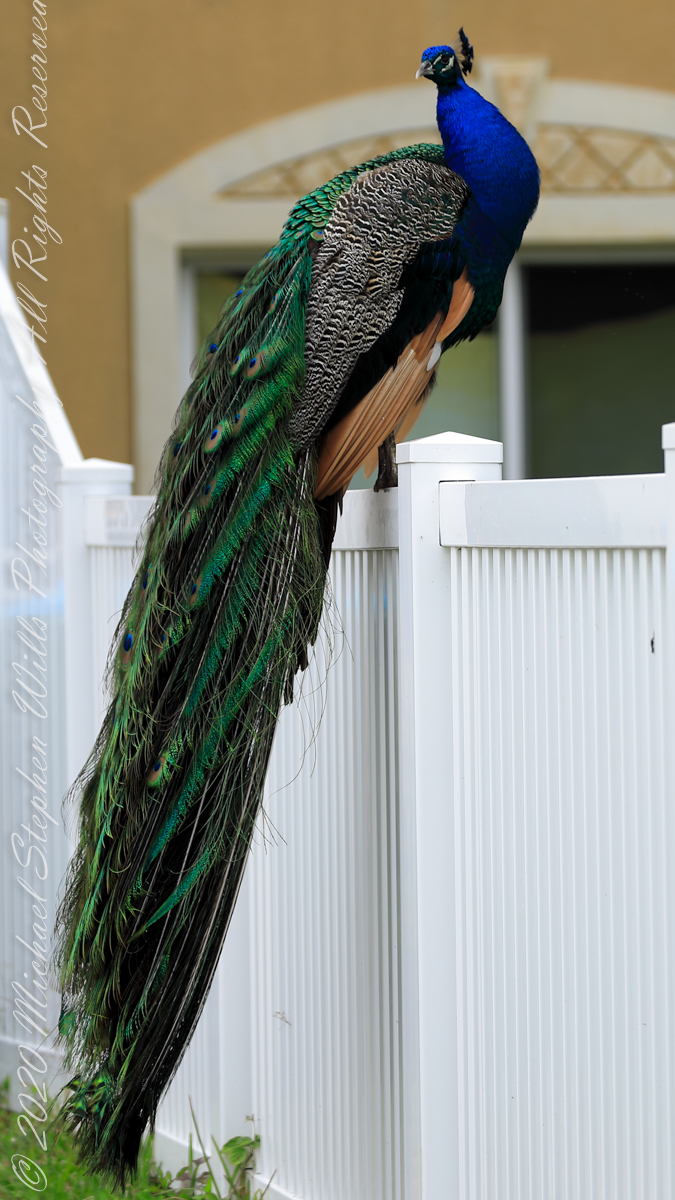
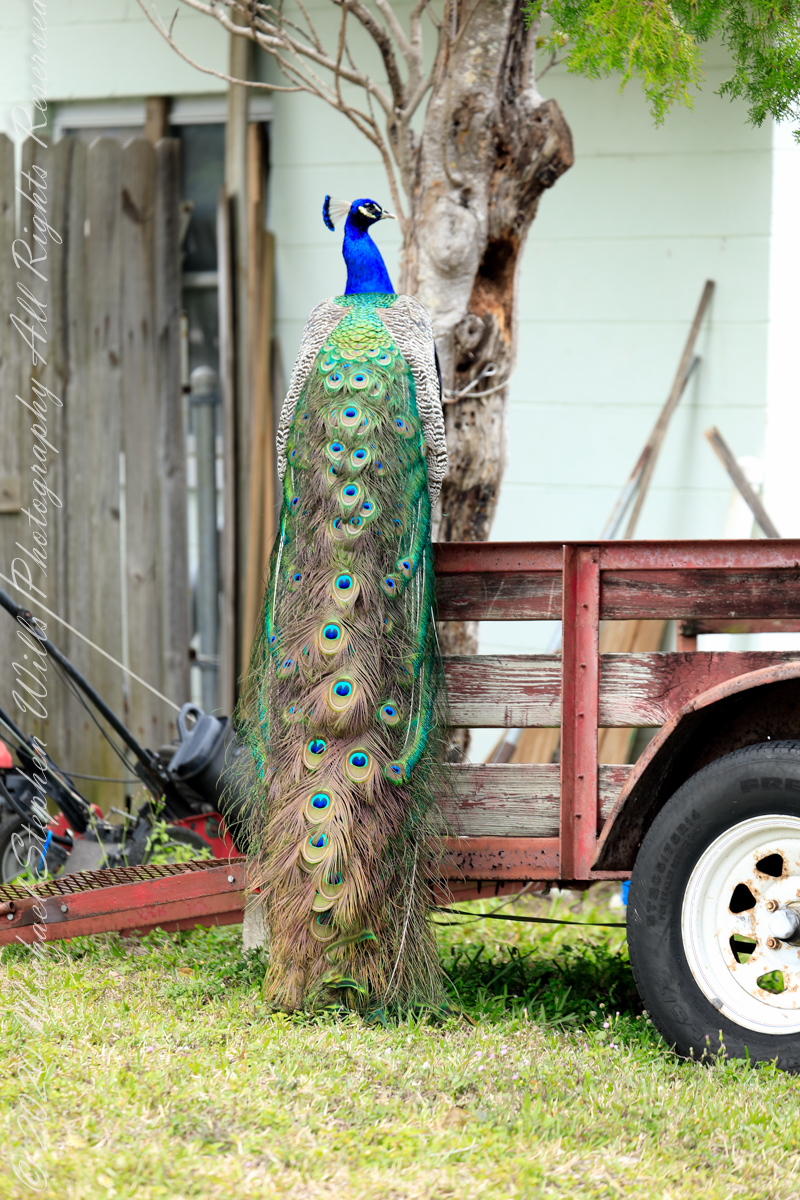
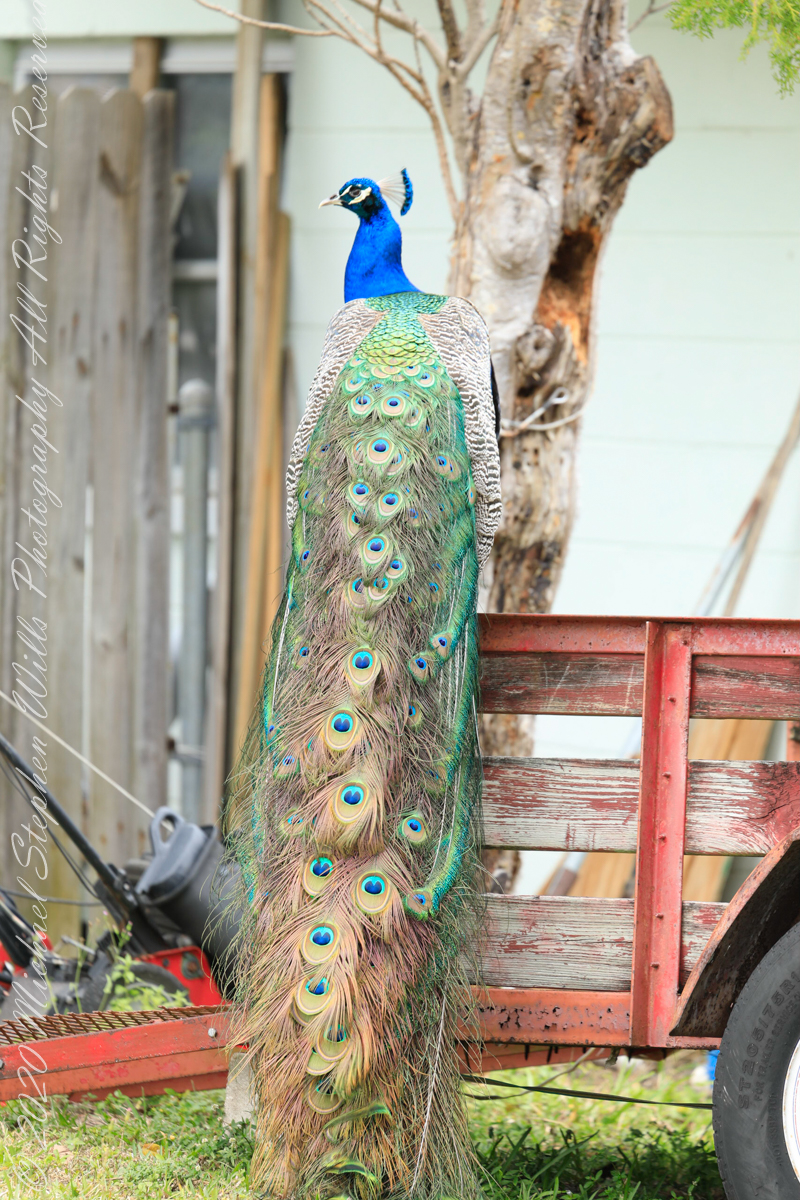
February is Peafowl mating season and for Cape Canaveral the displays were especially fine. These were captured on a photography expedition via automobile, being especially fortunate in observing peacocks (male peafowl) on high perches oriented perfectly to display the magnificent train (trail).
Here is some information on Reddit from “Mr_mayhem77 “According to locals, the Eberwein family lived between Port Canaveral and what is now the Villages of Seaport. In fact a street is actually named after them (Eberwein Drive) at the northern edge of Cape Canaveral. They had the peafowl among many farm animals. The family moved in 1986 and abandoned the peafowls. Over the years the peafowl have slowly populated our community with the greatest concentration being north of Central Ave.”
“Slumming” among lawn equipment
Copyright 2022 Michael Stephen Wills All Rights Reserved
On a day February 2022 Pam and I decided to walk the beach starting from Cheri Down Park, Ridgewood Avenue, Cape Canaveral headed north toward Jetty Park hoping to catch a postponed rocket launch rescheduled for that afternoon. We were encouraged to find video news crew positioned near the park entrance as these professionals were in the know for the best spots to watch the spectacle.
We walked a mile or so, more than halfway to Jetty Park, when the word circulated the rocket launch was cancelled. Rather than turn around, we decided to explore the walkway that opens on “Peacock Beach” as Google Map listed a public parking space there, quite a bit closer to Jetty Park. This park charges a hefty entrance fee to non-residents, so we were parking at Cheri Down, we saved $10 for each mile walked.
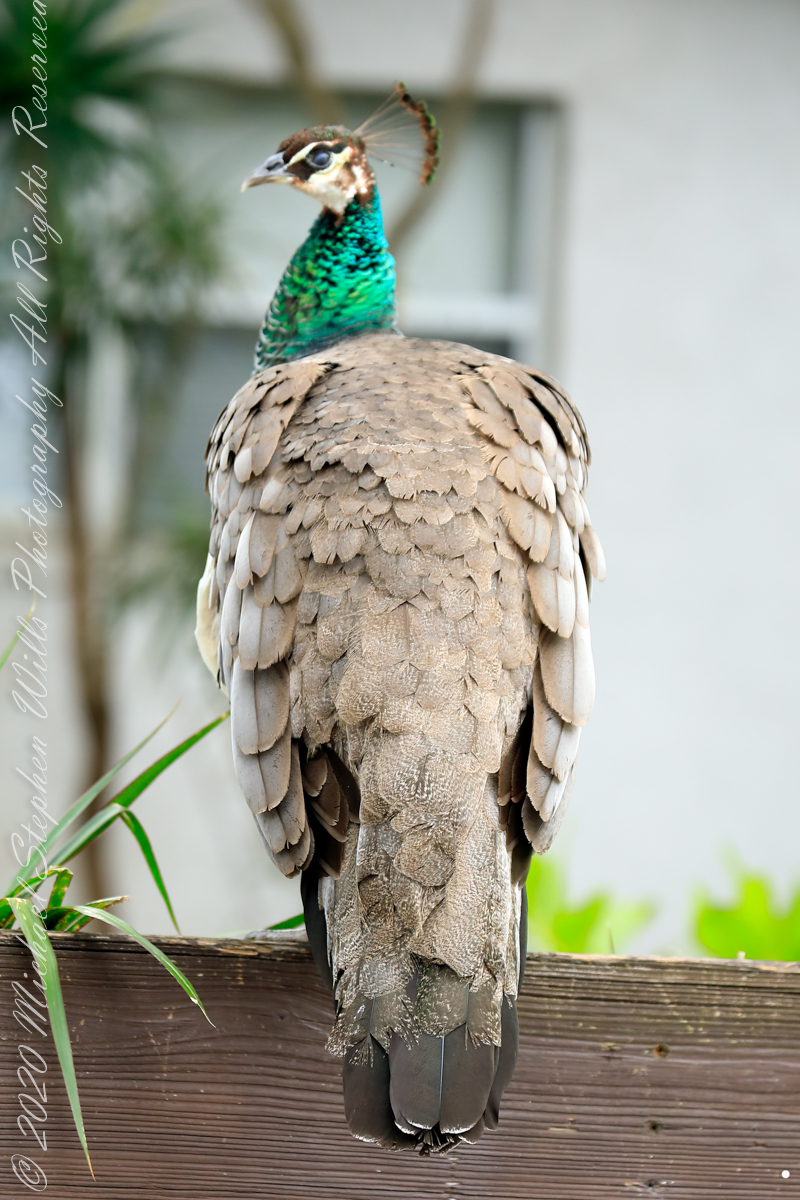
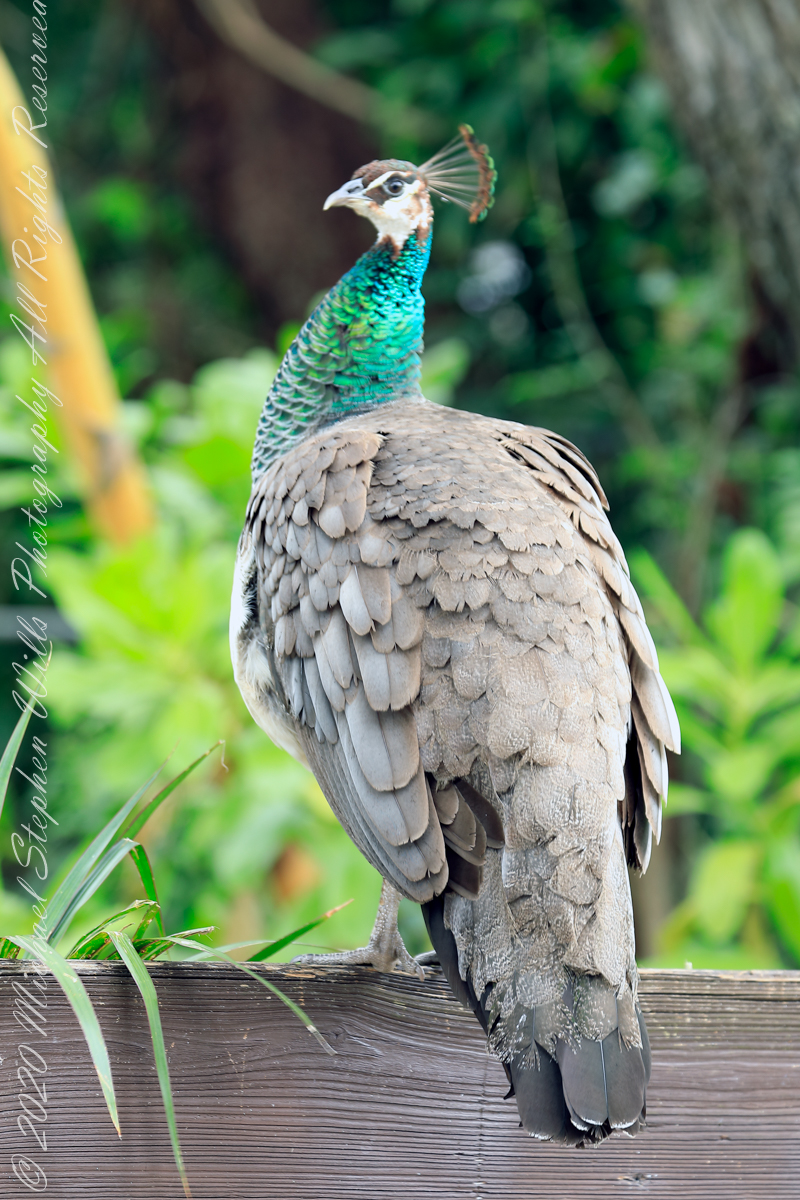
GorgeousIiridescent blue and green Dimorphism on display
Having leisure, we decided to walk back to Cheri Down the long way. In what turned out to be a 1.7 mile stroll we encountered these residents for which the beach is named. Then and there Pam and I decided to return for a dedicated photography expedition, the results of which I will share over several posts.
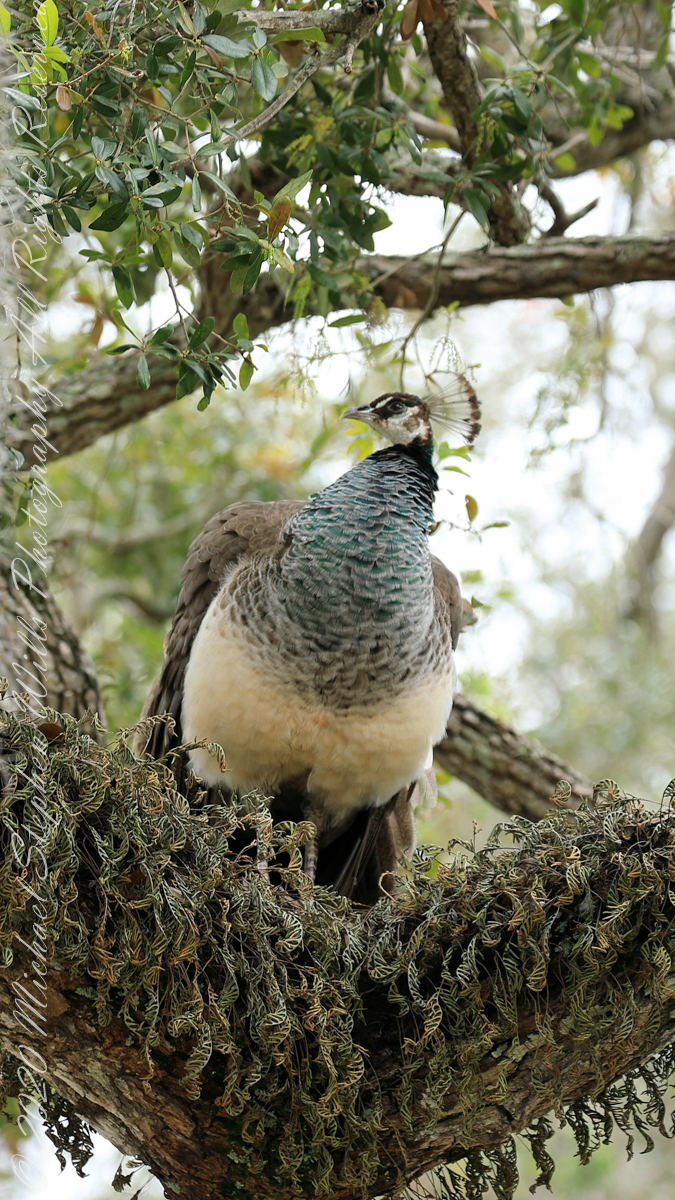
Females share the head crestIridescent green neckA bed of moss