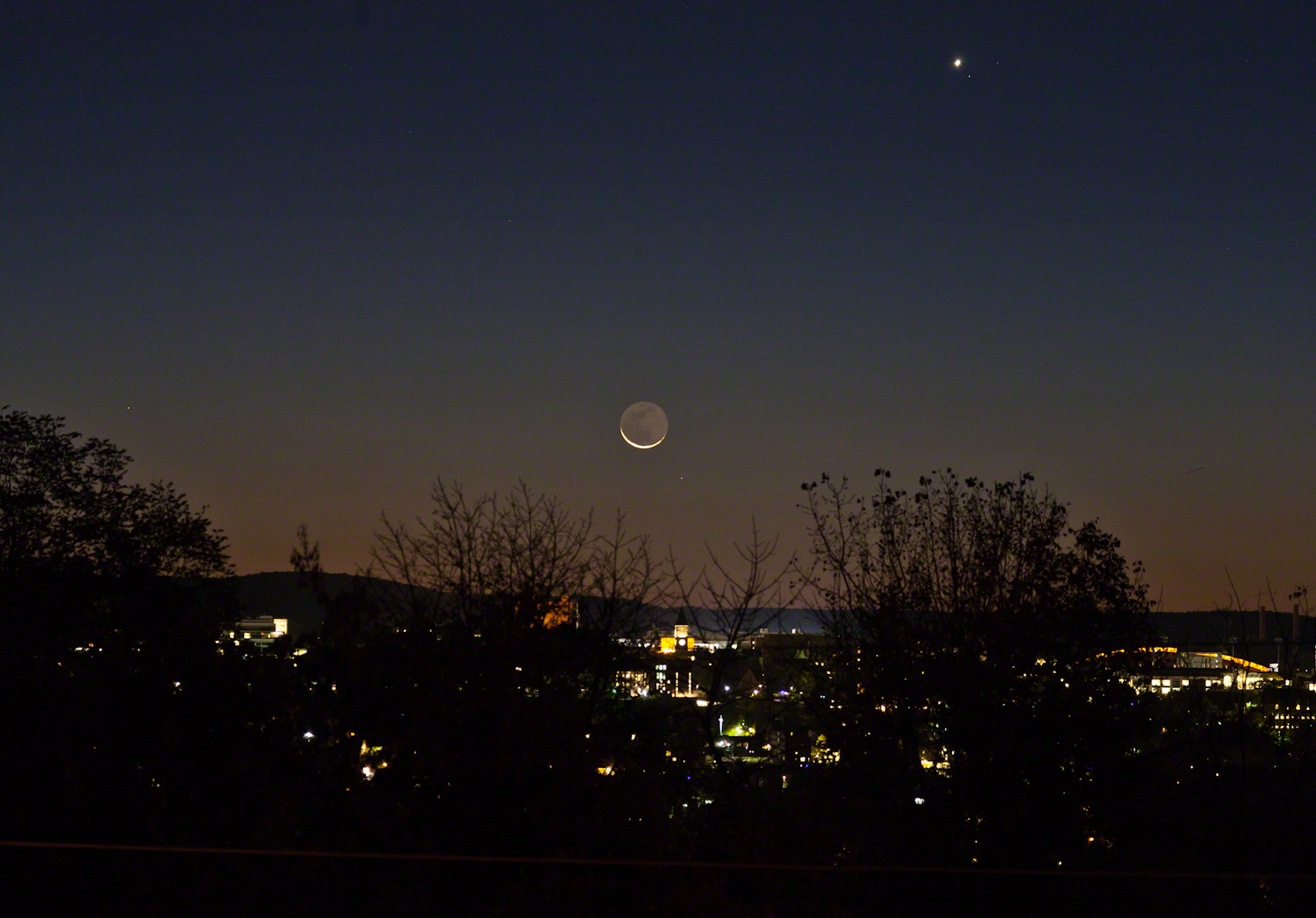
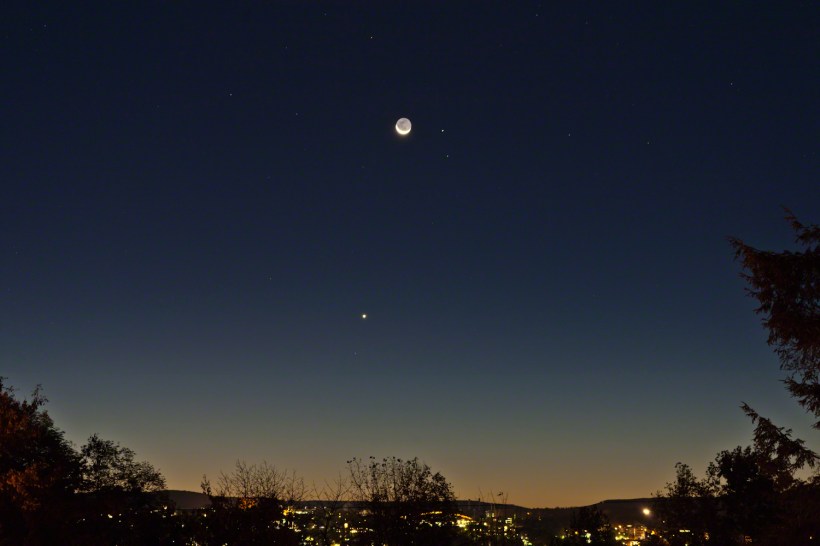
December 23rd, sky clear at 6:30 am, the International Space Station passed through the zenith with a waning crescent, a bowl filled with earthglow, in the southeast. Here is a photograph of a waning moon above Cornell University from October 2017.
pre-dawn sky event
December 23rd, sky clear at 6:30 am, the International Space Station passed through the zenith with a waning crescent, a bowl filled with earthglow, in the southeast. Here is a photograph of a waning moon above Cornell University from October 2017.
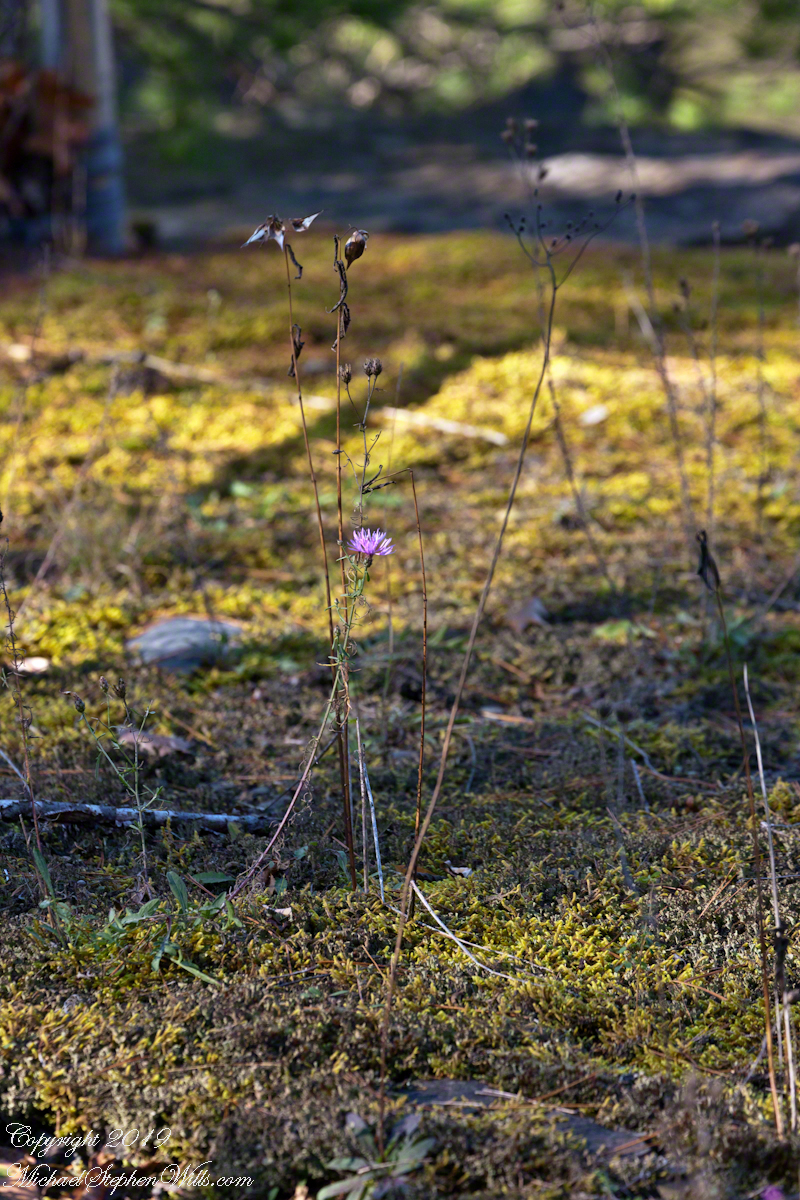
The tenacity of Ironweed resonates with the human spirit.
A lone sprig of Ironweed hangs on from a cliff edge moss carpet off the South Rim Trail, Taughannock Falls New York State Park, Finger Lakes Region.


Northern Latitude
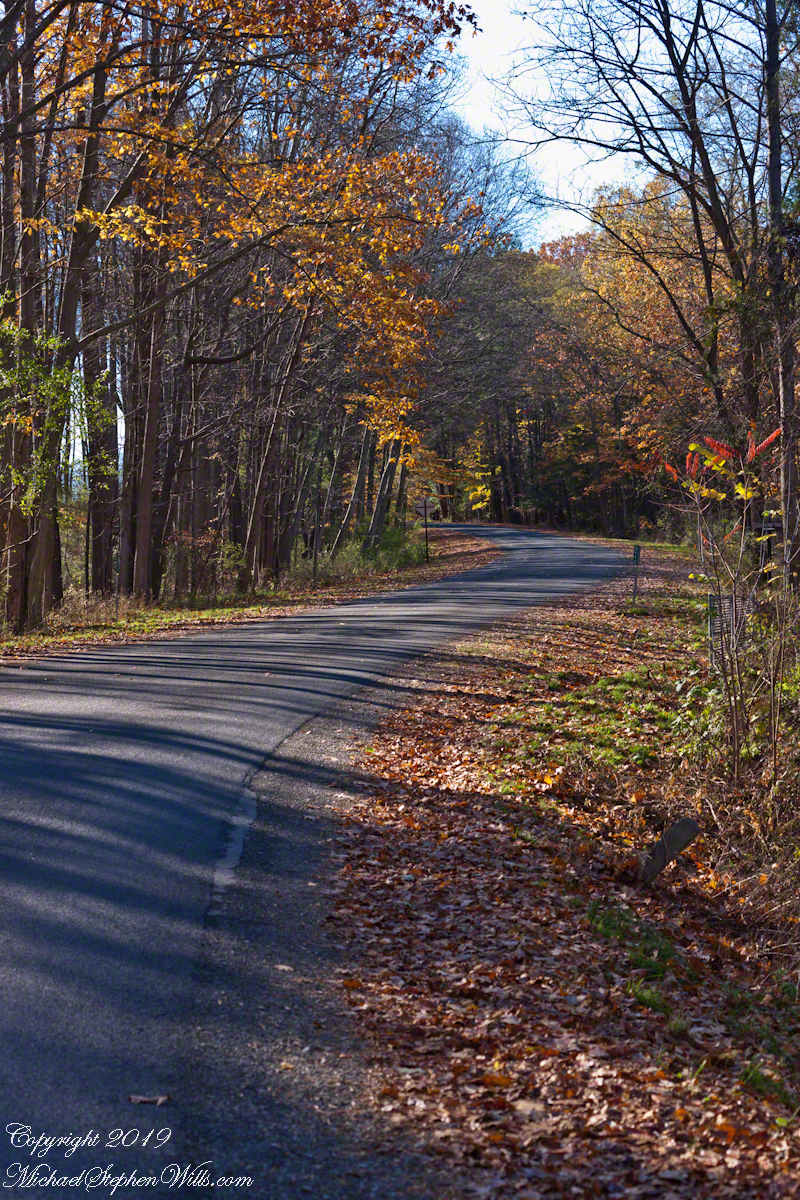
Early November on Gorge Road, Finger Lakes Region, New York State. At this month and latitude (42 north) there are long shadows throughout the day. The South Rim Trail of Taughannock Falls State Park briefly emerges from the wooded cliff to this portion of the road that parallels the gorge, descending to Cayuga Lake shores.


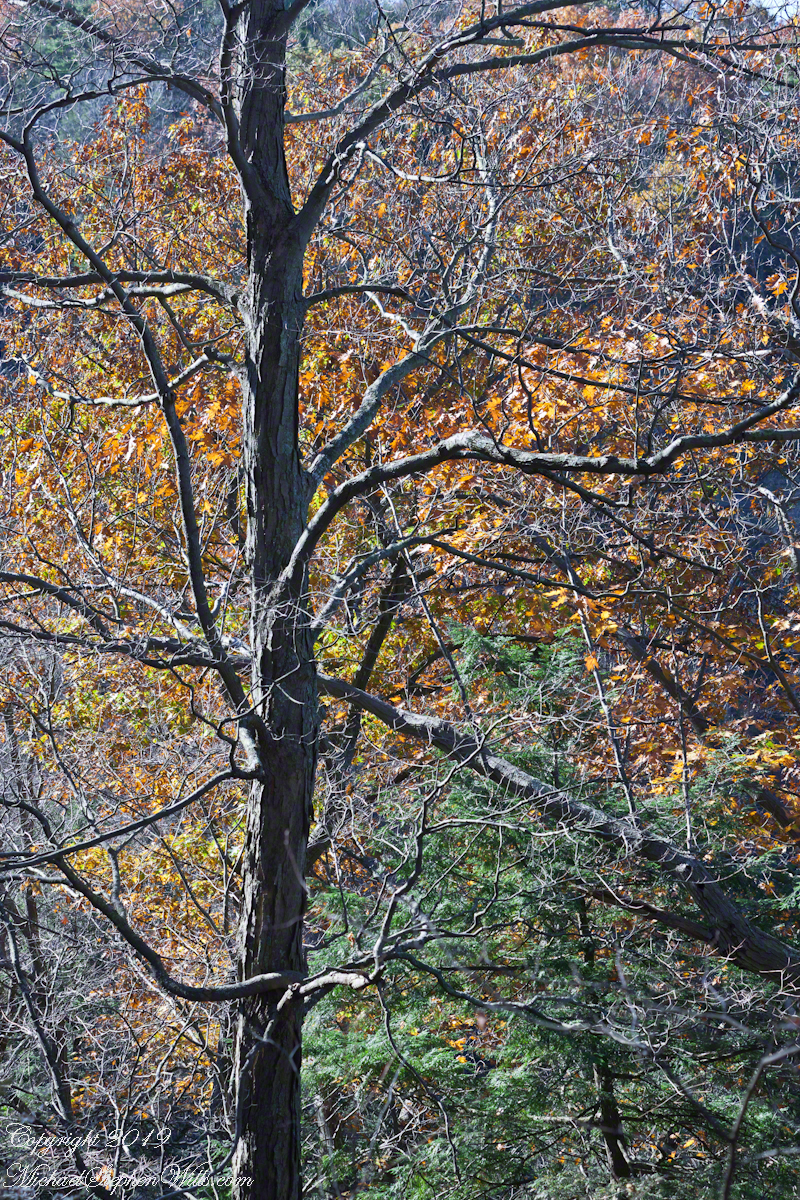
Bird’s Eye View
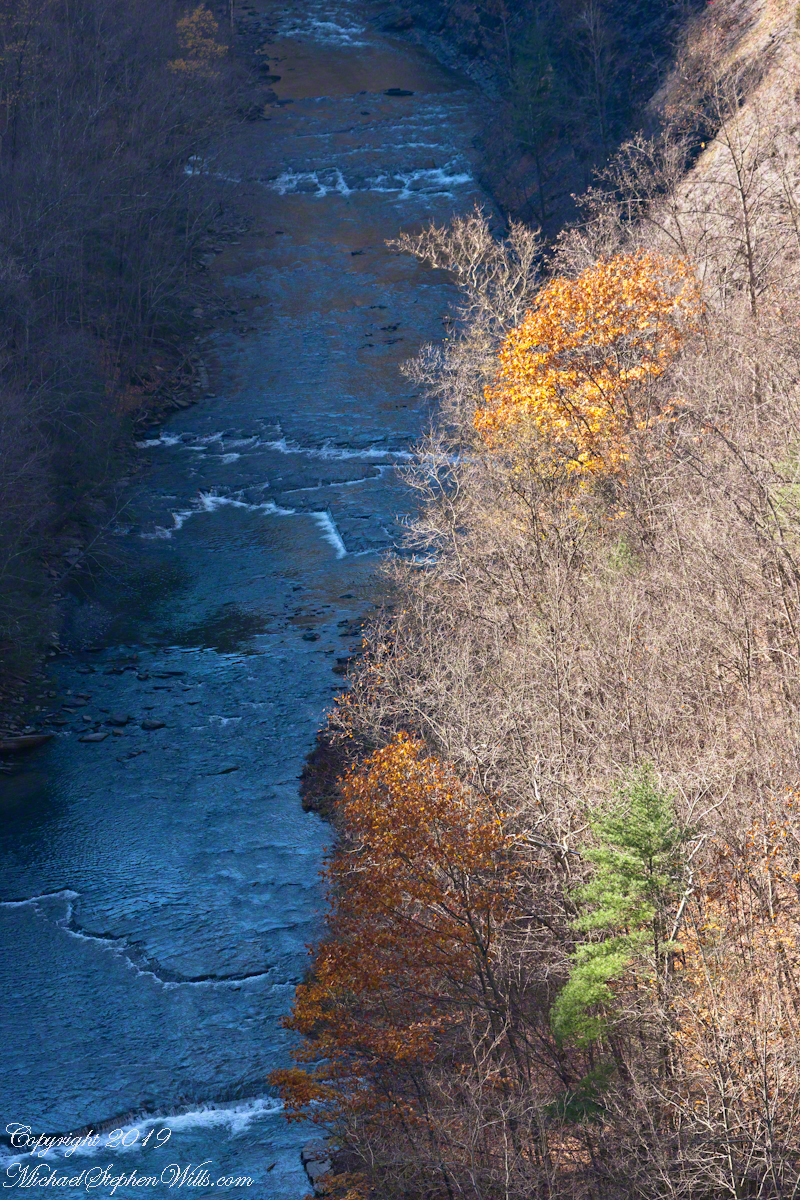
Early November trees, Taughannock Gorge, Finger Lakes Region, New York State walking the South Rim Trail we are among the upper reaches of trees clinging to the steep gorge walls.
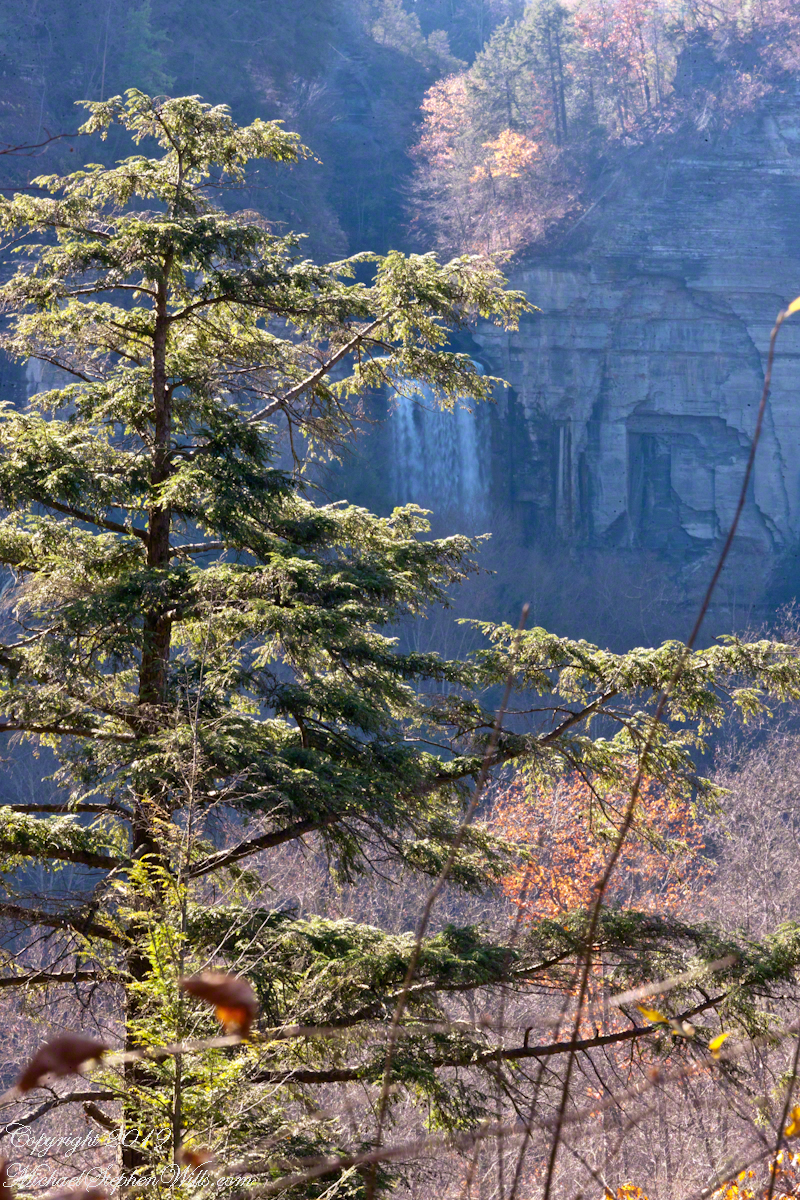
I am fascinated by this vantage from the South Rim trail. It is possible because the gorge bends almost 90 degrees, the gorge walls fall away to reveal the 215 foot waterfall.

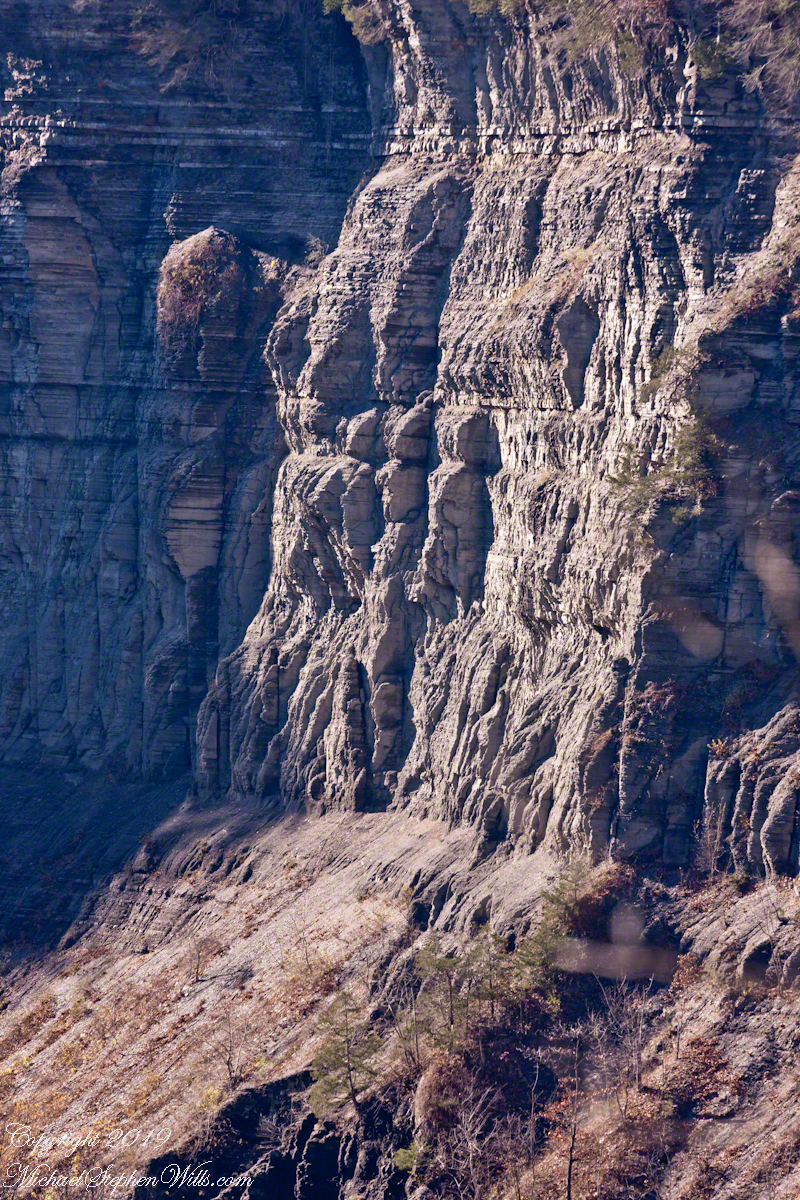
On viewing this photograph my wife, Pam, noticed the shapes eroded from the sedimentary rock of Taughannock gorge. These layers of shale, sandstone, siltstone formed at the bottom of a broad, shallow sea over 380 million years ago. Differential wearing of these rock layers, clearly visible in this photograph, resulted in these formations, including the three sisters and overhangs.


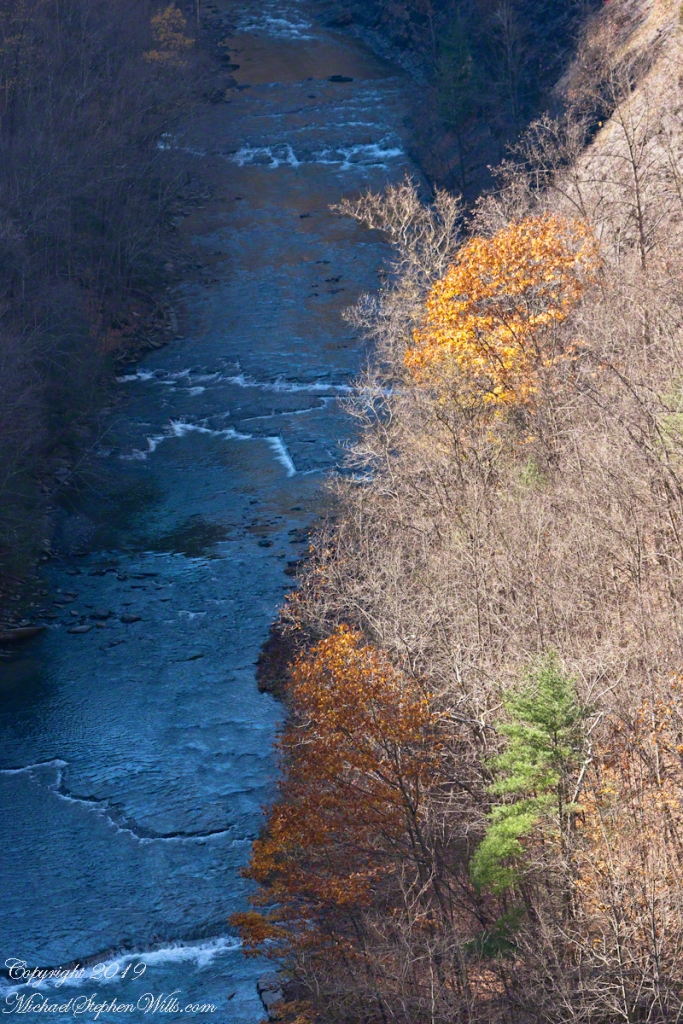
View from The Bend
Oaks are the last to release leaves, seen here on an early November afternoon.
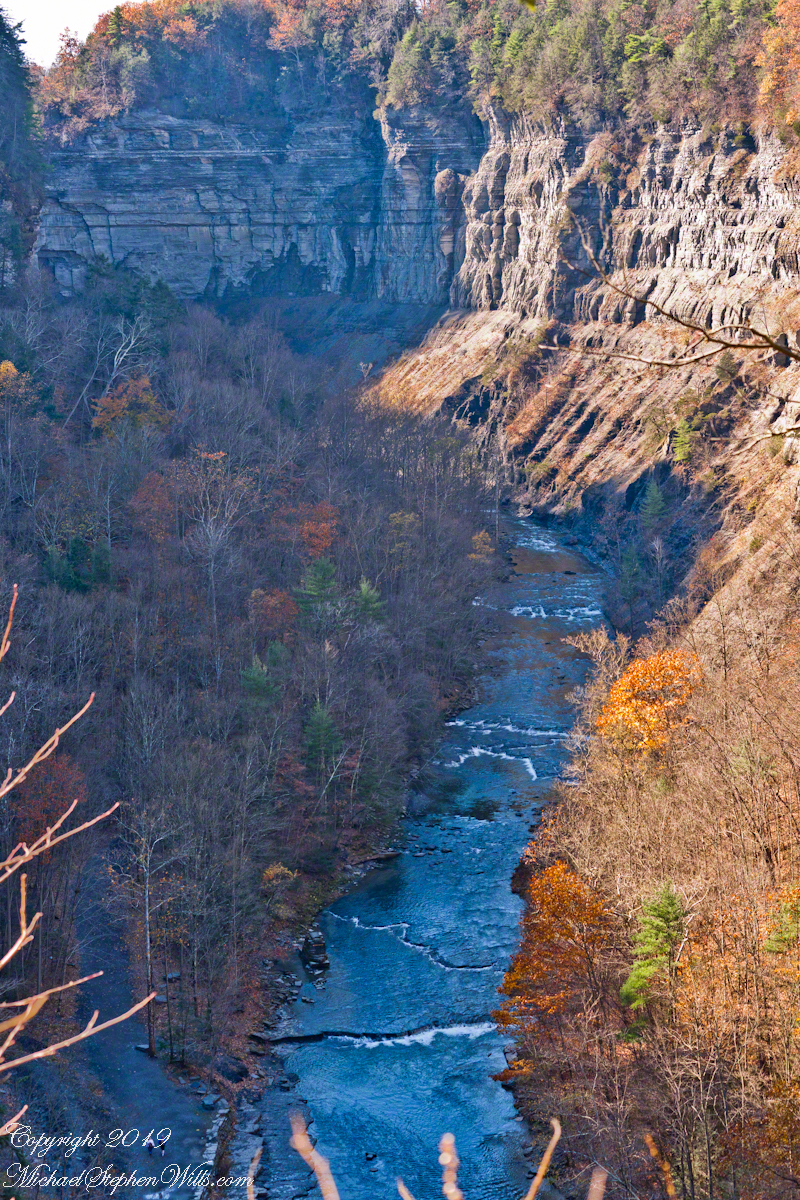
Standing on the South Rim trail where the gorge bends almost 90 degrees, changing from a northern to eastern flow. The creek is flowing toward the camera, the falls out of view, upper left. Lower left two people walk the 3/4 mile trail of the falls.

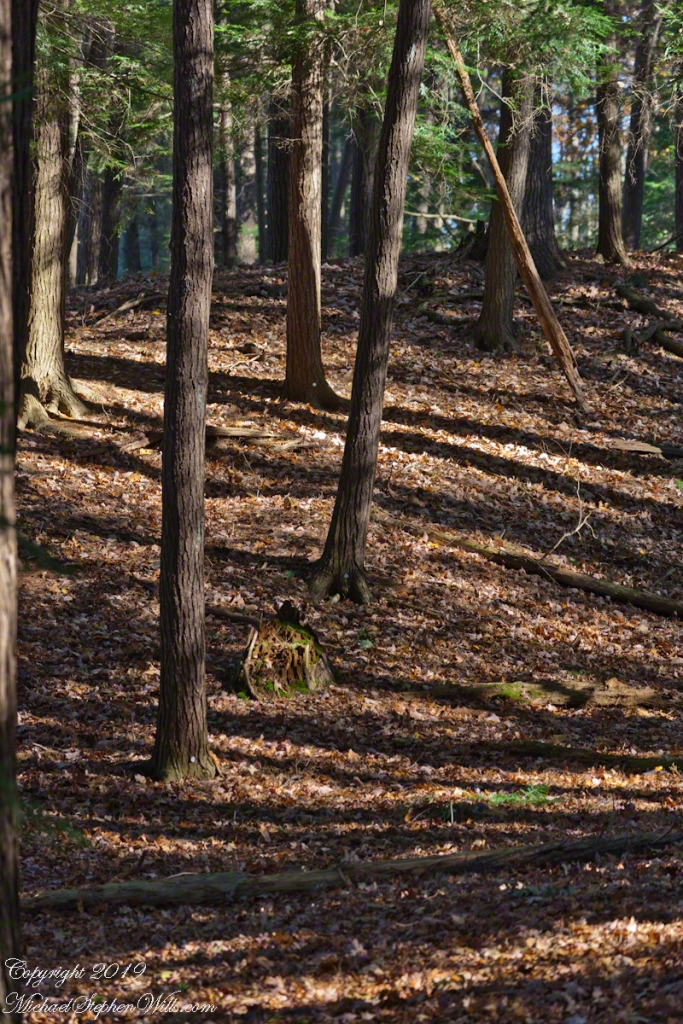
The sun, in its wander south, casts long midday shadows
The sun, in its wander south, casts long midday shadows
An abrupt emptiness
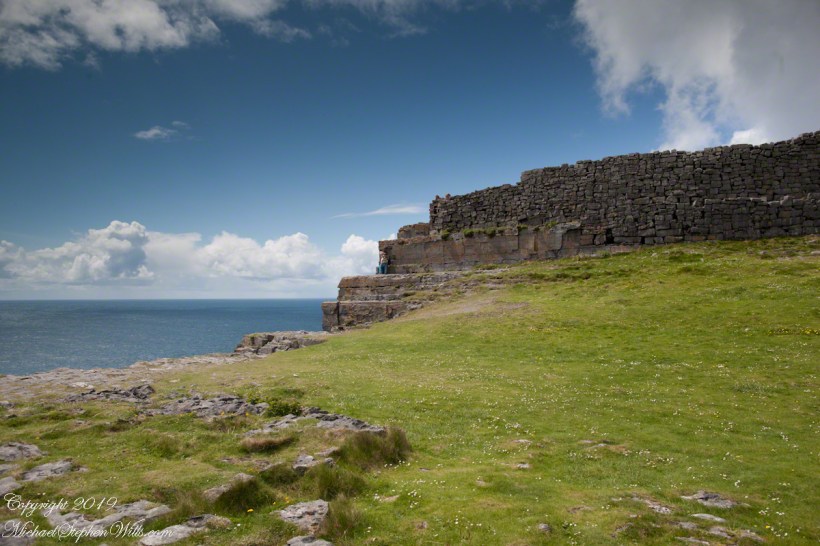
Here is the east side of the inner enclosure wall of Dun Aonghasa (Dun Aengus) where it ends at a cliff edge over the Atlantic ocean.
Visible are the last 60 feet or so of the limestone strata supporting the inner ring.
When first constructed, the inner ring was complete, the western side 1,000 feet from the cliff.. Today’s form of a semi-circle was created by nature when the force of Atlantic Ocean waves eroded the cliff, undercutting the strata.
Look close to see a fracture where the next block of limestone will fall into the waves.
Wishing a blessed All Saints Day (November 1st) for all my readers.
Reference: wikipedia Dún Aonghasa, Sea Campion
 Michael Stephen Wills Photography