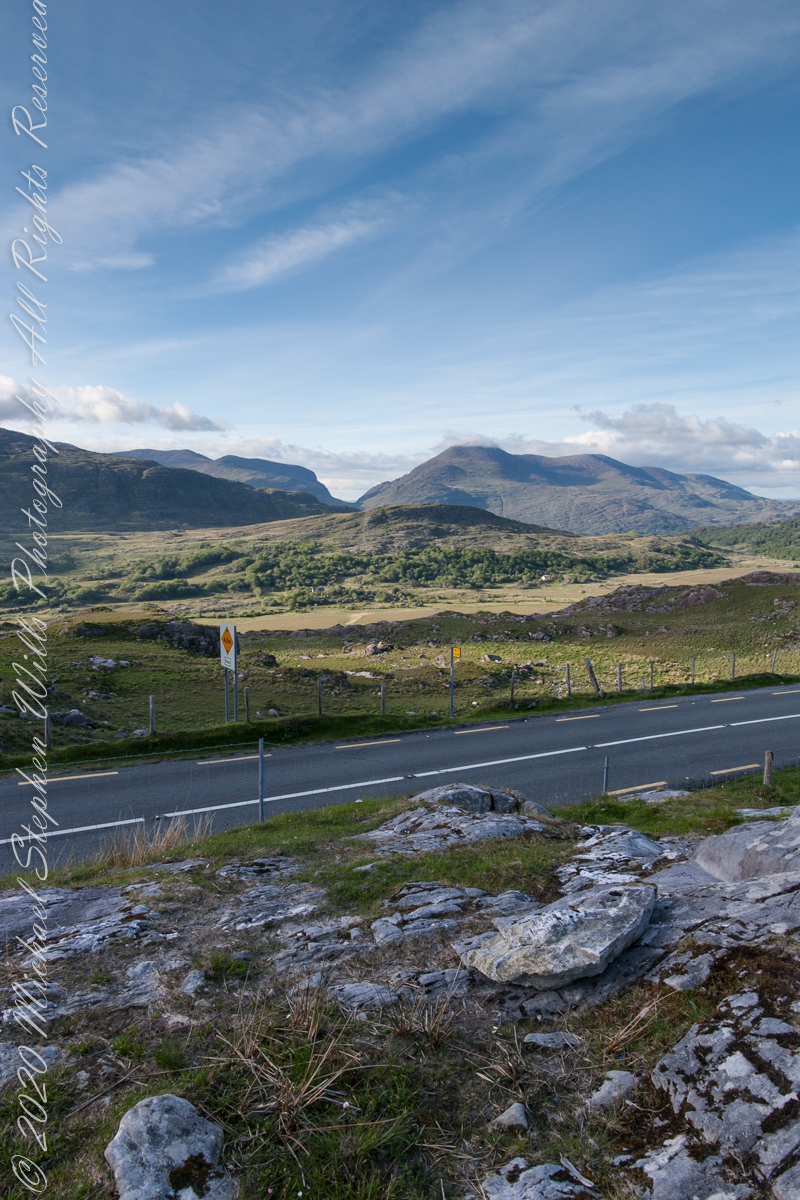
Here we are, on the road from Kenmare to Killarney, N71, part of the Ring of Kerry around the Iveragh Peninsula. The spot is the mountain pass Moll’s Gap, also known in the Irish language as Céim an Daimh (meaning, Gap of the Ox). In the Nineteenth Century a woman named Moll Kissane ran a public house here, operating illegally.
The mountain of this townland, named Eirk (also known as Adhard) , is composed of a fine grained sandstone found in a wide swath from North America’s northeastern coast, Greenland, Ireland, Great Britain — lands formerly part of the same ancient continent.
Click pic for larger view in a new browser tab. If you are in WordPress Reader, open the post to use this feature.
Iveragh Peninsula, Eirk townland, County Kerry, Republic of Ireland.
Copyright 2021 Michael Stephen Wills All Rights Reserved
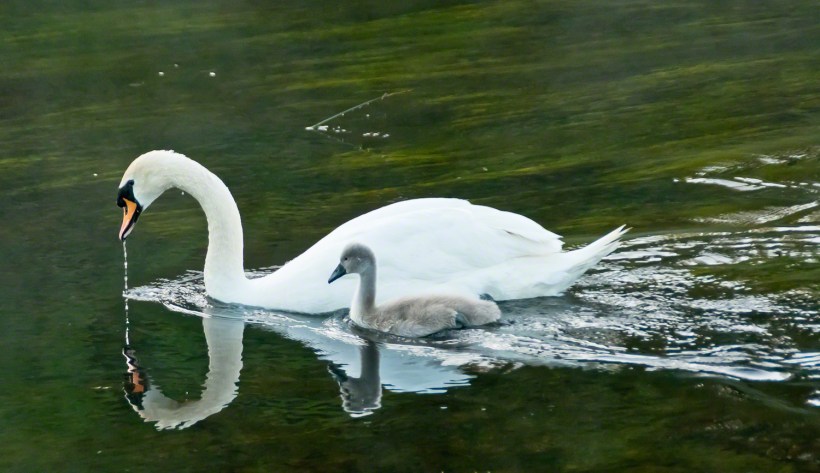
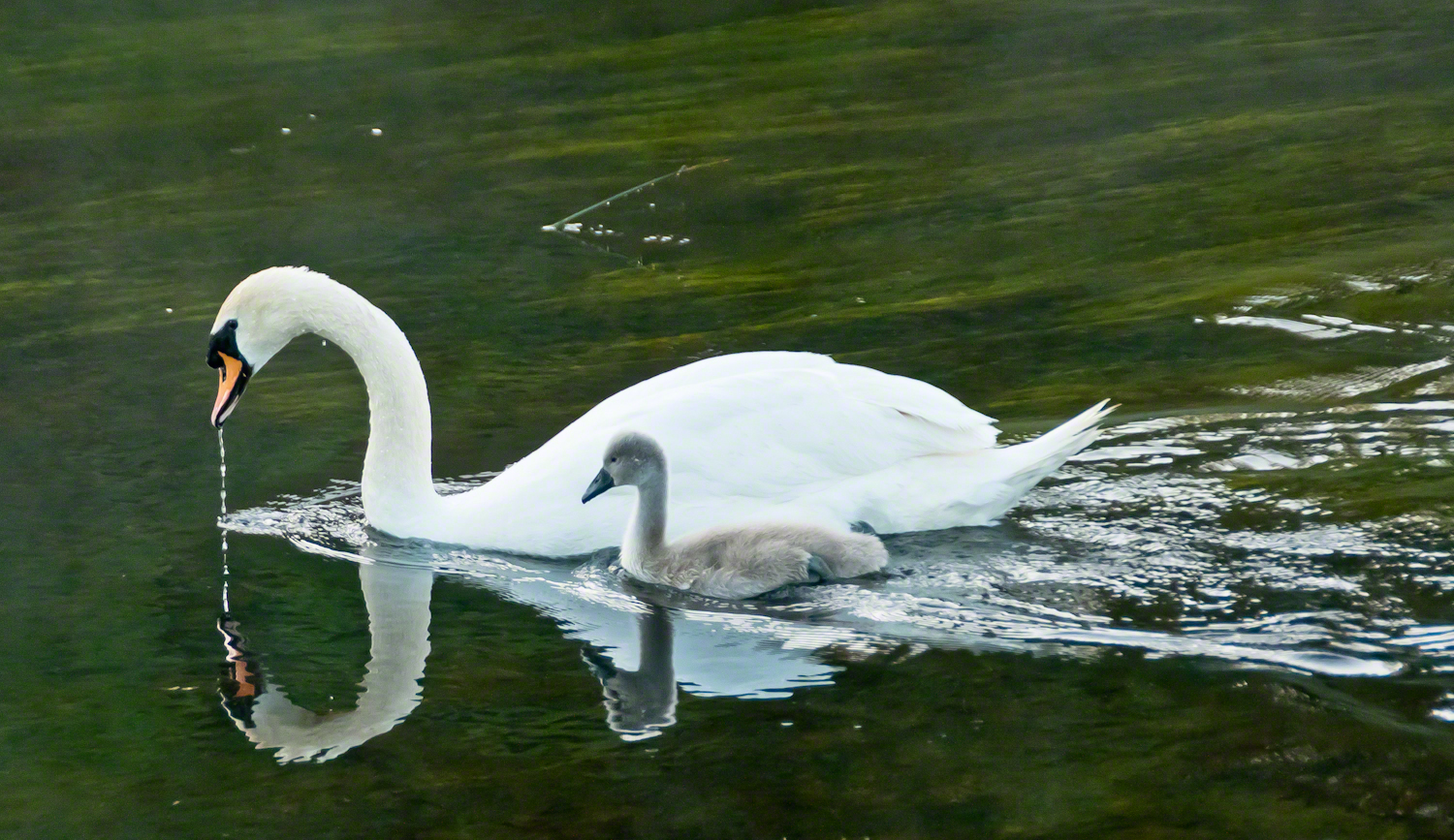
A parent swan and cygnet feeding on the River Cong outside the front door of Ashford Castle in County Mayo, in the west of Ireland. Click this link to read another Ireland story “The Cloigtheach of Glendalough.” Enter your email to receive notification of future postings. I will not sell or share your email address. […]
This is a retrospective diary of the day I created my print “Ocotillo Sunset.”
Choices of the Evening
The next few blogs are a set of photographs from the developing sunset of that November evening. Once set up, my practice is to stay in place until there is nothing left of capture; all the while evaluating the results and adapting the camera settings, framing and lenses to the environment.
Happening in the Twilight
By this point, twilight is over and only the sky is lit. According to file metadata posted at capture, thirteen minutes passed from the following photograph till the last. I mounted my camera on a simple tripod, purchased from a mall chain store, with the standard controls. I prefer to specify ISO and set it at 160 (the lowest value) throughout. The sky was calm and, with the tripod, I used the aperture setting with higher values. This was f13 / 1/60.
Click photograph to view Ocotillo Sunset
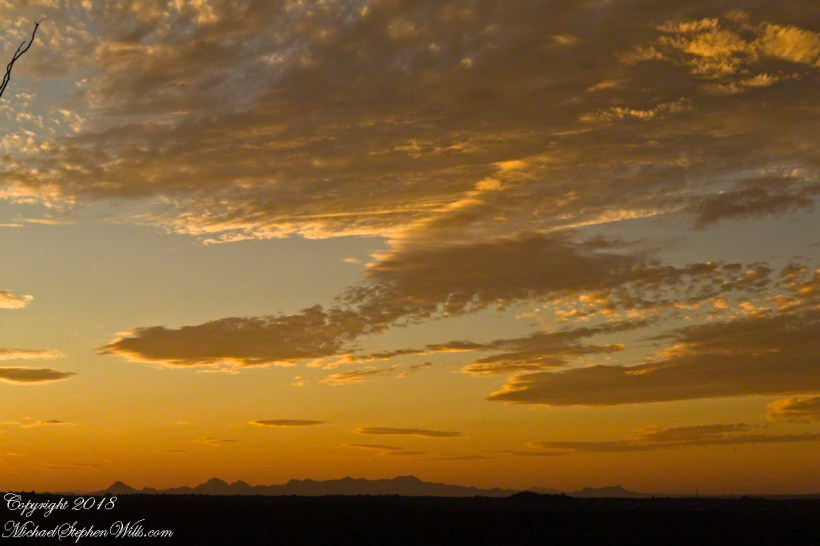
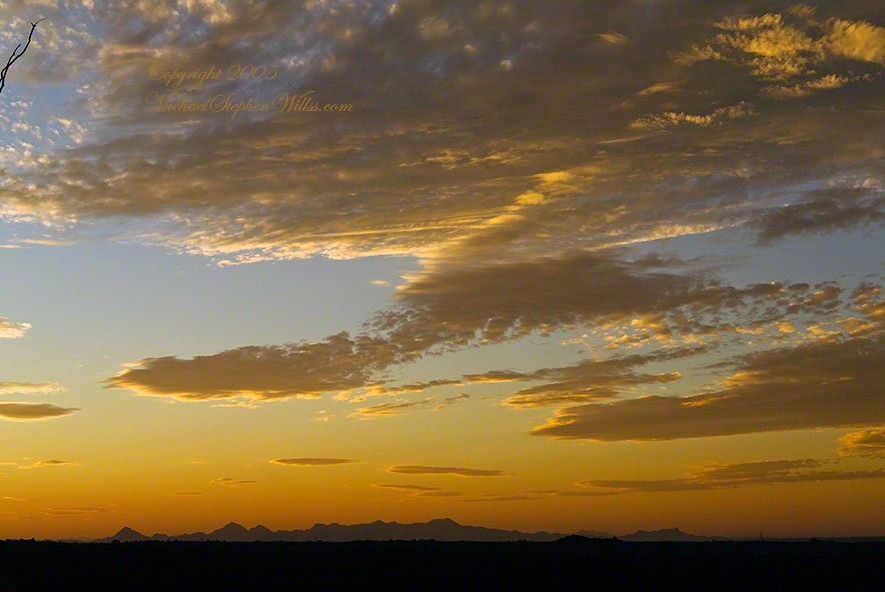
The clouds are forming up. I need some foreground. Vastness on vastness is a bit much. Those are the Tucson Mountains in the distance. If you look closely, on the right the Tucson Mountains dip down, revealing Kitt Peak, at least 60 miles distant. It is the defined peak on the left of that range. In early morning light, the Mayall 4 meter telescope building gleams white on that point.
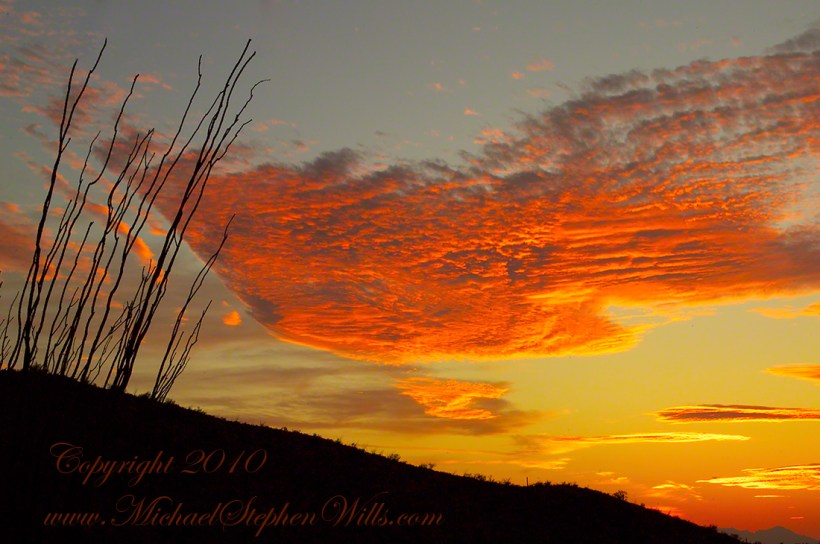
The sun illuminates different levels of clouds as the earth turns toward night. These are altostratus cloud types, at 6,500 to 20,000 feet, formed by strong winds.
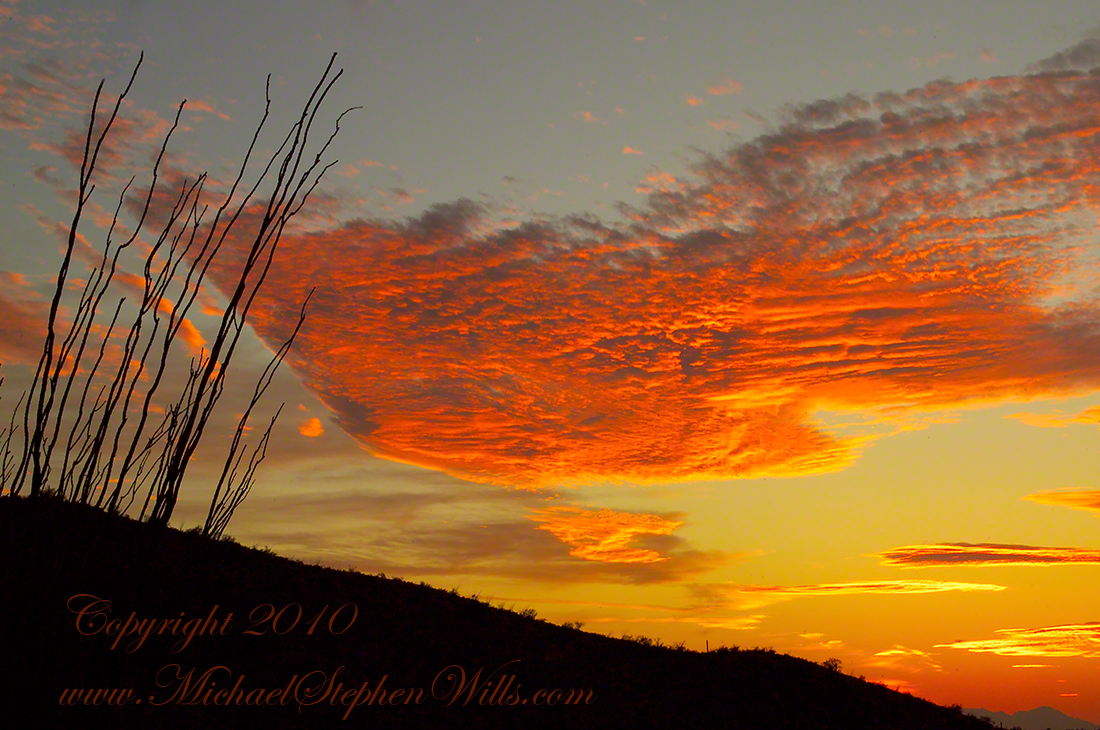
The elements of my print “Ocotillo Sunset” are coming together. Do you recognize them from this image of my print?
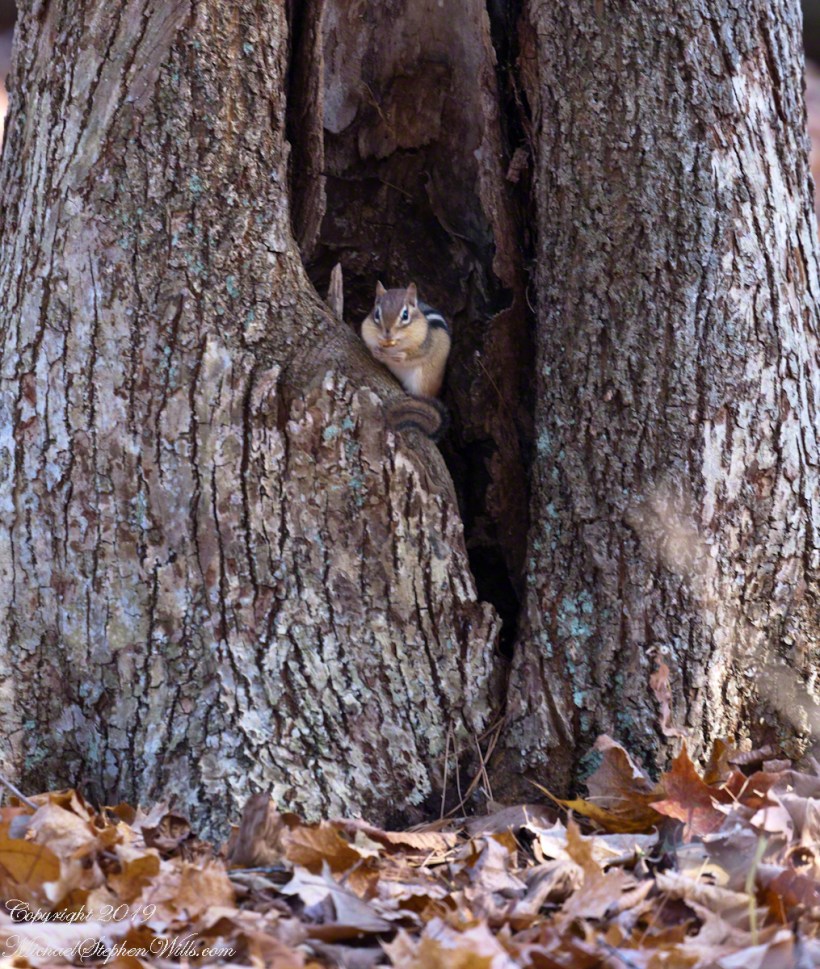
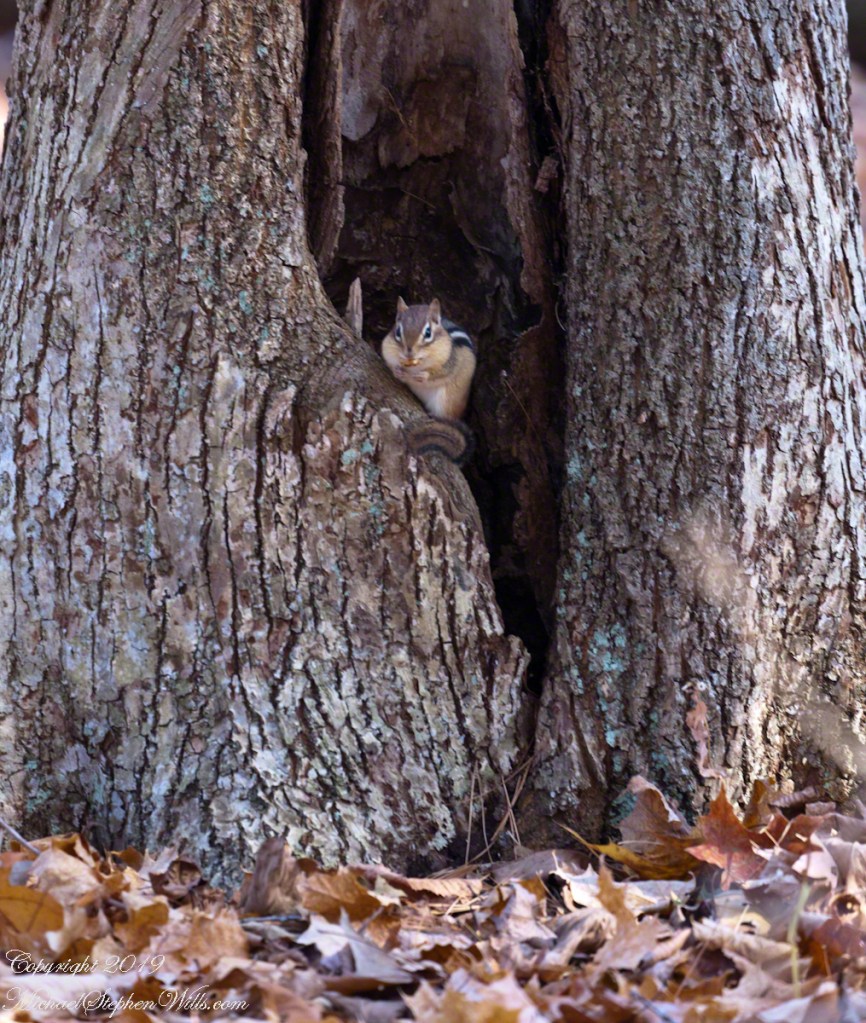
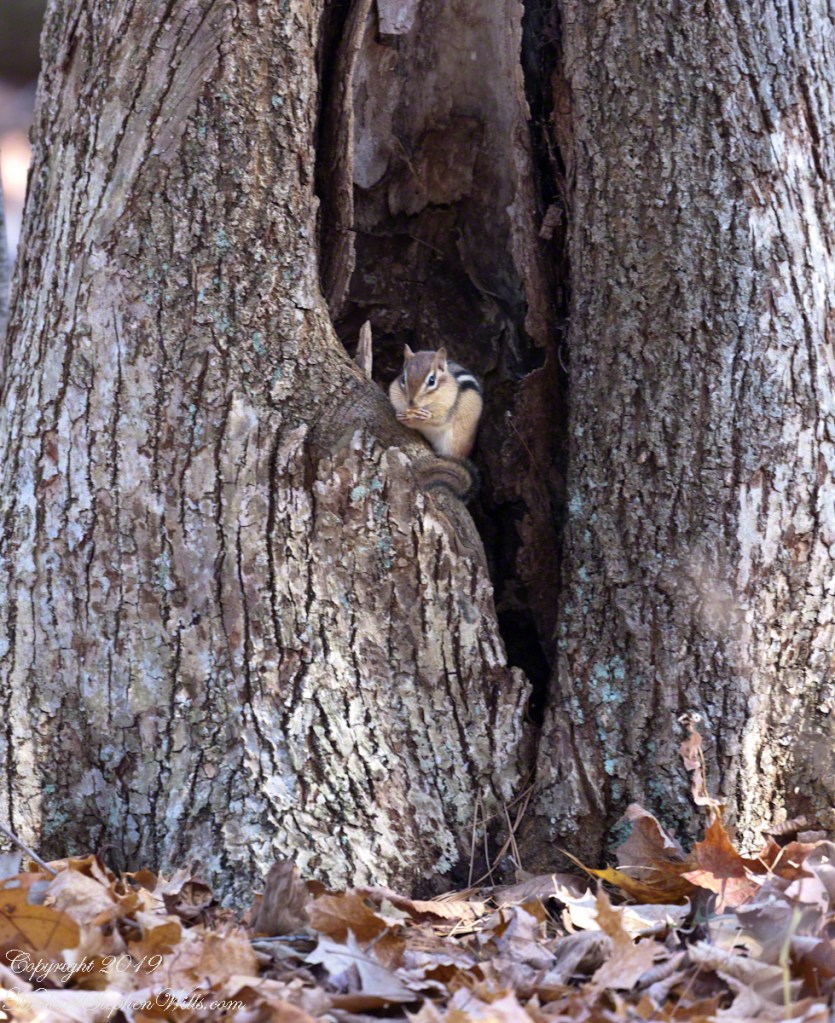
Perched on its doorstep, an Eastern Chipmunk gorges on an ample supply of acorns. These small rodents are omnivores. Here are two shots, each with an acorn in hand and full cheek pouches.
Wary Chipmunk with acorn
Chipmunk eating acorn
Copyright 2021 All Rights Reserved Michael Stephen Wills
This is a retrospective diary of the day I created my print “Ocotillo Sunset.”
Choices of the Evening
As the Golden Hour approached I had a choice to make.
My perch on Lime Kiln Falls was not safe. As the sunset developed, while I focused on the work, the trail would be lost in the gathering darkness and, even with a headlamp, I decided to avoid picking a way down a 1+ mile pitch dark deserted desert trail. Choosing not to stay, for the second time I packed up and was on the move.
That time of day wildlife is also moving and, in a short time, a rattlesnake, javalina (wild pig of the desert) and jack-rabbit crossed my path. Part of my photography kit is a Sony digital camera with a variable lens carried across the front in a readily accessible “fanny pack.” That day, I walked with the camera out and ready. I needed to be in place for an increasingly promising sunset and so spent a minimum of time with wildlife photography.
Saguaro Sky
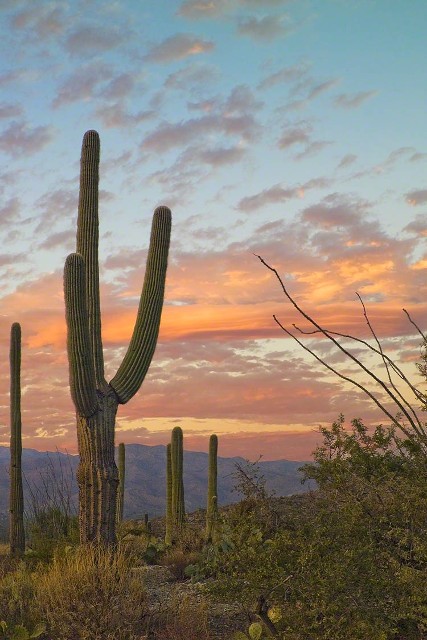
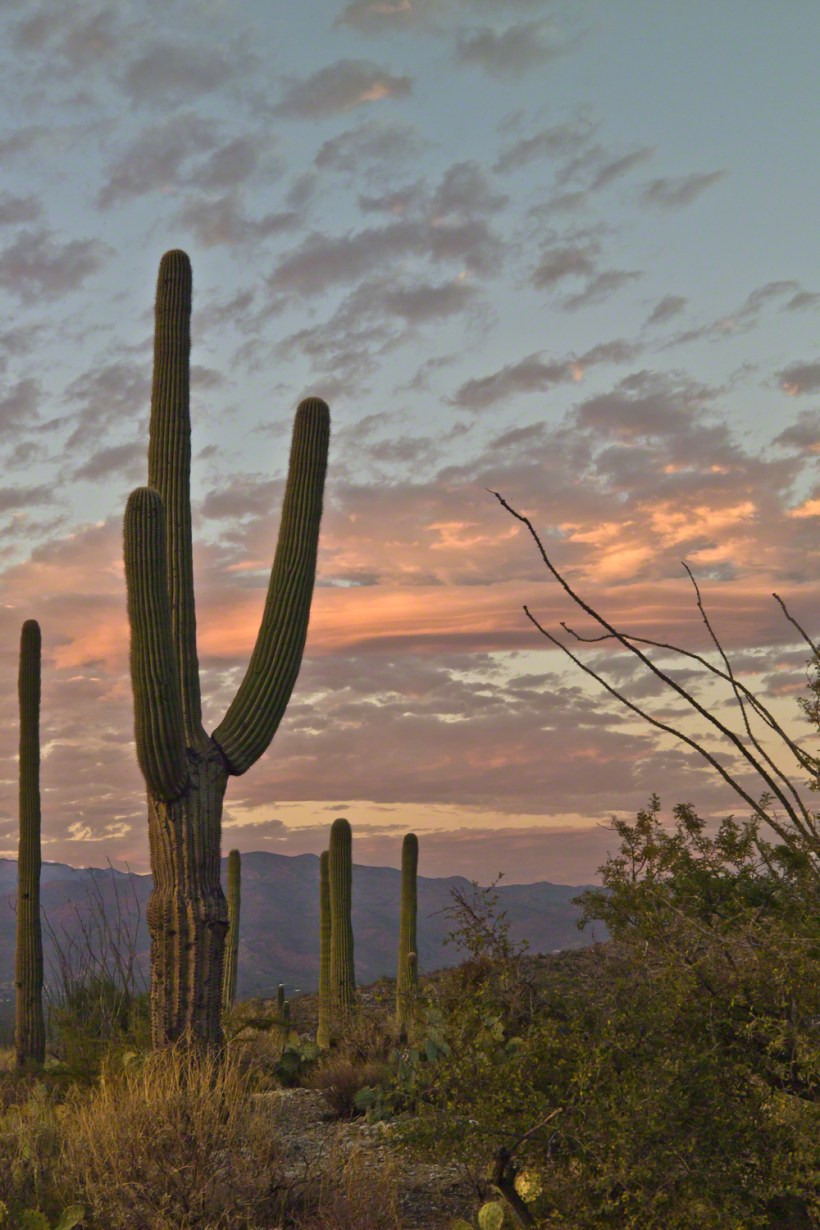
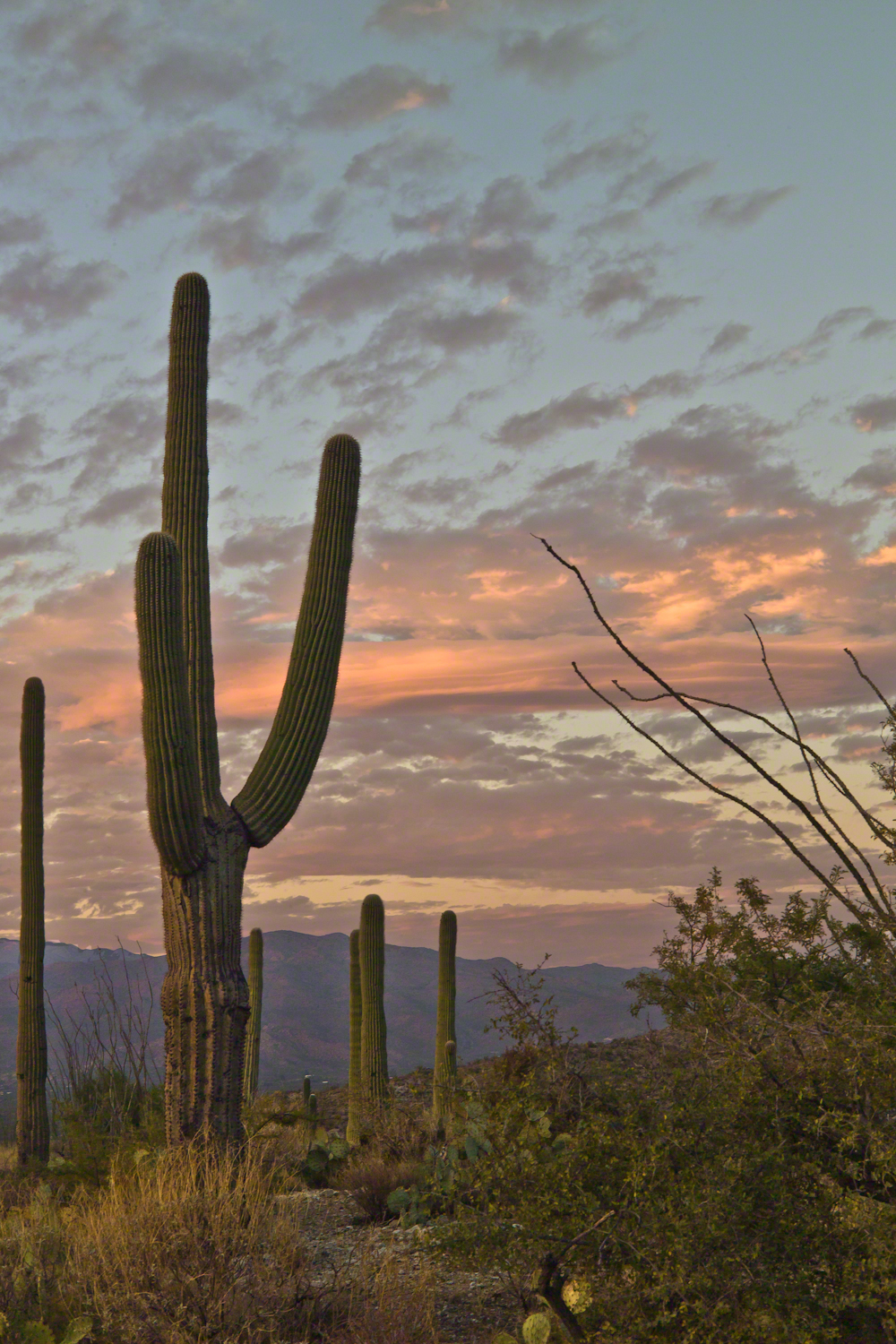
I was only half way to the car at the time when the sun was a few degrees above the western horizon and sunlight raked across the desert. The northeast sky lit up. In these perfect moments I captured this personable saguaro on Lime Kiln ridge with a tripod mounted Kodak SLR body with an excellent 50 mm (“portrait”) lens (EF 50mm f/1.2L USM) fitted with a flexible hood. ISO 160, f13 with auto settings choosing 1/5 second.
The ocotillo branches, to the right, caught my eye. “A nice effect”, I thought. There were some high level winds shaping the clouds that evening. The Santa Catalinas are in the distance.
Click any photograph to view Ocotillo Sunset
Saguaro Sky
Nurse Tree
I set up back against the Tanque Verde ridge, the highest point of the road, on the western shoulder.
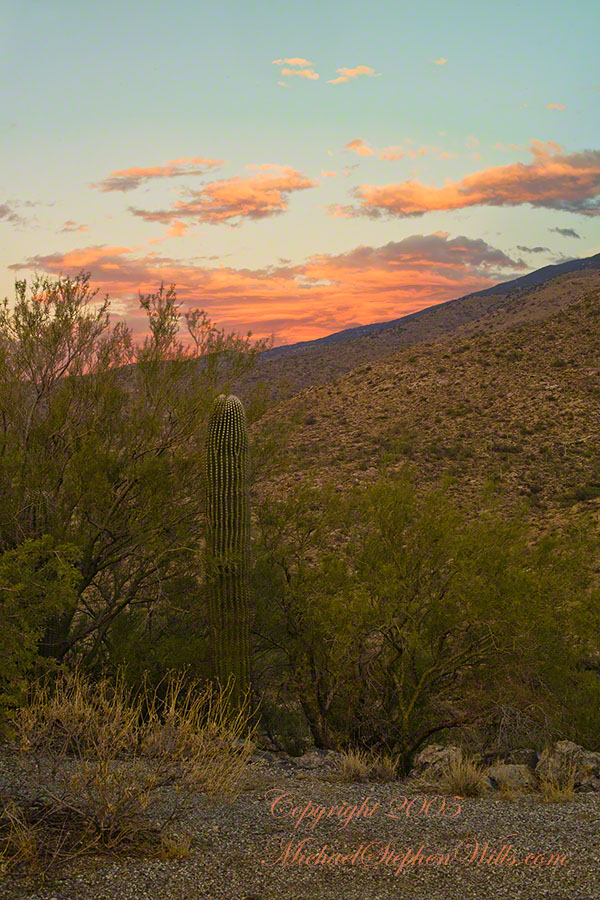
Front and center was this “adolescent” saguaro still growing in the shelter of a “nurse” Palo Verde tree. This saguaro benefited from the shade and protection of the tree as a seedling and juvenile. It has grown beyond the need for this protection. Eventually, the requirements of the larger cactus will starve the tree and it will be left alone, as you see it in the previous photograph. That is the shoulder of the Rincon Mountains in the distance. The direction if between northeast and east.
I am using the same camera and lens, ISO 160, f13 and auto exposure choosing .6 second. It is twilight.
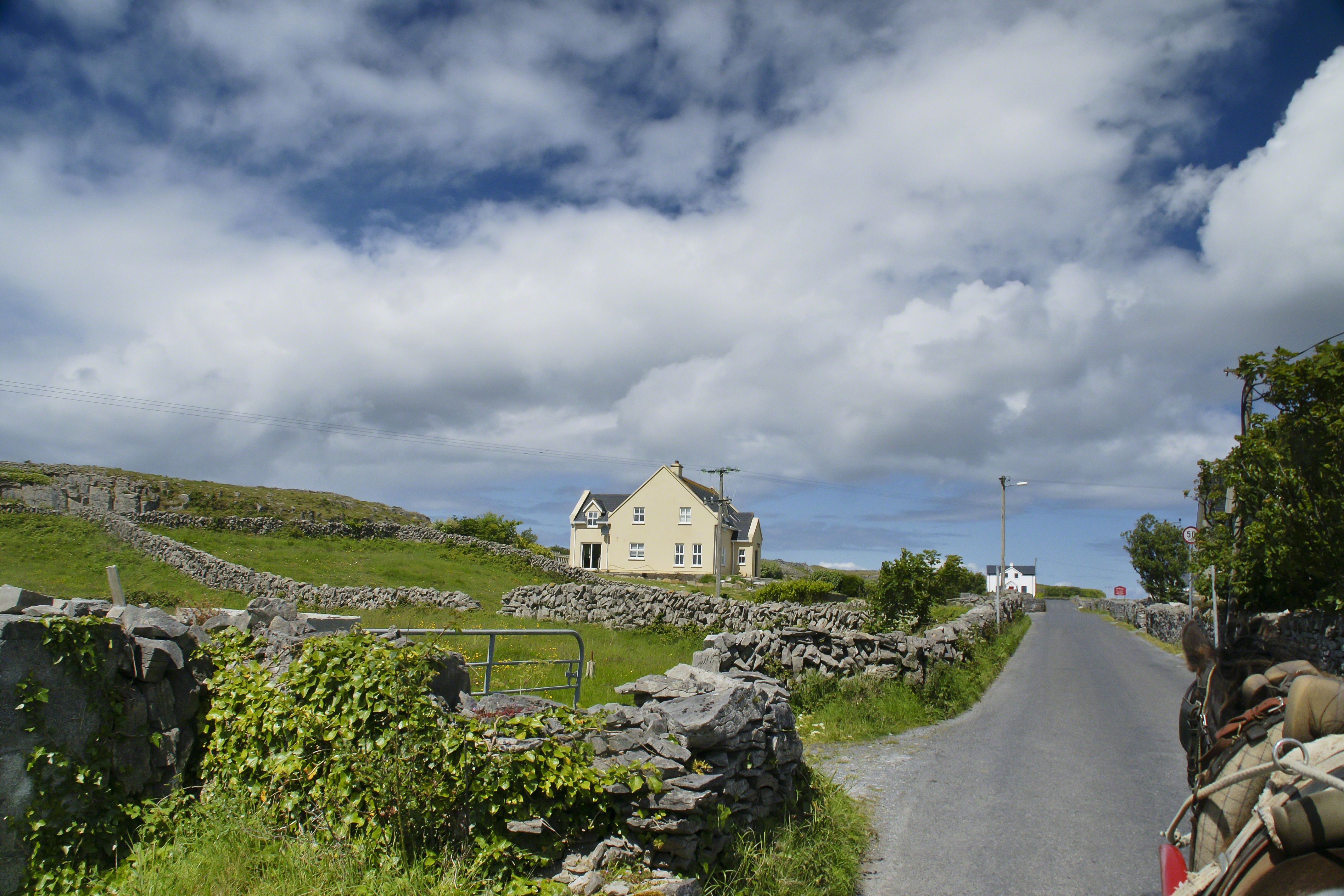
Enjoying travel on a horse trap, a type of carriage, on Inishmore (Inis Mór), the largest Aran Island in Galway Bay we headed up Cottage Road from Kilronan, the main island settlement. It was there we embarked from the ferry, hired the driver, his horse drawn trap. Our destination an iron age fort, Dun Aengus (Dún Aonghasa, the Irish language name) and the sights along the way.
Headed up Cottage Road, I captured this view of dry stone walls and homes against the May sky over the shoulder of our horse.
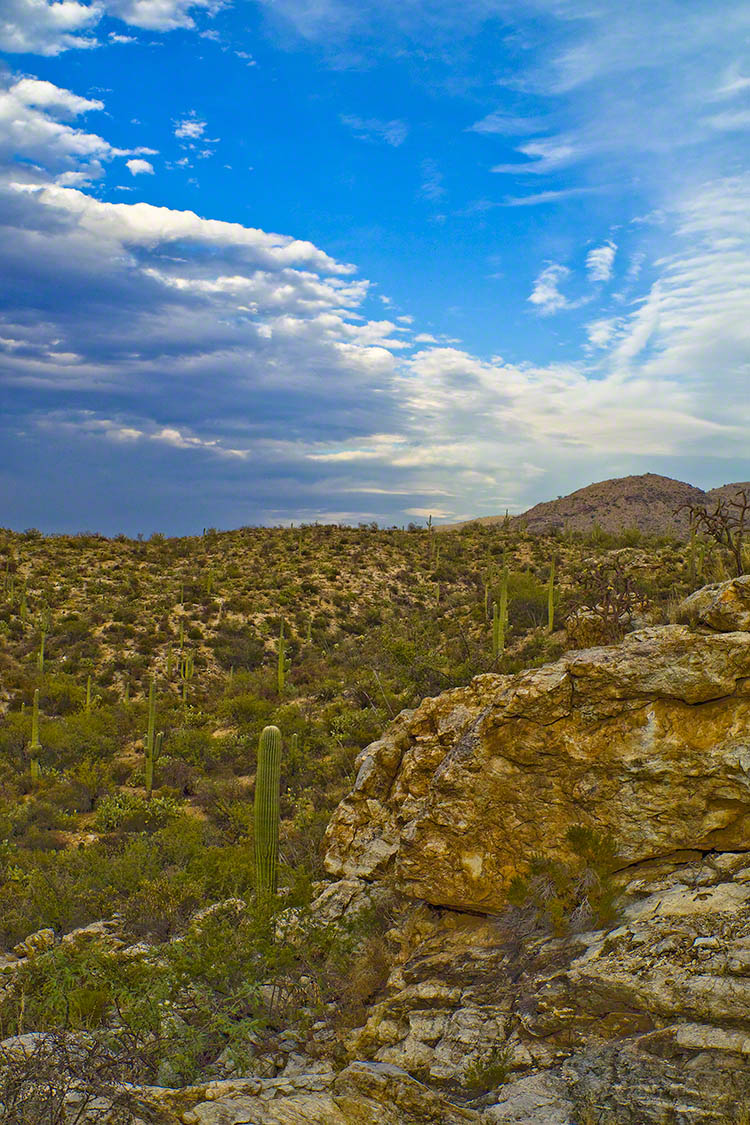
November is a special time for the ranges and basins of southern Arizona deserts. Climb a bajada of foothills, face west and wait for the sunset. That is what I did this day, November 3, 2005. East of Tucson the Saguaro National Monument at the foot of the Rincon Mountain Wilderness is where I parked, unpacked the photo gear and climbed the side of the Tanque Verde Ridge for a favorable view. Weather was pushing high level moisture from the west, clouds were developing.
You see here a shot from that session. In the distance, looking across Tanque Verde, are the Santa Catalina mountains. Months since the last rainfall, the giant Saguaros are using internal moisture reserves drawn up from a shallow root system, the flesh is less plump, the supporting structure of the ribs, always evident, are more pronounced. The last light catches these ribs in relief against a dramatic sky.
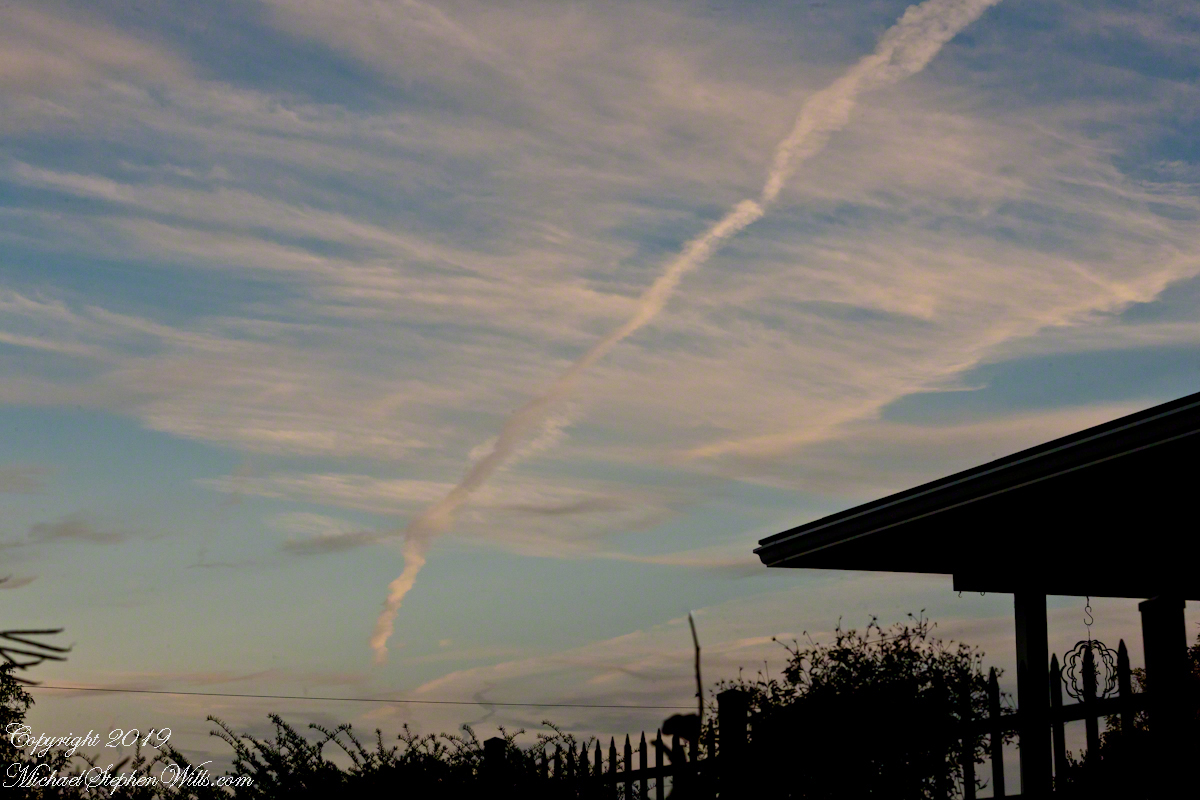
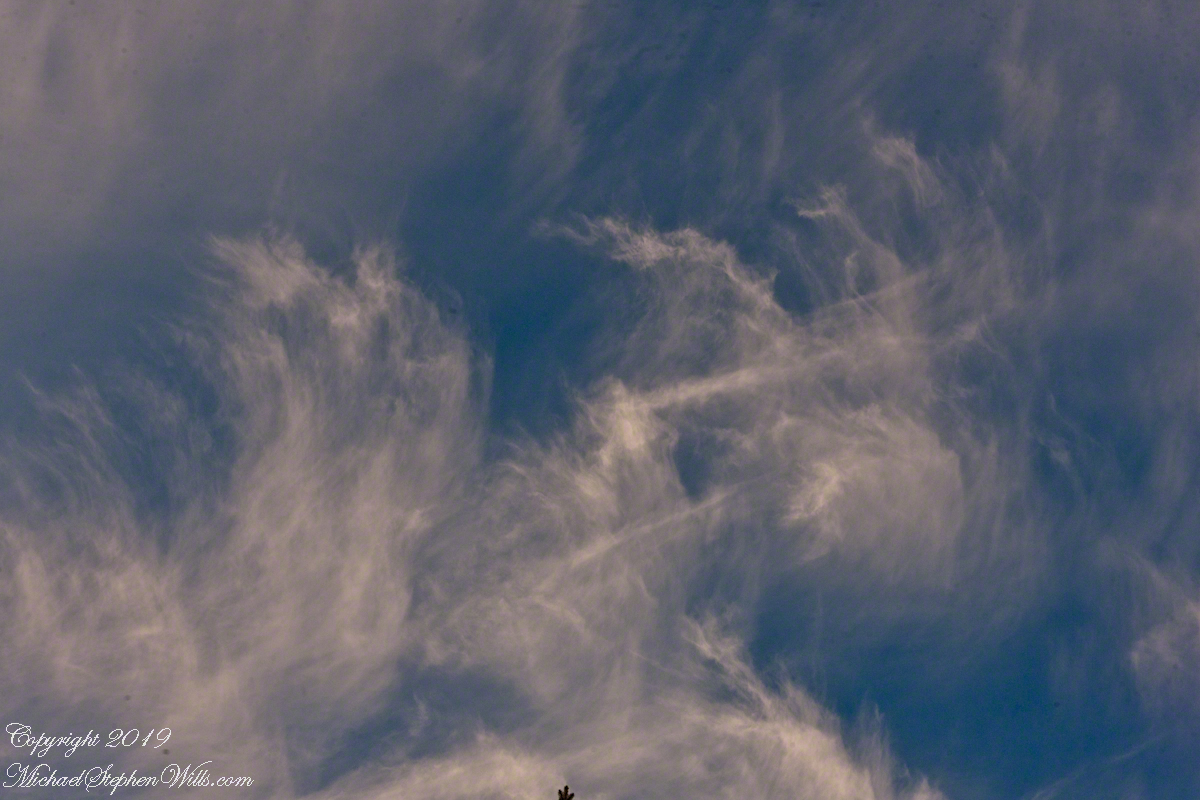
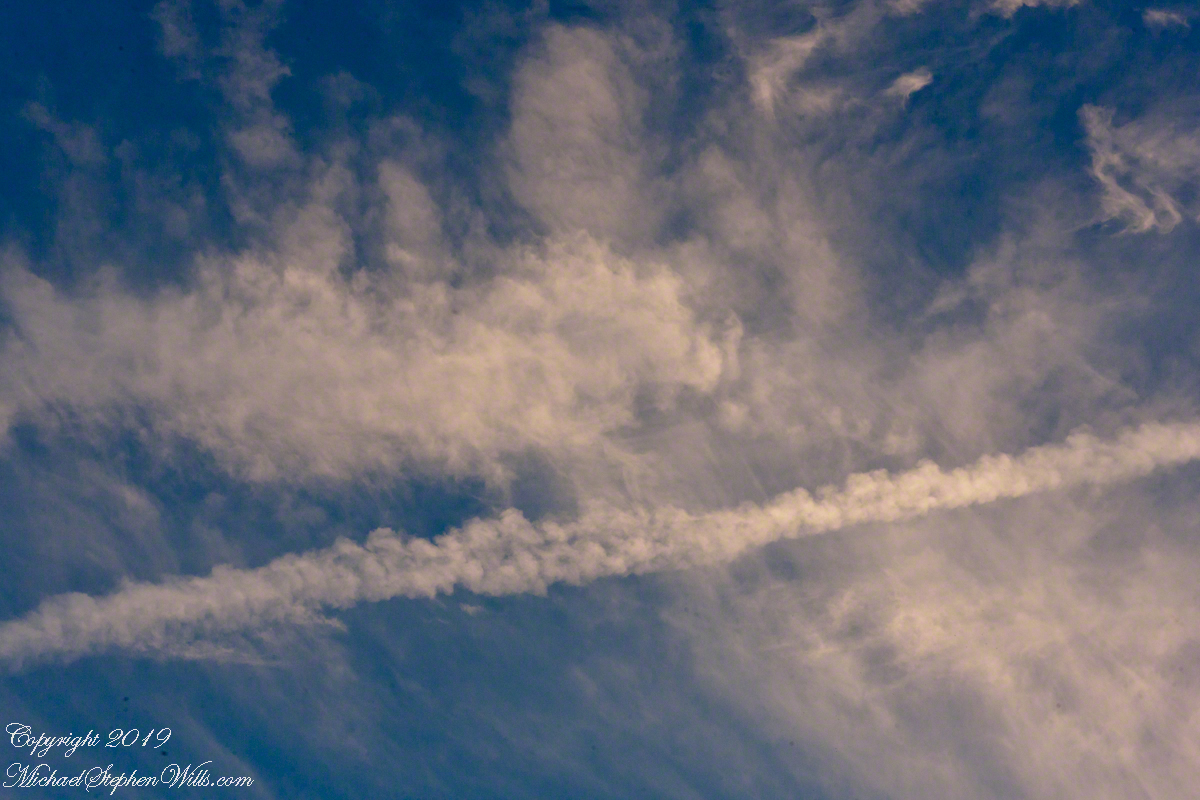
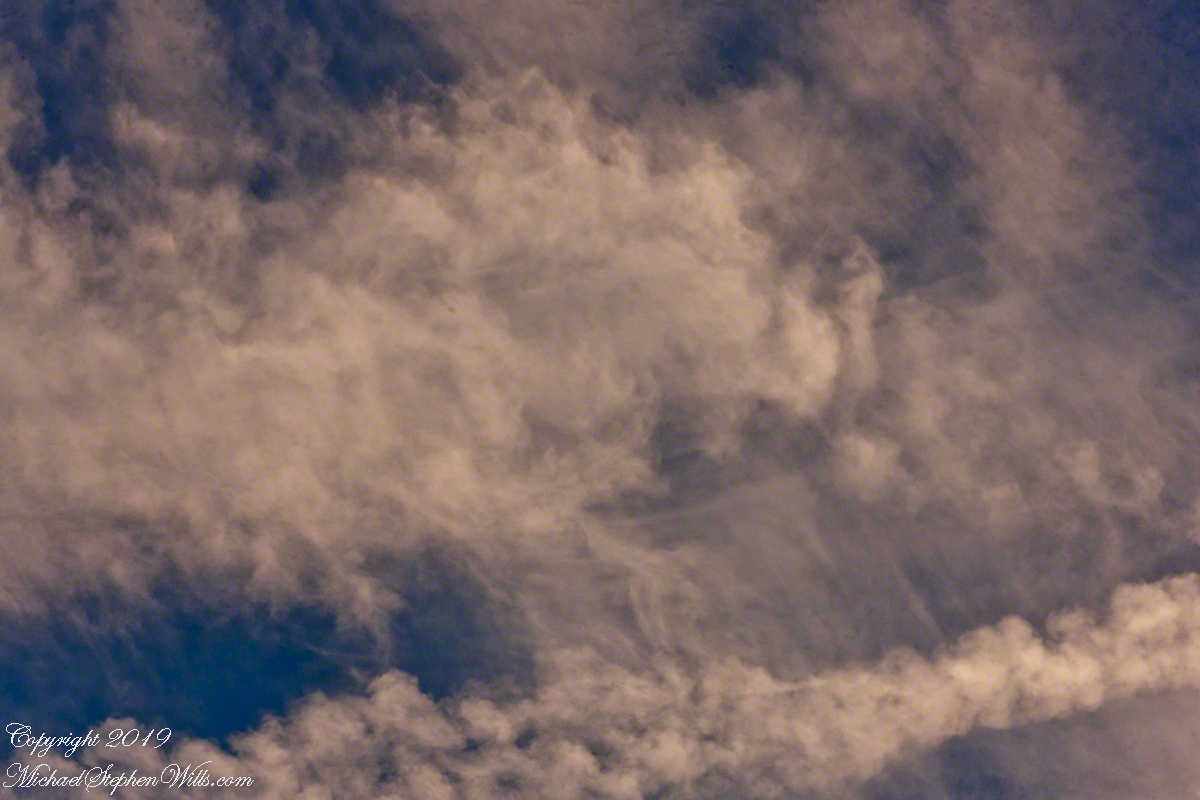
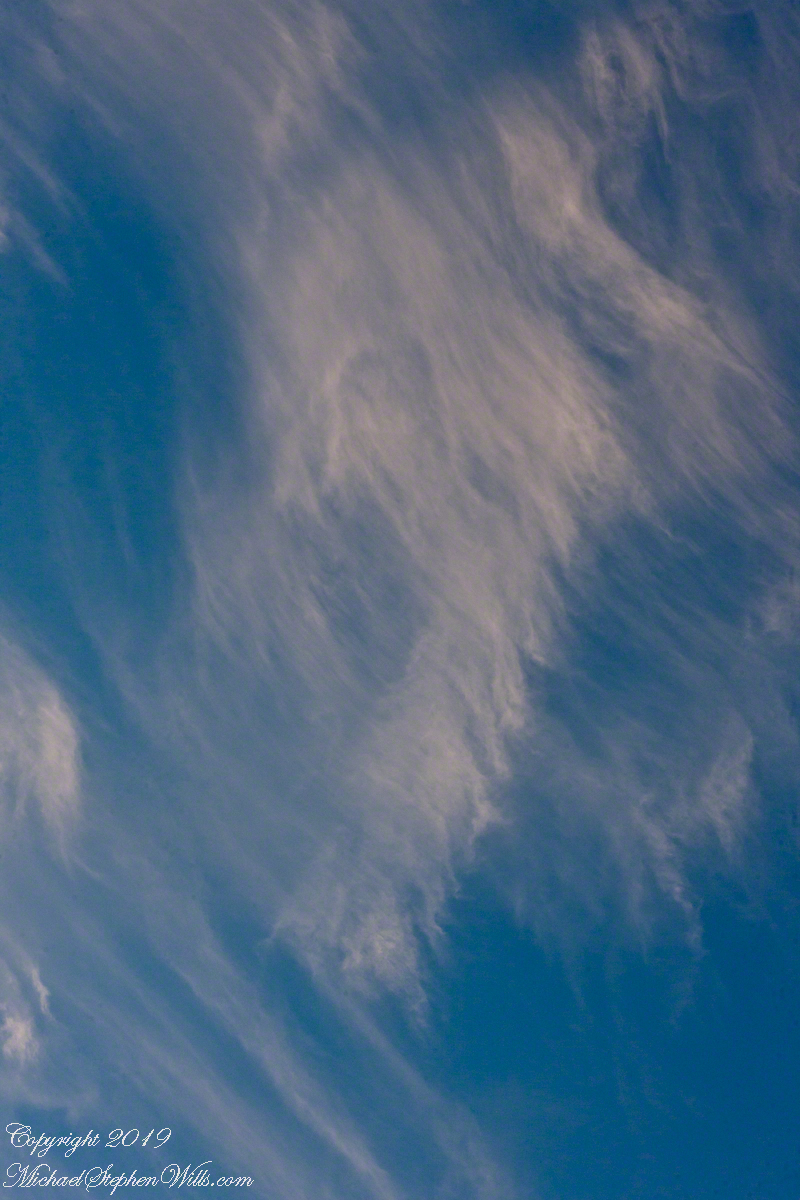
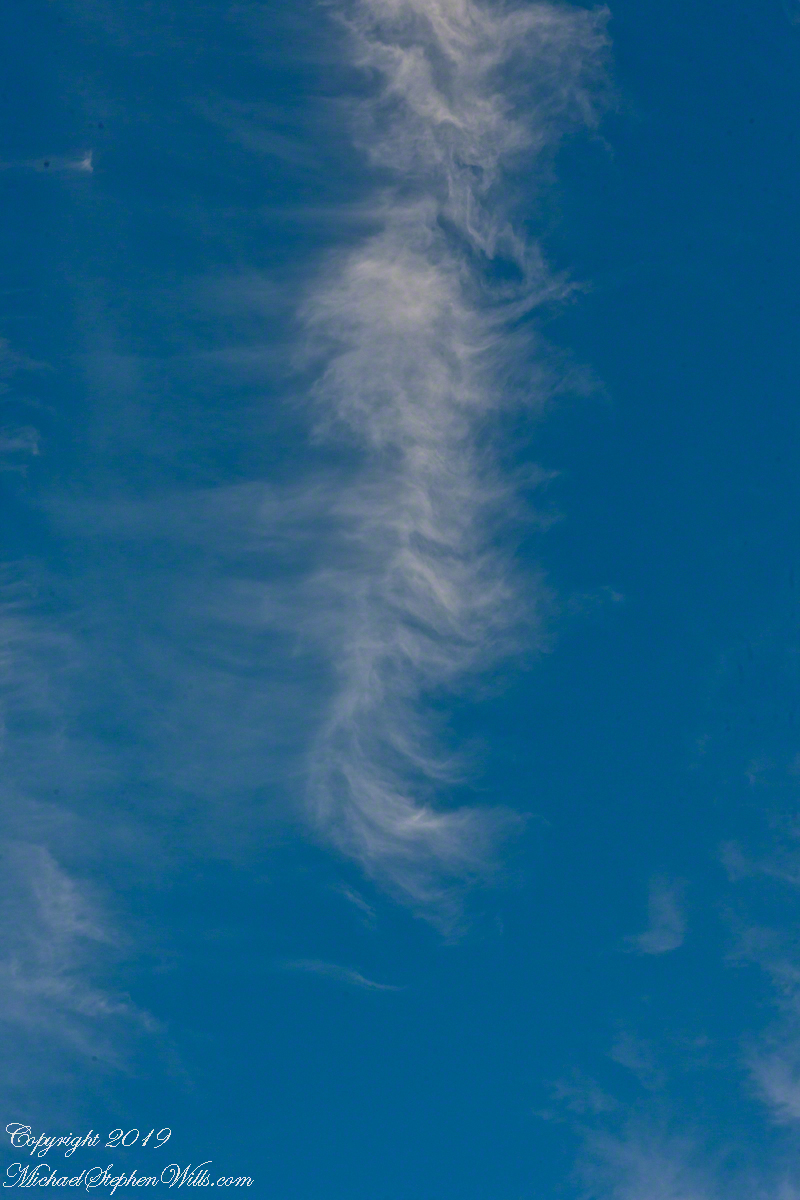
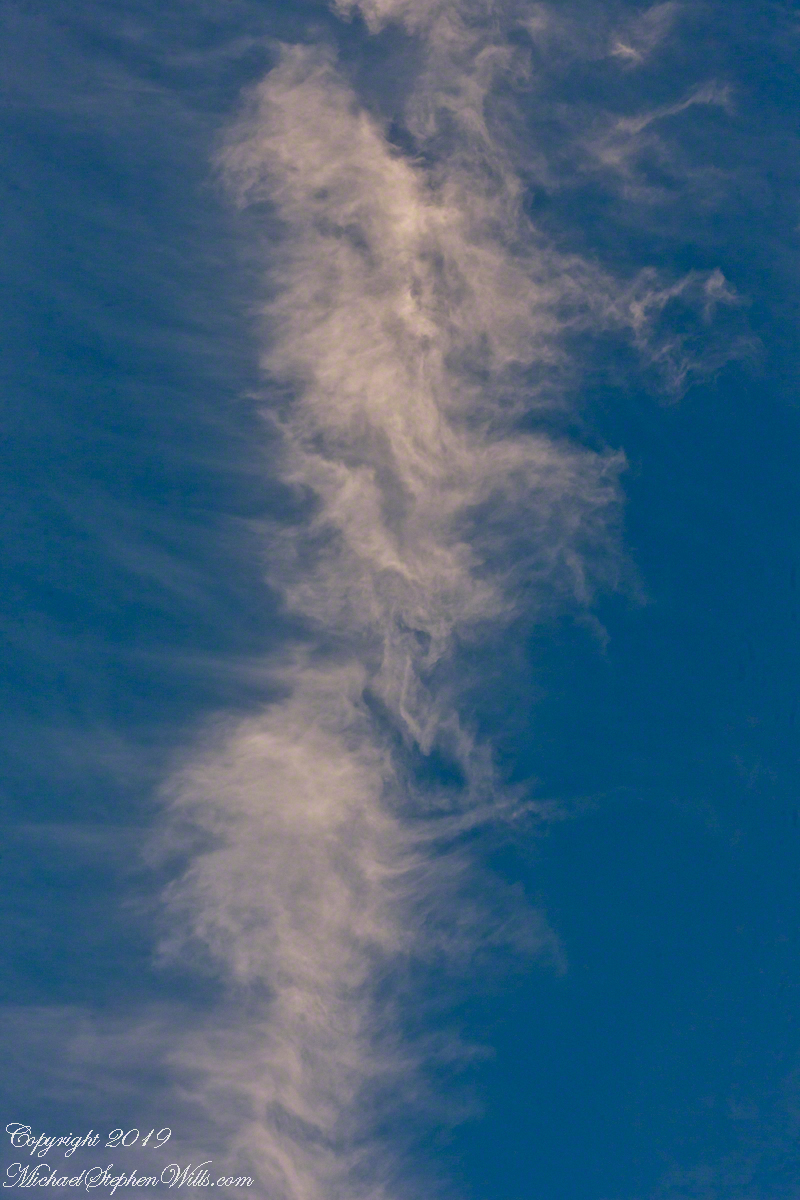
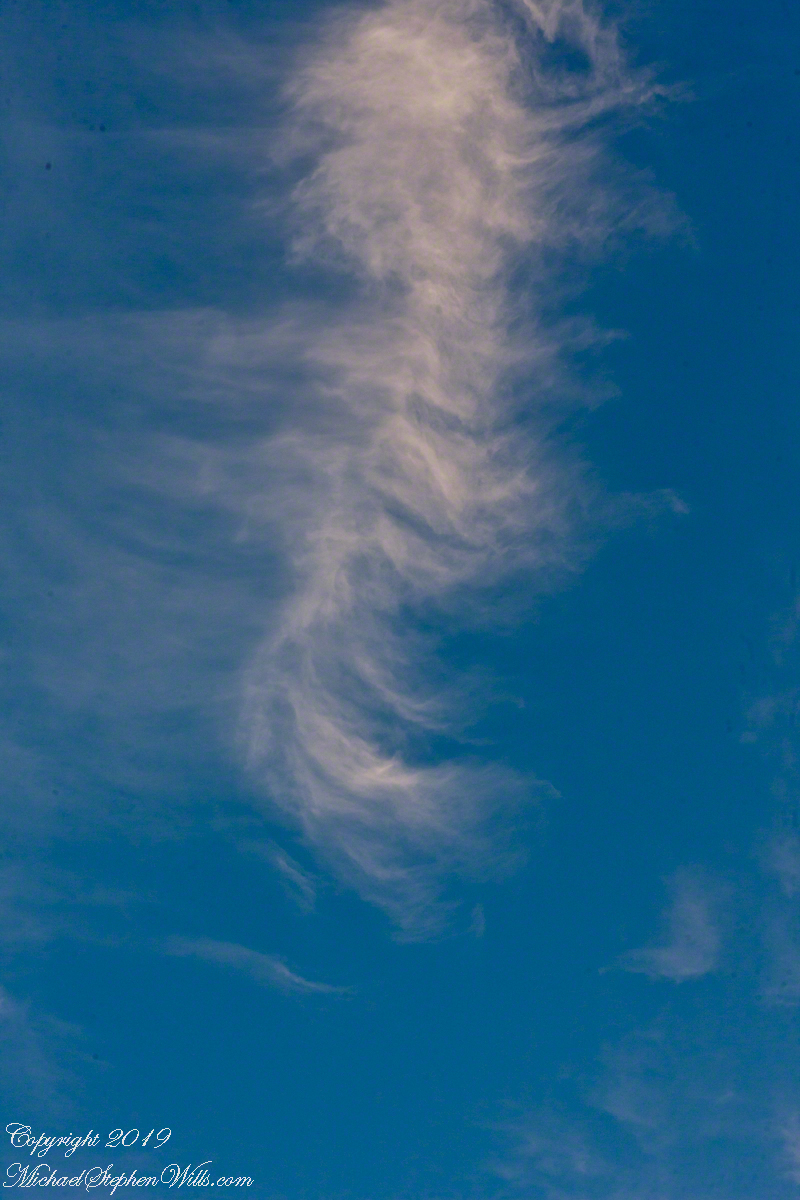
This evening cirrus clouds filled the sky at sunset. View the following photographs to understand how these forms are named from the Latin word for a ringlet, or curl, of hair. Formed above 16,500 feet, on this day the cirrus glow with the light of a sun low in the sky.
Here is a wide view from our driveway that includes a deteriorating con trail and possibly a mixture of other cloud types, I am no expert. I used a Canon “zoom” lens for flexibility in framing. To minimize exposure time for a crisp capture of the moving object, ISO was set to to 1,000 and the f-stop minimized.
Click any image for a larger views. Then, click again to return to post.
Post production I needed to spend time removing dust spots (neglected to clean the image sensor), some of the images still have those annoying spots.
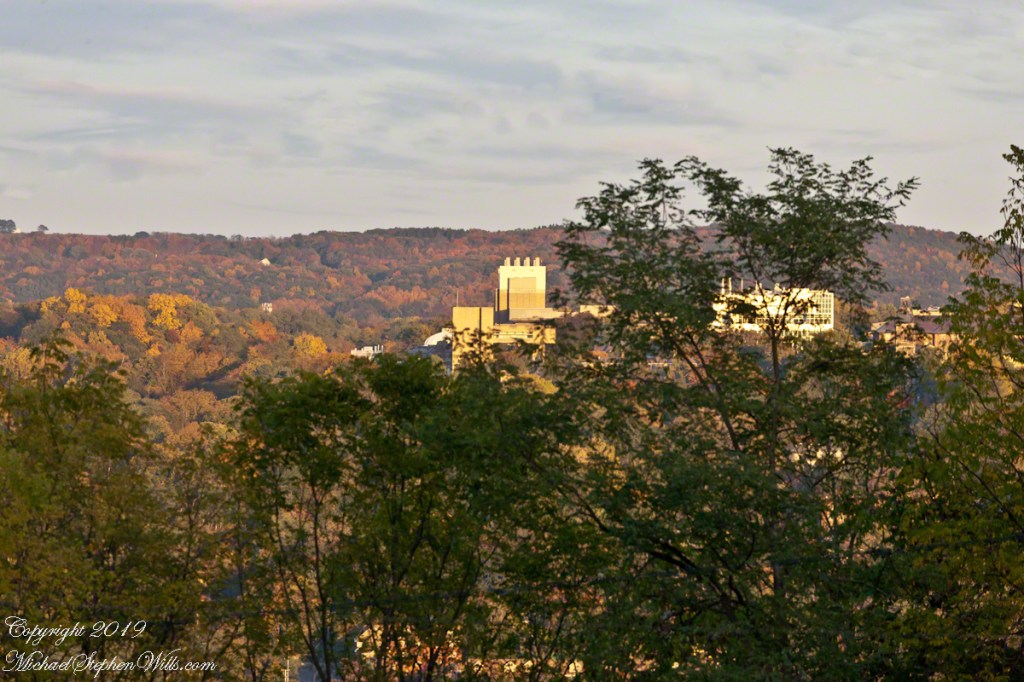
We enjoy looking west across the valley when the hills are glowing.
This is a retrospective diary of the day I created my print “Octillo Sunset.” You can visit “Octillo Sunset” on my online gallery by clicking on any of my blog photographs.
Choices of the Evening
Angled to the Sun
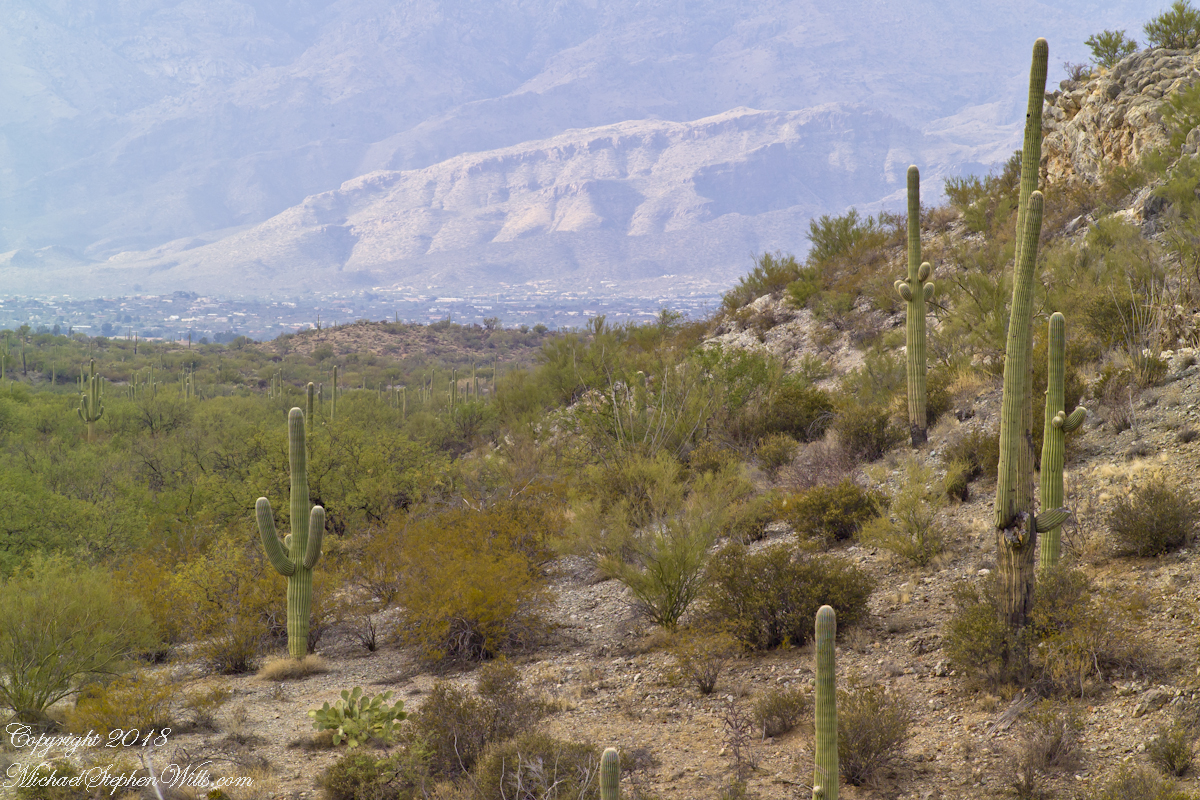
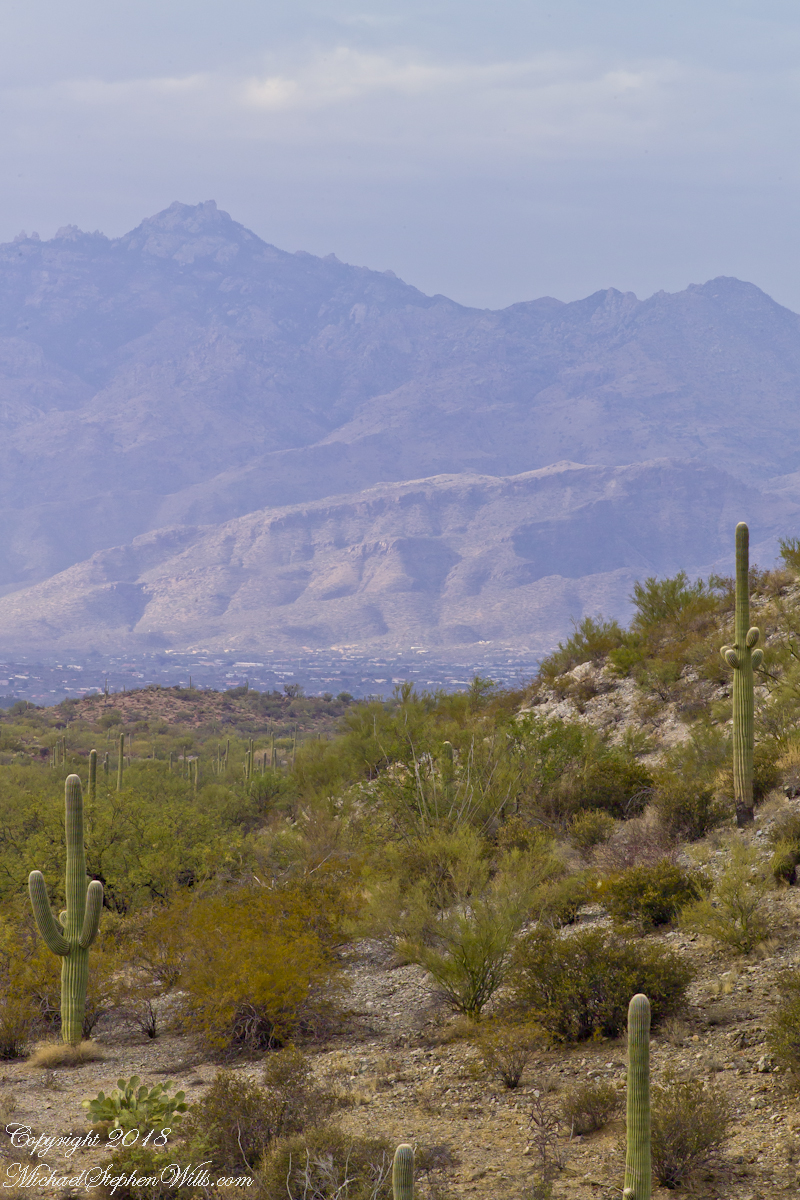
The following photograph of saguaros and distant Santa Catalina mountains is a similar view from Part 2 of this diary. Notice the saguaro on the right is also on the left in the Part 2 photo. What is happening is I turned the lens more toward the west and the sun. At this angle the lens hood offers less protection, especially as the sun is lower in the west and the time of day is passing to the best light from the lowering sun that rakes across the landscape. All this means I can bring the lens further to the west even though the lens hood is less effective.
Click any photograph to view Ocotillo Sunset
Finger Rock!!
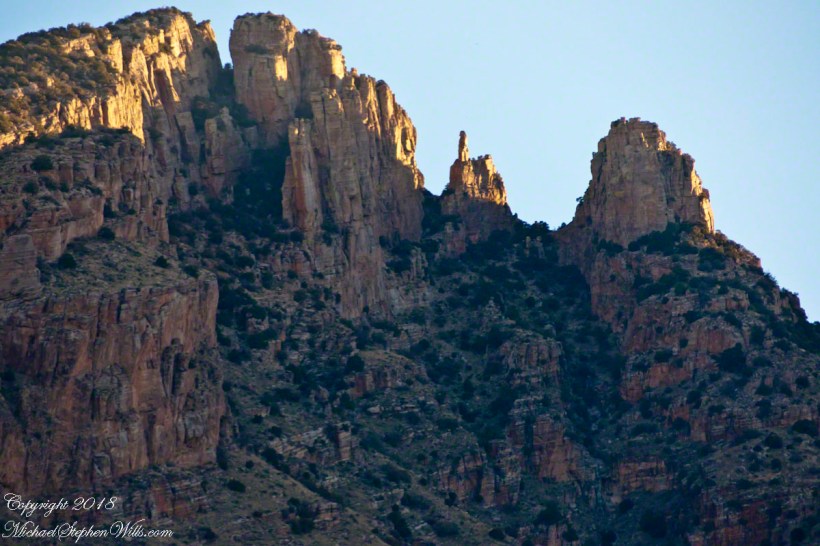
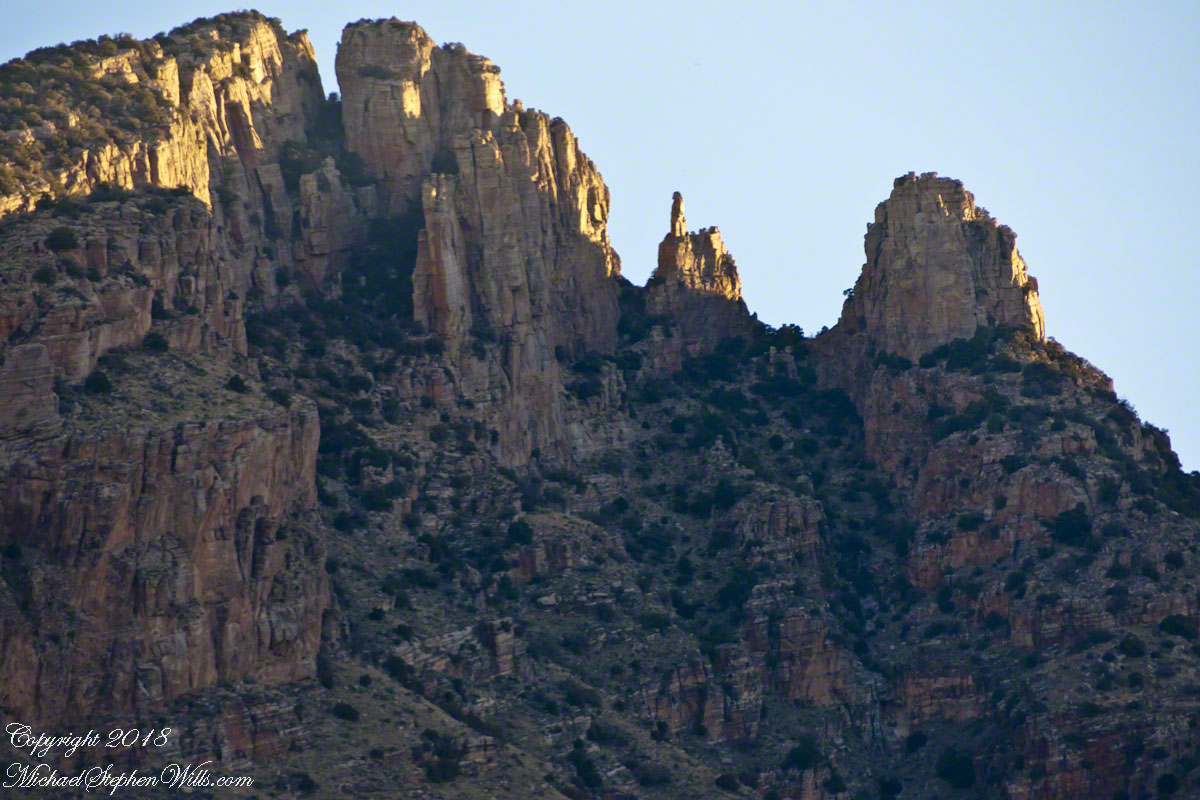
One reason why I am offering it, is high on the Catalina mountains, in the distance, you can just see a formation called “Finger Rock”. This time of day, the lower angle of the sun brings out the canyon-shadows. Finger Rock canyon has a high western wall, you can see it as a high long shadow starting toward the very center of the picture and building up and to the right.
The following photograph is the view of Finger Rock from the floor of that canyon taken during a Spring 2011 Tucson visit. I started hiking in pre-dawn hours to catch the dawn rays on the finger.
Click any photograph to view Ocotillo Sunset
The Importance of Knowing Topography
Another aspect of this photograph is the landscape. There is a sloping bajada (alluvial fan) formed by water breaking up the mountain (in this case the Rincons) and washing it into the valley. It is the reason the saguaros appear to march into the distance. The same effect is used in movie theaters to allow the people in the rear to see over the head of people in the front.
This bajada and the higher elevation is the reason I moved from Sabino Canyon to here for a better position to view the sunset. Here is a nearly identical view, same 200 mm lens, in landscape format. The sloping land of the bajada is more visible.
Click any photograph to view Ocotillo Sunset
Changing the Lens/Sun Angle
Looking in the opposite direction, back over Lime Kiln Falls to the Rincon (mountain) foothills, the lens hood offers maximum protection. The sun is at my back and, even though it is low in the sky at the beginning of the Golden Hour, this aspect gives great color depth at the expense of loss of shadows losing some depth of field. Still, this is an interesting photograph.
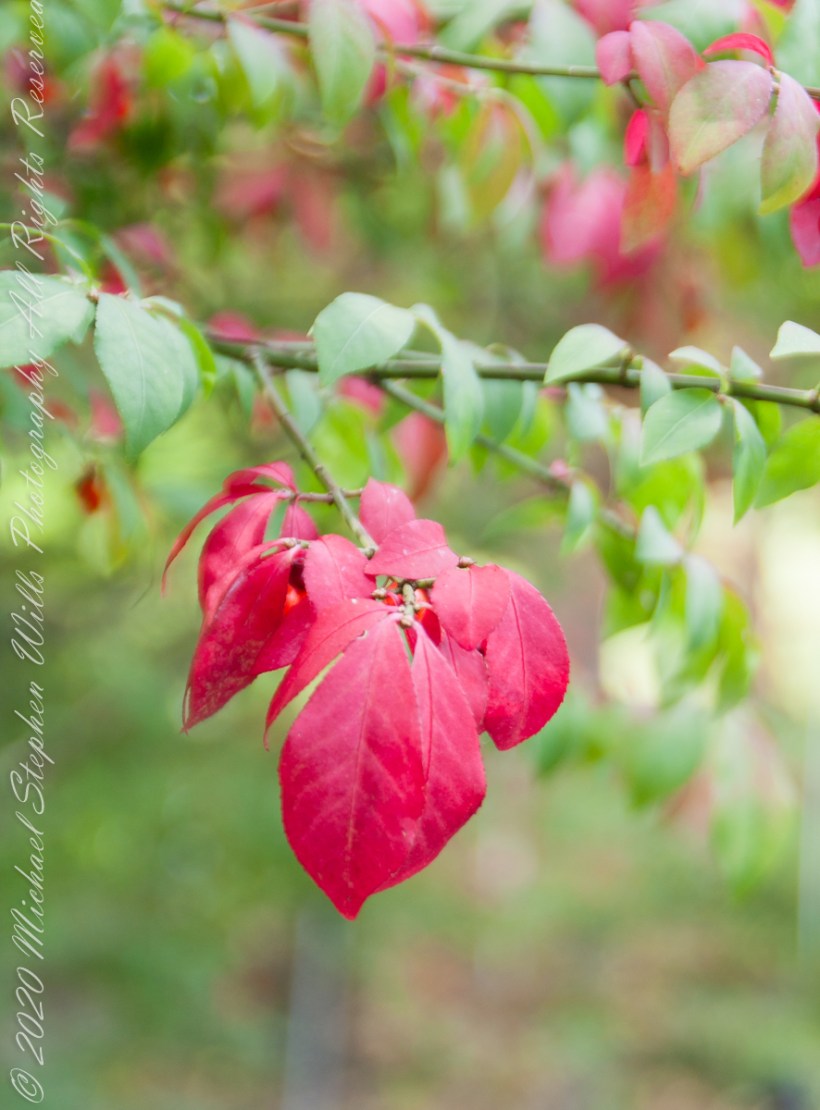
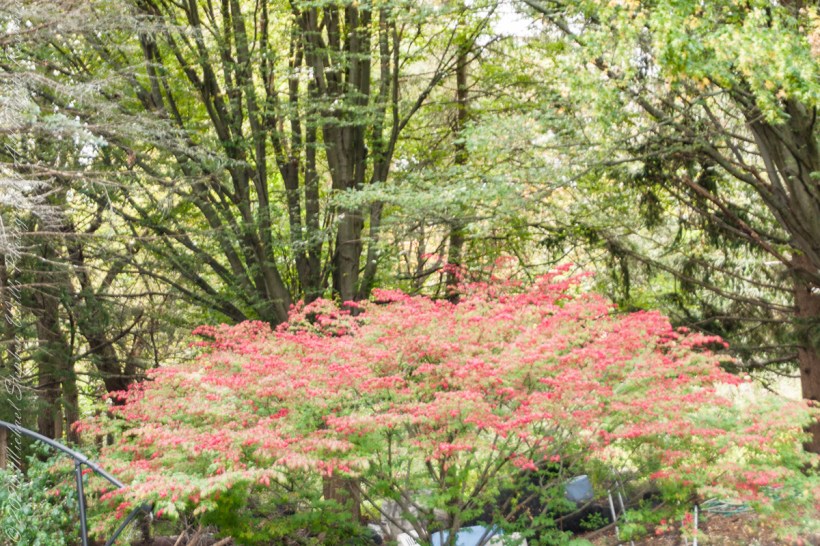
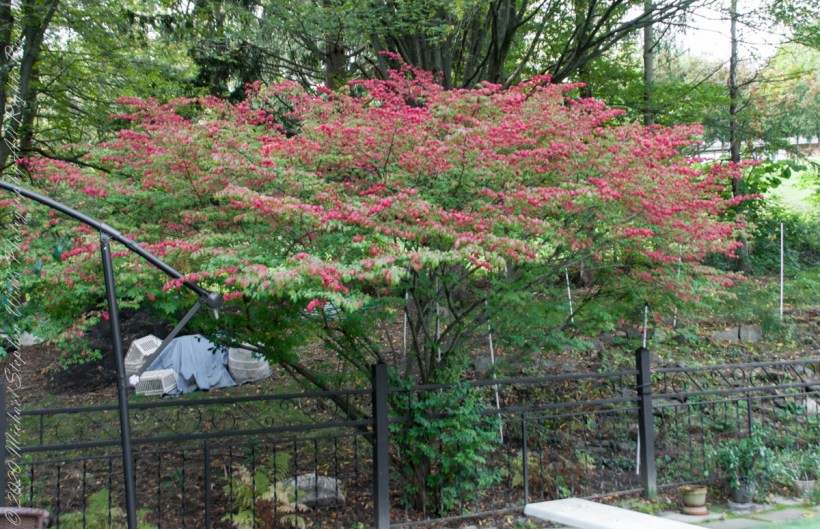
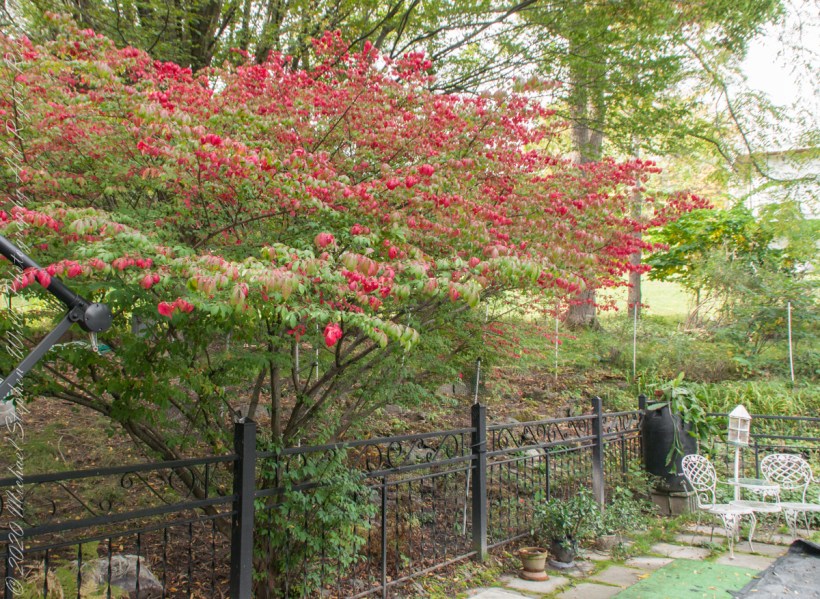
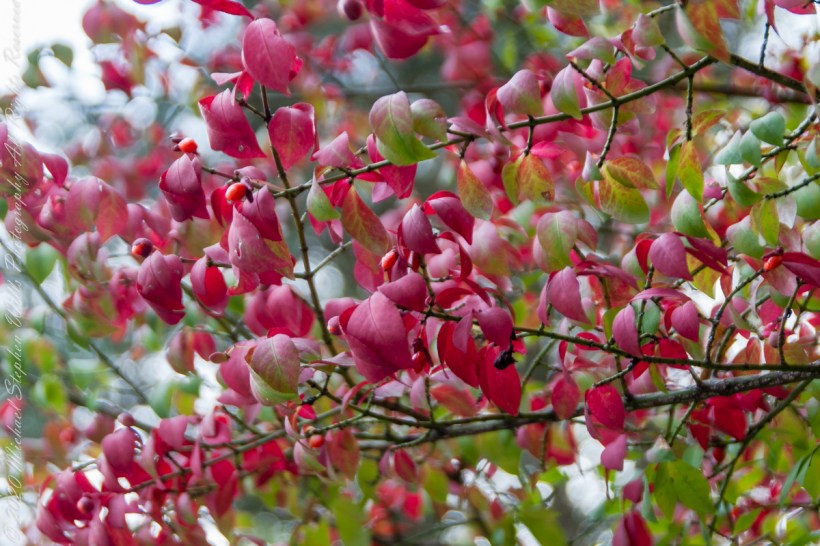
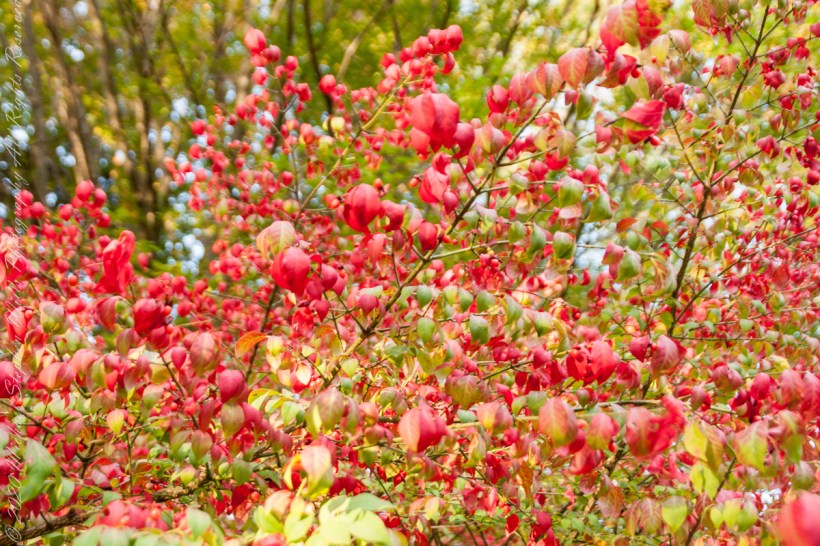
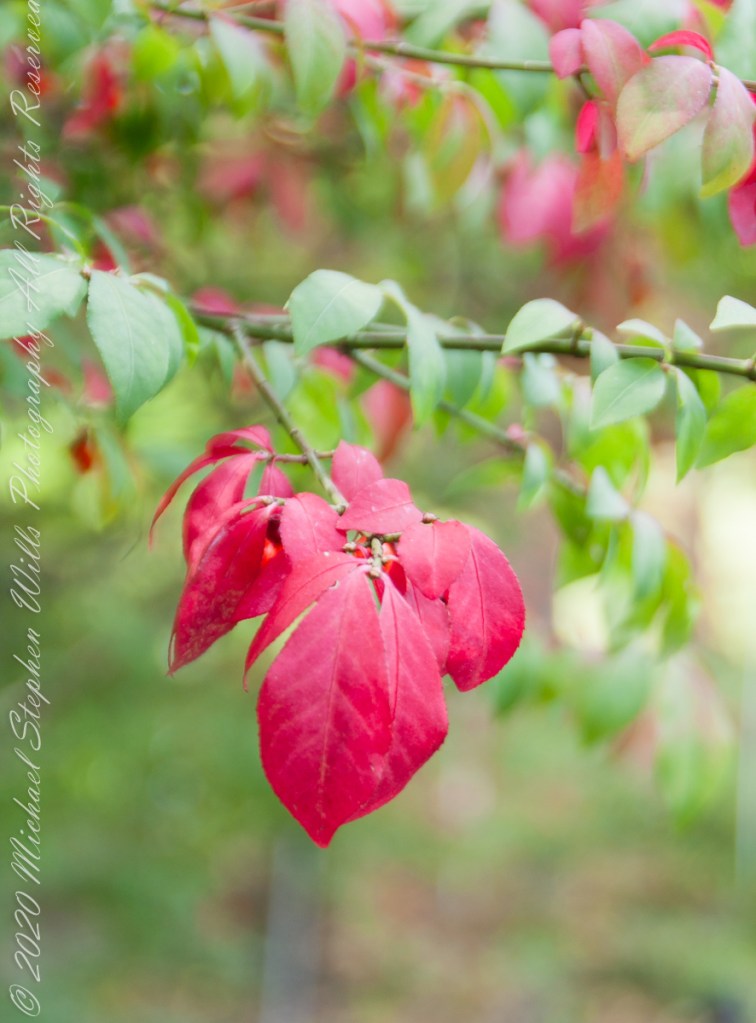
After we came home from the Underground Railroad excursion, with a camera and time on my hands, this Euonymus bush fringed with scarlet leaves caught my eye. Starting with a leaf here and there in September the flame-like color spreads until it takes on the character it is named for “Firebush.”
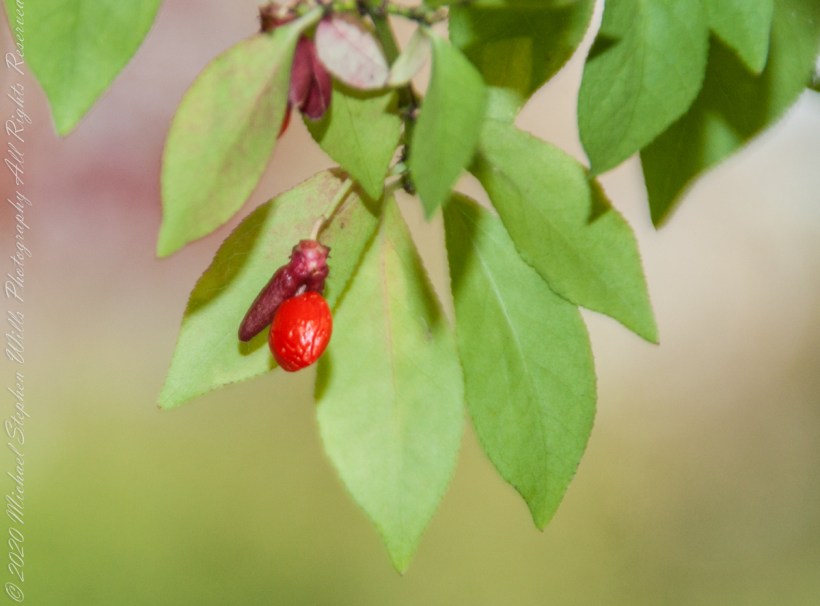
Springtime it is covered with tiny green flowers, each turns to a small, fleshy fruit encapsulating tiny seeds said to be loved by birds. As ours neglect the fruits, I’ve taken to collecting them to spread along the borders of our back property. Here and there some have sprouted around the bush, this year I marked a few to move this winter when the plant is dormant. I have high hopes for success of this project as the species is known as “invasive” in 21 states.
Click pic for larger view in a new browser tab. If you are in WordPress Reader, open the post to use this feature.
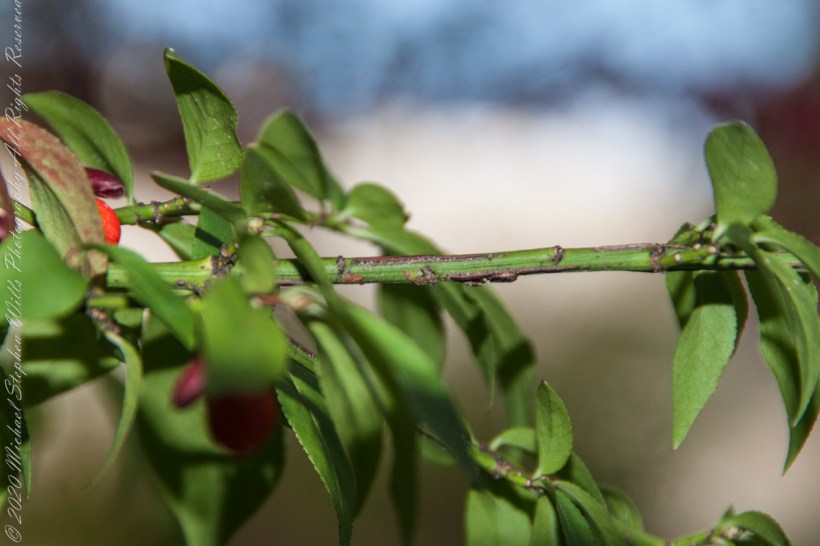
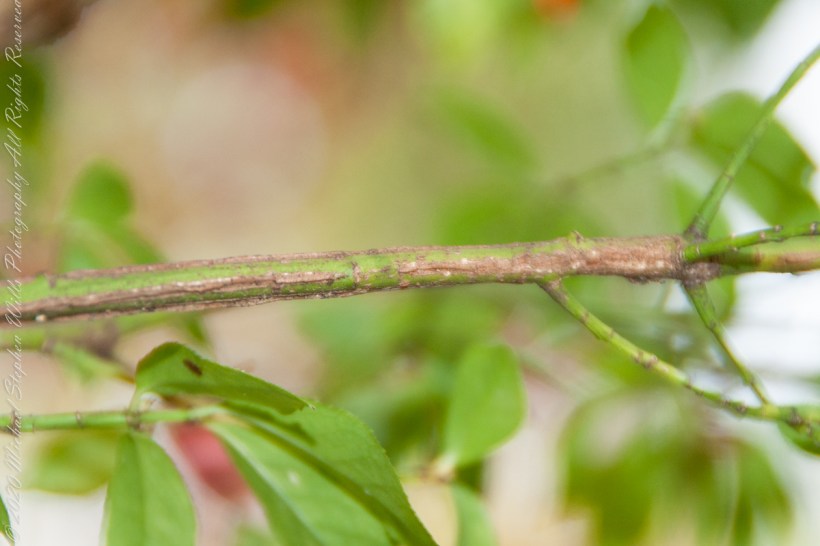
All parts of the plant are toxic, causing severe discomfort when eaten. The name “Spindle plant” was given it in England for the corky wings that grow long the length of stems, not so pronounced with our Euonymus species.
Here are macros of the flaming leaves and fleshy berry.



 Michael Stephen Wills Photography