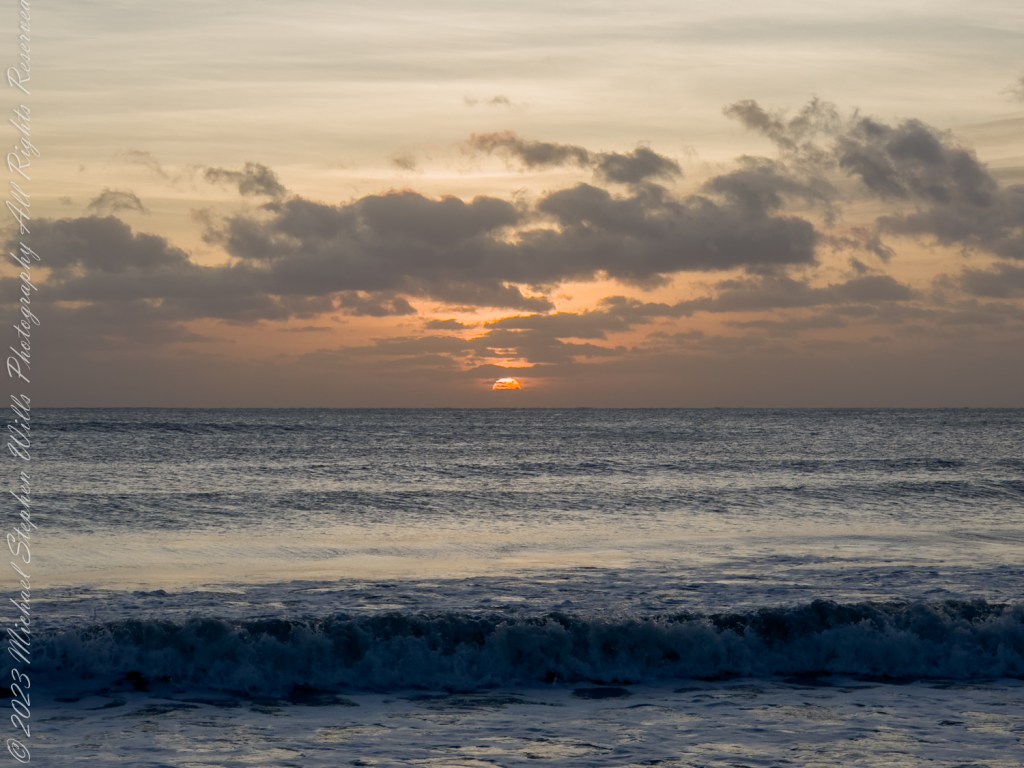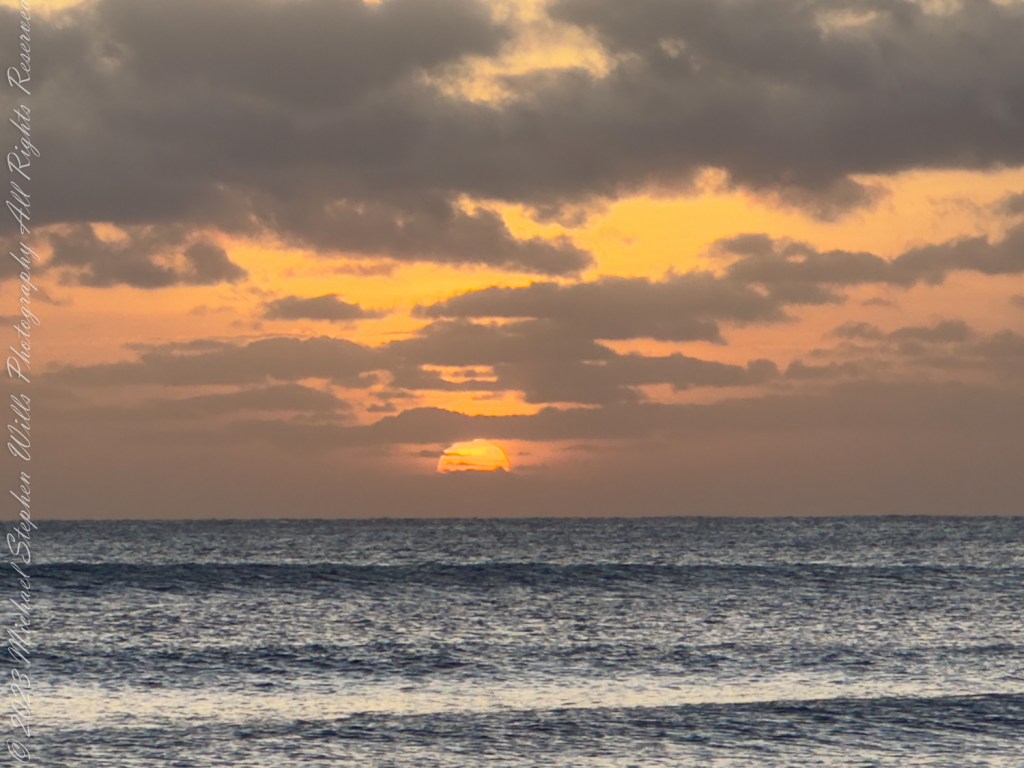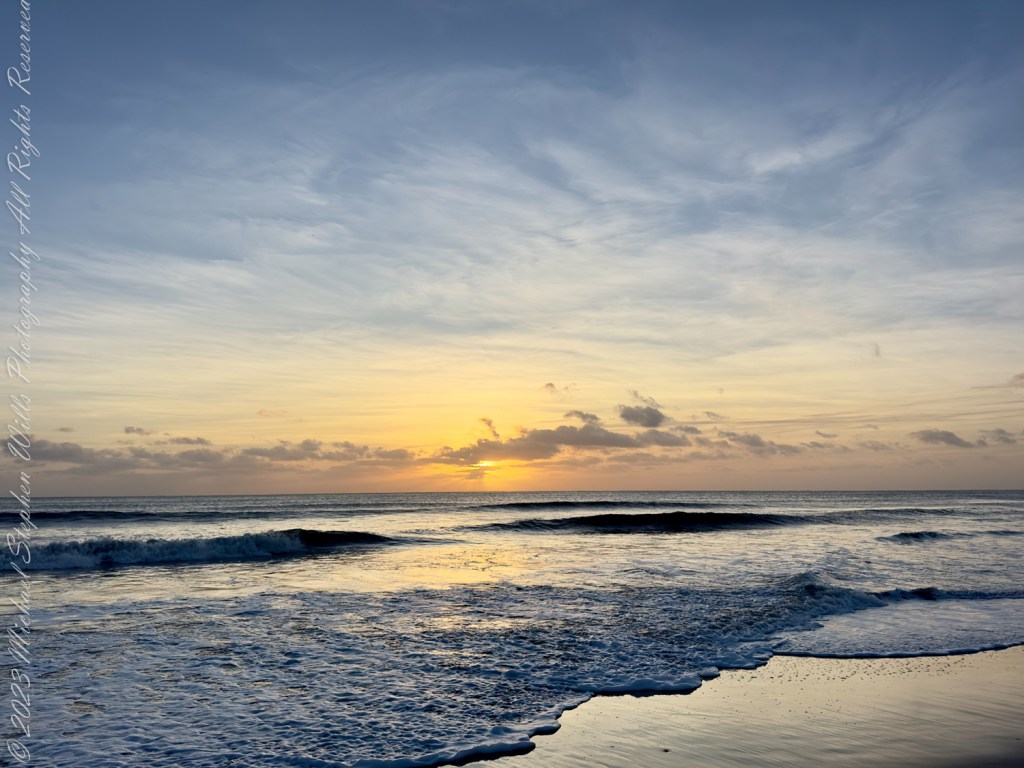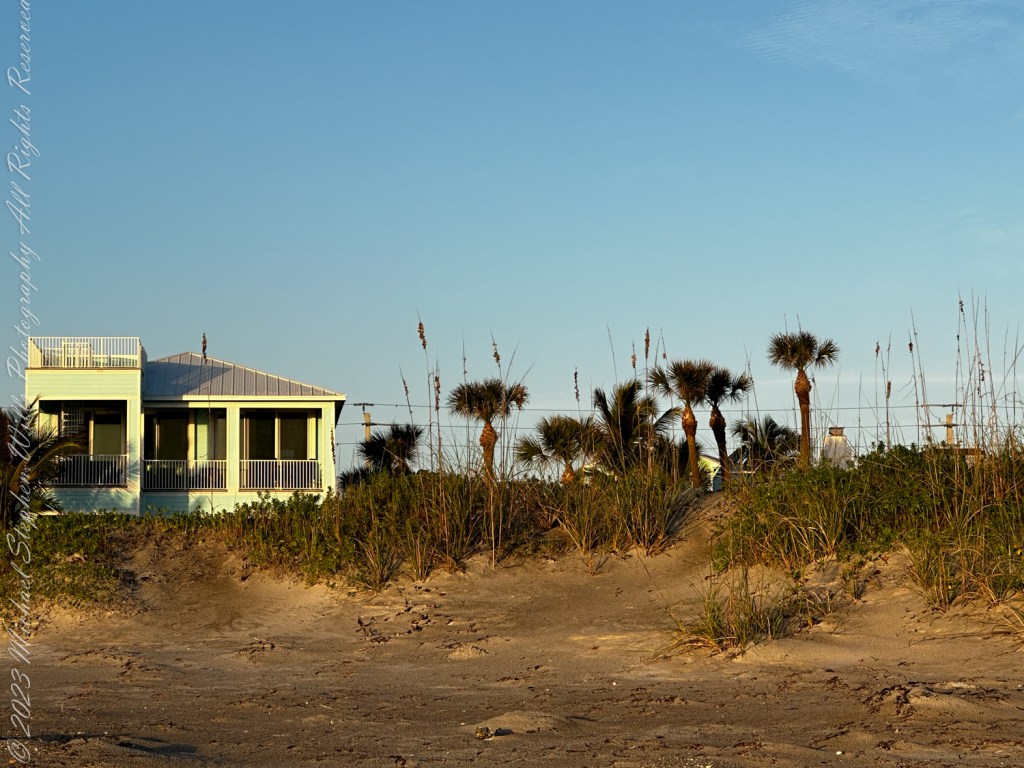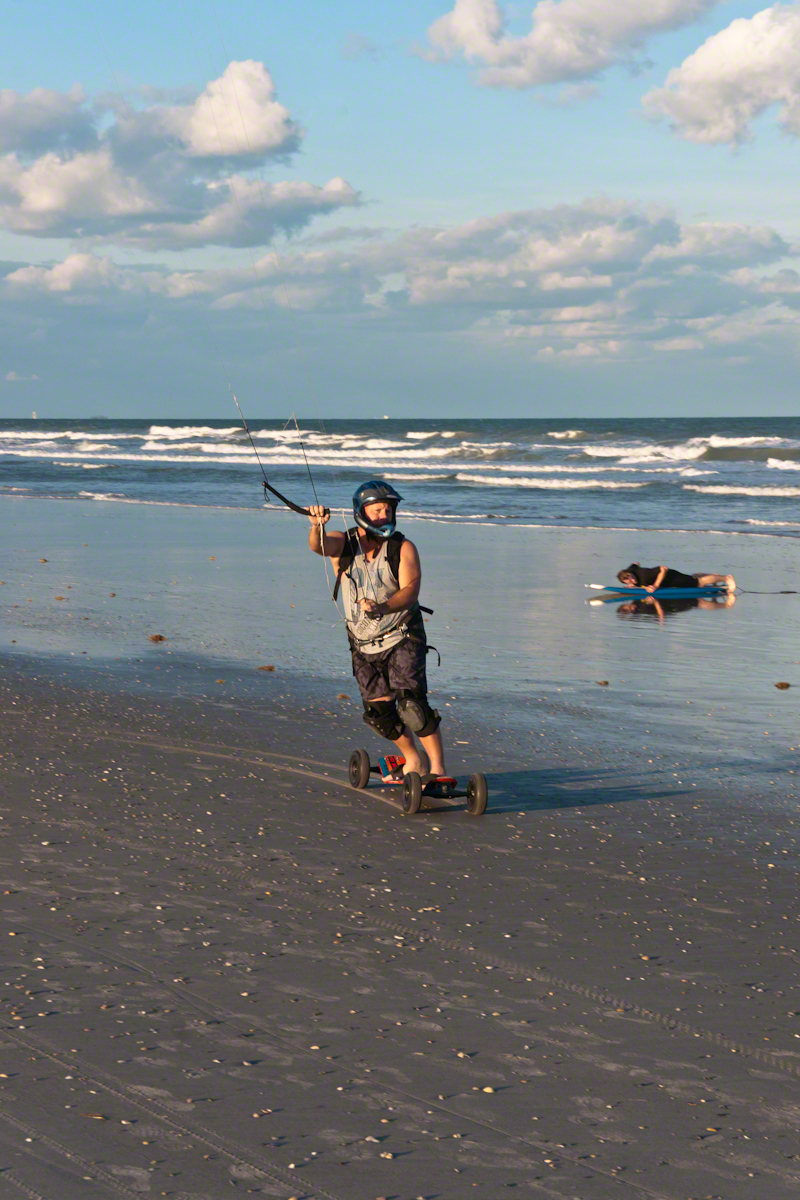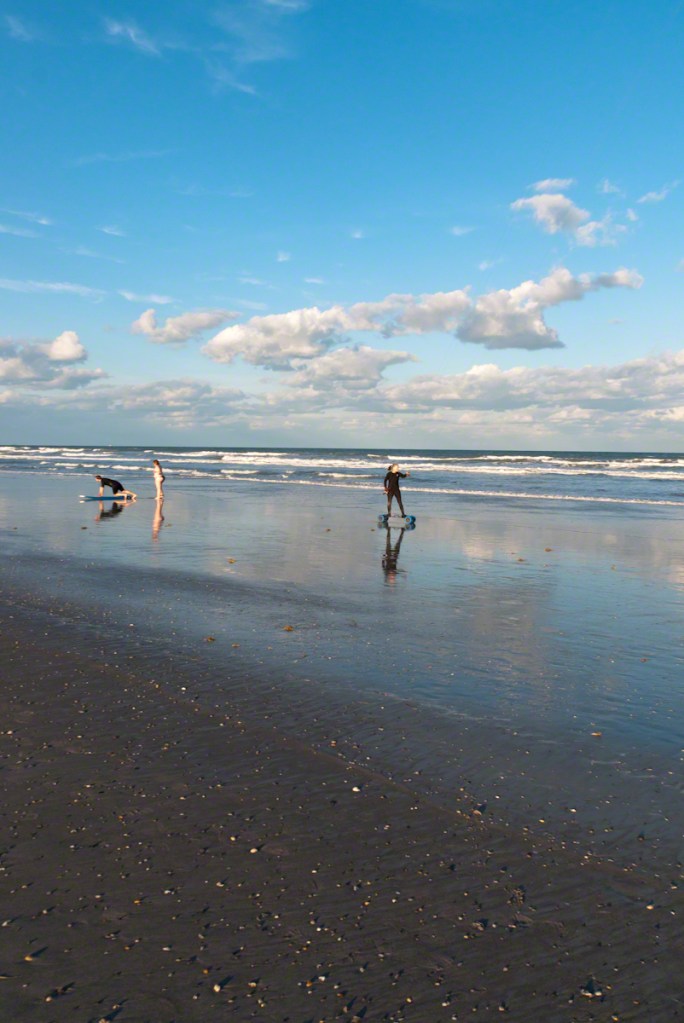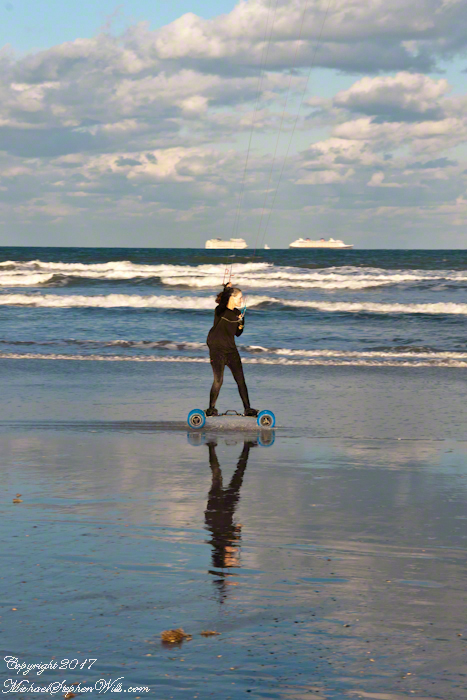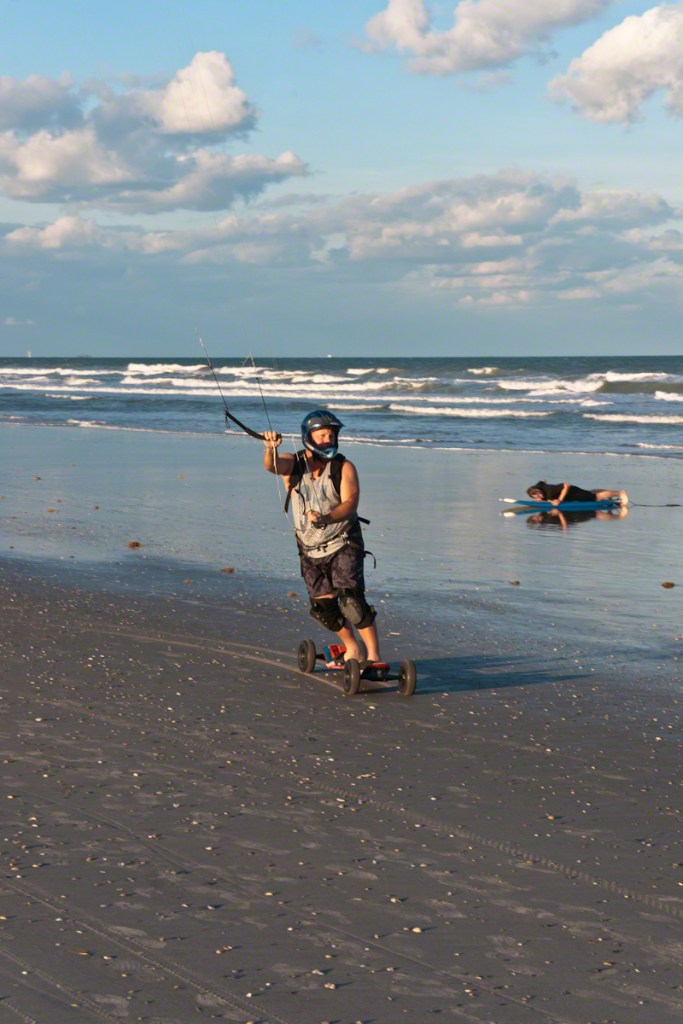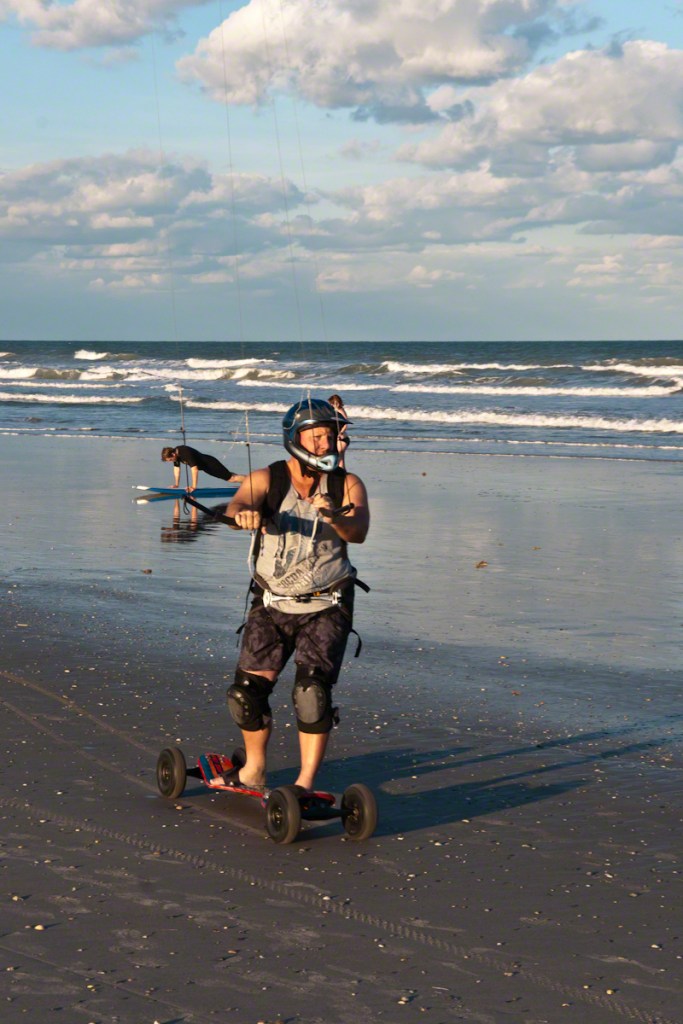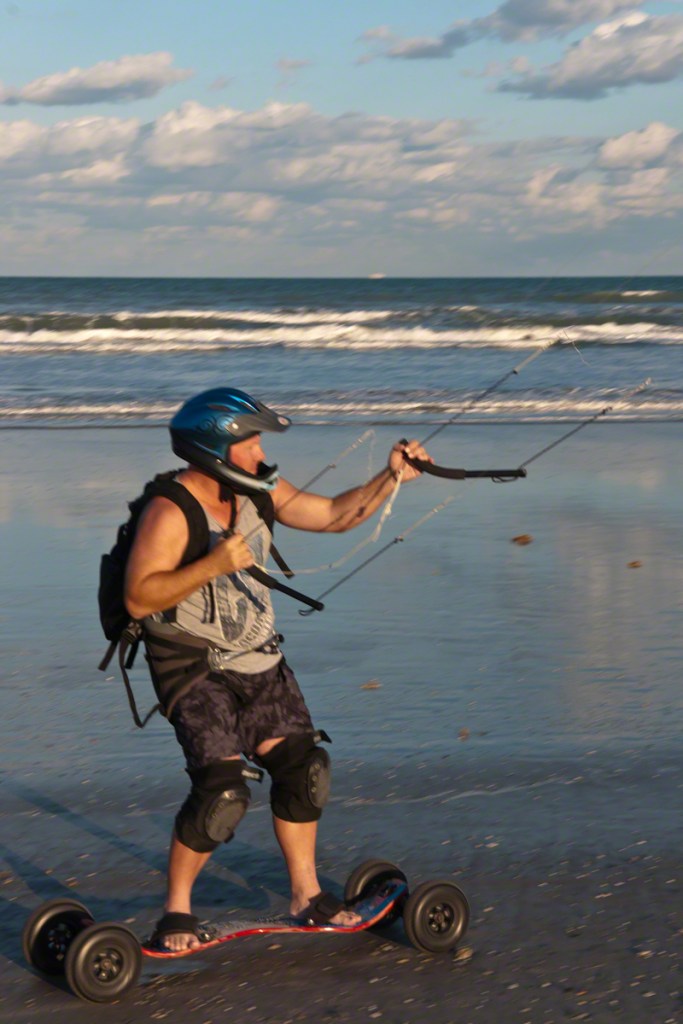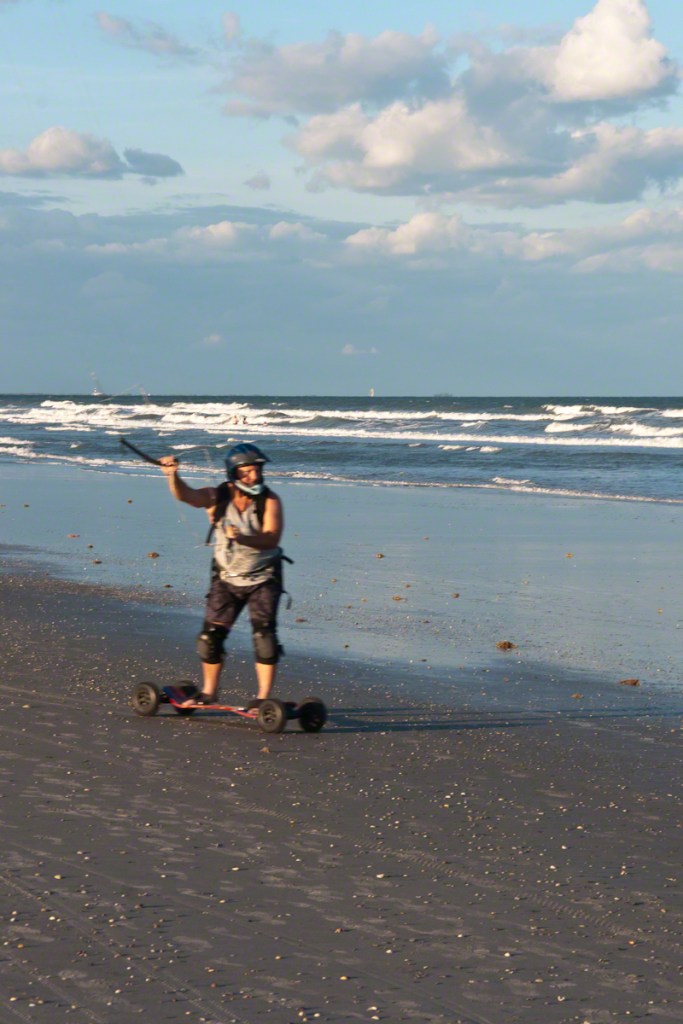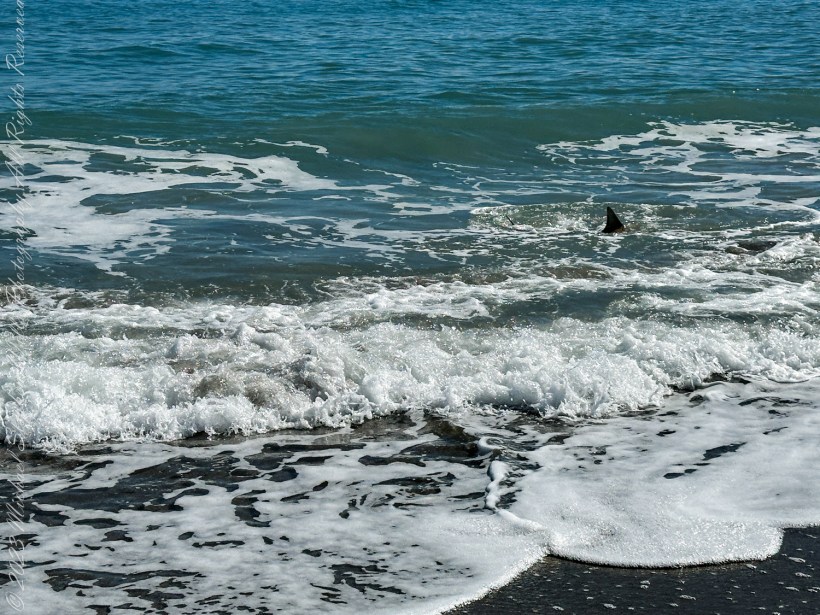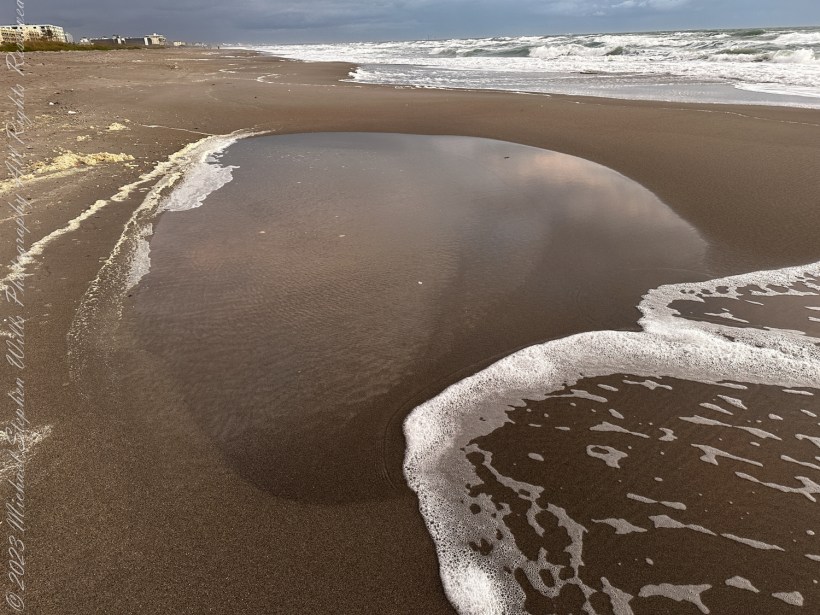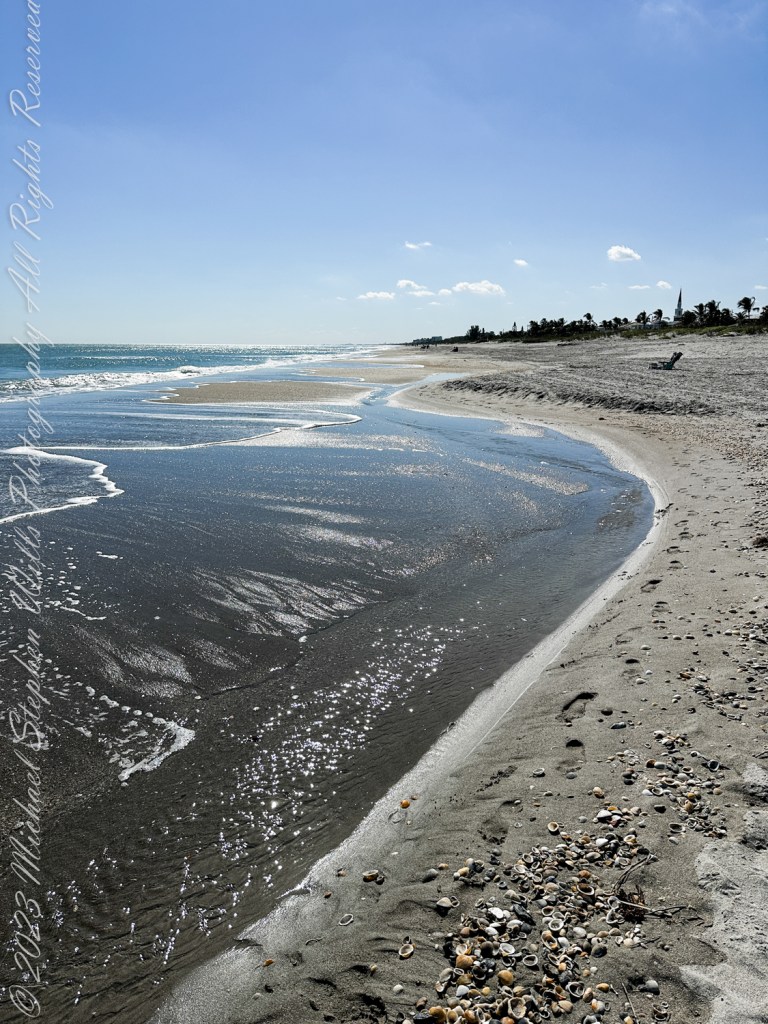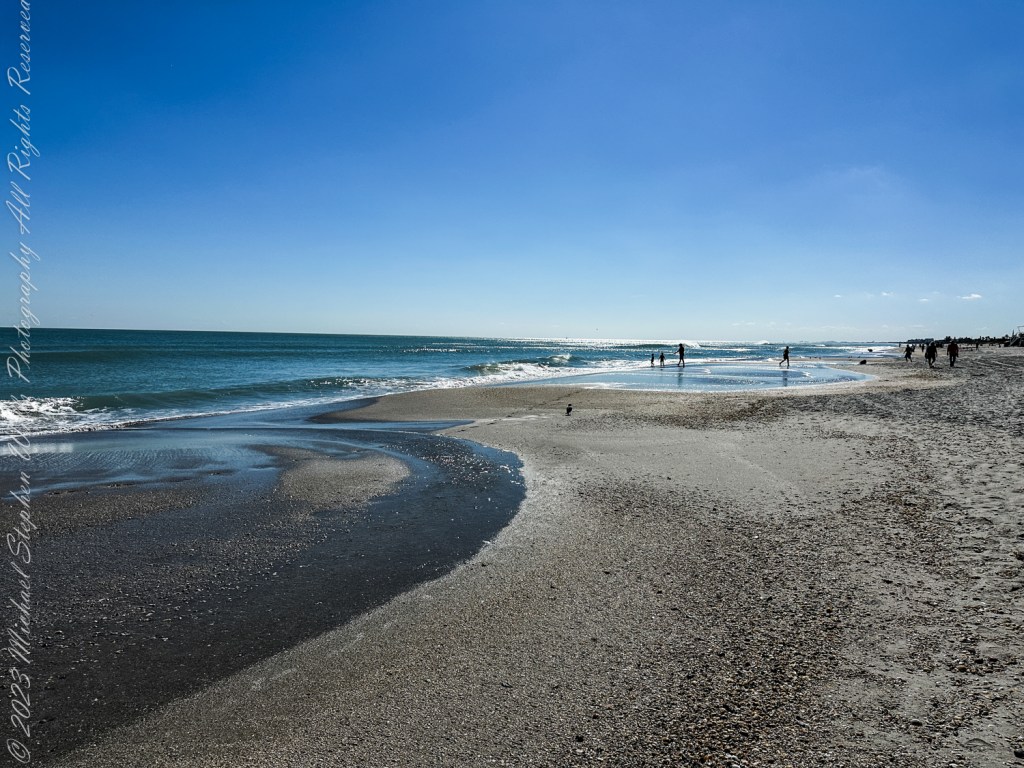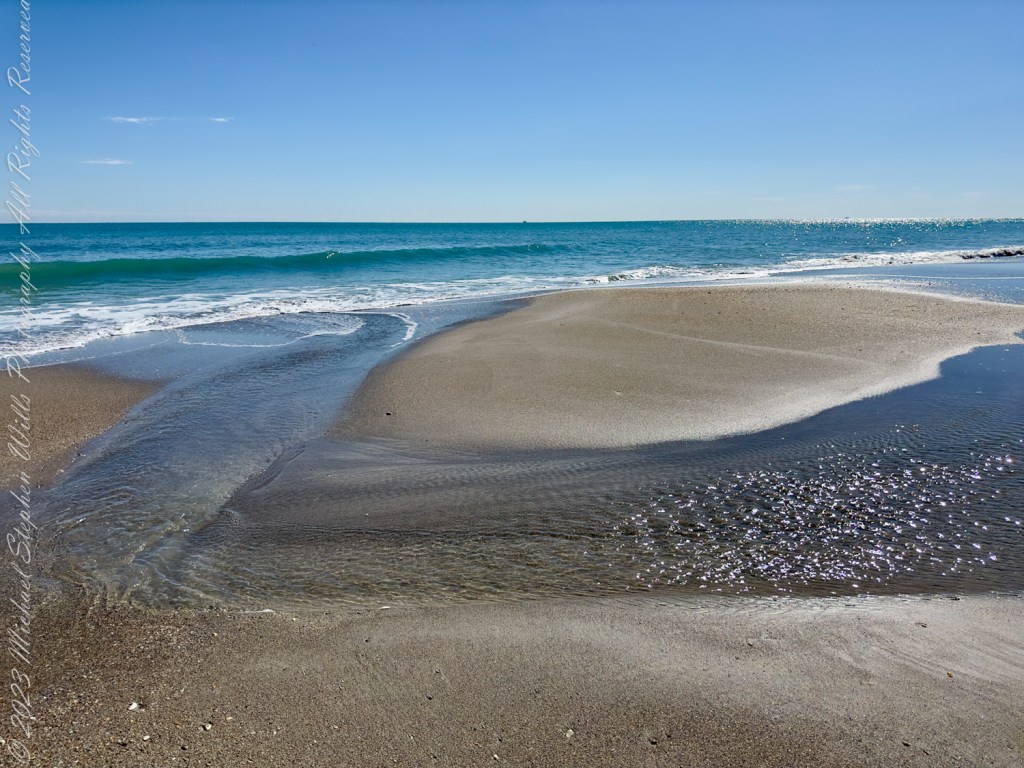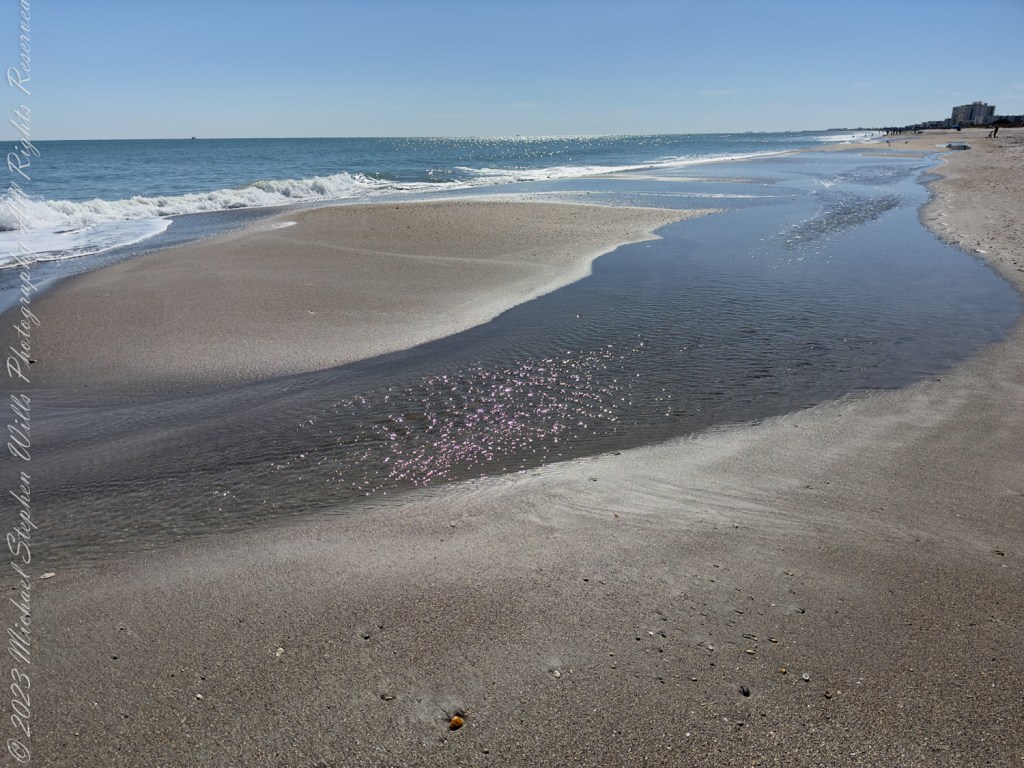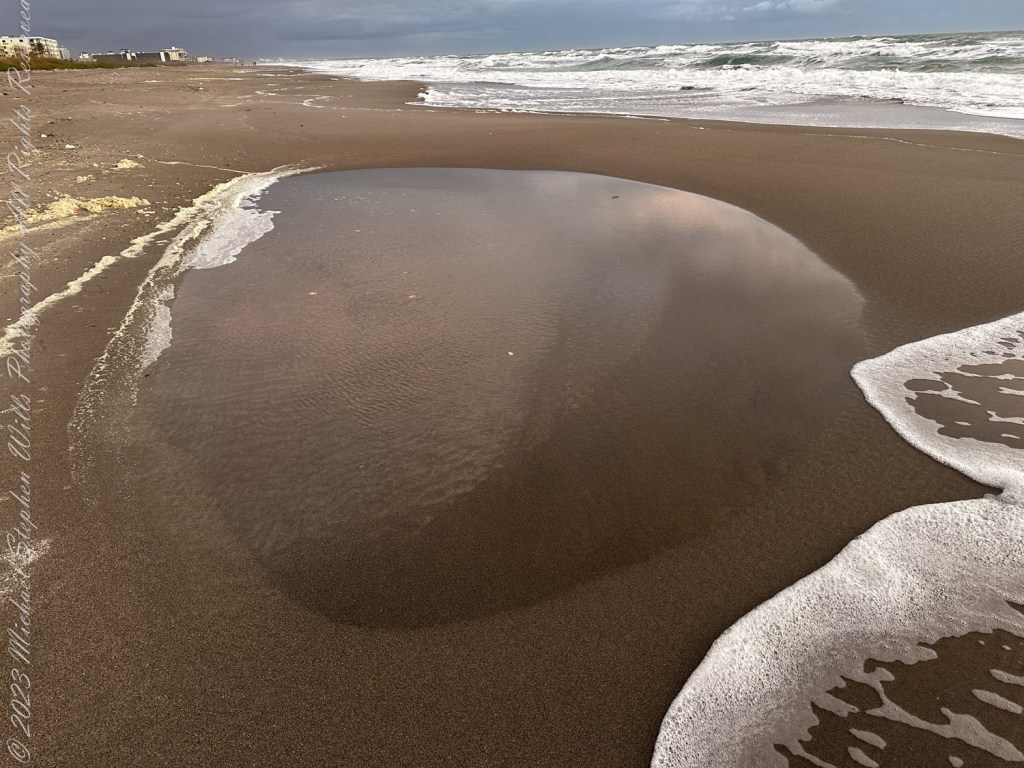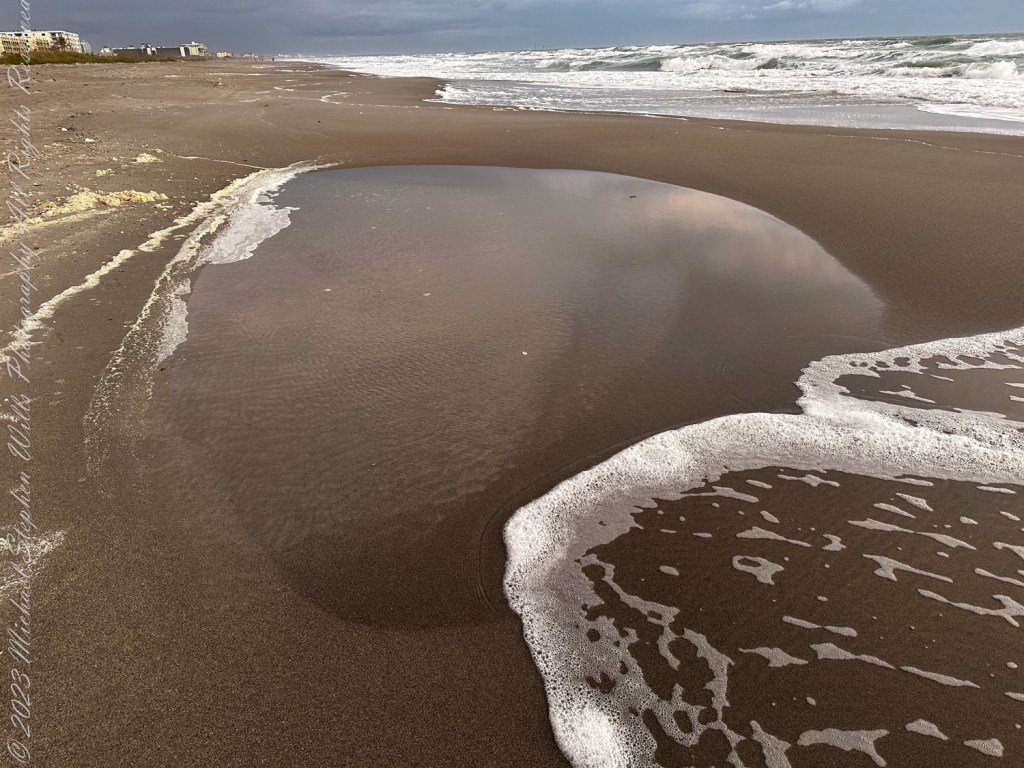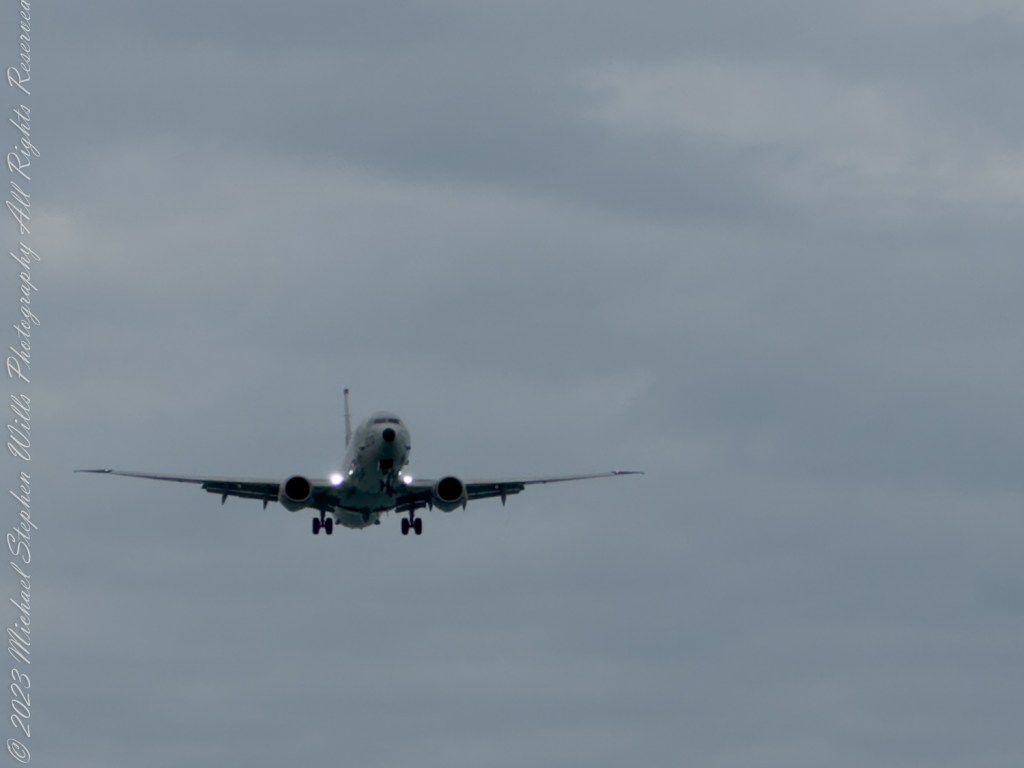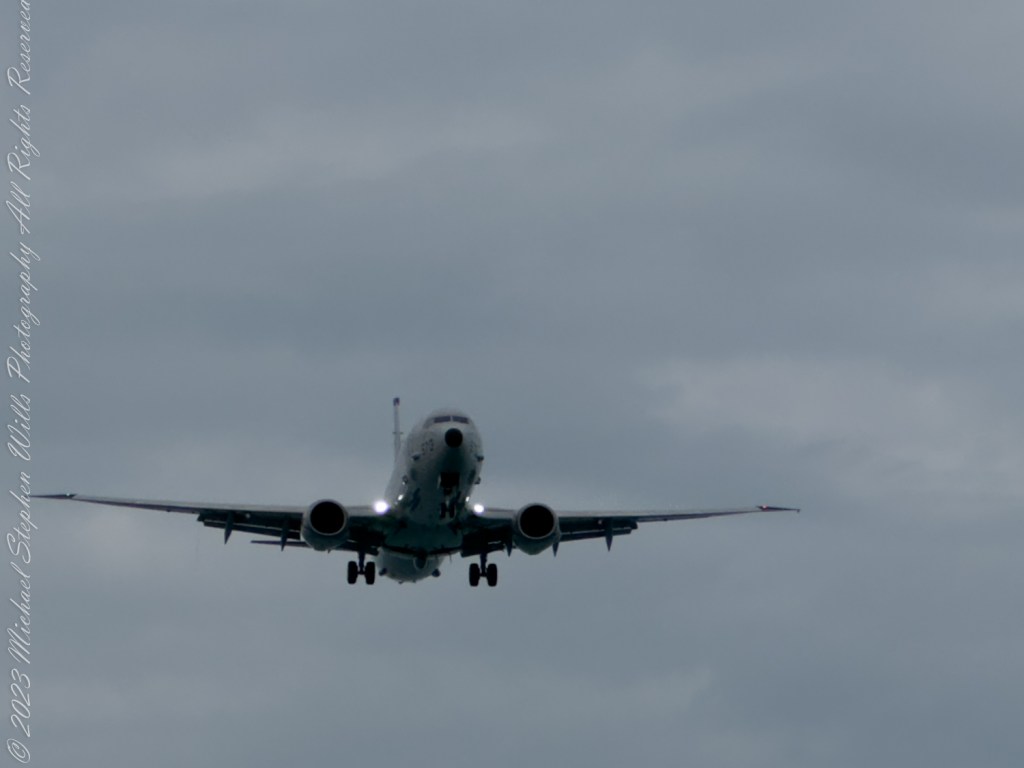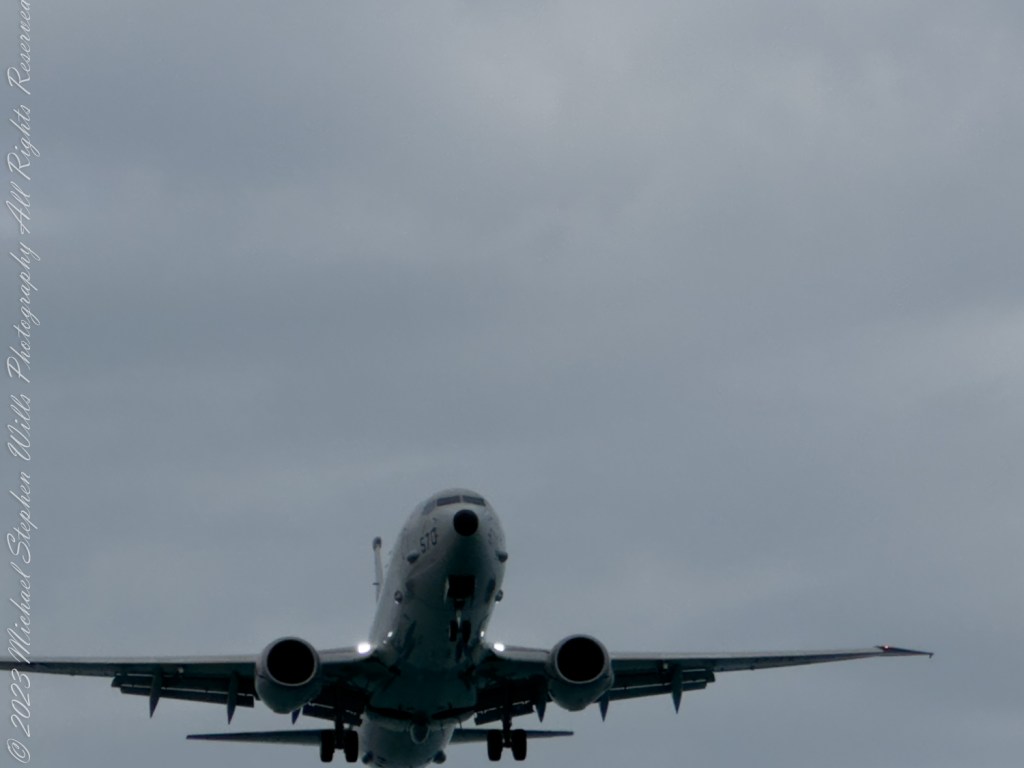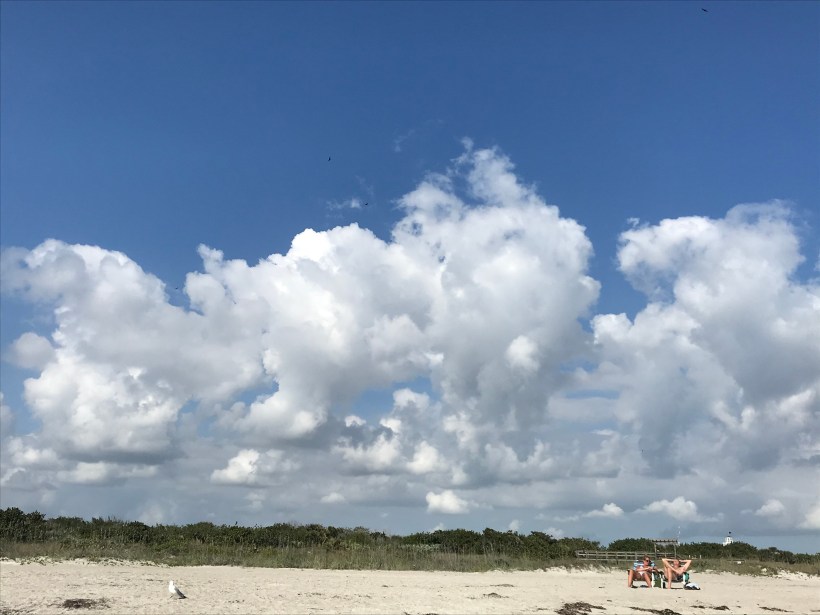
An expert surfer takes a wave near Jetty Pier Park, Cape Canaveral, Florida. Taken with an Apple IPhone 8.
Long Ride
An expert surfer takes a wave
An expert surfer takes a wave near Jetty Pier Park, Cape Canaveral, Florida. Taken with an Apple IPhone 8.
…is gold, / her hardest hue to hold, / her early leaf’s a flower; / but only so an hour… Robert Frost
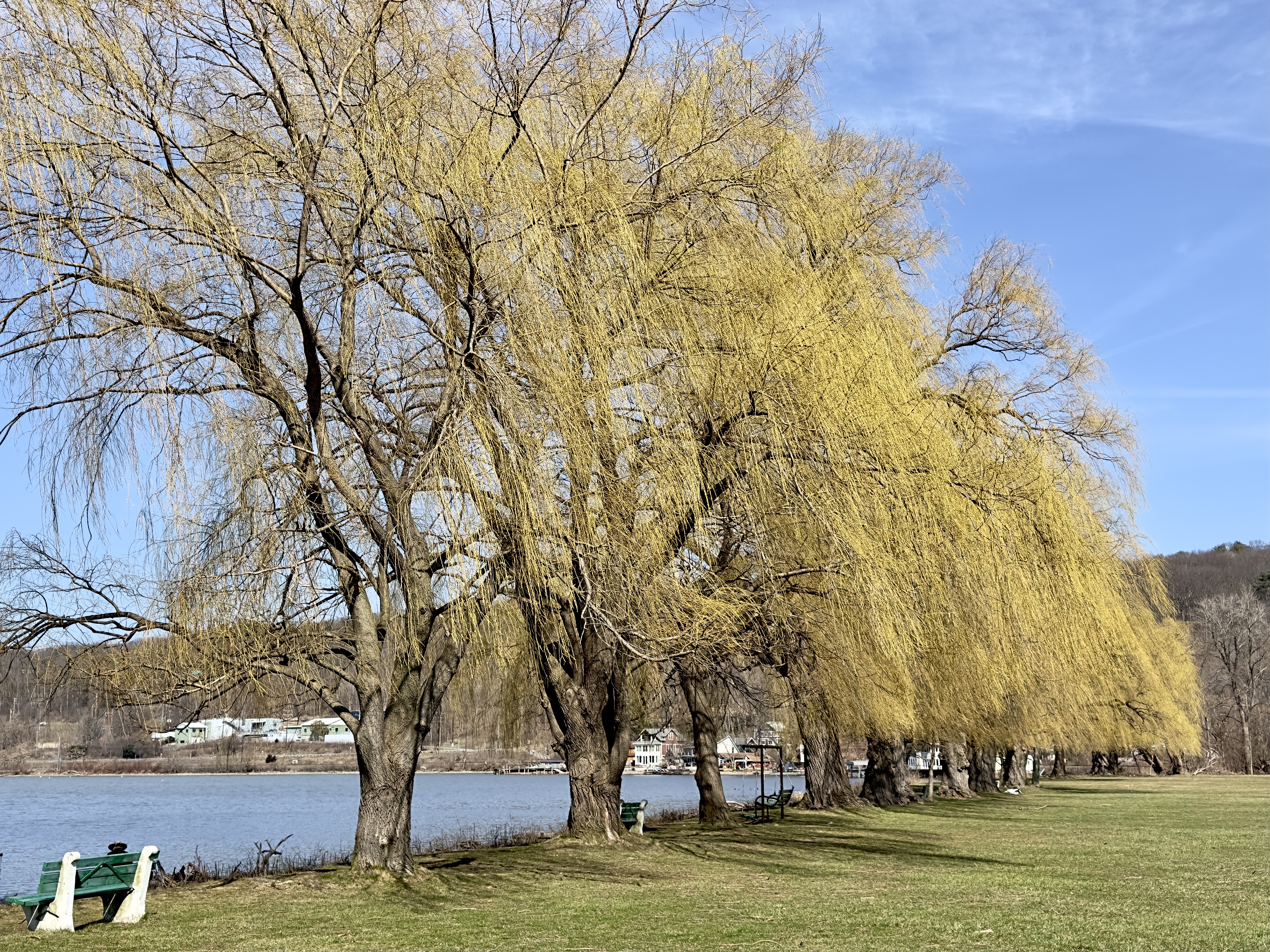
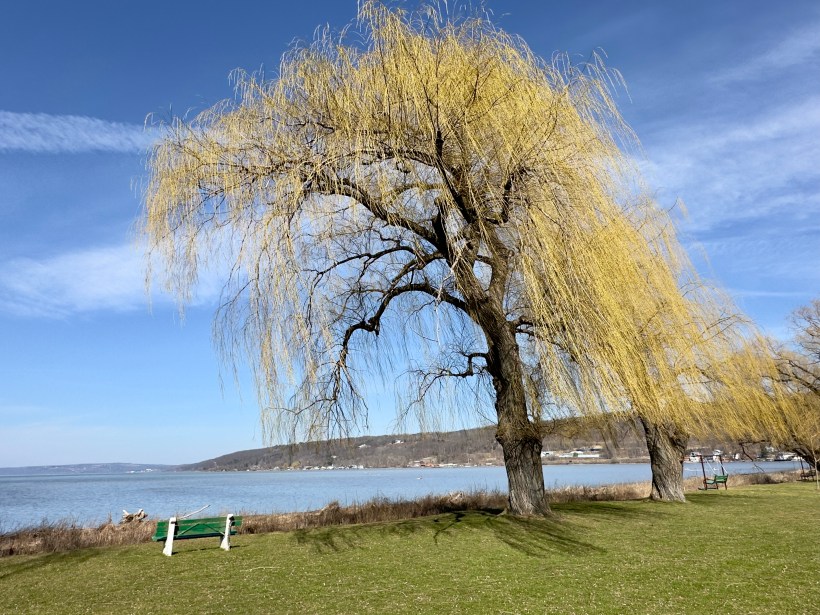
You walk alone by the waters of Cayuga Lake in Stewart Park, nestled in the heart of Ithaca’s Finger Lakes, where Salix alba, the white willow, stands proudly along the shoreline. You’re immediately drawn to the flurry of yellow flowers, a stark contrast to the still chilly early March air.

The white willow (Salix alba), with its rough, gray bark, is beginning to dress in its spring finery, its branches teeming with tiny, starburst-like flowers. Each one is a miniature sun, casting a glow against the intricate lattice of branches. These aren’t the soft catkins of the pussy willow but the yellow inflorescences that are characteristic of the white willow’s early bloom, a signpost that winter’s grip is loosening.

These trees, you learn, are dioecious, with separate male and female trees. The blossoms you see are likely the male flowers, their stamens dusting your fingers with pollen as you brush against them. It’s this pollen that will soon beckon the bees, urging them to emerge from their hives and begin the work that sustains the ecosystem. You can almost hear the faint buzz, a prelude to the symphony of life that summer will bring. Return in midsummer to find the female catkins comprise numerous small (4 mm) capsules, each containing numerous minute seeds embedded in silky white hairs, which aids wind dispersal.

As you wander further, you note the presence of the white willow’s kin, other deciduous companions some still bare and stretching into the sky and others leafing out. You stand there, at the cusp of seasonal change, where the slumbering trees are on the verge of awakening, and you feel a kinship with them. Like these trees, you have weathered the cold, dark months, and now you stand poised to greet the renewal that comes with spring.
The stark, knotted forms of the white willow branches against the clear sky speak to you of endurance and resilience. These trees have weathered storms and droughts; they have been companions to the lake, mirrors to its moods, and now they are beginning to celebrate the cycle of rebirth and growth.

You take a seat on a bench, the cool wood through your clothes a reminder of the lingering winter. You gaze out across the lake, the water reflecting the brilliance of the sun like a vast, rippling mirror, framed by the elegant silhouettes of the white willows. You feel the peace of the park seep into you, the slow, rhythmic lapping of the water syncing with your breath.
This is a moment of transition, from the sleeping to the awakening world. You think about the Salix alba, how its presence here is a testament to nature’s adaptability, thriving in the moist soil by the lake, offering shade in summer and shelter in winter, its branches a playground for the winds.
As you leave Stewart Park, you take with you the memory of the white willows in early March, the quiet guardians of Cayuga Lake. They remind you of the enduring beauty of nature, the seamless flow from one season to the next, and the quiet joy of standing witness to the first whispers of spring on the shores of the Finger Lakes.
beyond belief
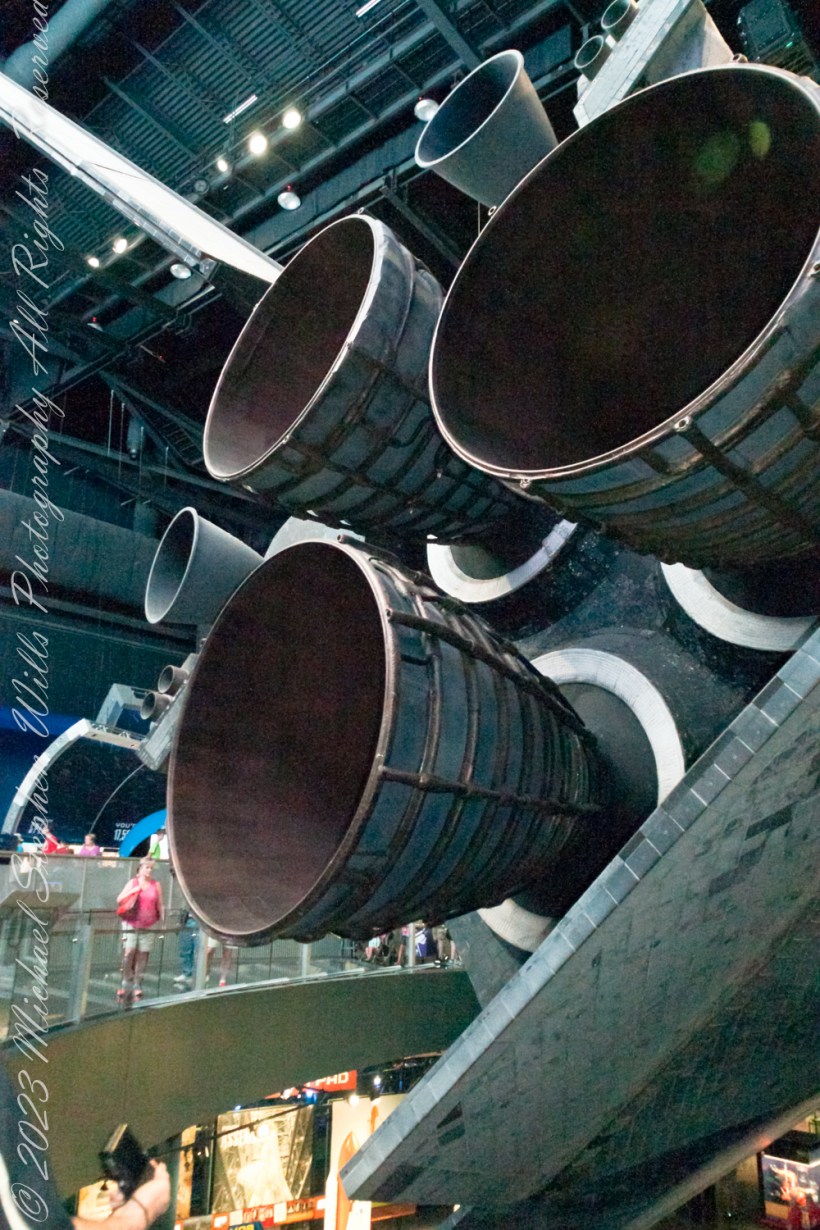
Waves built from onshore wind, fast, steady overnight, through the day from early morning until sunset. Pam and I adapted with a revisit to the Sands Space History Museum, Cape Canaveral just outside the Air Force Station. Click this link for a previous posting, “Cape Canaveral Lighthouse,” first of a series. This post header is a vintage gumball machine from the lobby.
By sunset the waves were roaring. Viewing from the safe distance of our condo porch we spied two surfers incredibly among the waves, taking rides. Waiting and attempting a ride. You can see for yourselves the two tiny dots of humanity, appearing and hidden among the waves. I spot them first and Pam does not believe me, I do not blame her. It is beyond my comprehension people are out there. I cannot recommend the quality of the video from my IPhone, our comments are humorous.
It is difficult, Pam is astounded when they come into view.
He rises briefly only to wipe out in this brief video.
One surfer emerges as his partner persists.
Wave Play
Brown Pelicans (Pelecanus occidentalis) fly as linear flocks of a few individuals, at altitude over the shore, and low over the surf line as seen here. Taken January 27, 2020 with the IPhone 8, there is a the insertion of the modern world as a cruise ship comes into view. The ship departs Cape Canaveral Cruise port for parts unknown.
Pelicans, when skimming the waves solo, fly even closer, and do wipe-out when a wingtip hits the water. This bird successfully negotiates a path through the surf.
…remembering our time on the cusp of the pandemic
After 2 pm check in we interrupted unpacking for a sundown beach walk, IPhones and Sony Alpha 700 camera in hand on the last evening of 2019. There is a business on A1A, the main road through town, advertising “beach weddings” and “elopements.” Here, using the 18 – 200 mm f3.5-6.2 lens, I spied this grouping of a mature couple holding hands, minister in attendance, for a wedding ceremony witnessed by young adult children on the right, parents (?) left. The groom’s shorts contrast with the bride’s white gown.

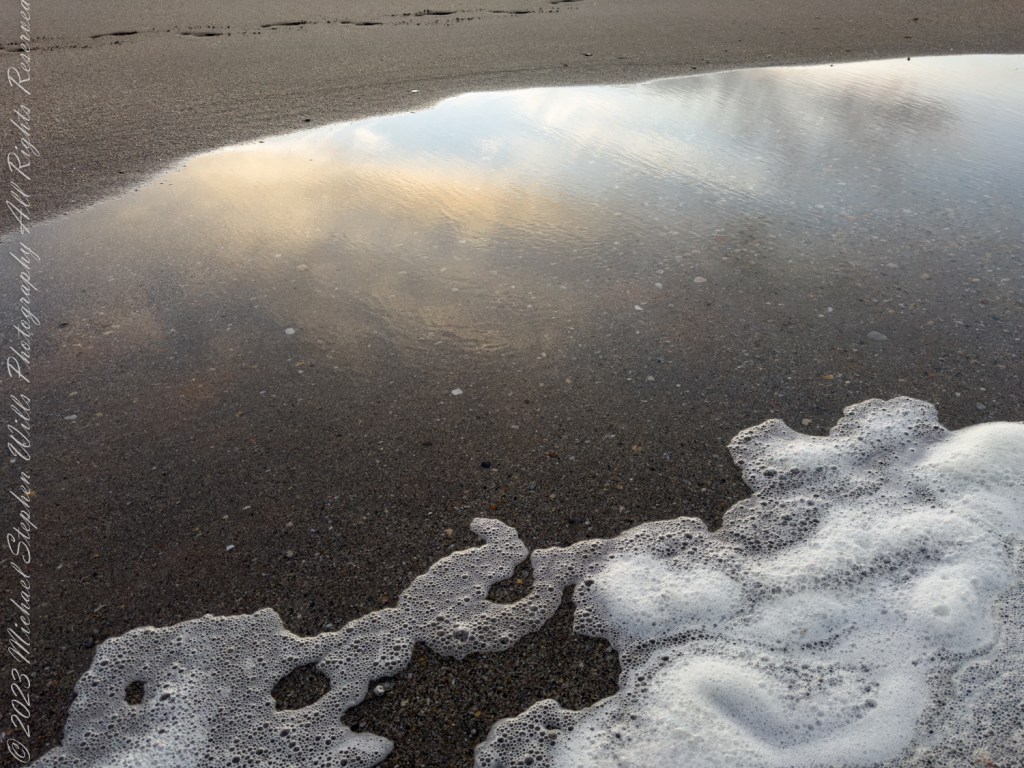
Sunlight, low in the western sky, was perfect for mirror-like reflections in the retreating surf.


A given of the Atlantic beach is the late afternoon light, best for capturing figures against the ocean.


Written below the high tide mark, a message inscribed, impermanent in spite of the deep cuts.

I have practice framing sunsets against beach development. Cannot complain as we enjoy our beach side condo.

A slide show of these images.


Witness a duel not of might, but of vibrant melodies between the cardinal and song sparrow. This 14-second video captures a fleeting yet profound moment in the Finger Lakes’ springtime chorus. Join us in unraveling the significance behind this avian serenade.
In the serene backdrop of the Finger Lakes in upstate New York, an enchanting encounter unfolds as the first whispers of spring touch the air. It’s March 14th, a day that marks the gentle shift from the silent, introspective winter to the lively, expressive season of spring. On this day, a captivating spectacle takes place — a duel not of might, but of melody. Two distinguished songbirds, a male cardinal (Cardinalis cardinalis) with its vibrant red plumage that seems to capture the very essence of life itself, and a male song sparrow (Melospiza melodia), modest in color yet profound in voice, engage in an early springtime symphony.
This 14-second video, garnished with brevity, captures a fleeting moment in nature’s grand concert, where these feathered musicians compete, not for supremacy, but for the sheer joy of song and the chance to herald the new season. The cardinal, with its rich, whistling tunes, fills the air with a repertoire of songs that resonate with the promise of new beginnings. Meanwhile, the song sparrow, with its intricate melodies that vary dramatically from bird to bird, offers a counterpoint that is both complex and captivating.
This auditory duel, set against the tranquil beauty of the Finger Lakes, is more than just a display of vocal prowess. It’s a ritual that speaks to the heart of nature’s cycle, a testament to the resilience and adaptability of these species. As these songbirds vie for the attention of mates and assert their presence in the spring landscape, they also remind us of the enduring beauty and mystery of the natural world. You’ll also catch the call of a crow and, in the distance, another Cardinal.
This moment, brief yet infinitely rich, invites us to pause and listen, to lose ourselves in the simple yet profound joy of birdsong. It’s a reminder that, even in the quietest corners of the world, life thrums with vibrancy and the promise of renewal. Join us as we delve into the story behind this melodic encounter, exploring the significance of song in the lives of these birds and the heralding of spring in the Finger Lakes.
Ever wondered about the iconic robotic arms that gracefully danced in space, tethered to the Space Shuttle? Meet Canadarm, a marvel of engineering that transformed space missions. Born from a NASA invitation to Canada in 1969, this robotic arm did more than just move payloads; it became a symbol of international collaboration in space exploration. After the Columbia disaster, its role expanded, ensuring the safety of astronauts with critical inspections. Dive into the captivating journey of Canadarm, where technology meets the stars. Click to discover how a Canadian innovation became a pivotal part of space history.

The Canadarm, or Canadarm1, officially known as the Shuttle Remote Manipulator System (SRMS) and sometimes referred to as the SSRMS, represents a series of robotic arms utilized aboard the Space Shuttle orbiters. These arms were instrumental in deploying, manipulating, and retrieving payloads. Following the tragic Space Shuttle Columbia disaster, the use of Canadarm became invariably linked with the Orbiter Boom Sensor System (OBSS). The OBSS played a crucial role in examining the shuttle’s exterior for any damages to its thermal protection system, enhancing the safety of subsequent missions.
The genesis of Canada’s involvement in the Space Shuttle program dates back to 1969 when the National Aeronautics and Space Administration (NASA) extended an invitation to Canada. At the outset, the specifics of Canada’s role were unclear, though the need for a manipulator system was immediately recognized as vital. The Canadian firm DSMA ATCON had previously made strides in robotics with the development of a robot designed to load fuel into CANDU nuclear reactors, capturing NASA’s interest. By 1975, a formal agreement was reached between NASA and the Canadian National Research Council (NRC), under which Canada would undertake the development and construction of the Canadarm.

The NRC subsequently awarded the contract for the manipulator to Spar Aerospace (currently known as MDA), under which three distinct systems were to be developed: an engineering model to aid in design and testing, a qualification model for environmental testing to ensure the design’s suitability for space, and a flight unit destined for use in missions. This collaborative effort marked a significant milestone in the use of robotics in space exploration, showcasing international cooperation in advancing space technology.
Ghosts from the future?
Here is the fifth in a series of photographs centered on the early history of space flight on Cape Canaveral mostly taken during a tour organized by the Cape Canaveral Lighthouse Foundation. “Google” the foundation for details of future tours. Here we explore the sites of the first launches on the Cape, Launch Complexes 1, 2, 3, 4. (LC 1 – 4).
Our bus proceeded east on Lighthouse Road past Launch Complexes 21 and 22 in less than half a mile we were within the first sites of the United States Space age, sites with the lowest numbers, LC 1 – 4.

If, instead of distance, the bus traveled back in time 68 years to July, 1950 we would be witness to the first United States space launch of the two-stage “Bumper 8”, a former “V2” missile topped by a WAC Corporal that reached 248 miles above the earth, about where the International Space Station circles now.

Almost certainly, the man who designed and directed the production of the Nazi V2, Werner vonBraun, was perched on the lighthouse a half-mile distant.

The Nazi “vengeance weapon 2”, the V2, a device so horrifying British authorities claimed the first V2 attacks to be “gas explosions” rather than admit a Nazi weapon descended without warning. Beginning September, 1944, over 3,000 V2’s landed on London, Antwerp and Liège resulting in an estimated 9,000 deaths, mostly civilians. 12,000 forced labor and concentration camp slaves died in the construction of the production facilities captured by the Soviet Union during the collapse of the Nazis. These victims, arms linked, will form a circle 15.9 miles in circumference around the Bumper 2 launch.

von Braun and key V2 personnel surrendered to the Americans and, along with enough parts to construct 80 V2s, were taken to the United States. His direction of US missile development lead eventually to the enormous Saturn rocket that lifted three men to the moon, so good came from our bet on vonBraun and the V2.
In January, 2018, firmly in the present, our bus approached these now “deactivated” sites driving down Lighthouse Road. Confined to the bus, I used my Canon EOS 1Ds Mark III and the EF 70-300mm f/4-5.6 IS USM lens to capture these scenes.


I can almost see someone behind the glass, enjoying a blast of air-conditioned air, dry and cool.


From 1950 into the 1960’s LC 1-4 saw launches of cruise missiles, some of which were able to maneuver and land on the “skid strip” you can pick out on the “21,000 V2 Victims” image, above. A positive discovery from my research on wikipedia the weapon systems tested here were not fired in anger. Continued development in other places lead to production of generations of cruise missiles launched by Presidents Clinton and Bush against Afghanistan, Iraq and (??) other targets. What victim ghosts, arms linked in ever growing circles, are lurking in our future?
A building on LC 4 has the designation “Aerostat”, one of the last projects supported. I saw an aerostat in action in the early 2000’s over Fort Huachuca, Arizona near the border with Mexico. An aerostat is a flying craft that does not rely on moving air to achieve lift, balloons for example.
The Goodyear blimp is a memory from my childhood on Long Island, the Fort Huachuca aerostat was a smaller version, outfitted with advanced technology for monitoring the surrounding environment. “Google” aerostat mexican border to learn more about the current deployment.


With the development of Intercontinental Ballistic Missiles (ICBMs) the facilities of LC 1 – 4 became obsolete. ICBMs are a theme of the next installment of this series.
Sources of information for this post: I used information from the Wikipedia site for the key words V-2, Launch Complex 1, Launch Complex 2, Launch Complex 3, Launch Complex 4. The Bumper 8 launch photograph caption includes a source citation.
Decoys and Cruise Control
Here is the fourth in a series of photographs centered on the early history of space flight on Cape Canaveral mostly taken during a tour organized by the Cape Canaveral Lighthouse Foundation. Google the foundation for details of future tours. Here we explore the sites closests to the Lighthouse: Launch Complex 21 and 22.
Vergeltungswaffe 1 (Vengance Weapon 1 AKA V-1), produced at Peenemünde on the Baltic Sea was first used against Great Britan by Germany one week after the D-day landings. 8,025 of these flying bombs, the first cruise missles, caused the death of 22,892 people, mostly civilians. The first cruise missles for the USA were developed less than 1,000 feet away from the lighthouse. After touring the lighthouse we boarded the bus to visit these sites, Launch Complex 21 and 22.

Nature abounds in Cape Canaveral Air Force Station. This ibis hunted near the lighthouse on our way to Launch Complexes 21,22.

We passed close to the blockhouse first viewed in my post, “Lighthouse and Rockets,” and I captured this detail of the long abandoned structure. The last test launch of a Mace missle was June, 1960.

This wreckage photograph was part of my,“Lighthouse and Rockets” post. It was taken from a lighthouse portal. It is a type of cruise missle, although I cannot identify the exact type, comparing the engine, on the right, with available photographs of the “Bull Goose” and “Mace” missles developed here.

Rail launched, as was the German V-1, the missles developed here were called “Bull Goose” and “Mace.” Bull Goose was a delta winged craft intended as a decoy, to appear on radar as a strategic bomber during a nuclear attack. At that time, the rails were in the open. The building here was a revampment of the site for development of the Mace. The other side of this structure is open, the launch rail pointed up from the rear. There are two launch rails, numbered 1 and 2. The building placard is “05961,” the numeral “1” designates site 1. The use of numbers of designate a site is unusual. Letters are used elsewhere on Cape Canaveral and Kennedy Space Center.

The powerful rocket exhause was directed though these pipes. Site 1 is on the right.

Navigation is a crucial requirement for cruise missles. The Bull Goose used a gyroscope with no reference to surroundings. The guidance system held the launch bearings, a successful flight was completed within 115 nautical miles of the target.
If deployed, the plan was for thousands of these missles to launch 1 hour before the attack craft set out and 1 hour after. The missles were not armed, but would descend in the thousands around the targets. Similar to what the Germans did to civilians in England.
After three years and 136.5 million dollars the Bull Goose was cancelled because it could not simulate either the B-47 Stratojet or B-52 Stratofortress nuclear bomb delivery aircraft. Not a single decoy was fired in anger.

The Mace, for which this building was created, used a guidance ATRAN (Automatic Terrain Recognition And Navigation, a radar map-matching system). The map was produced on a 35 mm film strip carried on the missle, the live radar returns were “matched” against the film with course correction made for differences. The Mace was of limited usefulness due to the lack of radar maps for target areas within the Soviet Union. The Mace was deployed to Germany and South Korea until phase out in 1969.
Sources of information for this post: I used information from the Wikipedia site for the key words V-1, Launch Complex 21, Launch Complex 22, Mace, Bull Goose.
from Roman Numerals to Rockets
Here is the third in a series of photographs centered on the early history of space flight on Cape Canaveral mostly taken during a tour organized by the Cape Canaveral Lighthouse Foundation. Google the foundation for details of future tours. Here we start with Roman Numerals and end with Rocket Research.
We were lucky to be on this tour, for a period of time the Air Force closed off the Lighthouse. The Lighthouse Foundation obtained permission to start this tour in 2016 (this was January 2018) and I happened to discover it while poking around in preparation for the SpaceX “Falcon Heavy” launch in early February 2018.
As Pam and I climbed, each floor docent (volunteer guide) was so helpful with information and hospitality. At the last floor, the stairway to the upper floors was roped off. Top levels were closed, Cape Canaveral Lighthouse is operational. Here is a photograph of the closed off staircase. There is a roman numeral “6” (VI) inscribed in the staircase column. This is the numbering system described in the first post, “Cape Canaveral Lighthouse,” by which the entire 151-foot lighthouse can be disassembled/reassembled as was done in the 19th century.

The fine finish of the handrail termination for the stairs to upper floors is an example of 19th century attention to detail.

Macro of numeral inscription on a lower floor stairway column.

The lower staircase support column was much wider with space for illustrations and displays. Here is a reproduction of a watercolor of the lighthouse from the earliest days of rocketry on the cape. The lighthouse keeper, assistant and their families lived alongside the tower. The housing was later razed. The Lighthouse Foundation is raising money to build reproductions of the housing.

The painting is an accurate representation of the tower. The dark spots are the windows, or portals, captured in my last post, “Lighthouse Details.” Every portal offered a view of historical or current rocketry. In the following photograph, beyond the outbuilding, is a blockhouse, protection for the early rocket scientists, now abandoned. The structure services launch complex 21 and 22. More in a later post.

Depending on your viewpoint, the landscape around the tower is either littered with or graced by relics such as the wreckage in the following photograph.

As we stood on the exterior staircase, looking toward the building in the following photograph, the docent told a story of Werner von Braun, how he loved to smoke cigarettes and watch rocket tests from the top of the lighthouse. After some spectacular failures, for reasons of personal safety he was excluded from the tower. His office during the development of the Minute Man and Persing missiles was in this building.

This view overlooks the former sites of Minute Man and Persing rocket development. Beyond the launch towers is Port Cape Canaveral, visible to the right are large cruise ships.

Looking from portals facing northeast is this view across ICBM road and its many launch sites. We will visit these in a future post.