Selfie Sticks and Petrohué Waterfalls

the selfie and me, me, me

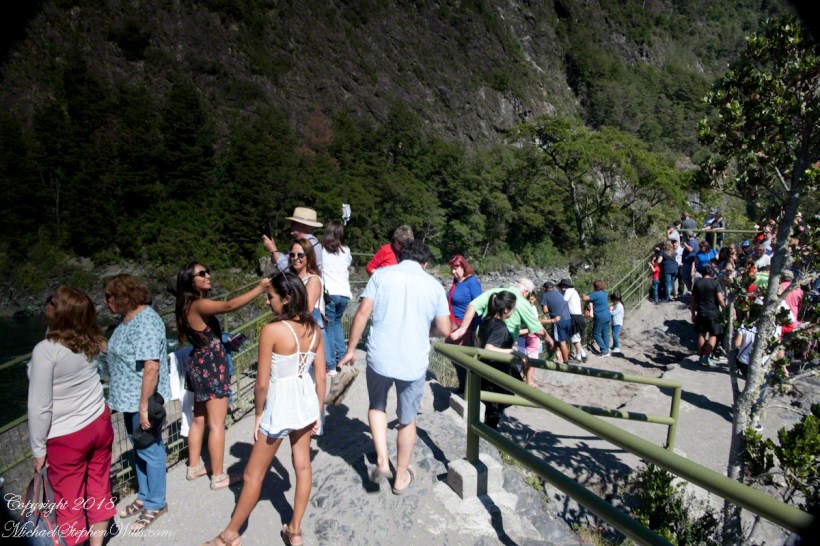
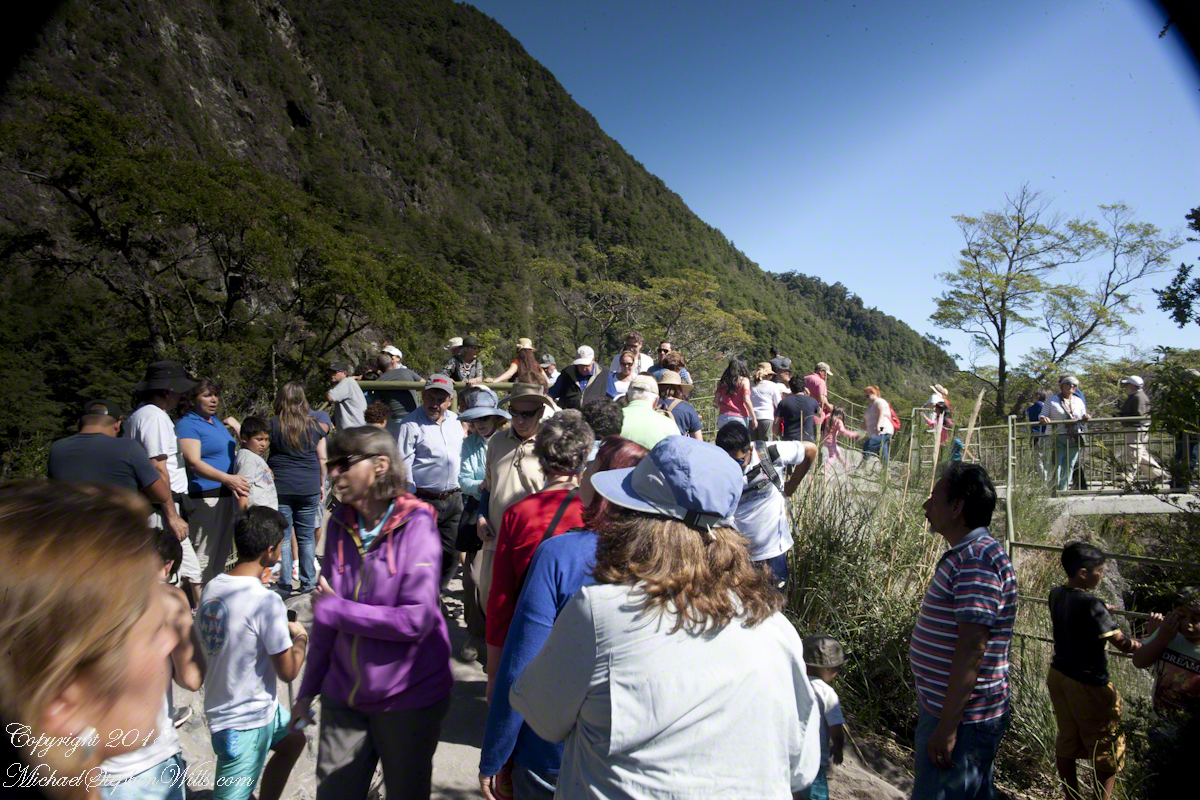
Petrohué Waterfalls are on the tourist track, traffic on the walkway was heavy on the southern hemisphere summer day, February 2016, of our visit. People were relaxed and friendly, the walkway well designed and safe. The wide angle lens was mounted on my Canon dslr, with a circular graduated neutral density filter. This is a filter with the upper third restrictive to light fading gradually to clear and mounted on a ring to rotated to cover the bright portion of the view. I used this successfully in the previous postings to obtain an exposure of the bright sky and darker land (for example, “Orsorno Volcano and Tourists.”). I could not resist capturing our fellow tourists. With a wide angle lens it is easy to do candid shots, such as the following. Most people are unaware of the capability of the 24 mm wide angle lens.

Click any photograph for a larger view.
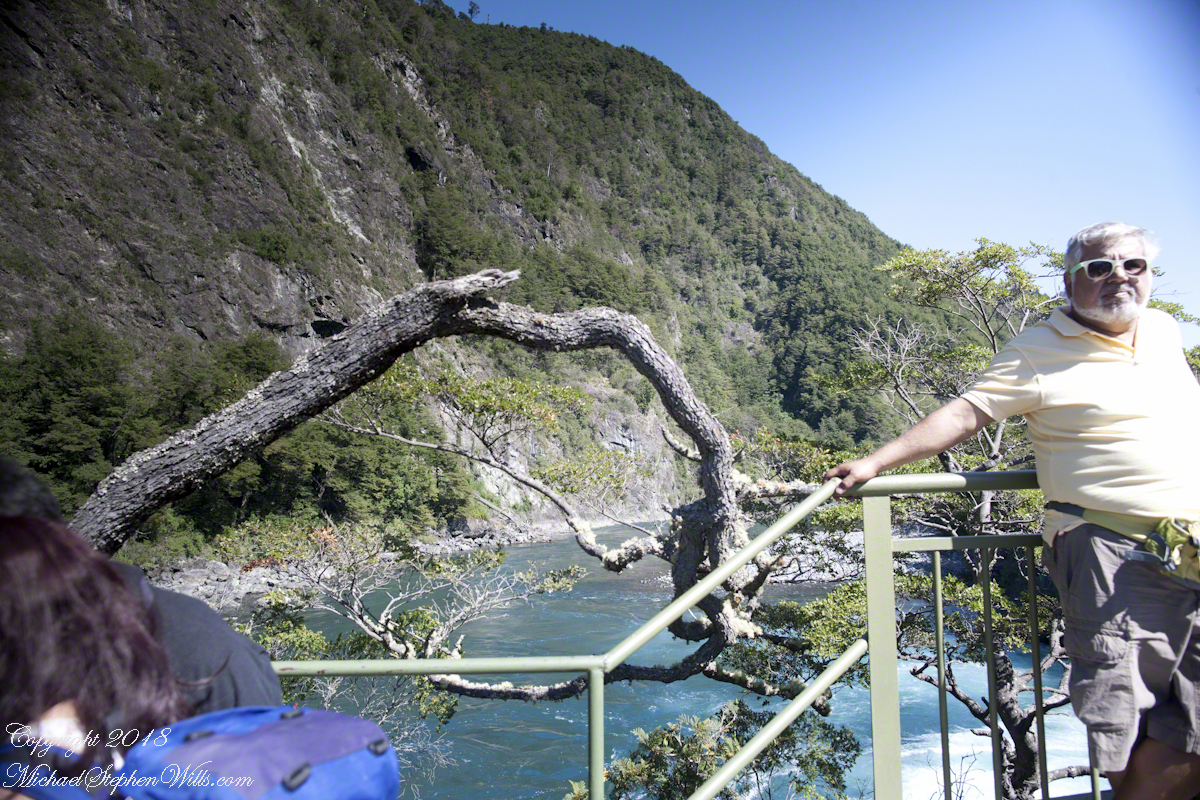
Unfortunately, in the rush of the crowd and moment the dual use of a configuration for landscape and (candid) street photography lead to mistakes. I did not have the lens hood attached correctly, you can see the hood in each corner. Then there is the circular, graduated filter. In the above photograph, the shaded portion runs across the lower left to the upper right. The subject is watching me photograph the water.
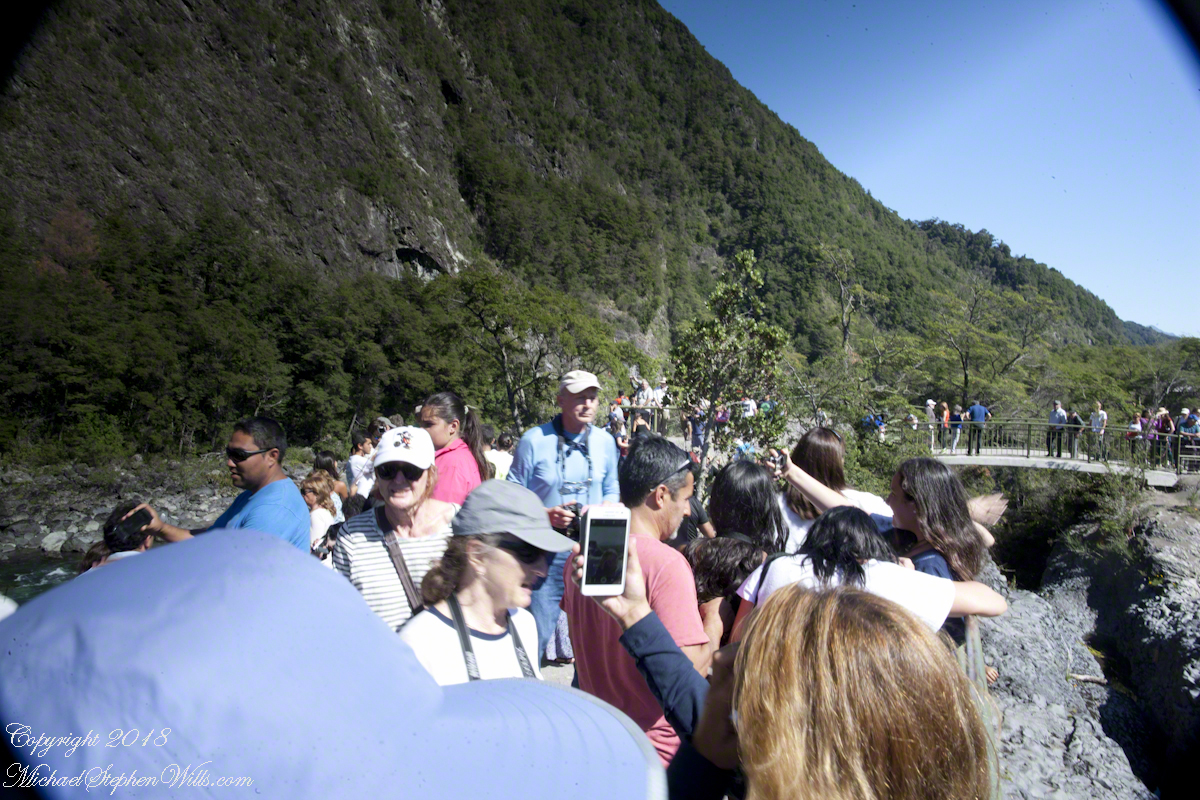
Here, I turned around from photographing the Orsorno Volcano to capture these selfie fans leaning against the railing to capture themselves and the volcano through they are in the minority. The trail is a “dead end”, rising to the point above the falls, where I am standing.
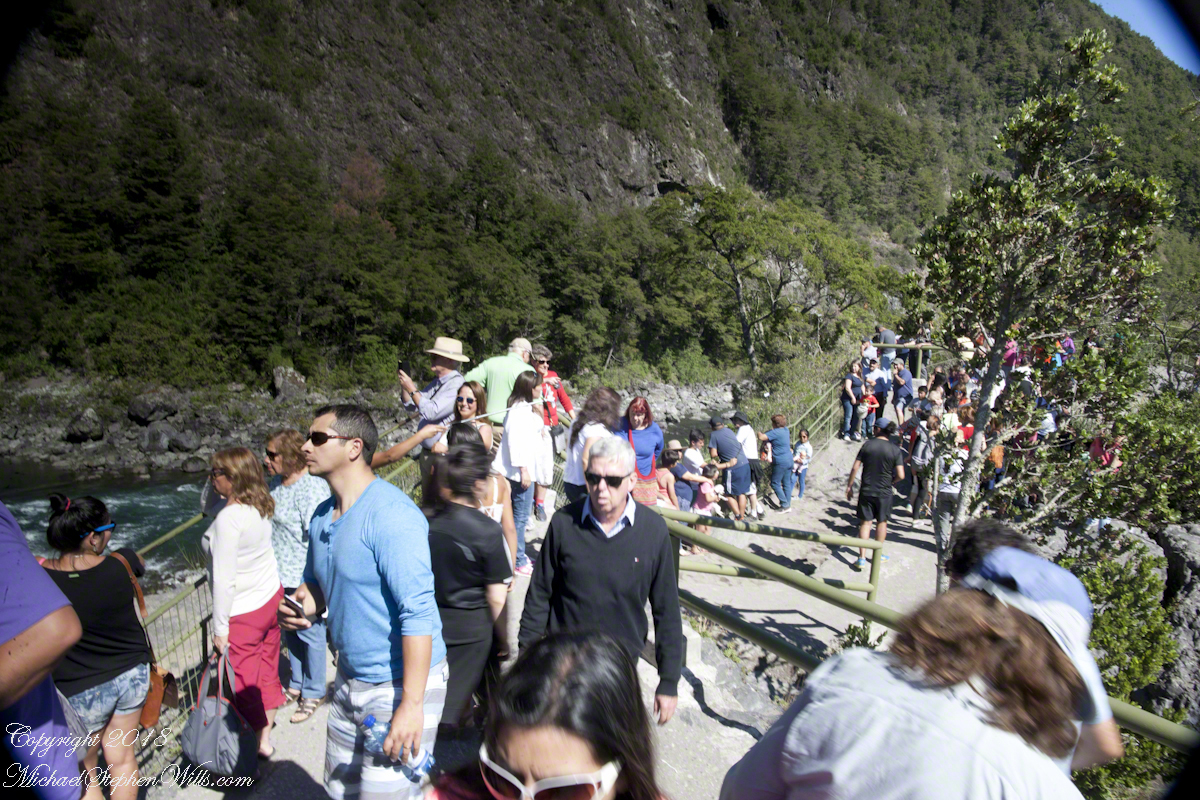
Selfie Stick

We started back down towards the point over the incredible emerald green water. There were three teenagers having fun with a selfie stick. Around them are people entranced by the water, as we werel.
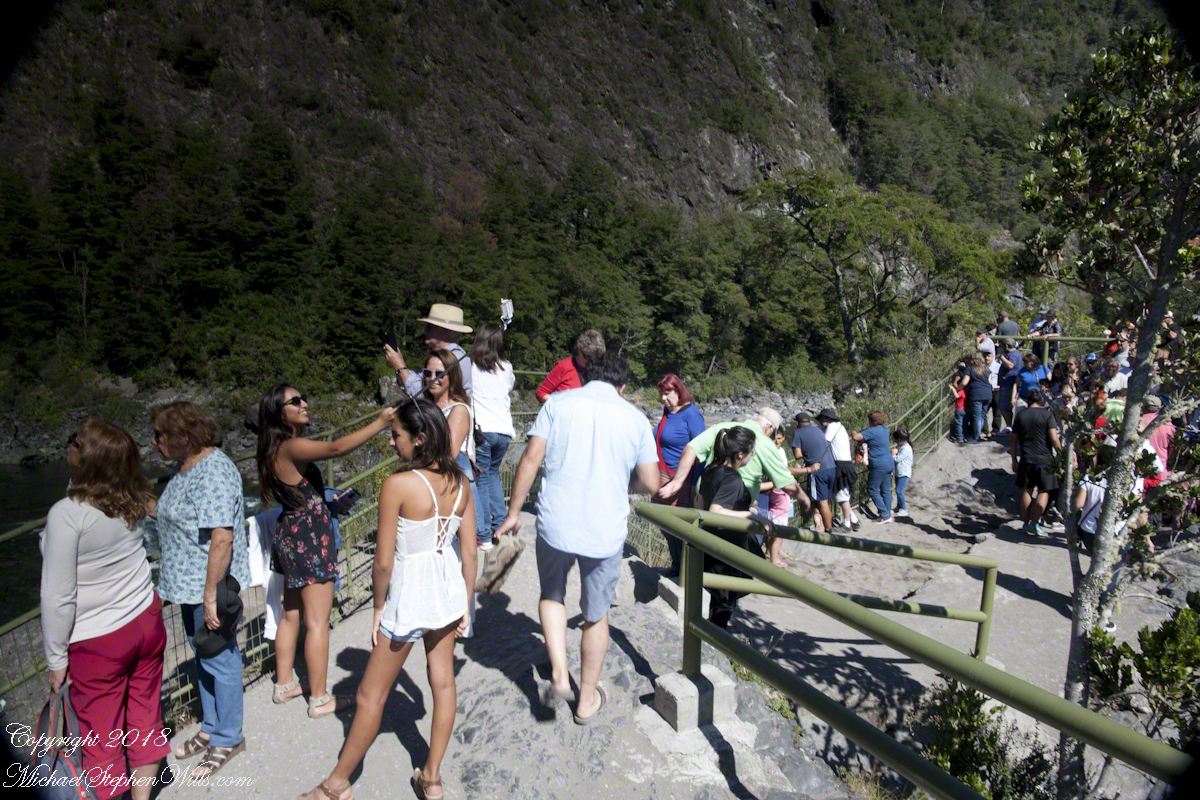
Smile!! You’re on Candid Camera

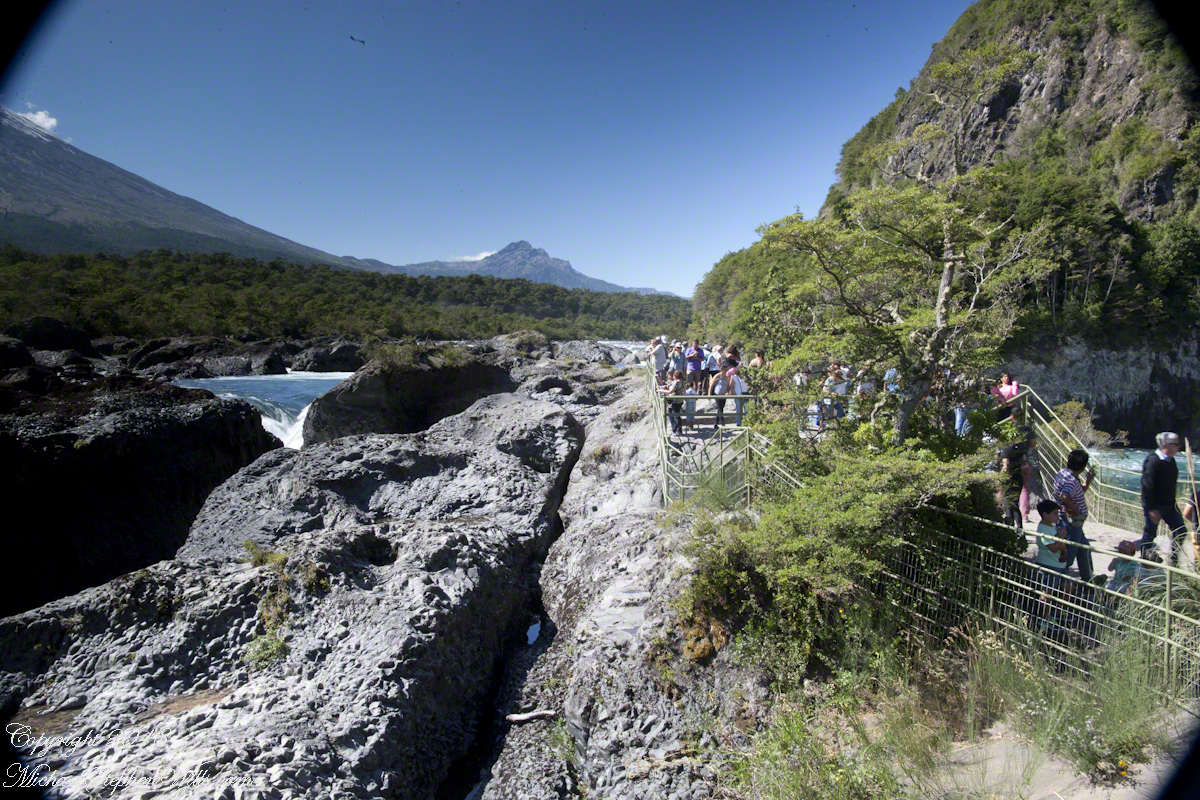
Headed back, I thought that curving tree was a good subject. Turned out, a fellow tourist heightened the interest of the shot. You see him, leaning against the railing next to the tree in the mid-distance of the following shot.
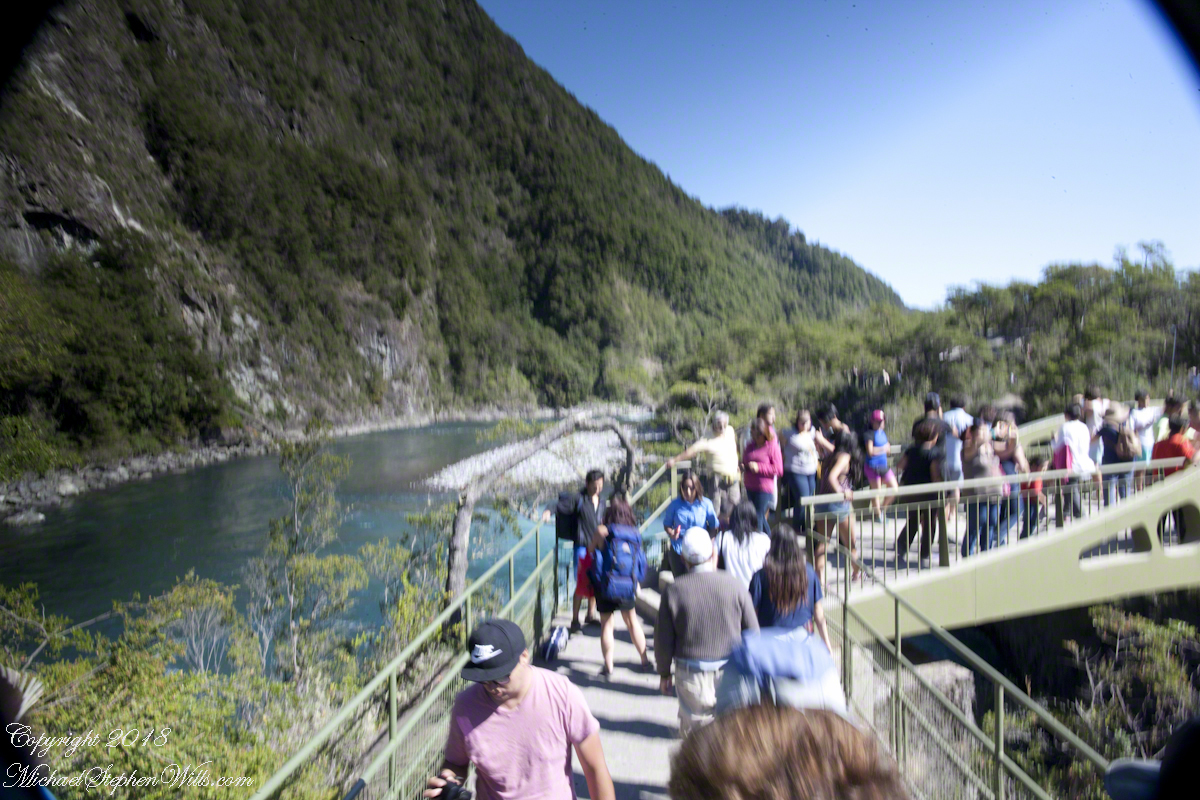
Here I am, looking back toward the child of Orsorno and the entire length of the observation walkway filled with people.

Christmas Angels

Angels I Have Known

This is part of my project to document our Christmas memories through photography. Here we explore the themes angels of the Christmas Story and in our lives.

The angels of our Christmas tree and home remind us of the Jesus birth stories of scripture and the force of love in our own lives.

What comes to mind with the sudden appearance of Gabriel to Mary and that astounding message? Unlike the attempt of Jonah to avoid his calling, the subtext to Mary’s ready acceptance is the risks faced by an affianced woman who becomes pregnant. The book of Deuteronomy (Chapter 22 verses 13 – 21) calls for stoning a woman who presents herself for marriage as a virgin, when she is not.

When learning of Mary’s pregnancy, Joseph’s reaction, as a follower of Mosaic Law, was to divorce her quietly to avoid exposing her to shame. It was a visit from an angel, in a dream, that convinced Joseph to accept Mary (Matthew Chapter 2, verses 18 – 24).

ChristmasAngel-3

An angel visited shepherds, announcing “today in the city of David a savior has been born for you who is the Messiah and Lord.” Suddenly there was a multitude of the heavenly host with the angel, praising God.” Luke Chapter 2, verses 8 – 13.

ChristmasAngel-1

Was it an angel who warned the Magi, in a dream, not to return to King Herod with news of Jesus (Matthew Chapter 2 Verse 12)? Scriptures clearly state (Matthew Chapter 2 verse 13) “the angle of the Lord appeared to Joseph in a dream and said, ‘Rise, take the child and his mother, flee to Egypt.”

ChristmasAngel-4

People can be angelic in expressing love for others through action. I am thinking of a movie Pam and I viewed last evening, “The Theory of Everything.” Jane Wilde, in her love for Stephen Hawking, stays with him when, shortly after their romance began, he was diagnosed with ALS. The prognosis was death in two years. In all likelihood, Jane gave Stephen his life and work through loving him. He is alive and working today at 75.

Nested Angel

The love of our parents is more common, no less precious.

ChristmasAngel-7

A note on the photographs, I used a Canon EOS-1Ds Mark III dslr with Canon lens EF 50 mm f/1.2L, Canon Speedlite 600Ex-Rt, Manfrotto studio tripod and hydrostatic ball head.  Some of the photographs were hand held.  When the flash was used, it supplemented ambient light from a large north facing bay window.

Waterfall Textures

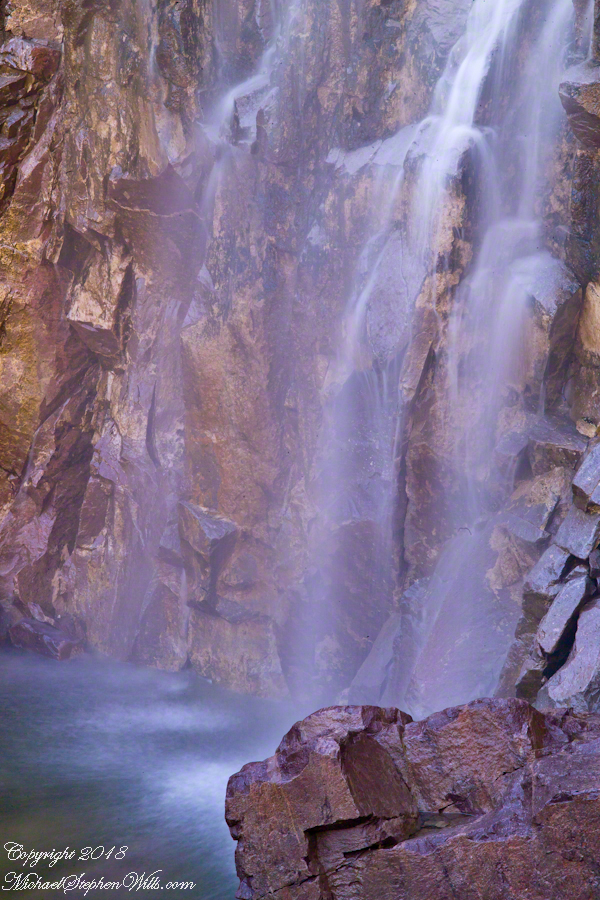
Unrestrained chaos at the foot of Arizona’s highest waterfall

I received notice of IStock acceptance of select photographs from my last posting, “Wilderness Textures”, was accepted.  Click to view my IStock Portfolio, including  photographs from today’s posting included in the acceptance notice.

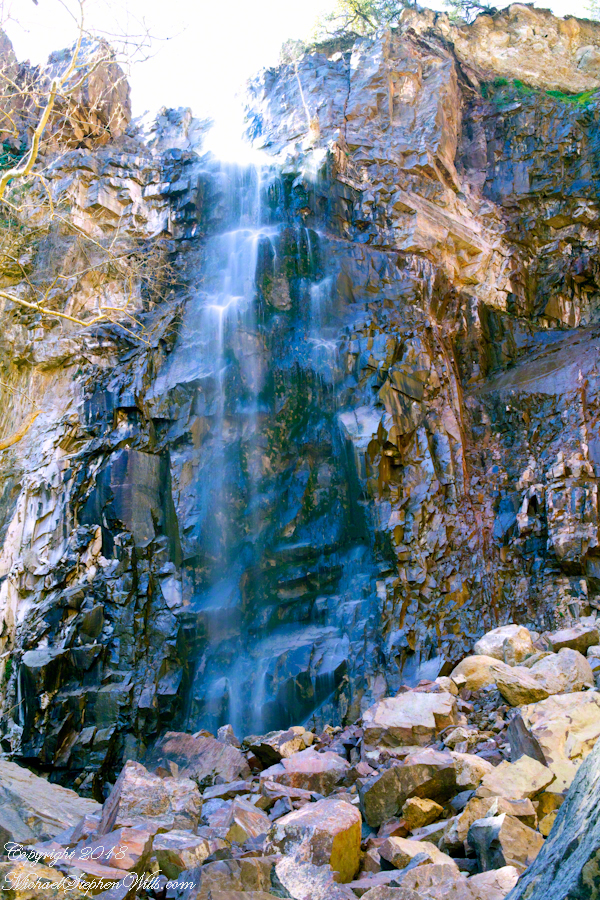
In this post I move up the Reavis Creek canyon from where the last posting, “Wilderness Textures”, was sited to the foot of Reavis Falls.  With the first photograph you look up at the falls from the head of the canyon carved by the creek over eons.  The rock wall, the canyon “head”, is thick with microorganisms, fungi, mosses.

Reavis Creek Water and Light – CLICK ME for more abstract photography.

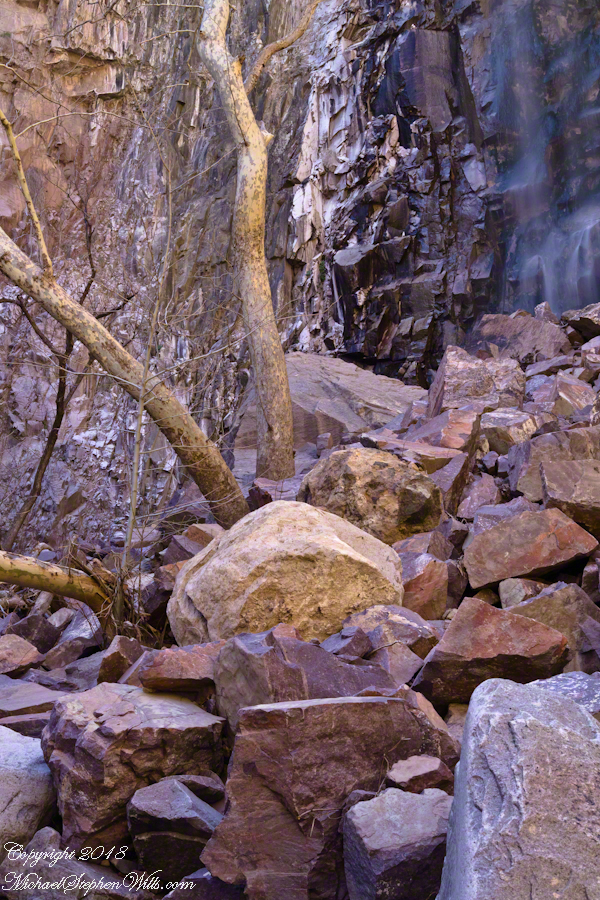
In the foreground is a jumble of boulders, some washed down at flood time, spread wide at the bottom of the falls, piled to a jumbled height of 15 feet. 

Talus is the geological term for this formation.  Derived from the Latin word for slope (talutum) the definition, from the Oxford English Dictionary, is “A sloping mass of detritus lying at the base of a cliff or the like consisting of material fallen from its face.” 


The ankle bone is also called talus, from the French word for heel, I bring it up because climbing this chaotic, unstable jumble is a way to break your ankle.  The route to Reavis Falls, a climb up one side of Lime Mountain then down the other on a non-existent (lightly marked) trail, is rated difficult and impossible with a broken leg or ankle.  I was alone and very careful to check each rock for stability before putting my weight on it.
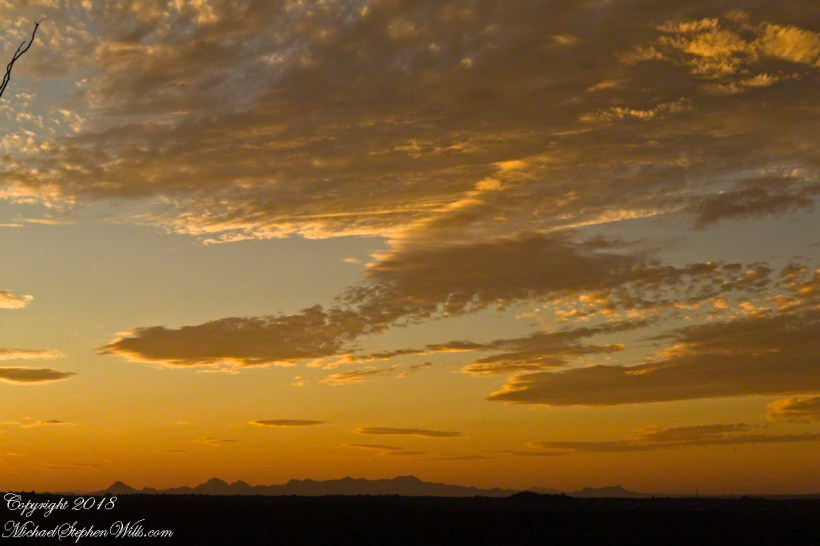
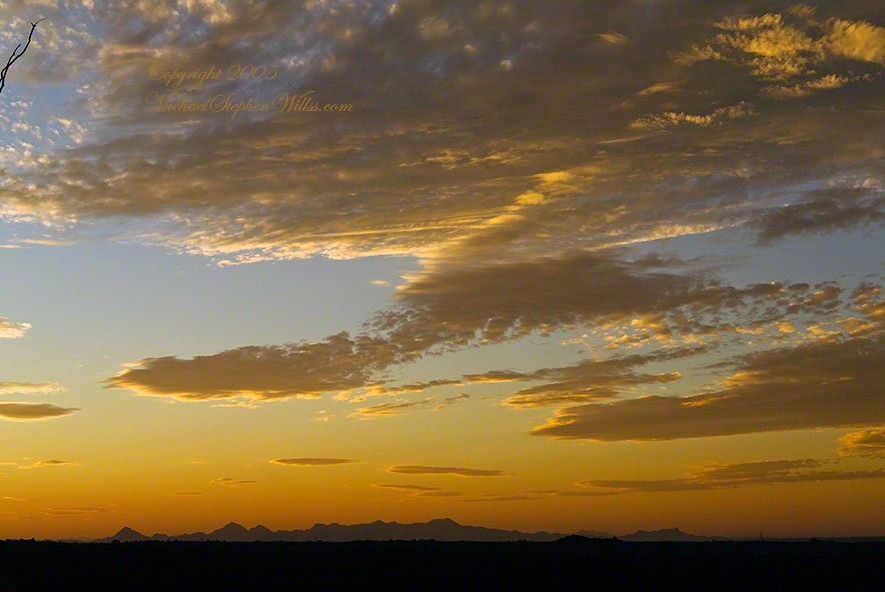
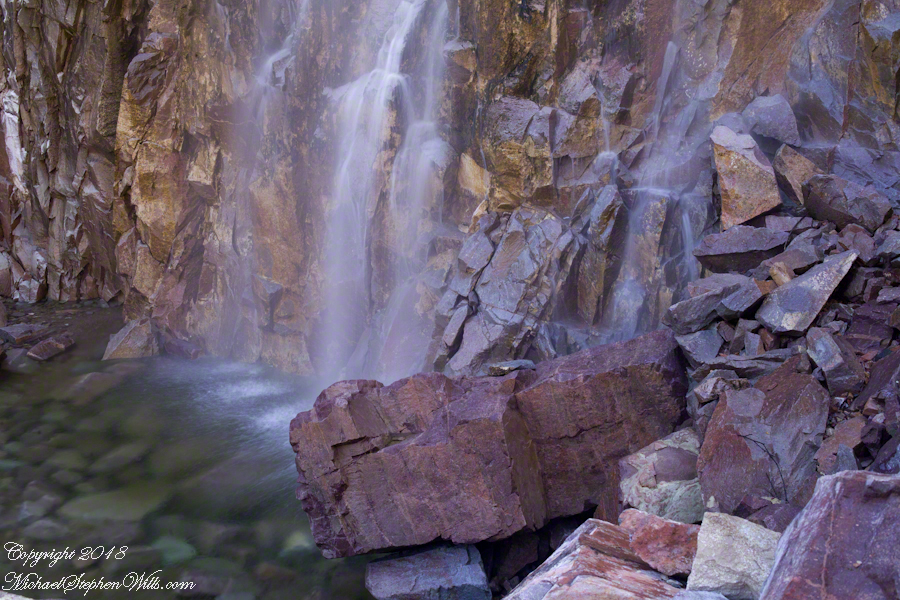
A climb of the talus pile was necessary to view the pool at the waterfall base, for this photograph.

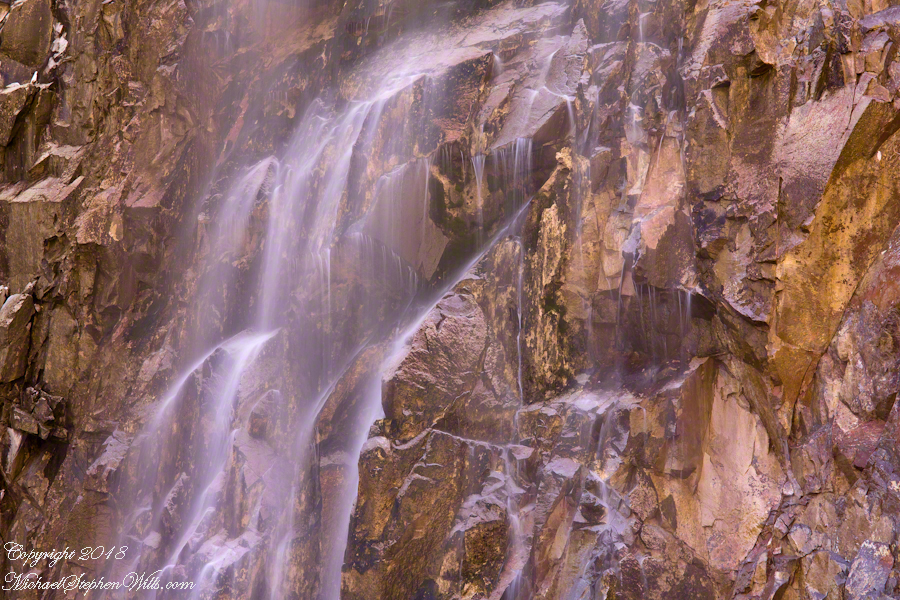
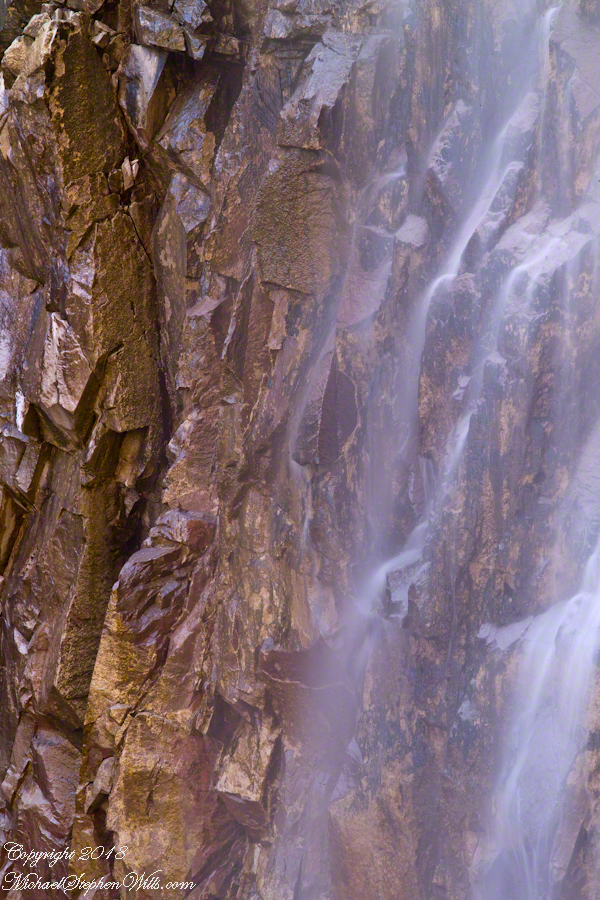
A more artistic vertical format version, below, captured with the Canon EF 100mm “macro” lens.  All shots are using the Kodak DCS pro SLR-c (the “c” designated Canon lens compatibility) and a Manfrotto studio tripod with a hydrostatic ball head.  The horizontal format shot was captured with a Canon EF 50mm f/1.4 USM lens.   I prefer the vertical version, artistically, because the talus jumble is all but cropped out while the upper corner of the angular basalt boulder is left as an interesting focal point.  The boulder, not being in the spray, is in focus to contrast with the basalt wall behind the water.

I captured a series of shots from this precarious vantage point, working up from the pool to the brim of the waterfall.

My goals was a composite photo of the falls.  I have yet to succeed with this project.  Maybe I will give it one more shot in spite of having learned the hard lesson the best photographs are a single moment captured in a single frame.

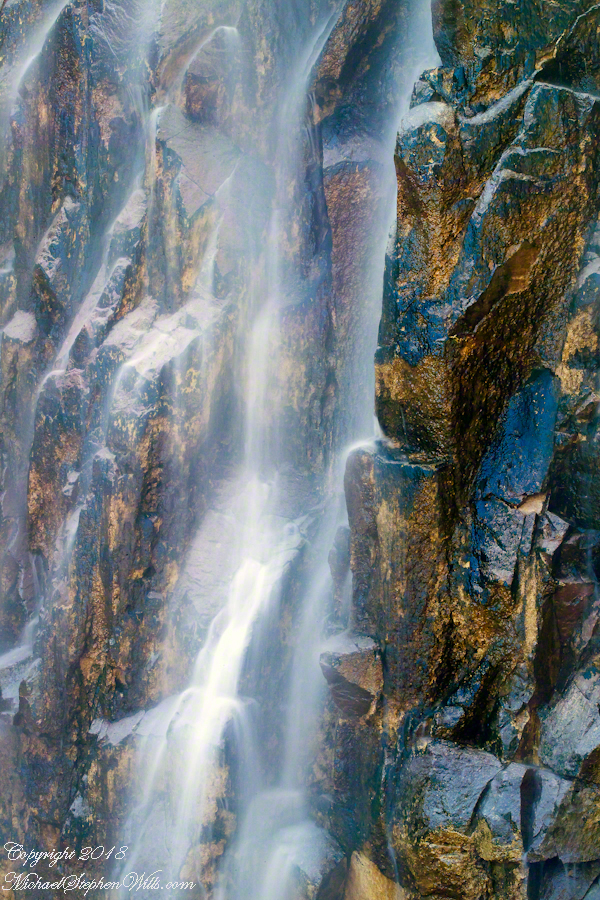
I find in this series the vertical aspect is more artistic.  The water volume, of the falls, at this time of year offers only the finest of sprays with most of the basalt rock wall only moist.  The 100mm “macro” lens allowed me to include only the falling water with a bit of the moist wall for contrast.

In the following version I experimented with color, moving from the narrow range of hues, to more contrast.

Please browse my reasonably priced stock photography. License a photograph, download and use it for your website or blog. Click this link to browse all my Getty IStock Photography offerings.

Or click this link or any photograph or this link to select a print with custom framing from my “Textures” Fine Art Gallery.

Here’s another of my Arizona wilderness adventures, “Racing the Sun.”

Wilderness Textures

Abstract Beauty of the Superstition Wilderness of Arizona

These abstracts are some of my photographic output from four days and nights spent alone in the remote eastern Superstition Wilderness.  For the first three days I met not a soul, all these images were captured on a single afternoon spent in the canyon below Reavis Falls, a jumble of landslides, flood debris and boulders.  There is no trail.  The few people who enter the canyon must negotiate around boulders, crossing Reavis Creek many times.

Reavis Creek Water and Light – CLICK ME for more abstract photography.

My backpack kit included a full sized Manfrotto studio tripod with hydrostatic ball head.  The benefits more than outweighed the effort (I was a lot younger in 2008) when the Canon EF 100mm (macro) lens is mounted on a  Kodak dSLR body, allowing me to take crisp shots.  The tripod legs can be adjusted to precise positions for stability.

Reavis Creek Water and Light – CLICK ME for more abstract photography.

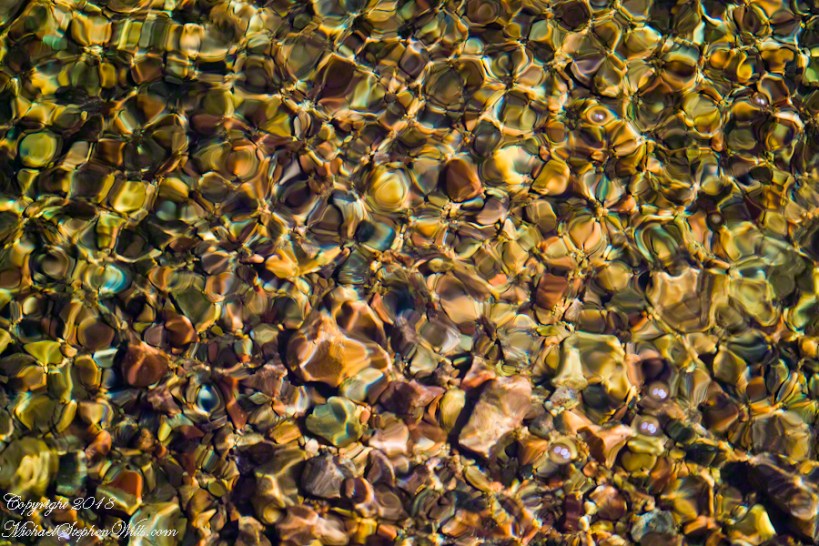
I can feel the bright afternoon desert spring sunshine in this photos.  It was after the spring floods, the flow of Reavis Creek and ample still but slow.  Gathering in pools over the rough stones of the creek bed, the water absolutely clear.

Reavis Creek Water and Light – CLICK ME for more abstract photography.

I held the shot over many minutes, capturing ever changing diffraction patterns.

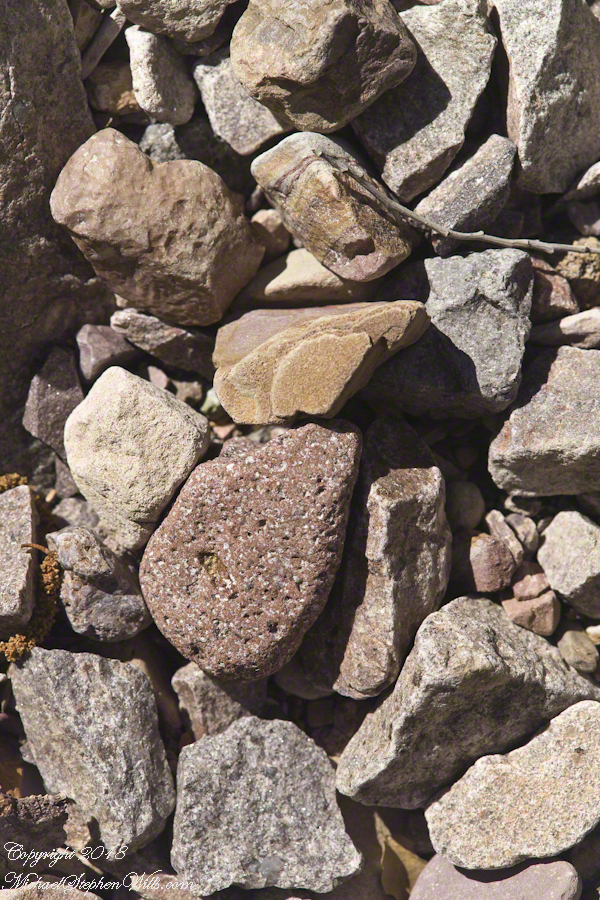
We see in all these photos, not a homogenous blend of stones from a shared geology.  Reavis Creek washes over diverse geologies: volcanic, ancient igneous extrusions, sedimentary and metamorphic are jumbled together.

Reavis Creek Water and Light – CLICK ME for more abstract photography.

This is a series of photographs of smooth, white igneous boulders with shadows of  still leafless sycamore and cottonwood trees.

Reavis Creek Water and Light – CLICK ME for more abstract photography.

Graceful shadows

Reavis Creek Water and Light – CLICK ME for more abstract photography.

Strong, demonstrative shadows.

Reavis Creek Water and Light – CLICK ME for more abstract photography.

A leaning cairn, not a trail marker….

Reavis Creek Water and Light – CLICK ME for more abstract photography.

A 15 foot high jumble of stones piled at the bottom of Reavis Falls, carried over by the floods.

Reavis Creek Water and Light – CLICK ME for more abstract photography.

A metamorphic conglomerate stone….

Reavis Creek Water and Light – CLICK ME for more abstract photography.

Another metamorphic conglomerate.

Reavis Creek Water and Light – CLICK ME for more abstract photography.

Please browse my reasonably priced stock photography. License a photograph, download and use it for your website or blog. Click this link to browse all my Getty IStock Photography offerings.

Or click this link or any photograph or this link to select a print with custom framing from my “Textures” Fine Art Gallery.

Here’s another of my Arizona wilderness adventures, “Racing the Sun.”

Afterglow, Saguaro National Park

The Flag Forms

Here is a postscript for my retrospective diary of the day I created my print “Ocotillo Sunset.” You can visit “Ocotillo Sunset” in my Online Gallery by clicking on any photograph .

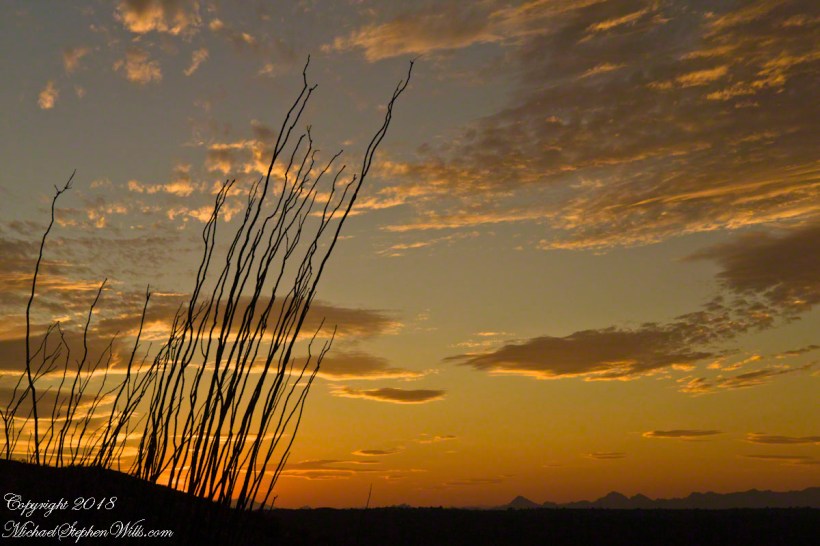
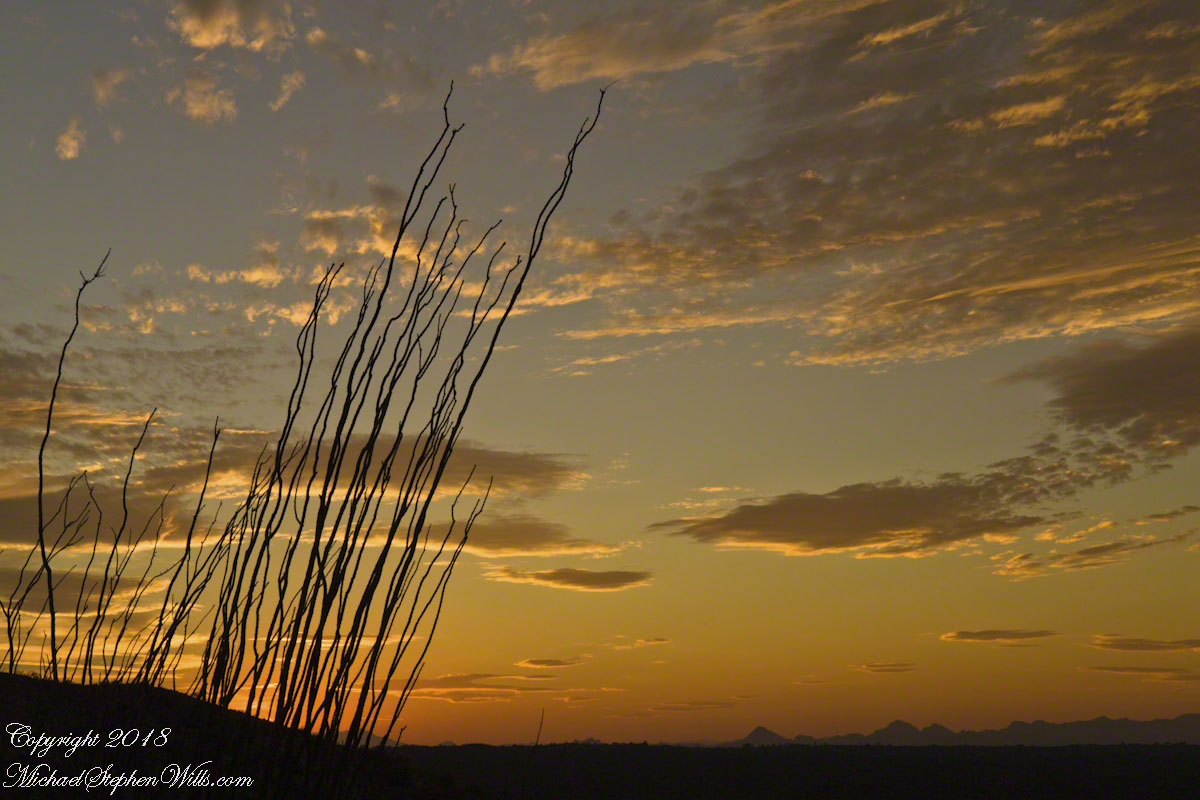
In near total darkness, the last sunlight only enough for the far western sky, these are the last shots of this series.

Click photograph to view Ocotillo Sunset in my Online Gallery
Afterglow I

Click photograph to view Ocotillo Sunset in my Online Gallery
Afterglow II

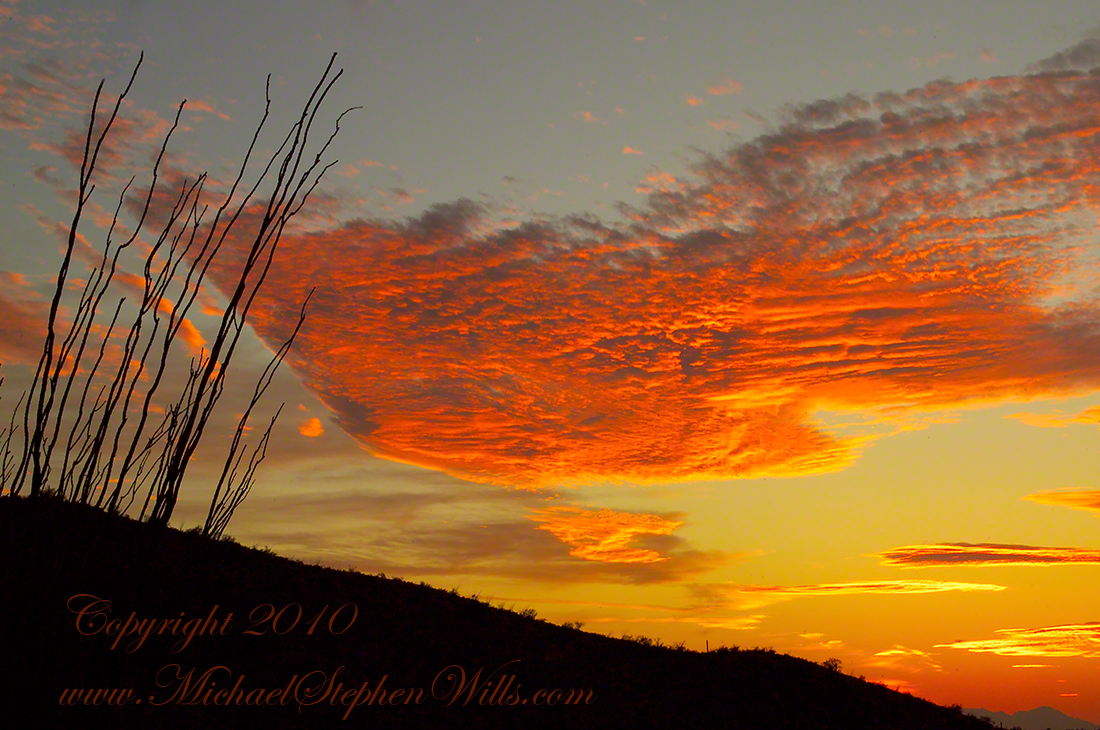
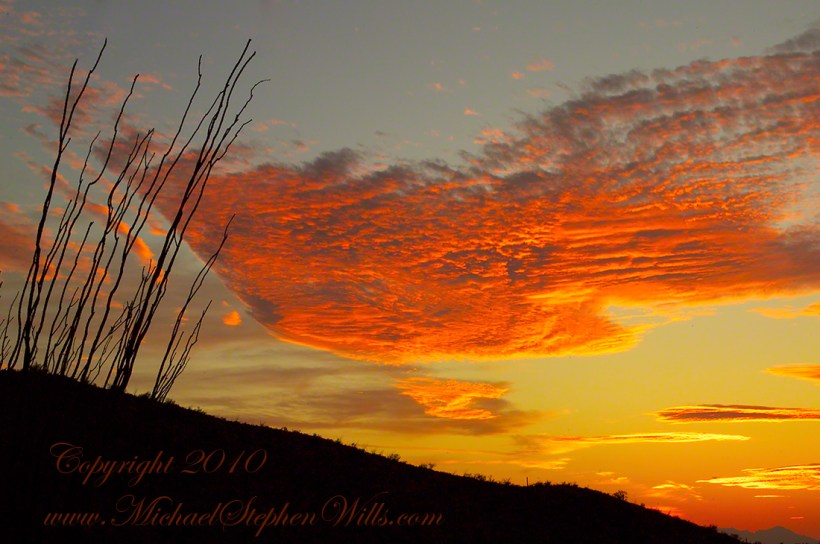
The final result of the day’s work, “Ocotillo Sunset.”

Click photograph to view Ocotillo Sunset in my Online Gallery
Ocotillo Sunset — flag on ocotillo cane poles
Click me for the first blog in this series.

Copyright 2021 Michael Stephen Wills All Rights Reserved

Ocotillo Sunset from Saguaro National Park, a diary Part 7

The Flag Forms

The penultimate posting of my retrospective diary of the day I created my print “Octillo Sunset.” You can see a large version of “Ocotillo Sunset” by clicking on any of my blog photographs.

The Flag in Formation and Realization

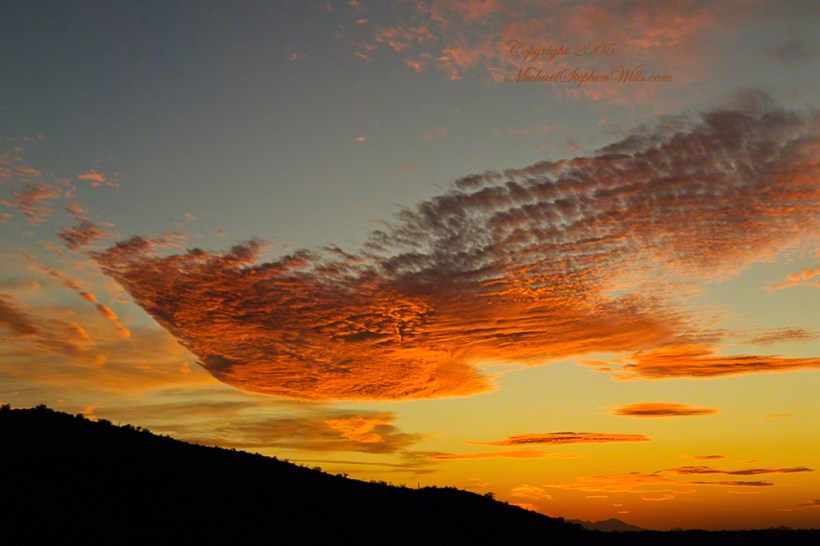
Then, for reasons I can only speculate about, a spectacular shape came together in the clouds. In the following photograph I have yet to recognize, to see, this cloud sculpture. Do you see part of “Ocotillo Sunset” coming into shape? As far as I remember, at the time I had only a dim realization of what was forming in my view finder and in front of me.

The Flag Forms

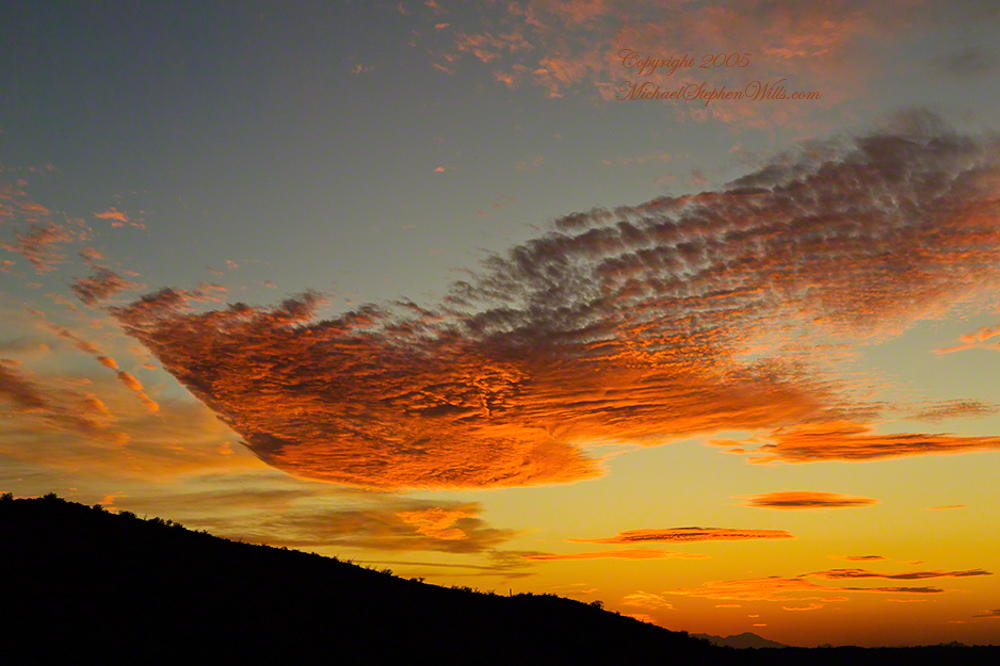
Then, I changed camera orientation and shifted the view a few degrees to the left and there it was: a coherent shape of something. Here it is in full, untethered.

Unanchored, a Flag or Ship

The final result of the day’s work, “Ocotillo Sunset.”

Ocotillo Sunset — flag on ocotillo cane poles
Click me for the next post in this series.

Click me for the first post in this series.

Ocotillo Sunset from Saguaro National Park, a diary Part 6

Shooting As The World Turns

This is a retrospective diary of the day I created my print “Ocotillo Sunset.” You can see a large version of “Ocotillo Sunset” by clicking on any of my blog photographs.

Shooting as the World Turns

In Part 5, we enter the final phase of this day’s work with darkening of the land while in the sky sunlight reflects off high clouds. The length of this moment when twilight is over, just before night falls, varies with latitude and time of year. Near the poles (high latitude) this light can last for days while here, at about 32 degrees north, it is less than 15 minutes. As I wrote in Part 4, after this light, the desert is absolutely dark. This is why I chose to set up by the roadside.

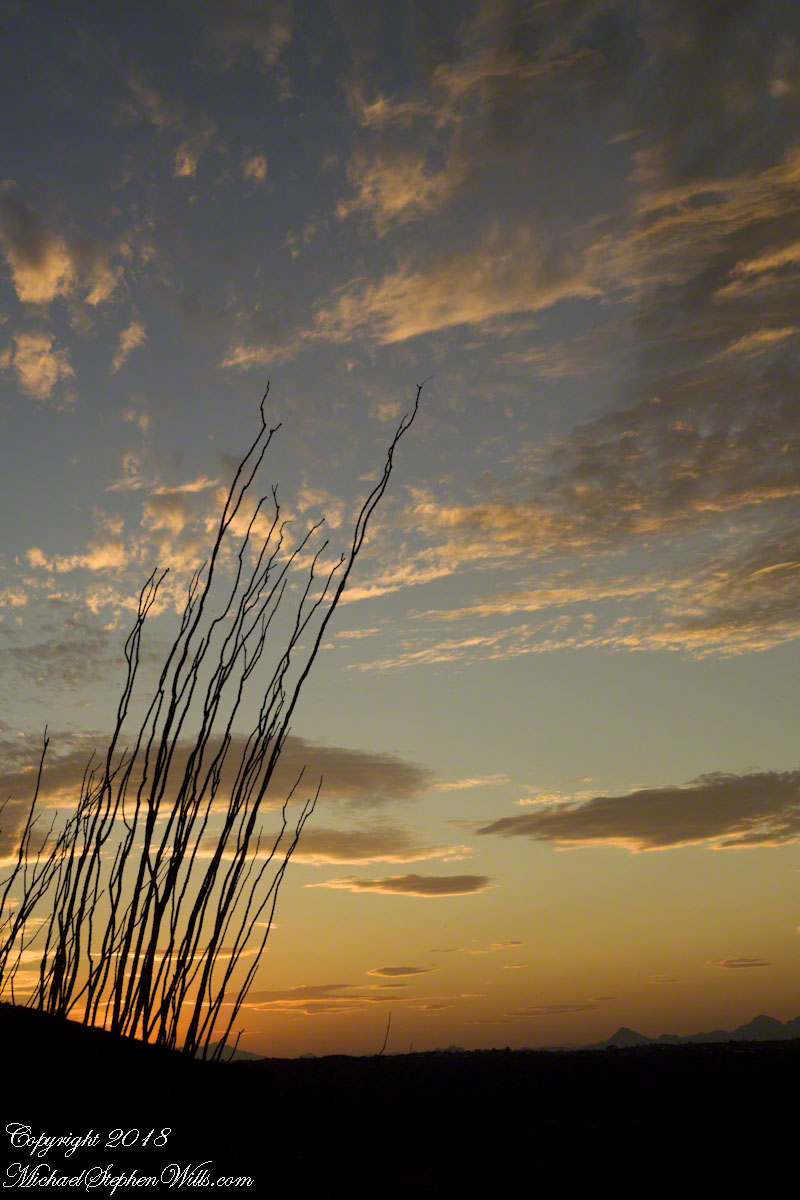
In the following two photographs I experimented with camera placement and foreground elements. Starting in Part 4 I became aware of Ocotillo branches, using them for the effect of reaching for and, here, anchoring the clouds.

Saguaro Sunset II

Lead Around by an Ocotillo

These earth-bound Ocotillo branches lead me to the darkened earth. How much to include in the shot? I searched for a balance between the vastness and complete blackness and needed a point of interest. Time was running out.

Saguaro Sunset III

Click me for the next post in this series.

Click me for the first post in this series.

Ocotillo Sunset from Saguaro National Park, a diary Part 5

High Altitude Clouds

This is a retrospective diary of the day I created my print “Ocotillo Sunset.” 

Choices of the Evening

The next few blogs are a set of photographs from the developing sunset of that November evening. Once set up, my practice is to stay in place until there is nothing left of capture; all the while evaluating the results and adapting the camera settings, framing and lenses to the environment.

Happening in the Twilight

By this point, twilight is over and only the sky is lit. According to file metadata posted at capture, thirteen minutes passed from the following photograph till the last. I mounted my camera on a simple tripod, purchased from a mall chain store, with the standard controls. I prefer to specify ISO and set it at 160 (the lowest value) throughout. The sky was calm and, with the tripod, I used the aperture setting with higher values. This was f13 / 1/60.

Click photograph to view Ocotillo Sunset Saguaro Sunset – CLICK ME to view Ocotillo Sunset.

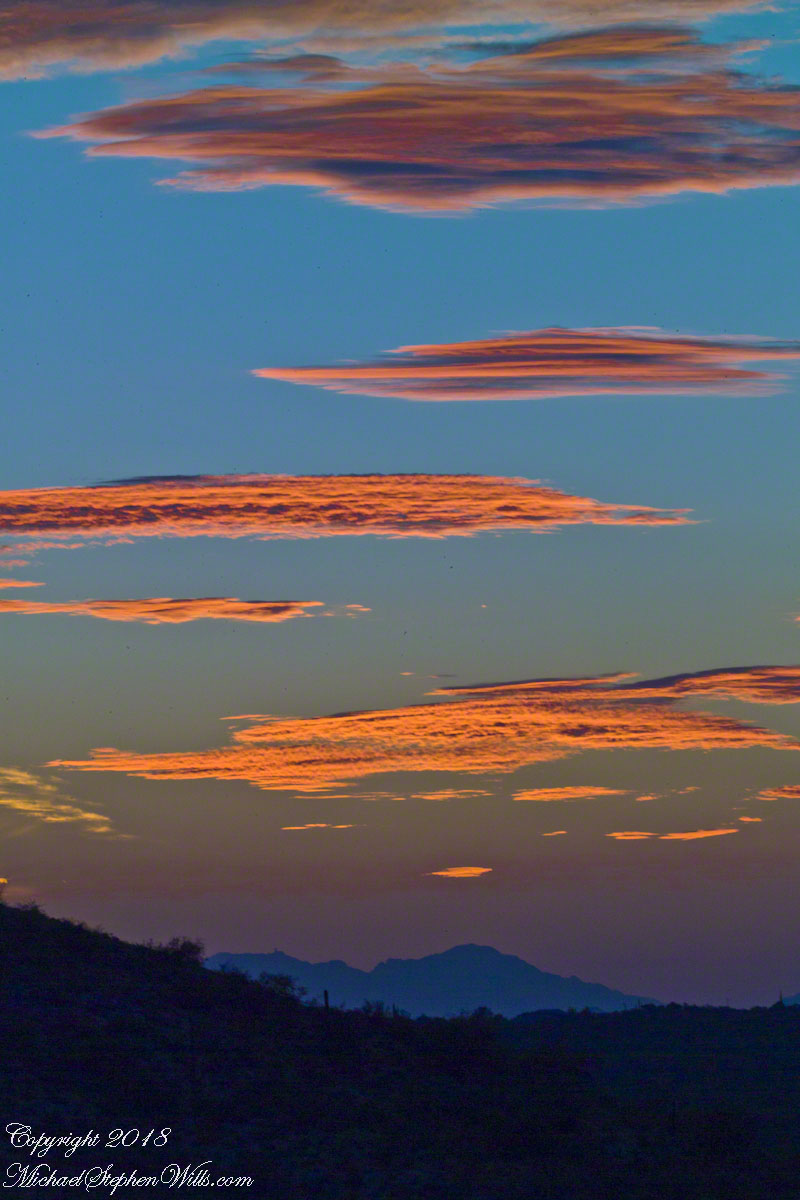
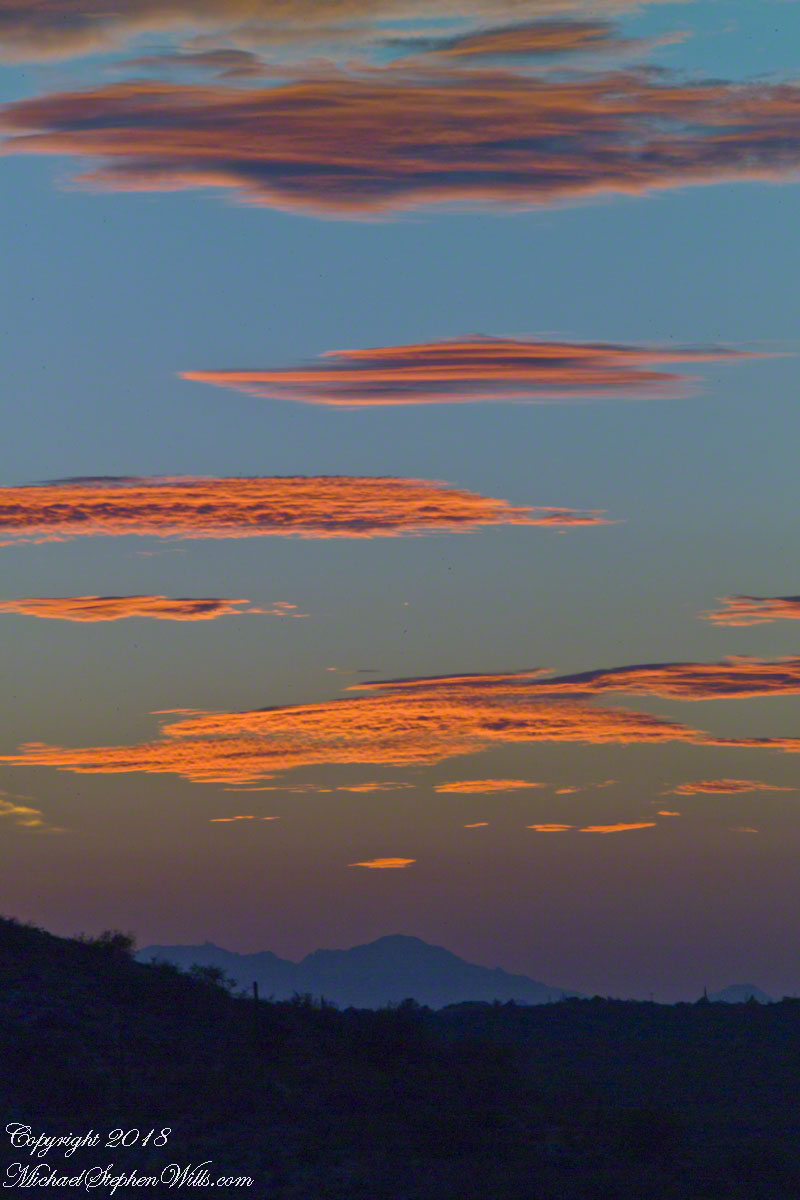
The clouds are forming up.  I need some foreground.  Vastness on vastness is a bit much. Those are the Tucson Mountains in the distance. If you look closely, on the right the Tucson Mountains dip down, revealing Kitt Peak, at least 60 miles distant. It is the defined peak on the left of that range. In early morning light, the Mayall 4 meter telescope building gleams white on that point.

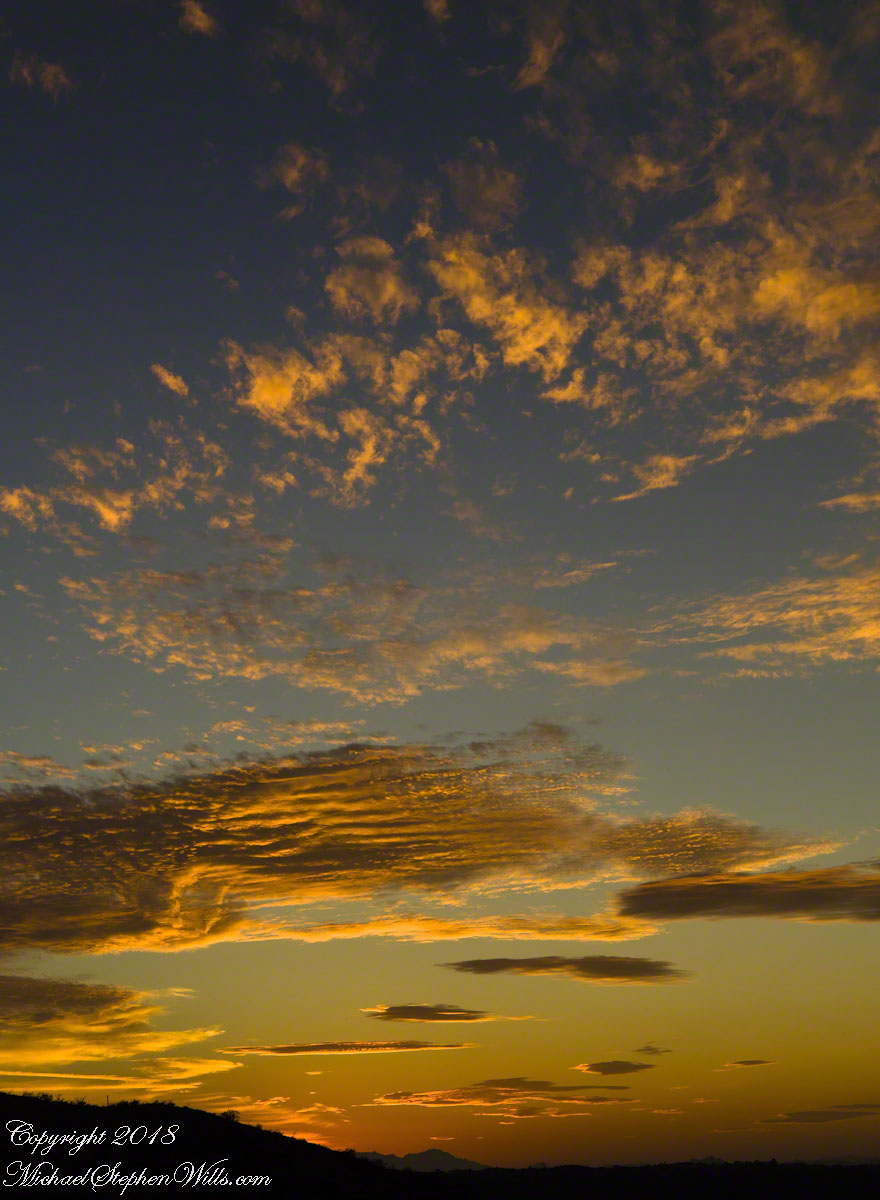
The sun illuminates different levels of clouds as the earth turns toward night. These are altostratus cloud types, at 6,500 to 20,000 feet, formed by strong winds.

The elements of my print “Ocotillo Sunset” are coming together.  Do you recognize them from this image of my print?

FF6H3057_OctilloSunset_Copyright4Site

Click Me for the next post in this series.

Click Me for the first post in this series.

Copyright 2021 Michael Stephen Wills All Rights Reserved

Cuteness Break

Winter Preparation

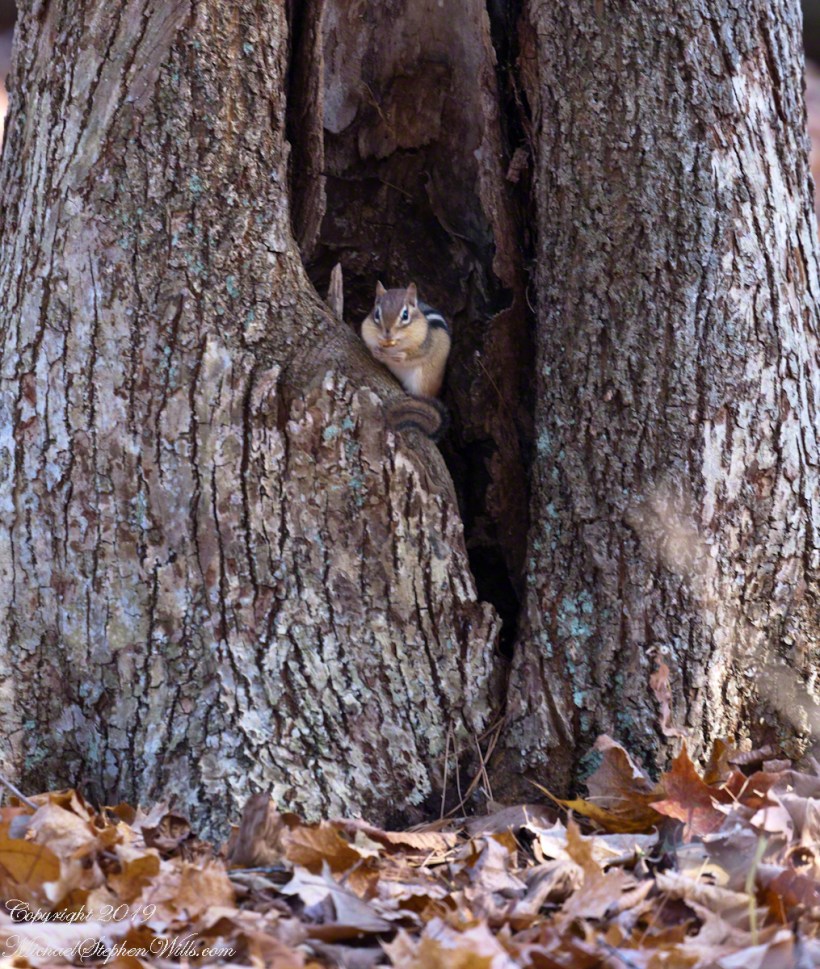
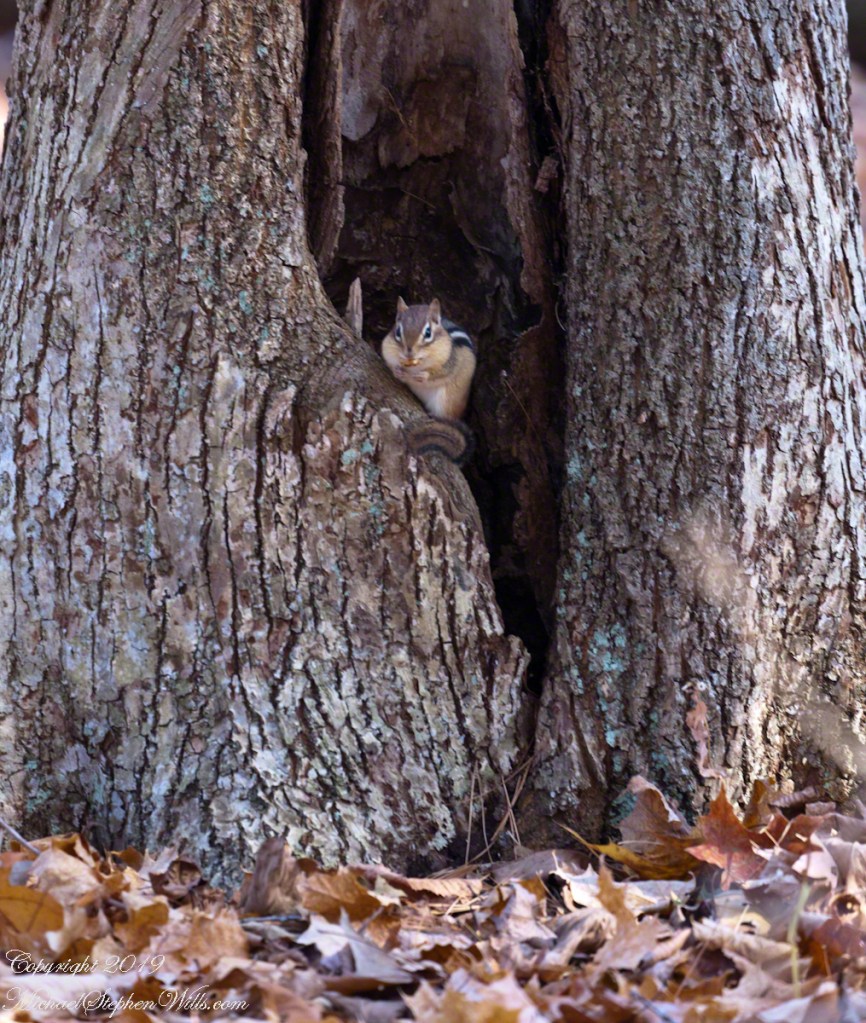
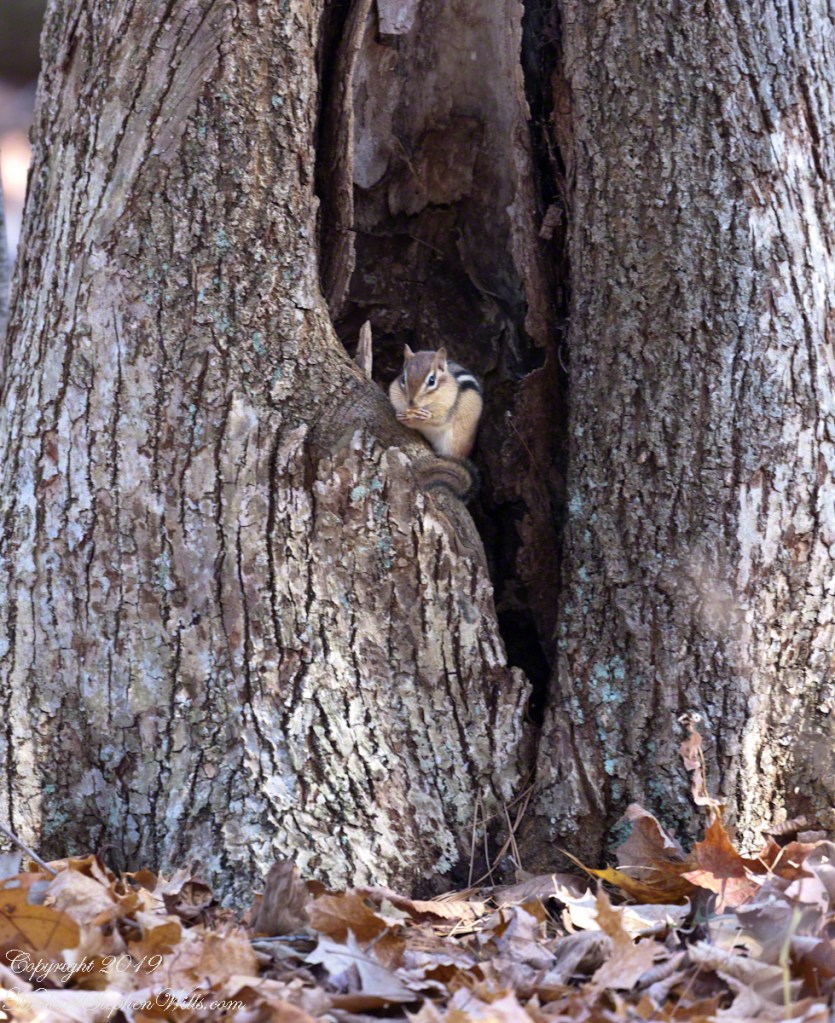
Perched on its doorstep, an Eastern Chipmunk gorges on an ample supply of acorns. These small rodents are omnivores. Here are two shots, each with an acorn in hand and full cheek pouches.

Copyright 2021 All Rights Reserved Michael Stephen Wills

Ocotillo Sunset from Saguaro National Park, a diary Part 4

The Nursed Saguaro

This is a retrospective diary of the day I created my print “Ocotillo Sunset.” 

Choices of the Evening

As the Golden Hour approached I had a choice to make.

My perch on Lime Kiln Falls was not safe. As the sunset developed, while I focused on the work, the trail would be lost in the gathering darkness and, even with a headlamp, I decided to avoid picking a way down a 1+ mile pitch dark deserted desert trail. Choosing not to stay, for the second time I packed up and was on the move.

That time of day wildlife is also moving and, in a short time, a rattlesnake, javalina (wild pig of the desert) and jack-rabbit crossed my path. Part of my photography kit is a Sony digital camera with a variable lens carried across the front in a readily accessible “fanny pack.” That day, I walked with the camera out and ready. I needed to be in place for an increasingly promising sunset and so spent a minimum of time with wildlife photography.

Saguaro Sky

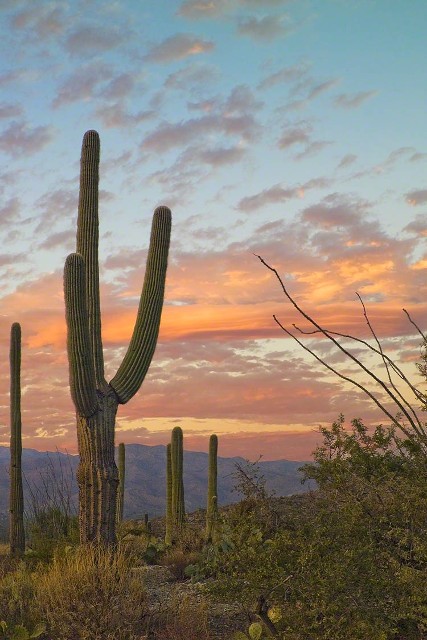
I was only half way to the car at the time when the sun was a few degrees above the western horizon and sunlight raked across the desert. The northeast sky lit up. In these perfect moments I captured this personable saguaro on Lime Kiln ridge with a tripod mounted Kodak SLR body with an excellent 50 mm (“portrait”) lens (EF 50mm f/1.2L USM) fitted with a flexible hood. ISO 160, f13 with auto settings choosing 1/5 second.

The ocotillo branches, to the right, caught my eye. “A nice effect”, I thought. There were some high level winds shaping the clouds that evening. The Santa Catalinas are in the distance.

Click any photograph to view Ocotillo Sunset
Saguaro Sky

Nurse Tree

I set up back against the Tanque Verde ridge, the highest point of the road, on the western shoulder.

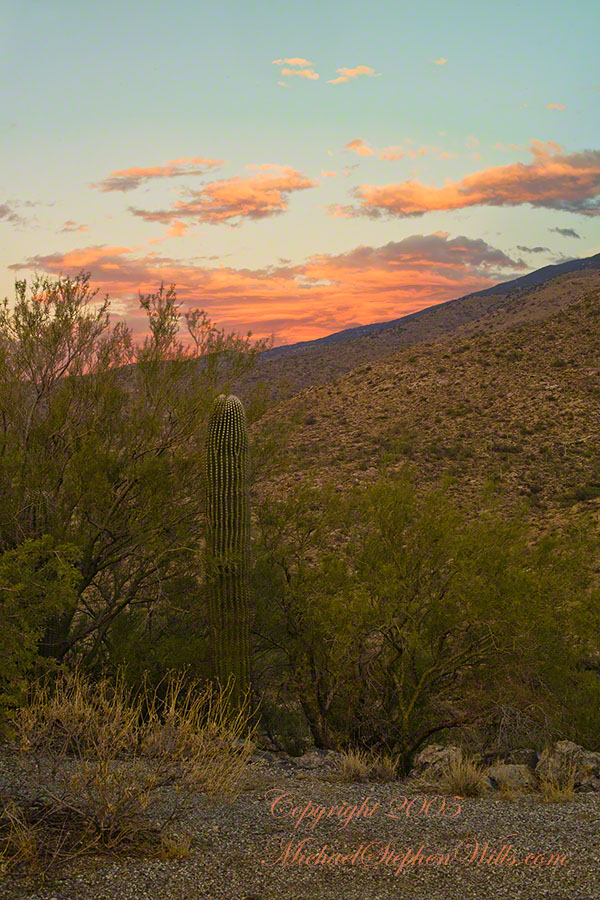
Front and center was this “adolescent” saguaro still growing in the shelter of a “nurse” Palo Verde tree. This saguaro benefited from the shade and protection of the tree as a seedling and juvenile. It has grown beyond the need for this protection. Eventually, the requirements of the larger cactus will starve the tree and it will be left alone, as you see it in the previous photograph. That is the shoulder of the Rincon Mountains in the distance. The direction if between northeast and east.

I am using the same camera and lens, ISO 160, f13 and auto exposure choosing .6 second. It is twilight.

Click any photograph to view Ocotillo Sunset
Nursed Saguaro and Sunset

Click Me for the next post in this series.

Click Me for the first post in this series.

Copyright 2021 Michael Stephen Wills All Rights Reserved