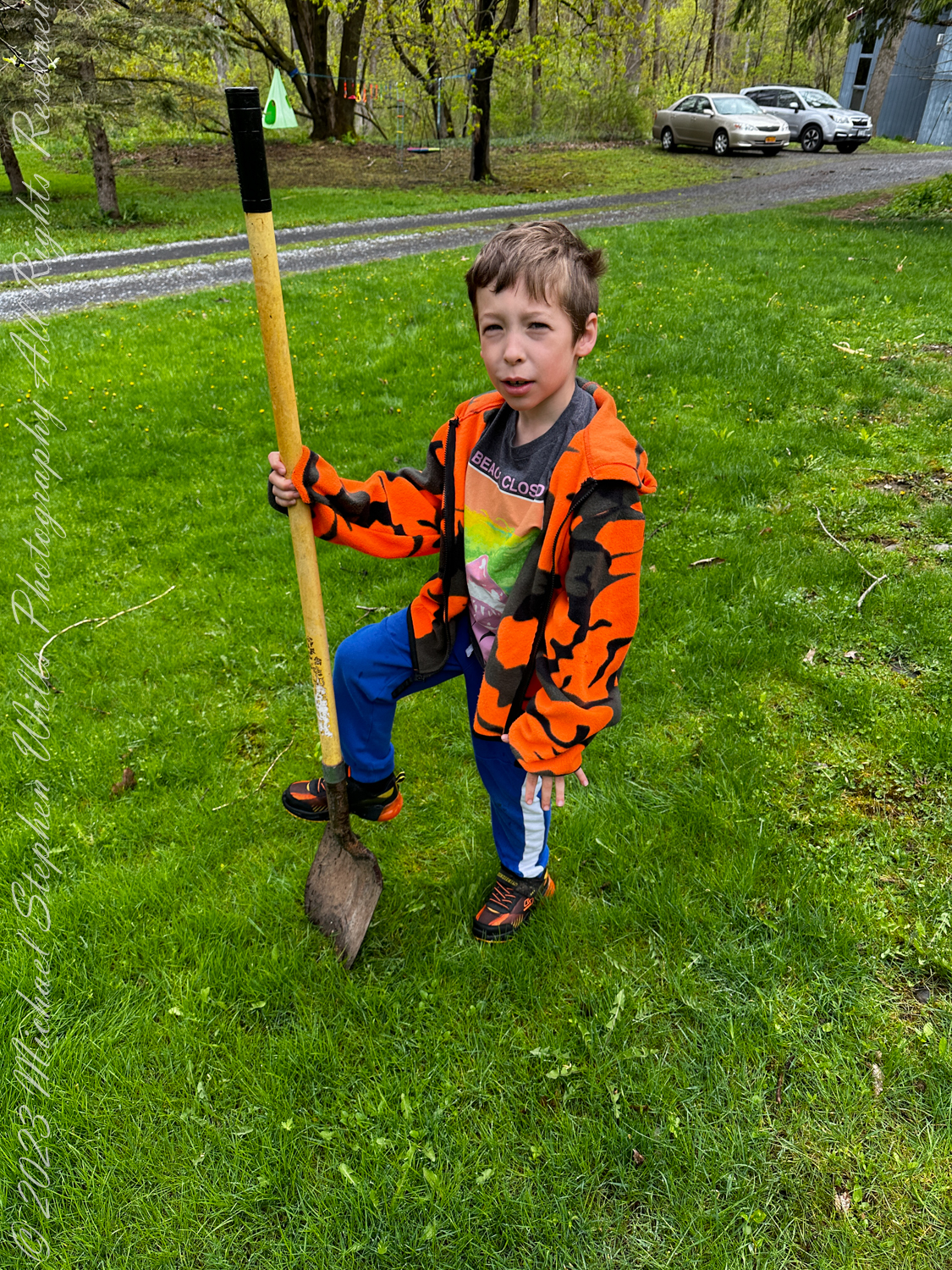
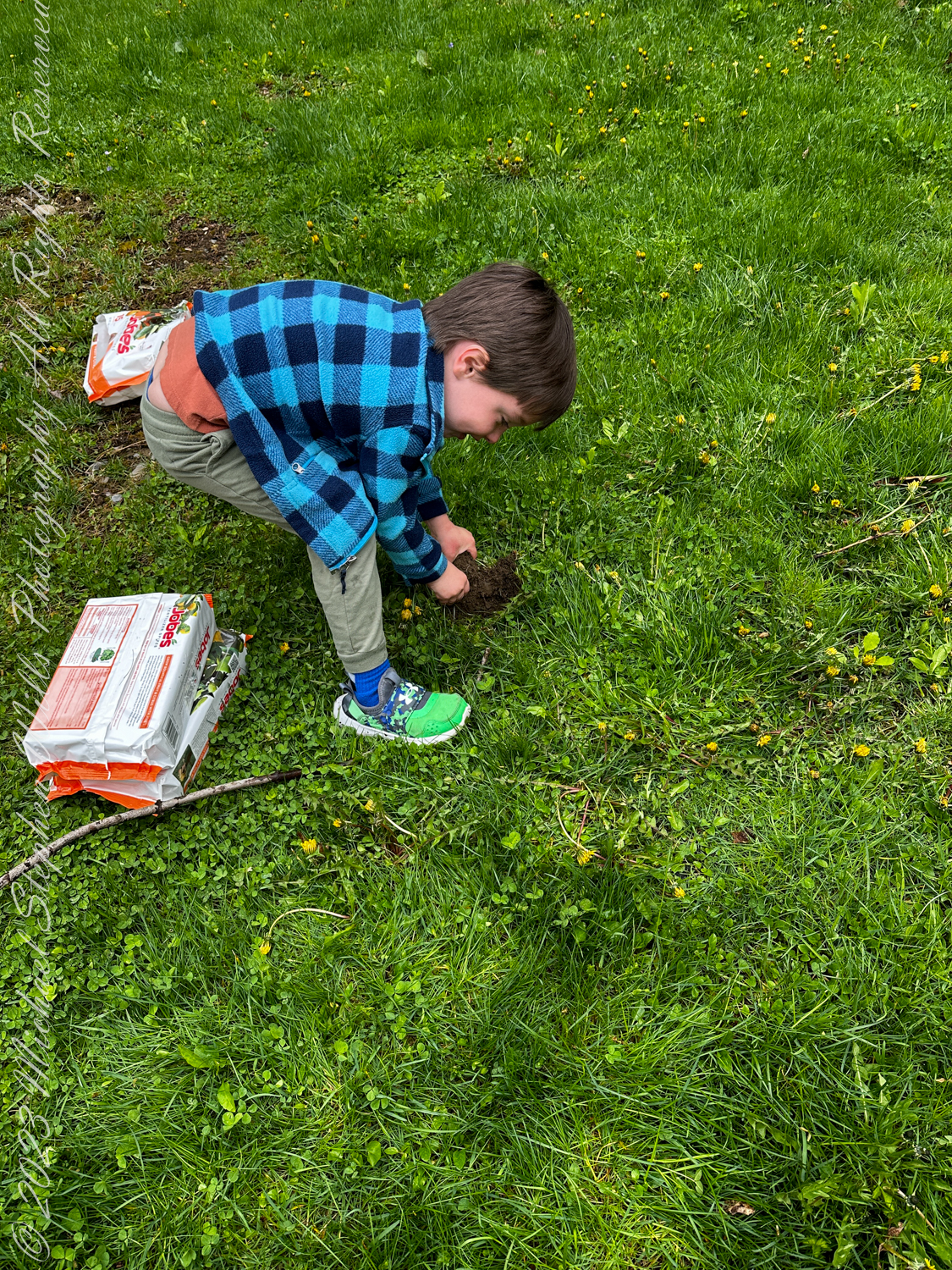
A spring rite of ours is caring for three apple trees. We provide each, a Cortland, a McIntosh, a Delicious, with 15 fertilizer spikes ; 45 in all.
I am way past using a hammer to pound in each. The preferred method is to drive a space into the ground beneath the drip line (the other reach of the branches), lift the handle and drop the spike into the ground, remove the spade and tamp down the ground.
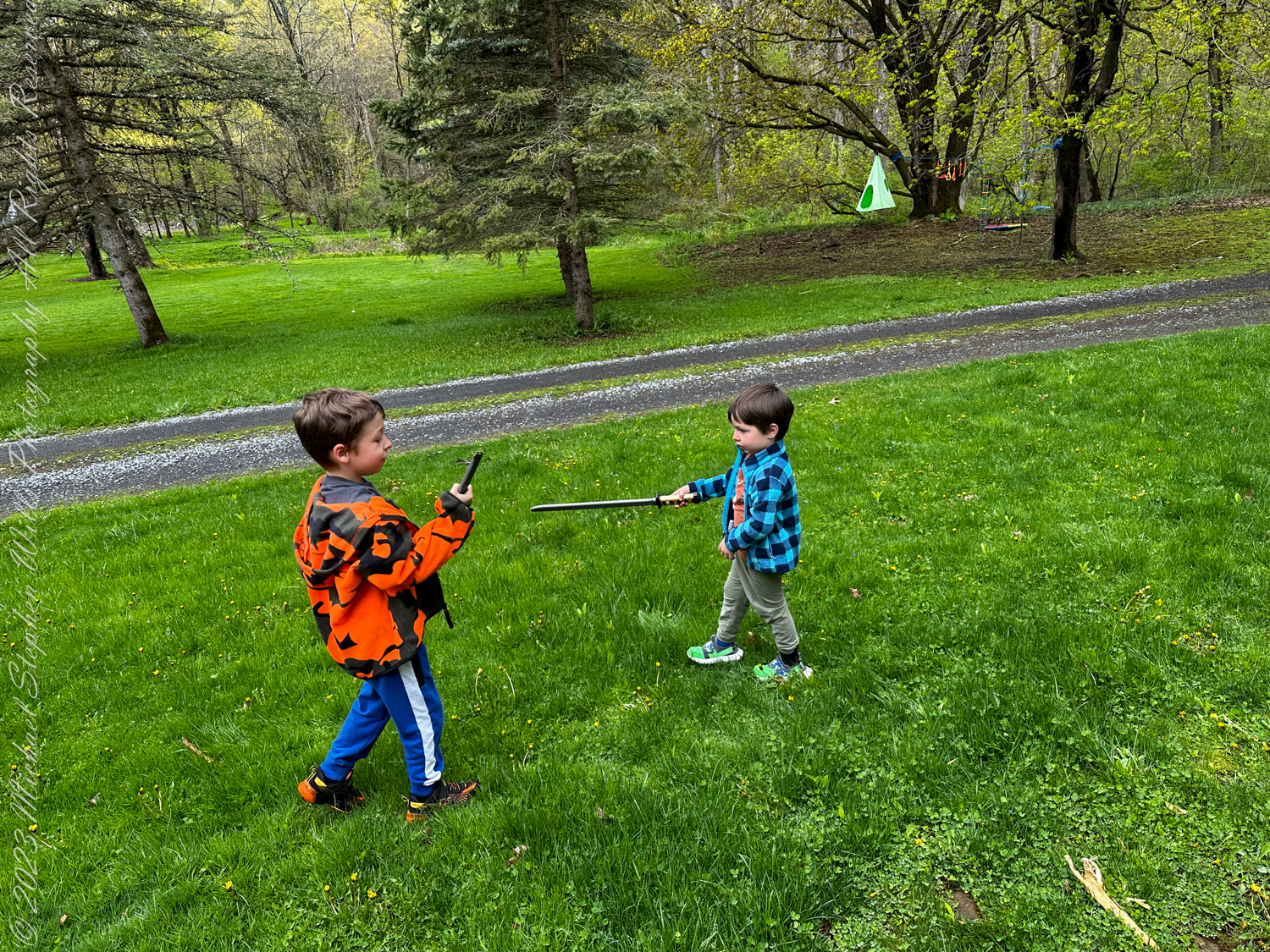
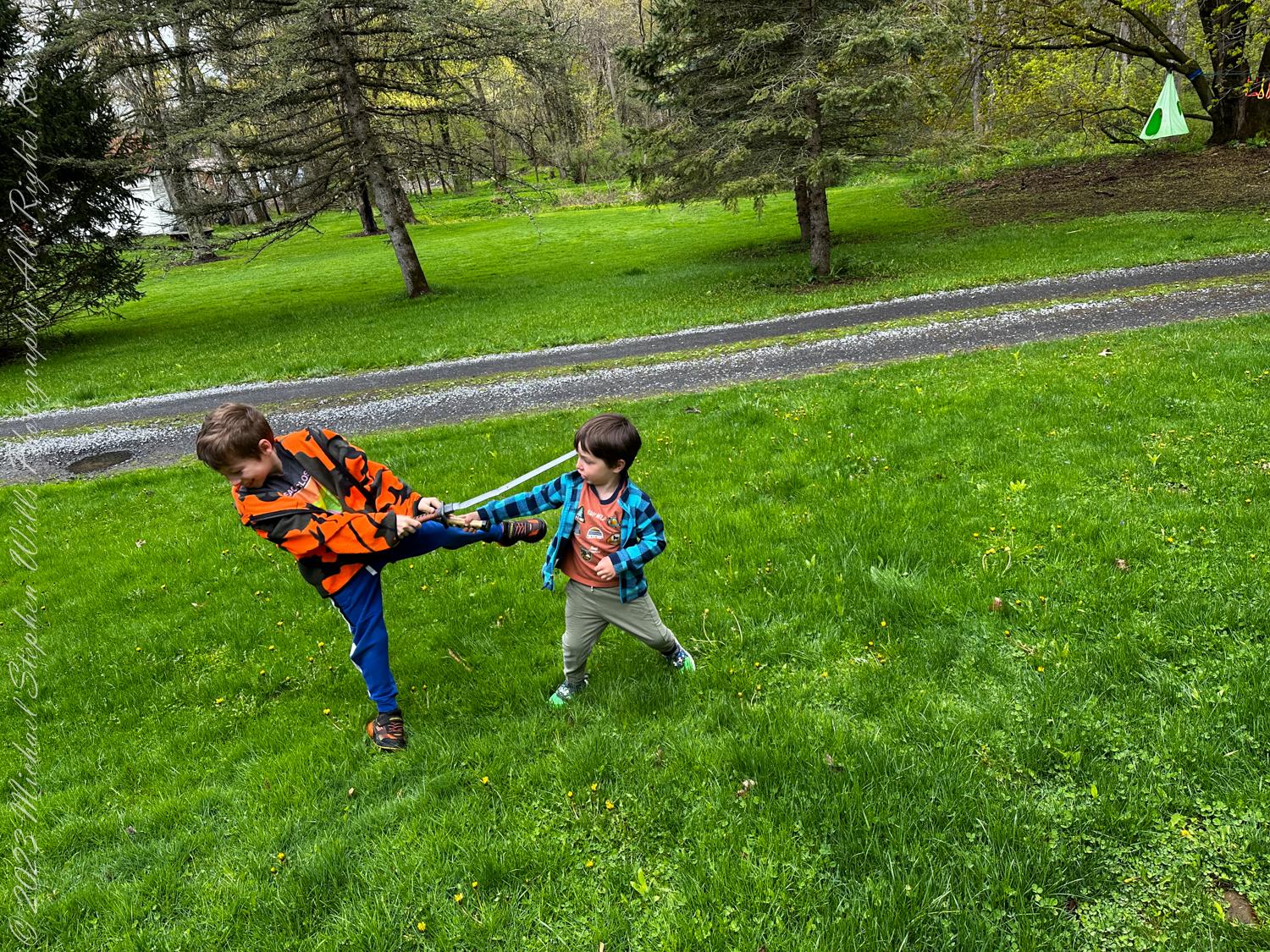
These helpers are now experts in the dropping and counting. Then, enough is enough, time for play.
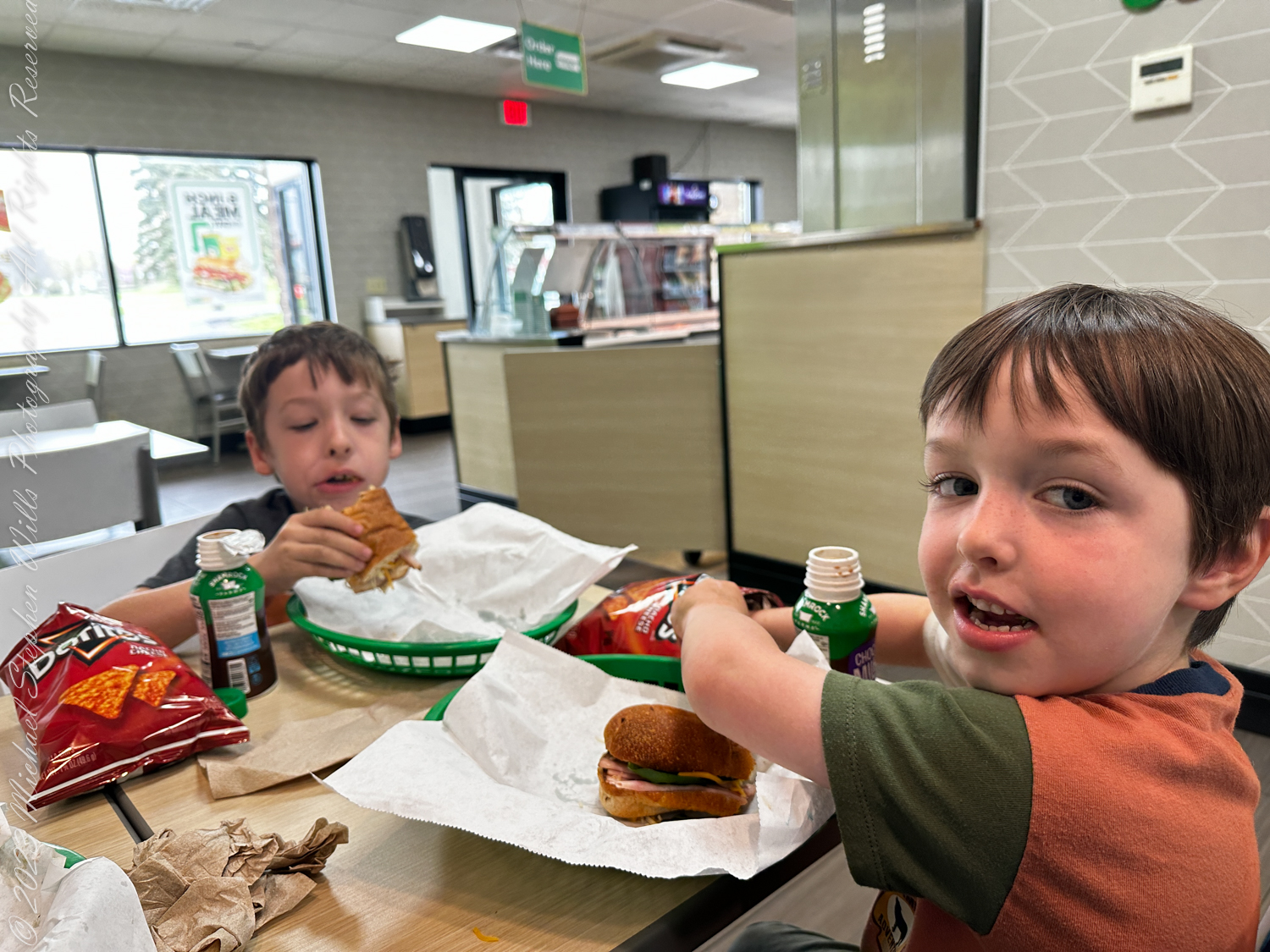
And lunch….
Copyright 2024 Michael Stephen Wills All Rights Reserved
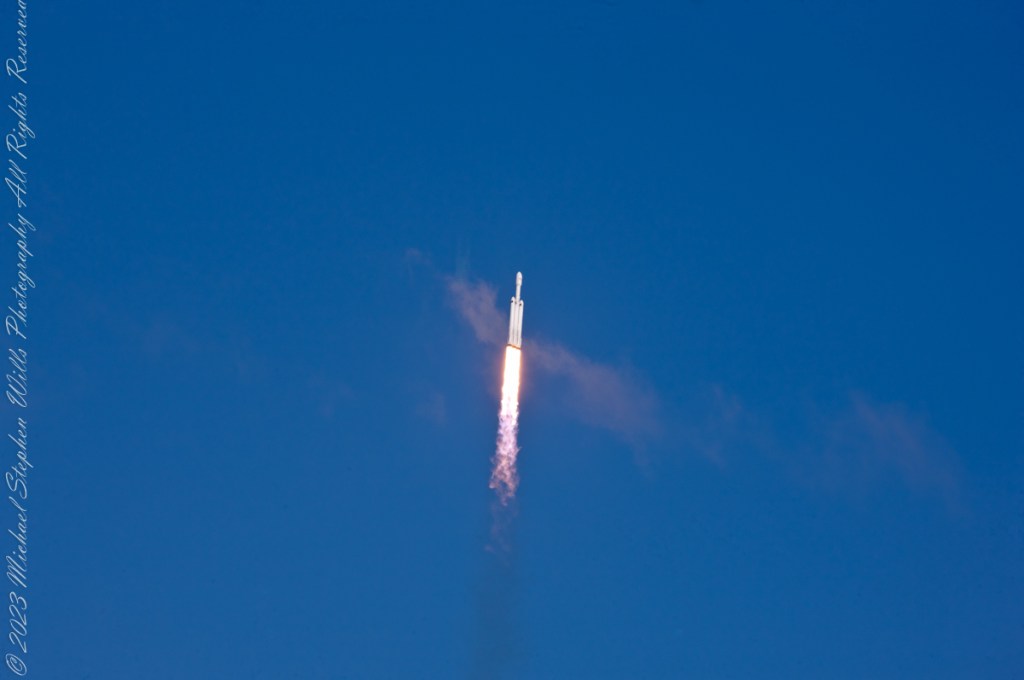
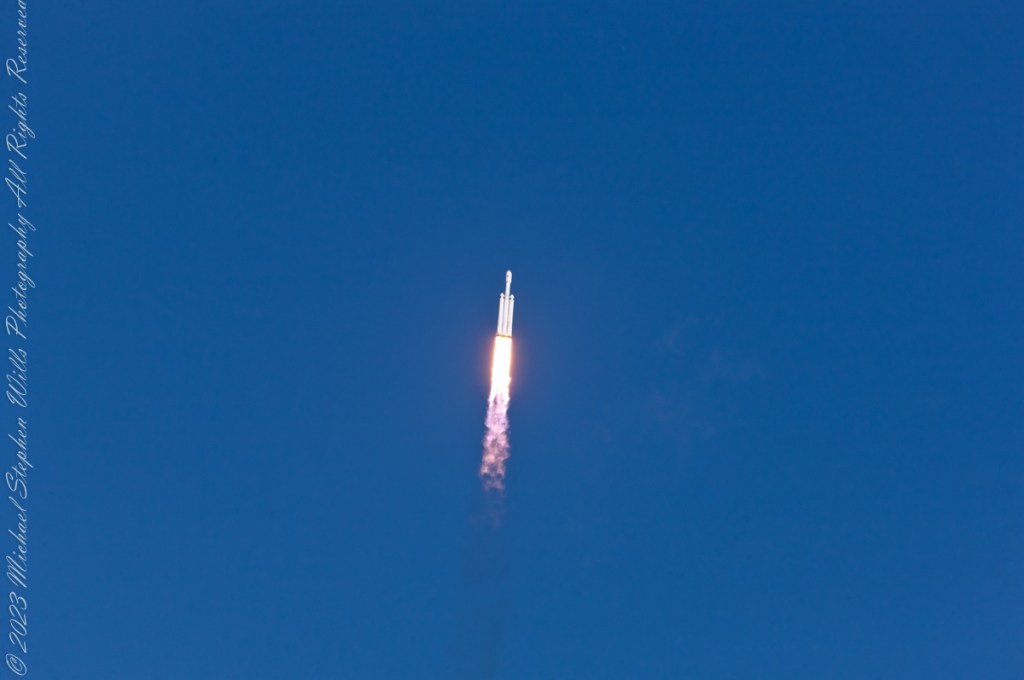
“Falcon Heavy is a partially reusable super heavy-lift launch vehicle[a] that can carry cargo into Earth orbit, and beyond. It is designed, manufactured and launched by American aerospace company SpaceX.“
“The rocket consists of a center core on which two Falcon 9 boosters are attached, and a second stage on top of the center core. Falcon Heavy has the second highest payload capacity of any currently operational launch vehicle behind NASA’s Space Launch System, and the fourth-highest capacity of any rocket to reach orbit, trailing behind the SLS, Energia and the Saturn V.“
“SpaceX conducted Falcon Heavy’s maiden launch on 6 February 2018, at 20:45 UTC. As a dummy payload, the rocket carried a Tesla Roadster belonging to SpaceX founder Elon Musk, with a mannequin dubbed “Starman” in the driver’s seat. The second Falcon Heavy launch occurred on 11 April 2019, and all three booster rockets successfully returned to Earth. The third Falcon Heavy launch successfully occurred on 25 June 2019. Since then, Falcon Heavy has been certified for the National Security Space Launch (NSSL) program.“
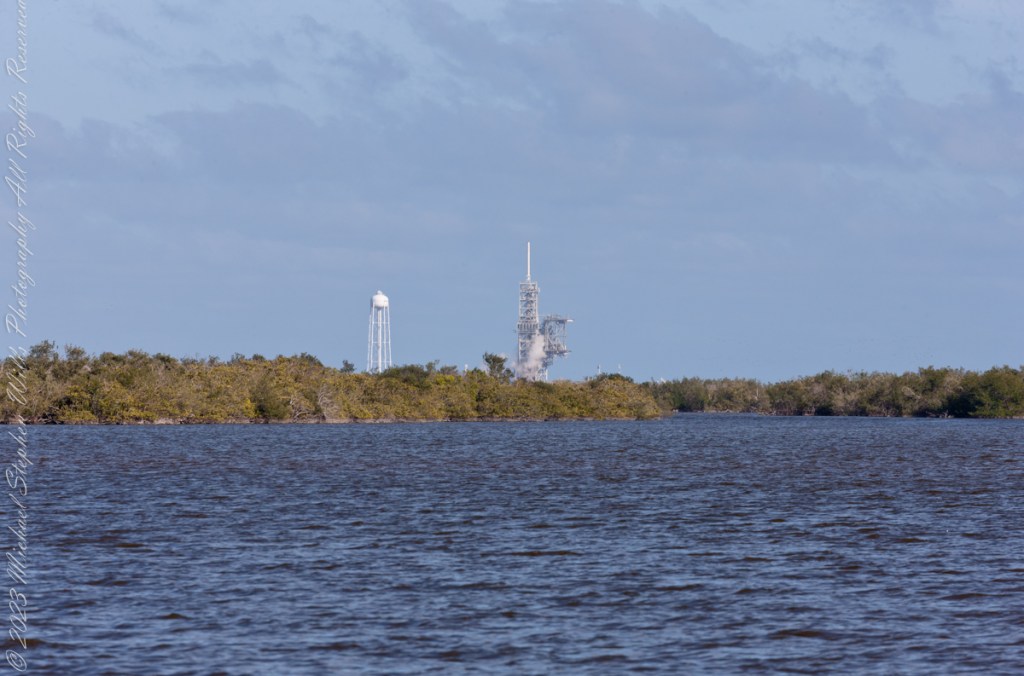
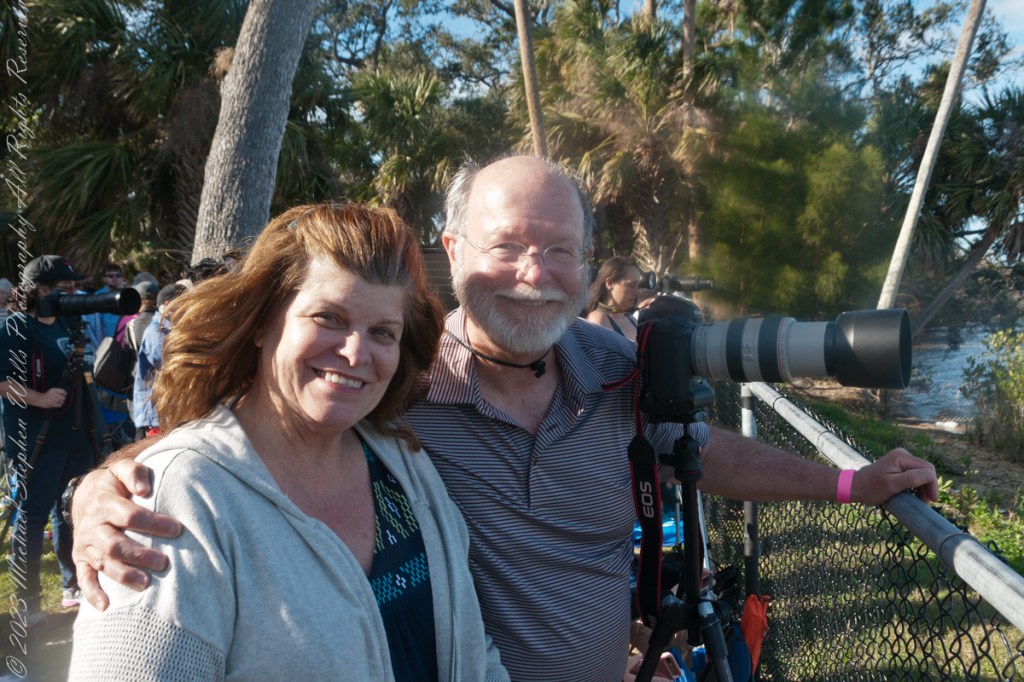
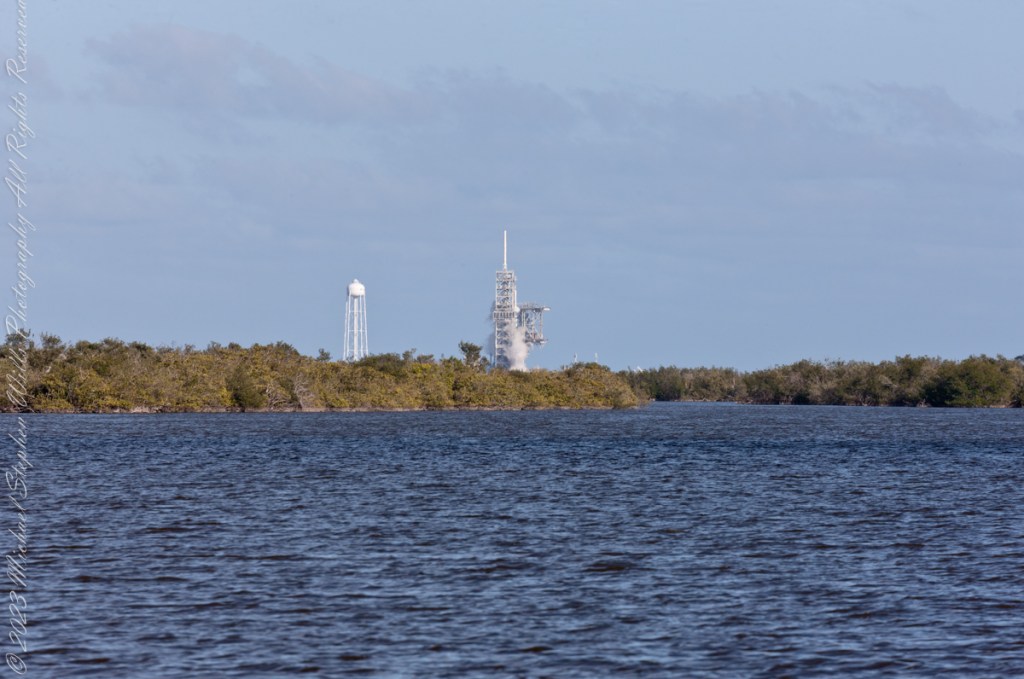
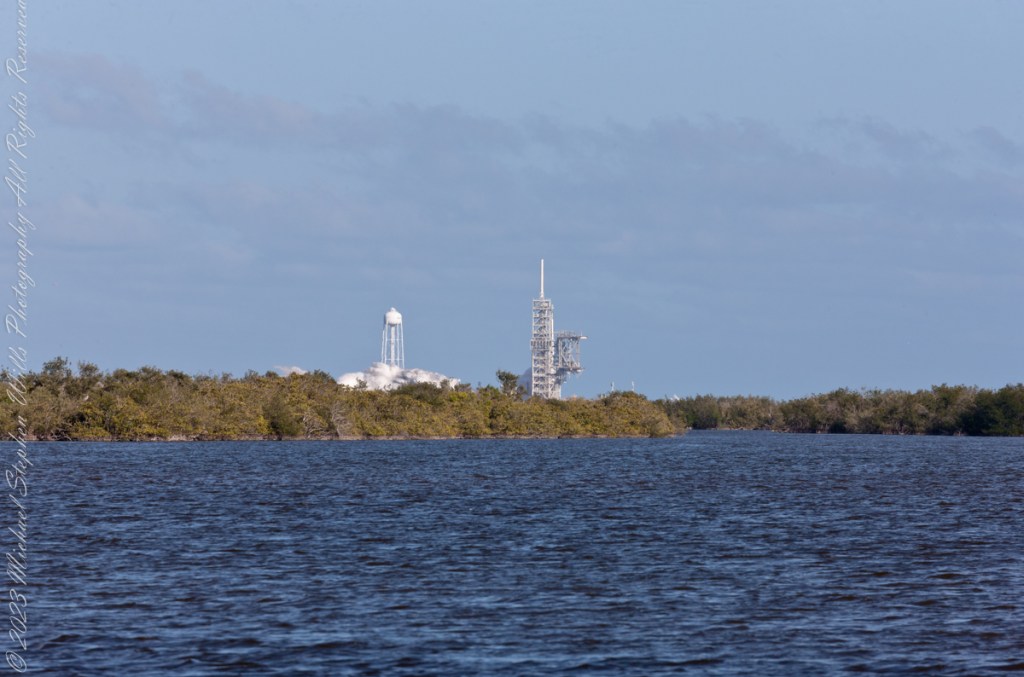
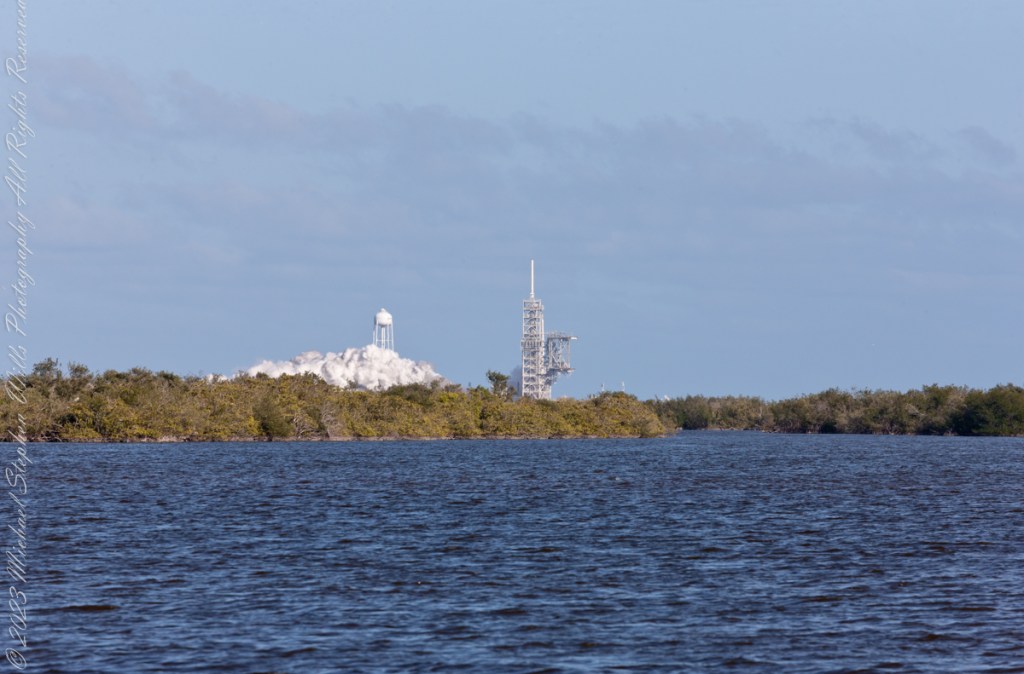
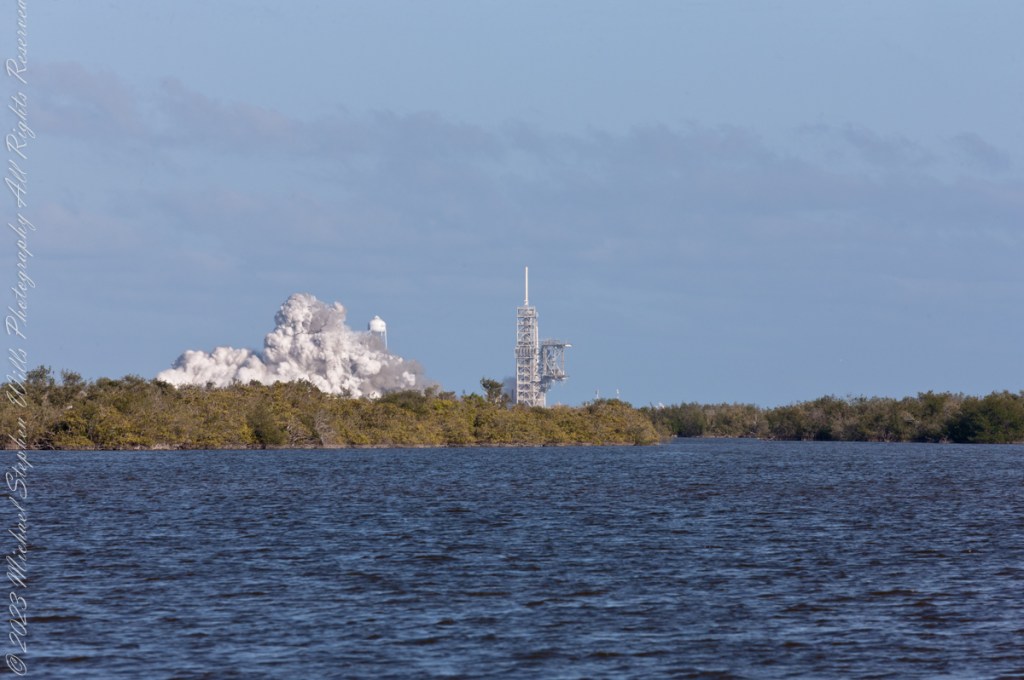
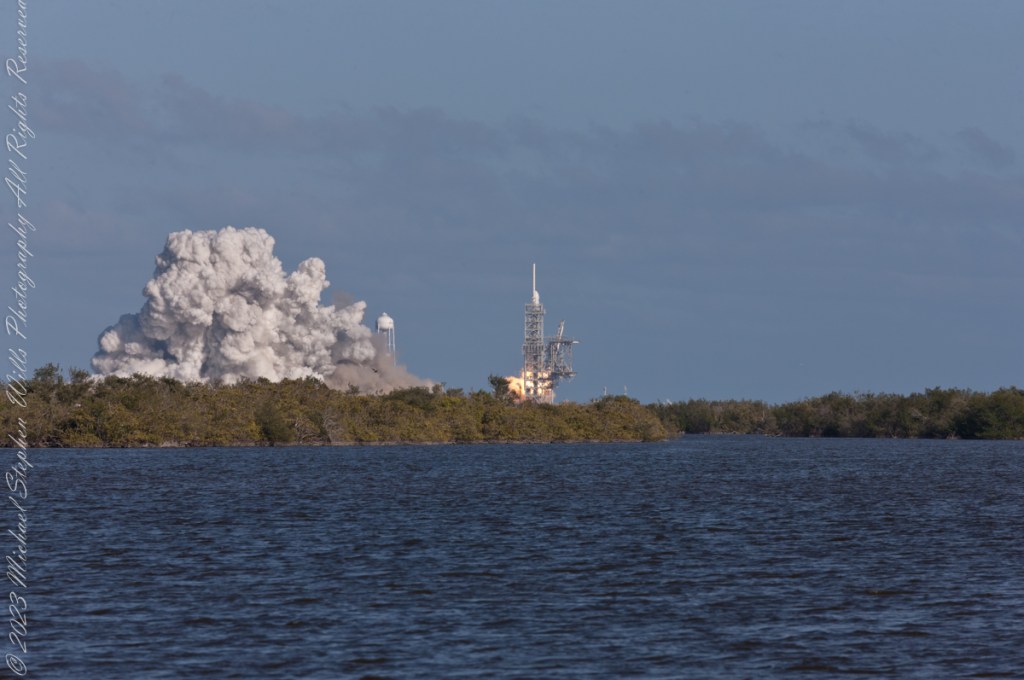
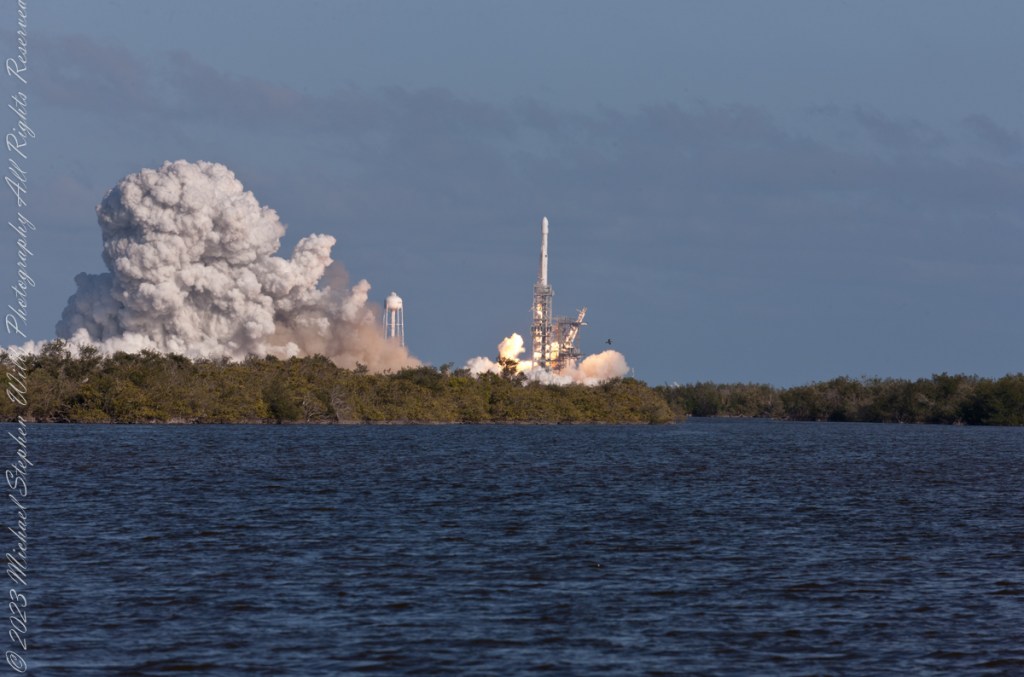
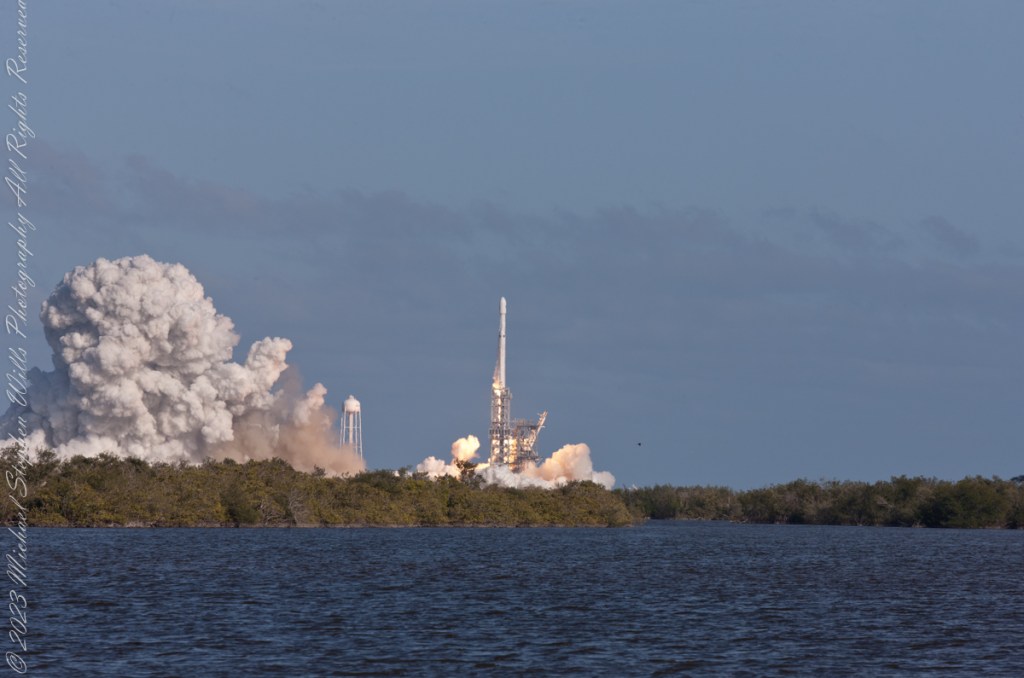
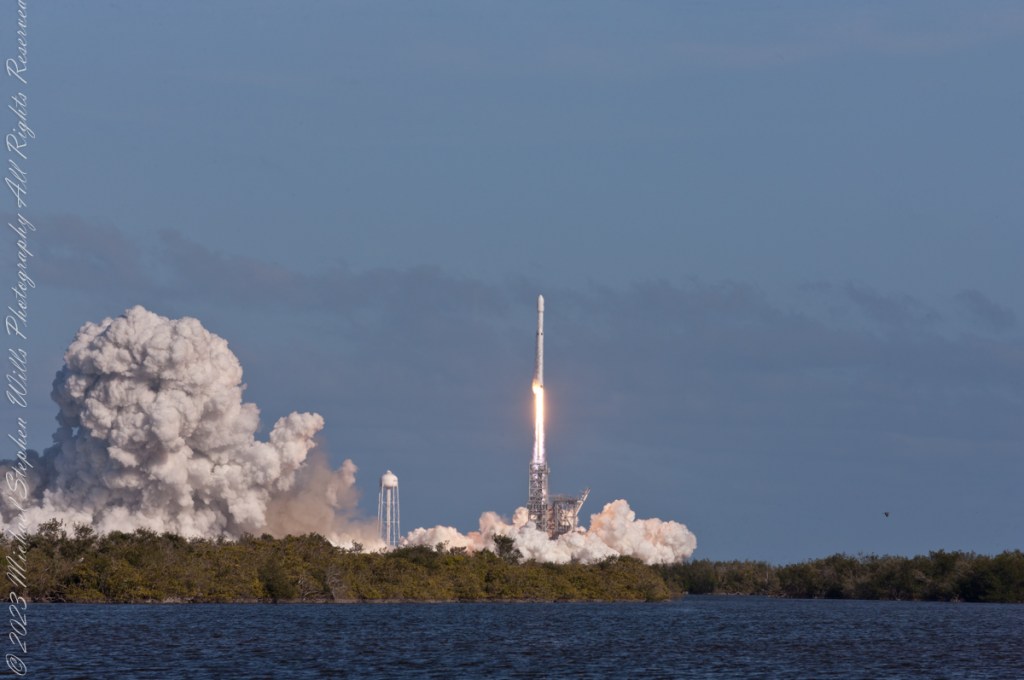
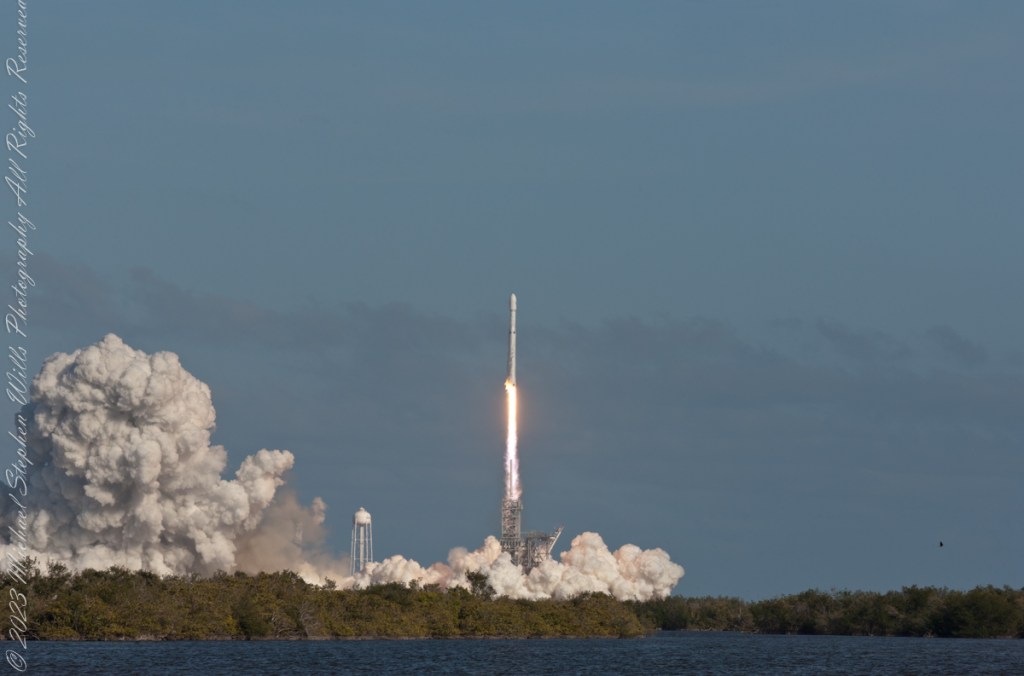
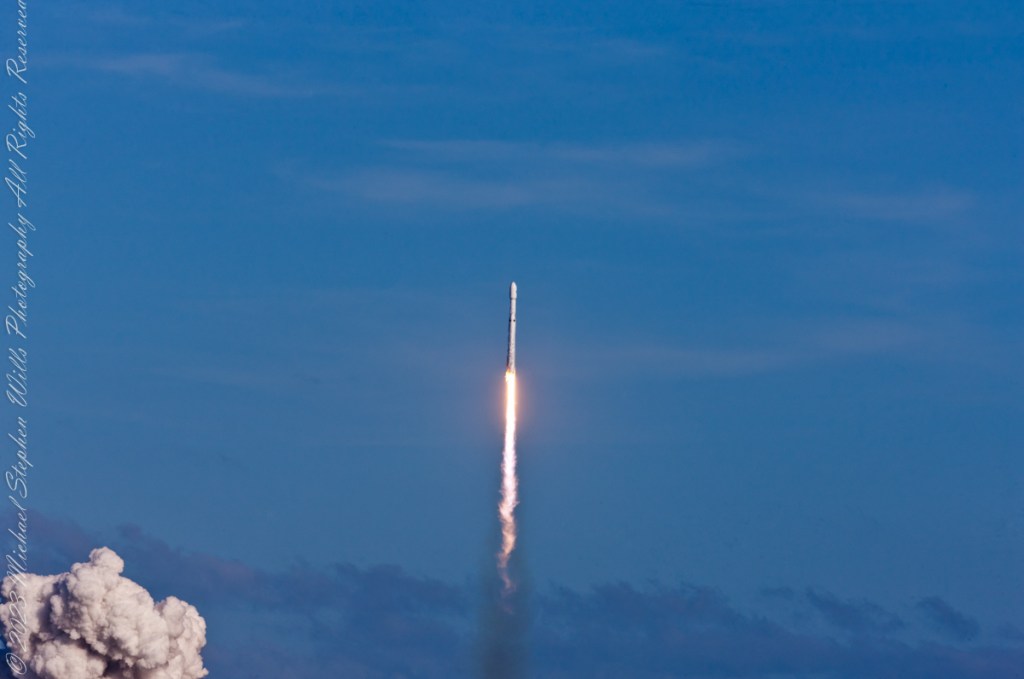
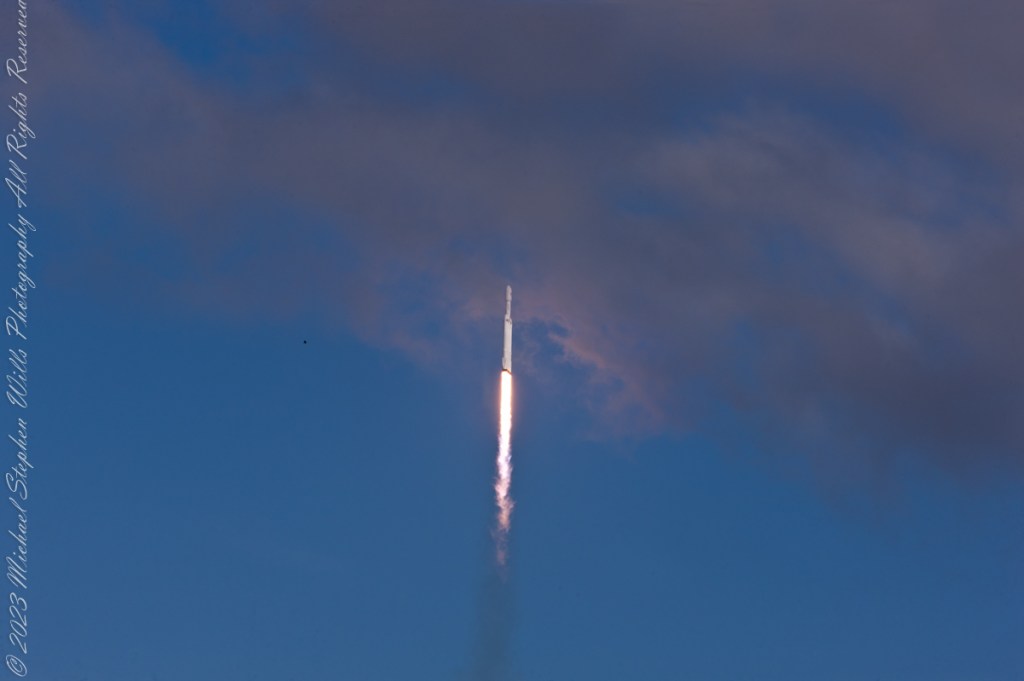
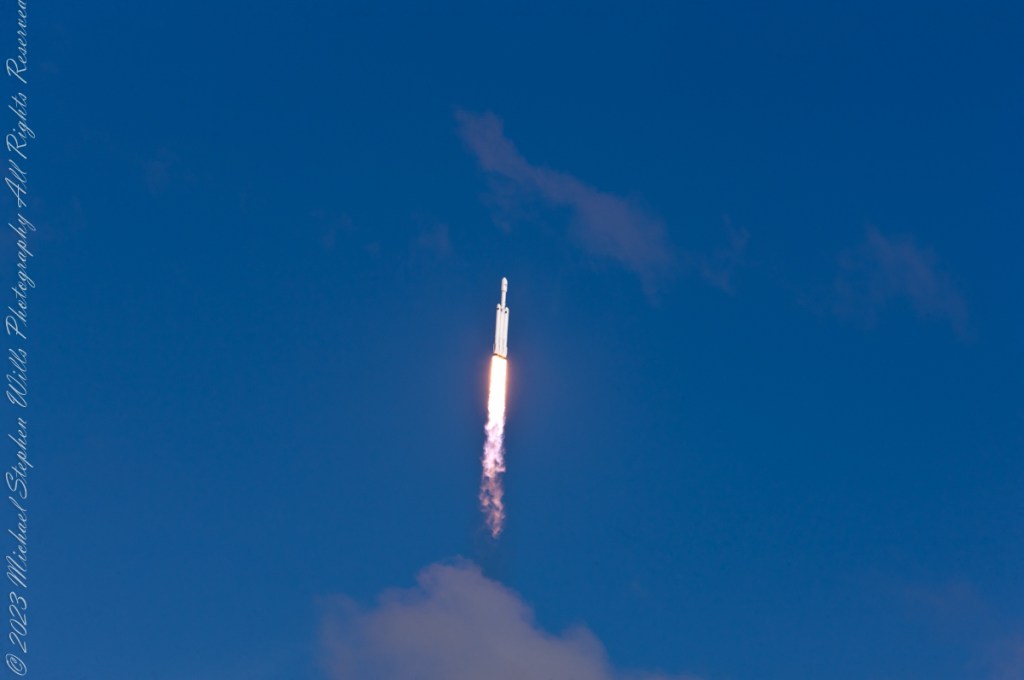
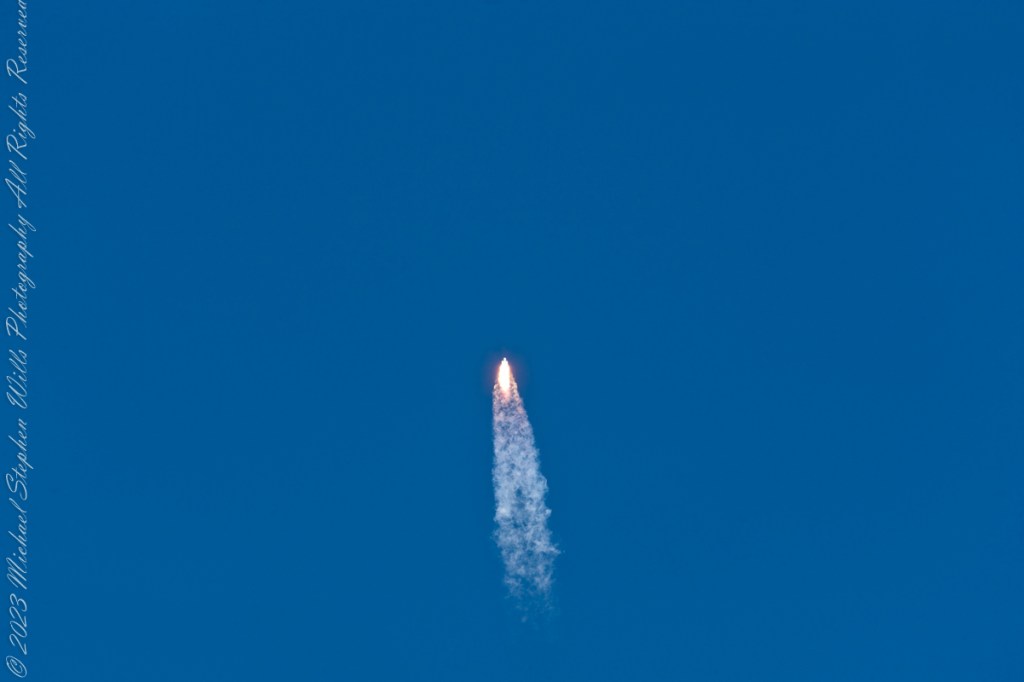
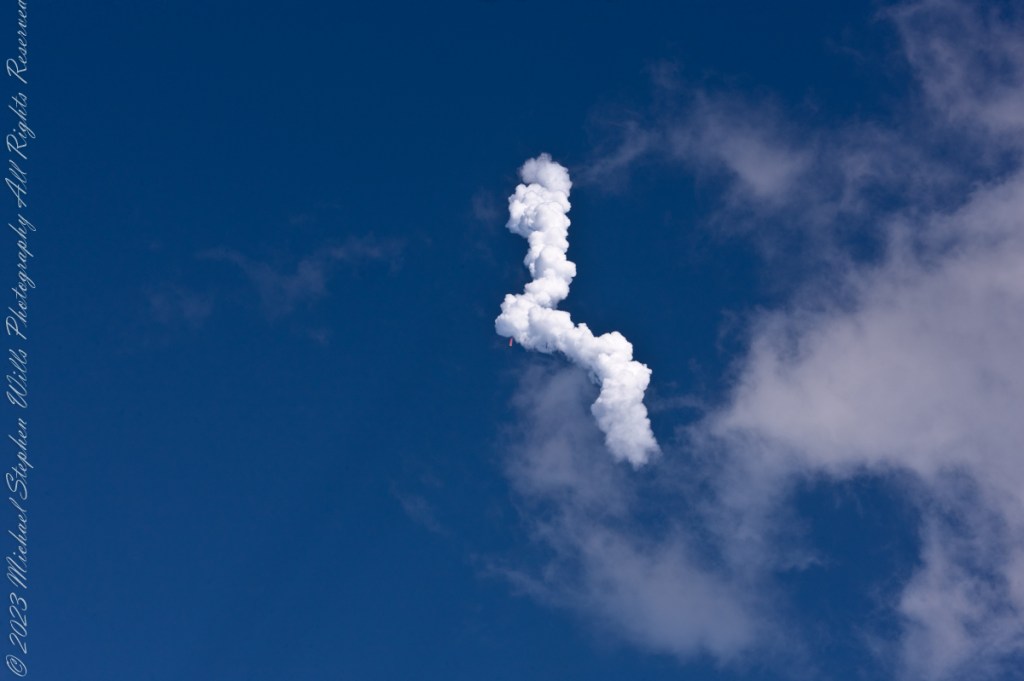
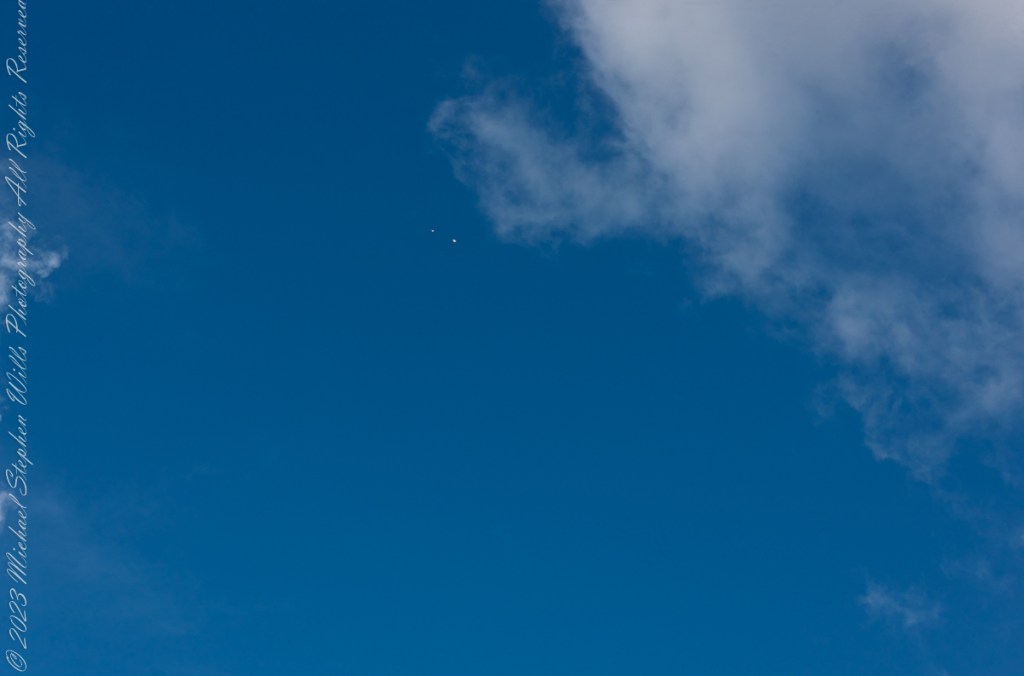
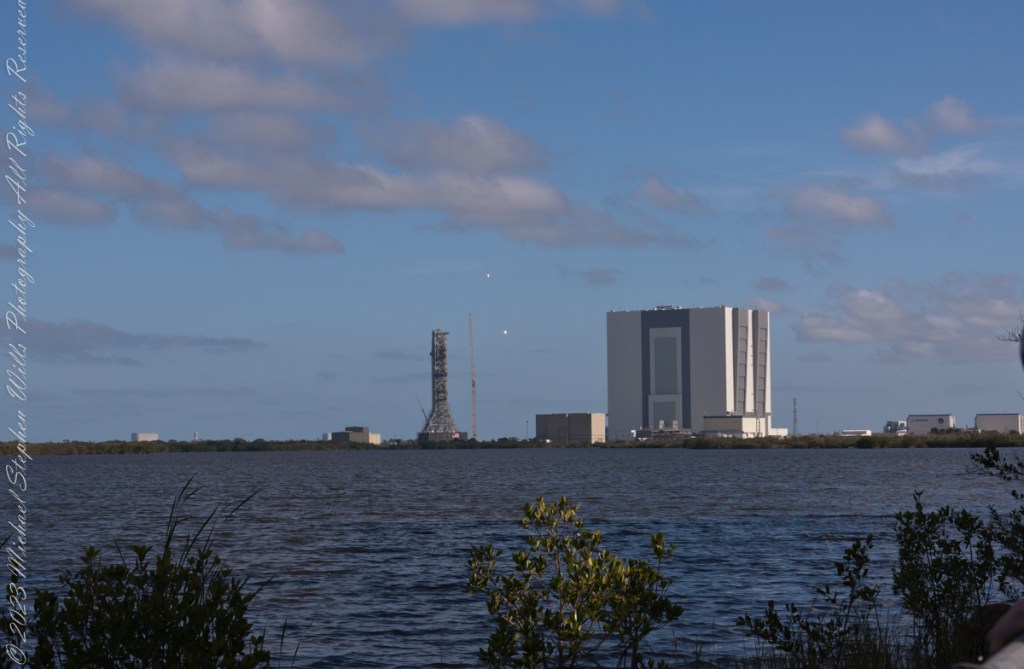
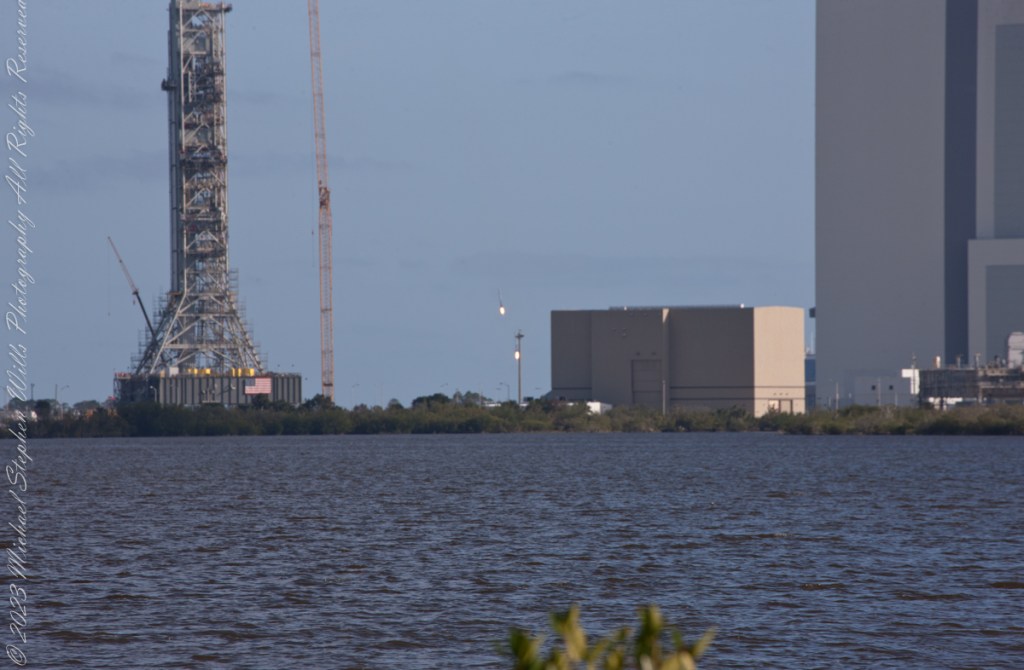
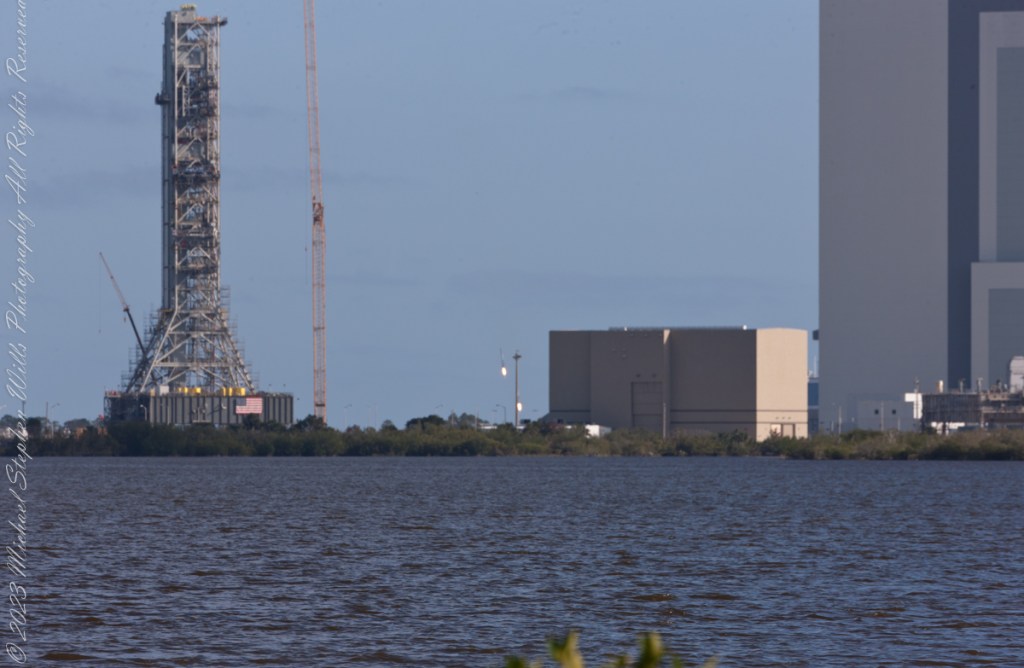
February 6, 2018 fuel venting during fueling of the Space X Falcon Heavy 19 minutes 25 seconds prior to launch. The rocket hidden by the launch tower. Taken from Kennedy Space Center Apollo-Saturn V Center looking across the Banana River to Launch Complex 39A, 3.9 miles away.Pam and Mike Wills in place at a prime spot for the SpaceX Falcon Heavy Launch. Kennedy Space Center, Apollo-Saturn V Center. February 6, 2018. 00:10:49 before launch.February 6, 2018 fuel venting, fueling complete 1 minute 20 seconds prior to launch. The rocket hidden by the launch tower. Taken from Kennedy Space Center Apollo-Saturn V Center looking across the Banana River to Launch Complex 39A, 3.9 miles away.February 6, 2018 Space X Falcon Heavy, 3 seconds prior to launch. The rocket hidden by the launch tower. The cloud is water released into the launch platform under pressure from the water tower. Taken from Kennedy Space Center Apollo-Saturn V Center looking across the Banana River to Launch Complex 39A, 3.9 miles away.February 6, 2018 Space X Falcon Heavy, launch 2 seconds prior to launch. The rocket hidden by the launch tower. The cloud is water released into the launch platform under pressure from the water tower. Taken from Kennedy Space Center Apollo-Saturn V Center loking across the Banana River to Launch Complex 39A, 3.9 miles away.February 6, 2018 Space X Falcon Heavy engine ignition. The moment of engine ignition, the rocket hidden by the launch tower. Taken from Kennedy Space Center Apollo-Saturn V Center loking across the Banana River to Launch Complex 39A, 3.9 miles away.February 6, 2018 Space X Falcon Heavy, launch plus 1 second. Ignition visible, tower connections falling away. Rocket nose visible to right of tower lightening rod. Taken from Kennedy Space Center Apollo-Saturn V Center loking across the Banana River to Launch Complex 39A, 3.9 miles away.February 6, 2018 Space X Falcon Heavy, launch plus 2 seconds. Rocket lift-off fully underway. Taken from Kennedy Space Center Apollo-Saturn V Center looking across the Banana River to Launch Complex 39A, 3.9 miles away.February 6, 2018 Space X Falcon Heavy, launch plus 4 seconds. Rocket not yet clear of launch tower. Taken from Kennedy Space Center Apollo-Saturn V Center looking across the Banana River to Launch Complex 39A, 3.9 miles away.February 6, 2018 Space X Falcon Heavy, launch plus 5 seconds. A heron flies to the right of launch tower. Taken from Kennedy Space Center Apollo-Saturn V Center looking across the Banana River to Launch Complex 39A, 3.9 miles away.February 6, 2018 Space X Falcon Heavy, launch plus 6 seconds. Rocket is just clear of launch tower. At 230 feet in 6 seconds it is travelling at 26.1 miles per hour. A heron flies to right of launch tower. Taken from Kennedy Space Center Apollo-Saturn V Center looking across the Banana River to Launch Complex 39A, 3.9 miles away.February 6, 2018 Space X Falcon Heavy, launch plus 7 seconds. Rocket is clear of the launch tower. Taken from Kennedy Space Center Apollo-Saturn V Center looking across the Banana River to Launch Complex 39A, 3.9 miles away.February 6, 2018 Space X Falcon Heavy, launch plus 7 seconds. Taken from Kennedy Space Center Apollo-Saturn V Center looking across the Banana River to Launch Complex 39A, 3.9 miles away.February 6, 2018 Space X Falcon Heavy, launch plus 8 seconds. Taken from Kennedy Space Center Apollo-Saturn V Center looking across the Banana River to Launch Complex 39A, 3.9 miles away.February 6, 2018 Space X Falcon Heavy, launch plus 9 seconds. Taken from Kennedy Space Center Apollo-Saturn V Center looking across the Banana River to Launch Complex 39A, 3.9 miles away.February 6, 2018 Space X Falcon Heavy, launch plus 12 seconds. Taken from Kennedy Space Center Apollo-Saturn V Center.February 6, 2018 Space X Falcon Heavy, launch plus 20 seconds. The rocket has rolled a few degrees, all boosters are visible. The Taken from Kennedy Space Center Apollo-Saturn V Center.February 6, 2018 Space X Falcon Heavy, launch plus 25 seconds. All boosters are visible. Taken from Kennedy Space Center Apollo-Saturn V Center.February 6, 2018 Space X Falcon Heavy, launch plus 26 seconds. All boosters are visible. Taken from Kennedy Space Center Apollo-Saturn V Center.February 6, 2018 Space X Falcon Heavy, launch plus 32 seconds. A boosters are visible. Taken from Kennedy Space Center Apollo-Saturn V Center.February 6, 2018 Space X Falcon Heavy, launch plus 1 minute 11 seconds. The boosters have throttled back. Taken from Kennedy Space Center Apollo-Saturn V Center.February 6, 2018 Space X Falcon Heavy, launch plus 1 minute 57 seconds. The cloud was formed from the throttled back boosters. The rocket is visible near center of frame. Taken from Kennedy Space Center Apollo-Saturn V Center.February 6, 2018 Space X Falcon Heavy, launch plus 6 minutes 37 seconds. Firing thrusterrs of the two returning boosters are visible a bit above the center of frame. Taken from Kennedy Space Center Apollo-Saturn V Center.February 6, 2018 Space X Falcon Heavy, launch plus 7 minutes 50 seconds. Both boosters visible firing thrusters between the SLS Launch Tower and NASA Vehicle Assembly Building. Taken from Kennedy Space Center Apollo-Saturn V Center loking across the Banana River.February 6, 2018 Space X Falcon Heavy, launch plus 8 minutes 2 seconds. Both boosters visible firing thrusters between the SLS Launch Tower and NASA Vehicle Assembly Building. Taken from Kennedy Space Center Apollo-Saturn V Center loking across the Banana River.February 6, 2018 Space X Falcon Heavy, launch plus 8 minutes 3 seconds. Both boosters visible firing thrusters between the SLS Launch Tower and NASA Vehicle Assembly Building. Taken from Kennedy Space Center Apollo-Saturn V Center loking across the Banana River.
“Falcon Heavy was designed to be able to carry humans into space beyond low Earth orbit, although as of February 2018, SpaceX does not intend to transport people on Falcon Heavy, nor pursue the human-rating certification process to transport NASA astronauts. Both Falcon Heavy and Falcon 9 are expected to eventually be superseded by the Starship launch system, currently being developed.“
“On 6 February 2018, after a delay of over two hours due to high winds, Falcon Heavy lifted off at 20:45 UTC. Its side boosters landed safely on Landing Zones 1 and 2 a few minutes later. However, only one of the three engines on the center booster that were intended to restart ignited during descent, causing the booster to be destroyed upon impacting the ocean at a speed of over 480 km/h (300 mph).“
“Initially, Elon Musk tweeted that the Roadster had overshot its planned heliocentric orbit, and would reach the asteroid belt. Later, observations by telescopes showed that the Roadster would only slightly exceed the orbit of Mars at aphelion.“
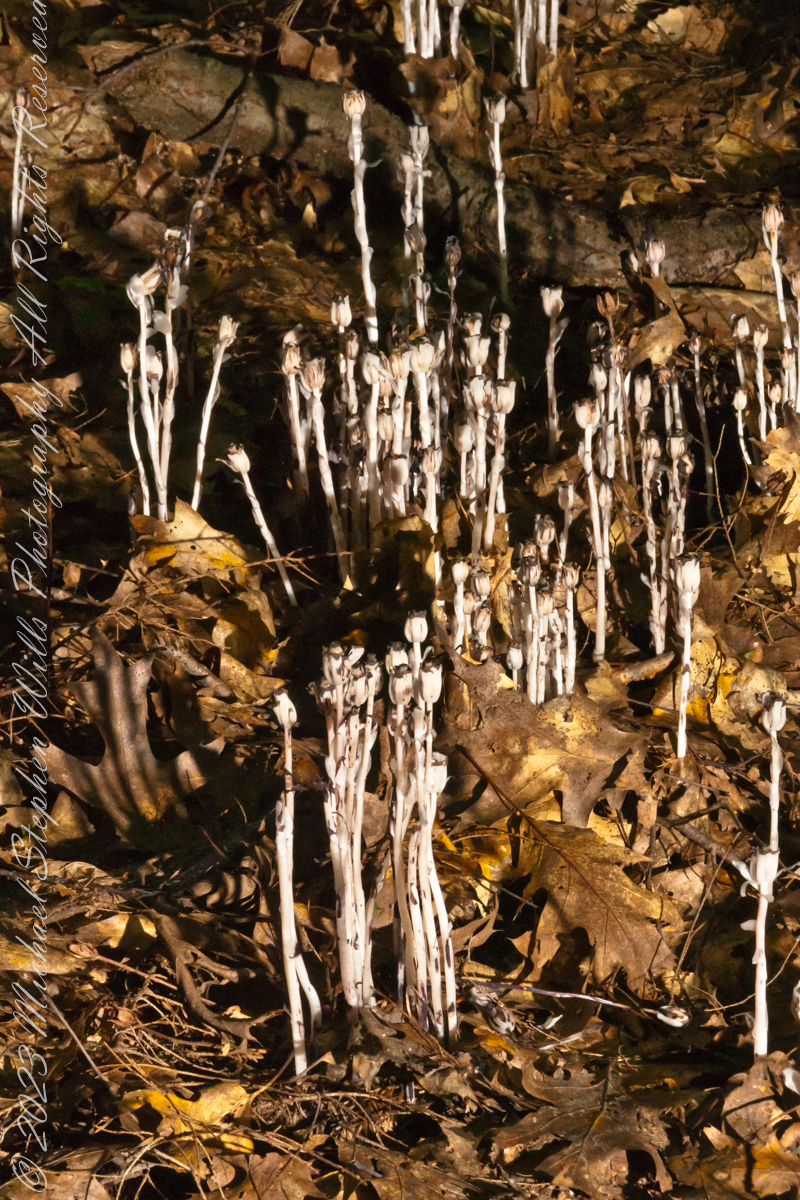
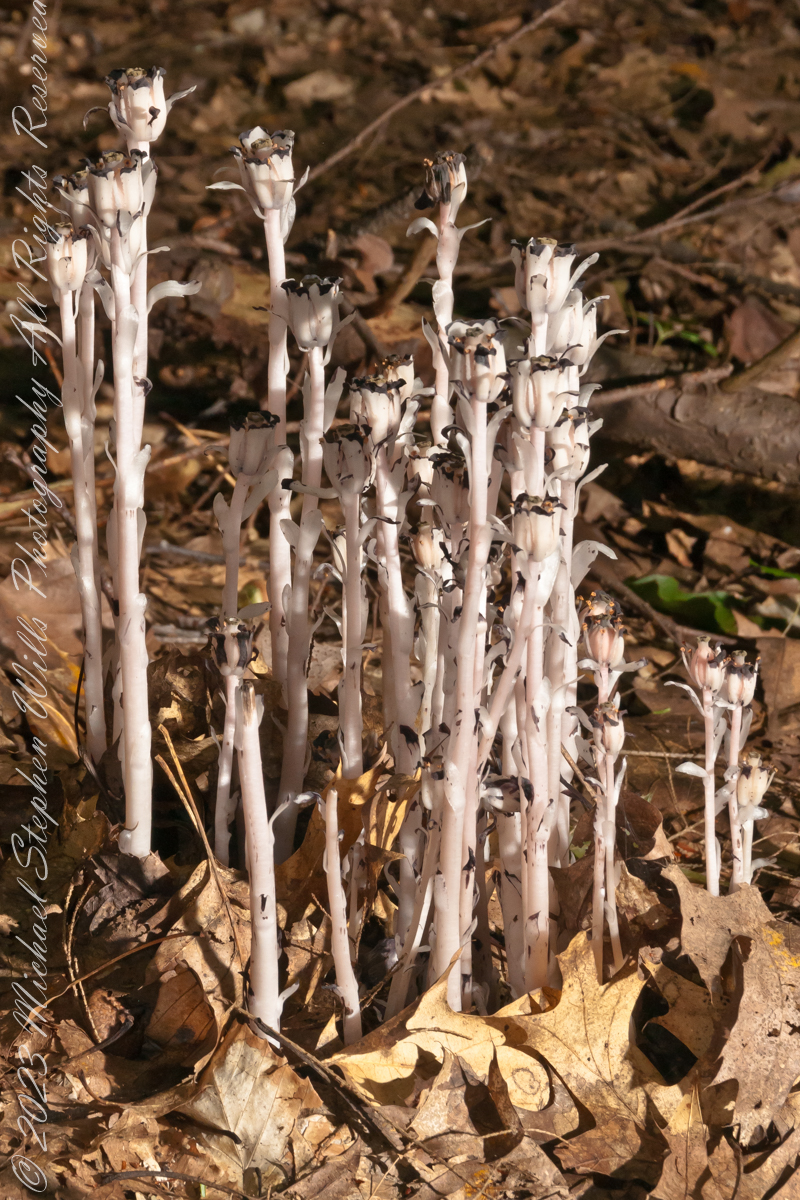
I found these popping up from leaf litter, a mixture of last year’s maple and elm, on an August morning. The dappled light, varied from bright to very dark, exceeded the dynamic range of my equipment, so I set up the Sony dslr Alpha700 with the Sony lens DT 18-200mm f3.5-6.3 on a tripod and, using the remote feature, placed the flash at an optimal angle.
“Monotropa uniflora, also known as ghost plant, ghost pipe, or Indian pipe, is an herbaceous perennial plant native to temperate regions of Asia, North America, and northern South America, but with large gaps between areas. The plant is sometimes completely waxy white, but often has black flecks or pale pink coloration. Rare variants may have a deep red color. The name “Monotropa” is Greek for “one turn” and “uniflora” is Latin for “one flowered” as there is one sharply curved stem for each single flower. It flowers from early summer to early autumn, often a few days after rainfall. The fruit, an oval capsule-like structure, enlarges and becomes upright when the seeds mature, at this point stem and capsule looking desiccated and dark brown or black. The seeds of Monotropa uniflora are small, ranging between 0.6–0.8 mm (3⁄128–1⁄32 in) in length.“
“Unlike most plants, it is white and does not contain chlorophyll. Instead of generating food using the energy from sunlight, it is parasitic, and more specifically a mycoheterotroph. Its hosts are certain fungi that are mycorrhizal with trees, meaning it ultimately gets its food from photosynthetic trees. Since it is not dependent on sunlight to grow, it can grow in very dark environments as in the understory of dense forest. The complex relationship that allows this plant to grow also makes propagation difficult.“
“The flowers of Monotropa uniflora are visited by various bee and fly species, most commonly bumblebees. Bumblebees are an important pollen dispersal agent for the plant.“
“Like most mycoheterotrophic plants, Monotropa uniflora associates with a small range of fungal hosts, all of them members of Russulaceae.“
“It is often associated with beech trees.“
“The plant contains glycosides and may be toxic to humans.“
“In addition to various reported medical uses, the plant has been used as an anxiolytic in herbal medicine since the late 19th century.“
Reference: in italics is from “Monotropa uniflora,” Wikipedia
Copyright 2023 Michael Stephen Wills All Rights Reserved
In this post we start the day of my posting “Family Trek“, July 19, 2008, when, well before the sun rose at 6:23 am Mountain Daylight Time (the Navajo Reservation observes daylight savings, the rest of Arizona does not), Pam and I were at the Spider Rock Overlook.
Most visitors to the canyon make use of a system of roads and parking lots next to strategic views. There is the White House Overlook we visited our first day, July 18, to hike from the trailhead into the canyon. There are also, on the south side of the canyon:
Tsegi Overlook, taken from a Navajo word that translates directly to “between the rocks” and usually refers to a deep canyon with steep cliffs.
Junction Overlook above the point where Canyon Del Muerto (see my posting “Sun and Shade, Canyon Del Muerto”, and Canyon De Chelly intersect. There is an Anasazi ruin in the south-facing cliff across the canyon.
Sliding House Overlook, another Anasazi run across the canyon.
Face Rock Overlook, to view the eponymous formation.
Spider Rock Overlook, the most stunning rock formation.
Click any photograph for my Online gallery.
Looking east from the Spider Rock overlook, Canyon De Chelly.
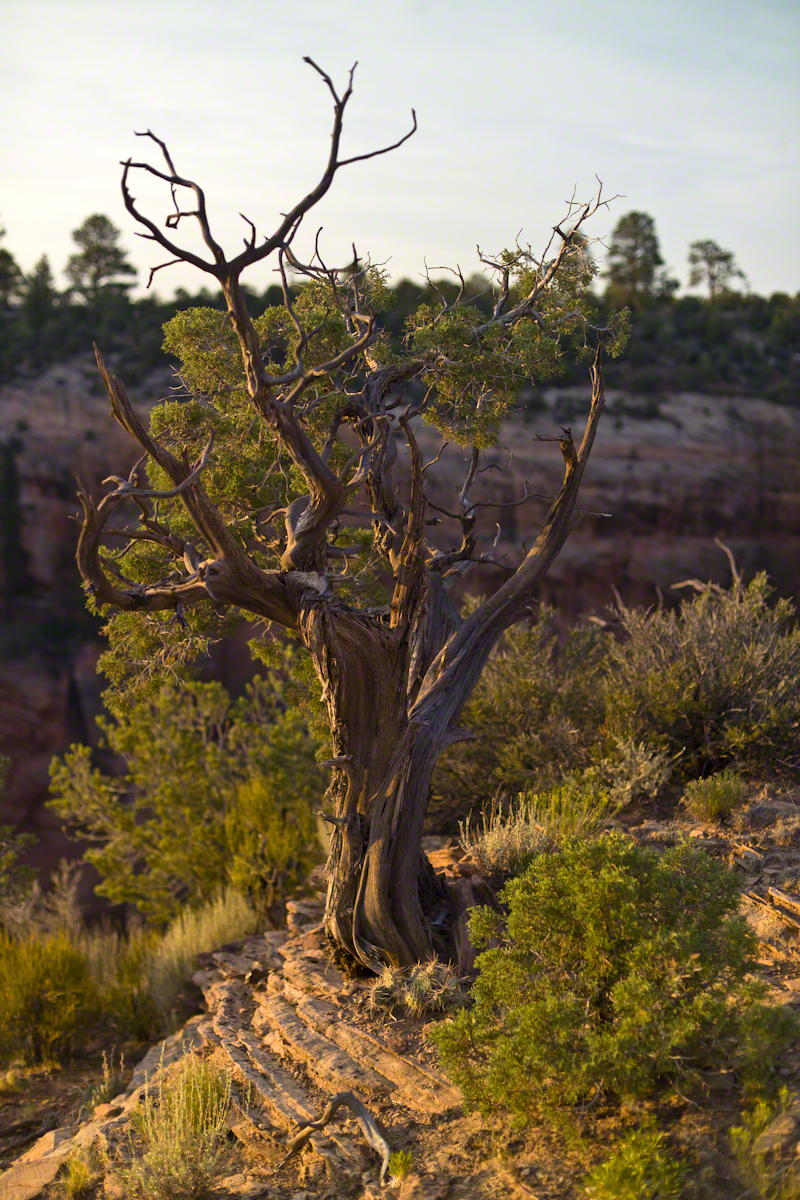
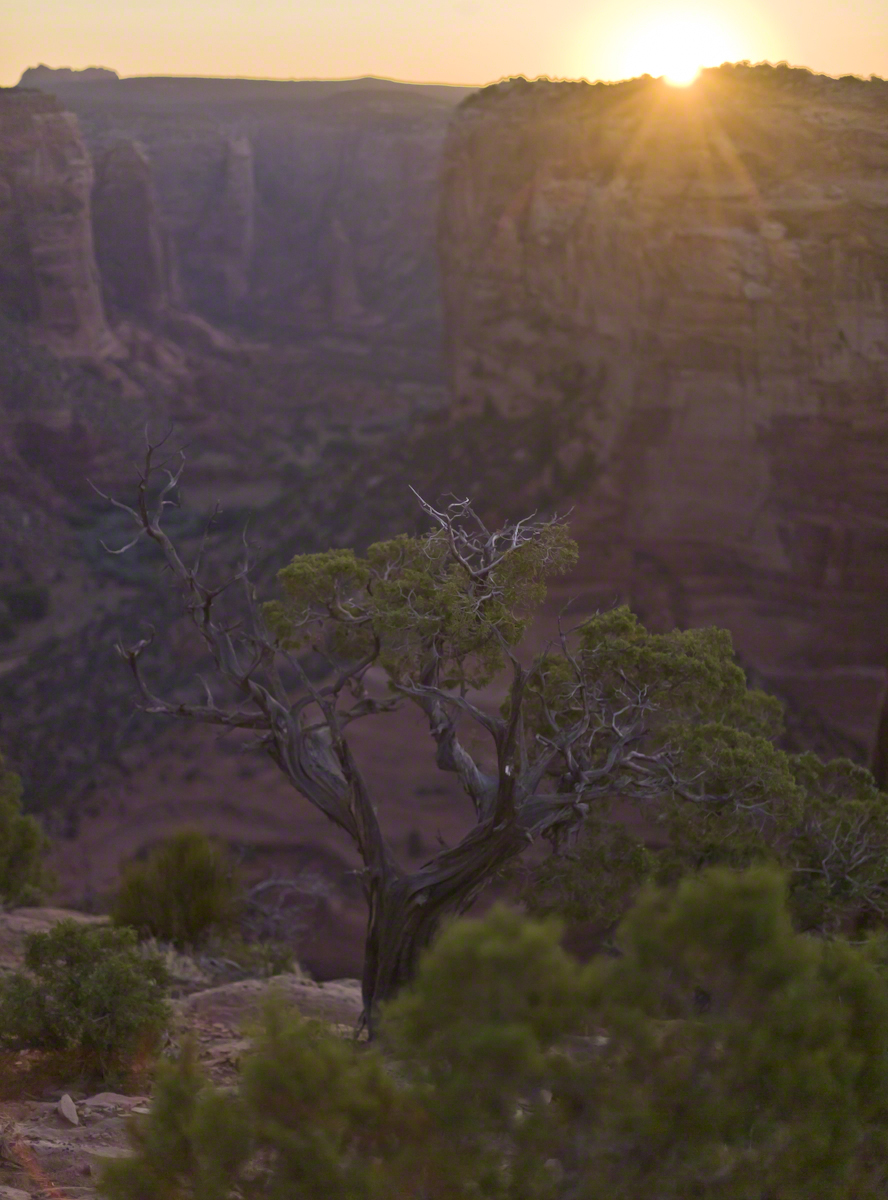
While getting ready I scoped out the location for interesting visual tropes. Utah Junipers are exceptionally hardy shrubs, stressed individual plants grow into compelling forms shaped by hardship. As the sun rose, this specimen emerged from the gloom and caught the first sun rays.
Click any photograph for my Online gallery.
A distressed Utah Juniper on the edge of Canyon De Chelly overlooking Needle Rock a few moments after sunrise.
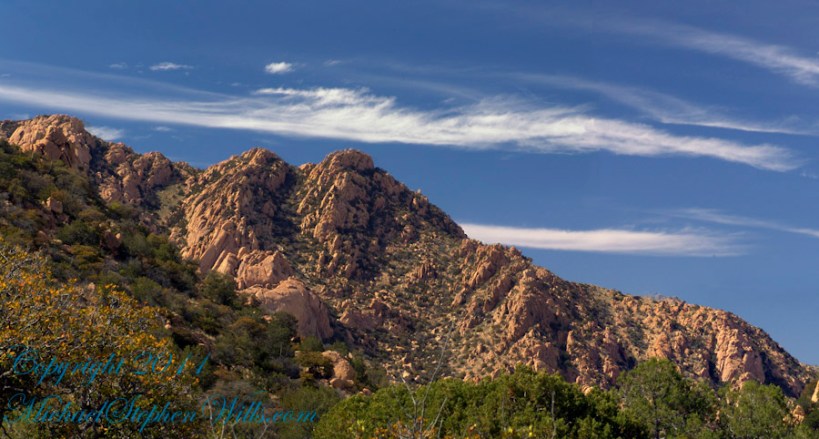
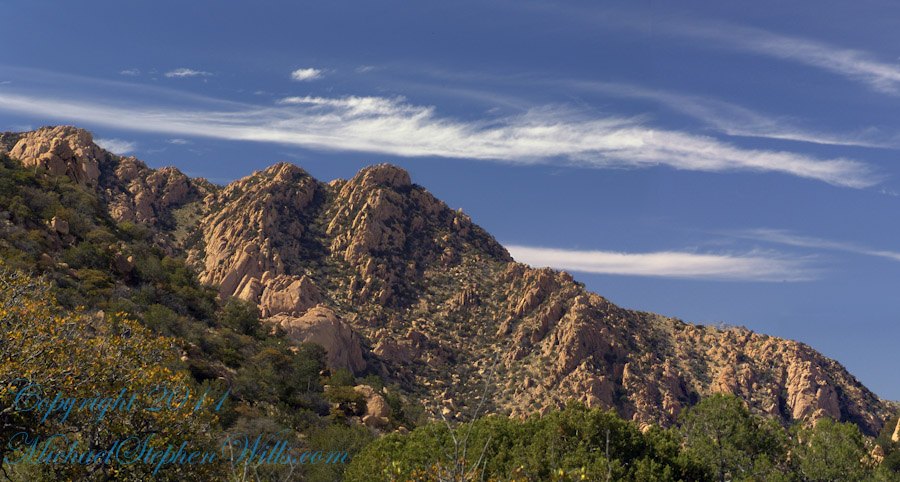
Dragoon Mountains of southeastern Arizona are named, not for the resemblance of this ridge to the back of a Dragon, but for a type of soldier trained for horseback riding and infantry. These were the U.S. troops sent to “pacify” the Chiricahua Apache homeland.
Understanding location lighting is a matter of experience and luck.
Cochise Stronghold campsites are on the eastern slope of the Dragoons, sheltering them from the late afternoon sun.
One this day in April I explored the trails until sunset and was lucky enough to be setup for the 14 minutes of that day when the light was absolutely perfect.
Copyright 2023 Michael Stephen Wills All Rights Reserved
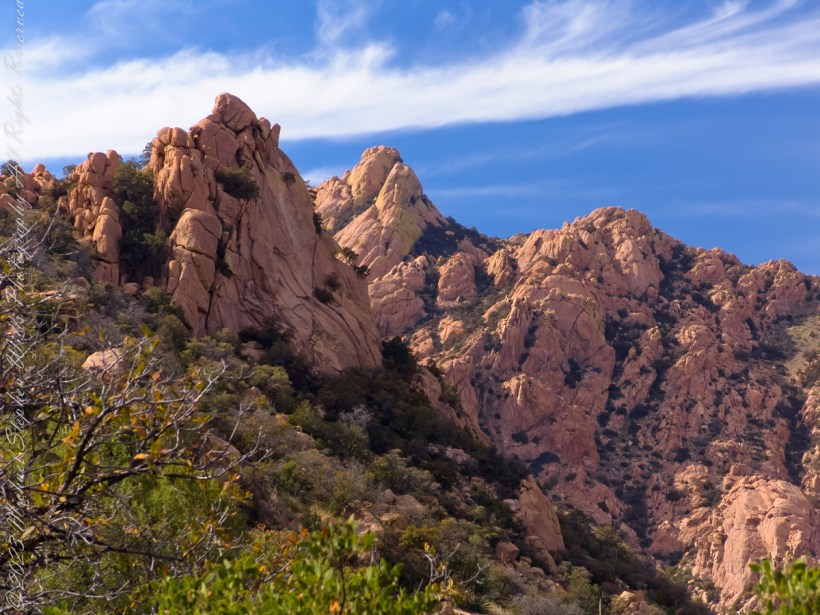
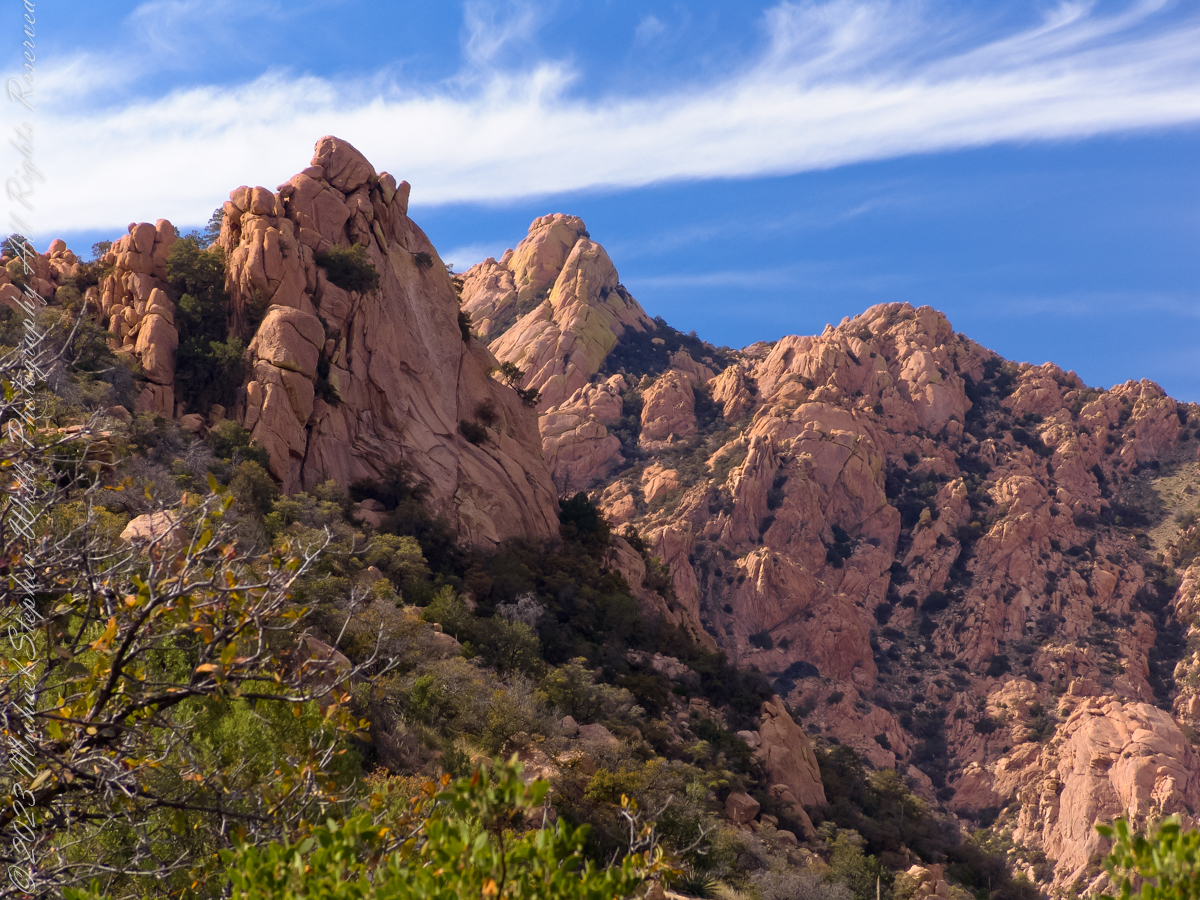
Understanding location lighting is a matter of experience and luck.
Cochise Stronghold campsites are on the eastern slope of the Dragoons, sheltering them from the late afternoon sun.
One this day in April I explored the trails until sunset and was lucky enough to be setup for the 14 minutes of that day when the light was absolutely perfect.
“Dragoon Spires in Afternoon Light”
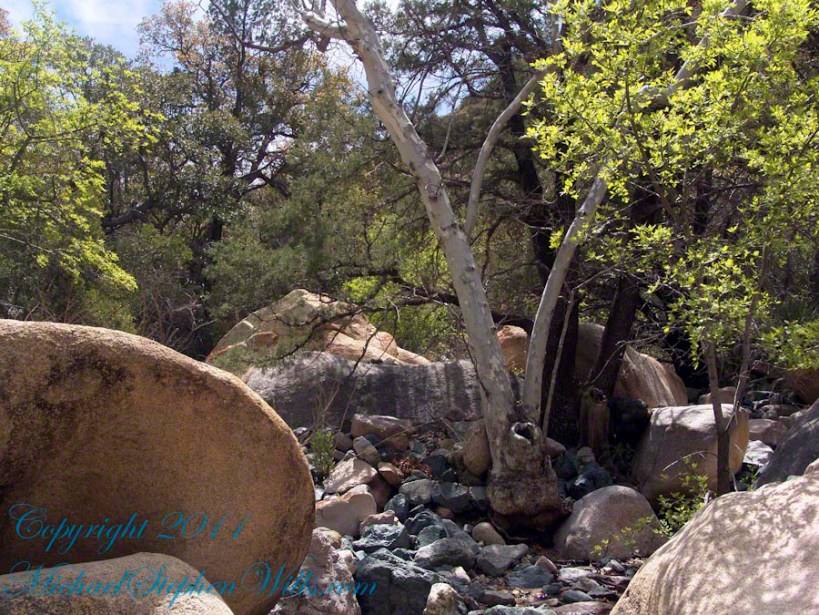
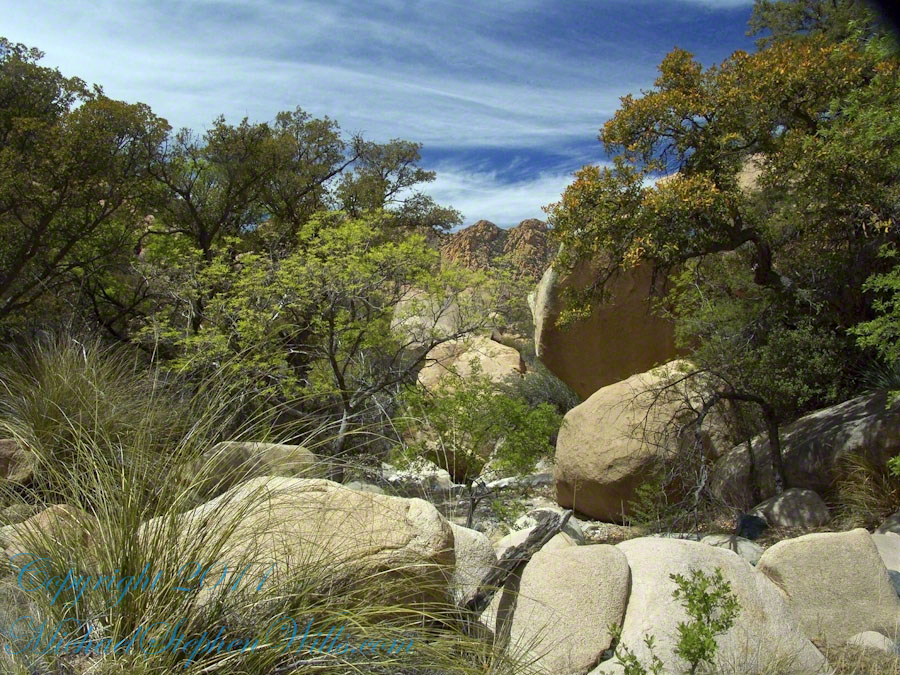
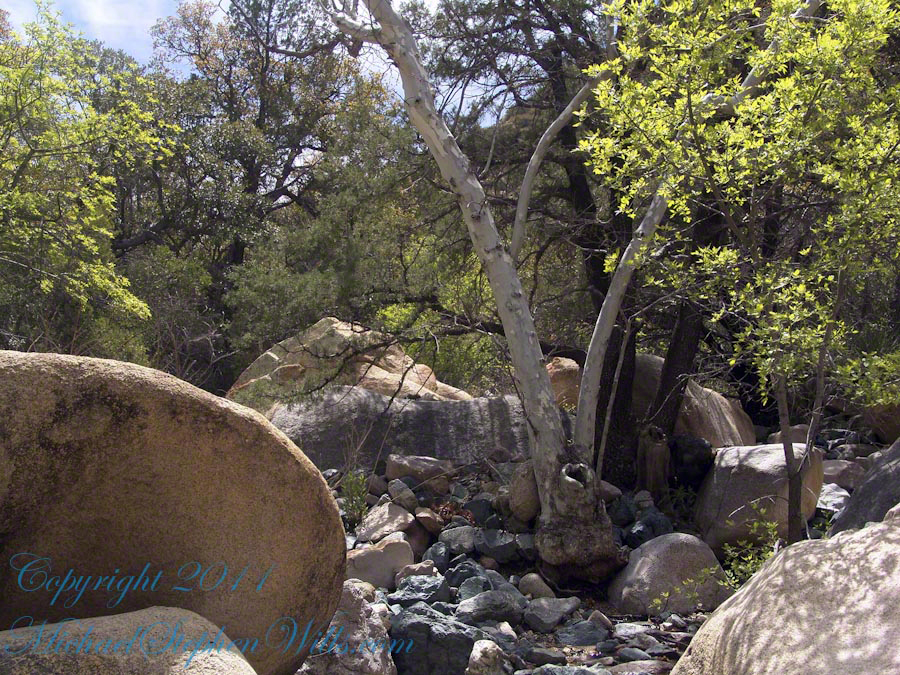
These photographs are from two days spent at Cochise Stronghold, a part of the U.S. Forest Service Coronado Forest managed by Arizona State Parks located off the Interstate 10 East of Tucson between Benson and Wilcox.
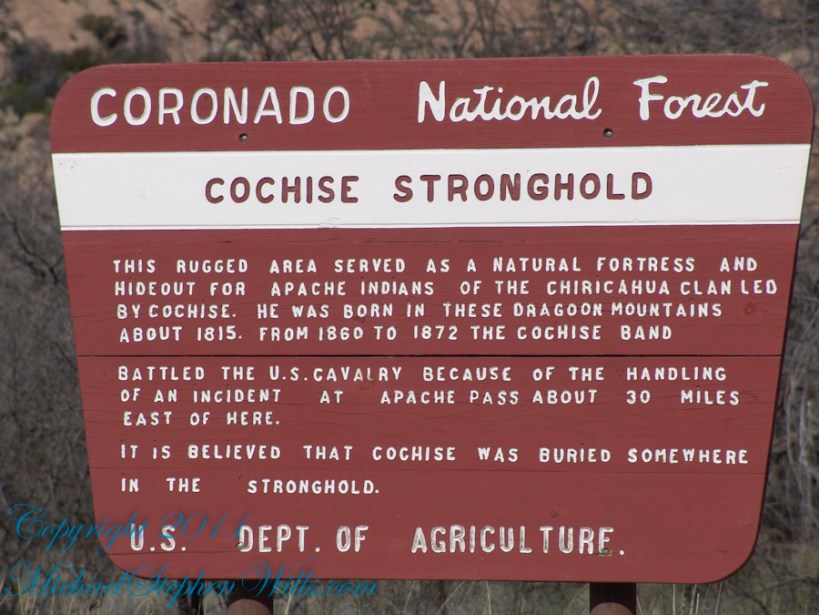
This rugged natural fortress was, for some 15 years, the home and base of operations for the famed Chiricahua Apache Chief, Cochise. Cochise and about 1,000 of his followers, of whom some 250 were warriors, located here.
Born in present-day Arizona, Cochise led the Chiricahua band of the Apache tribe during a period of violent social upheaval. In 1850, the United States took control over the territory that today comprises Arizona and New Mexico. Not hostile to the whites at first, he kept peace with the Anglo-Americans until 1861, when he became their implacable foe because of the blunder of a young U.S. Army officer, Lt. George Bascom. In that year, Cochise and several of his relatives had gone to an encampment of soldiers in order to deny the accusation that they had abducted a child from a ranch. The boy was later proved to have been kidnapped by another band of Apaches.
During the parley, Cochise and his followers were ordered held as hostages by Bascom, but Cochise managed to escape almost immediately by cutting a hole in a tent. Bascom later ordered the other Apache hostages hanged, and the embittered Cochise joined forces with Mangas Coloradas, his father-in-law, in a guerrilla struggle against the American army and settlers. The capture and murder of Mangas Coloradas in 1863 left Cochise as the Apache war chief. The U.S. Army captured him in 1871 and prepared to transfer the Chiricahua to a reservation hundreds of miles away, but he escaped again and renewed the resistance campaign. The following year after negotiating a new treaty with the help of Thomas Jeffords, the band was allowed to stay in their homeland.
Cochise is reputed to have been a master strategist and leader who was never conquered in battle. He died peacefully on the newly formed Chiricahua reservation in 1874. His son, Taza succeeded him as chief. Upon his death, he was secretly buried somewhere in or near his impregnable fortress. The exact location has never been revealed or determined.
The town of Cochise, Cochise County, the renowned geological feature known as Cochise’s Head in the Chiricahua Mountains, and the Stronghold are all named in tribute to him.
Copyright 2023 Michael Stephen Wills All Rights Reserved
These photographs are from two days spent at Cochise Stronghold, a part of the U.S. Forest Service Coronado Forest managed by Arizona State Parks located off the Interstate 10 East of Tucson between Benson and Wilcox.
Here is the Cochise Stronghold information sign from the Douglas Ranger District of the Coronado National Forest.
The Dragoon Mountains are a low range that barely rises above the surrounding desert floor. Nevertheless, the granite boulders are spectacular and well worth visiting for the scenery alone. This mountain range is remote from cities or even any large towns, so visitation is light. Late fall, winter, and early spring are the best times to visit. Temperatures exceeding 100 degrees are common even in spring and fall. Cochise Stronghold Campground is closed in June, July, and August due to the often-extreme heat.
Safety First: Heat and low humidity are real hazards for people unfamiliar with desert climates. A person can loose up to 5 quarts of fluid a day and it is easy to become seriously dehydrated without realizing it, so drink plenty of fluids even if you do not feel very thirsty. Always carry extra water in your car. When going on a hike, even if a short one, take a day pack with water, snack foods, protective clothing, flashlight, first aid kit, compass, and map. To avoid sun in
Copyright 2023 Michael Stephen Wills All Rights Reserved
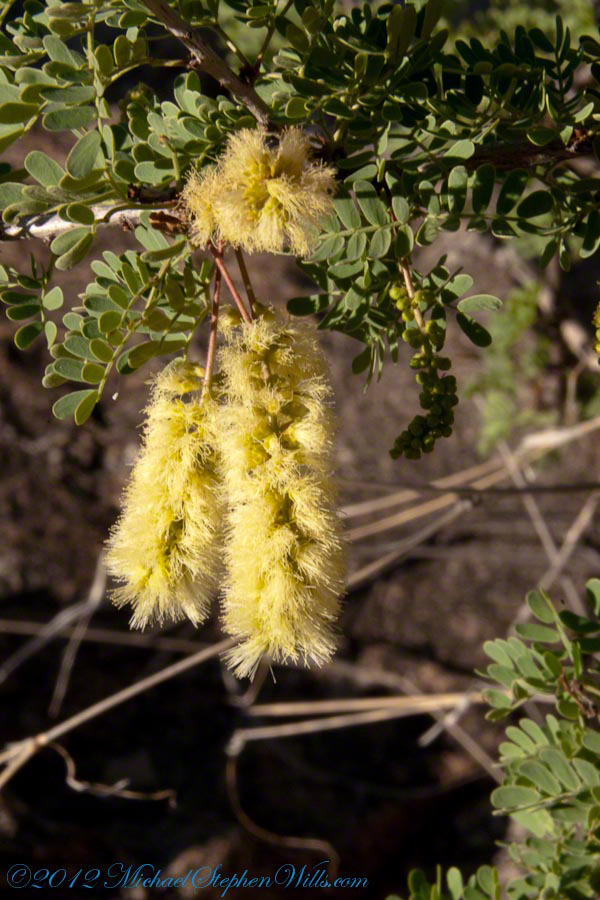
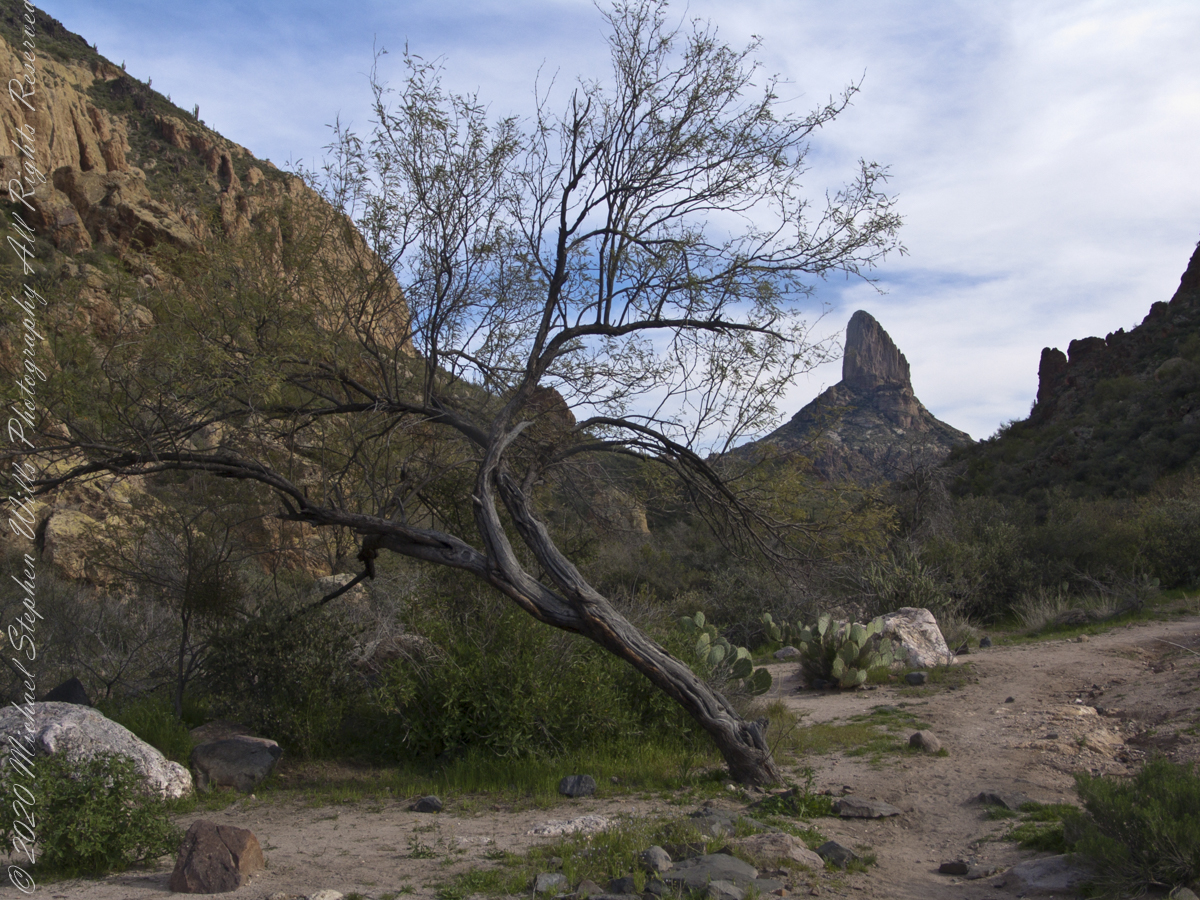
Mesquite is the Sonoran Desert smell carried by distant rain, omnipresent and humble, a survivor with tap root extending 190 feet down to draw on the water table.
Prosopis is the scientific name for about 40 species of leguminous trees. Present in North America since the Pliocene era, mesquite wood has been dated to 1300 BC.
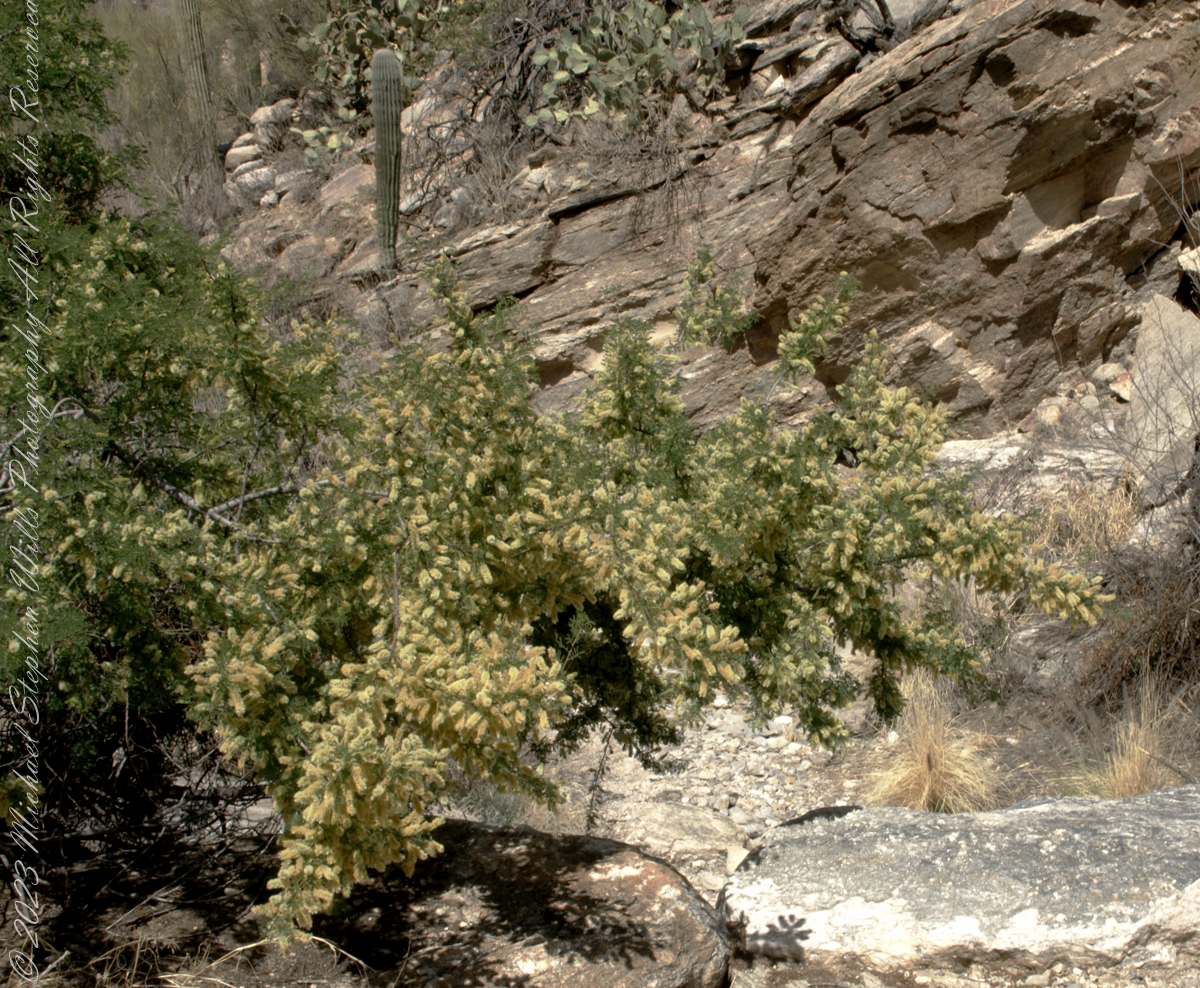
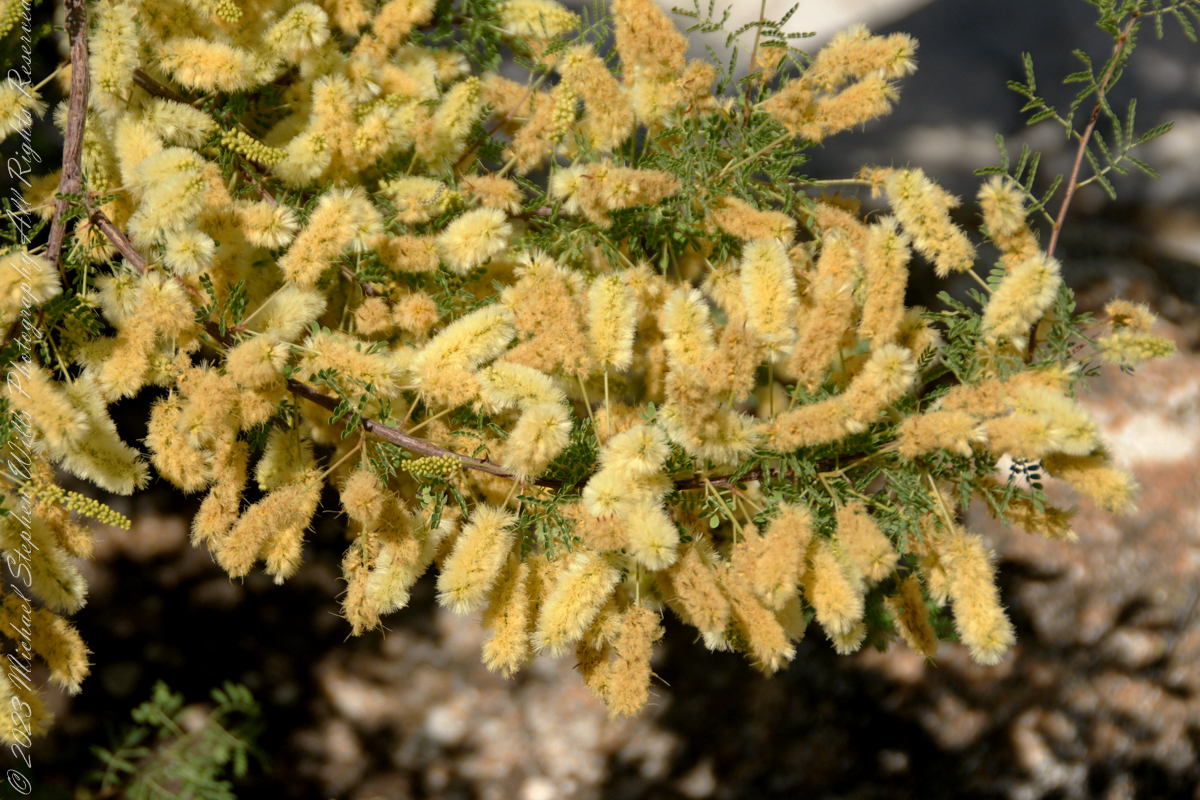
I found this flowering mesquite bush in Finger Rock Canyon of the Catalina Mountains outside Tucson, Arizona.
They are thought to have evolved with megafauna in the New World. The loss of North American megafauna at the end of the Pleistocene era gave way to one theory of how the Prosopis spp. were able to survive.
One theory is that the loss of the megafauna allowed Prosopis spp. to use their fruit pods to attract other organisms to spread their seeds; then, with the introduction of livestock, they were able to spread into grasslands.
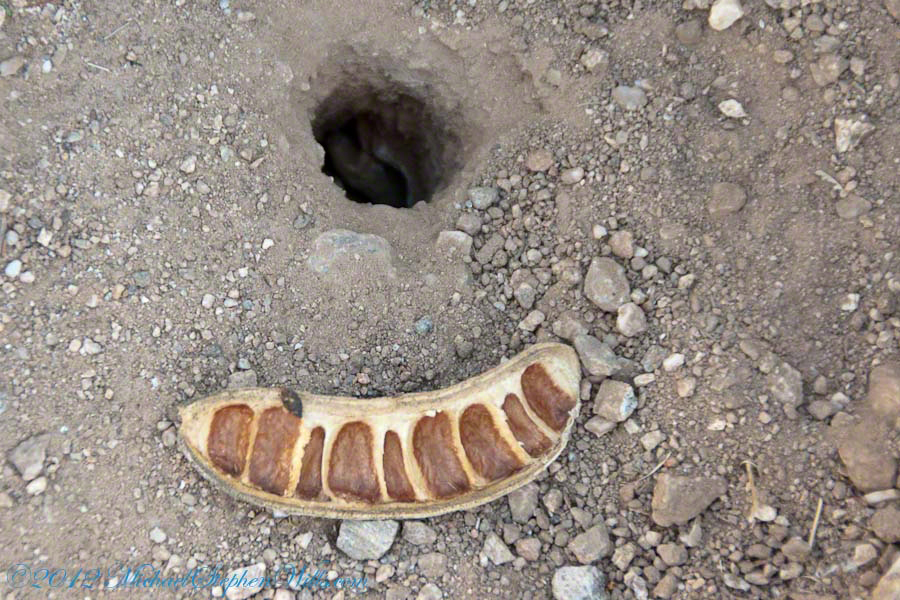
The plentiful legumes that develop from these flowers are edible when cooked. The shape and color of the seeds can be understood from this empty seed pod that happens to lie near a tarantula burrow.
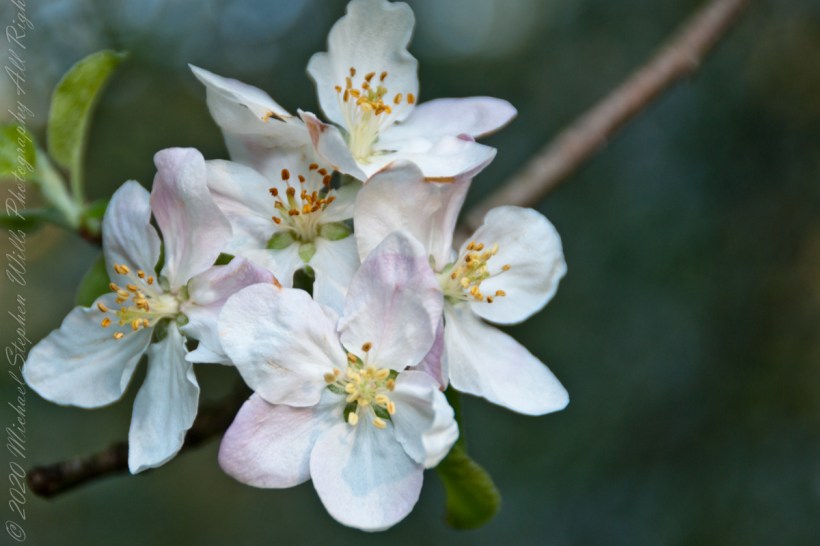
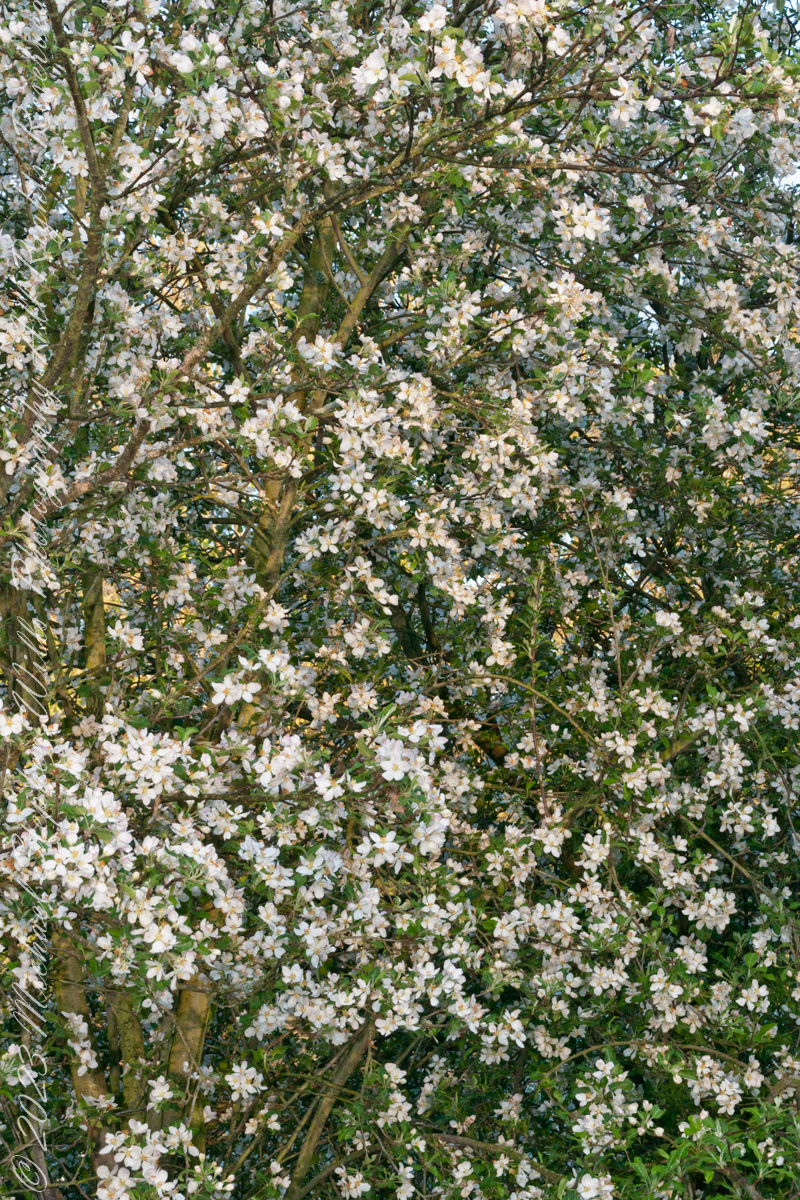
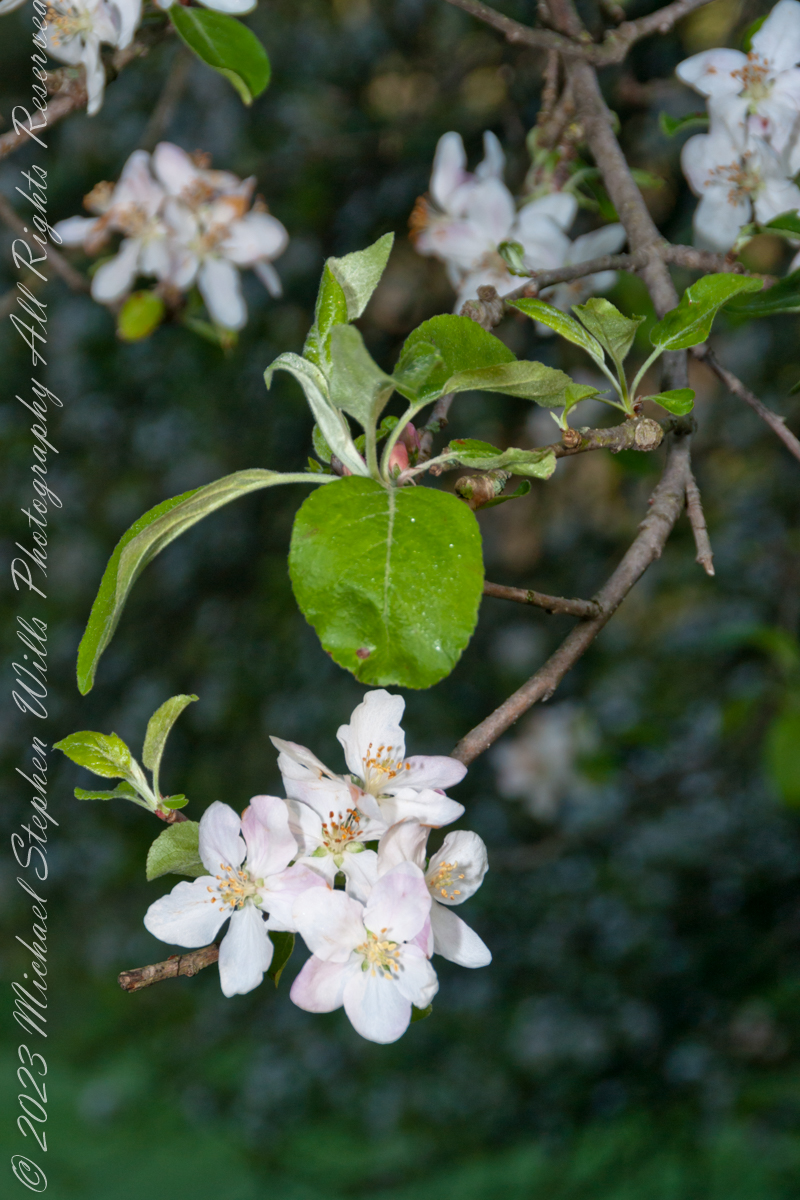
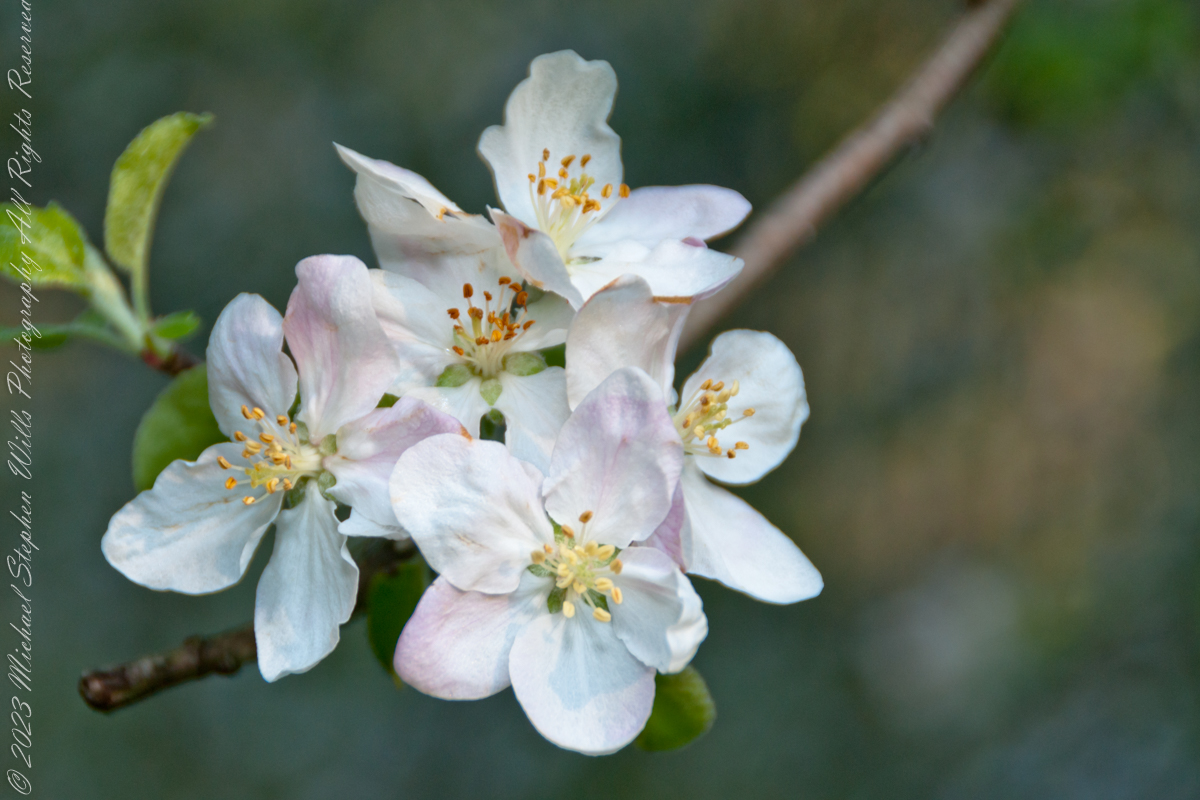
Our home at Malloryville, New York has an orchard of three apple trees, seen here on early one spring morning in the year 2010. The varieties are Delicious, Cortland and McIntosh. Freeville, Tompkins County, New York State
The original wild ancestor of Malus domestica was Malus sieversii, found growing wild in the mountains of Central Asia in southern Kazakhstan, Kyrgyzstan, Tajikistan, and northwestern China. Cultivation of the species, most likely beginning on the forested flanks of the Tian Shan mountains, progressed over a long period of time and permitted secondary introgression of genes from other species into the open-pollinated seeds.
Chinese soft apples, such as M. asiatica and M. prunifolia, have been cultivated as dessert apples for more than 2000 years in China. These are thought to be hybrids between M. baccata and M. sieversii in Kazakhstan.
Among the traits selected for by human growers are size, fruit acidity, color, firmness, and soluble sugar. Unusually for domesticated fruits, the wild M. sieversii origin is only slightly smaller than the modern domesticated apple.
At the Sammardenchia-Cueis site near Udine in Northeastern Italy, seeds from some form of apples have been found in material carbon dated to around 4000 BCE.[20] Genetic analysis has not yet been successfully used to determine whether such ancient apples were wild Malus sylvestris or Malus domesticus containing Malus sieversii ancestry. It is generally also hard to distinguish in the archeological record between foraged wild apples and apple plantations.
There is indirect evidence of apple cultivation in the third millennium BCE in the Middle East. There was substantial apple production in the European classical antiquity, and grafting was certainly known then. Grafting is an essential part of modern domesticated apple production, to be able to propagate the best cultivars; it is unclear when apple tree grafting was invented.
The proverb, “An apple a day keeps the doctor away”, addressing the supposed health benefits of the fruit, has been traced to 19th-century Wales, where the original phrase was “Eat an apple on going to bed, and you’ll keep the doctor from earning his bread”. In the 19th century and early 20th, the phrase evolved to “an apple a day, no doctor to pay” and “an apple a day sends the doctor away”; the phrasing now commonly used was first recorded in 1922.
Reference: Wikipedia “Apple”
Copyright 2023 Michael Stephen Wills All Rights Reserved
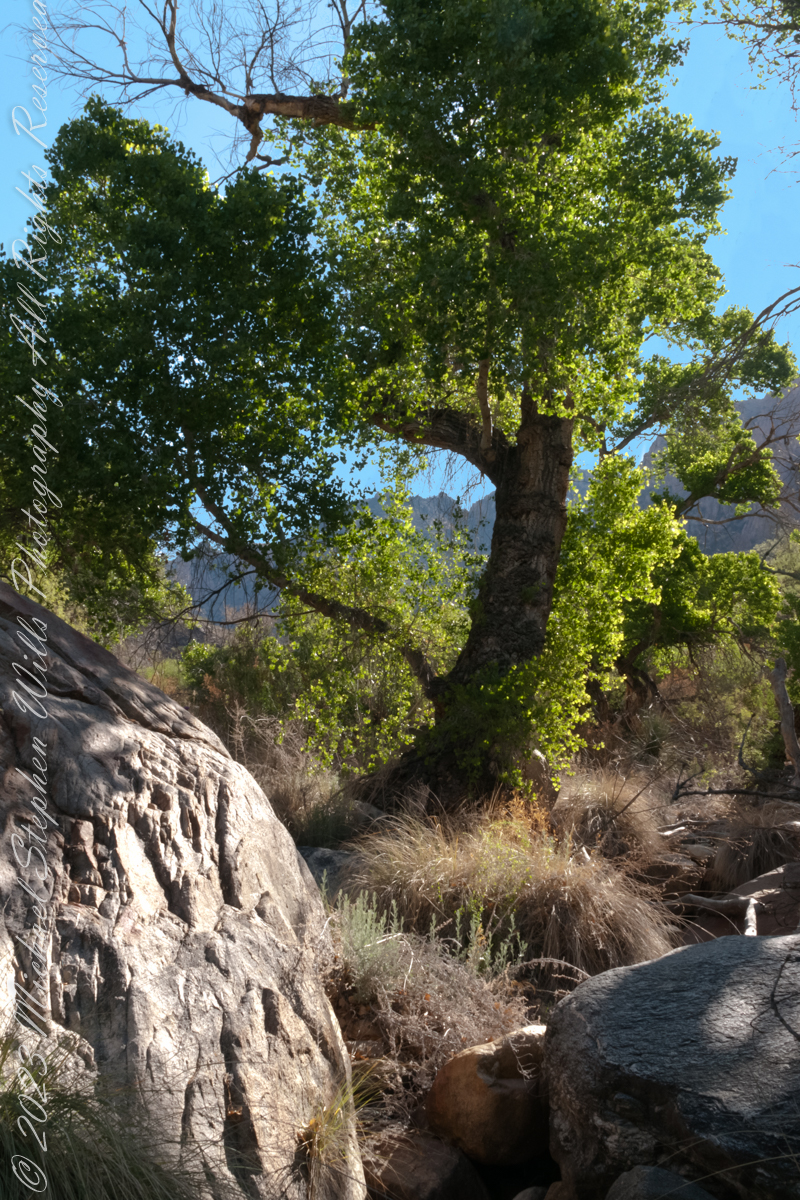
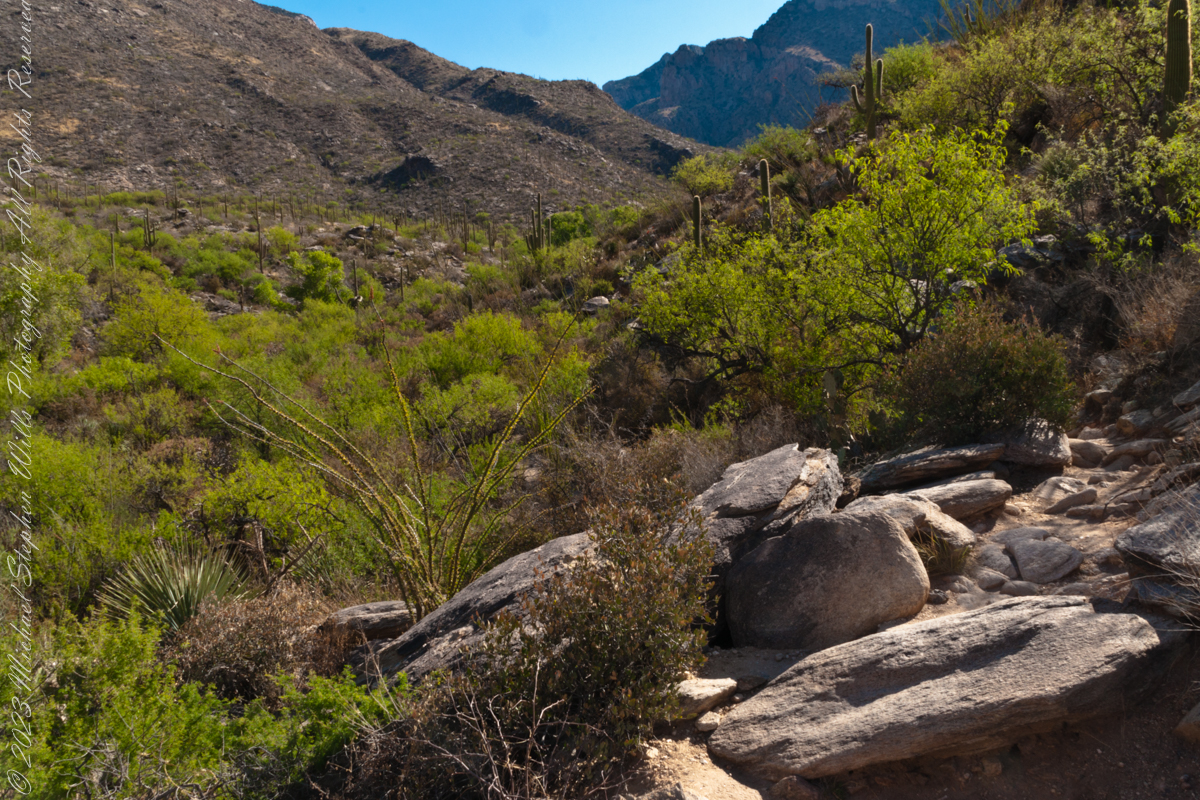
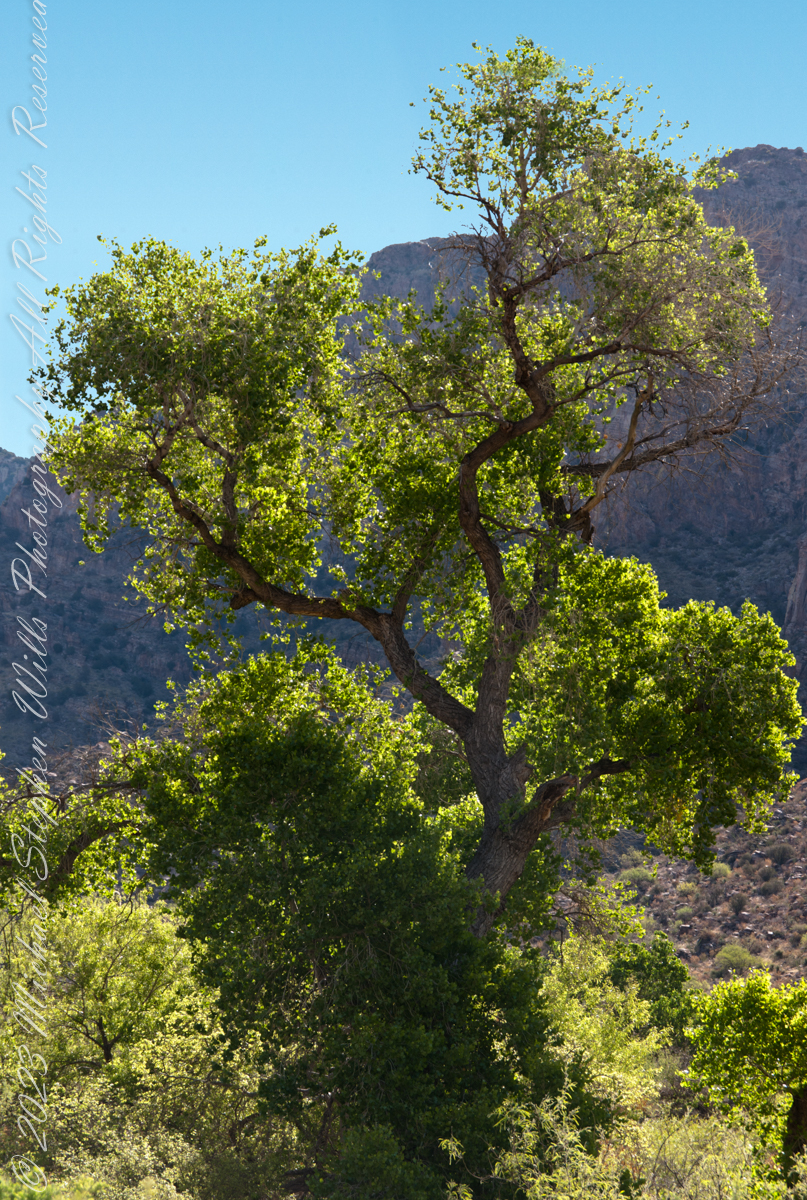
A large Fremont’s Cottonwood Offers shade and protection along the Pima Canyon Trail.
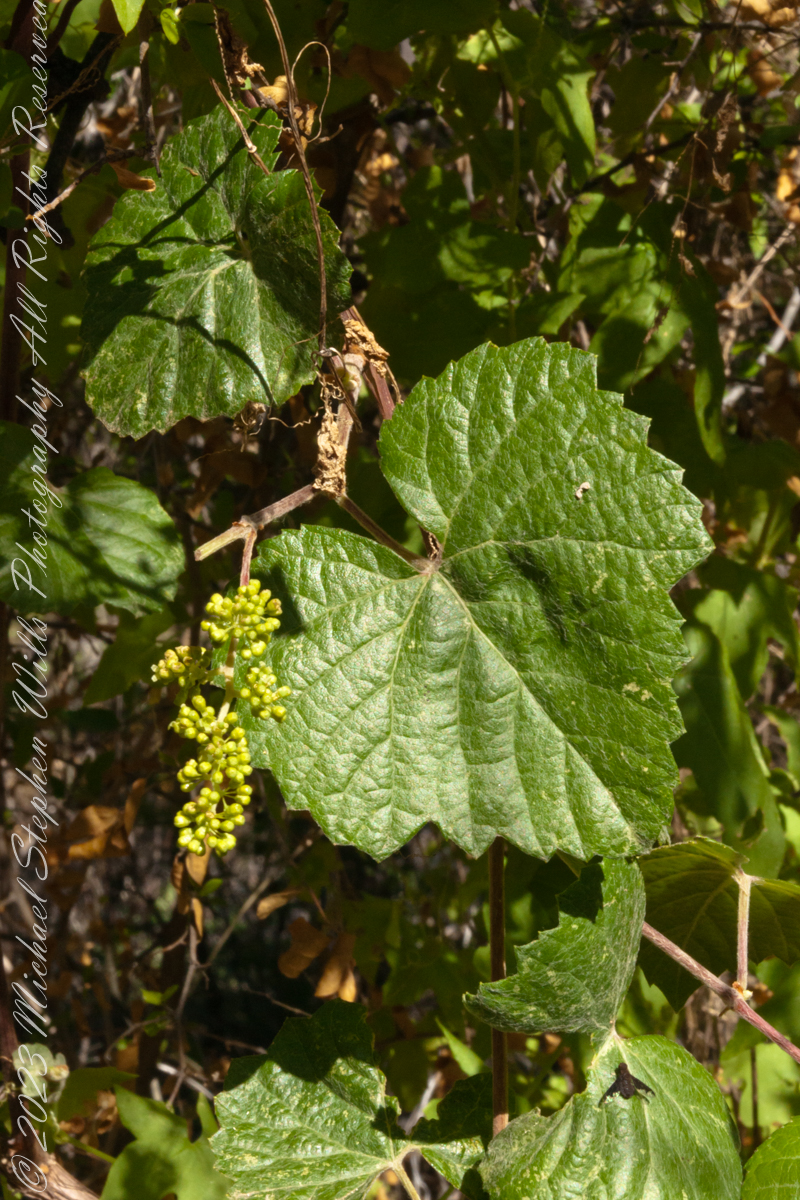
In the shade, a grapevine, offers a vain promise of grapes.
The cottonwood’s deep roots draw water from a mountain stream.
Native Americans in the Western United States and Mexico used parts of Frémont’s cottonwood variously for a medicine, in basket weaving, for tool making, and for musical instruments. The inner bark of Frémont’s cottonwood contains vitamin C and was chewed as an antiscorbutic – treatment for vitamin C deficiency. The bark and leaves could be used to make poultices to reduce inflammation or to treat wounds.
The Pima people of southern Arizona and northern Mexico lived along Sonoran Desert watercourses and used twigs from the tree in the fine and intricate baskets they wove. The Cahuilla people of southern California used the tree’s wood for tool making, the Pueblo peoples for drums, and the Lower Colorado River Quechan people in ritual cremations. The Hopi of Northeastern Arizona carve the root of the cottonwood to create kachina dolls.





 Michael Stephen Wills Photography