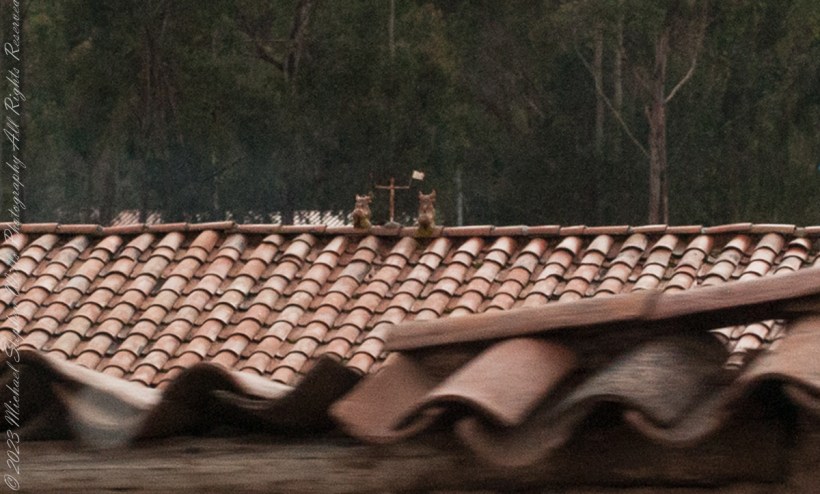
Bulls and Cross, Chinchero, Peru

The people that live in the district are mainly indigenous citizens of Quechua descent.

On our travel to Urubamba we traversed Chinchero District is one of seven districts of the Urubamba Province in Peru of which this eponymous town is the largest. It is the location for the proposed Chinchero International Airport, which would serve travelers to the Cusco Region. The people that live in the district are mainly indigenous citizens of Quechua descent. Quechua is the language which the majority of the population (81.49%) learnt to speak in childhood, 17.95% of the residents started speaking using the Spanish language (2007 Peru Census). One of the highest peaks of the district is Hatun Luychu at approximately 4,400 m (14,400 ft). Other mountains in this district include: Ichhu Kancha, Kunka Kunka, K’usi Qaqa, Pata Kancha, Quri Qucha Punta, Quri Qucha Qaqa, Sinqa, Wallata Wachana, Wanakawri (Anta-Urubamba), Yuthu Pukyu.

Click Me for my Online Gallery

Now and then I shot out the front window to capture road signs as orientation.

Puray comes from an ancient legend narrated by the settlers, where, the Sun god asked Manco Capac that his twin sons accompany him in his sunset and when the time came, they discovered that the son who walked farther had become the Huaypo (Huaypo) Lagoon (9 miles west) and the daughter in the Piuray (Puray) Lagoon.

In this photograph, distant cattle graze against backdrop of the lagoon and andean foothills.
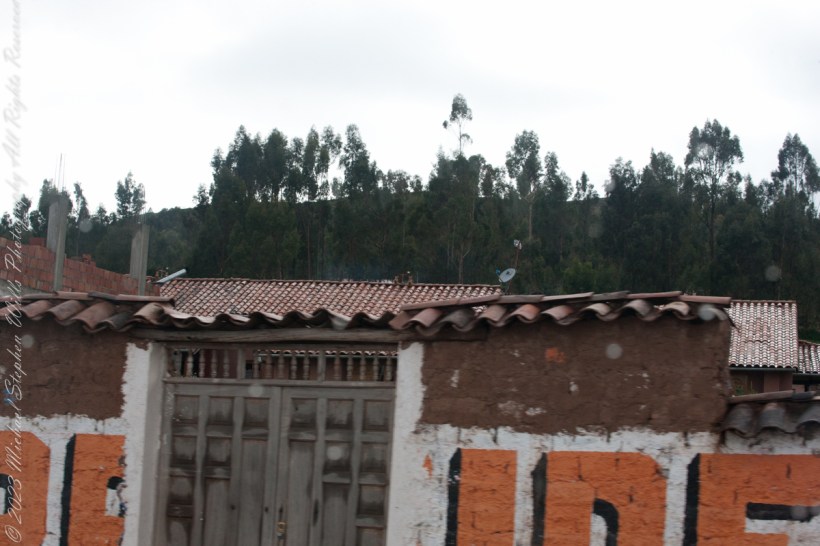
You can just make out the Bulls and Cross in the center of this photograph. A detail is provided, below. The words on the facade is a political statement – a presidential election was then underway.

A couple of ceramic Bulls stand on the middle of most rooftops in Cuzco where they stand as if on a hilltop looking out on the rolling, downward-sloping pastures of orange tiles. This powerful image is one of good fortune and protection for the house and the families that inhabit it.

This tradition comes from the time of the Incas. They relied on images of alpacas that they called illas. These alpacas had a hole in their loin where one could put alpaca fat and then bury them in the Earth to obtain protection for their agriculture as well as a good harvest. They also used illas to protect their flocks of alpacas and llamas, as well as to guarantee their reproduction. Illas in the form of houses were also used to protect buildings so that they would be safe and last.

Illas have been found Cusco. We can see them in the Cusco Museo Inca, the Inca Museum, of the National University of San Antonio Abad.
With the coming of the Spanish, the people of Cuzco made a change in the form of the illas. They added to the three mentioned above the bulls of Pucará. The name Pucará comes from the place where the bulls were first raised, on the broad grasslands of the altiplano, the high plateau, of Puno, as it approaches the pass of La Raya from which a highway drops to Cuzco.  The area of Pucará is famous for its herds of cattle, sheep, and especially the native llamas and alpacas.

The high grasslands have always had symbolic importance for the people of Cuzco because from them came the herders of camelids (llamas and alpacas) as well as many of the freeze dried potatoes, the chuño and moraya, that were important food stocks.

From the also came, according to one of the two versions of the origin story of the Incas, the founding couple Manco Capac and Mama Ocllo. The story relates how they journeyed from Lake Titicaca which is in the center of those grasslands, and which was also the center of one of the most important Pre-Inca civilizations, that of Tiwanaku.

Pucará was an important site where the northern form of the Tiwanaku civilization developed. This may also play a role in the value people give to the toritos, or bulls, from Pucará.

This grassland and lake area is also important for a Pre-Inca set of stories about the hero Thunupa, who is also related to the lightning and is assimilated sometimes to the great god Viracocha and sometimes to Illapa the god of thunder and lightning.   Pucará became an important center for the making of pottery which was widely distributed. Intriguingly a center of pottery making closer to Cuzco, Raqchi, is also associated with Thunupa, Viracocha, and Illapa. It was the site of the great temple to Viracocha built by the Incas.

Sources:
https://cuzcoeats.com/toritos-en-los-techos/”
Wikipedia, “Chinchero”
Copyright 2023 Michael Stephen Wills All Rights Reserved

High Lagoon, Chinchero, Peru

Here, water boils at 191 degrees Fahrenheit, not 212.

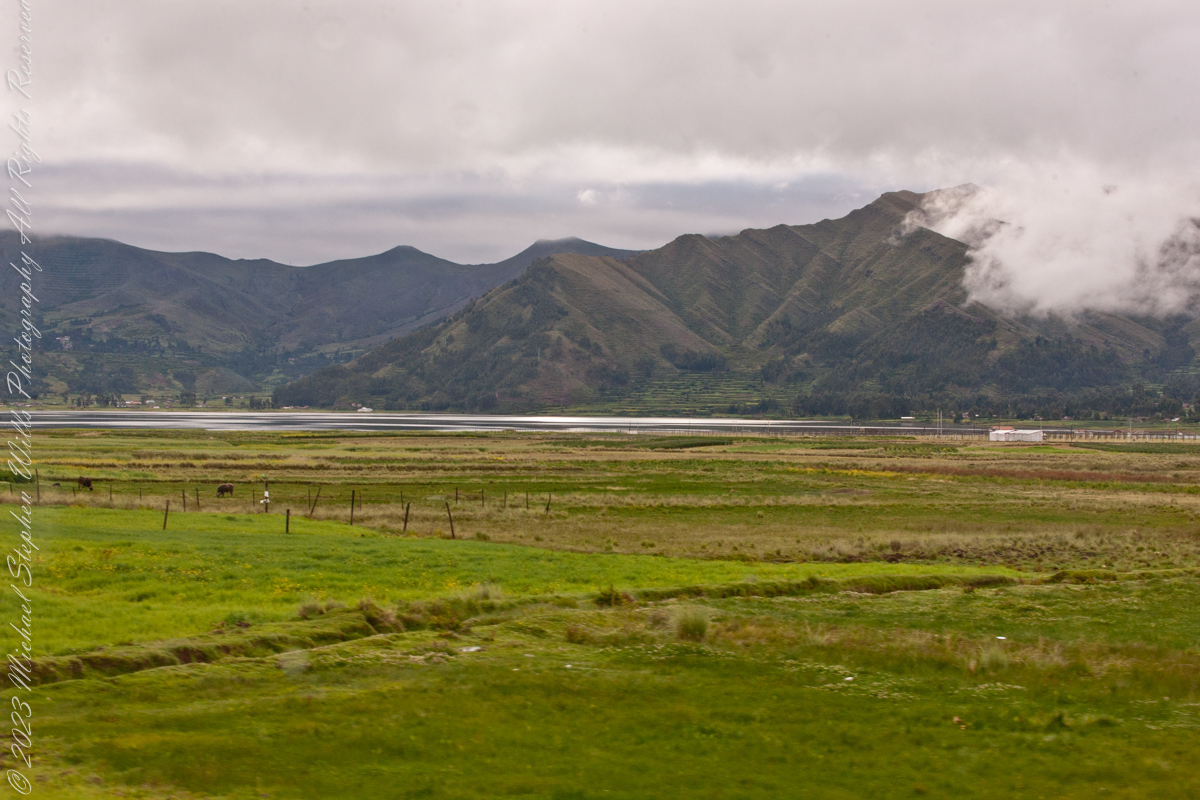
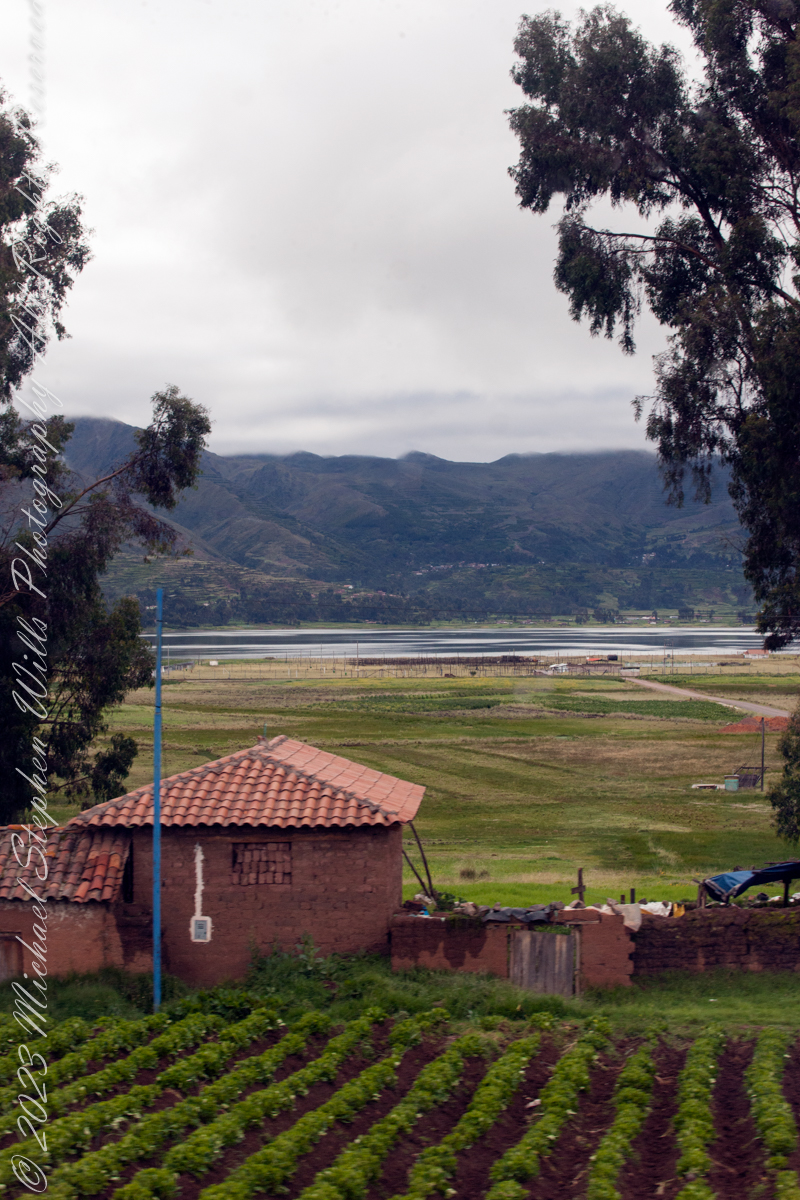
As seen from Avenue del EjércitoIts near Chinchero, Peru. Lagoon waters lap the distant, terraced andean foothills, look closely to see fish drying racks on the near shore, 11,270 feet altitude. Here, water boils at 191 degrees Fahrenheit, not 212.

Click Me for my Online Gallery

Puray comes from an ancient legend narrated by the settlers, where, the Sun god asked Manco Capac that his twin sons accompany him in his sunset and when the time came, they discovered that the son who walked farther had become the Huaypo (Huaypo) Lagoon (9 miles west) and the daughter in the Piuray (Puray) Lagoon.

In this photograph, distant cattle graze against backdrop of the lagoon and andean foothills.

Puray lagoon is located in the upper part of the Sacred Valley of the Incas, southeast of Chinchero and 19 miles northwest of Cusco. The Piuray (Puray) Lagoon is a source of water of surface origin. It is one of the most important sources of the city of Cusco, as it supplies 42% of drinking water in the city as well as the Sacred Valley of the Incas and other provinces of the region. It was the Incas who carried Piuray (Puray) Lagoon water to the imperial city (Cusco) through underground aqueducts. Quechua natural region, Peru

Copyright 2023 Michael Stephen Wills All Rights Reserved

Cusco Hills, Peru

Ancient Farming Technique

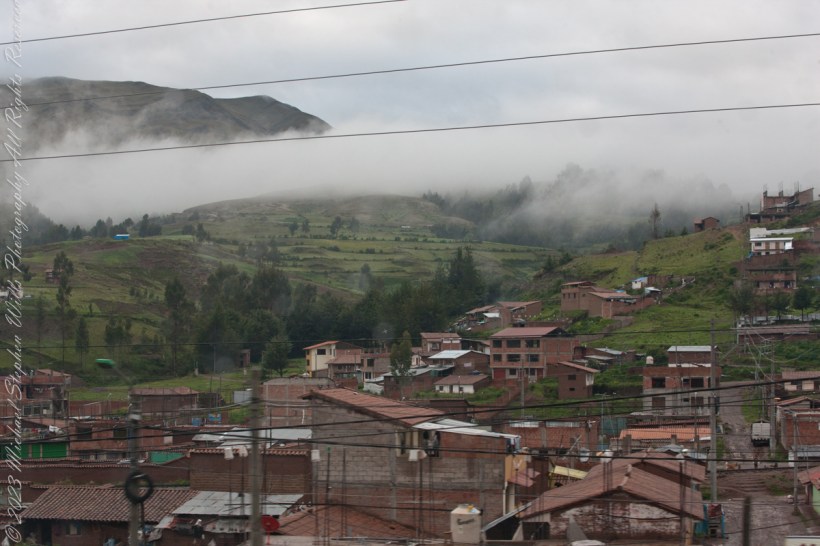
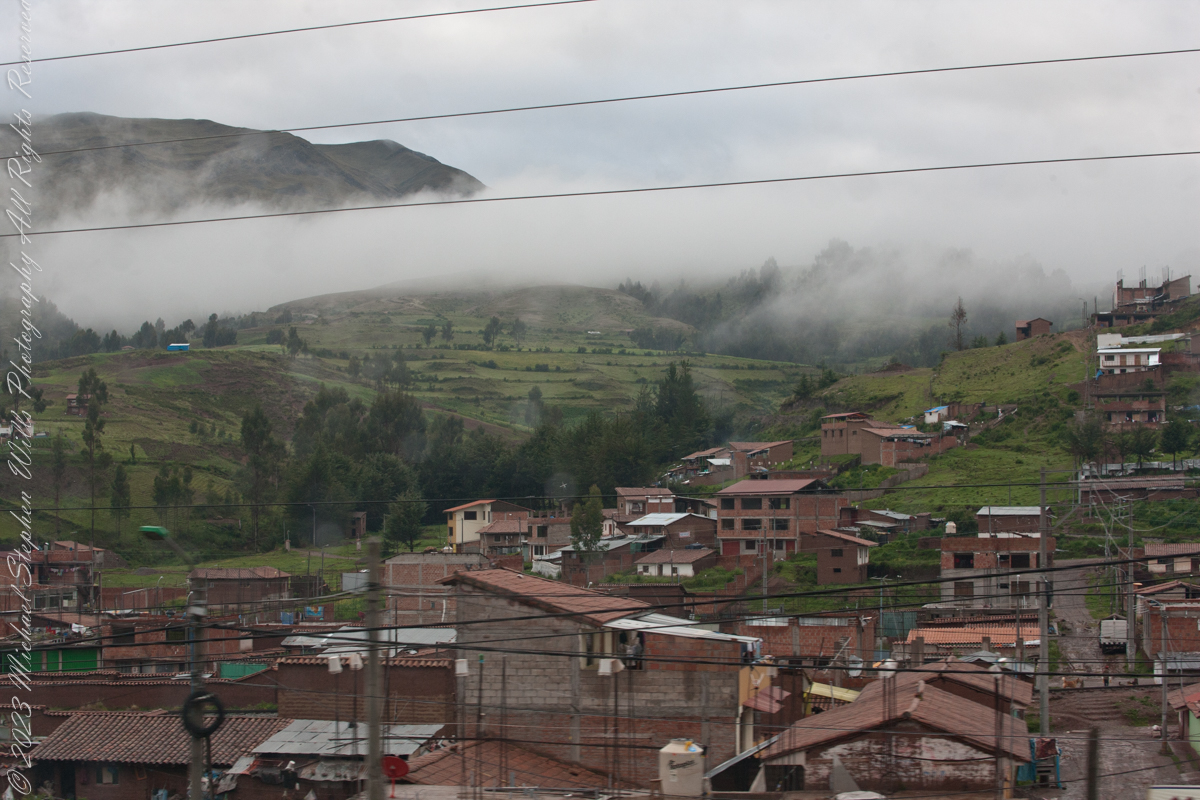
Here we are, passing the outskirts in the hills surrounding Cusco, Peru. Route 3S, going under various names. Highland Road (North) (Longitudinal de la Sierra Norte)Highway, climbs out of Cusco in broad switchbacks.

Click Me for my Online Gallery

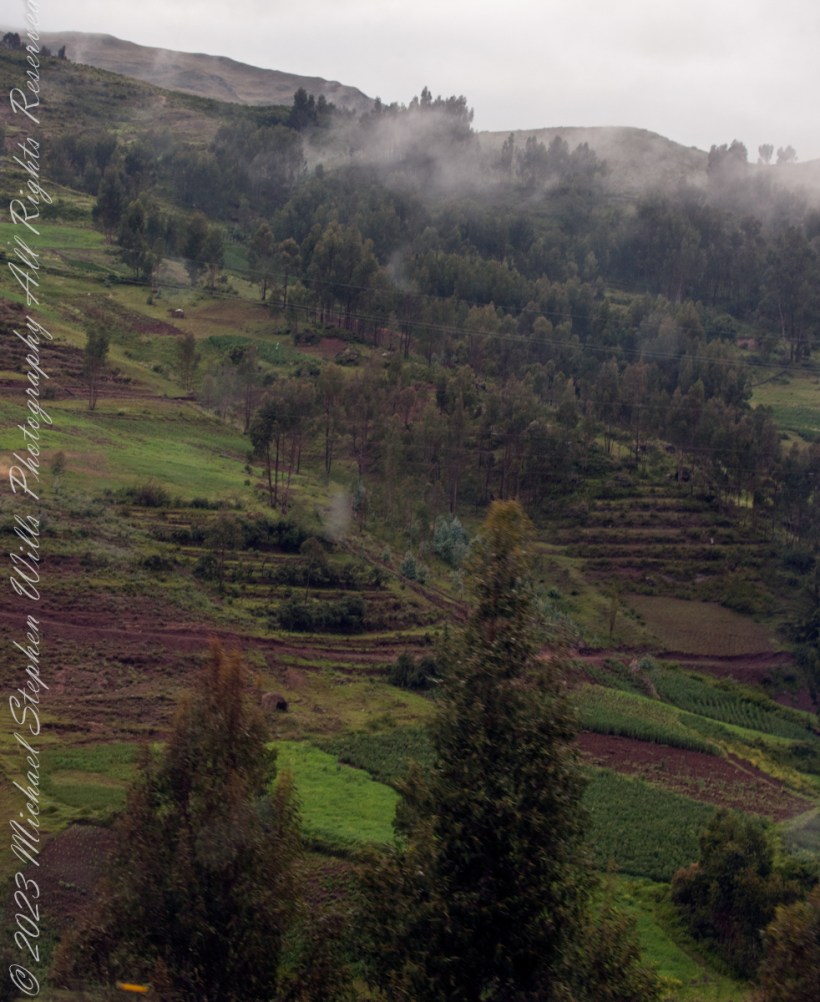
View of terraced fields from route 3S through the hills above Cusco, Peru. “In the South American Andes, farmers have used terraces, known as andenes, for over a thousand years to farm potatoes, maize, and other native crops.

Terraced farming was developed by the Wari culture and other peoples of the south-central Andes before 1000 AD, centuries before they were used by the Inca, who adopted them. The terraces were built to make the most efficient use of shallow soil and to enable irrigation of crops by allowing runoff to occur through the outlet. The Inca people built on these, developing a system of canals, aqueducts, and puquios to direct water through dry land and increase fertility levels and growth. These terraced farms are found wherever mountain villages have existed in the Andes. They provided the food necessary to support the populations of great Inca cities and religious centers such as Machu Picchu.

Reference: “Terrace (earthworks)” Wikipedia
Copyright 2023 Michael Stephen Wills All Rights Reserved

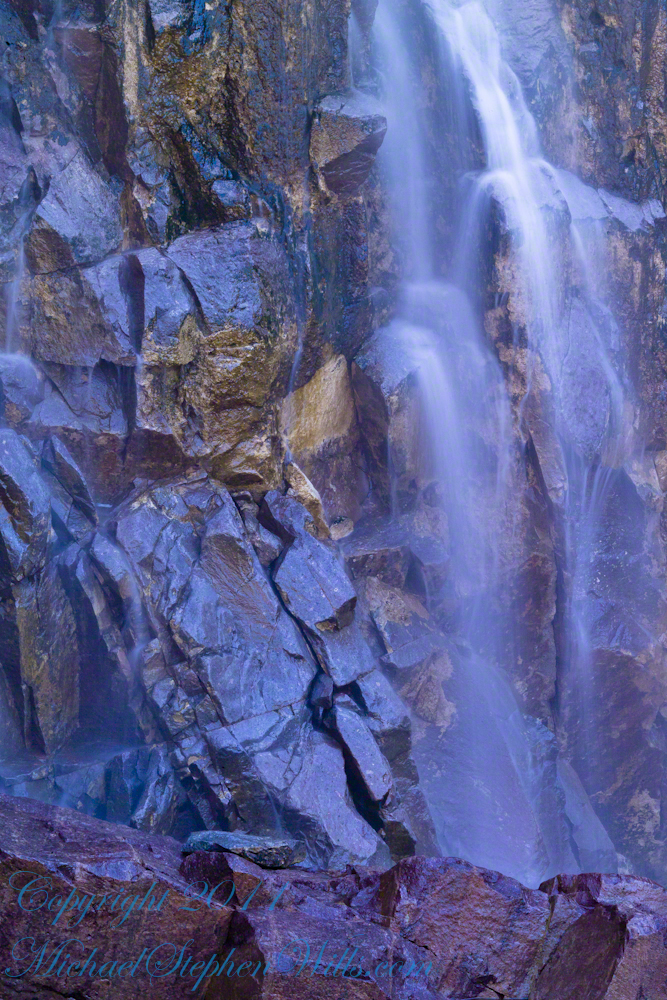
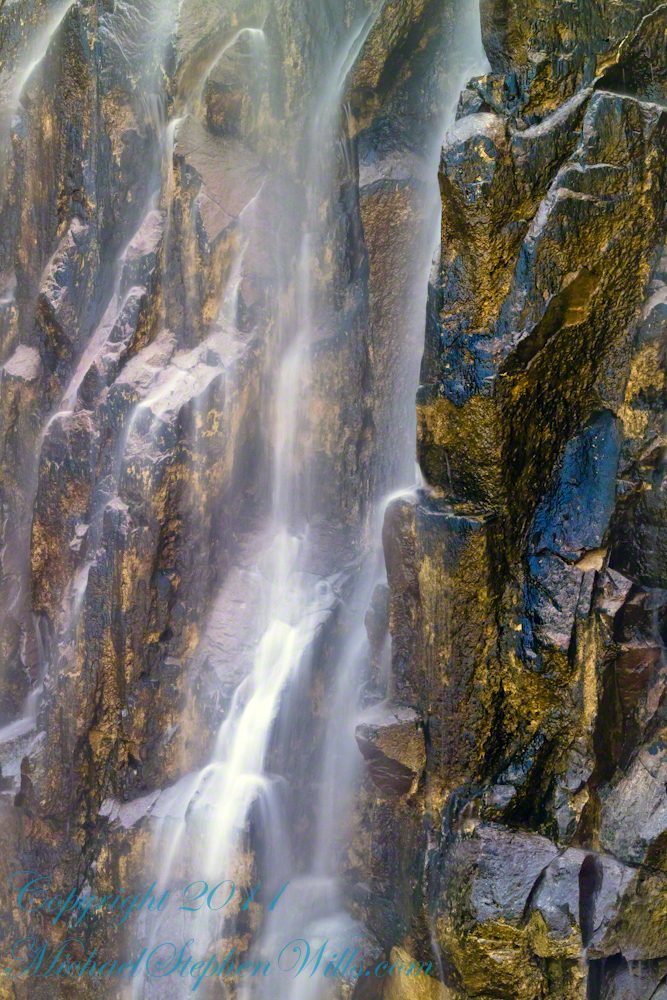
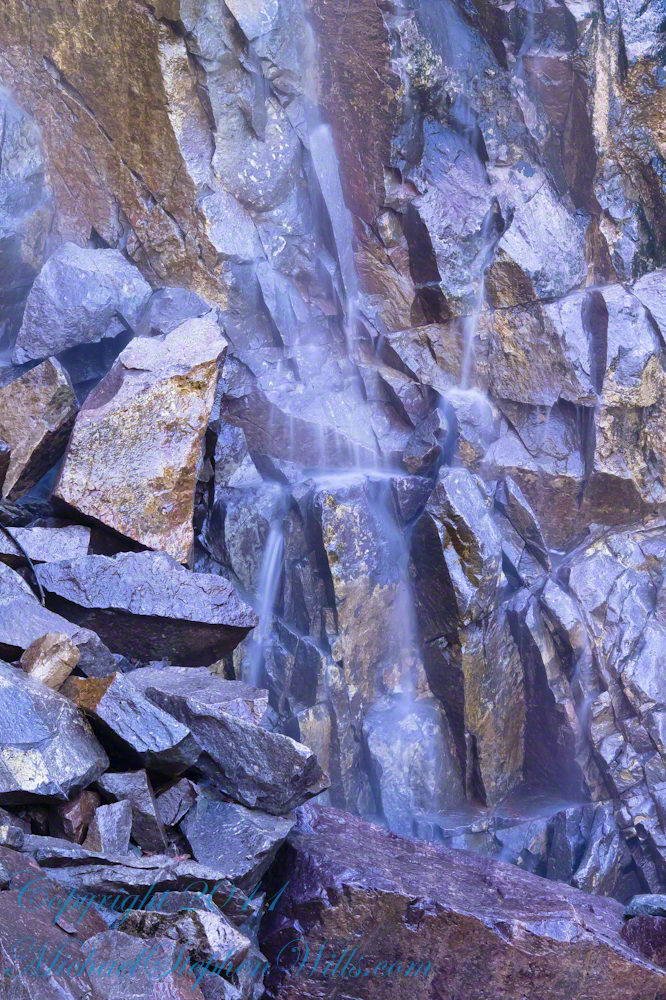
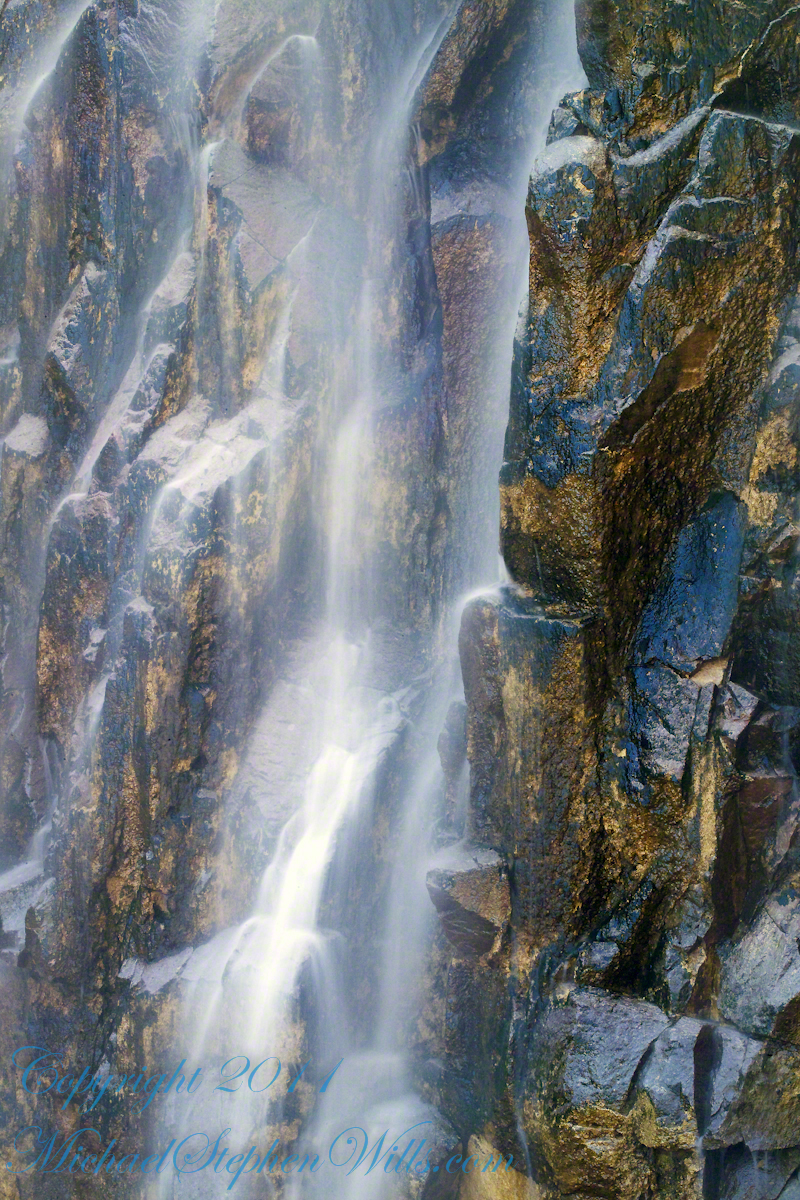
Nature Abstracts from Reavis Falls

Basalt and Water

A Series of Nature Abstracts, macros of Reavis Falls

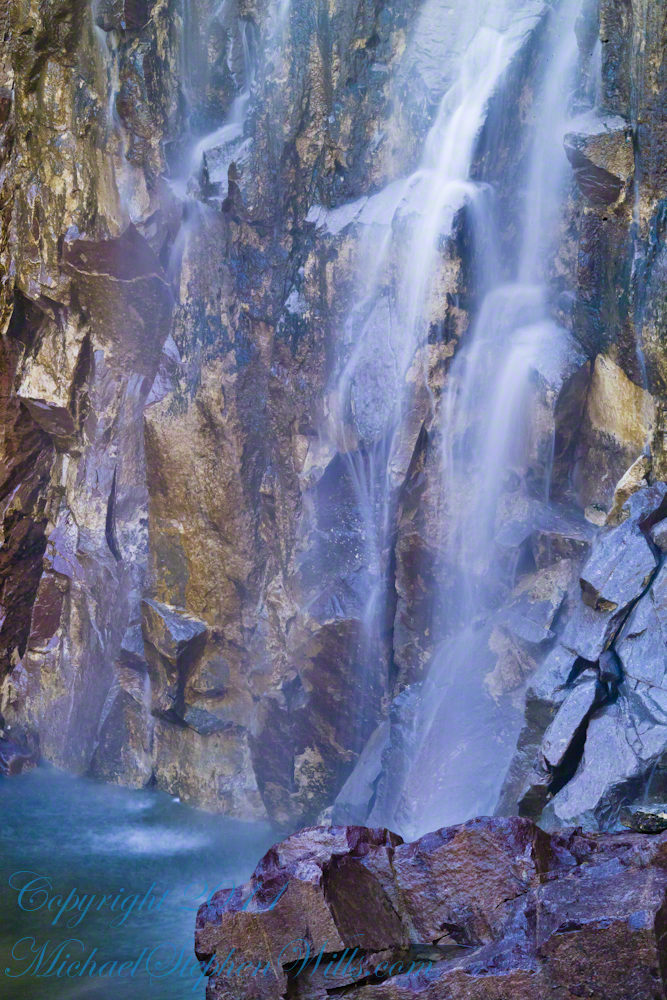
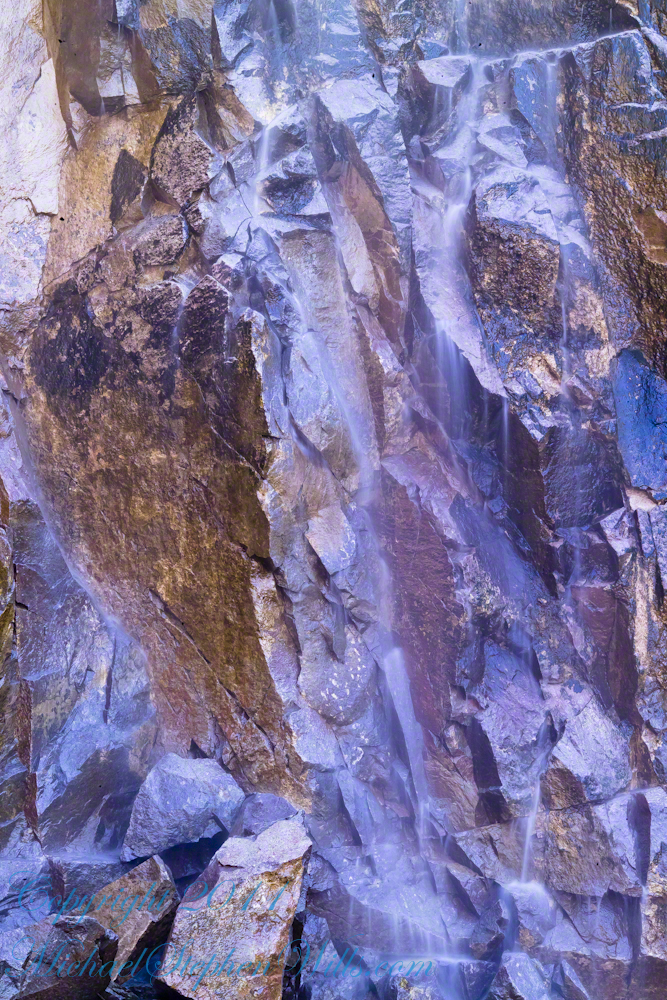
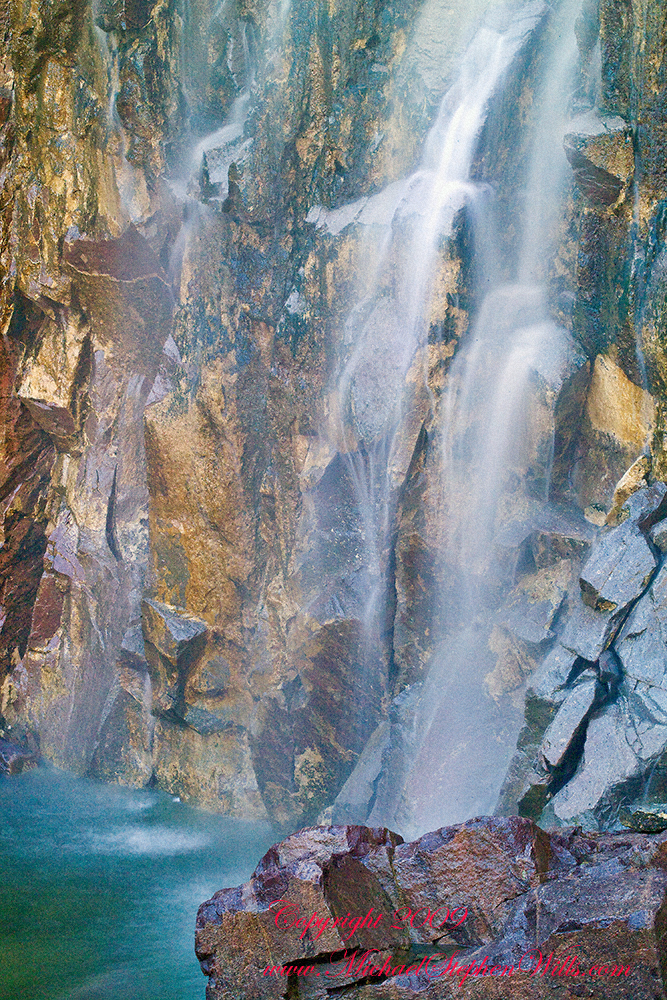
These are six shots of Reavis Falls from my solo expedition to this location in the remote eastern Superstition Wilderness of Arizona.

All are macro shots of the falls taken with a Canon 100mm f/2.8L lens.

“Reavis Falls Abstract V”

I took these while perched on a pile of talus beneath the falls.

Click Me To learn more about my work and to purchase prints

Reavis Falls Abstract XIV

Reavis Falls are 114 feet high in a canyon hidden in the folds of mountain ridges in the remote eastern Superstition Wilderness of Arizona.

Reavis Falls Abstract VI

Reavis Creek falls from a sheer basalt cliff, remnants of a volcanic eruption, cool a million years ago, a little colder today by this running water.

Reavis Falls Abstract VIII

Reavis Falls Abstract XI

Reavis Falls Abstract XV

Click Me to visit my previous post, “Canyoneering to Reavis Falls” for more of this story.

Copyright 2023 Michael Stephen Wills All Rights Reserved

Canyoneering to Reavis Falls

No signposts in the wilderness

Reaching Reavis Falls, once you find the canyon mouth, is three-fourths of a mile of boulder hopping and bushwacking over and around landslides, deep pools and fallen trees.  Odds are you will be the only person in the canyon for weeks, if not months.  Expect to be surprised. In this chapter you will (finally) visit the falls themselves.

A Camp in the Canyon

Click me for the chapter about the environment around the mouth of Reavis Canyon below the falls.

The Last Mile

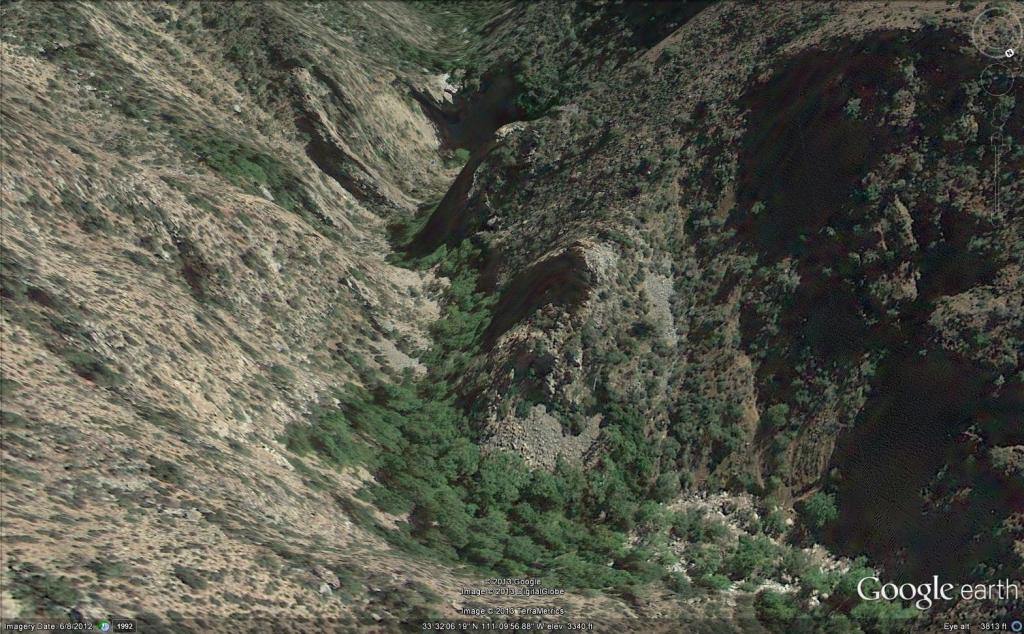
Here is an overview of the last third mile of Reavis Canyon.  You can see the wall of the falls nestled in the folds of ridges towards the top, just off center.

On the lower right is a large landslide and, below there, it is complete chaos.

The vegetation grows shoulder to shoulder with interleaved branches.  You will not get through there.  The solution is to find a way around, usually over and around house-sized boulders.

The image was captured from Google Earth


After almost two hours of picking my way, there was a flicker of light.  The fall waters were sparkling in the sunlight high above the cottonwood trees, in full Mach bloom, and the still leafless Arizona Sycamores.

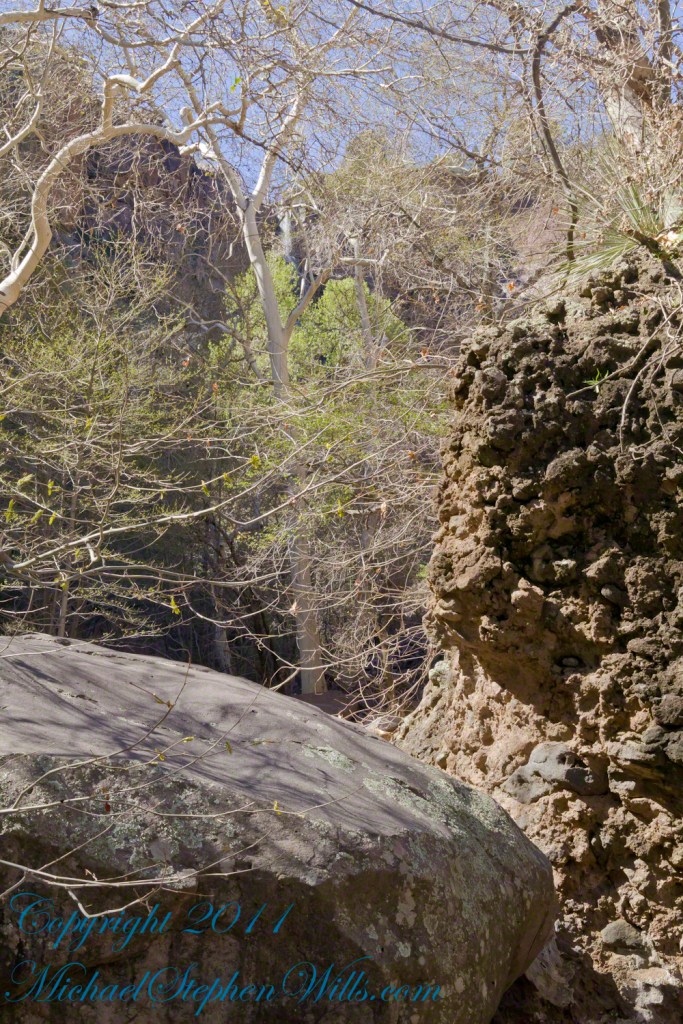
This was my view of Reavis Falls from the canyon on a March day before the Arizona Sycamores have leaved. The falls are the tiny patch of white to the left of midline where the earth meets the sky. Jumbles of infallen boulders and thick growth of sycamores, oaks and fully leaved cottonwoods cloak the falls.

Another 30 minutes of canyoneering brought me to the foot of the falls.

At the Foot of Reavis Falls

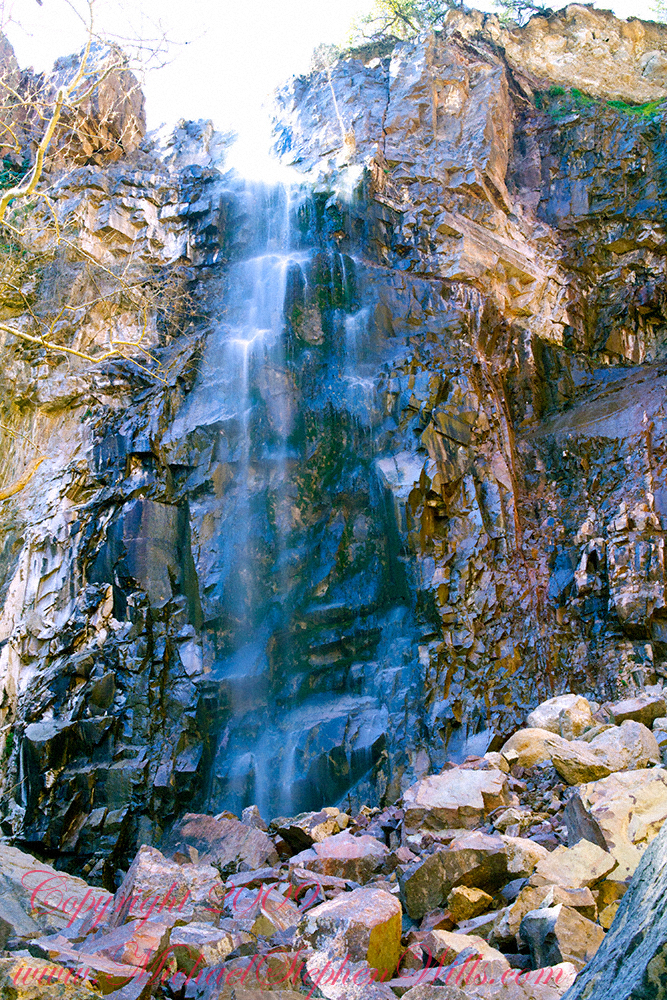
Looking up at Reavis Falls from a 20 foot tall mound of talus.

These are boulders  washed down at flood time.

The rock wall is thick with microorganisms, fungi and mosses.

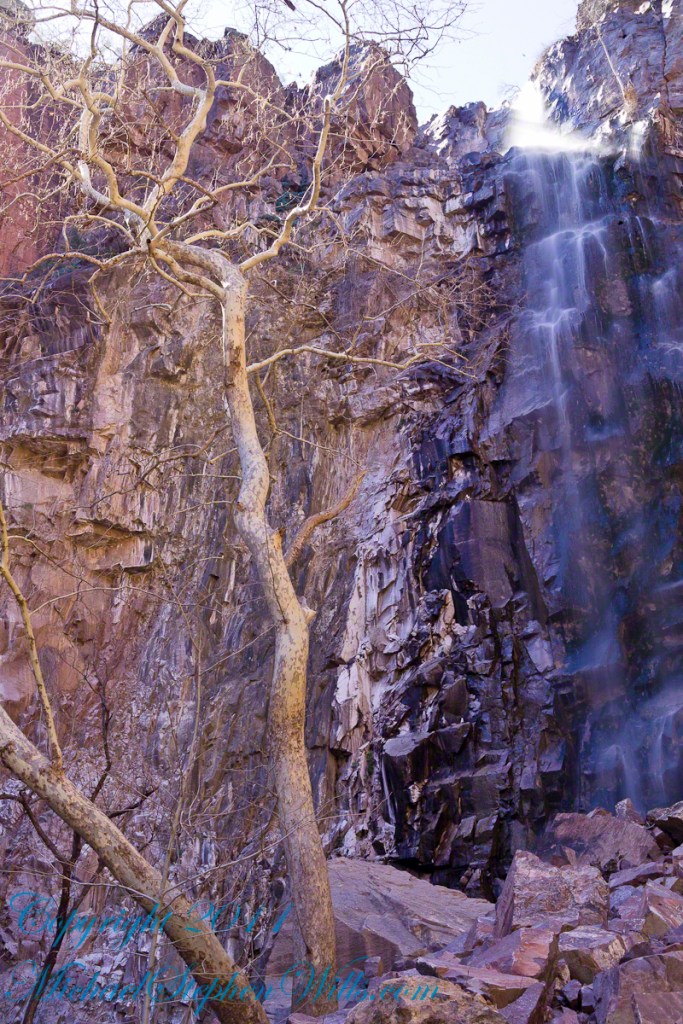
After clambering around the talus pile I found this angle….

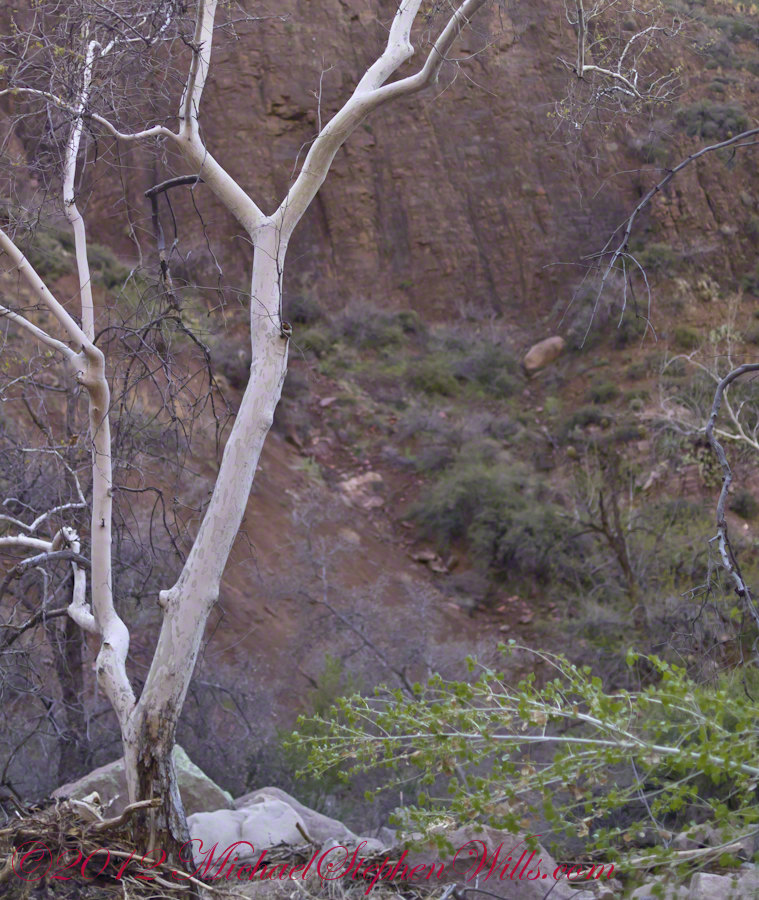
An Arizona Sycamore, before the spring leafing, at the Foot of Reavis Falls

Talus at the Foot of Reavis Falls

The Reavis Falls talus is large boulders carried down Reavis Creek and washed over the falls at flood time as well as blocks fractured from the cliff face.  You can see the base of the Sycamore from the previous photograph.

The falls are formed where Reavis Creek flows over a solid mass of rock.  The talus is composed mostly of this red rock.  From the edge of this cliff to the base, where the falls hit the canyon floor, is all of 140 feet.  This is a far as you can proceed into the canyon without some serious climbing skills.

It is possible to climb around the canyon by climbing up the ridge from which I captured the Cedar Basin Hoodoos.  See my posts below for this location (you need to work it our for yourself).

This is NOT the last post of the series.  From here I will focus on the beauty of Reavis Falls and the canyon that holds them.

It was a four-day expedition so there are a few chapters covering the approach to the Falls:

Lime Mountain Morning

Two Bar Mountain View

Evening on Two Bar Mountain

Among the desert wildflowers

Superstition Wilderness Dawn

Dry Juniper Descent

Hoodoos on the Descent to Reavis Falls

Cedar Basin Hoodoos

Reavis Canyon Camp

Reavis Canyon Rivulets and Rocks

Copyright 2023 Michael Stephen Wills All Rights Reserved

Reavis Canyon Rivulets and Rocks

Canyon of Wonder and Beauty

Born from Eruption and Flood

The Superstition Wilderness was born from volcanic eruption and in some places (Peters Mesa) the earth still rumbles.

Here in Reavis Canyon it is the huge spring runoff that builds the environment, grinding and scouring the canyon. In my chapter The Mouth of Reavis Canyon is the story of this aspect of the canyon.

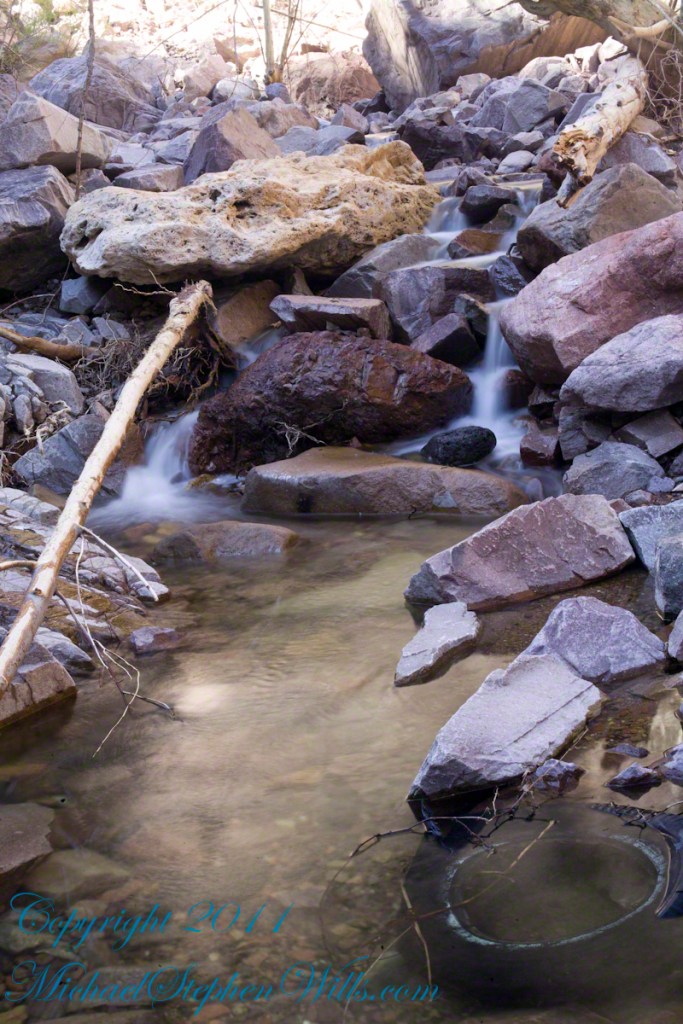
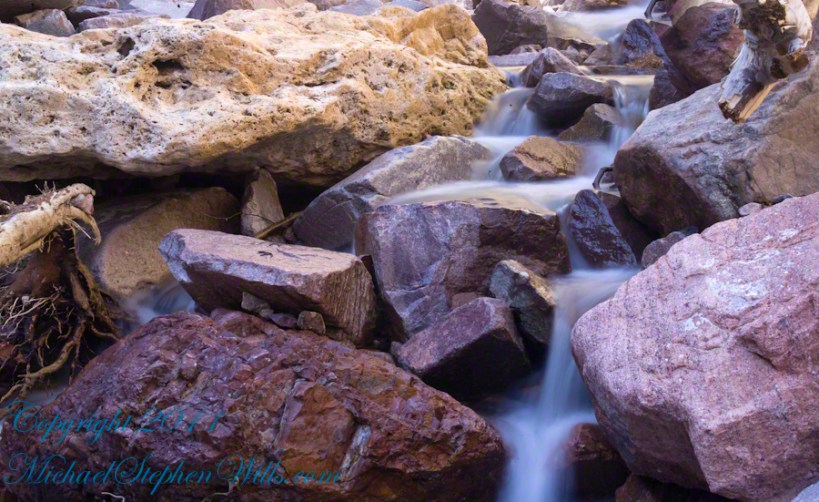
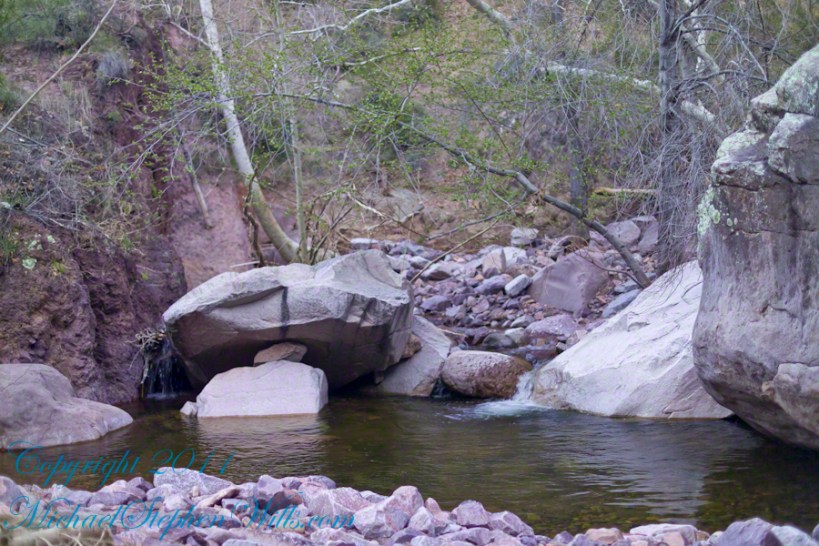
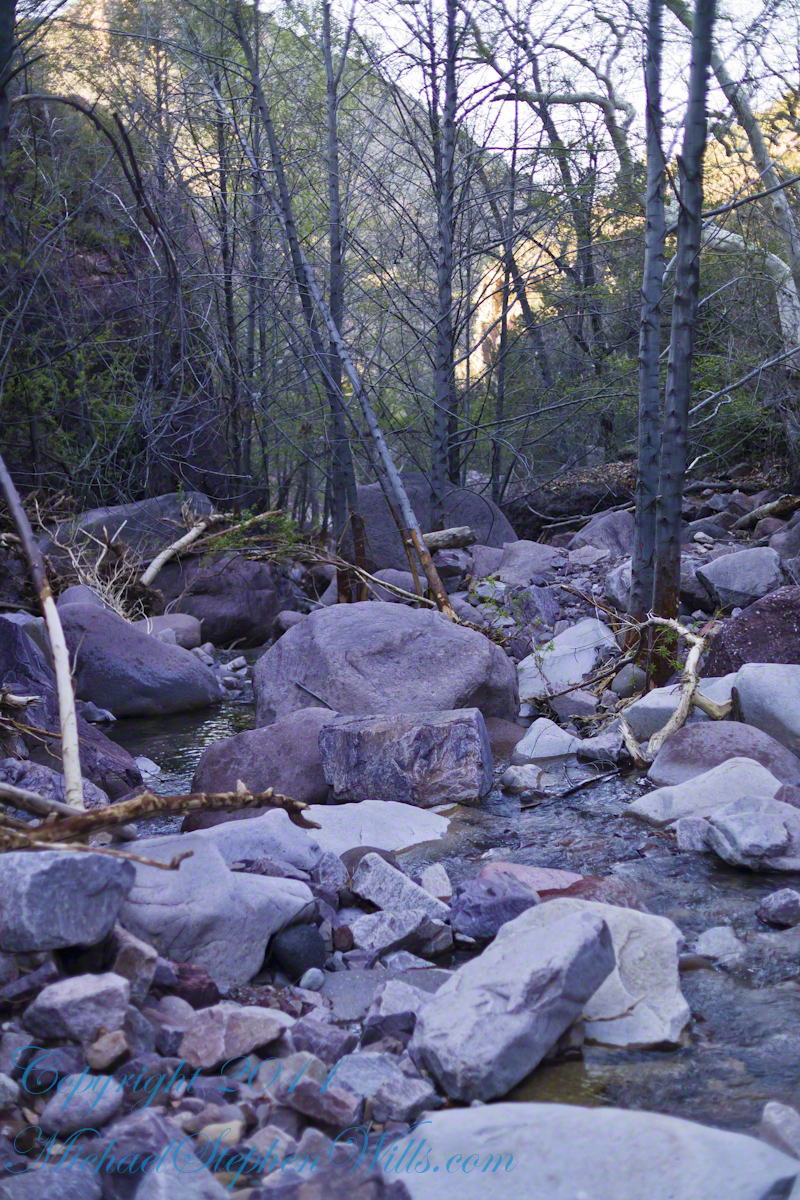
The history of this spot is written on these volcanic and igneous rocks and boulders, the uprooted tree roots and fresh water.

The tire must have washed down from Reavis Ranch.

A Canyon of Wonder and Beauty

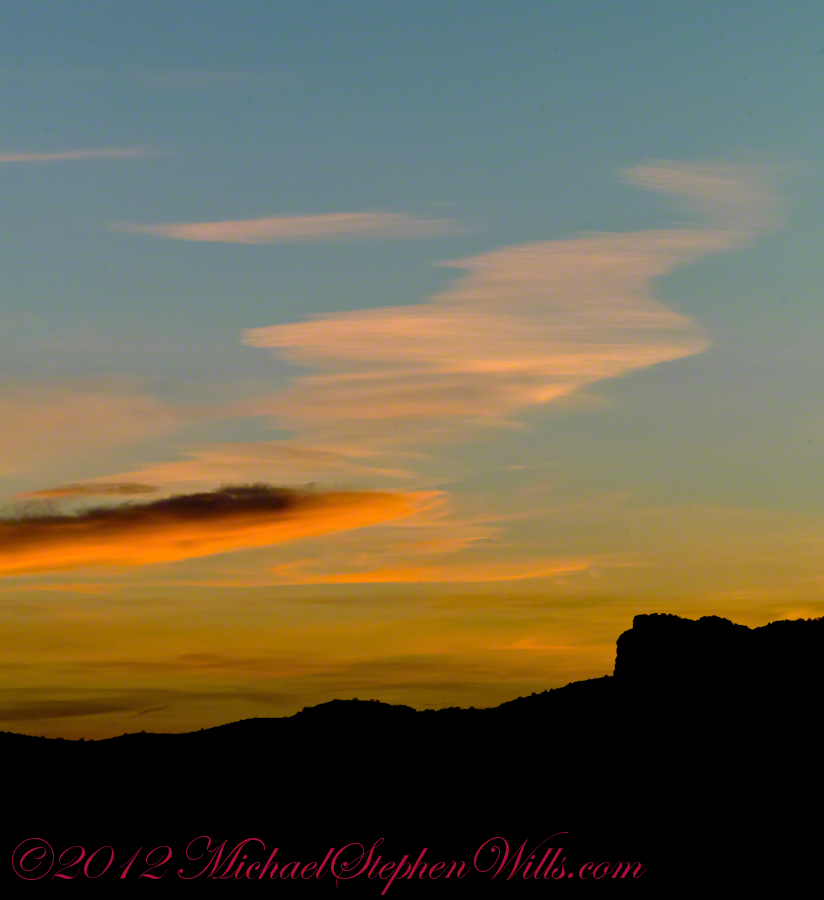
In this chapter I present, in the header, the lovely dawn sky of that day, and a tiny corner of a rock jumble in Reavis Creek.   There is a large format version of the sky in my previous post, “The Mouth of Reavis Canyon.”

Rivulets and Rocks

Copyright 2023 Michael Stephen Wills All Rights Reserved

The Mouth of Reavis Canyon

Canyon Hazards and Beauty

In this chapter we enter the Mouth of Reavis Canyon below Reavis Falls and examine the beauty and danger of this remote canyon.

See Reavis Canyon Camp for more of my expedition to Reavis Falls.

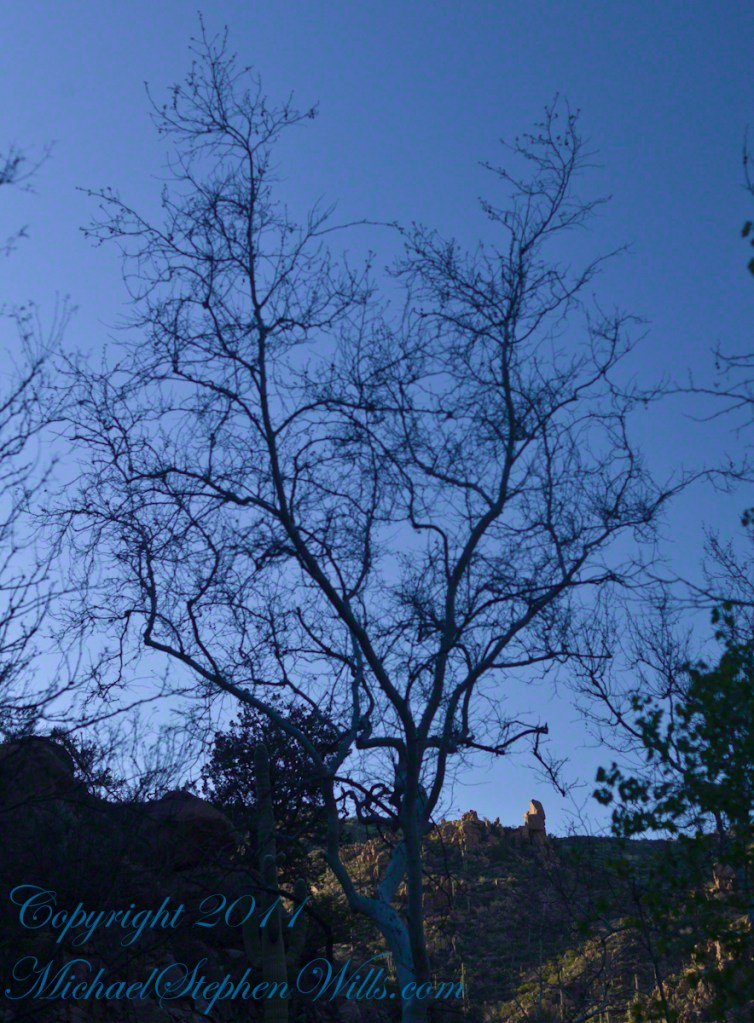
Dawn on the day I entered Reavis Canyon

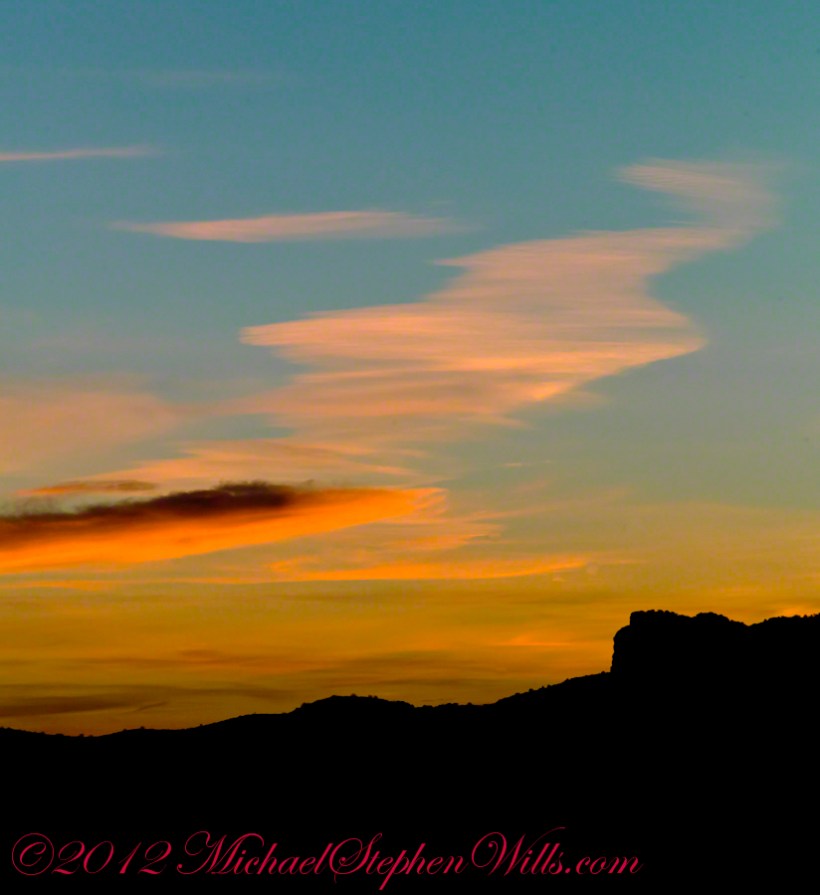
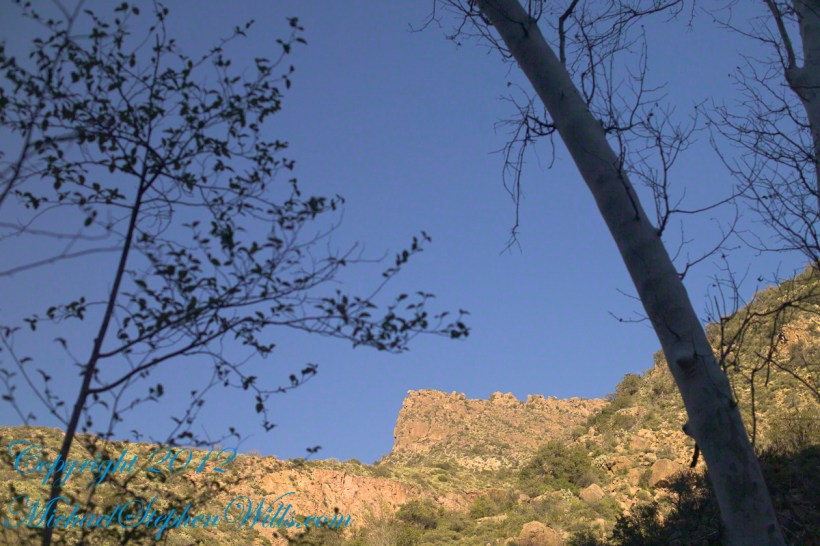
Dawn light above the outline of the prominent cliff above Reavis Canyon and Falls the morning of my last day in the canyon.

You might recognize the outline of this cliff from the chapter  Two Bar Mountain View or Evening on Two Bar Mountain.

Here is the same view, in daylight. As I hiked toward the canyon mouth below Reavis Falls, looking up I saw this prominant cliff against the sky.

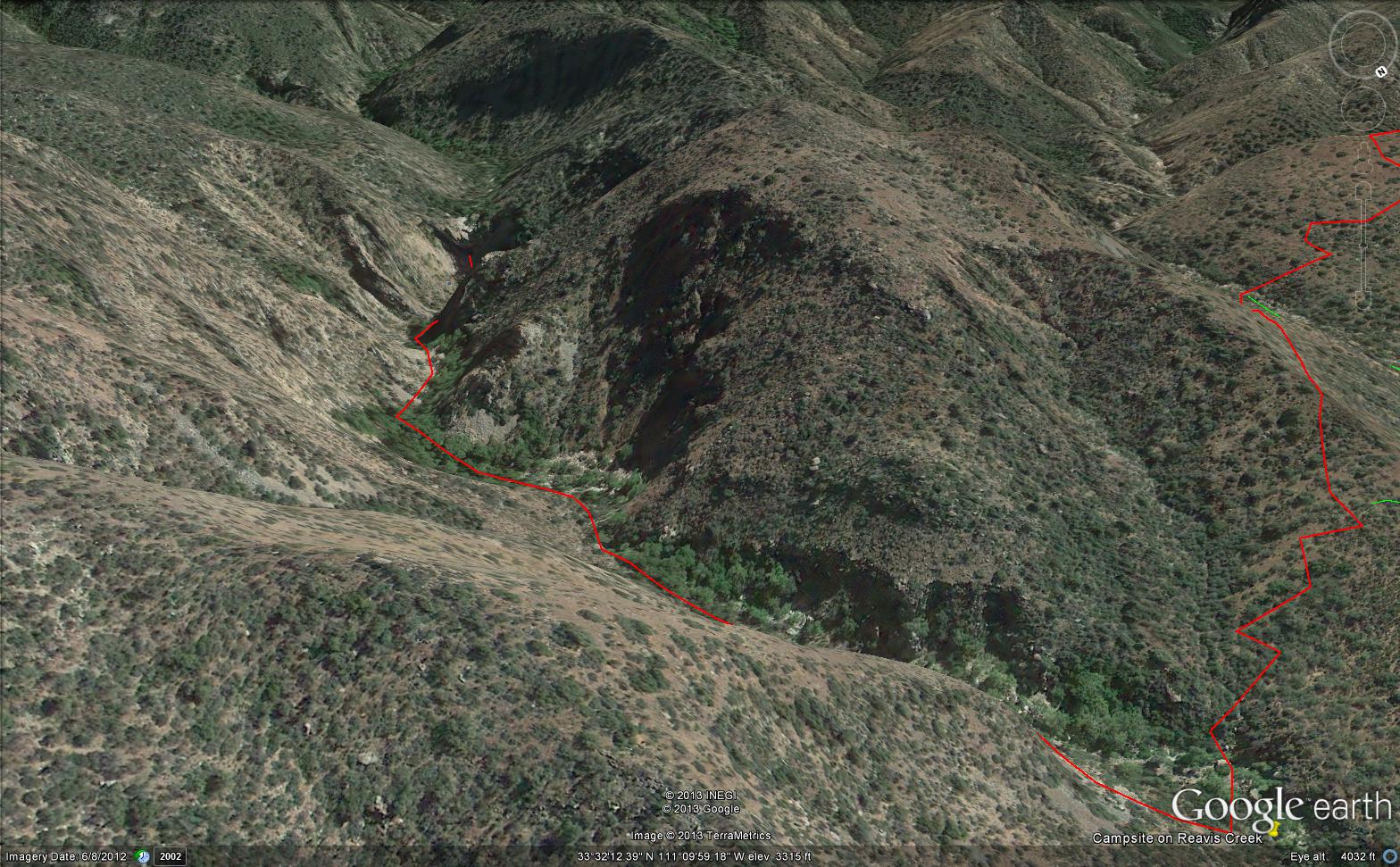
Here is the path I took toward the falls.  The campsite is to the lower right, the falls are toward the center and left.  My approach to the camp is on the right, moving toward the top.  For another view of this location see Reavis Canyon Camp.

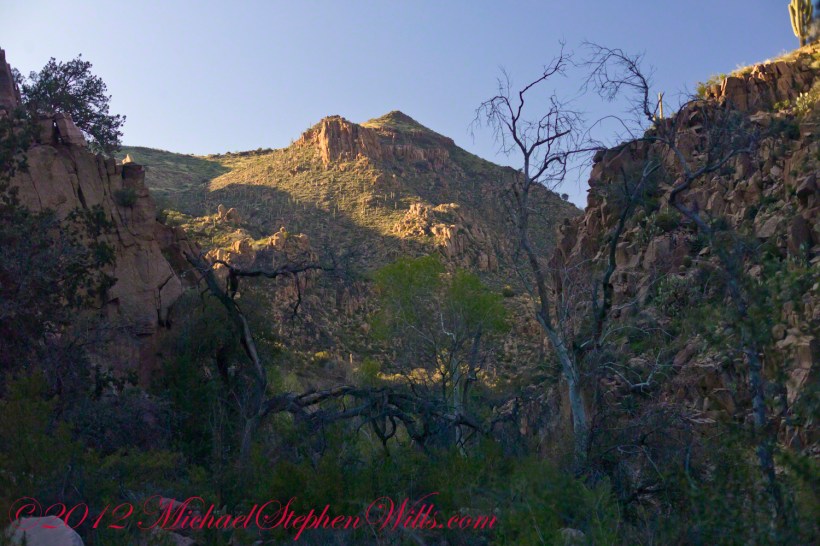
The mouth of Reavis Canyon below the falls is choked with vegetation and infallen rocks and boulders.  The far slopes are thick with the poles of young saguaros. There are hoodoos, as well.  In the photograph, below, one hoodoo is catching morning light.  See the chapters Hoodoos on the Descent to Reavis Falls and Cedar Basin Hoodoos for more views of the hoodoos around Reavis Falls.

Hoodoos visible from the mouth of Reavis Canyon below the falls. Look toward the far slope.

Flood damage in Reavis Canyon below the falls. Note the scouring at the base of these trees and the broken limbs. This is NOT a place to be in spring thaw.

Massive spring flooding scours the canyon floor.

Flood damage in Reavis Canyon below the falls.

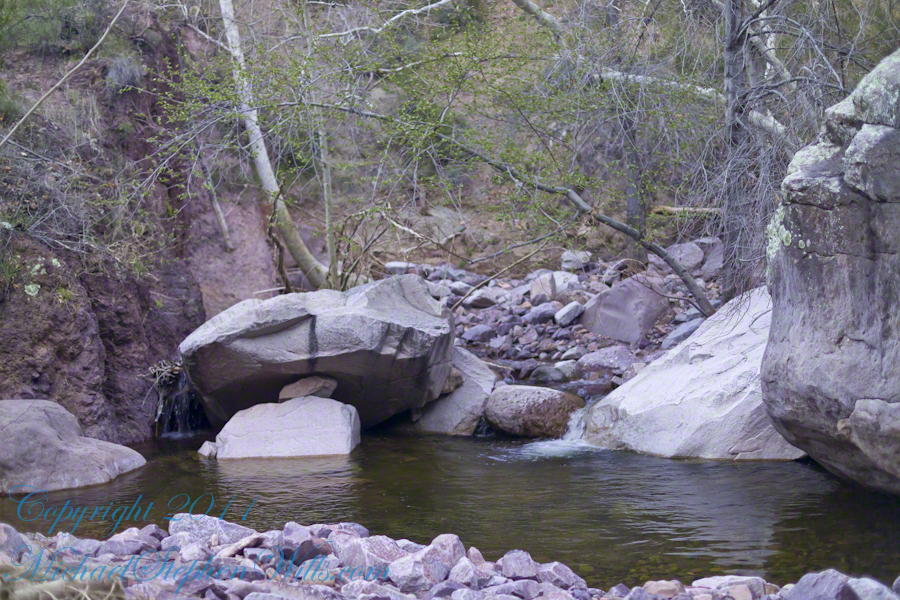
There is beauty to be found, as well. Freshly fallen rough rocks contrast with water smoothed boulders and the water surface.

Copyright 2023 Michael Stephen Wills All Rights Reserved

Sandwiched In

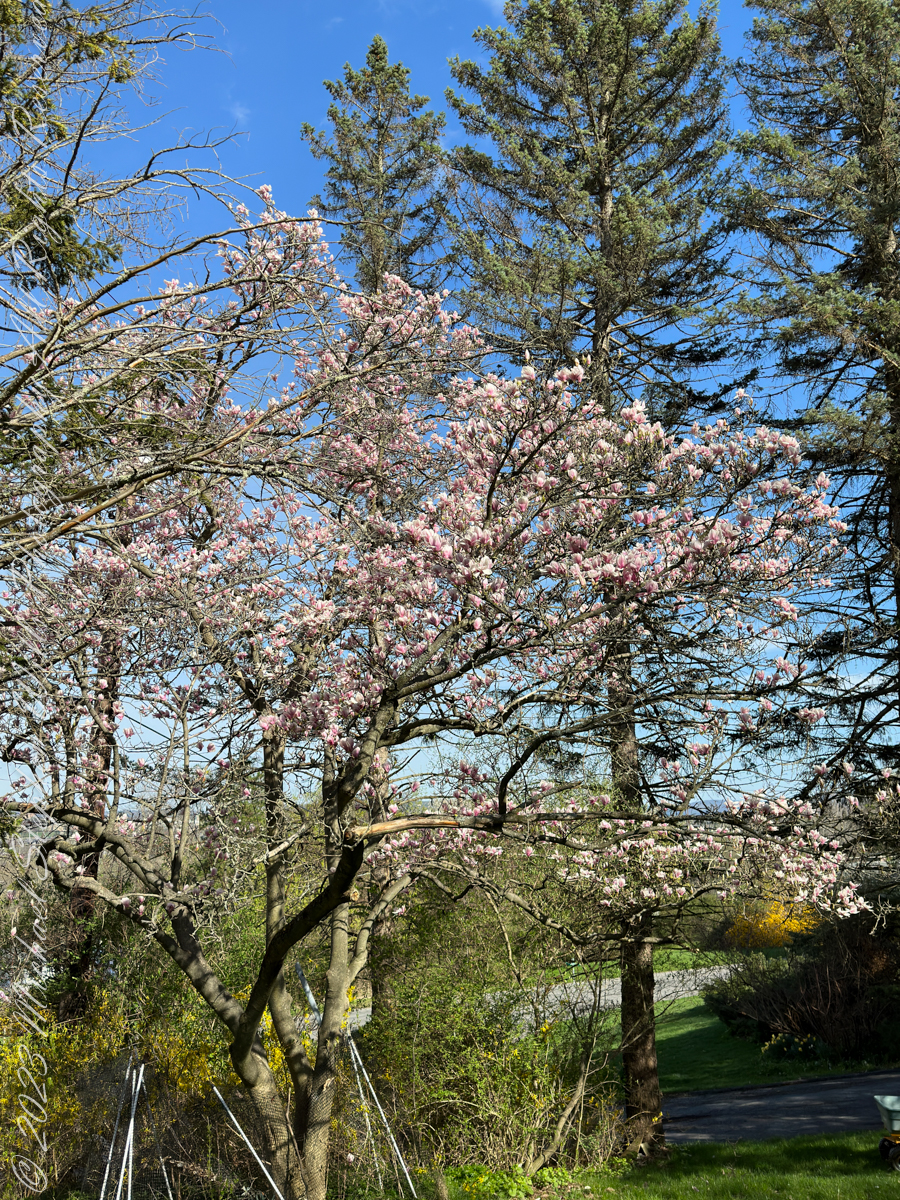
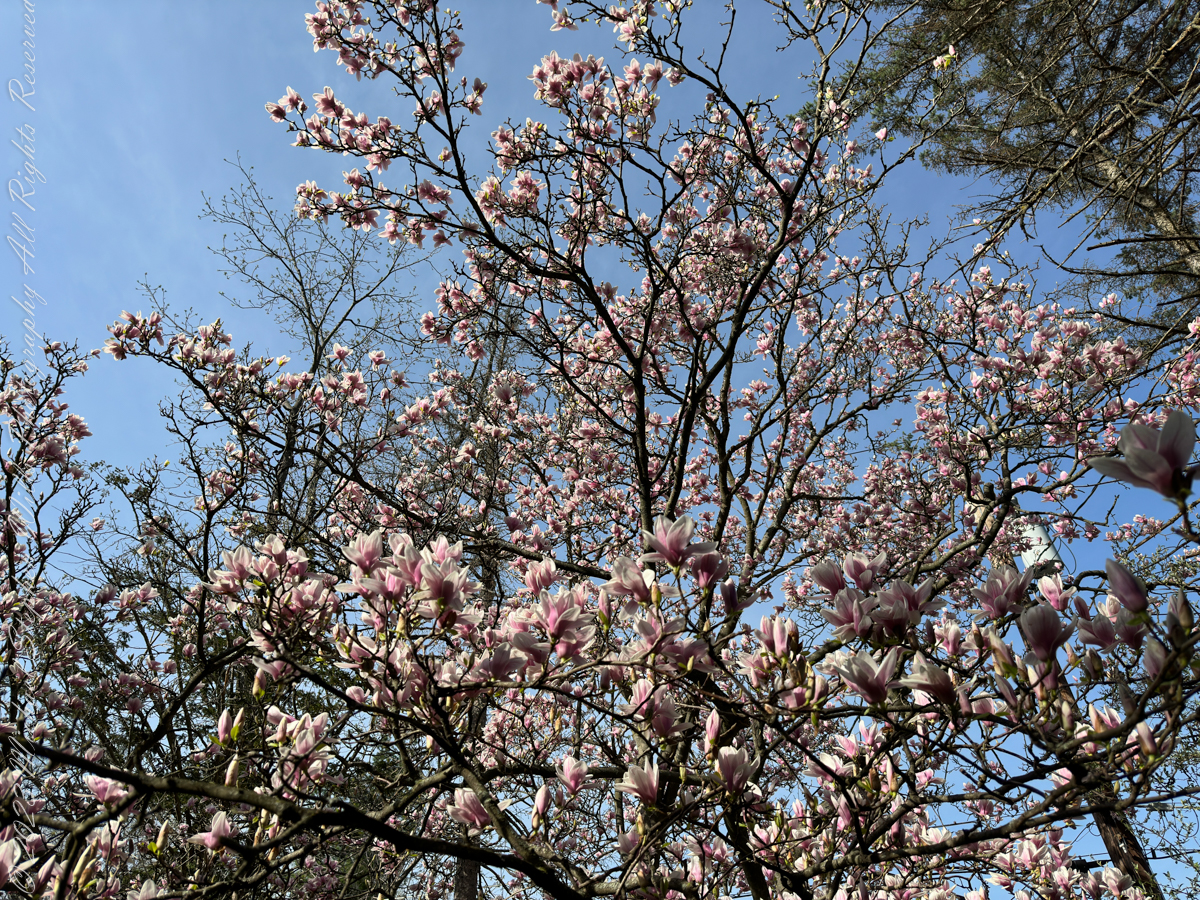
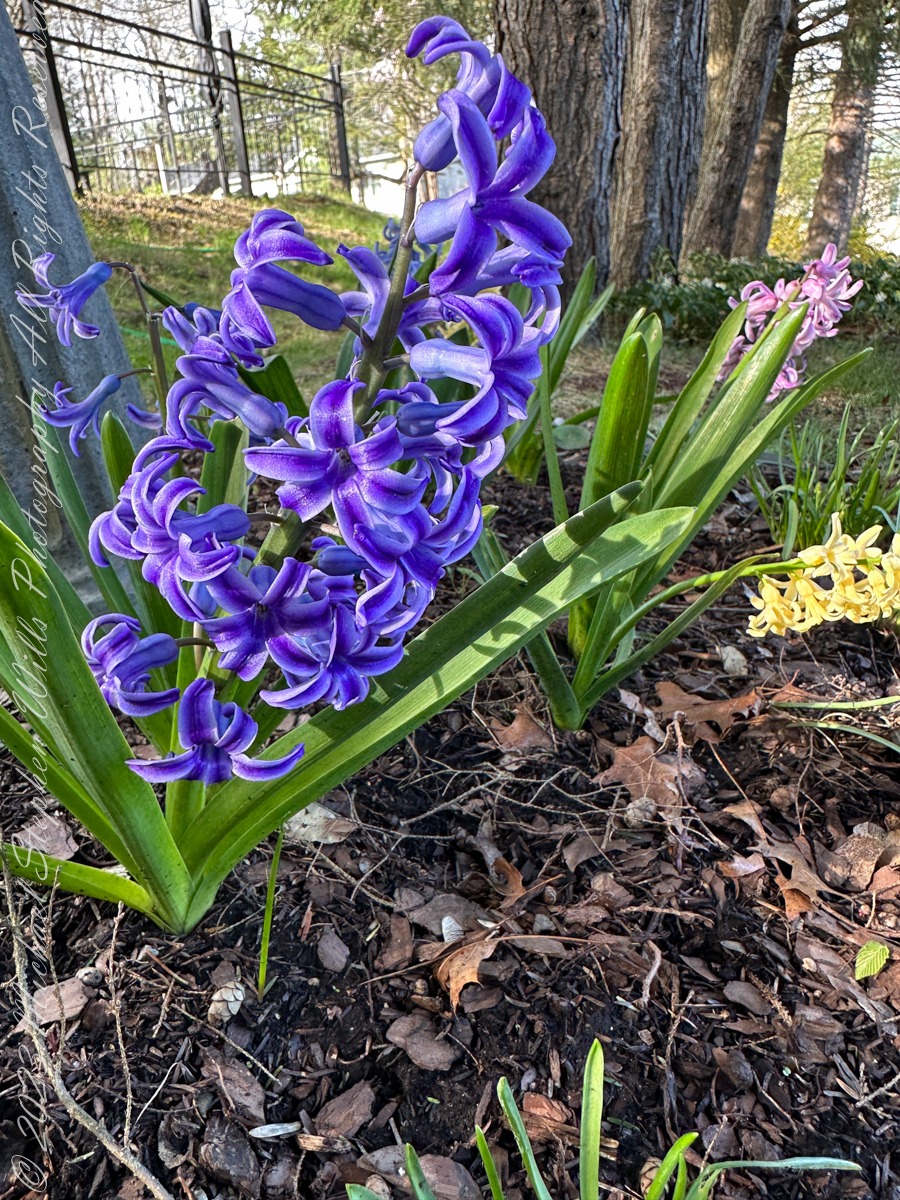
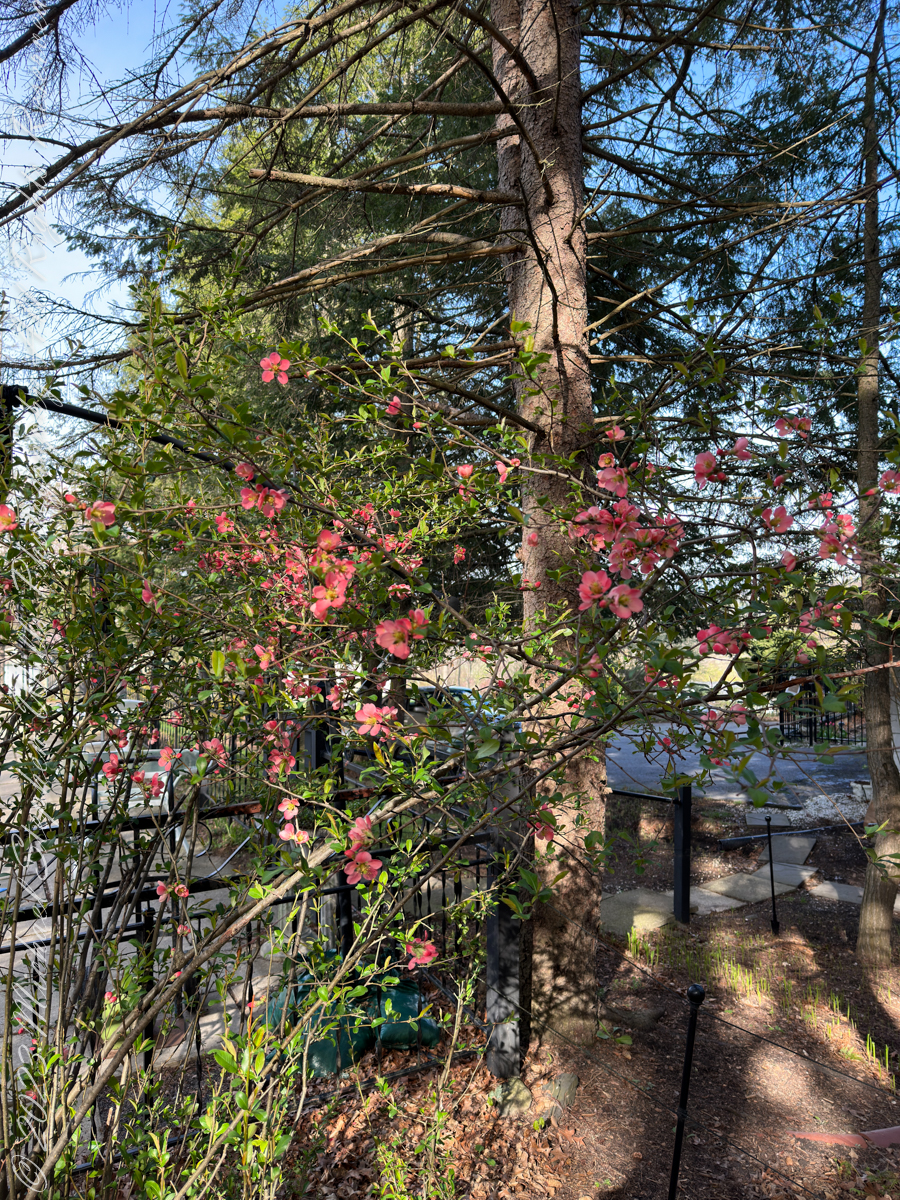
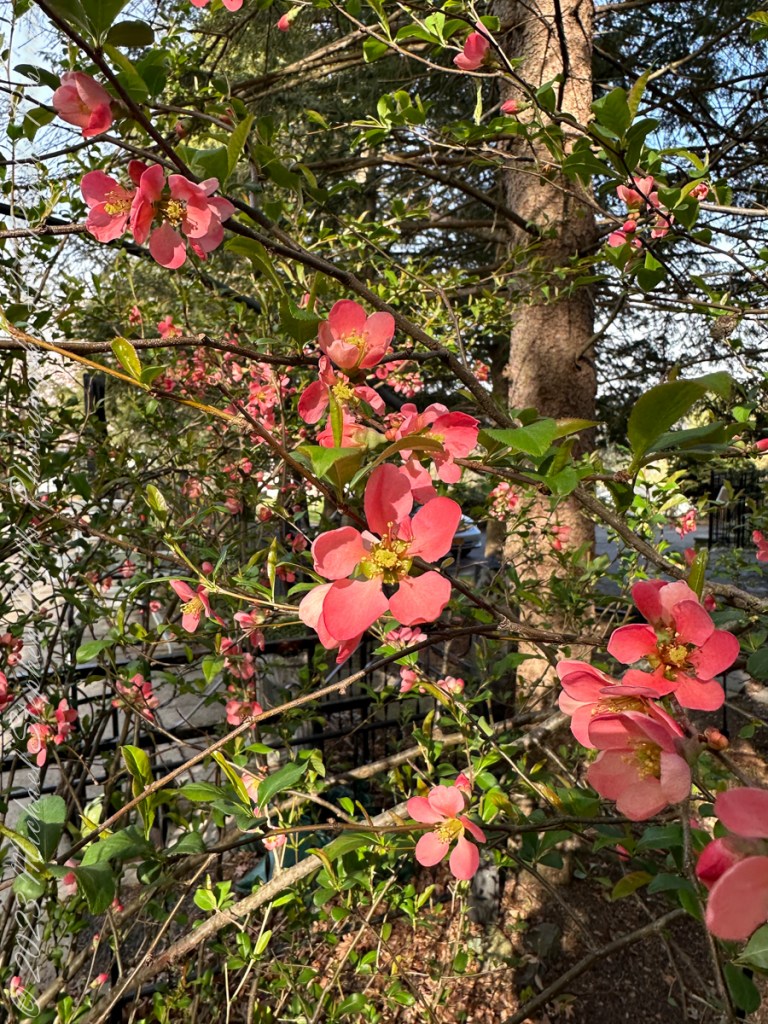
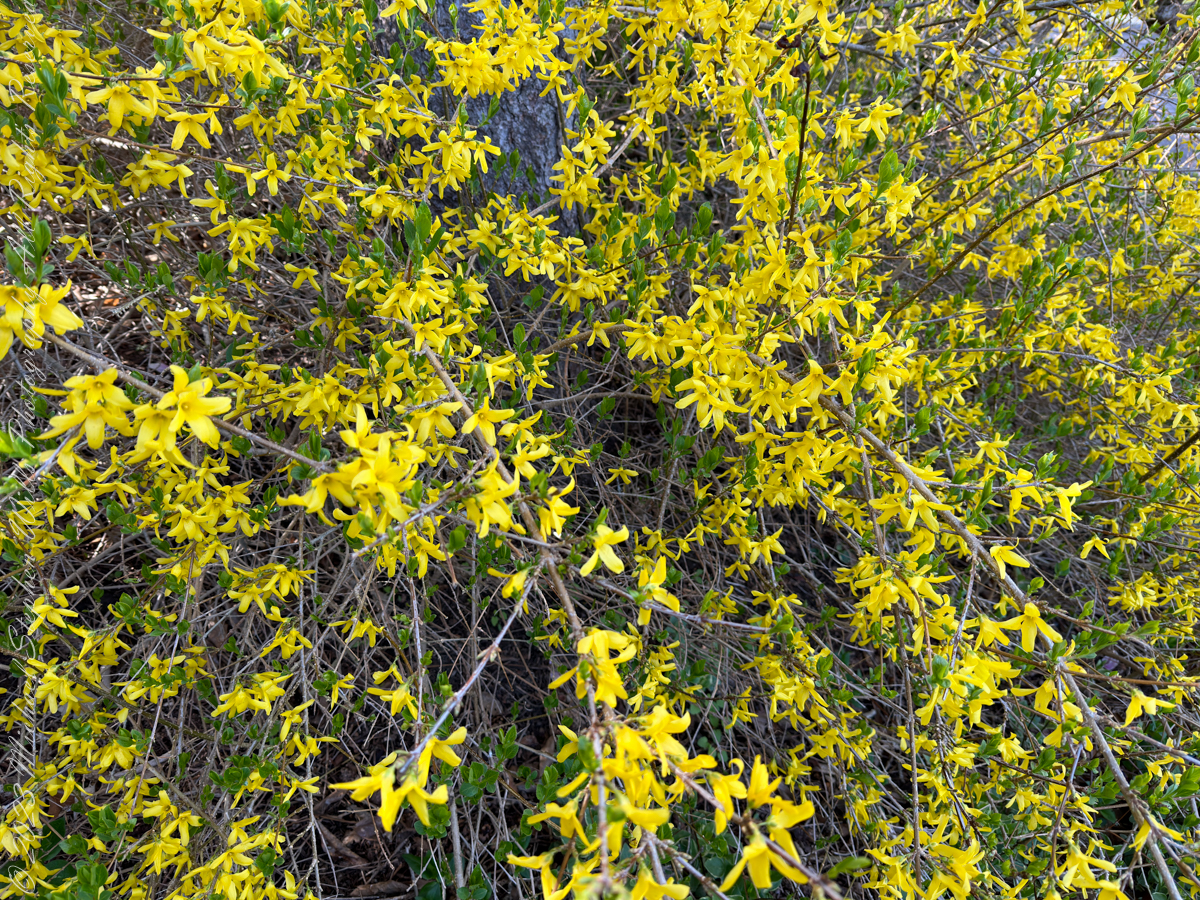
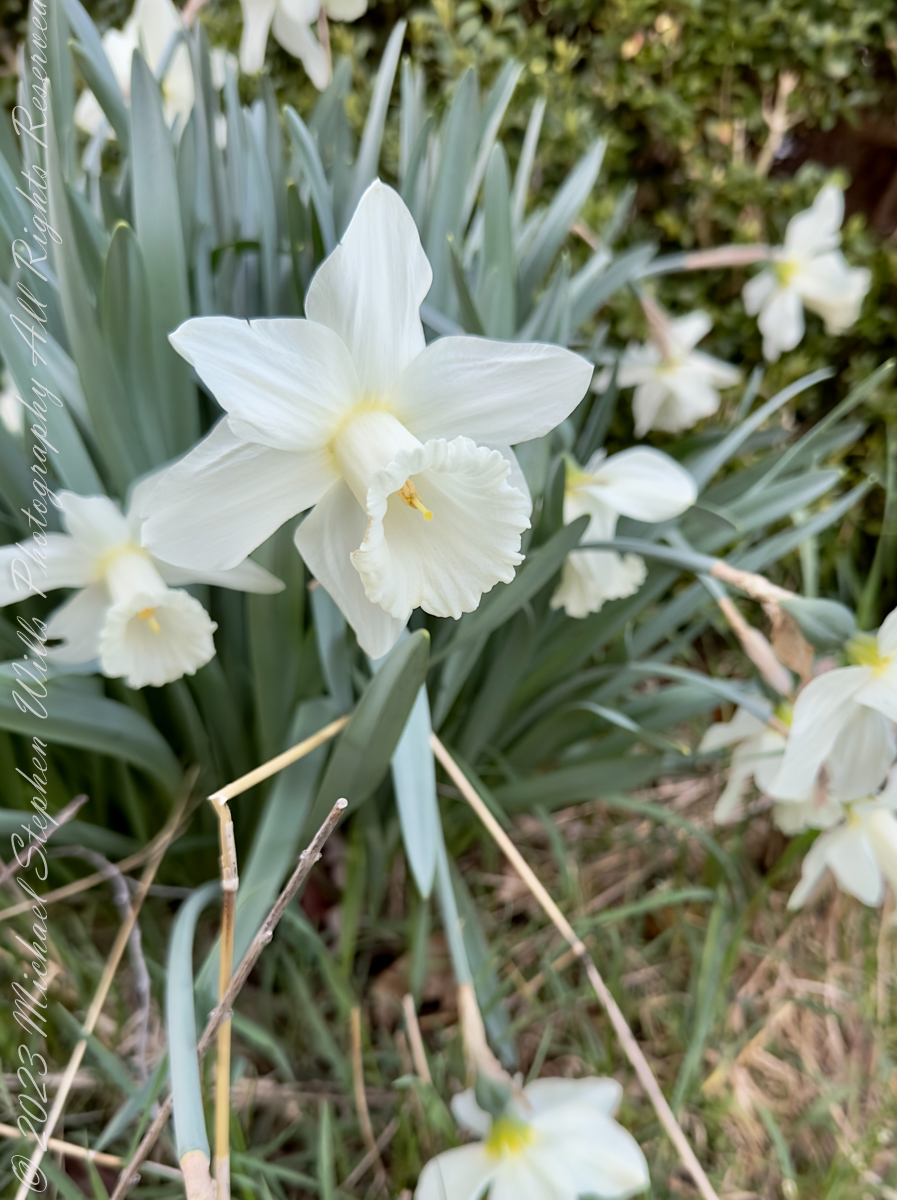
Eight Photographs of Five Flowers

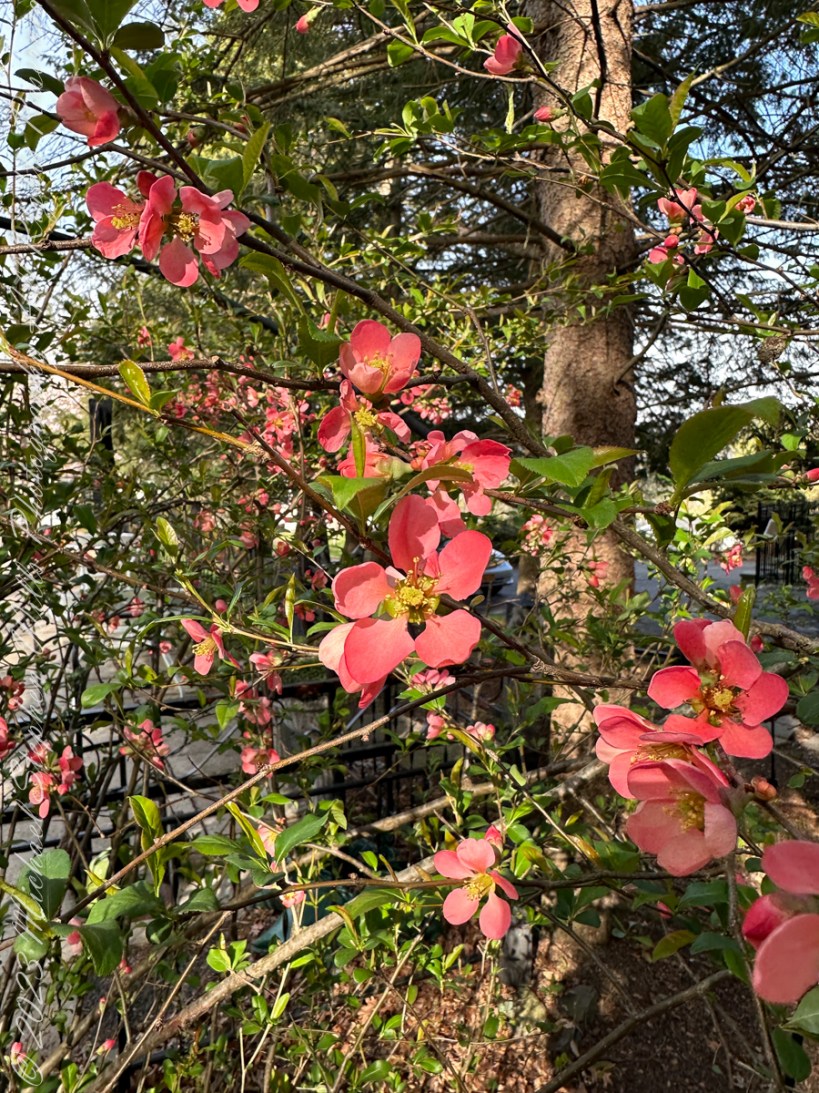
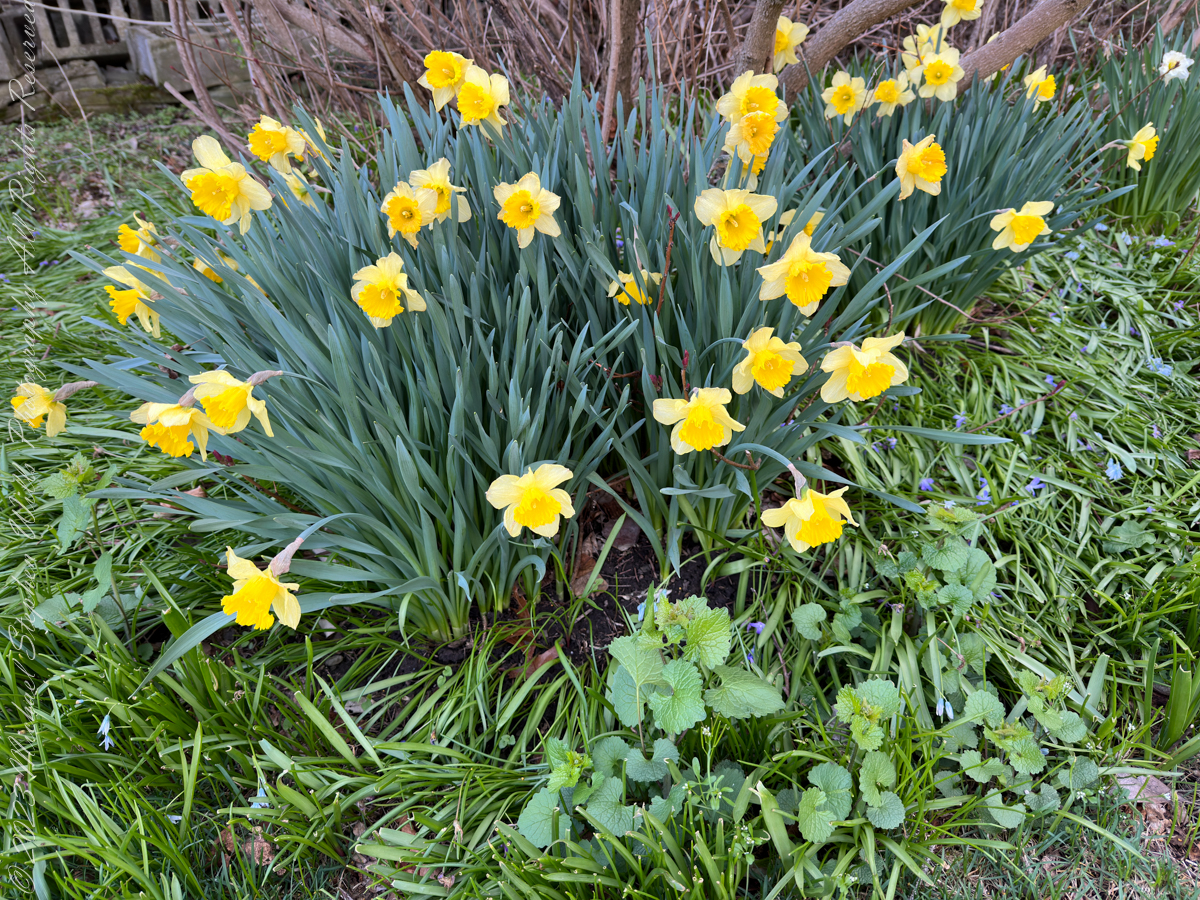
After spreading 15,000 square feet of crabcrass/fertilizer and before attending a frigid first baseball game of a grandson, I capture eight photographs of five different flowers from our home.

More about the Magnolia, from Wikipedia: The name Magnolia first appeared in 1703 in the Genera of Charles Plumier (1646–1704), for a flowering tree from the island of Martinique (talauma). It was named after the French botanist Pierre Magnol.

More about the Hydrangea, from Wikipedia: Hydrangea is derived from Greek and means ‘water vessel’ (from ὕδωρ húdōr “water” + ἄγγος ángos or αγγεῖον angeîon “vessel”), in reference to the shape of its seed capsules.

More about these Quince, from Wikipedia: Although all quince species have flowers, gardeners in the West often refer to these species as “flowering quince”, since Chaenomeles are grown ornamentally for their flowers, not for their fruits.

More about Forsythia, from Wikipedia: The genus is named after William Forsyth (1737–1804), a Scottish botanist who was a royal head gardener and a founding member of the Royal Horticultural Society.

More about Forsythia, from Wikipedia: Narcissus is a genus of predominantly spring flowering perennial plants of the amaryllis family, Amaryllidaceae. Various common names including daffodil, narcissus, and jonquil are used to describe all or some members of the genus. Narcissus has conspicuous flowers with six petal-like tepals surmounted by a cup- or trumpet-shaped corona. The flowers are generally white and yellow (also orange or pink in garden varieties), with either uniform or contrasting colored tepals and corona.

Copyright 2023 Michael Stephen Wills All Rights Reserved

Fair Weather View

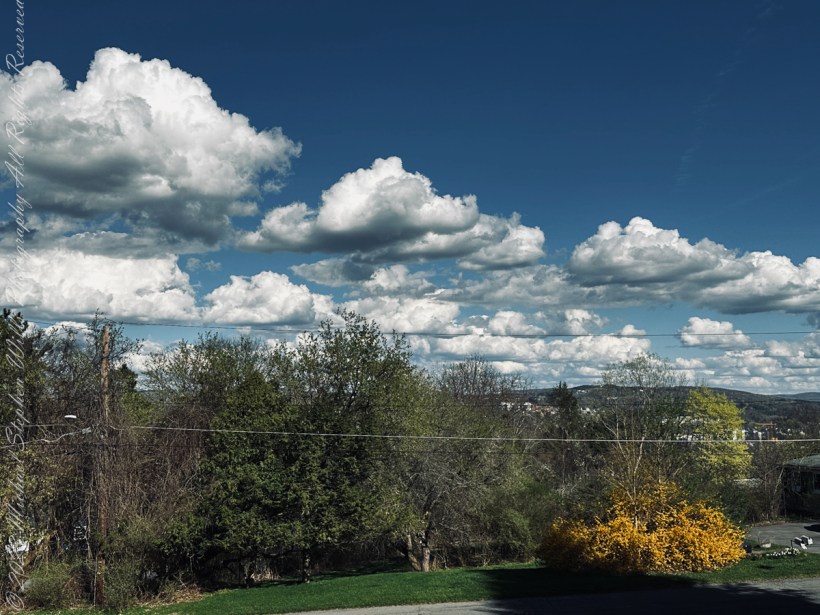
Cumulus Clouds and Forsythia

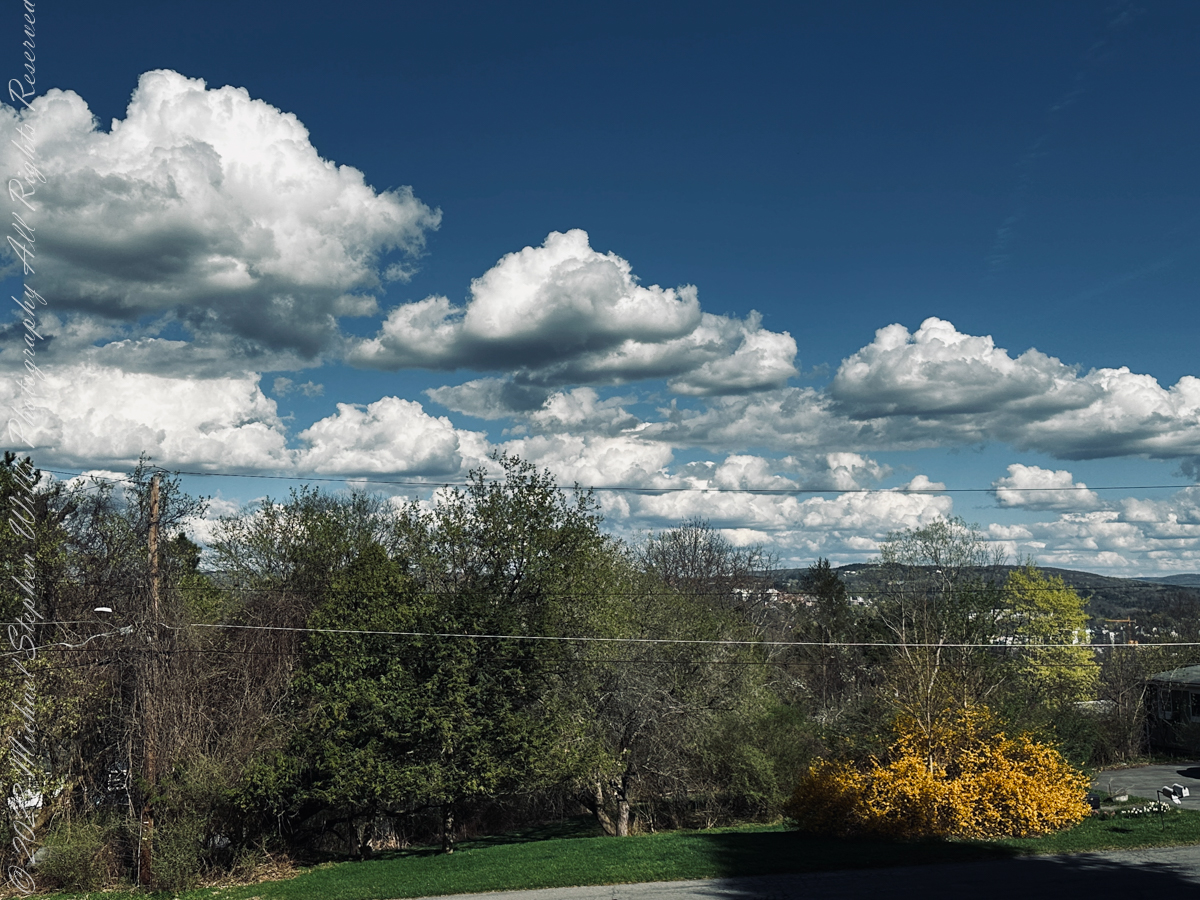
I read the New York Times on our porch on a spring Sunday afternoon, taking a moment to capture these fair weather cumulus clouds. Visible are Ithaca’s East Hill, downtown, and a forsythia bush in flower.

More about the flowers, from Wikipedia: Forsythias are popular early spring flowering shrubs in gardens and parks, especially during Eastertide; Forsythias are nicknamed the “Easter Tree”, the symbol of the coming spring.

More about this view, from Wikipedia: Cumulus clouds can form in lines stretching over 480 kilometers (300 mi) long called cloud streets. These cloud streets cover vast areas and may be broken or continuous. They form when wind shear causes horizontal circulation in the atmosphere, producing the long, tubular cloud streets. They generally form during high-pressure systems, such as after a cold front.

Copyright 2023 Michael Stephen Wills All Rights Reserved

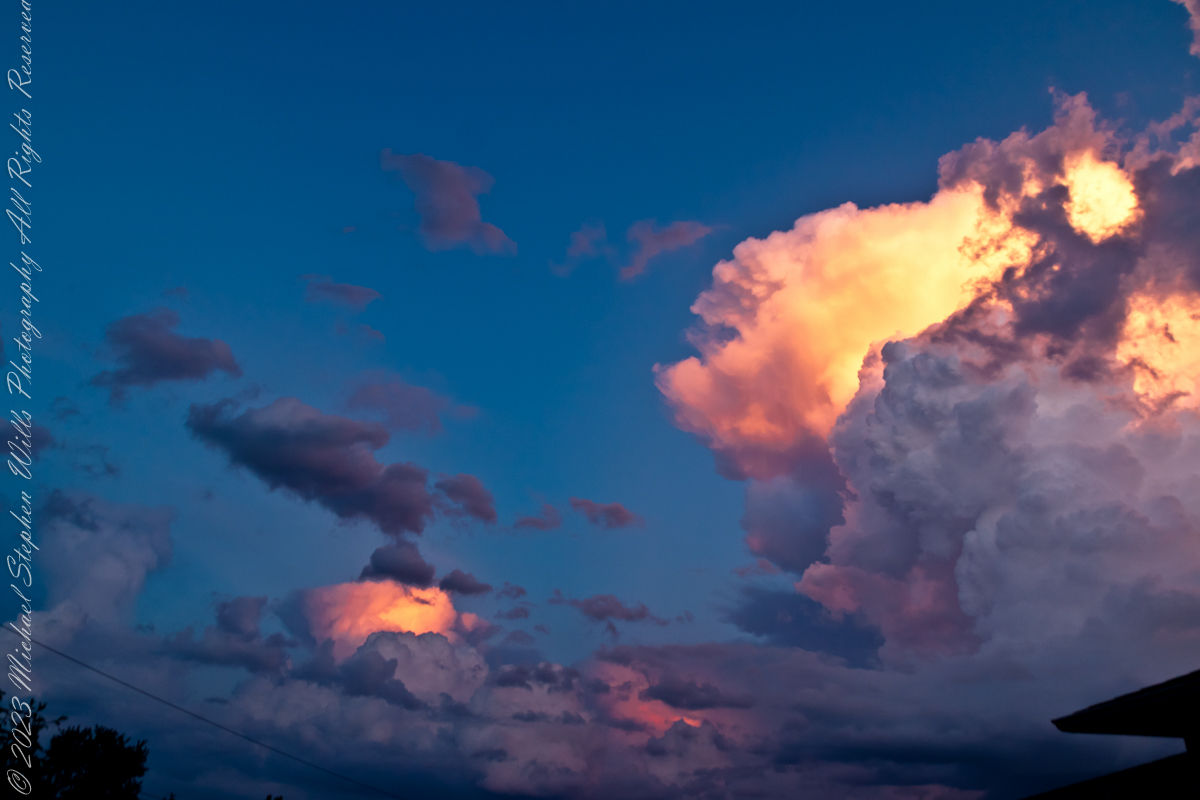
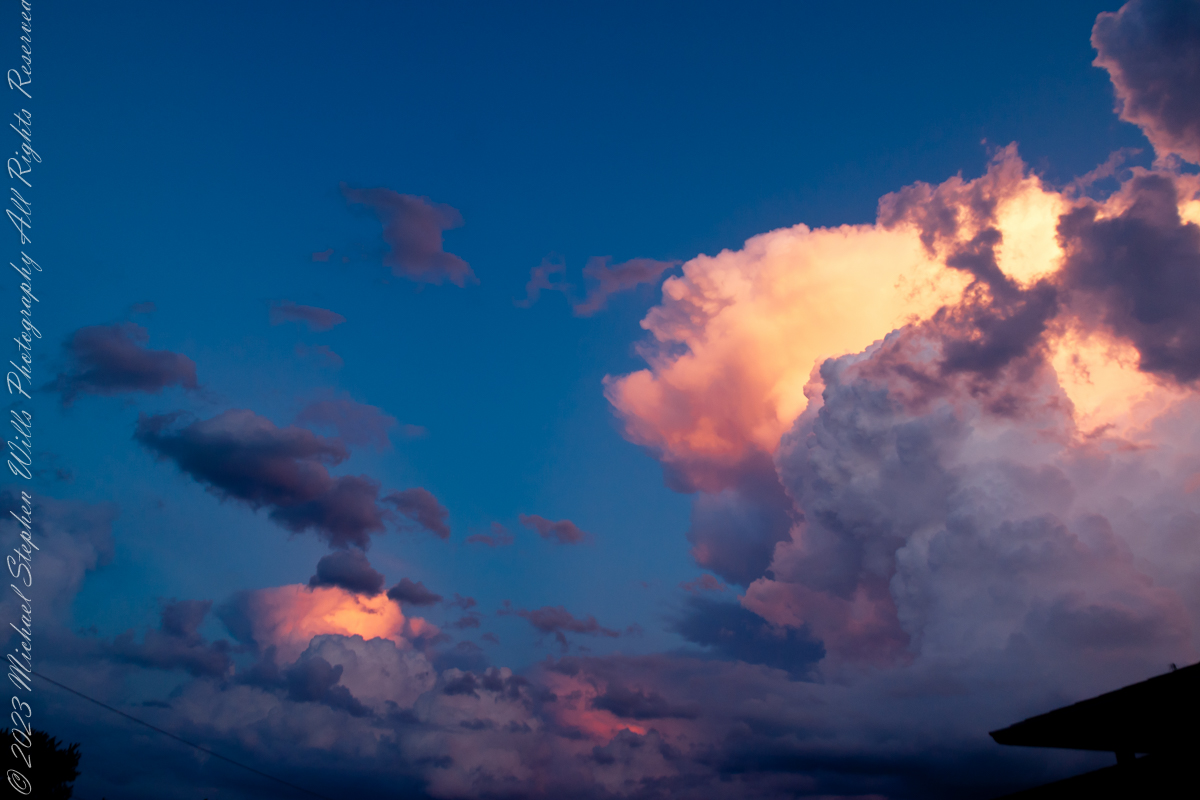
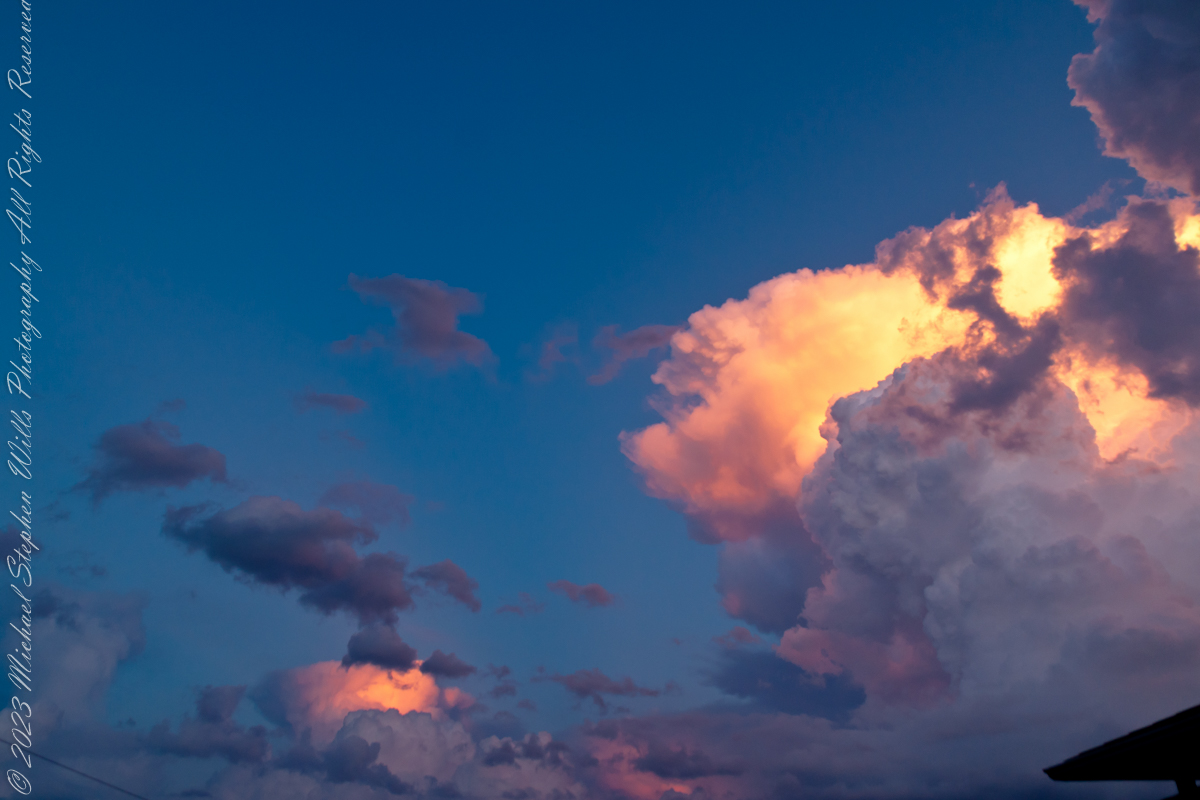
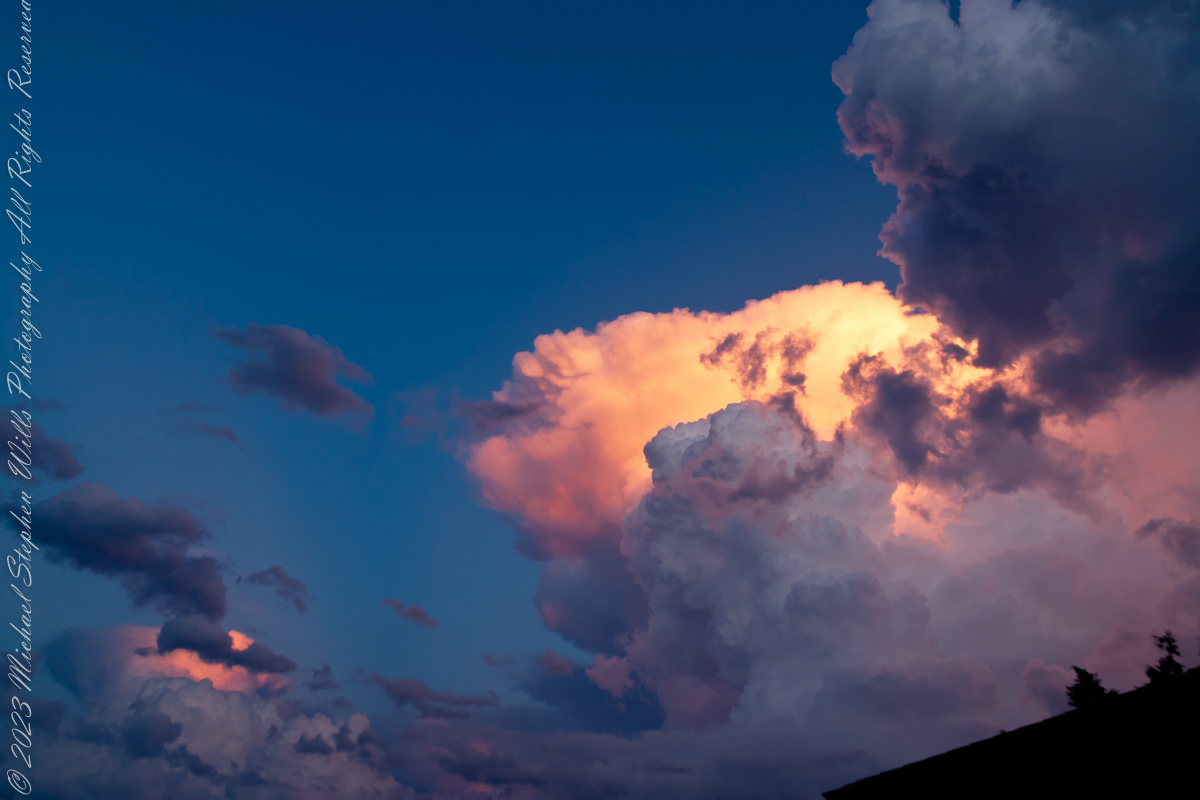
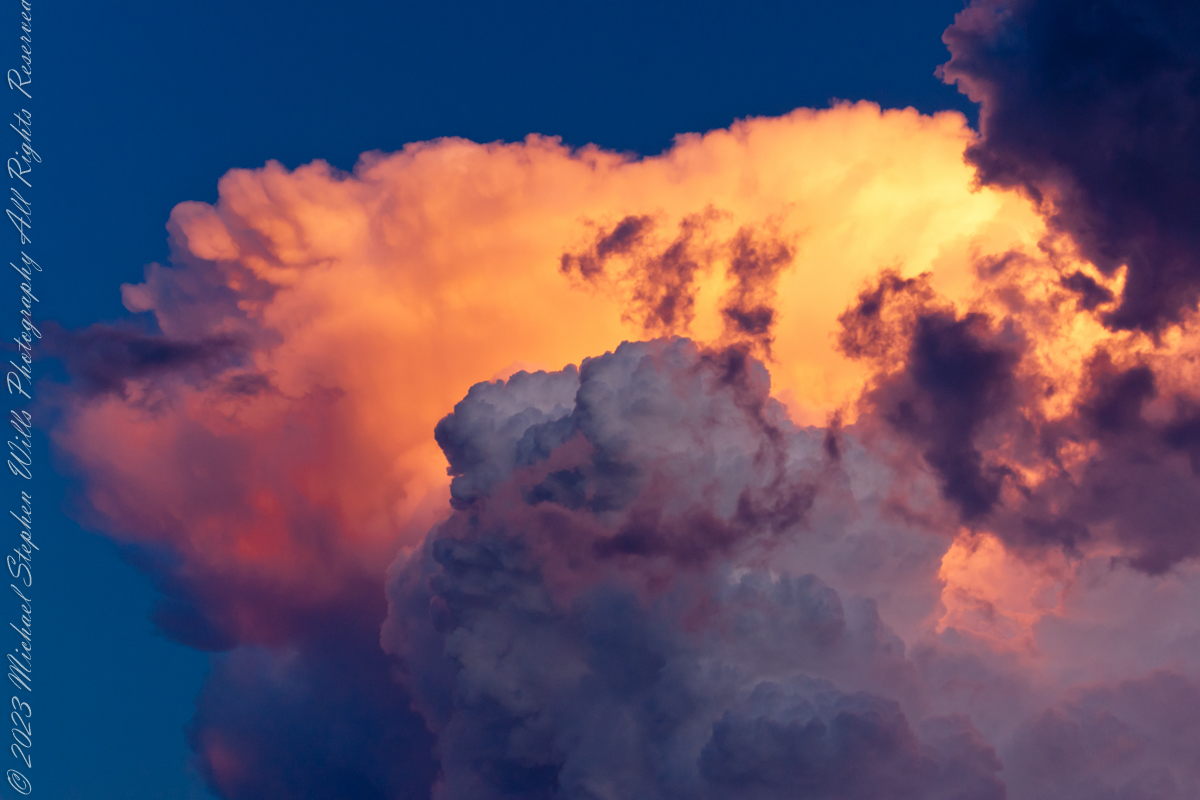
Thunderhead Sunset 3

the rest of the story

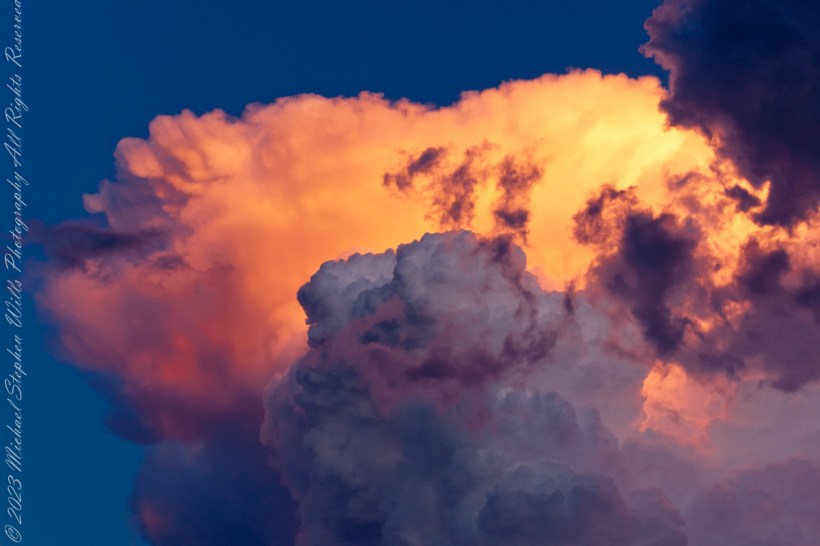
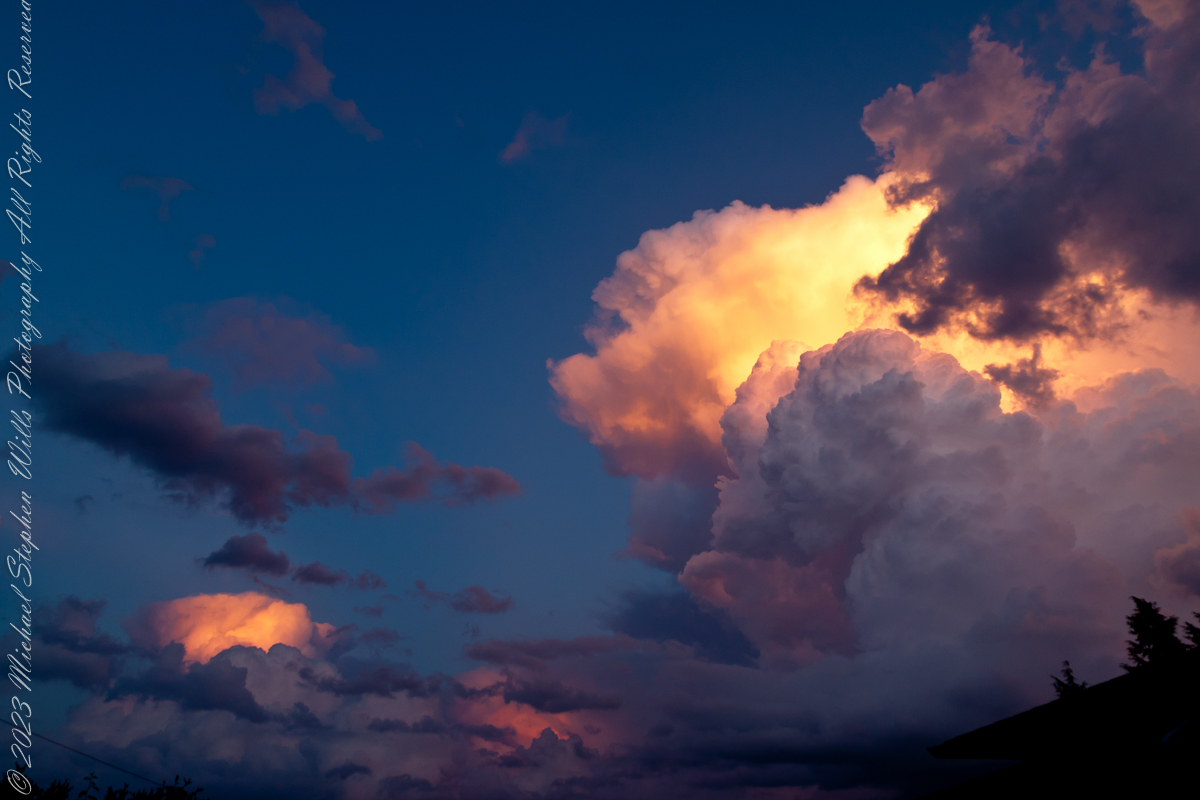
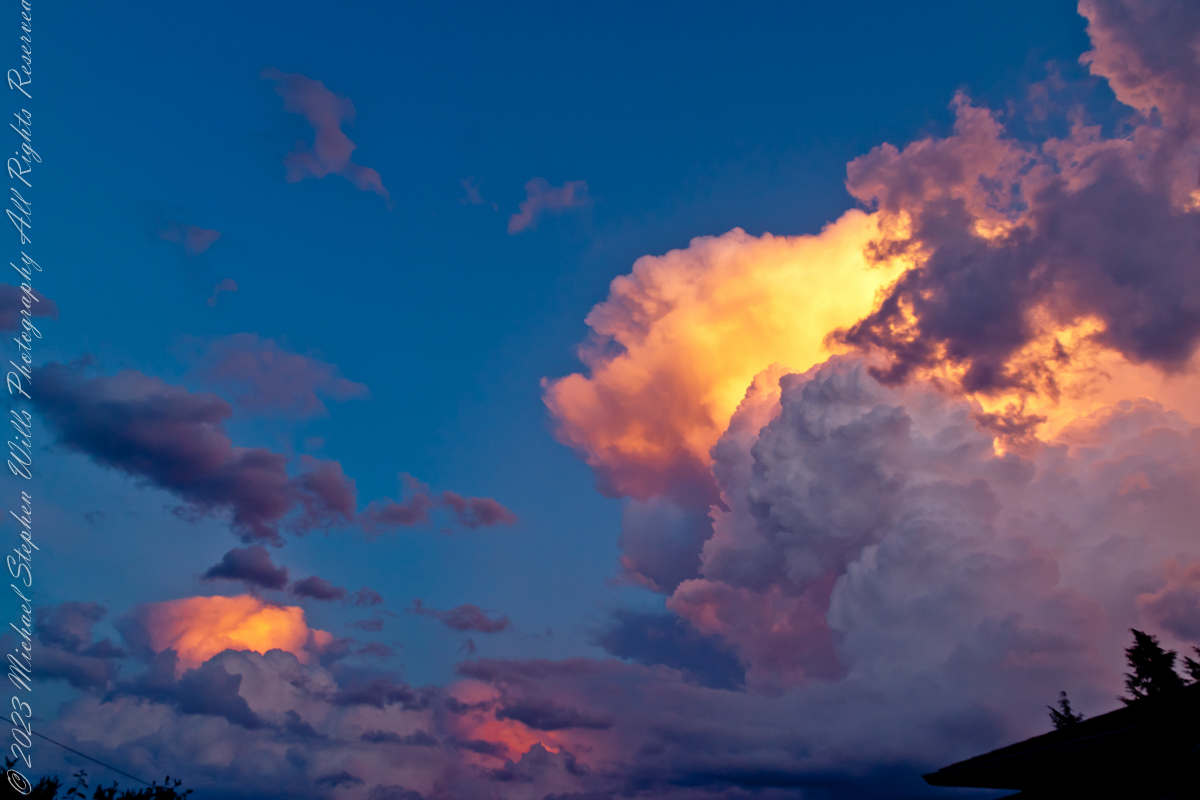
Here are the rest of the images captured in that August 2014 sunset.

Copyright 2023 Michael Stephen Wills All Rights Reserved