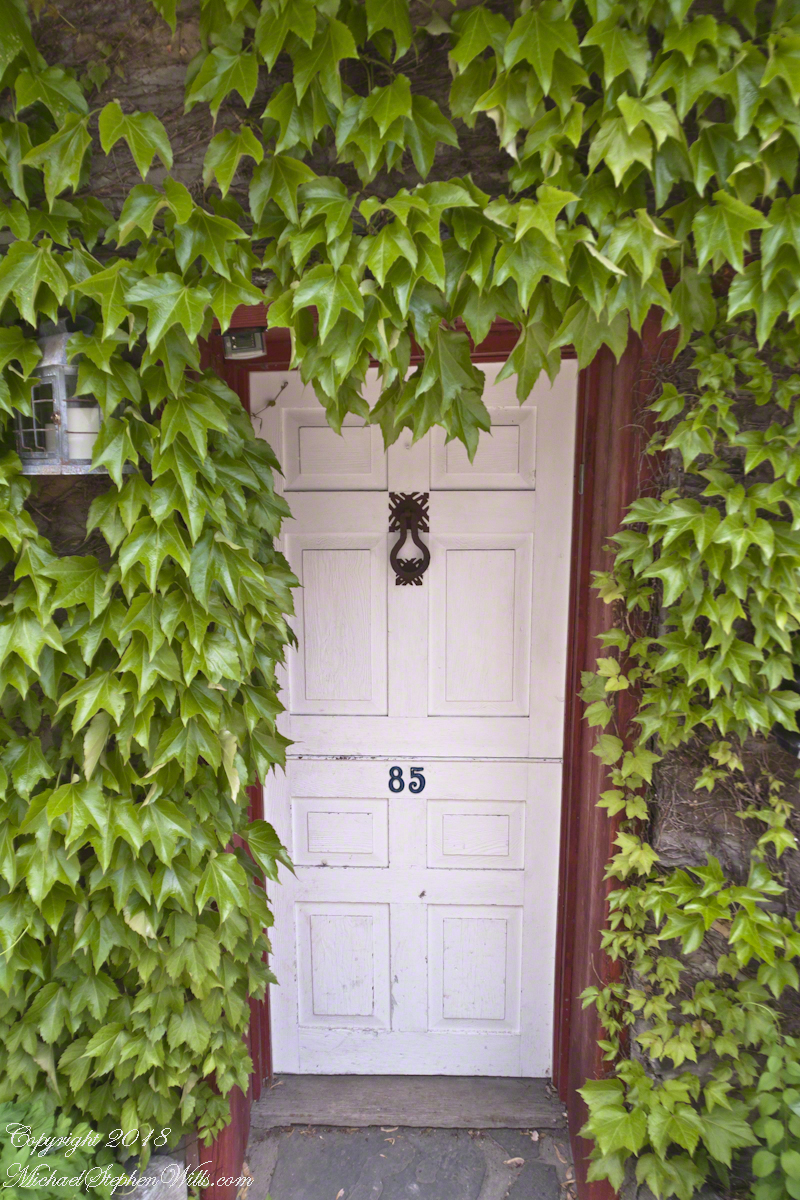
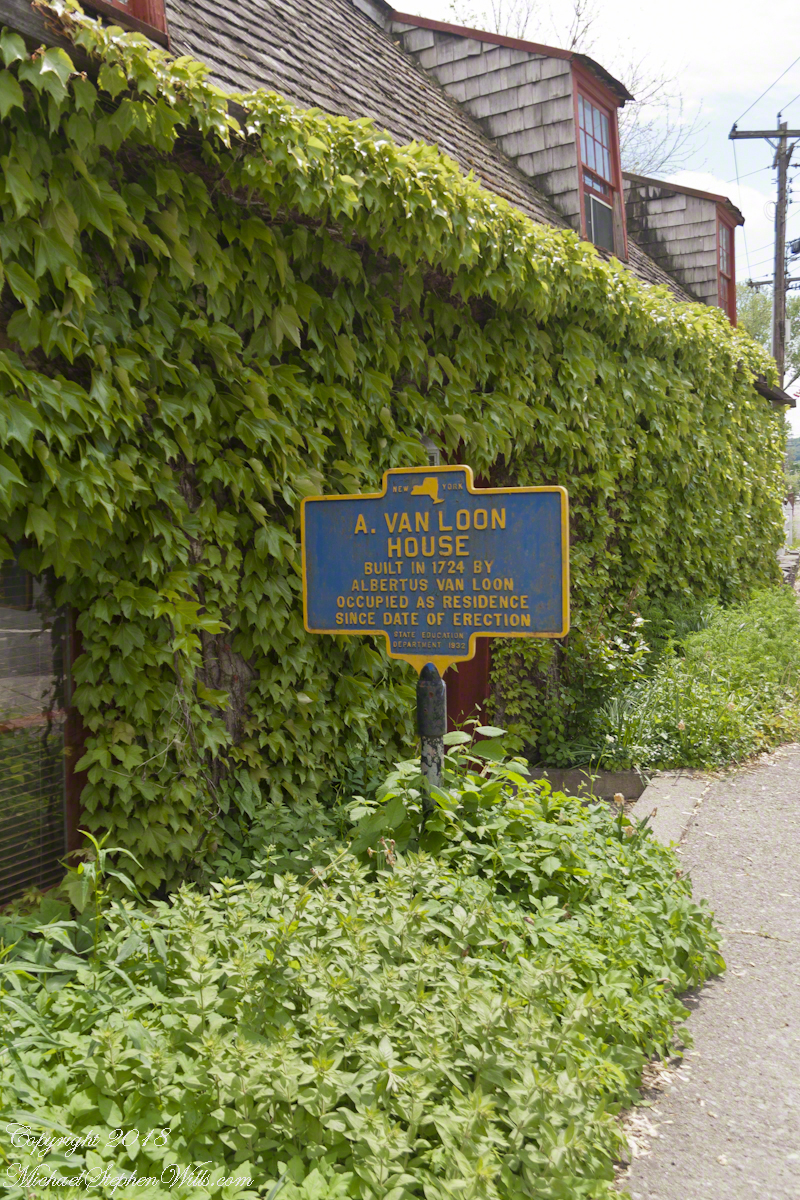
Home for 295 years, one way to describe the Albertus Van Loon house, 85 North Washington street, Athens, New York. Built before there was a George Washington or Athens New York. The river flowing by was named North River when this door first opened. The Delaware was South River.
Click any photograph for a larger version
Listed today on Zillow with a increasing value and, incredibly, “built 1725.”
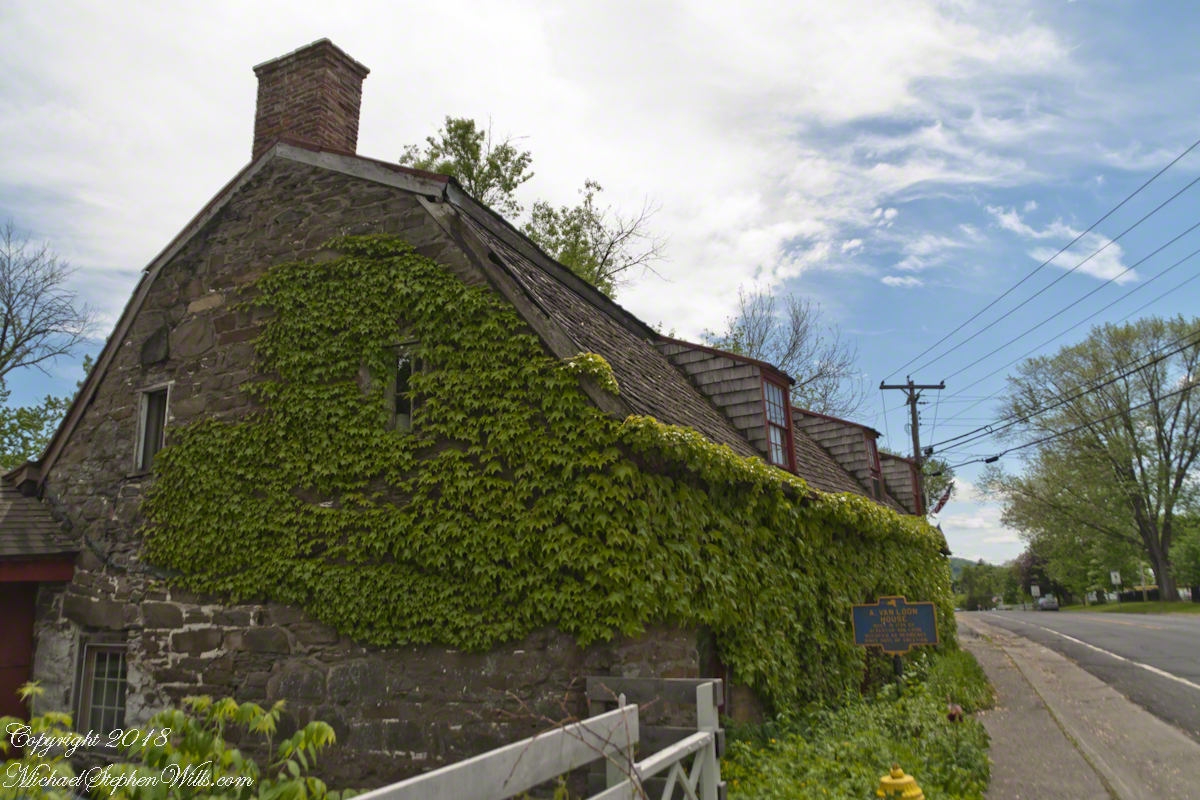
Well cared for…..
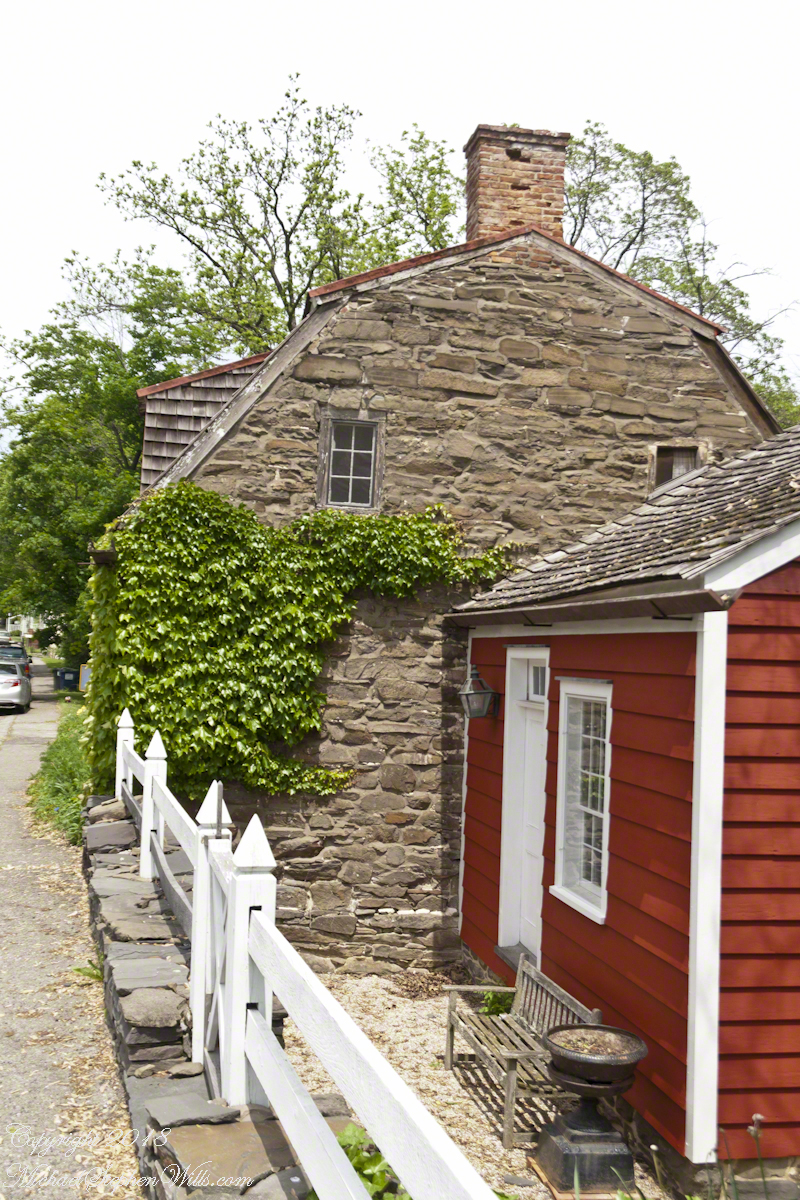
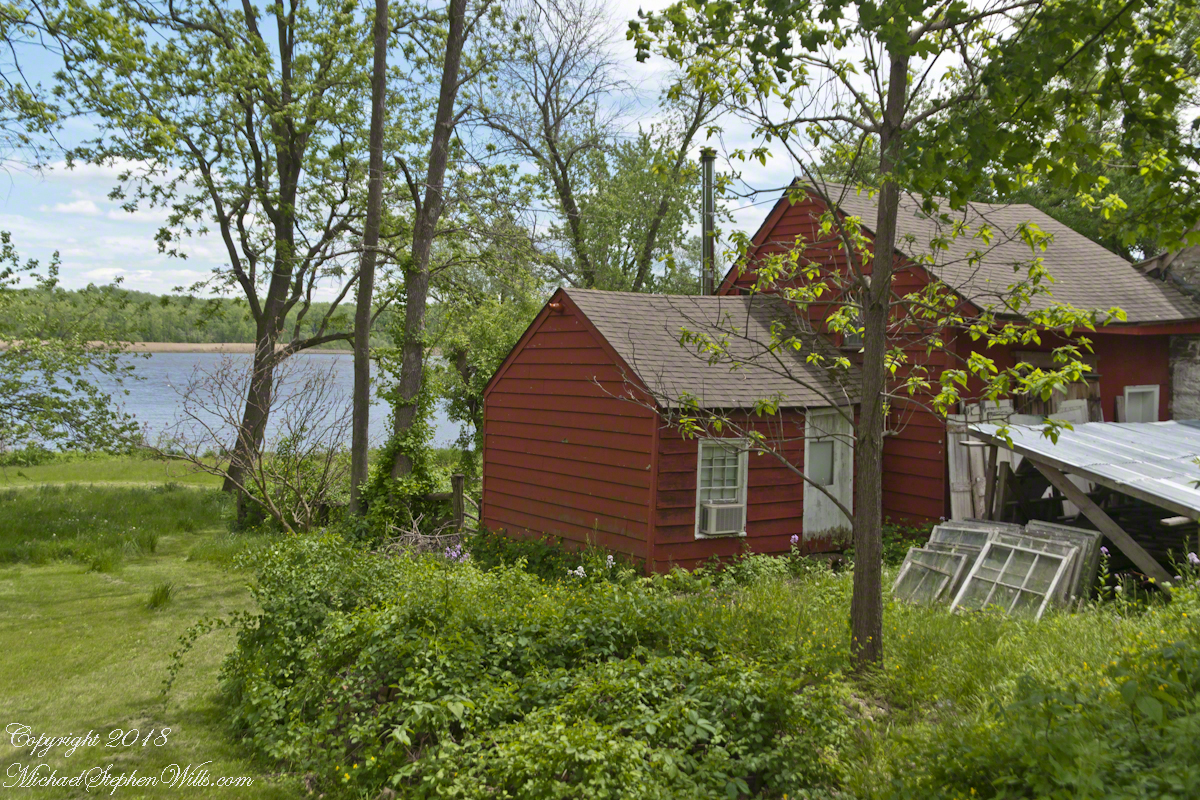
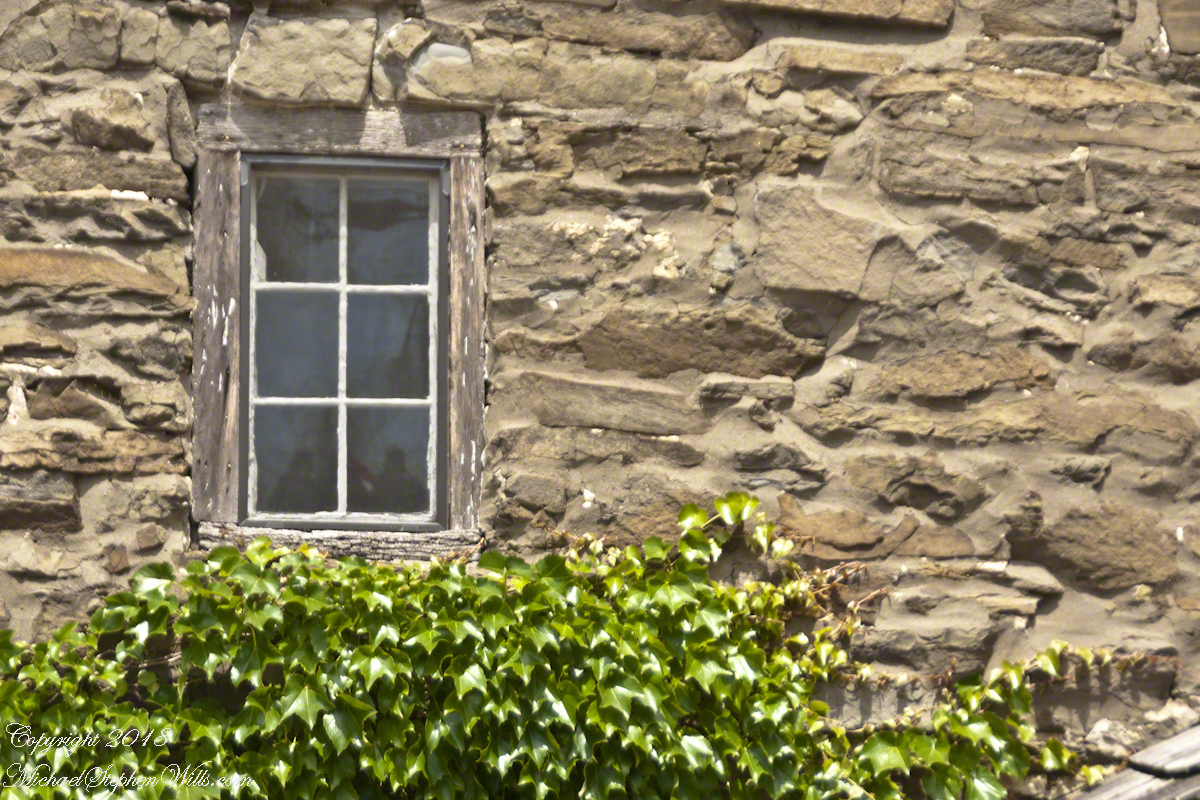
…..solid masonry walls with timber additions.
Right on the Hudson River.
Details
Albertus is a Great+ Uncle for Pam. She felt the connection to this place, marveled at the well build masonry and solid windows, absolutely loved the ivy. 85 North Washington was our last stop.
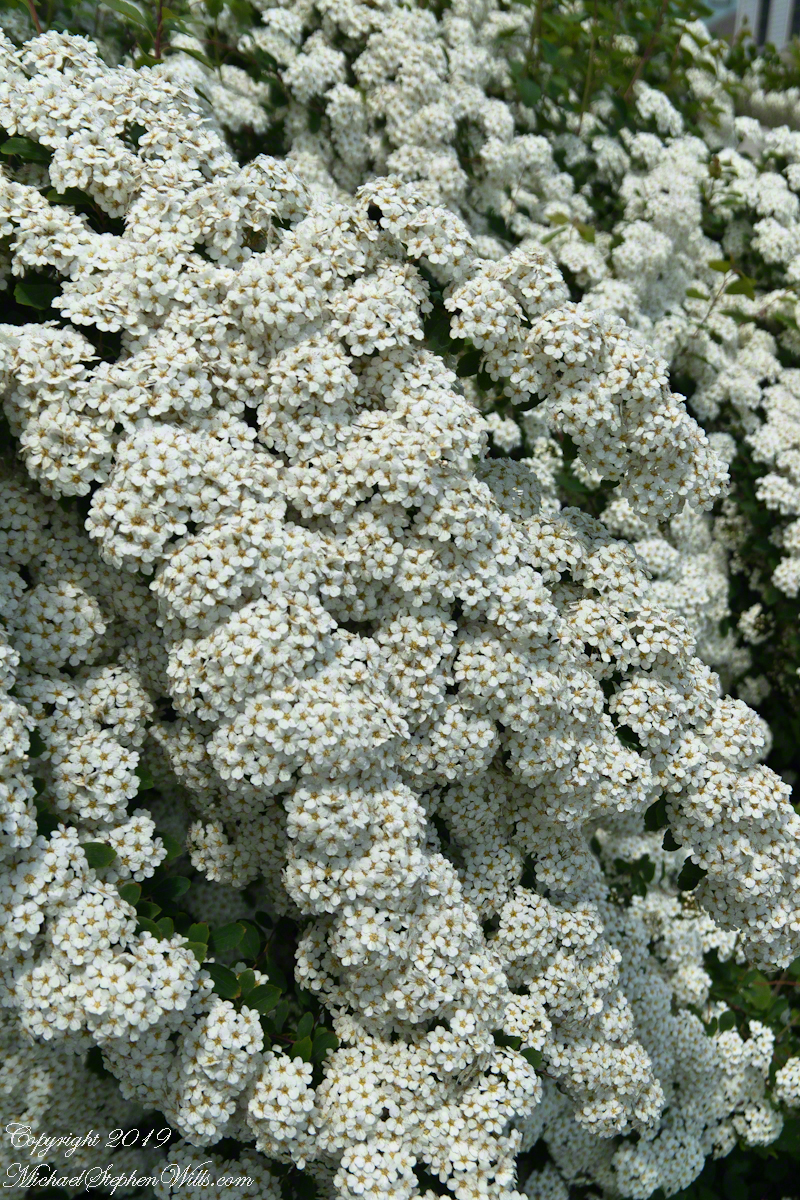
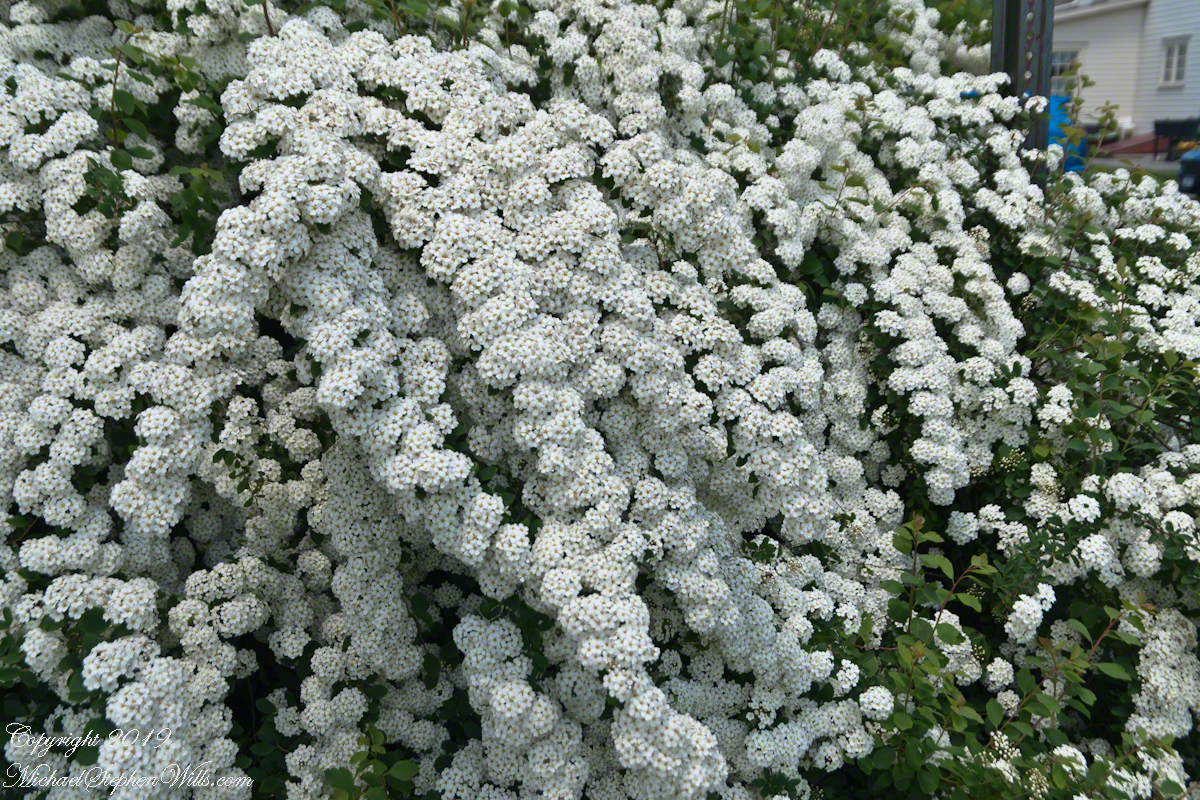
Spiraea bushes in full bloom flanked the Riverside Park along Water Street.
Click any photograph for a larger version
Well cared for…..
…..as are the urns across the street.
Athens Country Cemetery
Our daughter-in-law and her Mom were a source of post-trip information. “Yan Van Loan” is how Jan Van Loon’s name is pronounced in Dutch, they kindly informed us.
Passage of political control from Dutch to English was decades old when Jan Van Loon acquired his land on the river. By the 19th century the name was anglicized (turned English) on the headstones, spelled as it was pronounced in English. In the 18th century Pam’s ancestors had moved west and south to what became Plymouth, Pennsylvania (Luzerne County). This was before the coal fields, in the 18th century agriculture was the primary industry. Pam’s branch of the Van Loons retained the Dutch spelling and anglicized the pronunciation, as “Van Loon” is pronounced in the English language.
The very old burials were marked with headstones of locally quarried slate, as was common in upstate New York. You can see slate headstones in this video of a Pioneer Cemetery near our home in Ithaca, New York.
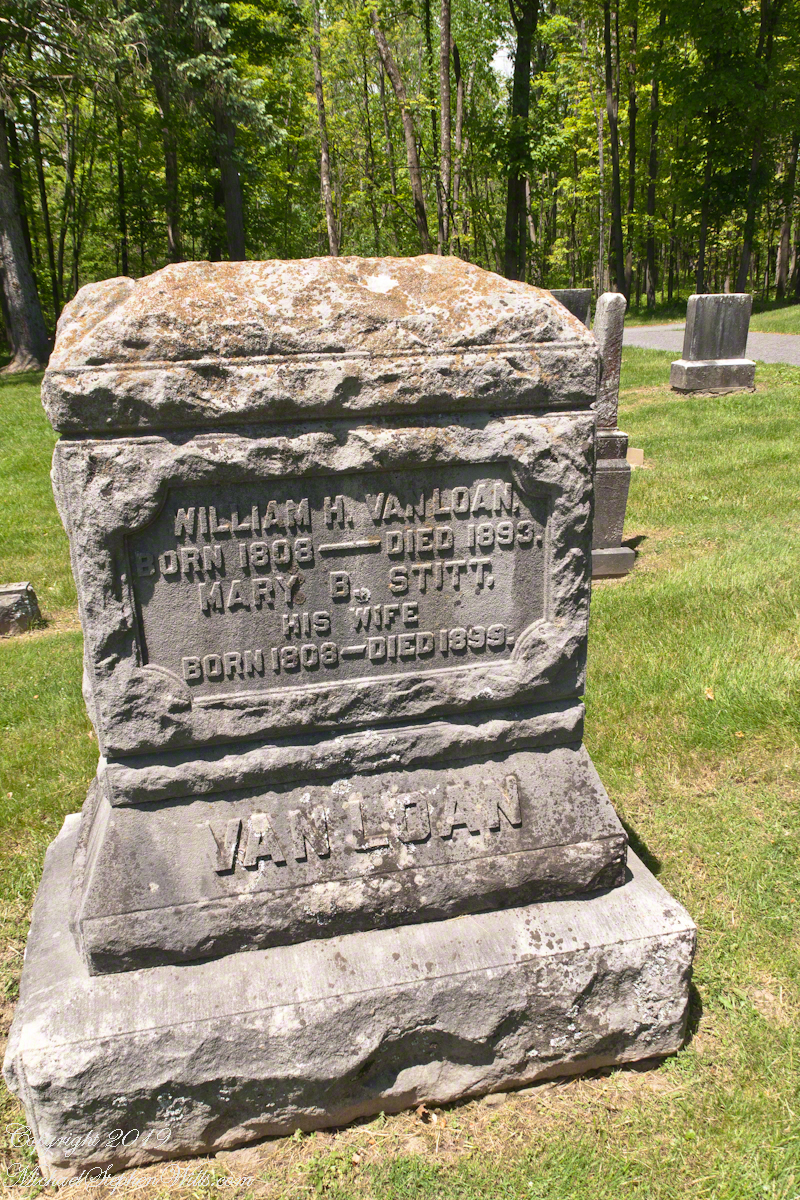
In Athens the oldest stones were in the same condition, the lettering and decoration erased by the elements even when the stones are still standing. Some kind people researched the burials and erected a modern, white marble memorial stone with the names and dates of the ancestors named in the records. Jan Van Loon, Maria his wife, or any of Pam’s direct ancestors were not among them.
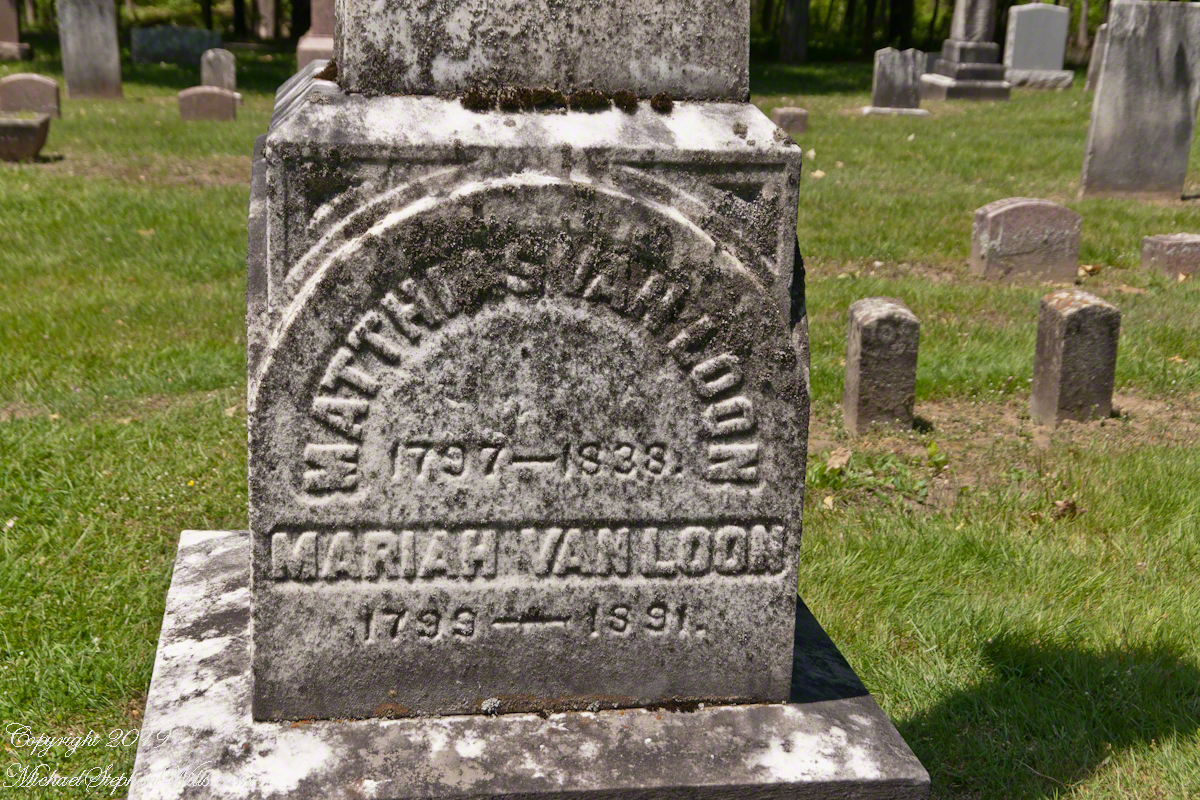
The Matthias Van Loon of this memorial obelisk was a descendant who remained in what became Athens, New York. The following two photographs are of the base and an overview. Matthias Van Loon’s is on the right.
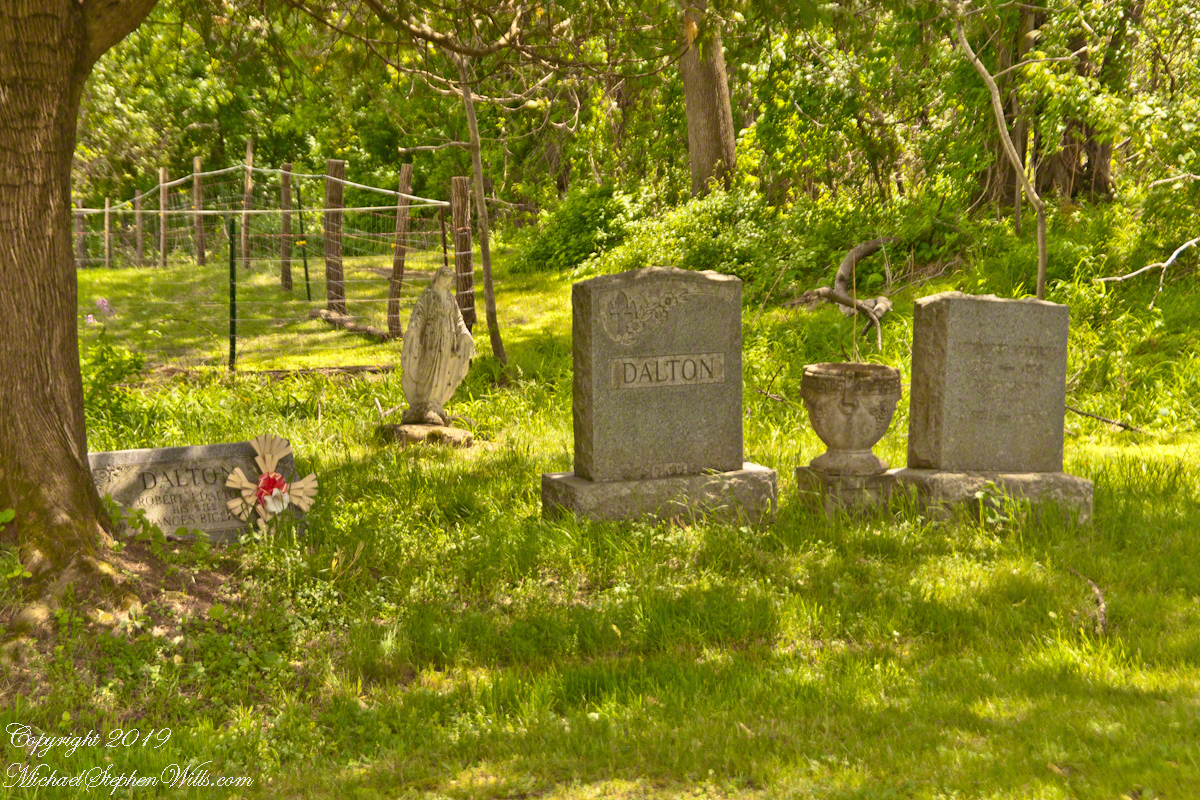
This Catholic burial is on the very edge of the site, as though pushed off to the side. That is the yard of a private home in the background. I started this post with flowers because there was little evidence of familial devotions on these burials of previous centuries.
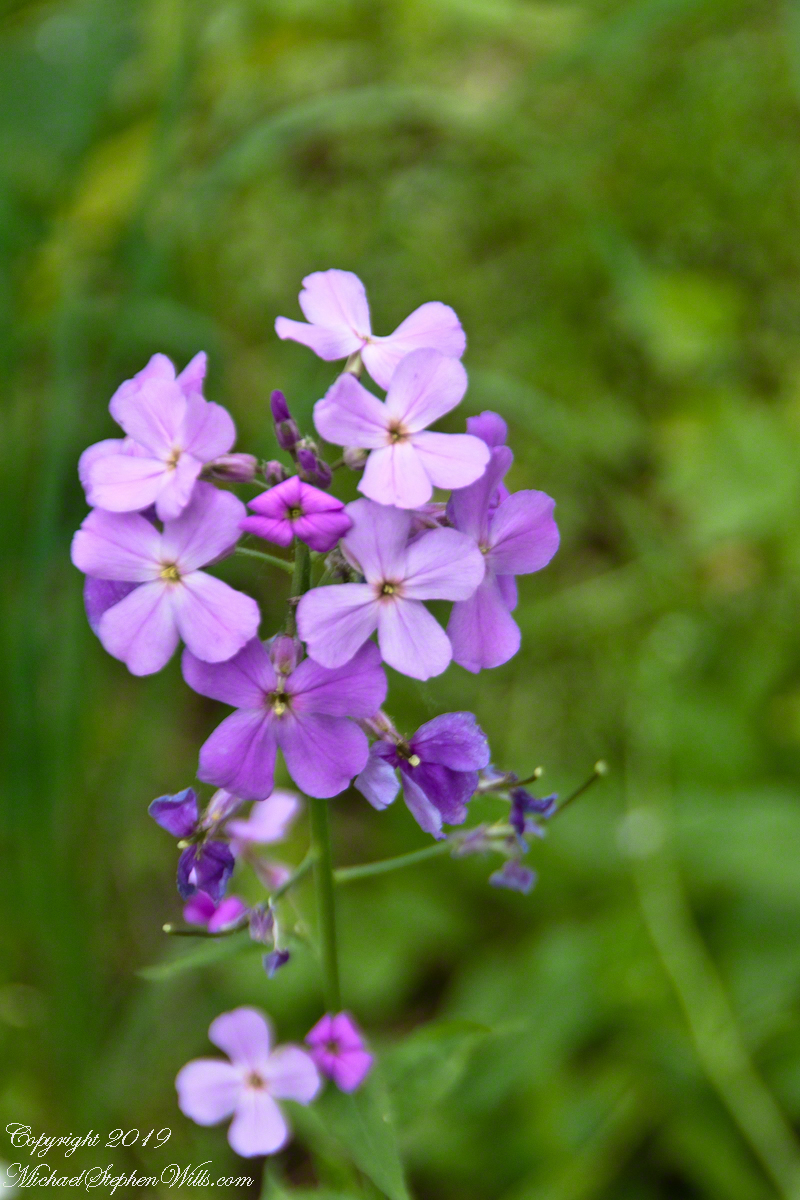
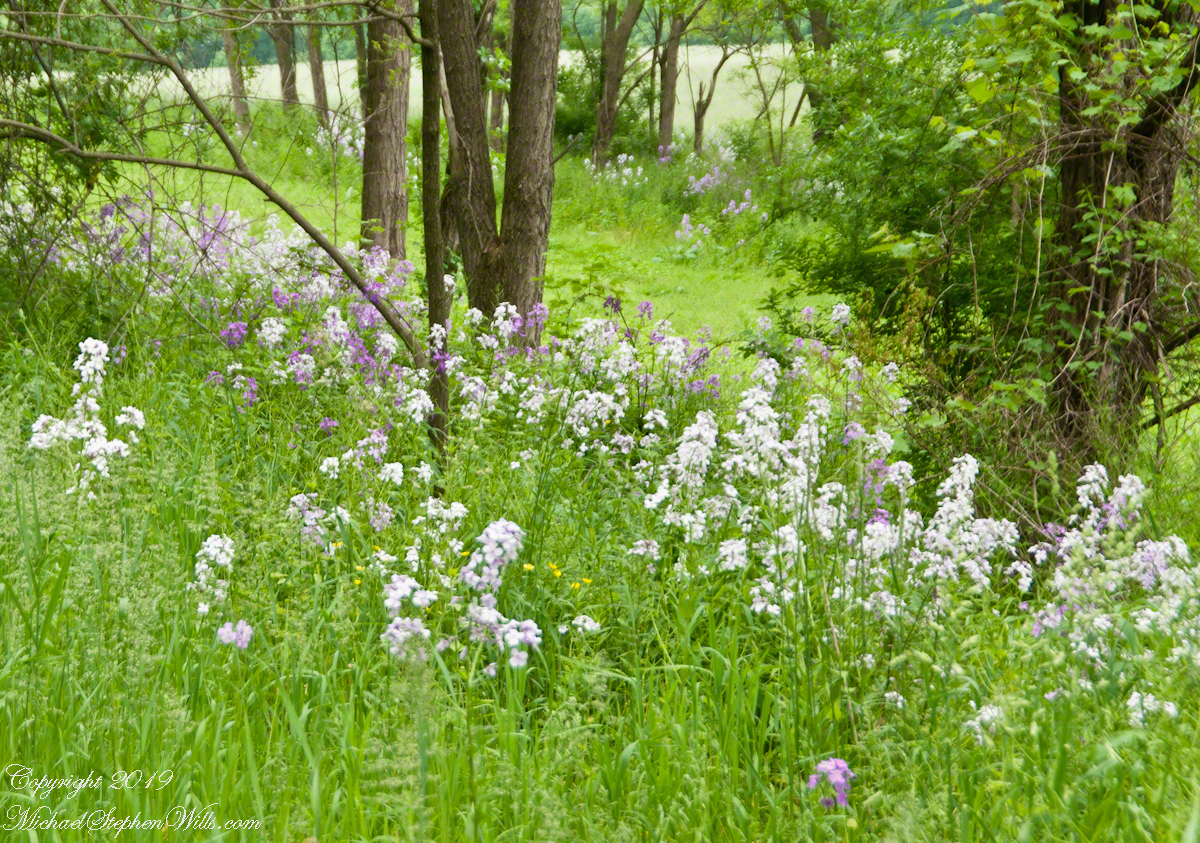
Working as a consulting dietitian, back in the 1980s, on a early June drive from Canisteo, New York on route 19 north of Mansfield, Pennsylvania, where the road goes through the Tioga-Hammond Lakes Recreation area there were miles of phlox growing on the east side of the road. The fragrance of phlox was pervasive with the window down and to this day I remember that time when phlox is in bloom as it was on June 5th, last week.
Click any photograph for a larger image.
The species name (Phlox) divaricata means “with a spreading and straggling habit”.
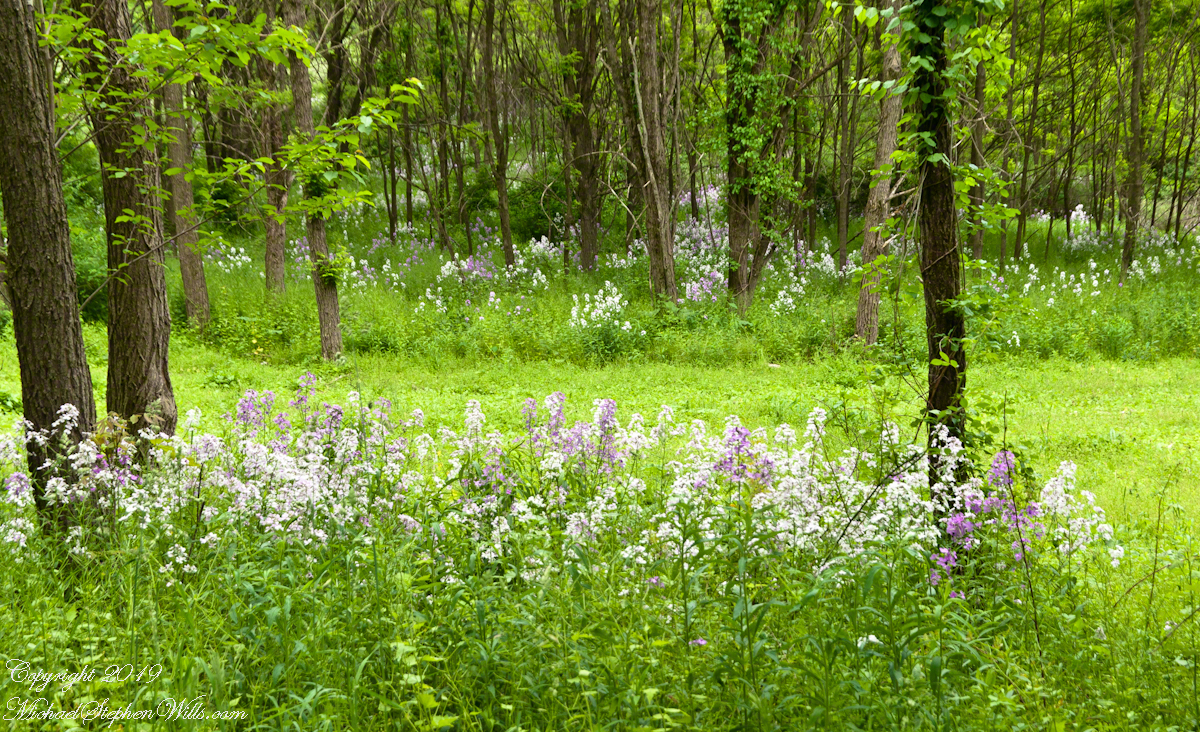
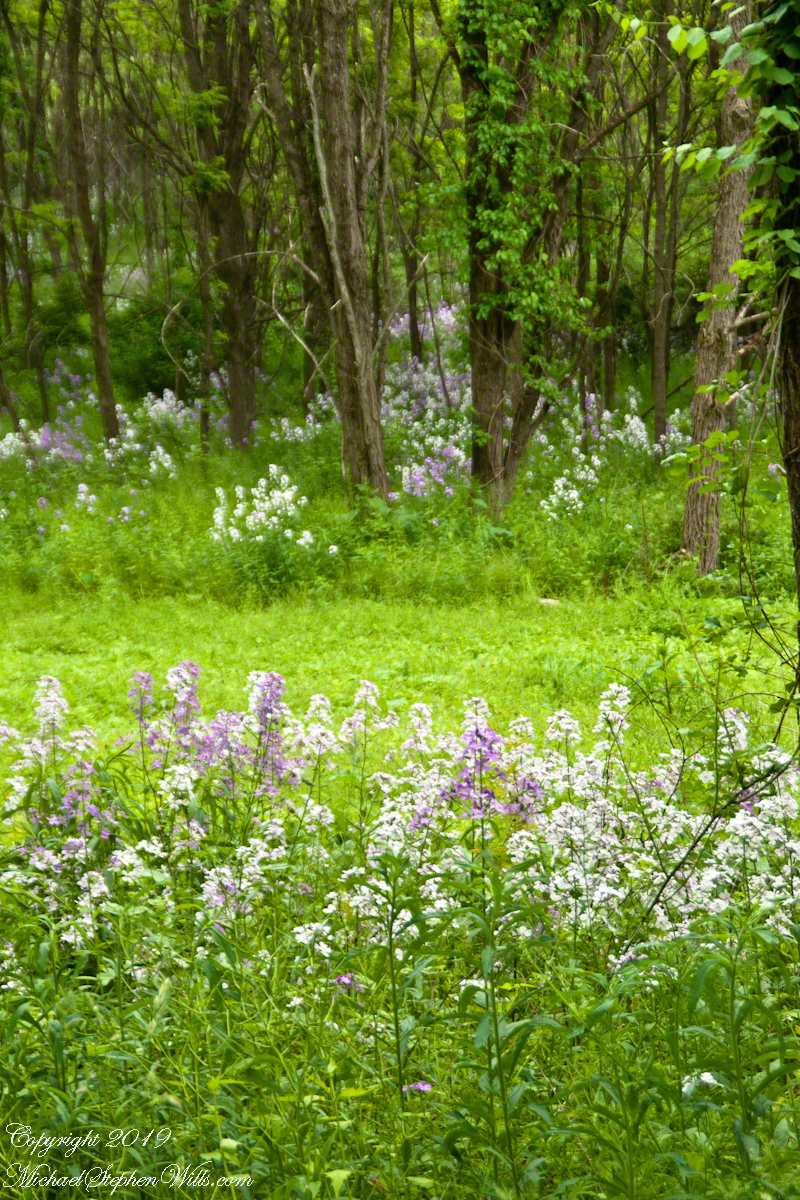
On the way to Treman State Park, to check out wildflowers, on an afternoon that threatened rain I came upon these stands of phlox, growing as it does under trees in damp soil on the east side of Colegrove Road. We’ve had plentiful rain this spring.
Phlox is abundant here
Looking it up in my reference book, “The Botanical Garden”, the plentiful number of species was daunting. (CLICK ME for more about this reference.) Bloom times spread across the calendar from May through August and into autumn. Species blooming in June were just not a good match.
The blooms seem to go on forever into the woods.
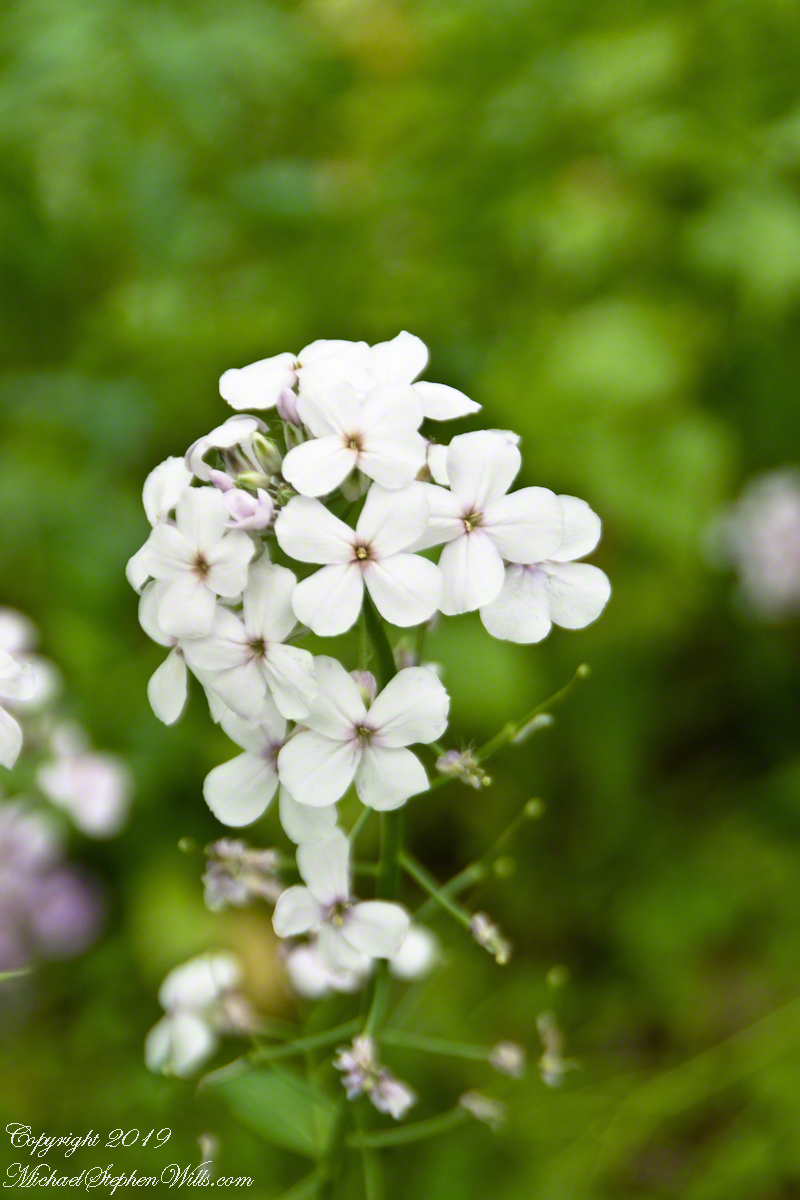
It was a surprising result, though in retrospect given the wide distribution and abundance of species, is to be expected. So I poked around the internet search engines, results from varied search strings, until Phlox divaricata popped up as a wildflower with a late May / early June bloom and growth habit and flowers matching these.
I captured macros of the two hues from roadside specimens.
Copyright 2019 All Rights Reserved Michael Stephen Wills
Here is a repost of a popular and interesting article. The answer is in comments. Thanks, readers!!
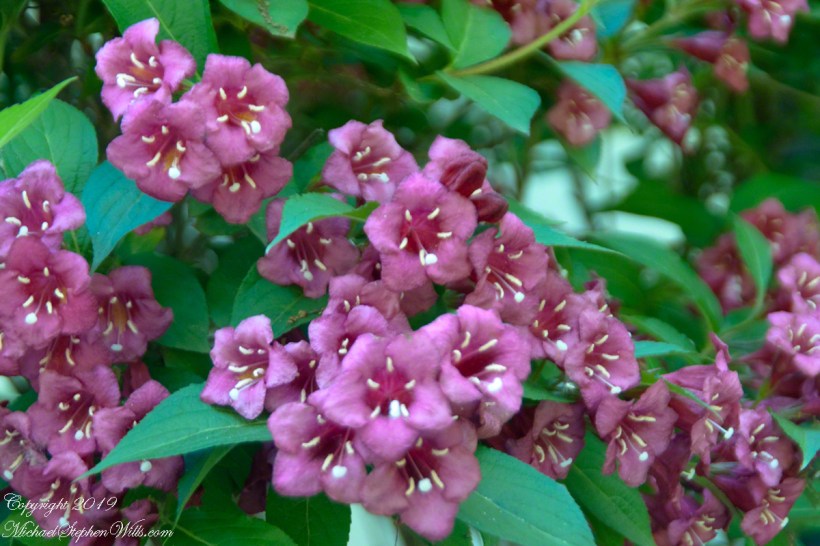
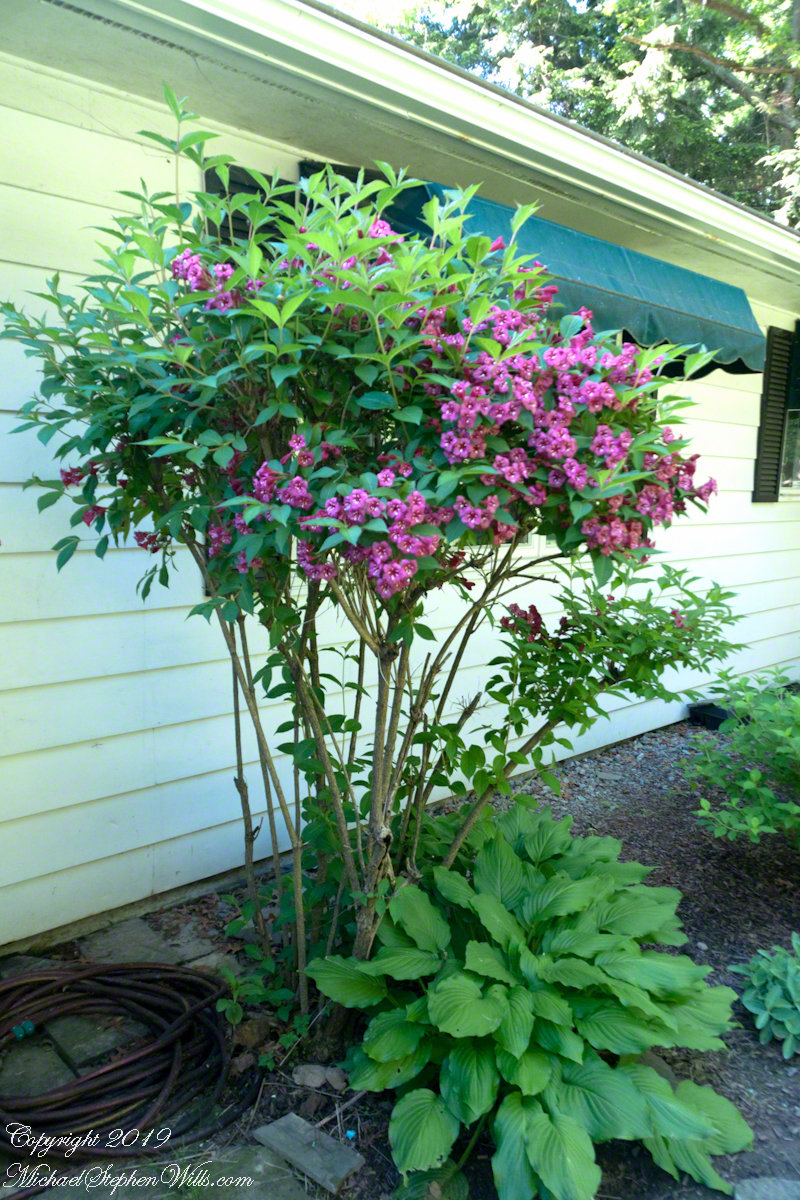
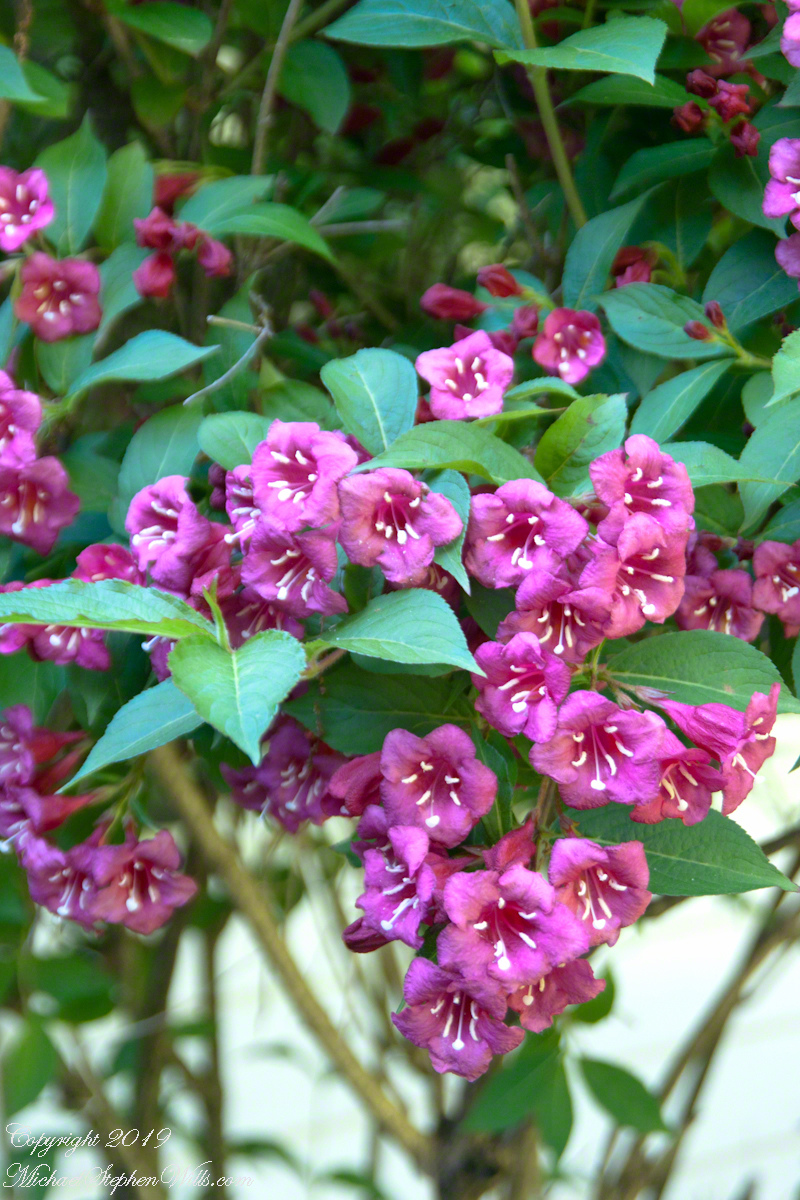
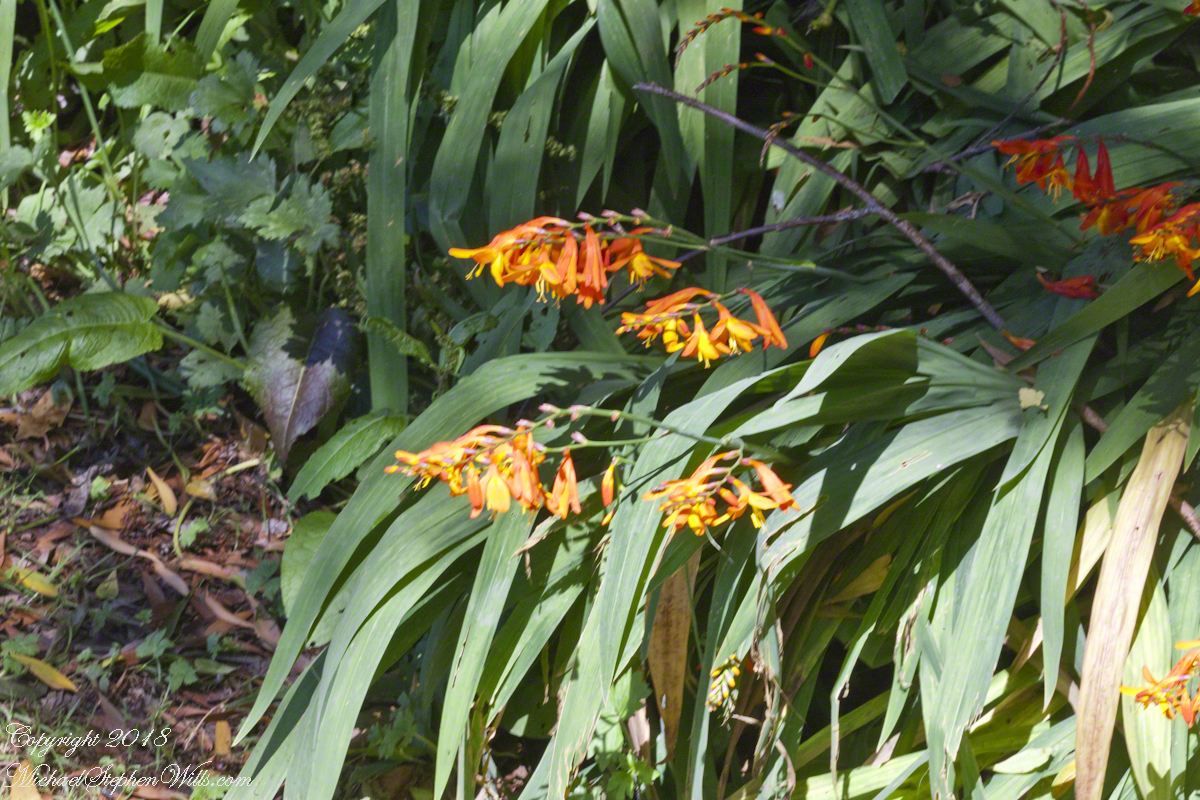
I need your help this morning. This year each of these bushes in front of our kitchen window has profuse blooms after Pam pruned and fertilized them early spring. I am coming up blank with identifying them.
The two bushes are over six feet tall and lose leaves each autumn (deciduous).
Here are some photographs. Can any readers identify these bushes? The common name or scientific will be much appreciated.
Thanks so much.
Copyright 2022 All Rights Reserved Michael Stephen Wills
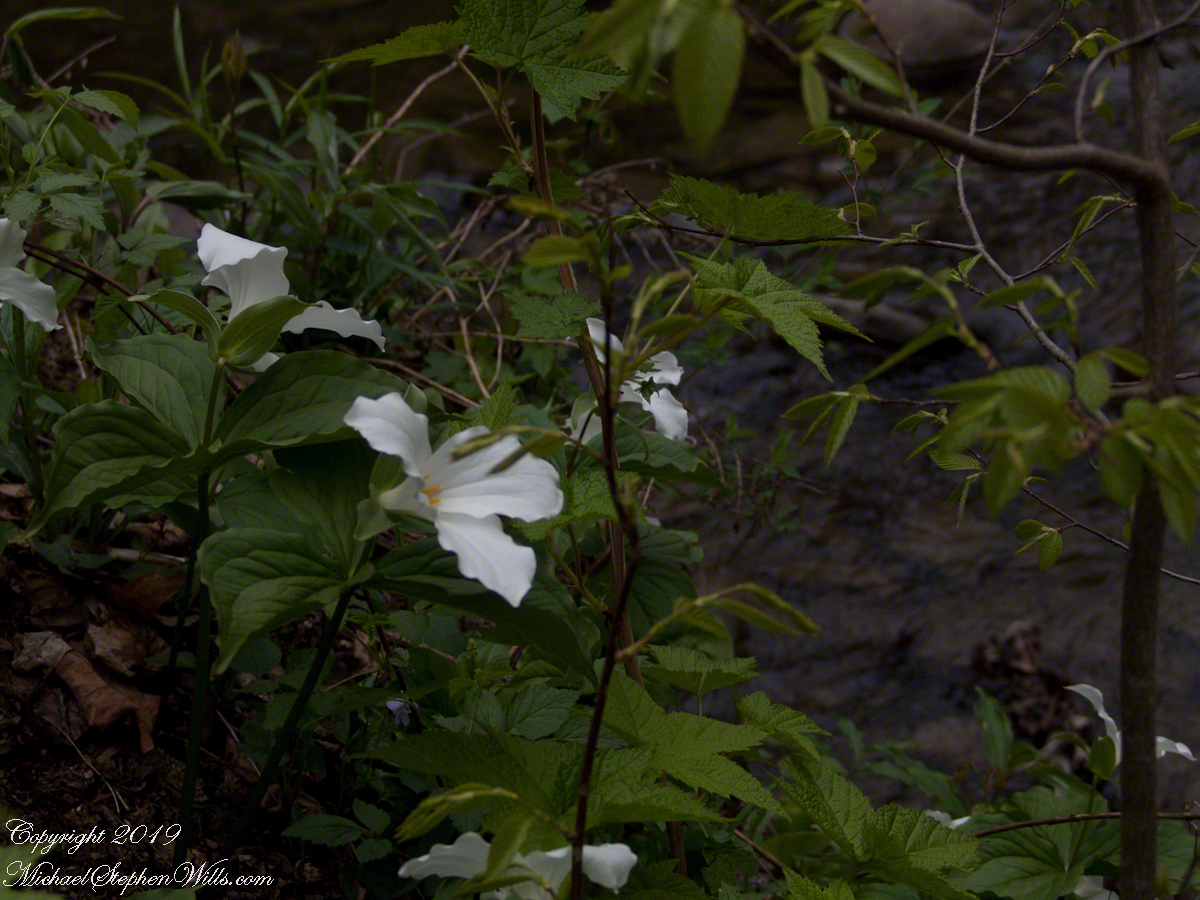
An access road, now blocked with huge boulders by the State Park, leads to this dam at the head of Fillmore Glen. I stop here for reflection at times and have climbed behind the dam for photographs. It is possible to drive up the south side of the glen on a poorly maintained road and park next to the boulders. In this season (spring) the surrounding forest is carpeted in wildflowers. Hepatica, trillium, dutchman’s breeches. One day, years ago, I pulled in behind a late model convertible with a license plate holder advising the owner was a member of the 10th Mountain division and a World War II veteran.
They were a well dressed and groomed couple. The white haired driver, in his late 80’s at least, patiently waited while she, a frail woman, walked the margins of the forest, enjoying the wildflowers. It was my impression this was a ritual for them, developed over the years. One of the few spring outings left to them.
Wildflower displays develop over hundreds of years. The massed trillium are on land not disturbed for thousands of years, since the last ice age. These same spring wonders were certainly enjoyed by the Iroquois before us.
Click either photograph for a larger view.
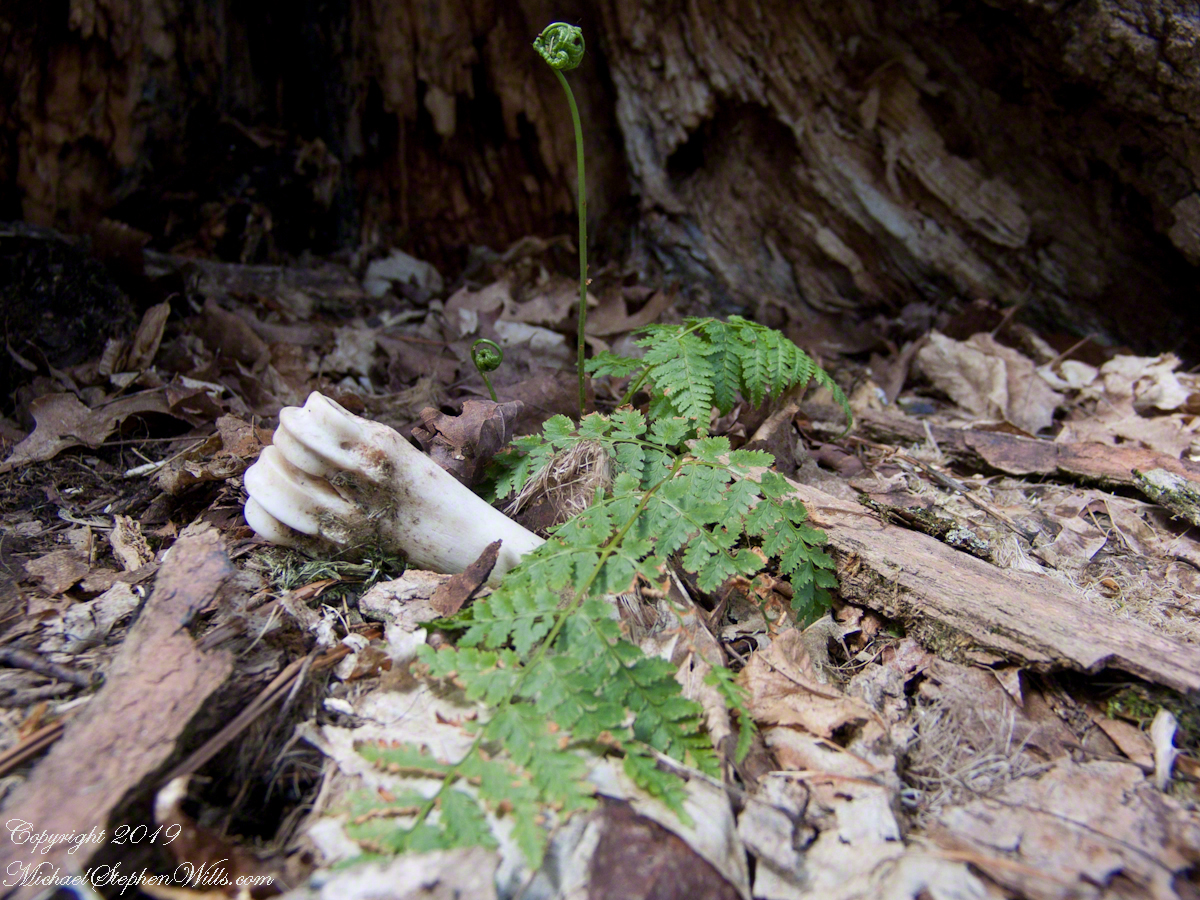
On the gorge slope below the parking area, in a hollow on the north side of a large (I recall) oak, one early sunny spring morning I discovered the last resting place of a deer. Only the bones and some fur remained, the visible portion resembles the Capitulum and trochlea of a human arm bone and, indeed, there was a scapula close by. The season is evoked by the unfurling fern against the based of the oak.
Dark, Unwritten Forest Secrets
Copyright 2022 All Rights Reserved Michael Stephen Wills
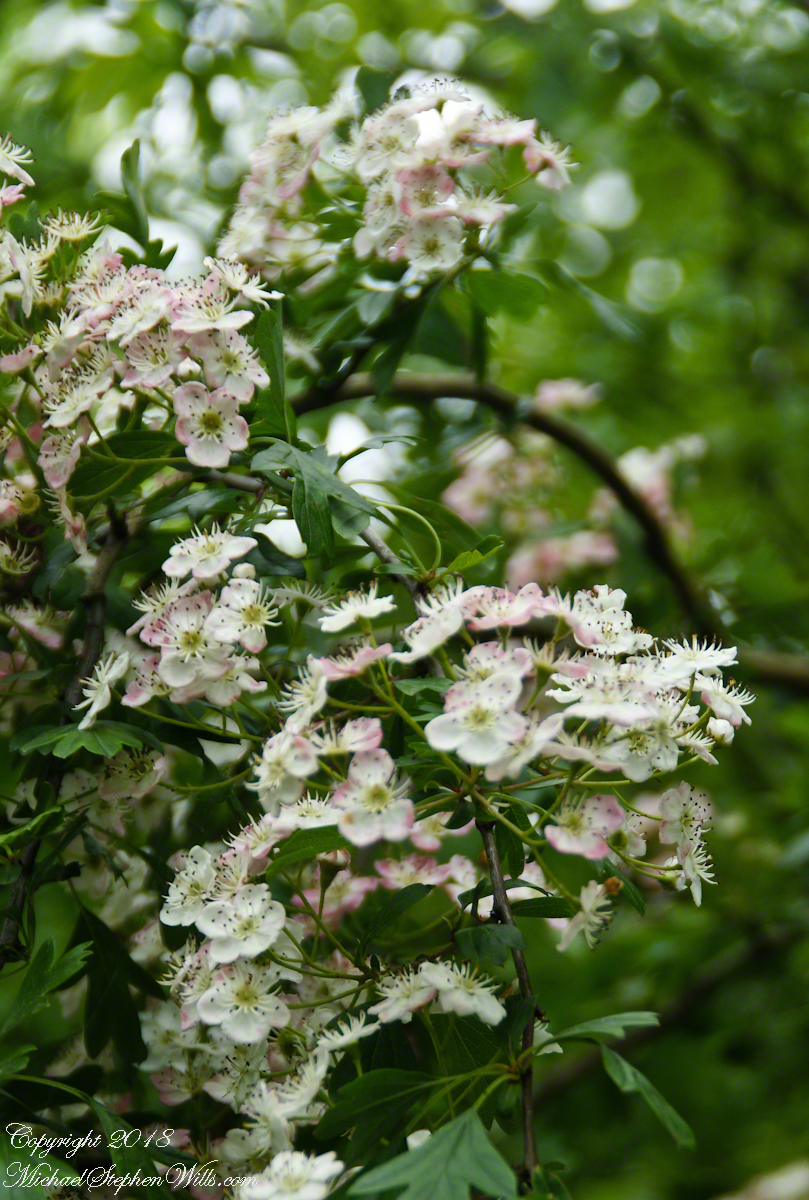
I originally published these blossoms as “wild rose”. It was my Facebook friends who pointed out these are hawthorn flowers. The key to identification was the shape of the leaves.
Blossoms of Hawthorne taken on the site of the former McCardle Home, Proleek Townland, County Louth, Ireland.
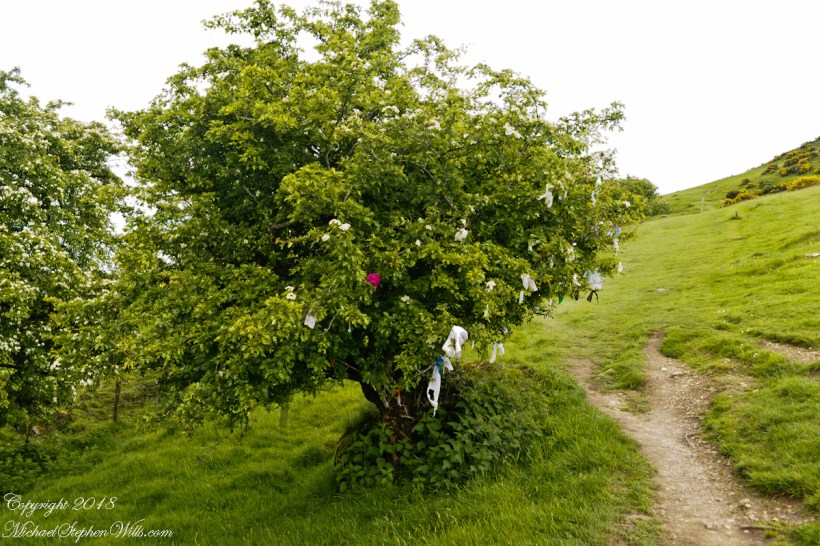
In correcting my mistake, I learned the young leaves of Hawthorn are excellent for salads. Wonder how the fairy folk, associated with single hawthorns (as in the following photograph from the Hill of Tara), react to picking leaves from their trees? I didn’t hear of the practice during our time in Ireland.
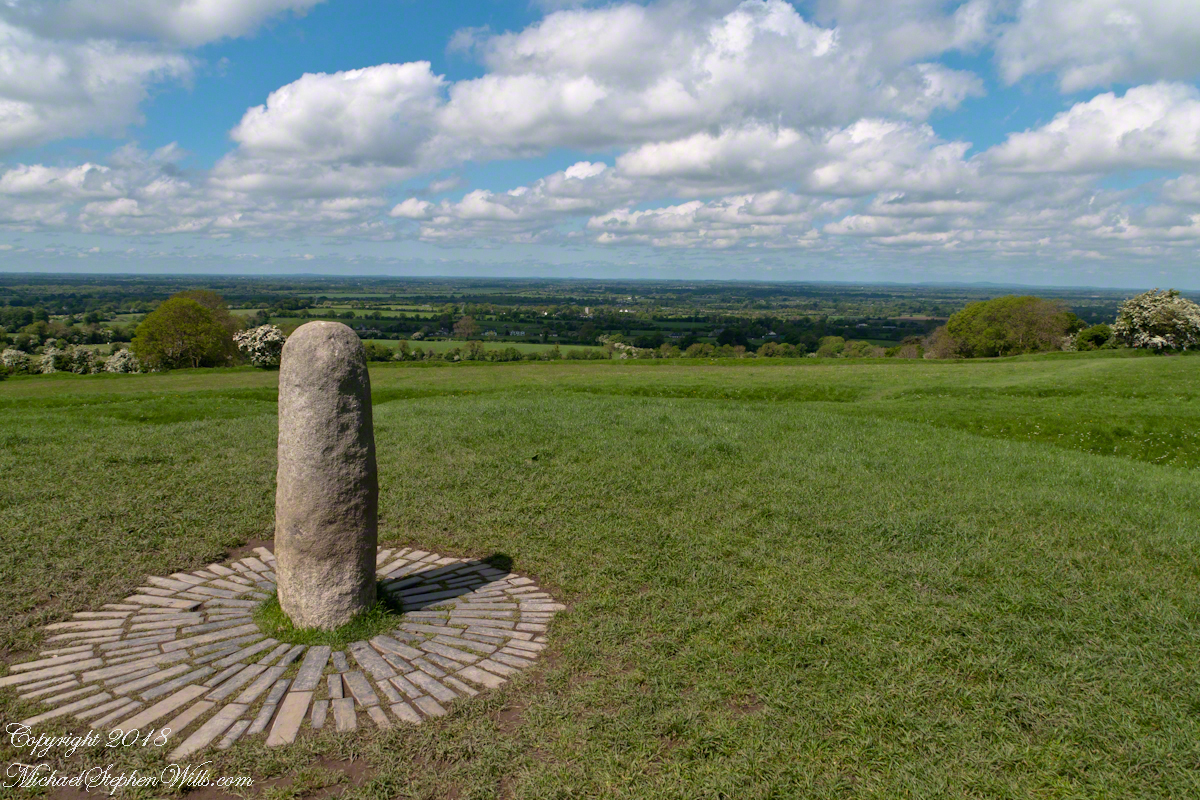
View northwest from Hill of Tara looking across County Meath with views of Counties Westmeath and Cavan. On the horizon, right, is Hag’s Mountain, (Irish: Sliabh na Caillí) , site of the Loughcrew Cairns. The standing stone is the “Stone of Destiny: (Irish: Lia Fáil), which served in coronation the coronation of the High Kings of Ireland. It stands on the Inauguration Mound (Irish: an Forrad) of Tara. This photograph was taken the morning of May 27, 2014 hours before the stone was vandalized, doused with green and red paint.
My mistake was understandable, in botany the hawthorn is in the same family as the rose. The flowers are similar, having five petals. The “haw” in hawthorn is from the Old English word for hedge, as is this linear standoff the tree lining the way up to the Loughcrew Cairns.
Reaching highest point of County Meath, Ireland means a steep path, not too long, to glorious views on all points plus Lough Craobh (Lake of the Branches).
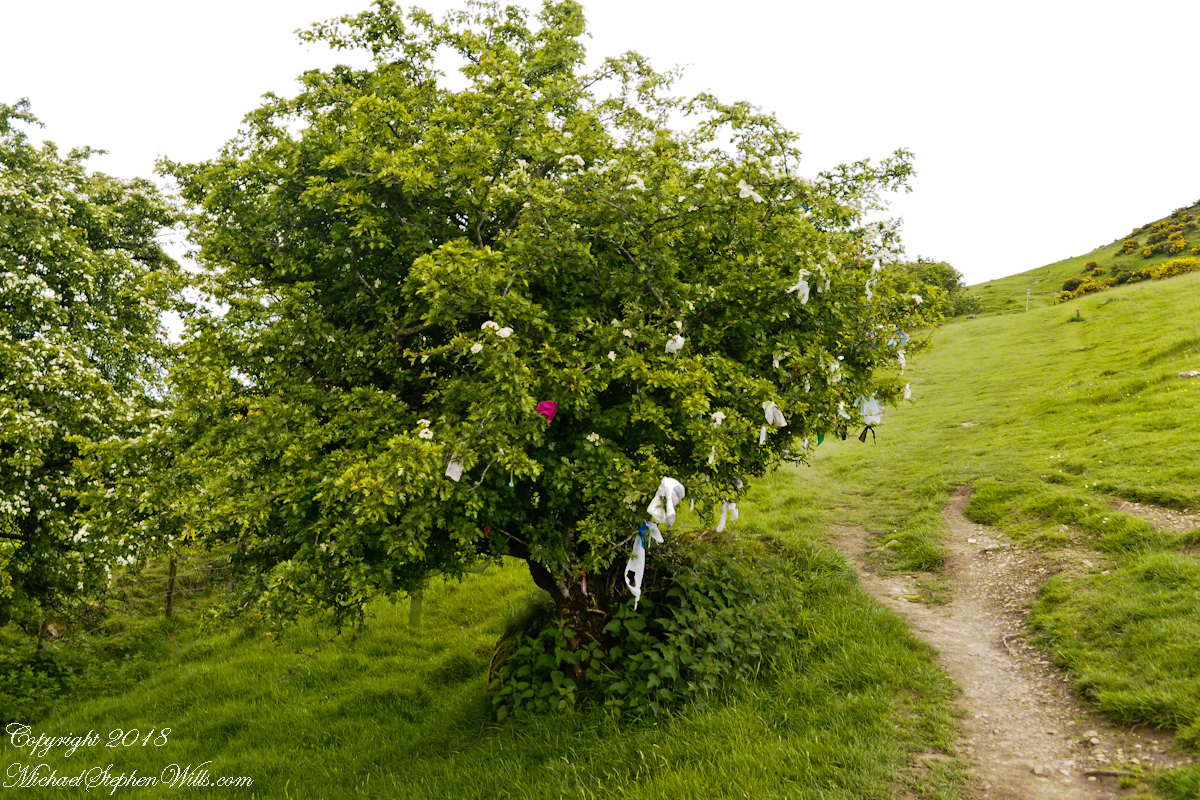
I read these votive offerings are made at Beltane, in which case these are fresh from placement May 1.
A hawthorn tree in bloom on May 27, 2016. Growing on the slope of Hag’s Mountain
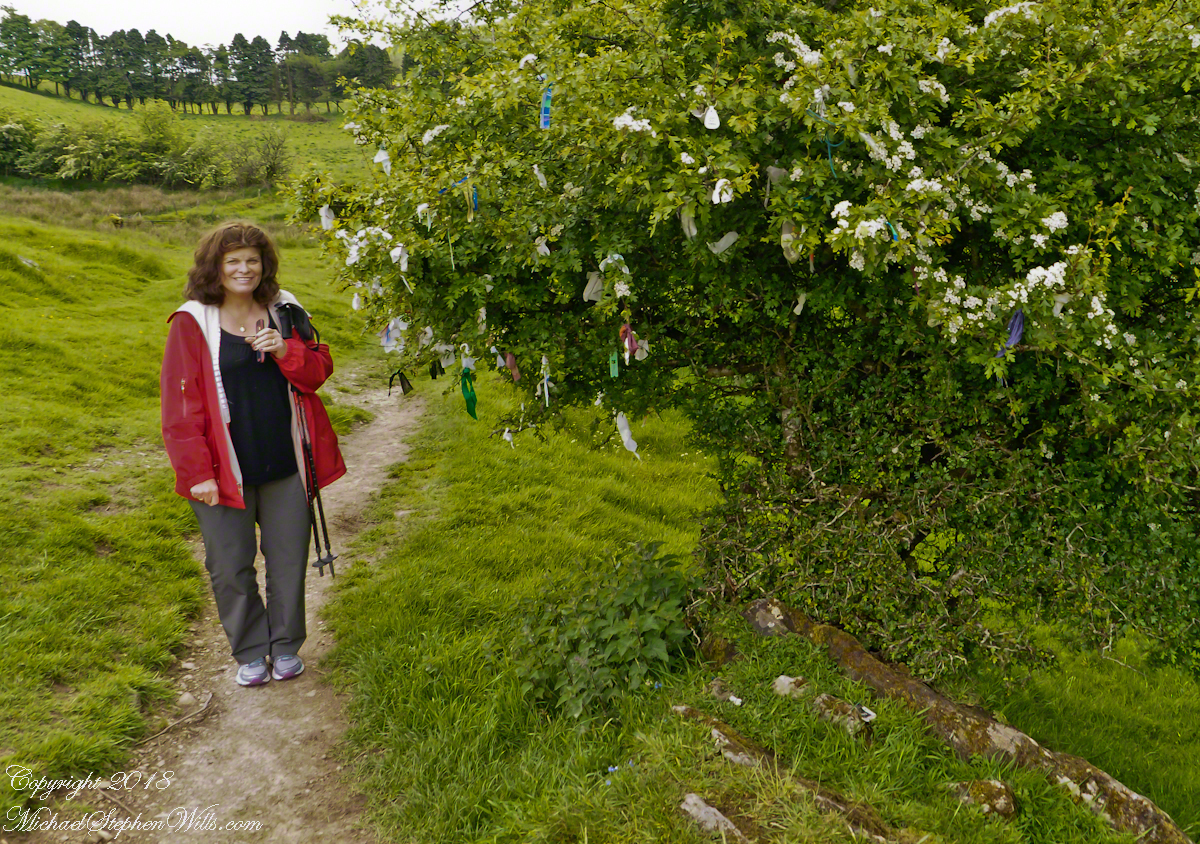
The following year Pam underwent double total knee replacements, never the less, she was great company for all our adventures on the island. Even this steep climb.
The steep path to Loughcrew passes a hawthorn covered with flowers and May offerings.
These views were our reward for reaching the top.
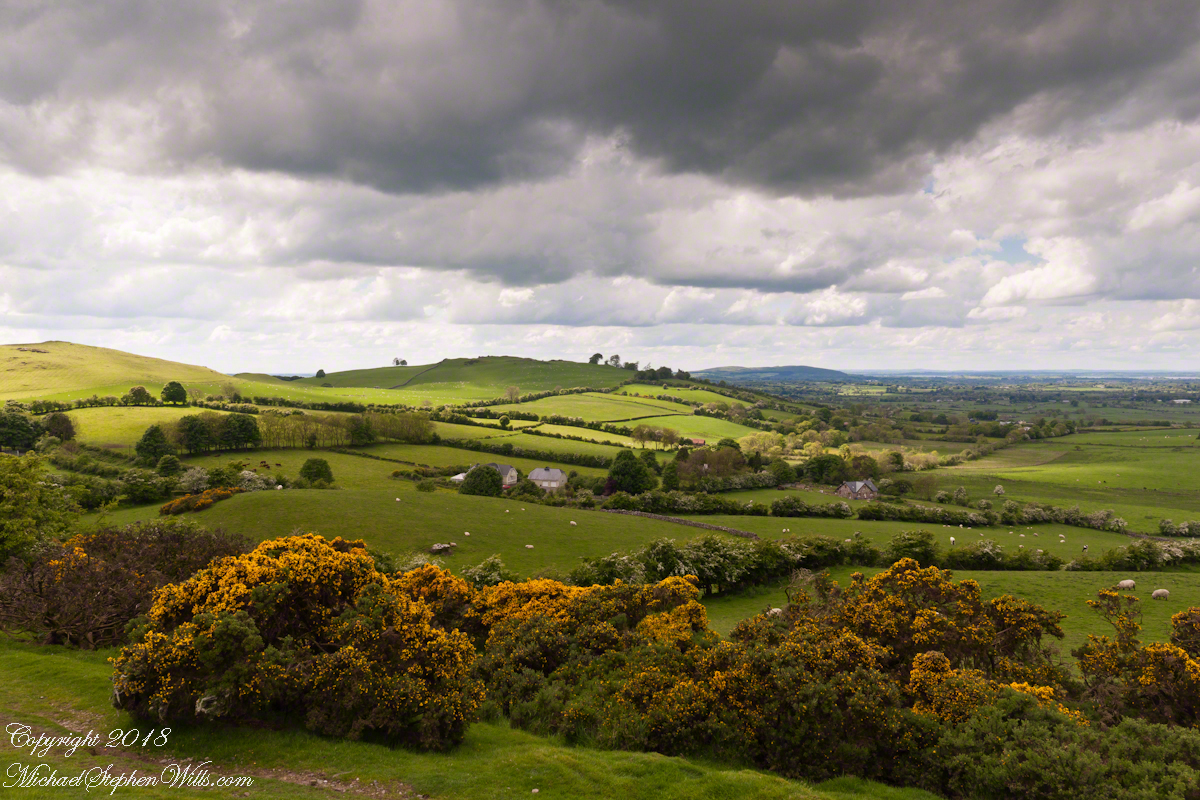
View from Loughcrew Cairns, “Hags Mountain”
The Emerald Isle, we fully understood this name.
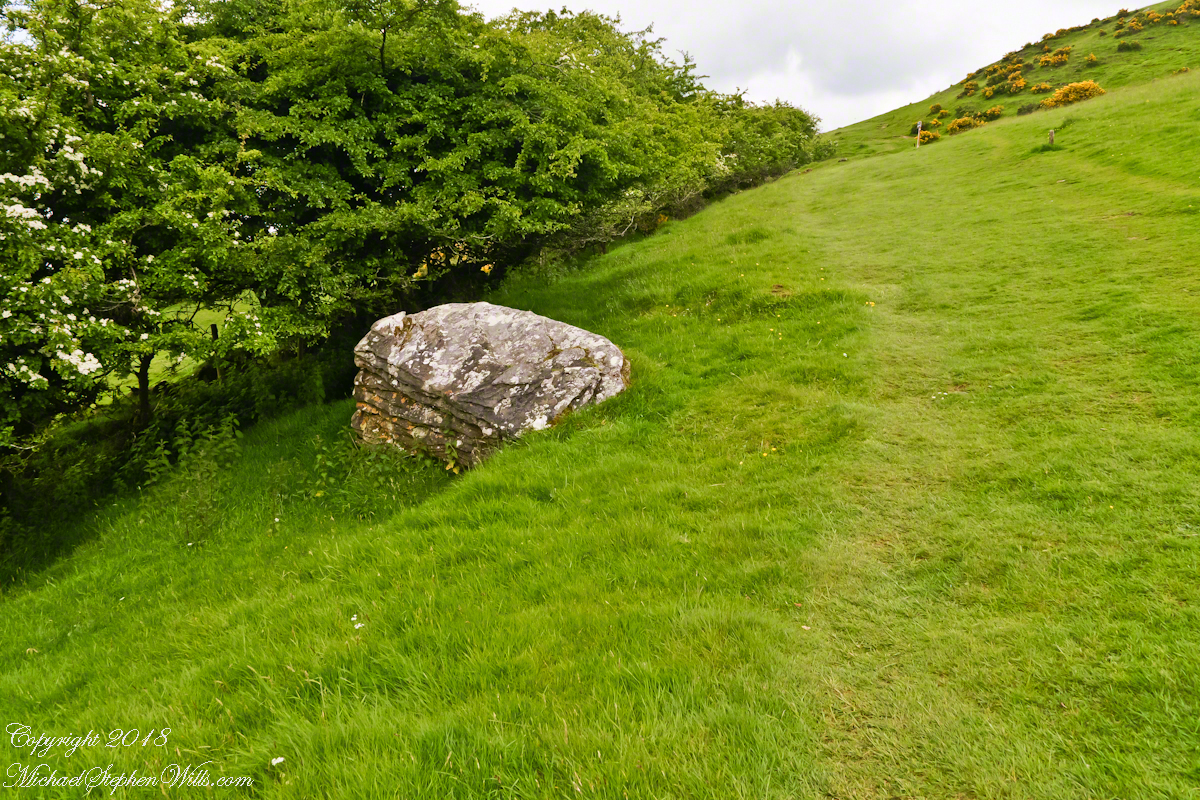
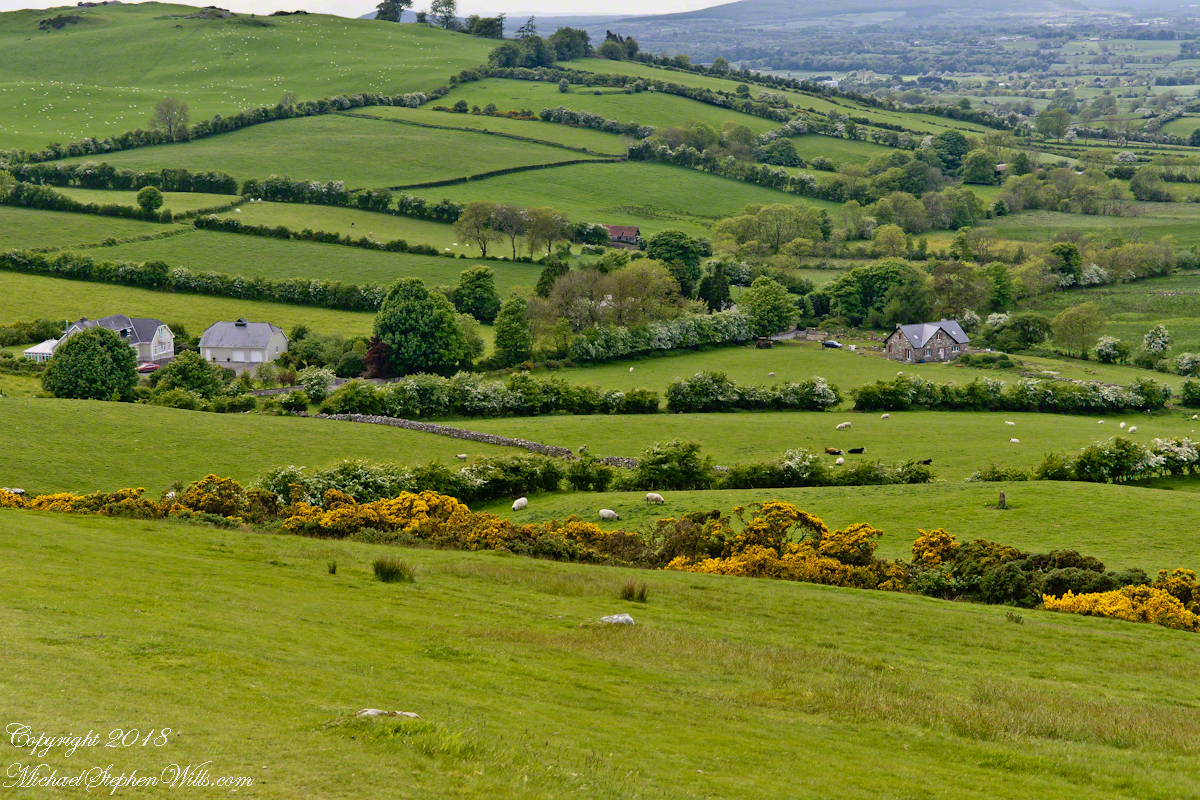
Loughcrew Megalithic Site, County Meath, Ireland. A solitary standing stone below the trail to the Loughcrew site surrounded by whin bush (gorse) and hawthorn hedge rows. A fieldstone fence, farmhouses, a patchwork quilt of fields completes the view.
The Greek name for the Hawthorn species is formed from two words meaning “strength” and “sharp”, referring to the thorny branches.
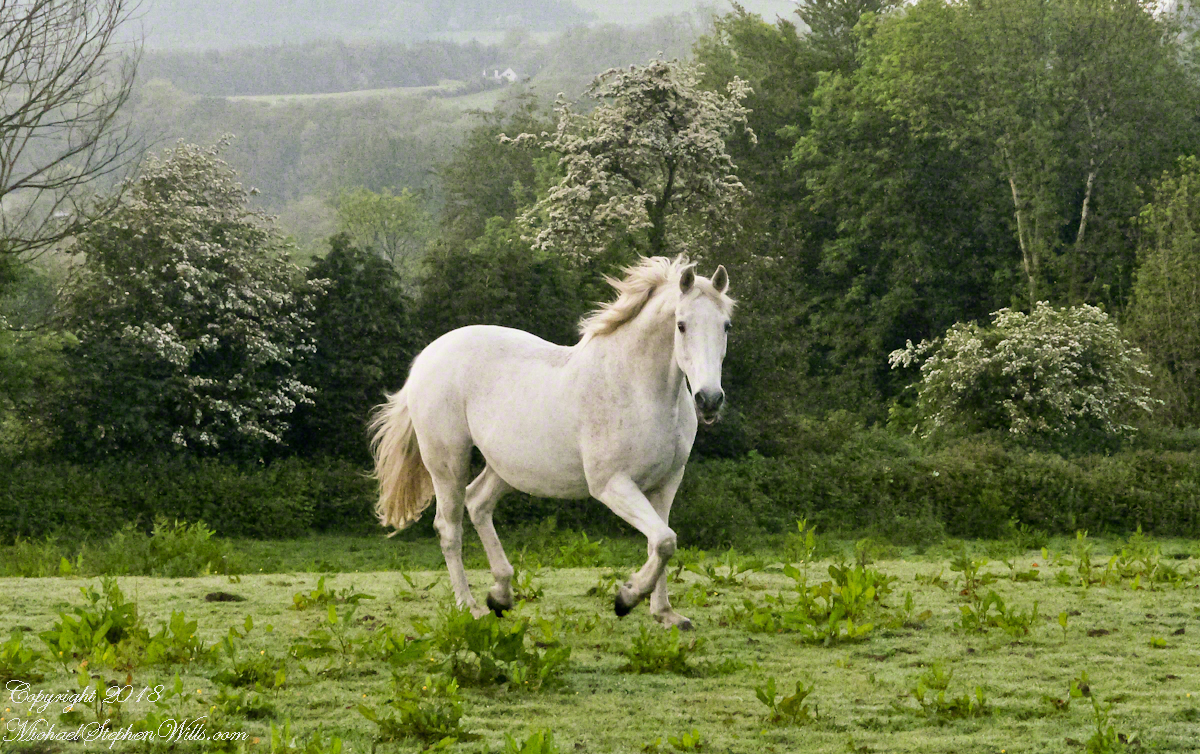
For County Cork we stayed with Marantha House B&B. Our day of arrival, that evening, I visited Charlemagne and fed him an apple, saved from dinner. We learned from our hosts, Olwen and Douglas Venn, he is a retired show horse they rescued. The following morning I visited Charlemagne again with an apple and my camera. As I walked up, starting from the far end of his field, Charlemagne rewarded me with a series of astounding poses, trotting toward me in fine form. The morning mists, hawthorn in bloom, distant hills came together for this memory.
We marveled at the hawthorn hedges in field after field. I first notice them from the World Heritage Site, Newgrange (Brú na Bóinne, “Palace of the Boyne”). Here is one on the Dingle Peninsula, on the other side of the island.
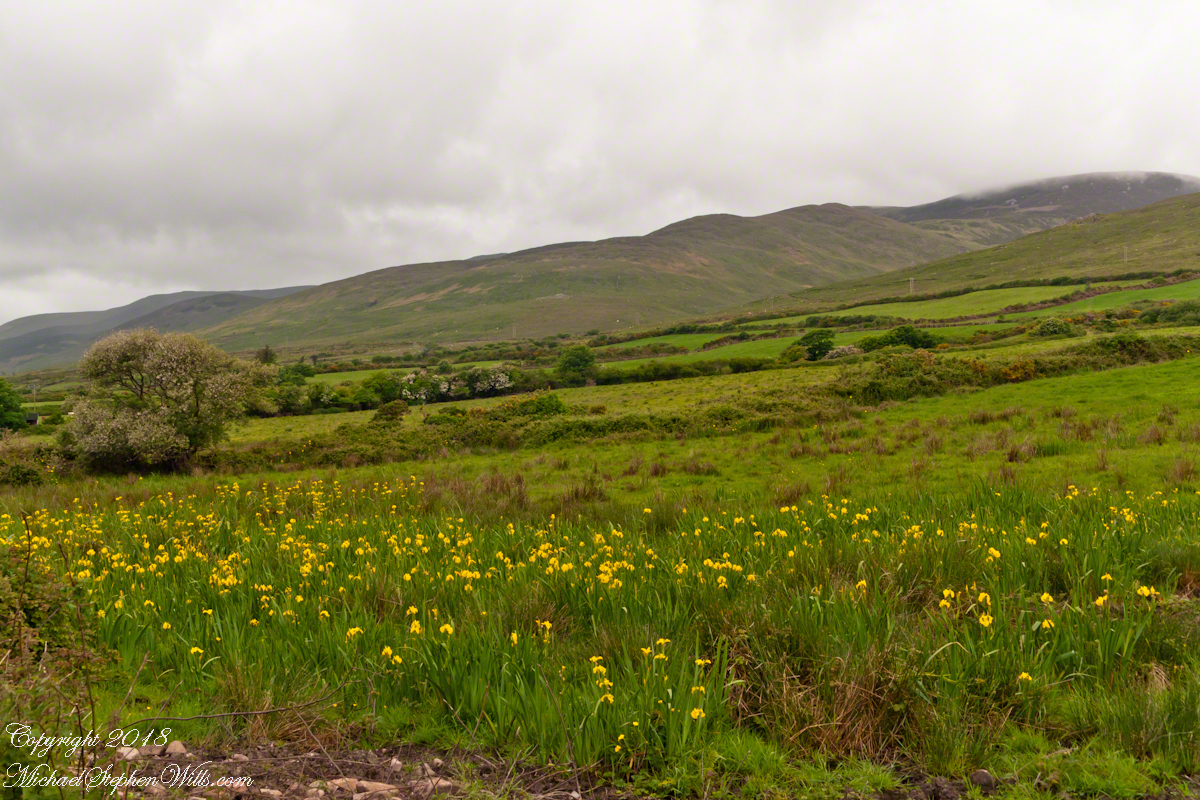
A roadside field of yellow Iris flowers with flowering Hawthorn and Whin Bush in the windbreaks. Looking northwest toward Killeenagh and Caherpierce on the R561 between Lack West and Inch. Dingle Peninsula, County Kerry, Ireland.
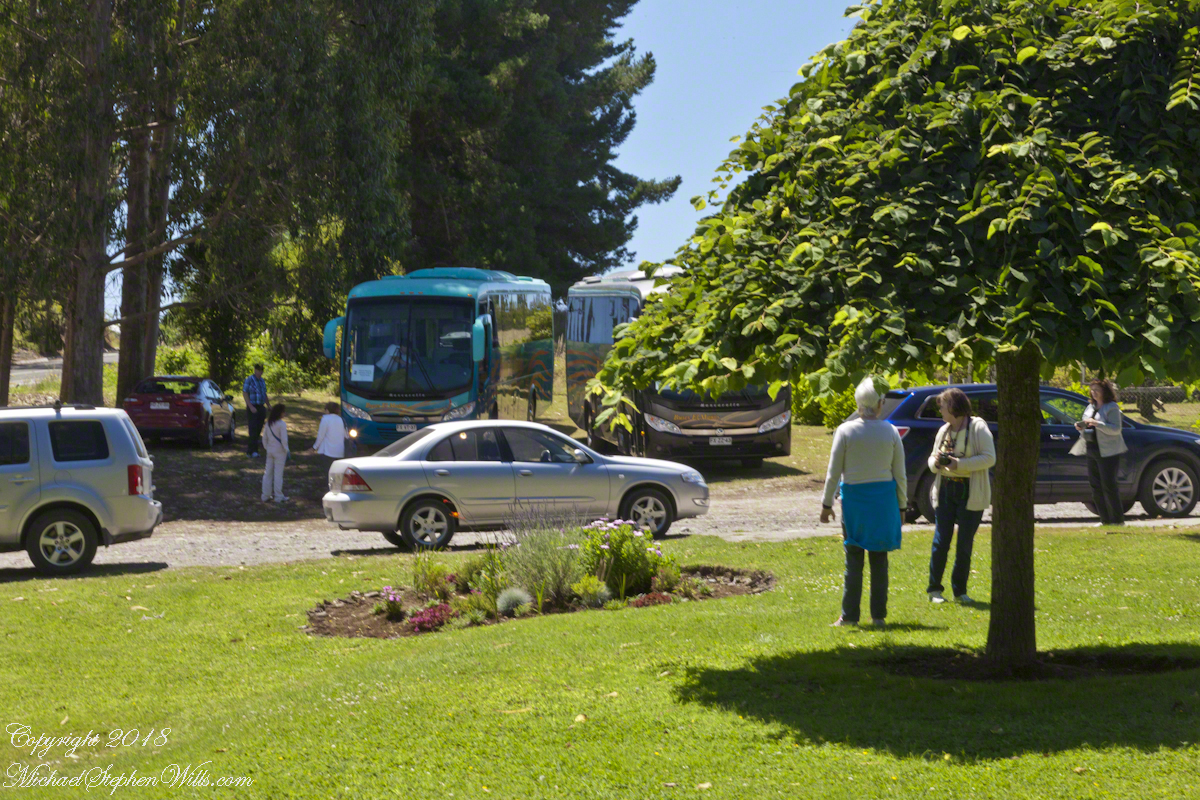
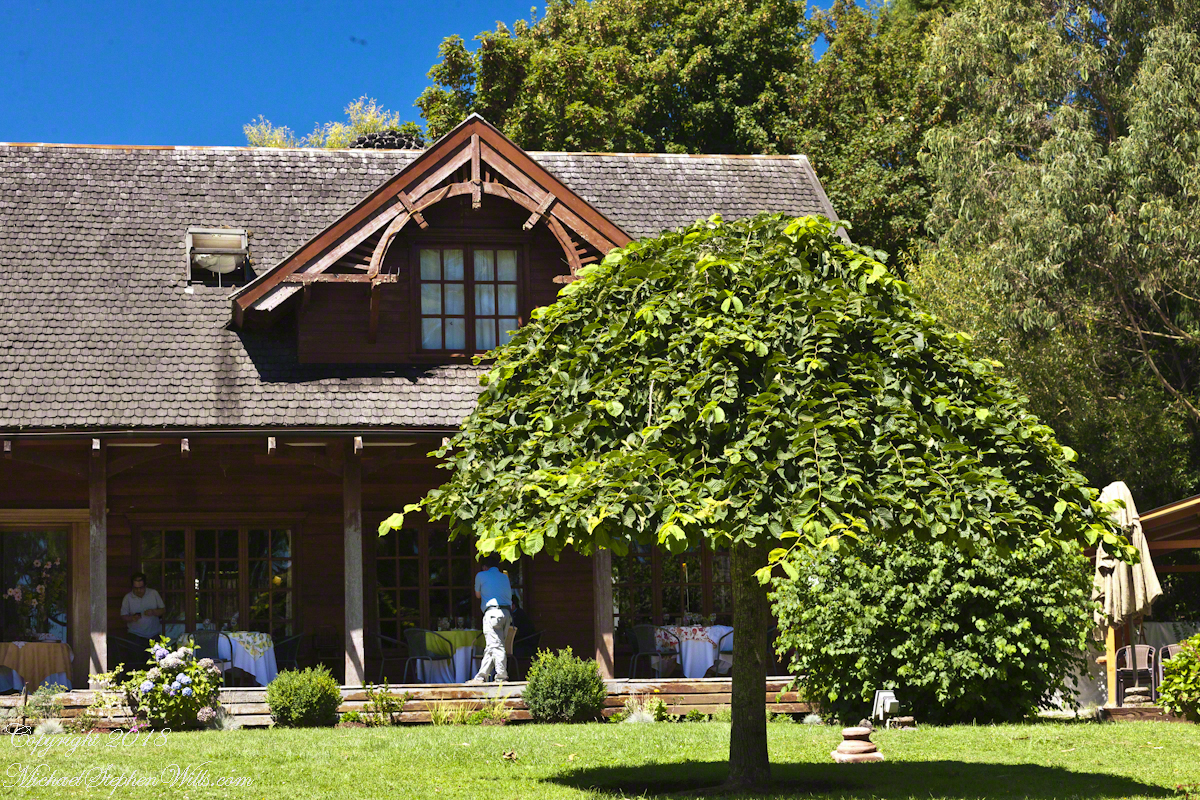
Our tour of Chilean Lake Country and Volcanoes began from the harbor of Puerto Montt, in the tender we boarded from the ship Regatta. This is a small boat carried in the hold and deployed to transport passengers to ports without docking facilities. Once on land, we met our guide for the day and boarded the bus.
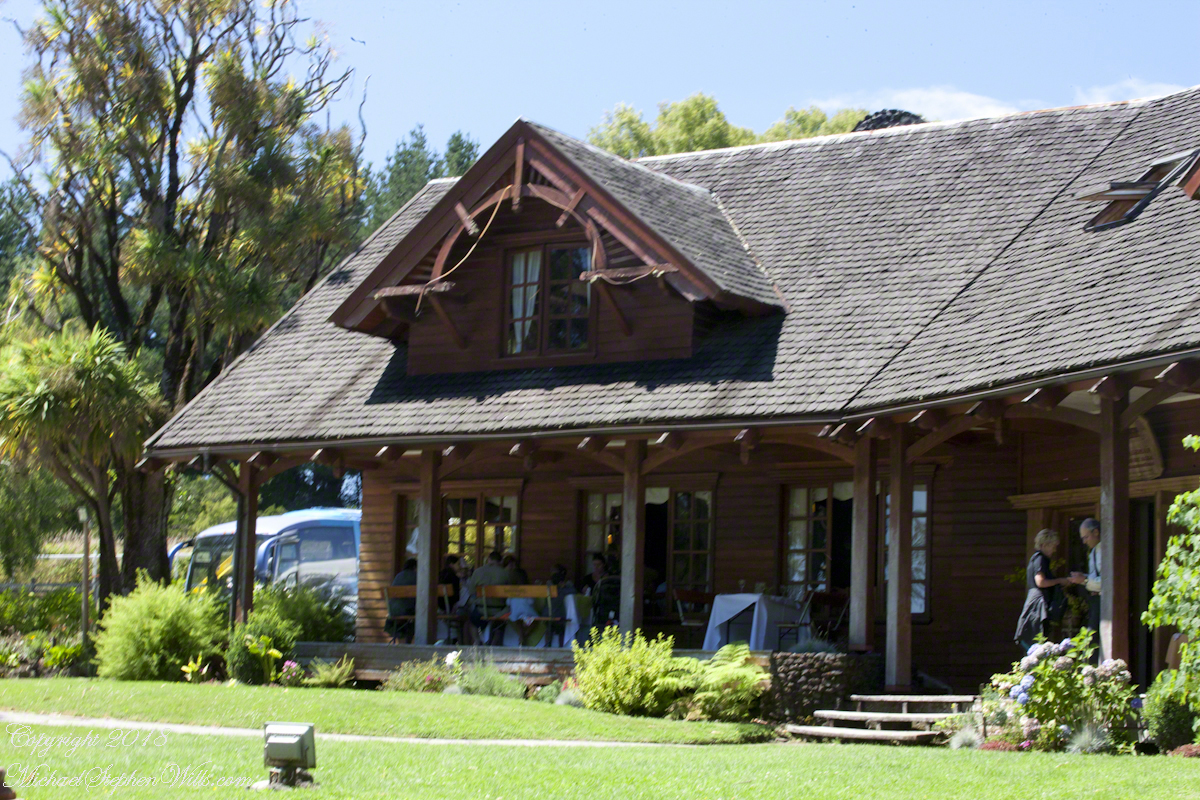
I have yet to post about our first stop, Puerto Varas, a 20 minute ride and our first exposure to the influence of 19th Century German settlers seen, from our bus windows, in the architecture. Today’s post is about our lunch stop, a restaurant half way between Puerto Varas and Ensenada.
Click any photograph for a larger view.
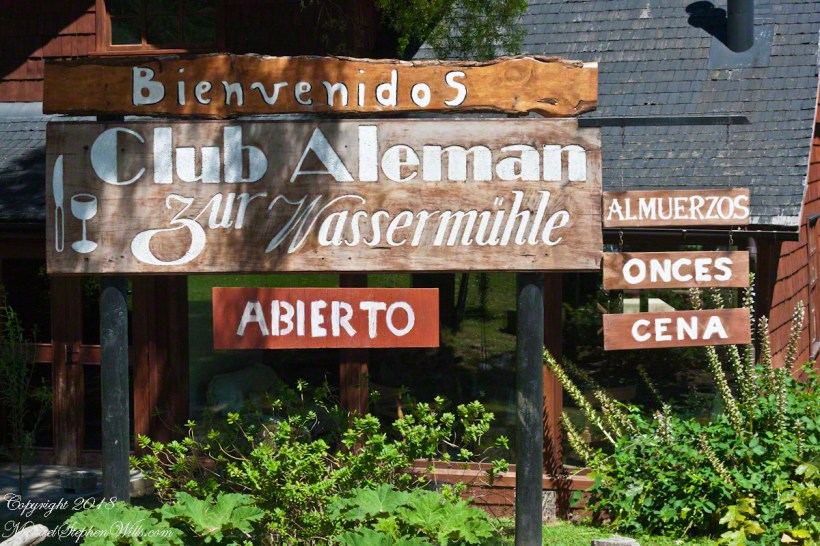
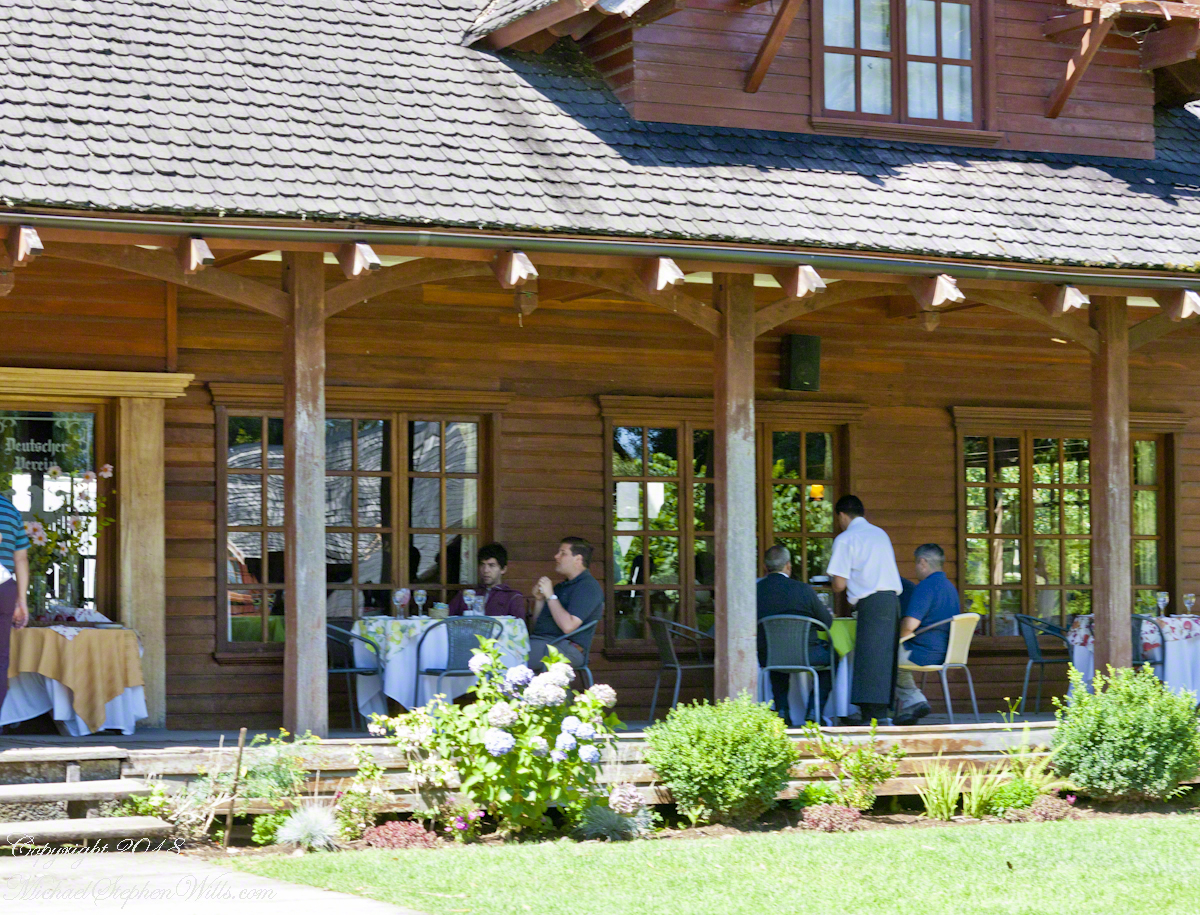
Club Aleman Molino de Agua
Club Alemans (German Clubs) are found in Puerto Montt, Puerto Varas, and here. Each is a gathering place for locals to celebrate their heritage, a feeling somewhat diluted over time to where, now, they speak of themselves as “Chileans of German extraction” and the great majority speak Spanish at home and are exposed to the German language as school courses.
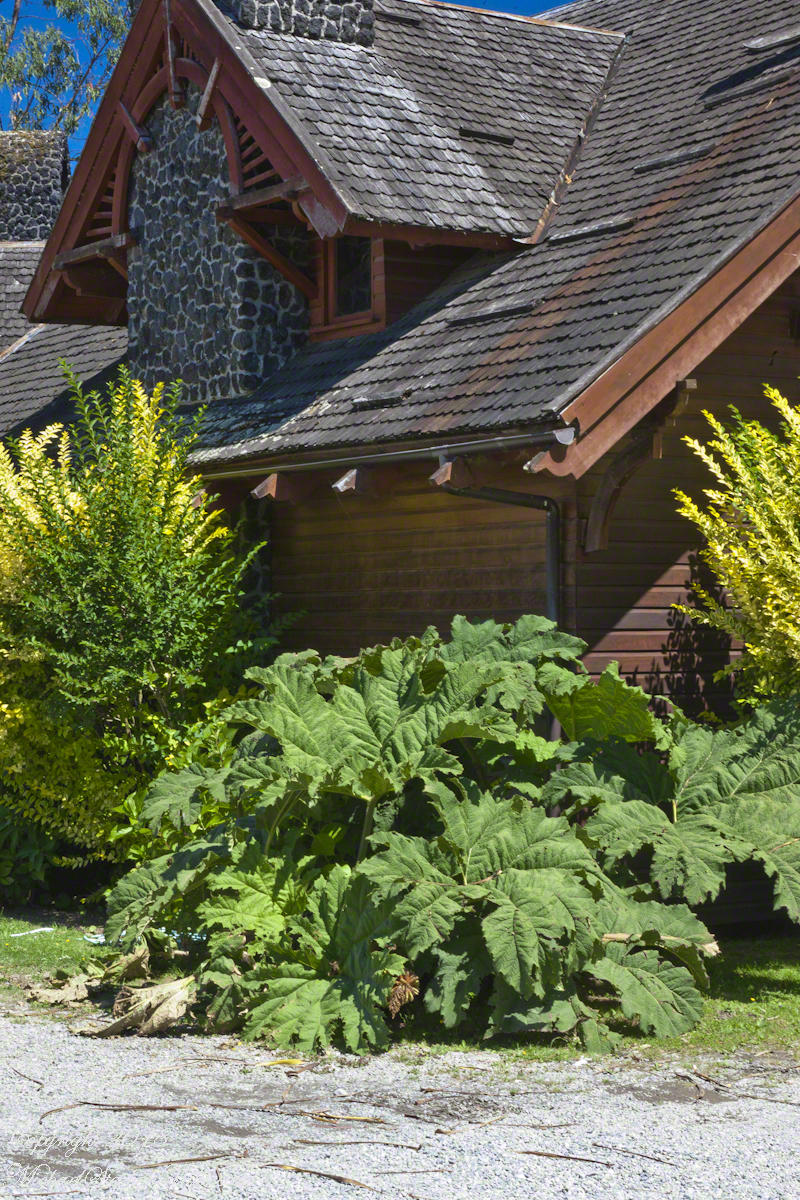
For past generations, the link was stronger, German was the language spoken at home and there was homesickness for the cultural traditions left behind and somewhat alleviated by the similarity of Chilean Lake Country to foothills of the Alps. Once established, the settlers duplicated the architectural features using local wood. Notably, many houses are clad with shingles from the Alerce (also known as Fitzroya cupressoides), a type of Cypress native to southern Chile and Argentina. The roof shingles of Club Aleman, seen below, were of this type.
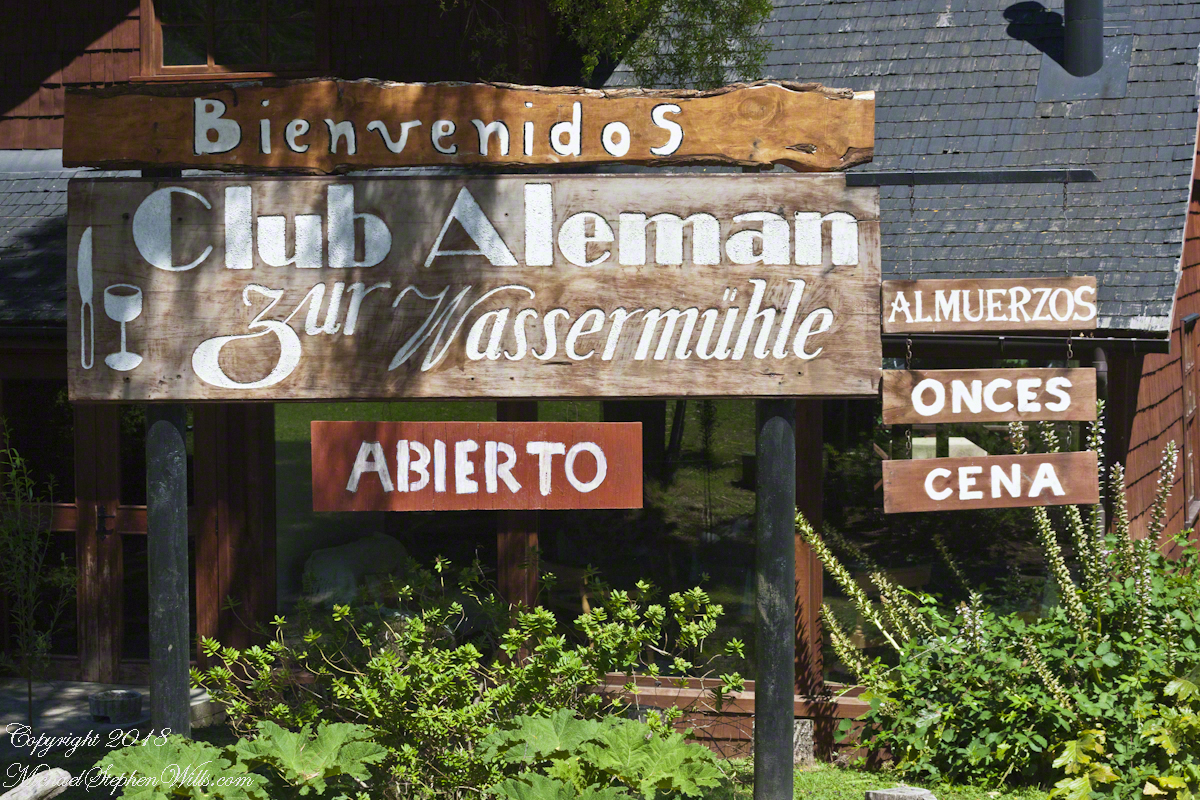
The sign translates to “German Club: to the watermill” from the two languages used: Spanish and German. The sign reads “lunch, dinner, late night.” “Onces means Late Night.
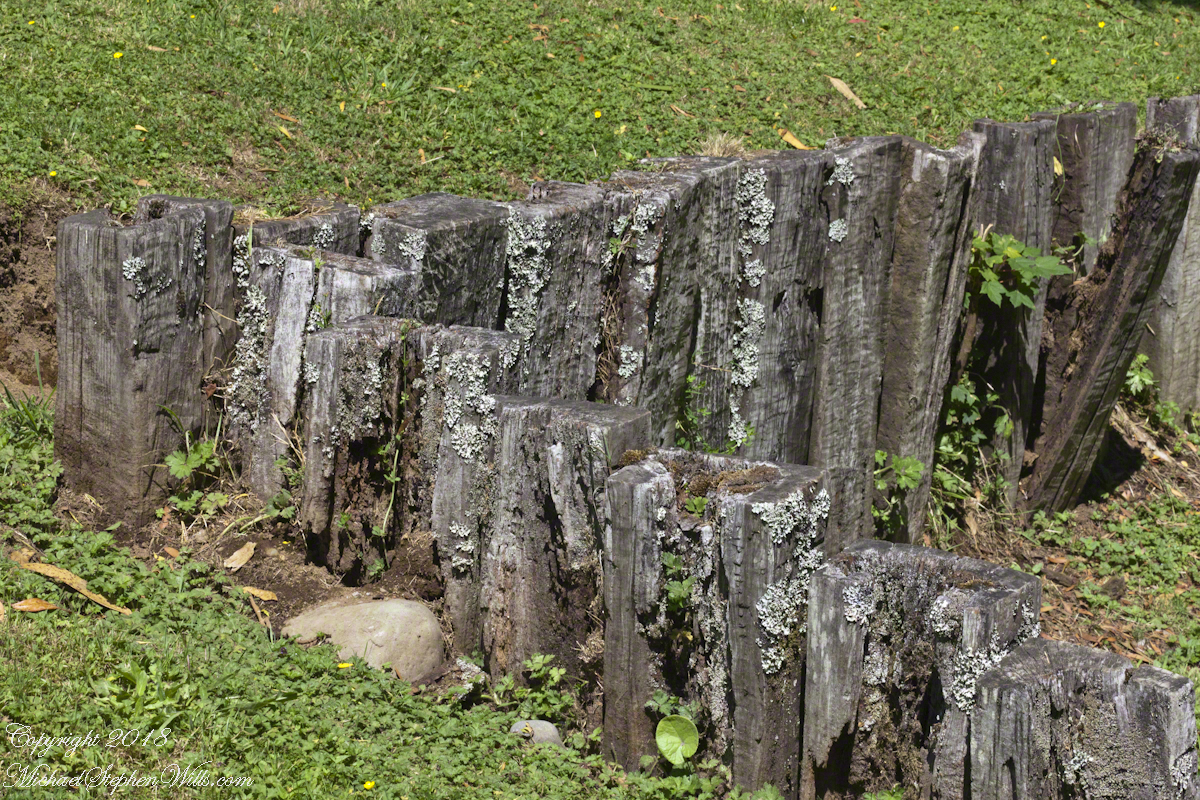
The “watermill” is a nostalgic, sentimental reference echoed in architectural and decorative details throughout the property, such as this series of posted set to suggest a device used to control water flow. There is no water flowing through the property.
Our lunch was excellent Chilean fare, but I don’t recall what it was, exactly and I didn’t photograph the interior. For us, an plus of using these cruise tours is all the details are taken care of, releasing us to maximize our enjoyment of the surroundings.
A dark side to these settings was the attraction the area had to un-remorseful Nazis fleeing war crime prosecution. In Chile and Argentina they found refuge in the 1940’s, 50’s and were supporters of the Pinochet dictatorship. None of this history was presented by our excellent guide, nor was it reflected in these rustic charms.
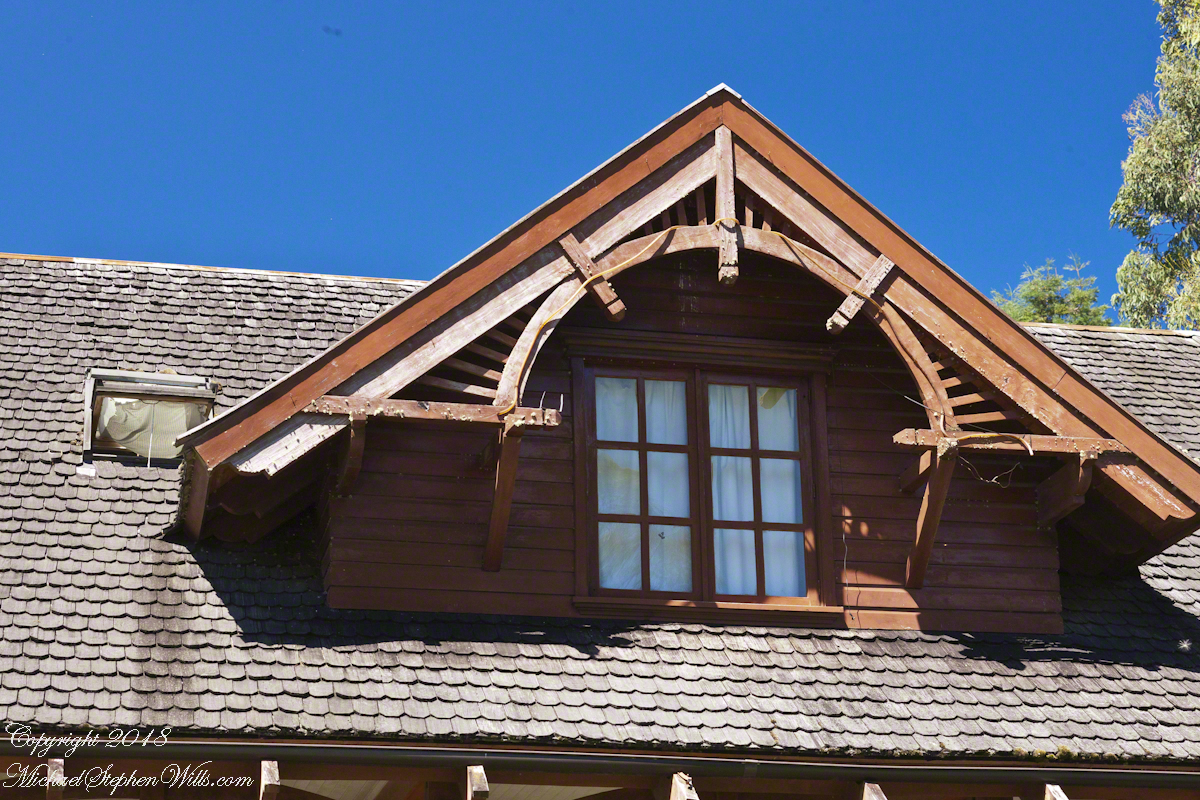
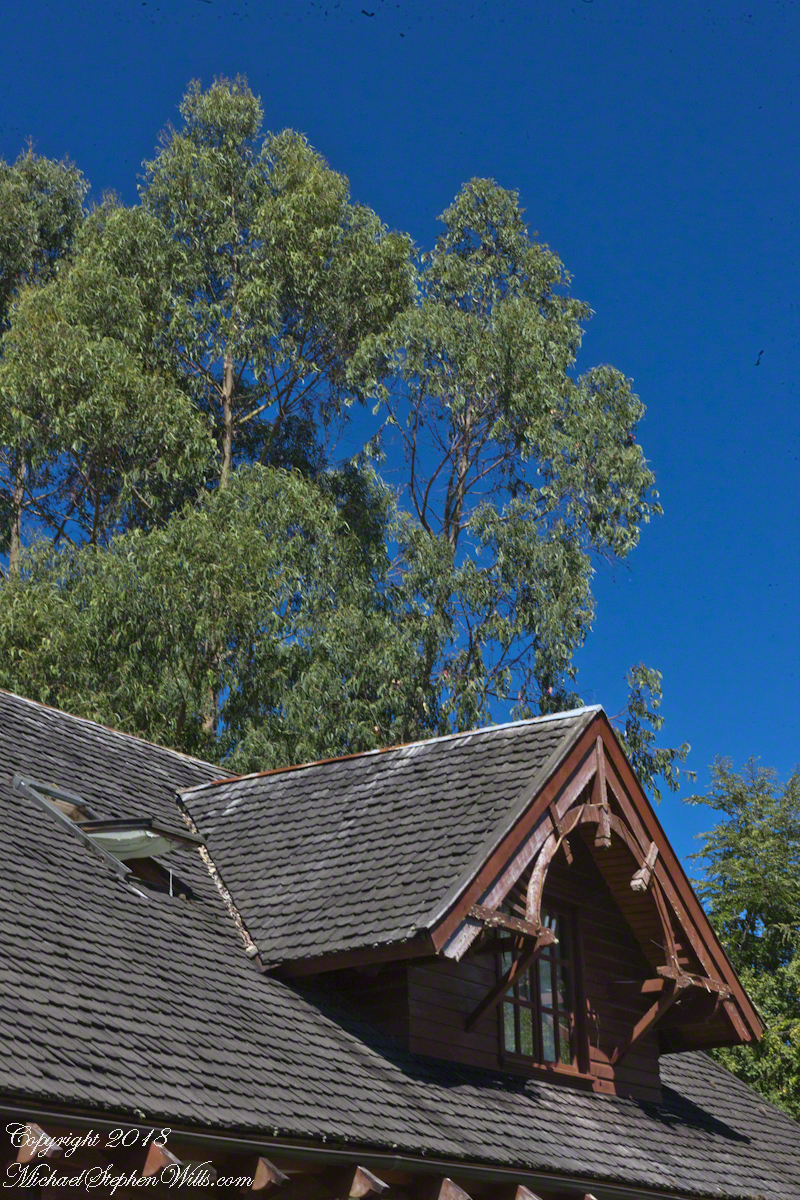
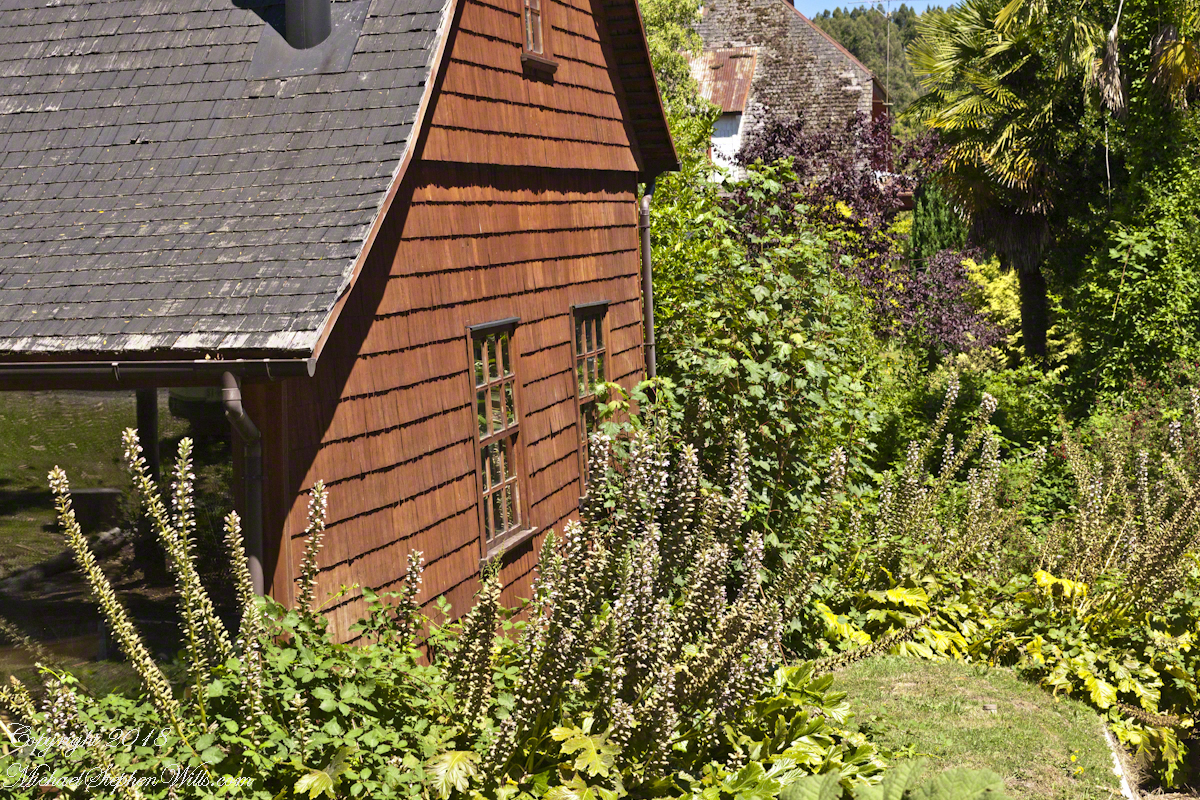
I was fascinated, for some reason, by the two dormers of the main building root with the wheel-like decoration.
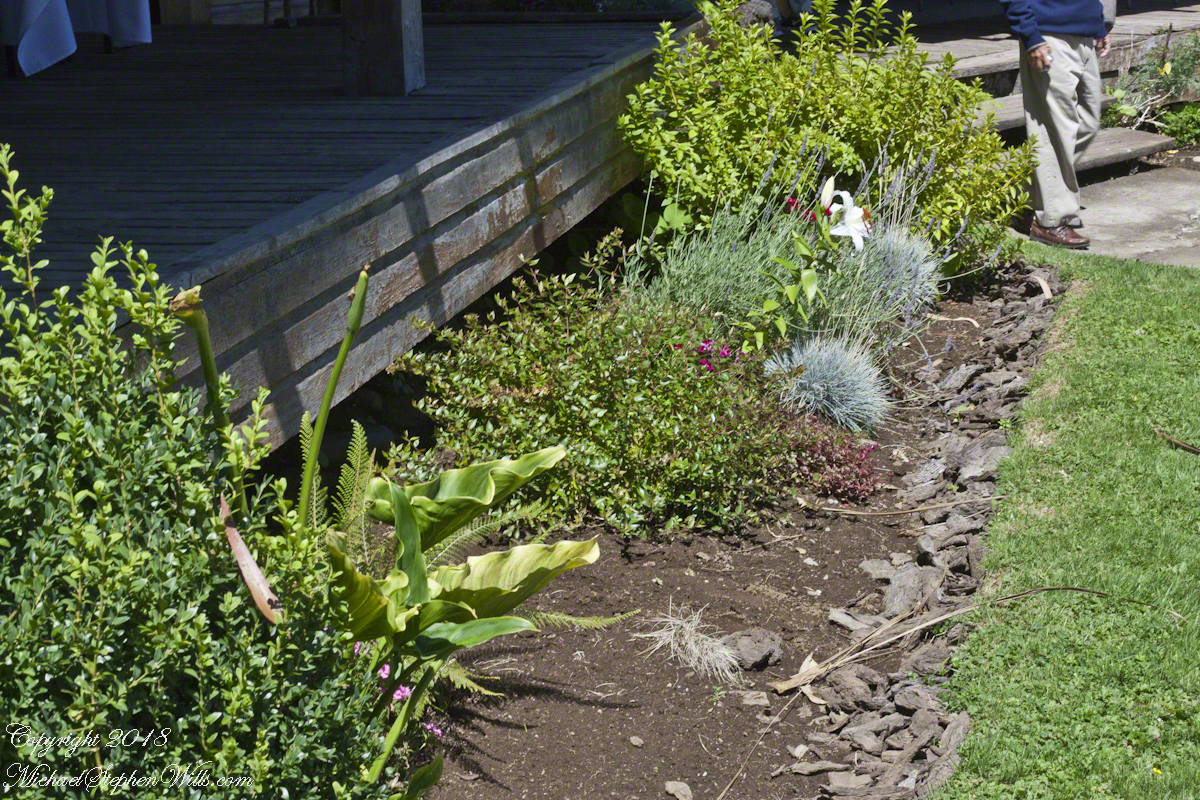
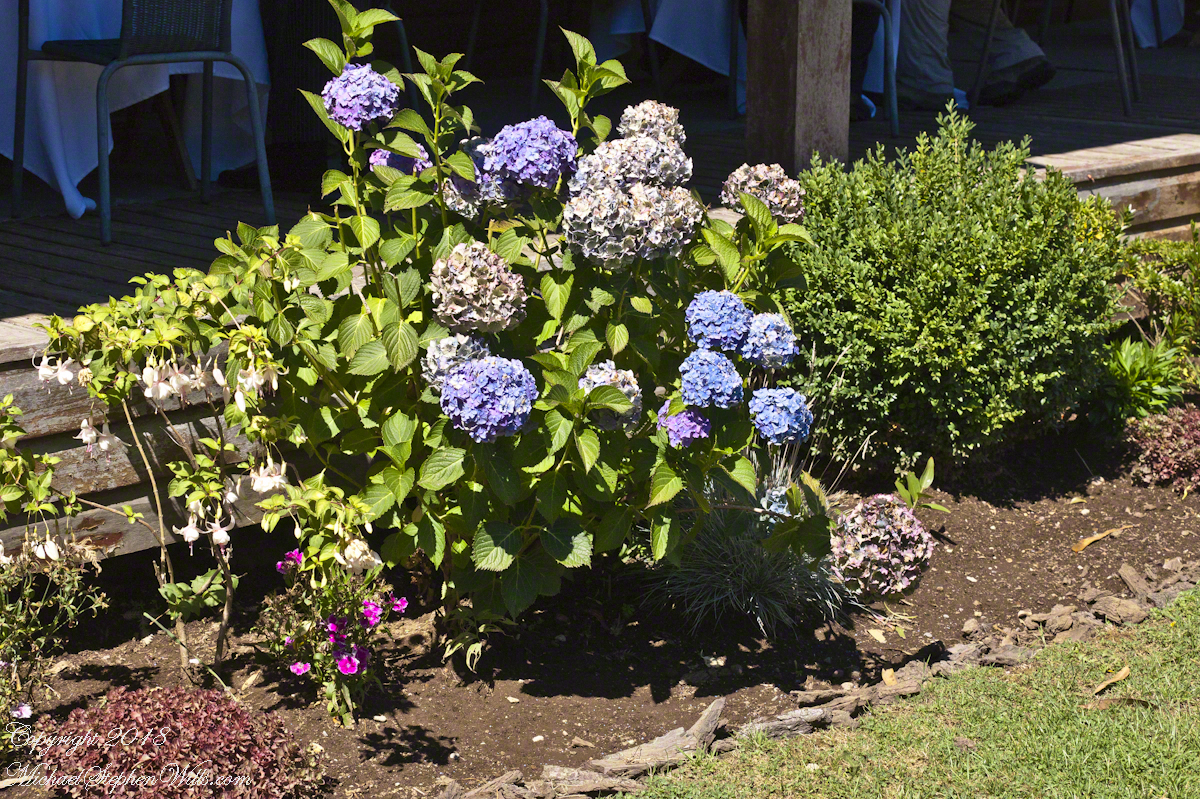
The Garden
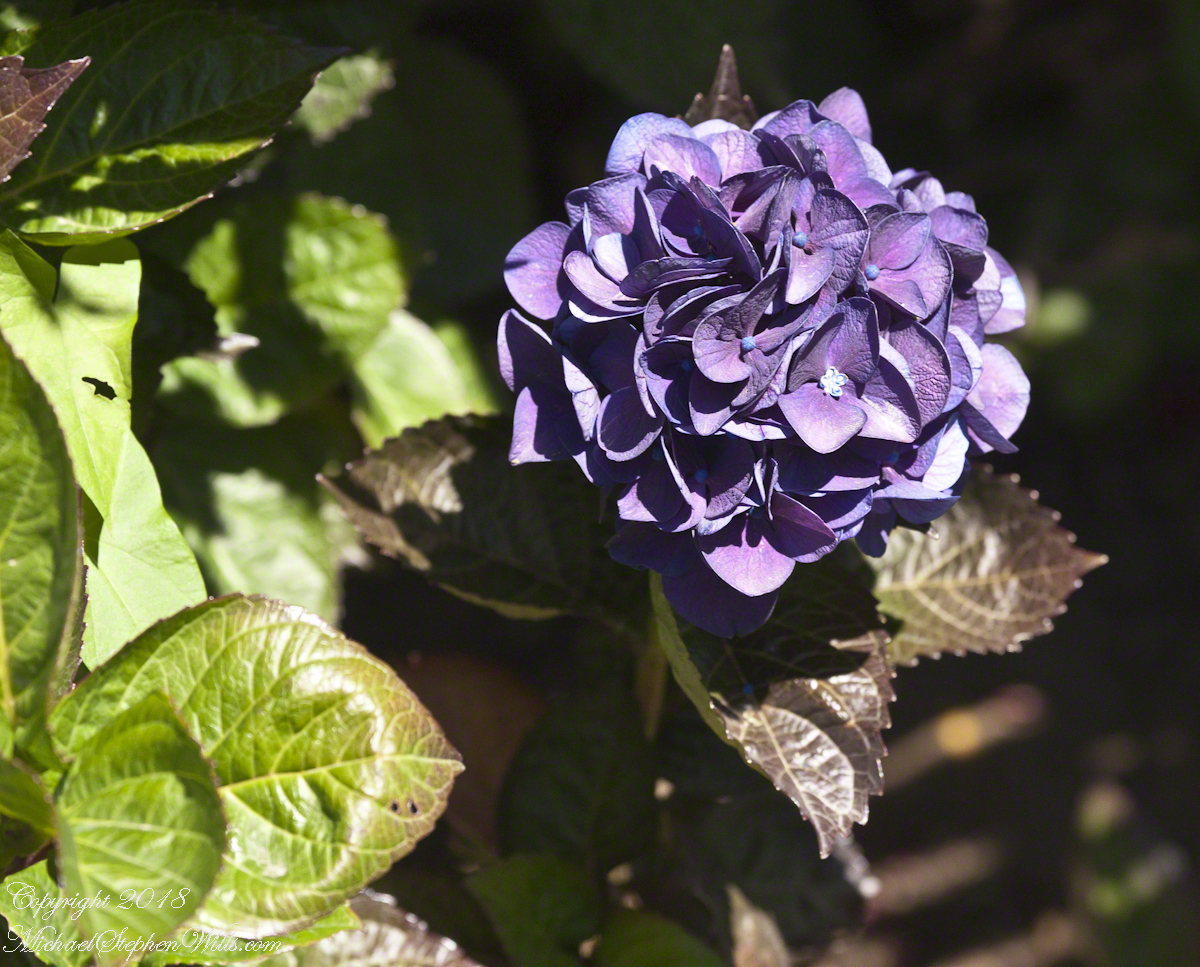
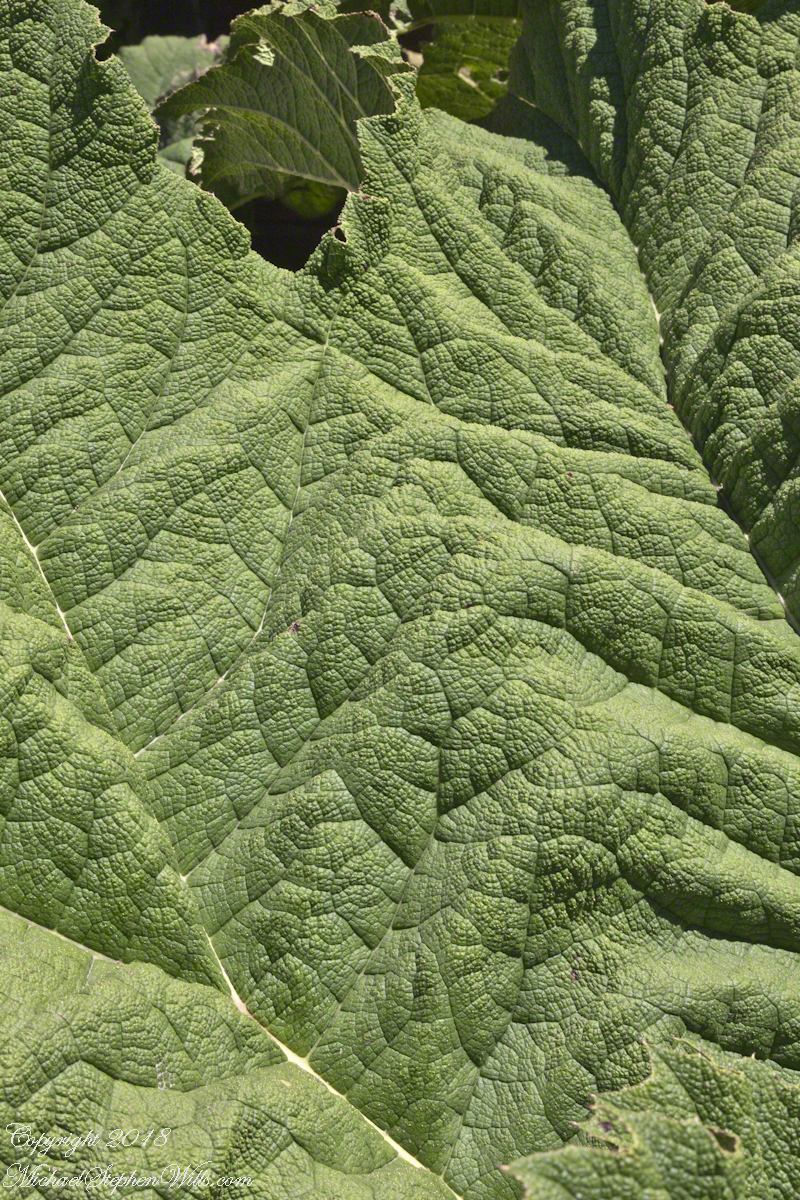
A native plant encountered frequently in our travels, growing wild, and here.Close-up of the shrub growing to either side of those large leaves.
Copyright 2022 All Rights Reserved Michael Stephen Wills
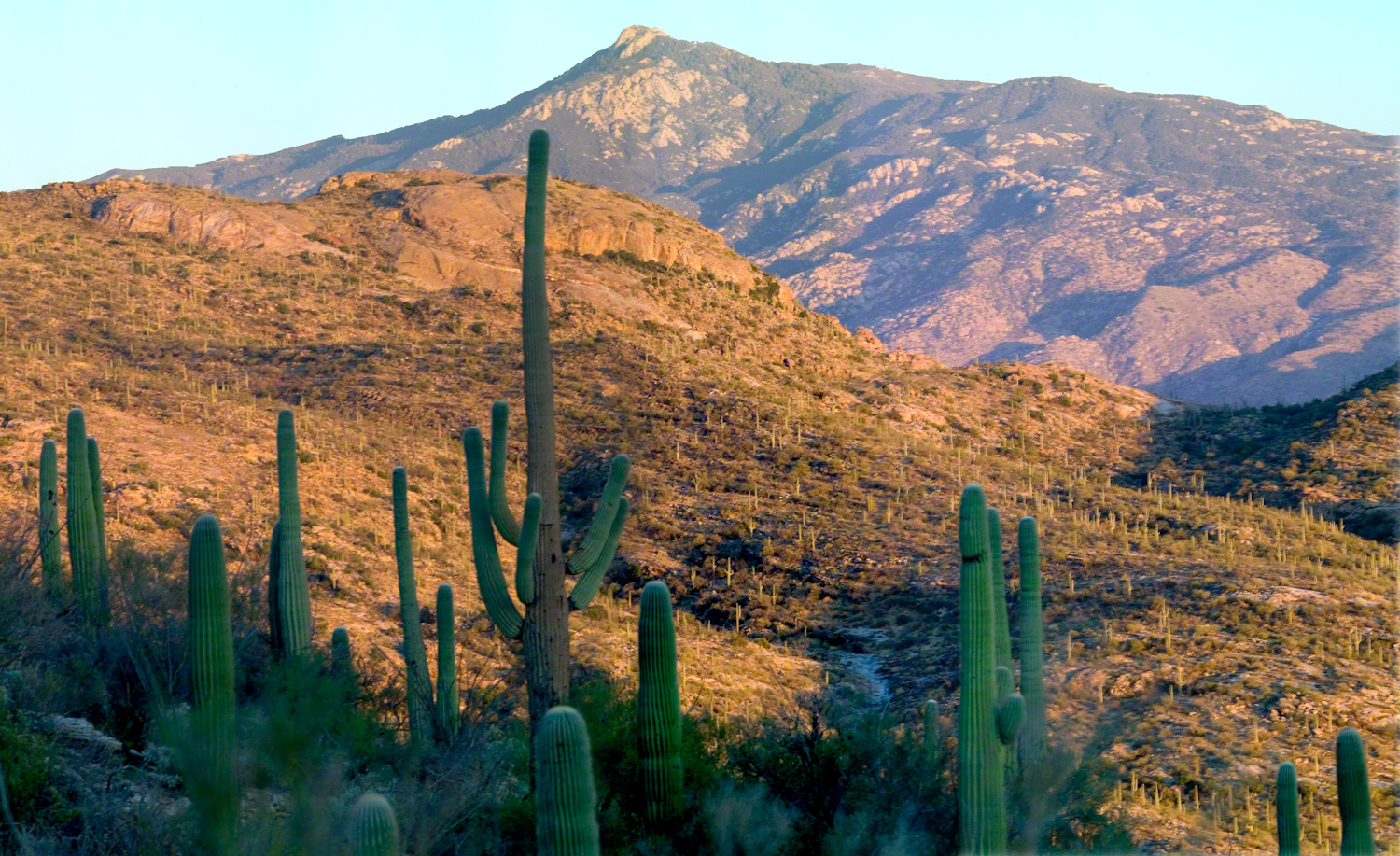
The Rincons are one of 42 Sky Mountain islands isolated from each other by the gradual warming and drying climate changes since the last ice age, 10,000 years ago. While this marvelous environment of oak and pine forests only accessible with much effort on foot, it is literally visible from every point of the Tucson valley and million human inhabitants.
Rincon is Spanish for corner, the mountains are called that from their shape enclosing a space on the west, northwest until recently used for ranching and is now falling into use for tract housing. The mountains themselves are reserved as wilderness, parts in the Saguaro National Park and the Coronado National Forest.
In the past 44 years I was lucky enough to visit the Rincon Wilderness interior three times, shouldering different style backpacks onto the mountain, walking different boots. The first, during college the 1970’s, a party of six left from the end of Speedway, up the Douglas Springs trail. The climb was an exercise in desert survival that several friendships did not survive, replace by new friends met on Mica Mountain. I have no photographs from that experience, only memories and the backpack.
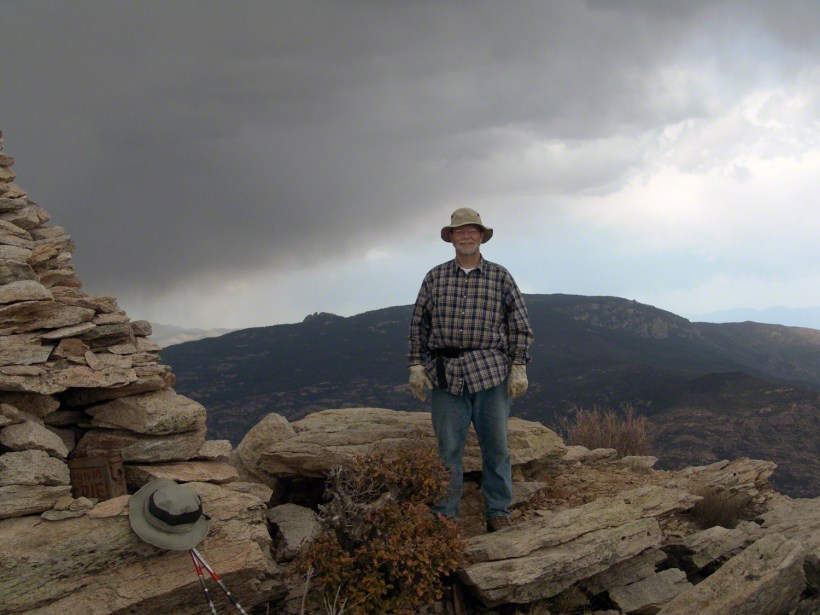
Reconnecting with Arizona in 2004, thirty one years after that first experience, I took no chances. My first attempt on Rincon Peak was a success. Risk and effort were reduced, not eliminated by hiring a guide for the four day trip. We made it to Rincon Peak via the Turkey Creek Trail out of Happy Valley, climbing a mountain buttress, views ever widening and lengthening.
These are some photographs from that experience and a landscape photograph of the peak at sunset, taken the following year.
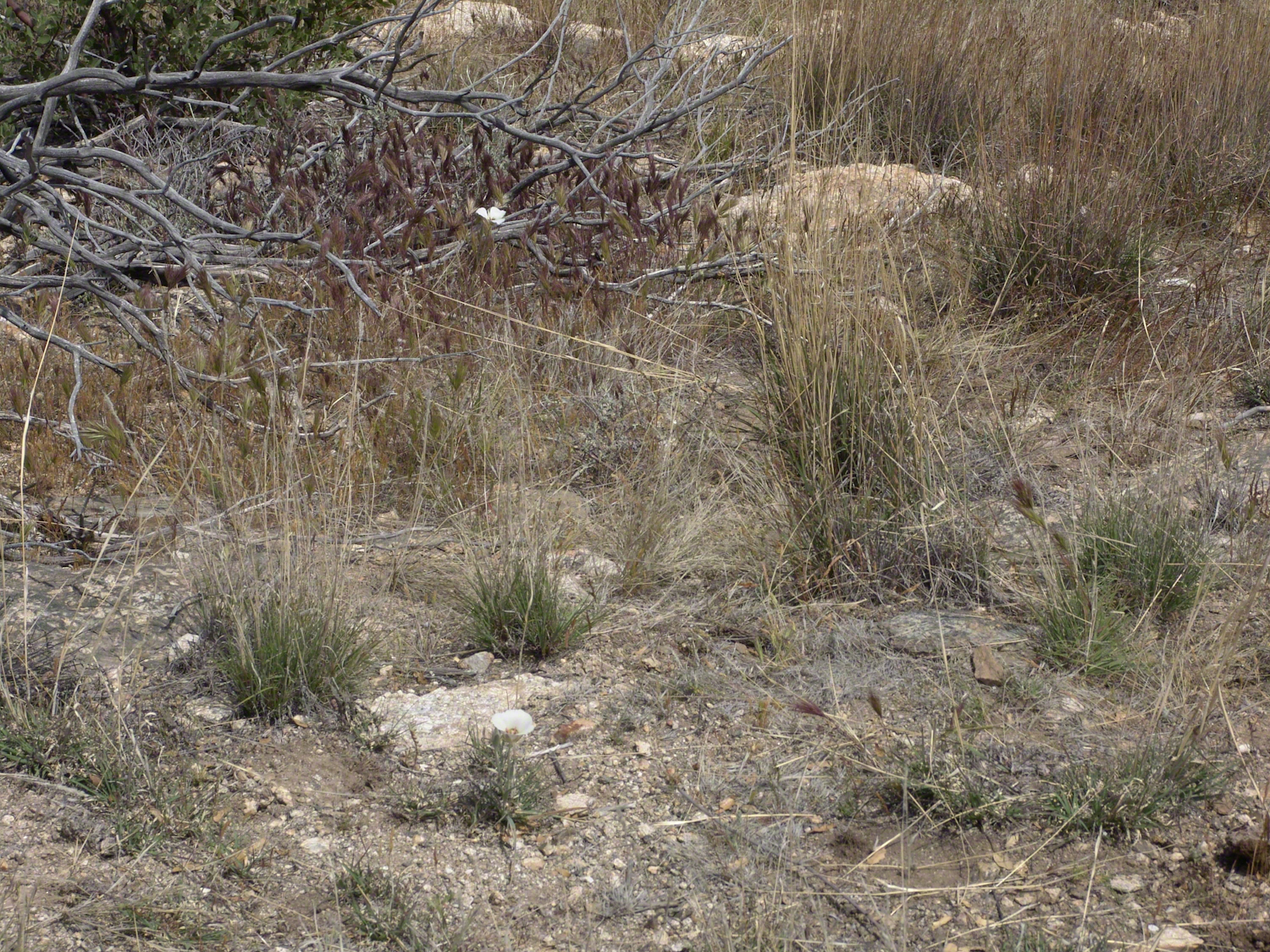
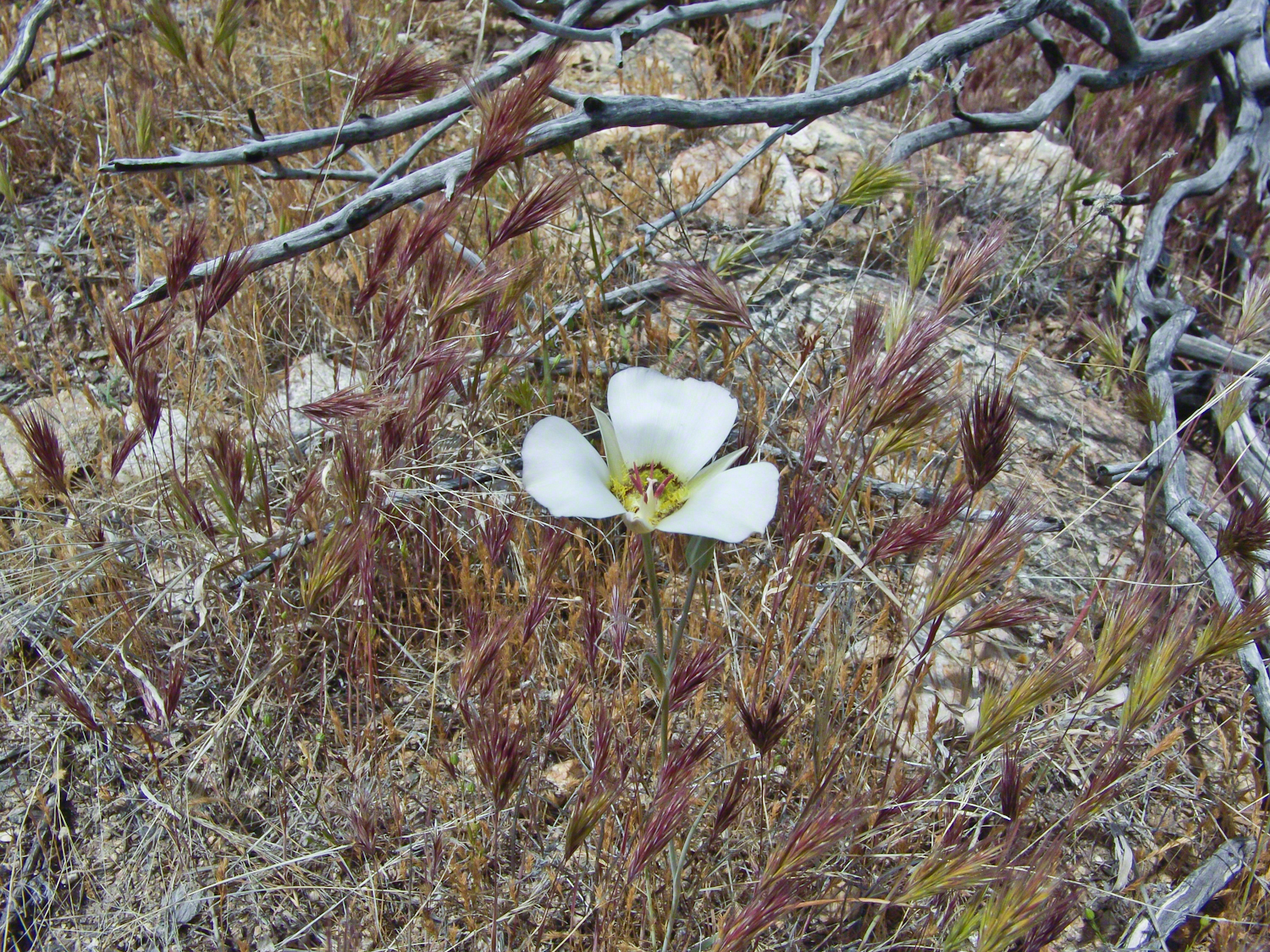
Sego Lilies bloom among a stricken oak and drying grasses on the Turkey Creek trail. This is an overview of the environment, it is the winter rains that trigger the bloom.
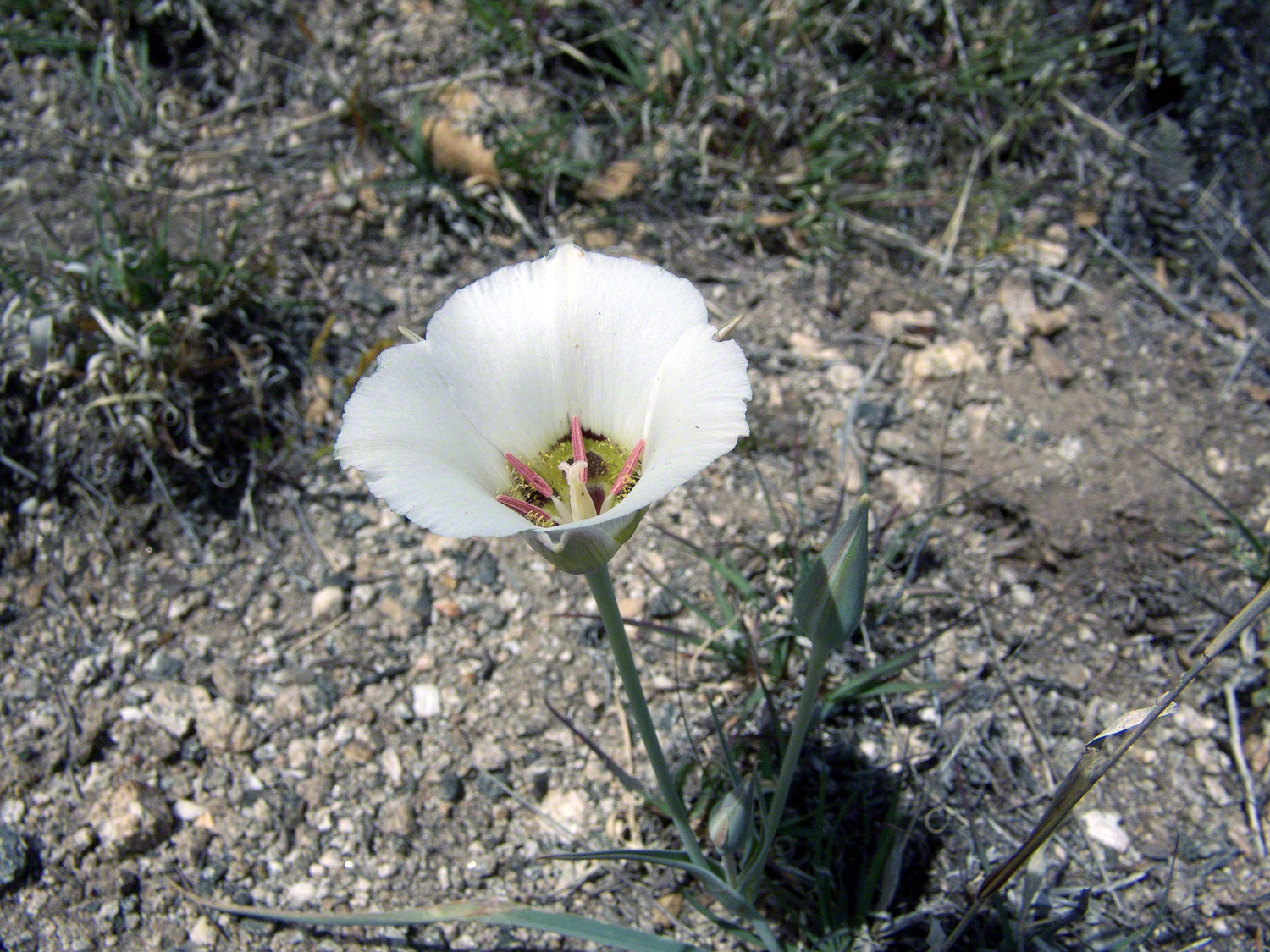
We paused while I unpacked my gear to capture Sego Lilies growing along the Turkey Creek Trail.
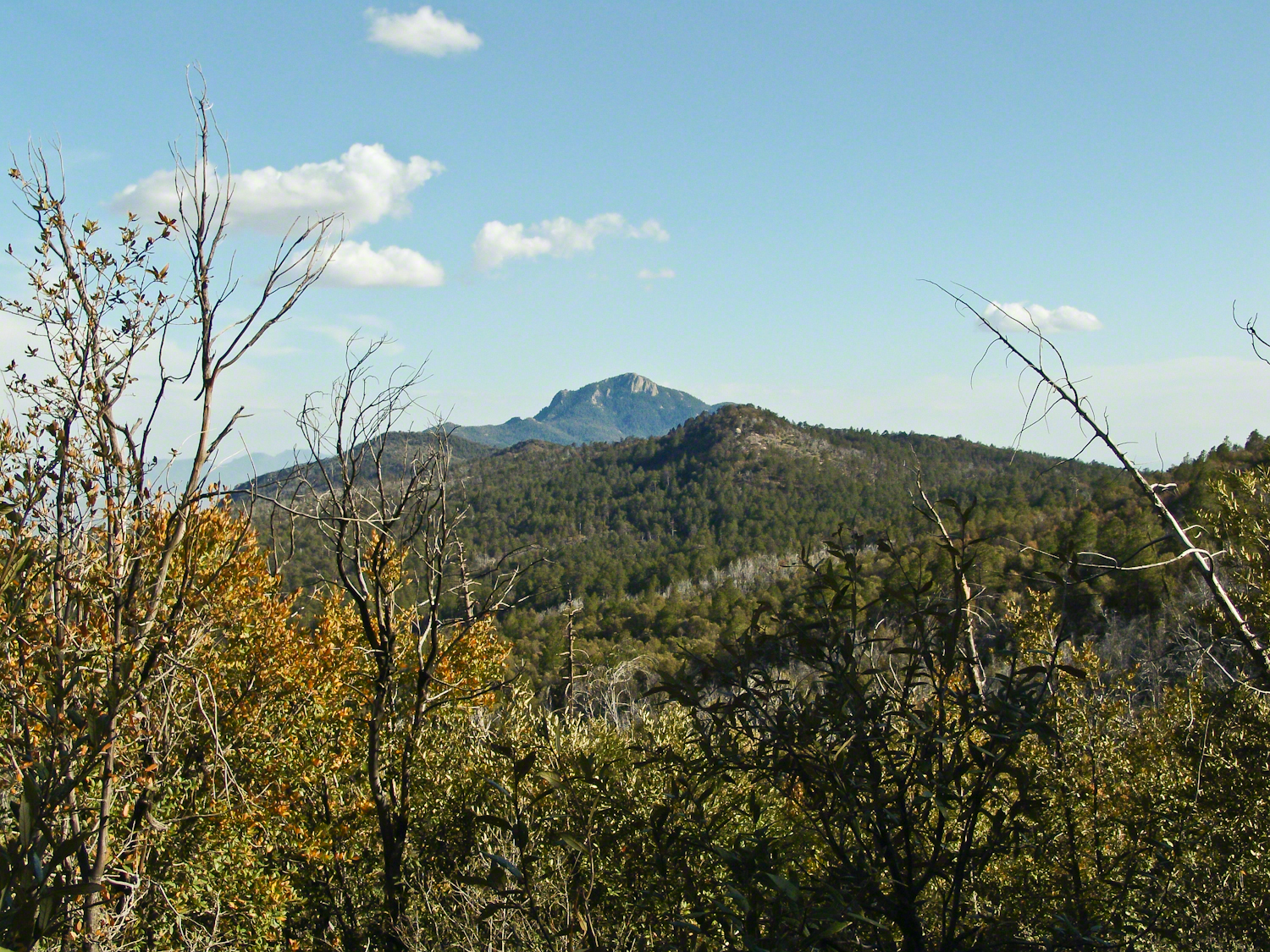
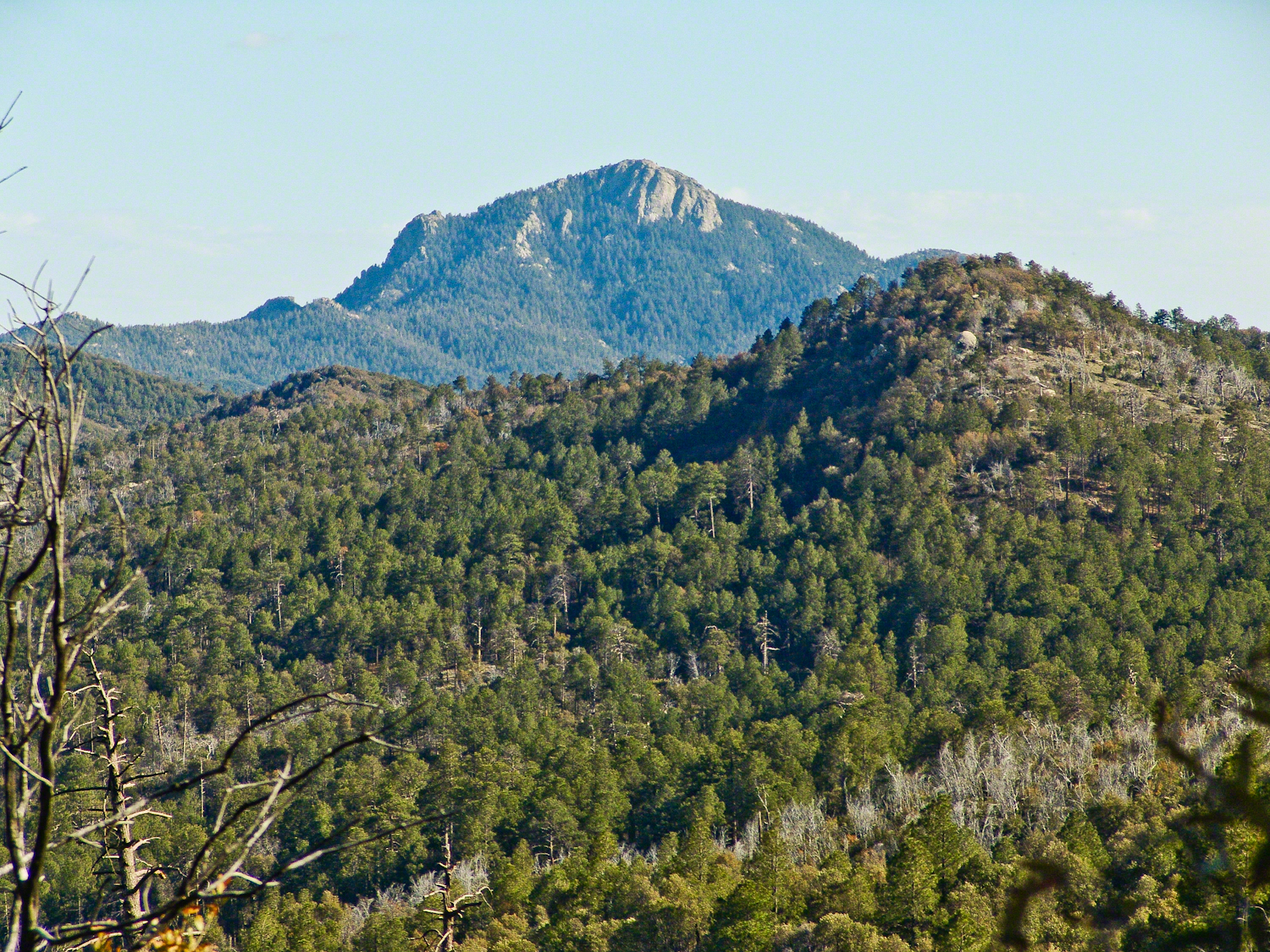
Deer Head Spring, at the top of Turkey Creek Trail was a moist spot with no accessible water when we reached it April 27, 2004. With the remains of a gallon of water each we needed to press ahead to Heartbreak Ridge and climb into Happy Valley Saddle were, thankfully, the creek was low and full of algae but usable. Here are my first views of Rincon Peak, looking across the aptly named Heartbreak Ridge and Happy Valley Saddle.
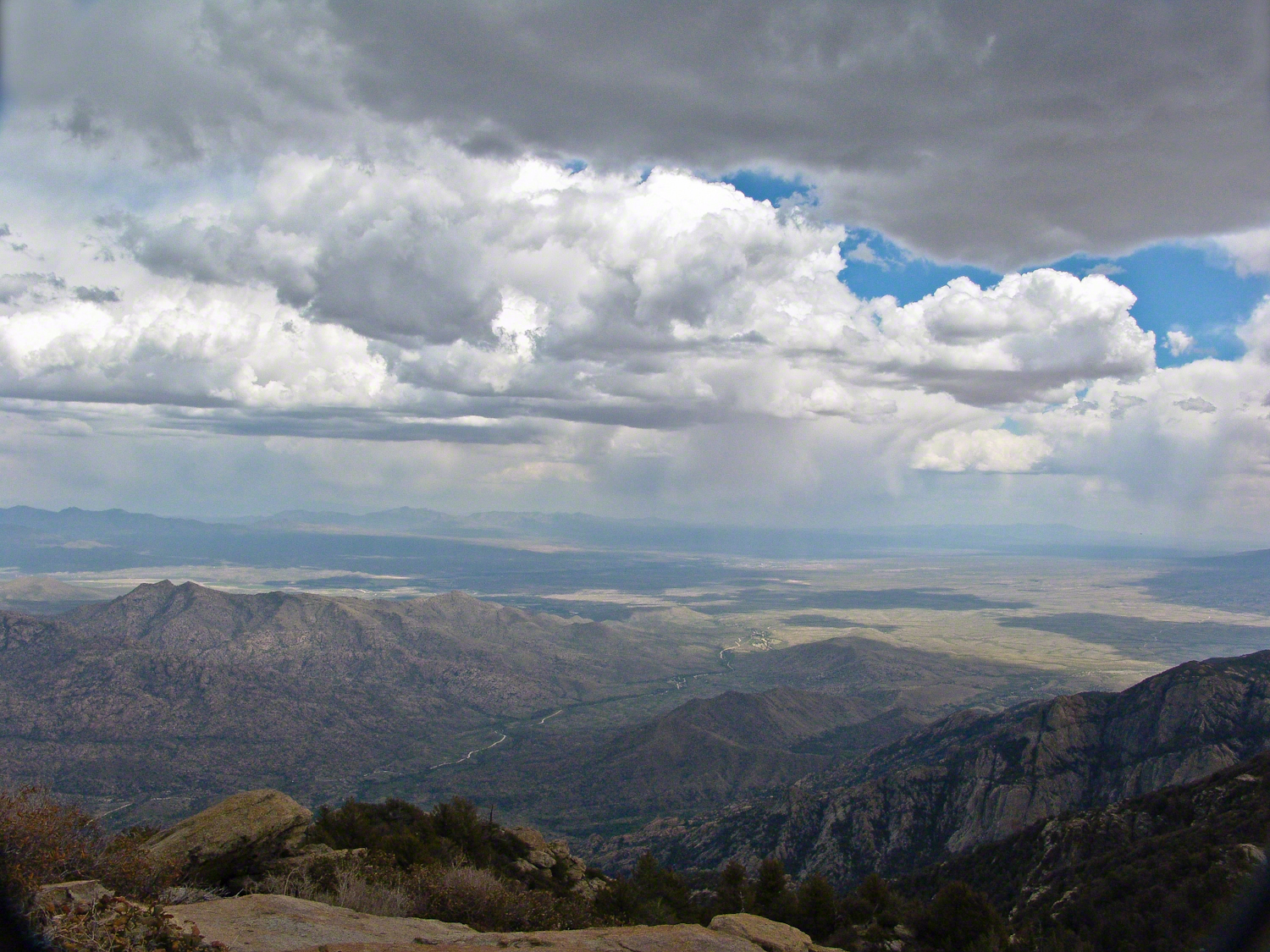
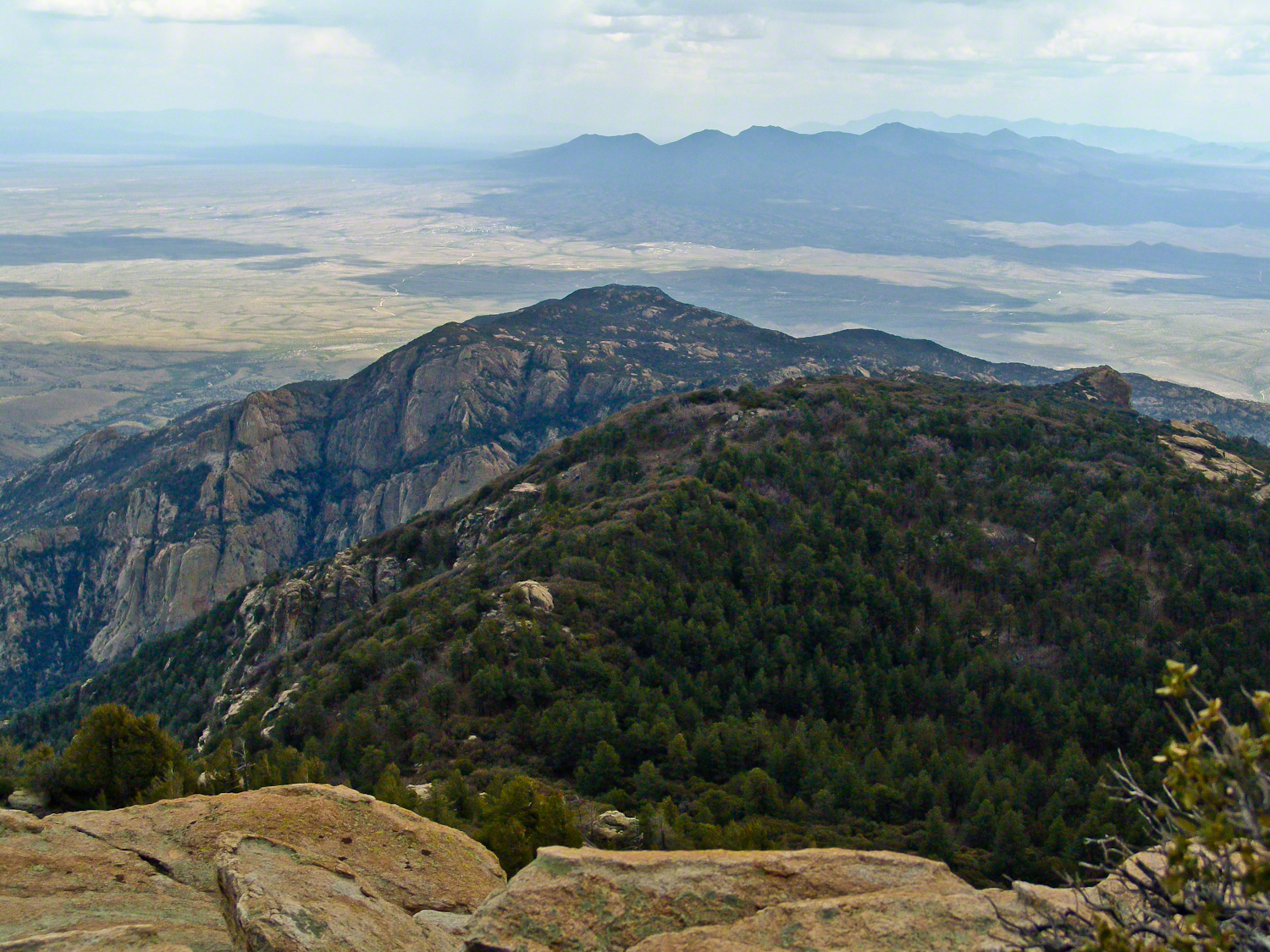
The view to south from Rincon Peak. The white rocks at lower right forms a Valley of the Moon wall. San Pedro River valley at the root, Mae West Peaks at left margin, Dragoon Mountains with Cochise Stronghold center. Taken around 12:30 on April 28, 2004 as a thunderstorm approached.
The Rincon Peak view looking south, southwest over the Valley of the Moon to the eastern Tucson Valley and the Sky Islands the Whetstone Mountains (Apache Peak), behind are the Santa Ritas. The works of man are overpowered by sky, rock, distance.
We made a hasty departure in front of the thunderstorm. It was a touch and go decision to attempt the peak that day, we made it with moments to spare.
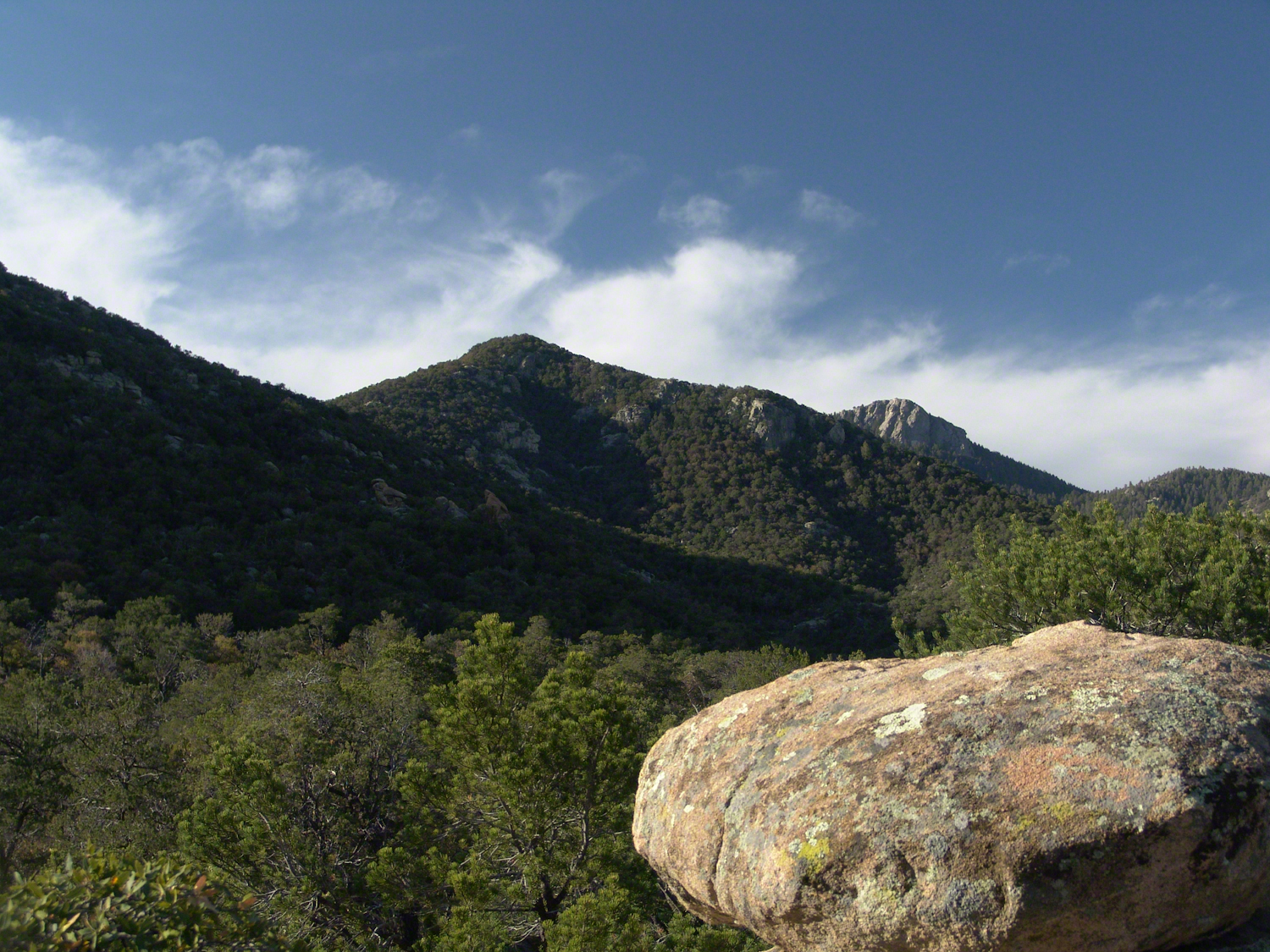
April 29, 2004 the morning after reaching Rincon Peak I set up the tripod near our Happy Valley Saddle camp to capture Rincon Peak in early morning sunlight.
The day we descended to the X9 Ranch via the Rincon Creek trail. My guide’s grandfather had a homestead at the X9 and his access to the trailhead through private lands opened this route for us. This is a photograph of sunset on Rincon Peak from the X9 ranch. I am looking east from the Rincon (Spanish for corner) made by the massifs Rincon Peak, Mica Mountain and Tanque Verde ridge.
The evening of November 2, 2006 I climbed the Saguaro National Park, East, Tanque Verde trail for about 30 minutes to reach this view of Rincon Peak and waited until just before the sun set behind the Tucson Mountains for this shot. Then hiked back to the car in twilight. In my hurry, I tripped on a stepped turn and dove headfirst into a large prickly pear. It was a very painful experience and I regretted damaging the cactus and the loss of and good hiking shirt. There were large spines in my face and tiny, pesky spines covered my chest and back. The large spines are not barbed and come right out. I needed to visit a physician to remove them.
Copyright 2021 Michael Stephen Wills All Rights Reserved

















 Michael Stephen Wills Photography