Echoes of Autumn: Finding Beauty and Wonder in a Willow’s Fungal Bloom

On a sunny September morning along the shores of Cayuga Lake, I encountered the vibrant Chicken of the Woods fungus. Its striking colors and intriguing history make it a fascinating discovery in nature’s ongoing cycle of life and decay.

A Serendipitous Discovery on a September Morning


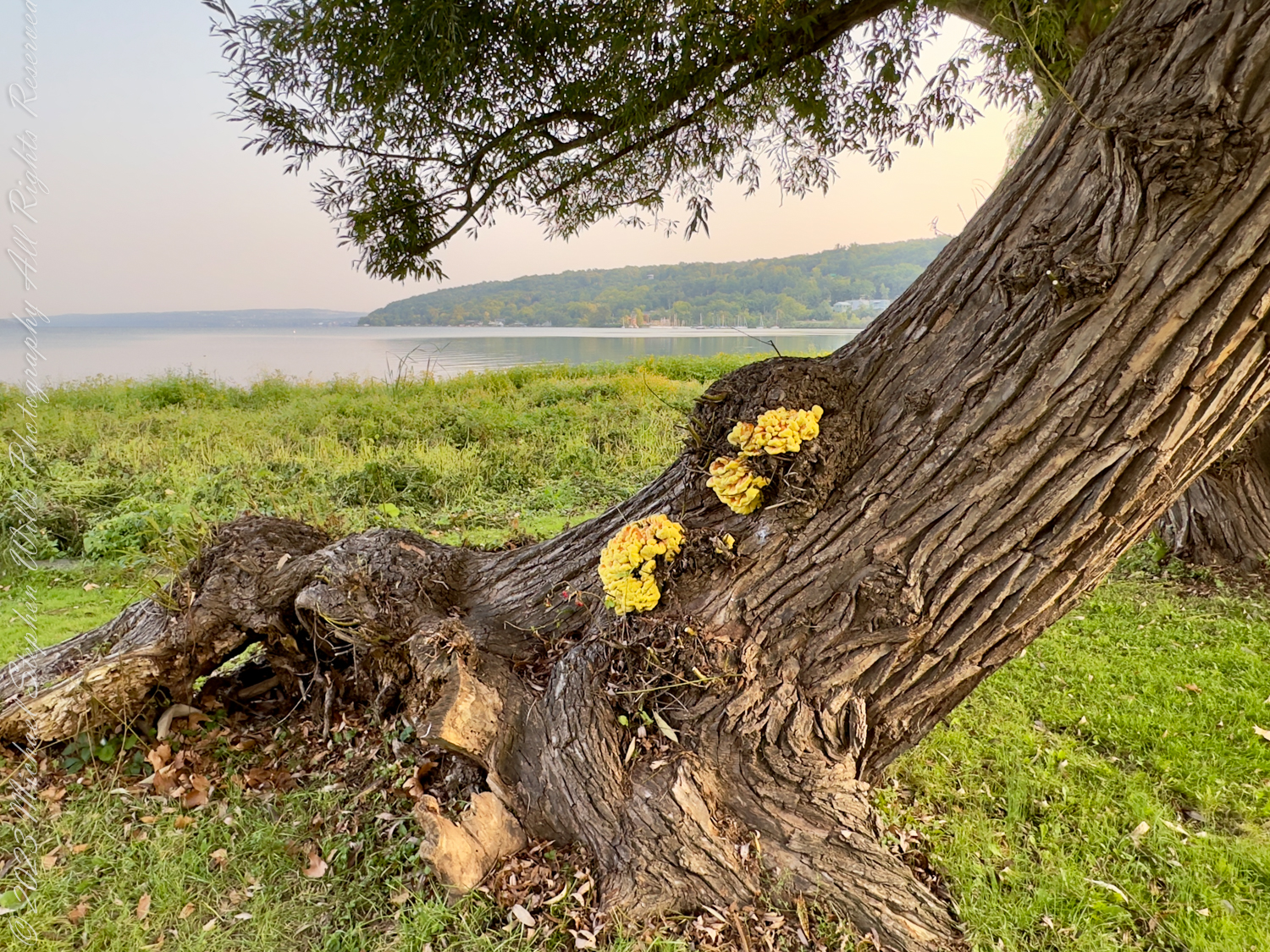
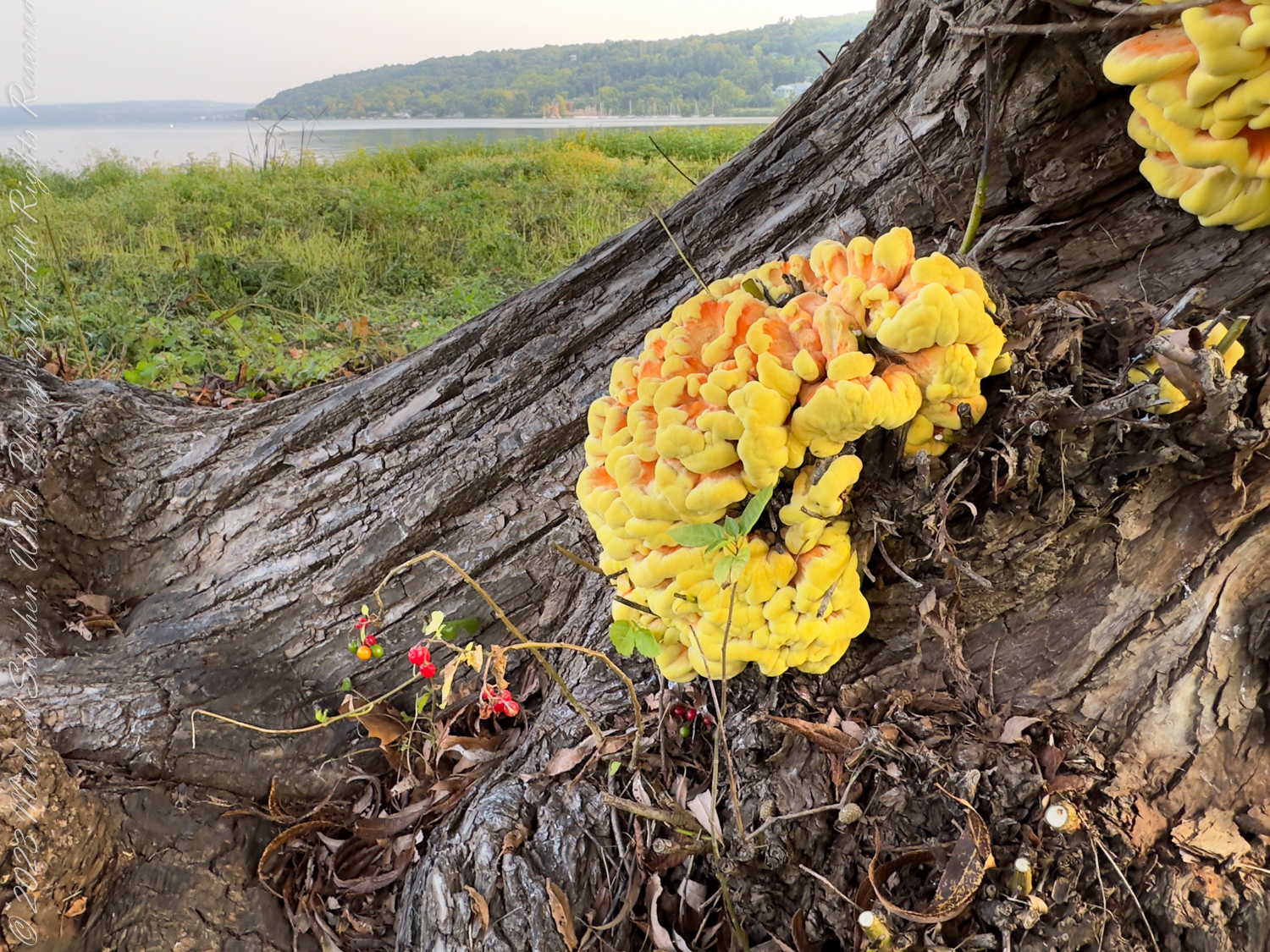
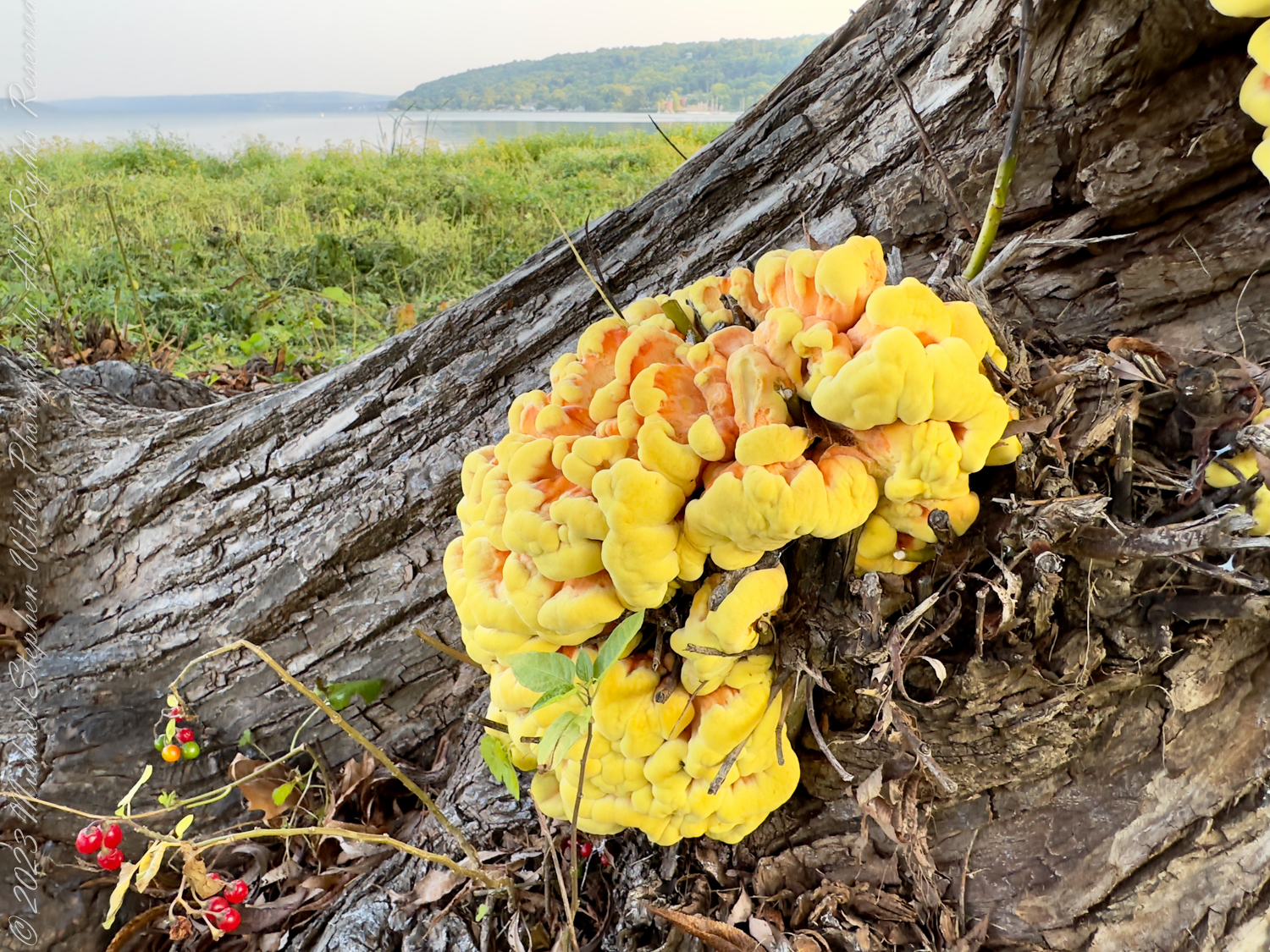
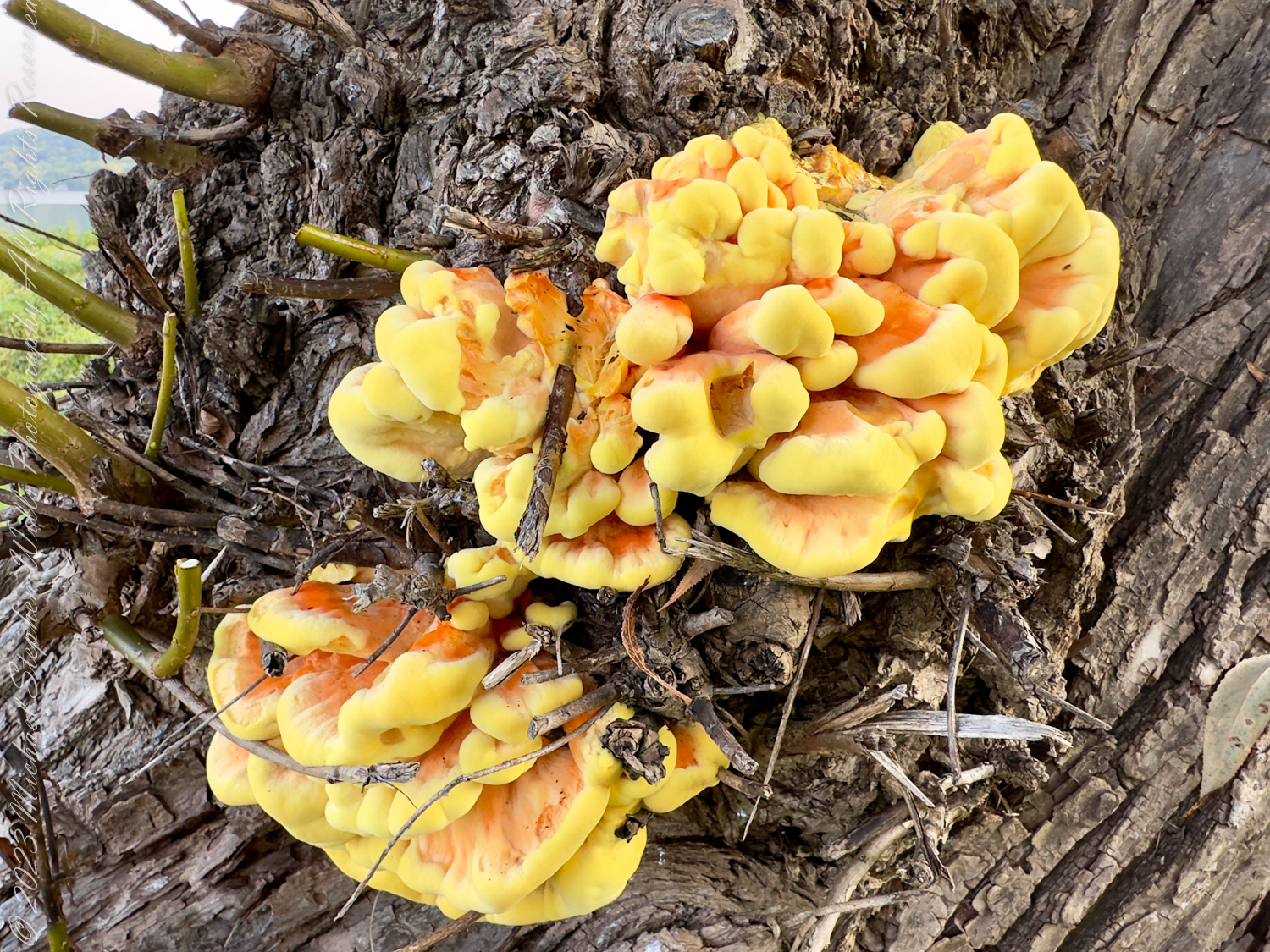
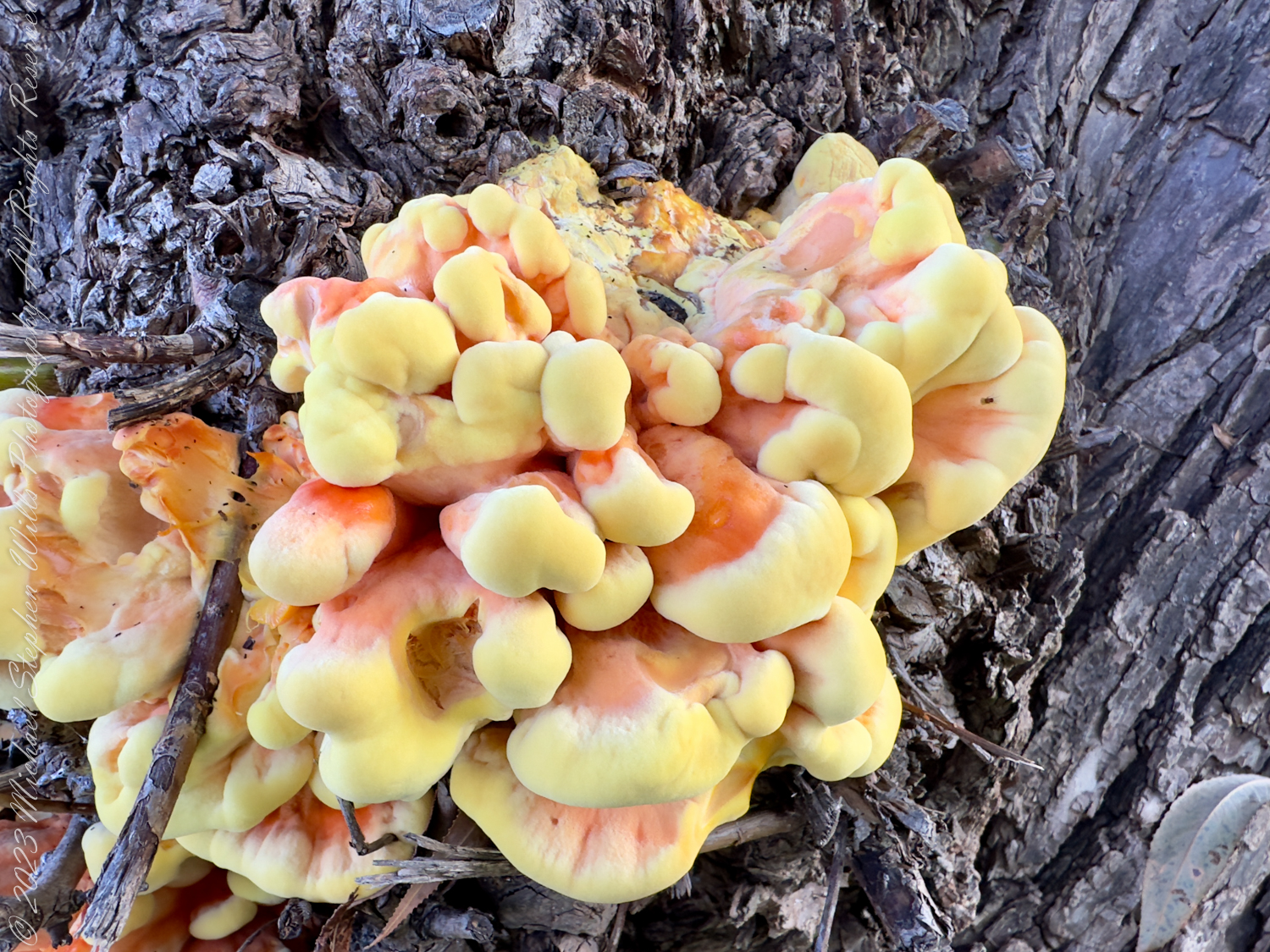
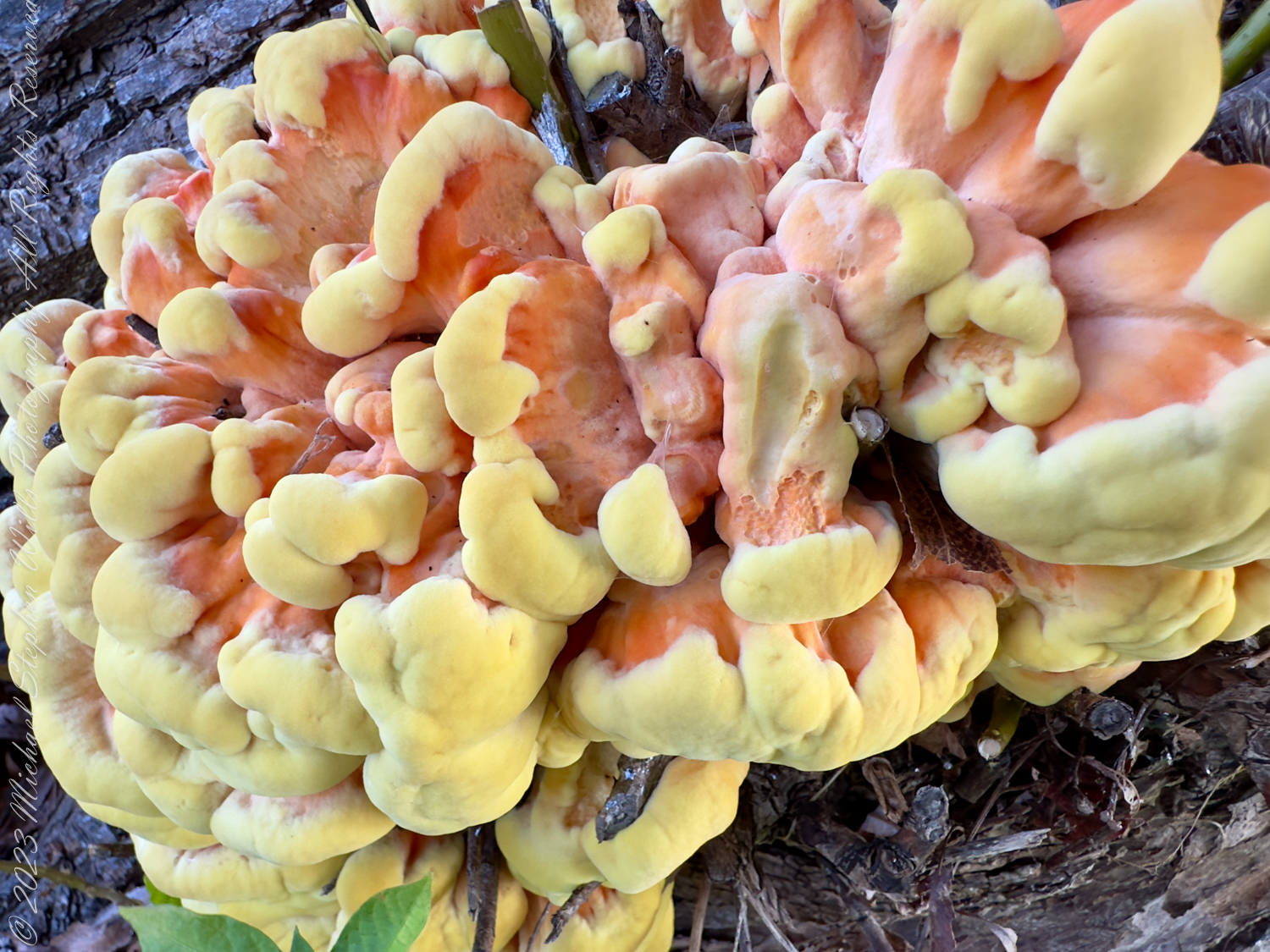
It was a crisp, sunny September morning when Pam and I set out for a leisurely walk along the shore of Cayuga Lake in Ithaca, New York. The lake shimmered in the morning light, framed by the early hints of fall colors on the surrounding hills. We had been walking for some time, enjoying the peaceful rhythm of nature, when something unusual caught my eye—a cluster of bright yellow-orange growths on the trunk of an apparently hale White Willow tree.

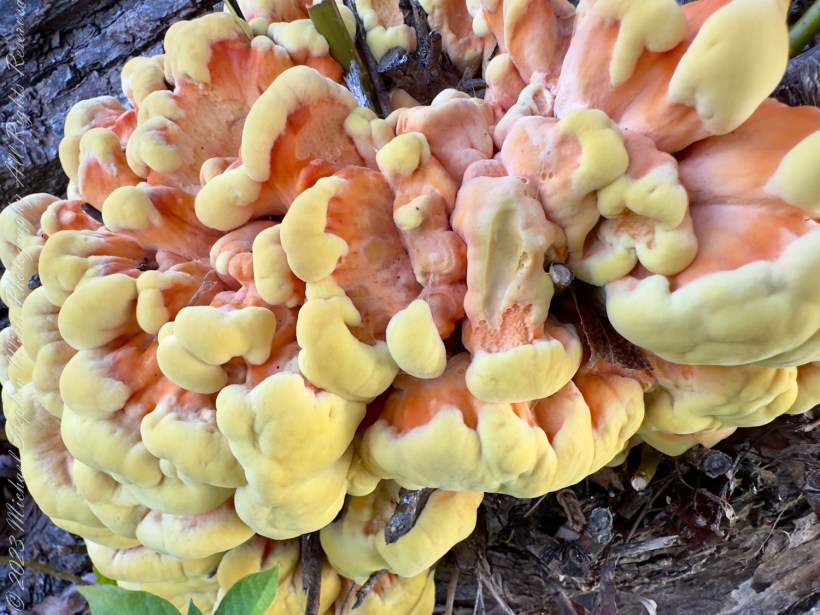
Curious, I approached the tree, and upon closer inspection, I realized these growths were something special, took these photographs of the vibrant clusters and later researched them to be Laetiporus sulphureus, commonly known as Chicken of the Woods. The striking colors of the fungus, a combination of deep orange and golden yellow, stood out in stark contrast to the gnarled, dark bark of the willow. It was a discovery that sparked a deeper interest in learning about the fascinating history and characteristics of this unique fungus.

The Vibrant History of Chicken of the Woods


Laetiporus sulphureus has been known to mycologists and naturalists for centuries, and its distinctive appearance has earned it a place among the most recognizable fungi in the world. Its common name, Chicken of the Woods, stems from the texture and flavor of its flesh, which, when cooked, is said to resemble that of chicken. This has made it a popular edible mushroom among foragers, particularly in Europe and North America, where it often grows on hardwood trees such as oak, cherry, and, as I found, occasionally on willows.

The fungus was first scientifically described by German mycologist August Batsch in 1789. Since then, it has been the subject of numerous studies, particularly due to its unique ability to grow on living trees, decaying wood, and sometimes even on dead trunks. This dual nature makes it both a decomposer and a potential pathogen, depending on the health of its host tree.

Historically, Chicken of the Woods has had various uses, ranging from culinary to medicinal. In traditional folk medicine, it was used for its antibacterial properties, and some cultures believed it could help heal wounds or infections when applied as a poultice. Today, research continues into its potential medicinal applications, including its possible role in supporting immune function and its antioxidant properties.

A Friend to Some, a Foe to Trees


While Laetiporus sulphureus may delight foragers and mushroom enthusiasts, it is not always welcomed by the trees it inhabits. The fungus is classified as a saprotroph, meaning it feeds on dead or decaying organic matter. However, it is also capable of acting as a parasite, attacking the heartwood of living trees. Over time, the fungus can cause brown rot, a form of decay that weakens the tree from the inside out. For trees already compromised by age or environmental stress, an infestation of Chicken of the Woods can be the final blow, leading to their eventual death and collapse.

The willow tree I encountered by Cayuga Lake had clearly seen many seasons, its twisted trunk and sprawling limbs a testament to decades of life along the shoreline. The presence of the fungus, while beautiful and intriguing, could also be an indicator that this tree was in decline. Still, the symbiotic relationship between the tree and the fungus was a reminder of nature’s cycles—of life, decay, and renewal.

Culinary and Medicinal Uses of Chicken of the Woods


One of the most interesting aspects of Chicken of the Woods is its edibility. Foragers and chefs alike prize the young, tender fruiting bodies for their chicken-like texture and mild flavor. When prepared properly, the fungus can be sautéed, fried, or even used in stews, providing a nutritious and flavorful addition to a variety of dishes. However, caution is required, as some individuals may experience allergic reactions or gastrointestinal upset after consuming it. Additionally, older specimens of the fungus can become woody and less palatable.

Beyond the kitchen, Chicken of the Woods has a history of medicinal use. In some cultures, it has been used to treat ailments ranging from respiratory infections to digestive issues. Modern research is beginning to explore the bioactive compounds present in the fungus, with preliminary studies suggesting that it may have antibacterial and antioxidant properties. These potential health benefits add yet another layer of intrigue to this already fascinating species.

An Essential Role in the Ecosystem


As well as serving human needs, Chicken of the Woods also plays a vital role in the ecosystems it inhabits. As a decomposer, the fungus breaks down dead and decaying wood, returning valuable nutrients to the soil and promoting the growth of new plant life. In this way, it contributes to the cycle of life and death that sustains forest ecosystems. Various insects and animals, including beetles and birds, may also use the fungus as a food source or shelter, further highlighting its ecological importance.

A Lasting Impression


As Pam and I continued our walk along Cayuga Lake, I couldn’t help but feel a sense of gratitude for the serendipitous discovery I had made that morning. The sight of the Chicken of the Woods clinging to the willow tree was a vivid reminder of nature’s endless capacity for surprise and wonder. Though this fungus may be humble in its origin, its history, uses, and ecological significance elevate it to a position of great interest and value in the natural world.

In that quiet September morning light, standing beside the lake with the colors of early autumn beginning to emerge, I realized that moments like these—moments of connection with nature—are what keep me returning to the trails and shores of Ithaca, always eager for the next discovery.

Copyright 2024 Michael Stephen Wills All Rights Reserved

Queen Anne’s Legacy: A Wildflower’s Role in the Finger Lakes Ecosystem and History

Amid the rolling hills and meadows of the Finger Lakes, Queen Anne’s Lace stands tall, its delicate white blooms weaving a tapestry of nature’s resilience and beauty. Discover the rich history, legends, and ecological importance behind this elegant wildflower.


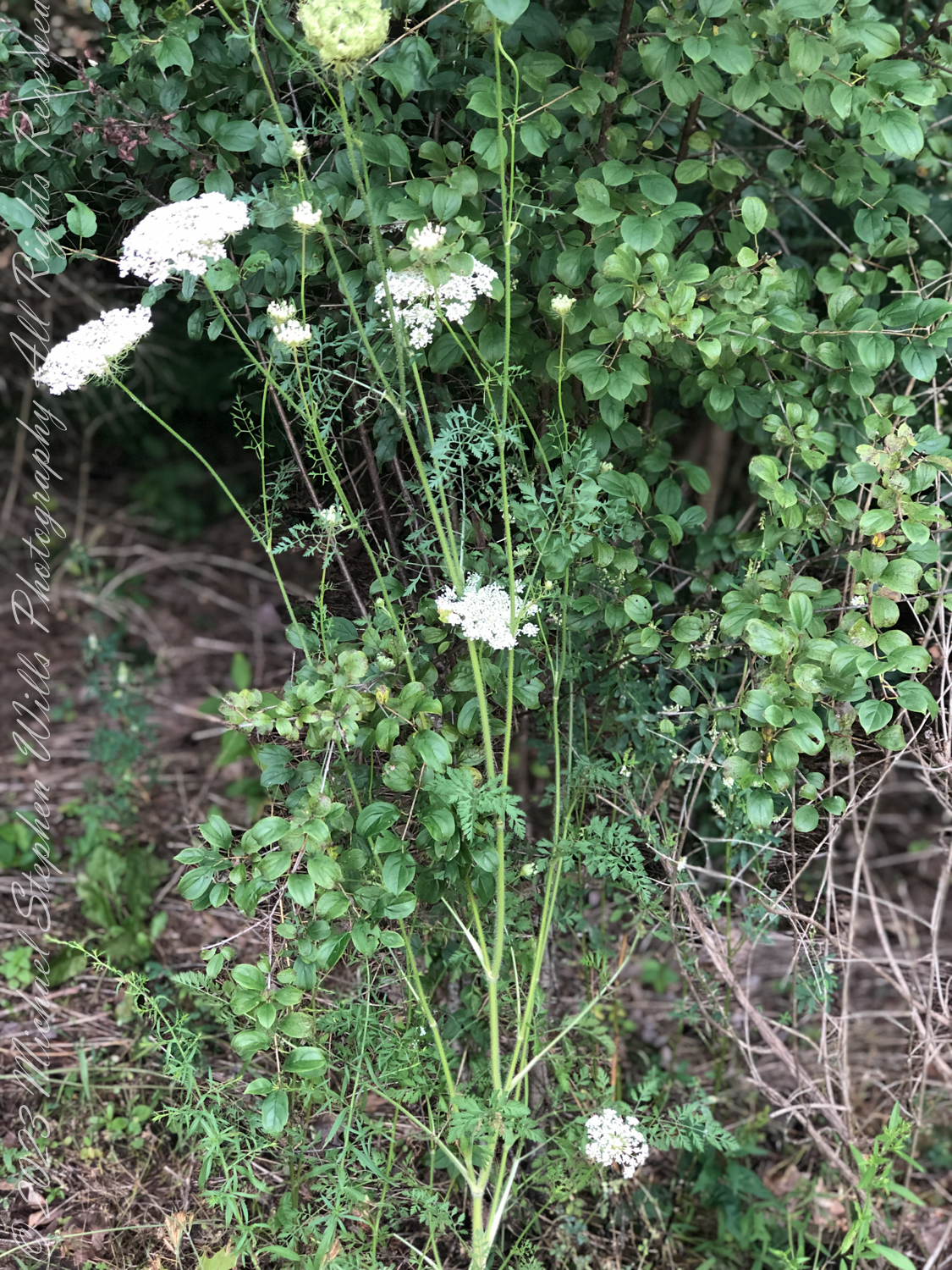
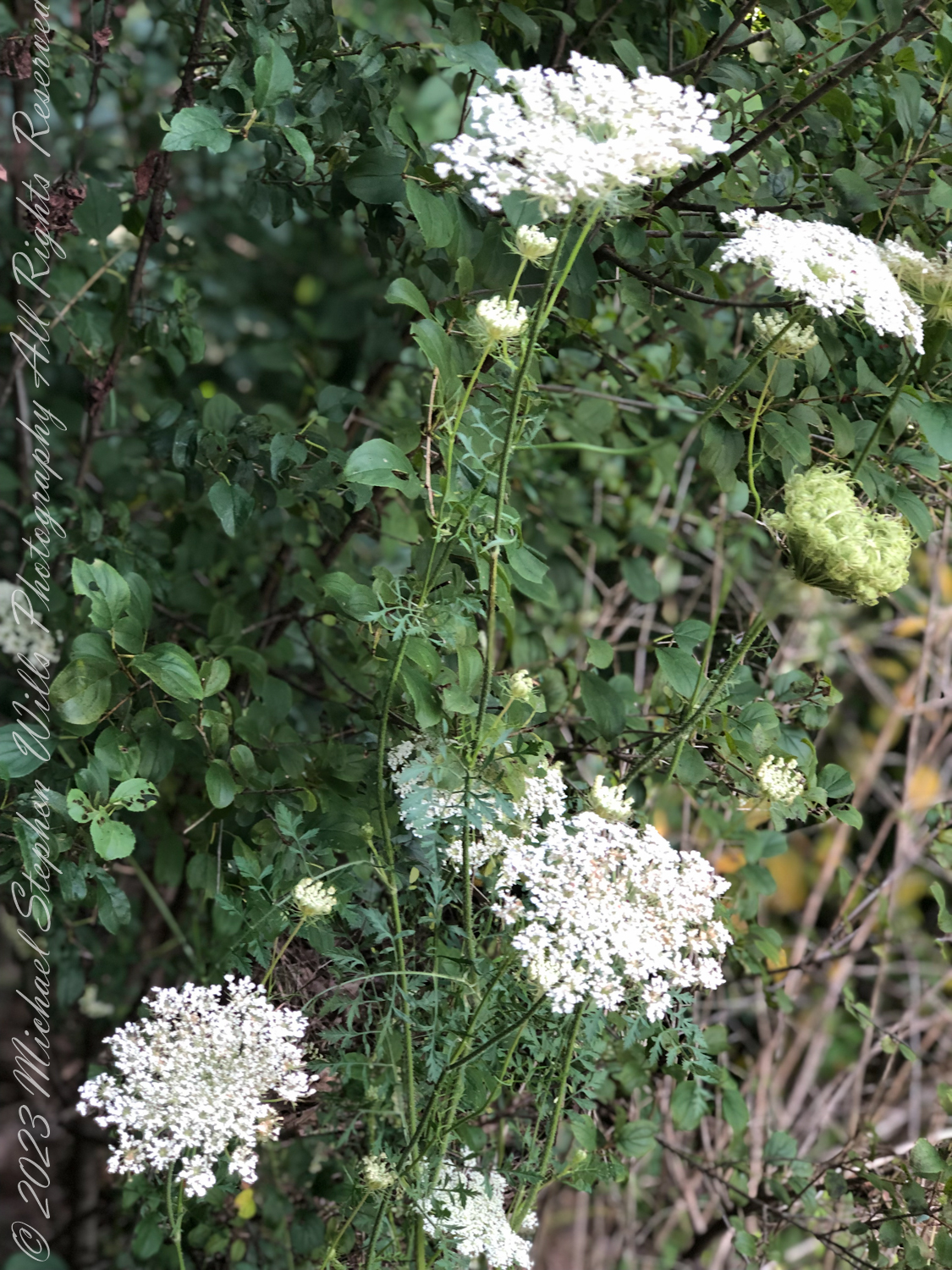
In the Finger Lakes region of New York State, fields come alive with the delicate beauty of Queen Anne’s Lace—a wildflower that embodies nature’s elegance. Scientifically known as Daucus carota, its flowering umbels resemble intricate lace, lending poetic charm to the landscapes it graces. Beyond aesthetics, the history and mythology behind Queen Anne’s Lace, combined with its ecological importance and cultural significance, reveal a plant deeply intertwined with both nature and human culture.

The Name and Its Myths


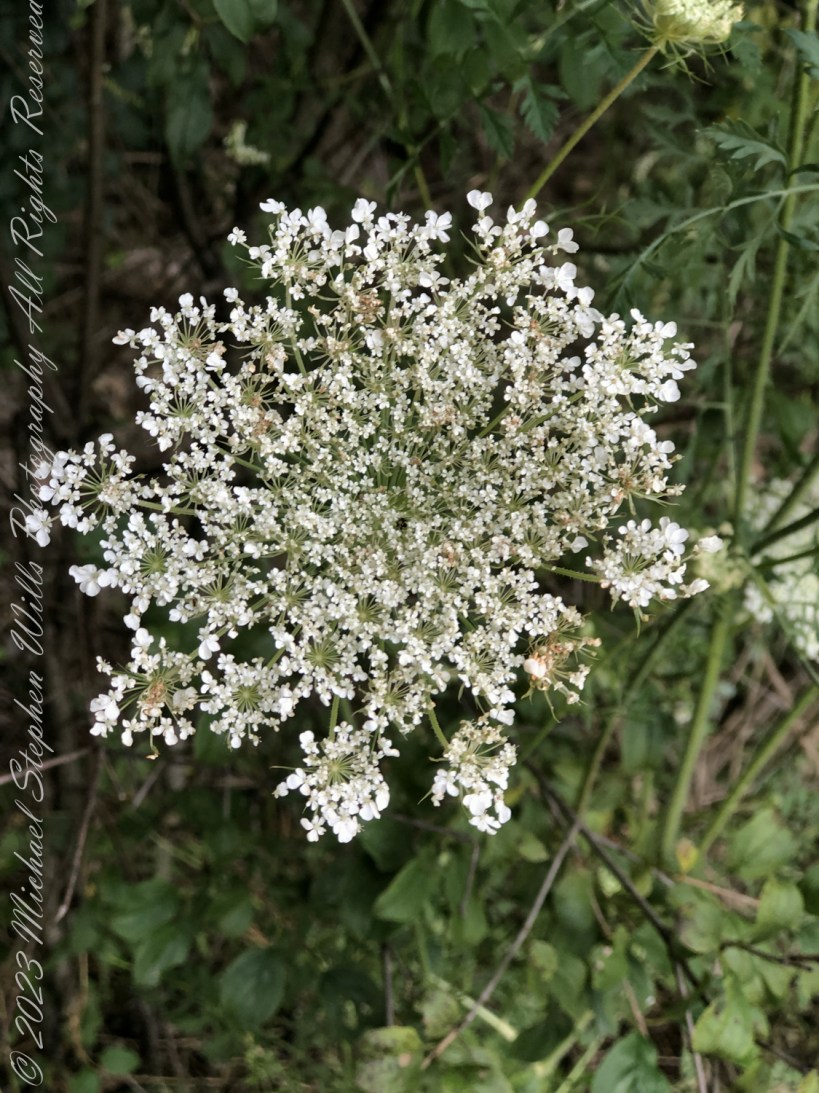
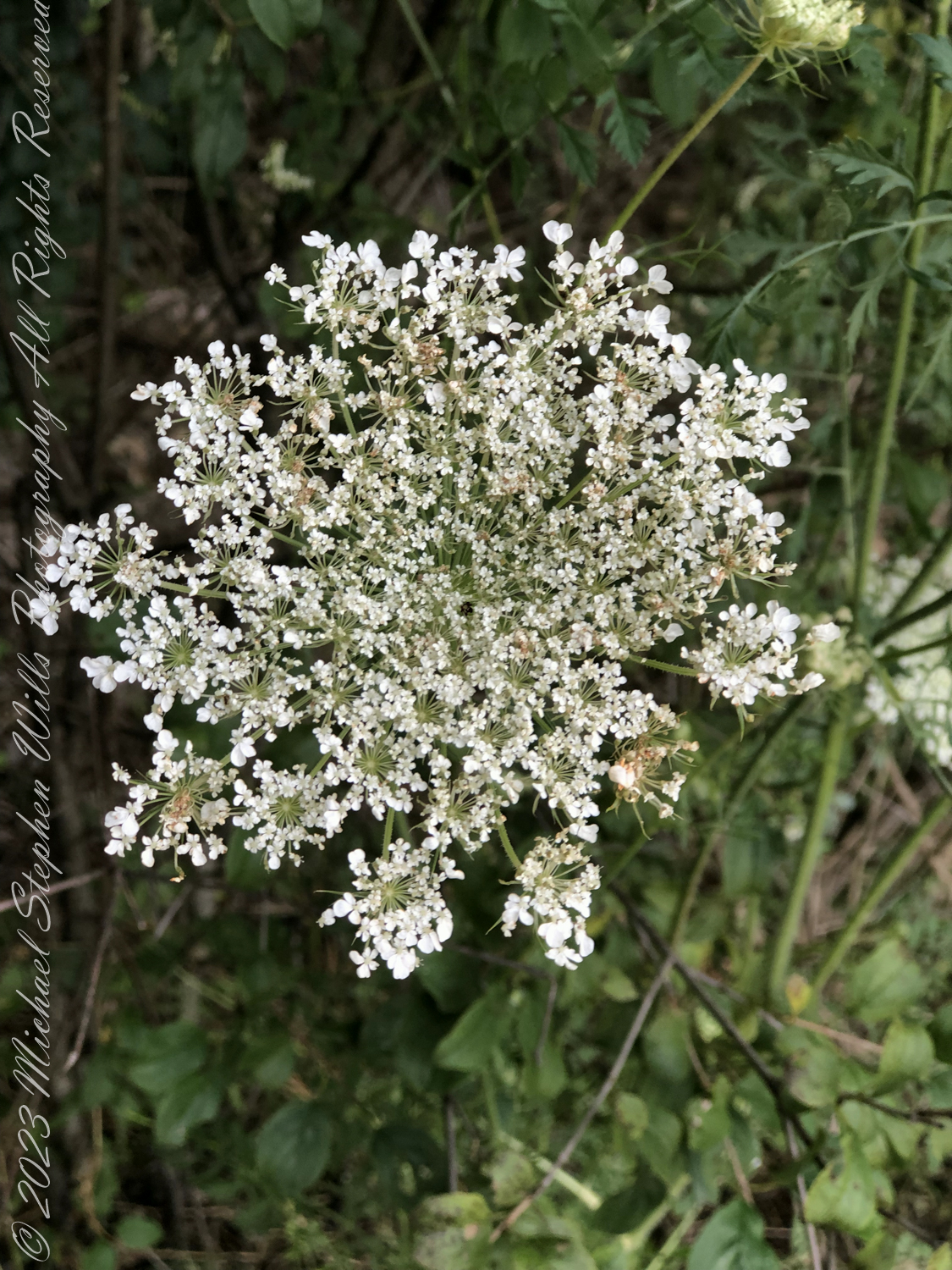
The name Queen Anne’s Lace derives from English legend. According to the tale, Queen Anne, consort to King James I, was challenged to create lace as beautiful as the flower. While sewing, she pricked her finger, and a single drop of blood stained the lace—represented by the tiny purple floret at the center of many Queen Anne’s Lace blossoms. This intricate network of white flowers surrounding a central floret mirrors the lacework attributed to Queen Anne, giving the plant a royal and historic association.

Scientifically known as Daucus carota, Queen Anne’s Lace is also known by several other common names, including wild carrot and bird’s nest, the latter inspired by the way the flower head curls inward as the seeds begin to develop, resembling a nest. The flower is closely related to the cultivated carrot, and its roots, though much smaller and woodier, share the familiar carrot scent. In fact, Queen Anne’s Lace is considered the wild ancestor of the domestic carrot, with a lineage stretching back thousands of years.

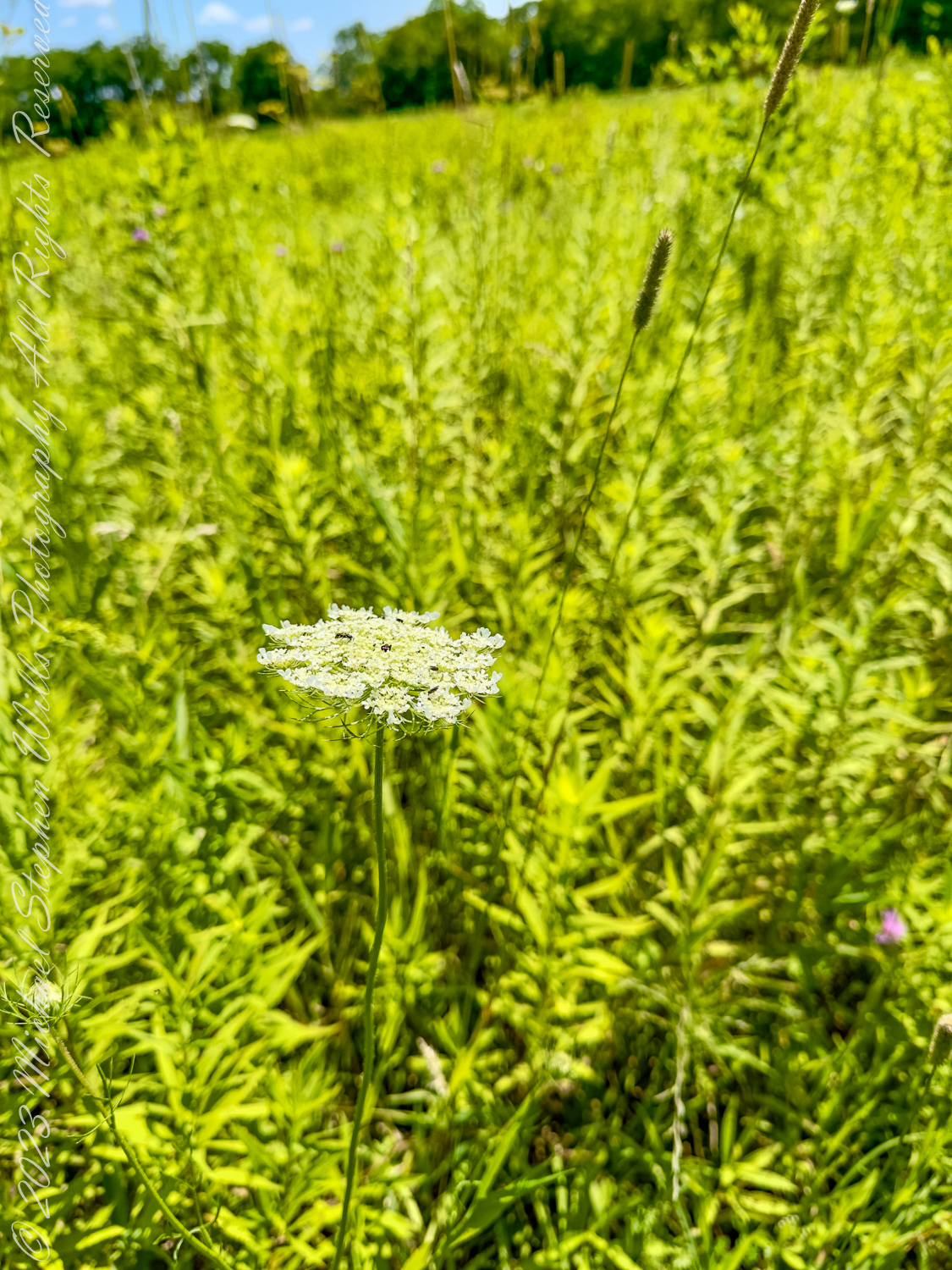
In the meadows of the Brock-Harvey Forest Preserve, Queen Anne’s Lace thrives among the native flora, showcasing its delicate beauty. The function of the central dark florets of D. carota has been subject to debate since Charles Darwin speculated that they are a vestigial trait. It has been suggested that they have the adaptive function of mimicking insects, thus either discouraging herbivory, or attracting pollinators by indicating the presence of food or opportunities for mating. Research conducted in Portugal suggests that the dark central florets of Daucus carota mimic insects, attracting pollinators like the varied carpet beetle (Anthrenus verbasci). Inflorescences with more dark florets experienced increased visitation, indicating these florets may enhance pollination efficiency.

Queen Anne’s Lace in Finger Lakes Ecology


Beyond its rich mythology, Queen Anne’s Lace plays a significant role in the ecology of the Finger Lakes region. Throughout the expansive landscapes of the Finger Lakes, from lush meadows to roadsides, Queen Anne’s Lace stands tall, its delicate blossoms dotting the green with clusters of white. This wildflower can be observed in various stages of its life cycle, from budding umbels to the intricate ‘bird’s nest’ formation.

The fields around the Finger Lakes, often framed by rolling hills and ancient forests, offer the perfect habitat for Daucus carota. The plant thrives in well-drained soils and open sunlight, often outcompeting other flora. Its deep taproots, a characteristic inherited from its cultivated cousin, the carrot, allow it to flourish in the rocky soils of the region.

In these fields, Queen Anne’s Lace performs a vital ecological role. The plant attracts a variety of pollinators, including bees, butterflies, and beneficial insects like lacewings, which help to control aphid populations. The wide, flat umbels provide an ideal landing platform for these insects, who in turn pollinate the flowers, ensuring the plant’s continued spread.

A History of Use


The plant’s ecological importance is matched by its historical uses throughout human civilization. Queen Anne’s Lace has long been a part of human history, both for its beauty and for its practical applications. The plant’s medicinal uses stretch back to ancient times. The seeds and roots were used by the ancient Greeks and Romans as a natural remedy for a variety of ailments, including digestive issues and inflammation. The seeds, when chewed, were believed to prevent conception and were used as a natural form of birth control.

For Native American tribes in the Finger Lakes region, Queen Anne’s Lace was a valuable plant. The roots were often used in the preparation of poultices to treat minor wounds and skin irritations. Additionally, the seeds were used for their diuretic properties, often in teas to help with urinary tract issues. The plant’s close relation to the domestic carrot also meant that its roots could be used as food, though they required careful preparation due to their tough texture and strong flavor.

A Symbol of Resilience and Elegance


The symbolism of Queen Anne’s Lace is steeped in both the fragility and strength it represents. Like the lace it mimics, the flower appears delicate and ephemeral, yet it is a hardy species that thrives in even the most inhospitable conditions. Its deep taproot enables it to survive droughts and poor soil, symbolizing resilience and perseverance in the face of adversity.

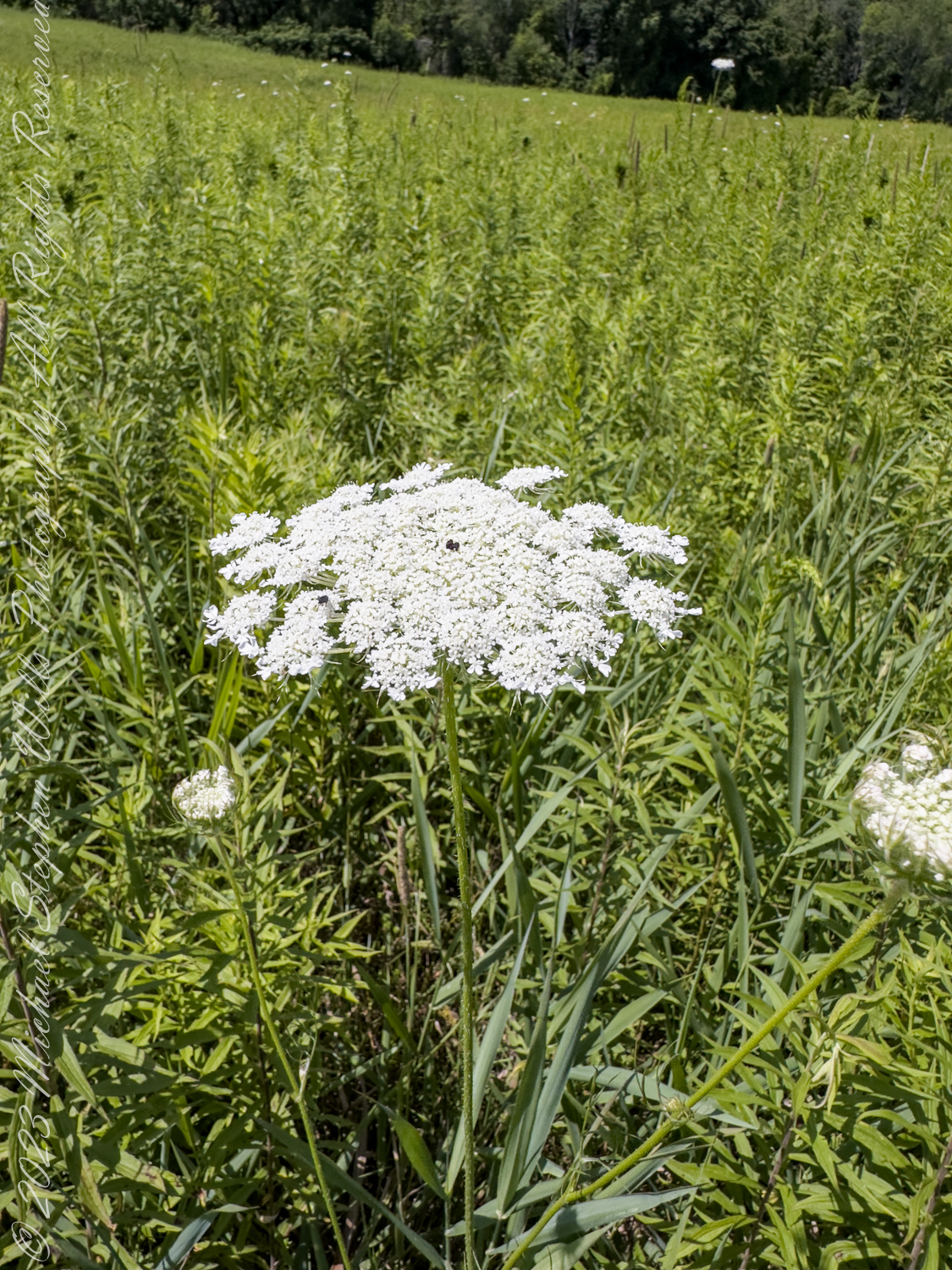
In Cayuga County, near Fillmore Glen State Park in Moravia, New York State, farm fields are often adorned with the intricate blooms of Queen Anne’s Lace.

Each summer, the fields of the Finger Lakes burst forth with Queen Anne’s Lace, their towering stalks reaching upward, crowned with intricate blossoms that sway gently in the breeze. As the season progresses, the once-flat umbels curl inward, forming a tight bird’s nest—a final act of elegance before the plant disperses its seeds to ensure future generations.

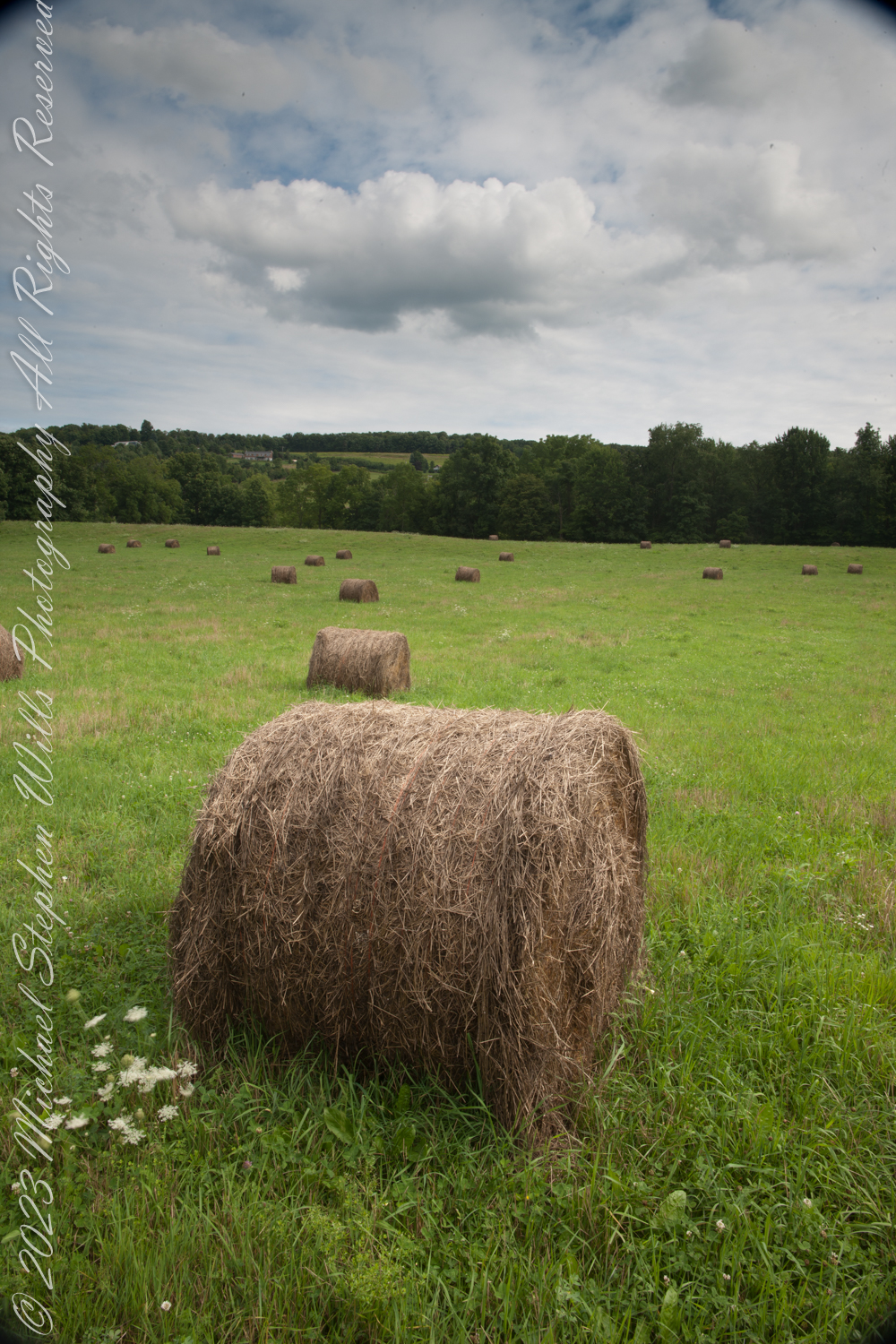
In capturing the essence of this flower in photographs that accompany this essay, the delicate yet persistent nature of Queen Anne’s Lace is evident. Whether standing tall against a backdrop of green hills, or growing alongside weathered hay bales, Queen Anne’s Lace offers a moment of reflection on the intersection of beauty, history, and nature. Its quiet presence in the Finger Lakes is a reminder that even the smallest, most unassuming plants can carry with them deep histories, enduring stories, and a legacy of utility and elegance.

As golden hues of sunset bathe the rolling hills of the Finger Lakes, the ethereal silhouettes of Queen Anne’s Lace stand as a testament to the region’s natural splendor. Whether admired for its aesthetics, revered for its medicinal uses, or simply appreciated for its ecological role, Queen Anne’s Lace remains an iconic and beloved part of the Finger Lakes’ wildflower tapestry.

Copyright 2024 Michael Stephen Wills All Rights Reserved

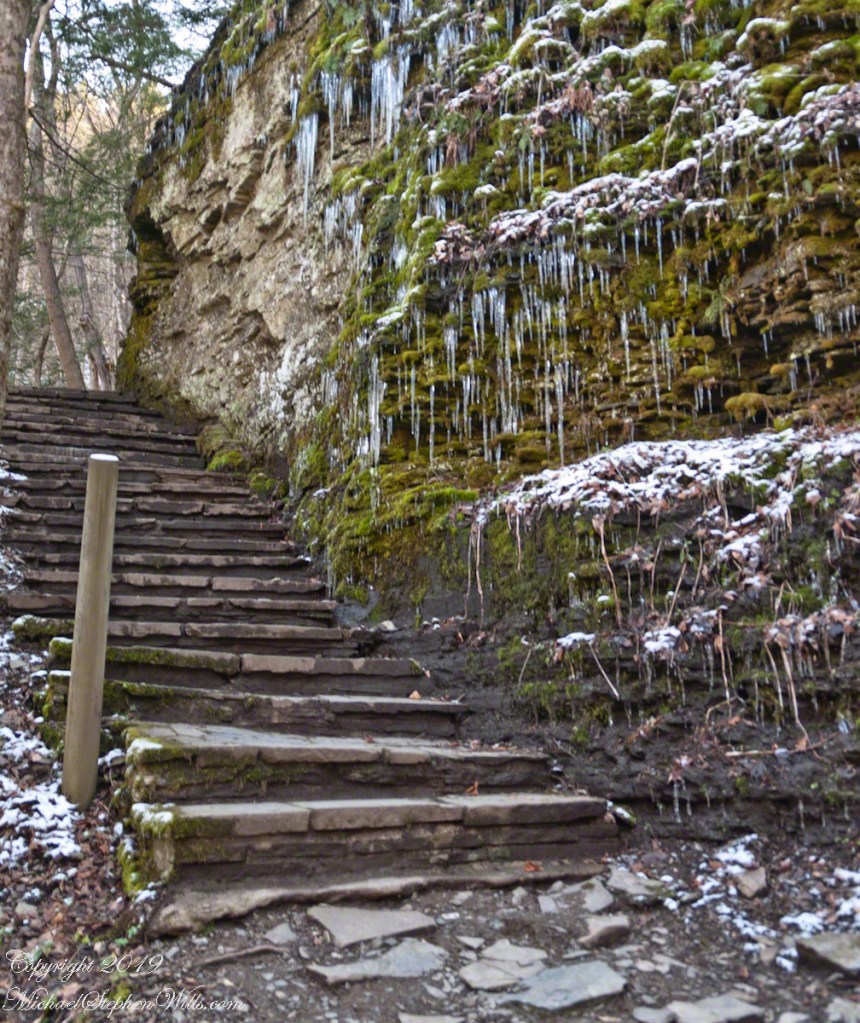
224 Steps

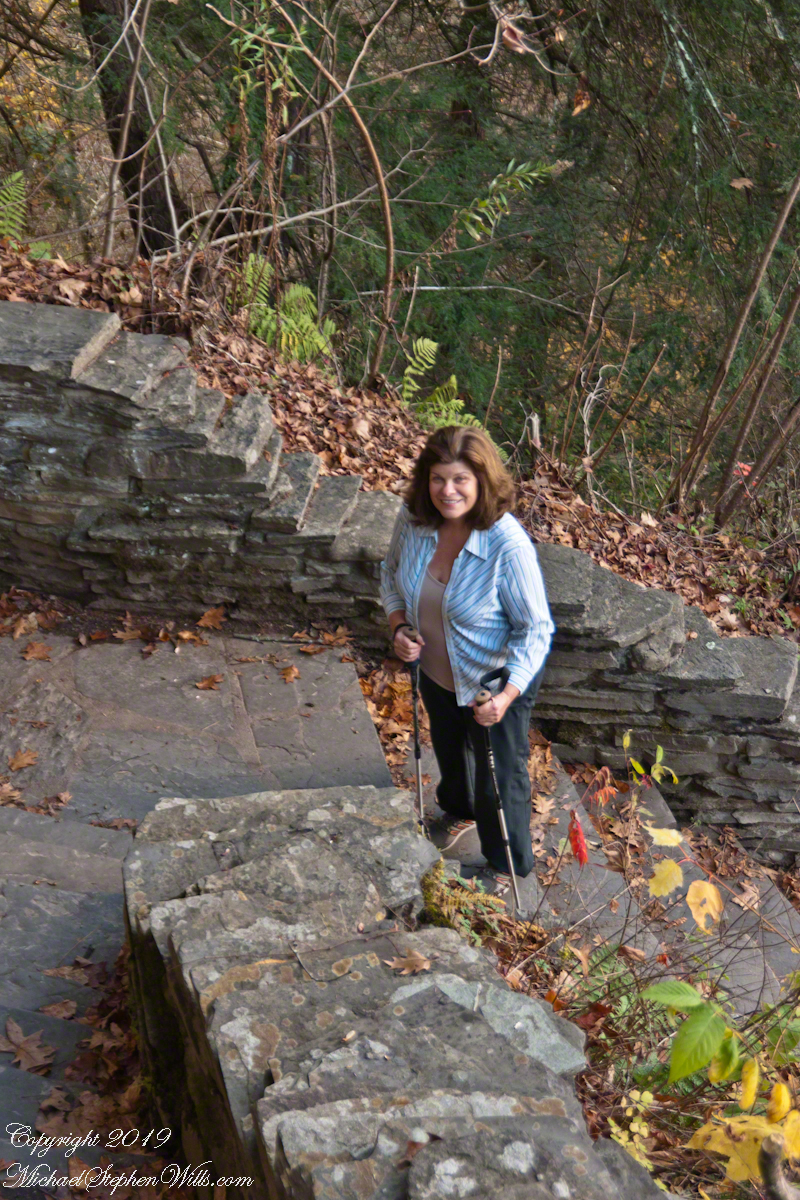
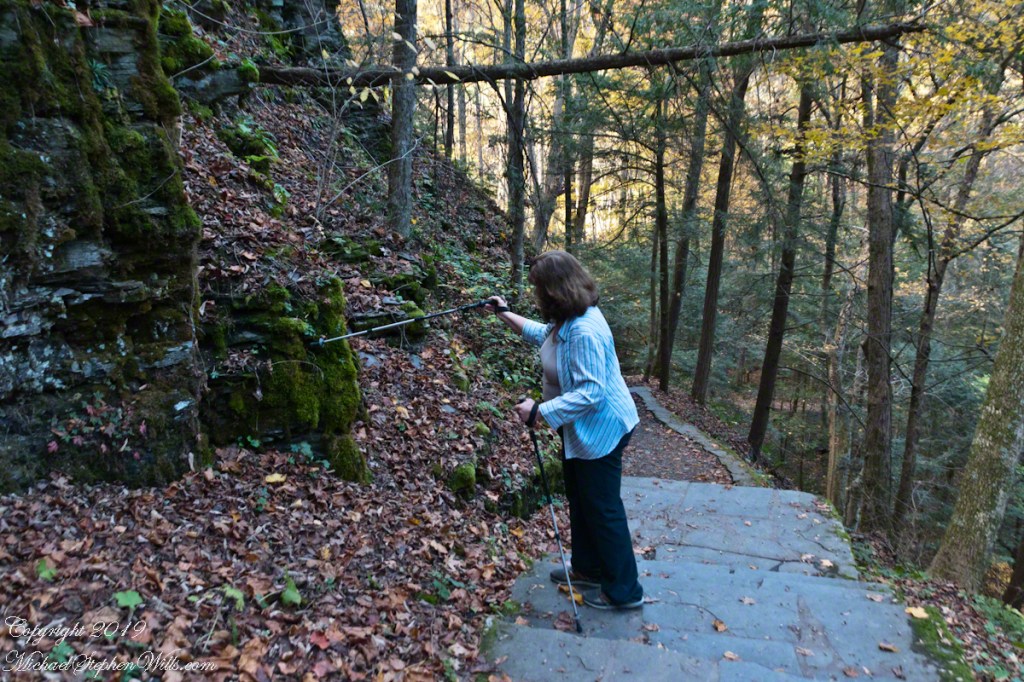
Each wall is support for the next flight of stairs

The stairs are cut into a cliff, using switchbacks with landings and strategically placed benches.

Click photograph for a larger view. To do this from WordPress Reader, you need to first click the title of this post to open a new page.

This work was accomplished by the Civilian Conservation Corps in the 1930’s, during the Great Depression.

These shots were hand held. I used a Sony Alpha 700 dslr with a variable “zoom” lens, great for framing compositions.

Robert H. Treman New York State Park.

Click for macro slideshow.

Copyright 2024 All Rights Reserved Michael Stephen Wills

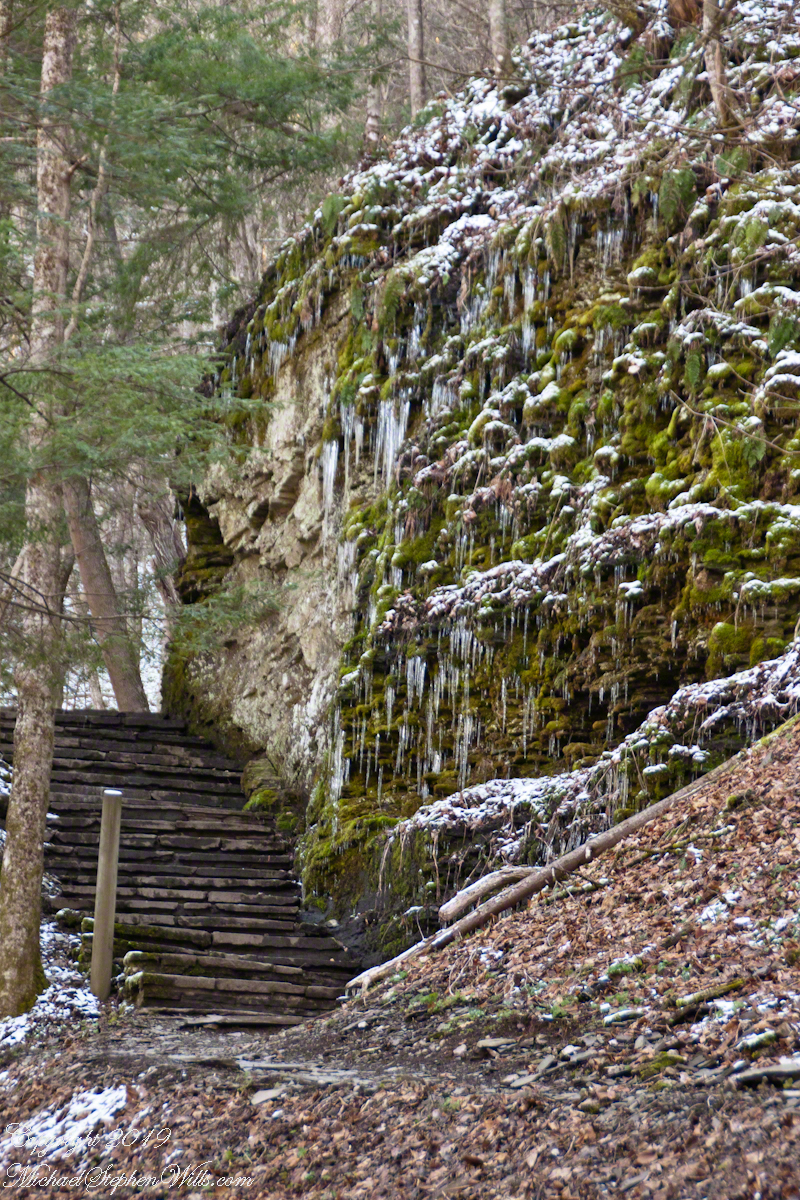
So Like A Christmas Tree

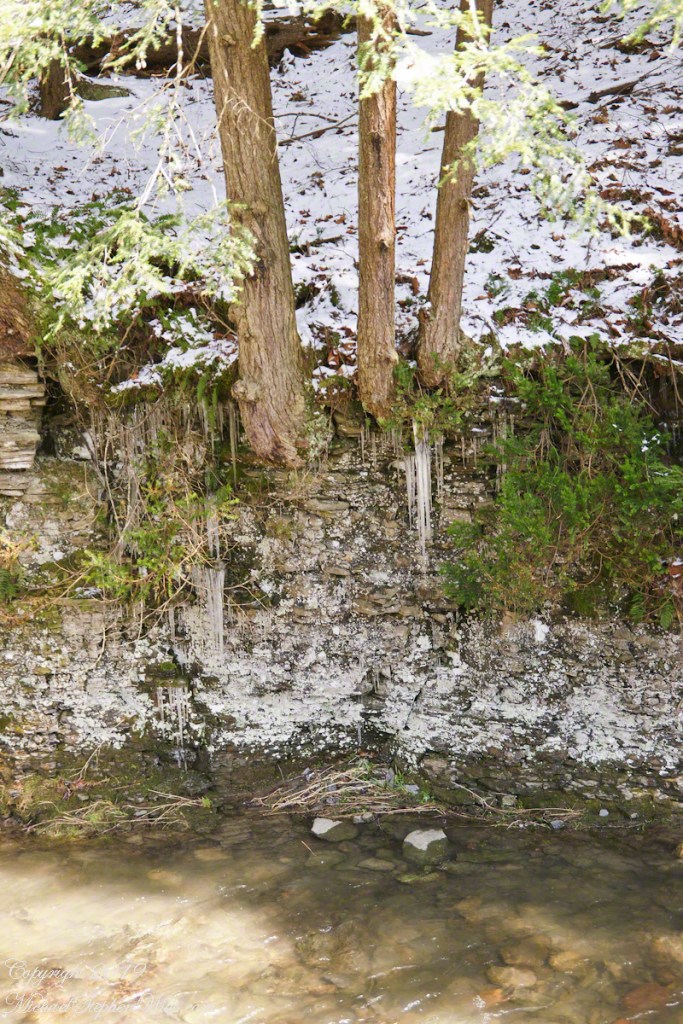
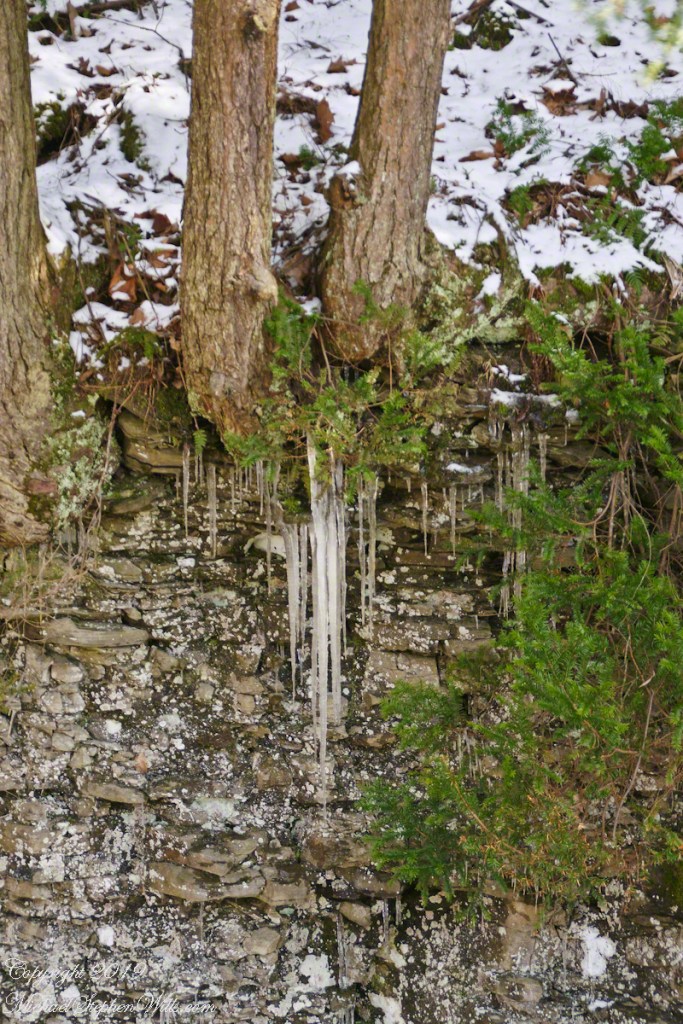
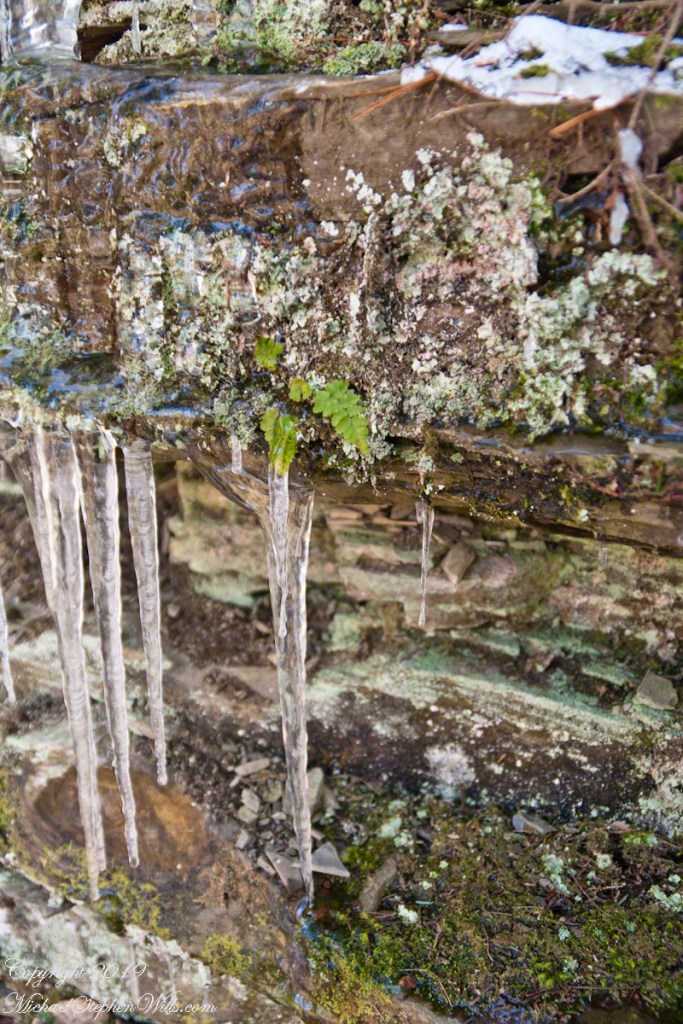
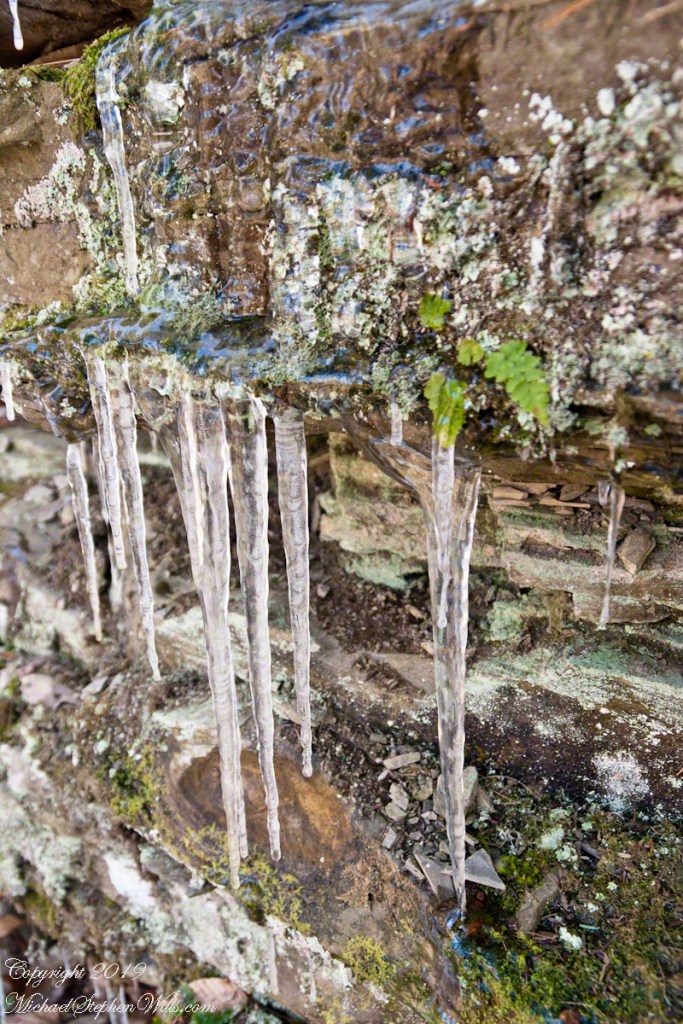
Icicles Catch The Light

Approaching the Cliff Stair after a sudden April frost.

Click photograph for a larger view. To do this from WordPress Reader, you need to first click the title of this post to open a new page.

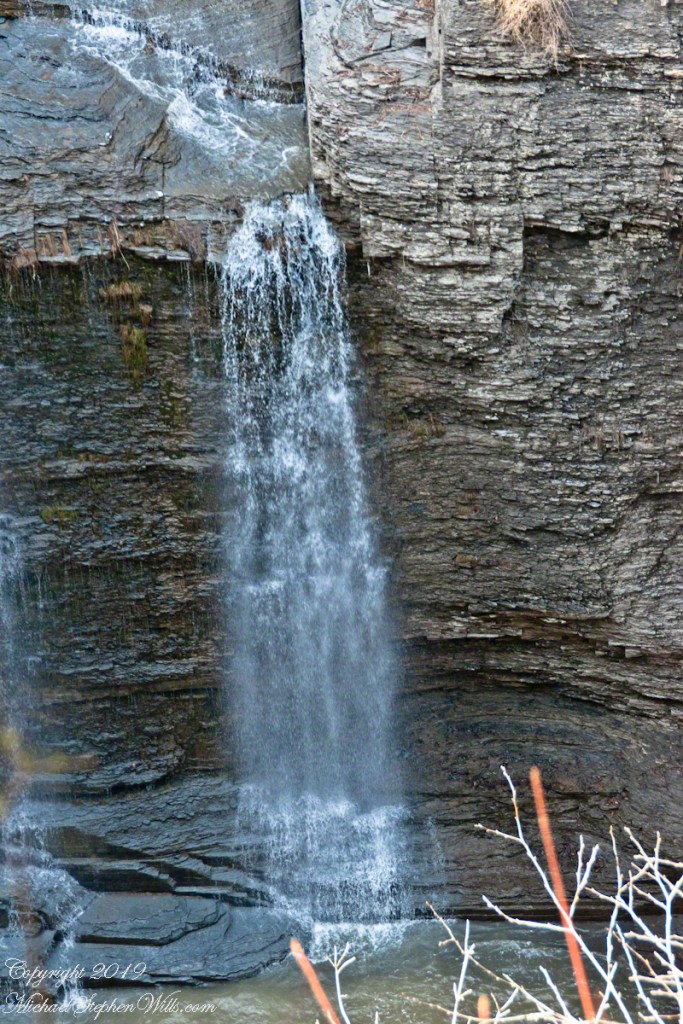
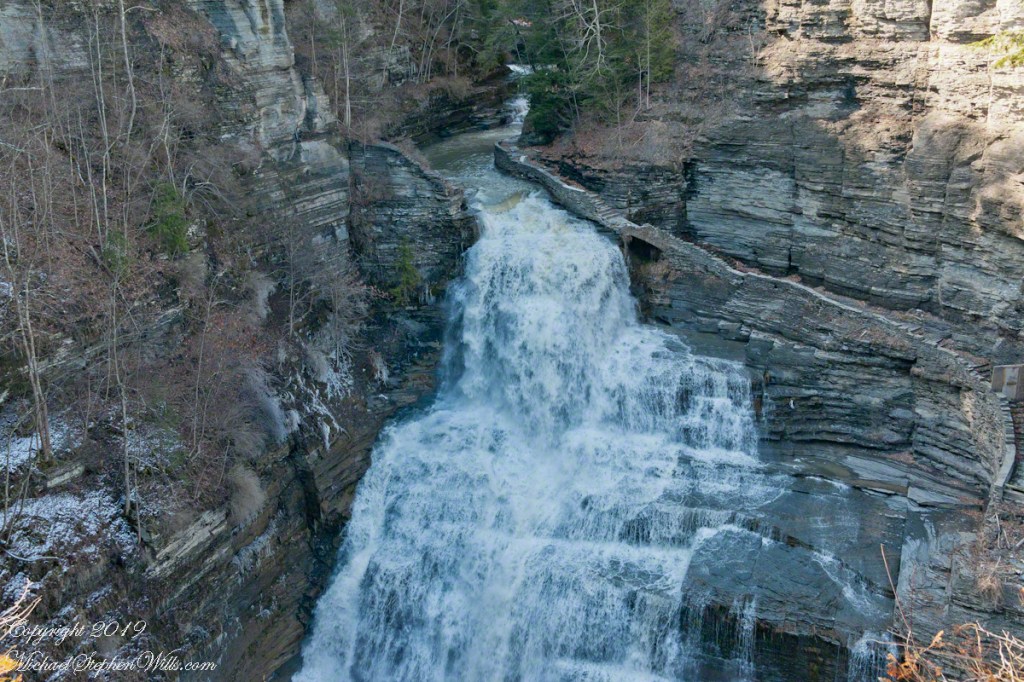
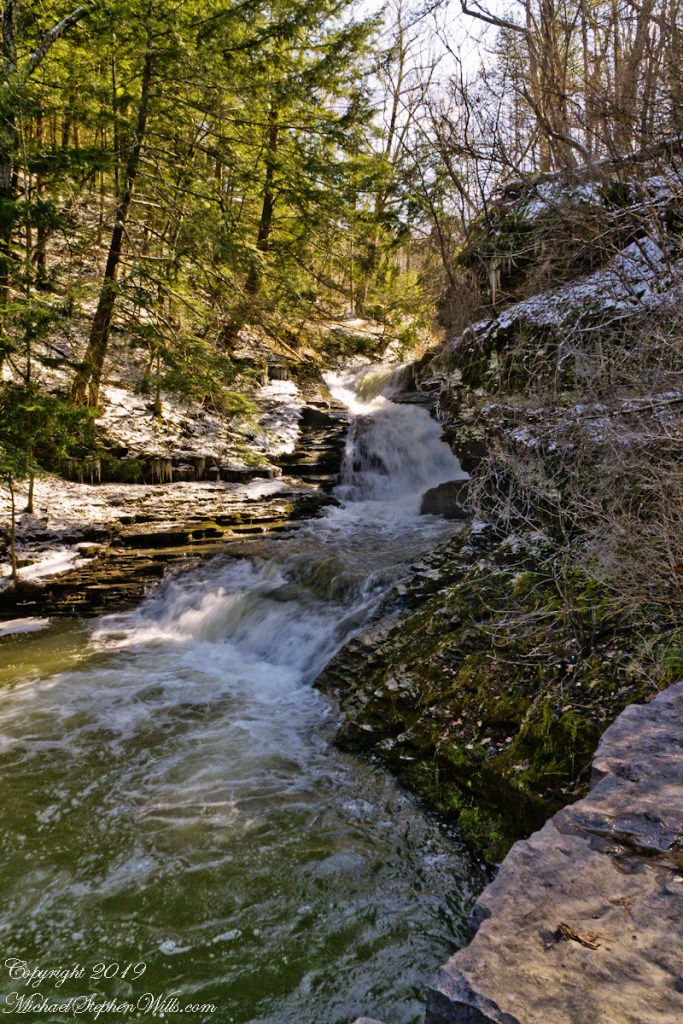
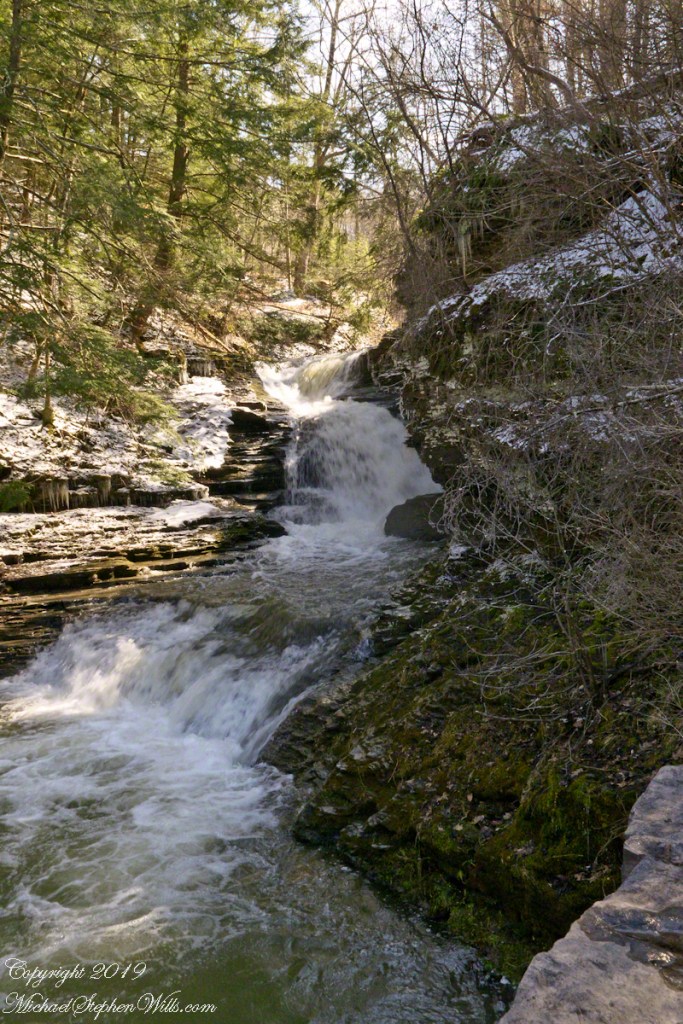
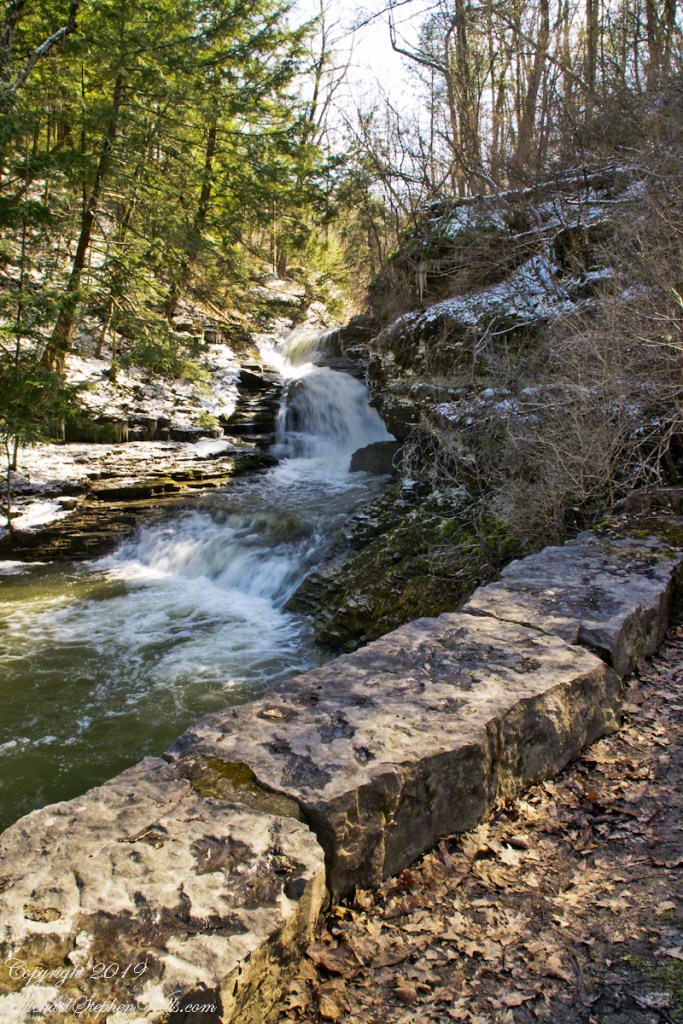
Lucifer Falls in spring flood is a constant roar.

These shots were hand held. I used a Sony Alpha 700 dslr with a variable “zoom” lens, great for framing compositions.

Robert H. Treman New York State Park.

Click for macro slideshow.

Copyright 2024 All Rights Reserved Michael Stephen Wills

April Freeze Slideshow

Here is a recapitulation of my latest posts in the form of a slideshow.

Click photograph to start show. To do this from WordPress Reader, you need to first click the title of this post to open a new page.

Robert H. Treman New York State Park.

Copyright 2024 All Rights Reserved Michael Stephen Wills

Through a Veil

A Hemlock Curtain

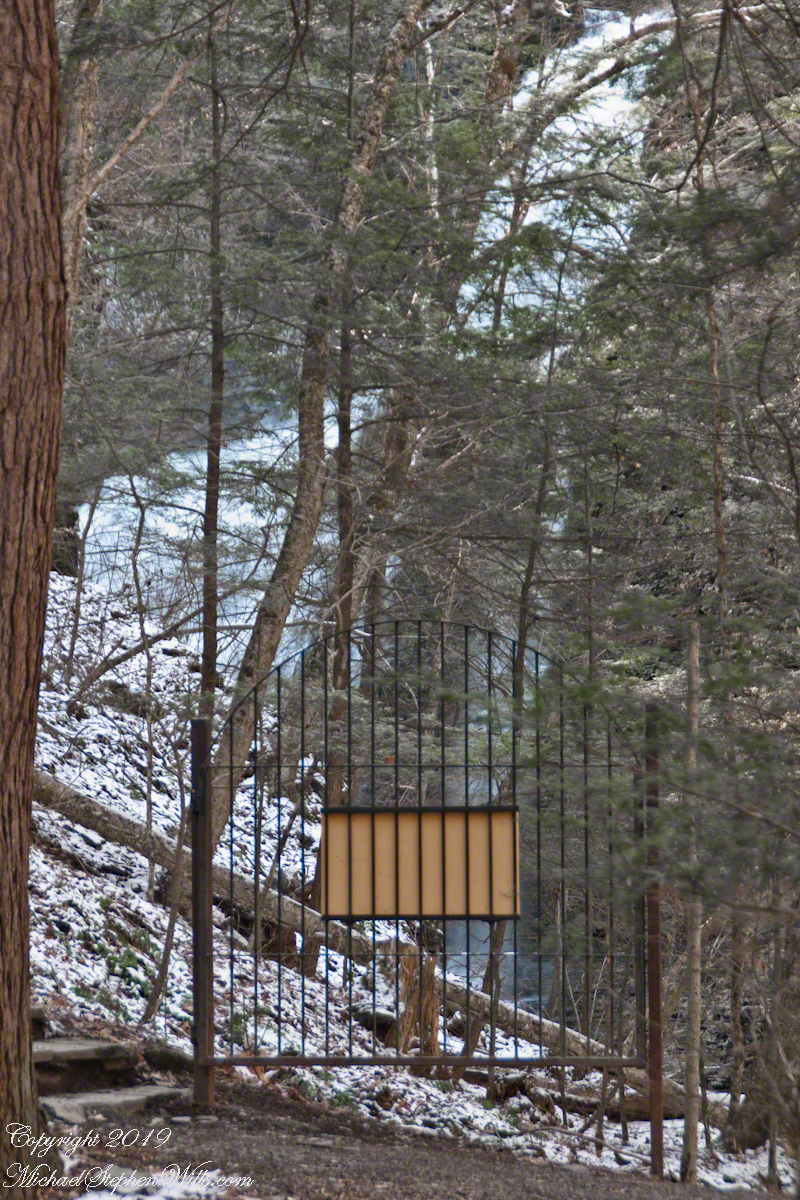
Early April the Gorge Trail along Lucifer Falls is closed, here we look up to the falls in flood from a safe distance.

Click photograph for a larger view. To do this from WordPress Reader, you need to first click the title of this post to open a new page.

The Rim Trail gate to the Cliff Stairs is open. We are headed that way.

These shots were hand held. I used a Sony Alpha 700 dslr with a variable “zoom” lens, great for framing compositions.

Robert H. Treman New York State Park.

Click for macro slideshow.

Copyright 2024 All Rights Reserved Michael Stephen Wills

Up the Rim Trail

Key words: steep, icy

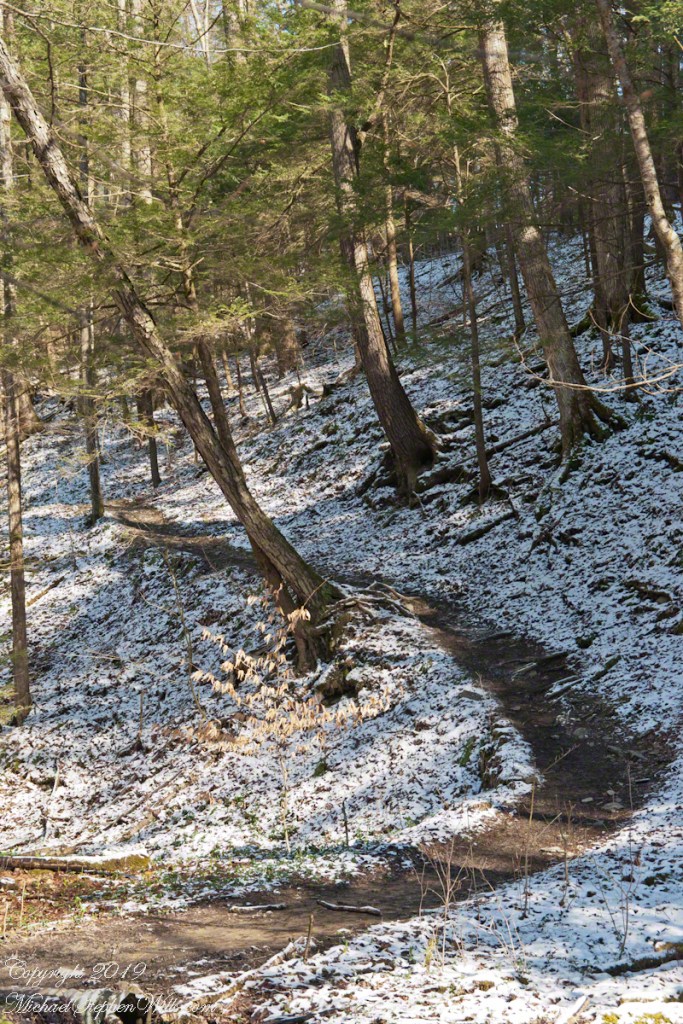
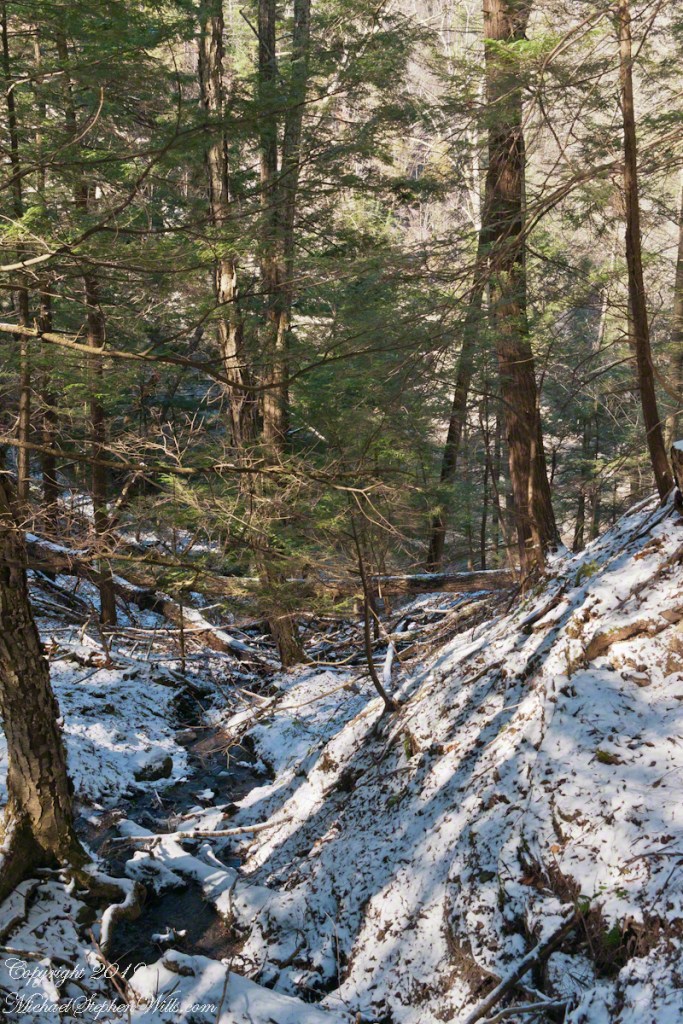
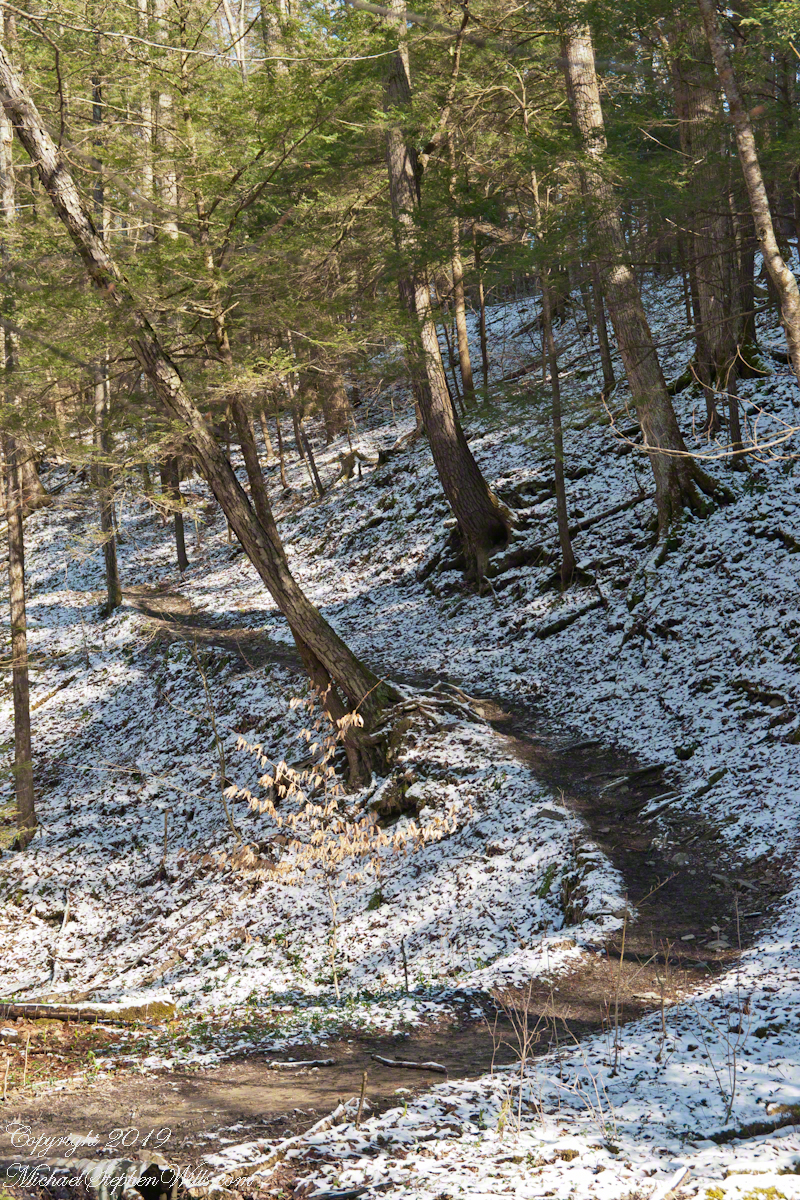
It is the Gorge Trail that’s closed for the cold months, November through April. The Rim Trail remains open for those who dare icy, steep paths Unlike Gorge Trail, Rim Trail climbs above the dangerous cliffs from which rocks are wedged free by ice to fall on the trail. On an early spring day, after a sudden frost, we walked the Rim Trail to capture the moment.

Here is the steep start, climbing up from the Upper Park where a footbridge crosses Fish Kill. Kill is the old Dutch word for creek. Fish Kill mergers with Enfield Creek a few hundred feet downstream.

Click photograph for a larger view. To do this from WordPress Reader, you need to first click the title of this post to open a new page.

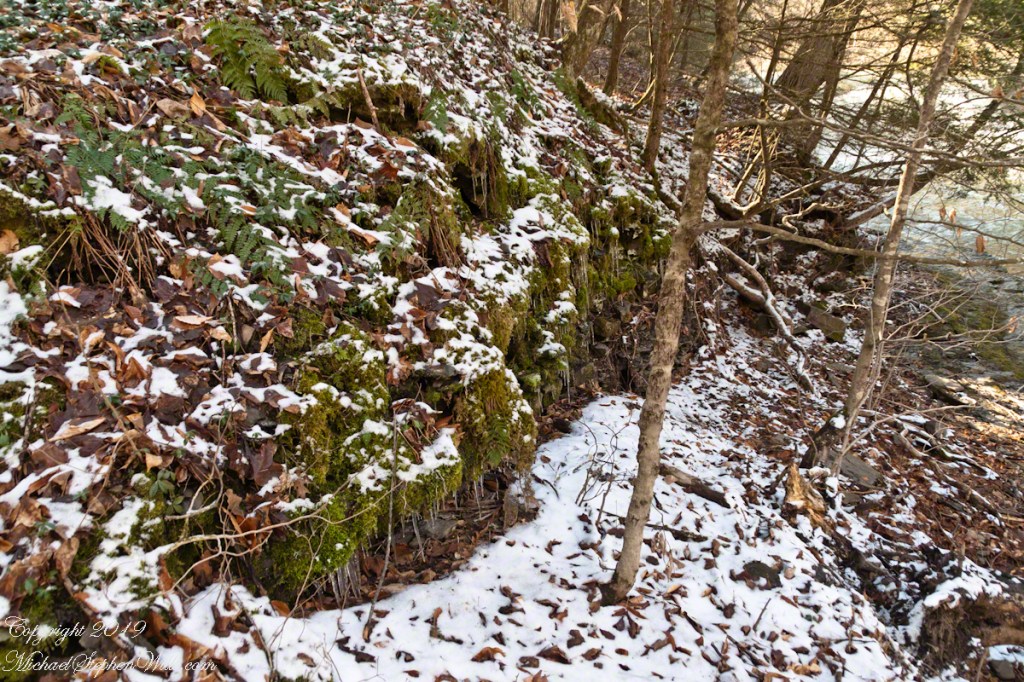
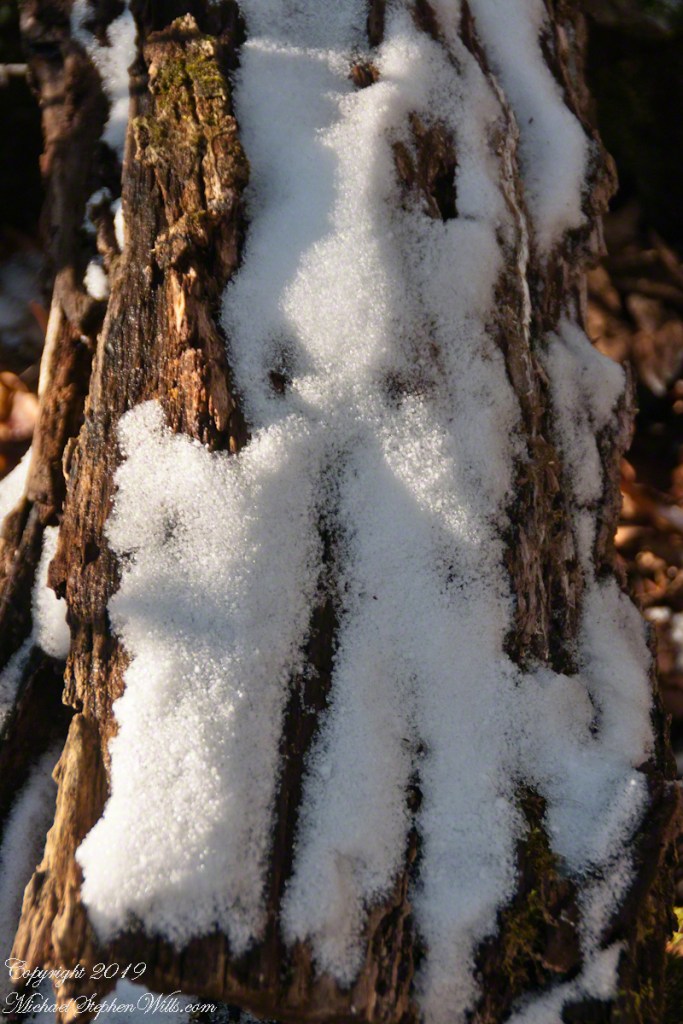
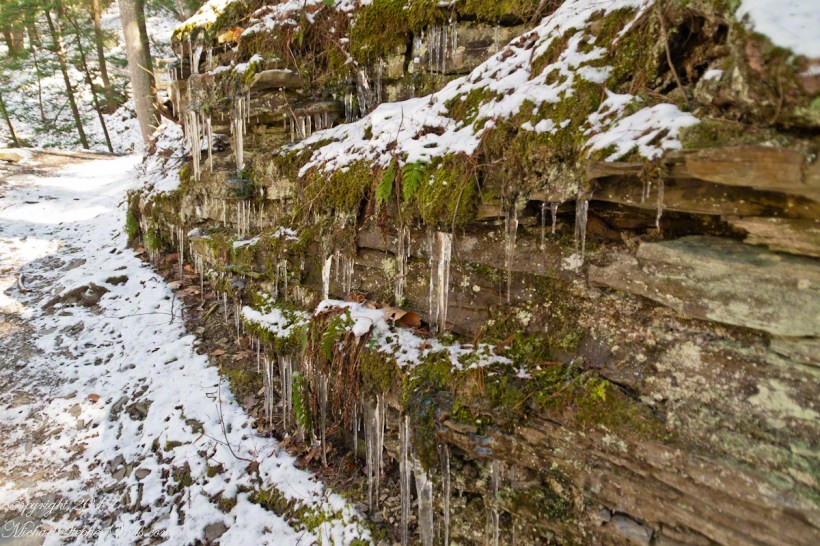
This north facing slope stays frozen into May. Here layers of the sedimentary rock shale, laid down in a shallow warm sea over 350 million years ago, are slowly pried apart. Hemlock tree roots wedge between rock layers, slowly growing. The action of ice, water expands in volume at the point of freezing, aids the process.

In places the rock face appears to be a hastily made dry stone wall, the rock layers are so disrupted by plant and frost.

These shots were hand held. I used a Sony Alpha 700 dslr with a variable “zoom” lens, great for framing compositions.

Robert H. Treman New York State Park.

Click for a slideshow of this Waterfall of the Old Mill sequence
Copyright 2024 All Rights Reserved Michael Stephen Wills

Ascent

Andrew Wyeth effect

Here the Rim Trail climbs out of the flats beneath the Cliff Stairs, away from Enfield Creek, onto the upper slopes of the gorge.

Click photograph for a larger view. To do this from WordPress Reader, you need to first click the title of this post to open a new page.

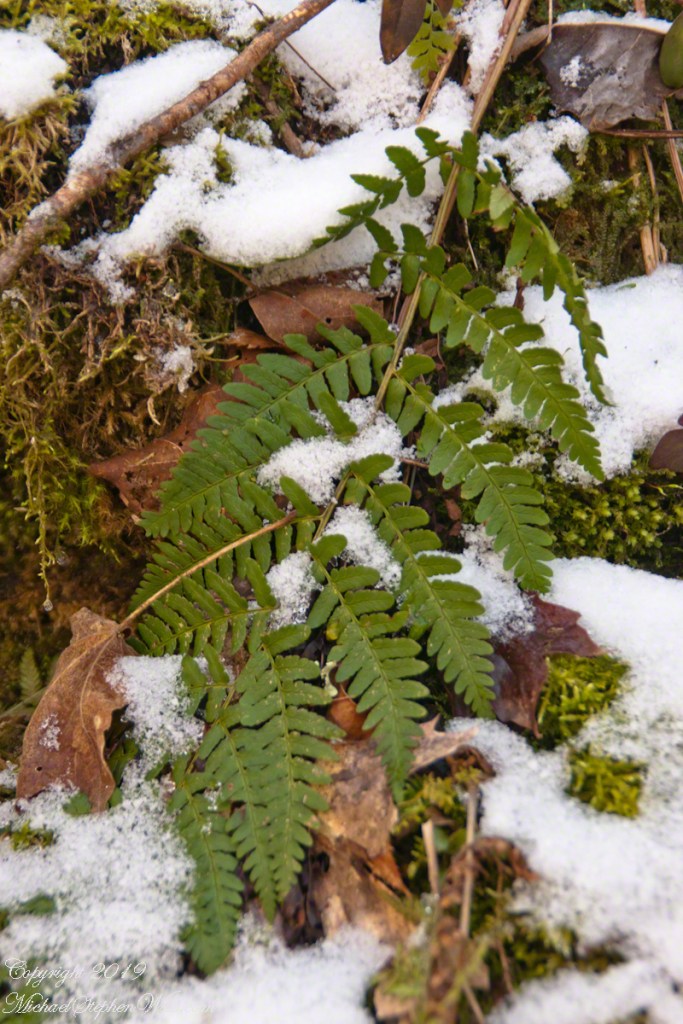
Early spring snow highlights the path, threading between hemlocks. The American realistic painter Andrew Wyeth comes to mind with I see the mottled texture of this light snow. He captured some of this in landscape paintings such as “Snow Flurries.”
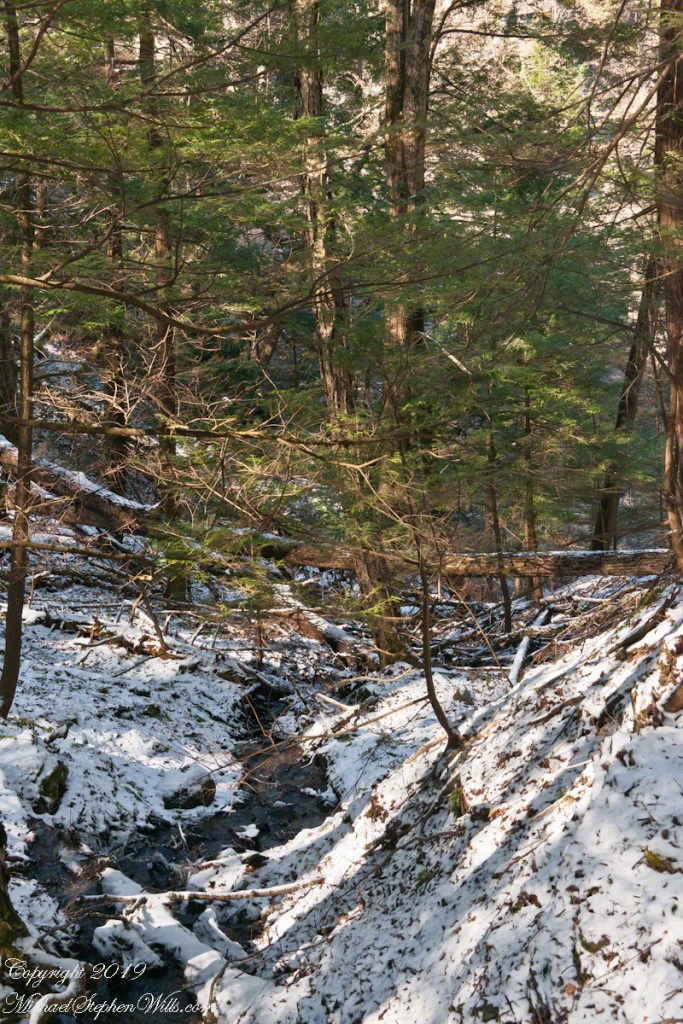
Here is more of this effect……

These shots were hand held. I used a Sony Alpha 700 dslr with a variable “zoom” lens, great for framing compositions.

Robert H. Treman New York State Park.

Click for a slideshow of this Fertile Flats sequence.
Copyright 2024 All Rights Reserved Michael Stephen Wills

Periwinkle

Source of life-saving drug

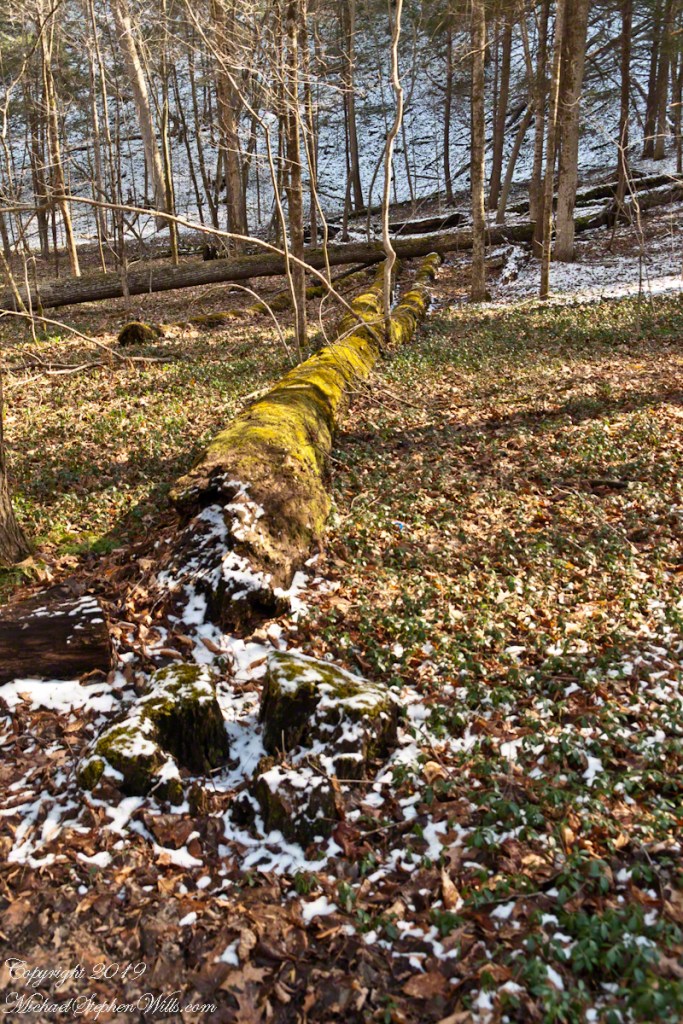
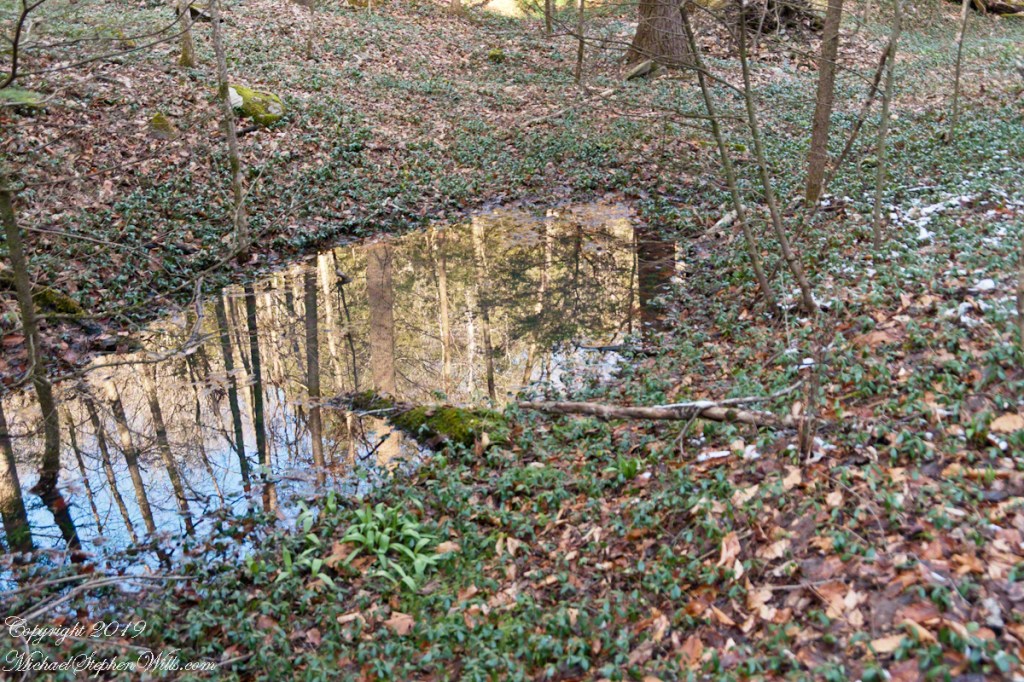
A broad, fertile flat between gorge walls supports a dense growth of invasive creeping myrtle. Springtime there is a sprinkling of small blue flowers, this may be the source of another name, periwinkle, or lesser periwinkle.

Click photograph for a larger view. To do this from WordPress Reader, you need to first click the title of this post to open a new page.

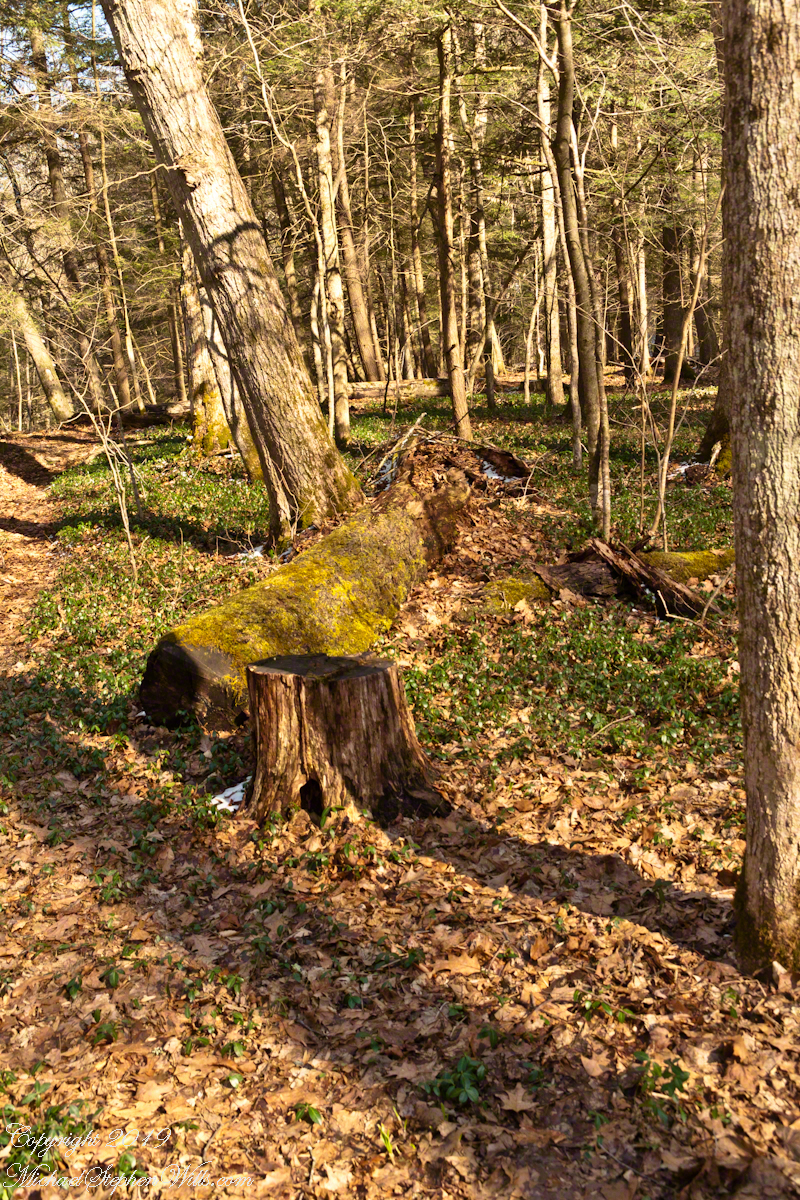
Periwinkle is an evergreen and in early times vinca vine (another name we call it, from the scientific name Vinca Minor) was planted in graveyards and cemeteries. The isolated growth of vinca vine in this section of the gorge maybe from such a planting on a lost grave.

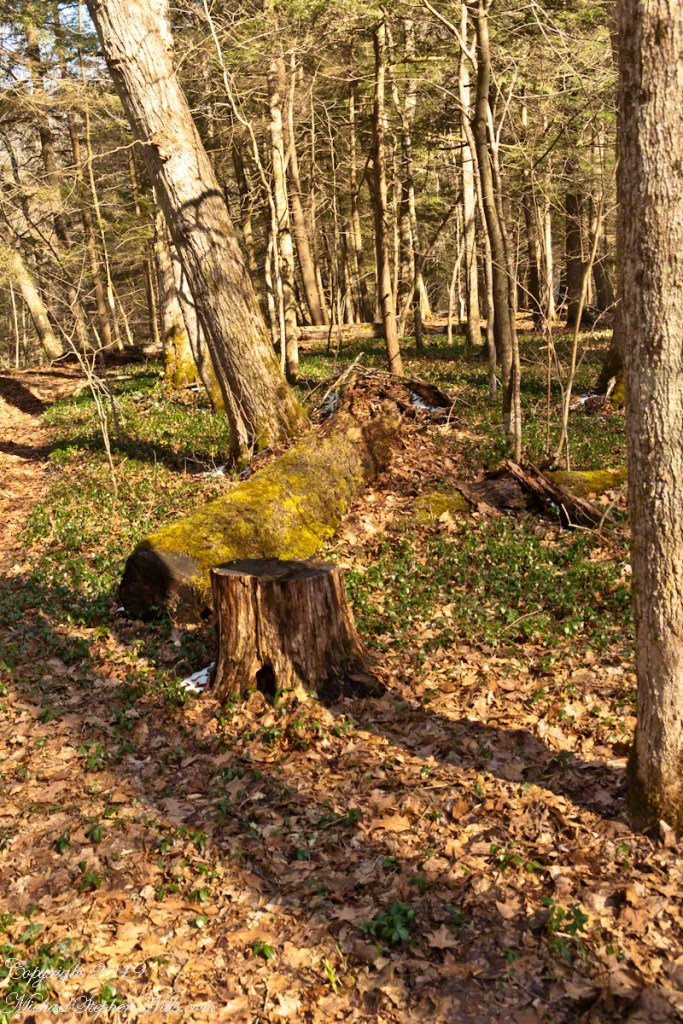
Today, the park practices leaving fallen trees in place, here they are covered in years of moss, a memory of headstones. Lesser Perriwinkle is significant for the living as the source of vincamine, from the leaves. A synthetic form of this compound is a potent vasodilator, a therapeutic treatment for stroke and other brain disorders.

These shots were hand held. I used a Sony Alpha 700 dslr with a variable “zoom” lens, great for framing compositions.

Robert H. Treman New York State Park.

Source: Wikipedia, “Vinca Minor.”
Click for a slideshow of this Fertile Flats sequence.
Copyright 2024 All Rights Reserved Michael Stephen Wills

Ephemeral

Amphibian haven, breeding place

Melting snow, spring rains, gather in hollows of the forest floor to form ephemeral pools important for the development of amphibian life.

Click photograph for a larger view. To do this from WordPress Reader, you need to first click the title of this post to open a new page.

Also named vernal pools, from the Latin word for spring or the time of the equinox. The pools are ephemeral in the sense of being temporary, disappearing in the warmer, dryer late spring and summer months, a characteristic important for amphibian live in being devoid of predatory fish.

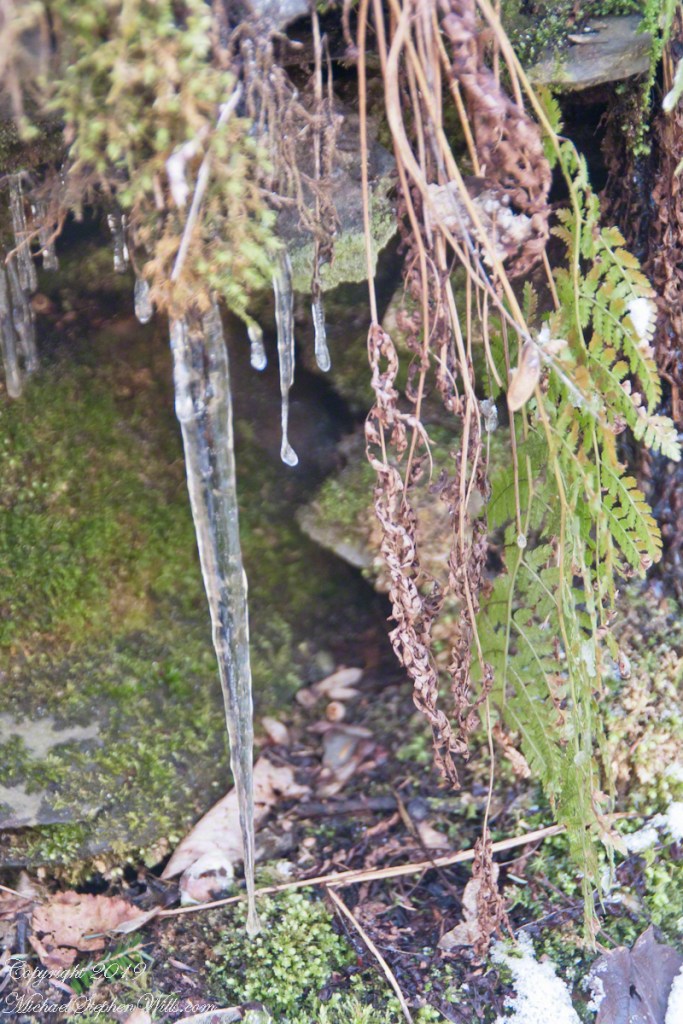
Here the pool forms on a flat beneath the walls of Enfield Gorge. Here is another photograph featuring the ephemeral winter theme, “The Cave.”
These shots were hand held. I used a Sony Alpha 700 dslr with a variable “zoom” lens, great for framing compositions.

Robert H. Treman New York State Park.

Sources: Wikipedia, “Vernal Pool” and Merriam Webster online.

Click for a slideshow of a few photographs published recently.
Copyright 2024 All Rights Reserved Michael Stephen Wills