Cusco Hills, Peru

Ancient Farming Technique

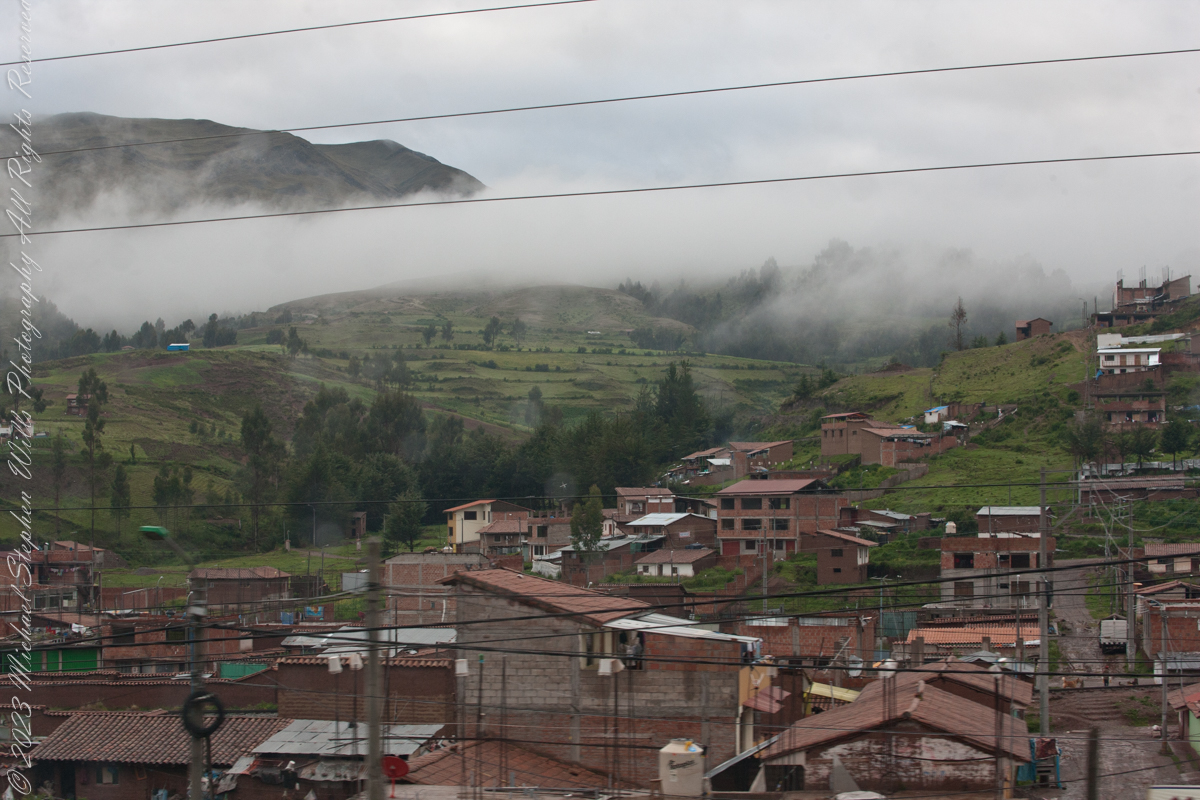
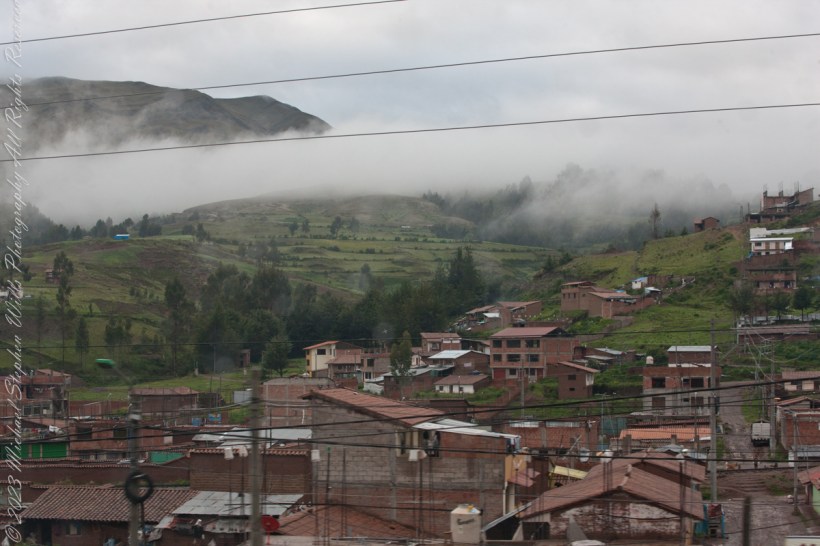
Here we are, passing the outskirts in the hills surrounding Cusco, Peru. Route 3S, going under various names. Highland Road (North) (Longitudinal de la Sierra Norte)Highway, climbs out of Cusco in broad switchbacks.

Click Me for my Online Gallery

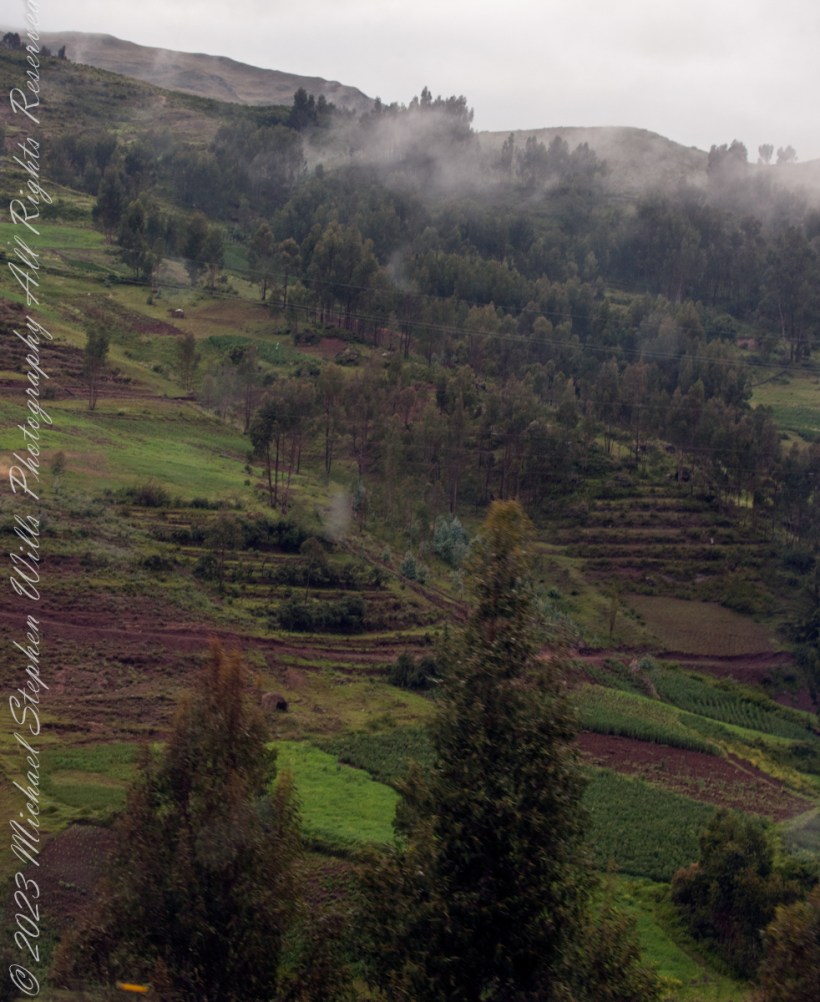
View of terraced fields from route 3S through the hills above Cusco, Peru. “In the South American Andes, farmers have used terraces, known as andenes, for over a thousand years to farm potatoes, maize, and other native crops.

Terraced farming was developed by the Wari culture and other peoples of the south-central Andes before 1000 AD, centuries before they were used by the Inca, who adopted them. The terraces were built to make the most efficient use of shallow soil and to enable irrigation of crops by allowing runoff to occur through the outlet. The Inca people built on these, developing a system of canals, aqueducts, and puquios to direct water through dry land and increase fertility levels and growth. These terraced farms are found wherever mountain villages have existed in the Andes. They provided the food necessary to support the populations of great Inca cities and religious centers such as Machu Picchu.

Reference: “Terrace (earthworks)” Wikipedia

Copyright 2023 Michael Stephen Wills All Rights Reserved

On Point at the Cusco Saturday Market reprise

Marketing choices

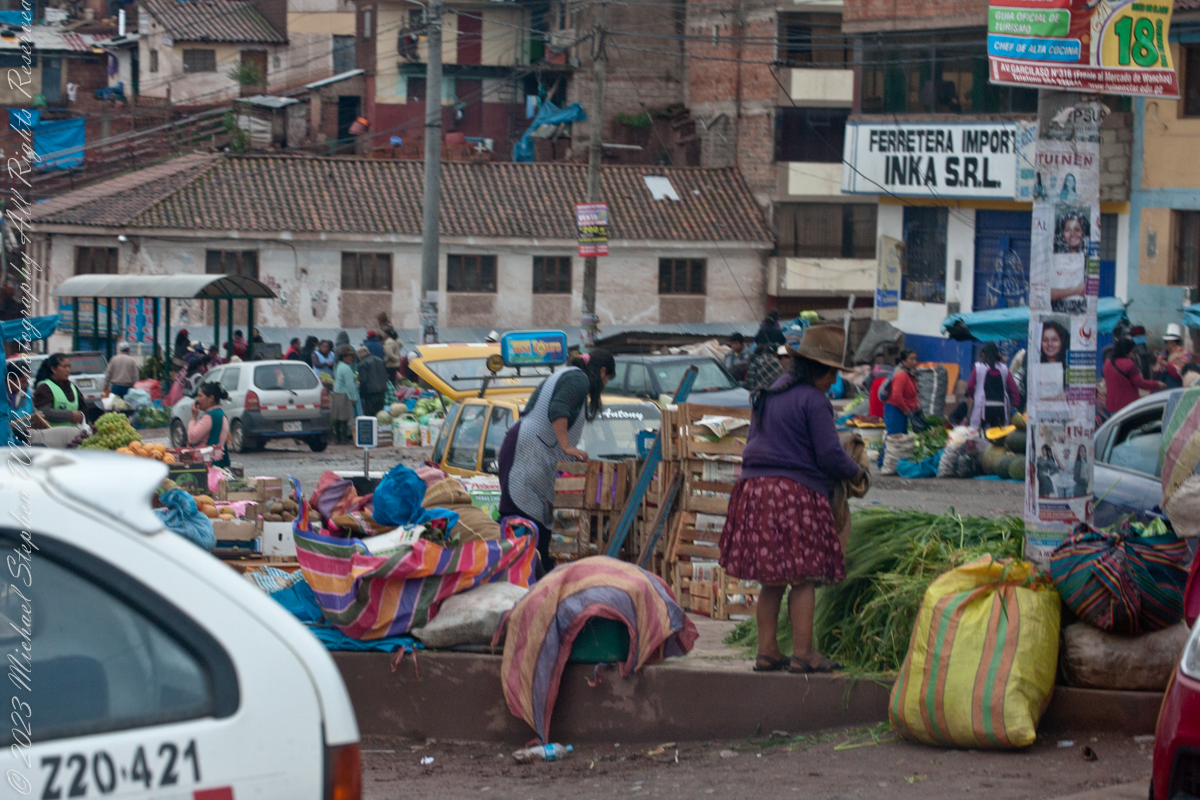
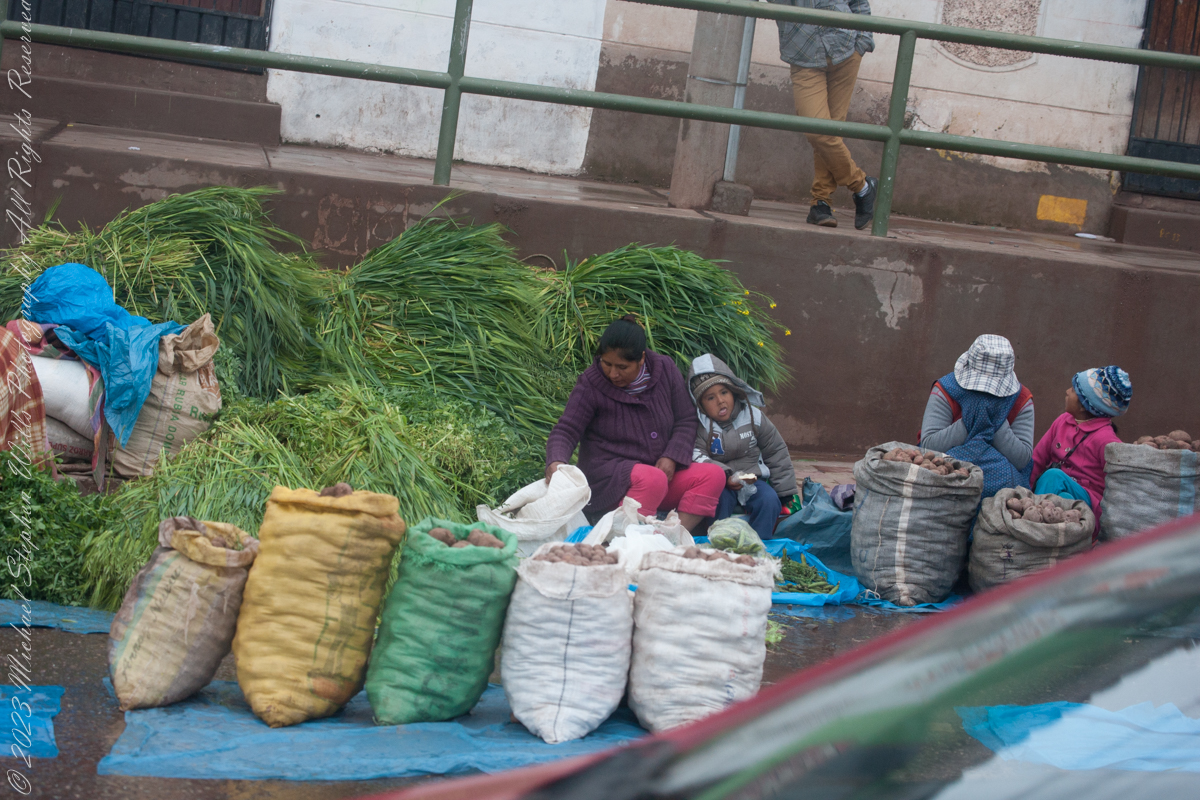
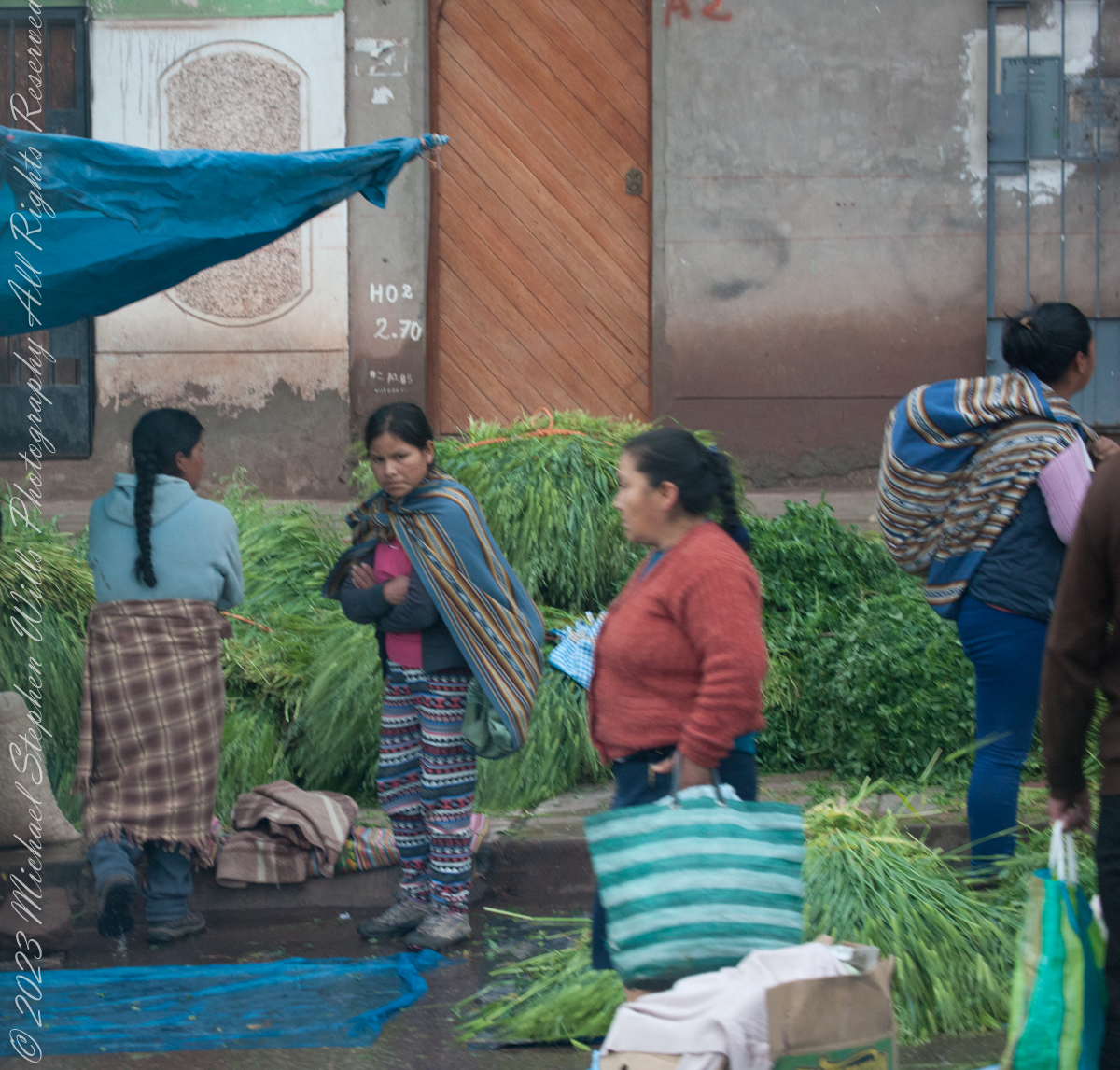
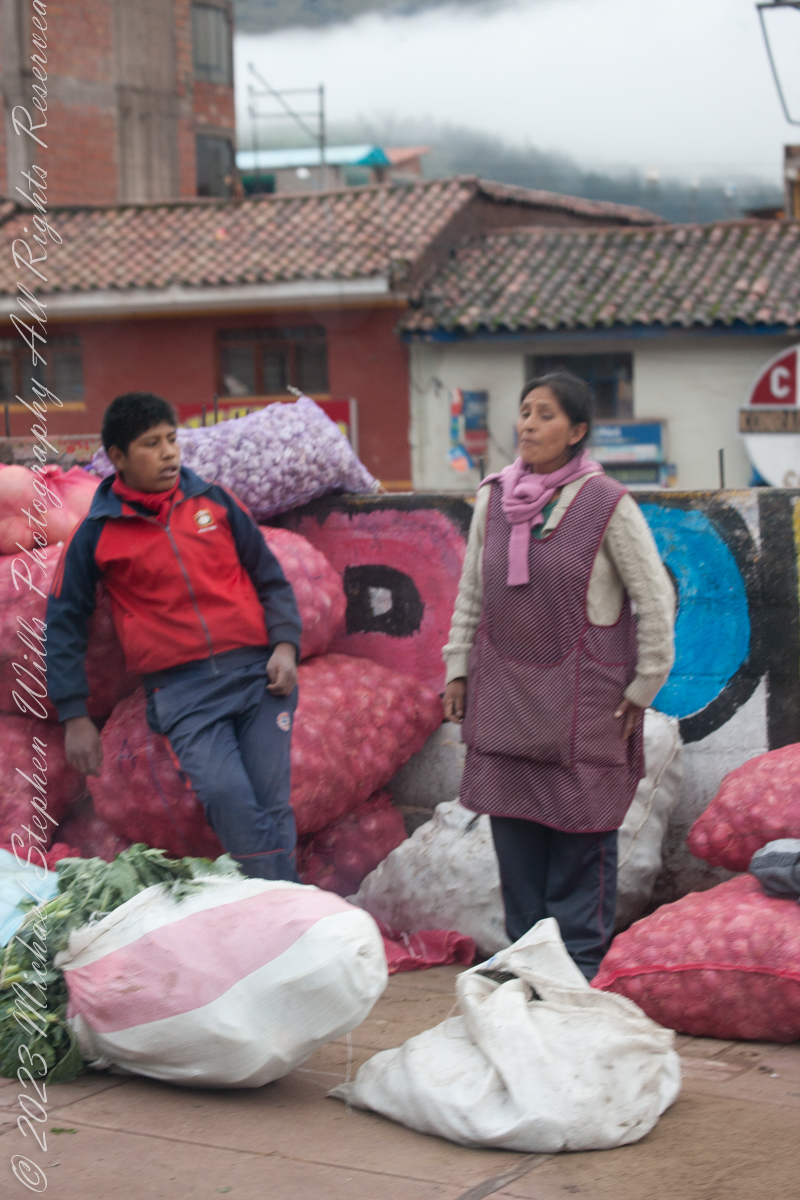
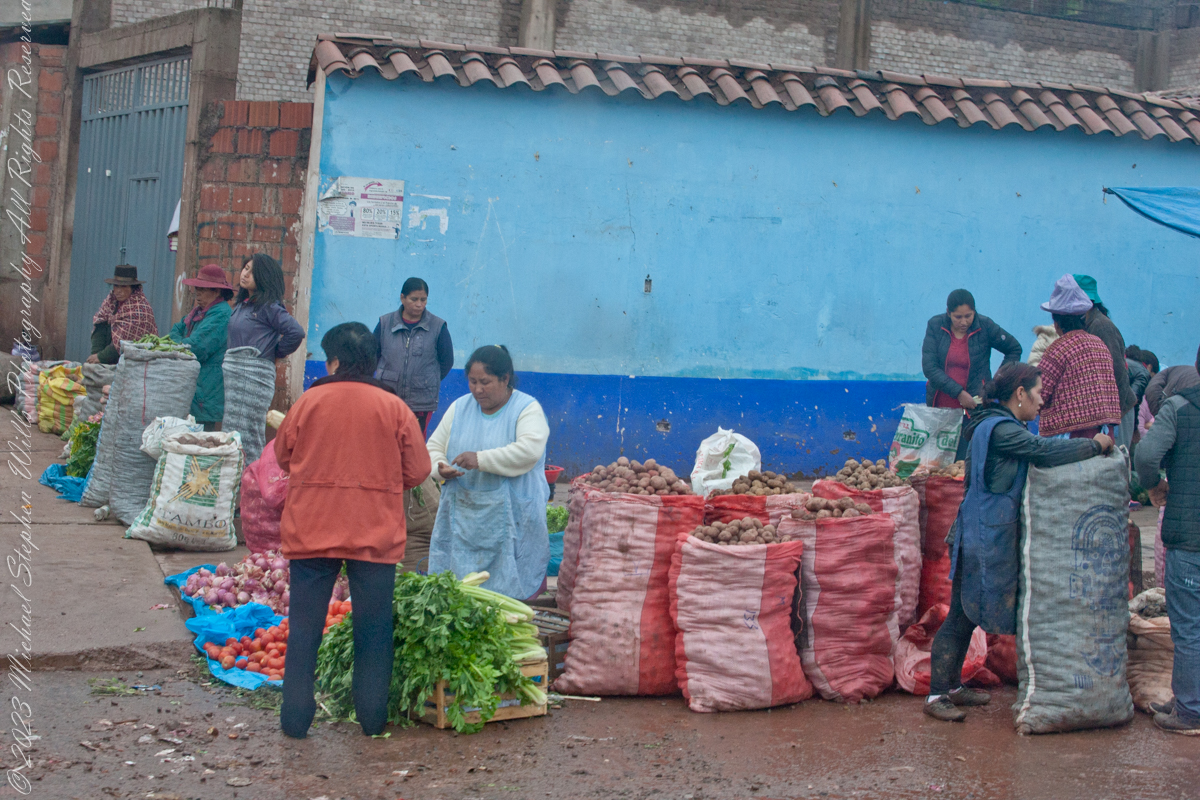
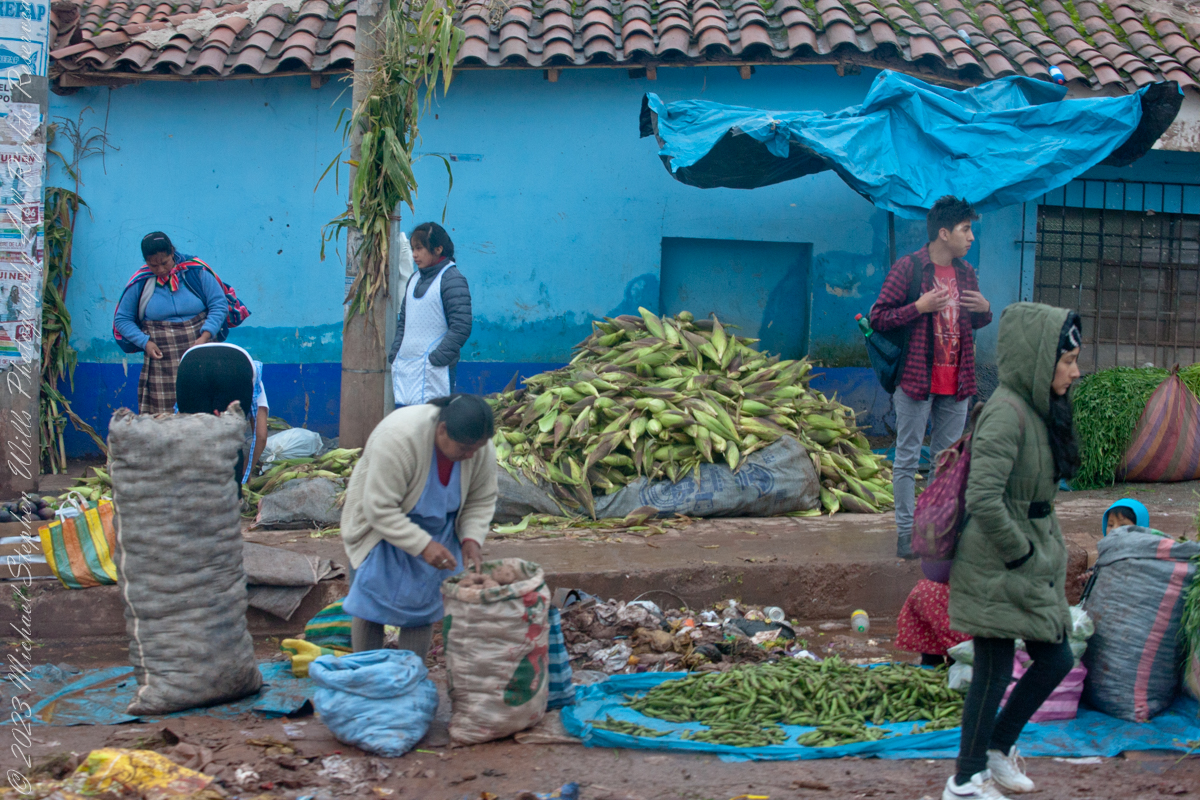
The scenes at Cusco’s Saturday Market were fascinating. The shooting was through a clean bus window using a handheld Canon EF 70-300 f/4-5.6 L IS USM lens mounted on the Canon dslr 1DS Mark III.

Click Me for my Online Gallery

“Inka S.R.L.” is a agriculture company full name INDUSTRIA DE ALIMENTOS E INVERSIONES PERU INKA SRL specialized in ELAB OF OTHER PROD. FOOD.. It was created and founded on February 2, 2002.

Very early for these children…

Quechua people or Quichua people, may refer to any of the aboriginal people of South America who speak the Quechua languages, which originated among the Indigenous people of Peru. Although most Quechua speakers are native to Peru, there are some significant populations in Ecuador, Bolivia, Chile, Colombia, and Argentina. The woman center left sports traditional fabrics of her pants and shawl.

Onions and garlic, potatoes? Wild potato species can be found from the southern United States to southern Chile. The potato was originally believed to have been domesticated by Native Americans independently in multiple locations, but later genetic studies traced a single origin, in the area of present-day southern Peru and extreme northwestern Bolivia. Potatoes were domesticated there approximately 7,000–10,000 years ago, from a species in the Solanum brevicaule complex. In the Andes region of South America, where the species is indigenous, some close relatives of the potato are cultivated.

Potatoes!!

Maize, also known as corn in North American and Australian English, is a cereal grain first domesticated by indigenous peoples in southern Mexico about 10,000 years ago.

Click Me for the next post in this series.

Reference: Wikipedia “Maize,” “potato,” “Indigenous peoples of Peru.”

Copyright 2023 Michael Stephen Wills All Rights Reserved

On Point at the Cusco Saturday Market

Marketing choices

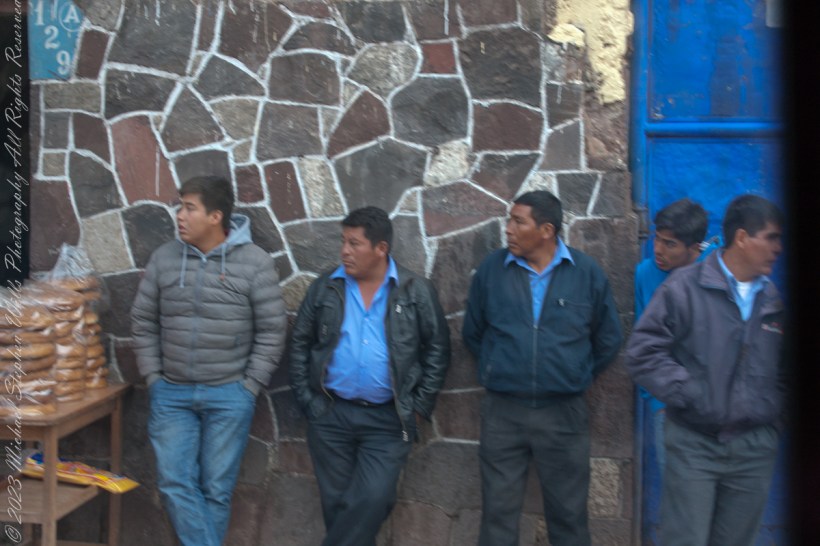
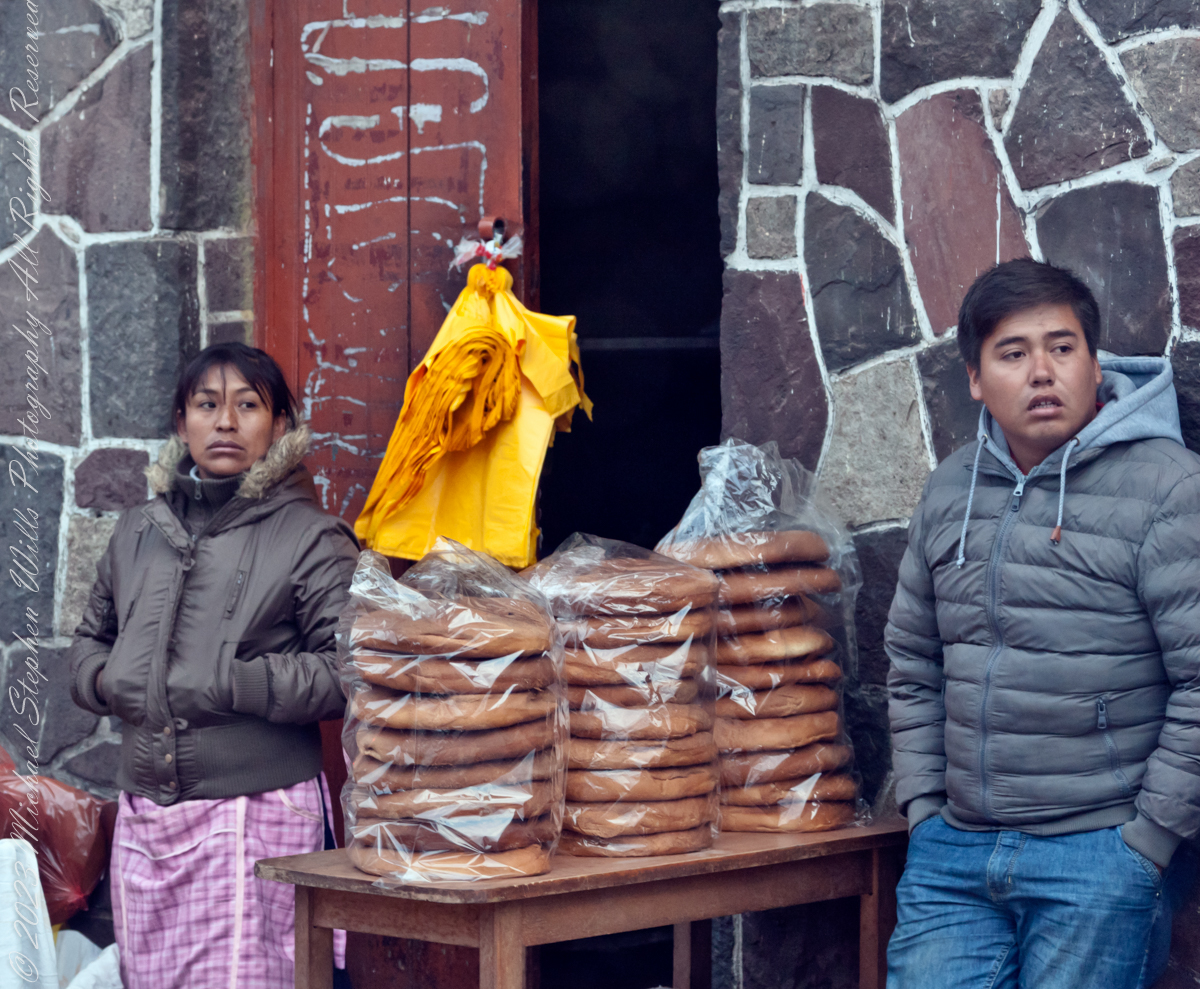
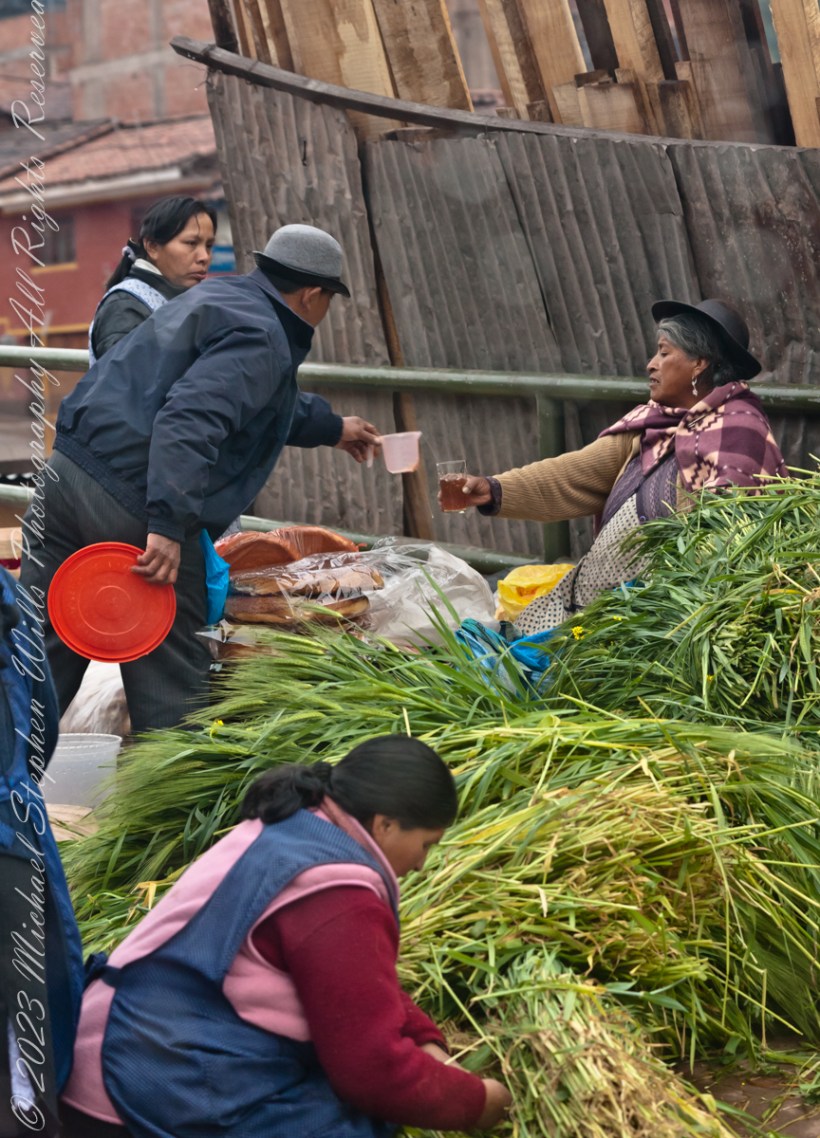
I caught these participants of the Cusco, Peru, Saturday Market as our bus progressed toward Machu Picchu during our daytrip to that ruin. The shooting was through a clean bus window using a handheld Canon EF 70-300 f/4-5.6 L IS USM lens mounted on the Canon dslr 1DS Mark III.

Click Me for my Online Gallery

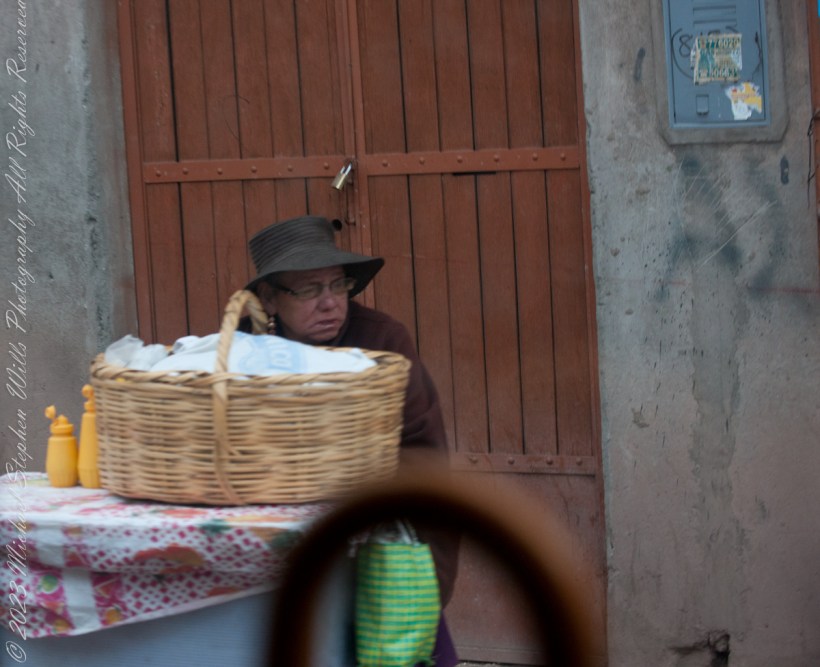
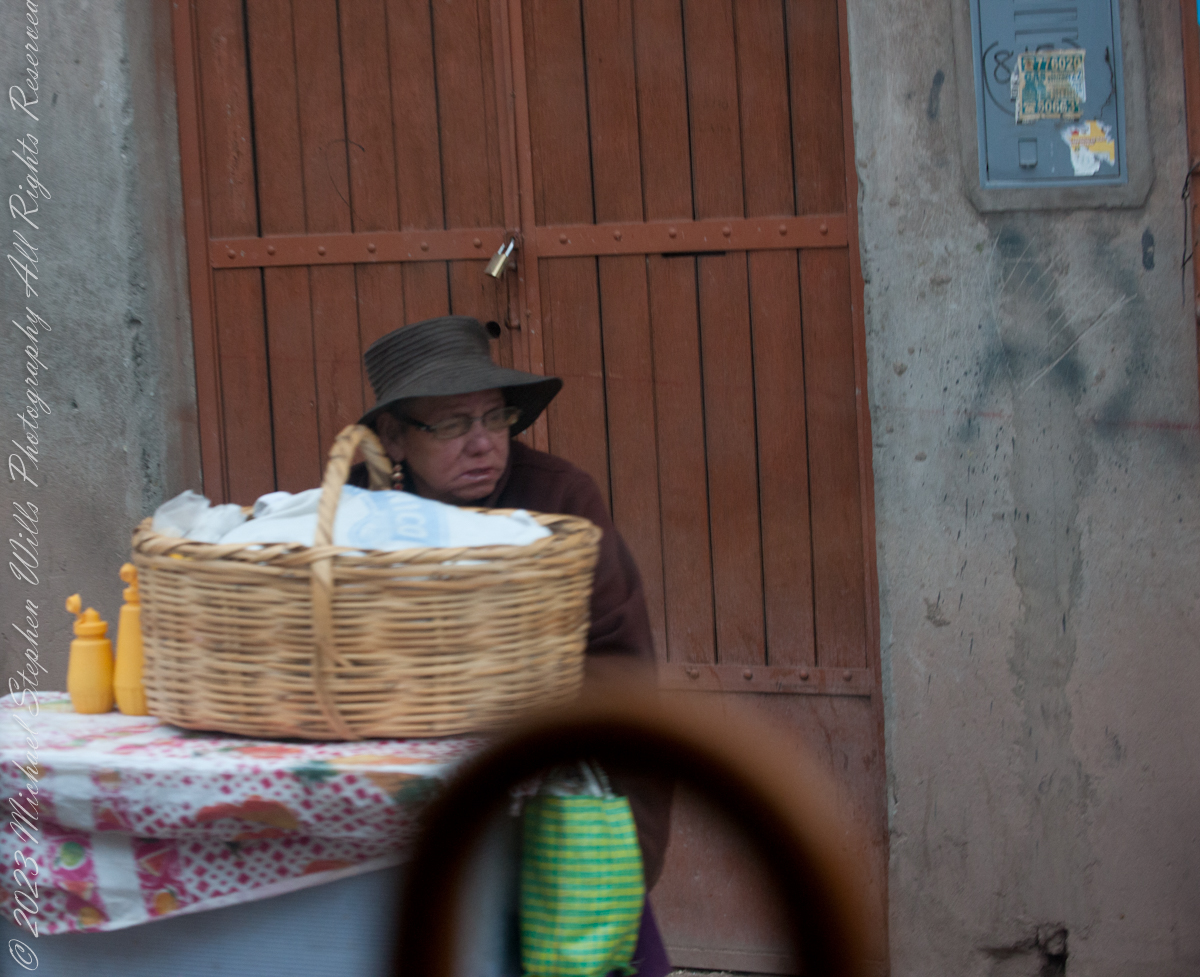
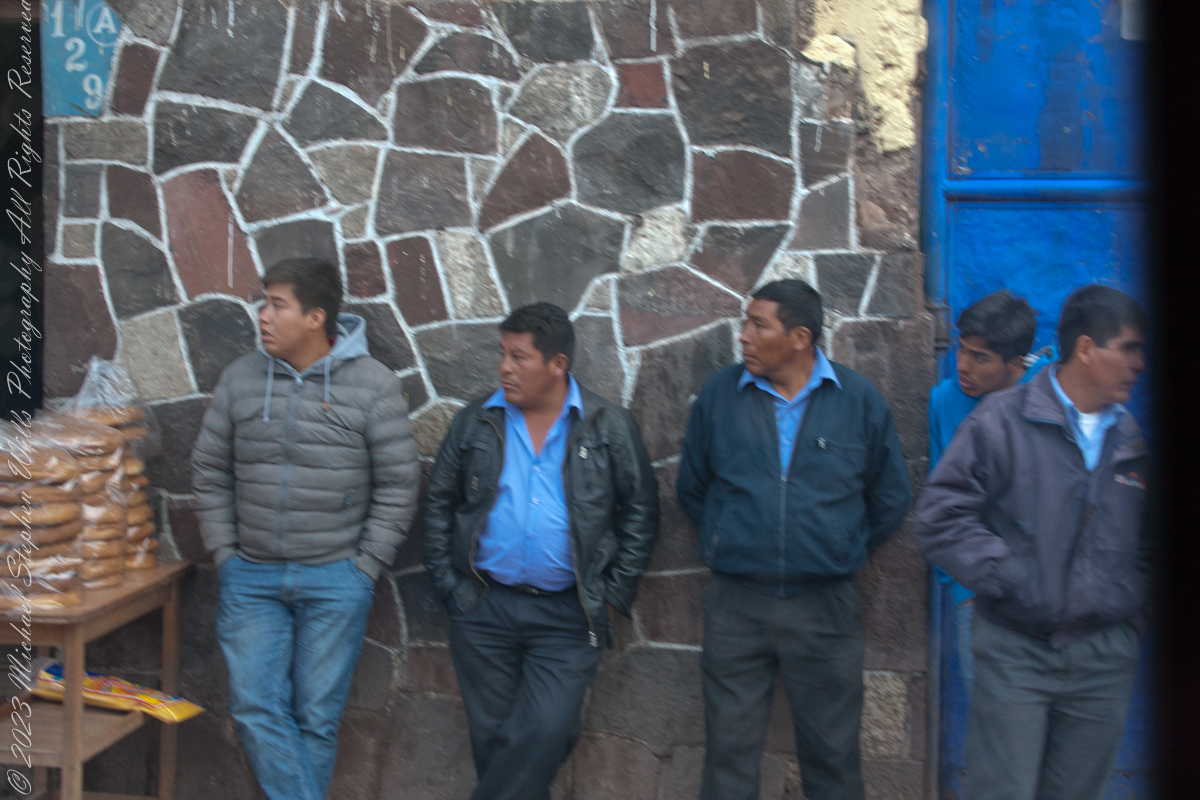
Several days supply of bread for a family.

Cusco, Peru– February 6, 2016:

Watching the world go by.

Transacting business

Click Me for the next post in this series.

Copyright 2023 Michael Stephen Wills All Rights Reserved

Breaktime

Cusco Saturday Market

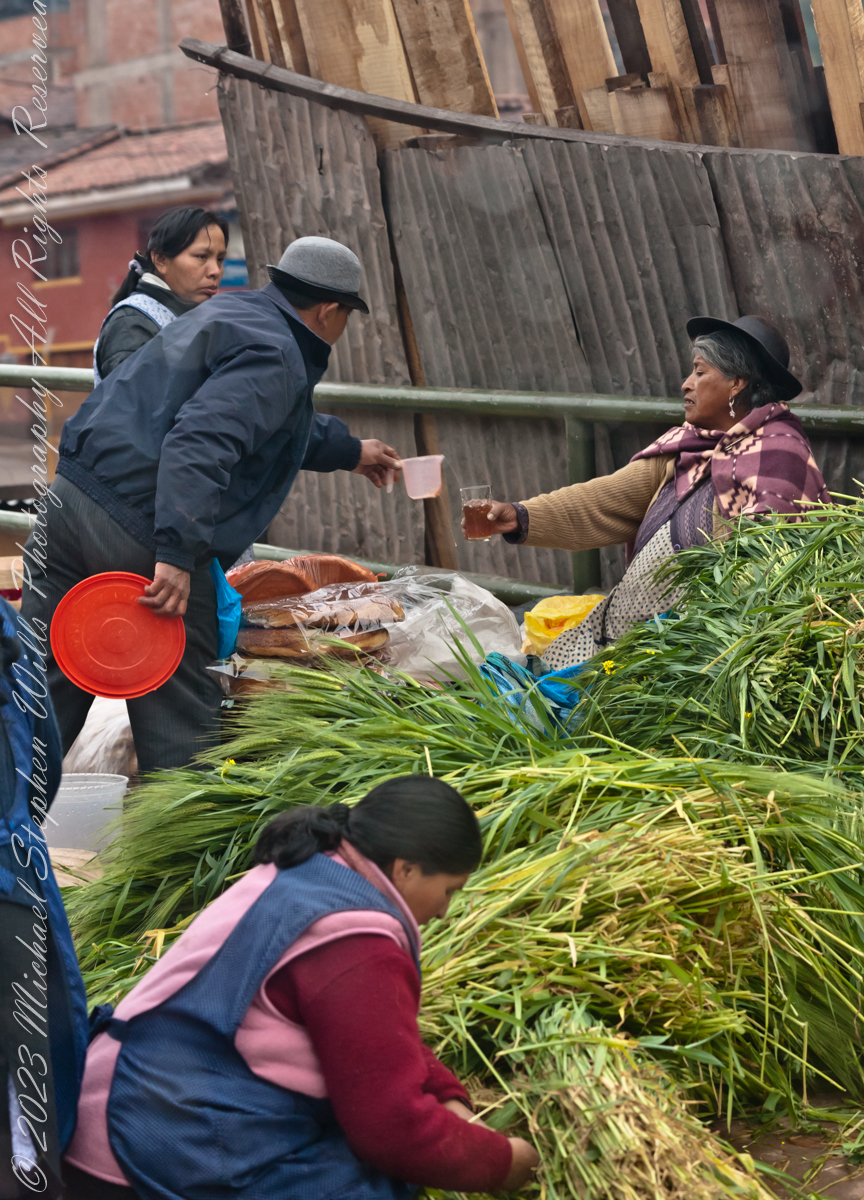
A group of Quechua vendors during the Saturday Market of Cusco. A seller of baked goods is taking a break while, in the foreground, a woman prepares an order of greens used to feed guinea pigs, a staple of native Peruvian cuisine.

Click Me for my Online Gallery

Cusco, Peru– February 6, 2016:

We were headed out of Cusco on our daytrip to Machu Picchu.

Click Me for the next post in this series.

Copyright 2023 Michael Stephen Wills All Rights Reserved

for our father, Thomas Francis Wills, on Memorial Day 2023

a personal narrative

An excerpt from an interview by Diane Frances Wills of our father Thomas Francis Wills for a seventh-grade assignment about 1971.  I did some editing to correct the date based on historical records and my father’s military records (Michael Stephen Wills).

Thomas enlisted for the navy one day after his 24th birthday, September 25, 1939 and served 6 years and a few weeks until October 7, 1945 having experienced the Battle of the Atlantic (American Defense Medal) and liberation of the Philippines (WWII Victory Medal, American Campaign Medal, Asiatic Pacific Theater, Philippine Liberation Ribbon).  Here is his description of an incident from that time:

Thomas Francis Wills, Ocean View Beach, Virginia, 1940

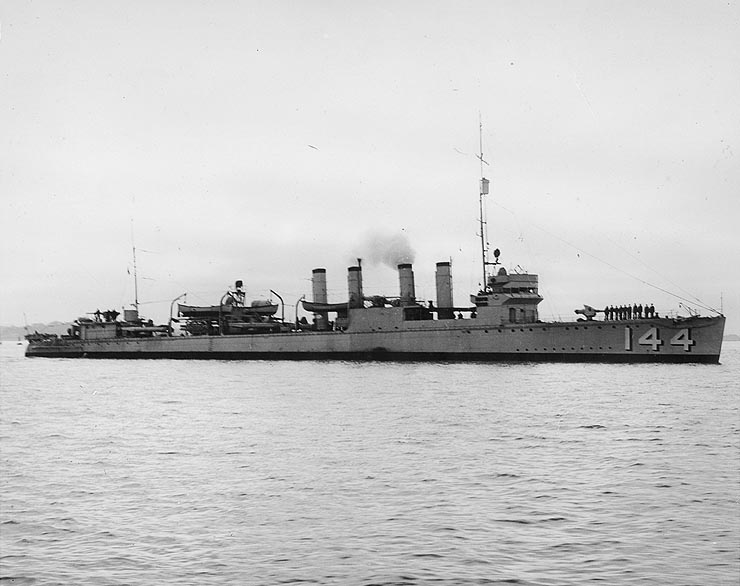
1 Year, 6 months after my enlistment in New York City, March 1941, on the USS Upshur two days out of Boston on its run to Reykjavik, Iceland delivering mail and supplies to the marines stationed to prevent the Germans from establishing a base.  Steaming north we got word there was a gale blowing in our path.  We all became apprehensive.  I asked Bill Rogers, the radioman, about the approaching storm.  “Say, Bill, I see by the weather report we’re heading info some rough weather.  How long do you think it will last?”

“Yeah, according to the latest weather report it is a regular Northeaster and we can expect a couple days of rough winds and high waves, also very cold weather.  We’ll have to secure everything topside so it won’t blow or be washed overboard.  We can also expect very little in the way of normal meals except for maybe coffee and sandwiches.”  On such a small ship the cooks can’t prepare meals in such weather.

USS Upshur, 1940, the ten-man crew, including Thomas Wills, is on the bow

As we approached the storm zone the sea got rough and the wind started blowing.  Soon we were well into a horrible storm.  The sky got dark and gloomy, full of dark bold clouds.  The ocean rough, choppy and black.  The rain started coming down sharp and harsh, cold and icy.  The rain cut through your body like piercing arrows, it chilled your bones.

Sometimes I thought the ship was going to sink, the waves and the wind were so strong.  The bow would go bluntly into the water.  The ship listed sideways, seeming to almost rolling over.  The waves carried our ship up, then go out from underneath sending us crashing down.  This happened over and over, endlessly.  

 I was on duty in the radio shack and had to walk the whole length of the ship from my sleeping quarters.  Many times, I almost went overboard, the wind was so strong.  I could lay on my stomach but it did not help because I could still slide through the railings.  I would freeze to death in five minutes in that water.  I hope I never had to go through that again, seems like yesterday.  All we had to wear was a sailor suit, not too warm.  I’d just get all soaked. 

My shipmates and I, a five-foot eight-inch boy of 25 with dark brown hair, had to be calm and keep doing our normal scheduled duties, because we learned you can’t get panicky or else you will put your whole ship out of order.

 The storm went on until the end of night.  I thought the storm would never end.  It felt as if it lasted a week.  At that time no other ships sailed with us, so there was no possibility of help.  Nobody fell over the side or was drowned.

After that, a German U-Boat launched a torpedo at us and missed.  We searched, tried to sink them without success. 

Copyright 2023 All Rights Reserved Michael Stephen Wills

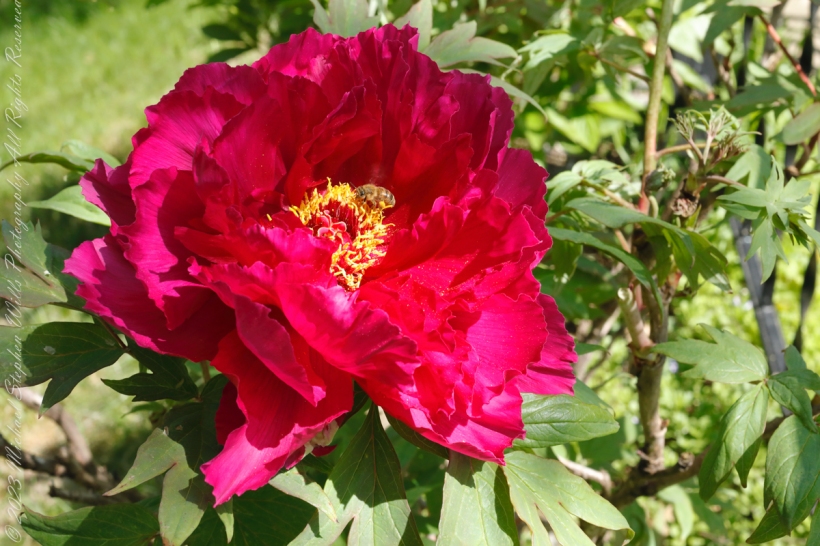
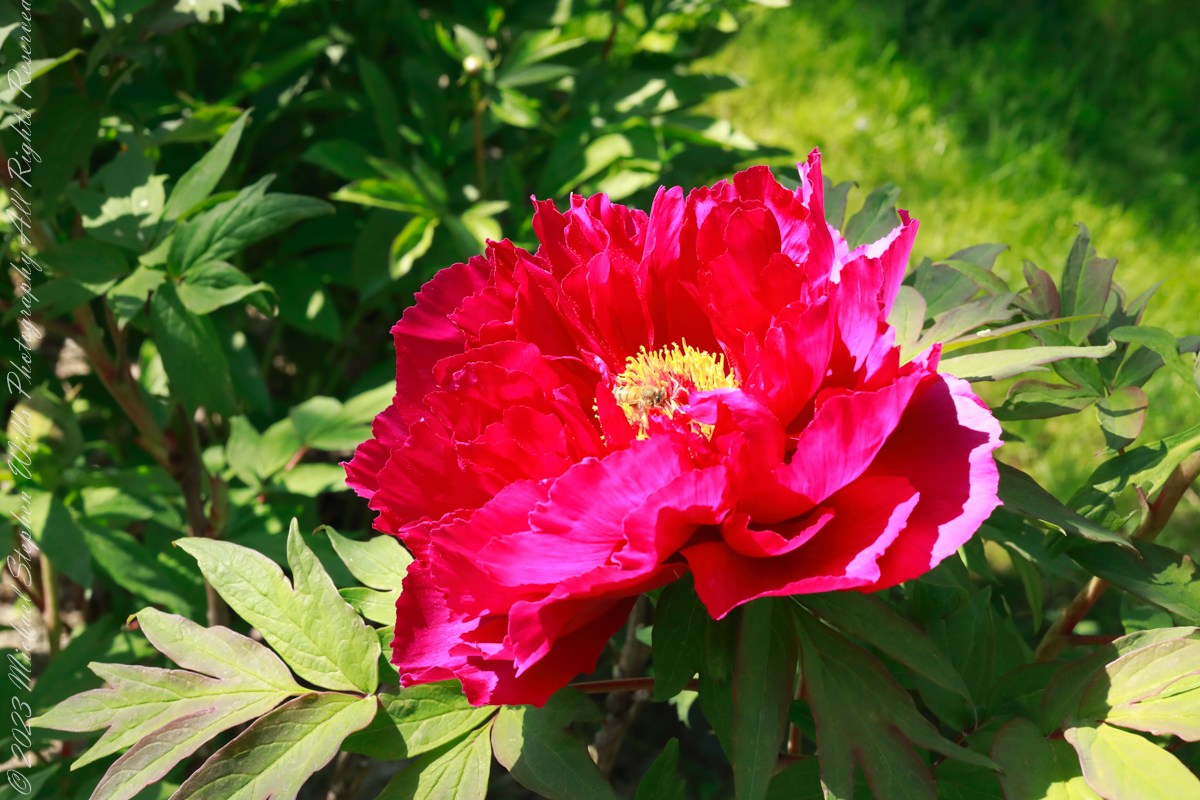
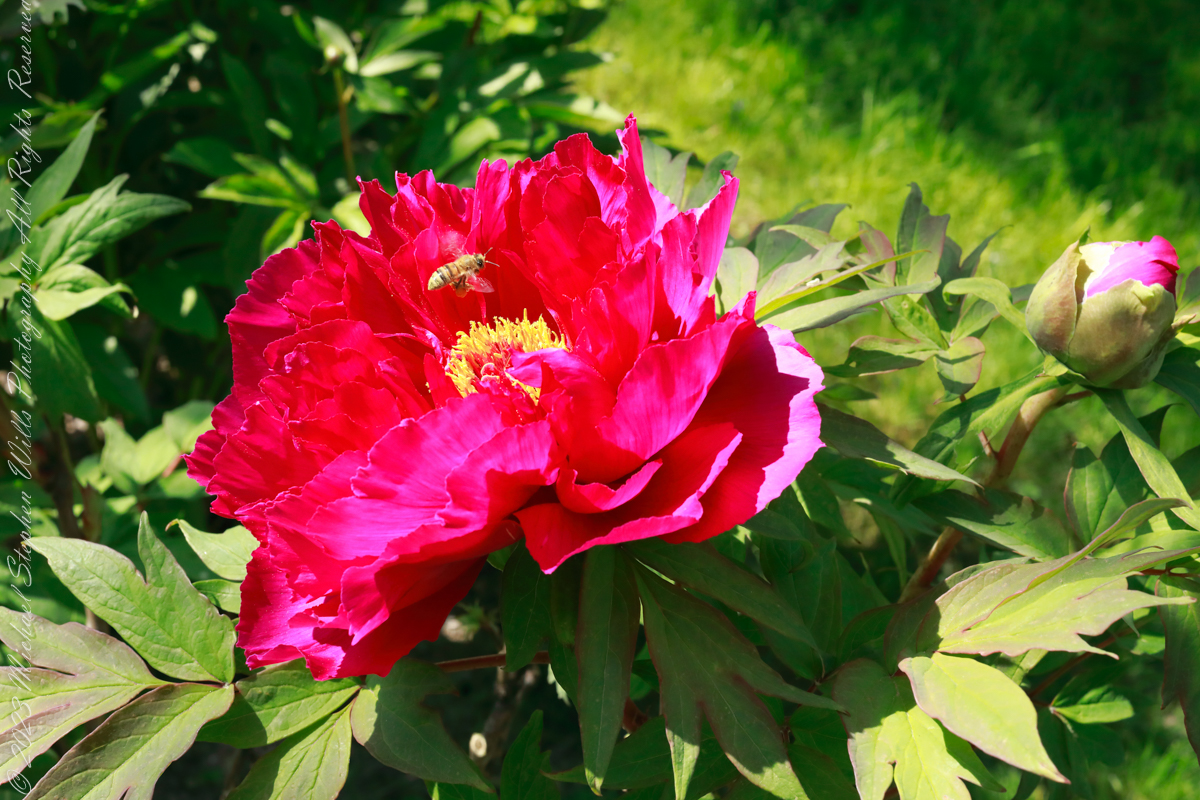
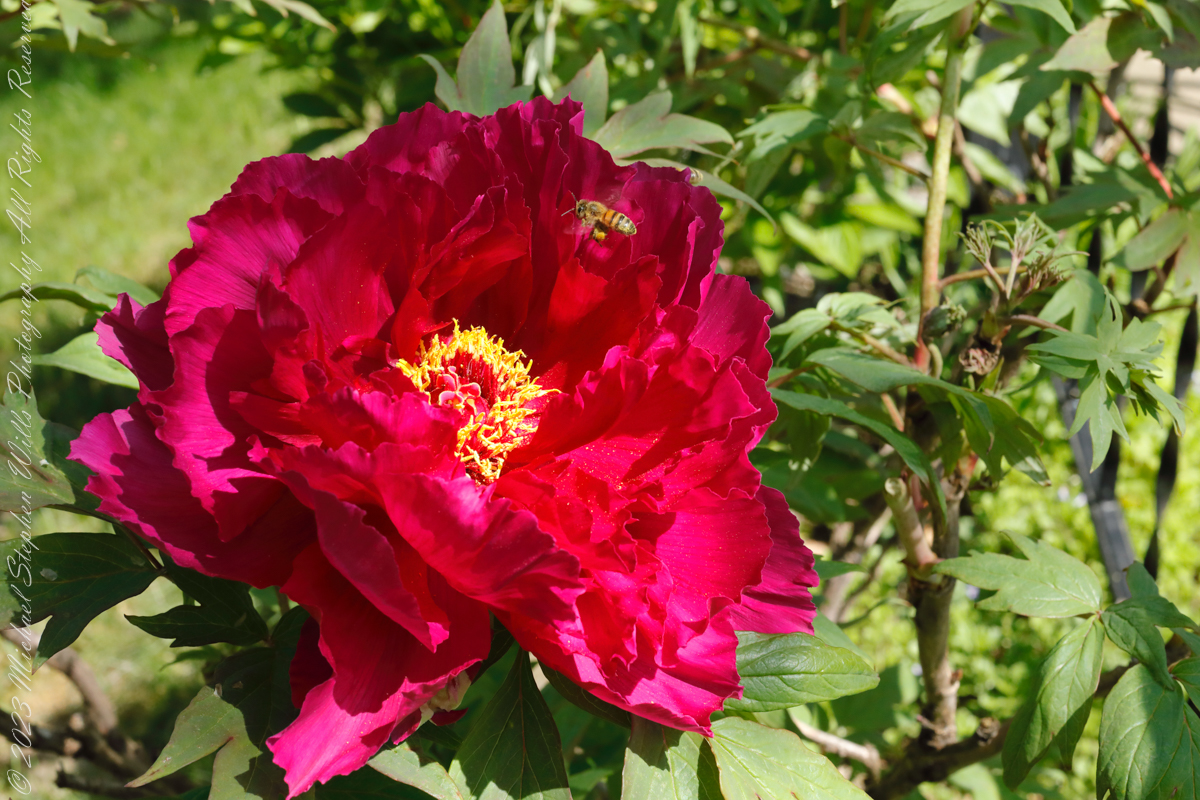
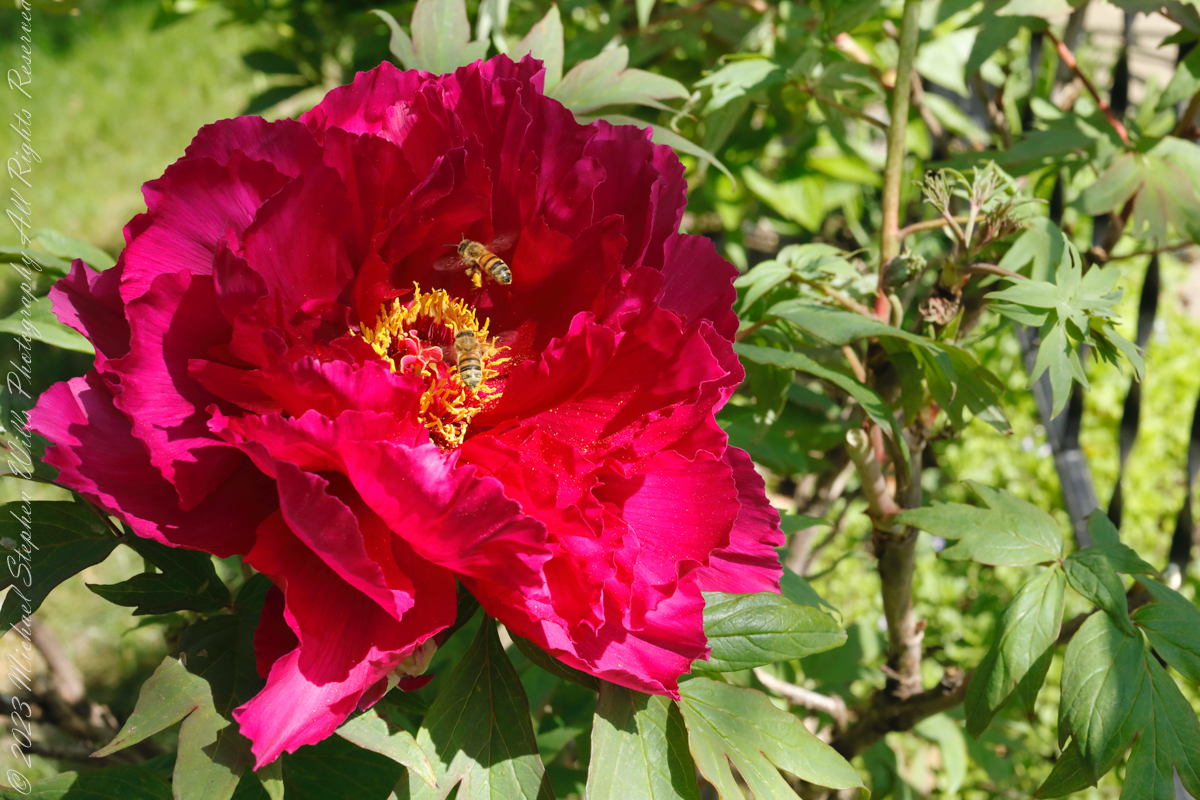
Woody Peony and Honeybees, 50 mm

The bees happily rolled around among the stamens, notice their full pollen sacs.

Like the previous year, spring 2022, though cold, is early. As I write this the peony blooms presented here, photographed May, 2021 are seeding. Every year, Pam and I marvel at the color. 2019 this peony was in full bloom only by the end of May, around Memorial Day.

These photographs were taken with a Canon EOS 5D Mark IV dslr, and the Canon EF 50 mm f/1.2L USM lens stabilized with the Manfrotto BeFree Carbon Fiber tripod with ball head. Color results from the Canon dslr are impressive. In prior years I favored shooting late evening in the shade with a slight underexposure. This year I experimented with full sunlight. I found a slight under exposure captured the plum – fine burgundy wine nature of this Japanese cultivar, “Shimadaijin,” planted in the 1970’s or 1980’s.

This set brings out the petal’s fiery nature. In the wild, woody (also called tree) peonies favored cliffs and scrub of western and central China, eastern Himalayas (southeastern Tibet).

By a happy accident our neighbor’s honeybees foraged the nectar and pollen of these newly opened blooms. The woody stems hold the profusion of large flowers each one erect. “Tree” is a misnomer as this plant is a shrub growing mid-thigh high. One of the classic ornamental genera of China, known there as moutan or hua wang “King of Flowers.”

Cultivation in China began in Chekiang in the early 4th century AD. By the early Tang period (circa 700 AD) hundreds of varieties were grown.

The bees happily rolled around among the stamens, notice their full pollen sacs.

ISO 1600 f16 1/250 sec

References
Roger Philips and Martyn Rix, “The Botanical Garden, Vol 1, Trees and Shrubs” p 133
Wikipedia “Magenta” color

Copyright 2023 All Rights Reserved Michael Stephen Wills

On Torr Road

Facing Views and History

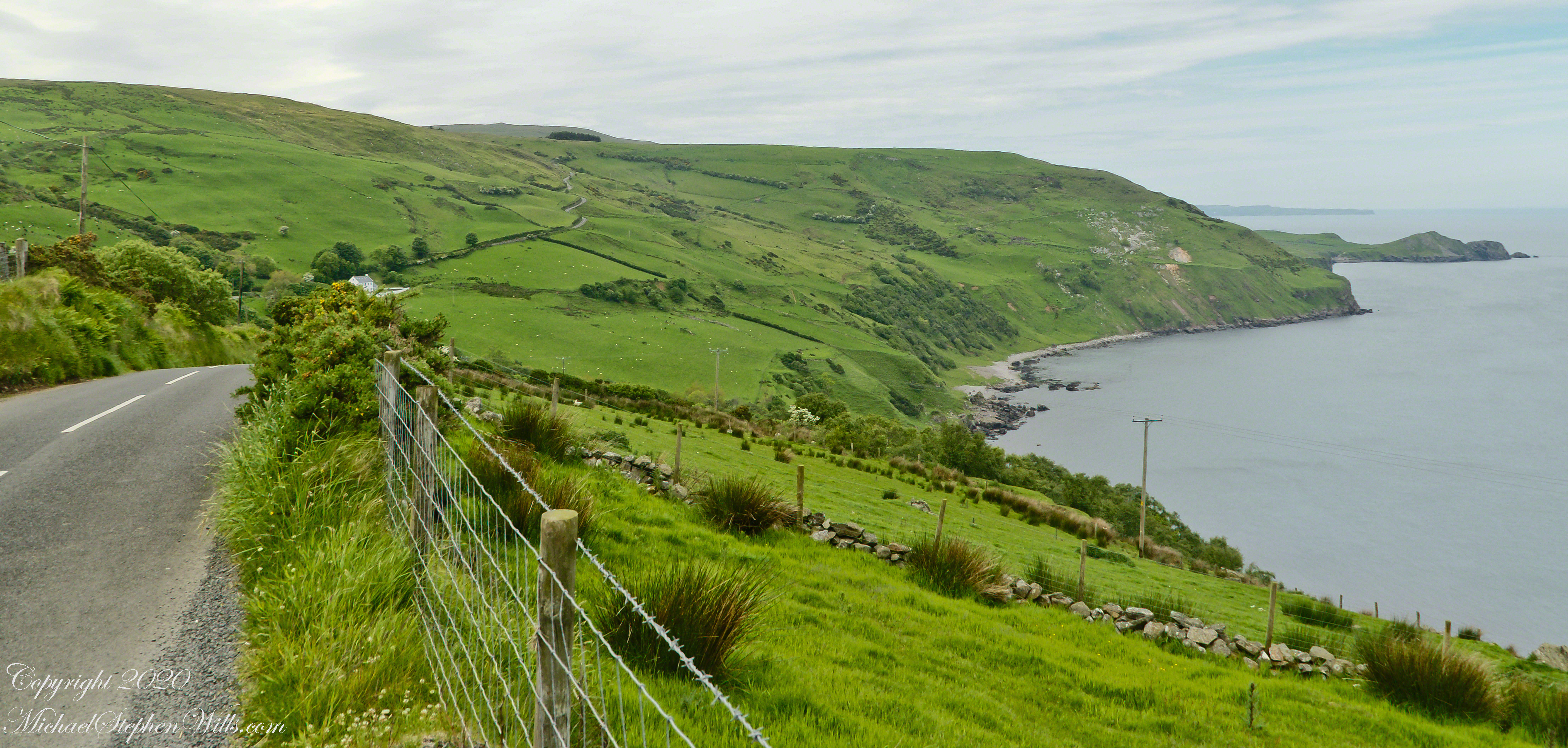
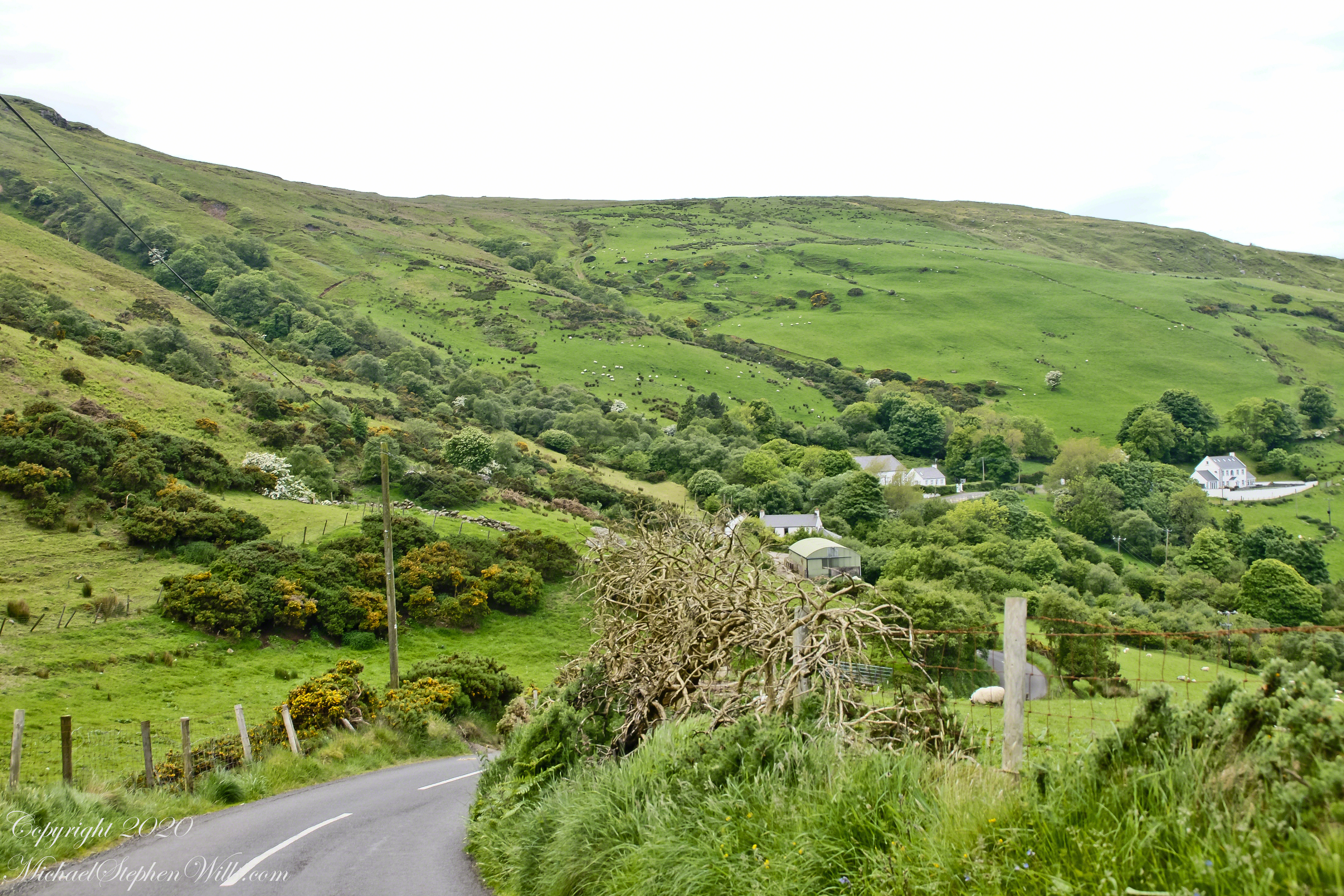
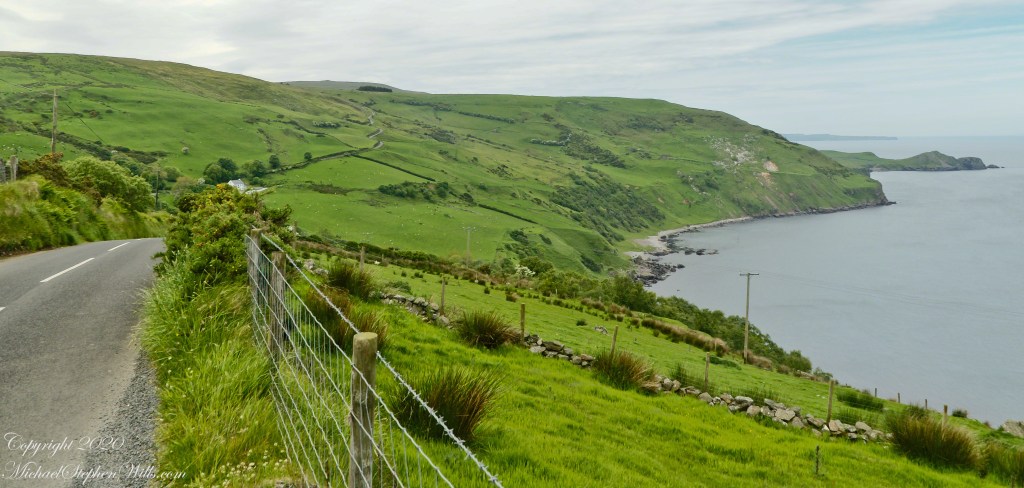
A grand view presents itself throughout the roll down Torcorr into Coolranny townland. Loughan is a shallow bay along the North Channel of the Irish Sea, a rocky sand beach is accessible via a slope shallower than the cliffs on either side. This access is a reason for the tiny rural community on the slope above, now a site of ruined cottages, abandoned during the emigration from Ireland, a flight continuing into the Twentieth Century.

Click photograph for a larger view. To do this from WordPress Reader, you need to first click the title of this post to open a new page.

See this post for a description of wildflowers flowering here in the month of June.

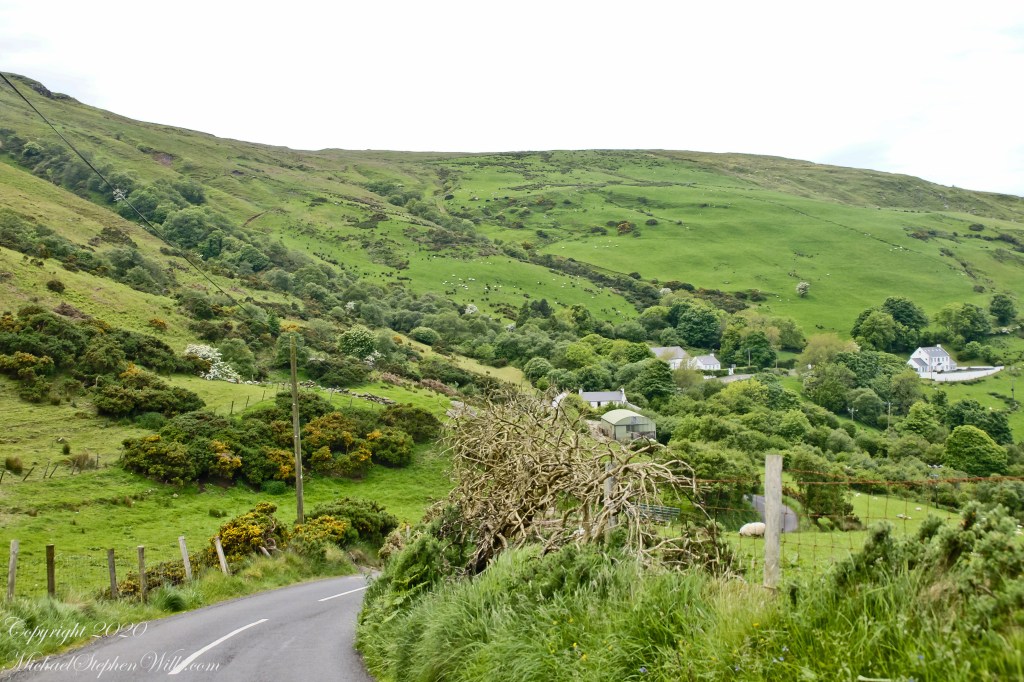
This photograph from the bottom of the Torr Road hill takes in Coolranny Townland. a slice of land running from the ridge to Loughan Bay. We see a number of hawthorne trees in flower, yellow flowering Whin Bush, houses and the Roman Catholic church Saint Mary’s Star of the Sea.

Tor in Irish is a steep rocky height. Likewise, Corr means odd, uneven, rounder, convex, curved, peaked, projecting, smooth. Combined Torcorr is the townland where we stopped on the Torr Road, halted by our wonder at this sight. In the distance, Torr Head projects into North Channel, the closest land to Scotland. Following the coast, the cliffs in front of Torr Head is home to numerous sea birds. The curved bay is named Loughan, the rocky sand beach are ruins of cottages emptied by Irish emigration. The white building is Saint Mary’s Star of the Sea Roman Catholic Church. County Antrim, Northern Ireland.

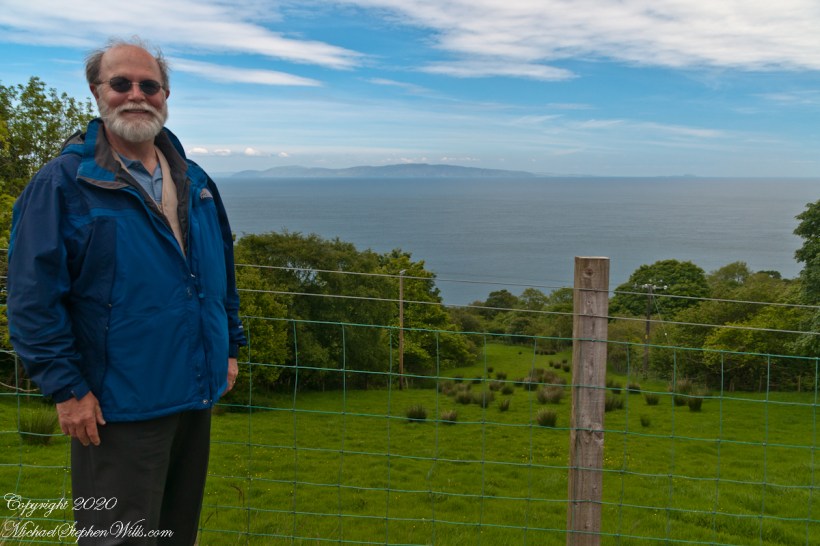
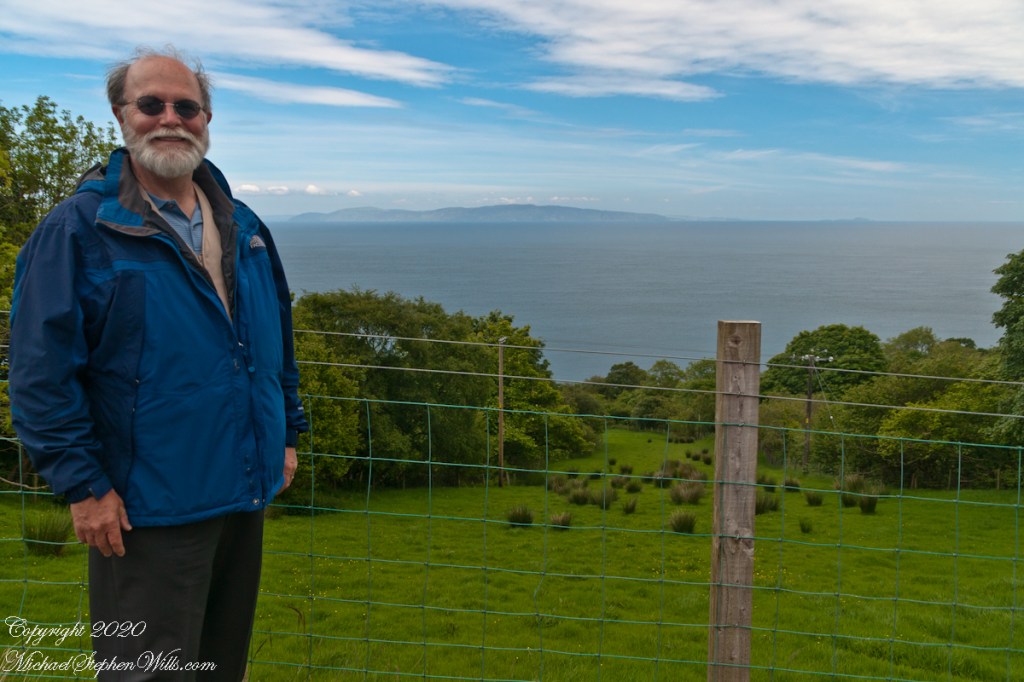
The photograph of the header, taken by Pam, is from either Coolranny or Loughan Townland, looking across a sheep pasture, the North Channel of the Irish Sea toward the Mull of Kintyre, Scotland just twelve miles distant.

Here is a slideshow of this post’s images. To visit from WordPress Reader, you need to first click the title of this post to open a new page.
Copyright 2023 All Rights Reserved Michael Stephen Wills

Long Island Sakura (Cherry Blossoms)

Clouds of Blossoms

A Japanese flowering cherry tree in bloom on an early May day. Called a Shirofugen (Secientific name: Prunue serrulata, of the Rosaceae family this is the species planted around National Tidal Basin, Washington D.C. and around which the National Cherry Blossom Festival is celebrated commemorating the 1912 gift of Prunus serrulata Japanese cherry trees from Tokyo to the city of Washington.

The tree over Pam is called a Shirofugen (Scientific name: Prunus serrulata, of the Rosaceae family) and is one species planted around National Tidal Basin, Washington D.C. Shirofugen blossoms are described “Flowers double, deep pink at first, fading to pale pink.”


Click any photograph for my Getty portfolio.Pam with a Shirofugen Flowering Cherry in bloom – CLICK ME for my Getty Portfolio.
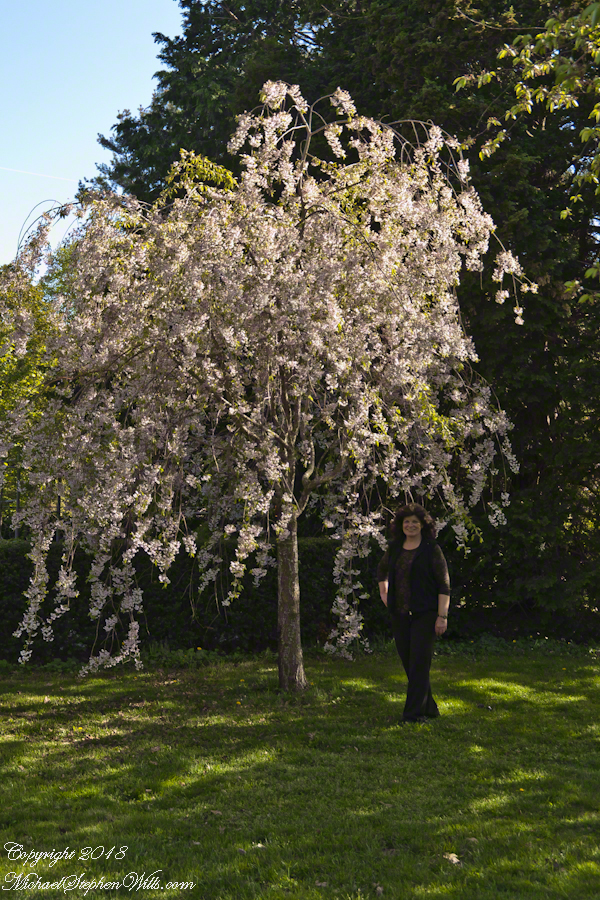
In Japan, since the 8th century, “Hanami” is the centuries-old practice of picnicking under a blooming sakura or ume tree. Here in the United States, the National Cherry Blossom Festival is celebrated commemorating the 1912 gift of Prunus serrulata Japanese cherry trees from Tokyo to the city of Washington.

Traditionally cherry blossoms remind the Japanese of clouds, the blooms come out en mass, the tree changes shape with the breeze.  Viewing sakura brings to mind thoughts of the transience of existence, the fragility and transience of the exquisite blooms leads one to appreciate the moment.  The following photograph of Pam was taken a month before my Mother’s sudden decline and passing in 2013.  We’d travel to Long Island several times a year to visit her, then take in familiar sights.

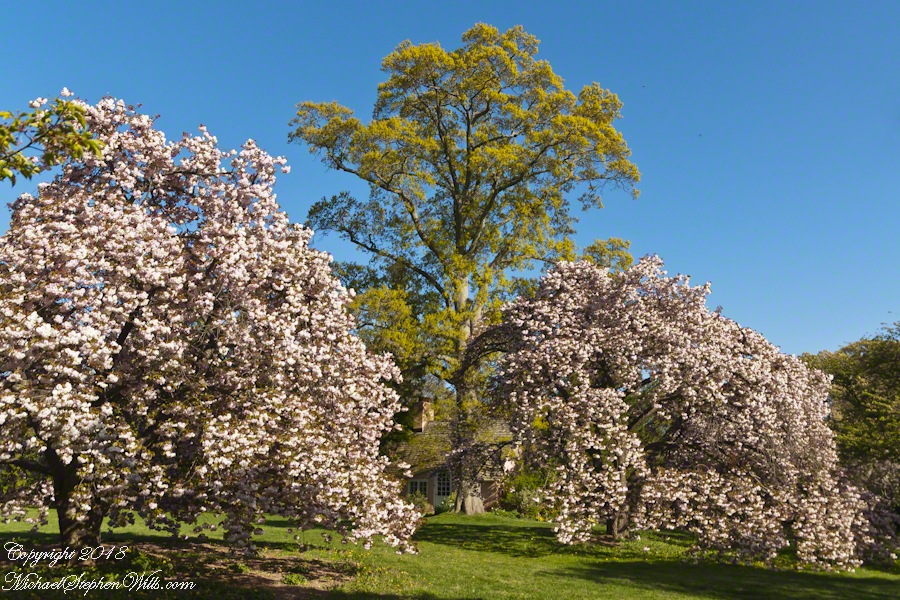
Growing up, our family visited the Planting Fields, a state park, several times in the spring and summer. As an adult with a growing family in Glen Cove, right around the corner, the Planting Fields were a welcome outing and visited several time times a year. The following photograph, taken that same May 2013 day, was a favorite park scene.

The two flowering cherry trees in the foreground are a type of Japanese sakura called Yoshino, one the most popular flowering cherries in temperate climates worldwide. All Yoshinos are clones from a single grafting and propagated throughout the world. The scientific name outlines the cross breeding of this variety, Prunus X Yeaoensis. Behind the cherries is an Oak tree, new leaves a bright green, and a pink child’s playhouse cottage.

A changing scene of the park is the now frequent visits by wedding parties and photographers, groups of Asian people, the bride and groom posing under the clouds of blossoms. By frequent I mean a steady stream, one after the other, when the blossoms are full.

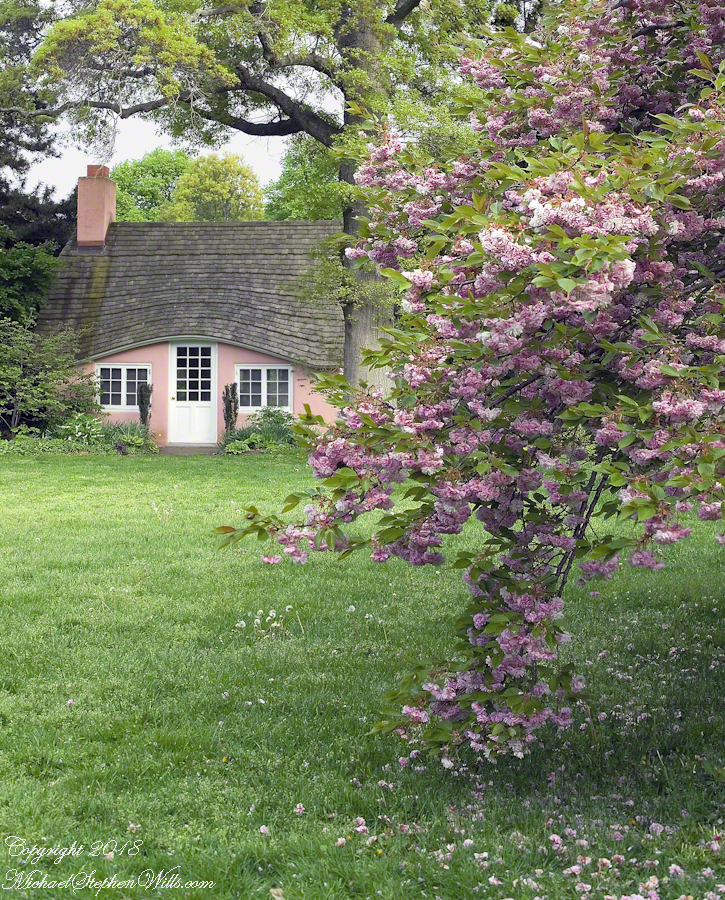
Click any photograph for my Getty portfolio.Playhouse with Flowering Cherry and Oak trees – CLICK ME for my Getty Portfolio.
In 2007 I spent hours framing and capturing the following photograph on a Saturday, the day before Mother’s Day, during a visit to my Mother, who was widowed December, 1995. I used an inexpensive tripod, a Kodak DCS Pro slr/c camera body with the Canon 50mm f 1.4 USM lens, a UV filter and lots of time. There were no interruptions that day, at 5:30 pm I had the area to myself.

This child’s garden playhouse, framed by an ancient oak, pink Japanese cherry blossoms and gracious lawn was awarded a Photographic Society of American, Pictorial Print Division, Print of the Month award, published in the society magazine for that month.

Click any photograph for my Getty portfolio.Playhouse – CLICK ME for my Getty Portfolio.
Please browse my reasonably priced stock photography.  License a photograph, download and use it for your website or blog.  Click this link to browse all my Getty IStock Photography offerings.

Or click this link to purchase a print of “Playhouse” with optional custom framing from my Fine Art Gallery.

Copyright 2023 Michael Stephen Wills All Rights Reserved
Homecoming Remembered

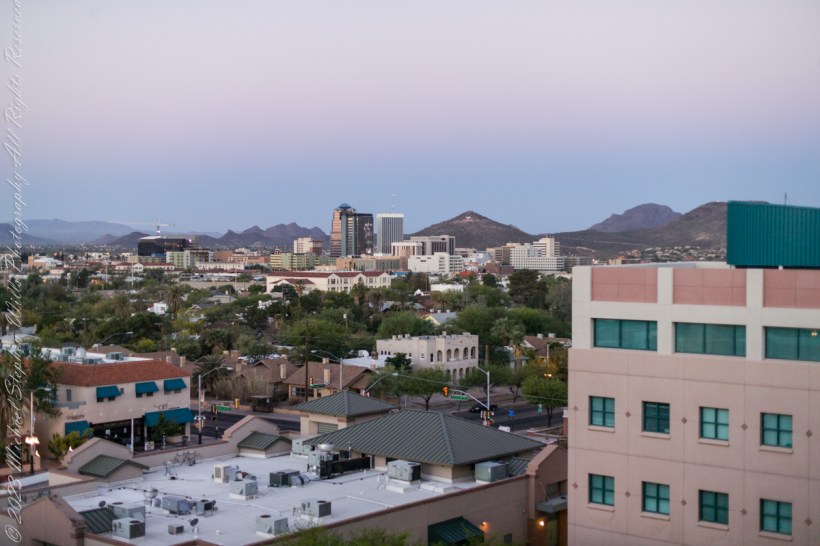
In town for a University of Arizona event I gazed from the Marriott before dawn to remember painting “A” mountain with the Sophos service club a half century ago. The tradition continues.

The view to the southwest includes University Neighborhood, downtown Tucson skyscrapers, “A” Mountain (painted red, white and blue November 2010), Tucson Mountains.

Click me for an Arizona Gallery of Fine Art prints by Michael Stephen Wills

Copyright 2023 All Rights Reserved Michael Stephen Wills

An Adventure

Night Spring Sky, North America

Some nights I travel to the farthest reaches of the universe right from my backyard. Here is a guide to the spring night sky for those of you in the northern hemisphere. Even sunbathing we are time travelling, bathed in starlite over 8 minutes old. Time taken by sunlight to reach Earth = (150,000,000/3,00,000) seconds = 500 seconds = 8 minutes 20 seconds).

Click me for an Arizona Gallery of Fine Art prints by Michael Stephen Wills

Copyright 2023 Michael Stephen Wills, All Rights Reserved