Hylodesmum glutinosum: Characteristics and Ecology

The author reflects on hiking at Taughannock Falls State Park, discovering the Large-Flowered Tick Trefoil’s beauty and ecological significance.

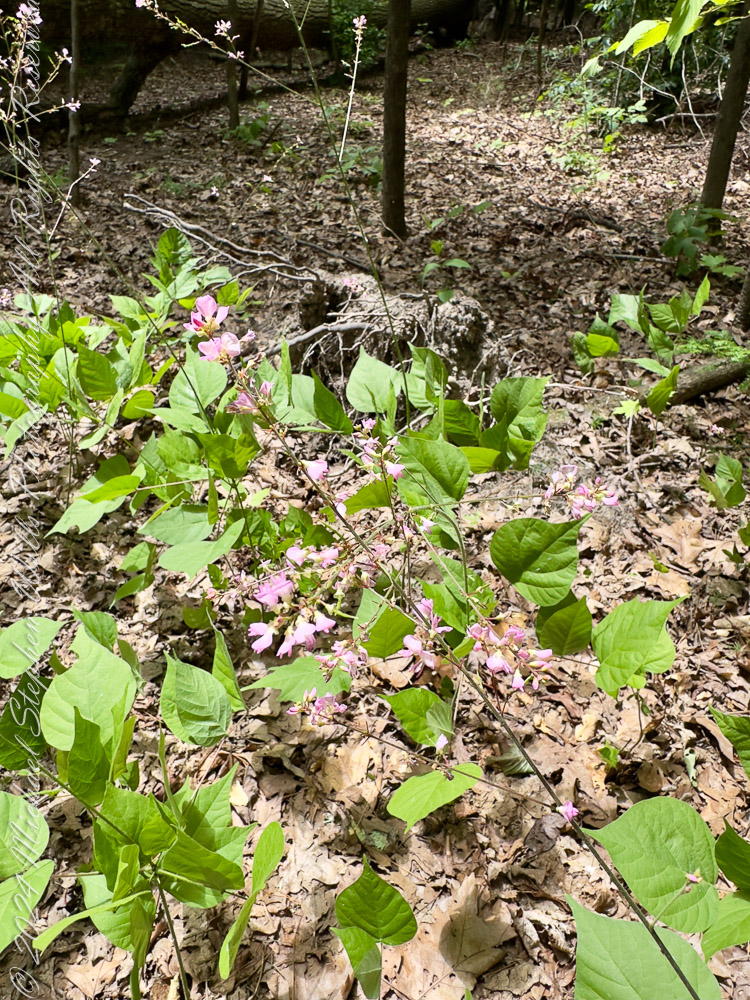
It was a high summer day as I enjoyed a customary hike around of Taughannock Falls State Park on the South and North Rim trails. Here sunlight filtered through the dense canopy, dappling the forest floor with shifting patches of light. Along the trail, my attention was drawn to a cluster of pink blossoms rising on slender, upright stems. Intrigued by their delicate beauty, I crouched down for a closer look. The plant rose above the forest floor, its trifoliate leaves broad and prominently veined, each leaflet slightly larger than I would have expected. These leaves seemed to anchor the plant to the shaded understory, while its flowers reached upward, as though eager to catch the fleeting rays of sun. I captured the plant in this photographs, later used it to identify Hylodesmum glutinosum, or Large-Flowered Tick Trefoil.
Characteristics of the Plant

The Large-Flowered Tick Trefoil is a striking member of the pea family (Fabaceae). Its pink, pea-like flowers are arranged in graceful racemes along the upper portions of its stems, their vibrant color contrasting beautifully with the green foliage around them. The leaves, broad and trifoliate, lend the plant its distinctive appearance. The name “tick trefoil” refers to the plant’s seed pods, which are flat and segmented, equipped with tiny hooks that cling stubbornly to passing animals or hikers, hitchhiking their way to new locations.

The plant is native to eastern North America, including the forests and trails of New York State. Its preference for rich, well-drained soils in partially shaded woodlands makes it a common sight in places like Taughannock Falls State Park. Blooming from mid to late summer, it provides an essential nectar source for bees and other pollinators, playing its part in the intricate web of the forest ecosystem.

Etymology of the Name

The genus name, Hylodesmum, was established only twenty-five years ago when the plant was reclassified from the genus Desmodium to a new genus within the tribe Desmodieae. The name reflects its forested habitat, with “hylo” derived from the Greek word for “wood” or “forest.” Previously described in 1802 as Hedysarum glutinosum and later placed in Desmodium, the species name glutinosum remains unchanged, meaning “sticky” in Latin. This aptly describes the plant’s seed pods, which adhere to anything that brushes past them. Together, these names encapsulate both the botanical structure and the unique dispersal strategy of this plant.

History and Folklore

Native Americans and early settlers were intimately familiar with tick trefoils. The plant’s seeds, notorious for clinging to clothing and fur, earned it a reputation as a nuisance, but its resilience and utility could not be overlooked. Indigenous peoples utilized various parts of the plant for medicinal purposes. The roots and leaves were brewed into teas to treat fevers and digestive ailments, while poultices made from the leaves were applied to wounds to promote healing. Such uses highlight the depth of knowledge early inhabitants had about their environment.

The plant’s sticky seed pods also became the subject of folklore. Children in rural communities would playfully call it “hitchhiker’s weed,” competing to see who could collect the most seeds on their clothing during outdoor adventures. These seeds, so adept at attaching themselves to passersby, were seen as symbols of persistence and adaptability, traits that many admired.

Uses and Ecological Role

While Hylodesmum glutinosum is not commonly cultivated, its ecological contributions are significant. As a member of the Fabaceae family, it has the ability to fix nitrogen in the soil through a symbiotic relationship with rhizobia bacteria in its root nodules. This makes it a valuable plant in maintaining soil fertility in its native ecosystems. Its flowers attract pollinators like bees and butterflies, ensuring that the forest remains vibrant and full of life.

In addition to its ecological importance, the plant’s seeds have a curious modern use: they’ve been studied for their ability to help detect movement in the environment. Researchers have examined the sticky pods’ structure as a natural model for creating adhesives and tracking devices, proving once again that even the smallest details in nature can inspire human ingenuity.

A Moment of Reflection

As I rose to my feet, brushing the leaf litter from my hands, I felt a renewed sense of wonder for the intricate lives of the plants surrounding me. The Large-Flowered Tick Trefoil, with its vivid pink flowers and ingenious seed pods, seemed to embody the essence of the forest: a harmonious blend of beauty, resilience, and interconnection.

Walking away, I carried with me not just the memory of its vibrant blooms, a deep respect for its role in the natural world. In the quiet of Taughannock’s wooded trails, Hylodesmum glutinosum had shared its story, a tale of persistence, adaptation, and the hidden wonders that flourish when we take the time to notice.
Enter your email to receive notification of future postings. I will not sell or share your email address.

Of Rocks and Seeps

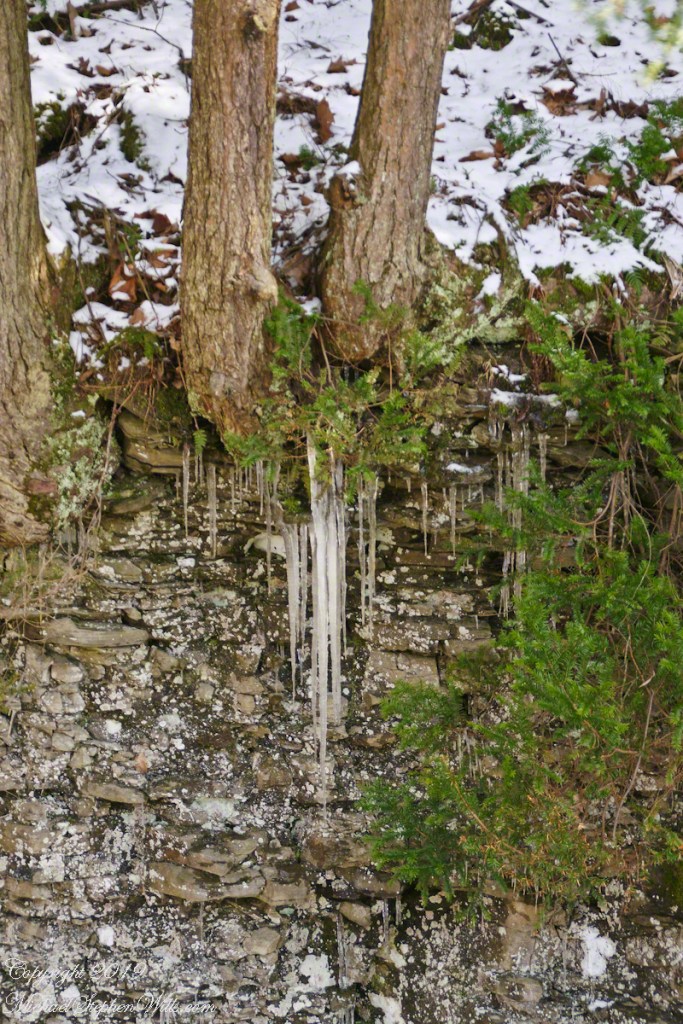
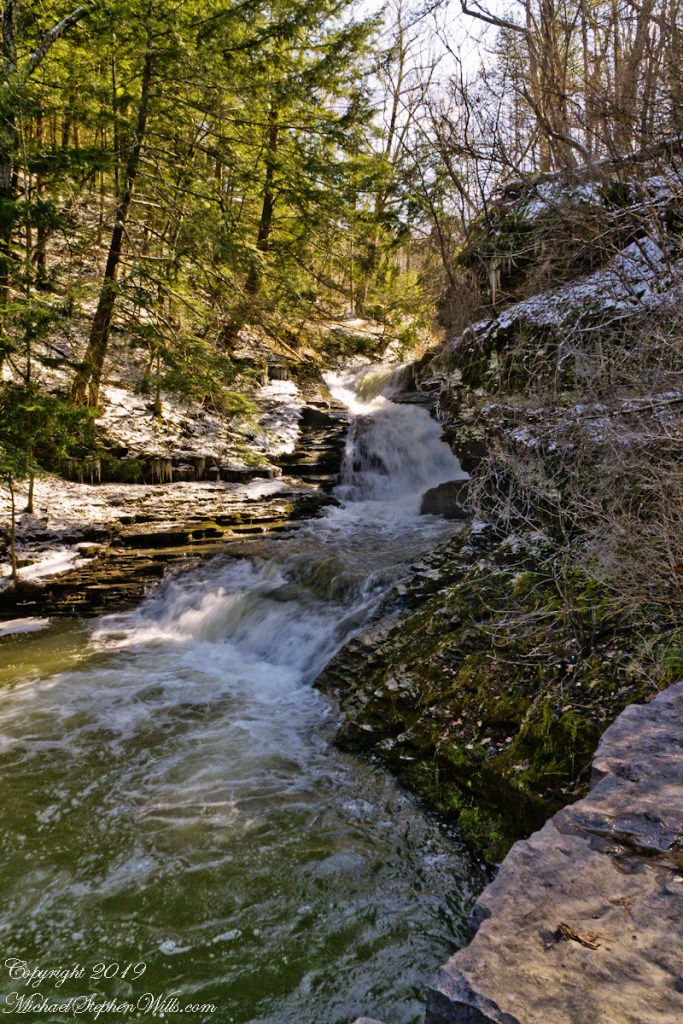
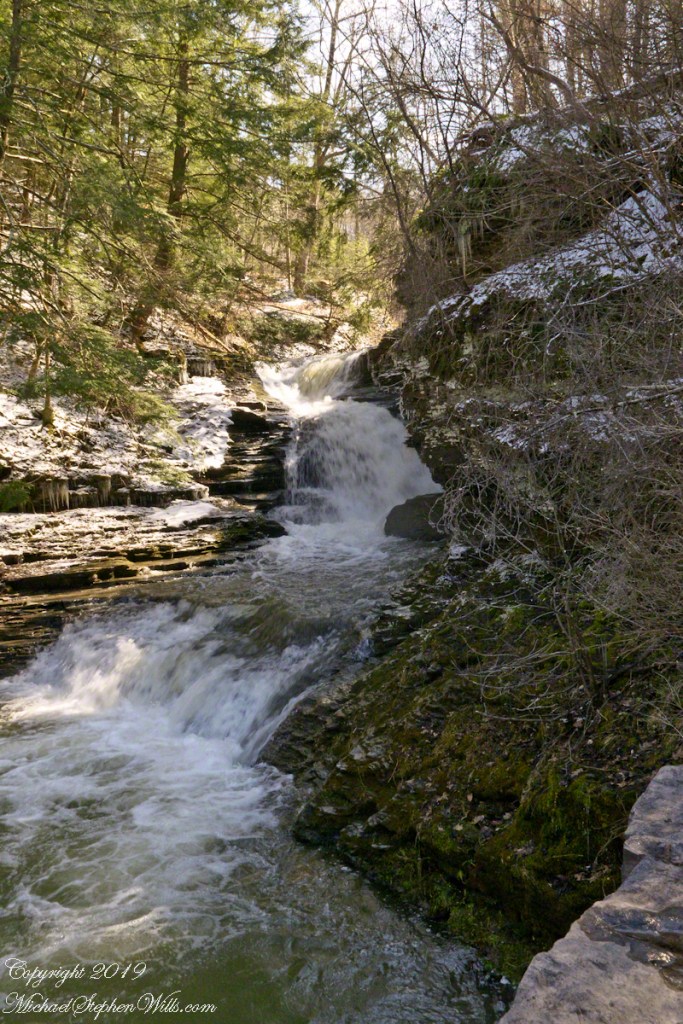
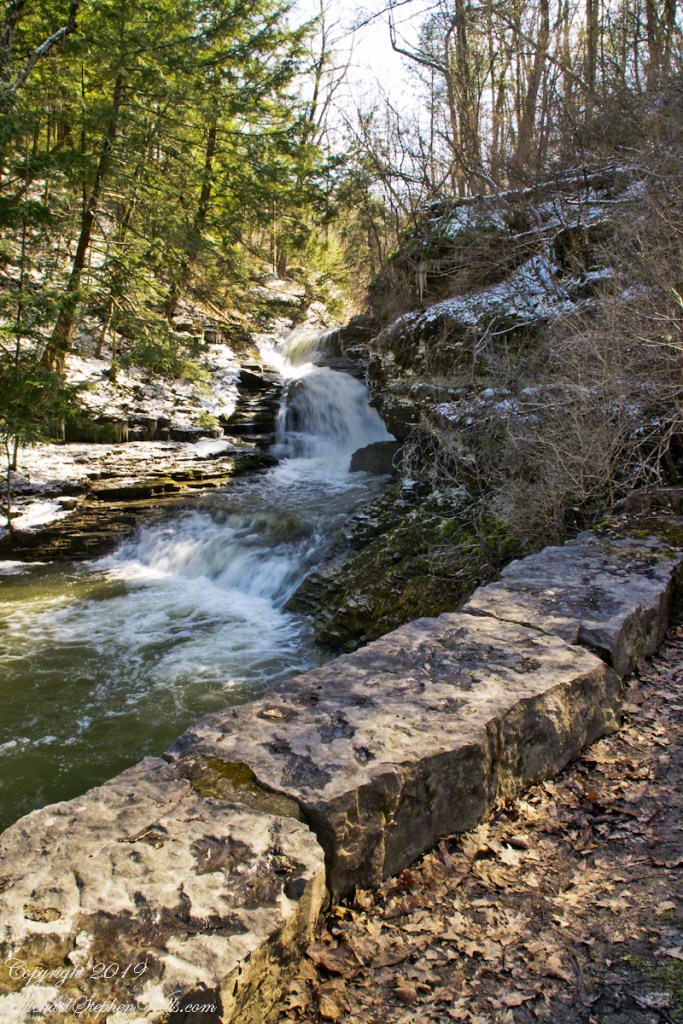
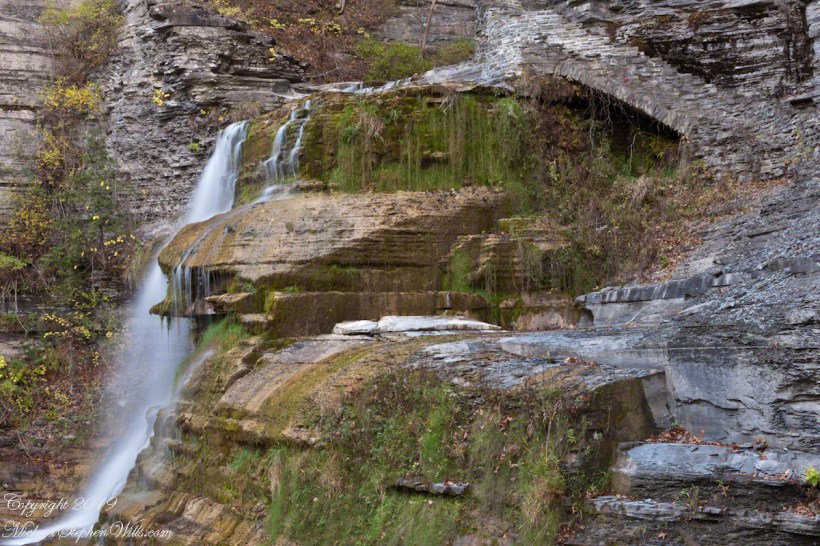
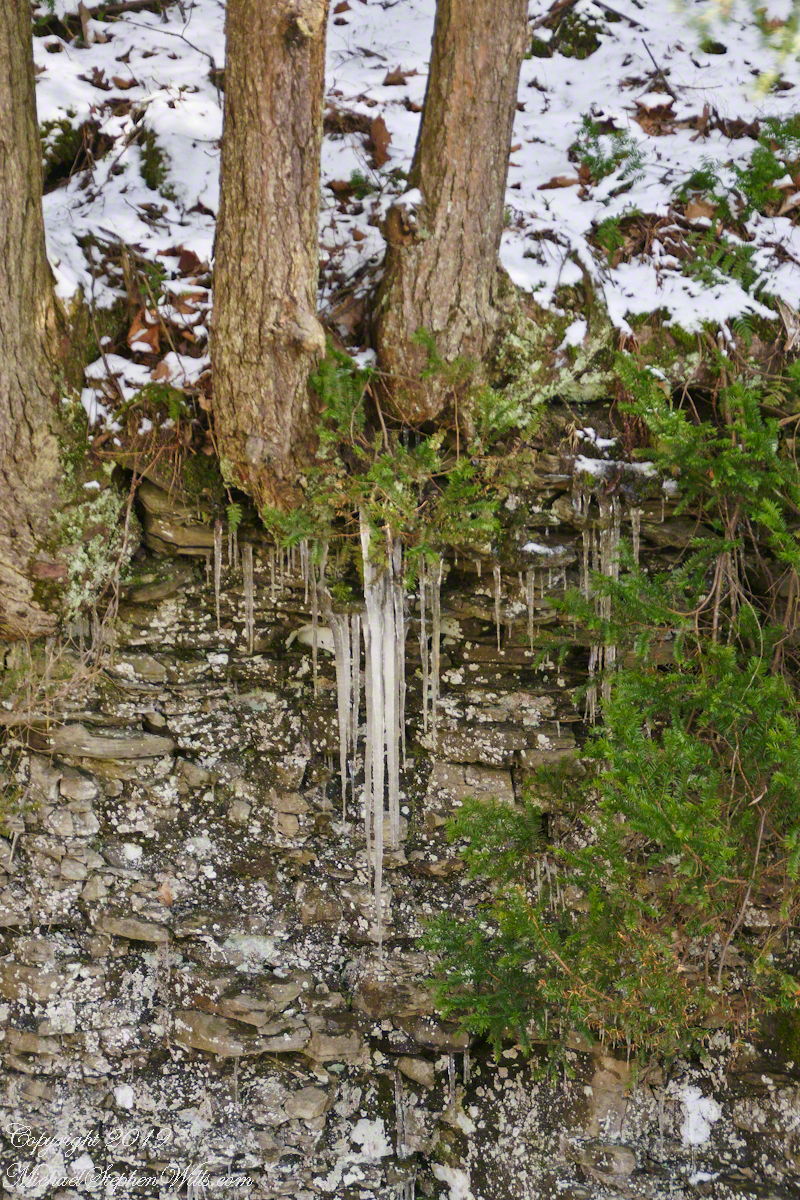
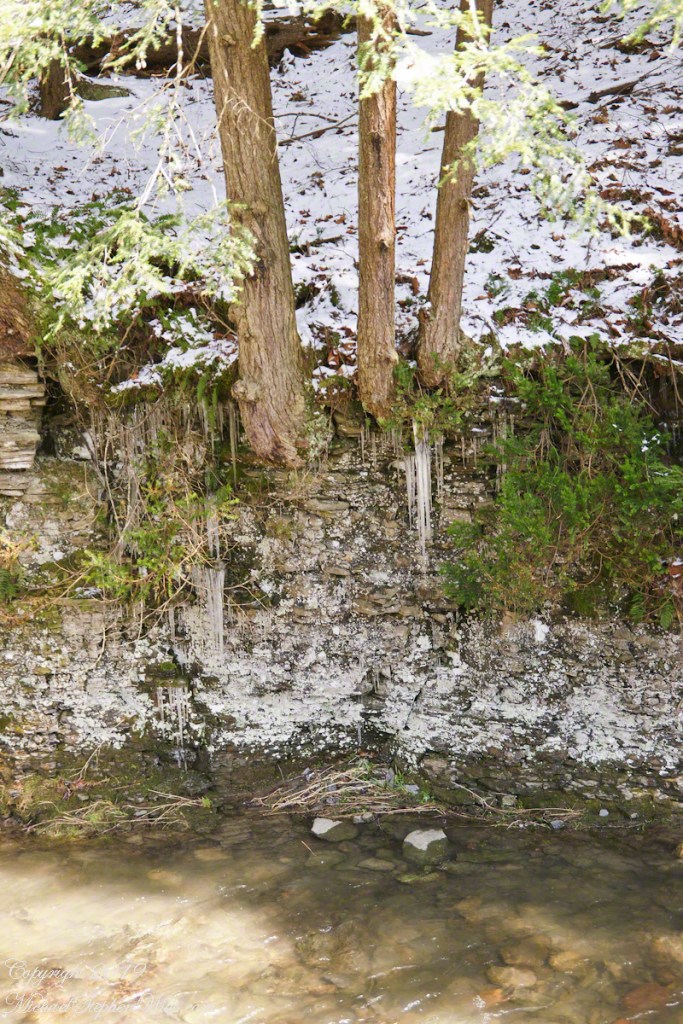
Step into an early spring morning where sudden frosts adorn the Waterfall by the Old Mill with fleeting icicles, capturing nature’s delicate balance between freeze and thaw.

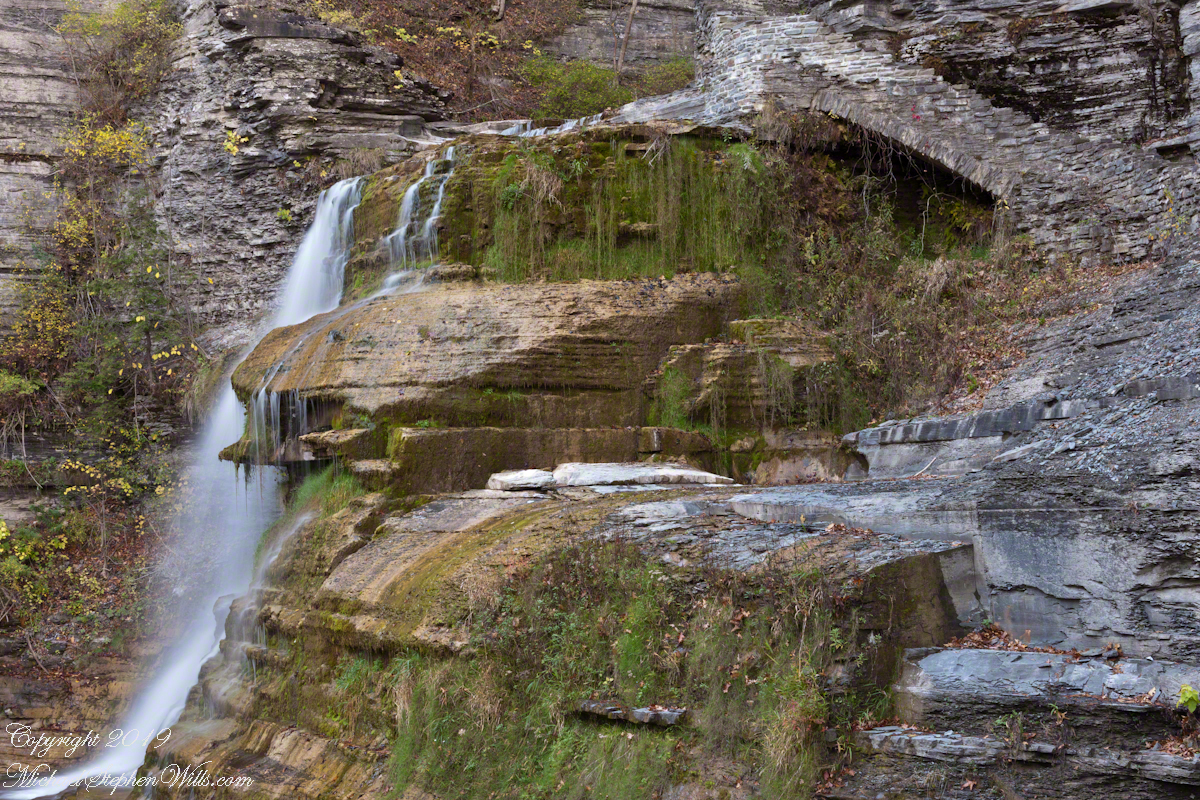
New icicles formed overnight from seeps through the sedimentary walls around the Waterfall by the Old Mill. On an early spring day, after a sudden frost, we walked the Rim Trail to capture the moment.

Here icicles formed during the quick April freeze hand above Fish Kill. Kill is an old Dutch word for creek.

Click photograph for a larger view. To do this from WordPress Reader, you need to first click the title of this post to open a new page.

Here a mix of frost and lichen mottle the rock layers.

These shots were hand held. I used a Sony Alpha 700 dslr with a variable “zoom” lens, great for framing compositions.

Robert H. Treman New York State Park.

Click for a slideshow of this Waterfall of the Old Mill sequence
Copyright 2024 All Rights Reserved Michael Stephen Wills

Lucifer Falls Slide Show

Autumn at Treman Park

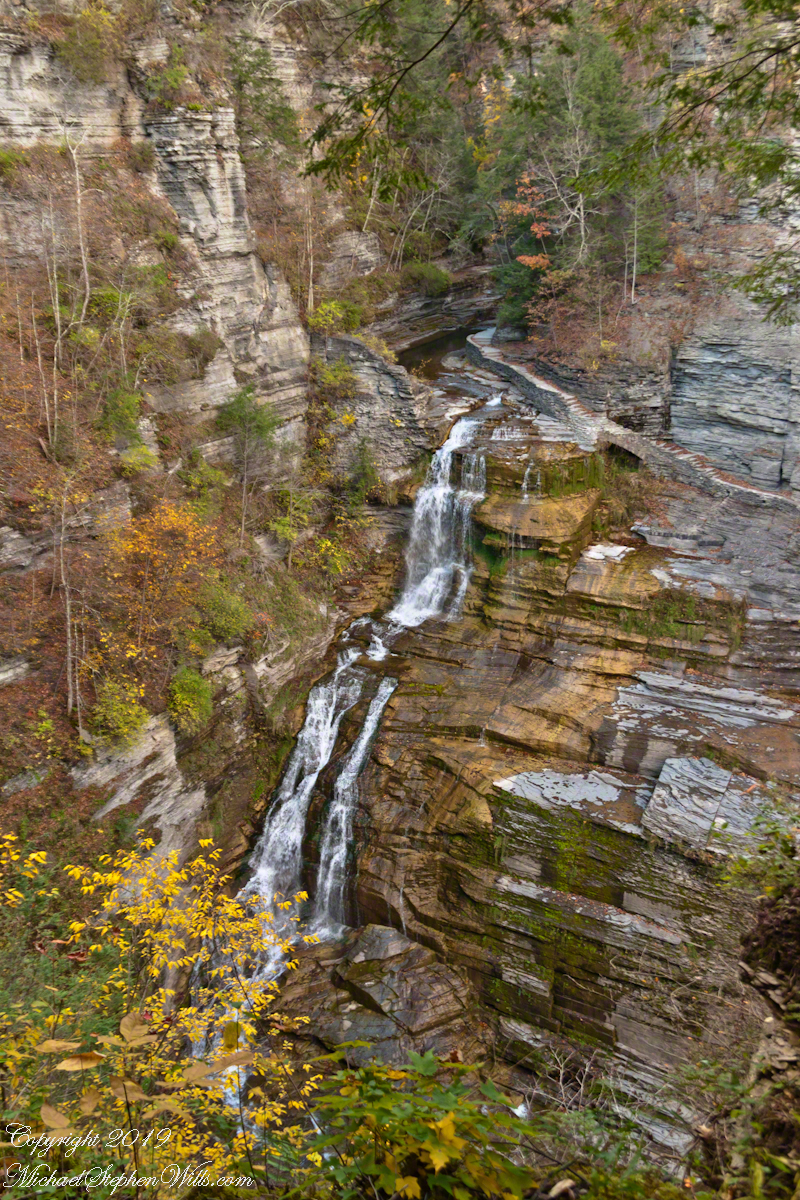
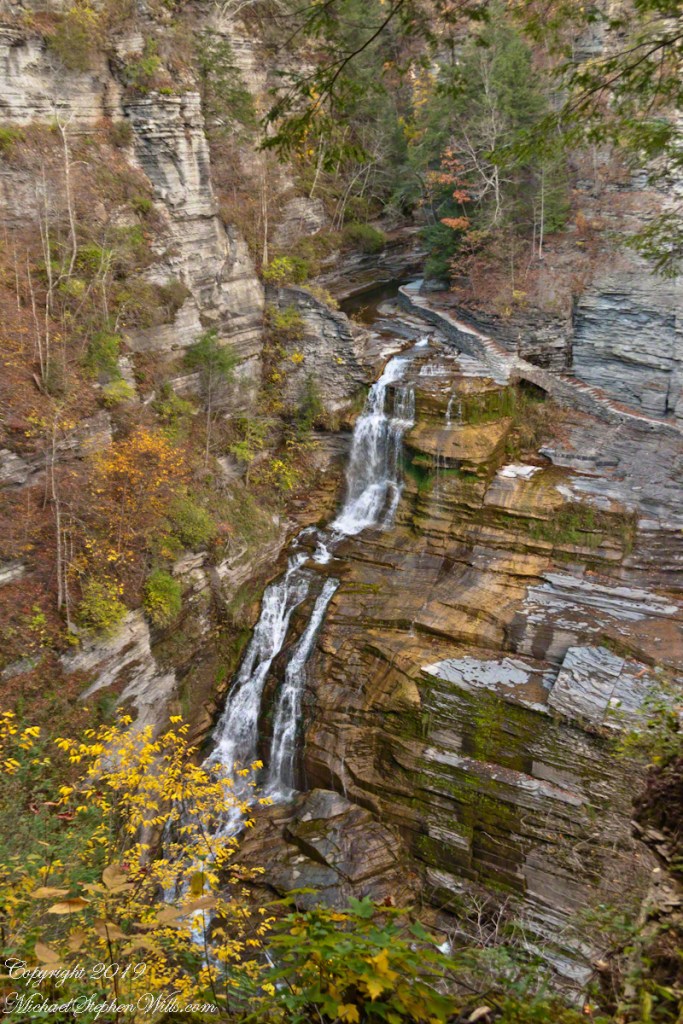
Pam and I visited Treman for our last visit of 2017. It was a bright, warm October afternoon. Here is a slide show of our experience, the details shared in recent postings. Enjoy!!

Click photograph for a larger view. To do this from WordPress Reader, you need to first click the title of this post to open a new page.

In November the gorge is closed for the winter due to dangerous conditions under the steep, crumbling walls. Robert H. Treman New York State Park.

Copyright 2019 All Rights Reserved Michael Stephen Wills

Cliff Stairs IV

A Wall with Moss Padding

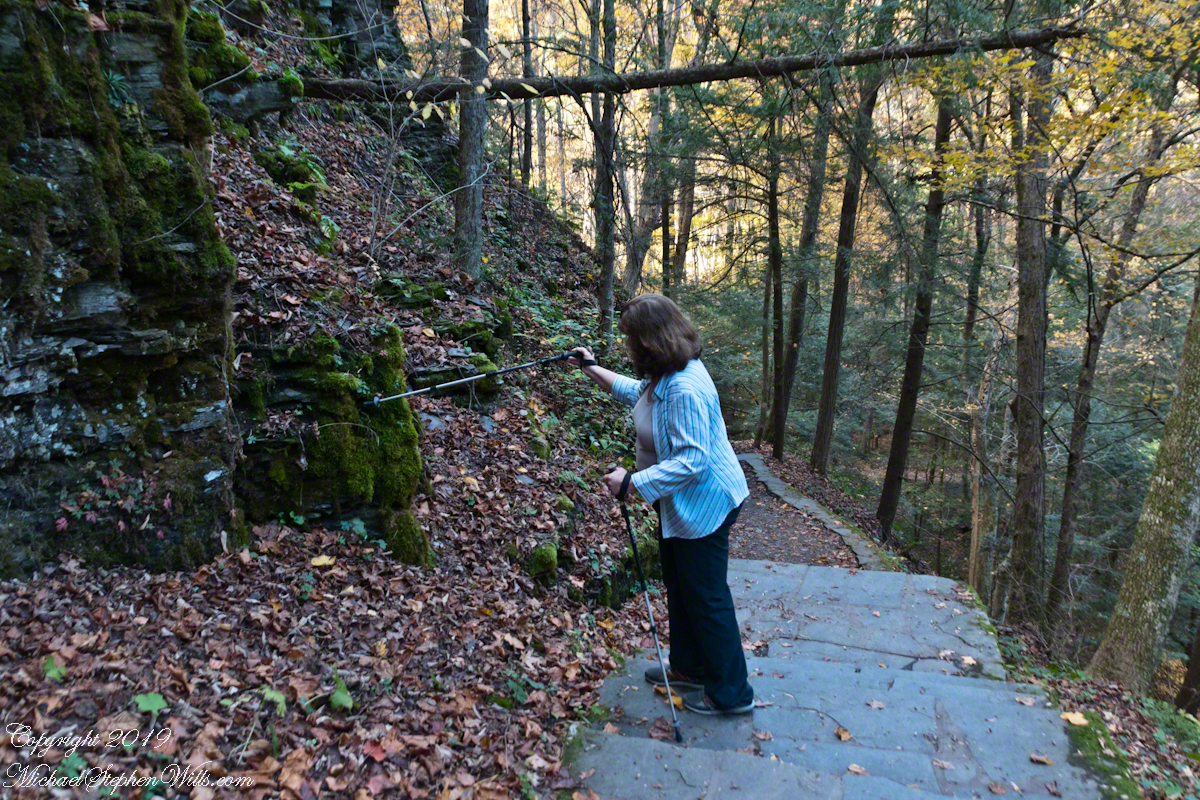
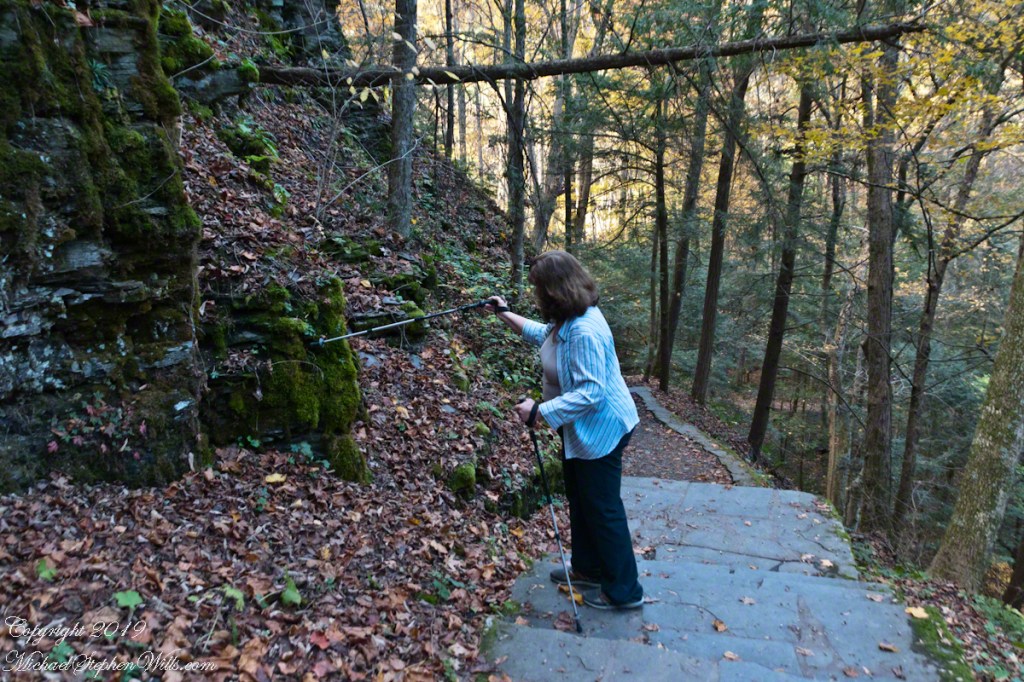
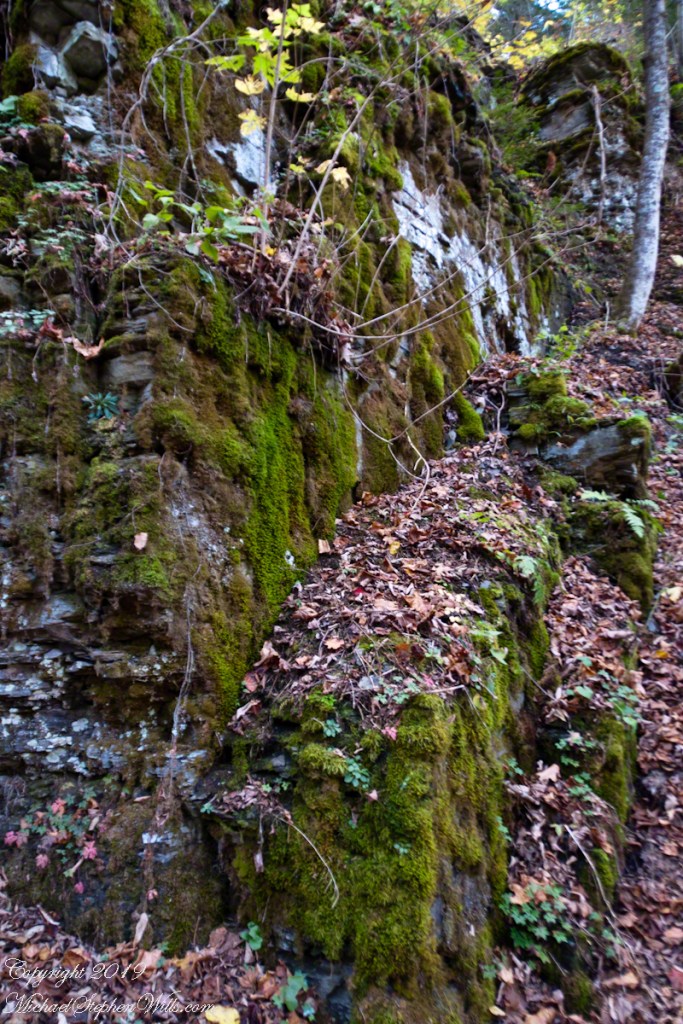
Pam examining thick moss growth on the sedimentary rock of Treman gorge. These layers of shale, sandstone, siltstone formed at the bottom of a broad, shallow sea over 380 million years ago.

Click photograph for a larger view. To do this from WordPress Reader, you need to first click the title of this post to open a new page.

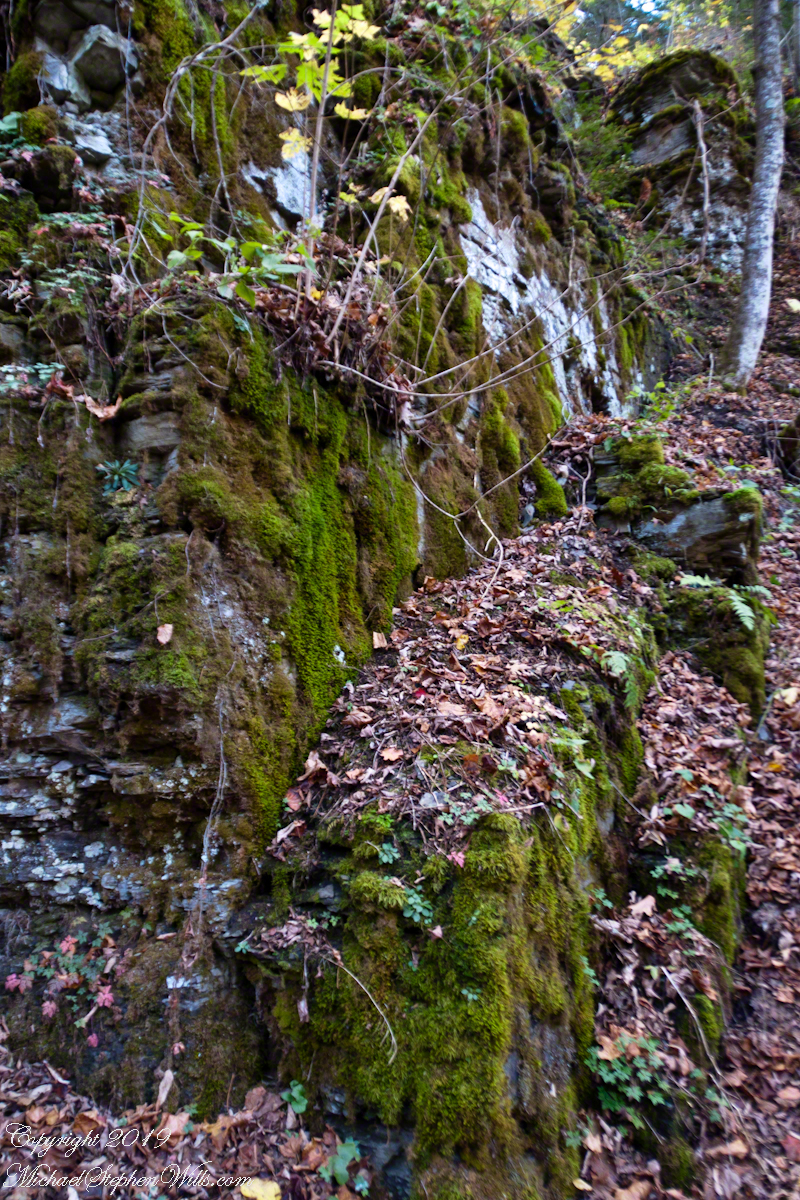
Towards the bottom of the 223 Cliff Stair steps moss takes over the Devonian shale of the cliff wall surface. Here, the cliff shelters the wall from sunlight 365 days a year.
Robert H. Treman New York State Park.

Click for a slideshow of this sequence Lucifer Falls and Cliff Stair Views
Copyright 2023 All Rights Reserved Michael Stephen Wills

Cliff Stairs III

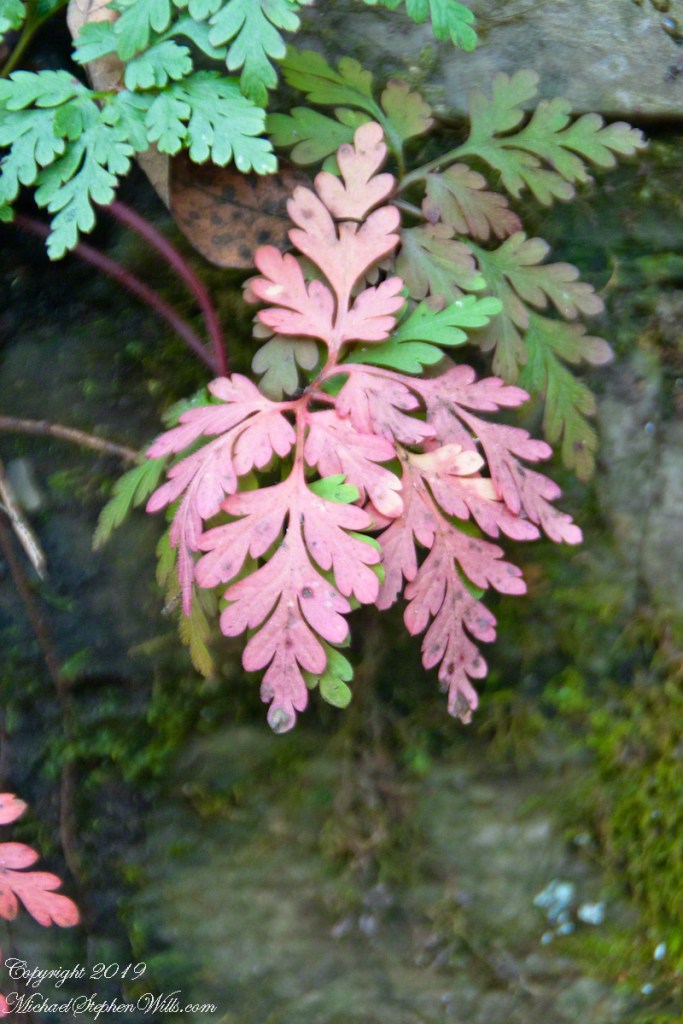
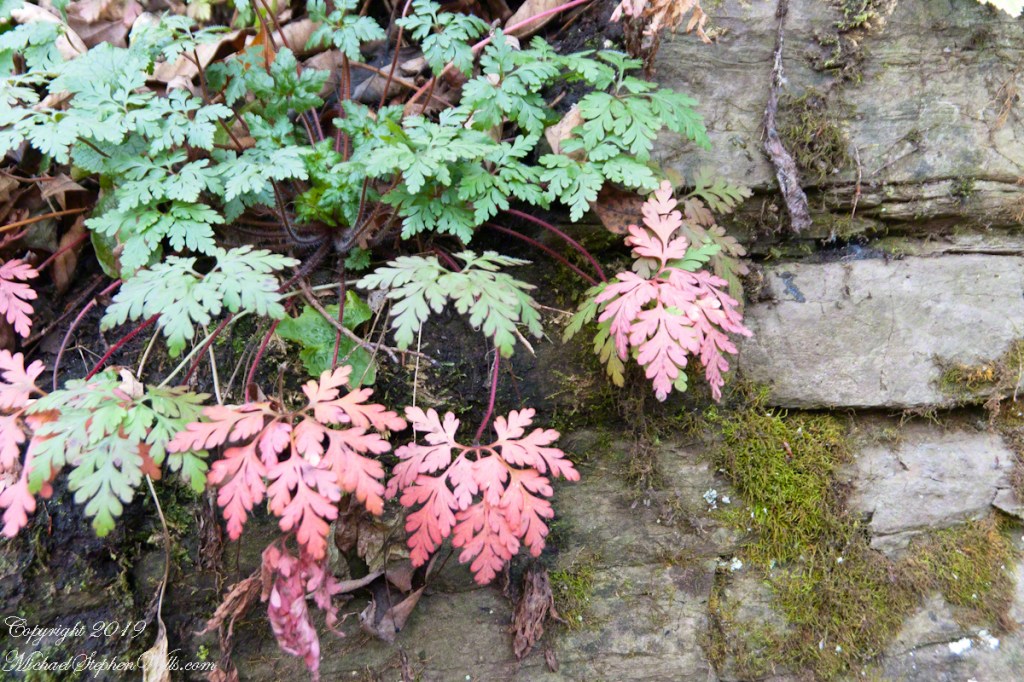
“Red-shanks”

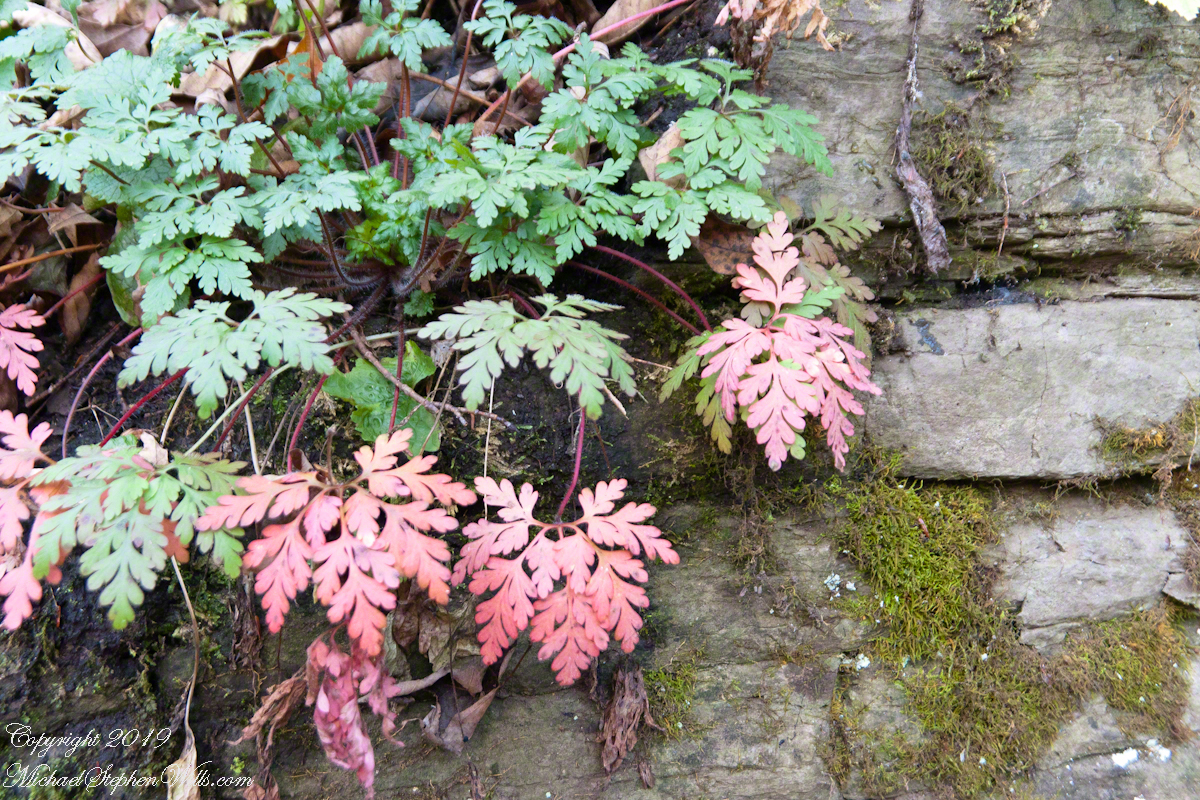
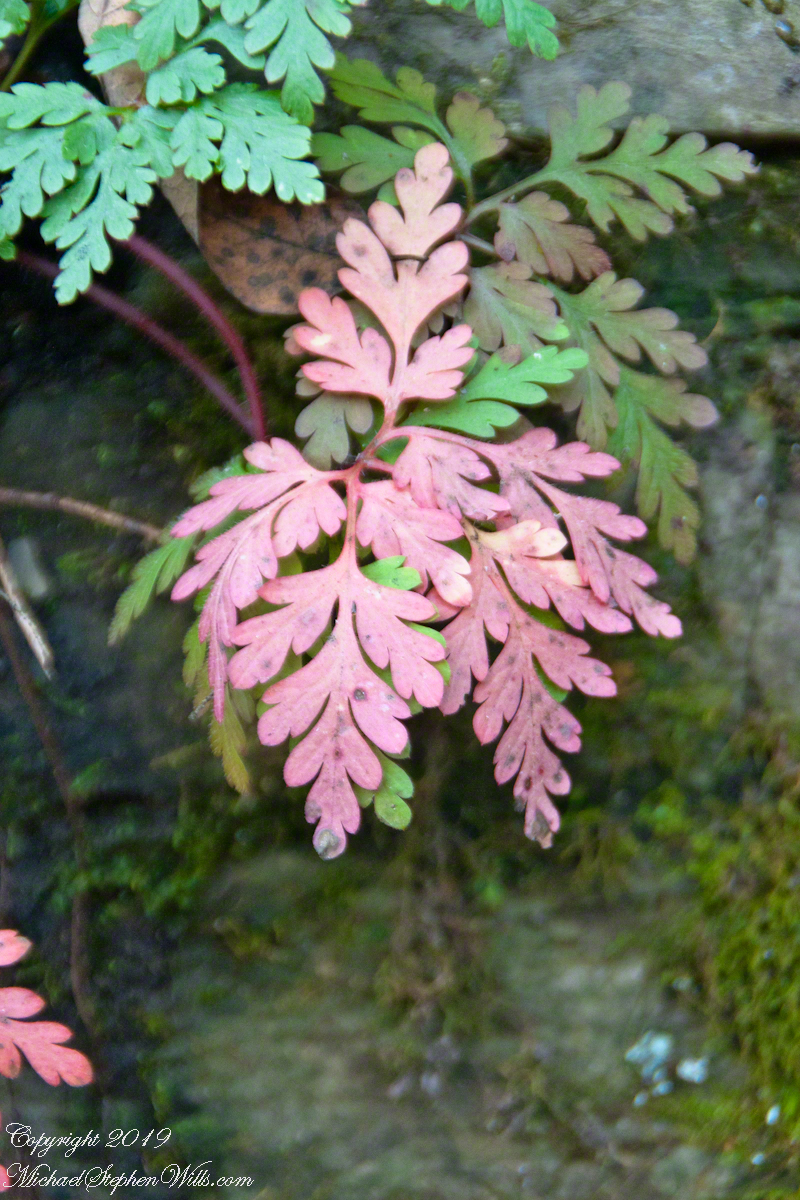
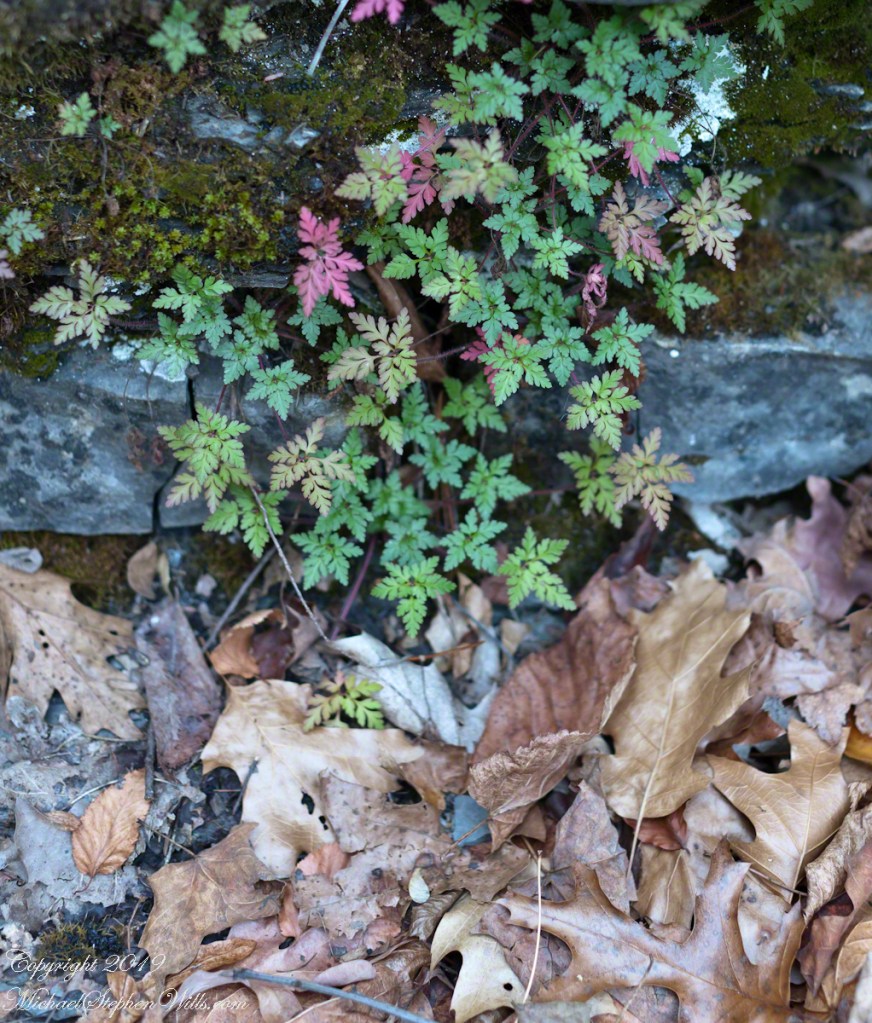
This geranium species (scientific name Geranium robertianum) are also called “Herb-Robert” for a reputed ability to ward off disease.
Click photograph for a larger view. To do this from WordPress Reader, you need to first click the title of this post to open a new page.
Scottish Highlands residents call these wild geraniums “red-shanks” for the deep red color of the stalks, seen in both photographs.

Robert H. Treman New York State Park.

Source, “How to Know the Wildflowers” by Mrs. William Star Dana, 1989, Houghton Mifflin, Boston.

Click for a slideshow of this sequence Cliff Stair Views
Copyright 2023 All Rights Reserved Michael Stephen Wills

Cliff Stairs II

read the sign

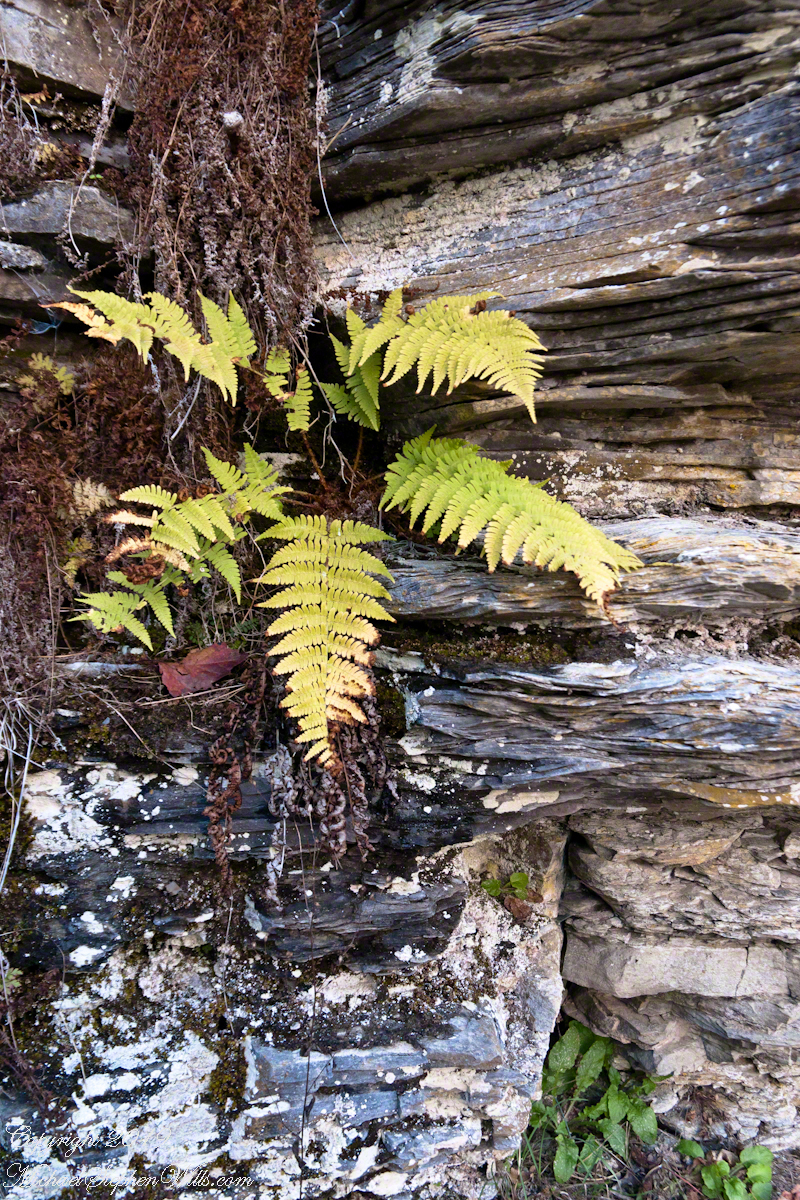
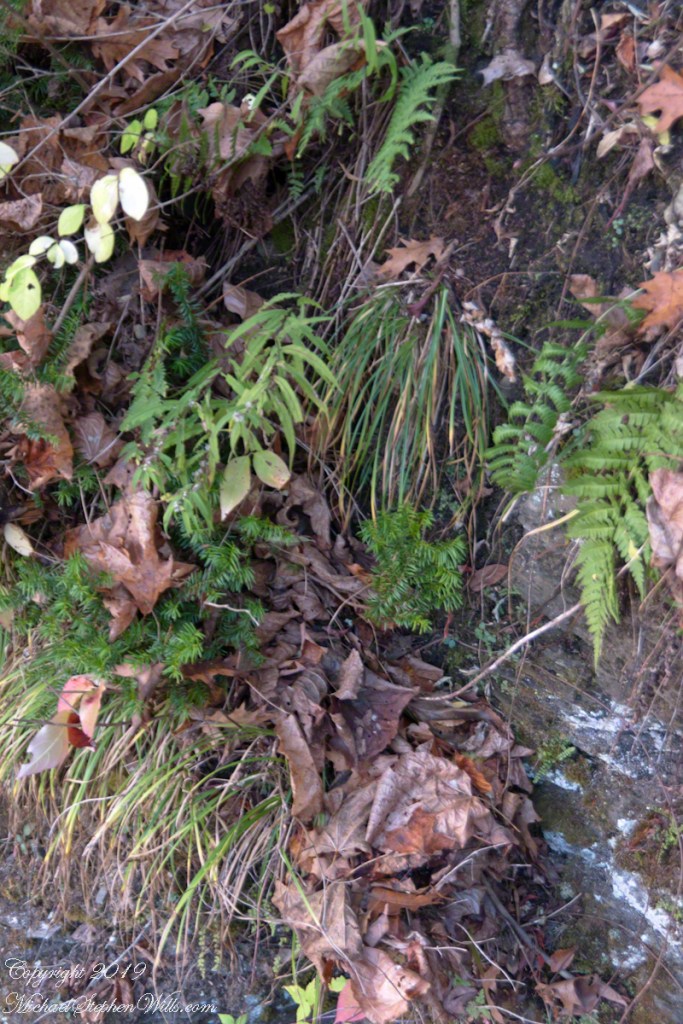
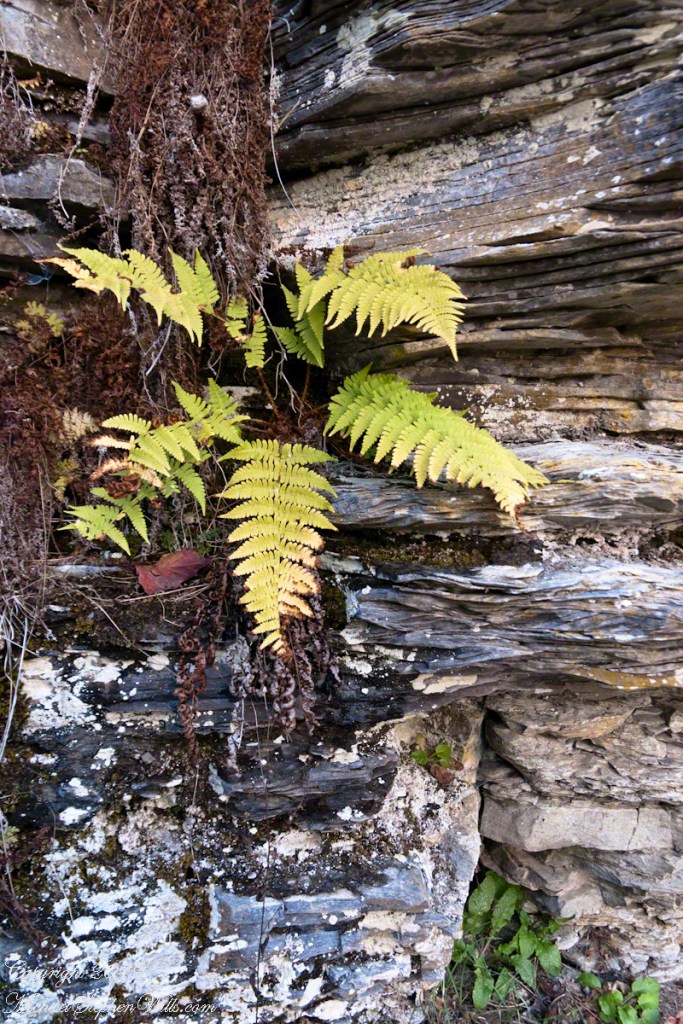
Each autumn, species of fern turns yellow towards a winter death. Here we see growing from Devonian shale, both the yellowed and desiccated fern fronds. Robert H. Treman New York State Park.

Click photograph for a larger view. To do this from WordPress Reader, you need to first click the title of this post to open a new page.
Click for a slideshow of this sequence Cliff Stair views
Copyright 2023 All Rights Reserved Michael Stephen Wills

Pam Wills at Loughcrew, County Meath, Ireland

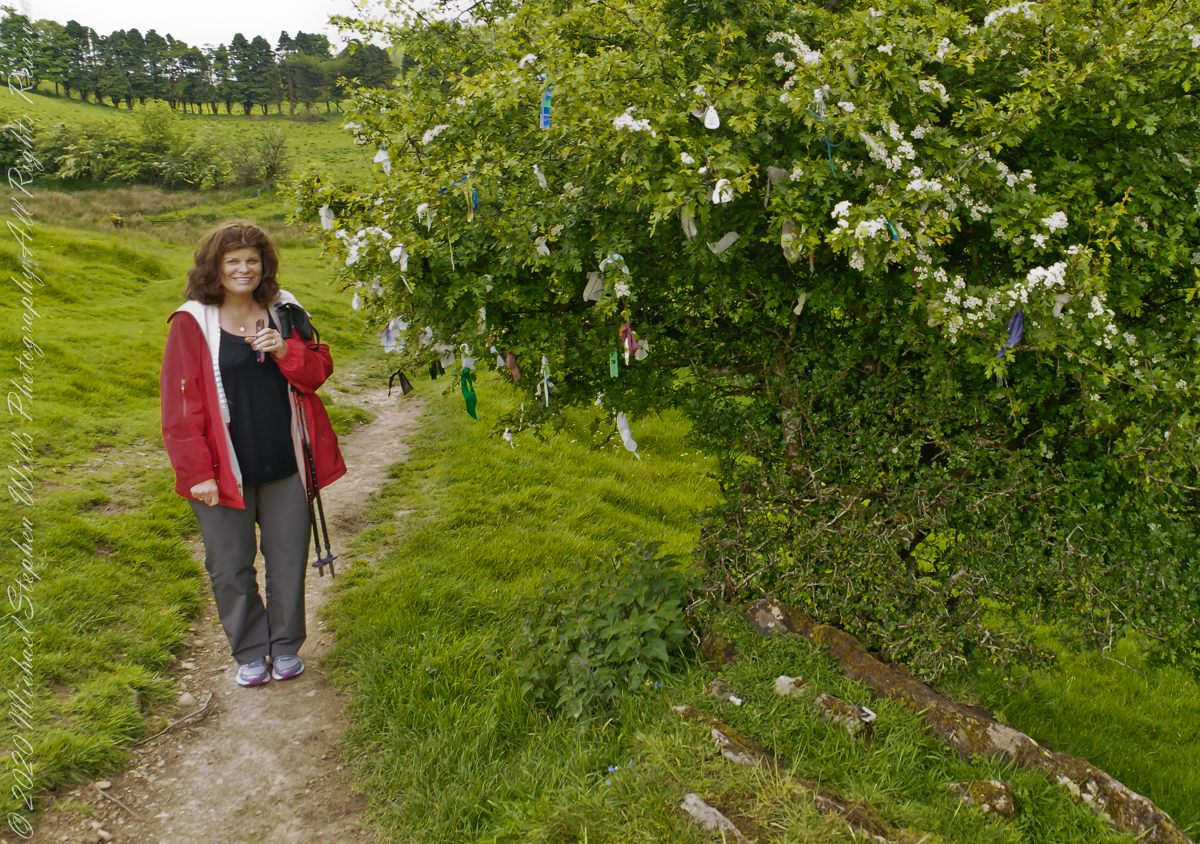
Pam and I were lucky enough to plan our tour of Ireland for May and June when the Hawthorne trees are in bloom.  Named sceach gheal in Gaelic, the white clusters of blossoms symbolize hope.  Hawthorns are plentiful throughout the island.  The Irish revere the tree and associate each Hawthorn with the Little People.  There are roads in Ireland that curve around a Hawthorn tree because the local people convinced the engineers to do so, to save the tree.

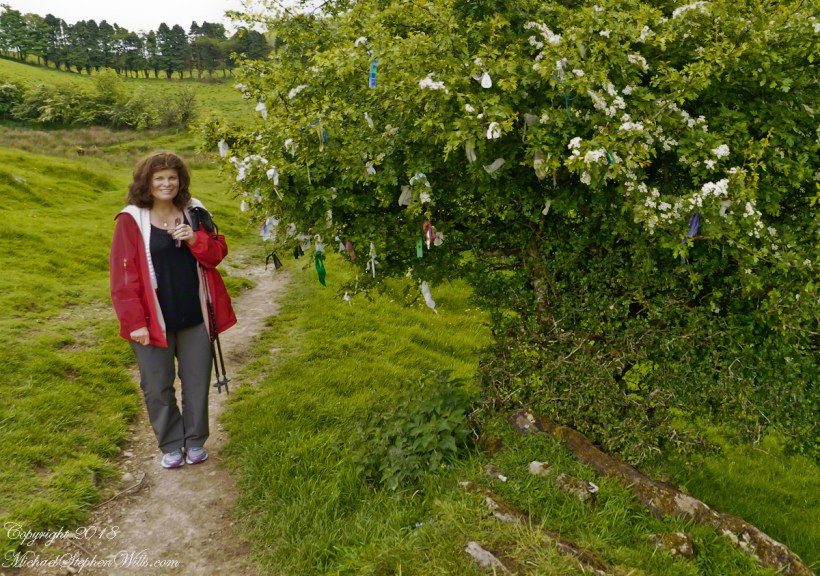
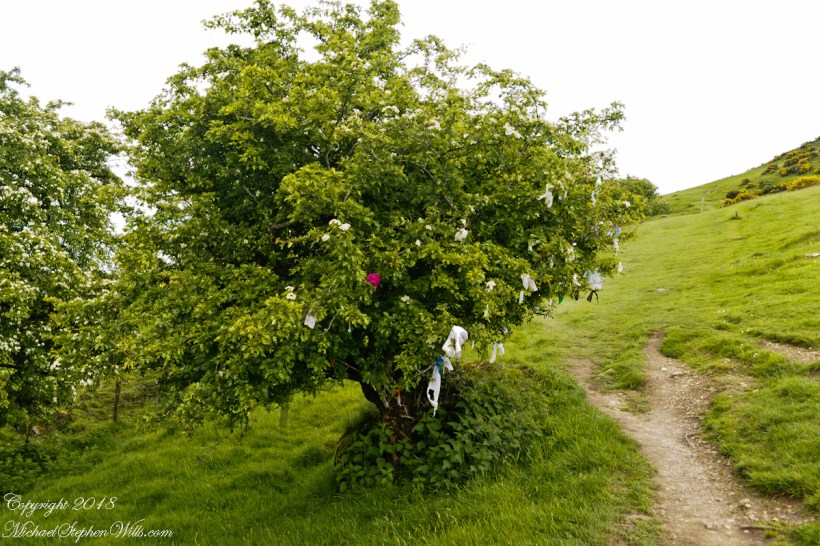
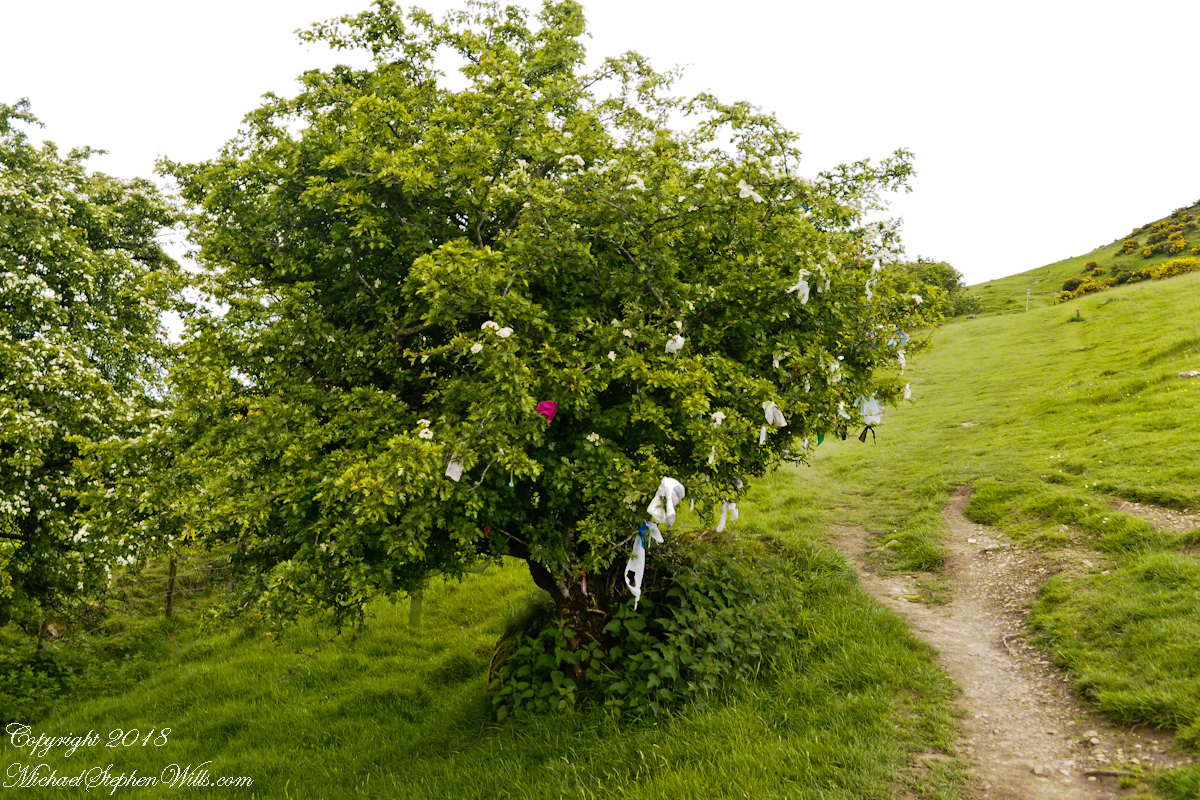
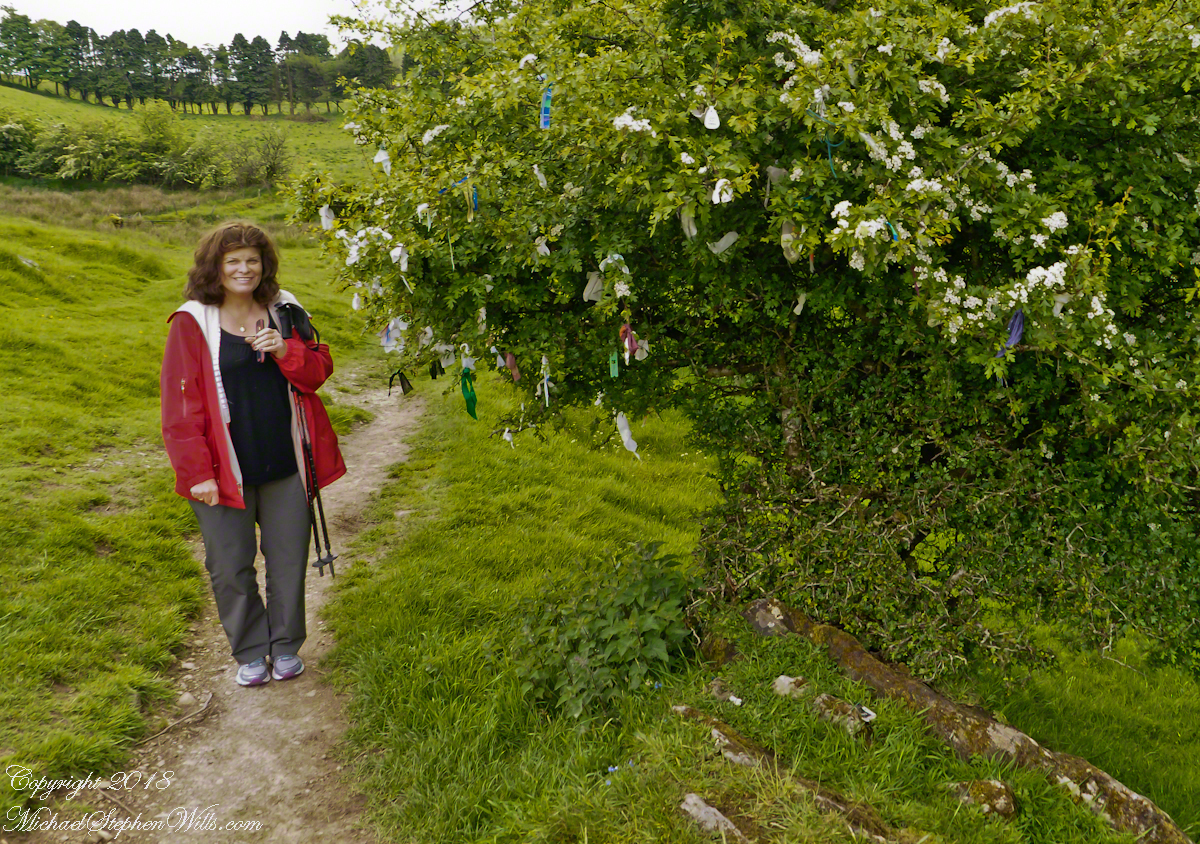
This specimen, covered with offerings (to the Little People?), is on the trail to Loughcrew.  Even with her knee trouble, Pam made it to the top of the Hag’s Mountain to visit Cairn T of the Loughcrew Passage tombs.

The steep path to Loughcrew passes a hawthorn covered with flowers and may offerings.

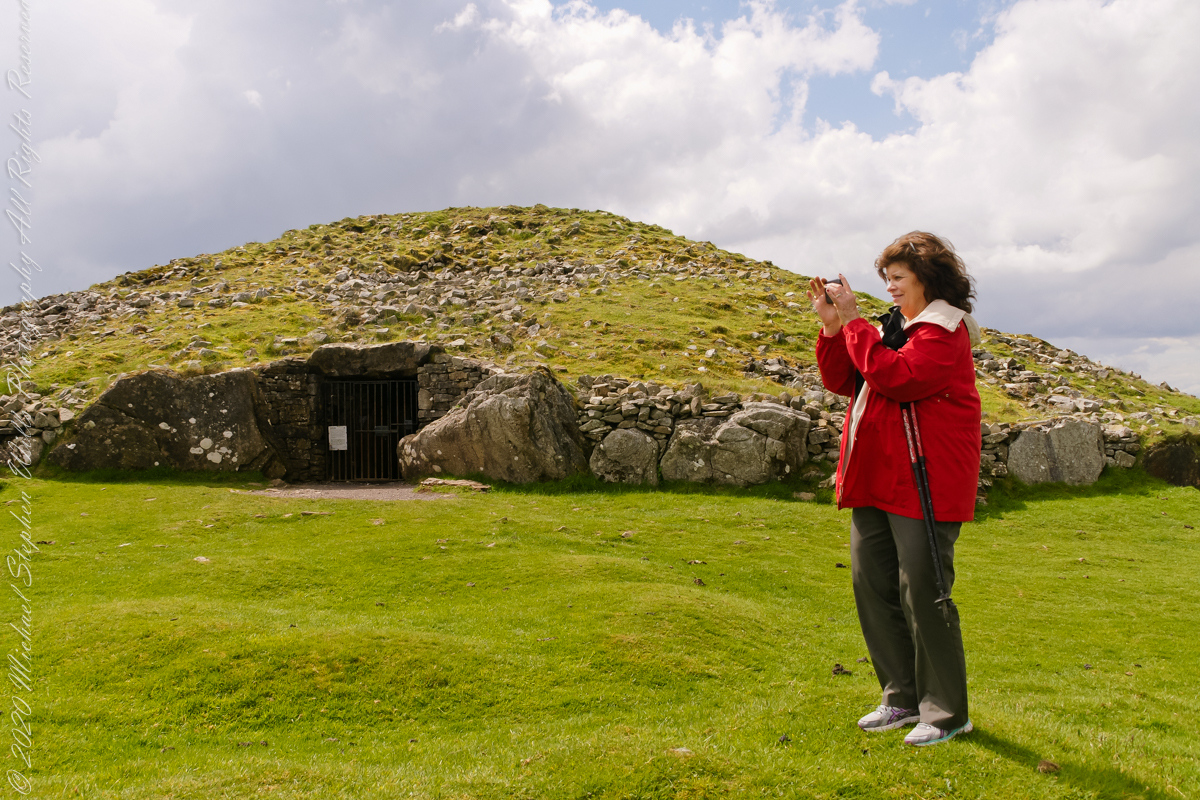
Pam loves to capture images and returned from Ireland with a large collection.  Most of the photos of me at work are by Pam.  Here Pam is capturing the summit view of Hag’s Mountain with the Cairn T entrance gate in the background.  Lucky for us, a fellow visitor made the trip to Loughcrew Gardens and picked up the  gate key from the café.  In a later post I will share my work from inside this passage tomb.

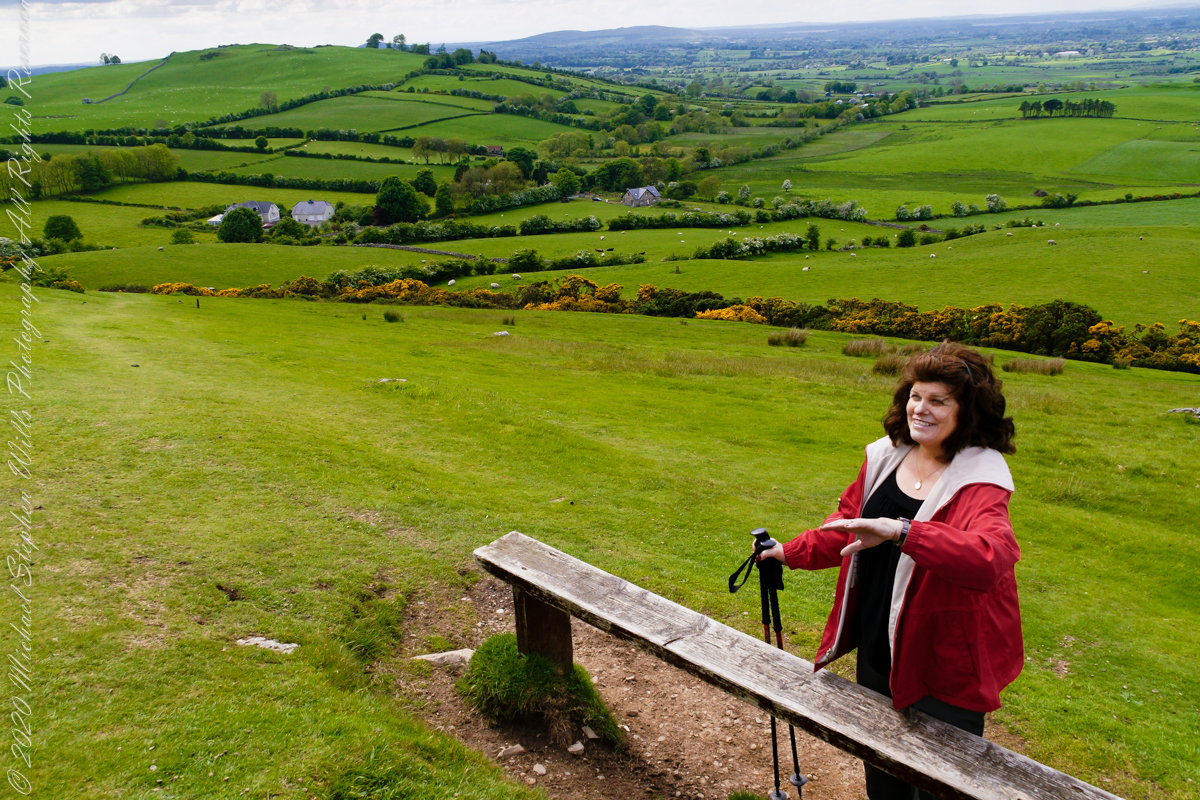
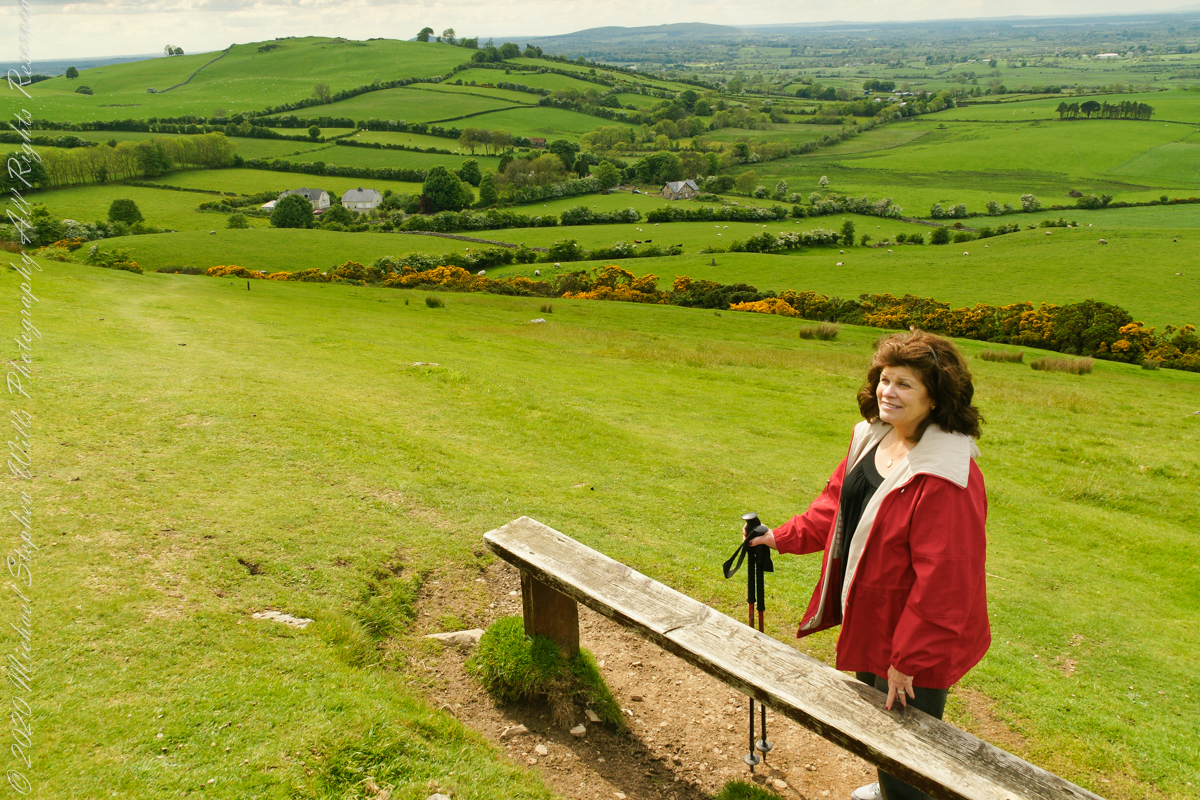
Pam makes friends wherever we go.  She started down the mountain before me to take it easy on her knees.  When I caught up, Pam and a young Irish family were deep in conversation.  I took the opportunity to capture Pam with that gorgeous view to the northwest, Irish countryside with Lake of the Branches in the far distance.

Copyright 2023 Michael Stephen Wills All Rights Reserved

Sky Reflections

A Wall with Moss Padding

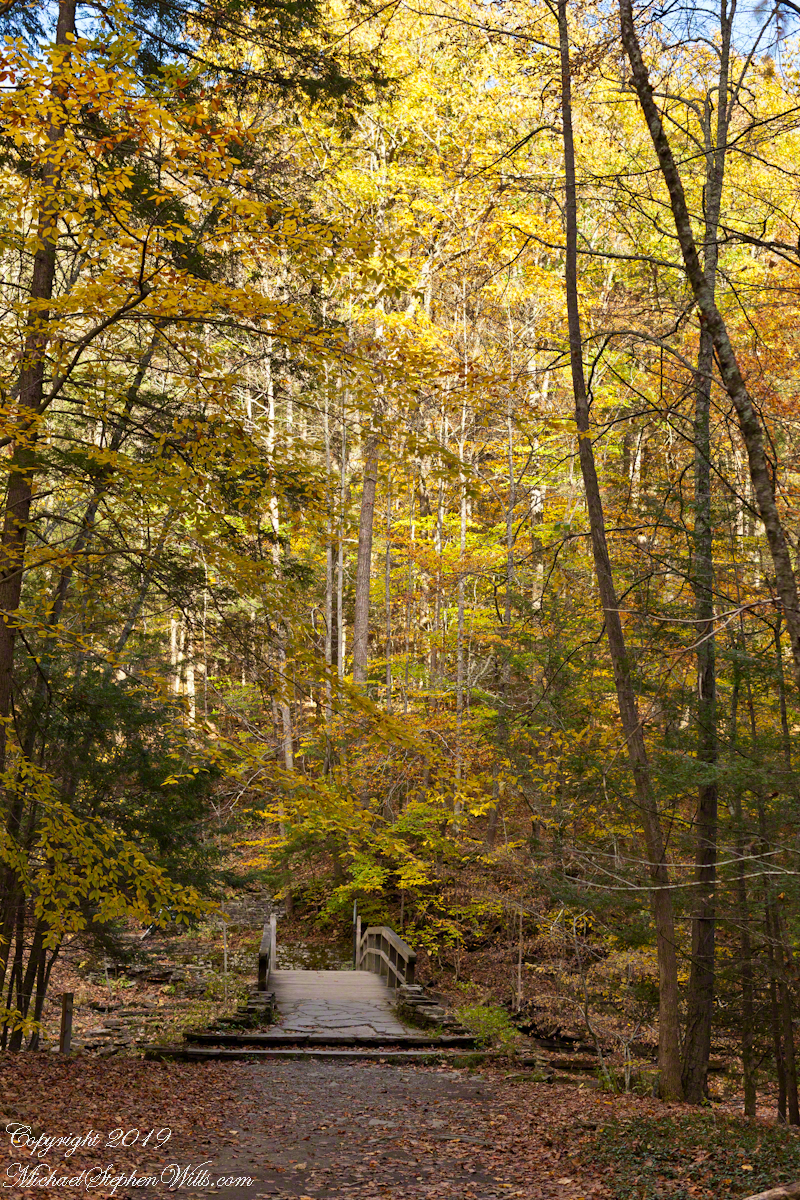
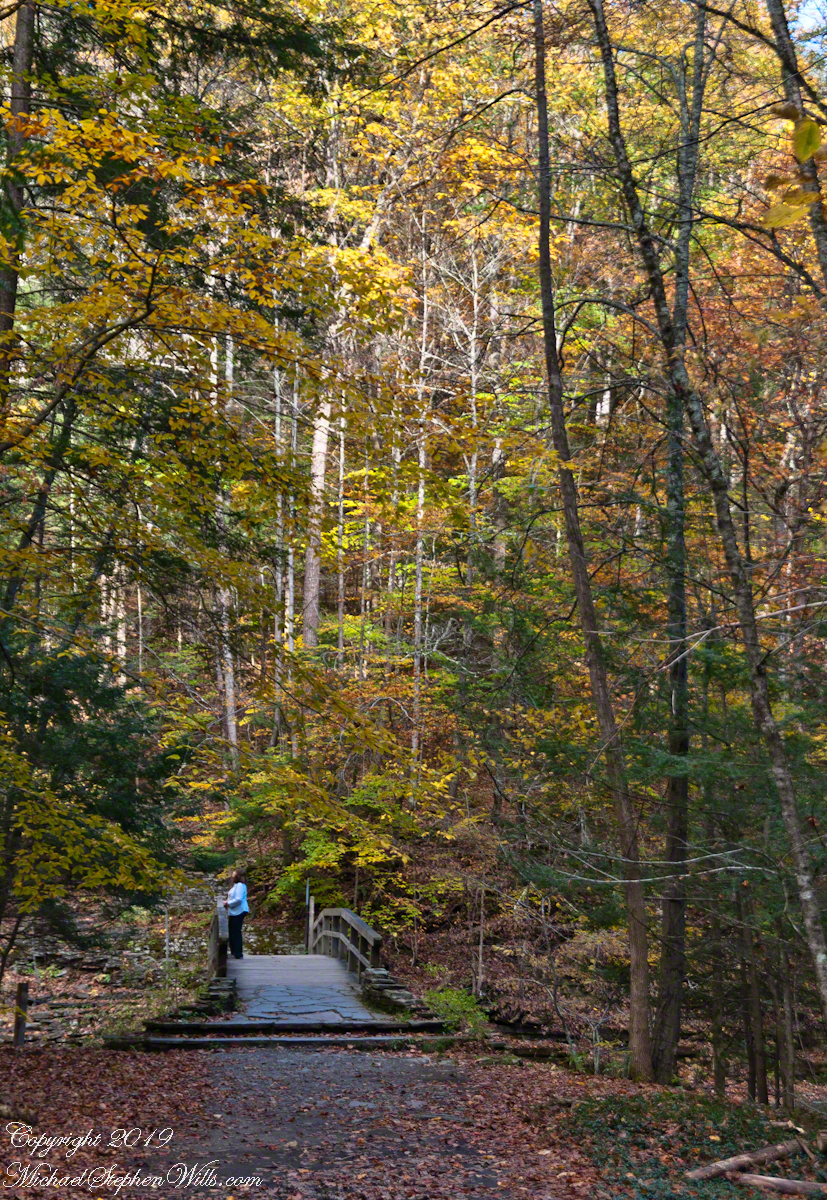
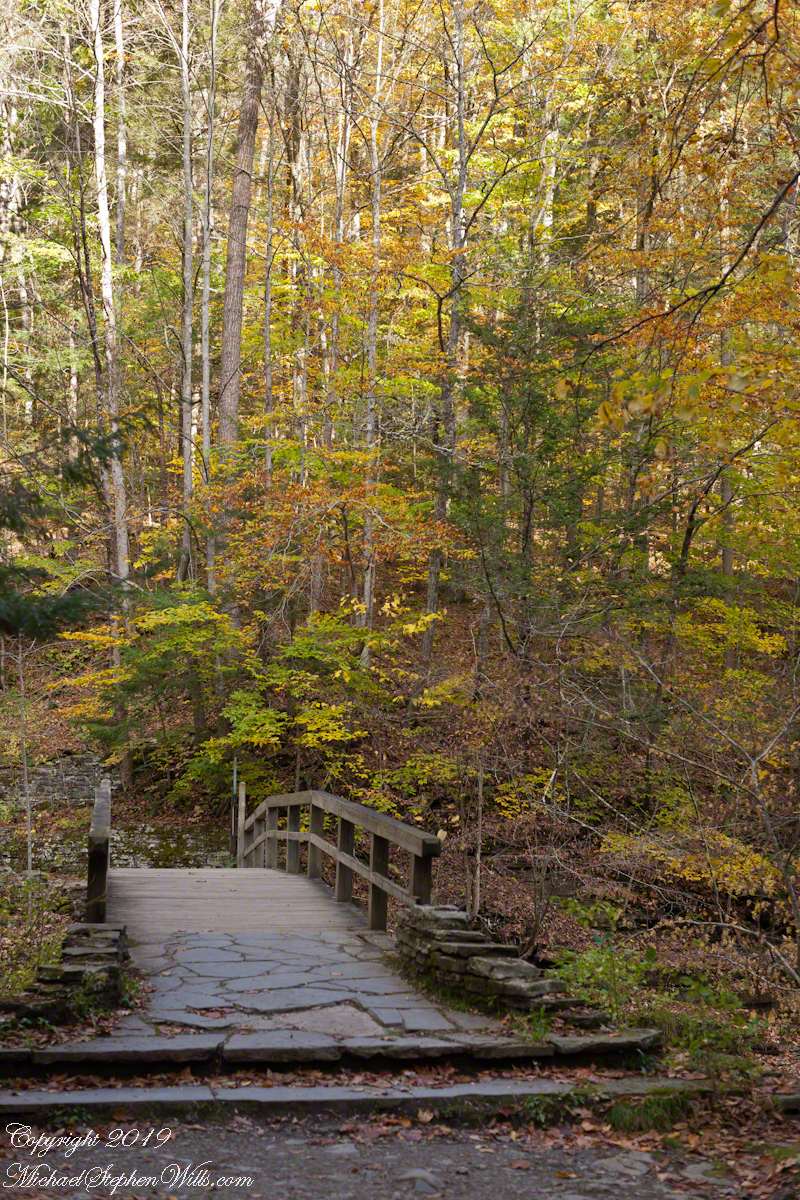
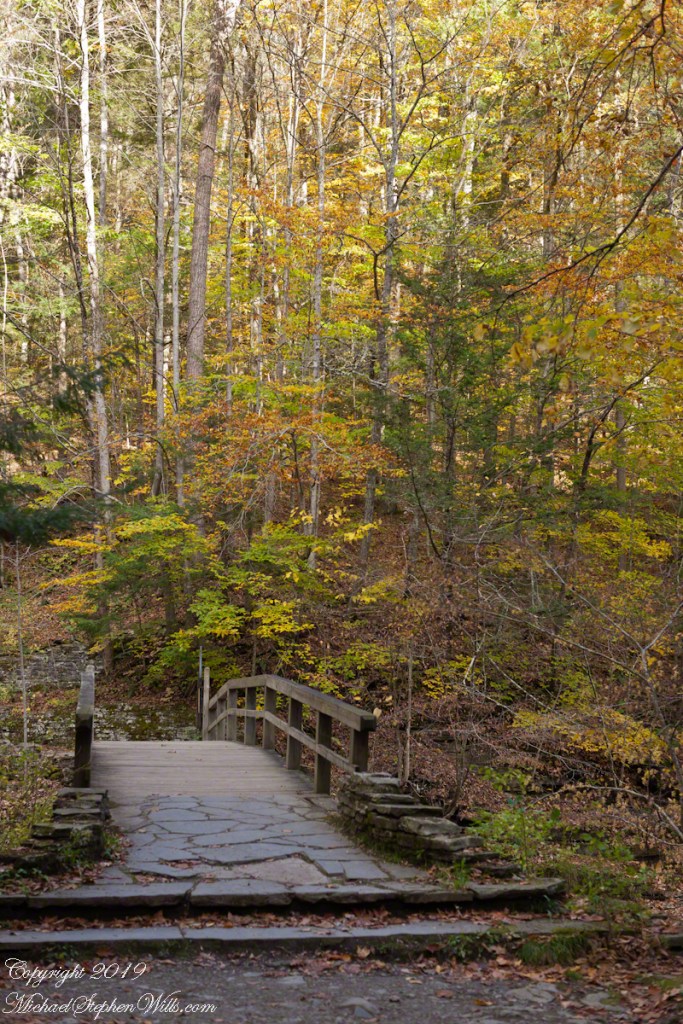
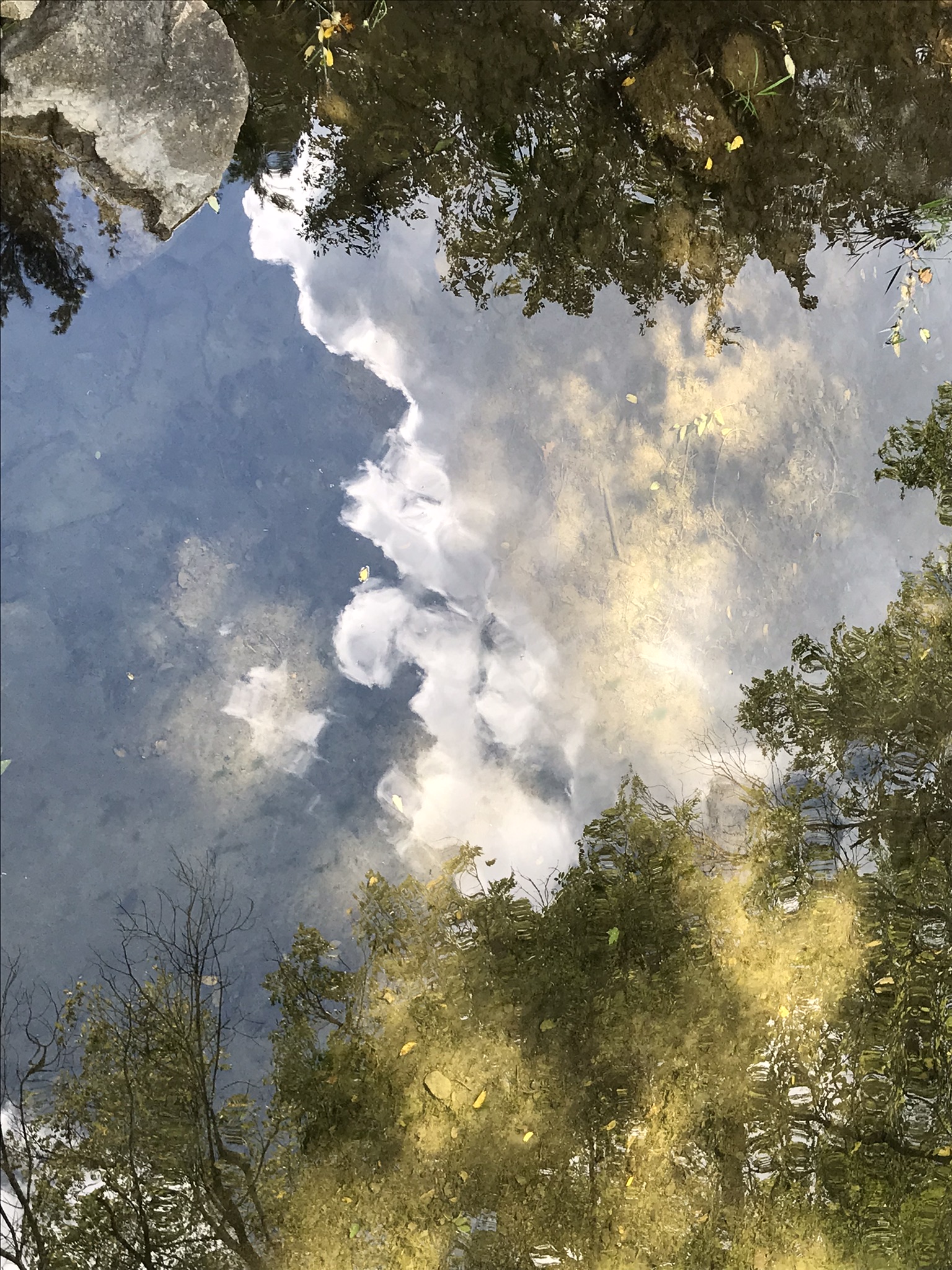
A Finger Lakes Trail footbridge crosses Fish Kill on the edge of Treman State Park.

These are images of the sky reflected on Fish Kill from that footbridge on August 24, 2022.

Robert H. Treman State Park, Enfield, Tompkins County, Finger Lakes Region, New York State

Copyright 2022 All Rights Reserved Michael Stephen Wills

The Haw in Hawthorn

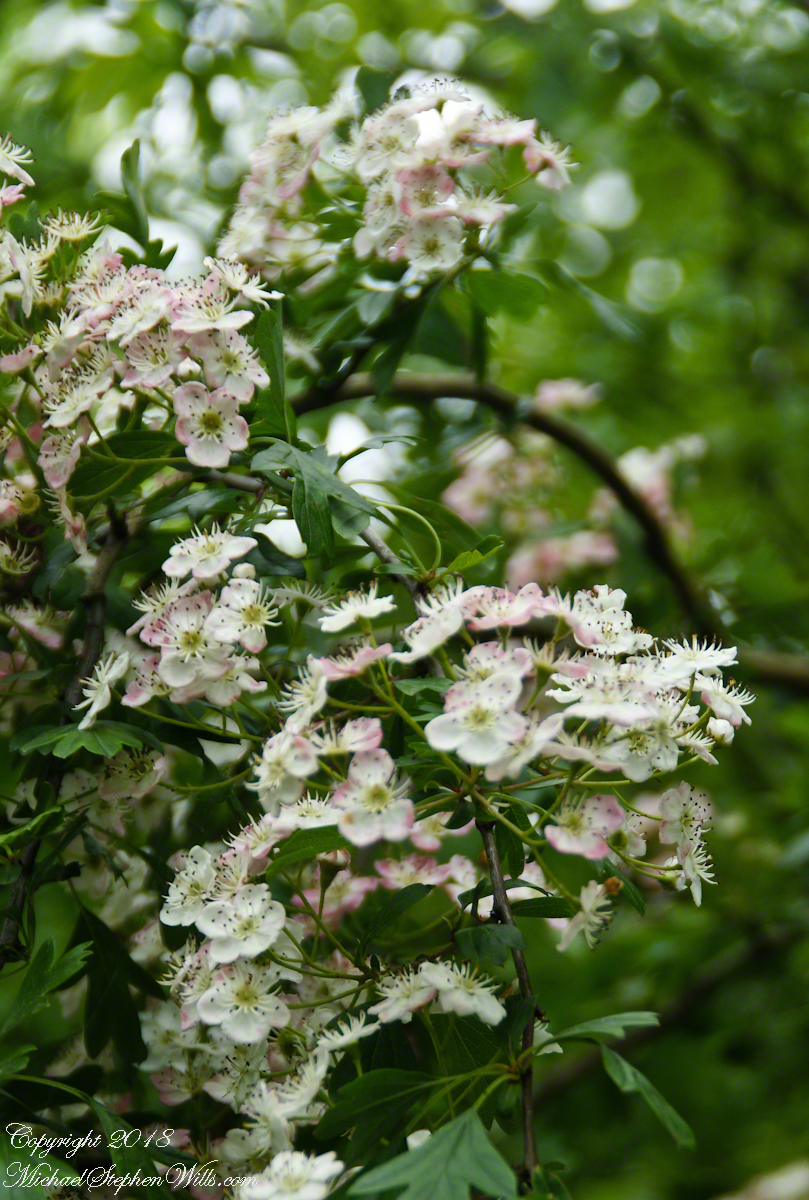
I originally published these blossoms as “wild  rose”.  It was my Facebook friends who pointed  out these are hawthorn flowers.  The key to identification was the shape of the leaves.

Hawthorne Blossoms on the former McArdle Home
Blossoms of Hawthorne taken on the site of the former McCardle Home, Proleek Townland, County Louth, Ireland.

In correcting my mistake, I learned the young leaves of Hawthorn are excellent for salads.  Wonder how the fairy folk, associated with single hawthorns (as in the following photograph from the Hill of Tara), react to picking leaves from their trees?  I didn’t hear of the practice during our time in Ireland.

Speaking Stone Hill of Tara
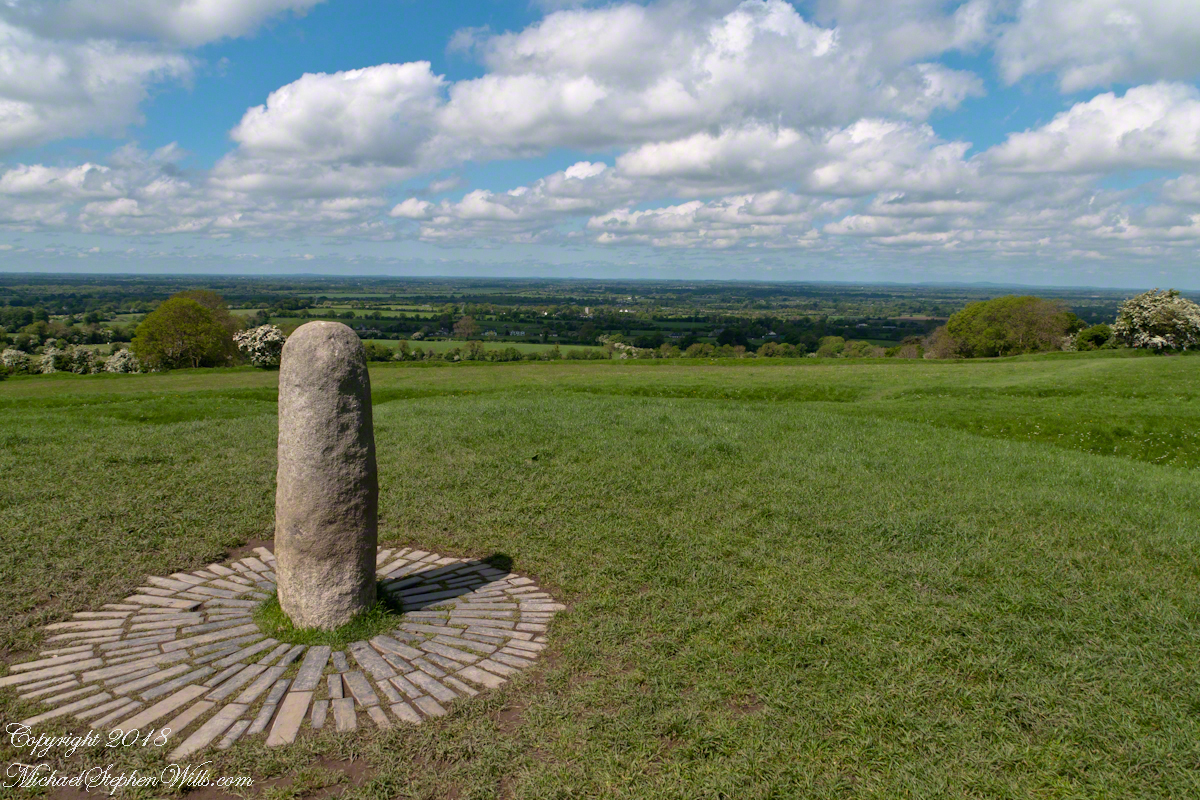
View northwest from Hill of Tara looking across County Meath with views of Counties Westmeath and Cavan. On the horizon, right, is Hag’s Mountain, (Irish: Sliabh na Caillí) , site of the Loughcrew Cairns. The standing stone is the “Stone of Destiny: (Irish: Lia Fáil), which served in coronation the coronation of the High Kings of Ireland. It stands on the Inauguration Mound (Irish: an Forrad) of Tara. This photograph was taken the morning of May 27, 2014 hours before the stone was vandalized, doused with green and red paint.

My mistake was understandable, in botany the hawthorn is in the same family as the rose.  The flowers are similar, having five petals.  The “haw” in hawthorn is from the Old English word for hedge, as is this linear standoff the tree lining the way up to the Loughcrew Cairns.

Path on Hag's Mountain, Loughcrew
Reaching highest point of County Meath, Ireland means a steep path, not too long, to glorious views on all points plus Lough Craobh (Lake of the Branches).

I read these votive offerings are made at Beltane, in which case these are fresh from placement May 1.

Hawthorn Tree with Offerings
A hawthorn tree in bloom on May 27, 2016. Growing on the slope of Hag’s Mountain

The following year Pam underwent double total knee replacements, never the less, she was great company for all our adventures on the island.  Even this steep climb.

Pam and the Offering Hawthorn
The steep path to Loughcrew passes a hawthorn covered with flowers and May offerings.

These views were our reward for reaching the top.

Loughcrew View, North by Northwest
View from Loughcrew Cairns, “Hags Mountain”

The Emerald Isle, we fully understood this name.

Standing Stone, Loughcrew
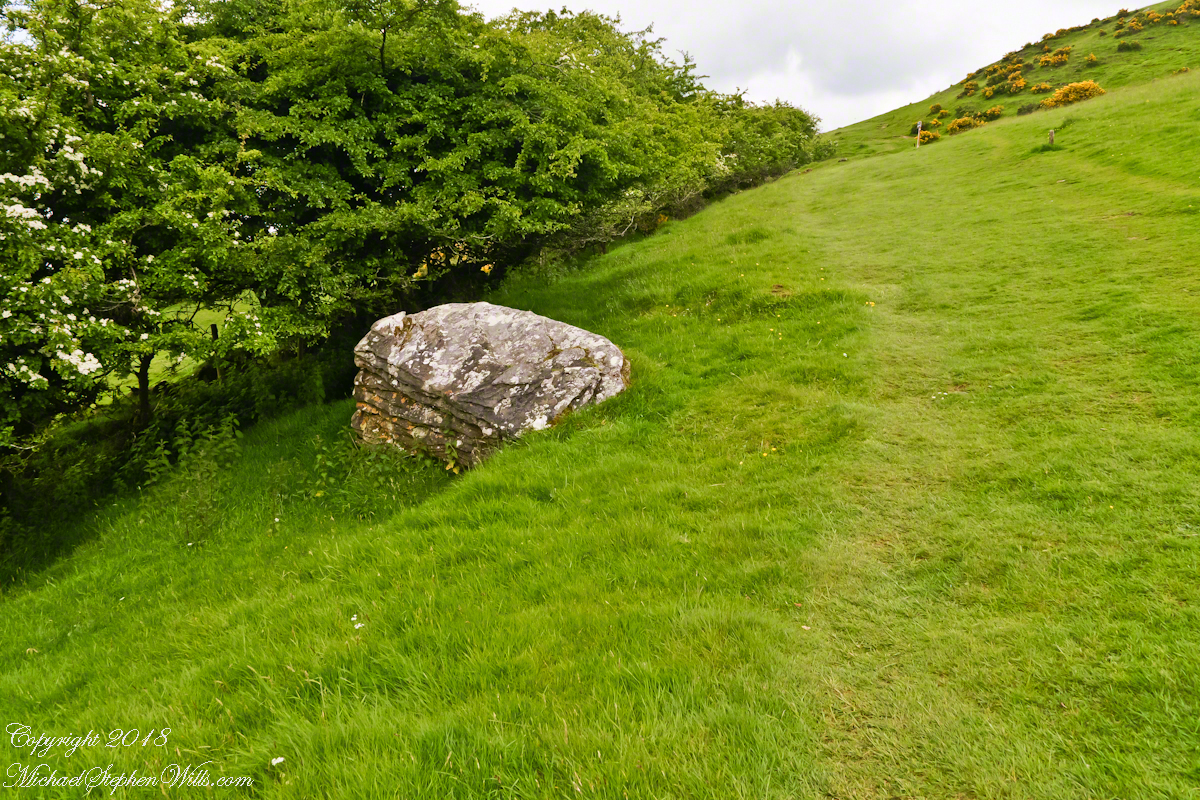
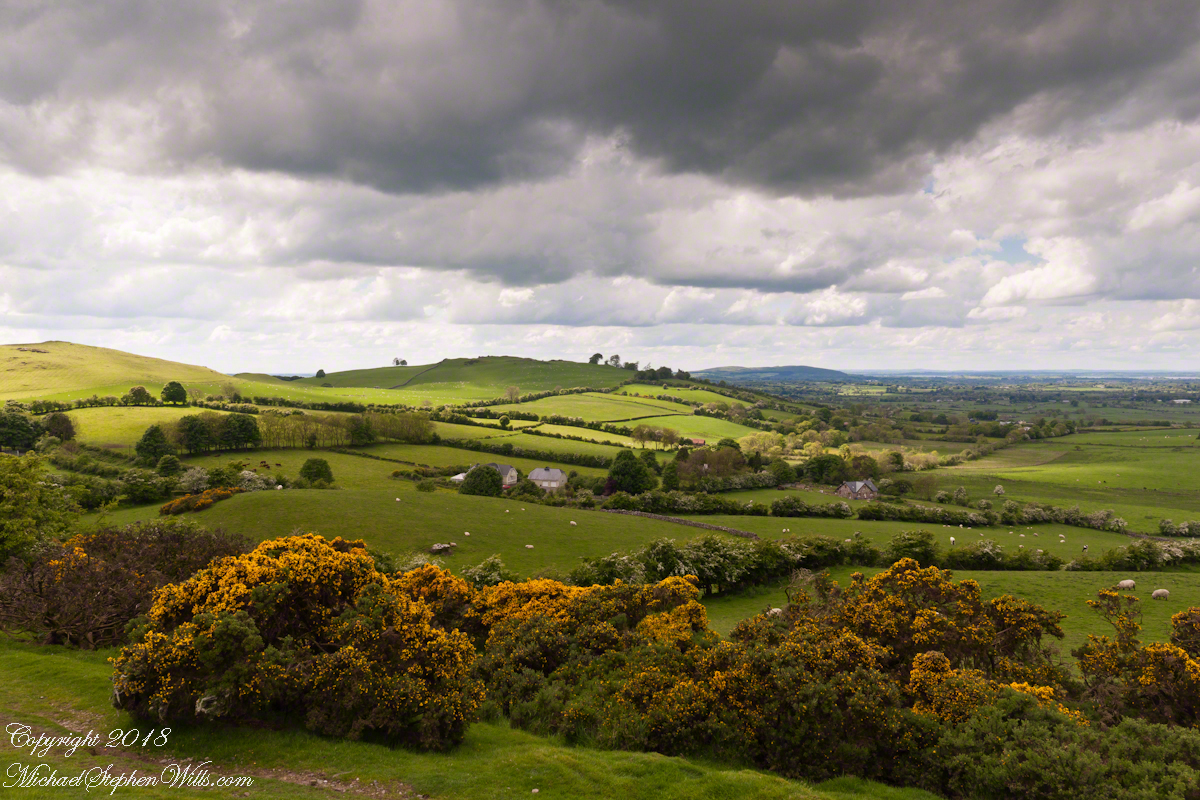
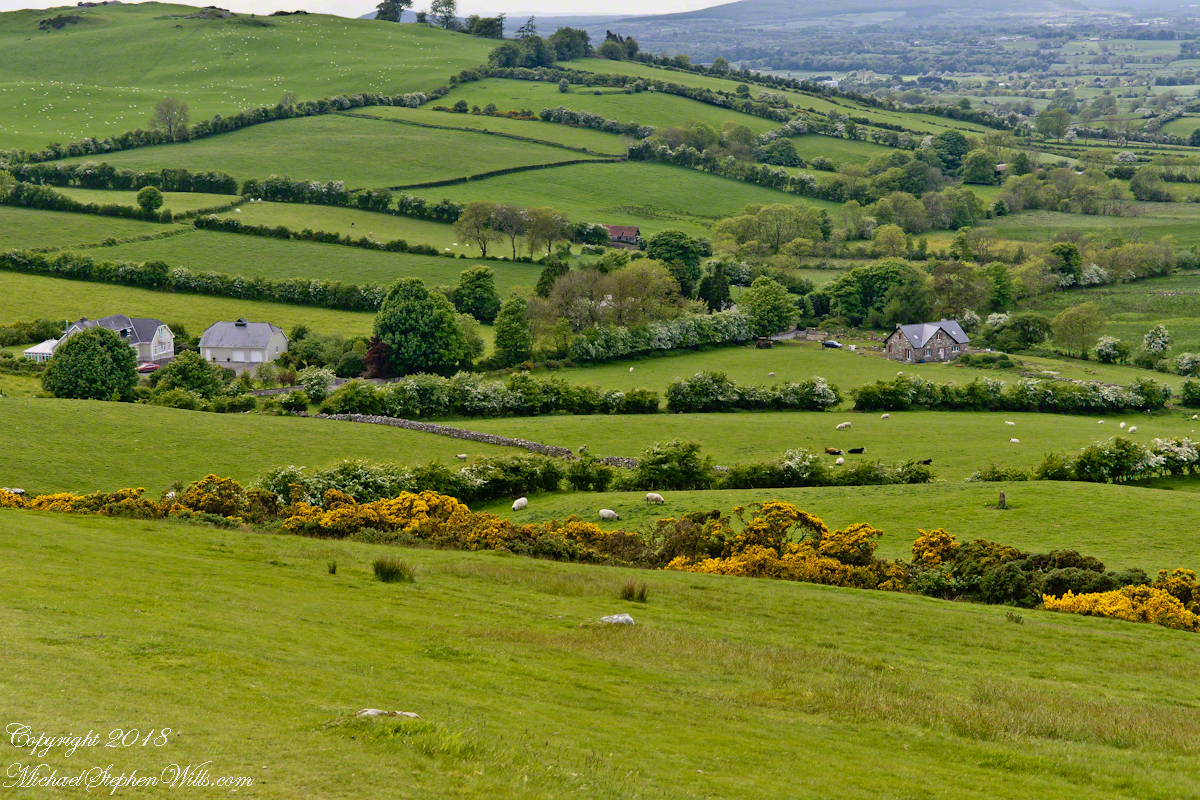
Loughcrew Megalithic Site, County Meath, Ireland. A solitary standing stone below the trail to the Loughcrew site surrounded by whin bush (gorse) and hawthorn hedge rows. A fieldstone fence, farmhouses, a patchwork quilt of fields completes the view.

The Greek name for the Hawthorn species is formed from two words meaning “strength” and “sharp”, referring to the thorny branches.

Charlemagne of County Cork
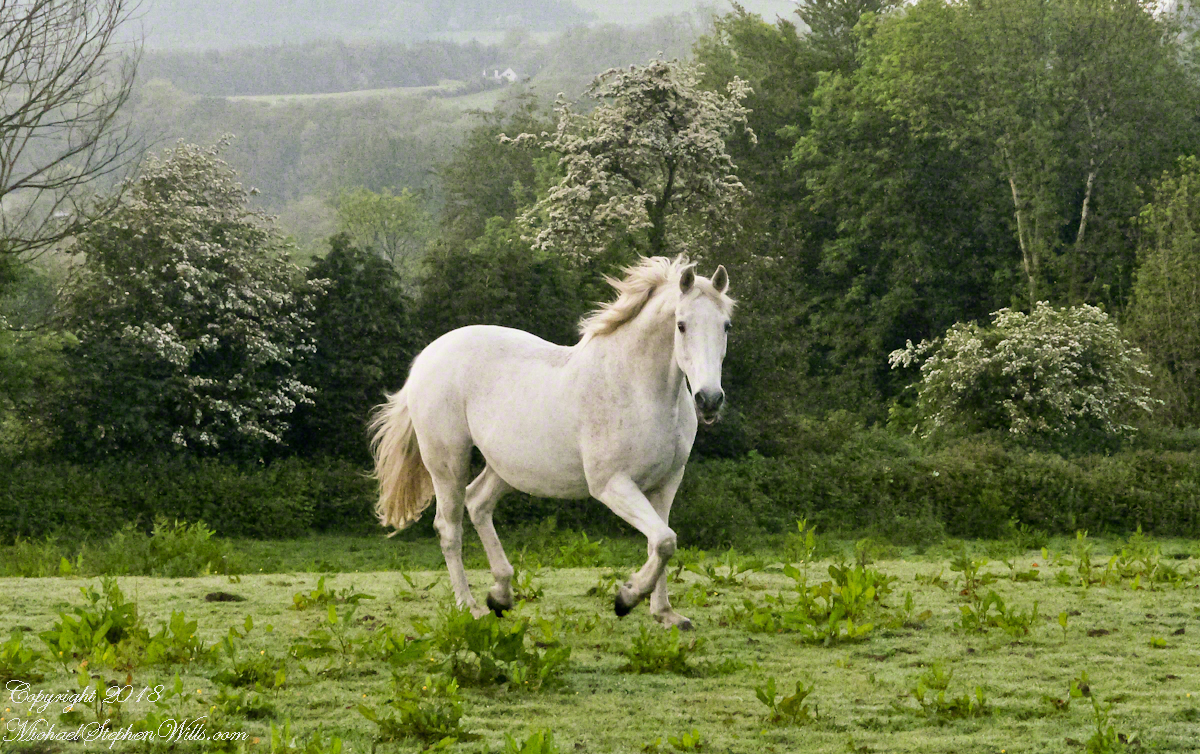
For County Cork we stayed with Marantha House B&B.   Our day of arrival, that evening, I visited Charlemagne and fed him an apple, saved from dinner. We learned from our hosts, Olwen and Douglas Venn, he is a retired show horse they rescued. The following morning I visited Charlemagne again with an apple and my camera. As I walked up, starting from the far end of his field, Charlemagne rewarded me with a series of astounding poses, trotting toward me in fine form. The morning mists, hawthorn in bloom, distant hills came together for this memory.

We marveled at the hawthorn hedges in field after field.  I first notice them from the World Heritage Site, Newgrange (Brú na Bóinne, “Palace of the Boyne”).  Here is one on the Dingle Peninsula, on the other side of the island.

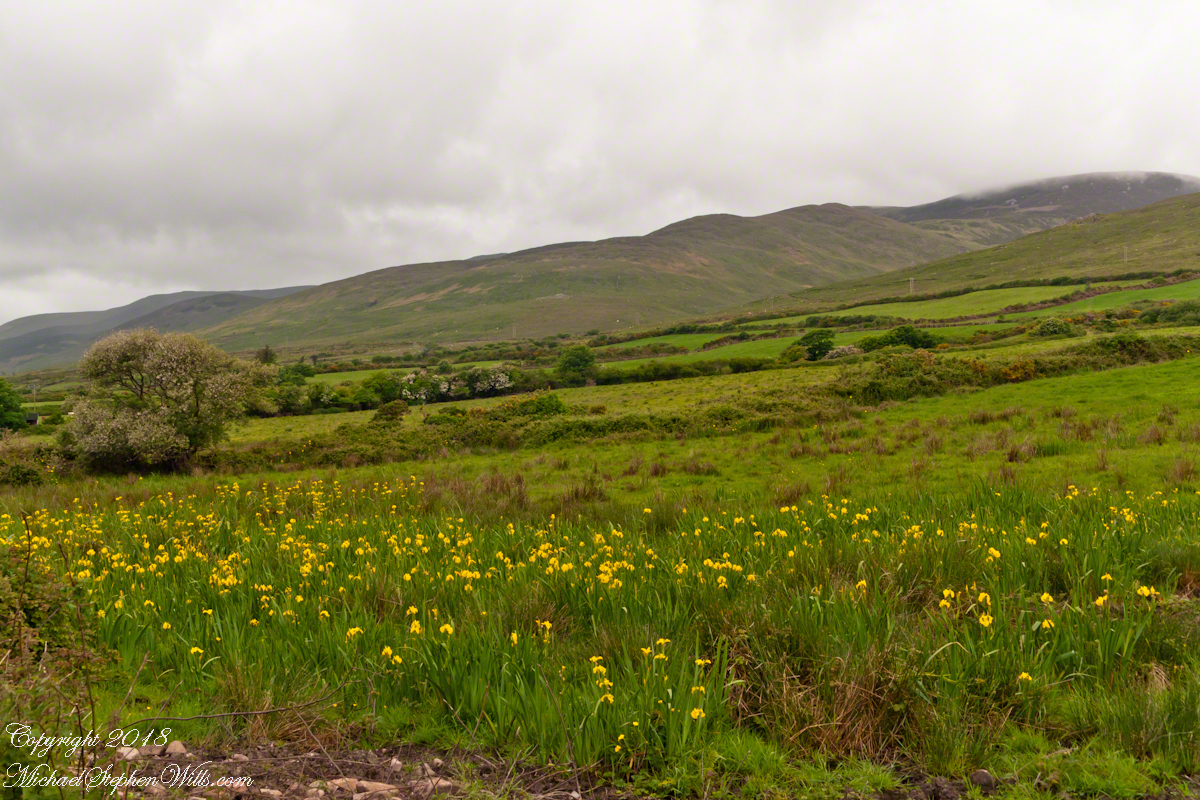
Field of Yellow Iris Flowers, Dingle Peninsula
A roadside field of yellow Iris flowers with flowering Hawthorn and Whin Bush in the windbreaks. Looking northwest toward Killeenagh and Caherpierce on the R561 between Lack West and Inch. Dingle Peninsula, County Kerry, Ireland.

Another Ireland post of interest, “Proleek, Grandfather McCardle’s home.”

Drombeg Stone Circle III

Exotic beauty

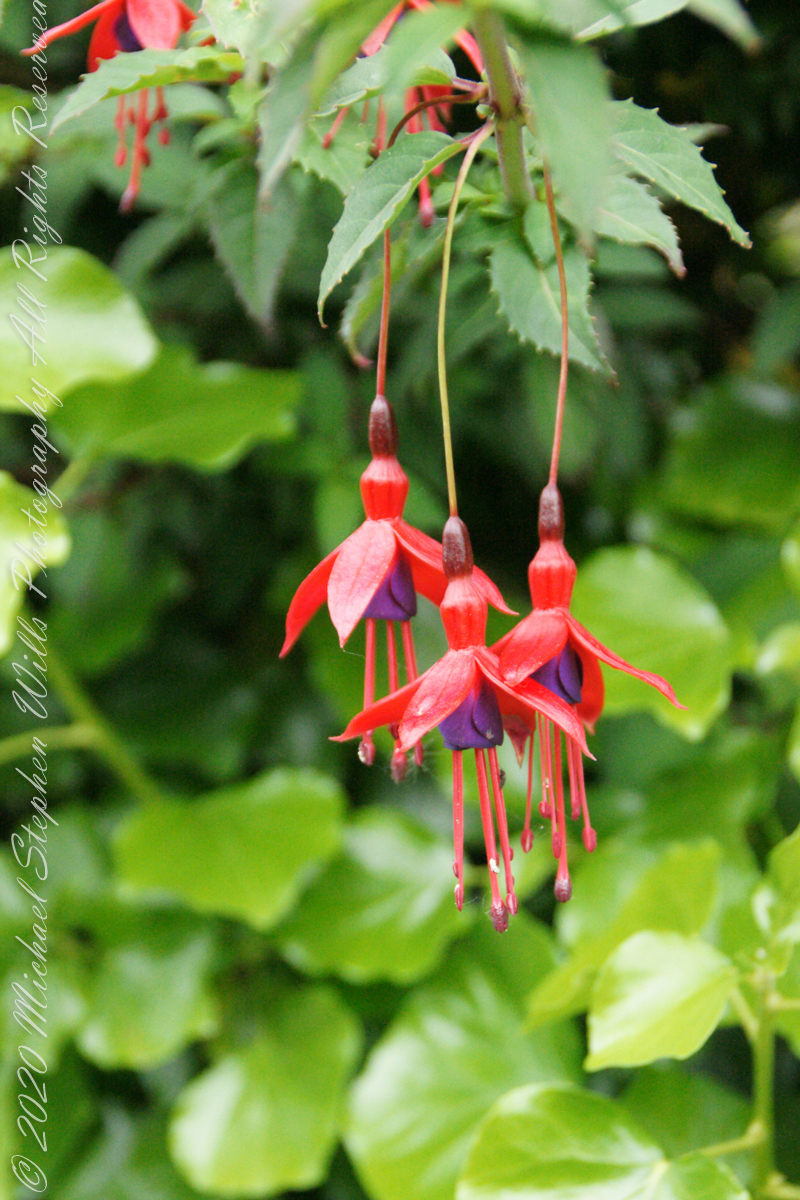
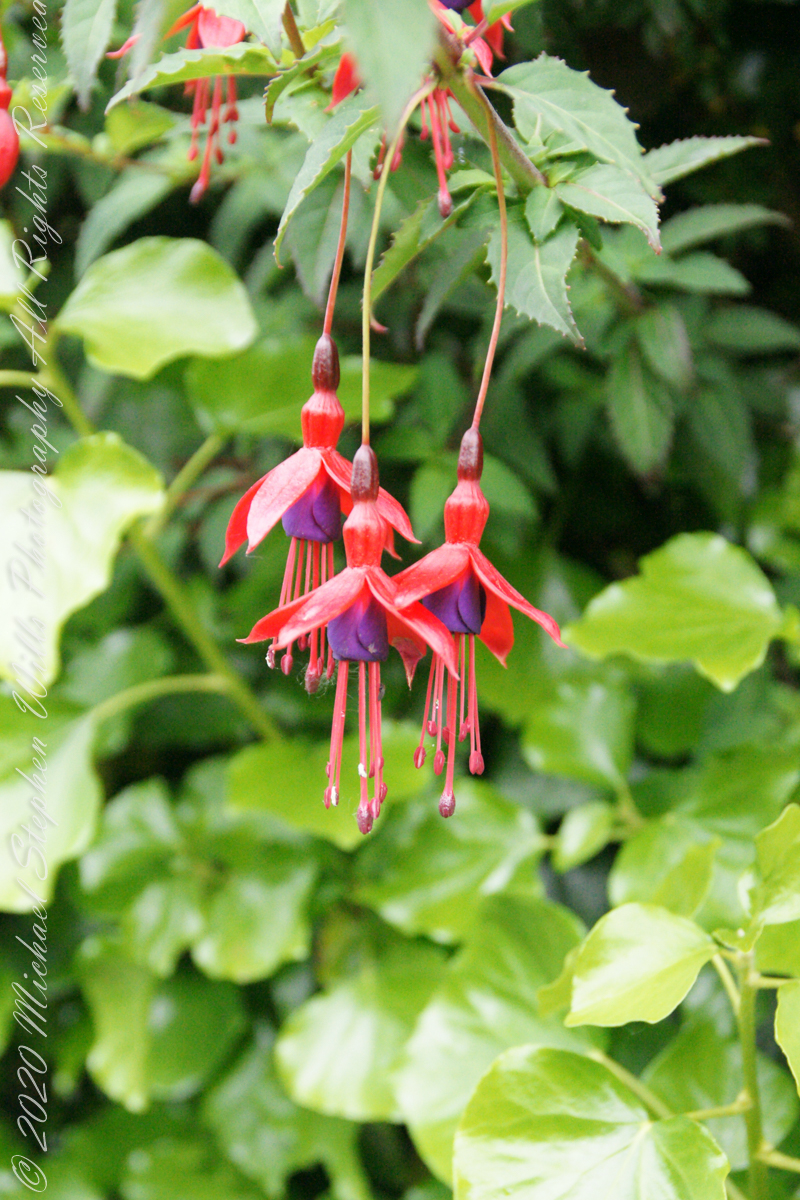
It is not surprising to find this non-native shrub growing along the path to Drombeg Stone Circle. English gardens featured fuchsia since the late 18th century. The ocean view is part of the charm of this place, the resulting milder climate suits the flourishing of exotic species of plants native to South America, the Caribbean and New Zealand.

Click any pic for a larger view, in a new tab, or a slide show. When using WordPress Reader, you need to open the post first.

Click Me for the next post in this series.

Copyright 2021 Michael Stephen Wills All Rights Reserved