Red Maple Flowers

This maple tree is one of the first plants to flower in spring.

Pam and I ambled around the Arboretum for our Easter 2023 outing.

Click Me for “Finger Lakes Memories” my online gallery.

All photography using the IPhone 14 ProMax triple camera, raw format, edited on the phone.

Acer rubrum is one of the most abundant and widespread trees in eastern North America. It can be found from the south of Newfoundland, through Nova Scotia, New Brunswick, and southern Quebec to the southwest west of Ontario, extreme southeastern Manitoba and northern Minnesota; southward through Wisconsin, Illinois, Missouri, eastern Oklahoma, and eastern Texas in its western range; and east to Florida. It has the largest continuous range along the North American Atlantic Coast of any tree that occurs in Florida. In total it ranges 2,600 km (1,600 mi) from north to south. The species is native to all regions of the United States east of the 95th meridian. The tree’s range ends where the −40 °C (−40 °F) mean minimum isotherm begins, namely in southeastern Canada. A. rubrum is not present in most of the Prairie Peninsula of the northern Midwest (although it is found in Ohio), the coastal prairie in southern Louisiana and southeastern Texas and the swamp prairie of the Florida Everglades. Red maple’s western range stops with the Great Plains where conditions become too dry for it. The absence of red maple from the Prairie Peninsula is most likely due to the tree’s poor tolerance of wildfires. Red maple is most abundant in the Northeastern US, the Upper Peninsula of Michigan, and northeastern Wisconsin, and is rare in the extreme west of its range and in the Southeastern US.

On the arboretum northeast side is a collection of native maples, this Red Maple is represented caught our eye.

These metal tags are excellent signposts hanging from the branches on coated wire. Red maple’s maximum lifespan is 150 years, but most live less than 100 years. The tree’s thin bark is easily damaged from ice and storms, animals, and when used in landscaping, being struck by flying debris from lawn mowers, allowing fungi to penetrate and cause heart rot.[8] Its ability to thrive in many habitats is largely due to its ability to produce roots to suit its site from a young age. In wet locations, red maple seedlings produce short taproots with long, well-developed lateral roots; while on dry sites, they develop long taproots with significantly shorter laterals. The roots are primarily horizontal, however, forming in the upper 25 cm (9.8 in) of the ground. Mature trees have woody roots up to 25 m (82 ft) long. They are very tolerant of flooding, with one study showing that 60 days of flooding caused no leaf damage. At the same time, they are tolerant of drought due to their ability to stop growing under dry conditions by then producing a second-growth flush when conditions later improve, even if growth has stopped for 2 weeks.
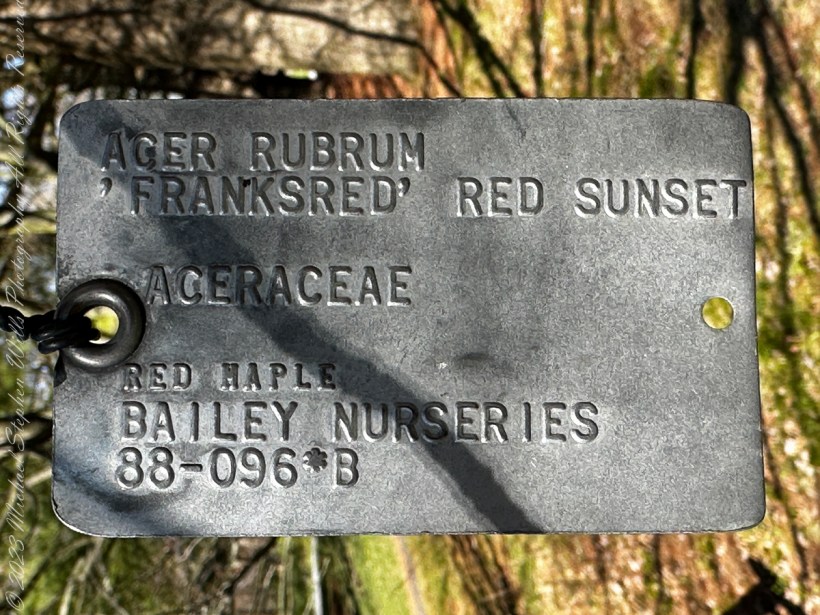
Acer rubrum is one of the first plants to flower in spring. A crop of seeds is generally produced every year with a bumper crop often occurring every second year. A single tree between 5 and 20 cm (2.0 and 7.9 in) in diameter can produce between 12,000 and 91,000 seeds in a season. A tree 30 cm (0.98 ft) in diameter was shown to produce nearly a million seeds. Red maple produces one of the smallest seeds of any of the maples. Fertilization has also been shown to significantly increase the seed yield for up to two years after application. The flowers are generally unisexual, with male and female flowers appearing in separate sessile clusters, though they are sometimes also bisexual. These pistillate (female) flowers have one pistil formed from two fused carpels with a glabrous superior ovary and two long styles that protrude beyond the perianth. These flowers were formed on the tree labeled “Frank’s Red.”
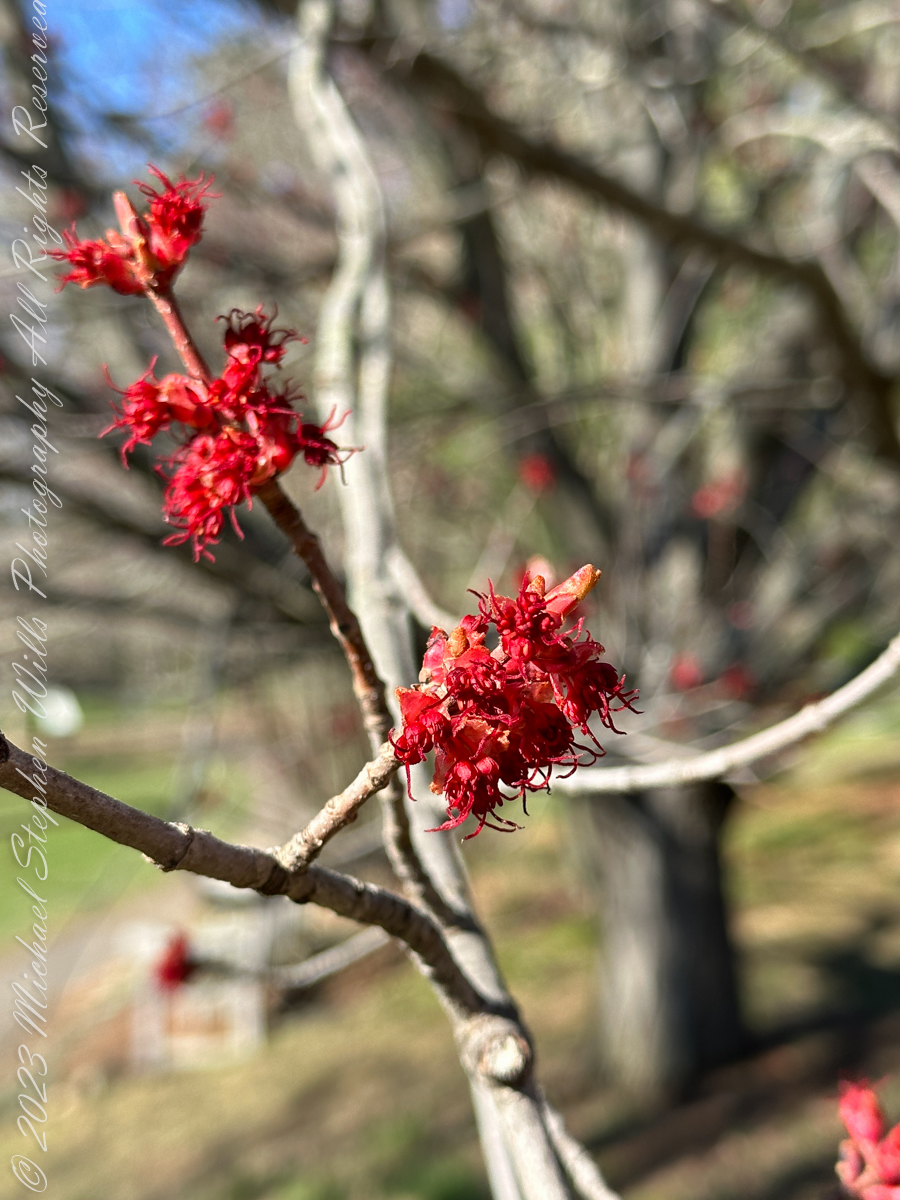
These staminate (male) flowers are sessile (grow direct from tip of branch without a stalk) containing between 4 and 12 stamens, often with 8. These seem to have 12 stamens.
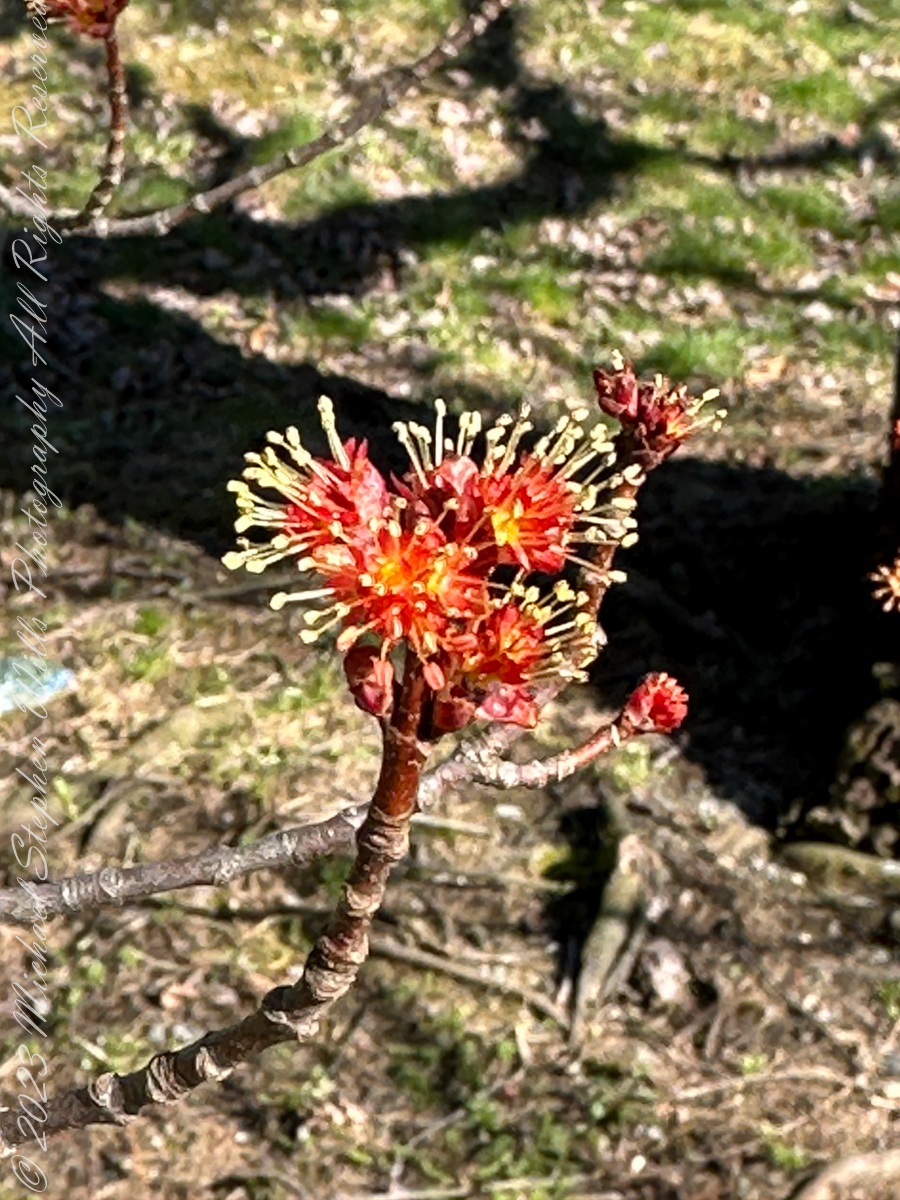
The above flowers were formed on a “Schlesinger I” Red Maple Tree (see following lable).

Reference: “Red Maple” Wikipedia
Copyright 2023 Michael Stephen Wills All Rights Reserved

Green Pillar

Unusual Oak

Pam and I ambled around the Arboretum for our Easter 2023 outing.

Click Me for “Finger Lakes Memories” my online gallery.

All photography using the IPhone 14 ProMax triple camera, raw format, edited on the phone.

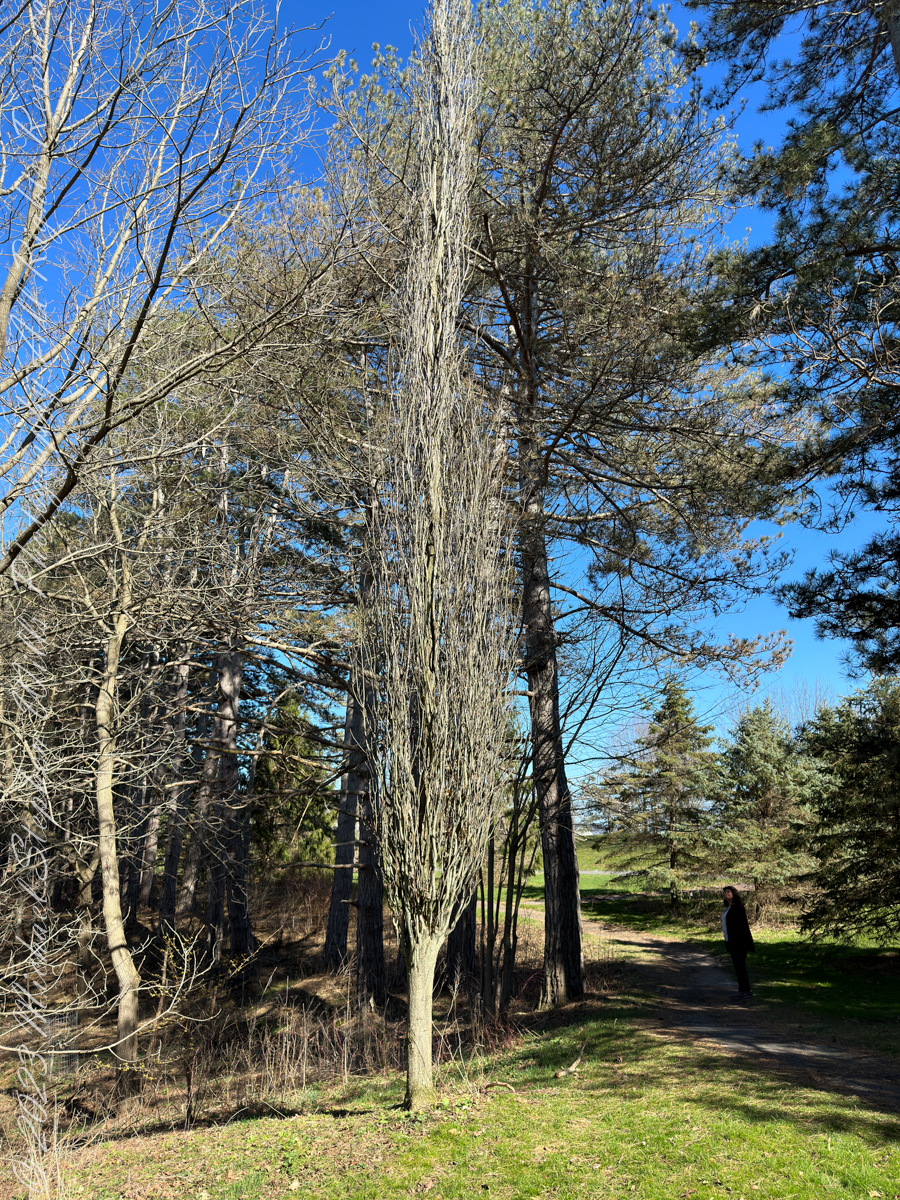
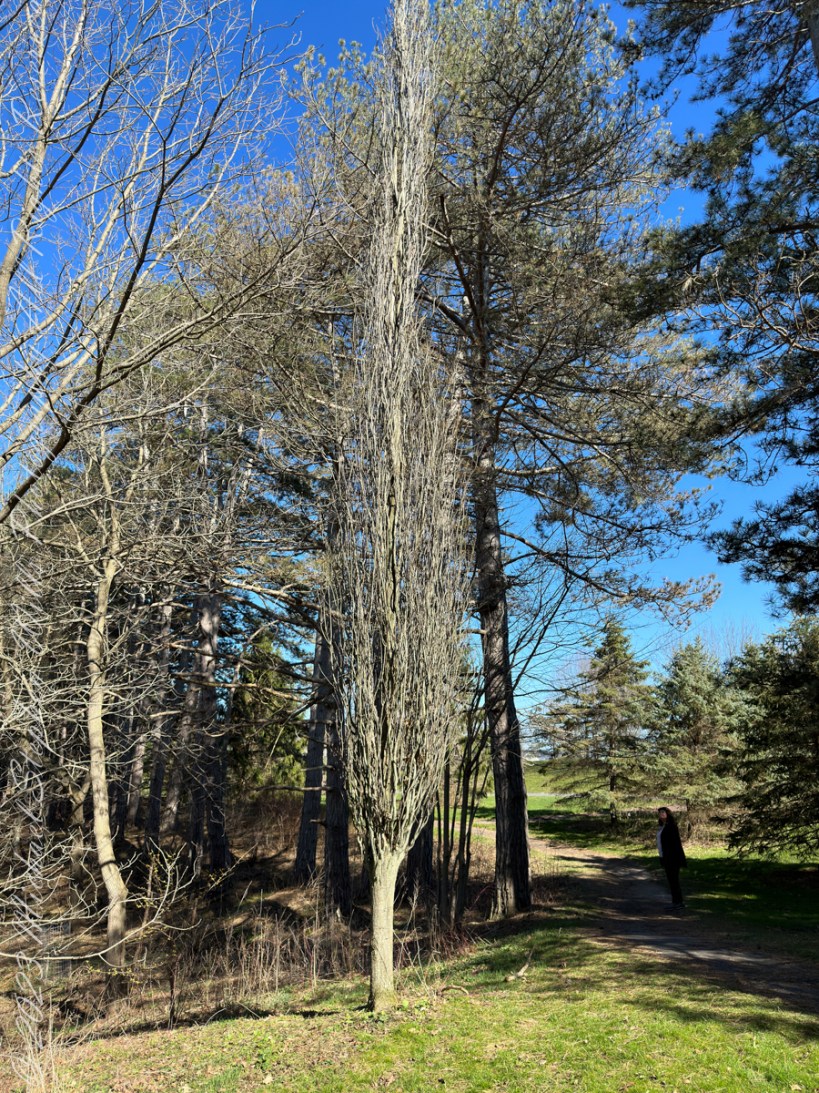
We marveled at this Pin Oak tree, unlike any other oak we have encountered.

Copyright 2023 Michael Stephen Wills All Rights Reserved

Flowering Saguaros in Finger Rock Canyon

Some Fallen, Some Blessed

My visit to Finger Rock Canyon of the Santa Catalina Mountains filled two mornings.  On the first morning, the subject was the lower canyon as morning light filtered over the eastern ridge.

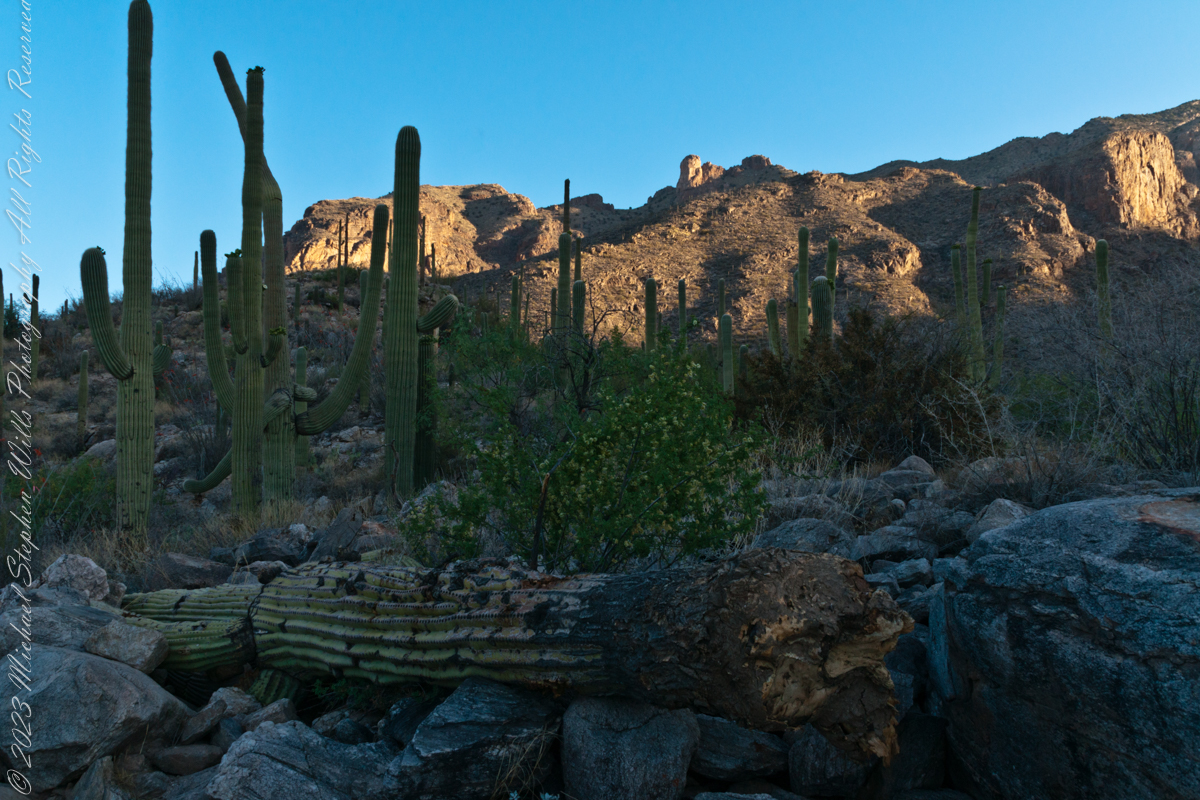
Early morning to the north / northwest looking over a 20-foot fallen Saguaro Cactus (Carnegiea gigantean), toward lower ridges of the Santa Catalina Mountains.  The saguaro is among a stand of healthy fellows, some with new growth and flowers on the tips of arms and main columns. This giant must have grown over rock through 60 years.  It was brought down when the roots weakened.  Specimens that are more reliably rooted can live to 200 years.

A clump of brittlebush shrub (Encelia farinosa) grows from the same rock.

Pima Canyon is the next over, behind that near ridge which provides similar shade.  Unlike Finger Rock Canyon, the Pima Canyon trail follows the western cliff and loses the shade much sooner.  During our three-week trip, my wife, Pam, and I visited Pima in our first week.

These photos were taken between 6:20 and 7:00 am.

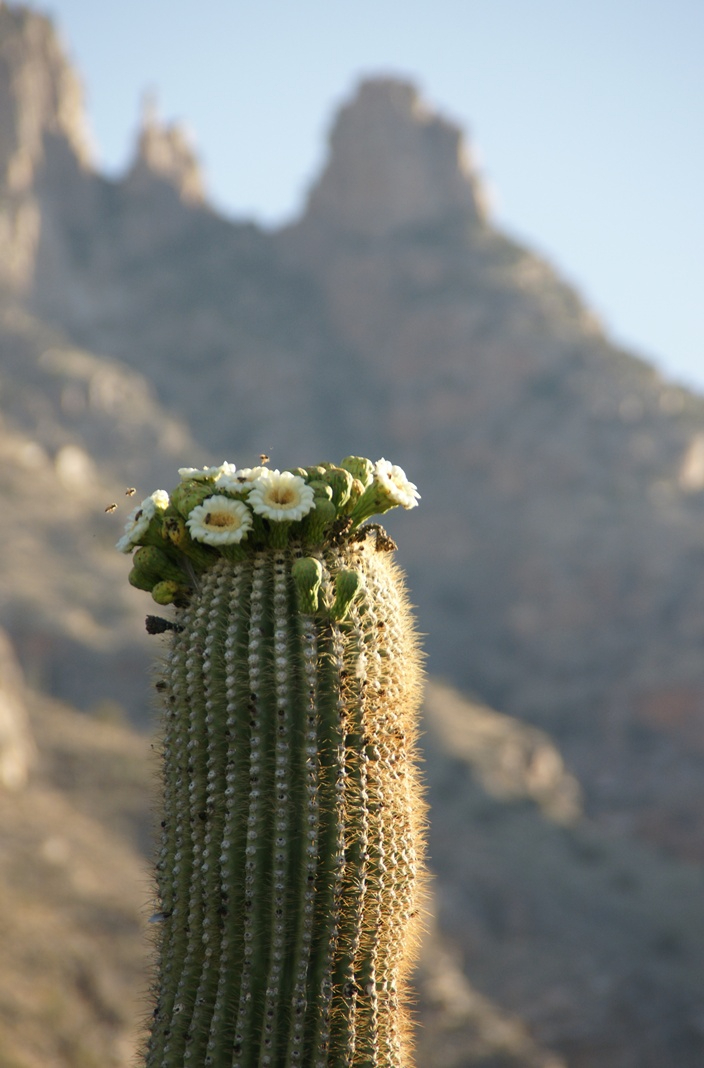
Along the trail I noticed a multitude of buds on the tip of selected saguaro arms.  In a previous blog, there’s a photo of this same saguaro in the shade.  The following series captures the one blossoming top just as the sun passes over the eastern, shadowing, ridge.

The same saguaro, two minutes later…….

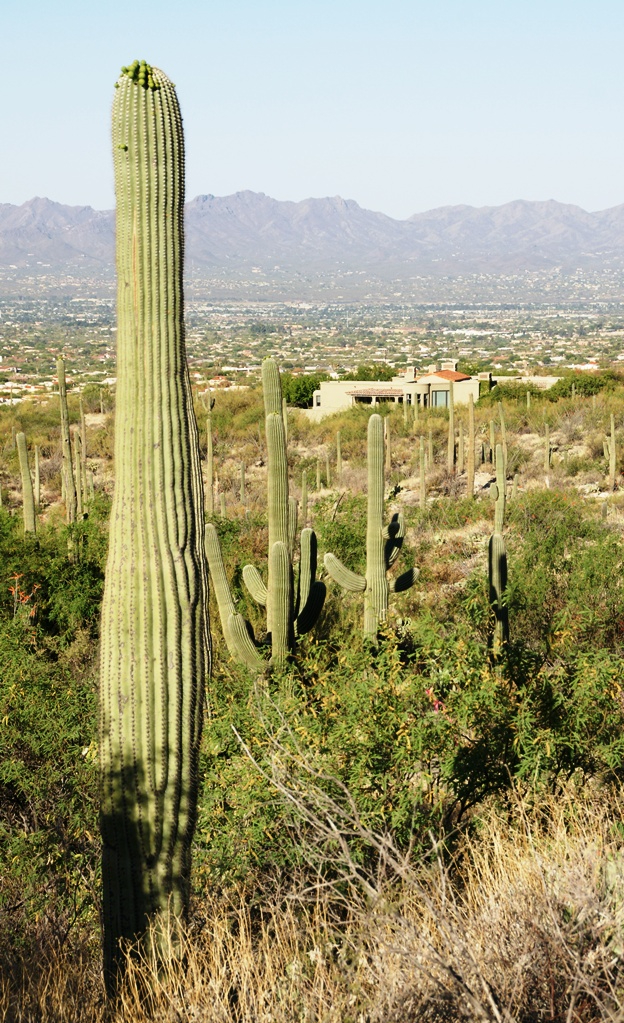
Here is a portion of the saguaro forest, around 7 am with the lower canyon filled with light.  There are a few foothill homes with west and southwest Tucson.  The Tucson Mountains are in the distance.

Copyright 2023 Michael Stephen Wills

Long Island Sakura (Cherry Blossoms)

Clouds of Blossoms

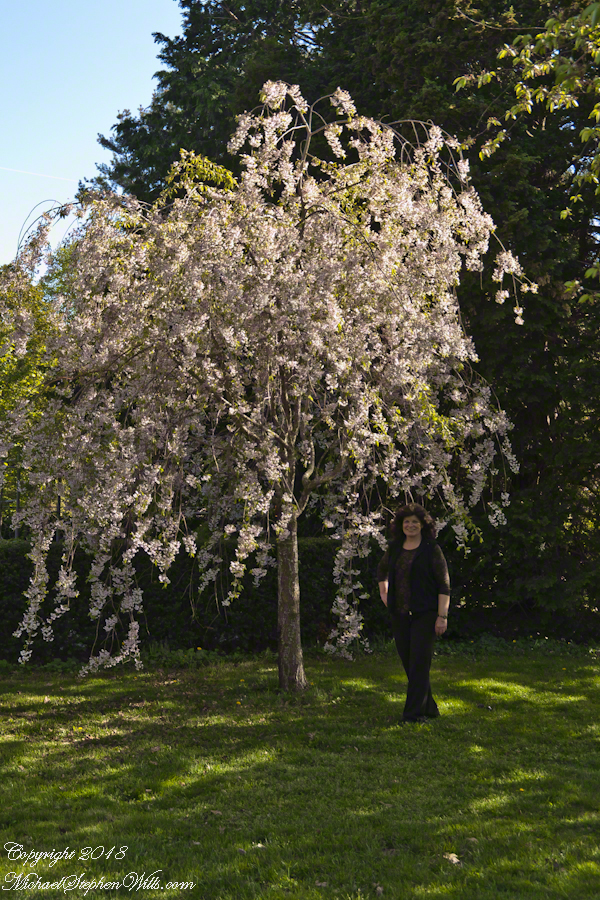
A Japanese flowering cherry tree in bloom on an early May day. Called a Shirofugen (Secientific name: Prunue serrulata, of the Rosaceae family this is the species planted around National Tidal Basin, Washington D.C. and around which the National Cherry Blossom Festival is celebrated commemorating the 1912 gift of Prunus serrulata Japanese cherry trees from Tokyo to the city of Washington.

The tree over Pam is called a Shirofugen (Scientific name: Prunus serrulata, of the Rosaceae family) and is one species planted around National Tidal Basin, Washington D.C. Shirofugen blossoms are described “Flowers double, deep pink at first, fading to pale pink.”


Click any photograph for my Getty portfolio.Pam with a Shirofugen Flowering Cherry in bloom – CLICK ME for my Getty Portfolio.

In Japan, since the 8th century, “Hanami” is the centuries-old practice of picnicking under a blooming sakura or ume tree. Here in the United States, the National Cherry Blossom Festival is celebrated commemorating the 1912 gift of Prunus serrulata Japanese cherry trees from Tokyo to the city of Washington.

Traditionally cherry blossoms remind the Japanese of clouds, the blooms come out en mass, the tree changes shape with the breeze.  Viewing sakura brings to mind thoughts of the transience of existence, the fragility and transience of the exquisite blooms leads one to appreciate the moment.  The following photograph of Pam was taken a month before my Mother’s sudden decline and passing in 2013.  We’d travel to Long Island several times a year to visit her, then take in familiar sights.

Growing up, our family visited the Planting Fields, a state park, several times in the spring and summer. As an adult with a growing family in Glen Cove, right around the corner, the Planting Fields were a welcome outing and visited several time times a year. The following photograph, taken that same May 2013 day, was a favorite park scene.

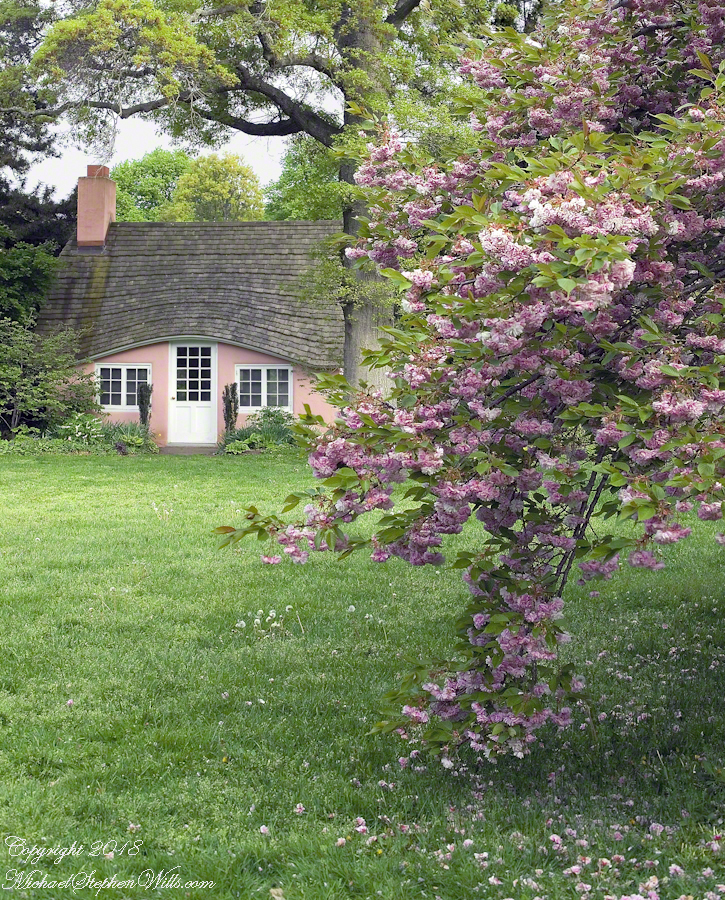
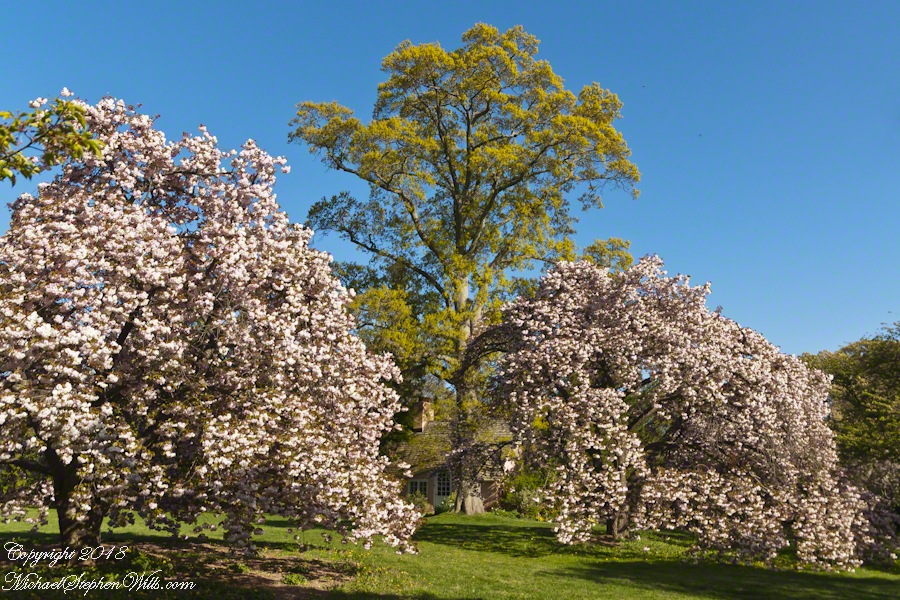
The two flowering cherry trees in the foreground are a type of Japanese sakura called Yoshino, one the most popular flowering cherries in temperate climates worldwide. All Yoshinos are clones from a single grafting and propagated throughout the world. The scientific name outlines the cross breeding of this variety, Prunus X Yeaoensis. Behind the cherries is an Oak tree, new leaves a bright green, and a pink child’s playhouse cottage.

A changing scene of the park is the now frequent visits by wedding parties and photographers, groups of Asian people, the bride and groom posing under the clouds of blossoms. By frequent I mean a steady stream, one after the other, when the blossoms are full.

Click any photograph for my Getty portfolio.Playhouse with Flowering Cherry and Oak trees – CLICK ME for my Getty Portfolio.

In 2007 I spent hours framing and capturing the following photograph on a Saturday, the day before Mother’s Day, during a visit to my Mother, who was widowed December, 1995. I used an inexpensive tripod, a Kodak DCS Pro slr/c camera body with the Canon 50mm f 1.4 USM lens, a UV filter and lots of time. There were no interruptions that day, at 5:30 pm I had the area to myself.

This child’s garden playhouse, framed by an ancient oak, pink Japanese cherry blossoms and gracious lawn was awarded a Photographic Society of American, Pictorial Print Division, Print of the Month award, published in the society magazine for that month.

Click any photograph for my Getty portfolio.Playhouse – CLICK ME for my Getty Portfolio.

Please browse my reasonably priced stock photography.  License a photograph, download and use it for your website or blog.  Click this link to browse all my Getty IStock Photography offerings.

Or click this link to purchase a print of “Playhouse” with optional custom framing from my Fine Art Gallery.

Copyright 2023 Michael Stephen Wills All Rights Reserved

Anniversary Tableau and Cards

Trunks Entwined

Pam created this tableau in our den to celebrate our 14th wedding anniversary.

My card to Pam is on left, Her’s to the right. Pam presented these ceramic elephants to Michael on their 14th Wedding Anniversary, Monday, March 20, 2023. Ivory is the traditional gift for the 14th.

Pam’s card is a illustration of solid and variegated  tulips, a spring flower.

On Michael’s card is a Spine-cheeked ClownFish. This fish species lives among the tentacles of the Bubble-tip sea anemone, also in photograph. “Both organisms form a symbiotic relationship: the clownfish will rarely stray more than a few yards from its stinging tent of protection. The anemone benefits from the darting antics of the clownfish, which protect the anemone from its predators.” Quote from the Sierra club. Photograph on card by Mike Bacon.

Copyright 2023 Michael Stephen Wills All Rights Reserved

Anniversary Floral and Card

Fourteenth

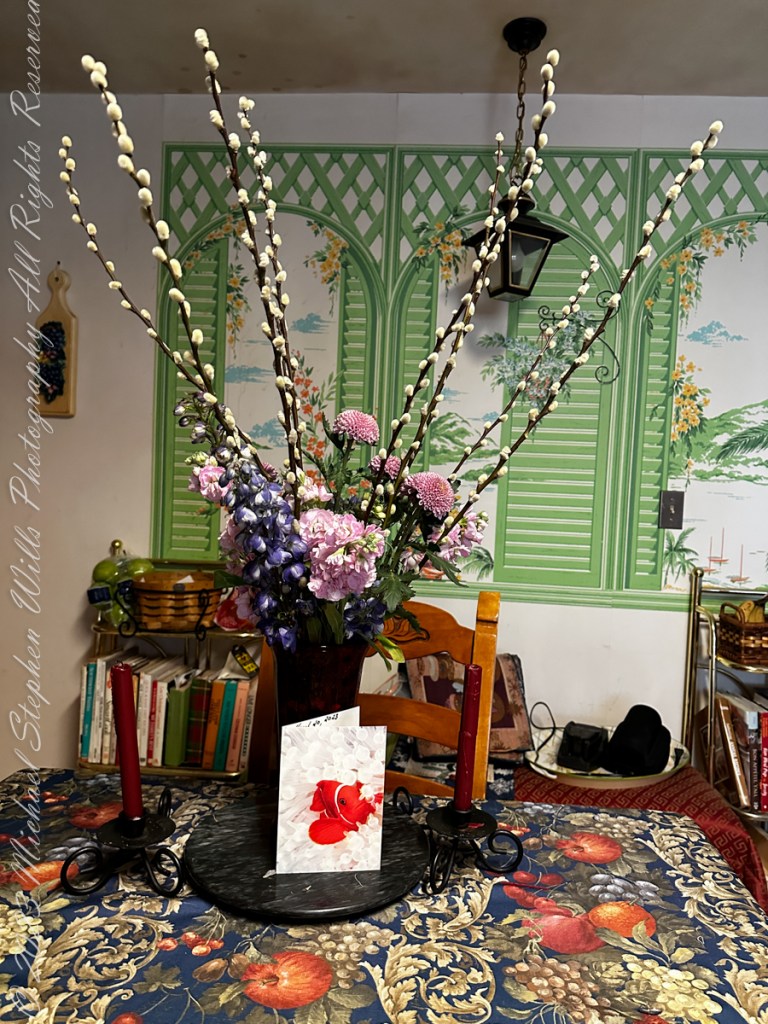
I created this floral arrangement for Pam on Monday, March 20, 2023 for our 14th Wedding Anniversary.

All photographs are from the Apple IPhone 14 ProMax, raw format and perfected on the phone.

Click Me for more photographic art from my OnLine Gallery, “Finger Lakes Memories.”

The arrangement is composed of Pussy Willow, “Lollipop” chrysanthemums, Blue Larkspur (Delphinium) and an unidentified pink flower the grows from a spike, like the Larkspur.

On the card is a Spine-cheeked ClownFish. This fish species lives among the tentacles of the Bubble-tip sea anemone, also in photograph. “Both organisms form a symbiotic relationship: the clownfish will rarely stray more than a few yards from its stinging tent of protection. The anemone benefits from the darting antics of the clownfish, which protect the anemone from its predators.” Quote from the Sierra club. Photograph on card by Mike Bacon.

Copyright 2023 Michael Stephen Wills All Rights Reserved

Valentines Day Greetings

1959 through today

Theresa (2), Michael (5), Christine (4) in the livingroom of 107 Deepdale Parkway, Albertson, New York on Valentines Day 1959

Chocolate Valentines Day cake by Pamela Wills

Pam and I aboard the Oceania Regatta sailing the Pacific Ocean off Chile. The following day we reached Puerto Montt.
Copyright 2025 Michael Stephen Wills All Rights Reserved

Treman Gallery Footbridge II

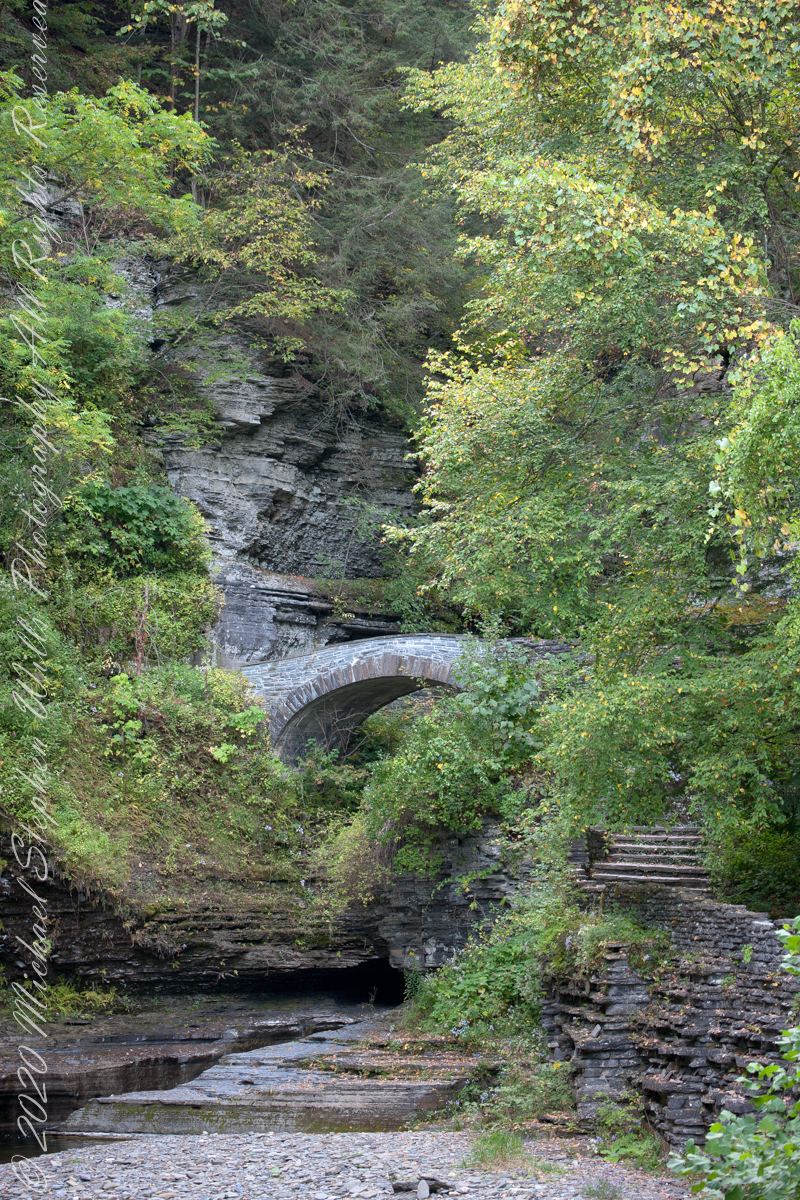
Looking back after crossing the Gallery Footbridge we are rewarded with this view, providing a better understanding of the site. It is evening on a mid-September evening, Robert H. Treman Park, Ithaca, Tompkins County, New York Copyright 2023 All Rights Reserved Michael Stephen Wills

Looking back after crossing the Gallery Footbridge we are rewarded with this view, providing a better understanding of the site.

This is the footbridge at east side of gorge gallery entrance, seen from the east where the trail descends.

It is evening on a mid-September evening, Robert H. Treman Park, Ithaca, Tompkins County, New York

Copyright 2023 All Rights Reserved Michael Stephen Wills

Treman Gallery Footbridge I

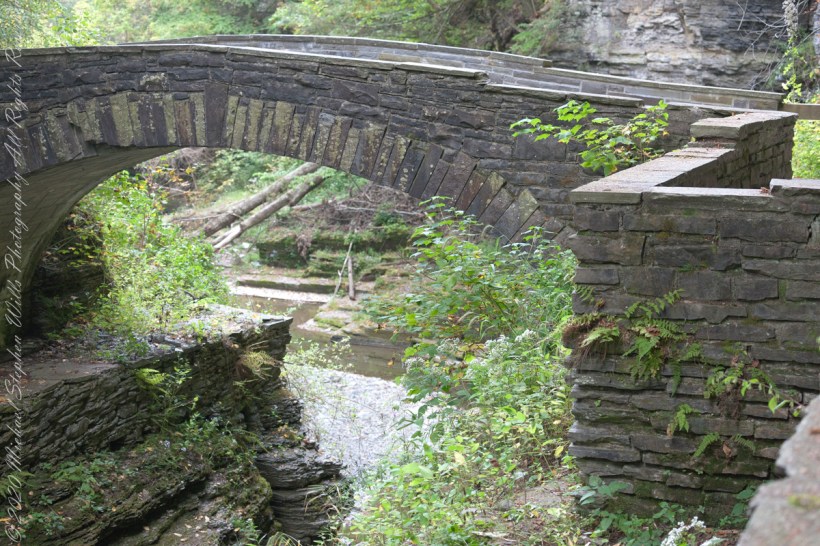
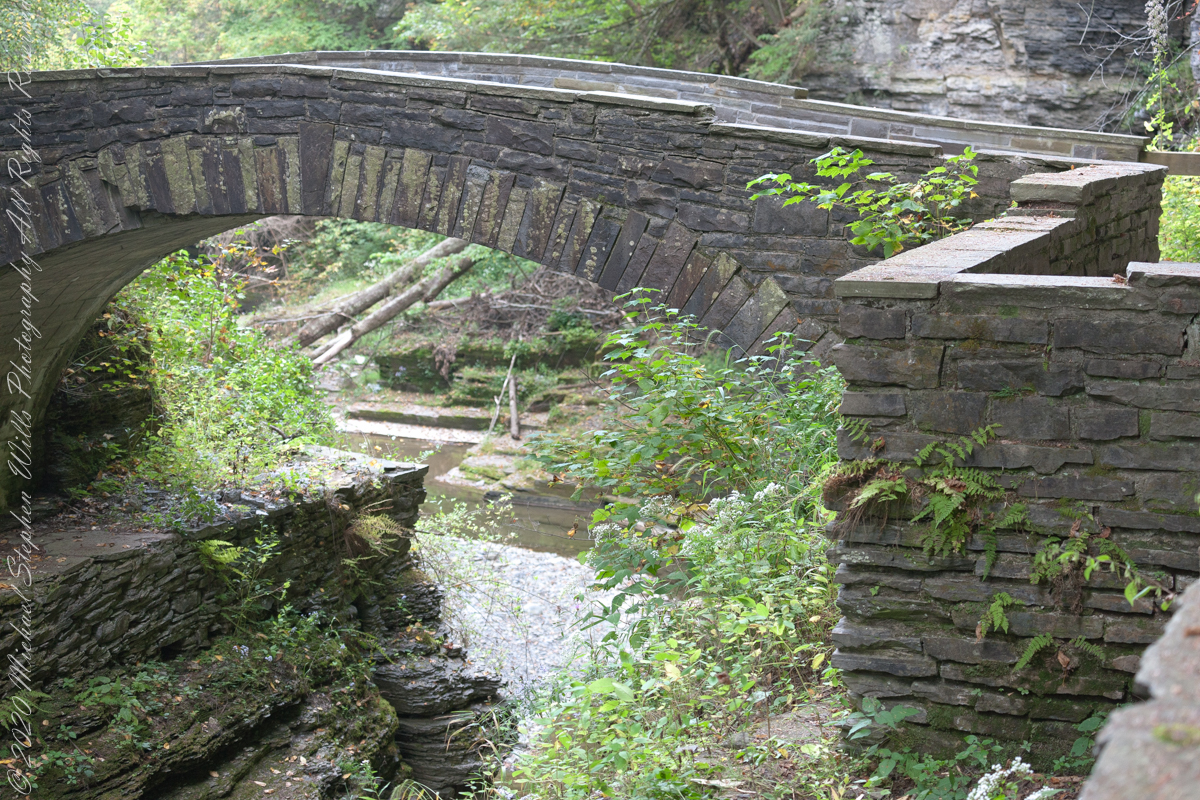
Here we are on the Gorge Trail of Treman State Park. My readers have seen this marvelous stone bridge from a distance. Here it is on the west side, facing east/northeast and looking down into the gorge. It is evening on a mid-September evening, Robert H. Treman Park, Ithaca, Tompkins County, New York Copyright 2023 […]

Here we are on the Gorge Trail of Treman State Park. My readers have seen this marvelous stone bridge from a distance. Here it is on the west side, facing east/northeast and looking down into the gorge.

Spanning the eastern side of the gallery entrance of the gorge.

It is evening on a mid-September evening, Robert H. Treman Park, Ithaca, Tompkins County, New York

Copyright 2023 All Rights Reserved Michael Stephen Wills

Devil’s Kitchen

A small difference

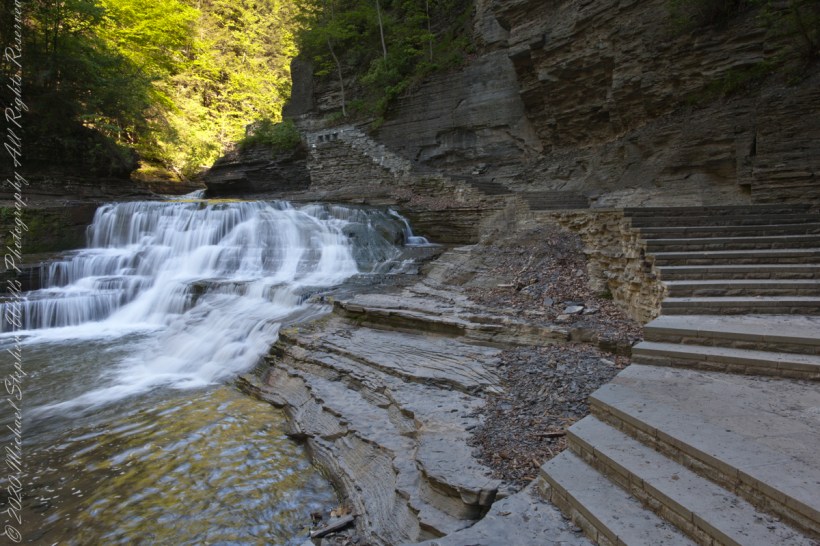
Can you see the small difference between yesterday and today’s take on Devil’s Kitchen? Is the change and improvement, degradation or no difference? User Response Requested: respond in comments.

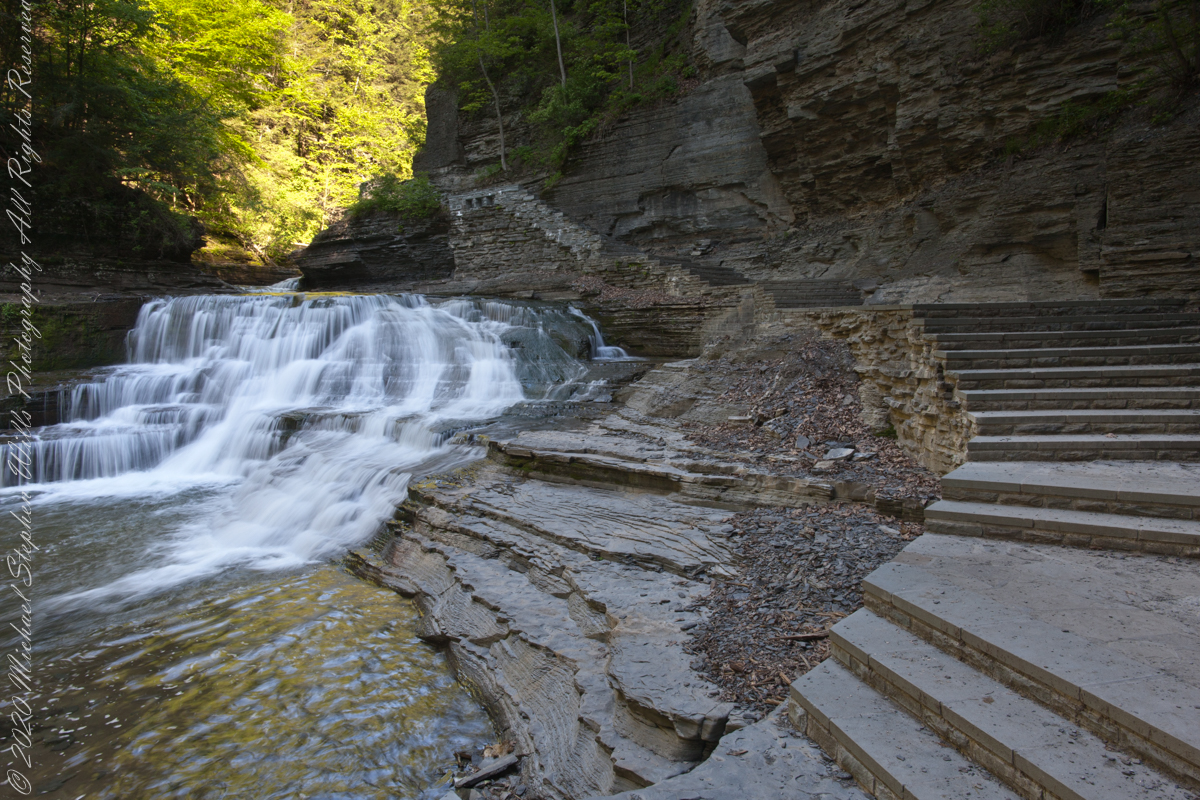
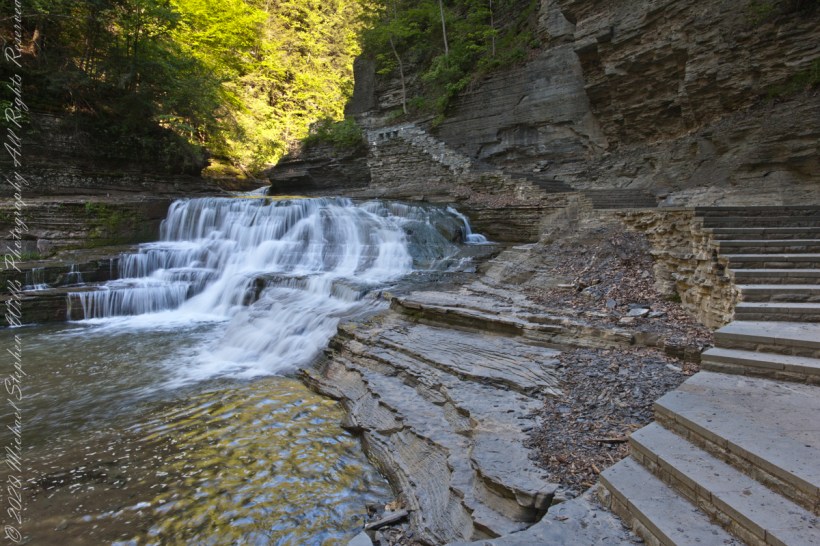
Aptly named Devil’s Kitchen is where Enfield Creek passes over these 20 foot falls before the Lucifer Falls 115 foot rock face cascade. Captured on a Memorial Day morning. Robert H. Treman State Park, Ithaca, Tompkins County, New York.

Here they are side by side.

It is 9:00am on a Memorial Daty morning Robert H. Treman Park, Ithaca, Tompkins County, Ithaca, New York,

Copyright 2023 All Rights Reserved Michael Stephen Wills