Exploring Lime Hollow: Nature Walks with My Grandsons

Enjoy a memorable visit to Lime Hollow Nature Preserve by a grandfather and his grandsons, exploring nature, observing wildlife, and connecting through shared experiences, fostering curiosity and appreciation for the environment.

The October sunlight was gentle as we entered Lime Hollow Nature Preserve from Gracie Road, my grandsons, Sam and Rory, bursting with excitement beside me. Sam, the eldest, took the lead, confidently striding ahead along the Sunset Trail while Rory, his younger brother, stayed close to my side, his eyes wide with wonder at the forest around us.

Descent to the Pond


The trail wound through the woods, dappled with the golds and reds of early autumn. Sam spotted a squirrel darting between trees, and Rory pointed to the sky, “Look, Grandpa, a woodpecker!” I smiled at their enthusiasm, feeling grateful for these moments of connection to nature and family.

We descended toward the pond via the Pond View Trail, the sound of trickling water drawing us closer. As we approached, the landscape opened up, revealing the calm, reflective surface of the water, bordered by reeds swaying in the light breeze. I remembered bringing the boys here last spring, how different the pond looked then—brimming with life as frogs leapt from the banks and dragonflies zipped across the water’s surface. Today, the scene was quieter, but no less magical.

Rory, ever the adventurer, crouched by the pond’s edge, watching for frogs. Sam, too, paused to observe but soon grew restless, his curiosity pushing him onward. “Come on, Grandpa! Let’s see what’s next!” His voice echoed through the trees as he darted back onto the trail, Rory quick to follow.

Encounter with the Giant Fungus


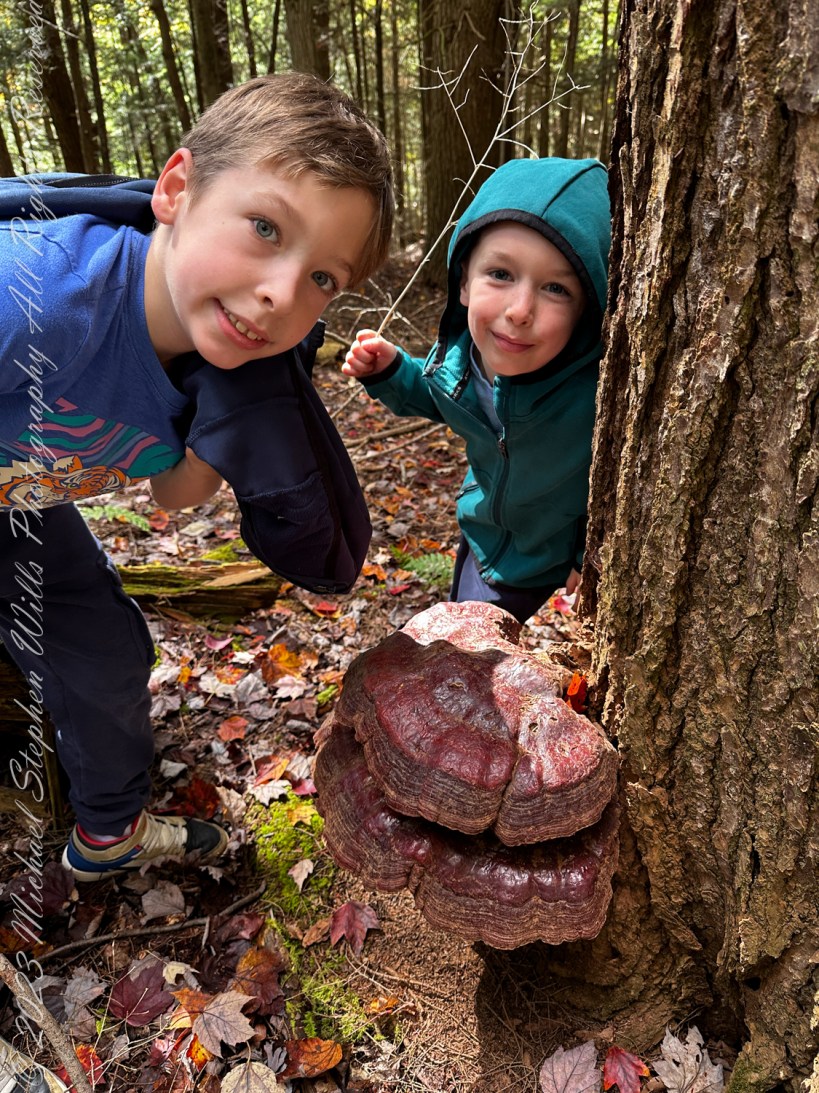
The path led us deeper into the forest, and soon we turned onto the Brookside Trail, which merged with the High Ridge Trail. Here, the air grew cooler under the dense canopy of trees, and the forest floor softened beneath our feet with layers of leaves. It was then that we stumbled upon the most magnificent sight of the day: an enormous bracket fungus, its wide, layered shelves clinging to the trunk a hoary snag.

Rory gasped in delight, running over to inspect it more closely. “Look how big it is!” he exclaimed, his small hands hovering just above its ridged surface. Sam, never one to be outdone, knelt beside it, carefully touching the spongy layers. “It’s a staircase for squirrels,” he said, grinning up at me.
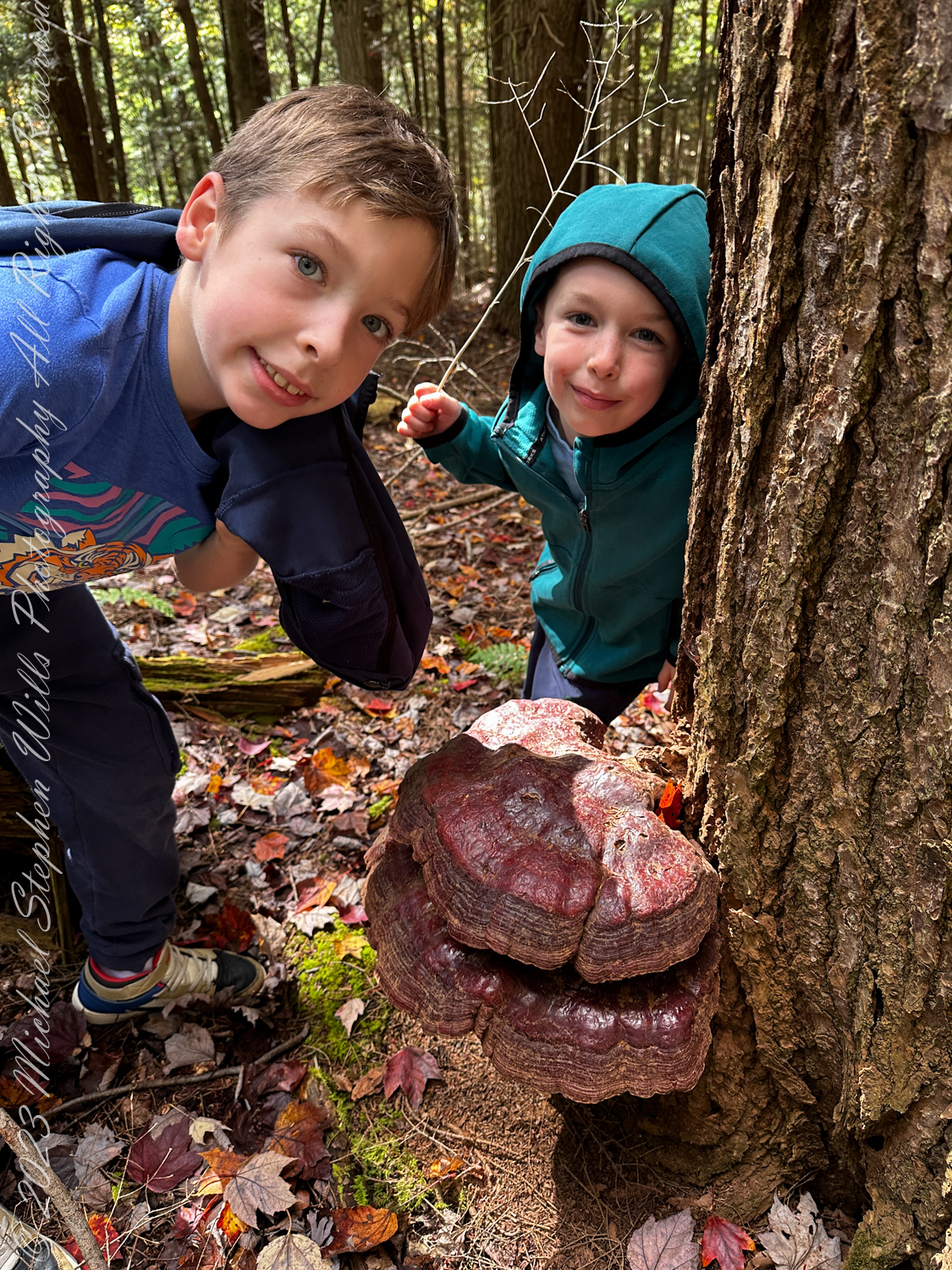
Turkey Tail bracket fungus (Trametes versicolor) is a common wood decay fungus found on dead and decaying hardwoods. Named for its concentric, colorful bands resembling a turkey’s tail, it plays a vital role in forest ecosystems by breaking down lignin, facilitating nutrient recycling. It’s also valued for its medicinal properties. Lime Hollow Nature Center, Cortland, Cortland County, New York State. Finger Lakes Regions

As I watched them, I couldn’t help but think back to all the times I had wandered these trails alone before they were born. Now, these woods had become a classroom for them—full of discoveries that sparked their curiosity and wonder. It was a beautiful moment of generational connection, this passing on of my love for the natural world to Sam and Rory.

Fascinating Beech Tree Roots


On the way out, we took the Brookside / Pond View / Sunset trails once again, but this time, this intricate network of roots from a massive beech tree fascinated us. The roots twisted and coiled across the path like veins, in our imaginations the gnarled shapes snagged our feet. Sam, ever the explorer, stepped cautiously along the roots, balancing himself as if walking a tightrope. Rory followed suit, his giggles filling the air.
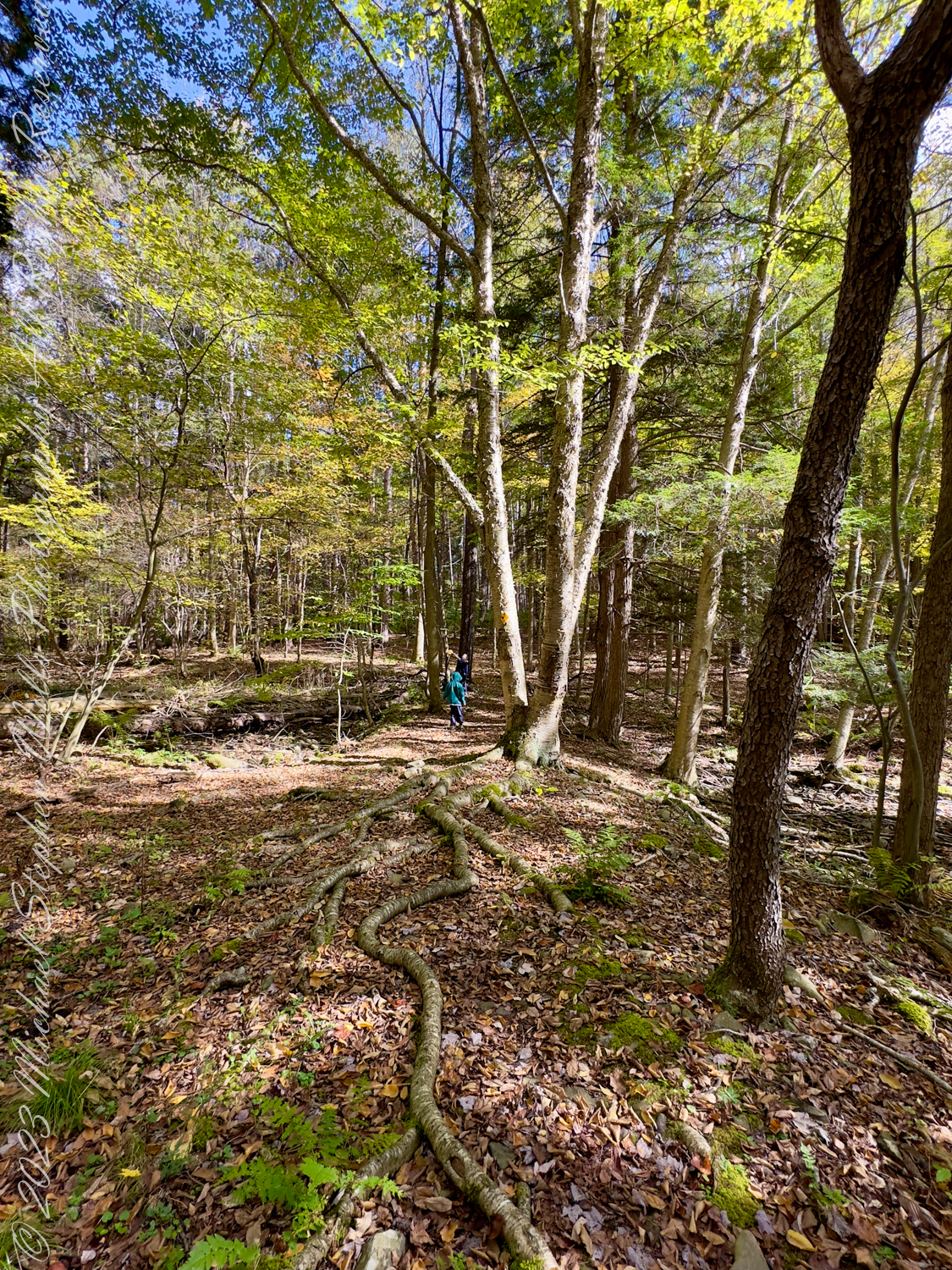
An American beech (Fagus grandifolia). These trees are quite common in northeastern forests.
The beech tree is known for its smooth smooth, gray bark, which can become marked with scars or etchings as the tree ages. Additionally, its leaves are typically dark green, with serrated edges, and turn yellow to bronze in the fall, often staying on the tree through winter. Lime Hollow Nature Center, Cortland, New York State

“These roots are older than us,” I told them. “Beech trees can live for hundreds of years. Just think, this tree has seen many more seasons than we ever will.”

Sam’s eyes widened at the thought, while Rory gave the tree a gentle pat, as if to thank it for its wisdom. I marveled at how something as simple as a root system could captivate their imaginations and bring the lesson of time and growth to life.

Reminiscing on the Chicago Bog
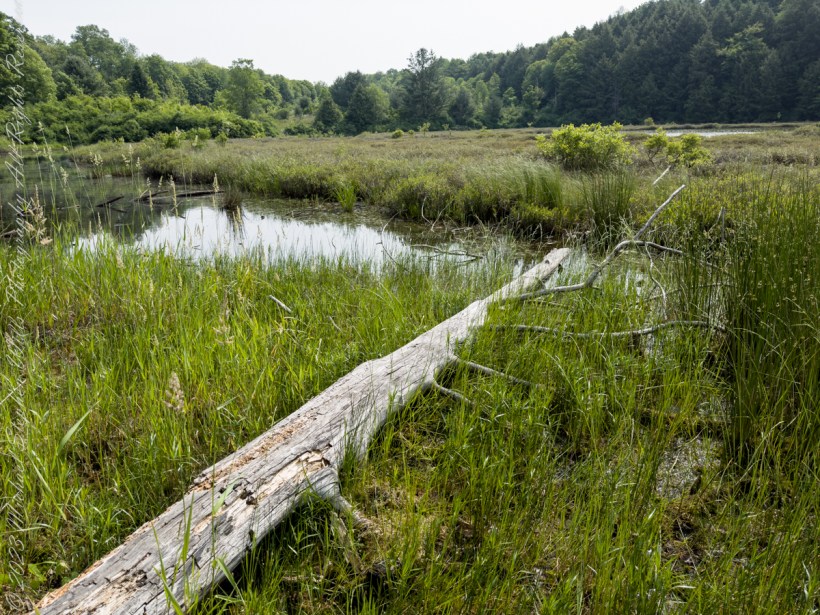
In the 1830’s there was a village named Chicago along Gracie Road, which gives it the name we have today. The Chicago Bog is home to many carnivorous plants, including sundew, the pitcher plant, and more. The deepest depth of the bog is about 7.2 ft. The bog is along the Phillips Memorial Trail, which can be found on Gracie Road. Lime Hollow Nature Center, Cortland, New York


As we walked, my mind wandered back to a visit we had made to the Chicago Bog just a year before. I remembered the day clearly—how we had trekked through the wetland on a warm June afternoon, the ground soft beneath our feet, alive with the buzzing of insects and the vibrant green of new growth.
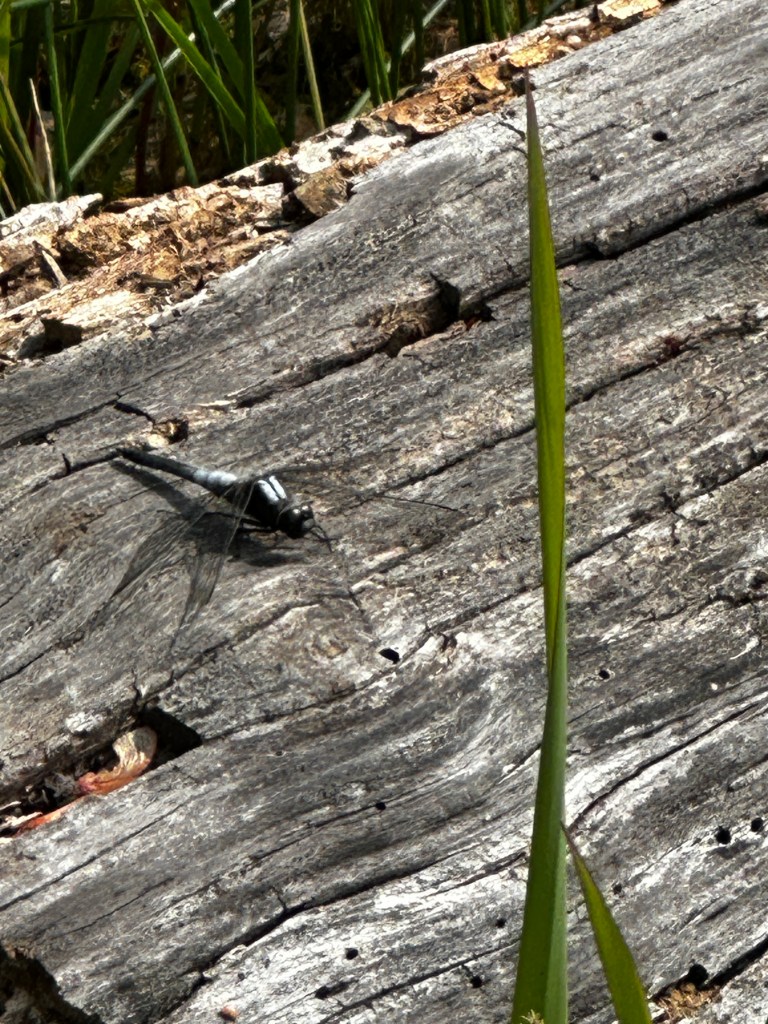
The chalk-fronted corporal (Ladona julia) is a skimmer dragonfly found in the northern United States and southern Canada.
Juveniles of both sexes are light reddish brown, with white shoulder stripes and a black stripe down the middle of the abdomen. As they mature, males develop a white pruinescence on the top of the thorax and at the base of the abdomen, while the rest of the abdomen turns black. Females become almost uniformly dark brown, with a dusting of gray pruinescence near the base of the abdomen; a few develop the same color pattern as the males.
Chalk-fronted corporals often perch horizontally on the ground or on floating objects in the water, flying up to take prey from the air. They are gregarious for dragonflies, and are commonly seen perching in groups. They readily approach humans to feed on the mosquitoes and biting flies that humans attract.

It was there, by the edge of the bog, that we had encountered a dragonfly, a Chalk-fronted Corporal, resting on a fallen log. Its dark, iridescent wings shimmered in the sunlight, and Sam had been mesmerized by its delicate beauty. He had asked so many questions that day—about how dragonflies flew, what they ate, and where they lived. I had done my best to answer, but truth be told, I learned as much as he did in that moment.
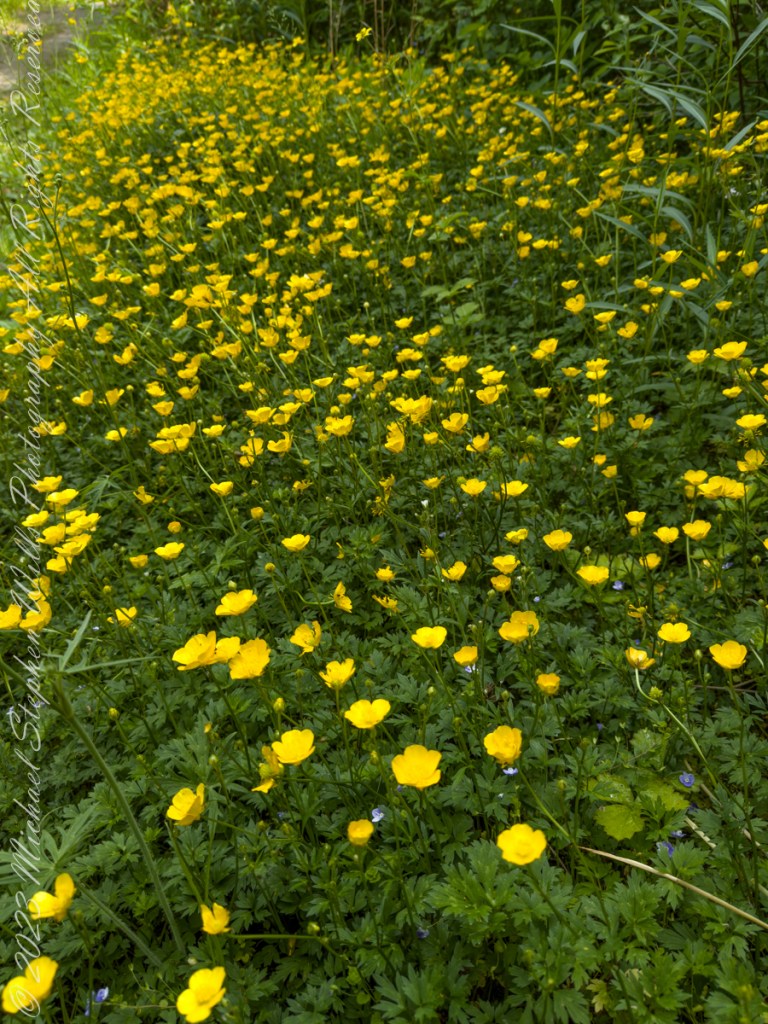
Nearby, a meadow of buttercups had stretched out before us, their yellow blooms dancing in the breeze. Rory had run through them, his laughter ringing out as he tried to catch a butterfly that flitted between the flowers. The memory of that field of gold still brought a smile to my face as we made our way through Lime Hollow today.

A Day to Remember


As we neared the end of our hike, the afternoon light filtering through the trees, I couldn’t help but feel a sense of contentment. These outings with Sam and Rory had become more than just walks in the woods—they were opportunities to share, to learn, and to make memories that I knew would last a lifetime.

“Grandpa, can we come back?” Rory asked, his face flushed with excitement.

“Of course,” I said, smiling. “We’ll always have time for another adventure.”
Our Day at Cayuga Nature Center and Finger Lakes Beekeepers Club Learning Apiary

Join us on a captivating adventure at the Cayuga Nature Center’s Treetops Treehouse and the Finger Lakes Beekeepers Club Learning Apiary. Discover the wonders of the forest canopy, marvel at the intricate world of honeybees, and meet a tiny land snail that sparked the curiosity of two young explorers. Dive into a day filled with discovery, learning, and unforgettable moments in nature.

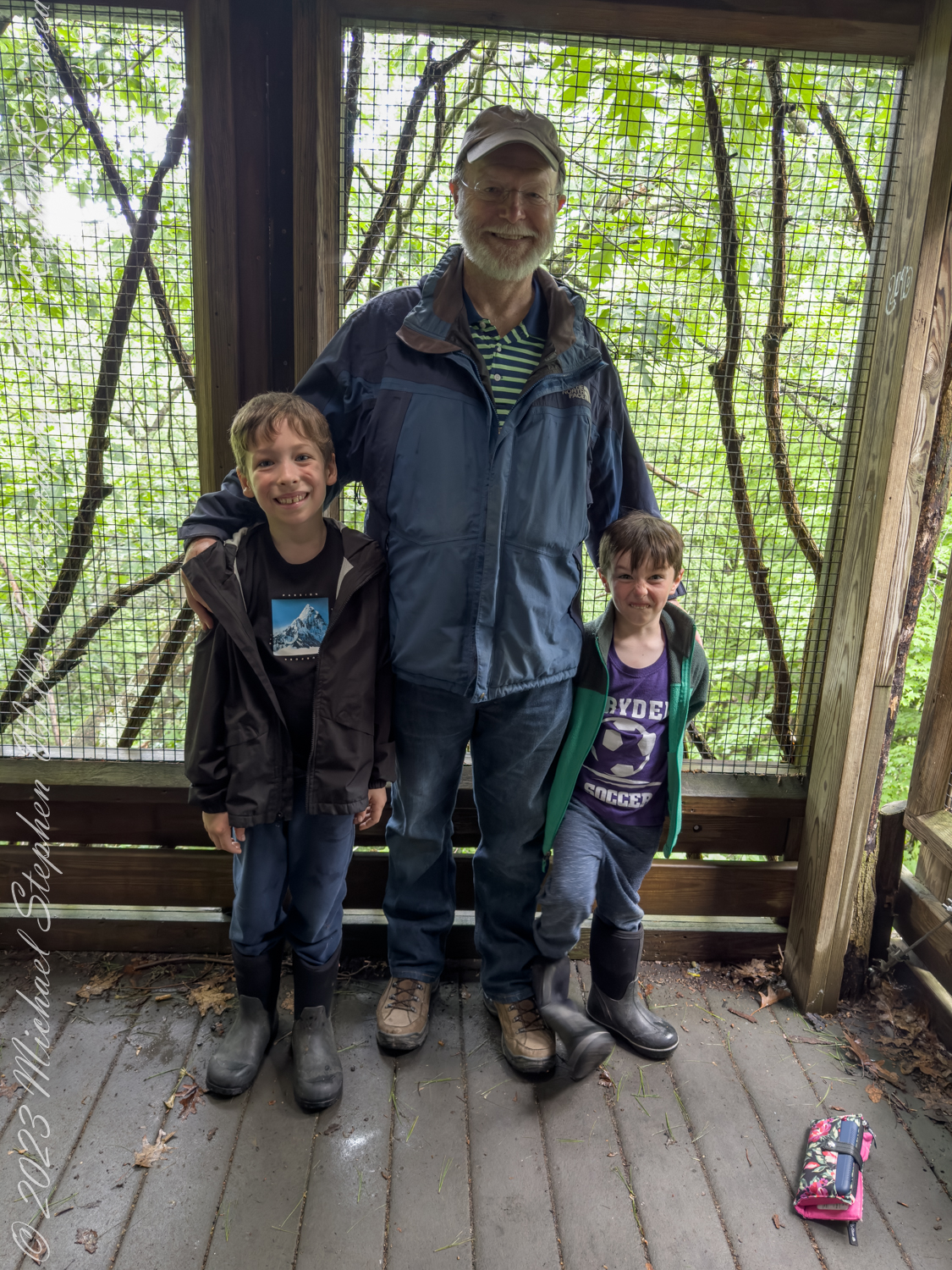
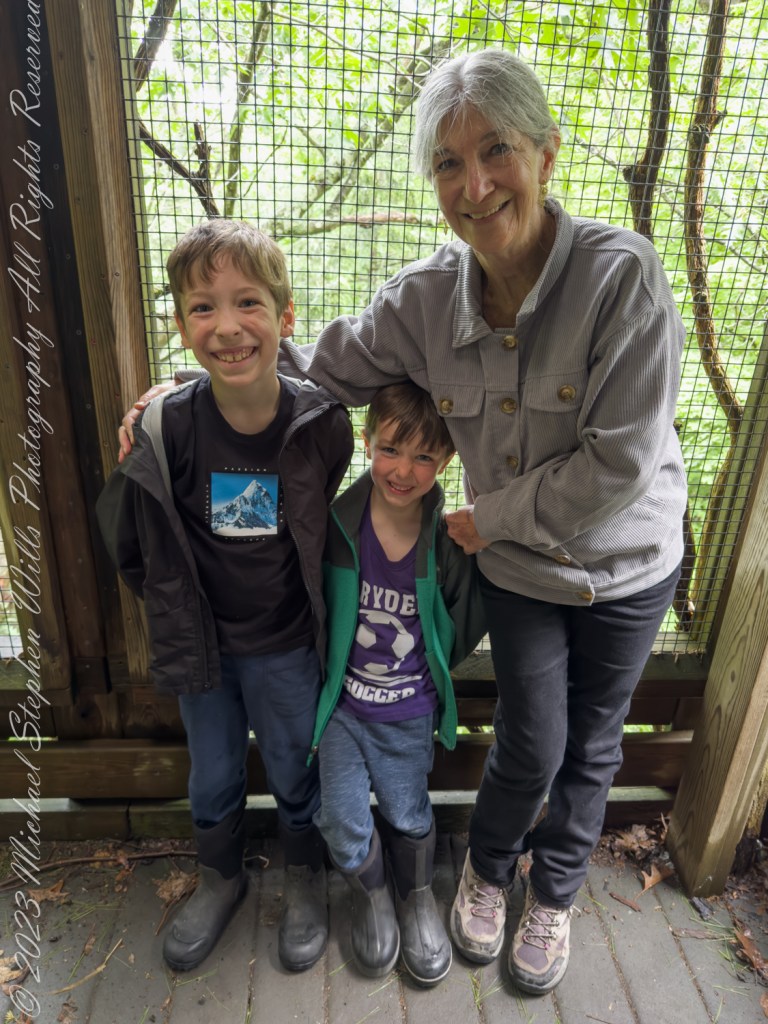
The morning air was crisp and filled with the promise of adventure as we set off for the Cayuga Nature Center, a hidden gem nestled in the heart of Ithaca. The destination: the Treetops Treehouse, a magical structure that promised an immersive experience in nature for me, my sister Diane and two grandsons, Sam and Rory.

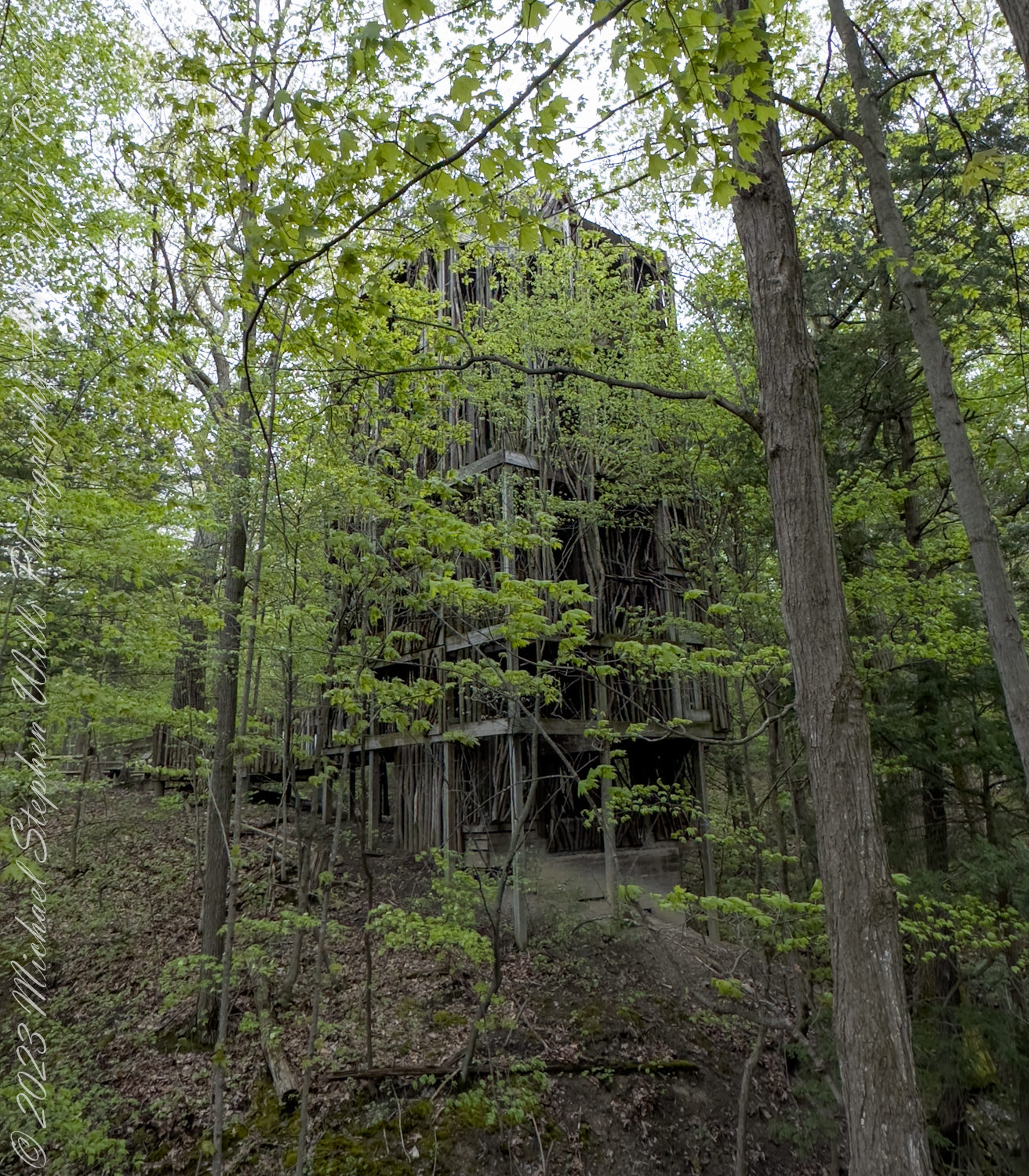
As we approached the treehouse, the boys’ excitement was palpable. The Treetops Treehouse is a marvel of rustic architecture, a multi-level structure that blends seamlessly with the surrounding forest. It was designed to give visitors a bird’s-eye view of the forest canopy, allowing for a unique perspective on the local flora and fauna.

Exploring the Treetops

Upon arrival, we were greeted by the gentle rustle of leaves and the chorus of bird songs. The boys raced ahead, eager to explore the winding pathways and hidden nooks of the treehouse. The structure is constructed entirely of wood, with sturdy railings and wide platforms that offer panoramic views of the forest.

We were particularly fascinated by the various interpretive signs that explained the local ecosystem. We learned about the different species of trees, the birds that nested in the canopy, and the small mammals that scurried along the forest floor. It was a delight to sparked their curiosity of the natural world.

Discovering a Land Snail

Meadow Trail

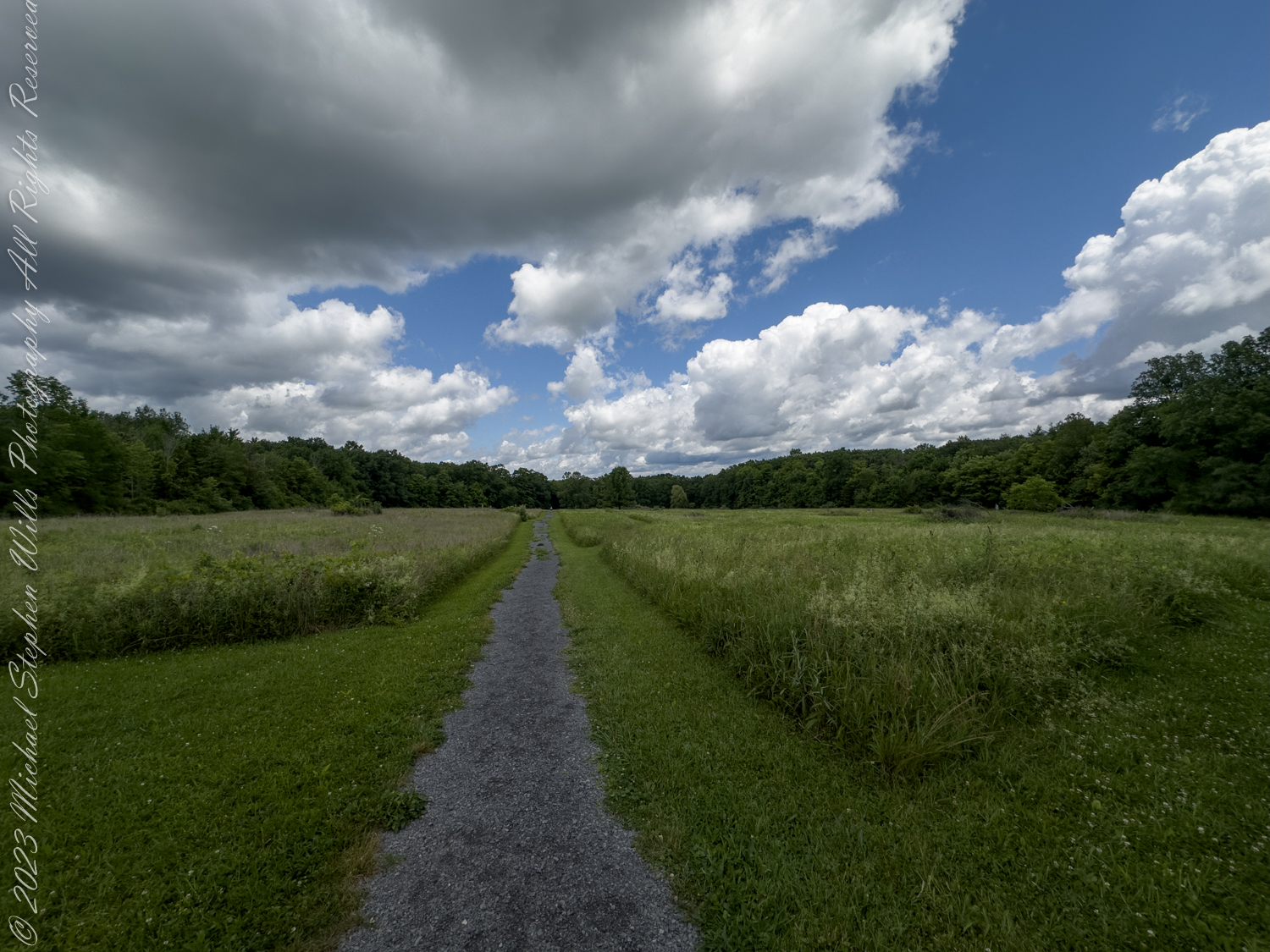
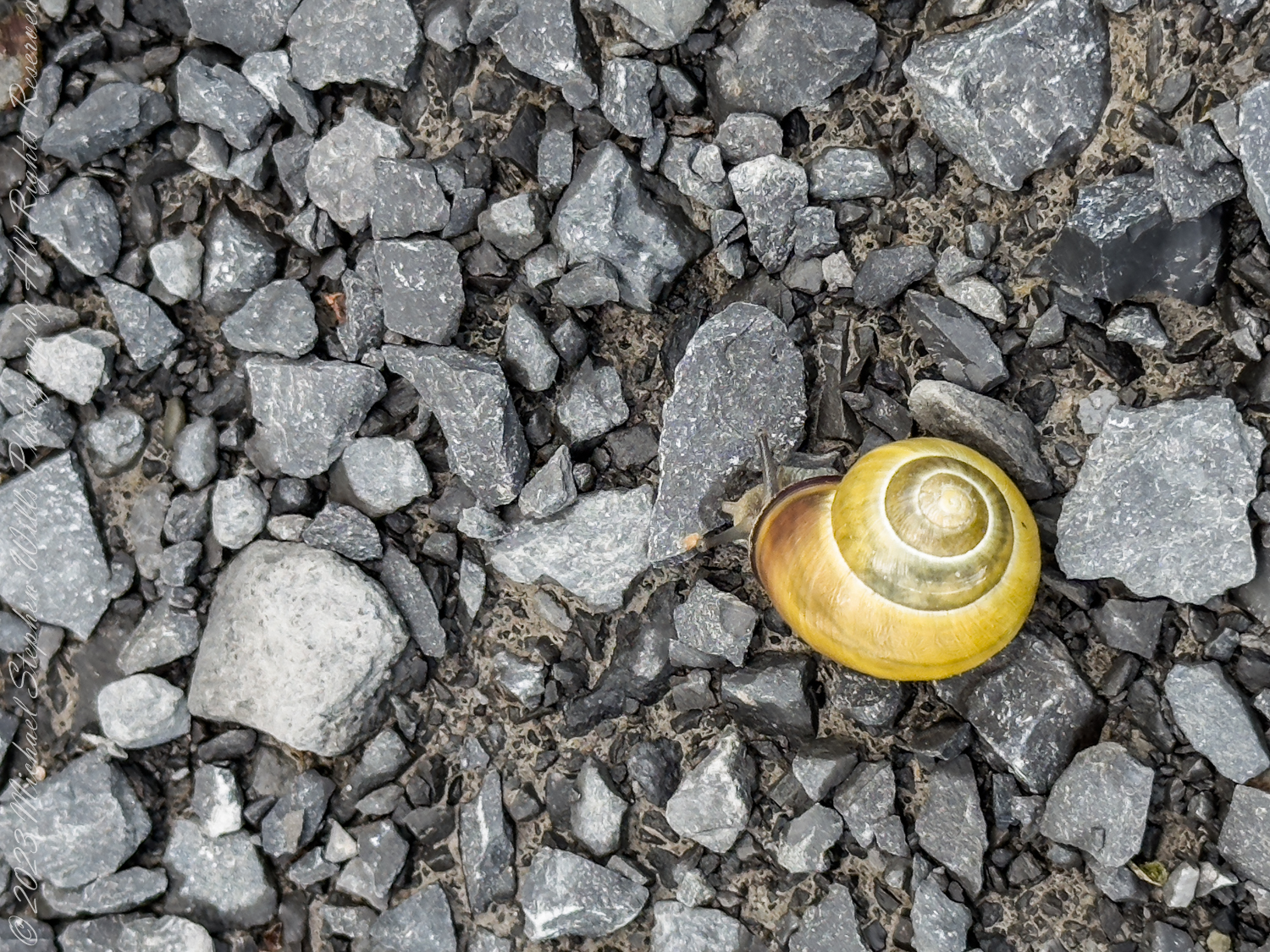
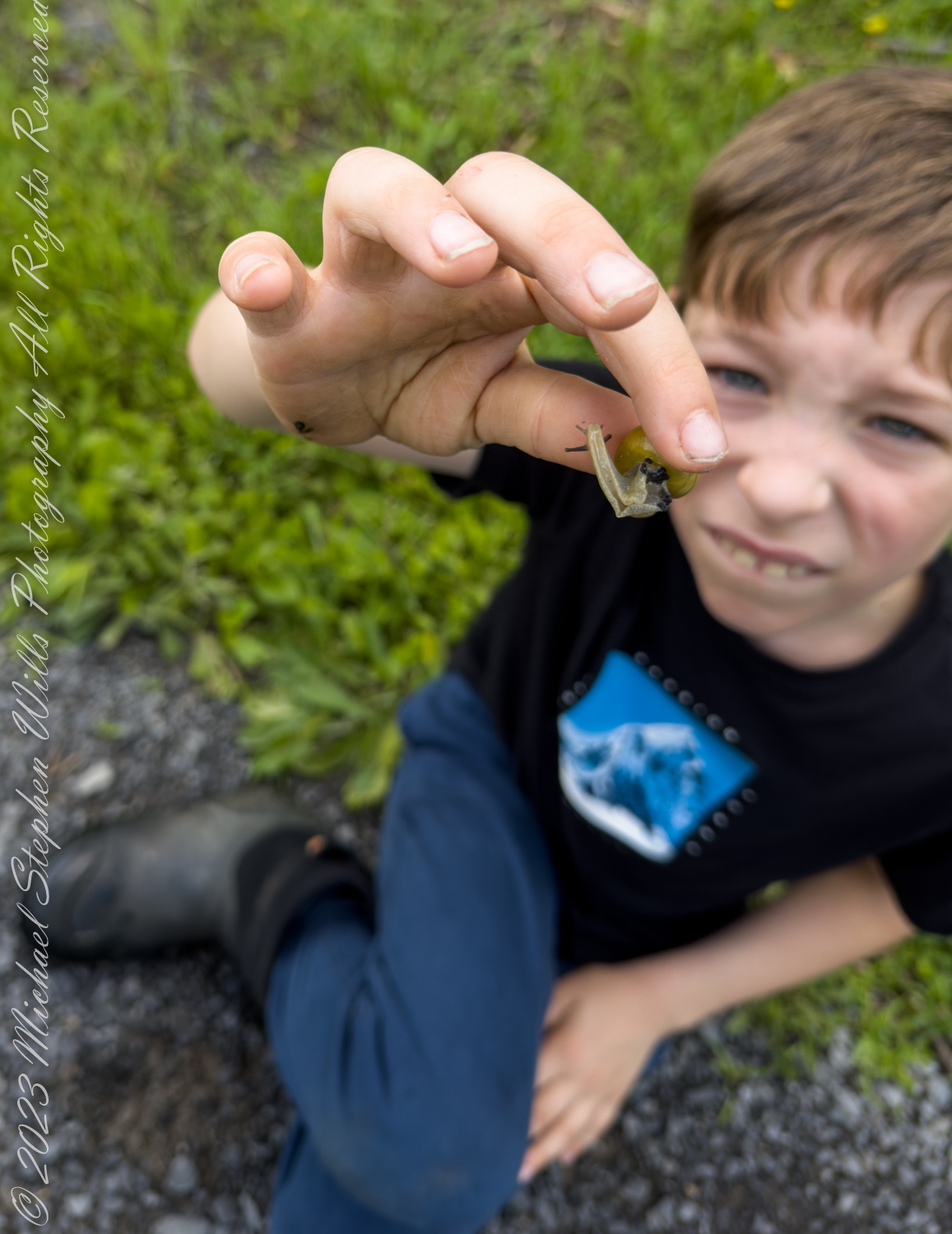
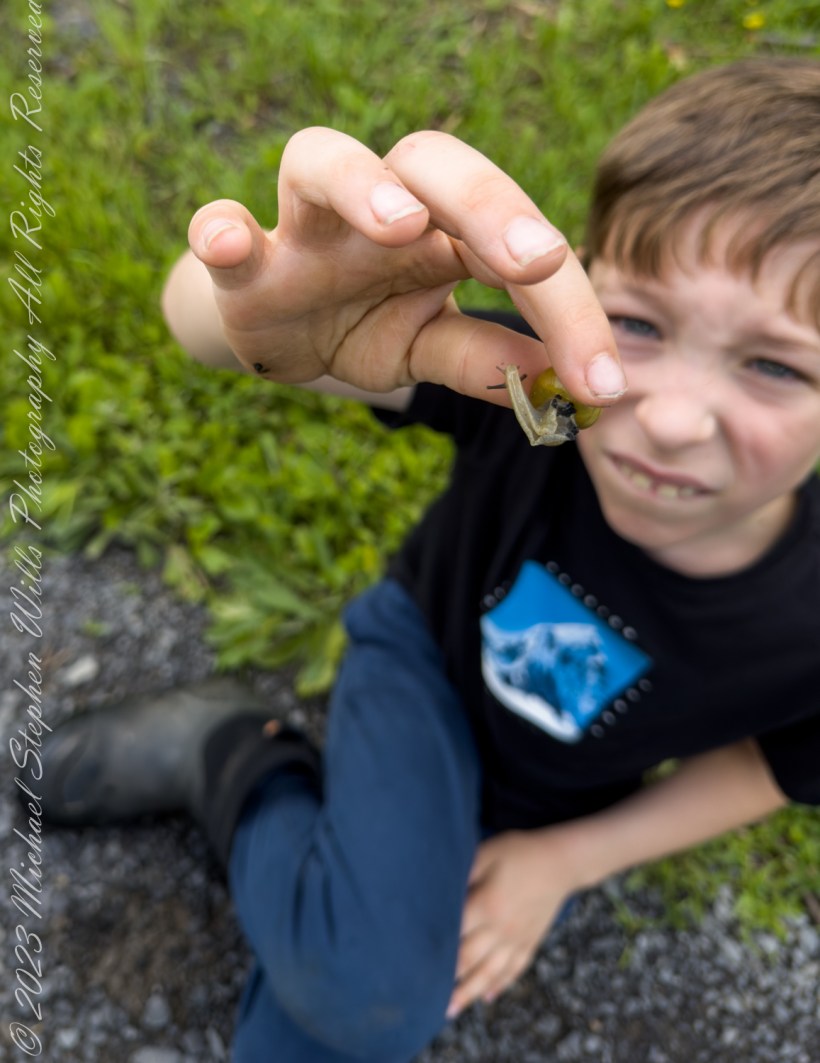
Afterwards, walking along a meadow trail, Rory’s keen eyes spotted something unusual on the ground. Nestled among the fallen leaves was a small land snail, its delicate shell glistening in the dappled sunlight. The boys and I gathered around to observe this tiny marvel of nature.

The snail appeared to be from the genus Triodopsis or Neohelix, possibly Triodopsis albolabris or Neohelix albolabris, known for their white-lipped shells. These snails are common in moist, forested environments and play a crucial role in the ecosystem as decomposers. They feed on decaying plant material, helping to recycle nutrients back into the soil.

The Learning Apiary

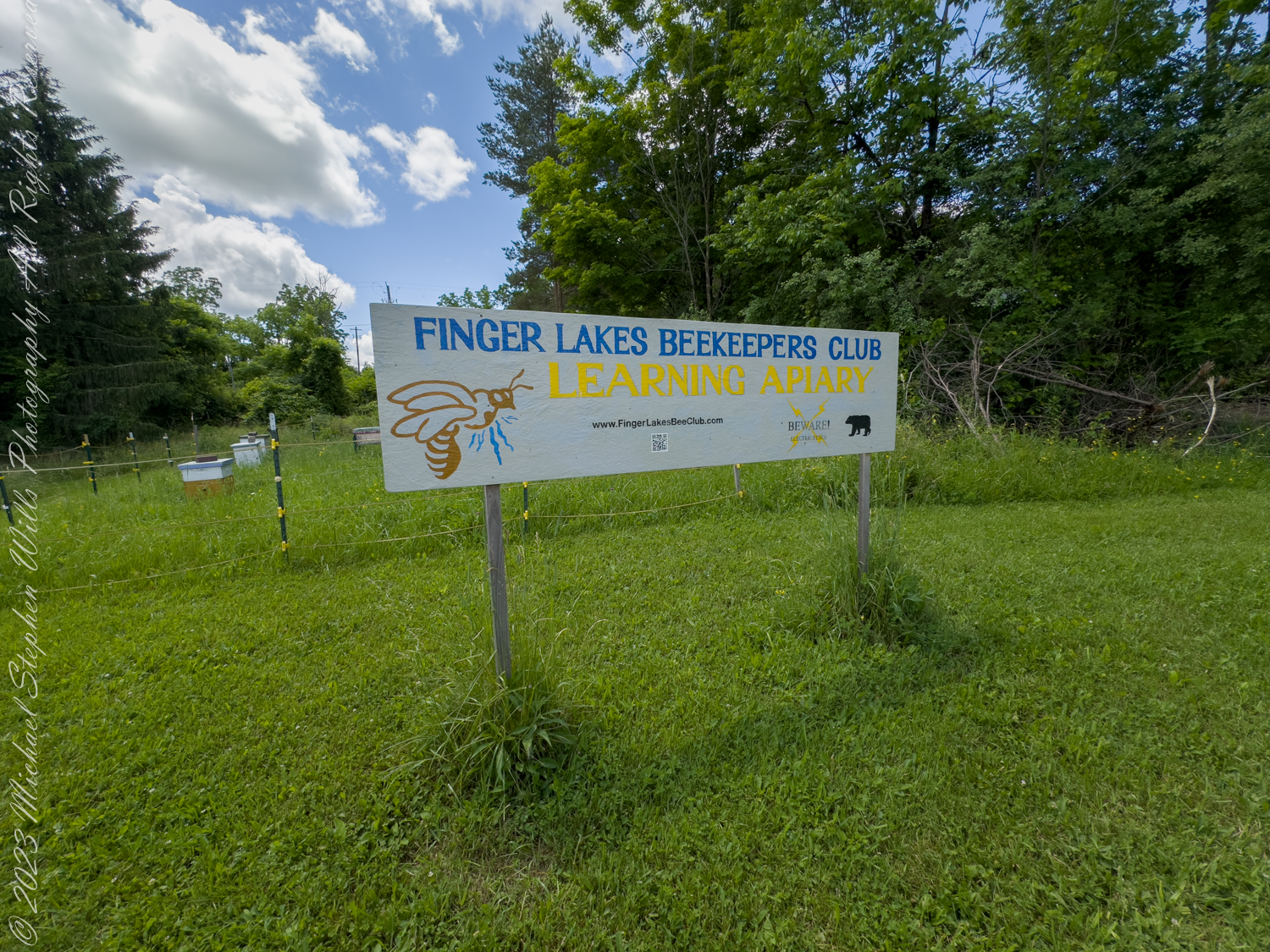
Further along the meadow trail, we made our way to the Finger Lakes Beekeepers Club Learning Apiary. The apiary is a place of learning and discovery, where visitors can gain insight into the fascinating world of honeybees and beekeeping.

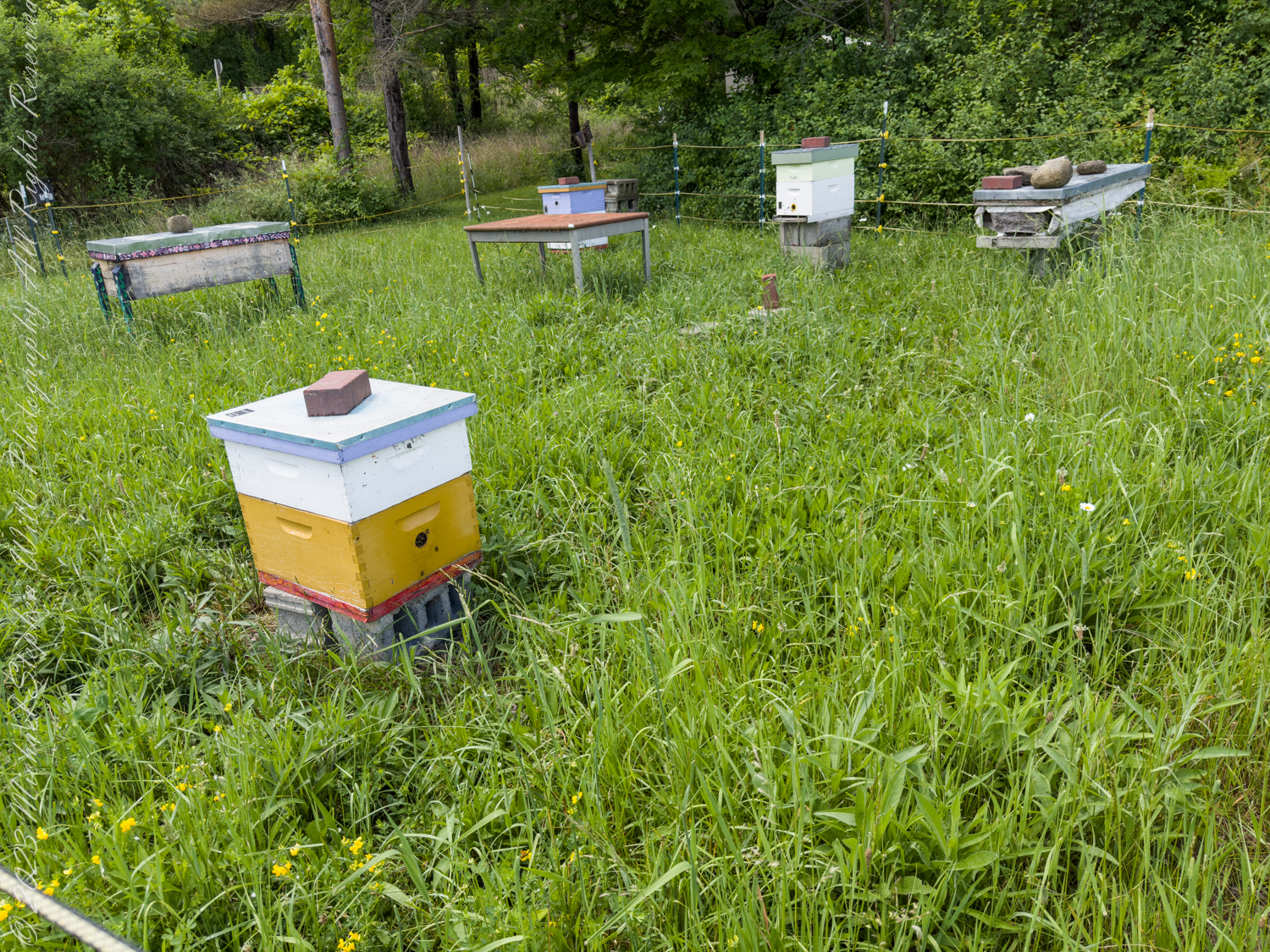
The apiary is composed of several beehives, each carefully maintained by members of the Beekeepers Club. We were careful to keep our distance from the electrified fence, protection against marauding bears and humans.

“ever-busy bees”

Wildflowers in Bloom

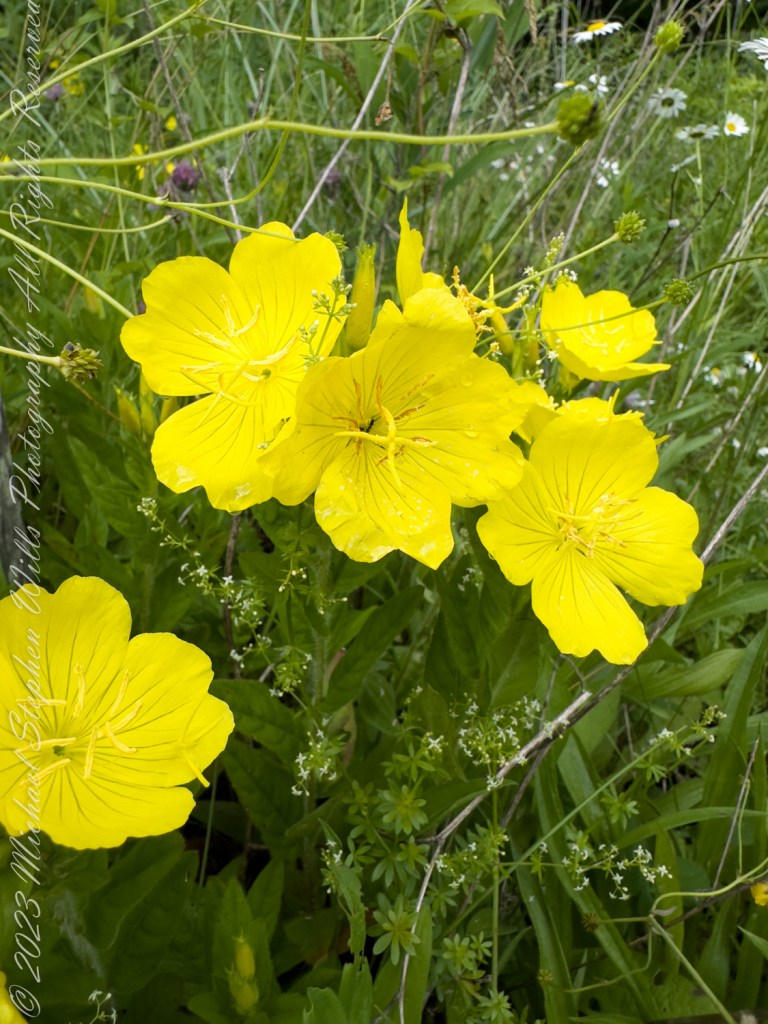
Narrow Leaved Sundrops

As we walked back from the apiary, the trail was lined with a vibrant display of wildflowers. The late spring bloom painted the landscape with splashes of color, from the golden yellows of evening primrose to the delicate whites of daisies.

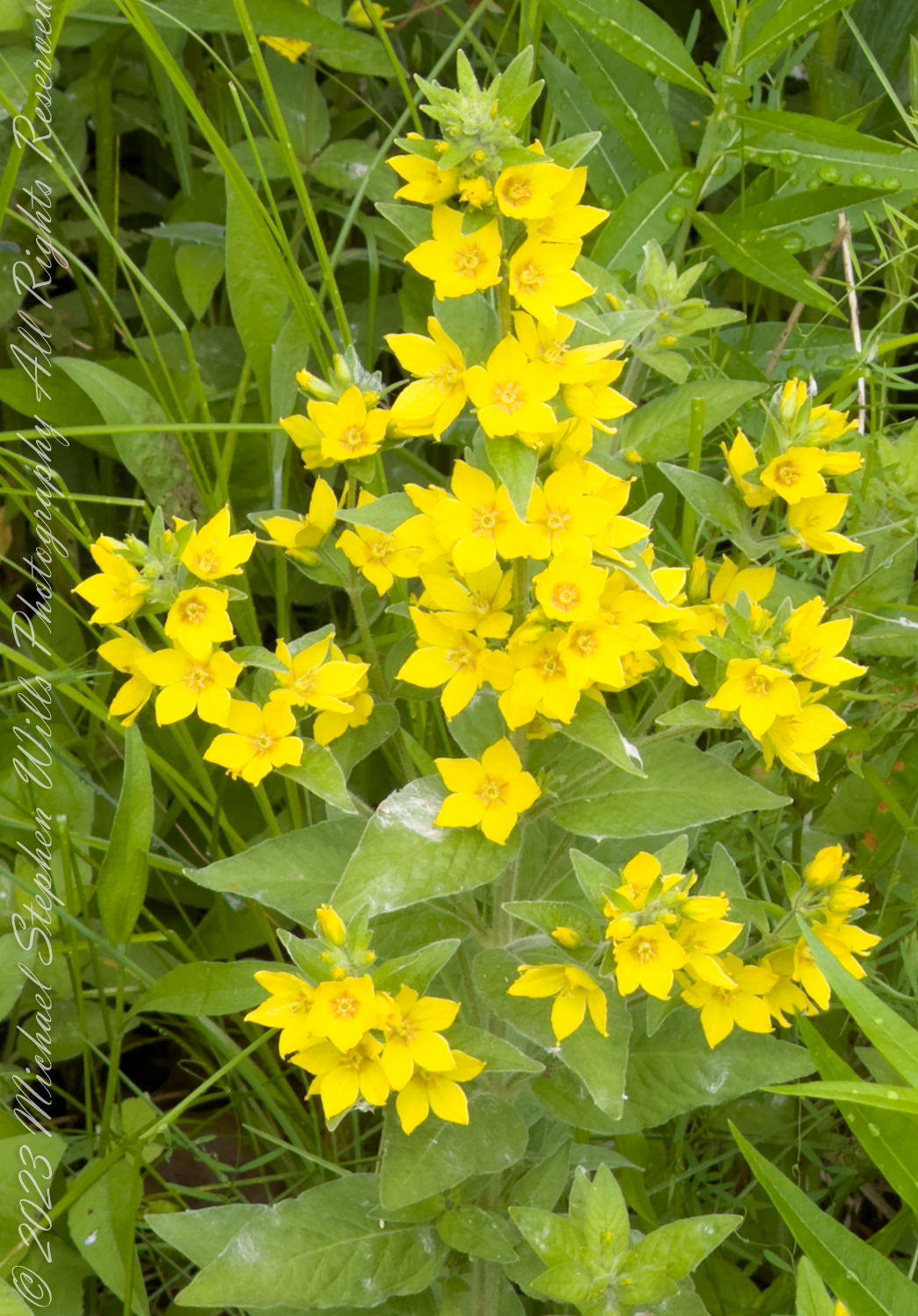
Large Yellow Loosestrife

One particular cluster of bright yellow flowers caught our attention. It was the Lysimachia punctata, commonly known as yellow loosestrife. These star-shaped flowers grow in dense clusters and are a favorite among pollinators. The boys marveled at the intricate patterns and vibrant colors, adding another layer of wonder to our day.

Reflections on a Memorable Day

As the day drew to a close, we found a quiet spot to sit and reflect on our adventures. The boys were bubbling with stories to tell their parents—of the towering treehouse, the tiny snail, the bustling beehives, and the fields of wildflowers. It was a day filled with discovery and learning, one that brought us closer to nature and to each other.

The Cayuga Nature Center and the Finger Lakes Beekeepers Club Learning Apiary provided a perfect setting for an outing that was both educational and exhilarating. The experiences we shared will undoubtedly leave a lasting impression on Sam and Rory, nurturing their love for the natural world and the myriad forms of life that inhabit it.

Meadow View

As we packed up and headed home, the boys already began planning our next adventure. The allure of the natural world, with its endless mysteries and wonders, had woven its spell, and we were eager to explore more of what it had to offer.

Copyright 2024 Michael Stephen Wills All Rights Reserved

The Wonder of Penstemon hirsutus in Treman Gorge

Discover the enchanting Hairy Beardtongue nestled in Treman Gorge. Learn about its striking lavender blooms, unique adaptations, and fascinating history in our latest nature exploration. Dive into the beauty of Penstemon hirsutus!

On a sunny day at the end of May 2024, I embarked on one of my cherished walks through Robert H. Treman Park, located in the heart of Ithaca, New York. The park, with its stunning gorges and waterfalls, never ceases to amaze me with its natural beauty and diverse plant life. This time, my exploration led me to a delightful discovery along the south-facing walls of Treman Gorge: Penstemon hirsutus, commonly known as the Hairy Beardtongue.

As I navigated the rocky terrain, my attention was caught by a cluster of delicate, tubular flowers emerging from the crevices of the gorge walls. Their soft lavender hues stood out against the rugged backdrop of moss-covered rocks and shale. Upon closer inspection, I noticed the characteristic hairy stems and leaves, confirming that I had indeed found Penstemon hirsutus.

Penstemon hirsutus is a perennial herbaceous plant native to eastern North America. It typically reaches a height of 1 to 3 feet, with erect stems covered in fine hairs. The leaves are lanceolate, arranged oppositely along the stem, and also bear a slight fuzziness. The flowers, which bloom from late spring to early summer, are tubular and two-lipped, resembling a small beard—a feature that likely inspired the common name “Beardtongue.” Each flower is about 1 to 1.5 inches long, with a delicate lavender color that fades to white at the throat.

The genus name “Penstemon” is derived from the Greek words “pente,” meaning five, and “stemon,” meaning stamen, referring to the plant’s five stamens—four fertile and one sterile, the latter often appearing as a small, hairy tongue within the flower. The species name “hirsutus” comes from Latin, meaning hairy, a nod to the plant’s hirsute stems and leaves.

The Hairy Beardtongue thrives in well-drained soils and can often be found in rocky, open woodlands, meadows, and along cliffs—exactly the kind of environment provided by Treman Gorge. This plant is well-adapted to the microhabitats created by the gorge’s south-facing walls, where sunlight and moisture create ideal growing conditions. The rock walls not only offer physical support but also help retain heat and moisture, creating a microclimate that supports a variety of plant species.

Historically, Penstemon hirsutus and its relatives have been valued for their ornamental beauty and ecological benefits. The flowers attract a variety of pollinators, including bees, butterflies, and hummingbirds, making them an important component of the local ecosystem. Native Americans also recognized the medicinal properties of some Penstemon species, using them to treat ailments such as toothaches, sore throats, and respiratory issues.

In recent times, gardeners and horticulturists have come to appreciate Penstemon hirsutus for its hardiness and low maintenance requirements. It is often used in native plant gardens, rock gardens, and naturalized areas to add a touch of wild beauty. The plant’s ability to thrive in poor soils and its resistance to deer browsing make it a valuable addition to any garden aiming to support local wildlife and biodiversity.

Finding the Hairy Beardtongue in Treman Gorge was a moment of pure joy and wonder. It reminded me of the resilience and adaptability of nature, as this delicate yet sturdy plant has carved out a niche for itself in the rocky walls of the gorge. The sight of its soft lavender blooms swaying gently in the breeze was a testament to the beauty and tenacity of life in even the most rugged environments.

As I continued my hike, I felt a renewed sense of connection to the natural world. The discovery of Penstemon hirsutus was not just a botanical find but a reminder of the intricate and interconnected web of life that thrives in Treman Gorge. Each plant, each flower, has a story to tell—a story of survival, adaptation, and beauty that enriches our understanding of the natural world and our place within it.

Copyright 2024 Michael Stephen Wills All Rights Reserved

Nesting Chronicles: The Life of A Cayuga Lake Osprey

Imagine you’re soaring with ospreys over Cayuga’s shimmering waters, preparing the nest, embracing the ritual of spring—a majestic cycle of life awaits you.

As the first warm breezes of early spring ruffle the chilled waters at the south end of Cayuga Lake, anticipation rises in me. I am a female Osprey, returning alone from far to the south along the old sky-roads. We do not migrate as a pair; my mate often reaches the nest ahead of me to reclaim the site and begin repairs. Still, this is the place we claim again, season after season.

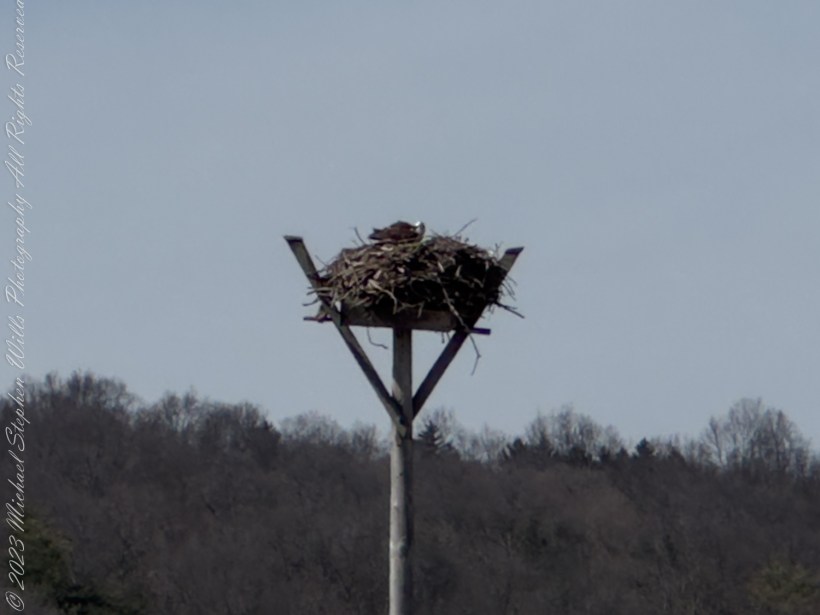
Two Osprey perched on the nest near the Birding Trail of Cass Park. Cayuga Lake in the distance.

On arrival I wheel high above the shoreline, searching for the platform we left to winter. There it stands—the tall sentinel above the lake. He is there, too, calling once as he lifts, and the rim already shows the first fresh sticks of the year. Against the bright sky the nest looks rough-hewn, yet every branch lies to a purpose.

Two Osprey perched on the nest near the Birding Trail of Cass Park.

As I settled onto the platform, tthe familiar tilt of the timbers and the dry rattle of last year’s sticks steady me. I meticulously inspected our creation, the repository of our hopes and future lineage. My mate and I ferry fresh twigs and weeds, wedging them into the rim and lacing the walls tight against the spring winds.

In due time, beneath the sheltering rim, I laid a small clutch of mottled eggs—the culmination of our bond, the promise of continuity. Through the weeks that follow I keep them warm and dry, turning them with my beak and settling the heat of my breast upon them. My mate does the heavy work of provision—fish after fish to the rail—and stands guard, calling when intruders drift close. Now and then he eases onto the eggs while I feed, but the watching and warming are chiefly mine.

Two Osprey perched on the nest near the Birding Trail of Cass Park.

The world around us burgeoned with life. The lake’s surface now rippled with the activity of fish – a bounty for our growing family. Days turned into weeks, and our vigilance was rewarded as the first cracks appeared in the eggs. The chicks emerged, delicate yet voracious, their mouths agape for the nourishment we unceasingly provide.

Click Me for another Osprey Post

Thank you Candace E. Cornell of the Cayuga Lake Osprey Network for your helpful advice.

For further information: —–Poole, Alan F. ; 2019, “Ospreys: The Revival of a Global Raptor”; Johns Hopkins University Press —Mackrill, Tim; 2024; “The Osprey”; Bloomsbury Publishing

Enter your email to receive notification of future postings. I will not sell or share your email address.

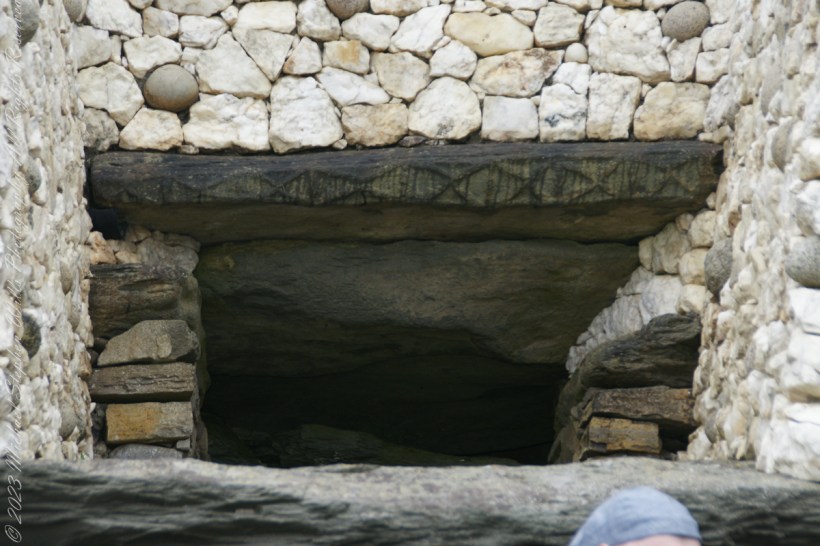
Newgrange X

Step into the ancient world of Neolithic monuments and discover the astounding astronomical knowledge of our ancestors. Explore the Newgrange Lightbox in Ireland and similar marvels across Europe, revealing a deep connection between ancient peoples and the cosmos. Join me in unveiling these architectural wonders.

Continue reading “Newgrange X”