The Myths and Beauty of Wood Anemones

The wood anemone, Anemone nemorosa, symbolizes beauty and resilience, captivating observers with its elegant blooms and rich folklore.

As I wander through our yard, my gaze is irresistibly drawn to a mesmerizing carpet of white blossoms, illuminated by the dappled sunlight filtering through the graceful boughs of our hemlocks. Each bloom, delicate and intricately ruffled, resembles a cluster of tiny, pure clouds resting gently atop a vibrant sea of green. These are Anemone nemorosa, affectionately known as wood anemone or windflower. This particular patch, adorned with a double-flowered variety, owes its presence to the thoughtful hands of our parents, who landscaped the property during the 1970s and 1980s. Their vision continues to bloom each spring, as the cascading petals exude an understated elegance that feels both luxurious and unpretentious—a living legacy woven into the fabric of this place we call home.
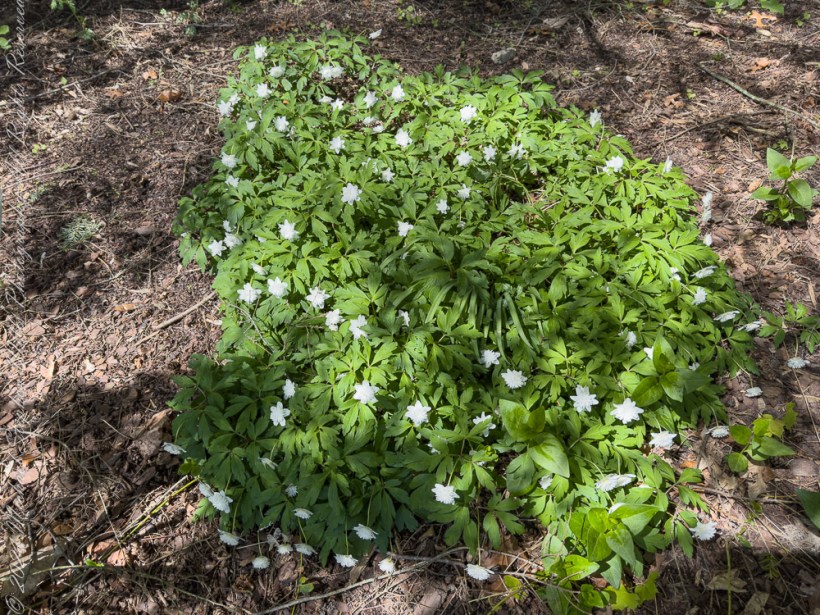
The wood anemone is a perennial plant, its rhizomatous growth weaving an intricate tapestry under the dappled sunlight of the forest floor. Each flower arises on its slender stem, surrounded by finely divided trifoliate leaves, their fresh green hue amplifying the purity of the blossoms. The flowers themselves, with their many layers of petal-like sepals, are a marvel of nature’s design, combining elegance and resilience.

The scientific name, Anemone nemorosa, carries echoes of ancient understanding. The genus name Anemone originates from the Greek word ánemos, meaning “wind.” According to classical mythology, these flowers were said to spring forth from the tears of the goddess Venus as she mourned the death of Adonis. The appellation of “windflower” ties to this myth, suggesting that the blooms open only at the bidding of the wind. The species name nemorosa comes from the Latin nemorosus, meaning “of a wooded grove,” aptly describing its preferred habitat.
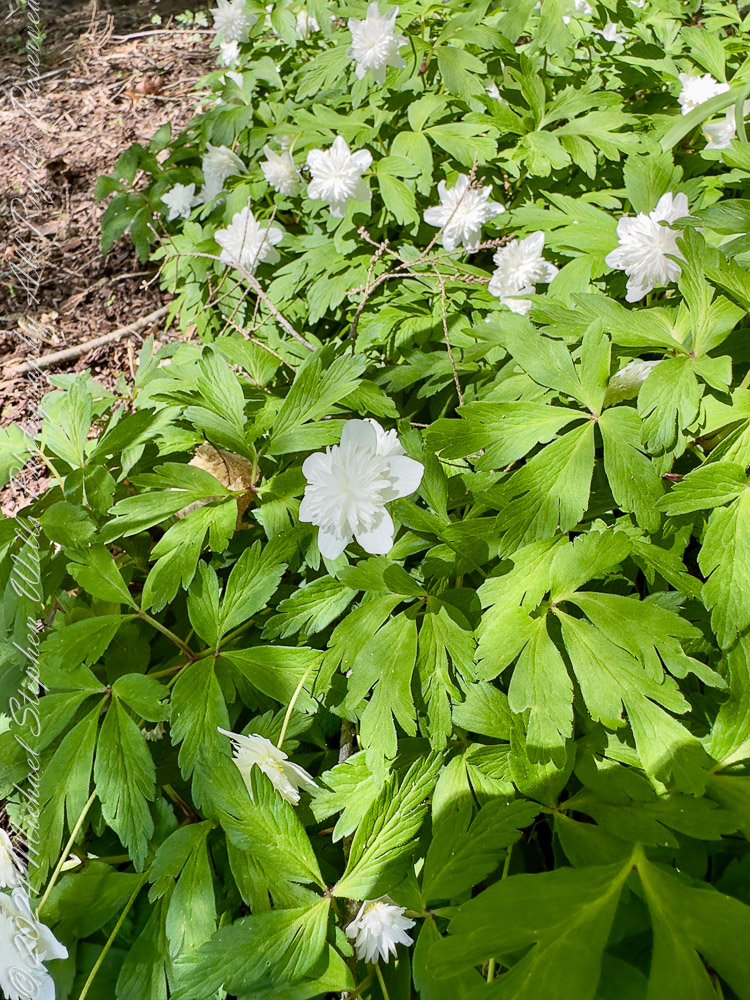
There is a certain humility in the way the wood anemone thrives—spreading slowly but persistently through deciduous woodlands, forming colonies that greet the spring with their pristine blooms. While the double-flowered variety lacks the simplicity of the single-layered wild form, it retains all the grace that has inspired poets and naturalists alike. It is as if each bloom whispers its secrets to the passing breeze, stories of centuries gone by when druids and herbalists revered the plant as a symbol of protection and healing.

Culturally, the wood anemone has deep roots. In folklore, it was believed to bring luck to those who carried it, while others regarded it as a harbinger of illness if picked prematurely. The flowers were said to close tightly in response to rain, a trait lending them an air of sentience as they interact with their environment.

In medieval herbalism, the plant was thought to possess medicinal properties, though its potent compounds also rendered it toxic if mishandled. It was used cautiously to treat ailments such as rheumatism and respiratory issues. Modern understanding has largely relegated these medicinal uses to history, but the plant’s ability to captivate the senses remains undiminished.
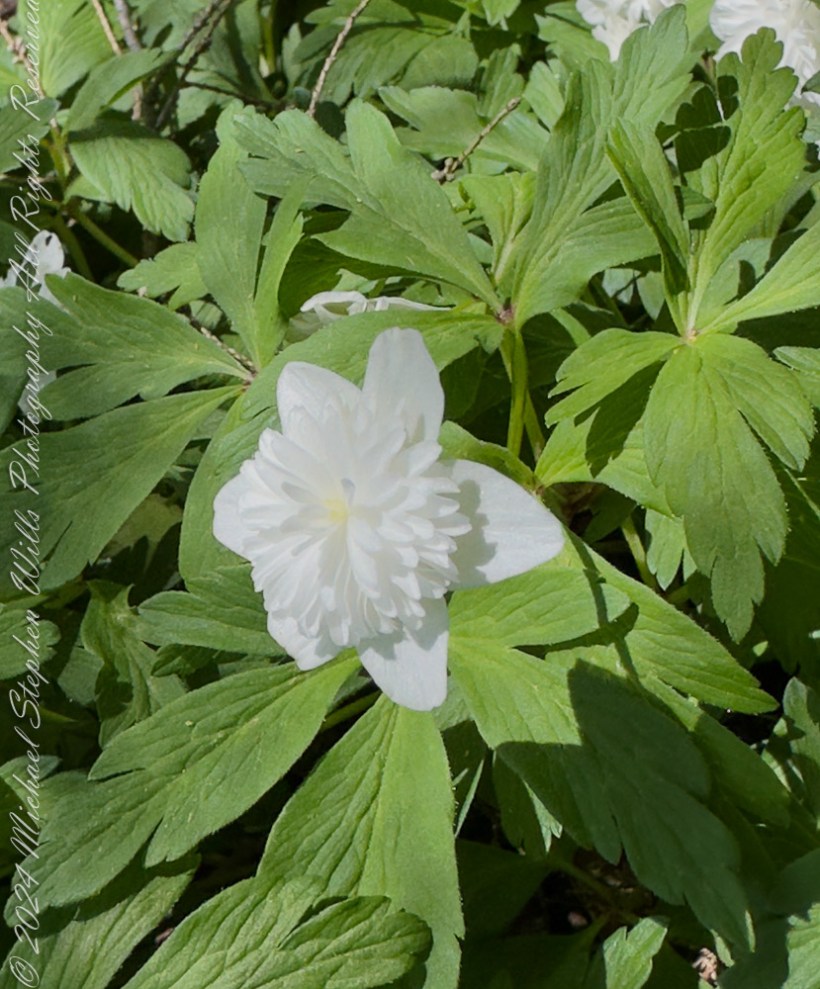
Looking at this verdant patch before me, I am reminded of the transient beauty of spring. Anemone nemorosa emerges briefly, a fleeting celebration of life before retreating into its quiet dormancy beneath the soil. It thrives in the undisturbed spaces of the world, reminding us of the importance of preserving the ecosystems that allow such delicate wonders to flourish.

Today, as the soft May sunlight streams through the trees, illuminating each ruffled blossom, I am filled with gratitude for the enduring gift left by our parents, who lovingly planted these flowers decades ago. The wood anemone, whether viewed as a mythological symbol, a natural marvel, or a fleeting delight, offers a gentle reminder to cherish the beauty that surrounds us. Its ephemeral blooms, returning each spring, stand as a testament to nature’s quiet yet profound artistry—a living masterpiece and a poignant connection to the legacy of those who shaped this cherished landscape here in Ithaca, New York.
Enter your email to receive notification of future postings. I will not sell or share your email address.

Erosion and Beauty: Cocoa Beach’s Sand Sculptures

At Cocoa Beach, sand castles succumb to time, showcasing beauty in decay, while desert monoliths endure. Both narratives reveal nature’s artistry through impermanence and transformation.

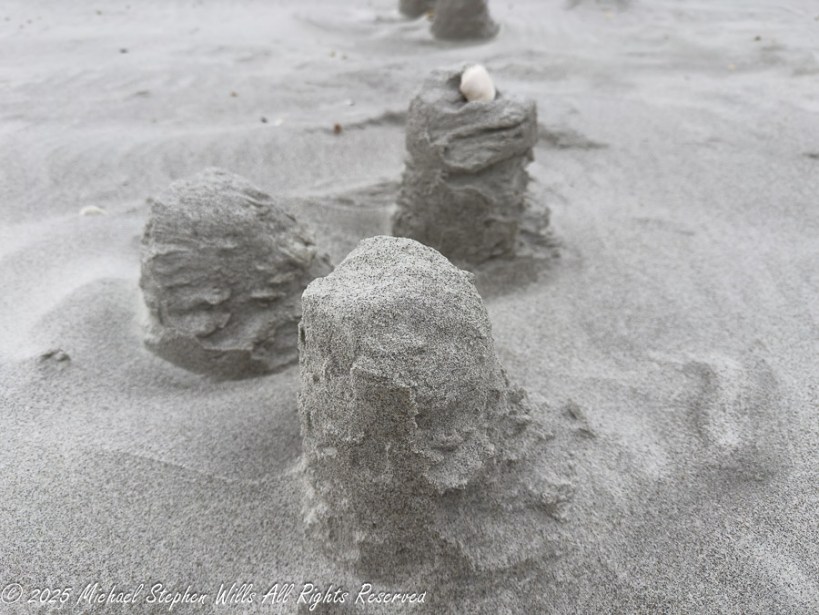
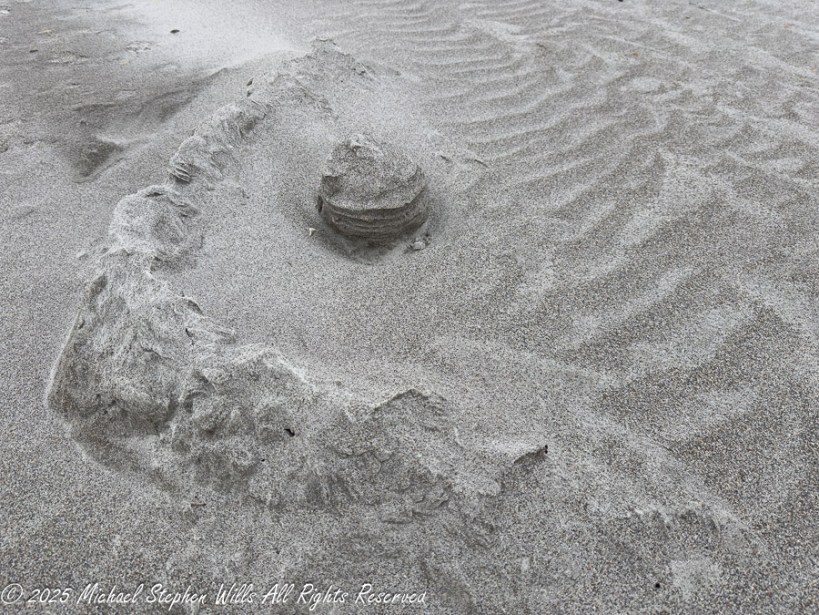
On the shores of Cocoa Beach, where the January winds dance freely, the once-proud towers of sand now stand humbled. What was sculpted by human hands—carefully packed and shaped with laughter—has become a relic of its former grandeur. The wind, with its gentle yet relentless touch, carves away at their edges, smoothing and softening their once-crisp lines. The castles, now mere echoes of their original form, hold a quiet dignity in their decay. Impermanence is their fate.

Cocoa Beach, Brevard County, Florida, Space Coast, January 2025

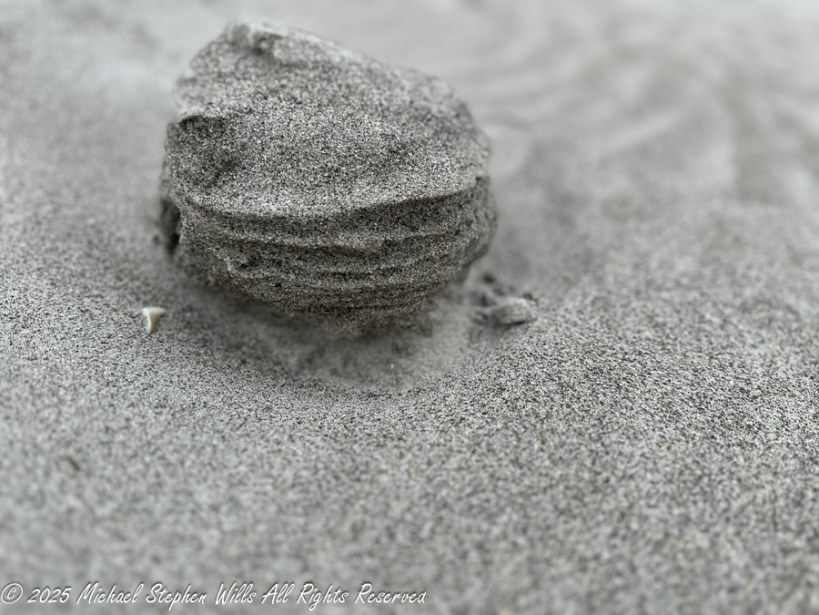
In the first photograph, the remnants of a sand fortress curve in a gentle arc, protecting a lone pillar—perhaps the last bastion of a crumbling empire. The textures of wind-blown ridges ripple across the sand like waves frozen in time, whispering of the invisible forces that shape the land. The delicate striations of the eroded peak, captured in close detail in the second image, reveal the layers of creation and destruction, each grain bearing witness to the ceaseless march of time.

Cocoa Beach, Brevard County, Florida, Space Coast, January 2025

The third image brings a sense of companionship to this landscape of change. Like silent sentinels, the remaining sand pillars stand together, weathered but resolute. One wears a crown of a single shell—a reminder that even in the face of erosion, beauty persists. These fleeting structures, built in joy, now bow to nature’s artistry, embracing the inevitable with quiet grace.

Cocoa Beach, Brevard County, Florida, Space Coast, January 2025

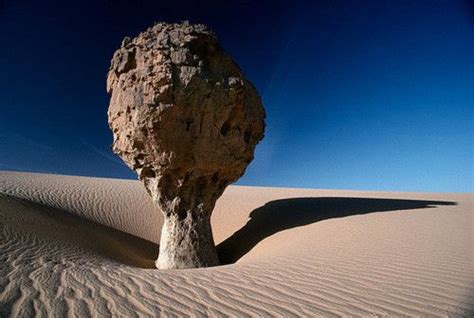
And yet, beyond the gentle shores of Cocoa Beach, in the vast and timeless expanse of the Sahara Desert, wind-carved monoliths stand as testament to the power of patience. The fourth photograph—an imposing formation shaped by millennia of desert winds—towers over the golden dunes, its shadow stretching far into the sands. Where the beach’s castles fall in a day, the desert’s sculptures endure for centuries, silent witnesses to the ebb and flow of time on a grander scale.

Wind carved geological formation, Sahara desert. Credit “scraped from the web”

But are they so different? Whether in the fleeting impermanence of Cocoa Beach or the enduring vastness of the Sahara, the hand of the wind shapes all things. Each formation tells the same story—of creation, of erosion, and of transformation. They whisper to us that beauty is not defined by permanence, but by the dance between time and the elements.

As the sun sets over the beach, casting long shadows across the sand, one cannot help but marvel at the artistry of nature. Whether lasting an afternoon or an age, the sculptures of wind and sand remind us that all things are in motion, and every grain, every ripple, every fleeting moment holds a story waiting to be told.

Enter your email to receive notification of future postings. I will not sell or share your email address.

A Moment Frozen: Nature’s Finger Lakes Art

Maple leaves suspended in a spider web create a rare, timeless moment in nature.

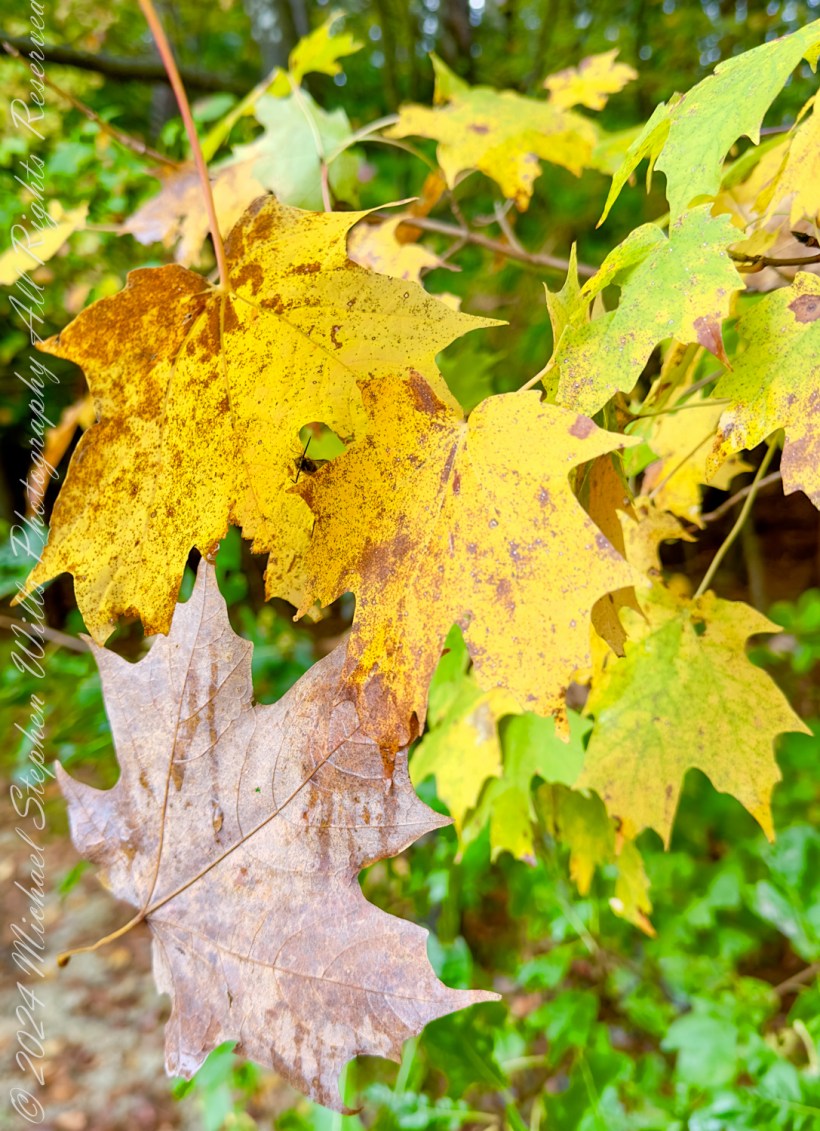
Walking along the Finger Lakes Trail in Robert H. Treman State Park, I come across something that makes me stop—maple leaves, caught mid-fall, suspended in a delicate spider web. Time itself seems to pause with them, as if the leaves, in their slow descent, had found a way to defy gravity. Yellow, brown, and green, they hang like fragile ornaments, arrested in motion. For a moment, it feels like the world is holding its breath.

Maple leaves caught in freefall by spider web. Finger Lakes Trail, Robert H Treman State Park, Ithaca, Tompkins County, New York State

This brief suspension of nature’s inevitable course is uncanny, a moment frozen between one season and the next. These leaves, so close to their final rest on the forest floor, now seem to defy their fate, held up by threads too fine to see. I’m tempted to reach out and free them, to let them continue their journey down to the earth, but something stops me. It’s as if the web, like a clock halted mid-tick, has granted me the rarest gift—a chance to stop the flow of time.

In this moment, I reflect on how life itself is always in motion, how we are carried forward whether we like it or not. But here, in this quiet pocket of the forest, these leaves offer a small rebellion against that forward push. They hang, caught between what was and what will be, suspended between summer and winter, life and decay.

I snap a photo, knowing it’s just an echo of the real thing, a poor attempt to capture a miracle of nature. The leaves will eventually fall, the web will loosen, and time will move on. But for now, in this moment, they remain suspended, as do I—caught in the beauty of a moment where time, for once, seems to stand still.

Enter your email to receive notification of future postings. I will not sell or share your email address.

Face-to-Face with Florida’s Ancient Predator

Discover the world of Florida’s ancient predators through the eyes of the formidable Smilodon fatalis. Step back in time to the Pleistocene epoch and explore the life, habits, and social bonds of the iconic sabertooth cat.

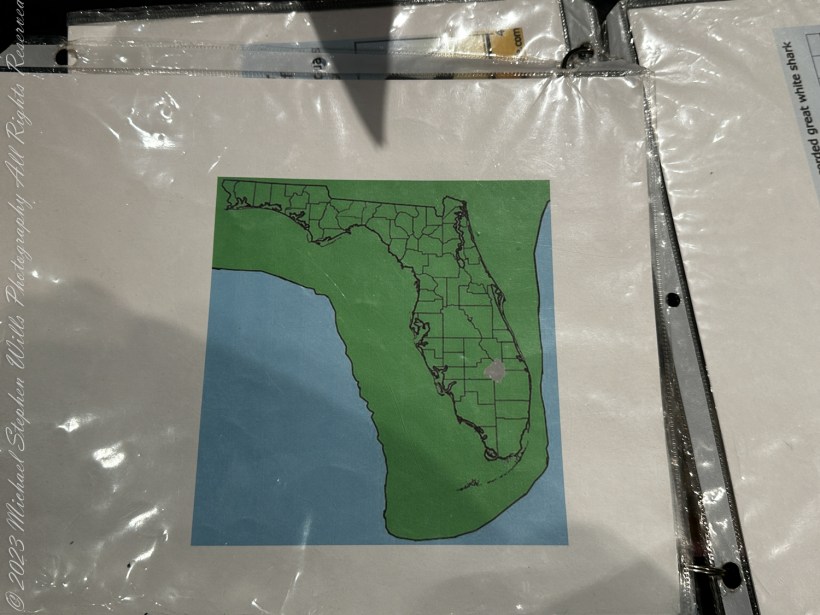
I examined an unusual map of Florida, the contours of its familiar modern shape overlaying a vast, green expanse. The state as we know it today is crisscrossed by highways and dotted with bustling cities, but this map transported me back in time to a very different era. During the Pleistocene epoch, Florida was a wilder, untamed land, teeming with life and dominated by creatures long extinct.

The representation of the land area of Florida state during Pleistocene epoch glaciation is the green shading with the current map of Florida within.

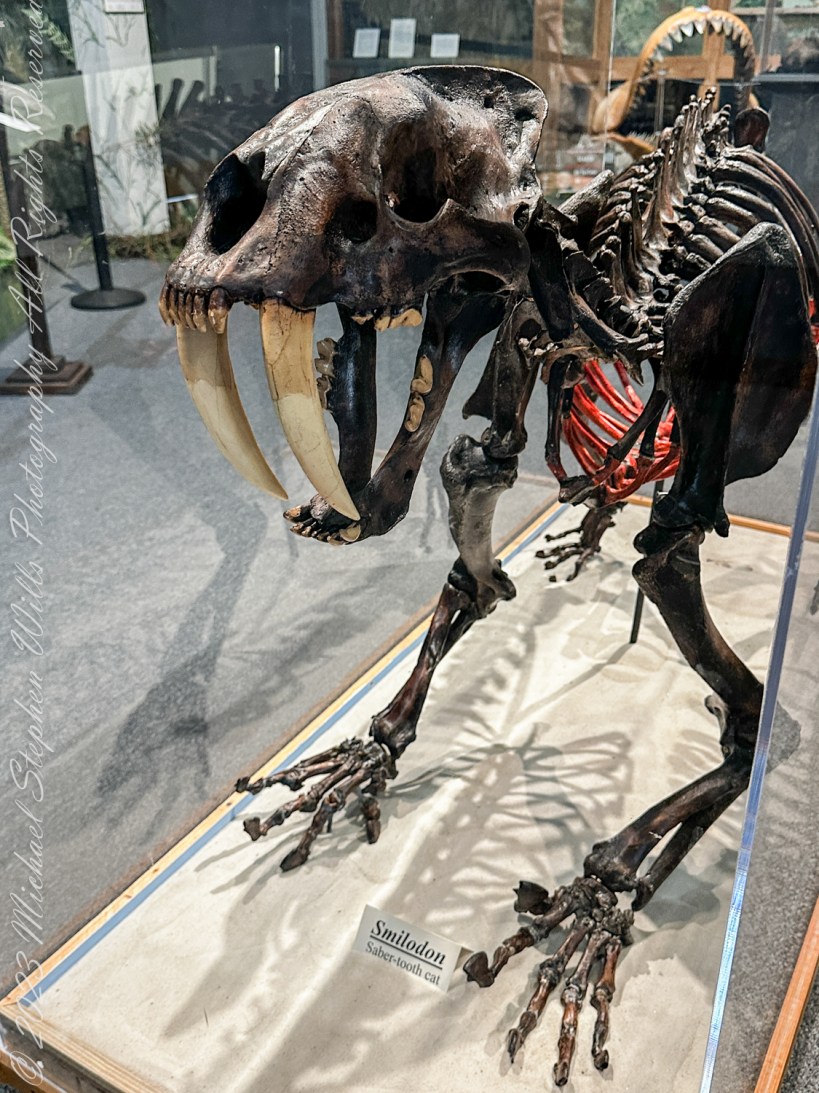
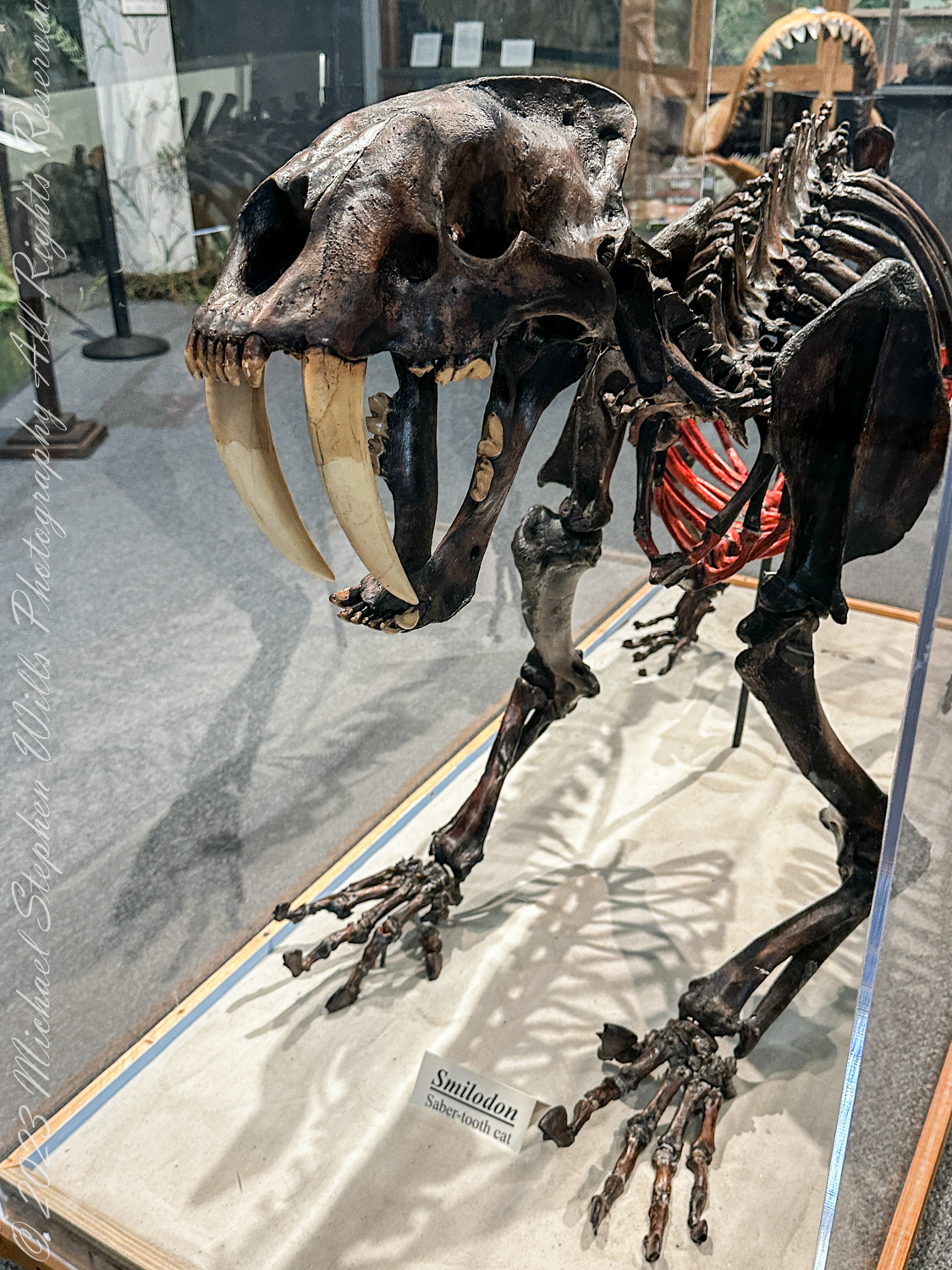
Exploring Brevard (county) Museum of History and Natural Science of Cocoa Florida, I moved to the next exhibit. The air hummed in my imagination with the whispers of an ancient world. A skeletal figure loomed within a glass case – the mighty Smilodon fatalis, the sabertooth cat. Its fearsome fangs curved downward, I imagined standing face-to-face with this apex predator, feeling both awe and a primal fear.

Florida, some 11,500 years ago, was a place of significant climatic shifts. The Pleistocene epoch was characterized by repeated glaciations; however, Florida itself remained unglaciated. The climate was cooler and drier than today, and sea levels were much lower, extending the coastline outward. This ancient Florida was a mosaic of grasslands, savannas, and woodlands. Giant sloths, mammoths, and mastodons roamed these lands, sharing the territory with the formidable Smilodon.

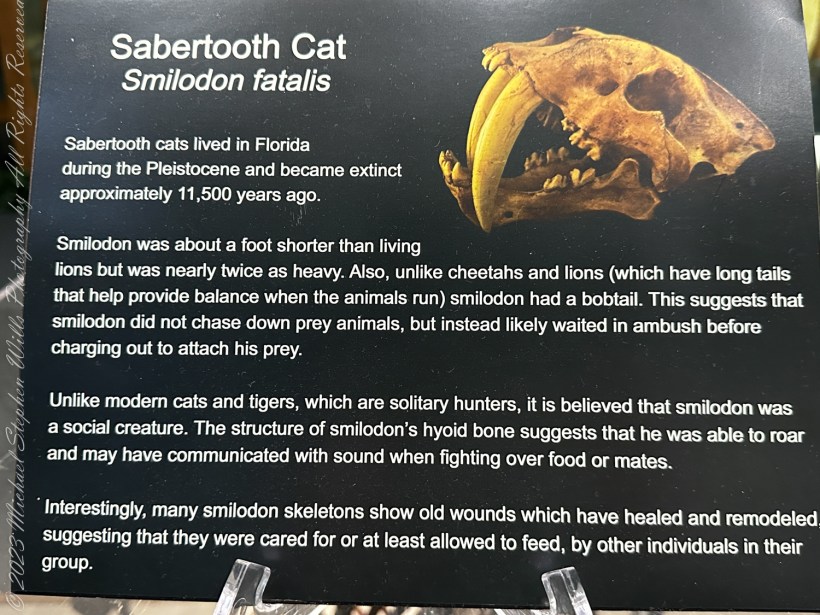
The attendant palque described Smilodon fatalis was about a foot shorter than modern lions but nearly twice as heavy. Its stocky build and powerful limbs suggested immense strength. Unlike the cheetahs and lions of today, Smilodon had a bobtail, indicating that it relied less on speed and more on ambush tactics. I could almost see it now: crouching low in the underbrush, muscles coiled, waiting for the perfect moment to spring upon its unsuspecting prey.

In the reconstructed display, the sabertooth cat’s lethal precision was evident. Its elongated canines were deadly tools designed to pierce and hold onto struggling prey. The lack of a long tail, which modern big cats use for balance during high-speed chases, suggested that Smilodon was an ambush predator. It would have hidden in the dense foliage, its mottled coat blending seamlessly with the shadows, until it launched a surprise attack.

Smilodon was not just a solitary hunter. Unlike modern cats and tigers, which often lead solitary lives, evidence suggests that Smilodon was a social creature. The plaque mentioned the structure of its hyoid bone, implying that it could roar, perhaps using vocalizations to communicate with other members of its group. I envisioned a family of Smilodon, working together to take down a mammoth or defend their territory from rivals. Their social bonds might have been strong, much like those of modern lions.

I was particularly struck by the evidence of healed wounds found on many Smilodon skeletons. These injuries had healed and remodeled over time, suggesting that these cats cared for each other. In a world where every day was a battle for survival, these acts of care and compassion spoke volumes about their social structure. Injured members were not left to fend for themselves but were likely allowed to feed off the kills of others and to be protected by their group until they recovered.

The exhibit painted a vivid picture of an ancient ecosystem. The Pleistocene flora of Florida was diverse, with vast grasslands interspersed with stands of pine and oak. The fauna was equally rich: herds of herbivores grazed the plains, while predators like Smilodon and dire wolves stalked them. This was a land of giants, where every creature had to be strong, fast, or cunning to survive.

As I stepped away from the exhibit, I felt a deep connection to this ancient world. The Smilodon fatalis was a predator and is a symbol of an era that shaped the natural history of our planet. Its bones told a story of survival, community, and the ever-changing dance of life and death.

In the quiet of the museum, surrounded by the echoes of the past, I was reminded of the fragility and resilience of life. The sabertooth cat, with its fearsome fangs and powerful build, was a testament to the incredible adaptability of life on Earth. Though it has long since vanished from our world, the spirit of Smilodon fatalis lives on in the bones it left behind and in the stories we tell about the ancient world it once ruled.

Copyright 2024 Michael Stephen Wills All Rights Reserved

Mother’s Day Amid the Blossoms of the Horse Chestnut

Explore the enchanting world of the Horse Chestnut, its vibrant spring blossoms, and its rich tapestry of historical and ecological significance, as I wander the slopes above Cayuga Lake on a serene Mother’s Day.


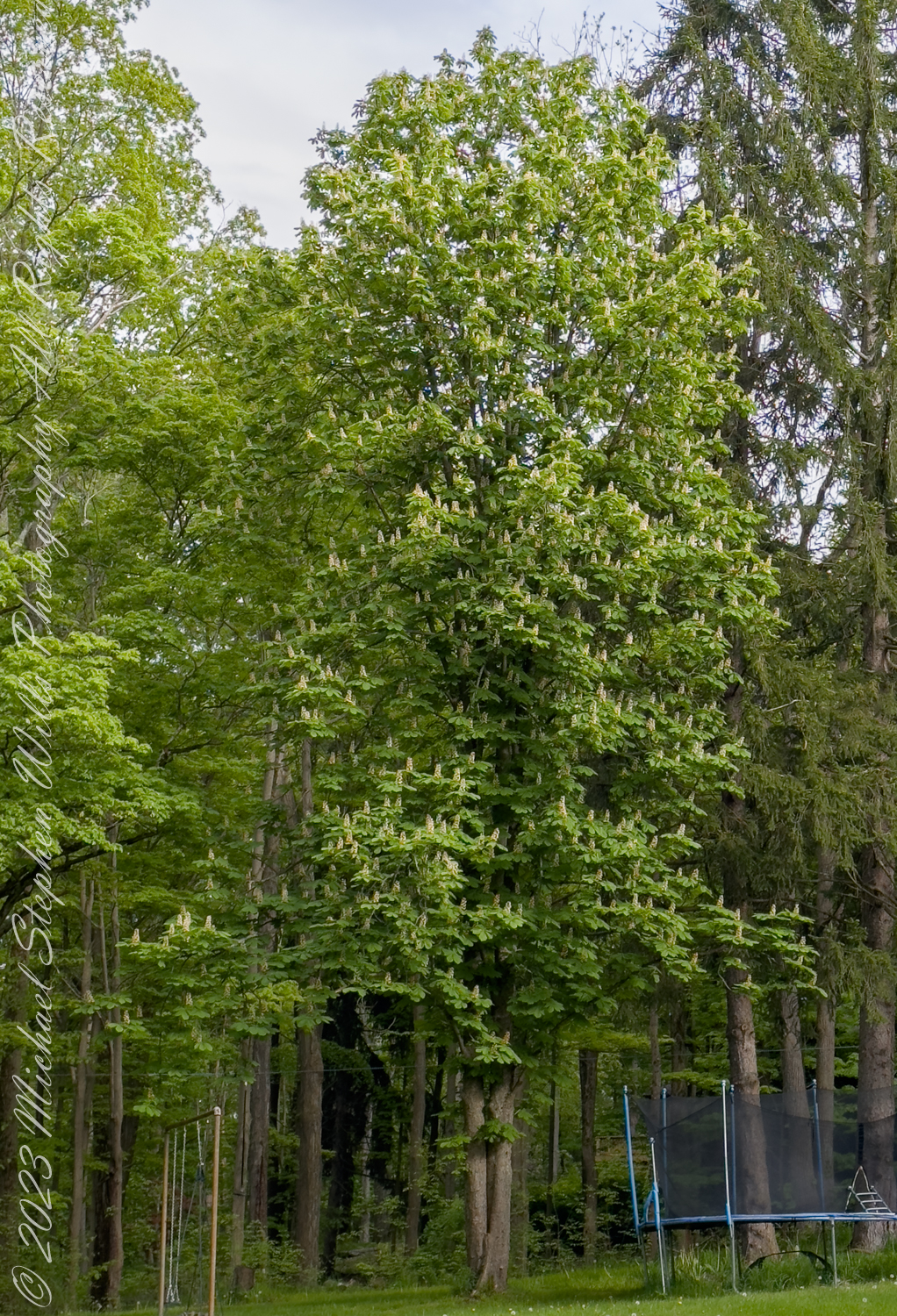
On a serene Mother’s Day in 2024, I found myself walking the slopes above Cayuga Lake, embraced by the spring warmth and the vibrant blossoms of the Horse Chestnut tree (Aesculus hippocastanum). This moment was a seasonal celebration and a deep dive into the botanical and cultural tapestry that this majestic tree weaves.

The Botanical Brilliance of the Horse Chestnut


The Horse Chestnut tree, with its robust stature and radiant floral displays, is a sight to behold, a study in botanical survival and adaptation. Originally native to a small area in the Pindus Mountains mixed forests and the Balkan mixed forests of Southeast Europe, this tree has traversed continents and histories to root itself into diverse landscapes, including the fertile grounds above Cayuga Lake.

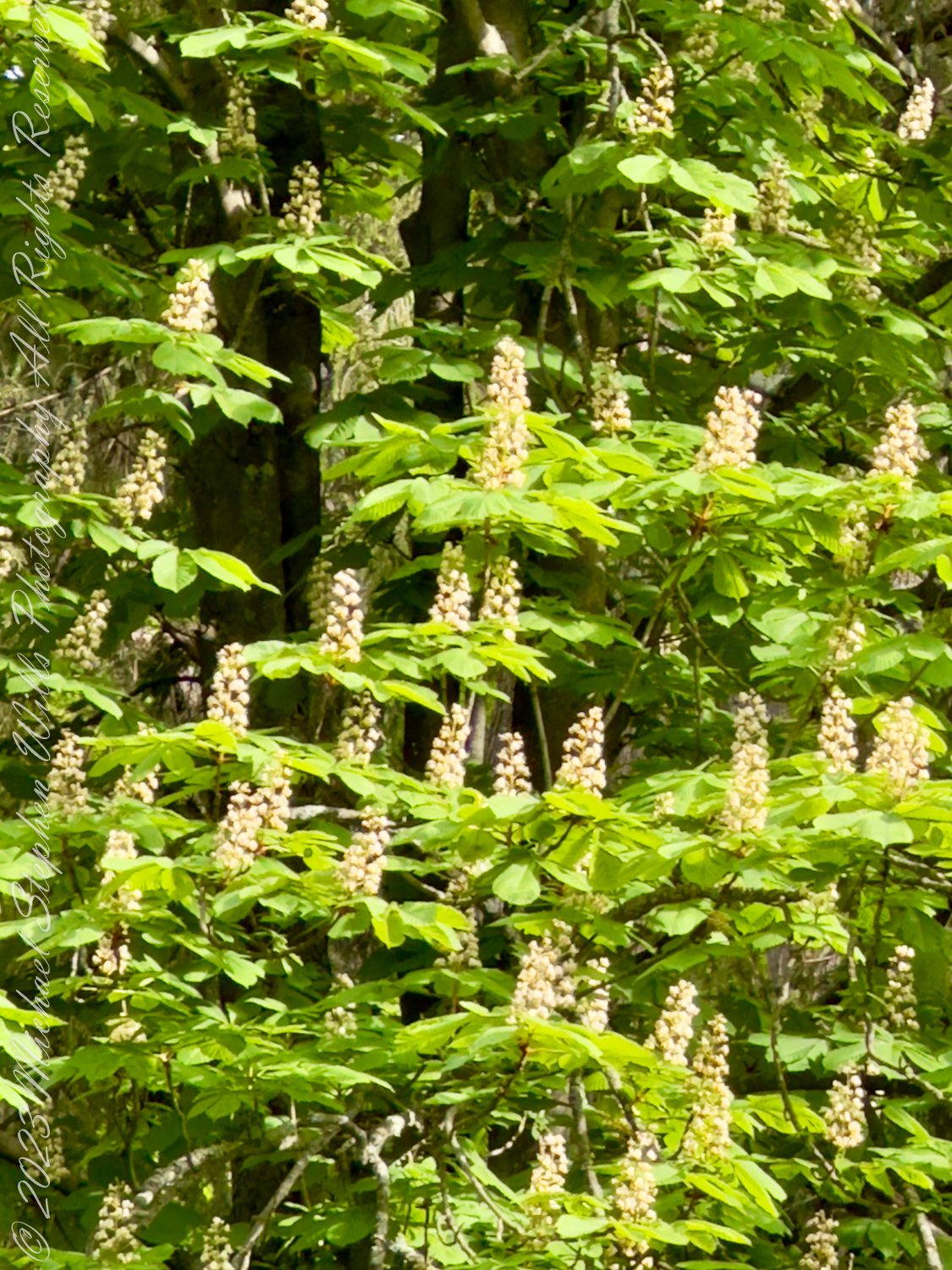
Each spring, the Horse Chestnut’s candle-like flower spikes, scientifically known as ‘panicles’, burst forth in a shower of whites and subtle pinks, each petal marked distinctively with a blotch of yellow or red. These blooms are structured to attract a variety of pollinators, playing a crucial role in the local ecological narrative by supporting biodiversity.

Historical Uses and Cultural Significance


The journey of the Horse Chestnut tree from its native lands to the Americas is a tale of practicality and reverence. Native Americans, prior to the arrival of European settlers, were keen observers of their environment but may not have had a direct historical use for the Horse Chestnut, as it was introduced later. However, the European settlers quickly discovered the tree’s multiple uses. The wood, known for its softness and workability, was used to make furniture and boxes, while the bark found its place in the tanning industry due to its rich tannin content.

Most notably, the seeds of the Horse Chestnut were ground and used as a form of laundry detergent and to treat various ailments, a testament to the tree’s utility in pioneering life. This aspect of the Horse Chestnut highlights a broader theme of how both Native Americans and European settlers utilized natural resources for survival and economic purposes, blending the lines between utility and conservation.

A Reflection on the Natural History and Ecology


As I strolled beneath the boughs heavy with spring’s bounty, the historical echoes of the Horse Chestnut’s uses merged with the present chorus of birds nesting in its branches. The tree’s role extends beyond human uses; it is a vital component of the local ecosystems. The dense canopy provides shelter and the flowers feed pollinators, which in turn support the broader food web.

Environmental factors, particularly those influenced by climate change, pose challenges to the Horse Chestnut. Issues such as leaf blotch and the conker tree moth threaten its health and longevity. Observing the Horse Chestnut’s current vibrancy, I am reminded of the resilience and adaptability that this species has demonstrated over centuries.

Conclusion: A Legacy Continues

As the day drew to a close and the sun cast long shadows over Cayuga Lake, the Horse Chestnut stood as a botanical specimen, a living monument to natural history and human ingenuity. The tree’s story is a powerful reminder of our intertwined destinies with the plant kingdom—how plants shape our cultures, sustain our environments, and continue to amaze with their ecological and aesthetic contributions.

Copyright 2024 Michael Stephen Wills All Rights Reserved

A Glimpse into Steamboat Landing, Ithaca, New York

Discover the enchanting beauty of Steamboat Landing in Ithaca, New York. From the quiet winter majesty to the vibrant warmth of spring, this historical waterfront is a testament to the city’s rich past and evolving present.


Historical Significance and Transformation


Steamboat Landing in Ithaca, New York, is steeped in historical significance, serving as a testament to the city’s rich past and its evolving present. At the dawn of the 20th century, it was a bustling hub where steamboats carried passengers and freight, linking Ithaca to an ever-growing nation. These vessels were vital for the development of commerce, aiding travelers as they embarked and disembarked on their journeys that continued by stagecoach or later, by train.

In 1790, this spot marked the beginnings of commerce in the area, with the establishment of Ithaca’s first store. Over the years, Steamboat Landing has transformed from a pivotal commerce point to a recreational area, housing Ithaca’s Farmers Market—a vibrant hub that mirrors the liveliness of its heyday.

The Evolving Landscape


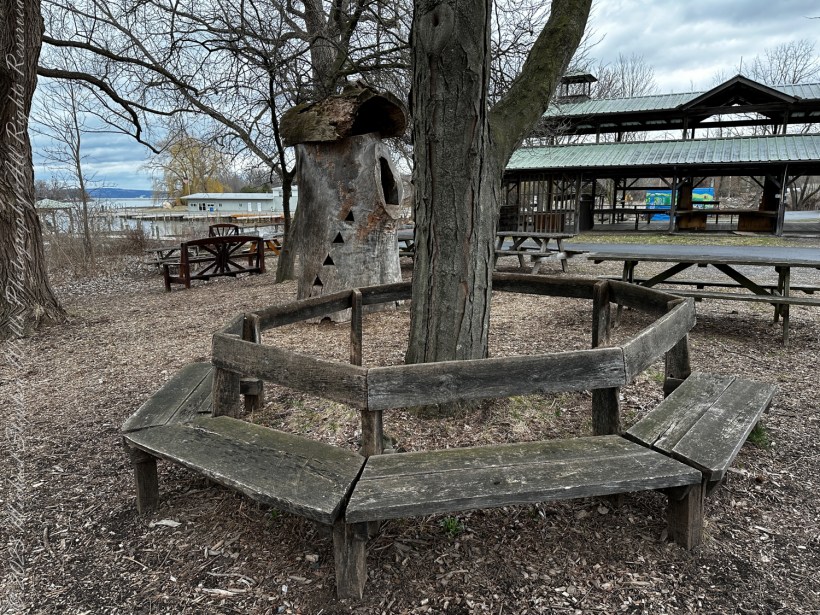
Today, Steamboat Landing is a place of gathering and serenity. My photographs showcase a tranquil setting moving through winter. In one scene, the rustic benches encircle a barren tree, standing as silent guardians of the land. It’s a still image, almost reminiscent of a painting, where the leafless trees stand vigil over the quiet benches.

A circular bench that has seen better days, a hollowed out tree trunk repurposed as a children’s playgound house, picnic benches and, in background, a portion of the Farmer’s Market pavilion, to the right is Johnson Boatyard, Cayuga Inlet and lake. This is the Steamboat Landing, historically the southern port on Cayuga Lake. Cayuga Waterfront Trail, Ithaca, Tompkins County, Finger Lakes Region, New York State.

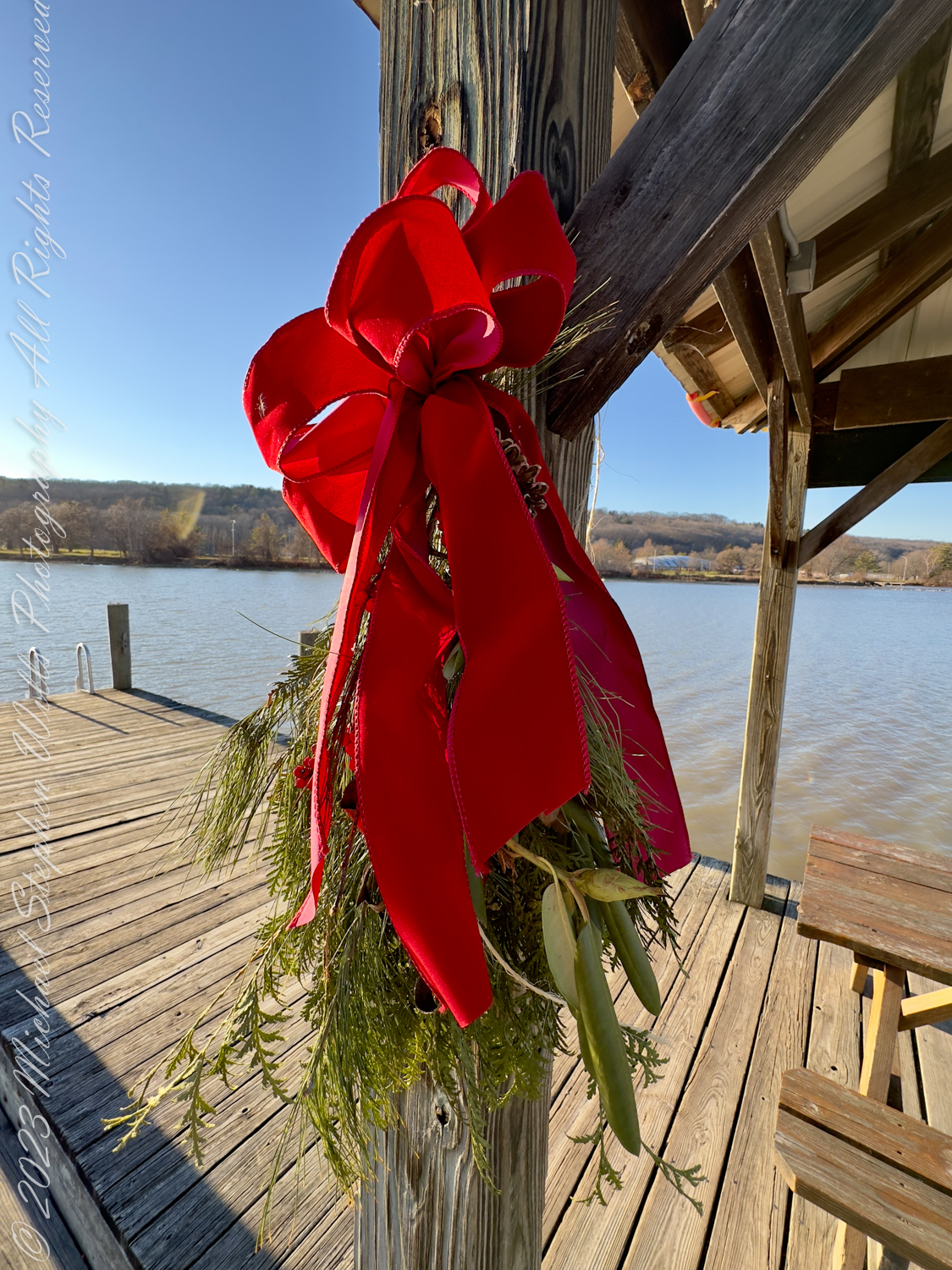
Switching seasons, we see the docks adorned with festive wreaths, injecting life and celebration into the scenery. The bright red ribbons stand out against the crisp blue of the water and the sky, suggesting a community that embraces tradition and the joy of the moment.

Connection with Nature and Community


The pictures depict how the landing is woven into the natural tapestry of the area. It is a place where one can sit and watch the placid waters of Cayuga Lake or stroll along the docks, feeling the crisp air against their skin. The images of the clear skies, the open waters, and the flight of birds in the distance are a subtle reminder of nature’s continuous presence.

Steamboad Landing on the Cayuga Waterfront Trail, Farmers Market, Ithaca, Finger Lakes Region, New York State

The waterfront trail exemplifies the community’s efforts to merge history with modernity, providing a space where people can connect with the environment and each other. The docks, once a stage for industrial exchange, now serve as a peaceful retreat, hinting at the deep-seated human desire for connection—not only to each other but also to the very essence of the environment we inhabit.

Seasonal Beauty and Reflection


The change in seasons at Steamboat Landing brings a unique beauty, which the photographs showcase poignantly. From the barren coldness of winter to the lush warmth of spring, each season imbues the landing with a distinct character. The winter images reveal a quiet majesty, with the bare branches and gray skies reflecting the introspective nature of the season. The springtime shots, however, burst with promise and vitality, as greenery begins to cloak the landscape and the water shimmers under the strengthening sun.

Enduring Legacy and Future Prospects


Steamboat Landing’s legacy as a historical transport hub has set the stage for its future as a cherished community locale. The images and historical texts paint a picture of a place that has embraced its past while looking forward to a vibrant and inclusive future. It is a locale that pays homage to its roots through the Farmers Market and other community events, ensuring that the spirit of the old steamboats continues to thrive in the hearts of Ithacans.

In conclusion, Steamboat Landing is a geographic location and a chronicle of Ithaca’s journey through time. Through its transformation, it has become a place where history breathes, nature speaks, and the community finds its heartbeat. It stands as a beacon of heritage, recreation, and beauty—a corner of the world where past and present dance together in harmony.

Copyright 2024 Michael Stephen Wills All Rights Reserved

Spring Renewal and the Buoys of Change

As you glimpse the strewn buoys at Cayuga’s shore, consider the tales they hold—witnesses to history, guiding vessels through New York’s storied waters. Delve into their journey from the Erie Canal’s birth to today’s spring awakening.

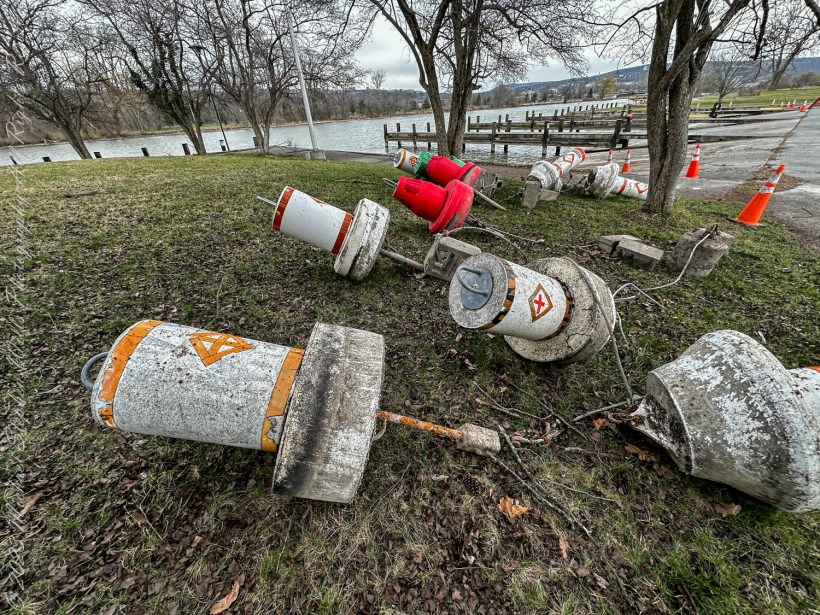
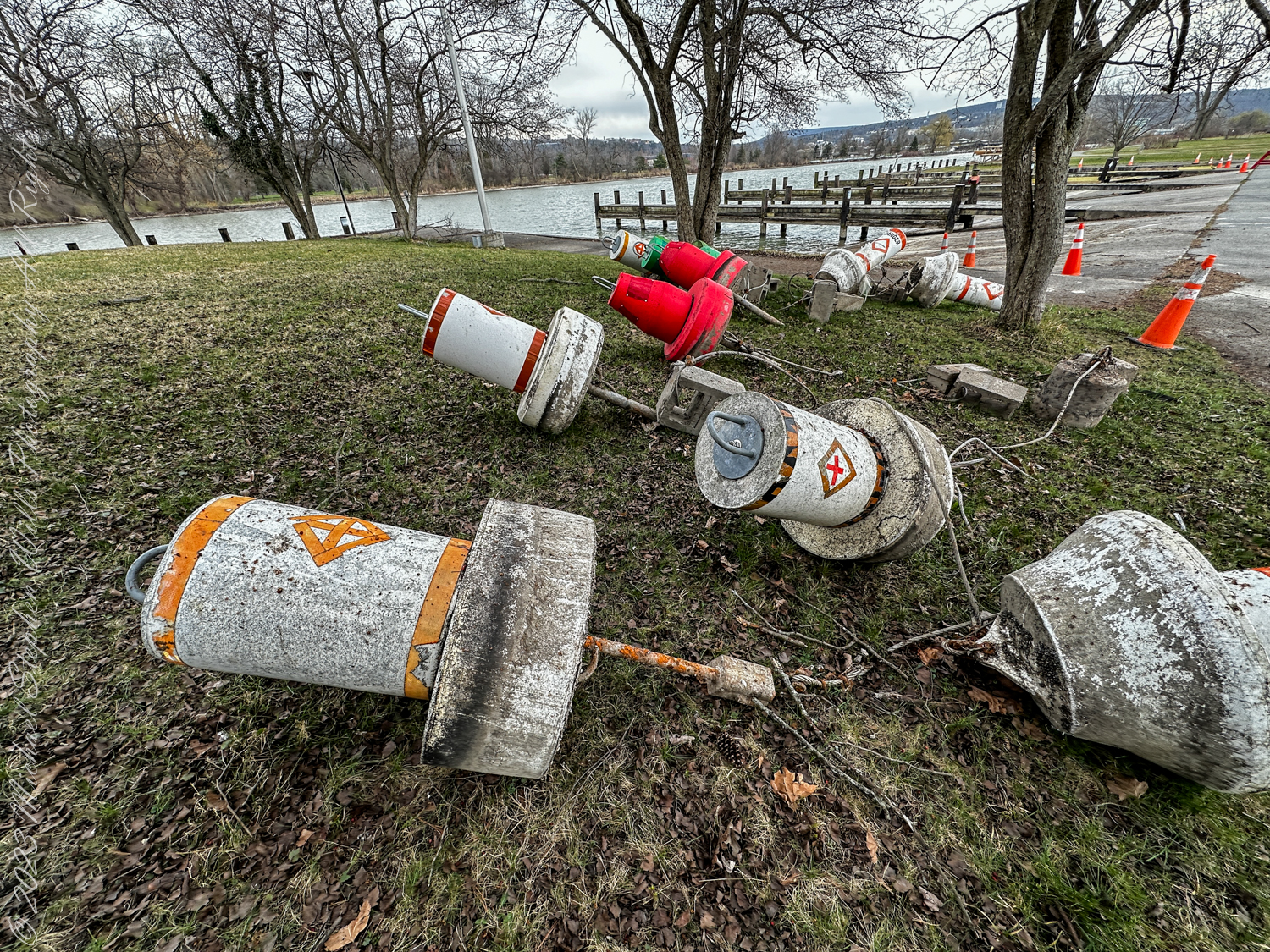
As the crisp air of spring begins to soften and the last remnants of winter recede, you might find yourself drawn to the outdoors, eager to participate in the age-old tradition of spring cleaning. It is a time of renewal, of clearing away the old to make way for the new. In Ithaca, this period of rejuvenation extends beyond the confines of cluttered homes and into the expansive natural landscape, as shown in the photograph before you.

Spring cleaning and repair at the Alan H. Treman Marine Boat Park. Ithaca, New York, Tompkins County

Tidying the Shores


There, on the shores of Cayuga Lake, the scene is a stark contrast to the neat rows of daffodils you admired yesterday. Instead, navigation buoys, those steadfast guides of the waterways, lie upended and scattered – casualties of the winter’s harshness or perhaps the diligent work of park employees preparing for the upcoming boating season. These buoys, usually afloat, marking safe passage for vessels, are now being tended to, maintained, and readied. It is an essential process, akin to the annual spring clean, ensuring the safety and smooth sailing in the months to come.

Guardians of the Waterways


Let’s delve into the history these buoys are part of. You, as a curious observer, are witnessing a fragment of a narrative that stretches back over a century. These navigational buoys are descendants of the earliest markers that adorned the inland waters of New York State and the Erie Canal, of which Cayuga Lake is an integral part.

The Erie Canal and Cayuga’s Connection


The Erie Canal, an engineering marvel of the 19th century, opened in 1825, transforming New York and the entire Great Lakes region. It was the superhighway of its time, connecting the Atlantic Ocean to the Great Lakes, and thereby shaping the course of economic and social history in the United States. Cayuga Lake, connected to this system via the Cayuga-Seneca Canal, was part of this vast network of navigable waters.

Navigation Buoys: Beacons of Progress


As commerce flourished, so too did the need for reliable navigation. The buoys, then as now, served as critical signposts, ensuring that vessels could traverse these waterways safely. Imagine the countless boats that relied on these markers – from the large freighters carrying goods to the smaller craft bearing passengers – each buoy a sentinel ensuring their safe passage.

Modern Sentinels


Today, the navigation buoys on Cayuga Lake and other inland waters continue this legacy. They are the modern sentinels of the deep, equipped with the latest technology to guide the way. Just as the Erie Canal once heralded a new era of travel and trade, these buoys now symbolize the enduring importance of safe and efficient water transportation.

The Future of Inland Navigation


As you reflect upon the photograph, consider the ongoing narrative of these buoys and the waterways they mark. In a world increasingly concerned with sustainable modes of transportation, the historical importance of these channels resurfaces. The waterways that once fueled the expansion of a nation may once again play a pivotal role, this time in the quest for greener alternatives to overland routes.

Conclusion: A Cycle of Renewal


The upturned buoys in Cass Park, ready for their spring cleaning, are a microcosm of the cyclical nature of life and progress. They remind you that renewal is not just about beauty; it is also about preserving the functionality and safety that allow society to move forward. Just as the spring cleaning in your home ushers in a new season of clarity and freshness, the maintenance of these navigational aids renews the commitment to a legacy of safe passage – a promise made by the generations that have sailed these waters since the days of the Erie Canal.

Near and Far — the last day of 2023

Discover a heartfelt story woven from the sands of Cocoa Beach on New Year’s Eve, where shells and stars intertwine, inviting you to ponder the delicate dance of near and far.

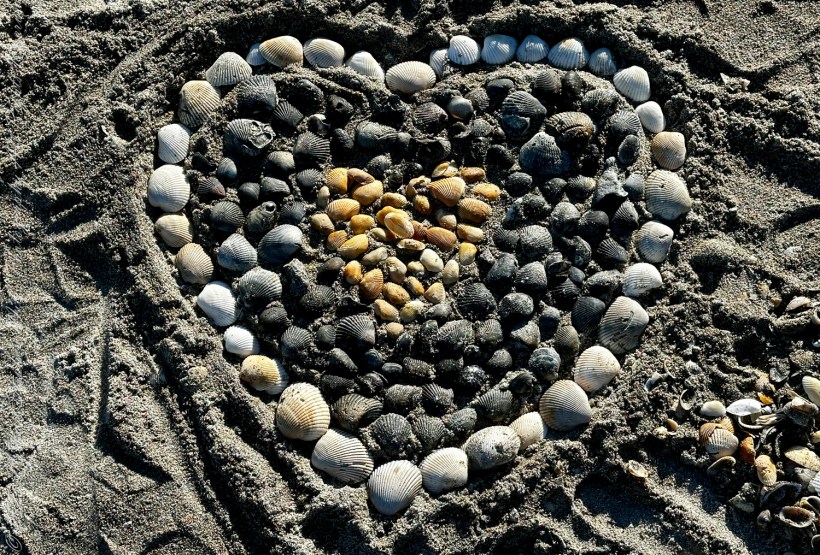
On the last day of 2023, as the sun began its descent on Cocoa Beach, I found myself tracing the contours of a heart laid out in Ark Clam shells. Each shell, with its ridges and grooves, felt like a chronicle of the ocean’s whispers. This artful mosaic, set against the granular canvas of the beach, was a testament to the playful hands of time and tide. I marveled at the intention behind it, the human desire to create and connect, to leave a mark, however fleeting, on the vastness of nature.

I found this beach heart while walking on Cocoa Beach on the last day of 2023. It is composed of the various shade of Ark Shells. Ark clam is the common name for a family of small to large-sized saltwater clams or marine bivalve molluscs in the family Arcidae. These are the most common shells found there.

The shells were cool and firm under my fingertips, each one a unique piece of the year’s mosaic. Some were a pristine white, while others bore the earthy tones of the sea’s floor. I pondered the journeys they had taken, tumbling in the ocean’s embrace before resting here, on the threshold of a new year. The act of arranging them into a symbol of love felt like an ode to the past year’s collective joys and sorrows, an offering to the unknown adventures of the year to come.

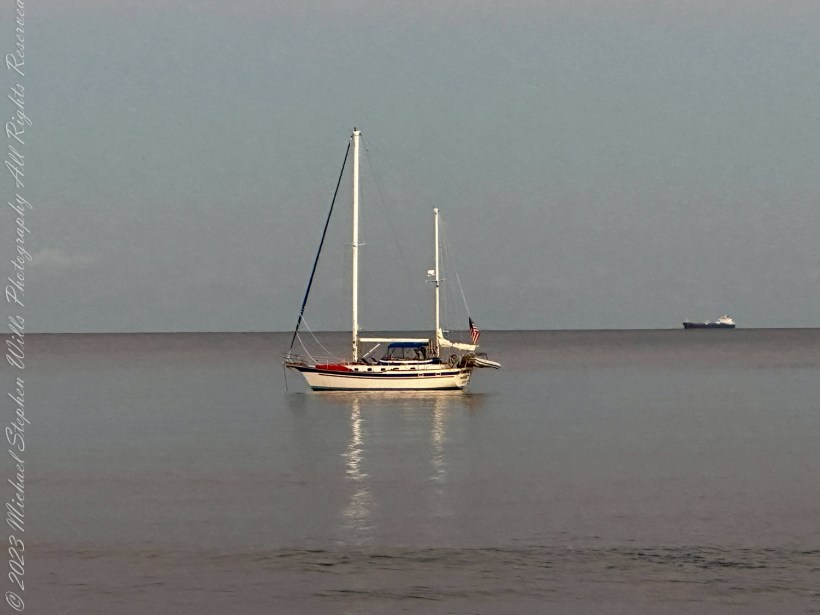
As the day waned, my gaze shifted from the shells to where the water met the sky. There, a sailboat floated serenely, a silent sentinel between two worlds. It was a picture of solitude, a single vessel on the brink of the infinite sea, beneath the expanding dome of the heavens. On the horizon, the silhouette of a cargo ship whispered stories of distant lands and the ceaseless pulse of commerce and exploration that defined our modern era.

On New Years Eve 2023 this sailboad moored off North 1st Street, Cocoa Beach, Brevard County, Space Coast, Florida.

The beach was quiet, the sounds of the day giving way to the evening’s peaceful lull. The sailboat’s stillness was a stark contrast to the perpetual motion of the cargo ship, each representing different paths on the water’s vast canvas. One was an emblem of leisure and simplicity, the other of industry and complexity. Both near and far, they were the day’s quiet companions, their stories part of the fabric of the Space Coast.

As twilight deepened into night, the stars began to emerge, one by one, until the sky was a tapestry of celestial wonder. With my iPhone 14 Pro Max, I captured this cosmic dance, the constellation of stars that had been the silent witnesses to Earth’s revolutions. The constellations, those mythic shapes that have long sparked human imagination, seemed to hold the secrets of what had been and what was to come. They were distant suns, their light traveling unfathomable distances to reach me, to reach us, as we stood on the brink of a new beginning.

Orion

I couldn’t help but feel a connection to the stars, a kinship with their ancient light. They reminded me that we, too, are part of this grand cosmic design, our lives stitched into the universe’s expansive quilt. On the beach, with the shells at my feet and the stars overhead, I was caught in the delicate balance of near and far—the tangible reality of the shells I could touch and the distant glow of starlight from ages past.

Orion, the belt and sword in center.

As the year ticked closer to its end, I stood between the intimate artistry of the shell heart and the boundless majesty of the star-filled sky, a lone observer of time’s relentless march. The Space Coast, with its unique blend of earthly beauty and human aspiration, was the perfect stage for this reflection. Here, on Cocoa Beach, I embraced the last moments of 2023, ready to welcome the new year, with its promise of continuance and change, its constant dance of near and far.

Copyright 2024 Michael Stephen Wills All Rights Reserved

Reflections on the Inlet: The Convergence of Realities

In the shadow of McGraw Tower, Natan grapples with surreal encounters and mystical occurrences, questioning the nature of reality itself. Open my blog to uncover the mysteries of McGraw Tower and Natan’s journey into the heart of the extraordinary.

Continue reading “Reflections on the Inlet: The Convergence of Realities”

Newgrange X

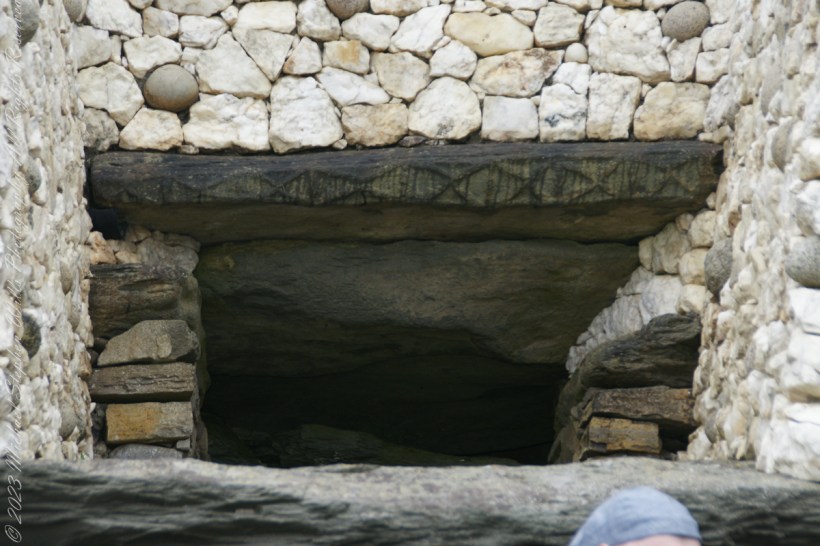
Step into the ancient world of Neolithic monuments and discover the astounding astronomical knowledge of our ancestors. Explore the Newgrange Lightbox in Ireland and similar marvels across Europe, revealing a deep connection between ancient peoples and the cosmos. Join me in unveiling these architectural wonders.

Continue reading “Newgrange X”