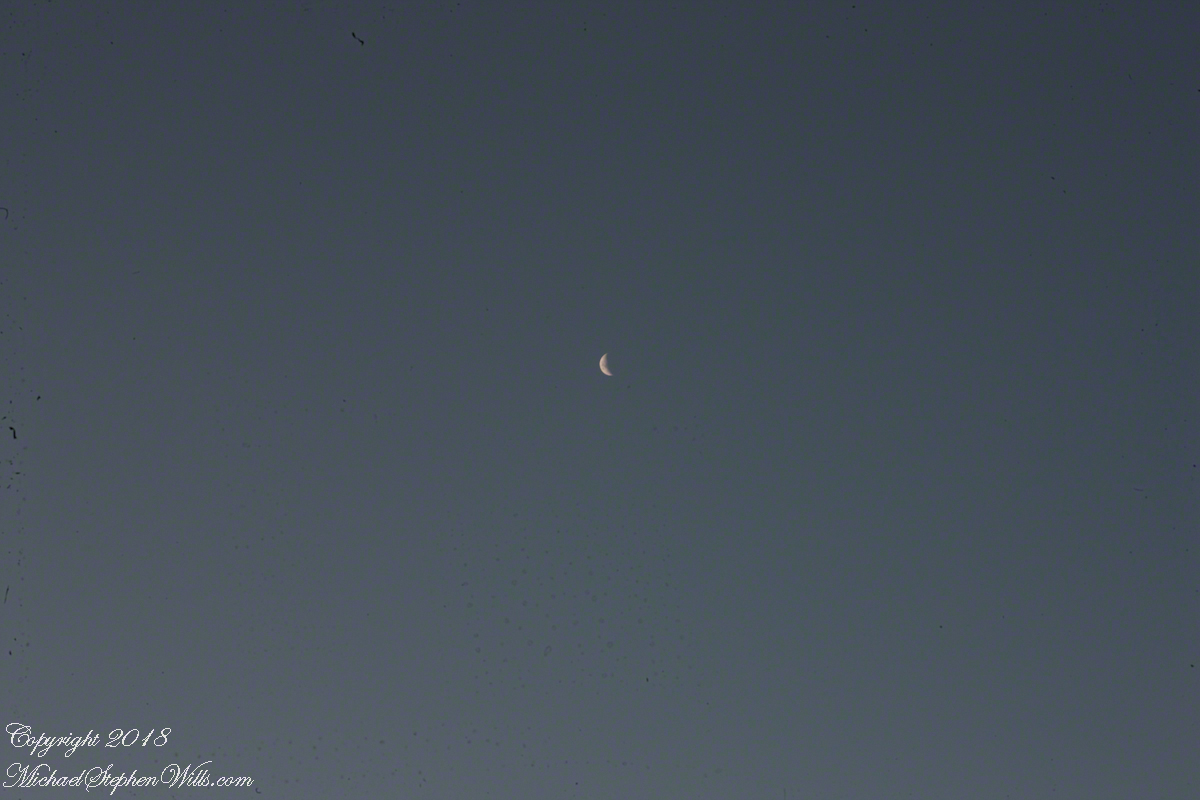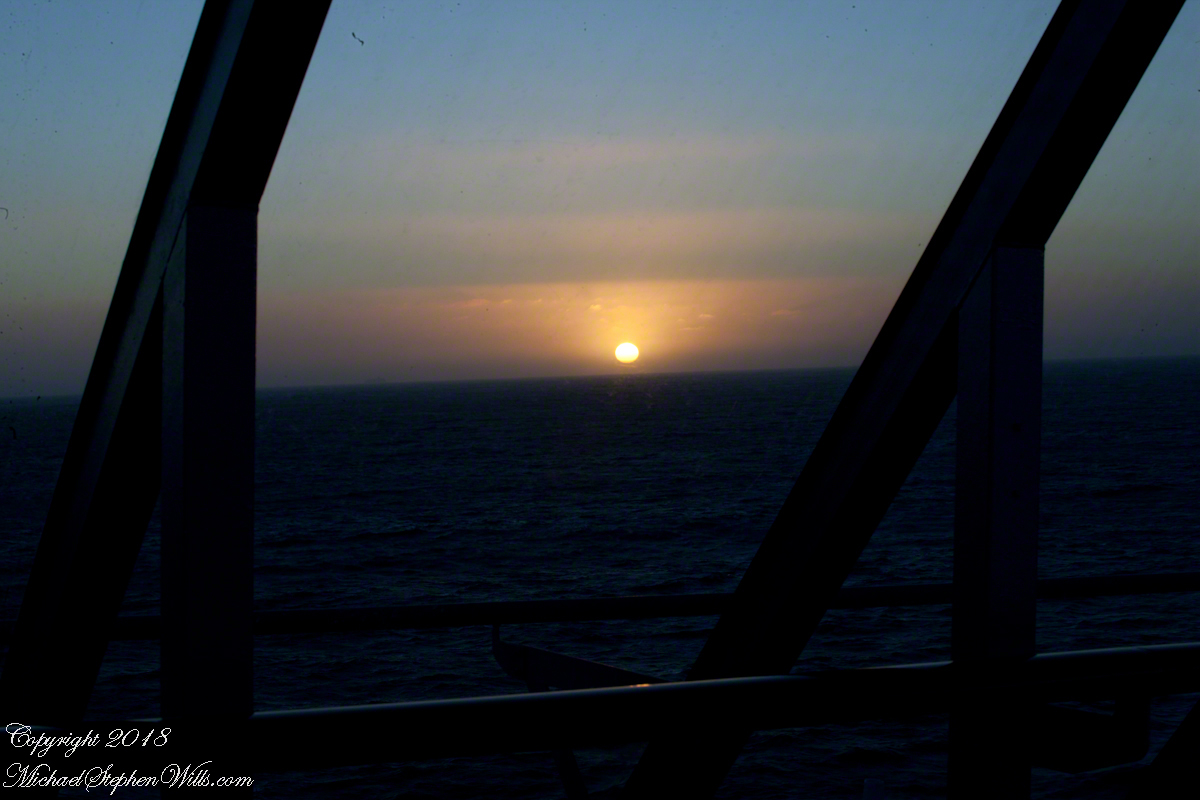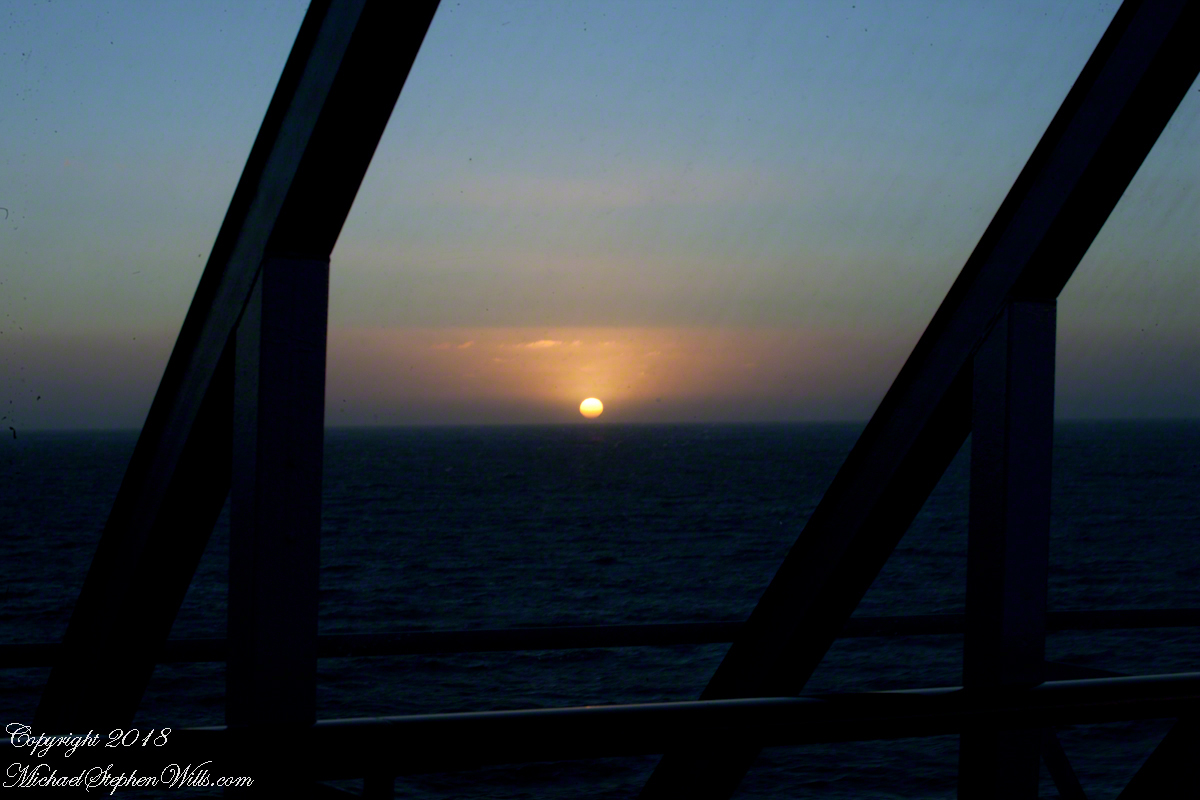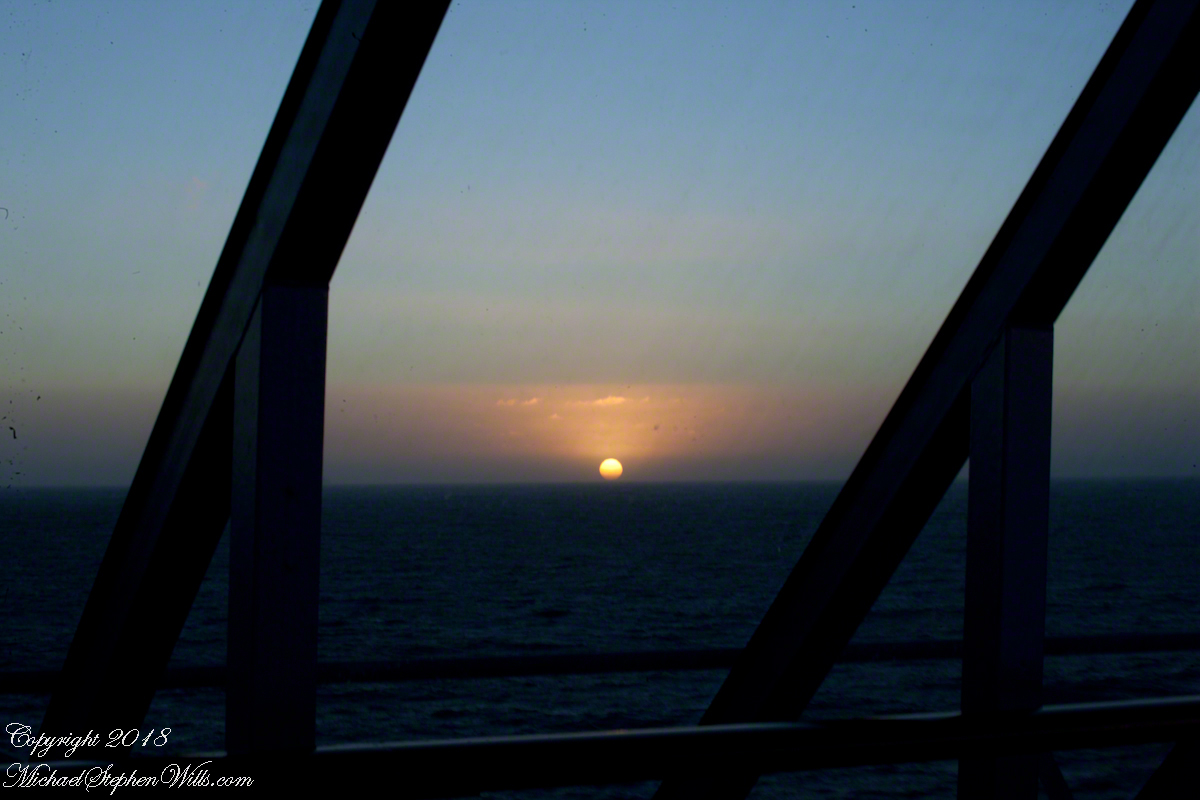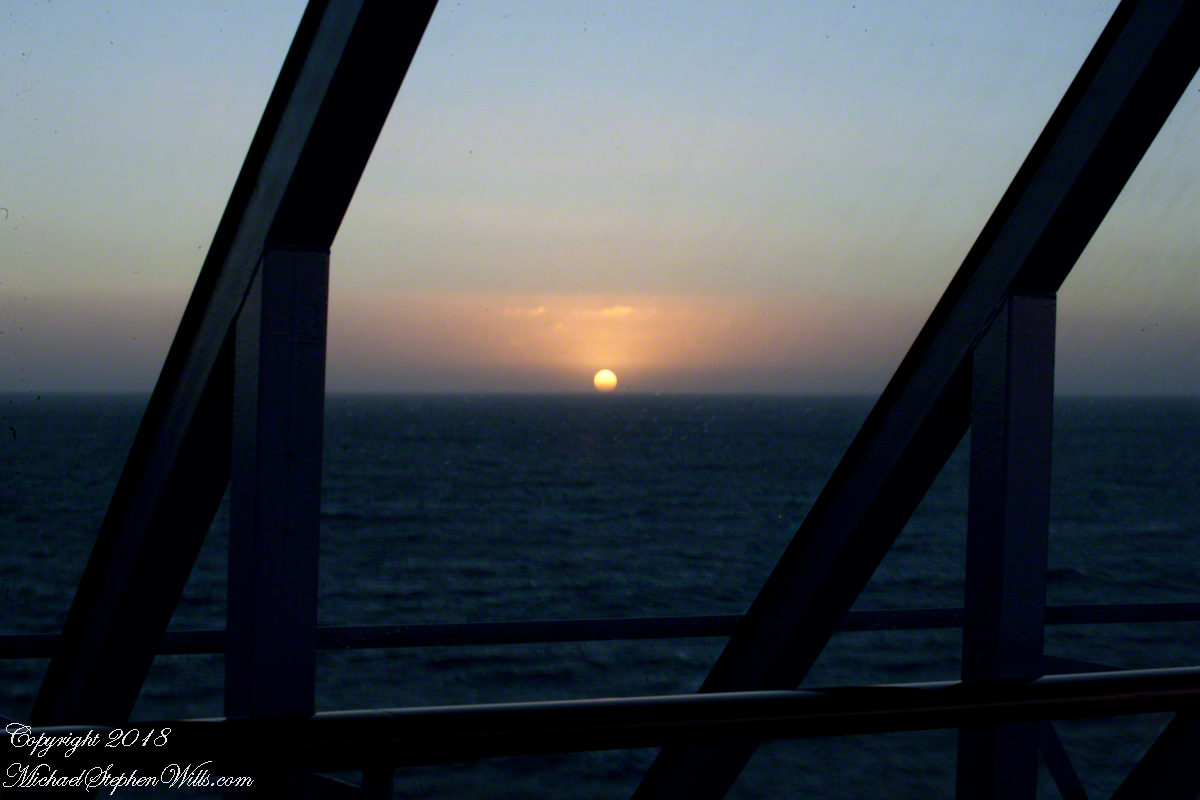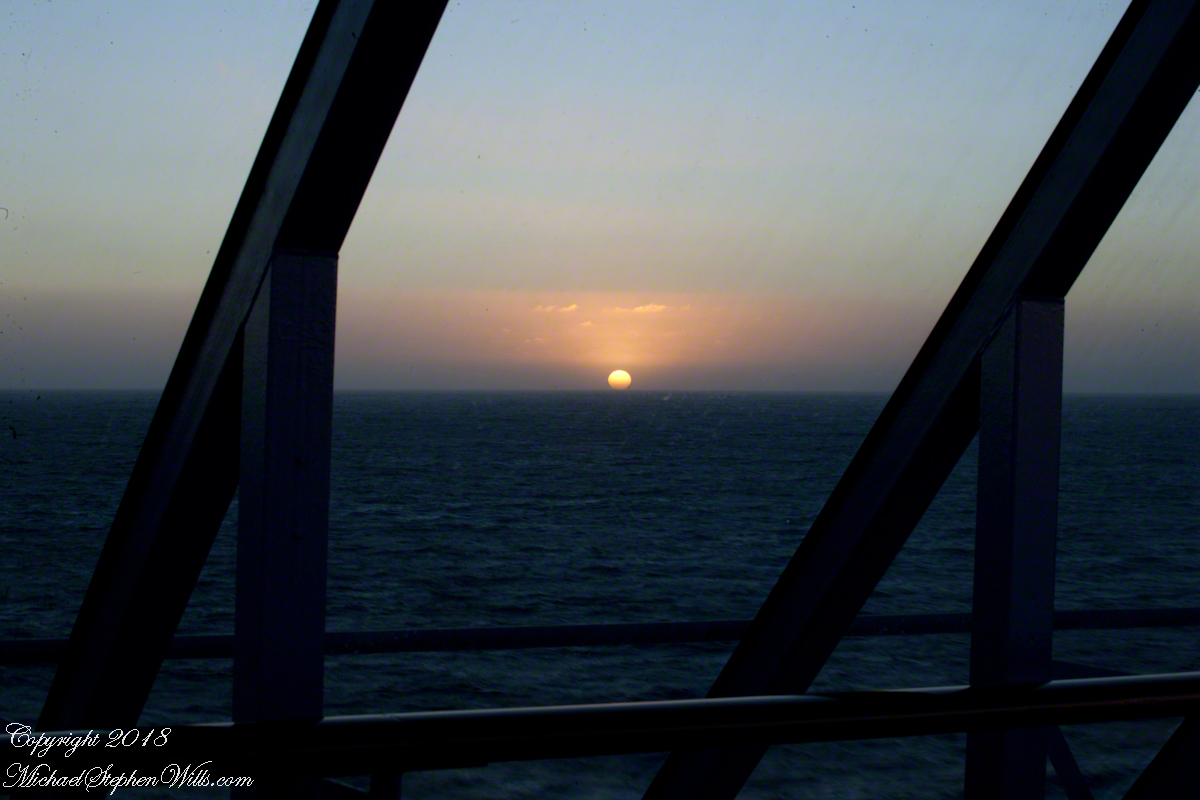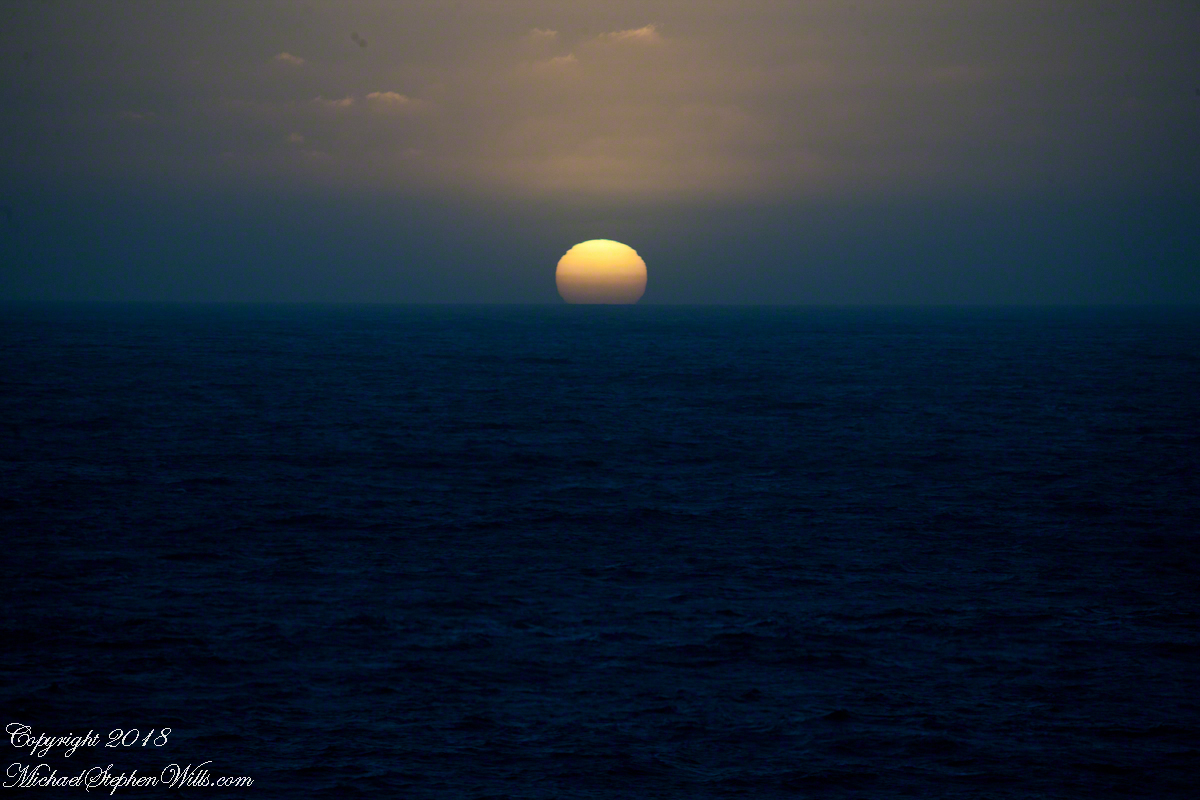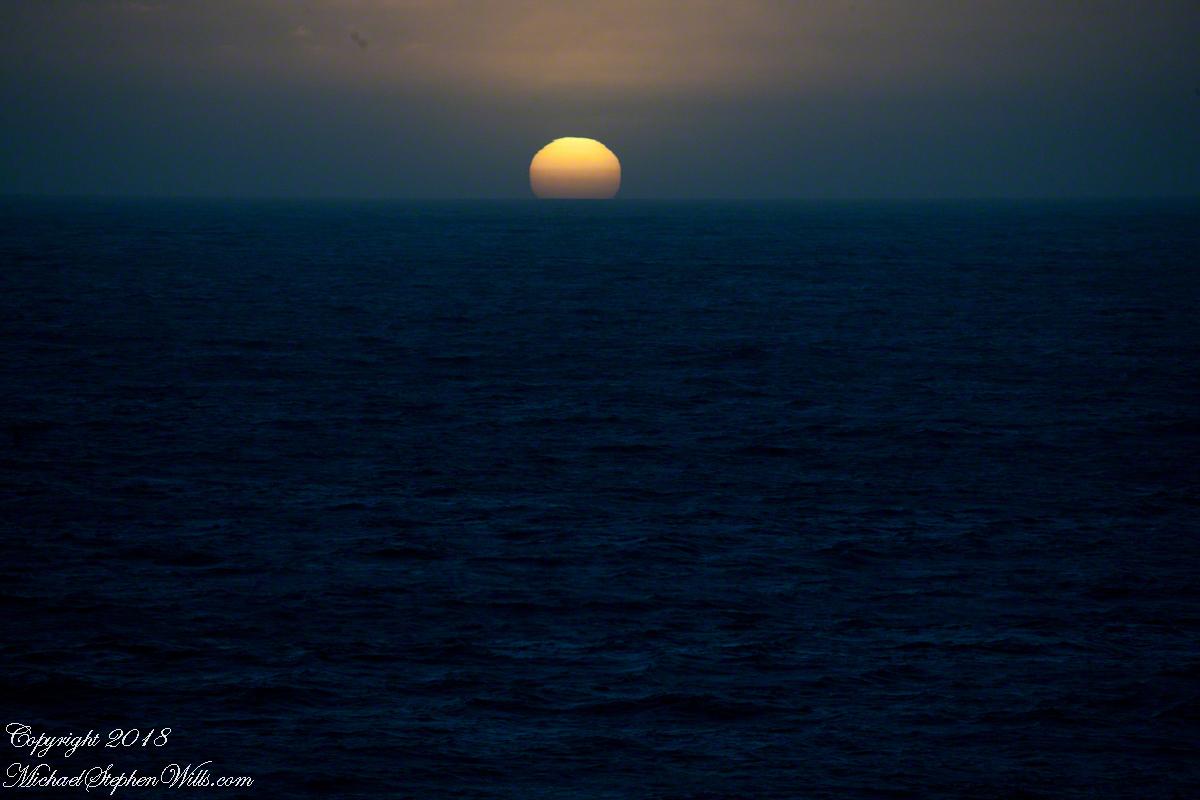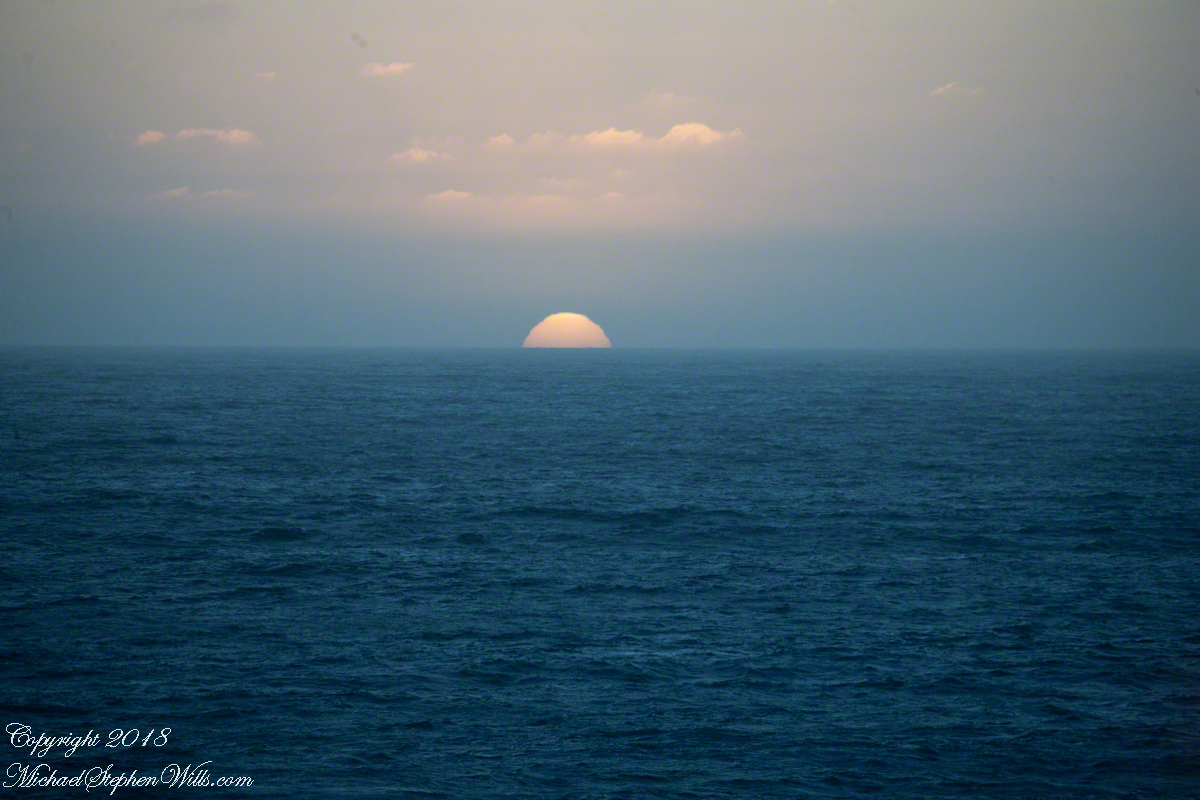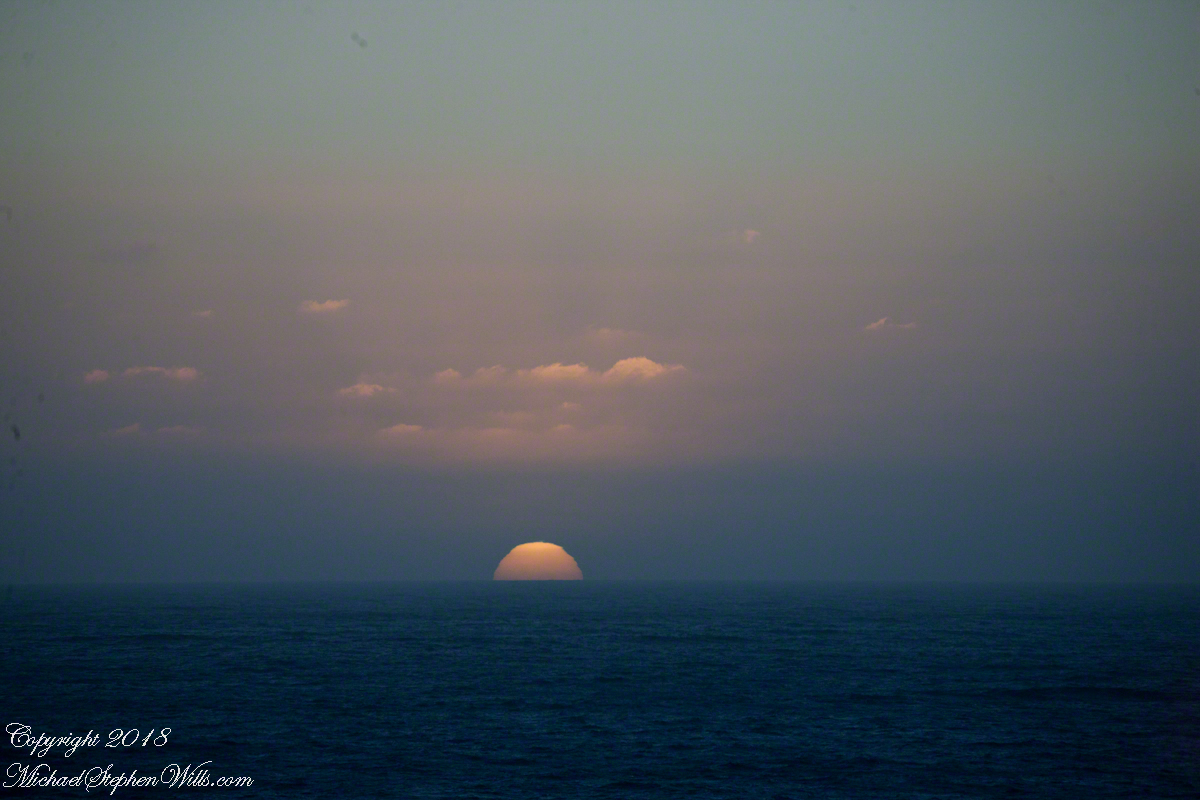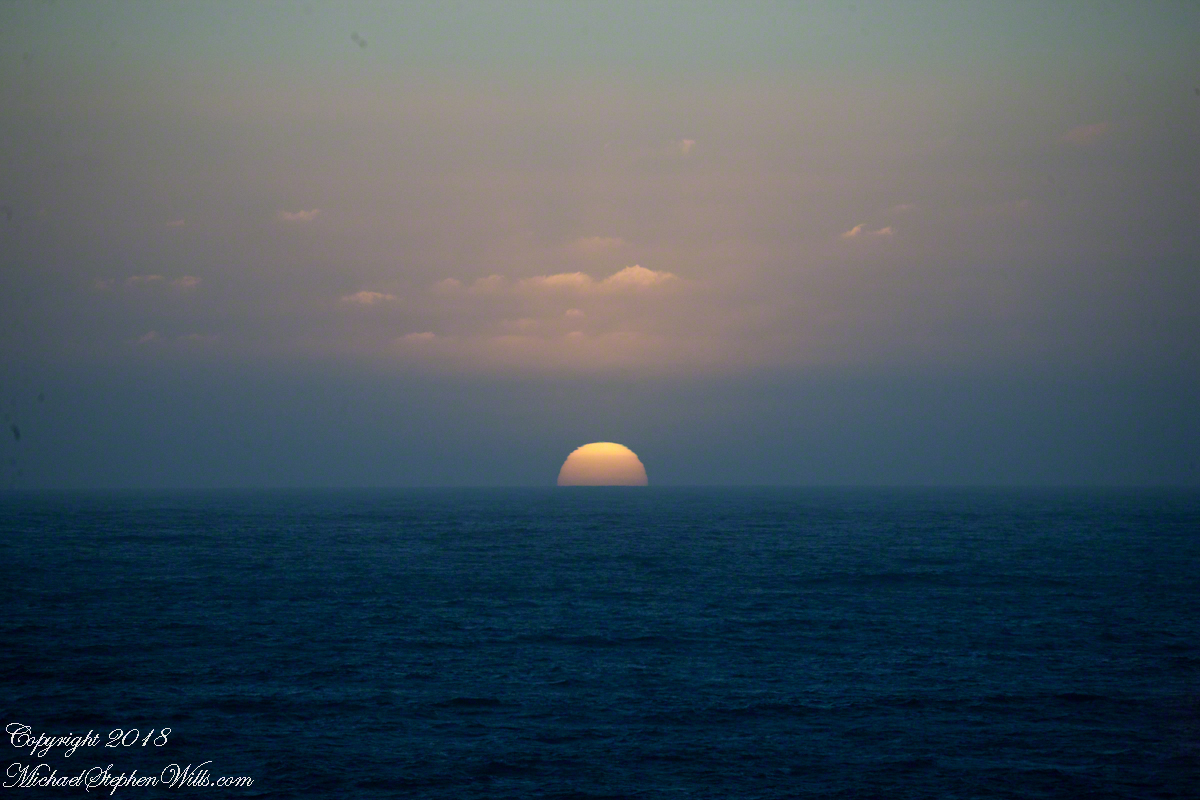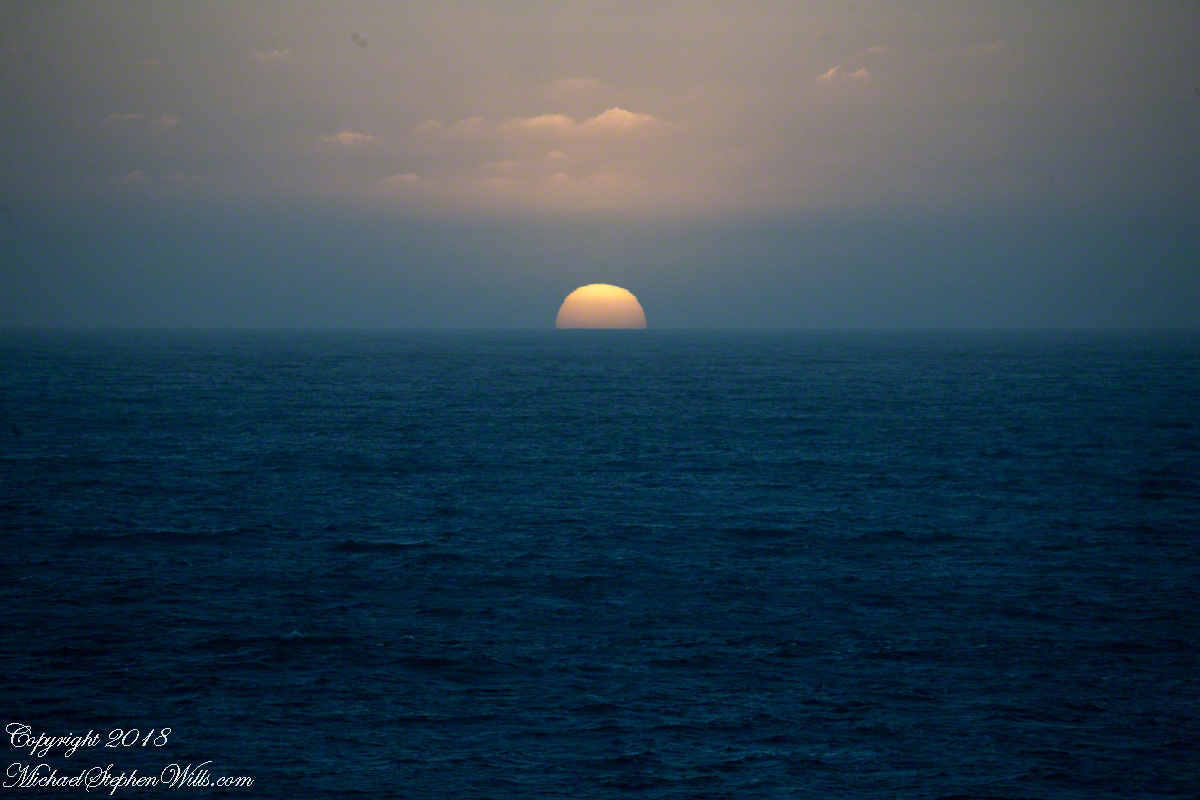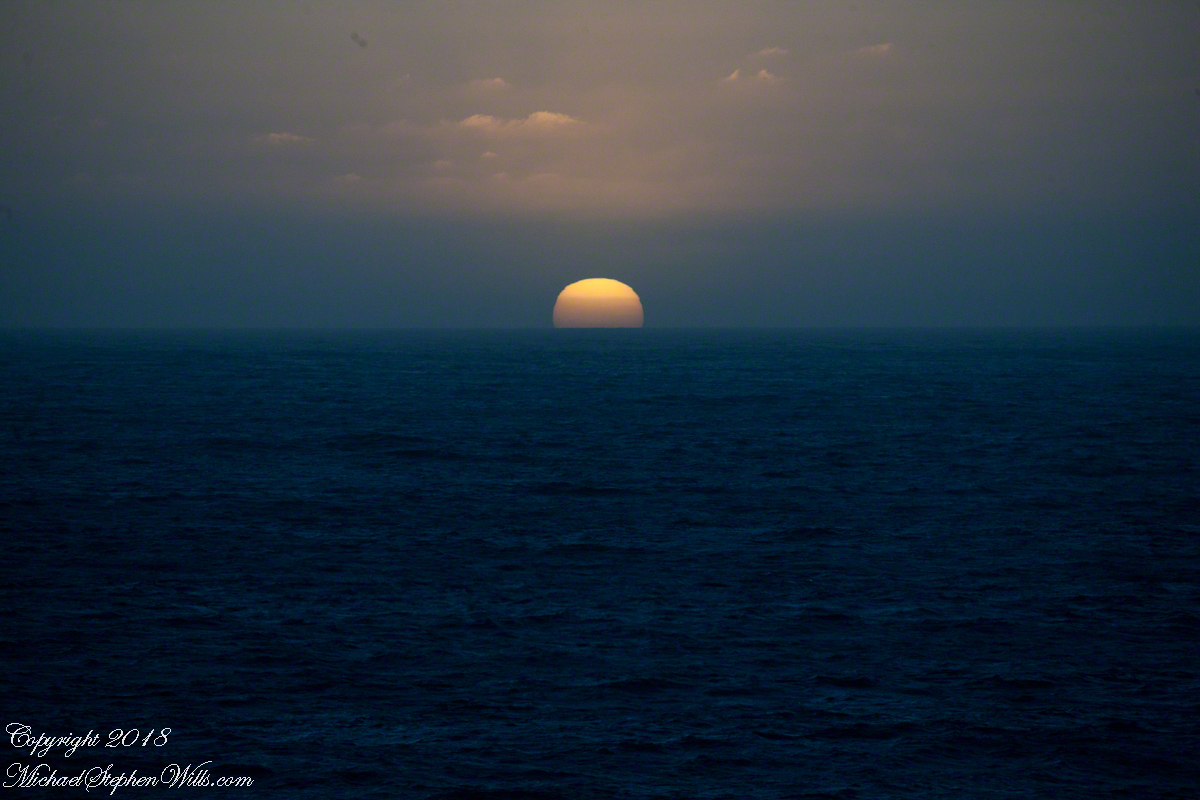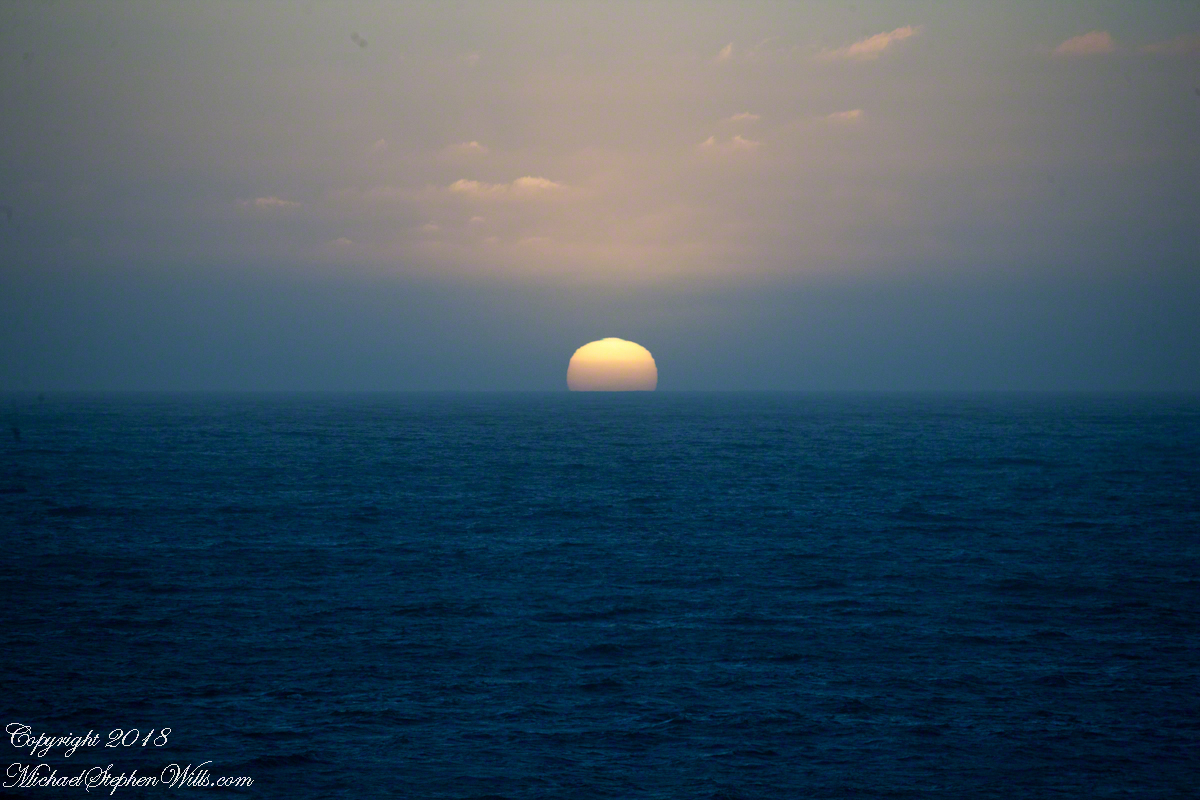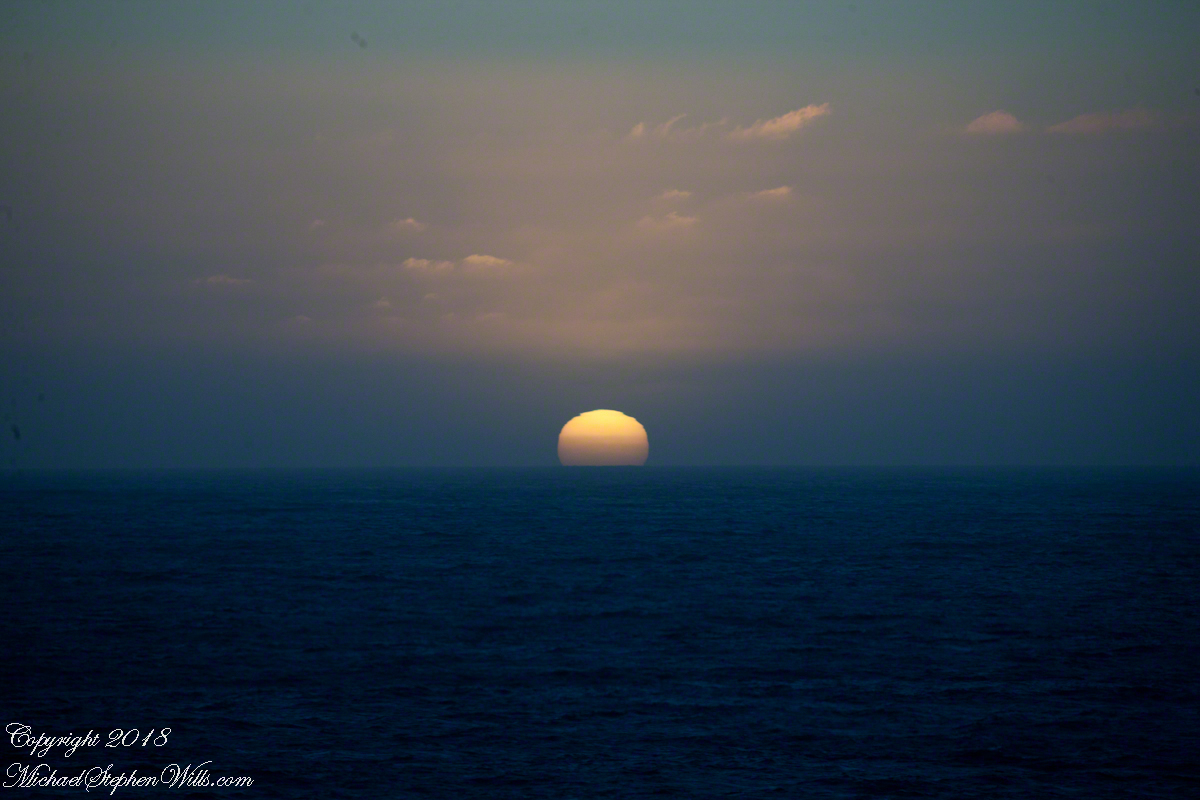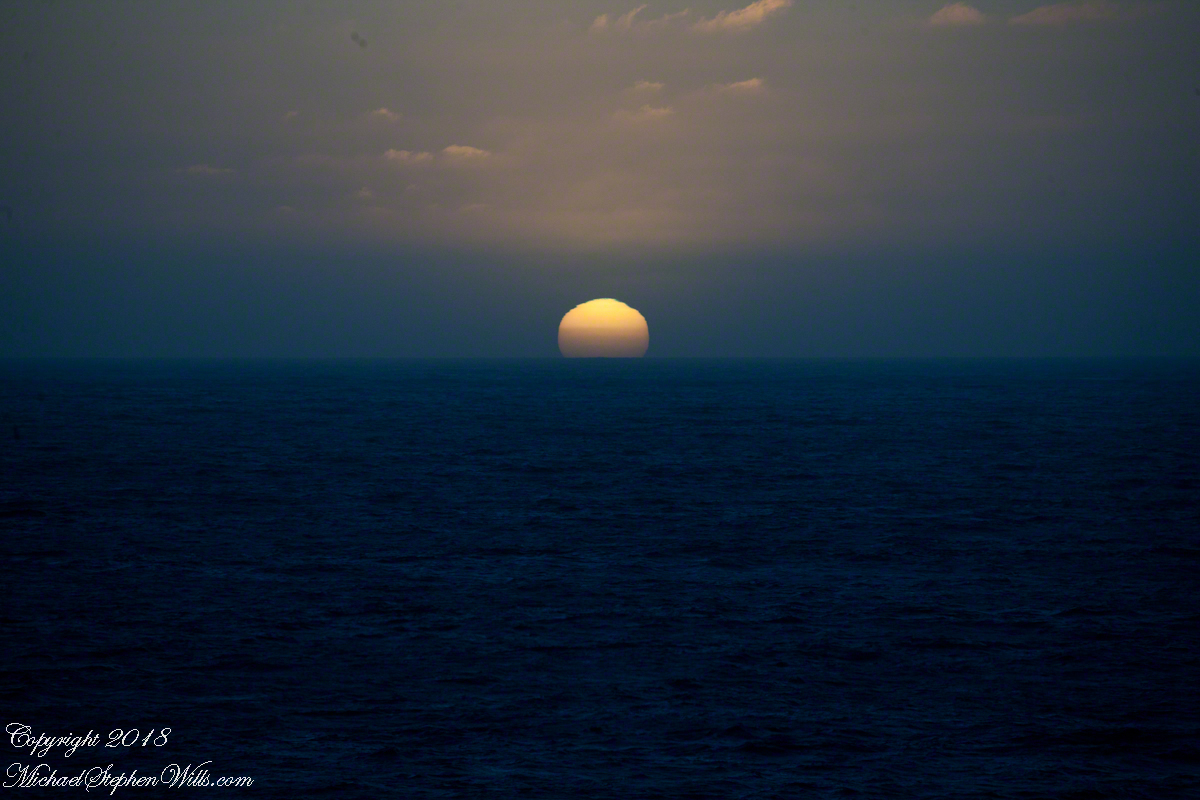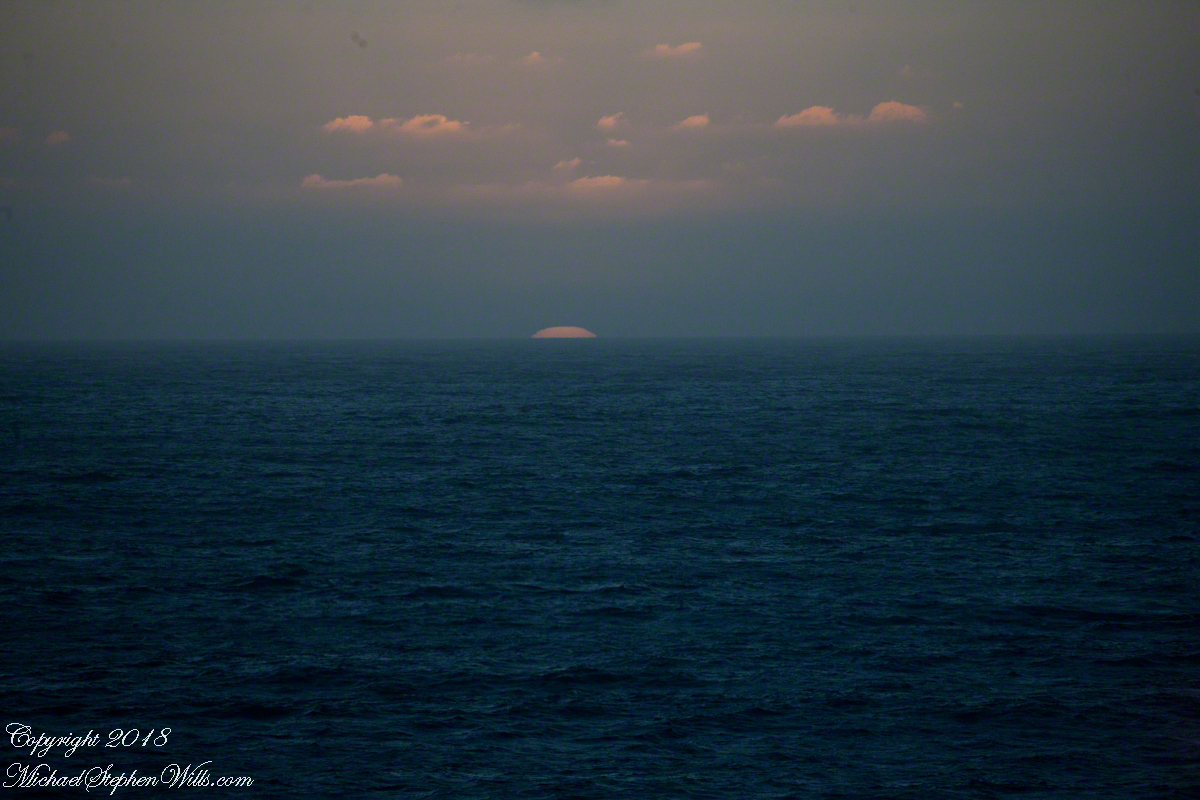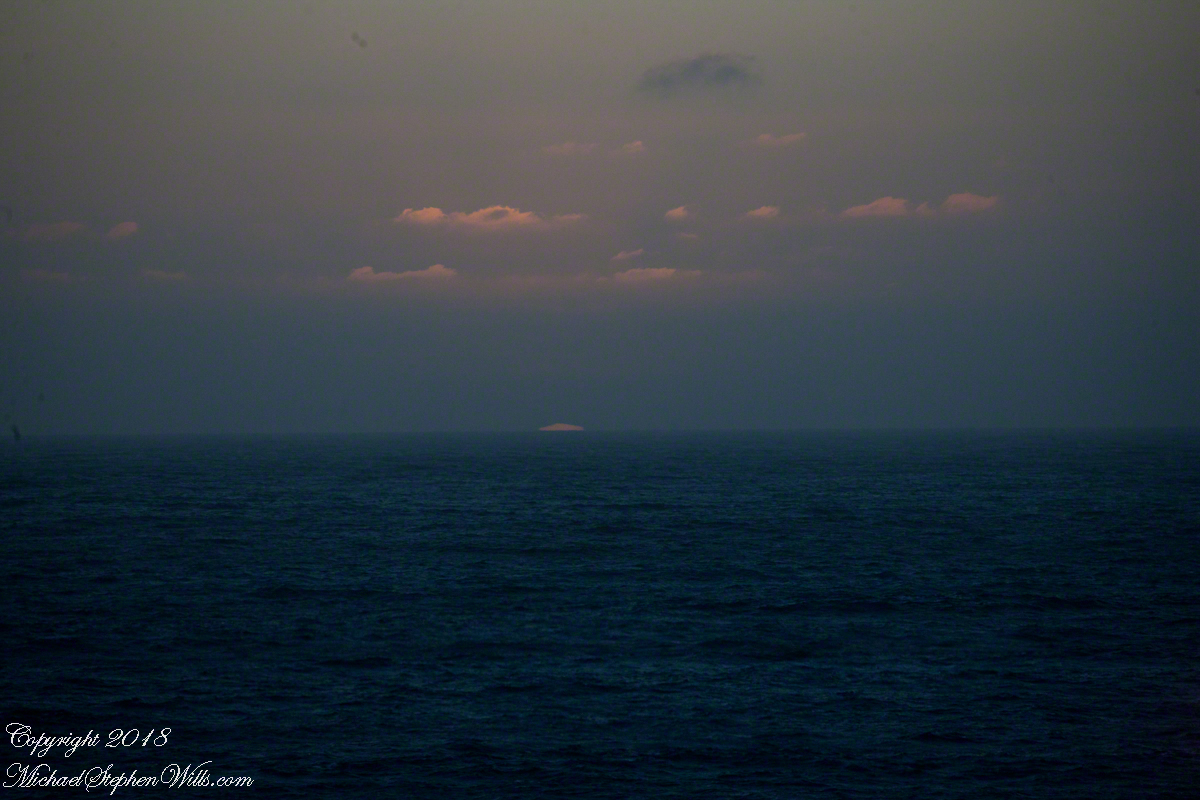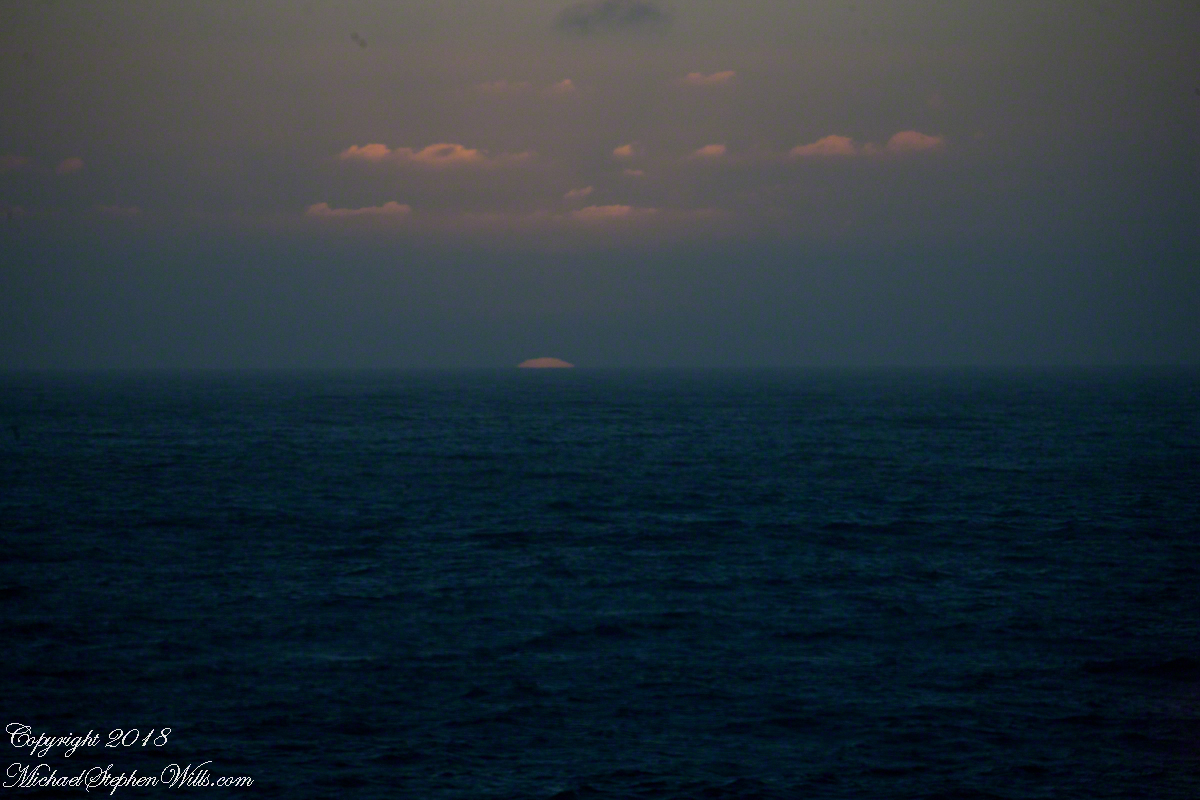
Valparaiso Departure III “The Sunset”

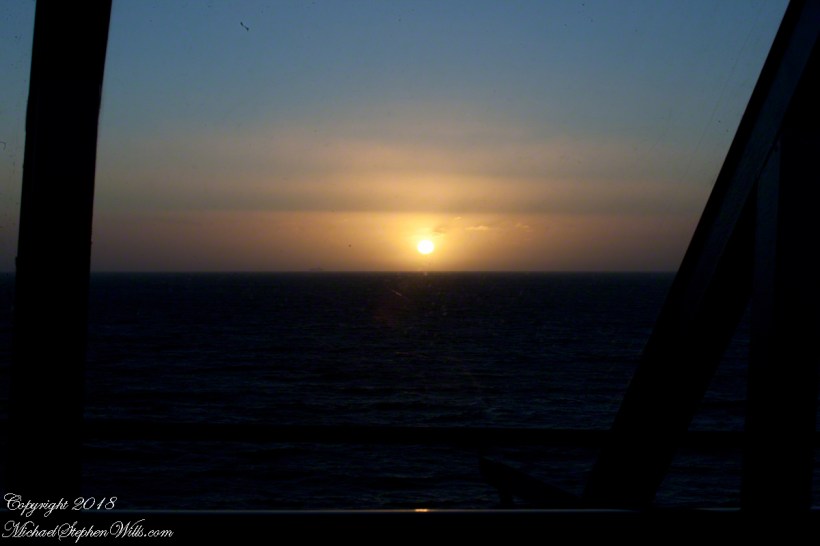
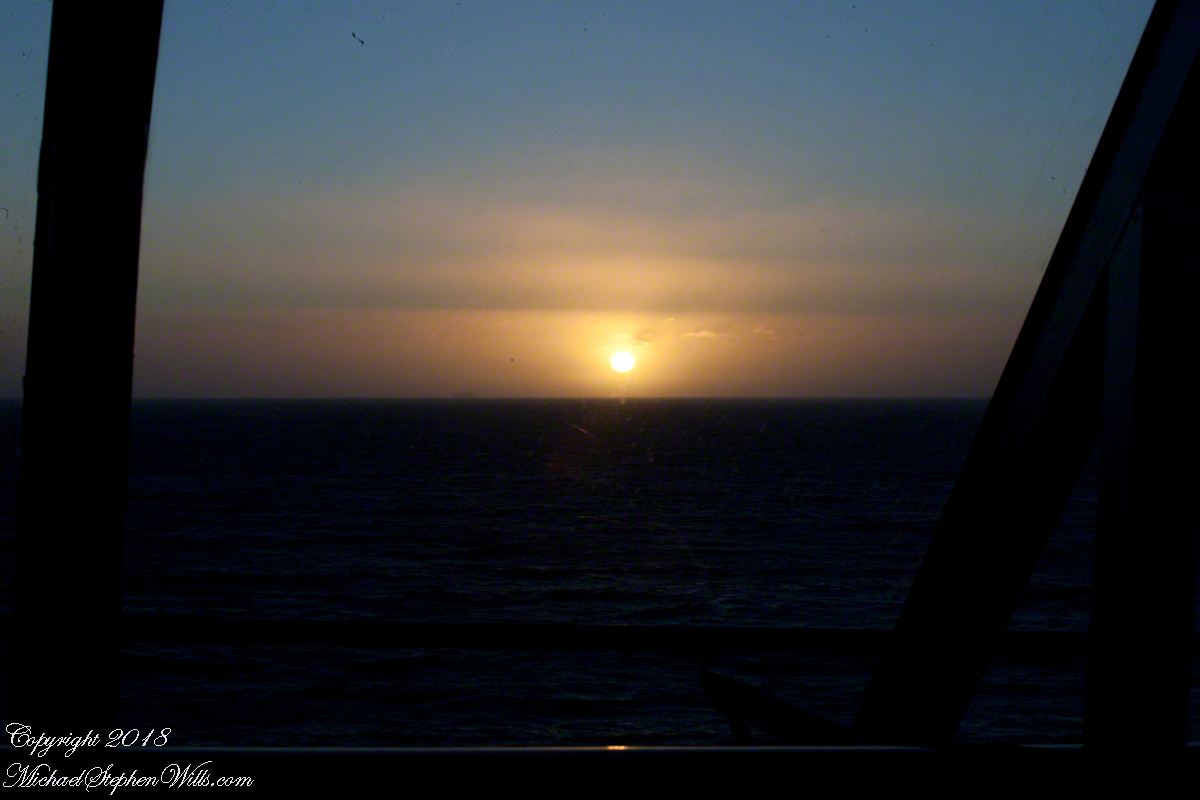
The Sun’s Progress

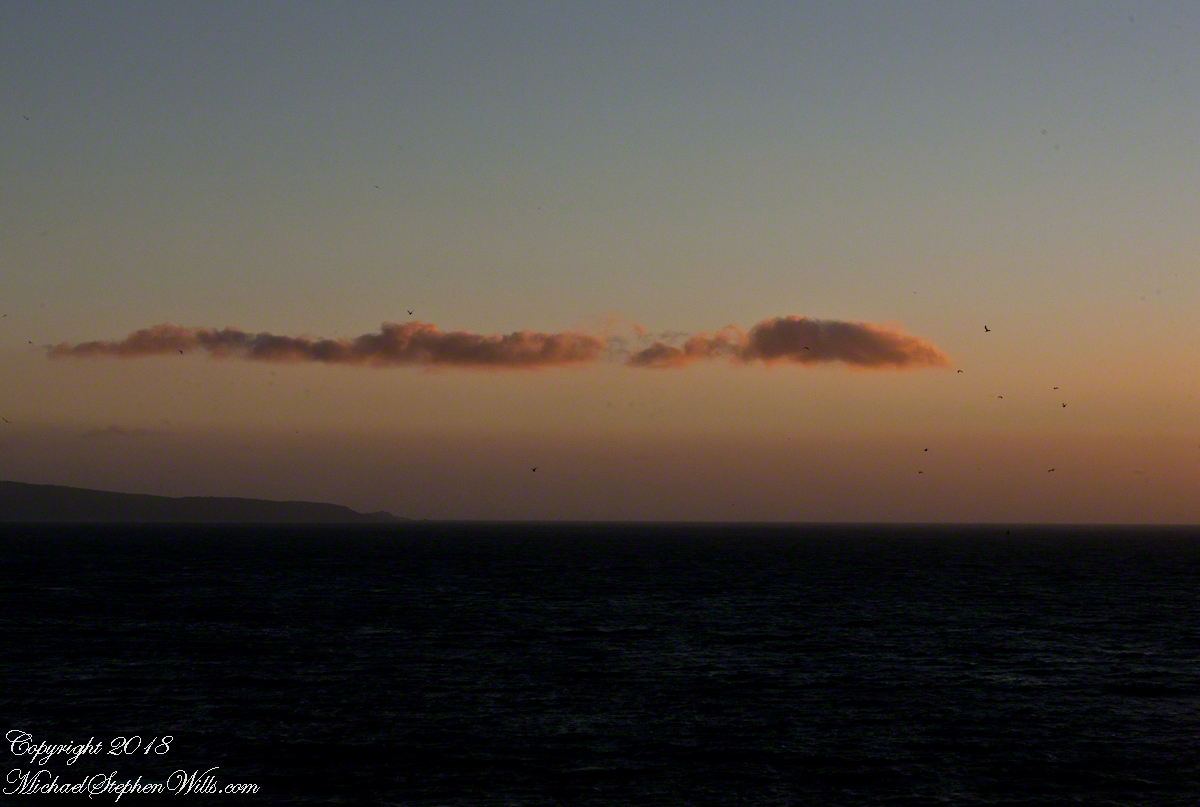
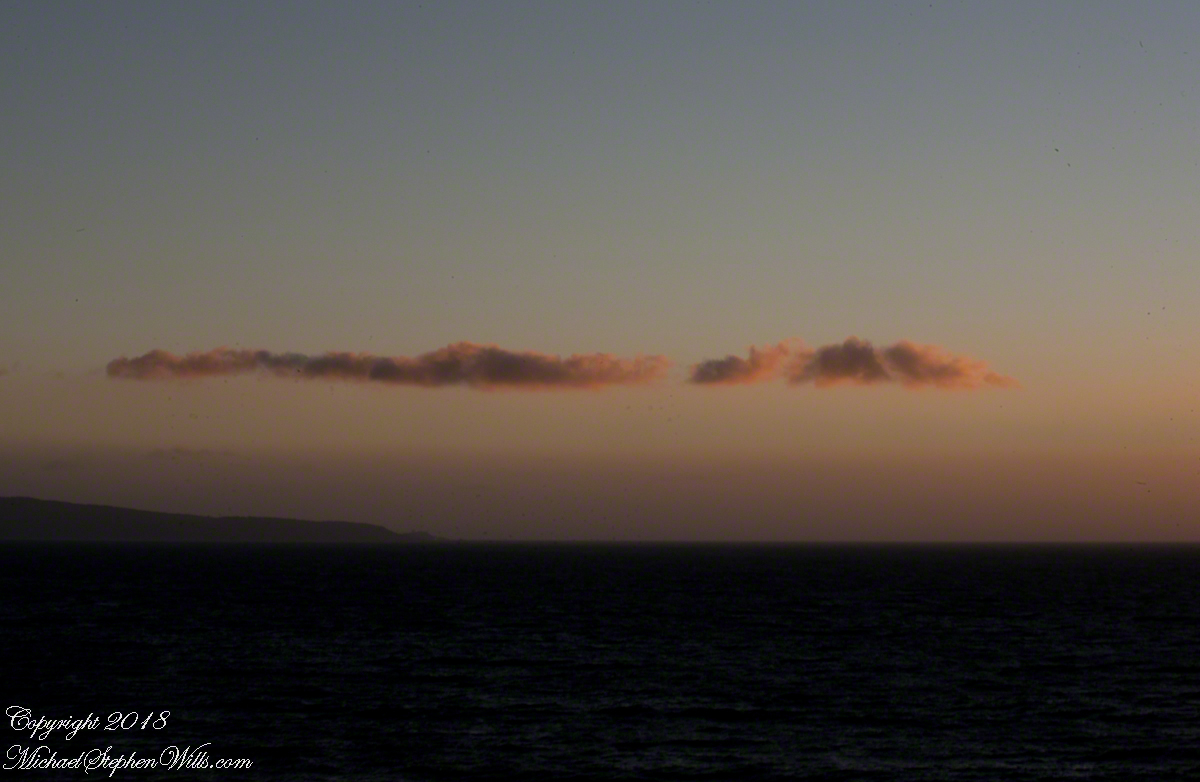
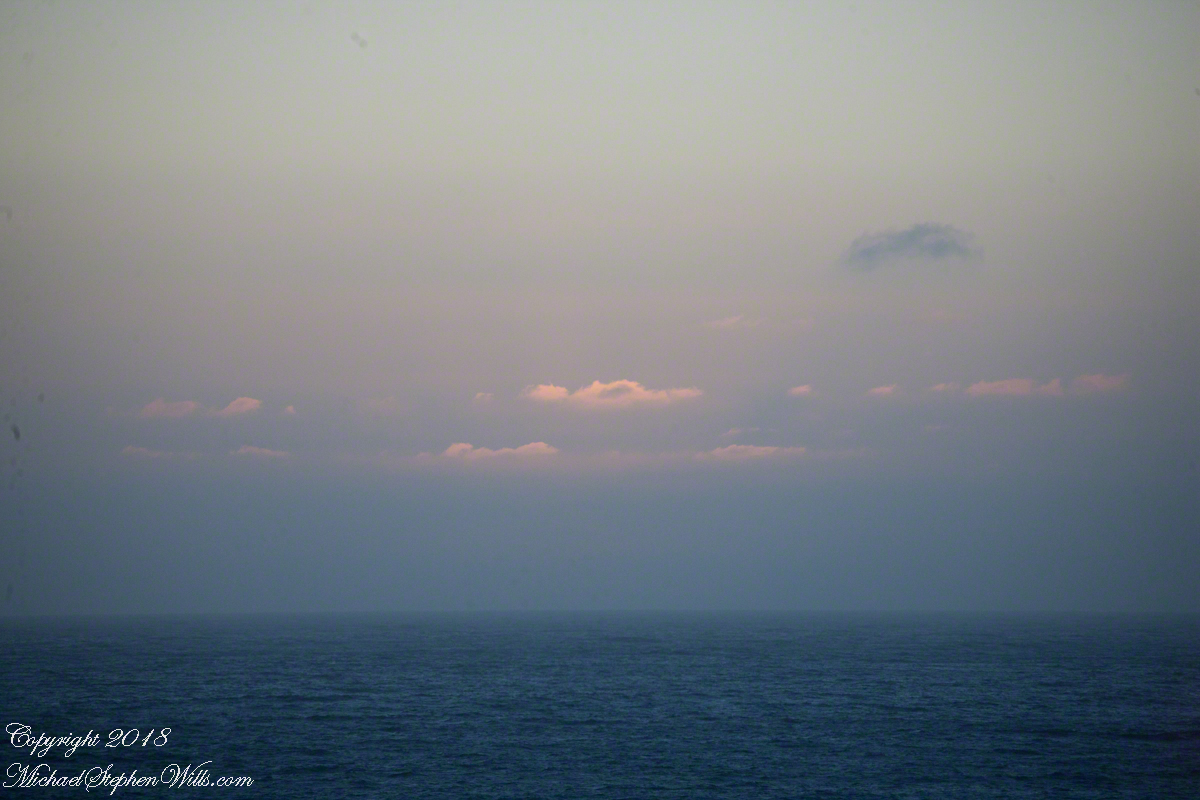
Two minutes after capturing the last light on Concon Point, see “Valparaiso Departure II”, turning the camera 180 degrees, to the south, looking along the Chilean coast, to capture birds on the wing headed toward shore at day’s end.
ValparaisoDeparture-22
Remembering other times,

ValparaisoDeparture-23

waiting for darkness

ValparaisoDeparture-24

with a sky map, studying it to make sense of the stars.

ValparaisoDeparture-25

How far?  How large?

ValparaisoDeparture-26

Light from our star, eight minutes old,

ValparaisoDeparture-27

grazed the earth’s rim the breath of a moth wing ago.

ValparaisoDeparture-28

Connect the dots, stories of heroes, monsters.

Our star, as we know it now

ValparaisoDeparture-31

Singular, alone,

Progress, an illusion to be understood

No less mysterious for that

ValparaisoDeparture-45

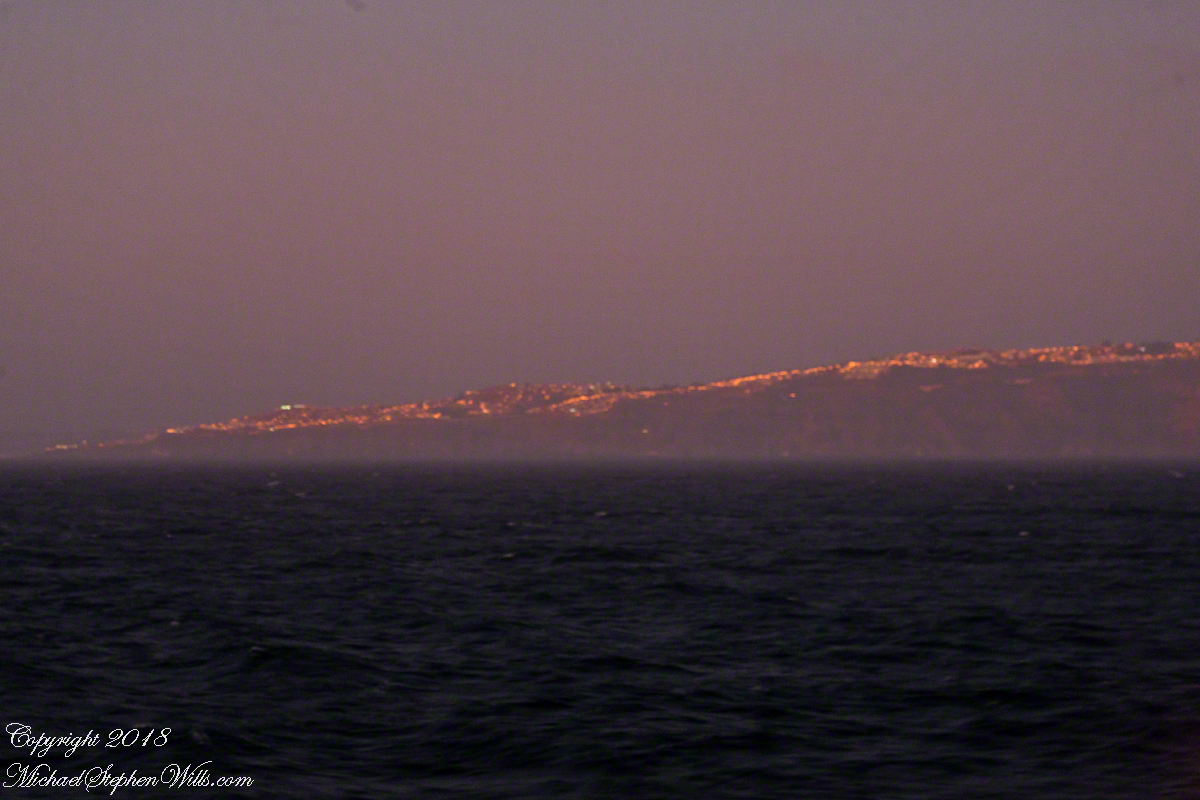
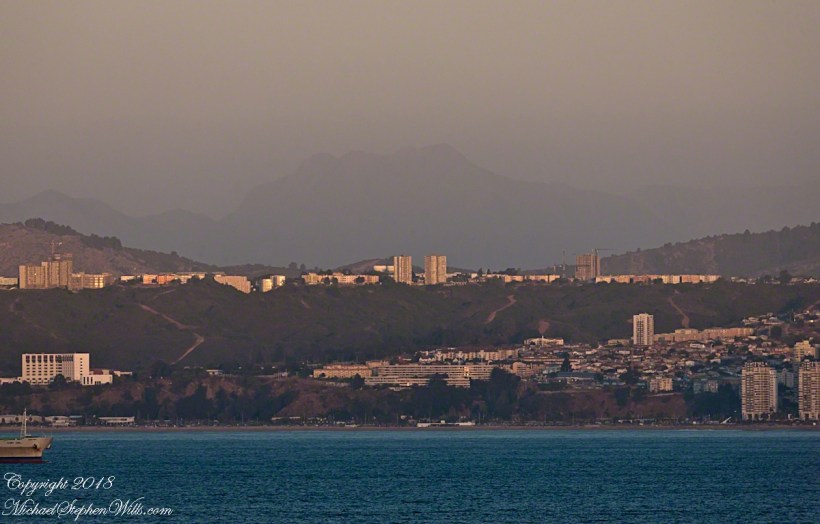
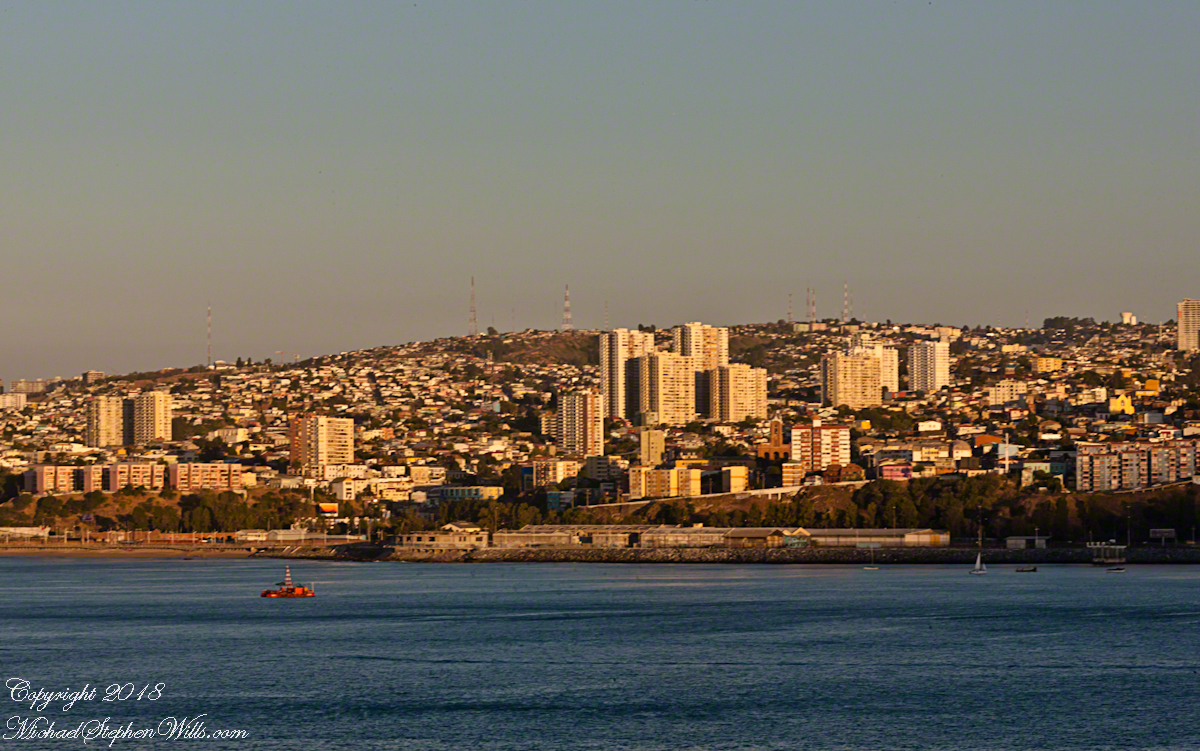
Look back to the sheltering headland of Valparaiso, glowing.

ValparaisoDeparture-47

Valparaiso Departure II

View of Aconcagua Mountain at Sunset

After the Ocean Princess sailed off toward its destiny in my last posting, “Valparaiso Departure I,” Pam and I left the deck for dinner to return two hours later for the Regatta’s departure in the magic sunset hour.

This first photograph is 22 minutes before sunset as the ship swung into a course along the northern shore of Valparaiso Bay.  The city grew along the bay shore, starting from the city center in the southern cup and into the north.  We are looking southeast across a lighthouse named “Club de Yates”, identified from the red fiberglass tower, a triangular daymark, toward the north end of Valparaiso.

Click this link for my Fine Art Photography gallery.

ValparaisoDeparture-17

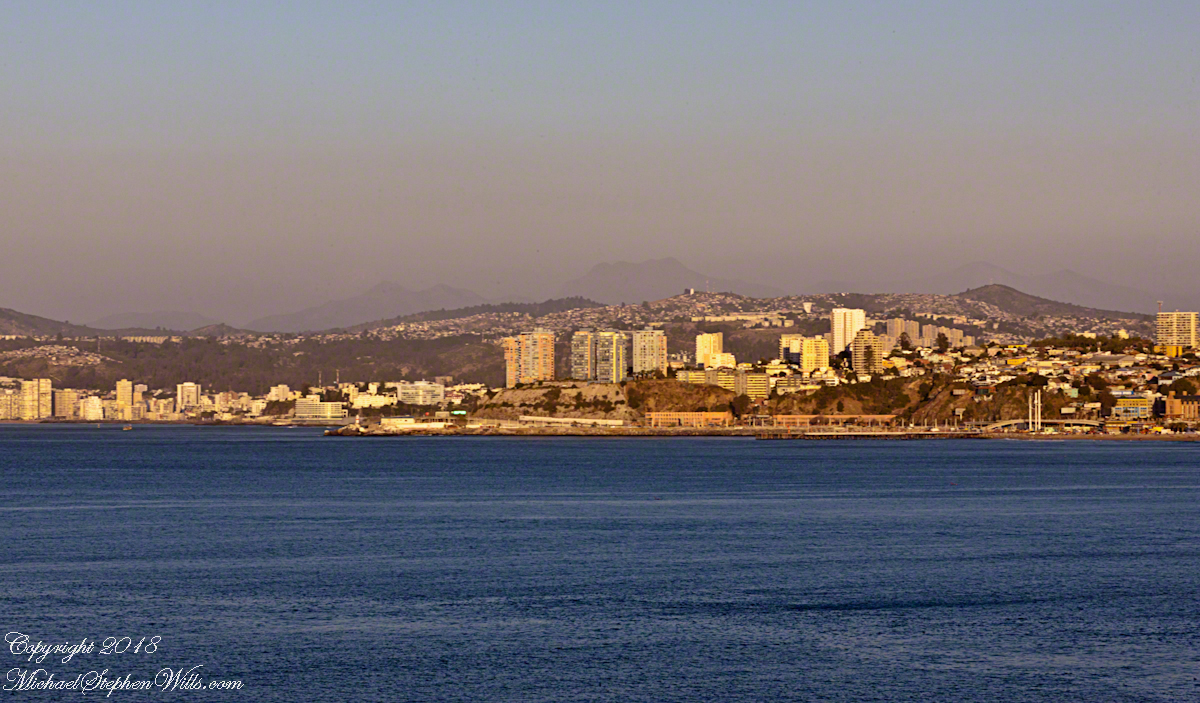
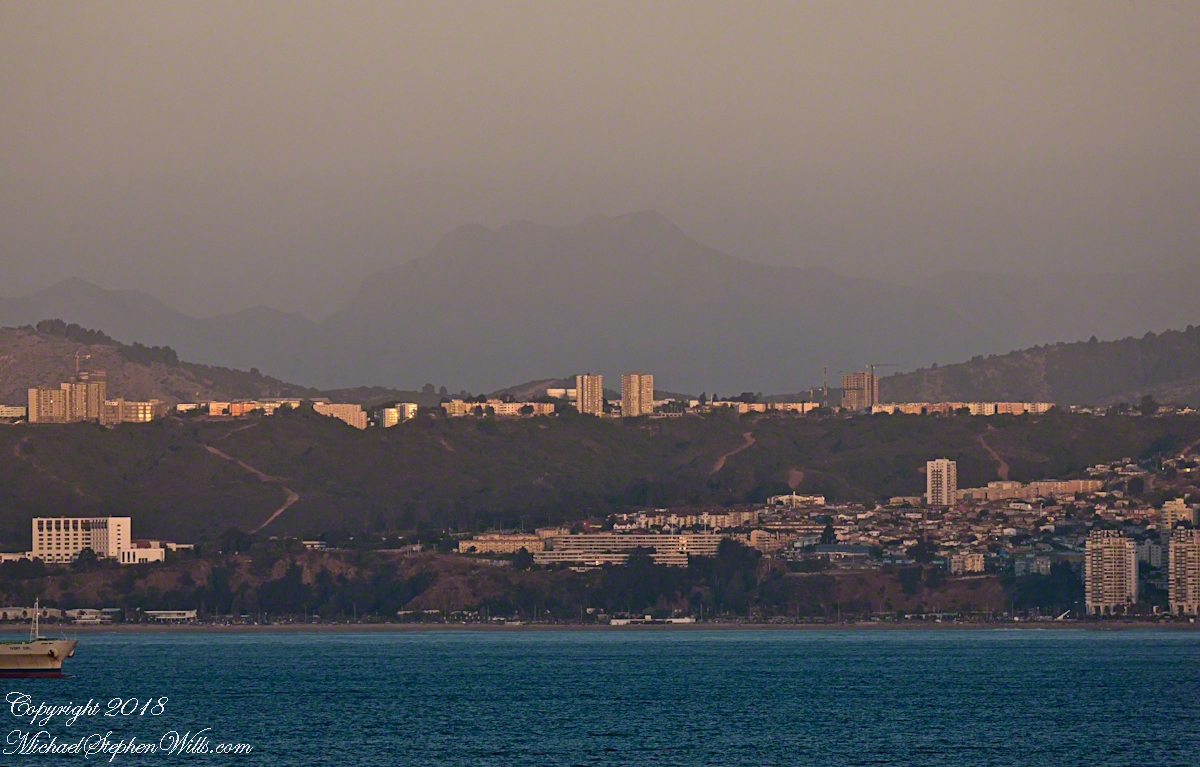
Here we see a different city altogether, the fourth largest of Chile and also within the Valparaiso Region and the Greater Valparaiso Area, named Vina Del Mar (Vineyard of the Sea).  The view is almost due east and, from here, it is difficult to discern why it is also called “La Ciudad Jardin” (Garden City), it is do densely populated.  North Valparaiso ends with a ridge with Vina Del Mar the next valley.  Look carefully along the shore to find the Punta Gruesa lighthouse with a red band on a white metal tower daymark.  By way of scale the tower is 56 feet high.  Follow Punta Gruesa to the right for the ridge separating Vina Del Mar (the taller apartment buildings, from Valparaiso.

The distant mountain is huge, visible from 95 miles away.  More about it later.  

ValparaisoDeparture-18

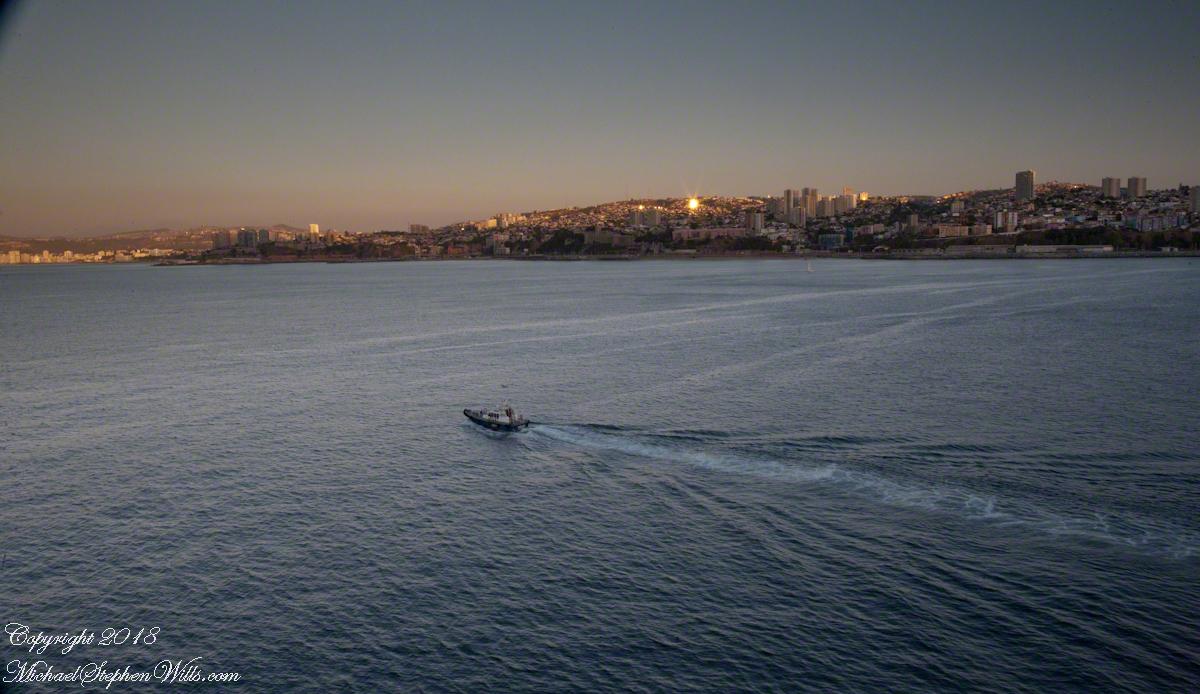
The previous photographs were using a tripod mounted Canon EOS-1Ds Mark III with the Canon 70 – 300 mm f4-5.6 L IS USM lens set to 108 mm focal length, taken 15 seconds apart.  I then swapped  the EF 24 mm f 1.4 L USM lens for the following photograph of the pilot boat heading to a rendezvous with the Regatta, having dropped off “our” harbor pilot.  It will wait beyond the harbor to bring the pilot back home.  The photograph is 7 minutes after the previous.  Punta Gruesa and the lighthouse and the Vina Del Mar apartment towers are just visible, having lost the sun.

Click this link for my Fine Art Photography gallery.

ValparaisoDeparture-19

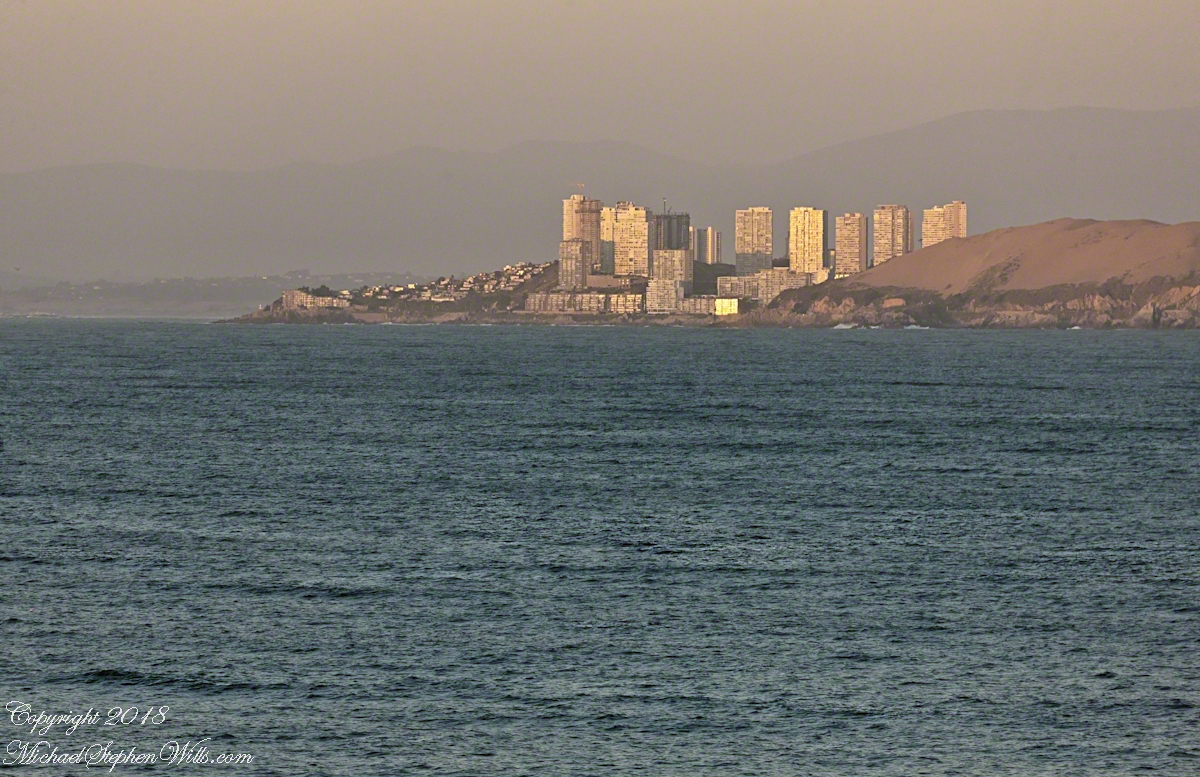
On the northern tip of Valparaiso Bay Punta Concon, the City of Concon and tall sand dunes also called Concon reflect the sun’s light 10 minutes before sunset.  The city is the fastest growing in Chile, 106% between 1992 and 2010 (28,157 to 50,000).  The Regatta is now well underway and I returned to the “long” lens here set to the 3oo mm focal length maximum.

On the other side of Punta Concon (Concon Point) the Aconcagua River flows into the Pacific.  Although the river has the same name as Aconcagua Mountain, the head waters are in Chile, 12 miles from the slopes of the mountain in Argentina.

ValparaisoDeparture-20

A swivel of the camera brings Aconcagua Mountain into view.  This former volcano, dead now for 8 – 10 million years is the highest mountain in North and South America.  The next highest peak is in the Hindu Kush, 10,000 miles to the northeast.  That said, Aconcagua is less challenging than Denali of Alaska and so many people attempt it each year human excrement is a major pollutant there.  We are looking here over the Vina Del Mar Valley 95 miles to Aconcagua Mountain in Argentina.

Click this link for my Fine Art Photography gallery.

ValparaisoDeparture-21

Copyright 2022 Michael Stephen Wills All Rights Reserved

Valparaiso Departure I

Thoughts on Departures

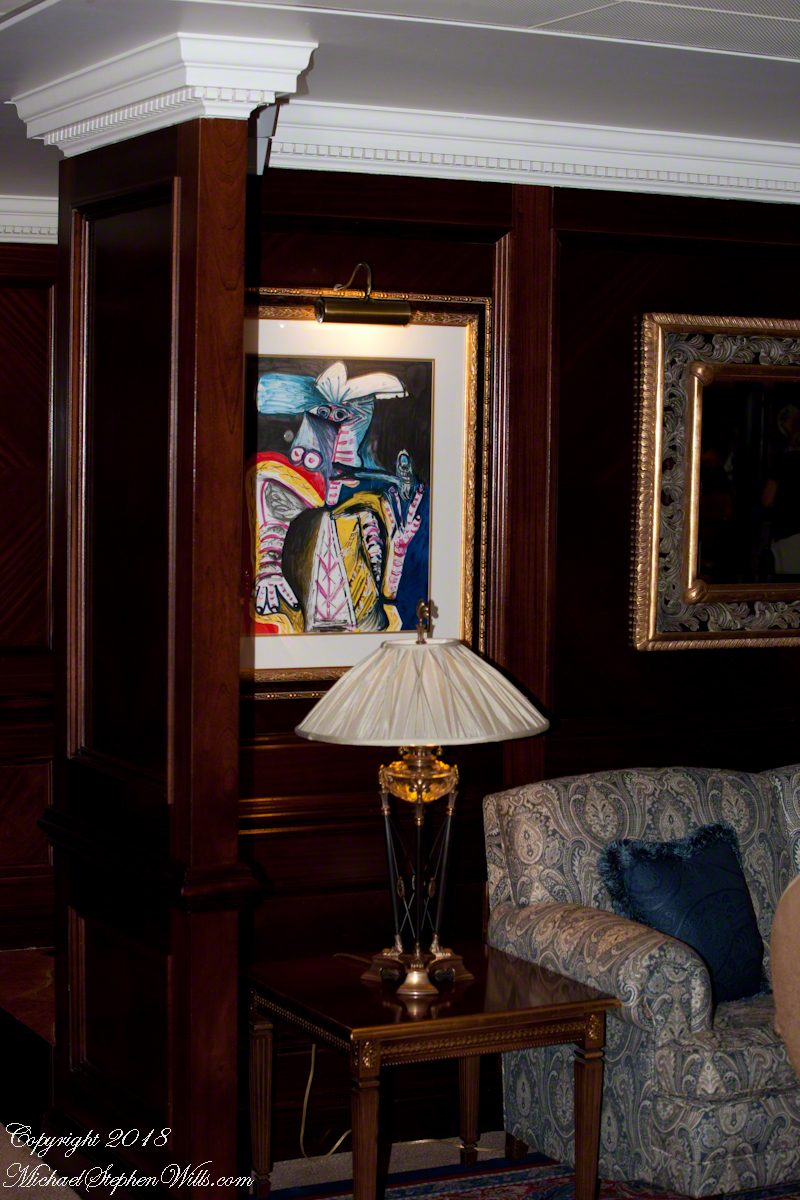
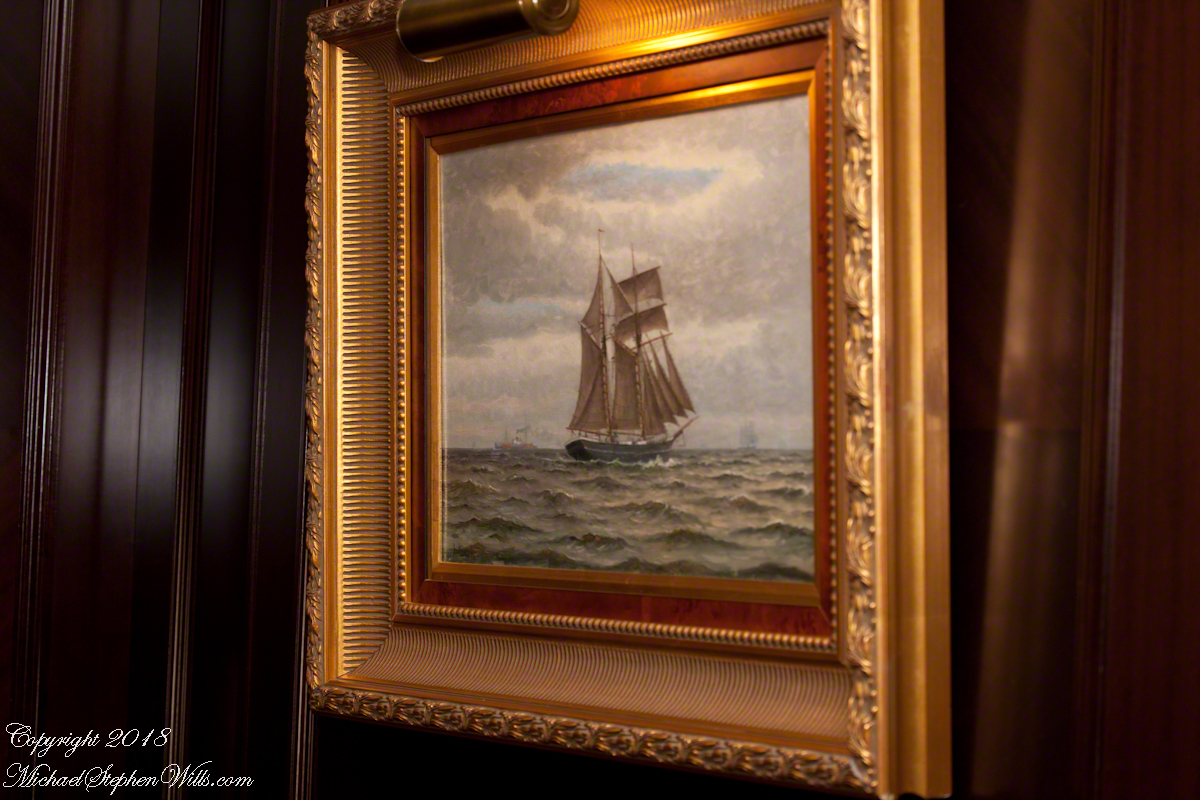
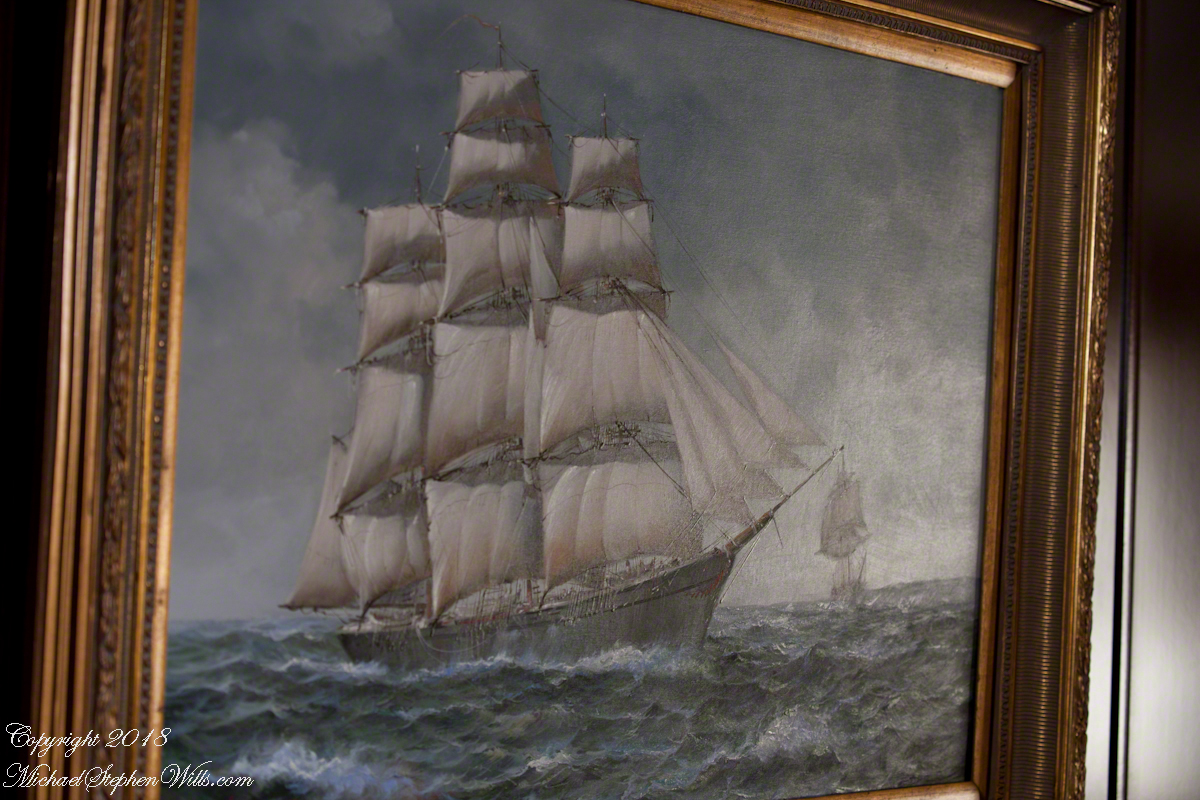
Late afternoon of our departure from the Chilean port city Valparaiso,  Pam and I enjoyed entertainments on the Regatta.  This painting of a ship under sail brings to mind the history of Valparaiso, as a place only reachable by ship, clinging to a narrow ledge on the Andes, barely existing for centuries, repeatedly destroyed by earthquakes until the 19th century brought sailing vessels such as this, growth and prosperity.  Major earthquakes hit the years 1730, 1822, 1839, 1873, 1906, 1907.  After 1907, the city was rebuilt anew in the modern form.  The inhabitants must enjoy spot, naming it “Vale of Paradise.”

Click this link for my Fine Art Photography gallery.

ValparaisoDeparture-1

While, in the 21st century the city enjoys a refreshment of an influx of artists and visitors such as the Regatta, the danger of the next massive quake is ever present and unpredictable.

As we enjoyed the artwork….

ValparaisoDeparture-13

….a pianist entertained us.

ValparaisoDeparture-14

As usual, I was carting photography equipment to capture the moments as the afternoon moved towards…

ValparaisoDeparture-15

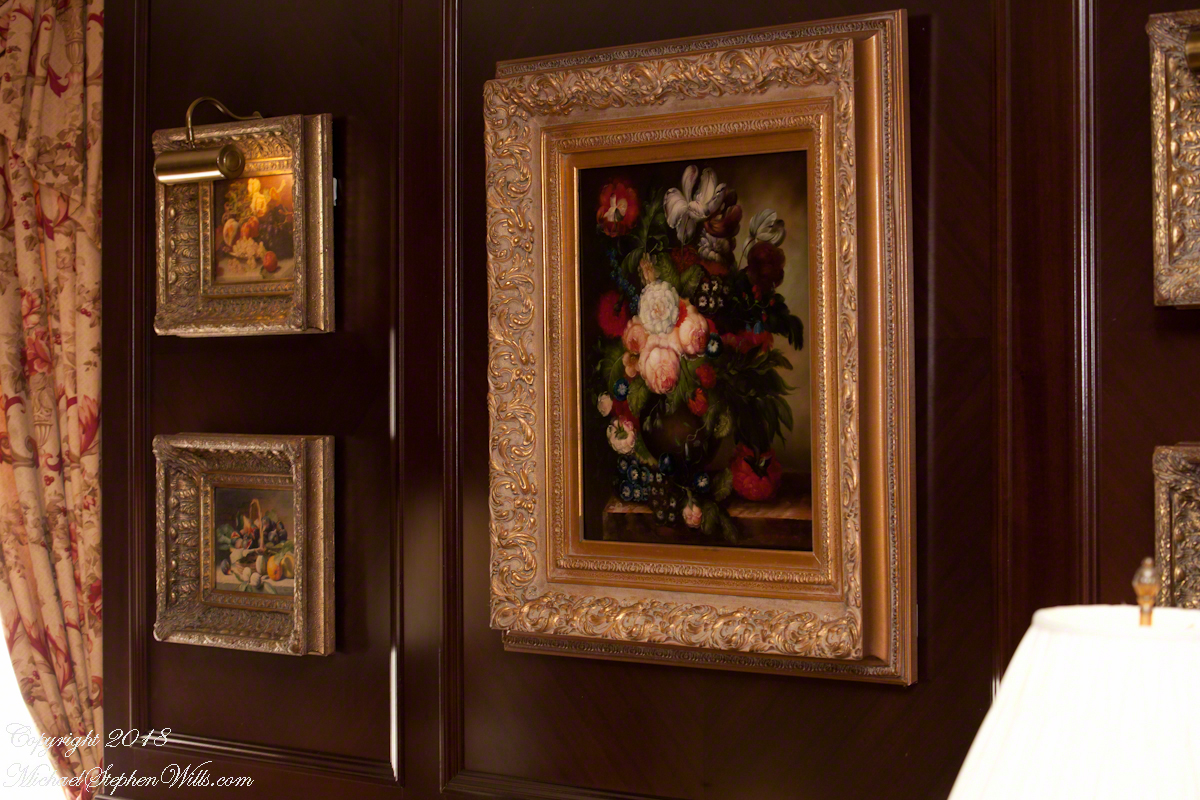
….the scheduled departure among still life painting in the style of the Dutch masters.

Click this link for my Fine Art Photography gallery.

ValparaisoDeparture-16

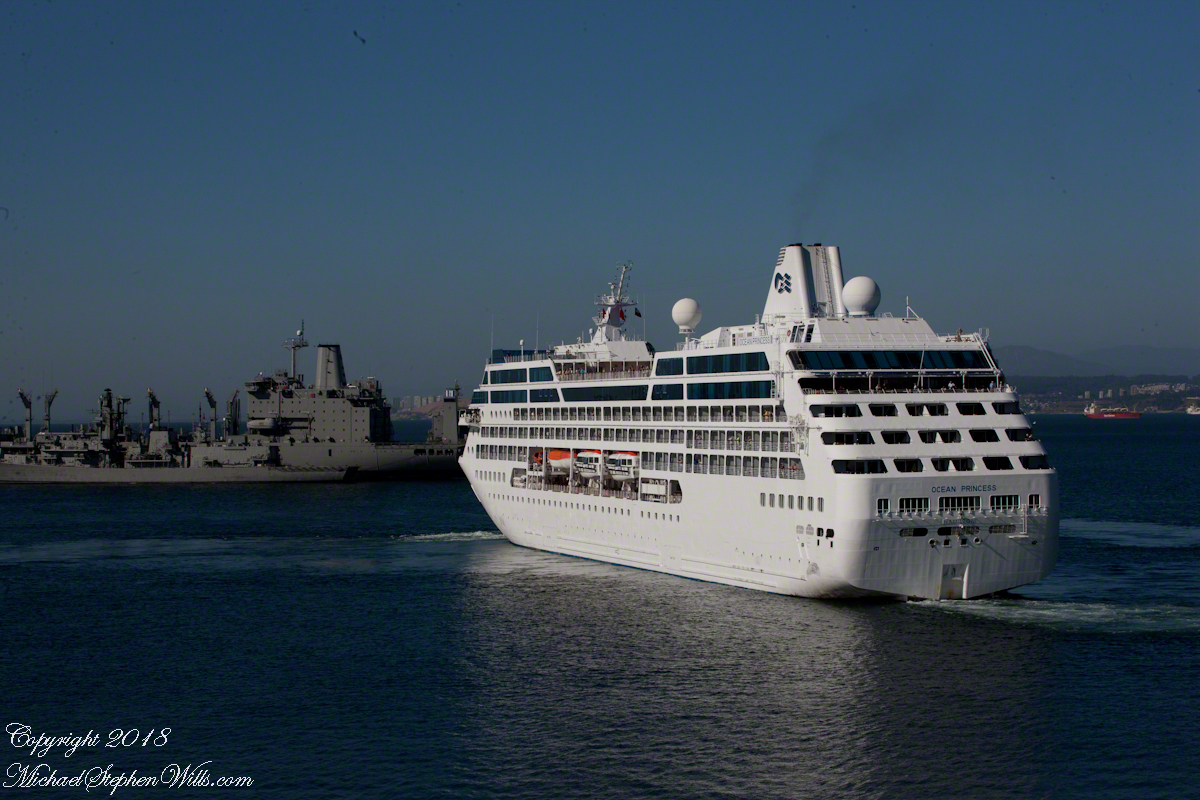
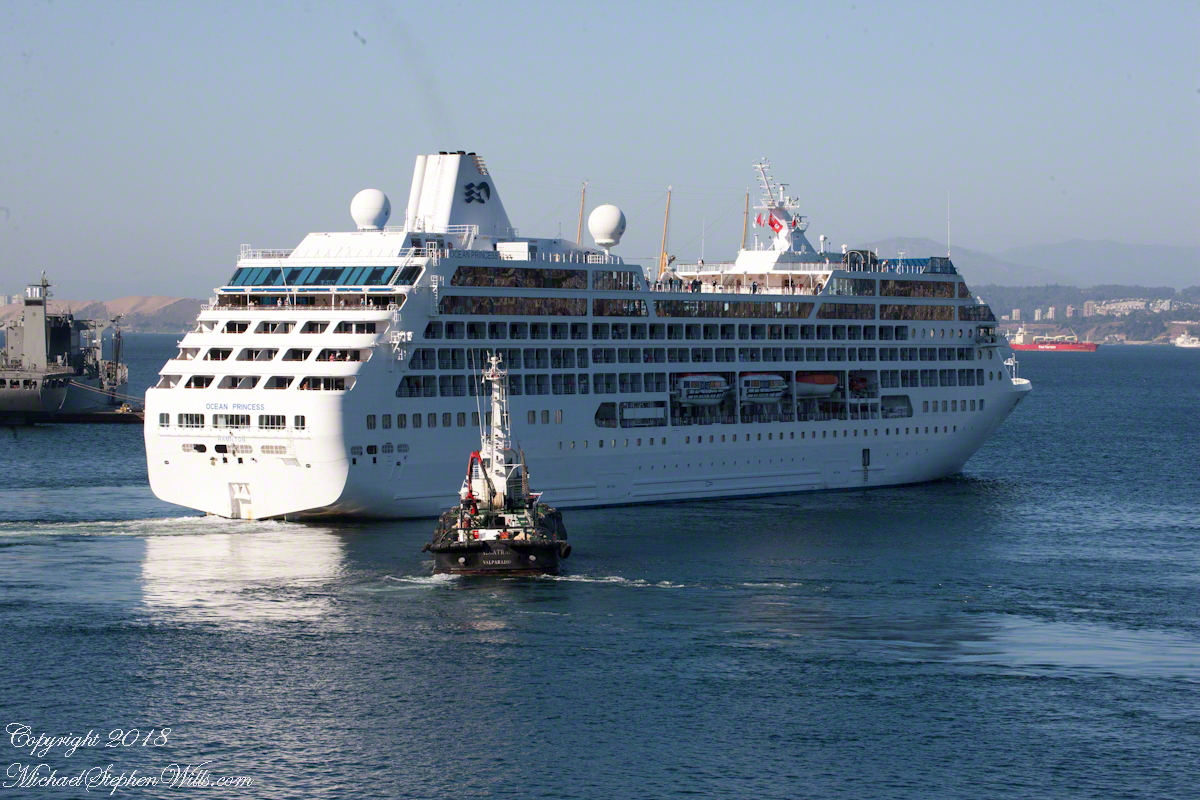
That day I chose the upper decks as the best vantage point.  From there, Pam and I viewed the departure of a similar ship to the Regatta, the “Ocean Princess.”  It must have been the last voyage of the Princess under that name as, the same year, it was acquired by the Oceania line, refurbished, relaunched as the “Sirena”.

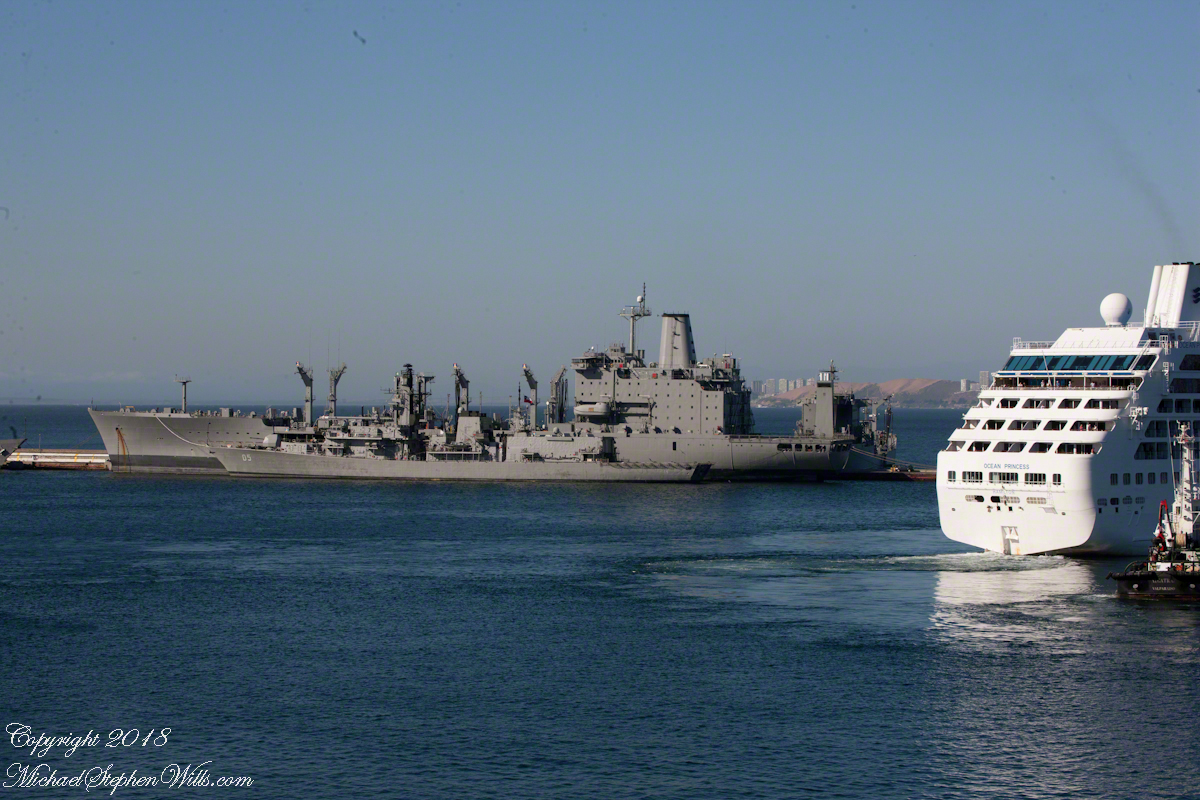
The Chilean navy base and Naval Academy is there.  The Ocean Princess navigated around this docked destroyer…..

ValparaisoDeparture-2

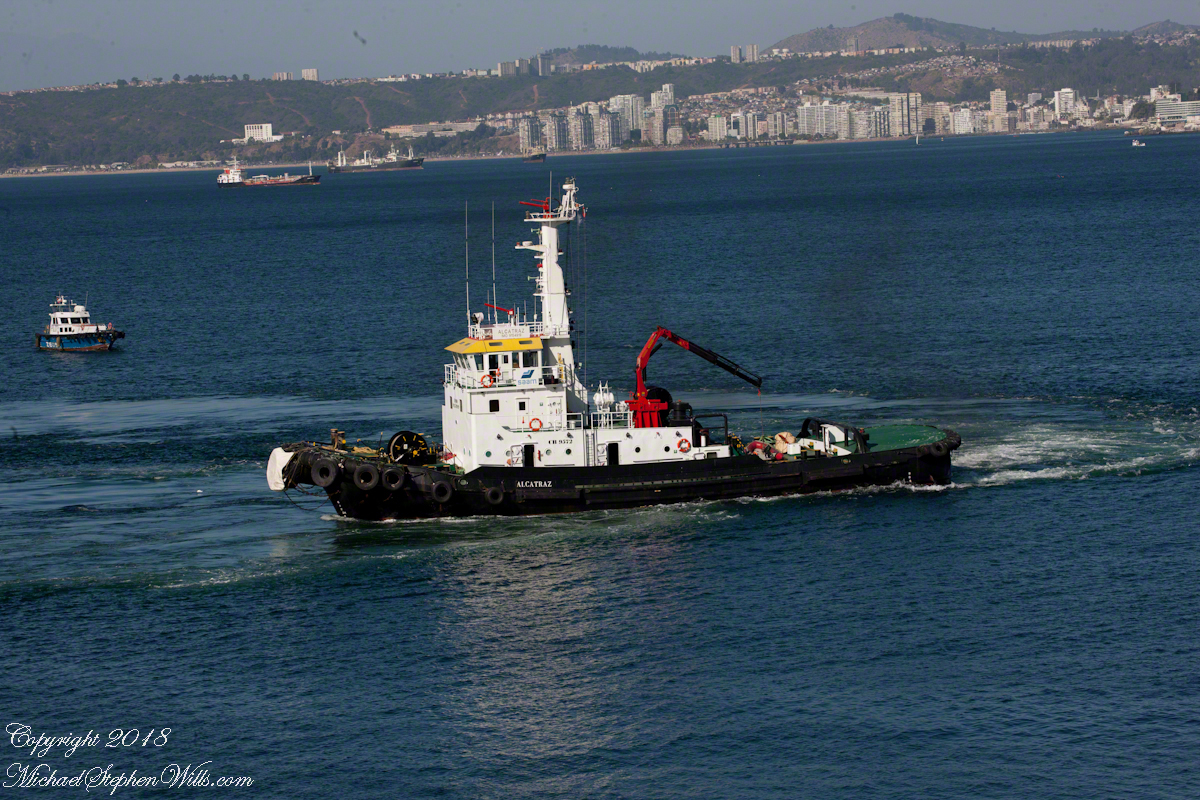
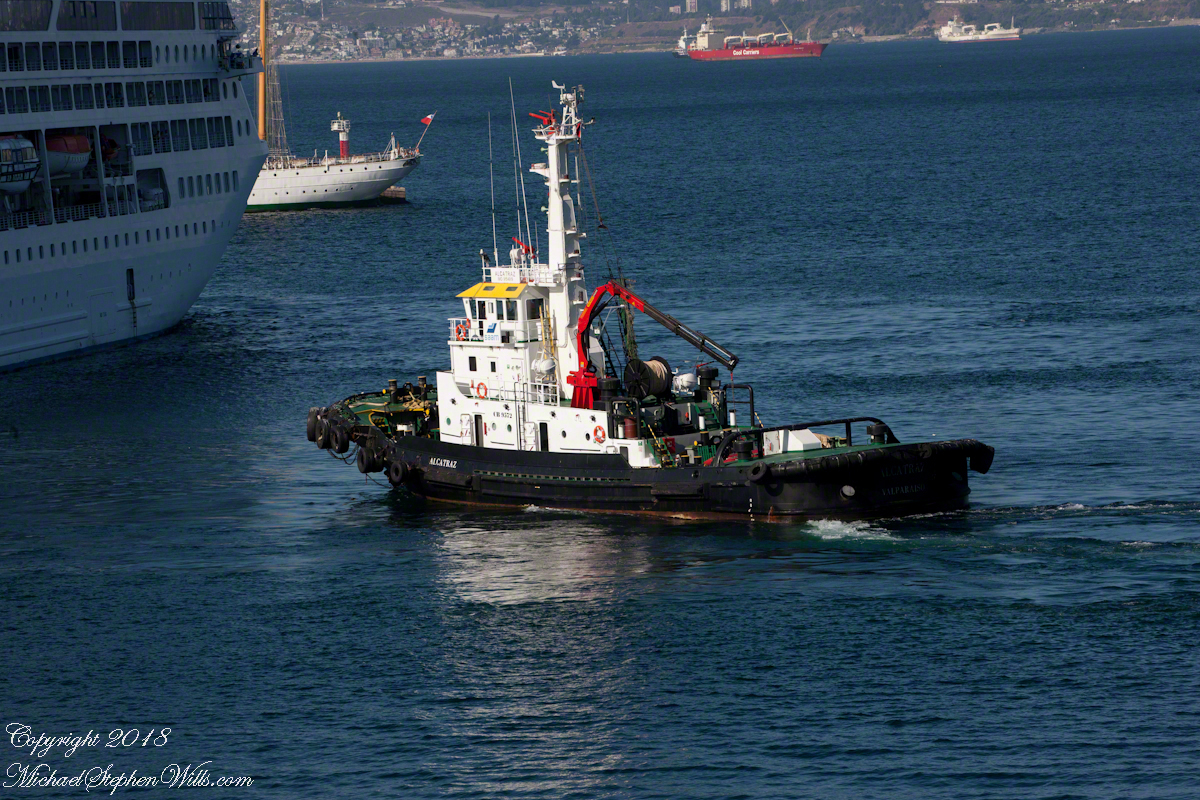
…with the assistance of the tugboat Alcatraz, a name derived from the Spanish word for pelican as in “La Isla de los Alcatraces” (Island of the Pelicans) where the former Alcatraz prison was built in San Francisco Harbor.  Spanish speakers think of birds when viewing the tub boat.  Americans think of prisoners (escaping) and San Francisco.  Unlike San Francisco Harbor, Valparaiso Bay is a semi-circle open to the ocean, the harbor is on the southern, north facing (away from the ocean) shore, protected by a long (3,000 foot) breakwater along which the Chilean war ships dock.  We are viewing the Alcatraz after most of the work for the Ocean Princess departure was done.

ValparaisoDeparture-3

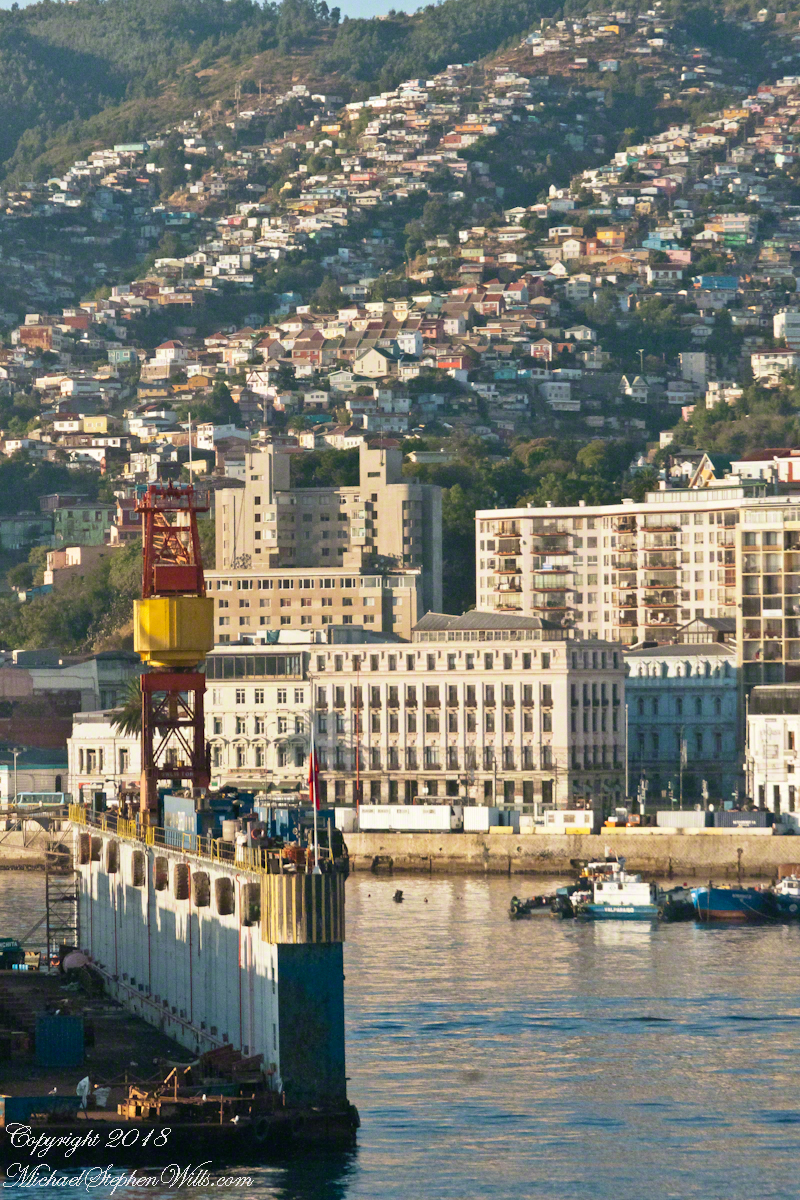
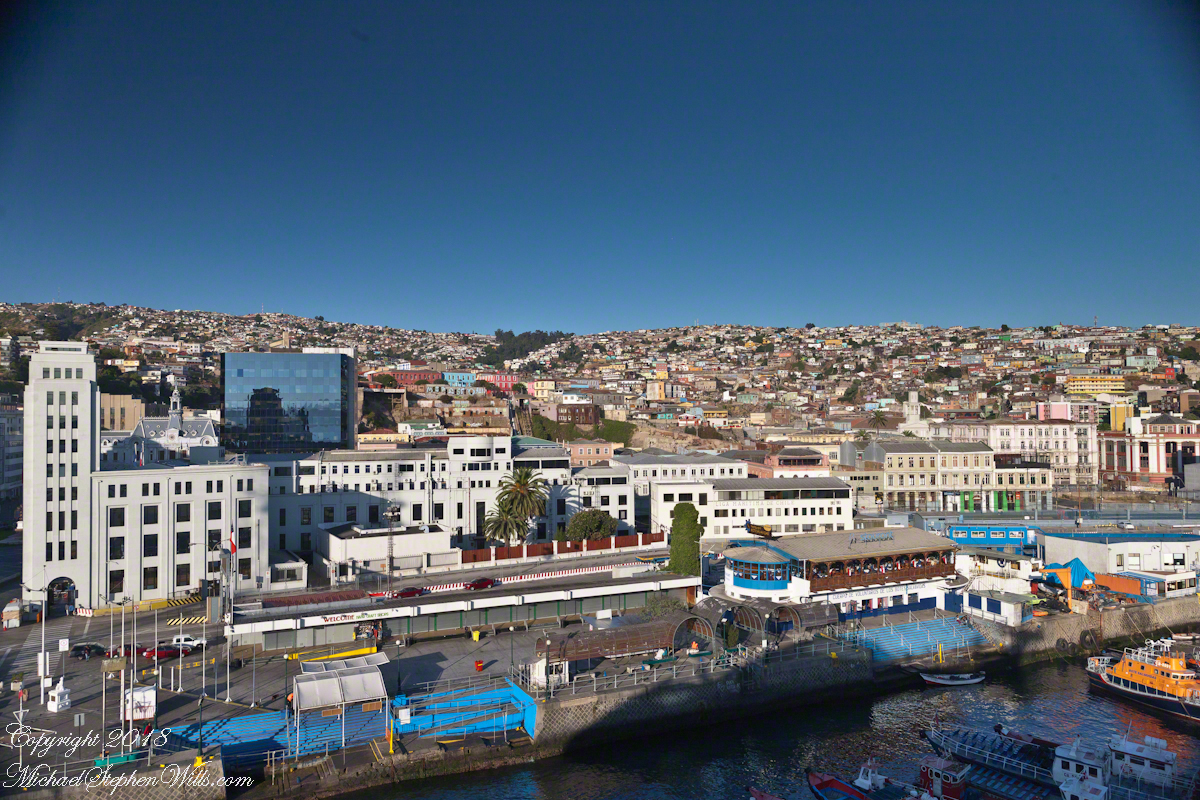
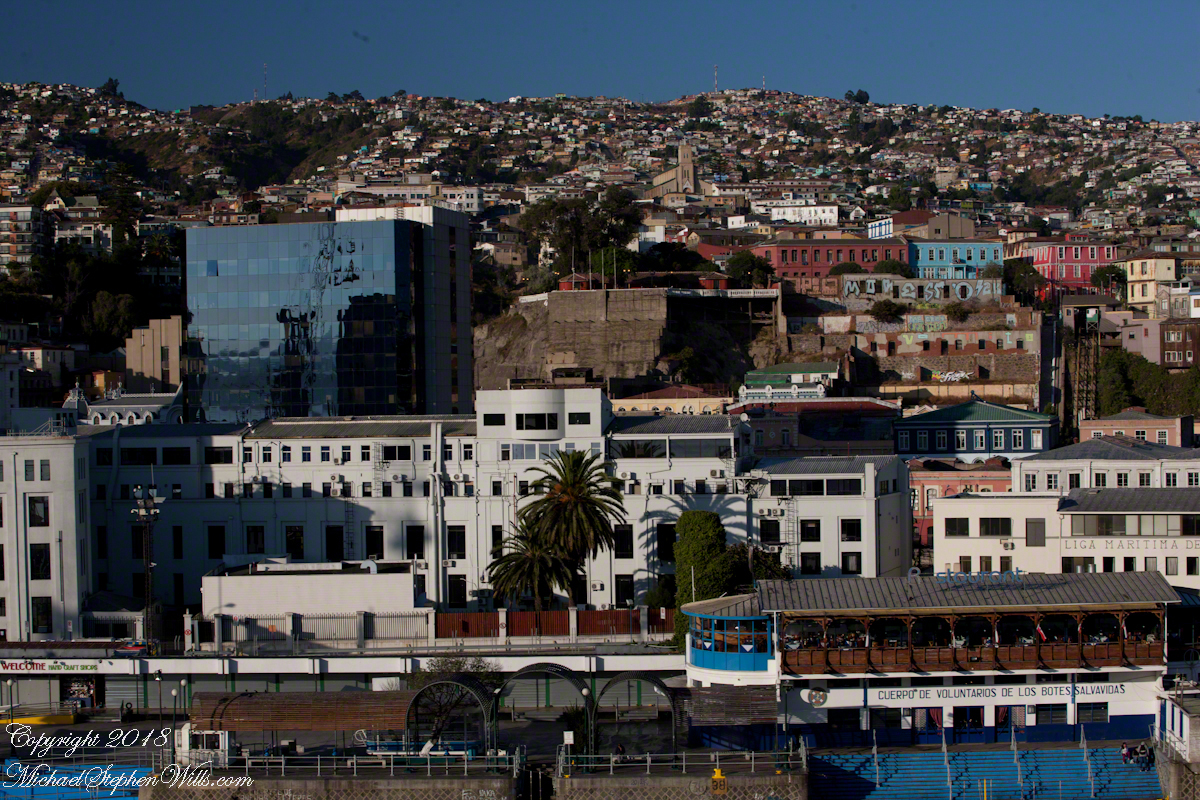
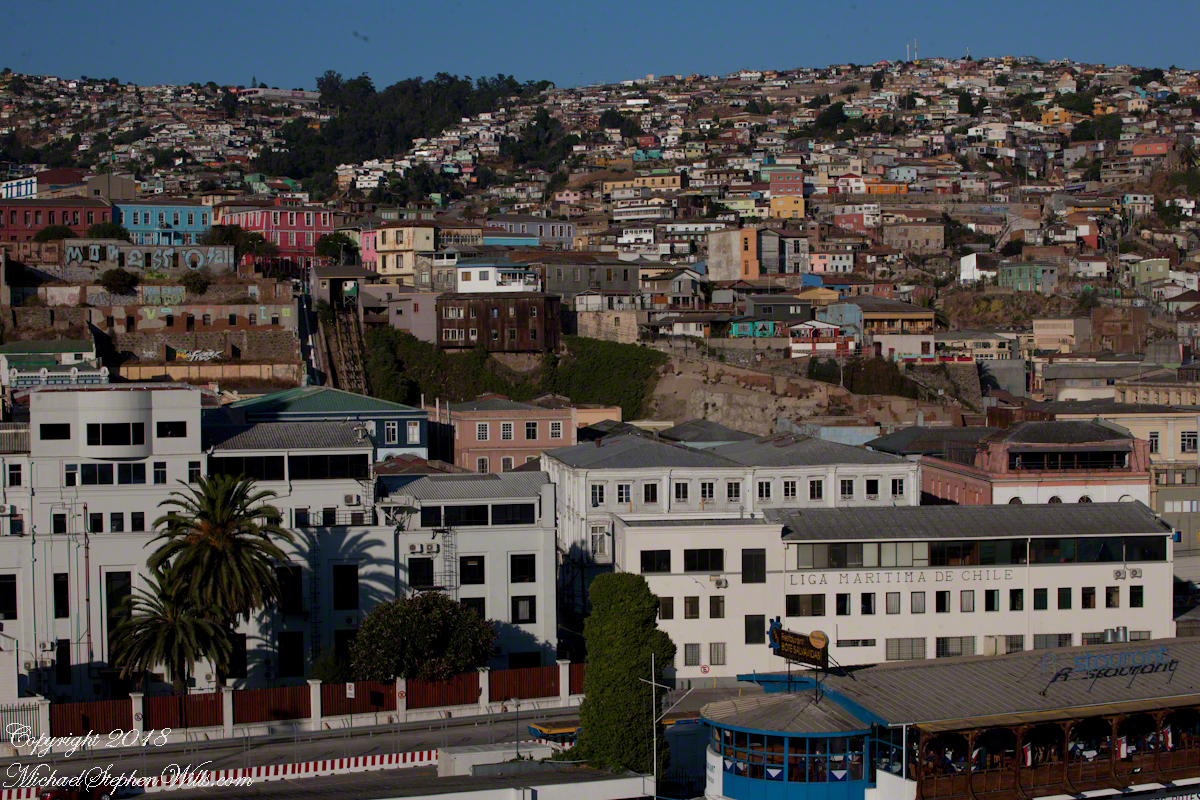
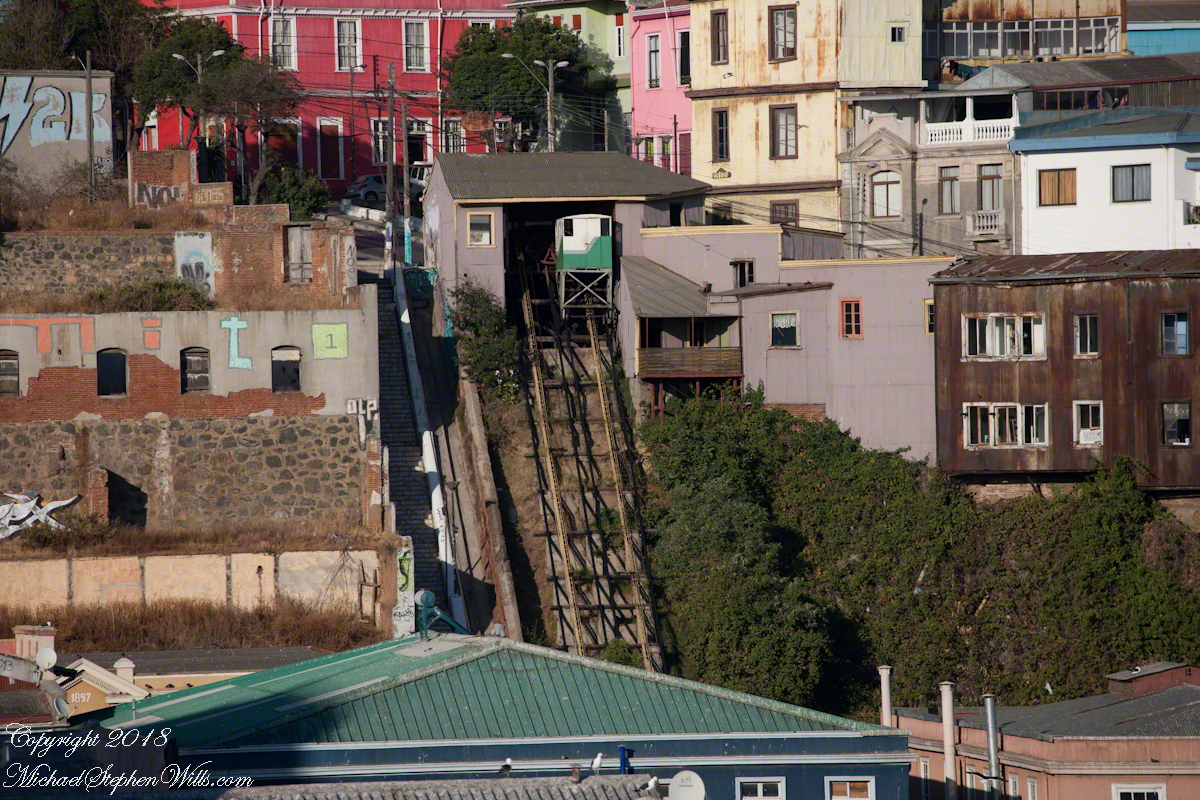
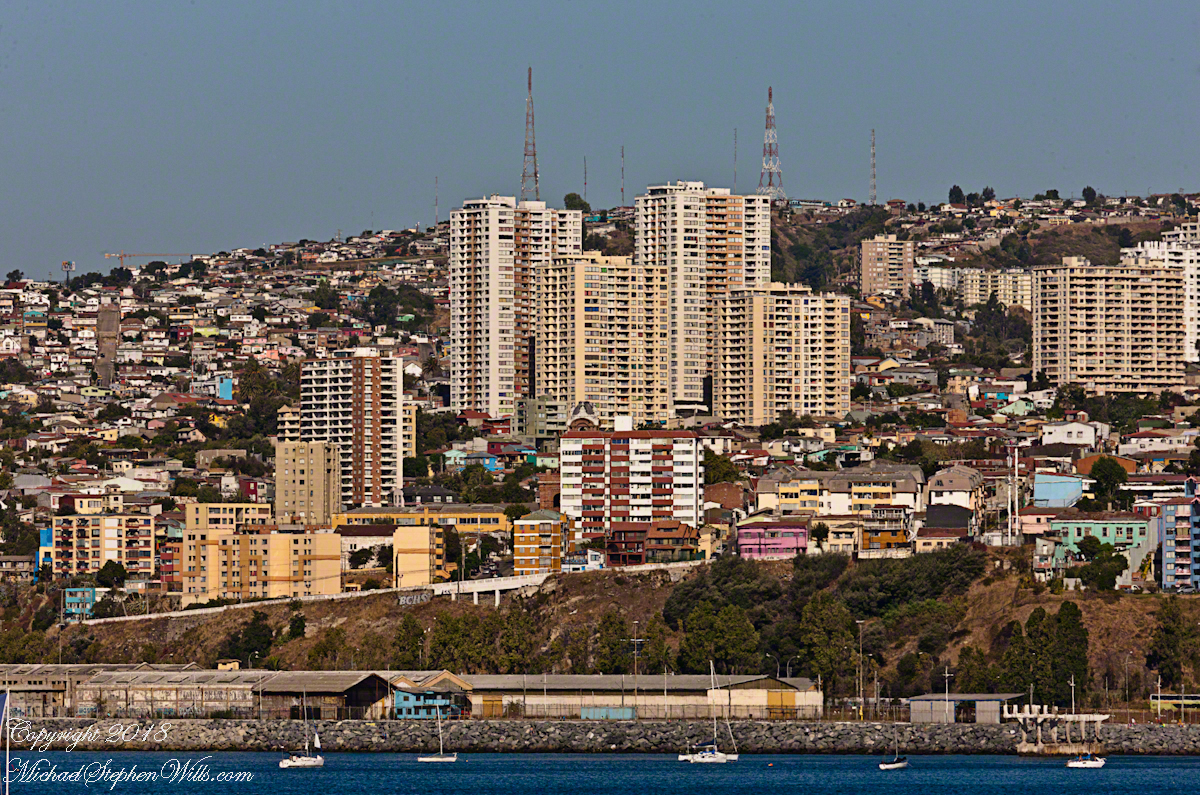
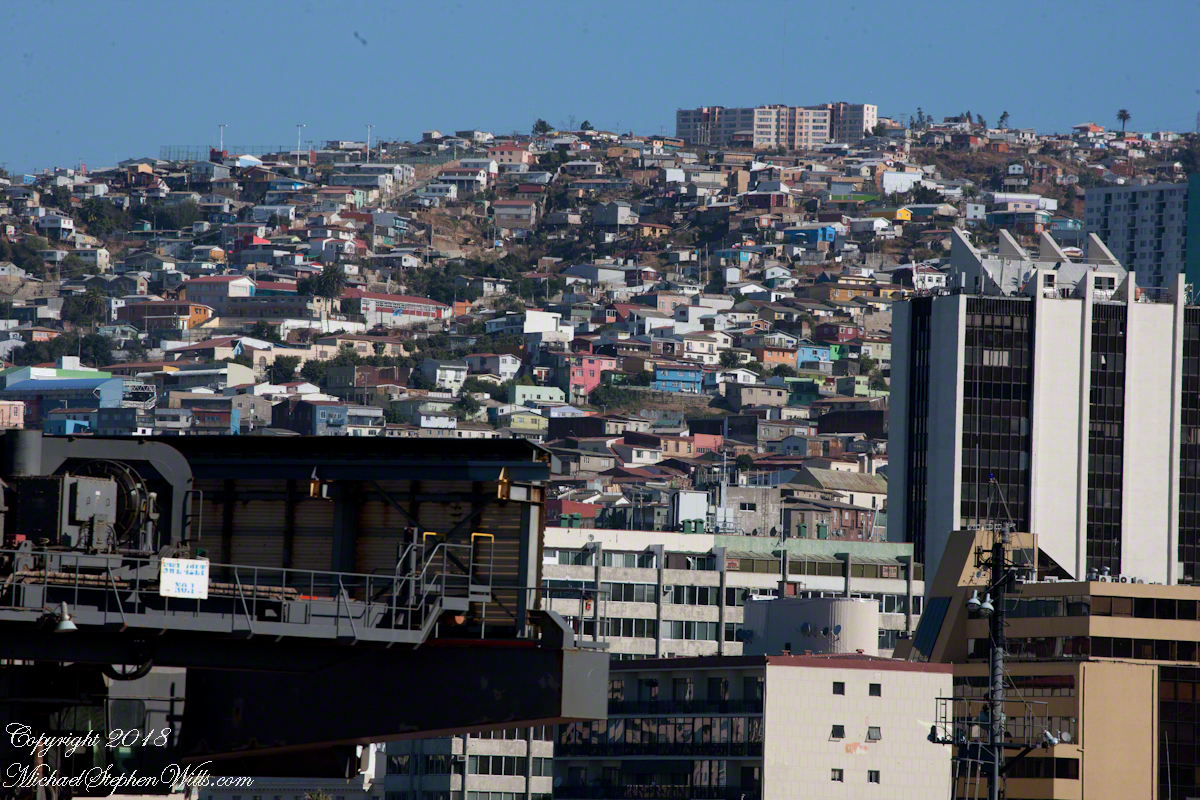
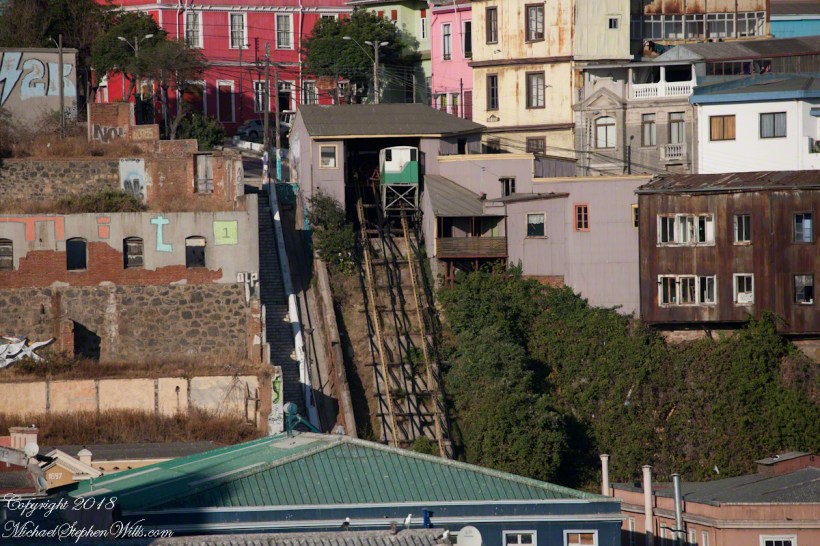
The north end of the bay is residential, behind the towers are homes arrayed on the hillside, the only land available.

Click this link for my Fine Art Photography gallery.

ValparaisoDeparture-4a

Much of the harbor and city business district, in the foreground (below), on the south side is on land reclaimed from the sea.

ValparaisoDeparture-5

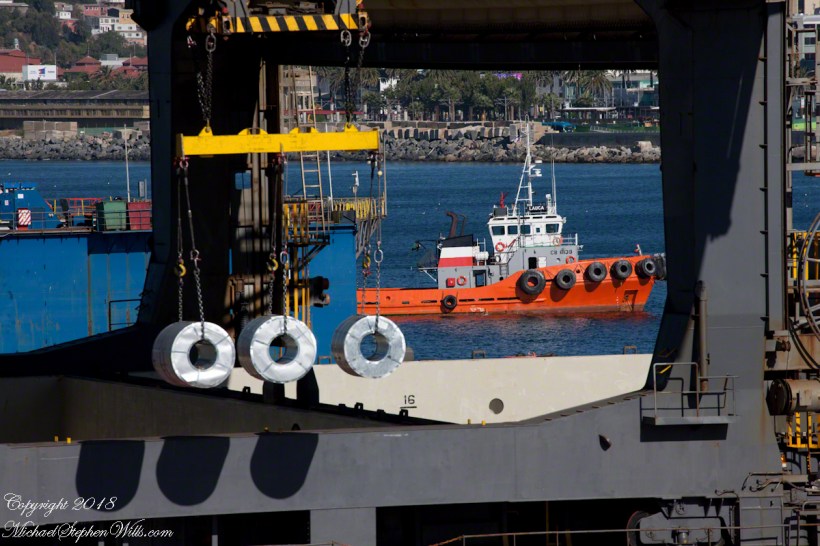
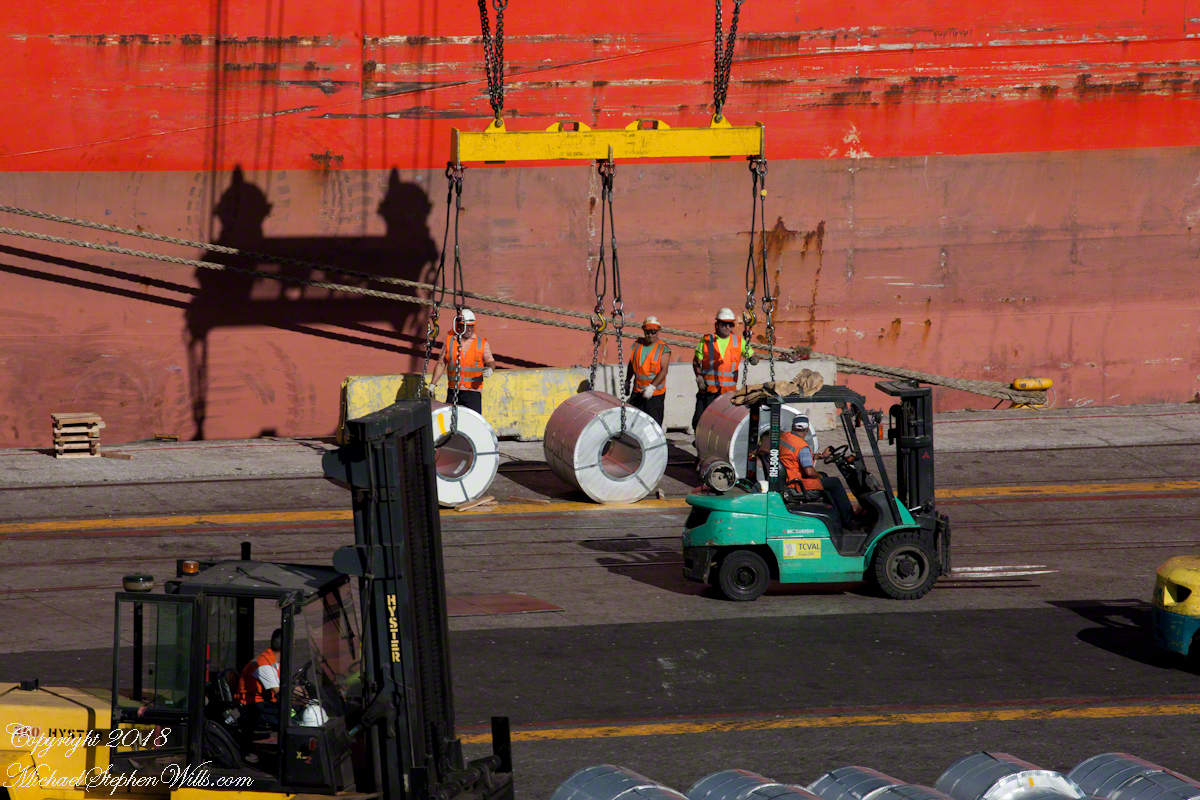
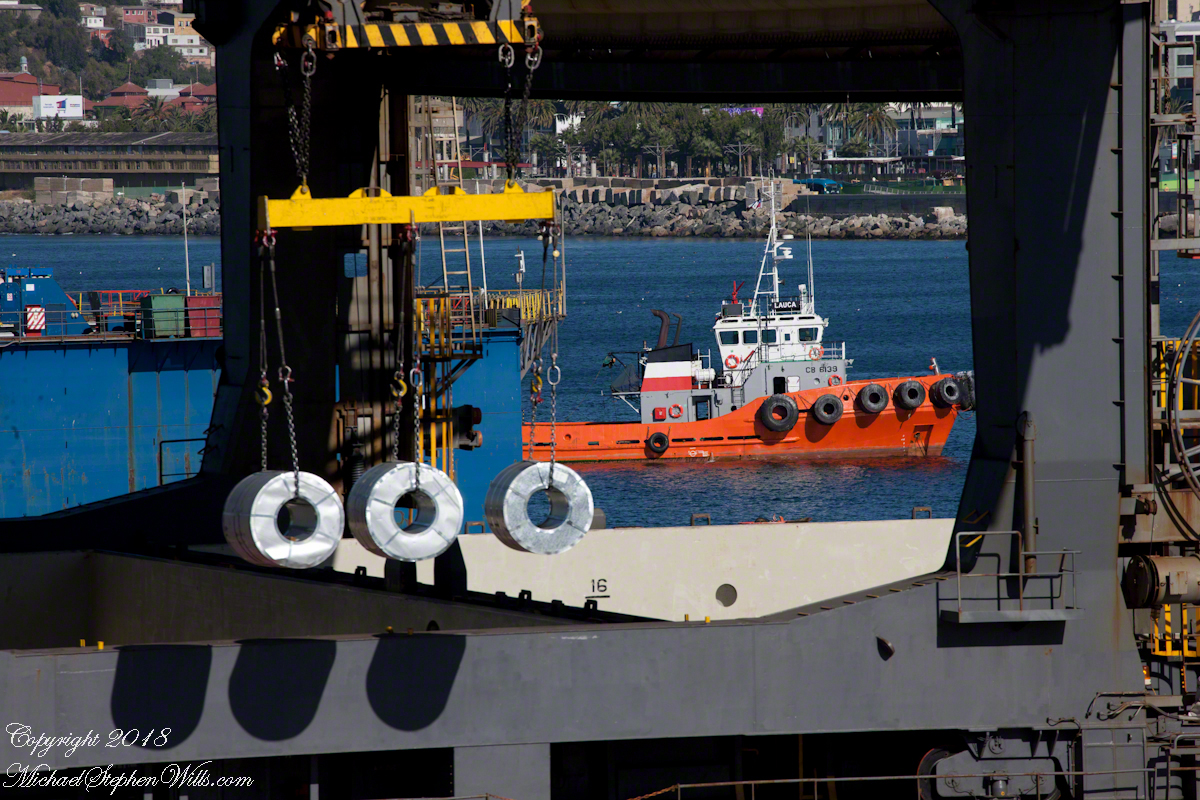
All around the Regatta was a working port.  Here rolls of cable (wire?) are prepared for hoisting onto a cargo ship.  Note the hawsers, taught under the strain, between the workmen and the ship hull.

ValparaisoDeparture-6

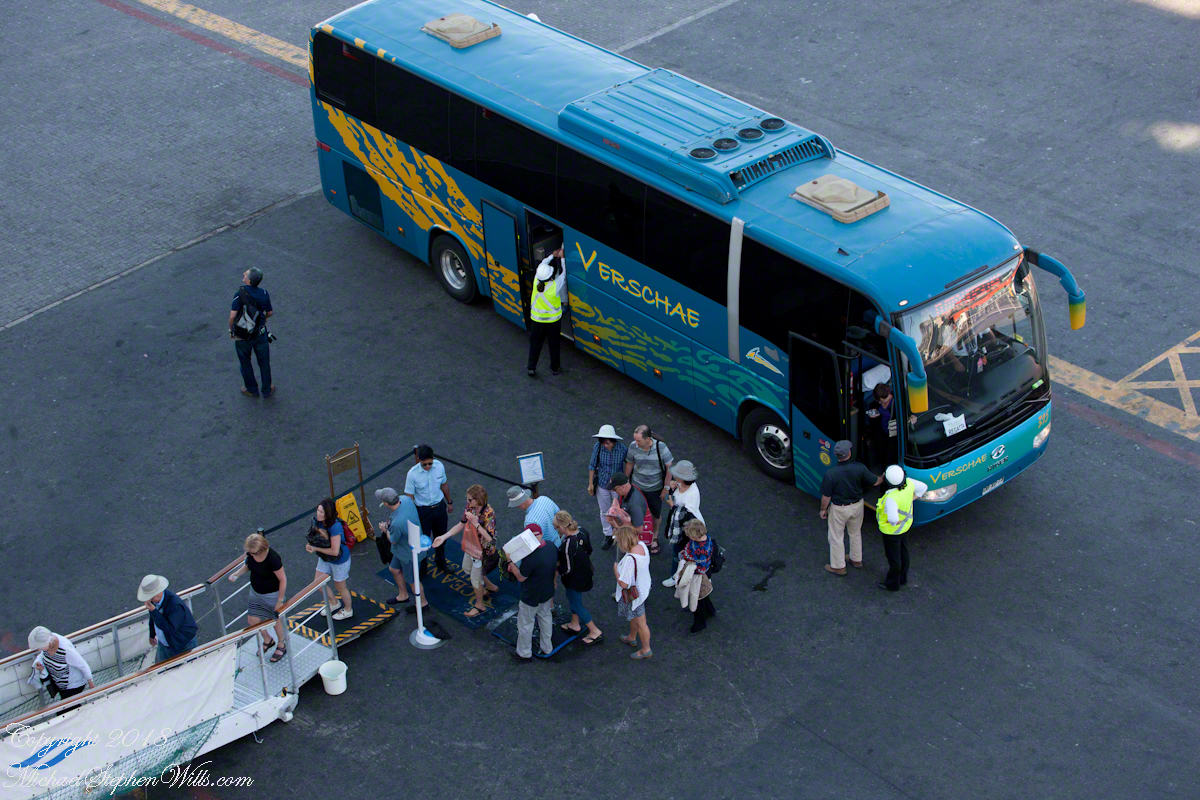
Passengers board the Regatta from the last tours.  I expect this is the trip to Santiago.  Most of the dockings the Regatta was surrounded by the port, the only way to access the city was on a tour bus as the port activity made walking too dangerous.

Click this link for my Fine Art Photography gallery.

ValparaisoDeparture-7

I can only guess the role the Alcatraz is playing here…..

ValparaisoDeparture-8

…. probably it is positioned to give the Ocean Princess a nudge if the harbor pilot misjudges the turn around the breakwater and warships.  In a harbor, a ship’s crew passes control to a harbor pilot who knows the navigation challenges much better than is possible for them.

ValparaisoDeparture-9

Today, as 99.9% of all days, the pilot makes the turn safely.  Here is a better view of the warship.

ValparaisoDeparture-10

Looking back toward the harbor, the crane is hoisting those rolls, the tug boat “Lauca” framed by the superstructure of (I think) the crane.

ValparaisoDeparture-11

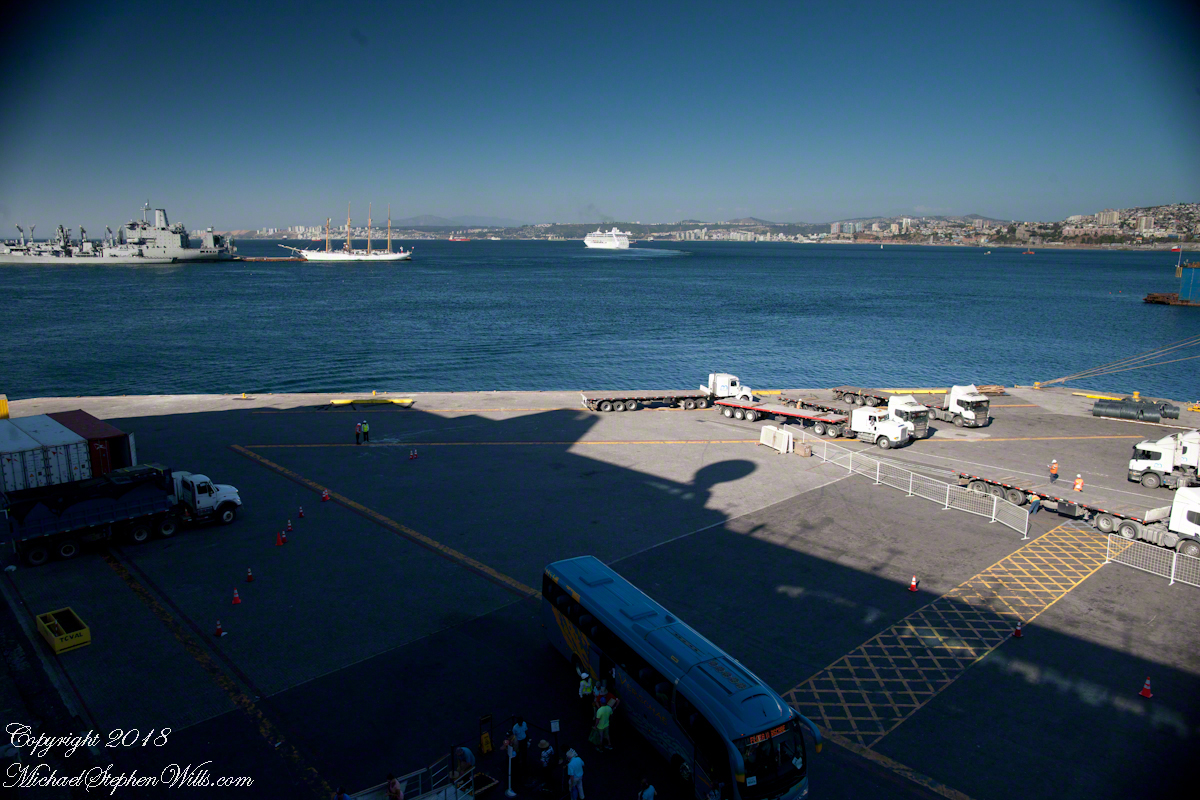
The Ocean Princess is will under way, as shown by the long wake.  As luck will have it, When the Regatta follows the sun will be much lower, the light better for photography.  At the stern of the warship, the masted vessel is a training ship for the Chilean Naval Academy.

Click this link for my Fine Art Photography gallery.

ValparaisoDeparture-12

Copyright 2022 Michael Stephen Wills All Rights Reserved 

A Far Country XI: Gondwana Part 1

amazing resolution with the Canon 24 mm lens

(Click any photograph to visit my online gallery)

The resolution of the Canon EF 24mm f/1.4L II USM makes this lens a favorite of mine for landscape work.  Let me show you why.

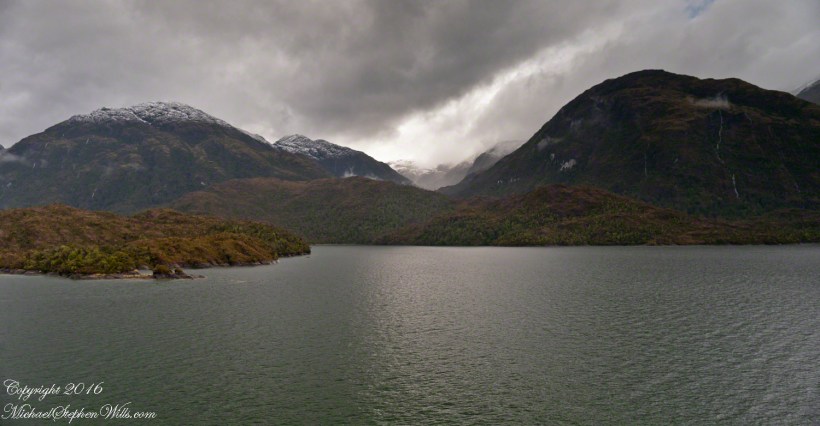
The valley today’s posting lies behind the tree.  It is a broad valley shaped by ancient glaciers.

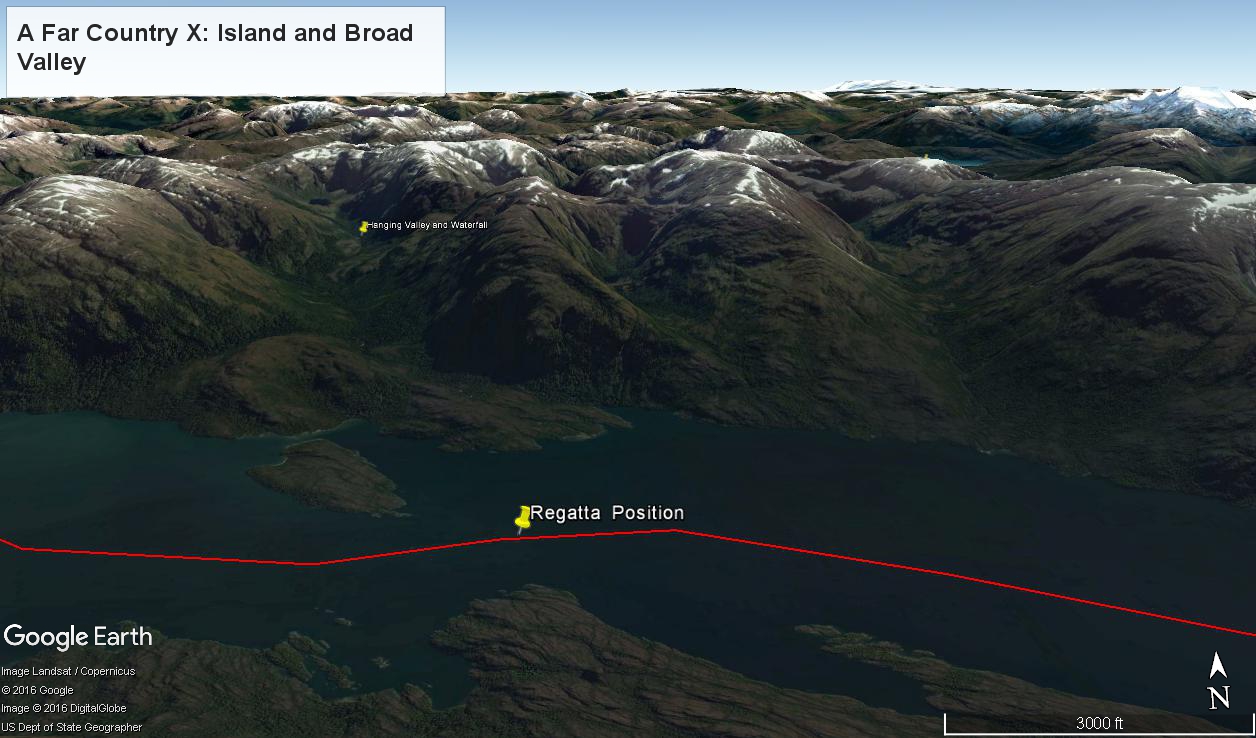
Here is the Google Earth view, from an elevation of 9,400 feet, with the ship position marked.  Northwest is a pushpin titled, “Hanging Valley and Waterfall.”

A Far Country X– CLICK ME!!!!

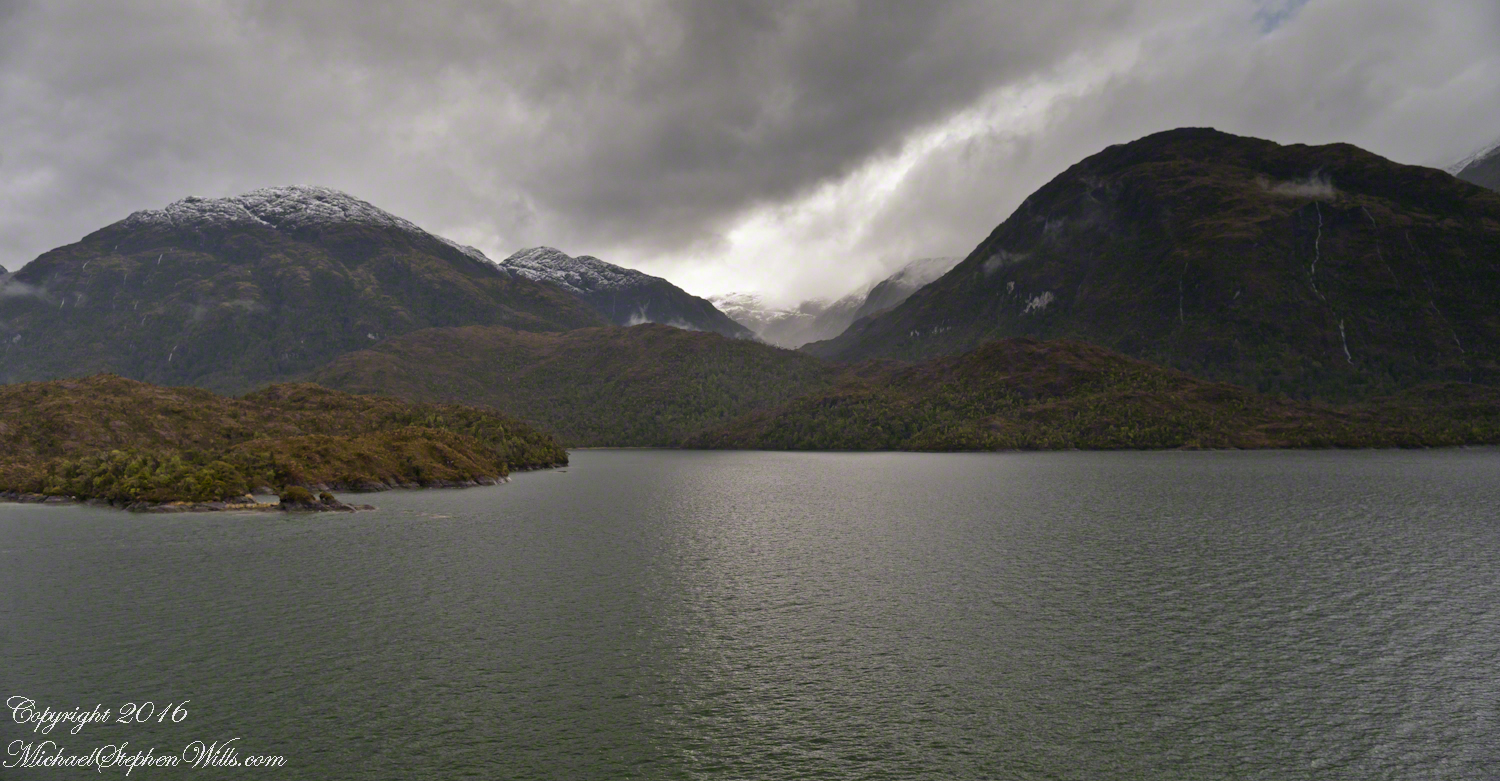
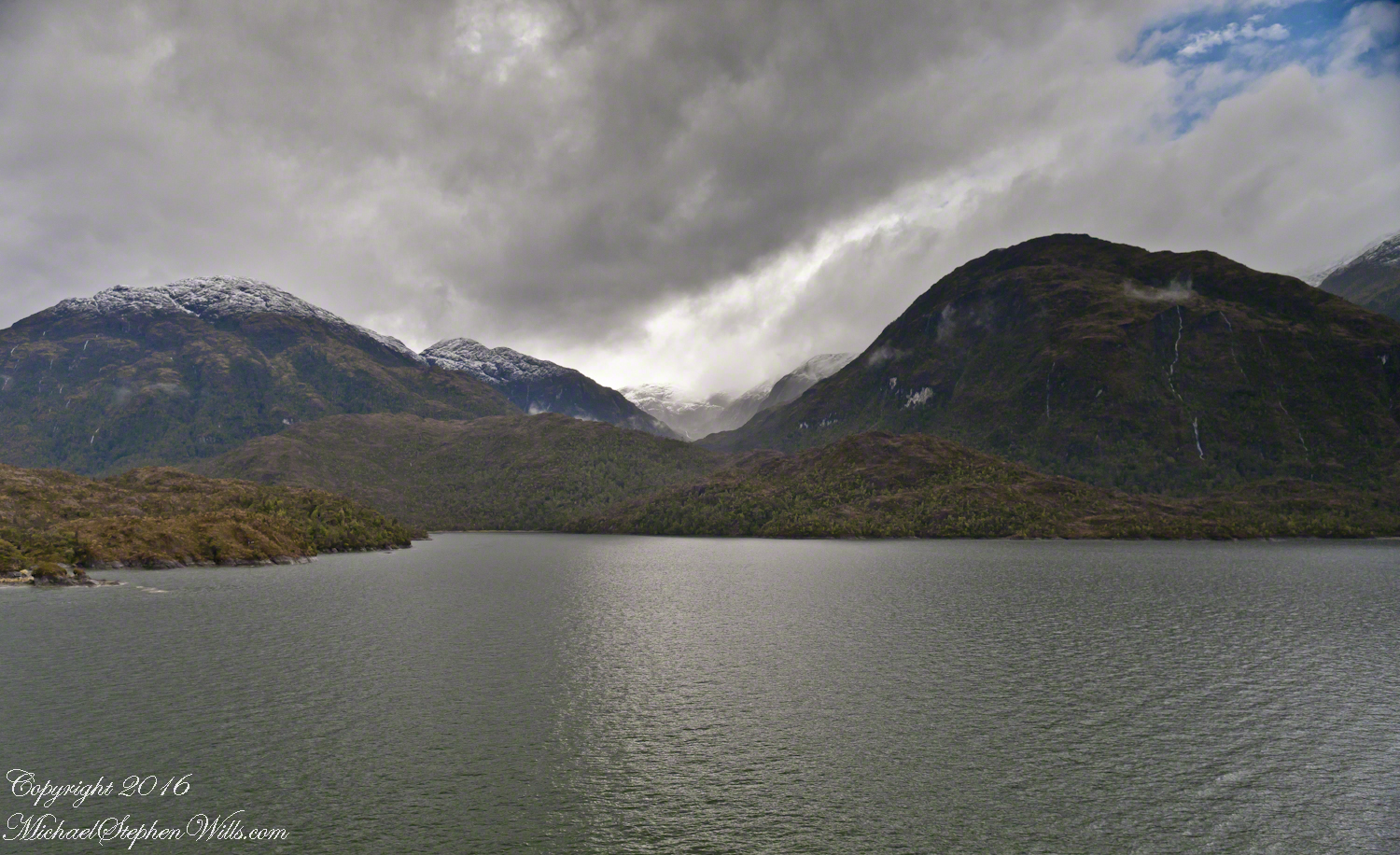
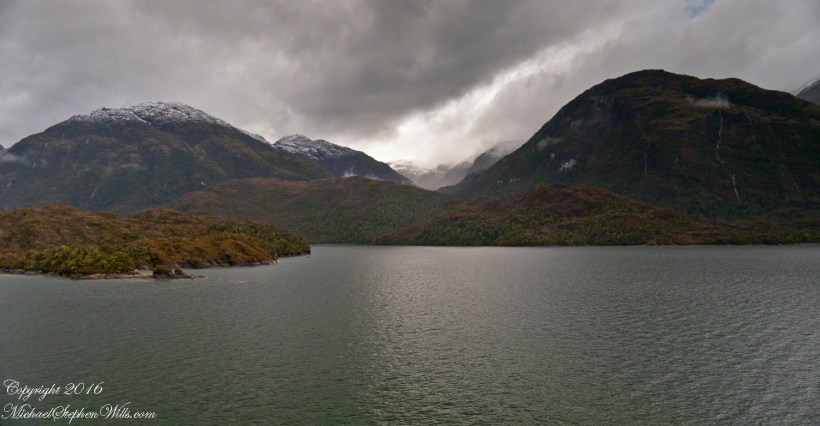
The waterfall marking the hanging valley is visible in the following photograph.   All photographs in this posting are from a Canon EOS-1Ds MarkIII, 24 mm lens (see above for complete name), on a Manfrotto travel tripod.  ISO 500, f5.6 or f6.3.

With a point of view about 50 feet above the water the valley bottom is hidden behind an 800 foot hill and the water fall is just above the hill.  See it?  …..I didn’t think so.

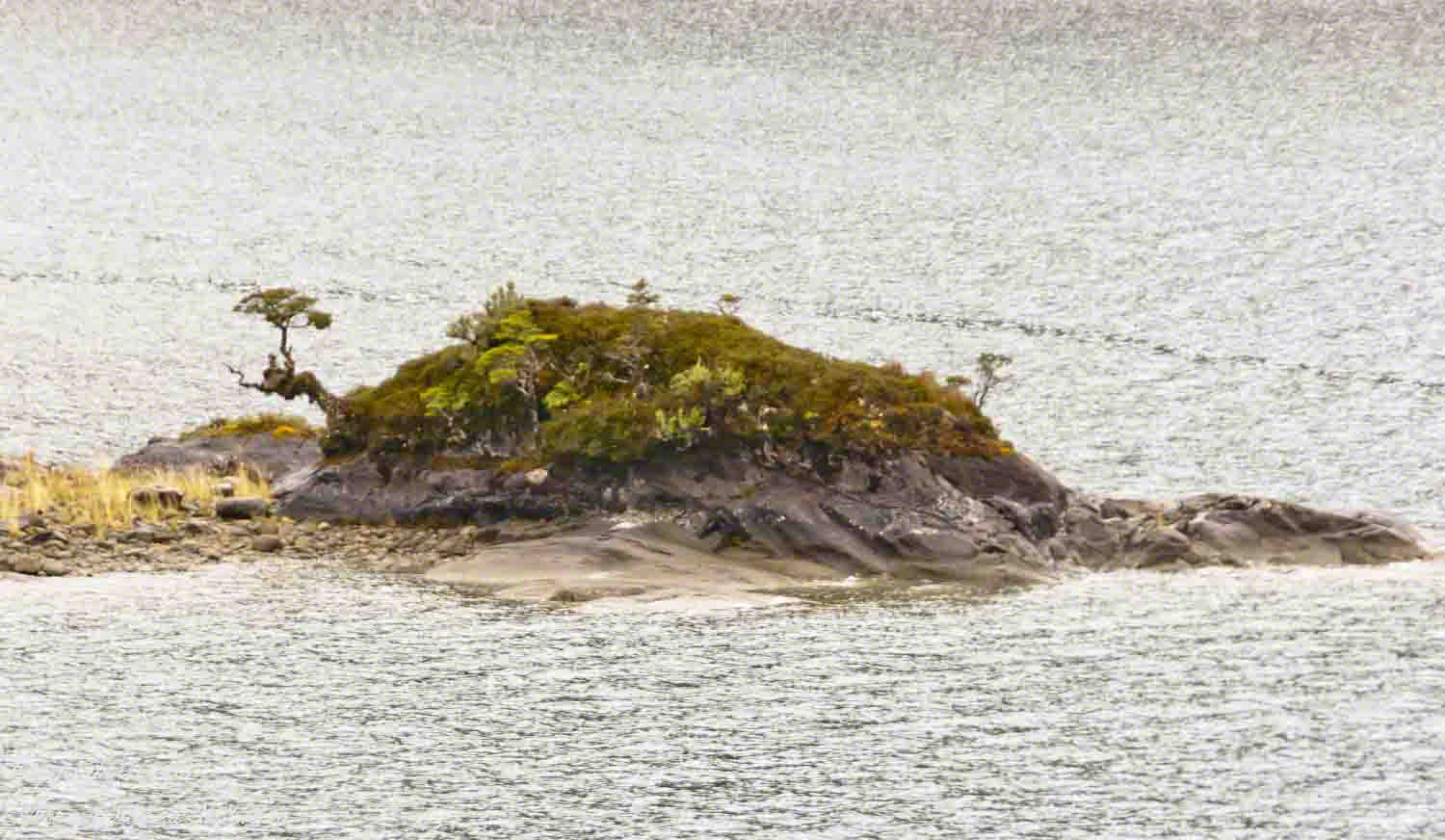
There is the island with the tree, to the left.  The following image is the same photograph, with the central section enlarged.

Fjord Island and Broad Valley– CLICK ME!!!!

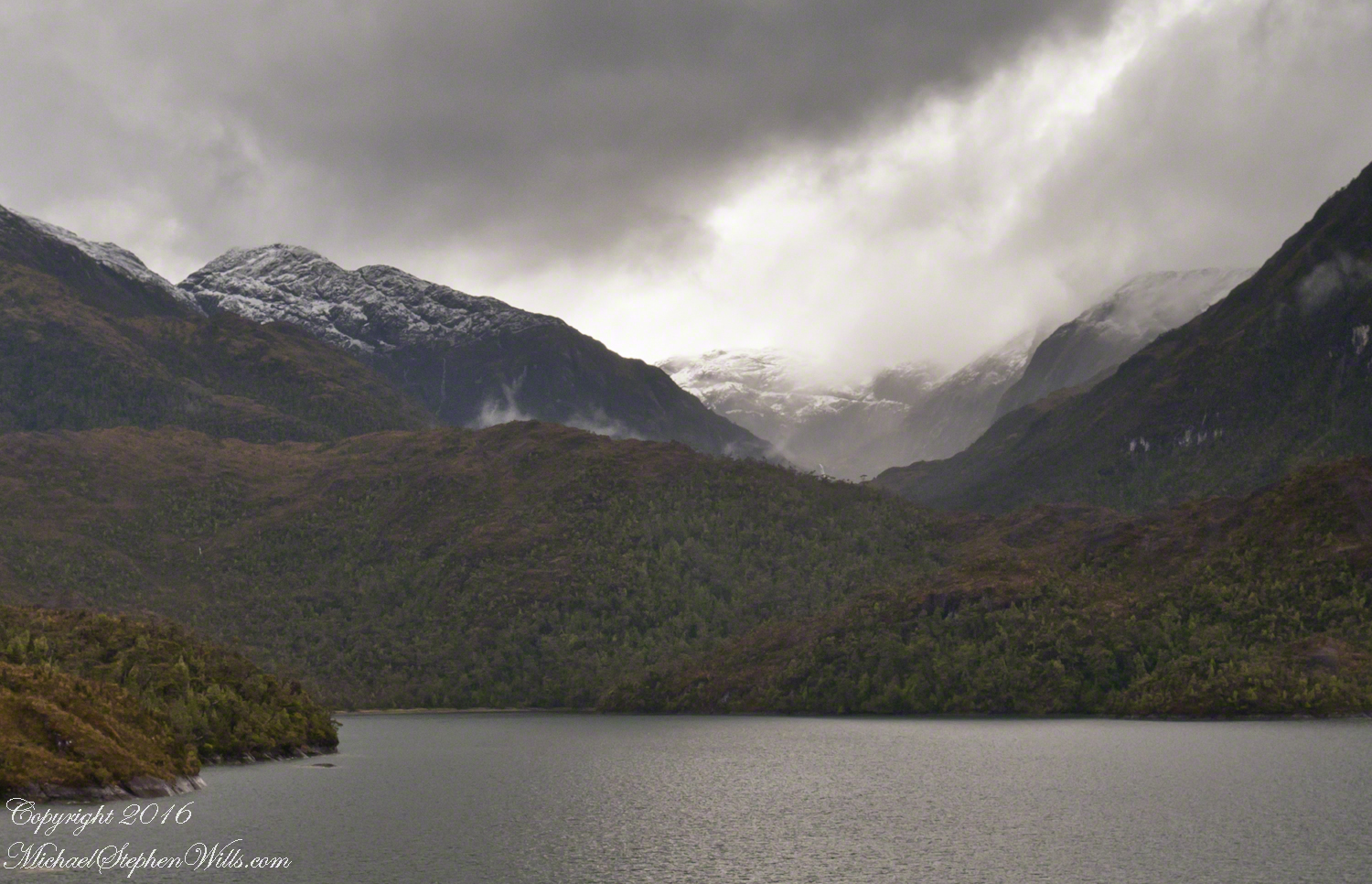
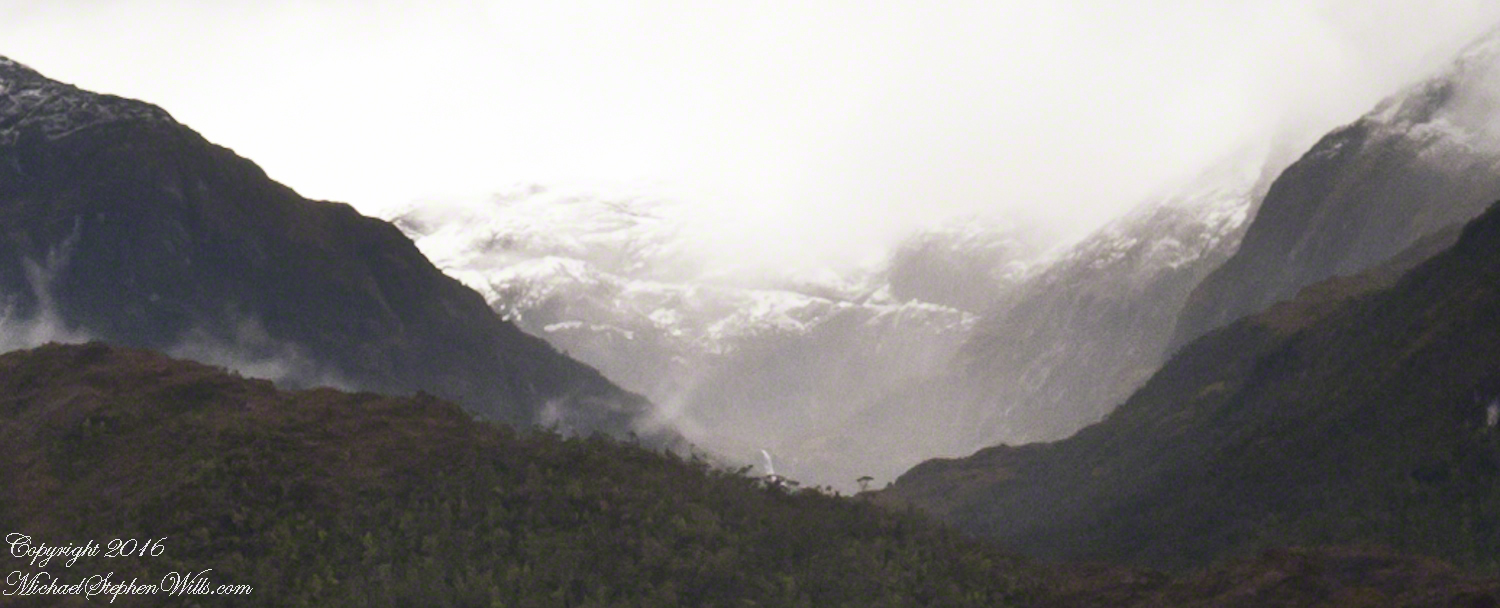
The enlargement brings out the play of light, the low clouds, deep in the valley.  To provide scale, know those are full sized pines on the hillside, foreground.  The waterfall is just about visible.  I will enlarge the image one more time.

Fjord Island and Broad Valley– CLICK ME!!!!

There it is!!  I stepped up contrast, as well.

Fjord Island and Broad Valley– CLICK ME!!!!

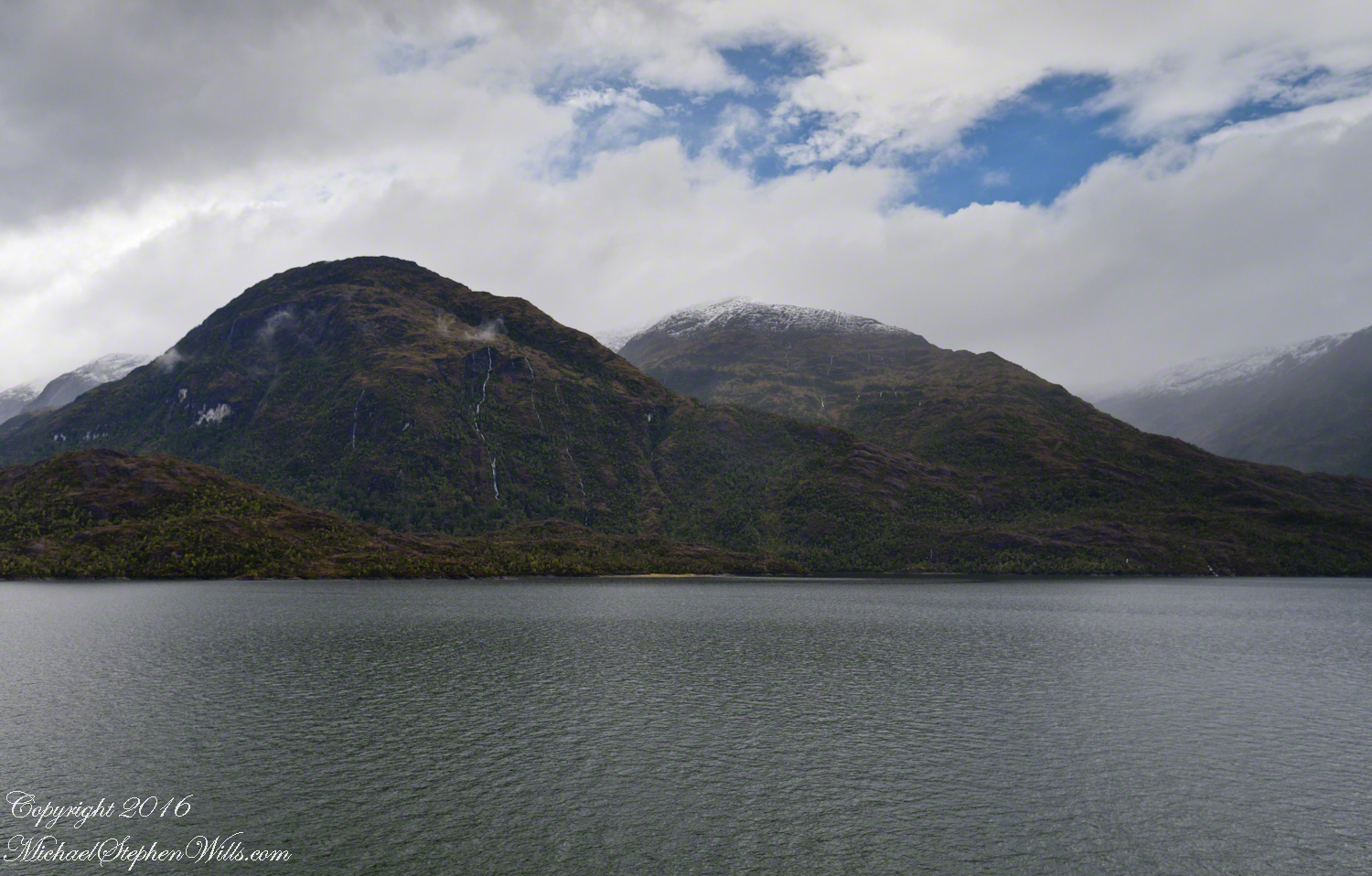
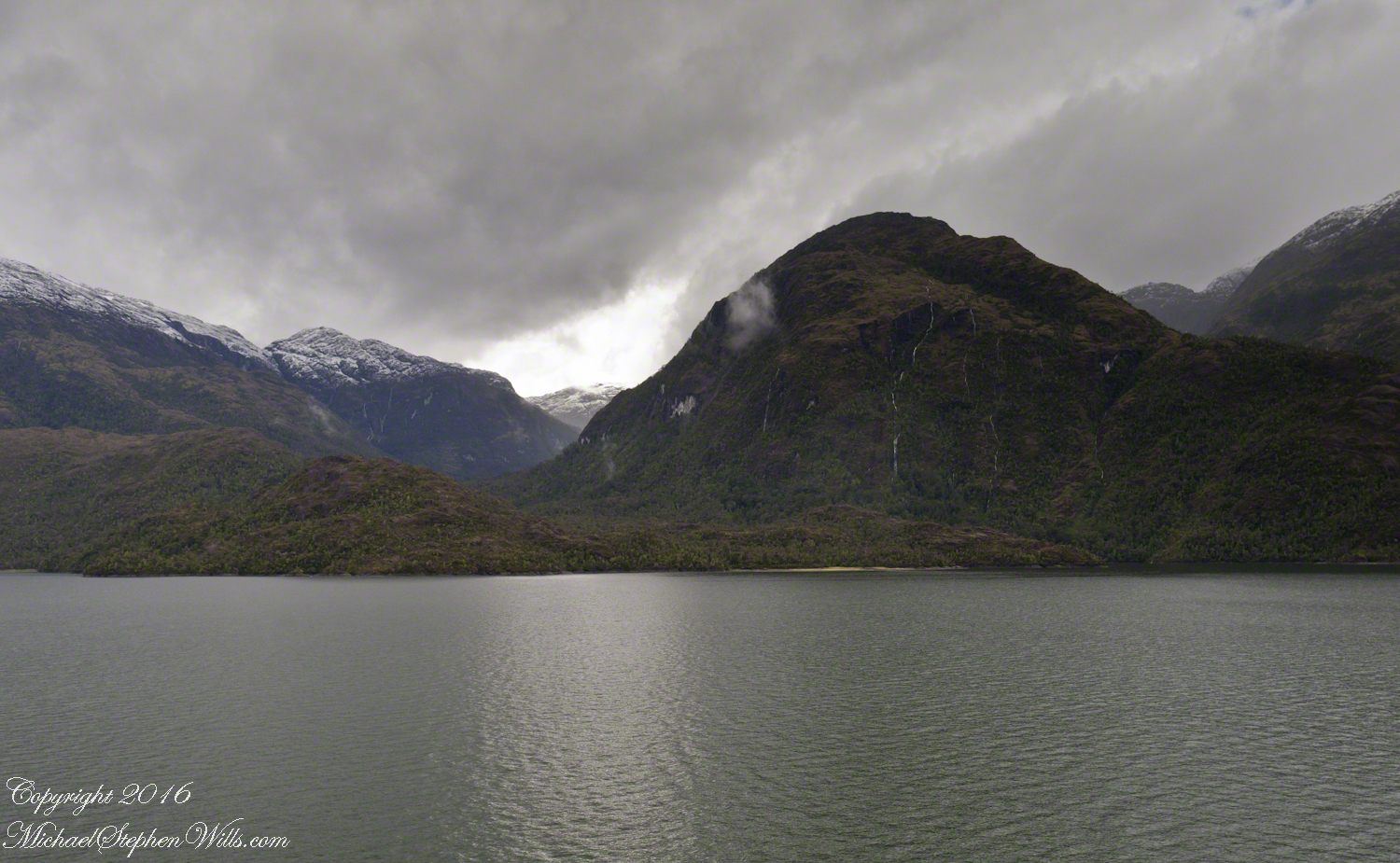
Here is another version of the original view.  That patch of sky had opened up seconds after the first shot and, as a result, the 3,000 door mountain and waterfalls, on right, are better lit.  Notice the bare rock face on the mountain slope, marking a landslide.

Click this image for a high resolution version, in your browser.

Fjord Island and Broad Valley– CLICK ME!!!!

A different landslide Scar is featured in two previous blogs,

A Far Country V: Landslides!!

A Far Country VI: View of Tempanos Fjord

The Regatta’s course brought us closer for the two following shots.

The lovely sky is still visible…..

Mountain and Waterfalls

….one minute later the clouds gather and relative darkness returns.

(Click any photograph to visit my online gallery)
Copyright 2022 Michael Stephen Wills All Rights Reserved

A Far Country X: Hanging Valley

amazing resolution with the Canon 24 mm lens

(Click any photograph to visit my online gallery)

The resolution of the Canon EF 24mm f/1.4L II USM makes this lens a favorite of mine for landscape work.  Let me show you why.

The valley today’s posting lies behind the tree.  It is a broad valley shaped by ancient glaciers.

Here is the Google Earth view, from an elevation of 9,400 feet, with the ship position marked.  Northwest is a pushpin titled, “Hanging Valley and Waterfall.”

A Far Country X– CLICK ME!!!!

The waterfall marking the hanging valley is visible in the following photograph.   All photographs in this posting are from a Canon EOS-1Ds MarkIII, 24 mm lens (see above for complete name), on a Manfrotto travel tripod.  ISO 500, f5.6 or f6.3.

With a point of view about 50 feet above the water the valley bottom is hidden behind an 800 foot hill and the water fall is just above the hill.  See it?  …..I didn’t think so.

There is the island with the tree, to the left.  The following image is the same photograph, with the central section enlarged.

Fjord Island and Broad Valley– CLICK ME!!!!

The enlargement brings out the play of light, the low clouds, deep in the valley.  To provide scale, know those are full sized pines on the hillside, foreground.  The waterfall is just about visible.  I will enlarge the image one more time.

Fjord Island and Broad Valley– CLICK ME!!!!

There it is!!  I stepped up contrast, as well.

Fjord Island and Broad Valley– CLICK ME!!!!

Here is another version of the original view.  That patch of sky had opened up seconds after the first shot and, as a result, the 3,000 door mountain and waterfalls, on right, are better lit.  Notice the bare rock face on the mountain slope, marking a landslide.

Click this image for a high resolution version, in your browser.

Fjord Island and Broad Valley– CLICK ME!!!!

The Regatta’s course brought us closer for the two following shots.

The lovely sky is still visible…..

Mountain and Waterfalls

….one minute later the clouds gather and relative darkness returns.

Fjord and Valley

(Click any photograph to visit my online gallery)
Copyright 2022 Michael Stephen Wills All Rights Reserved

A Far Country IX: Bonsai Shape

Compelling Plant Shapes

(Click any photograph to visit my online gallery)

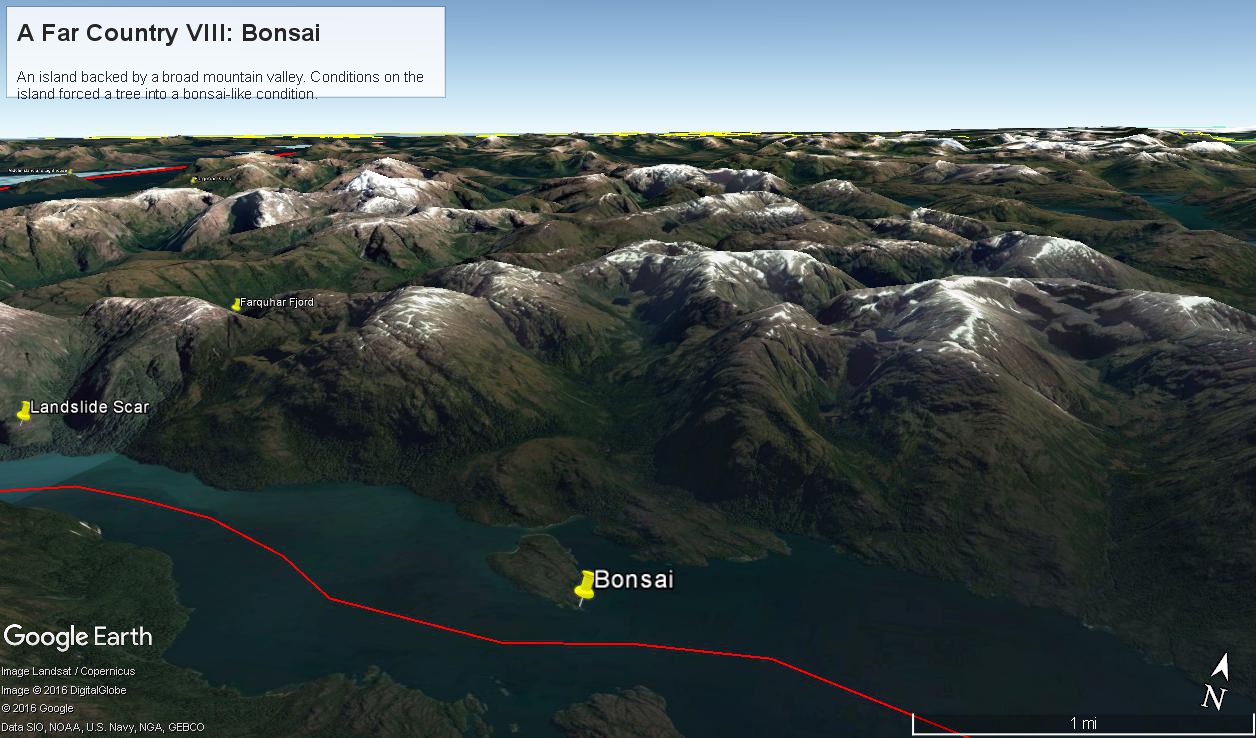
Here is a Google Earth view of Tempanos Fjord from 9,400 feet, looking north, northwest over a point on the fjord 6.5 miles from Iceberg Glacier, at 4 pm local time on February 17, 2016.  This view is interesting for the insignificant island, .75 mile long, and broad mountain valley to the north fringed with waterfalls.

Marked is the location of a tree, “bonsai”, a feature of the fjord cliffs, “Landslide Scar” and a neighboring Fjord, “Farquhar Fjord.”

This blog features the tree.

Tempanos Fjord View West, Northwest– CLICK ME!!!!

The Farquhar Fjord entrance opens onto the entrance of Tempanos Fjord and is the last photograph.

Tempanos Fjord View West, Northwest– CLICK ME!!!!

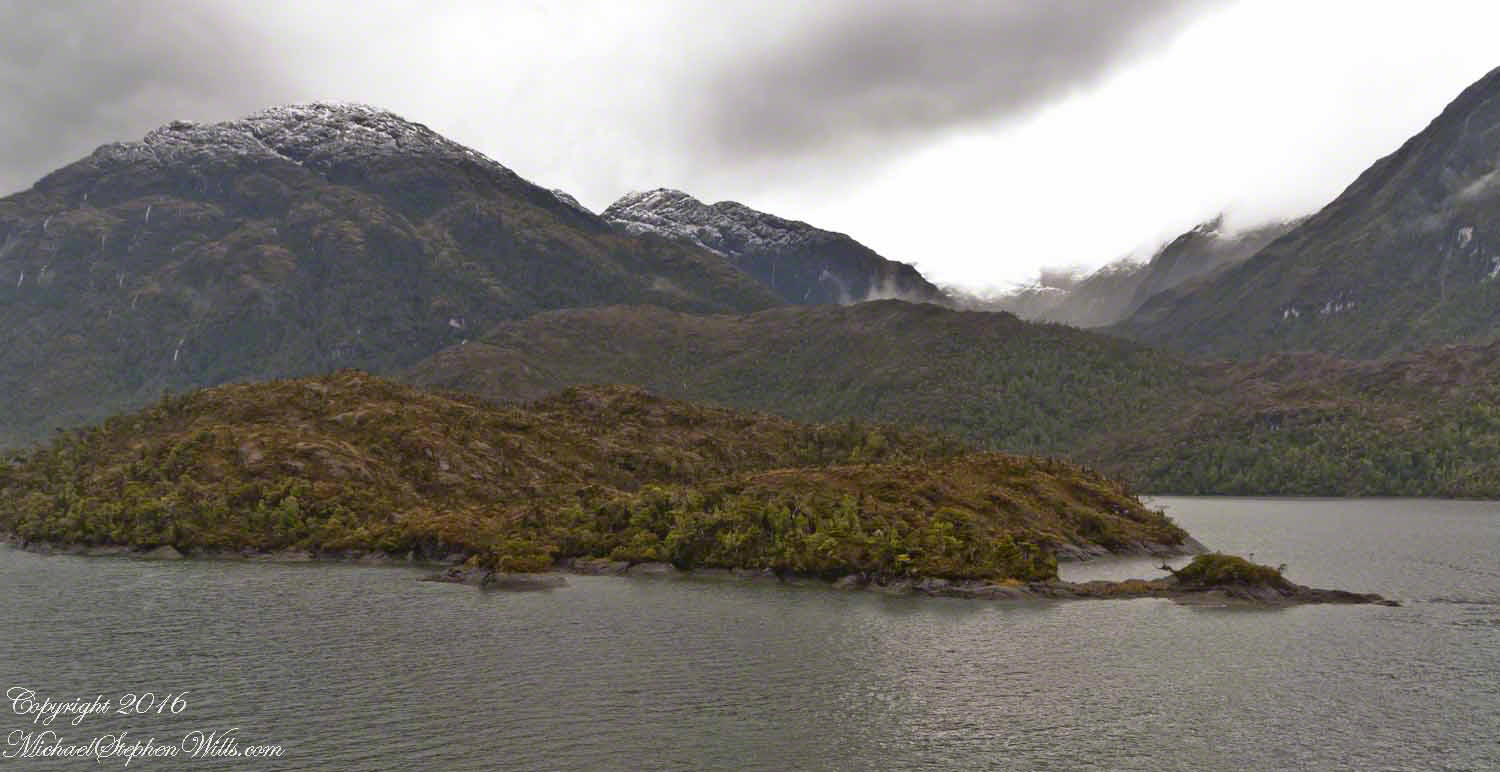
A photograph from our port side stateroom deck includes both the island and broad valley.  The misshapen tree, the “bonsai”, is on an islet to the right and in front of the island.  It is the small stump backlit by water reflection.  The stump is more interesting than can be seen in this image from a handheld camera, at 24 mm.  I used the variable lens for a closer look.
24 mm bonsai view– CLICK ME!!!!

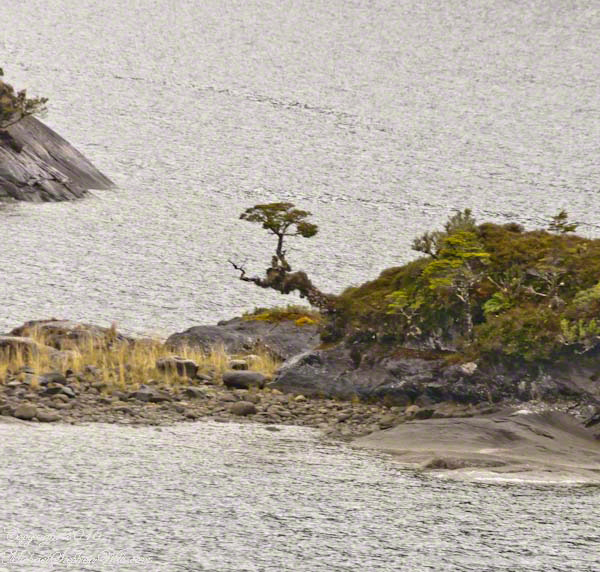
From this 133 mm, f8.0, 1/250 sec and ISO 800, still handheld, interesting details come into view.  The islet is a rock on which clings a bed of moss.  Several ferns, a sapling (on the far side) and a stump, on the right, are surviving.  The stump presumably supported a small tree of which a “bonsai-like” twig remains.

Bonsai are fascinating, created through the art and skill of emulating pleasing natural forms.  Here the moss encrusted twists and miniature tree crown were formed from a difficult environment.  Bonsai of Japan originated from an ancient Chinese tradition of penjing (“tray plant”).  The inspiration for this are, at origin and now, must be, in part, from admiration of the tenacity and beauty of these plants.

133 mm bonsai view– CLICK ME!!!!

At the 200 mm maximum my Sony Alpha 770 (1/400, f9, ISO 800) image is a little fuzzy, still with great details.

From my interest in bonsai I am on the lookout for shapes such as this. Travelling the challenging environment of the Chilean Fjords I found examples here and there.

200 mm bonsai view – CLICK ME!!!!


Click any photograph to visit my online gallery)
Copyright 2022 Michael Stephen Wills All Rights Reserved

Christmas Angels

Angels I Have Known

This is part of my project to document our Christmas memories through photography. Here we explore the themes angels of the Christmas Story and in our lives.

The angels of our Christmas tree and home remind us of the Jesus birth stories of scripture and the force of love in our own lives.

What comes to mind with the sudden appearance of Gabriel to Mary and that astounding message? Unlike the attempt of Jonah to avoid his calling, the subtext to Mary’s ready acceptance is the risks faced by an affianced woman who becomes pregnant. The book of Deuteronomy (Chapter 22 verses 13 – 21) calls for stoning a woman who presents herself for marriage as a virgin, when she is not.

When learning of Mary’s pregnancy, Joseph’s reaction, as a follower of Mosaic Law, was to divorce her quietly to avoid exposing her to shame. It was a visit from an angel, in a dream, that convinced Joseph to accept Mary (Matthew Chapter 2, verses 18 – 24).

ChristmasAngel-3

An angel visited shepherds, announcing “today in the city of David a savior has been born for you who is the Messiah and Lord.” Suddenly there was a multitude of the heavenly host with the angel, praising God.” Luke Chapter 2, verses 8 – 13.

ChristmasAngel-1

Was it an angel who warned the Magi, in a dream, not to return to King Herod with news of Jesus (Matthew Chapter 2 Verse 12)? Scriptures clearly state (Matthew Chapter 2 verse 13) “the angle of the Lord appeared to Joseph in a dream and said, ‘Rise, take the child and his mother, flee to Egypt.”

ChristmasAngel-4

People can be angelic in expressing love for others through action. I am thinking of a movie Pam and I viewed last evening, “The Theory of Everything.” Jane Wilde, in her love for Stephen Hawking, stays with him when, shortly after their romance began, he was diagnosed with ALS. The prognosis was death in two years. In all likelihood, Jane gave Stephen his life and work through loving him. He is alive and working today at 75.
Nested Angel

The love of our parents is more common, no less precious.

ChristmasAngel-7

A note on the photographs, I used a Canon EOS-1Ds Mark III dslr with Canon lens EF 50 mm f/1.2L, Canon Speedlite 600Ex-Rt, Manfrotto studio tripod and hydrostatic ball head.  Some of the photographs were hand held.  When the flash was used, it supplemented ambient light from a large north facing bay window.

Abstracts: graceful shadows

Shadow and Rock

Two Nature Abstracts, macros of Reavis Creek below the falls

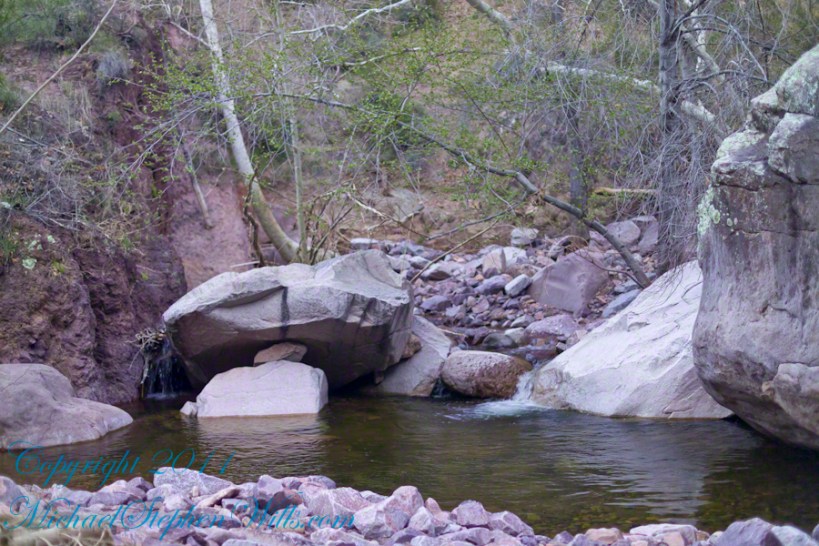
The light of a early spring desert afternoon on a broad rock shelves along the creek.

I spent a day hiking in, two days hiking out and a day of canyoneering to the foot of Reavis Falls. The featured (i.e. “header”) photograph is a view of the inner canyon, the raw material for these abstracts.

Click this Link for a Superstition Wilderness Adventure

Waterfall Textures

Unrestrained chaos at the foot of Arizona’s highest waterfall

I received notice of IStock acceptance of select photographs from my last posting, “Wilderness Textures”, was accepted.  Click to view my IStock Portfolio, including  photographs from today’s posting included in the acceptance notice.

In this post I move up the Reavis Creek canyon from where the last posting, “Wilderness Textures”, was sited to the foot of Reavis Falls.  With the first photograph you look up at the falls from the head of the canyon carved by the creek over eons.  The rock wall, the canyon “head”, is thick with microorganisms, fungi, mosses.

Reavis Creek Water and Light – CLICK ME for more abstract photography.

In the foreground is a jumble of boulders, some washed down at flood time, spread wide at the bottom of the falls, piled to a jumbled height of 15 feet. 

Talus is the geological term for this formation.  Derived from the Latin word for slope (talutum) the definition, from the Oxford English Dictionary, is “A sloping mass of detritus lying at the base of a cliff or the like consisting of material fallen from its face.” 
 

The ankle bone is also called talus, from the French word for heel, I bring it up because climbing this chaotic, unstable jumble is a way to break your ankle.  The route to Reavis Falls, a climb up one side of Lime Mountain then down the other on a non-existent (lightly marked) trail, is rated difficult and impossible with a broken leg or ankle.  I was alone and very careful to check each rock for stability before putting my weight on it.
A climb of the talus pile was necessary to view the pool at the waterfall base, for this photograph.

A more artistic vertical format version, below, captured with the Canon EF 100mm “macro” lens.  All shots are using the Kodak DCS pro SLR-c (the “c” designated Canon lens compatibility) and a Manfrotto studio tripod with a hydrostatic ball head.  The horizontal format shot was captured with a Canon EF 50mm f/1.4 USM lens.   I prefer the vertical version, artistically, because the talus jumble is all but cropped out while the upper corner of the angular basalt boulder is left as an interesting focal point.  The boulder, not being in the spray, is in focus to contrast with the basalt wall behind the water.

I captured a series of shots from this precarious vantage point, working up from the pool to the brim of the waterfall.

My goals was a composite photo of the falls.  I have yet to succeed with this project.  Maybe I will give it one more shot in spite of having learned the hard lesson the best photographs are a single moment captured in a single frame.

I find in this series the vertical aspect is more artistic.  The water volume, of the falls, at this time of year offers only the finest of sprays with most of the basalt rock wall only moist.  The 100mm “macro” lens allowed me to include only the falling water with a bit of the moist wall for contrast.

In the following version I experimented with color, moving from the narrow range of hues, to more contrast.

Please browse my reasonably priced stock photography. License a photograph, download and use it for your website or blog. Click this link to browse all my Getty IStock Photography offerings.

Or click this link or any photograph or this link to select a print with custom framing from my “Textures” Fine Art Gallery.

Here’s another of my Arizona wilderness adventures, “Racing the Sun.”

Wilderness Textures

Abstract Beauty of the Superstition Wilderness of Arizona

These abstracts are some of my photographic output from four days and nights spent alone in the remote eastern Superstition Wilderness.  For the first three days I met not a soul, all these images were captured on a single afternoon spent in the canyon below Reavis Falls, a jumble of landslides, flood debris and boulders.  There is no trail.  The few people who enter the canyon must negotiate around boulders, crossing Reavis Creek many times.

Reavis Creek Water and Light – CLICK ME for more abstract photography.

My backpack kit included a full sized Manfrotto studio tripod with hydrostatic ball head.  The benefits more than outweighed the effort (I was a lot younger in 2008) when the Canon EF 100mm (macro) lens is mounted on a  Kodak dSLR body, allowing me to take crisp shots.  The tripod legs can be adjusted to precise positions for stability.

Reavis Creek Water and Light – CLICK ME for more abstract photography.

I can feel the bright afternoon desert spring sunshine in this photos.  It was after the spring floods, the flow of Reavis Creek and ample still but slow.  Gathering in pools over the rough stones of the creek bed, the water absolutely clear.

Reavis Creek Water and Light – CLICK ME for more abstract photography.

I held the shot over many minutes, capturing ever changing diffraction patterns.

We see in all these photos, not a homogenous blend of stones from a shared geology.  Reavis Creek washes over diverse geologies: volcanic, ancient igneous extrusions, sedimentary and metamorphic are jumbled together.

Reavis Creek Water and Light – CLICK ME for more abstract photography.

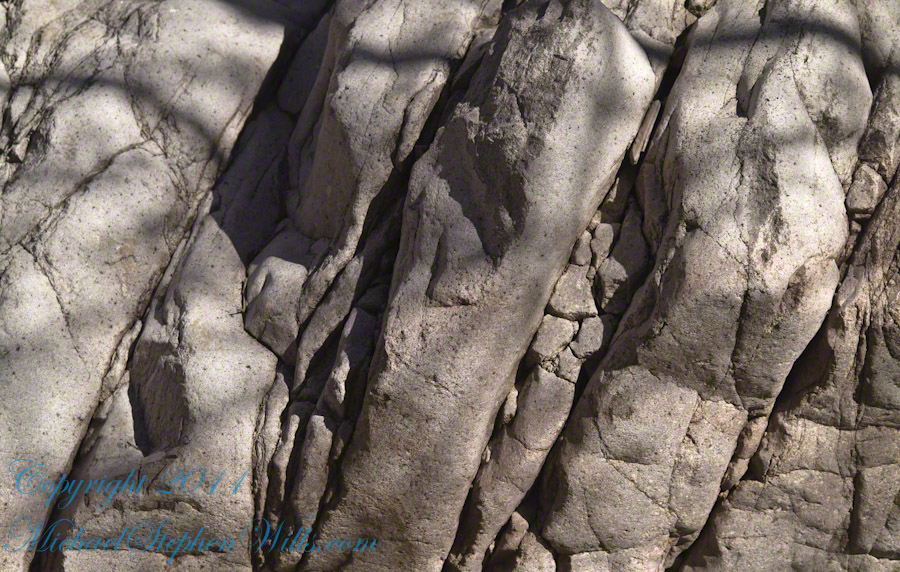
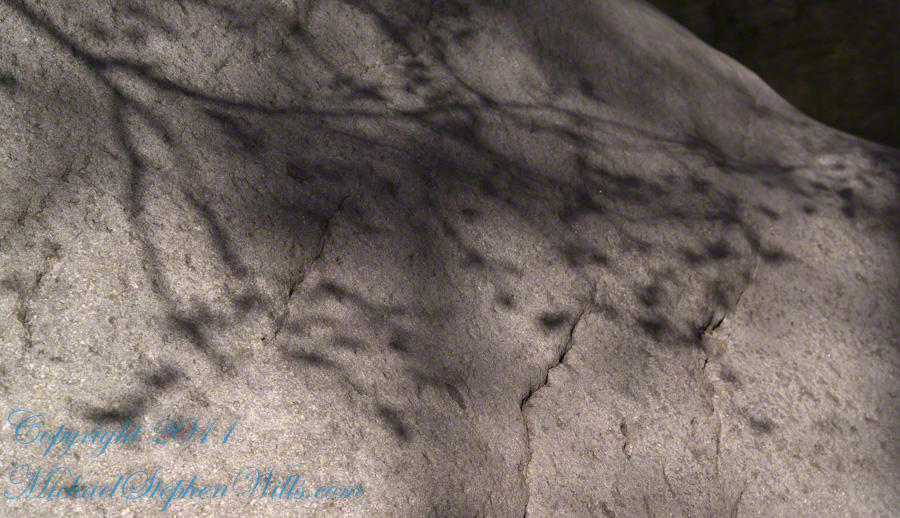
This is a series of photographs of smooth, white igneous boulders with shadows of  still leafless sycamore and cottonwood trees.

Reavis Creek Water and Light – CLICK ME for more abstract photography.

Graceful shadows

Reavis Creek Water and Light – CLICK ME for more abstract photography.

Strong, demonstrative shadows.

Reavis Creek Water and Light – CLICK ME for more abstract photography.

A leaning cairn, not a trail marker….

Reavis Creek Water and Light – CLICK ME for more abstract photography.

A 15 foot high jumble of stones piled at the bottom of Reavis Falls, carried over by the floods.

Reavis Creek Water and Light – CLICK ME for more abstract photography.

A metamorphic conglomerate stone….

Reavis Creek Water and Light – CLICK ME for more abstract photography.

Another metamorphic conglomerate.

Reavis Creek Water and Light – CLICK ME for more abstract photography.

Please browse my reasonably priced stock photography. License a photograph, download and use it for your website or blog. Click this link to browse all my Getty IStock Photography offerings.

Or click this link or any photograph or this link to select a print with custom framing from my “Textures” Fine Art Gallery.

Here’s another of my Arizona wilderness adventures, “Racing the Sun.”