Taughannock Falls State Park: A Geological and Ecological Marvel

Taughannock Falls, a majestic 215-foot waterfall, showcases nature’s beauty and power, intertwining geological history with vibrant ecosystems in New York.


Introduction
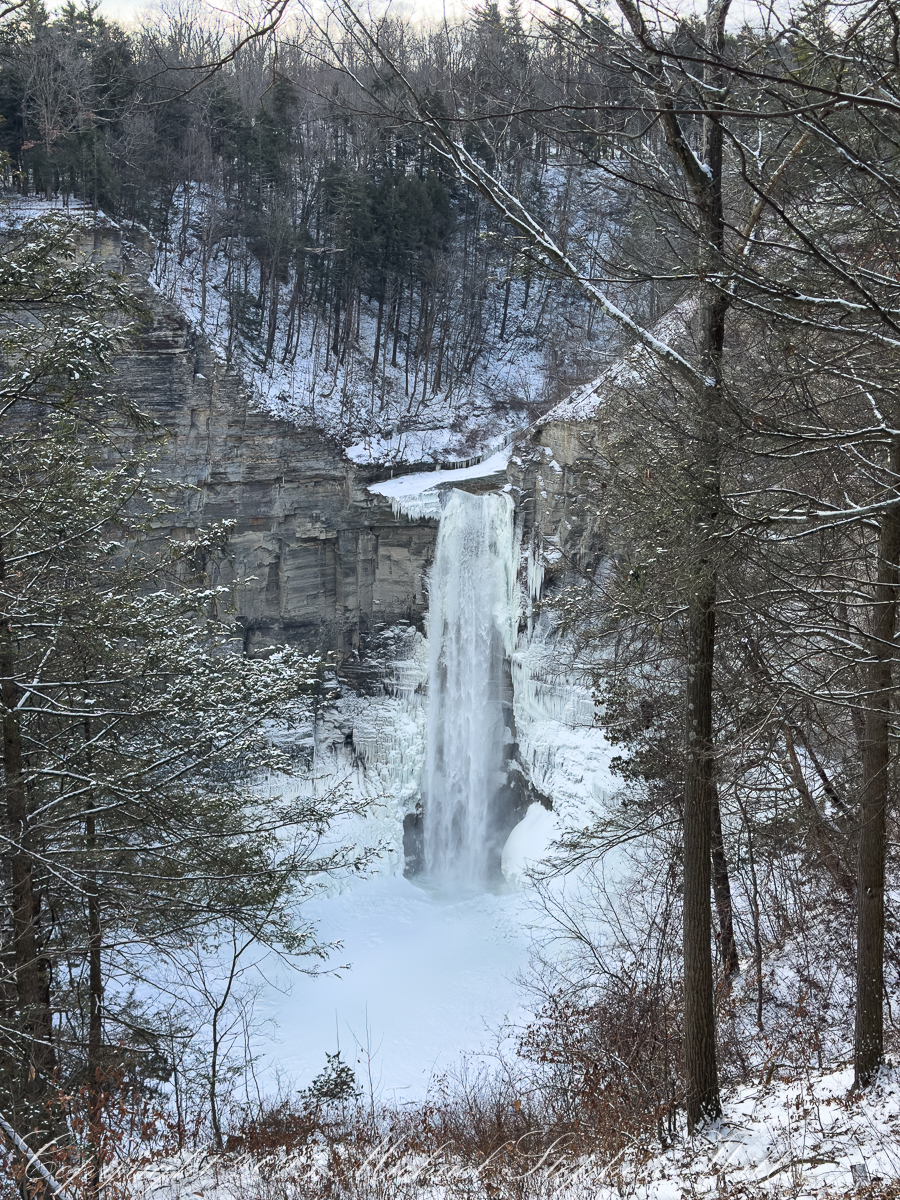
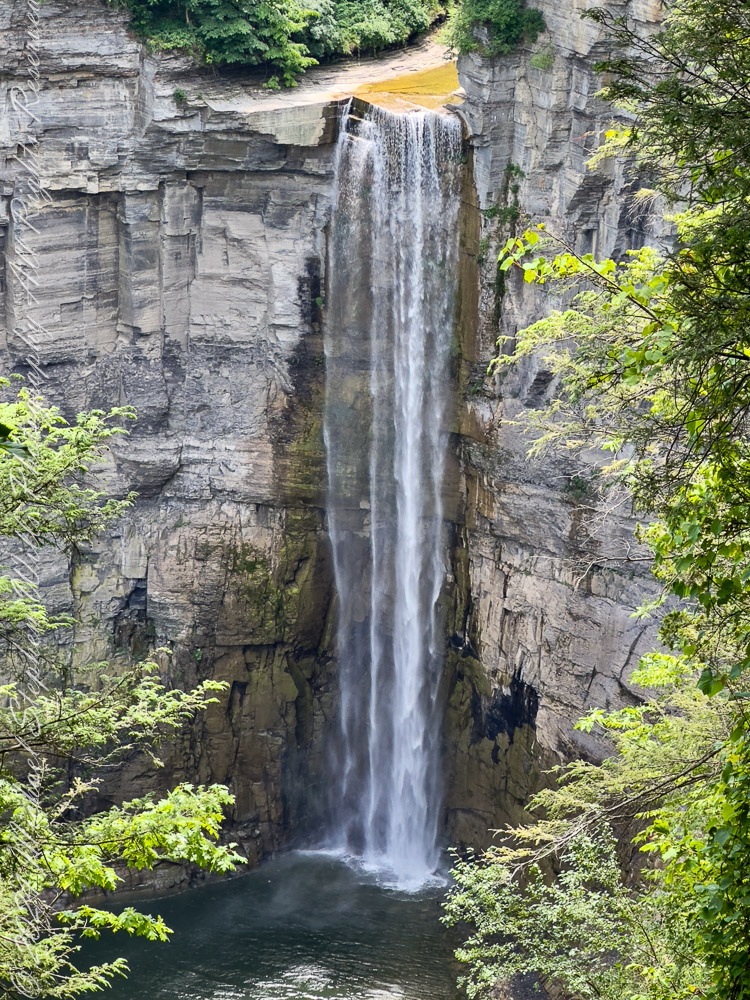
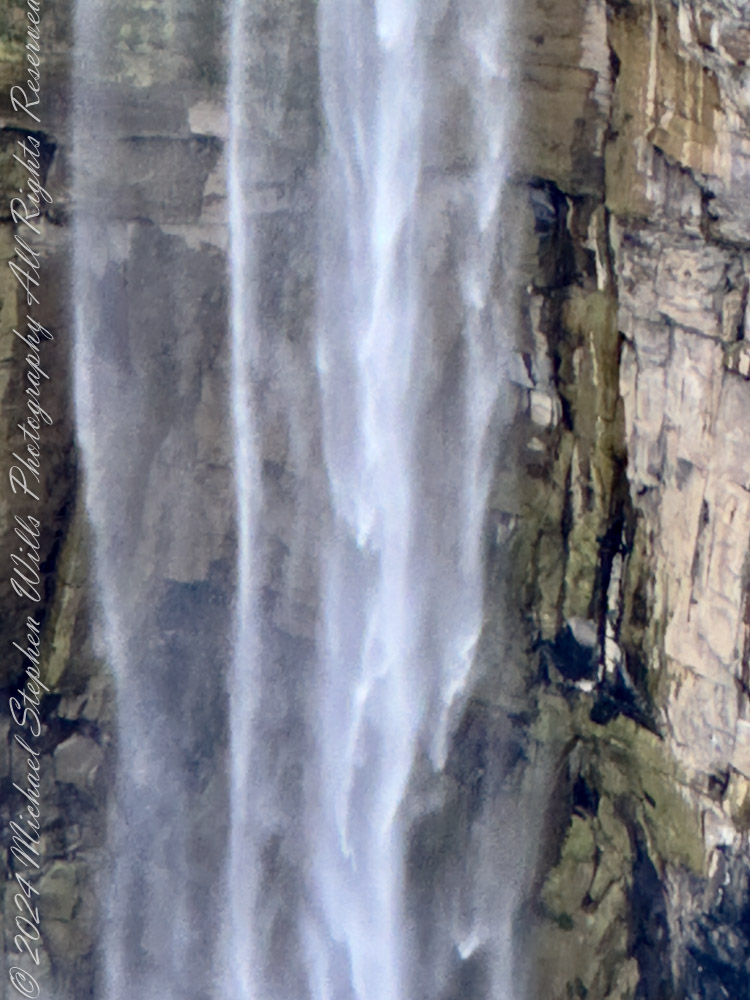
Nestled in the heart of the Finger Lakes region of New York, Taughannock Falls stands as a testament to the delicate balance of power and beauty in nature. This iconic waterfall plunges 215 feet—one of the tallest single-drop waterfalls east of the Rocky Mountains—into a gorge whose story is written in stone. The park surrounding this natural wonder offers a symphony of sights, from towering cliffs to lush greenery, inviting visitors to explore its ancient secrets and vibrant life.

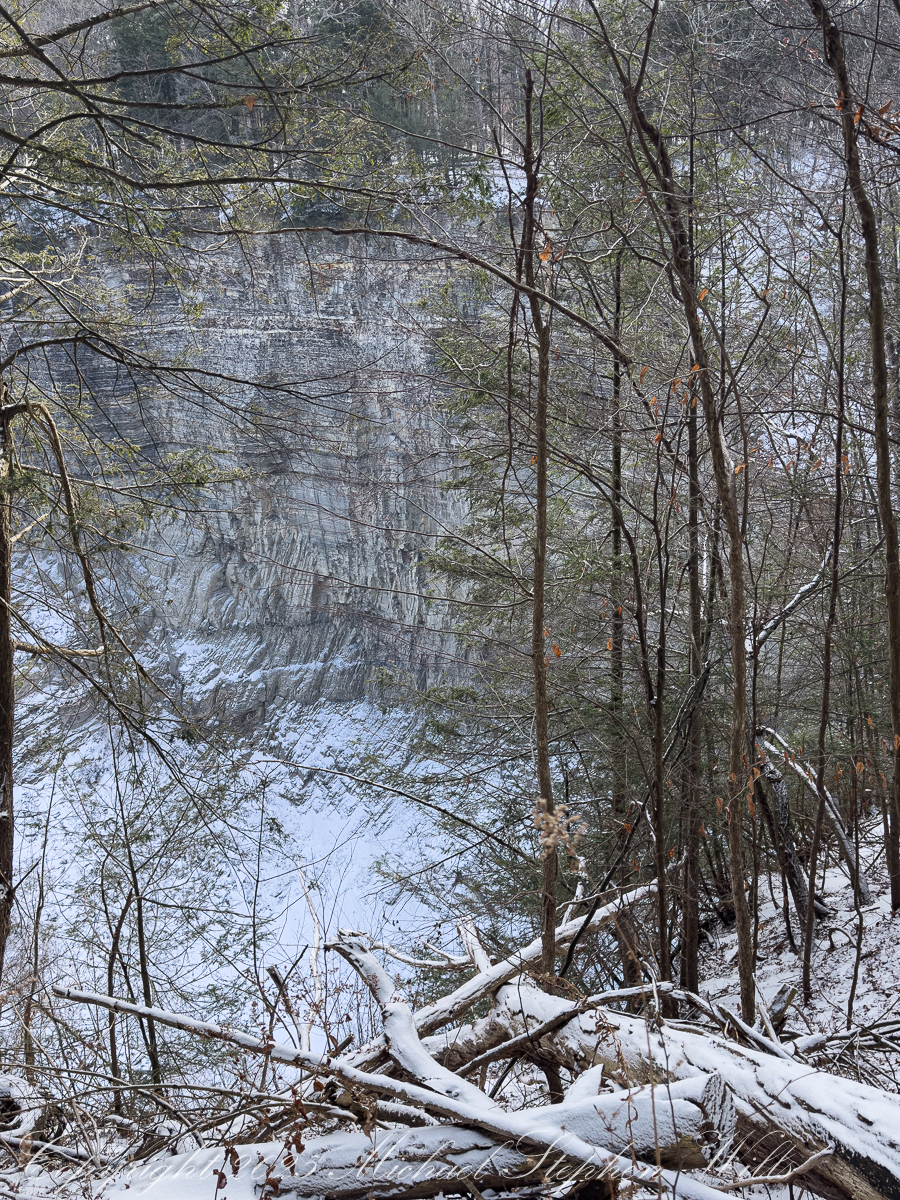
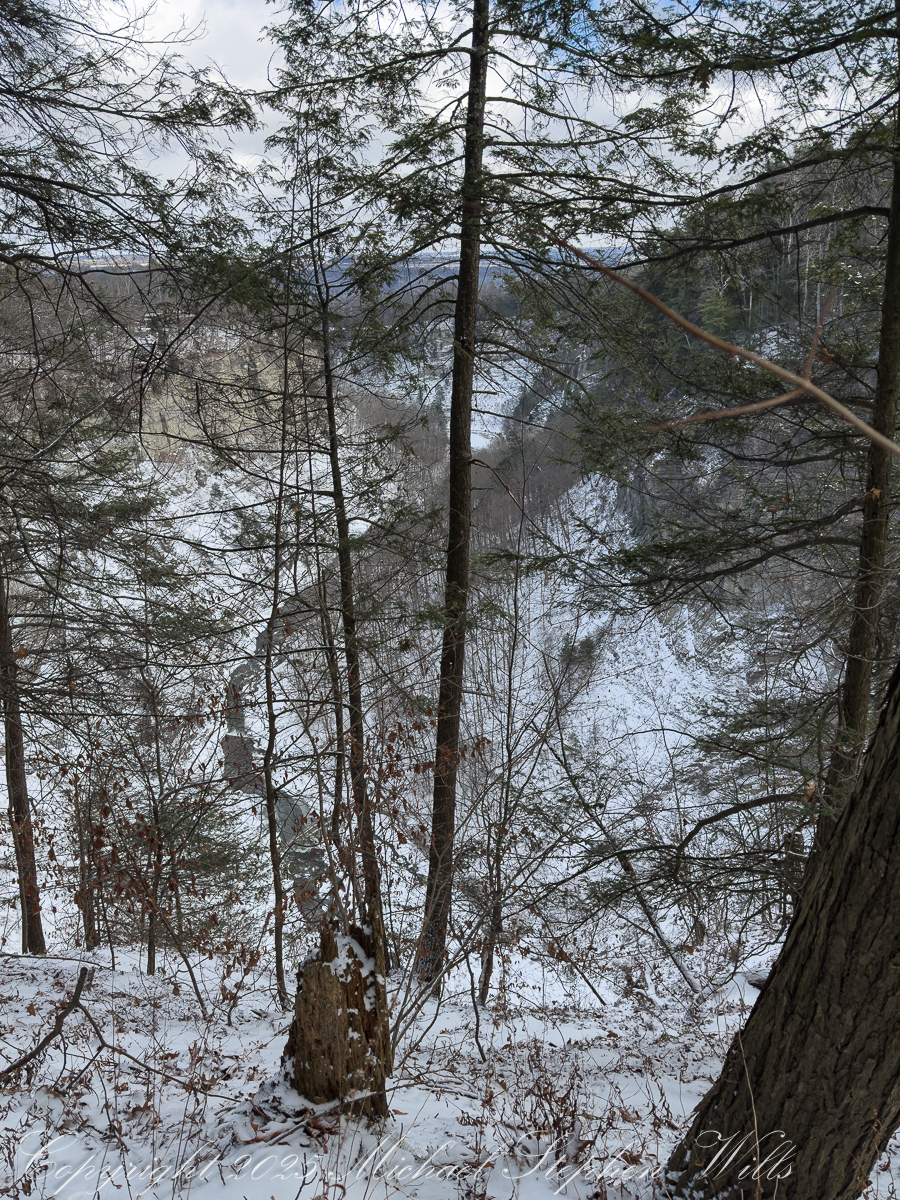
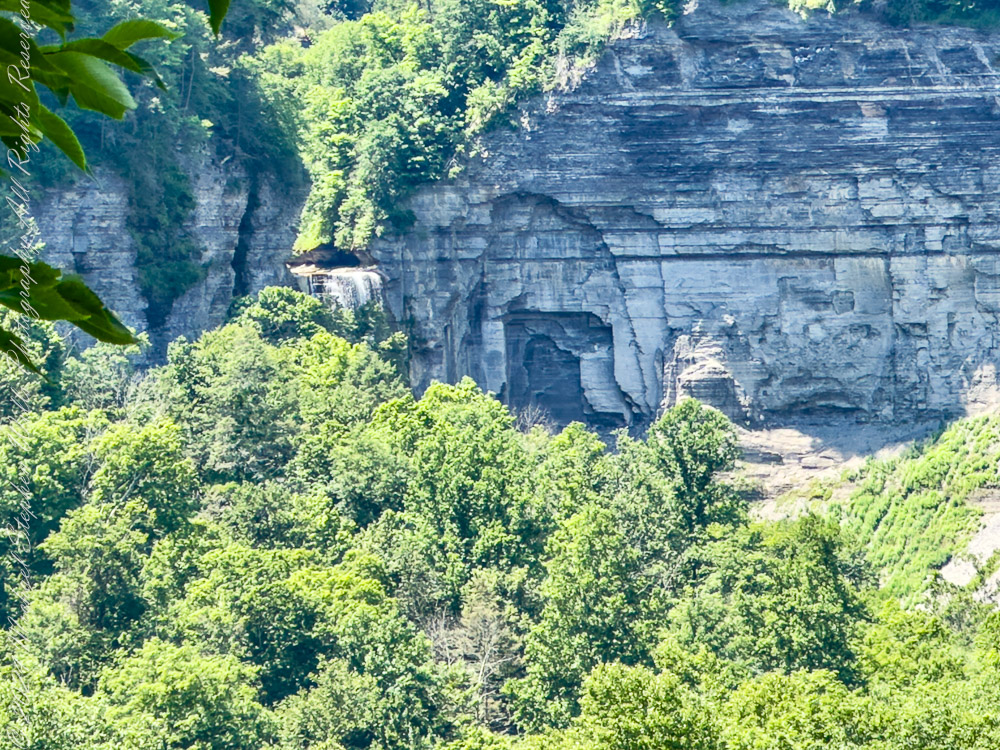
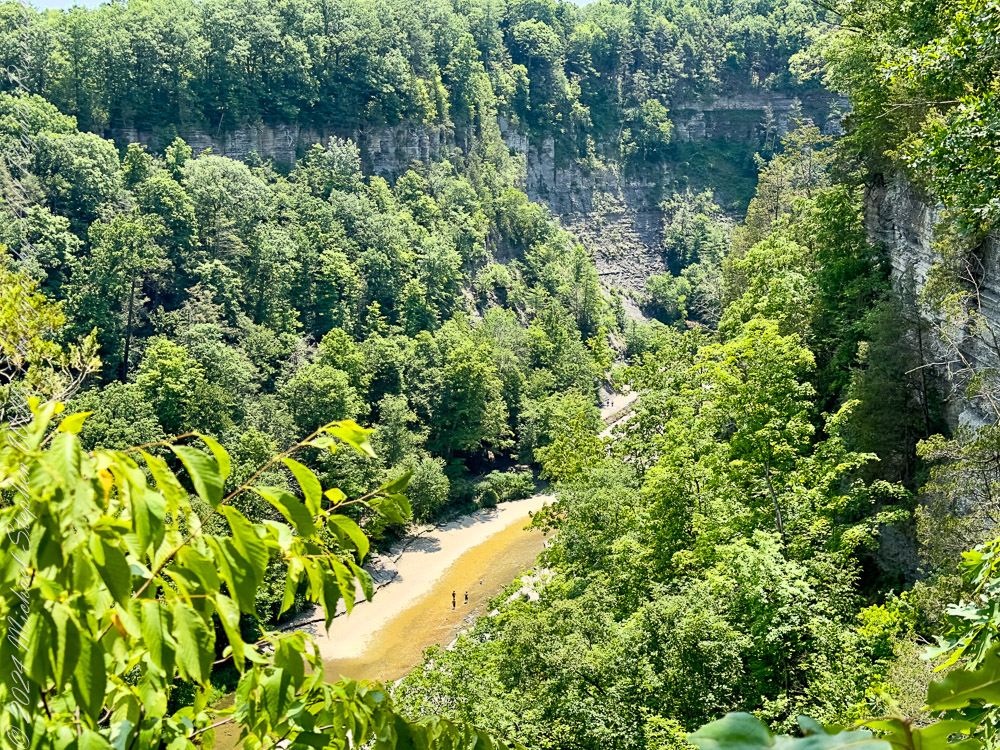
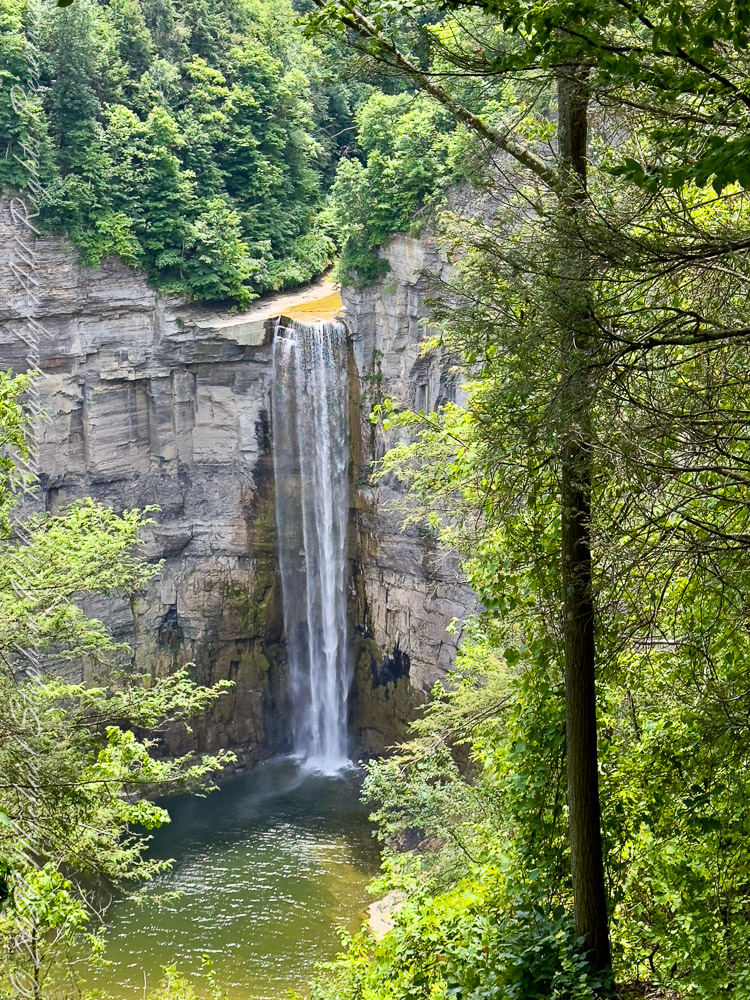
View of taughannock Falls from the South Rim Trail. Taughannock Falls New York State Park, Trumansburg, Tompkins County, Finger Lakes Region

A Story Written in Stone
The rocks of Taughannock Falls tell a story that stretches back 380 million years to the Devonian Period, a time when the region was submerged beneath a shallow inland sea. Layer upon layer of shale, sandstone, and limestone formed as sediment settled to the ocean floor, preserving the fossils of marine life that once thrived here. These rocks have endured the passage of eons, but the gorge itself is a far more recent creation.

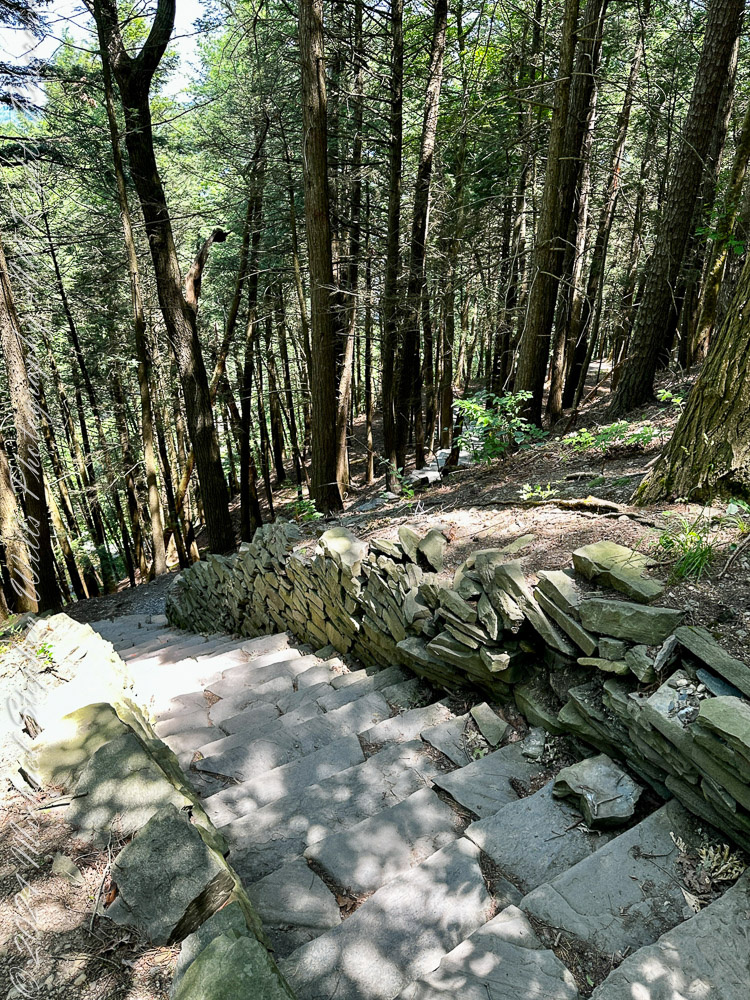
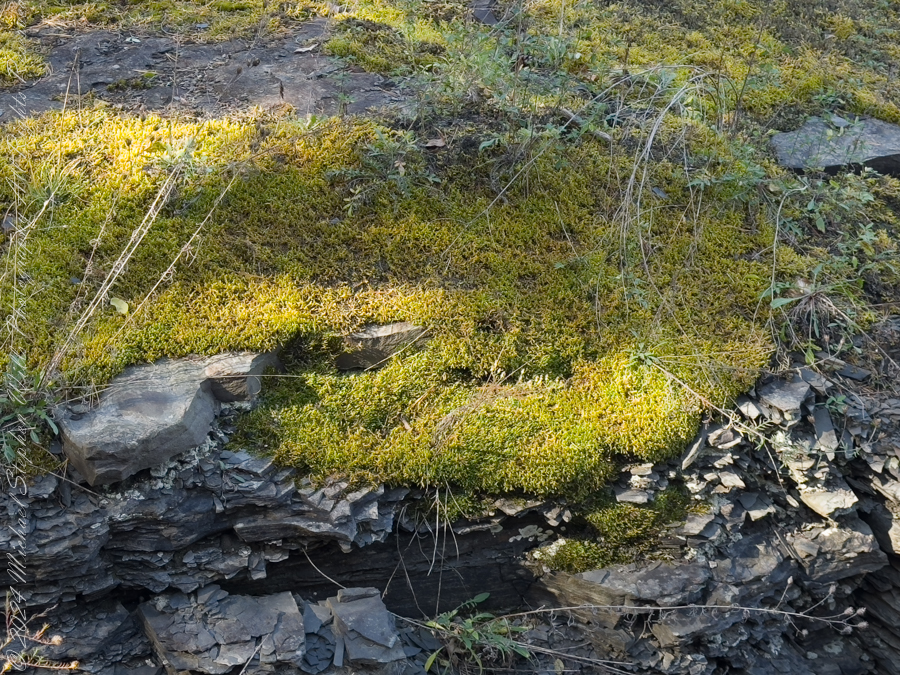
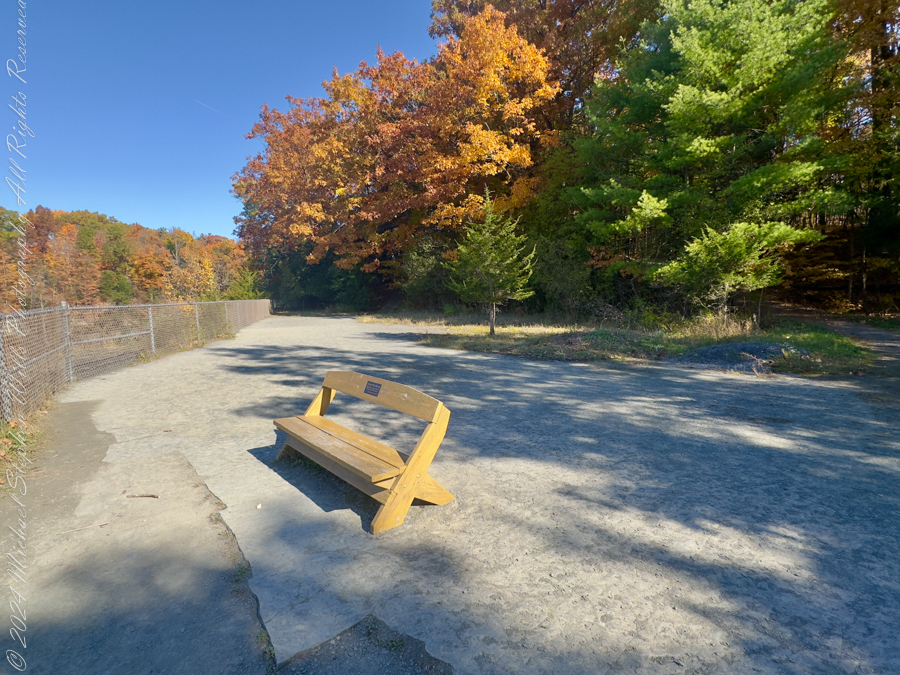
Limestone Steps on the South Rim Trail descend to the gorge floor.

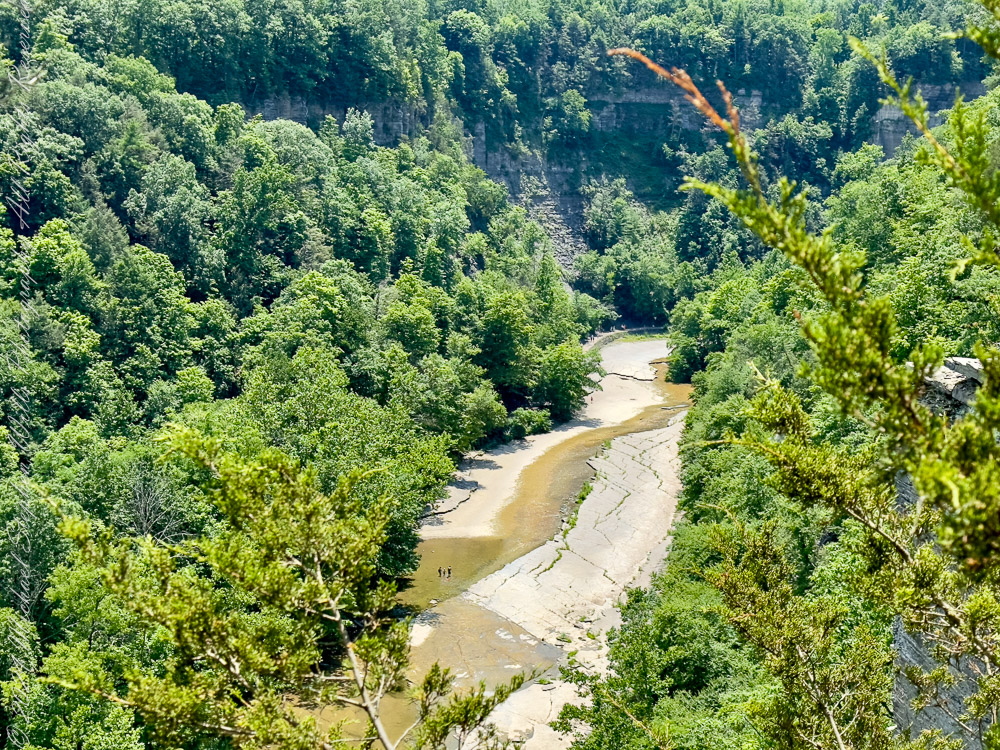
It was the retreat of the mighty Laurentide Ice Sheet, approximately 10,000 years ago, that set the stage for Taughannock’s grandeur. As glaciers melted, torrents of water carved the U-shaped valleys that now cradle the Finger Lakes. Taughannock Creek, a tributary of Cayuga Lake, began its work, etching its path through ancient rock, sculpting the gorge we see today. In just 10,000 years—a fleeting moment in geological time—the relentless force of water carved its way 3/4 of a mile upstream, creating the awe-inspiring chasm and waterfall that continue to evolve even now.

Taughannock Creek carved this landscape over thousands of years.

The Gorge’s Living Tapestry
Beyond its geological wonders, Taughannock Falls State Park bursts with life. Along the North and South Rim Trails, Eastern Hemlocks (Tsuga canadensis) stand tall, their evergreen branches weaving shadows that dance across stone stairways and forest floors. These silent sentinels are habitats for myriad creatures and protectors of the delicate ecosystem.

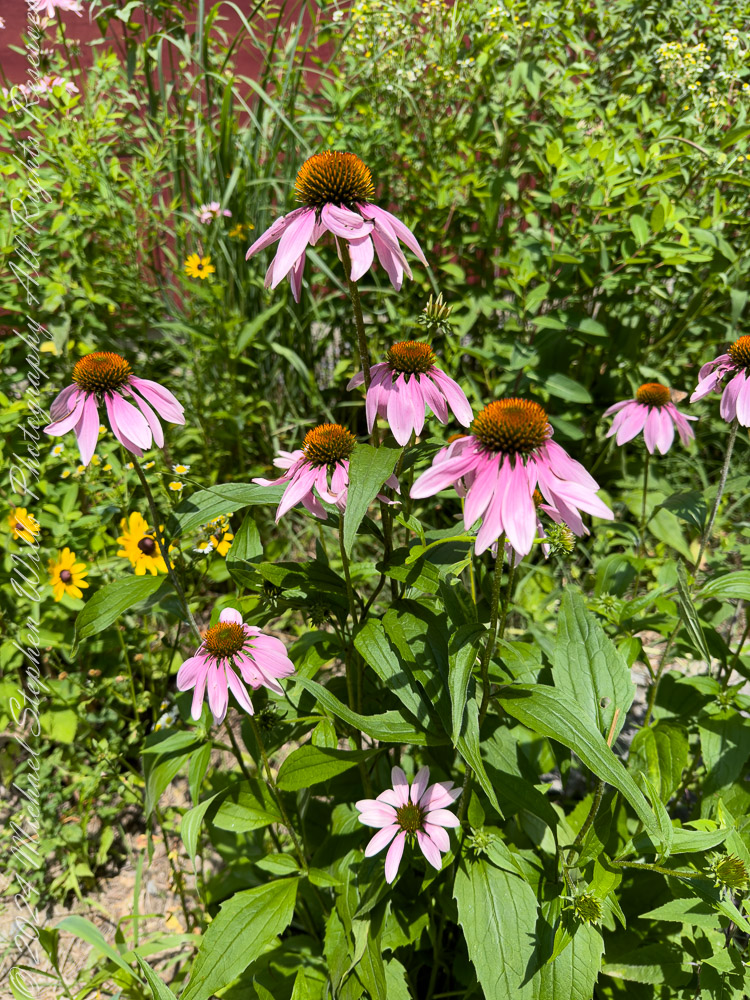
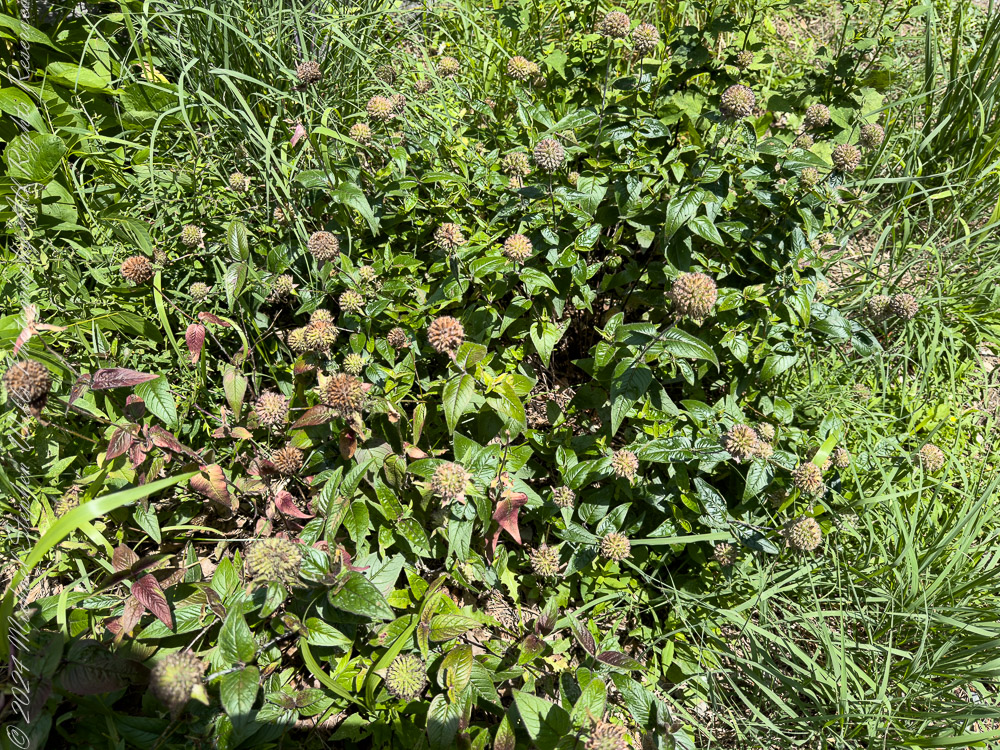
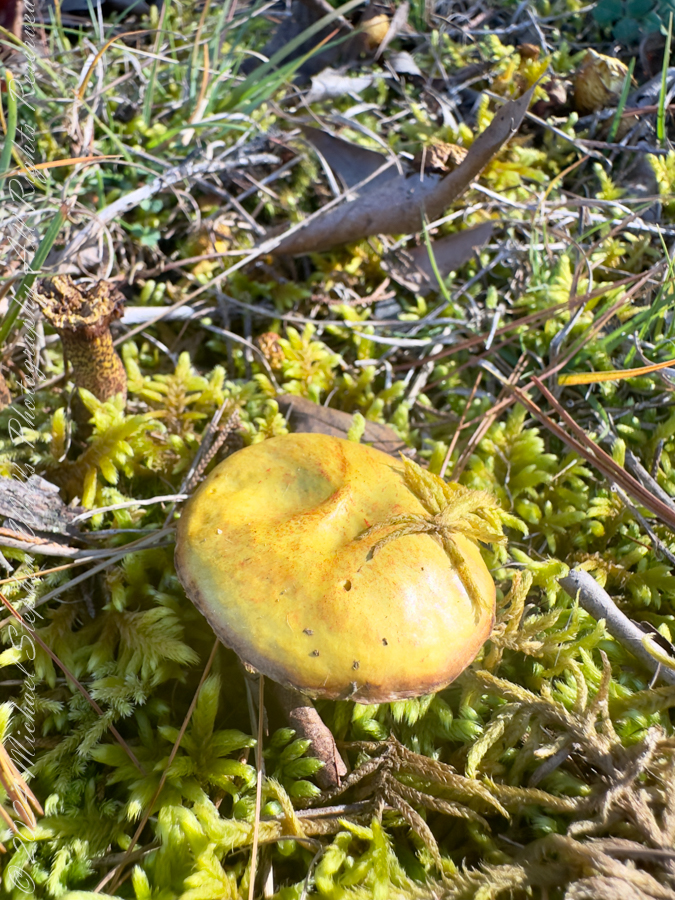
Wildflowers were planted by park staff at the Falls Overlook. The bright yellow of Black-eyed Susans (Rudbeckia hirta) and the vibrant purple of Coneflowers (Echinacea purpurea) attract bees and butterflies, their nectar fueling the intricate web of life that thrives here. Along the trail, on the forest floor, mosses and ferns cling to rocks, softening the edges of the gorge with their verdant touch.

Cone Flowers
Cone Flowers gone to seed
From a walk around Taughannock Falls State Park “Rim Trails” October 22nd, 2024. Trumansburg, Tompkins County, Finger Lakes Region, New York State.

The Fall’s Eternal Dance
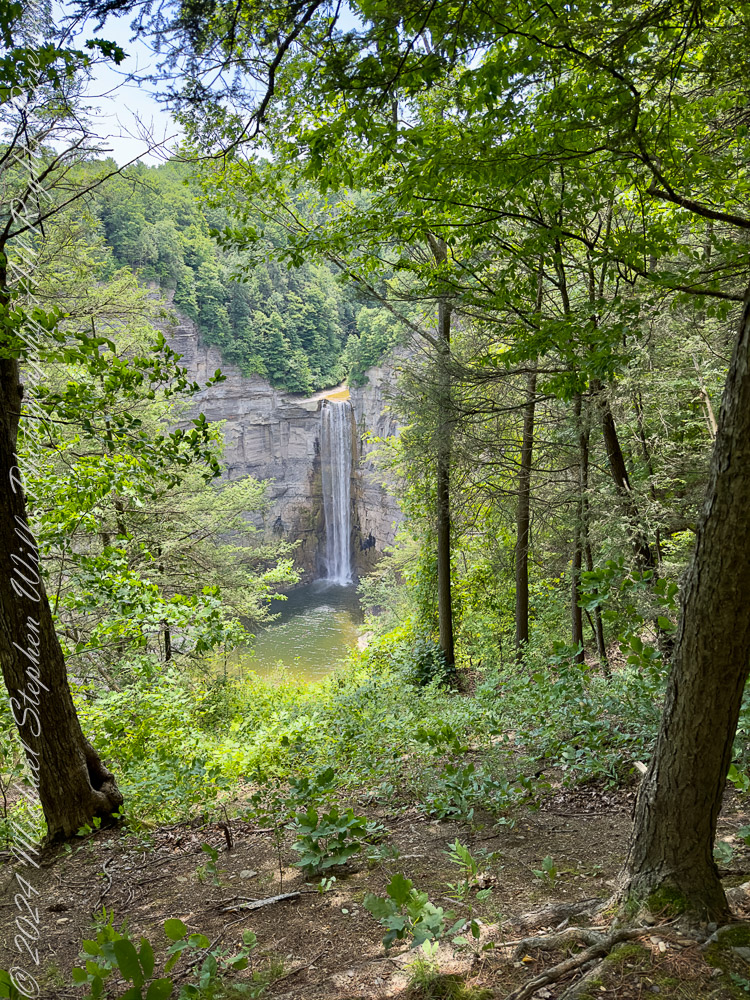
At the heart of the park is the waterfall itself, its roar both a hymn and a whisper of time’s passage. The view from the North Rim Trail reveals the waterfall framed by steep cliffs, their striations like pages in a book written by water, wind, and time. The plunge pool below, shimmering in sunlight, seems almost sacred—a place where the forces of nature meet in harmony.

Viewed from the North Rim Trail on a summer morning. Taughannock Falls New York State Park, Trumansburg, Tompkins County, Finger Lakes Region

Even as we marvel at its beauty, the falls are a reminder of the earth’s constant transformation. Each drop of water that cascades down the cliff face carries away tiny fragments of rock, continuing the slow, deliberate work of reshaping the land. What we witness today is but one moment in an ongoing process—a fleeting glimpse of a masterpiece in progress.

A Place of Wonder
To stand at the edge of Taughannock Falls is to feel both small and connected. The cliffs, formed over hundreds of millions of years, whisper of ancient seas and forgotten worlds. The gorge, carved in the blink of an eye by geological standards, speaks to the power of water and time. And the vibrant life that fills the park reminds us of nature’s resilience and beauty.

As the sun filters through the trees, illuminating the mist that rises from the falls, it’s easy to believe that this place holds magic. Perhaps it’s in the way the water sparkles like diamonds in the sunlight or the way the breeze carries the scent of pine and earth. Or maybe it’s in the knowledge that here, in this park, we are witnesses to a story billions of years in the making.

Conclusion
Taughannock Falls State Park is a place of wonder where geology, ecology, and history converge. It invites us to reflect on the immense forces that shape our world and to cherish the fleeting beauty of each moment. Whether you come to marvel at the towering waterfall, walk among the hemlocks, or simply stand in awe of the gorge, Taughannock Falls leaves an indelible mark on the heart—a reminder of nature’s power, resilience, and enduring grace.

Enter your email to receive notification of future postings. I will not sell or share your email address.

The Autumn Tapestry of Cayuga Lake: A Journey on the Treman Park Lake Loop

Autumn’s Arrival Along Cayuga Lake

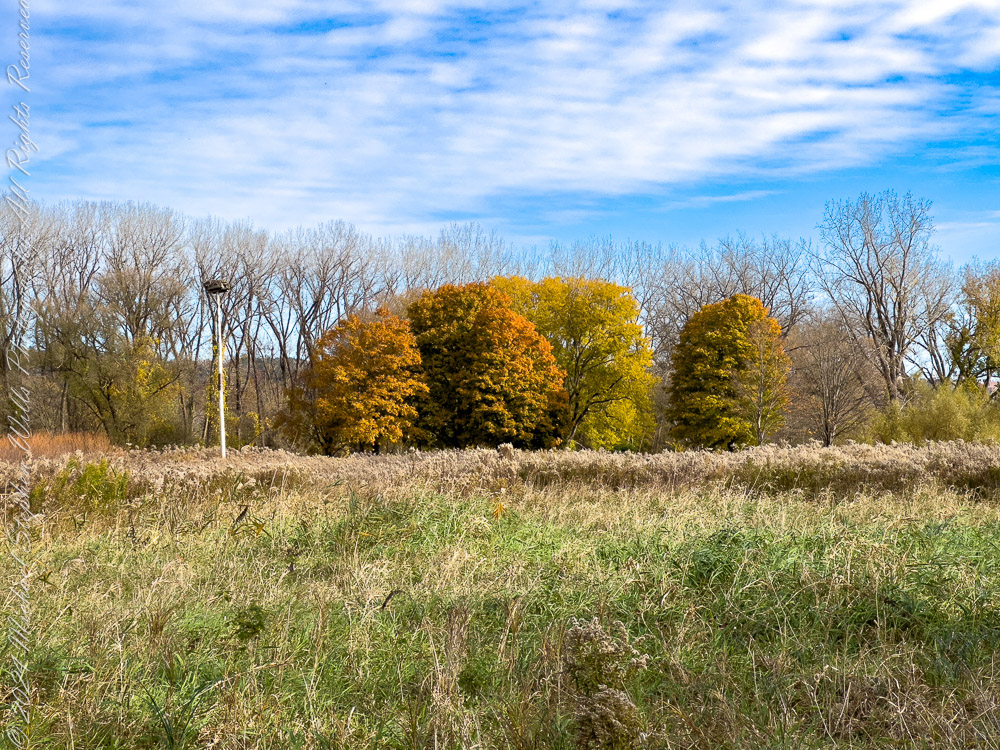
In Autumn 2024, the Treman Park Lake Loop of the Cayuga Waterfront Trail in Ithaca, New York, unfurled a vibrant display of seasonal transition. The natural landscape, adorned with fiery hues of reds, oranges, and yellows, reflected in the rippling waters of Cayuga Lake, creating a harmony of color and light. This is a scenic journey through stories of plant and animal life that call this place home—including the majestic Osprey (Pandion haliaetus) that nests along the shore.

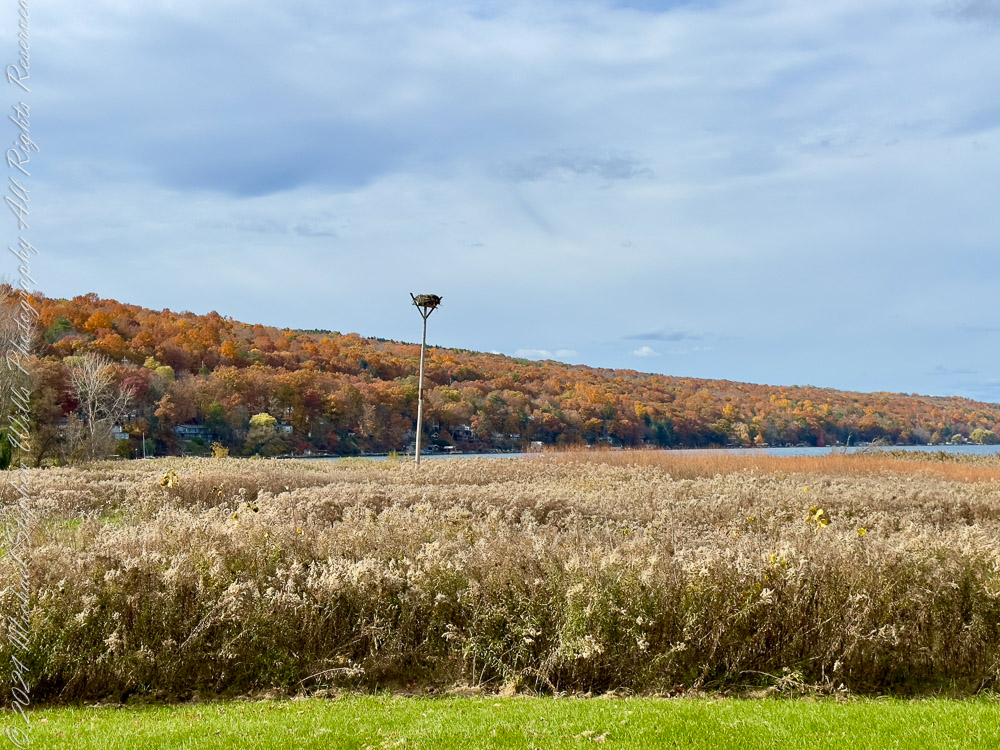
The Osprey’s Watchtower

A sight to greet visitors is the solitary osprey nest perched high on a pole. Used by Osprey families during their breeding season, this nest stands as a testament to their remarkable recovery in the Finger Lakes region. Ospreys, once declining due to pesticide use, have rebounded significantly following conservation efforts.

With a wingspan of up to 6 feet, these raptors are expert fish hunters, often seen diving talons-first into the lake to snatch their prey. During autumn, as their young take flight, the nest remains an empty marker of the summer’s success—a reminder of the cyclical nature of life along the lake.

Did You Know? Ospreys are often referred to as “fish hawks” because fish make up 99% of their diet.

The Meadow and Its Golden Touch: Reedbeds and Goldenrod

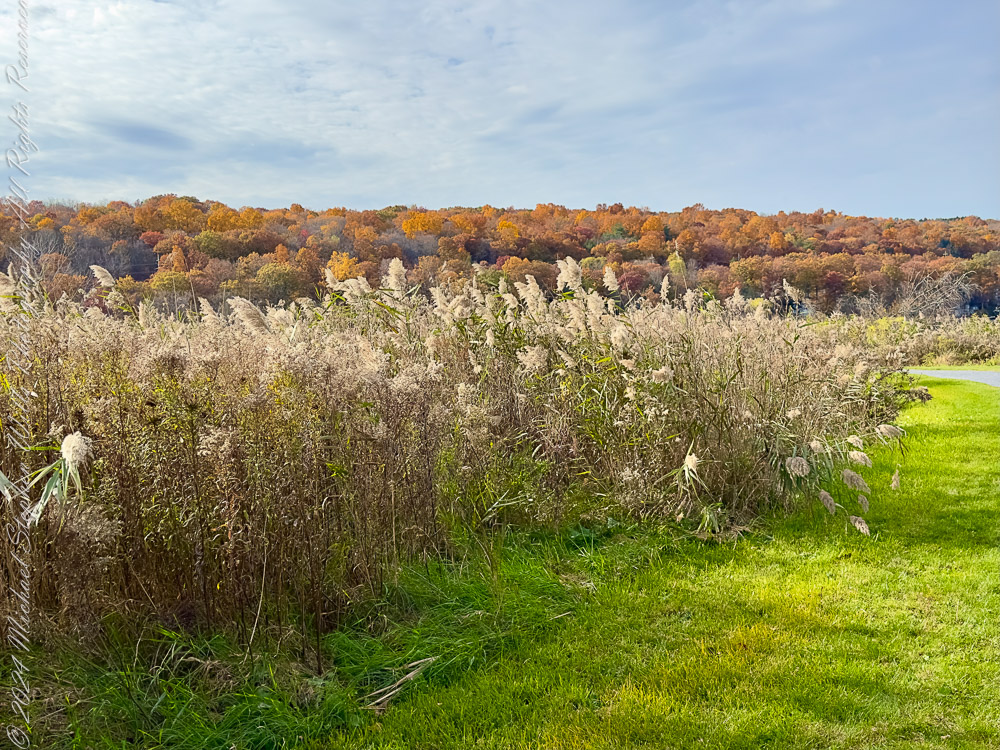
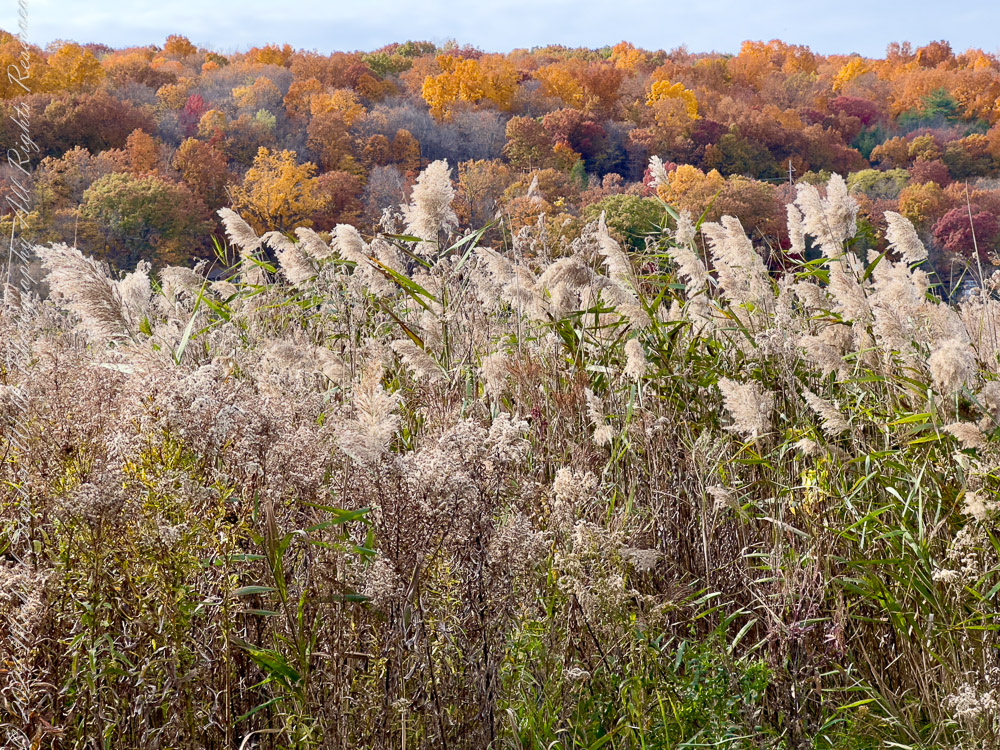
Surrounding the osprey pole, expansive meadows of grasses and reeds sway with the breeze. Among these are stands of Common Reed (Phragmites australis), a tall grass with feathery plumes that catch the sunlight. While Phragmites can sometimes be invasive, they provide crucial shelter and food for various species of birds and insects.

Intermixed with the reeds are patches of Goldenrod (Solidago spp.), whose bright yellow flowers are a signature of late summer and autumn in the Northeast. Goldenrods are critical for pollinators, offering nectar to bees, butterflies, and migrating insects like the Monarch butterfly (Danaus plexippus).

Ecological Note: Goldenrods are often mistakenly blamed for allergies; the real culprit is ragweed (Ambrosia artemisiifolia), which blooms at the same time but releases airborne pollen.

A Lake Alive with History and Beauty

The shimmering blue waters of Cayuga Lake form the centerpiece of this trail. The lake, stretching nearly 40 miles, is the longest of the Finger Lakes and steeped in geological and cultural history. Its name is derived from the Cayuga Nation, part of the Haudenosaunee Confederacy, who inhabited the region for centuries.

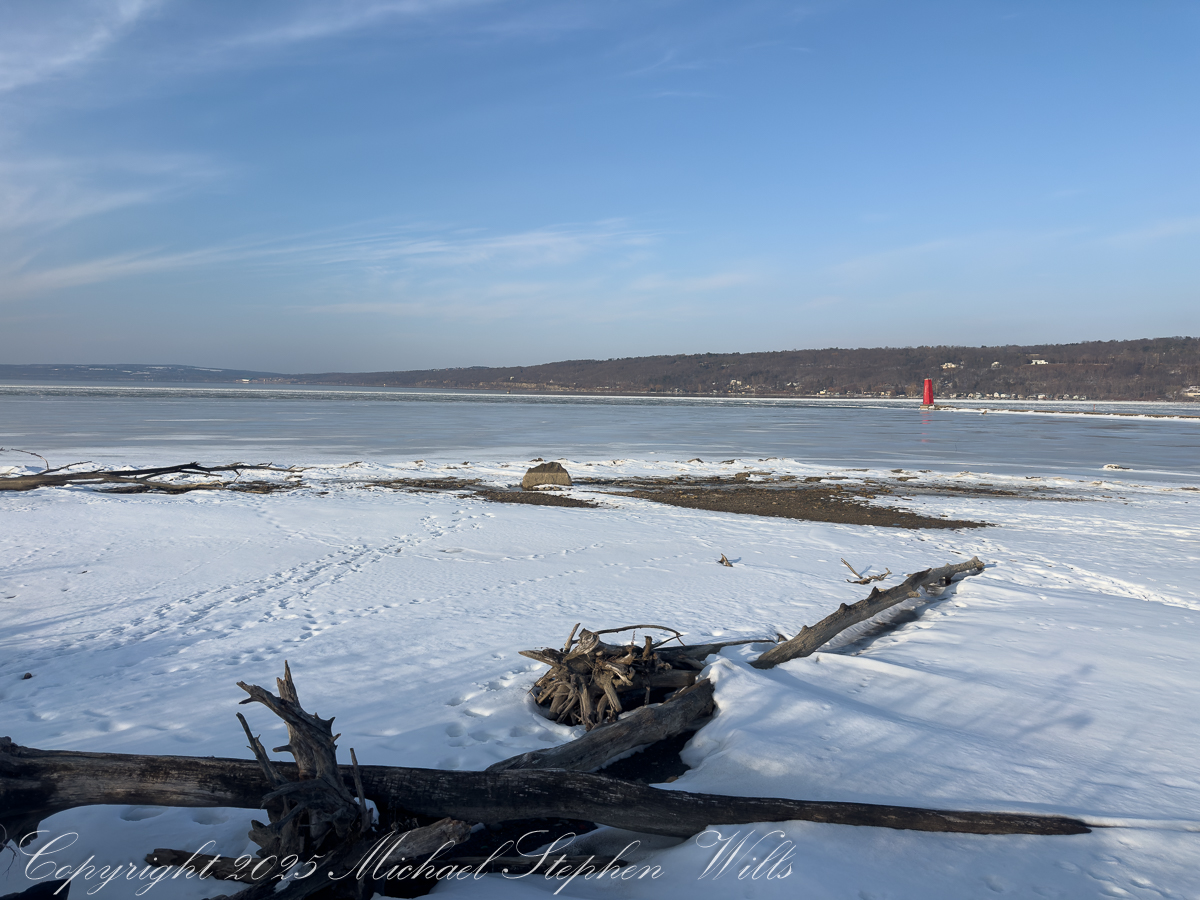
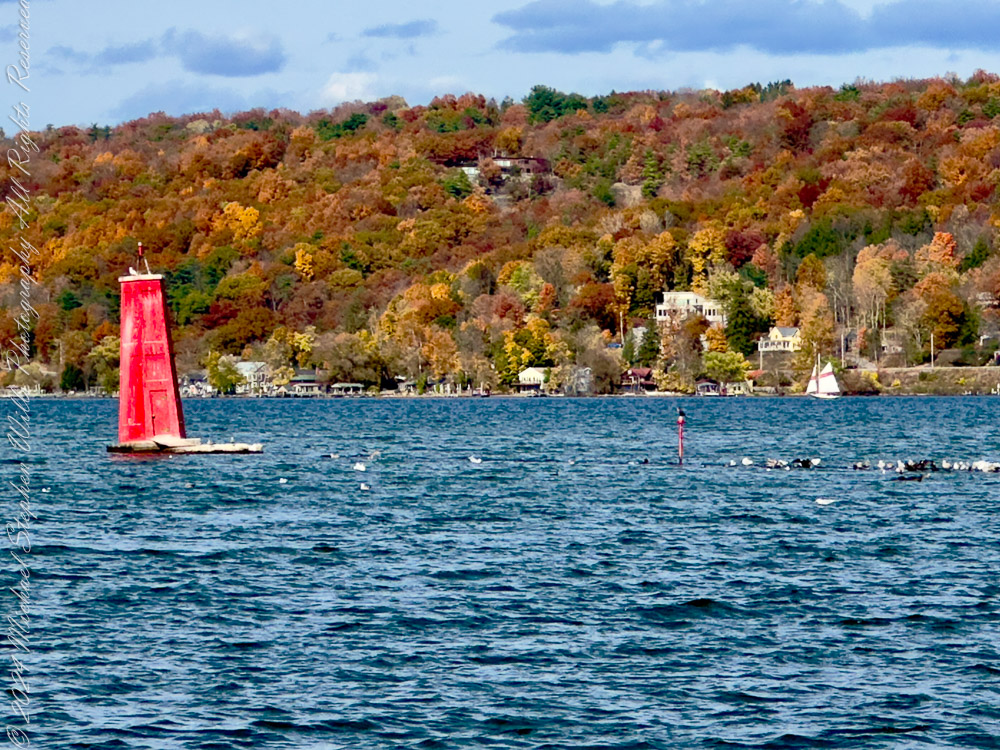
The striking red lighthouse in the water serves as a vivid counterpoint to the natural surroundings. Built to aid navigation, it now stands as a picturesque focal point for photographers and nature enthusiasts alike.

Cayuga Inlet Light Beacon

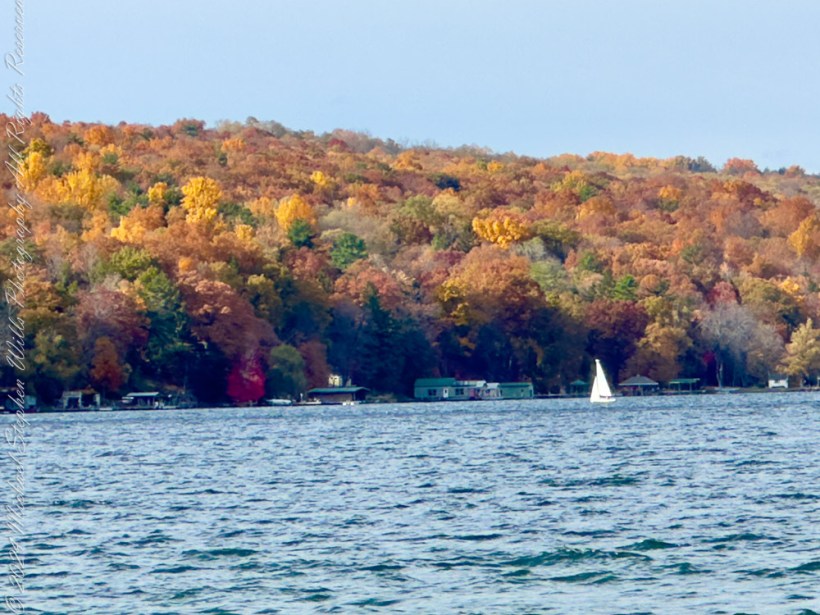
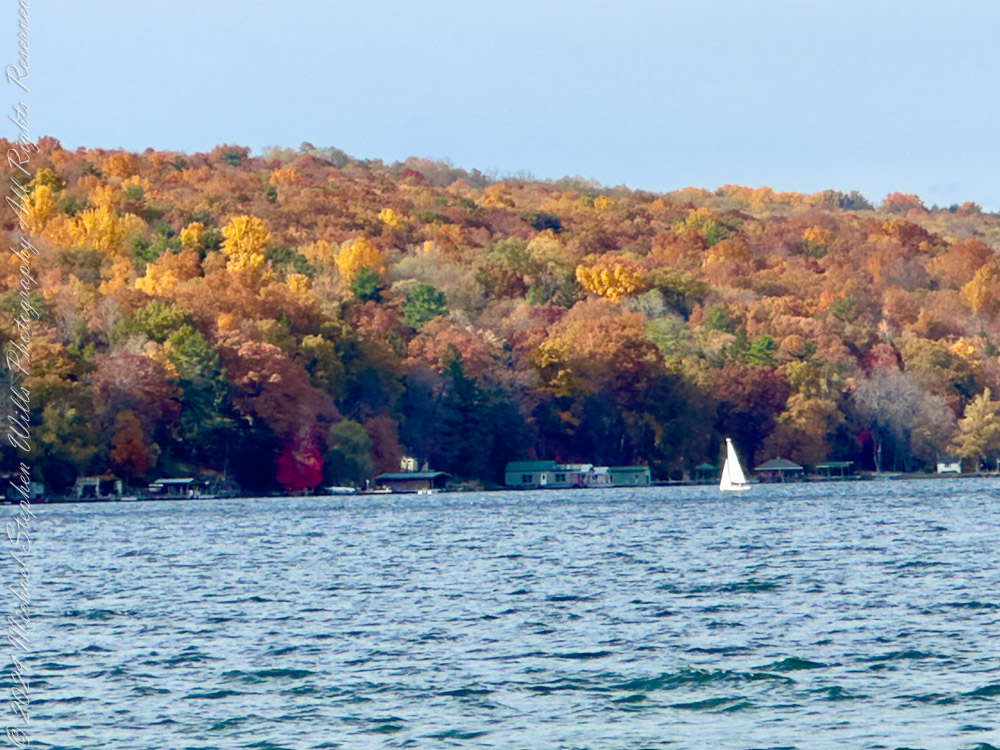
In the distance, a sailboat glides across the lake—a serene reminder of the recreational draw that Cayuga Lake holds year-round.

West shore with sailboat and lake houses

The Forest Fringe: A Kaleidoscope of Color

The forests that fringe the meadow and the lake present an explosion of autumn color. Trees such as Sugar Maple (Acer saccharum), Red Oak (Quercus rubra), and Black Cherry (Prunus serotina) dominate the canopy, their leaves transforming into brilliant oranges, scarlets, and deep burgundies. The Sugar Maple, in particular, is renowned for its vibrant golden-orange foliage, a hallmark of the northeastern fall.

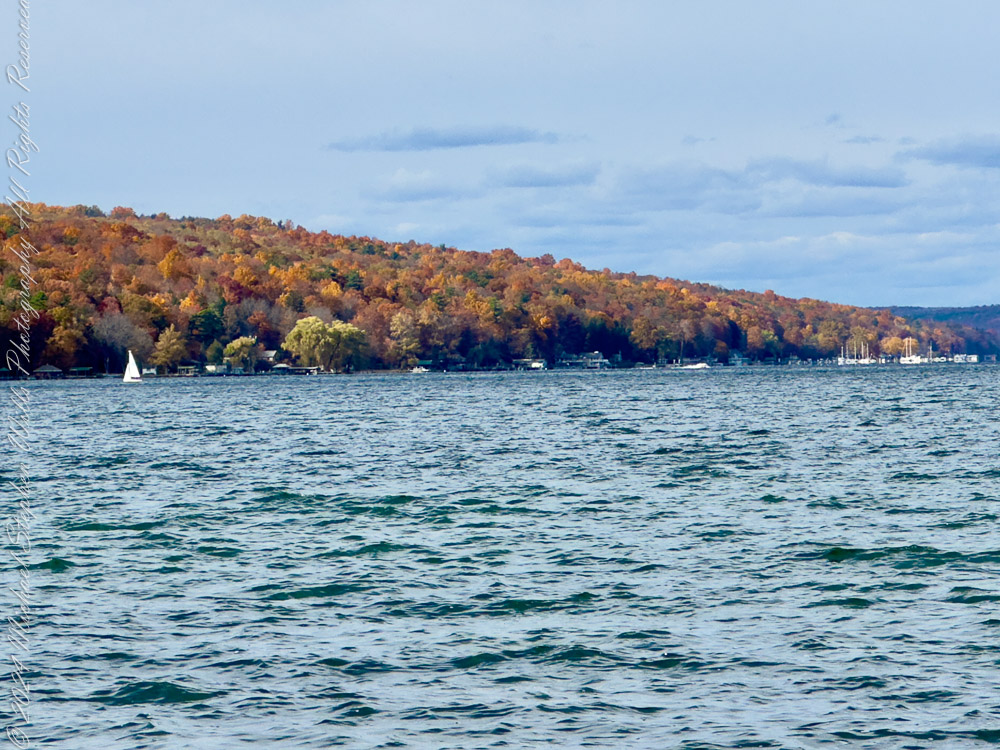
The Ithaca Yacht Club lies south of Maplewood Point

Closer to the ground, the understory hums with the activity of migrating birds and foraging mammals. Squirrels can be seen gathering acorns, preparing for the winter months ahead, while chickadees flit among the branches, calling their cheerful “fee-bee” notes.

Historical Fact: The Finger Lakes were carved out by retreating glaciers over 10,000 years ago, leaving behind these deep, elongated lakes and fertile soil that supports rich biodiversity.

A Path Through Time and Nature

Walking the Treman Park Lake Loop is a sensory journey—the crispness of the autumn air, the rustling of reeds, and the rhythmic lapping of waves against the shore combine to evoke a timeless tranquility.

From the vibrant meadows to the osprey’s lofty perch and the quiet expanse of Cayuga Lake, this section of the Waterfront Trail encapsulates the beauty and diversity of the Finger Lakes ecosystem. Whether for quiet reflection or active exploration, it remains a treasured destination in every season.

Closing Thoughts

As autumn deepens, this landscape prepares for the dormancy of winter. Yet the stories it holds—from the osprey’s nest to the goldenrod’s bloom—remain alive, waiting to be rediscovered with each new season. The Treman Park Lake Loop is not just a trail; it is a canvas of life, change, and history painted by nature’s hand.

Reflection: To walk this trail is to connect with a land shaped by glaciers, nurtured by waters, and home to countless species that continue to thrive amid the ever-turning wheel of the seasons.

Enter your email to receive notification of future postings. I will not sell or share your email address.

Cayuga Lake’s Daylilies: A Symbol of Survival and Adaptation

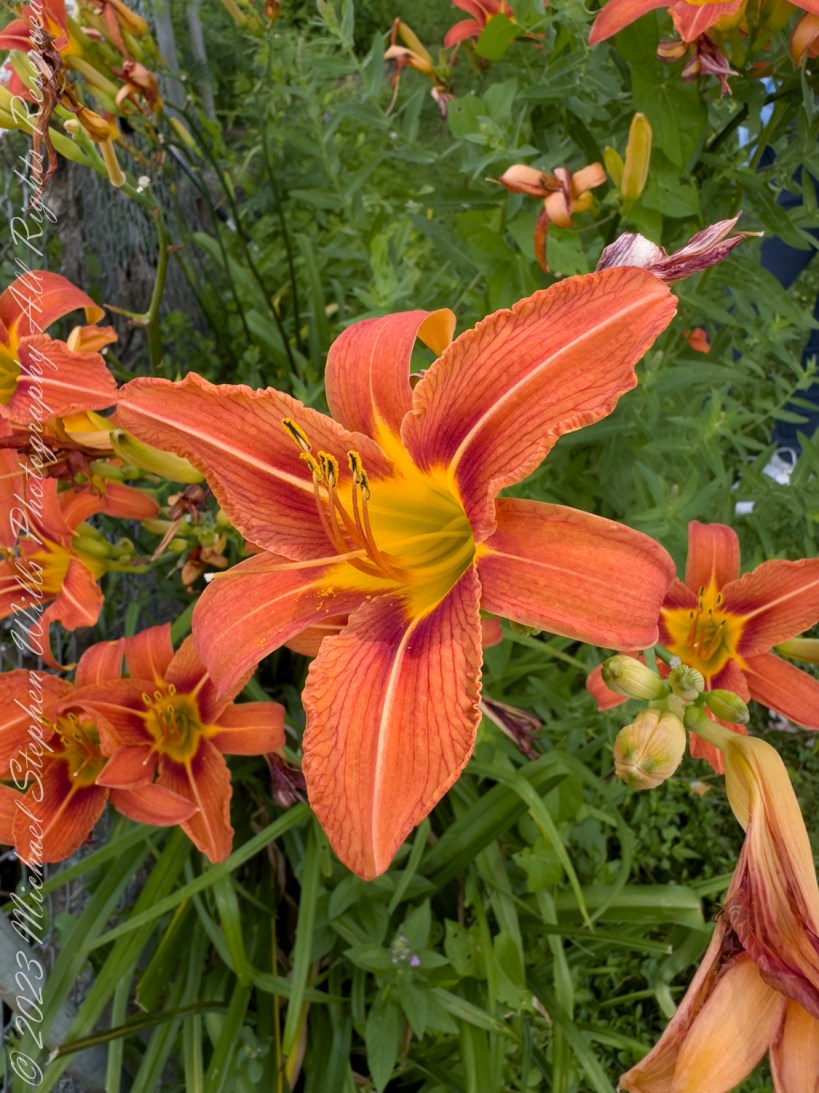
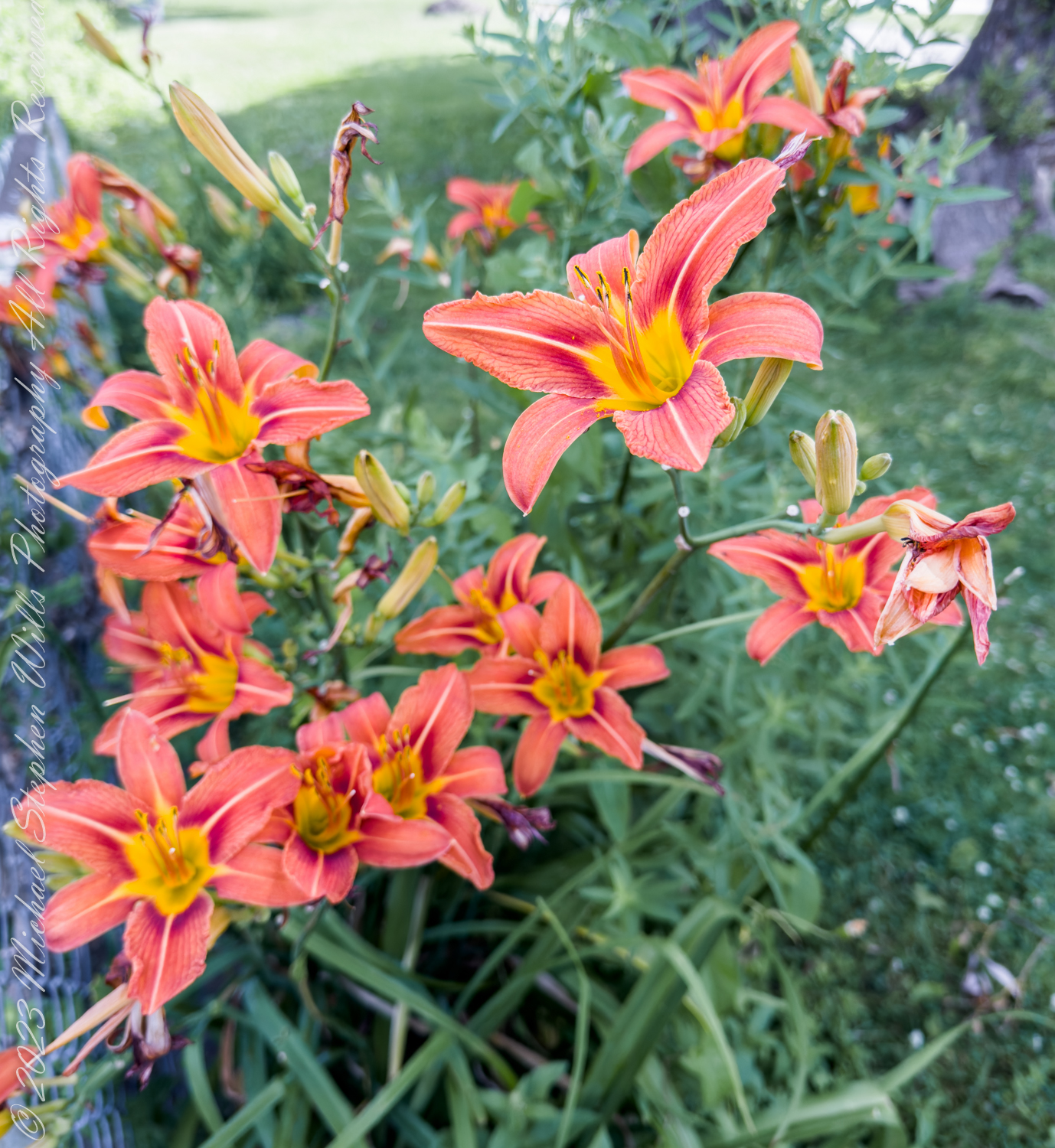
In Stewart Park, the Hemerocallis fulva, or Tawny Daylily, blooms vibrantly.


Stewart Park, Cayuga Lake, Ithaca, New York

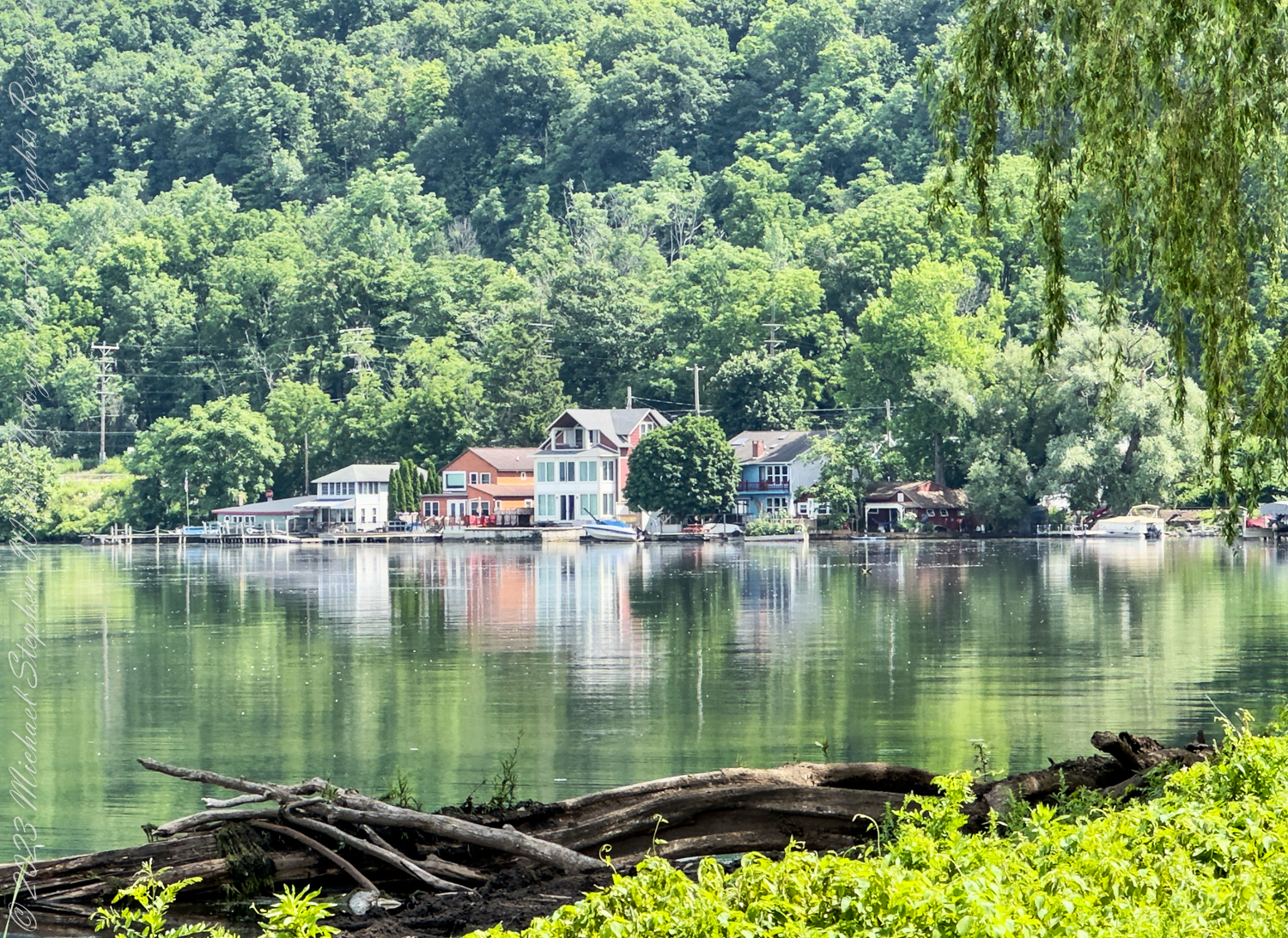
Seen from Stewart Park, these lakefront homes line the southern shore of Cayuga Lake. Tompkins County, Ithaca, New York State. The Finger Lakes Region

On a warm June morning, with the early summer sun casting a golden glow across the shores of Cayuga Lake, Pam and I set out for a walk around Stewart Park. The soft lapping of the water against the shore mixed with the calls of distant birds, and the familiar hum of life in the park settled into a rhythm that has long been a part of this place. As I strolled along a familiar path, a flash of orange caught my eye—the unmistakable brilliance of the Hemerocallis fulva, the Tawny Daylily, in full bloom.

A Glimpse of the Familiar


At first glance, the orange petals of the daylily seemed like small flames scattered across the green of the park, their brightness undimmed by the heat of the day. The sight was both familiar and captivating, for these daylilies are common in garden, parks and roadsides around Ithaca and much of New York State. Despite their prevalence, each encounter feels fresh, like meeting an old friend who always has something new to share.

I knelt closer, letting my eyes follow the curve of the petals, which unfurled gracefully from a vibrant yellow throat. The delicate lines streaked down the petals like rays of sunlight. Though each flower lives only a day, I felt the quiet confidence of this plant, as though it knew its bloom was fleeting, yet still essential in the tapestry of summer.

The Resilience of a Traveler


The daylily’s ubiquity belies its status as a traveler from distant lands. Hemerocallis fulva is not native to New York, nor to any part of North America. It came to these shores from Asia, introduced by gardeners who admired its hardiness and vibrant color. Over time, the daylily escaped the bounds of cultivated gardens, spreading to roadsides, fields, and yes, even here, to the edges of Stewart Park.

I find myself reflecting on the journey of this plant, which began in the faraway lands of China, Korea, and Japan. In its homeland, daylilies have long been symbols of devotion and motherhood, their roots used in traditional medicine, their blooms celebrated in art. Now, as I stand in Stewart Park, I marvel at how far the Hemerocallis fulva has come, adapting to new lands and naturalizing in the wild corners of the American landscape.

The irony of its “wild” appearance does not escape me—this orange beauty, so deeply associated with our rural and parkland settings, is still very much an outsider. And yet, in the soft breeze of the morning, it feels as though this plant has always belonged here, as much a part of the park’s landscape as the willows by the lake or the ducks bobbing in the water.

Nature’s Balancing Act


As lovely as they are, daylilies are not without their complications. The very same traits that make Hemerocallis fulva such a beloved garden plant—its resilience, its ability to thrive in poor soil, and its spreading rhizomes—also make it an unintentional invader. Without careful tending, these plants can spread aggressively, pushing out native species and altering the ecological balance of the areas where they take root.

Here in Stewart Park, where cultivated gardens meet the untamed edges of the lake, the daylilies are a reminder of nature’s delicate balance. They offer nectar to bees and butterflies, providing sustenance to the creatures that flit through the morning air and also represent challenge to the native wildflowers that have long called this place home.

I wonder what plants might have once thrived in this very spot before the Hemerocallis fulva arrived. Perhaps native species, like the delicate Asclepias tuberosa—Butterfly Weed—or the sturdy Rudbeckia hirta, the Black-eyed Susan, held court here, their blooms attracting the same bees now drawn to the daylilies.

The Fleeting Bloom


Despite its role as a naturalized non-native, the daylily has a fleeting grace that draws me in. By tomorrow, these orange blooms will have withered and fallen, replaced by new blossoms that will unfurl in their place. Each bloom’s brief life is a reminder of the ephemerality of beauty, and I find myself appreciating the daylily all the more for its transient nature.

We continue our walk, leaving behind the patch of daylilies but taking with me a sense of quiet reflection. As invasive as they may be, these plants offer a meditation on the impermanence of life and the ways in which non-native species can become a part of the landscape’s fabric, for better or worse. The Hemerocallis fulva may not belong here by birthright, but it has made a place for itself, a symbol of survival and adaptation in the ever-changing world around it.

A Lesson from the Daylily


As I near the edge of the lake, watching the sunlight dance across the water’s surface, I think about the lessons that the daylily offers. Life is fleeting, yes, but also full of color and vibrancy, no matter how brief the bloom. And in that brief bloom, there is the possibility of resilience, growth, and belonging, even in a place far from home.

Much like the daylily, we too find ourselves in unfamiliar places at times, learning to adapt, to thrive, and to leave our mark on the world—if only for a day.

Copyright 2024 Michael Stephen Wills All Rights Reserved

The Majestic Cottonwoods of Stewart Park

Discover the timeless beauty of two towering Cottonwood trees along the shores of Cayuga Lake. Explore their natural history, cultural significance, and how they’ve shaped the landscape of Stewart Park for generations.

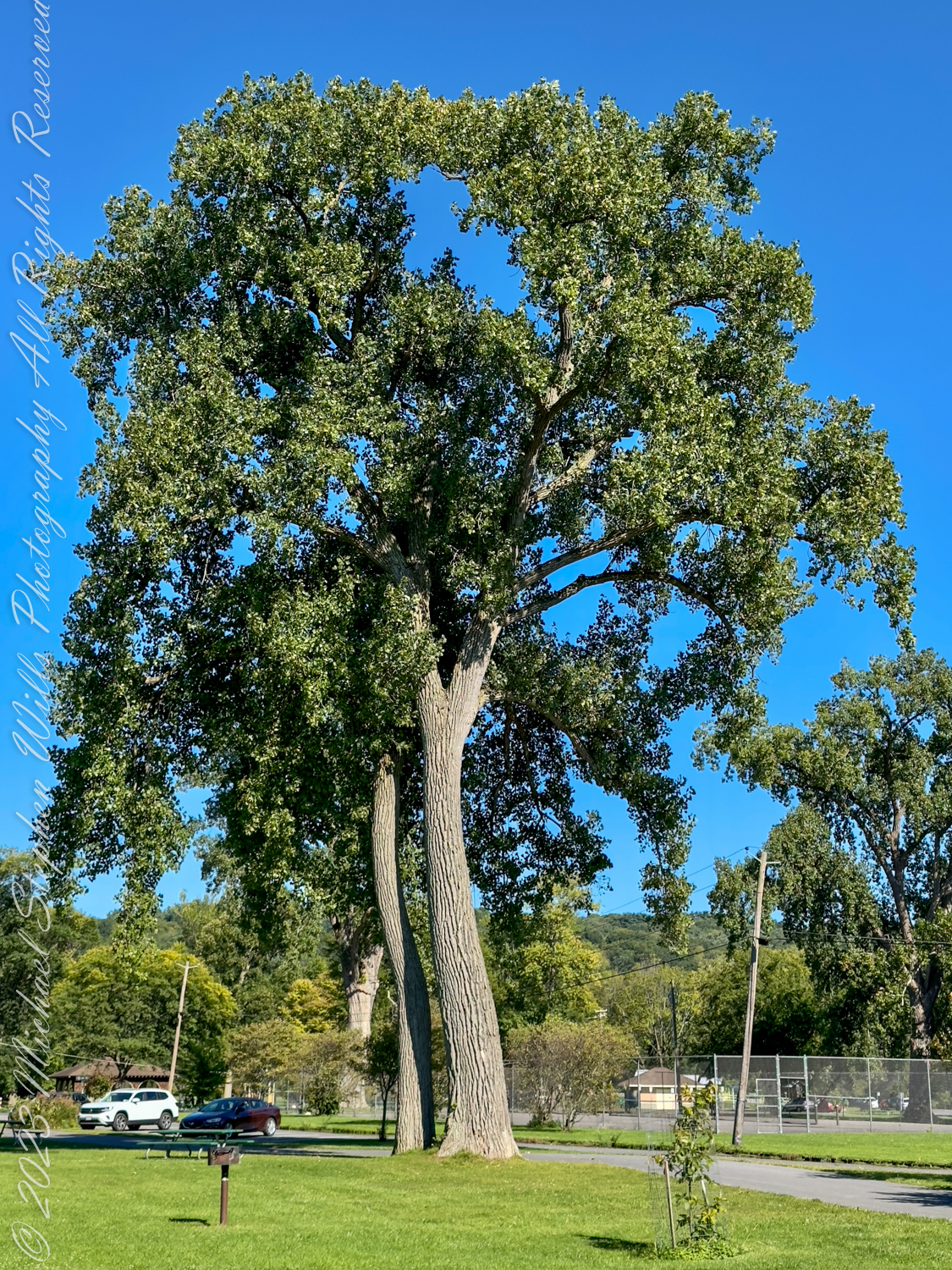
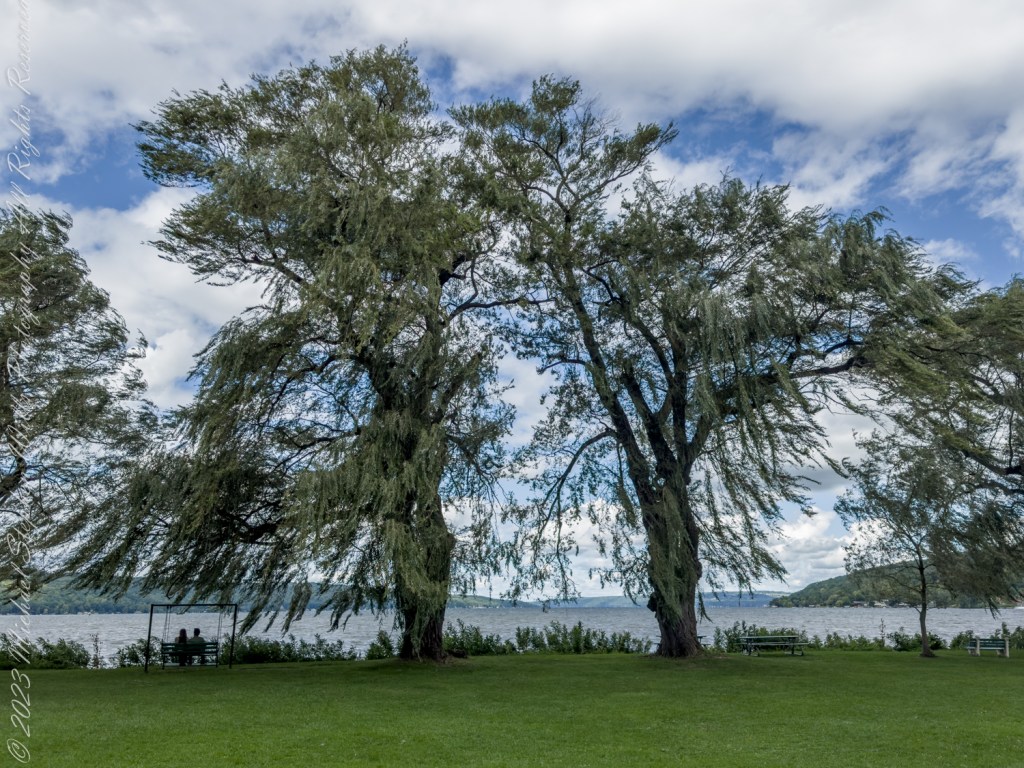
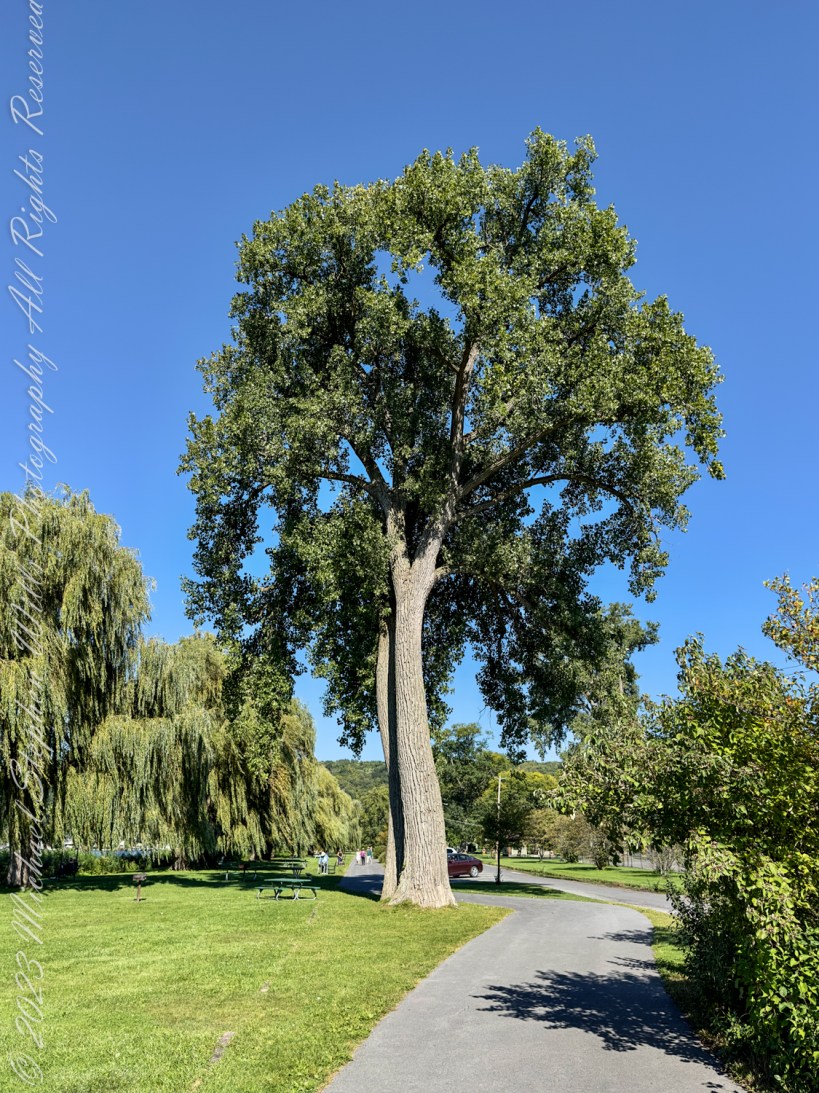
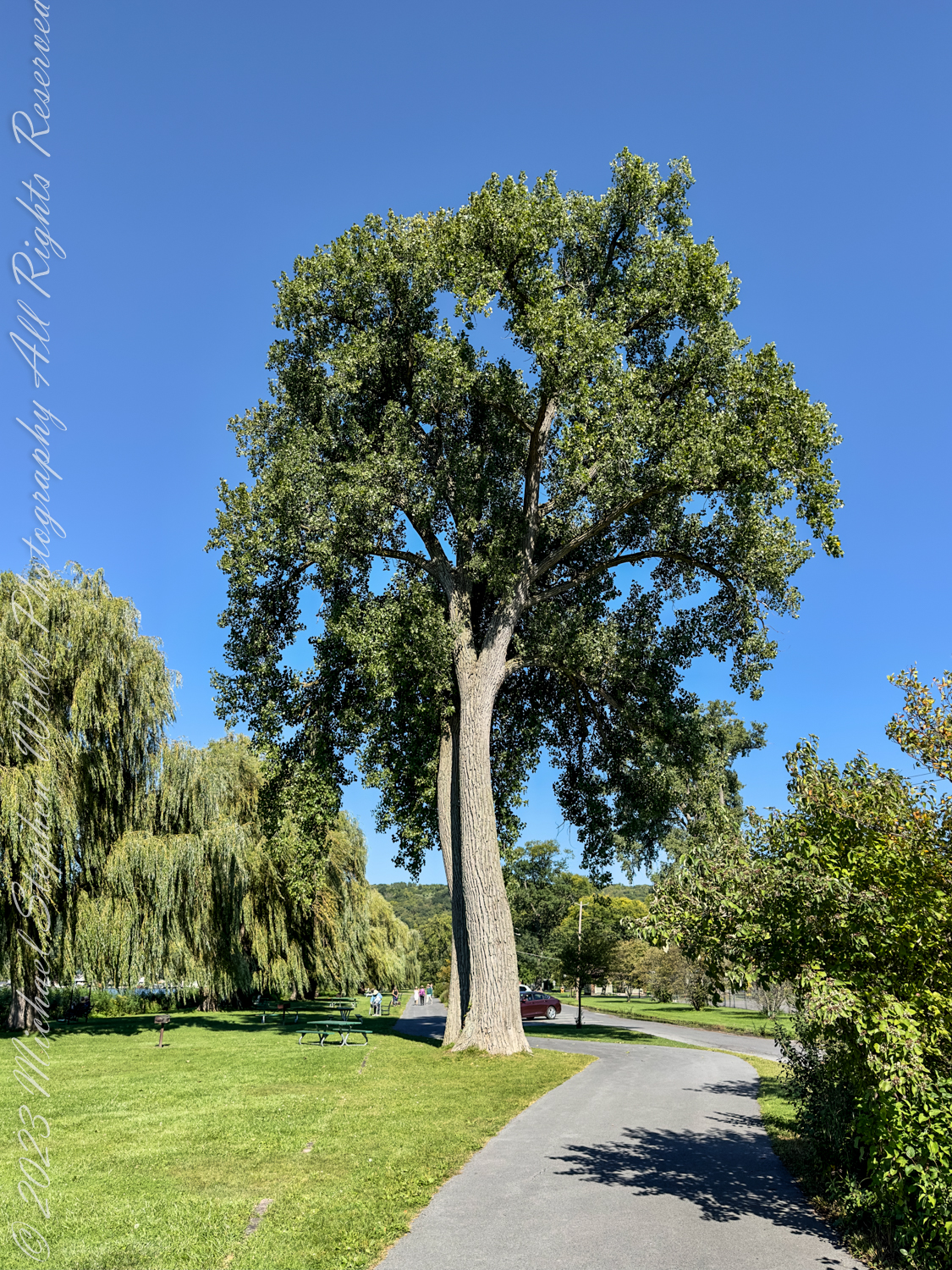
Walking with Pam in Stewart Park, the shores of Cayuga Lake shimmer under the bright September sun, offering a serene setting for reflection. Ahead, two towering Cottonwood trees stand in quiet majesty, their branches spreading wide, casting long shadows over the grass and walkway. Drawn toward them, I find myself in awe of their presence—these two trees, ancient sentinels by the water, who have silently borne witness to the changing world around them.

View Facing East/Southeast, September 10, 2024

Cottonwoods, scientifically known as Populus deltoides, are members of the poplar family and are among the tallest trees in North America. The ones before me have thrived for decades, their thick, furrowed trunks a testament to the endurance of life on the edge of the lake. It’s remarkable to think of all the storms and seasons they’ve weathered—their roots digging deep into the moist earth, nourished by the lake’s constant ebb and flow. I feel as though these trees, standing side by side, companions, connected through the unseen networks of roots beneath the soil. Their relationship to one another seems profound, they have grown up together, providing support and strength as they aged. Their canopies overlapping as though embracing one another.

There’s an undeniable symmetry to their relationship, both in form and function. One can imagine them as silent witnesses to the changing landscape around them—the gradual expansion of the park, the families that come and go, the laughter of children playing nearby, and the quiet conversations of couples walking hand in hand. These trees have become part of the fabric of Stewart Park, deeply entwined with the human history that unfolds here every day.

View Facing East, September 10, 2024

The branches reach skyward, their leaves shimmering in the breeze, producing the characteristic fluttering sound of Cottonwoods. There’s something deeply soothing about this rustling—the way the wind seems to dance through the leaves, creating a rhythm that feels eternal. It reminds me that these trees have long been part of human experience, a backdrop to countless strolls, picnics, and quiet moments of contemplation here at Stewart Park.

Cottonwoods are fast-growing, often found near bodies of water where their shallow roots can tap into consistent moisture. And yet, their rapid growth comes with a trade-off; their wood is soft and brittle, prone to breaking in high winds. But in Stewart Park, these two trees have found a perfect balance, their large, sweeping canopies offering shade and shelter without suffering too much damage from the storms that blow through the Finger Lakes. Their resilience is remarkable—a reminder of nature’s ability to thrive in challenging conditions.

Historically, Cottonwoods have played a significant role in the lives of the people who encountered them. Native Americans once used the bark for medicinal purposes and fashioned the wood into canoes. Early settlers appreciated the trees for their rapid growth and ability to provide shade and timber in otherwise open expanses of the Midwest and Northeast. Even today, their legacy endures as they continue to offer shade and shelter, albeit more for leisure than for survival.

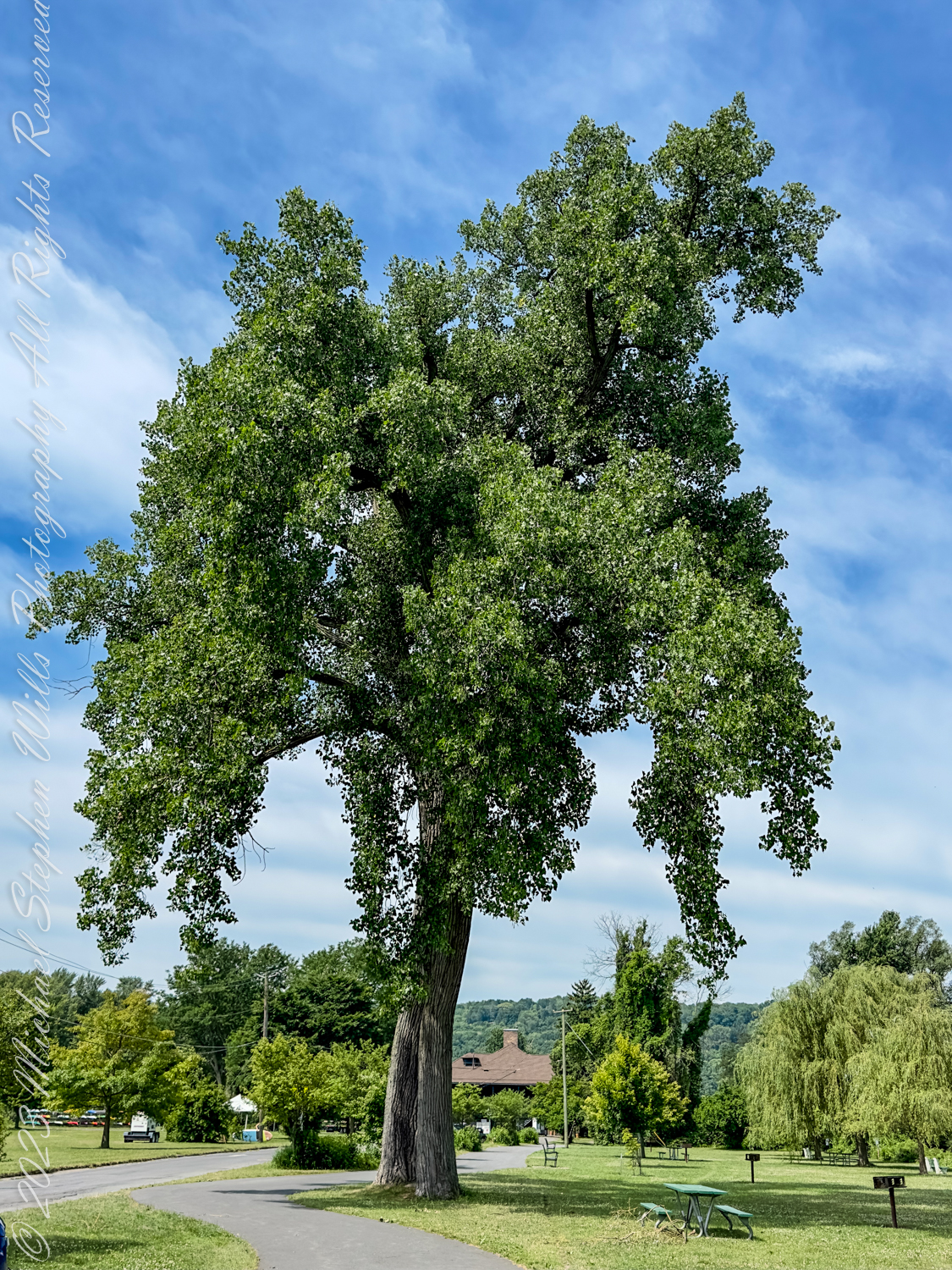
I notice how the pathway itself bends gently to accommodate the Cottonwoods. The paved trail, so clearly designed with these majestic trees in mind, arcs around their broad bases as if to honor their presence. In a world where nature is so often bent to human will, it’s refreshing to see this small, quiet gesture of deference—a reminder that in our modern parks, nature can sometimes lead the way.

View Facing West, June 25, 2024

The path doesn’t cut through or impose upon these trees. Instead, it respects their claim to the land, curving around them in a way that feels organic, almost reverent. The roots of these Cottonwoods must reach far beyond what I can see, extending outward in all directions beneath the soil, beneath the path itself. It’s as though the trees and the human-made elements of the park have reached a compromise—a harmonious balance where both can coexist without either having to sacrifice too much.

In their wisdom, the planners of this park understood that these trees had already laid their claim long before the park’s paths were laid out. It’s a small but profound testament to the enduring power of nature and the foresight of those who designed this space. As I walk along the path, I feel the subtle shift in the landscape—the way the curve of the trail encourages a more leisurely pace, inviting visitors to pause for a moment and take in the grandeur of these ancient trees.

The curve itself creates a sense of flow, as if the path is gently nudging us toward a deeper appreciation of the Cottonwoods. There’s no rush here. The trees stand in their place, rooted and steadfast, while we are invited to move around them, to change our course slightly in order to make space for something larger than ourselves. The path becomes a metaphor for our relationship with nature—we must sometimes bend and yield to its greater forces, rather than insist on our own straight and rigid lines.

This curved path speaks to the broader theme of adaptability—how both nature and humanity have learned to accommodate one another. The Cottonwoods have withstood the test of time, their roots dug deep into the soil, while we have found ways to move alongside them, adjusting our course to allow for their growth. It’s a quiet but powerful reminder of the importance of coexistence and respect, of making space for the natural world rather than always seeking to dominate it.

As we pass by, I notice the texture of their bark—deeply furrowed and rough, a tactile reminder of the passage of time. Each ridge and crevice holds the story of countless seasons—of dry summers, harsh winters, and everything in between. I reach out and touch one of the trunks, feeling the coolness of the bark under my hand. There’s a vitality here that can only be sensed up close, a quiet hum of life that pulses just beneath the surface.

Yet, despite their imposing size and age, the Cottonwoods remain humble in their role. They do not demand attention like a flowering dogwood or a brightly colored maple. Instead, they offer something more enduring—a quiet, steady presence that provides shelter and shade without fanfare. Their leaves turn a brilliant yellow in autumn, adding to the kaleidoscope of colors that make up the Finger Lakes’ fall landscape. But even in winter, when the leaves are gone, their bare branches stand against the cold sky, offering a stark beauty all their own.

As I step back to take in the full view of these two Cottonwoods, I am filled with a sense of gratitude. Their lives, so intimately tied to this place, remind me of the interconnectedness of all living things—the way nature, time, and humanity overlap in ways both seen and unseen. These trees, growing together on the shores of Cayuga Lake, are not just part of the landscape—they are part of the story of Stewart Park and, in a broader sense, the story of this region. They remind me that, like them, we are all shaped by our surroundings, by the people and places that stand beside us as we grow. And in that way, we are never truly alone.

Copyright 2024 Michael Stephen Wills All Rights Reserved

Echoes of Autumn: Finding Beauty and Wonder in a Willow’s Fungal Bloom

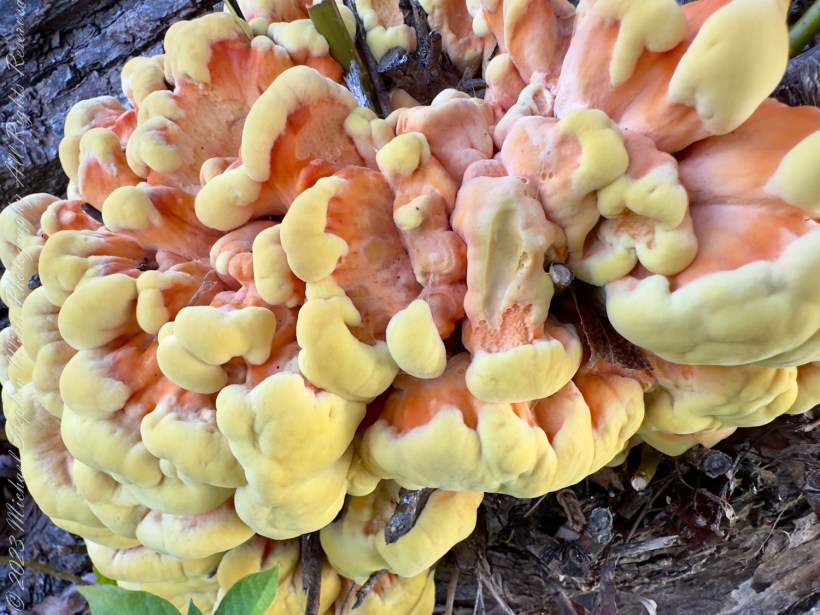
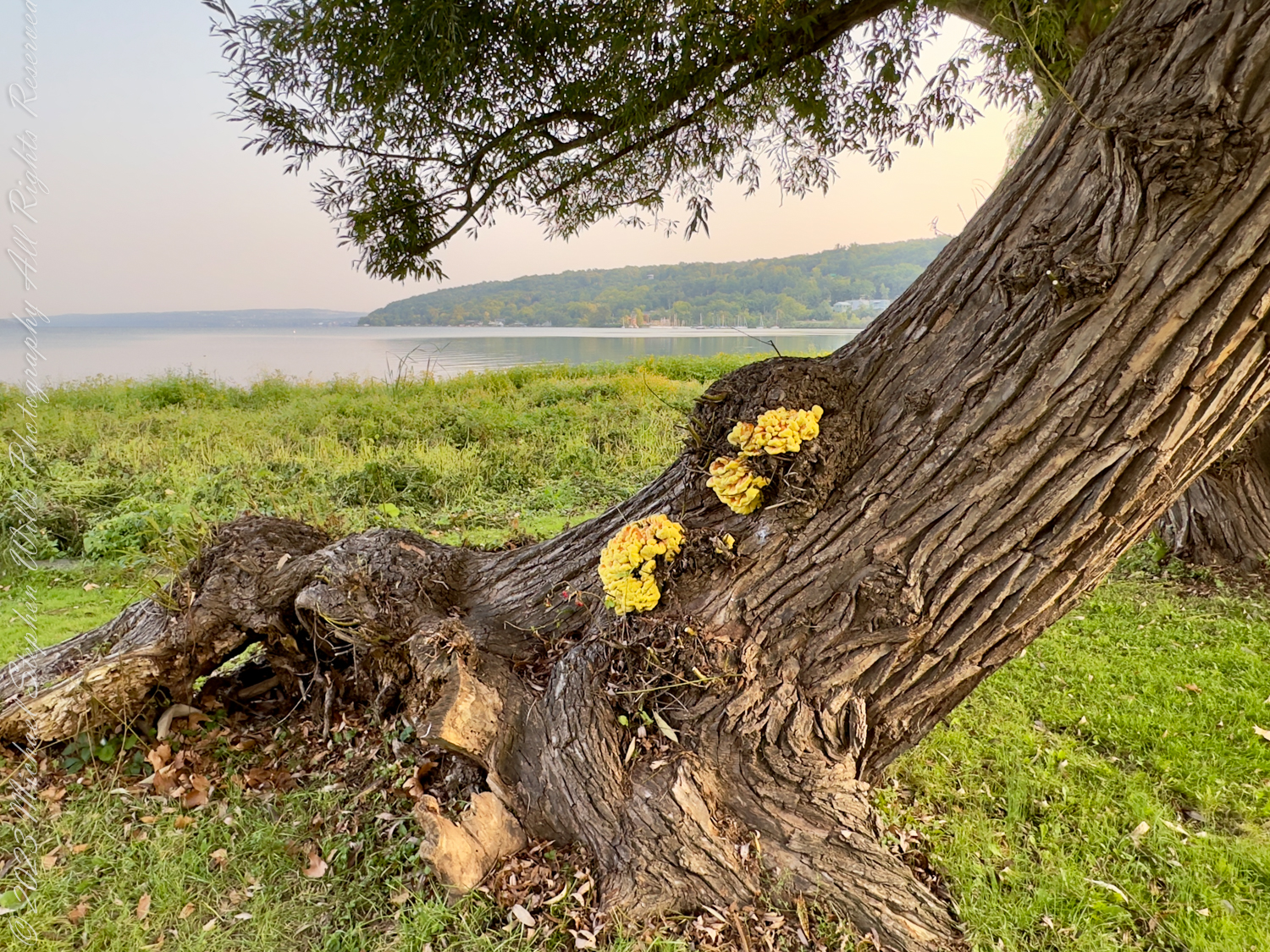
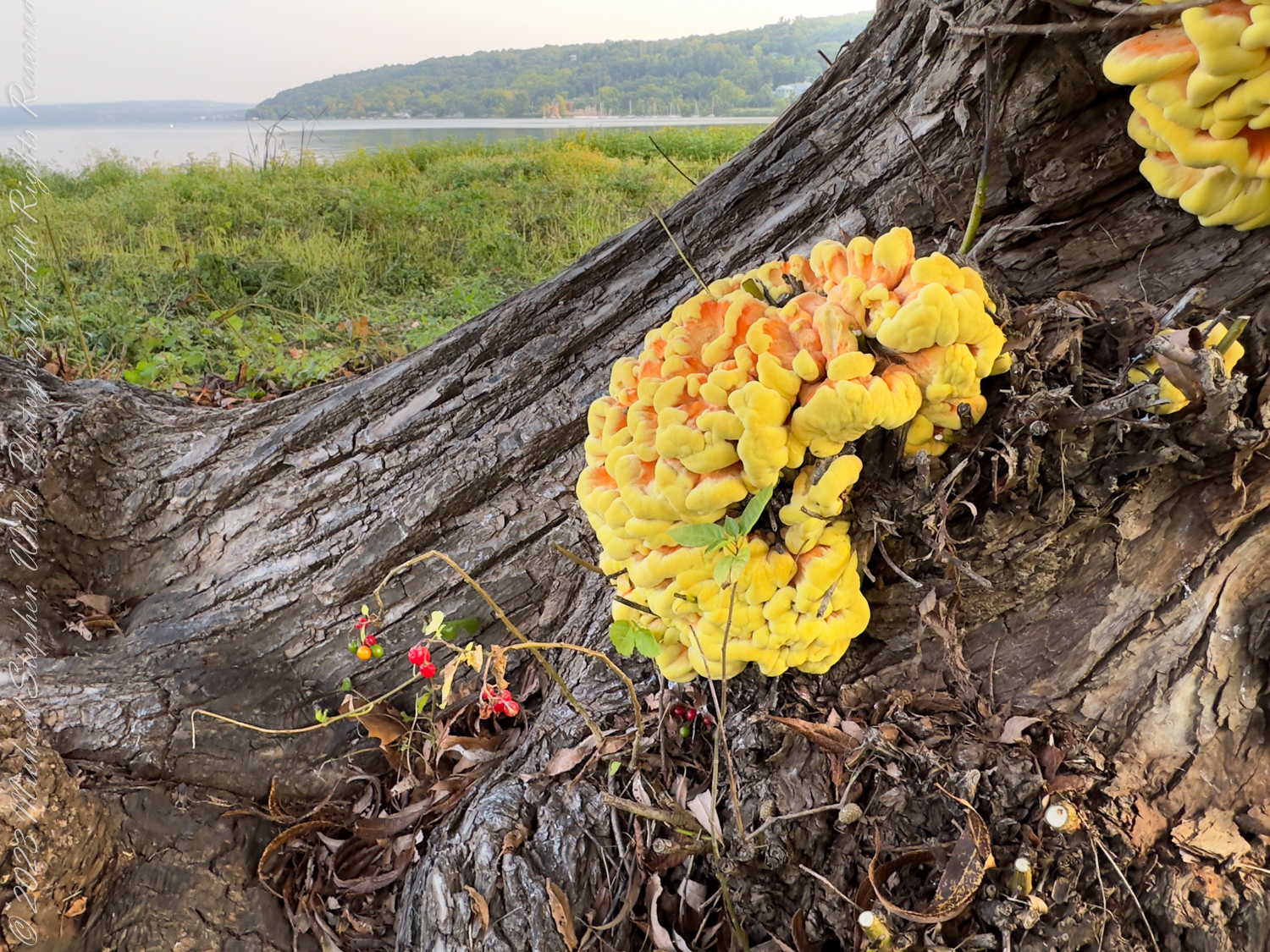
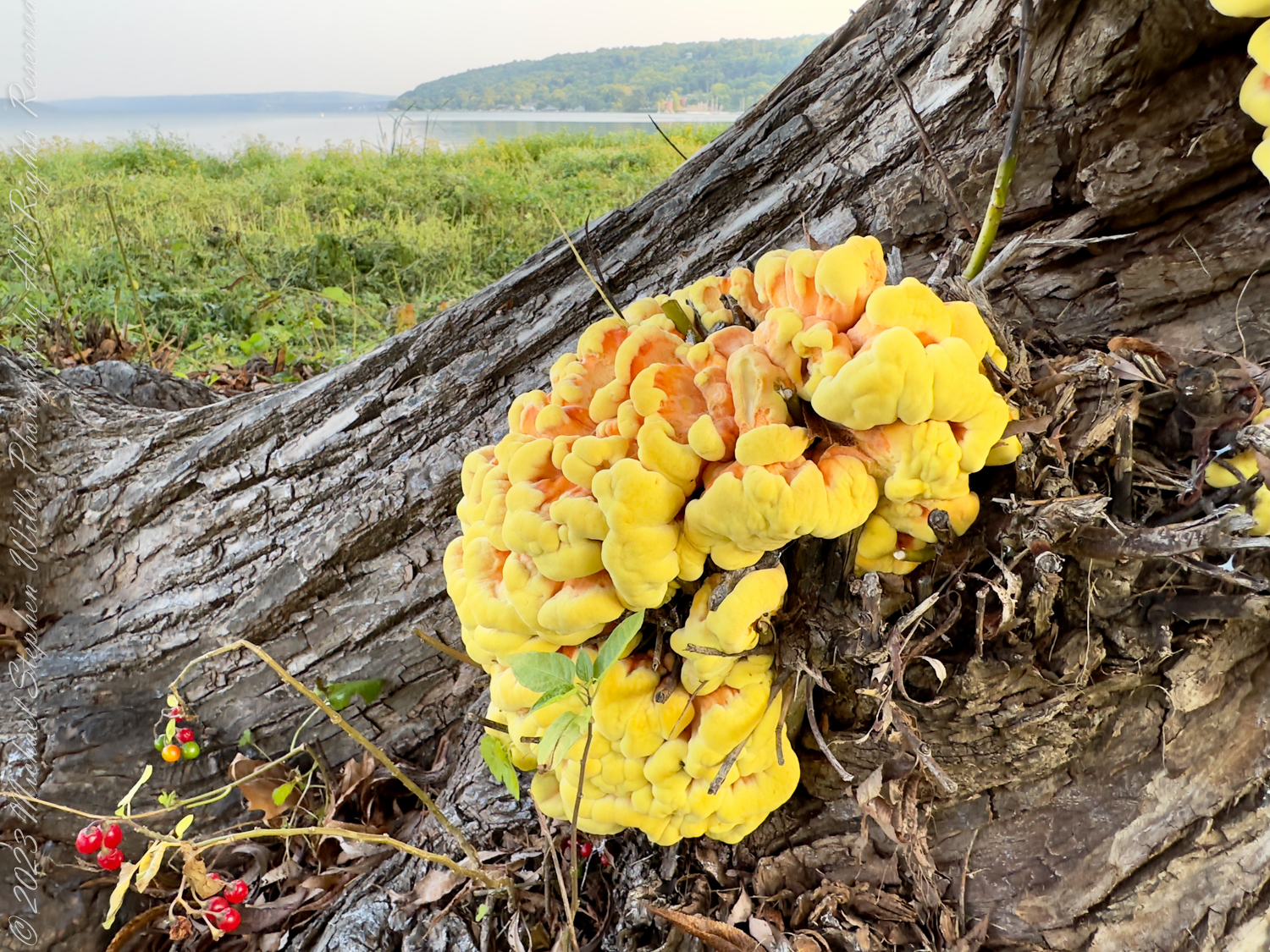
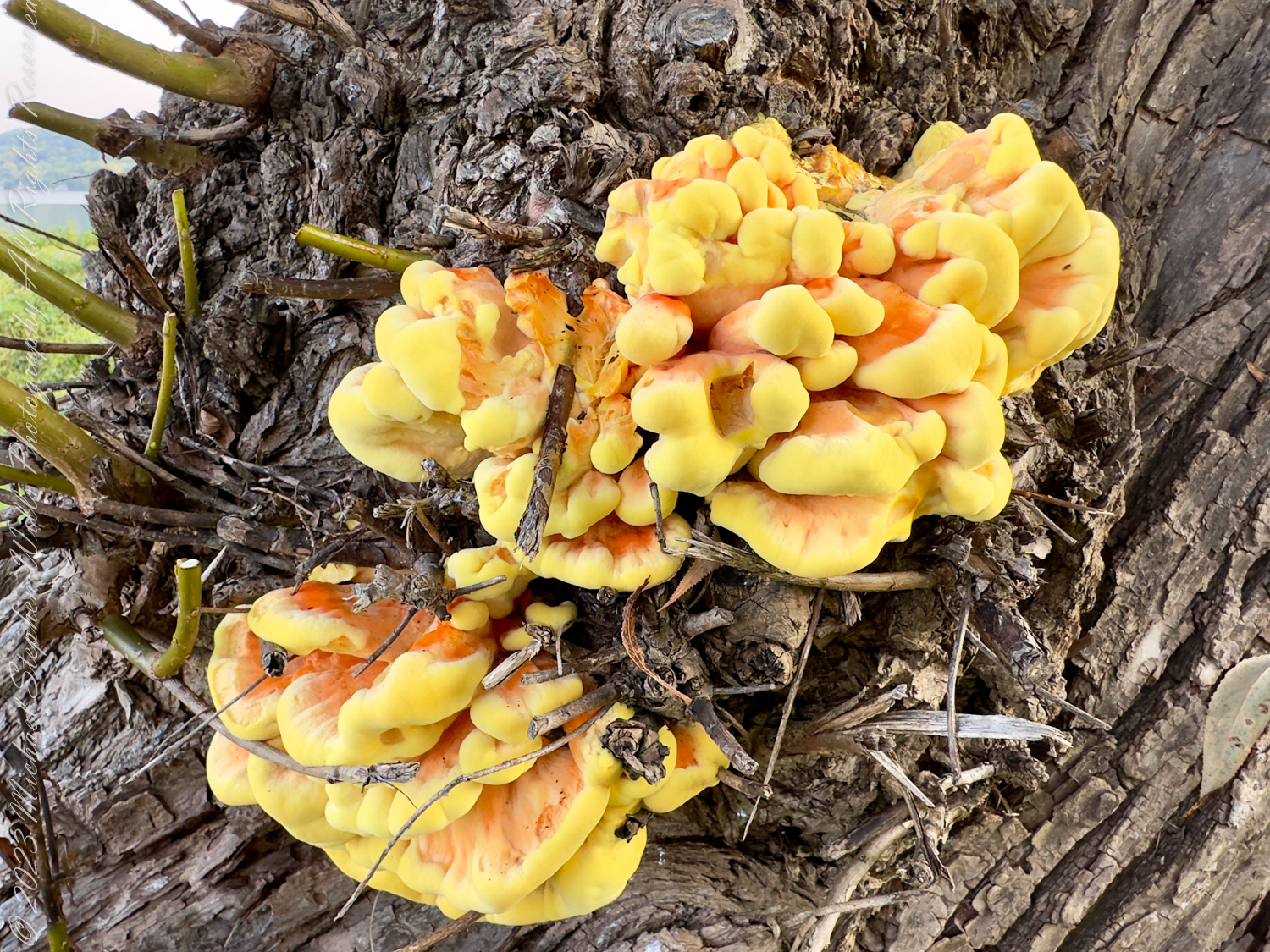
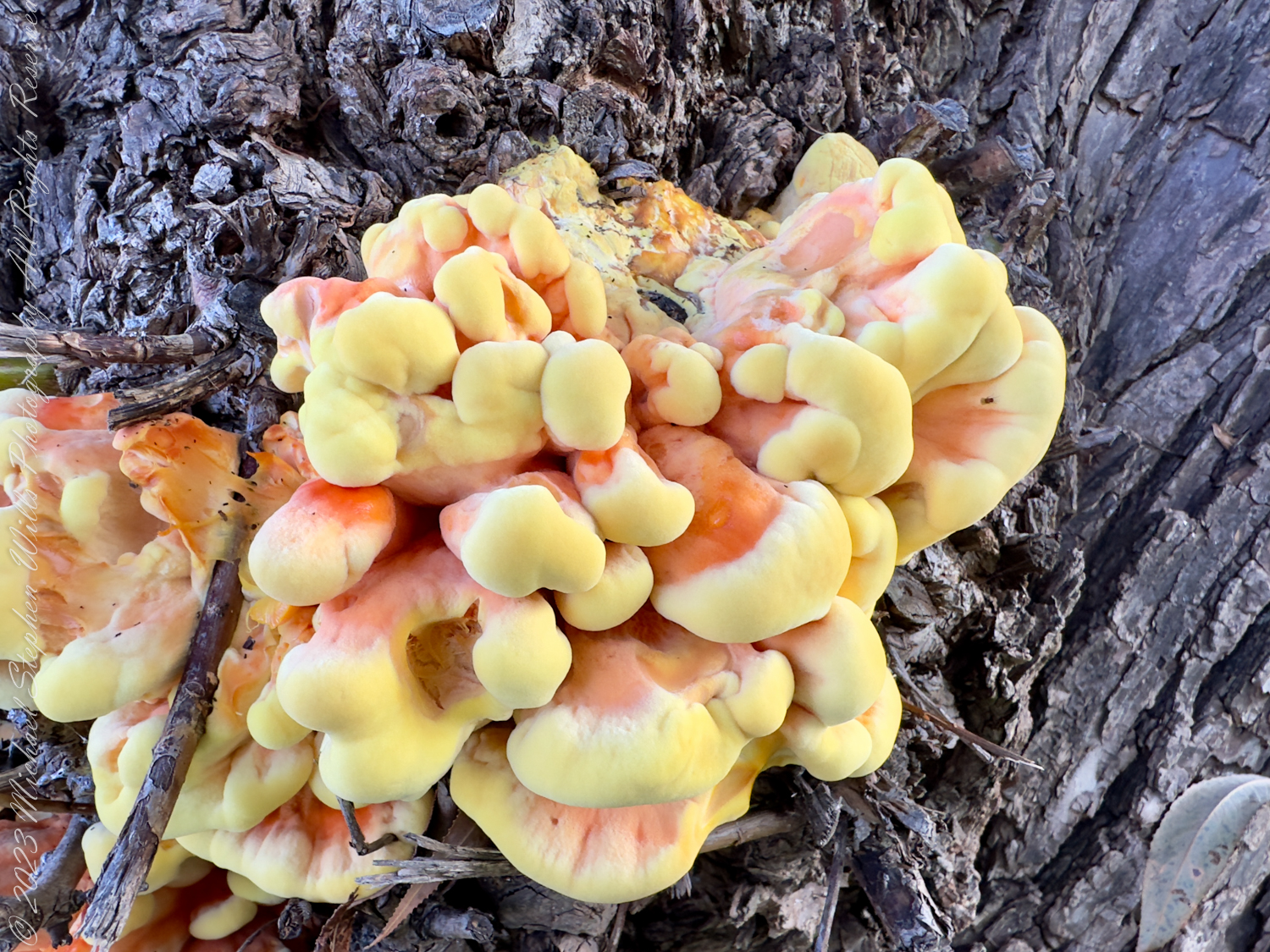
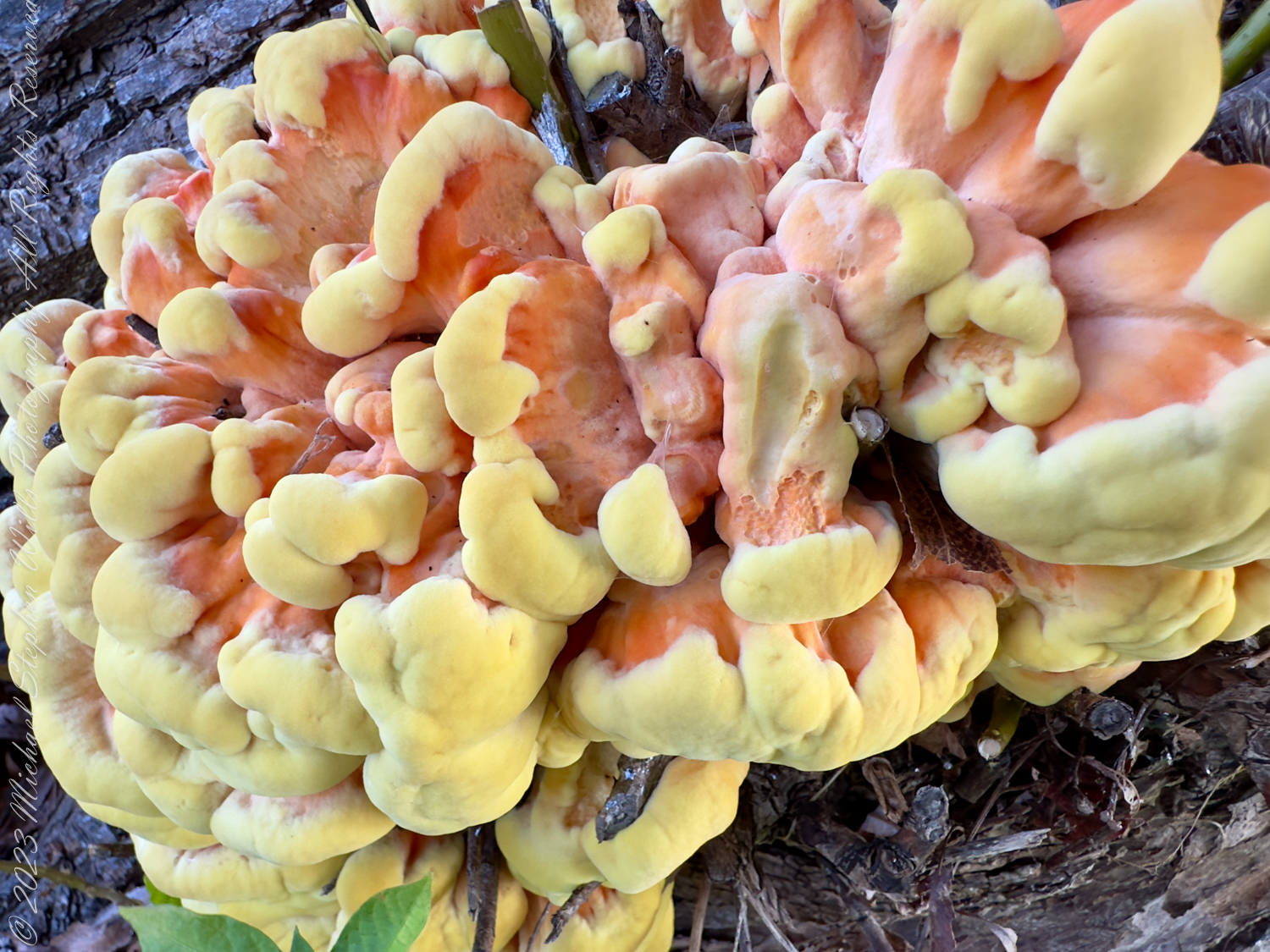
On a sunny September morning along the shores of Cayuga Lake, I encountered the vibrant Chicken of the Woods fungus. Its striking colors and intriguing history make it a fascinating discovery in nature’s ongoing cycle of life and decay.

A Serendipitous Discovery on a September Morning


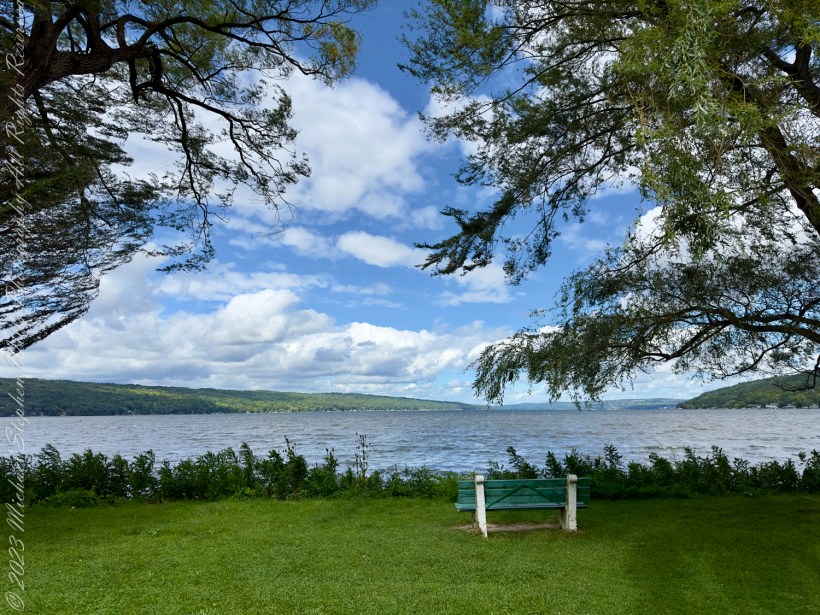
It was a crisp, sunny September morning when Pam and I set out for a leisurely walk along the shore of Cayuga Lake in Ithaca, New York. The lake shimmered in the morning light, framed by the early hints of fall colors on the surrounding hills. We had been walking for some time, enjoying the peaceful rhythm of nature, when something unusual caught my eye—a cluster of bright yellow-orange growths on the trunk of an apparently hale White Willow tree.

Curious, I approached the tree, and upon closer inspection, I realized these growths were something special, took these photographs of the vibrant clusters and later researched them to be Laetiporus sulphureus, commonly known as Chicken of the Woods. The striking colors of the fungus, a combination of deep orange and golden yellow, stood out in stark contrast to the gnarled, dark bark of the willow. It was a discovery that sparked a deeper interest in learning about the fascinating history and characteristics of this unique fungus.

The Vibrant History of Chicken of the Woods


Laetiporus sulphureus has been known to mycologists and naturalists for centuries, and its distinctive appearance has earned it a place among the most recognizable fungi in the world. Its common name, Chicken of the Woods, stems from the texture and flavor of its flesh, which, when cooked, is said to resemble that of chicken. This has made it a popular edible mushroom among foragers, particularly in Europe and North America, where it often grows on hardwood trees such as oak, cherry, and, as I found, occasionally on willows.

The fungus was first scientifically described by German mycologist August Batsch in 1789. Since then, it has been the subject of numerous studies, particularly due to its unique ability to grow on living trees, decaying wood, and sometimes even on dead trunks. This dual nature makes it both a decomposer and a potential pathogen, depending on the health of its host tree.

Historically, Chicken of the Woods has had various uses, ranging from culinary to medicinal. In traditional folk medicine, it was used for its antibacterial properties, and some cultures believed it could help heal wounds or infections when applied as a poultice. Today, research continues into its potential medicinal applications, including its possible role in supporting immune function and its antioxidant properties.

A Friend to Some, a Foe to Trees


While Laetiporus sulphureus may delight foragers and mushroom enthusiasts, it is not always welcomed by the trees it inhabits. The fungus is classified as a saprotroph, meaning it feeds on dead or decaying organic matter. However, it is also capable of acting as a parasite, attacking the heartwood of living trees. Over time, the fungus can cause brown rot, a form of decay that weakens the tree from the inside out. For trees already compromised by age or environmental stress, an infestation of Chicken of the Woods can be the final blow, leading to their eventual death and collapse.

The willow tree I encountered by Cayuga Lake had clearly seen many seasons, its twisted trunk and sprawling limbs a testament to decades of life along the shoreline. The presence of the fungus, while beautiful and intriguing, could also be an indicator that this tree was in decline. Still, the symbiotic relationship between the tree and the fungus was a reminder of nature’s cycles—of life, decay, and renewal.

Culinary and Medicinal Uses of Chicken of the Woods


One of the most interesting aspects of Chicken of the Woods is its edibility. Foragers and chefs alike prize the young, tender fruiting bodies for their chicken-like texture and mild flavor. When prepared properly, the fungus can be sautéed, fried, or even used in stews, providing a nutritious and flavorful addition to a variety of dishes. However, caution is required, as some individuals may experience allergic reactions or gastrointestinal upset after consuming it. Additionally, older specimens of the fungus can become woody and less palatable.

Beyond the kitchen, Chicken of the Woods has a history of medicinal use. In some cultures, it has been used to treat ailments ranging from respiratory infections to digestive issues. Modern research is beginning to explore the bioactive compounds present in the fungus, with preliminary studies suggesting that it may have antibacterial and antioxidant properties. These potential health benefits add yet another layer of intrigue to this already fascinating species.

An Essential Role in the Ecosystem


As well as serving human needs, Chicken of the Woods also plays a vital role in the ecosystems it inhabits. As a decomposer, the fungus breaks down dead and decaying wood, returning valuable nutrients to the soil and promoting the growth of new plant life. In this way, it contributes to the cycle of life and death that sustains forest ecosystems. Various insects and animals, including beetles and birds, may also use the fungus as a food source or shelter, further highlighting its ecological importance.

A Lasting Impression


As Pam and I continued our walk along Cayuga Lake, I couldn’t help but feel a sense of gratitude for the serendipitous discovery I had made that morning. The sight of the Chicken of the Woods clinging to the willow tree was a vivid reminder of nature’s endless capacity for surprise and wonder. Though this fungus may be humble in its origin, its history, uses, and ecological significance elevate it to a position of great interest and value in the natural world.

In that quiet September morning light, standing beside the lake with the colors of early autumn beginning to emerge, I realized that moments like these—moments of connection with nature—are what keep me returning to the trails and shores of Ithaca, always eager for the next discovery.

Copyright 2024 Michael Stephen Wills All Rights Reserved

Breezes and Memories: Pam’s First Walk and Reflections at Stewart Park

As Pam took her first therapeutic steps through Stewart Park after hip surgery, the wind off Cayuga Lake carried memories of our sailing days. This walk, a milestone along a journey of strength and reflection.

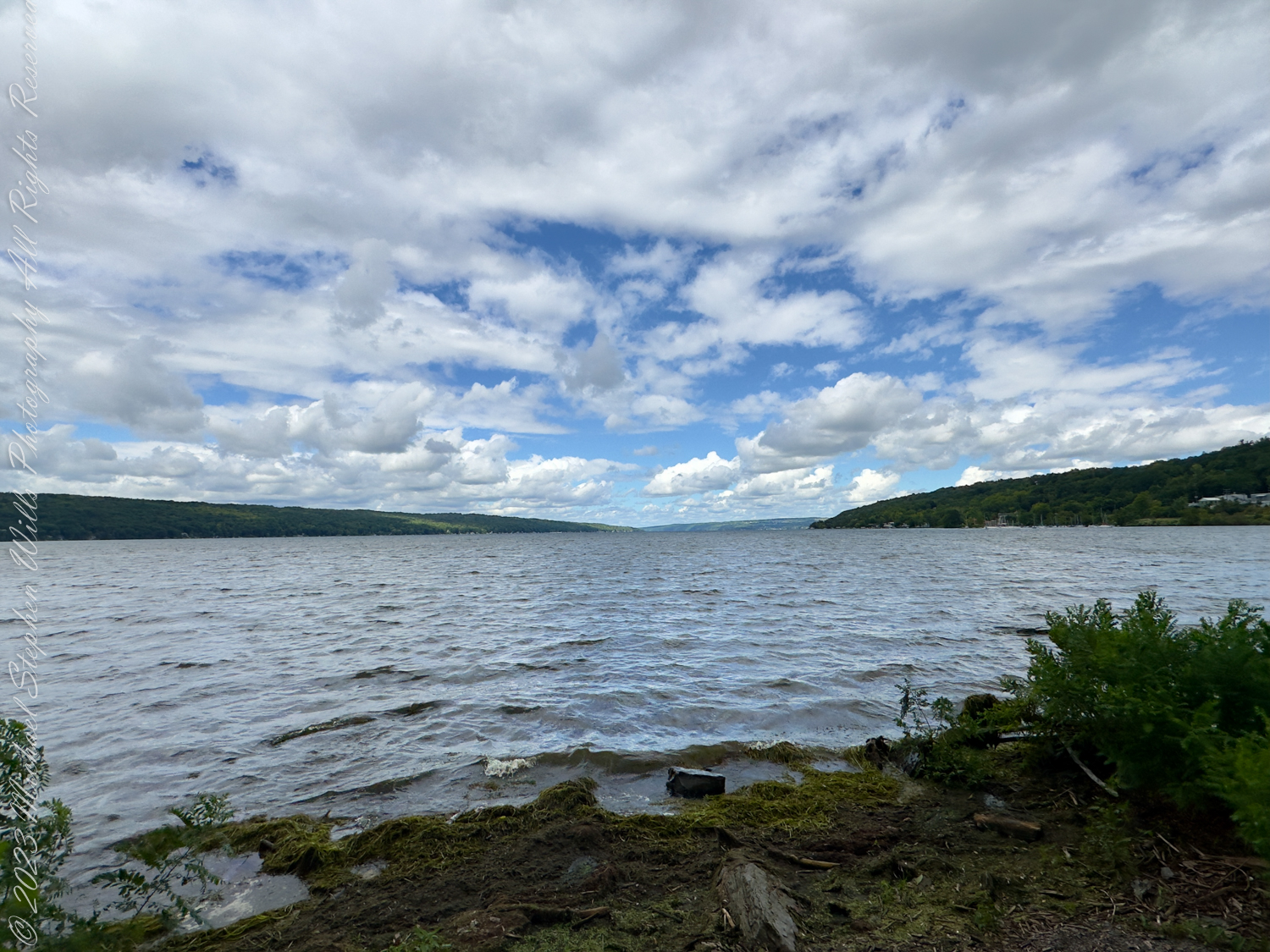
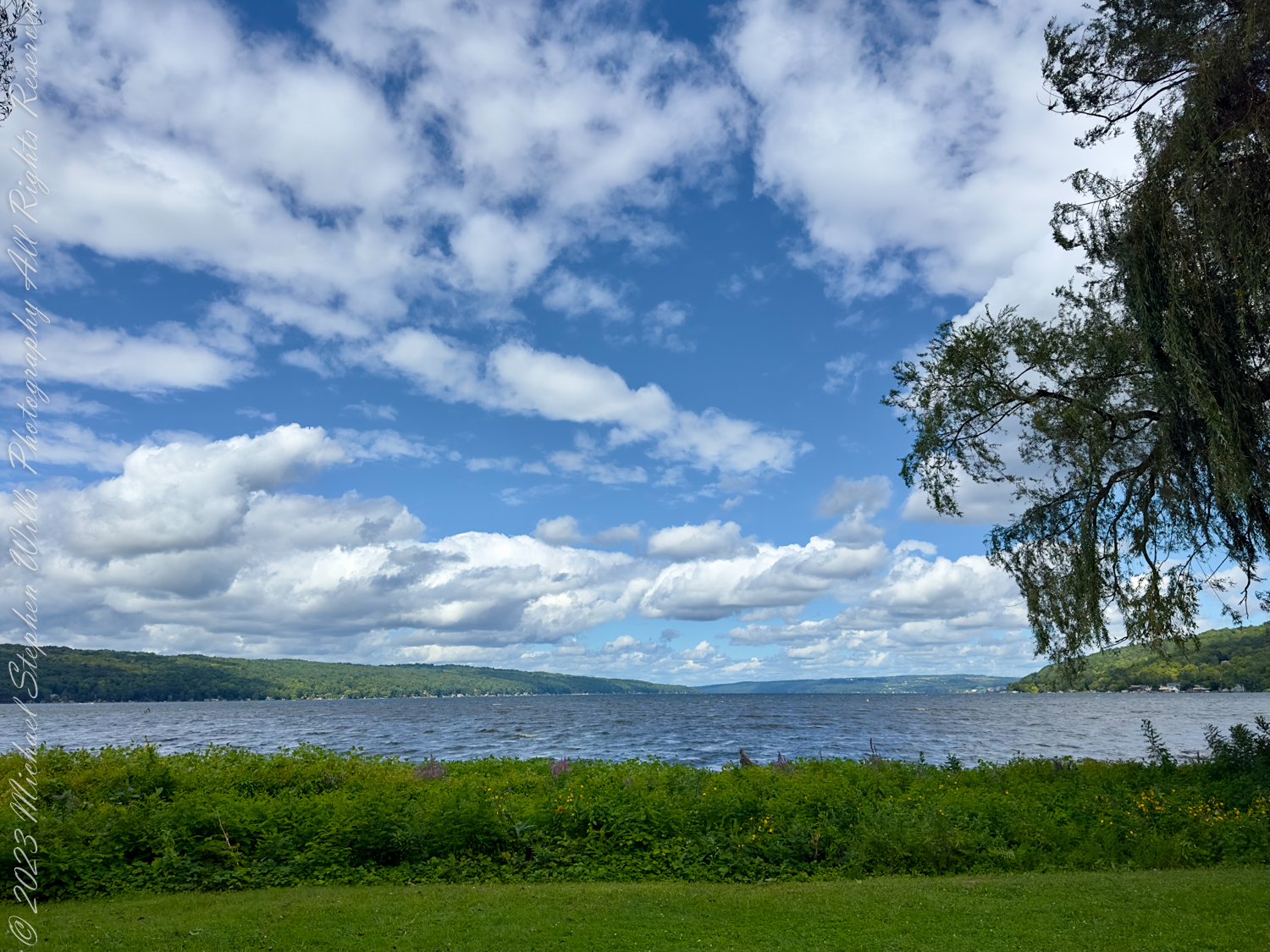
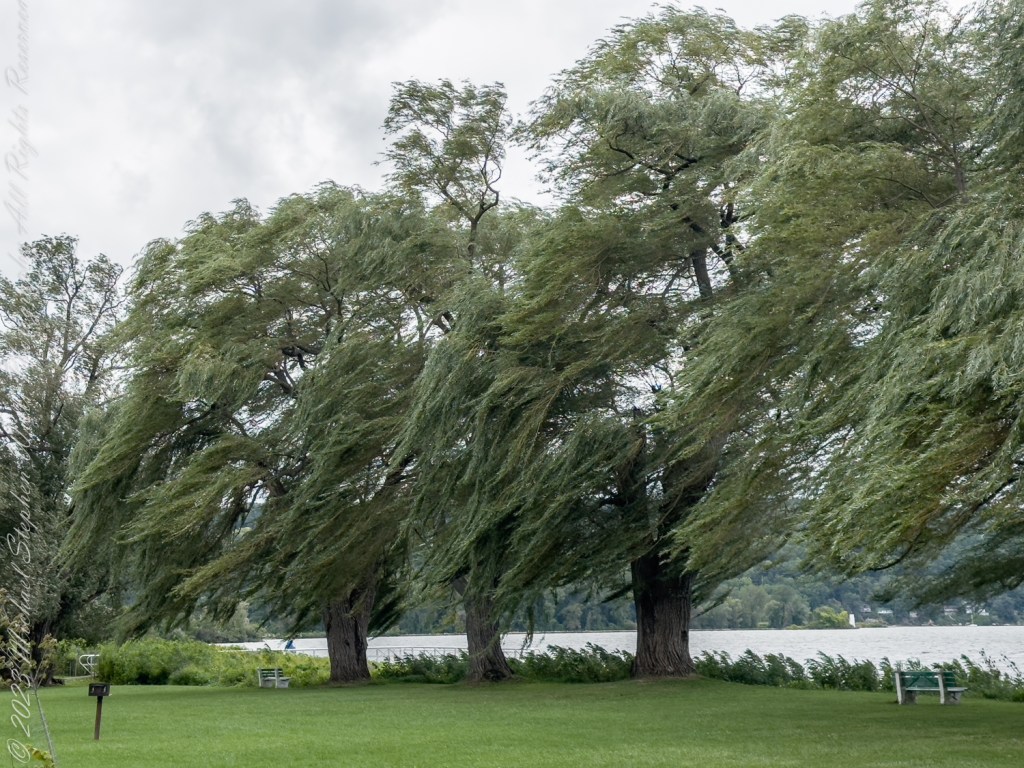
The breeze off Cayuga Lake was lively, stirring the willows and creating waves that rippled across the water’s surface as we arrived at Stewart Park. For Pam, this day marked a significant milestone: her first therapeutic walk since undergoing total hip replacement surgery. The park, located on the outskirts of Ithaca, New York, had long been a place of peaceful walks and scenic reflection for us, but on this day, it took on new meaning. The pathways and views we had enjoyed over the years now served as the backdrop for Pam’s journey of recovery.

As Pam began her walk, using her walker for support, the air felt crisp with the late-summer breeze. She moved carefully along the paved path, her steps steady but measured. The sight of her, framed by the grand trees lining the park, was a testament to the resilience and strength she had displayed throughout the weeks following her surgery. The park’s beauty offered a sense of calm that seemed to support her determination, as though nature itself was encouraging her every step.

Stewart Park, with its sweeping views of Cayuga Lake and towering willows, had always been a special place for us. Over the years, we had spent afternoons such as this sailing the lake’s expansive waters. We ventured out to let the wind carry us across the lake. As Pam walked, we reminisced about those times—how we would navigate the gusty winds that filled our sails, steering into the waves with a sense of adventure. “This wind reminds me your calls to ‘control the jib!!’,” Pam said, smiling as we remembered the thrill of maneuvering the boat to dock.

On days like those, the lake was unpredictable, much like Pam’s journey through recovery had been. Yet, whether on the water or facing the challenges of healing, Pam had always shown a quiet, steadfast determination. Just as we had learned to adjust the sails to accommodate the changing wind patterns, Pam had adapted to her new circumstances, tackling each step of her rehabilitation with grace.

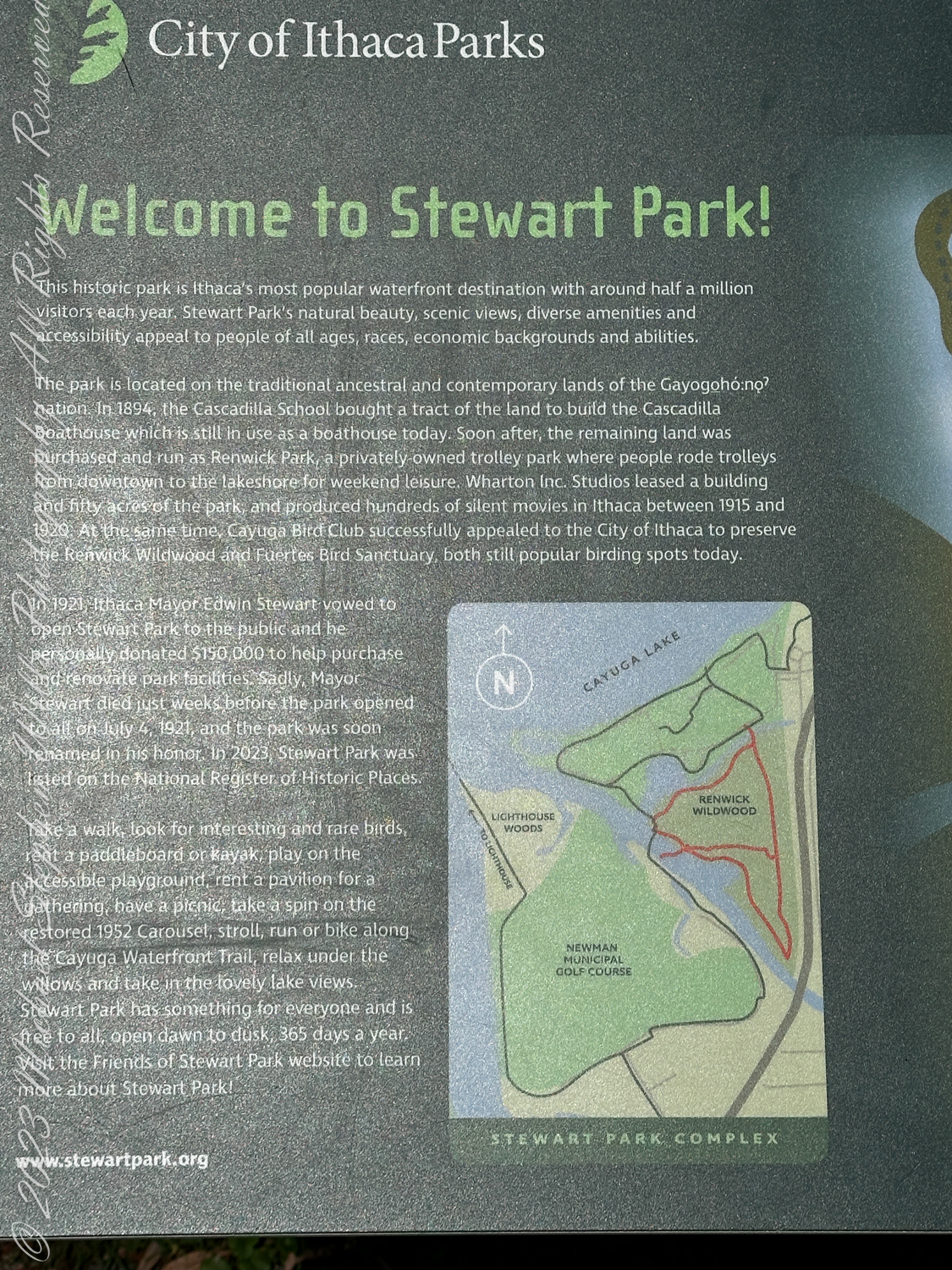
We paused at one of the informational signs along the path. The sign detailed the park’s history, noting that it sits on the ancestral lands of the Gayogo̱hó꞉nǫ’. Originally developed in 1894 for the Cascadilla School’s boathouse, the park had undergone many transformations before becoming the public space it is today. The sign spoke of Mayor Edwin Stewart, who had donated $150,000 to help purchase and renovate the park’s facilities, only to pass away weeks before its official opening in 1921. In 2021, the park was listed on the National Register of Historic Places, a testament to its enduring role in the community.

City of Ithaca Parks Welcome to Stewart Park! This historic park is Ithaca’s most popular waterfront destination with around half a million visitors each year. Stewart Park’s natural beauty, scenic views, diverse amenities and accessibility appeal to people of all ages, races, economic backgrounds and abilities. The park is located on the traditional ancestral and contemporary lands of the Gayogo̱hó꞉nǫʼ nation. In 1894, the Cascadilla School bought a tract of the land to build the Cascadilla Boathouse which is still in use as a boathouse today. Soon after, the remaining land was purchased and run as Renwick Park, a privately owned trolley park where people rode trolleys from downtown to the lakeshore for weekend leisure. Wharton Inc. Studios leased a building and fifty acres of the park, and produced hundreds of silent movies in Ithaca between 1915 and 1920. At the same time, Cayuga Bird Club successfully appealed to the City of Ithaca to preserve the Renwick Wildwood and Fuertes Bird Sanctuary, both still popular birding spots today. In 1921 Ithaca Mayor Edwin Stewart vowed to open Stewart Park to the public and he personally donated $150,000 to help purchase and renovate park facilities. Sadly, Mayor Stewart died just weeks before the park opened to all on July 4, 1921, and the park was soon renamed in his honor. In 2021 Stewart Park was listed on the National Register of Historic Places. Take a walk, look for interesting and rare birds, rent a paddleboard or kayak; play on the accessible playground, rent a pavilion for a gathering, have a picnic, take a spin on the restored 1952 Carousel, stroll, run or bike along the Cayuga Waterfront Trail, relax under the willows and take in the lovely lake views. Stewart Park has something for everyone and is free to all, open dawn to dusk, 365 days a year. Visit the Friends of Stewart Park website to learn more about Stewart Park!

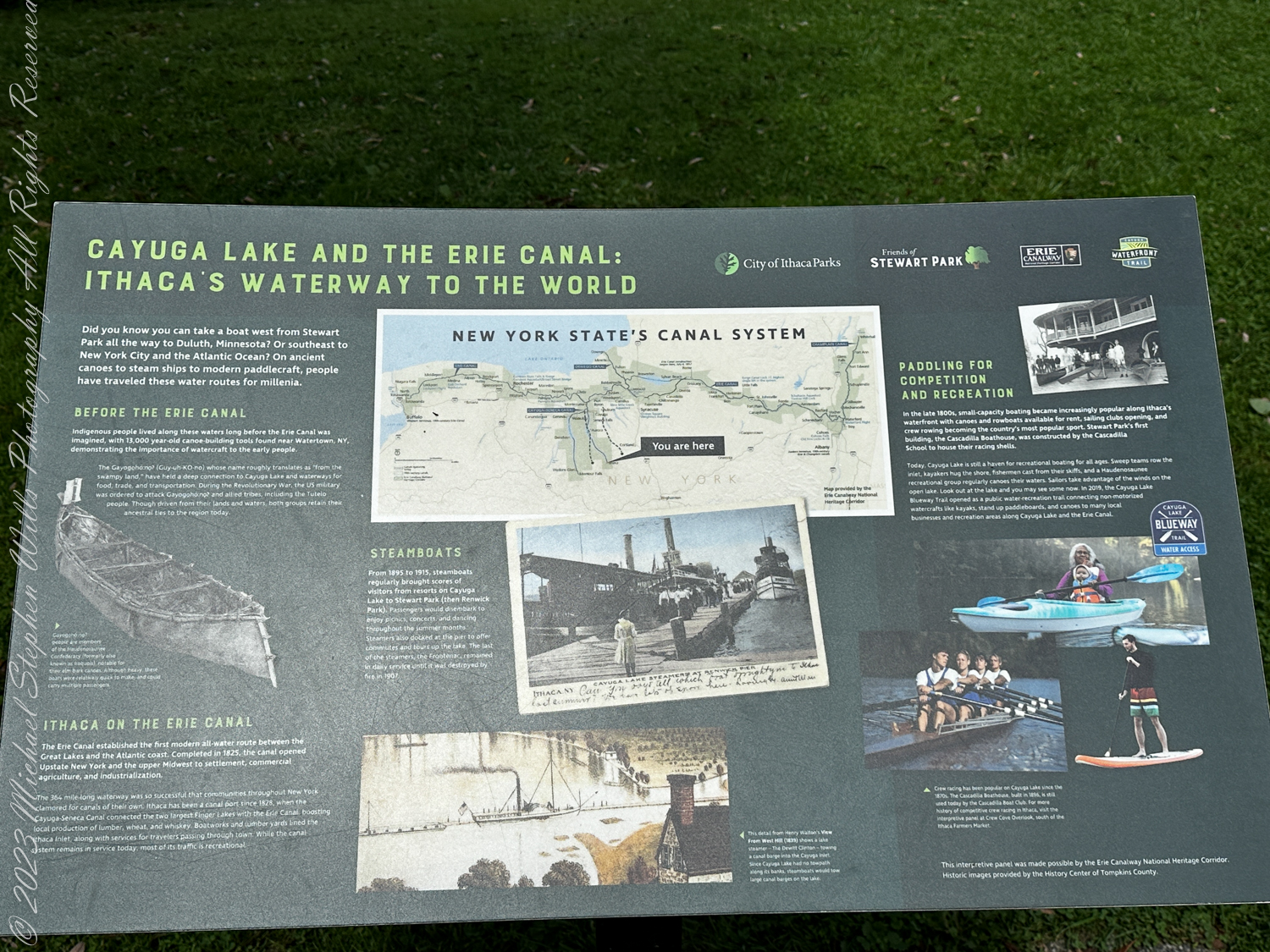
CAYUGA LAKE AND THE ERIE CANAL: ITHACA’S WATERWAY TO THE WORLD

Did you know you can take a boat west from Stewart Park all the way to Duluth, Minnesota? Or southeast to New York City and the Atlantic Ocean? On ancient canoes to steam ships to modern paddlecraft, people have traveled these water routes for millenia.

Before the Erie Canal

Indigenous people lived along these waters long before the Erie Canal was completed in 1825. In 1790, a dugout canoe was found near Elmira, NY, demonstrating the importance of waterways to the early people.

The Cayuga/Seneca Gayogo̱hó꞉nǫʼ who lived here for nearly a thousand years used the lake and rivers to transport people and goods. In the 1600s, French explorers reported meeting the Gayogo̱hó꞉nǫʼ as they traveled east along these waterways. Canoes and later watercraft helped settlers move people, goods, and ideas, transforming upstate New York. With only one lock, the lake’s water level would rise and fall, but goods still needed to be portaged, or moved over land. As the first commercial waterway in the US, the Erie Canal used river systems, canal channels, and lakes to connect New York’s inland towns to world markets.

ITHACA ON THE ERIE CANAL

The canal established the first modern all-water route between the Great Lakes and the Atlantic. Completed in 1825, the canal opened Upstate New York and the upper Midwest to settlement, commercial agriculture, and industry.

The southernmost port of the canal was at Cayuga Lake, near present-day Route 90, where steamboats ferried passengers and freight to and from Ithaca. Products like salt from Syracuse, wood from the region, and coal from Pennsylvania were loaded onto canal boats for shipment to New York City or via Buffalo, to the upper Midwest.

After more than 200 years of service, the canal has evolved into a water route that is primarily used by small boats for recreation. In 2017, the NYS Canal Corporation rebranded the canal as a recreation destination.

As Pam read the sign, she reflected on how the park’s evolution mirrored her own journey. Like Stewart Park, which had undergone multiple transformations over the years, Pam was in the midst of her own renewal. Her new hip, like the park’s renovations, represented a fresh start, a return to activity, and a promise of more days spent outdoors, enjoying the natural beauty that had always brought us peace.

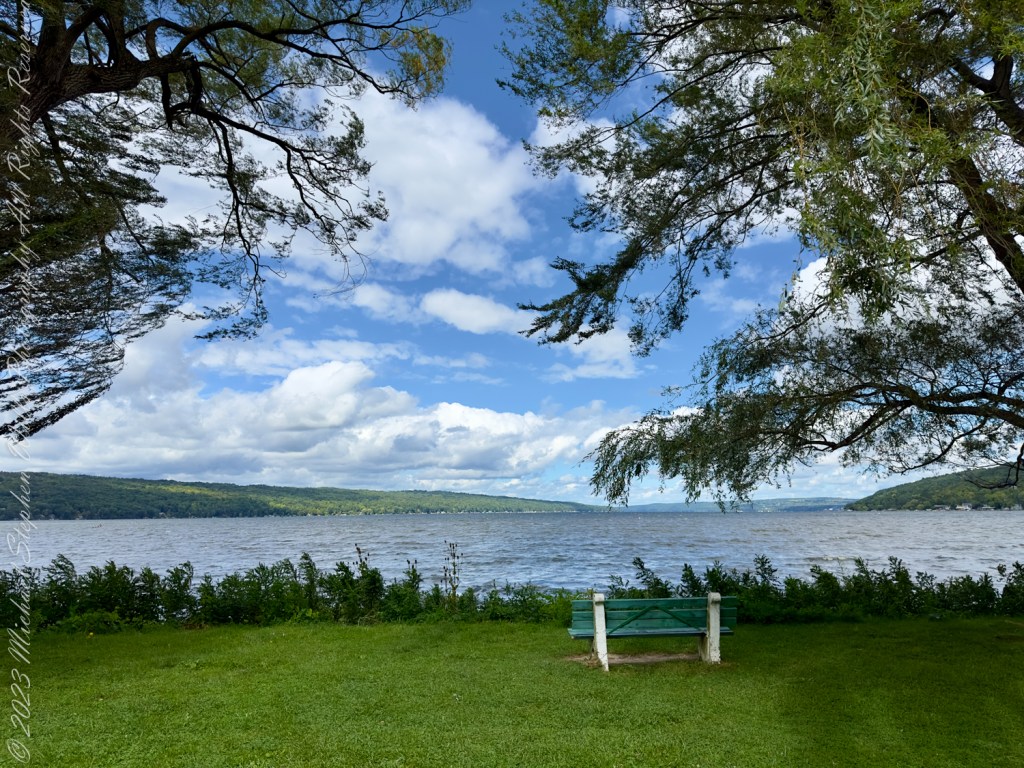
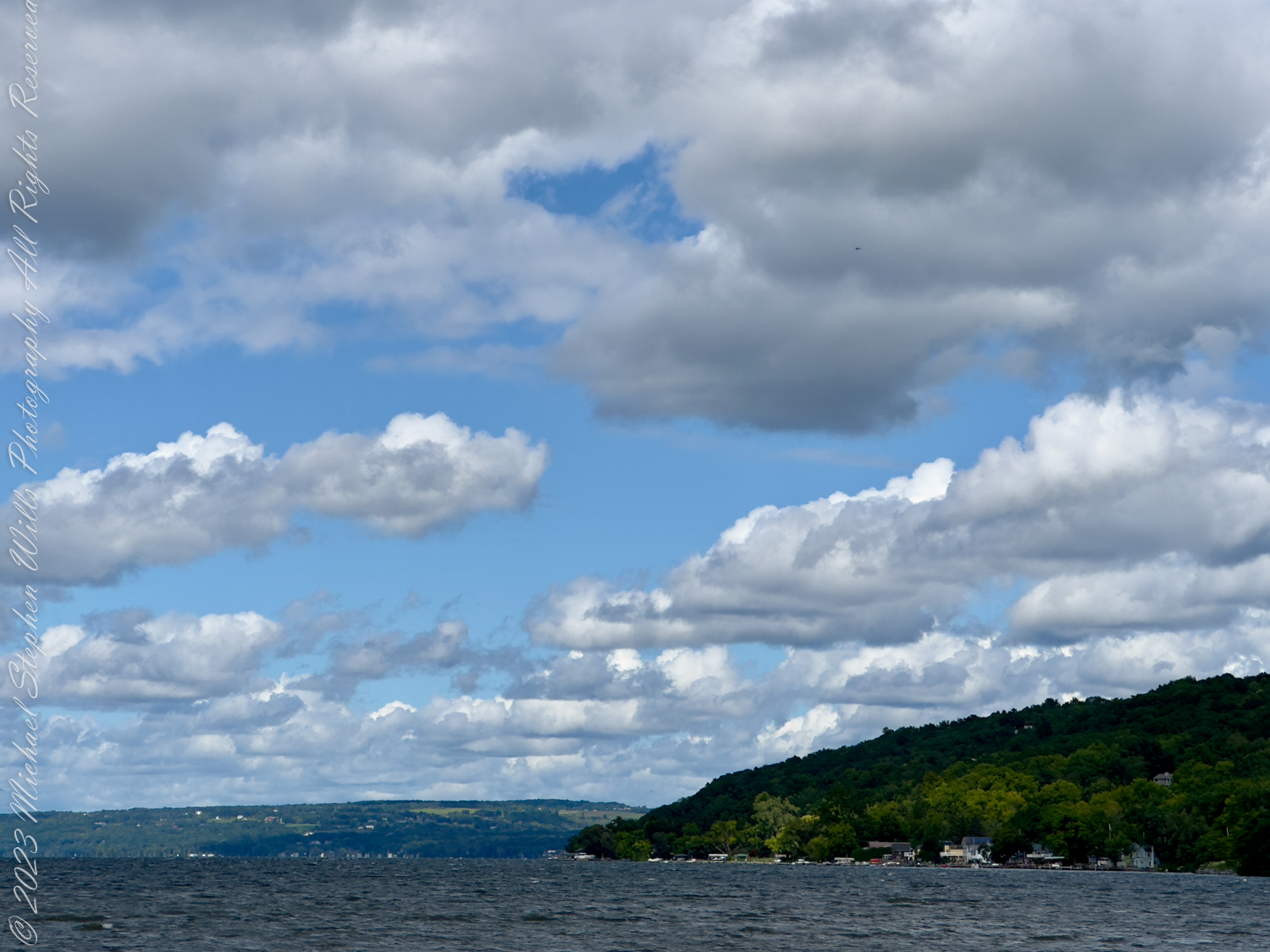
Continuing along the path, we passed several benches nestled beneath the graceful willows, their branches swaying gently in the breeze. Pam took a moment to rest on one of the benches, her eyes focused on the vast expanse of Cayuga Lake. The view stretched toward the distant hills, where the clouds and sun played together, casting ever-shifting patterns of light across the water. For a brief moment, it felt like we were back on our sailboat, riding the waves and allowing the wind to guide us toward new horizons.

As we made our way back along the path, the tall willows swaying and the sound of the waves lapping at the shore, I couldn’t help but feel gratitude. Stewart Park had always been a place of calm and reflection, but on this day, it became a place of healing. Pam’s steps, though slow and deliberate, were filled with the same strength and grace she had shown throughout her life.

The park’s beauty, the history we had shared here, and the memories of our time spent sailing on Cayuga Lake all came together to create a sense of peace. Pam’s recovery journey was far from over, but her progress was undeniable. As we looked out over the lake one last time before heading home, the water shimmered in the sunlight, promising more adventures to come.

Stewart Park, with its windswept trees and timeless views, would forever be tied to this day—Pam’s first steps toward reclaiming her mobility, set against the backdrop of a place that had long been part of our shared story. It was a day filled with hope, strength, and the quiet knowledge that, like the wind, life would continue to move us forward, no matter the challenges.

Copyright 2024 Michael Stephen Wills All Rights Reserved

The Joy of Adventure at Treetops

Join us as we explore the enchanting “Treetops” treehouse at Cayuga Nature Center. Discover the joy of hide and seek, and the magic of nature, through the eyes of my grandsons on a serene Sunday morning.

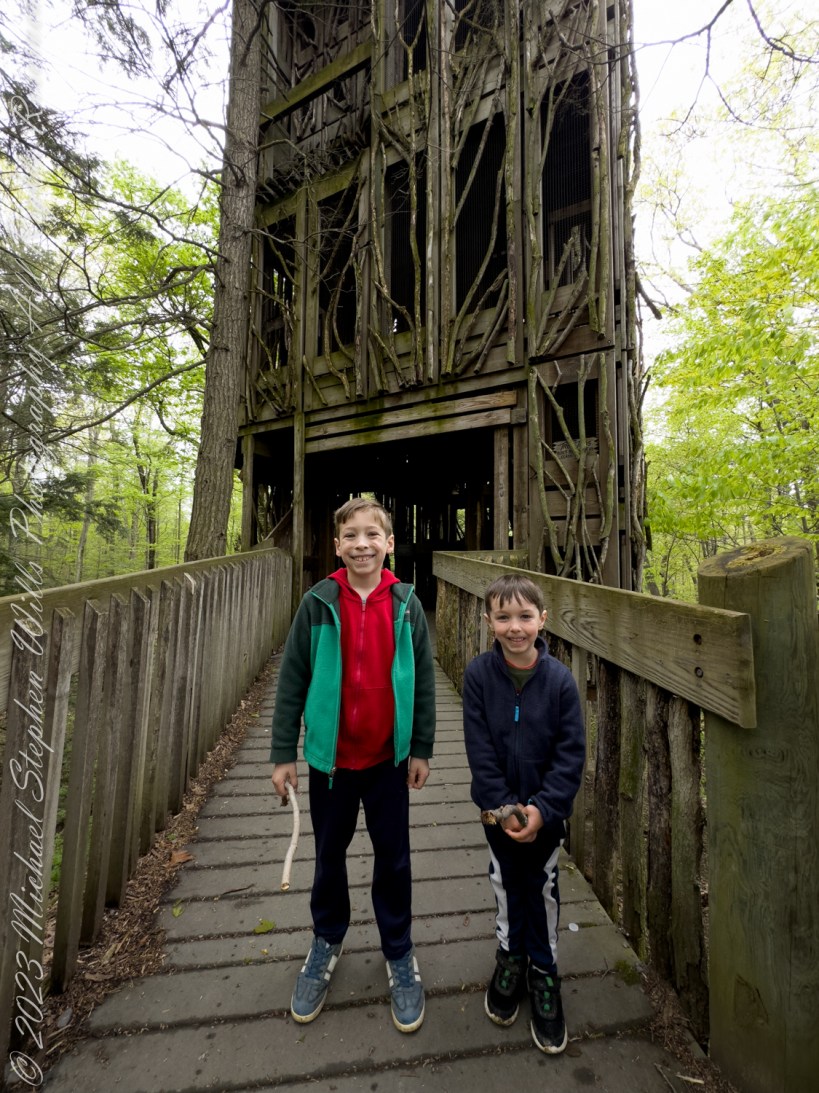
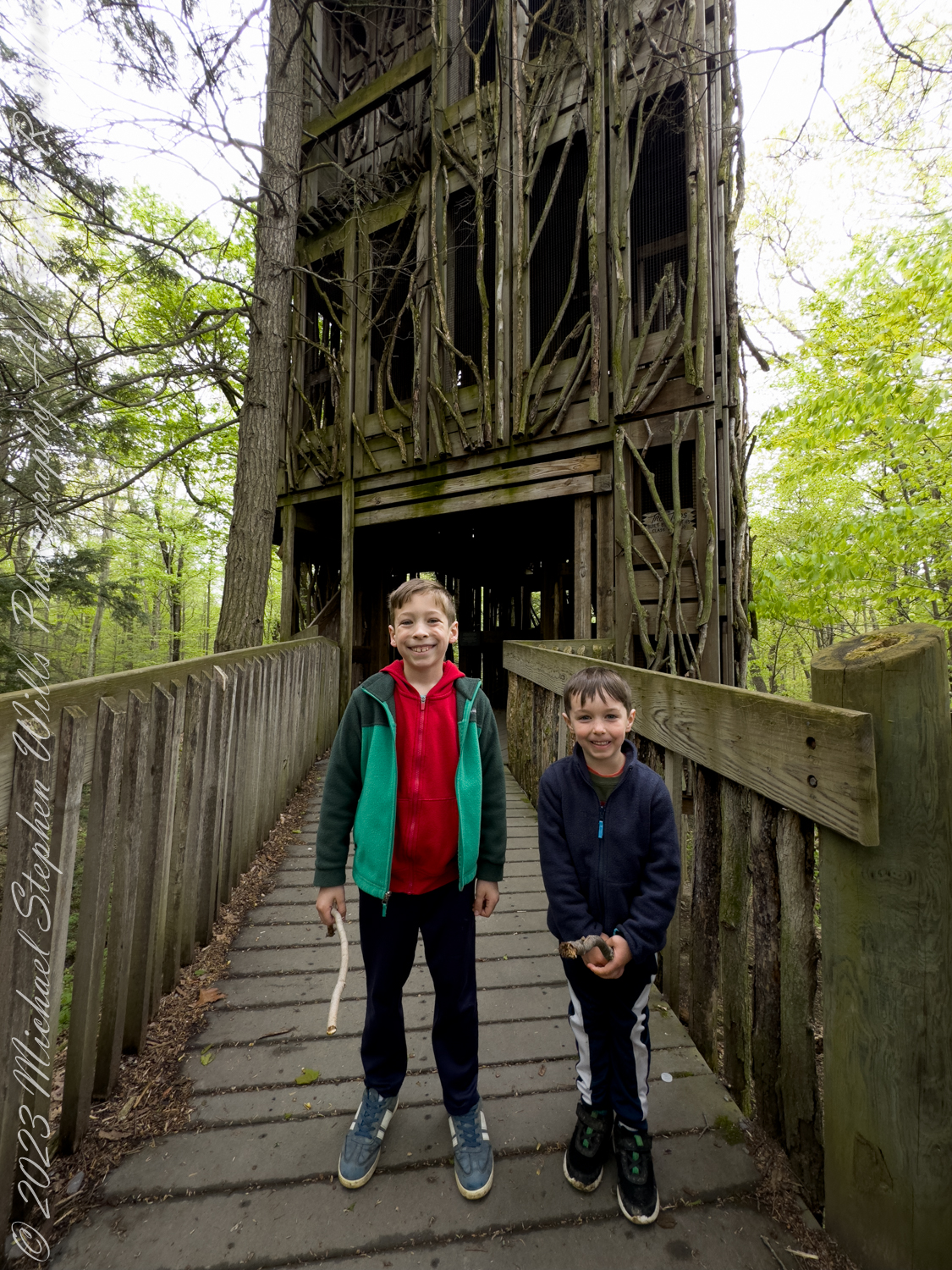
The air was crisp and cool as I strolled hand in hand with my grandsons, Sam and Rory, through the vibrant greens of the Cayuga Nature Center. The leaves rustled gently in the Sunday morning breeze, their whispers the only company we had. It was a quiet, serene moment, with no one else around, and the boys’ excitement was palpable as they chattered about their previous visits.

“Grandpa, do you remember this place?” Sam asked, his eyes twinkling with anticipation. Rory, not to be outdone, chimed in, “We have to show you the treehouse! It’s the best part!”

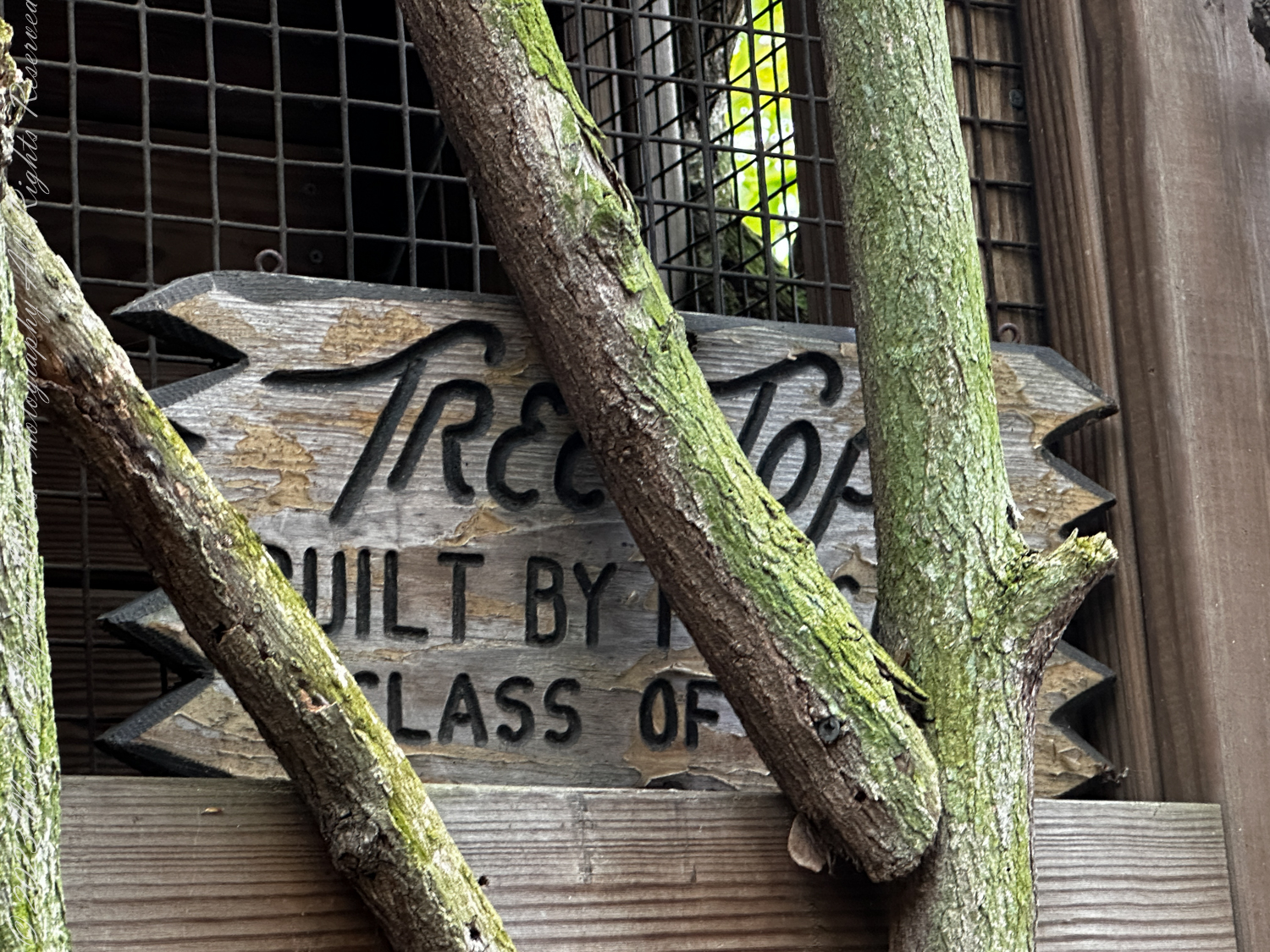
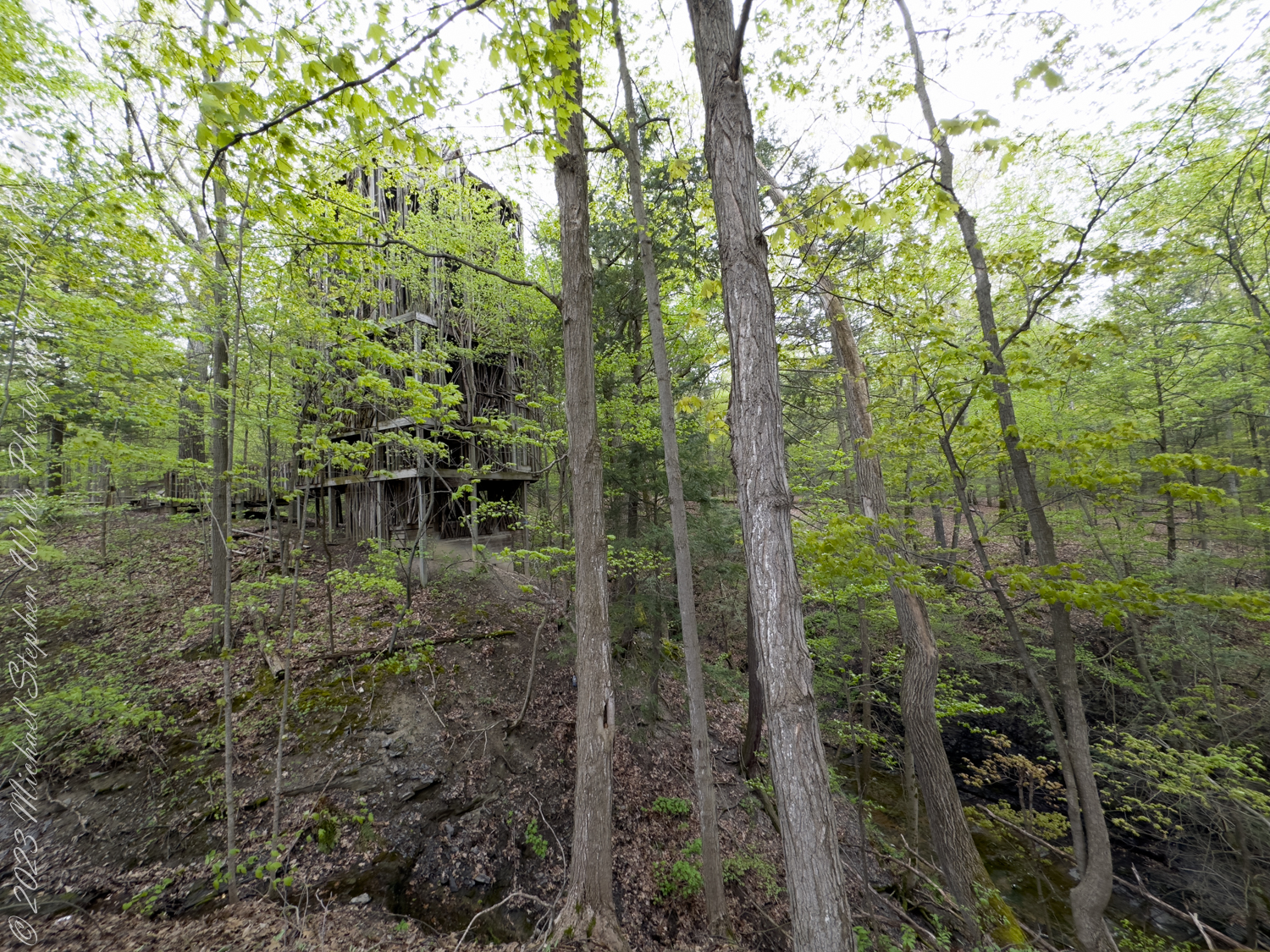
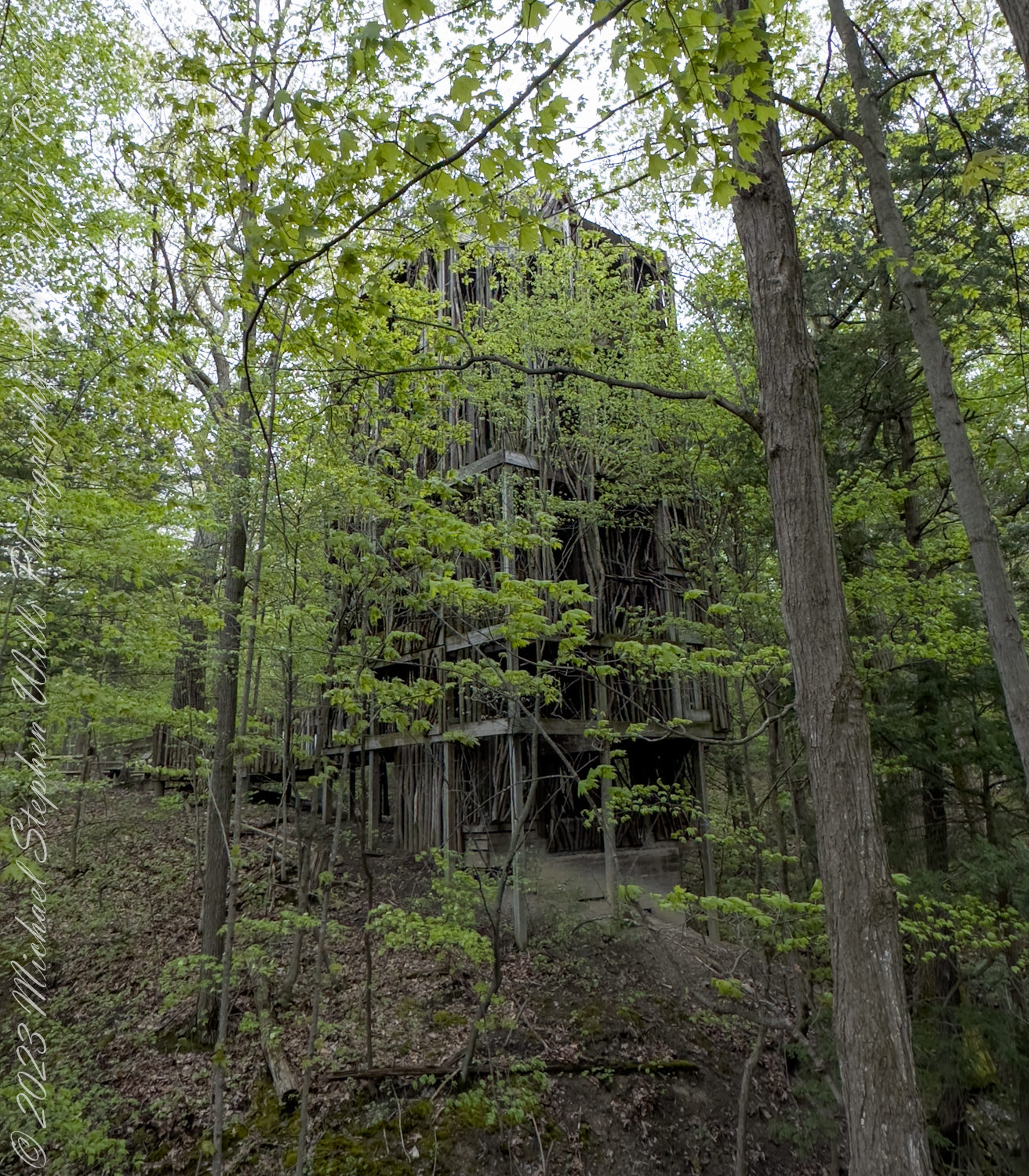
Their enthusiasm was infectious, and I found myself eager to see this magical place they spoke of. We followed a winding path, each step bringing us deeper into the lush woodland, until at last, the imposing structure of the “Treetops” treehouse came into view. It stood tall and mysterious; an intricate wooden edifice cloaked in the verdant embrace of the forest.

The treehouse was a marvel, its towering form constructed of twisted branches and sturdy planks, blending seamlessly with the natural surroundings. A wooden bridge led up to the entrance, and as we approached, the boys’ pace quickened.

“Let’s play hide and seek!” Rory suggested, his voice echoing with excitement. Sam nodded vigorously, already darting towards the treehouse entrance. “You count, Grandpa!” he called over his shoulder.

I began counting aloud, my voice mingling with the sounds of nature—the chirping of birds, the gentle rustle of leaves. When I reached twenty, I opened my eyes to find the boys had disappeared into the labyrinth of the treehouse. I stepped inside, the cool shade a welcome respite from the sun’s gentle warmth.

The interior was a maze of hidden nooks and winding staircases, each turn revealing a new secret. I could hear the faint giggles of the boys as they tried to stifle their laughter. The treehouse was alive with the echoes of their joy, each sound bouncing off the wooden walls like a symphony of childhood exuberance.

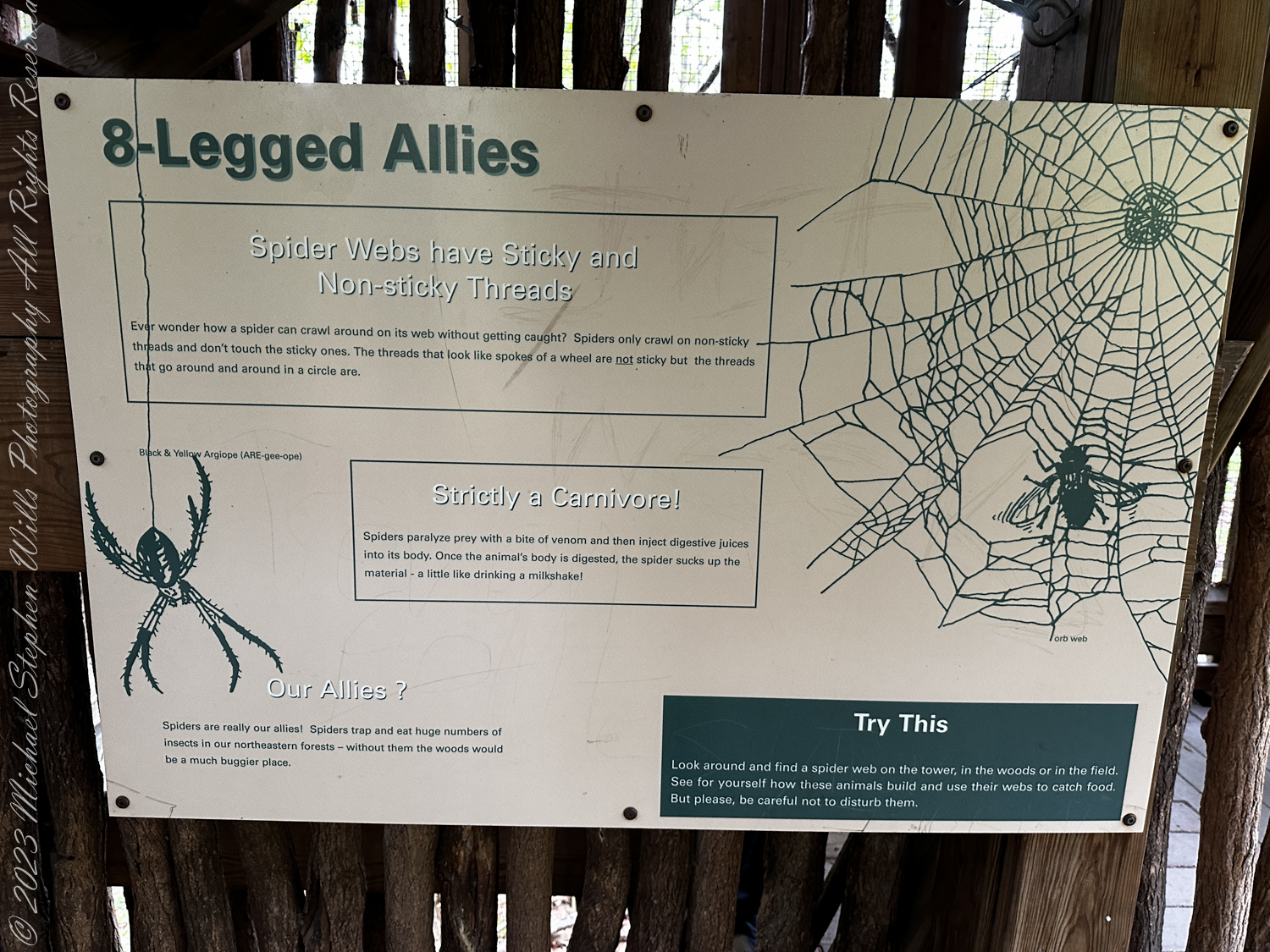
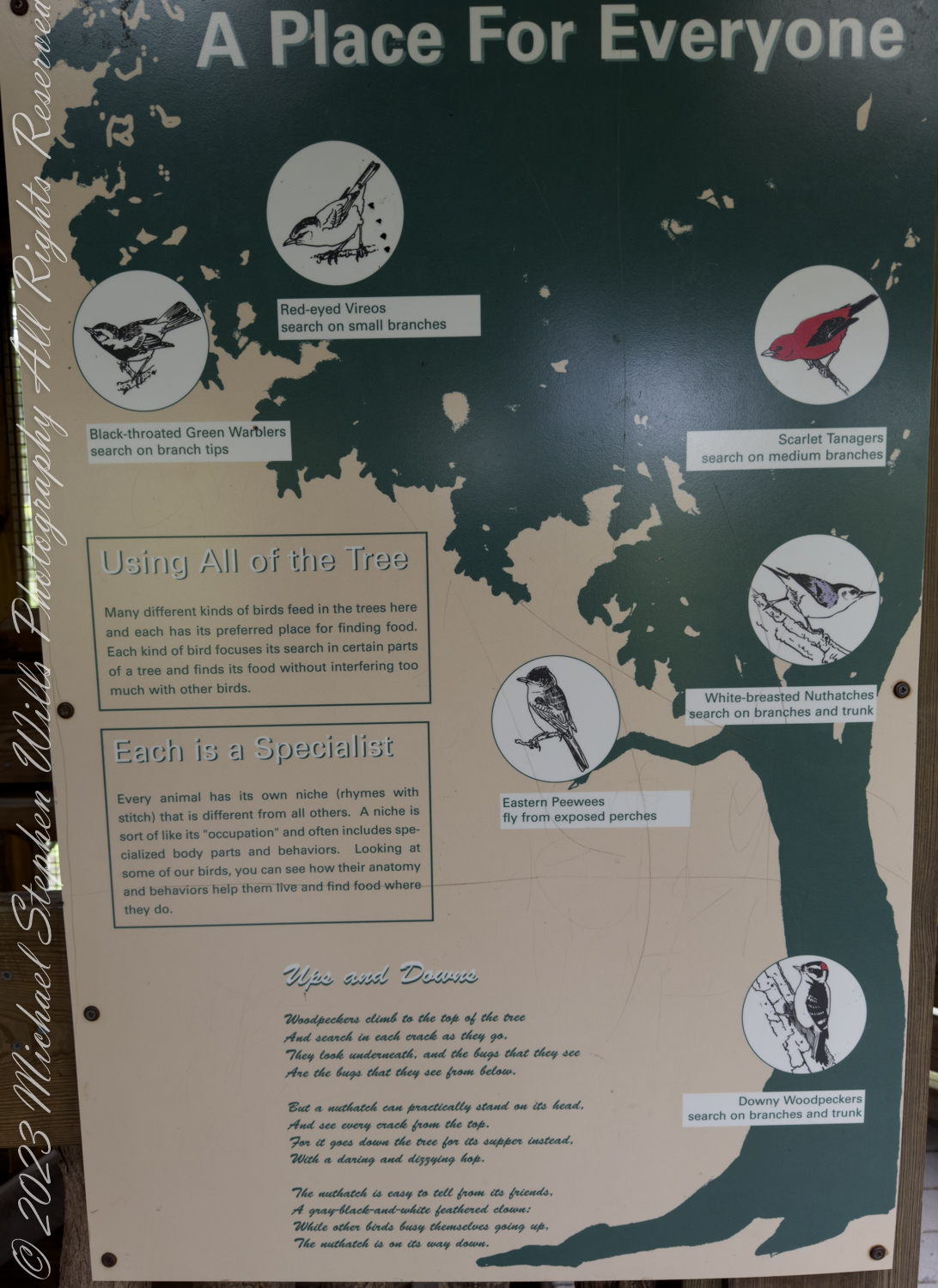
As I navigated the winding paths, I couldn’t help but marvel at the intricate details of the structure. The signs scattered throughout added an educational touch, detailing the lives of the birds and spiders that called this place home. One sign, titled “A Place For Everyone,” explained how each bird species had its niche, much like the boys had found their hiding spots.

“Found you!” I called out, spotting Sam’s bright red shirt from behind a wooden beam. He laughed and dashed off, his footsteps a rhythmic drumbeat on the wooden floor. Rory was next, his giggles giving away his hiding spot behind a thick cluster of branches.

We continued our game, the treehouse transforming into a magical playground where time seemed to stand still. The boys’ laughter filled the air, mingling with the natural symphony of the forest. We explored every corner, from the highest platform with its breathtaking view of the surrounding forest to the dark, cozy nooks perfect for hiding.

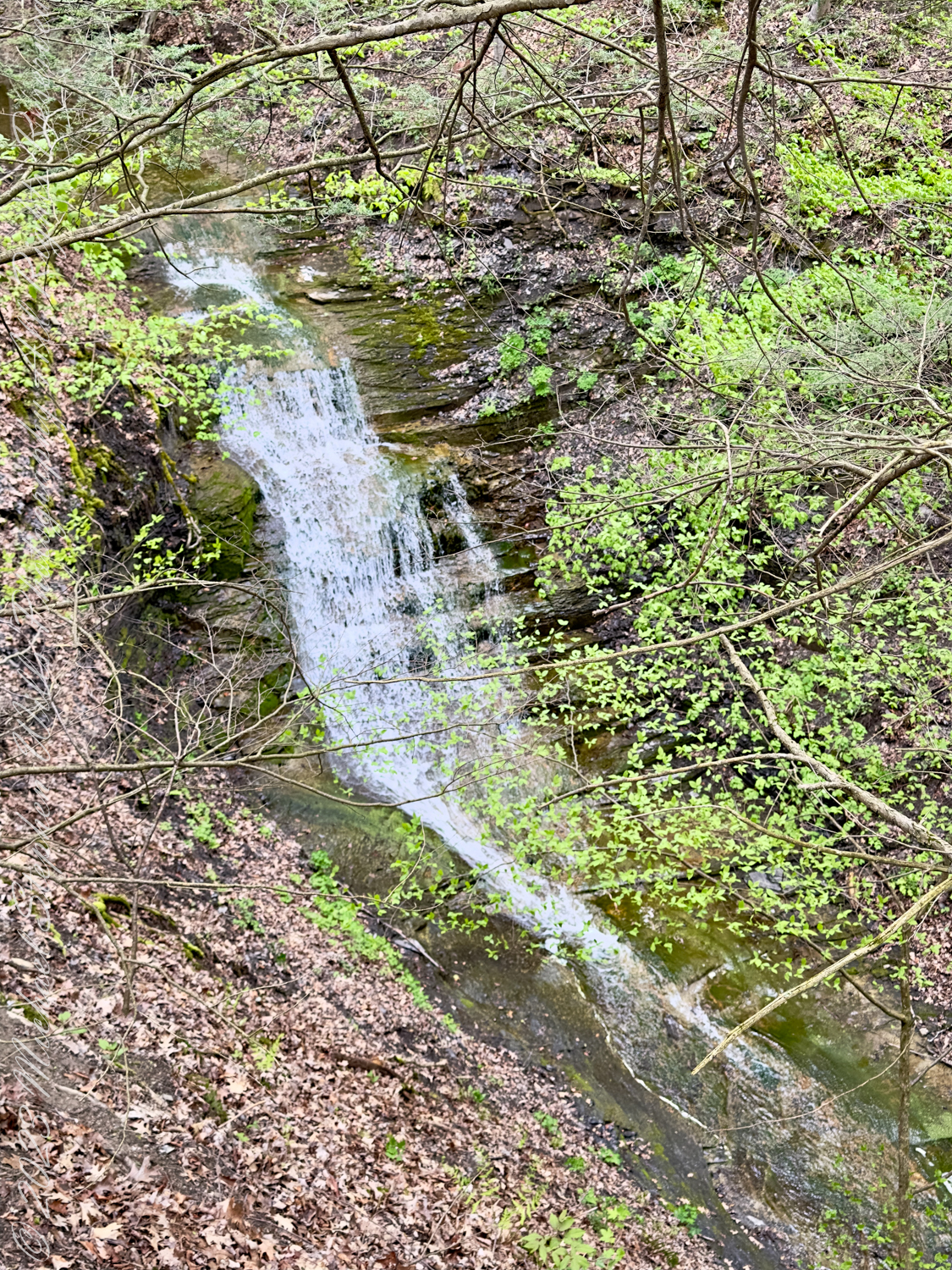
Phillips Falls is a picturesque waterfall located on Comstock Creek in view of the Treetops treehouse within the Cayuga Nature Center in Ithaca, New York. The falls are a highlight of the Nature Center, offering visitors a scenic and tranquil spot to enjoy the natural beauty of the area. The waterfall is accessible via the nature trails that wind through the Center’s diverse landscapes, including forests and meadows. Here are a few key points about Phillips Falls: Scenic Beauty: Phillips Falls is known for its serene and beautiful setting, making it a popular spot for nature enthusiasts, hikers, and photographers. Hiking Trails: The falls can be reached by hiking trails within the Cayuga Nature Center. The trails vary in difficulty, providing options for different levels of hikers. Educational Programs: The Cayuga Nature Center often includes Phillips Falls in its educational programs and guided tours, focusing on the ecology and geology of the area. Wildlife Habitat: The area around Phillips Falls is home to a variety of wildlife, making it a great spot for birdwatching and observing other animals in their natural habitat. Seasonal Changes: The appearance and flow of the waterfall can change with the seasons, offering a different experience for visitors throughout the year. Overall, Phillips Falls is a cherished natural feature of the Cayuga Nature Center, providing both a peaceful retreat and an educational experience for visitors.
After our game, we stood on the bridge, looking out over the creek below. The water sparkled in the sunlight, a serene contrast to our playful morning. “This place is amazing,” I said, turning to the boys. They nodded, their faces flushed with happiness.

“We love coming here,” Sam said. “It’s like a secret world.”

Rory nodded in agreement. “And now you know our secret too, Grandpa.”

As we made our way back down the path, I felt a deep sense of gratitude for this moment, for the chance to share in the boys’ joy and to see the world through their eyes. The “Treetops” treehouse had not only been a place of play but also a bridge between generations, a testament to the simple, timeless pleasures of exploring nature together.
Phillips Falls on Comstock Creek, seen from Treetops

Copyright 2024 Michael Stephen Wills All Rights Reserved

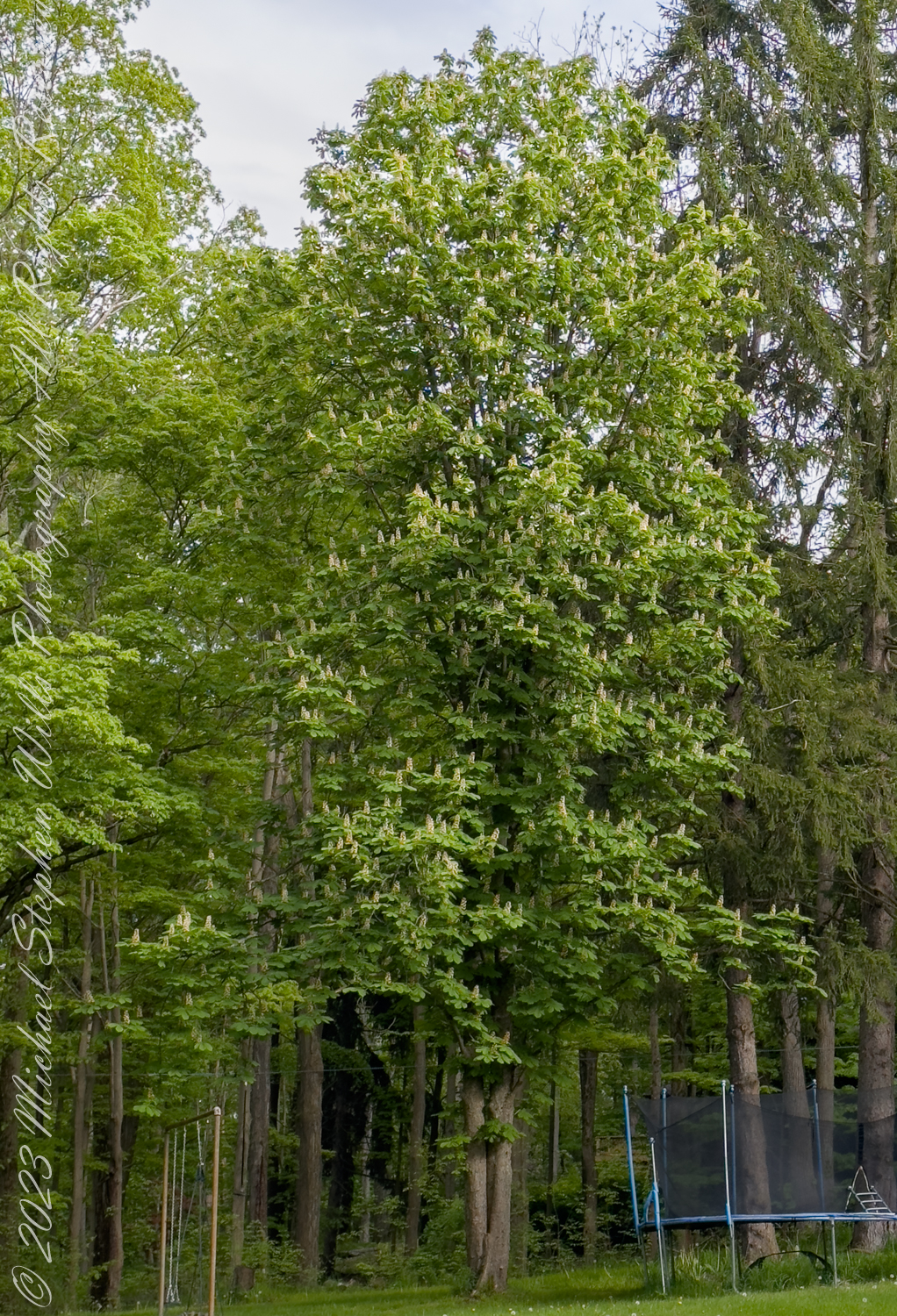
Mother’s Day Amid the Blossoms of the Horse Chestnut

Explore the enchanting world of the Horse Chestnut, its vibrant spring blossoms, and its rich tapestry of historical and ecological significance, as I wander the slopes above Cayuga Lake on a serene Mother’s Day.

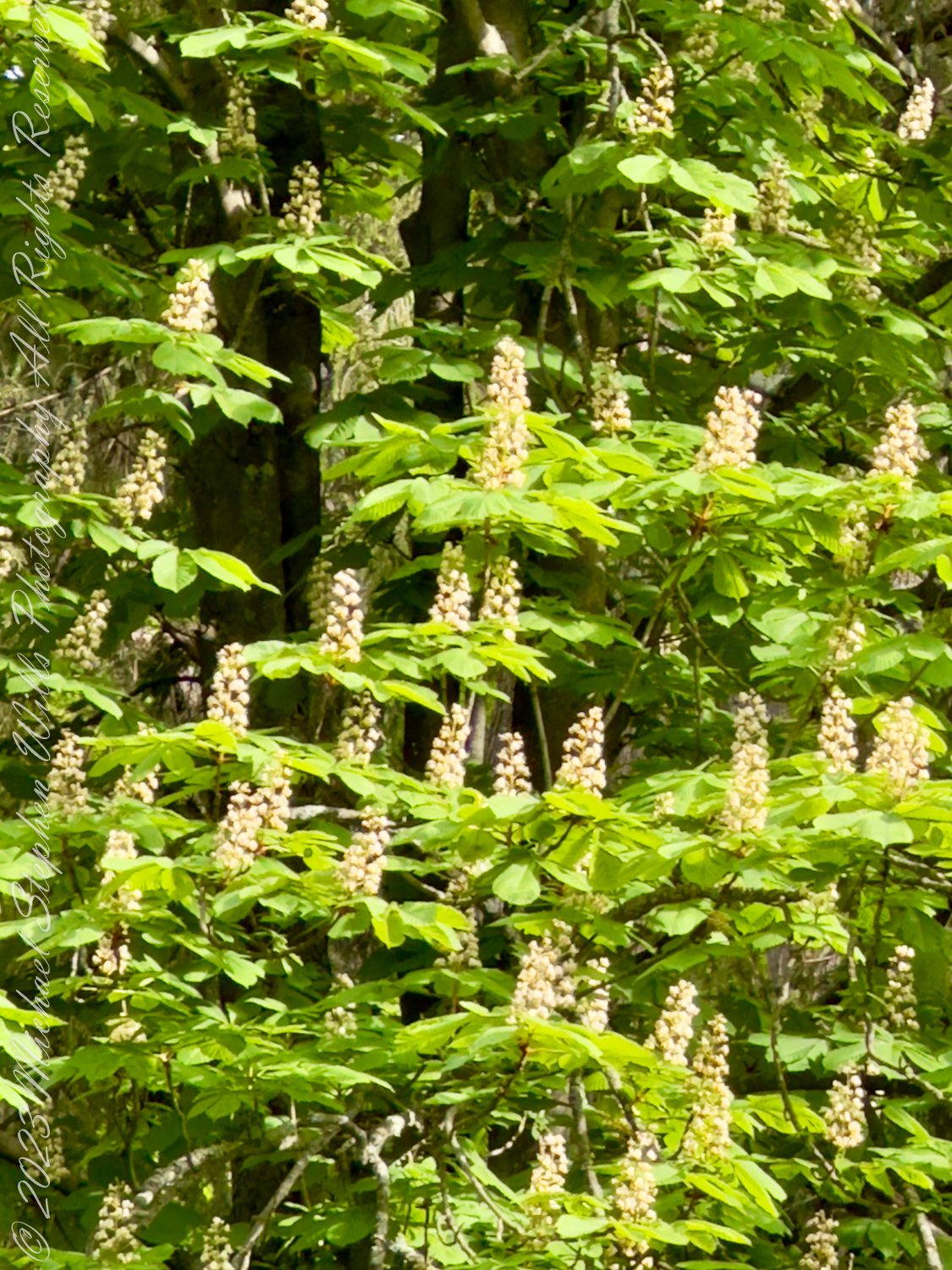
On a serene Mother’s Day in 2024, I found myself walking the slopes above Cayuga Lake, embraced by the spring warmth and the vibrant blossoms of the Horse Chestnut tree (Aesculus hippocastanum). This moment was a seasonal celebration and a deep dive into the botanical and cultural tapestry that this majestic tree weaves.

The Botanical Brilliance of the Horse Chestnut


The Horse Chestnut tree, with its robust stature and radiant floral displays, is a sight to behold, a study in botanical survival and adaptation. Originally native to a small area in the Pindus Mountains mixed forests and the Balkan mixed forests of Southeast Europe, this tree has traversed continents and histories to root itself into diverse landscapes, including the fertile grounds above Cayuga Lake.

Each spring, the Horse Chestnut’s candle-like flower spikes, scientifically known as ‘panicles’, burst forth in a shower of whites and subtle pinks, each petal marked distinctively with a blotch of yellow or red. These blooms are structured to attract a variety of pollinators, playing a crucial role in the local ecological narrative by supporting biodiversity.

Historical Uses and Cultural Significance


The journey of the Horse Chestnut tree from its native lands to the Americas is a tale of practicality and reverence. Native Americans, prior to the arrival of European settlers, were keen observers of their environment but may not have had a direct historical use for the Horse Chestnut, as it was introduced later. However, the European settlers quickly discovered the tree’s multiple uses. The wood, known for its softness and workability, was used to make furniture and boxes, while the bark found its place in the tanning industry due to its rich tannin content.

Most notably, the seeds of the Horse Chestnut were ground and used as a form of laundry detergent and to treat various ailments, a testament to the tree’s utility in pioneering life. This aspect of the Horse Chestnut highlights a broader theme of how both Native Americans and European settlers utilized natural resources for survival and economic purposes, blending the lines between utility and conservation.

A Reflection on the Natural History and Ecology


As I strolled beneath the boughs heavy with spring’s bounty, the historical echoes of the Horse Chestnut’s uses merged with the present chorus of birds nesting in its branches. The tree’s role extends beyond human uses; it is a vital component of the local ecosystems. The dense canopy provides shelter and the flowers feed pollinators, which in turn support the broader food web.

Environmental factors, particularly those influenced by climate change, pose challenges to the Horse Chestnut. Issues such as leaf blotch and the conker tree moth threaten its health and longevity. Observing the Horse Chestnut’s current vibrancy, I am reminded of the resilience and adaptability that this species has demonstrated over centuries.

Conclusion: A Legacy Continues

As the day drew to a close and the sun cast long shadows over Cayuga Lake, the Horse Chestnut stood as a botanical specimen, a living monument to natural history and human ingenuity. The tree’s story is a powerful reminder of our intertwined destinies with the plant kingdom—how plants shape our cultures, sustain our environments, and continue to amaze with their ecological and aesthetic contributions.

Copyright 2024 Michael Stephen Wills All Rights Reserved

A Glimpse into Steamboat Landing, Ithaca, New York

Discover the enchanting beauty of Steamboat Landing in Ithaca, New York. From the quiet winter majesty to the vibrant warmth of spring, this historical waterfront is a testament to the city’s rich past and evolving present.


Historical Significance and Transformation


Steamboat Landing in Ithaca, New York, is steeped in historical significance, serving as a testament to the city’s rich past and its evolving present. At the dawn of the 20th century, it was a bustling hub where steamboats carried passengers and freight, linking Ithaca to an ever-growing nation. These vessels were vital for the development of commerce, aiding travelers as they embarked and disembarked on their journeys that continued by stagecoach or later, by train.

In 1790, this spot marked the beginnings of commerce in the area, with the establishment of Ithaca’s first store. Over the years, Steamboat Landing has transformed from a pivotal commerce point to a recreational area, housing Ithaca’s Farmers Market—a vibrant hub that mirrors the liveliness of its heyday.

The Evolving Landscape


Today, Steamboat Landing is a place of gathering and serenity. My photographs showcase a tranquil setting moving through winter. In one scene, the rustic benches encircle a barren tree, standing as silent guardians of the land. It’s a still image, almost reminiscent of a painting, where the leafless trees stand vigil over the quiet benches.

A circular bench that has seen better days, a hollowed out tree trunk repurposed as a children’s playgound house, picnic benches and, in background, a portion of the Farmer’s Market pavilion, to the right is Johnson Boatyard, Cayuga Inlet and lake. This is the Steamboat Landing, historically the southern port on Cayuga Lake. Cayuga Waterfront Trail, Ithaca, Tompkins County, Finger Lakes Region, New York State.

Switching seasons, we see the docks adorned with festive wreaths, injecting life and celebration into the scenery. The bright red ribbons stand out against the crisp blue of the water and the sky, suggesting a community that embraces tradition and the joy of the moment.

Connection with Nature and Community


The pictures depict how the landing is woven into the natural tapestry of the area. It is a place where one can sit and watch the placid waters of Cayuga Lake or stroll along the docks, feeling the crisp air against their skin. The images of the clear skies, the open waters, and the flight of birds in the distance are a subtle reminder of nature’s continuous presence.

Steamboad Landing on the Cayuga Waterfront Trail, Farmers Market, Ithaca, Finger Lakes Region, New York State

The waterfront trail exemplifies the community’s efforts to merge history with modernity, providing a space where people can connect with the environment and each other. The docks, once a stage for industrial exchange, now serve as a peaceful retreat, hinting at the deep-seated human desire for connection—not only to each other but also to the very essence of the environment we inhabit.

Seasonal Beauty and Reflection


The change in seasons at Steamboat Landing brings a unique beauty, which the photographs showcase poignantly. From the barren coldness of winter to the lush warmth of spring, each season imbues the landing with a distinct character. The winter images reveal a quiet majesty, with the bare branches and gray skies reflecting the introspective nature of the season. The springtime shots, however, burst with promise and vitality, as greenery begins to cloak the landscape and the water shimmers under the strengthening sun.

Enduring Legacy and Future Prospects


Steamboat Landing’s legacy as a historical transport hub has set the stage for its future as a cherished community locale. The images and historical texts paint a picture of a place that has embraced its past while looking forward to a vibrant and inclusive future. It is a locale that pays homage to its roots through the Farmers Market and other community events, ensuring that the spirit of the old steamboats continues to thrive in the hearts of Ithacans.

In conclusion, Steamboat Landing is a geographic location and a chronicle of Ithaca’s journey through time. Through its transformation, it has become a place where history breathes, nature speaks, and the community finds its heartbeat. It stands as a beacon of heritage, recreation, and beauty—a corner of the world where past and present dance together in harmony.

Copyright 2024 Michael Stephen Wills All Rights Reserved

Reeds of Resilience: A Tale of Growth and Survival

Discover the hidden world of Phragmites australis, the common reed: a story of resilience, beauty, and ecological significance, told through the eyes of the wetlands.

On the southern shore of Cayuga Lake, where waters mirror the ever-changing sky, I found this common reed, Phragmites australis, a plant of unassuming grace yet profound influence. This tale unfolds at the broad boarders of earth and water, a refuge and kingdom to countless beings.

Phragmites australis, a reed both simple and complex, begins its journey as a whisper in the mud. From the soft, fertile earth, it bursts forth into the world, a slender shoot reaching for the heavens. Its growth is steady and assured, fueled by the sun’s embrace and the water’s caress. In time, it stands tall, a sentinel in a sea of green, its feathery plumes, called panicles, wafted by the breeze.

This reed, you see, is a cornerstone of its ecosystem, a master architect, shaping its environment, crafting homes and havens for creatures great and small, in keeping with the genus name “Phragmites.” The Greek word “phragma” translates to “fence” or “hedge”, derived from the verb “phrassein”, meaning “to enclose.” Within that realm tiny creatures find refuge. From dragonflies and damselflies to grasshoppers and beetles are found by careful, patient observers. Insects play essential roles in pollination and nutrient cycling. Birds use the dense vegetation for shelter and foraging, you might find red-winged blackbirds, marsh wrens, and rails among the stems. Frogs, toads, and salamanders find refuge in reedy marshes. They lay their eggs in the waterlogged areas, and their tadpoles thrive amidst the reed stems. Phragmites australis is a giver of life, a source of sustenance and protection for many.

Yet, the tale of Phragmites is also one of struggle and resilience. In lands far from its native soil, it is often seen as an invader, a usurper of territories, spreading with a zeal that can overwhelm native flora and alter habitats. Its spread, unchecked, can lead to monocultures, diminishing biodiversity. But in its essence, Phragmites does not seek conquest but survival, thriving in spaces both gentle and harsh, adapting with an elegance that commands admiration.

As seasons turn, the reed undergoes a transformation, its green turning to gold, then to the brown of the earth from which it sprang. But even in decay, it nurtures life, its fallen stalks a shelter for the small and the silent, its seeds a promise of renewal. And when spring whispers anew, Phragmites rises once more, a cycle unbroken, a circle complete.

In the tale of Phragmites australis, we find a narrative of life itself—growth and decay, beauty and conflict, resilience and adaptation. This common reed, standing tall among the waters of the world, is a testament to the enduring power of nature, a reminder of the intricate tapestries of life that flourish in the quiet corners of our planet.

Click Me for another posting on the Common Reed.

Copyright 2024 Michael Stephen Wills All Rights Reserved