The Wonder of Penstemon hirsutus in Treman Gorge

Discover the enchanting Hairy Beardtongue nestled in Treman Gorge. Learn about its striking lavender blooms, unique adaptations, and fascinating history in our latest nature exploration. Dive into the beauty of Penstemon hirsutus!

On a sunny day at the end of May 2024, I embarked on one of my cherished walks through Robert H. Treman Park, located in the heart of Ithaca, New York. The park, with its stunning gorges and waterfalls, never ceases to amaze me with its natural beauty and diverse plant life. This time, my exploration led me to a delightful discovery along the south-facing walls of Treman Gorge: Penstemon hirsutus, commonly known as the Hairy Beardtongue.

As I navigated the rocky terrain, my attention was caught by a cluster of delicate, tubular flowers emerging from the crevices of the gorge walls. Their soft lavender hues stood out against the rugged backdrop of moss-covered rocks and shale. Upon closer inspection, I noticed the characteristic hairy stems and leaves, confirming that I had indeed found Penstemon hirsutus.

Penstemon hirsutus is a perennial herbaceous plant native to eastern North America. It typically reaches a height of 1 to 3 feet, with erect stems covered in fine hairs. The leaves are lanceolate, arranged oppositely along the stem, and also bear a slight fuzziness. The flowers, which bloom from late spring to early summer, are tubular and two-lipped, resembling a small beard—a feature that likely inspired the common name “Beardtongue.” Each flower is about 1 to 1.5 inches long, with a delicate lavender color that fades to white at the throat.

The genus name “Penstemon” is derived from the Greek words “pente,” meaning five, and “stemon,” meaning stamen, referring to the plant’s five stamens—four fertile and one sterile, the latter often appearing as a small, hairy tongue within the flower. The species name “hirsutus” comes from Latin, meaning hairy, a nod to the plant’s hirsute stems and leaves.

The Hairy Beardtongue thrives in well-drained soils and can often be found in rocky, open woodlands, meadows, and along cliffs—exactly the kind of environment provided by Treman Gorge. This plant is well-adapted to the microhabitats created by the gorge’s south-facing walls, where sunlight and moisture create ideal growing conditions. The rock walls not only offer physical support but also help retain heat and moisture, creating a microclimate that supports a variety of plant species.

Historically, Penstemon hirsutus and its relatives have been valued for their ornamental beauty and ecological benefits. The flowers attract a variety of pollinators, including bees, butterflies, and hummingbirds, making them an important component of the local ecosystem. Native Americans also recognized the medicinal properties of some Penstemon species, using them to treat ailments such as toothaches, sore throats, and respiratory issues.

In recent times, gardeners and horticulturists have come to appreciate Penstemon hirsutus for its hardiness and low maintenance requirements. It is often used in native plant gardens, rock gardens, and naturalized areas to add a touch of wild beauty. The plant’s ability to thrive in poor soils and its resistance to deer browsing make it a valuable addition to any garden aiming to support local wildlife and biodiversity.

Finding the Hairy Beardtongue in Treman Gorge was a moment of pure joy and wonder. It reminded me of the resilience and adaptability of nature, as this delicate yet sturdy plant has carved out a niche for itself in the rocky walls of the gorge. The sight of its soft lavender blooms swaying gently in the breeze was a testament to the beauty and tenacity of life in even the most rugged environments.

As I continued my hike, I felt a renewed sense of connection to the natural world. The discovery of Penstemon hirsutus was not just a botanical find but a reminder of the intricate and interconnected web of life that thrives in Treman Gorge. Each plant, each flower, has a story to tell—a story of survival, adaptation, and beauty that enriches our understanding of the natural world and our place within it.
Copyright 2024 Michael Stephen Wills All Rights Reserved

The Joy of Adventure at Treetops

Join us as we explore the enchanting “Treetops” treehouse at Cayuga Nature Center. Discover the joy of hide and seek, and the magic of nature, through the eyes of my grandsons on a serene Sunday morning.

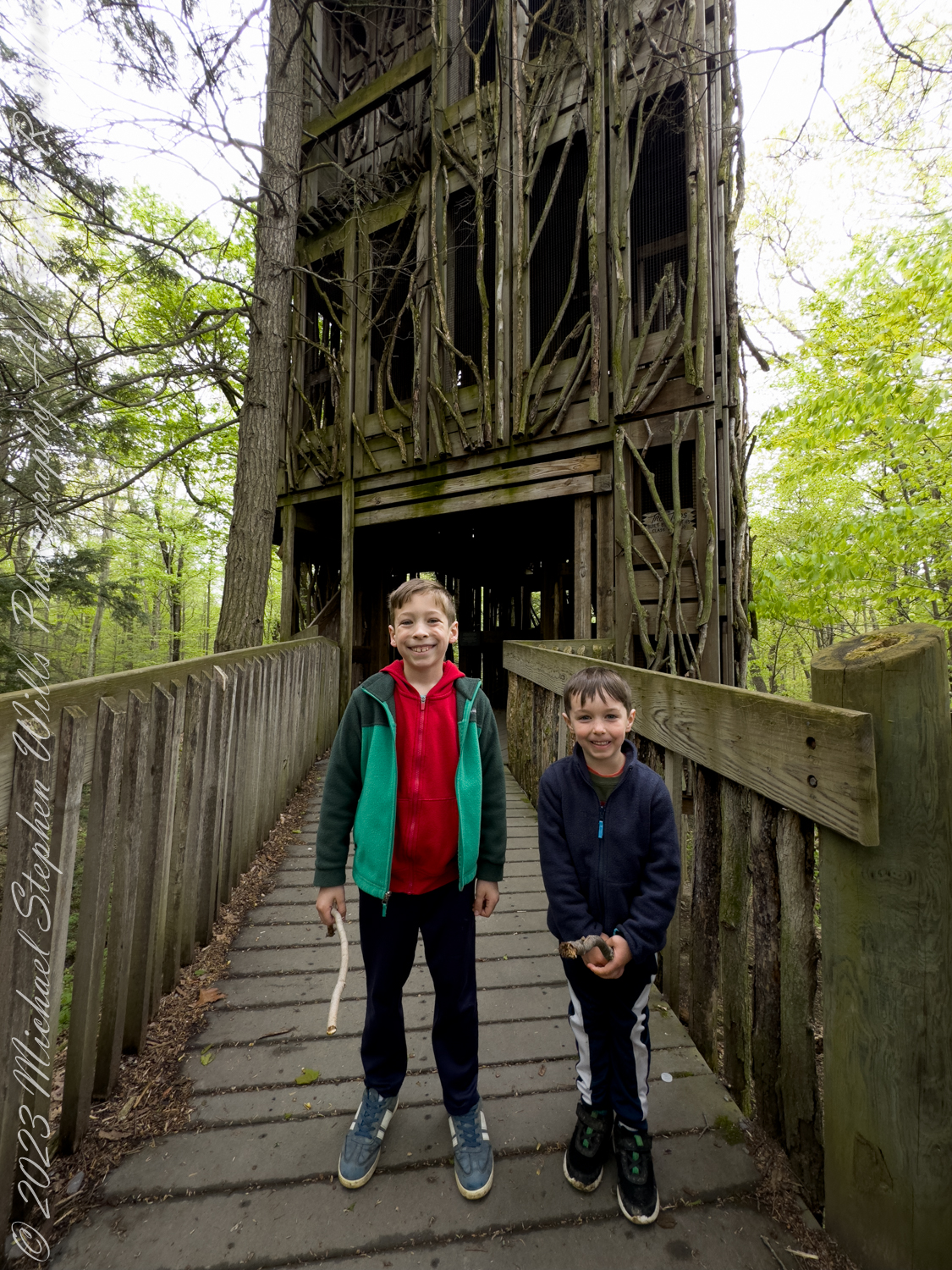
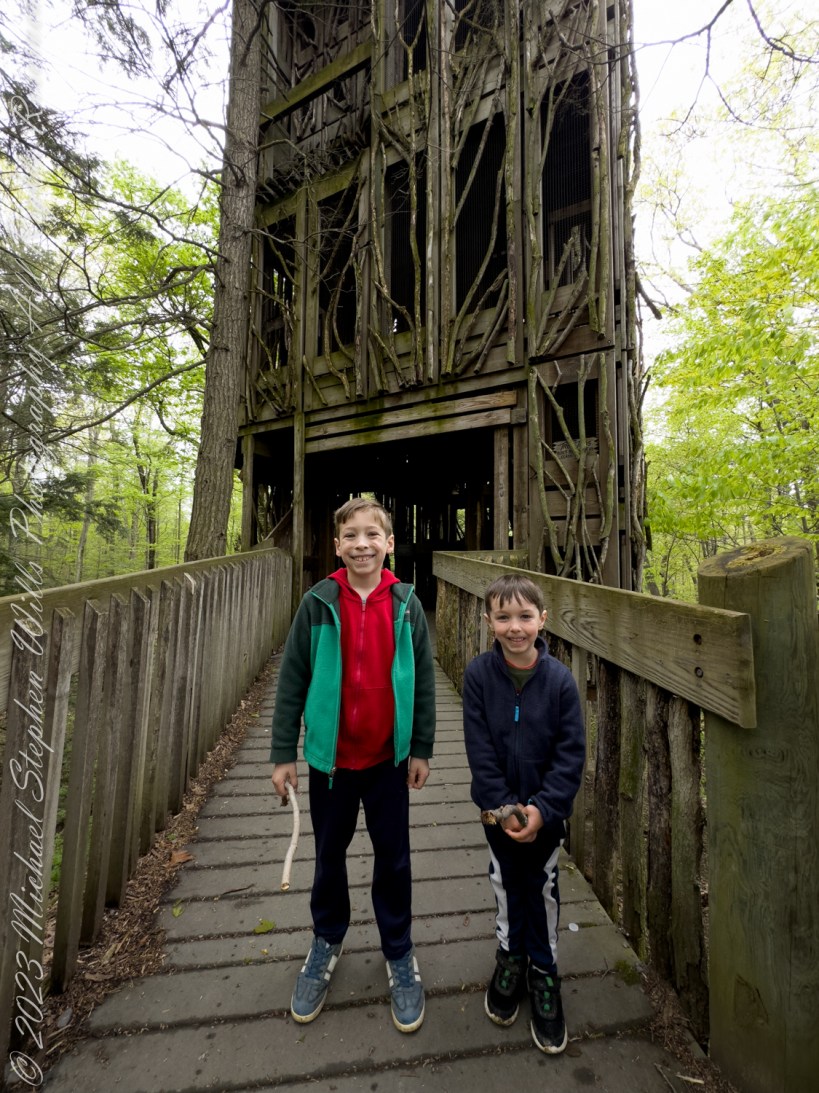
The air was crisp and cool as I strolled hand in hand with my grandsons, Sam and Rory, through the vibrant greens of the Cayuga Nature Center. The leaves rustled gently in the Sunday morning breeze, their whispers the only company we had. It was a quiet, serene moment, with no one else around, and the boys’ excitement was palpable as they chattered about their previous visits.

“Grandpa, do you remember this place?” Sam asked, his eyes twinkling with anticipation. Rory, not to be outdone, chimed in, “We have to show you the treehouse! It’s the best part!”

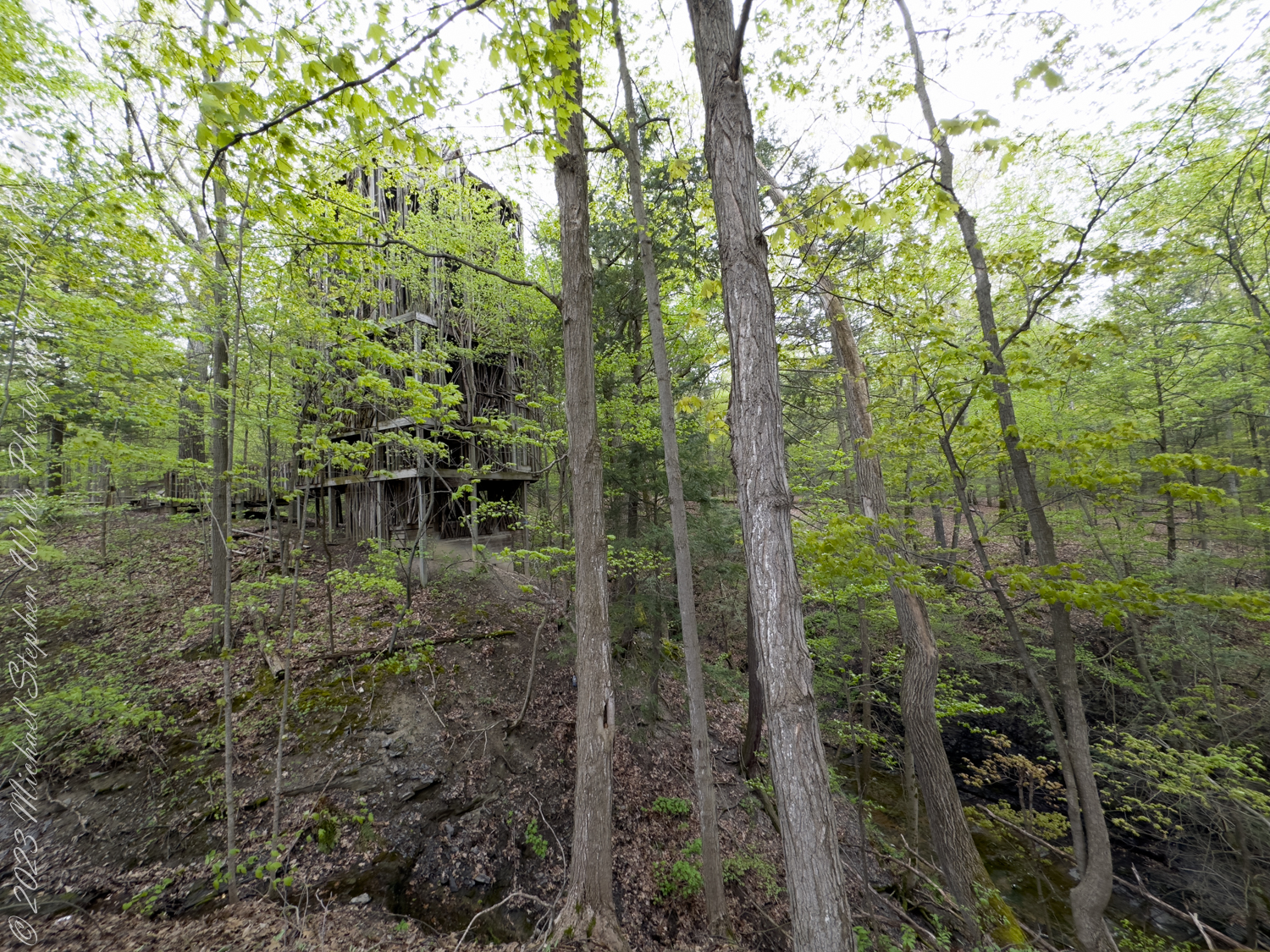
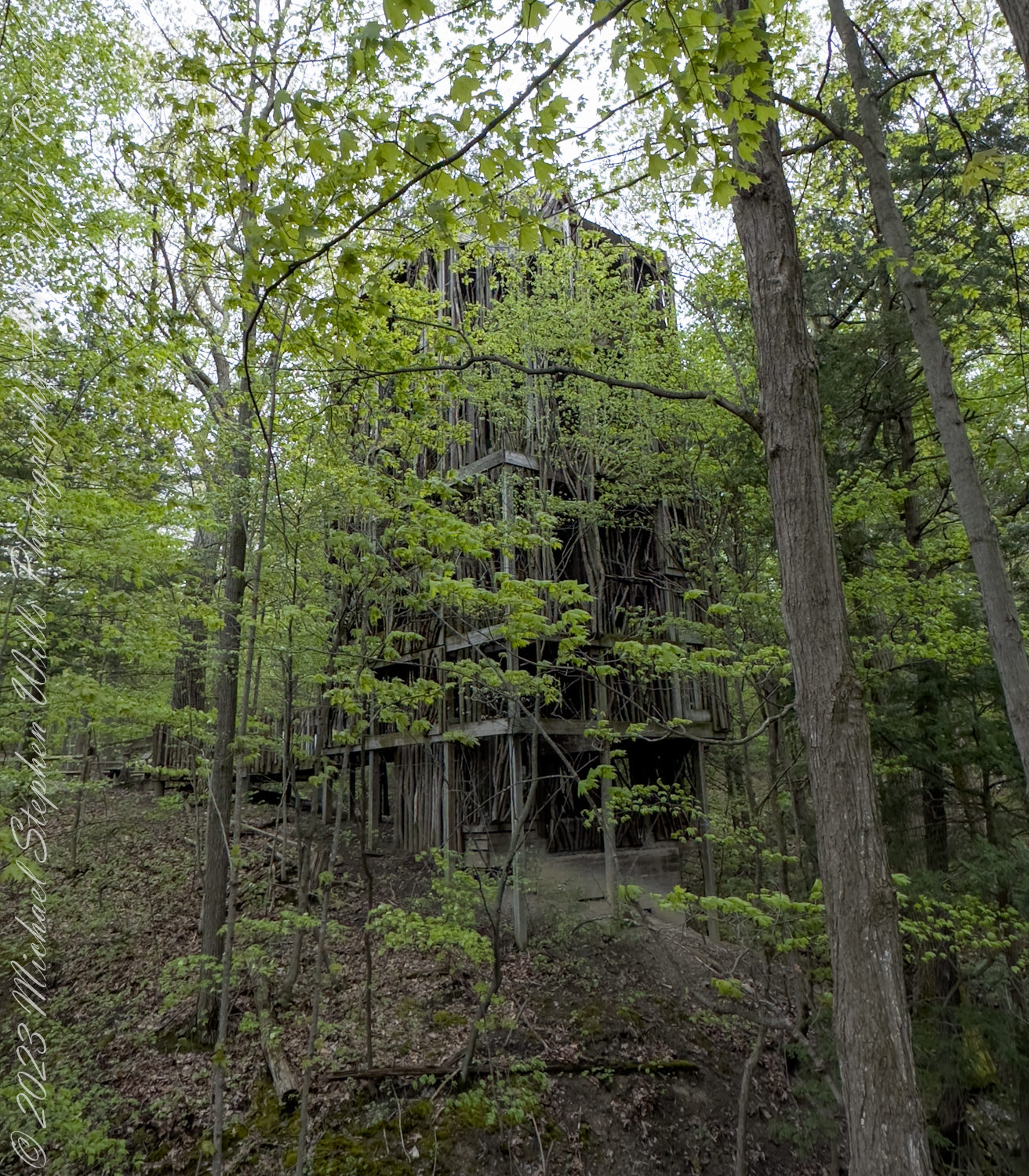
Their enthusiasm was infectious, and I found myself eager to see this magical place they spoke of. We followed a winding path, each step bringing us deeper into the lush woodland, until at last, the imposing structure of the “Treetops” treehouse came into view. It stood tall and mysterious; an intricate wooden edifice cloaked in the verdant embrace of the forest.

The treehouse was a marvel, its towering form constructed of twisted branches and sturdy planks, blending seamlessly with the natural surroundings. A wooden bridge led up to the entrance, and as we approached, the boys’ pace quickened.

“Let’s play hide and seek!” Rory suggested, his voice echoing with excitement. Sam nodded vigorously, already darting towards the treehouse entrance. “You count, Grandpa!” he called over his shoulder.

I began counting aloud, my voice mingling with the sounds of nature—the chirping of birds, the gentle rustle of leaves. When I reached twenty, I opened my eyes to find the boys had disappeared into the labyrinth of the treehouse. I stepped inside, the cool shade a welcome respite from the sun’s gentle warmth.

The interior was a maze of hidden nooks and winding staircases, each turn revealing a new secret. I could hear the faint giggles of the boys as they tried to stifle their laughter. The treehouse was alive with the echoes of their joy, each sound bouncing off the wooden walls like a symphony of childhood exuberance.

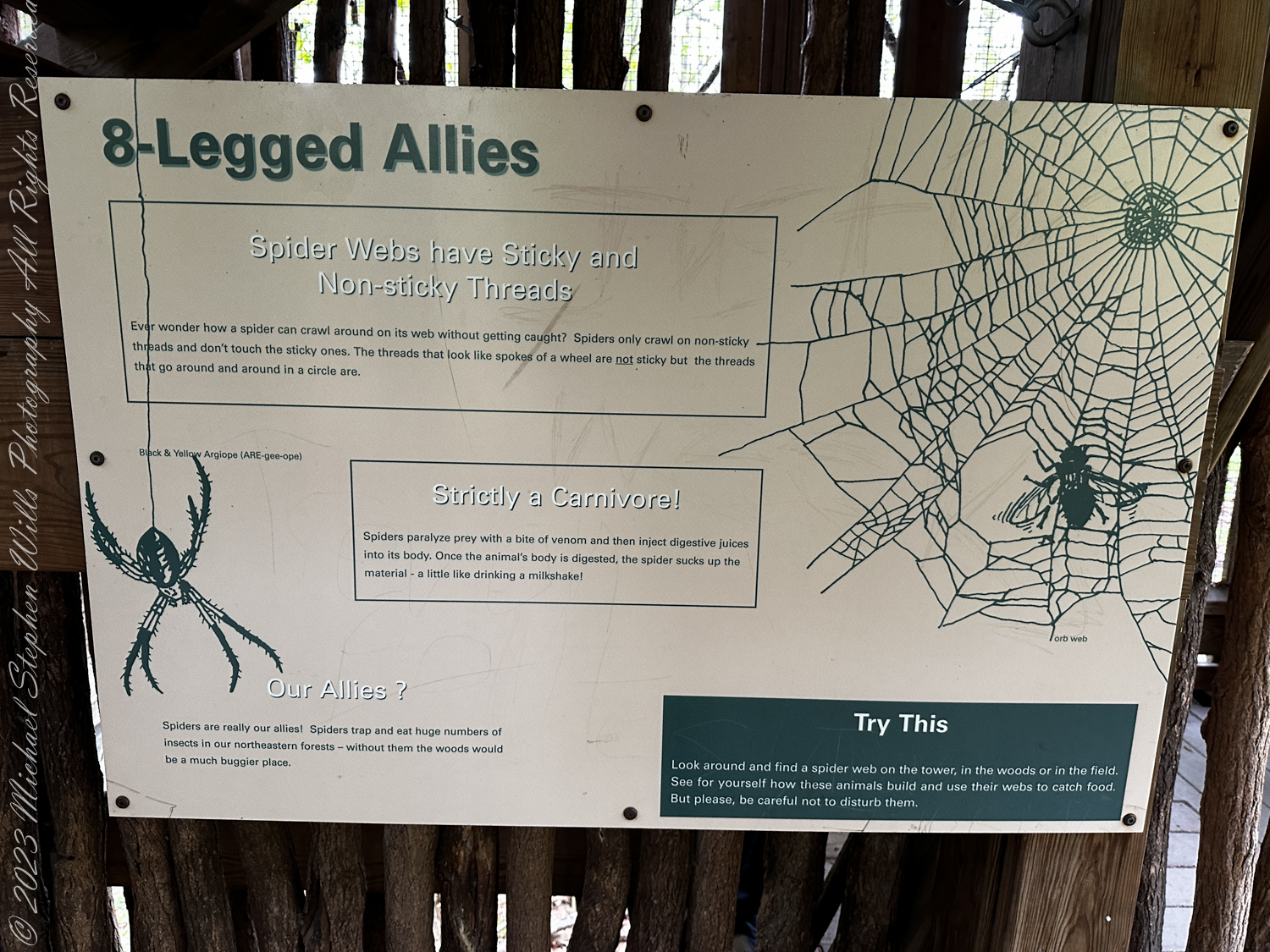
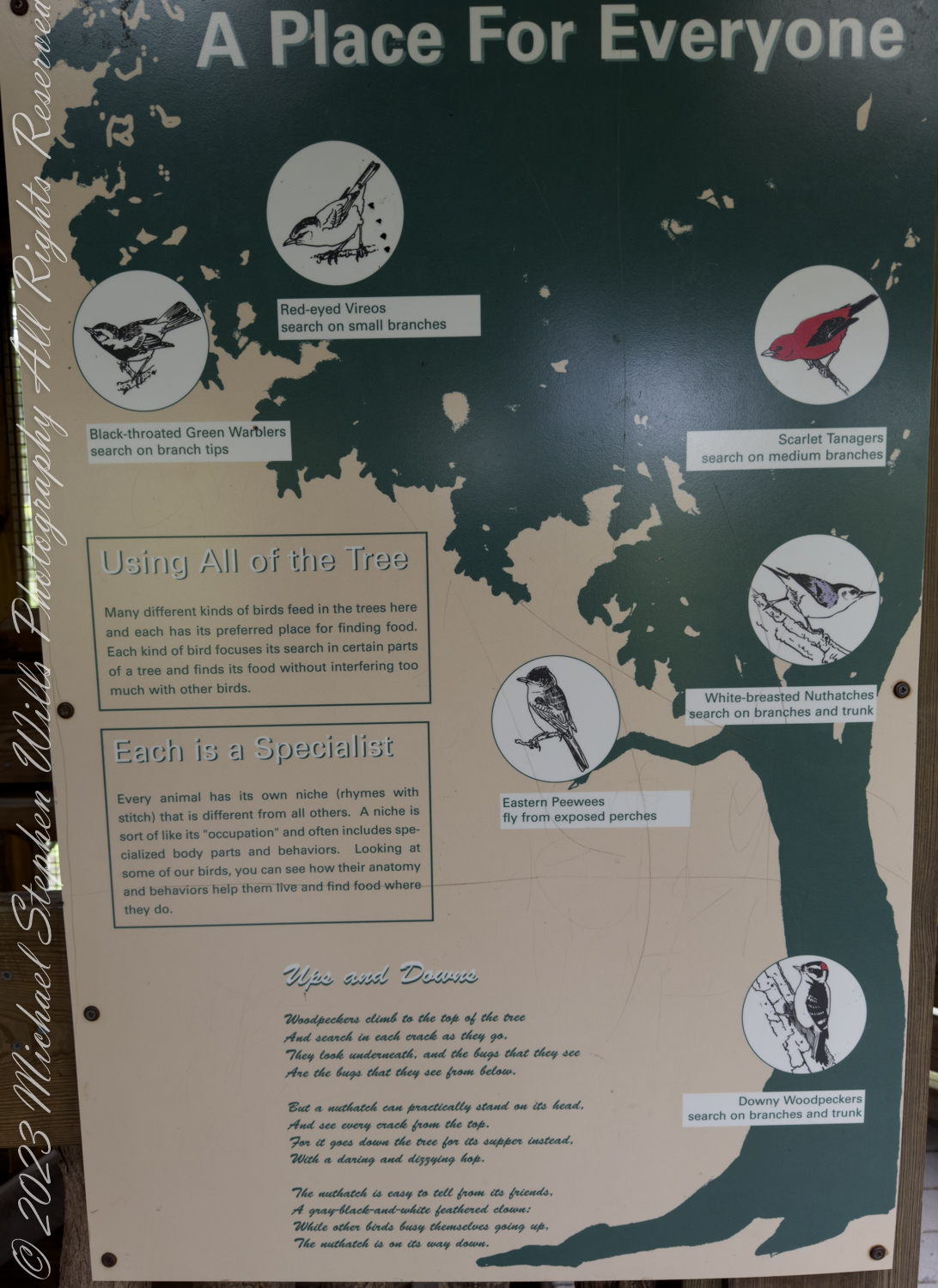
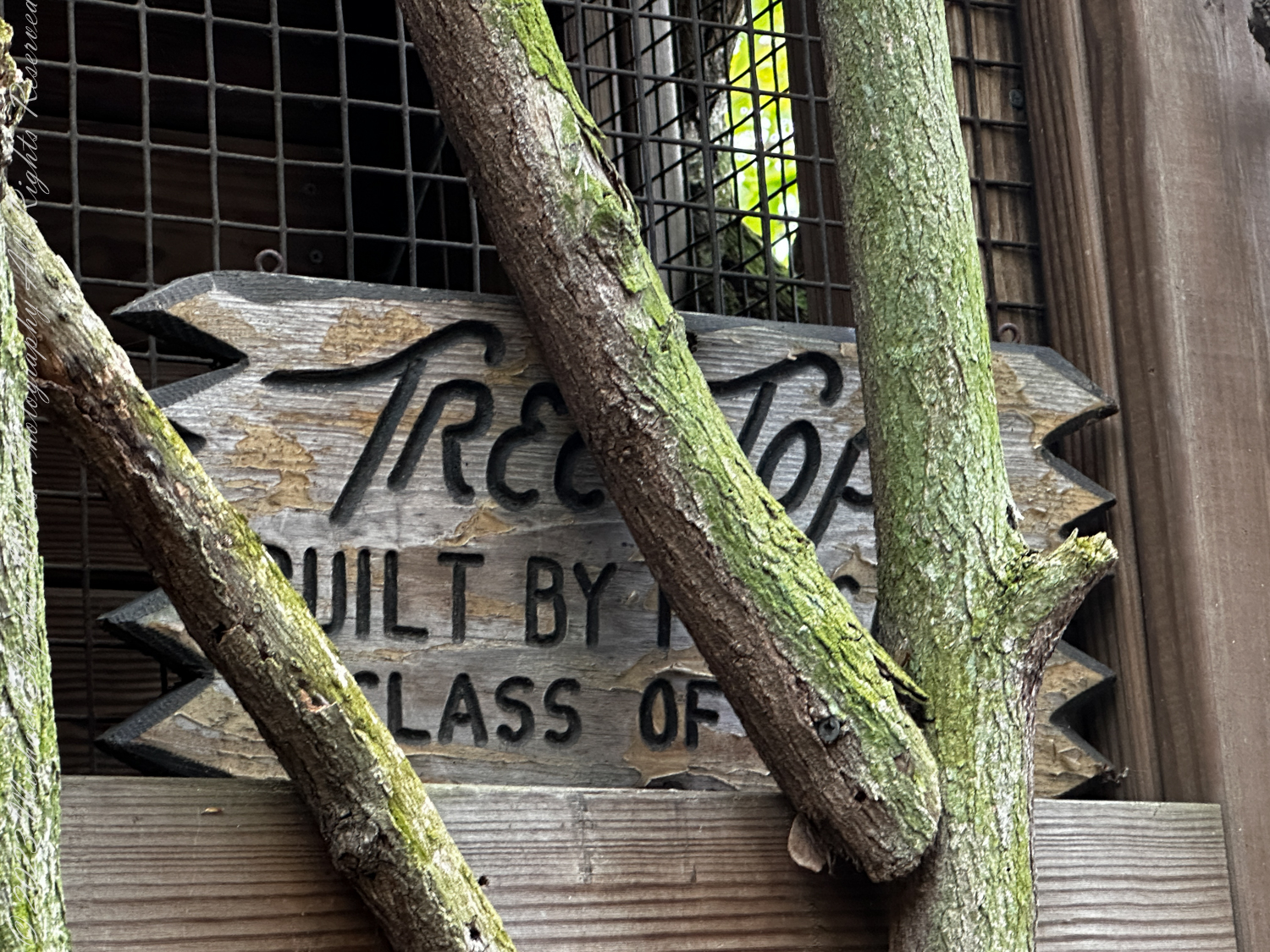
As I navigated the winding paths, I couldn’t help but marvel at the intricate details of the structure. The signs scattered throughout added an educational touch, detailing the lives of the birds and spiders that called this place home. One sign, titled “A Place For Everyone,” explained how each bird species had its niche, much like the boys had found their hiding spots.

“Found you!” I called out, spotting Sam’s bright red shirt from behind a wooden beam. He laughed and dashed off, his footsteps a rhythmic drumbeat on the wooden floor. Rory was next, his giggles giving away his hiding spot behind a thick cluster of branches.

We continued our game, the treehouse transforming into a magical playground where time seemed to stand still. The boys’ laughter filled the air, mingling with the natural symphony of the forest. We explored every corner, from the highest platform with its breathtaking view of the surrounding forest to the dark, cozy nooks perfect for hiding.

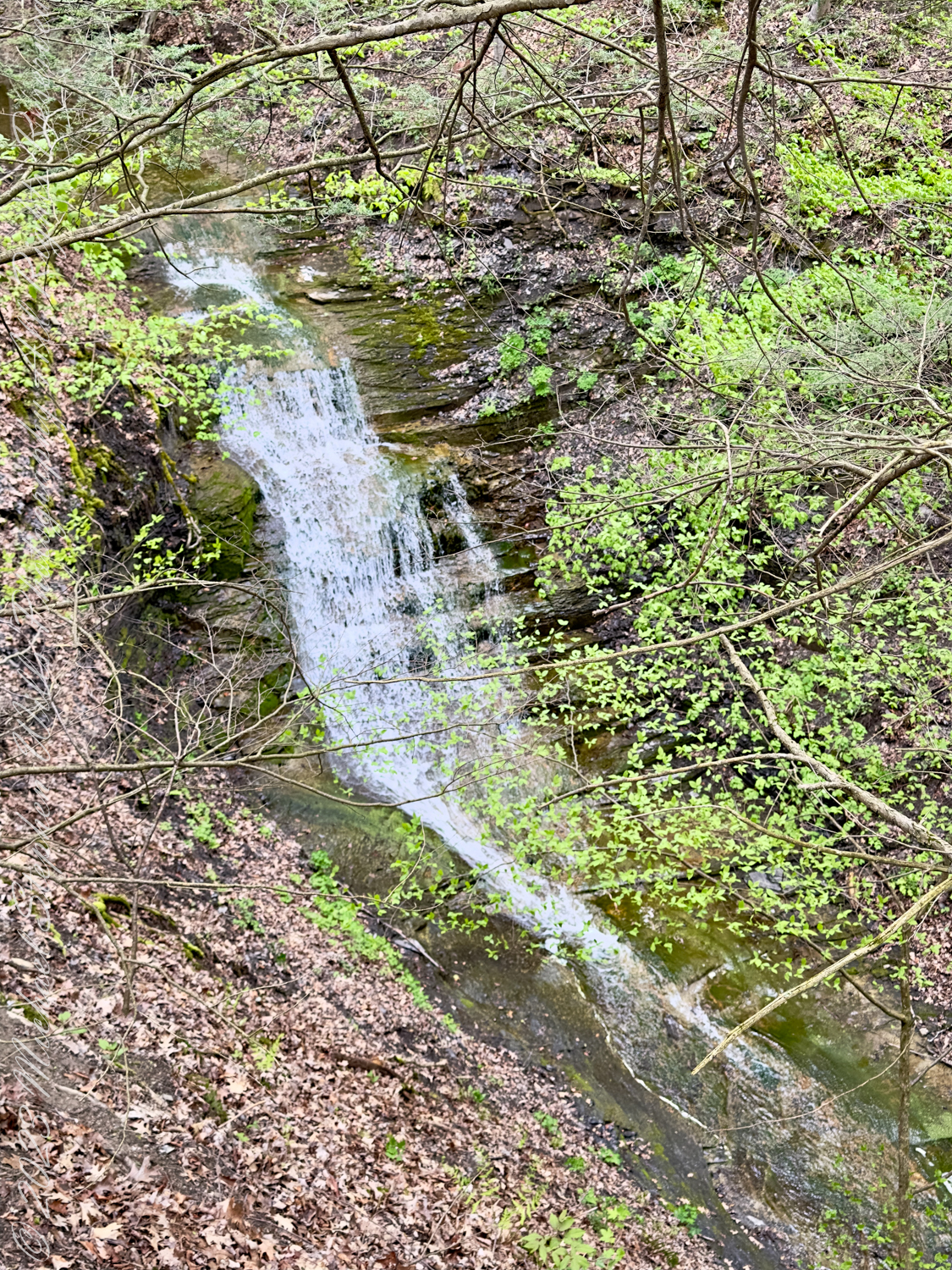
Phillips Falls is a picturesque waterfall located on Comstock Creek in view of the Treetops treehouse within the Cayuga Nature Center in Ithaca, New York. The falls are a highlight of the Nature Center, offering visitors a scenic and tranquil spot to enjoy the natural beauty of the area. The waterfall is accessible via the nature trails that wind through the Center’s diverse landscapes, including forests and meadows. Here are a few key points about Phillips Falls: Scenic Beauty: Phillips Falls is known for its serene and beautiful setting, making it a popular spot for nature enthusiasts, hikers, and photographers. Hiking Trails: The falls can be reached by hiking trails within the Cayuga Nature Center. The trails vary in difficulty, providing options for different levels of hikers. Educational Programs: The Cayuga Nature Center often includes Phillips Falls in its educational programs and guided tours, focusing on the ecology and geology of the area. Wildlife Habitat: The area around Phillips Falls is home to a variety of wildlife, making it a great spot for birdwatching and observing other animals in their natural habitat. Seasonal Changes: The appearance and flow of the waterfall can change with the seasons, offering a different experience for visitors throughout the year. Overall, Phillips Falls is a cherished natural feature of the Cayuga Nature Center, providing both a peaceful retreat and an educational experience for visitors.

After our game, we stood on the bridge, looking out over the creek below. The water sparkled in the sunlight, a serene contrast to our playful morning. “This place is amazing,” I said, turning to the boys. They nodded, their faces flushed with happiness.

“We love coming here,” Sam said. “It’s like a secret world.”

Rory nodded in agreement. “And now you know our secret too, Grandpa.”

As we made our way back down the path, I felt a deep sense of gratitude for this moment, for the chance to share in the boys’ joy and to see the world through their eyes. The “Treetops” treehouse had not only been a place of play but also a bridge between generations, a testament to the simple, timeless pleasures of exploring nature together.

Phillips Falls on Comstock Creek, seen from Treetops

Copyright 2024 Michael Stephen Wills All Rights Reserved

Carex Plantaginea: A Hidden Gem in Treman Gorge

Venture into the shaded woods of Treman Gorge and discover the understated elegance of Carex plantaginea, or seersucker sedge. Explore its broad, textured leaves and uncover its place in nature’s tapestry. Read more!

Today I will start the practive of posting once a week, early Tuesday mornings.

As I made my way through Treman Gorge, the lush greenery and diverse plant life never ceased to amaze me. The trail led me to a lesser-known, but equally fascinating, plant that stood out amid the forest floor’s tapestry. This was Carex plantaginea, commonly known as plantainleaf sedge or seersucker sedge.

First Impressions

My attention was initially drawn to the broad, bright green leaves that resembled those of plantains, hence the common name “plantainleaf sedge.” The leaves were prominently veined and slightly wrinkled, reminiscent of seersucker fabric, giving the plant a unique texture. The scientific name, Carex plantaginea, aptly reflects this characteristic, with “plantaginea” referring to its plantain-like leaves.

Natural History and Habitat


Carex plantaginea is native to the deciduous forests of eastern North America. It thrives in the rich, moist soils found in these regions, making Treman Gorge an ideal habitat. The plant prefers shaded environments, often flourishing under the canopy of taller trees where it can take advantage of the dappled sunlight filtering through the leaves.

This perennial sedge is part of the larger Carex genus, which includes numerous species of sedges that are often found in wetlands and forest understories. Unlike some of its relatives, Carex plantaginea is more commonly found in upland areas, adding to the diversity of the forest floor.

Historical and Modern Uses


Historically, Native American tribes recognized the utility of various Carex species, though specific references to Carex plantaginea are scarce. Sedges were generally used for their fibrous leaves, which could be woven into mats, baskets, and other useful items. The broad leaves of Carex plantaginea would have been particularly suitable for such purposes.

In modern times, Carex plantaginea is appreciated more for its ornamental value. Gardeners and landscape designers often use it in shade gardens and woodland settings, where its striking foliage and low maintenance needs make it a popular choice. Its ability to thrive in shaded areas with moist soil conditions makes it an excellent ground cover for forested landscapes.

Capturing the Moment


I couldn’t resist photographing Carex plantaginea to capture its distinctive beauty. The Apple Iphone 14 ProMax image shows the plant nestled among the rich vegetation of Treman Gorge, its vibrant green leaves contrasting with the surrounding foliage. The wrinkled texture of the leaves is clearly visible, highlighting the plant’s unique appearance.

As I continued my exploration, I felt a sense of wonder and appreciation for the hidden gems that nature offers. Carex plantaginea, with its subtle beauty and ecological importance, is a reminder of the intricate connections within forest ecosystems. Discovering this plant added another layer of richness to my journey through Treman Gorge, deepening my understanding and appreciation of the natural world around me.

Copyright 2024 Michael Stephen Wills All Rights Reserved

Spring Outing IX

Land snail

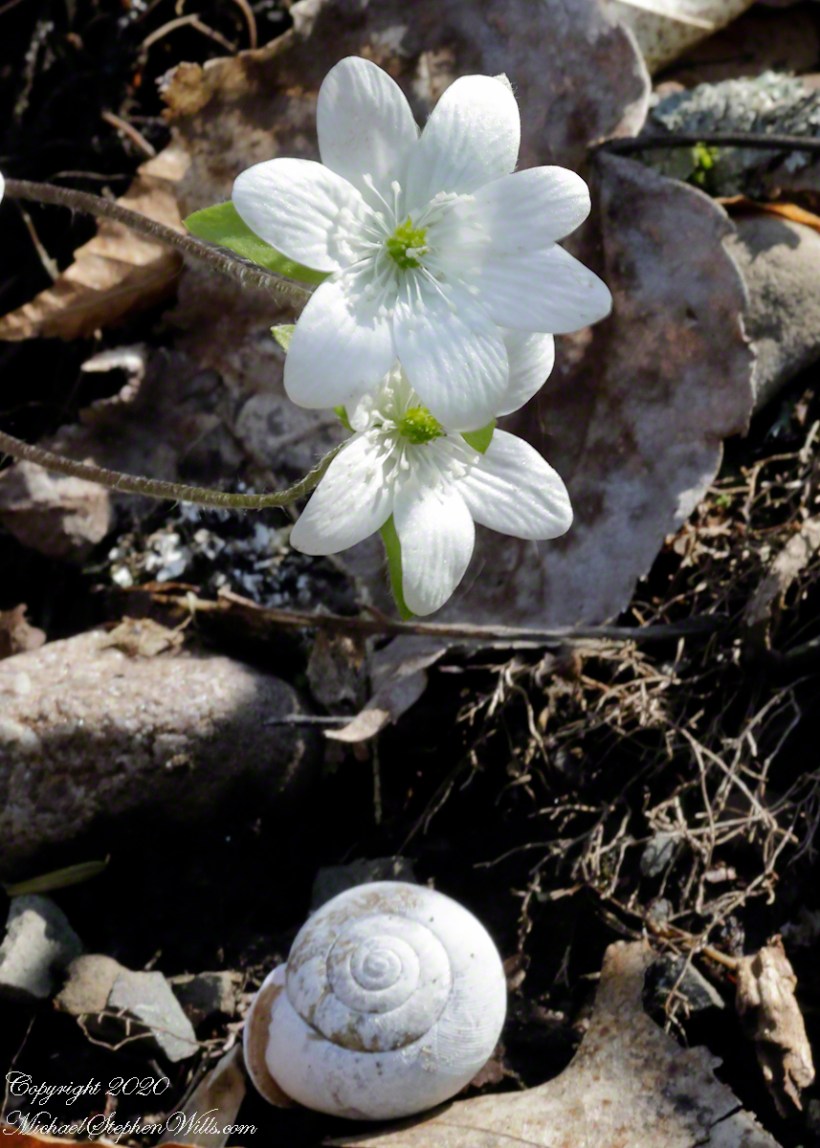
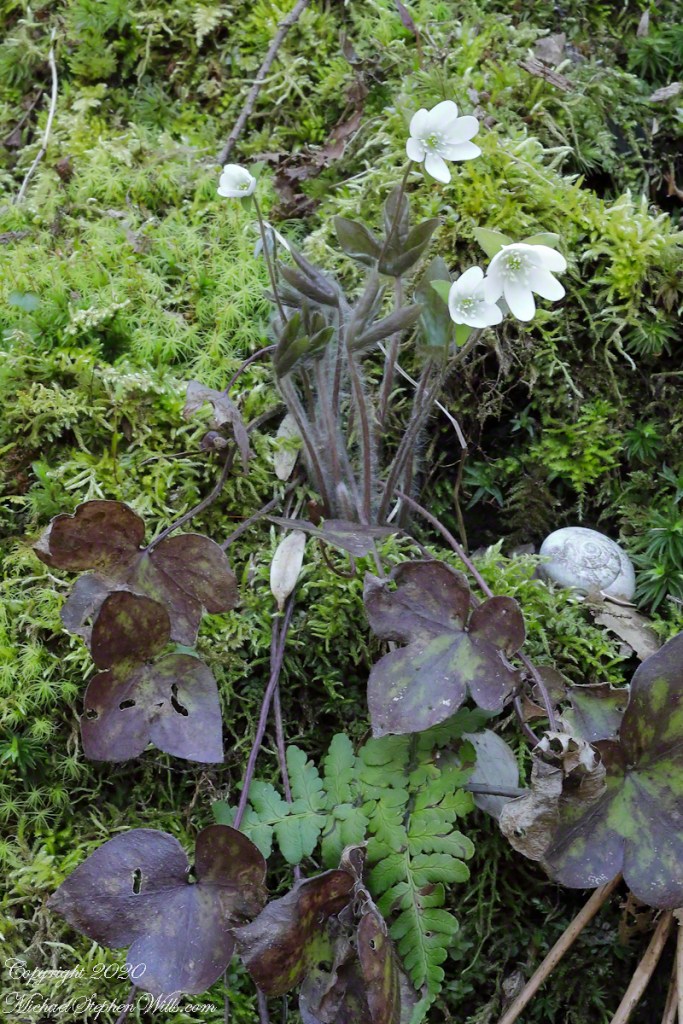
Hepatica blossoms are the focal point here. Two land snail shells rested fortuitously below, a white and dark brown. The white shell (Scientific Name: Neohelix albolabris) is seen here. In life, the shell aperture reflective lip gives the species name, from Latin root words “albo” (white) and “labris” (lip), and the popular name, “Whitelip.” Look closely to see a series of ridges, an identifying feature apparent in this specimen. There was a live specimen in our yard, just yesterday. Busy with chores, no camera at hand.

Click photograph for a larger view. To do this from WordPress Reader, you need to first click the title of this post to open a new page.

Click me for another Hepatica wildflower posting.

Copyright 2024 All Rights Reserved Michael Stephen Wills

224 Steps

Each wall is support for the next flight of stairs

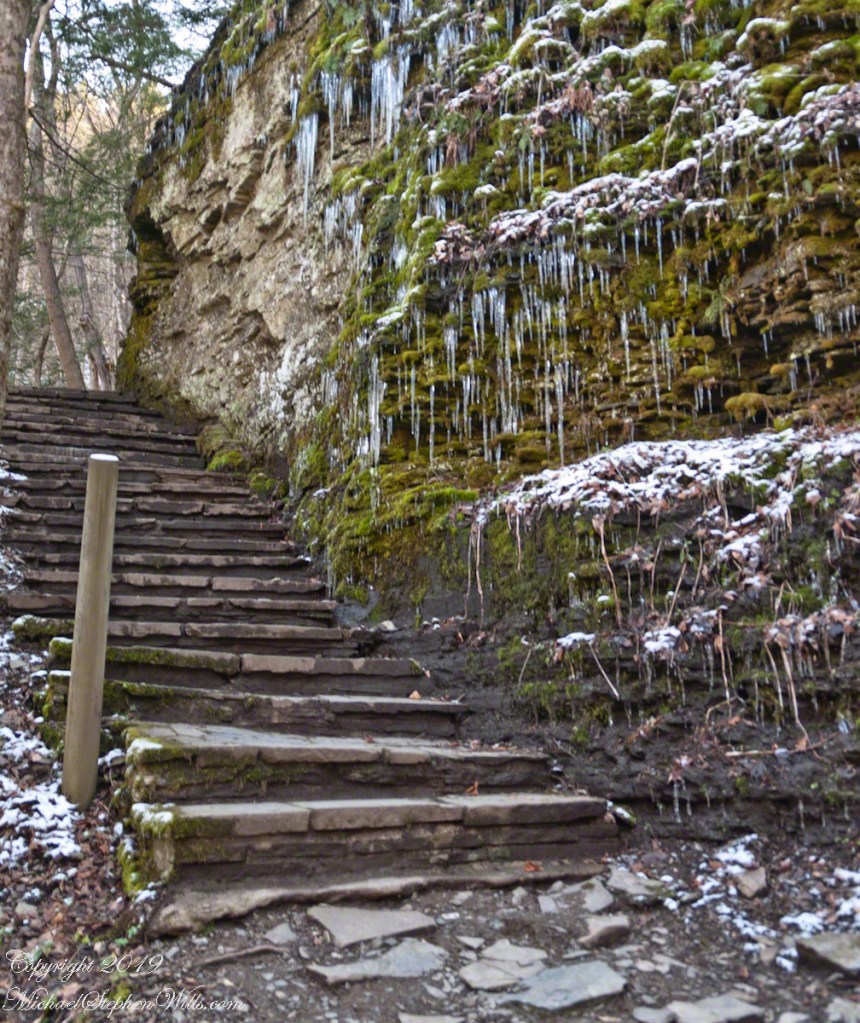
The stairs are cut into a cliff, using switchbacks with landings and strategically placed benches.

Click photograph for a larger view. To do this from WordPress Reader, you need to first click the title of this post to open a new page.

This work was accomplished by the Civilian Conservation Corps in the 1930’s, during the Great Depression.

These shots were hand held. I used a Sony Alpha 700 dslr with a variable “zoom” lens, great for framing compositions.

Robert H. Treman New York State Park.

Click for macro slideshow.

Copyright 2024 All Rights Reserved Michael Stephen Wills

So Like A Christmas Tree

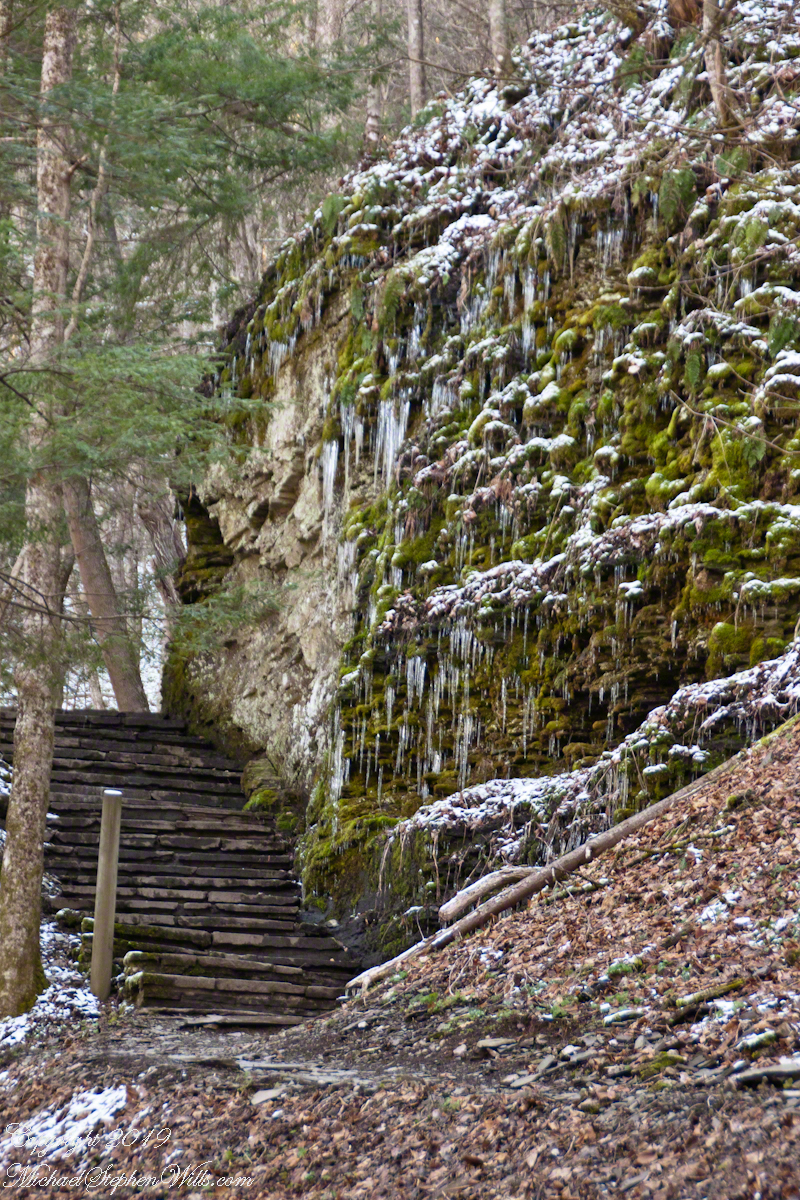
Icicles Catch The Light

Approaching the Cliff Stair after a sudden April frost.

Click photograph for a larger view. To do this from WordPress Reader, you need to first click the title of this post to open a new page.

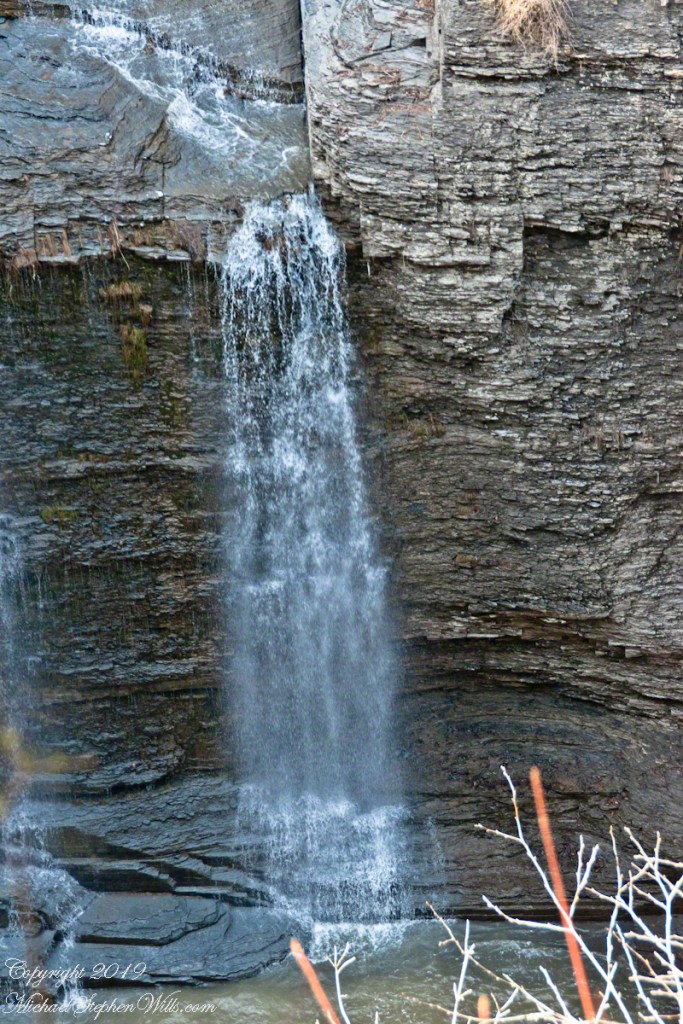
Lucifer Falls in spring flood is a constant roar.

These shots were hand held. I used a Sony Alpha 700 dslr with a variable “zoom” lens, great for framing compositions.

Robert H. Treman New York State Park.

Click for macro slideshow.

Copyright 2024 All Rights Reserved Michael Stephen Wills

Spring Outing X

Please give your opinions of this experiment, via comments. Thank You

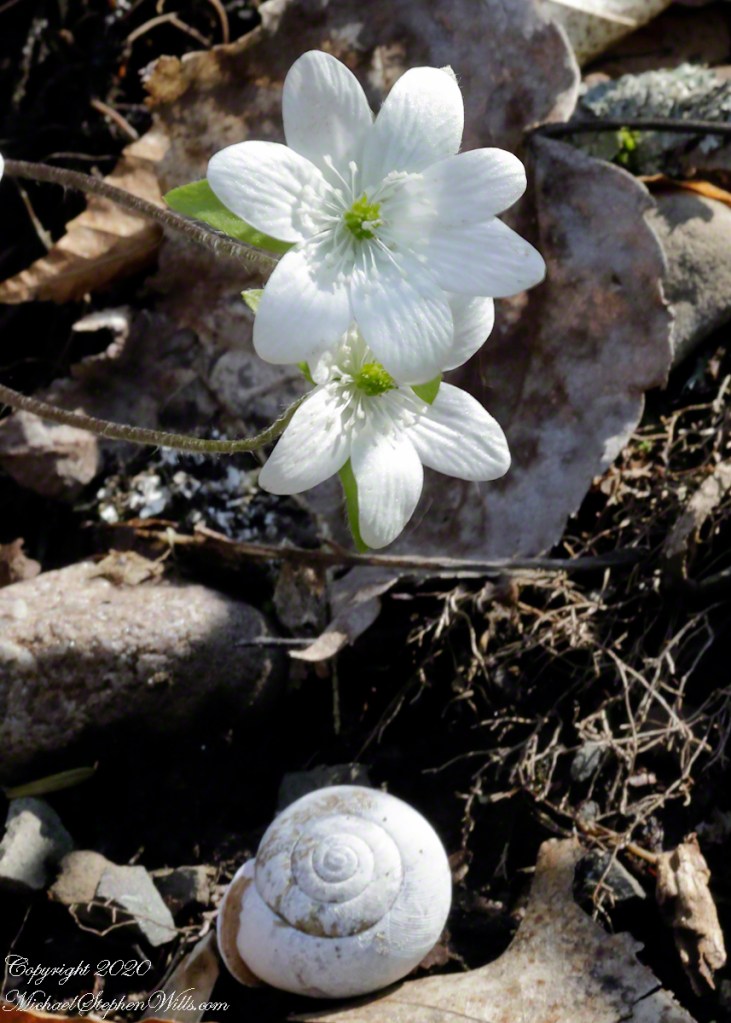
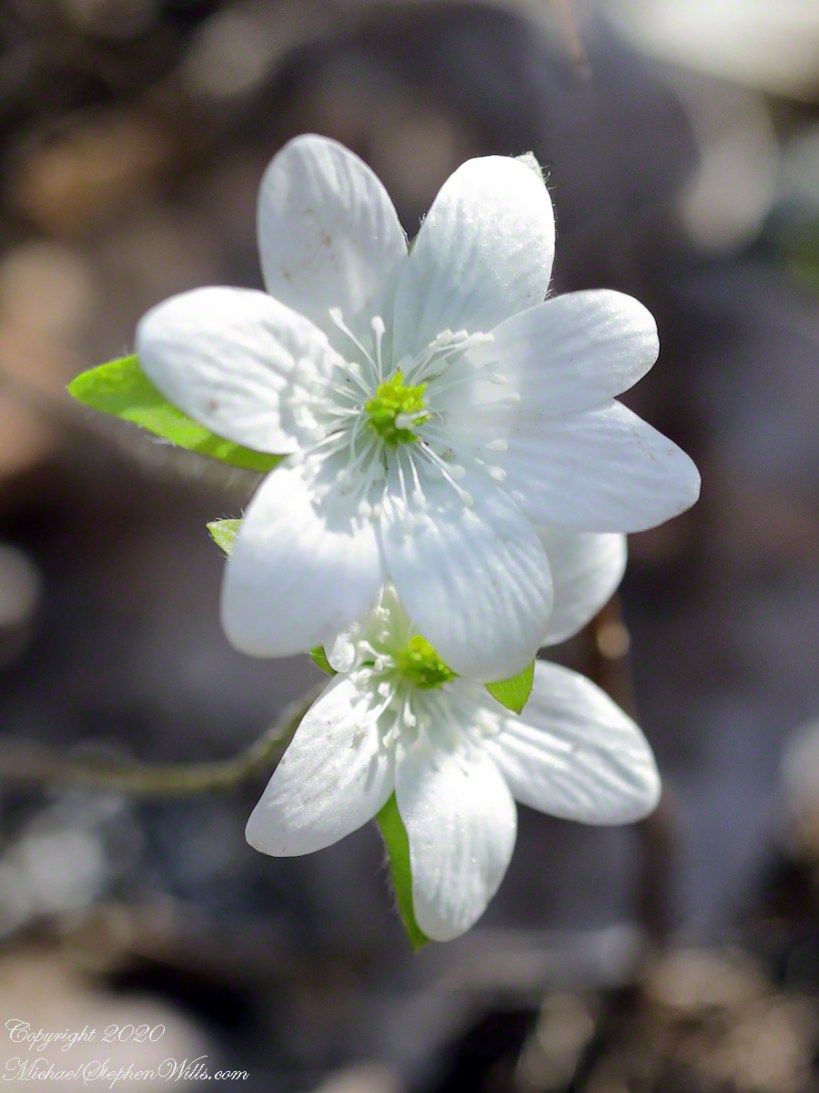
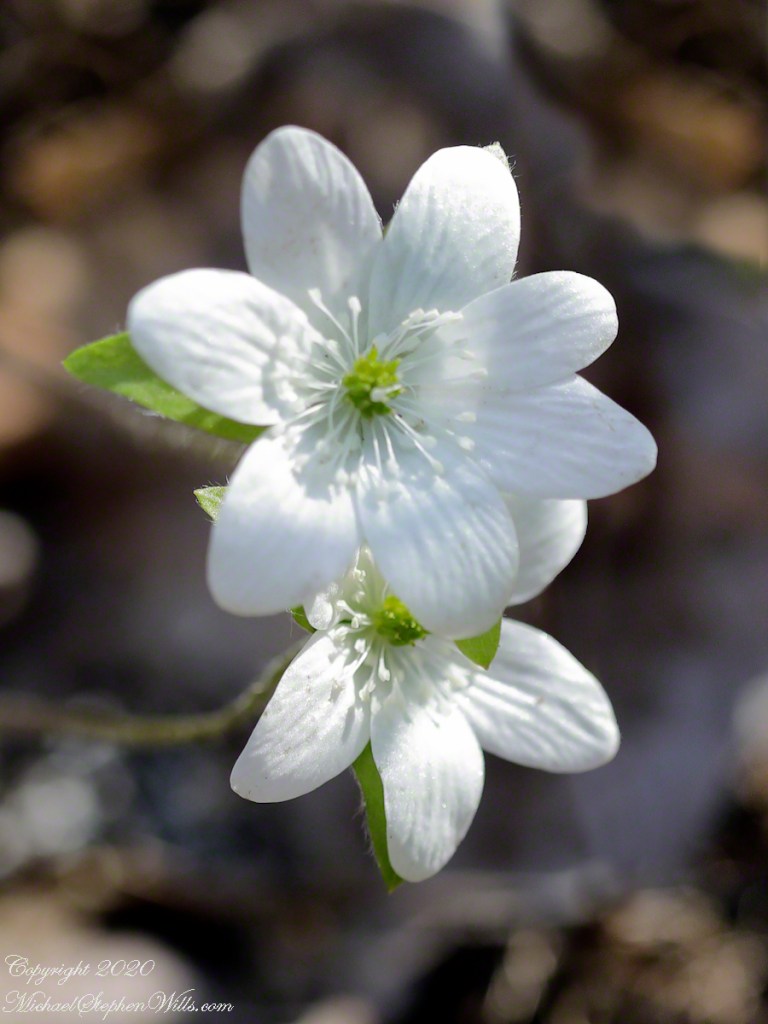
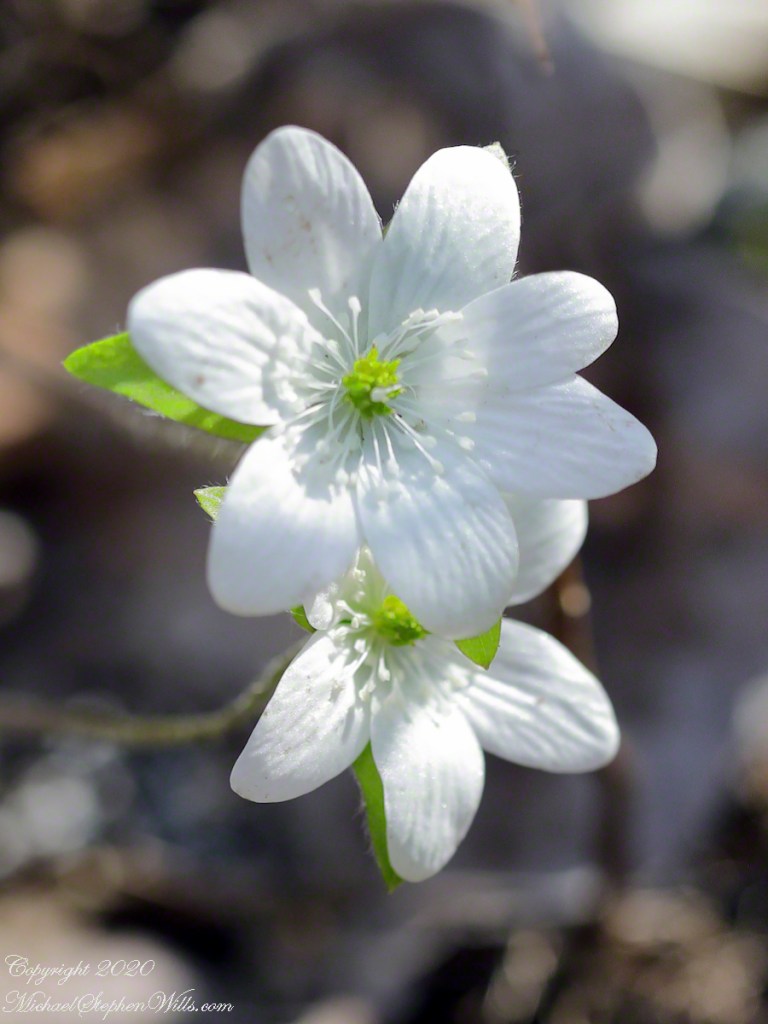
Seconds after taking this shot, at f/4, I changed the f-stop to 29 and captured these blossoms with the environment in focus (yesterday’s posting). At f/4 focus is a challenge and I was not happy with the detail of the foreground blossom.

Click photograph for a larger view. To do this from WordPress Reader, you need to first click the title of this post to open a new page.

I am in the experimentation phase of learning the new camera, so in spite of the 100% file size increase I turned on the Dual Pixel Raw feature. The two photos are from the same file. My impression is the adjustment improved the foreground flower details. Is it my imagination?

Click me for another Hepatica wildflower posting.

Copyright 2024 All Rights Reserved Michael Stephen Wills

Spring Outing VIII

Sun catchers

Click photograph for a larger view. To do this from WordPress Reader, you need to first click the title of this post to open a new page.

Click me for another Hepatica wildflower posting.

Copyright 2024 All Rights Reserved Michael Stephen Wills

Spring Outing VII

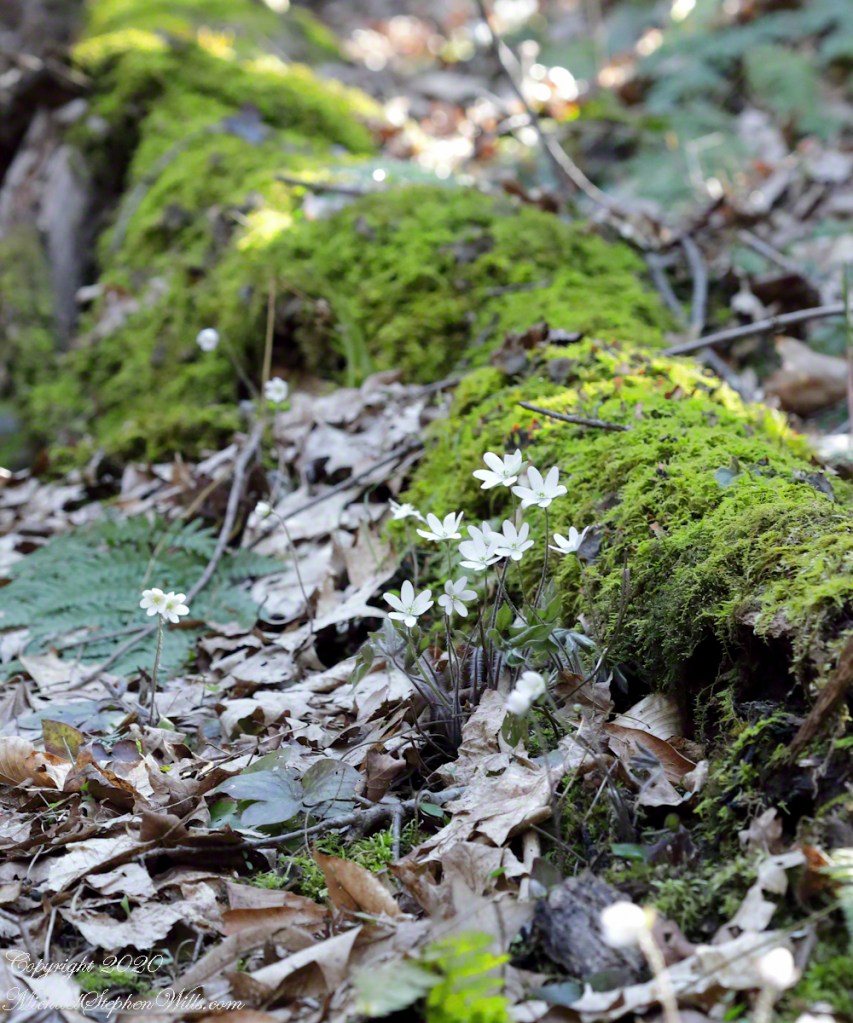
Groupings, 1 flora and 1 dangerous

Hepatica positioned perfectly above the trail, sprouting from moss, a grouping of the plant and flowers.

Scientific Name: Hepatica nobilis var. obtusa. I found the two land snail shells this session, I identified it as Neohelix albolabris, and positioned it in this shot to lend interest. In a future posting you will see the shell where it was found.

Click photograph for a larger view. To do this from WordPress Reader, you need to first click the title of this post to open a new page.

Six unrelated young adults, all female and without masks, not following social distancing guidelines, passed as a group just before I set up for this shot. I heard them coming and made plenty of space between them and me. COVID-19 testing in Tompkins continues to find several positive cases each week.

Finding an appropriate combination of settings for this grouping was a puzzle. My goal was to bring the flowers and surrounding into focus with intermittent breezes. The f-stop needed to be high to accommodate the depth with minimal exposure duration as the flowers moved in the slightest breeze. The solution was a high ISO (2500) and f-stop (32), yielding a 1/3 second exposure (Not fast). The compromise was patiently waiting for a break in the breezes.

Copyright 2024 All Rights Reserved Michael Stephen Wills

Spring Outing VI

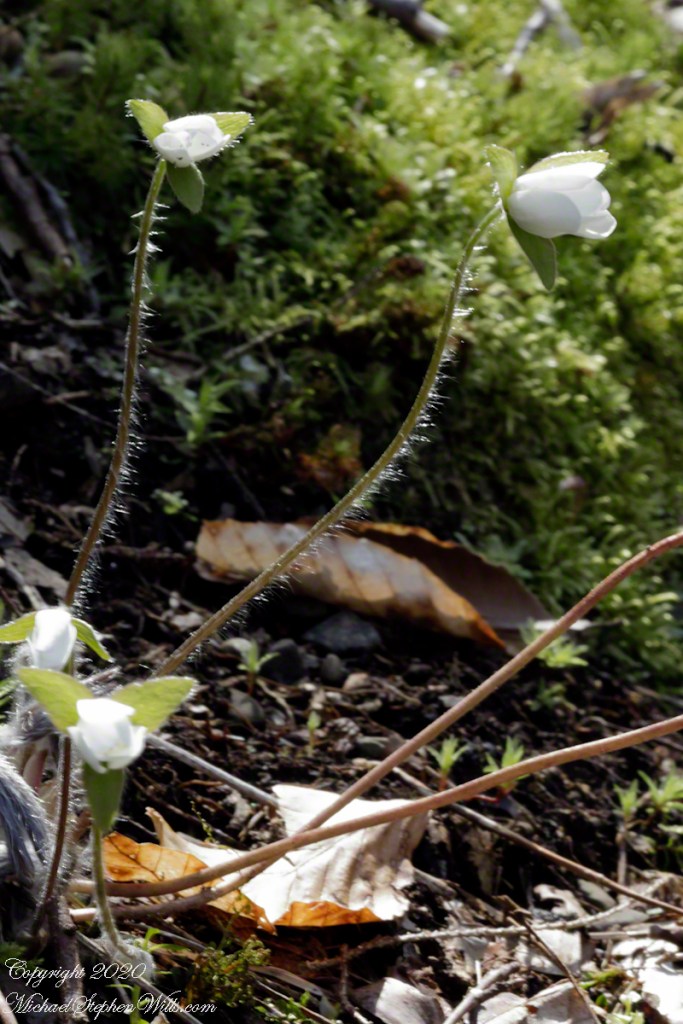
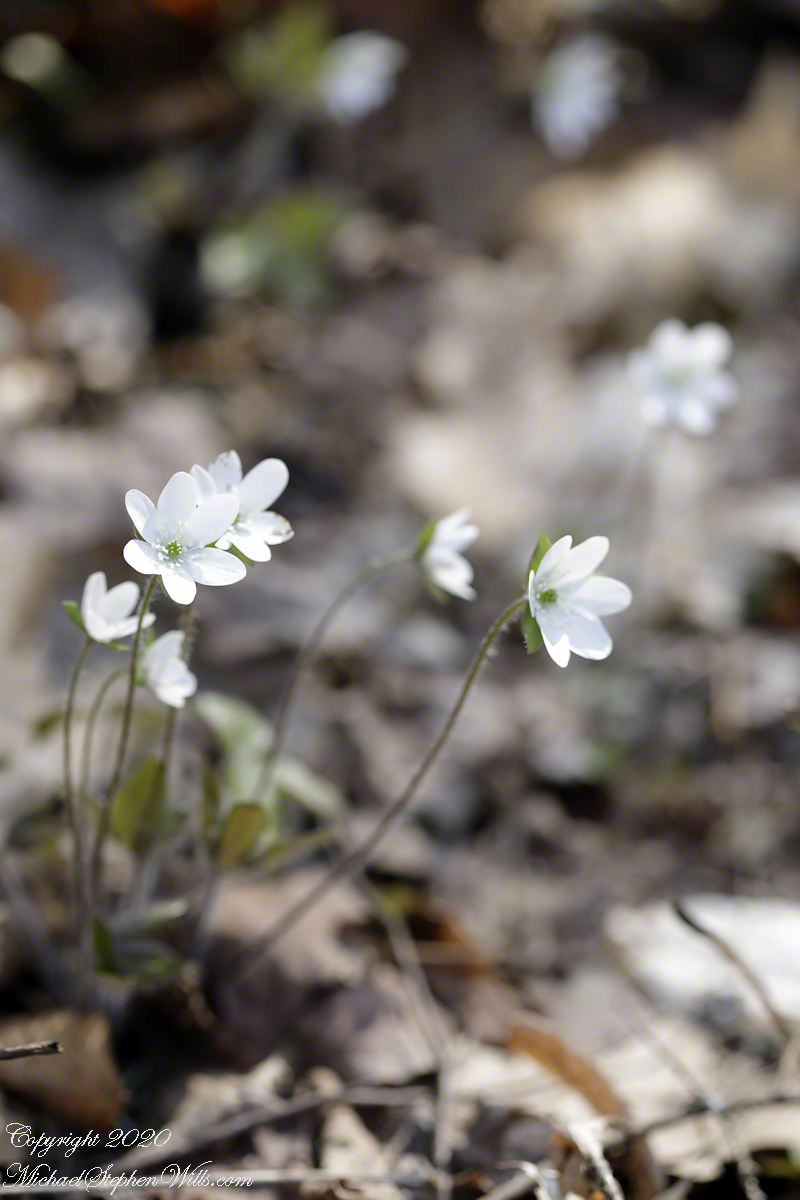
Just opened wind-flowers

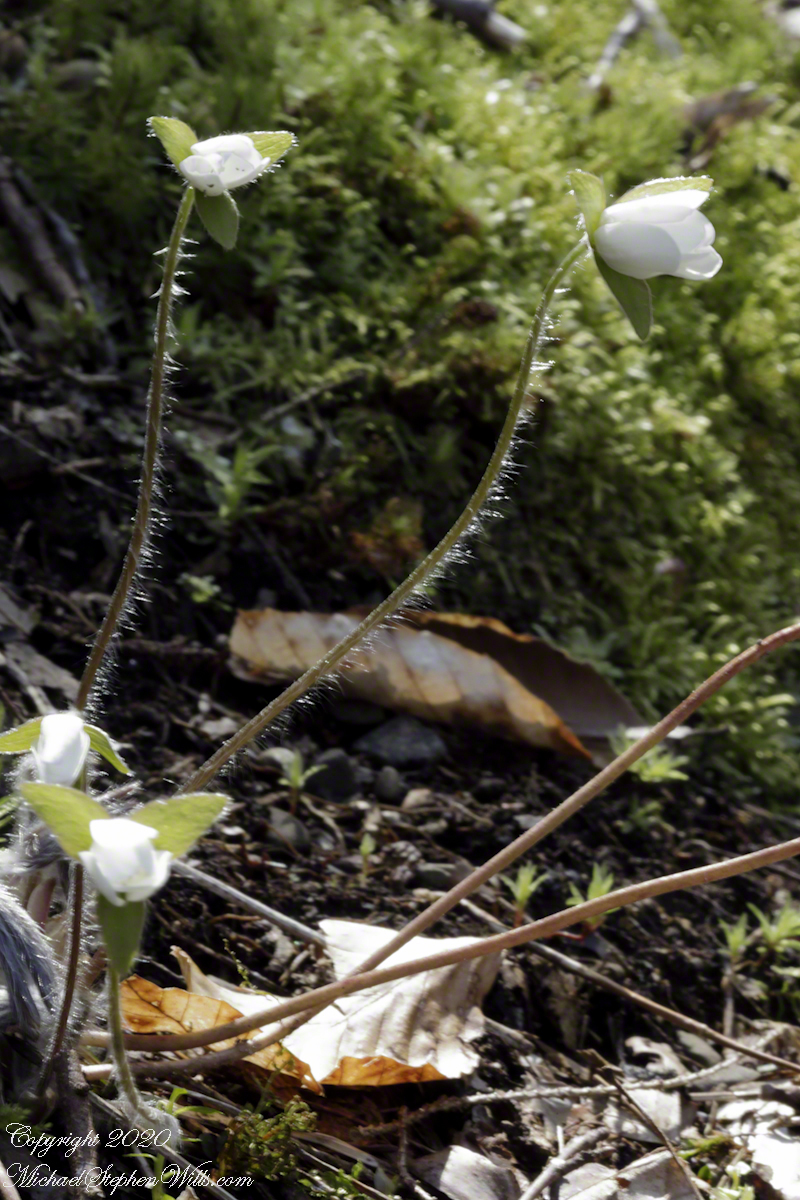
Just opened flowers on long hairy stems, tiny anemones. A crawl and tripod we needed to capture these. The scene scale is revealed by the dried leaves from last autumn.

Click photograph for a larger view. To do this from WordPress Reader, you need to first click the title of this post to open a new page.

I call these anemones from the disputations among taxonomists. All agree there is some relationship and differ in the degree. Classifications add a designation “tribe” before genus (hepatica). Alternatively, the genus is designated Anemone instead of Hepatica . A common name for anemones is “wind-flower” for how the flower is sensitive to a slight breeze, on these long stems.

This is the first hepatica capture of the session. There was no breeze at this time and the ISO is 800, f-stop 29 (lending some definition of the background, less than I’d expect) and a relatively slow exposure of 1/4 second. The 100 mm macro lens on a tripod mounted camera.

Reference: Wikipedia article, “Hepatica.”

Copyright 2024 All Rights Reserved Michael Stephen Wills