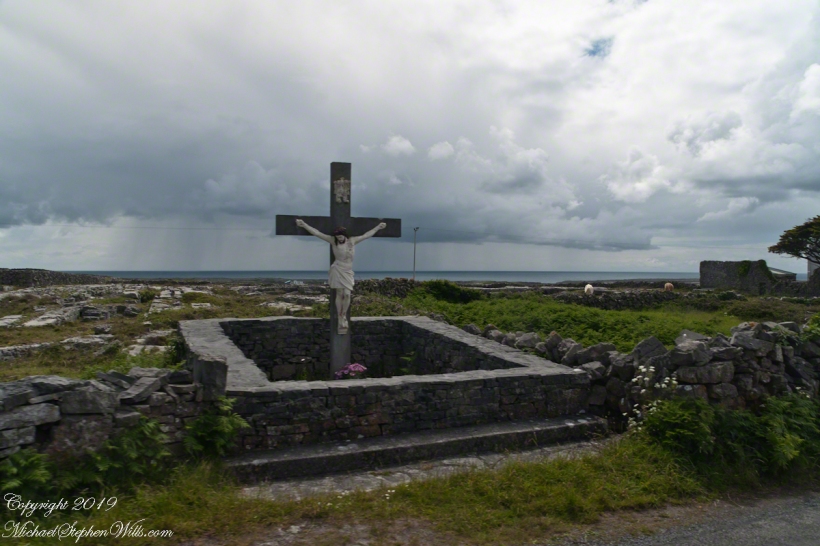
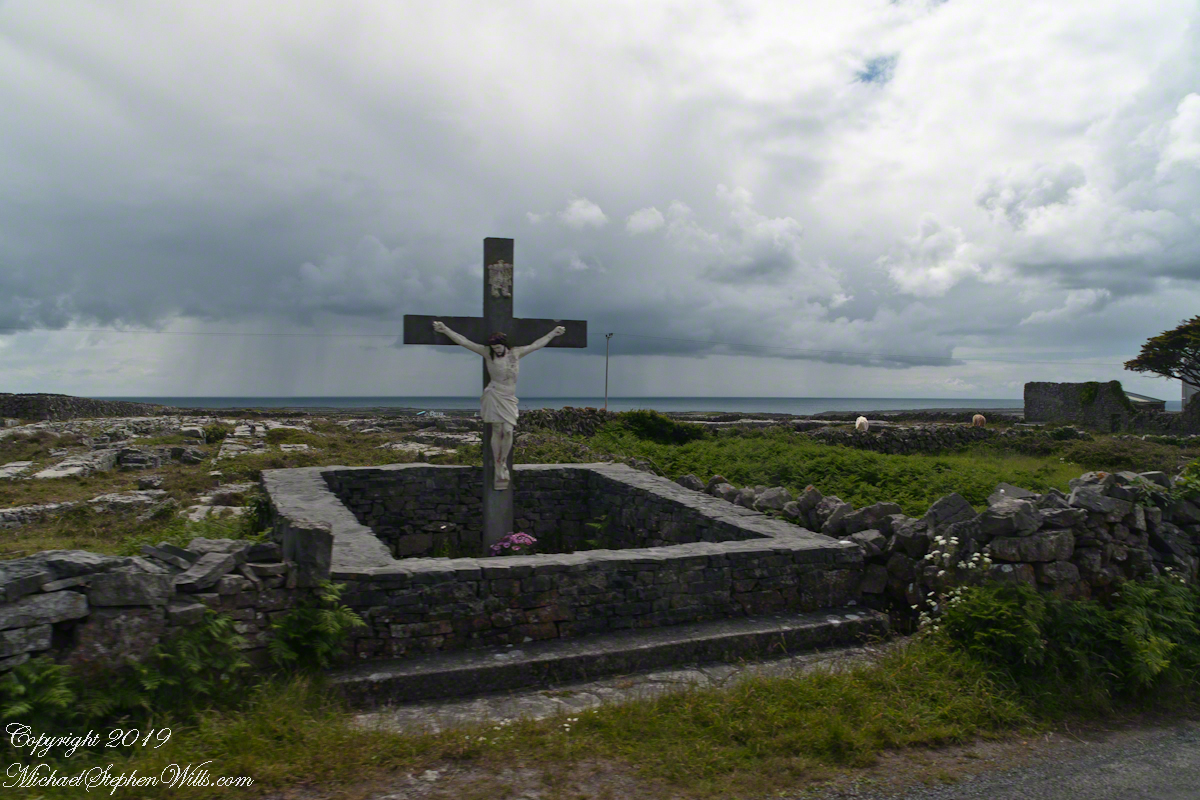
A roadside shrine on Cottage Road, Inishmore. The faith brought by the saints has deep roots here.
A large crucifix set with wet stone walls with cut flowers. The walls are the native limestone.
It is a spring (early June) afternoon and there are fern and wildflowers. The white flowers are Greater Burnet saxifrage (Scientific Name: Pimpinella major).
The existing dry stone wall was interrupted by the shrine. In the distance are dry stone walls around fields, a stone shed, feeding horses and the sea, being Galway Bay, storm clouds with distant rain.
Aran Islands, County Galway, Ireland.
Roadside Shrine and Island Landscape, Inishmore, Aran Islands, County Galway, Ireland
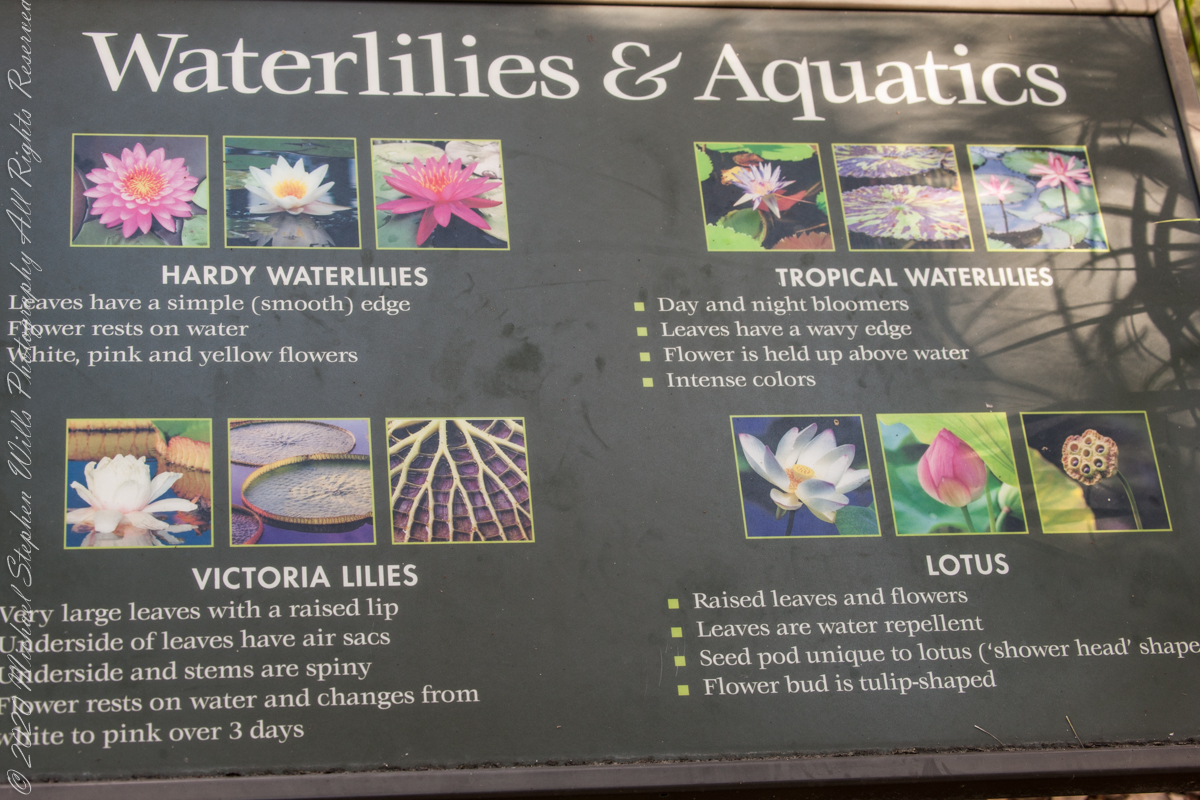
The McKee informative placard divides the Genus Nymphaea into “Hardy” and “Tropical” waterlilies. “Hardy” being plants native to temperate climates, such as New York State. I do not have photos of these from McKee. Nor are there examples of Lotus.
The idiosyncratic categories of McKee Gardens
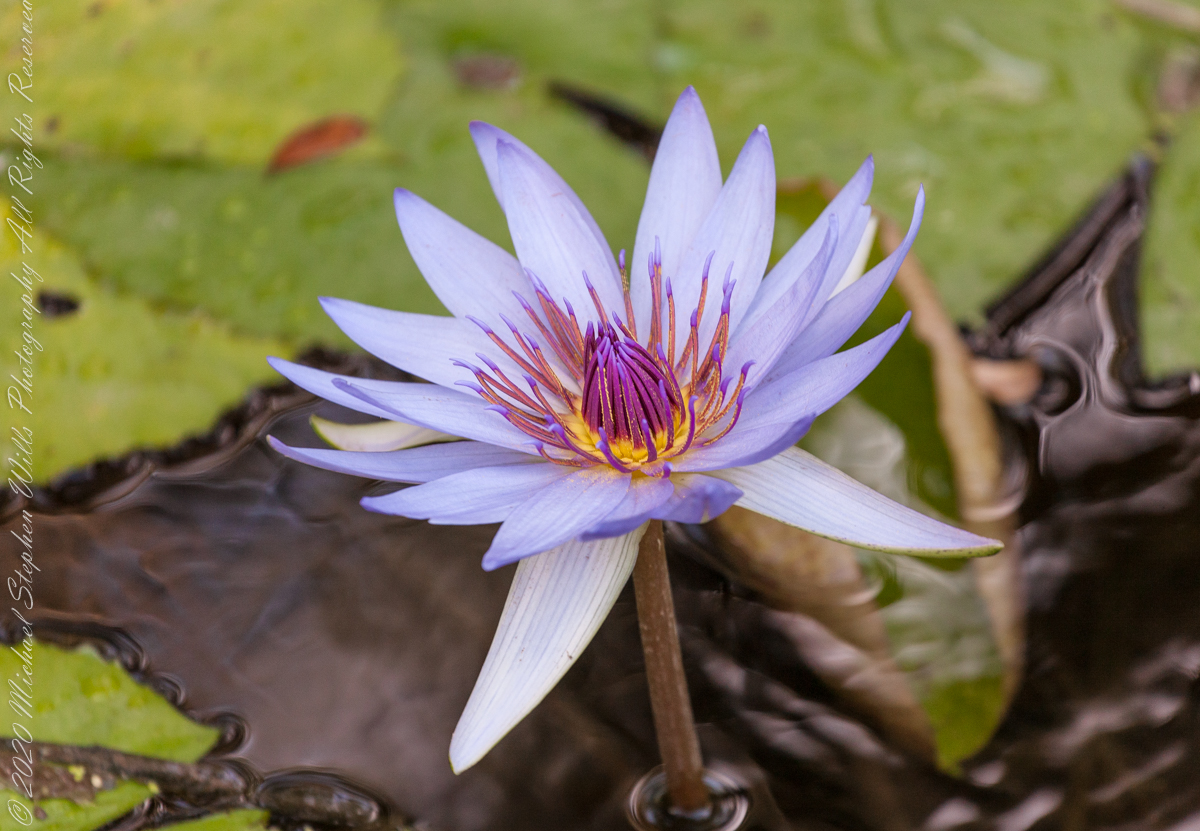
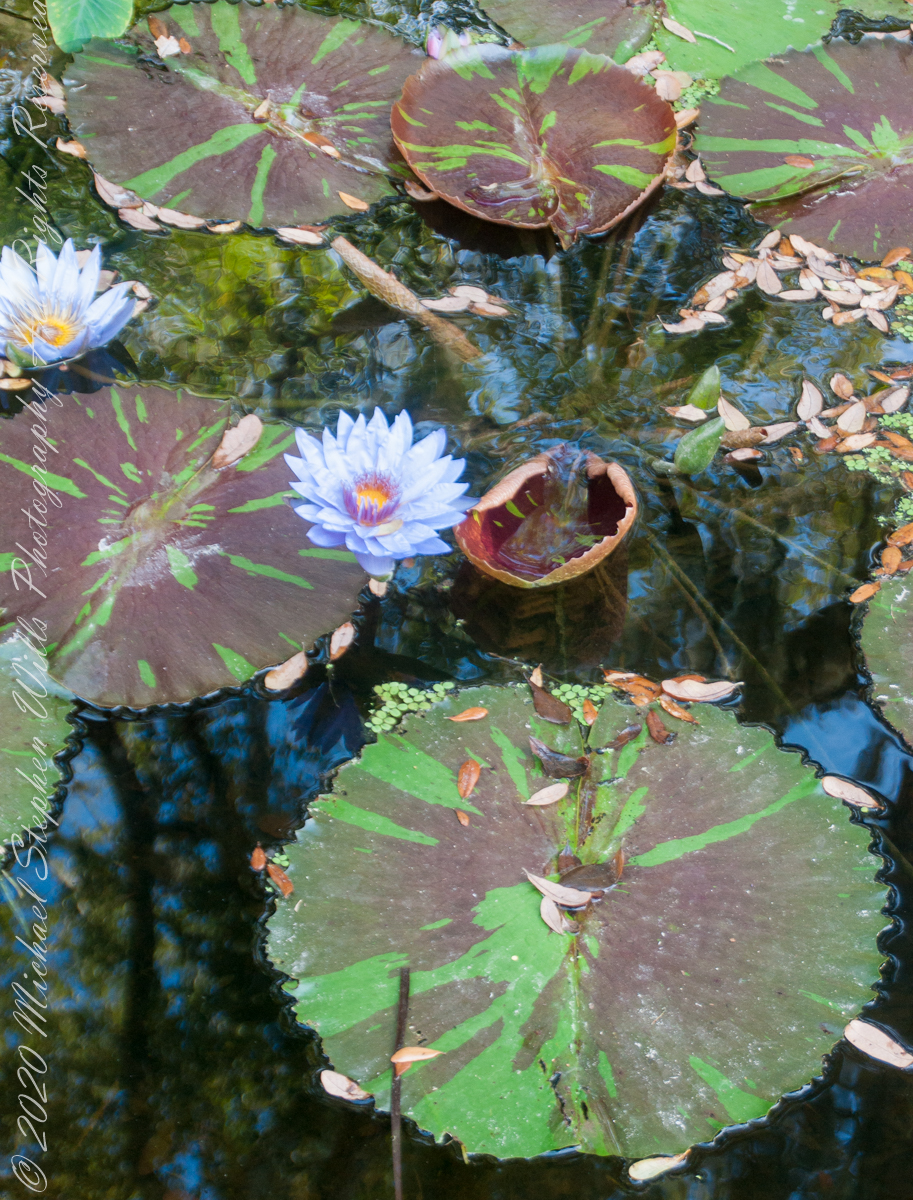
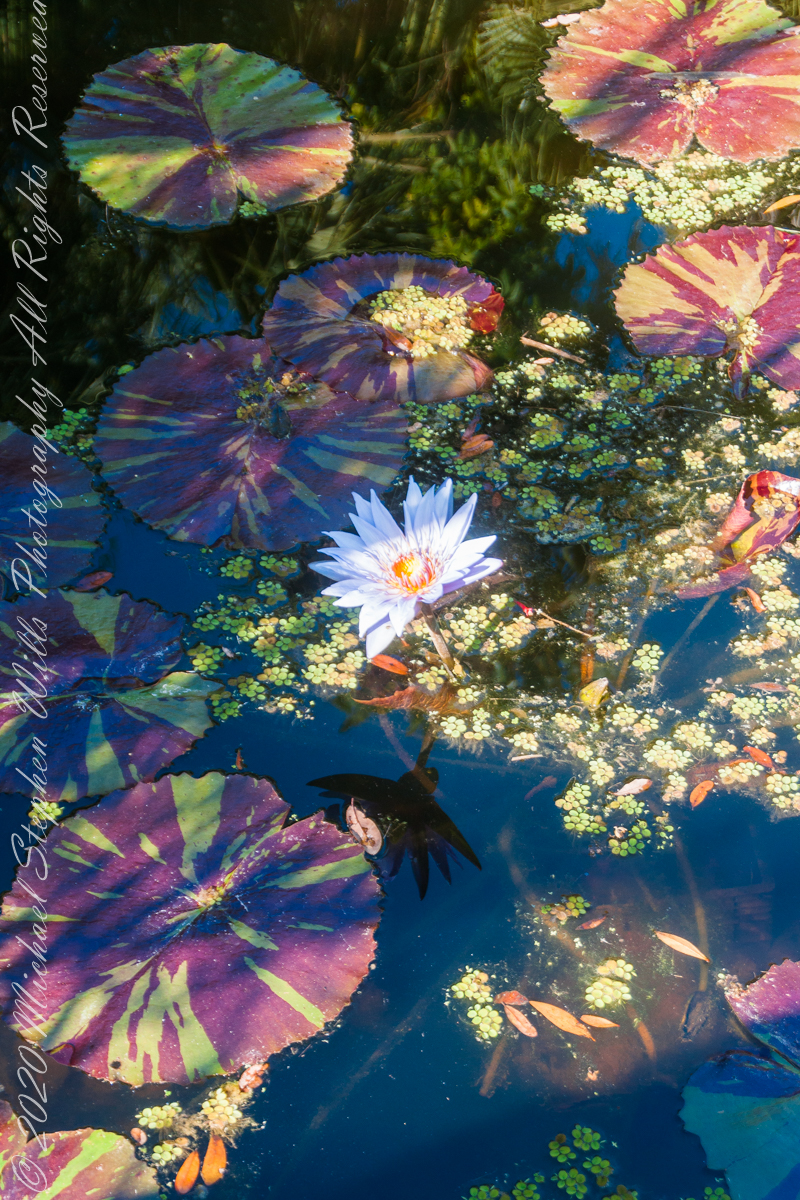
What I have is an abundance of the “tropical” varieties.
“The family Nymphaeaceae, of which the genus Nymphaea is a part, is thought to be the most basic of all the Angiosperms. A minute flower of the Nymphaea type was found in early Cretaceous deposits in Portugal, dating early waterlilies to at least 115-125 million years ago.“
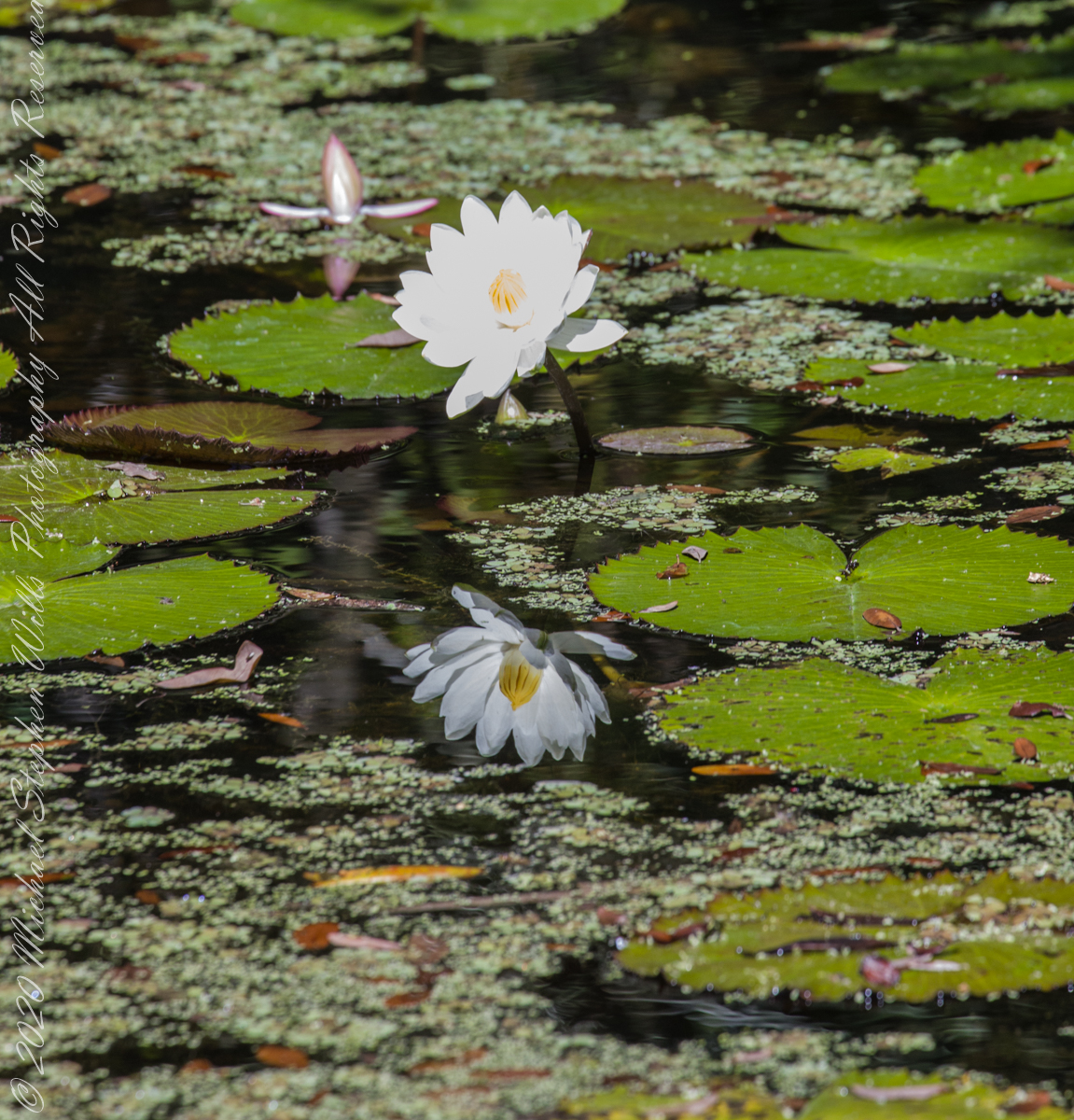
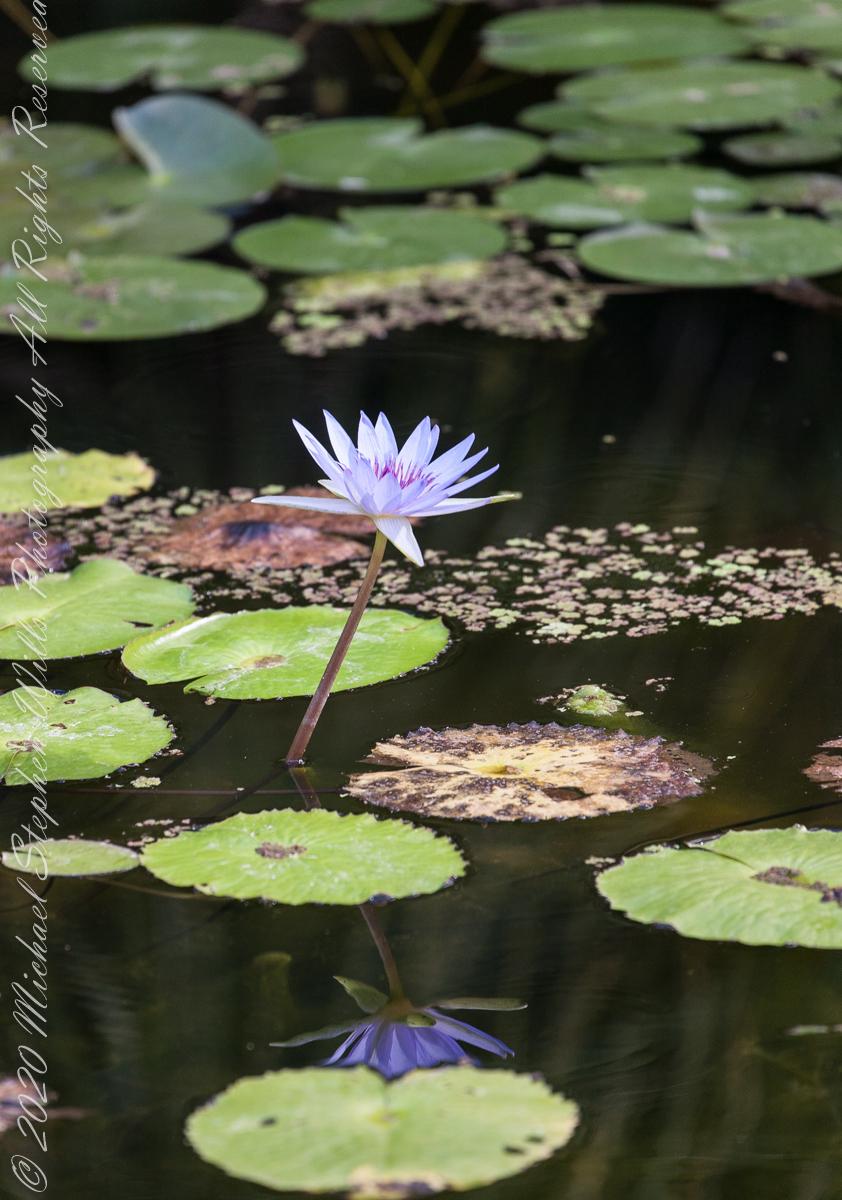
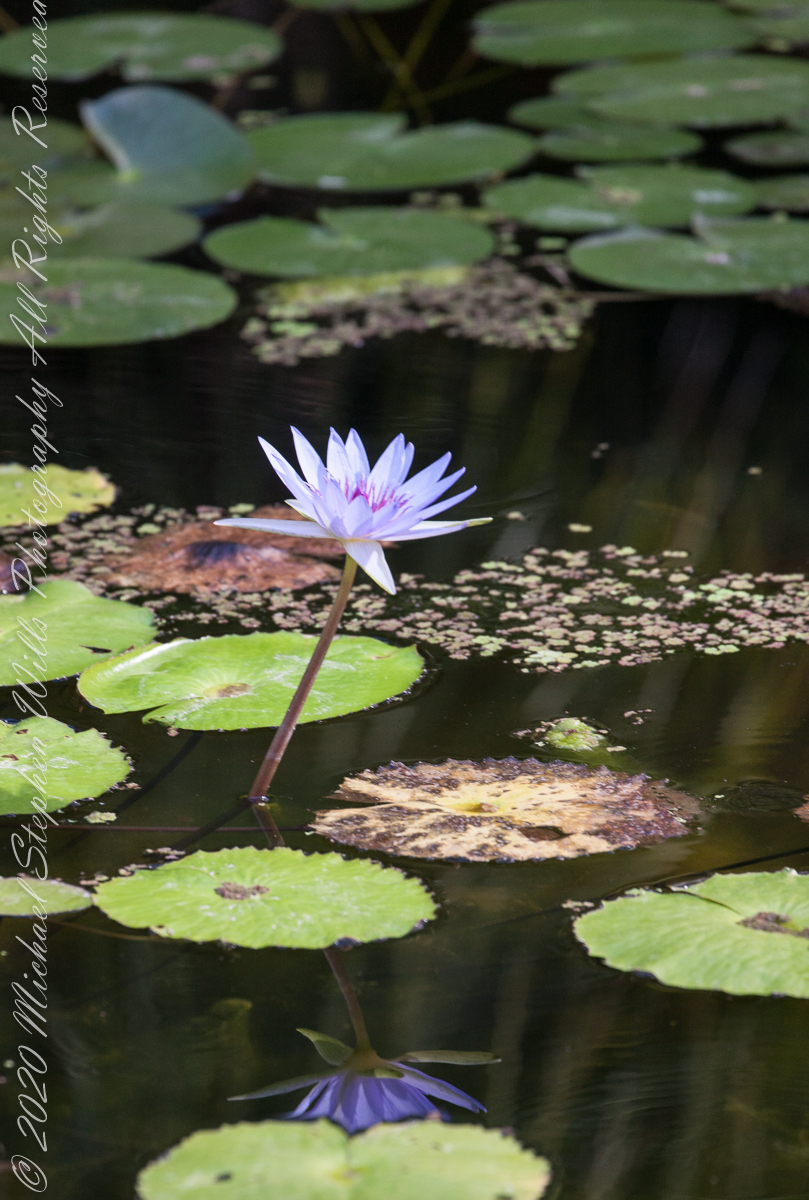
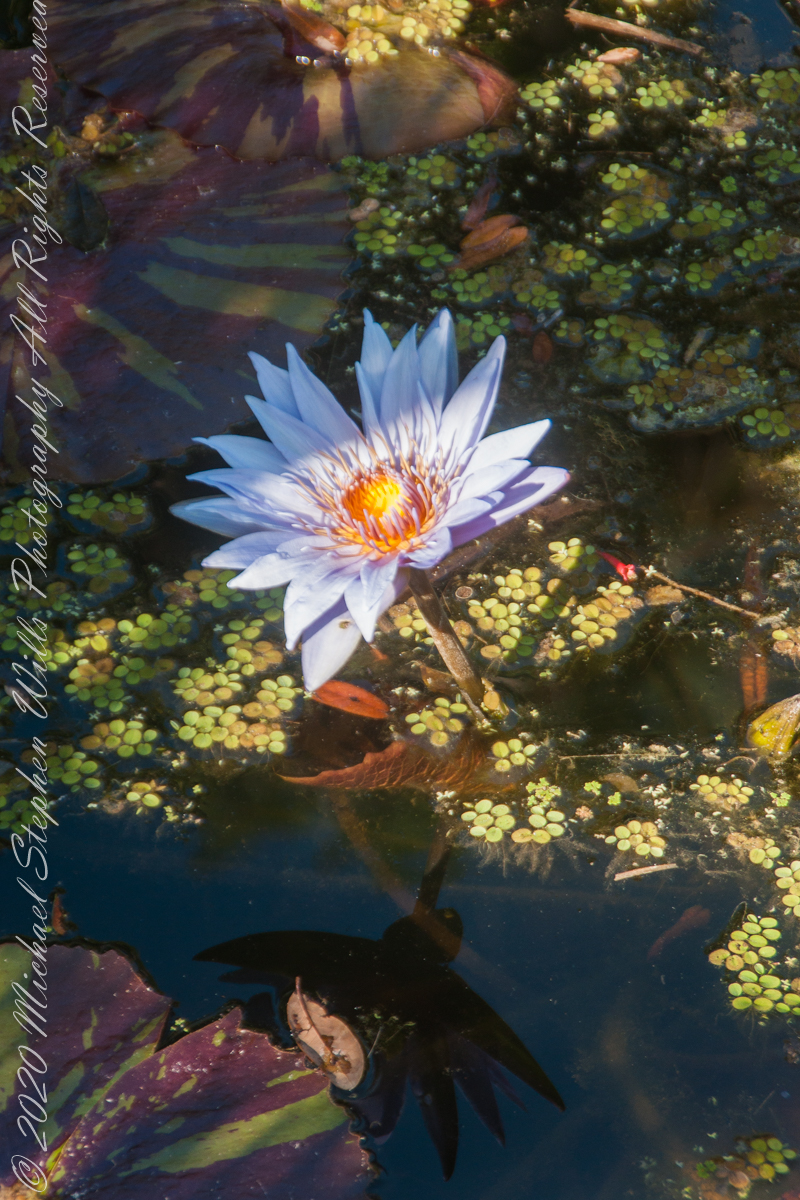
Bright sunlight washed out the flower, not so for the reflected image
Here is a brightly colored “tropical” flower well above the water surface on an erect stem emerging from the water.
“Angiosperm,” the word referring to all flowering plants, is composed to two greek words angio-. meaning enclosed, and -sperm, meaning seed. “DNA studies indicate the Nymphaeaceae separated from the rest of the angiosperm family tree…..before the separation of the monocots and dicots.” – see reference.
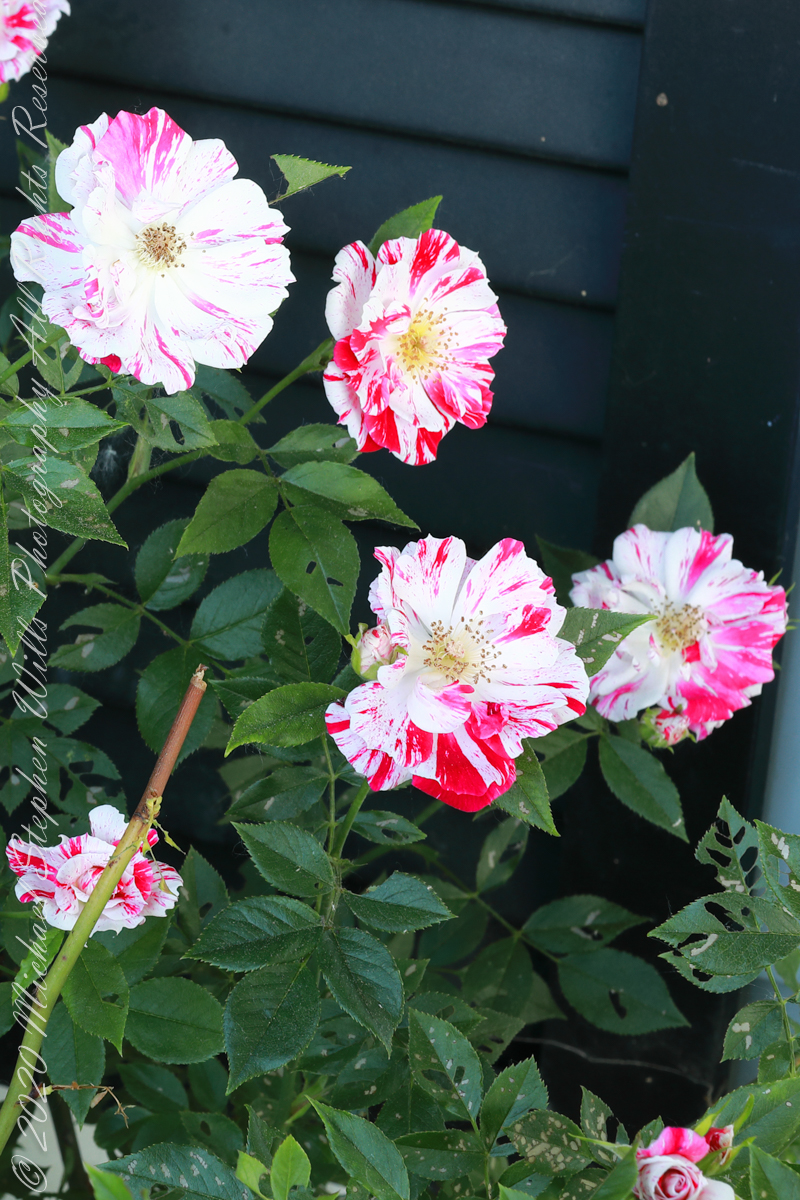
Pam’s father planted this rose on the east side where it is warmed wintertime by several hours of morning light when the sun is out. Extra attention is needed for watering as the roots are under a bay window and an awning.
1/6 second at F16, ISO 200
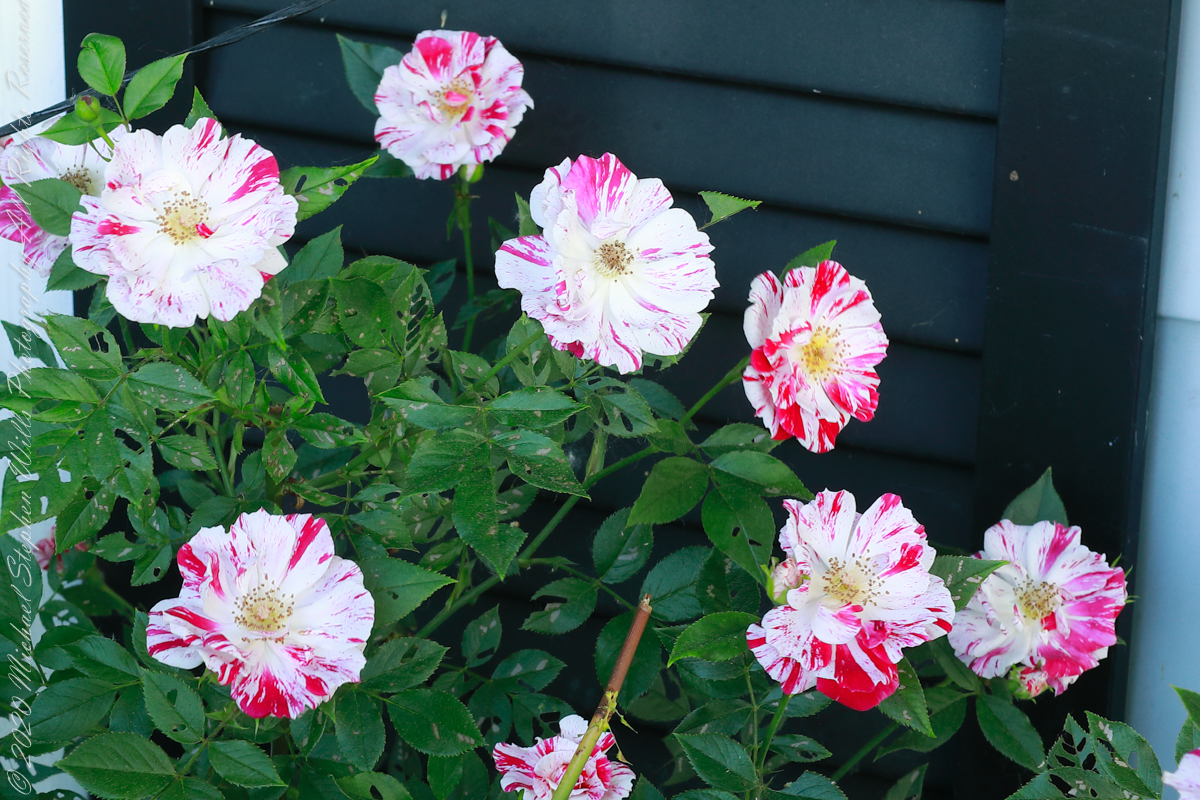
It is a miniature rose, the blooms about 1.5 inch across, this and the irregular red and white coloring reminds me of peppermint candies, so we call it our peppermint rose (not to be confused with the “Peppermint Rose” branded doll). The descent from wild rose is clear in the simplicity of the form. The number of flower petals identify it as a hybrid “modern rose: there are many more than five (5) petals of the wild rose.
1/4 second at F16, ISO 200
These photographs were taken with a Canon EOS 5D Mark IV dslr and the Canon EF 50mm f/1.2L USM lens with a “BeFree” Manfrotto tripod with ball head. f-stop was tamped down to the maximum, f16 for this lens. In spite of the light intermittent breezes I chose ISO 200. The combination of f-stop and low ISO resulted in a longer exposure that I worked around by waiting for the blooms to settle down between the breezes.
Copyright 2022 Michael Stephen Wills All Rights Reserved
Imagine yourselves in an open cart exploring the island. Here are the photographs from my Inishmore exploration posts. Enjoy!!
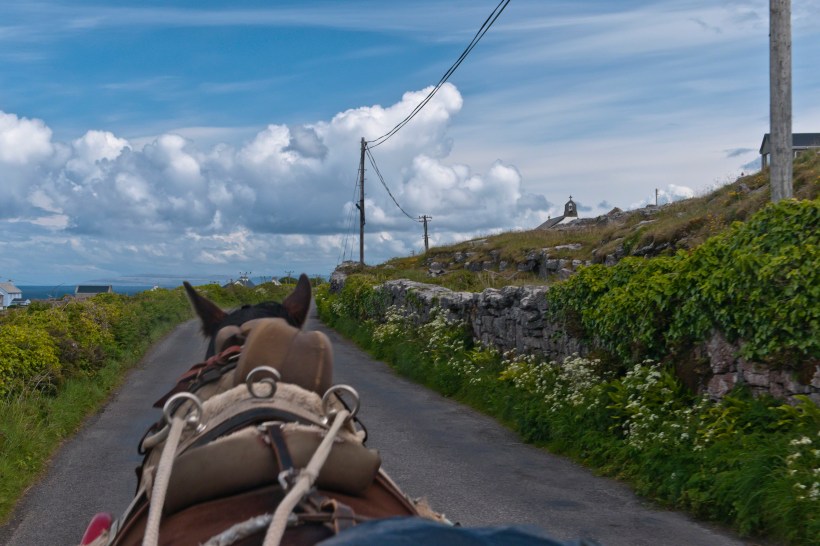
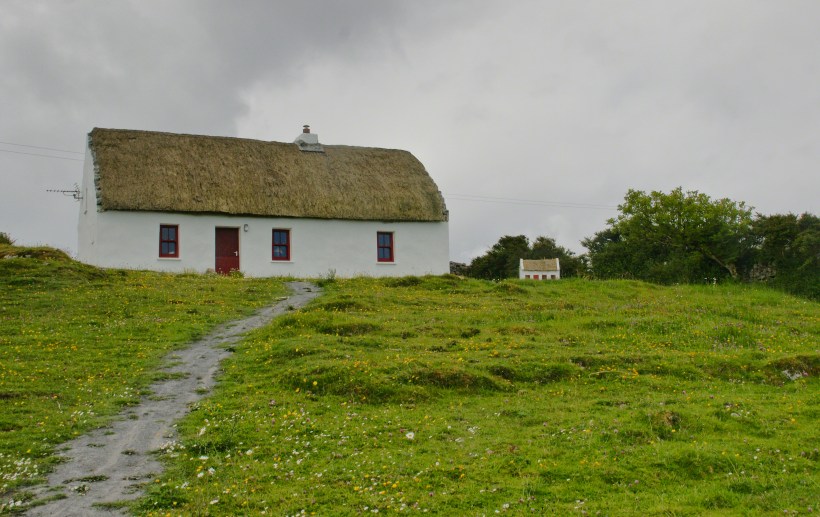
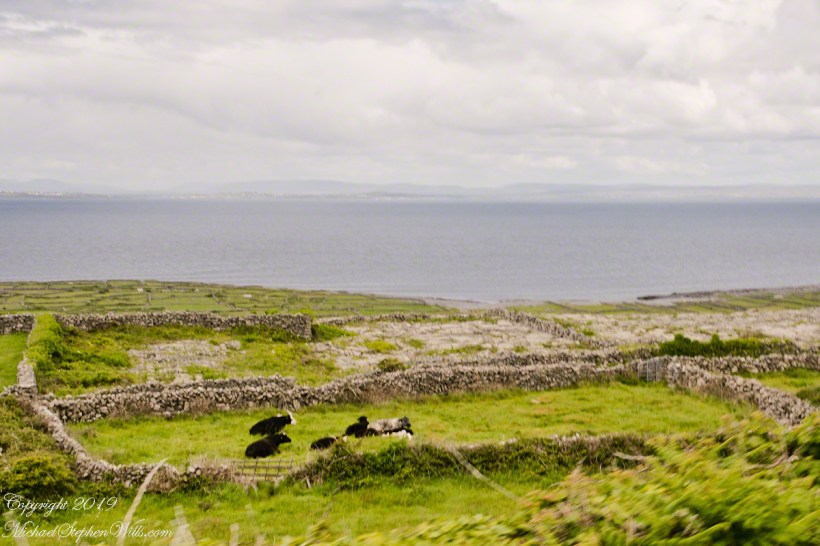
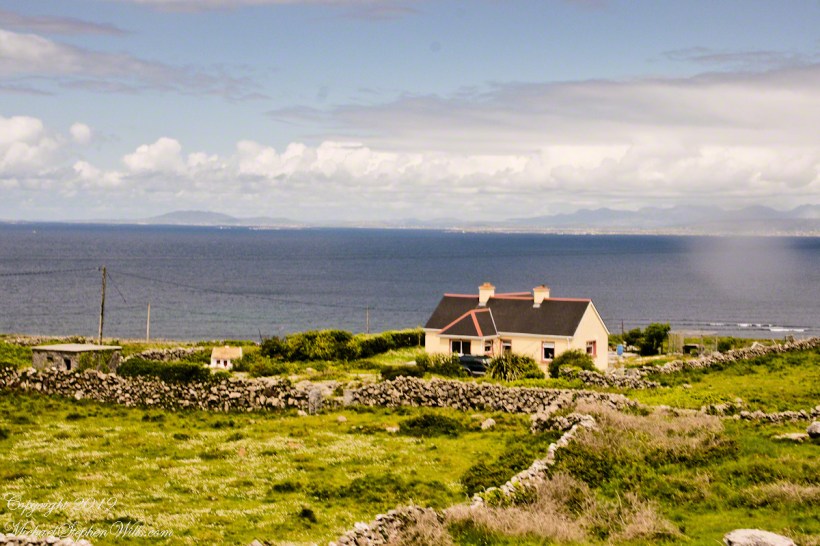
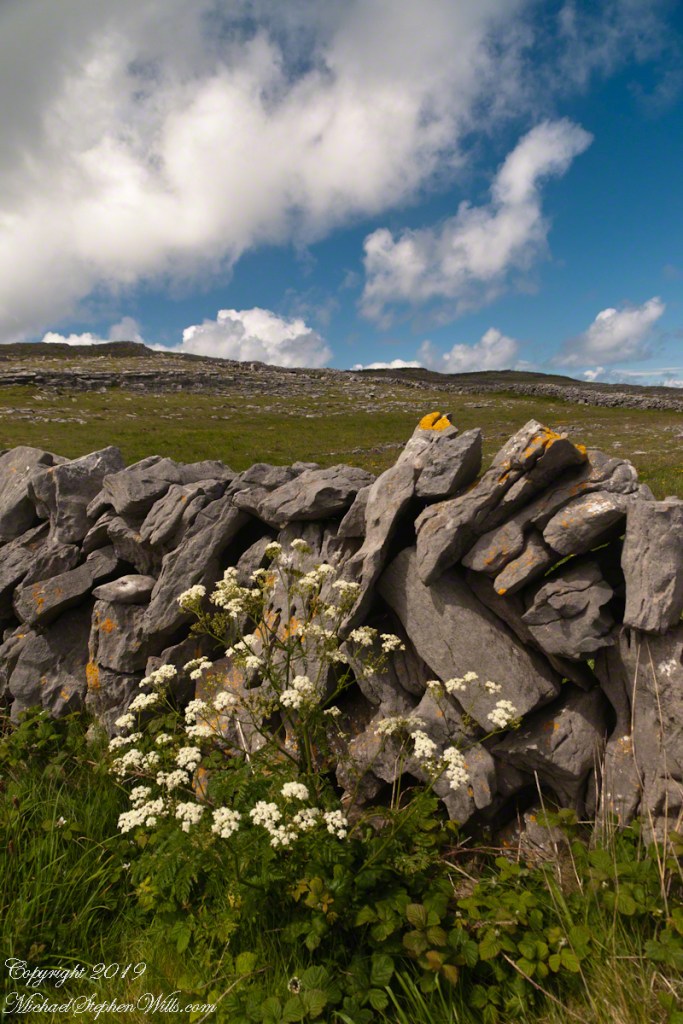
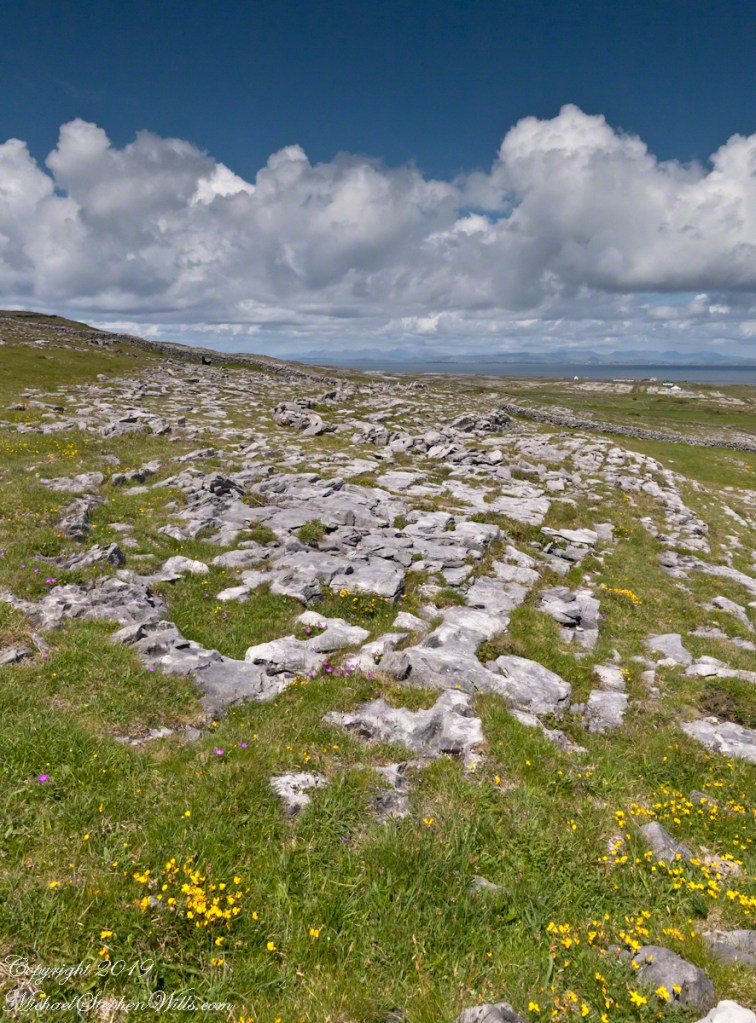
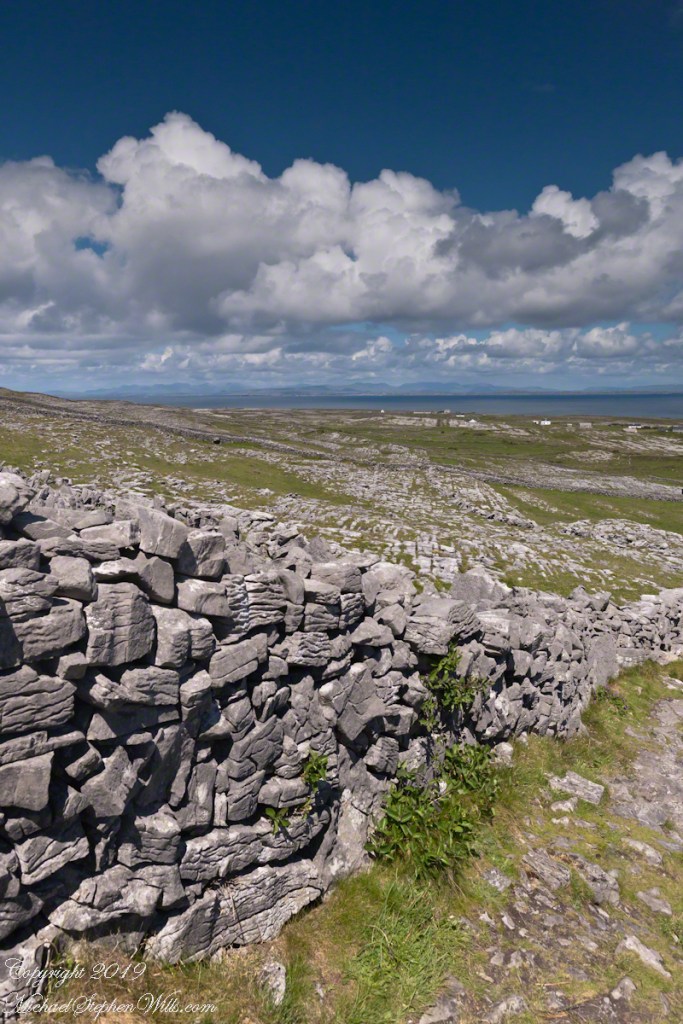
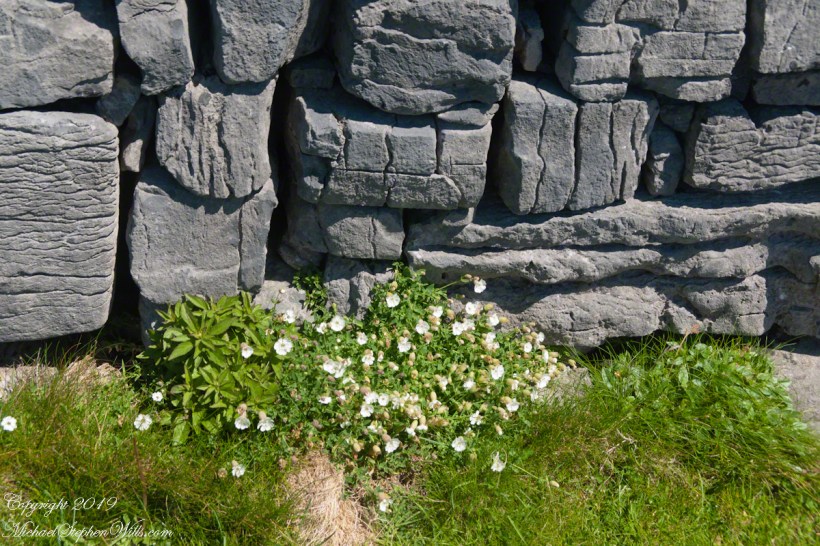
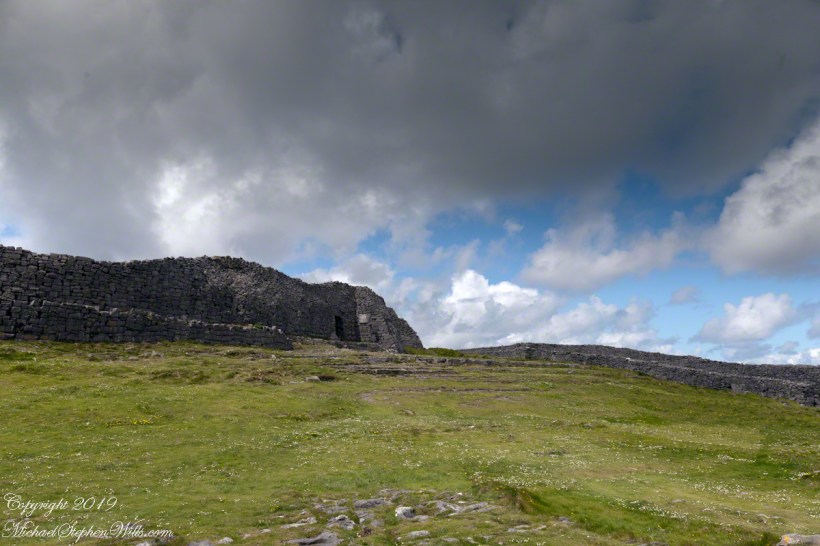
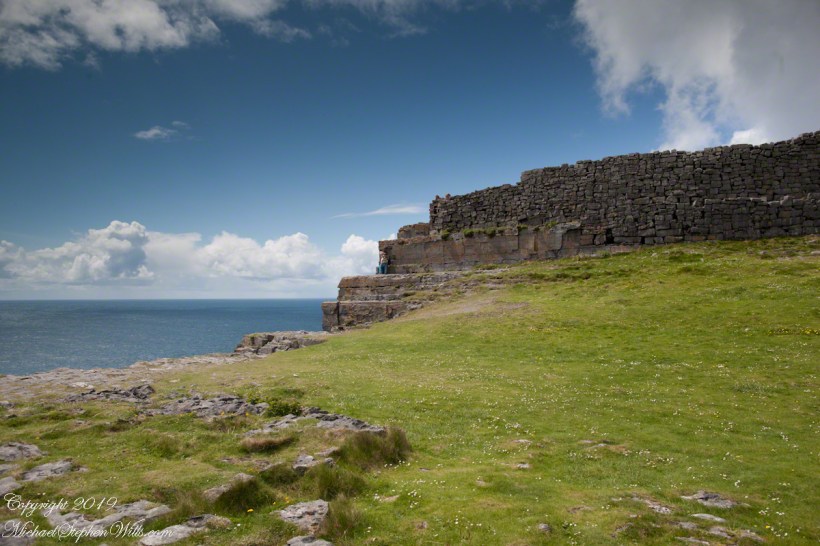
Kilronan bibycle hireView from a horse drawn trap headed down Cottage Road toward the village of Kilronan on a early June day, the island of Inishmore. On the right a stone ditch (wall), at the base the white flowers of Greater Burnet saxifrage (Scientific Name: Pimpinella saxifraga) (Irish Name: Ainís fhiáin). A steeple with bell and cross just visible. In the distance is the island of Inishmaan, the North Atlantic and Galway Bay. Aran islands, County Galway, Ireland.This ruined church is on the right side as you travel Cottage Road out of Kilronan Village, Inishmore, County Galway, Ireland. The distant highland is Inis Mann, across Galway Bay. A curious horse looks over a wrought metal gate set in a dry stacked limestone wall.Riding a horse and trap on Cottage Road from Kilronan village, Inishmore, Aran Islands, Country Galway, irelandThose bicyclists could have been us.This thatched cottage with matching child’s playhouse is on Cottage Road out of Kilronan Village on the Aran island, Inishmore, County Galway, Ireland.Roadside daisies on Cottage Road out of Kilronan village, Inishmore, Aran Islands, County Galway, IrelandNorth view from Cottage Road overlooks walled fields, karstNorth view from Cottage Road overlooks walled fields, karstAn island cottage among fields along the Galway Bay coast, the twelve pins of Connemara beyond.An island cottage among fields along the Galway Bay coast, the twelve pins of Connemara beyond.We stopped for lunch and a present for my son, a sweather purchased from the woman who knitted it.SONY DSCThe view is looking southwest from the path leading to Dun Aonghasa in springtime. We see here dry stone wall of limestone laid in a pattern suggestive of herringbone, splotches of orange lichen mark the stones. Against the wall is growing a variety of plants. The prominent white flowers are Greater Burnet saxifrage (Scientific Name: Pimpinella major) (Irish Name: Coll an dromáin). Beneath are leaves of Wild Strawberry (Scientific Name: Fragaria vesca) (Irish Name: Sú talún fiáin) as well as fern and grass. Beyond the wall is karst landscape rising to the ridge. Above the ridge, storm clouds gather. Inishmore, Aran Islands, County Galway, Ireland.This defensive structure called a Cheval de fries field surrounds Dun Aonghasa (Dun Aengus). This northwest view looks across the field and surrounding defensive walls. It is an early June day and, in the foreground, are colorful wildflowers among the limestone shards and blocks. Inishmore, Aran Islands, County Galway, Ireland.Looking North, Northwest across the slopes below Dun Aonghasa (Dun Aengus), InishmoreWalled Path to Dun Aonghasa (Dun Aengus) with Island Landscape, InishmoreKarst landscape with Green Field and Clouds, InishmoreInishmore LandscapeKarst Landscape with Interior Walls of Dun AonghasaDetail of Dun Aonghasa Dry Stone Wall with White Flowers of SeaAncient Fort Entrance, Dun Aonghasa (Dun Aengus)Ancient fort wall with tourists and Cliff Edge of Dun Aonghasa (Dun Aengus)View east, southeast from the Cliff Edge of the Ancient fort walView east, southeast from the Cliff Edge of the Ancient fort walRoadside Shrine and Island Landscape, Inishmore, Aran Islands, County Galway, Ireland
Copyright 2019 All Rights Reserved Michael Stephen Wills
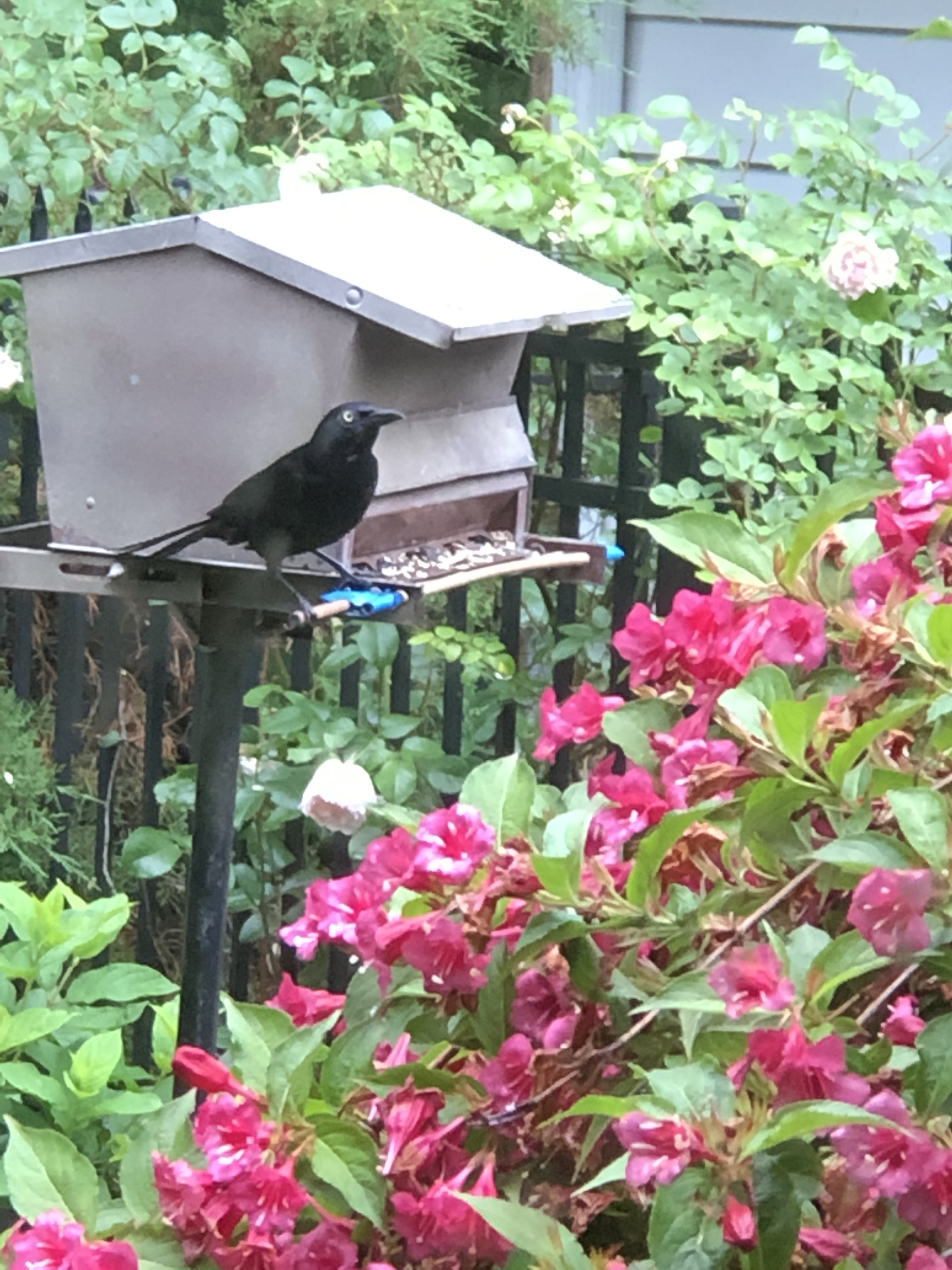
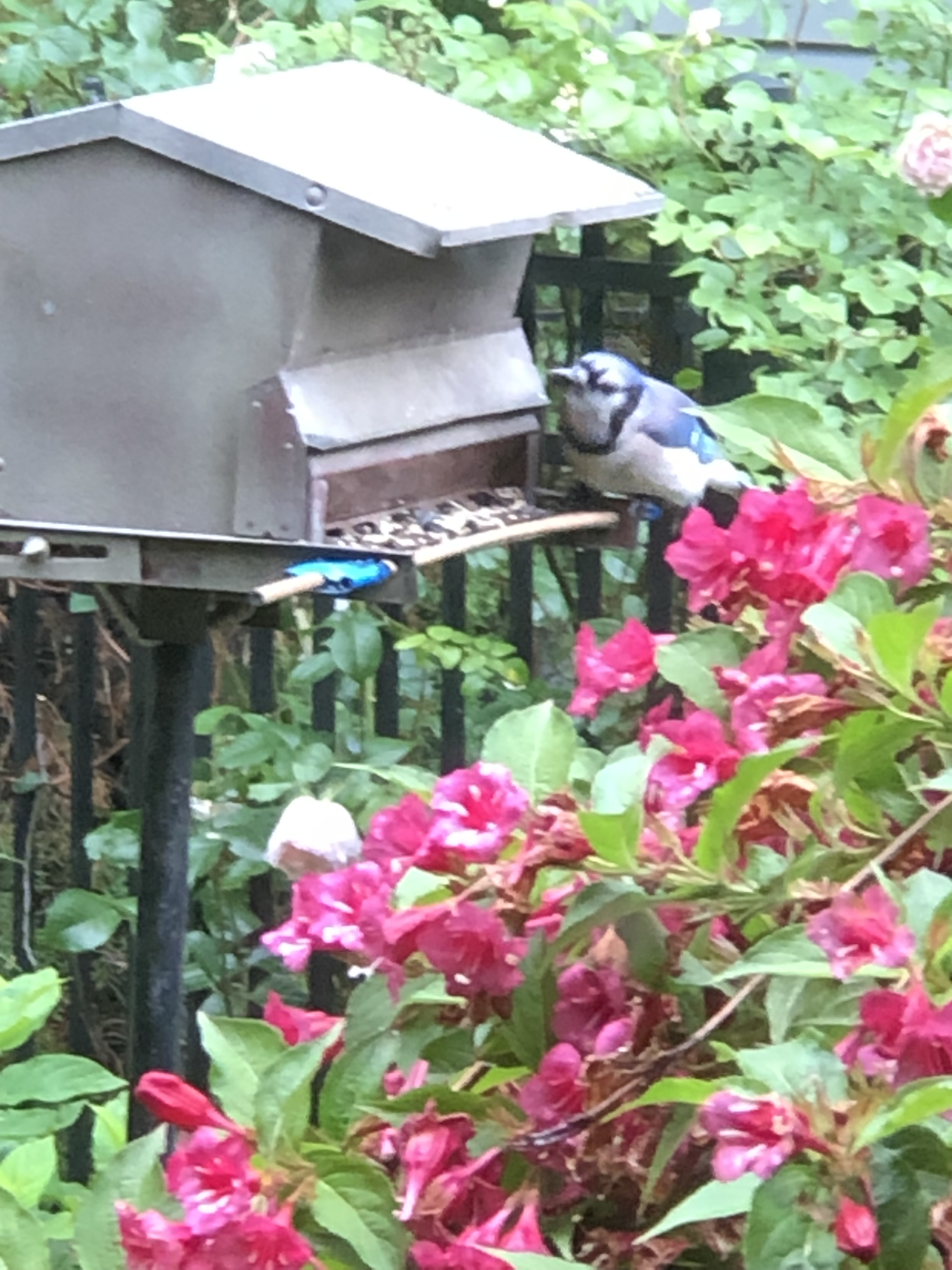
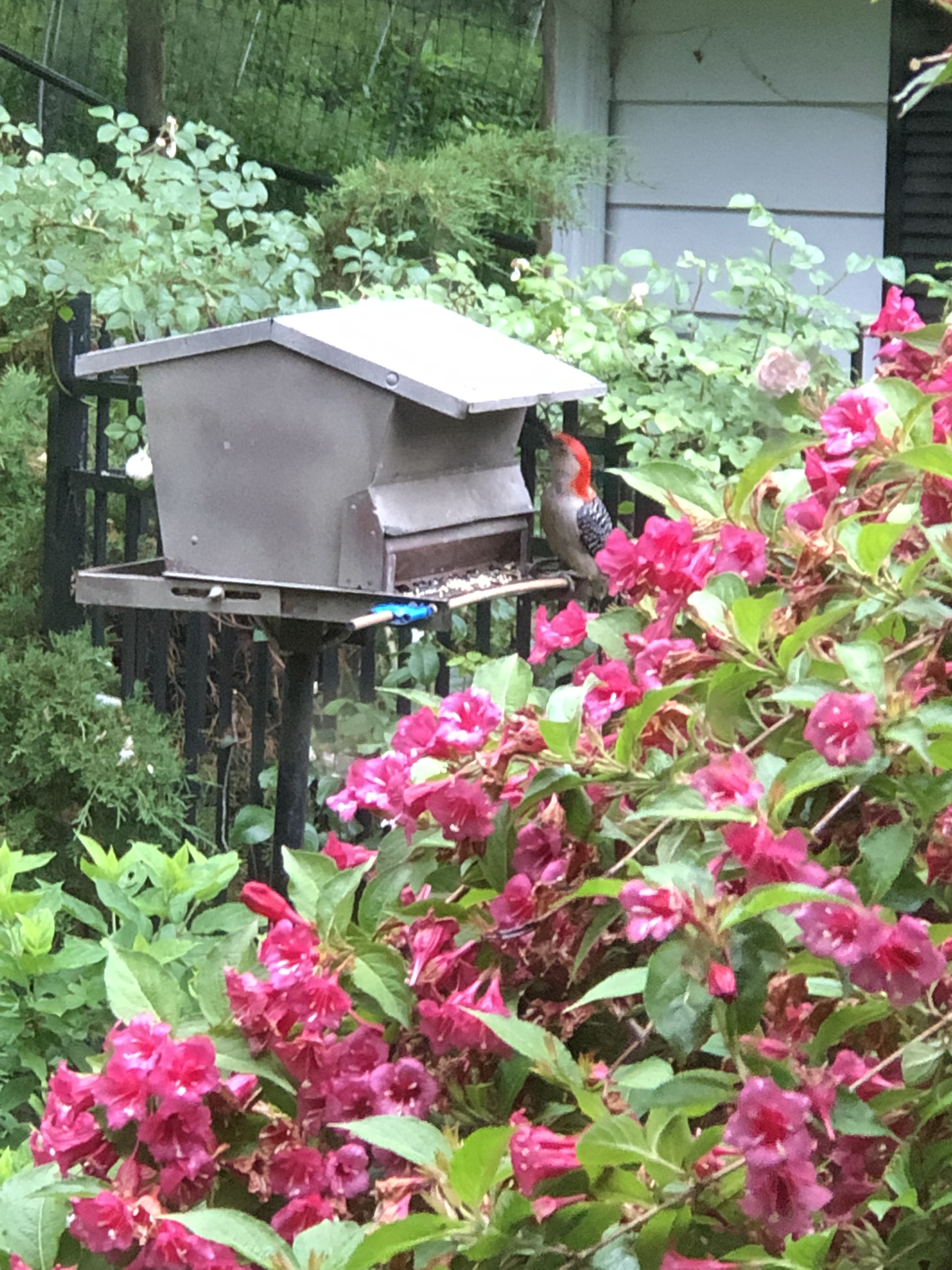
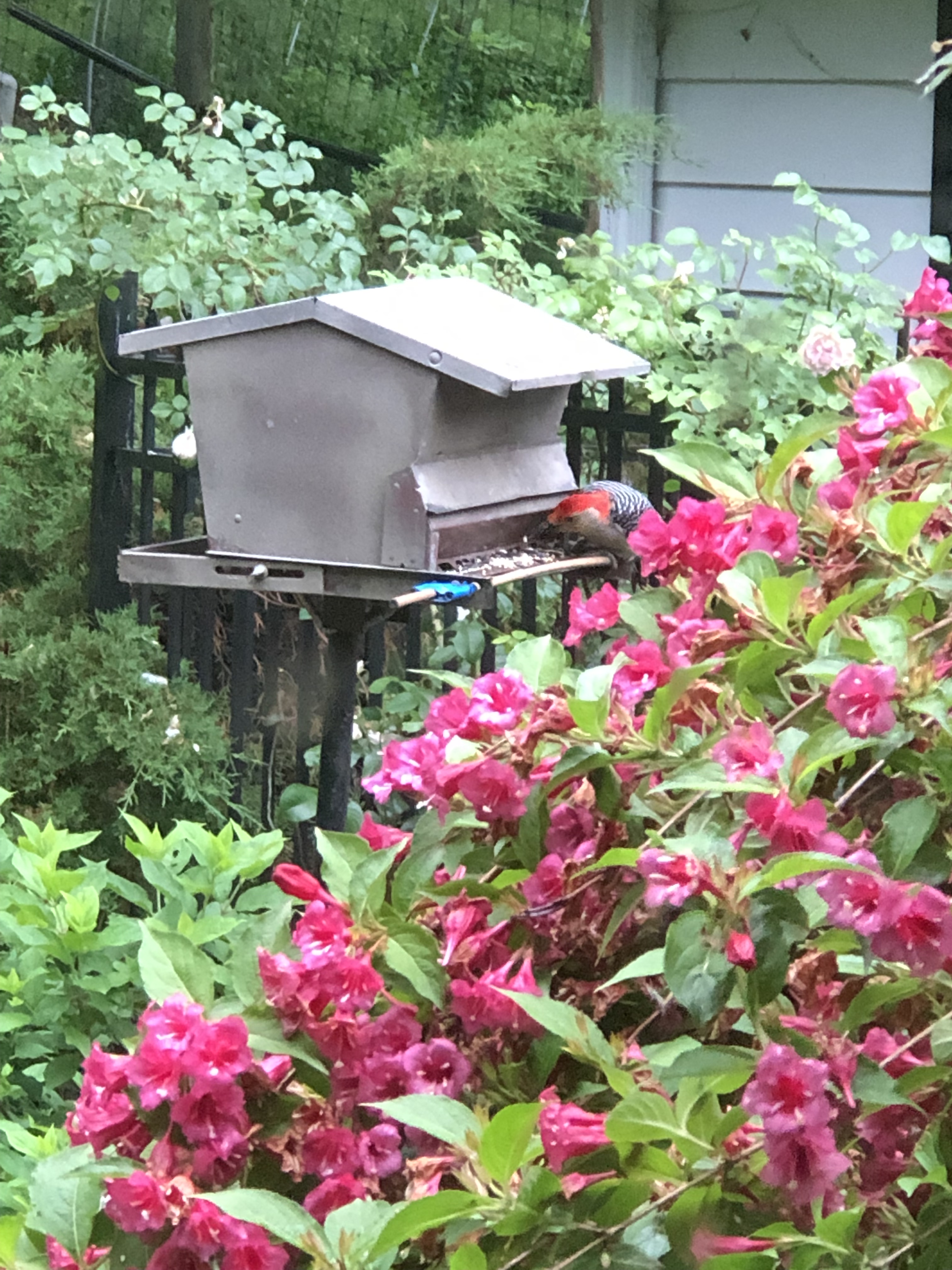
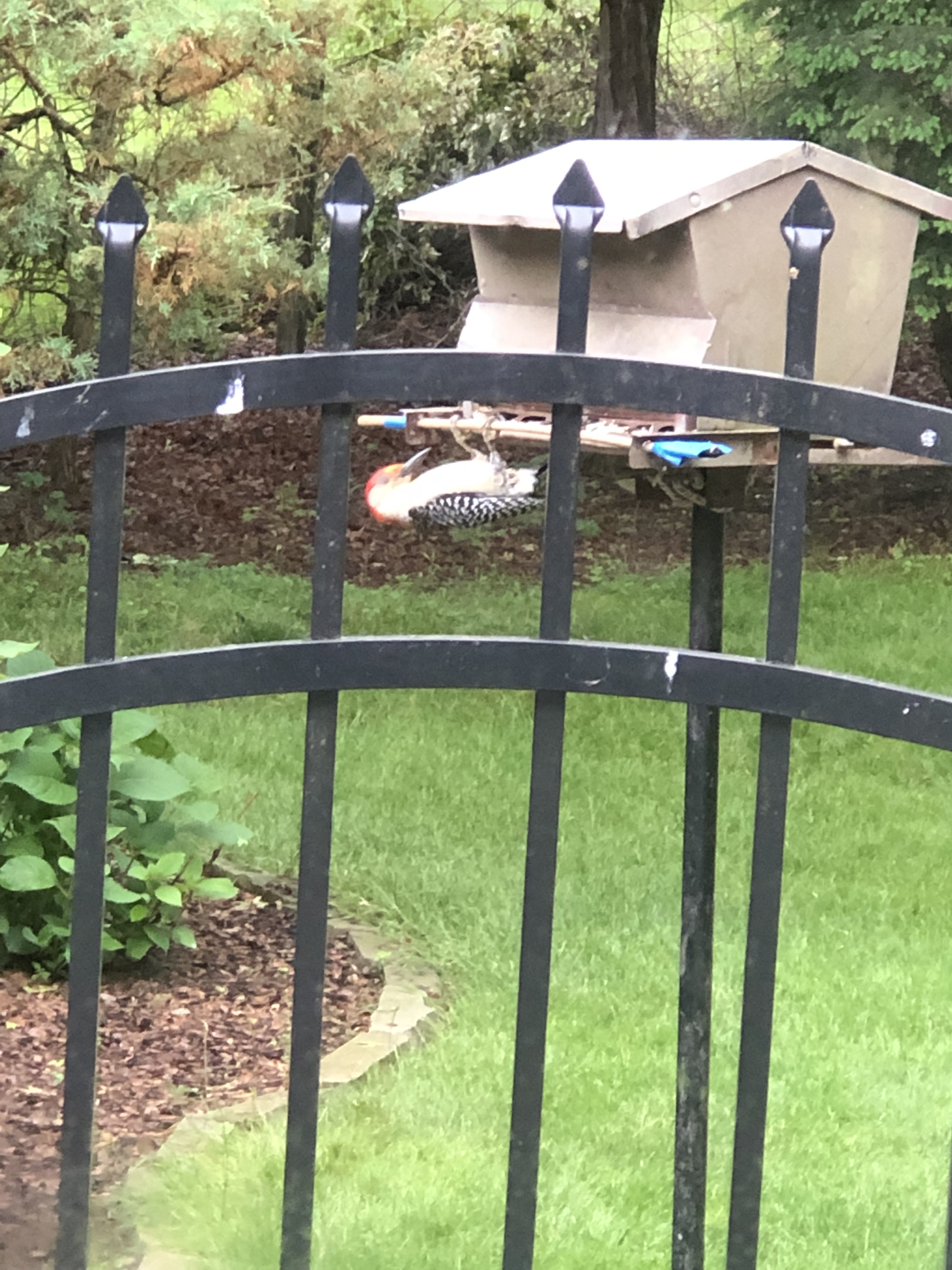
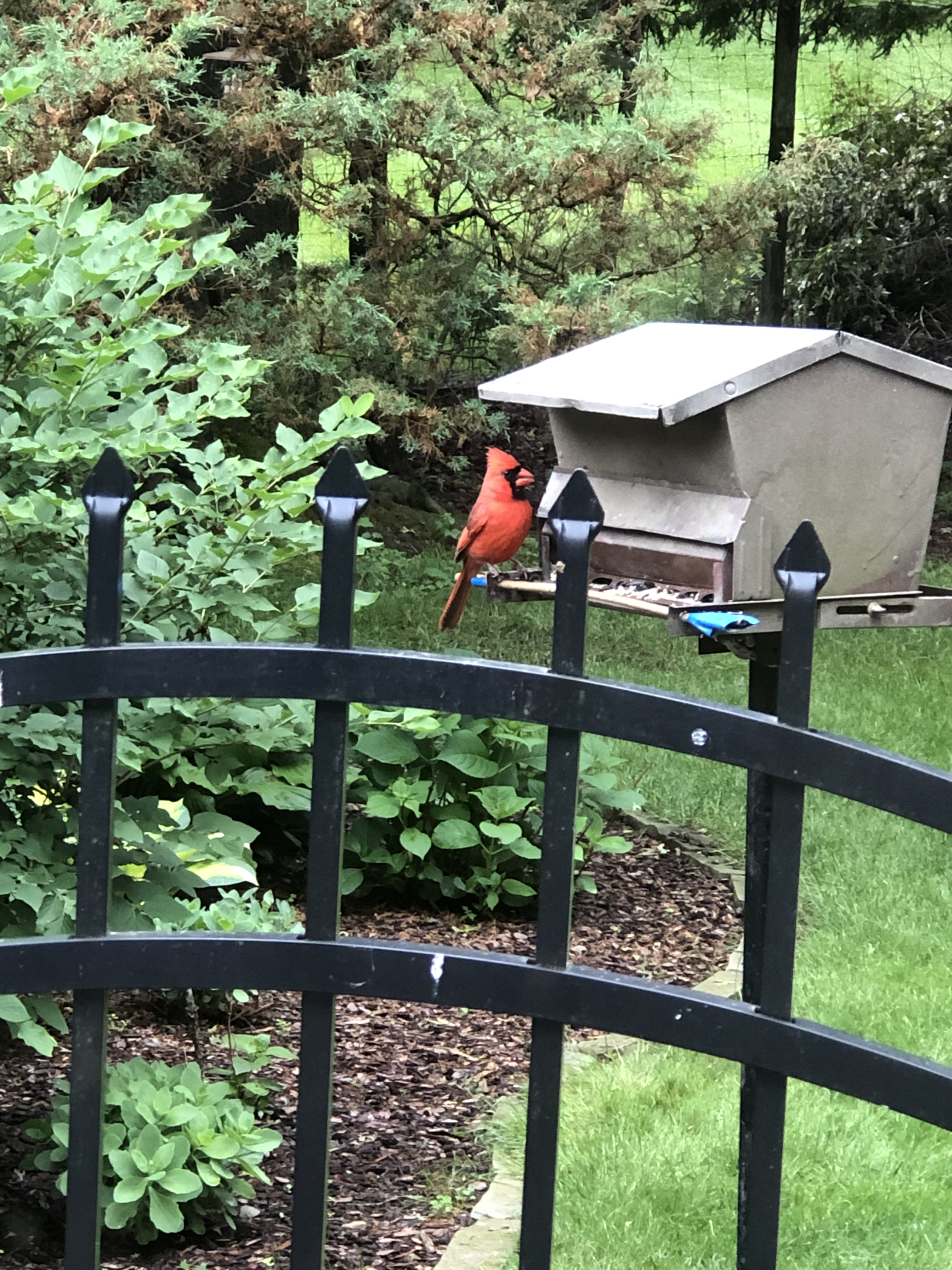
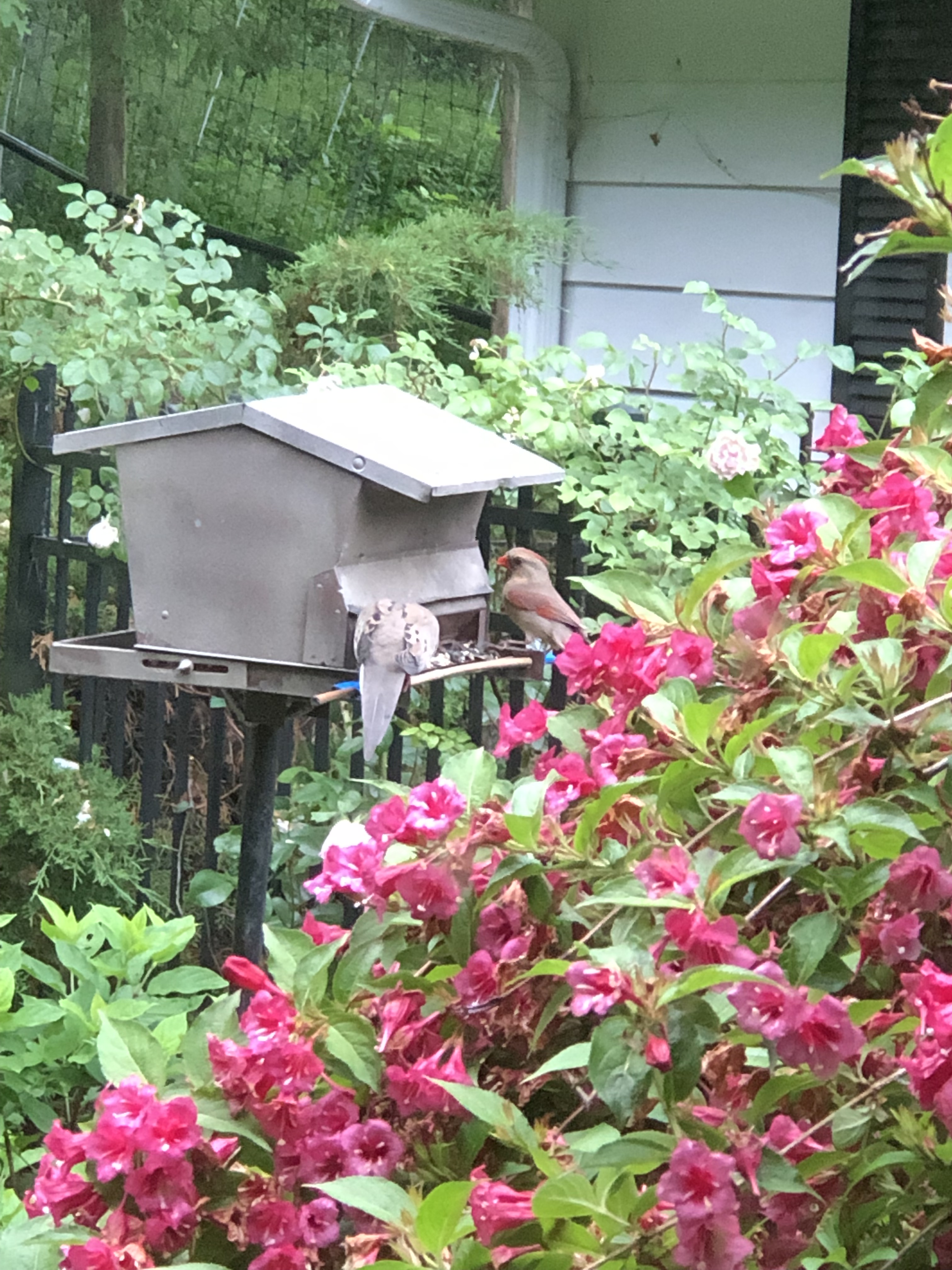
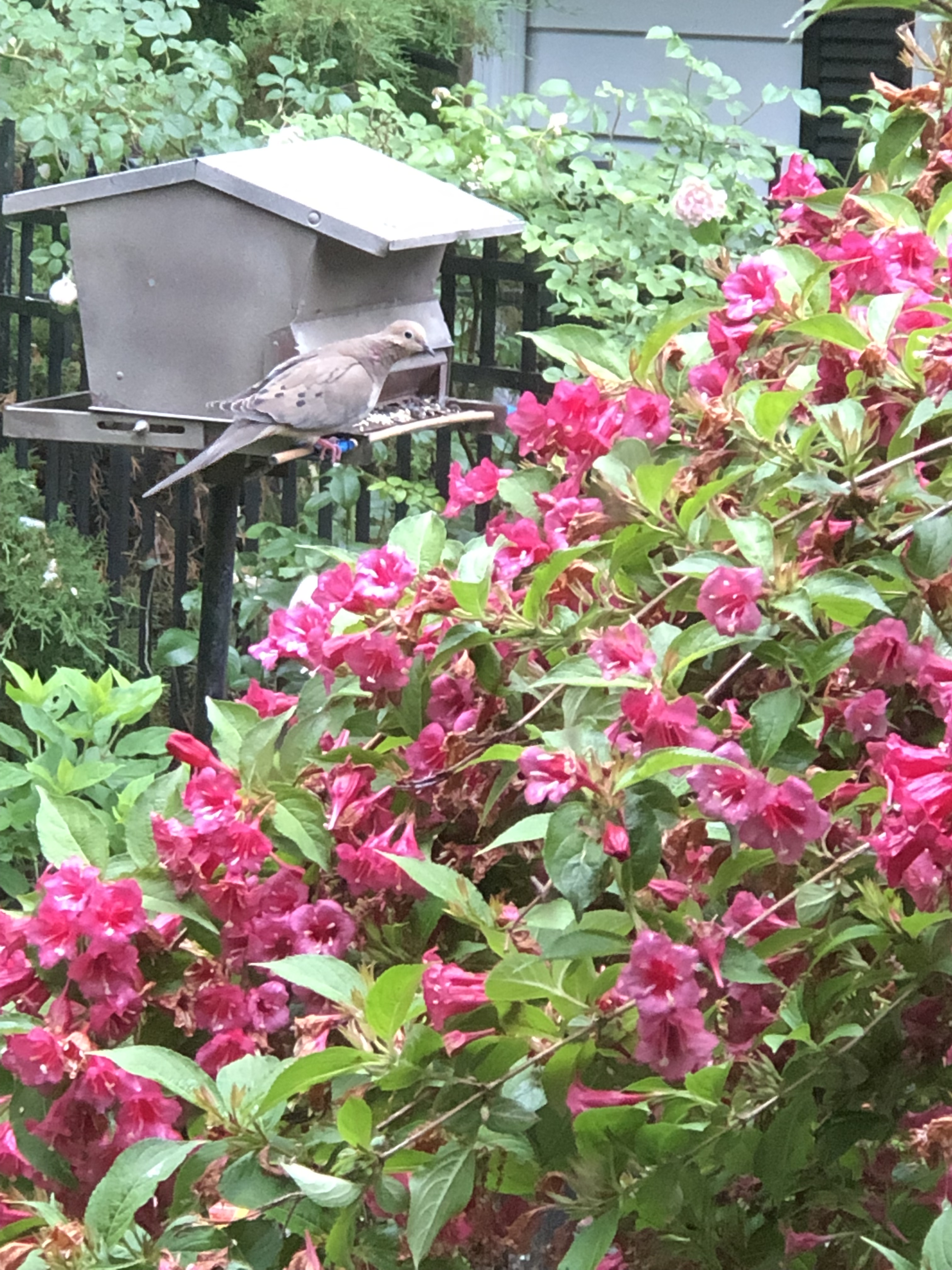
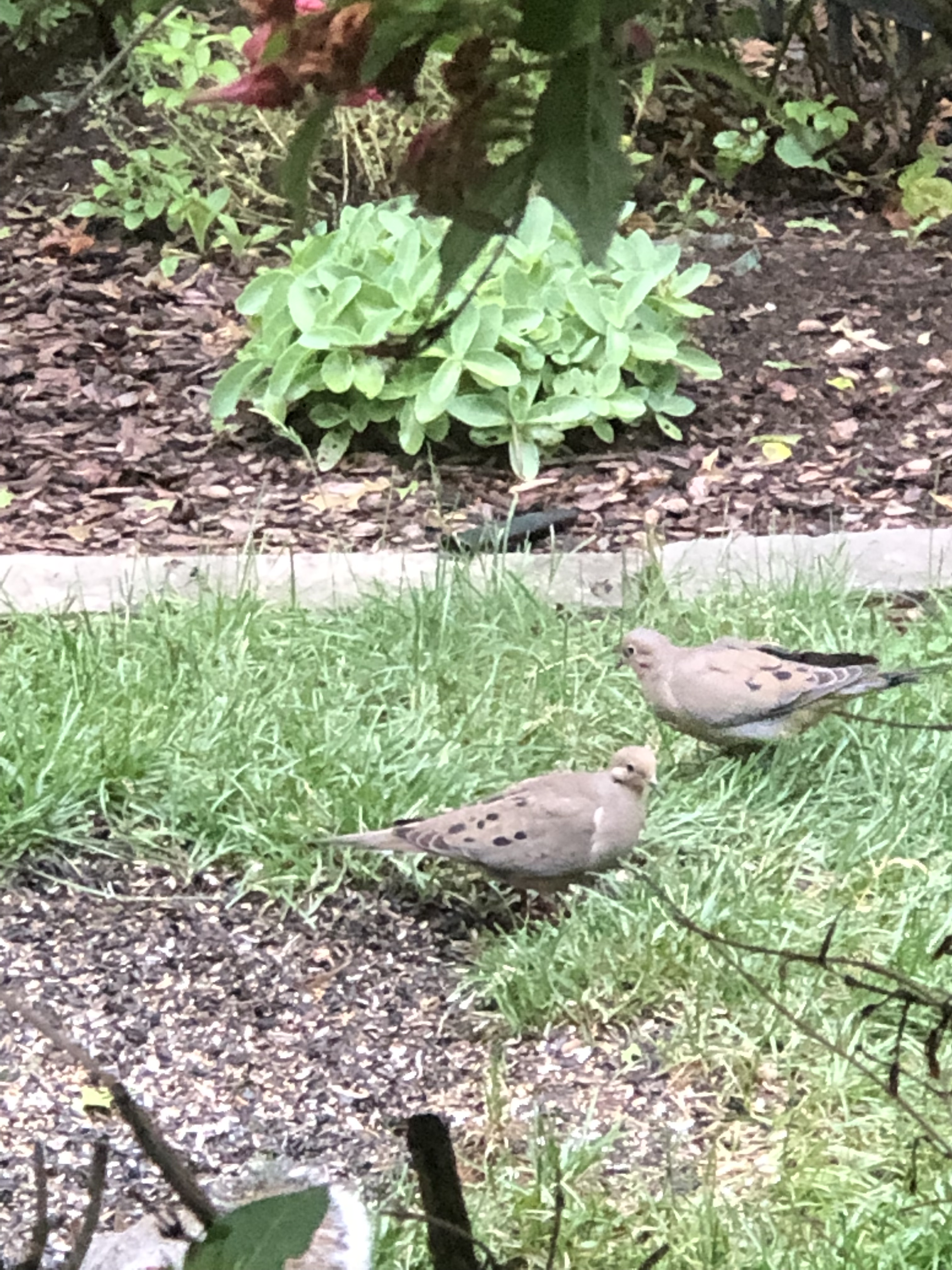
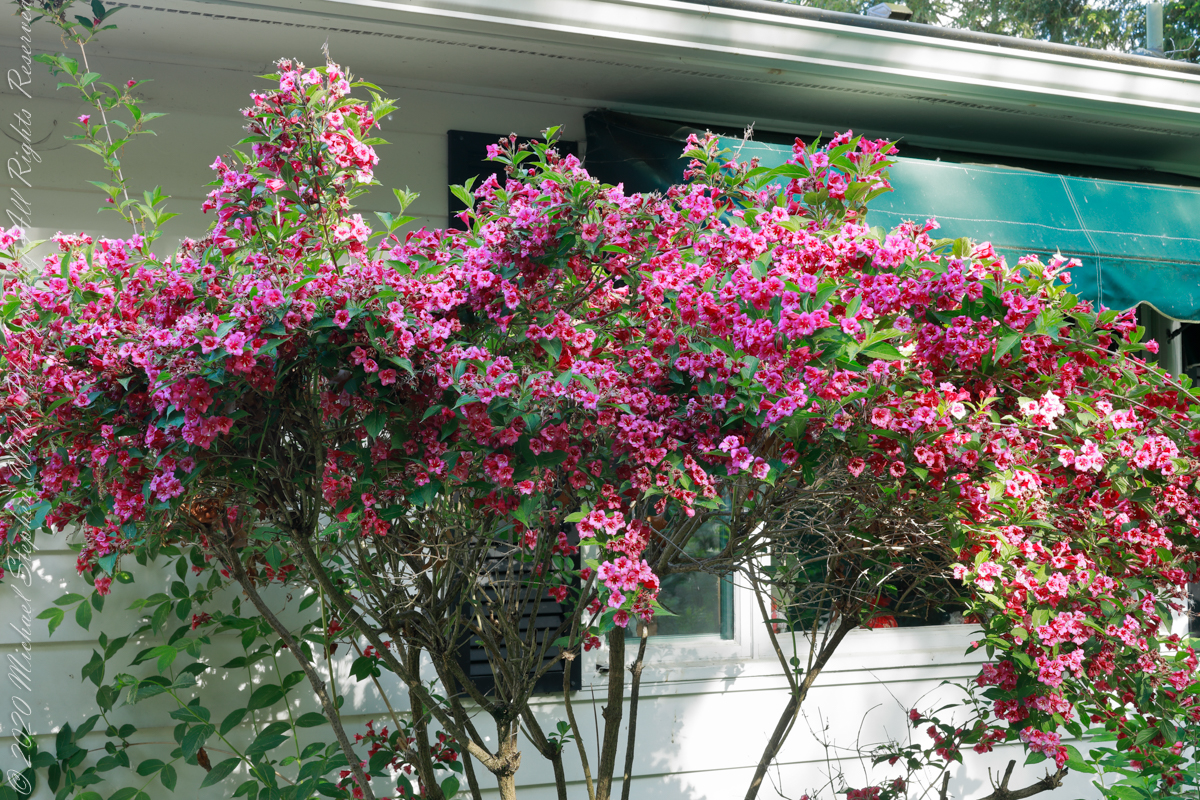
Sad to say, today, Sunday June 12th, the flowering bush is spent, the blooms withered and falling. Pam took time to document some visitors while the Weigela was in its glory. This is a sample of the species we enjoy while washing the dishes.
GrackleBlue JayRed Bellied WoodpeckerWe also have Downy, Hairy and Pileated WoodpeckersThe name “Red Bellied” is a mystery to me.Male CardinalDove and female CardinalMourning DoveWe have a huge dove population, supported by our feeder.
These photographs were taken by Pam through our windows with her Iphone 8 plus.
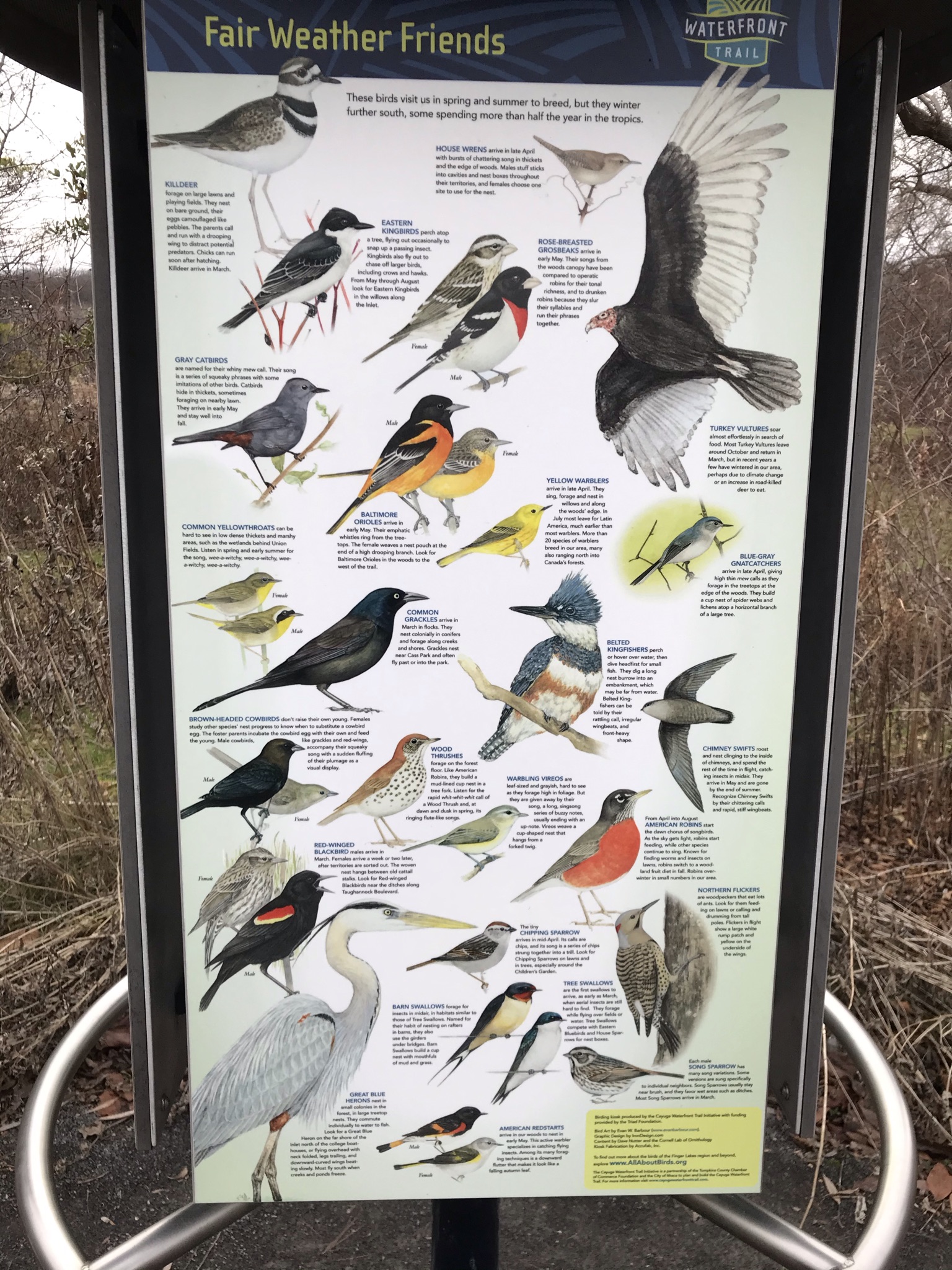
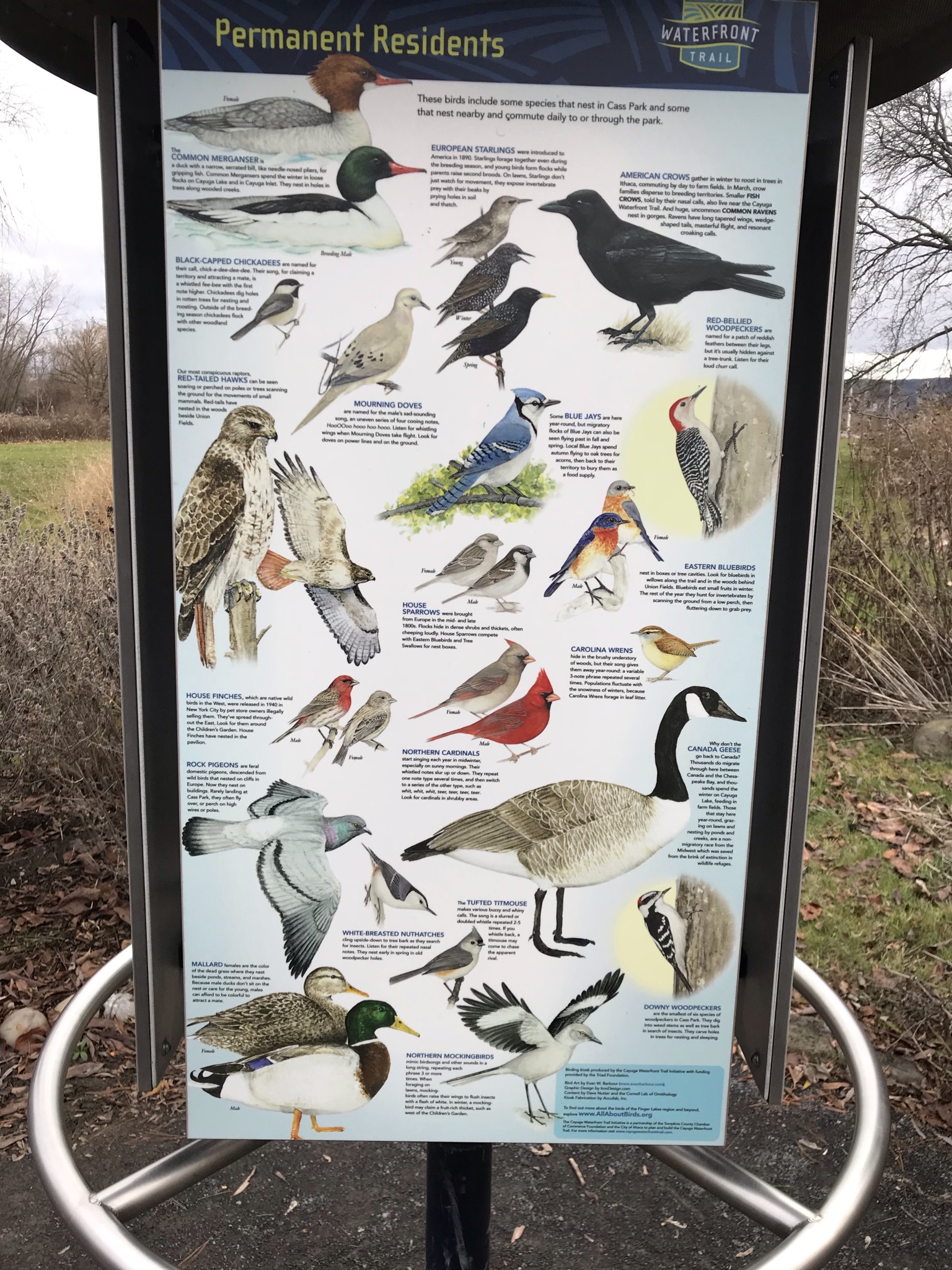
Here is a series of informative signs from Cass Park, just down the hill on the Cayuga Lake Inlet. Pictured are resident birds, most of them visited our backyard feeder.
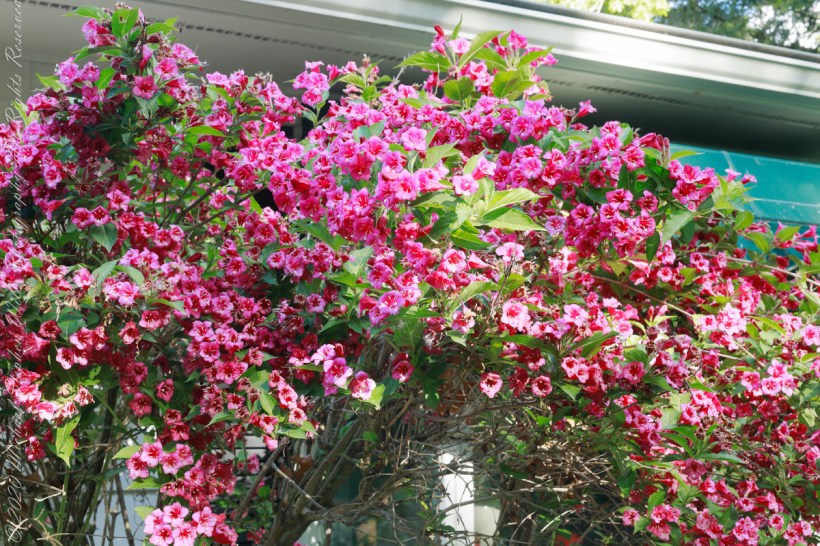
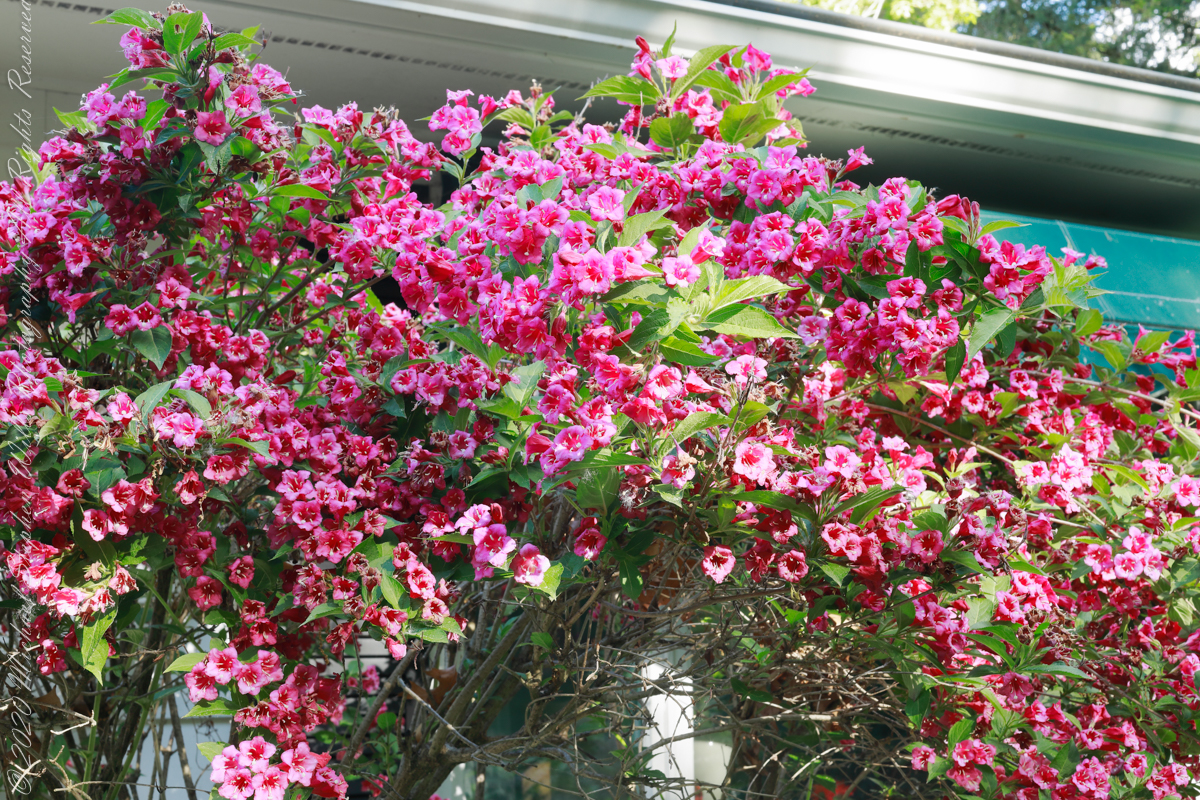
2022 is a breakout year for the Weigela bushes of our yard, each has bloomed literally for a month. The flowers are still fresh today.
Click either photograph to view a larger image on a new browser tab.
These photographs were taken with a Canon EOS 5D Mark IV dslr and the Canon EF 50mm f/1.2L USM lens with a “BeFree” Manfrotto tripod with ball head. f-stop was tamped down to the maximum, f16 for this lens. Exposures were taken in the evening with the sunlight filtered through our hemlock trees.
Copyright 2022 All Rights Reserved Michael Stephen Wills
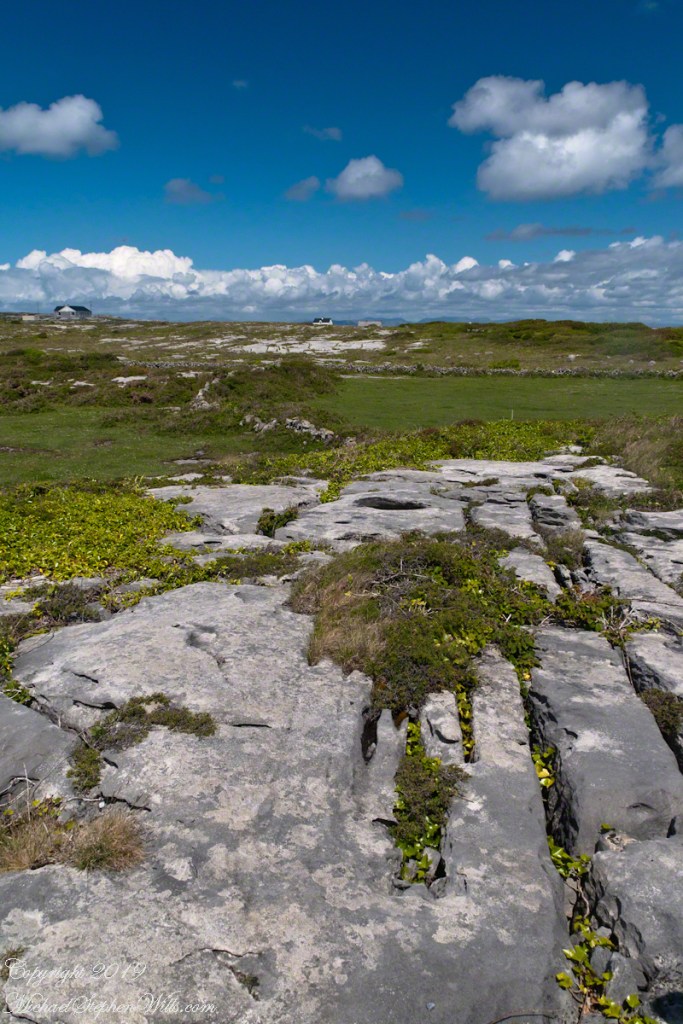
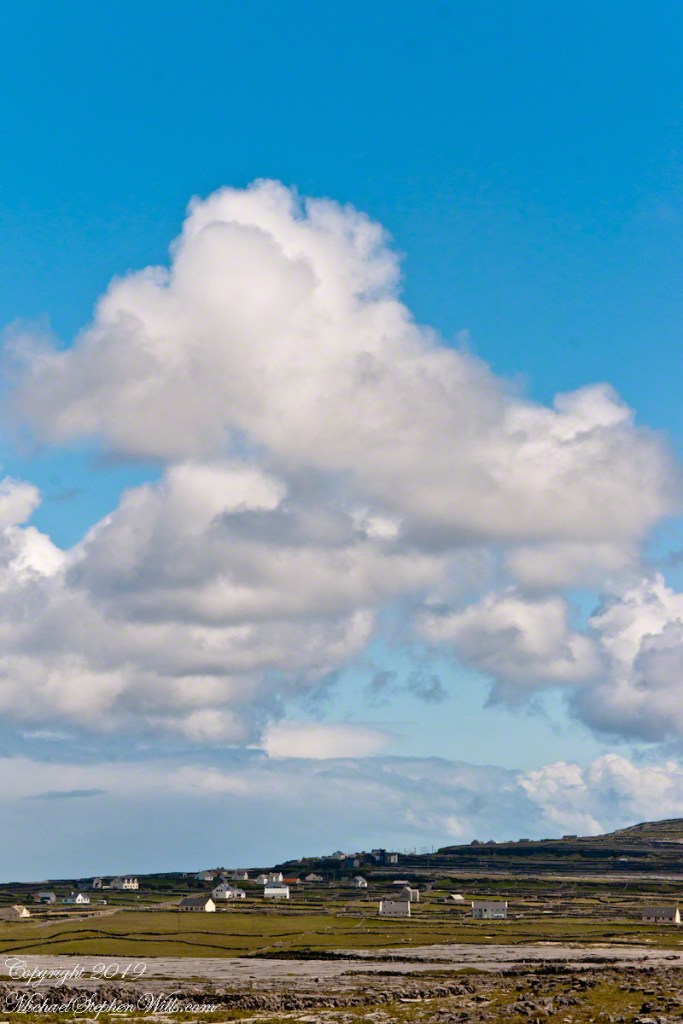
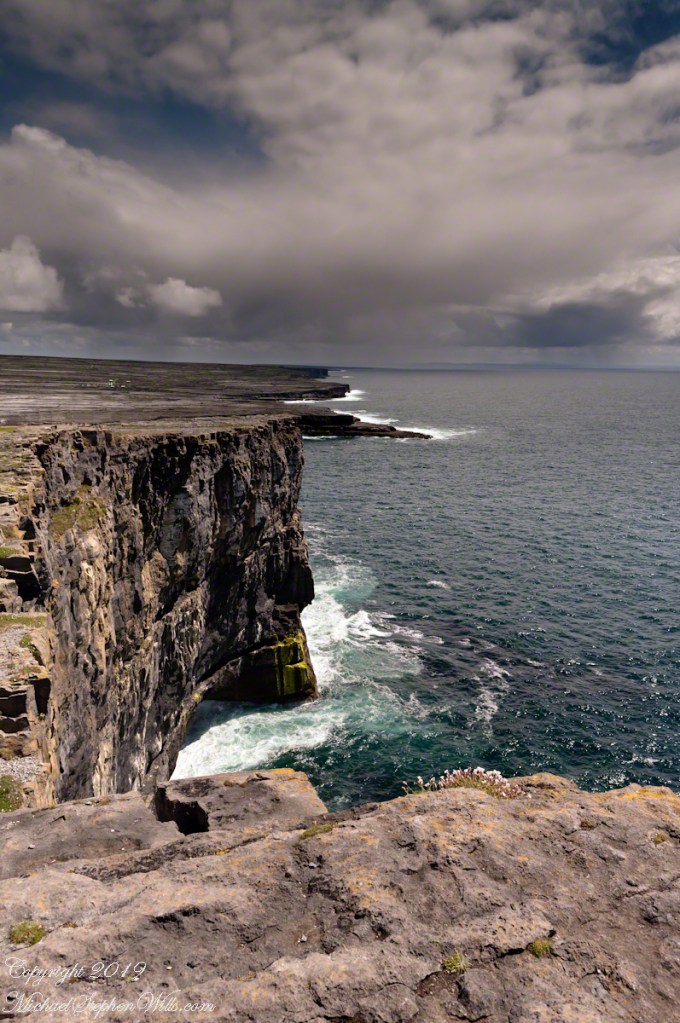
From the commanding location of Dun Aonghasa, looking northeast across Inishmore island, we can understand why the ancient builders chose this location.
We also see the transition from exposed limestone to the fields built literally from the ground up (see my post “The How of Soil”). For a closer view of island houses see my posts “Settled In” and “Cottage Road Cottage.”
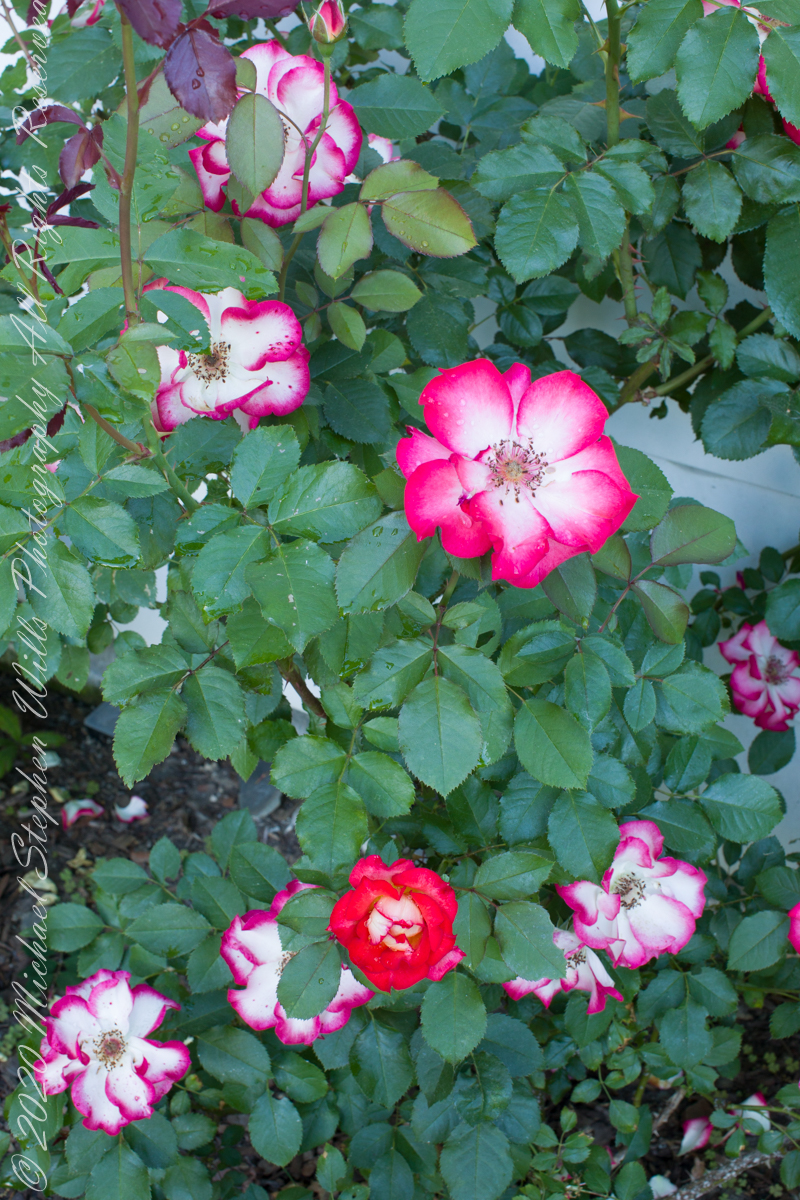
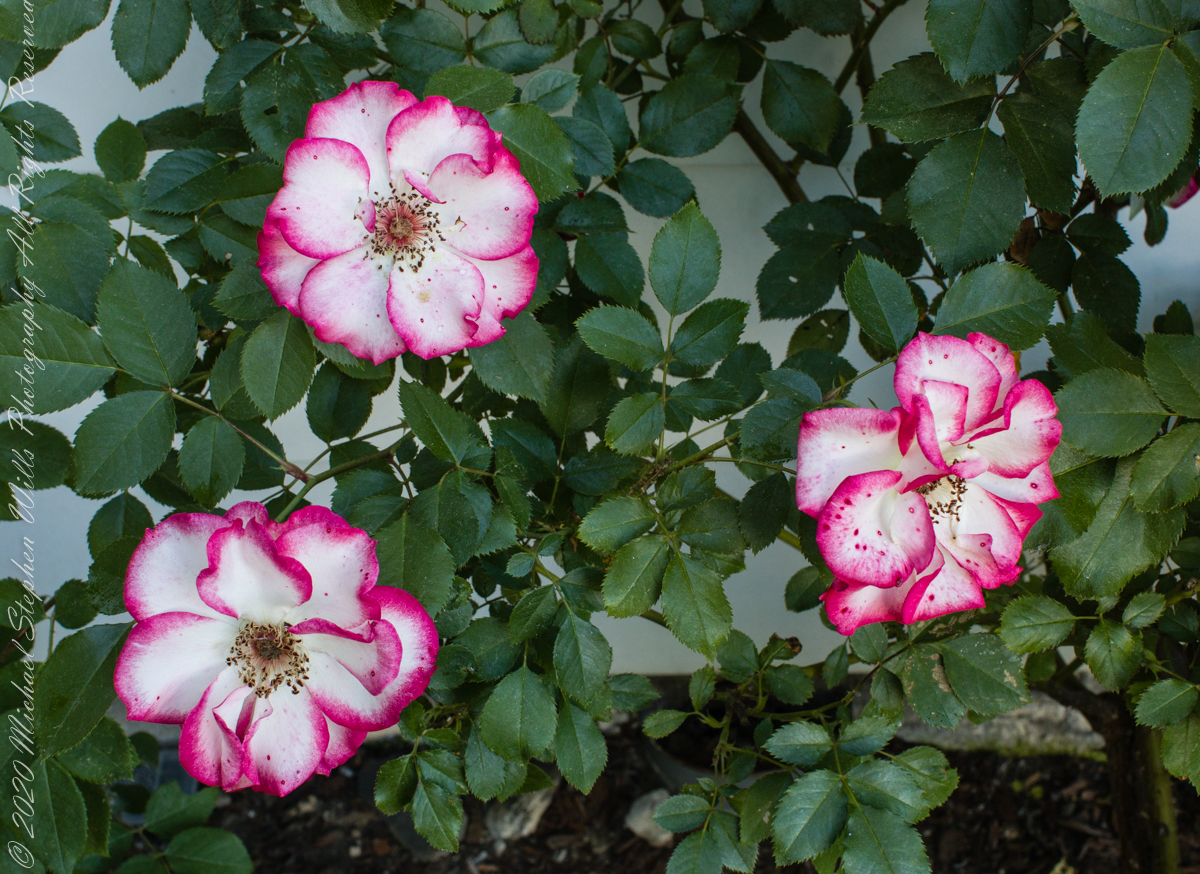
These Floribunda, semi-double petaled blooms were captured along with the yellow double cluster roses of the previous post, in the evening shade of a late spring day, June 23rd.
ISO 800, 1/13 sec at f/16
Above is a mix of just opened (the dark red, center bottom), fully opened new (just to right of center) and aging (all the rest).
ISO 800, 1/30 sec at f/16
Throughout this set I used the Canon EOS 5D Mark IV dslr with the EF 50 mm f/1.2L USM stabilized with a Manfrotto 468MG tripod with Hydrostatic Ball Head.
Floribundas, sometimes called cluster flowered roses, originated with Poulsen’s nursery in Denmark from crossed with Hybrid Teas with Polyantha Roses, themselves crosses between dwarf Chinas and a dwarf, repeat-flowering form of R. multiflora. Texas-based rose hybridizer Tom Carruth released Betty Boop in 1999, naming it after a cartoon character from the 1930’s. Pam found this plant around 2008 offered by the K-mart store in Cortland. She is amazed by the beauty of the Betty Boops.
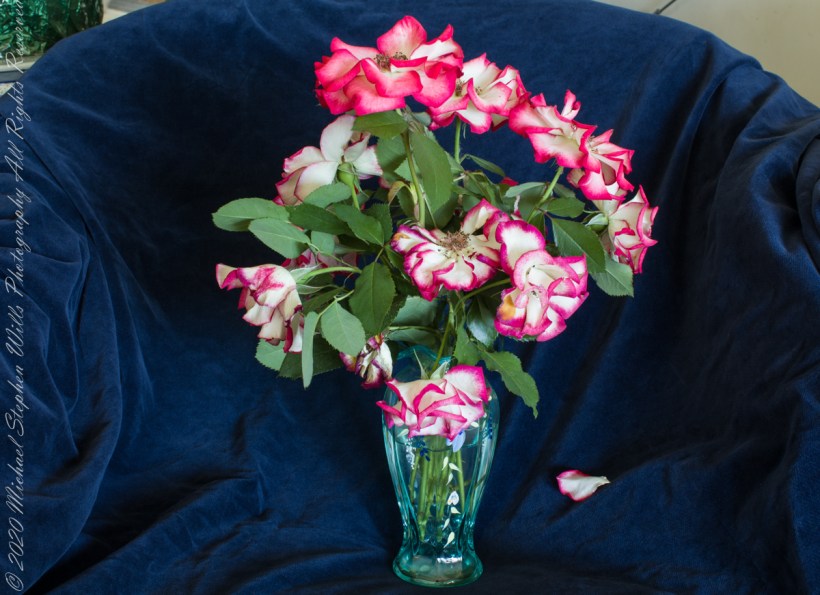
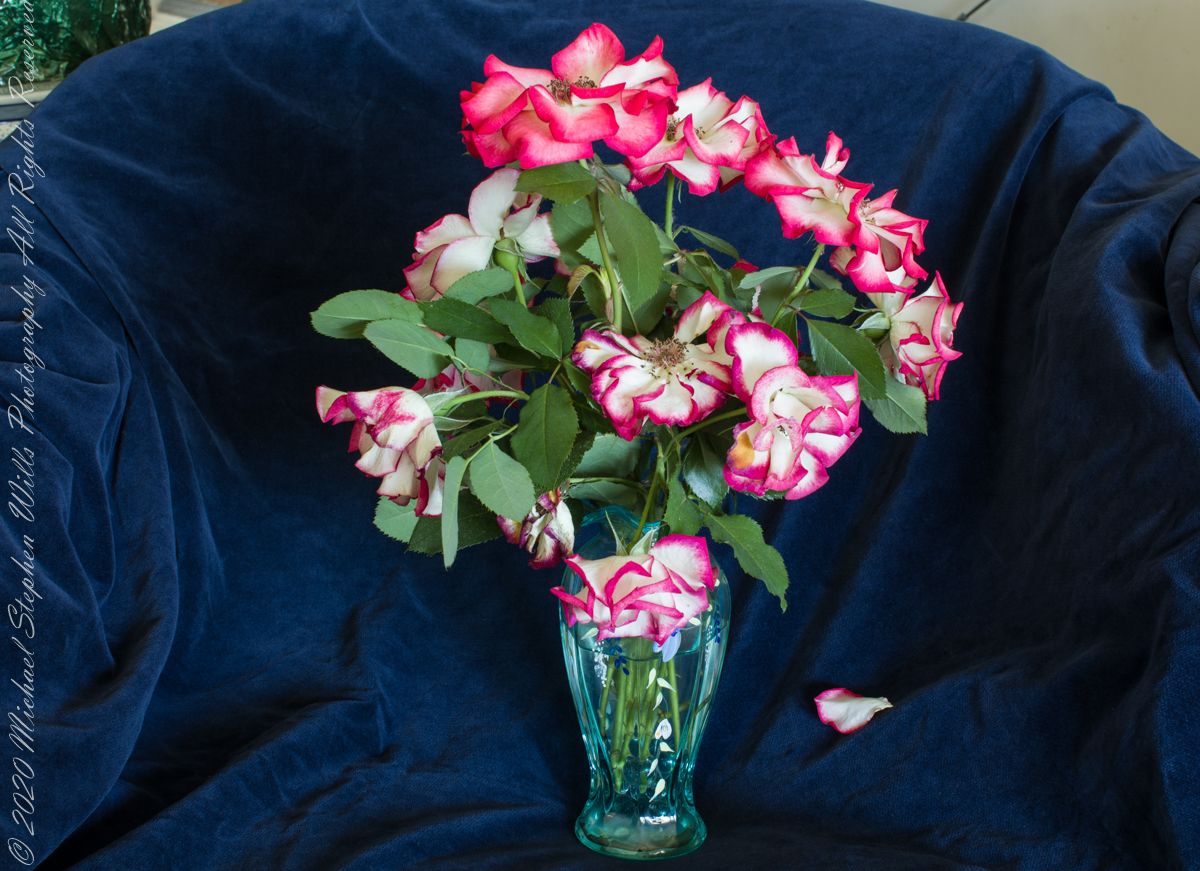
Another beloved characteristic is the longevity of the blooms. Pam collected and arranged this vase last week, for Father’s Day. I provided the setting. In this controlled environment the low ISO provides better colors and contrast with minimal digital noise.
ISO 100, 2.5 sec at f/16.
References
“The Botanical Garden” Vol 1, Roger Phillips and Martyn Rix, Firefly Books, Buffalo, N.Y. 2002 pp 228 – 233.
Wikipedia search for “Betty Boop rose” and ” Tom Carruth rose.”
Copyright 2022 Michael Stephen Wills All Rights Reserved
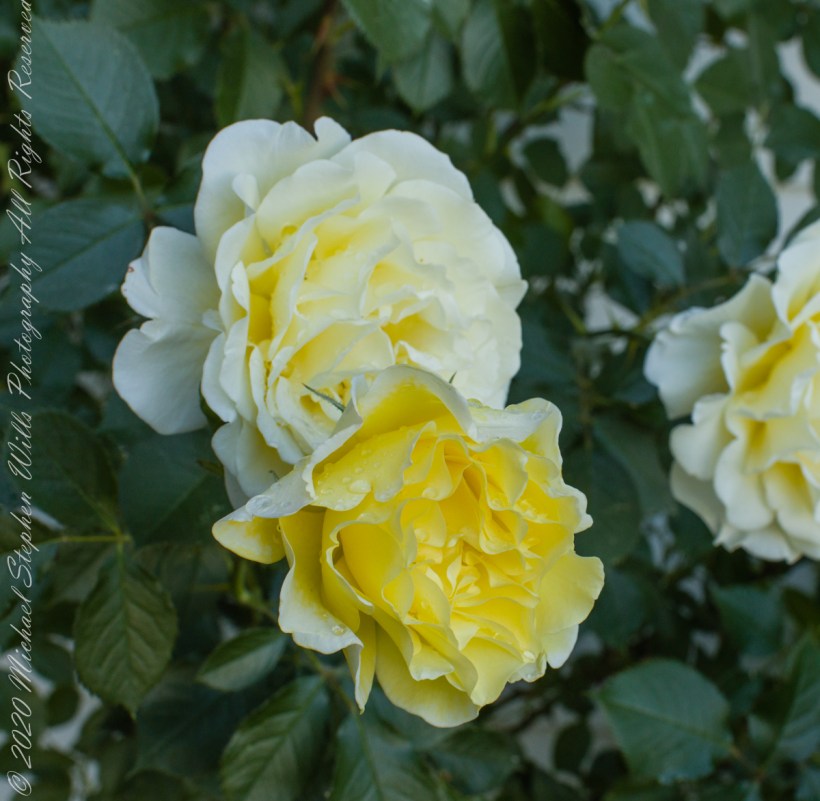
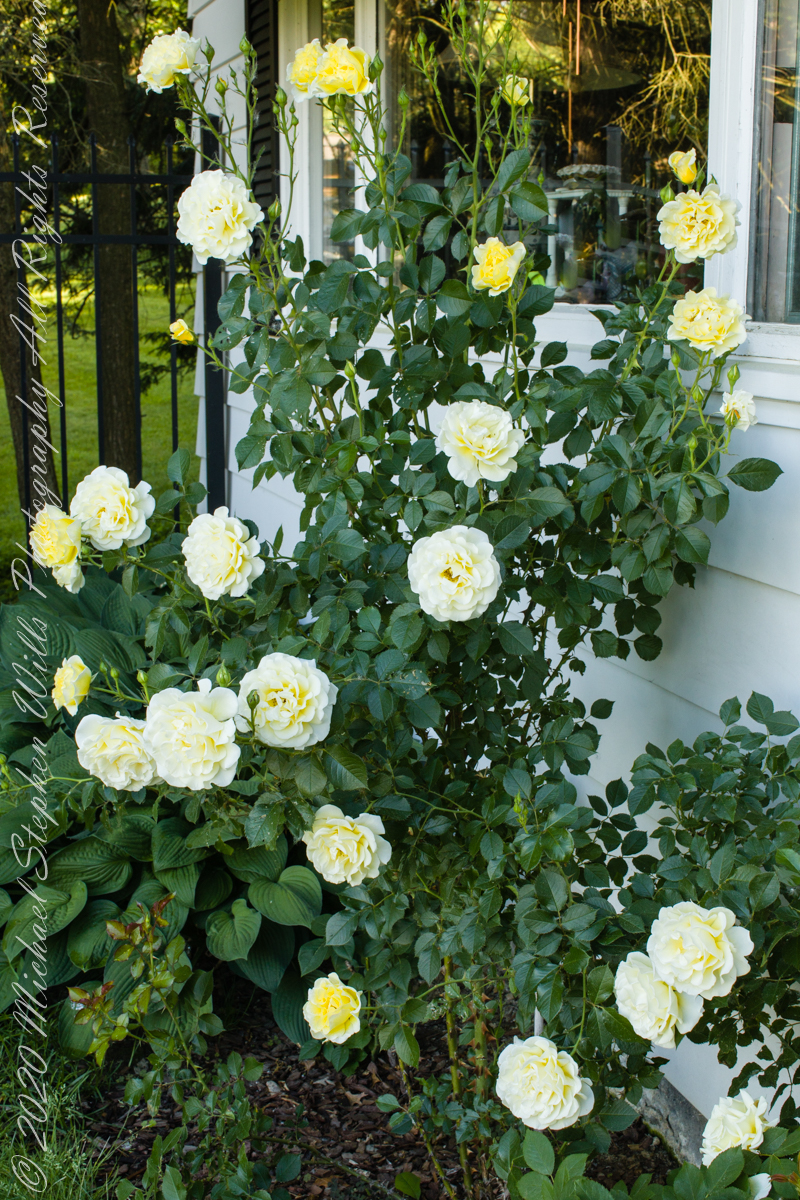
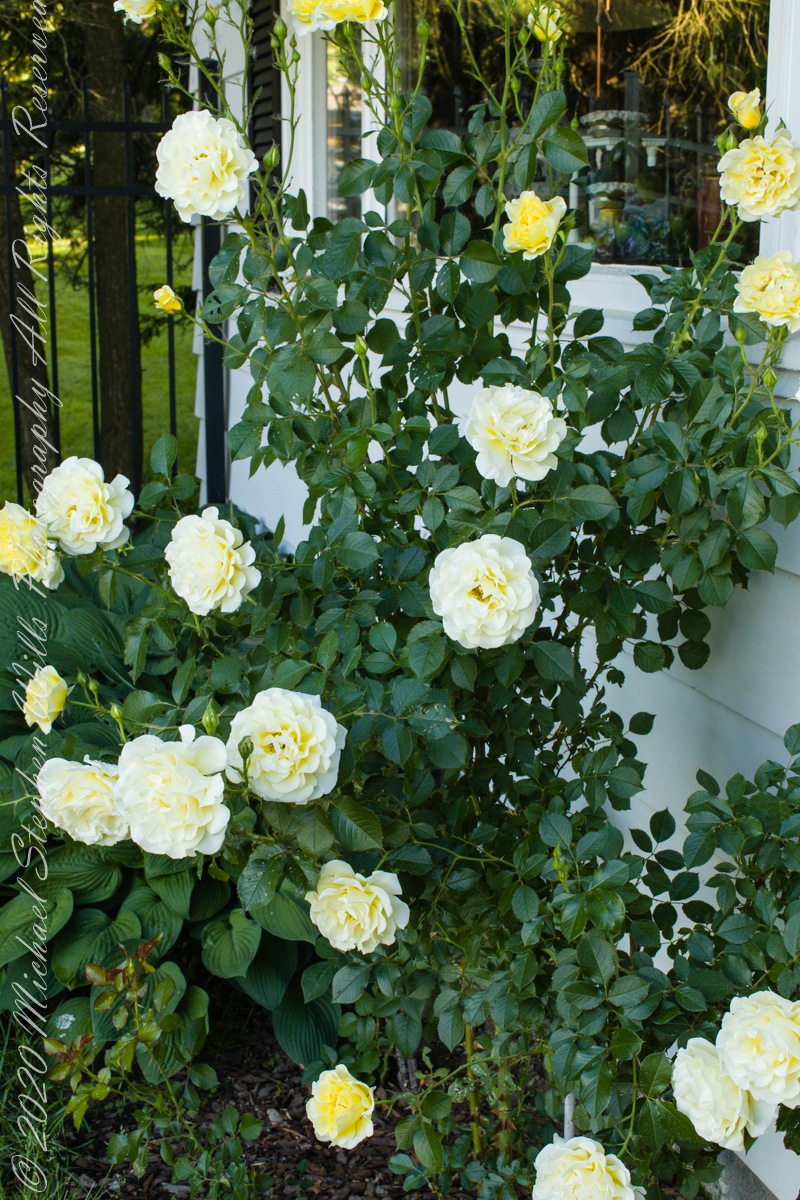
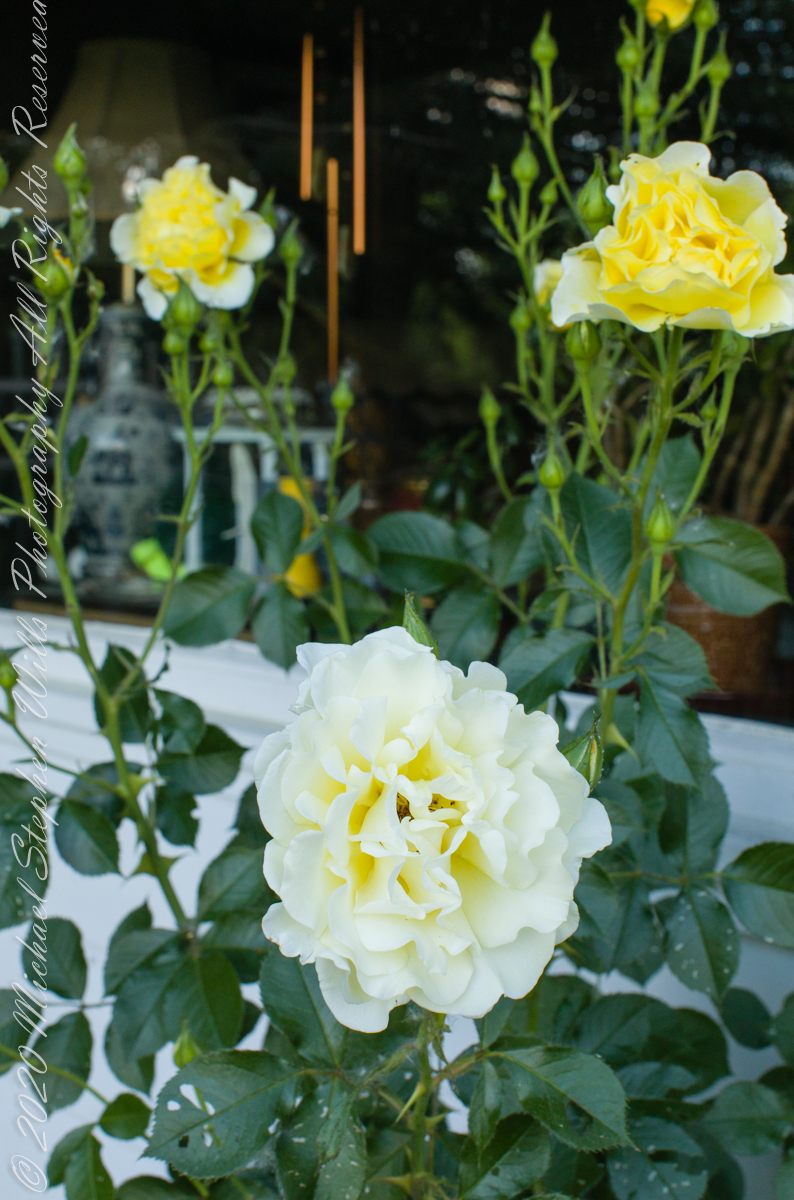
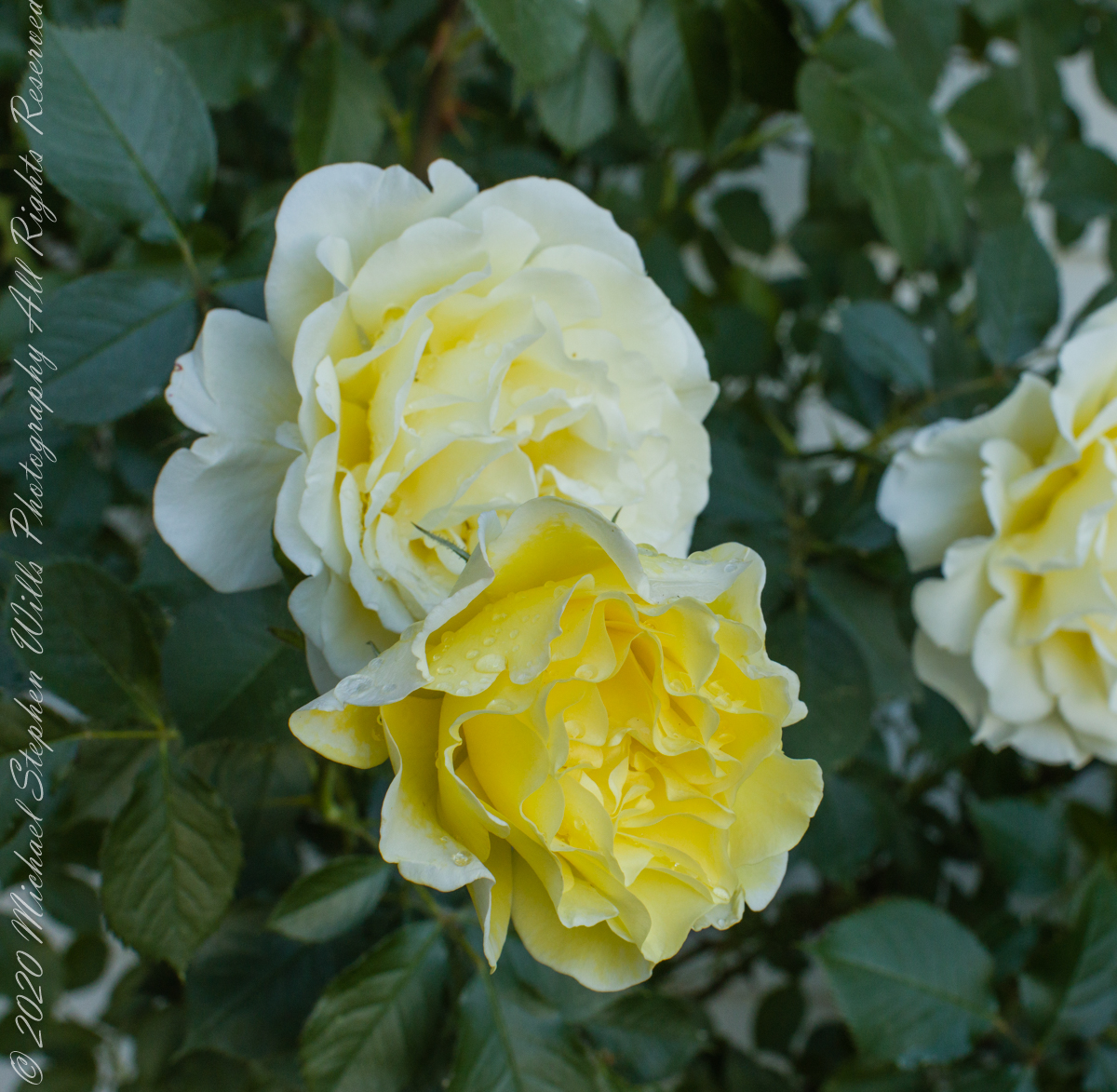
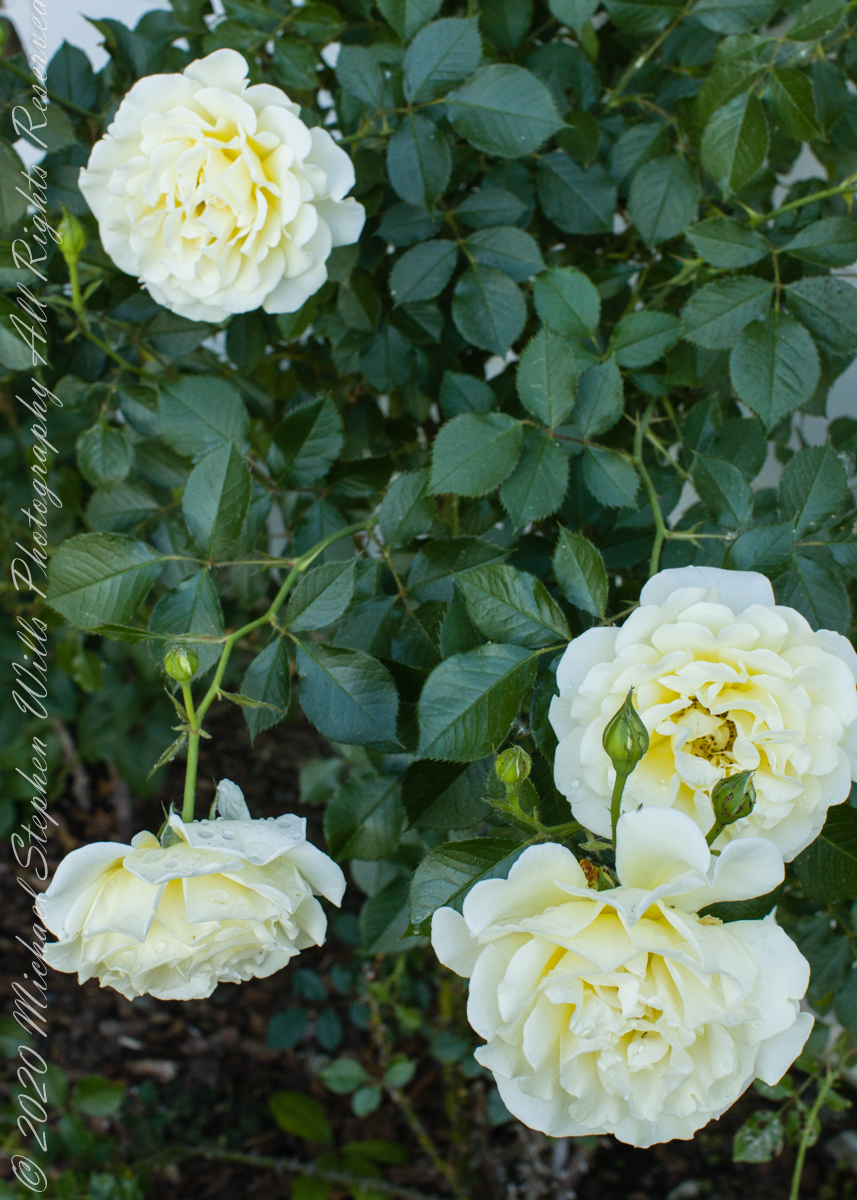
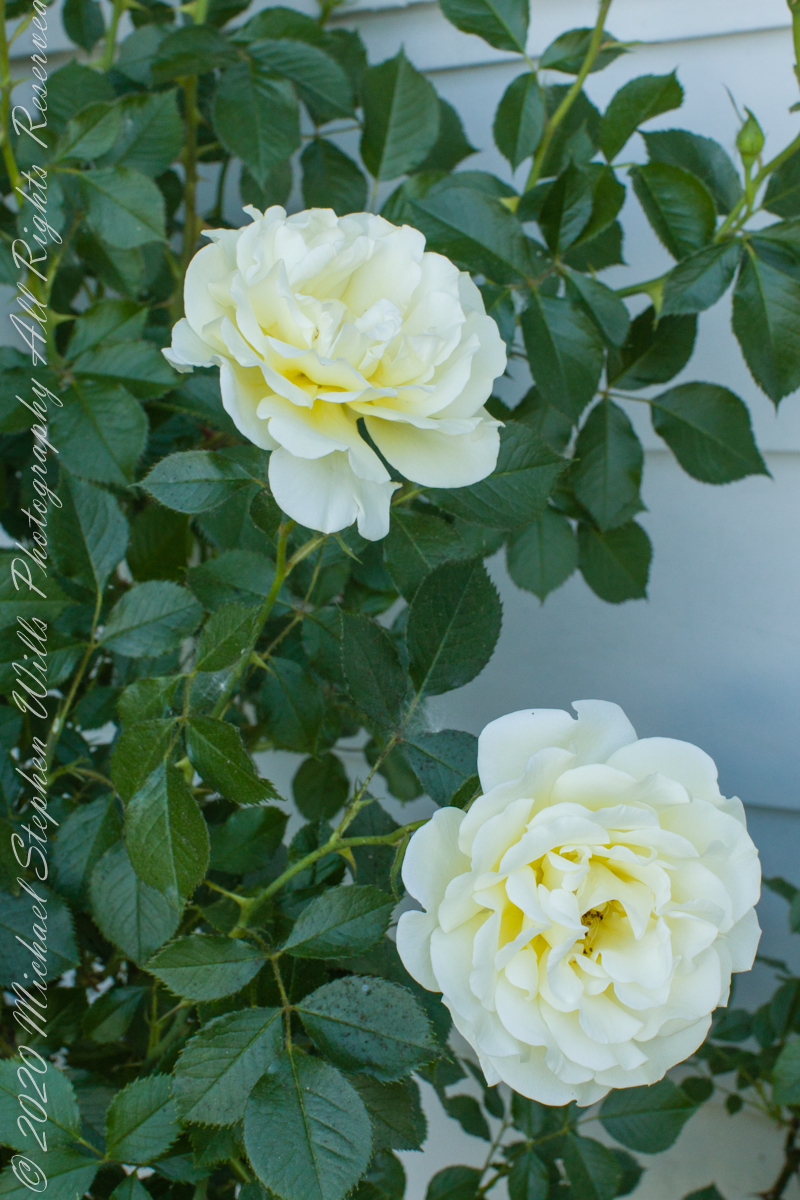
Enjoyed since ancient times throughout the Middle East and China, our European roses were cultivated from Chinese introduced in the late 18th Century. One evening this June, unusually quiet with no breeze, Pam asked me to photograph this tall shrub in full bloom. These are protected from grazing deer by a stout fence, six feet tall.
ISO 800, 1/40 sec at f/16
At first it appears the blooms are a mix of colors from lemon yellow to cream.
ISO 800, 1/40 sec at f / 16
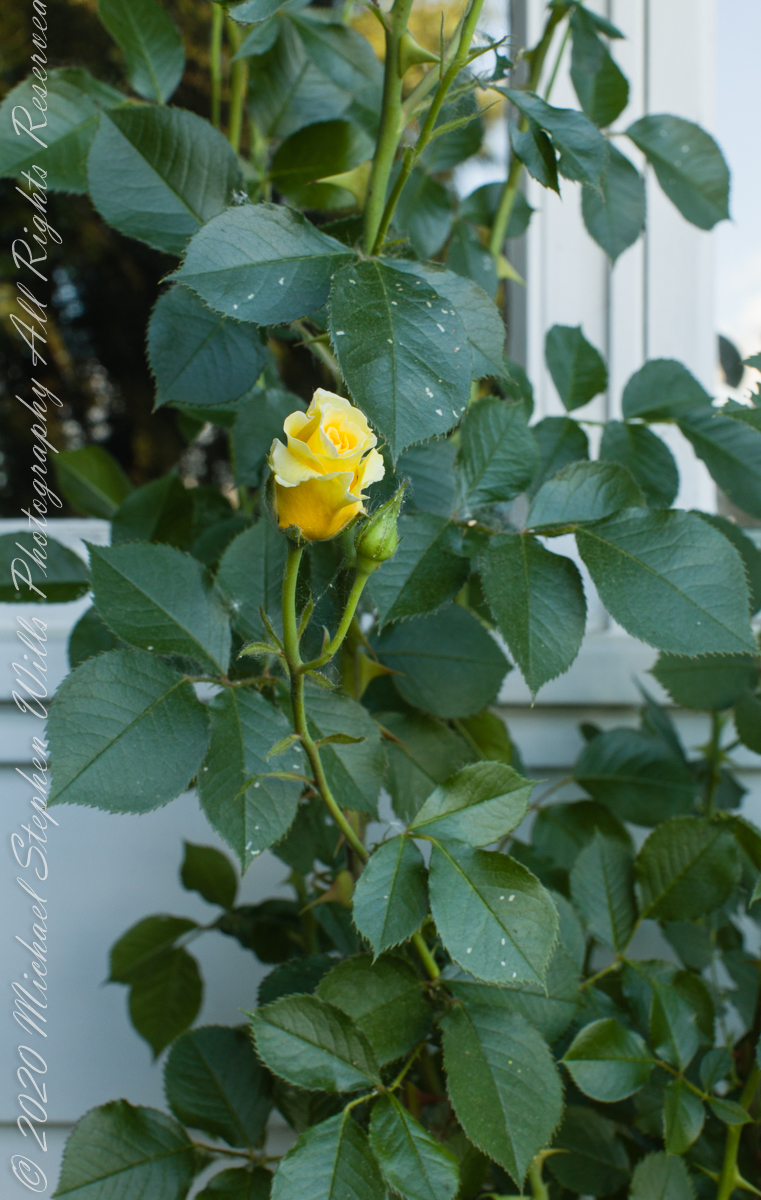
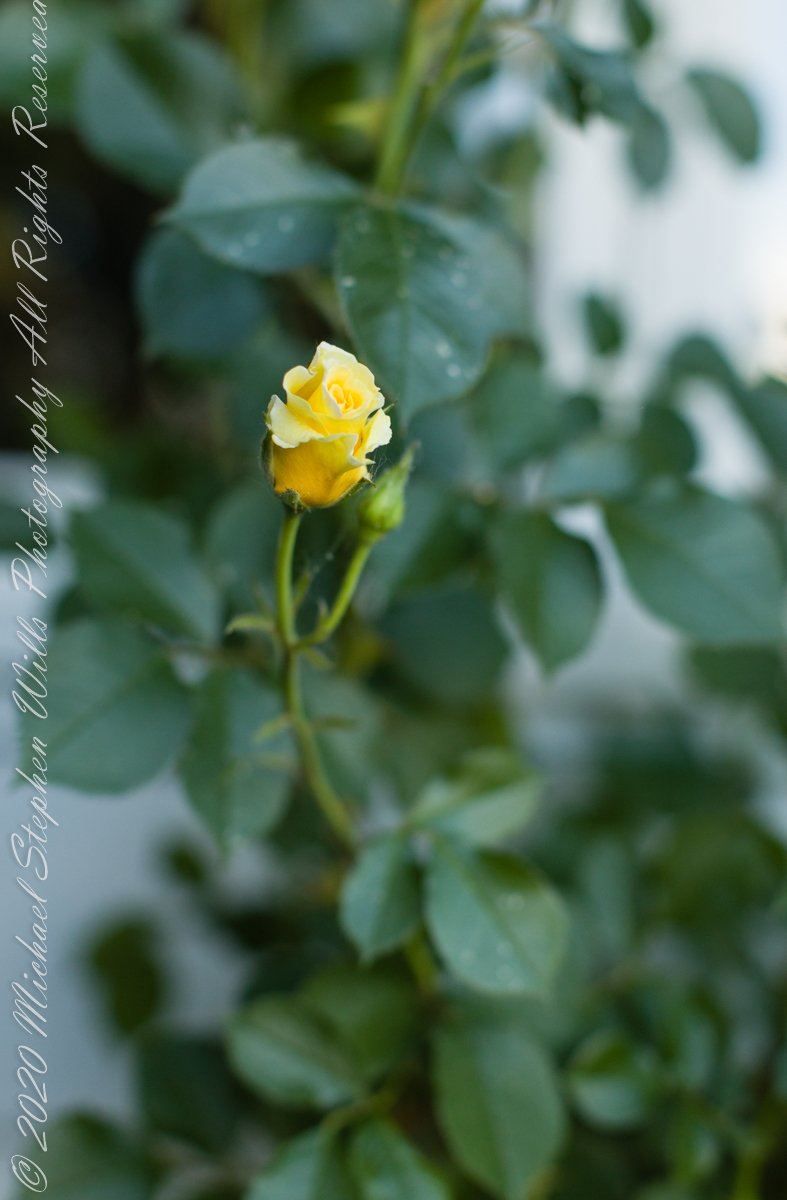
The variation is an indication of each bloom’s age since opening. At first each opens to a lemon yellow. Here is a combination of opening and tightly closed bud. Throughout this set I used the Canon EOS 5D Mark IV dslr with the EF 50 mm f/1.2L USM stabilized with a Manfrotto 468MG tripod with Hydrostatic Ball Head. The stabilization allowed me to present the following comparison, at right the very fast 50 mm lens allows the opening bud to be highlighted. Left side, the lens diaphragm is somewhat closed and the opening bud, tightly closed and leaves are all seen. The pinnate, serrated leaves have one terminal lobe and two lateral for a set of three. There are fewer thorns than some, but sharp enough to be careful.
ISO 800, 1/30 sec at f / 16ISO 800, 1/1000 sec at f / 2.8 diaphragm “wide open”
Flowers bloom throughout the late spring, summer and fall. Pam stops fertilizing in late summer to allow the plant to harden for our Zone 4b winters. Here you can see the plentiful flower buds, compare the opening to mature flower colors.
ISO 800, 1/60 sec at f / 16ISO 800, 1/100 sec at f / 13ISO 800, 1/80 sec at f / 13ISO 800, 1/60 sec at f / 16
References
“The Botanical Garden” Vol 1, Roger Phillips and Martyn Rix, Firefly Books, Buffalo, N.Y. 2002 pp 228 – 233
Copyright 2022 Michael Stephen Wills All Rights Reserved
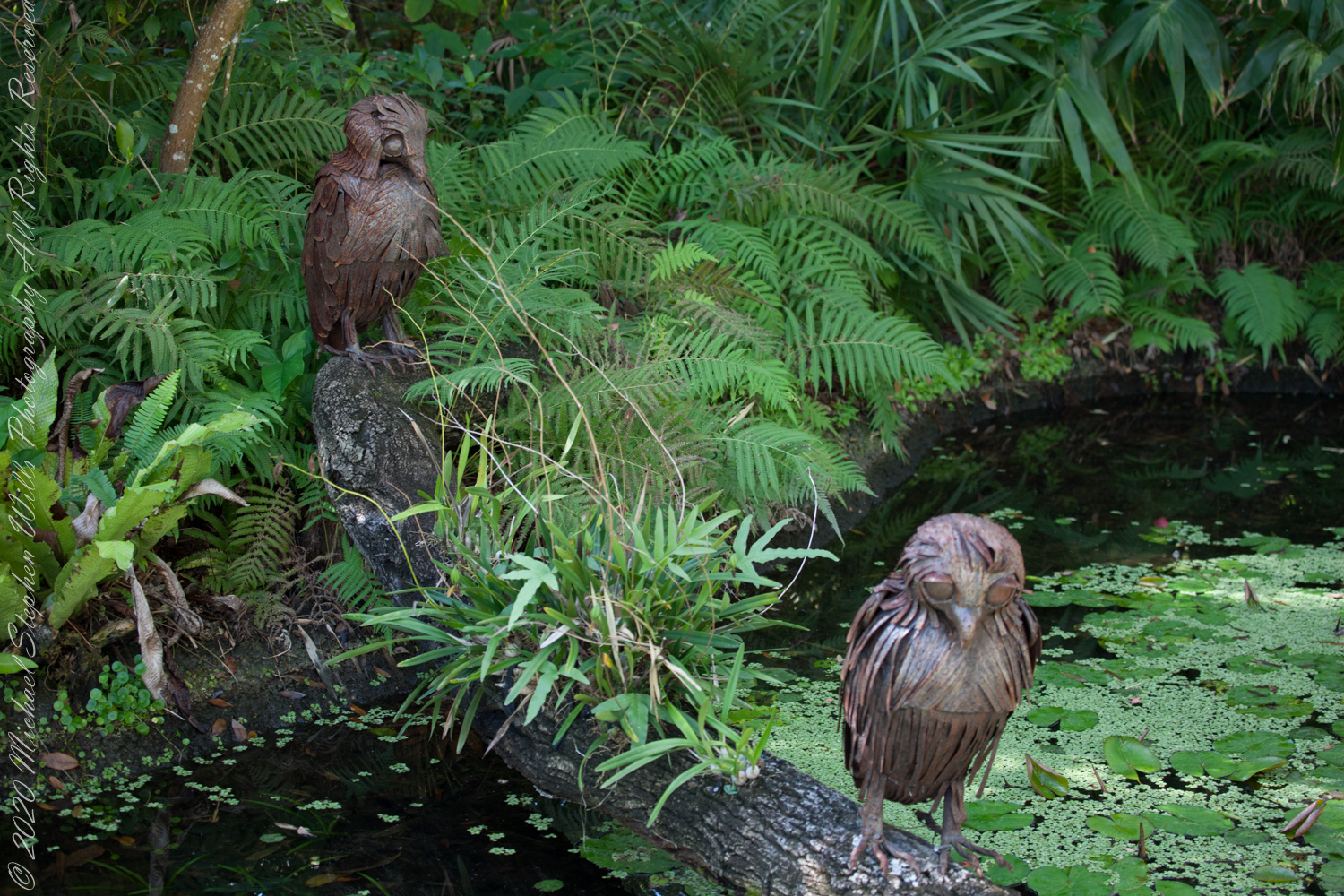
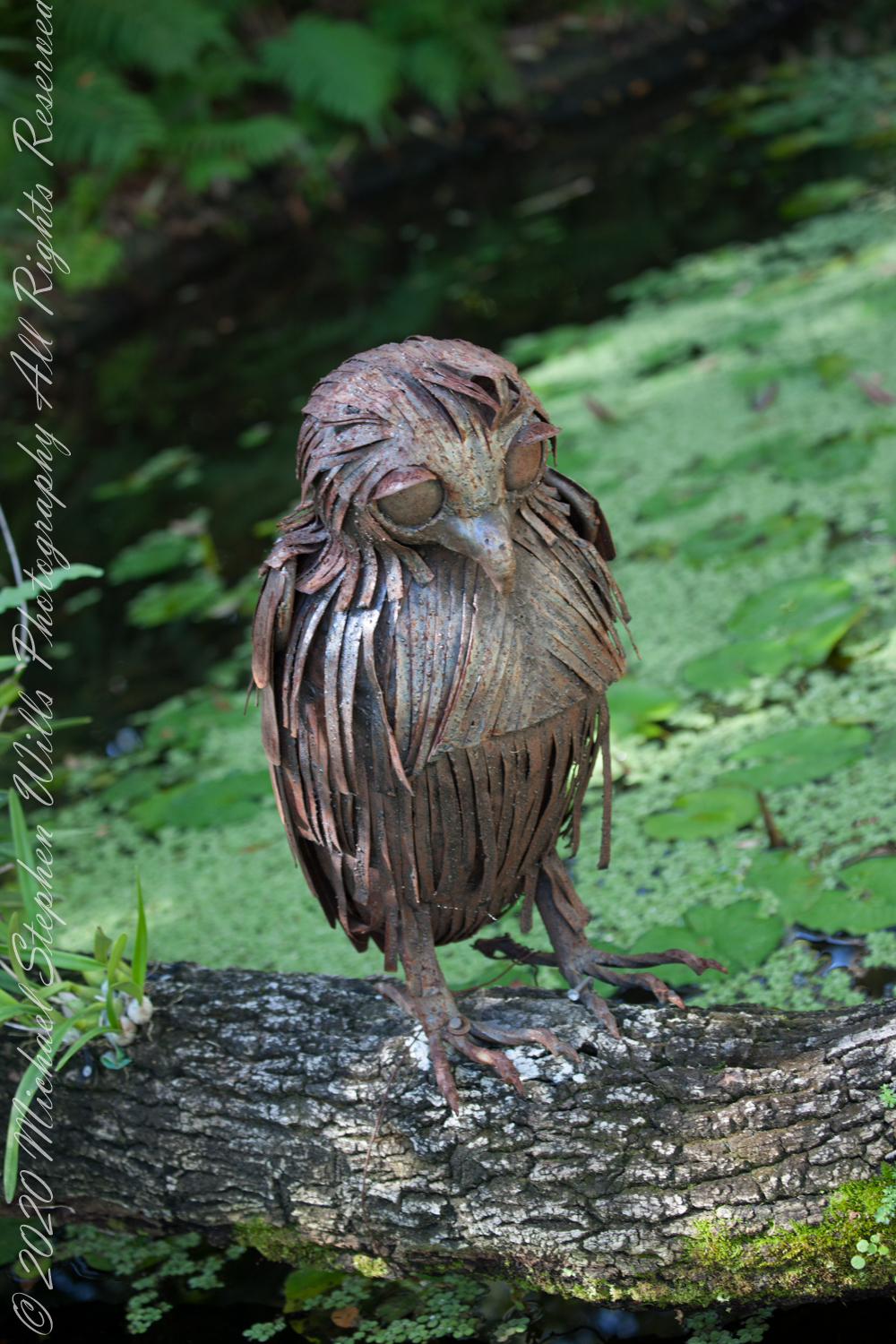
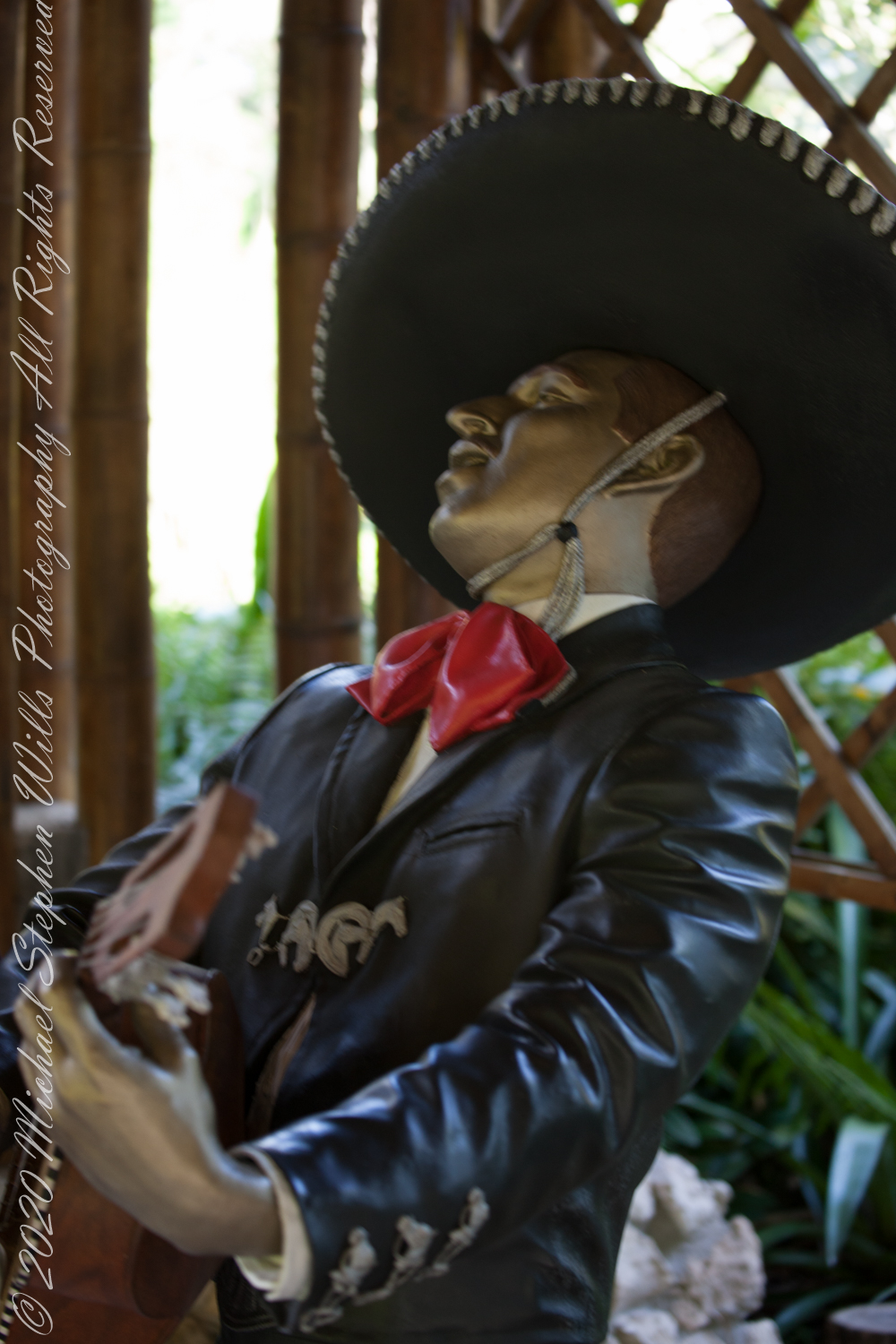
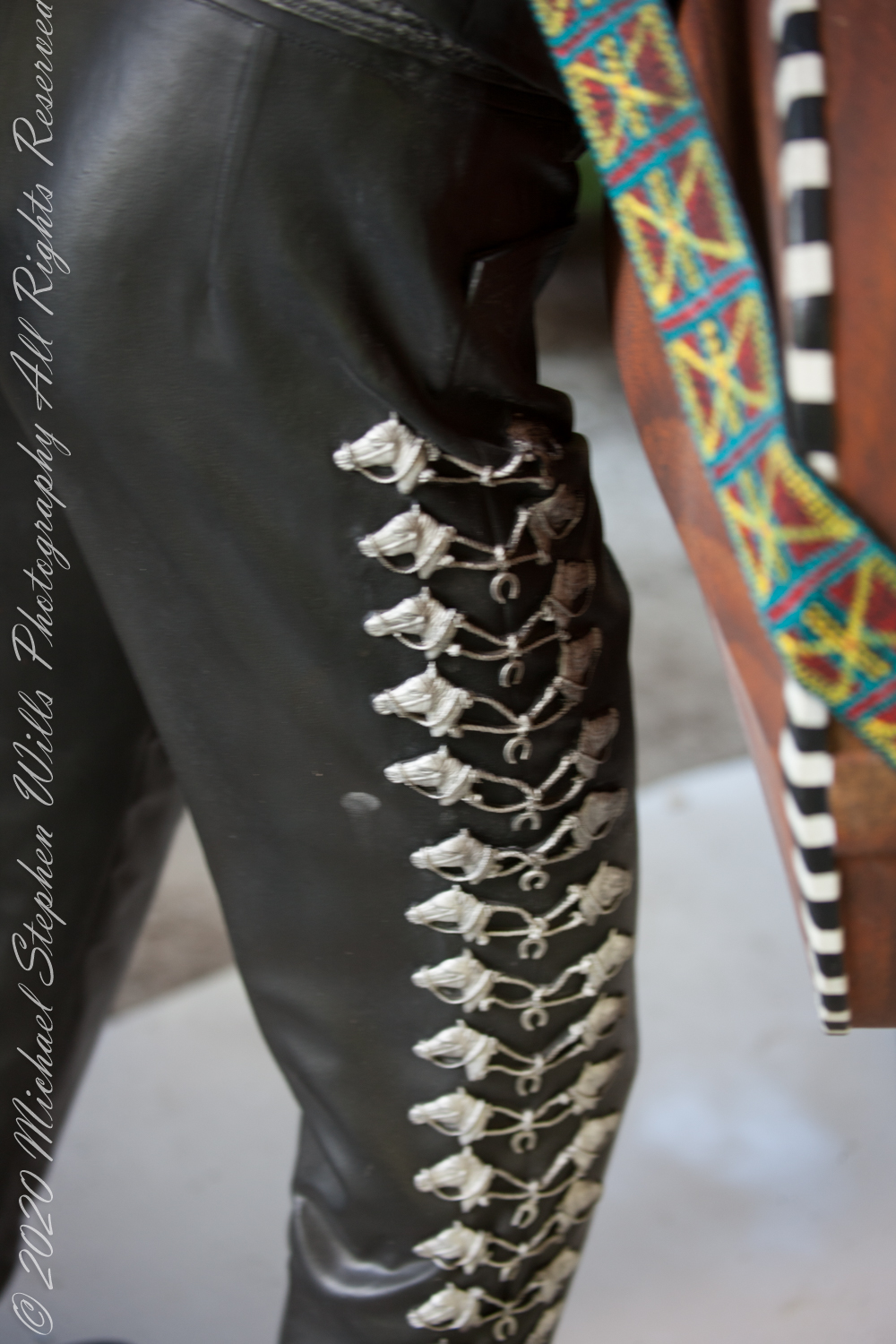
My final Seward Johnson sculpture posting opens with a piece of uncertain authorship, I just know it was not installed for our second 2020 visit just before COVID-19 hit.
“untitled”
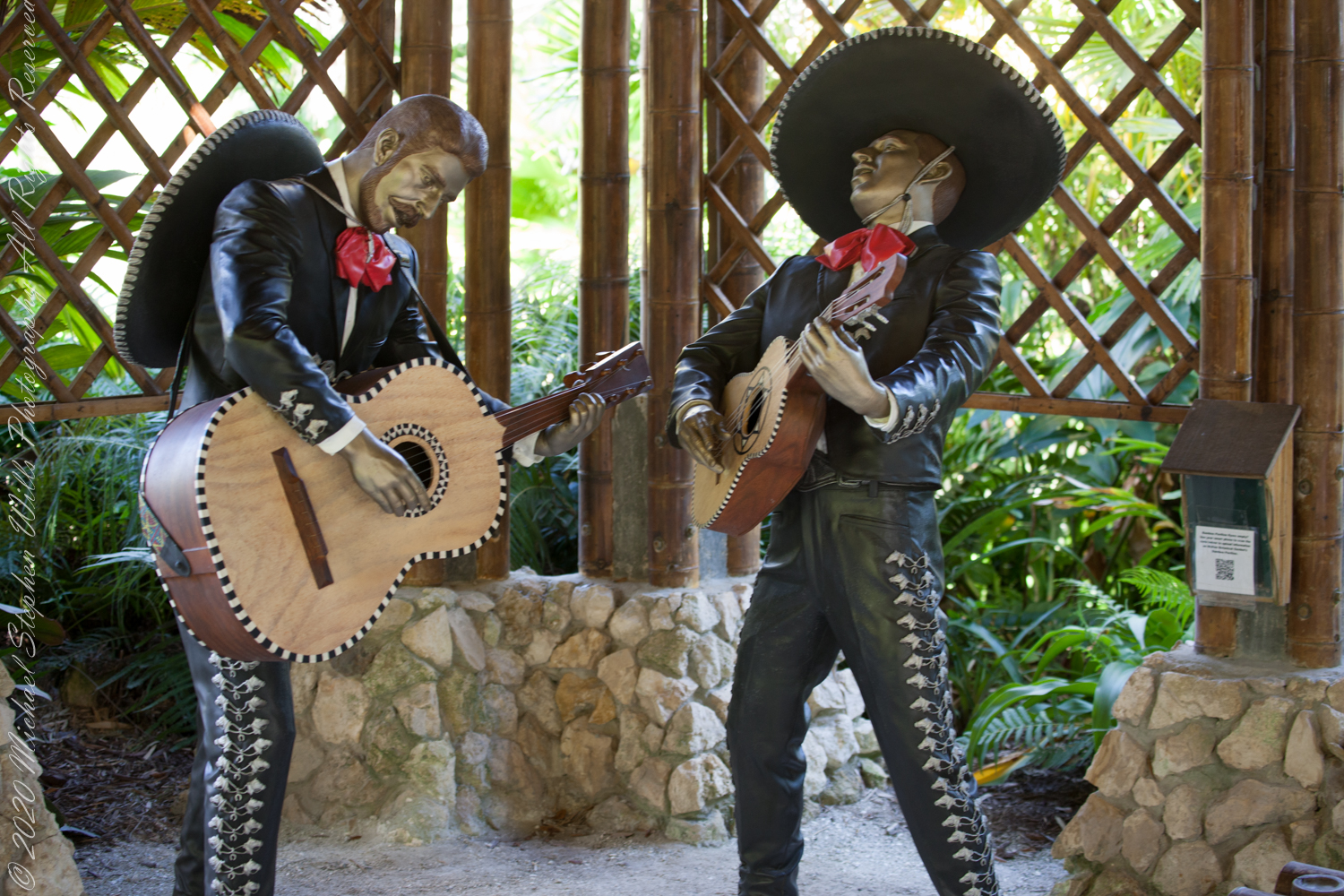
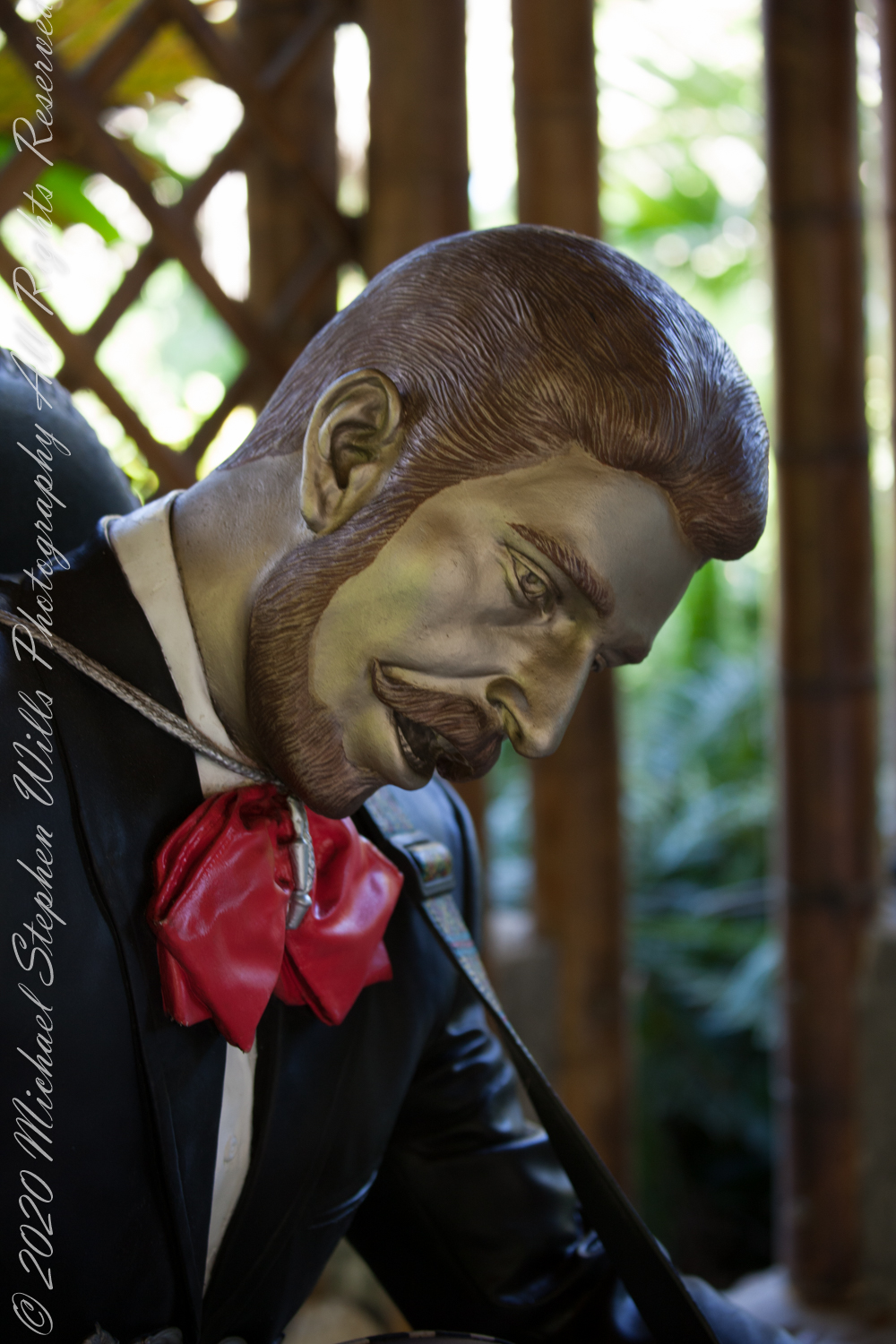
“Los Mariachis”
Here we have a dynamic group, I can almost hear the music.













 Michael Stephen Wills Photography