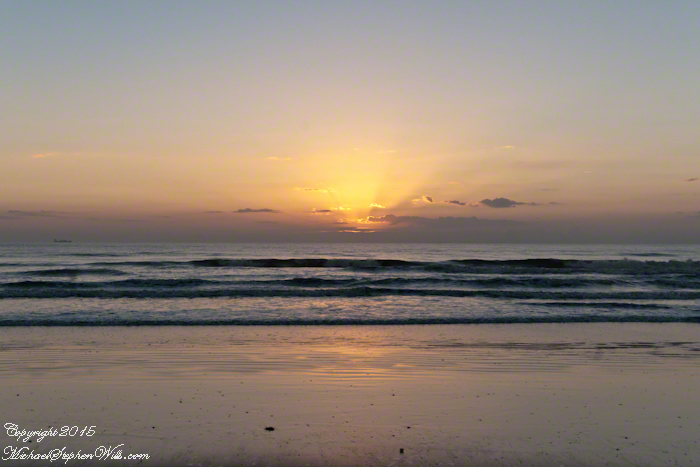
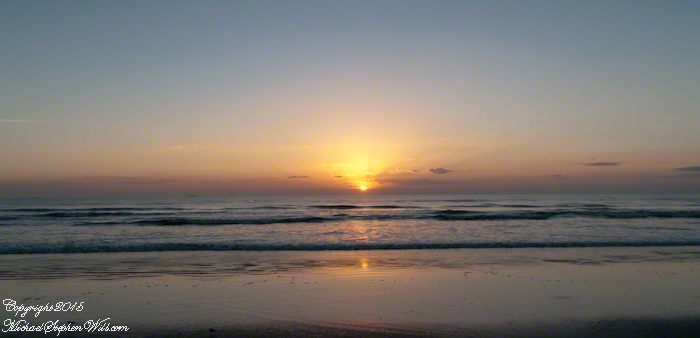
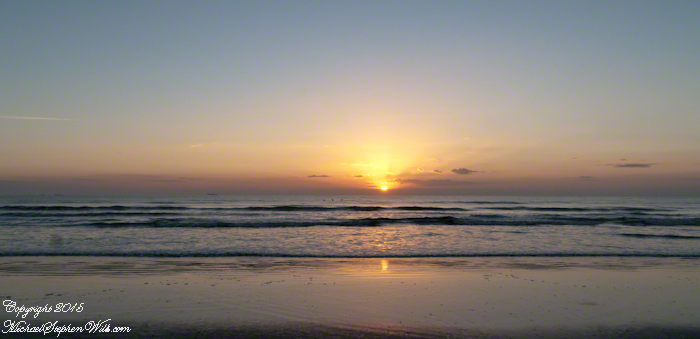
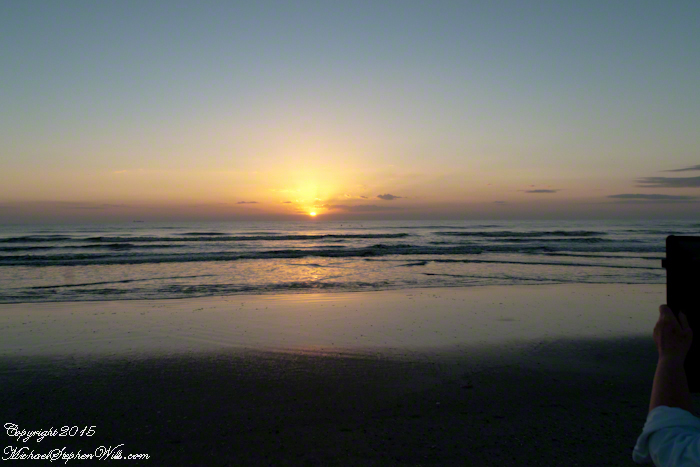
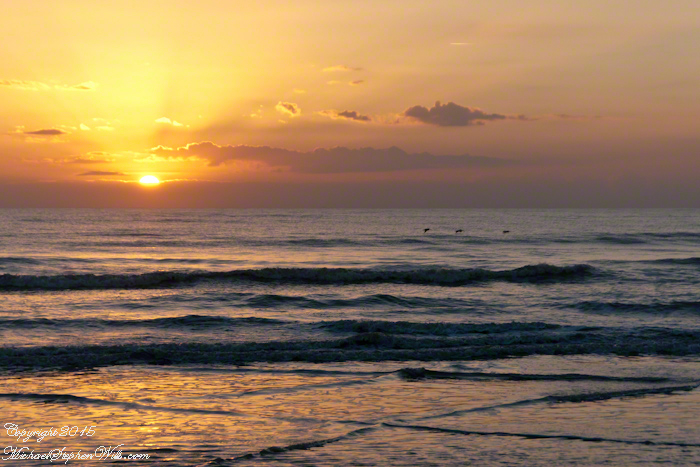
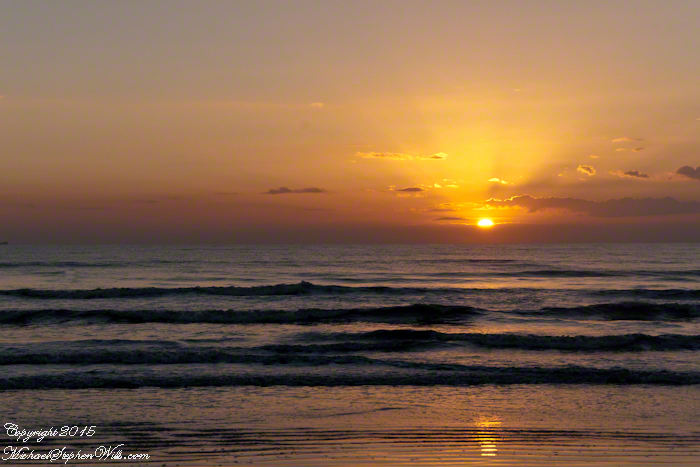
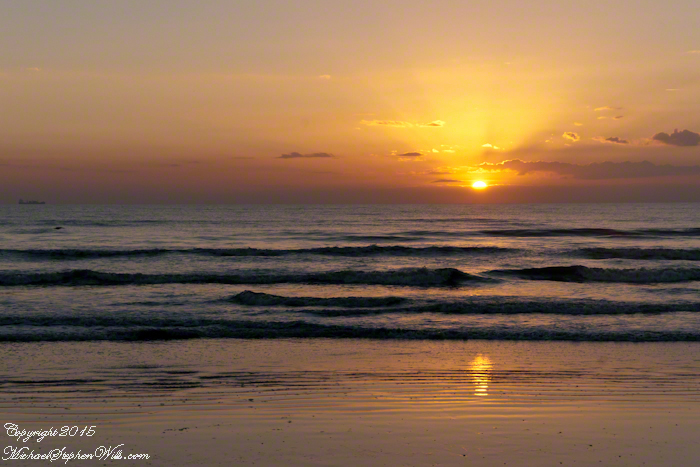
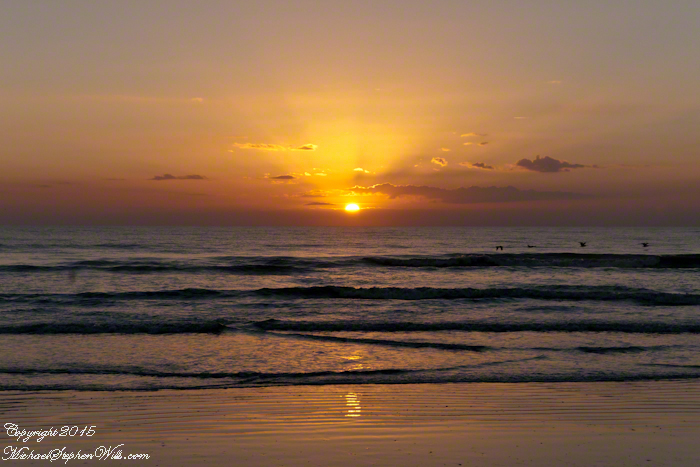
Sunrise at Cocoa Beach: A Symphony of Colors on the Space Coast

Experience the breathtaking sunrise at Cocoa Beach, where the sky and sea blend in a symphony of colors. Discover the tranquility and beauty that awaits as the day dawns on Florida’s stunning Space Coast.

Click this link for my Online gallery

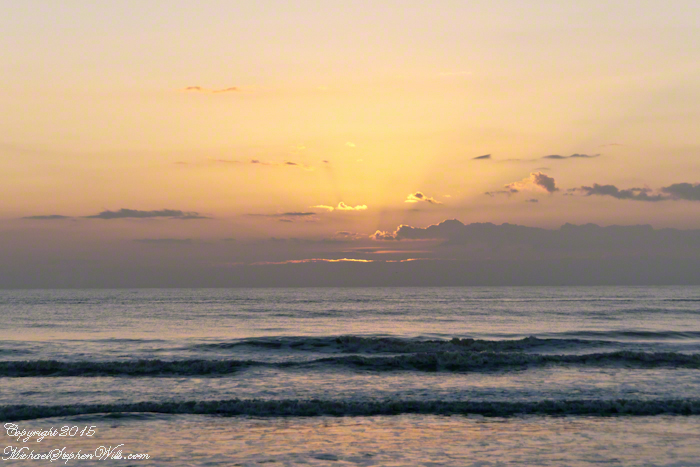
Cocoa Beach, nestled in Brevard County, Florida, is renowned for its pristine sandy shores and the rhythmic lullaby of the Atlantic Ocean. It’s a place where the day often begins with an awe-inspiring sunrise. On the Space Coast, the first light of day is a daily masterpiece, a silent symphony of colors that paints the sky and reflects off the water.

As dawn approaches, the eastern horizon begins to glow with a soft, pre-dawn light. This quiet time, when the world is still asleep, offers a unique tranquility. The beach, usually bustling with surfers, sunbathers, and families, is calm and serene. The sand, cool underfoot, stretches out like a vast canvas, waiting for the sun to begin its artwork.

The first hues of sunrise start as a gentle blush, a hint of pink that softly caresses the sky. As the moments pass, this blush deepens into shades of orange and red, reminiscent of a painter’s palette. The ocean mirrors these colors, creating a breathtaking scene where sky and sea blend into one continuous expanse. It’s a moment that feels almost sacred, as if nature itself is preparing for a grand reveal.

The sun finally peeks above the horizon, a fiery orb that illuminates the world in golden light. This is the crescendo of the sunrise, a moment that seems to hold the breath of the world. The rays of light stretch out across the water, casting a shimmering path that invites the eyes to follow. It’s a path that feels both real and ethereal, leading not just across the sea, but into a day full of possibilities.

As the sun rises higher, the colors in the sky shift and change. The deep reds and oranges give way to softer yellows and then to the clear, bright light of morning. The ocean, too, transforms, taking on a deeper blue as the sunlight penetrates its depths. The waves, which had been gentle ripples in the pre-dawn light, now dance and sparkle, as if celebrating the arrival of the new day.

For those fortunate enough to witness it, a sunrise at Cocoa Beach engages all the senses. The cool breeze carries the fresh scent of saltwater, a reminder of the ocean’s vastness and power. The sound of the waves, steady and rhythmic, provides a soothing background score, while the occasional cry of a seabird adds a touch of the wild to the scene.

Click on a photo for a closer look.
There is a sense of community among the early risers who gather to watch the sunrise. Strangers often share nods and smiles, united by the shared experience of witnessing something so beautiful and ephemeral. It’s a reminder that, no matter our differences, moments of natural beauty can bring people together, fostering a sense of connection and shared humanity.

Cocoa Beach, known for its proximity to the Kennedy Space Center and its surf culture, offers much more than meets the eye. The sunrise is a daily reminder of the simple yet profound beauty of nature, a beauty that exists beyond the man-made attractions and the hustle and bustle of everyday life. It’s a call to pause, reflect, and appreciate the world around us.

In a place where rockets soar into the sky, touching the very edge of space, the sunrise at Cocoa Beach brings us back to Earth, grounding us in the timeless rhythm of the natural world. It’s a moment of peace and renewal, a gift from the universe to start the day with a heart full of wonder and gratitude.

So, whether you’re a local or a visitor, taking the time to watch the sunrise at Cocoa Beach is an experience not to be missed. It’s a chance to witness the world waking up, to feel a part of something larger than oneself, and to start the day with a renewed sense of awe and possibility.
Copyright 2024 Michael Stephen Wills All Rights Reserved

Close Encounters at Cocoa Beach

A shark’s fin slicing through the waves at Cocoa Beach reminds me of a life-changing encounter I had with the ocean’s wild inhabitants, transforming my relationship with the sea and its hidden mysteries.

During winter vacations to Cocoa Beach, Florida, I spent tiome relishing in the salty embrace of the Atlantic, and my love for the water extended beyond the ocean to poolside swims year-round. However, a few years ago, my carefree splashing in the waves took a drastic turn after an unexpected encounter with a creature lurking beneath the surface.

It was a warm, sunlit day, and the ocean seemed welcoming. I had just waded into waist-deep water when I felt it—a strong, unexpected bump against my side. I turned quickly, expecting to see a fellow swimmer, but there was no one nearby. My heart pounded as the realization dawned that I had been bumped by a large sea animal, most likely a shark. Although I didn’t see the creature clearly, the experience left an indelible mark on me.
From that day on, the ocean was no longer a place of carefree enjoyment. The once thrilling waves now seemed menacing. I found solace in swimming in pools, where the water was clear, and the risks were few. The ocean, with its unseen mysteries, became a distant memory.

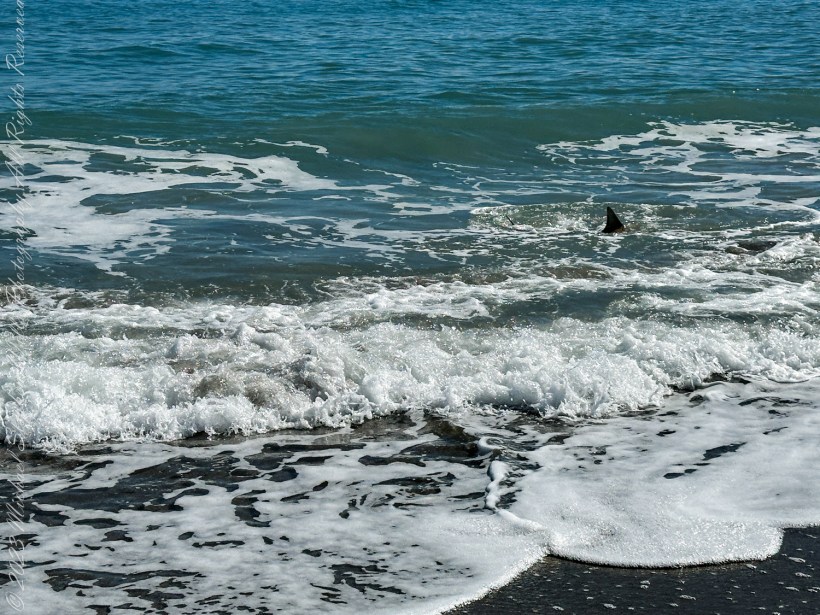
On January 30, 2024, I was back at Cocoa Beach, but this time I stood firmly on the shore. It was noon, and the sun shone brightly over the shimmering waters. As I scanned the horizon, my eyes fell on a telltale fin slicing through shoreside foam of breaking wavews. A shark was feeding just three feet from the shore. I watched in a mix of awe and trepidation as the creature moved with effortless grace through the surf.

Shark feeding a few feet from shore, Cocoa Beach, January 30, 2024 around noon.

As I stood there, capturing the moment, a woman approached me. She had observed my intent gaze and sensed my apprehension. She introduced herself and then began to share an unsettling story about her daughter. She told me that her daughter had been bitten by a shark on her foot the previous year while swimming off the same beach. The young girl was still recovering from the ordeal, both physically and emotionally.

Her story, coupled with my own experience, solidified my decision to stay out of the ocean. I understood that the beach was the shark’s domain, a place where humans are merely visitors. The encounter reminded me that even in our pursuit of leisure, we must respect the natural world and its unpredictable inhabitants.

These days, I content myself with the safety of pools, where I can swim without fear of what lies beneath. But I still cherish the ocean from a distance. I understand its beauty and power, and I respect the creatures that call it home. I may not wade into the waves anymore, but I will always hold a deep appreciation for the vast, enigmatic sea.

Copyright 2024 Michael Stephen Wills All Rights Reserved

Cocoa Beach Kite Skating

Kiteskaters and Cruise Ships

In the early morning hours of Sunday, September 10, 2017 as Hurricane Irma approached the Florida Keys, I cannot sleep, worried about family members north of Miami and in Daytona Beach. To pass the time, I returned to the golden hours of March 4, 2017 evening.  On vacation, Pam and I walked Cocoa Beach starting from Lori Wilson Park, headed north.

The light was perfect when I decided to switch to Raw-Jpeg mode, feeling the extra space was worth it.  I don’t know why I don’t shoot Raw 100% of the time, as always, in retrospect, I regret using jpeg only. The camera was the Sony Alpha 700 dslr with a DT 18-200mm f3.5-6.3 lens purchased 2008 after an expedition to the Superstition Wilderness.

After capturing a wedding photo shoot and surfers there was this set of two Kite Skaters going at least 20 miles an hour. The Sony Alpha was quick enough to capture some of the action in raw mode, I am not satisfied with the sharpness of the images as the lens was not fast enough.

Click this link or a photo for my Online gallery
My Online Gallery– CLICK ME!!!!
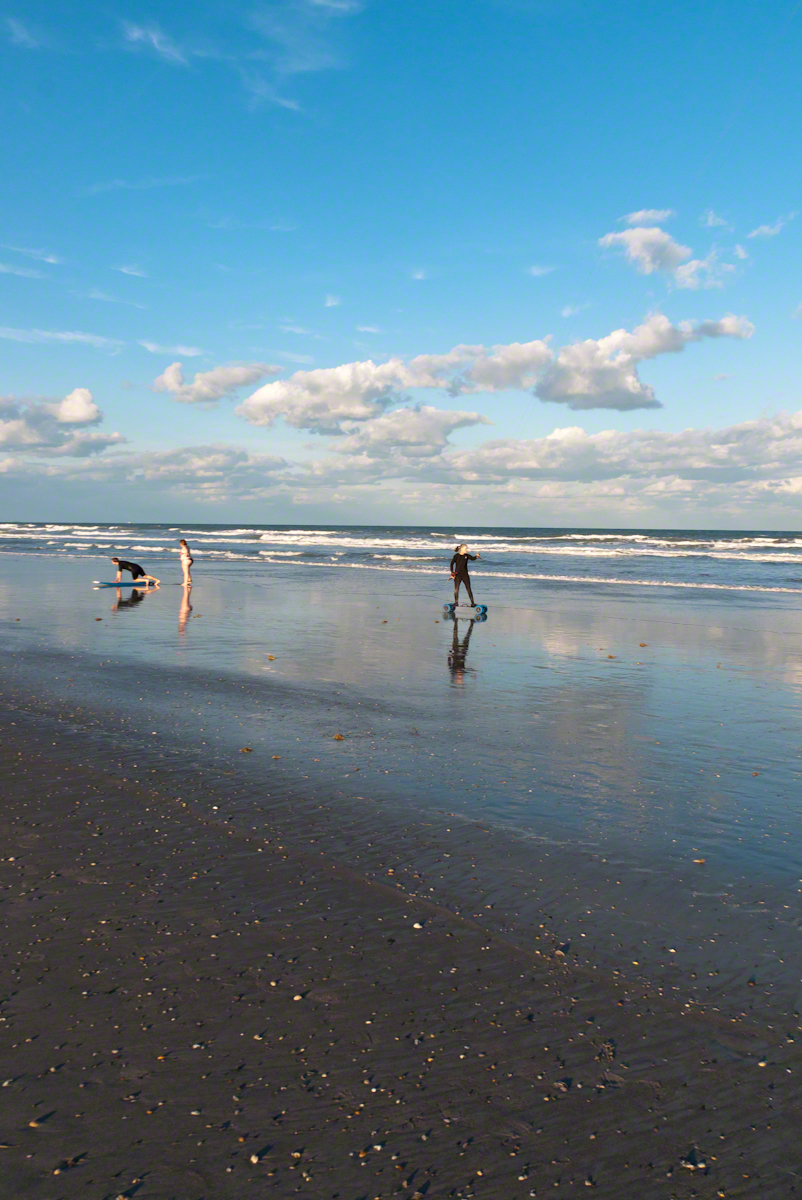
Overview, Approaching Kite skater

We had never watched kite skaters before and were prepared to understand the vision from watching distant kite surfers out beyond the breakers. North winds are the best for any type of kiting on Cocoa Beach and, that day, the wind was northeast. These riders zipped by in less than a minute. The sport is low key, it does not exist on Wikipedia. Image that. These two are having a fantastic time and stayed upright, going on and on and on down the miles long beach.

My Online Gallery– CLICK ME!!!!
Sailskater Dreamview with Cruise Ship

1990 KiteSkate pioneers on the USA east coast experimented with four-line controllable parafoil kites powering in-line skates for exciting rides on asphalt surfaces.

My Online Gallery– CLICK ME!!!!
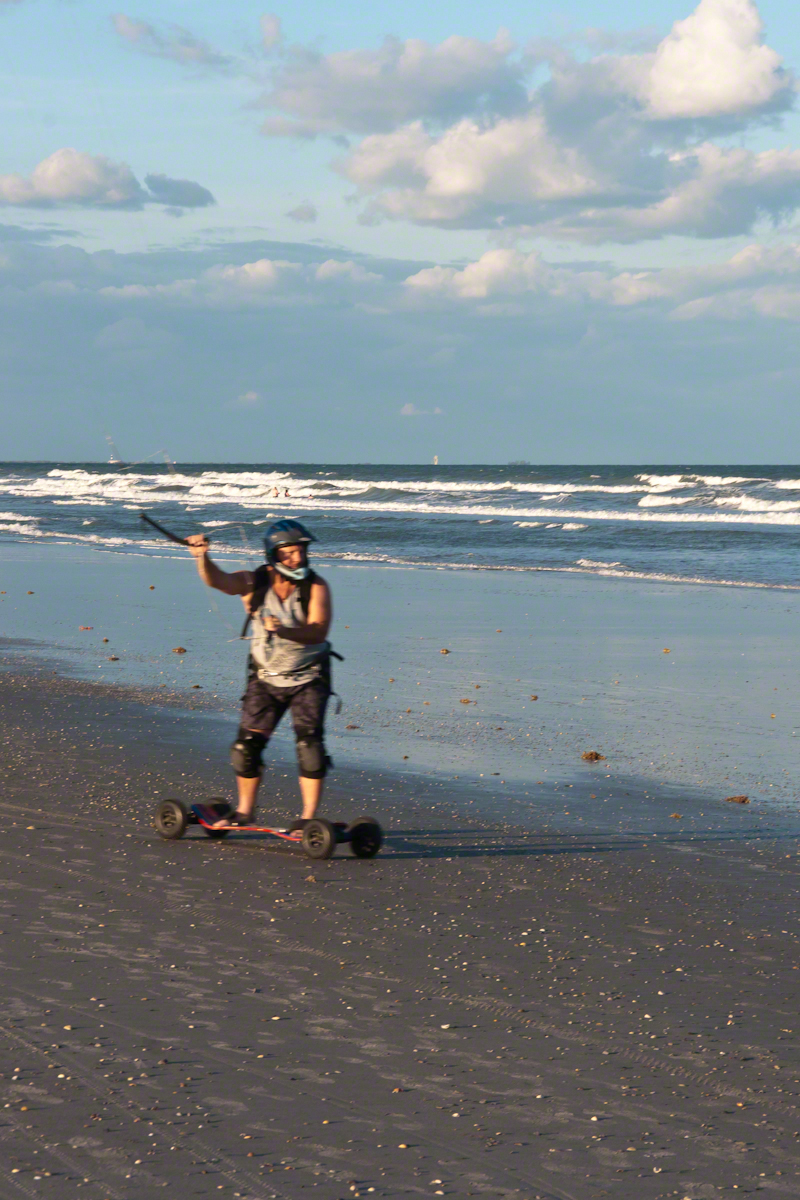
Her partner approaches

The name “Wheels of Doom” suggest the danger of going this fast over a hard, rough surface.

My Online Gallery– CLICK ME!!!!
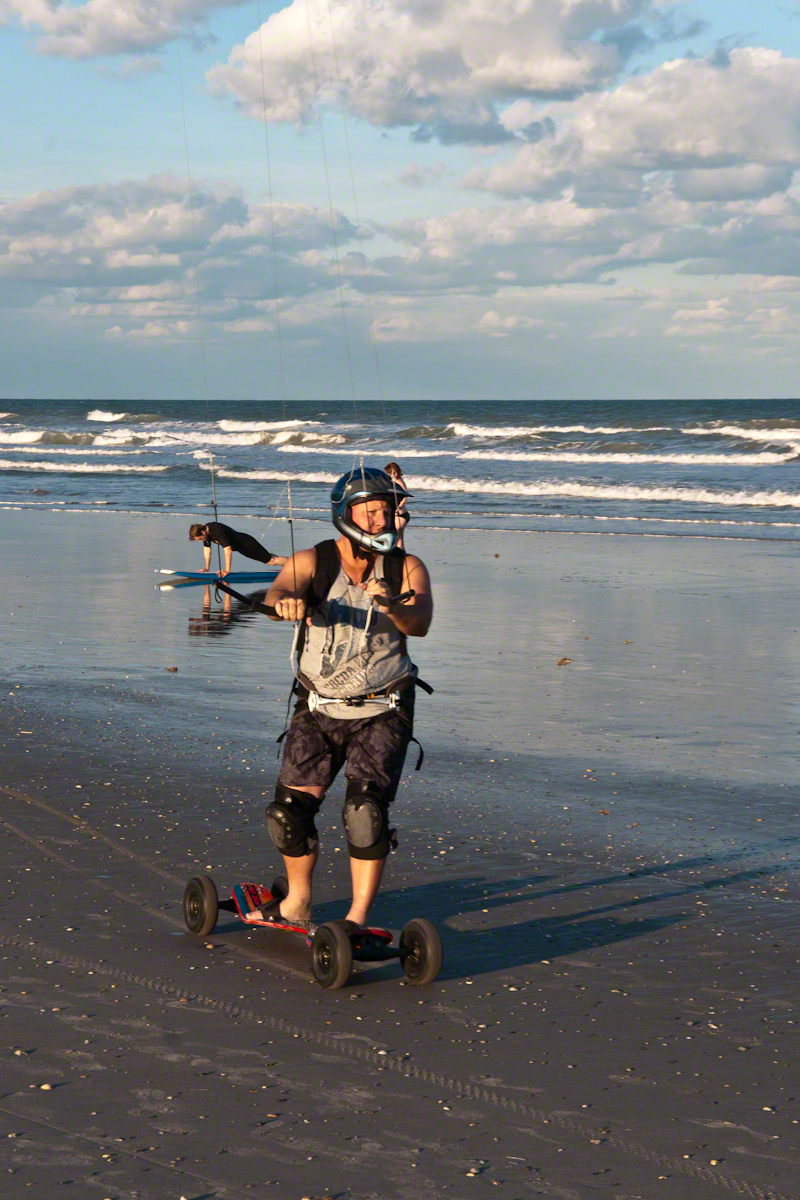
He makes it look easy

These Cocoa Beach riders are outfitted for speed and safety: pads, helmets.

My Online Gallery– CLICK ME!!!!
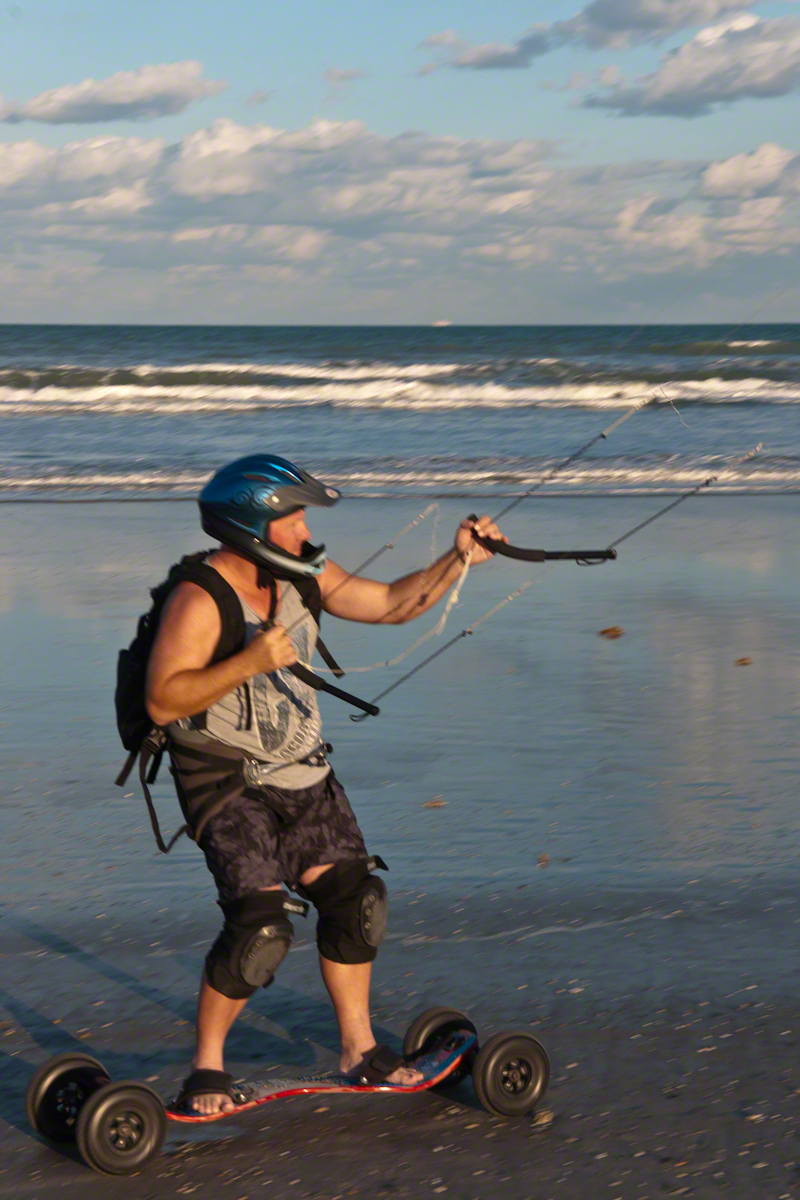
He maneuvers kite overhead to slow down.

Barefeet?? Unprotected skin? They must know how to dress, though maybe not.  He has never fallen?

My Online Gallery– CLICK ME!!!!
Full speed ahead with the kite positioned forward.

The beach within the tide line is solid, the pebbles, broken shells and such unforgiving as asphalt.

Click this link for another Cocoa Beach post
Click this link for a Kite Surfing post

Copyright 2022 Michael Stephen Wills All Rights Reserved

Introduction to the Loughan an Lochan Ruins

Romance of Ruins

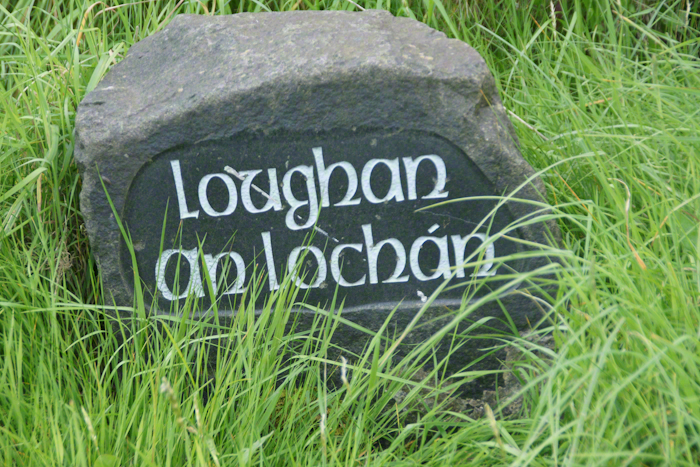
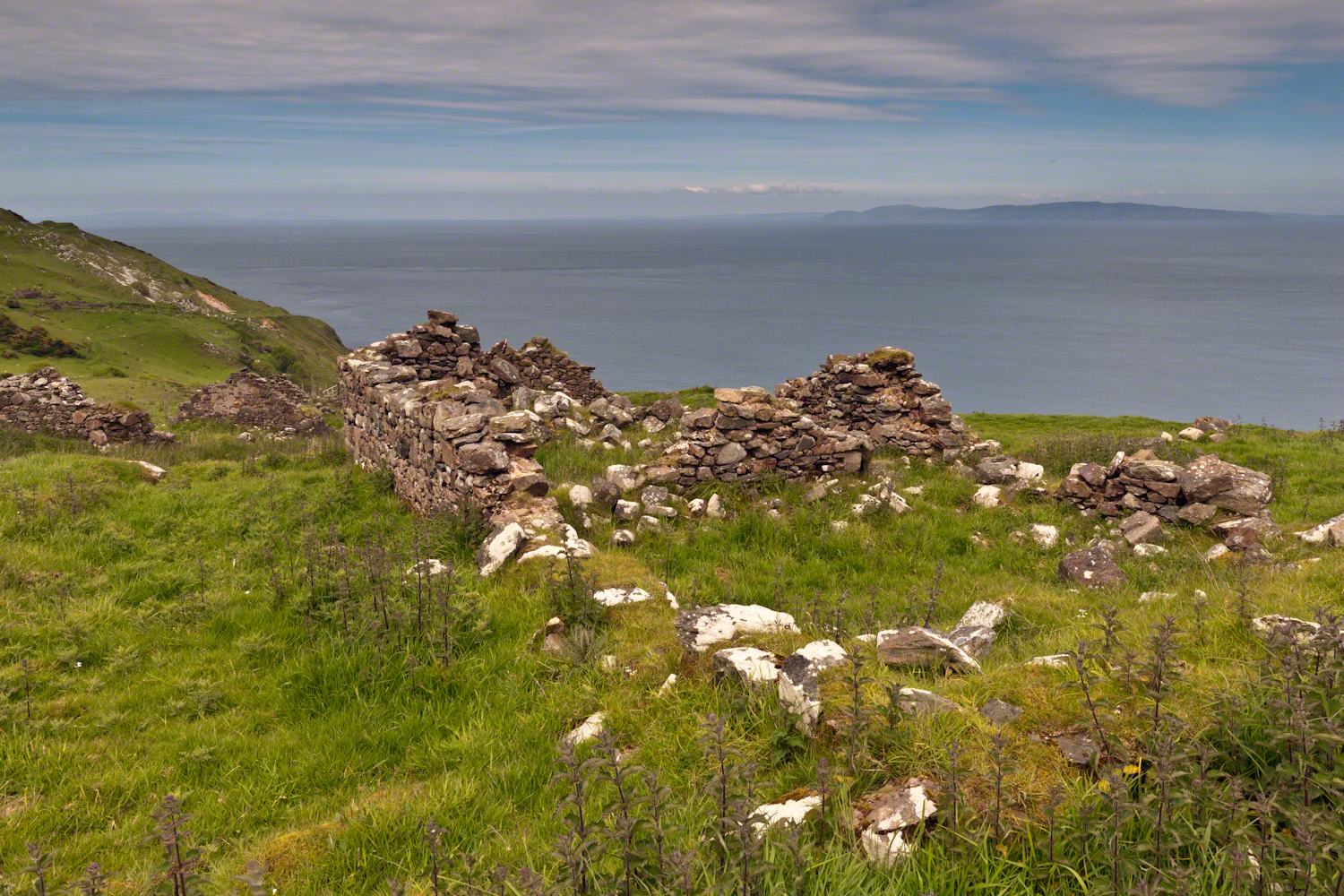
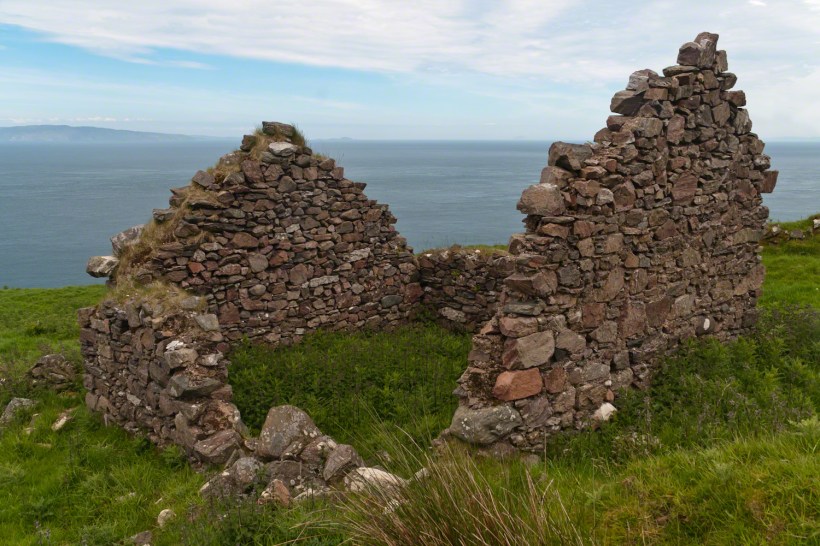
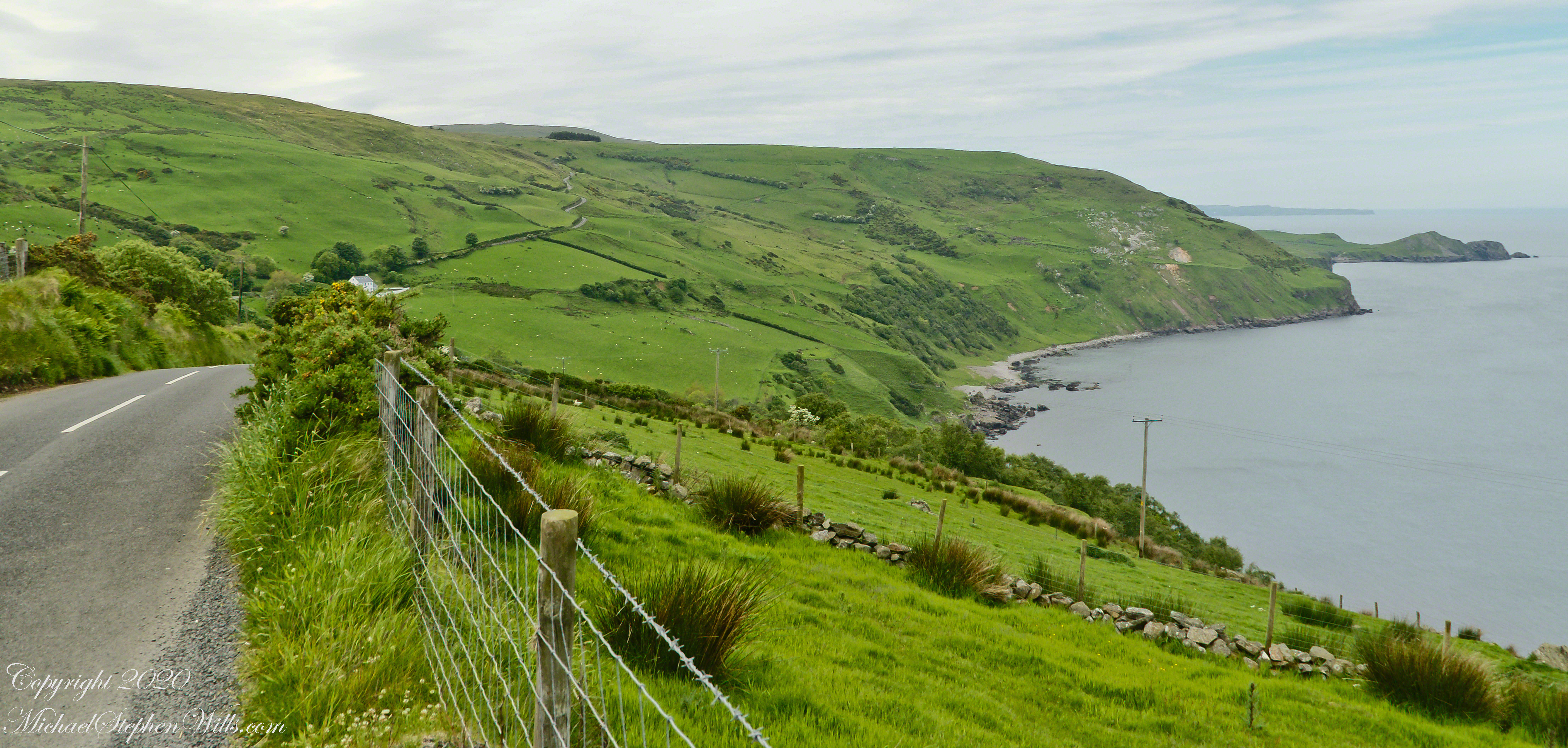
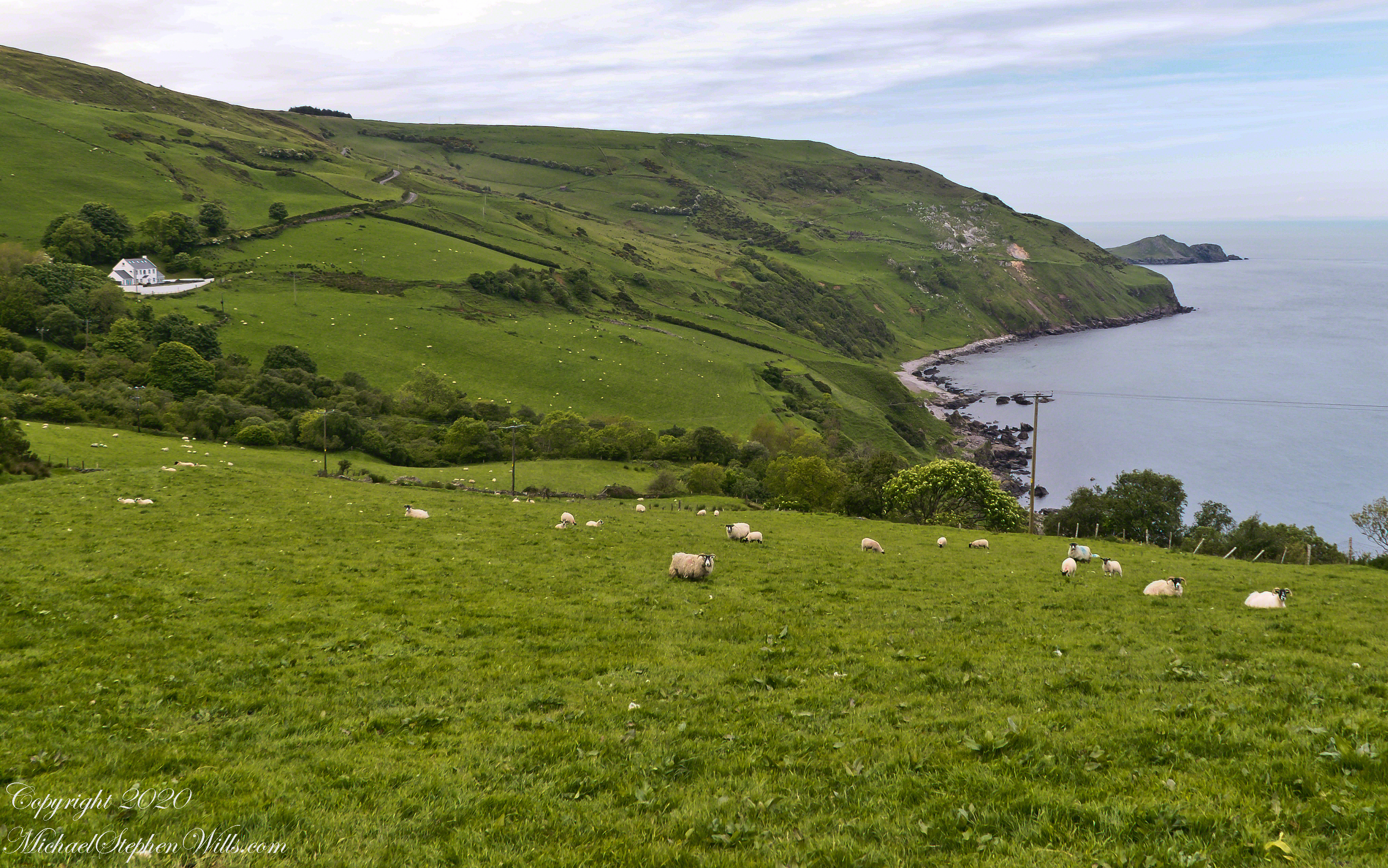
Here is a photograph from our day touring the Glens of Antrim.  While making our way up the coast to Torr Head a group of stone walls resolved into ruins. A cluster of cottages on grassy slopes above the Irish sea above Loughan Bay.  This is the townland of Loughan.  Along the road are wonderful signs providing in handsome carved letters the place name in english and gaelic.  Here a signed only provided a gaelic name: “Loughan an Lochan”…near enough to meaning “Loughan Bay” in English.  The bay is a shallow scallop shaped indentation of the coast, a margin of narrow sand strand.

Ruins are spread across the slope.  Immediately before the views are traces of a foundation above the grass.  Beyond the top of a gable, an entire gable to the left.  On the far ridge, just visible, is an entire structure with doorways, gables, walls.

Across the Irish Sea, 13 miles distant, is the Mull of Kintyre.  In faint outline, rising above the horizon, find the highlands of Islay more than 30 miles.  Both are tips of peninsulas jutting from Scotland.

Click pic for larger view in a new browser tab. If you are in WordPress Reader, open the post to use this feature.

The ruins lead to curiosity over who live here?  What were their lives like?  Why did they leave?

Want more? Click the link for my Ireland Gallery

Enter your email to receive notification of future postings. I will not sell or share your email address.

Sunrise Sand Castle

Sights along Cocoa Beach

Even on vacation I rise early to better enjoy the day. This year’s escape from the Ithaca winter, at Cocoa Beach, up at 5 am with a beach chair and oranges in hand I walked in darkness from our beach side resort to the tide high point. My time occupied by sky watching I peeled, and ate, oranges while locating stars through the wind blown clouds. When the barely perceptible dawn light began I packed it up to find Pam, who asked to be awake for sunrise.

This day, we ate breakfast from ready to eat food purchased from the Publix market close by on Atlantic Avenue, and caught up with the news craziness. We had a day at the Kennedy Space Center planned after the sunrise walk.

Here is our view while walking north along the tide line. In the far far distance are the Kennedy Space Center Vehicle Assembly building and a space launch gantry.  Follow the shoreline to find the pier.

We walked nowhere near the pier, barely visible, not to mention Sam Shepard park. The pier and park are a day’s walk. We had a few hours free before our “Lunch with an Astronaut” event at Kennedy Space Center.

Cocoa Beach North View– CLICK ME!!!!

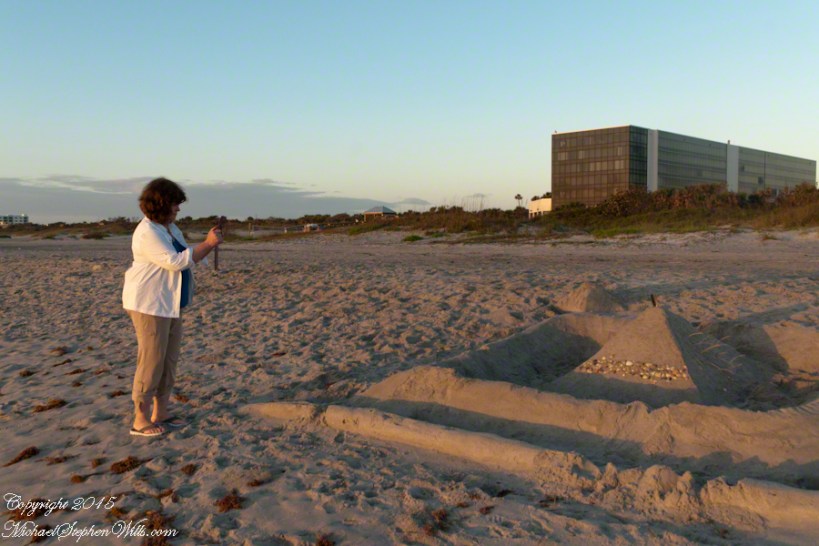
The highlight of this sunrise walk was this large sandcastle on the beach in front of a condominium,  the  Hilton is to the left.  Lori Wilson Park is out of sight to the left.  A great feature of the park, for us since the International Palms were we stayed is next to it to the north, was the park life guards.

Cocoa Beach North View– CLICK ME!!!!

So, we approached this sandcastle from the north.  It survived the high tide to a new day, obviously it required time and resources to build.  The day before was a big beach day.  Wednesday was a brilliant, summer-like day for the first of March.

Cocoa Beach North View– CLICK ME!!!!

A little closer, the footsteps inside the first moat are interesting.

Cocoa Beach North View– CLICK ME!!!!

Pam next to the castle provides scale

Pam and the Sand Castle– CLICK ME!!!!

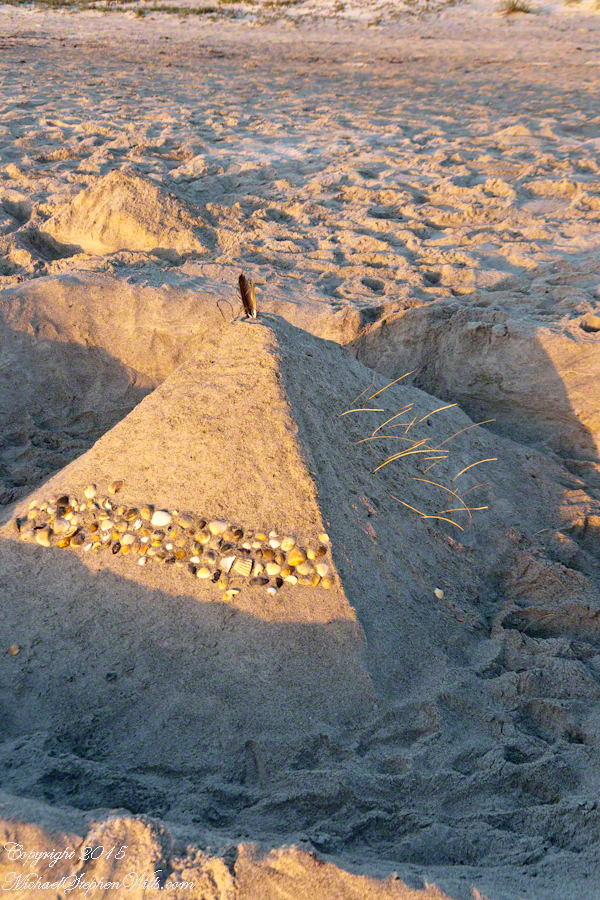
Here is the central pyramid.  I enjoy the dawn light on the grasses.  That is a sea gull feather on the apex.

Central Pyramid– CLICK ME!!!!

Decorative sea shell band facing the ocean.

Decorative band of sea shells– CLICK ME!!!!

The destiny of all our human conceits.  Impermanence is part of the beauty of sand castles.

Decorative band of sea shells– CLICK ME!!!!

Click for the first post in this series.

Newlyweds and the Cruise Ship

Images of Newlyweds on the beach

With grandchildren in the Miami Area and a sister in Daytona Beach, Florida was on my mind this morning and memories of this beautiful experience on Cocoa Beach came to mind. After an eventful day touring the NASA launch control center, Pam and I took an evening walk during the golden hour, me with camera in hand.
Full in expectation of catching the passing scene with lots of shot I set to full size jpeg mode using a Sony Alpha 700 dslr with a DT 18-200mm f3.5-6.3 lens. The light was exceptional, so I did not expect much post production work.

My first impression was of the line of cruise ships heading south from Port Canaveral, the starboard side lit perfectly behind human denizens of the Cocoa Beach shore, in full enjoyment mode. A synergy of the images struck me. I took a few experimental shots then, as we progressed down the beach front this unusual tableau came into view.

Wedding Immersion
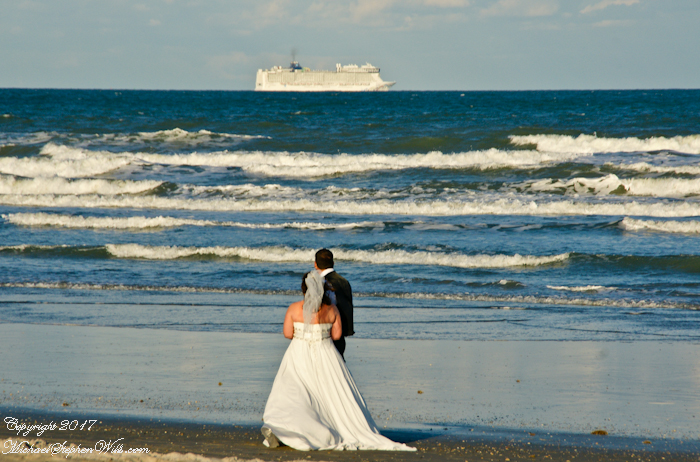
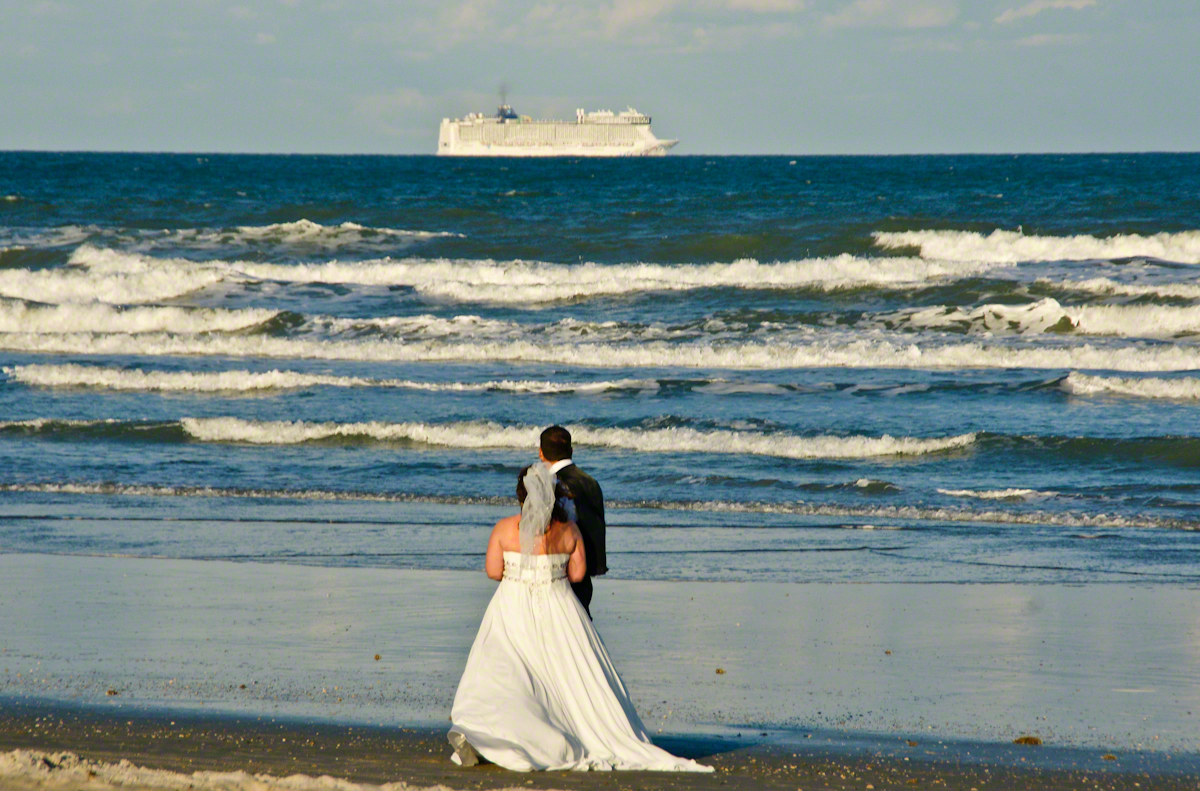
Newlyweds on Cocoa Beach give rapt attention to a distant cruise ship, it looks like an elegant child’s toy.

Pulling back the focal length a bit the reason for the bride and groom on the beach is clear.

Newlyweds and Photographer
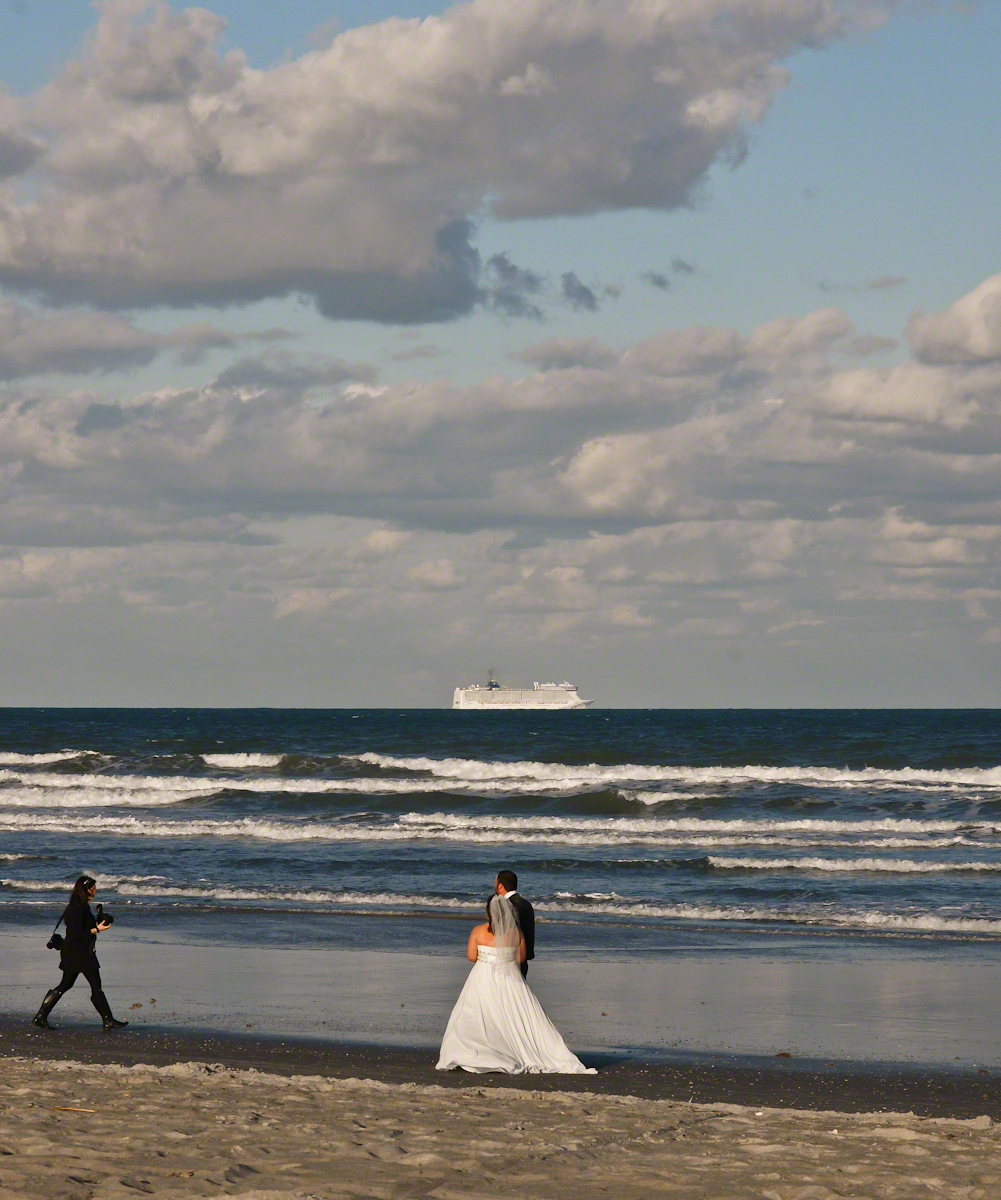
Photographer approaches from left.

The session proceeded smoothly and professionally, it was a pleasure to watch. I felt no compunction for capturing these private moments on a public beach, the transcendence of the images reflect well on all participants.

Newlywed Photoshoot
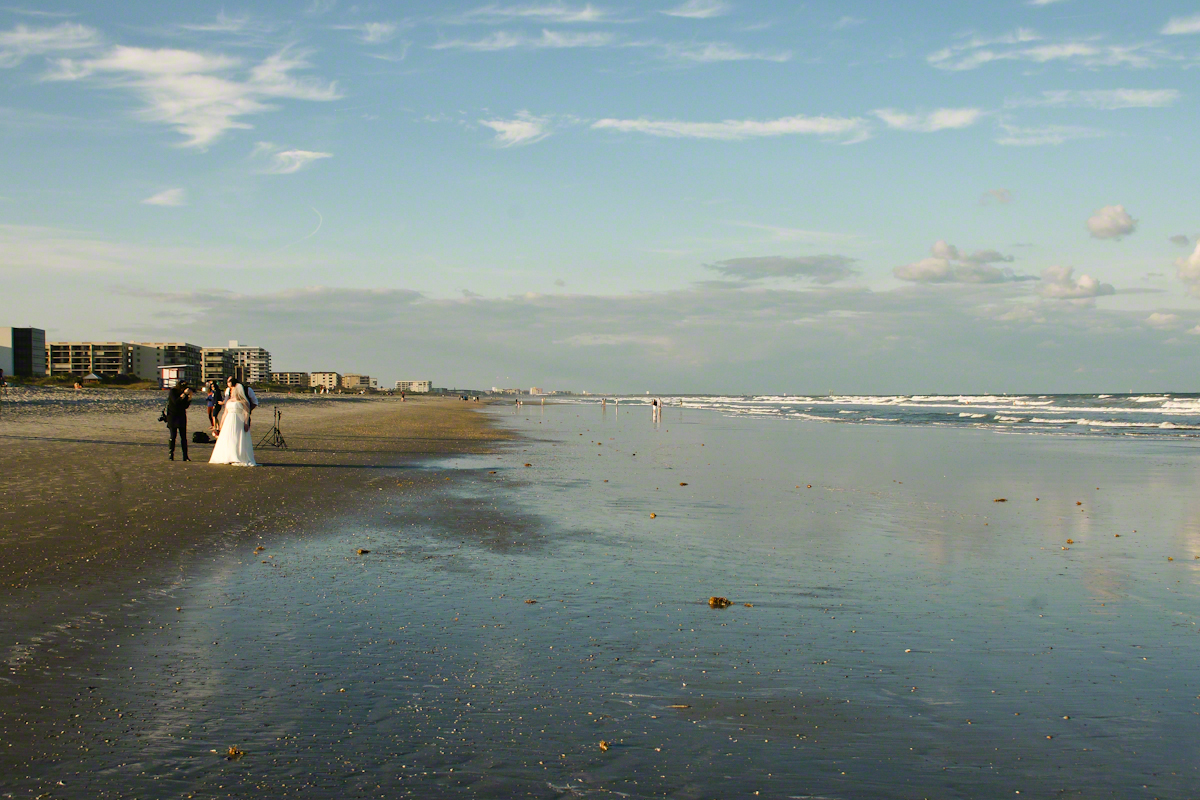
Bride and groom pose while photographer composes the shot, her assistant behind.

Pull back to capture the entire environment.
Enjoy!!!

A Far Country XI: Gondwana Part 1

amazing resolution with the Canon 24 mm lens

(Click any photograph to visit my online gallery)

The resolution of the Canon EF 24mm f/1.4L II USM makes this lens a favorite of mine for landscape work.  Let me show you why.

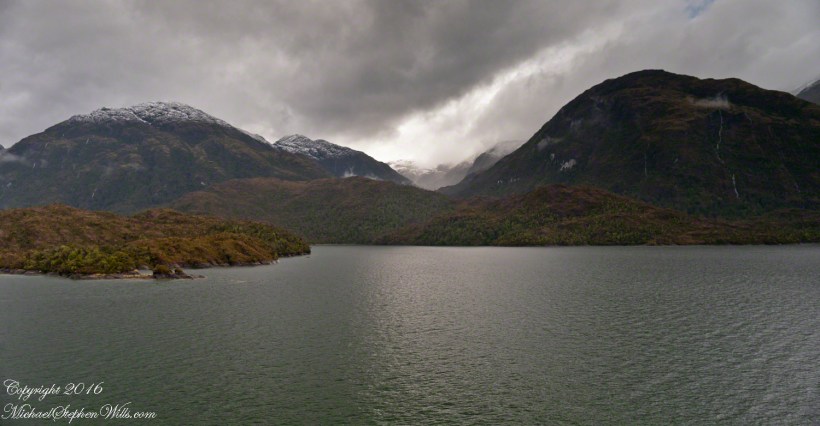
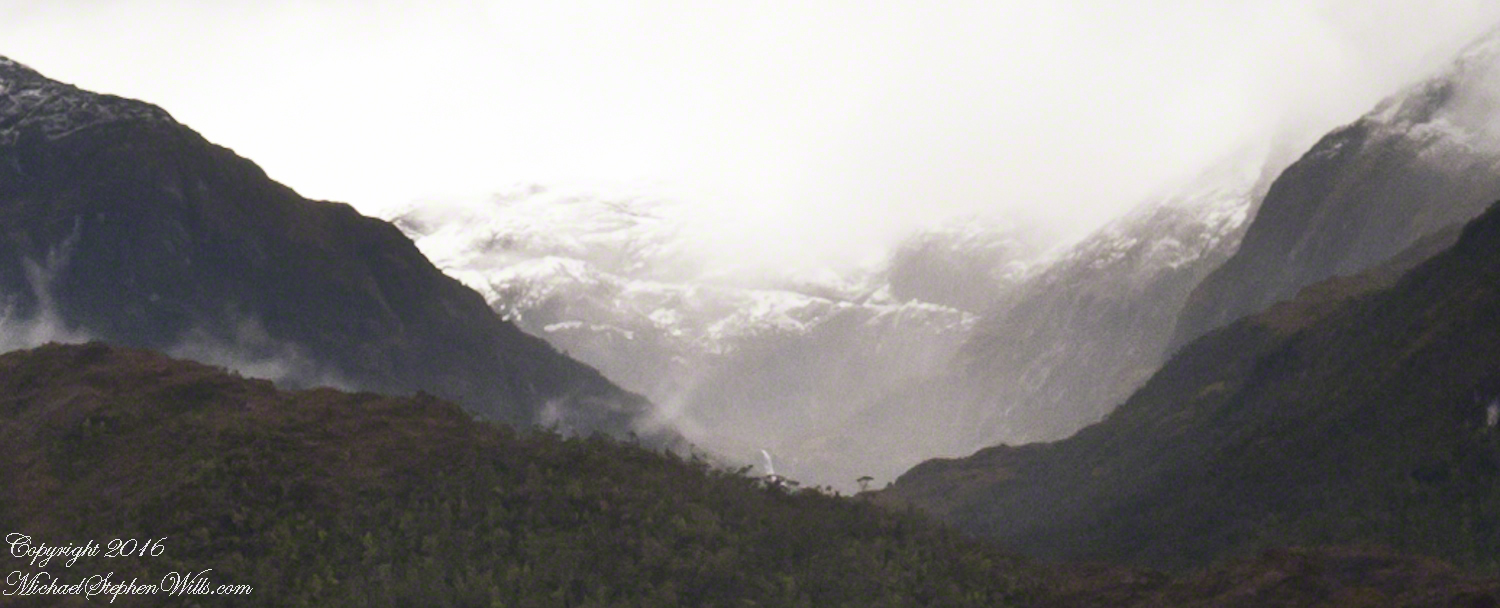
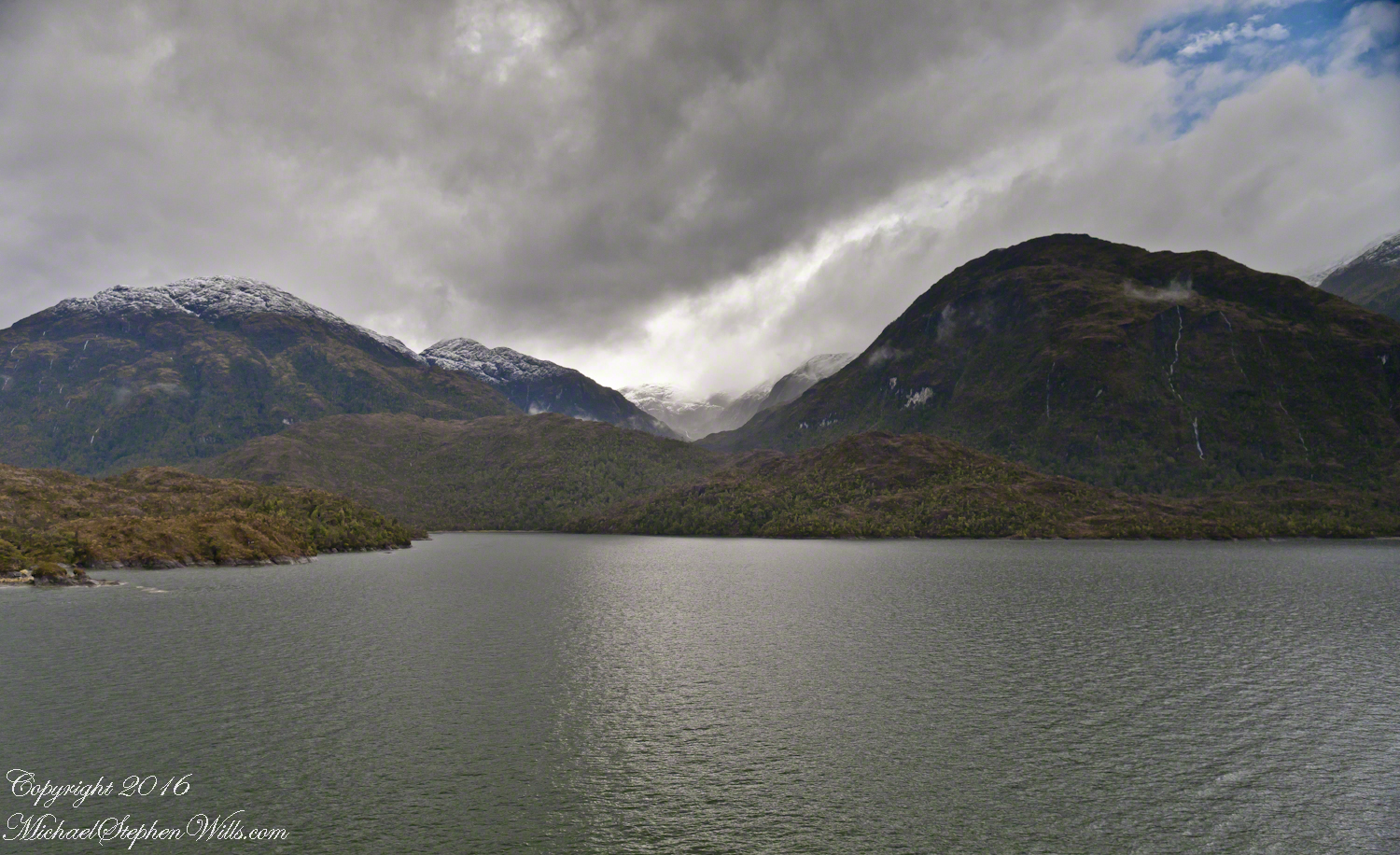
The valley today’s posting lies behind the tree.  It is a broad valley shaped by ancient glaciers.

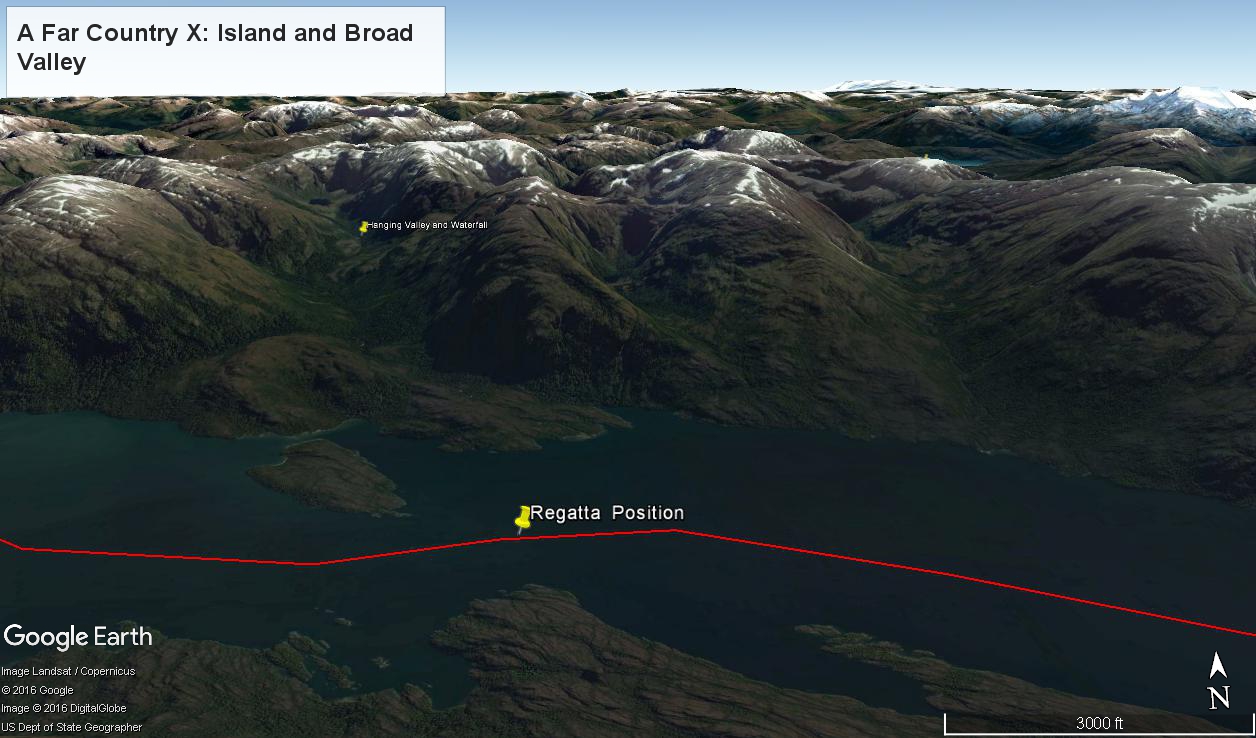
Here is the Google Earth view, from an elevation of 9,400 feet, with the ship position marked.  Northwest is a pushpin titled, “Hanging Valley and Waterfall.”

A Far Country X– CLICK ME!!!!

The waterfall marking the hanging valley is visible in the following photograph.   All photographs in this posting are from a Canon EOS-1Ds MarkIII, 24 mm lens (see above for complete name), on a Manfrotto travel tripod.  ISO 500, f5.6 or f6.3.

With a point of view about 50 feet above the water the valley bottom is hidden behind an 800 foot hill and the water fall is just above the hill.  See it?  …..I didn’t think so.

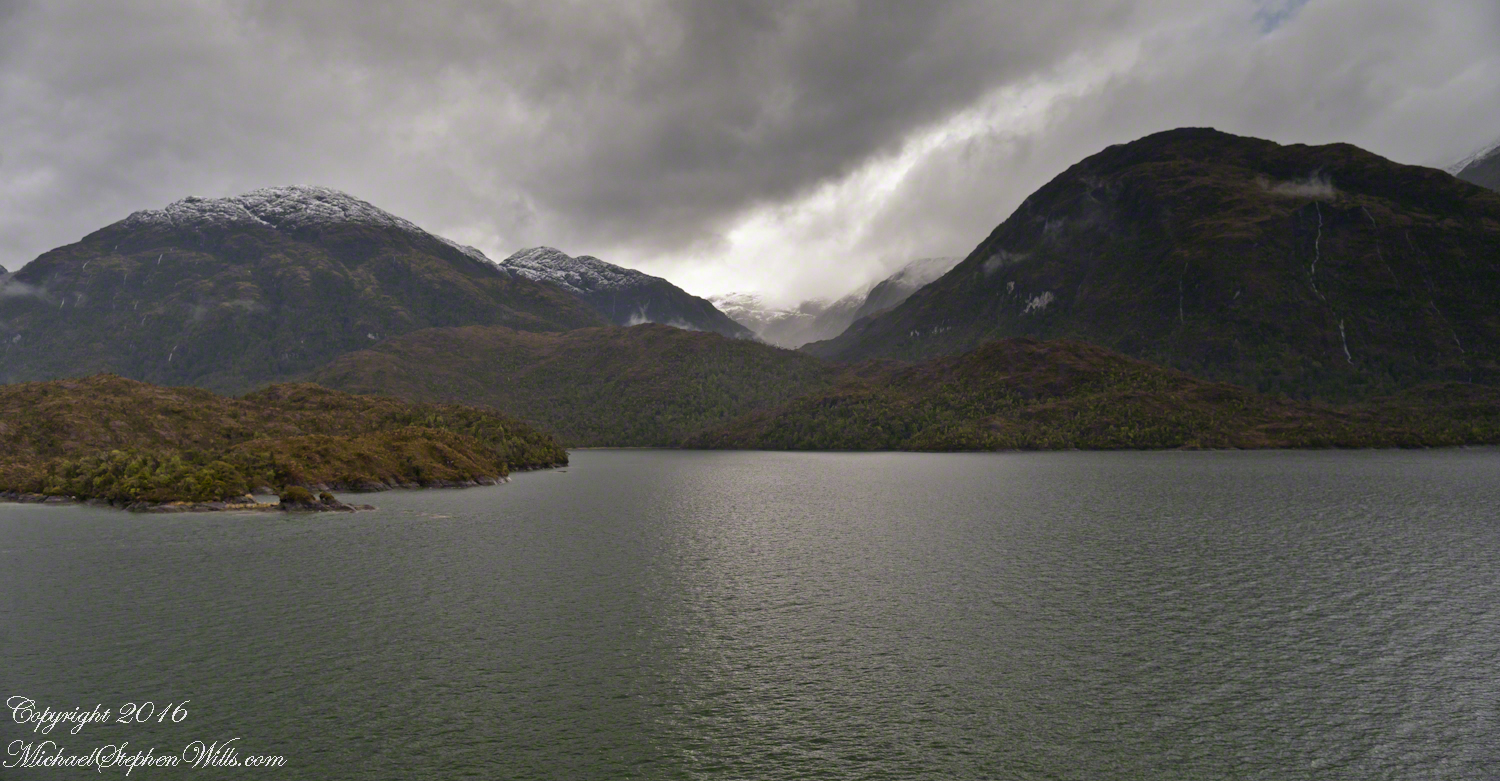
There is the island with the tree, to the left.  The following image is the same photograph, with the central section enlarged.

Fjord Island and Broad Valley– CLICK ME!!!!

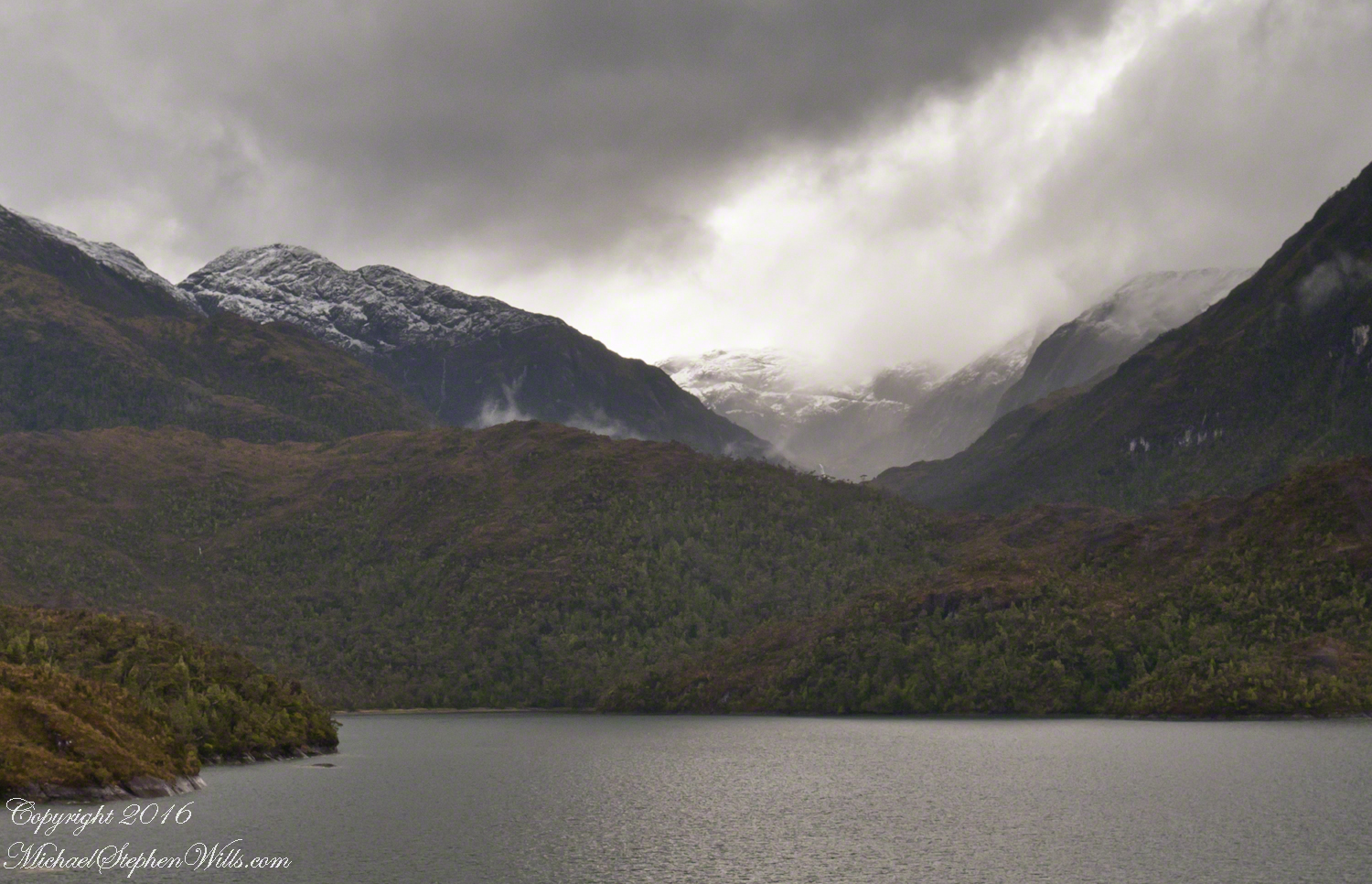
The enlargement brings out the play of light, the low clouds, deep in the valley.  To provide scale, know those are full sized pines on the hillside, foreground.  The waterfall is just about visible.  I will enlarge the image one more time.

Fjord Island and Broad Valley– CLICK ME!!!!

There it is!!  I stepped up contrast, as well.

Fjord Island and Broad Valley– CLICK ME!!!!

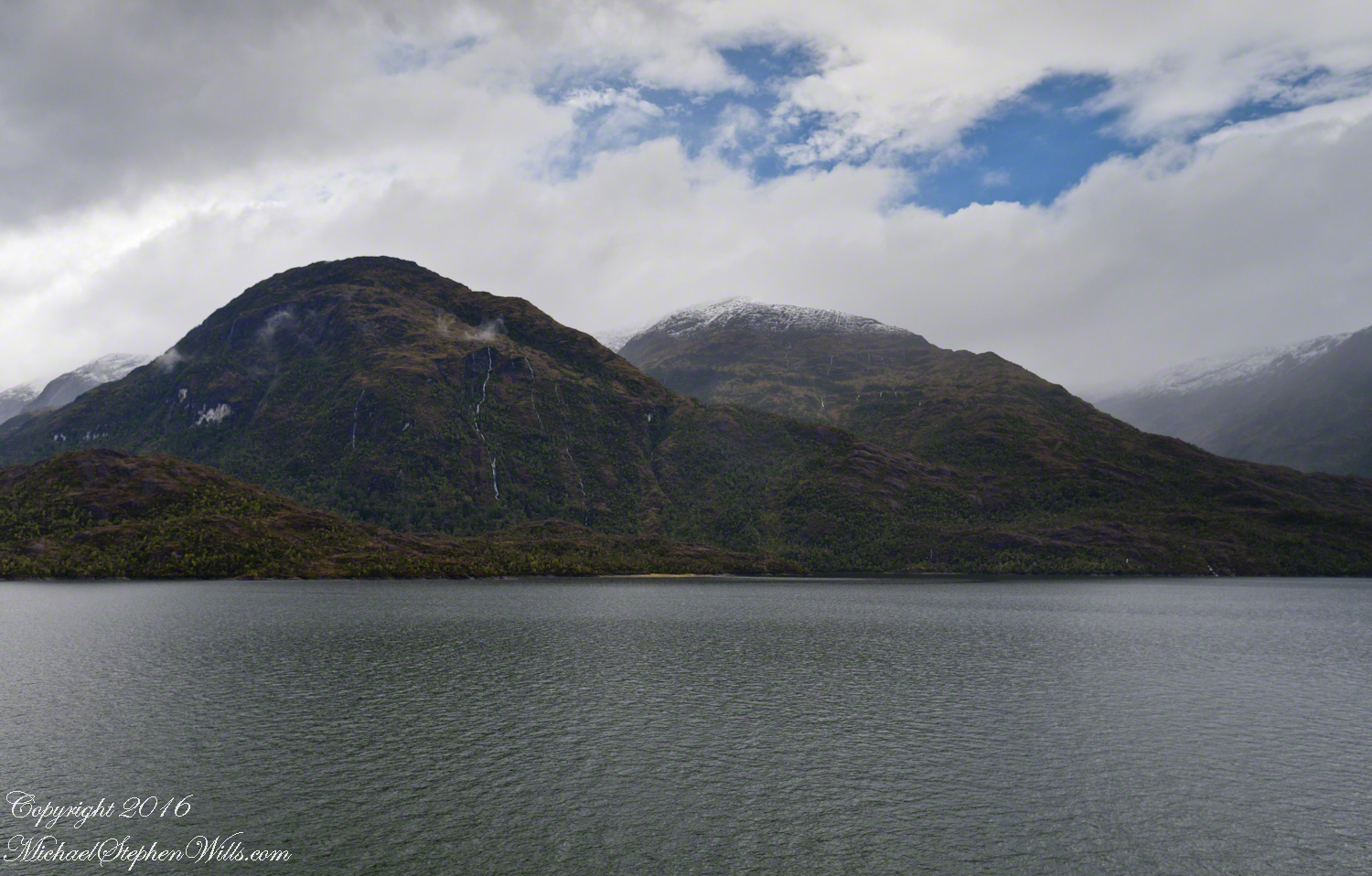
Here is another version of the original view.  That patch of sky had opened up seconds after the first shot and, as a result, the 3,000 door mountain and waterfalls, on right, are better lit.  Notice the bare rock face on the mountain slope, marking a landslide.

Click this image for a high resolution version, in your browser.

Fjord Island and Broad Valley– CLICK ME!!!!

A different landslide Scar is featured in two previous blogs,

A Far Country V: Landslides!!

A Far Country VI: View of Tempanos Fjord

The Regatta’s course brought us closer for the two following shots.

The lovely sky is still visible…..

Mountain and Waterfalls

….one minute later the clouds gather and relative darkness returns.

(Click any photograph to visit my online gallery)
Copyright 2022 Michael Stephen Wills All Rights Reserved

Two Windows on Time

Insight from antique postcards

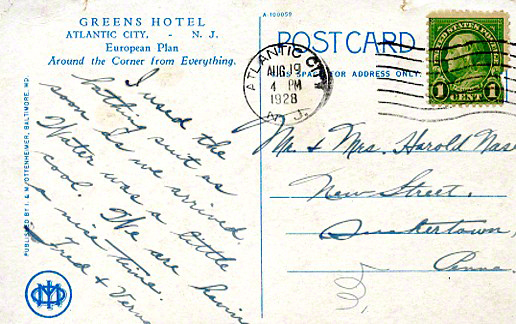
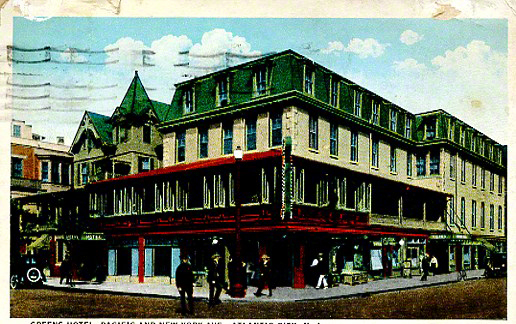
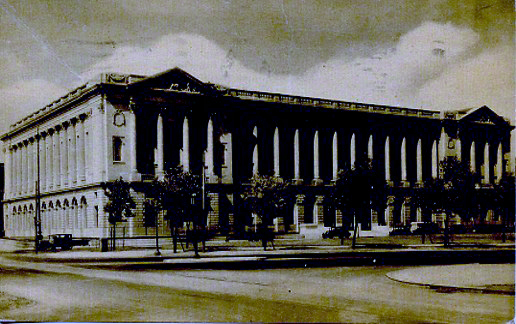
Our Black Friday visit to Jim Thorpe included shopping along Broadway.  One marvelous shop at 61 Broadway, The Vintagerie, offered a small bin of antique post cards.  Vaguely curious, I picked up a pile.  Many were unused.  A few, like the two below, travelled the US Mail, included post marks, postage and communications.

Please click any of the following images to visit a work from my online gallery.  Hover your mouse over each image for more information.

postcardgreensatlanticcityfront1928augustenh01

Verna’s slanted and precise cursive, the message carefully planned to fit available space, demonstrate her to be stylish.  The bathing suit was purchased for the trip.  Before leaving, Verna shared the purchase with her acquaintance, Mrs. Nace (misspelled Nase).

Fourteen months after their vacation, the Stock Market Crashed, October 1929, leading to The Great Depression.  How were Fred and Verna affected?  Were there Atlantic City vacations?

postcardgreensatlanticcityreverse1928augustenh01

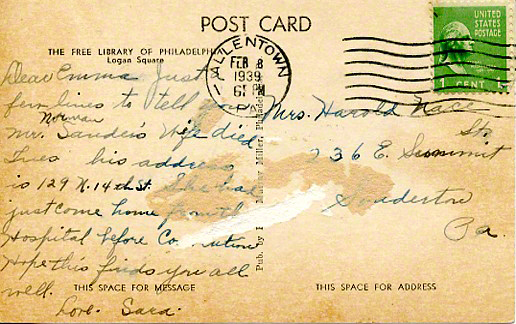
The next card was purchased and sent from Allentown. It is unlikely Sara was on vacation, was it purchased during a rare trip to the city?

I know Verna misspelled Nace because, ten years into the great depression, Mrs. Nace, Emma, received this postcard from Sara.  The postage is still 1 cent.  Emma has moved to a new address.  The message is more significant, written in a hurried hand by Sara, who concludes with love.

postcardallentownfront1939februaryenh

Emma Nace kept these cards as treasured possessions and memories until, with her passing, they were acquired, maybe in an estate sale, bundled together, transported 54 miles to 61 Broadway to be found by me, scanned (digitalized), and sent along in this blog.

postcardallentownreverse1939february

Contemporaneous People of the Loughan an Lochan Ruins

Romance of Ruins

In this multi-part blog series:

Part 01: the romance of the ruined cottages of Loughan Bay was introduced, the following questions stimulated:  “Who were the people who lived here?  Why did they leave?  Why is nobody here now?”

Part 02: the scene was set, the townland of Loughan named and visualized.

In this Part 03, some contemporaneous people are introduced, more information on the environment provided, some previous residents named and imagined.

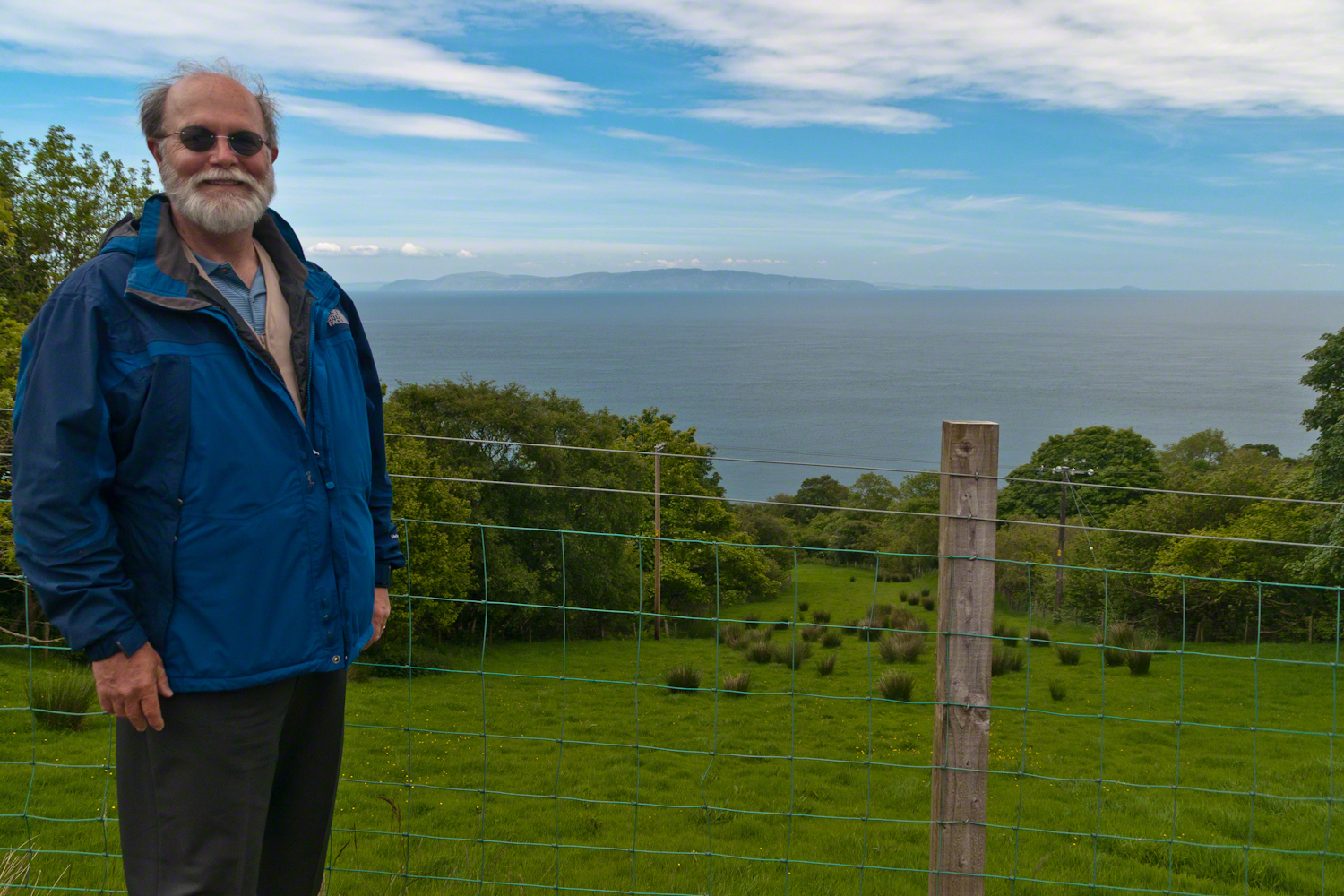
Michael Wills with View of Loughan Bay
On the way to Torr Head we stopped at this spot in Coolranny Townland to take in this view of the Irish Sea. The land overlooks Loughan Bay toward the Mull of Kintyre and Sanda Island, Scotland. County Antrim, Northern Ireland.  Coolranny borders Loughan Townland on the east.

To understand the full beauty of a place, it is necessary to live it, to experience the seasons, approach the land from different aspects; pass the same place many time, noticing overlooked features, enjoying old favorites.  We did our best in this single day and took the exploration of this Antrim County coast slow, savoring all the views we noticed as this is a once in a lifetime experience.  Imagine our amazement to find Scotland so close at hand.  In the past, on a fine day the trip across the North Channel, up eastern Kintyre peninsula shores to Campbeltown at the head of Campbeltown Loch, was easier than a land crossing to a closer town.

I picked Campbeltown because my great great grandfather, a sea captain, emigrated from Scotland to County Louth where my great grandmother, Anne Campbell, married John Mills.  In this way Captain Campbell escaped persecution for his Roman Catholic faith.

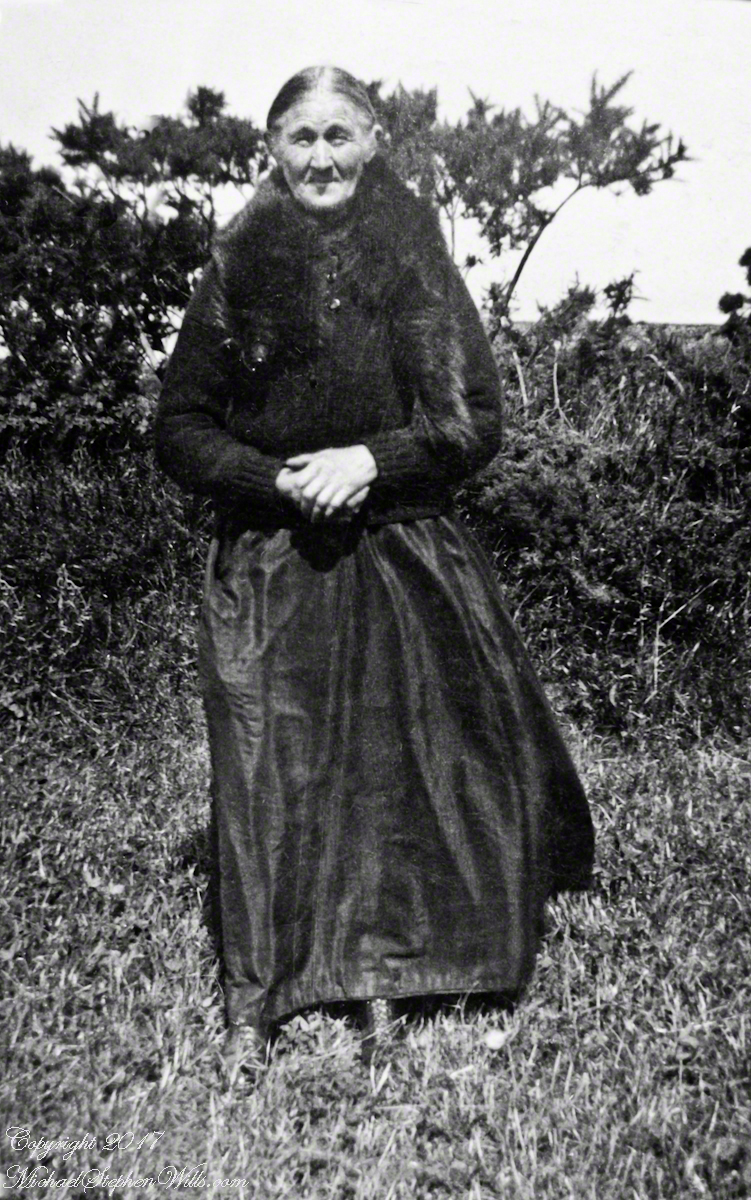
Anne Mills

Late in her life, Anne Mills posed for this portrait.  I can tell great grandmother Mills is facing north from these clues:

— the press of the eternal east wind on her dress, against her left left and flowing away from the right.

— the sun shadow on her cheek.  It was around noon.  With the sun, at this latitude, in the south the shadow from her right cheekbone is darker than the left.

Stressed Costal Hawthorn
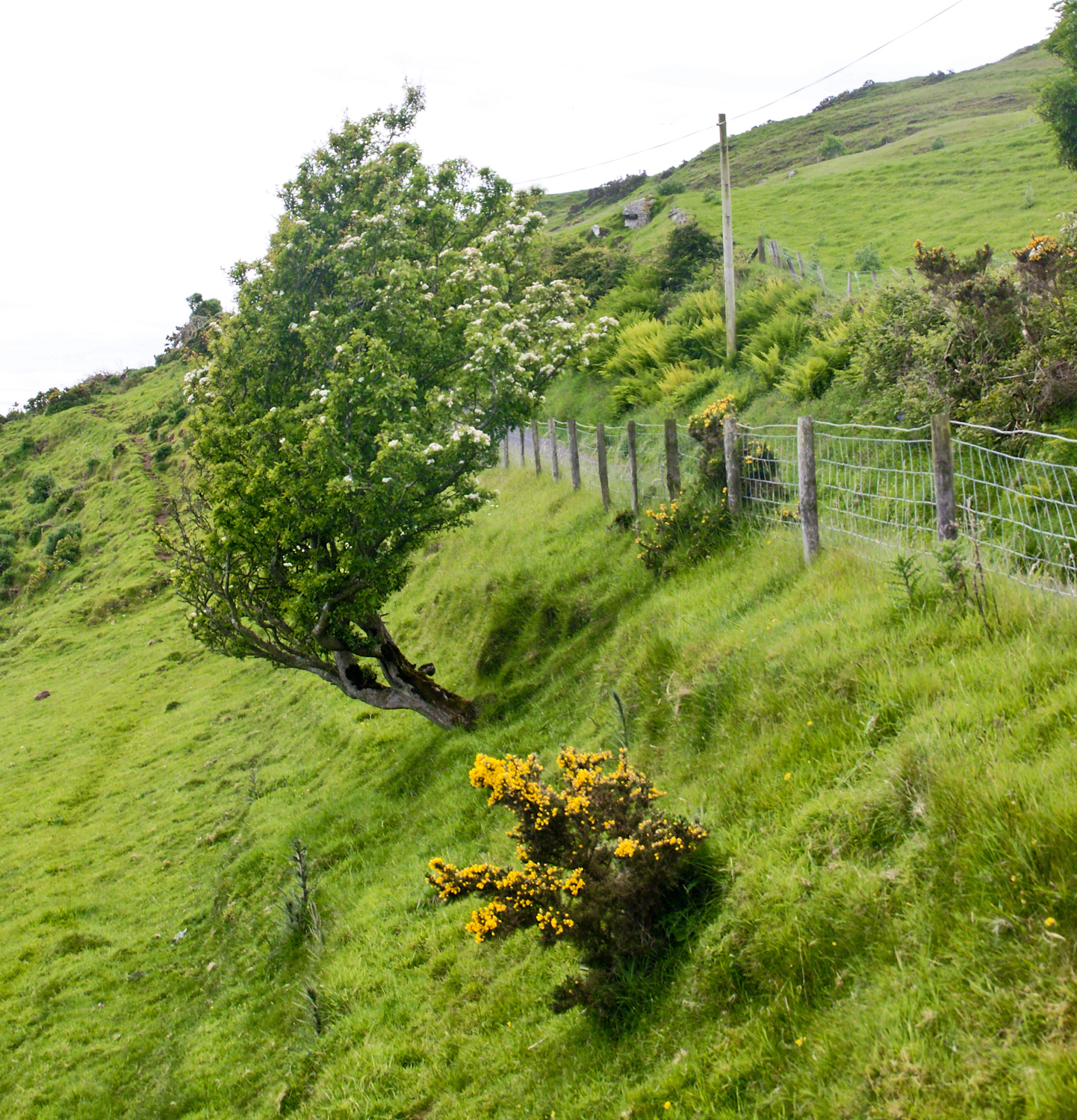
Rowan Tree directional growth from a constant east wind, County Antrim on the Torr Road nort of Cushenden.

A few miles before Loughan Bay, at Coolranny, are informative placards describing the area.  I thought the white flowering trees, or shrubs, on the slopes were Hawthorn.  On revisiting my capture of the placards I learned these are a different plant named Rowan Tree, aka Mountain-ash.  This wind stressed specimen is an typical example of Rowans on this coast, stunted and little more than a bush.  This individual is slanted westward from a constant and stiff east wind, as with Anne Mills’ portrait.  Residents, past and present, of this coast know this damp, persistent wind well.  Note the lack of blossoms on the east side, blossoms that ripen to small dark red fruit called poms (also called rowans).  The leaves turn red in the fall.  More time, for the fruit to form and leaves to turn, was necessary for me to be certain my identification of this, as a Rowan, is correct.

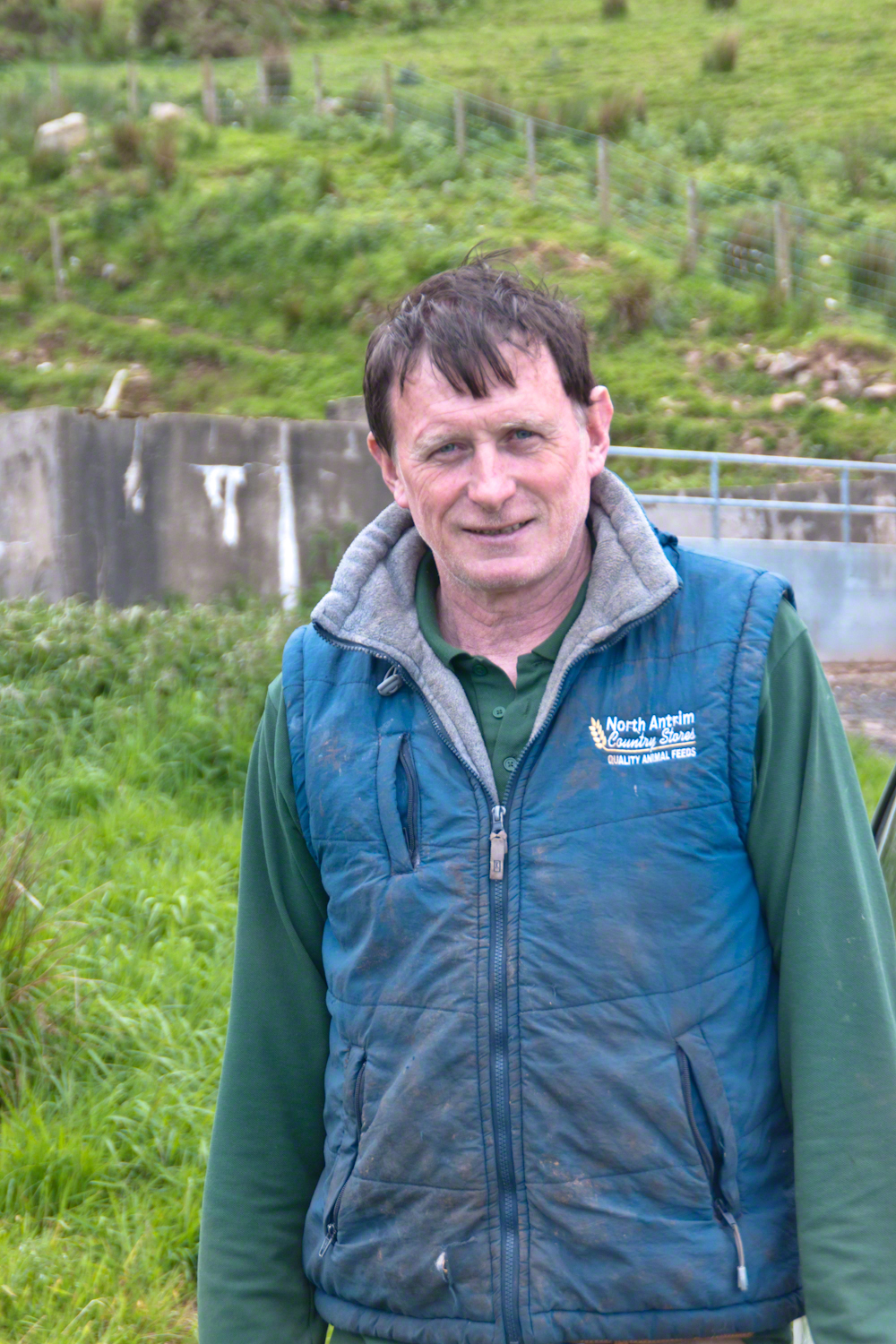
Loughan Bay Farmer
We parked on a turnout above the Loughan Cottages, near this farmer’s sheep pen. He drove up in a huge tractor and conversed with Pam while I was below shooting the cottages. He made a good impression.

On this day, Friday, June 6, 2014 I did two rounds of shooting the cottages.  The first, handheld, with a Sony Alpha 700.  Upon returning to the car for the Canon, Pam was talking to a friendly sheep farmer who pulled up in a large tractor pulling a tank.  It turned out we parked below the turnout for his sheep enclosure built on the hill west of Torr Road.  His flocks grazed the surrounding land. He and I talked, too briefly, about the hard lives of the people who lived here.

The Coolraney placard, up the road, claimed the cottages were deserted in the 19th century.  I found evidence, in the 1901 Irish Census, of three Roman Catholic families, 19 men, women, children, living on Loughan Townland.  In Part 02 of this series, setting the stage, Loughan is sized at 112 acres, a single photograph captures Loughan entire.  These families had nowhere else to live, in Loughan, other than the cottages.

The smallest, and poorest, the poorest of the poor, family was 32 year old Mary Corbit and her two children, 10 year old Mary and Robert, 2 years.  The Corbit family lived in a one room, stone walled, house with a wood or thatch roof.  Unlike the other families they had no outbuildings, structures to house livestock or to support a farm operation.  The house owner was Marj Delargy.

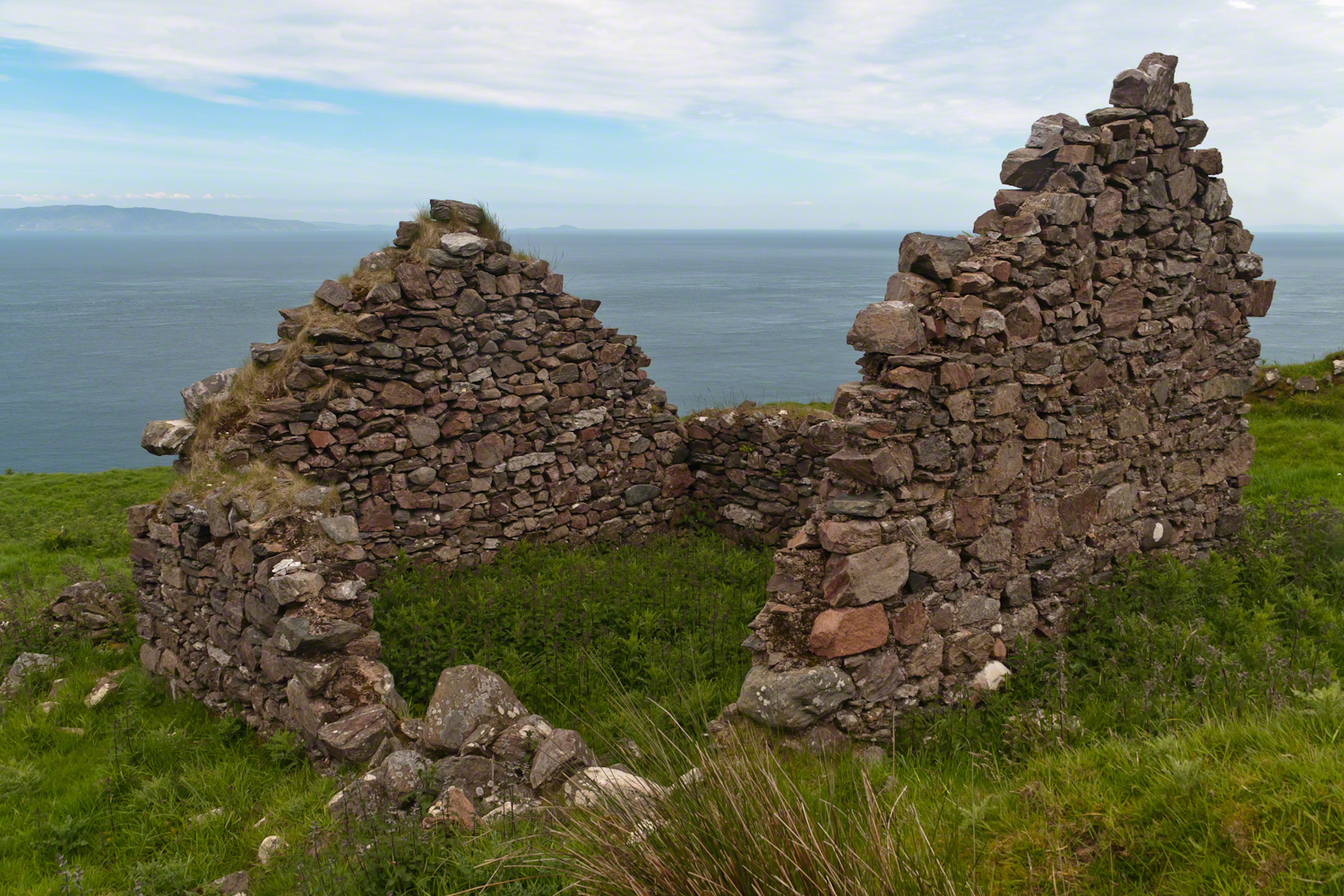
Here is a single room house among the ruins, four low walls, the east/west with intact gables, the stones collected from the hillside.  The west wall higher up the slope, the floor now thick with fern.

Little Mary most certainly took care of Robert for part of the day.  Did Mary, with Robert along, gather rowans, and other forage?

Single Room Loughan Bay Cottage
A thick growth of ferns, grass on the gable was once a home with a view of Scotland’s Mull of Kintyre 12 miles across the Irish Sea. The Isle of Sanda just visible on the right of the far gable. Alisa Crag just visible in the distance, to the left of the nearest gable.

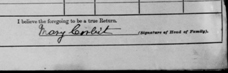
Mary Corbit: head of household, occupation laborer.  There is a footnote to Mary’s “Marriage” entry as Married, “husband at sea.”  The “C” of her census signature exactly like my mother signed her name Catherine.

CorbitMaryCensusSignature

Mary Corbit and her children were not listed in Loughan Townland for the 1911 Census.

Want more? Click the link for my Ireland Gallery

Enter your email to receive notification of future postings. I will not sell or share your email address.

Loughan an Lochan Ruins Setting the Stage

Romance of Ruins

For me, the romance of a place is settled in exact knowledge as much as a feeling. Starting with a recollection of the ruined cottages making such an impression we found a parking place and hiked into them loaded with photography equipment, three years later returning to use the photographs, bringing back a rush of memories and feelings, it is a matter of using the set of photographs from that day to build the location.

This much I knew, going in: we were touring Antrim Glens entering at Cushendall, after visiting Glenariff Forest Park, proceeding up the coast through Cushendun to Torr Head. A fortuitous encounter with a village of abandoned farm cottages (“ruins”) happened somewhere in between.

Click any image for larger view in a new browser tab. If you are in WordPress Reader, open the post to use this feature.

There was a photograph of a notable church prior to the ruins and a fine view, from a place named Greenhill, afterwards.

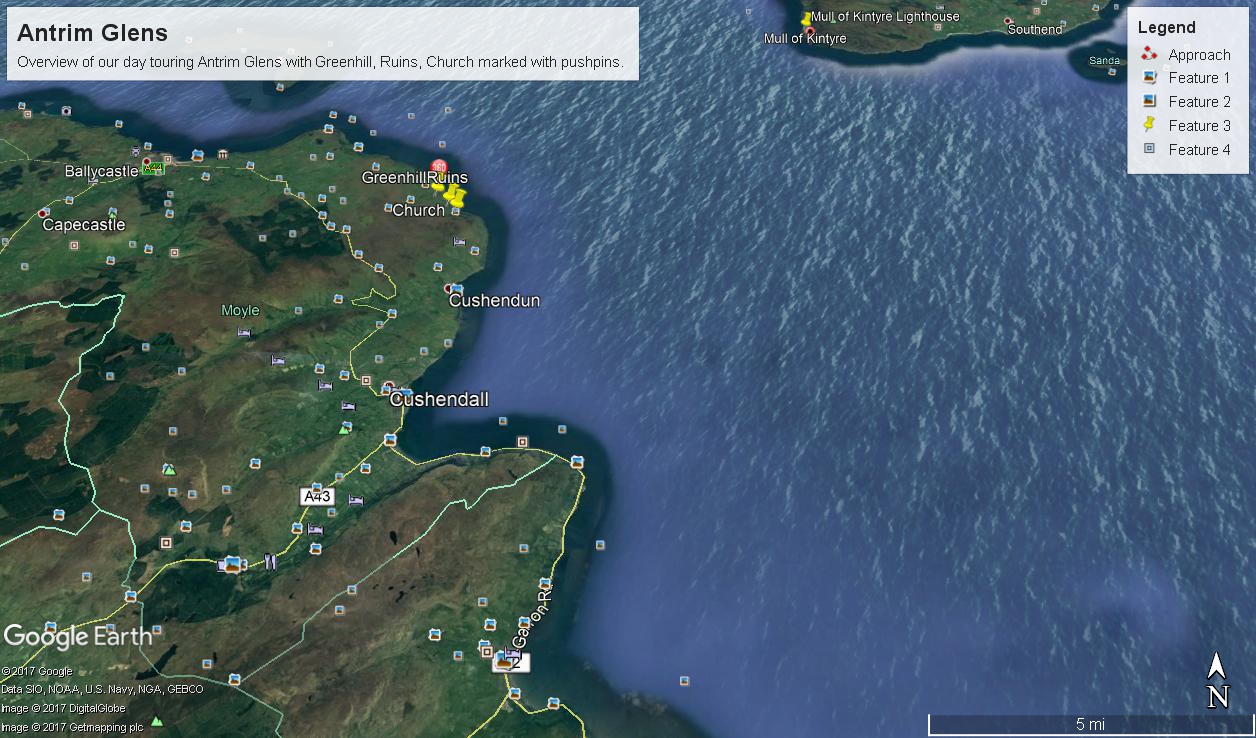
Here is a picture of the terrain with the three pushpins:

  • A fine church just off Torr Road, to the west. I found the location in Google Maps, marked as “church”. Google earth showed buildings at the location, this set the “church” pushpin. Associated with the church, using the date/time stamp, were images of signage naming Coolranny townland.
  • A sign identifying a location as “Greenhill” was after. Neither Google Maps or Earth lists this as a place. It took hours searching web sites of Irish townlands before I found the reference. Greenhill is not a townland; it was listed as a place on one of the maps. Just above the notation was Torr Road, two unique bends in the road. I used these bends to identify the turnoff where I photographed the “Greenhill” sign.

For reasons to be explained later, it is important to know the name of the ruin townland. The place name sign presented in post 1 was a clue (“Loughan an Lochan” — or Loughan Bay), as well at the web site (see link below) listing Irish townlands. The web site map names “Loughan Bay.”

Click for a site providing the exact boundaries of Loughan townland

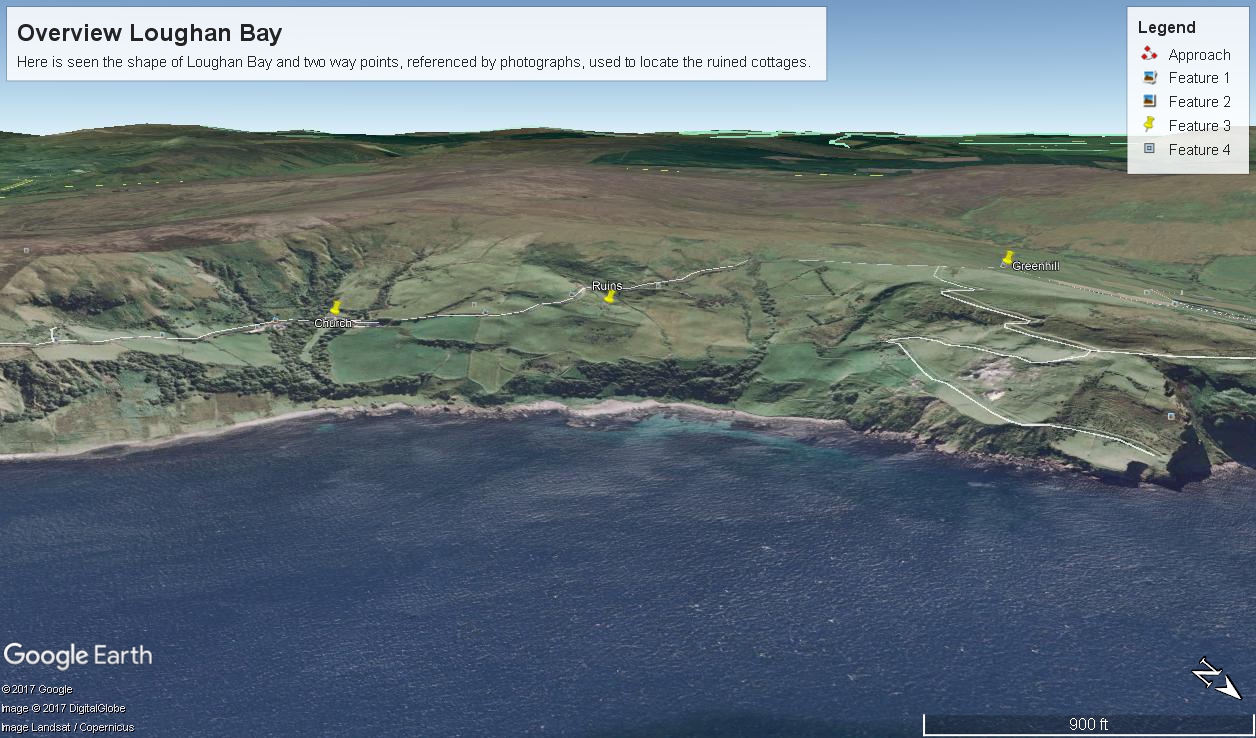
With this information I was able to peruse Google Earth, found the turnoff and the ruins!

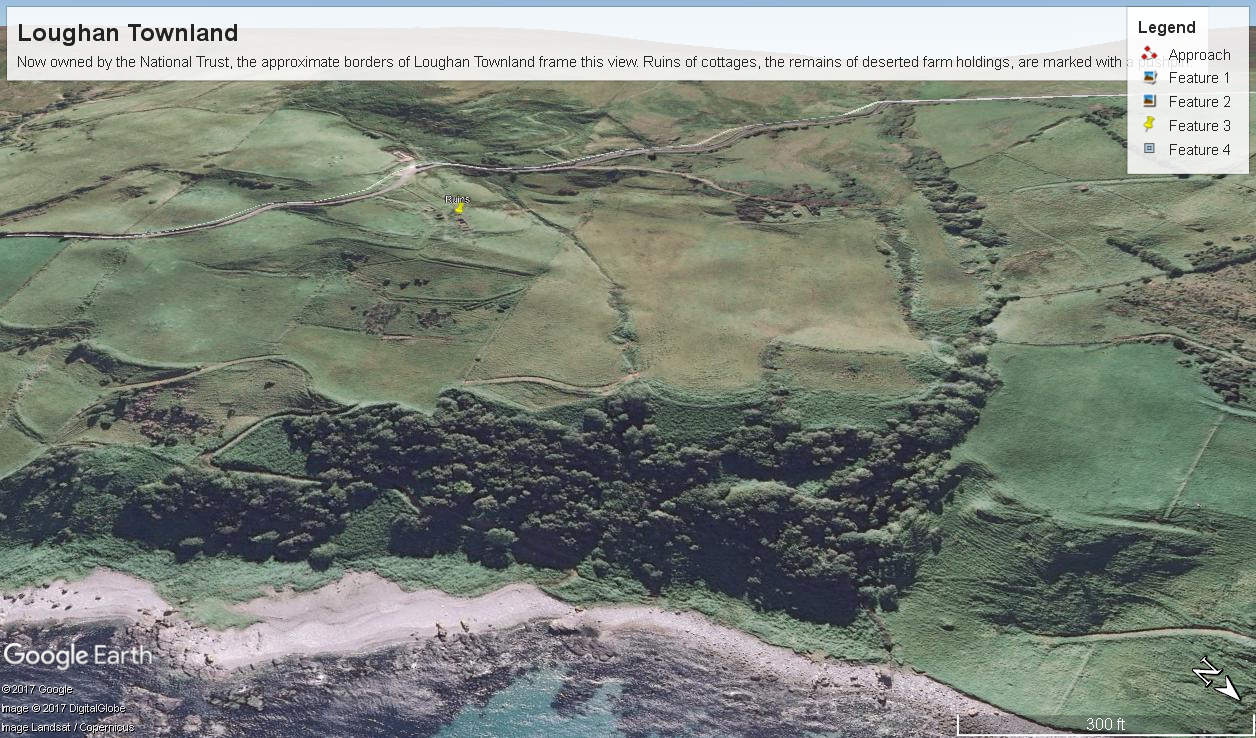
See the above Google Map image sized to approximate the Loughan townland boundaries.

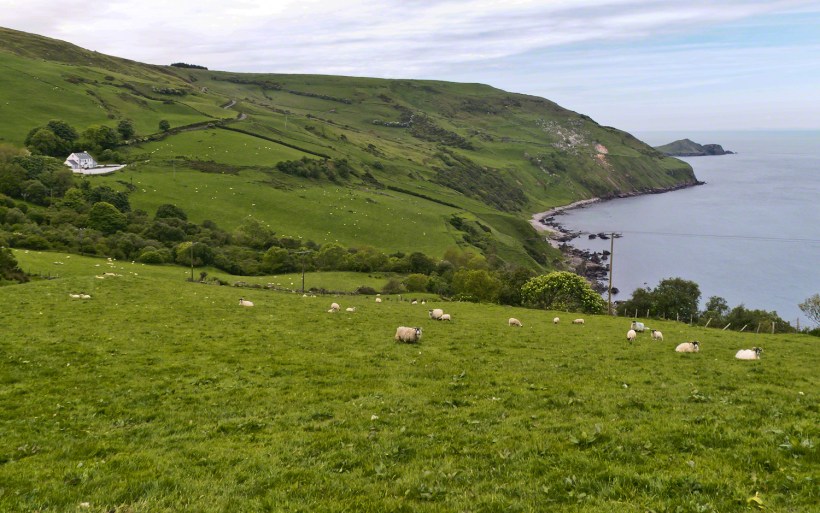
The scenery was jaw dropping lovely the entire time, so I captured view and view. Here are two landscapes time stamped just prior to the church, views including Coolranny and Loughan townlands with Torr Head in the distance.

That is Torr Road….

……a bit further along. It is possible to locate the ruin site from the Google Earth picture. There is a signature grove of bushes on the slope below the ruin site, sandy beach along shore. In the landscapes, Loughan Bay is cradled in a curve of coast.

Want more photography? Click the link for my Online Gallery
Click for the first postings of this series.

Imagine the effect of this environment on the inhabitants, the love of it grows with time.

Want more? Click the link for my Ireland Gallery

Enter your email to receive notification of future postings. I will not sell or share your email address.