Exploring Art with Toddlers: A Day at Johnson Museum

In October 2017, a family visit to the Johnson Museum of Art enriched bonds through art appreciation and nature exploration with toddler Sam.

On a crisp October morning in 2017, I was on the cusp of retirement with leisure time to explored the Johnson Museum of Art at Cornell University, with my grandson Sam and his grandmother, Pam, my wife. We were attending a “Let’s Look Baby” event—a wonderful opportunity to introduce young children to art and the world around them. Sam was a toddler at the time, curious and full of energy, and I was eager to share this moment of discovery with him.

The day started on the museum’s upper level, where expansive windows offered breathtaking views of Ithaca, Cayuga Lake, and the surrounding hills. I lifted Sam so he could take it all in, his little hands gripping my arm as he gazed out at the vibrant autumn landscape while Pam captured the moment. The trees were in early stages of autumn—fiery reds, golden yellows, and rich browns—while Cayuga Lake shimmered in the distance, its deep blue surface reflecting the clear October sky. Sam pointed out toward the horizon; his eyes wide with curiosity. I told him about the lake, the hills, and the valley, trying to capture the beauty of it all in words simple enough for him to understand.

The architecture of the Johnson Museum itself framed the experience perfectly. Designed by I.M. Pei, the building’s clean, modern lines allowed the landscape to take center stage. Standing there with Sam, I felt a profound sense of gratitude—for the view, for the moment, and most of all, for the chance to share it with Sam.

Looking southwest over Cornell University and Ithaca, down the Cayuga Lake Valley. West Hill is to the right. Tompkins County, Finger Lakes Region of New York State

As part of the event, we explored the museum’s galleries, moving from one exhibit to the next. The “Let’s Look Baby” program was designed with young children in mind, blending art appreciation with sensory exploration. While Sam was too young to fully grasp the meaning behind the pieces, he was fascinated by the vibrant colors and the textures of the displays. At one point, we stopped by a ceramic vase. Its elegant curves caught Sam’s attention, and I used the moment to talk to him about shapes and forms, pointing out how it was similar to the roundness of a pumpkin or the arc of a rainbow.
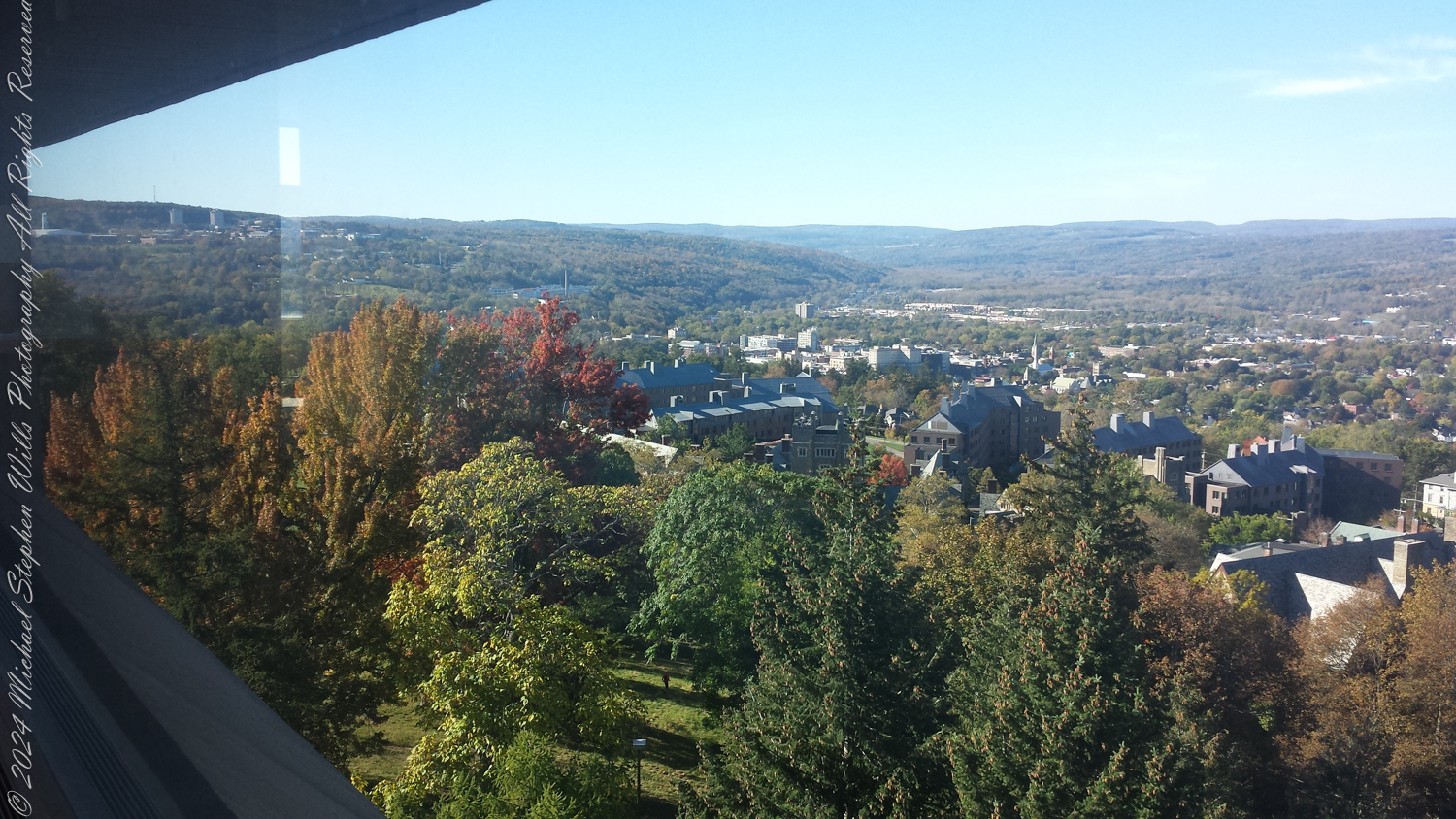
Looking South / Southwest over Cornell University and Ithaca, down the Cayuga Lake Valley. Ithaca College is to the left on South Hill. Tompkins County, Finger Lakes Region of New York State

Throughout the visit, I found myself narrating the world to Sam, drawing connections between what we saw in the museum and the beauty of the natural world outside. It reminded me how much there is to learn and how much joy there is in teaching, even if the lessons are as simple as noticing the colors of leaves or the shape of a cloud.
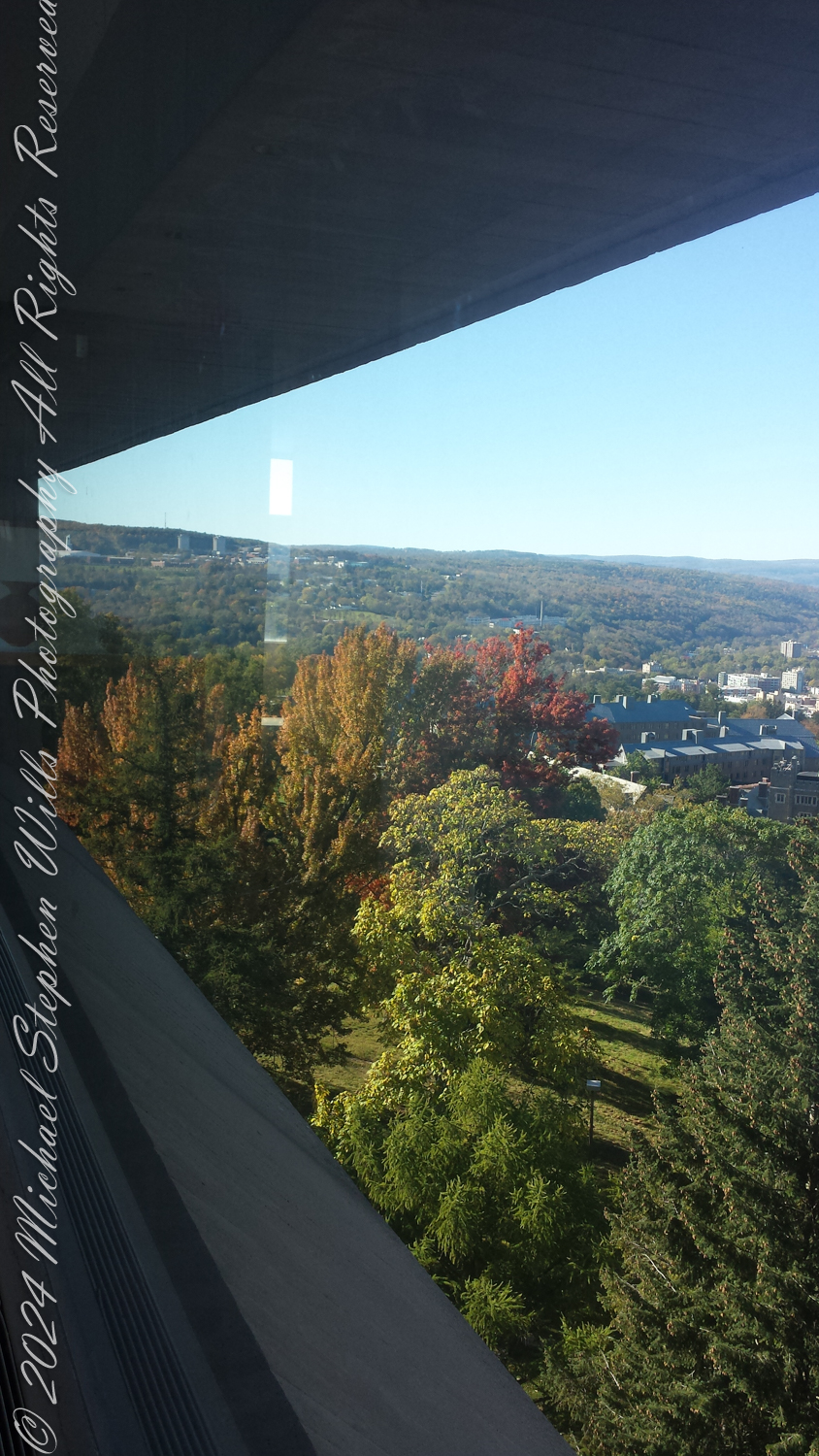
Looking southwest over Cornell University’s Lib Hill and Ithaca, down the Cayuga Lake Valley. West Hill is to the right. Tompkins County, Finger Lakes Region of New York State

We returned to the large windows overlooking Ithaca more than once. From there, I pointed out the landmarks of the city—downtown Ithaca with its steeples, the rolling hills, and the peaceful expanse of Cayuga Lake stretching toward the horizon. Sam listened quietly, his small fingers pointing to whatever caught his attention. I wondered what he was thinking, but I knew this experience, even if he wouldn’t remember it fully, was shaping his view of the world.

Looking to the North / Northwest over Cornell University and Cayuga Heights to Cayuga Lake. West Hill is to the far left. Along the southern lake shore is Stewart Park, the lighthouse, New York State Marina and Cass Park. Tompkins County, Finger Lakes Region of New York State

The day wasn’t just about what we saw—it was about the connection we shared. Holding Sam in my arms, I felt the simple, deep joy of being present in the moment. This was a chance to see the world through his eyes, to notice the details I might otherwise overlook, and to marvel at the way something as simple as a vase or a view could spark his curiosity.

Looking to the North / Northwest over Cornell University and Cayuga Heights to Cayuga Lake. West Hill is to the far left. Along the southern lake shore is Stewart Park, the lighthouse, New York State Marina and Cass Park. Tompkins County, Finger Lakes Region of New York State

As the October sun swept over the landscape, casting warm golden light, we left the museum. Sam was getting sleepy, his little head resting on my shoulder Pam and I shared a quiet contentment. That day at the Johnson Museum is a memory to treasure, a reminder of the beauty in both art and the natural world, and most importantly, the joy of sharing it with someone you love.

Enter your email to receive notification of future postings. I will not sell or share your email address.

Ecological Significance of False Solomon’s Seal

In Taughannock Falls State Park, False Solomon’s Seal captivates with its beauty, ecological role, and historical medicinal uses.

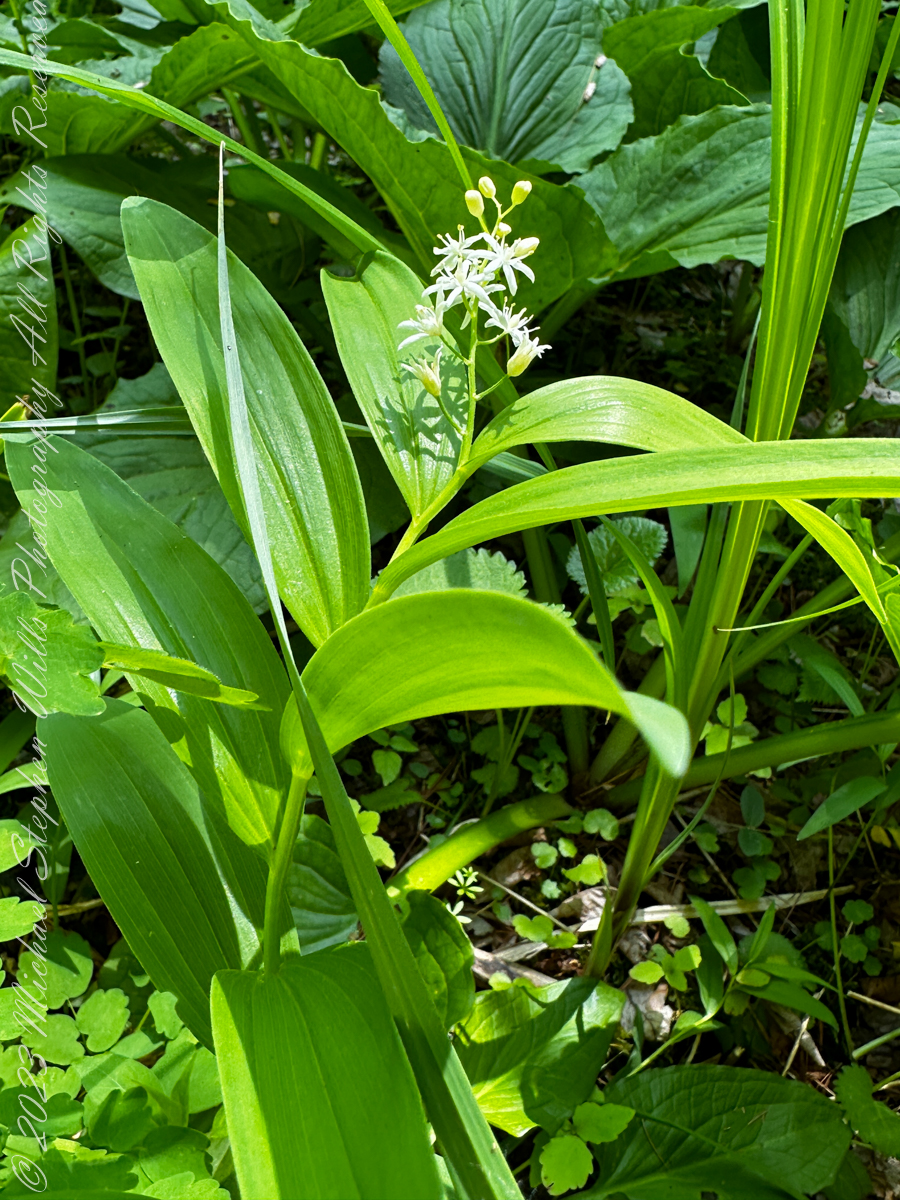
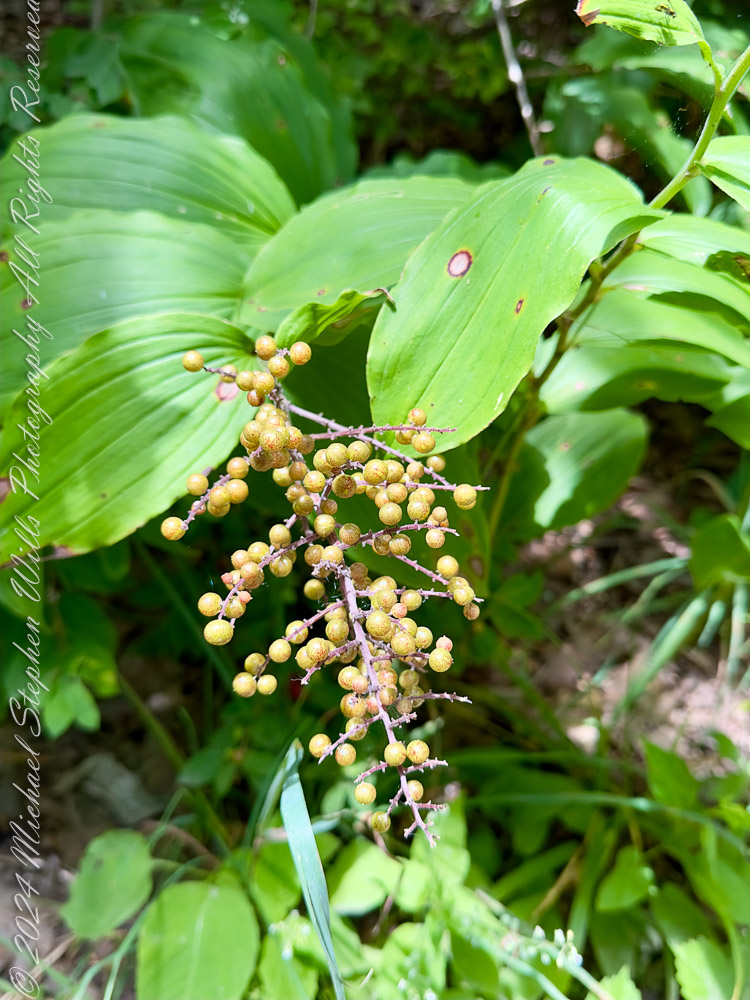
The trails of Taughannock Falls State Park always hold surprises, and on that July day, they did not disappoint. As I paused to take in the tranquility of the woods, my gaze fell upon a plant whose graceful arch and clusters of berries demanded attention. Its broad, lance-shaped leaves alternated along the stem, framing the stem’s terminal cluster of small green berries. Recognizing the plant as Maianthemum racemosum, commonly known as False Solomon’s Seal, I took a moment to admire its understated elegance.

False Solomon’s Seal, scientific name Maianthemum racemosum, is common in the Finger Lakes Region. I found this specimen during a walk with the grandchildren in a local fen among the post-glacial terrain of the Finger Lakes Region. Eames Memorial Natural Area, Cornell Botanic Gardens, Town of Dryden, Tompkins County, Finger Lakes Region, New York State

Characteristics of the Plant

False Solomon’s Seal is a perennial herbaceous plant belonging to the asparagus family (Asparagaceae). It can grow up to three feet tall, its arching stems giving it a unique and recognizable silhouette. The leaves are broad and lance-shaped, with prominent veins running their length, arranged alternately along the stem. At the tip of each stem is a cluster of tiny, spherical green berries, which later in the season ripen to a speckled reddish hue. The plant blooms in late spring to early summer, producing delicate, star-shaped white flowers before transitioning to its fruiting phase.

Found throughout much of North America, Maianthemum racemosum thrives in moist, shaded woodlands, making the lush forests of Taughannock Falls State Park an ideal home. Its ability to grow in the dappled light beneath the forest canopy highlights its adaptability to varying light conditions.

Etymology of the Name

The genus name, Maianthemum, comes from the Greek words “mai” (May) and “anthemon” (flower), reflecting the plant’s tendency to bloom in late spring or early summer. The species name, racemosum, refers to the plant’s inflorescence, which forms a raceme—a cluster of flowers or berries along a single stem. Its common name, False Solomon’s Seal, derives from its superficial resemblance to Solomon’s Seal (Polygonatum spp.), though the latter has bell-shaped flowers hanging beneath its stems, in contrast to the terminal clusters of Maianthemum racemosum.

History and Folklore

False Solomon’s Seal has long been valued for its medicinal and culinary uses by Indigenous peoples and early settlers. The young shoots were harvested and cooked as a vegetable, while the ripe berries were sometimes used in jellies or preserves, though their slightly bitter flavor limited their appeal. Medicinally, teas made from the roots and leaves were used to treat a variety of ailments, including digestive issues, coughs, and sore throats. The roots were also applied as poultices for cuts and bruises, reflecting the deep understanding of natural remedies held by those who lived in harmony with the land.

The plant’s name has sparked legends. While the “false” in its name denotes its distinction from Solomon’s Seal, some folklore suggests that the plant was used to counterfeit the medicinal properties of its namesake. Others believe that its graceful arch and persistent berries symbolize resilience and adaptability, qualities often attributed to those who lived in its native habitats.

Uses and Ecological Role

Although not widely cultivated, Maianthemum racemosum is a valuable plant in its native ecosystems. Its flowers provide nectar for pollinators such as bees and butterflies, while the berries are a food source for birds and small mammals. Its rhizomatous roots also play a role in stabilizing soil in forested environments, preventing erosion and supporting the health of the woodland floor.

For those contemplating harvesting these plants be advised that collection of plants from New York State Parks is prohibited to protect natural resources and maintain ecological balance. According to the New York State Office of Parks, Recreation and Historic Preservation (OPRHP) regulations, “No person shall… remove… any… plant life” within state parks without proper authorization. Therefore, collecting plants in state parks without explicit permission is not allowed. If you have a specific research or educational purpose, you may contact the park administration to inquire about obtaining the necessary permits. However, for casual visitors, it’s best to enjoy the flora from a distance. False Solomon Seal ecological contributions are significant. In addition to its pollinator support and soil stabilization, the plant’s presence is an indicator of a healthy woodland ecosystem.

A Moment of Reflection

As I rose from my crouched position, having taken in the details of Maianthemum racemosum, I felt a quiet gratitude for the opportunity to encounter such a plant. False Solomon’s Seal, with its graceful leaves and unassuming berries, serves as a reminder of the interconnectedness of life in the forest. Its role in the ecosystem, its history with humans, and its understated beauty all speak to the richness of the natural world.

Walking onward, I carried with me a sense of awe for the intricate web of life that thrives in the woods. The False Solomon’s Seal, standing quietly among the ferns and leaf litter, seemed to embody the resilience and balance of the forest—a gentle presence in a vibrant community.

Enter your email to receive notification of future postings. I will not sell or share your email address.

Hylodesmum glutinosum: Characteristics and Ecology

The author reflects on hiking at Taughannock Falls State Park, discovering the Large-Flowered Tick Trefoil’s beauty and ecological significance.

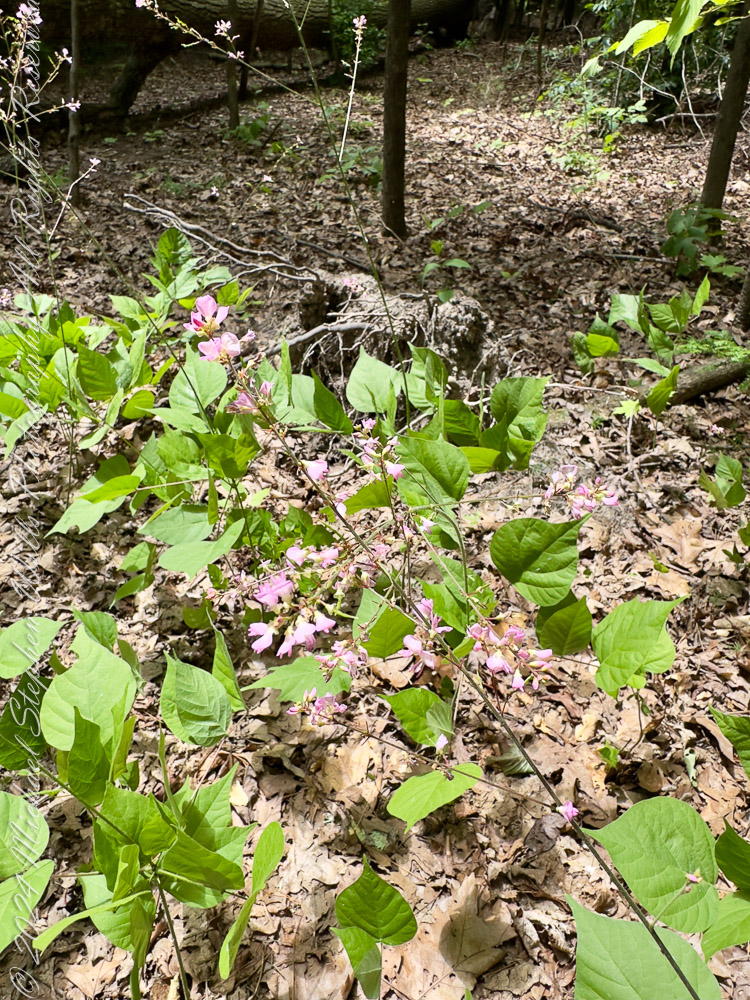
It was a high summer day as I enjoyed a customary hike around of Taughannock Falls State Park on the South and North Rim trails. Here sunlight filtered through the dense canopy, dappling the forest floor with shifting patches of light. Along the trail, my attention was drawn to a cluster of pink blossoms rising on slender, upright stems. Intrigued by their delicate beauty, I crouched down for a closer look. The plant rose above the forest floor, its trifoliate leaves broad and prominently veined, each leaflet slightly larger than I would have expected. These leaves seemed to anchor the plant to the shaded understory, while its flowers reached upward, as though eager to catch the fleeting rays of sun. I captured the plant in this photographs, later used it to identify Hylodesmum glutinosum, or Large-Flowered Tick Trefoil.

Characteristics of the Plant

The Large-Flowered Tick Trefoil is a striking member of the pea family (Fabaceae). Its pink, pea-like flowers are arranged in graceful racemes along the upper portions of its stems, their vibrant color contrasting beautifully with the green foliage around them. The leaves, broad and trifoliate, lend the plant its distinctive appearance. The name “tick trefoil” refers to the plant’s seed pods, which are flat and segmented, equipped with tiny hooks that cling stubbornly to passing animals or hikers, hitchhiking their way to new locations.

The plant is native to eastern North America, including the forests and trails of New York State. Its preference for rich, well-drained soils in partially shaded woodlands makes it a common sight in places like Taughannock Falls State Park. Blooming from mid to late summer, it provides an essential nectar source for bees and other pollinators, playing its part in the intricate web of the forest ecosystem.

Etymology of the Name

The genus name, Hylodesmum, was established only twenty-five years ago when the plant was reclassified from the genus Desmodium to a new genus within the tribe Desmodieae. The name reflects its forested habitat, with “hylo” derived from the Greek word for “wood” or “forest.” Previously described in 1802 as Hedysarum glutinosum and later placed in Desmodium, the species name glutinosum remains unchanged, meaning “sticky” in Latin. This aptly describes the plant’s seed pods, which adhere to anything that brushes past them. Together, these names encapsulate both the botanical structure and the unique dispersal strategy of this plant.

History and Folklore

Native Americans and early settlers were intimately familiar with tick trefoils. The plant’s seeds, notorious for clinging to clothing and fur, earned it a reputation as a nuisance, but its resilience and utility could not be overlooked. Indigenous peoples utilized various parts of the plant for medicinal purposes. The roots and leaves were brewed into teas to treat fevers and digestive ailments, while poultices made from the leaves were applied to wounds to promote healing. Such uses highlight the depth of knowledge early inhabitants had about their environment.

The plant’s sticky seed pods also became the subject of folklore. Children in rural communities would playfully call it “hitchhiker’s weed,” competing to see who could collect the most seeds on their clothing during outdoor adventures. These seeds, so adept at attaching themselves to passersby, were seen as symbols of persistence and adaptability, traits that many admired.

Uses and Ecological Role

While Hylodesmum glutinosum is not commonly cultivated, its ecological contributions are significant. As a member of the Fabaceae family, it has the ability to fix nitrogen in the soil through a symbiotic relationship with rhizobia bacteria in its root nodules. This makes it a valuable plant in maintaining soil fertility in its native ecosystems. Its flowers attract pollinators like bees and butterflies, ensuring that the forest remains vibrant and full of life.

In addition to its ecological importance, the plant’s seeds have a curious modern use: they’ve been studied for their ability to help detect movement in the environment. Researchers have examined the sticky pods’ structure as a natural model for creating adhesives and tracking devices, proving once again that even the smallest details in nature can inspire human ingenuity.

A Moment of Reflection

As I rose to my feet, brushing the leaf litter from my hands, I felt a renewed sense of wonder for the intricate lives of the plants surrounding me. The Large-Flowered Tick Trefoil, with its vivid pink flowers and ingenious seed pods, seemed to embody the essence of the forest: a harmonious blend of beauty, resilience, and interconnection.

Walking away, I carried with me not just the memory of its vibrant blooms, a deep respect for its role in the natural world. In the quiet of Taughannock’s wooded trails, Hylodesmum glutinosum had shared its story, a tale of persistence, adaptation, and the hidden wonders that flourish when we take the time to notice.

Enter your email to receive notification of future postings. I will not sell or share your email address.

The Myths and Beauty of Wood Anemones

The wood anemone, Anemone nemorosa, symbolizes beauty and resilience, captivating observers with its elegant blooms and rich folklore.

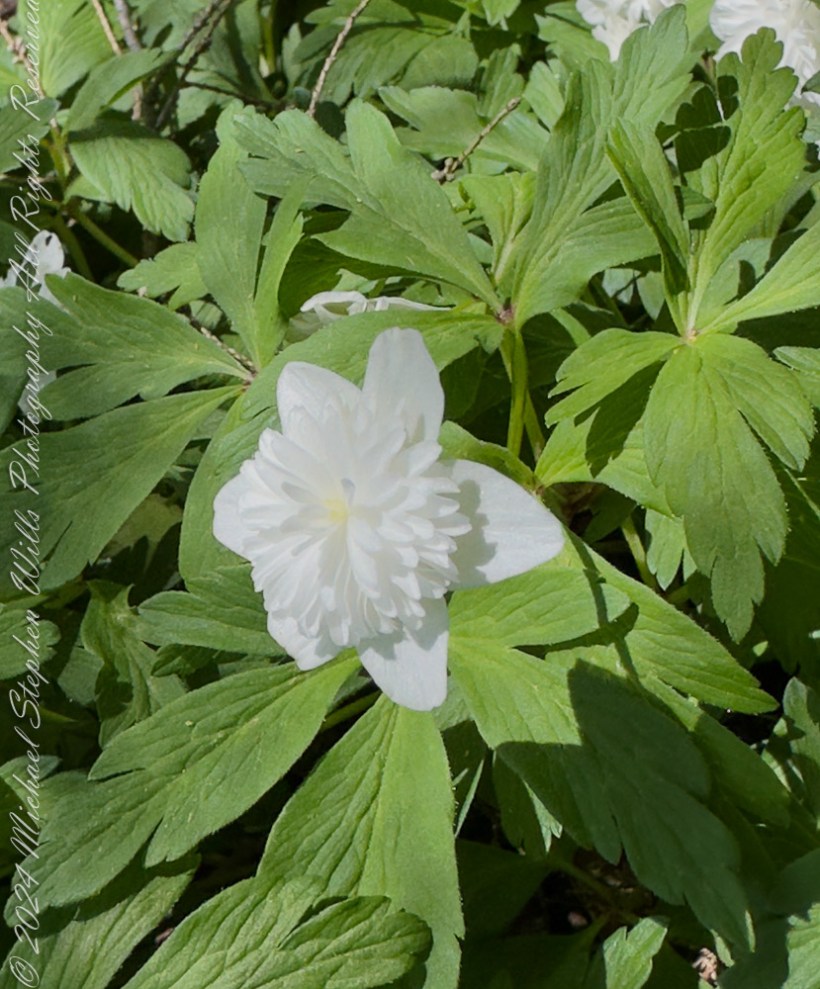
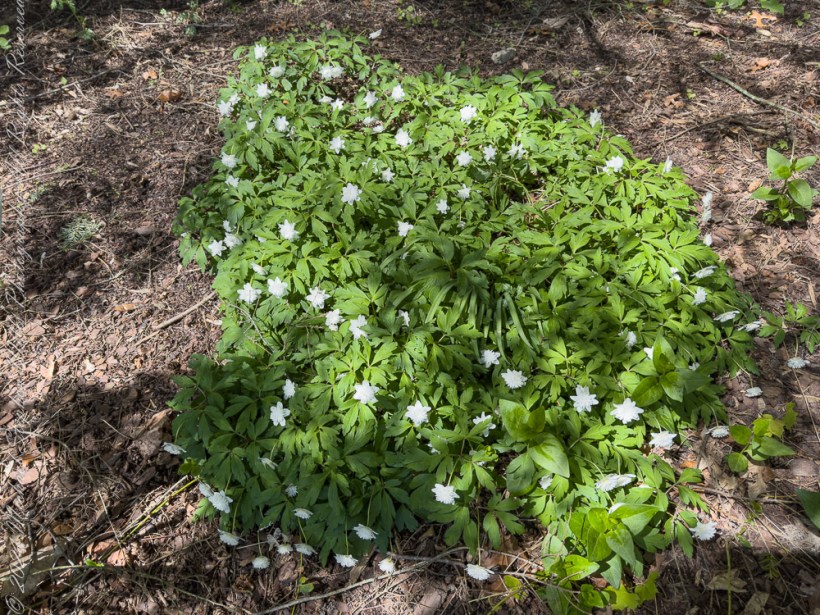
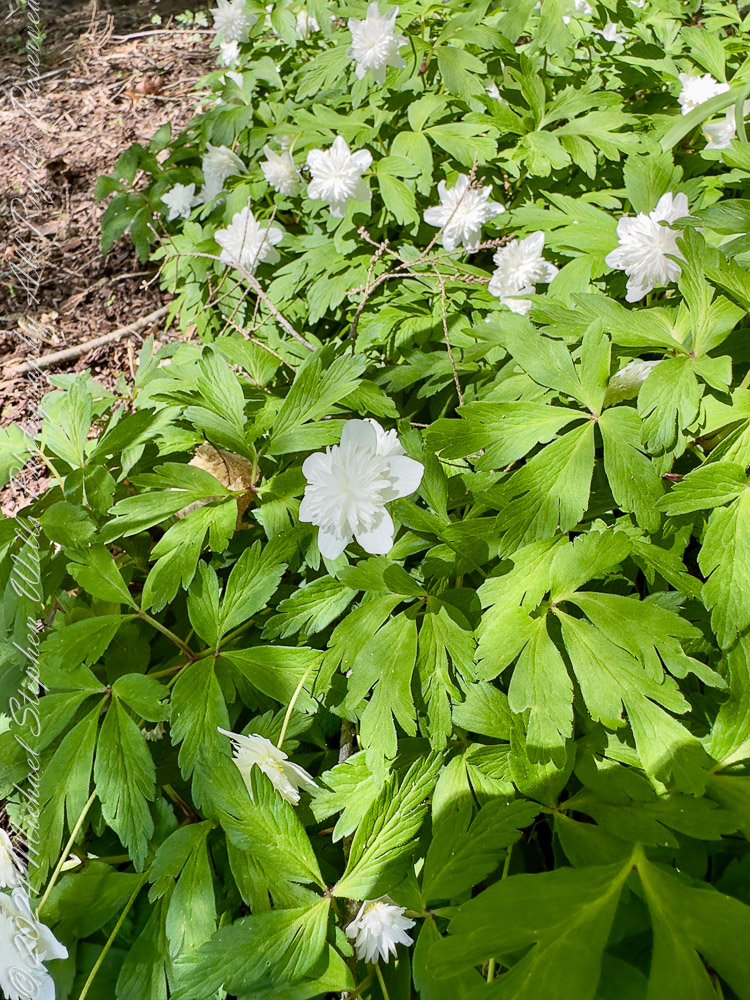
As I wander through our yard, my gaze is irresistibly drawn to a mesmerizing carpet of white blossoms, illuminated by the dappled sunlight filtering through the graceful boughs of our hemlocks. Each bloom, delicate and intricately ruffled, resembles a cluster of tiny, pure clouds resting gently atop a vibrant sea of green. These are Anemone nemorosa, affectionately known as wood anemone or windflower. This particular patch, adorned with a double-flowered variety, owes its presence to the thoughtful hands of our parents, who landscaped the property during the 1970s and 1980s. Their vision continues to bloom each spring, as the cascading petals exude an understated elegance that feels both luxurious and unpretentious—a living legacy woven into the fabric of this place we call home.

The wood anemone is a perennial plant, its rhizomatous growth weaving an intricate tapestry under the dappled sunlight of the forest floor. Each flower arises on its slender stem, surrounded by finely divided trifoliate leaves, their fresh green hue amplifying the purity of the blossoms. The flowers themselves, with their many layers of petal-like sepals, are a marvel of nature’s design, combining elegance and resilience.

The scientific name, Anemone nemorosa, carries echoes of ancient understanding. The genus name Anemone originates from the Greek word ánemos, meaning “wind.” According to classical mythology, these flowers were said to spring forth from the tears of the goddess Venus as she mourned the death of Adonis. The appellation of “windflower” ties to this myth, suggesting that the blooms open only at the bidding of the wind. The species name nemorosa comes from the Latin nemorosus, meaning “of a wooded grove,” aptly describing its preferred habitat.

There is a certain humility in the way the wood anemone thrives—spreading slowly but persistently through deciduous woodlands, forming colonies that greet the spring with their pristine blooms. While the double-flowered variety lacks the simplicity of the single-layered wild form, it retains all the grace that has inspired poets and naturalists alike. It is as if each bloom whispers its secrets to the passing breeze, stories of centuries gone by when druids and herbalists revered the plant as a symbol of protection and healing.

Culturally, the wood anemone has deep roots. In folklore, it was believed to bring luck to those who carried it, while others regarded it as a harbinger of illness if picked prematurely. The flowers were said to close tightly in response to rain, a trait lending them an air of sentience as they interact with their environment.

In medieval herbalism, the plant was thought to possess medicinal properties, though its potent compounds also rendered it toxic if mishandled. It was used cautiously to treat ailments such as rheumatism and respiratory issues. Modern understanding has largely relegated these medicinal uses to history, but the plant’s ability to captivate the senses remains undiminished.

Looking at this verdant patch before me, I am reminded of the transient beauty of spring. Anemone nemorosa emerges briefly, a fleeting celebration of life before retreating into its quiet dormancy beneath the soil. It thrives in the undisturbed spaces of the world, reminding us of the importance of preserving the ecosystems that allow such delicate wonders to flourish.

Today, as the soft May sunlight streams through the trees, illuminating each ruffled blossom, I am filled with gratitude for the enduring gift left by our parents, who lovingly planted these flowers decades ago. The wood anemone, whether viewed as a mythological symbol, a natural marvel, or a fleeting delight, offers a gentle reminder to cherish the beauty that surrounds us. Its ephemeral blooms, returning each spring, stand as a testament to nature’s quiet yet profound artistry—a living masterpiece and a poignant connection to the legacy of those who shaped this cherished landscape here in Ithaca, New York.

Enter your email to receive notification of future postings. I will not sell or share your email address.

Taughannock Falls State Park: A Geological and Ecological Marvel

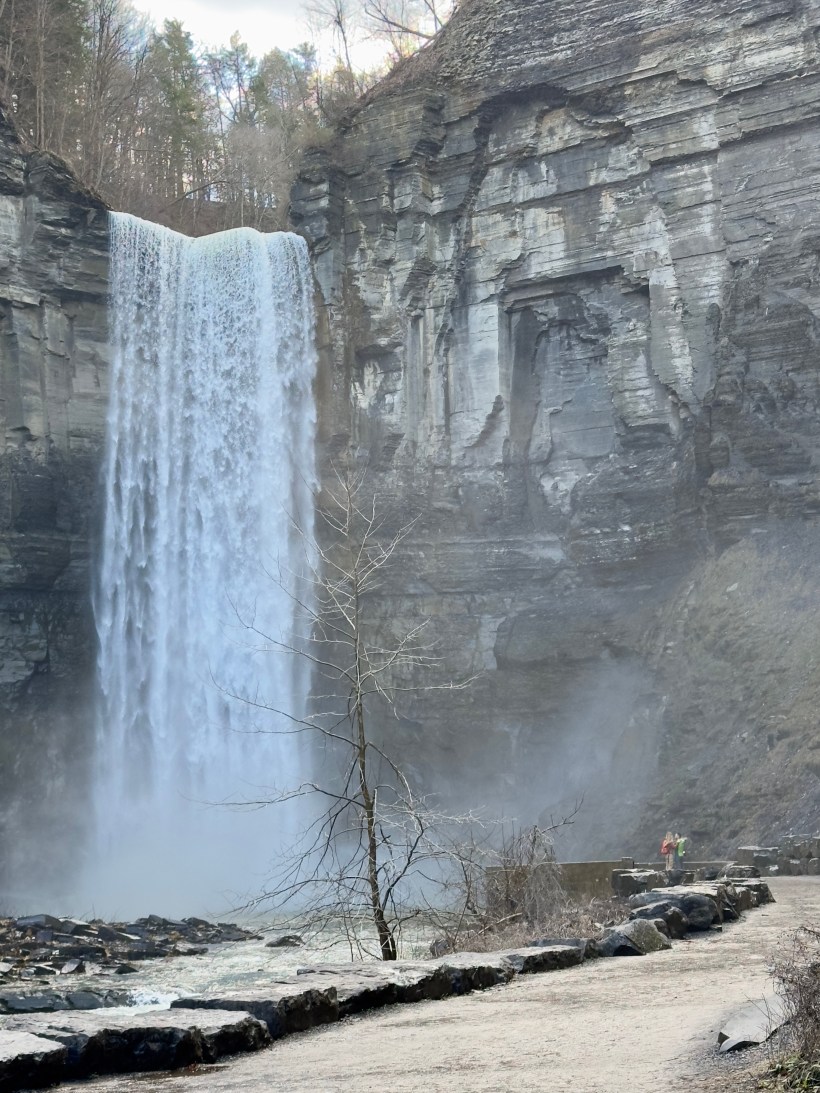
Taughannock Falls, a majestic 215-foot waterfall, showcases nature’s beauty and power, intertwining geological history with vibrant ecosystems in New York.


Introduction
Nestled in the heart of the Finger Lakes region of New York, Taughannock Falls stands as a testament to the delicate balance of power and beauty in nature. This iconic waterfall plunges 215 feet—one of the tallest single-drop waterfalls east of the Rocky Mountains—into a gorge whose story is written in stone. The park surrounding this natural wonder offers a symphony of sights, from towering cliffs to lush greenery, inviting visitors to explore its ancient secrets and vibrant life.

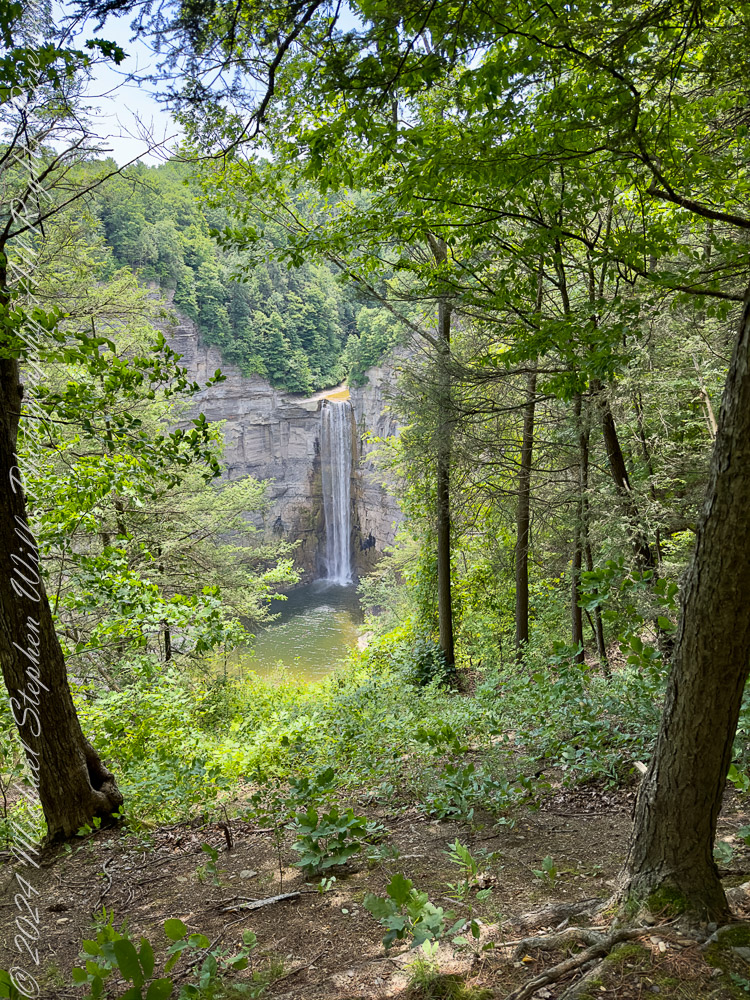
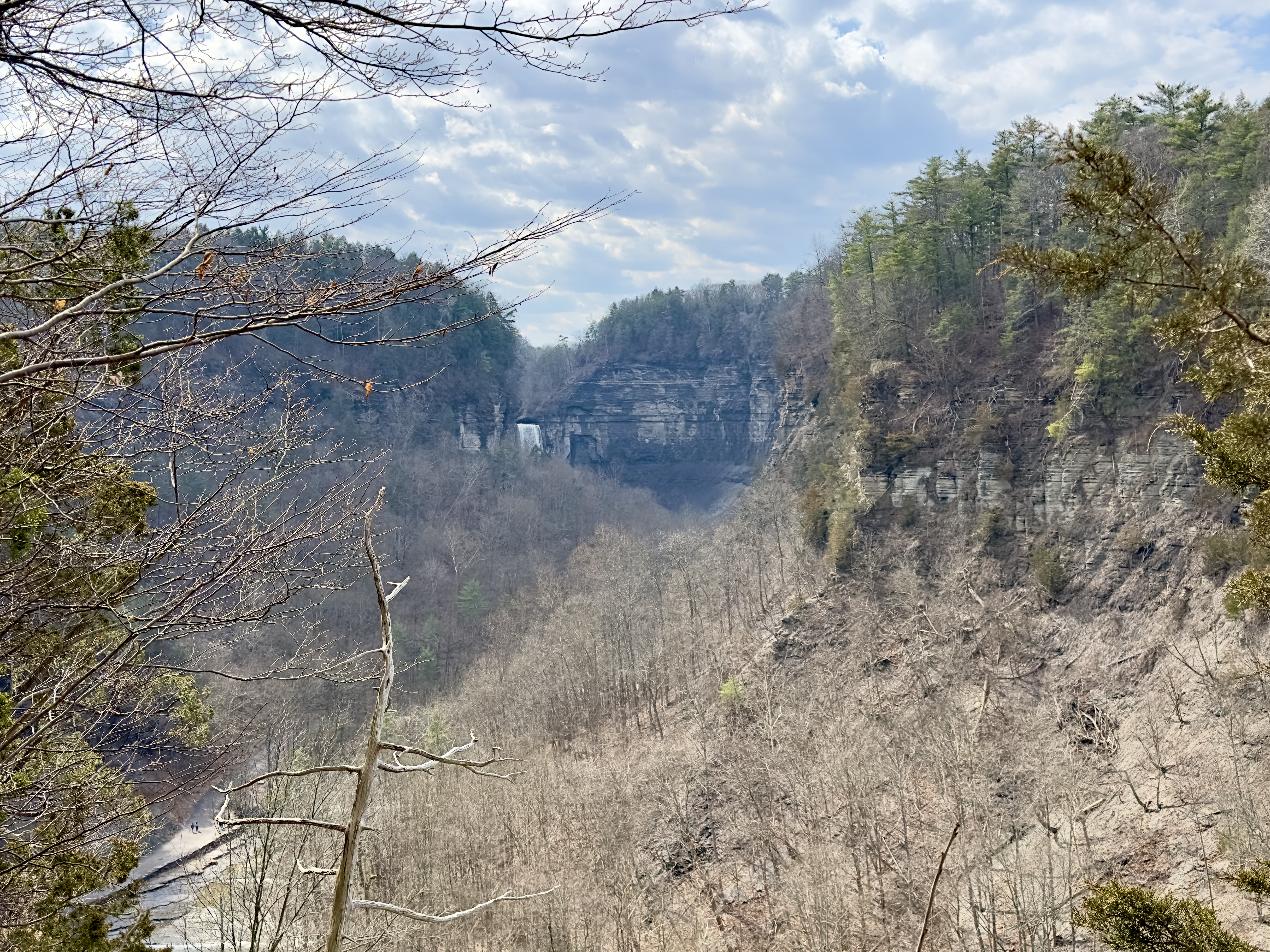
View of taughannock Falls from the South Rim Trail. Taughannock Falls New York State Park, Trumansburg, Tompkins County, Finger Lakes Region

A Story Written in Stone
The rocks of Taughannock Falls tell a story that stretches back 380 million years to the Devonian Period, a time when the region was submerged beneath a shallow inland sea. Layer upon layer of shale, sandstone, and limestone formed as sediment settled to the ocean floor, preserving the fossils of marine life that once thrived here. These rocks have endured the passage of eons, but the gorge itself is a far more recent creation.

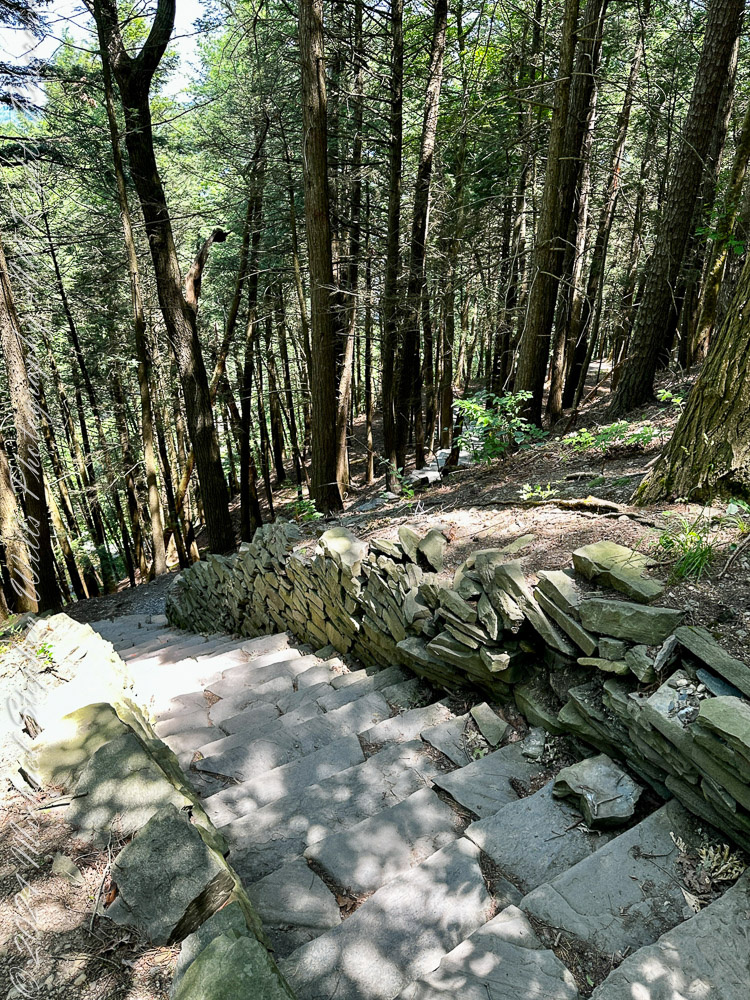
Limestone Steps on the South Rim Trail descend to the gorge floor.

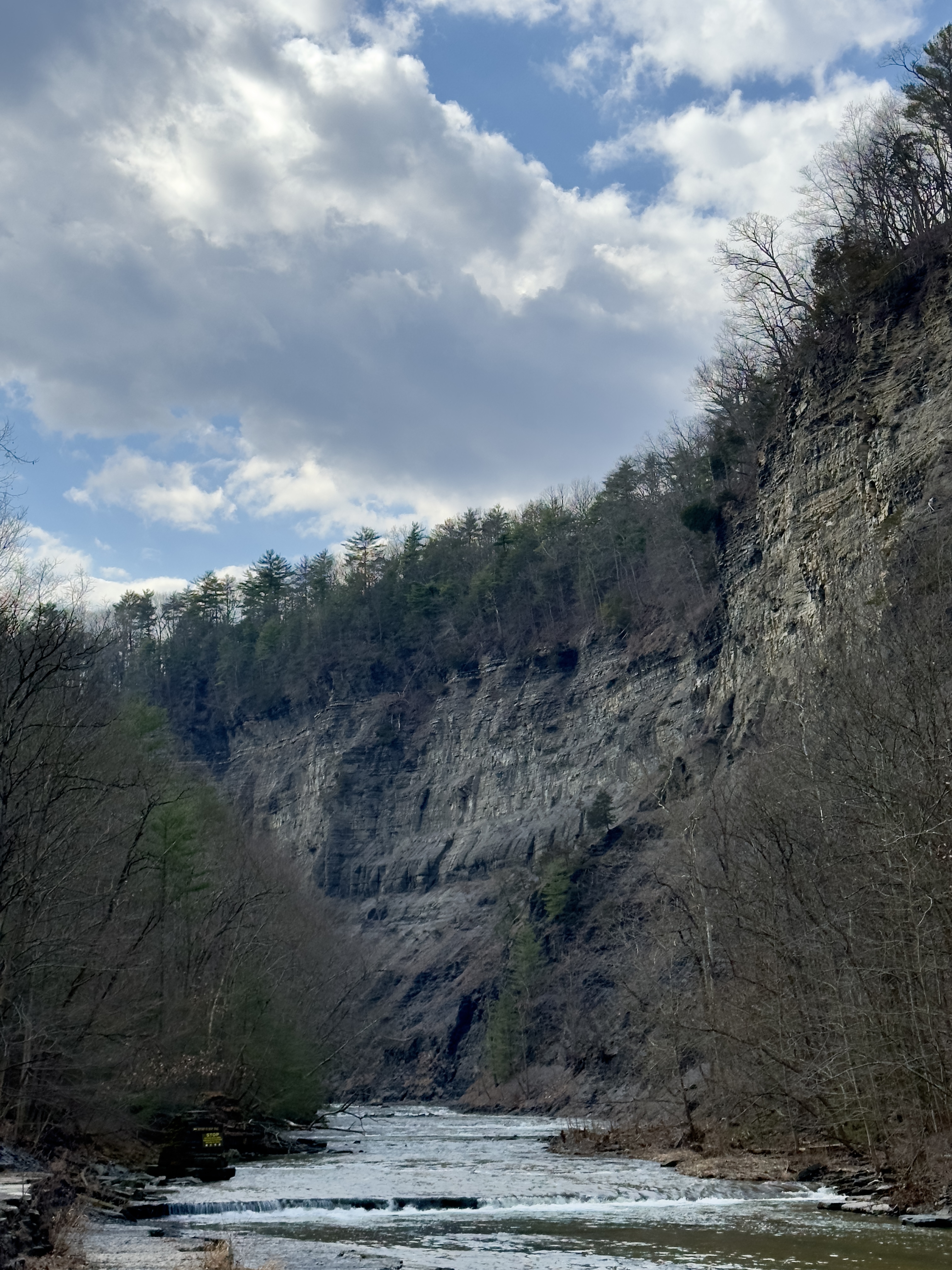
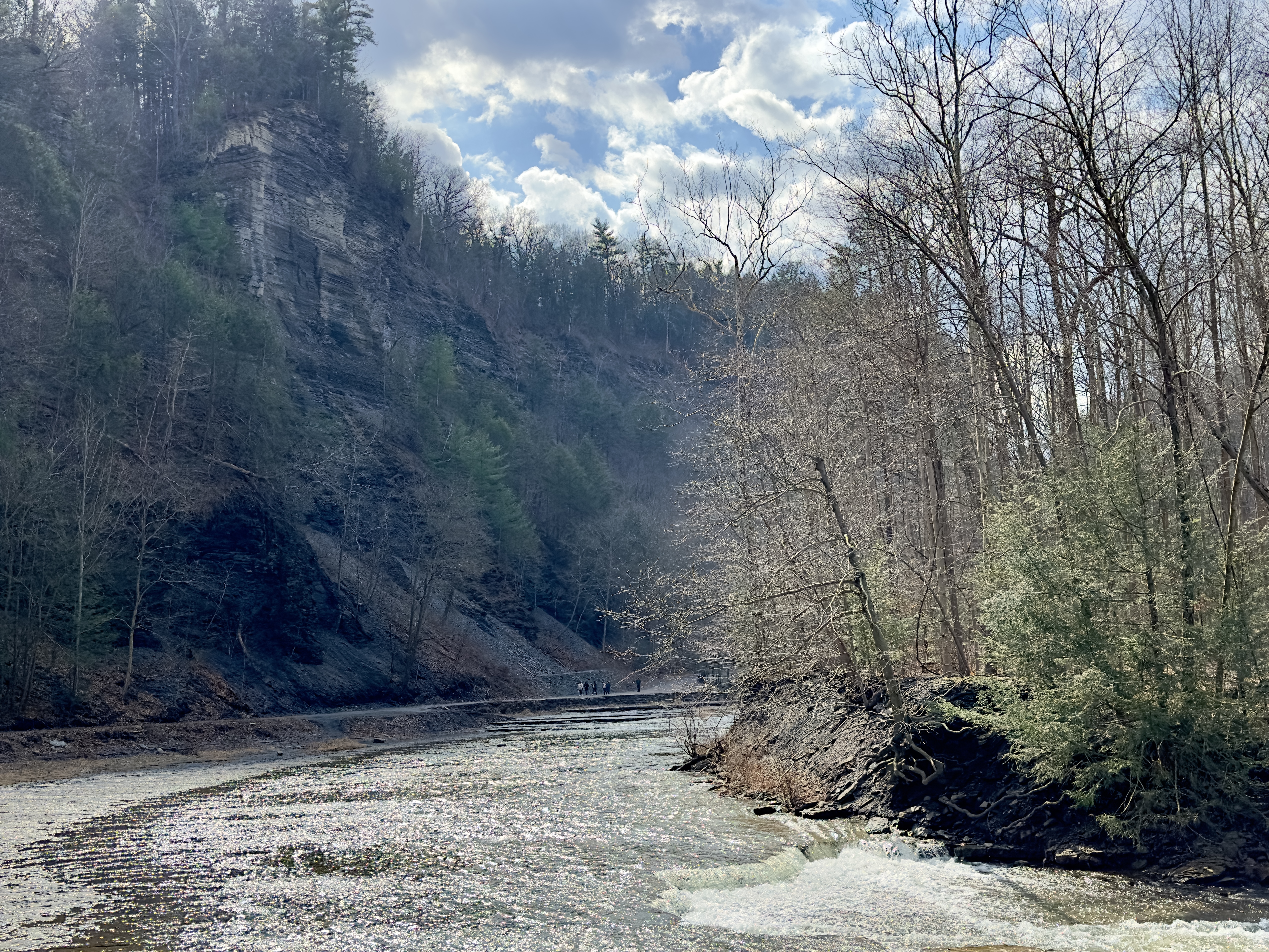
It was the retreat of the mighty Laurentide Ice Sheet, approximately 10,000 years ago, that set the stage for Taughannock’s grandeur. As glaciers melted, torrents of water carved the U-shaped valleys that now cradle the Finger Lakes. Taughannock Creek, a tributary of Cayuga Lake, began its work, etching its path through ancient rock, sculpting the gorge we see today. In just 10,000 years—a fleeting moment in geological time—the relentless force of water carved its way 3/4 of a mile upstream, creating the awe-inspiring chasm and waterfall that continue to evolve even now.

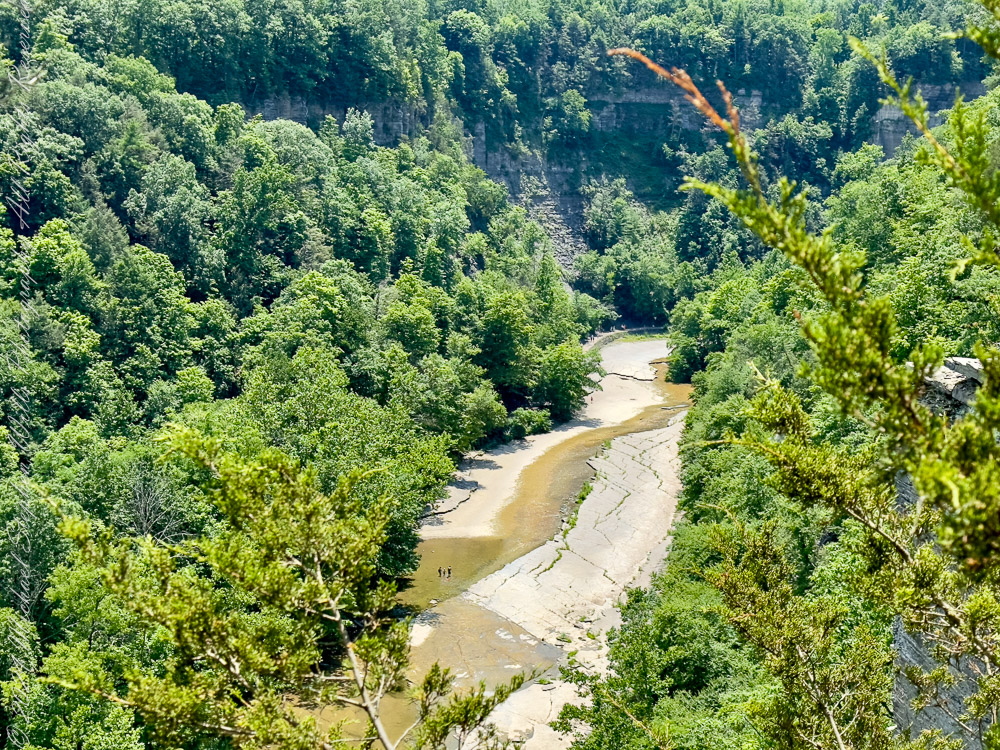
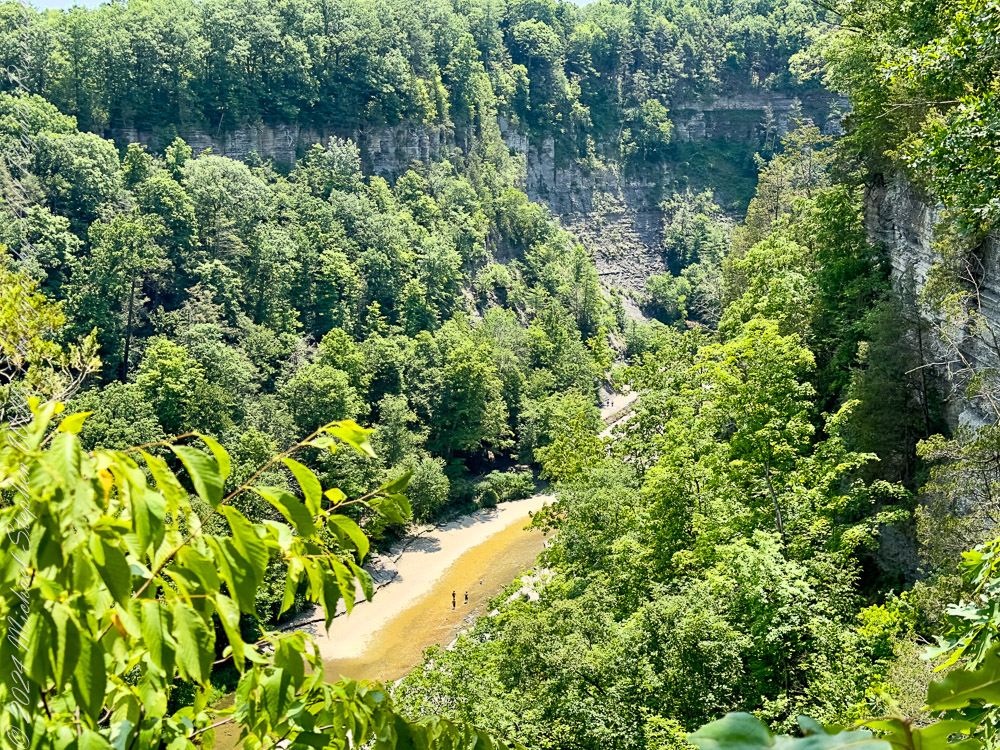
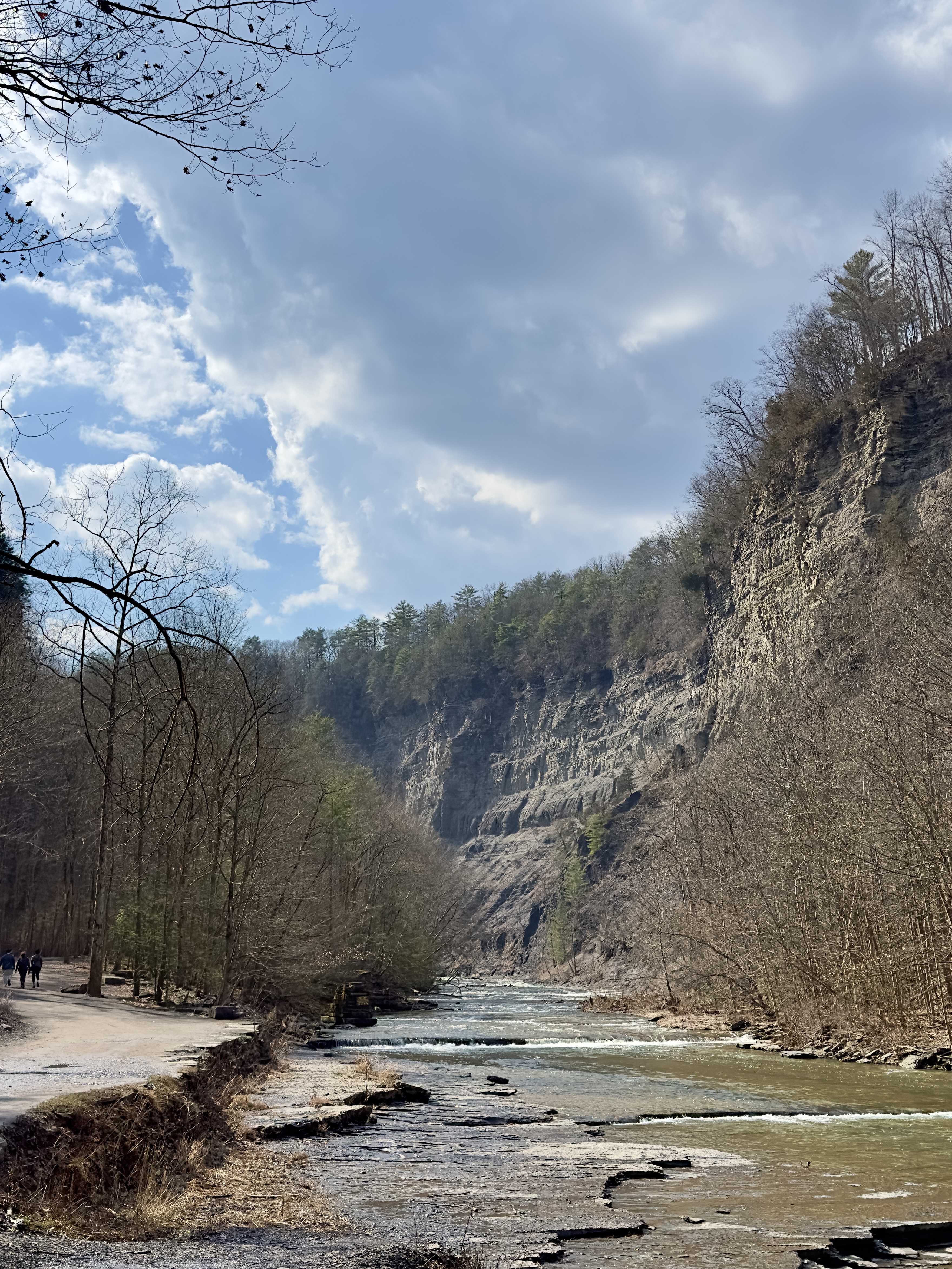
Taughannock Creek carved this landscape over thousands of years.

The Gorge’s Living Tapestry
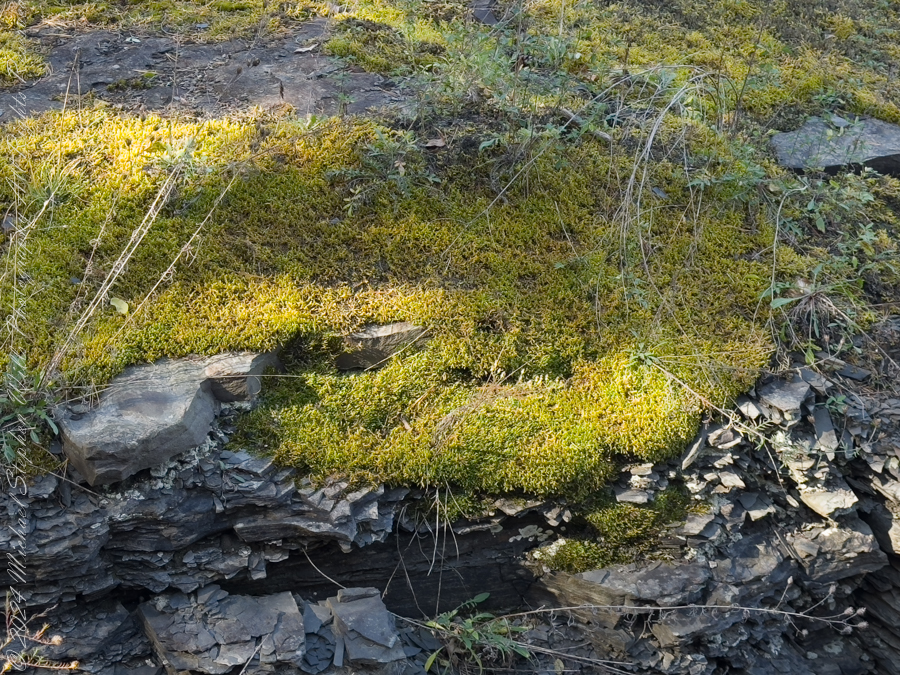
Beyond its geological wonders, Taughannock Falls State Park bursts with life. Along the North and South Rim Trails, Eastern Hemlocks (Tsuga canadensis) stand tall, their evergreen branches weaving shadows that dance across stone stairways and forest floors. These silent sentinels are habitats for myriad creatures and protectors of the delicate ecosystem.

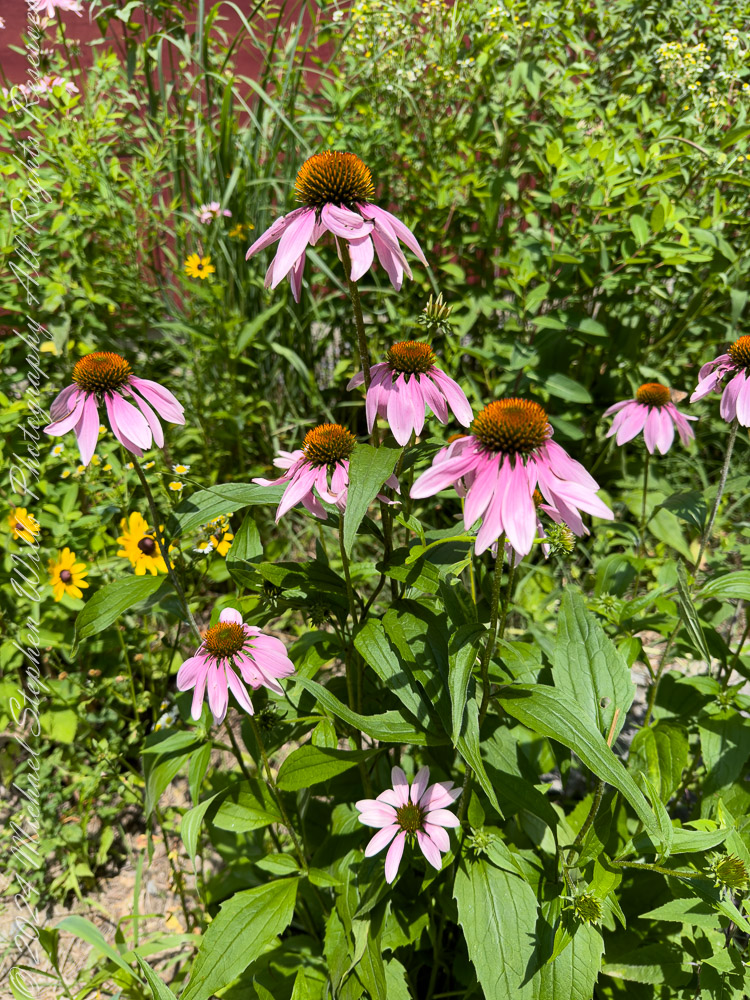
Wildflowers were planted by park staff at the Falls Overlook. The bright yellow of Black-eyed Susans (Rudbeckia hirta) and the vibrant purple of Coneflowers (Echinacea purpurea) attract bees and butterflies, their nectar fueling the intricate web of life that thrives here. Along the trail, on the forest floor, mosses and ferns cling to rocks, softening the edges of the gorge with their verdant touch.

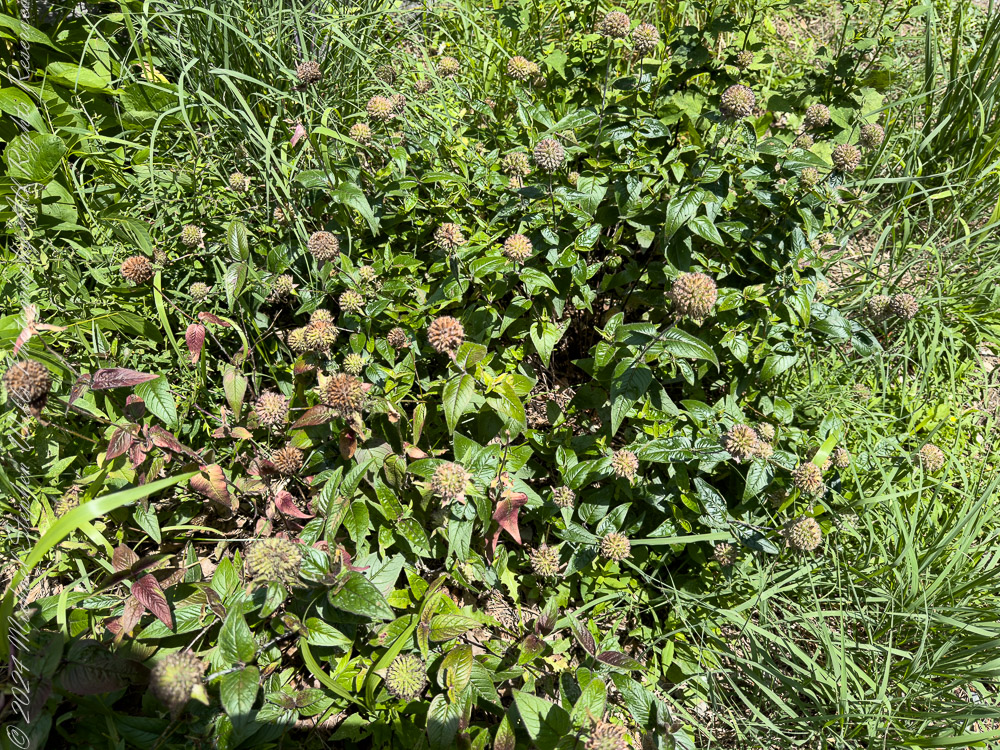
Cone Flowers
Cone Flowers gone to seed
From a walk around Taughannock Falls State Park “Rim Trails” October 22nd, 2024. Trumansburg, Tompkins County, Finger Lakes Region, New York State.

The Fall’s Eternal Dance
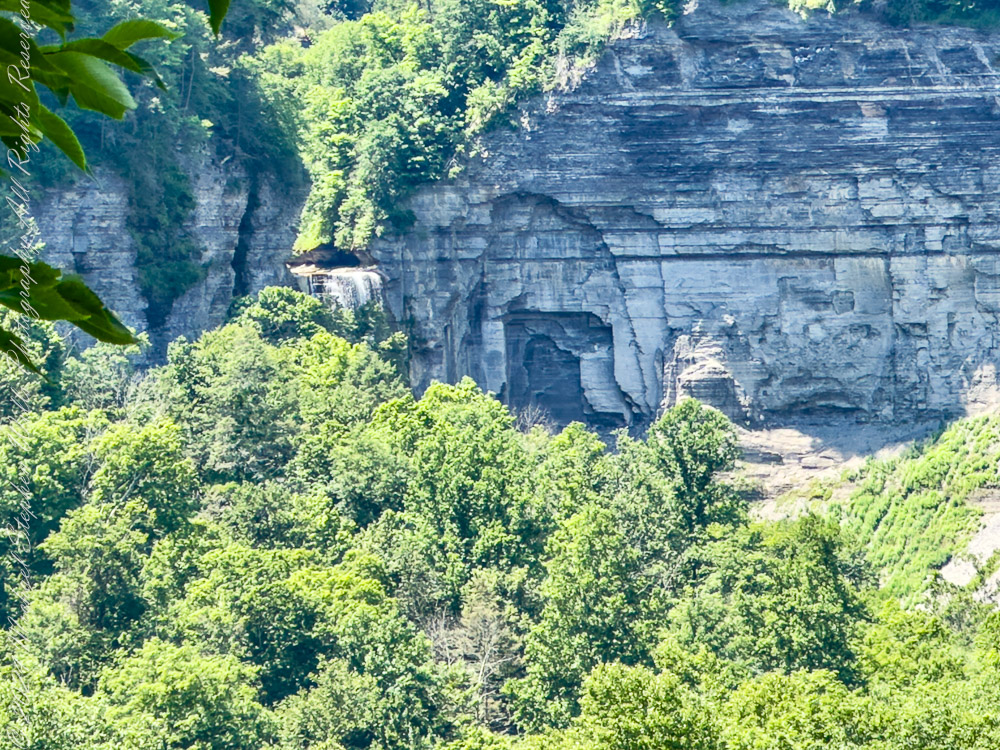
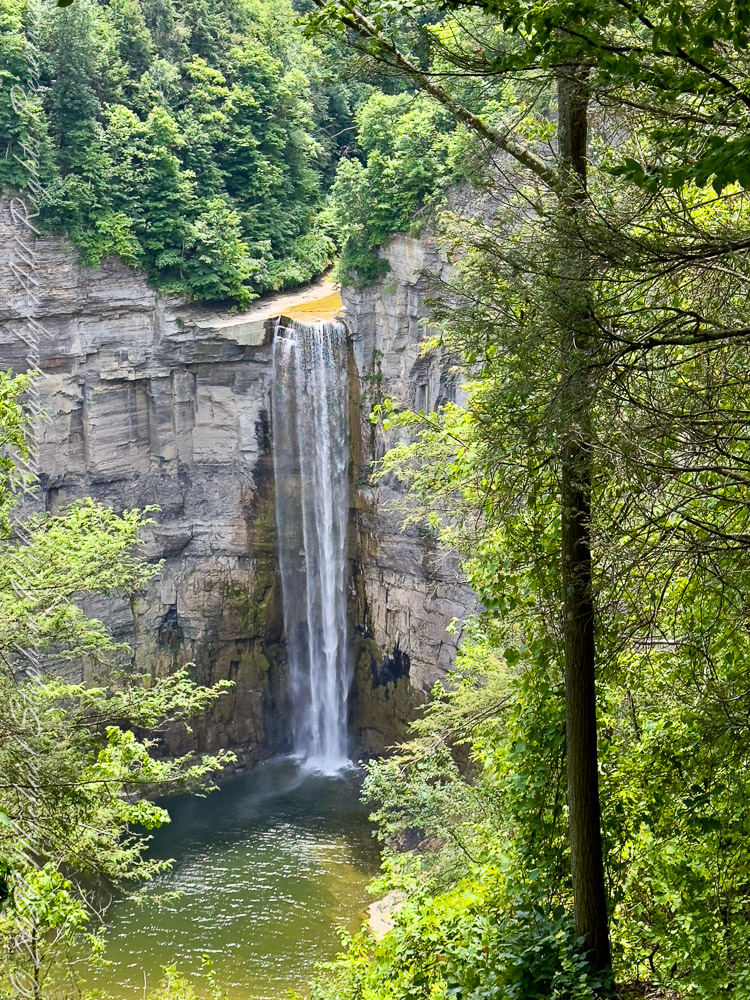
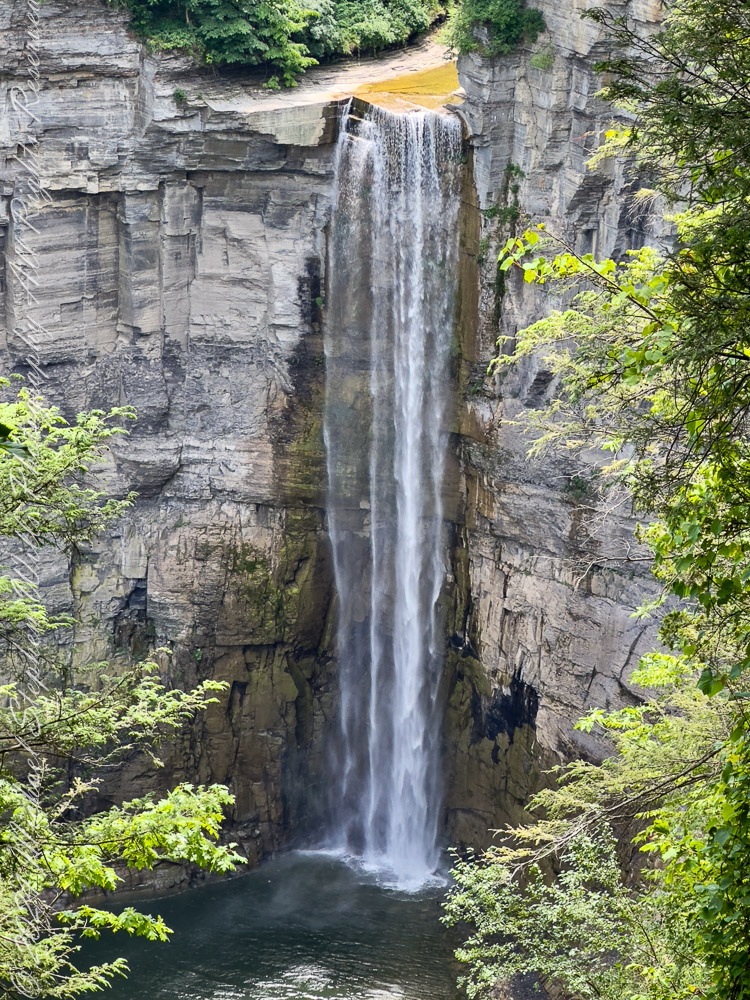
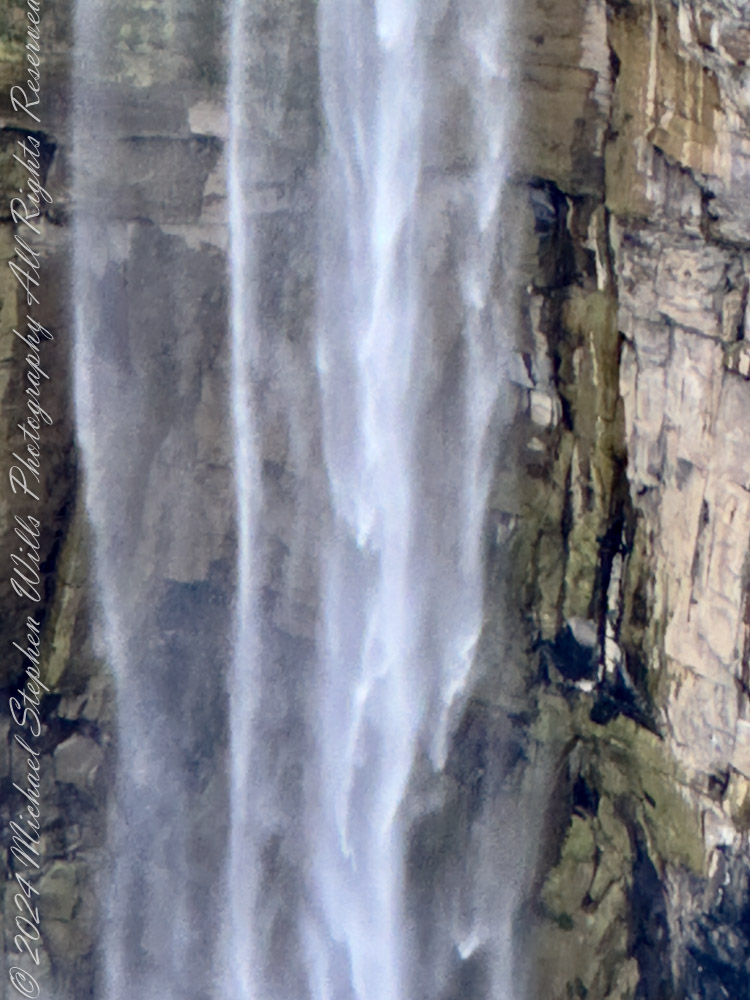
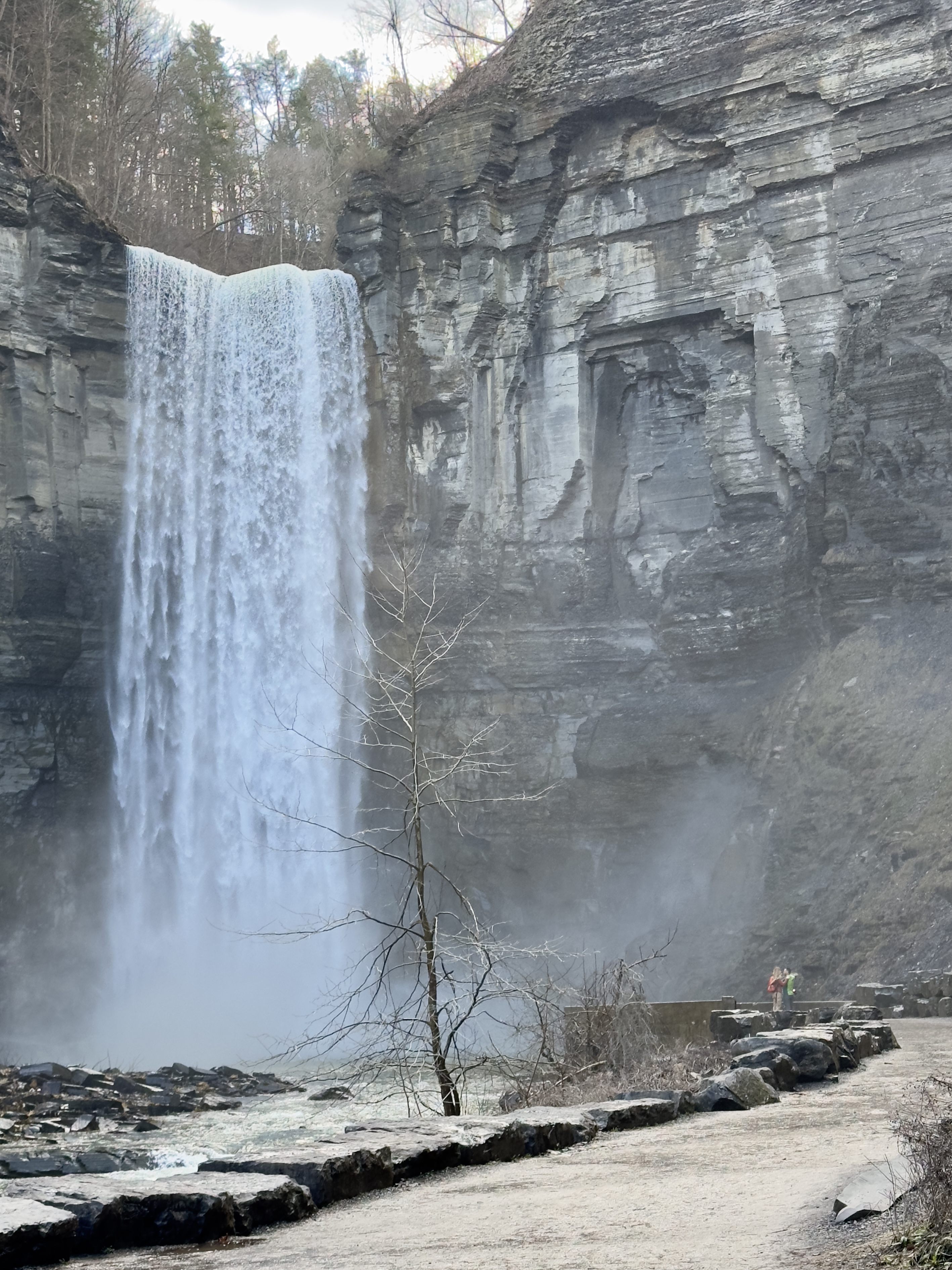
At the heart of the park is the waterfall itself, its roar both a hymn and a whisper of time’s passage. The view from the North Rim Trail reveals the waterfall framed by steep cliffs, their striations like pages in a book written by water, wind, and time. The plunge pool below, shimmering in sunlight, seems almost sacred—a place where the forces of nature meet in harmony.

Viewed from the North Rim Trail on a summer morning. Taughannock Falls New York State Park, Trumansburg, Tompkins County, Finger Lakes Region

Even as we marvel at its beauty, the falls are a reminder of the earth’s constant transformation. Each drop of water that cascades down the cliff face carries away tiny fragments of rock, continuing the slow, deliberate work of reshaping the land. What we witness today is but one moment in an ongoing process—a fleeting glimpse of a masterpiece in progress.

A Place of Wonder
To stand at the edge of Taughannock Falls is to feel both small and connected. The cliffs, formed over hundreds of millions of years, whisper of ancient seas and forgotten worlds. The gorge, carved in the blink of an eye by geological standards, speaks to the power of water and time. And the vibrant life that fills the park reminds us of nature’s resilience and beauty.

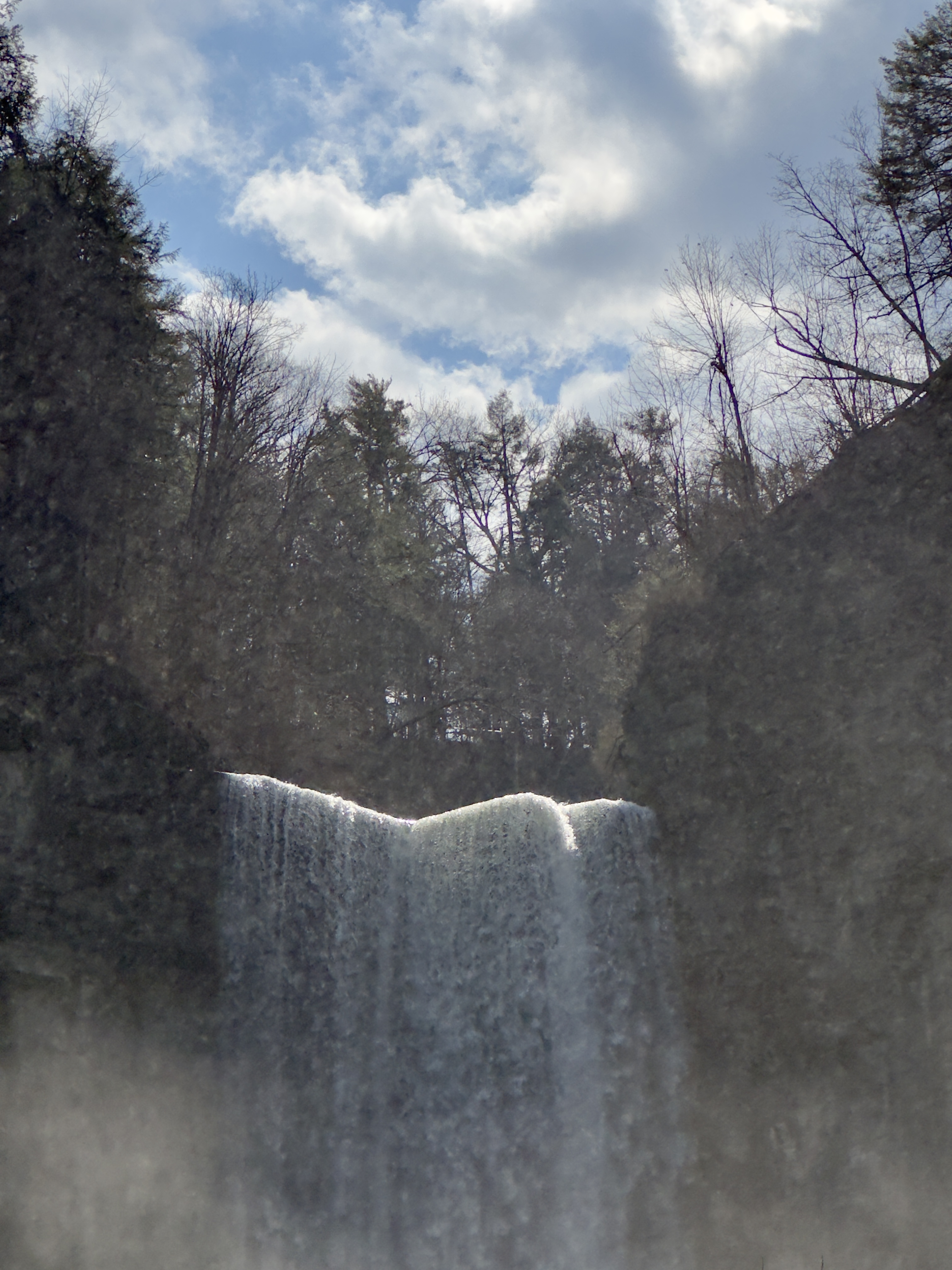
As the sun filters through the trees, illuminating the mist that rises from the falls, it’s easy to believe that this place holds magic. Perhaps it’s in the way the water sparkles like diamonds in the sunlight or the way the breeze carries the scent of pine and earth. Or maybe it’s in the knowledge that here, in this park, we are witnesses to a story billions of years in the making.

Conclusion
Taughannock Falls State Park is a place of wonder where geology, ecology, and history converge. It invites us to reflect on the immense forces that shape our world and to cherish the fleeting beauty of each moment. Whether you come to marvel at the towering waterfall, walk among the hemlocks, or simply stand in awe of the gorge, Taughannock Falls leaves an indelible mark on the heart—a reminder of nature’s power, resilience, and enduring grace.

Enter your email to receive notification of future postings. I will not sell or share your email address.

Experience New York’s Shortest St. Patrick’s Day Parade

The Auburn St. Patrick’s Day Parade showcased vibrant traditions through bagpipers, dancers, and community spirit, celebrating Irish heritage and unity in a poignant, lively procession.

The streets of Auburn, New York, were alive with the spirit of St. Patrick’s Day. A crisp breeze carried the sound of bagpipes through the neighborhood, stirring both nostalgia and excitement. I stood on the curb, camera in hand, ready to capture the essence of what is proudly proclaimed as “New York’s Shortest St. Patrick’s Day Parade.”

Leading the procession was a lone bagpiper, his presence commanding attention. Clad in a traditional kilt, he marched with precision, his fingers skillfully pressing the chanter, producing the unmistakable droning melody. The contrast of his black uniform against the white socks and flashes of green was striking. His gaze was fixed forward, unwavering, as he walked past modest houses adorned with shamrocks and green decorations. A woman standing nearby lifted her phone to capture the moment, mirroring my own effort to preserve the memory.

Just behind him, a group of proud marchers advanced, their sashes boldly displaying the colors of the Irish flag. Some leaned on walking sticks, a testament to age and tradition converging on this special day. They carried a banner that read: “New York’s Shortest St. Patrick’s Day Parade – Auburn – Ancient Order of Hibernians.” The crowd lining the sidewalks clapped and cheered as the parade, though brief, filled the street with a warmth that defied the cool March air.

The energy of the parade was contagious. A group of Irish dancers followed, their synchronized steps punctuated by the rhythmic clap of their hard shoes on pavement. The young girls, dressed in intricately designed Celtic-inspired outfits, smiled through the motions, their faces reflecting both discipline and joy. Alongside them, women in matching athletic gear clapped along, encouraging the younger dancers while swaying to the lively music.

Green was everywhere—on scarves, hats, jackets, and even the leggings of a young girl who skipped along with excitement. Onlookers wore festive attire, their laughter and conversations blending into the celebratory atmosphere. Irish pride radiated from the participants and the community that gathered to watch, reinforcing the deep cultural roots that have anchored this parade in tradition.

For all its brevity, the Auburn St. Patrick’s Day Parade carried a weight of significance. It was not about grand floats or large crowds; it was about honoring heritage, embracing camaraderie, and keeping alive a tradition that linked the past with the present. As the final marchers passed and the echoes of the bagpipes faded, I took a final look through my camera lens. I had captured moments of pride, joy, and unity—a testament to the enduring legacy of the Irish spirit in this small but vibrant celebration.

For best experience view video in YouTube

Enter your email to receive notification of future postings. I will not sell or share your email address.

Aerial Wonder: Capturing the Essence of Flight

Engines roar as planes await departure, soaring into vibrant sunsets. The sky transforms with colors, revealing a reflective world as night gradually takes over.


Bright was the sky as the engines awoke with a rumble of thunder,
Rolling the tarmac in echoes of journeys yet destined for wonder.
Cloudbanks assembled in towering billows of silver and shadow,
Lifting their faces to heaven, where sunlight had painted them golden.

Far on the edge of the runway, the steel-winged vessels lay waiting,
Southwest and Delta, their banners aloft in the warm evening fading.
Emerald-liveried Aer Lingus, a voyager bound to the island,
Glided in grace on the threshold of travel through luminous currents.

Wheels left the earth with a whisper, a moment of weightless suspension,
Gravity yielding to flight as the city unrolled far beneath us.
Golden horizons drew rivers of fire through infinite heavens,
Burning the clouds into embers that drifted in luminous torrents.

Upward we soared, where the world lay in pools of cerulean mirror,
Lakes interwoven like jewels, reflections of sunfire descending.
Billows of vapor, like castles of foam on the rim of creation,
Tumbled and rolled into canyons of mist in the twilight’s dominion.

Flame on the wings, where the heavens ignited in hues of vermilion,
Rays from the sun, like a god’s final whisper, embracing the skyline.
Shadows arose in their silence, dissolving the last glow of daytime,
Stars in their vigil awakened as night claimed the realm of the heavens.

Enter your email to receive notification of future postings. I will not sell or share your email address.

Eternal Beauty: Landscapes that Bind Time

Beneath the burdened boughs, where birches bend,
And rivers rush through rocks that time has torn,
The shadowed cliffs, their crowns with pine trees pinned,
Stand sentinel, proud guardians of the morn.

Through chasms carved by countless, ceaseless years,
The water whispers tales of days gone by;
Its misty breath, a shroud for winter’s tears,
A silver veil beneath the leaden sky.

Each trickling stream sings sonnets to the stone,
And echoes dance through chambers cold and vast;
Where silence dwells, a realm of moss and bone,
As sunlight lingers, fleeting, yet steadfast.

The waterfall, a weeping wall of light,
Cascades its crystal chords with thund’rous grace;
An argent arc, a marvel for the sight,
That draws all souls into its soft embrace.

The river curls, through curving cliffs confined,
Its molten silver sculpts the winter’s skin;
While gnarled roots from ancient oaks entwined
Grip granite walls where life dares to begin.

Upon the path, where earth and echoes meet,
The fragile frost dissolves with fleeting flame;
Beneath bare limbs, our footsteps firm and sweet,
Trace tales that timeless, towering stones proclaim.

The afternoon, aglow with golden hue,
Finds stillness stitched in shadows soft and deep;
For here, in late-day’s light and lucid view,
The earth exhales her secrets slow to sleep.

Enter your email to receive notification of future postings. I will not sell or share your email address.

Capturing Punta del Este: A Morning of Candid Moments

A photographer captures candid moments in Punta del Este, celebrating the city’s vibrant life and juxtaposition of modernity and tradition.

The morning sunlight bathed Punta del Este in a soft, golden glow we rode in a tour bus with large, clean windows along the streets near Punta de las Salinas, my camera Canon dslr at ready, with a Canon EF 70-300 f/4-5.6 L IS USM lens. This was the perfect time of day for street photography—the light was forgiving, and the people were starting their routines. There’s something magical about candid moments, the kind you can only find when the subjects are unaware they’re being watched. It’s these fleeting, authentic snippets of life that draw me to photography.

I came across the Centro de Información Turística, a modest but bustling hub for visitors. A man in a bright turquoise tank top walked briskly past, talking animatedly into his phone. He was a splash of vibrant color against the clean, white facade of the building, his movement so dynamic that I couldn’t resist snapping a photo. The contrast of his modern, casual style against the timeless architecture behind him captured the essence of Punta del Este—a place where history and the contemporary coexist seamlessly.

Candid shots of people at their leisure in and around Great Britain Square of Punta del Este. Departamento de Maldonado, Uruguay

We were headed to the shoreline for the sound of the waves and the refreshing scent of salt in the air. There, on a low stone wall, an older man in neon green shorts leaned back, exercising his arms. His weathered face was relaxed, a picture of contentment. Behind him, the ocean swirled and crashed against the rocks, and I marveled at how effortlessly this simple scene captured the spirit of life in this coastal city—a balance between the energy of the waves and human moments.

Further down the walkway, a group of people strolled leisurely, their conversations punctuated by laughter. One couple caught my eye—an older man in sunglasses walking beside a woman in a bright red sweater. The warmth between them was palpable, the kind of comfort that comes with years spent together. I raised my camera and framed them against the endless blue horizon. The waves rolled in behind them, their rhythm a perfect counterpoint to the couple’s measured pace. It was a reminder that even in a world that feels transient, some things remain steady and enduring.

Crossing the road, I noticed a young family out for a walk. The parents, both casually dressed, pushed a stroller with a little boy inside. The child’s curiosity was evident as he leaned forward, his tiny hands gripping the sides of the stroller as if ready to leap out and explore the world. The scene felt timeless—youthful energy, familial love, and the sense of new beginnings. It was an image I knew I had to capture, a slice of life that would resonate universally.

Progressing to our destination, we passed a small exercise area, where two women worked out on bright green outdoor machines. Their movements were deliberate, their focus unwavering. One wore a vivid orange top, her energy radiating even from a distance, while the other in teal moved with a more relaxed rhythm. The scene was a perfect metaphor for the city itself—a blend of activity and leisure, where people embraced life at their own pace.

We passed a row of homes and modern apartments facing the ocean. One balcony caught my attention—a young woman stood there, brushing her hair as the breeze played with it. She seemed lost in thought, gazing out at the sea, her solitude a sharp contrast to the bustling streets below. The light hit her at just the right angle, turning her into a silhouette against the backdrop of glass and steel. I clicked the shutter—a quiet moment amid the city’s liveliness.

Further along, another balcony revealed two women sitting at a small table, sharing what looked like breakfast. They were deep in conversation, their gestures animated as they leaned toward one another. The table was set simply, with two cups and a plate of food, but the scene exuded warmth and connection. It reminded me that even in a city known for its glamour and style, the real beauty lies in these intimate, unguarded moments.

As I reviewed the images on my camera, I felt a sense of satisfaction. Punta del Este had revealed itself in layers that morning—a city of contrasts and harmonies, where every street and every person seemed to have a story to tell. Through my lens, I had tried to capture not just the people, but the rhythm of life here, the interplay of light and shadow, motion and stillness, solitude and togetherness. And as the sun climbed higher in the sky, I knew I had witnessed something special—an ordinary morning made extraordinary by the people who lived it.

Enter your email to receive notification of future postings. I will not sell or share your email address.