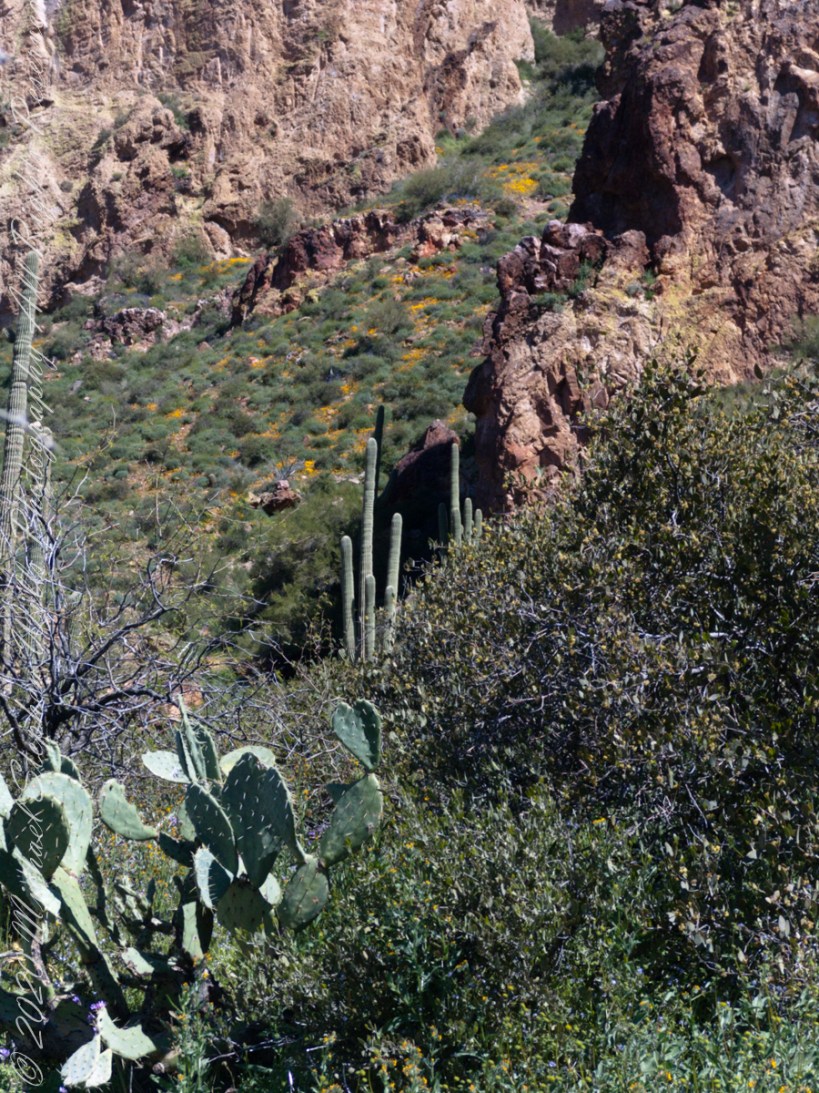
Step into the heart of the Sonoran Desert with me, where the saguaro cactus stands as a timeless giant, a symbol of resilience and beauty. This majestic sentinel of the Southwest is not just a plant; it’s a vibrant ecosystem and a cultural icon, embodying the spirit of endurance. Let’s explore its centuries-long journey, its role as a haven for desert wildlife, and its deep significance to the indigenous peoples. Join me in celebrating the saguaro’s enduring legacy, a narrative of survival and the profound beauty of life in the harshest conditions.
Ferns, ancient plants with unique reproduction strategies and ecological significance, adapt to diverse environments while contributing to overall biodiversity and human culture.
In the vast tapestry of the plant kingdom, ferns occupy a unique and enduring place. These ancient plants, often overlooked in favor of their flowering counterparts, have a fascinating and seemingly eternal existence that spans millions of years. Ferns, with their lush green fronds and distinctive reproductive mechanisms, offer us a glimpse into the enduring legacy of life on Earth and the remarkable adaptations that have allowed them to persist through the ages.
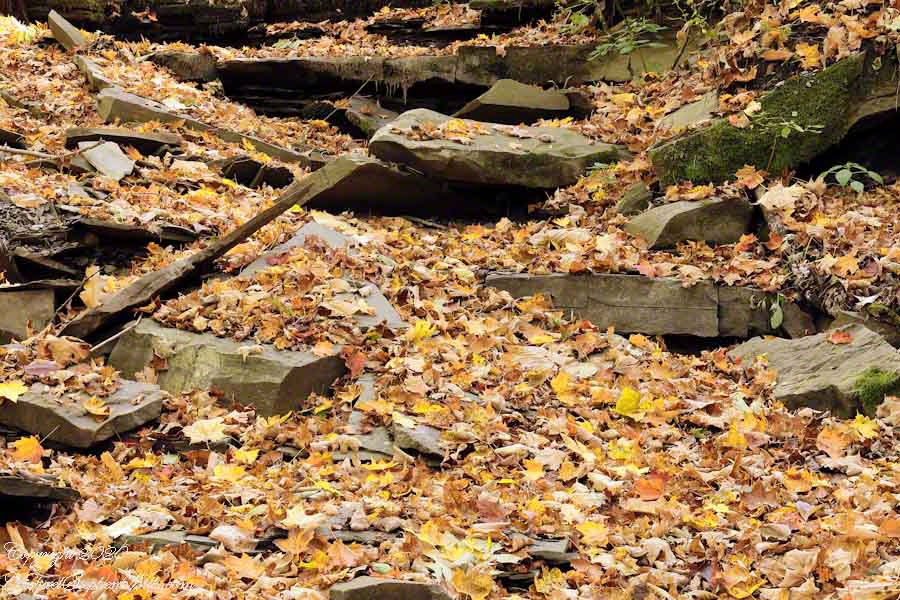
Walking Up A Leaf Strewn Dry Creek to find….
Ferns belong to the group of plants known as Pteridophytes, which evolved more than 360 million years ago during the late Devonian period. Their evolutionary history predates the appearance of flowering plants, making ferns some of the oldest living organisms on our planet. This remarkable longevity raises the question: how have ferns managed to survive and thrive for so long?
One key to the success of ferns lies in their unique reproductive strategy. Unlike flowering plants that produce seeds, ferns reproduce via spores. These small, dust-like structures contain the genetic material necessary for ferns to reproduce. When mature, ferns release spores into the environment, where they can be carried by the wind or water to new locations. Once a spore finds a suitable environment, it can germinate and develop into a new fern plant.
The spore-based reproduction of ferns is not only ancient but also highly efficient. It allows ferns to colonize diverse habitats, from moist, shaded forests to arid deserts. Additionally, ferns can form extensive networks of underground rhizomes, which are creeping stems that give rise to new fronds. This vegetative propagation further contributes to their resilience and adaptability.
Ferns have also developed a range of adaptations that enable them to thrive in various environmental conditions. Some fern species, such as the resurrection fern (Pleopeltis polypodioides), can endure extreme desiccation. When conditions are dry, these ferns curl up and appear dead, but they can quickly revive and unfurl their fronds when moisture returns. Backpacking through mountainous Arizona wilderness I encountered small ferns growing in the shade of rock ledges, maybe this was Phillips Cliff Fern (Woodsia phillipsii). My guide called it “Ridgeline Fern” and claimed it was important for desert survival, could be eaten in extremis situations. This remarkable ability to withstand drought and promote human survival is a testament to the tenacity and usefulness of ferns.
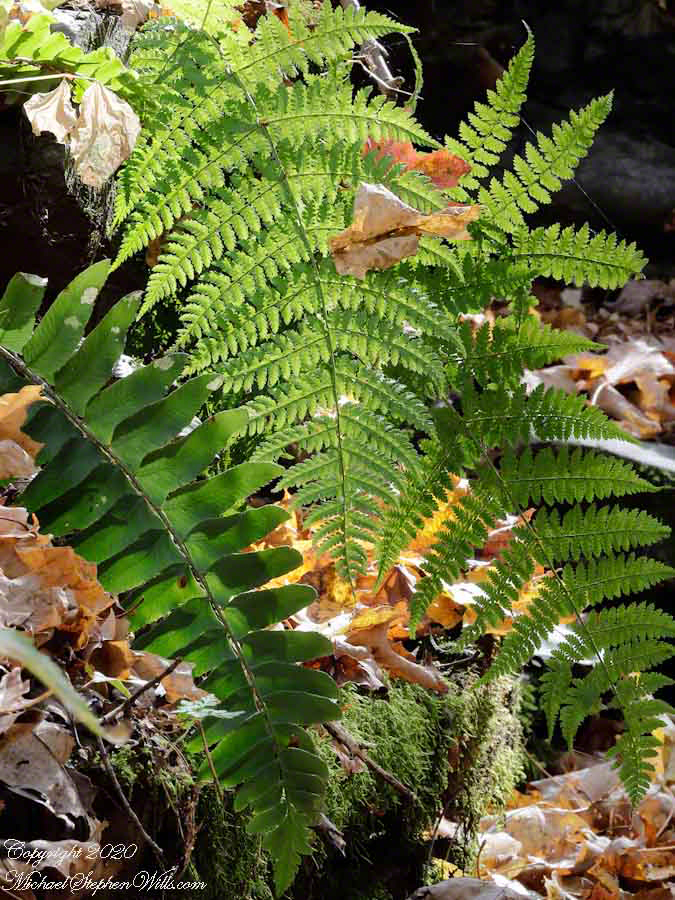
...a backlit fern frond.
Another intriguing aspect of ferns is their mutualistic relationship with mycorrhizal fungi. These fungi form symbiotic associations with fern roots, aiding in nutrient absorption and enhancing the fern’s ability to thrive in nutrient-poor soils. This partnership has likely contributed to the fern’s ability to colonize a wide range of habitats and compete with other plant species.
While ferns have proven to be resilient survivors, they have also played a crucial role in shaping Earth’s ecosystems. Ferns are often early colonizers in disturbed or newly formed habitats, and their presence can help stabilize soils and create conditions suitable for the establishment of other plant species. In this way, ferns contribute to the ecological succession and overall biodiversity of ecosystems.
Beyond their ecological significance, ferns have captured the human imagination for centuries. Their delicate and intricate fronds have inspired art, literature, and even garden design. Many garden enthusiasts cultivate ferns for their ornamental beauty and unique charm.
In conclusion, the eternal life of ferns is a testament to the remarkable adaptability and resilience of these ancient plants. Their longevity, dating back millions of years, serves as a reminder of the enduring nature of life on Earth. Ferns have evolved unique reproductive strategies, adaptations to various environments, and mutualistic relationships that have allowed them to persist and thrive. Whether they are serving as pioneers in newly formed habitats or gracing our gardens with their elegance, ferns continue to capture our fascination and enrich the natural world. Their legacy reminds us of the intricate and interconnected web of life that has persisted on our planet through the ages.
Copyright 2023 Michael Stephen Wills All Right Reserved MichaelStephenWills.com
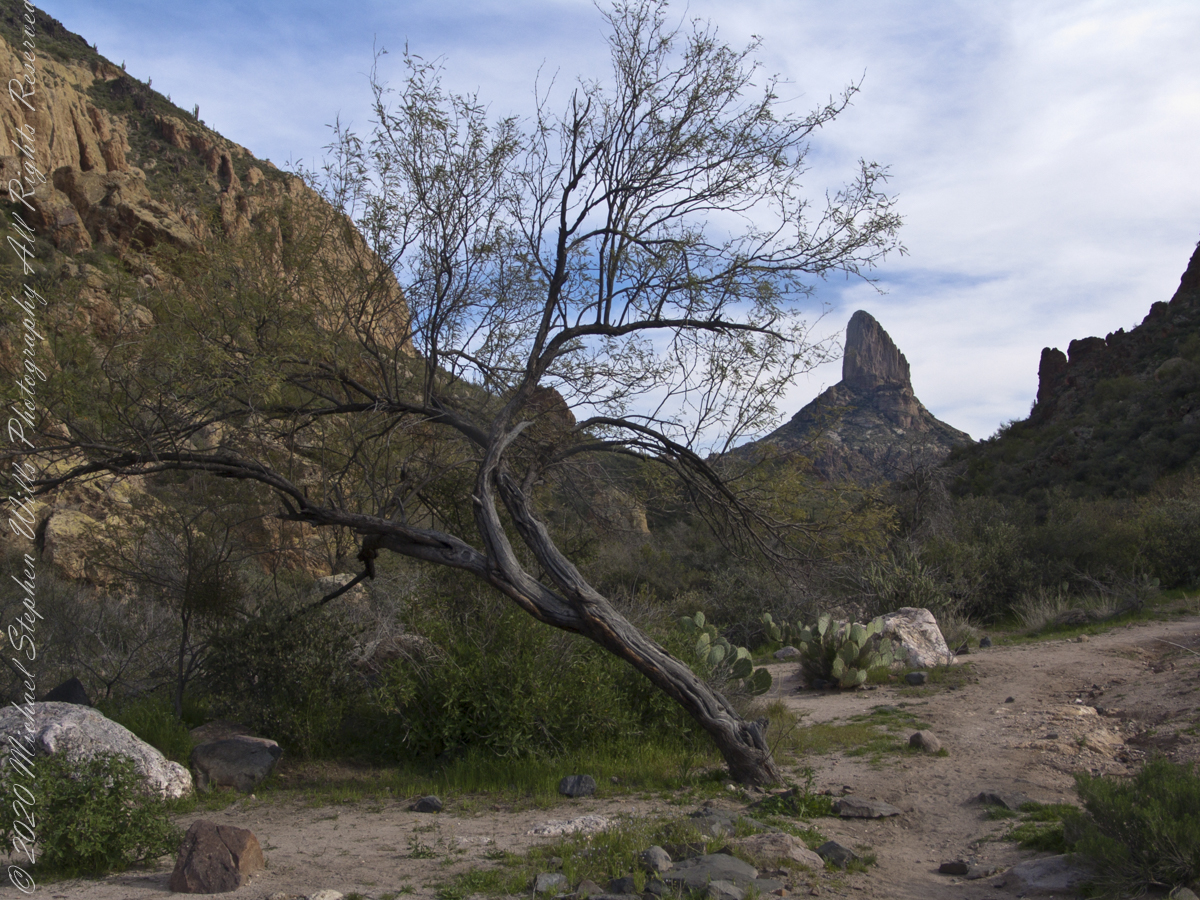
Mesquite is the Sonoran Desert smell carried by distant rain, omnipresent and humble, a survivor with tap root extending 190 feet down to draw on the water table.
Prosopis is the scientific name for about 40 species of leguminous trees. Present in North America since the Pliocene era, mesquite wood has been dated to 1300 BC.
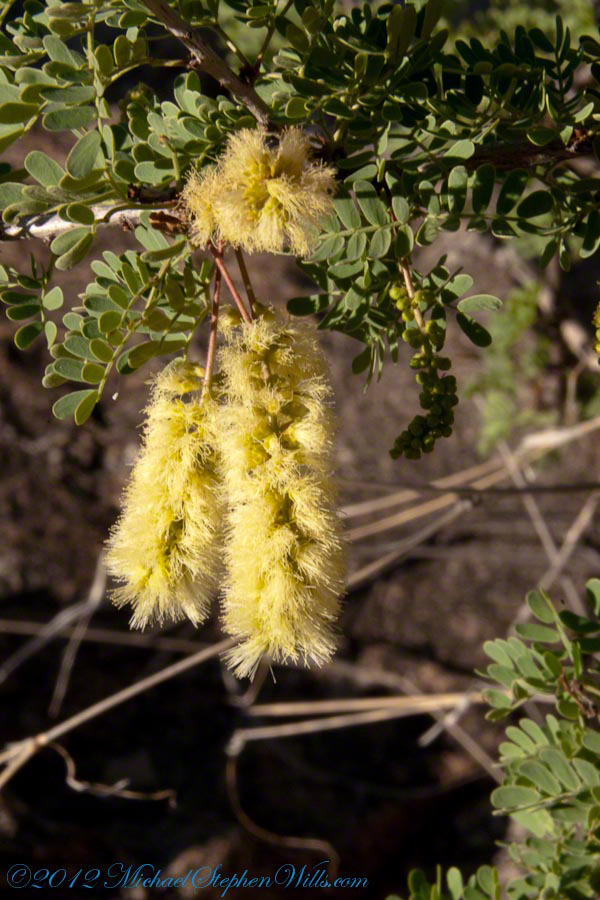
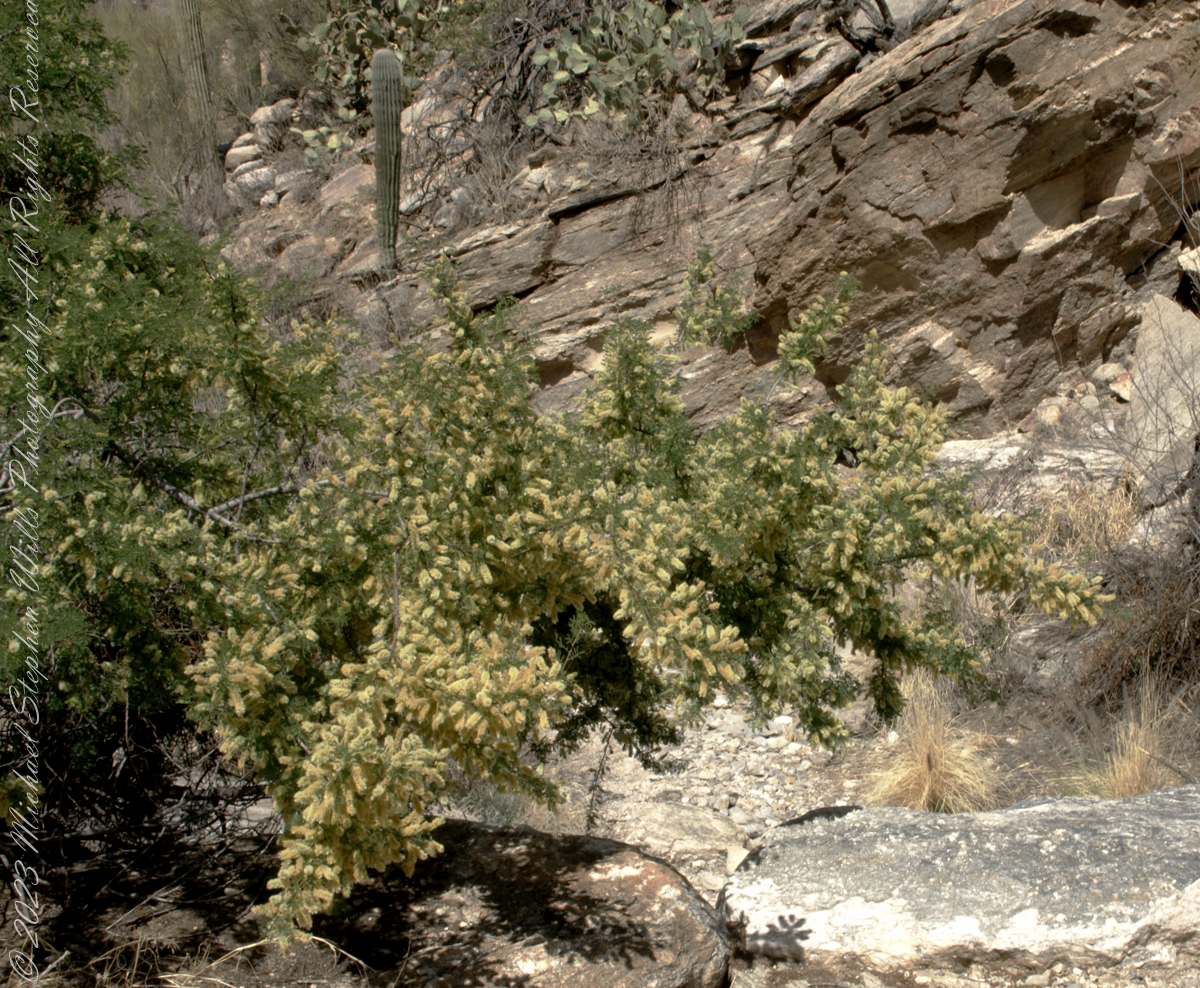
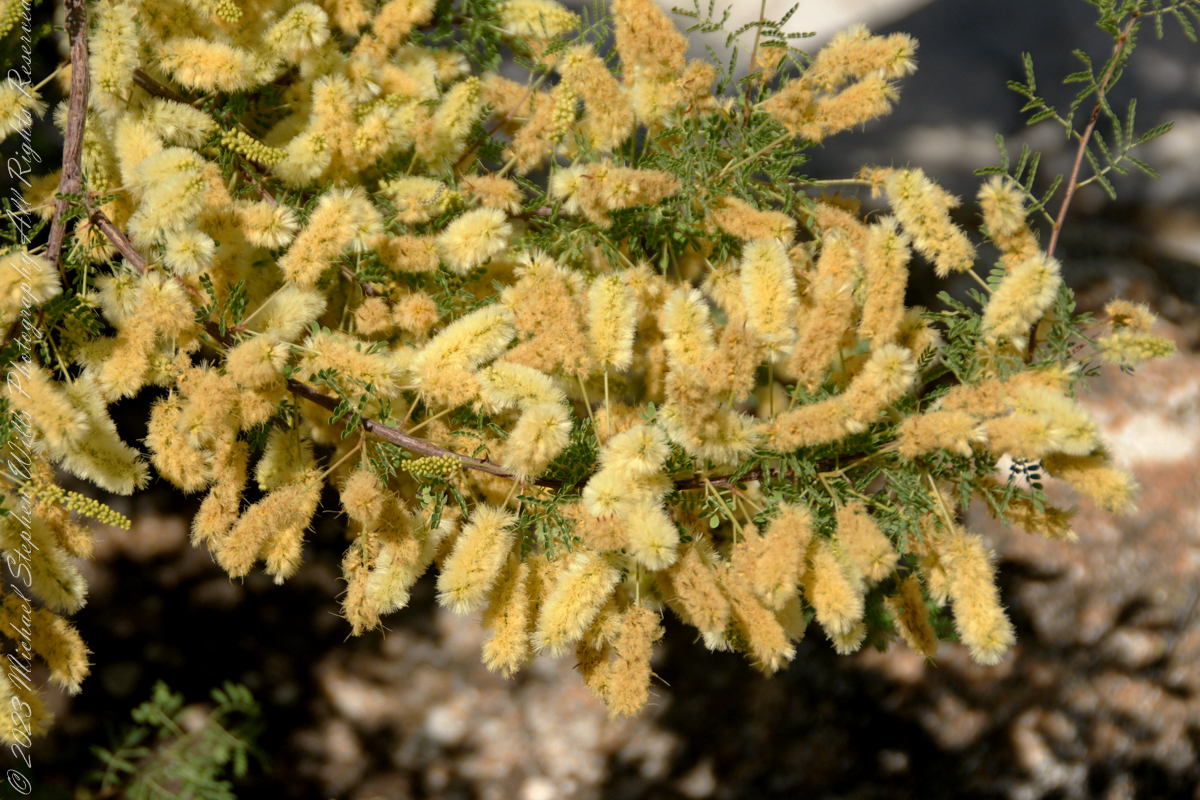
I found this flowering mesquite bush in Finger Rock Canyon of the Catalina Mountains outside Tucson, Arizona.
They are thought to have evolved with megafauna in the New World. The loss of North American megafauna at the end of the Pleistocene era gave way to one theory of how the Prosopis spp. were able to survive.
One theory is that the loss of the megafauna allowed Prosopis spp. to use their fruit pods to attract other organisms to spread their seeds; then, with the introduction of livestock, they were able to spread into grasslands.
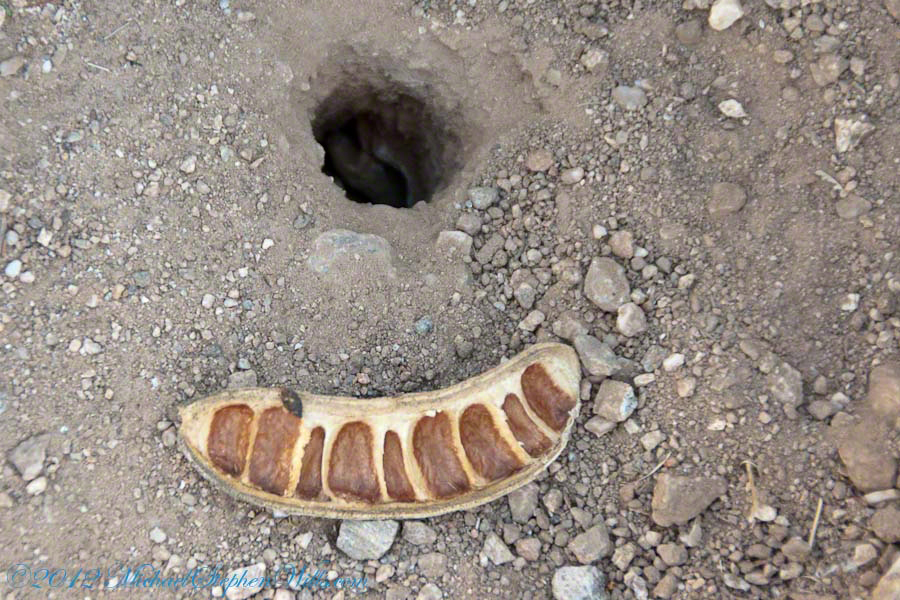
The plentiful legumes that develop from these flowers are edible when cooked. The shape and color of the seeds can be understood from this empty seed pod that happens to lie near a tarantula burrow.
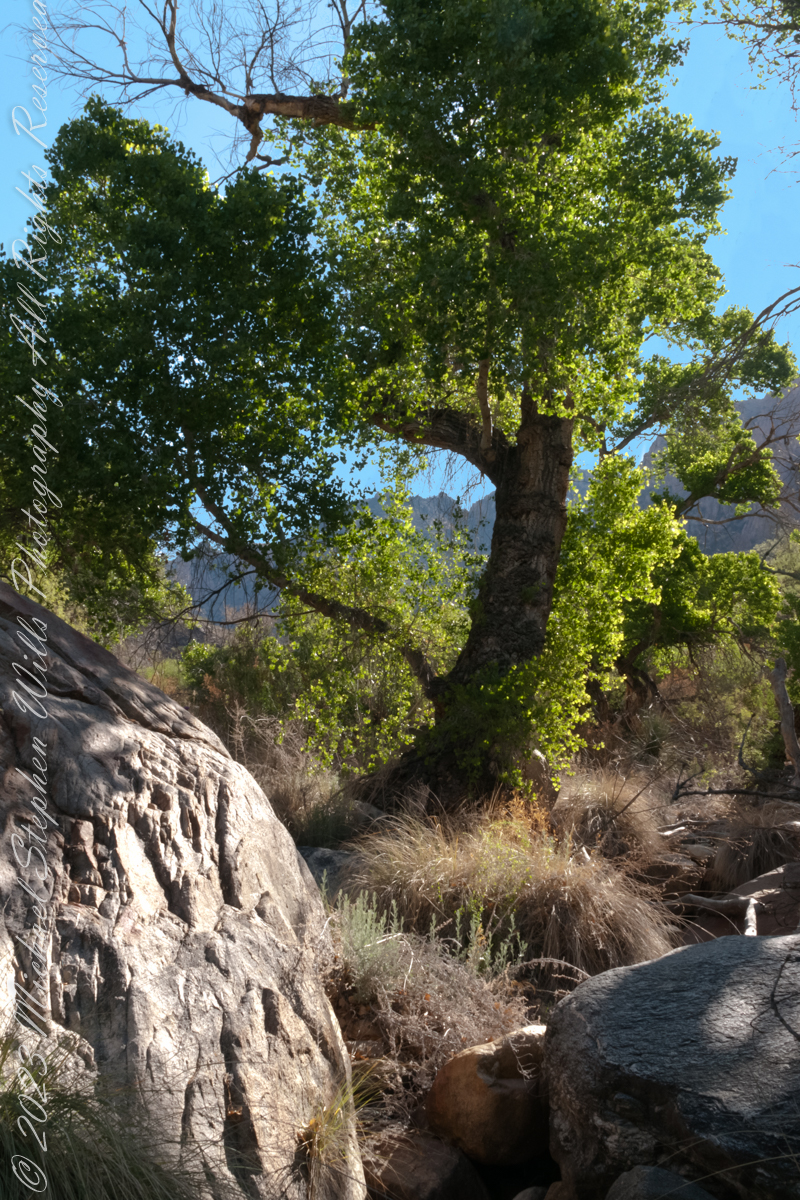
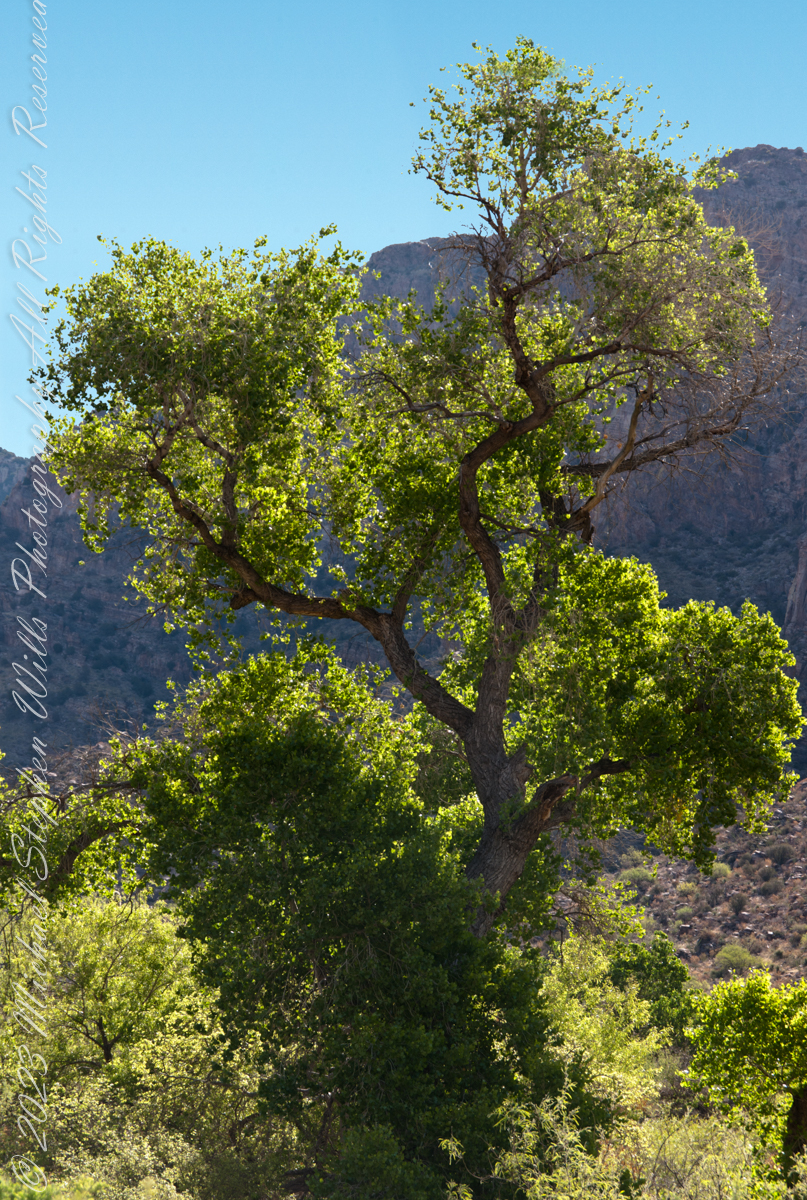
A large Fremont’s Cottonwood Offers shade and protection along the Pima Canyon Trail.
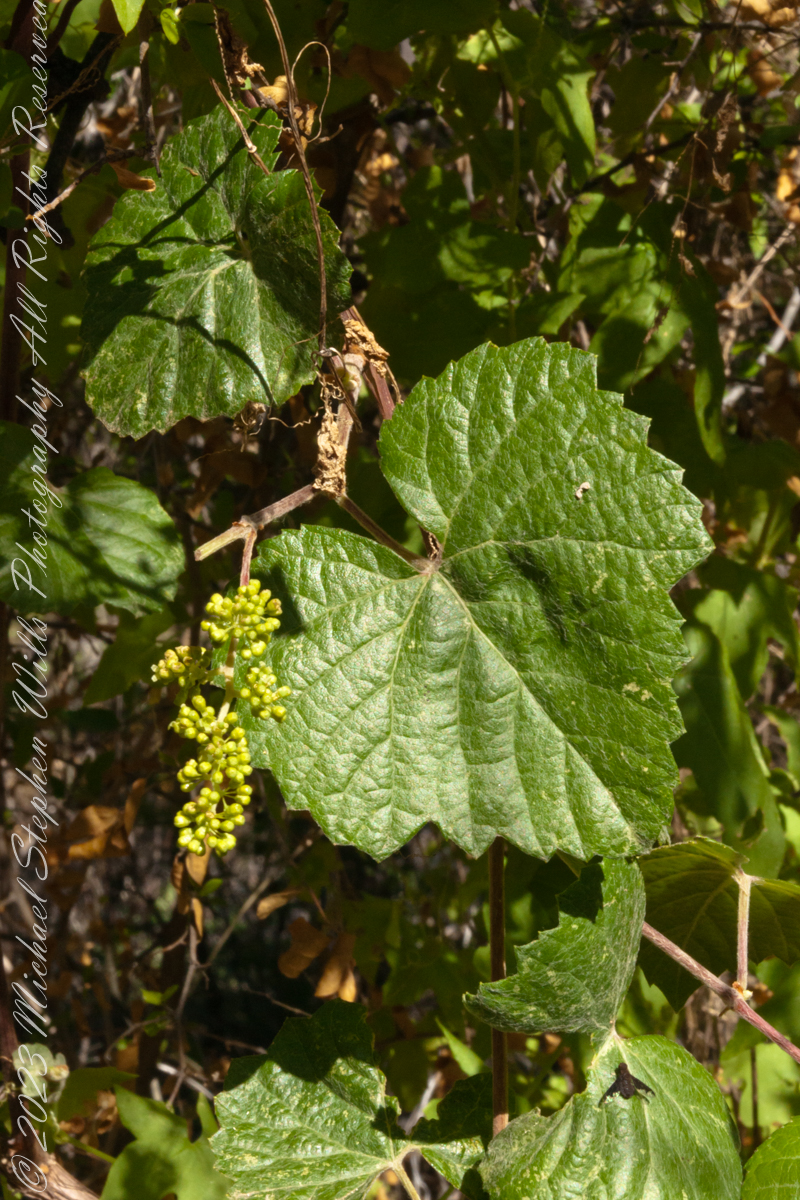
In the shade, a grapevine, offers a vain promise of grapes.
The cottonwood’s deep roots draw water from a mountain stream.
Native Americans in the Western United States and Mexico used parts of Frémont’s cottonwood variously for a medicine, in basket weaving, for tool making, and for musical instruments. The inner bark of Frémont’s cottonwood contains vitamin C and was chewed as an antiscorbutic – treatment for vitamin C deficiency. The bark and leaves could be used to make poultices to reduce inflammation or to treat wounds.
The Pima people of southern Arizona and northern Mexico lived along Sonoran Desert watercourses and used twigs from the tree in the fine and intricate baskets they wove. The Cahuilla people of southern California used the tree’s wood for tool making, the Pueblo peoples for drums, and the Lower Colorado River Quechan people in ritual cremations. The Hopi of Northeastern Arizona carve the root of the cottonwood to create kachina dolls.
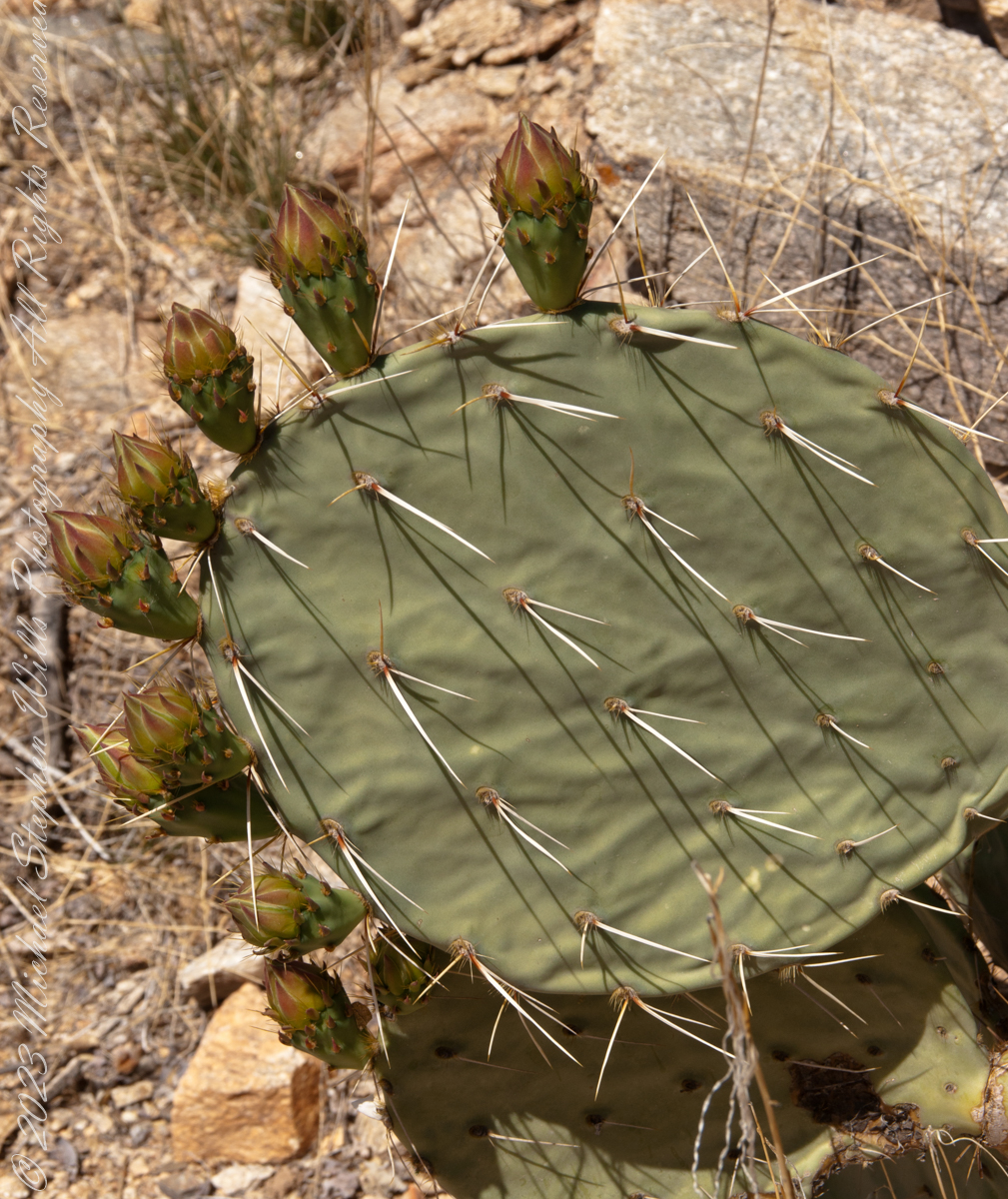
Here are 8 flower bud growing from one cladode (pad). There is a 9th bud on a second cladode. What is interesting about these pads are the needle shadows. Although thin, each provides some protection from the sun.
Cactus Closeup
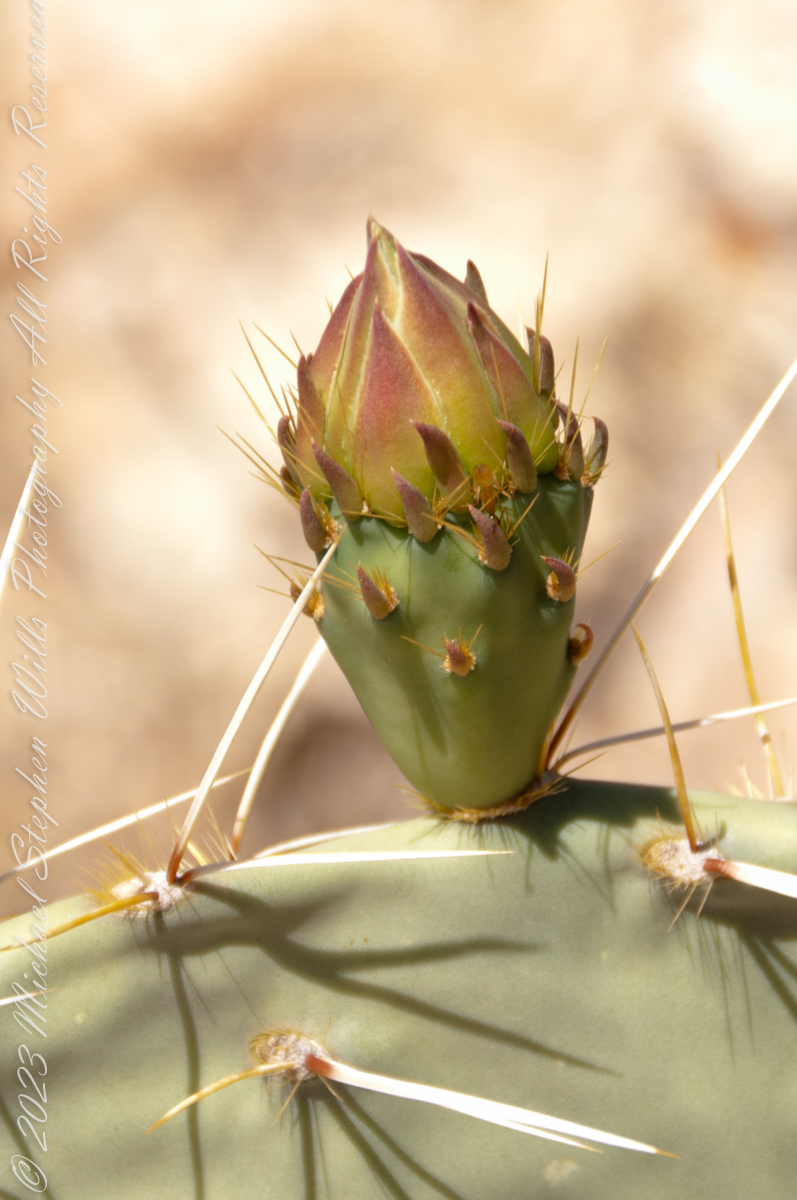
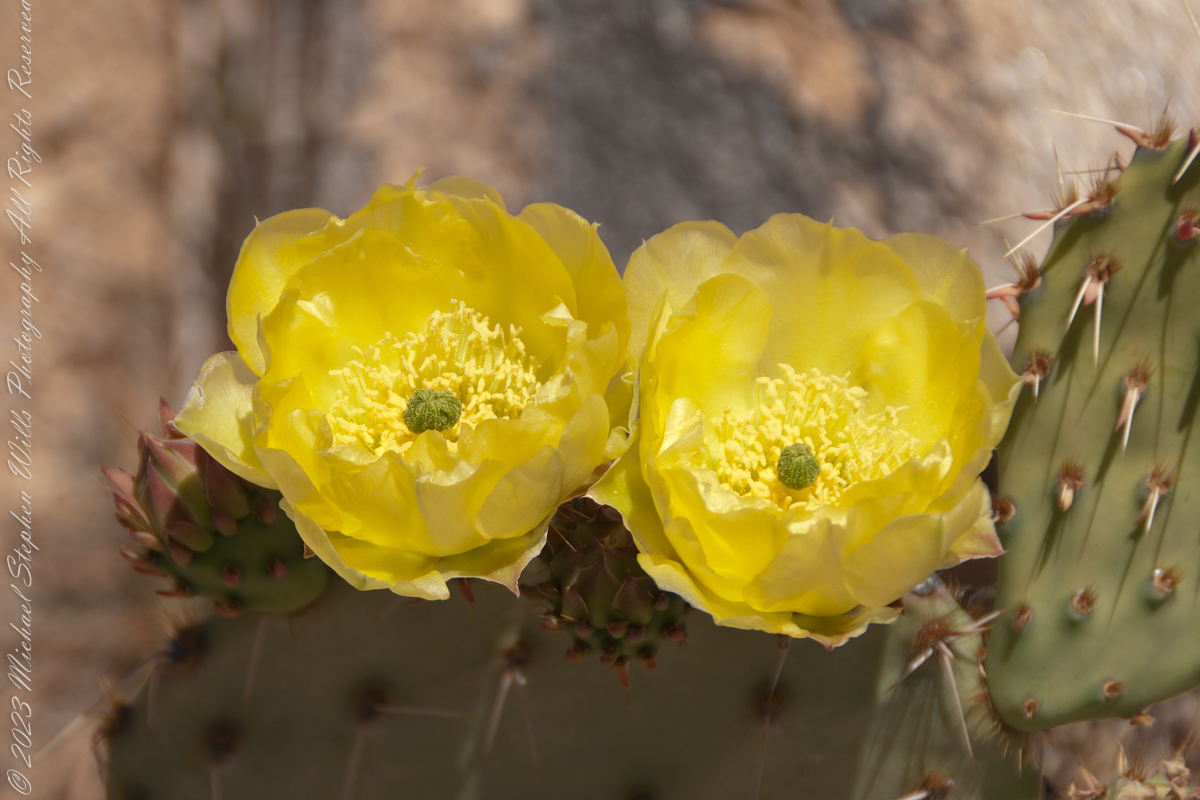
This delicate bud will develop into a flower and, then, into a cactus fruit (in spanish, tuna). The fruit retains those tiny spines, called glochids, which detach on the smallest contact. The pads are also covered with them.
Prickly pears are known for growing into thickets. The Cuban government created a “cactus curtain” of prickly pears around the Guantanamo naval base in the 1960’s, to prevent Cubans from escaping to refuge in the United States.
Cactus Flowers
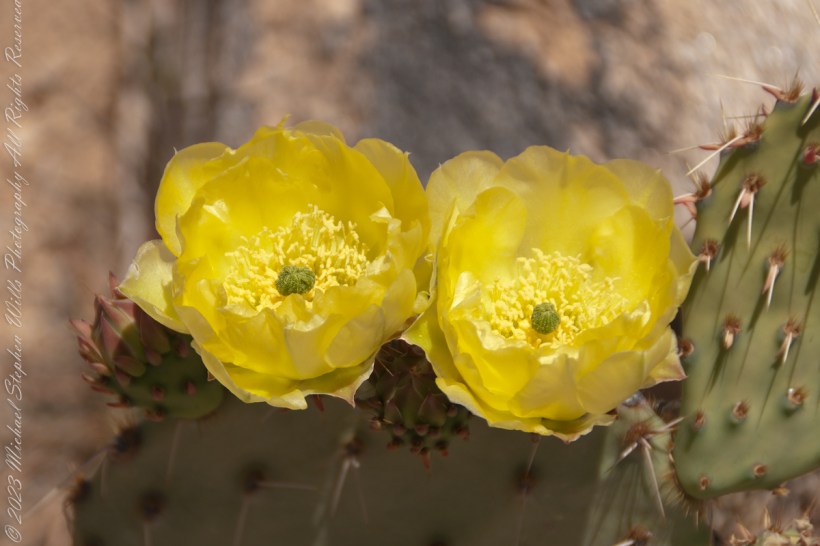
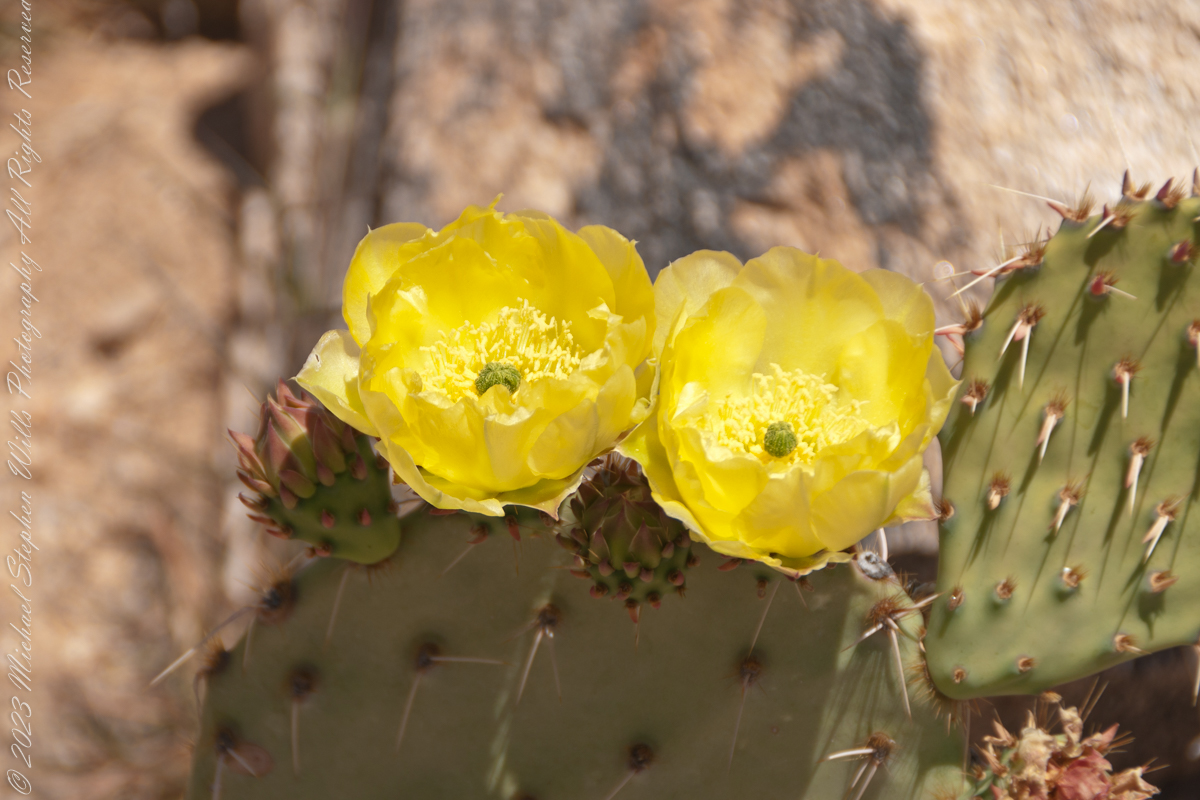
Look closely at the anthers of these flowers. Each curls over when touched, depositing its pollen. The habit of prickly pears to grow together in thickets mean there are clusters of blossoms in springtime.
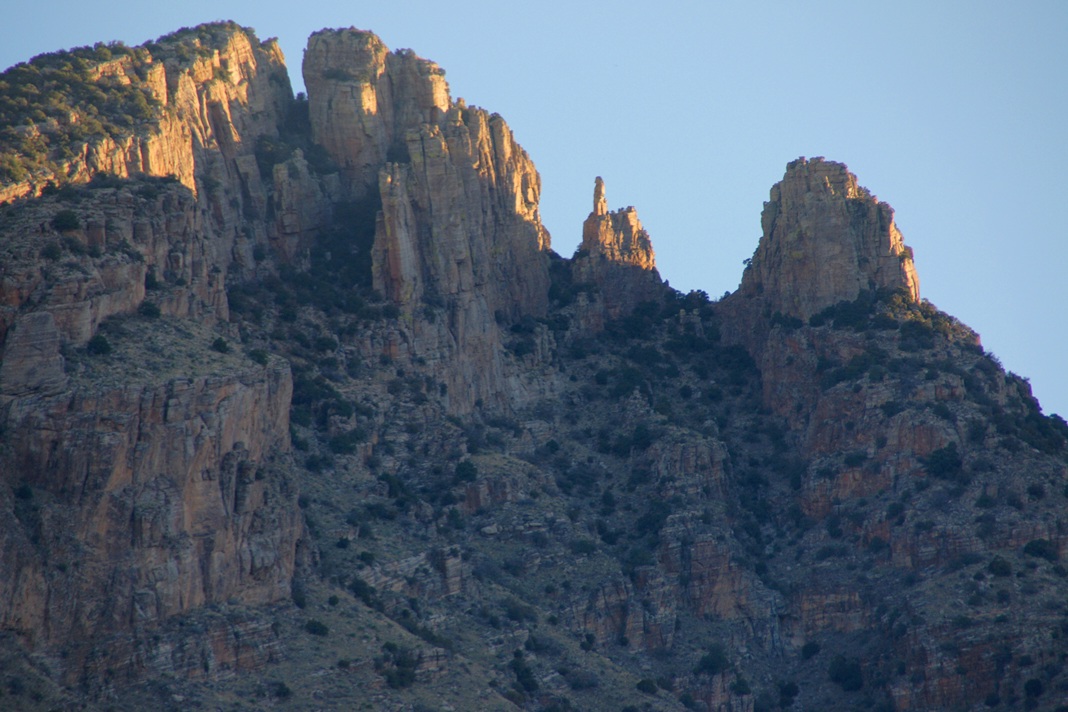
My visit to Finger Rock Canyon of the Santa Catalina Mountains filled two mornings. On the first morning, the subject was the lower canyon as morning light filtered over the eastern ridge.
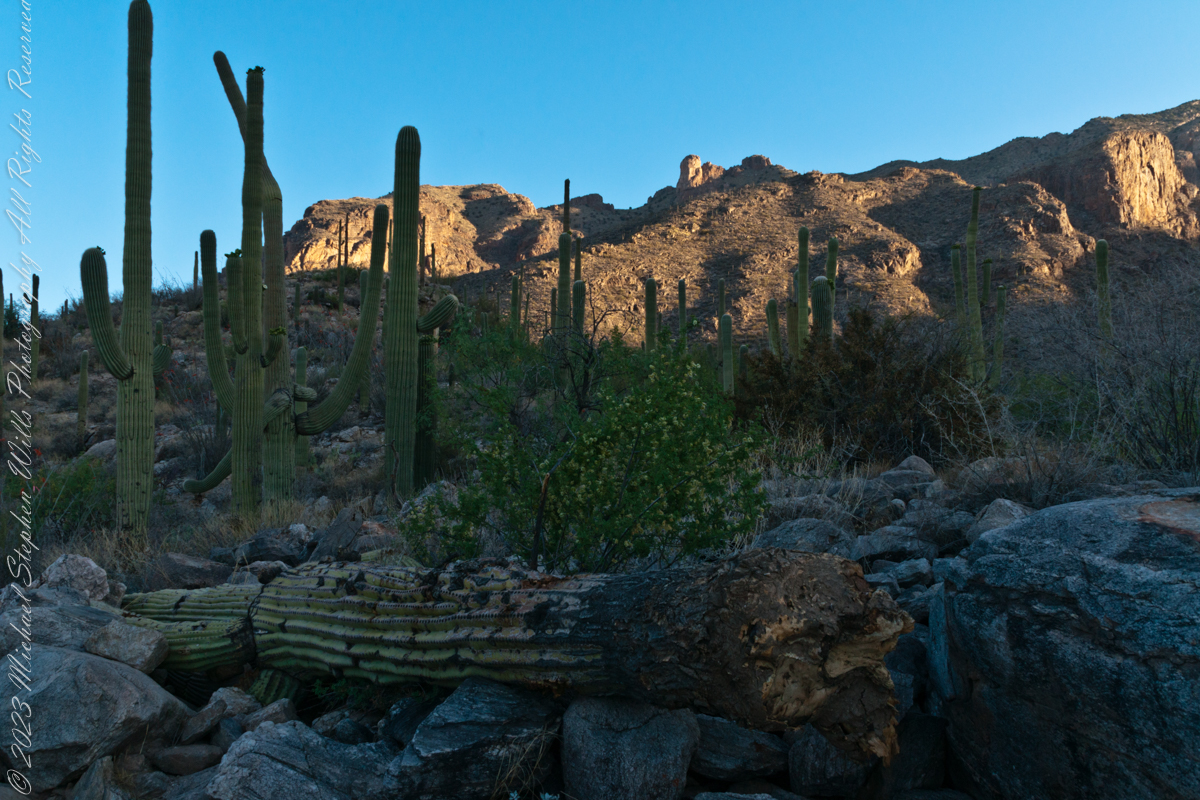
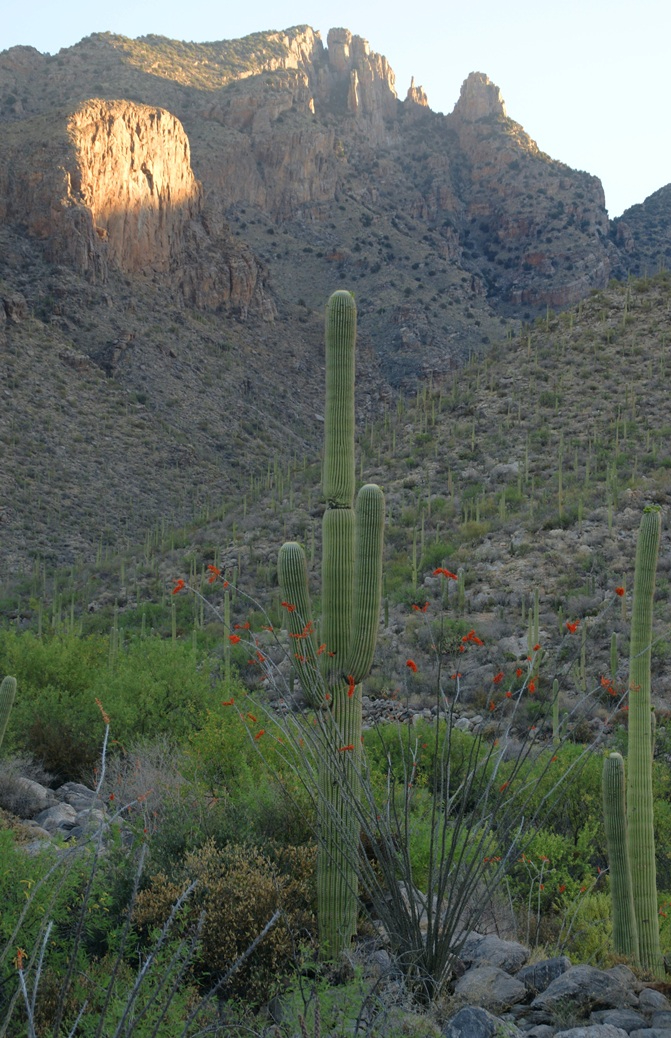
Early morning to the north / northwest looking over a 20-foot fallen Saguaro Cactus (Carnegiea gigantean), toward lower ridges of the Santa Catalina Mountains. The saguaro is among a stand of healthy fellows, some with new growth and flowers on the tips of arms and main columns. This giant must have grown over rock through 60 years. It was brought down when the roots weakened. Specimens that are more reliably rooted can live to 200 years.
A clump of brittlebush shrub (Encelia farinosa) grows from the same rock.
Pima Canyon is the next over, behind that near ridge which provides similar shade. Unlike Finger Rock Canyon, the Pima Canyon trail follows the western cliff and loses the shade much sooner. During our three-week trip, my wife, Pam, and I visited Pima in our first week.
These photos were taken between 6:20 and 7:00 am.
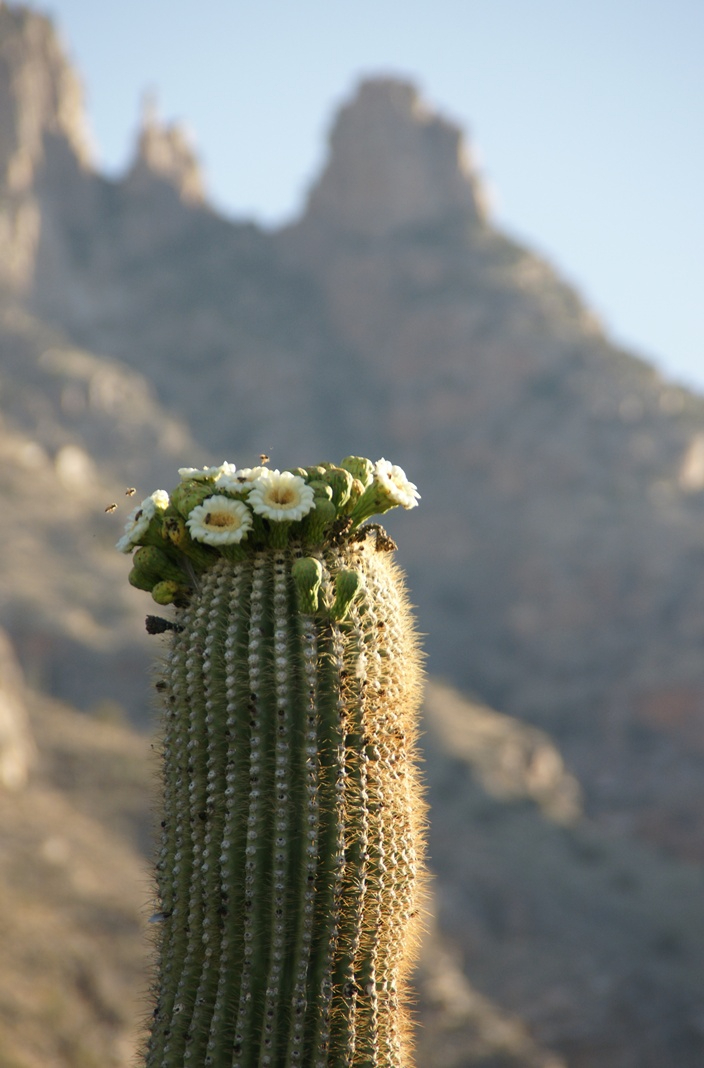
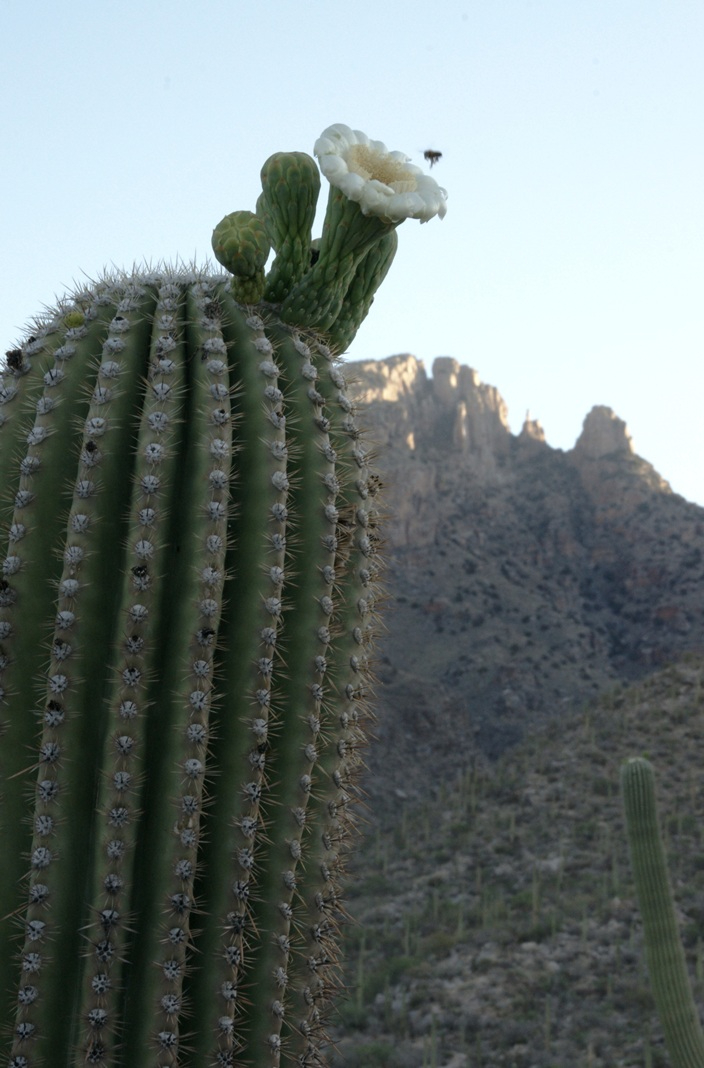
Along the trail I noticed a multitude of buds on the tip of selected saguaro arms. In a previous blog, there’s a photo of this same saguaro in the shade. The following series captures the one blossoming top just as the sun passes over the eastern, shadowing, ridge.
The same saguaro, two minutes later…….
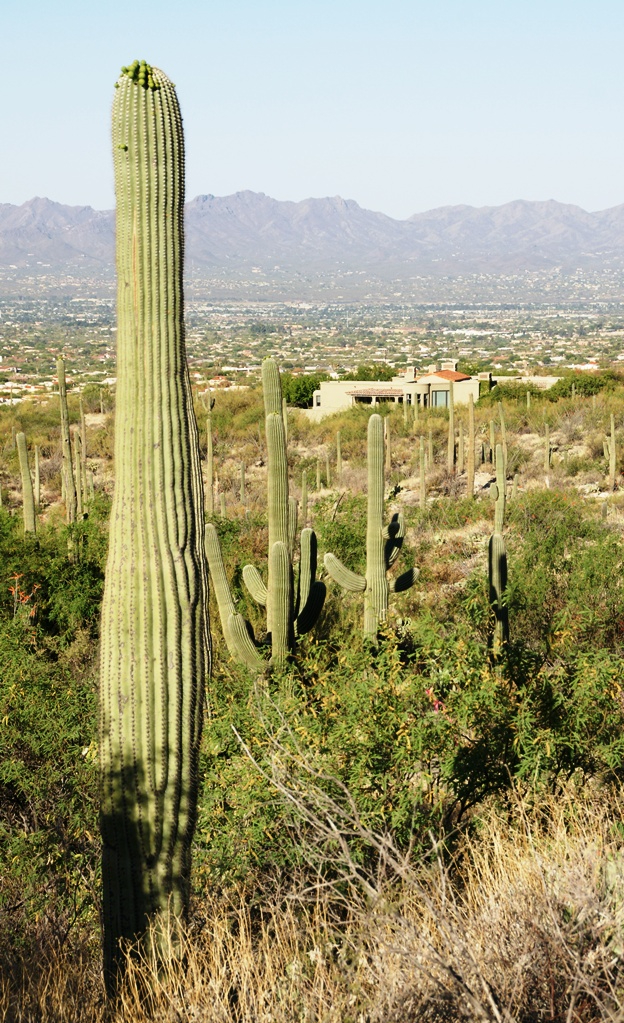
Here is a portion of the saguaro forest, around 7 am with the lower canyon filled with light. There are a few foothill homes with west and southwest Tucson. The Tucson Mountains are in the distance.
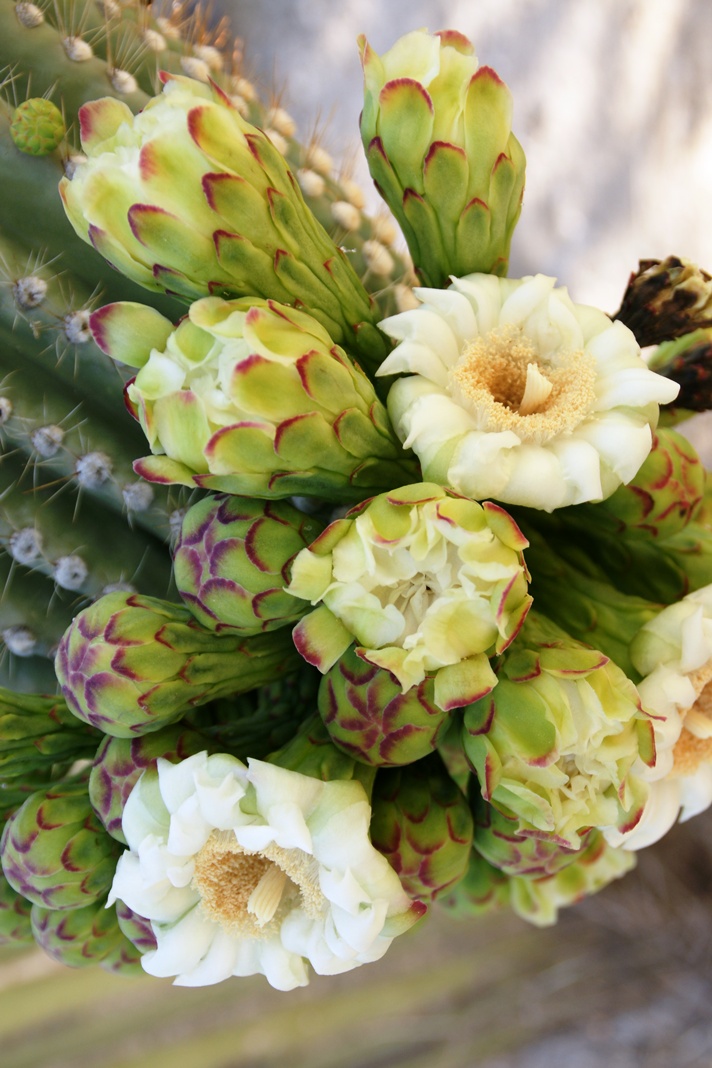
These photographs are a continuation of blogs from two days’ exploration of Finger Rock Canyon of the Santa Catalina Mountains, southern Arizona. Here we explore the nature of the Saguaro blossom.
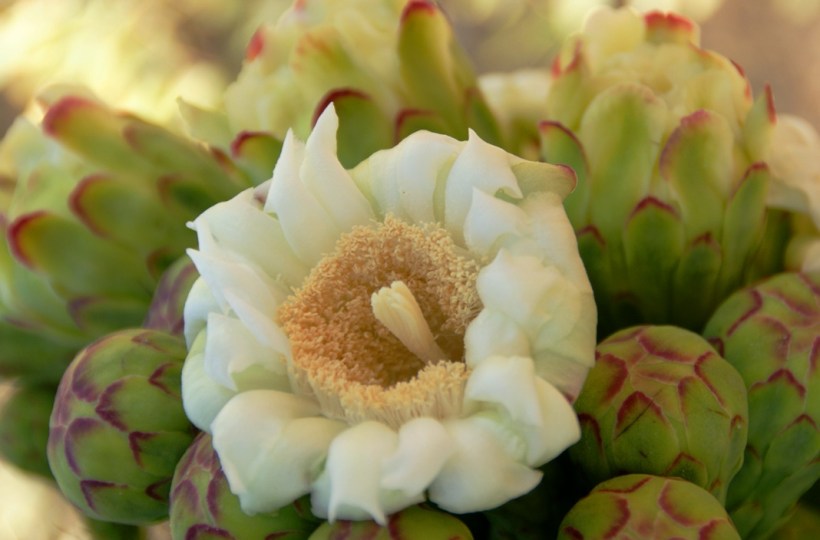
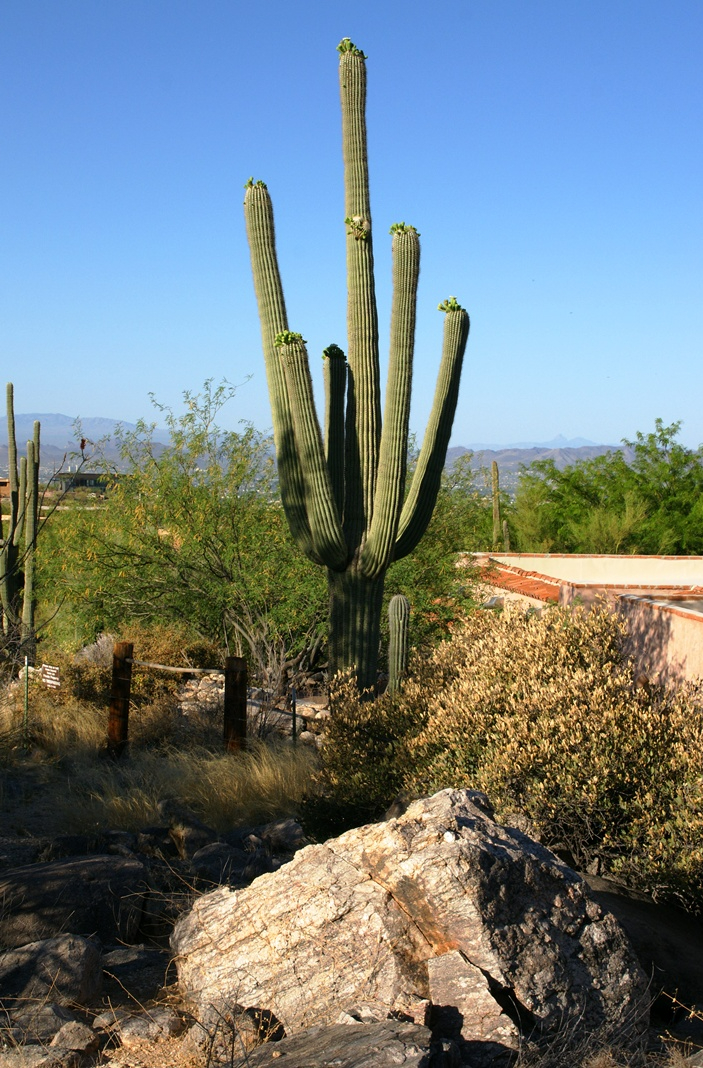
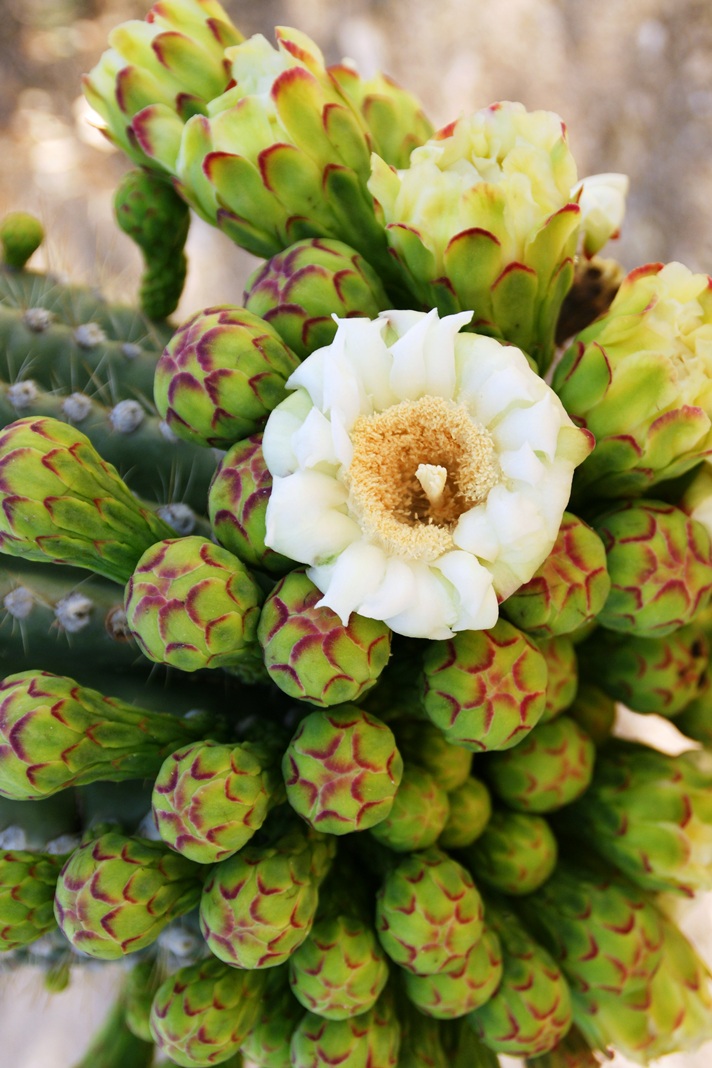
Saguaro flowers start as buds on the tip of the cactus body or arm. The specimen in the photograph below, growing in the yard of a foothills home on the border of federal land, is over 30 feet tall and, at the end of April 2011, buds are sprouting from every tip. Look closely for opening buds and full saguaro blossoms.
Flower buds grow only from some tips and around the center, along the sides, not from the point at the very end of the tip, from which the limb grows.
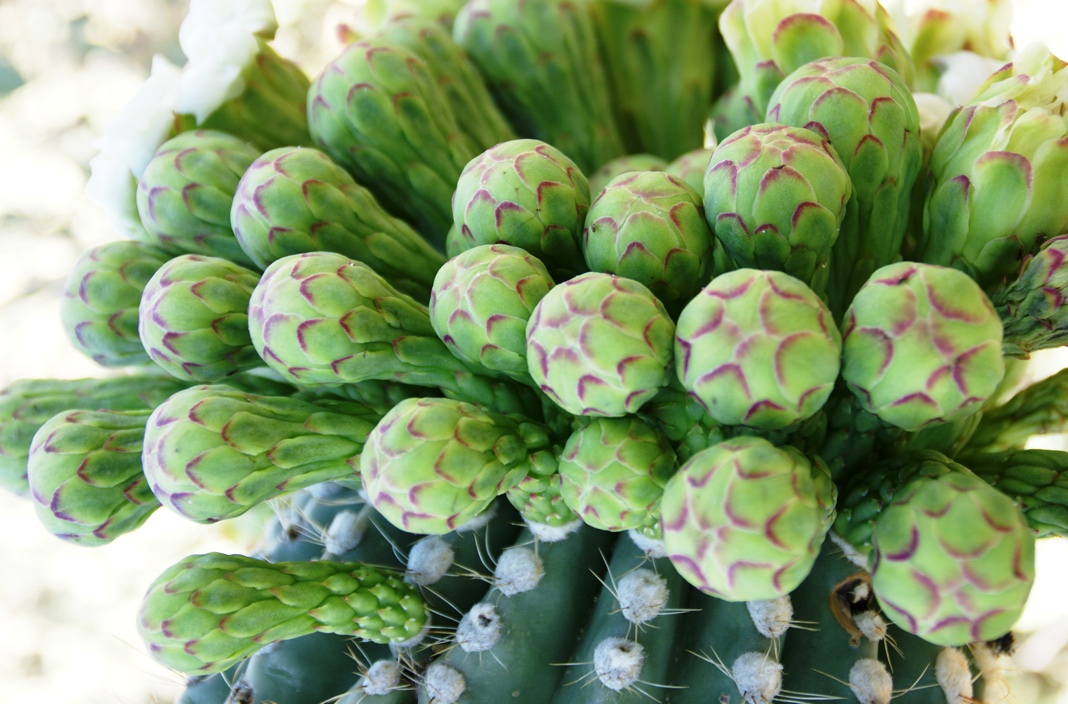
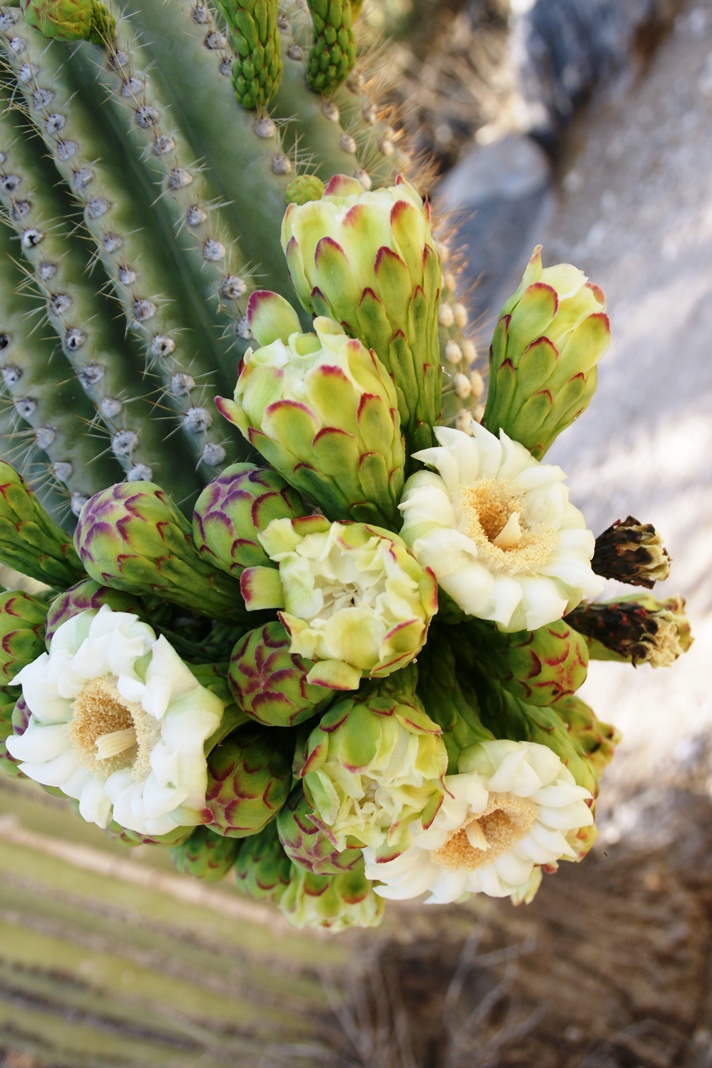
These buds first appeared mid-April and are here shown in the latter stages of maturity, prior to opening. Sometimes, the base of an arm weakens and the arm lowers close to the ground while remaining healthy. While descending the canyon I noticed this had happened to the arm of a particularly large specimen, an arm in full flower. This and the following photographs are from that arm.
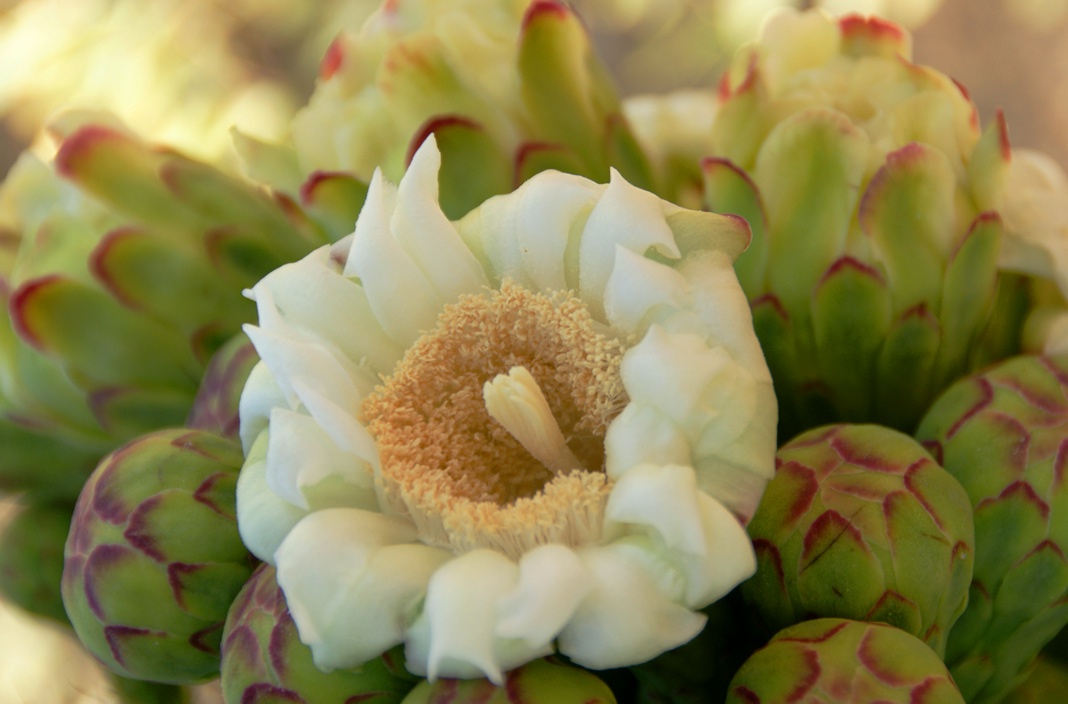
I have read that each flower opens in the cool of the night and lasts only until the following afternoon. Here is a fully blossomed flower with a pair of opening buds.
And more, from a different view of the same arm.
A saguaro flower in full bloom, having opened the previous night. This flower will last a single day. It will wilt in the heat of a single afternoon and close. In this brief time, flying animals will pollinate it. You can see numerous honey bees on the flowers, in a previous blog, “Saguaro Flowers in Finger Rock Canyon.”
The perfection of April in Tucson is nowhere better than mornings spent in Finger Rock Canyon of the Catalina Mountains. Oriented on a north/south axis, the eastern cliffs shed a long shadow well past 9:30 am. For early risers such as me, this means no hat and cool hiking to the canyon head: the trail hugs the eastern cliffs.
These three shots were taken 5:30 – 6:00 am mountain time (Arizona does not follow daylight savings time except on the Navajo Reservation).
Here is a postscript for my retrospective diary of the day I created my print “Ocotillo Sunset.” You can visit “Ocotillo Sunset” in my Online Gallery by clicking on any photograph .
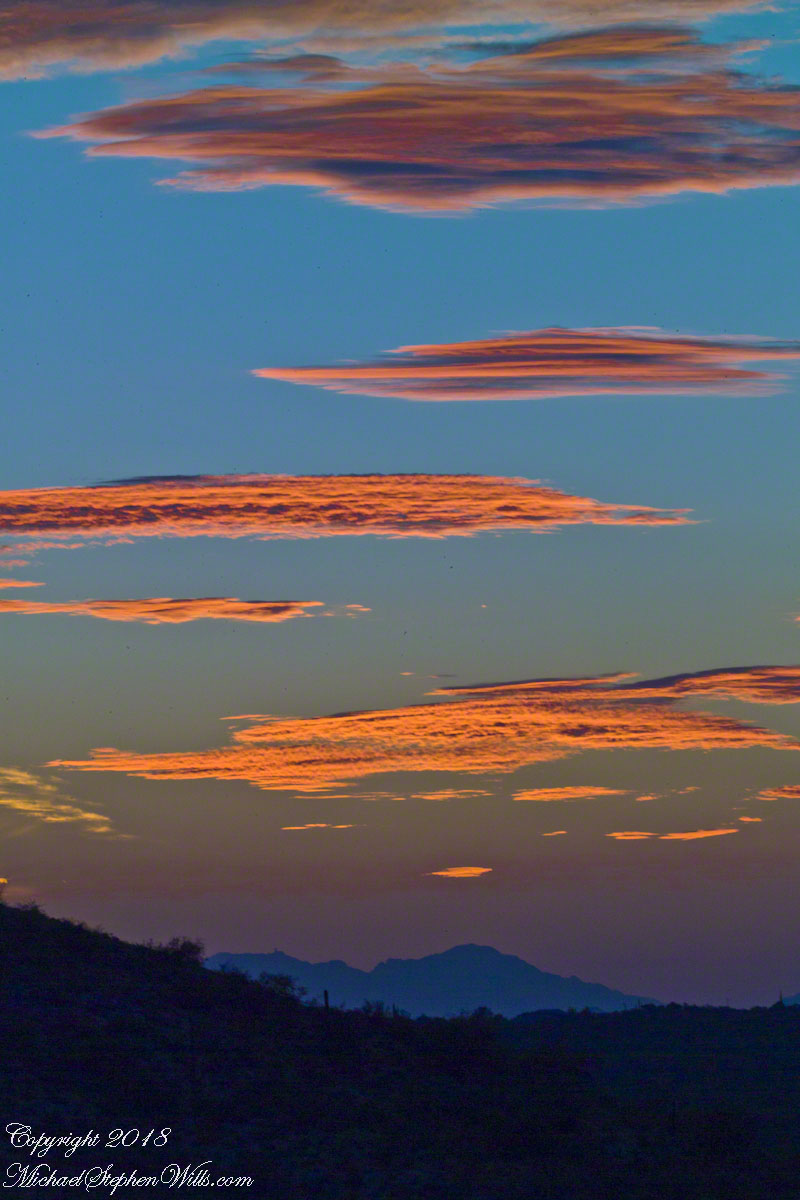
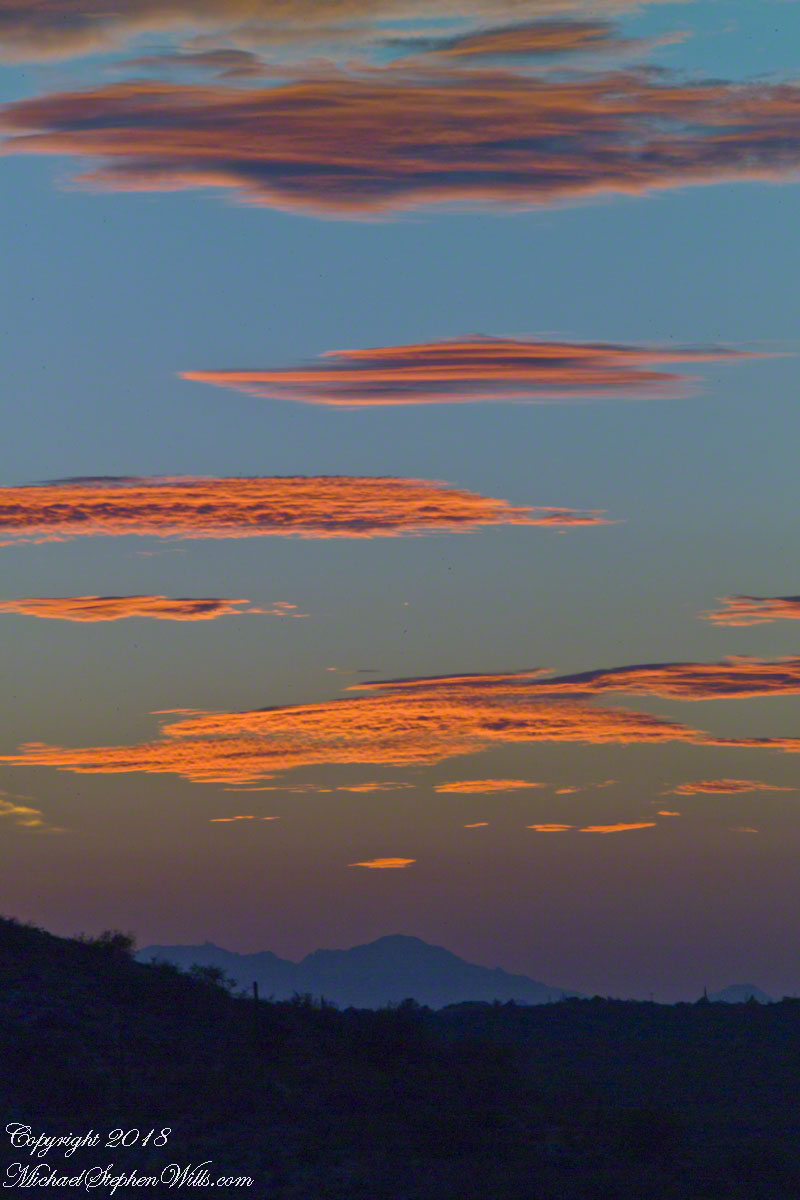
In near total darkness, the last sunlight only enough for the far western sky, these are the last shots of this series.
Click photograph to view Ocotillo Sunset in my Online Gallery
Afterglow I
Click photograph to view Ocotillo Sunset in my Online Gallery
Afterglow II
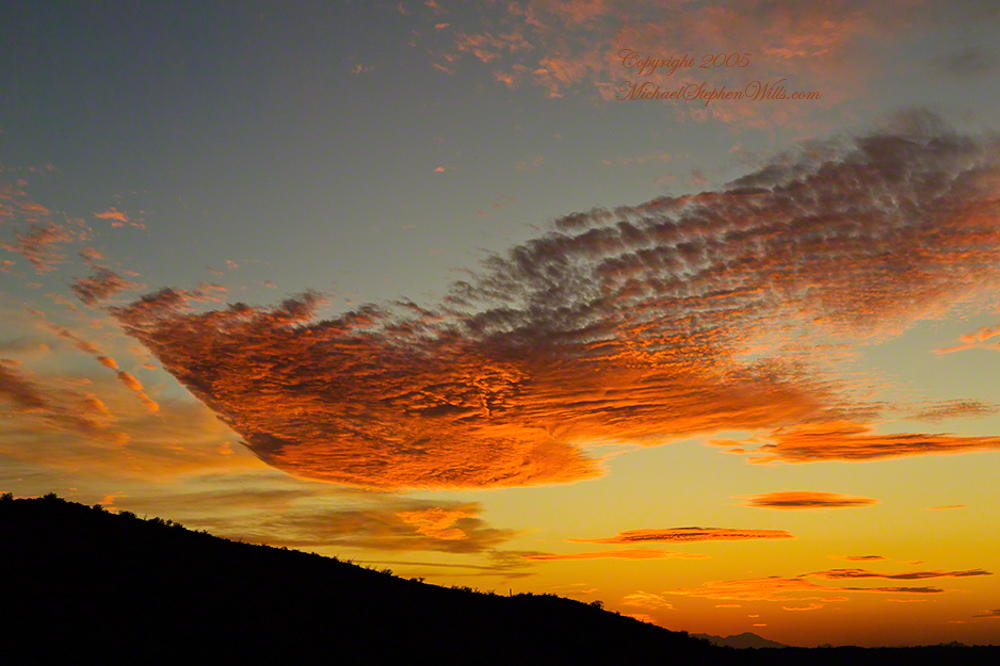
The final result of the day’s work, “Ocotillo Sunset.”
Click photograph to view Ocotillo Sunset in my Online Gallery
The penultimate posting of my retrospective diary of the day I created my print “Octillo Sunset.” You can see a large version of “Ocotillo Sunset” by clicking on any of my blog photographs.
The Flag in Formation and Realization
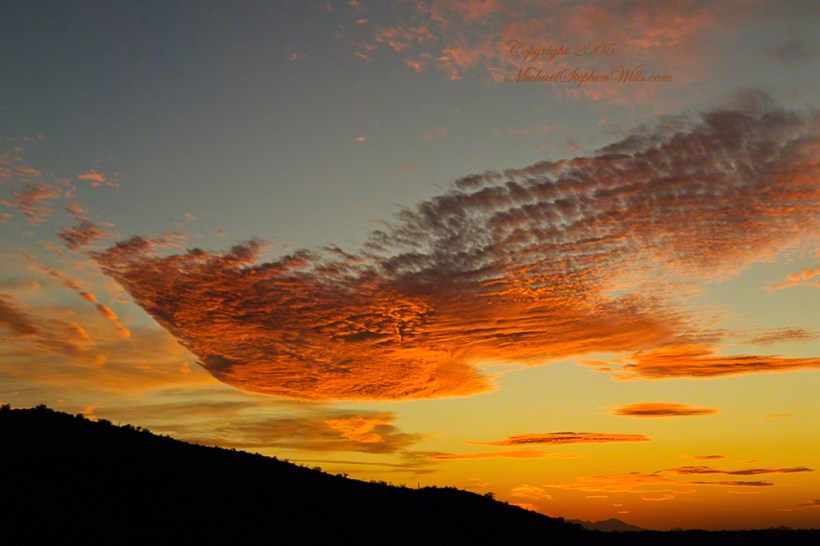
Then, for reasons I can only speculate about, a spectacular shape came together in the clouds. In the following photograph I have yet to recognize, to see, this cloud sculpture. Do you see part of “Ocotillo Sunset” coming into shape? As far as I remember, at the time I had only a dim realization of what was forming in my view finder and in front of me.
Click photograph to view Ocotillo Sunset in my Online Gallery
The Flag Forms
Then, I changed camera orientation and shifted the view a few degrees to the left and there it was: a coherent shape of something. Here it is in full, untethered.
Click photograph to view Ocotillo Sunset in my Online Gallery
Unanchored, a Flag or Ship
The final result of the day’s work, “Ocotillo Sunset.”
Click photograph to view Ocotillo Sunset in my Online Gallery




 Michael Stephen Wills Photography