The land opens up on the slopes of Connecticut Hill, Newfield of the Finger Lakes Region of New York State.

Click to view this series on Getty.
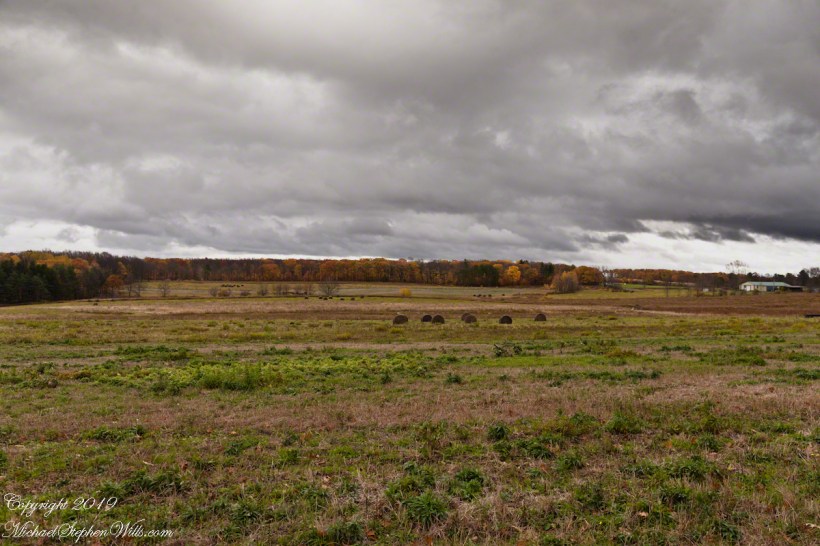
Hay Bales!!
The land opens up on the slopes of Connecticut Hill, Newfield of the Finger Lakes Region of New York State.

Looking east
This the fifth and final of a series of landscape photographs taken from this position.
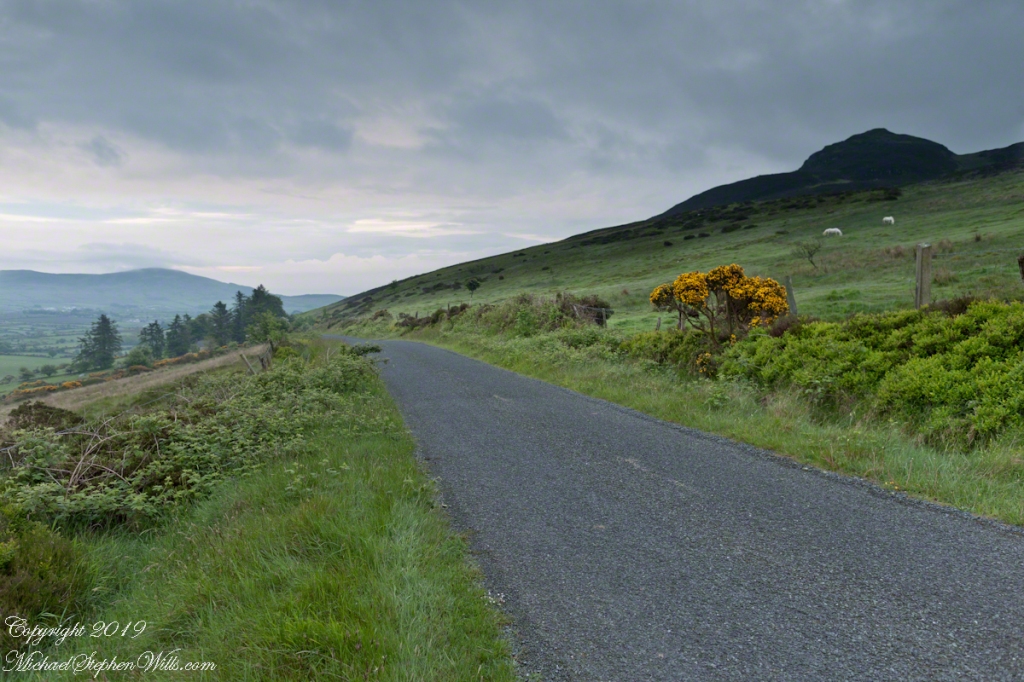
The peak is named, in the English language, Slievenaglogh. It is so strange as it’s not English, being instead a transliteration of the Irish name “Sliabh na gCloch.” This is “Rock Mountain” translated literally. Slievenaglogh is carried to the townland, a long thin swath of land being the peak and associated ridge-line.
The rocks up there are called “gabbro,” a type of magma slowly cooled under ground. Slievenaglog, Slieve Foy across the valley, and the Morne mountains all formed within volcano magma chamber(s) of the Paleocene, 66 million years ago, a time associated with extensive volcanism and the Cretaceous–Paleogene extinction event that gave rise to the current age.
Our younger cousin has been up there, optimistically we left it for a later trip.
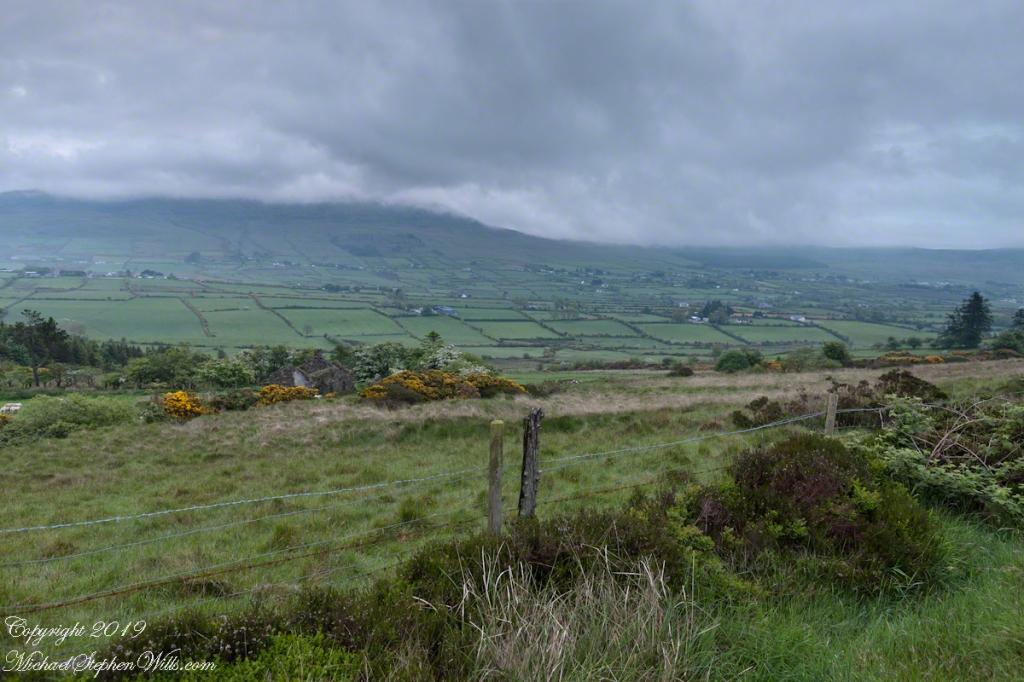
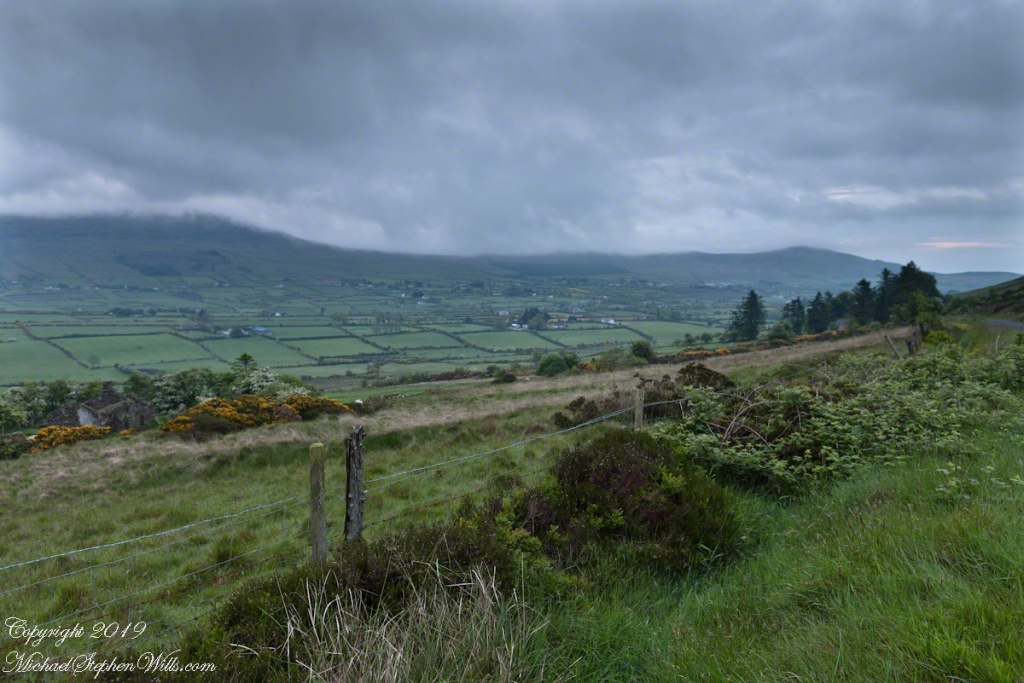
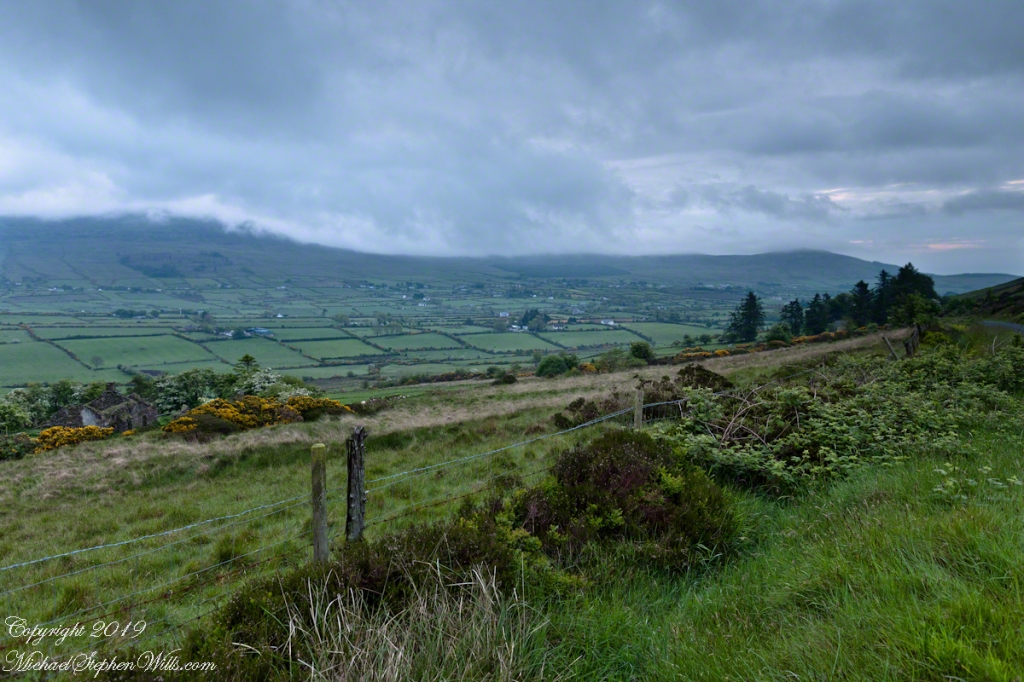

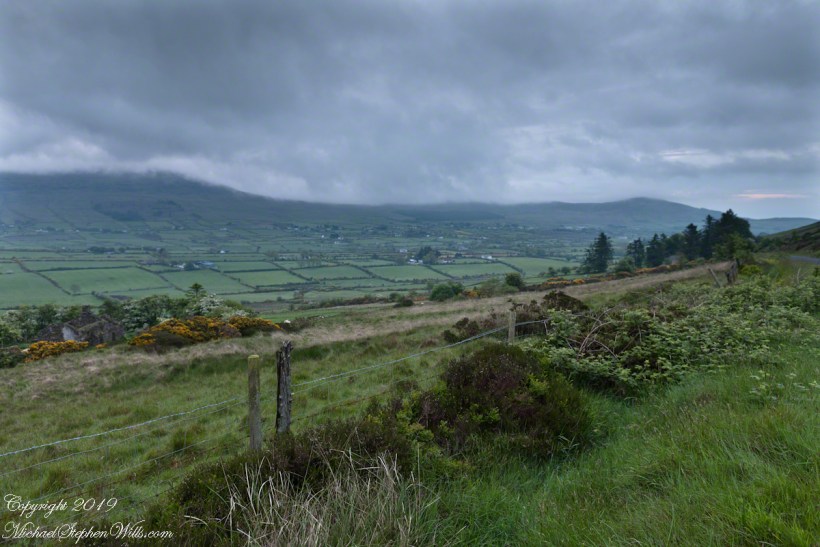
View of Slieve Foy
This the fourth of a series of landscape photographs taken from this position.
The distant ridge, Slieve Foy, is the site of a mythic battle from the epic “The Cattle Raid of Cooley” (Irish: Táin Bó Cúailnge).
Pam and I did a circuit of the island, returning to the home of my Mom’s first cousin. Our last full day on Ireland a cousin took us on the Tain Trail, over Maeve’s Gap of Slieve Foy and into Carlingford town.
Our route is partly visible to the right of the ridge, hidden in low clouds.
Rural Scenery
These are the second and third of a series of landscape photographs taken from this position. See the previous post for the first.
I visited here early morning of the Monday Pam and I embarked on a trip around the island of Ireland.
Arrived the previous Saturday when, after some sites between Dublin airport and the Cooley Peninsula, we met my Mom’s first cousin who had invited us for a visit. We had a grand time meeting them.
The ruin in this view is on the slopes of the peak. Some of these ruins are former homes with the replacement nearby. This appears to be an abandoned farm.
Click Me for the first post of this series.
Click me for the next post of this series.
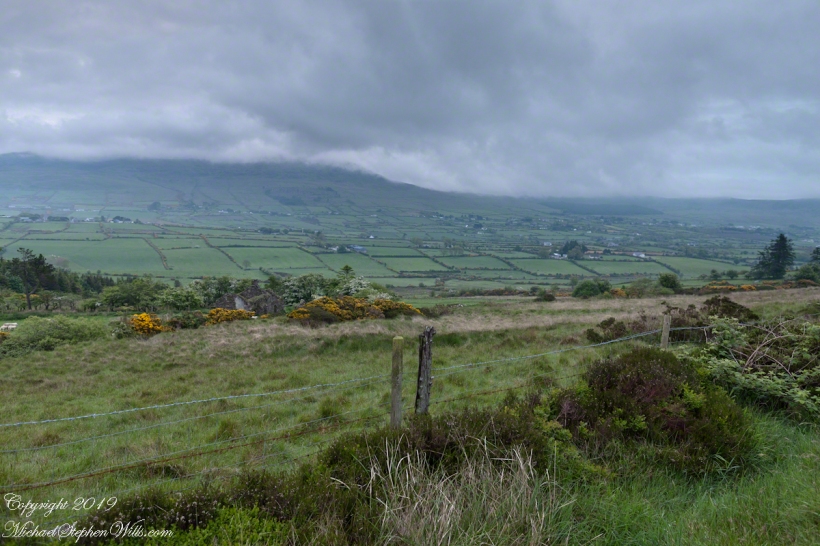
It goes on and on and on
Slievenaglogh is the name of a peak on the Cooley Peninsula of County Louth, Ireland near to the birthplace of my Mom, Proleek, a few townlands to the west.
On the northeast slope of Slievenaglogh peak (Irish: Sliabh na gCloch) on the road from Mullaghattin Townland to Riverstown.
Here we look northeast from the Slievenaglogh Townland, the valley between Slieve Foy and Slievenaglogh peaks.
The view includes Little River, Ballycoly Townland and Castletown River.
Adjacent is a sheep pasture with a farm ruin behind the yellow flowered gorse (whin bush, scientific name Ulex).
Slieve Foy is the far ridge lost in clouds. Early morning, late May 2014.
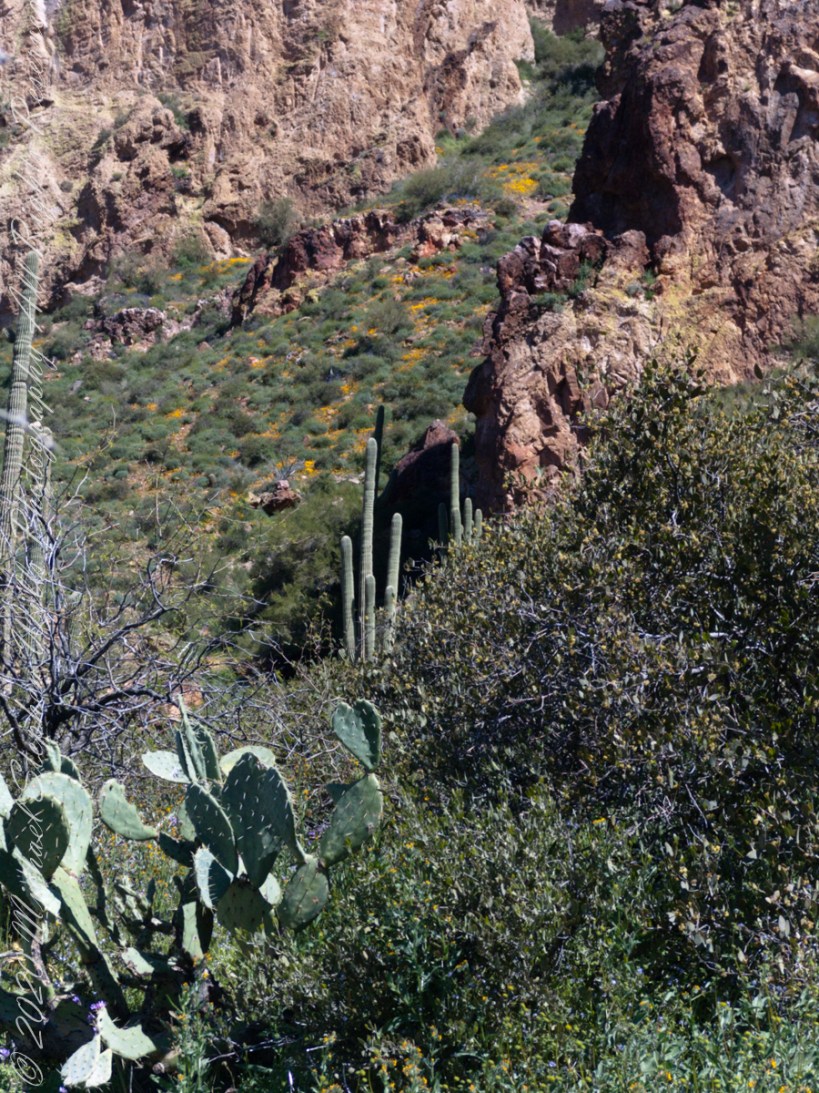
Climbing out of East Boulder Canyon
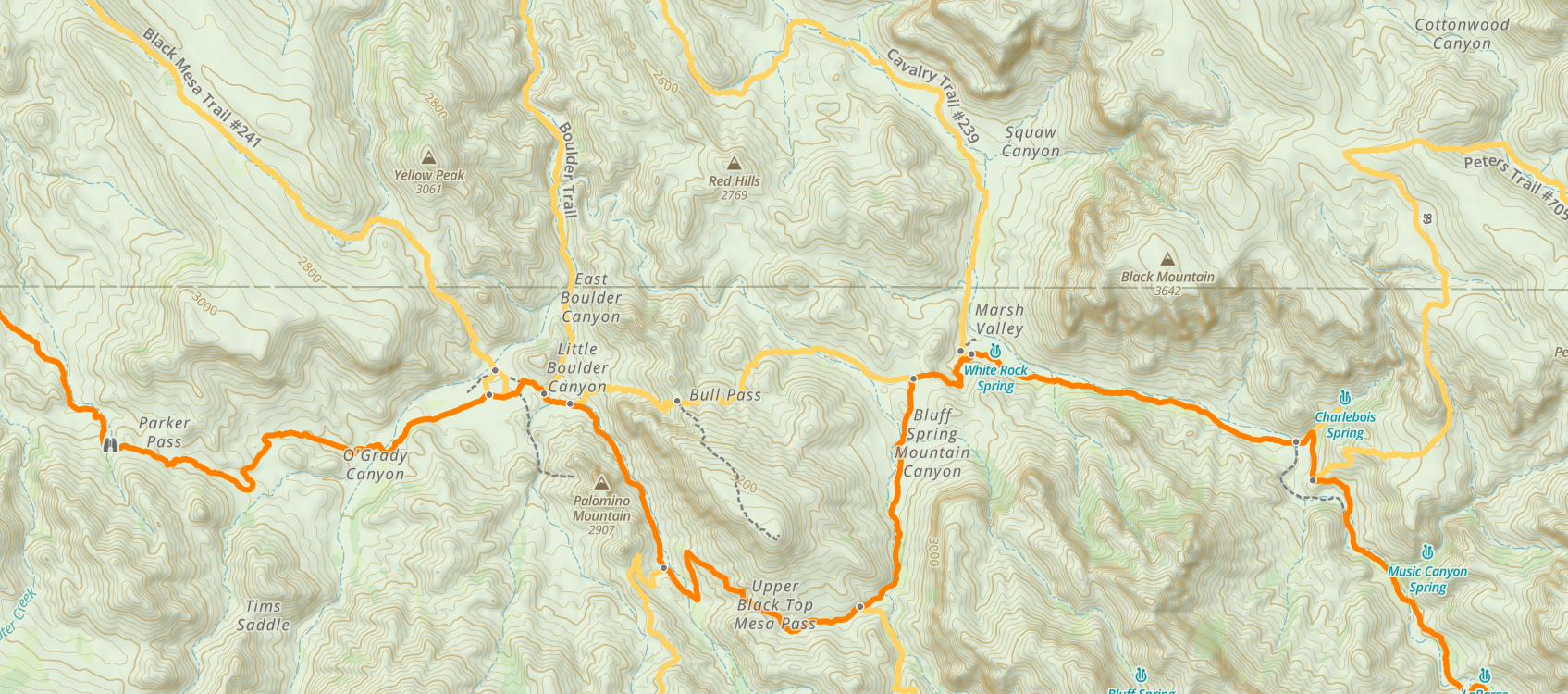
Our second day began in East Boulder Canyon, in the following map it is at the foot of the “Z” of the orange line, the Dutchman Trail, lower left center. The shape is the signature of a switchback needed to negotiate a steep slope up to Upper Black Top Mesa pass. This day will see us traverse Dutchman Trail to the intersection with Peter’s Trail (yellow), another steep climb up Peter’s Mesa.
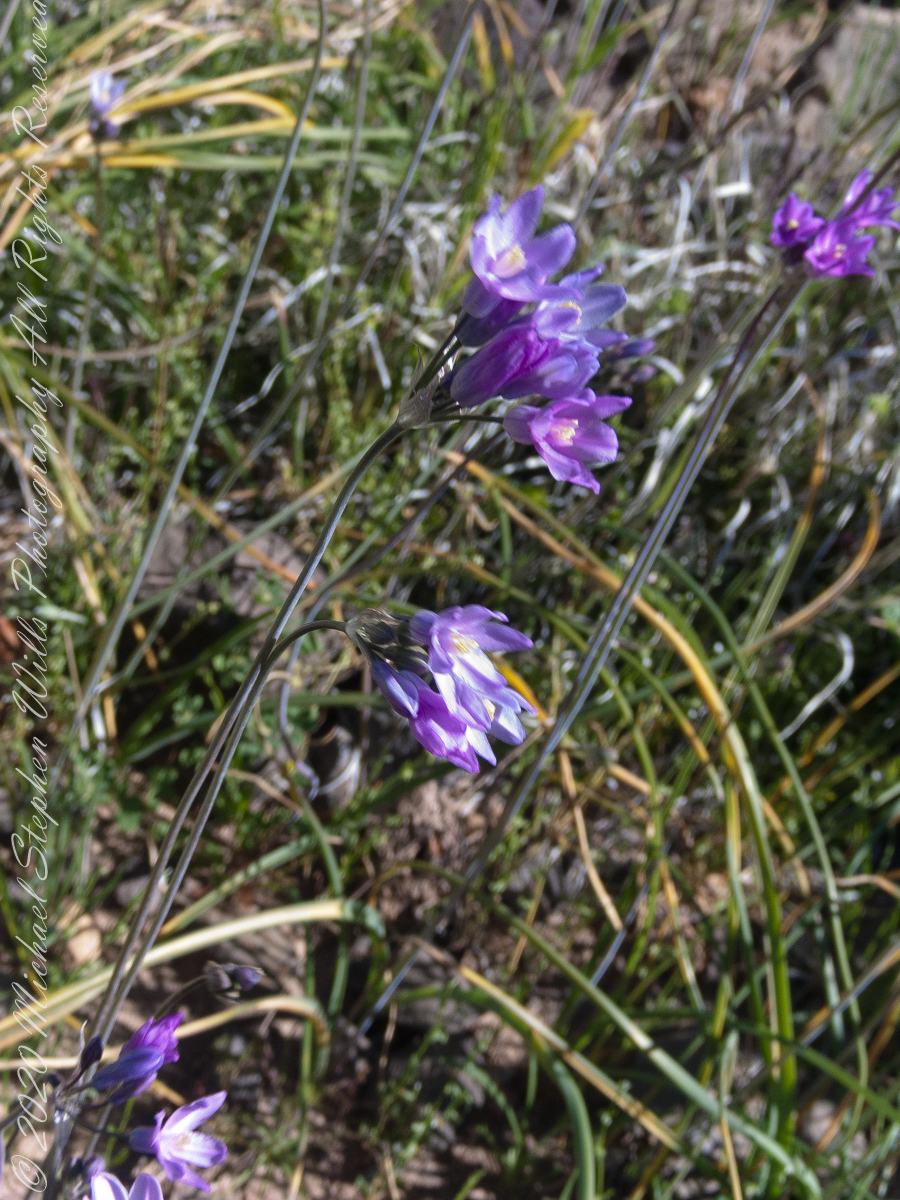
Today’s post features photographs of flourishing Sonoran Desert plants and landscape on the slopes of Black Top Mesa. Dipterostemon capitatus known by the common names blue dicks, purplehead and brodiaea is native to the Western United States (particularly Arizona, California, Oregon, Utah, New Mexico and northwest Mexico.
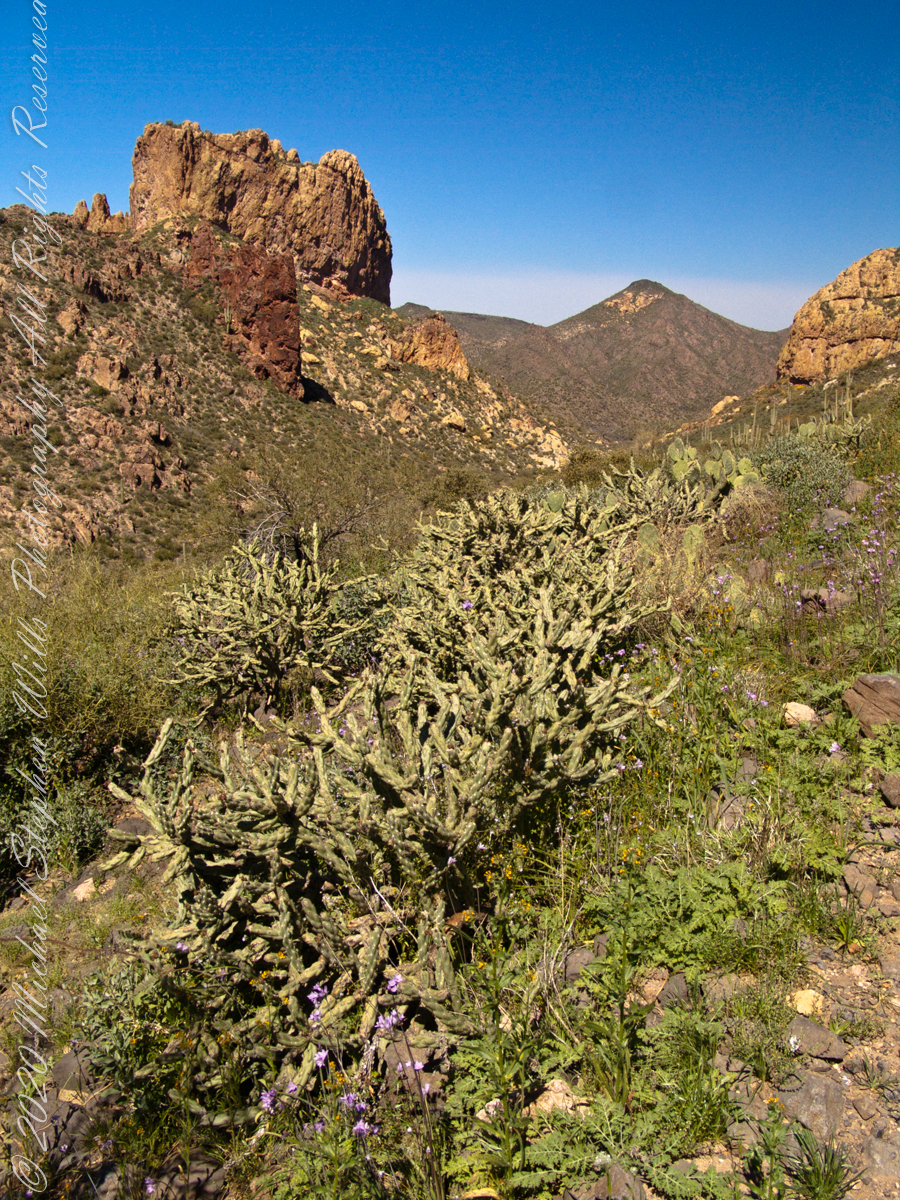
Stag Horn Cholla (Opuntia versicolor) or, maybe, Pencil Cholla (Cylindropuntia ramosissima) growing along the Upper Black Top Mesa Pass trail. Also, in foreground Blue Disk. In the distance Prickly Pear (Optuna) and, far distance, Saguaro Cactus (Carnegiea gigantean). Palamino Mountain and the Peralta Trail on left, Black Top Mesa on right. East Boulder Canyon runs between. The other side of distant Yellow Peak was where, July 2010, four foolhardy Utah treasure hunters lost their lives to summer temperatures exceeding 180 F.
Here I used the “zoom” for a better view of distant Yellow Peak. In foreground is Brittlebush (Encelia farinosa) and Blue Dick. In the distance Saguaro Cactus. Below the cliff of Black Top Mesa, above East Boulder Canyon, is a patch of yellow, Mexican Poppy (Eschscholtzia californica).
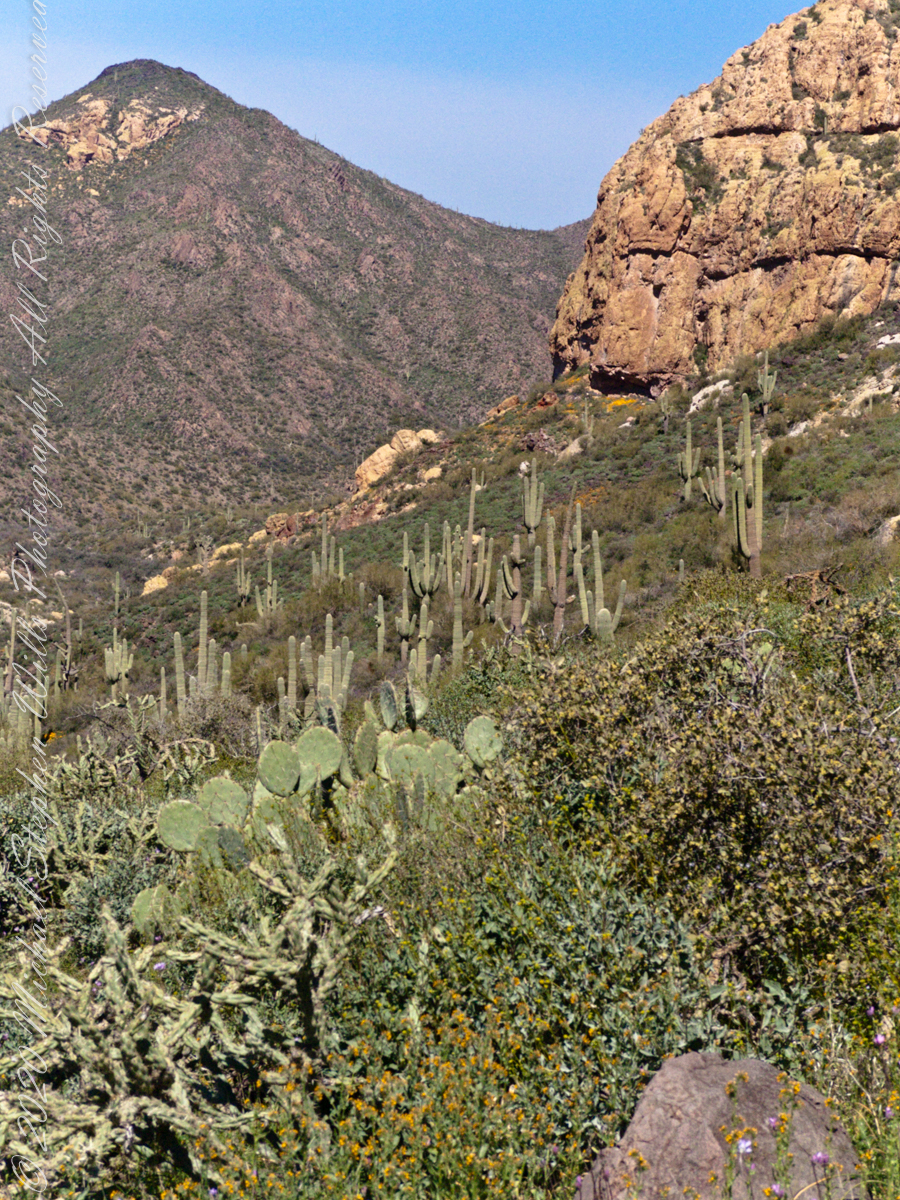
Here is camera, set to zoom, is swung toward the mesa cliffs. Prickly Pear and Brittlebush growing along the Upper Black Top Mesa Pass trail. I have not identified the shaggy shrub above the Brittlebush. In the distance Saguaro Cactus (Carnegiea gigantean) flourishes. Below the cliff are patches of “gold dust”, the Mexican Poppy.
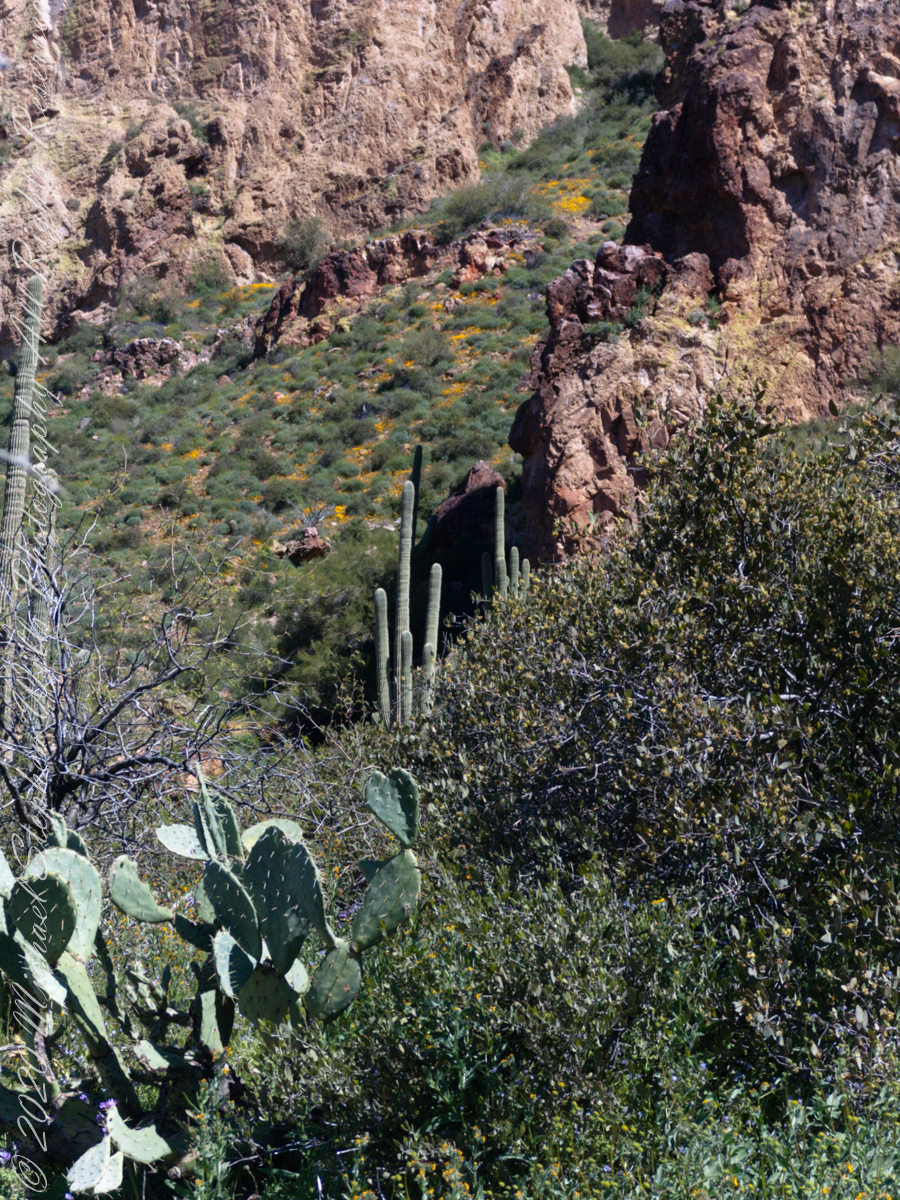
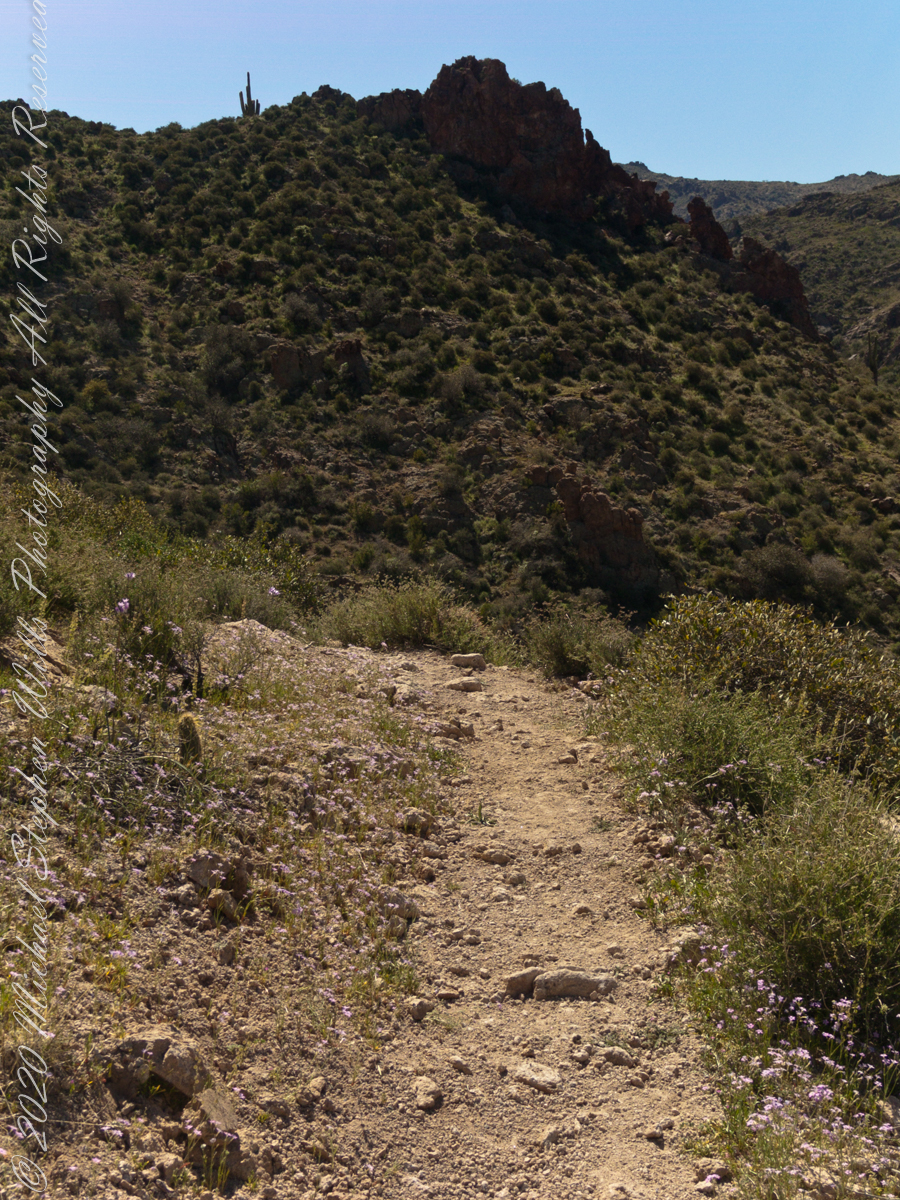
Heading southeast climbing out of East Boulder Canyon with a very young Saguaro Cactus (Carnegiea gigantean) just off trail on left, a large specimen silhouetted on ridge ahead. Windmill Pink (AKA Common Catchfly) (Silene gallica) foreground, lower left. Brittlebush (Encelia farinosa) on both sides.
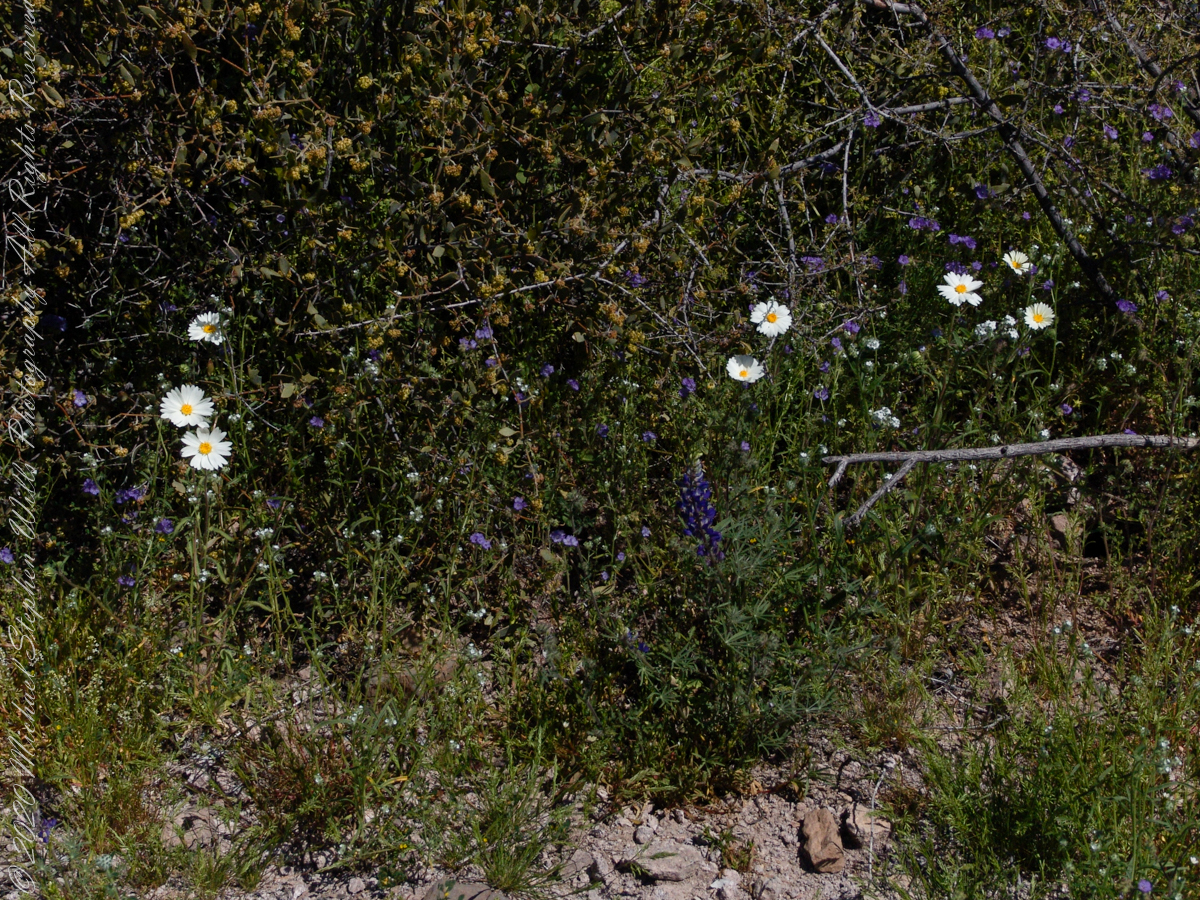
This post ends as it began, with wildflowers growing next to the trailon a March morning. Blue Dicks (AKA Purplehead) (Dipterostemon capitatus), Tidy Tips (Layia) — daisy like flower, Brittlebush flowers are yellow when not dried. The larger small white flowers are Desert Phlox (Phlox austromontana) — I have not identified the tiny white flowers sprinkled around.
Copyright 2022 Michael Stephen Wills All Rights Reserved
a monarch in steady progress south
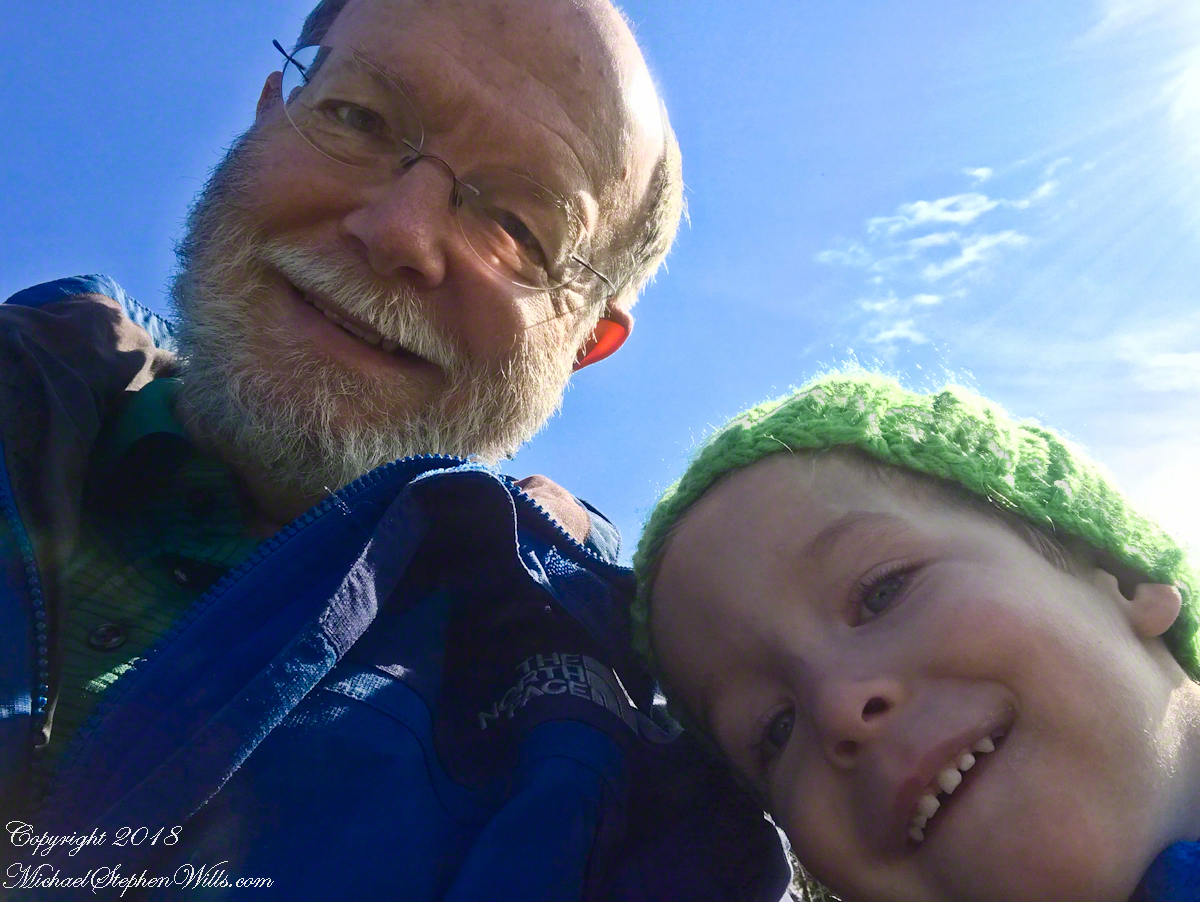
On a sunny autumn morning we set out, my soon to be three grandson Sam and I, to the Lime Hollow Nature Center near Cortland for an adventure. For the first time I brought a newly purchased iPhone 7 instead of the usual slr camera. The phone can be carried in a pocket and is simpler to us, to allow me to give full attention to Sam.
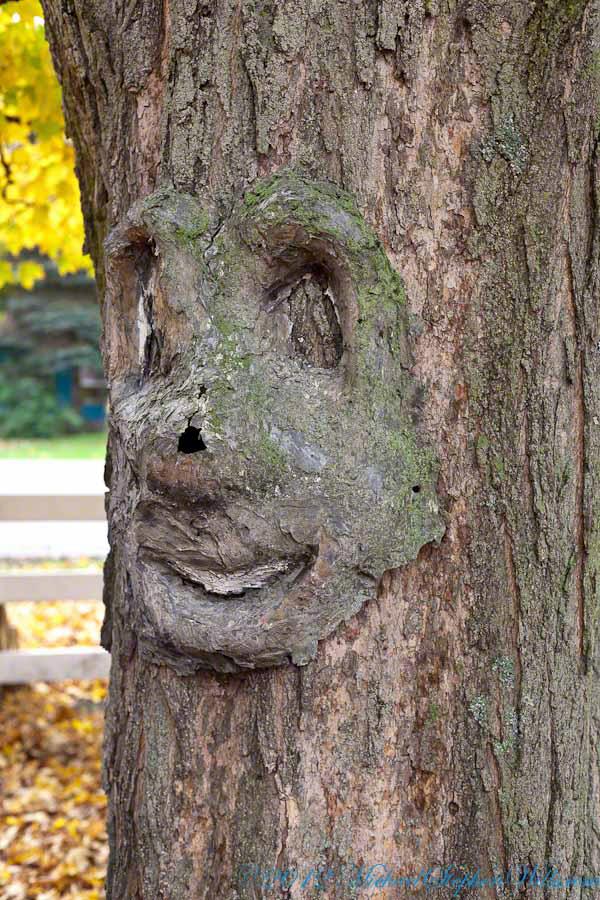
At the start is a large, today sunlit, field with an “art trail.” There are various anthropomorphic transformations on the trees and a very large sculpture of a blue face. Here is a tree from another place near here, to give you an idea.
I do not point out the tree faces to Sam. His Mom likes to say he enjoys being frightened and, when the blue face came into view, he turned back and said, “home.” Sam was mildly anxious, so I carried him and tried to turn him up the trail away from the face. He turned to keep an eye on it while I assured him it could not move. This and a climb up a 230 foot hill were the only times he didn’t walk the half mile to a open grassy knoll with a bench.
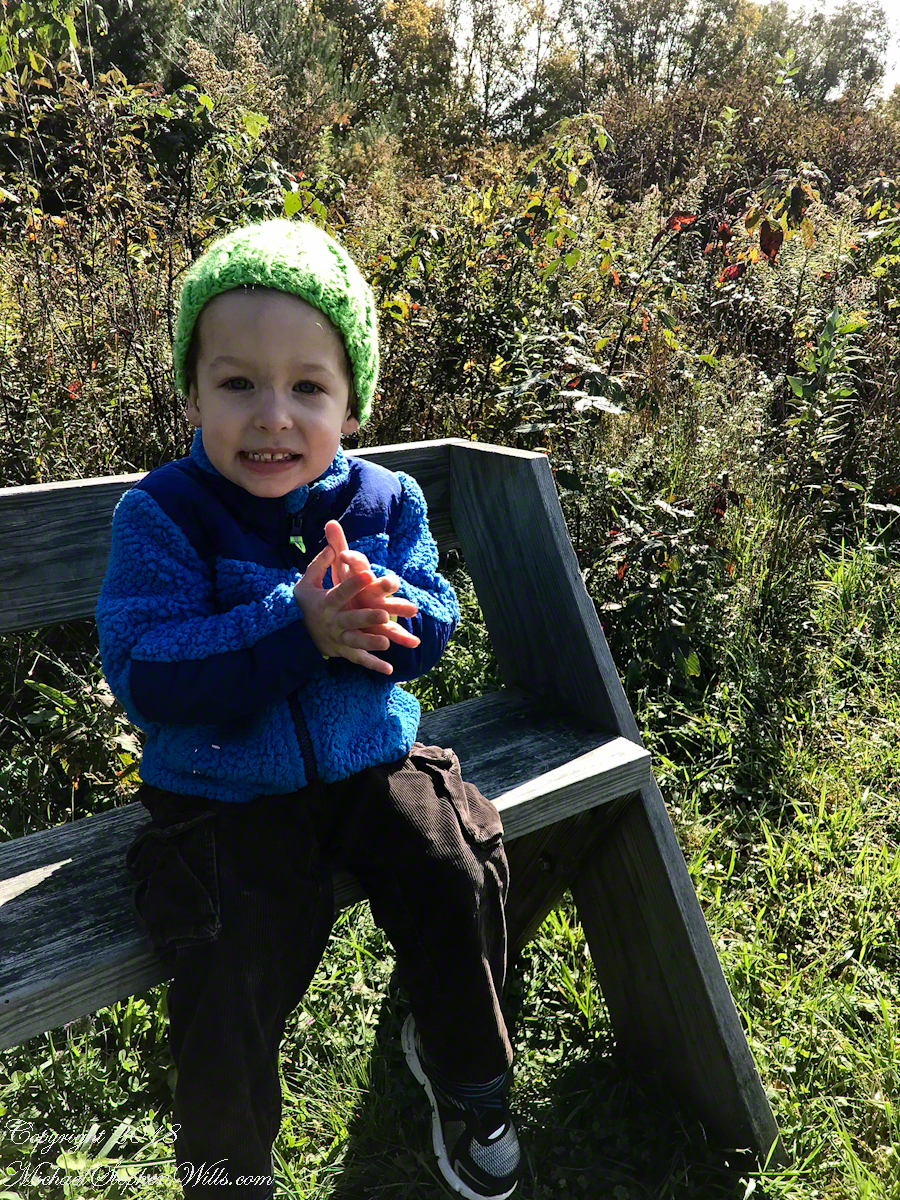
There we sat for 30 minutes, still and watching, Sam and I talked about our sightings:
1. The sunlit sky of clouds, from a milky blue towards the north to, overhead, a bright robins egg blue.
2. A circling hawk, shadow crossing over us.
3. One blue jay in a maple turning red, loudly calling over and over.
4. A little while after a second jay, landing in a tree turned yellow, drawn in and giving answer.
5. A monarch butterfly’s steady progress south. Such a strong gliding path.
6. A yellow butterfly who did not leave us, fluttering round and round.
7. Four honking Canadian geese flying north east, turned to check out a nearby pond, the returned to the original heading.
8. The sound of wind through the trees, listening to the sound made by each tree.
9. The late season golden rod, now dried gray.
10. A distant chittering red squirrel.
11. Distant peeper frogs in the swamps at the foot of the hill.
Sam did not want to leave the bench, eventually we headed on to the pond the geese checked out.
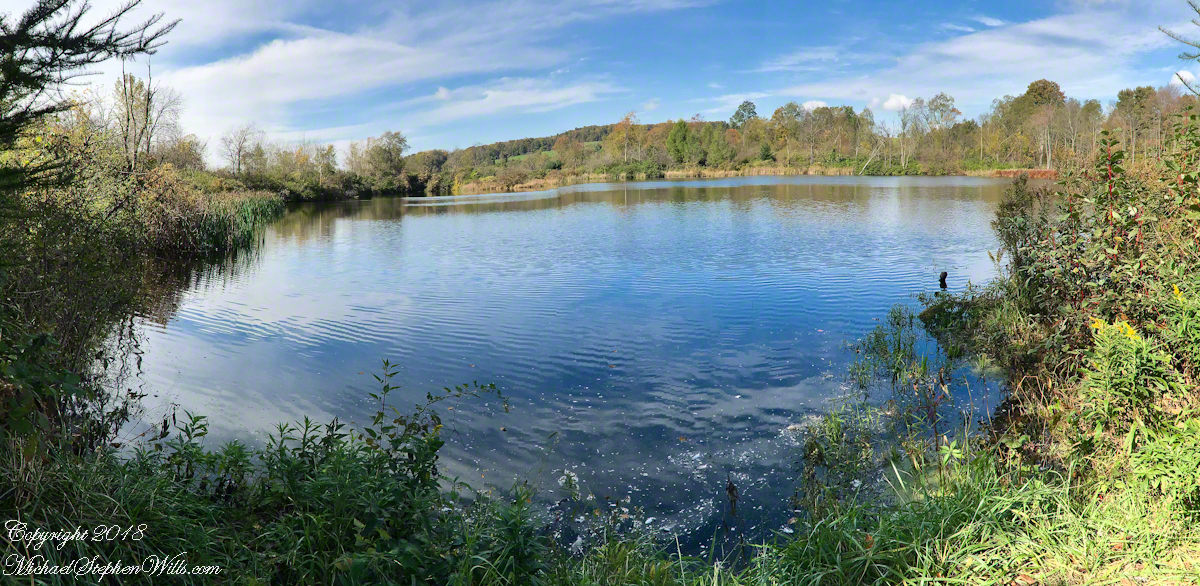
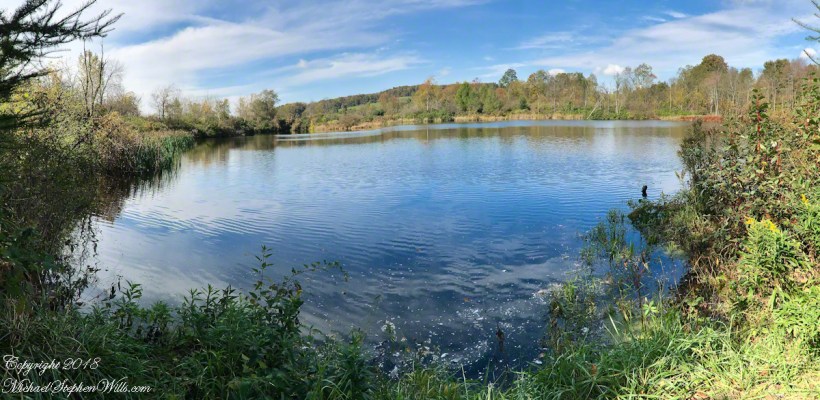
I used the “panoramic” feature of the iPhone 7 for this shot. On the hill we were sheltered by trees and bushes from the steady northeast wind. Here, on a bench by the pond, that direction was open to the wind. The sun kept us warm. It was clear why the geese did not land, the water surface was deserted, filled only by rippling wind driven waves.
On our walk back we sat on a bench on the edge of the art trail field, the blue face out of sight. A woman, the only other person encountered, emerged from one of the trails cut from the brush, camera in hand. She was collecting images for a Cortland Historical Society publication and asked to take our photograph. “OK,”, I said and gave the story of living here for 25 years in the house on Fall Creek where my son’s family lives now. She replied, “My daughter is in San Francisco. We don’t know who will have our house when we are gone.”
Click me for “Celestial Geese with two haiku by Issa”.
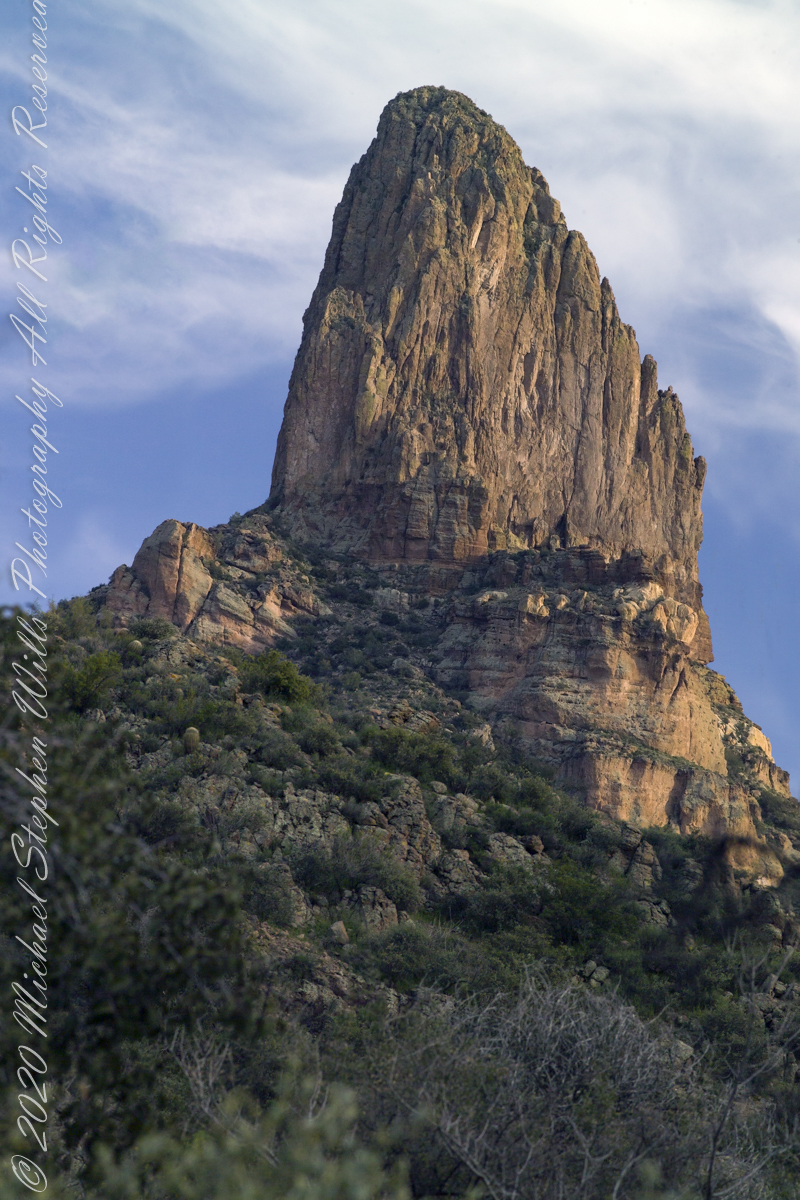
Use comments to name your preference with rational (if any)
Thank You
I cannot pick a favorite version from this series taken at sunset with a Canon 200 mm lens. Can you? If you have a choice, please name it in comments.
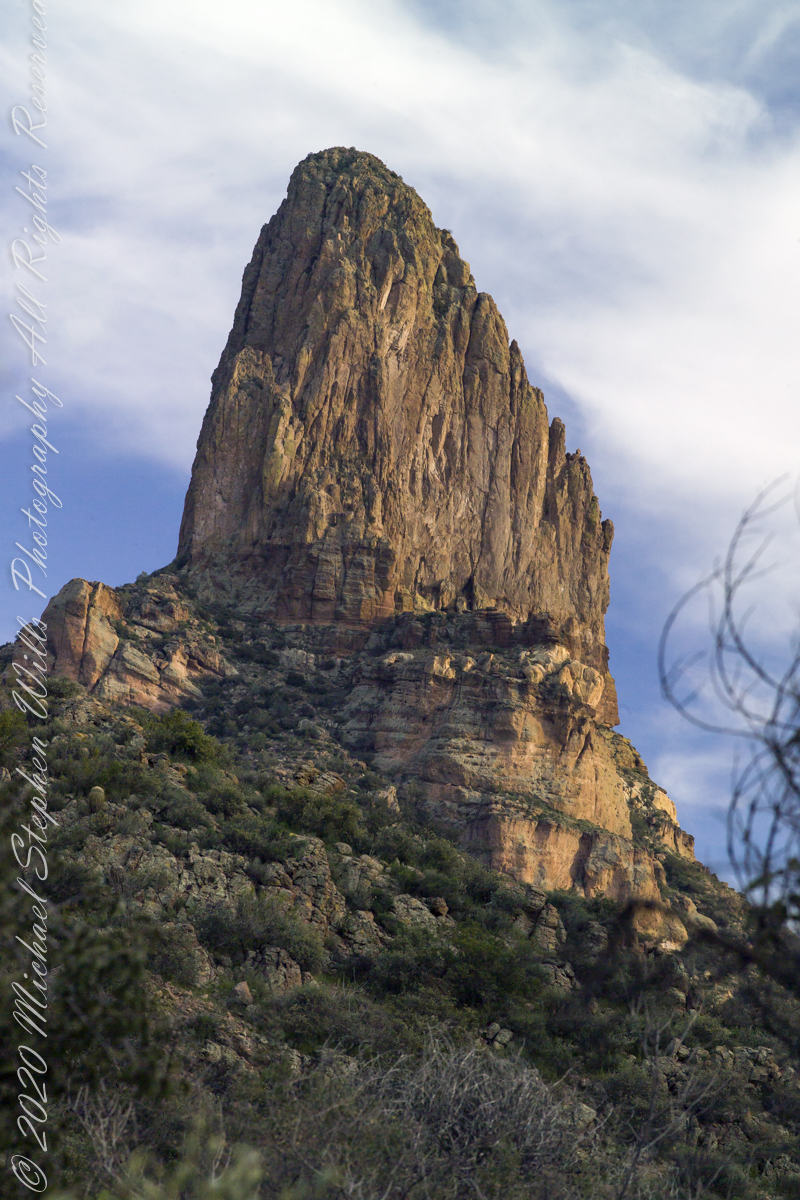
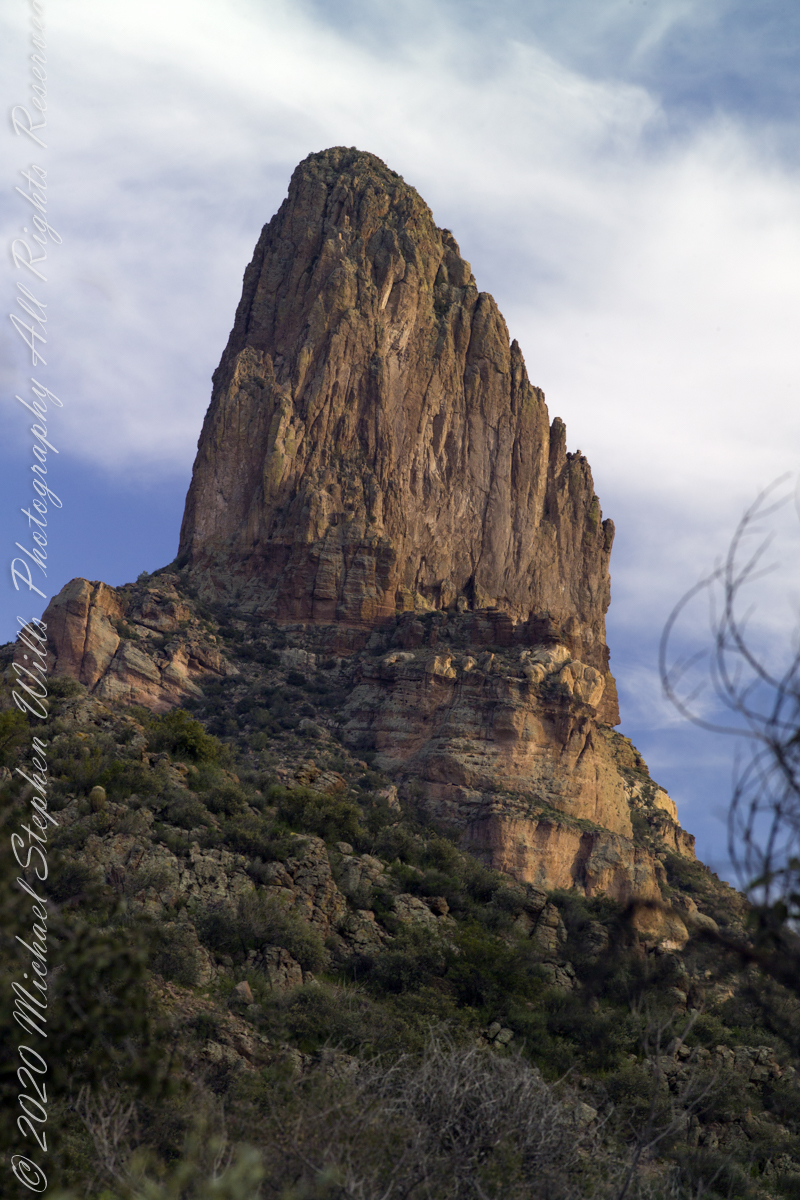
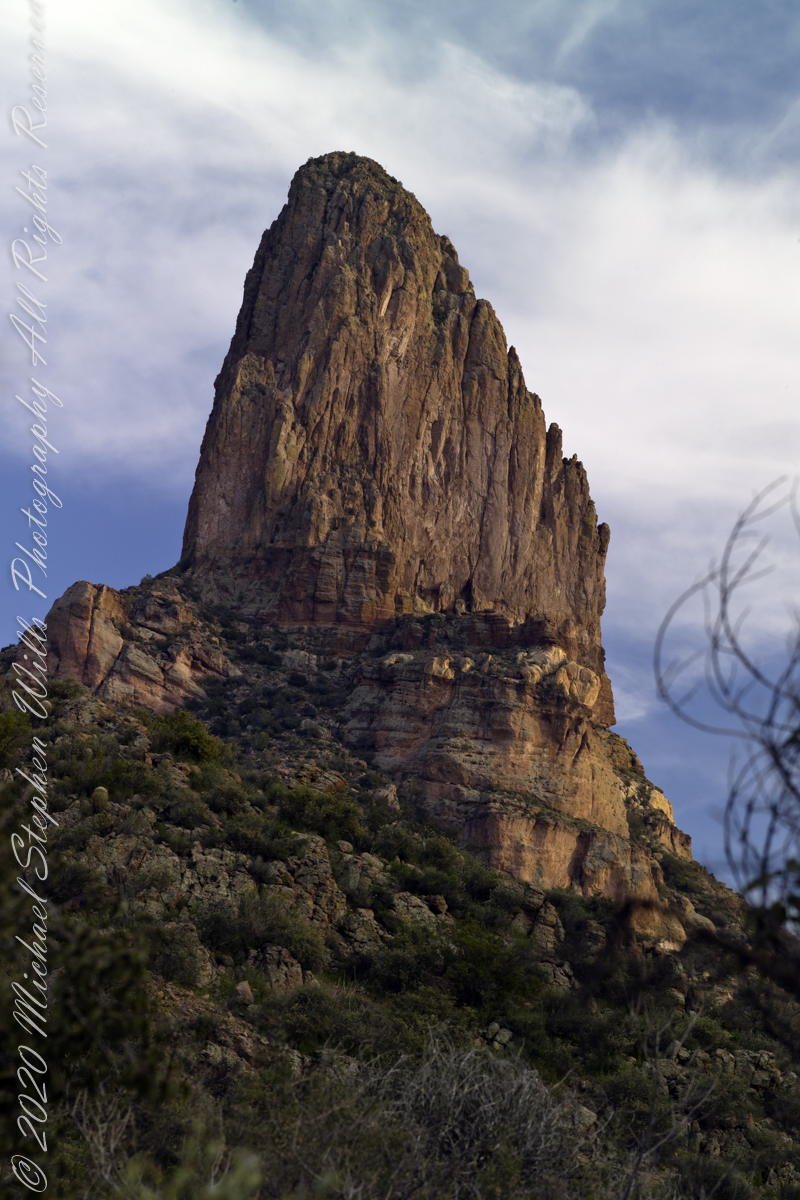
Copyright 2022 Michael Stephen Wills All Rights Reserved
The Lost Mine
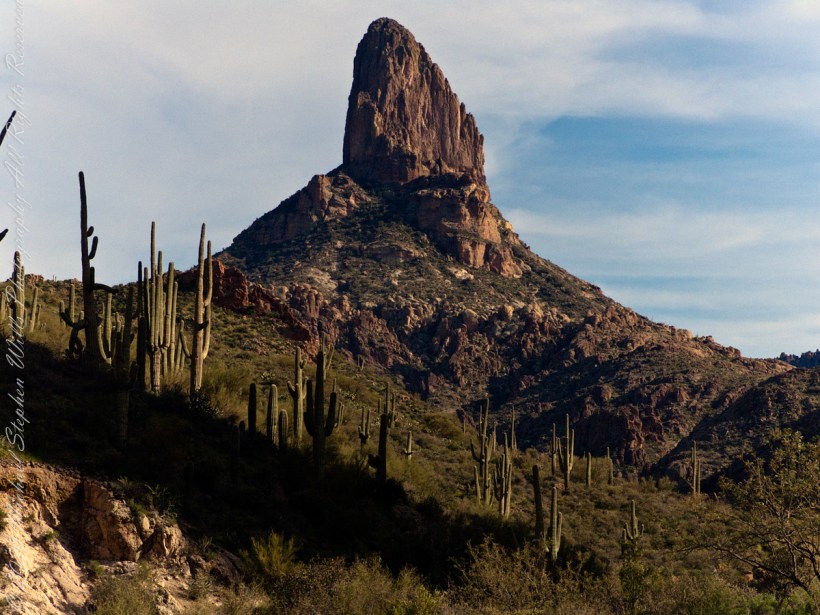
It is ironical the word “legend,” from the Latin verb “to read,” is the word used to describe the ahistorical stories, rumors really, of the Superstition Wilderness anchored, concurrently undermined, with the hard facts of geology. “Named for Paulino Weaver, a famed mountain man, scout, trapper and miner, Weavers Needle is a volcanic monolith that rises almost 1,300 feet from its base to an elevation of 4,553 feet. It’s the most recognizable landmark in the wilderness, and it’s also considered a marker for the legendary Peralta Mine.” — Arizona Highways
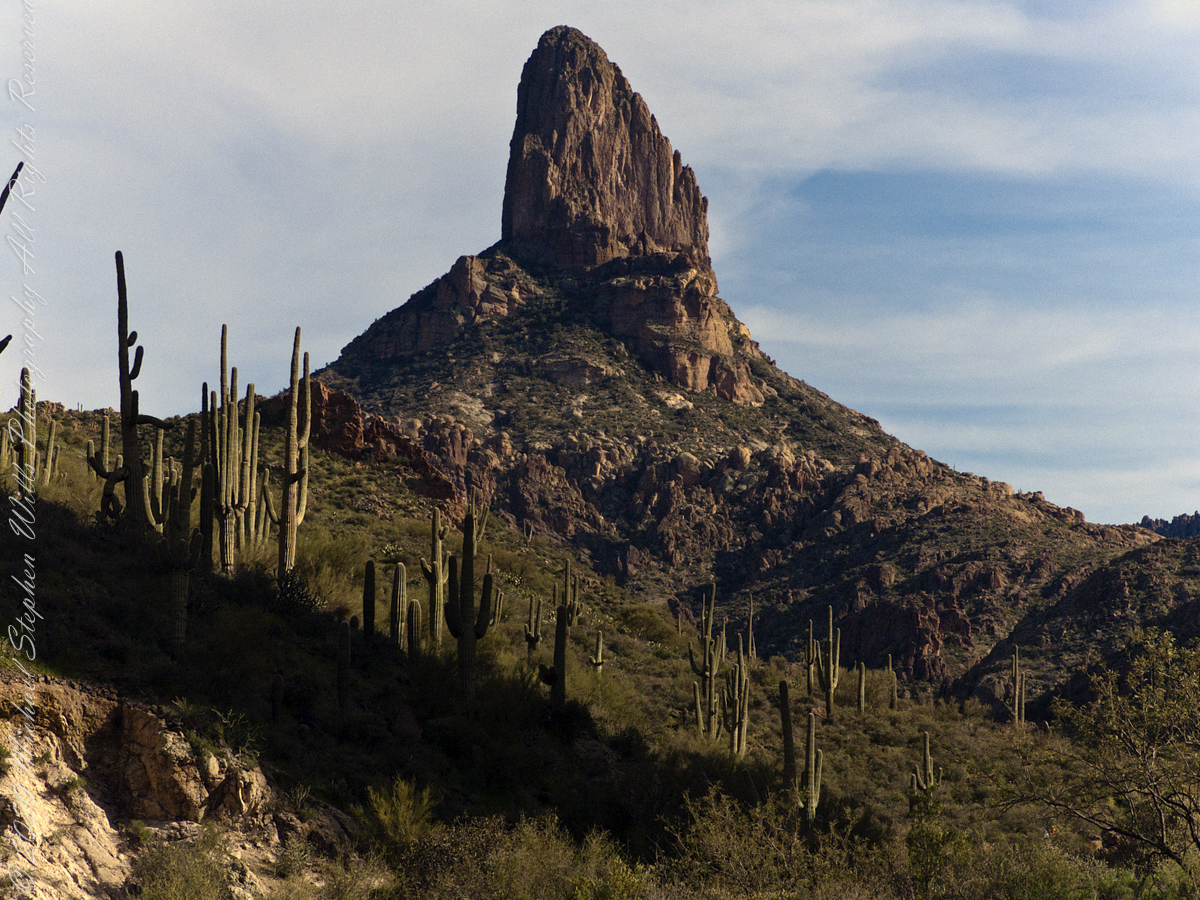
“As the story goes, Don Miguel de Peralta and his family, who had come to the Superstition Mountains from Mexico, discovered gold, lots of gold, in the shadow of Weavers Needle. However, before cashing in, according to the story, they were killed by Apaches, who allegedly sealed off the mine. A few decades later, Jacob Waltz, better known as the “Lost Dutchman,” claimed to have found the old Peralta Mine, but he died before proving his claim. Since then, thousands of treasure hunters have gone looking, including Arthur Weber and the Dons of Phoenix, but no one has ever found the gold. And it’s unlikely anyone ever will — the volcanic rock out there isn’t conducive to producing precious metals. They’ll keep looking, though. Meantime, the real treasure is the trail. Especially in the springtime, when the ground is covered with gold. ” –Arizona Highways
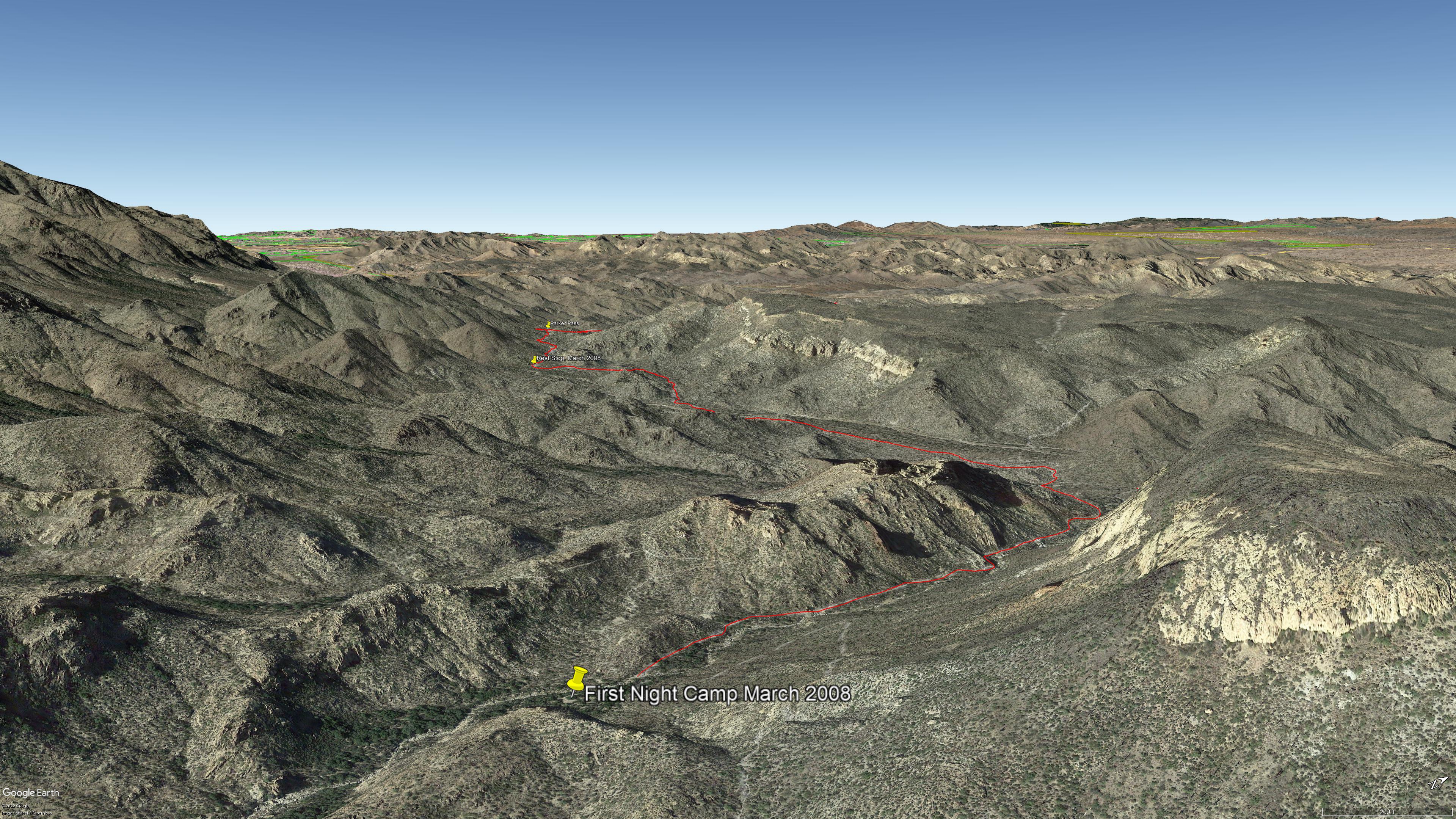
Here is a view of part of the day’s trail. We started at 1911 feet elevation, Apache Junction, topping 2693, Parker Pass, with 2512 our resting spot with many ups and downs in between: a combined descent of 1760. Our rest was well earned. Palamino Mountain is on the left, Black Top Mesa the right. Look carefully to see the Peralta Trail surmounting Palamino Mountain ridge, descending in a zigzag to Boulder Canyon where it terminates on Dutchman Trail.
Copyright 2022 Michael Stephen Wills All Rights Reserved
Enter the family name “Peralta”
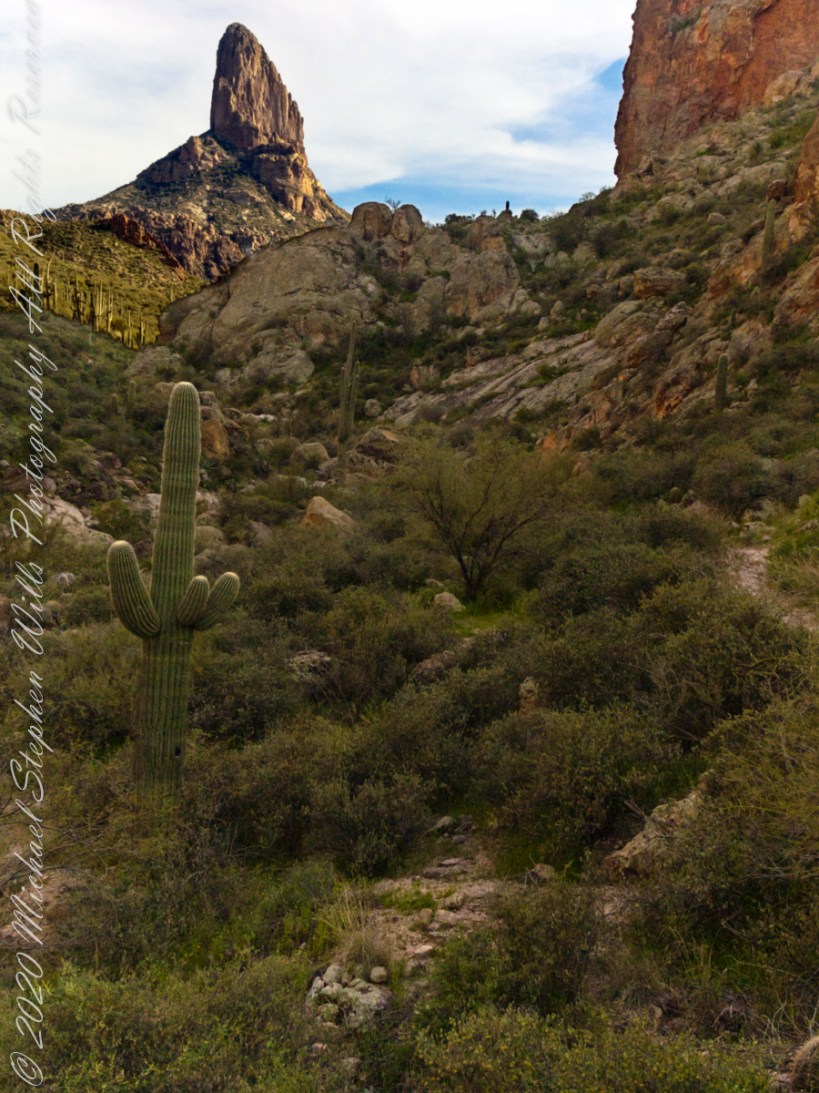
Our eleven-mile trek from Apache Junction ended here between Black Top Mesa and Palamino Mountain. Peralta trail winds up the ridge to right with Weaver’s Needle beyond in the setting sun.
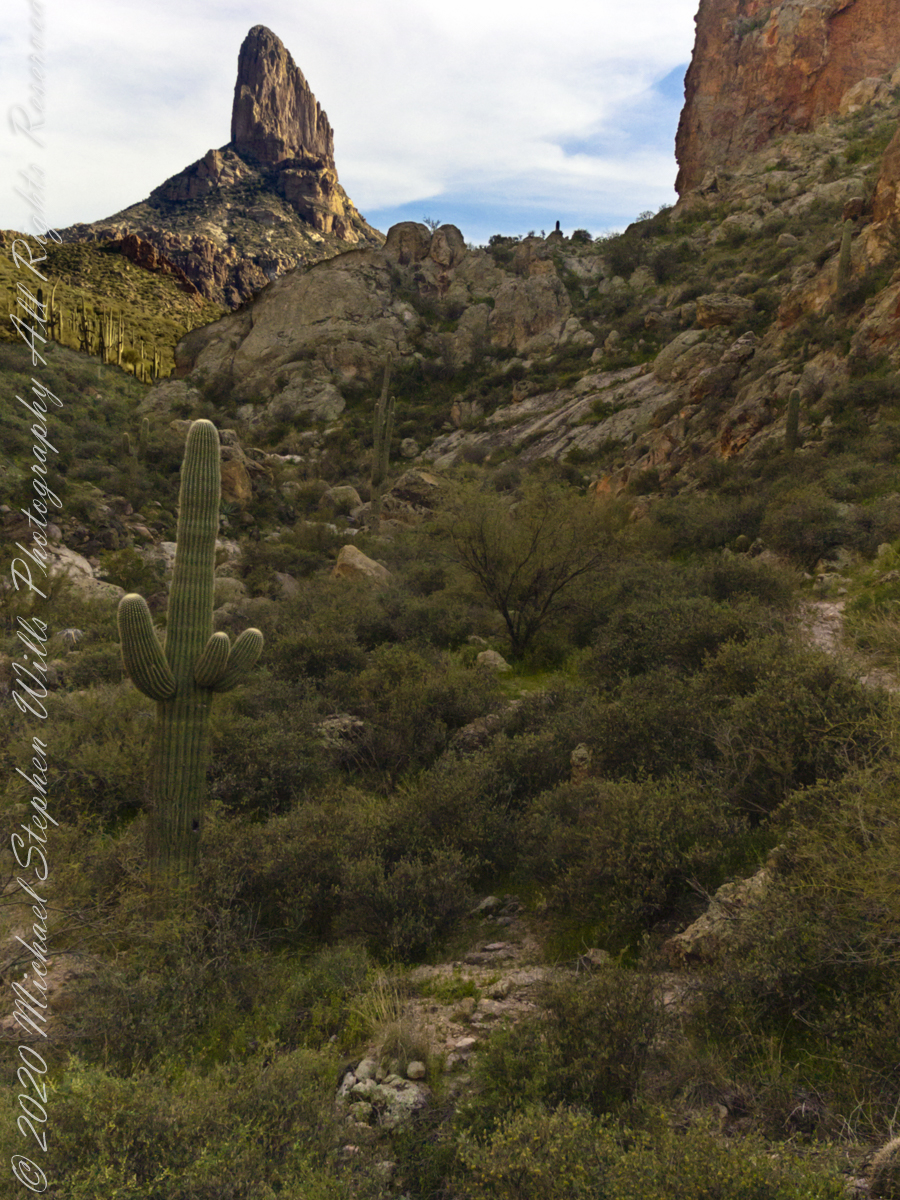
Deep shade combined with the distant sunlit needle made for a difficult photographic capture. In fact, this picture needed significant work in Photoshop. I wore the 8 megapixel Sony F828 to capture the handheld shots of this series. A few days later I dropped the camera while riding Colorado, rendering it inoperable. This was when I acquired my Sony Alpha 700 during downtime in Phoenix. Later, the F828 was repaired at Sony and is still operable.
Copyright 2022 Michael Stephen Wills All Rights Reserved
 Michael Stephen Wills Photography