The Mouth of Reavis Canyon

Canyon Hazards and Beauty

In this chapter we enter the Mouth of Reavis Canyon below Reavis Falls and examine the beauty and danger of this remote canyon.

See Reavis Canyon Camp for more of my expedition to Reavis Falls.

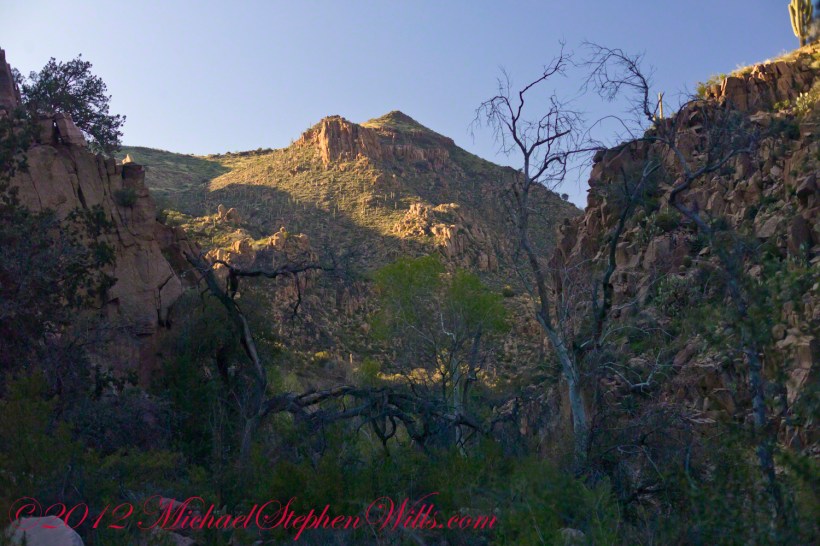
Dawn on the day I entered Reavis Canyon
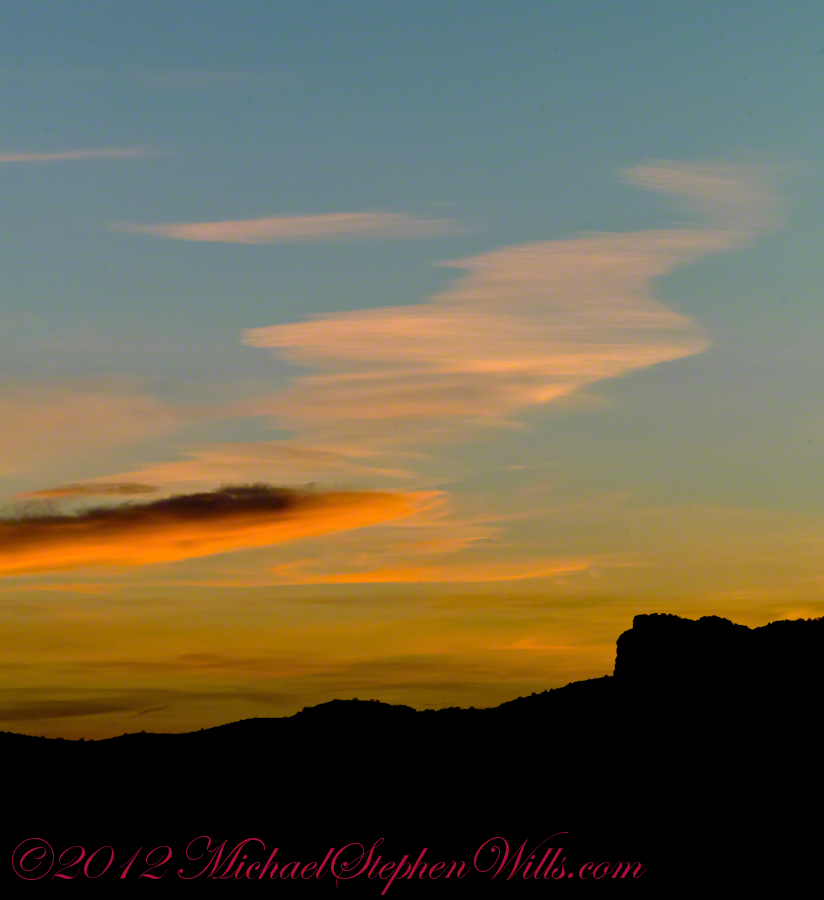
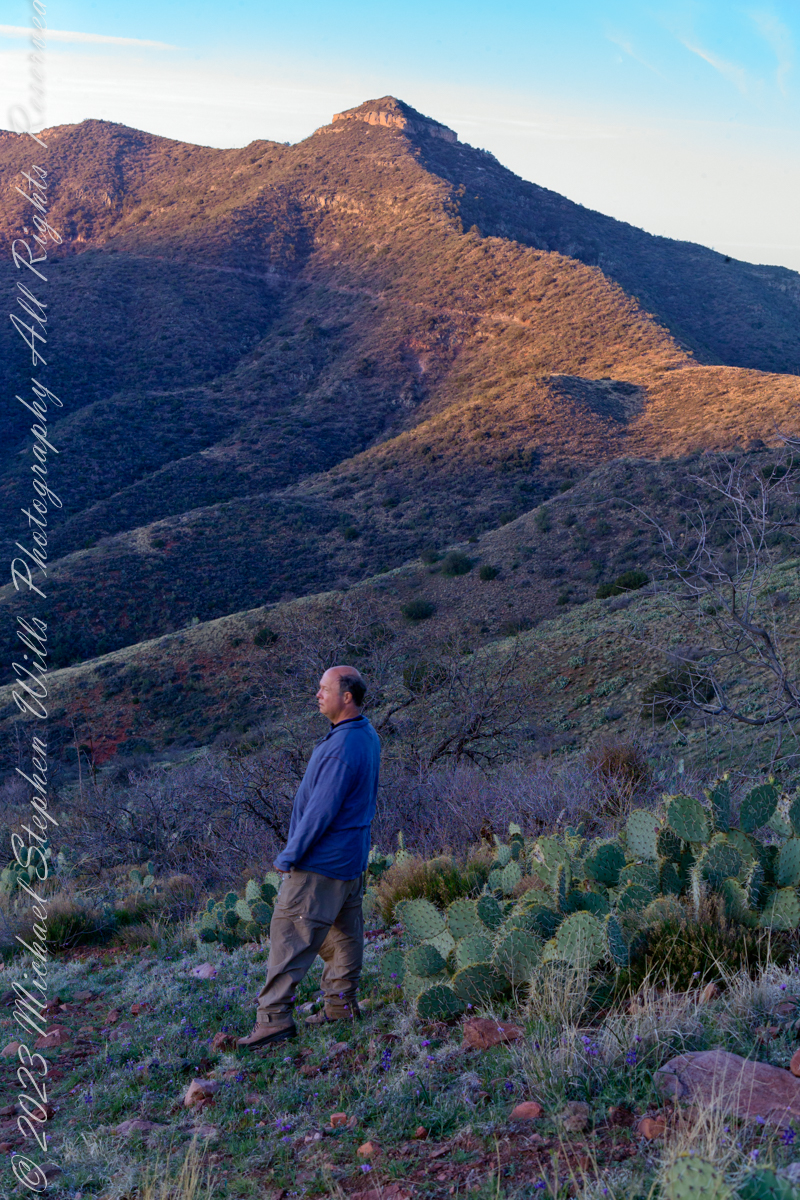
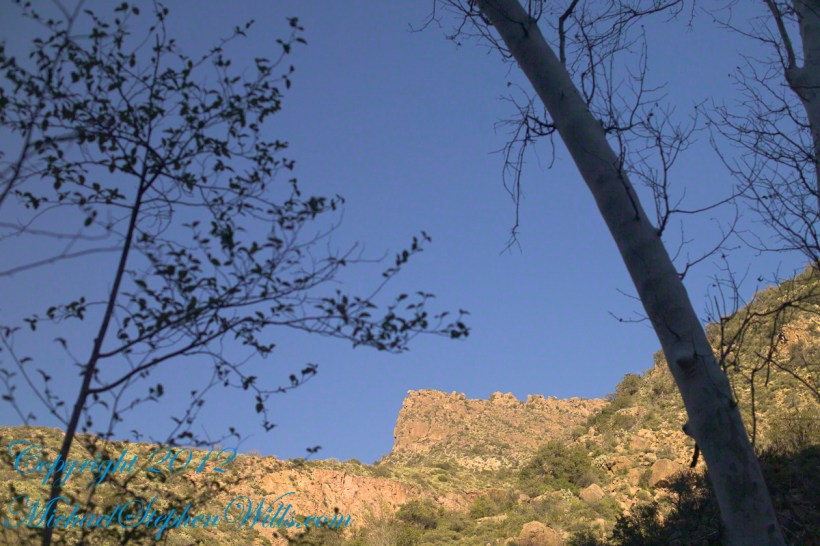
Dawn light above the outline of the prominent cliff above Reavis Canyon and Falls the morning of my last day in the canyon.

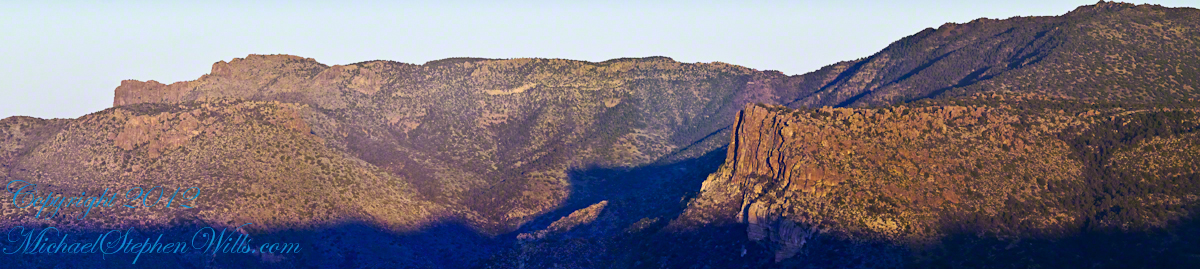
You might recognize the outline of this cliff from the chapter  Two Bar Mountain View or Evening on Two Bar Mountain.

Here is the same view, in daylight. As I hiked toward the canyon mouth below Reavis Falls, looking up I saw this prominant cliff against the sky.
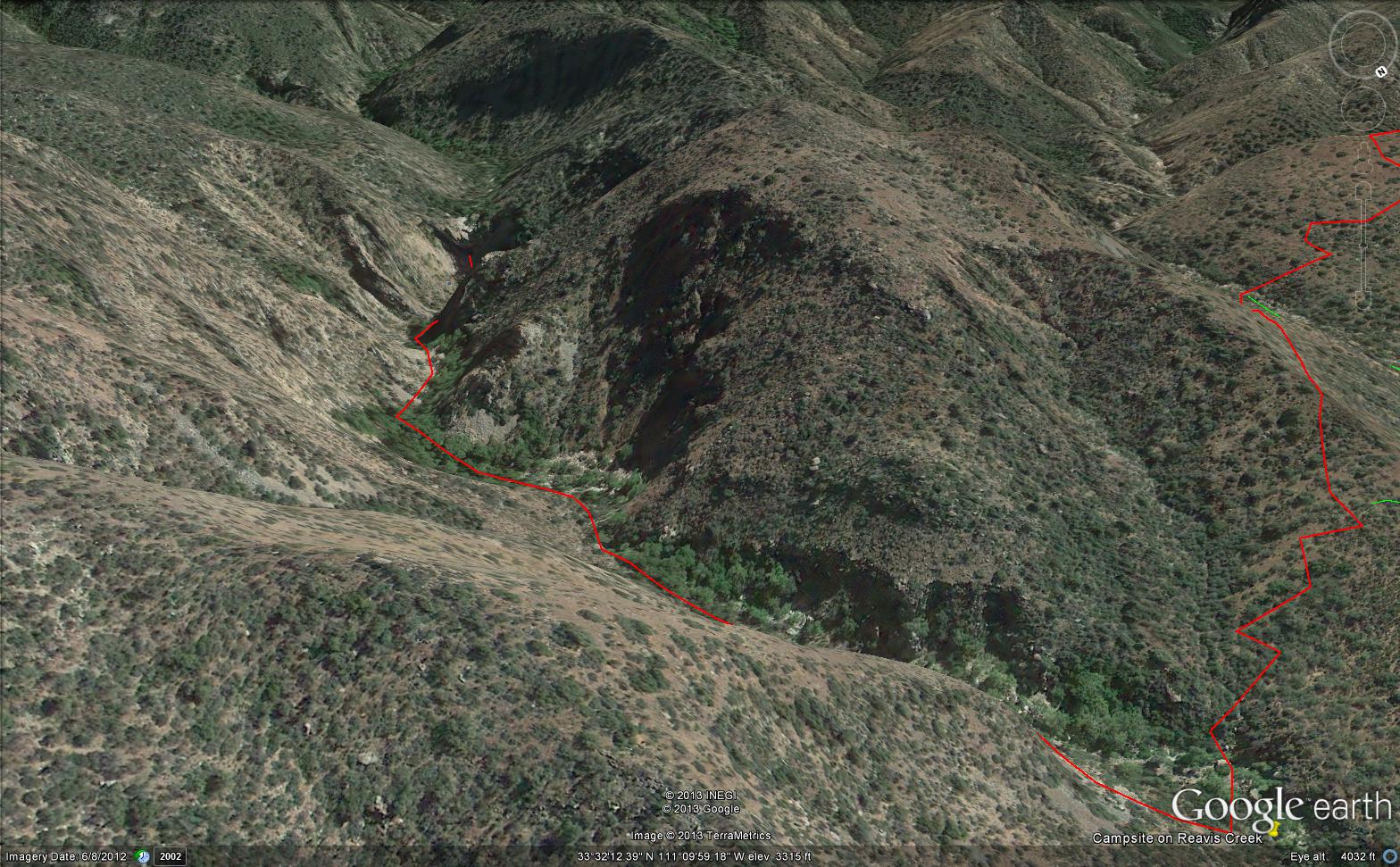
Here is the path I took toward the falls.  The campsite is to the lower right, the falls are toward the center and left.  My approach to the camp is on the right, moving toward the top.  For another view of this location see Reavis Canyon Camp.
The mouth of Reavis Canyon below the falls is choked with vegetation and infallen rocks and boulders.  The far slopes are thick with the poles of young saguaros. There are hoodoos, as well.  In the photograph, below, one hoodoo is catching morning light.  See the chapters Hoodoos on the Descent to Reavis Falls and Cedar Basin Hoodoos for more views of the hoodoos around Reavis Falls.
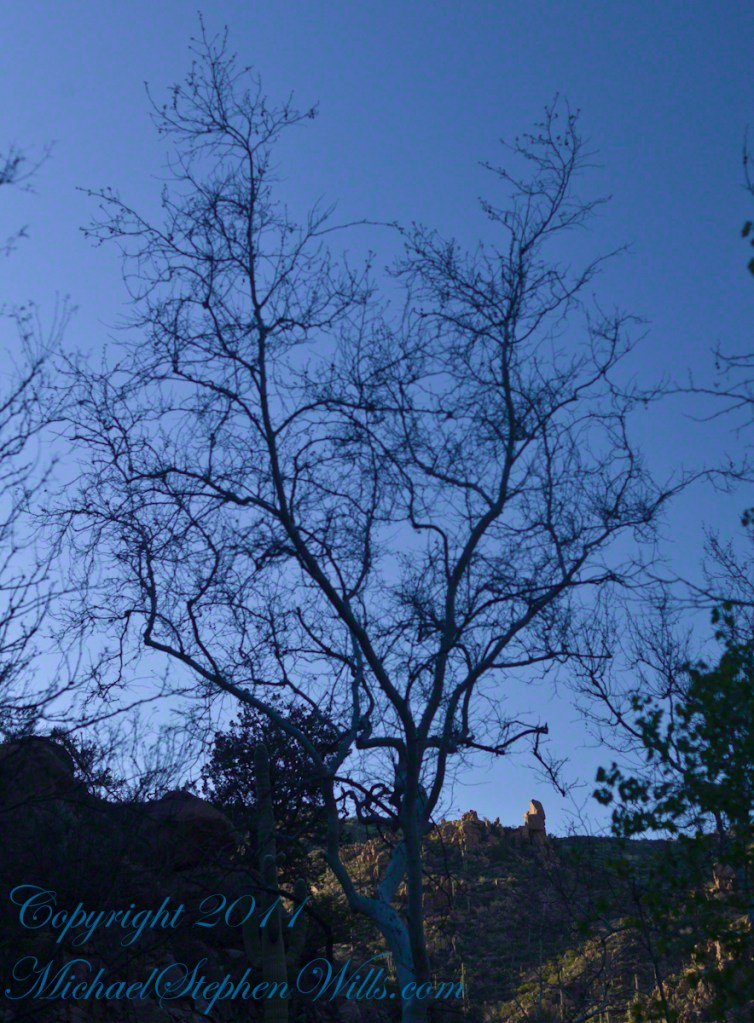
Hoodoos visible from the mouth of Reavis Canyon below the falls. Look toward the far slope.

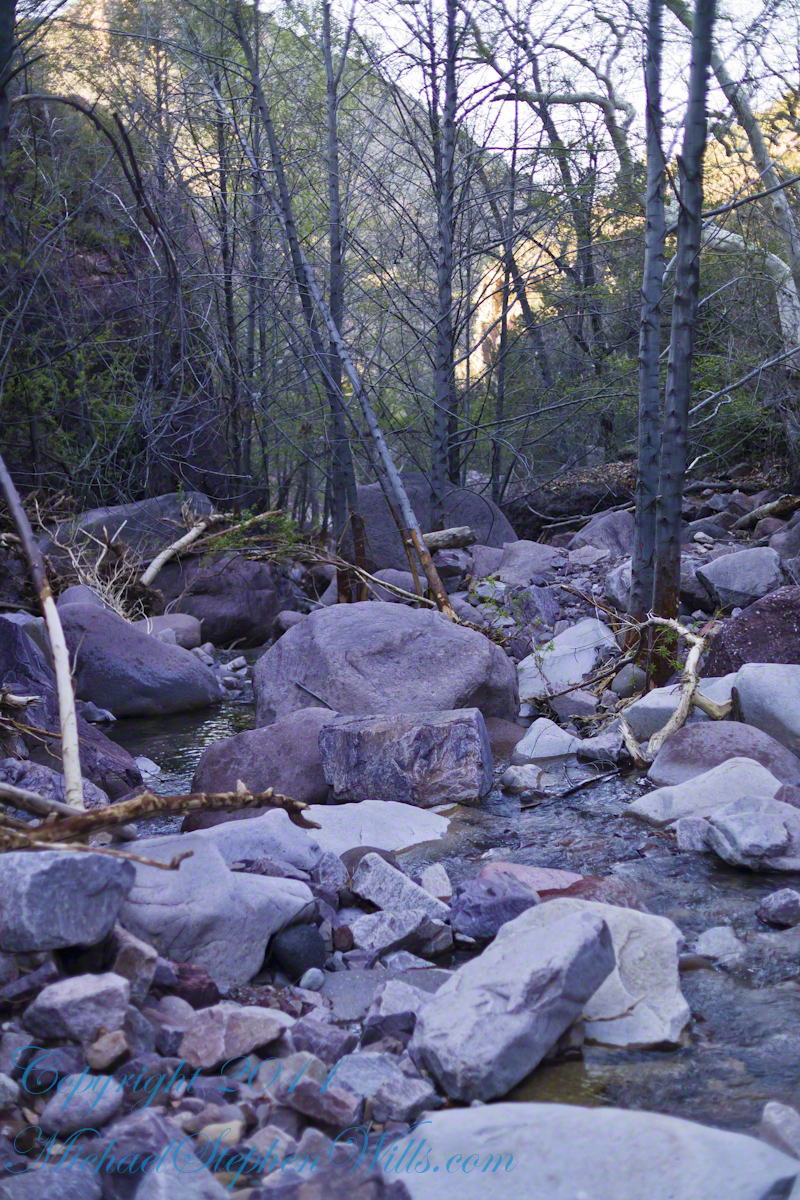
Flood damage in Reavis Canyon below the falls. Note the scouring at the base of these trees and the broken limbs. This is NOT a place to be in spring thaw.
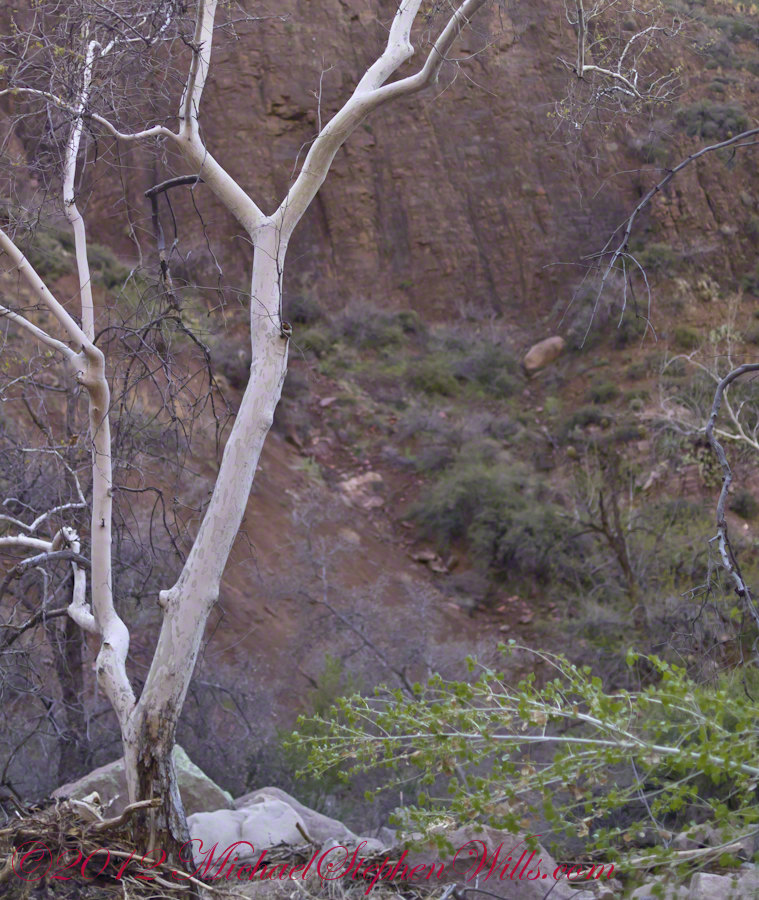
Massive spring flooding scours the canyon floor.

Flood damage in Reavis Canyon below the falls.

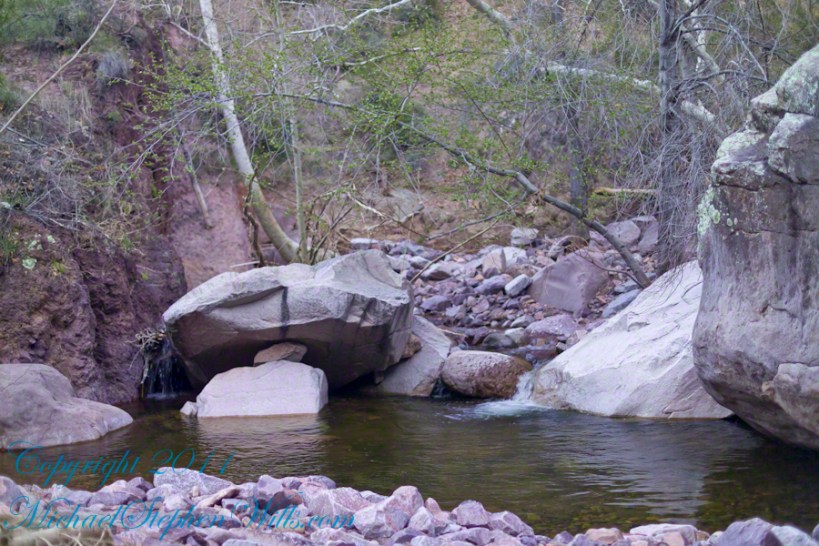
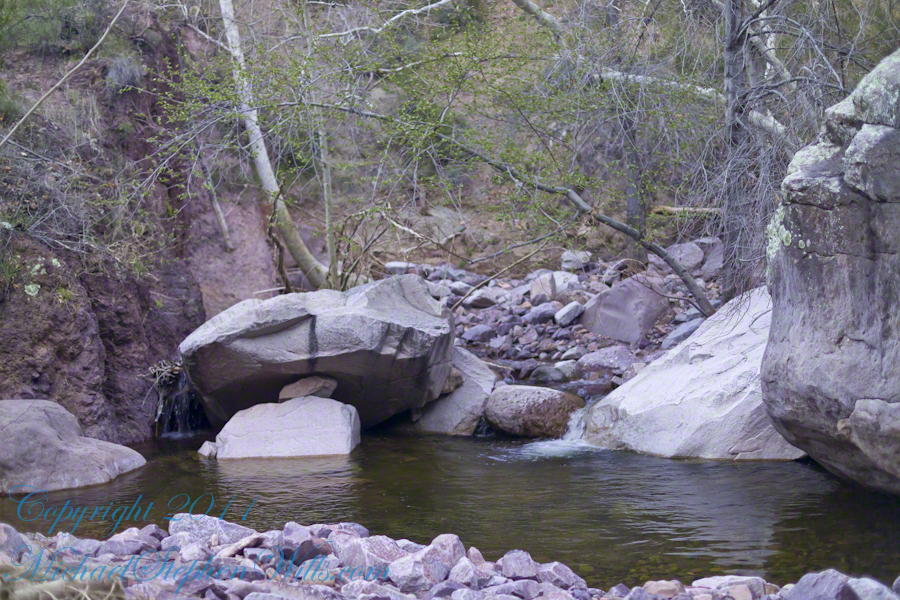
There is beauty to be found, as well. Freshly fallen rough rocks contrast with water smoothed boulders and the water surface.
Copyright 2023 Michael Stephen Wills All Rights Reserved

Two Bar Mountain Views

Superstition Wilderness

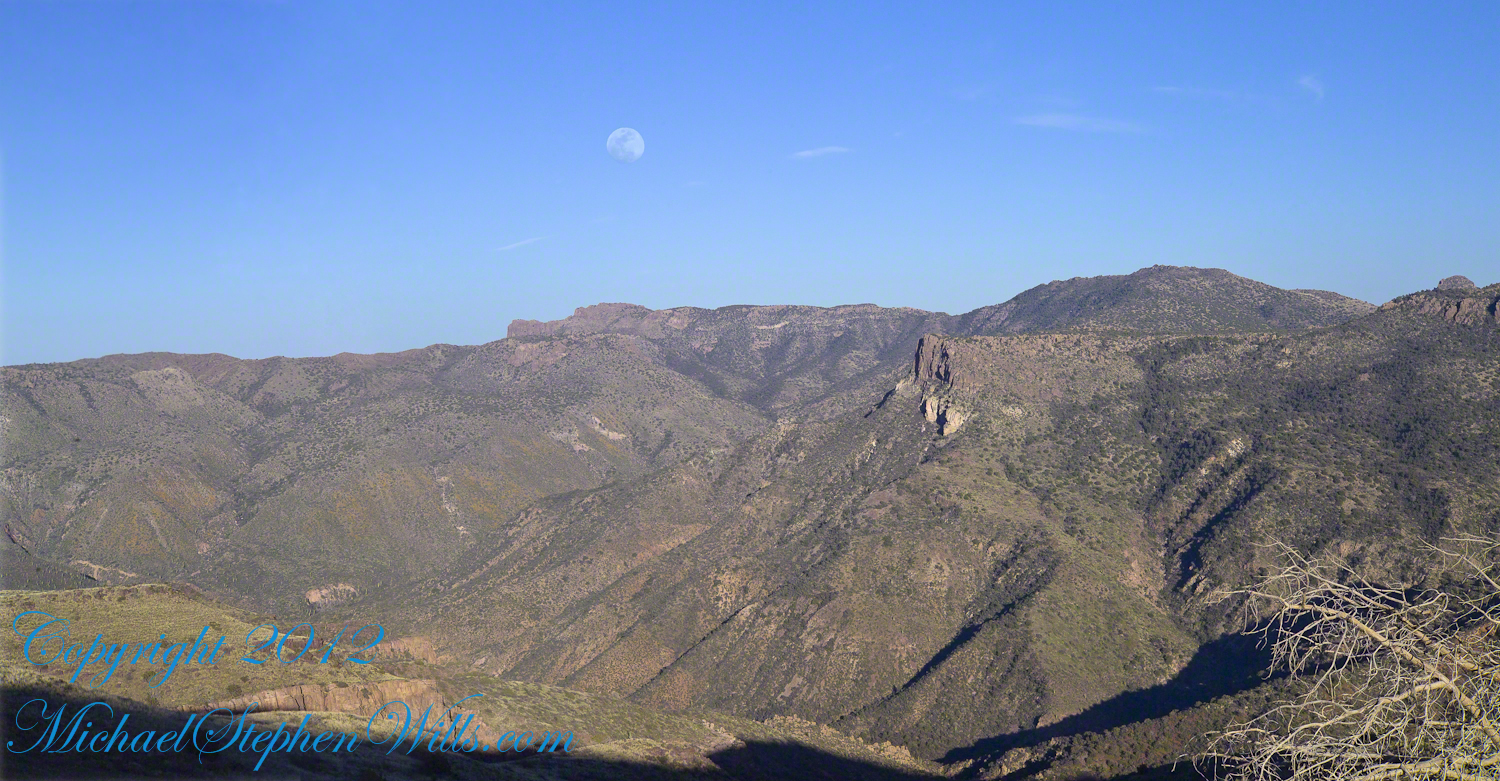
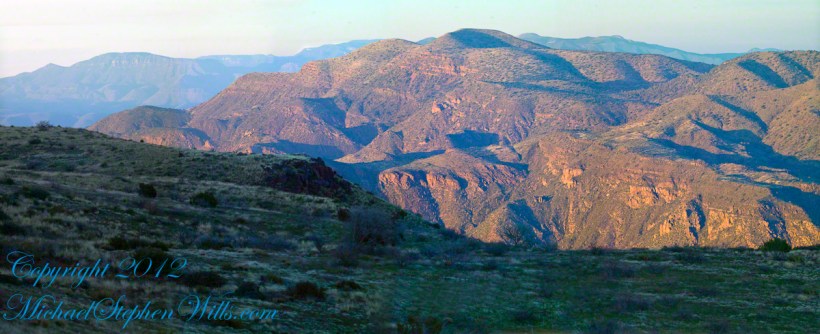
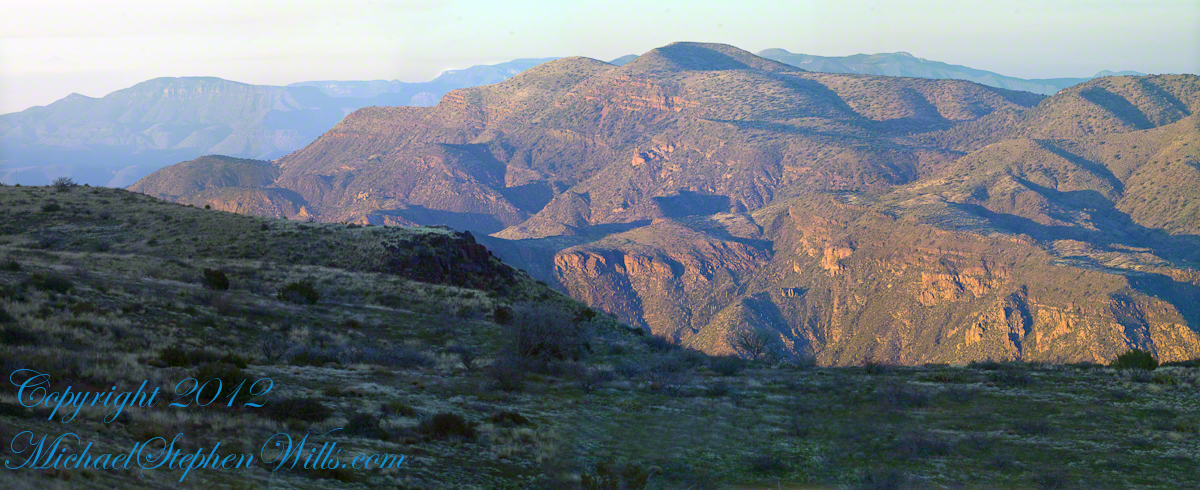
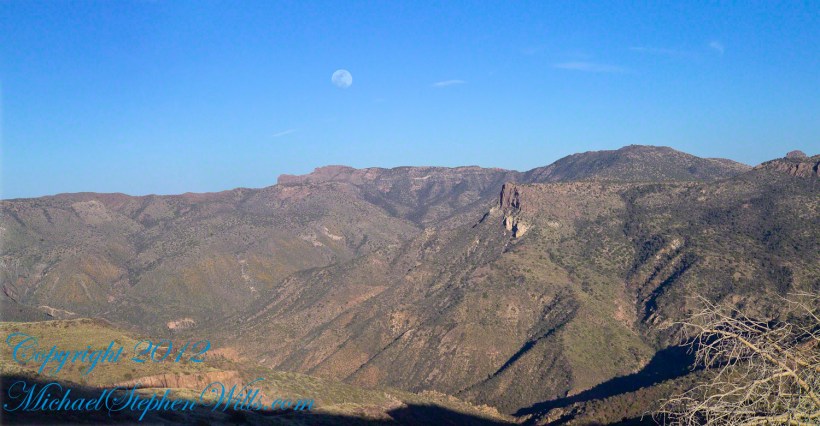
Two Bar Mountain is only part of this view taken the evening of Day Three, my solo expedition to Reavis Falls in the Superstition Wilderness of Arizona.

The view encompasses most of the four day expedition, being the climb into the lower Reavis Creek Canyon from which I camped.  I spent one entire day walking up the valley to the falls.

The patches of yellow on the far slopes to the left and into Reavis Valley are Mexican Poppy (Eschscholtzia californica) blooms.

To find lower Reavis Creek Canyon, look for the prominent cliff formation in the very center of the image.  Follow the end of the cliff down to a dark shadow.  The western canyon wall creates the heavy shadow.  As you move to the right, in the image, the shadow becomes wider because the canyon wall becomes higher.

The view also encompasses a 2005 solo expedition over Two Bar Mountain using the Tule and Two Bar Ridge trails into the Superstition Wilderness around Pine Creek.  See my blog “Racing the Sun” for an image Two Bar Mountain with the path of (most of) two days of that expedition.

An interesting feature of the full size image (lost in the small-scale reproduction of this blog) is the host of enormous saguaro cactuses marching up the sides of the canyon to the left, thinning out and ending on the western walls of the canyon (the slope directly beneath my viewpoint).  Our course, each cactus is perfectly still, casting a huge shadow, and seems very tiny.  The nearest is a mile away.  We are seeing in this thinning host the lower Sonoran in transition to the upper Sonoran life zone.

All of this in one view from Lime Mountain. Here is another, taken just as the sun set.

Copyright 2023 Michael Stephen Wills All Rights Reserved

Lime Mountain Morning

Superstition Wilderness of Arizona

This post features photographs from my solo expedition to Reavis Falls in a remote corner of the Superstition Wilderness of Arizona.

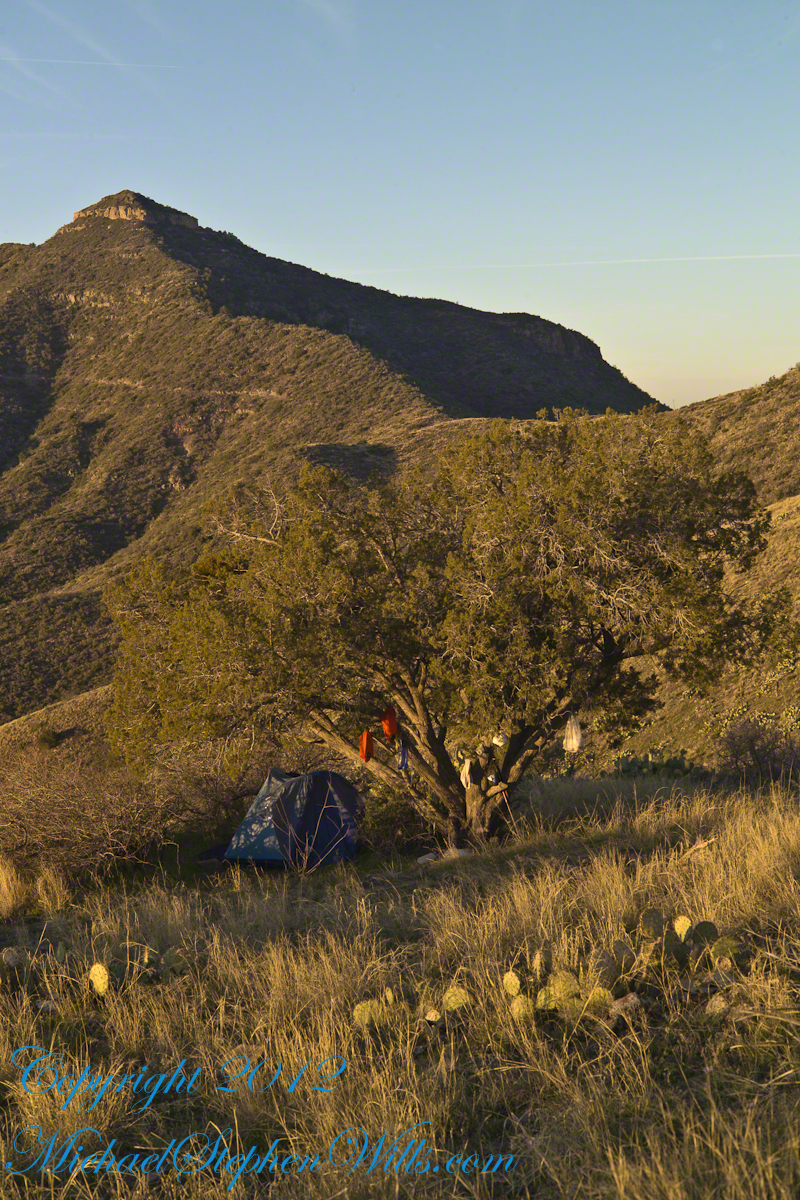
The morning of Day Four, my solo expedition to Reavis Falls in the Superstition Wilderness of Arizona. I camped on Lime Mountain, off the trail to Reavis Falls. That is Castle Dome behind me. The line sloping up the mountain is the Reavis Trail to Reavis Ranch.

My campsite.

Looking toward Pinyon Mountain and the Arizona Trail (not visible) that fine morning.

Copyright 2023 Michael Stephen Wills All Rights Reserved

Cagey Character

On a splayed perch

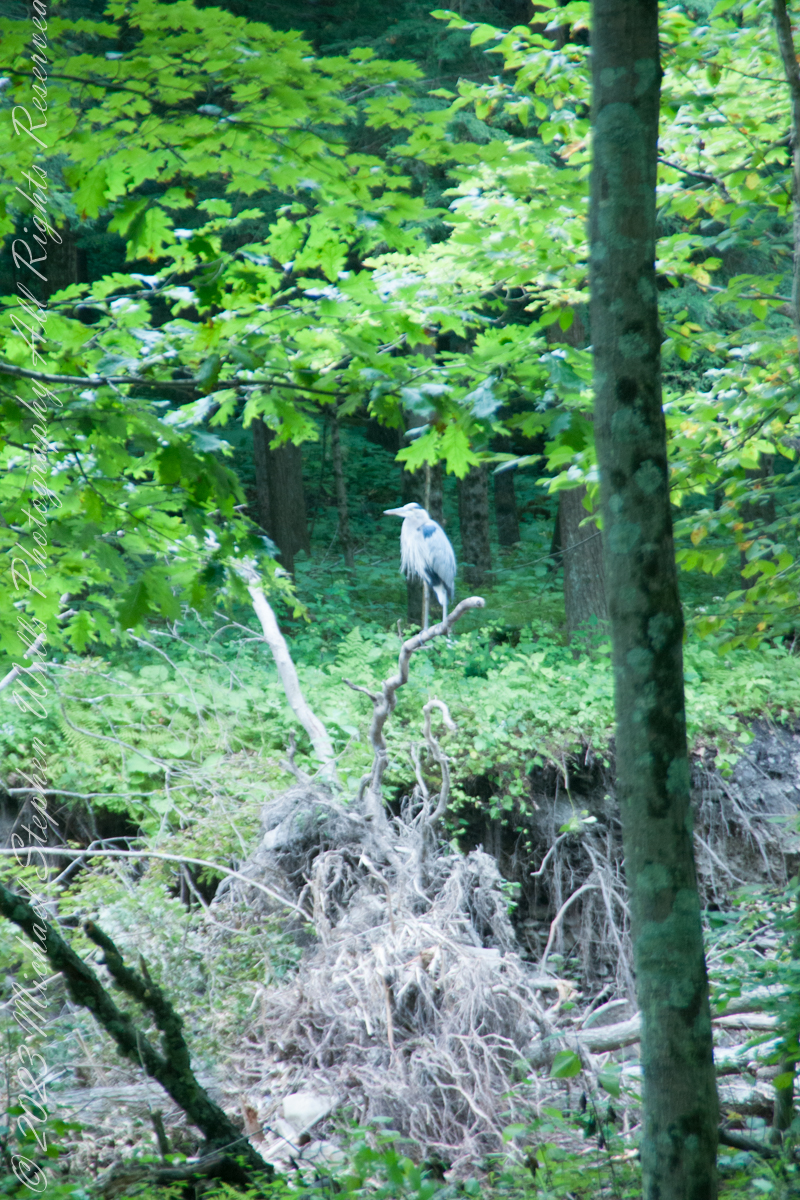
A Great Blue Heron spotted from Bear Trail during a family hike, perched on a splayed root of a tree undercut by flooding, fallen into Buttermilk Creek bed.

A heron recurves its long neck while perched. Adult herons have few natural predators and are rarely preyed upon due to their large size and sharp beak, but bald eagles (Haliaeetus leucocephalus) are known to attack great blue herons at every stage of their lifecycle from in the egg to adulthood.

Copyright 2023 Michael Stephen Wills All Rights Reserved

Overwhelmed by Driftwood

Fishing with chaos

Treman lake is formed by a dam on Buttermilk Creek, the trail around the lake is less frequented and popular with the locals, climbing up and down the glacially formed hills.  Some popular resorts maintain trails that feed into the park.

A footbridge framed by hemlock trees traverses Buttermilk Creek where the East and West Treman Lake Trails meet. This season, 2019, this bridge was overwhelmed by driftwood piled up by spring flooding, impassable. We pick our way across the creek bed and over the water. Little ones needed a carry. An adult fisherman, to right of driftwood, provides perspective.

August 20129, Buttermilk Falls New York State Park, Ithaca, Tompkins County, New York.

Copyright 2023 Michael Stephen Wills All Rights Reserved

Sandwiched In

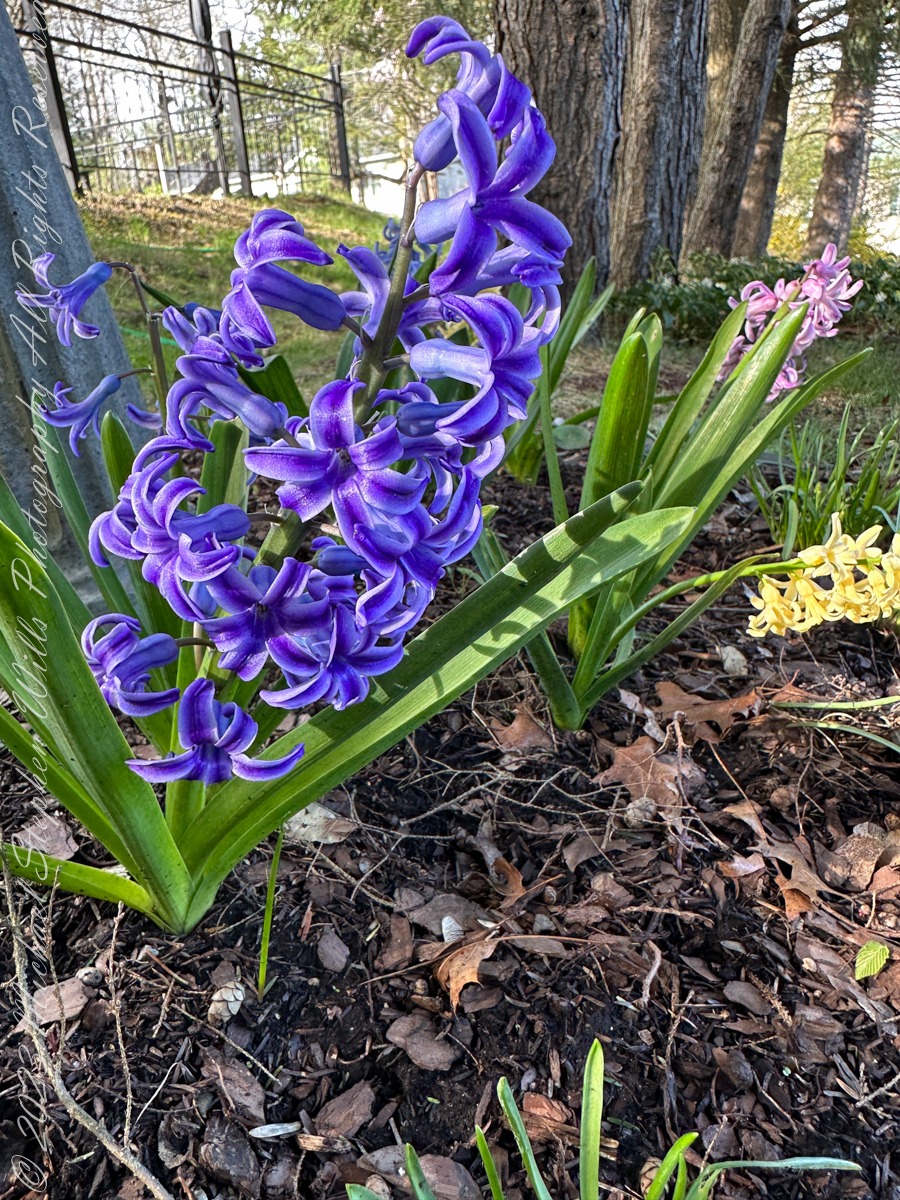
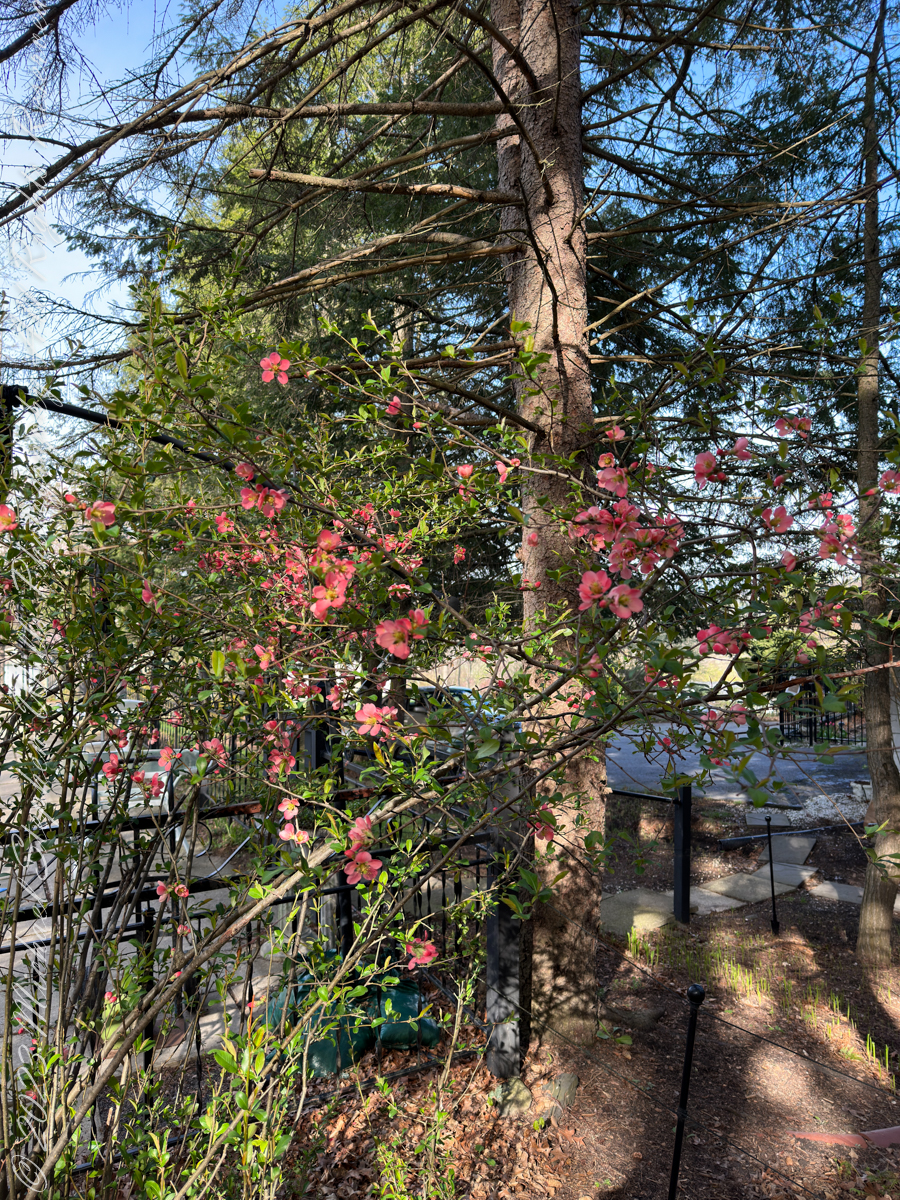
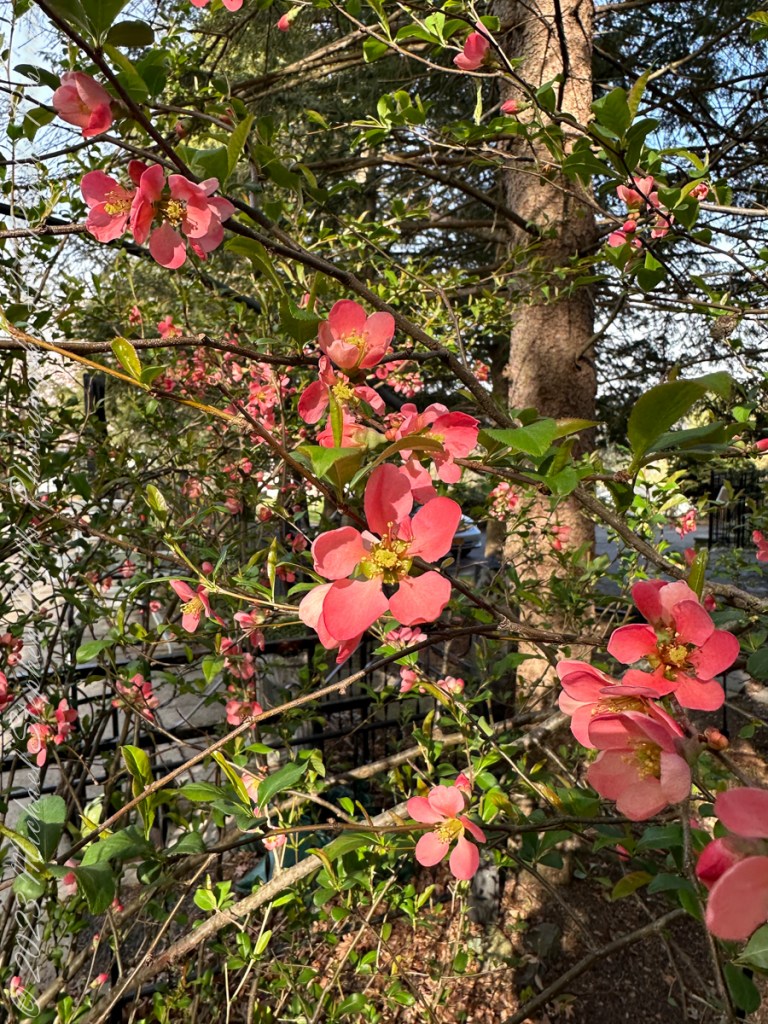
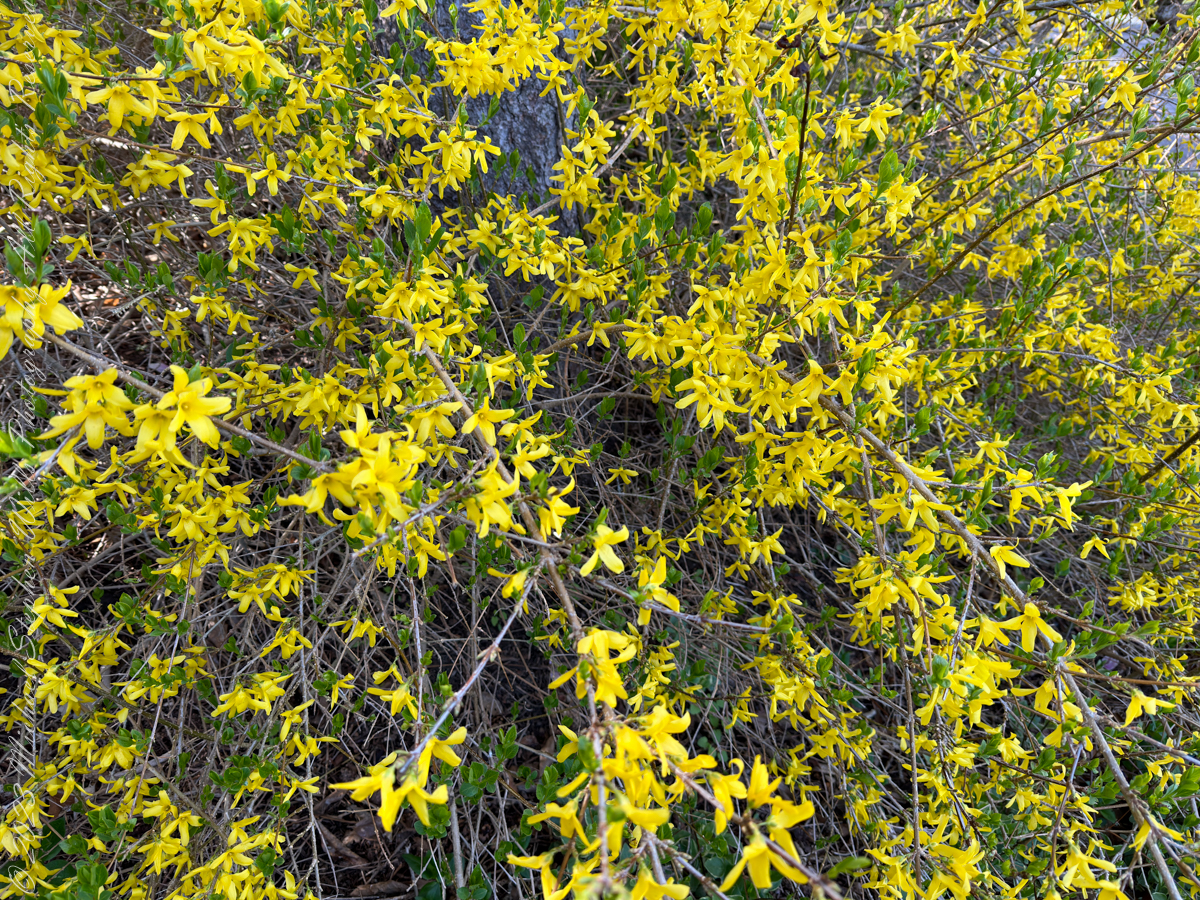
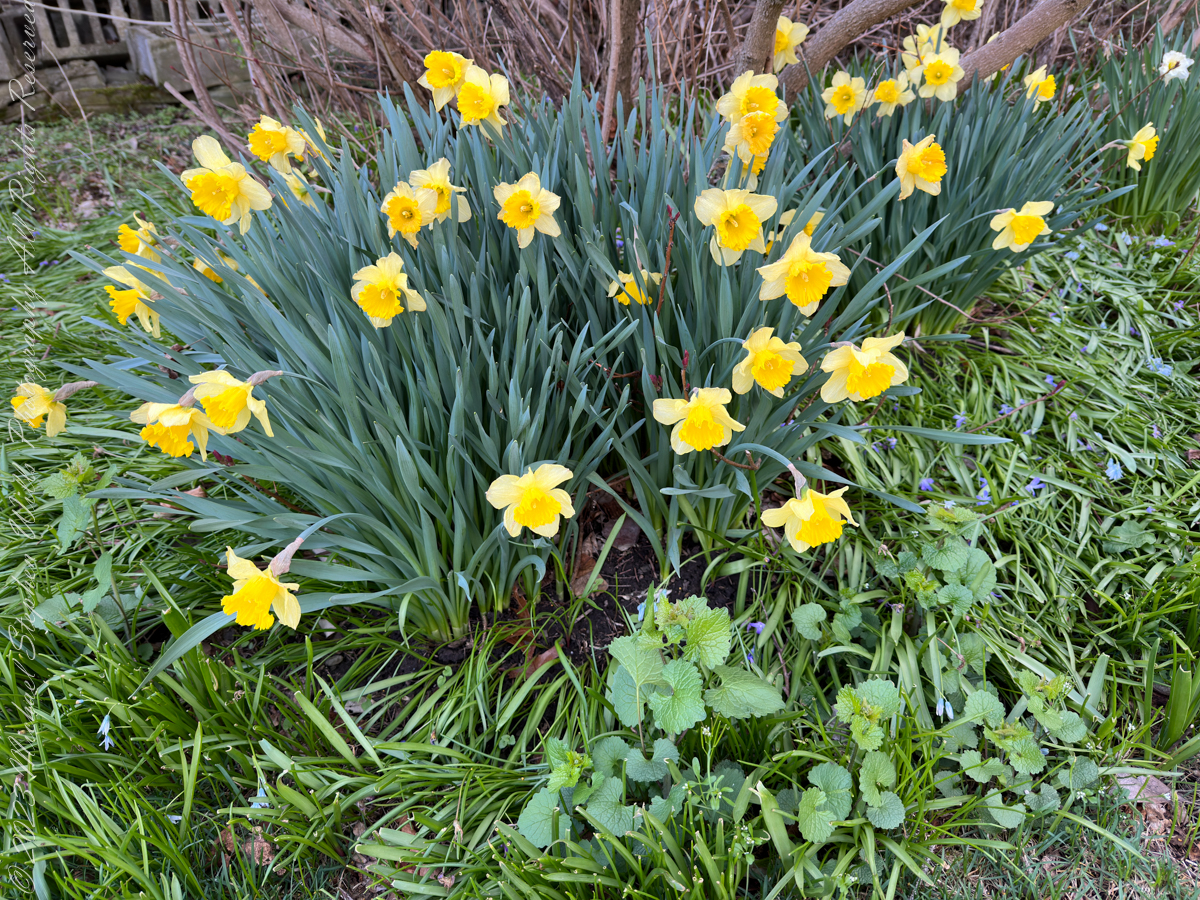
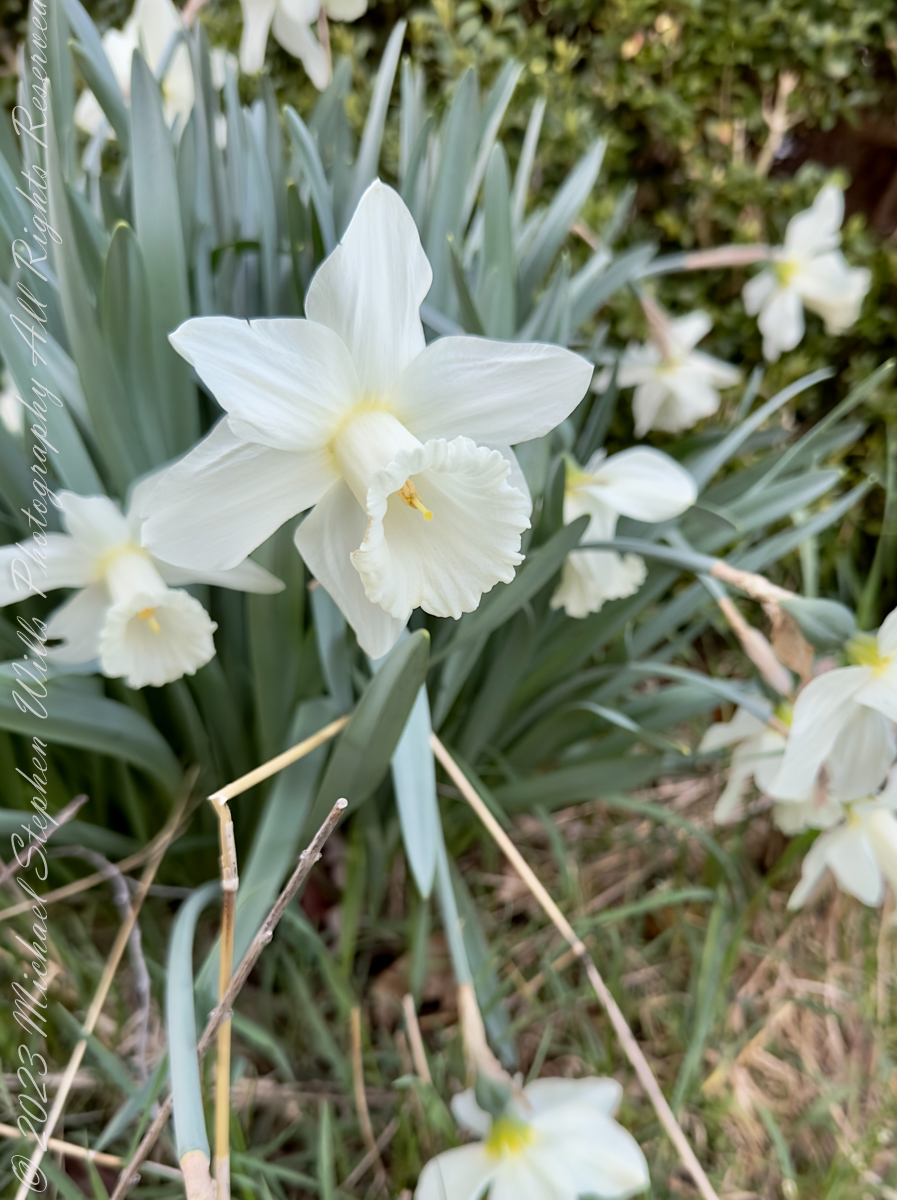
Eight Photographs of Five Flowers

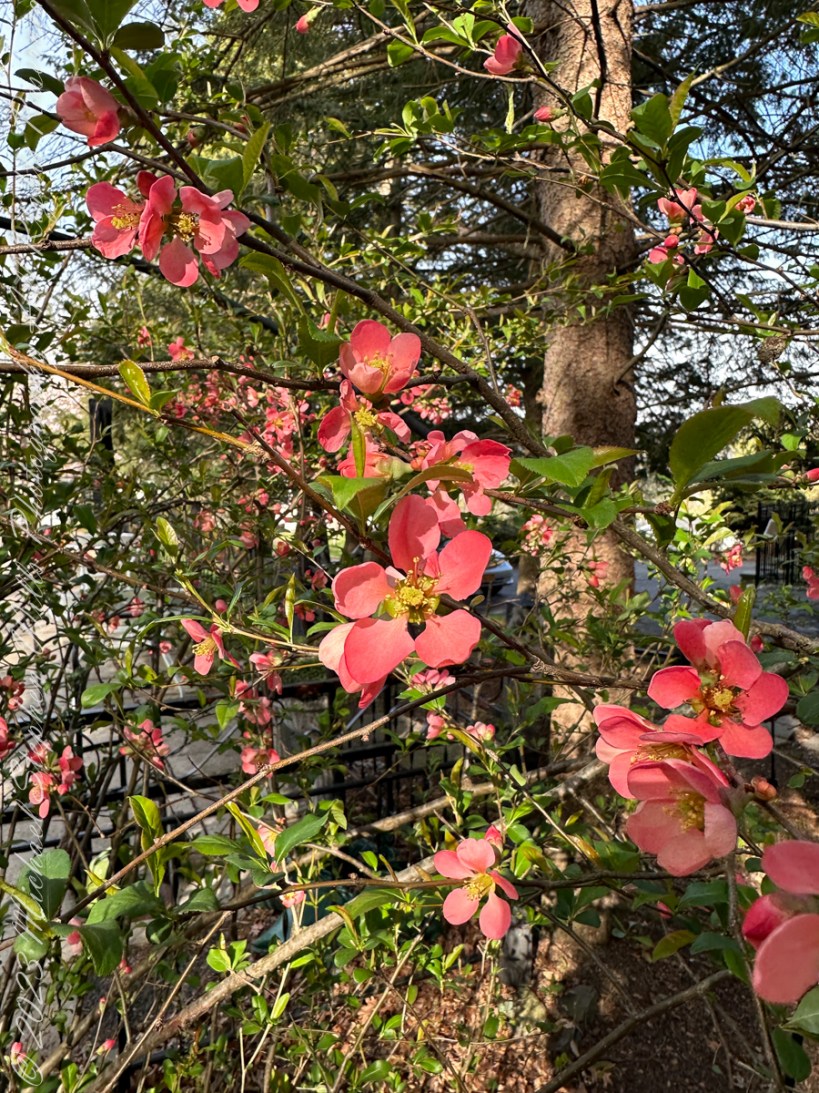
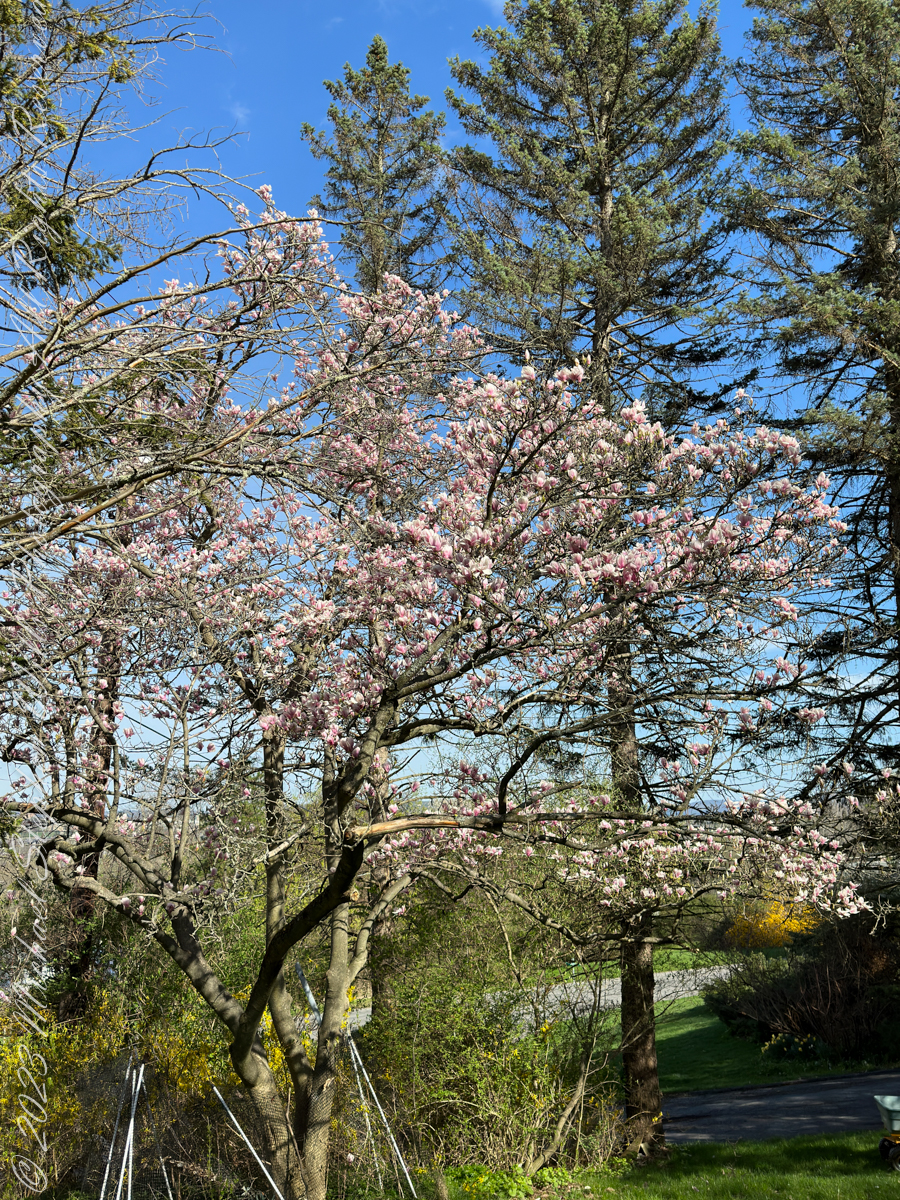
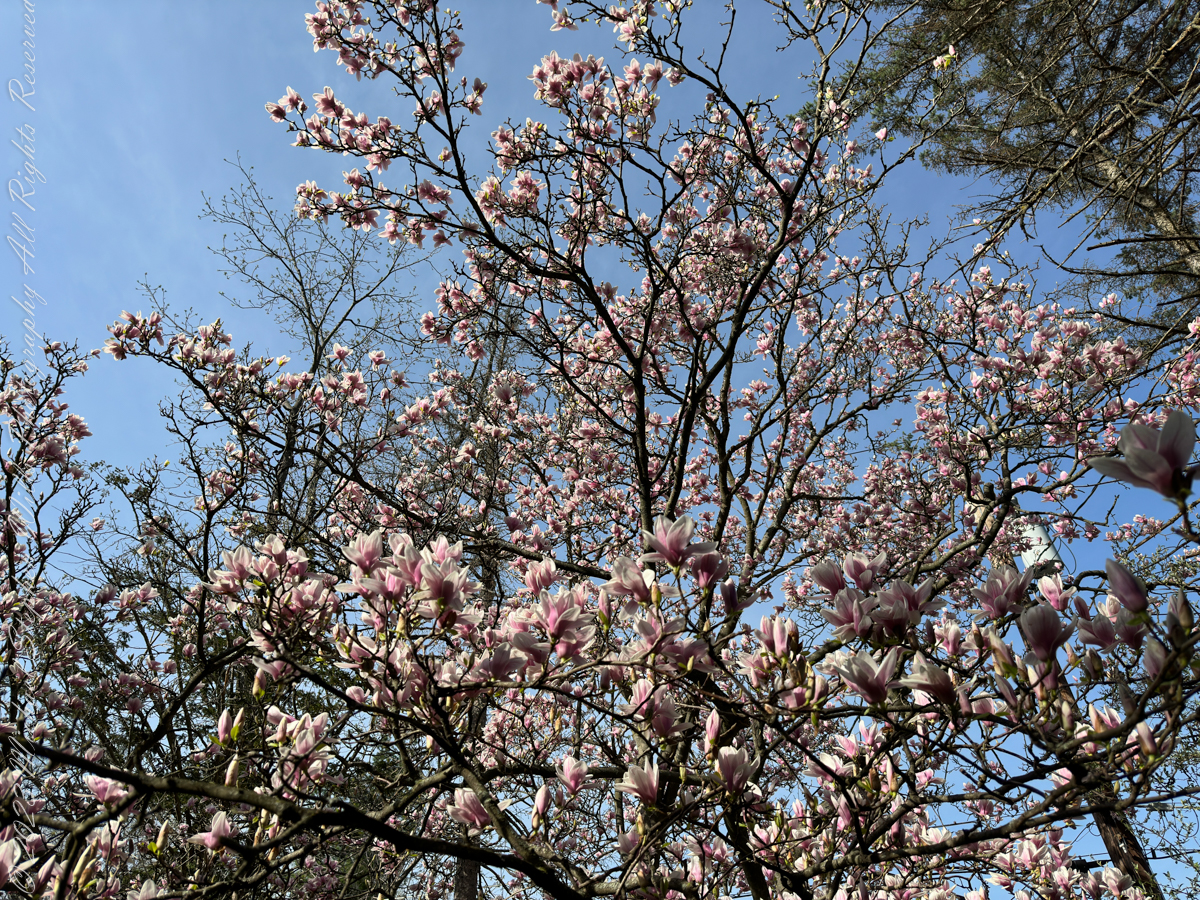
After spreading 15,000 square feet of crabcrass/fertilizer and before attending a frigid first baseball game of a grandson, I capture eight photographs of five different flowers from our home.

More about the Magnolia, from Wikipedia: The name Magnolia first appeared in 1703 in the Genera of Charles Plumier (1646–1704), for a flowering tree from the island of Martinique (talauma). It was named after the French botanist Pierre Magnol.

More about the Hydrangea, from Wikipedia: Hydrangea is derived from Greek and means ‘water vessel’ (from ὕδωρ húdōr “water” + ἄγγος ángos or αγγεῖον angeîon “vessel”), in reference to the shape of its seed capsules.

More about these Quince, from Wikipedia: Although all quince species have flowers, gardeners in the West often refer to these species as “flowering quince”, since Chaenomeles are grown ornamentally for their flowers, not for their fruits.

More about Forsythia, from Wikipedia: The genus is named after William Forsyth (1737–1804), a Scottish botanist who was a royal head gardener and a founding member of the Royal Horticultural Society.

More about Forsythia, from Wikipedia: Narcissus is a genus of predominantly spring flowering perennial plants of the amaryllis family, Amaryllidaceae. Various common names including daffodil, narcissus, and jonquil are used to describe all or some members of the genus. Narcissus has conspicuous flowers with six petal-like tepals surmounted by a cup- or trumpet-shaped corona. The flowers are generally white and yellow (also orange or pink in garden varieties), with either uniform or contrasting colored tepals and corona.

Copyright 2023 Michael Stephen Wills All Rights Reserved

Fair Weather View

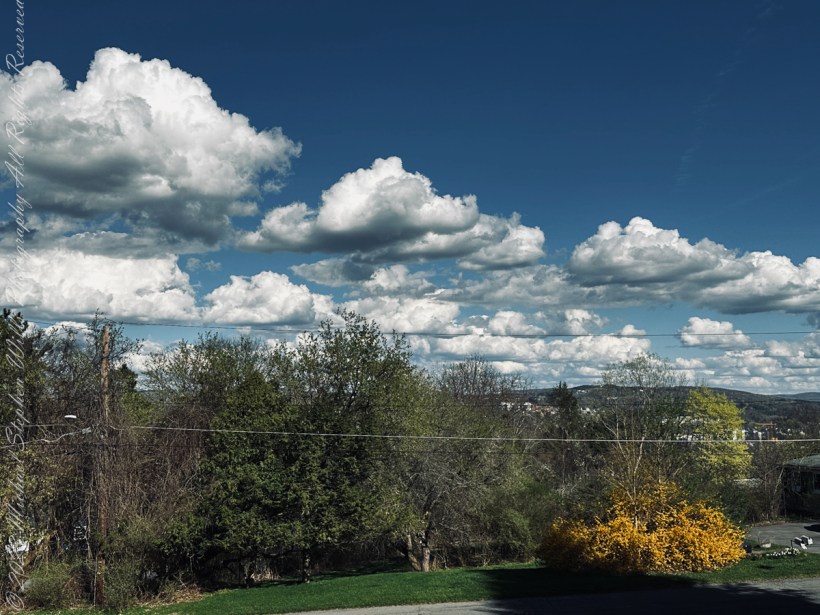
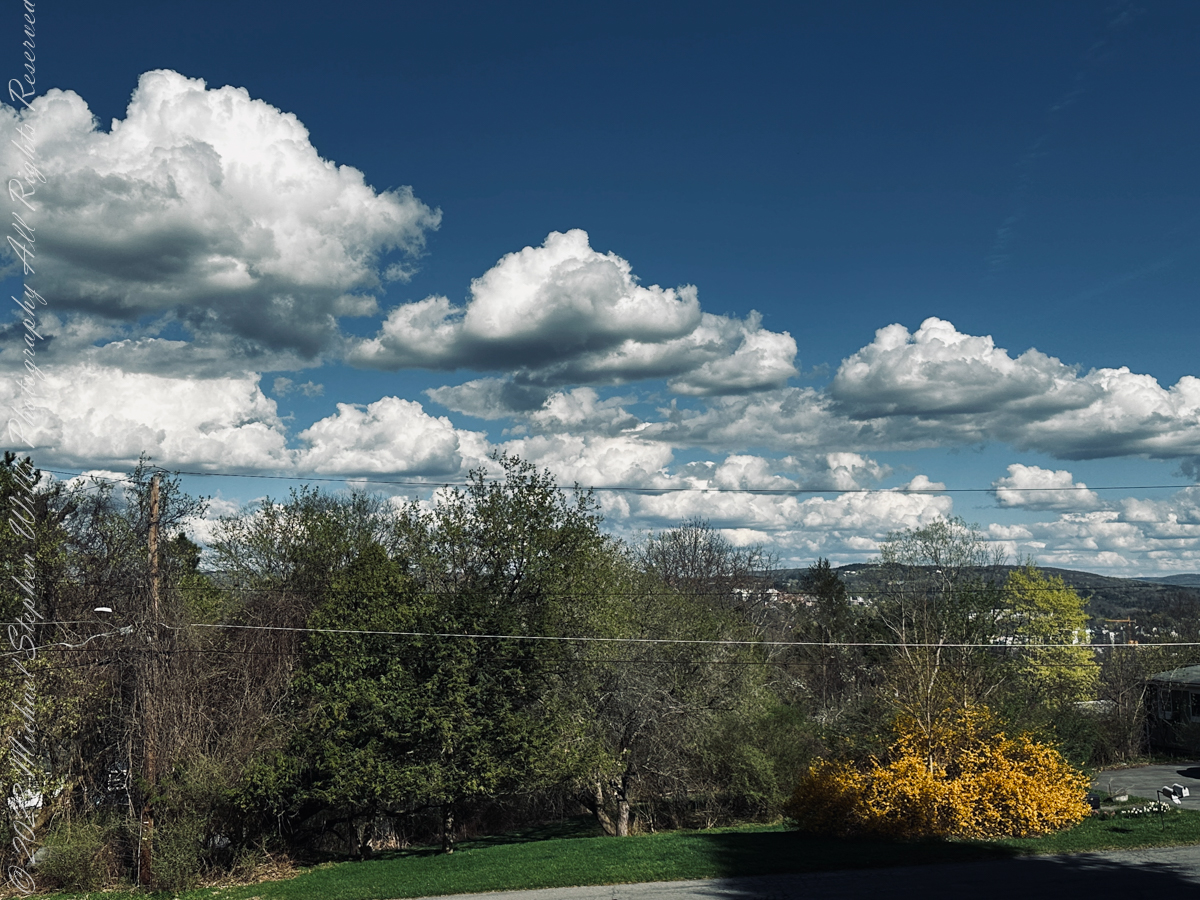
Cumulus Clouds and Forsythia

I read the New York Times on our porch on a spring Sunday afternoon, taking a moment to capture these fair weather cumulus clouds. Visible are Ithaca’s East Hill, downtown, and a forsythia bush in flower.

More about the flowers, from Wikipedia: Forsythias are popular early spring flowering shrubs in gardens and parks, especially during Eastertide; Forsythias are nicknamed the “Easter Tree”, the symbol of the coming spring.

More about this view, from Wikipedia: Cumulus clouds can form in lines stretching over 480 kilometers (300 mi) long called cloud streets. These cloud streets cover vast areas and may be broken or continuous. They form when wind shear causes horizontal circulation in the atmosphere, producing the long, tubular cloud streets. They generally form during high-pressure systems, such as after a cold front.

Copyright 2023 Michael Stephen Wills All Rights Reserved

Flowering Saguaros in Finger Rock Canyon

Some Fallen, Some Blessed

My visit to Finger Rock Canyon of the Santa Catalina Mountains filled two mornings.  On the first morning, the subject was the lower canyon as morning light filtered over the eastern ridge.

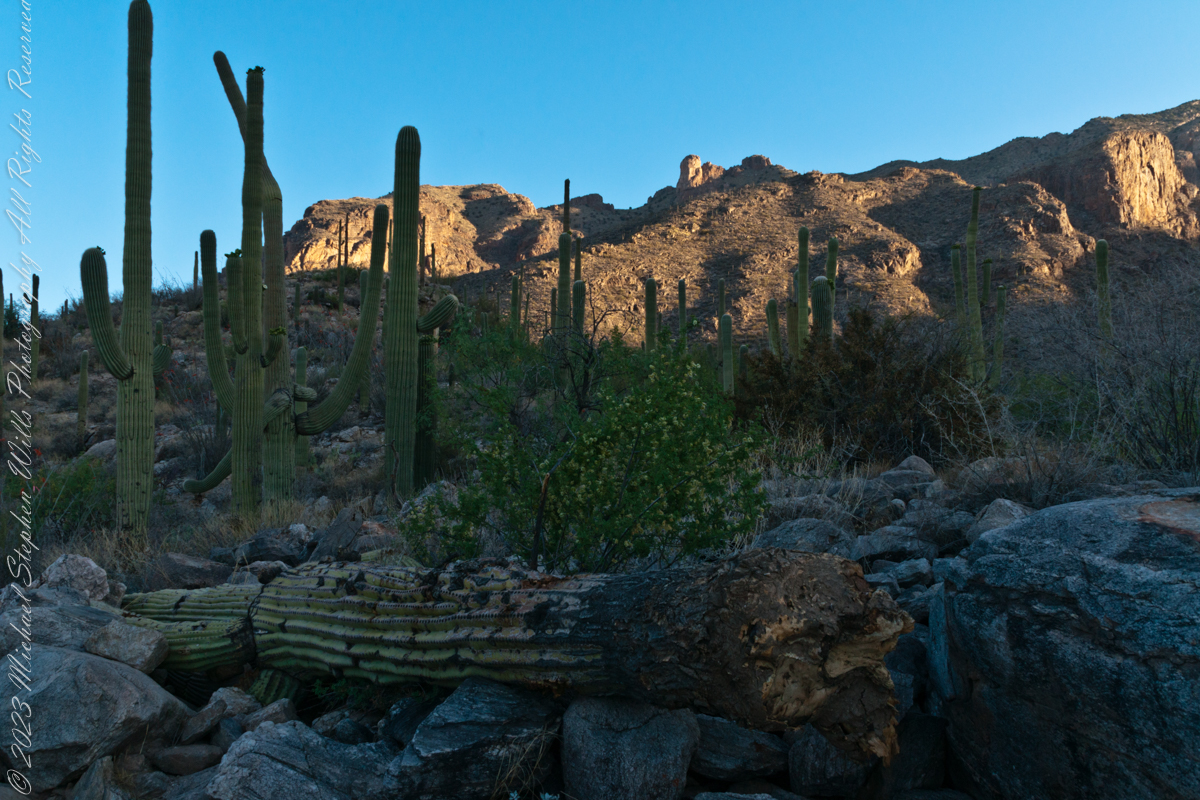
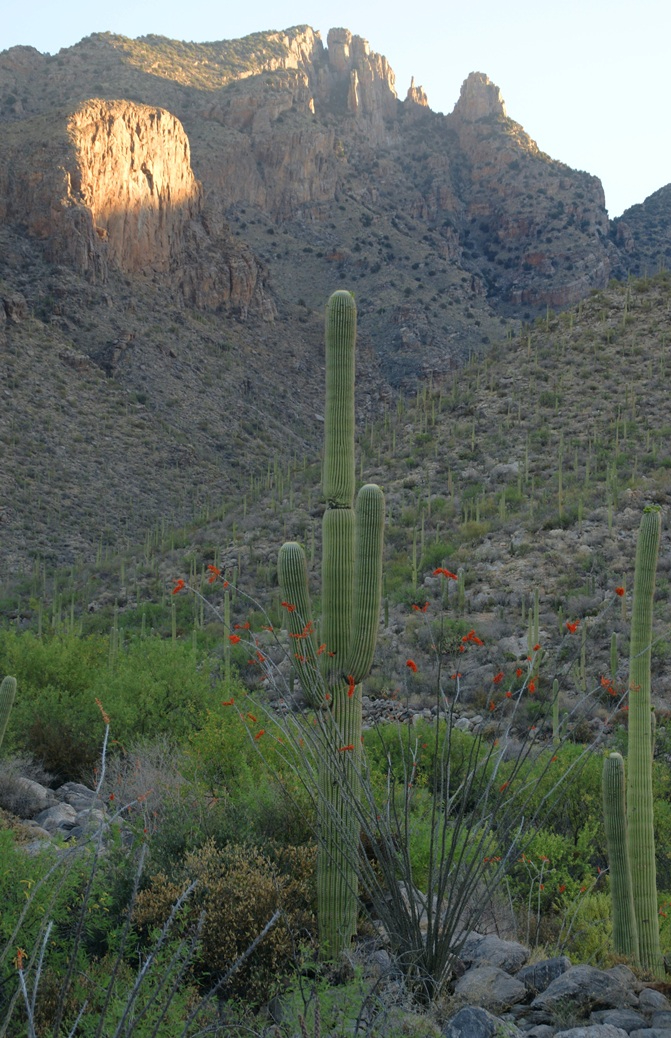
Early morning to the north / northwest looking over a 20-foot fallen Saguaro Cactus (Carnegiea gigantean), toward lower ridges of the Santa Catalina Mountains.  The saguaro is among a stand of healthy fellows, some with new growth and flowers on the tips of arms and main columns. This giant must have grown over rock through 60 years.  It was brought down when the roots weakened.  Specimens that are more reliably rooted can live to 200 years.

A clump of brittlebush shrub (Encelia farinosa) grows from the same rock.

Pima Canyon is the next over, behind that near ridge which provides similar shade.  Unlike Finger Rock Canyon, the Pima Canyon trail follows the western cliff and loses the shade much sooner.  During our three-week trip, my wife, Pam, and I visited Pima in our first week.

These photos were taken between 6:20 and 7:00 am.

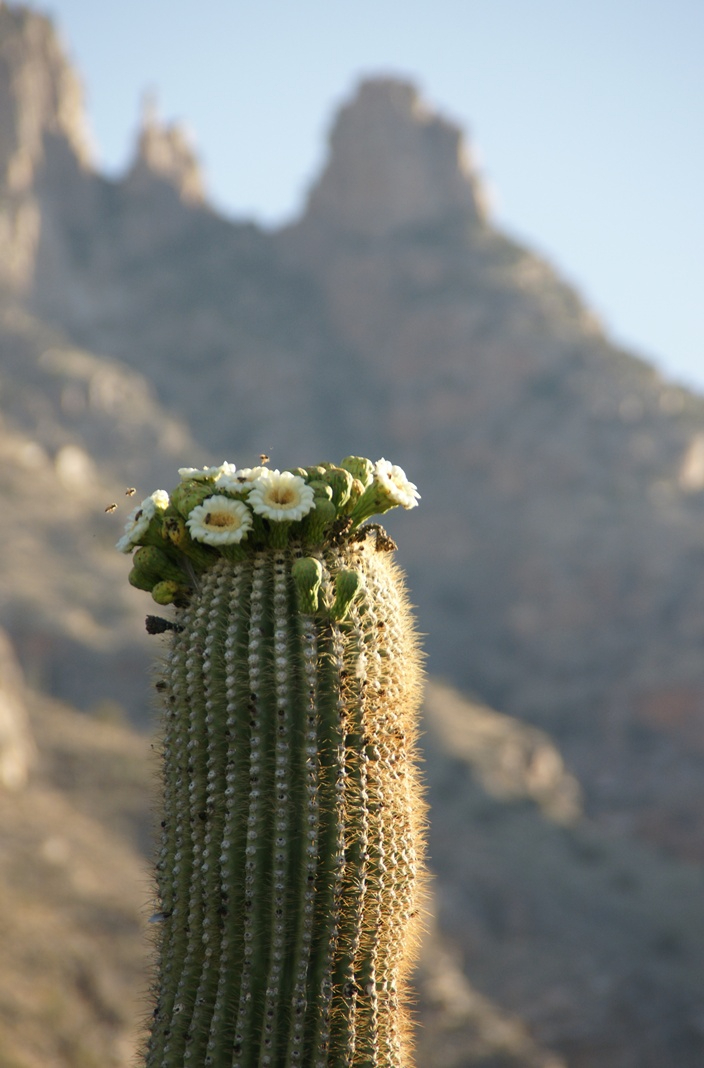
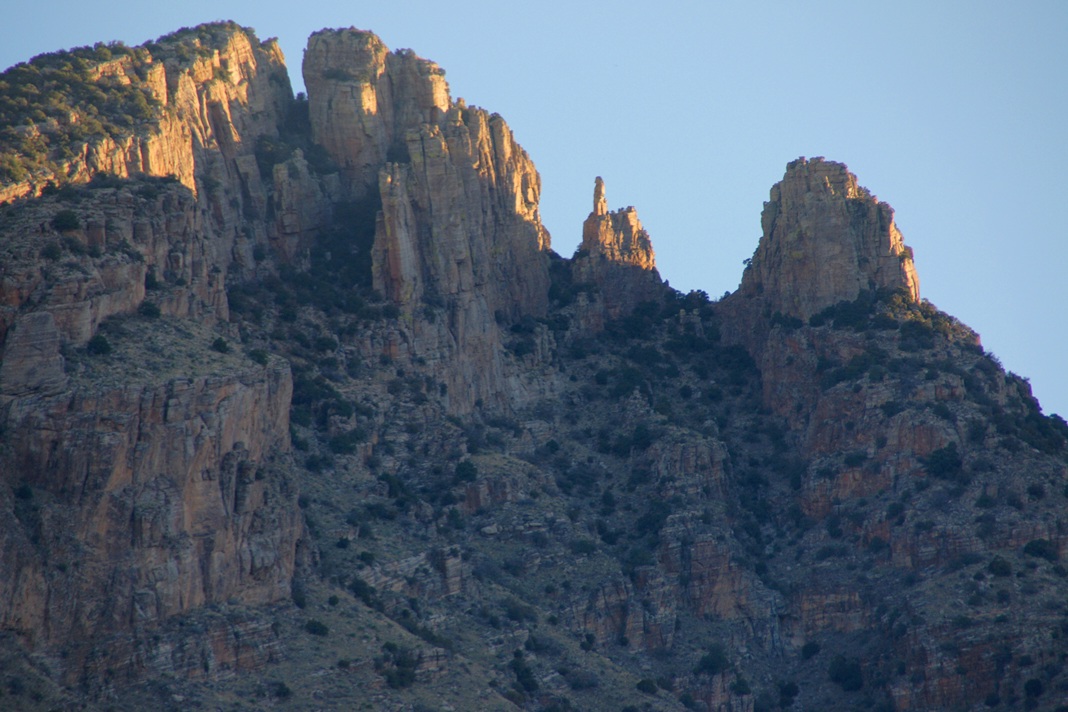
Along the trail I noticed a multitude of buds on the tip of selected saguaro arms.  In a previous blog, there’s a photo of this same saguaro in the shade.  The following series captures the one blossoming top just as the sun passes over the eastern, shadowing, ridge.

The same saguaro, two minutes later…….

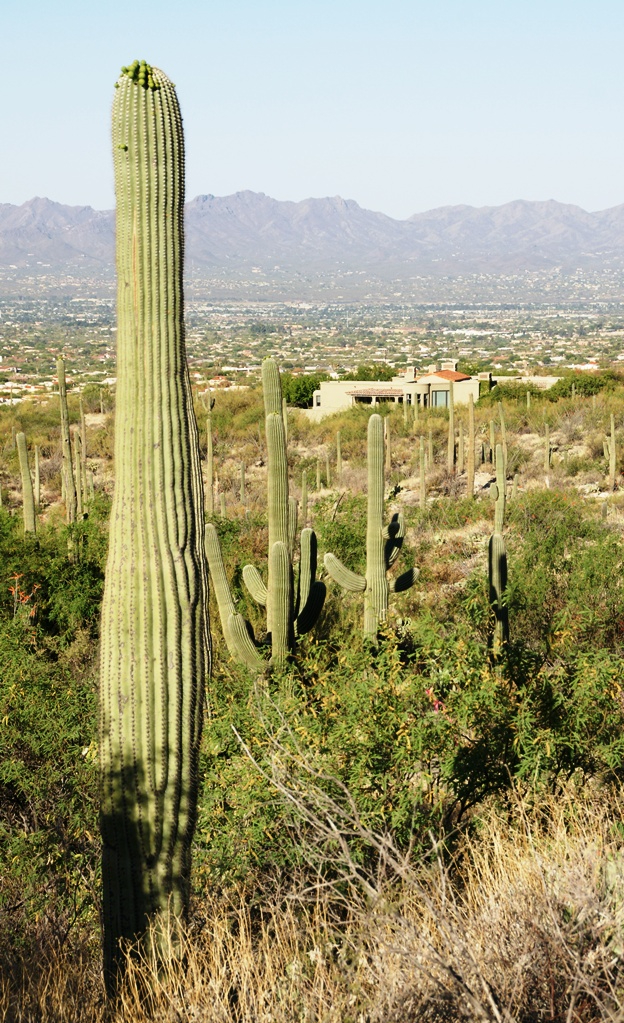
Here is a portion of the saguaro forest, around 7 am with the lower canyon filled with light.  There are a few foothill homes with west and southwest Tucson.  The Tucson Mountains are in the distance.
Copyright 2023 Michael Stephen Wills

Saguaro Flowers in Finger Rock Canyon

April Perfection

These photographs are a continuation of blogs from two days’ exploration of Finger Rock Canyon of the Santa Catalina Mountains, southern Arizona. Here we explore the nature of the Saguaro blossom.

Click Me for a gallery of Arizona Fine Art Photography

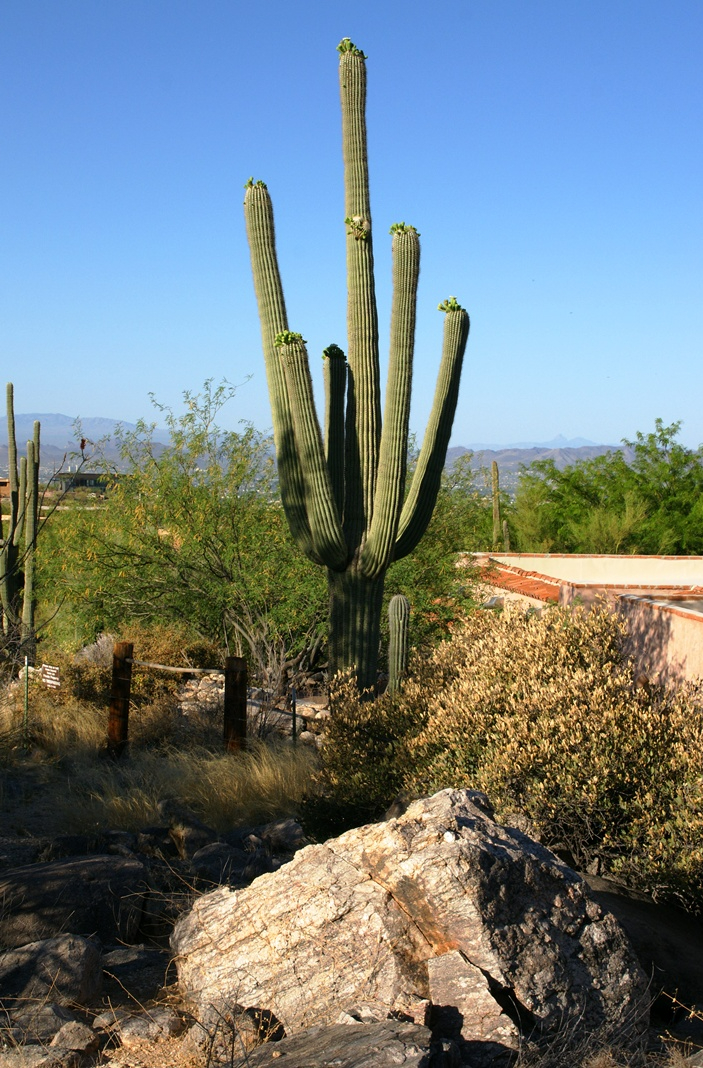
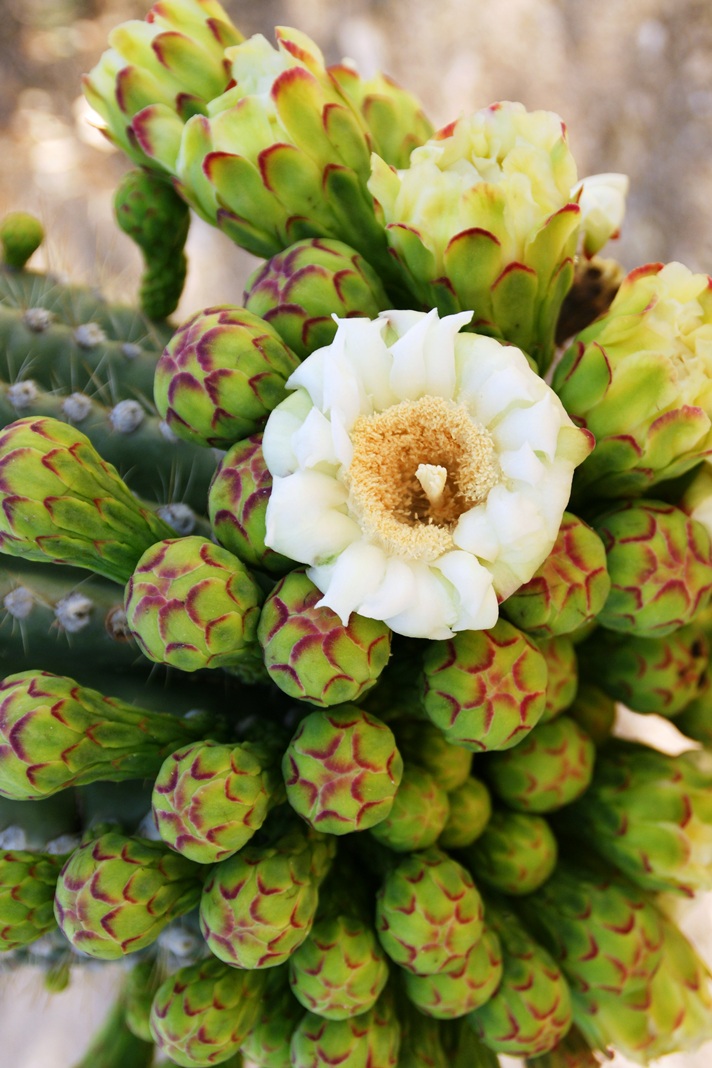
Saguaro flowers start as buds on the tip of the cactus body or arm. The specimen in the photograph below, growing in the yard of a foothills home on the border of federal land, is over 30 feet tall and, at the end of April 2011, buds are sprouting from every tip.  Look closely for opening buds and full saguaro blossoms.

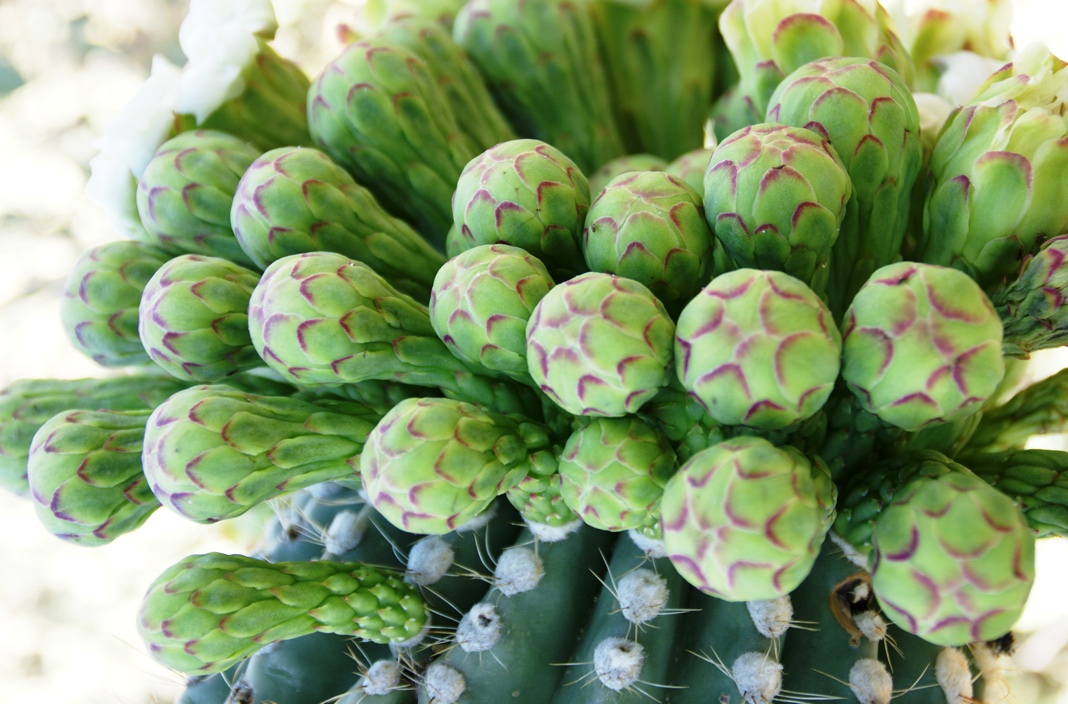
Flower buds grow only from some tips and around the center, along the sides, not from the point at the very end of the tip, from which the limb grows.

These buds first appeared mid-April and are here shown in the latter stages of maturity, prior to opening.  Sometimes, the base of an arm weakens and the arm lowers close to the ground while remaining healthy.  While descending the canyon I noticed this had happened to the arm of a particularly large specimen, an arm in full flower.  This and the following photographs are from that arm.

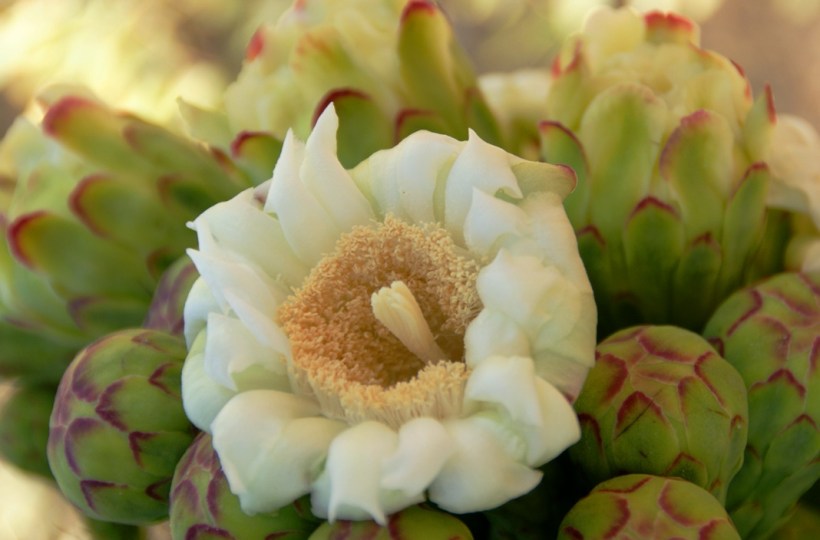
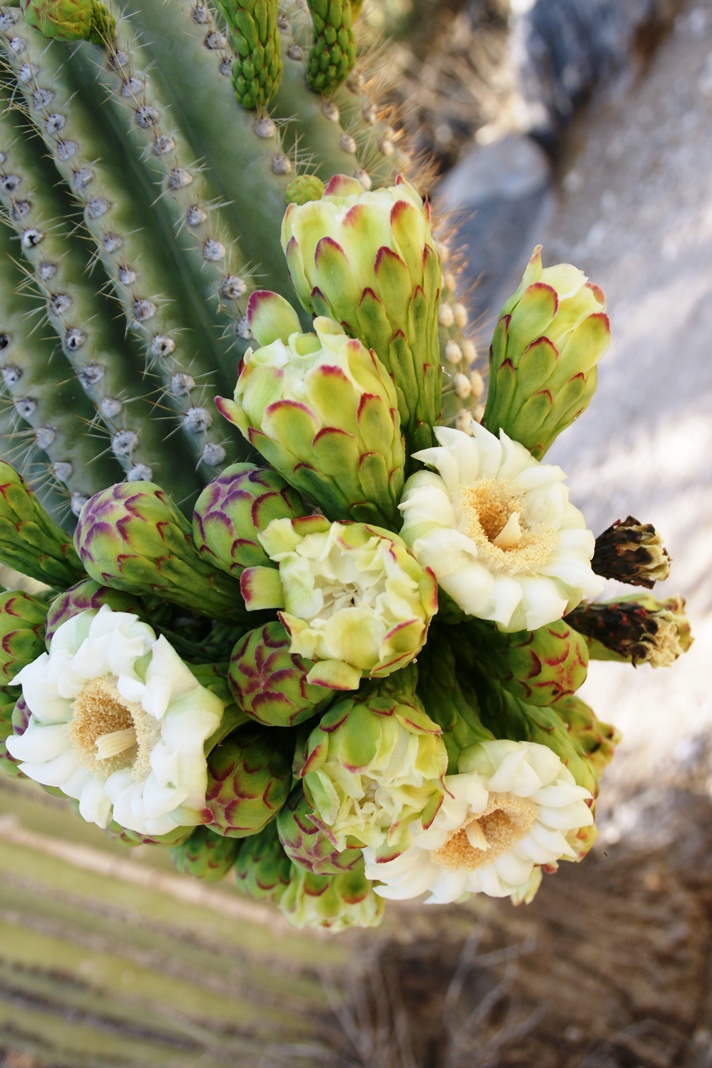
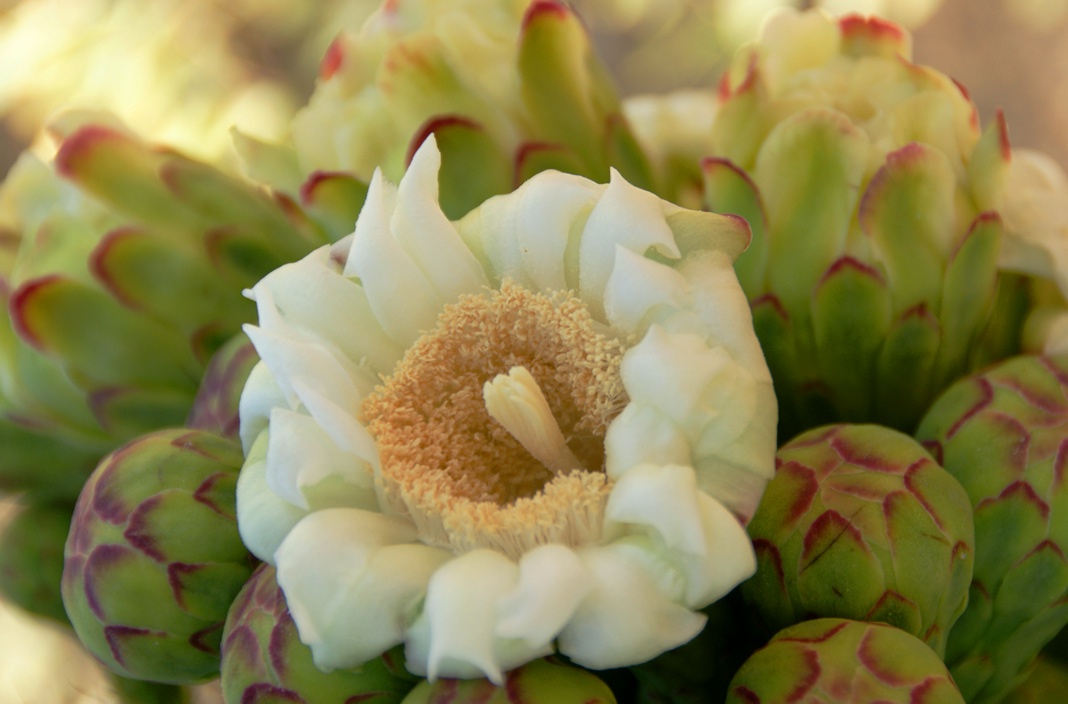
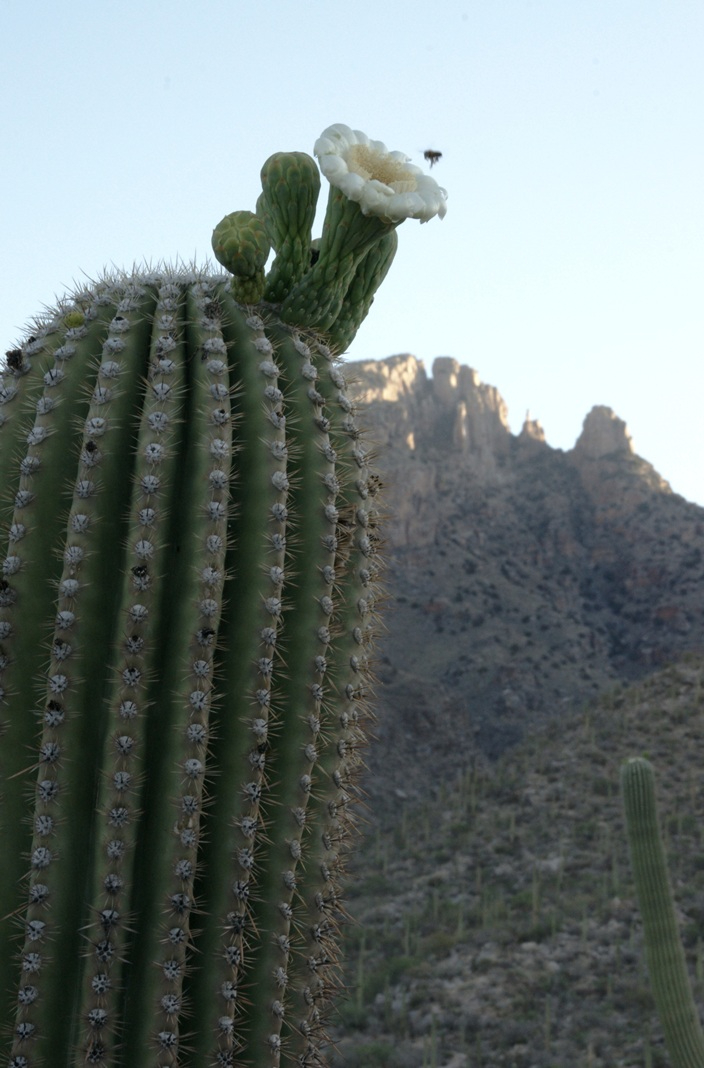
I have read that each flower opens in the cool of the night and lasts only until the following afternoon.  Here is a fully blossomed flower with a pair of opening buds.

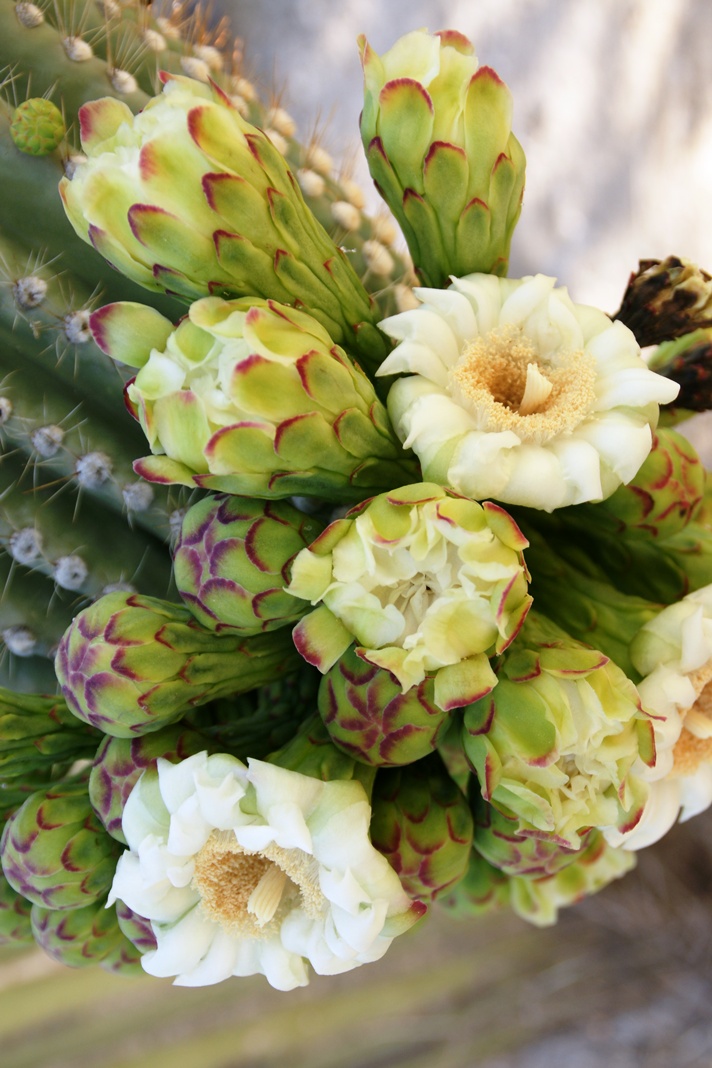
And more, from a different view of the same arm.

A saguaro flower in full bloom, having opened the previous night. This flower will last a single day. It will wilt in the heat of a single afternoon and close. In this brief time, flying animals will pollinate it. You can see numerous honey bees on the flowers, in a previous blog, “Saguaro Flowers in Finger Rock Canyon.”
Copyright 2023 Michael Stephen Wills

Finger Rock Canyon Morning

April Perfection

The perfection of April in Tucson is nowhere better than mornings spent in Finger Rock Canyon of the Catalina Mountains.  Oriented on a north/south axis, the eastern cliffs shed a long shadow well past 9:30 am. For early risers such as me, this means no hat and cool hiking to the canyon head: the trail hugs the eastern cliffs.

These three shots were taken 5:30 – 6:00 am mountain time (Arizona does not follow daylight savings time except on the Navajo Reservation). 

Click me for an Arizona Gallery of Fine Art prints by Michael Stephen Wills

Copyright 2023 Michael Stephen Wills