The Last Bloom and the Bee’s Blessing

In the final bloom of the season, a honeybee’s delicate dance with the Queen of the Night captures the fleeting beauty of nature’s cycles. Discover the profound connection between flower, bee, and life’s rhythms.

The Epiphyllum oxypetalum, commonly known as the Queen of the Night, is a remarkable plant. Native to Central America, this epiphyte is known for its large, fragrant flowers that bloom only once a year and last just for a single night. The fleeting nature of its bloom makes it a symbol of transience and beauty in many cultures. For me, this flower is a quiet, intimate connection to the rhythms of nature that play out around our home in Ithaca, New York.

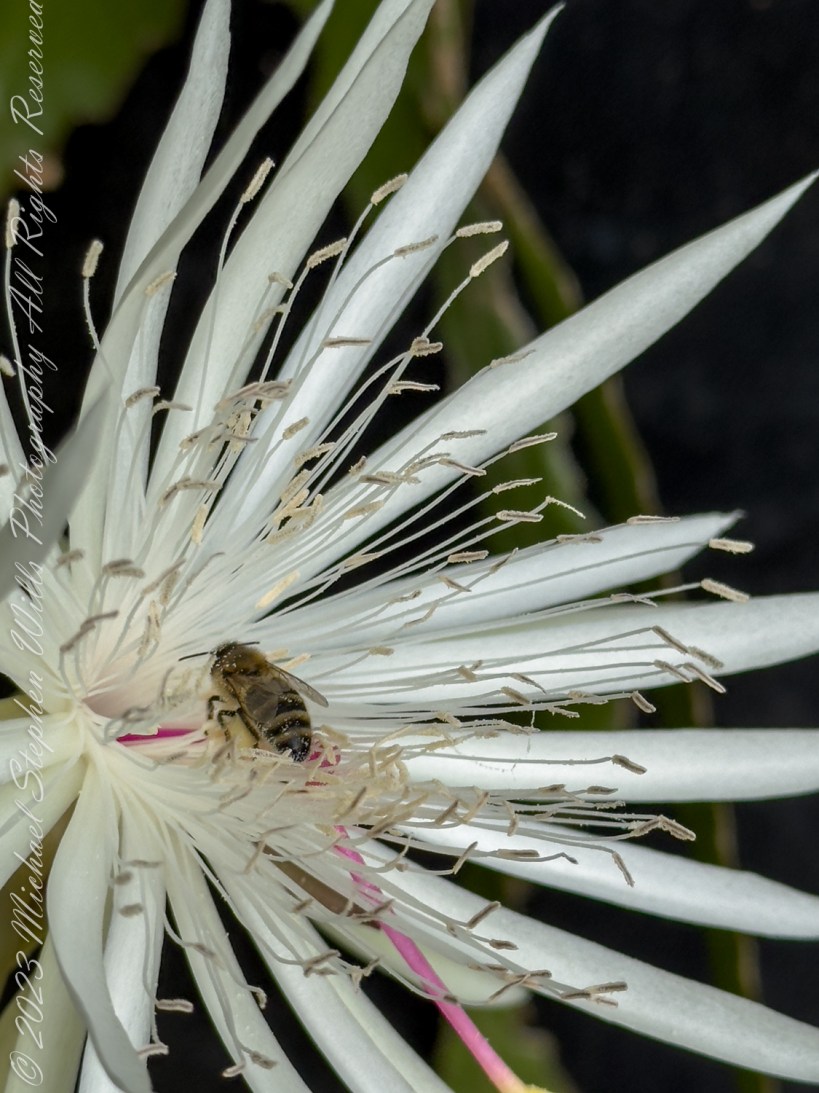
The images you see include the last flower of the season, a white starburst of delicate petals encasing a universe of intricate details. As the day progresses, the flower remains open, revealing the next chapter in its life cycle—the possibility of forming fruit. This potential is entirely dependent on pollination, a process that is both beautifully simple and astonishingly complex.
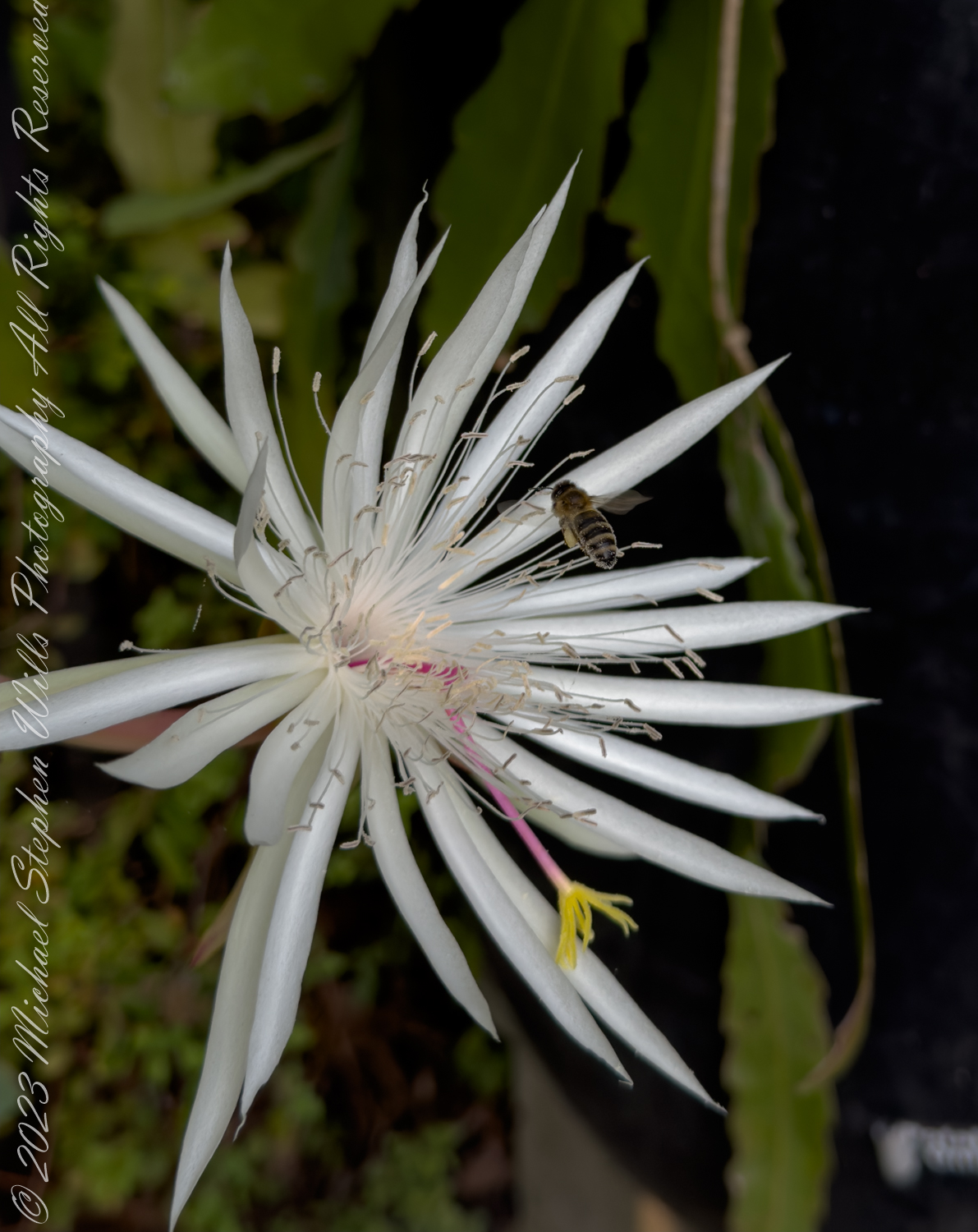
A honeybee, a tiny yet essential participant in the grand scheme of things, hovers and lands delicately on the flower. In the first image, the bee appears tentative, exploring the outer fringes of the flower’s central structures. Its wings are still, as if it has just touched down after a careful, deliberate approach. The stamens, like a thousand arms extended in welcome, offer their pollen. Each grain of pollen is a promise, a potential seed, carried with the hope of propagation. The bee is the flower’s messenger, moving from one bloom to another, ensuring the continuity of life.

As I observe the bee’s actions through these photographs, I can’t help but reflect on the importance of these small creatures. Their work often goes unnoticed, yet without them, our ecosystems would collapse. The honeybee, in particular, has been a focus of concern in recent years due to declining populations, largely attributed to human activities. But here, in my garden, this bee is simply going about its day, unaware of the broader implications of its existence. It is focused on the task at hand, a model of mindfulness in action.
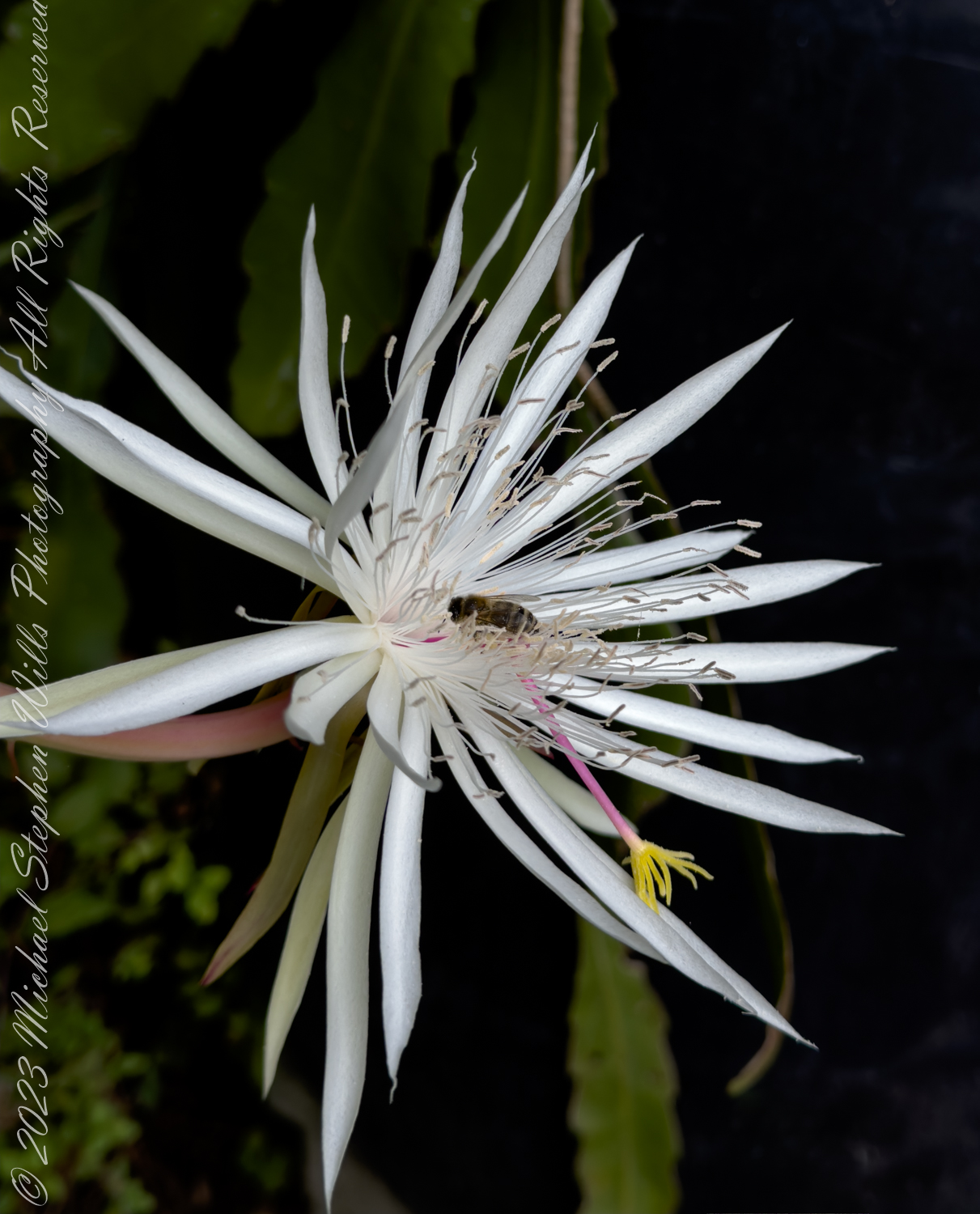
In the second and third images, the bee has moved deeper into the flower, its body now dusted with pollen. It is fully engaged in its work, undeterred by the enormity of its task. The pink style of the flower contrasts sharply with the white petals and the yellow stamens, creating a vibrant tableau of life. The bee’s body is now part of this scene, its presence both functional and aesthetic. It is not just a visitor; it is an integral part of the flower’s story.
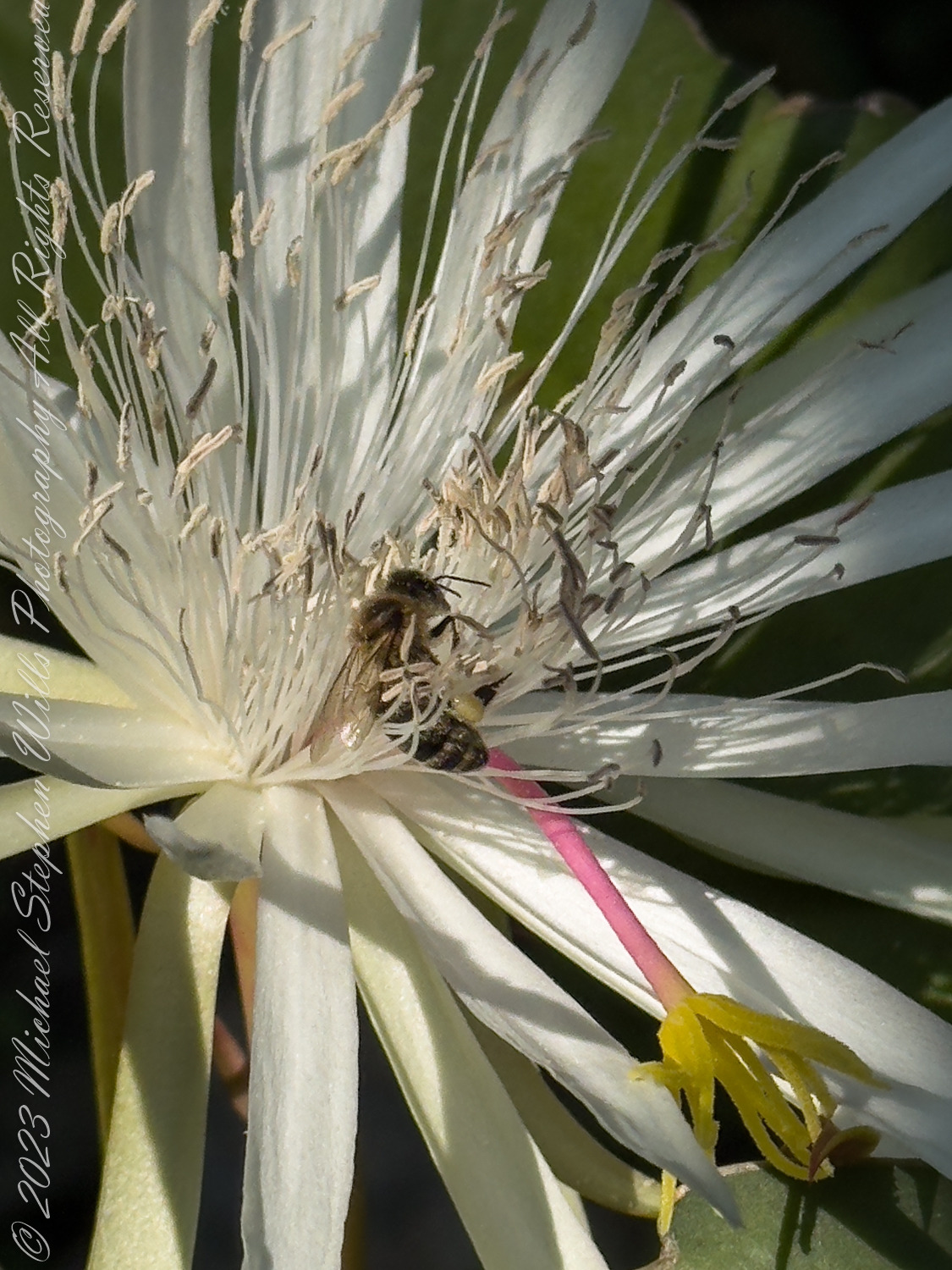
The fourth and fifth images capture the culmination of the bee’s efforts. Having gathered what it came for, the bee is ready to move on, its job done here. The flower, too, has fulfilled its role for the season. The energy it expended to produce this magnificent bloom will now be directed towards forming fruit, provided that the pollination process is successful. If it is, this single flower will give rise to a new generation of plants, continuing the cycle of life.
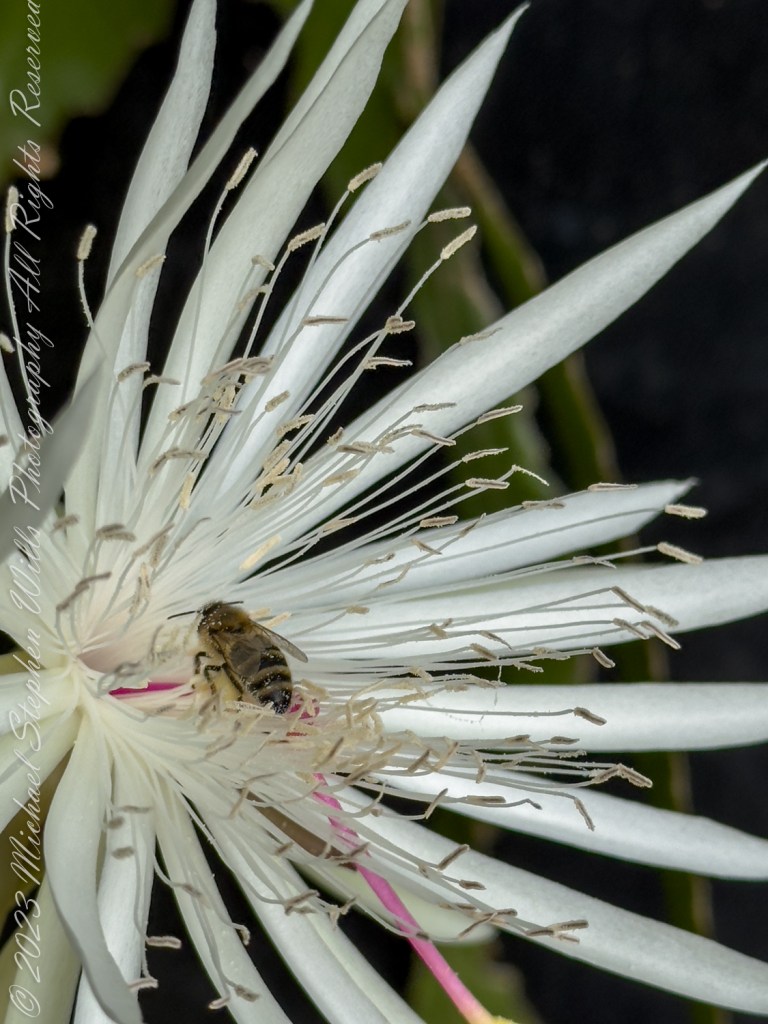
But there is another, more personal layer to this story. This is the last flower of the season. It carries with it the weight of finality, the knowledge that soon the plant will rest, conserving its energy for the next year’s bloom. As I contemplate this, I am reminded of the cycles that govern not just plant life, but all life. There is a time for blooming, a time for fruiting, and a time for rest. Each phase is essential, each one a preparation for the next.

A bonus view of the honeybee in action

In allowing this flower to form fruit, I am participating, in a small way, in this cycle. We are stewards of the natural world, responsible for nurturing and preserving the life forms that share our planet. The honeybee, the flower, and I are all connected in this intricate web of life, each playing our part in the unfolding drama of existence.

These photographs are a meditation on life, a reminder of the beauty and fragility of the world around us. They capture a moment in time, brief encounters between a flower and a bee, but they also speak to something larger, something timeless. The Epiphyllum oxypetalum may bloom for just one night, but its impact, like that of the honeybee, reverberates far beyond that brief window. And in that, there is a profound lesson for all of us.
Copyright 2024 Michael Stephen Wills All Rights Reserved

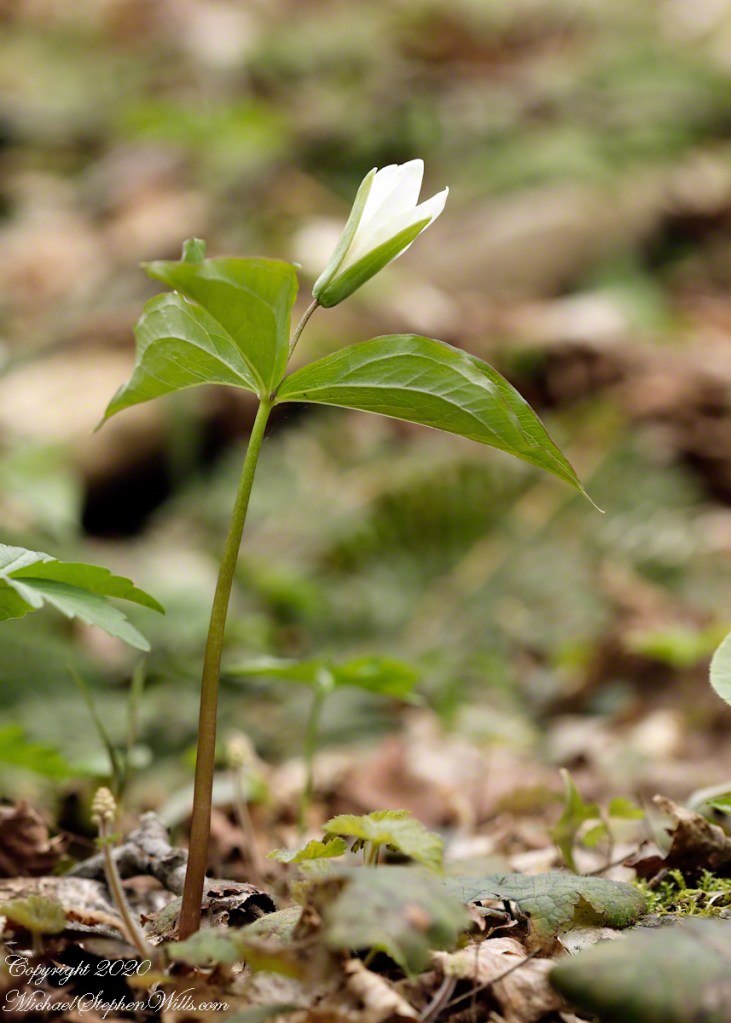
Early Spring IV

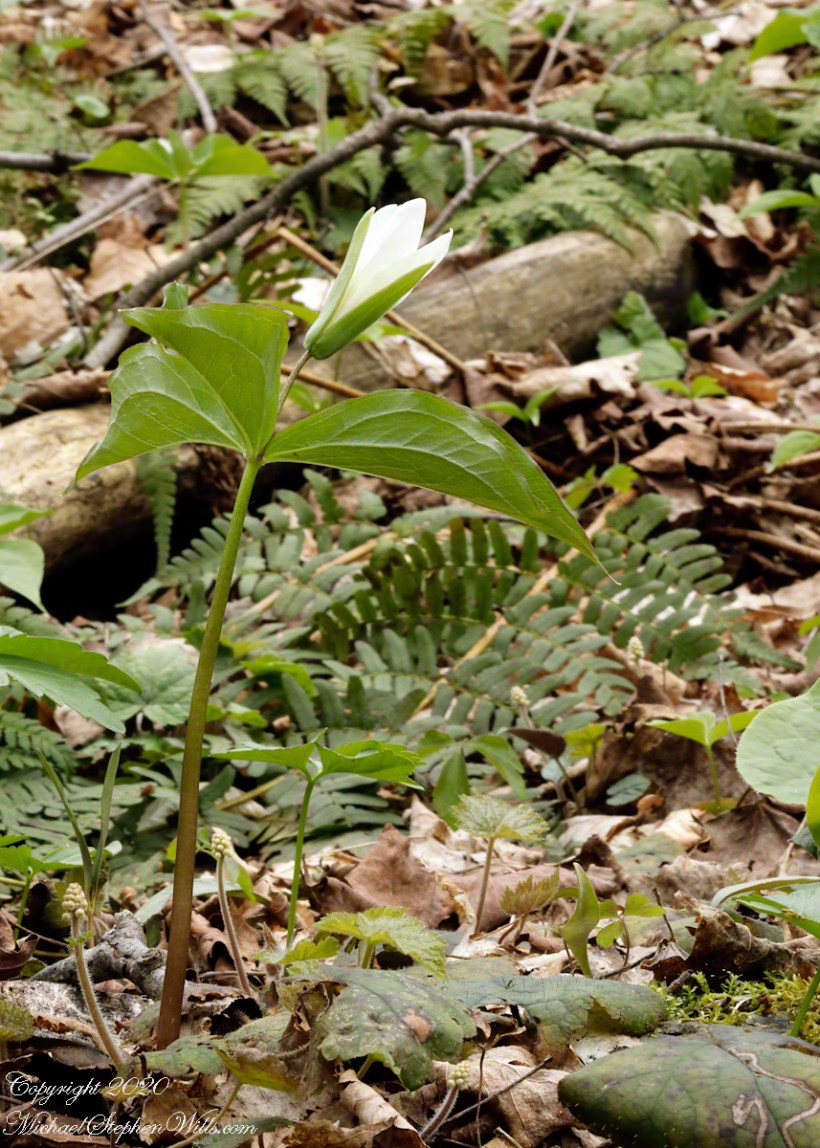
exploring Trillium habitat

Trillium as subjects are a continual challenge to find the compelling composition. Click me for another Trillium posting.

This afternoon’s sky was overcast, perfect for photographing wildflowers: clouds thin enough for light to pour through. In the clouds’ shadow there is not enough light for the plant to cast its own distracting shadows. Compare an earlier trillium photograph (click me to go there).
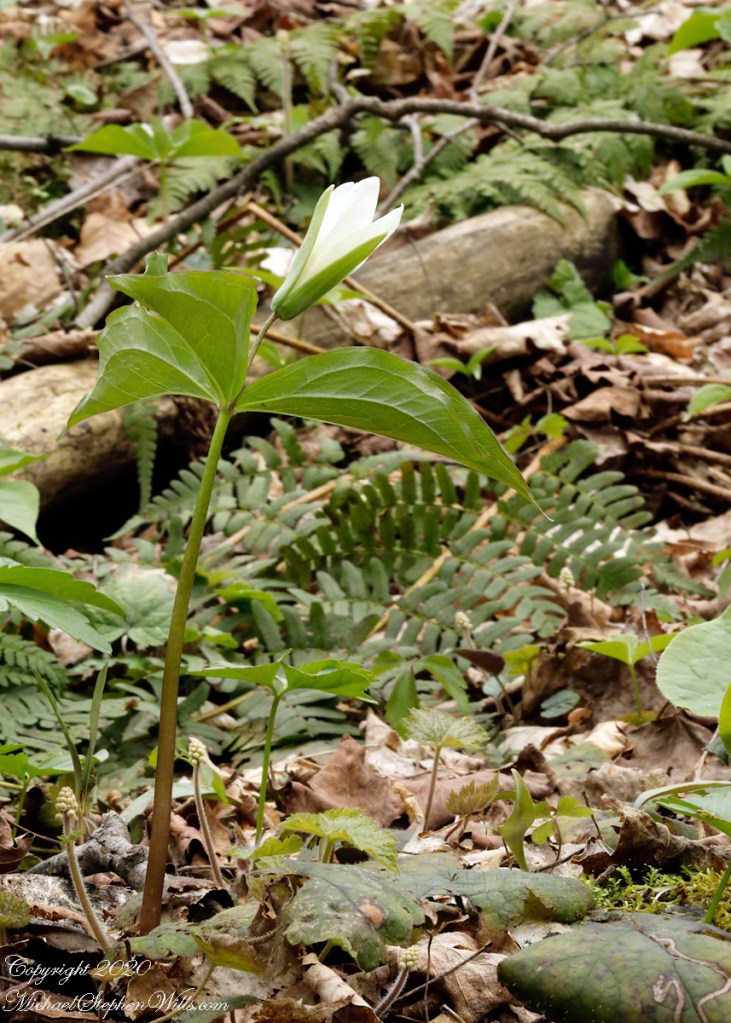
For the following photograph is a study in habitat. At f32, focusing on the trillium, the surroundings are clearly identifiable: several budding Foam Flower heads (Scientific Name: Tiarella), fern, rotting wood, the forest floor hidden by leaf clutter.

I released the shutter (with a 2 second delay) during a break in spring breezes, the overcast lighting bright enough for a speedy 1/8 second exposure. The focus on the opening trillium bloom is just as crisp in this exposure as the next.

Click photograph for larger image. To do this from WordPress Reader, you need to first click the title of this post to open a new page.

At 4 f-stop, the entire plant is in focus while many habitat elements are a soft blur. An interesting point is the leaf on the left. It is in focus somewhat and is a distraction. This was an issue, in my opinion, for the first photograph.

Click for my “Finger Lakes Memories” Fine Art Photography Gallery.

Copyright 2024 All Rights Reserved Michael Stephen Wills

April Freeze Slideshow

Here is a recapitulation of my latest posts in the form of a slideshow.

Click photograph to start show. To do this from WordPress Reader, you need to first click the title of this post to open a new page.

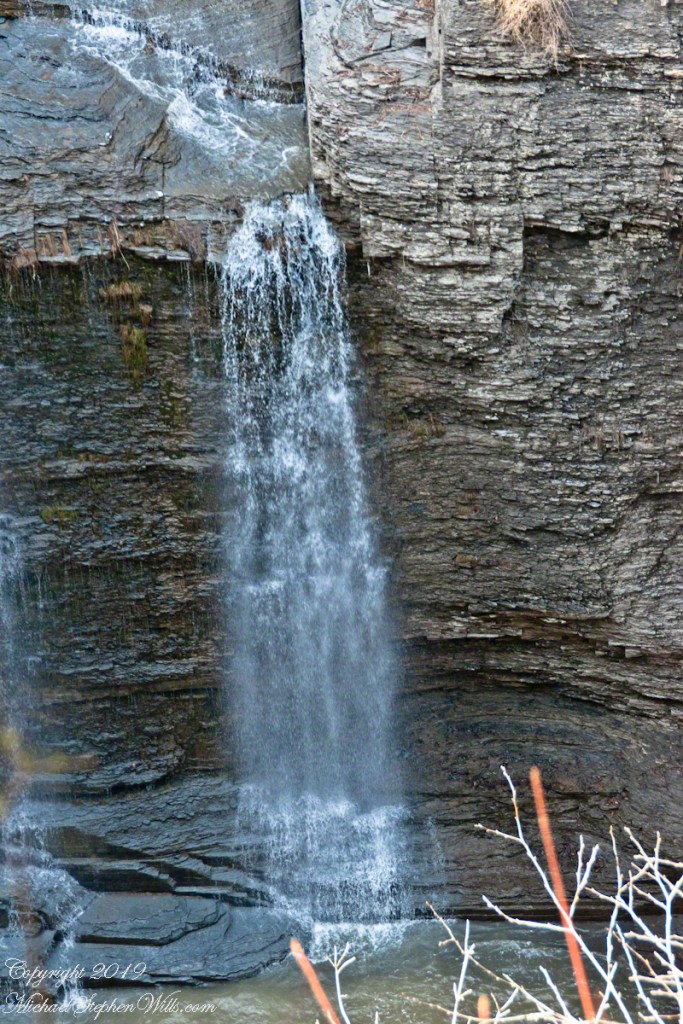
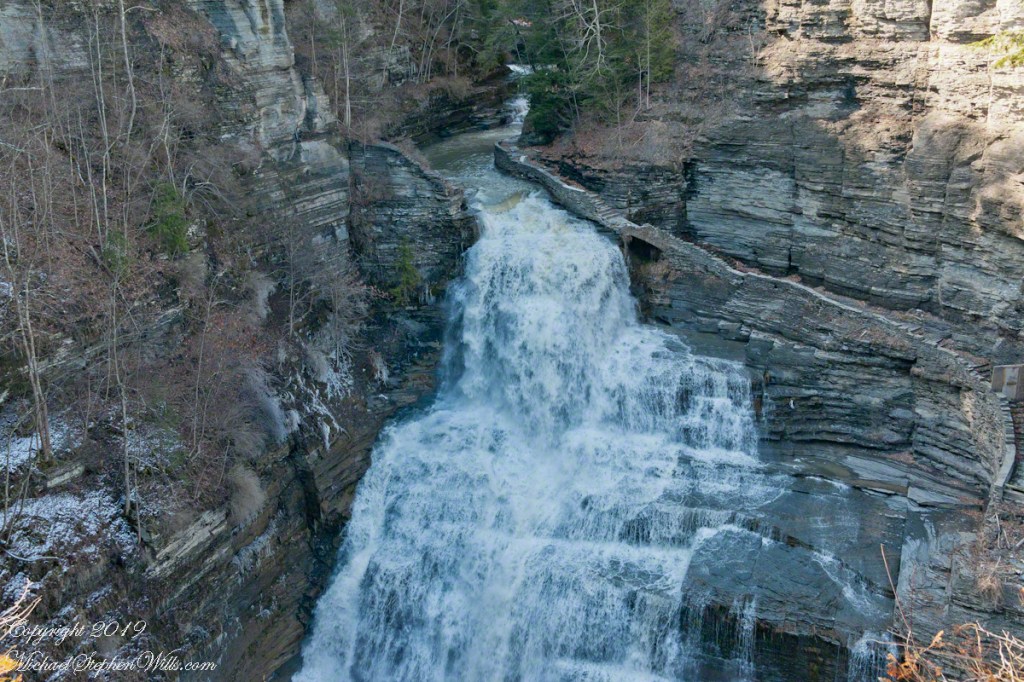
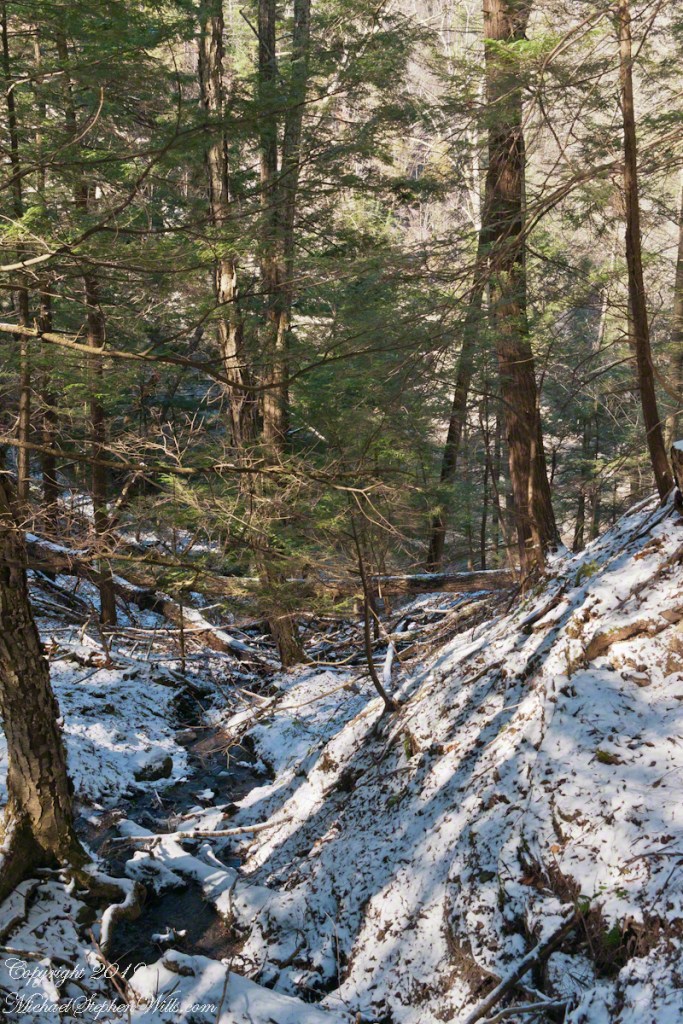
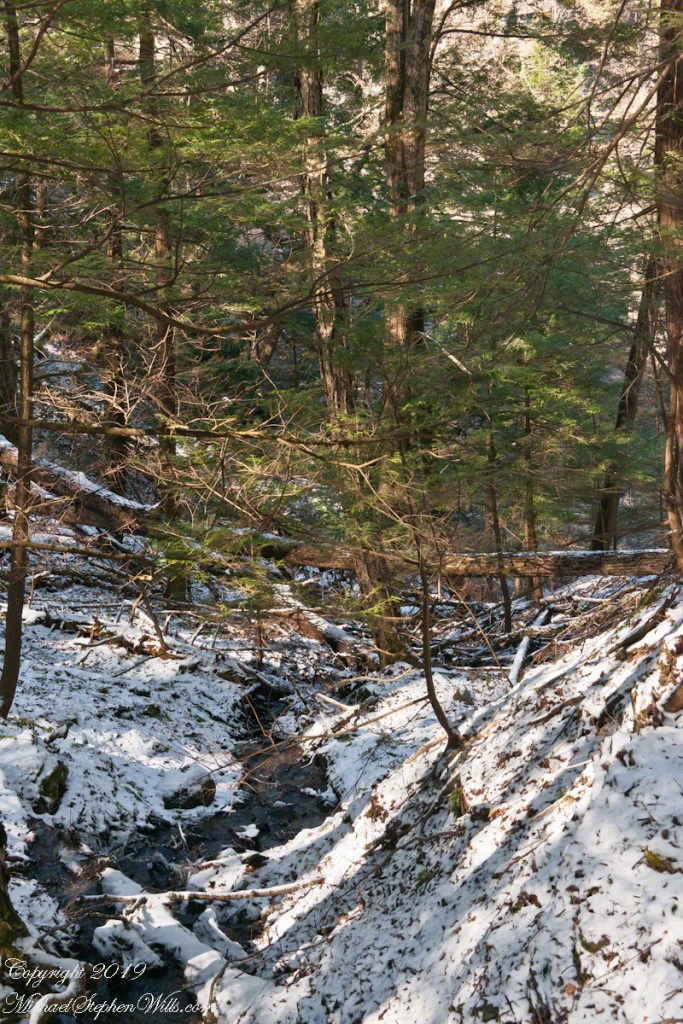
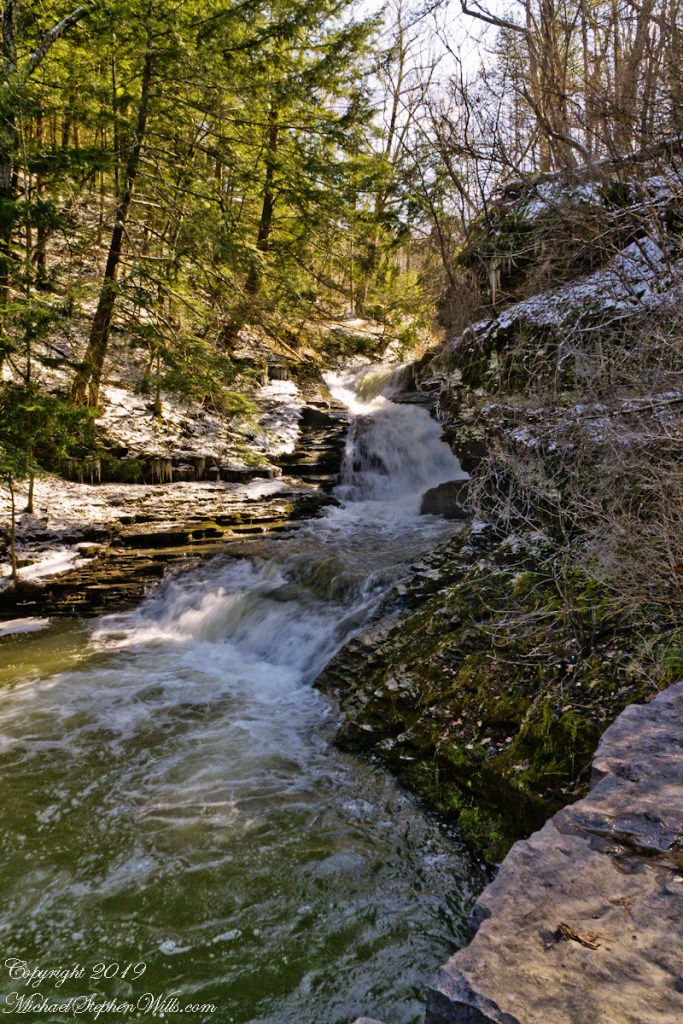
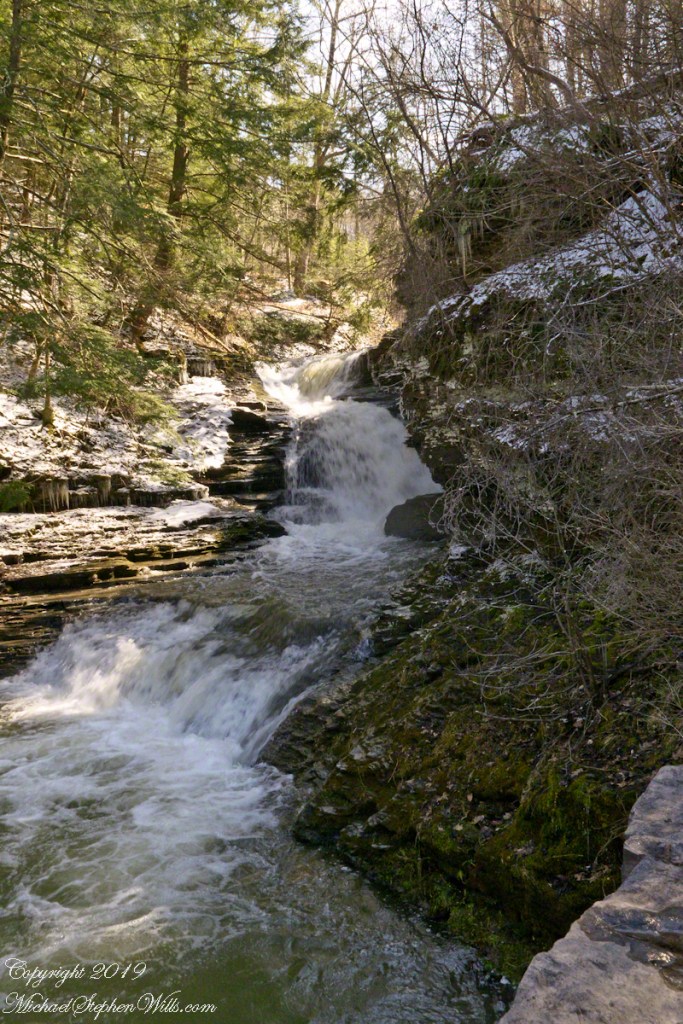
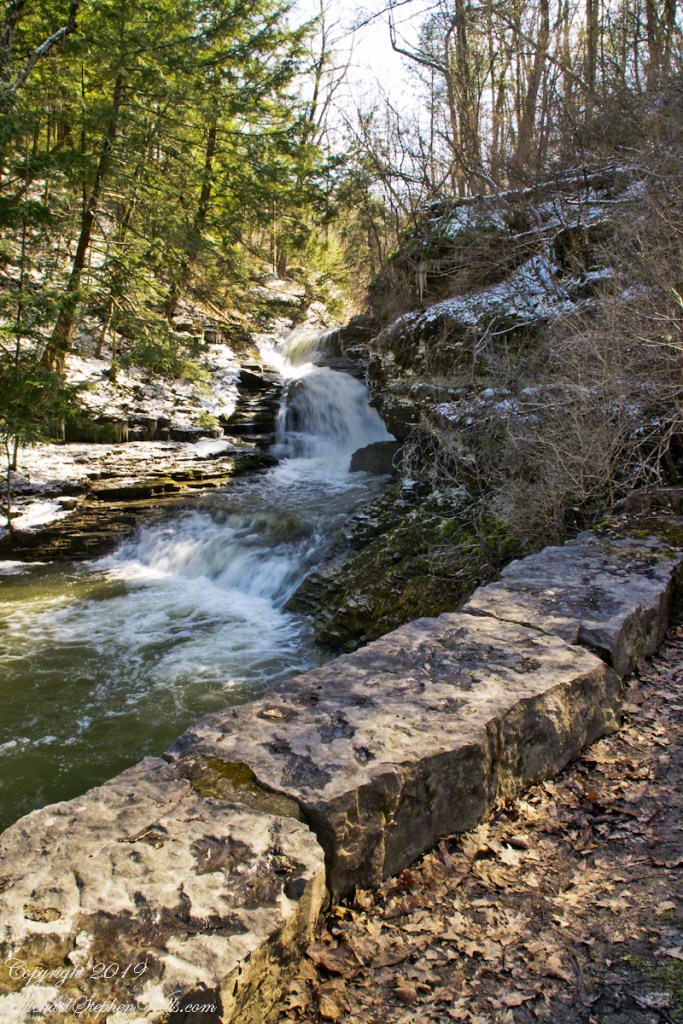
Robert H. Treman New York State Park.

Copyright 2024 All Rights Reserved Michael Stephen Wills

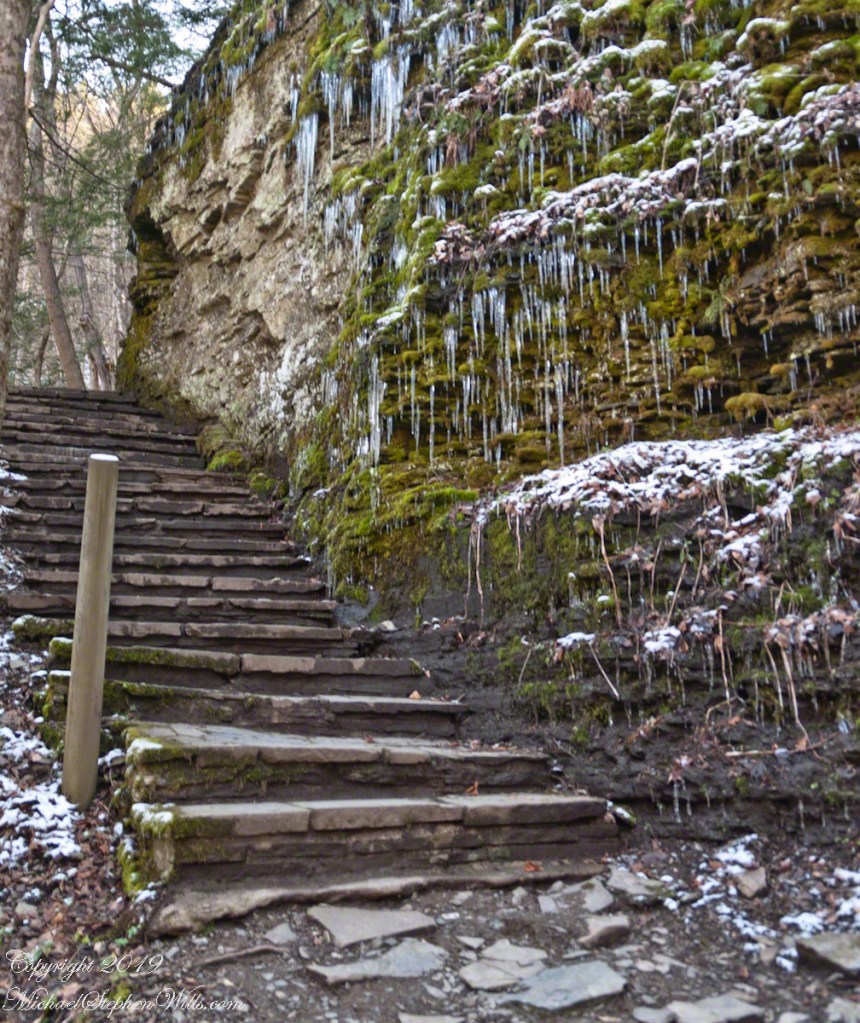
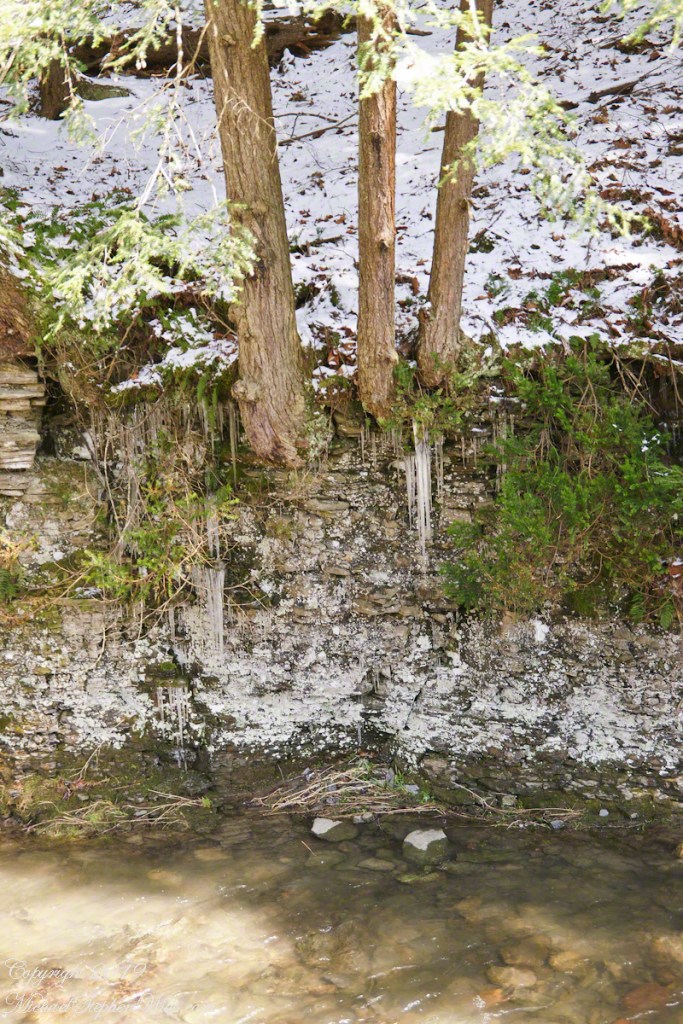
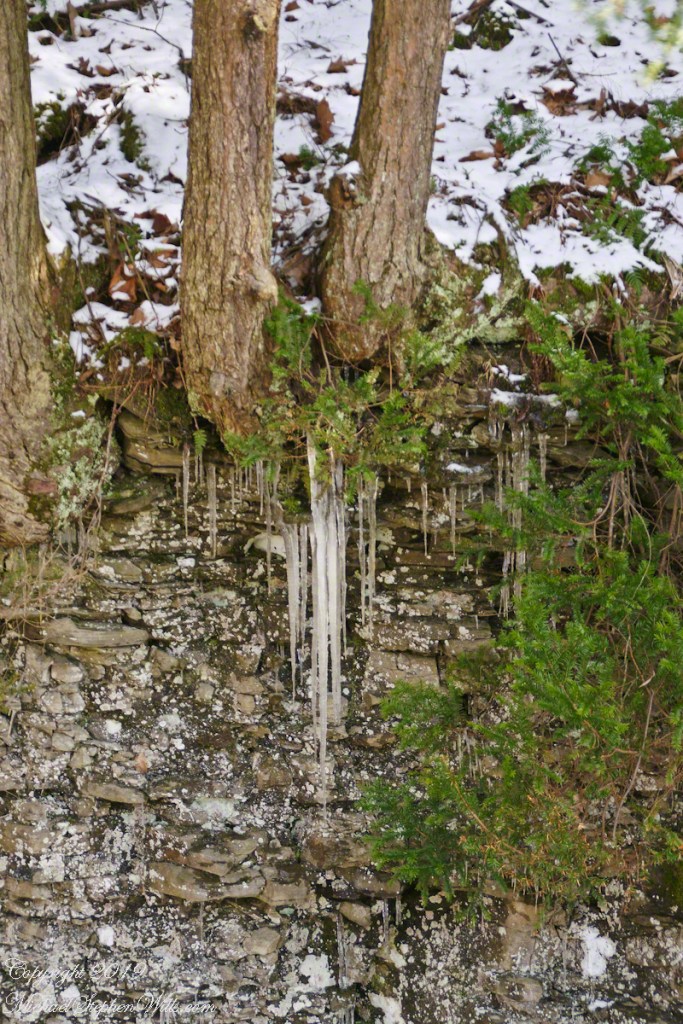
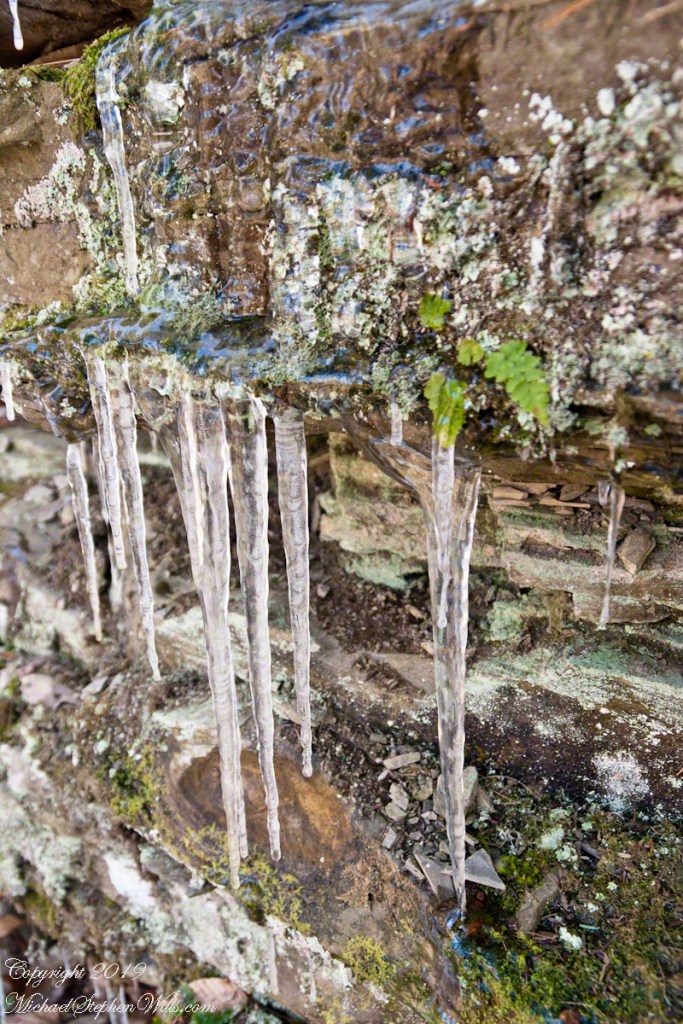
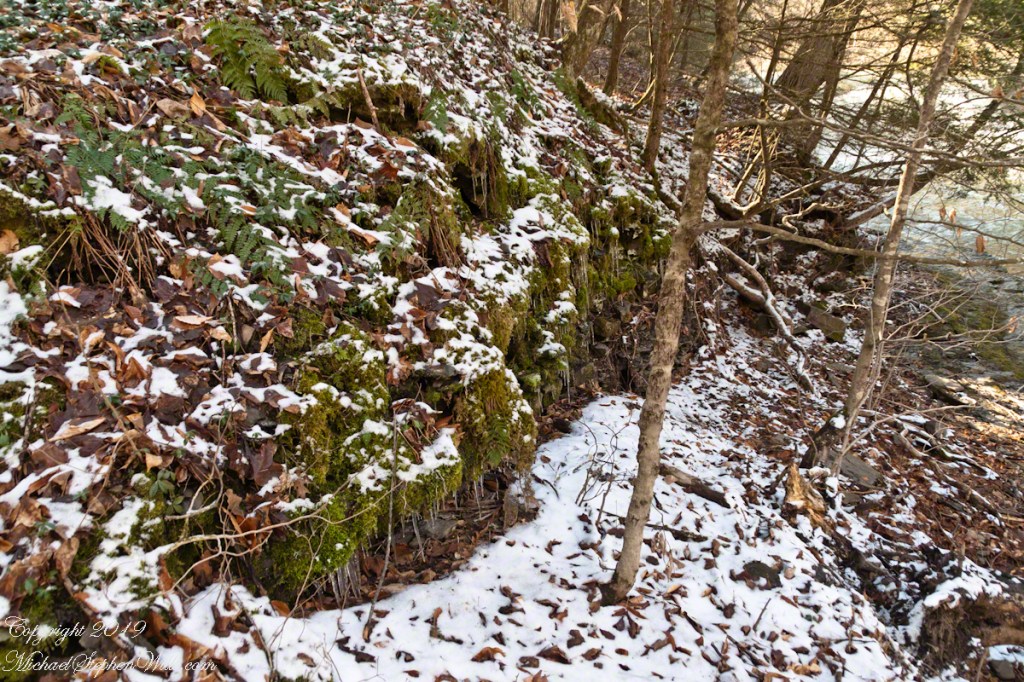
Icicles!!

Key words: steep, icy

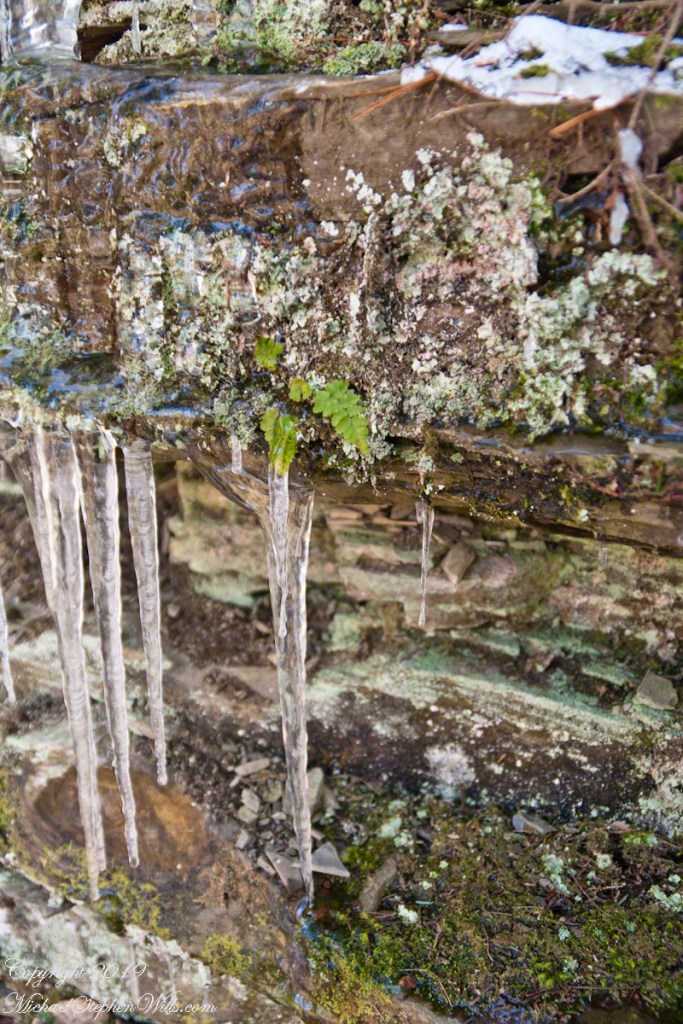
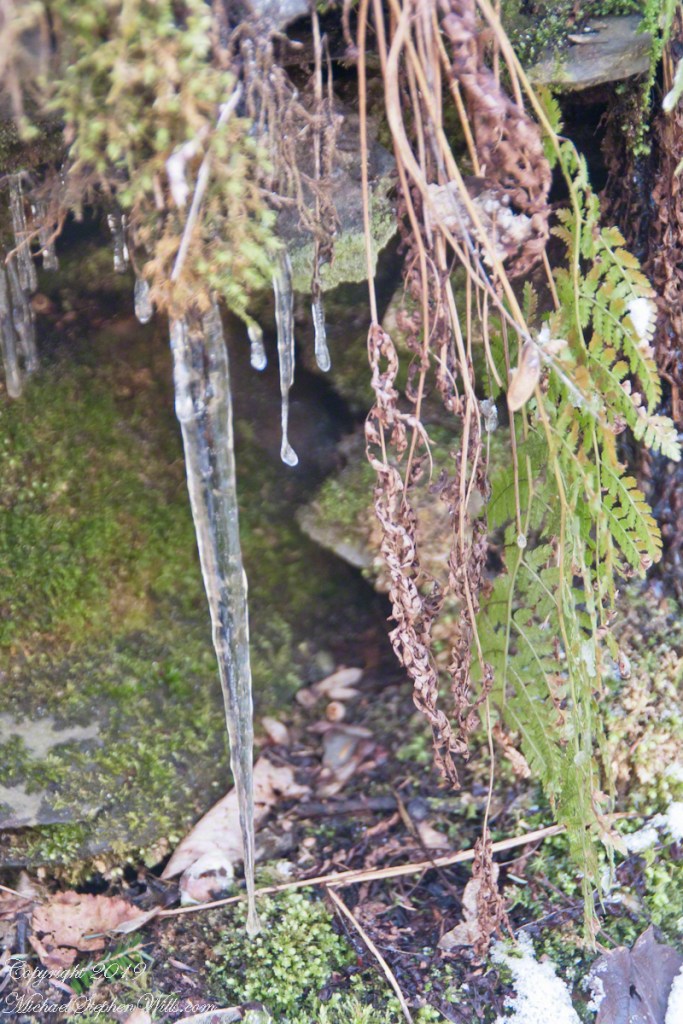
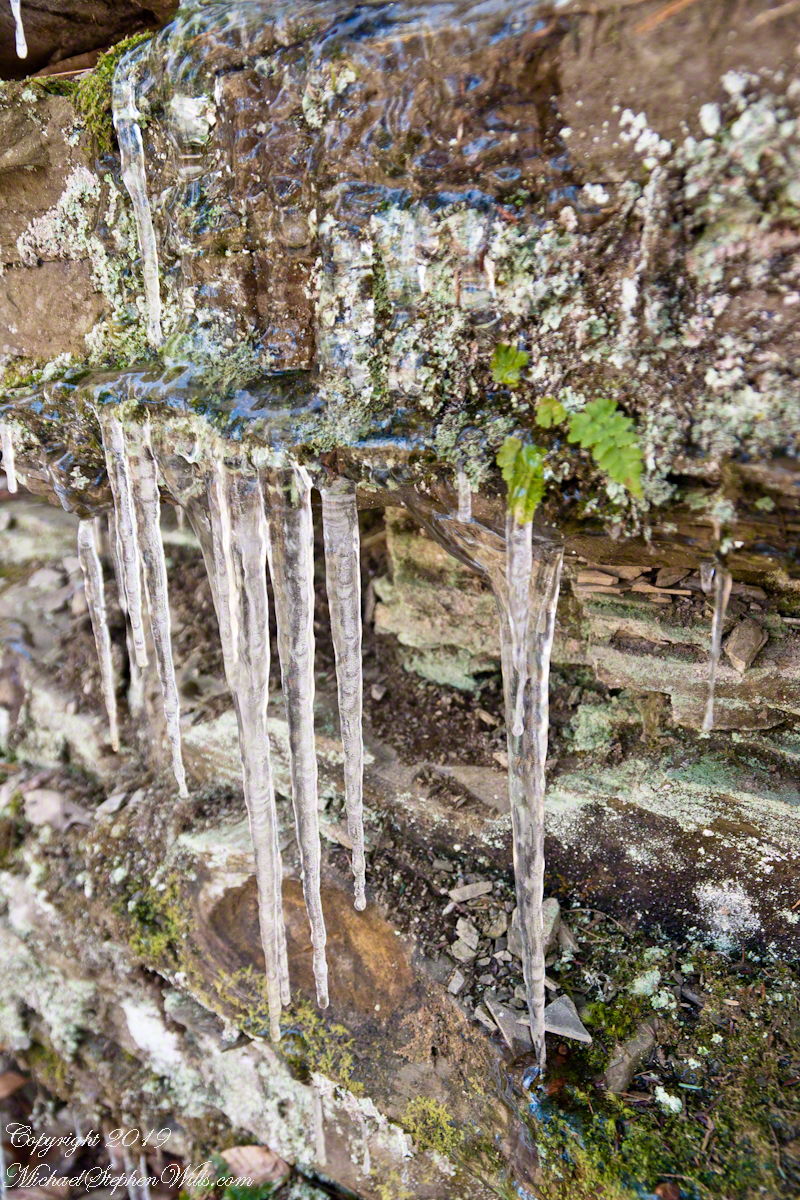
Water drips steadily from seeps, places water follows hidden cracks to emerge from the darkness. In warm seasons these may be a patch of moisture enabling the growth of ferns, only becoming evident when air is cold enough to freeze slowly running water.

Click photograph for a larger view. To do this from WordPress Reader, you need to first click the title of this post to open a new page.

These macros capture the Moss, Fern and Lichen. These thrive in this environment.

These shots were hand held. I used a Sony Alpha 700 dslr with a variable “zoom” lens, great for framing compositions.

Robert H. Treman New York State Park.

Click for a slideshow of this Waterfall of the Old Mill sequence
Copyright 2024 All Rights Reserved Michael Stephen Wills

Hatch, Birth, Good Luck!

If you ever feel like you’re struggling with independence, just remember these creatures who start life with the ultimate “figure it out yourself” kit.

Introducing the “Self-Service Buffet” of the animal kingdom, where the motto is “Hatch, Birth, Good Luck!” These creatures don’t stick around for cuddles or parenting classes:

Sea Turtles – The Ultimate Sand Sprinters: These little guys burst from their eggs and make a mad dash for the ocean, dodging seagulls and crabs. It’s like the world’s most stressful obstacle course, where the prize is simply survival.

Salmon – Swimmers on a Solo Mission: After hatching, young salmon are on their own, navigating the perilous waters without a GPS or even a pep talk. They’ve got more instinct in their little fins than most of us have in our entire body!

Praying Mantises – The Loner Ninjas: These insects hatch ready to rumble, with no parental guidance on how to be the ultimate predator. It’s a tough world where your siblings might just see you as their first meal. Talk about family drama!

Kangaroo Rats – Desert Hoppers Inc.: Born in the harsh desert, these tiny rodents are all about the solo journey from the get-go. No room service or guided tours here; just a lot of hopping and hoping.

Octopuses – The Brainy Solitaires: Octopus moms are the epitome of “do it yourself,” laying their eggs and then, well, signing off. The babies hatch fully equipped with all the smarts and skills they need, making them the envy of every overbooked parent.

Komodo Dragons – The Scaly Independents: These formidable lizards hatch ready to take on the world, with a fierce look in their eye that says, “I didn’t choose the dragon life, the dragon life chose me.”

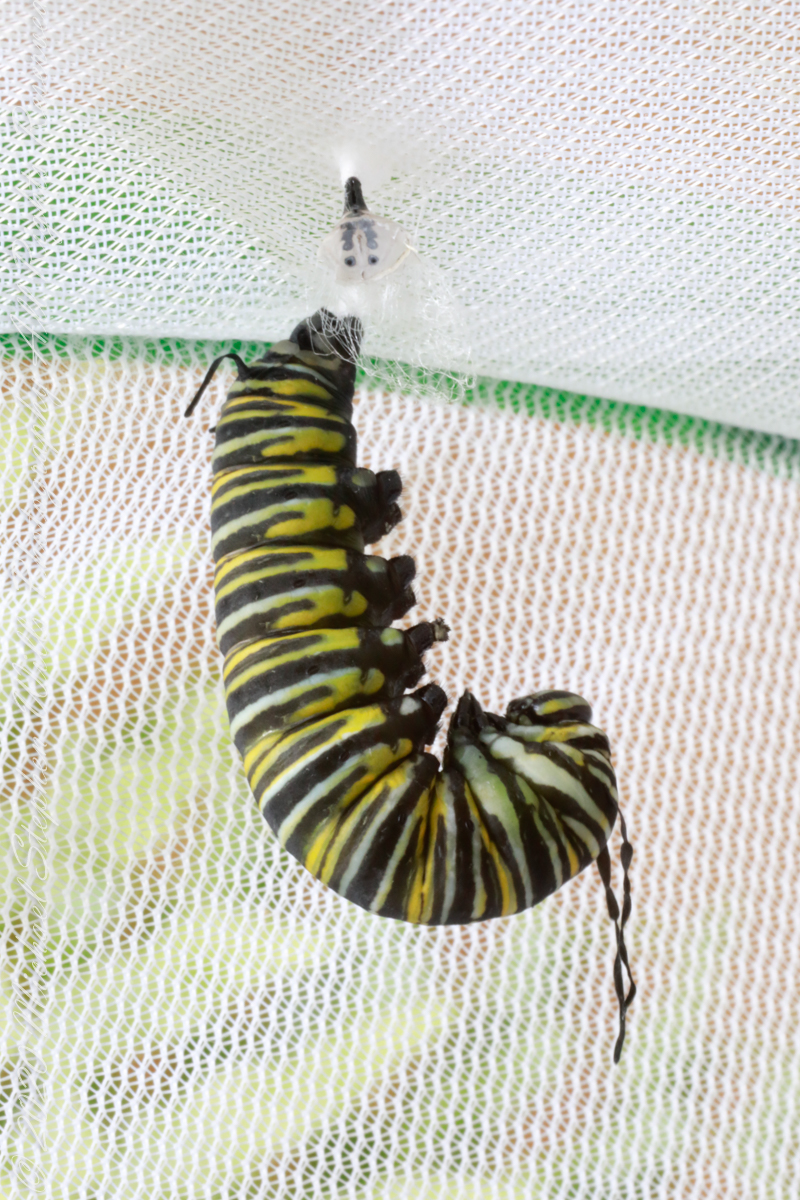
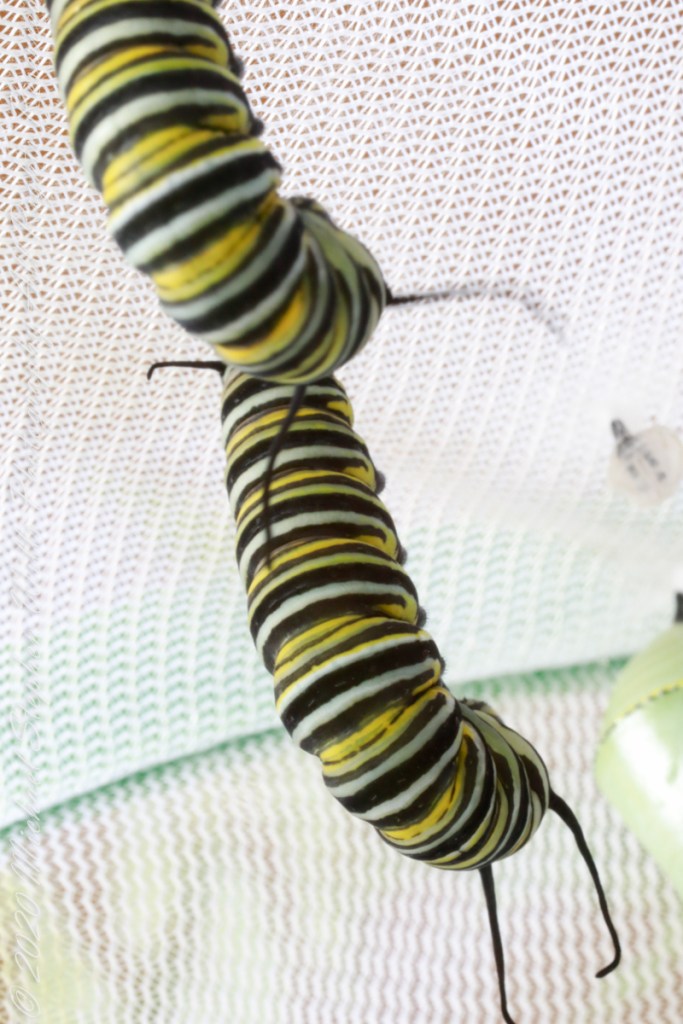
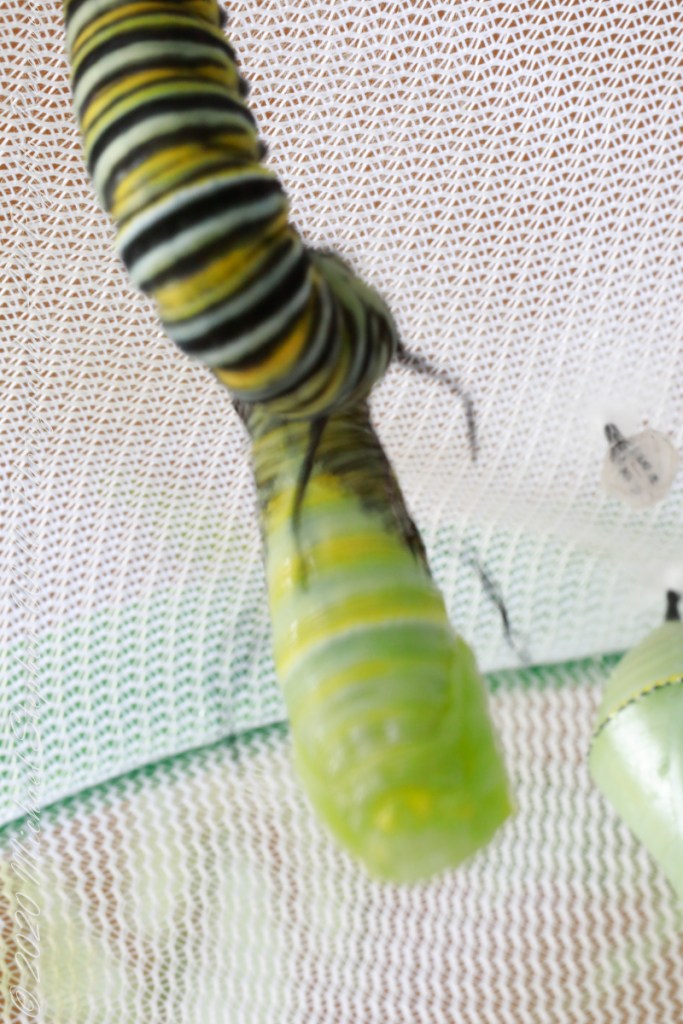
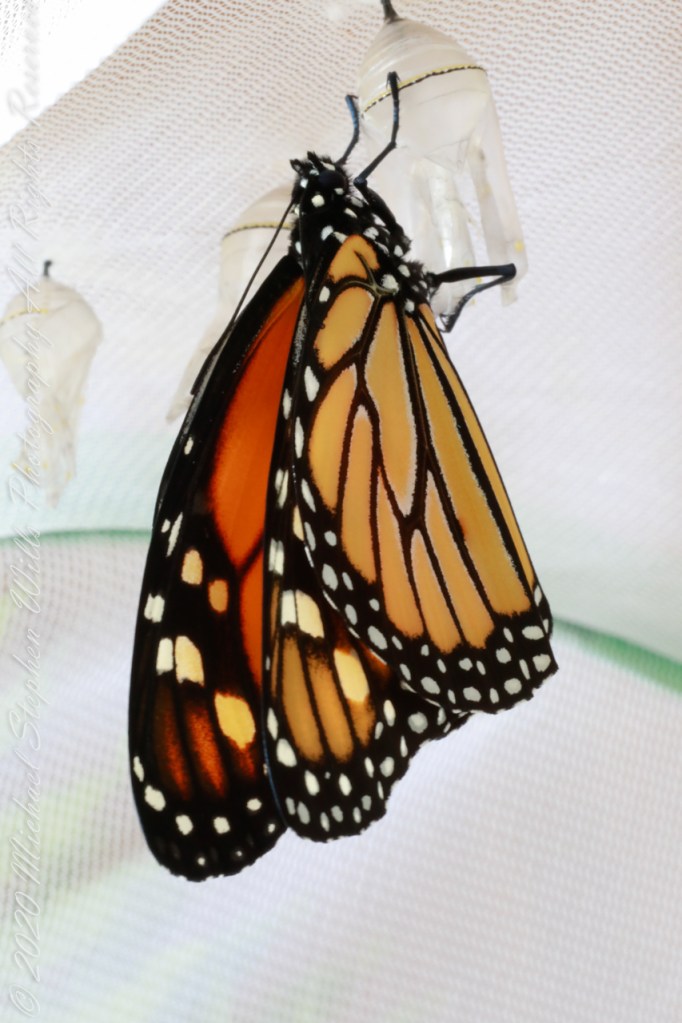
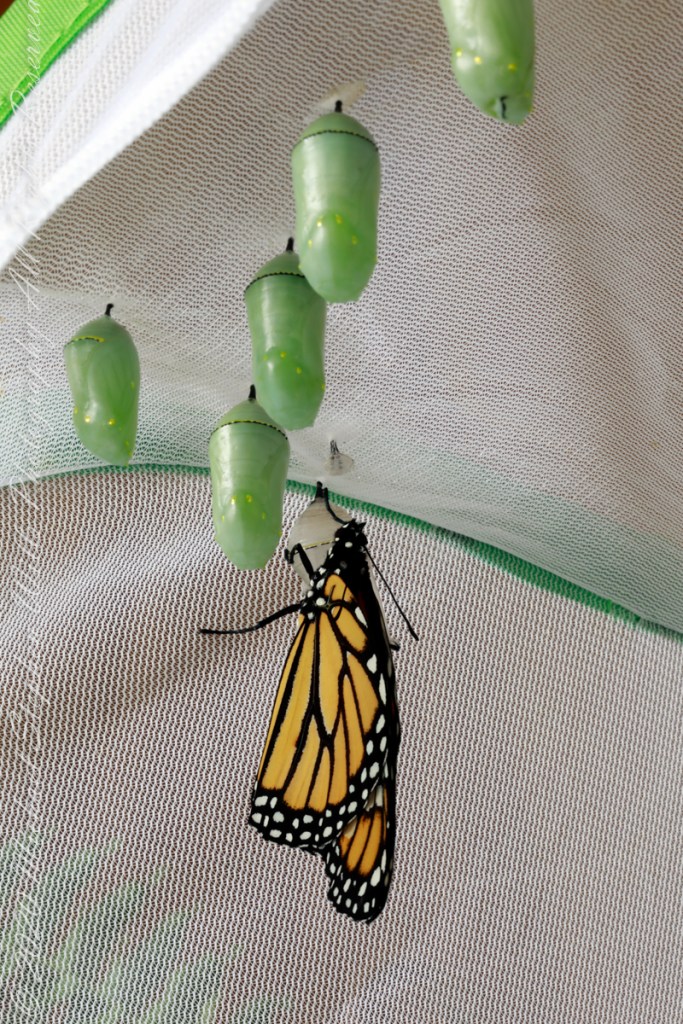
Butterflies – The Winged Wanderers: From caterpillar to chrysalis, and then to butterfly, these creatures do it all on their own. If butterflies had social media, their status would perpetually be “Just transformed. Who dis?”

So, if you ever feel like you’re struggling with independence, just remember these creatures who start life with the ultimate “figure it out yourself” kit. They might just inspire you to tackle your own obstacles – though hopefully, with fewer predators involved.

Copyright 2024 Michael Stephen Wills All Rights Reserved

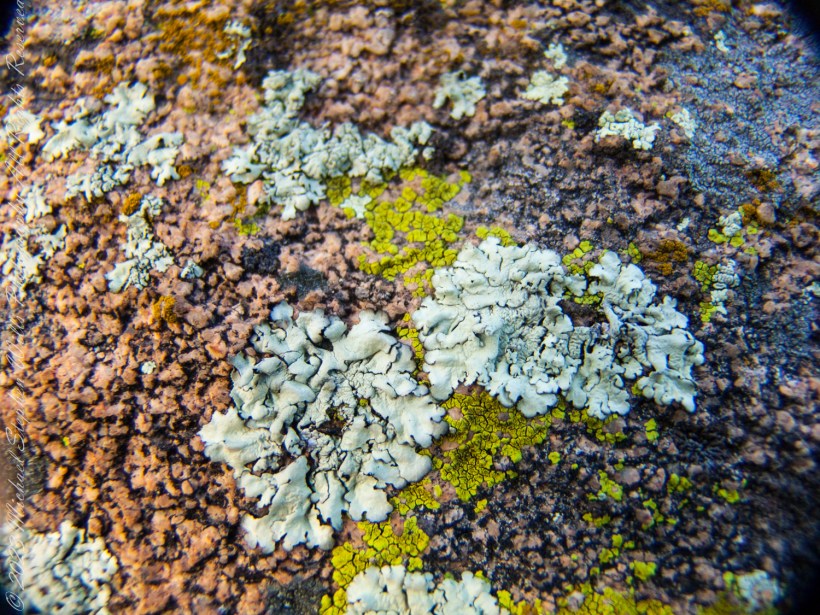
Lichens: Symbiosis Set on Stone

Discover a timeless world through my lens: delve into Arizona’s Rincon Wilderness, where lichens and hedgehog cacti narrate Earth’s enduring, untold story. Join me.

Continue reading “Lichens: Symbiosis Set on Stone”

Rincon Flame: The Southwestern Paintbrush’s Desert Dance

Step into the Rincon Wilderness with me, where the Southwestern Paintbrush blooms amidst the ancient stones.

Discovery in the Rincon Wilderness

In the embrace of the Rincon Mountains, east of Tucson’s hum, lies the Rincon Wilderness, a tapestry of desert life and geological marvels. These mountains, one of the “Sky Island” ranges cradling the Tucson valley, are less rugged than their siblings, the Santa Catalinas and the Santa Ritas, offering a gentler invitation to explore their secrets.

Happy Valley Saddle’s Floral Jewel

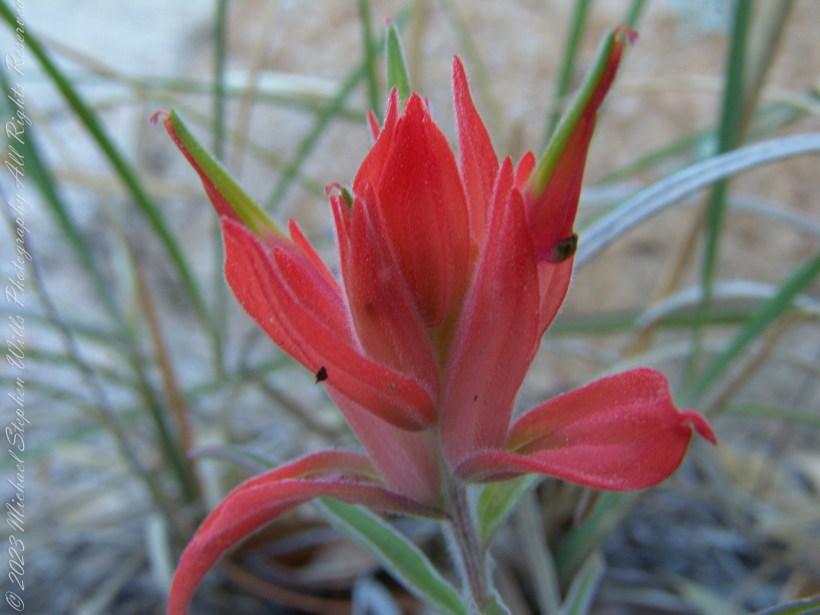
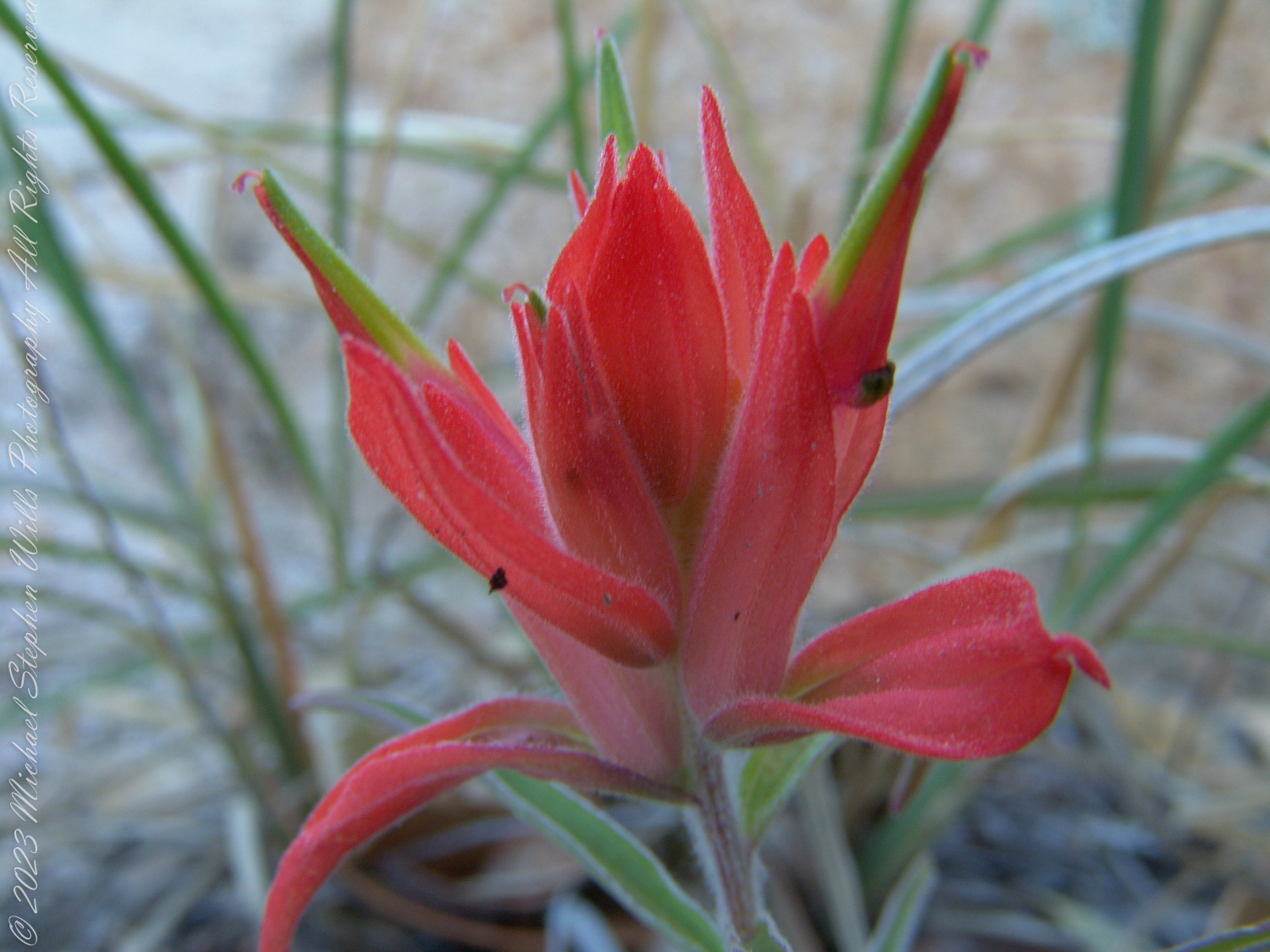
Amidst the rugged beauty of Happy Valley, a hidden corner in the quilt of the Rincon Wilderness, a singular red-orange glow caught my eye. There, among the lichen-encrusted boulders, stood the Southwestern Paintbrush, Castilleja integra, its flamboyant bracts a fiery contrast to the muted greens and grays of its surroundings.

Portrait of a Parasite

This herbaceous perennial, with its soft downy coat, is a paradox, both painting the desert with life and leeching it from others as a hemi-parasite. Its roots, entwined with those of other desert dwellers, tell a tale of survival that’s as old as the hills themselves.

The Brushstrokes of Evolution

Each leaf, narrow and dusted with hairs, speaks to the adaptive artistry of nature, designed to conserve precious moisture. The flowers, with their extended blooming season and generous nectar, court the hummingbirds who dance between the blooms, pollinators in this ancient symbiosis.

A Symbiotic Canvas

The Southwestern Paintbrush, with its colorful allure, draws more than just winged admirers. Its presence among the rocks is a reminder of the complex ecological web of the Rincon Wilderness, a part of Saguaro National Park’s rich mosaic

Click Me to visit the photographs of Michael Stephen Wills on Getty.

Copyright 2024 Michael Stephen Wills All Rights Reserved

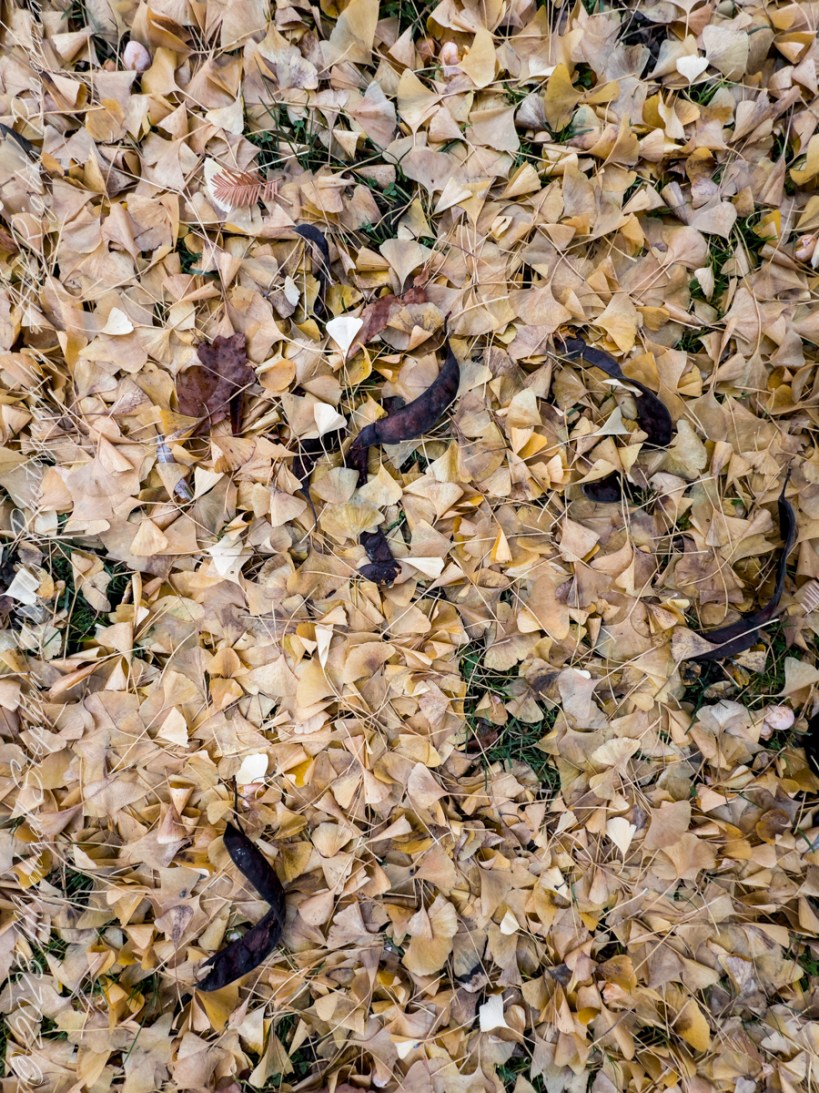
Resilience and Beauty: The Ginkgo in Fall

Naked branches reach,
Sky braces for winter’s kiss,
Earth turns, leaves embrace.

Continue reading “Resilience and Beauty: The Ginkgo in Fall”

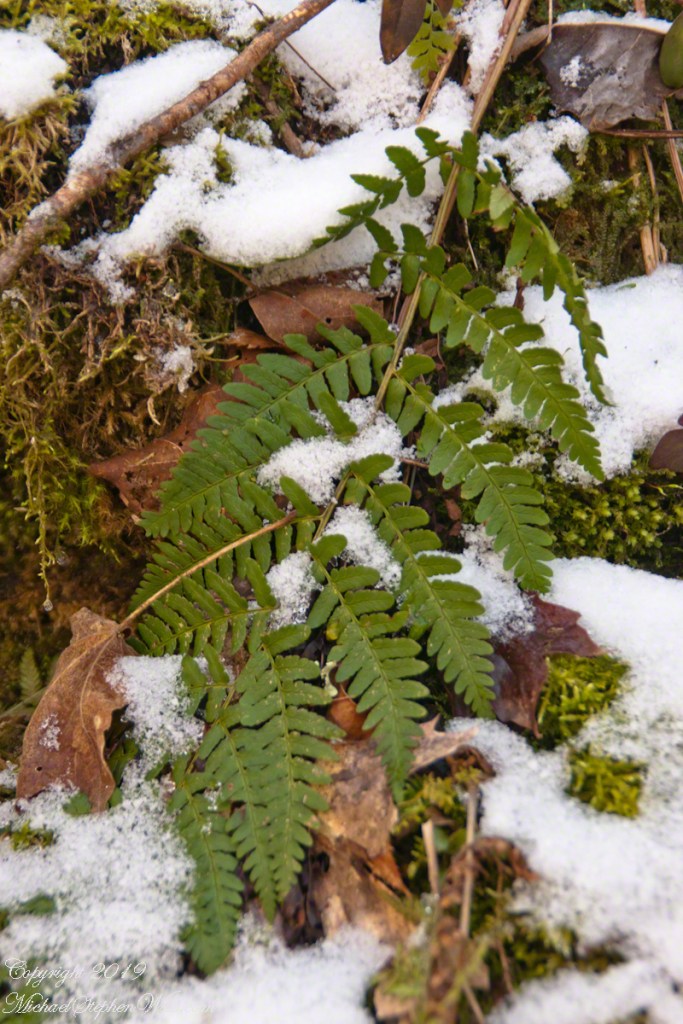
Frond in Snow

Green Promise

Continue reading “Frond in Snow”

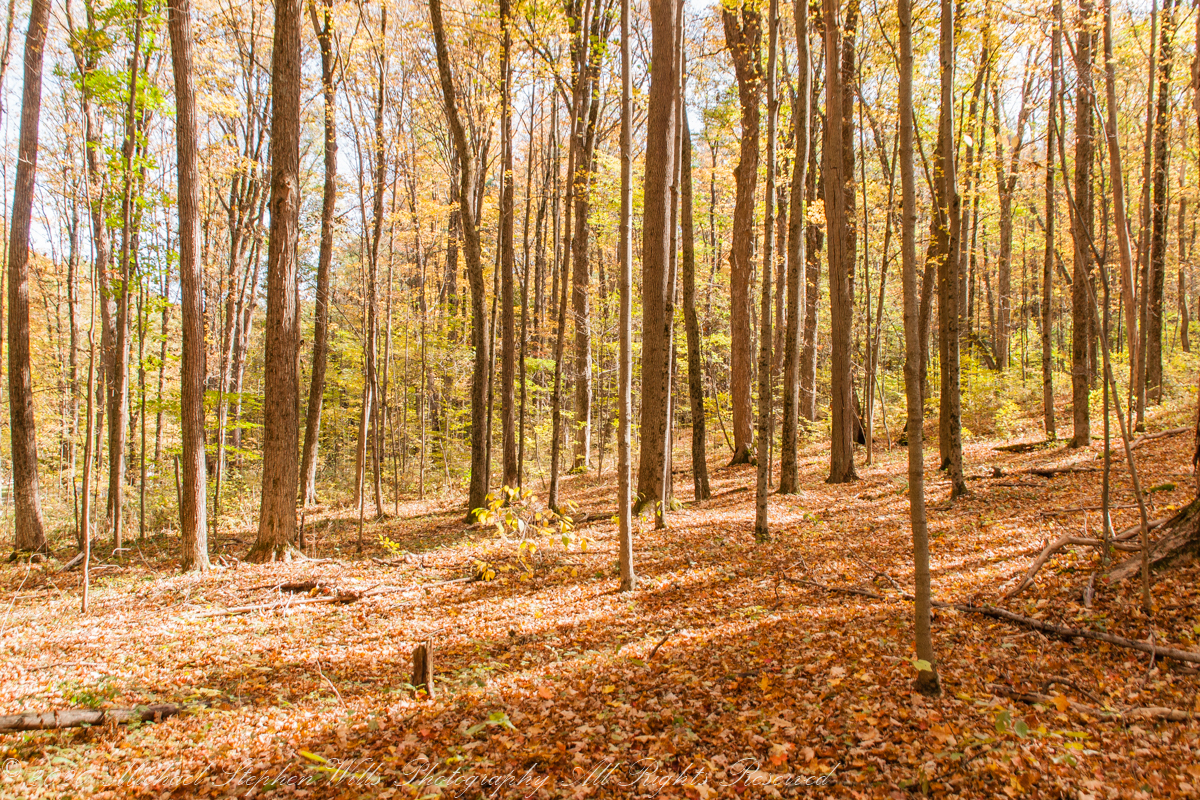
Autumn Hillside

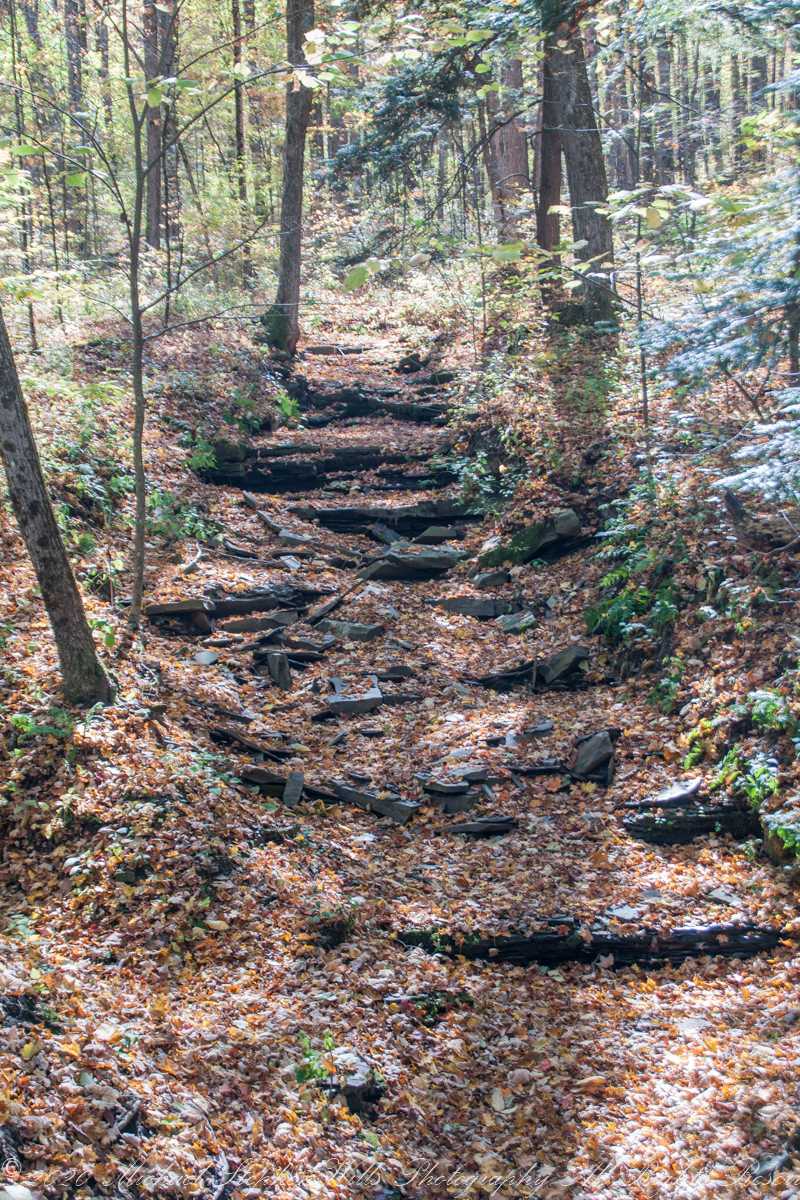
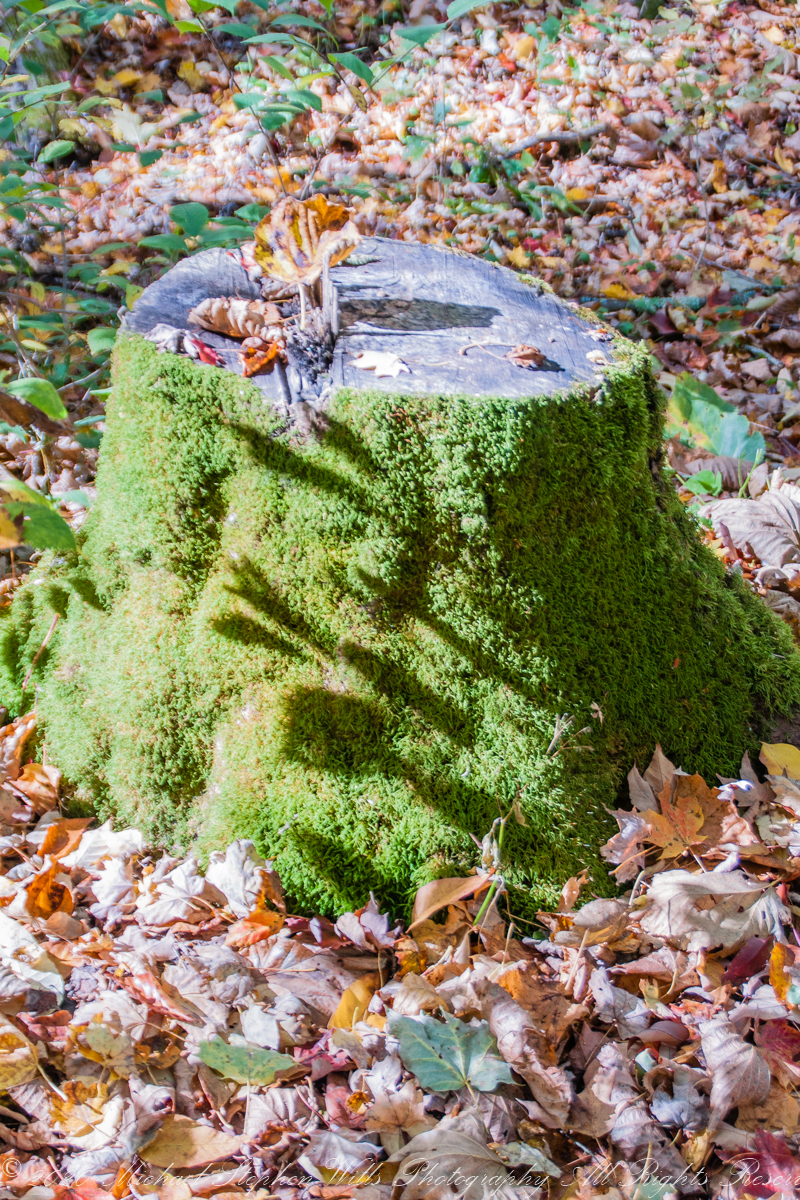
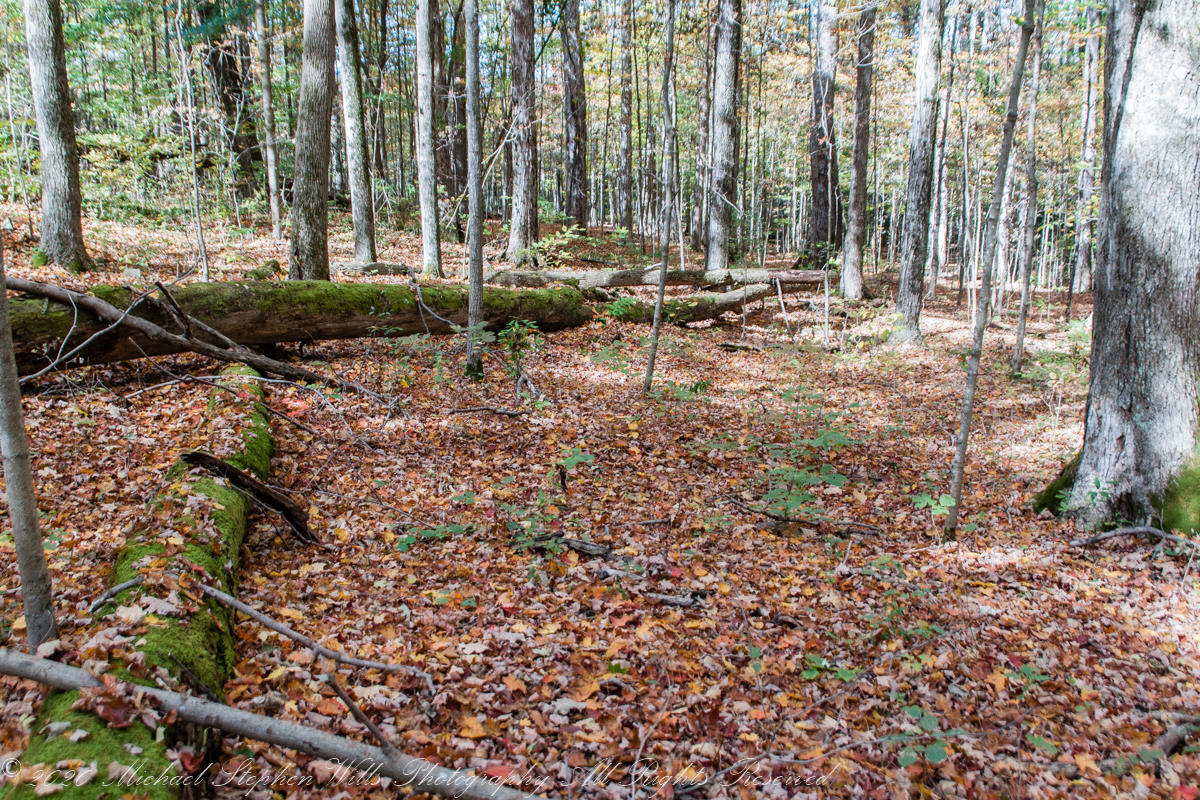
Fillmore Glen Autumn

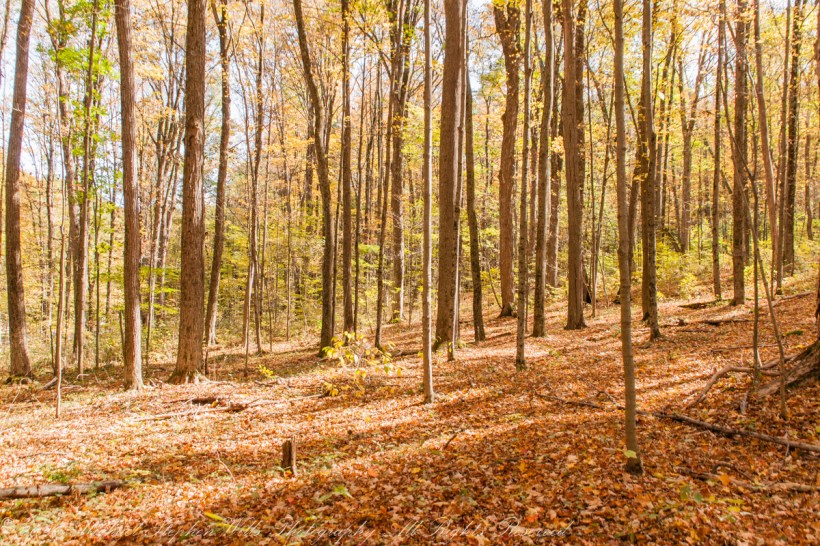
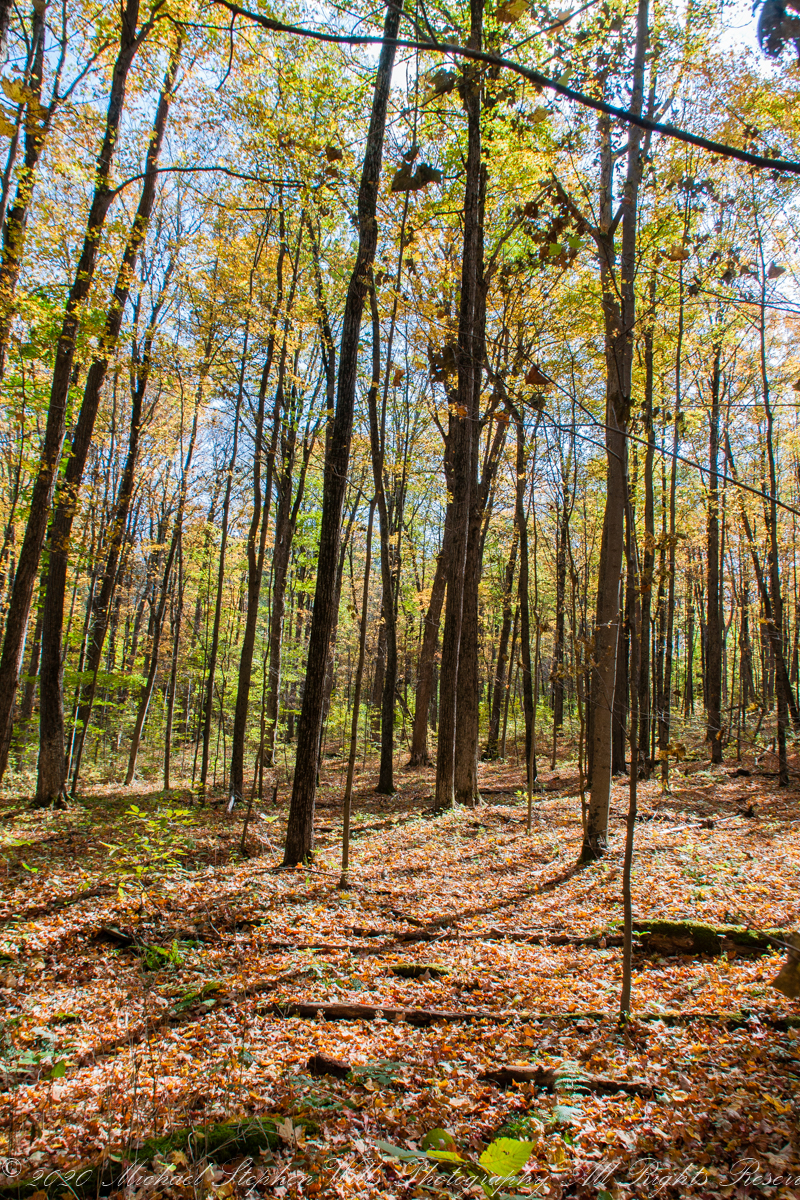
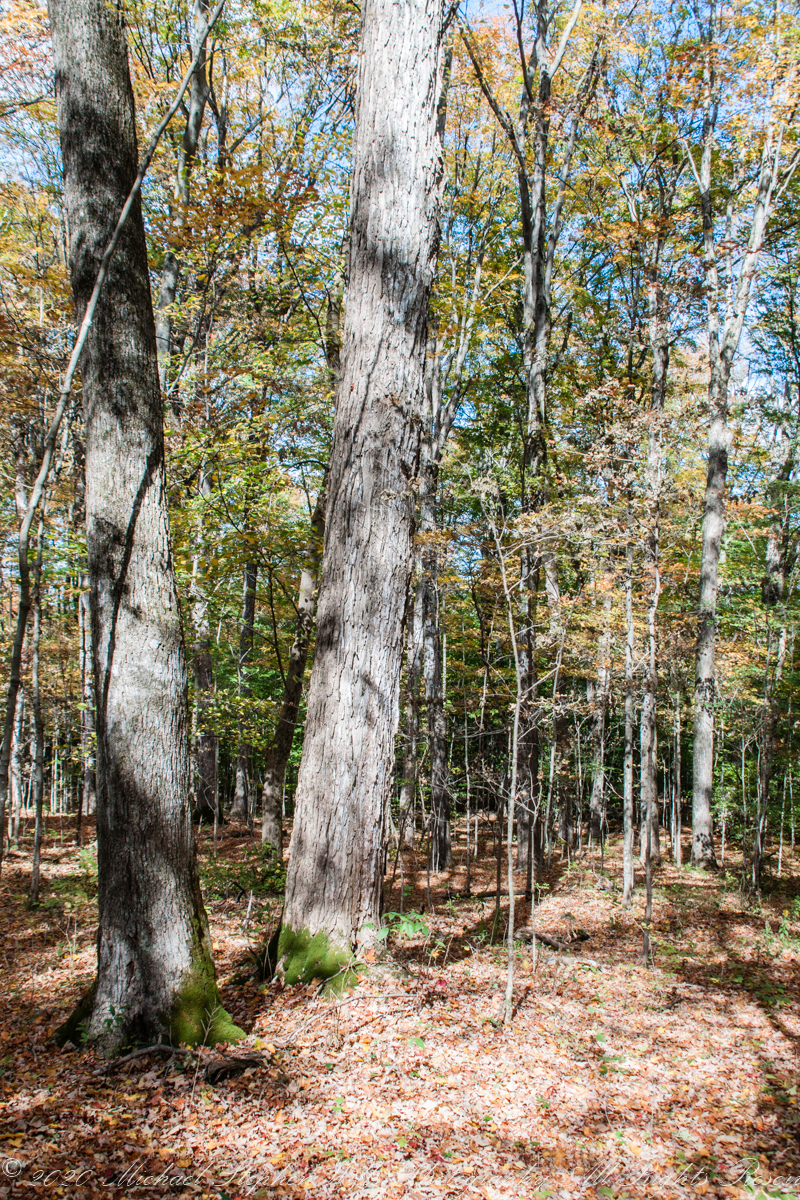
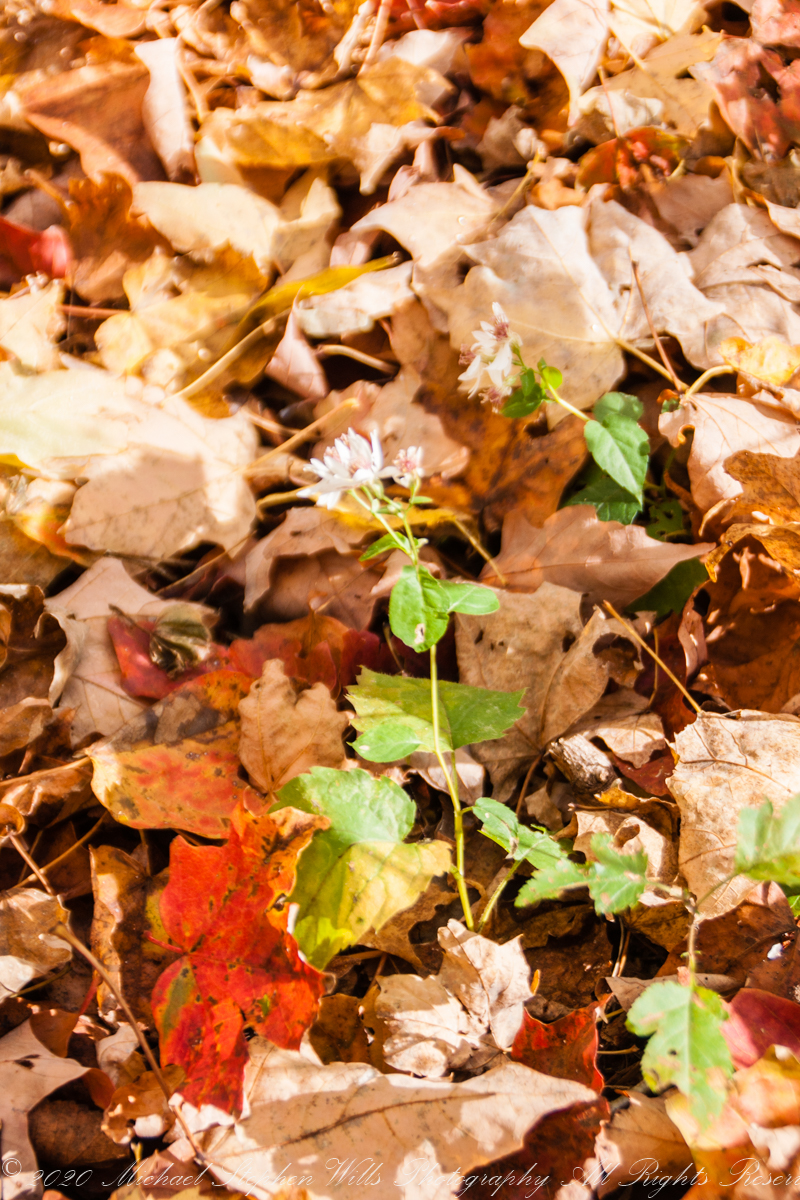
The first week of November 2023 I posted a series of photographs from Fillmore Glen from the Canon 5D Mark IV. Today, I present a series of photographs from the same day using the Sony Alpha 700 dslr using a variable 18-200 mm lens.

Hint: click image for larger view. Ctrl/+ to enlarge / Ctrl/- to reduce

Click Me to view my photographs on Getty.

Copyright 2023 Michael Stephen Wills All Rights Reserved http://www.MichaelStephenWills.com