The Mathematical Beauty of Autumn Leaves

Here I reflect on the mathematical beauty of falling leaves from two trees, revealing order amidst perceived chaos in nature’s patterns.

Standing before these two trees on a unseasonably warm autumn day, I am struck by the intricate patterns of their fallen leaves. Against the vibrant green of the grass, the golden leaves form halos around the trunks, as if nature herself were sketching mandalas. There’s something profoundly mathematical about these arrangements—a quiet order amidst what might initially seem like chaos.

The first tree, its barren branches reaching skyward, stands on a carpet of yellow that radiates outward in near-perfect symmetry. The leaves have fallen in such a way that their density decreases as the distance from the trunk increases. It reminds me of the inverse square law—a principle in physics that governs how light, gravity, and sound diminish with distance. Here, instead of energy dispersing, it’s the leaves thinning out, their graceful scatter dictated by the wind’s whims and gravity’s pull. There’s an undeniable harmony in this seemingly random process, a convergence of natural forces creating an elegant gradient.
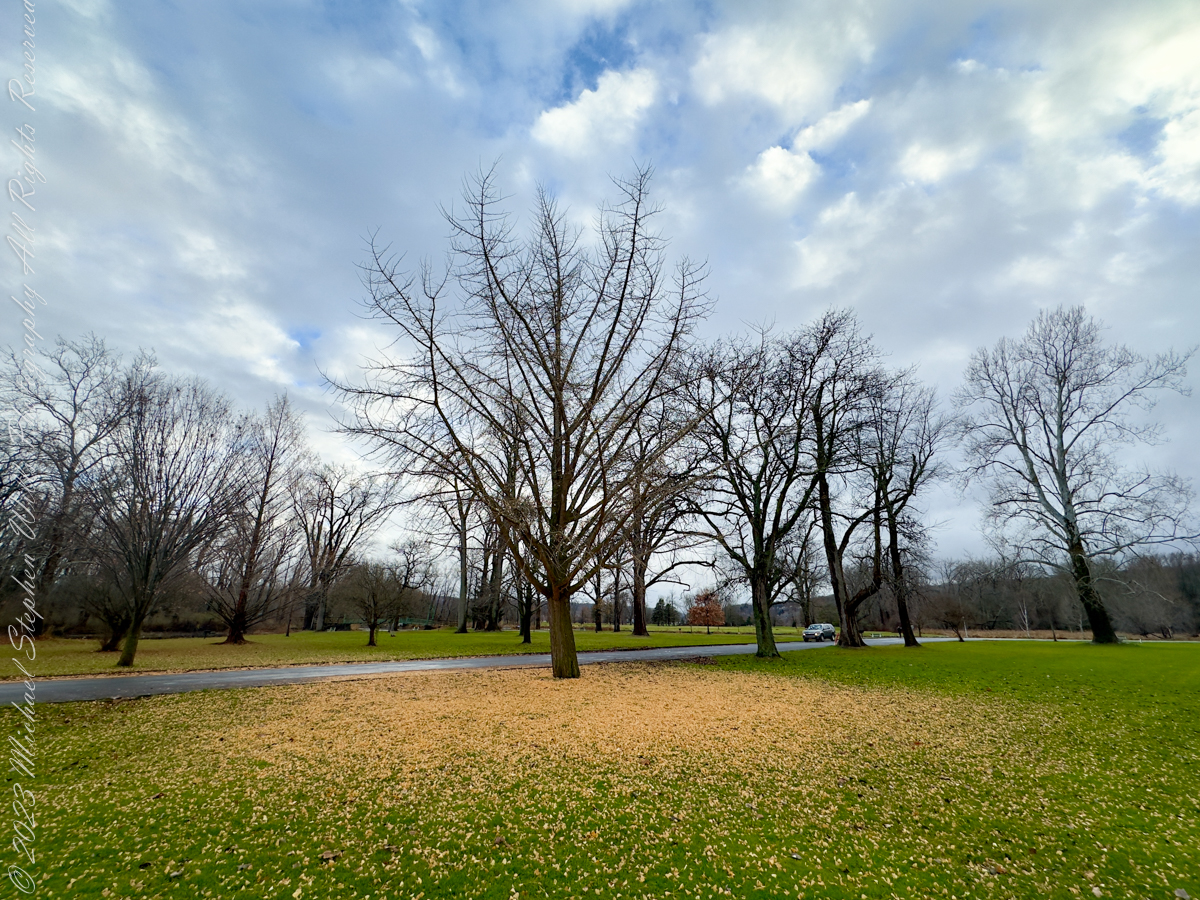
Stewart Park, Ithaca, New York

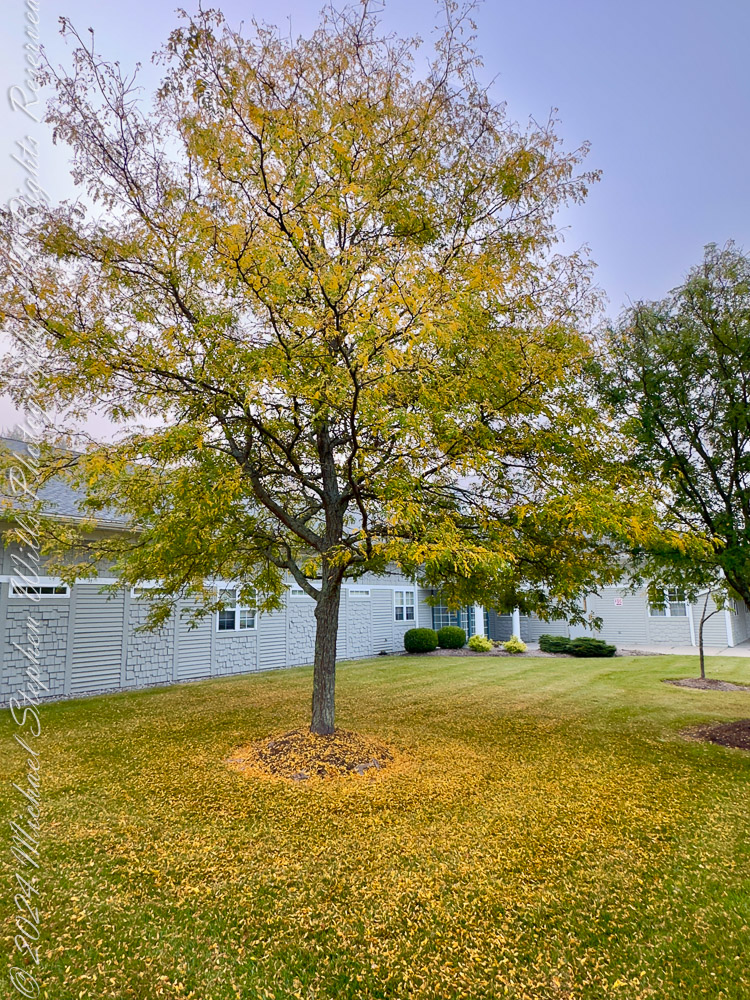
The second tree presents a different story, yet one equally mesmerizing. Its leaves, still clinging in part to the branches, form a looser ring at the base. The distribution is uneven, hinting at prevailing winds or the sheltering influence of nearby buildings. But even in this asymmetry, I see fractals—the self-similar patterns that repeat at different scales throughout nature. Look closely, and you’ll notice clusters of leaves mimicking the broader structure of the canopy above. It’s as if the tree’s essence is echoed in the ground below, a reminder of how deeply interconnected every part of a system can be.
Robinia pseudoacacia, commonly known as the black locust

These patterns invite reflection on the mathematical principles governing our world. Fibonacci sequences, golden ratios, and fractals—abstract concepts are not confined to textbooks. They are etched into the fabric of existence, visible in the spiral of a sunflower’s seeds, the curve of a nautilus shell, and the fall of leaves beneath a tree. Even the chaos of autumn is underpinned by order, a dance choreographed by countless variables: the angle of the branches, the strength of the wind, the moisture in the air.

I find myself wondering about the unseen forces at play. How many leaves fell straight down, obeying only gravity? How many were carried aloft by a breeze before settling farther afield? Could we model these patterns with algorithms, tracing the arc of each leaf’s descent? Would the data reveal a perfect equation, or would it remind us that some mysteries resist full comprehension?

As I stand here, I feel a deep gratitude for these natural equations. They ground me in the present moment while also connecting me to the infinite. The pattern of leaf fall is a reminder of life’s balance: chaos and order, randomness and structure, fleeting moments and timeless principles. The trees, now shedding their golden crowns, invite me to pause, observe, and marvel at the beautiful mathematics of autumn.


Enter your email to receive notification of future postings. I will not sell or share your email address.

Celebrating God’s Love This Christmas

Merry Christmas

As the year draws to a close, our home is filled with the glow of lights, the shimmer of cherished ornaments, and the spirit of the season. Each decoration holds a memory, from angels watching over us to the Nativity scene that reminds us of the humble birth of Christ, our Savior.

This Christmas, we celebrate the greatest gift of all: God’s love made manifest through the birth of Jesus Christ. May the peace of His presence fill your hearts and homes, bringing comfort, joy, and hope that transcends all seasons.

As we gather with loved ones, let us remember the message of the angels: “Glory to God in the highest, and on earth peace, goodwill toward men.”

From our family to yours, may this holy season be a time of deep gratitude, boundless love, and renewed faith in the light that shines in the darkness.

Enter your email to receive notification of future postings. I will not sell or share your email address.

The Enchantment of Autumn Over Cascadilla Gorge

Join me for a serene autumn walk in Ithaca, appreciating nature’s beauty, impermanence, and the calming rhythms of life.

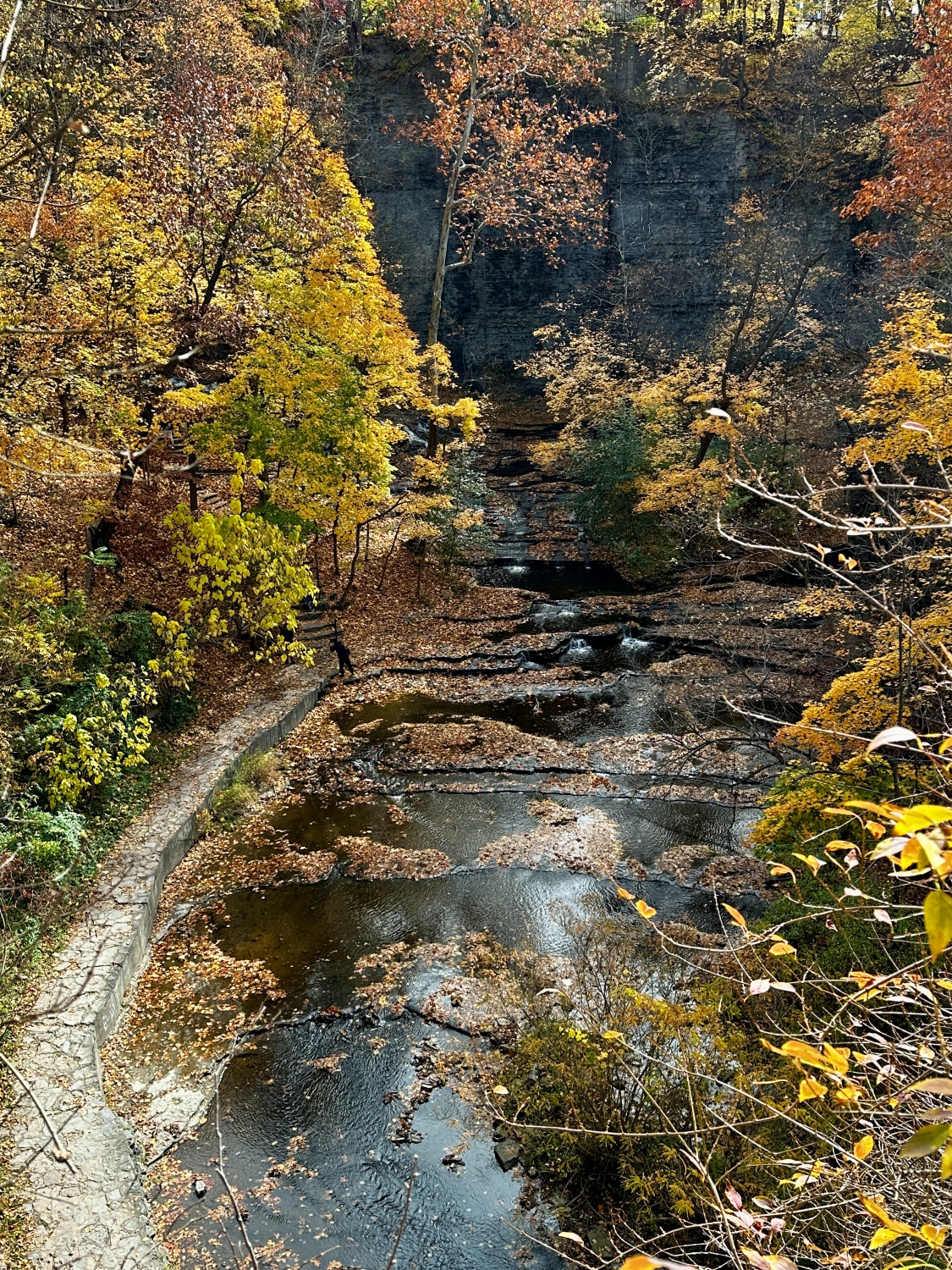
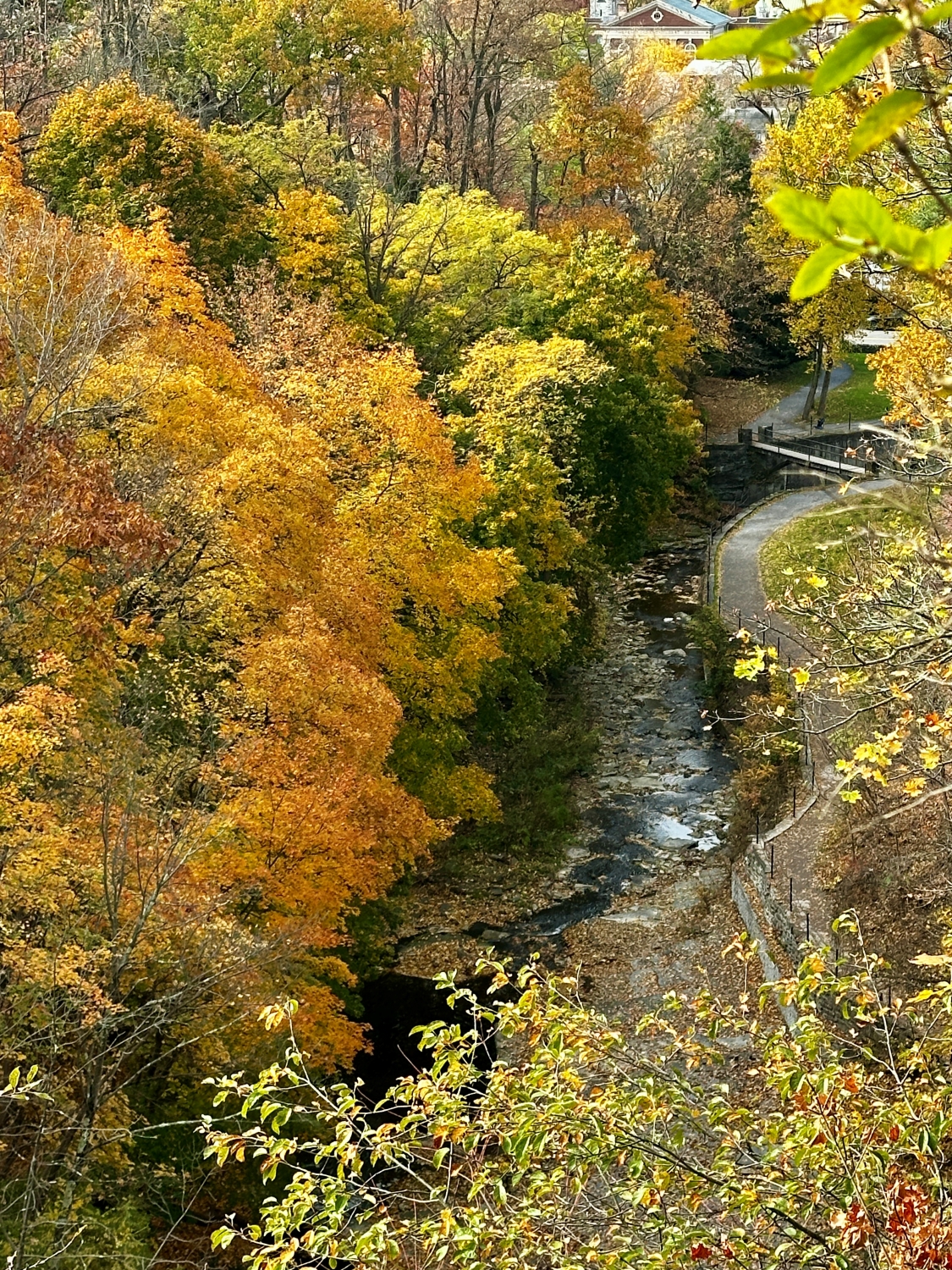
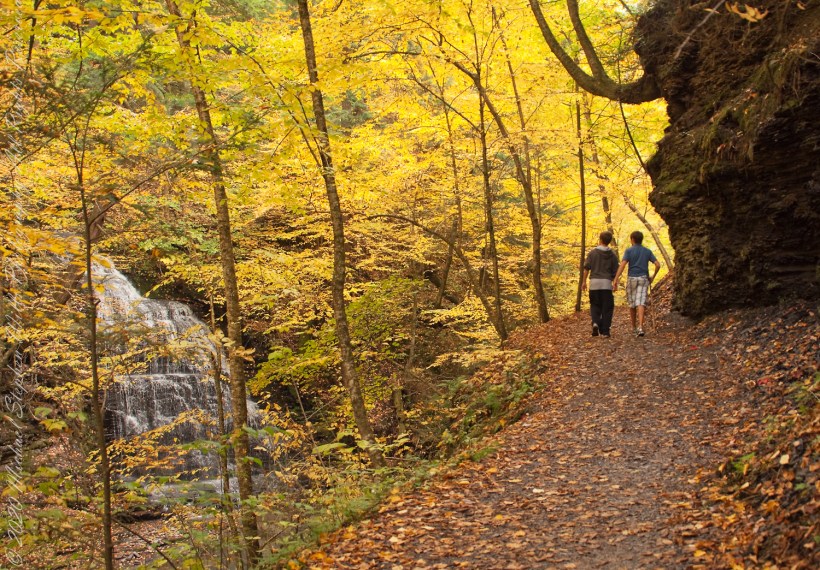
A few days before Halloween, I found myself on the rim of Cascadilla Gorge, Ithaca’s autumnal crown jewel. The air had that crisp October quality, each breath carrying a hint of the colder days to come yet still tempered by the lingering warmth of early fall. A breeze carried a scent of damp earth and decaying leaves, a rich, organic aroma that signaled the turning of the seasons. The path beneath my feet was a tapestry of fallen leaves—russet, gold, and burnt orange—a natural carpet leading me through a world suspended between vibrancy and rest.

Golden Canopy over Buffalo Street Sidewalk

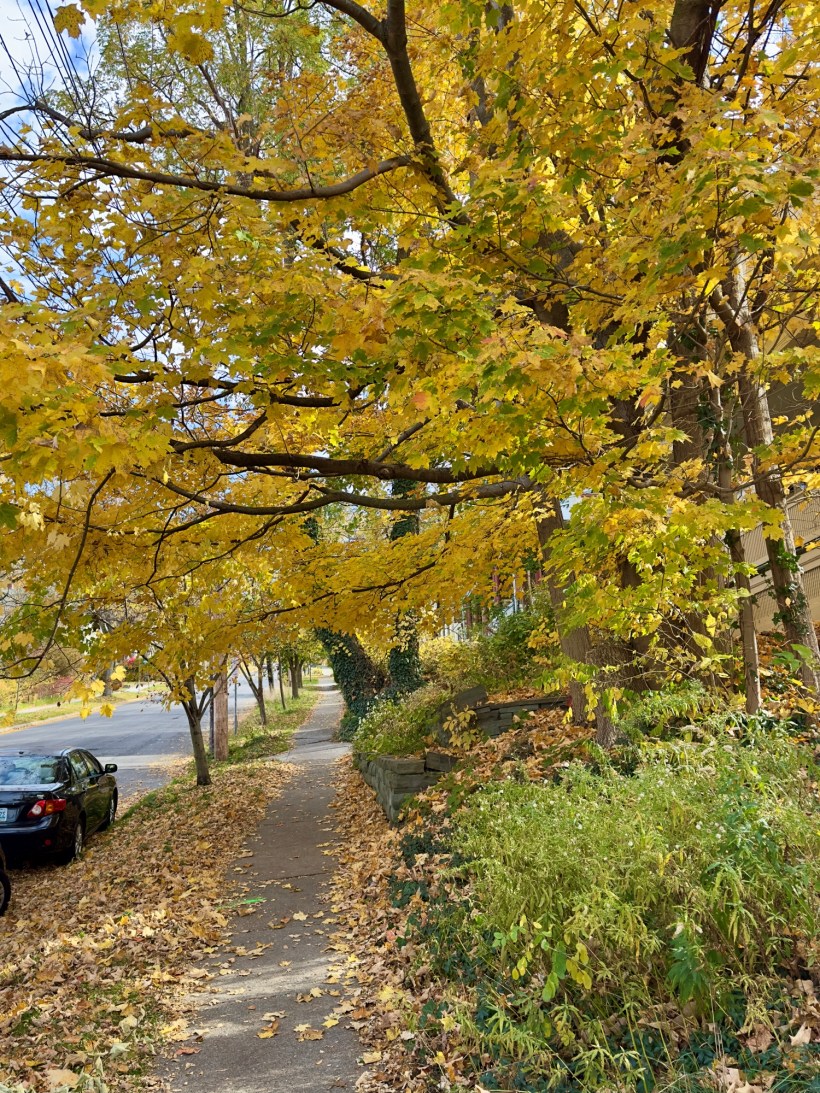
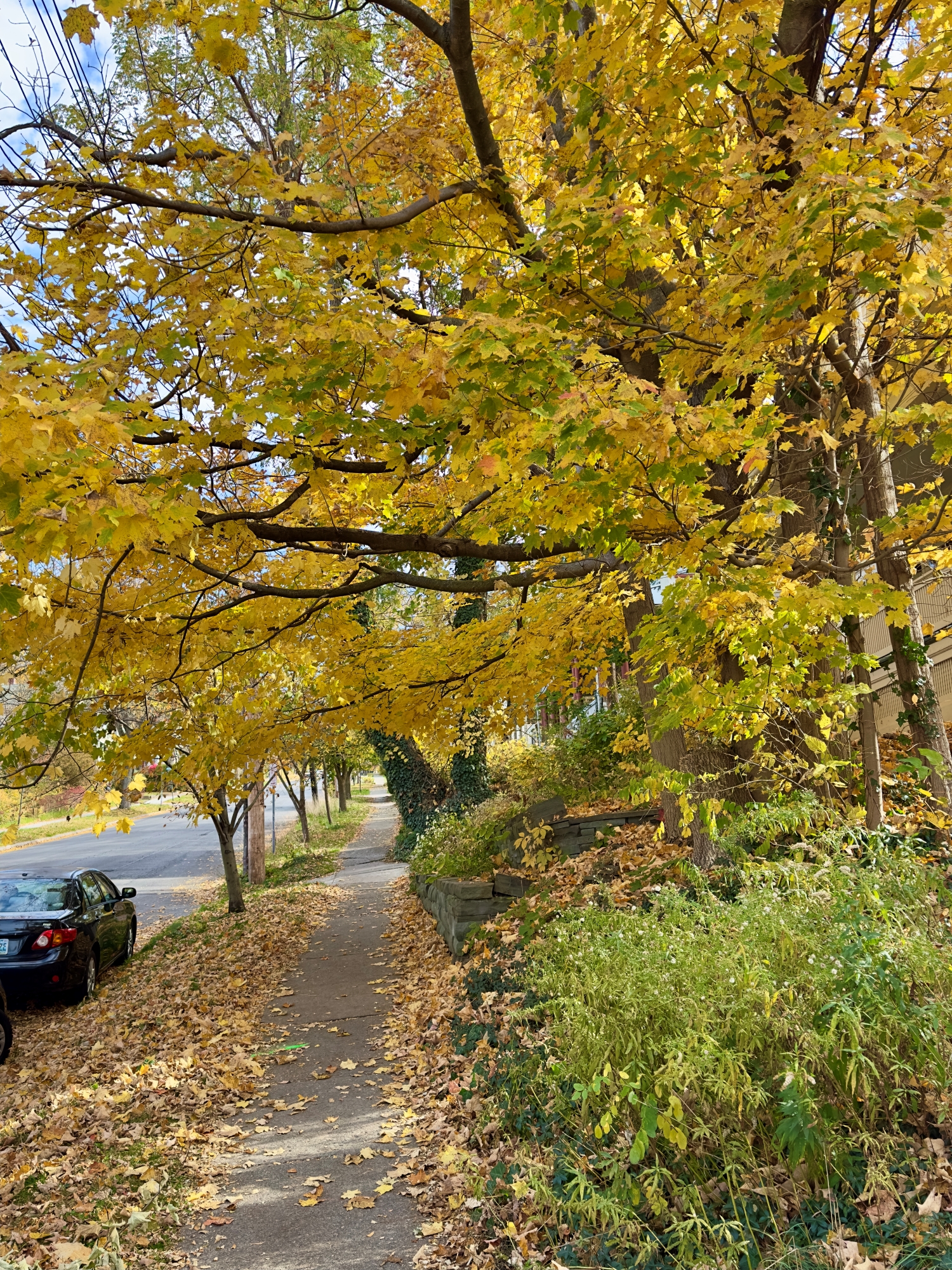
Continuing up Buffalo Street, I marveled at the trees, their branches thick with yellow and gold leaves, creating a canopy above. The leaves shivered with every gust, whispering the ancient secrets of the forest. The air was infused with the sweet, woody fragrance of maple and oak, mingling with the faint scent of chimney smoke from nearby houses. The sunlight filtered through, casting a dappled pattern on the sidewalk, a fleeting mosaic as the leaves danced in the wind. A sense of impermanence struck me; soon, these leaves would be gone, leaving bare branches silhouetted against a winter sky.

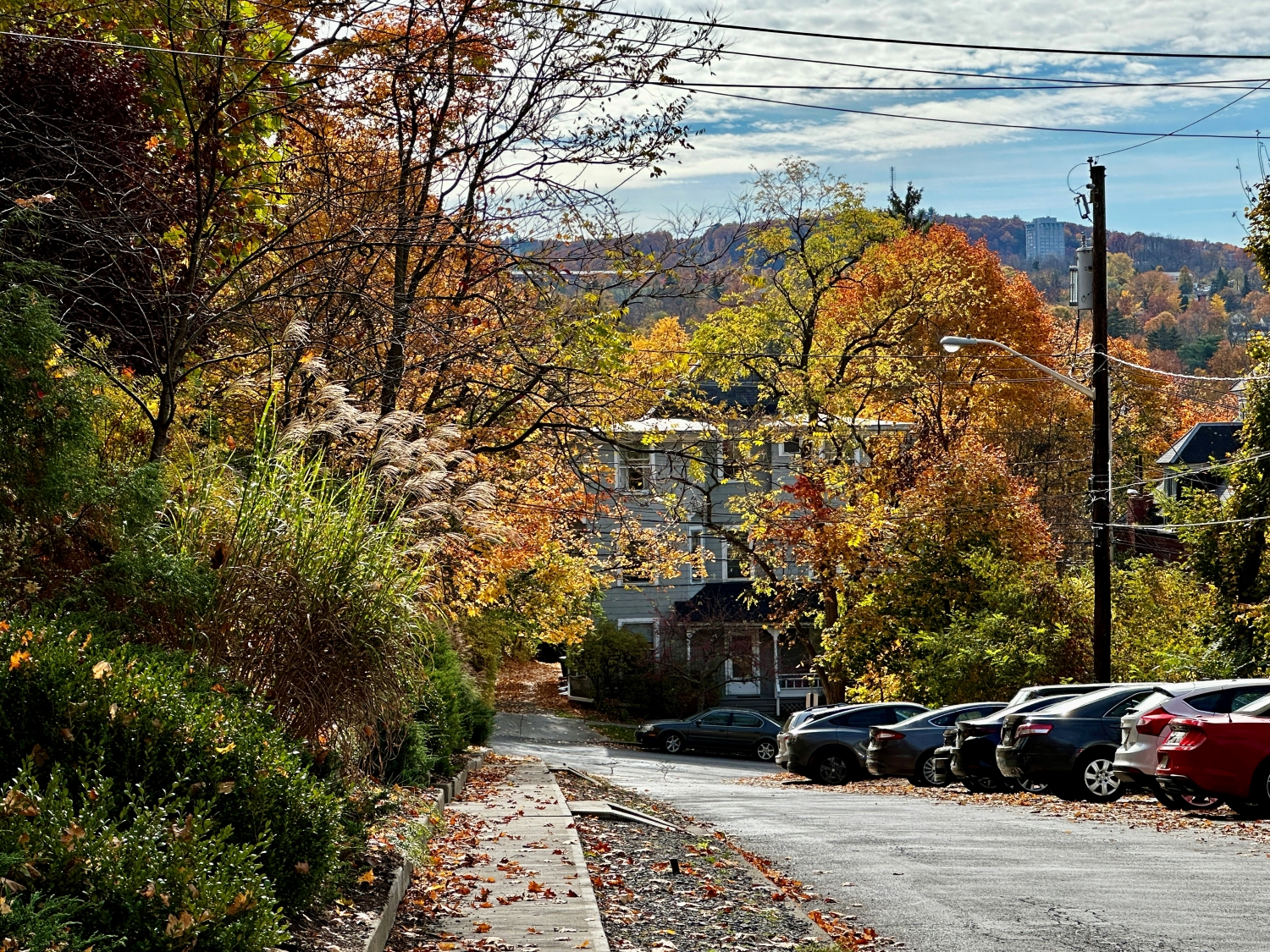
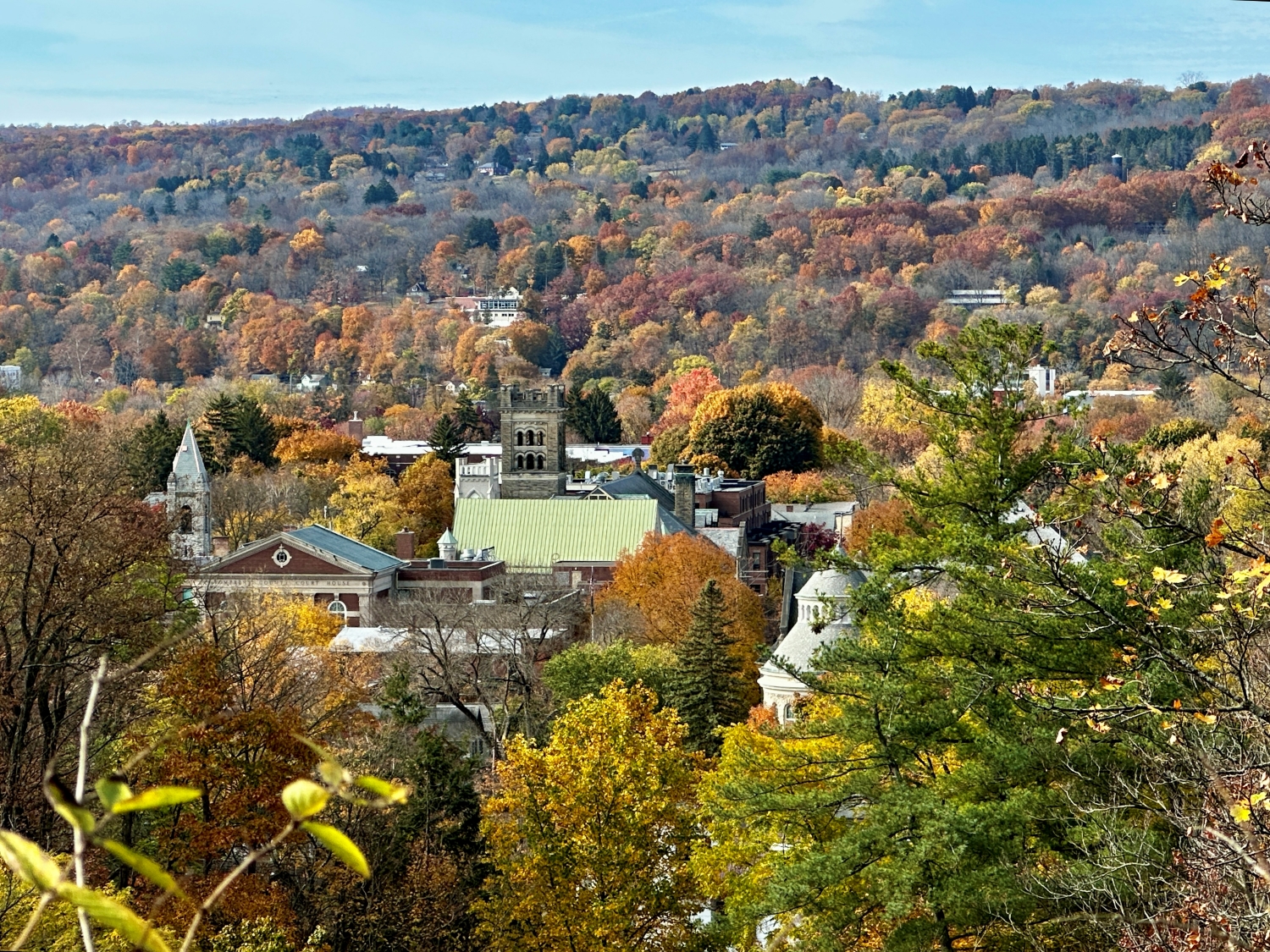
Scene from Dewitt Place toward South Hill and Ithaca College

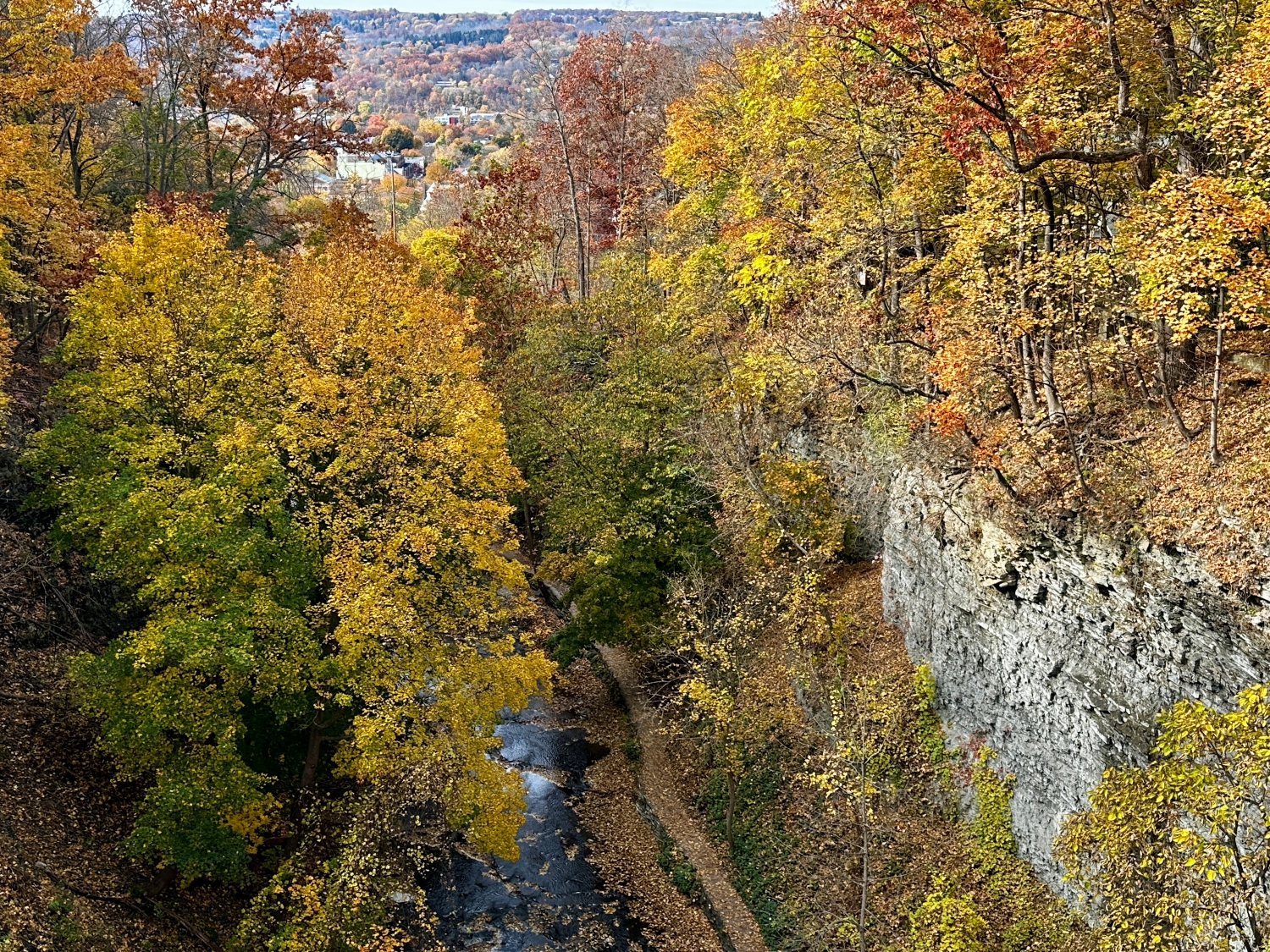
Crossing the Stewart Avenue bridge, the Cascadilla Gorge came into view, a steep wall of stratified rock layers standing guard over the gently flowing stream below. The contrast between stone and foliage was breathtaking—the hard, unyielding rock juxtaposed with the softness of leaves in full autumnal bloom. The earthy scent of wet stone mixed with the crisp aroma of the flowing water, creating a sensory tapestry unique to the gorge. The colors seemed to intensify against the gray and brown of the cliff, each leaf like a brushstroke on nature’s canvas, celebrating the season’s final flourish before surrendering to winter.

Below footpath along the gorge rim, the creek wound through, its banks littered with leaves that had completed their journey from branch to earth. They floated on the water’s surface, spinning gently in the current as though reluctant to leave this last dance. The sound of the water was a steady undercurrent, soothing and rhythmic, as it tumbled over stones and carved its way through the gorge. I paused to watch, entranced by the way water and rock, ephemeral and eternal, seemed to coexist in a kind of harmony.

I stopped at a lookout point and surveyed the town sprawled out below, nestled amidst the fiery colors of the surrounding hills. The architecture of Ithaca’s buildings peeked through the trees, each roof and spire framed by the season’s palette. This was a town embraced by nature; its rhythm dictated as much by the seasons as by human hands. The sight stirred a sense of gratitude within me; here was a place that reminded you to slow down and observe, to notice the subtle shifts in light, in color, in the way a single gust of wind could change a landscape.

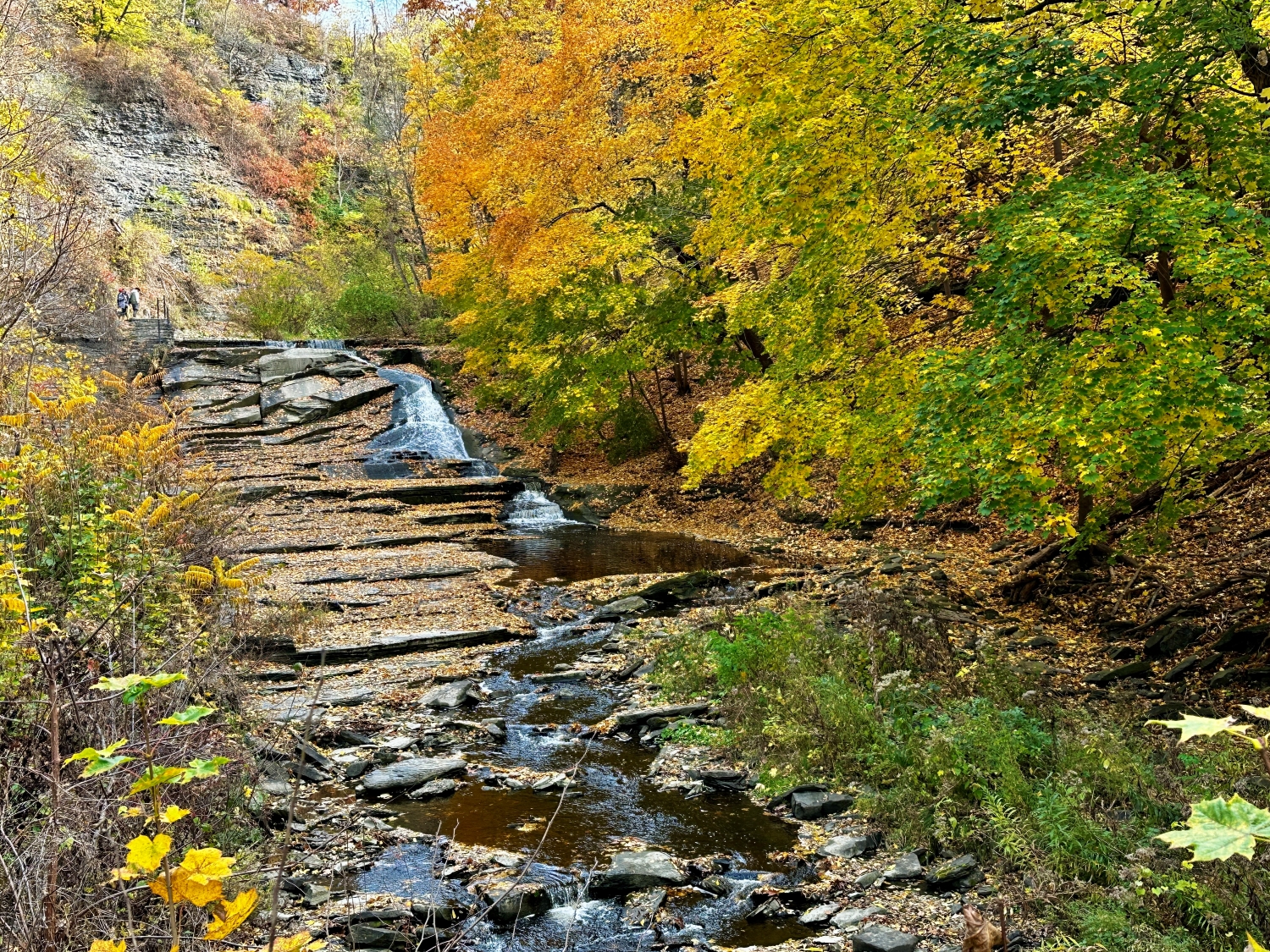
I continued along the rim, passing a small waterfall that spilled over the rocks with a quiet insistence. The water had carved smooth pathways in the stone, evidence of its long journey and persistent power. The sunlight hit the spray just right, casting a fleeting rainbow that shimmered and then disappeared as I moved. I felt a sense of companionship with the water—both of us moving forward, shaped by the paths we traverse, yet always adapting to whatever lay ahead.

The last part of the trail led me through a dense thicket of trees, their branches hanging low, forming a natural archway. The air was heavy with the musky scent of fallen leaves and the spicy aroma of pine needles underfoot. Here, the light was softer, muted by the thick canopy overhead. The quietness enveloped me, broken only by the occasional rustle of a squirrel in the leaves or the distant caw of a crow. It was the kind of silence that feels sacred, where each sound, no matter how small, becomes profound.

Entering Cascadilla Gorge from Linn Street

Emerging from the shaded path, I took one last look back at the gorge. The scene was both familiar and new—a blend of natural beauty and the nostalgia of seasons past. I felt a sense of peace, grounded by the cycles of the earth, by the ebb and flow of life around me. In this moment, on the brink of Halloween, the world felt both hauntingly beautiful and reassuringly steadfast, a reminder that even as the leaves fall and the days grow shorter, there is a promise of renewal in the quiet persistence of nature.

Enter your email to receive notification of future postings. I will not sell or share your email address.

A Glimpse into Steamboat Landing, Ithaca, New York

Discover the enchanting beauty of Steamboat Landing in Ithaca, New York. From the quiet winter majesty to the vibrant warmth of spring, this historical waterfront is a testament to the city’s rich past and evolving present.


Historical Significance and Transformation


Steamboat Landing in Ithaca, New York, is steeped in historical significance, serving as a testament to the city’s rich past and its evolving present. At the dawn of the 20th century, it was a bustling hub where steamboats carried passengers and freight, linking Ithaca to an ever-growing nation. These vessels were vital for the development of commerce, aiding travelers as they embarked and disembarked on their journeys that continued by stagecoach or later, by train.

In 1790, this spot marked the beginnings of commerce in the area, with the establishment of Ithaca’s first store. Over the years, Steamboat Landing has transformed from a pivotal commerce point to a recreational area, housing Ithaca’s Farmers Market—a vibrant hub that mirrors the liveliness of its heyday.

The Evolving Landscape


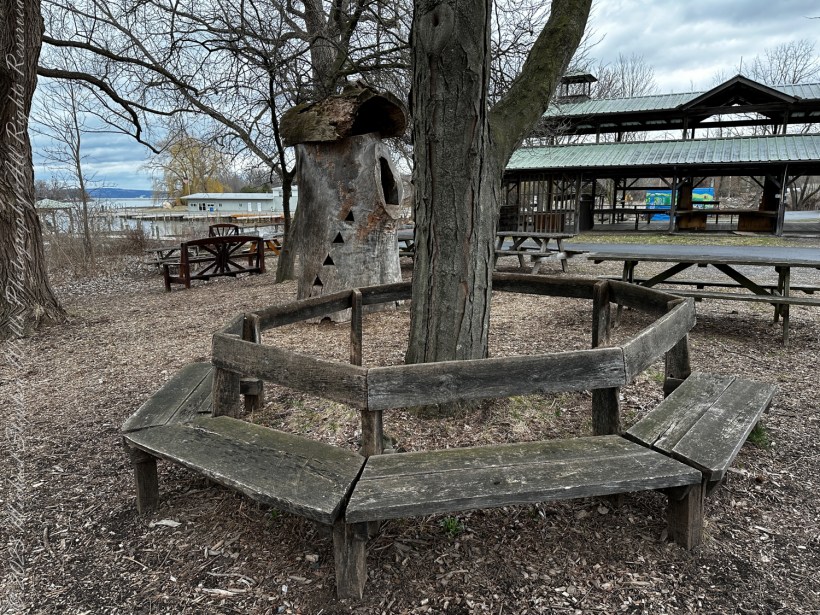
Today, Steamboat Landing is a place of gathering and serenity. My photographs showcase a tranquil setting moving through winter. In one scene, the rustic benches encircle a barren tree, standing as silent guardians of the land. It’s a still image, almost reminiscent of a painting, where the leafless trees stand vigil over the quiet benches.

A circular bench that has seen better days, a hollowed out tree trunk repurposed as a children’s playgound house, picnic benches and, in background, a portion of the Farmer’s Market pavilion, to the right is Johnson Boatyard, Cayuga Inlet and lake. This is the Steamboat Landing, historically the southern port on Cayuga Lake. Cayuga Waterfront Trail, Ithaca, Tompkins County, Finger Lakes Region, New York State.

Switching seasons, we see the docks adorned with festive wreaths, injecting life and celebration into the scenery. The bright red ribbons stand out against the crisp blue of the water and the sky, suggesting a community that embraces tradition and the joy of the moment.

Connection with Nature and Community


The pictures depict how the landing is woven into the natural tapestry of the area. It is a place where one can sit and watch the placid waters of Cayuga Lake or stroll along the docks, feeling the crisp air against their skin. The images of the clear skies, the open waters, and the flight of birds in the distance are a subtle reminder of nature’s continuous presence.

Steamboad Landing on the Cayuga Waterfront Trail, Farmers Market, Ithaca, Finger Lakes Region, New York State

The waterfront trail exemplifies the community’s efforts to merge history with modernity, providing a space where people can connect with the environment and each other. The docks, once a stage for industrial exchange, now serve as a peaceful retreat, hinting at the deep-seated human desire for connection—not only to each other but also to the very essence of the environment we inhabit.

Seasonal Beauty and Reflection


The change in seasons at Steamboat Landing brings a unique beauty, which the photographs showcase poignantly. From the barren coldness of winter to the lush warmth of spring, each season imbues the landing with a distinct character. The winter images reveal a quiet majesty, with the bare branches and gray skies reflecting the introspective nature of the season. The springtime shots, however, burst with promise and vitality, as greenery begins to cloak the landscape and the water shimmers under the strengthening sun.

Enduring Legacy and Future Prospects


Steamboat Landing’s legacy as a historical transport hub has set the stage for its future as a cherished community locale. The images and historical texts paint a picture of a place that has embraced its past while looking forward to a vibrant and inclusive future. It is a locale that pays homage to its roots through the Farmers Market and other community events, ensuring that the spirit of the old steamboats continues to thrive in the hearts of Ithacans.

In conclusion, Steamboat Landing is a geographic location and a chronicle of Ithaca’s journey through time. Through its transformation, it has become a place where history breathes, nature speaks, and the community finds its heartbeat. It stands as a beacon of heritage, recreation, and beauty—a corner of the world where past and present dance together in harmony.

Copyright 2024 Michael Stephen Wills All Rights Reserved

Winterberry Warmth

Here we discover and learn to admire the winterberry shrub, or Ilex verticillata, during a frosty February morning. Its crimson berries, which symbolize hope, sustenance, and life’s enduring cycle, are a stark contrast to the pall of winter.

Continue reading “Winterberry Warmth”

Ephemeral Waterfall

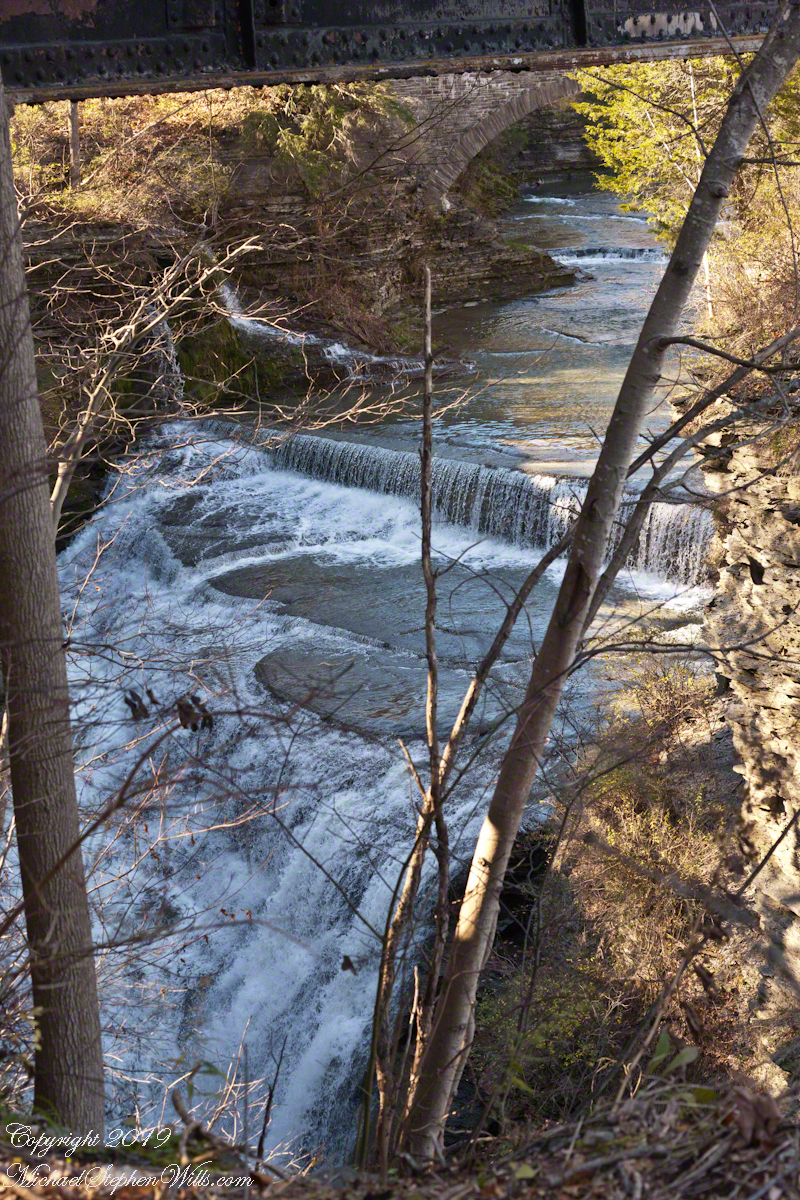
Fillmore Glen State Park in Moravia, New York, offers a changing landscape that serves as a living canvas, with the ironically named Dry Creek feeding its lush greenery. The ebb and flow of water from the creek creates a dynamic setting. Seasons dramatically alter the scenery, from tranquil springs to vibrantly colored autumns, beautifully captured through fine art photography.

Continue reading “Ephemeral Waterfall”

Thayer Preserve: Autumn Still Life 5

Ithaca’s bedrock, formed 370 million years ago, deeply influences its landscape, neutralizes rainwater’s acidity, and carries a story of Earth’s resilience and transformation.

In Ithaca, New York, the story of the land is deeply rooted in its geology. Beneath the vibrant autumn leaves and along the path of Lick Creek lies a bedrock formed 370 million years ago. This ancient foundation, once the sediment of a vast inland sea, now forms the solid base upon which the city stands.

The bedrock here is a silent witness to Earth’s long history. Originating in the Devonian period, it marks a time when vast seas covered much of the Earth’s surface. Within these ancient waters, life flourished, leaving behind sediments that, over eons, transformed into the layered rock beneath Ithaca.

These layers are more than just historical records; they actively shape the landscape. The bedrock influences soil composition, affects plant growth, and directs the flow of streams. Lick Creek, with its clear waters, is one such stream that interacts intimately with this bedrock.

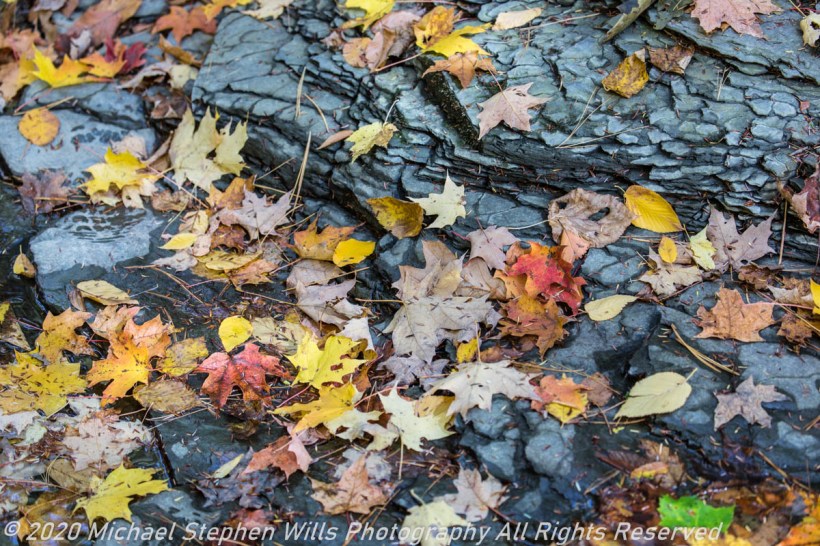
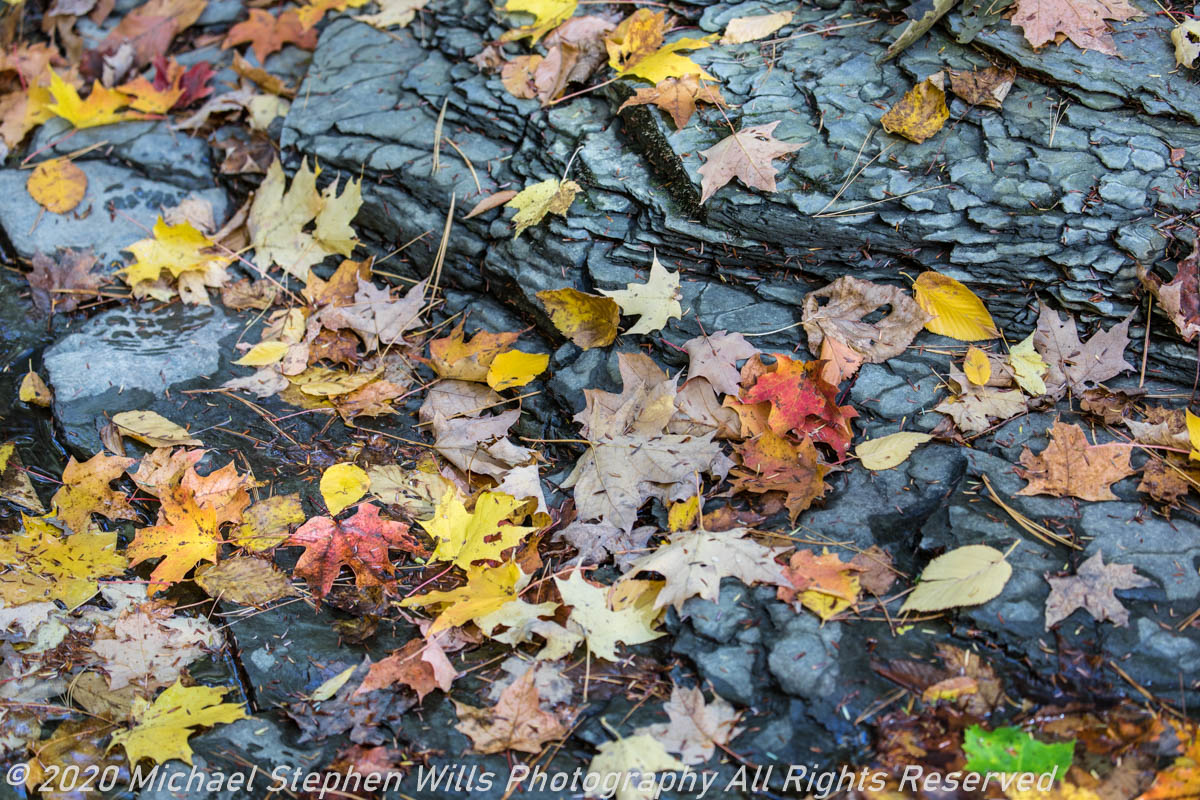
In autumn, the beauty of this interaction is vividly displayed. The red and yellow maple leaves create a striking contrast against the grey-blue backdrop of the bedrock, a blend of the vibrant present with the ancient past. These fallen leaves, over time, decompose and enrich the soil, continuing a cycle of life that this bedrock has supported for millions of years.

This bedrock also plays a crucial role in water chemistry. As acidic rainwater percolates through it, a remarkable transformation occurs. The bedrock naturally neutralizes the acidity of the rainwater. By the time the water emerges as streams, it is buffered to a neutral pH. This process is vital for maintaining the ecological balance of the area. The streams that flow out, including Lick Creek, support diverse ecosystems thanks to this natural filtration process.

Click photograph for larger view. Use combination keys to enlarge/reduce: Ctrl+ (Control / Plus) and Ctrl- (Control / Minus)

The neutral pH water is crucial for the flora and fauna of Ithaca. It sustains the forests, the wildlife, and the natural beauty that defines the region. This water, once acid rain, purified by the ancient bedrock, now nurtures life in its journey.

In Ithaca, the bedrock is a testament to the enduring nature of our planet. It reminds us of the continuous cycle of transformation that defines the Earth. The contrast of the autumn leaves against the bedrock is not just a scene of ephemeral beauty; it symbolizes the dynamic interplay between the living and the geological, between the present and the deep past.

The bedrock of Ithaca, with its ability to neutralize acidic water, highlights the interconnectedness of natural processes. It shows how the Earth self-regulates and sustains life in intricate ways. As the buffered, neutral pH water of Lick Creek flows over this bedrock, it carries with it the story of a planet that is constantly renewing and sustaining itself.

In this landscape, the past is not just a memory; it is an active participant in the present. The bedrock, the autumn leaves, and the flowing streams tell a story of resilience, continuity, and the beauty of nature’s balance. This is the legacy of Ithaca’s bedrock, a legacy of endurance, transformation, and life.

Click Me to view my photographs on Getty.

Copyright 2023 Michael Stephen Wills All Rights Reserved http://www.MichaelStephenWills.com