Iquique by Sea V

Join us on a mesmerizing journey as we approach Iquique, Chile by sea, capturing the stark beauty of the coastal landscape and exploring the fascinating history of the Atacama Desert and Humberstone’s ghostly remains.

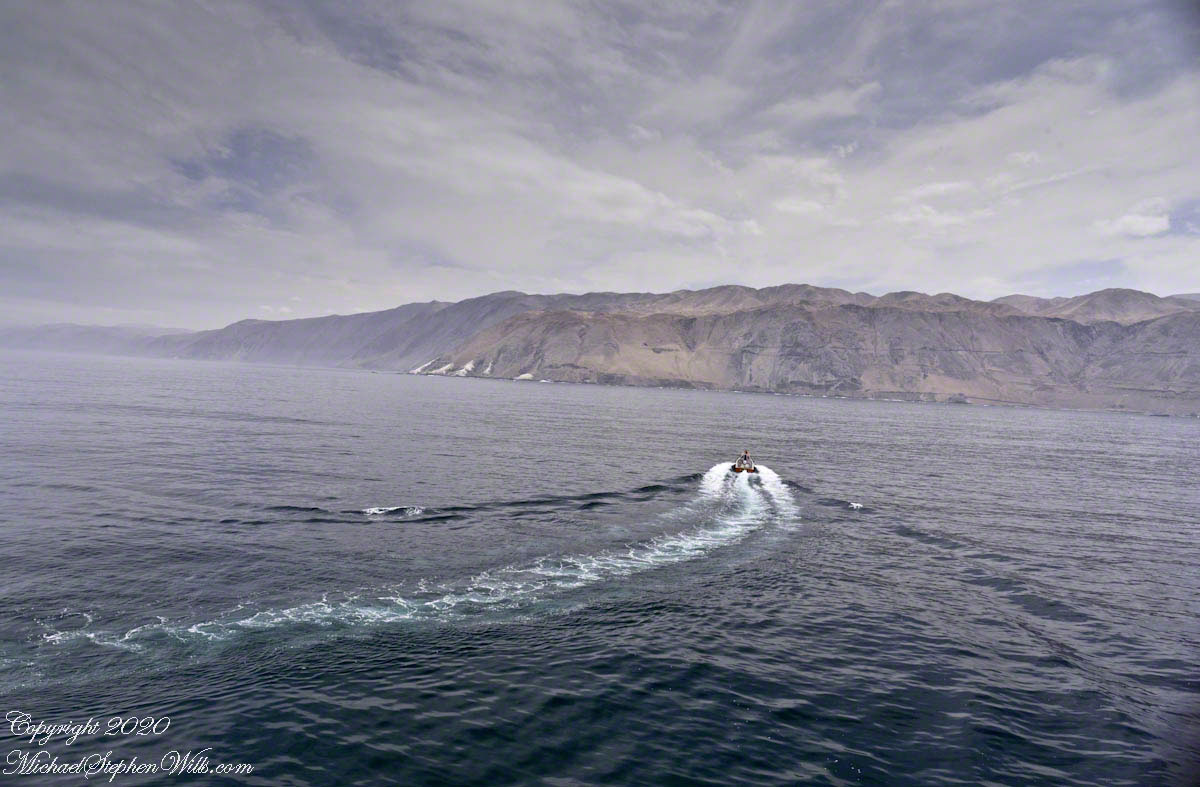
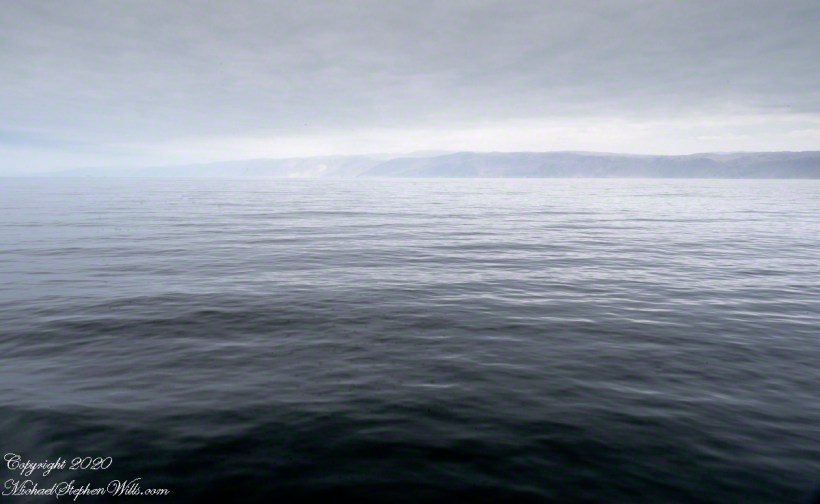
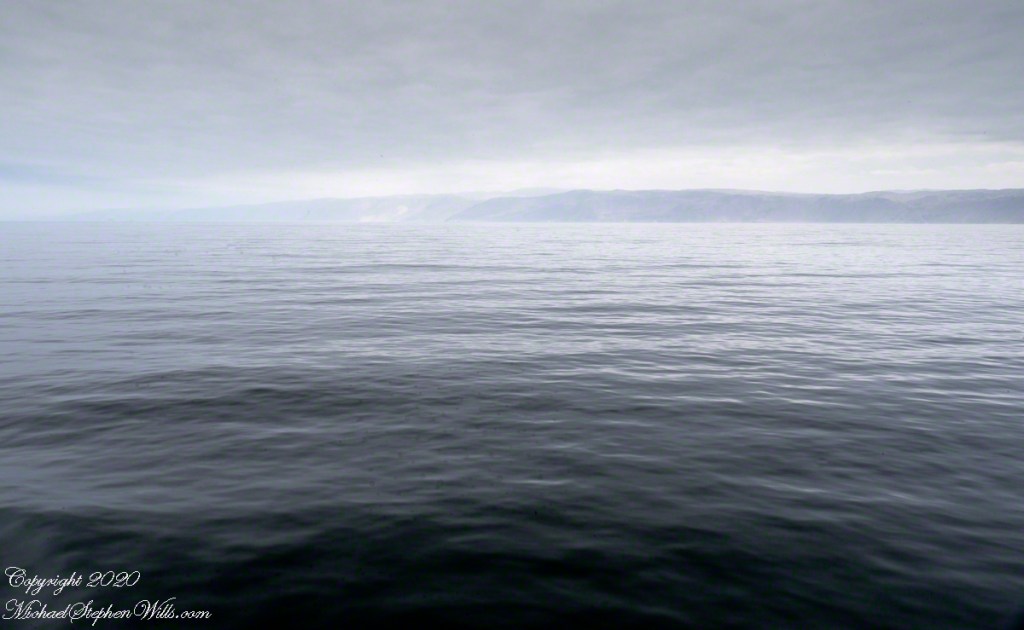
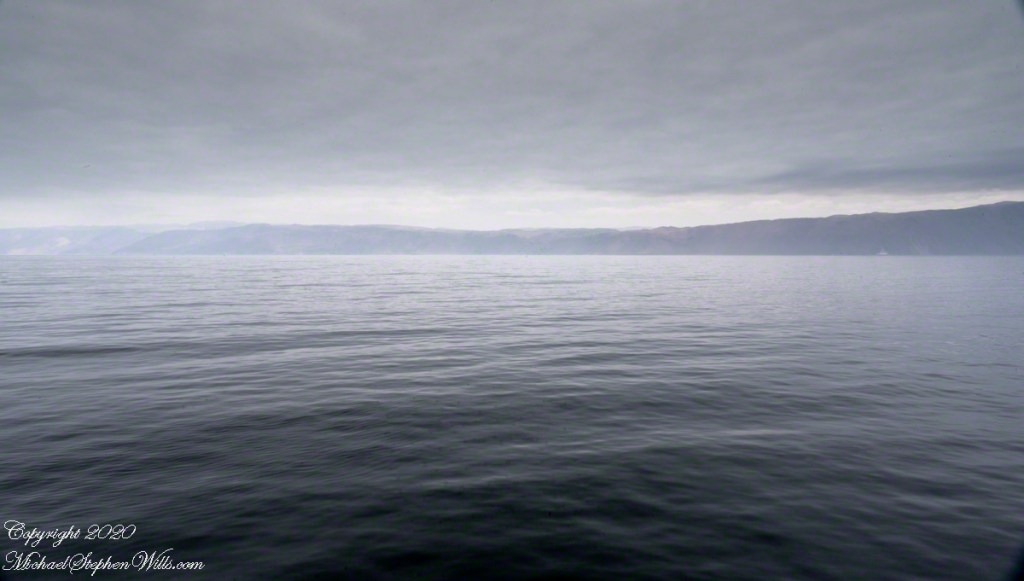
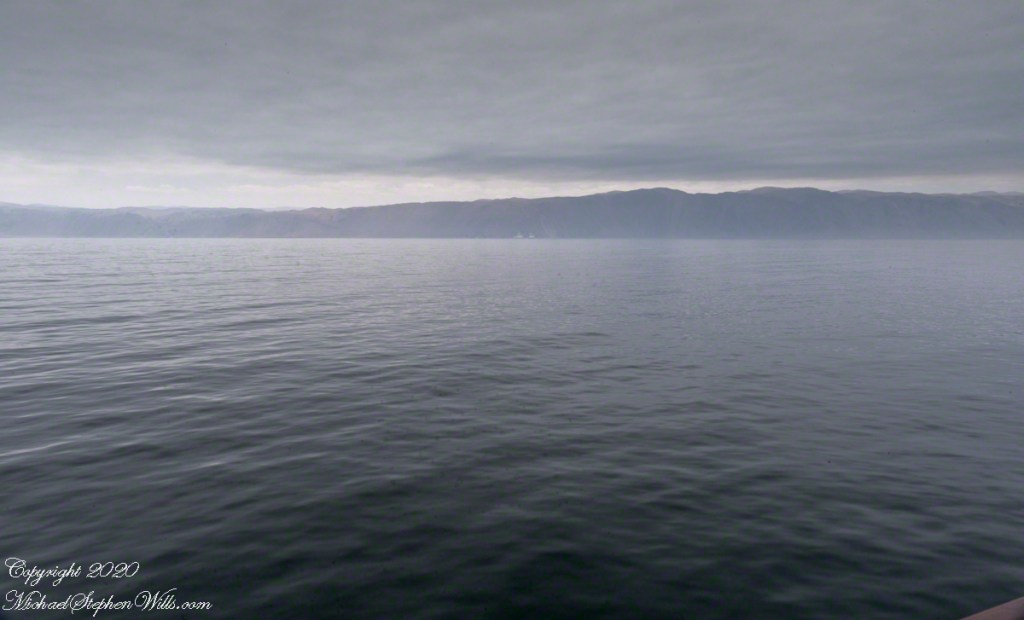
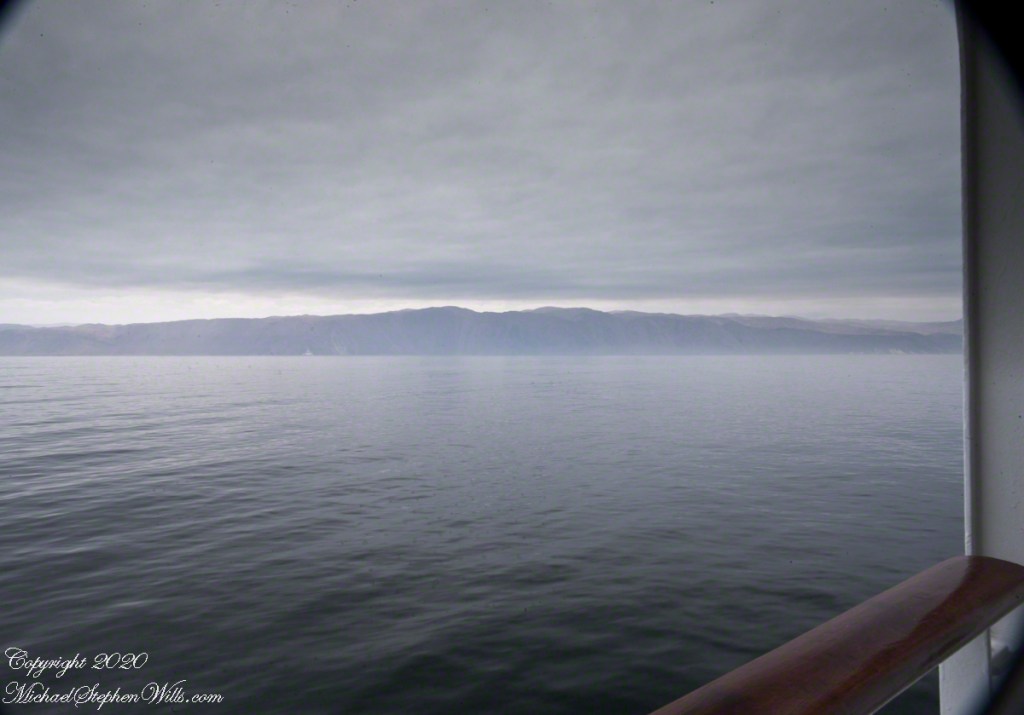
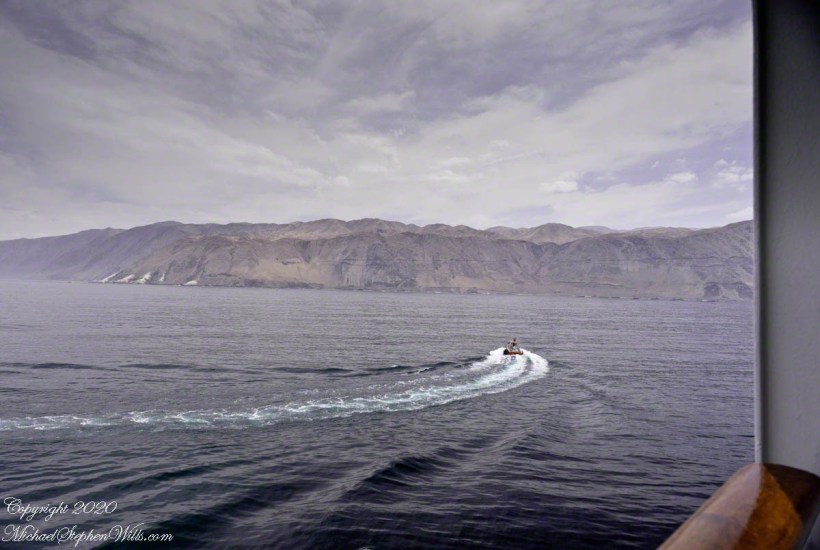
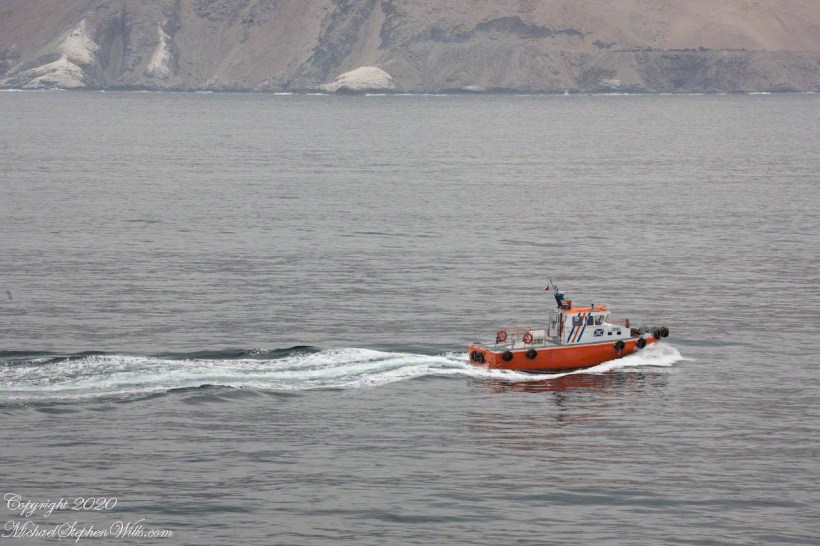
Thirty minutes have passed since Part I, and the pilot boat from Part IV is pulling away. The pilot has climbed the rope ladder up the side of the Regatta, and now the boat is pulling away, its job done for the moment.

Click any photograph for a larger view and use Ctrl-x to zoom in closer.
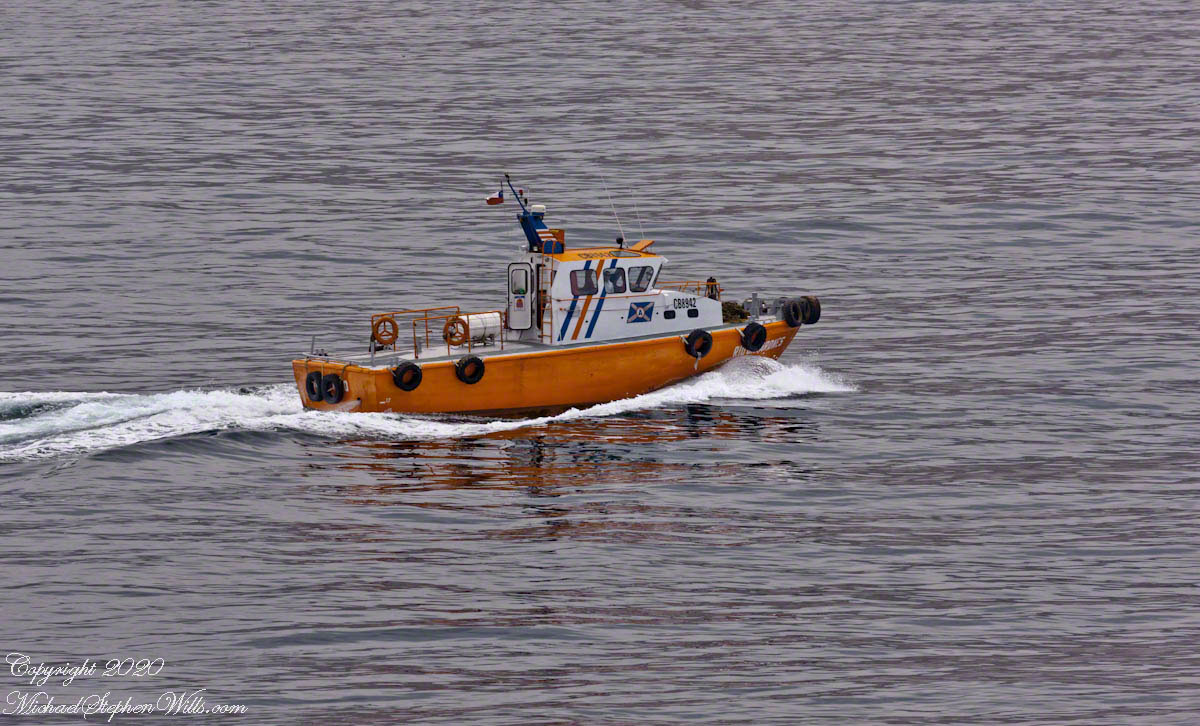
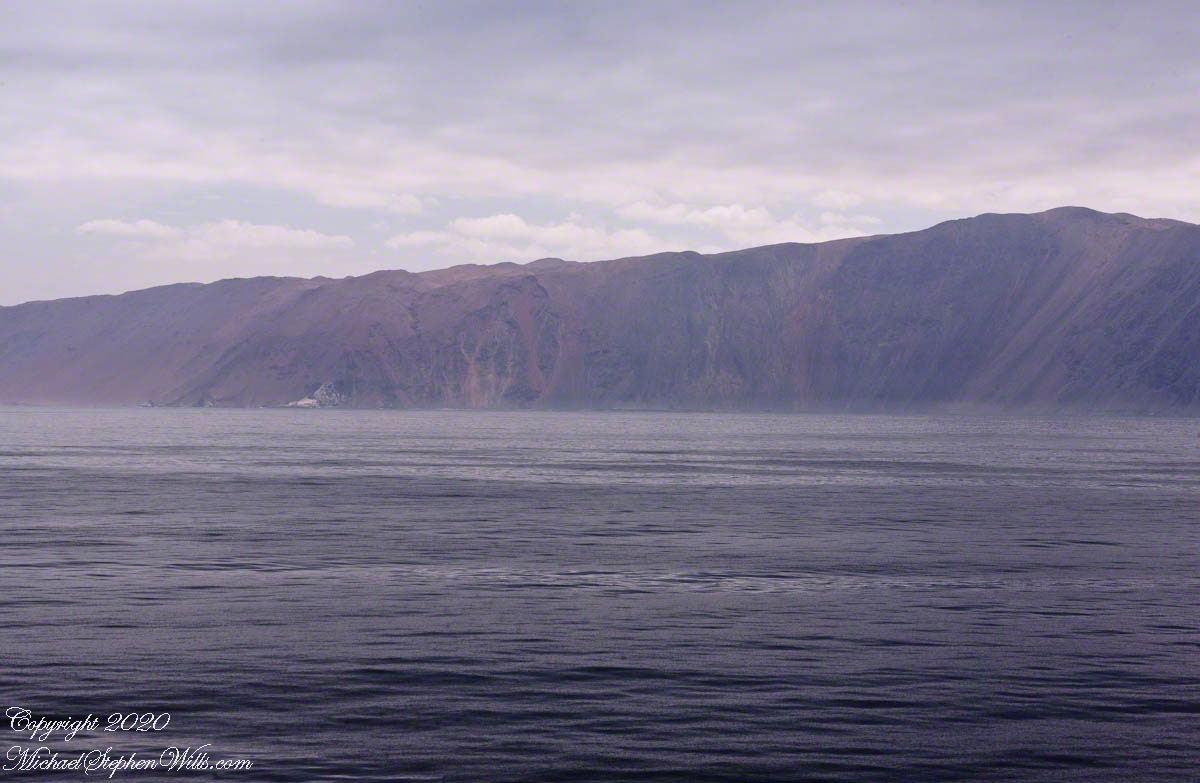
I use the wide angle (70mm) of the variable zoom lens to provide a panorama of the scene.
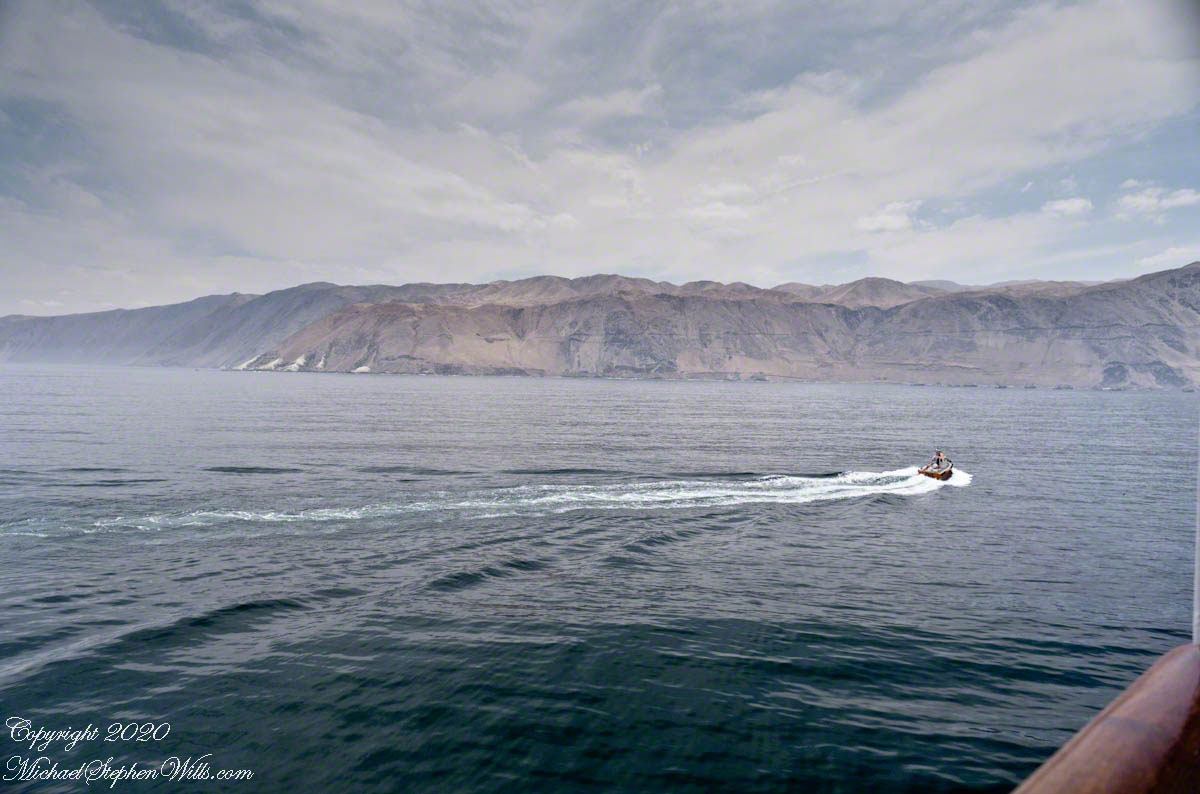
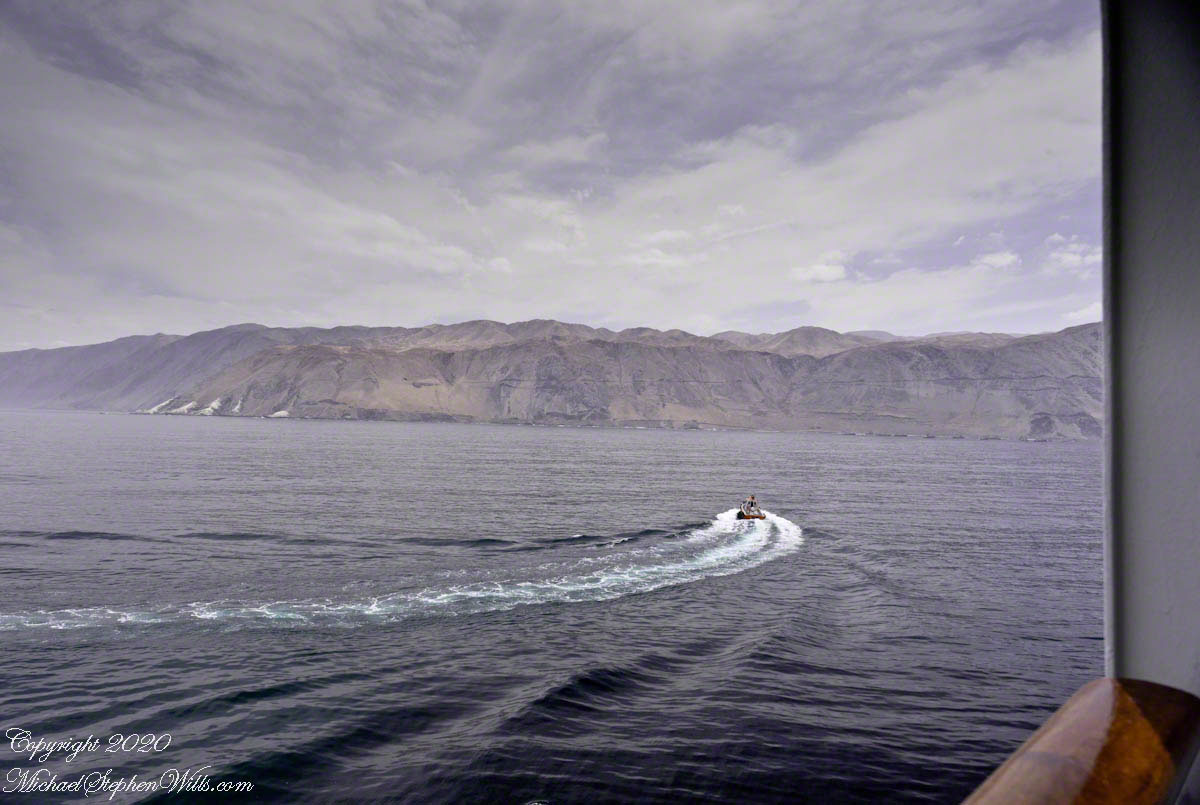
With the pilot at the helm, watched intently by the Regatta crew, the ship slowly makes its way towards the anchorage, just outside the bustling harbor. The precision and skill involved in navigating these waters are palpable. Every movement is deliberate, calculated to ensure our safe arrival.

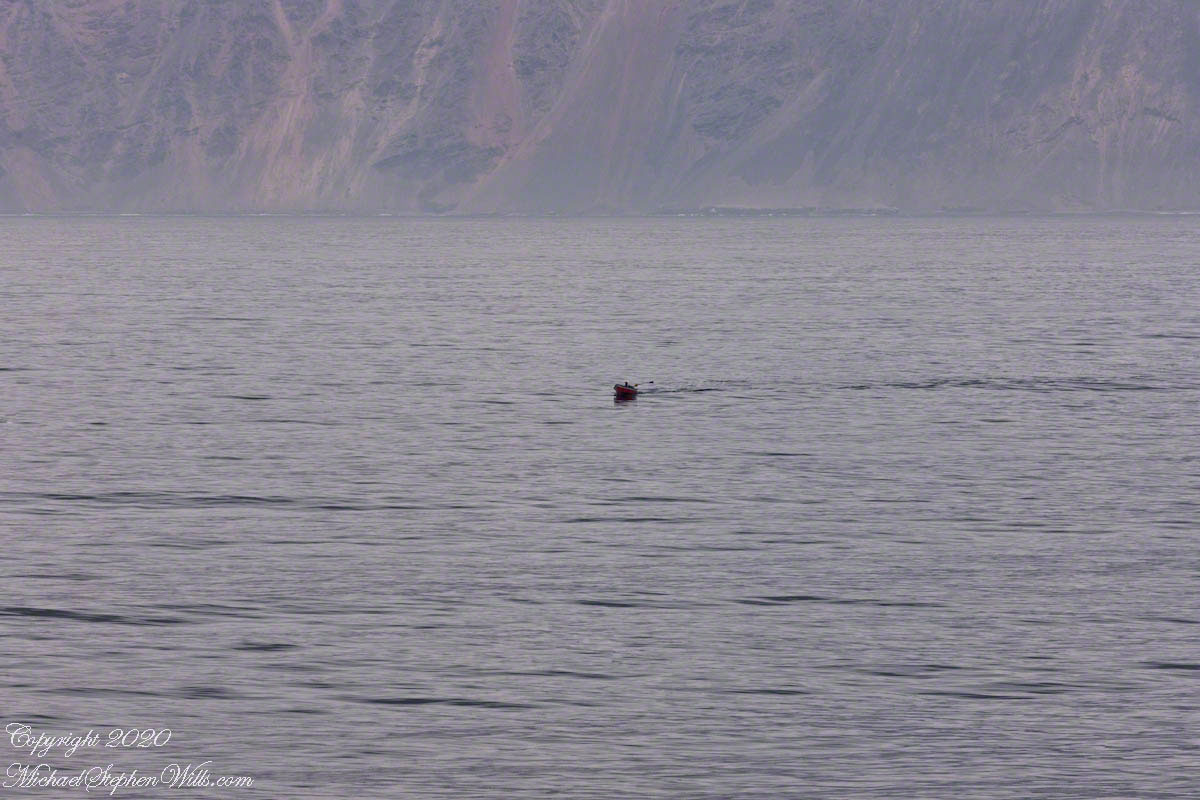
The ship will anchor outside the navigation lane, joining a cluster of fishing boats that seem to be both close yet worlds away. This juxtaposition of large cruise ships and smaller, hardworking fishing vessels highlights the diverse marine activity in these waters.
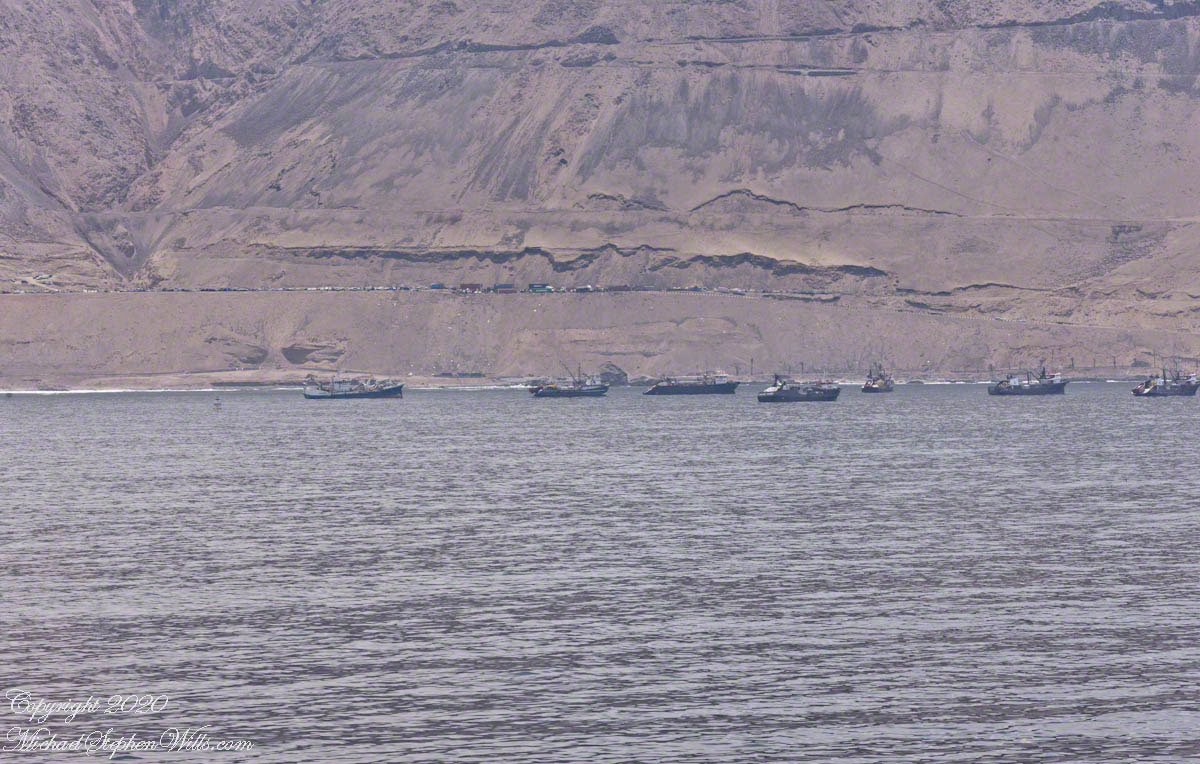
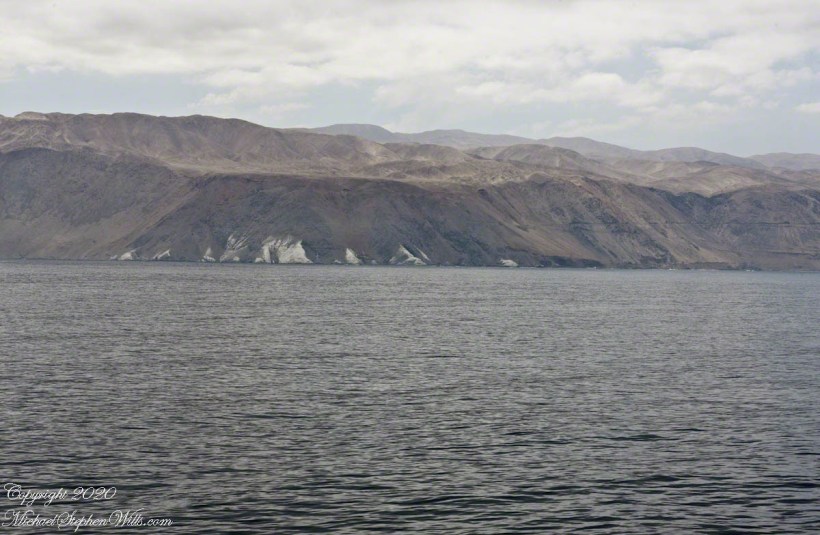
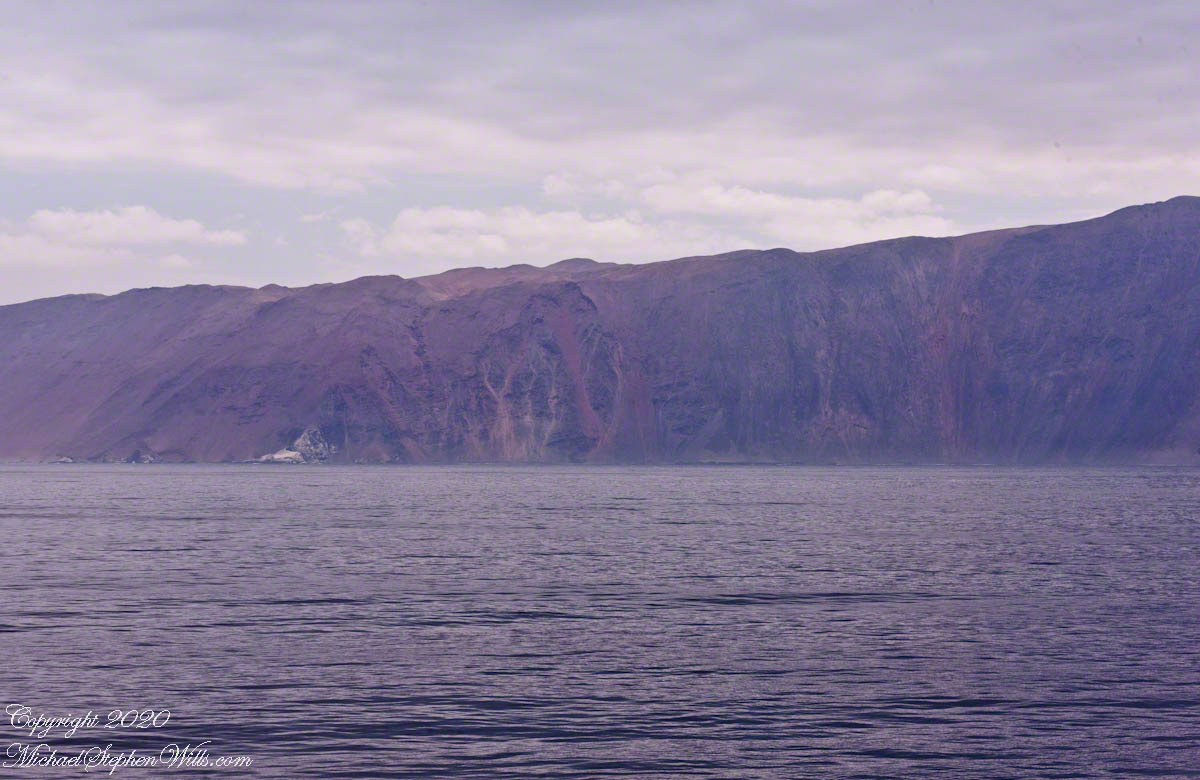
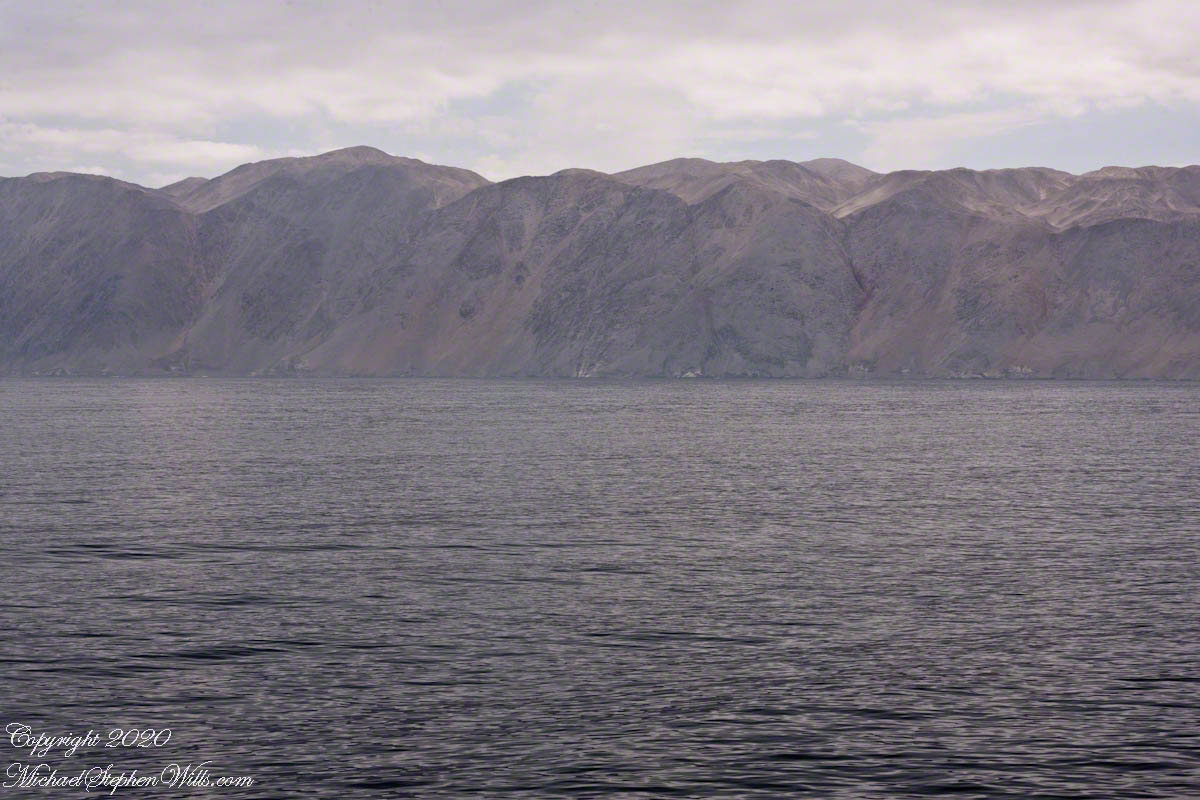
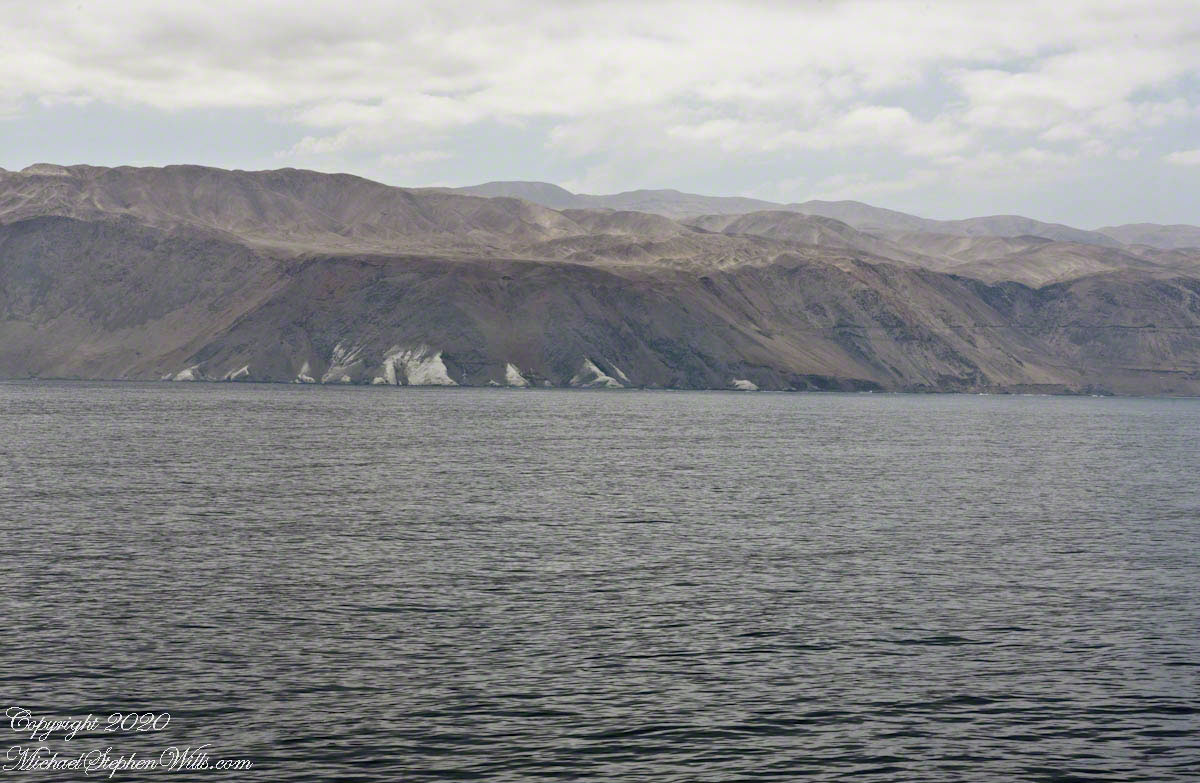
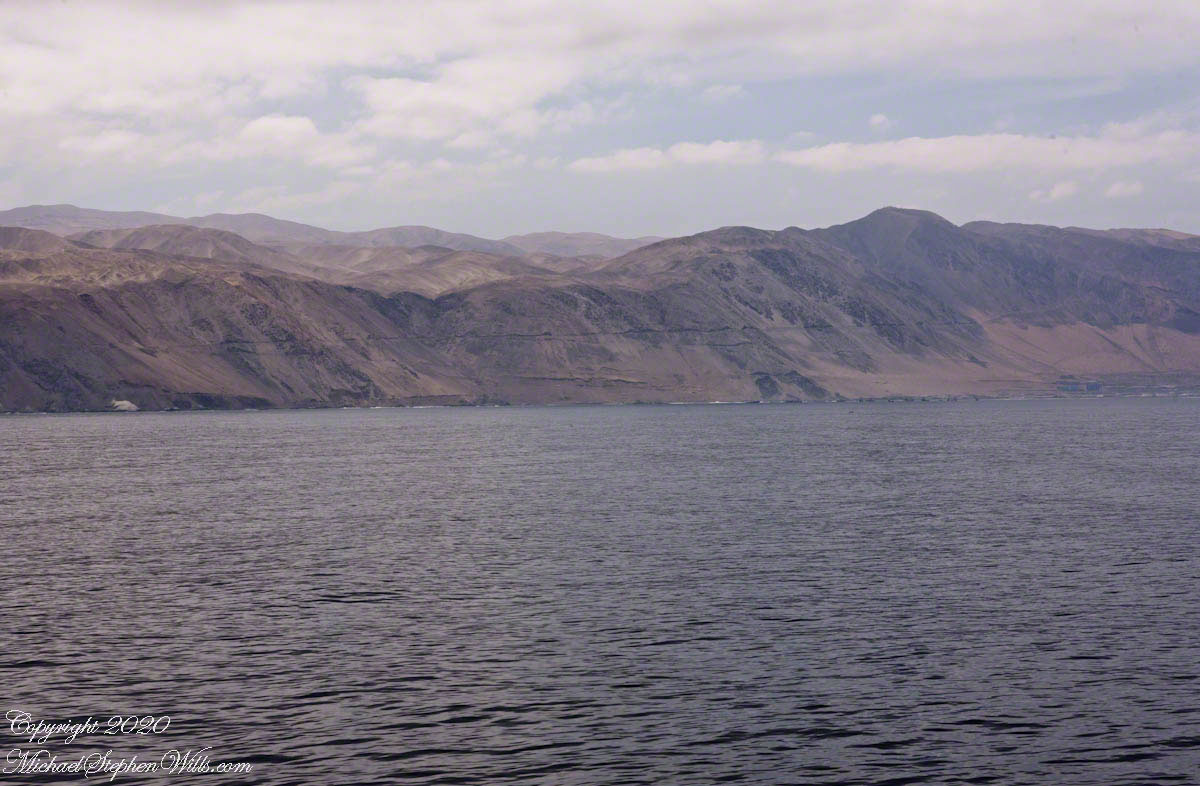
As we edge closer, I zoom into the scene to get a better look at the “dead end” highway built into the steep escarpment above the fishing boat anchorage.
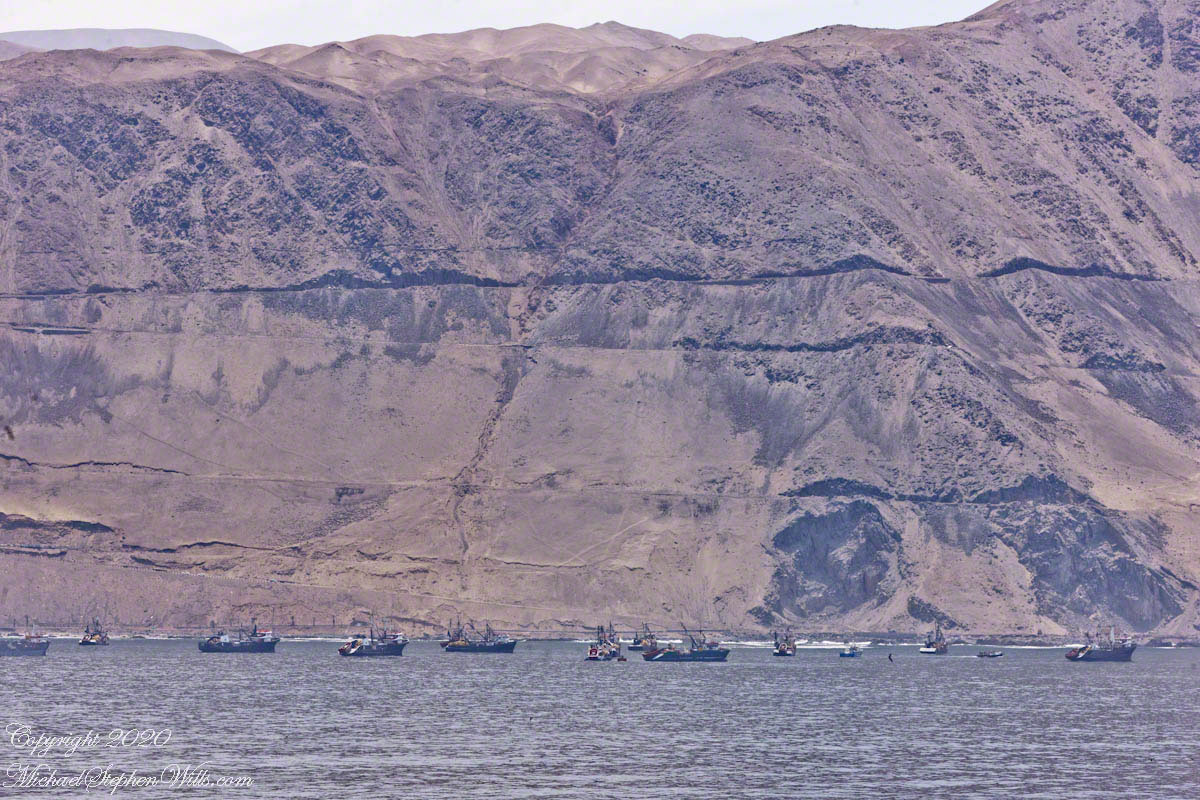
This road, carved into the rugged terrain, is where service vehicles are parked. It’s a stark reminder of the isolation and the challenges faced by those living and working in this region. The road, seemingly clinging to the side of the escarpment, underscores the harsh, arid landscape that surrounds Iquique.

There is only one road linking Iquique to the outside world, a lifeline that snakes its way through the unforgiving Atacama Desert. This single route is vital, not just for the movement of people, but for the transport of goods and services that sustain the city and its inhabitants. The resilience required to thrive in such an environment is evident everywhere you look.
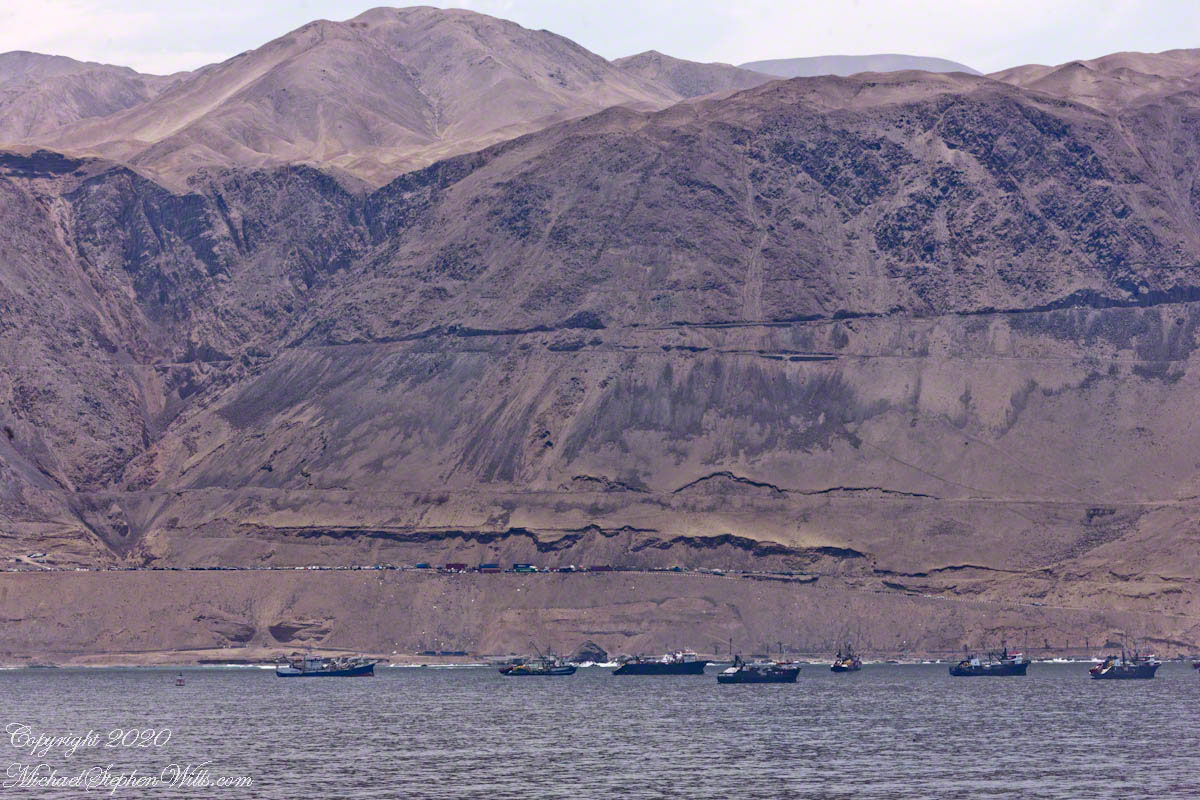
In the distance, the fishing boats bob gently on the waves, a stark contrast to the imposing cliffs that rise sharply from the sea. The boats, though dwarfed by the natural landscape, exude a quiet dignity, representing the enduring spirit of those who make their living from the ocean. The water, a deep, reflective blue, mirrors the sky above, creating a seamless blend of sea and sky, interrupted only by the rugged coastline.

Our journey today will take us beyond the city, along this solitary road to the World Heritage Site of Humberstone. Once a bustling nitrate mine, Humberstone sits on a plane above the city, a stark reminder of Chile’s rich industrial history. The site, now a ghost town, tells the story of the nitrate boom that once powered the region’s economy. As we drive, the landscape will transition from the coastal beauty of Iquique to the stark, desolate beauty of the Atacama Desert.

This is a journey through time, from the modern-day hustle and bustle of Iquique to the silent echoes of Humberstone’s past. The road a connection to the history and heritage of this remarkable region. As we venture into the heart of the desert, the stories of those who lived and worked in these harsh conditions will come alive, offering a glimpse into the resilience and determination that define the spirit of Chile.

The anchorage, with its mix of modern and traditional vessels, serves as a microcosm of Iquique itself – a city where the past and present coexist, where the sea provides a livelihood, and the land tells a story of survival and adaptation. As the Regatta settles into its temporary home on the water, I feel a sense of anticipation for the adventures that lie ahead. The pilot boat, now a small speck in the distance, has done its job, guiding us safely to this point. From here, the journey continues, both on land and through the annals of history, as we set out to explore the wonders of Iquique and beyond.
Click me for the first post of this series.

Copyright 2024 Michael Stephen Wills All Rights Reserved

Iquique by Sea IV

Discover the vibrant blend of history and modern maritime traditions in Iquique. From the dramatic escarpment backdrop to the bustling harbor, join us on a journey exploring the city’s past and present, anchored in seafaring tales.

Continue reading “Iquique by Sea IV”

Iquique by Sea III

Explore the dramatic events of May 21, 1879, when Captain Arturo Prat’s heroic stand at the Battle of Iquique turned the tide of the War of the Pacific, shaping South American history. Discover the legacy of this pivotal naval encounter.

Iquique was a Peruvian city under Chilean naval blockade in May 1879 during the War of the Pacific, also called the Saltpeter War, for control of valuable nitrate deposits in the Atacama Desert. The conflict primarily involved Chile, Peru, and Bolivia, with Chile aiming to secure the resource-rich coastal regions of Bolivia and southern Peru.

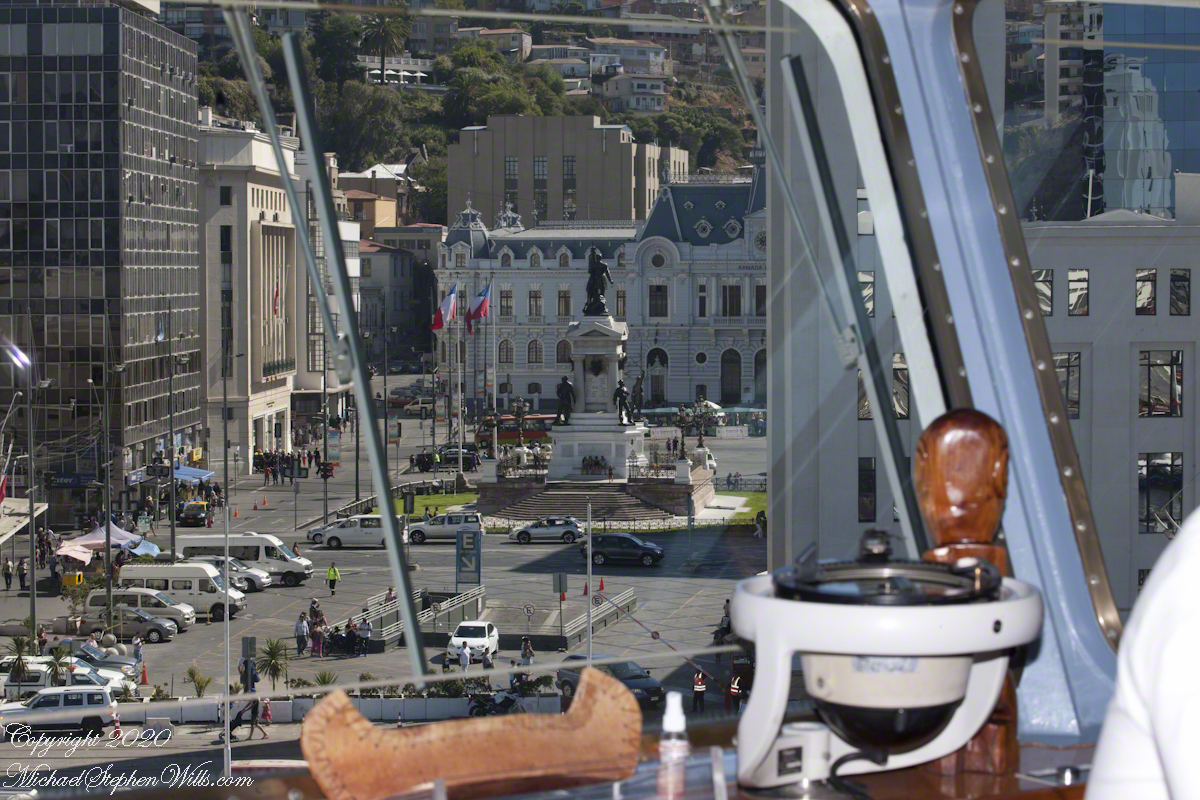
The photographs illustrating this post feature Valparaiso, beginning with an overview of Plaza Sotomayor from the bridge of the ship Regatta docked in the harbor. Centered in the square is a memorial to the heroes of Iquique, a tribute to those who fought valiantly during the naval confrontations.

Click any photograph for a larger view and use Ctrl-x to zoom in closer.

View of the Monument to the Heroes of Iquique from the bridge of the Regatta.

On the morning of May 21, 1879, two older wooden Chilean ships were stationed blockading the Iquique harbor: the corvette Esmeralda, captained by Arturo Prat Chacón, and the schooner Covadonga. Out of the thick morning fog emerged two Peruvian ironclad ships, the Huáscar and the Independencia. The Huáscar, commanded by Admiral Miguel Grau, posed a significant threat to the Chilean blockade due to its superior firepower and armor.

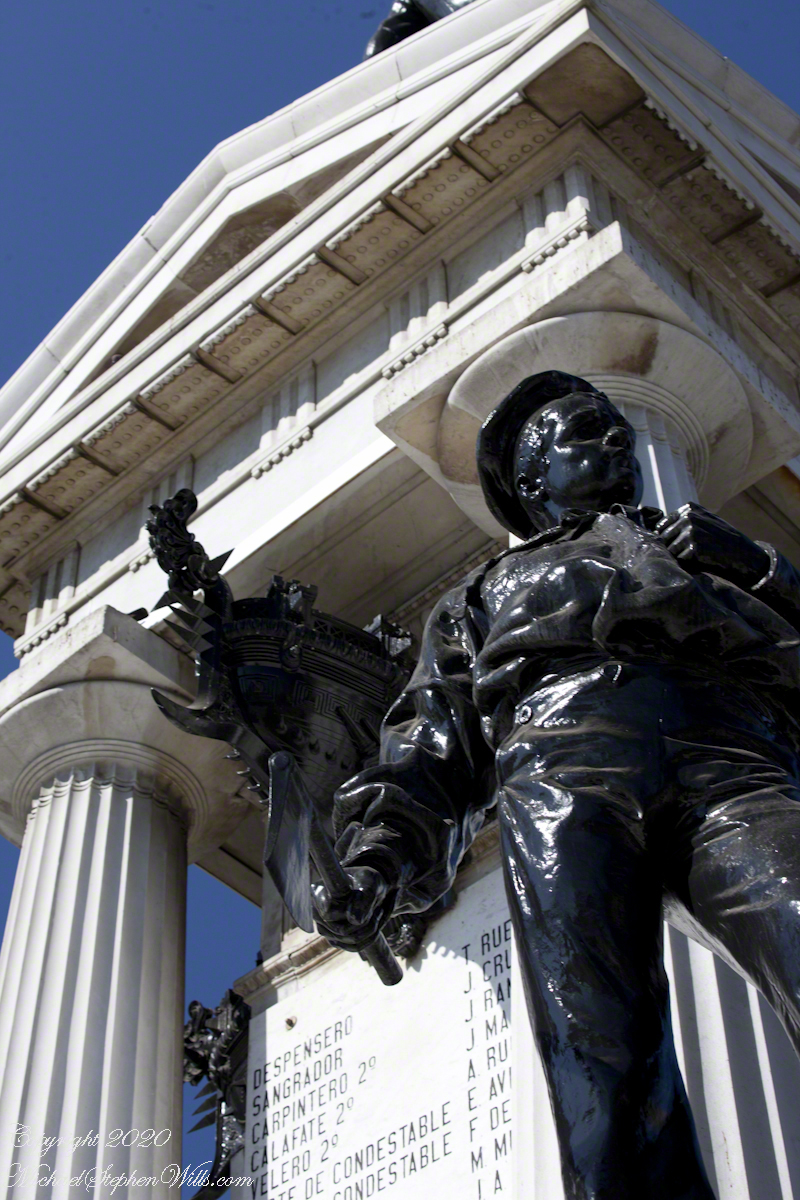
The Heroes’ Names are listed in large letters

Facing the formidable Peruvian ironclads, the Covadonga withdrew to avoid certain destruction. Captain Prat, however, stood his ground aboard the Esmeralda. Despite being heavily outgunned and outmatched, Prat chose to engage the Huáscar. In a courageous but ultimately futile effort, Prat attempted to board the Huáscar but was killed in the process, and the Esmeralda was subsequently destroyed with a great loss of life.

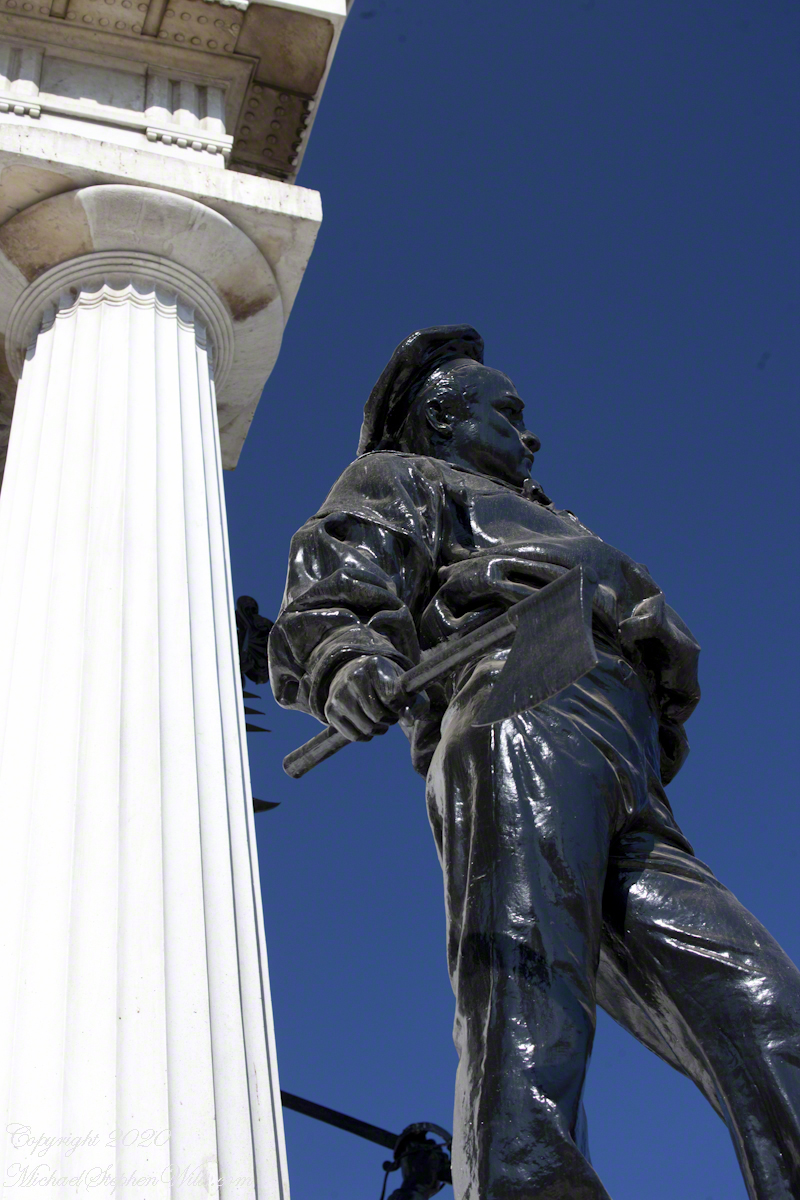
Each corner features a larger than life statue representing the heroes

The Battle of Iquique ended with a Peruvian victory, temporarily lifting the blockade and opening the port. However, the heroism displayed by Captain Prat and his crew had a profound impact on Chilean morale. News of their bravery spread rapidly, galvanizing the Chilean population and military. Prat’s sacrifice became a symbol of national pride and determination, fueling Chile’s resolve to win the war.

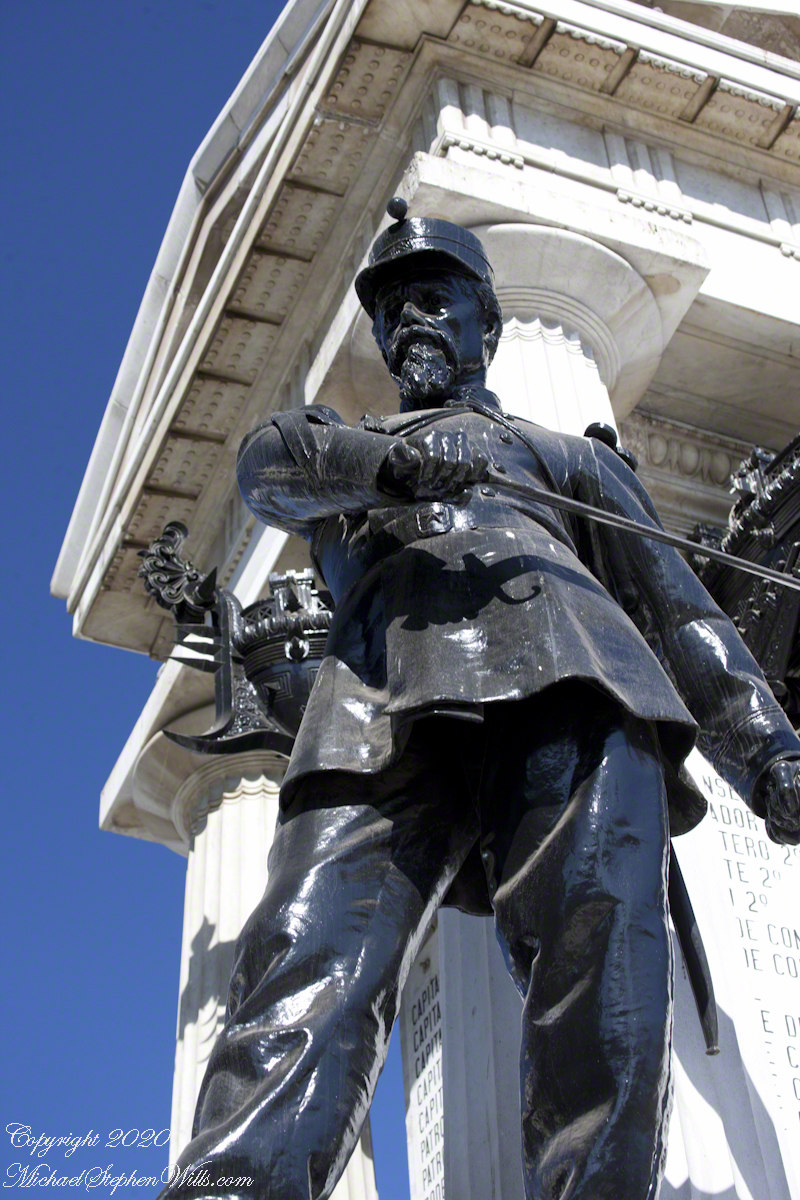
One figure is Captain Prat

The outcome of the War of the Pacific was a decisive victory for Chile. By the end of the conflict in 1884, Chile had gained significant territories from Peru and Bolivia, including the nitrate-rich provinces of Tarapacá and Antofagasta. These territorial acquisitions provided Chile with substantial economic benefits due to the lucrative nitrate mines, which were crucial for agricultural fertilizers and explosives.

The War of the Pacific had far-reaching consequences for the region. Bolivia lost its coastal territory, becoming a landlocked country, which has had lasting implications on its economic development and geopolitical strategy. Peru, on the other hand, was forced to cede valuable territories and endured a period of economic hardship and political instability following the war.

Today, the Battle of Iquique is commemorated annually in Chile on Naval Glories Day (Día de las Glorias Navales) on May 21st. This national holiday honors the bravery of Captain Prat and his men, serving as a reminder of their sacrifice and the pivotal role the battle played in Chilean history.

In summary, the blockade of Iquique and the ensuing naval battle were significant events in the War of the Pacific. They highlighted the strategic importance of naval power and the impact of individual heroism on national morale. The war reshaped the territorial boundaries in the region, with lasting economic and political effects that continue to influence the countries involved.

Click me for the first post of this series.

Copyright 2020 Michael Stephen Wills All Rights Reserved

Iquique by Sea II

Explore the rugged beauty of Chile’s Atacama Desert coast as we approach Iquique. Discover the historical significance of ghost towns and the stunning natural landscapes captured through a zoom lens from our cruise ship.

As we continue our approach to Iquique, the landscape unfolds with increasing clarity and detail after I swapped out the 24 mm lens with a variable “zoom”, 70 – 300mm. The ship’s slow progress offers ample time to observe and absorb the stark beauty of the coastline. The variable lens captures the rugged intricacies of the cliffs and the subtle hues of the arid landscape that rise abruptly from the Pacific Ocean.

Click any photograph for a larger view and use Ctrl-x to zoom in closer.

Caleta Buena, the ghost town perched at the foot of a 750-foot escarpment, is no longer in sight. This once-thriving nitrate shipping point is a haunting reminder of the region’s historical significance in the nitrate mining industry. The small bay, or “caleta,” provided just enough shelter to construct piers and docks, facilitating the transportation of this valuable mineral. The remnants of this enterprise are barely visible, blending seamlessly into the harsh terrain.

The juxtaposition of the nutrient-rich Humbolt Current against the barren cliffs is a sight to behold. The current, teeming with marine life, supports the local fishing industry. I manage to capture a small fishing boat setting out for the day, its solitary presence emphasizing the vastness and solitude of the surrounding ocean. The boat’s journey highlights the symbiotic relationship between the sea’s bounty and the livelihood of those who brave its waters.

Moving southward, the cliffs give way to a formidable pediment, a broad, sloping surface that forms the base of the coastal mountains. This pediment, barren and uninviting, is a testament to the geological forces that have shaped this region. The harsh environment, with its minimal vegetation and arid conditions, stands in stark contrast to the vibrant marine ecosystem just offshore.

Our ship’s slow advance allows for contemplation of this unique landscape. The term “the imprint of God’s thumb on the land” resonates deeply as I witness the natural formations that seem almost intentional in their design. The cliffs and pediment, while imposing, serve as a prelude to the more hospitable terrain that lies ahead.

Approaching Punto Negro, the cliffs begin to recede, revealing a more accessible coastline. This geographical shift creates a natural harbor that has enabled the establishment and growth of Iquique. The city, with its deep-rooted history in the nitrate industry, emerges as a beacon of human resilience and adaptation in an otherwise unforgiving landscape.

Iquique’s strategic location, nestled between the receding cliffs and the ocean, provides a unique blend of natural beauty and industrial significance. The city’s development is intricately linked to the geographical features that surround it, from the nutrient-rich waters of the Humbolt Current to the protective embrace of the coastal cliffs.

As the Regatta inches closer to port, the anticipation builds. The approach to Iquique is not merely a physical journey but a voyage through time and nature’s grandeur. Each photograph, each observation, adds a layer to the rich tapestry of this experience. The slow, deliberate pace of the ship allows for a deeper appreciation of the intricate interplay between land and sea, history and progress.

In these moments of quiet reflection, I feel a profound connection to the land and its stories. The approach to Iquique is a reminder of the delicate balance that sustains life in this harsh yet beautiful corner of the world. It is a journey that underscores the resilience of both nature and humanity, each adapting to and shaping the other in an ongoing dance of survival and growth.

Click me for the first post of this series.

Copyright 2024 Michael Stephen Wills All Rights Reserved

Iquique by Sea I

Join me on an early morning approach to Iquique, Chile, as we sail past the stark, mesmerizing Atacama Desert coastline. Experience the serene isolation and rugged beauty captured from the balcony of our cruise ship.

Standing on the balcony of our port side stateroom, the early morning light casts a subdued, almost ethereal glow over the vast expanse of the Pacific Ocean. The Oceania Regatta glides smoothly through the cold, dark waters, making its way toward Iquique, our first Chilean port of call. The sense of anticipation is palpable as we approach the coast of the Atacama Desert, a region renowned for being the driest place on Earth.

The view is both stark and mesmerizing. The coastline of the Atacama Desert rises sharply from the Pacific, a dramatic contrast to the vast, cold ocean that stretches out before us. The Humbolt current, a cold, nutrient-rich flow of water from southern Chile to northern Peru, swirls beneath the ship, adding a sense of dynamic movement to the scene. The chilly air, the muted colors of the sea and sky, and the barren, rugged landscape all combine to create an atmosphere of serene isolation.

In the distance, I imagine a dark point of land—the remnants of the abandoned town of Caleta Buena. Perched on a 750-foot escarpment, the town was once a bustling hub of nitrate mining, a vital industry that shaped the history of Iquique. The remains of piers jutting out into the ocean stand as silent witnesses to a bygone era, their weathered structures blending into the rugged coastline.

The sequence of photographs I’ve captured from this vantage point, working north to south, offers a panoramic view of this desolate yet captivating landscape. Using a 24 mm “wide angle” Canon lens mounted on a tripod, I’ve been able to frame the vastness of the ocean and the stark beauty of the Atacama coastline in a single, sweeping seascape.

Reflecting on our overnight journey from Matarani, Peru, I’m struck by the profound sense of isolation that accompanies travel along this desolate coast. During the 250-mile sail, the darkness was absolute, the inky blackness of the night broken only by the occasional glimmer of stars reflected in the ocean below. It was a journey through a void, a stark reminder of the sheer scale and remoteness of this part of the world.

As we draw closer to Iquique, the coastal mountains rise up, marking the transition from the Pacific to the arid plains of the Atacama Desert. The stark beauty of this landscape, with its rugged cliffs and barren expanses, is both humbling and awe-inspiring. It’s a reminder of the harsh conditions that have shaped this region, and of the resilience of the people who have carved out a living here over the centuries.

From the balcony of our stateroom, I feel a deep sense of connection to this place. The vastness of the ocean, the stark beauty of the desert coastline, and the rich history of the region all combine to create a profound sense of place. This is a land of extremes, a place where the forces of nature have sculpted a landscape of breathtaking beauty and unforgiving harshness.

As we approach Iquique, I feel a sense of gratitude for the opportunity to witness this unique corner of the world. The journey is a reminder of the incredible diversity and beauty of our planet, and of the importance of preserving these natural wonders for future generations. This approach to Iquique is a journey to a new port, a journey into the heart of one of the world’s most remarkable landscapes.

Copyright 2024 Michael Stephen Wills All Rights Reserved

Ode to a January Sunrise at Cocoa Beach

Awake to the radiant grace of dawn, where golden light adorns the sky and the ocean reflects its splendor. Witness the serene dance of nature in a peaceful, inspiring January sunrise at Cocoa Beach.

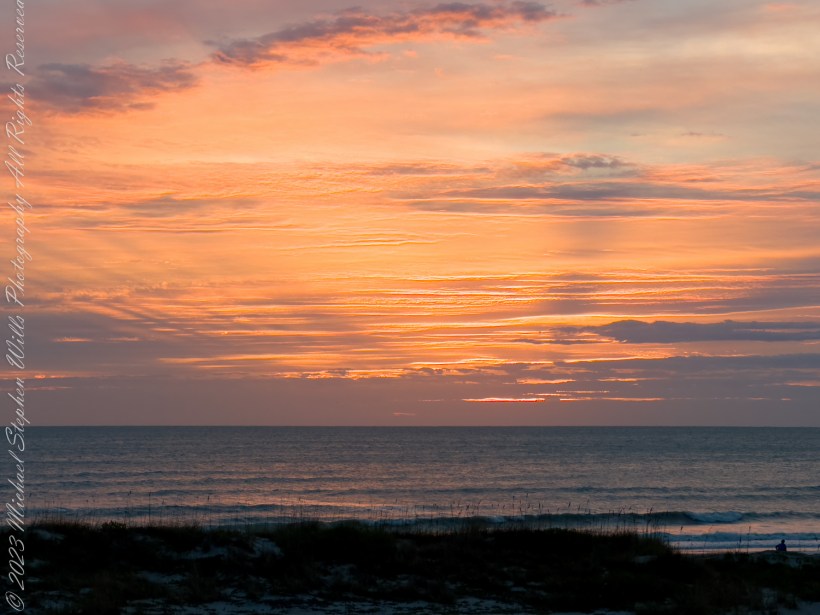
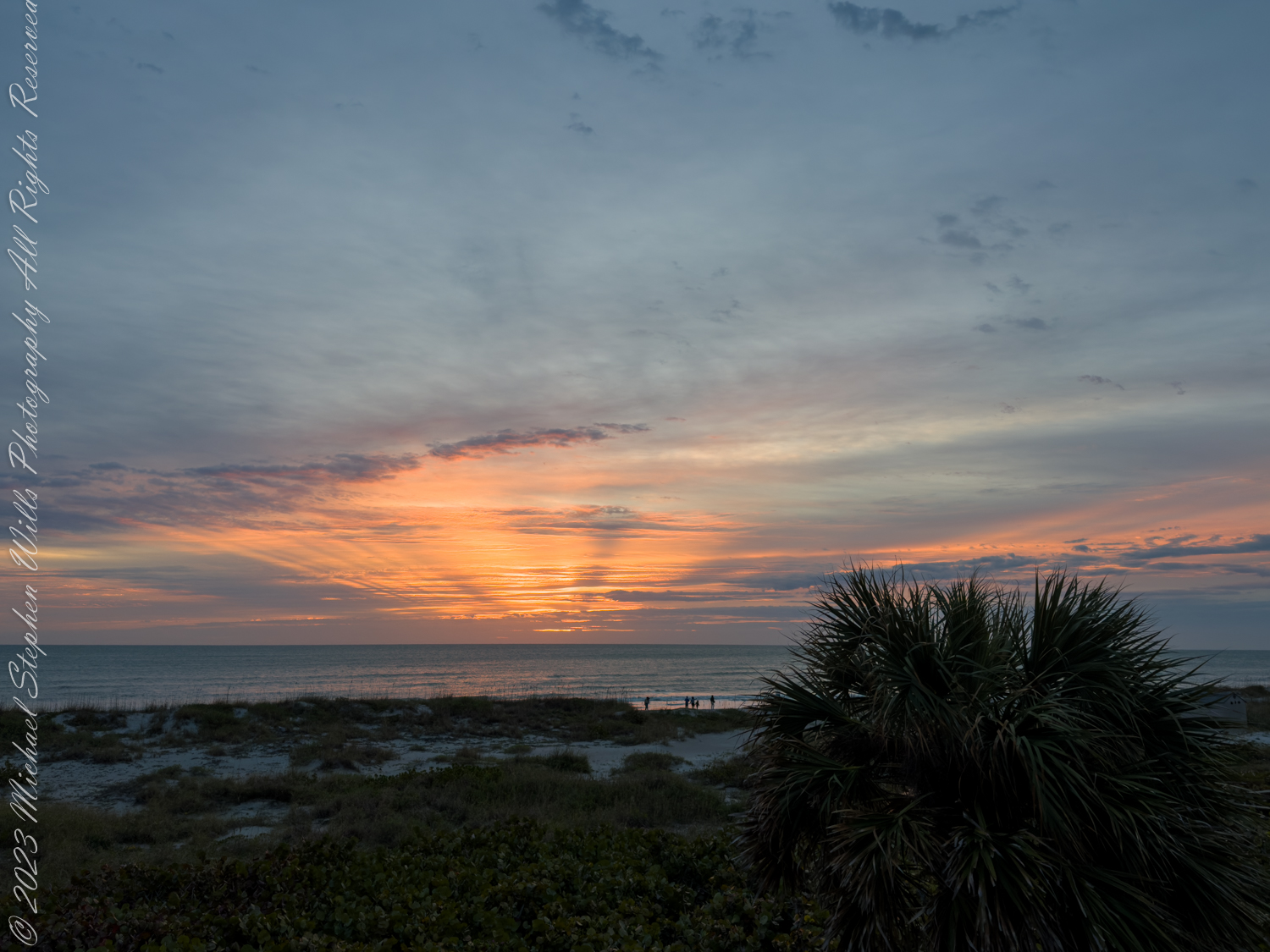
Awake, my soul, to morning’s radiant grace, as dawn’s first light adorns the sky’s embrace. Behold the scene where heaven meets the sea, a tapestry of hues, divinely free.

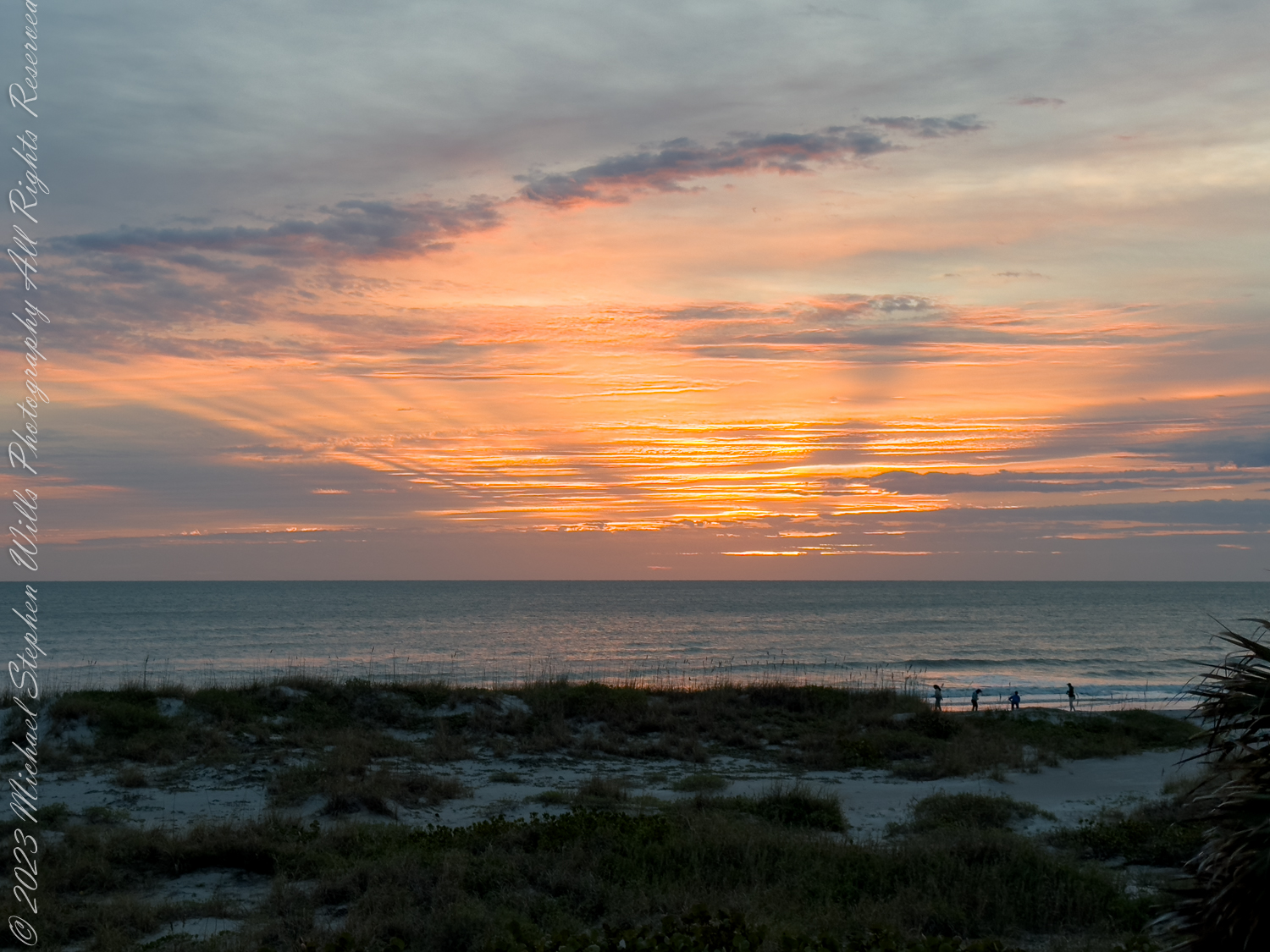
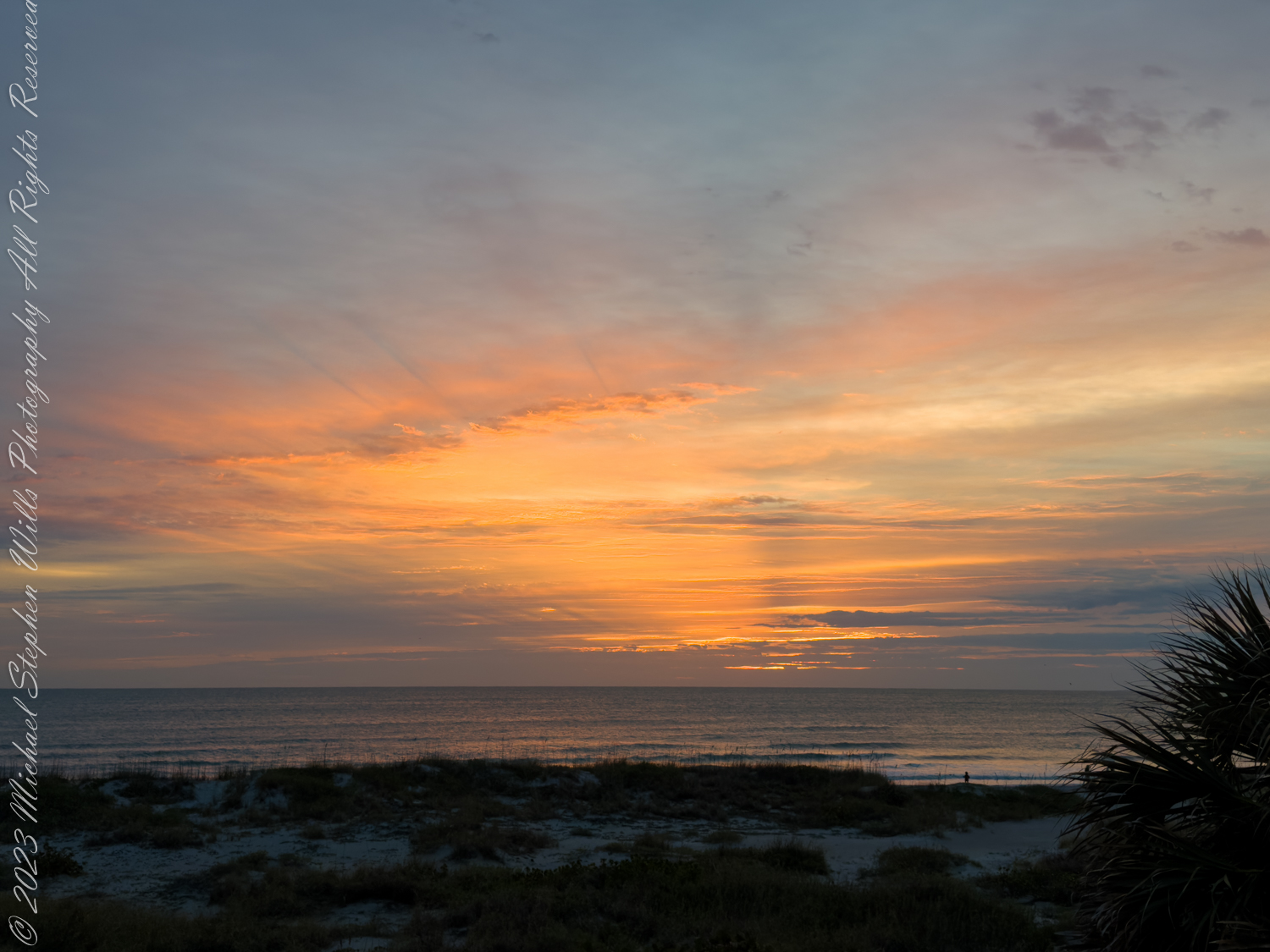
The eastern sky ignites with golden fire, each ray a herald of the sun’s desire. In softest pinks and boldest crimsons cast, the night retreats, and day arrives at last.

The ocean, kissed by dawn’s ethereal light, reflects the splendor of the coming sight. Waves gently lap upon the sandy shore; their whispered secrets speak of days of yore.

The palm trees sway in rhythmic, gentle dance, their silhouettes in morning’s light enhance. A peaceful stillness wraps the world in awe, as nature’s beauty strikes the heart with awe.

The scattered clouds, with edges tinged in gold, Frame the horizon as the day unfolds. They drift like dreams upon the waking breeze, in harmony with rustling leaves of trees.

And as the sun ascends its royal throne, Its warmth and light through every vein is known. A new day born, with promise in its wake, invites the heart to rise and dreams to take.

Imagine, seagulls soar on wings of pure delight, their cries a chorus to the morning’s light. They glide and dive with effortless grace, their freedom echoes in this sacred space.

On distant sands, the footprints of the few mark early risers greeting morning’s hue. Their presence, fleeting, soon to be erased, by tides that sweep the shore in gentle haste.

Oh, glorious dawn, thy beauty so profound, Inspire the soul where peace and love abound. Let hearts be lifted by thy gentle hand, to cherish all that’s wondrous in this land.
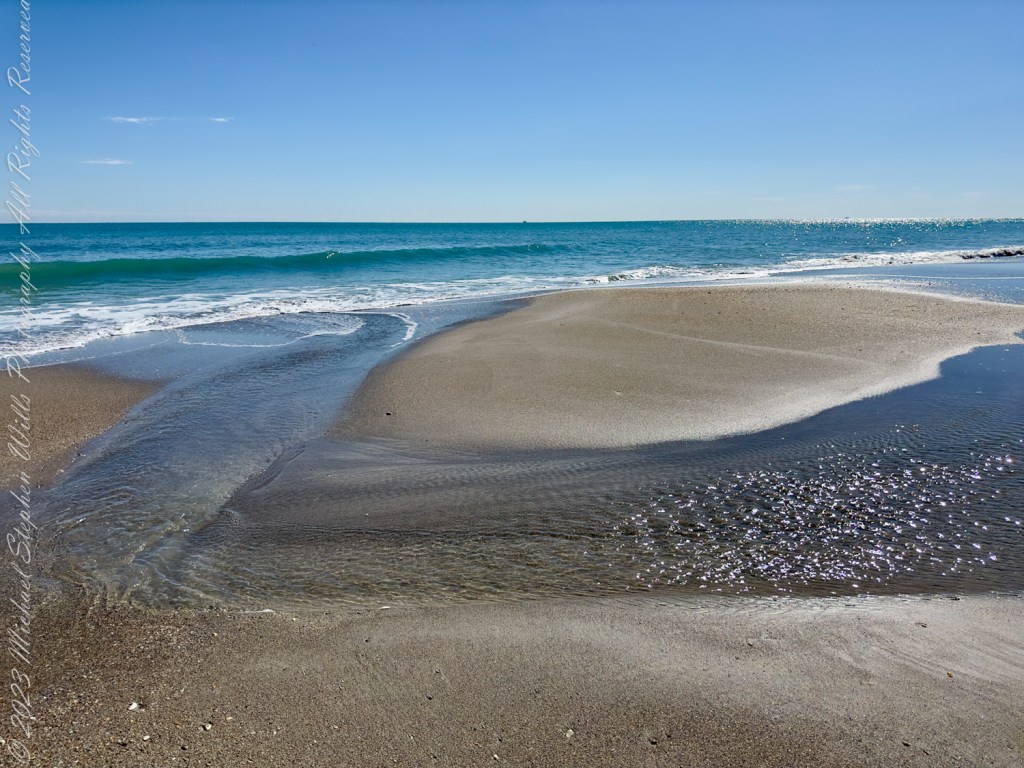
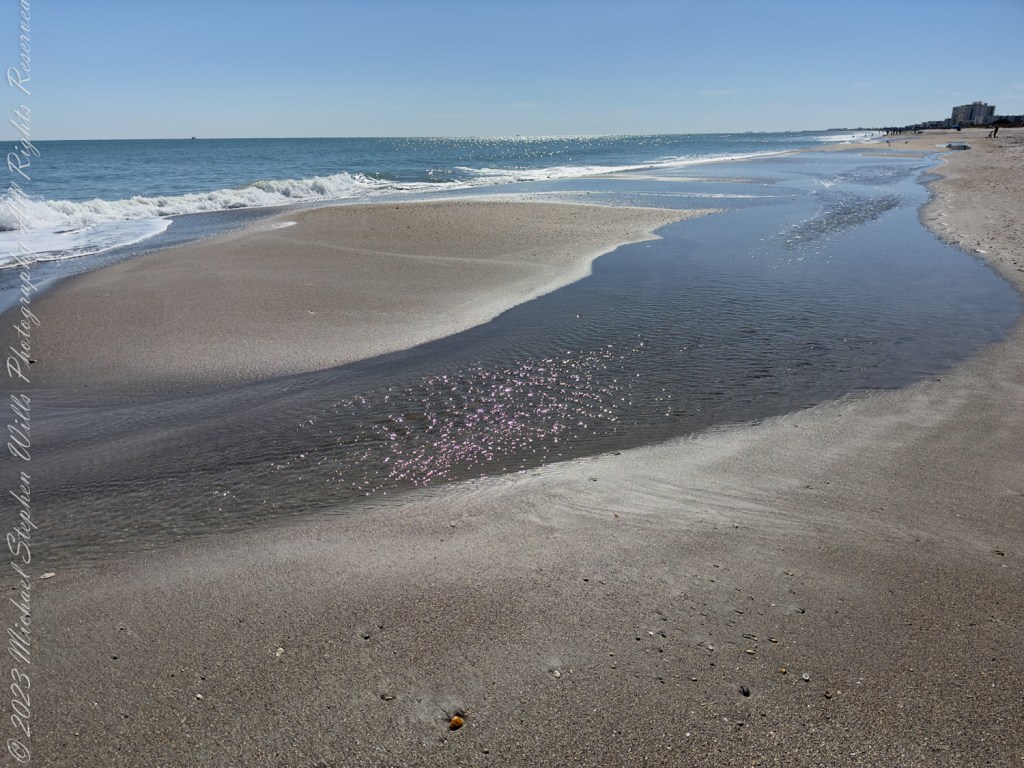
For in this moment, all the world is still, the chaos of the night’s dark dreams to kill. A symphony of light and life begins, as morning’s joy through every fiber sings.

So let us honor this celestial show, where sky and sea in radiant colors glow. In silent reverence, we stand and gaze, at dawn’s first light, and marvel at its blaze.

Awake, my soul, and bask in morning’s gleam, embrace the beauty of this waking dream. For in the sunrise, hope and peace reside, a timeless gift the heavens do provide.

Copyright 2024 Michael Stephen Wills All Rights Reserved

Cocoa Beach Dawn

In January 2024, I captured the tranquil beauty of Cocoa Beach at dawn, embracing the fleeting moments of peace and natural wonders.

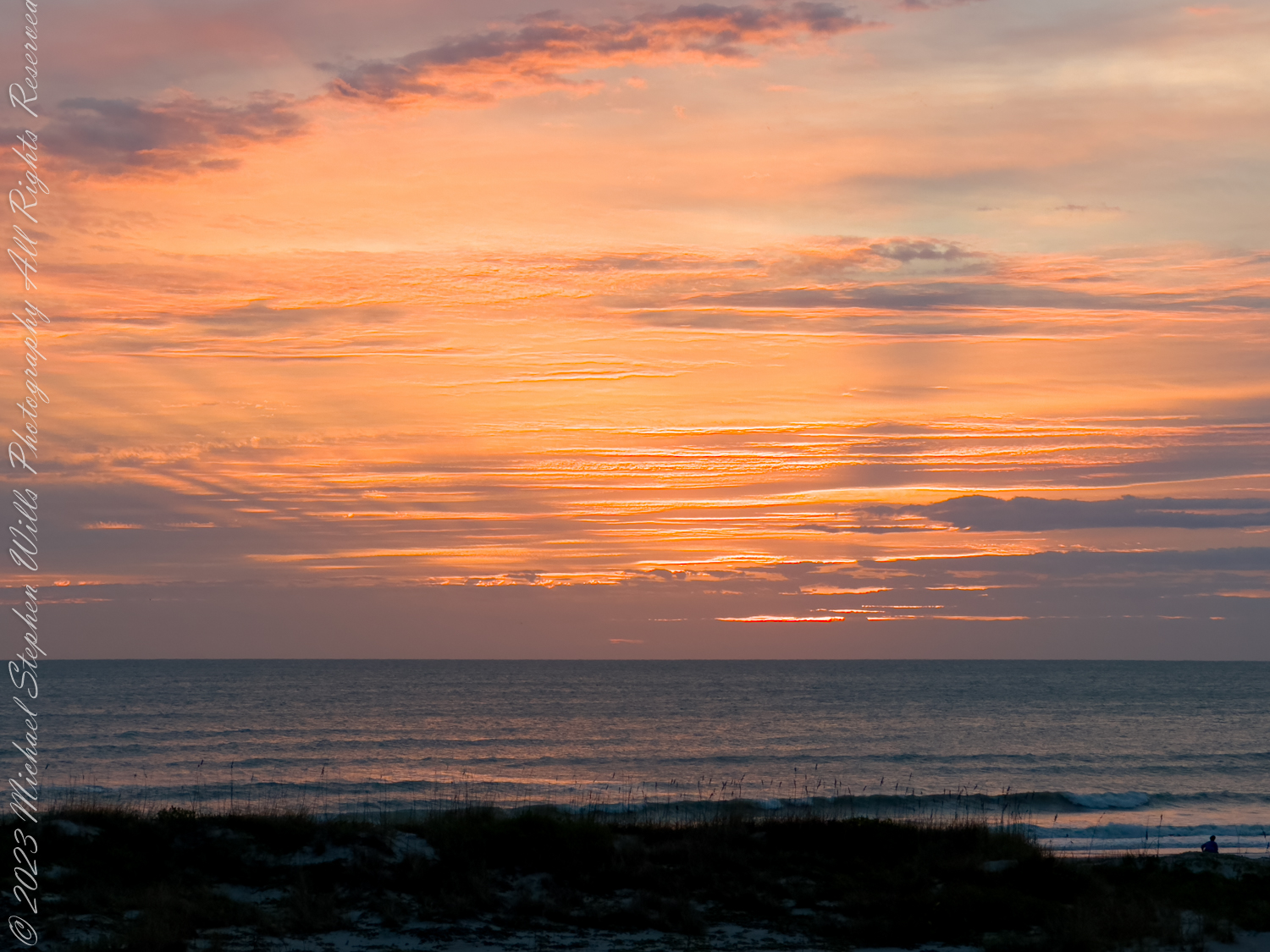
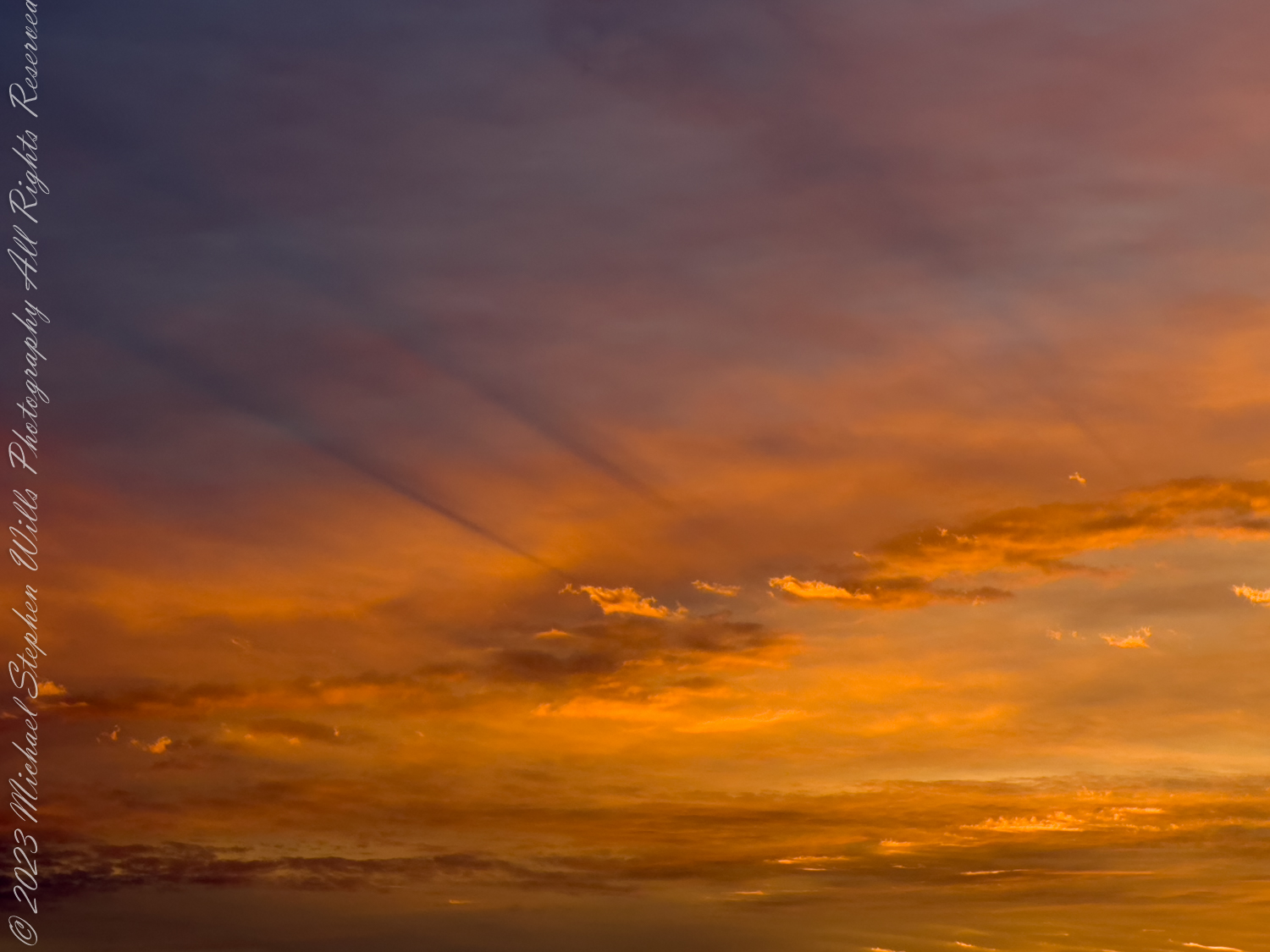
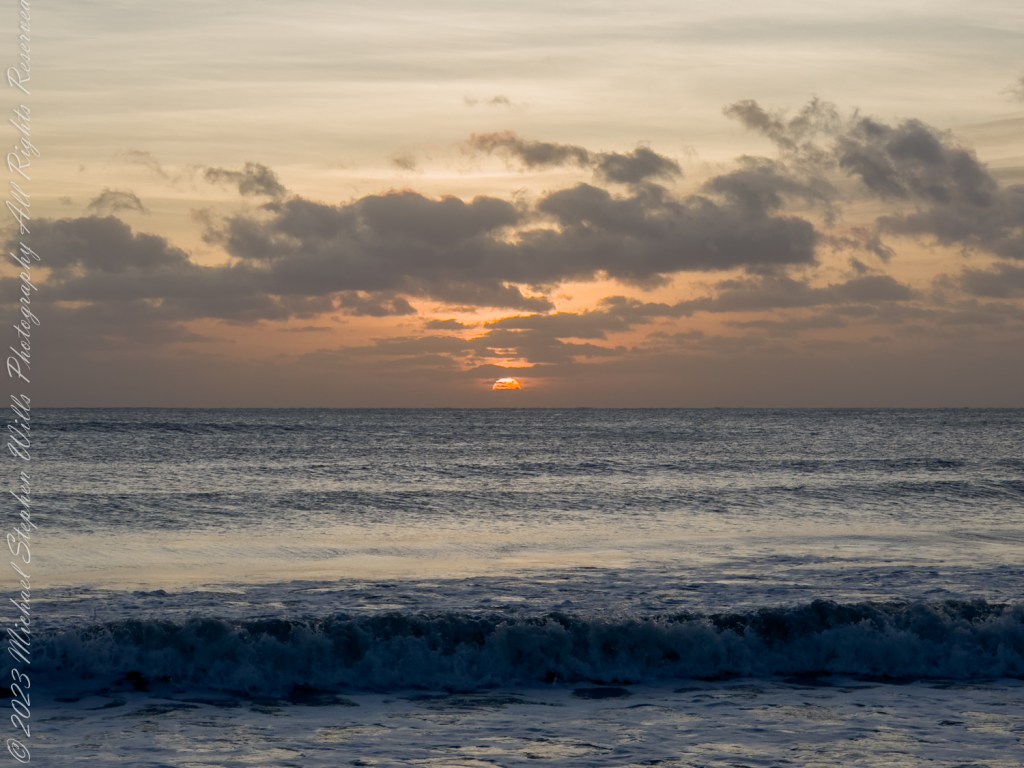
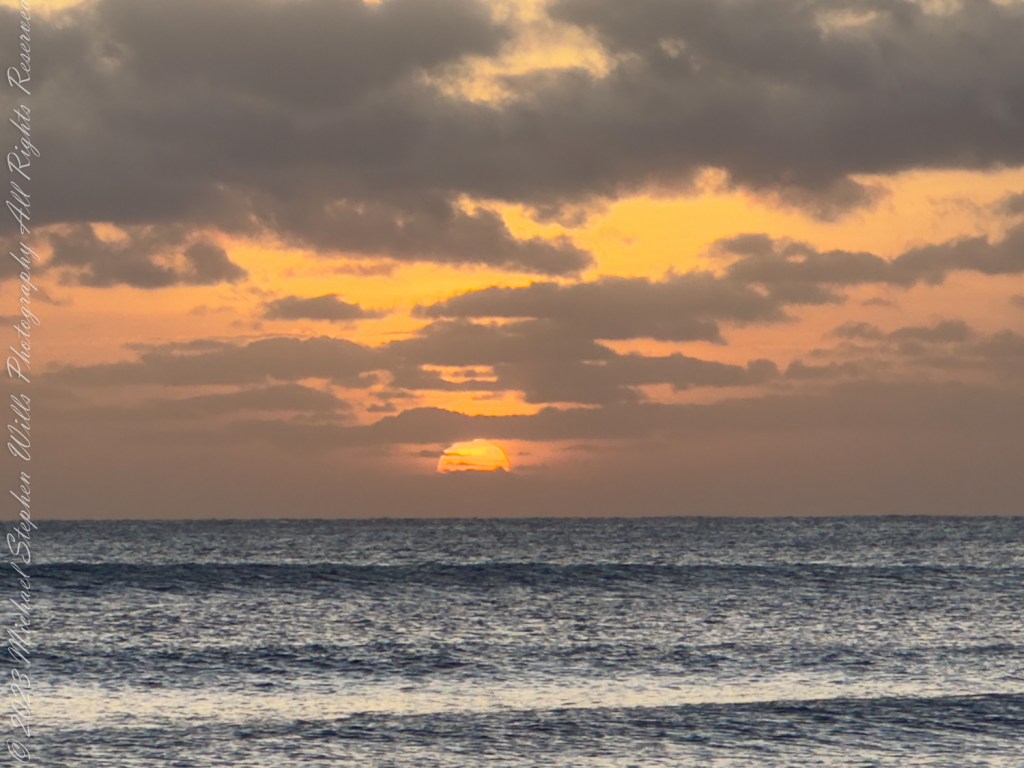
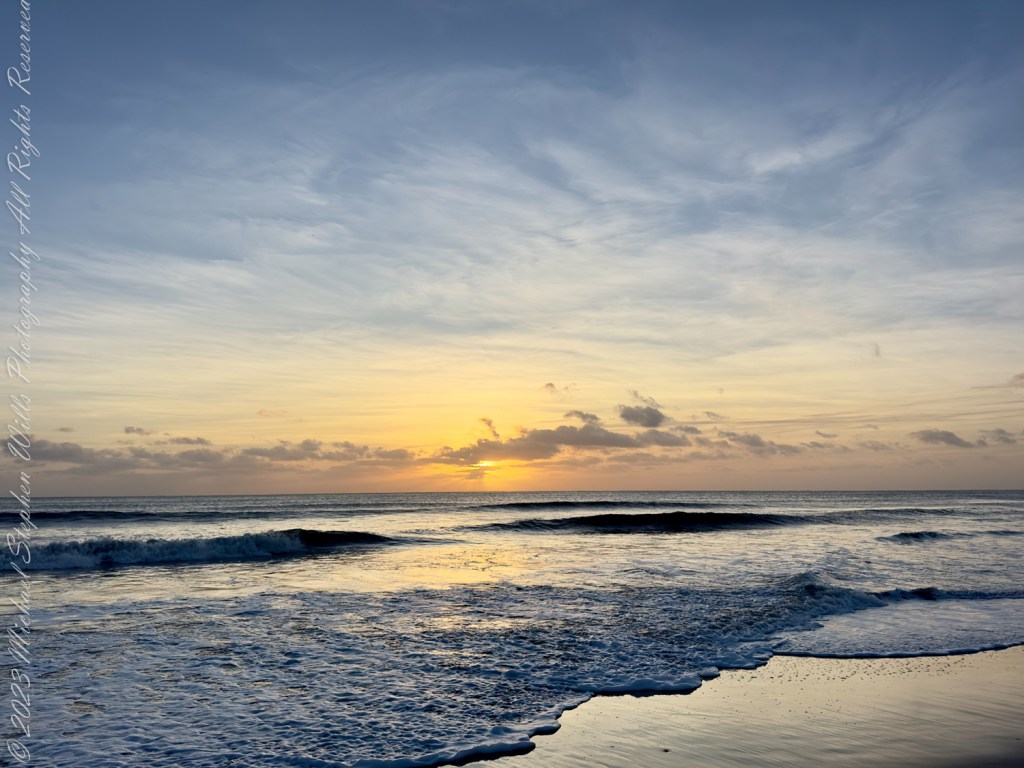
The first blush of morning caresses the horizon, the palette of colors unfurling across the sky like a softly whispered promise of the day ahead. The soft pinks and blues deepen, brushing the clouds with strokes of lavender and orange, as the sun peeks just above the watery edge of the world. Today, I find myself strolling along Cocoa Beach, capturing the tender moments of dawn breaking over this tranquil Florida beachscape in early January 2024.

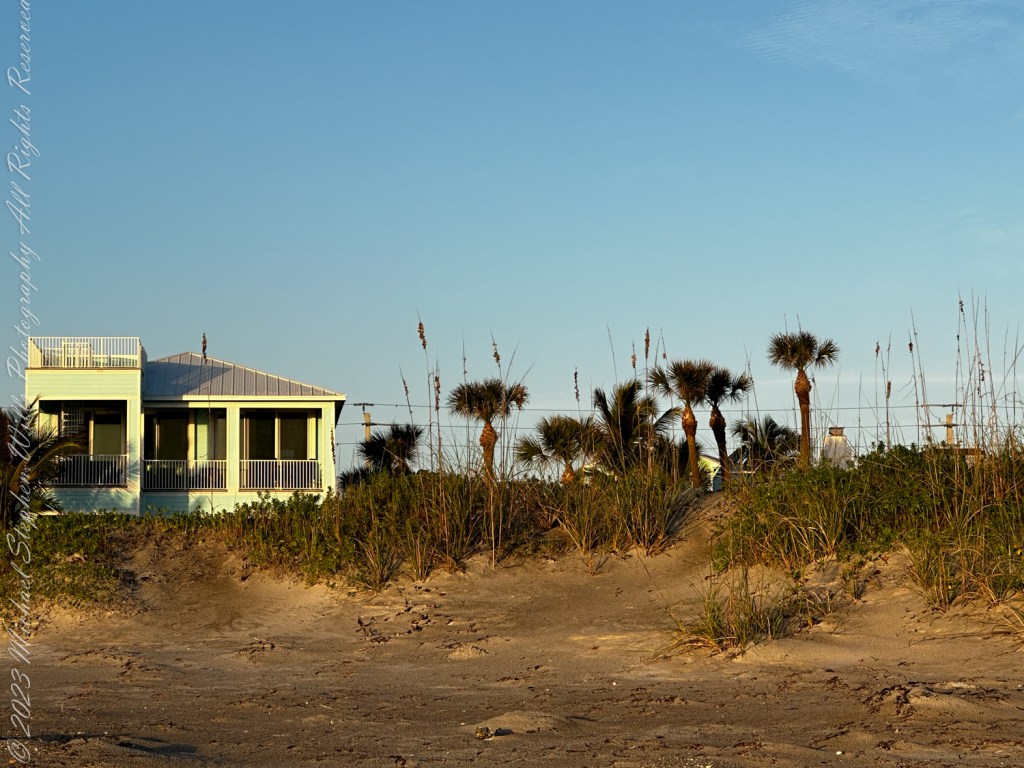
Each step I take along the sandy shores brings a new perspective, a new detail, revealed in the emerging light. To my right, a lone beach house sits nestled behind a veil of sea oats and palmettos, the sky behind it a canvas of warming hues. The house seems to slumber still, its windows reflecting the first golden rays of the sun. This dwelling, isolated and serene, hints at the countless summers of laughter and salty air, and the quiet winters of introspective solitude.

As the morning progresses, the sun asserts itself, climbing higher and burning off the last vestiges of night. I point my camera towards the ocean, capturing the waves as they roll in with rhythmic persistence. The sea is a creature of profound mystery in these early hours, its surface a moving mirror that catches the fire of the sunrise and dances with light. Each wave is a note in an aquatic symphony, played just for those who are awake to hear it.

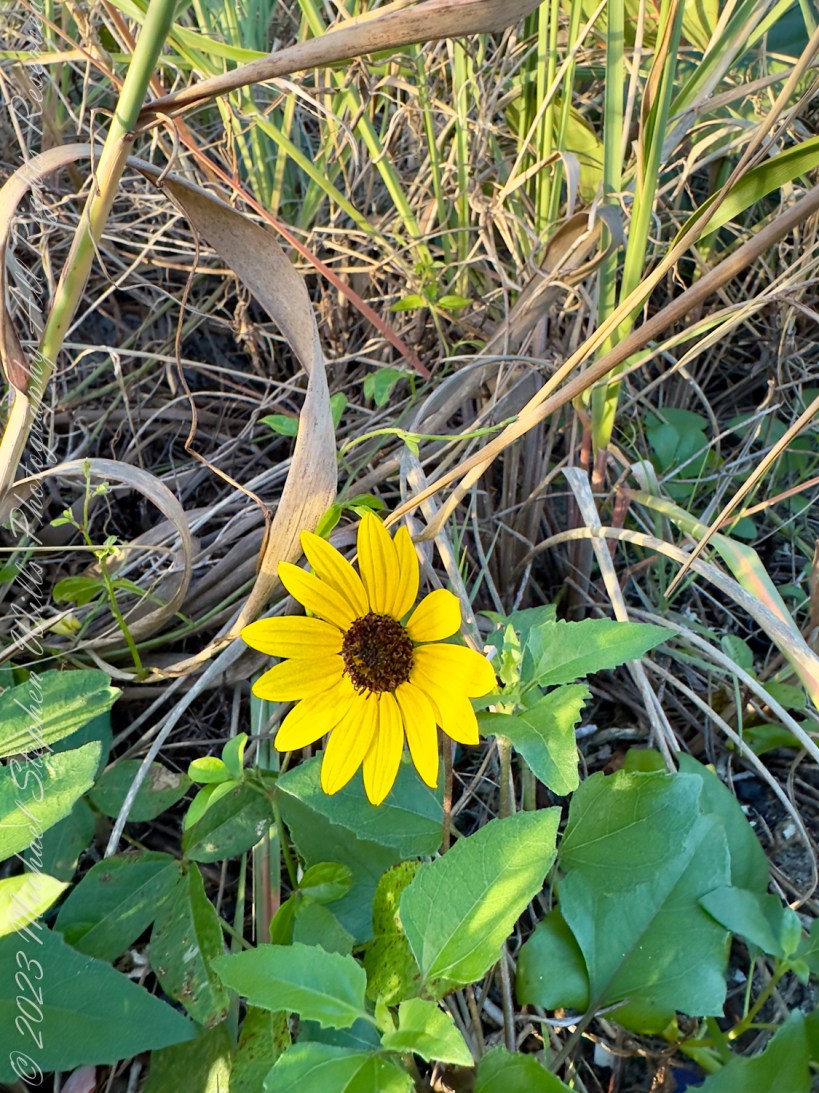
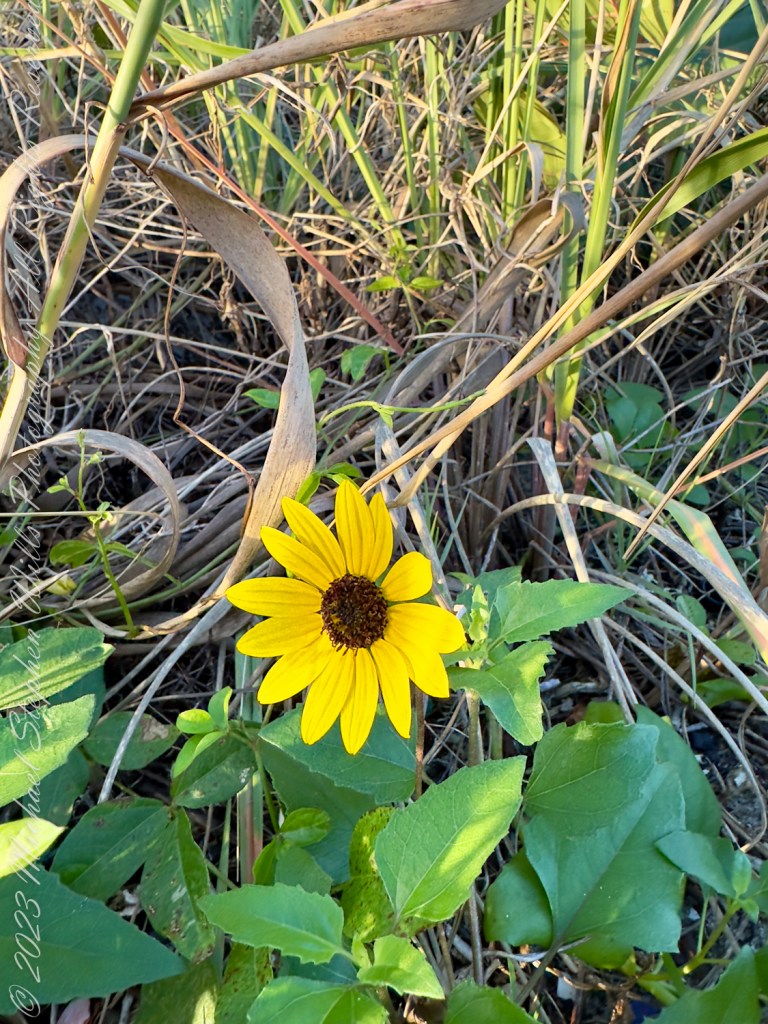
Turning my gaze down, I focus on the smaller, often overlooked inhabitants of the beach. A single flower, a stubborn and resilient dune sunflower, stands boldly above the sands. It’s an unexpected sight—this splash of vibrant yellow against the muted earth tones of the sandy beach. The flower turns its face towards the sun, basking in the glow, thriving in its own patch of the world. It’s a poignant reminder of the tenacity of life, of nature’s relentless pursuit of existence against the odds.

The beauty of Cocoa Beach at dawn is not just in its sweeping vistas or the dramatic play of light and shadow. It’s also in these small, intimate encounters: the texture of the sand, the whisper of the grass, the solitary bloom. Each element is a brushstroke in a larger picture, a note in a grander melody. As I walk, my feet leave temporary impressions on the wet sand, soon to be erased by the incoming tide. It feels symbolic, this transient mark-making, reflective of the fleeting nature of life and the enduring beauty of the world around us.

Cocoa Beach this morning is a place of peace and contemplation. As I capture these moments with my camera, I am also capturing them in my heart, storing them as a balm for busier, noisier days. The photographs will speak of quiet and calm, of the soft hush of dawn, and the gentle awakening of the earth. They will tell of a morning when the world seemed to pause, just for a moment, to revel in the simplicity and beauty of another beginning.

As the sun climbs higher, its light becomes too harsh for the soft magic of dawn photography. I pack up my camera, my heart full of the morning’s calm. The beach is waking up now, the first joggers and dog walkers appearing, their morning routines intersecting with the tail end of my photographic journey. I leave Cocoa Beach carrying the quiet joy of the morning, a joy found in the dance of light on water, in the solitude of a beach house, and in the vibrant defiance of a sunflower. Dawn here is not just a time, it’s an experience—a delicate, powerful reminder of the world’s wonders, witnessed at the edge of the day.

Copyright 2024 Michael Stephen Wills

A Windy Winter’s Beach Morning

These videos capture a windy morning at Cocoa Beach, showcasing the American flag’s resilience and the beauty of nature.

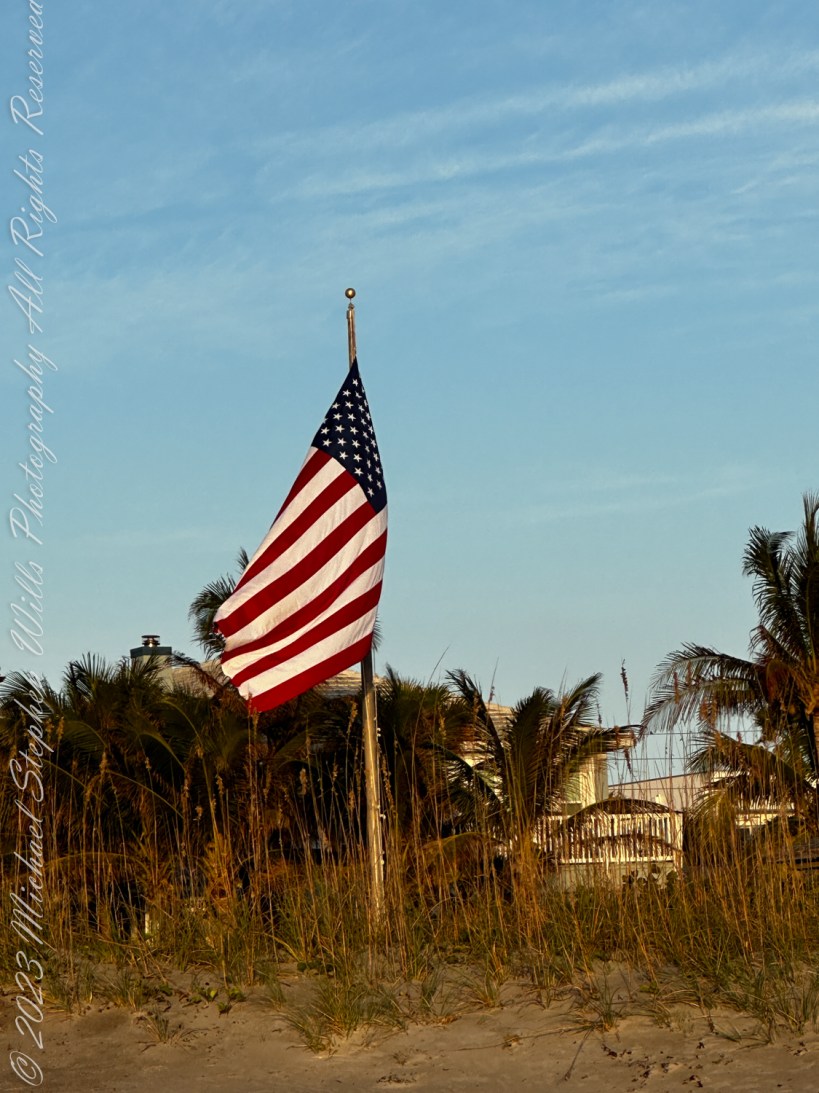
The sun has barely risen over the horizon, casting a golden hue on the edges of the swaying palm trees. I’ve found my favorite spot on Cocoa Beach, where the sand meets the sea oats, and the Atlantic waves crash endlessly. It’s a windy winter’s morning, with the gusts howling, pulling at my shirt, tugging at the American flag standing tall amidst the dunes.

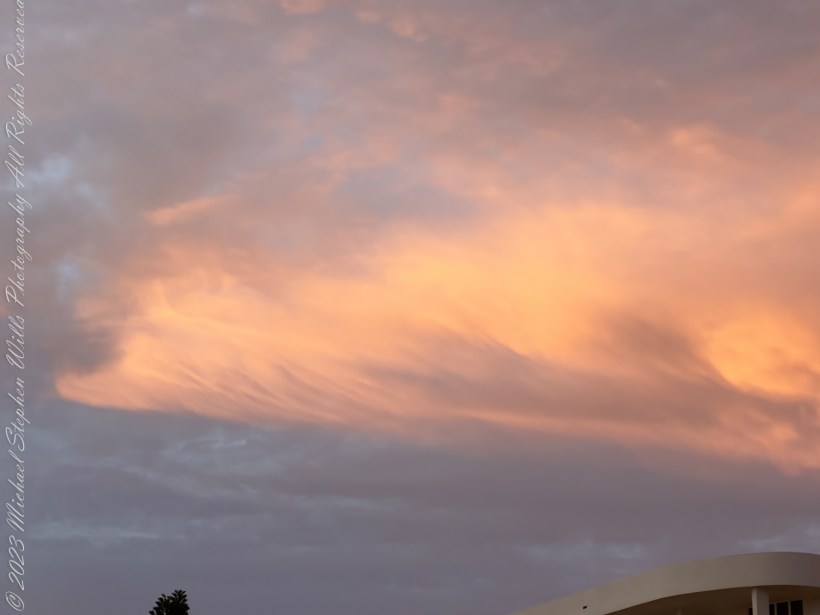
The early light of dawn illuminates clouds with a pink hue on a windy winter’s morning. Cocoa Beach, Brevard County, Florida. The Space Coast.

The flag is massive, its stars and stripes fluttering with conviction against the backdrop of an endless blue sky. Its red, white, and blue are a reminder of the freedom it represents. A symbol of history woven into every thread. In the wind, its fabric dances gracefully, in sync with the whispering leaves and the sea’s rhythm.

This particular flag has been around for years, steadfast on this patch of the Florida coast. The pole, firm and weathered, stands as a sentinel. It’s not just a symbol of patriotism but a beacon for those who wander these shores, a guiding point that has witnessed countless sunrises and sunsets, serving as a reminder of the ideals this country strives for.

Near the end of my video a squad of pelicans glides through, slicing the sky in a perfect formation. They using the wind to their advantage, and their synchronized flight is mesmerizing. Their journey is a testament to the beauty of nature’s choreography, moving with grace and purpose, guided by the same winds that ripple through the flag and carry them along the coast.

The wind is fierce today, blowing sand like fine snow across the beach. It stings my face as I watch the waves roar, driven by the same winds that make the flag soar. These are the south winds, warm and constant, flowing over the Atlantic. They pick up speed across the open waters before reaching the coast, shaping the dunes, bending the palm fronds, and reminding me of the unyielding force of nature.

The south wind is not just a whim of nature; it’s shaped by the currents that flow from the equator, by the rotation of the Earth, and by the heated lands further south. It’s nature’s breath, shifting sands and altering landscapes. This breeze carries with it a hint of salt, a whisper of the tropical climates from which it comes, and a false promise of more warmth on this winter morning.

There’s a certain serenity in being here, watching the elements play. The sea is restless, much like my thoughts. I can’t help but contemplate the forces that have shaped this land, from the explorers who first set foot here to the astronauts who launched themselves to the moon from just a few miles away. This place is steeped in history, and the flag embodies that.

As I look towards the flag again, its fabric shimmering under the sun’s rays, I think about all that it has seen. The gentle lapping of the waves reminds me of the constant change that’s part of life. The flag, though, is a steadfast sentinel, standing tall through it all, enduring the same winds and elements that buffeted it years ago. It speaks of resilience and hope, of standing tall no matter what comes your way.

I pull out my camera, capturing the flag as it flutters in the wind, its stripes rippling like waves on the sea. In a moment, I take a video, recording not just the flag but the beach around it, the sand swirling around my feet, creating transient patterns that the wind will soon erase. The video captures the essence of this place, where the wind and waves weave their own stories.

This morning, like so many before, the wind brings with it a sense of purpose. It whispers tales of the past and hints at the future, pushing me to continue exploring, to keep seeking, and to always remember what this place represents. The American flag, in its majestic flight, is more than fabric; it’s a reminder of the journey and the ideals that guide us, just like this wind pushing along the coast, unrelenting and full of promise.

Copyright 2024 Michael Stephen Wills All Rights Reserved

Observations of Beach Erosion at Cocoa Beach, January 2024

Nature’s artistry unfolds on the shores of Cocoa Beach, where the ever-changing tides leave intricate patterns in the sand. This captivating display of erosion hints at a fragile coastline, urging us to act for its preservation.

Initial Observations

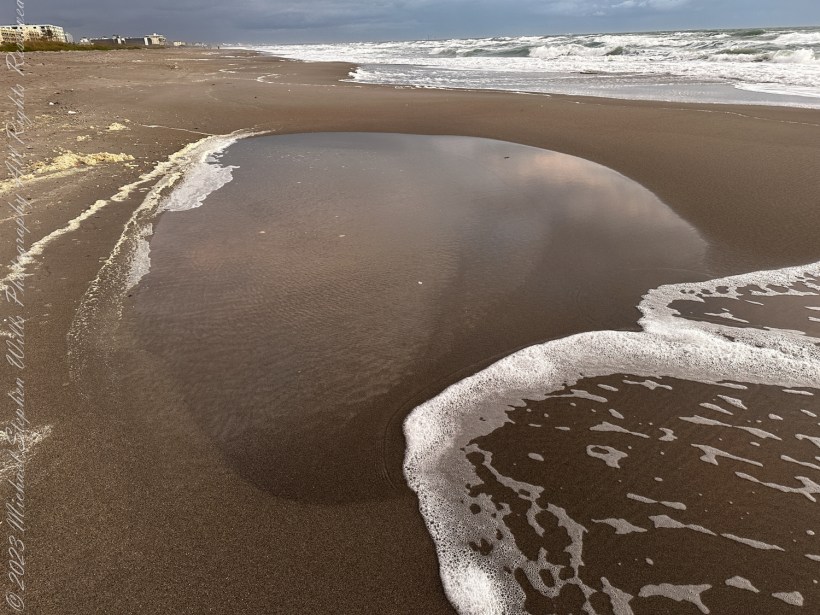
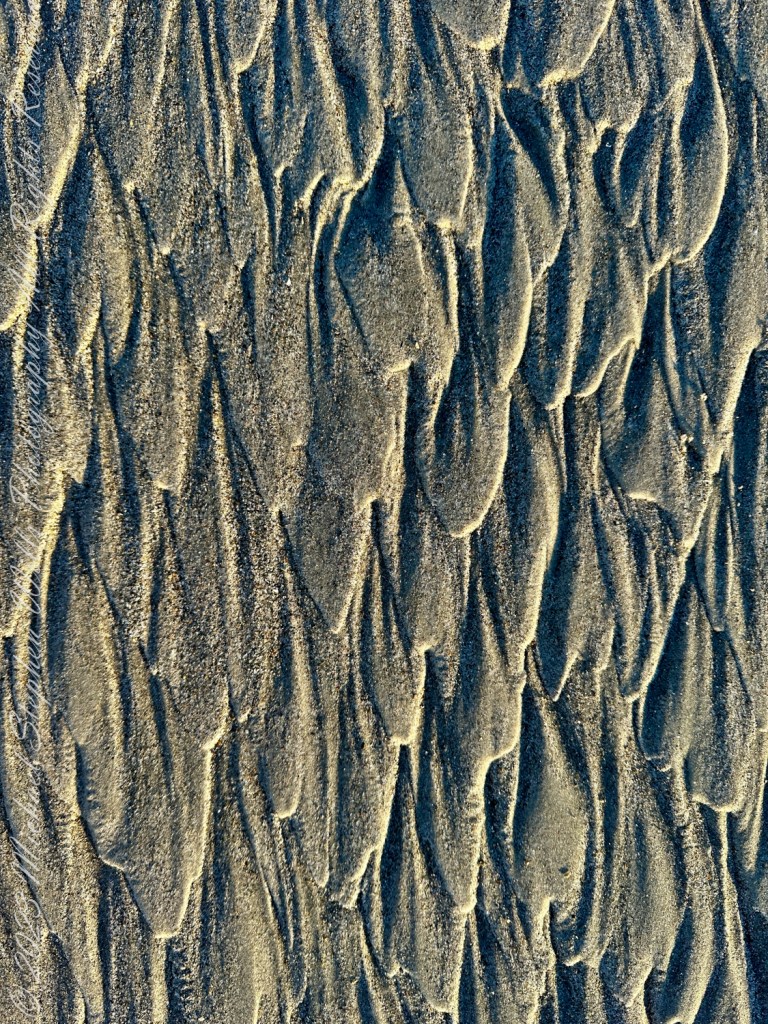
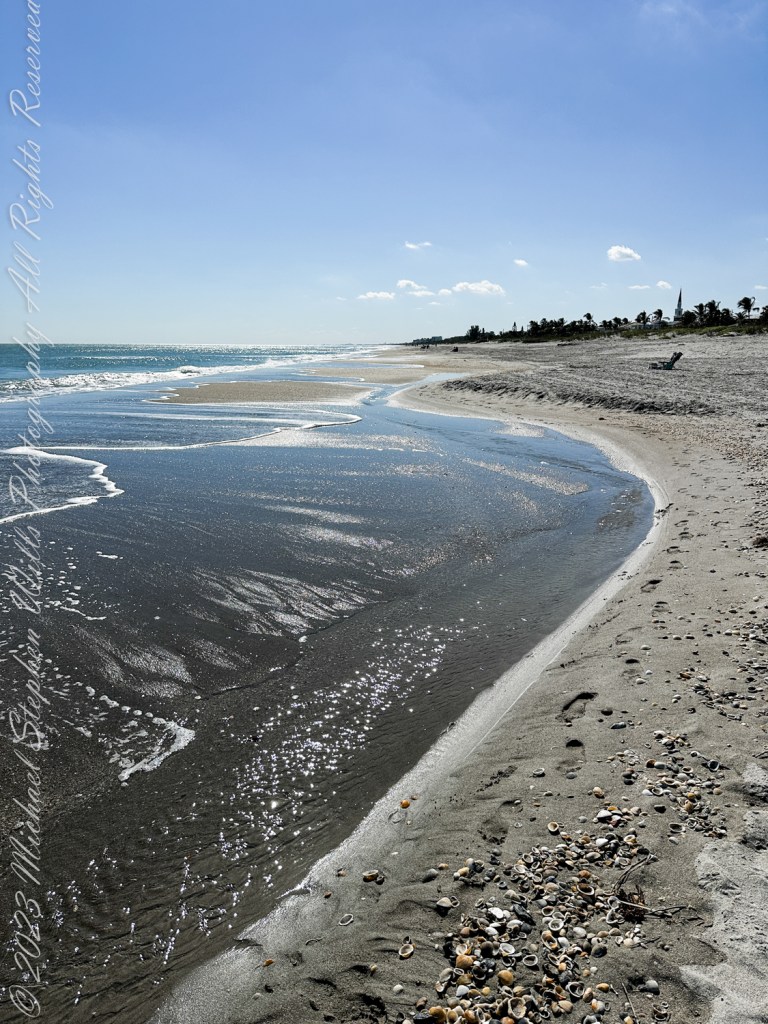
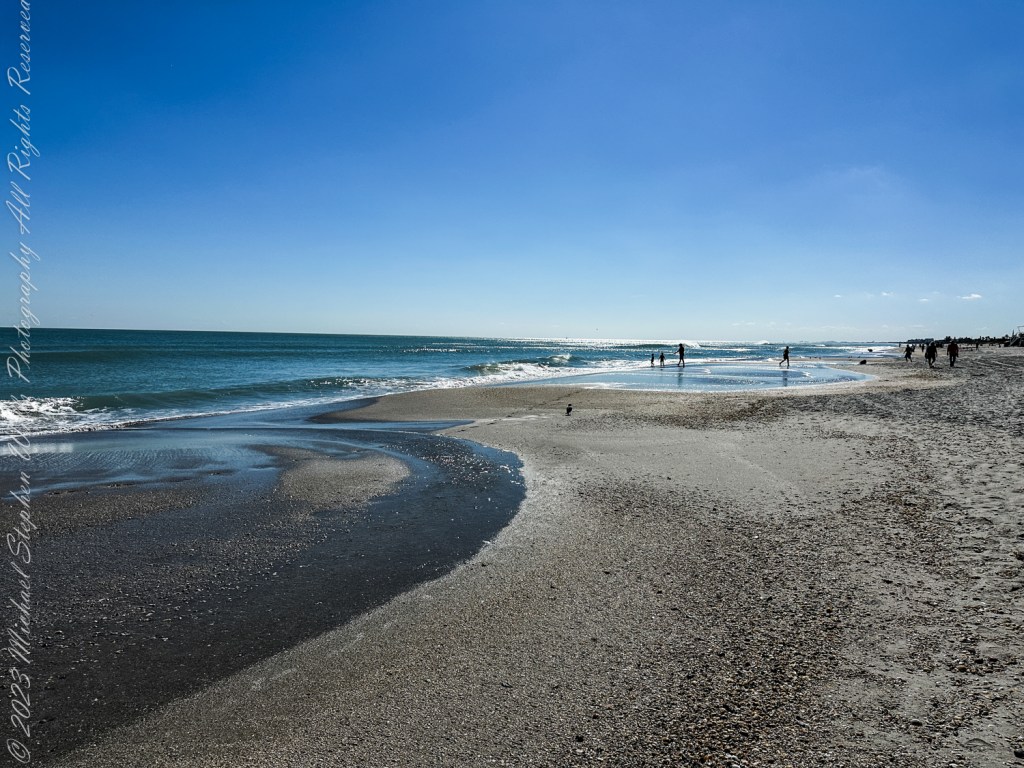
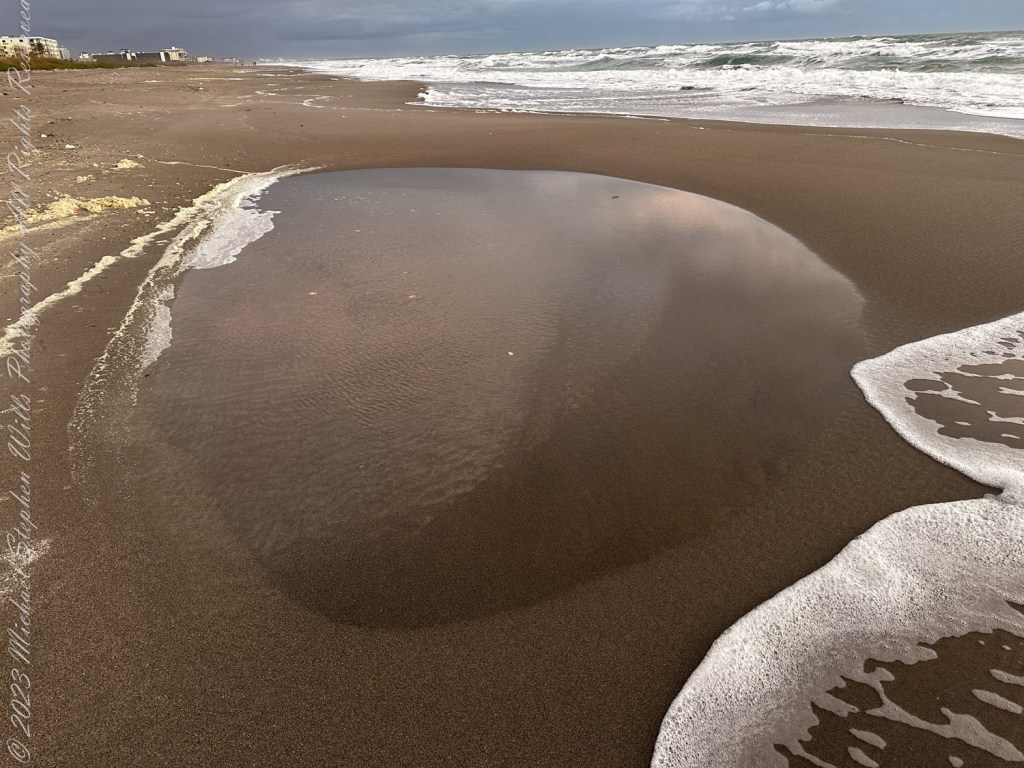
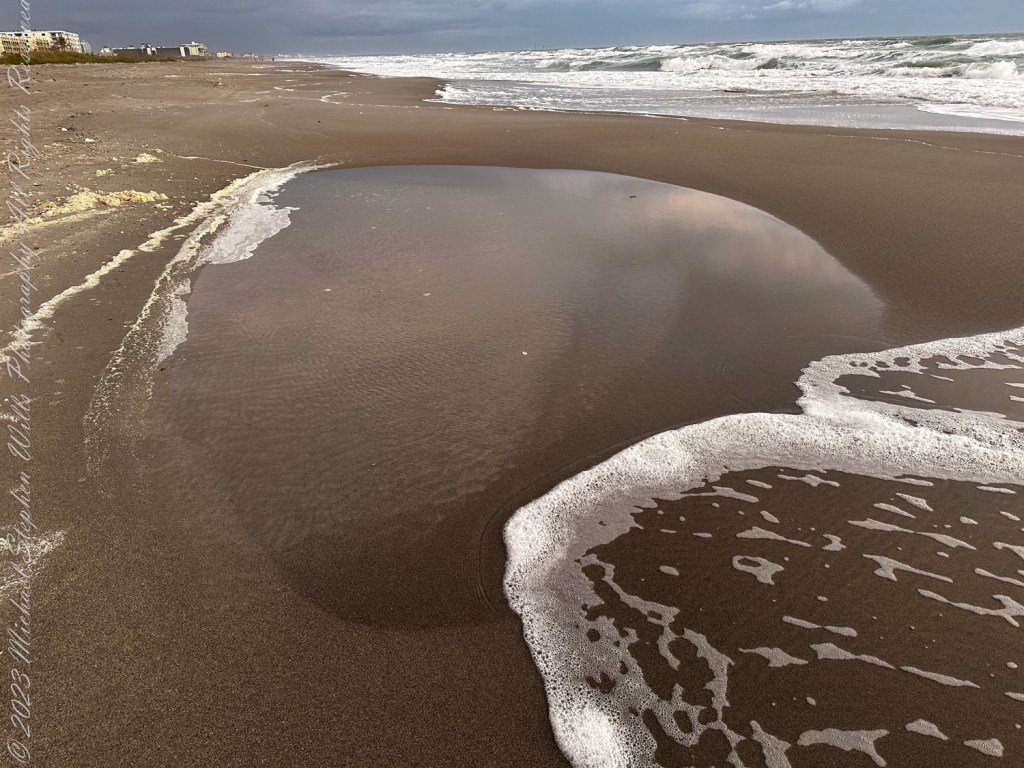
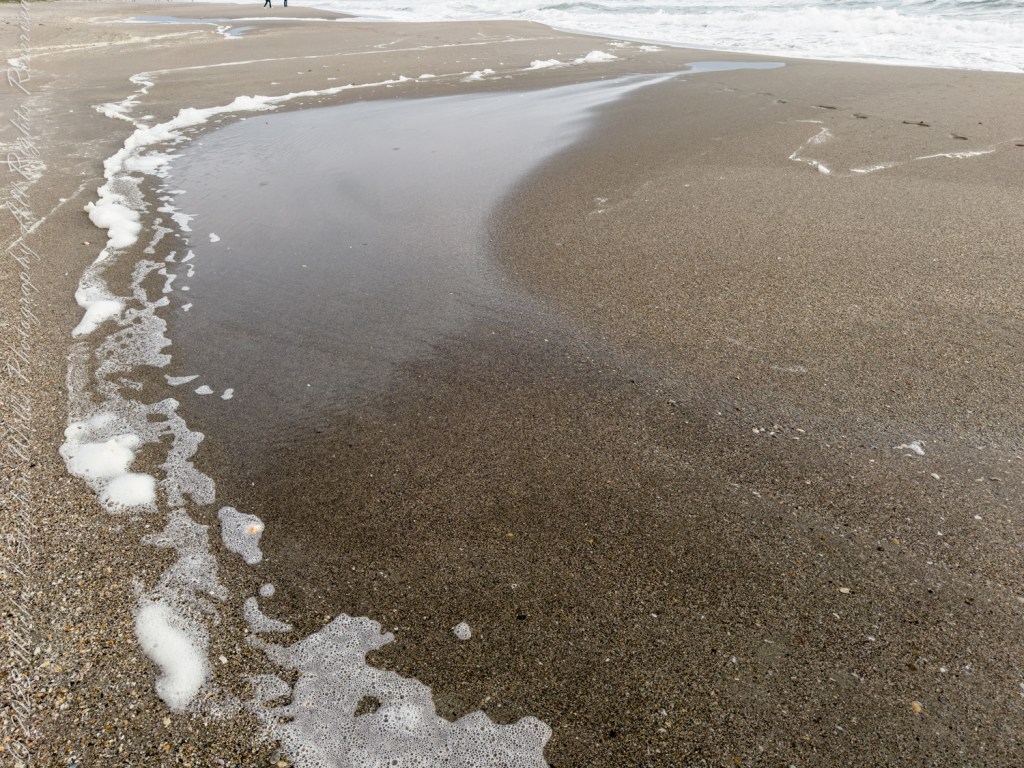
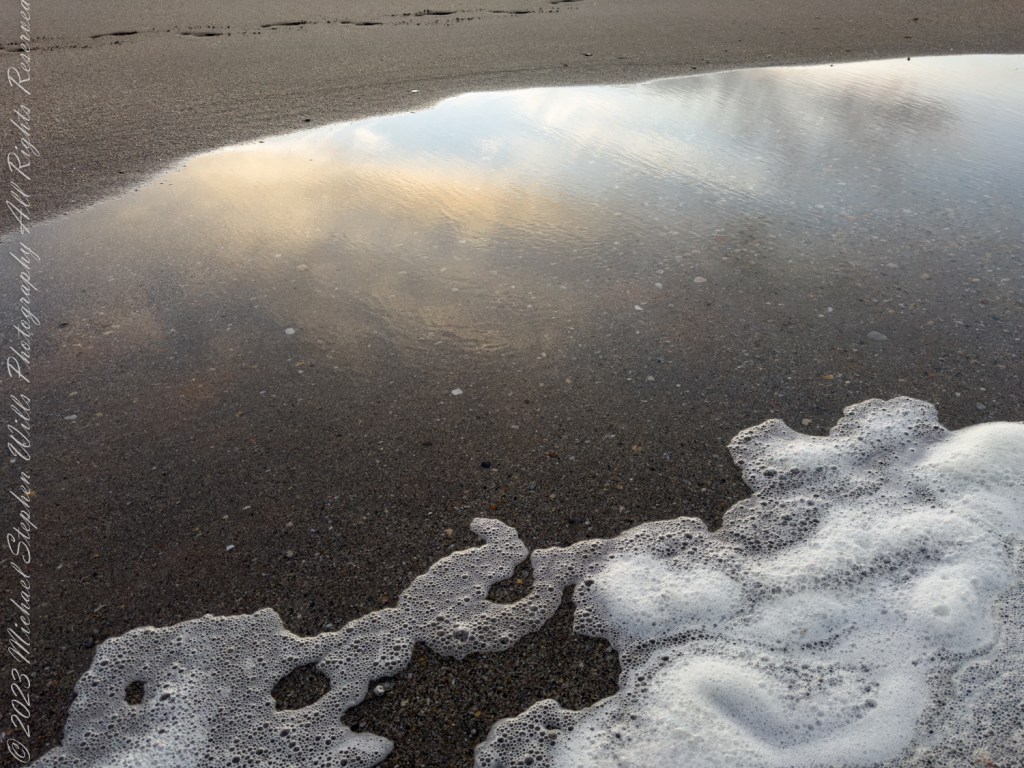
Standing on the sandy shore of Cocoa Beach in January 2024, I observe firsthand the effects of erosion along this stretch of Florida’s coastline. The scenes captured in my photographs show significant changes to the beach’s contours and composition. The shimmering foam, soft sand ripples, and exposed shells are testament to the relentless activity of the sea. Each wave carves away at the beach, leaving patterns in the sand that tell the story of erosion.

Erosion Patterns and Sea-Level Rise

The photographs vividly display the intricate, almost artistic designs formed by erosion. In one, the ripples in the sand reflect the movement of the water, indicating the direction and flow of the tides. The sea has steadily eaten away at the shoreline, pulling the sand away with each ebb and flow.

Studies show that Florida’s Atlantic coast is particularly susceptible to rising sea levels due to its low-lying nature. The Florida Climate Center notes that sea levels have been rising at an average rate of about 1 inch per decade, with projections estimating further acceleration. April 27, 2024 The Washington Post published, “Where Seas are Rising with Alarming Speed,” showing a map with Cape Canaveral / Cocoa Beach showing a 6 – 9 inch sea rise since 2010. This rise compounds the effects of erosion, causing beaches like Cocoa Beach to recede.

Impact on the Beach

I notice shelves of beach sand formerly above the tide now washed over by high tide. New channels forming, cutting across the sand with each tidal cycle. The erosion reveals underlying shell beds and deposits, hinting at the rapid loss of the finer, upper layers of sand. This accelerated erosion poses a significant risk to the stability of the coastal area.

The erosion is not just cosmetic. It impacts local ecosystems and property lines, potentially leading to habitat loss and increased vulnerability to storm surges. Coastal development also exacerbates the problem by interfering with natural sediment replenishment.

Reflections and Future Prospects

The view across the horizon, where the deep blue sea meets the sky, is a stark reminder of nature’s power and the urgent need for mitigation. As Florida’s beaches face the twin challenges of rising seas and intensifying storms, the communities here must find ways to adapt. Cocoa Beach is a vivid reminder of the coastal fragility and the importance of sustainable management practices.

From a personal perspective, seeing this change compels a deeper reflection on our relationship with nature. The beaches we walk on today may not be here for future generations unless we act decisively to combat climate change. Efforts to build resilience into coastal infrastructure and adopt environmentally friendly practices will play a critical role in preserving this natural beauty.

Conclusion

In summary, Cocoa Beach’s erosion is a direct consequence of rising sea levels and changing environmental conditions. The patterns etched in the sand speak of nature’s resilience and power, while also sounding an alarm about the future. As stewards of the coast, it is our responsibility to take meaningful actions that preserve these shores for generations to come.

References

“Florida’s Sea-Level Rise: The Science and the Solutions,” Florida Climate Center.

“Where seas are rising with alarming speed”, Washington Post, April 29, 2024.”

Copyright 2024 Michael Stephen Wills All Rights Reserved

Long Ride

An expert surfer takes a wave

An expert surfer takes a wave near Jetty Pier Park, Cape Canaveral, Florida. Taken with an Apple IPhone 8.

Click video to start. To do this from WordPress Reader, you need to first click the title of this post to open a new page.

Copyright 2024 All Rights Reserved Michael Stephen Wills