Breezes and Memories: Pam’s First Walk and Reflections at Stewart Park

As Pam took her first therapeutic steps through Stewart Park after hip surgery, the wind off Cayuga Lake carried memories of our sailing days. This walk, a milestone along a journey of strength and reflection.

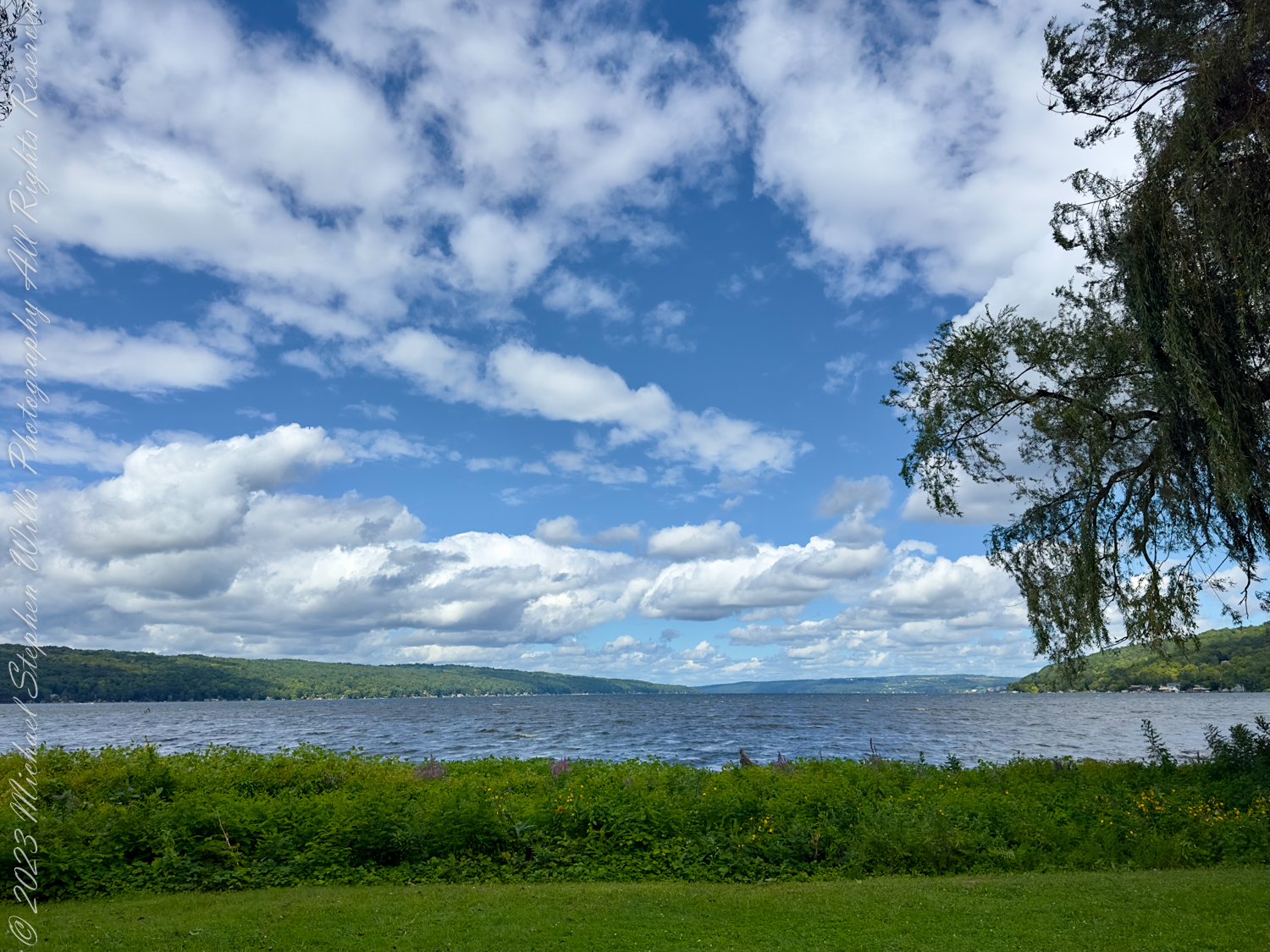
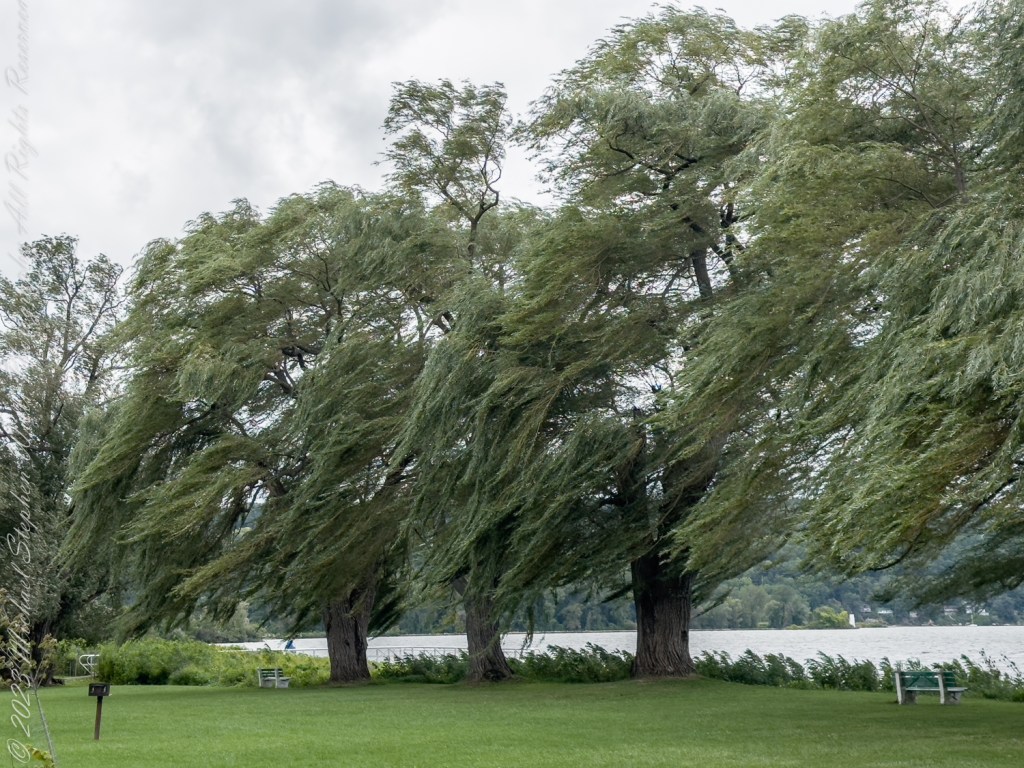
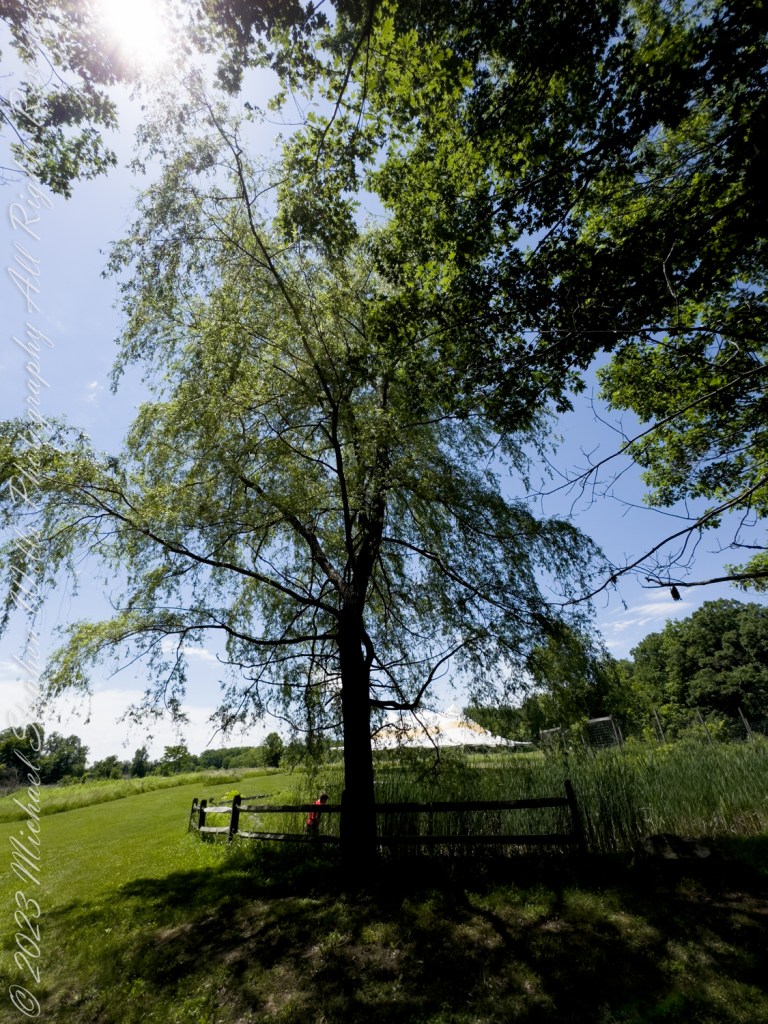
The breeze off Cayuga Lake was lively, stirring the willows and creating waves that rippled across the water’s surface as we arrived at Stewart Park. For Pam, this day marked a significant milestone: her first therapeutic walk since undergoing total hip replacement surgery. The park, located on the outskirts of Ithaca, New York, had long been a place of peaceful walks and scenic reflection for us, but on this day, it took on new meaning. The pathways and views we had enjoyed over the years now served as the backdrop for Pam’s journey of recovery.
As Pam began her walk, using her walker for support, the air felt crisp with the late-summer breeze. She moved carefully along the paved path, her steps steady but measured. The sight of her, framed by the grand trees lining the park, was a testament to the resilience and strength she had displayed throughout the weeks following her surgery. The park’s beauty offered a sense of calm that seemed to support her determination, as though nature itself was encouraging her every step.

Stewart Park, with its sweeping views of Cayuga Lake and towering willows, had always been a special place for us. Over the years, we had spent afternoons such as this sailing the lake’s expansive waters. We ventured out to let the wind carry us across the lake. As Pam walked, we reminisced about those times—how we would navigate the gusty winds that filled our sails, steering into the waves with a sense of adventure. “This wind reminds me your calls to ‘control the jib!!’,” Pam said, smiling as we remembered the thrill of maneuvering the boat to dock.

On days like those, the lake was unpredictable, much like Pam’s journey through recovery had been. Yet, whether on the water or facing the challenges of healing, Pam had always shown a quiet, steadfast determination. Just as we had learned to adjust the sails to accommodate the changing wind patterns, Pam had adapted to her new circumstances, tackling each step of her rehabilitation with grace.

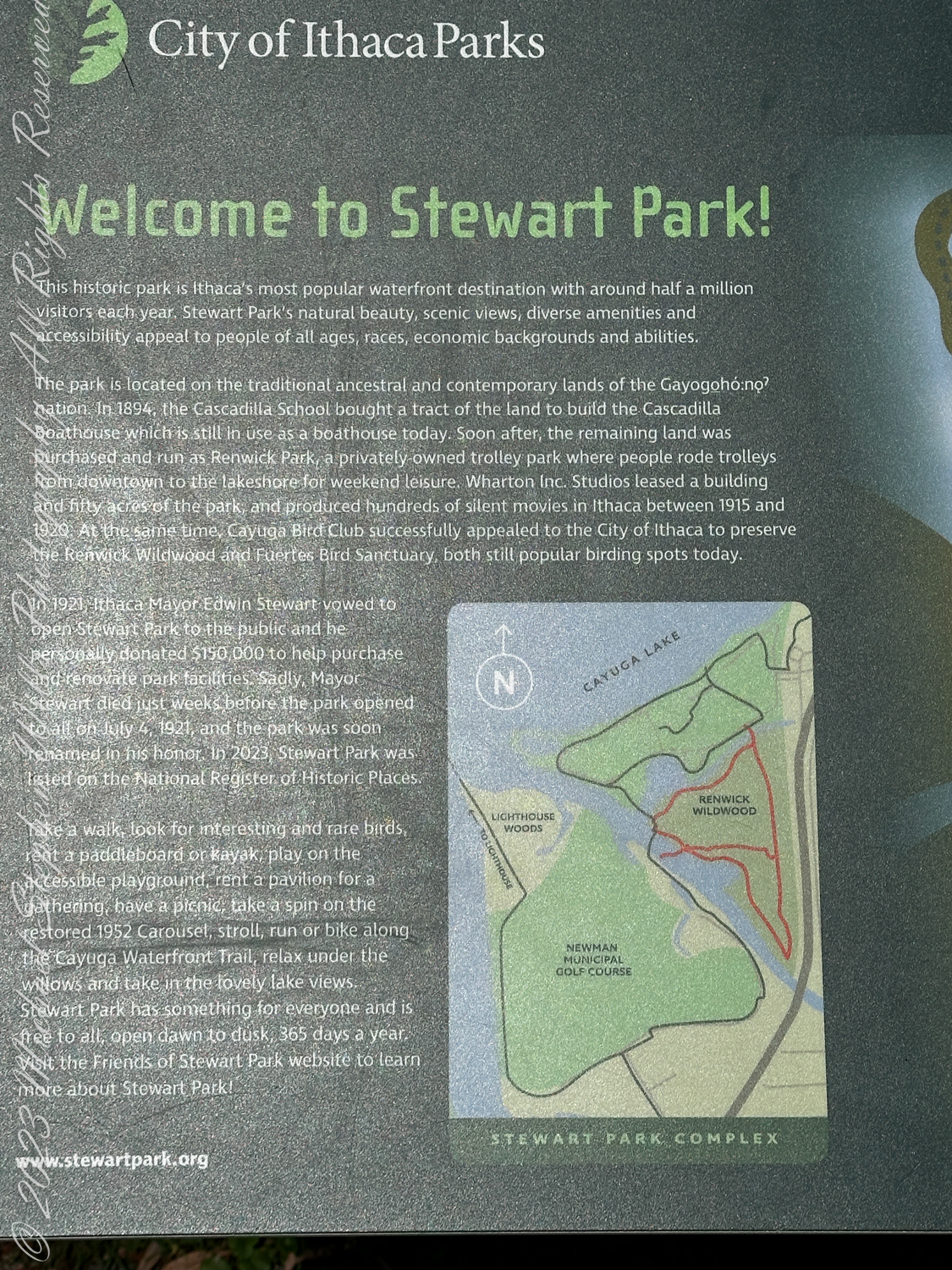
We paused at one of the informational signs along the path. The sign detailed the park’s history, noting that it sits on the ancestral lands of the Gayogo̱hó꞉nǫ’. Originally developed in 1894 for the Cascadilla School’s boathouse, the park had undergone many transformations before becoming the public space it is today. The sign spoke of Mayor Edwin Stewart, who had donated $150,000 to help purchase and renovate the park’s facilities, only to pass away weeks before its official opening in 1921. In 2021, the park was listed on the National Register of Historic Places, a testament to its enduring role in the community.

City of Ithaca Parks Welcome to Stewart Park! This historic park is Ithaca’s most popular waterfront destination with around half a million visitors each year. Stewart Park’s natural beauty, scenic views, diverse amenities and accessibility appeal to people of all ages, races, economic backgrounds and abilities. The park is located on the traditional ancestral and contemporary lands of the Gayogo̱hó꞉nǫʼ nation. In 1894, the Cascadilla School bought a tract of the land to build the Cascadilla Boathouse which is still in use as a boathouse today. Soon after, the remaining land was purchased and run as Renwick Park, a privately owned trolley park where people rode trolleys from downtown to the lakeshore for weekend leisure. Wharton Inc. Studios leased a building and fifty acres of the park, and produced hundreds of silent movies in Ithaca between 1915 and 1920. At the same time, Cayuga Bird Club successfully appealed to the City of Ithaca to preserve the Renwick Wildwood and Fuertes Bird Sanctuary, both still popular birding spots today. In 1921 Ithaca Mayor Edwin Stewart vowed to open Stewart Park to the public and he personally donated $150,000 to help purchase and renovate park facilities. Sadly, Mayor Stewart died just weeks before the park opened to all on July 4, 1921, and the park was soon renamed in his honor. In 2021 Stewart Park was listed on the National Register of Historic Places. Take a walk, look for interesting and rare birds, rent a paddleboard or kayak; play on the accessible playground, rent a pavilion for a gathering, have a picnic, take a spin on the restored 1952 Carousel, stroll, run or bike along the Cayuga Waterfront Trail, relax under the willows and take in the lovely lake views. Stewart Park has something for everyone and is free to all, open dawn to dusk, 365 days a year. Visit the Friends of Stewart Park website to learn more about Stewart Park!

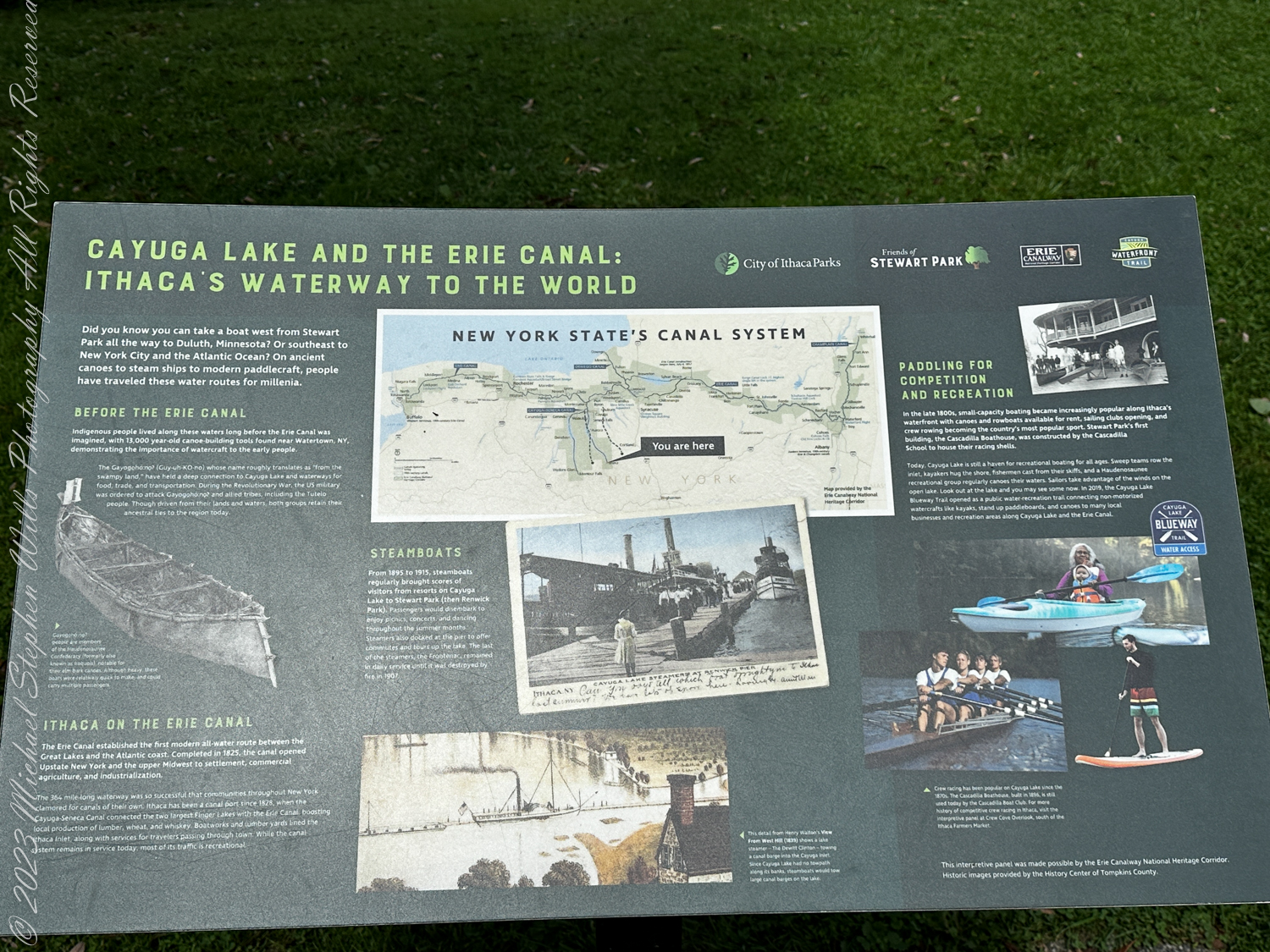
CAYUGA LAKE AND THE ERIE CANAL: ITHACA’S WATERWAY TO THE WORLD

Did you know you can take a boat west from Stewart Park all the way to Duluth, Minnesota? Or southeast to New York City and the Atlantic Ocean? On ancient canoes to steam ships to modern paddlecraft, people have traveled these water routes for millenia.

Before the Erie Canal

Indigenous people lived along these waters long before the Erie Canal was completed in 1825. In 1790, a dugout canoe was found near Elmira, NY, demonstrating the importance of waterways to the early people.

The Cayuga/Seneca Gayogo̱hó꞉nǫʼ who lived here for nearly a thousand years used the lake and rivers to transport people and goods. In the 1600s, French explorers reported meeting the Gayogo̱hó꞉nǫʼ as they traveled east along these waterways. Canoes and later watercraft helped settlers move people, goods, and ideas, transforming upstate New York. With only one lock, the lake’s water level would rise and fall, but goods still needed to be portaged, or moved over land. As the first commercial waterway in the US, the Erie Canal used river systems, canal channels, and lakes to connect New York’s inland towns to world markets.

ITHACA ON THE ERIE CANAL

The canal established the first modern all-water route between the Great Lakes and the Atlantic. Completed in 1825, the canal opened Upstate New York and the upper Midwest to settlement, commercial agriculture, and industry.

The southernmost port of the canal was at Cayuga Lake, near present-day Route 90, where steamboats ferried passengers and freight to and from Ithaca. Products like salt from Syracuse, wood from the region, and coal from Pennsylvania were loaded onto canal boats for shipment to New York City or via Buffalo, to the upper Midwest.

After more than 200 years of service, the canal has evolved into a water route that is primarily used by small boats for recreation. In 2017, the NYS Canal Corporation rebranded the canal as a recreation destination.

As Pam read the sign, she reflected on how the park’s evolution mirrored her own journey. Like Stewart Park, which had undergone multiple transformations over the years, Pam was in the midst of her own renewal. Her new hip, like the park’s renovations, represented a fresh start, a return to activity, and a promise of more days spent outdoors, enjoying the natural beauty that had always brought us peace.

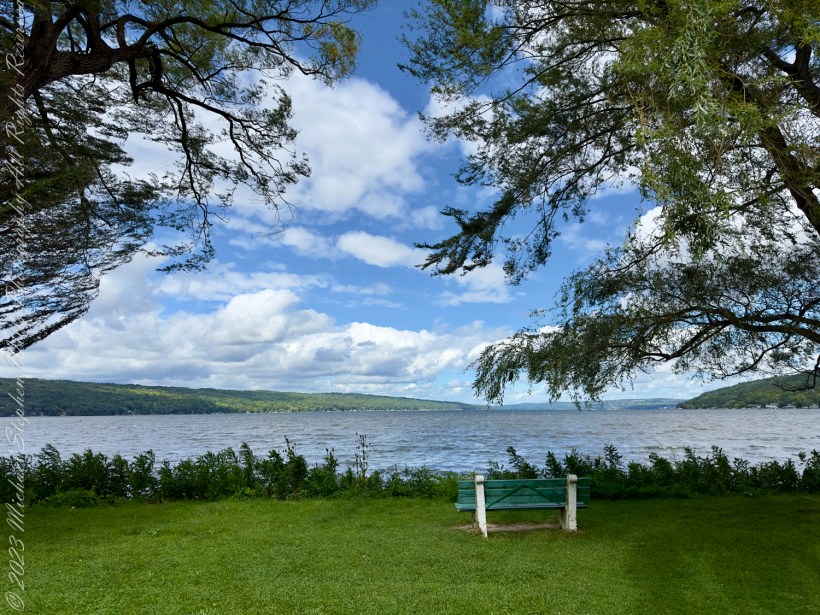
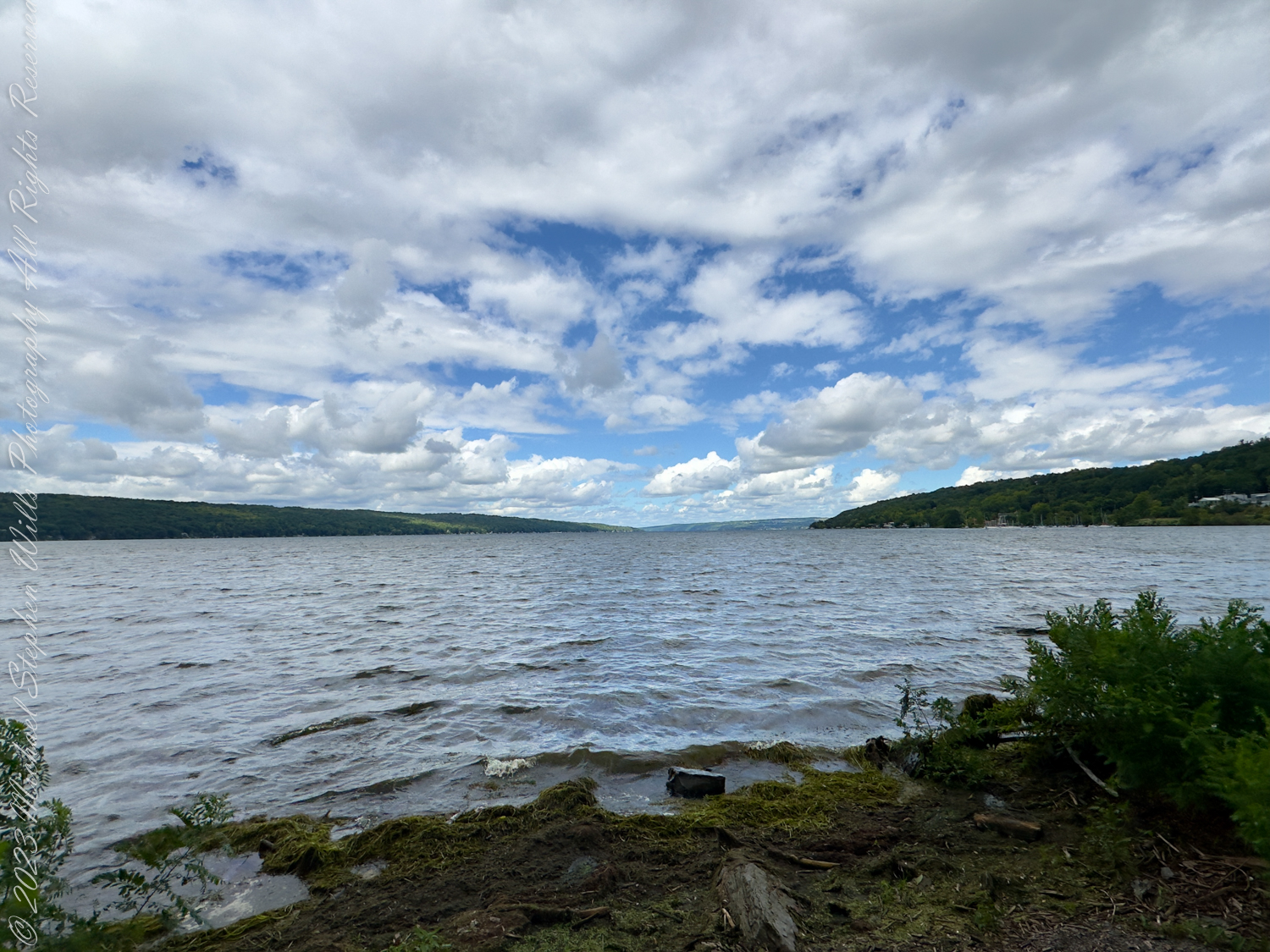
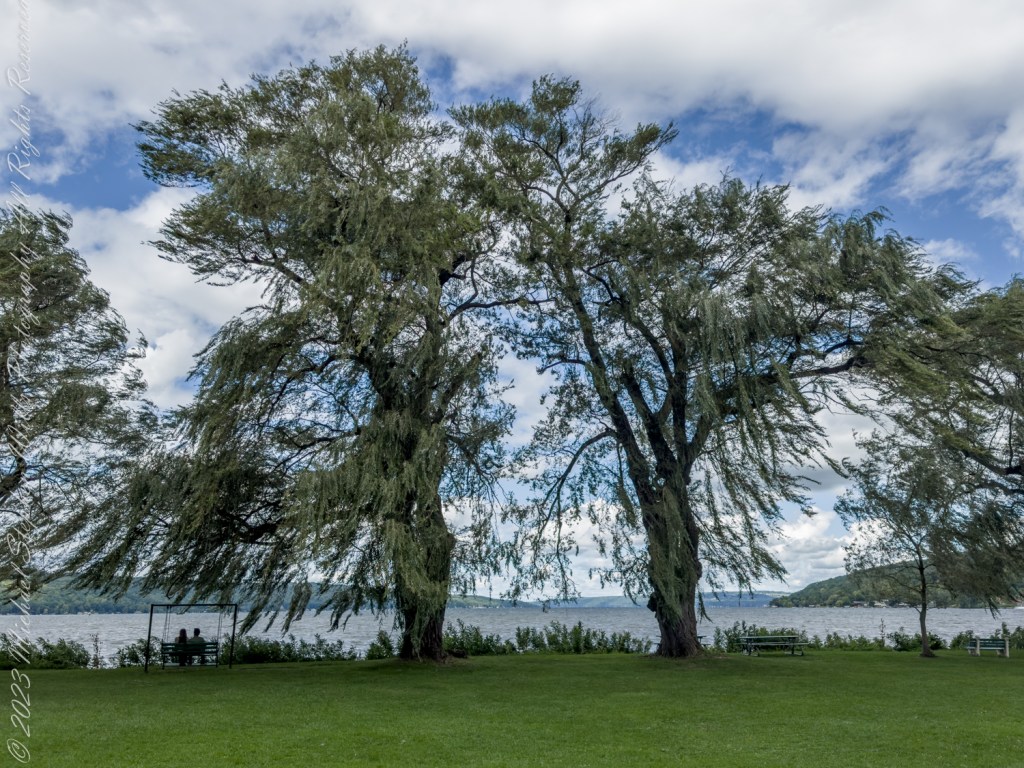
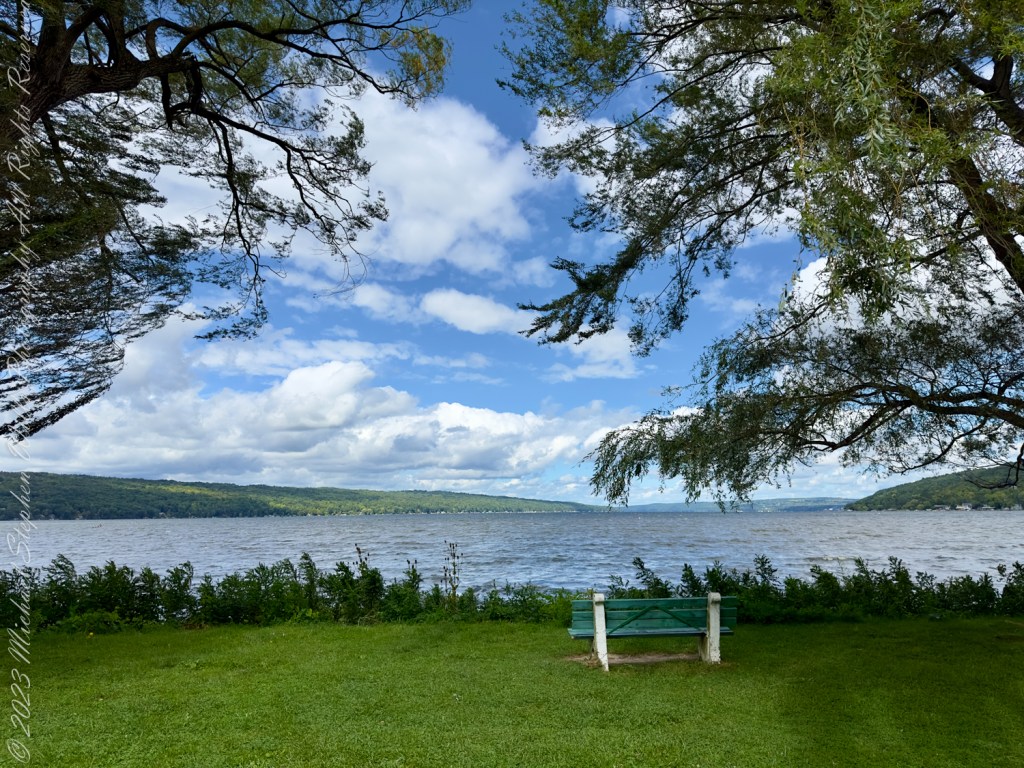
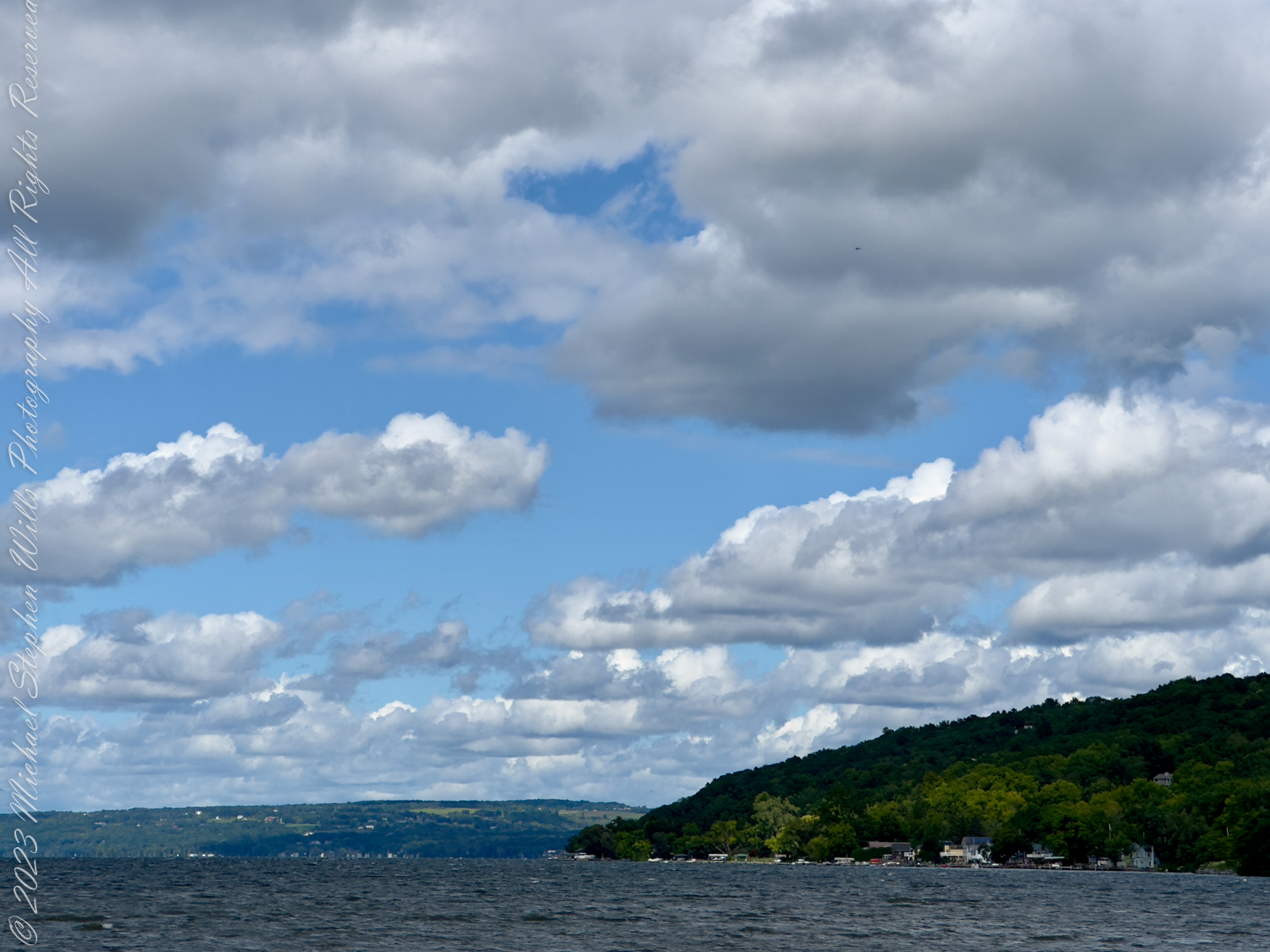
Continuing along the path, we passed several benches nestled beneath the graceful willows, their branches swaying gently in the breeze. Pam took a moment to rest on one of the benches, her eyes focused on the vast expanse of Cayuga Lake. The view stretched toward the distant hills, where the clouds and sun played together, casting ever-shifting patterns of light across the water. For a brief moment, it felt like we were back on our sailboat, riding the waves and allowing the wind to guide us toward new horizons.

As we made our way back along the path, the tall willows swaying and the sound of the waves lapping at the shore, I couldn’t help but feel gratitude. Stewart Park had always been a place of calm and reflection, but on this day, it became a place of healing. Pam’s steps, though slow and deliberate, were filled with the same strength and grace she had shown throughout her life.

The park’s beauty, the history we had shared here, and the memories of our time spent sailing on Cayuga Lake all came together to create a sense of peace. Pam’s recovery journey was far from over, but her progress was undeniable. As we looked out over the lake one last time before heading home, the water shimmered in the sunlight, promising more adventures to come.

Stewart Park, with its windswept trees and timeless views, would forever be tied to this day—Pam’s first steps toward reclaiming her mobility, set against the backdrop of a place that had long been part of our shared story. It was a day filled with hope, strength, and the quiet knowledge that, like the wind, life would continue to move us forward, no matter the challenges.

Copyright 2024 Michael Stephen Wills All Rights Reserved

Life Unraveled: An Encounter with the Emerald Ash Borer

As I walked the quiet medical campus, a dying ash tree caught my eye. Its bark revealed the intricate, destructive galleries left by the relentless Emerald Ash Borer, telling a silent story of loss.

Feeling the need for air, for motion I walk the grounds of a medical campus in Northeast Ithaca, New York, as my wife undergoes physical therapy following her total hip replacement. The sun is high, casting long shadows across the neatly trimmed lawn and scattered trees. There’s a certain calmness here, a space to reflect amid the quiet hustle of the healthcare world.

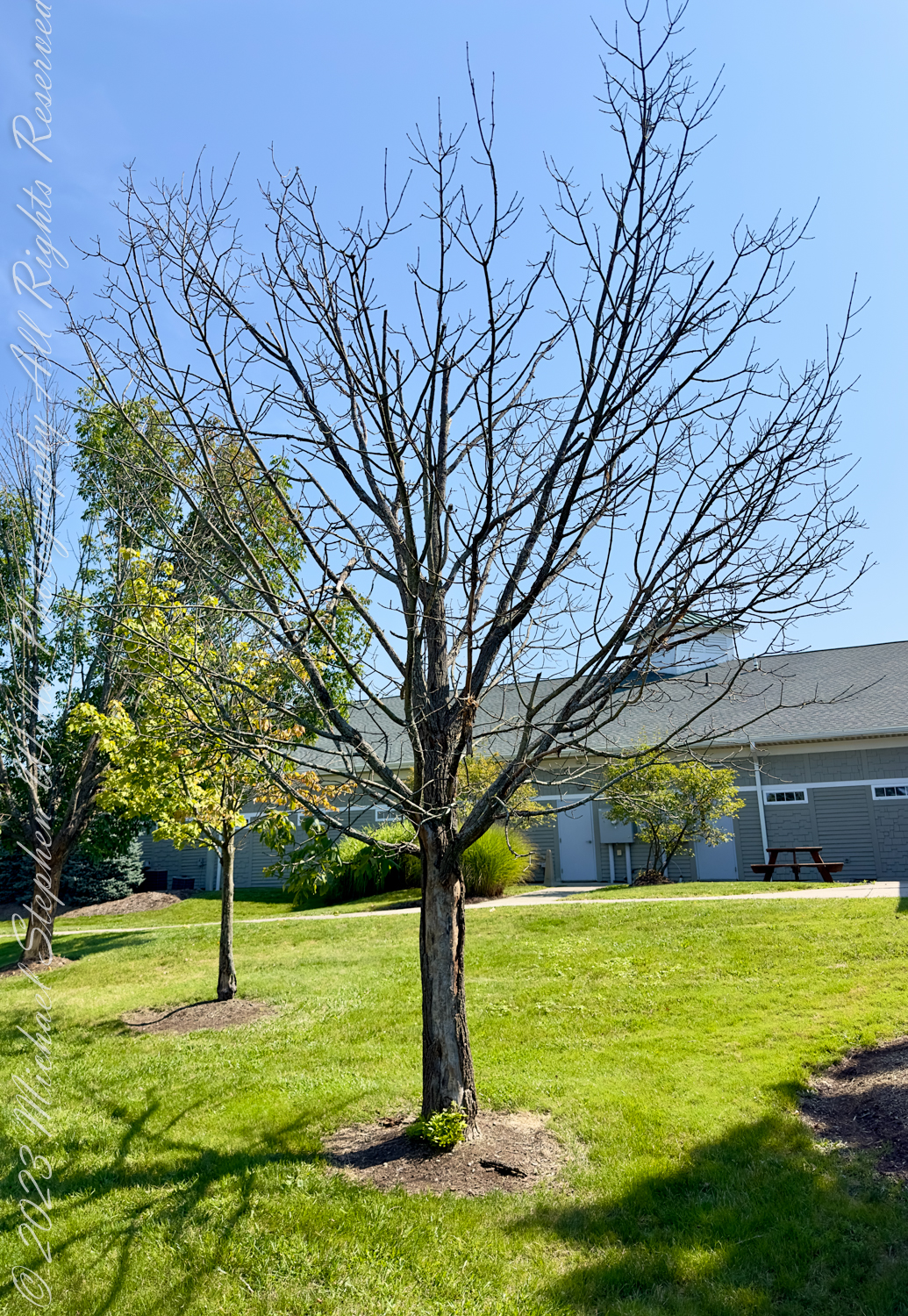
One tree stands out from the others. I immediately sense that something is not quite right. The branches, bare and brittle, reach out like skeletal arms against the blue sky. It’s summer—this tree should be lush, green, full of life. Yet, here it stands, a stark silhouette among the healthier trees nearby. My curiosity draws me closer, and as I circle the tree, my suspicions are confirmed: it’s an ash tree, Fraxinus americana, dying from an all-too-familiar enemy, the Emerald Ash Borer (Agrilus planipennis).

A dying ash tree on the medical campus off Warren Road, Northeast Ithaca.

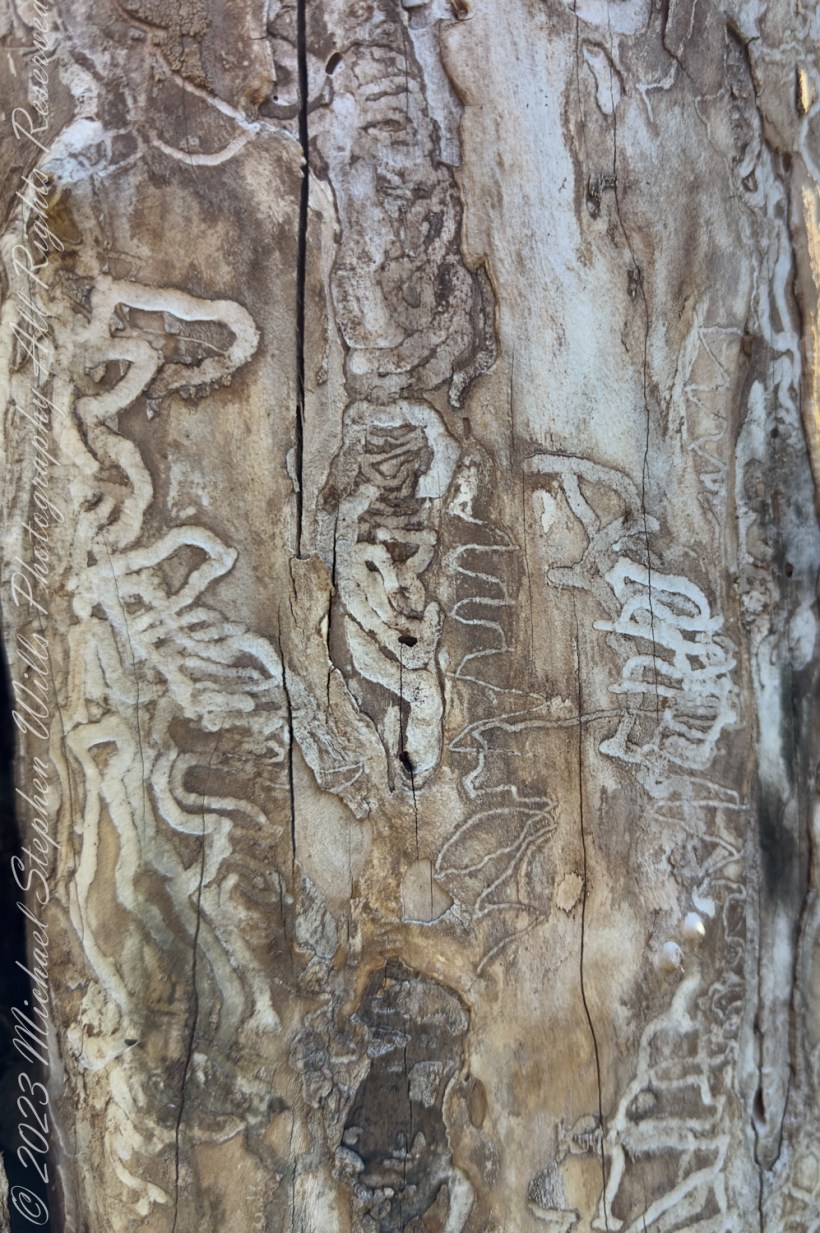
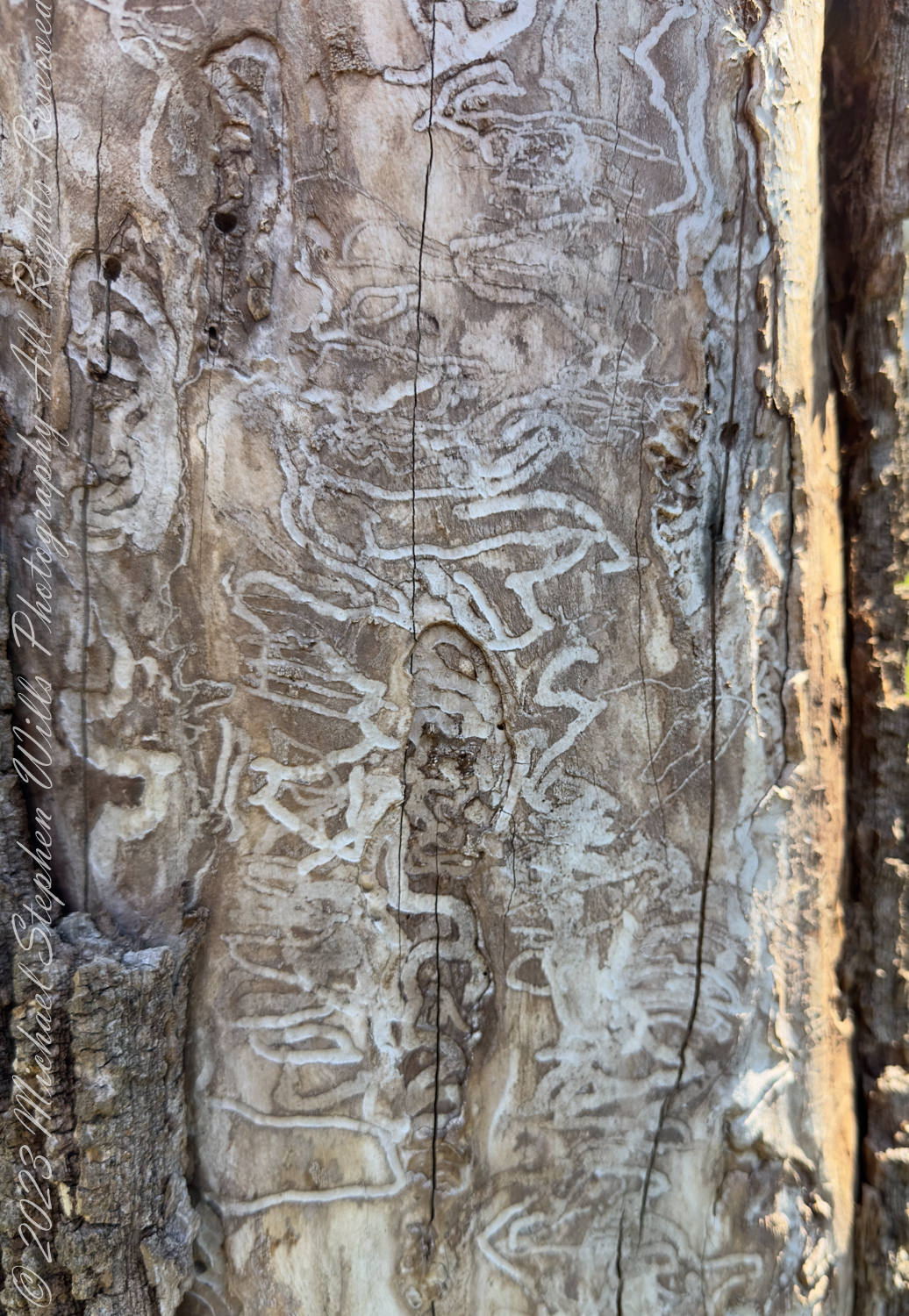
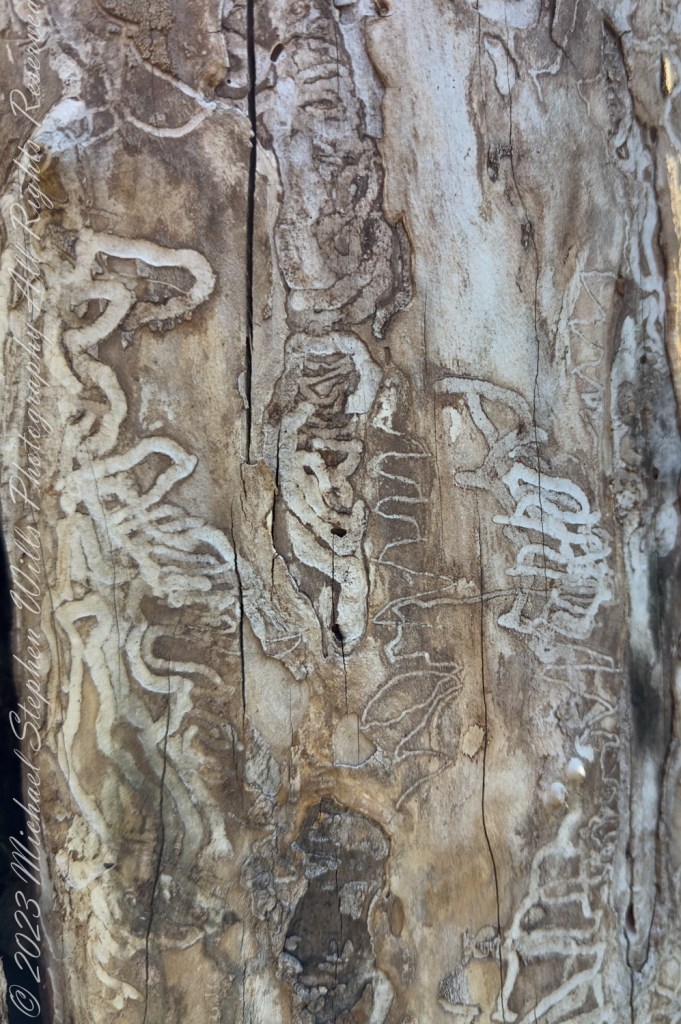
The first clue is a thinning canopy. Ash trees, in their prime, have such graceful foliage, creating broad umbrellas of shade. But when they fall victim to the Emerald Ash Borer, their decline is swift and merciless. The branches I see now are devoid of leaves, save for a few stragglers clinging on in vain. The bark tells an even clearer story. Large chunks have sloughed off, revealing a labyrinth of winding, S-shaped galleries just beneath the surface. These are the telltale signs of the larvae, relentlessly feeding on the inner bark, severing the tree’s lifeline as they go.

The tunnels left by the Emerald Ash Borer (EAB) are called galleries. These S-shaped galleries are created by the larvae of the EAB as they feed on the inner bark and cambium of ash trees. The galleries disrupt the tree’s ability to transport nutrients and water, eventually leading to the tree’s death.

I pull out my phone to capture some close-up shots. The gnarled, crisscrossing tunnels that wind through the exposed wood are mesmerizing in a way, almost like a natural etching carved by the tiny jaws of the Emerald Ash Borer. They’ve created a kind of grim artwork on this dying tree, though there’s nothing beautiful about the destruction they leave behind. I know that underneath this bark, the tree’s circulatory system—the xylem and phloem—has been disrupted, no longer able to transport water or nutrients. Slowly, the tree has starved.

It’s strange how, in the middle of waiting for my wife’s recovery, I find myself thinking about life and loss in this quiet moment with the ash tree. In some ways, this frail giant mirrors what my wife has been going through. The breakdown of something once strong and vital—be it bone or tree—doesn’t happen overnight. It’s gradual, unnoticed at first, until the damage becomes too great to ignore. But while my wife’s new hip will give her strength and mobility once more, there’s no hip replacement for this ash tree. The damage here is irreversible.

I circle the tree again, and the more I look, the more I notice the signs of decline. The bark peels away easily, almost like paper, exposing more of the damaged wood beneath. In some areas, there are what look like D-shaped exit holes, where the adult Emerald Ash Borers have chewed their way out to fly off and start the cycle anew. This is what makes the battle against this invasive species so frustrating—they are small, almost insignificant in size, but the sheer numbers in which they attack, combined with their ability to spread so quickly, make them nearly impossible to stop.

Just as I’m about to walk away, a thought crosses my mind: how many more ash trees will fall to this same fate? The Emerald Ash Borer, a native of Asia, arrived in the United States sometime in the early 2000s, hitching a ride in wooden packing materials. It quickly spread across states, leaving devastation in its wake. Here in New York, the effects have been nothing short of catastrophic. Entire forests of ash are being wiped out, and this tree, standing alone on the edge of the medical campus, is just one more casualty.

I turn back toward the building, the rhythmic crunch of my footsteps on the path feeling heavier now. As my wife works to heal and rebuild her strength inside, I think about the resilience of the human body, its ability to repair, to bounce back after trauma. But for the ash tree, there is no such recovery. Without intervention—chemical treatments that are costly and often impractical on a large scale—this tree will eventually become firewood, its wood too damaged to be of much use for anything else.
It’s a sobering thought, but also a reminder. Nature’s battles, much like our own, are often unseen, quiet struggles that unfold slowly over time. Sometimes, we win, as my wife will with her new hip, but other times, like the ash tree and its silent battle with the Emerald Ash Borer, the fight is already lost.

Copyright 2024 Michael Stephen Wills All Rights Reserved

Ode to a January Sunrise at Cocoa Beach

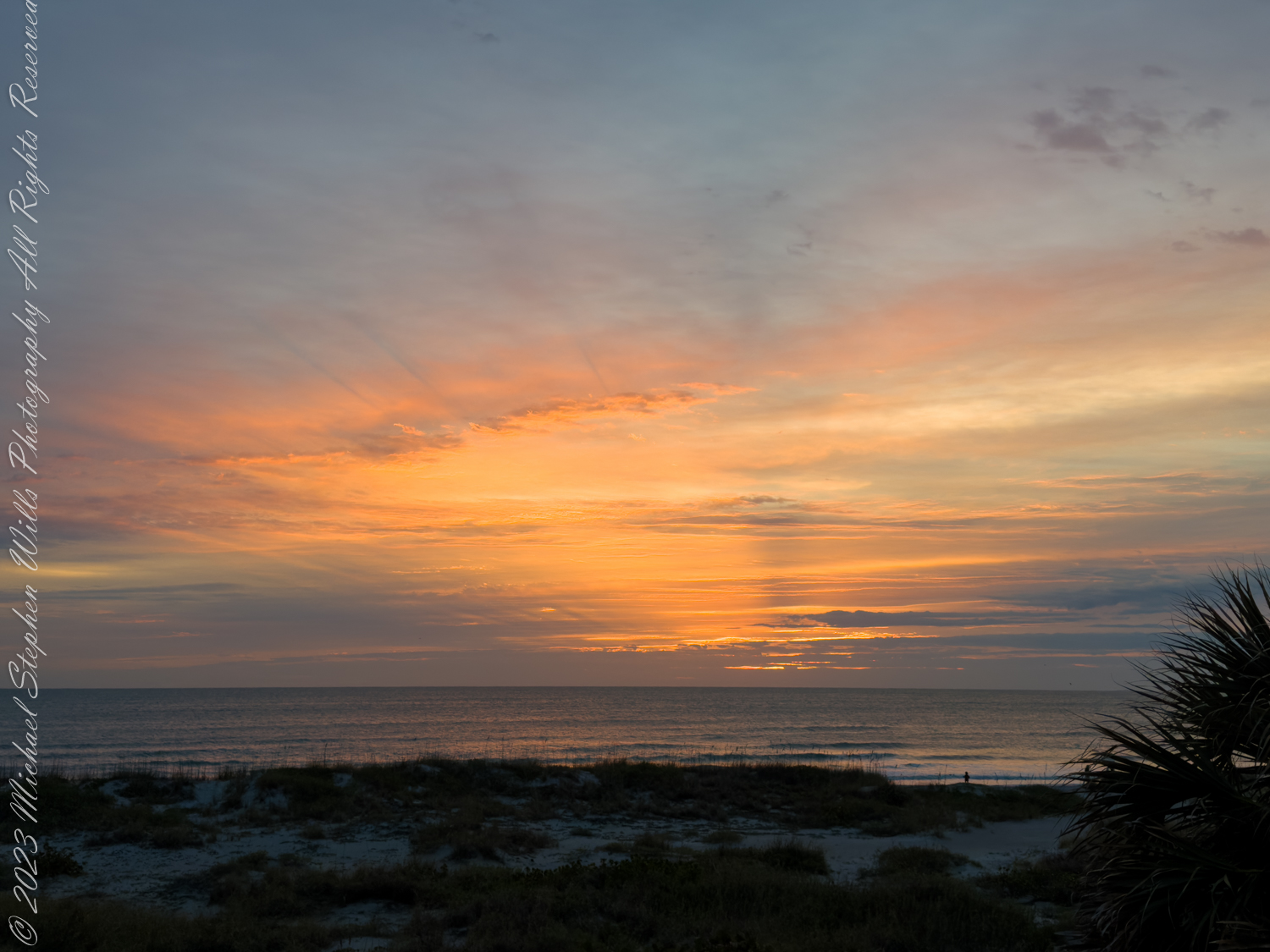
Awake to the radiant grace of dawn, where golden light adorns the sky and the ocean reflects its splendor. Witness the serene dance of nature in a peaceful, inspiring January sunrise at Cocoa Beach.

Awake, my soul, to morning’s radiant grace, as dawn’s first light adorns the sky’s embrace. Behold the scene where heaven meets the sea, a tapestry of hues, divinely free.

The eastern sky ignites with golden fire, each ray a herald of the sun’s desire. In softest pinks and boldest crimsons cast, the night retreats, and day arrives at last.

The ocean, kissed by dawn’s ethereal light, reflects the splendor of the coming sight. Waves gently lap upon the sandy shore; their whispered secrets speak of days of yore.

The palm trees sway in rhythmic, gentle dance, their silhouettes in morning’s light enhance. A peaceful stillness wraps the world in awe, as nature’s beauty strikes the heart with awe.

The scattered clouds, with edges tinged in gold, Frame the horizon as the day unfolds. They drift like dreams upon the waking breeze, in harmony with rustling leaves of trees.

And as the sun ascends its royal throne, Its warmth and light through every vein is known. A new day born, with promise in its wake, invites the heart to rise and dreams to take.

Imagine, seagulls soar on wings of pure delight, their cries a chorus to the morning’s light. They glide and dive with effortless grace, their freedom echoes in this sacred space.

On distant sands, the footprints of the few mark early risers greeting morning’s hue. Their presence, fleeting, soon to be erased, by tides that sweep the shore in gentle haste.

Oh, glorious dawn, thy beauty so profound, Inspire the soul where peace and love abound. Let hearts be lifted by thy gentle hand, to cherish all that’s wondrous in this land.

For in this moment, all the world is still, the chaos of the night’s dark dreams to kill. A symphony of light and life begins, as morning’s joy through every fiber sings.

So let us honor this celestial show, where sky and sea in radiant colors glow. In silent reverence, we stand and gaze, at dawn’s first light, and marvel at its blaze.

Awake, my soul, and bask in morning’s gleam, embrace the beauty of this waking dream. For in the sunrise, hope and peace reside, a timeless gift the heavens do provide.

Copyright 2024 Michael Stephen Wills All Rights Reserved

The American Basswood: A Journey of Discovery

Discover the rich history and ecological significance of the American Basswood, a majestic tree that intertwines nature, culture, and human history. Uncover its beauty, versatility, and the fascinating pollinators that bring it to life.
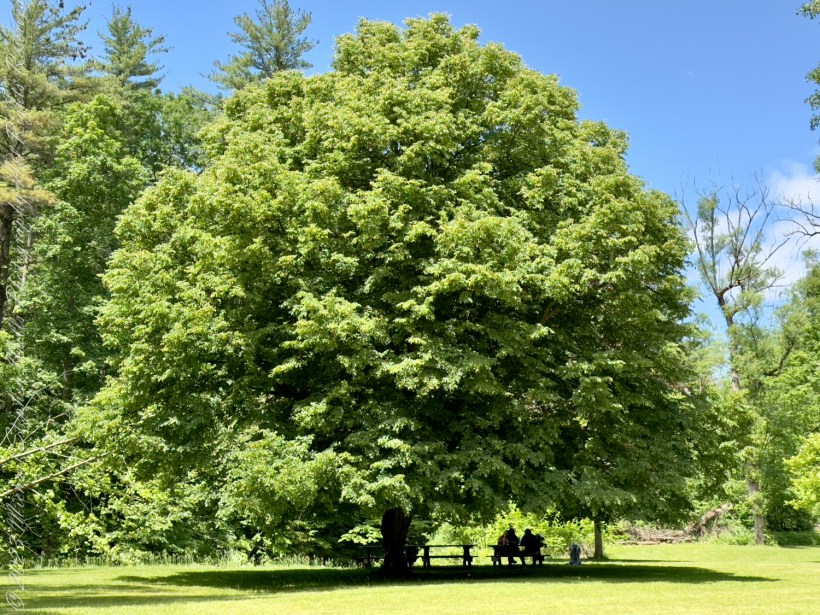
As I strolled through the sun-dappled glade, my eyes were drawn to a magnificent tree standing sentinel at the edge of the clearing. Its broad canopy spread like a green umbrella, casting a generous shade over the picnic bench below. Intrigued by its commanding presence, I approached, eager to unravel the secrets of this arboreal giant. Little did I know that this encounter would lead me on a journey through history, etymology, and the myriad uses of the American Basswood.

This photograph features the growth pattern for which the Basswood is known. Buttermilk Falls State Park, Ithaca, Tompkins County, New York State. The Finger Lakes Region.

The American Basswood, or Tilia americana, is a tree steeped in history and lore. Its name, “Basswood,” is derived from the word “bast,” referring to the inner bark of the tree, which is known for its fibrous and pliable nature. This etymology hints at the tree’s historical uses, which I would soon discover are as rich and varied as the foliage above me.

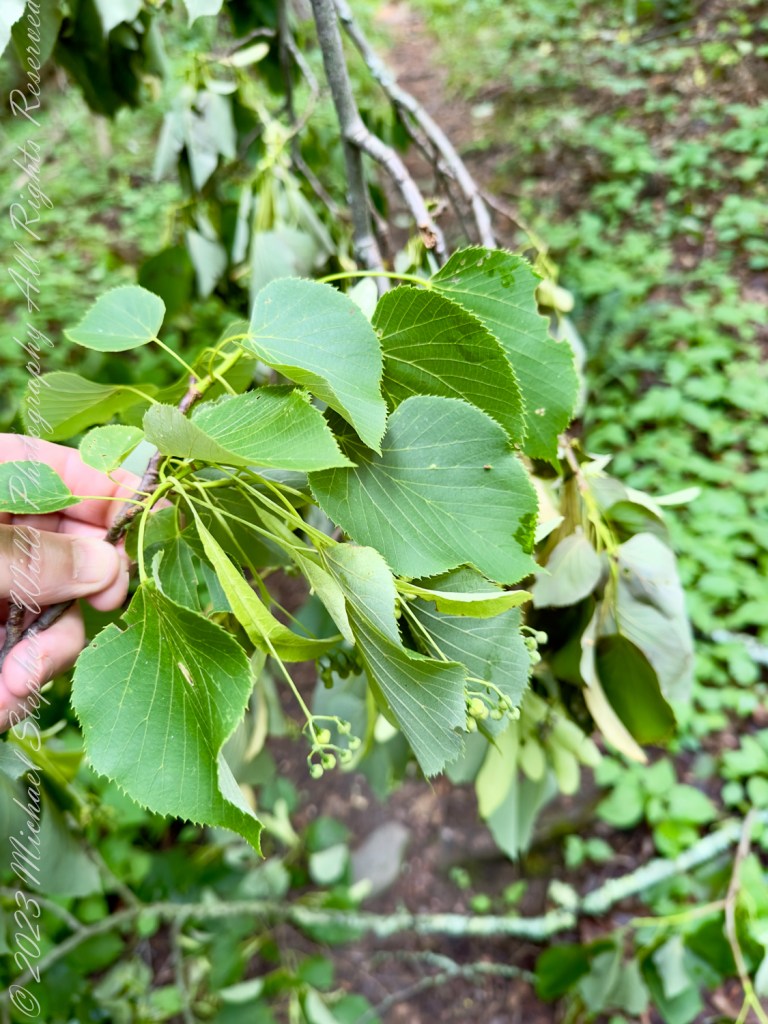
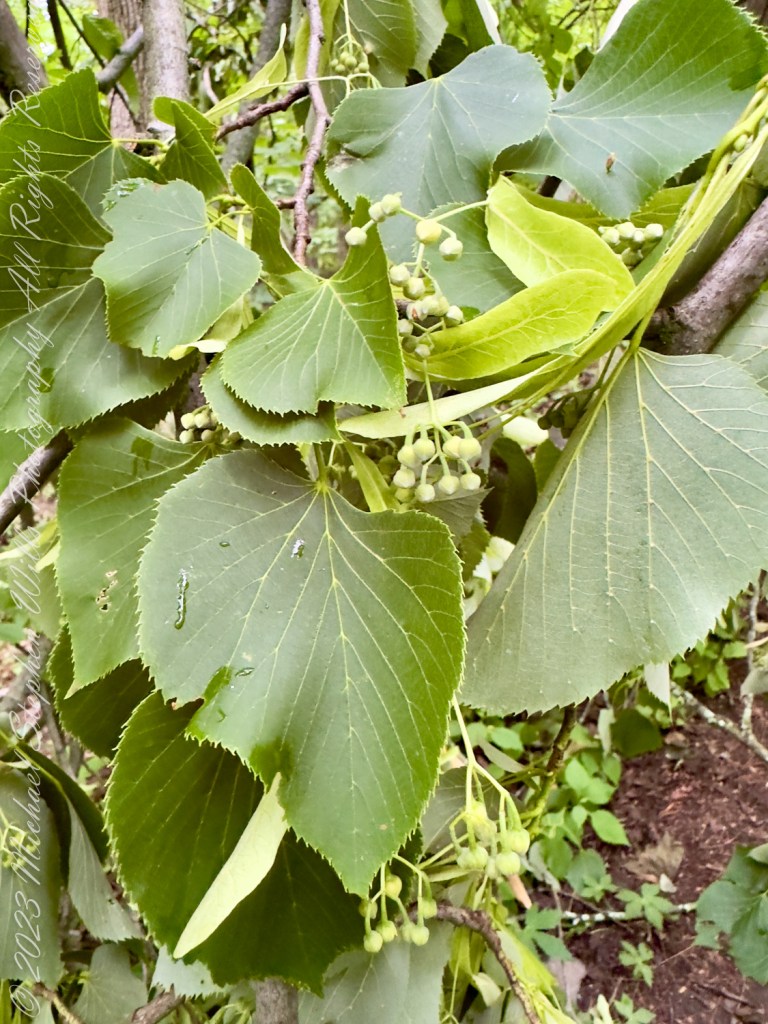
As I examined the leaves, I was struck by their heart-shaped form, a feature that has made the Basswood a symbol of love and romance in various cultures. The leaves were smooth and slightly serrated at the edges, with a deep green hue that seemed to capture the essence of summer. Hanging delicately from the branches were clusters of small, round buds, hinting at the tree’s flowering potential. These flowers, I would later learn, are not just beautiful but also aromatic, attracting bees and other pollinators with their sweet fragrance.

These are leaves from a branch broken by spring storms and fallen across the Finger Lakes Trail that follows the southern side of Treman Park above the South Rim Trail. Robert H. Treman New York State Park, Tompkins County, Ithaca. June 27, 2024

The history of the American Basswood in America is intertwined with the lives of indigenous peoples and early settlers. Native Americans valued the Basswood for its soft, easily worked wood and its inner bark, which they used to make ropes, mats, and other essential items. The tree’s wood, known for being lightweight and finely grained, was perfect for carving and crafting tools, utensils, and even ceremonial masks. This versatility made the Basswood an integral part of daily life and cultural practices.

With the arrival of European settlers, the uses of Basswood expanded. Settlers quickly recognized the tree’s potential, using its wood for a variety of applications. The soft, yet sturdy wood was ideal for making furniture, musical instruments, and even crates and boxes. Its workability and smooth finish made it a favorite among craftsmen and artisans. I imagined the hands of these early Americans, shaping and molding the wood, breathing life into their creations.

As I continued to explore the tree, I was drawn to the small, green fruits hanging from slender stems. These fruits, known as nutlets, are encased in a leafy bract that aids in their dispersal by wind. This ingenious natural design ensures the propagation of the species, allowing new generations of Basswoods to take root and flourish.

Curious about the tree’s name, I delved into its etymology and discovered an interesting linguistic journey. In England and Ireland, the Basswood is commonly referred to as the “Lime Tree.” This name does not relate to the citrus fruit tree but instead comes from the Old English word “Lind,” related to the German word “Linde.” Both terms historically referred to trees of the Tilia genus. Over time, “Lind” evolved into “Lime,” influenced by phonetic changes and regional dialects, solidifying the term “Lime Tree” for Tilia species in these regions. Despite sharing the same common name, the Tilia “Lime Tree” and the citrus “Lime Tree” belong to entirely different plant families.
The American Basswood’s significance extends beyond its practical uses. The tree has found a place in American culture and literature, often symbolizing strength, resilience, and longevity. Its towering presence and expansive canopy make it a popular choice for parks and public spaces, where it provides shade and beauty. I thought of the many people who must have sought refuge under its branches, finding solace and inspiration in its quiet strength.

In addition to its cultural and historical significance, the Basswood also plays a crucial ecological role. Its flowers are a vital source of nectar for bees, making it an essential component of local ecosystems. Beekeepers, in particular, value the Basswood for the high-quality honey produced from its nectar, known for its delicate flavor and aroma. The tree’s leaves and bark also provide habitat and food for various wildlife, contributing to the biodiversity of the area.

Pollination is a critical aspect of the American Basswood’s lifecycle, and a variety of insects are drawn to its fragrant, nectar-rich flowers. Honeybees (Apis mellifera) are among the most significant pollinators, their presence around the Basswood a testament to the tree’s importance in the ecosystem. These industrious bees not only gather nectar but also facilitate the pollination process, ensuring the production of seeds. Bumblebees (Bombus spp.) also play a crucial role, utilizing their unique buzz-pollination technique to effectively transfer pollen within the flowers.

These are leaves from a branch broken by spring storms and fallen across the Finger Lakes Trail that follows the southern side of Treman Park above the South Rim Trail. Robert H. Treman New York State Park, Tompkins County, Ithaca. June 27, 2024

Additionally, native bees such as sweat bees (Halictidae), mining bees (Andrenidae), and leafcutter bees (Megachilidae) are frequent visitors, drawn by the abundant nectar and pollen. Butterflies, while not as significant as bees, contribute to the pollination process, adding a touch of grace as they flutter from flower to flower. Moths, particularly those active in the evening, are another group of pollinators, their nocturnal activity complementing the daytime efforts of bees and butterflies. Hoverflies (Syrphidae), also known as flower flies, are attracted to the nectar and aid in the pollination, showcasing the diverse array of insects that rely on the Basswood.

Reflecting on my discovery, I realized the American Basswood is a living testament to the interconnectedness of nature and human history. Its presence in the landscape is a reminder of the many ways in which plants and trees shape our lives, providing resources, inspiration, and a connection to the natural world.

As I left the shade of the Basswood and continued my walk, I felt a deep sense of gratitude for the opportunity to learn and connect with this remarkable tree. Its story is a reminder of the importance of preserving and cherishing the natural world, ensuring that future generations can continue to discover and appreciate the wonders of the American Basswood.

Copyright 2024 Michael Stephen Wills All Rights Reserved

Discovering Nature’s Secrets: A Grandfather’s Tale at Comstock Creek

Join me on a heartwarming adventure at Comstock Creek with my grandchildren, Sam and Rory, as we explore the wonders of nature, create lasting memories, and celebrate the legacy of the Comstock family.

The morning sun filtered through the lush canopy of trees as I guided my grandchildren, down the familiar path towards Comstock Creek of the Cayuga Nature Center. The children were familiar with the creek from time spent in summer camp. This little haven of nature is a favorite spot of theirs. Comstock Creek, named after the Comstock family, stands as a testament to their significant contributions to entomology and nature education. John Henry Comstock, a renowned entomologist, and his wife, Anna Botsford Comstock, a pioneering figure in nature study, left an indelible mark on the Ithaca area and beyond. Their legacy lives on, not just in the academic world, but in these very waters where my grandchildren now play.

As we reached the creek, the children wasted no time kicking off their shoes and wading into the cool, shallow water. My grandson, in his red shirt, and granddaugter, in her green one, both radiated joy and curiosity. The sunlight danced on the water’s surface, casting shimmering reflections that seemed to animate the entire scene.

The youngest was the first to discover a small pool where the water had carved out a deeper spot. “Look, Grandpa!” he exclaimed, his voice full of excitement. He crouched down, peering intently at the tiny fish darting around his feet. His sister joined him, her initial apprehension giving way to a wide-eyed fascination as she watched the underwater ballet.

Their time was spent turning over rocks to find little aquatic creatures and marveling at the delicate balance of nature. The children’s laughter echoed through the woods, blending with the sounds of rustling leaves and the gentle babble of the creek. Their sense of wonder reminded me of the Comstocks’ passion for nature, a passion they had so fervently shared with the world.

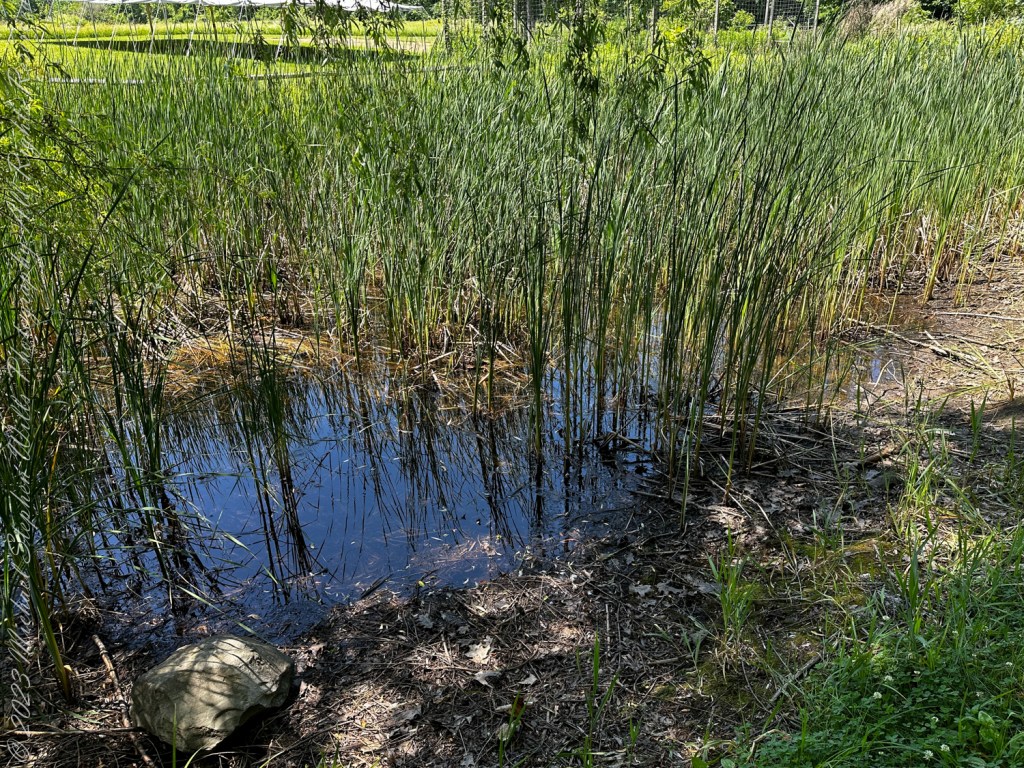
After a while, we decided to take a break and walked through the meadow past where tall reeds swayed gently in the breeze. He knew of a small, tranquil pond that reflected the sky like a mirror. He leaned the water’s edge,hoping to grab a frog. I stood back, capturing this peaceful moment with my camera, knowing that these images would become treasured memories.

As noon approached, we travelled back to Ithaca for an ice cream treat, promised them as a reward for their adventurous spirit. Their faces lit up with delight as they savored their treats, their expressions reflecting pure contentment.

The day wouldn’t have been complete without a splash in the pool. Back home, grandmother set up the inflatable volleyball net while the kids changed into their swimsuits. The pool became a hub of activity as they splashed around, their laughter blending with the sound of the water.

Reflecting on the day, I felt a deep sense of gratitude. The Comstock family’s dedication to nature education had inspired generations, including my own. Their legacy was evident not just in the academic institutions of Ithaca, but in the simple, joyous exploration of nature that I shared with my grandchildren. I hope this day at Comstock Creek will be remembered fondly, a chapter in our family’s ongoing story of discovery and connection with the natural world.

Copyright 2024 Michael Stephen Wills All Rights Reserved

Epiphyte

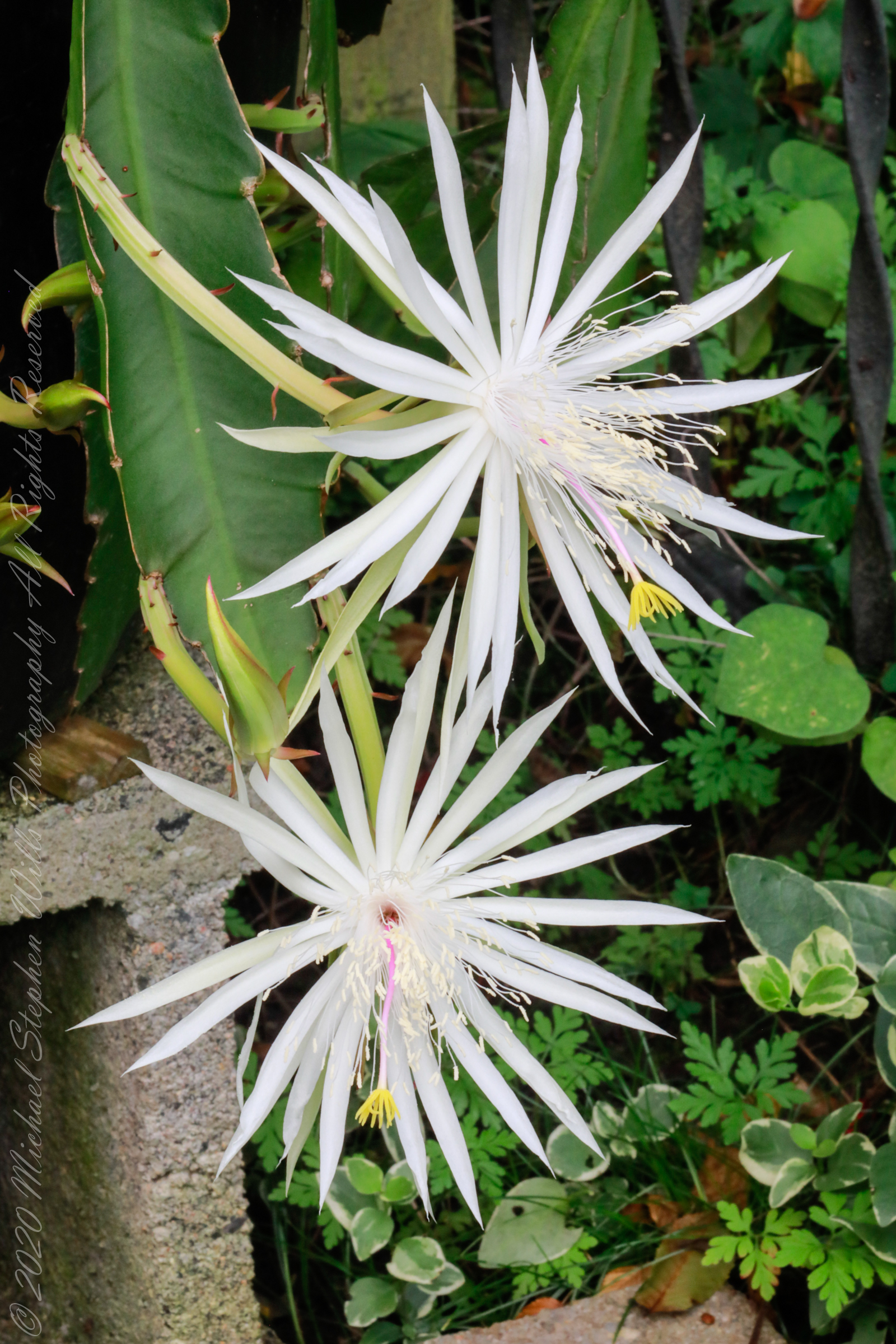
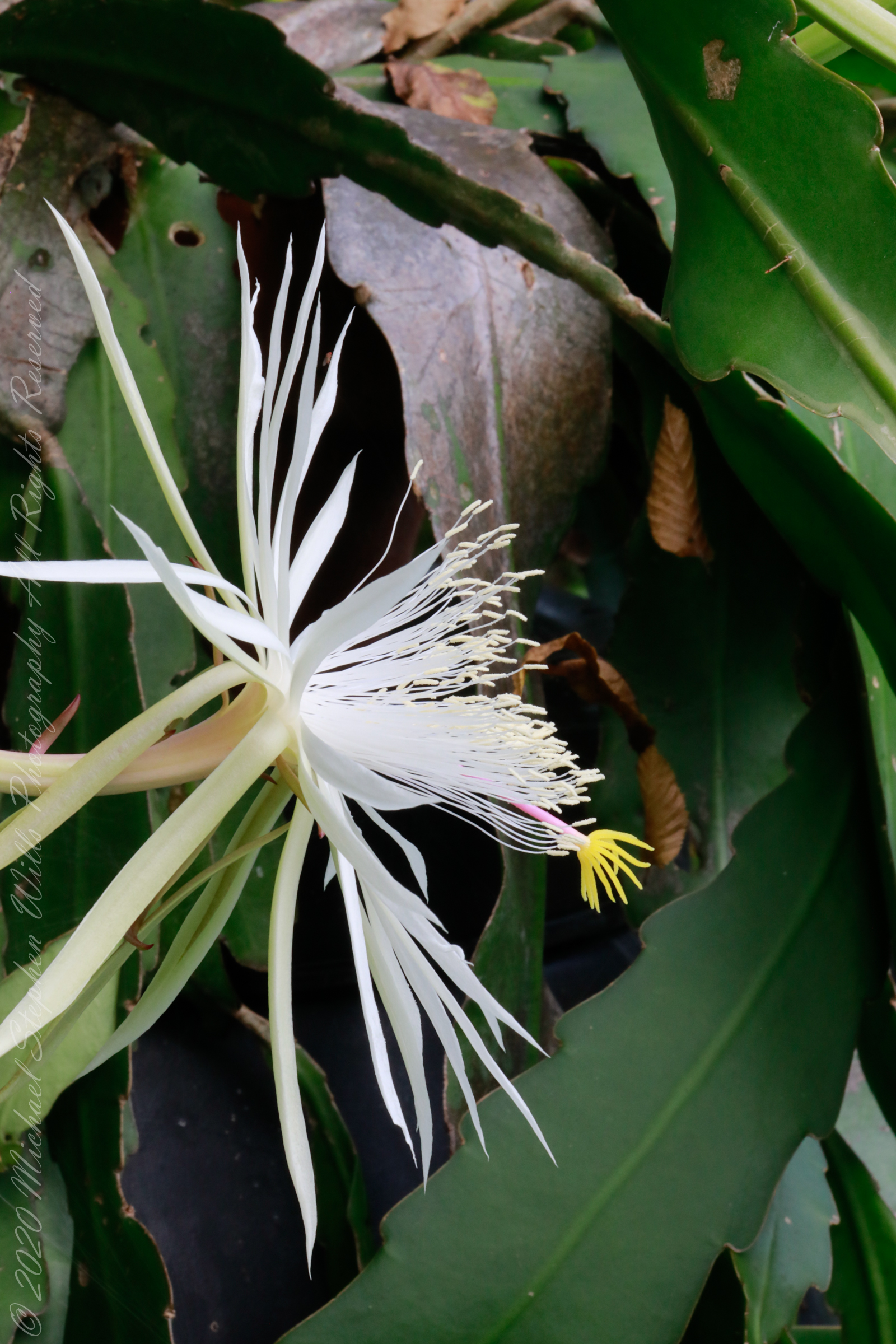
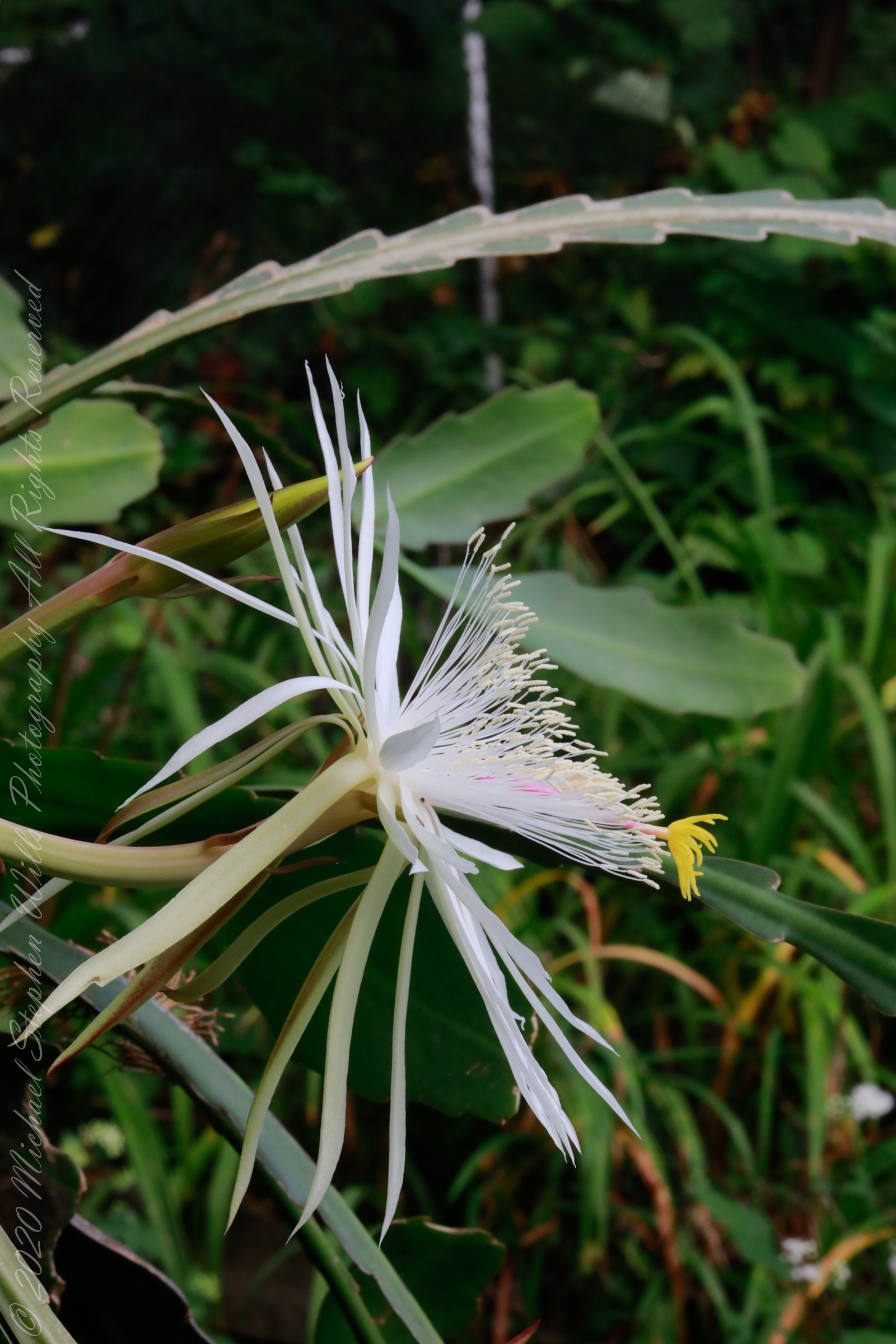
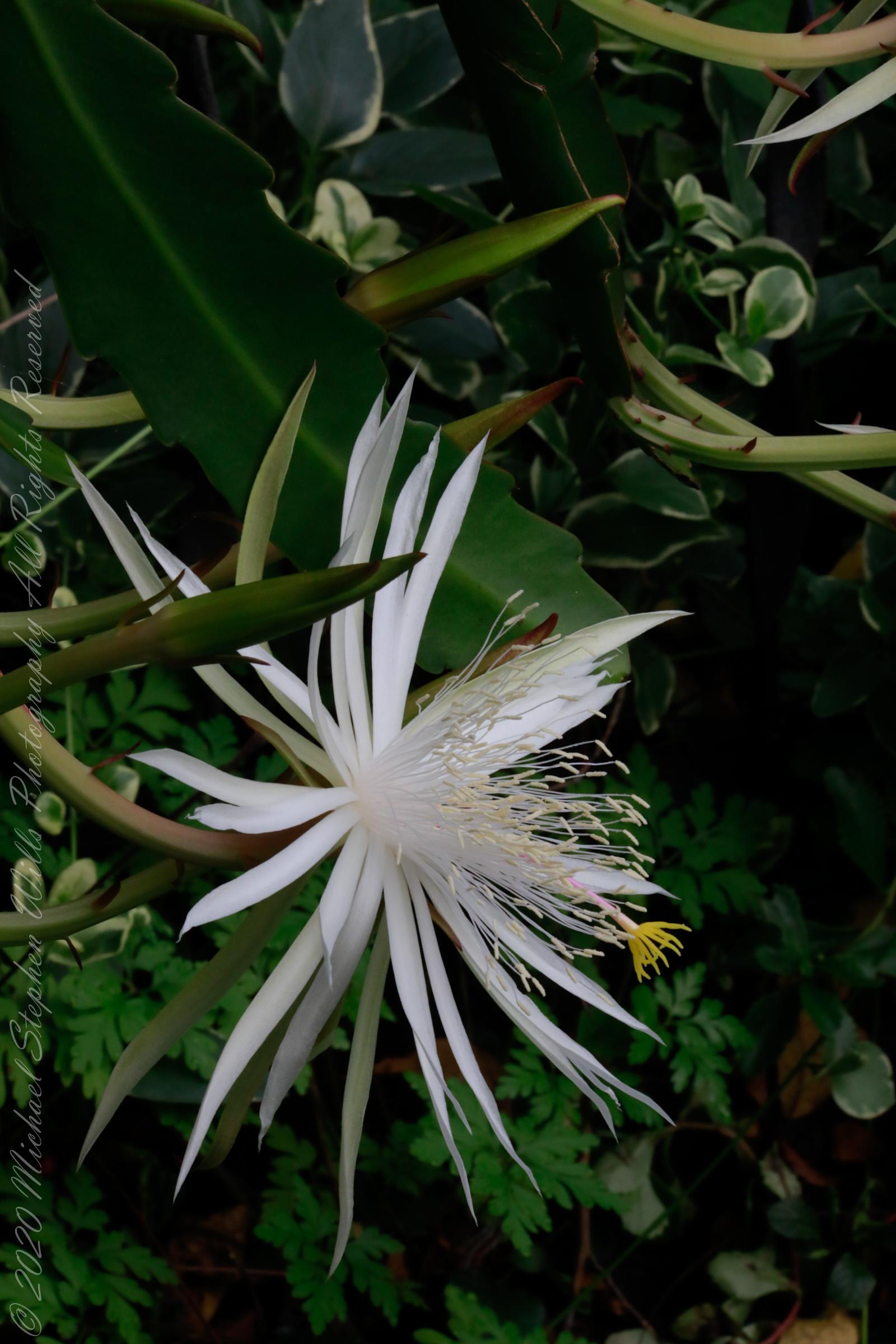
Discover the enchanting world of Epiphyllum, where the “Night Blooming Cereus” thrives without soil, capturing moisture and nutrients from the air. Explore its unique beauty and ecological significance. Read more to delve into this fascinating plant’s story.

The Epiphyllum genus, which includes my “Night Blooming Cereus,” consists of epiphytic plants. The term “epiphytic” comes from the Greek epi- (meaning “upon”) and phyton (meaning “plant”). Epiphytic plants, sometimes called “air plants,” do not root in soil. However, this term can be misleading, as many aquatic algae species are also epiphytes on other aquatic plants (seaweeds or aquatic angiosperms). Therefore, it’s essential not to confuse the genus root word “phyllum” (leaf) with the generic term “phytic” (plant), even though they share the common prefix “epi.” A plant can be epiphytic without being part of the Epiphyllum genus.

These were captured with the Canon EOS 5D Mark IV dslr on a Manfrotto tripod.

An epiphyte is a plant or plant-like organism that grows on the surface of another plant, deriving its moisture and nutrients from the air, rain, or debris accumulating around it. The host plants on which epiphytes grow are called phorophytes. Unlike parasites, epiphytes use other plants merely for physical support and do not negatively impact the host. Epiphytes can also be called epibionts when growing on non-plant organisms. Common in both temperate zones (mosses, liverworts, lichens, algae) and the tropics (ferns, cacti, orchids, bromeliads), epiphytes enhance biodiversity and biomass in their ecosystems. They make excellent houseplants due to their minimal water and soil needs and create rich habitats for various organisms, including animals, fungi, bacteria, and myxomycetes.

Epiphytes are not connected to the soil and must source nutrients from fog, dew, rain, mist, and decomposing organic material. They have an advantage in the canopy, where they access more light and are less vulnerable to herbivores. Epiphytes also benefit animals that live in their water reservoirs, like some frogs and arthropods.

Epiphytes significantly affect their host’s microenvironment and the broader ecosystem. They hold water in the canopy, reducing soil water input, and create cooler, moister conditions, which can decrease the host plant’s water loss through transpiration. Non-vascular epiphytes, like lichens and mosses, are particularly efficient at rapid water uptake.

Click me for another “Cereus” Post.

Reference: my post draws heavily on this source: Wikipedia, “Epiphyte.”

Copyright 2024 Michael Stephen Wills All Rights Reserved

A Late Winter Walk Through Cornell University Campus

Explore a late winter walk through Cornell University’s scenic campus, discovering blooming snowdrops, historic landmarks, and the striking “Magna Dancer” sculpture. Uncover the beauty and heritage captured in each step of this serene journey.


On the late winter afternoon of March 1, 2024, I decided to take a long walk starting from Cascadilla Park Road, making my way up through the Cornell University campus, and ending at Fall Creek near the Mundy Wildflower Garden before returning to my starting point. The sun was shining brightly, casting long shadows, and the crisp air was filled with a hint of spring. Carrying an Apple IPhone 14 Pro Max smartphone, I set off to capture the beauty and essence of this serene day.

Starting Point: Cascadilla Park Road

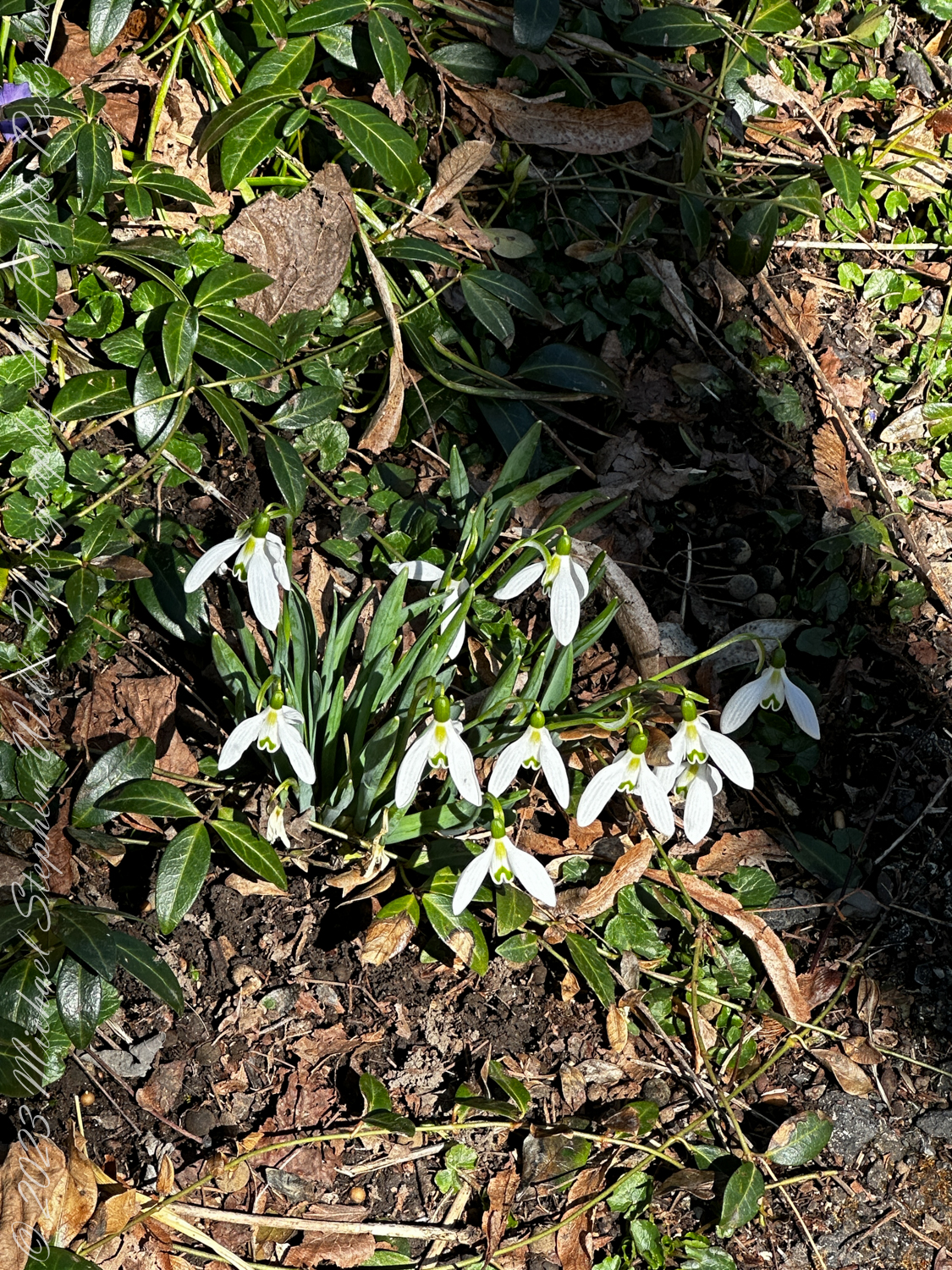
The walk began on Cascadilla Park Road, where I was greeted by a delightful patch of snowdrops (Galanthus nivalis) nestled among the glossy green leaves of periwinkle (Vinca minor). These delicate white flowers, blooming despite the chill, were a hopeful sign of the approaching spring. Their pristine petals contrasted beautifully with the dark, shiny leaves, creating a picturesque start to my journey.

These flowers were found in a garden on Cascadilla Park Road, Ithaca, March 1, 2024. Snowdrops (Galanthus nivalis) are among the first flowers to bloom in late winter and early spring, often pushing up through the snow. These plants are known for their nodding, white, bell-shaped flowers and are a common sight in gardens during this time of year. The glossy green leaves belong to a plant known as Periwinkle (Vinca minor). Periwinkle is a popular ground cover plant, often found in gardens due to its ability to spread quickly and form a dense mat of evergreen foliage. It typically has glossy, dark green leaves and produces small, blue or purple star-shaped flowers in the spring.

Climbing the Steps to Steps to Myron Taylor Hall

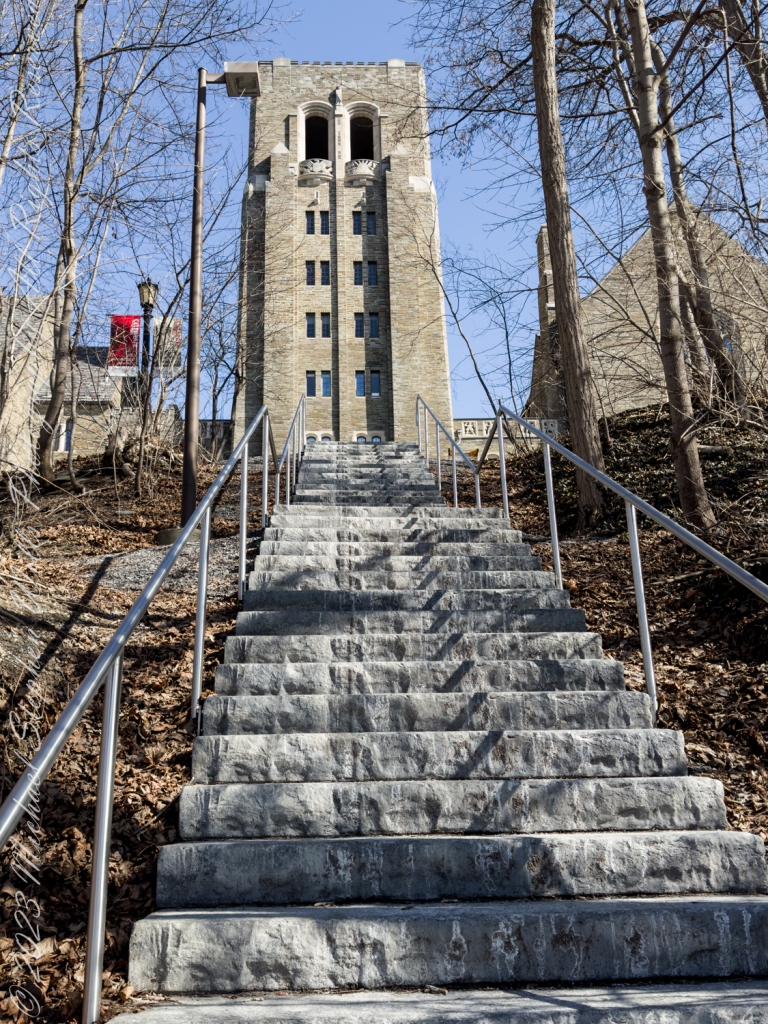
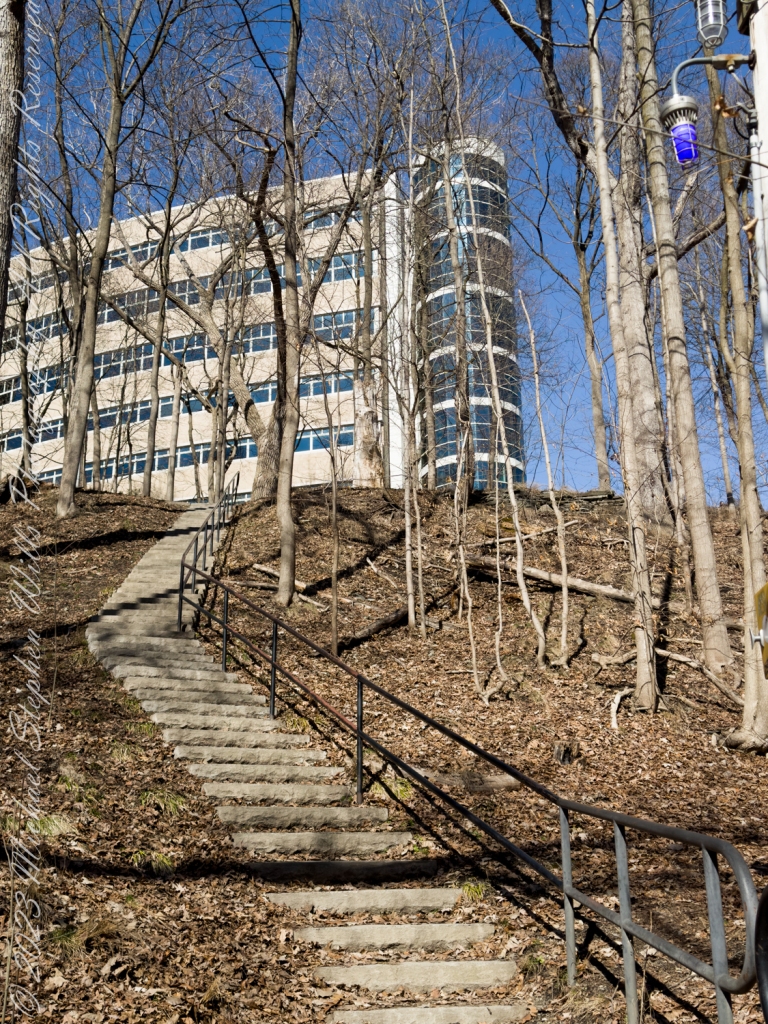
My path led me up flights of granite steps toward Myron Taylor Hall. As I climbed, I could feel the history and tradition of Cornell University enveloping me. The McGraw Tower bells chimed softly, adding a melodic backdrop to my ascent.

Steep steps leading from a parking lot off West Avenue to the Cornell Law School (Myron Taylor Hall).

Discovering “Magna Dancer”

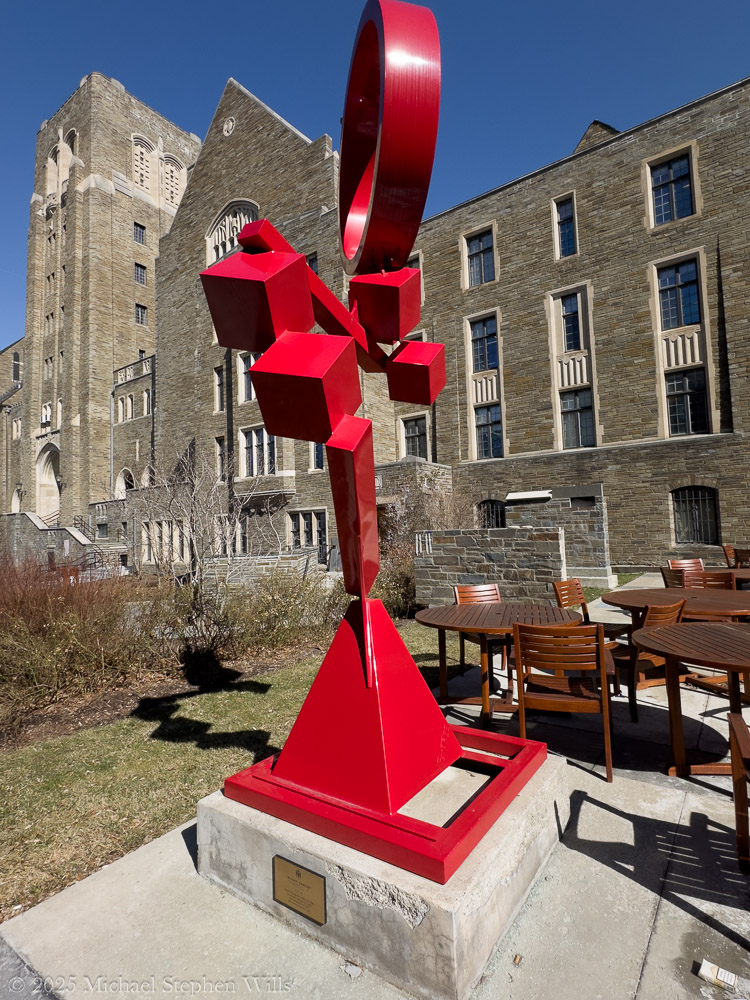
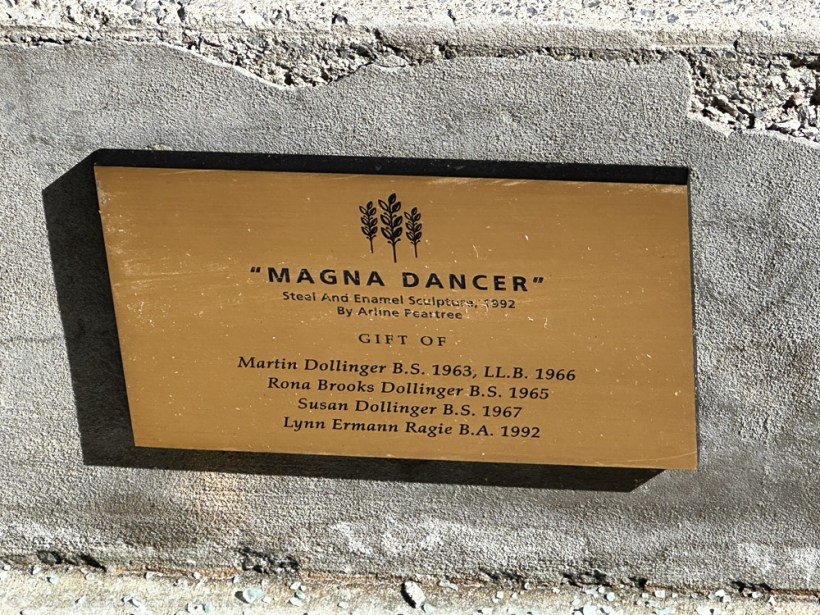
Reaching the top of the steps, I encountered, at the entrance to Hughes Hall museum, the striking “Magna Dancer” sculpture by Arline Peartree. Its bold red forms stood out vividly against the backdrop of the historic stone buildings. The plaque at the base provided a glimpse into its significance, commemorating the contributions of Cornell alumni. The sculpture’s dynamic lines and vibrant color injected a sense of modernity into the historic setting.

“Magna Dancer” steel and enamel sculpture, 1992 by Arline Peartree. Plaque on the sculpture plinth located outside Hughes Hall (behind Myron Taylor Hall – Cornell Law School), 241 Campus Road

Winter Buds and the Robinson Herb Garden

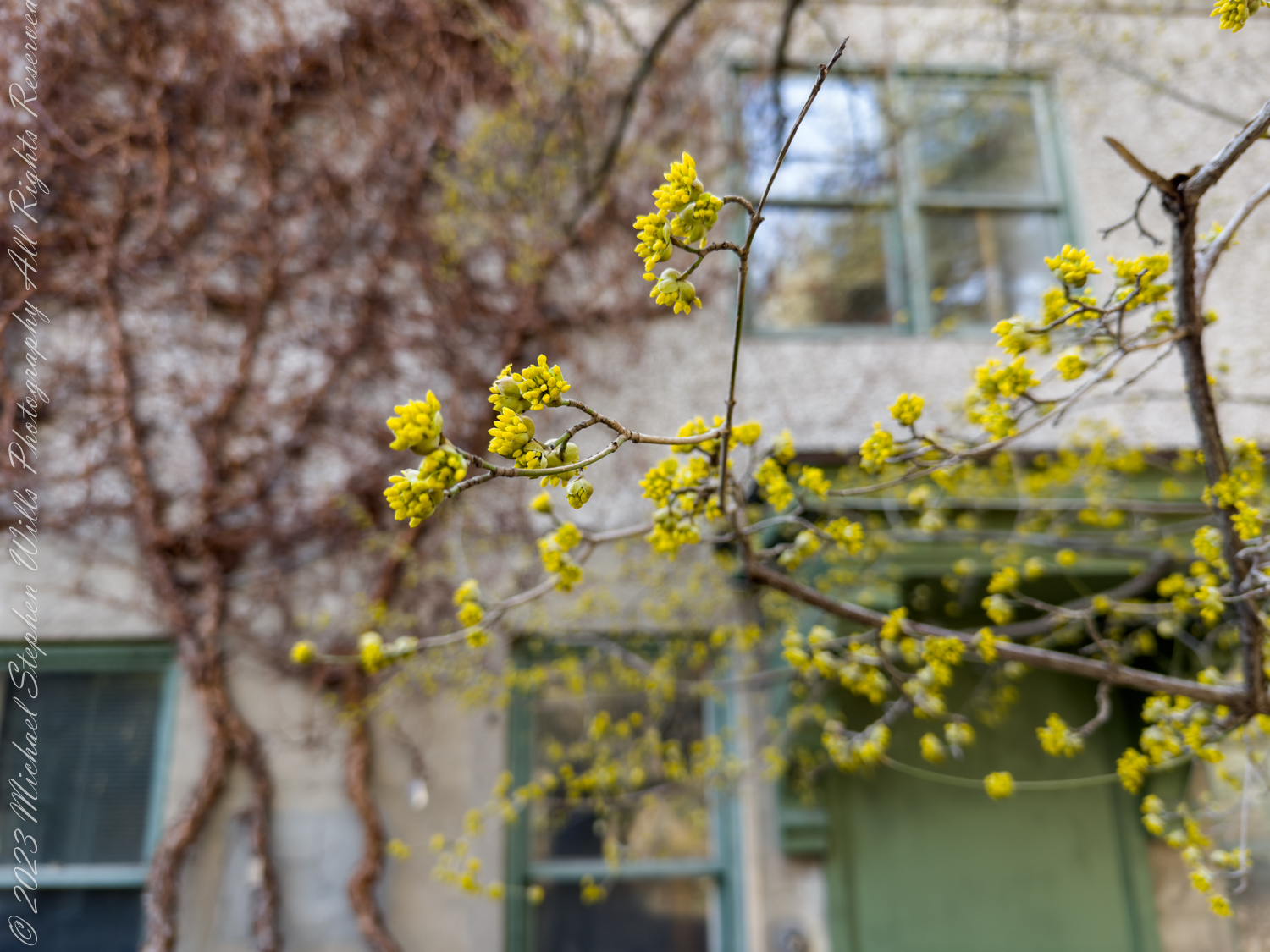
Here, I passed through the Robinson Herb Garden, where the late winter buds of a Cornelian Cherry Dogwood (Cornus mas) were beginning to unfurl. These bright yellow clusters heralded the arrival of spring, standing out against the bare branches and muted tones of the garden. It was a reminder of the cyclical nature of life and the resilience of the natural world.

The tree in the photograph with the yellow buds is a Cornelian Cherry Dogwood (Cornus mas). It is one of the first trees to bloom in late winter to early spring, producing clusters of small, bright yellow flowers before the leaves emerge. Cornelian Cherry Dogwood is often used in landscapes and gardens for its early bloom and attractive appearance. This tree grown in the Robinson Herb Garden, Cornell University

Mundy Wildflower Garden and Fall Creek

At Mundy Wildflower Garden, a hidden gem nestled beside Fall Creek, the landscape transformed into a tranquil haven, with the gentle sound of water flowing nearby. Though it was still early in the season, the promise of blooming wildflowers lingered in the air. The garden’s carefully maintained paths and rustic benches invited quiet contemplation.

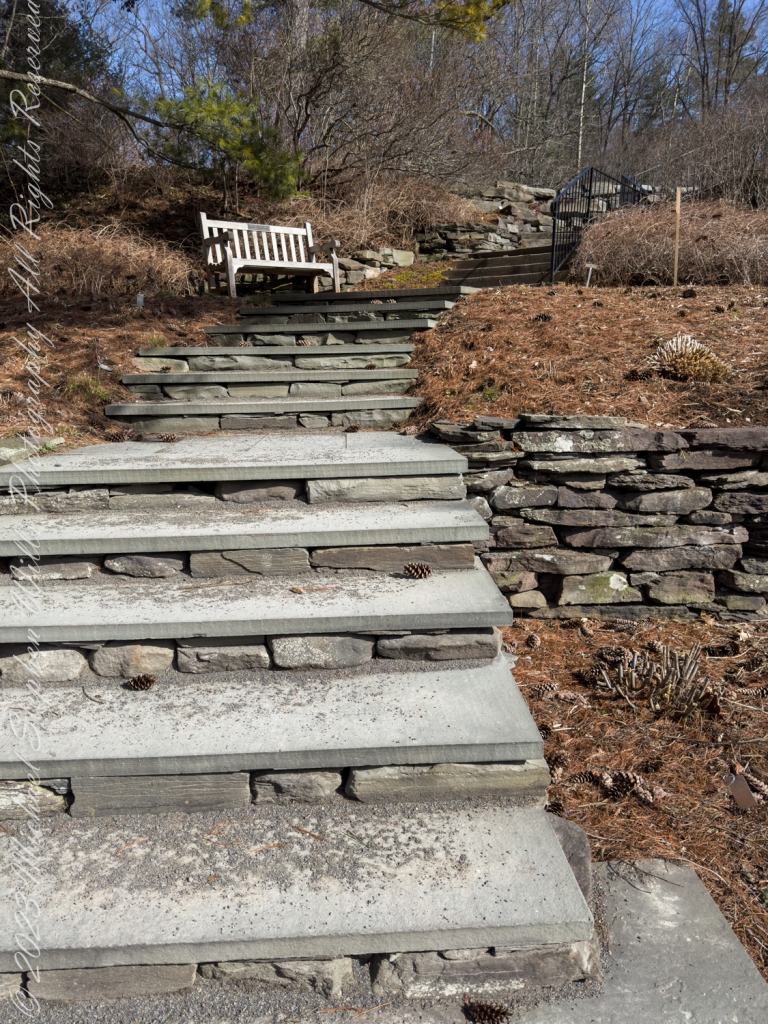
These steps lead from the Robison New York State Herb Garden to Judd Falls Road and the Mundy Wildflower Garden

Exploring the Common Ferns Display

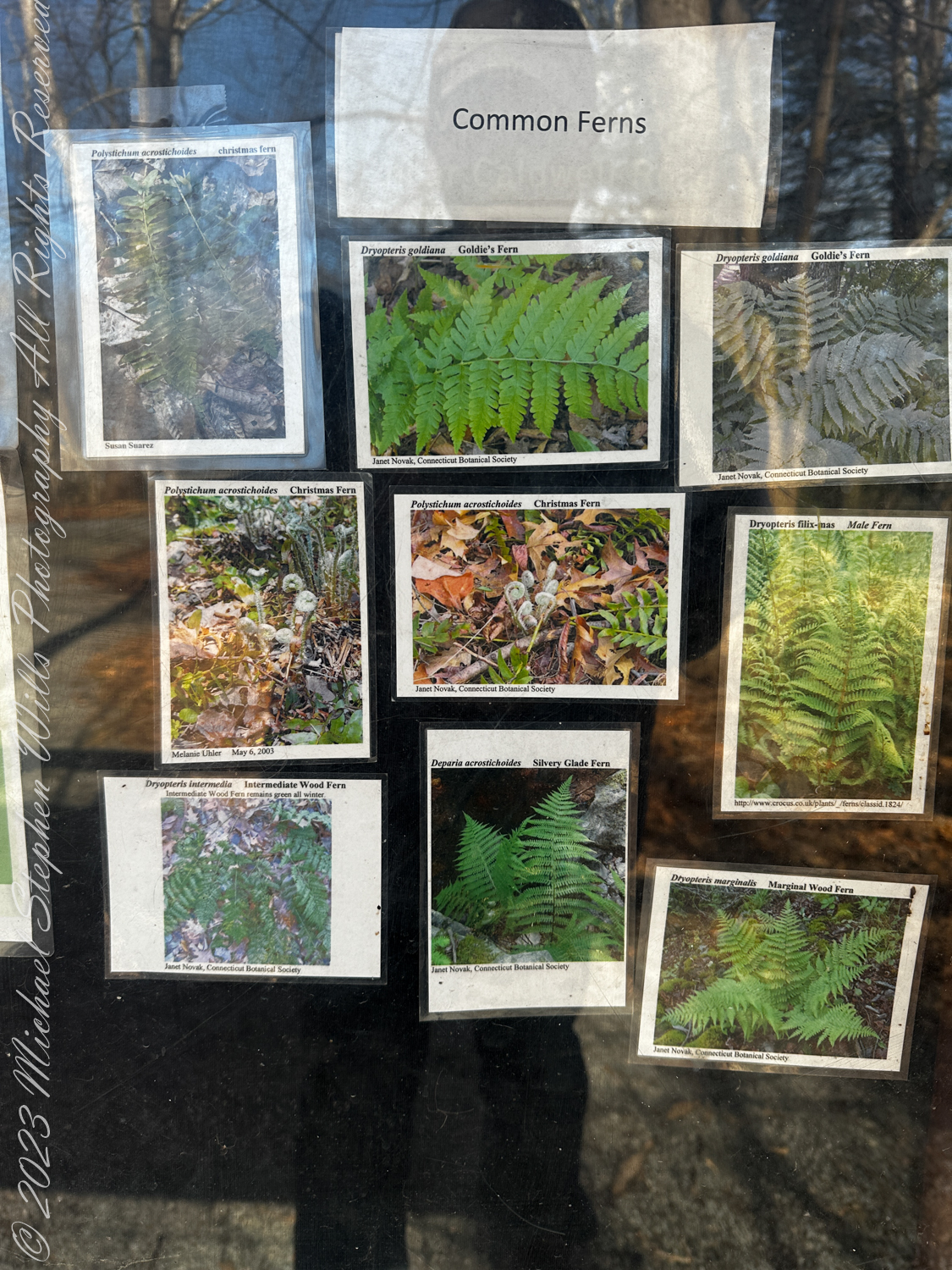
As I ventured further, I came across a display showcasing common ferns. The display included photographs and names of various ferns, such as the Christmas Fern (Polystichum acrostichoides) and Goldie’s Fern (Dryopteris goldiana). This educational exhibit was both informative and visually appealing, highlighting the diverse flora found on the campus.

Displayed on a display in the Mundy Wildflower Garden, part of Cornell (University) Botanical Gardens.

Observing the Weather Station

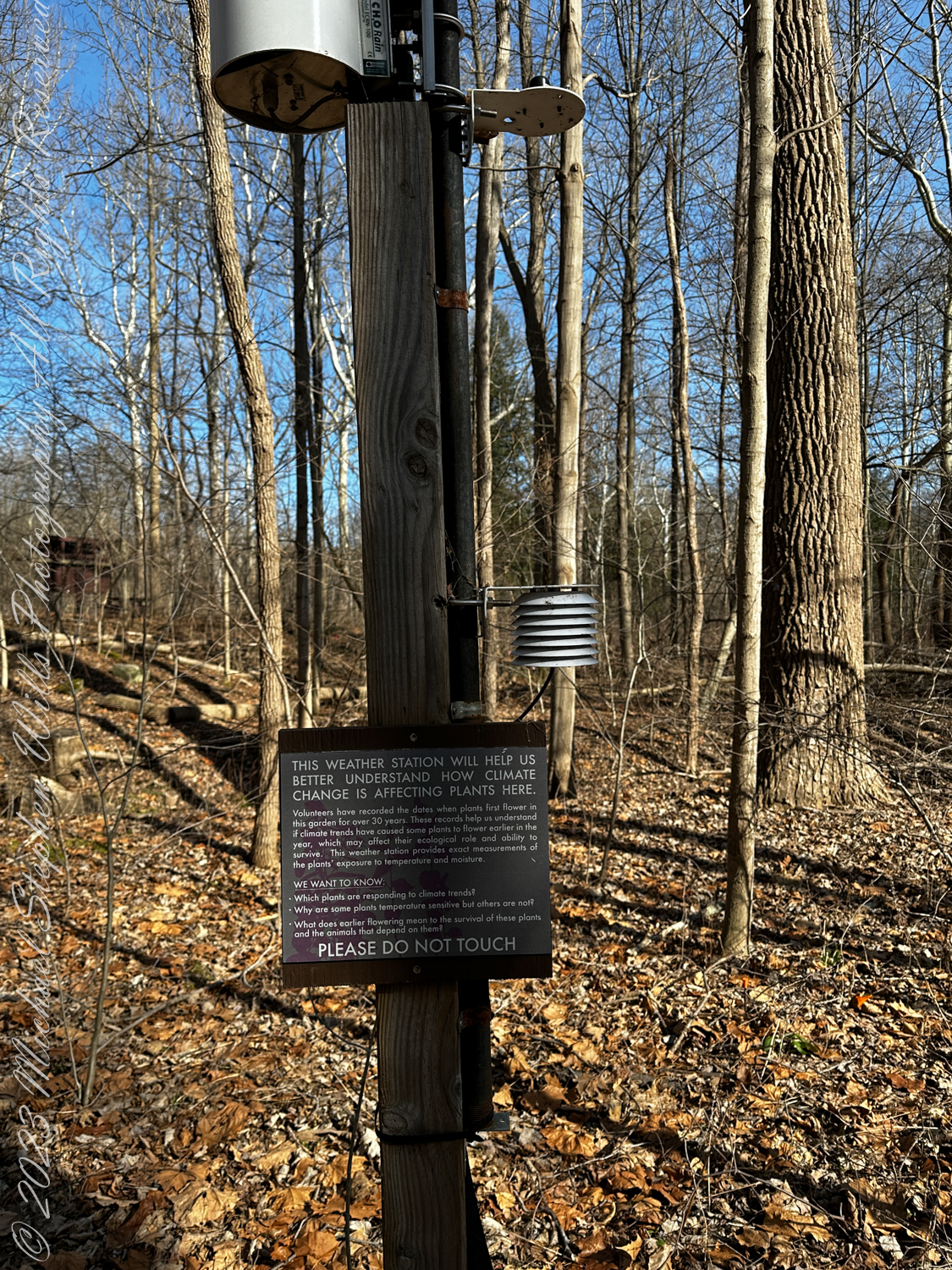
Nearby, a weather station stood tall, equipped with various sensors to monitor climate conditions. A sign explained its purpose: to help understand how climate change is affecting plants in the area. The data collected here would provide valuable insights into the phenological changes occurring within the garden.

Traversing the Slope to Olin Library

Returning, I made my way toward Olin Library. The path took me along a steep incline, “Lib Hill,” where I could see the stark branches of deciduous trees reaching toward the sky. The steps seemed to stretch endlessly upward, mirroring the journey of knowledge that students undertake within the library’s walls. The modern architecture of the library contrasted sharply with the surrounding natural landscape, symbolizing the intersection of nature and human achievement.

Approaching McGraw Tower

As I neared the heart of the campus, the McGraw Tower stood tall and prominent, albeit encased in scaffolding for restoration work. The historic building, with its distinctive clock face, was an emblem of Cornell’s rich heritage. Despite the scaffolding, the tower retained its majestic presence, a testament to the ongoing efforts to preserve its legacy.

This view is from Central Avenue. Morrill Hall is on the left. The tower is part of Uris Library. Cornell University, Ithaca, Tompkins County, New York State

Returning to Cascadilla Park Road

As descended the hill, following Cascadilla Creek, reflecting on the six mile journey, I felt a profound connection to the enduring beauty and resilience of both nature and human creativity. The walk had taken me through time and space, from historic landmarks to natural wonders, each step revealing a new facet of the Cornell University campus.

Reflecting on History

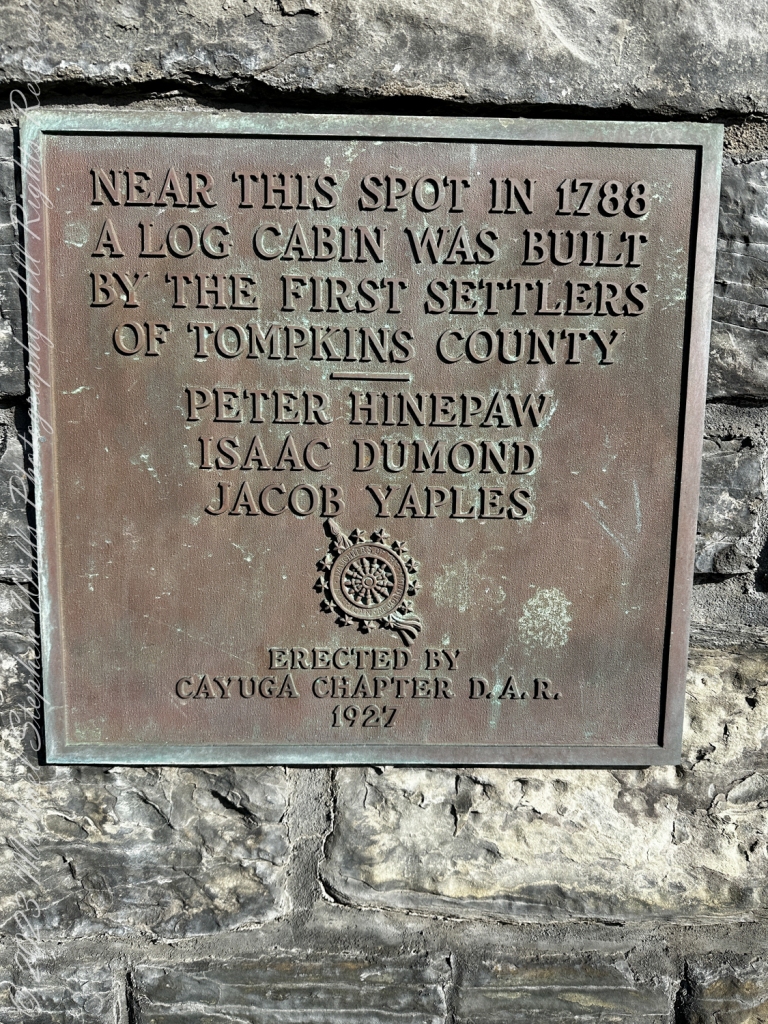
My walk took me past a plaque commemorating the site of the first settlers’ log cabin in Tompkins County, built in 1788. The plaque, erected by the Cayuga Chapter D.A.R. in 1927, was a poignant reminder of the area’s deep-rooted history and the pioneering spirit that shaped it.

This plaque on the corner of University Avenue and Cascadilla Park Road Road, “Near this spot in 1788 a log cabin was built by the first settlers of Tompkins County — Peter Hinepaw, Isaac Dumond, Jacob Yaples. Erected by Cayuga Chapter Daughters of the American Revolution 1927

This late winter walk, captured through my lens, was a celebration of the quiet splendor of the season and the enduring spirit of a place that thrives on discovery and growth.

Copyright 2024 Michael Stephen Wills All Rights Reserved

The Joy of Adventure at Treetops

Join us as we explore the enchanting “Treetops” treehouse at Cayuga Nature Center. Discover the joy of hide and seek, and the magic of nature, through the eyes of my grandsons on a serene Sunday morning.

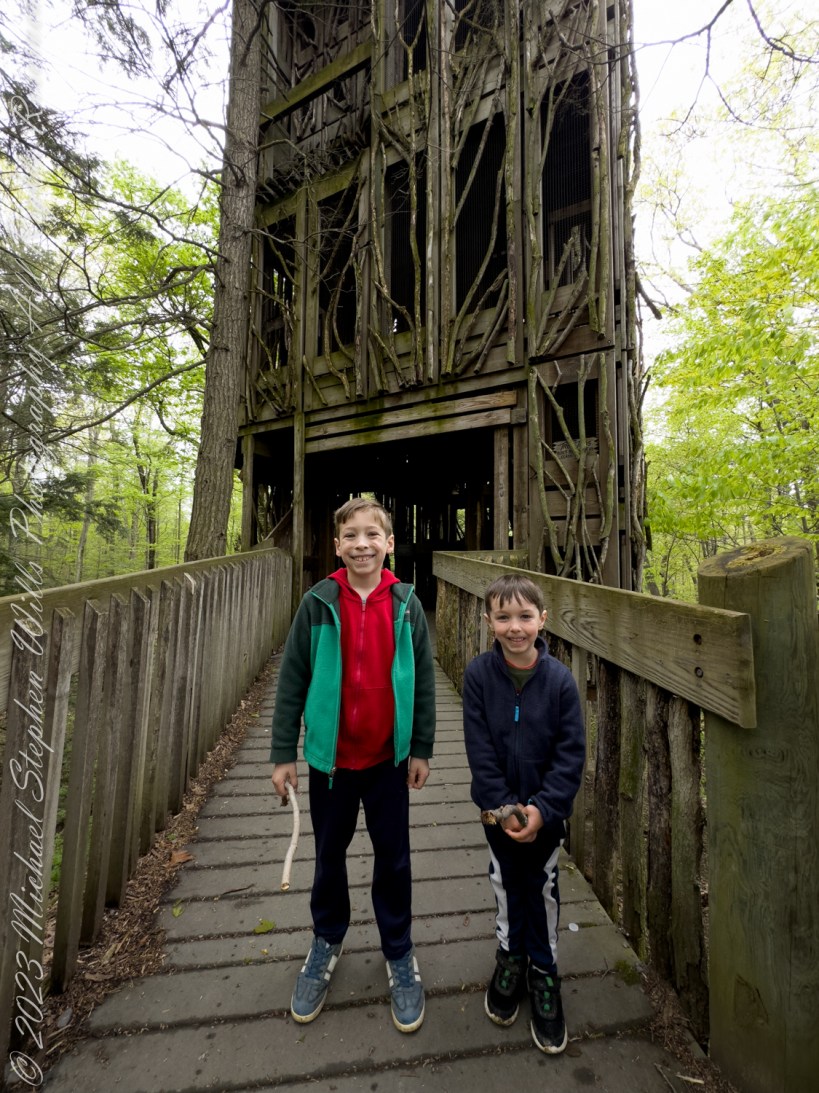
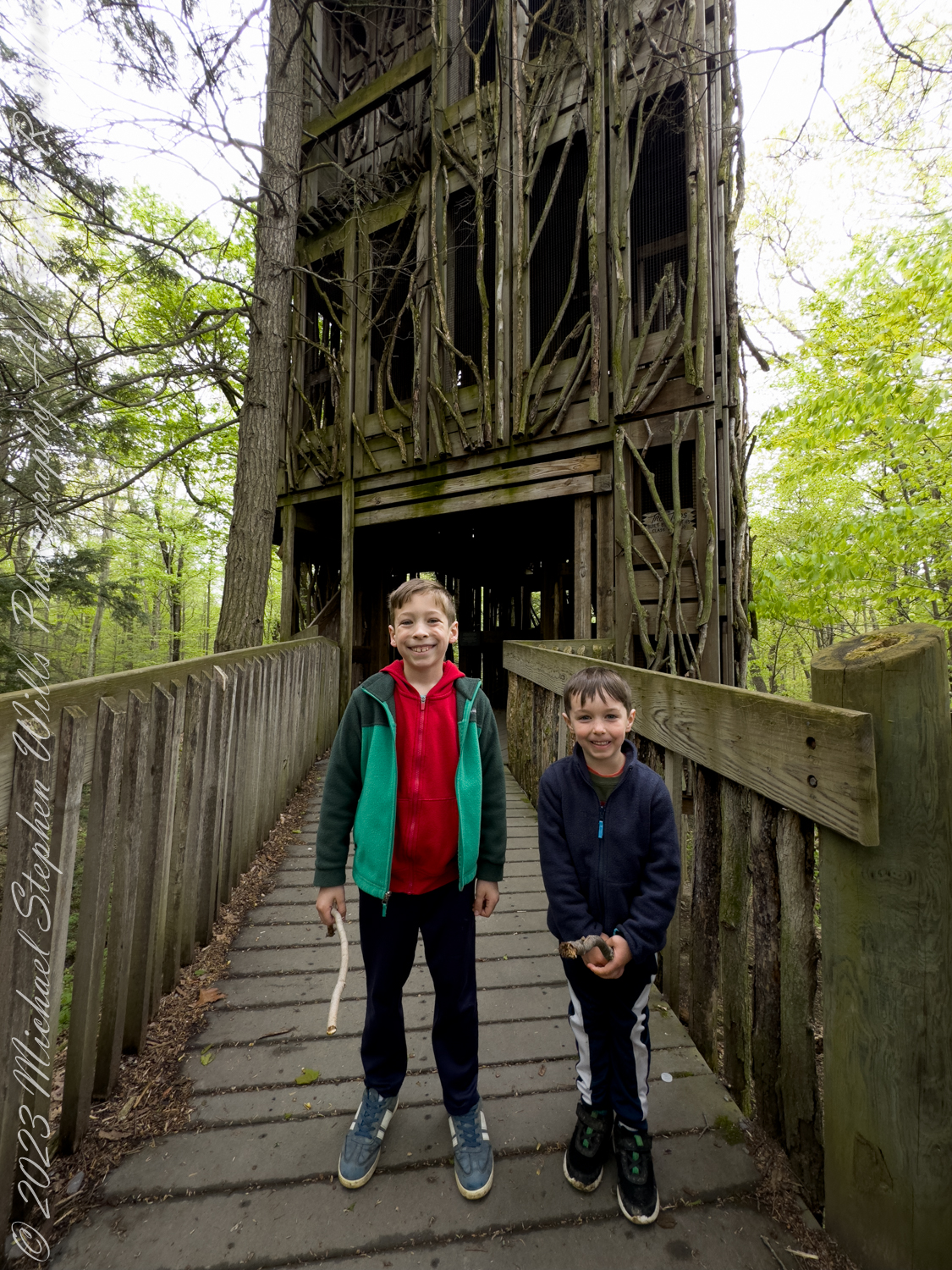
The air was crisp and cool as I strolled hand in hand with my grandsons, Sam and Rory, through the vibrant greens of the Cayuga Nature Center. The leaves rustled gently in the Sunday morning breeze, their whispers the only company we had. It was a quiet, serene moment, with no one else around, and the boys’ excitement was palpable as they chattered about their previous visits.

“Grandpa, do you remember this place?” Sam asked, his eyes twinkling with anticipation. Rory, not to be outdone, chimed in, “We have to show you the treehouse! It’s the best part!”

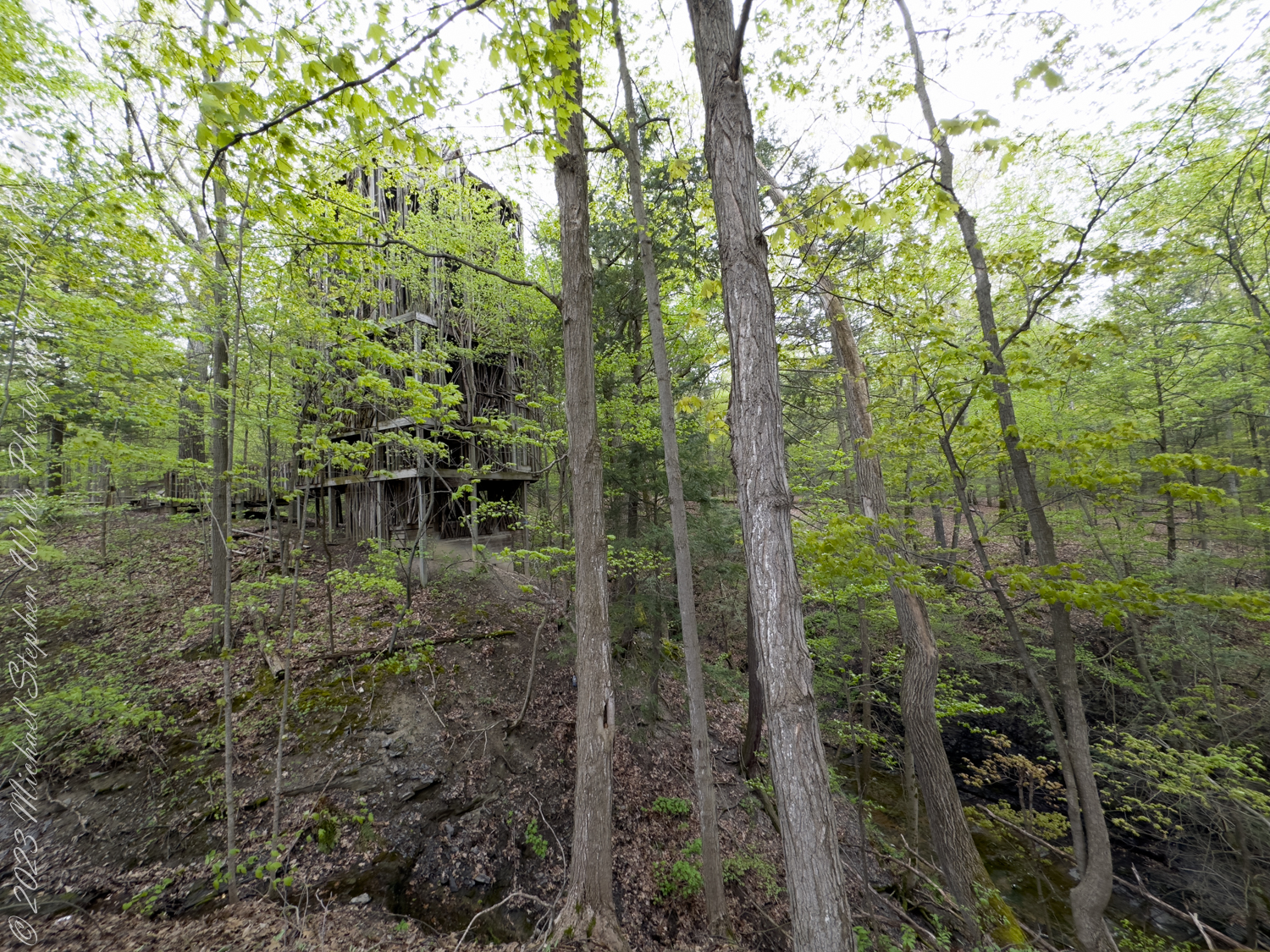
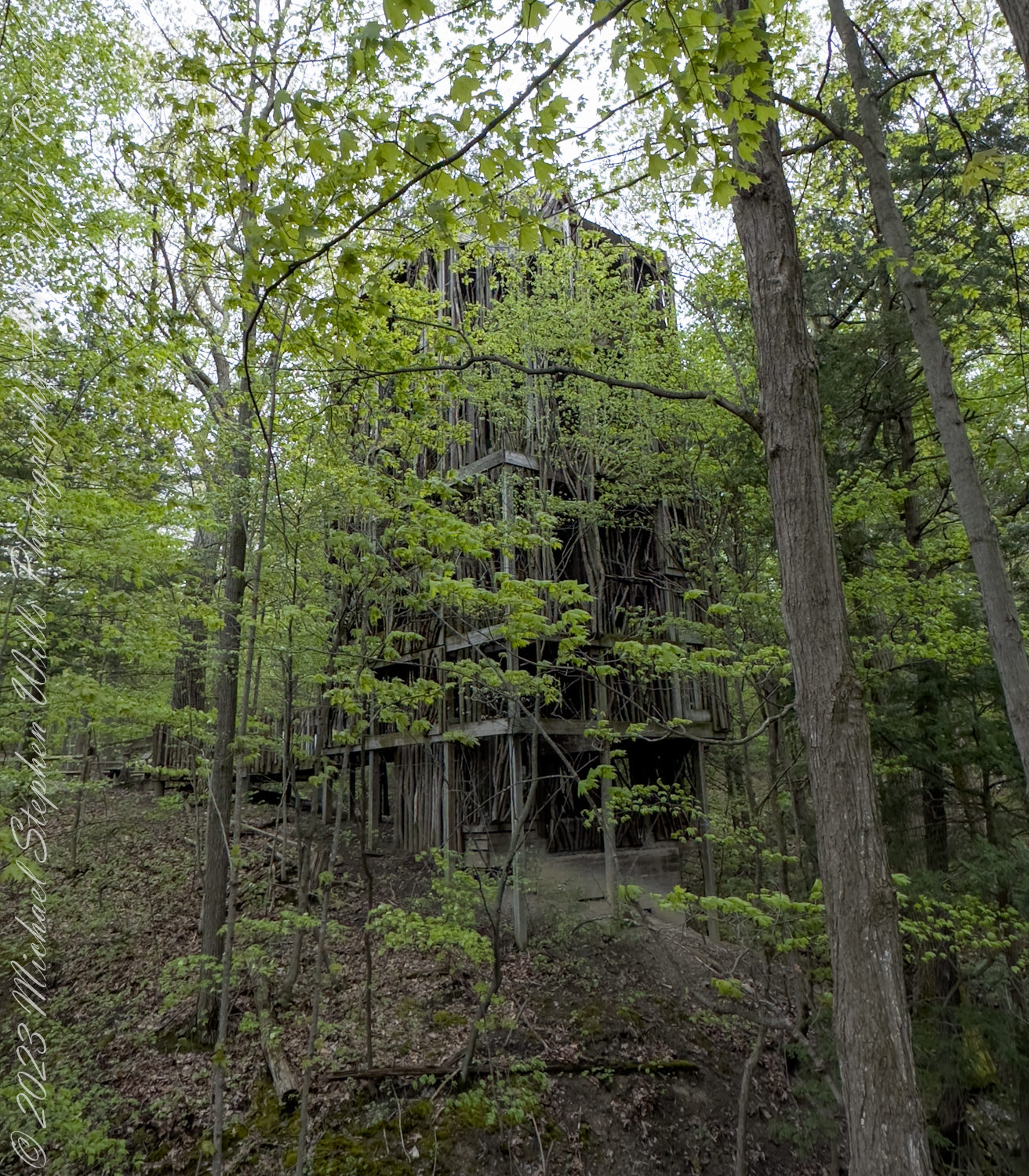
Their enthusiasm was infectious, and I found myself eager to see this magical place they spoke of. We followed a winding path, each step bringing us deeper into the lush woodland, until at last, the imposing structure of the “Treetops” treehouse came into view. It stood tall and mysterious; an intricate wooden edifice cloaked in the verdant embrace of the forest.

The treehouse was a marvel, its towering form constructed of twisted branches and sturdy planks, blending seamlessly with the natural surroundings. A wooden bridge led up to the entrance, and as we approached, the boys’ pace quickened.

“Let’s play hide and seek!” Rory suggested, his voice echoing with excitement. Sam nodded vigorously, already darting towards the treehouse entrance. “You count, Grandpa!” he called over his shoulder.

I began counting aloud, my voice mingling with the sounds of nature—the chirping of birds, the gentle rustle of leaves. When I reached twenty, I opened my eyes to find the boys had disappeared into the labyrinth of the treehouse. I stepped inside, the cool shade a welcome respite from the sun’s gentle warmth.

The interior was a maze of hidden nooks and winding staircases, each turn revealing a new secret. I could hear the faint giggles of the boys as they tried to stifle their laughter. The treehouse was alive with the echoes of their joy, each sound bouncing off the wooden walls like a symphony of childhood exuberance.

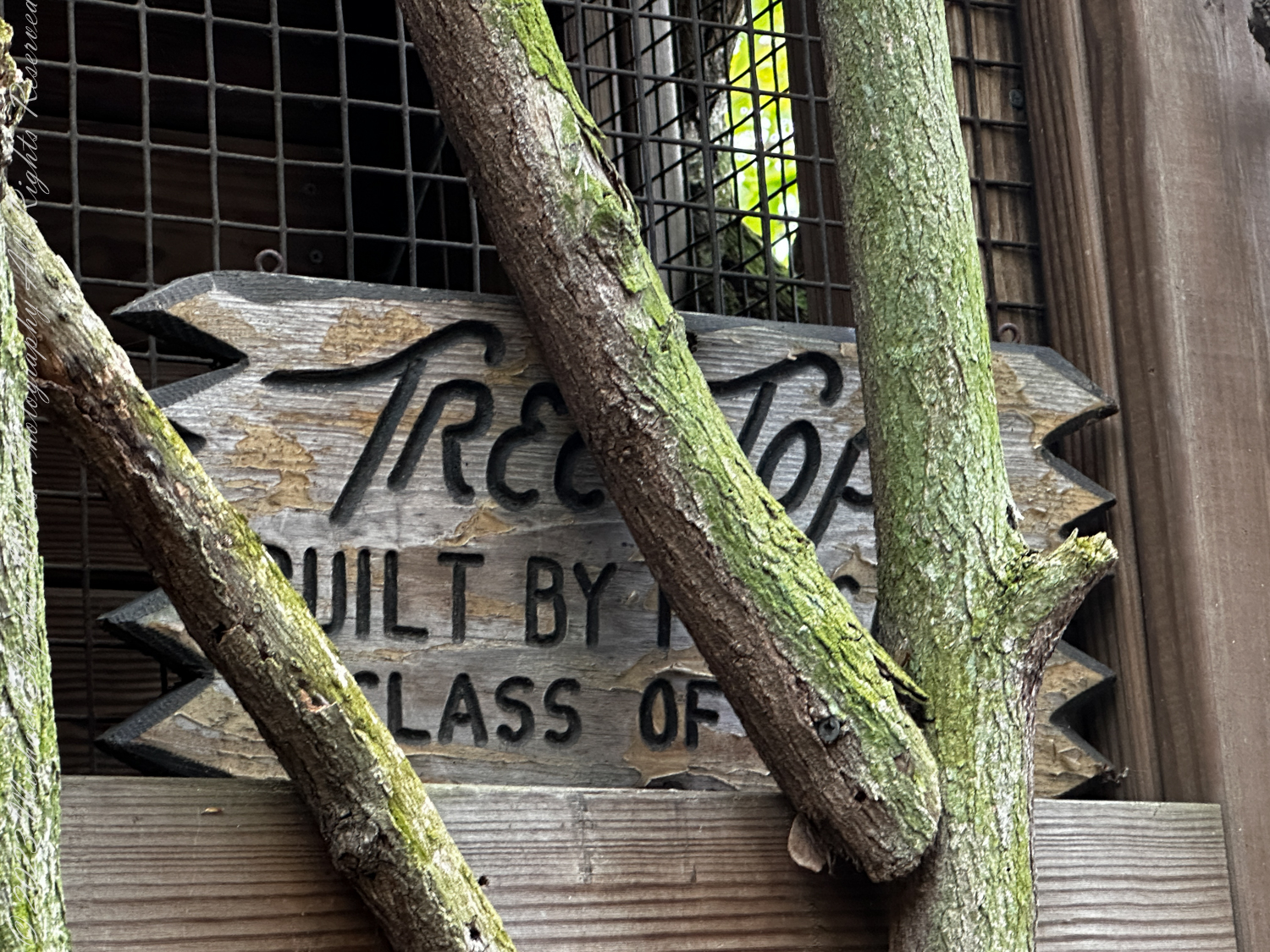
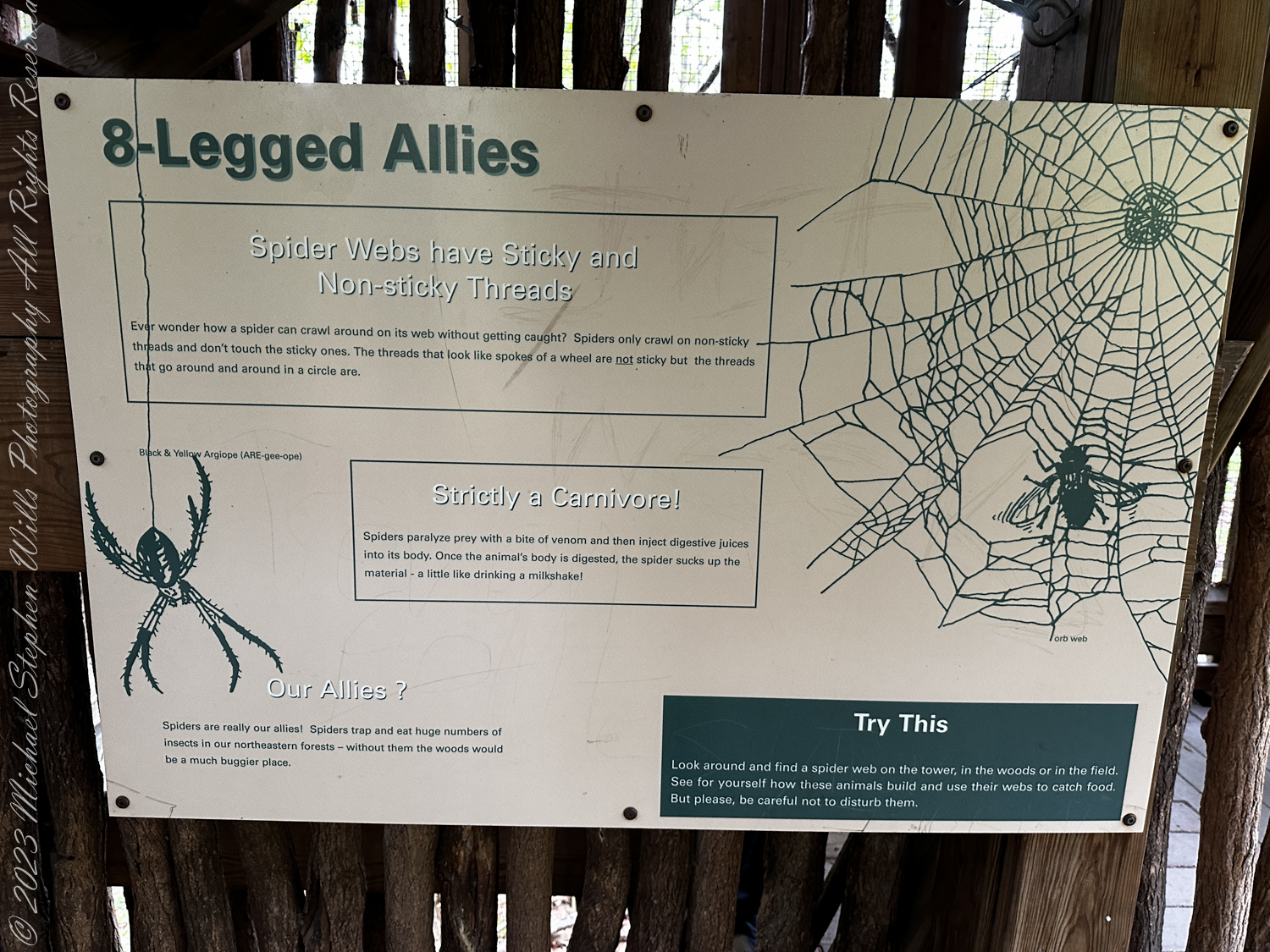
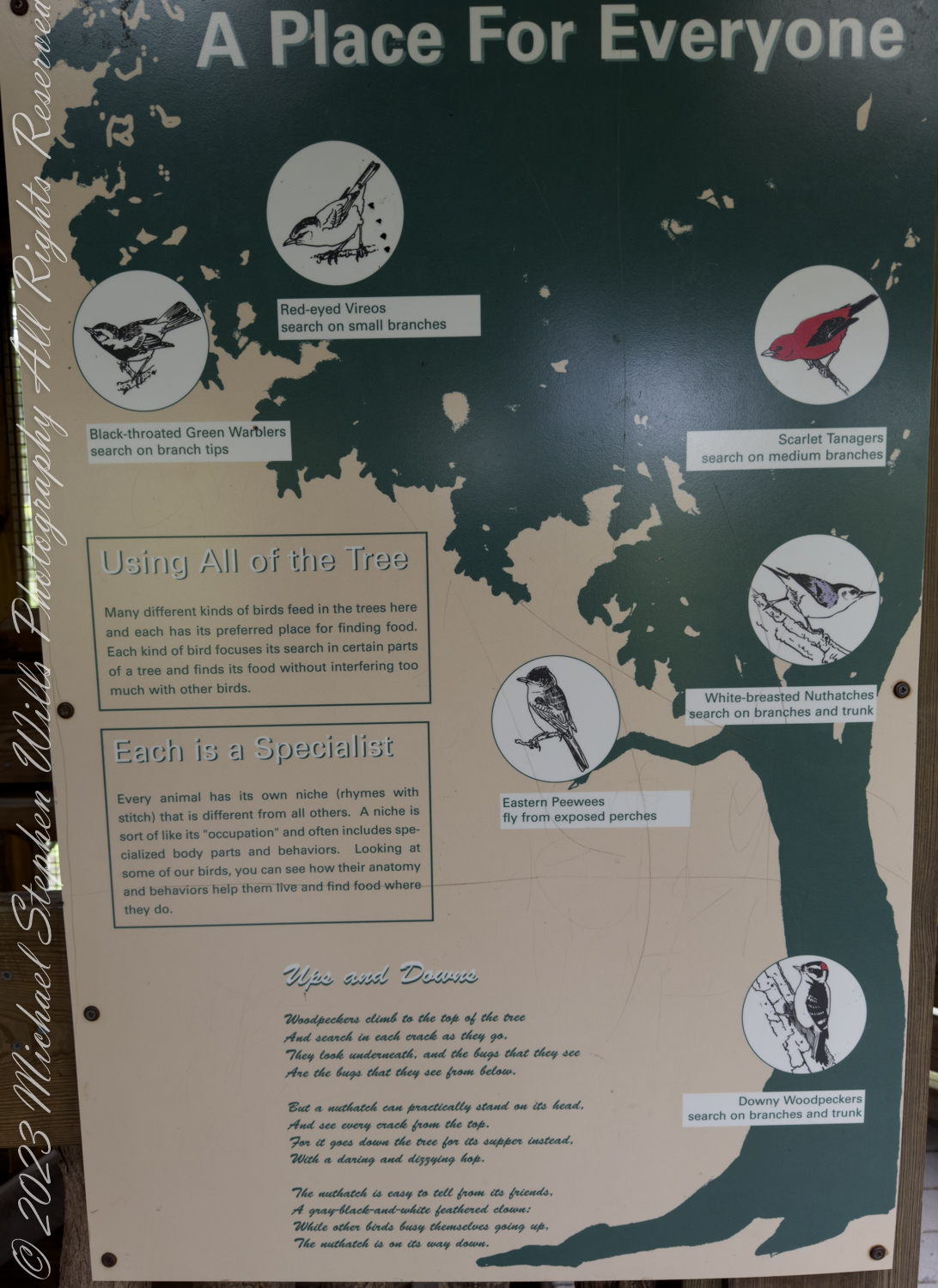
As I navigated the winding paths, I couldn’t help but marvel at the intricate details of the structure. The signs scattered throughout added an educational touch, detailing the lives of the birds and spiders that called this place home. One sign, titled “A Place For Everyone,” explained how each bird species had its niche, much like the boys had found their hiding spots.

“Found you!” I called out, spotting Sam’s bright red shirt from behind a wooden beam. He laughed and dashed off, his footsteps a rhythmic drumbeat on the wooden floor. Rory was next, his giggles giving away his hiding spot behind a thick cluster of branches.

We continued our game, the treehouse transforming into a magical playground where time seemed to stand still. The boys’ laughter filled the air, mingling with the natural symphony of the forest. We explored every corner, from the highest platform with its breathtaking view of the surrounding forest to the dark, cozy nooks perfect for hiding.

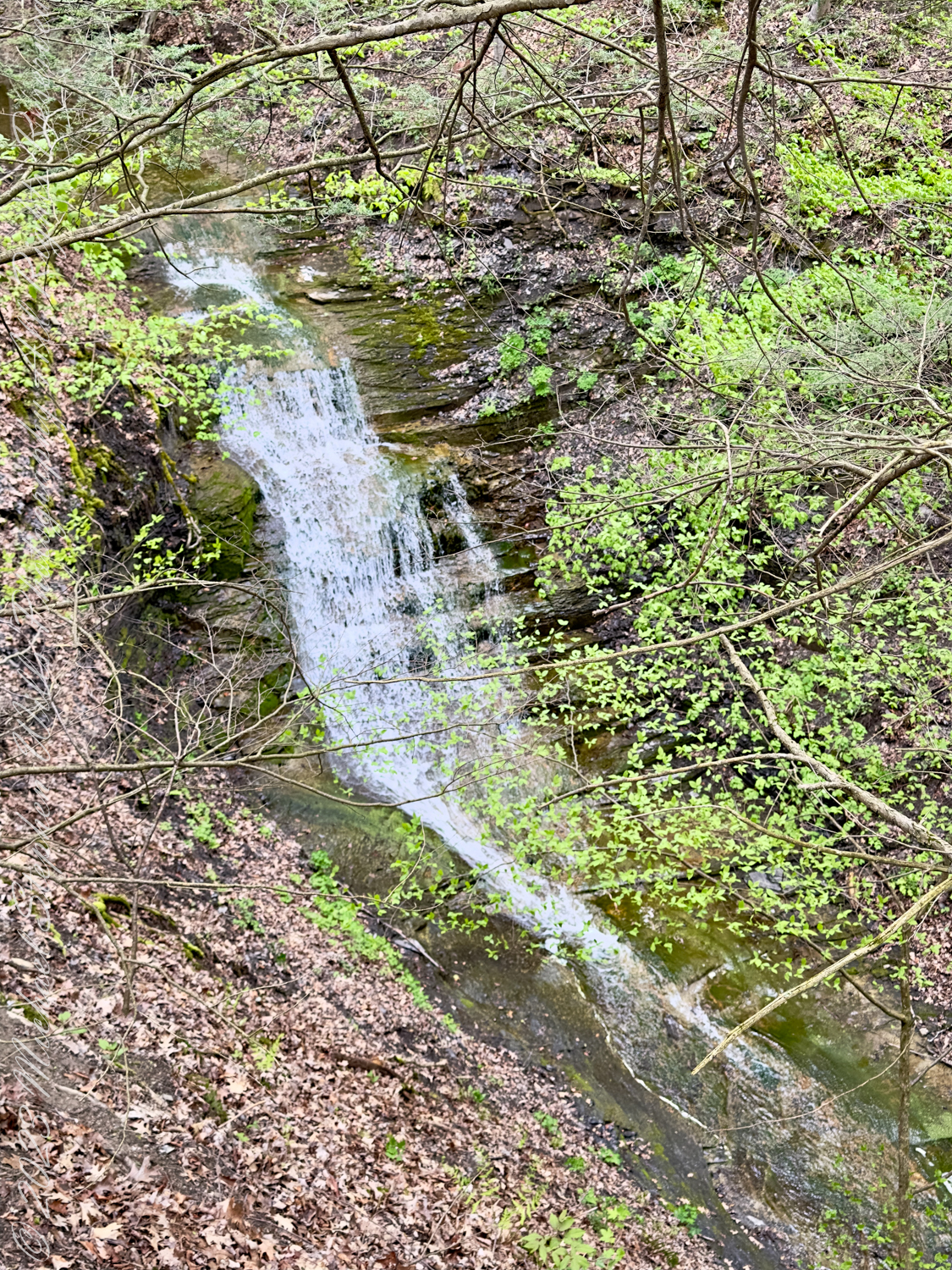
Phillips Falls is a picturesque waterfall located on Comstock Creek in view of the Treetops treehouse within the Cayuga Nature Center in Ithaca, New York. The falls are a highlight of the Nature Center, offering visitors a scenic and tranquil spot to enjoy the natural beauty of the area. The waterfall is accessible via the nature trails that wind through the Center’s diverse landscapes, including forests and meadows. Here are a few key points about Phillips Falls: Scenic Beauty: Phillips Falls is known for its serene and beautiful setting, making it a popular spot for nature enthusiasts, hikers, and photographers. Hiking Trails: The falls can be reached by hiking trails within the Cayuga Nature Center. The trails vary in difficulty, providing options for different levels of hikers. Educational Programs: The Cayuga Nature Center often includes Phillips Falls in its educational programs and guided tours, focusing on the ecology and geology of the area. Wildlife Habitat: The area around Phillips Falls is home to a variety of wildlife, making it a great spot for birdwatching and observing other animals in their natural habitat. Seasonal Changes: The appearance and flow of the waterfall can change with the seasons, offering a different experience for visitors throughout the year. Overall, Phillips Falls is a cherished natural feature of the Cayuga Nature Center, providing both a peaceful retreat and an educational experience for visitors.

After our game, we stood on the bridge, looking out over the creek below. The water sparkled in the sunlight, a serene contrast to our playful morning. “This place is amazing,” I said, turning to the boys. They nodded, their faces flushed with happiness.

“We love coming here,” Sam said. “It’s like a secret world.”

Rory nodded in agreement. “And now you know our secret too, Grandpa.”

As we made our way back down the path, I felt a deep sense of gratitude for this moment, for the chance to share in the boys’ joy and to see the world through their eyes. The “Treetops” treehouse had not only been a place of play but also a bridge between generations, a testament to the simple, timeless pleasures of exploring nature together.

Phillips Falls on Comstock Creek, seen from Treetops

Copyright 2024 Michael Stephen Wills All Rights Reserved

Mother’s Day Amid the Blossoms of the Horse Chestnut

Explore the enchanting world of the Horse Chestnut, its vibrant spring blossoms, and its rich tapestry of historical and ecological significance, as I wander the slopes above Cayuga Lake on a serene Mother’s Day.


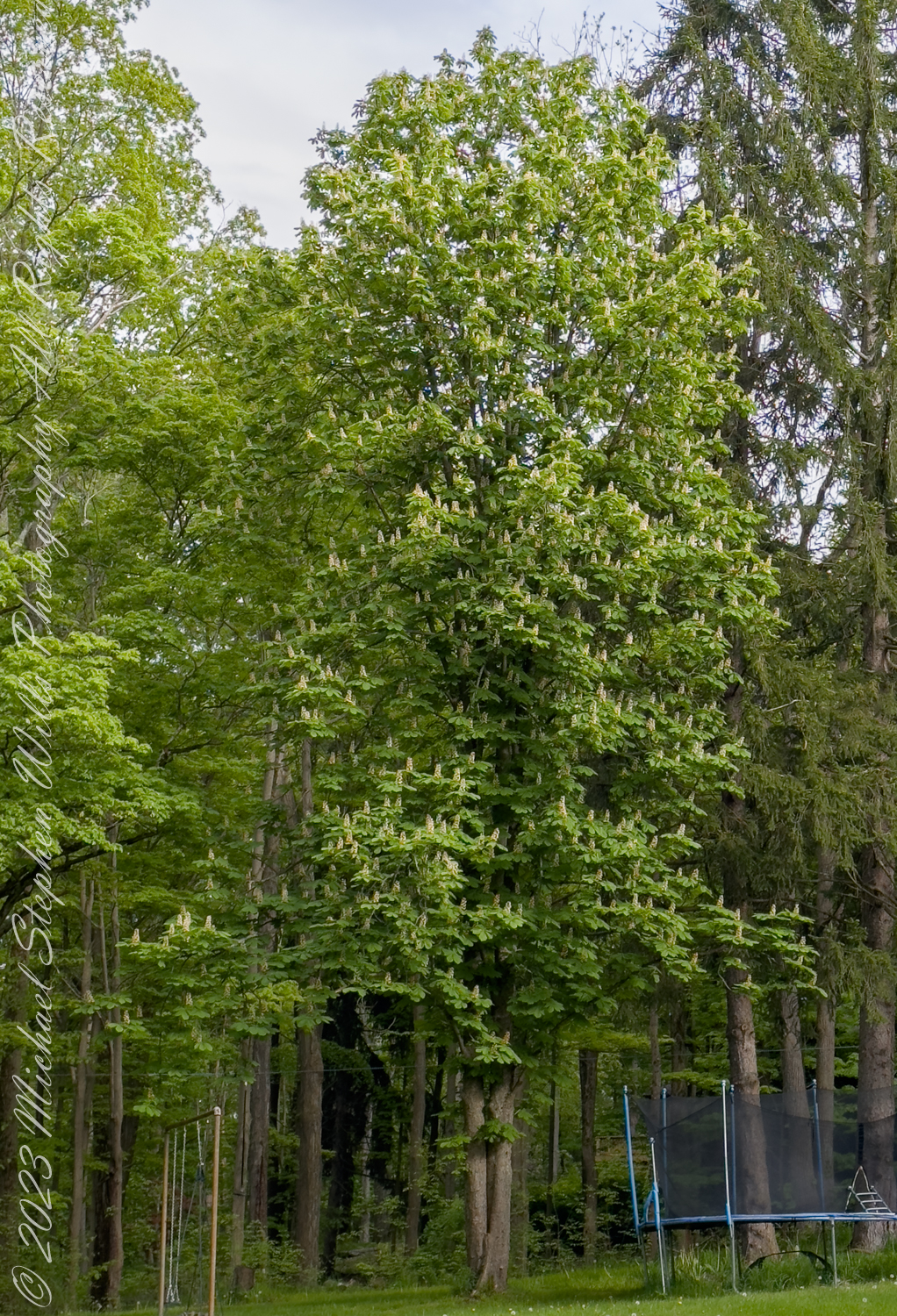
On a serene Mother’s Day in 2024, I found myself walking the slopes above Cayuga Lake, embraced by the spring warmth and the vibrant blossoms of the Horse Chestnut tree (Aesculus hippocastanum). This moment was a seasonal celebration and a deep dive into the botanical and cultural tapestry that this majestic tree weaves.

The Botanical Brilliance of the Horse Chestnut


The Horse Chestnut tree, with its robust stature and radiant floral displays, is a sight to behold, a study in botanical survival and adaptation. Originally native to a small area in the Pindus Mountains mixed forests and the Balkan mixed forests of Southeast Europe, this tree has traversed continents and histories to root itself into diverse landscapes, including the fertile grounds above Cayuga Lake.

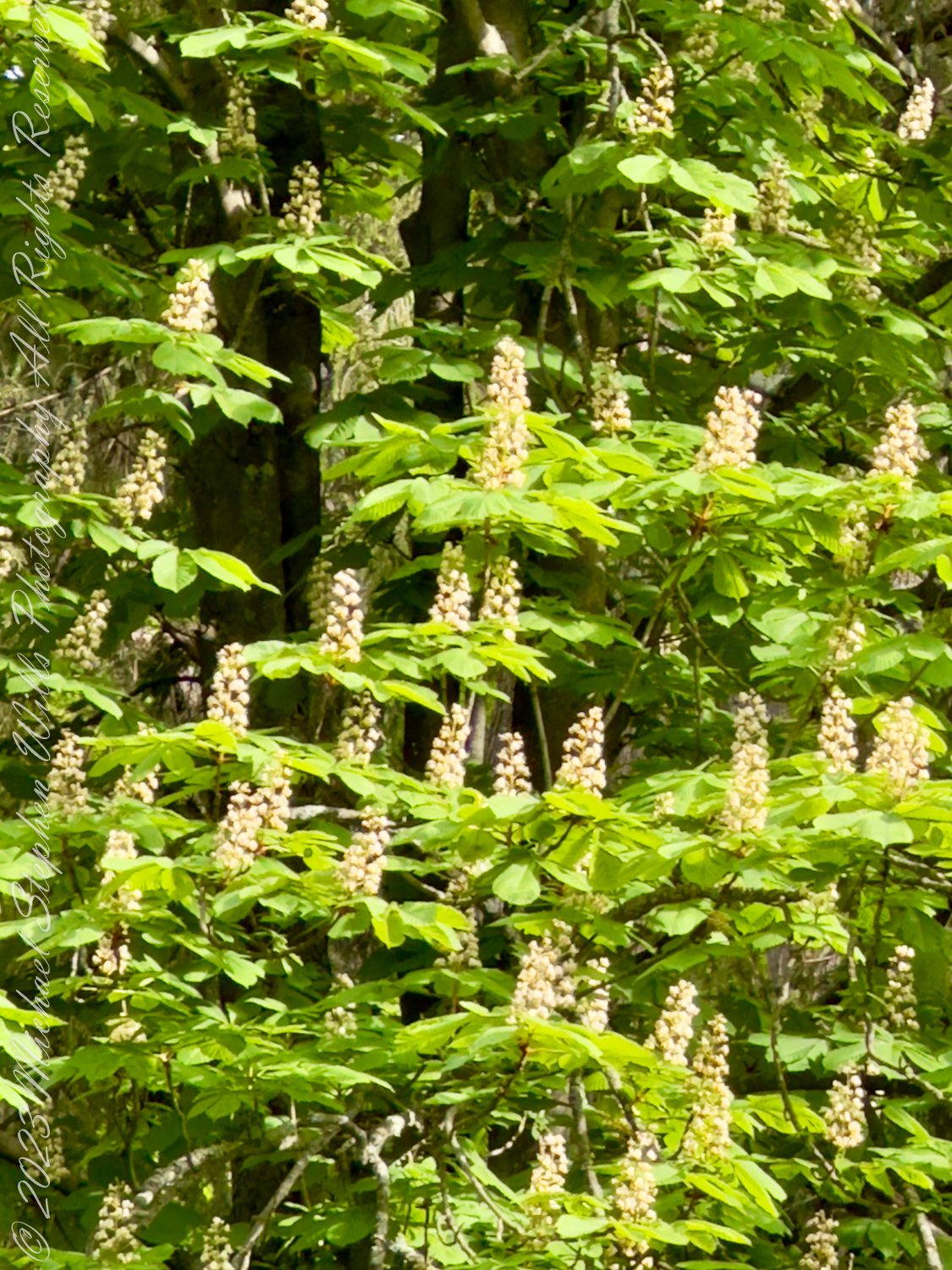
Each spring, the Horse Chestnut’s candle-like flower spikes, scientifically known as ‘panicles’, burst forth in a shower of whites and subtle pinks, each petal marked distinctively with a blotch of yellow or red. These blooms are structured to attract a variety of pollinators, playing a crucial role in the local ecological narrative by supporting biodiversity.

Historical Uses and Cultural Significance


The journey of the Horse Chestnut tree from its native lands to the Americas is a tale of practicality and reverence. Native Americans, prior to the arrival of European settlers, were keen observers of their environment but may not have had a direct historical use for the Horse Chestnut, as it was introduced later. However, the European settlers quickly discovered the tree’s multiple uses. The wood, known for its softness and workability, was used to make furniture and boxes, while the bark found its place in the tanning industry due to its rich tannin content.

Most notably, the seeds of the Horse Chestnut were ground and used as a form of laundry detergent and to treat various ailments, a testament to the tree’s utility in pioneering life. This aspect of the Horse Chestnut highlights a broader theme of how both Native Americans and European settlers utilized natural resources for survival and economic purposes, blending the lines between utility and conservation.

A Reflection on the Natural History and Ecology


As I strolled beneath the boughs heavy with spring’s bounty, the historical echoes of the Horse Chestnut’s uses merged with the present chorus of birds nesting in its branches. The tree’s role extends beyond human uses; it is a vital component of the local ecosystems. The dense canopy provides shelter and the flowers feed pollinators, which in turn support the broader food web.

Environmental factors, particularly those influenced by climate change, pose challenges to the Horse Chestnut. Issues such as leaf blotch and the conker tree moth threaten its health and longevity. Observing the Horse Chestnut’s current vibrancy, I am reminded of the resilience and adaptability that this species has demonstrated over centuries.

Conclusion: A Legacy Continues

As the day drew to a close and the sun cast long shadows over Cayuga Lake, the Horse Chestnut stood as a botanical specimen, a living monument to natural history and human ingenuity. The tree’s story is a powerful reminder of our intertwined destinies with the plant kingdom—how plants shape our cultures, sustain our environments, and continue to amaze with their ecological and aesthetic contributions.

Copyright 2024 Michael Stephen Wills All Rights Reserved

The Hidden Songster of Ithaca: My Afternoon with a Gray Catbird

Amidst spruce needles, a Gray Catbird’s mew captivated me; a hidden minstrel whose dulcet mimicry and secretive charm turned my backyard in Ithaca into an amphitheater of nature’s most intricate symphonies.

In my backyard, amidst the spruce trees that seem to touch the sky, I had a unique encounter with a little gray bird known as the Dumetella carolinensis, or more commonly, the Gray Catbird. I learned that “Dumetella” comes from the Latin word for “thorny thicket”, hinting at its penchant for skulking in dense underbrush, often hidden from sight. Its species name, “carolinensis”, pays homage to the Carolinas, though this bird has certainly made a comfortable home here too.

This particular visitor had a call reminiscent of a cat’s mew, a curious sound that first drew my attention. As I peeked through the window, I noticed it wasn’t just imitating felines; it was a veritable mimic, echoing the songs of other birds, even copying the croaks of tree frogs, and sometimes the mechanical noises of our own making. Its syrinx, a true marvel of nature, allows it to produce two sounds simultaneously – an impressive feat for such a small creature.

Unlike the showy northern mockingbird or the brown thrasher, which repeat their musical phrases several times, this Gray Catbird preferred to sing each of its phrases just once. Its song was a bit raspier, less melodic but still captivating in its own right.

It’s interesting that the Gray Catbird often chooses to remain hidden when it sings, favoring the inner sanctuary of bushes or trees like the spruce in my yard, a natural stage set by verdant leaves and branches. And while I watched, it seemed content in its concealment, a master of melody cloaked in foliage.

As I observed it, I recalled reading that the Gray Catbird’s diet is as varied as its repertoire of sounds. Fruits and berries make up about half of its diet. This little bird has quite the palate, enjoying a smorgasbord that includes mealworms, earthworms, beetles, and other insects, not to mention the bounty of summer offerings such as ants, beetles, grasshoppers, caterpillars, moths, and a selection of berries from holly, cherry, elderberry, poison ivy, bay, and blackberries.

I made a mental note of the date, captured in the metadata of the photograph I snapped: 2021, from my home in Ithaca. A simple image, yet it encapsulated a serene moment of connection with a creature so adept at concealment and mimicry, a moment I would treasure. The Gray Catbird, with its unique song and dietary habits, has become a beloved part of my backyard symphony.

Reference: wikipedia, Gray Catbird.

Copyright 2024 Michael Stephen Wills All Rights Reserved