Discovering Fogbows: A Coastal Wonder

I had a haunting experience at Cocoa Beach, witnessing a rare fogbow—a ghostly arc formed by fine mist—evoking emotions and reflections on nature’s beauty.

The fog haunted Cocoa Beach for days, softening the edges of the afternoon. I had been walking along Cocoa Beach, feeling the cool ocean breeze on my face, when I noticed a change in the light. It was a little after four, the sun drifting lower in the western sky, its warmth fading into a hazy glow. The air smelled of salt and mist, and waves lapped gently at the shore, their rhythm unbroken by the deepening fog.

And then I saw it.

A pale arc stretched across the horizon, a ghost of a rainbow bending above the waves. At first, I wondered if my eyes were playing tricks on me—where were the usual bright bands of red, orange, and violet? But no, the arc was real, a fogbow, forming where sunlight met the fine sea mist. Unlike the rainbows that appear after summer storms, this one was almost entirely white, as if the ocean had conjured it from air and silence.

Sailors once whispered of such things—a white rainbow at sea, a sign of hidden land or wandering souls. Some believed it to be a bridge between realms, a fleeting passage where the living and the lost might momentarily brush against one another. Others saw it as an omen, a spectral warning of treacherous fog ahead. I wondered what the mariners of old might have thought, standing at the bow of a ship, watching a pale arc rise from the mist, its edges dissolving like breath against glass.

I stood still, watching, as the science of the moment unfolded before me. Unlike traditional rainbows, which form when light bends through large raindrops, fogbows are born from infinitesimally smaller droplets, often less than 0.1 millimeters in diameter. Their size diffuses the light, scattering it so finely that the colors blend together into a spectral whisper rather than a vibrant shout. The physics of it fascinated me—this was diffraction in action, nature bending light in a way that rendered it nearly colorless.

The effect was surreal. The fogbow arched over the breaking waves like something out of a dream, a halo of sea and sky, momentary yet timeless. It seemed to pulse in the shifting mist, visible one moment, fading the next, as if deciding whether to reveal itself fully or slip back into the fog’s embrace.

For several minutes, I just stood there, taking it in. The world felt different inside that mist, quieter, more reflective. The fog dampened the usual sounds of the beach—the calls of shorebirds, the laughter of distant walkers—leaving only the hush of the waves and the distant hum of the ocean’s breath.

I knew that fogbows were rare, requiring just the right balance of thin fog, moisture, and a low-angled sun. I was lucky to be in the right place at the right time, a witness to something subtle yet profound.

And just as silently as it had appeared, the fogbow began to dissolve. The mist thickened, swallowing its arc, the sky shifting back to its usual muted gray. But the memory of it lingered—a white rainbow over the sea, ephemeral and elusive, like a secret the ocean had briefly chosen to share.

Enter your email to receive notification of future postings. I will not sell or share your email address.

The Relevance of Arcosanti in Today’s “Eco-Conscious” Society

Arcosanti, envisioned by Paolo Soleri, exemplifies sustainable urban living but faces challenges in realization, scalability, and contemporary relevance.

Arcosanti, the brainchild of architect Paolo Soleri, was conceived as an experimental laboratory for urban design and ecological principles—a built embodiment of his vision of Arcology (a fusion of “architecture” and “ecology”). Over fifty years since its groundbreaking in 1970, Arcosanti remains a significant cultural and architectural artifact. However, the meaning and relevance of both Arcosanti and Arcology in today’s context invite critical examination.

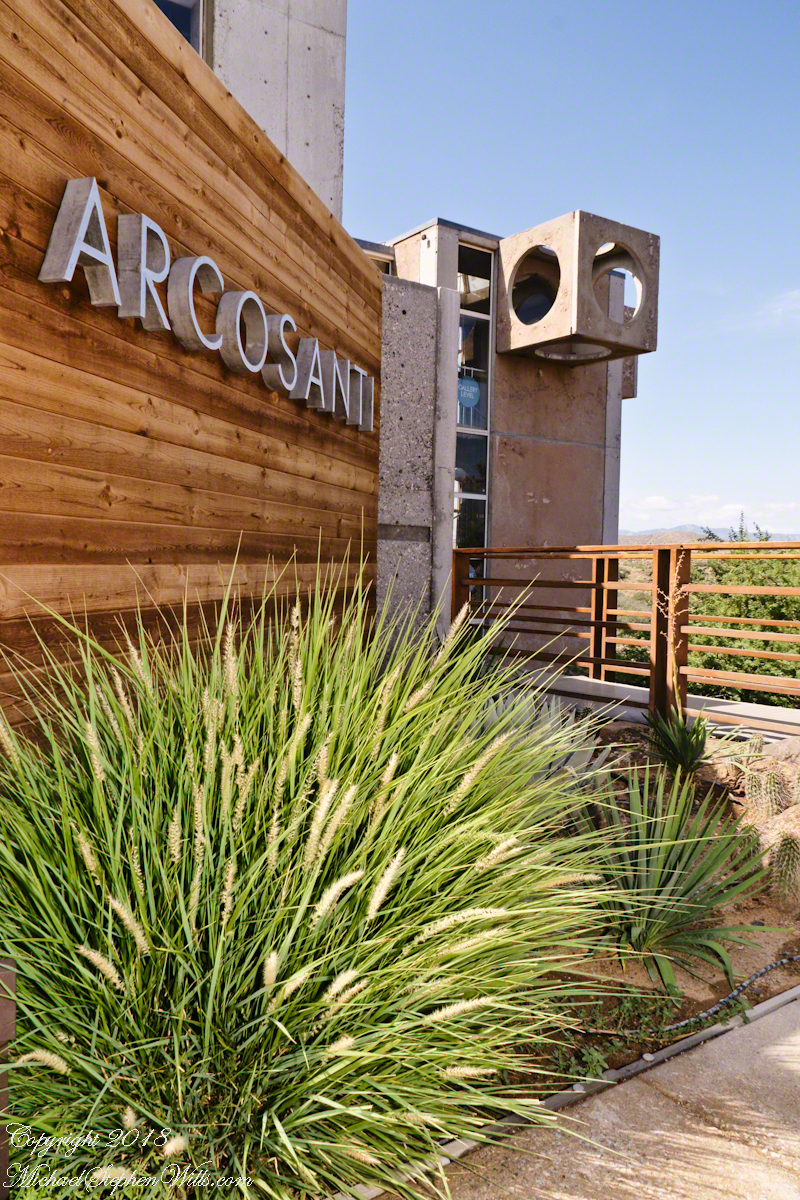
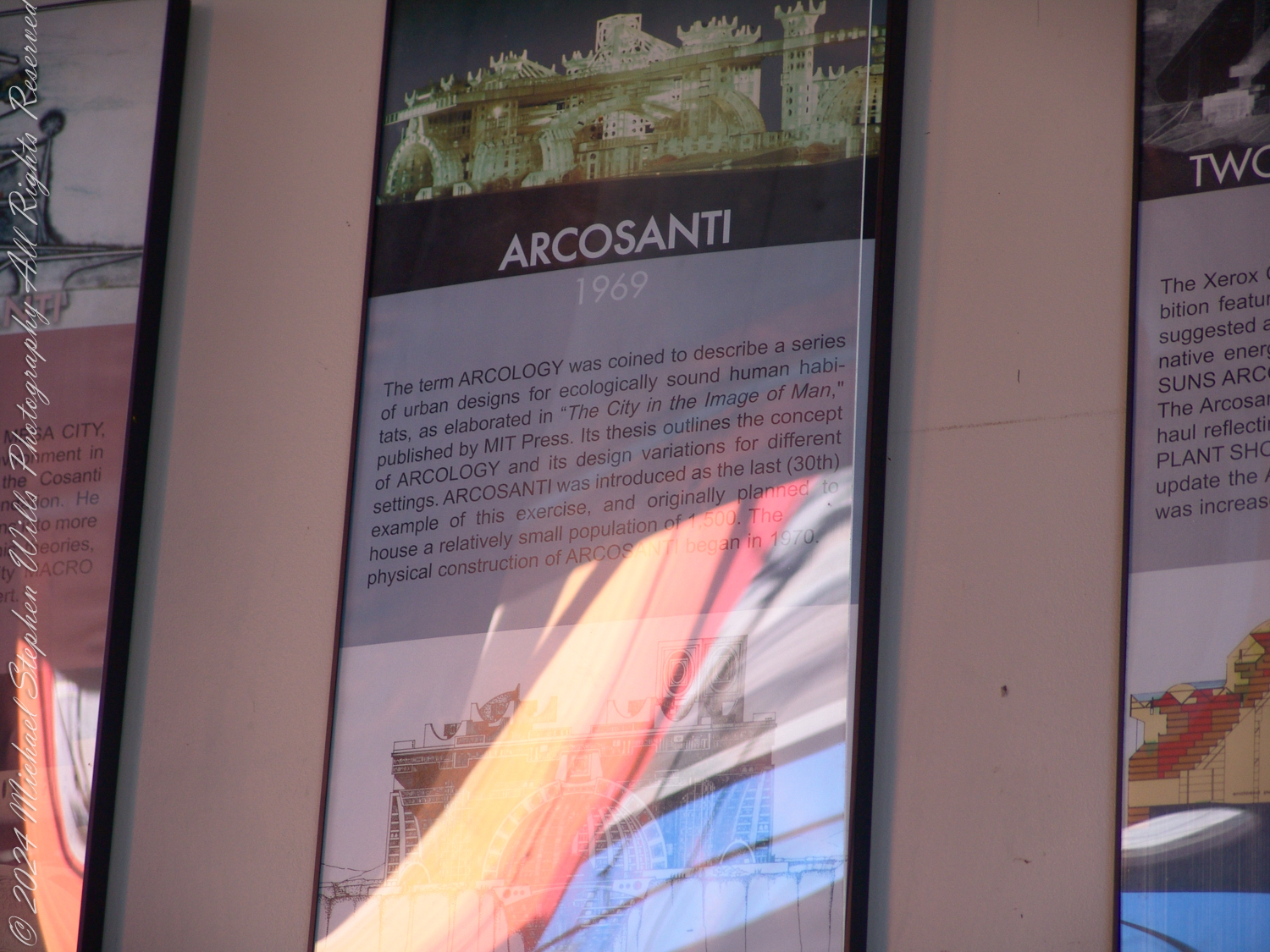
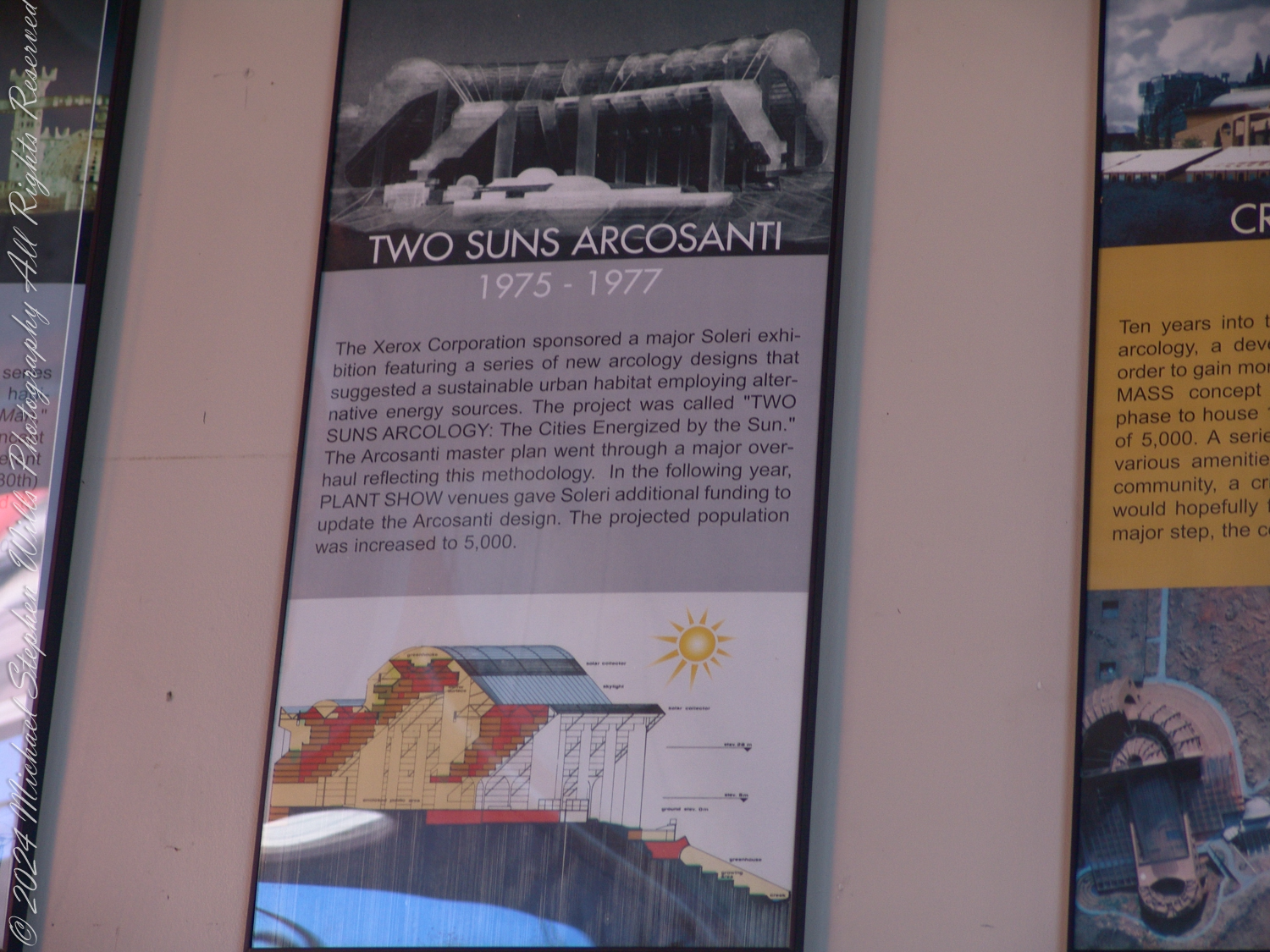
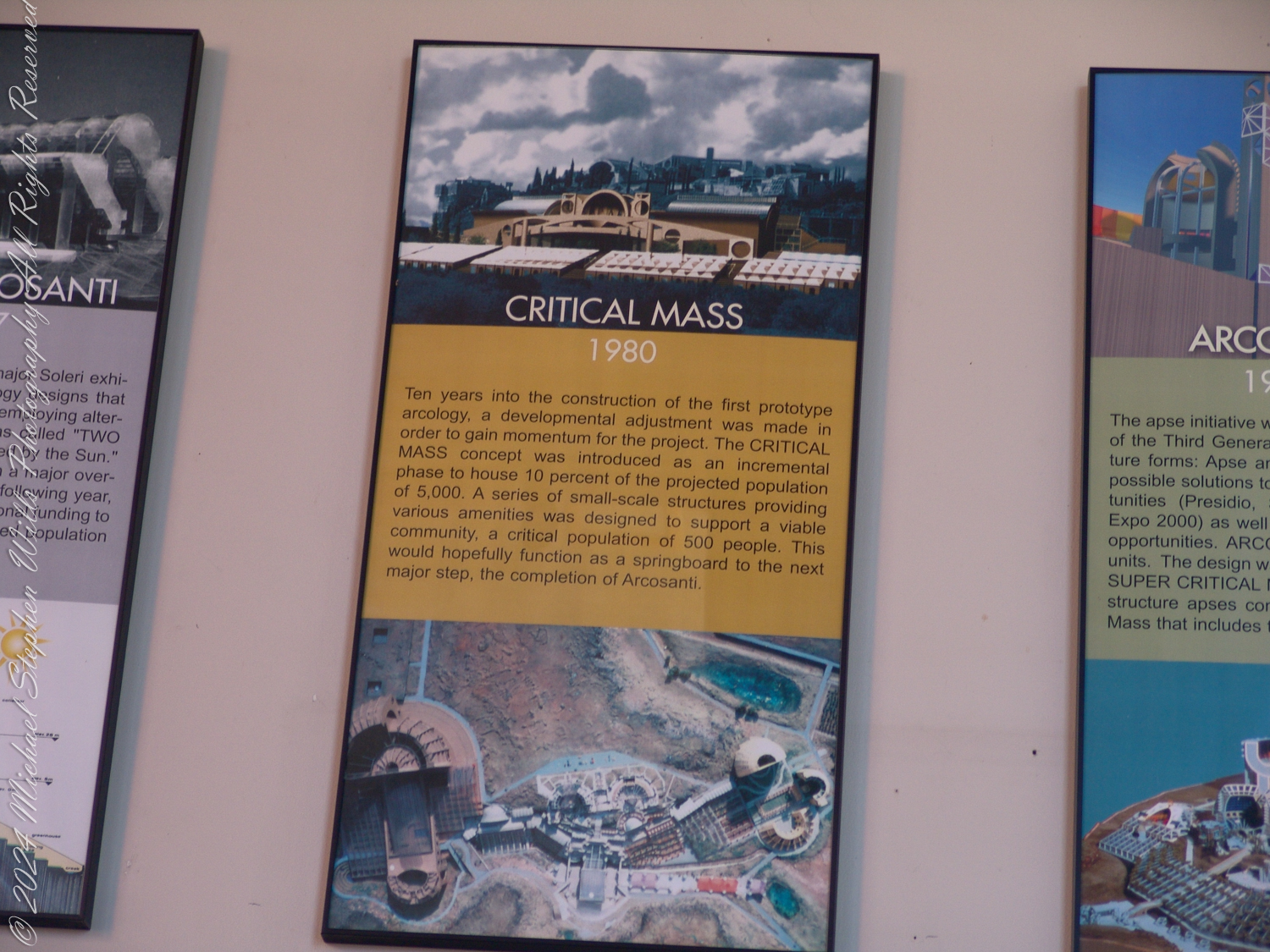
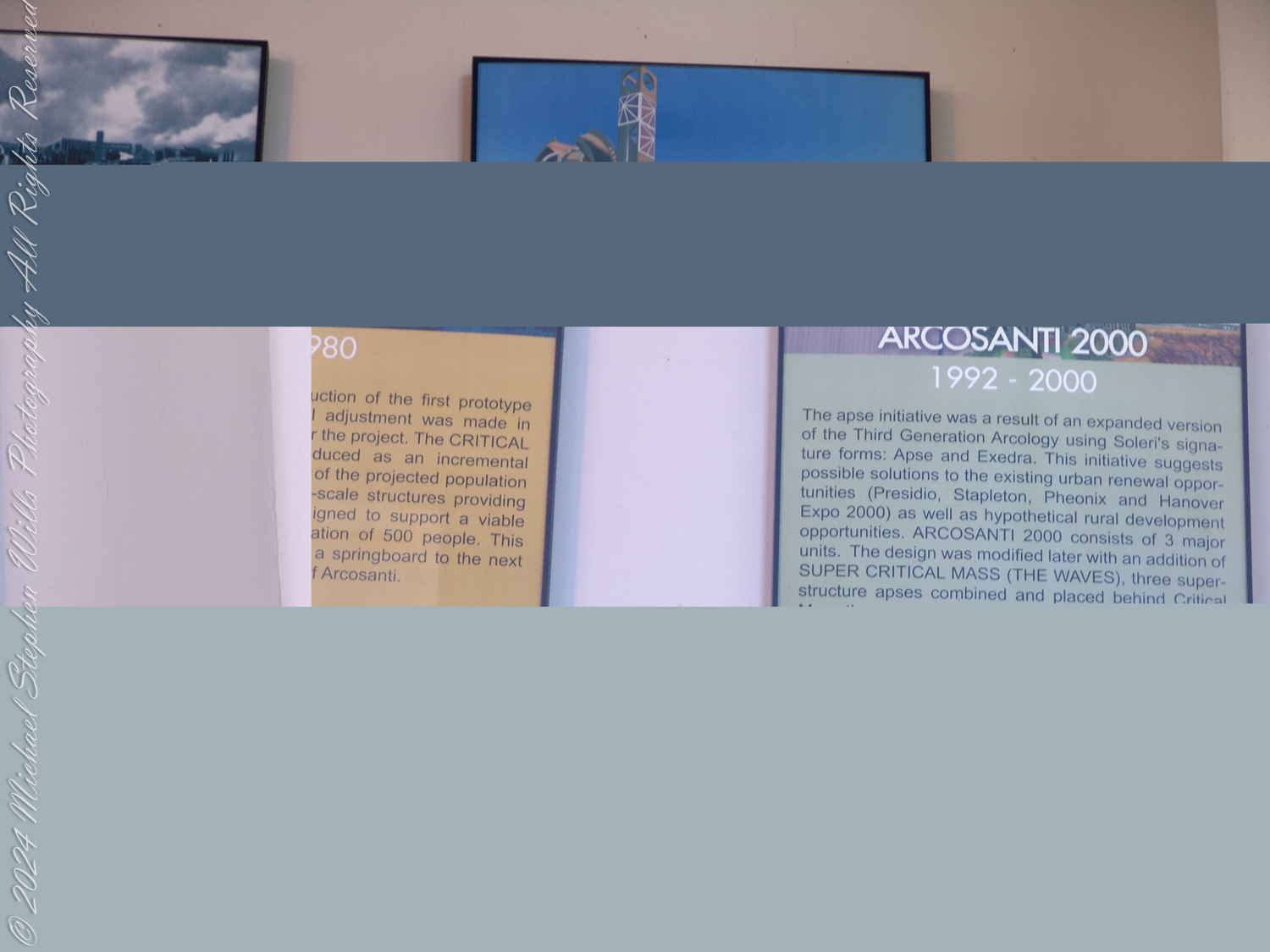
The accompanying photographs are a presentation of the history of Arcology from Arcosanti signage
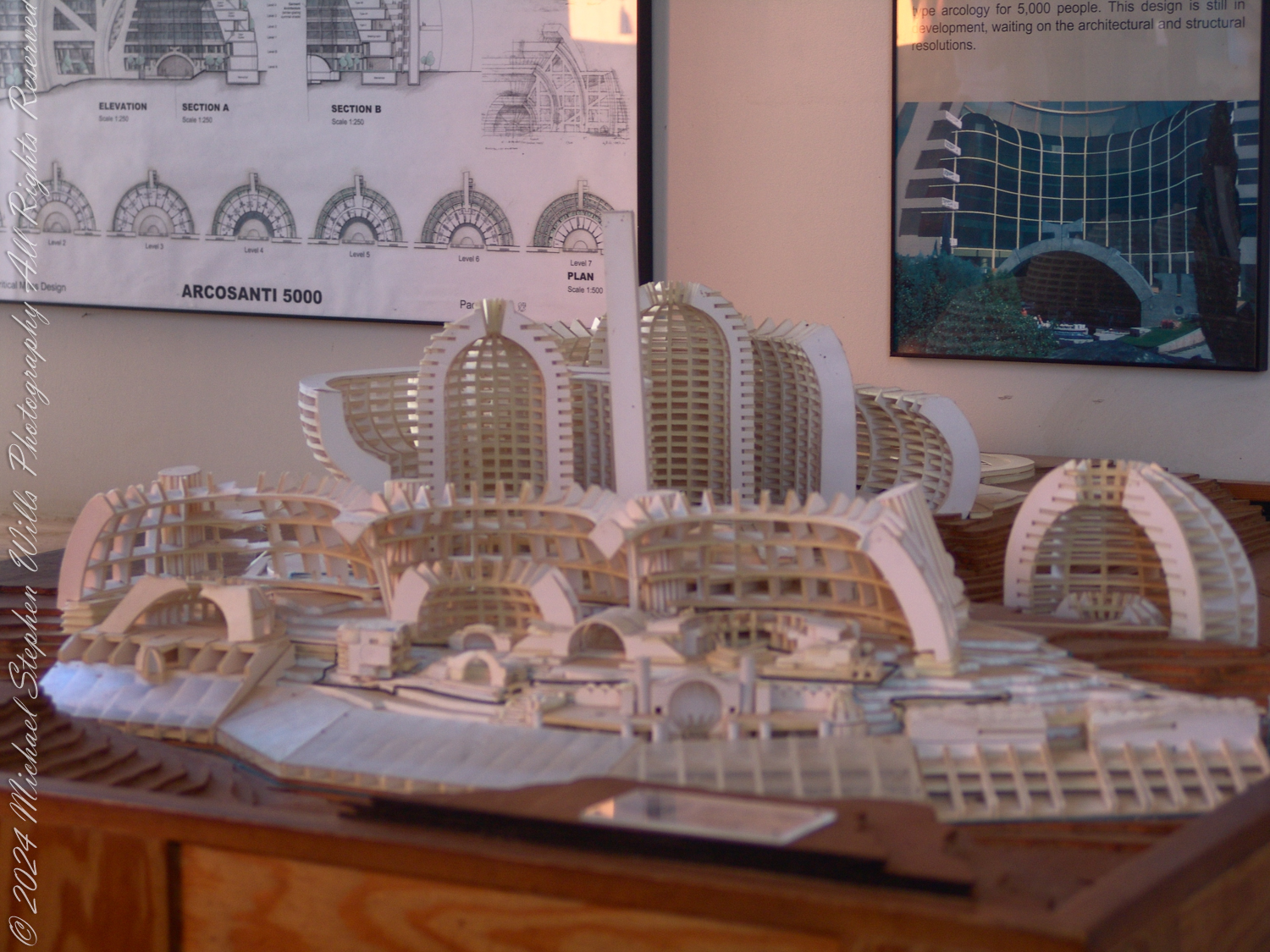
Arcosanti 5000 — Soleri’s Ultimate Vision

Historical Context and the Vision of Arcology

Soleri’s concept of Arcology emerged during the mid-20th century, an era of increasing environmental awareness, urban sprawl, and population growth. His vision was radical: compact, self-sustaining urban environments that minimized ecological impact while fostering human interaction and creativity. Arcology sought to challenge the sprawling, resource-intensive models of urban development that dominate the modern world.

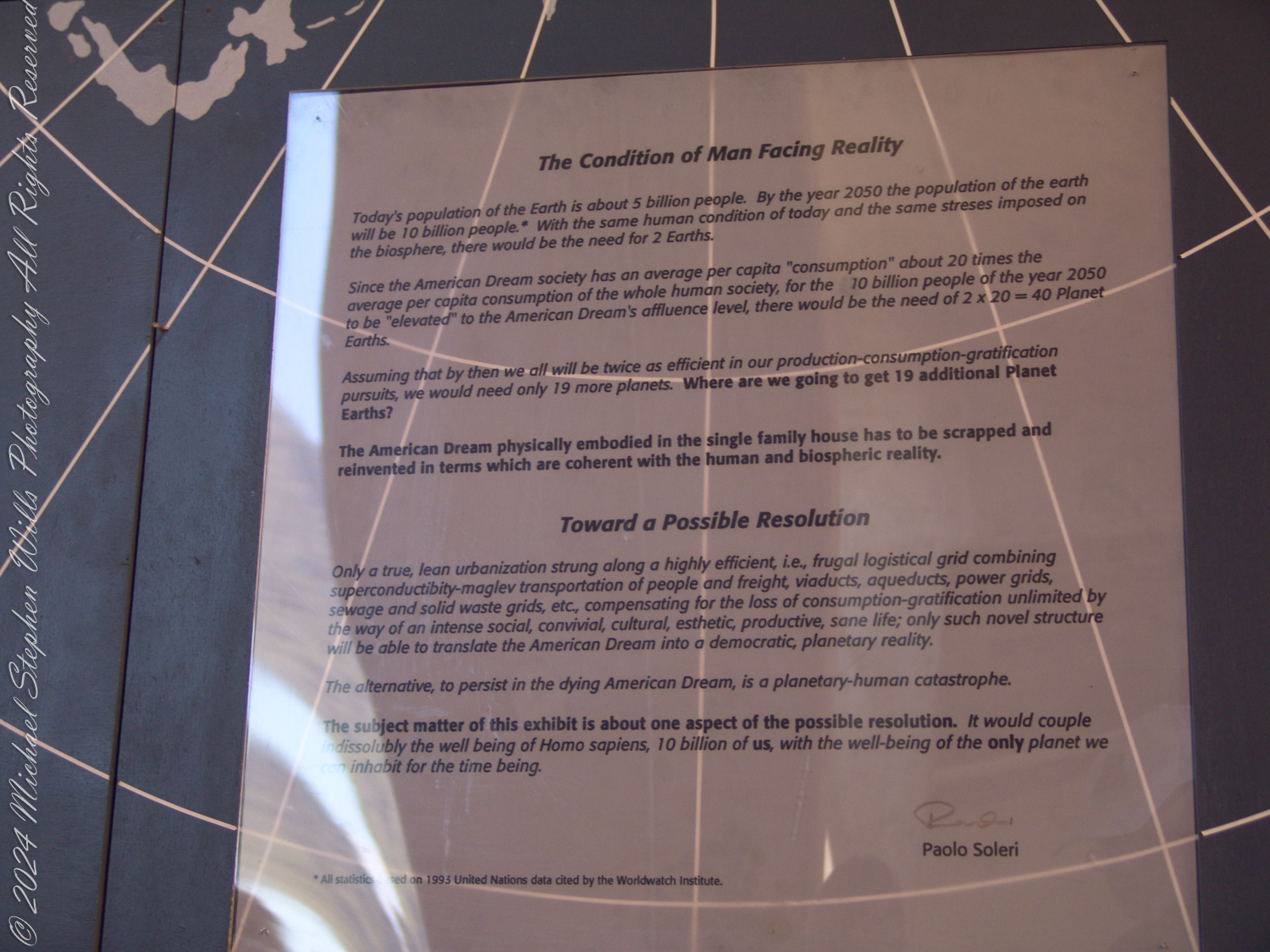
Today’s population of the Earth is about 5 billion people. By the year 2050 the population of the Earth will be 10 billion people.* With the same human condition of today and the same stresses imposed on the biosphere, there would be the need for 2 Earths. Since the American Dream society has an average per capita “consumption” about 20 times the average per capita consumption of the whole human society, for the 10 billion people of the year 2050 to be “elevated” to the American Dream’s affluence level, there would be the need of 2 x 20 = 40 Planet Earths. Assuming that by then we all will be twice as efficient in our production-consumption-gratification pursuits, we would need only 19 more planets. Where are we going to get 19 additional Planet Earths? The American Dream physically embodied in the single-family house has to be scrapped and reinvented in terms which are coherent with the human and biospheric reality. Toward a Possible Resolution Only a true, lean urbanization strung along a highly efficient, i.e., frugal logistical grid combining superconductivity-maglev transportation of people and freight, viaducts, aqueducts, power grids, sewage and solid waste grids, etc., compensating for the loss of consumption-gratification unlimited by the way of an intense social, convivial, natural, esthetic, productive, sane life; only such novel structure will be able to translate the American Dream into a democratic, planetary reality. The alternative, to persist in the dying American Dream, is a planetary-human catastrophe. The subject matter of this exhibit is about one aspect of the possible resolution. It would couple indissolubly the well-being of Homo sapiens, 10 billion of us, with the well-being of the only planet we can inhabit for the time being. All statistics based on 1993 United Nations data cited by the Worldwatch Institute. (signed) Paolo Soleri

Arcosanti was intended to be a prototype—a proof of concept for dense urban living within a minimal environmental footprint. Its design embraced verticality, integration with natural surroundings, and multi-use spaces to reduce resource consumption. Soleri’s philosophy rejected wasteful consumerism and emphasized communal living, self-sufficiency, and harmony with nature.

Arcosanti as a Realization of Arcology

While Soleri’s ideas were visionary, Arcosanti itself never fully realized its original ambitions. Planned to house 5,000 people, it currently accommodates fewer than 100 residents. This gap between aspiration and reality reflects several challenges:

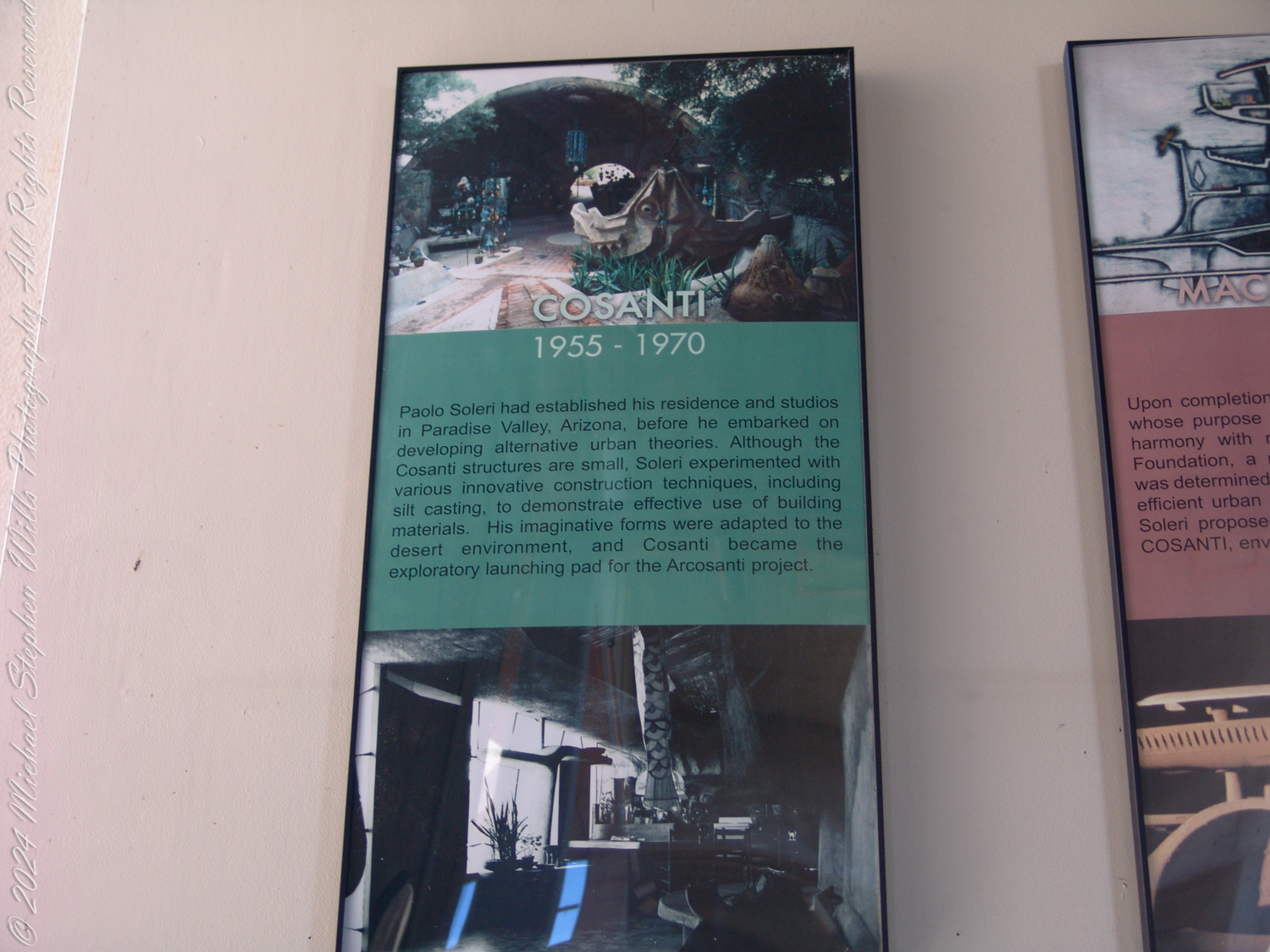
Paolo Soleri had established his residence and studios in Paradise Valley, Arizona, before he embarked on developing alternative urban theories. Although the Cosanti structures are small, Soleri experimented with various innovative construction techniques, including silt casting, to demonstrate effective use of building materials. His imaginative forms were adapted to the desert environment, and Cosanti became the exploratory launching pad for the Arcosanti project.

Scale and Funding: Building a sustainable community of this scale required vast financial and organizational resources. Arcosanti, largely constructed through volunteer labor and workshops, lacked the momentum to expand at the pace Soleri envisioned.

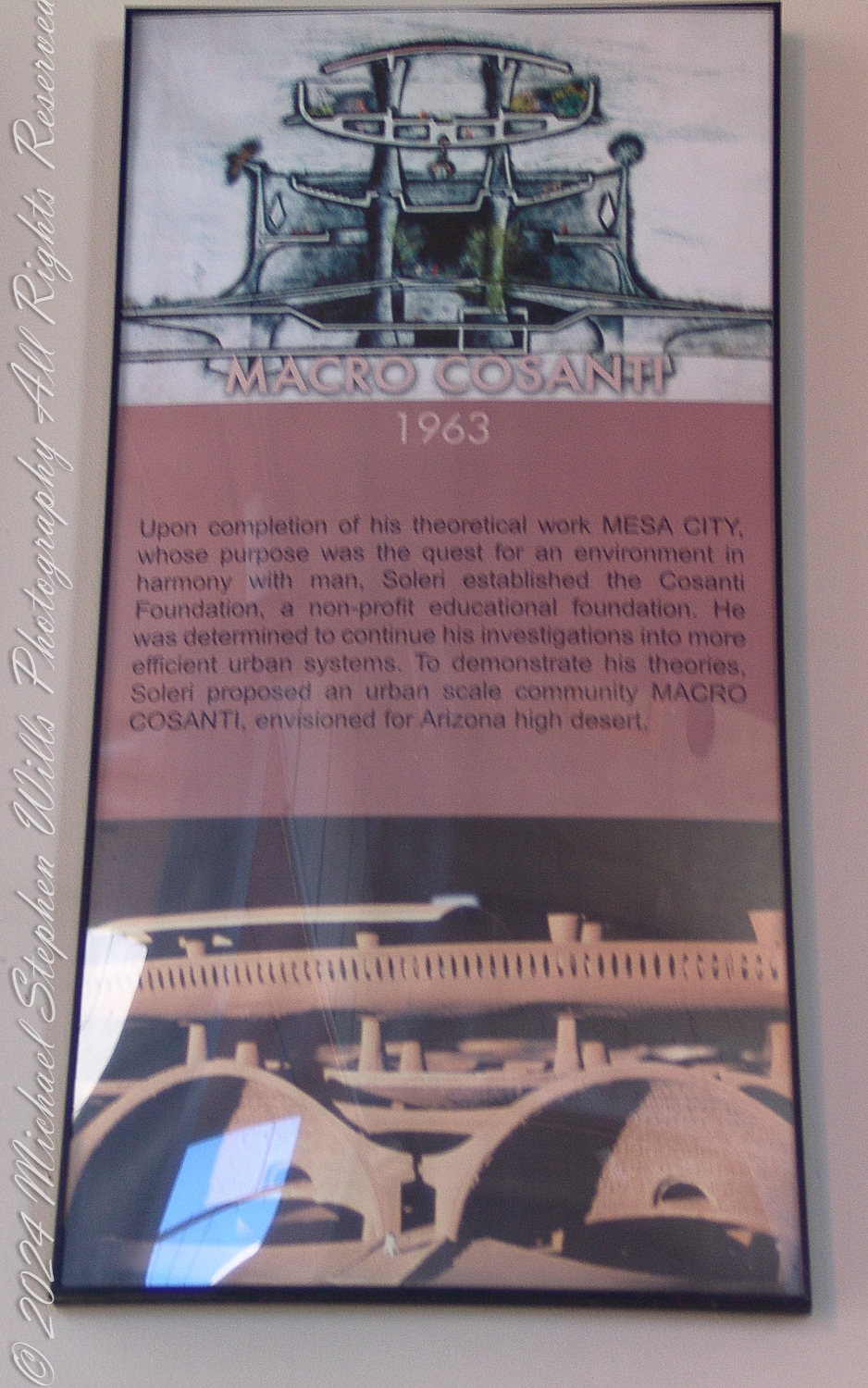
Upon completion of his theoretical work MESA CITY, whose purpose was the quest for an environment in harmony with man, Soleri established the Cosanti Foundation, a non-profit educational foundation. He was determined to continue his investigations into more efficient urban systems. To demonstrate his theories, Soleri proposed an urban-scale community MACRO COSANTI, envisioned for Arizona high desert.
Cultural Shifts: The communal living and austerity championed by Soleri contrast sharply with the consumer-driven values of contemporary society. The rise of globalized capitalism, suburban expansion, and digital individualism has made the communal ethos less appealing to many.

The term ARCOLOGY was coined to describe a series of urban designs for ecologically sound human habitats, as elaborated in “The City in the Image of Man,” published by MIT Press. This thesis outlines the concept of ARCOLOGY and its design variations for different settings. ARCOSANTI was introduced as the last (30th) example of this exercise, and originally planned to house a relatively small population of 500. The physical construction of ARCOSANTI began in 1970.

Technological Advances: Soleri’s designs were innovative for their time, but modern advancements in sustainable technology—such as solar power, green building materials, and decentralized energy systems—have surpassed some of his ideas. Today, sustainable urbanism focuses on retrofitting existing cities rather than building entirely new ones.

The Relevance of Arcology Today

Despite its limitations, Arcology remains profoundly relevant in the face of 21st-century challenges such as climate change, resource scarcity, and urban overpopulation. Soleri’s principles offer a framework to address these crises, particularly through:

The Xerox Corporation sponsored a major Soleri exhibition featuring a series of new arcology designs that suggested a sustainable urban habitat employing alternative energy sources. The project was called “TWO SUNS ARCOLOGY: The Cities Energized by the Sun.” The Arcosanti master plan went through a major overhaul reflecting this methodology. In the following year, PLANT SHOW venues gave Soleri additional funding to update the Arcosanti design. The projected population was increased to 5,000.

Compact Urbanism: Cities worldwide are grappling with the environmental toll of urban sprawl. Arcology’s emphasis on vertical, compact cities with reduced land usage aligns with the modern push for urban densification.

Ten years into the construction of the first prototype arcology, a developmental adjustment was made in order to gain momentum for the project. The CRITICAL MASS concept was introduced as an incremental phase to house 10 percent of the projected population of 5,000. A series of small-scale structures providing various amenities was designed to support a viable community, a critical population of 500 people. This would hopefully function as a springboard to the next major step, the completion of Arcosanti.
Mixed-Use and Communal Spaces: The COVID-19 pandemic underscored the importance of walkable, mixed-use neighborhoods and shared green spaces. Arcology’s model of integrated living and working spaces anticipates these needs.

Sustainability and Circular Systems: Soleri’s focus on minimizing waste and resource use aligns with today’s circular economy principles. Arcology’s ideas resonate with efforts to design cities as closed-loop systems that reuse resources.

The apse initiative was a result of an expanded version of the Third Generation Arcology using Soleri’s signature forms: Apse and Exedra. This initiative suggests possible solutions to the existing urban renewal opportunities (Presidio, Stapleton, Phoenix, and Hanover Expo 2000) as well as hypothetical rural development opportunities. ARCOSANTI 2000 consists of 3 major units. The design was modified later with an addition of SUPER CRITICAL MASS (THE WAVES), three superstructure apses combined and placed behind Critical …

A Philosophical Challenge: Beyond practical urban design, Arcology challenges us to rethink our relationship with the planet and with each other. It invites a fundamental shift from individualistic consumption to collective stewardship.

Critique of Arcosanti Today

Arcosanti, while iconic, serves more as a symbol than a fully functioning example of Arcology. Its limited population and incomplete development highlight key shortcomings:

Lack of Scalability: Arcosanti has not demonstrated how Arcology principles can scale to meet the needs of modern cities with millions of inhabitants.

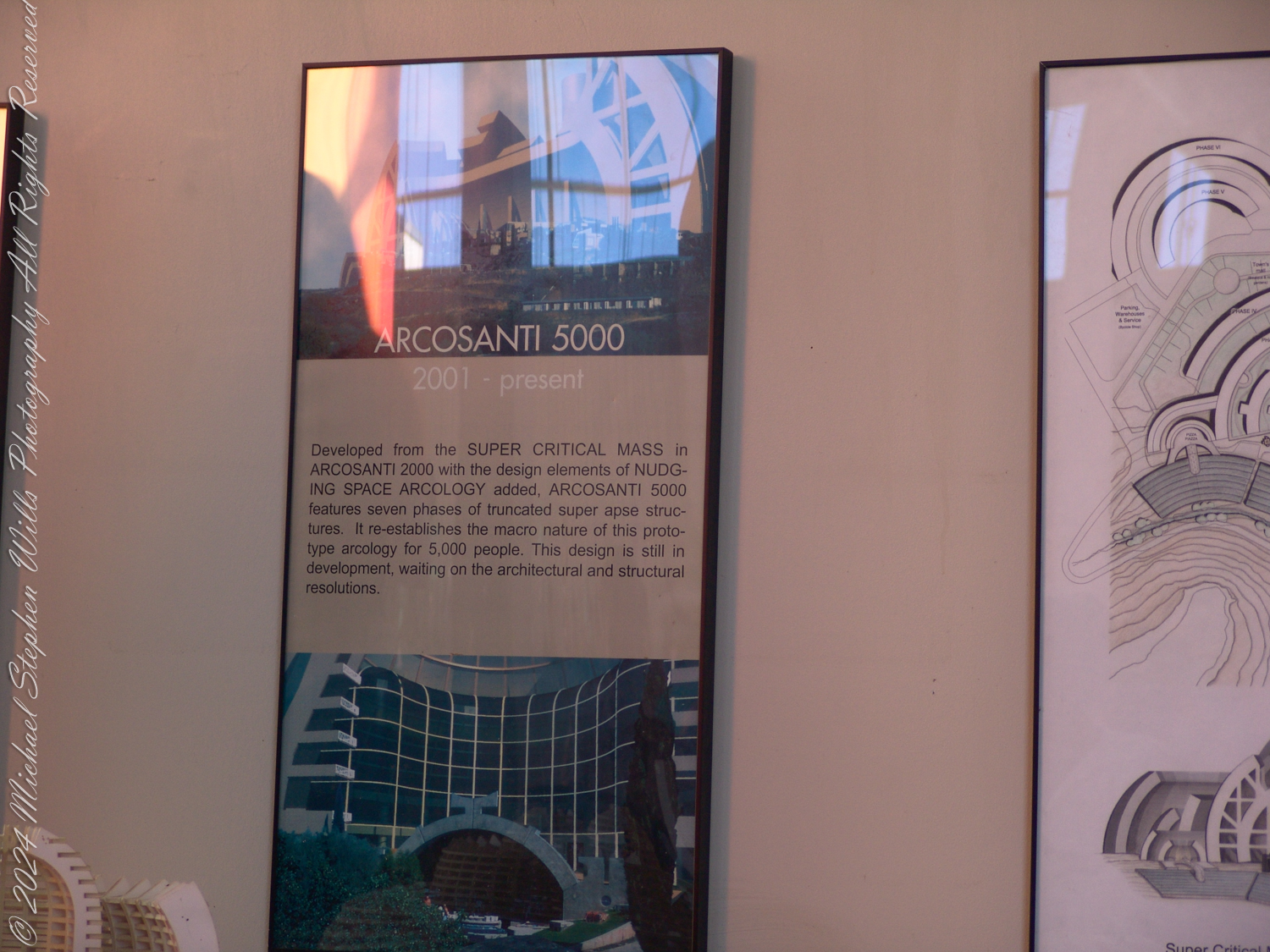
ARCOSANTI 5000 2001 – present Developed from the SUPER CRITICAL MASS in ARCOSANTI 2000 with the design elements of NUDGING SPACE ARCOLOGY added, ARCOSANTI 5000 features seven phases of truncated superapse structures. It re-establishes the macro nature of this prototype arcology for 5,000 people. This design is still in development, waiting on the architectural and structural resolutions.

Dependence on External Systems: Despite its aspirations for self-sufficiency, Arcosanti relies on external power grids, supply chains, and tourism, which limits its autonomy.

Cultural Niche: Arcosanti appeals primarily to a niche audience of artists, architects, and environmentalists, making it less accessible or appealing to broader populations.

However, these critiques do not negate its value as a learning tool. Arcosanti’s enduring presence serves as a physical and philosophical case study for those seeking alternatives to conventional urbanism.

A Way Forward?

The future of Arcology lies not in building new Arcosanti-like prototypes but in applying its principles to existing cities and communities. Initiatives such as urban vertical farming, passive solar building design, and car-free city centers echo Soleri’s vision in modern contexts.

Additionally, Arcosanti itself could pivot toward becoming a research hub for sustainable practices, a cultural landmark, or a retreat for those seeking inspiration in Soleri’s ideas. By focusing on education and experimentation, it could remain relevant in contemporary discussions about urbanism and ecology.

Conclusion

Arcosanti and Arcology are more than relics of a bygone architectural movement—they are reminders of humanity’s potential to live in balance with nature. While the practical implementation of Arcology faces significant hurdles, its core philosophy continues to inspire efforts to create more sustainable and harmonious urban environments. In a world increasingly shaped by environmental urgency, Soleri’s vision holds lessons we cannot afford to ignore.

Enter your email to receive notification of future postings. I will not sell or share your email address.

Cocoa Beach’s Unique Nine-Armed Sea Star Encounter

In Cocoa Beach, I encountered a Nine-armed Sea Star, which I returned to the ocean, reflecting on its ecological role and the wonders of marine life.

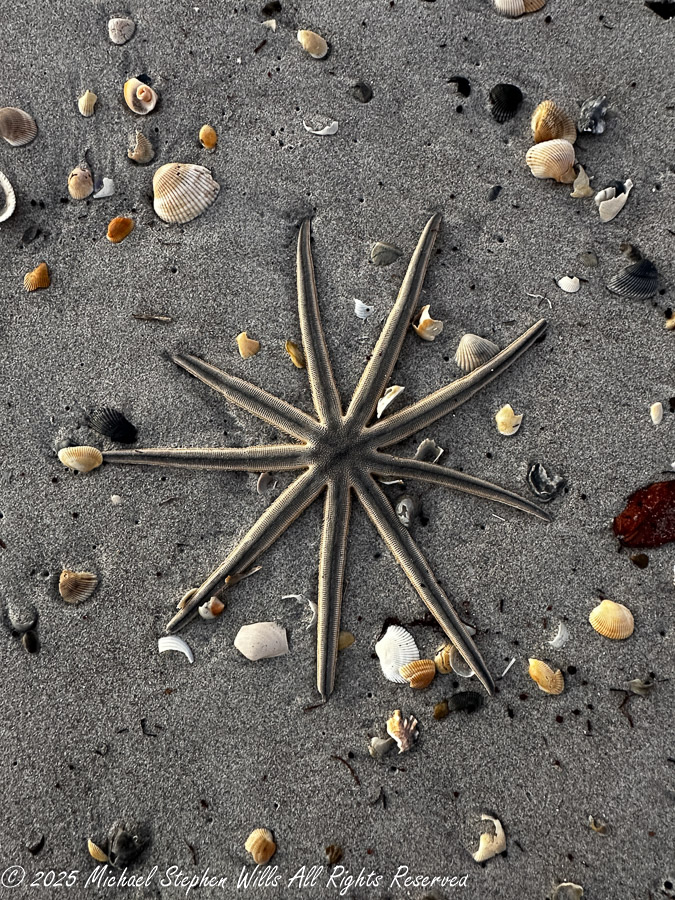
Walking along the shoreline of Cocoa Beach in the early morning light, I encountered a remarkable sight—a Nine-armed Sea Star (Luidia senegalensis) sprawled on the damp sand. Its long, slender arms stretched outward in a perfect starburst pattern, each limb tapering to a fine point. The sandy beige coloration of its body blended with the surrounding beach, accentuated by a darker stripe running down the center of each arm. Scattered around it were small shells and fragments, remnants of the ocean’s ebb and flow, testifying to the high tide that had deposited this fascinating creature ashore.

The scientific name Luidia senegalensis provides insight into the taxonomy and classification of this intriguing sea star. The genus Luidia is named after the 18th-century Portuguese naturalist Francisco Luid, who contributed significantly to marine biology. The species name senegalensis refers to its first recorded discovery along the coast of Senegal in West Africa. As a member of the phylum Echinodermata and the class Asteroidea, the Nine-armed Sea Star shares lineage with other starfish, sea urchins, and sand dollars, distinguished by their radial symmetry and water vascular system used for movement and feeding.

As I paused to observe it more closely, I marveled at the intricate details of its structure. Unlike the more familiar five-armed sea stars, this specimen had nine arms radiating from a small central disc. The surface of its body appeared smooth, with tiny tube feet lining the underside of each arm—a biological marvel designed for locomotion and feeding.

This starfish washed up on high tide. I seemed alive so I returned it to the surf during ebb tide, hoping the ebb current would return it to deeper water.

The Nine-armed Sea Star, common along Florida’s coastline, is a voracious predator within the benthic ecosystem. It primarily preys on bivalves such as clams and mussels, using a fascinating feeding strategy. Unlike most predators that rely on speed and strength, this sea star employs patience and ingenuity. It wraps its flexible arms around a bivalve, exerting a slow and steady force to pry the shell open. Once a small gap is achieved, the sea star everts its stomach through its mouth and into the prey’s shell, secreting digestive enzymes that liquefy the soft tissues within. This external digestion allows the sea star to consume its prey without the need for teeth or jaws—a perfect example of nature’s ingenuity.

Despite its delicate appearance, the Nine-armed Sea Star plays a crucial role in the marine ecosystem. By preying on bivalves, it helps regulate their populations, preventing overgrazing of seagrass beds and maintaining a balanced food web. Additionally, it serves as a food source for larger marine predators, such as fish and sea turtles. Its presence signifies a healthy intertidal environment, where nutrient cycles and predator-prey relationships are in dynamic equilibrium.

As I considered the sea star’s role in the ecosystem, I wondered about its journey to this point. These creatures undergo a fascinating life cycle, starting as tiny, free-swimming larvae that drift with ocean currents. Over time, they undergo metamorphosis, settling onto the seabed and gradually developing into their iconic star shape. The resilience and adaptability of these creatures are truly astounding, capable of regenerating lost arms and thriving in diverse habitats.

Realizing that this sea star likely found itself stranded by the receding high tide, I felt a sense of responsibility to help it return to its natural environment. Picking it up gently, I carried it toward the water’s edge, where the ebb tide was beginning to pull the sea back into its vast domain. With a final look at its striking form, I placed it carefully into the shallow waves, hoping that the ebb current would carry it back to the sandy seabed where it belonged.

As the waves lapped around my feet, I imagined the sea star resuming its journey, gliding along the ocean floor in search of its next meal. The interconnectedness of all marine life became evident in that moment—each creature playing its part in an intricate and delicate dance of survival.

Walking back along the shoreline, I reflected on the experience. My fleeting encounter with the Nine-armed Sea Star was a reminder of the wonders hidden beneath the ocean’s surface and our role in preserving them. Every tide brings new discoveries, and every ebb offers a second chance—for the sea star, and perhaps for us as well.

Cocoa Beach, with its gentle waves and abundant life, had once again provided an unforgettable encounter with nature. The starfish, now safely returned to the ocean, would continue its unseen work beneath the waves, a quiet but essential denizen of the underwater world.

Enter your email to receive notification of future postings. I will not sell or share your email address.

Erosion and Beauty: Cocoa Beach’s Sand Sculptures

At Cocoa Beach, sand castles succumb to time, showcasing beauty in decay, while desert monoliths endure. Both narratives reveal nature’s artistry through impermanence and transformation.

On the shores of Cocoa Beach, where the January winds dance freely, the once-proud towers of sand now stand humbled. What was sculpted by human hands—carefully packed and shaped with laughter—has become a relic of its former grandeur. The wind, with its gentle yet relentless touch, carves away at their edges, smoothing and softening their once-crisp lines. The castles, now mere echoes of their original form, hold a quiet dignity in their decay. Impermanence is their fate.

Cocoa Beach, Brevard County, Florida, Space Coast, January 2025

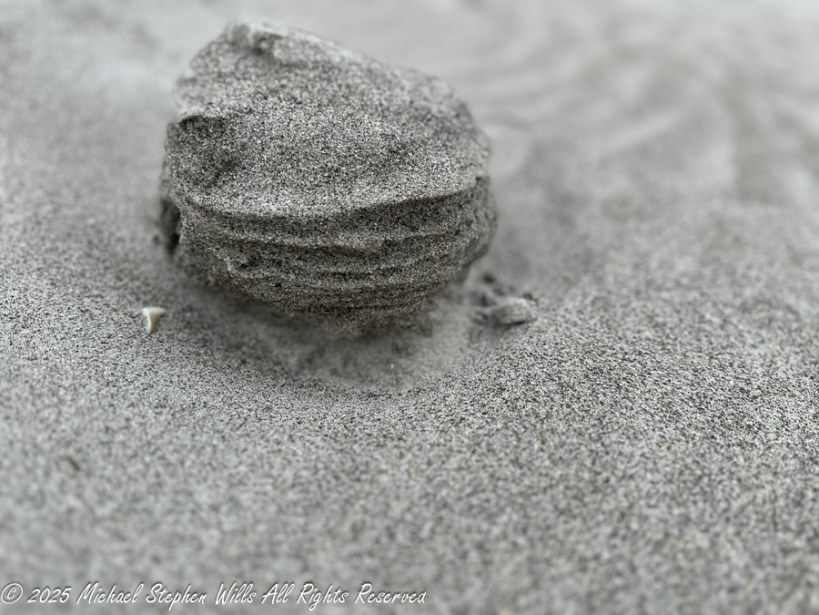
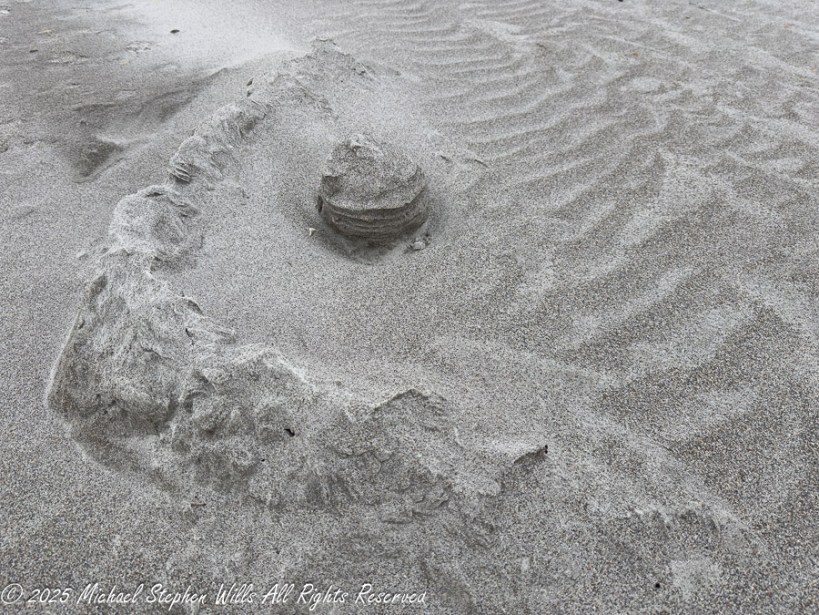
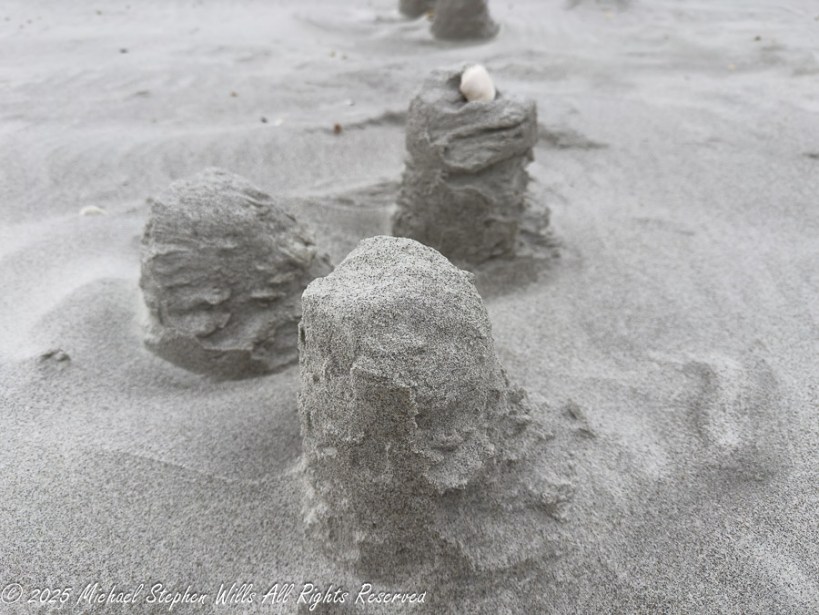
In the first photograph, the remnants of a sand fortress curve in a gentle arc, protecting a lone pillar—perhaps the last bastion of a crumbling empire. The textures of wind-blown ridges ripple across the sand like waves frozen in time, whispering of the invisible forces that shape the land. The delicate striations of the eroded peak, captured in close detail in the second image, reveal the layers of creation and destruction, each grain bearing witness to the ceaseless march of time.

Cocoa Beach, Brevard County, Florida, Space Coast, January 2025

The third image brings a sense of companionship to this landscape of change. Like silent sentinels, the remaining sand pillars stand together, weathered but resolute. One wears a crown of a single shell—a reminder that even in the face of erosion, beauty persists. These fleeting structures, built in joy, now bow to nature’s artistry, embracing the inevitable with quiet grace.

Cocoa Beach, Brevard County, Florida, Space Coast, January 2025

And yet, beyond the gentle shores of Cocoa Beach, in the vast and timeless expanse of the Sahara Desert, wind-carved monoliths stand as testament to the power of patience. The fourth photograph—an imposing formation shaped by millennia of desert winds—towers over the golden dunes, its shadow stretching far into the sands. Where the beach’s castles fall in a day, the desert’s sculptures endure for centuries, silent witnesses to the ebb and flow of time on a grander scale.

Wind carved geological formation, Sahara desert. Credit “scraped from the web”

But are they so different? Whether in the fleeting impermanence of Cocoa Beach or the enduring vastness of the Sahara, the hand of the wind shapes all things. Each formation tells the same story—of creation, of erosion, and of transformation. They whisper to us that beauty is not defined by permanence, but by the dance between time and the elements.

As the sun sets over the beach, casting long shadows across the sand, one cannot help but marvel at the artistry of nature. Whether lasting an afternoon or an age, the sculptures of wind and sand remind us that all things are in motion, and every grain, every ripple, every fleeting moment holds a story waiting to be told.

Enter your email to receive notification of future postings. I will not sell or share your email address.

Exploring the Vision of Arcosanti

In the Arizona desert, structures harmonize with nature, embodying creativity and purpose while inviting reflection on balance and coexistence.

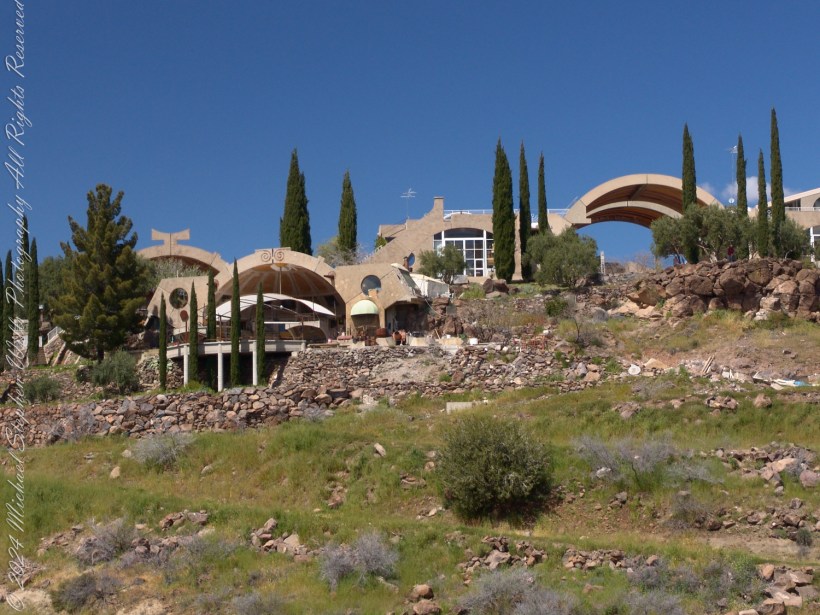
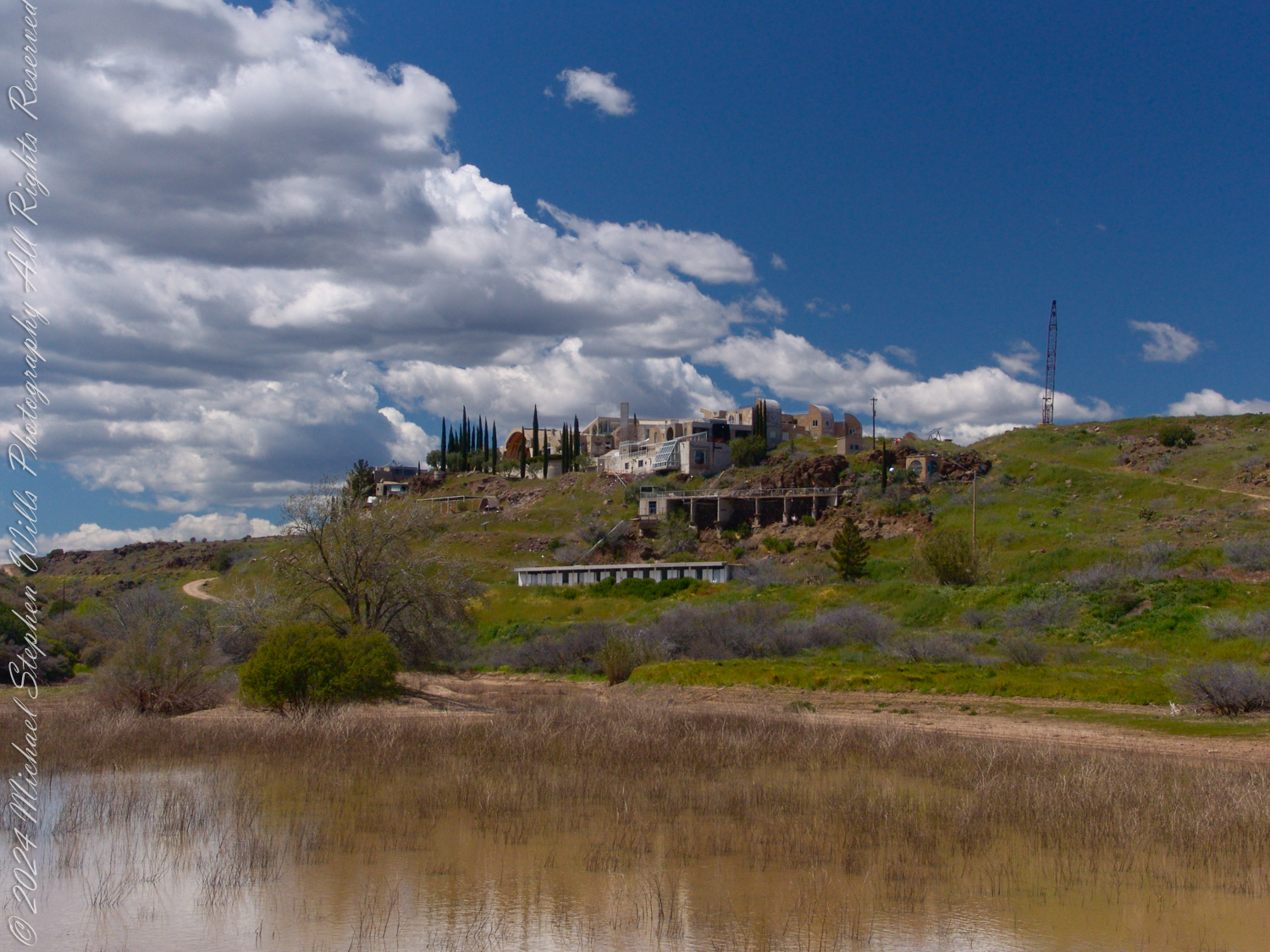
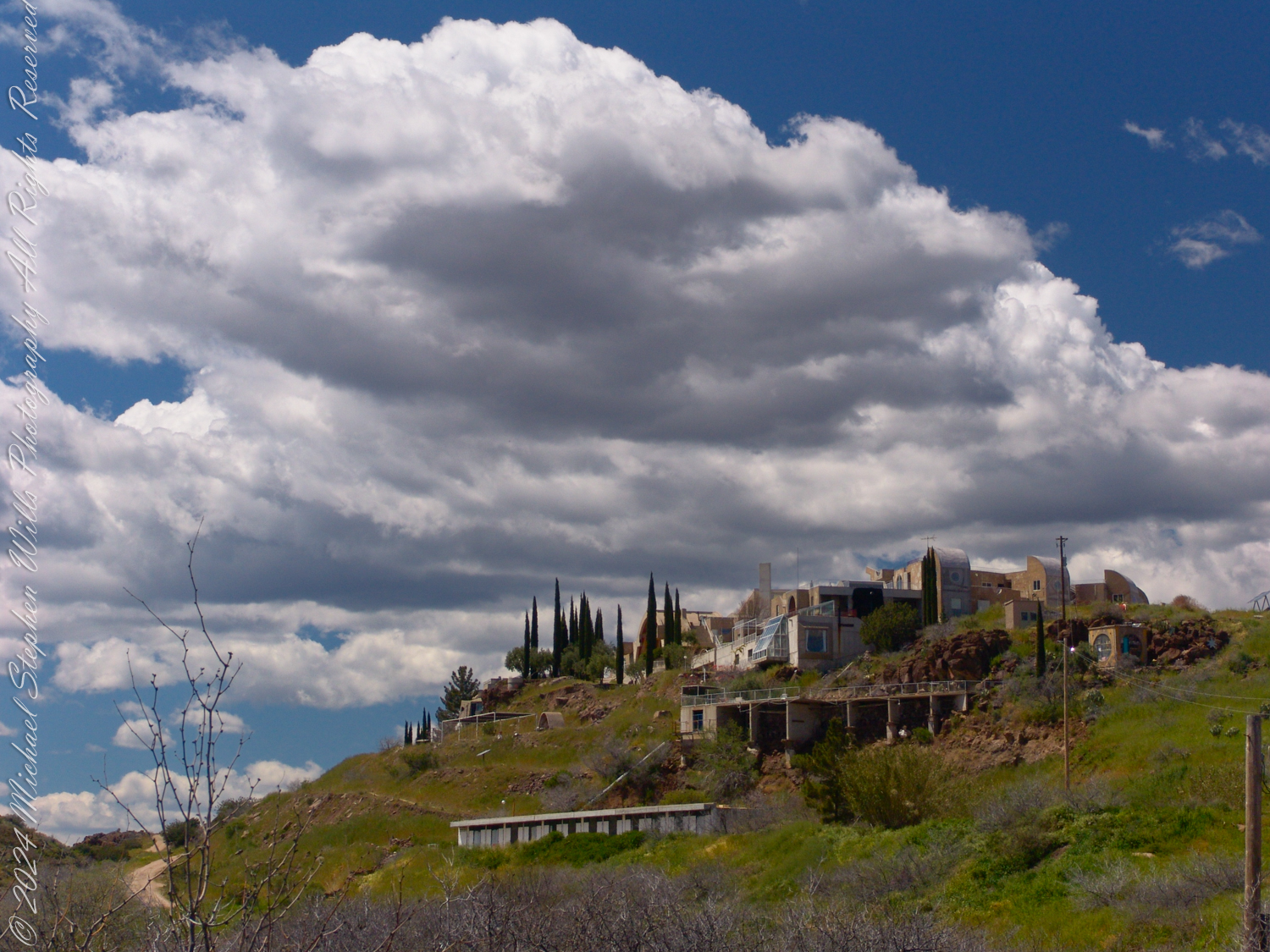
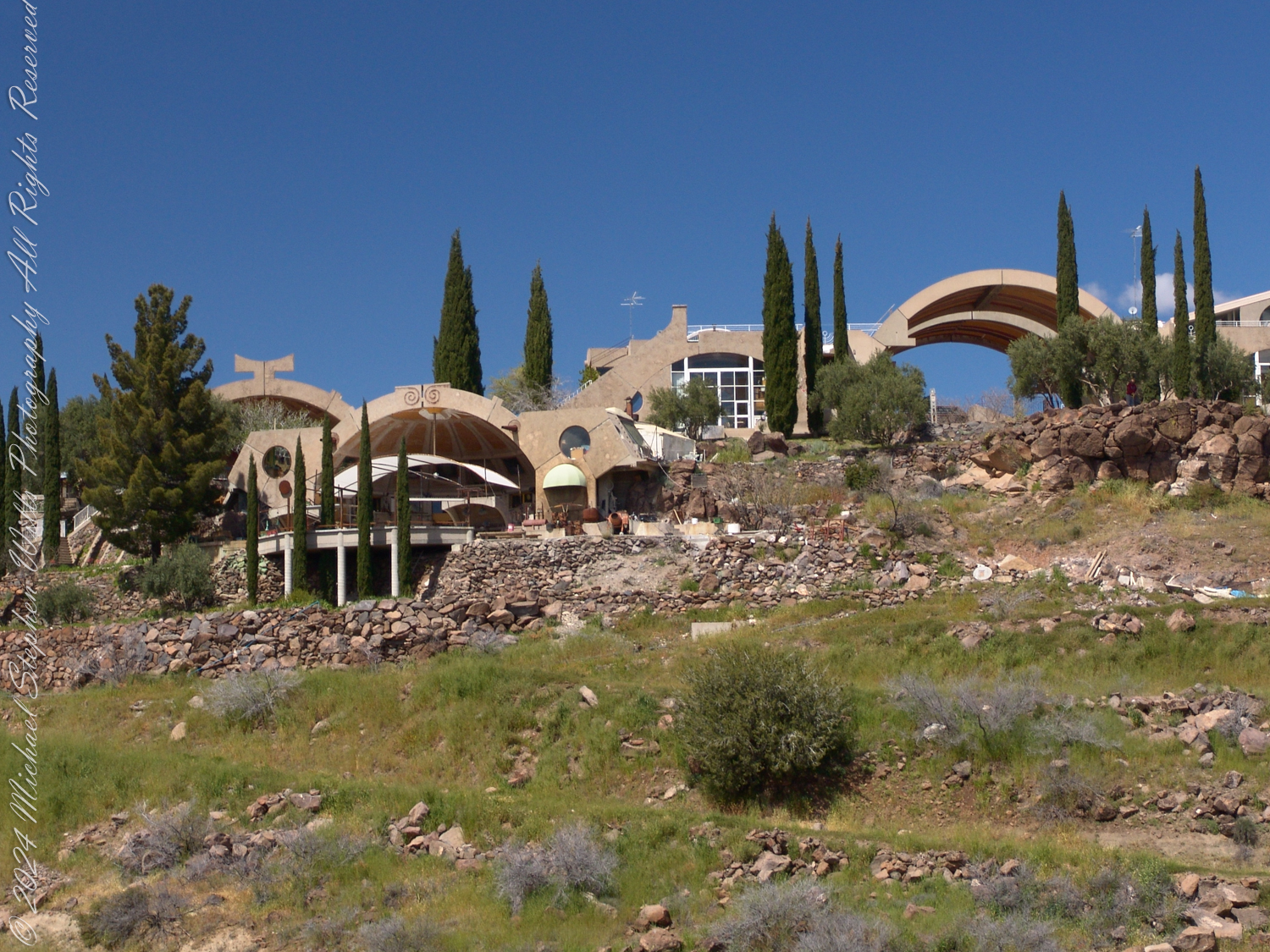
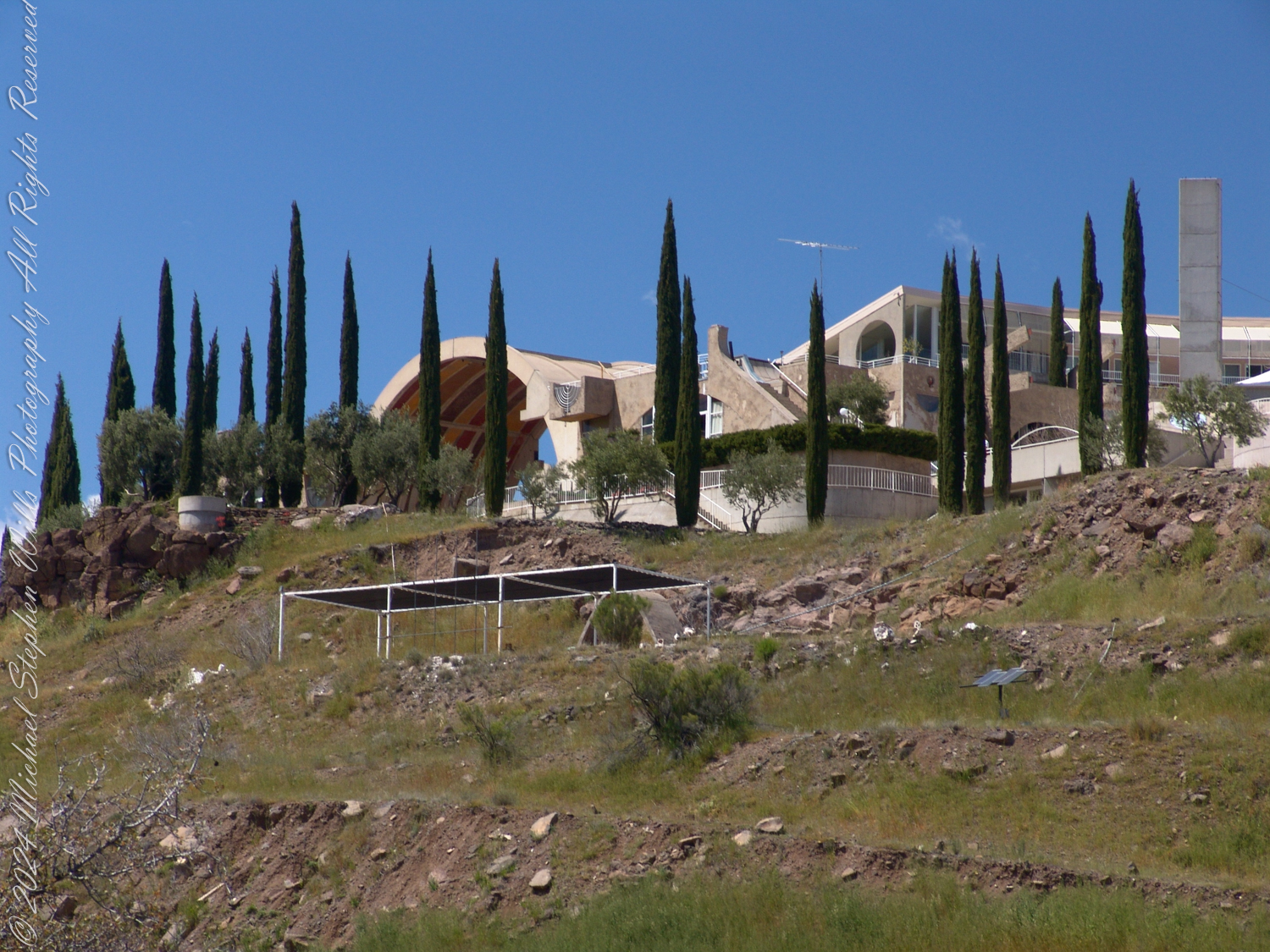
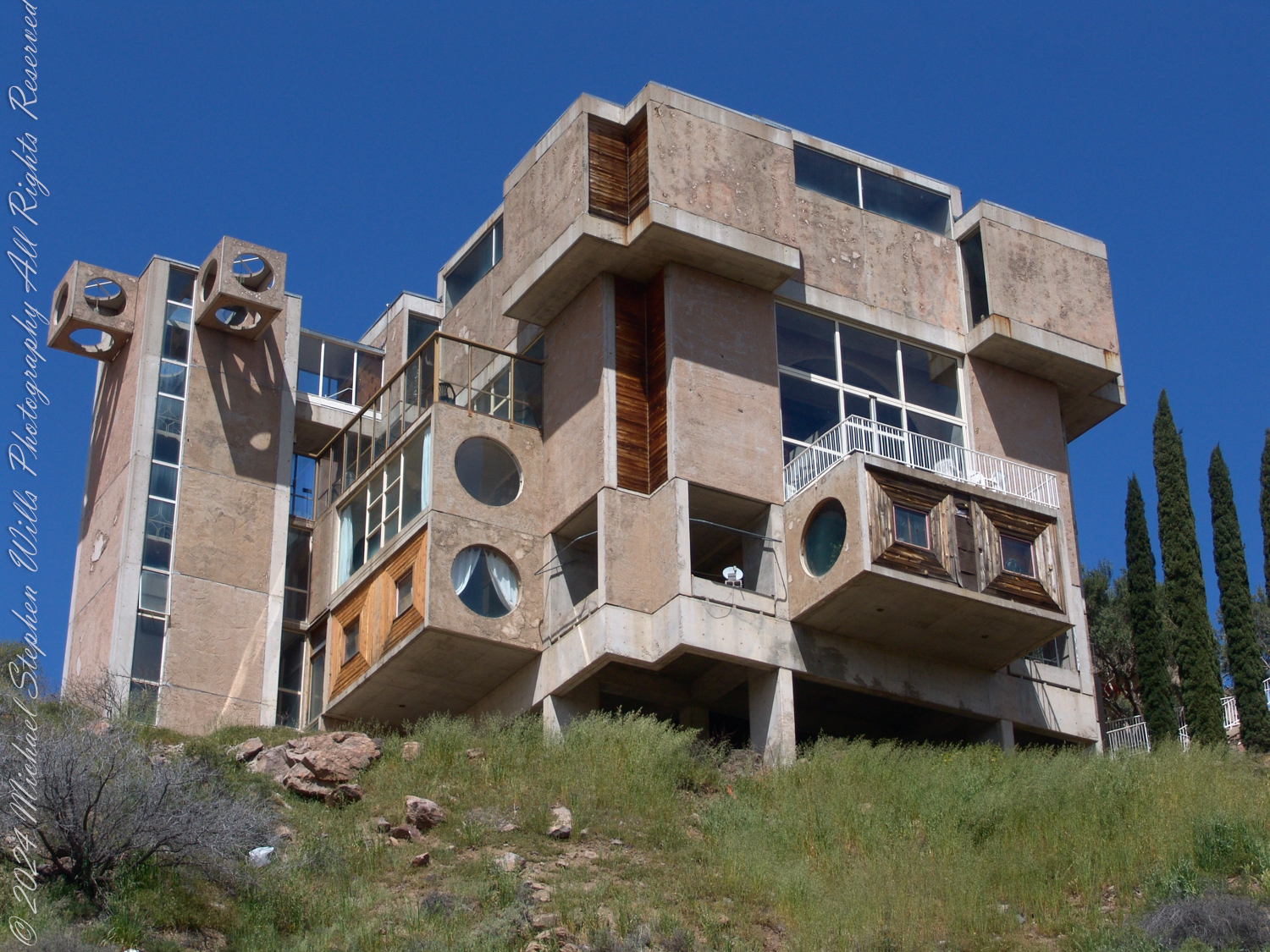
Approaching Arcosanti from afar, a cluster of forms rising from the Arizona desert like a mirage of human imagination. Against the cobalt sky, the buildings seemed to breathe with the land itself, their curves and edges echoing the undulations of the hillside. From this distance, the structures were both distant dream and solid reality, their symmetry a whispered promise of order amidst the chaos of the wild.

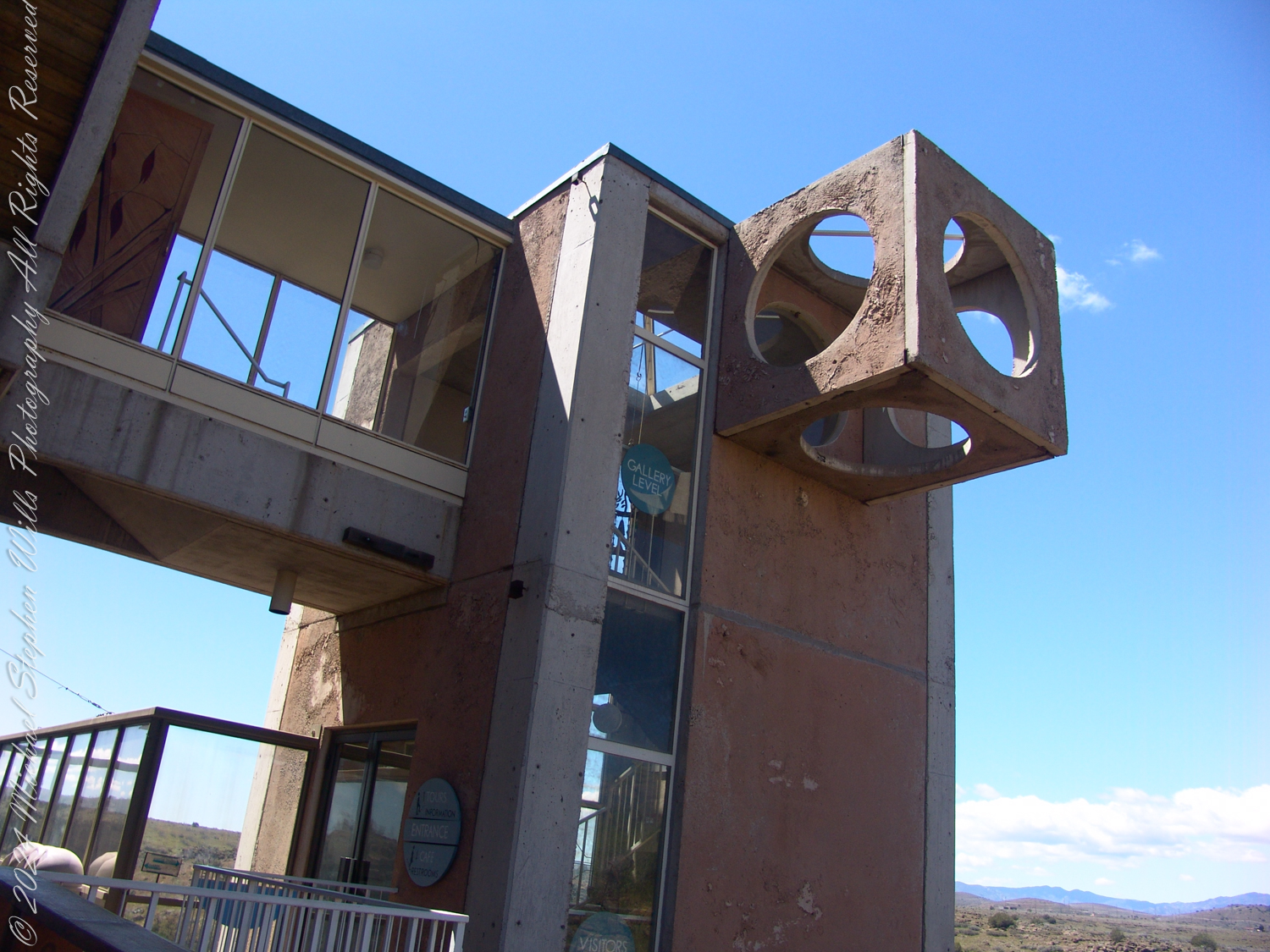
As I moved closer, the buildings revealed their intricate secrets. Circular windows stared like unblinking eyes, portals to a world shaped by creativity and purpose. Towers and cubes jutted confidently into space, their bold geometry softened by the earthen hues of concrete and weathered wood. These materials, neither foreign nor intrusive, seemed born of the very soil beneath my feet. There was an undeniable rhythm to the place—a harmony where art, function, and the timeless desert converged.

I walked among the structures, their forms towering above me like sentinels of some ancient philosophy reborn for a modern age. The elevated walkways beckoned with a quiet invitation, connecting one sanctuary of thought to another. Circular motifs repeated like a mantra, reminding me of the cycles of life, of the sun and the moon, of the unbroken circles that hold us together. Here, design was not merely a tool but a hymn, sung in concrete and glass.

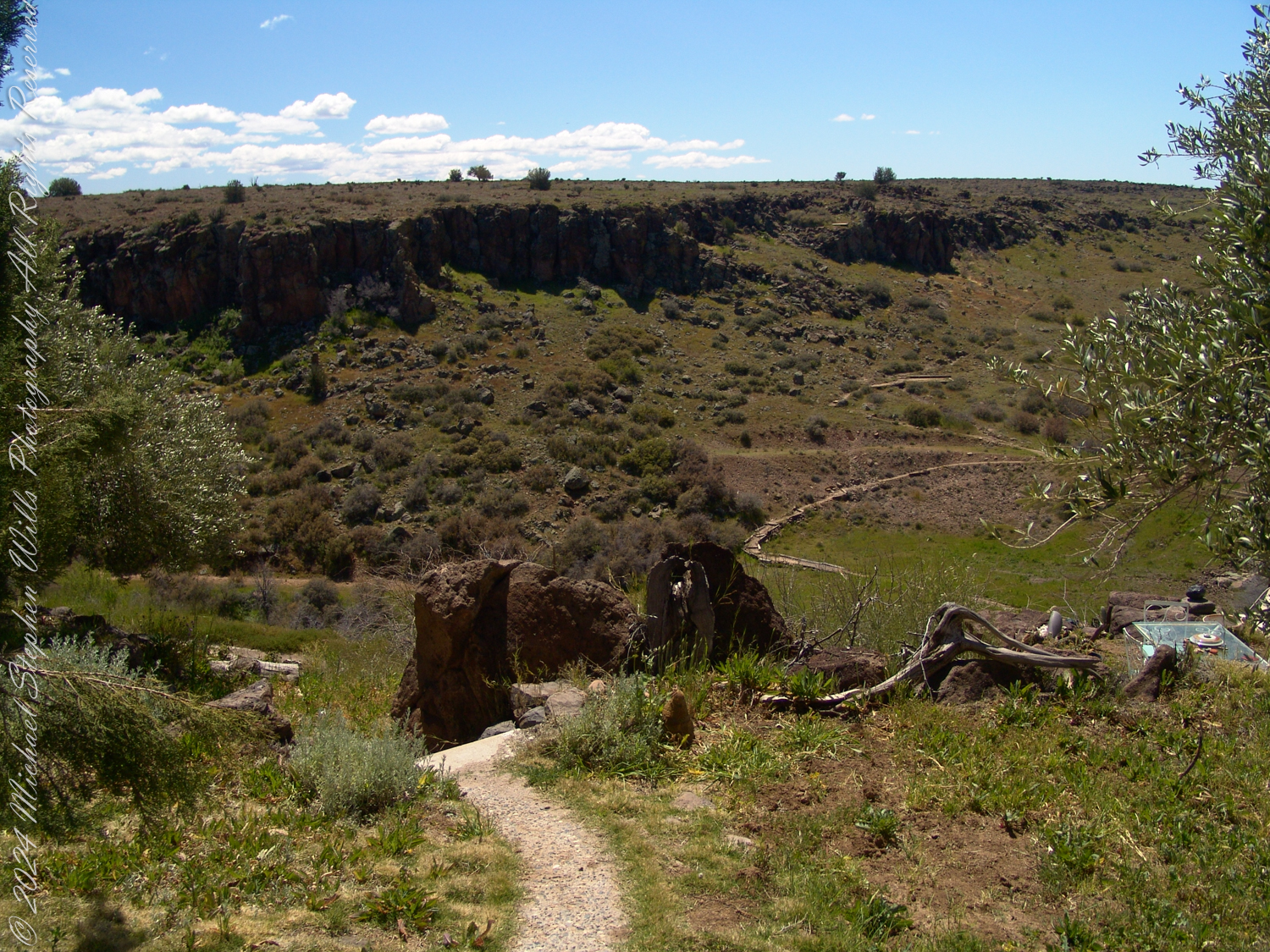
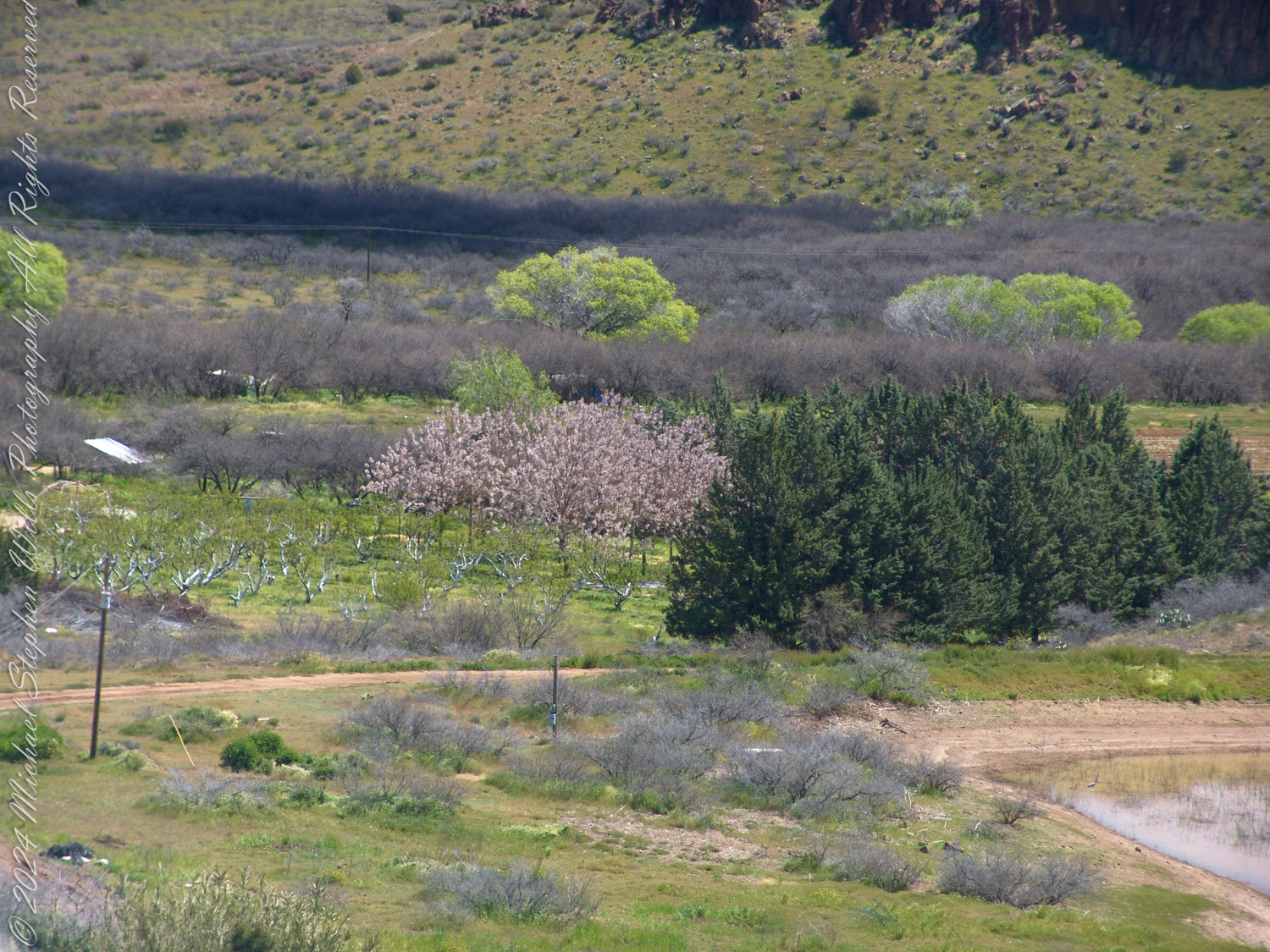
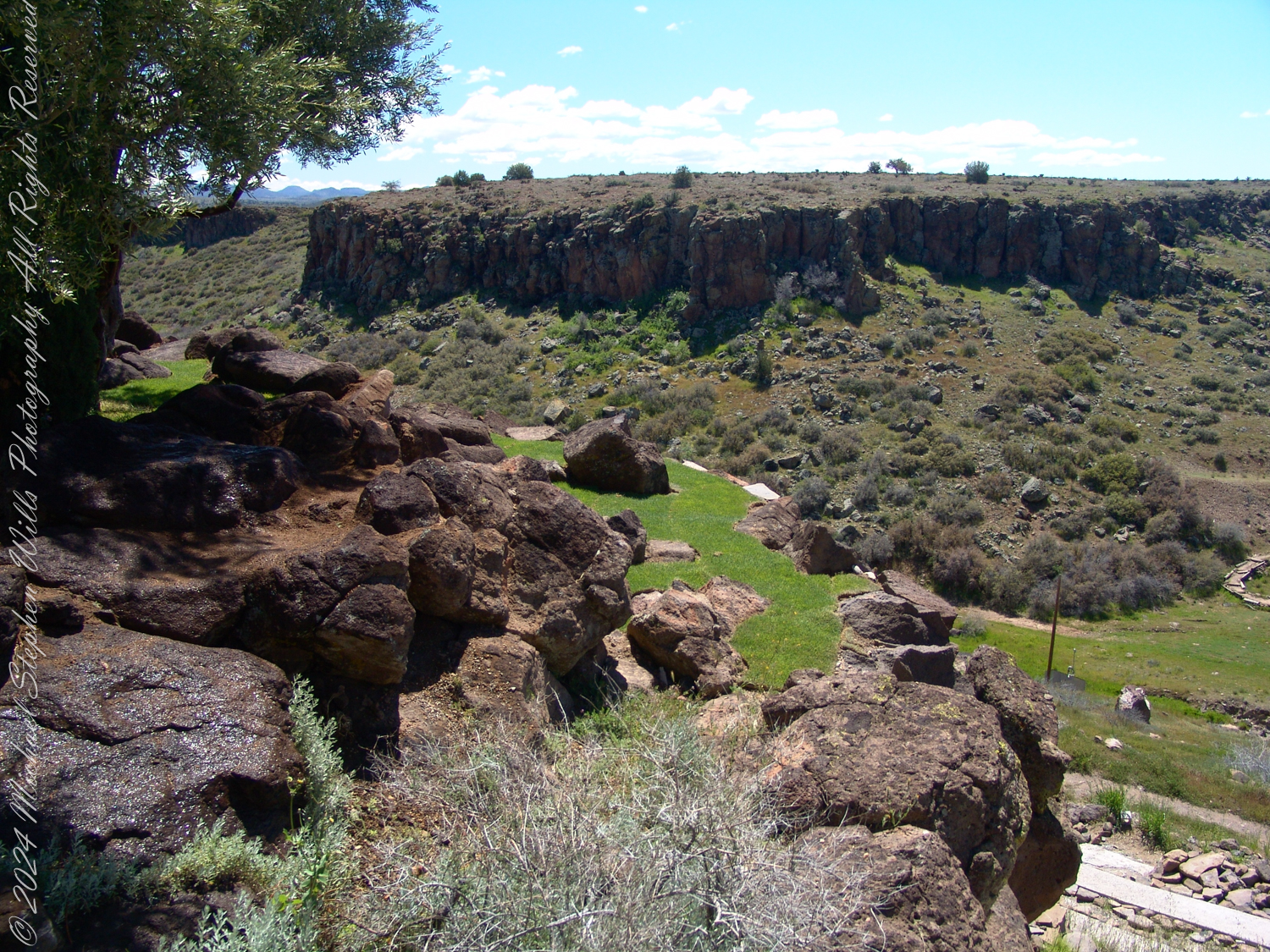
Then, I turned my gaze outward, to the land that cradled this creation. The desert was alive, though its voice was quiet and deliberate. Rocks, worn smooth by the patient hand of time, rested among tufts of sage and grasses that swayed in the breeze. The light played its own game, casting shadows that danced across the ground, a choreography as old as the sun. Paths meandered through this terrain, their curves a gentle suggestion rather than a command, inviting me to wander but not to conquer.

Arcosanti

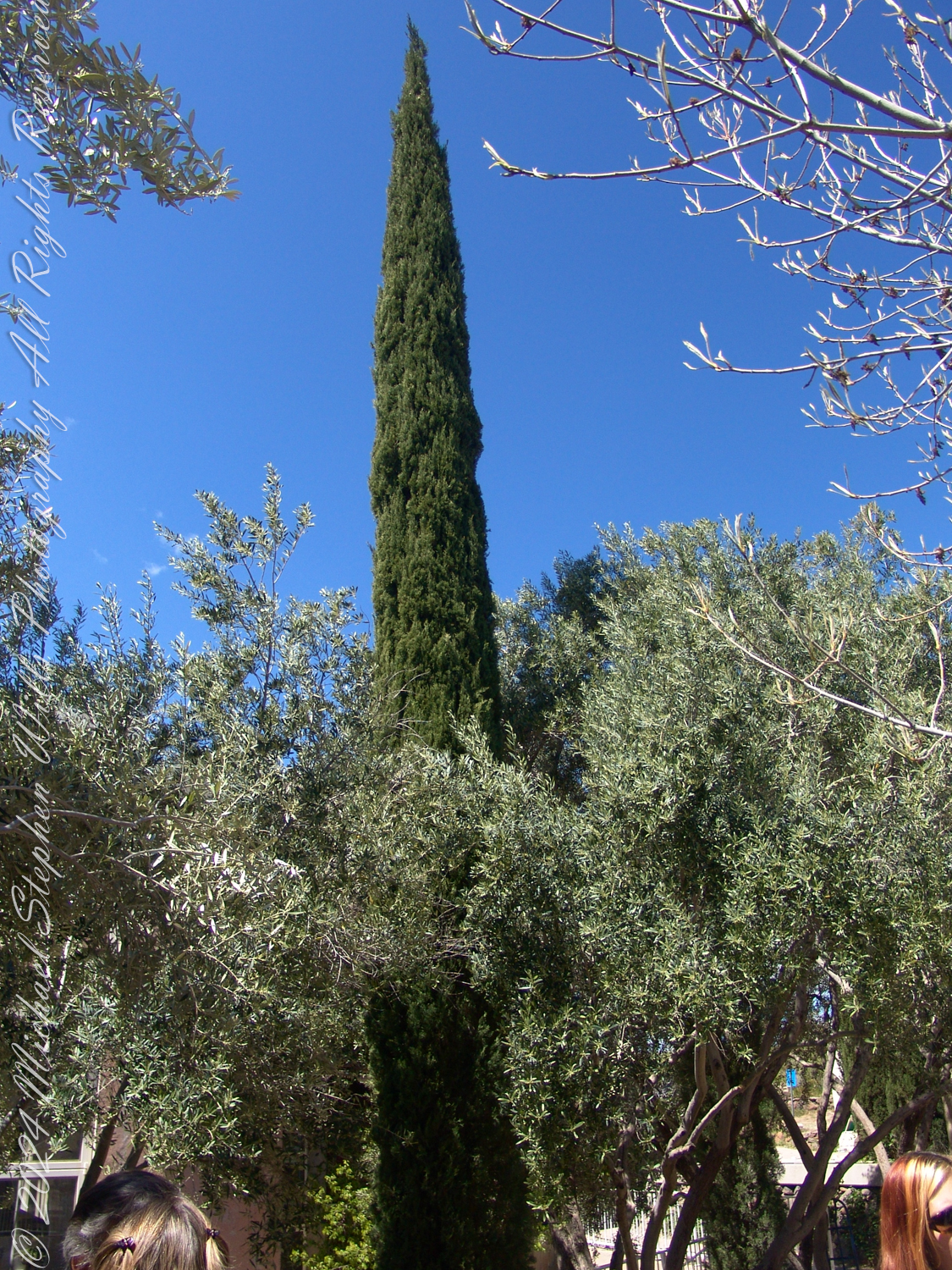
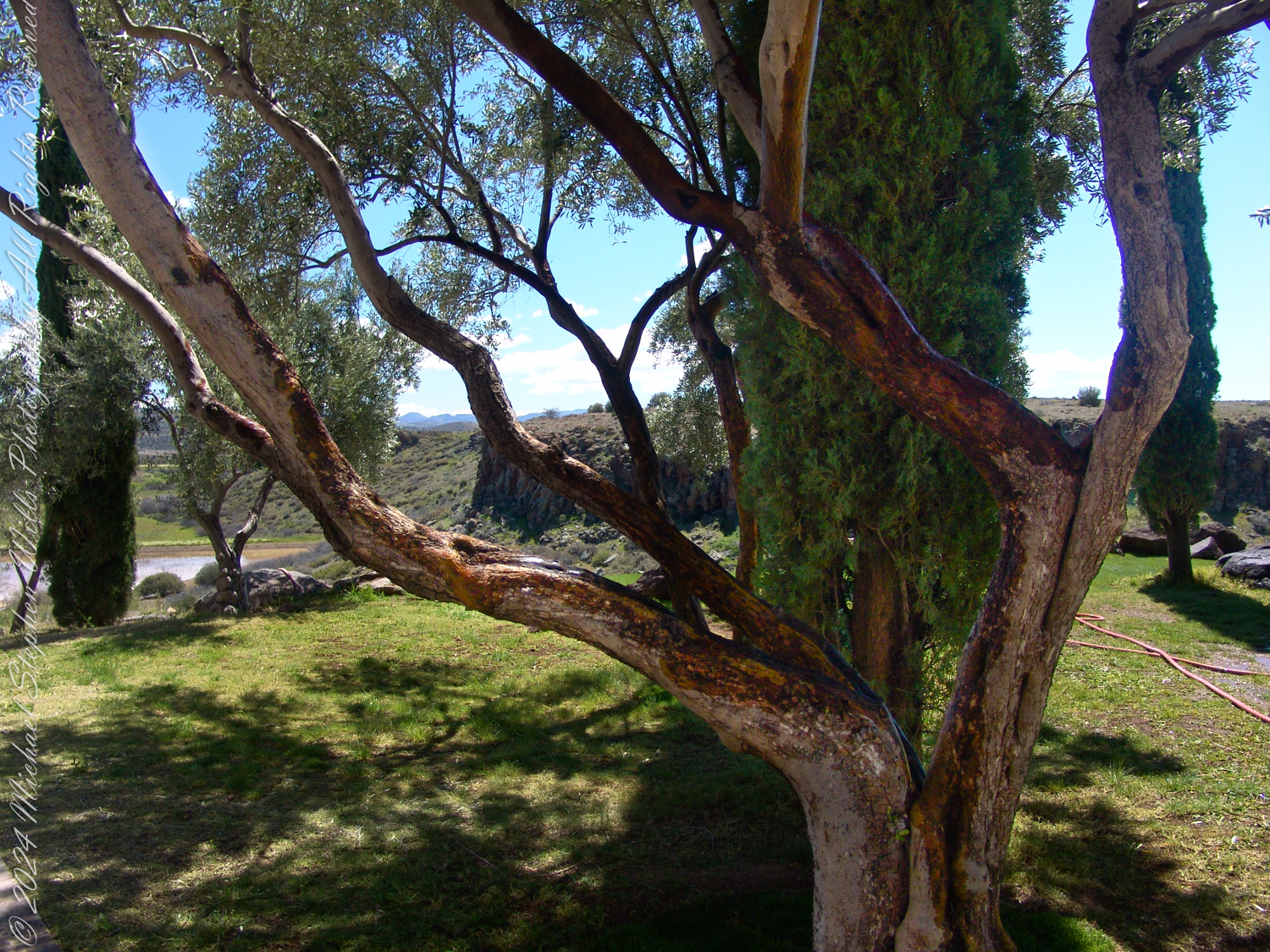
The trees stood tall and still, their presence both steadfast and serene. The cypress trees, their slender forms reaching toward heaven, seemed like exclamation points on the landscape, their verdant green cutting through the sky’s azure expanse. Beside them, olive trees spread their silvered arms, their gnarled trunks telling stories of endurance and quiet strength. One cypress, in particular, caught my attention—so perfectly straight, so impossibly regal, as if it had been planted by the hand of a god.

Beneath the olive trees, I paused, tracing my fingers along the bark’s intricate patterns. The sunlight filtered through the leaves in golden shards, dappling the earth beneath with shifting shapes. The air carried the scent of something ancient and vital—a blend of dry earth, sun-warmed bark, and the faintest hint of blooming life. It was a reminder that even in this place of human creation, nature reigned supreme.

I wandered to the edge of a canyon, its rugged walls carved by time’s relentless flow. The raw power of the landscape stretched out before me, a tapestry of stone and shadow that humbled and awed. Here, the boundaries between human vision and natural grandeur blurred. The olive and cypress trees, so carefully placed, seemed less an intrusion and more a part of the desert’s rhythm. They were a bridge, a whispered conversation between what is made and what simply is.

Finally, the paths called me back, their winding lines leading me deeper into reflection. Each step felt deliberate, as though I were tracing the lines of a poem etched into the earth. The trails curved gently, like the desert’s own breath, and I followed, not as an intruder but as a guest. The buildings now stood behind me, a testament to the balance we strive for—between the ephemeral dreams we build and the eternal landscape that cradles them.

This place is a meeting of stone and sky, a meditation: reminding us that, if we listen, the land will teach us how to live in harmony. Here, in the desert’s embrace, I found space to ask better questions, my heart as open and unbroken as the endless horizon before me.

Enter your email to receive notification of future postings. I will not sell or share your email address.

The Autumn Tapestry of Cayuga Lake: A Journey on the Treman Park Lake Loop

Autumn’s Arrival Along Cayuga Lake

In Autumn 2024, the Treman Park Lake Loop of the Cayuga Waterfront Trail in Ithaca, New York, unfurled a vibrant display of seasonal transition. The natural landscape, adorned with fiery hues of reds, oranges, and yellows, reflected in the rippling waters of Cayuga Lake, creating a harmony of color and light. This is a scenic journey through stories of plant and animal life that call this place home—including the majestic Osprey (Pandion haliaetus) that nests along the shore.

The Osprey’s Watchtower

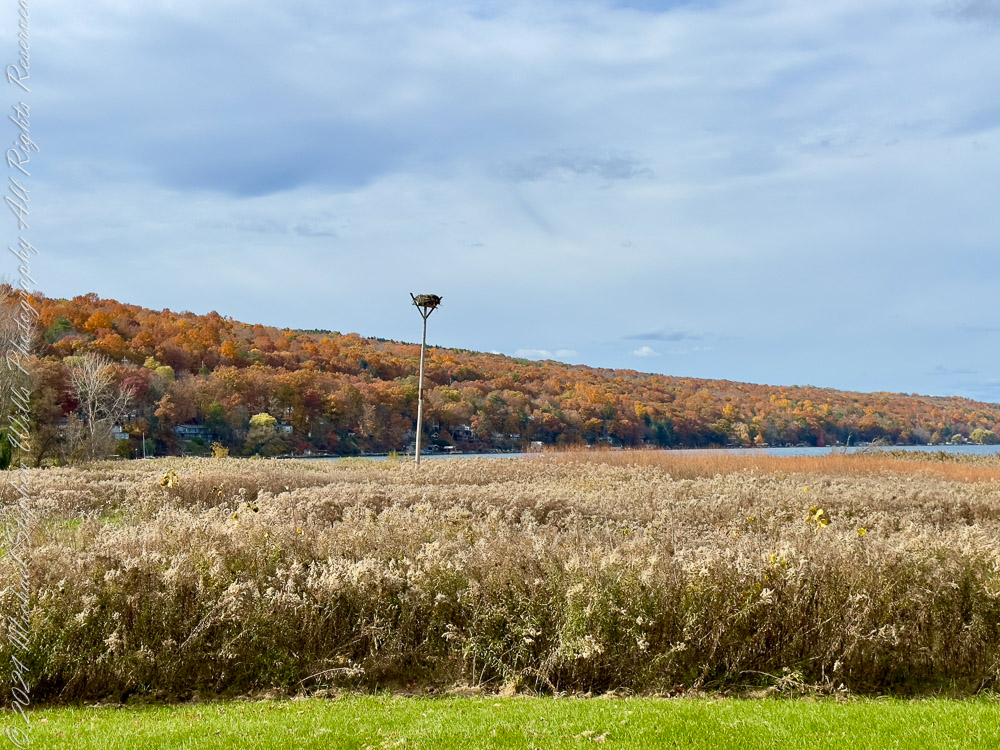
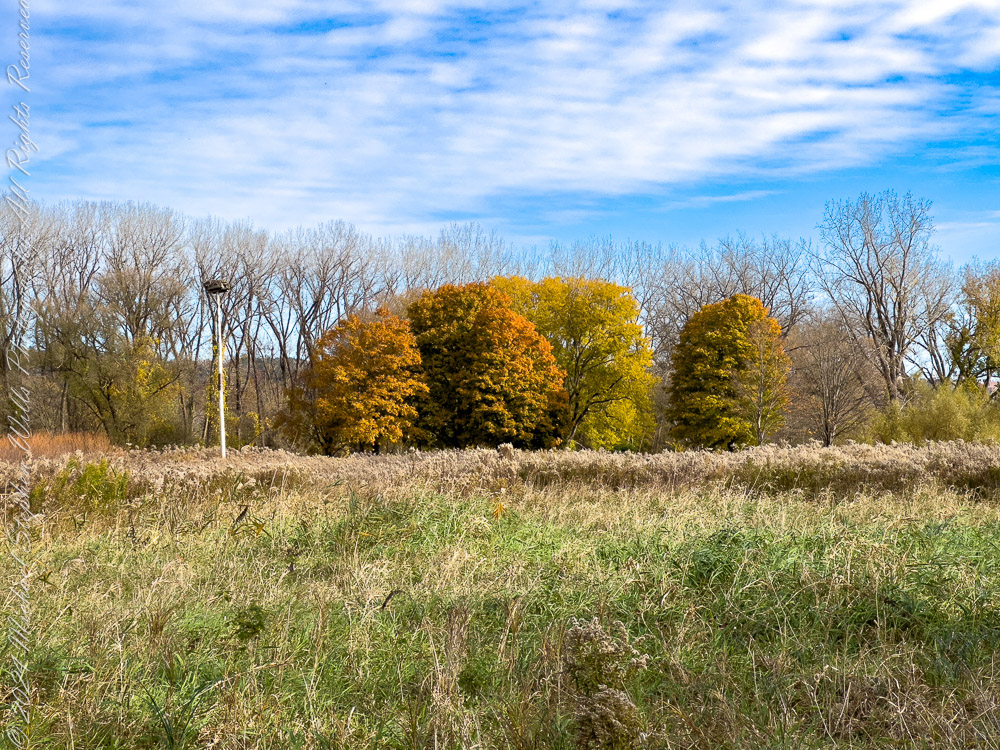
A sight to greet visitors is the solitary osprey nest perched high on a pole. Used by Osprey families during their breeding season, this nest stands as a testament to their remarkable recovery in the Finger Lakes region. Ospreys, once declining due to pesticide use, have rebounded significantly following conservation efforts.

With a wingspan of up to 6 feet, these raptors are expert fish hunters, often seen diving talons-first into the lake to snatch their prey. During autumn, as their young take flight, the nest remains an empty marker of the summer’s success—a reminder of the cyclical nature of life along the lake.

Did You Know? Ospreys are often referred to as “fish hawks” because fish make up 99% of their diet.

The Meadow and Its Golden Touch: Reedbeds and Goldenrod

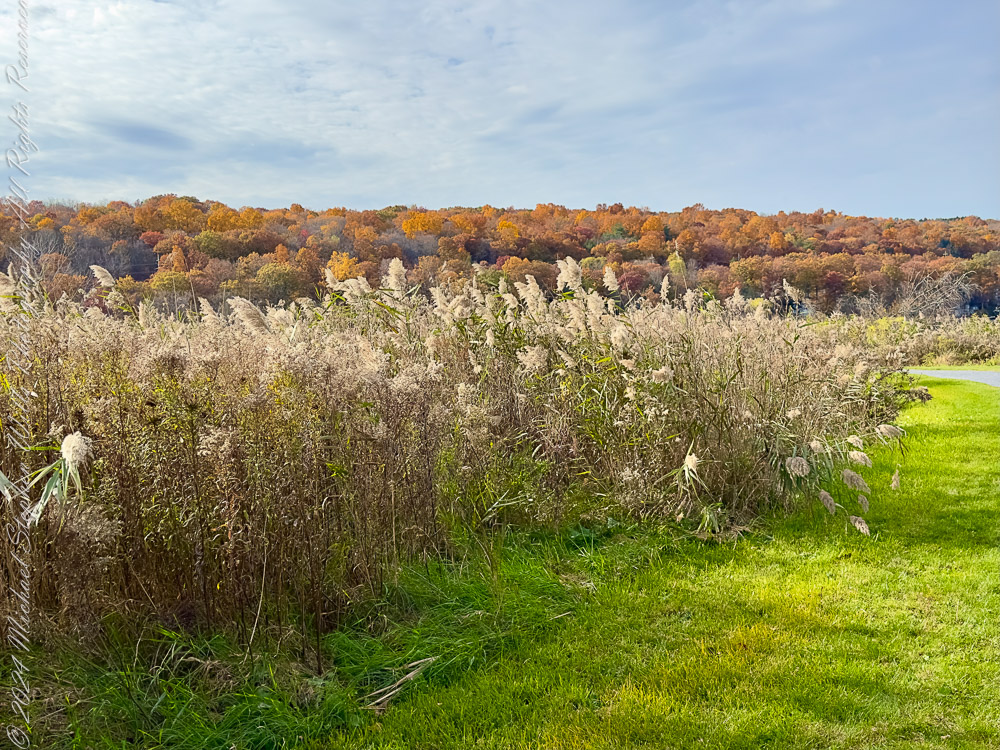
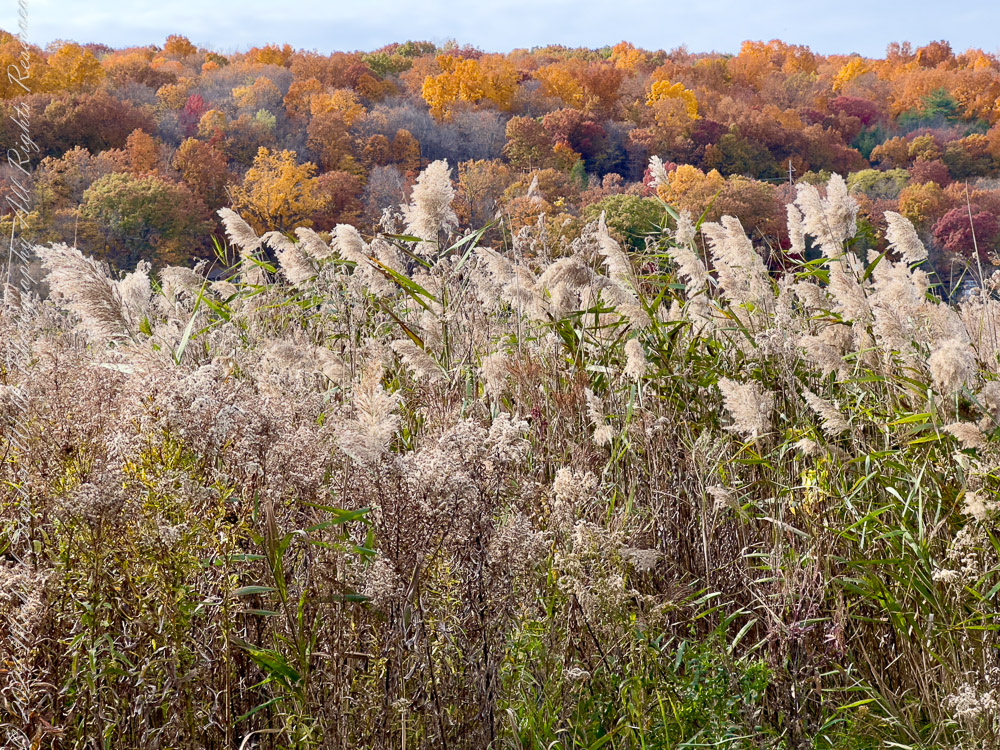
Surrounding the osprey pole, expansive meadows of grasses and reeds sway with the breeze. Among these are stands of Common Reed (Phragmites australis), a tall grass with feathery plumes that catch the sunlight. While Phragmites can sometimes be invasive, they provide crucial shelter and food for various species of birds and insects.

Intermixed with the reeds are patches of Goldenrod (Solidago spp.), whose bright yellow flowers are a signature of late summer and autumn in the Northeast. Goldenrods are critical for pollinators, offering nectar to bees, butterflies, and migrating insects like the Monarch butterfly (Danaus plexippus).

Ecological Note: Goldenrods are often mistakenly blamed for allergies; the real culprit is ragweed (Ambrosia artemisiifolia), which blooms at the same time but releases airborne pollen.

A Lake Alive with History and Beauty

The shimmering blue waters of Cayuga Lake form the centerpiece of this trail. The lake, stretching nearly 40 miles, is the longest of the Finger Lakes and steeped in geological and cultural history. Its name is derived from the Cayuga Nation, part of the Haudenosaunee Confederacy, who inhabited the region for centuries.

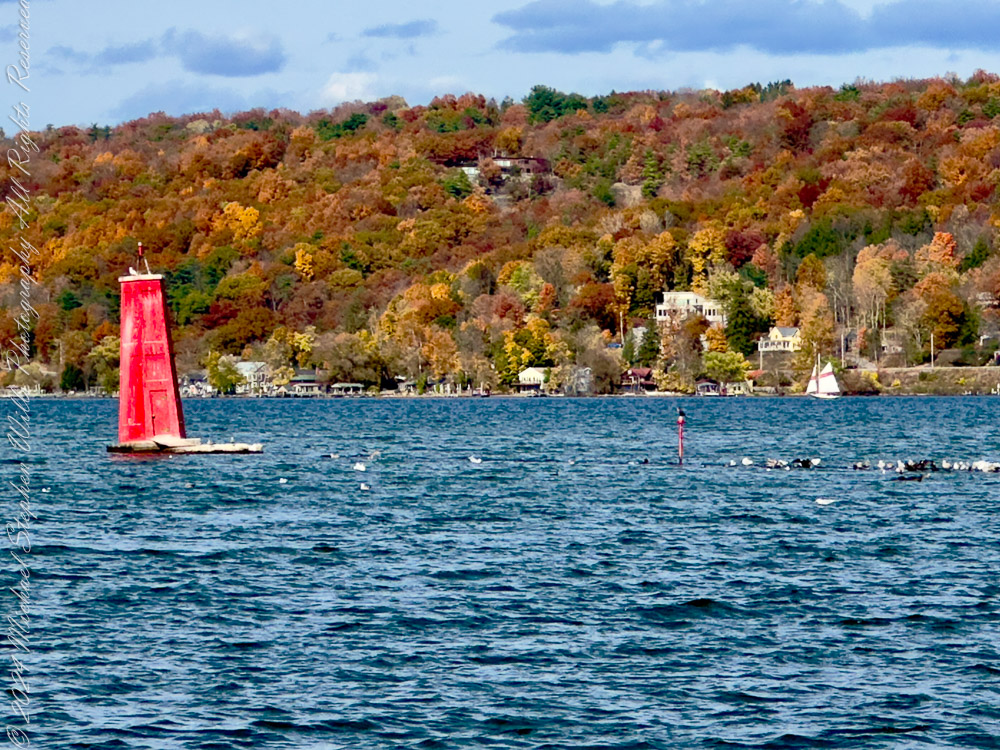
The striking red lighthouse in the water serves as a vivid counterpoint to the natural surroundings. Built to aid navigation, it now stands as a picturesque focal point for photographers and nature enthusiasts alike.

Cayuga Inlet Light Beacon

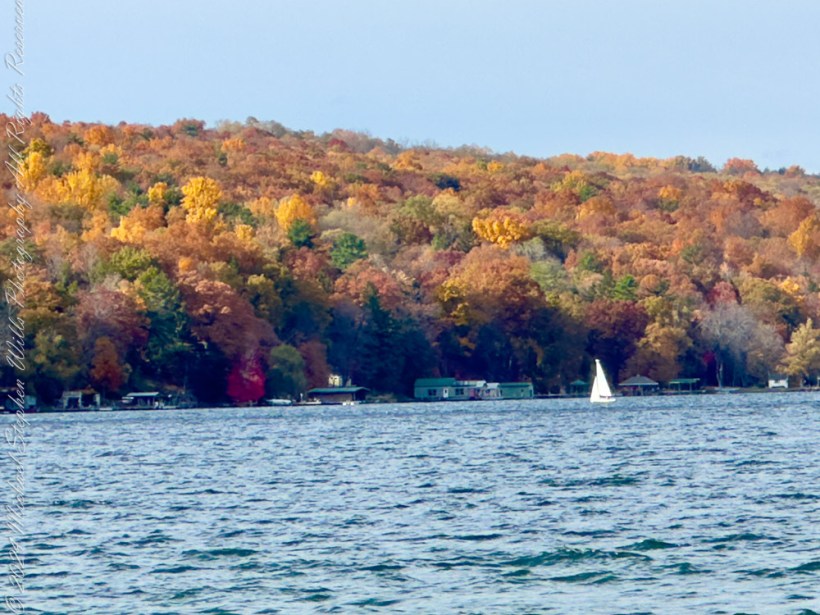
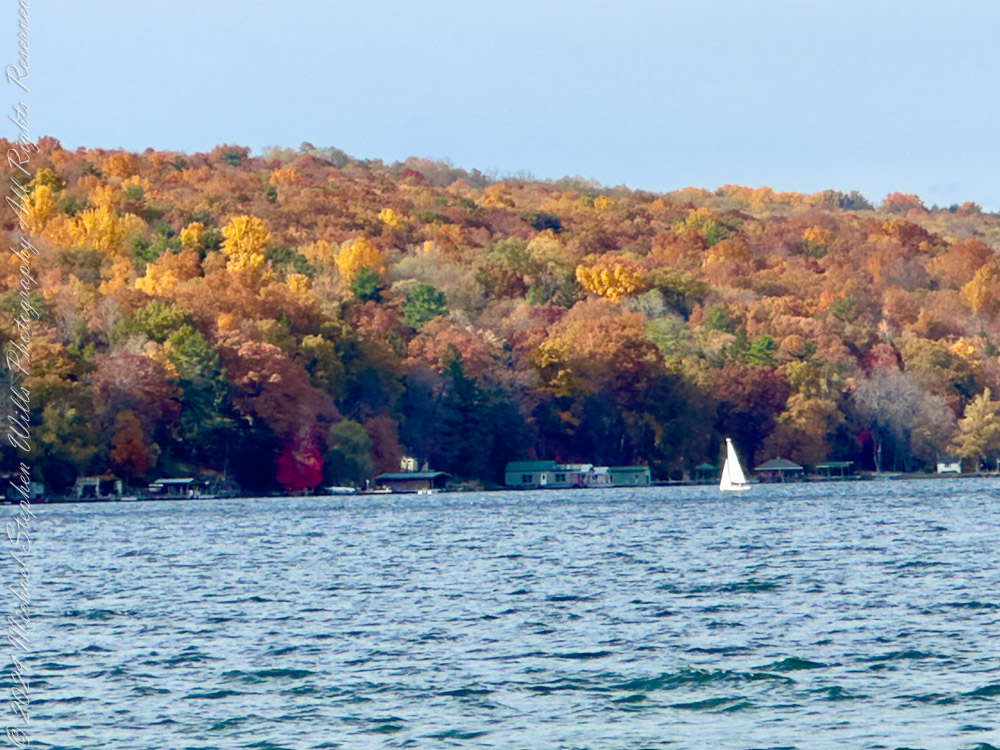
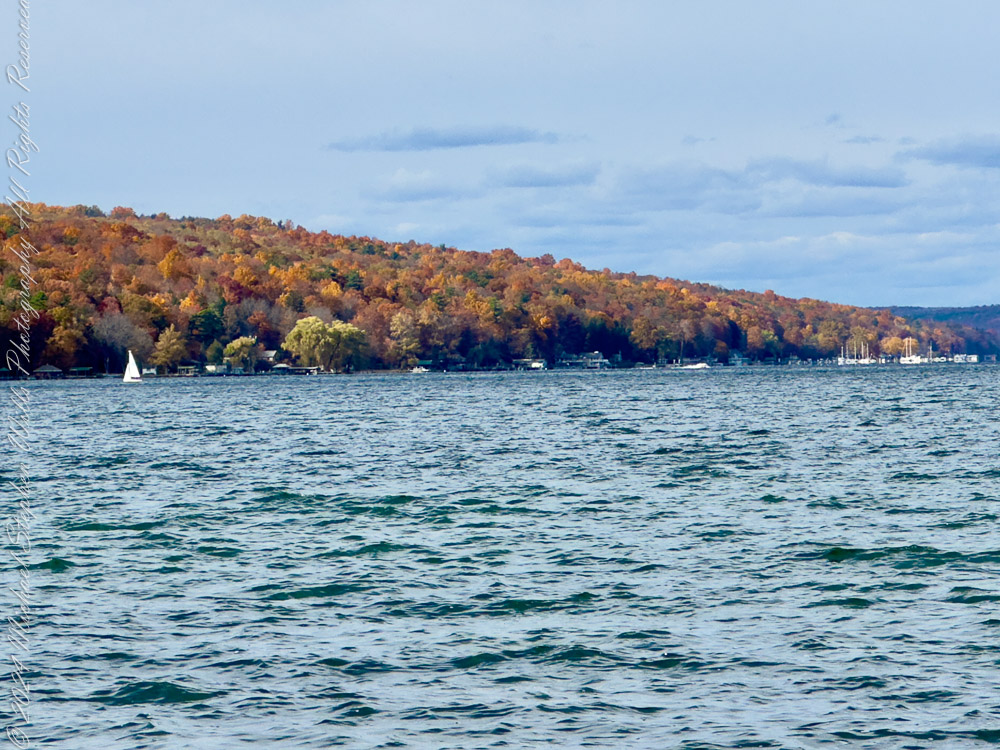
In the distance, a sailboat glides across the lake—a serene reminder of the recreational draw that Cayuga Lake holds year-round.

West shore with sailboat and lake houses

The Forest Fringe: A Kaleidoscope of Color

The forests that fringe the meadow and the lake present an explosion of autumn color. Trees such as Sugar Maple (Acer saccharum), Red Oak (Quercus rubra), and Black Cherry (Prunus serotina) dominate the canopy, their leaves transforming into brilliant oranges, scarlets, and deep burgundies. The Sugar Maple, in particular, is renowned for its vibrant golden-orange foliage, a hallmark of the northeastern fall.

The Ithaca Yacht Club lies south of Maplewood Point

Closer to the ground, the understory hums with the activity of migrating birds and foraging mammals. Squirrels can be seen gathering acorns, preparing for the winter months ahead, while chickadees flit among the branches, calling their cheerful “fee-bee” notes.

Historical Fact: The Finger Lakes were carved out by retreating glaciers over 10,000 years ago, leaving behind these deep, elongated lakes and fertile soil that supports rich biodiversity.

A Path Through Time and Nature

Walking the Treman Park Lake Loop is a sensory journey—the crispness of the autumn air, the rustling of reeds, and the rhythmic lapping of waves against the shore combine to evoke a timeless tranquility.

From the vibrant meadows to the osprey’s lofty perch and the quiet expanse of Cayuga Lake, this section of the Waterfront Trail encapsulates the beauty and diversity of the Finger Lakes ecosystem. Whether for quiet reflection or active exploration, it remains a treasured destination in every season.

Closing Thoughts

As autumn deepens, this landscape prepares for the dormancy of winter. Yet the stories it holds—from the osprey’s nest to the goldenrod’s bloom—remain alive, waiting to be rediscovered with each new season. The Treman Park Lake Loop is not just a trail; it is a canvas of life, change, and history painted by nature’s hand.

Reflection: To walk this trail is to connect with a land shaped by glaciers, nurtured by waters, and home to countless species that continue to thrive amid the ever-turning wheel of the seasons.

Enter your email to receive notification of future postings. I will not sell or share your email address.

Where Waters Meet and Leaves Turn: A Journey Along the Cayuga Waterfront Trail

The Cayuga Waterfront Trail beautifully showcases autumn’s colors, history, and ecological significance through its landscapes and trees like Sugar Maples.


Where Fall Creek Meets Cayuga Lake
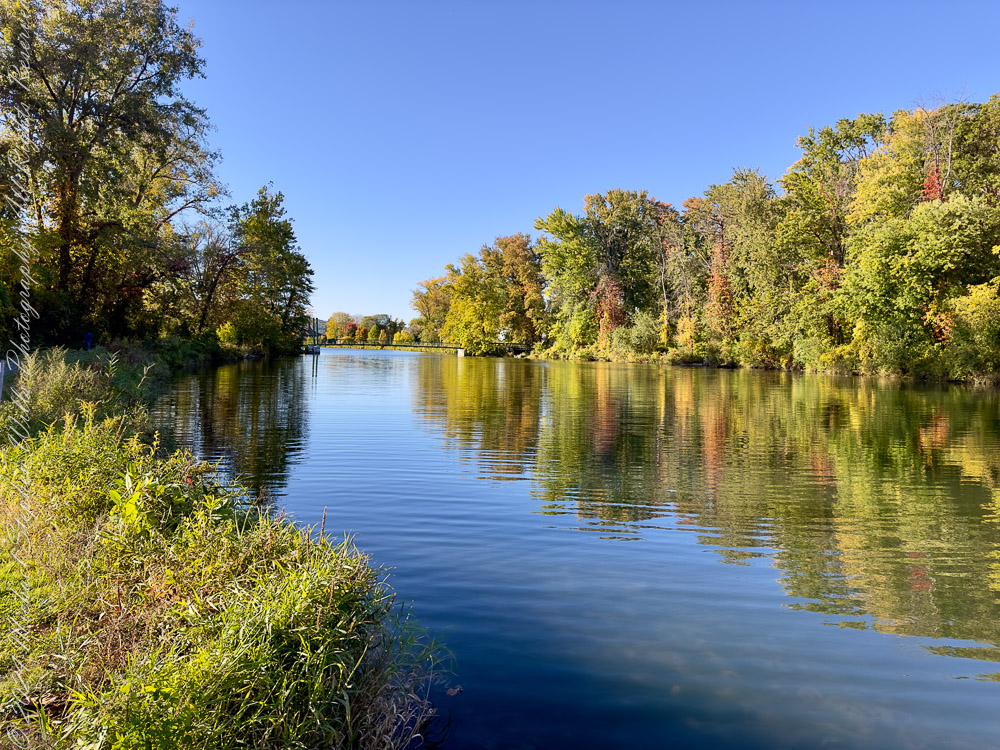
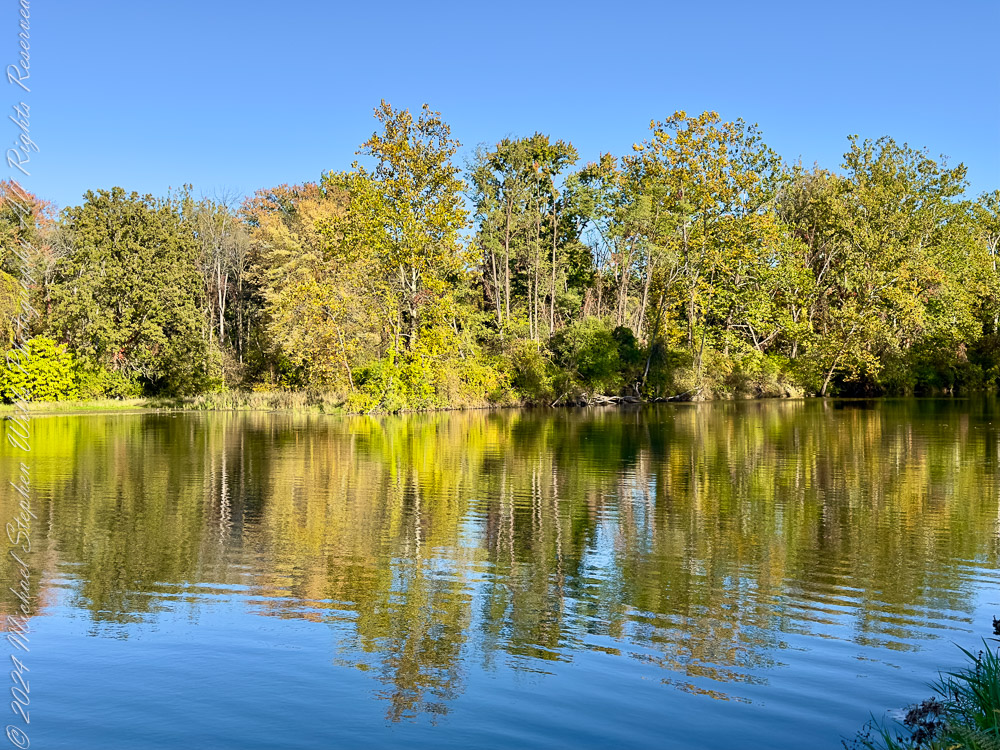
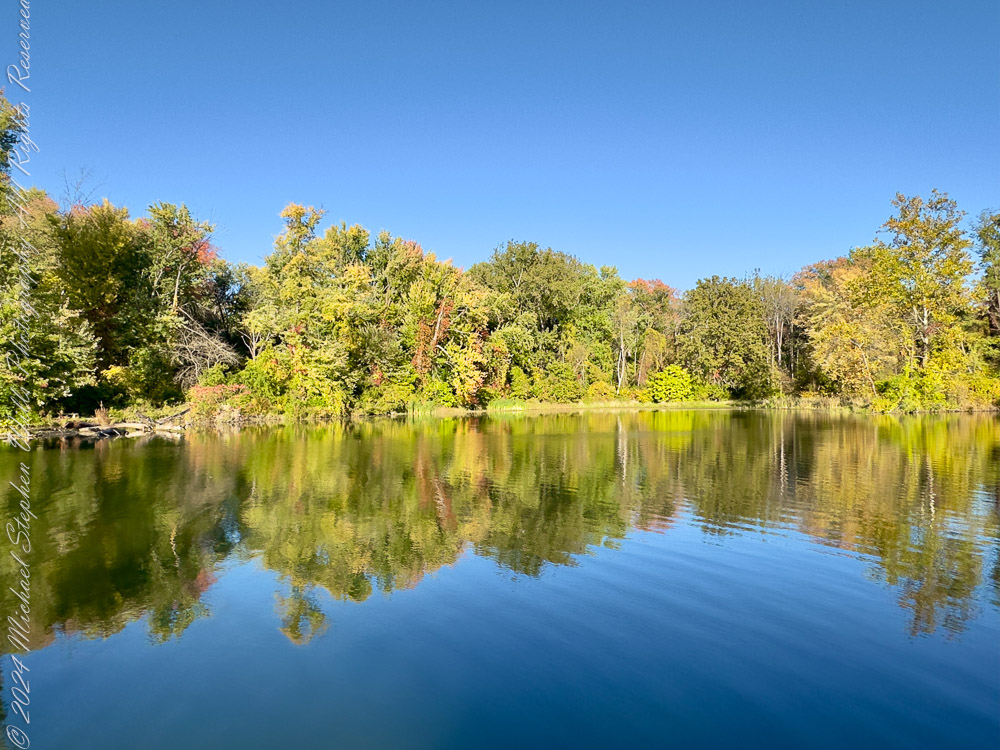
Here, where Fall Creek flows gently into Cayuga Lake, the merging waters reflect the season’s colors like a painter’s palette. Across the shimmering surface, Renwick Woods of Stewart Park stands as a quiet sanctuary of mixed hardwoods and wetlands. The reflections capture our trees together with the essence of autumn’s stillness.

Dominating the shoreline, you can spot Silver Maple (Acer saccharinum) and Cottonwood (Populus deltoides), trees that thrive in damp soils. Silver Maples, with their elegant, deeply lobed leaves, are perfectly suited for this riparian environment. The cottonwood, recognizable by its broad, triangular leaves, plays a vital role in stabilizing streambanks.

Quick Fact: Cottonwoods are among the fastest-growing trees in North America, capable of sprouting leaves within weeks of being washed ashore as driftwood.

Steamboat Landing: A Glimpse of History
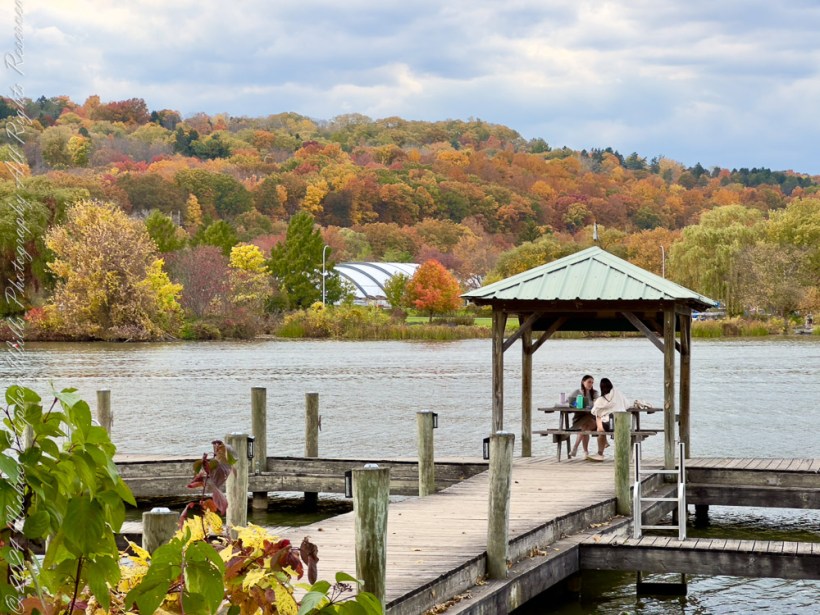
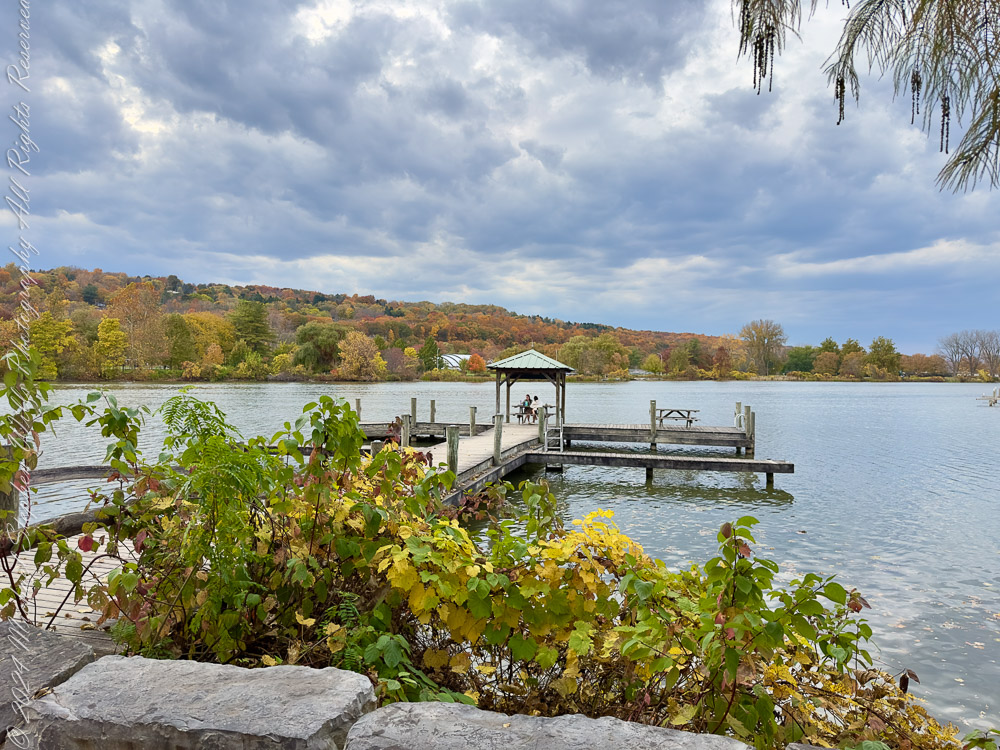
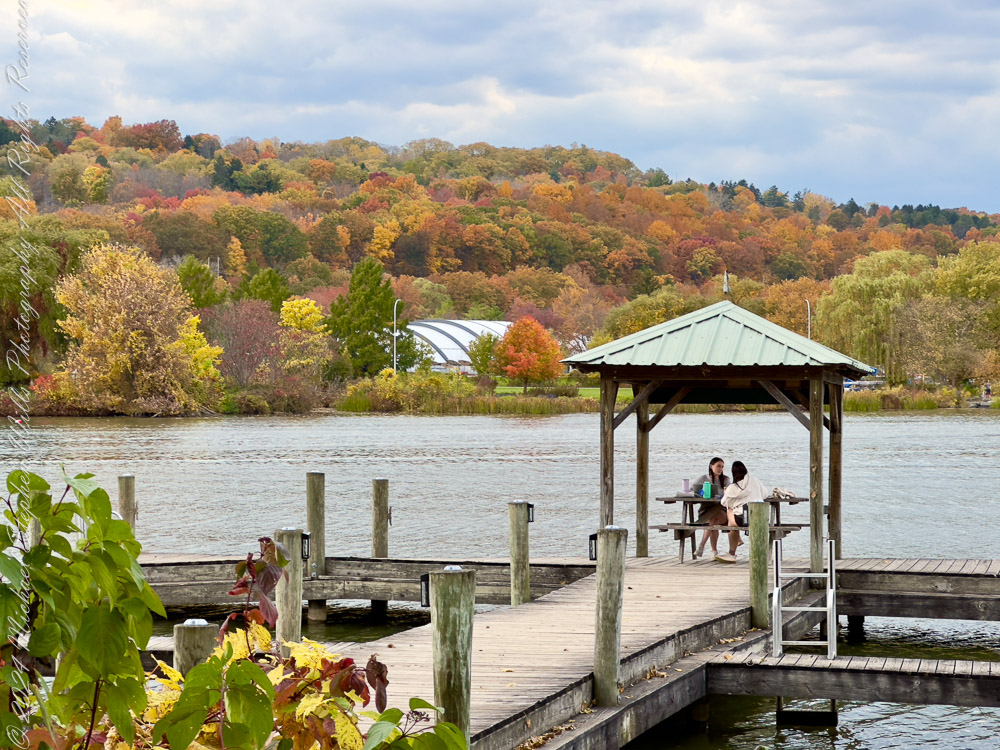
The wooden docks at Steamboat Landing, now home to the bustling Ithaca Farmer’s Market, speak of bygone eras when steamboats ferried goods and people across Cayuga Lake. Today, as golden foliage cloaks the hills in the distance, this spot remains an anchor for community and connection.

Foregrounded in the photos are plants like Grape Vine (Vitis spp.), with their sprawling, hardy stems turning yellow as temperatures drop. Grapevines, both wild and cultivated, thrive along the lakeshore and remind us of their agricultural importance in the Finger Lakes.

Also visible are some shrubs of Virginia Creeper (Parthenocissus quinquefolia) turning crimson, their vibrant hues climbing posts and fences as they embrace autumn’s spotlight.

Did You Know? Steamboat Landing was part of Ithaca’s rich lake commerce history during the 19th and early 20th centuries, connecting travelers to destinations far and wide.

The Crimson Canopy: Japanese Maple
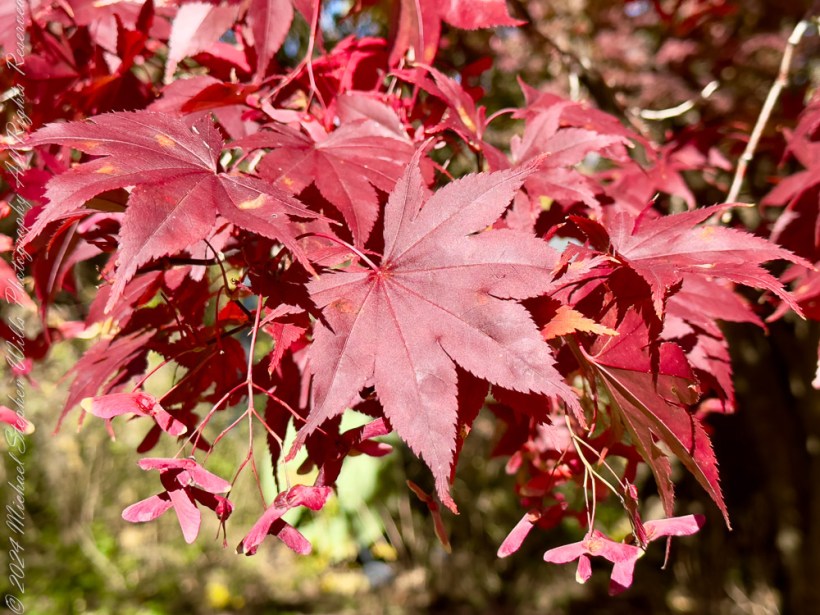
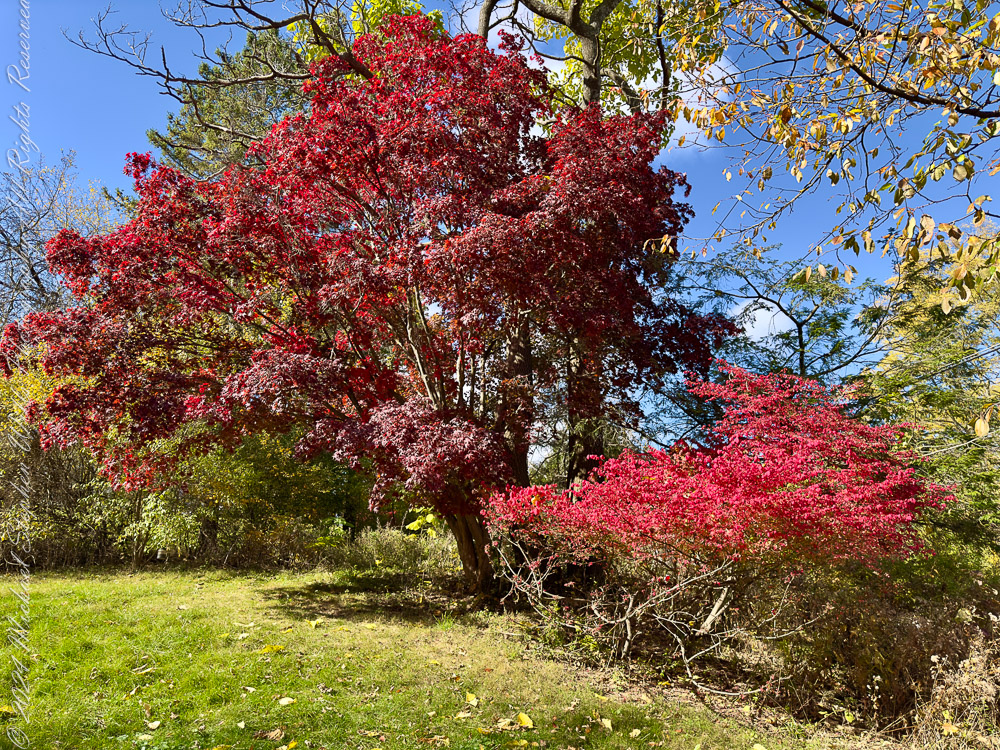
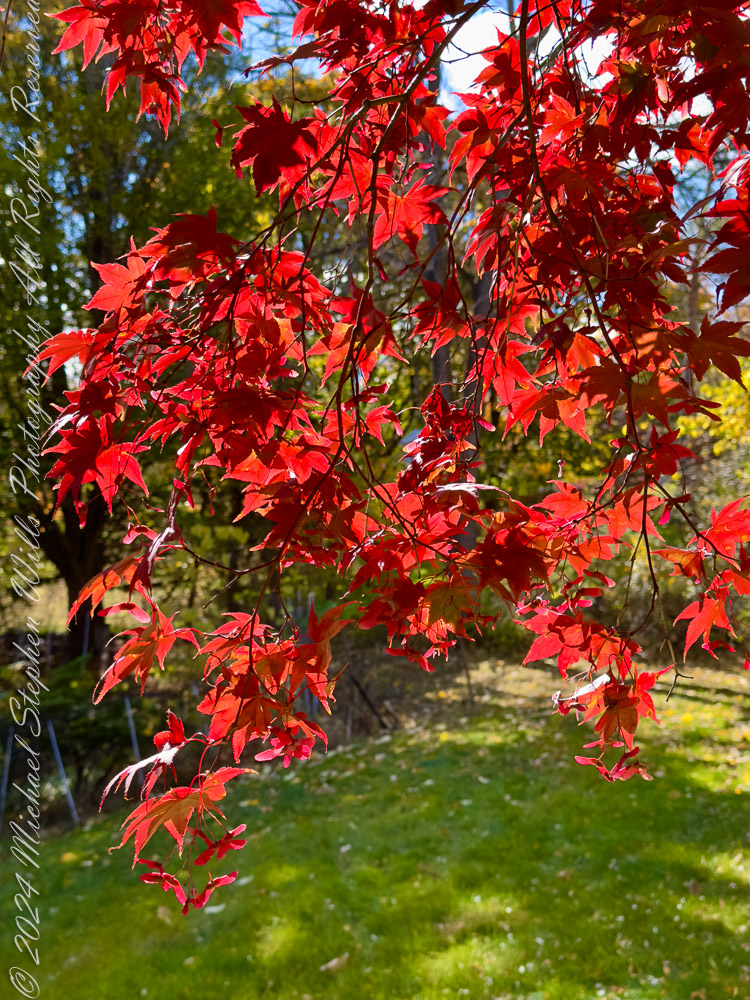
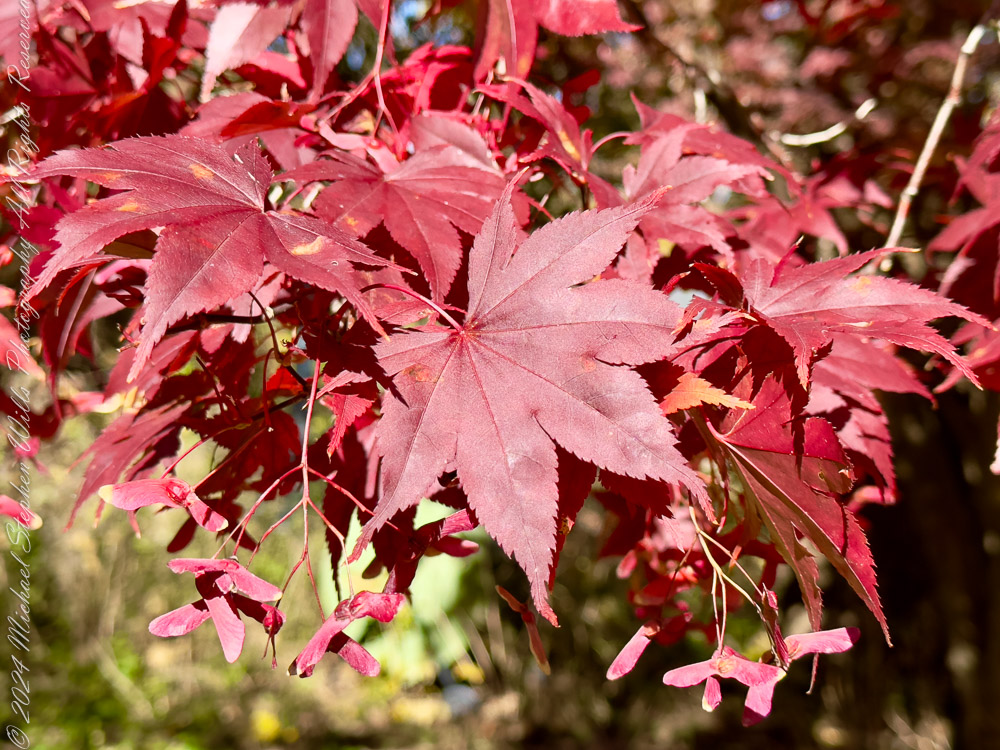
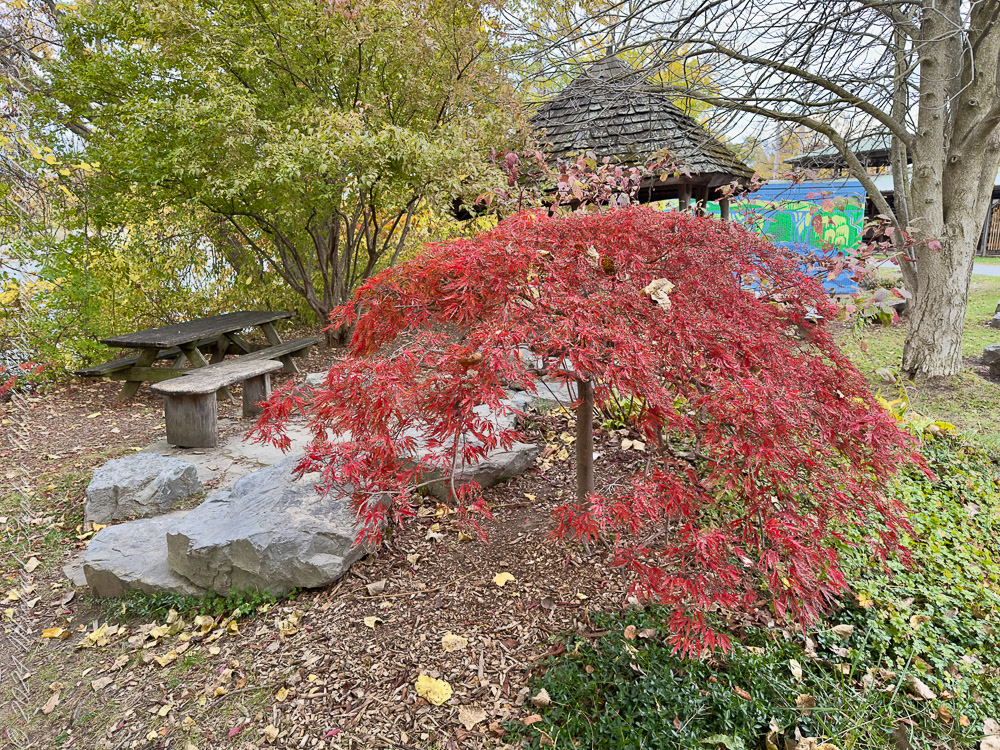
This photo highlights a stunning Japanese Maple (Acer palmatum), its feathery, scarlet foliage cascading delicately in front of the pavilion. Native to East Asia, Japanese Maples have found a beloved place in landscapes across the world for their graceful form and brilliant seasonal displays.

Alongside its boughs, weathered benches and stone pathways invite rest and reflection — a beautiful marriage of human craftsmanship and nature’s artistry.

Fun Fact: Japanese Maples are often pruned meticulously in Japanese gardens to emphasize their architectural shape, turning them into living sculptures.

The Treman Park Lake Loop: Autumn’s Golden Finale
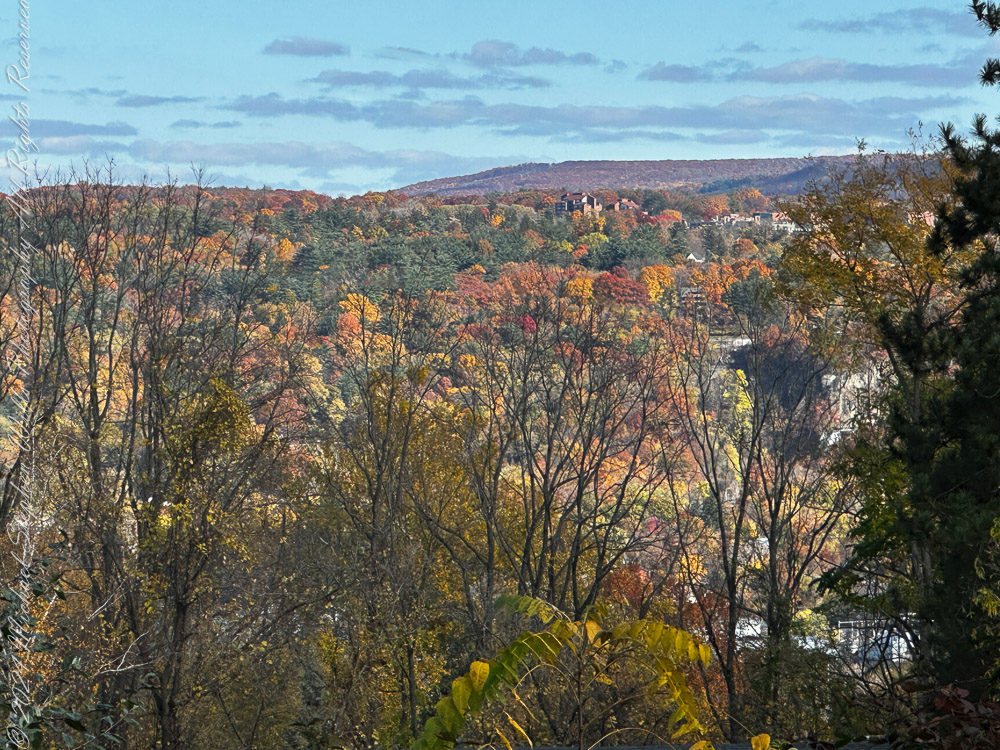
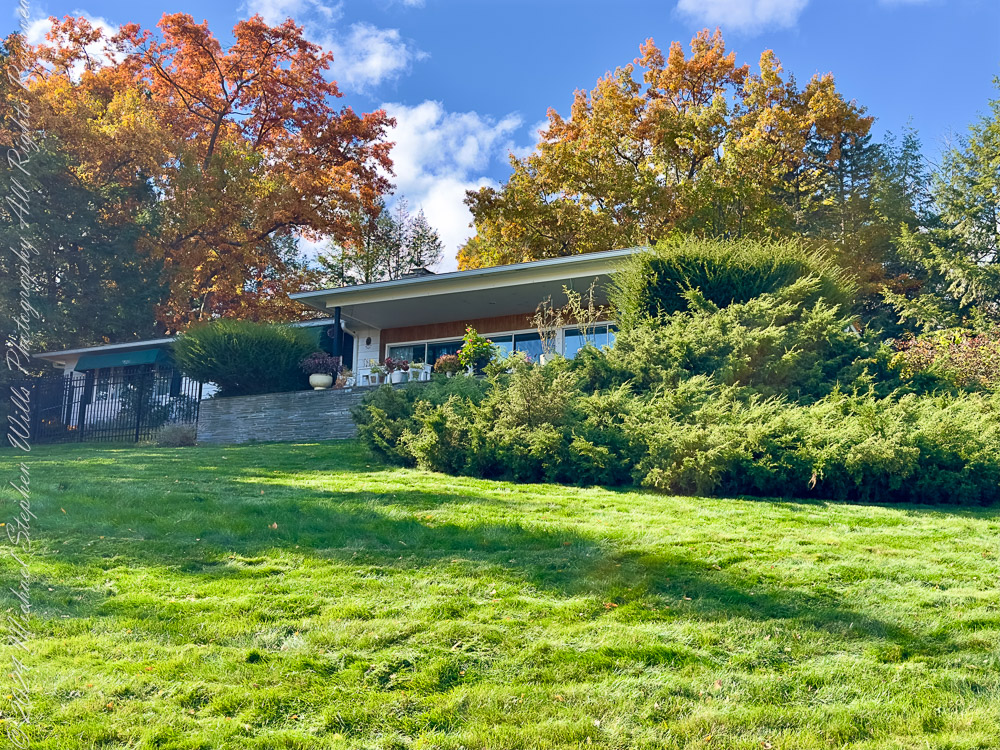
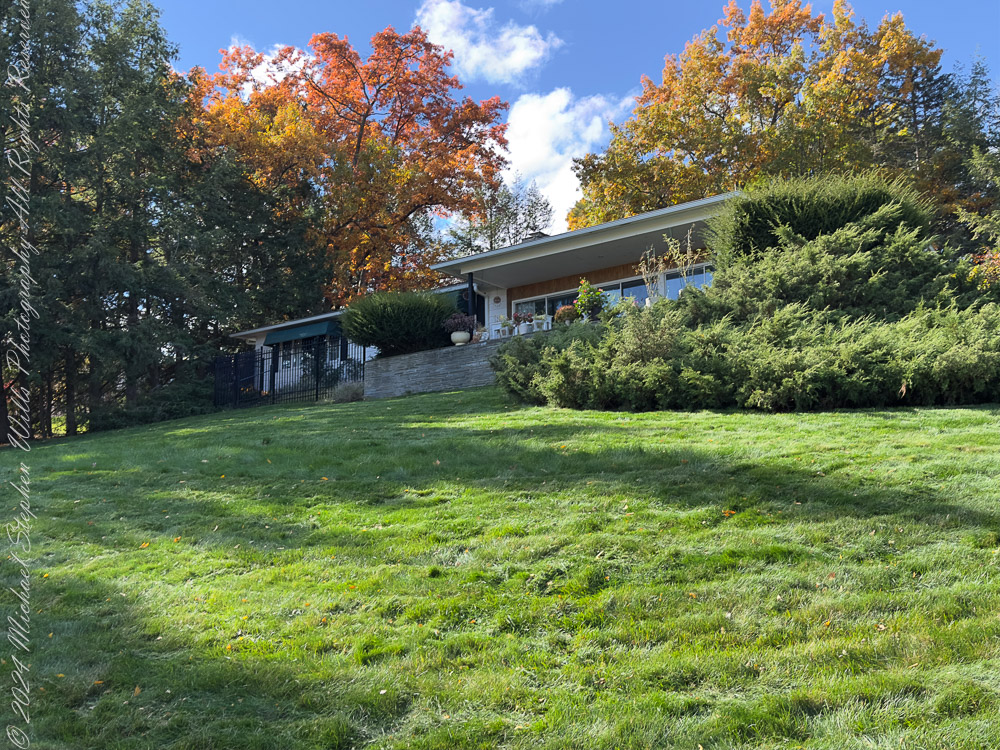
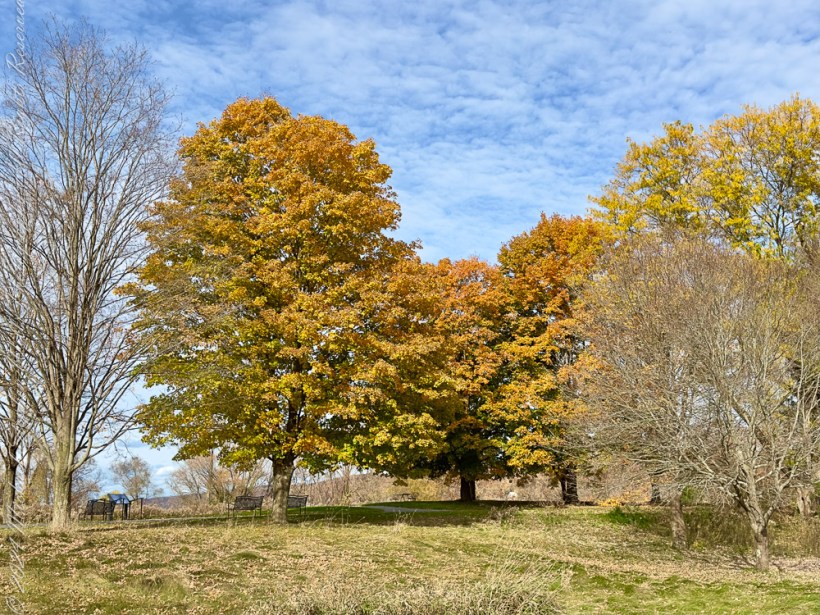
Our journey concludes with this sweeping landscape from the Treman Park Lake Loop. The towering Sugar Maples (Acer saccharum) dominate the view, their crowns now a rich, golden orange — a signature of northeastern forests. Known as the tree that gives us maple syrup, Sugar Maples are quintessential symbols of autumn in the Finger Lakes.

To the right, bare branches of earlier-shedding trees stand in contrast, whispering the arrival of winter. The sky above, painted with soft clouds, completes the scene of a serene seasonal transition.

Interesting Note: Sugar Maples can live for over 300 years, their wood prized for furniture and instruments, and their sap a sweet gift of the forest.

Closing Thoughts
From the quiet confluence of Fall Creek and Cayuga Lake to the historic docks of Steamboat Landing and the golden maples of Treman Park, autumn on the Cayuga Waterfront Trail is a symphony of color, history, and ecological wonder. Whether you’re strolling, photographing, or simply pausing to take it all in, these moments capture both the grandeur and subtlety of the season.

Enter your email to receive notification of future postings. I will not sell or share your email address.

Autumn Trail Adventures: Nature’s Colorful Showcase

The Cayuga Waterfront Trail showcases autumn’s beauty through vibrant plants like pokeweed, oak, Virginia Creeper, and New England Asters.

A Flash of Red: The Mysterious Pokeweed

Our explorations along Ithaca’s Cayuga Waterfront Trail begins with the striking Pokeweed (Phytolacca americana), its ruby-red stems rising like sentinels against a sea of green leaves. At a glance, it’s bold, almost tropical, yet this native plant is a quintessential autumn feature in the Northeast. Those drooping clusters of berries (not yet ripe here) are food for birds like robins and mourning doves — though toxic to us, pokeweed adds a bit of danger to its beauty.

Nature’s Note: While visually stunning, pokeweed’s ripe purple berries were historically used as dye. Early settlers and Native Americans knew its power, though caution is always the rule here!

The Mighty Oak: Sentinel of the Trail

Next, we imnagine the cool shade of an oak tree, its lobed leaves silhouetted like green lacework against the clear blue sky. The photogenic Oaks are ecosystem powerhouses. Supporting hundreds of species of moths, butterflies, and birds, oaks quietly hold the fabric of nature together.

In autumn, these leaves will transform, dropping gently to create warm beds for overwintering insects. Stand beneath its branches long enough, and you’ll swear it whispers stories of the seasons gone by.

Quick Fact: Oaks produce acorns that are a favorite food of squirrels. Ever notice a squirrel “planting” them? That’s nature’s accidental reforestation plan in action.

Reflections of Autumn’s Palette

We reach the water’s edge, where the serene surface where Fall Creek joins Cayuga Lake mirrors the fiery splashes of red Virginia Creeper (Parthenocissus quinquefolia) winding through the trees. This climbing vine, with its scarlet fall foliage, is like nature’s ribbon tying the forest together.

The reflection — a perfect painting — blurs the boundary between land and water. Here, quiet reigns, save for the soft ripple of a fish or the rustle of leaves overhead.

Curious Note: Virginia Creeper is often mistaken for poison ivy. The secret? Virginia Creeper has five leaflets, while poison ivy wears three — nature’s rhyme: “Leaves of three, let it be.”

Aster Alley: A Burst of Purple Beauty

On the trail’s side, a cheerful gathering of New England Asters (Symphyotrichum novae-angliae) steals the spotlight. These vibrant purple flowers, with their golden centers, are late-season treasures. As most blooms fade, asters feed pollinators like bees and butterflies in their final push before winter.

Walk by slowly, and you might catch a bumblebee lazily humming its thanks — a last sip of nectar before the chill sets in.

Did You Know? Asters get their name from the Greek word for star. Fitting, don’t you think?

Nature’s Quilt: Pine Needle Carpet

Finally, we tread across a textured carpet of pine needles, blanketing the ground in warm, earthy hues. Beneath this seemingly simple scene lies a story of renewal. As pines shed their needles, they enrich the soil with organic matter, providing a soft bed for new life to sprout in the spring.

The crunch underfoot feels both nostalgic and meditative — a gentle reminder that every fallen needle is part of nature’s endless cycle.

Fun Observation: Pine needles, often called “nature’s mulch,” are slightly acidic, which helps pine trees thrive while keeping competition at bay.

Closing Thoughts

From the bold reds of pokeweed to the mirrored waters adorned with Virginia Creeper, and the twinkle of asters amid the foliage, autumn along the Cayuga Waterfront Trail is a celebration of nature’s resilience and beauty. It’s a quiet reminder that even as the seasons shift, the world remains vibrant — a living, breathing tapestry stitched together by trees, plants, and reflections.

So, walk slowly, listen closely, and let the stories of leaves, stems, and waters guide your journey.

Enter your email to receive notification of future postings. I will not sell or share your email address.

Ginkgo and Sycamore: Nature’s Beauty Amid Climate Change

On Thanksgiving 2023, I reflected on climate change’s impact while observing contrasting ginkgo and sycamore leaves during the Turkey Trot.

The air was soddenly warm that Thanksgiving morning in 2023, carrying a foreboding of climate change. Standing on the grounds of Ithaca High School, I couldn’t help but feel the incongruity of the unseasonable warmth. The annual “Turkey Trot” was unfolding around me, an event filled with cheerful camaraderie, yet beneath the surface of this tradition, the world itself seemed to whisper a warning. My attention drifted from the runners to the ground, where fallen leaves painted a story that echoed this uneasy tension.

The ginkgo leaves, their vibrant golden hues glowing against the damp grass, seemed almost out of place in the humid air. Ginkgos are ancient survivors, trees that have witnessed millennia of change, yet even they now face a future shaped by the rapid pace of human disruption. Their fan-like shapes, so delicate and timeless, carried an irony—symbols of endurance scattered on a landscape where the seasons no longer held the predictability they once did. That morning, their luminous beauty felt like a quiet plea, a reminder of nature’s fragility in the face of human indifference.

As a spectator of the 2023 “Turkey Trot” on Thanksgiving Day I found these Ginko and Sycamore leaves at Ithaca High School, Ithaca, Tompkins County New York. Finger Lakes Region

Among them, the sycamore leaves lay darker and more rugged, their broader forms curled and weathered by the elements. The sycamore is a resilient tree, often thriving in difficult conditions, yet its leaves bore a somber note against the warmth of the day. Together, the ginkgo and sycamore leaves formed a poignant tableau—a meeting of strength and delicacy, both subject to the same unrelenting forces of change. As I stood there, the leaves seemed to whisper their own story, a testament to survival amidst an increasingly uncertain world.

Ginko Leaves and Honey Locust Pods, Stewart Park on a December 2023 afternoon

The Turkey Trot unfolded with its usual energy—children dashed ahead with gleeful abandon, adults paced themselves in cheerful determination, and older participants moved with quiet dignity. The warmth seemed to amplify the human vibrancy of the event, yet it also cast a shadow of dissonance. This race, this celebration of resilience and community, was happening against the backdrop of a world in flux. The warmth of the morning was a reminder that even cherished traditions like this might one day feel the strain of climate shifts.

I crouched to capture the leaves in a photograph, drawn by their interplay of color and form. The ginkgo leaves glimmered like gold coins scattered across the ground, while the sycamore leaves added a depth and weight that anchored the scene. Together, they reminded me of the cyclical nature of life, the beauty and decay that coexist within the same space. Yet this year, the warmth in the air added an unsettling layer to the story. These leaves, so central to the rhythm of seasons, were now falling in a world where those rhythms seemed increasingly disrupted.

Bare Ginko tree with leaf pattern, Stewart Park on a December afternoon 2023

As the sunlight broke through the clouds, it illuminated the edges of the ginkgo leaves, making them shimmer with an almost otherworldly light. I lingered in that moment, feeling the weight of its quiet truth: life is fleeting, but its beauty endures in the connections we foster and the memories we hold. That Thanksgiving, the humid warmth of the air reminded me that we live in a time of profound change, yet even amid uncertainty, there is still wonder to be found beneath our feet. It is a wonder worth preserving.

Enter your email to receive notification of future postings. I will not sell or share your email address.

Exploring Ecological Wonders at Cornell Botanical Gardens

The Cornell Botanical Gardens blend ecological education and African American history through diverse plant life, creating a vibrant, engaging experience.

As Pam and I wander near the Nevin Welcome Center at the Cornell Botanical Gardens on a bright, early autumn day, my eye catches on a cluster of verdant, broad-leaved foliage. The sunlight filters through the leaves, casting a luminous green glow, while hints of red and burgundy add warmth to the scene. The plants here have a presence, a boldness that draws me in, and as I approach, I notice an array of information signs, thoughtfully placed to explain the rich tapestry of flora surrounding me.

The first sign I encounter is titled “A Ditch That Cleanses Water.” It immediately piques my curiosity. In just a few sentences, it describes how this landscape is designed to capture and cleanse stormwater runoff, turning what might otherwise be a simple drainage area into a living, breathing ecosystem. Instead of funneling water into a standard drainpipe, a filter strip and bioswale—a kind of vegetative trench—work in tandem to trap silt and pollutants. There’s a delicate choreography happening here, as water flows from the parking lot into river stone beds, slowing down, and then into the plant-lined filter strip, which encourages suspended particles to settle out.

The bioswale itself is lush and resilient, filled with hardy, native plants that thrive in both wet and dry conditions. The sign explains that these plants are carefully chosen varieties such as Switchgrass and flowering perennials—sneezeweed and Joe Pye weed among them—that provide color through the seasons. Small trees like winterberry and American hornbeam add height and structure, giving this ecological marvel both function and form. I’m struck by how much thought has gone into something as mundane as stormwater runoff, transforming it into a process that supports the environment but also creates a pleasing view. Here, the bioswale captures the stormwater, filters it, and releases it cleaner than before, a quiet miracle of natural engineering.

Moving on, I find another sign titled “Seeds of Survival and Celebration: Plants and the Black Experience.” This sign feels more intimate, as it dives into the deep history of plants brought from West Africa during the transatlantic slave trade. I’m reminded that gardens can be repositories of history, culture, and resilience. Plants like watermelon, okra, and black-eyed peas were brought by enslaved Africans who tended them near their quarters, ensuring a piece of home remained with them, even under unimaginable conditions. These plants became the foundation of African American culinary traditions, and I can almost taste the sweet potatoes and other foods that have become part of our shared heritage. The sign even nods to holistic healing herbs like elderberry, which were used to promote health and well-being, demonstrating how enslaved Africans maintained aspects of their culture through the plants they grew.

As I reflect on the stories woven into these signs, I find myself surrounded by a stunning mix of bold, leafy plants in vibrant greens, reds, and yellows—an almost tropical display that stands defiant against the approaching cold season. Banana leaves, elephant ears, and coleus fill the garden beds, their leaves large, showy, and unabashedly lush. The scene feels alive, a burst of tropical splendor amid the Finger Lakes. These aren’t plants native to upstate New York, yet they’ve been incorporated here with care and skill, bringing a hint of warmth as the days grow shorter. Their wide, smooth surfaces reflect the sunlight, catching my eye with every slight breeze, and they create an atmosphere that is both exotic and inviting.

This day, the Cornell Botanical Gardens have offered Pam and I beauty along with education. The signage has guided us through ecological engineering, the resilience of African American foodways, and the artistry of landscape design, blending these narratives into the landscape itself. Each sign, each plant, tells a story, and as I walk away, I carry these tales with me, reminded that gardens are not merely for looking—they are for learning, for remembering, and for celebrating the resilience of life in all its forms.

Enter your email to receive notification of future postings. I will not sell or share your email address.