Exploring Lime Hollow: Nature Walks with My Grandsons

Enjoy a memorable visit to Lime Hollow Nature Preserve by a grandfather and his grandsons, exploring nature, observing wildlife, and connecting through shared experiences, fostering curiosity and appreciation for the environment.

The October sunlight was gentle as we entered Lime Hollow Nature Preserve from Gracie Road, my grandsons, Sam and Rory, bursting with excitement beside me. Sam, the eldest, took the lead, confidently striding ahead along the Sunset Trail while Rory, his younger brother, stayed close to my side, his eyes wide with wonder at the forest around us.

Descent to the Pond


The trail wound through the woods, dappled with the golds and reds of early autumn. Sam spotted a squirrel darting between trees, and Rory pointed to the sky, “Look, Grandpa, a woodpecker!” I smiled at their enthusiasm, feeling grateful for these moments of connection to nature and family.

We descended toward the pond via the Pond View Trail, the sound of trickling water drawing us closer. As we approached, the landscape opened up, revealing the calm, reflective surface of the water, bordered by reeds swaying in the light breeze. I remembered bringing the boys here last spring, how different the pond looked then—brimming with life as frogs leapt from the banks and dragonflies zipped across the water’s surface. Today, the scene was quieter, but no less magical.

Rory, ever the adventurer, crouched by the pond’s edge, watching for frogs. Sam, too, paused to observe but soon grew restless, his curiosity pushing him onward. “Come on, Grandpa! Let’s see what’s next!” His voice echoed through the trees as he darted back onto the trail, Rory quick to follow.

Encounter with the Giant Fungus


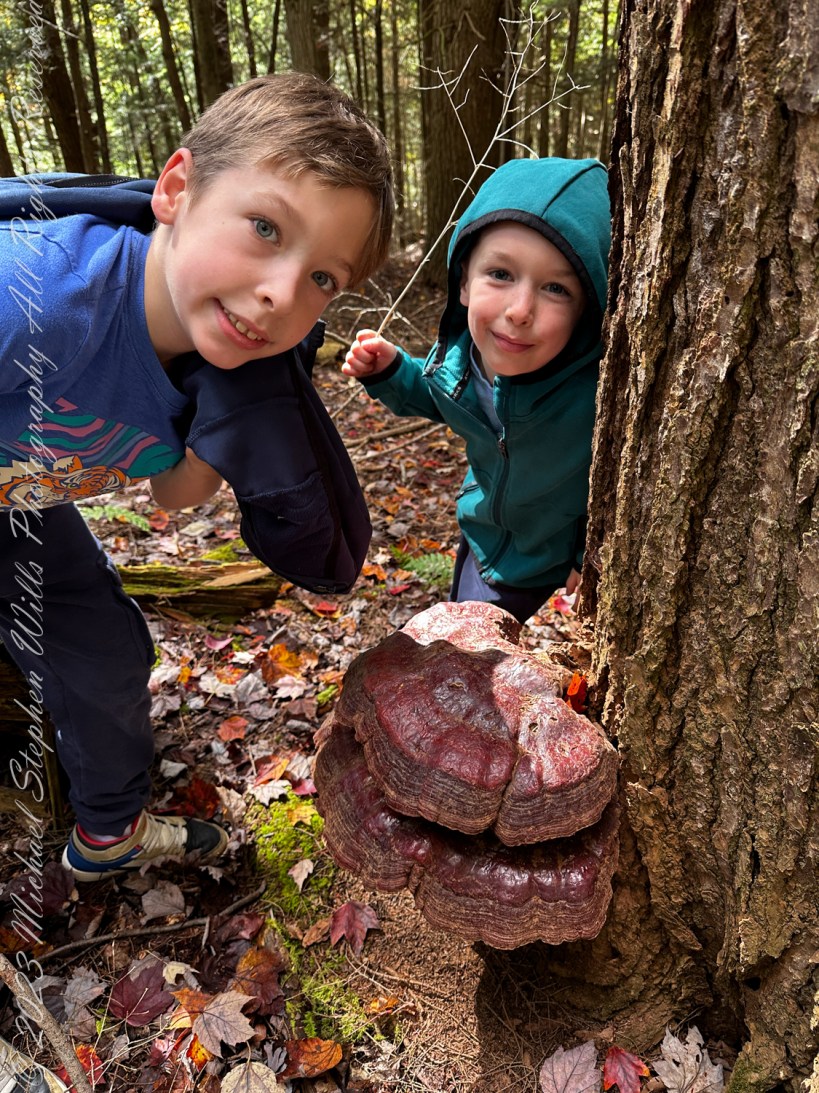
The path led us deeper into the forest, and soon we turned onto the Brookside Trail, which merged with the High Ridge Trail. Here, the air grew cooler under the dense canopy of trees, and the forest floor softened beneath our feet with layers of leaves. It was then that we stumbled upon the most magnificent sight of the day: an enormous bracket fungus, its wide, layered shelves clinging to the trunk a hoary snag.

Rory gasped in delight, running over to inspect it more closely. “Look how big it is!” he exclaimed, his small hands hovering just above its ridged surface. Sam, never one to be outdone, knelt beside it, carefully touching the spongy layers. “It’s a staircase for squirrels,” he said, grinning up at me.
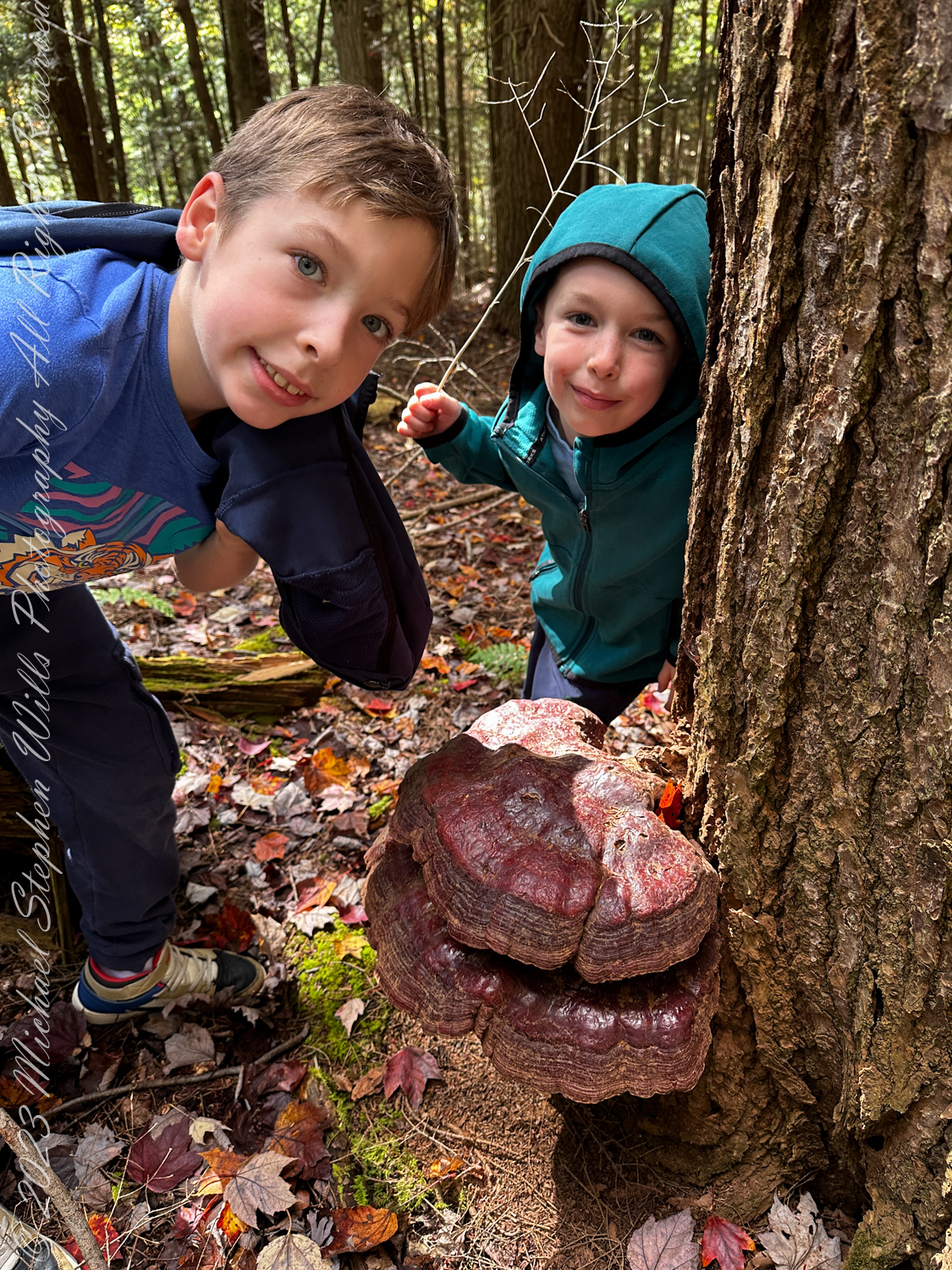
Turkey Tail bracket fungus (Trametes versicolor) is a common wood decay fungus found on dead and decaying hardwoods. Named for its concentric, colorful bands resembling a turkey’s tail, it plays a vital role in forest ecosystems by breaking down lignin, facilitating nutrient recycling. It’s also valued for its medicinal properties. Lime Hollow Nature Center, Cortland, Cortland County, New York State. Finger Lakes Regions

As I watched them, I couldn’t help but think back to all the times I had wandered these trails alone before they were born. Now, these woods had become a classroom for them—full of discoveries that sparked their curiosity and wonder. It was a beautiful moment of generational connection, this passing on of my love for the natural world to Sam and Rory.

Fascinating Beech Tree Roots


On the way out, we took the Brookside / Pond View / Sunset trails once again, but this time, this intricate network of roots from a massive beech tree fascinated us. The roots twisted and coiled across the path like veins, in our imaginations the gnarled shapes snagged our feet. Sam, ever the explorer, stepped cautiously along the roots, balancing himself as if walking a tightrope. Rory followed suit, his giggles filling the air.
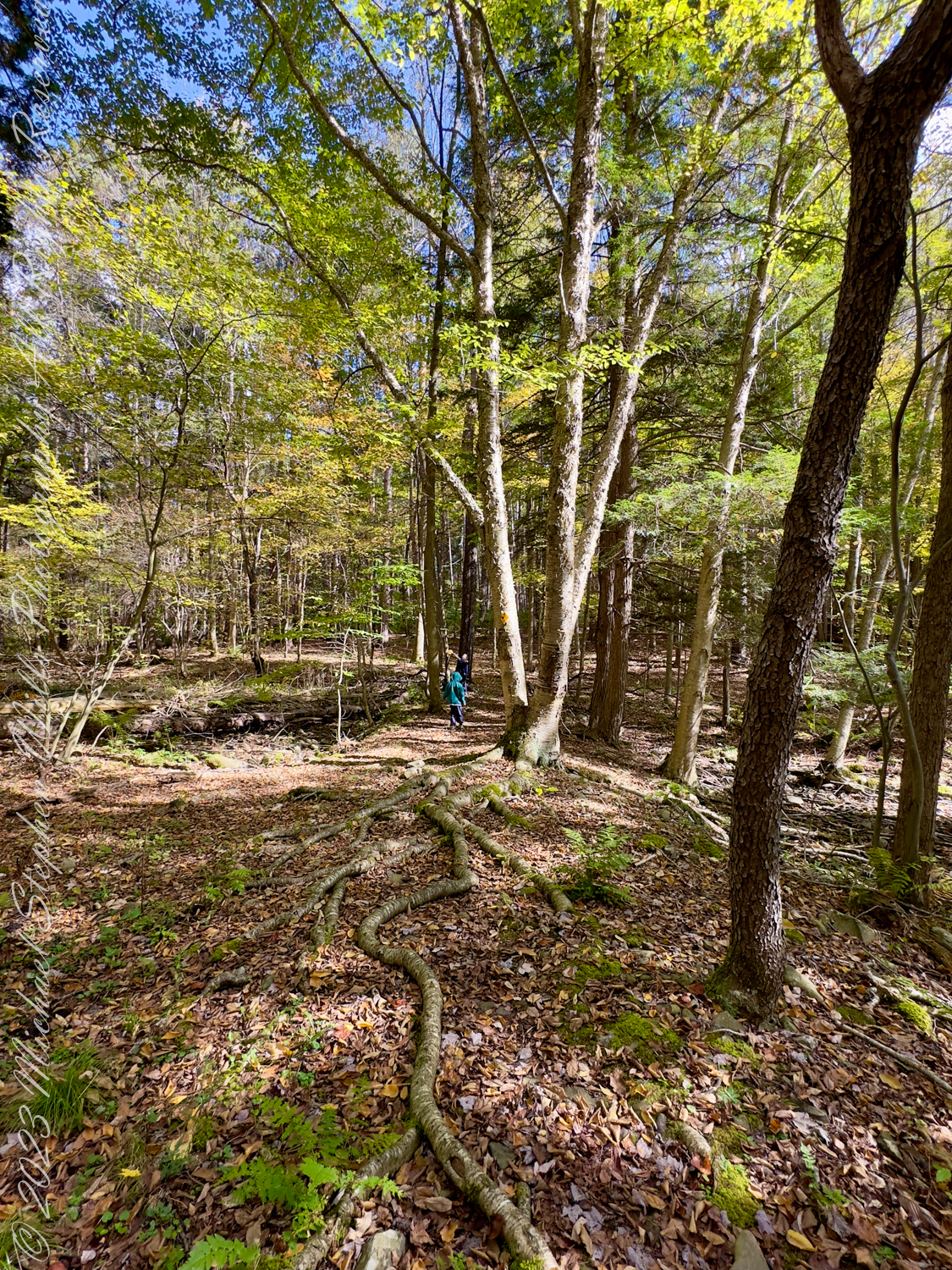
An American beech (Fagus grandifolia). These trees are quite common in northeastern forests.
The beech tree is known for its smooth smooth, gray bark, which can become marked with scars or etchings as the tree ages. Additionally, its leaves are typically dark green, with serrated edges, and turn yellow to bronze in the fall, often staying on the tree through winter. Lime Hollow Nature Center, Cortland, New York State

“These roots are older than us,” I told them. “Beech trees can live for hundreds of years. Just think, this tree has seen many more seasons than we ever will.”

Sam’s eyes widened at the thought, while Rory gave the tree a gentle pat, as if to thank it for its wisdom. I marveled at how something as simple as a root system could captivate their imaginations and bring the lesson of time and growth to life.

Reminiscing on the Chicago Bog
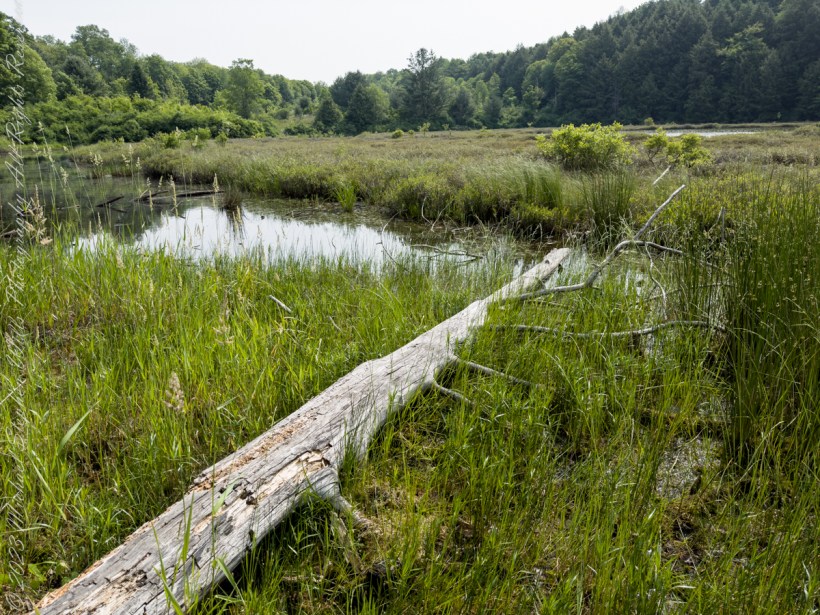
In the 1830’s there was a village named Chicago along Gracie Road, which gives it the name we have today. The Chicago Bog is home to many carnivorous plants, including sundew, the pitcher plant, and more. The deepest depth of the bog is about 7.2 ft. The bog is along the Phillips Memorial Trail, which can be found on Gracie Road. Lime Hollow Nature Center, Cortland, New York


As we walked, my mind wandered back to a visit we had made to the Chicago Bog just a year before. I remembered the day clearly—how we had trekked through the wetland on a warm June afternoon, the ground soft beneath our feet, alive with the buzzing of insects and the vibrant green of new growth.
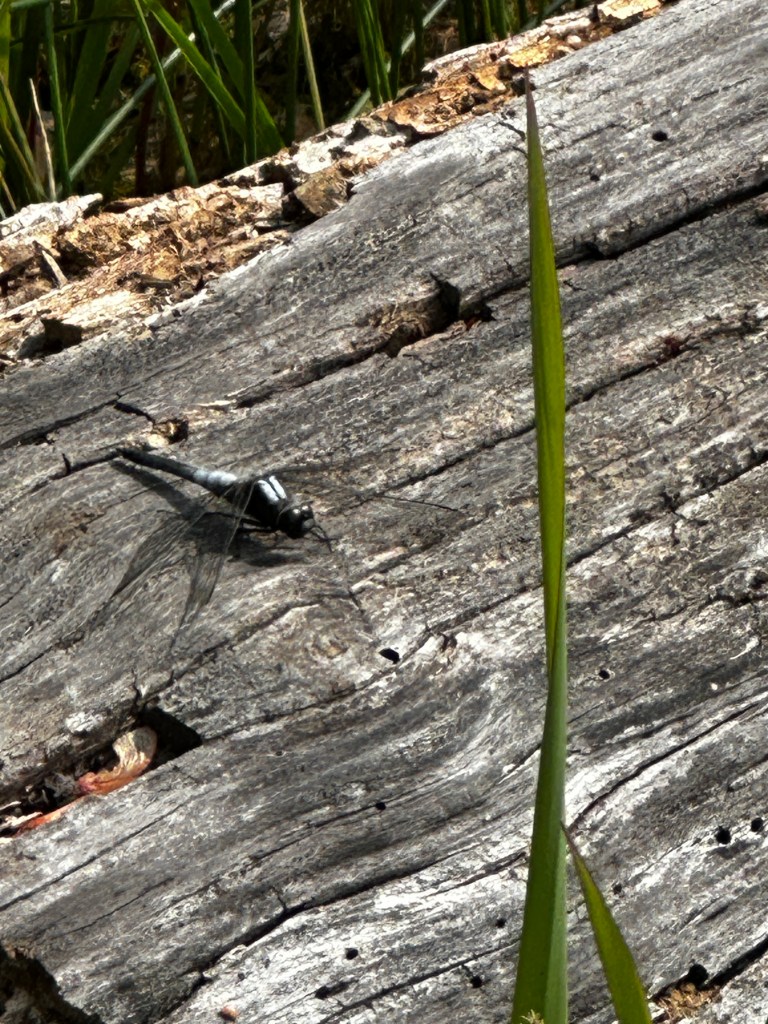
The chalk-fronted corporal (Ladona julia) is a skimmer dragonfly found in the northern United States and southern Canada.
Juveniles of both sexes are light reddish brown, with white shoulder stripes and a black stripe down the middle of the abdomen. As they mature, males develop a white pruinescence on the top of the thorax and at the base of the abdomen, while the rest of the abdomen turns black. Females become almost uniformly dark brown, with a dusting of gray pruinescence near the base of the abdomen; a few develop the same color pattern as the males.
Chalk-fronted corporals often perch horizontally on the ground or on floating objects in the water, flying up to take prey from the air. They are gregarious for dragonflies, and are commonly seen perching in groups. They readily approach humans to feed on the mosquitoes and biting flies that humans attract.

It was there, by the edge of the bog, that we had encountered a dragonfly, a Chalk-fronted Corporal, resting on a fallen log. Its dark, iridescent wings shimmered in the sunlight, and Sam had been mesmerized by its delicate beauty. He had asked so many questions that day—about how dragonflies flew, what they ate, and where they lived. I had done my best to answer, but truth be told, I learned as much as he did in that moment.
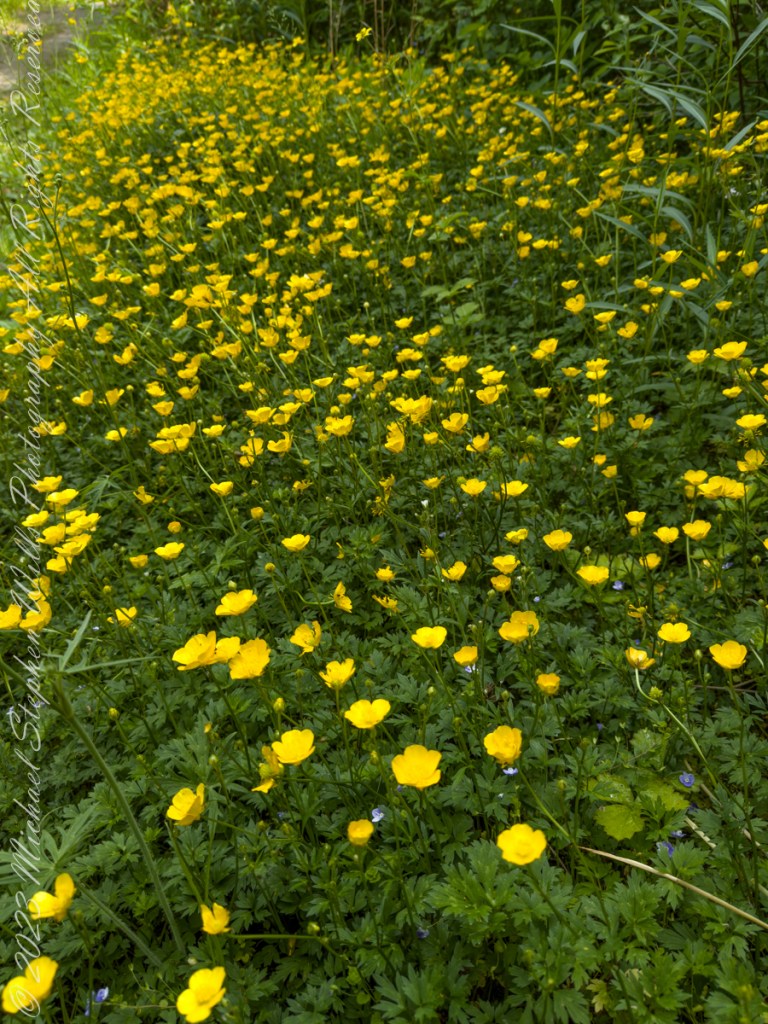
Nearby, a meadow of buttercups had stretched out before us, their yellow blooms dancing in the breeze. Rory had run through them, his laughter ringing out as he tried to catch a butterfly that flitted between the flowers. The memory of that field of gold still brought a smile to my face as we made our way through Lime Hollow today.

A Day to Remember


As we neared the end of our hike, the afternoon light filtering through the trees, I couldn’t help but feel a sense of contentment. These outings with Sam and Rory had become more than just walks in the woods—they were opportunities to share, to learn, and to make memories that I knew would last a lifetime.

“Grandpa, can we come back?” Rory asked, his face flushed with excitement.

“Of course,” I said, smiling. “We’ll always have time for another adventure.”
Behind the Scenes of the Final Frontier: Our Tour with NASA’s “Launch Director” – 6

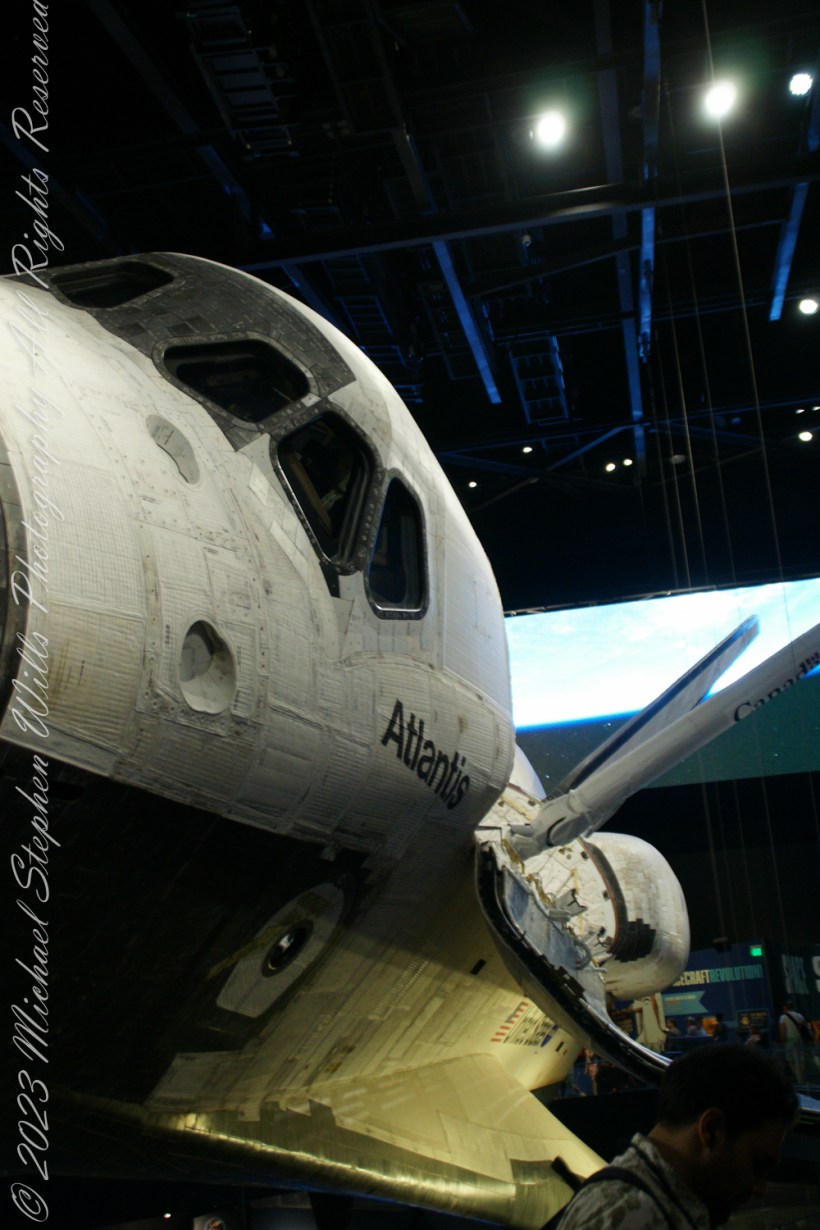
Step behind the scenes of space exploration with this dive into the awe-inspiring details of the Space Shuttle Atlantis, its thermal-protected wings to the onboard engines.

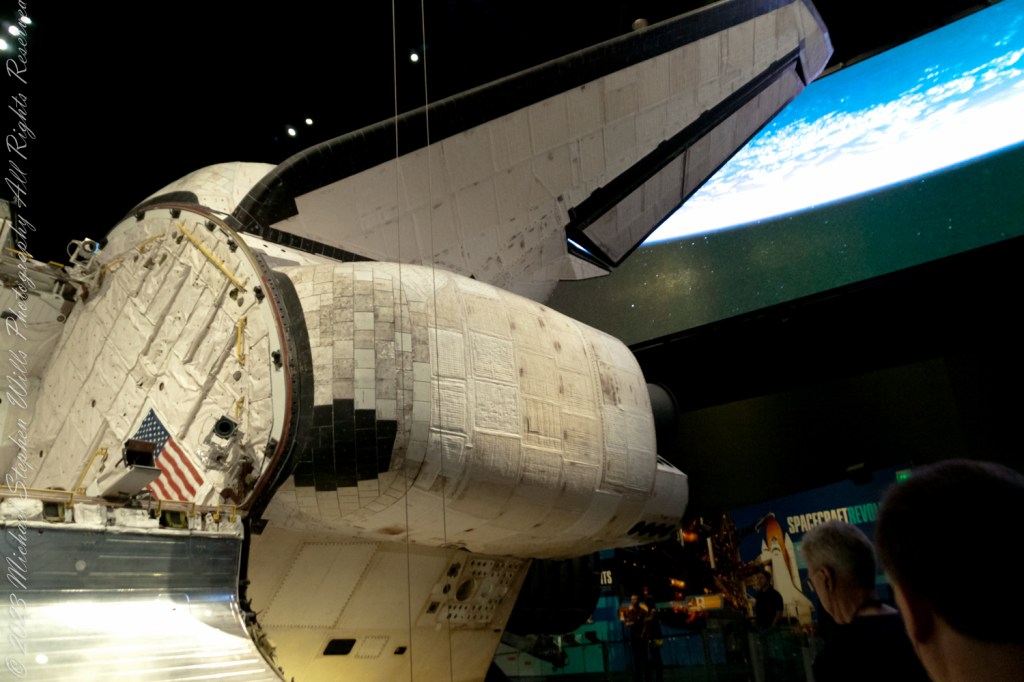
Imagine, if you will, stepping onto the grounds of NASA, where the air buzzes with the legacy of space exploration and the spirit of human achievement. It’s a place where dreams of the cosmos turn into reality. Our 2017 Launch Director tour not only brought us face-to-face with the marvels of space travel but allowed me to delve into the intricate details of one of NASA’s most iconic spacecraft: the Space Shuttle Atlantis. In this episode 6 of our adventure, we continue exploring the engineering marvel that is Atlantis, focusing on its wings, rear stabilizer, and onboard engines—elements critical to its legendary missions.

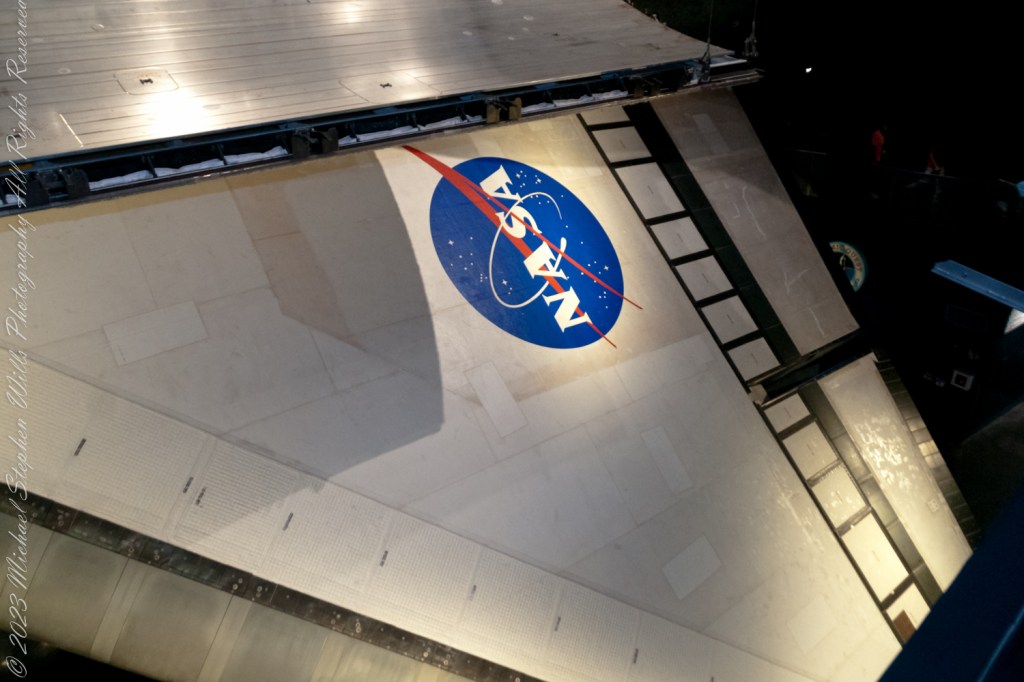
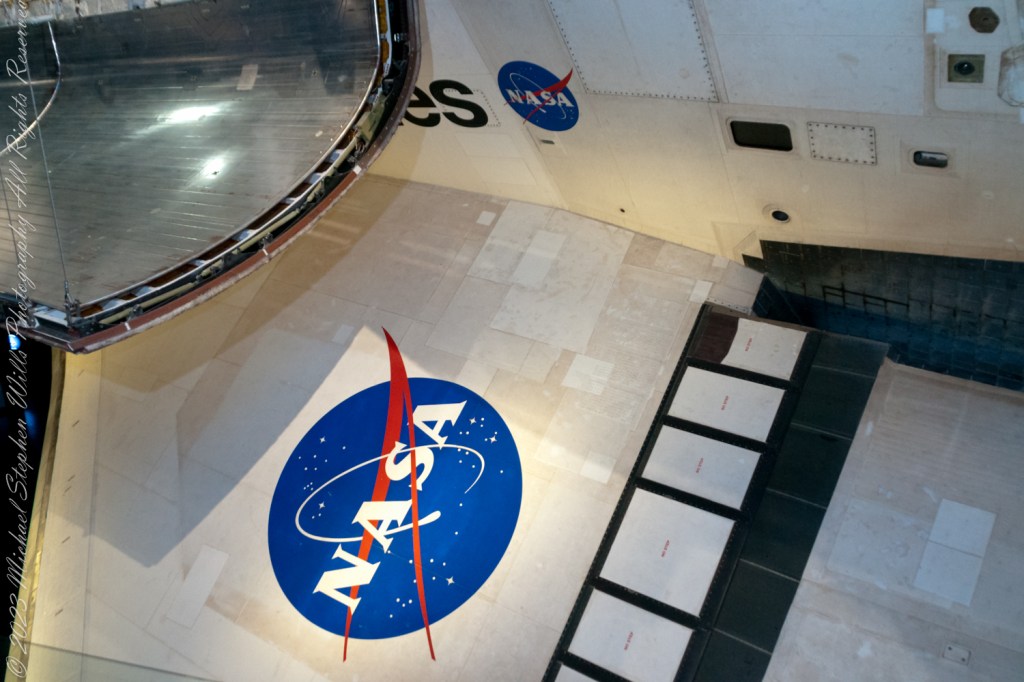
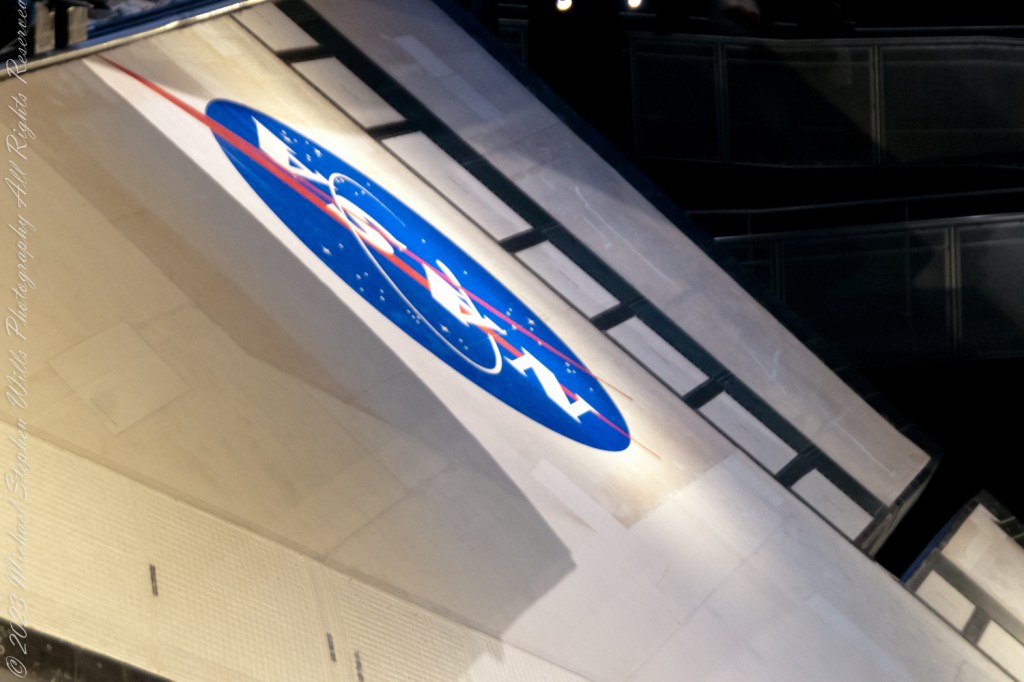
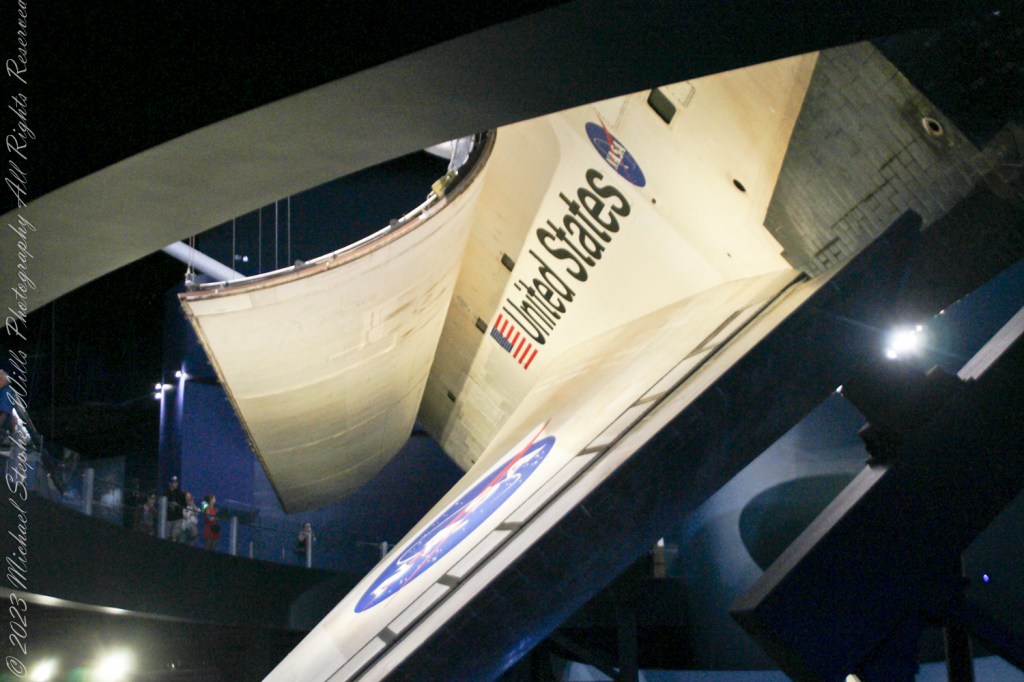
The Space Shuttle Atlantis, a name synonymous with discovery and exploration, represents a pinnacle of human ingenuity. As you walk around the Atlantis exhibit, you can’t help but be awed by the shuttle’s design, particularly its wings. The wings of Atlantis, with a wingspan of about 78 feet, are not just structures of metal and composite materials; they are the shuttle’s lifeline during re-entry into Earth’s atmosphere. These delta-shaped wings are designed to withstand the scorching temperatures of re-entry, allowing Atlantis to glide back to Earth with grace and precision. The material covering the wings, known as the Thermal Protection System (TPS), consists of thousands of heat-resistant tiles and reinforced carbon-carbon panels, safeguarding the shuttle and its crew from temperatures exceeding 1,650 degrees Celsius.

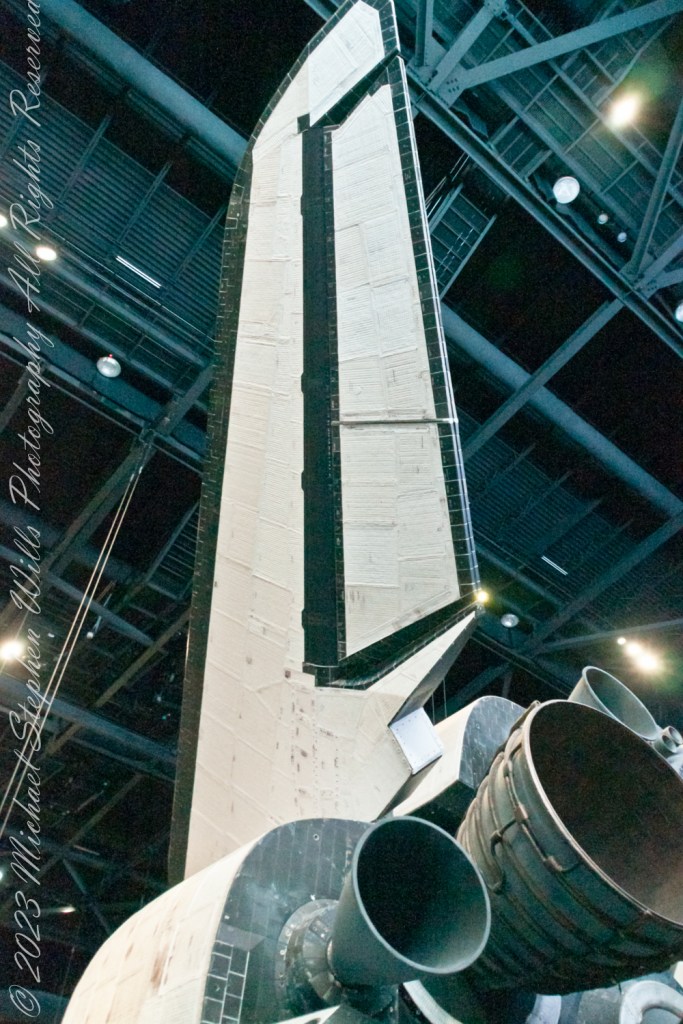
As your gaze shifts towards the rear of Atlantis, the vertical tail fin, or the rear stabilizer, commands attention. Standing about 17 feet tall, this stabilizer is more than just a rudder; it’s a critical component for maintaining the shuttle’s stability during the different phases of its mission. During the launch, it helps keep the shuttle on course as it ascends through the atmosphere. In space, it plays a minimal role, but upon re-entry, it becomes vital again, ensuring the shuttle remains stable and oriented correctly as it descends through the atmosphere, allowing for a safe landing.

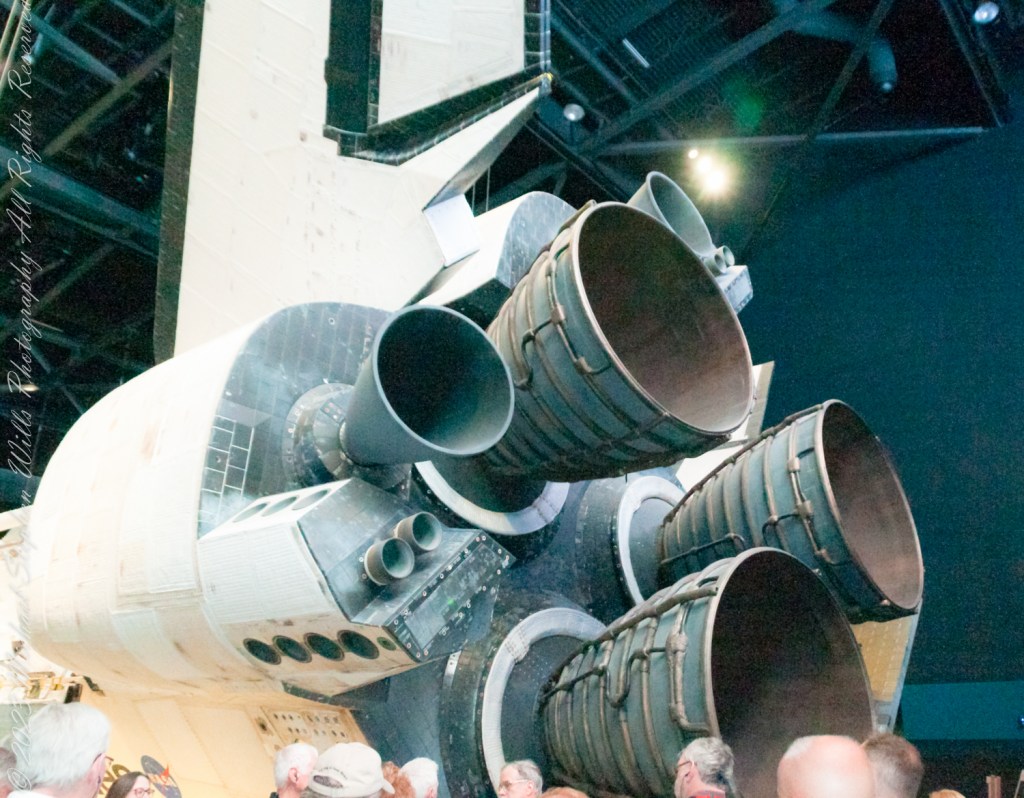
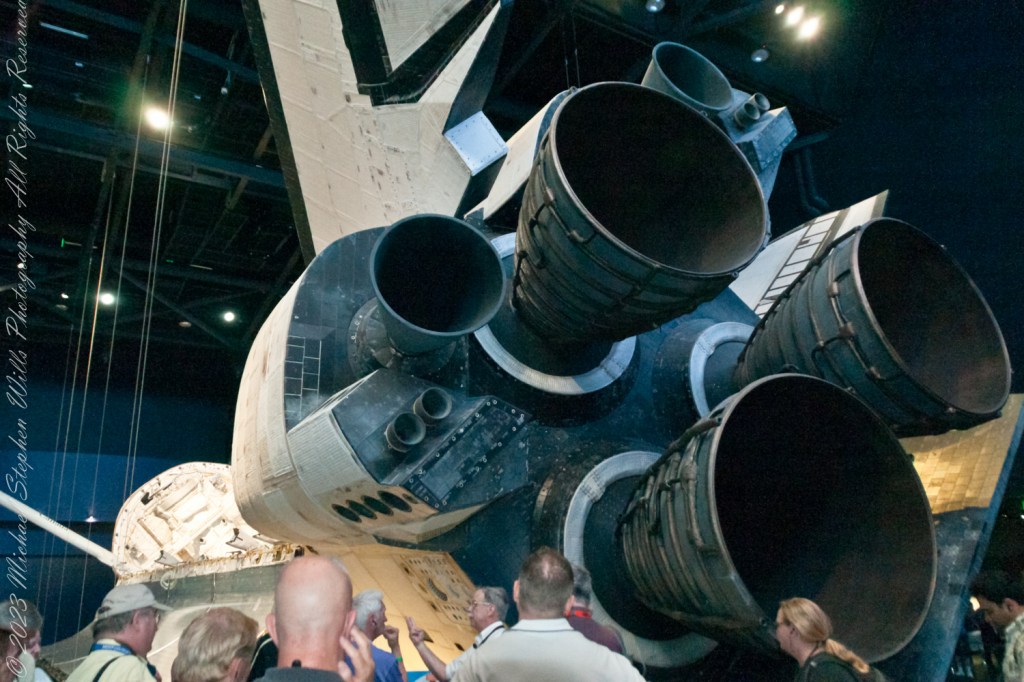
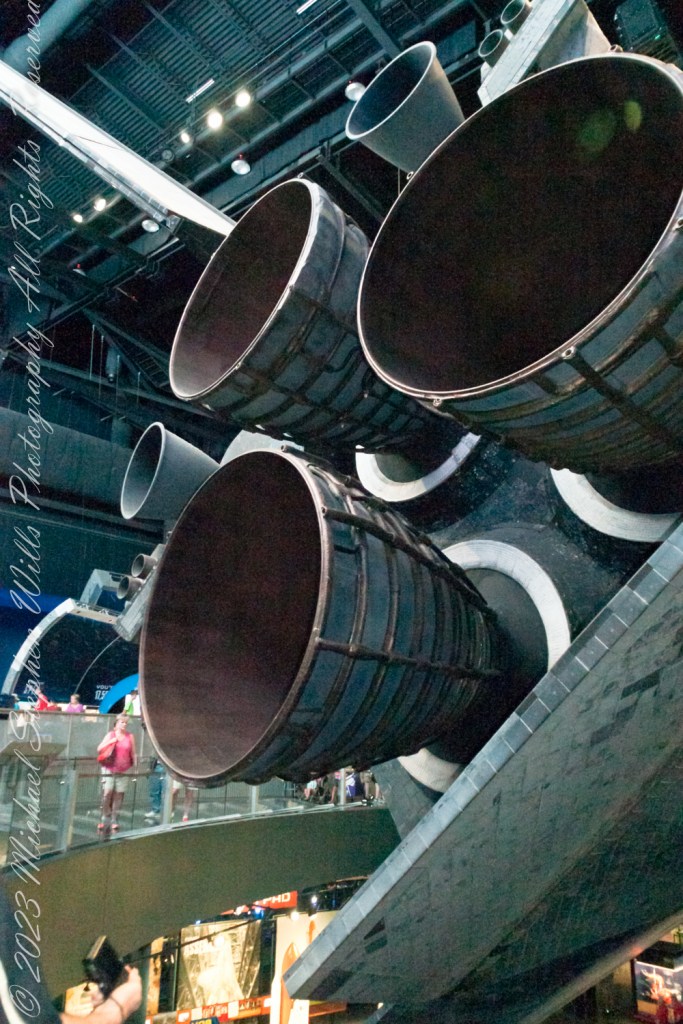
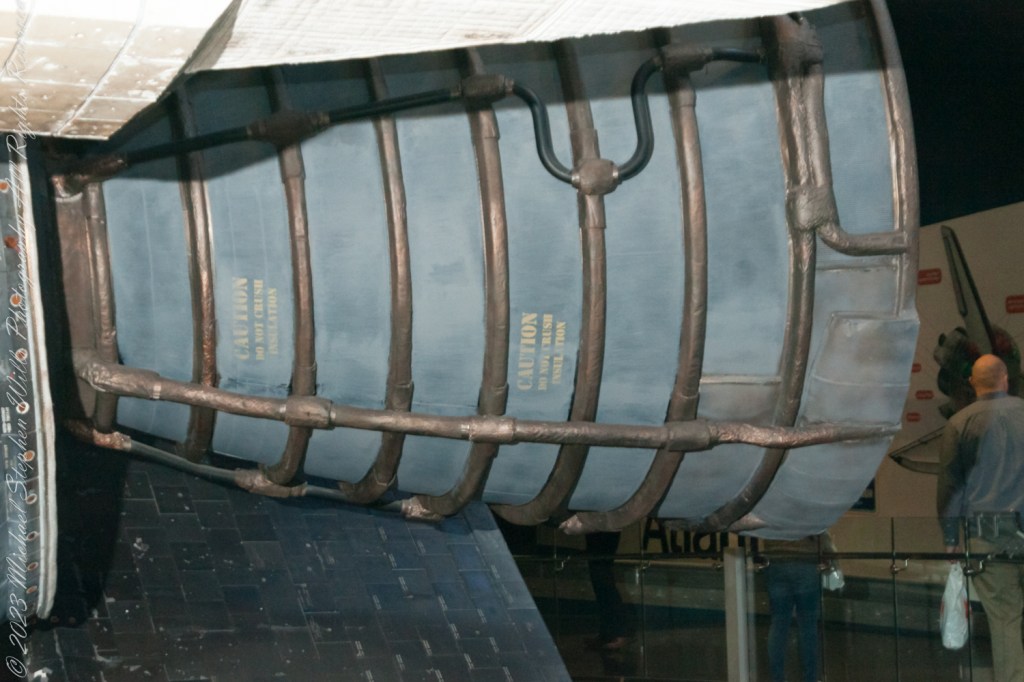
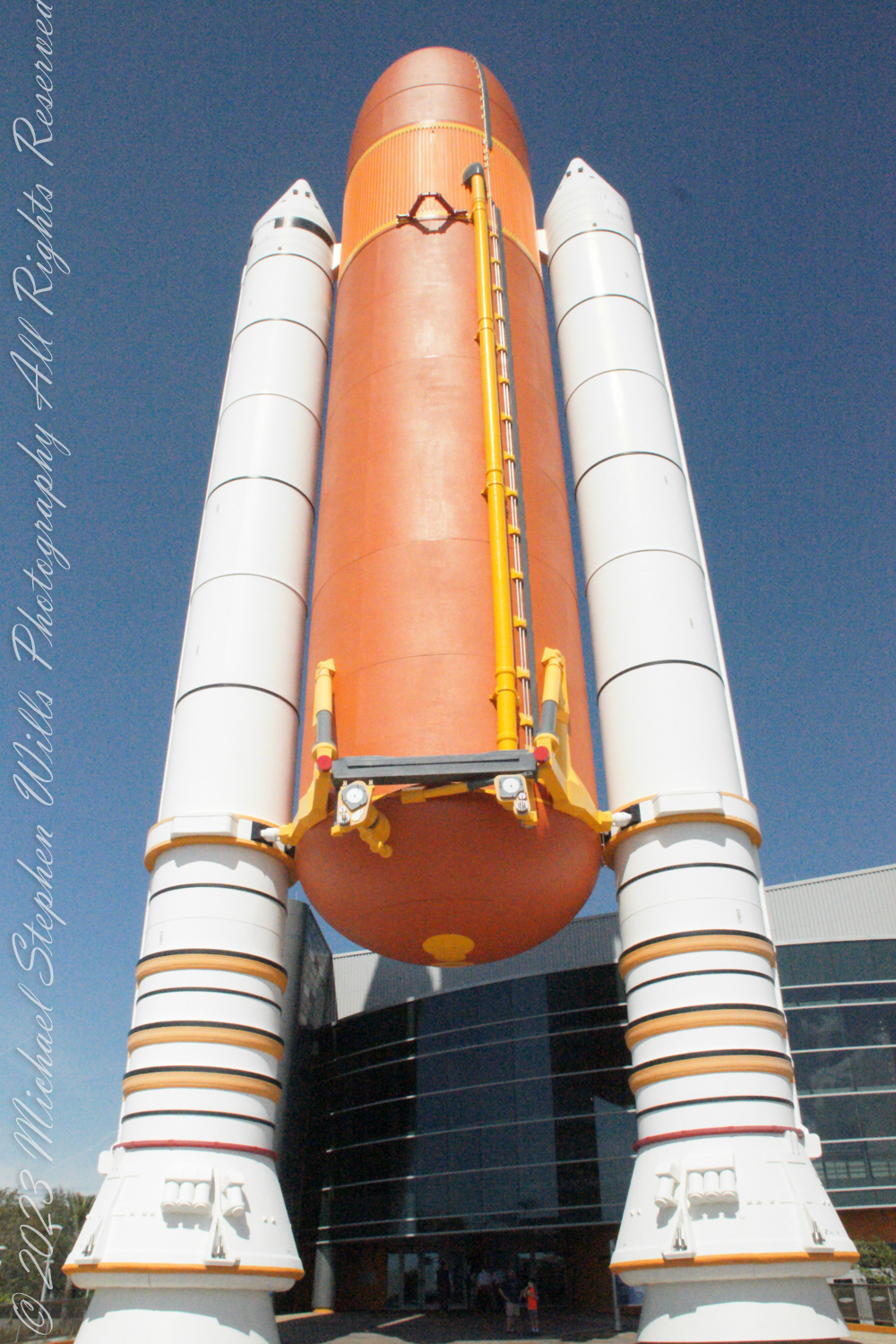
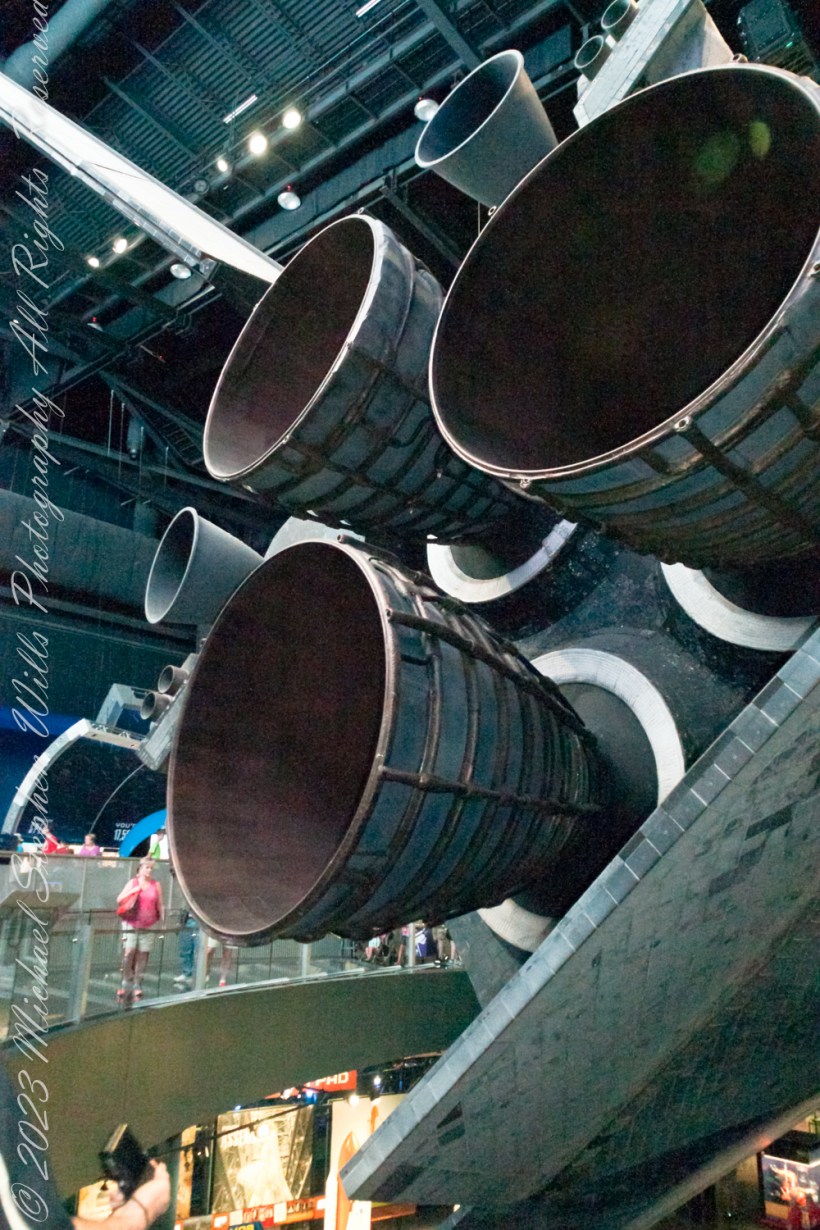
In this exploration of Atlantis, after the wings and stabilizer, we encounter the heart of the shuttle’s propulsion system: its onboard engines. The Space Shuttle Main Engines (SSMEs), three in total, are marvels of engineering, capable of producing a combined thrust of over 1.2 million pounds. These liquid-fueled engines play a crucial role in propelling the shuttle from the launch pad into orbit. What’s fascinating is their ability to throttle up or down depending on the phase of the launch, providing the precise amount of power needed at any given moment. The engines are fed by the External Tank, the only part of the shuttle not reused, which carries the liquid hydrogen and liquid oxygen needed for combustion. Upon reaching orbit, the Orbital Maneuvering System (OMS) engines take over, allowing Atlantis to navigate the vacuum of space with finesse, adjusting its orbit and facilitating the meticulous maneuvers required for satellite deployment or docking with the International Space Station.

Walking away from the Atlantis exhibit, what stays with you is not just the sight of this magnificent spacecraft but an appreciation for the ingenuity and dedication that went into its design. Every wing, every tile on the stabilizer, and every roar from the engines tell a story of human curiosity, the drive to explore beyond our confines, and the relentless pursuit of knowledge. The Space Shuttle Atlantis is more than a machine; it’s a symbol of what humanity can achieve when we dare to dream big and work tirelessly towards those dreams. So, as you look up at the night sky, remember the wings that carried our dreams, the stabilizer that kept us on course, and the engines that propelled us into the unknown, reminding us that the final frontier is not so final after all.

Copyright 2024 Michael Stephen Wills All Rights Reserved

Behind the Scenes of the Final Frontier: Our Tour with NASA’s “Launch Director” – 5

Ever wondered about the iconic robotic arms that gracefully danced in space, tethered to the Space Shuttle? Meet Canadarm, a marvel of engineering that transformed space missions. Born from a NASA invitation to Canada in 1969, this robotic arm did more than just move payloads; it became a symbol of international collaboration in space exploration. After the Columbia disaster, its role expanded, ensuring the safety of astronauts with critical inspections. Dive into the captivating journey of Canadarm, where technology meets the stars. Click to discover how a Canadian innovation became a pivotal part of space history.

The Canadarm

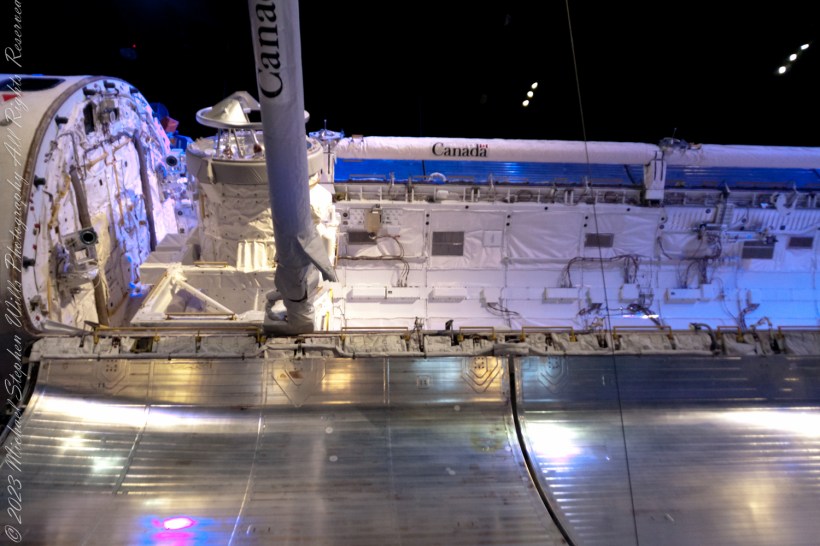
The Canadarm is here extended in the foreground and docked in background

The Canadarm, or Canadarm1, officially known as the Shuttle Remote Manipulator System (SRMS) and sometimes referred to as the SSRMS, represents a series of robotic arms utilized aboard the Space Shuttle orbiters. These arms were instrumental in deploying, manipulating, and retrieving payloads. Following the tragic Space Shuttle Columbia disaster, the use of Canadarm became invariably linked with the Orbiter Boom Sensor System (OBSS). The OBSS played a crucial role in examining the shuttle’s exterior for any damages to its thermal protection system, enhancing the safety of subsequent missions.

The genesis of Canada’s involvement in the Space Shuttle program dates back to 1969 when the National Aeronautics and Space Administration (NASA) extended an invitation to Canada. At the outset, the specifics of Canada’s role were unclear, though the need for a manipulator system was immediately recognized as vital. The Canadian firm DSMA ATCON had previously made strides in robotics with the development of a robot designed to load fuel into CANDU nuclear reactors, capturing NASA’s interest. By 1975, a formal agreement was reached between NASA and the Canadian National Research Council (NRC), under which Canada would undertake the development and construction of the Canadarm.

The NRC subsequently awarded the contract for the manipulator to Spar Aerospace (currently known as MDA), under which three distinct systems were to be developed: an engineering model to aid in design and testing, a qualification model for environmental testing to ensure the design’s suitability for space, and a flight unit destined for use in missions. This collaborative effort marked a significant milestone in the use of robotics in space exploration, showcasing international cooperation in advancing space technology.

Copyright 2024 Michael Stephen Wills All Rights Reserved

Behind the Scenes of the Final Frontier: Our Tour with NASA’s “Launch Director” – 4

Imagine yourself floating in the vast cargo bay of the Space Shuttle Atlantis, surrounded by the essentials of space exploration. Here, in this dynamic space, the dreams of astronauts and scientists converge, where each mission reshapes our understanding of the universe. Curious? Discover more inside.

Atlantis Cargo Bay


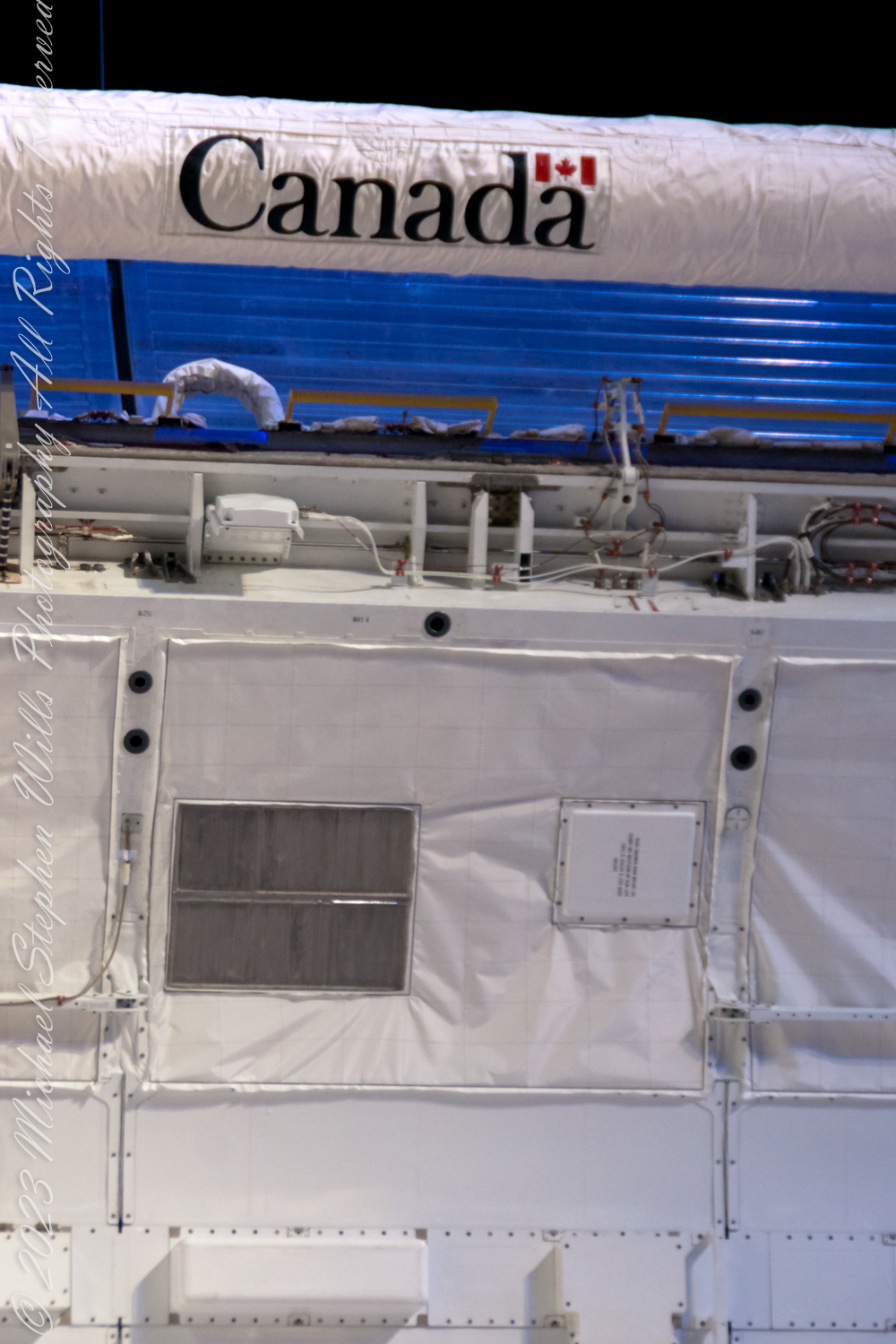
The cargo bay of the Space Shuttle Atlantis was an extensive, empty compartment located at the shuttle’s aft end, acting as the main storage area for mission payloads. A significant portion of the cargo was housed within a sizable cylindrical module named Raffaello, which contained a year’s supply of necessities—food, clothing, water, replacement parts, and scientific gear.


The dimensions of the payload area were roughly 4.6 meters (15 feet) in width and 18 meters (60 feet) in length. This spacious area enabled the shuttle to transport a diverse array of payloads, ranging from satellites to complex scientific experiments.

Exploring the Cargo Bay


Envision yourself drifting through the cargo bay of Atlantis, encircled by a maze of wires, equipment, and neatly arranged payloads. Astronauts, tethered securely and clad in their voluminous space suits, would navigate this area, ensuring the payloads were fastened correctly for either launch or retrieval operations.


The cargo bay’s configuration was highly adaptable, tailored to meet the specific needs of each mission. It played a pivotal role in the deployment of satellites, execution of repairs, or the transportation of scientific apparatus, adapting its setup as necessary.

The Hubble Servicing Mission


One of the most notable missions involving Atlantis was the Hubble Space Telescope Servicing Mission 4 (SM4). For this mission, Atlantis was loaded with essential items for the Hubble, including new instruments, batteries, and gyroscopes, all carefully organized within the cargo bay for safe transport to and into orbit.

Legacy

The cargo bay of Atlantis bore witness to a myriad of significant events: the release of satellites, the construction of the International Space Station, and numerous scientific investigations. Its design and flexibility were instrumental to the Space Shuttle program’s achievements.

Copyright 2024 Michael Stephen Wills All Rights Reserved

Behind the Scenes of the Final Frontier: Our Tour with NASA’s “Launch Director” – 3

Step beyond Earth’s bounds and glimpse the astounding intricacies of the Space Shuttle’s journey. Discover the engineering marvels that propelled humanity into orbit and back, navigating the cosmos with precision. Unveil the secrets of the stars now.

The Space Shuttle, officially known as the Space Transportation System (STS), was an iconic spacecraft operated by NASA from 1981 to 2011. It consisted of an orbiter with wings for landing like an airplane, external fuel tanks, and solid rocket boosters. With its multiple missions ranging from satellite deployment to the construction of the International Space Station, the Space Shuttle was a symbol of human ingenuity in space exploration. Central to the Shuttle’s success was its navigational system, which combined state-of-the-art technology of its time with human expertise.

The navigation of the Space Shuttle was a complex orchestration involving both internal and external elements designed to work in the harsh environment of space. The photographs attached illustrate some of the external navigational elements.

External Navigational Elements

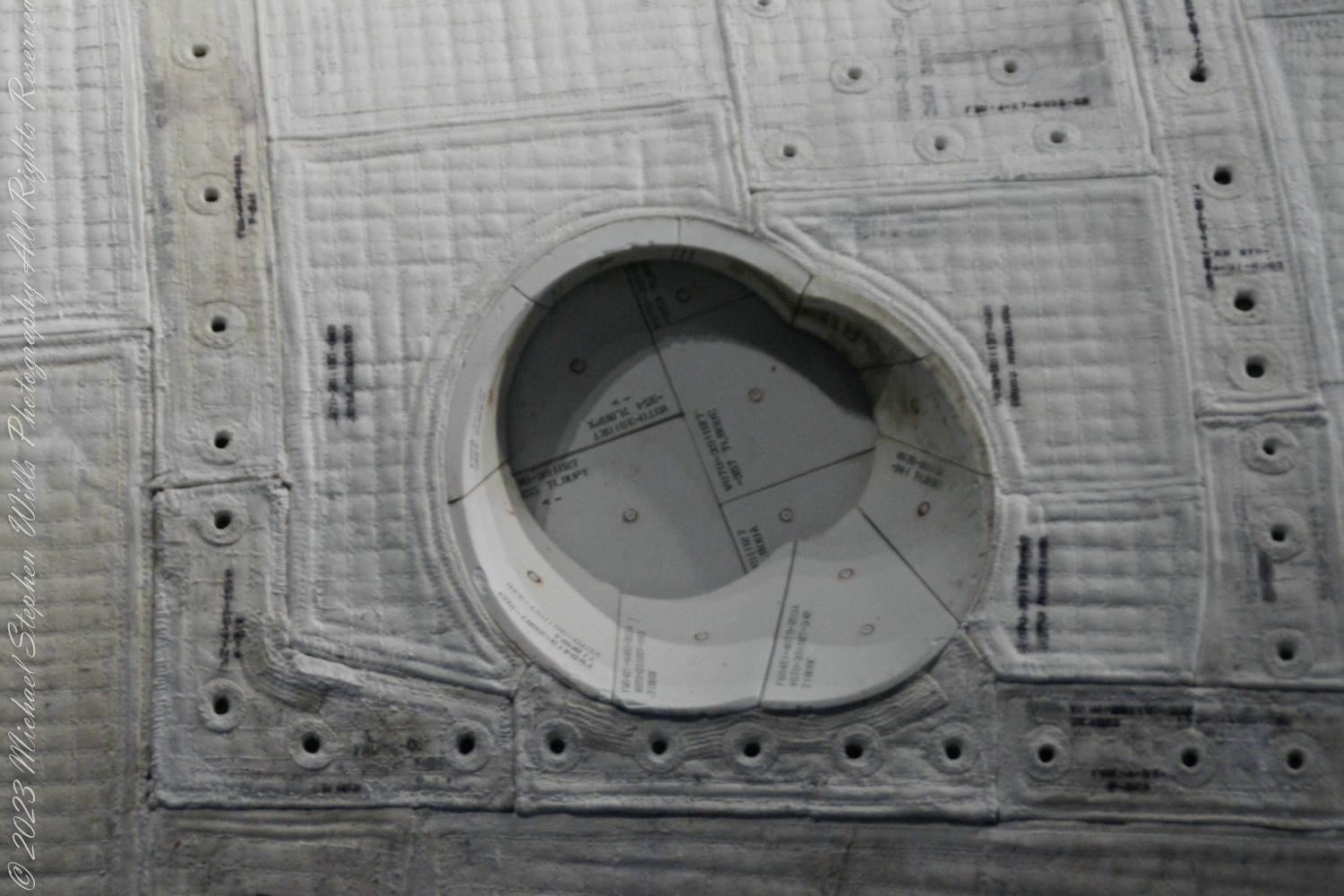
The external surface of the Space Shuttle, as seen in the following images, was covered with thousands of thermal protection system tiles. These tiles were crucial not only for protecting the Shuttle from the extreme temperatures experienced during re-entry into Earth’s atmosphere but also housed the critical sensors for navigation.

Reaction Control System (RCS)

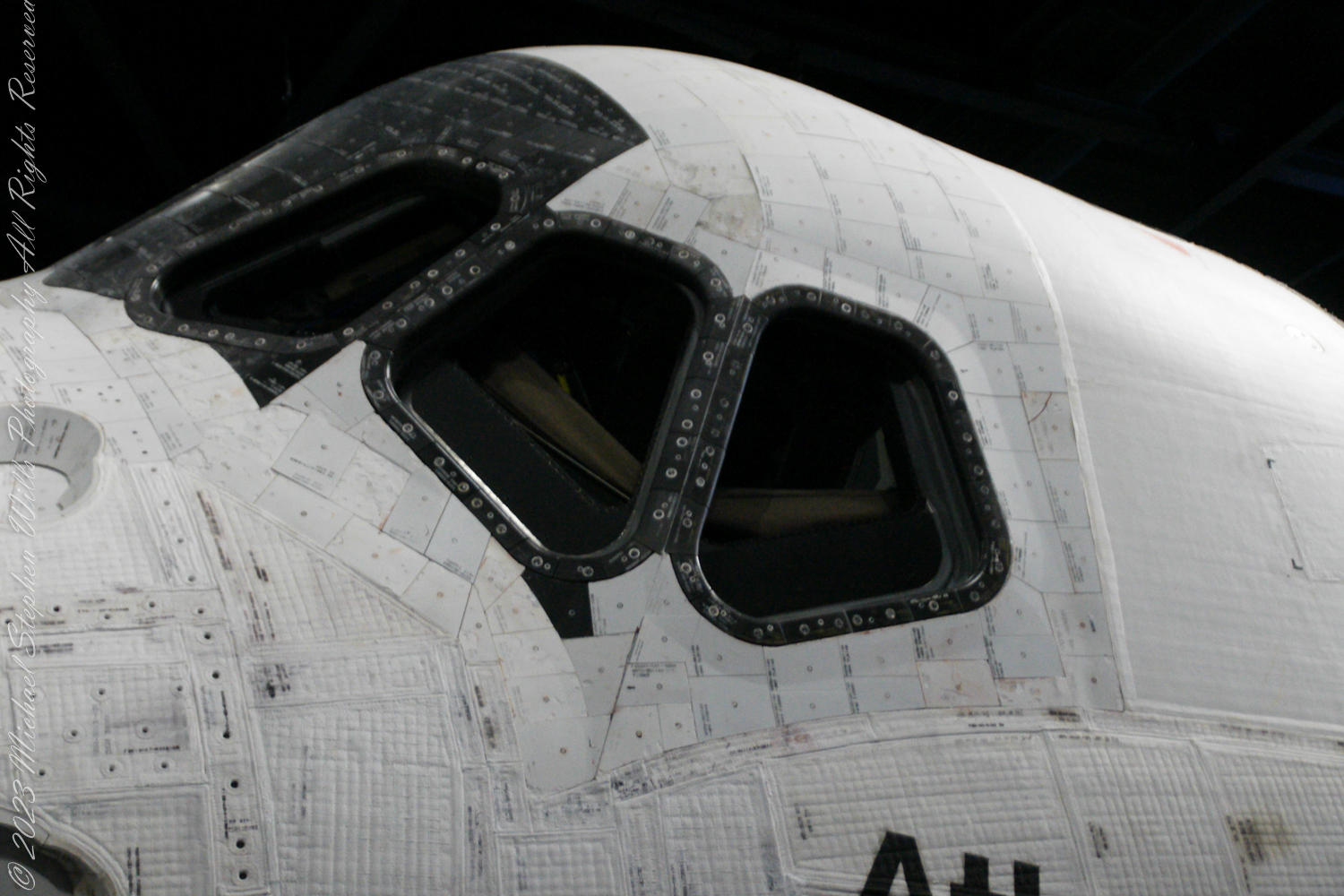
One of the key external navigational features was the Reaction Control System (RCS), seen as clusters of small circular ports below the cockpit windows. The RCS was composed of small thrusters that could fire in short bursts to adjust the Shuttle’s orientation or speed in space. This system was vital during the maneuvers in orbit, such as satellite deployment, docking with the International Space Station, and repositioning for re-entry into Earth’s atmosphere.

Internal Navigational Elements

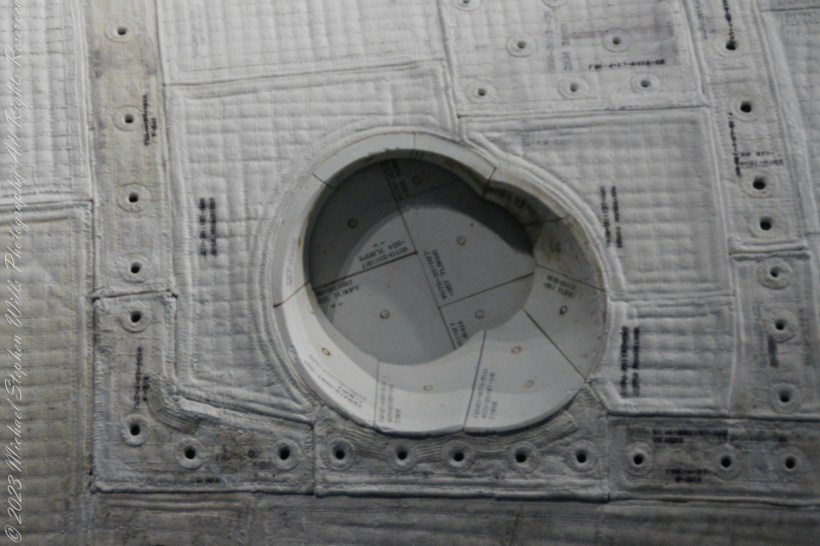
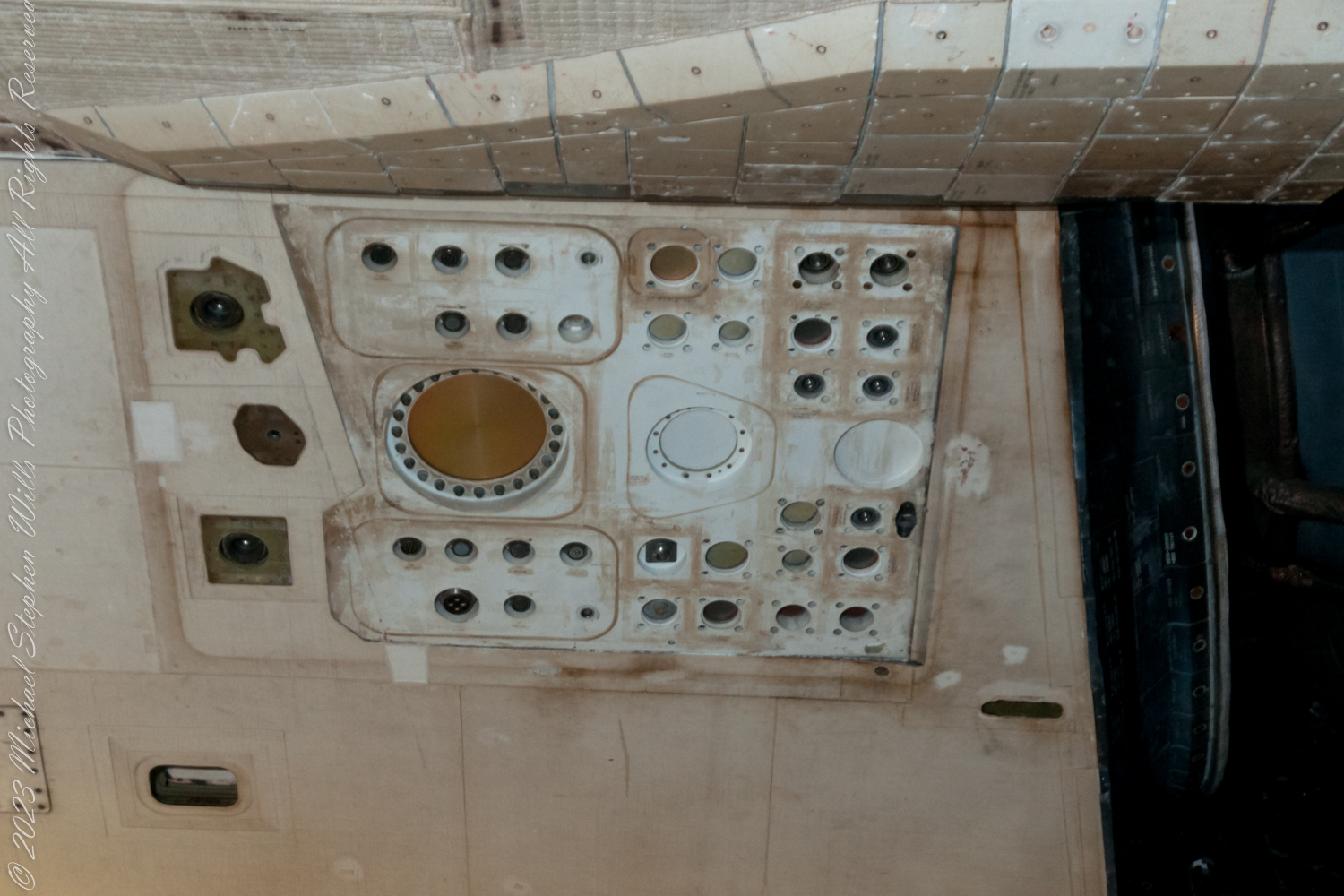
Internally, the Space Shuttle featured a complex avionics system. The following image depicts part of the orbiter’s internal structure with an array of docking mechanisms and sensor housings. The round port, surrounded by a ring of bolts, is likely an interface for the Orbiter Docking System, used for rendezvous and docking with the International Space Station.

The following image shows a close-up of one of the orbiter’s windows, surrounded by reinforced panels. Each window was crucial for manual navigation, allowing astronauts to visually confirm their orientation and position relative to celestial objects and the Earth. The windows were also essential during landing, which was conducted manually by the Shuttle’s commander.

Navigational Avionics

The Shuttle’s navigation was supported by an avionics system that included inertial measurement units (IMUs), star trackers, and various other sensors. IMUs tracked the Shuttle’s position by measuring its velocity and direction, while star trackers used sightings of known star patterns to calibrate the Shuttle’s orientation in the vastness of space.

The navigational computers onboard processed data from these systems to maintain the trajectory and manage the Shuttle’s multiple systems. The computers were capable of autonomous operation, although astronauts were trained to take over manually if necessary.

Ground Support and Telemetry

In addition to onboard systems, navigation relied heavily on ground-based tracking and data relay satellites. The Shuttle communicated with NASA’s Mission Control Center, which monitored its position and trajectory, providing updates and corrections as needed. Telemetry data sent back to Earth included velocity, altitude, and engine performance metrics, which were crucial for ensuring the Shuttle’s safe passage in and out of orbit.

In Summary

The Space Shuttle’s navigational capabilities were a testament to the integration of technology and human skill. From the RCS ports on its tiled exterior to the sophisticated avionics inside, every component played a critical role in the Shuttle’s missions. This harmonious blend of internal mechanisms and external sensors, complemented by vigilant ground support, enabled the Space Shuttle to navigate the cosmos and return safely home, mission after mission.

Copyright 2024 Michael Stephen Wills All Rights Reserved

Behind the Scenes of the Final Frontier: Our Tour with NASA’s “Launch Director” – 2

Peer through the Space Shuttle’s windows, marvels of human ingenuity that withstood the cosmos’s extremes. Experience the awe of Earth’s view from orbit and the intense blaze of re-entry, all behind the clarity of fused silica glass. Dive into the fusion of science and exploration—read the full voyage of these extraordinary panes.

The windows of the Space Shuttle represent a pinnacle of engineering and material science, intricately designed to withstand the harsh realities of space travel while providing astronauts with a vital connection to the outside universe. The journey of these windows, from concept to creation and through their performance in the harsh environment of space, is a testament to human ingenuity and the relentless pursuit of exploration.

At the heart of the Space Shuttle’s windows is fused silica glass, a material selected for its exceptional properties, including high thermal resistance, strength, and optical clarity. This choice was crucial, as the windows had to endure rapid temperature shifts from the cold vacuum of space to the searing heat of re-entry, which could exceed 1,650 degrees Celsius (3,000 degrees Fahrenheit). Corning Incorporated, known for its innovative glass solutions, was responsible for manufacturing this fused silica, utilizing a high-purity synthesis process that ensured the material could withstand the extreme conditions of space without degrading.

The design and assembly process of the Shuttle’s windows was a feat of engineering. Each window was carefully framed and installed to maintain the spacecraft’s integrity and internal pressure in the vacuum of space. This involved a complex sealing mechanism that had to be both robust and fail-safe, ensuring the safety of the crew and the success of the mission. The installation process was rigorous, involving a series of tests that simulated the harsh conditions of space to validate the windows’ performance. These tests were crucial to identifying and rectifying any potential issues that could compromise the mission or the astronauts’ safety.

In space, the Shuttle’s windows faced numerous challenges, from the threat of micrometeoroid impacts to the intense radiation of the sun. Despite these hazards, the windows performed admirably, a testament to their design and the materials used. One notable instance of their resilience was observed during the STS-61 mission, where despite micrometeoroid impacts, the windows’ integrity remained intact, ensuring the crew’s safety and mission success.

The windows also played a critical role during the Shuttle’s re-entry into Earth’s atmosphere, a phase of the mission that subjected the spacecraft to extreme heat. The windows’ ability to withstand this heat while providing the crew with a clear view for navigation was vital for a safe landing. This was achieved through the use of multiple glass layers and protective coatings, which insulated the interior from the re-entry heat.

Beyond their technical specifications and performance, the Space Shuttle’s windows served a more profound purpose. They provided astronauts with a visual connection to the Earth and space, offering perspectives that few humans have experienced. These views not only aided scientific observation and mission operations but also offered moments of unparalleled beauty, inspiring both astronauts and people on Earth.

The legacy of the Space Shuttle’s windows extends beyond their technical achievements, embodying the spirit of exploration and the human quest for knowledge. They were not merely components of a spacecraft but windows to the universe, enabling us to look beyond our planet and dream of the possibilities that lie in the vast expanse of space. Through their resilience, clarity, and performance, the Space Shuttle’s windows stand as a symbol of human ingenuity, a small but significant part of our journey to the stars.

Copyright 2024 Michael Stephen Wills All Rights Reserved

Behind the Scenes of the Final Frontier: Our Tour with NASA’s “Launch Director” – 1

Discover an insider’s voyage to the heart of NASA’s launch operations with us as we relive the awe-inspiring Kennedy Space Center Tour, where every corner whispers tales of cosmic ventures and human courage.

Introduction

Late winter 2017 my wife Pam and I embarked on an extraordinary adventure that would etch an indelible mark on our memories. On March 2nd, we had the unique privilege of experiencing the Kennedy Space Center through the eyes of a NASA Launch Director. This wasn’t just any tour; it was a journey through the heart of space exploration, a narrative brought to life by someone who had been at the helm of launching dreams into the cosmos.

The Kennedy Space Center, a beacon of human achievement on Florida’s coastline, stood before us, brimming with stories of courage, innovation, and the relentless pursuit of the unknown. As we stepped onto the grounds, we were not just visitors but participants in a legacy stretching back to the earliest days of space travel. The “NASA Launch Director Tour” promised an inside look at the complexities and triumphs of space missions, a perspective few ever witness.

This series of blog posts is an attempt to capture the essence of that day, to share the insights, emotions, and awe-inspiring moments we experienced. From the thunderous silence of the launch pads to the intimate stories of missions past, each post will explore a different facet of our journey. Join us as we relive an unforgettable exploration of human ingenuity and the boundless reaches of space, all through the lens of a day that brought the stars within reach.

Gathering and Introductions

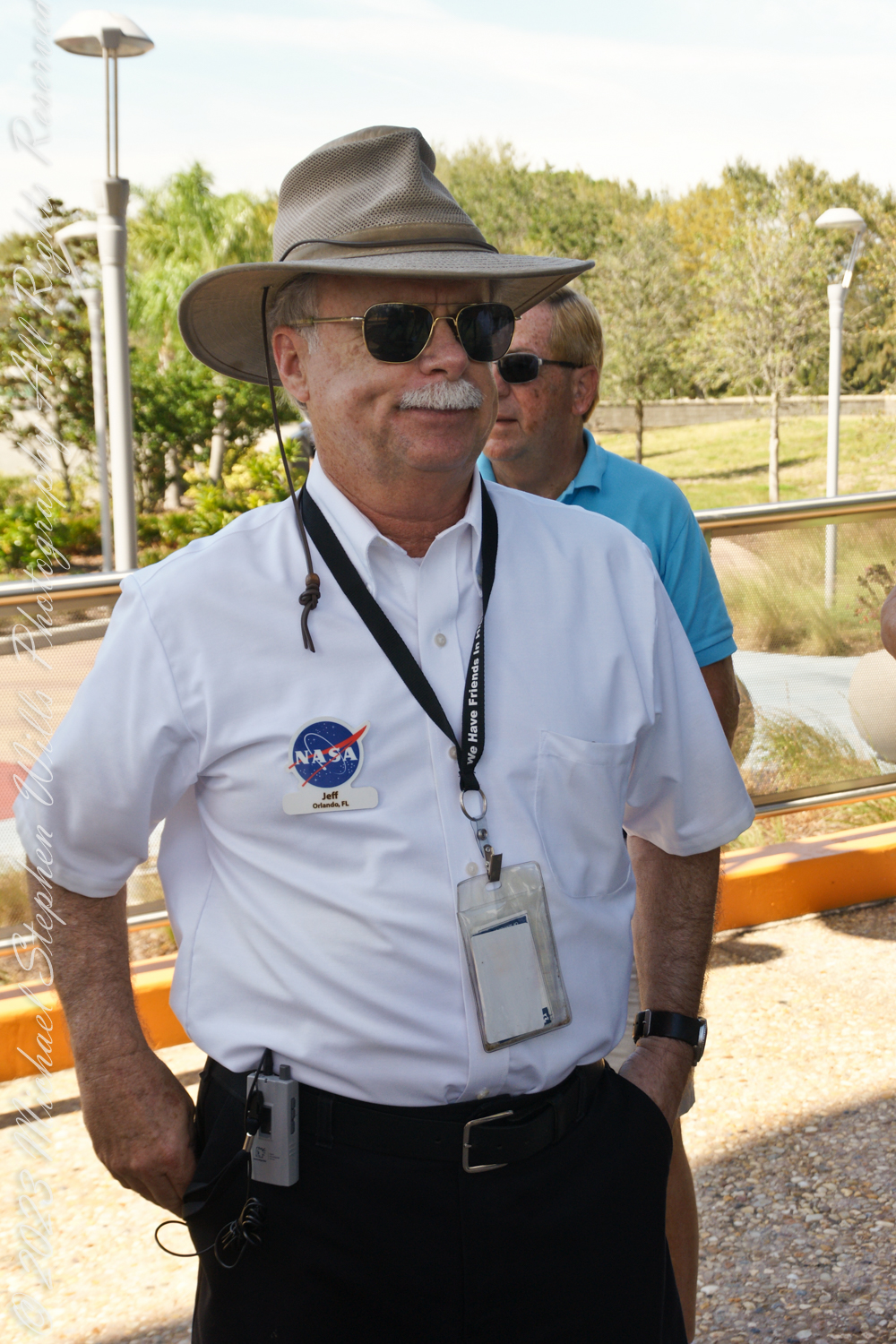
On the negative side, we enjoyed the expertise of “Jeff” who stood in for the retired Launch Director who was “out sick.” On the positive side, our very expensive fee for the tour was refunded. Jeff was everything we could expect from the tour — he had extensive and detailed insider knowledge of NASA and the launch facilities.
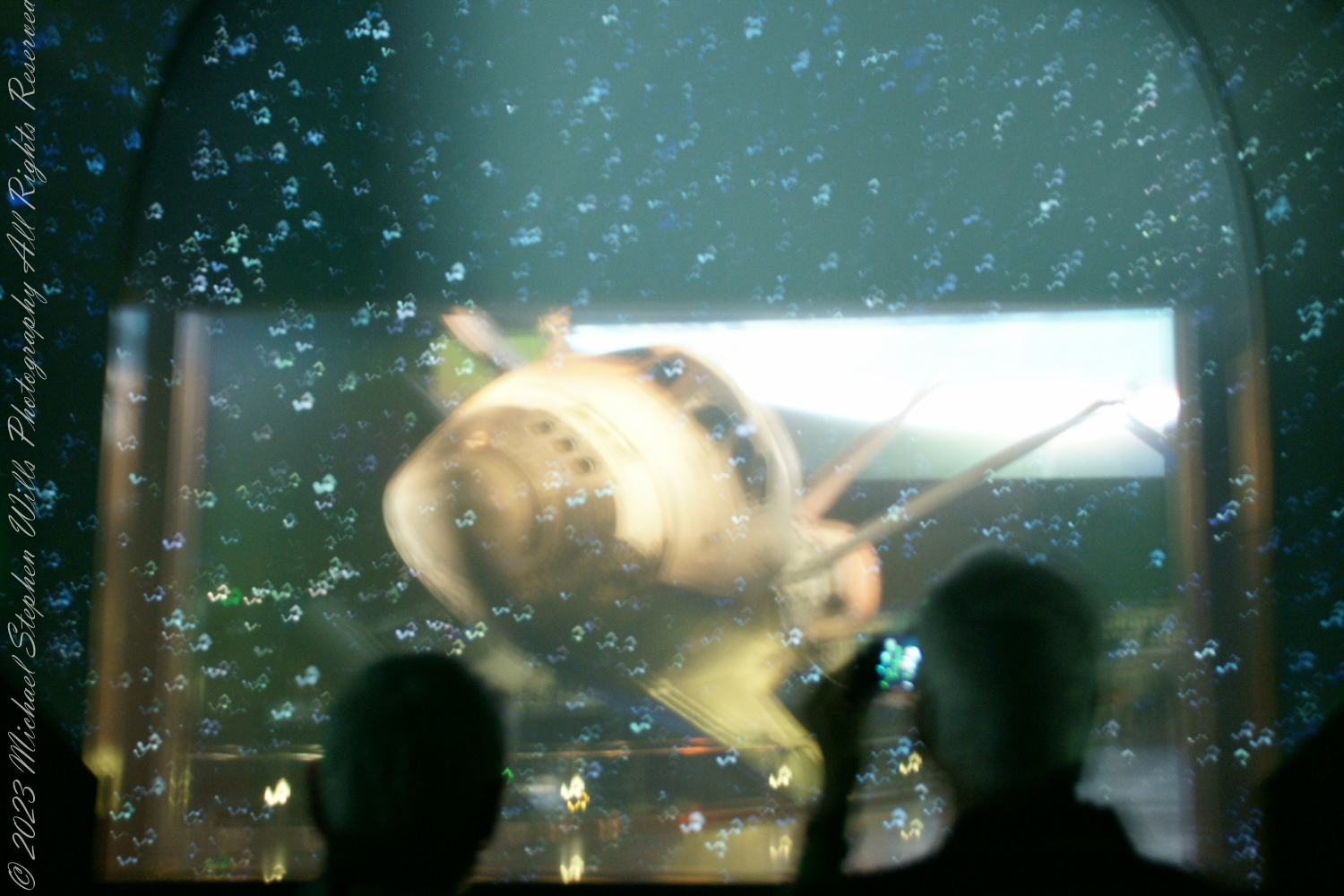
Jeff, our substitute guide

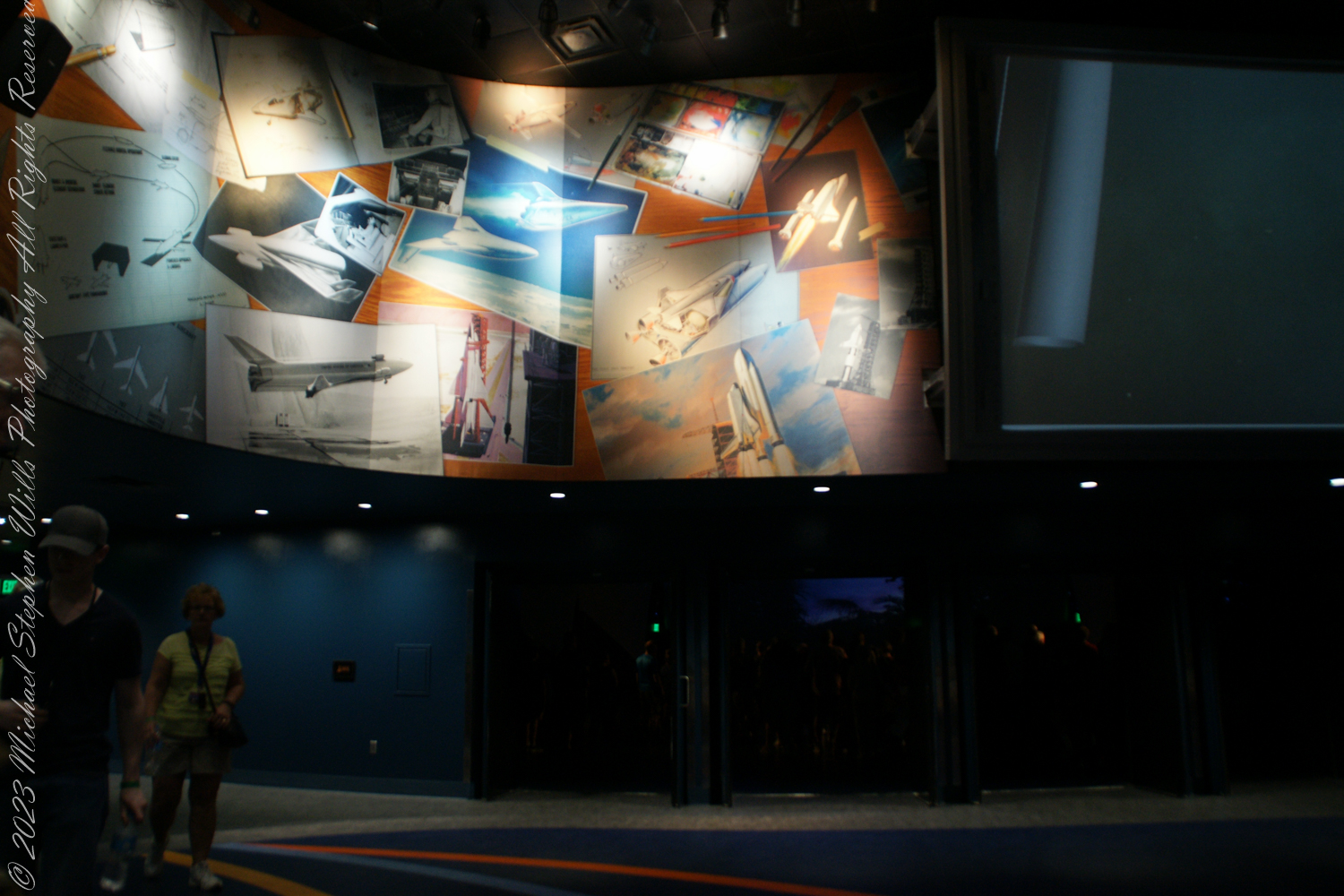
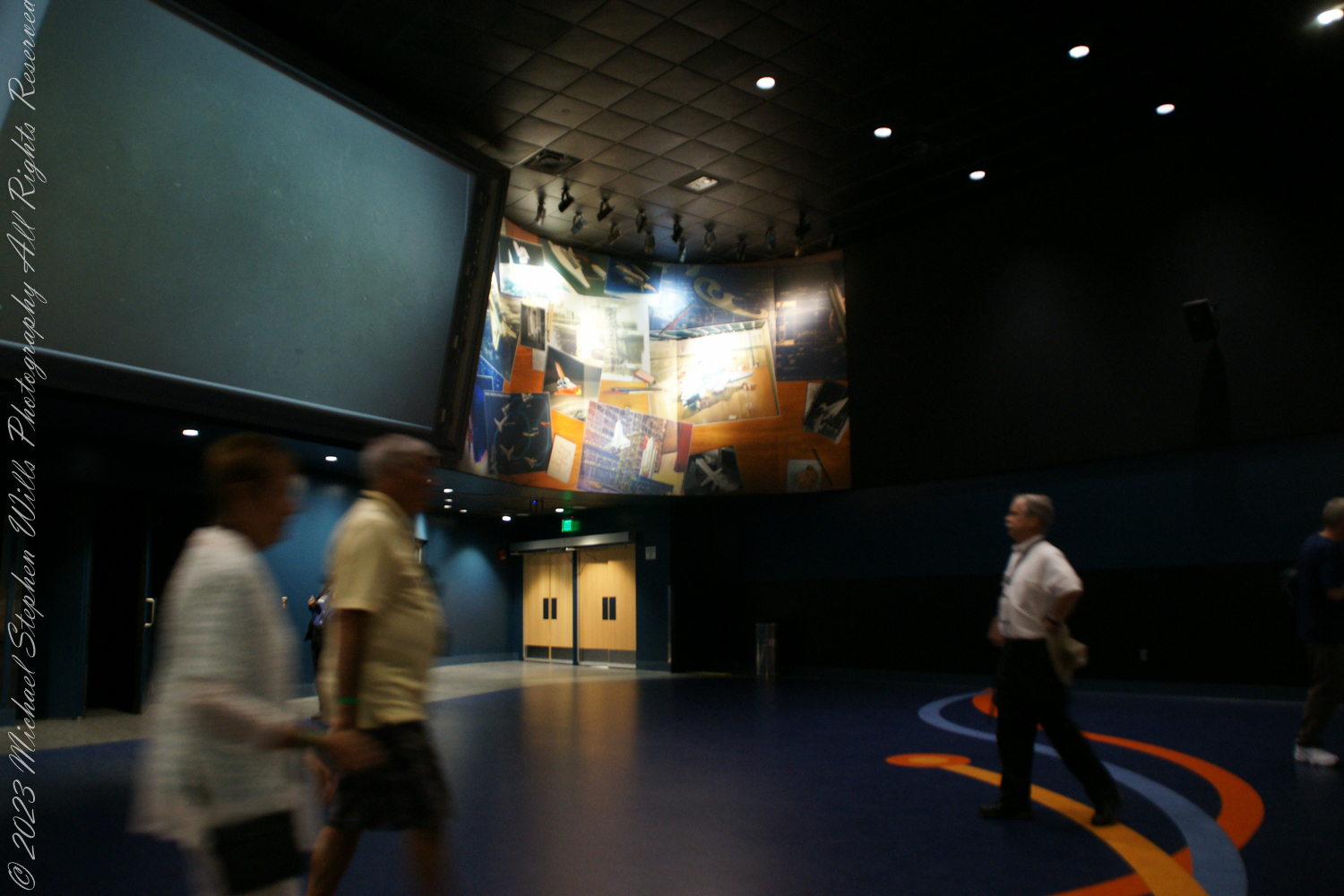
We gathered in a media room, an antechamber to the Space Shuttle Atlantis.

Entry to the Atlantis and the

Space Shuttle Atlantis lifted off on its maiden voyage STS-51-J on October 3, 1985. This was the second shuttle mission that was a dedicated Department of Defense mission. It flew one other mission, STS-61-B (the second shuttle night launch) before the Challenger disaster temporarily grounded the shuttle fleet in 1986. Among the five Space Shuttles flown into space, Atlantis conducted a subsequent mission in the shortest time after the previous mission (turnaround time) when it launched in November 1985 on STS-61-B, only 50 days after its previous mission, STS-51-J in October 1985. Atlantis was then used for ten flights from 1988 to 1992. Two of these, both flown in 1989, deployed the planetary probes Magellan to Venus (on STS-30) and Galileo to Jupiter (on STS-34). With STS-30 Atlantis became the first Space Shuttle to launch an interplanetary probe.

The orbiter’s aluminum structure could not withstand temperatures over 175 °C (347 °F) without structural failure. Aerodynamic heating during reentry would push the temperature well above this level in areas, so an effective insulator was needed.

The Thermal protection system (TPS) covered essentially the entire orbiter surface, and consisted of seven different materials in varying locations based on amount of required heat protection:

–Reinforced carbon–carbon (RCC), used in the nose cap, the chin area between the nose cap and nose landing gear doors, the arrowhead aft of the nose landing gear door, and the wing leading edges. Used where reentry temperature exceeded 1,260 °C (2,300 °F).

Reinforced carbon–carbon (RCC) of the nose cap and “chin area”


–High-temperature reusable surface insulation (HRSI) tiles, used on the orbiter underside. Made of coated LI-900 silica ceramics. Used where reentry temperature was below 1,260 °C.
–Fibrous refractory composite insulation (FRCI) tiles, used to provide improved strength, durability, resistance to coating cracking and weight reduction. Some HRSI tiles were replaced by this type.
–Flexible Insulation Blankets (FIB), a quilted, flexible blanket-like surface insulation. Used where reentry temperature was below 649 °C (1,200 °F).

–Low-temperature Reusable Surface Insulation (LRSI) tiles, formerly used on the upper fuselage, but were mostly replaced by FIB. Used in temperature ranges roughly similar to FIB.
–Toughened unipiece fibrous insulation (TUFI) tiles, a stronger, tougher tile which came into use in 1996. Used in high and low temperature areas.
–Felt reusable surface insulation (FRSI). White Nomex felt blankets on the upper payload bay doors, portions of the mid fuselage and aft fuselage sides, portions of the upper wing surface and a portion of the OMS/RCS pods. Used where temperatures stayed below 371 °C (700 °F).
Each type of TPS had specific heat protection, impact resistance, and weight characteristics, which determined the locations where it was used and the amount used.

The shuttle TPS had three key characteristics that distinguished it from the TPS used on previous spacecraft:

Reusable
Previous spacecraft generally used ablative heat shields which burned off during reentry and so could not be reused. This insulation was robust and reliable, and the single-use nature was appropriate for a single-use vehicle. By contrast, the reusable shuttle required a reusable thermal protection system.
Lightweight
Previous ablative heat shields were very heavy. For example, the ablative heat shield on the Apollo Command Module comprised about 15% of the vehicle weight. The winged shuttle had much more surface area than previous spacecraft, so a lightweight TPS was crucial.
Fragile
The only known technology in the early 1970s with the required thermal and weight characteristics was also so fragile, due to the very low density, that one could easily crush a TPS tile by hand.

Reinforced carbon–carbon (RCC) of the nose cap, close-up

The Space Shuttle thermal protection system (TPS) is the barrier that protected the Space Shuttle Orbiter during the searing 1,650 °C (3,000 °F) heat of atmospheric reentry. A secondary goal was to protect from the heat and cold of space while in orbit.


During the launch of STS-27 in 1988, a piece of insulation shed from the right solid rocket booster struck the underside of the vehicle, severely damaging over 700 tiles and removing one tile altogether. The crew were instructed to use the remote manipulator system to survey the condition of the underside of the right wing, ultimately finding substantial tile damage. Due to the classified nature of the mission, the only images transferred to the mission control center were encrypted and of extremely poor quality. Mission control personnel deemed the damage to be “lights and shadows” and instructed the crew to proceed with the mission as usual, infuriating many of the crew. Upon landing, Atlantis became the single-most-damaged shuttle to successfully land. The survival of the crew is attributed to a steel L band antenna plate which was positioned directly under the missing tile. A similar situation would eventually lead to the loss of the shuttle Columbia in 2003, albeit on the more critical reinforced carbon-carbon.

References: extensive sections of the following Wikipedia articles were quoted, "Space Shuttle thermal protection system," "Space Shuttle  Atlantis."

Copyright 2024 Michael Stephen Wills All Rights Reserved

Near and Far — the last day of 2023

Discover a heartfelt story woven from the sands of Cocoa Beach on New Year’s Eve, where shells and stars intertwine, inviting you to ponder the delicate dance of near and far.

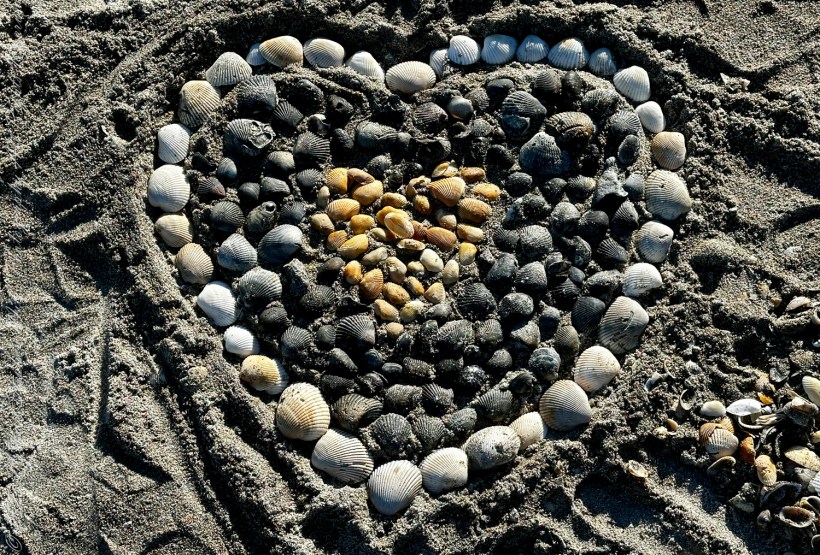
On the last day of 2023, as the sun began its descent on Cocoa Beach, I found myself tracing the contours of a heart laid out in Ark Clam shells. Each shell, with its ridges and grooves, felt like a chronicle of the ocean’s whispers. This artful mosaic, set against the granular canvas of the beach, was a testament to the playful hands of time and tide. I marveled at the intention behind it, the human desire to create and connect, to leave a mark, however fleeting, on the vastness of nature.

I found this beach heart while walking on Cocoa Beach on the last day of 2023. It is composed of the various shade of Ark Shells. Ark clam is the common name for a family of small to large-sized saltwater clams or marine bivalve molluscs in the family Arcidae. These are the most common shells found there.

The shells were cool and firm under my fingertips, each one a unique piece of the year’s mosaic. Some were a pristine white, while others bore the earthy tones of the sea’s floor. I pondered the journeys they had taken, tumbling in the ocean’s embrace before resting here, on the threshold of a new year. The act of arranging them into a symbol of love felt like an ode to the past year’s collective joys and sorrows, an offering to the unknown adventures of the year to come.

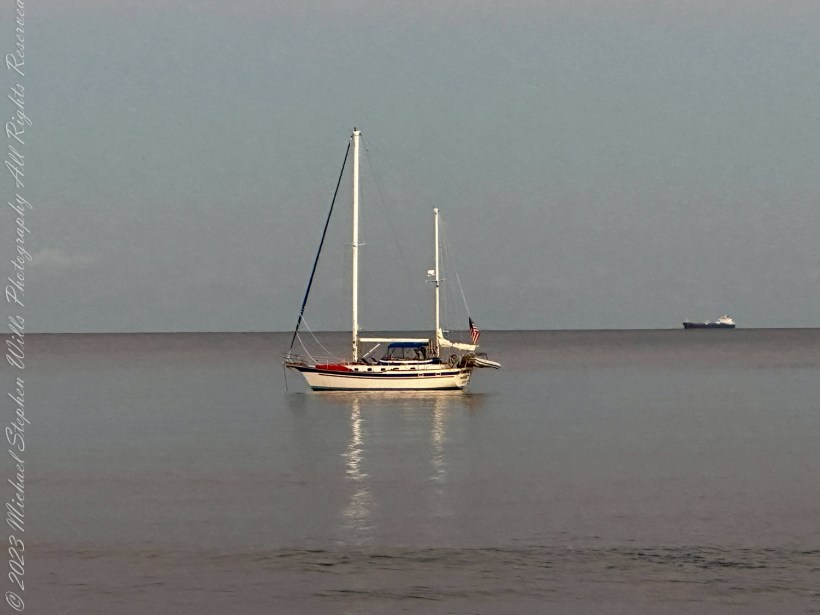
As the day waned, my gaze shifted from the shells to where the water met the sky. There, a sailboat floated serenely, a silent sentinel between two worlds. It was a picture of solitude, a single vessel on the brink of the infinite sea, beneath the expanding dome of the heavens. On the horizon, the silhouette of a cargo ship whispered stories of distant lands and the ceaseless pulse of commerce and exploration that defined our modern era.

On New Years Eve 2023 this sailboad moored off North 1st Street, Cocoa Beach, Brevard County, Space Coast, Florida.

The beach was quiet, the sounds of the day giving way to the evening’s peaceful lull. The sailboat’s stillness was a stark contrast to the perpetual motion of the cargo ship, each representing different paths on the water’s vast canvas. One was an emblem of leisure and simplicity, the other of industry and complexity. Both near and far, they were the day’s quiet companions, their stories part of the fabric of the Space Coast.

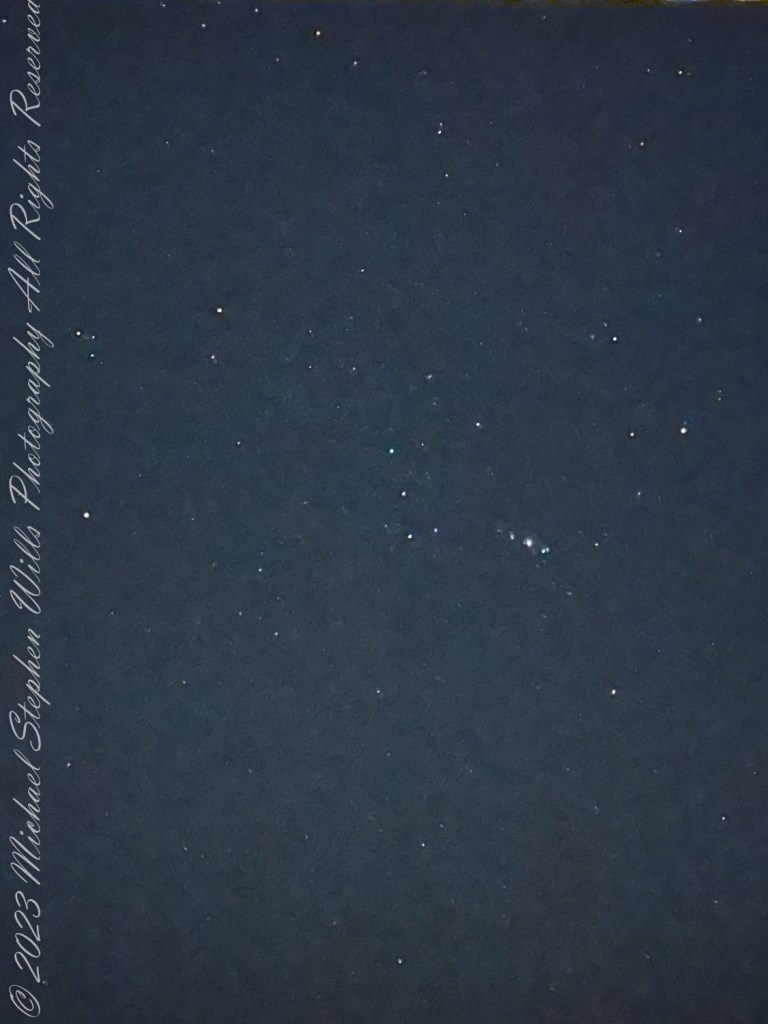
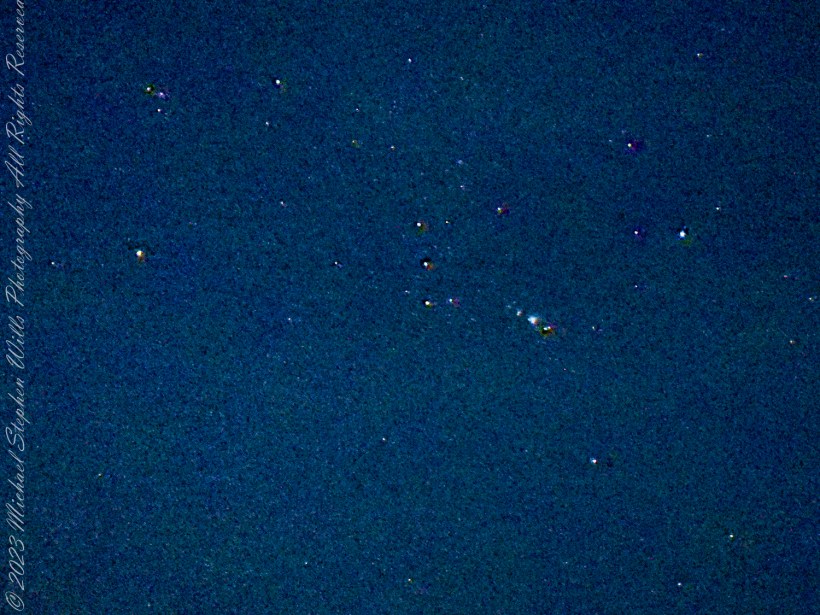
As twilight deepened into night, the stars began to emerge, one by one, until the sky was a tapestry of celestial wonder. With my iPhone 14 Pro Max, I captured this cosmic dance, the constellation of stars that had been the silent witnesses to Earth’s revolutions. The constellations, those mythic shapes that have long sparked human imagination, seemed to hold the secrets of what had been and what was to come. They were distant suns, their light traveling unfathomable distances to reach me, to reach us, as we stood on the brink of a new beginning.

Orion

I couldn’t help but feel a connection to the stars, a kinship with their ancient light. They reminded me that we, too, are part of this grand cosmic design, our lives stitched into the universe’s expansive quilt. On the beach, with the shells at my feet and the stars overhead, I was caught in the delicate balance of near and far—the tangible reality of the shells I could touch and the distant glow of starlight from ages past.

Orion, the belt and sword in center.

As the year ticked closer to its end, I stood between the intimate artistry of the shell heart and the boundless majesty of the star-filled sky, a lone observer of time’s relentless march. The Space Coast, with its unique blend of earthly beauty and human aspiration, was the perfect stage for this reflection. Here, on Cocoa Beach, I embraced the last moments of 2023, ready to welcome the new year, with its promise of continuance and change, its constant dance of near and far.

Copyright 2024 Michael Stephen Wills All Rights Reserved

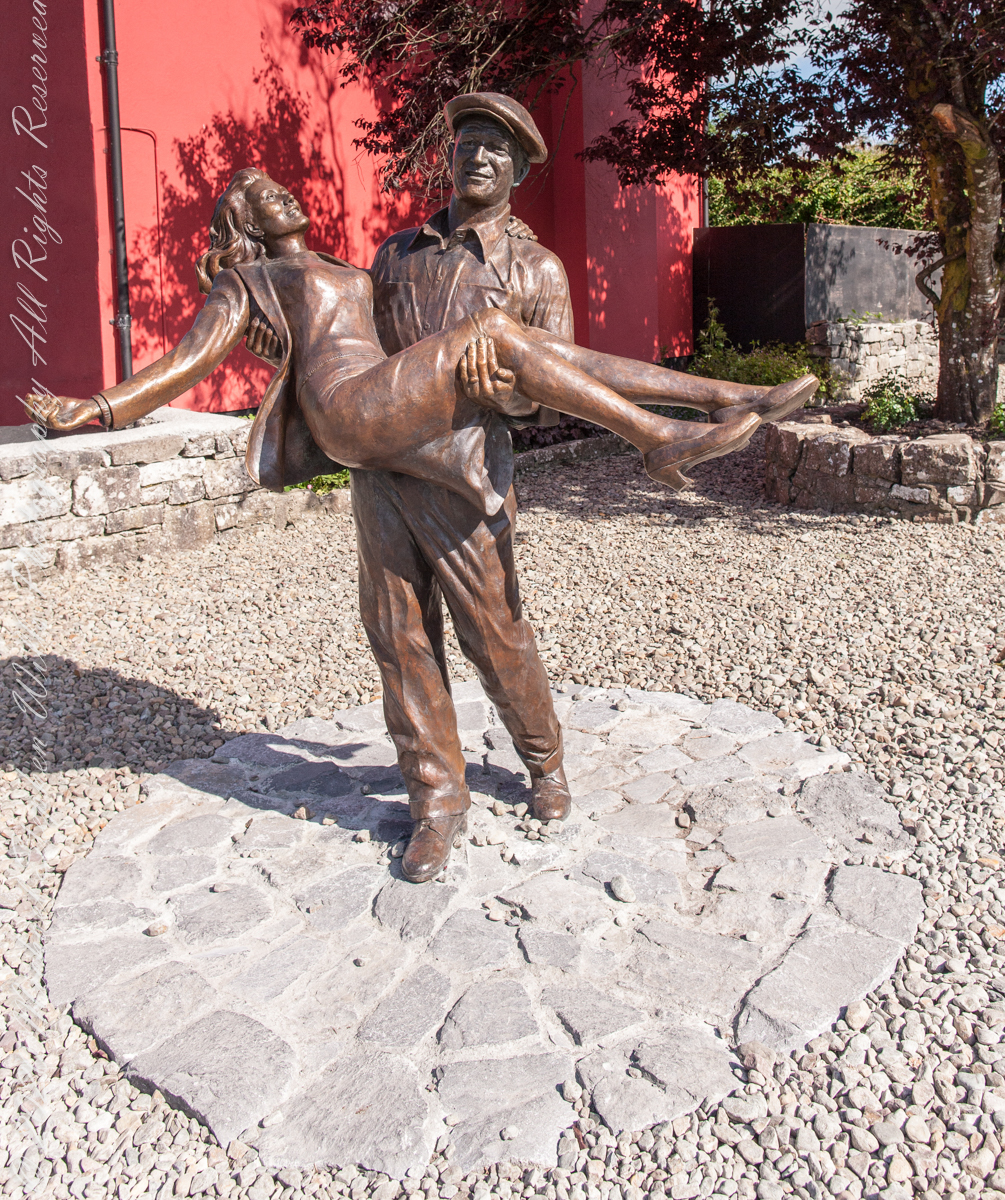
Sean Thornton and Mary Kate Danaher

Discover the charm of Cong, Ireland, through a stunning sculpture celebrating The Quiet Man. Join me as I explore the town’s cinematic legacy and reflect on the enduring magic of film.

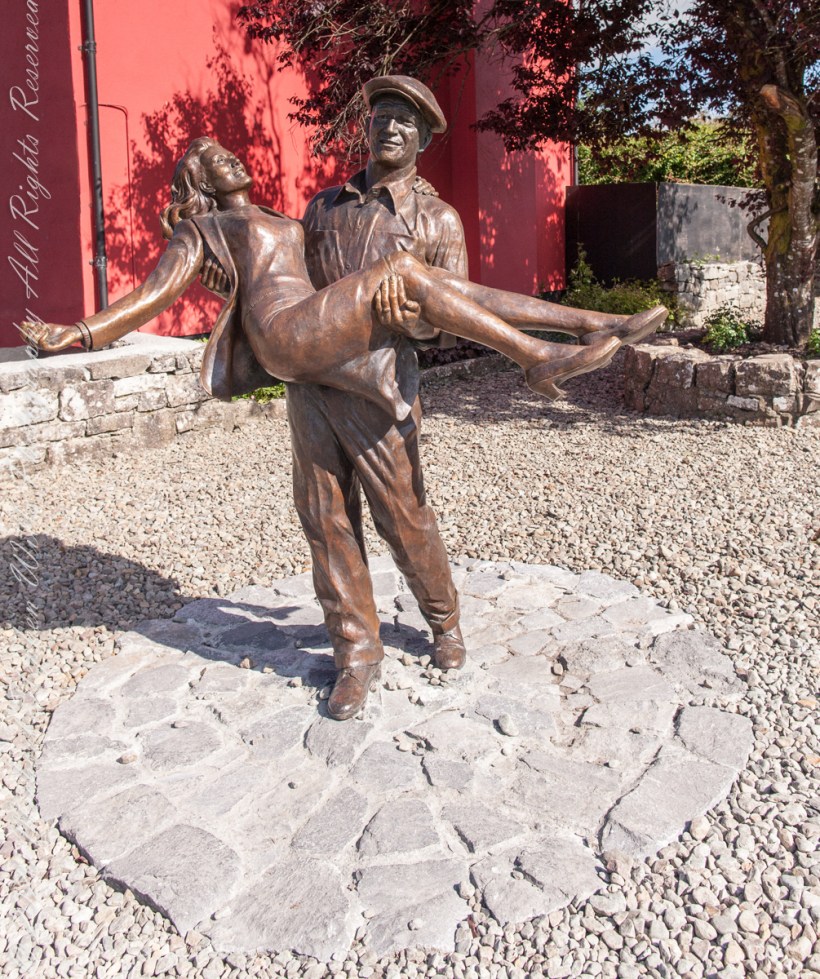
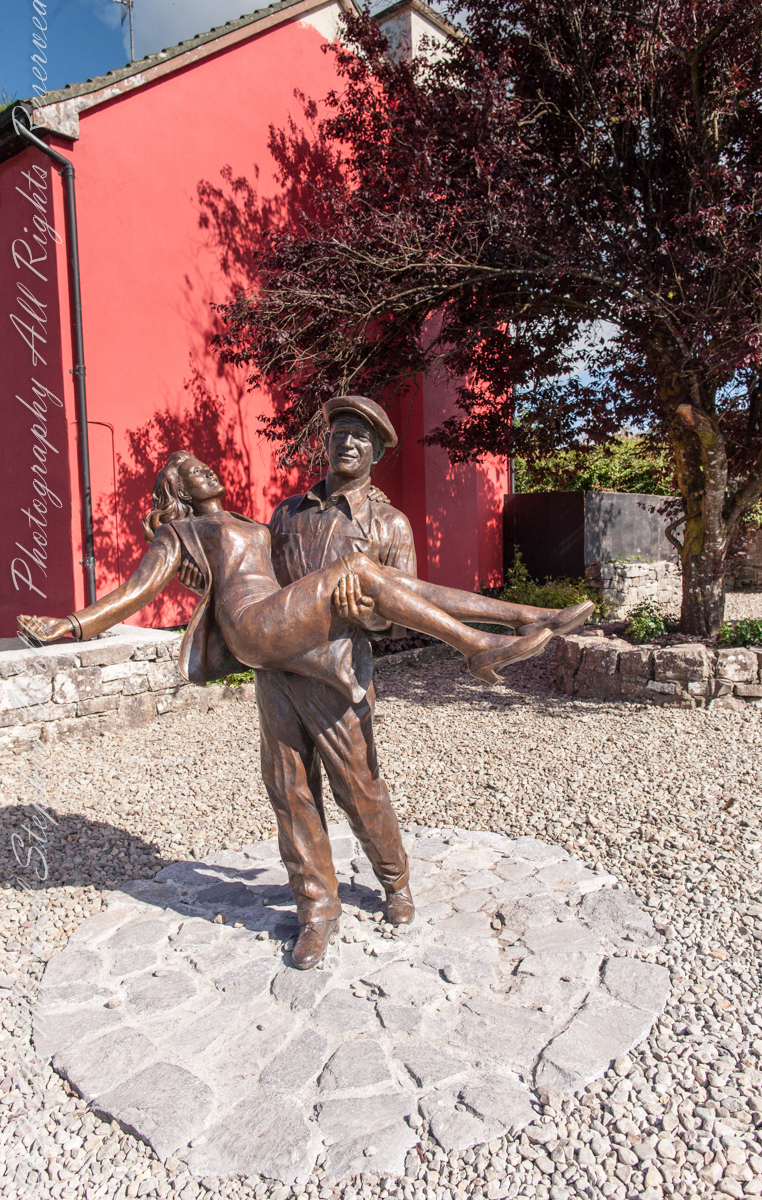
During a May 2014 exploration of the village Cong in County Mayo, Ireland, we encountered this remarkable sculpture that transported me back to one of my favorite classic films, “The Quiet Man.” The bronze statue, depicting John Wayne’s character, Sean Thornton, carrying Maureen O’Hara’s Mary Kate Danaher, stands against the backdrop of the town, a visual homage to the cinematic legacy that has become intertwined with Cong’s identity.

As I stood before the sculpture, memories of watching The Quiet Man flooded back. The Quiet Man, with its vibrant depiction of Irish culture and scenery, had always held a special place in my heart. It’s a story of love, cultural clashes, and the journey of a man returning to his roots, themes that resonate deeply within the lush landscapes of County Mayo. Cong served as the primary filming location, and the town has embraced this legacy wholeheartedly, turning the film into a cornerstone of its identity.

The sculpture, created by Mark Rode, who has a foundry an hour away in Swinford, was installed the year before, 2013, yet it felt as though it had always been there, seamlessly blending with the surroundings. Rode’s work captures the essence of the characters with remarkable detail. In The Quiet Man, the scene where Sean carries Mary Kate in his arms takes place after he retrieves her from the train station. This moment symbolizes their reconciliation and is a pivotal scene in the film, capturing their renewed bond and Sean’s determination to stand up for their relationship. The piece celebrates not just the film, but also the spirit of the town and its connection to cinematic history.

Mark Rode, known for his ability to bring characters to life through sculpture, has a unique talent for capturing the essence of his subjects. His works often reflect a deep understanding of human emotion and storytelling, qualities that shine through in this particular piece. The installation of the sculpture was met with excitement from both locals and visitors, further cementing Cong’s status as a beloved tourist destination.

Reflecting on our visit, I realized how much this small town had embraced its role in cinematic history. The streets of Cong are dotted with nods to The Quiet Man—from themed shops to plaques marking filming locations. Each element serves as a reminder of the film’s impact on the town and its people. The statue stands as a centerpiece, inviting fans of the film to relive its magic while introducing new generations to its charm.

I couldn’t help but meditate on the lasting impact of art and film on a community. The installation of this sculpture not only celebrates a beloved movie but also invigorates the town’s economy through tourism, drawing visitors eager to walk in the footsteps of their favorite characters. It’s a testament to the power of storytelling and its ability to transcend time, connecting people across generations and cultures.

The statue of Sean and Mary Kate in Cong is a symbol of the town’s vibrant history and its enduring connection to the film. Mark Rode’s creation captures this essence beautifully, inviting all who visit to pause, reminisce, and celebrate the intertwining of art and life in this picturesque Irish village.

Here presented are two versions of the same image. One cropped. Please leave a comment stating which you prefer and why. Thank You

Use this slide show, flip back and forth to compare the images, reach a conclusion on which you prefer.

Click me for Ireland story “The Cloigtheach of Glendalough.”

Copyright 2024 All Rights Reserved Michael Stephen Wills

End of the Beginning

Exploring Arizona in my Fifth Decade of Life

….continued from the chapter “A Rocky End to a Perfect Day.”

The Searcher arrived after breakfast. My camp was bundled up to join the rest of The Searchers equipment and supplies on Colorado’s panniers that replaced the saddle where I sat, and was dumped from, yesterday. This fifth morning of the adventure, I was to have the experience of a light pack for the 4.7 mile trail from Pine Creek to Campaign Creek, past the Reavis Mountain School of Self Reliance.

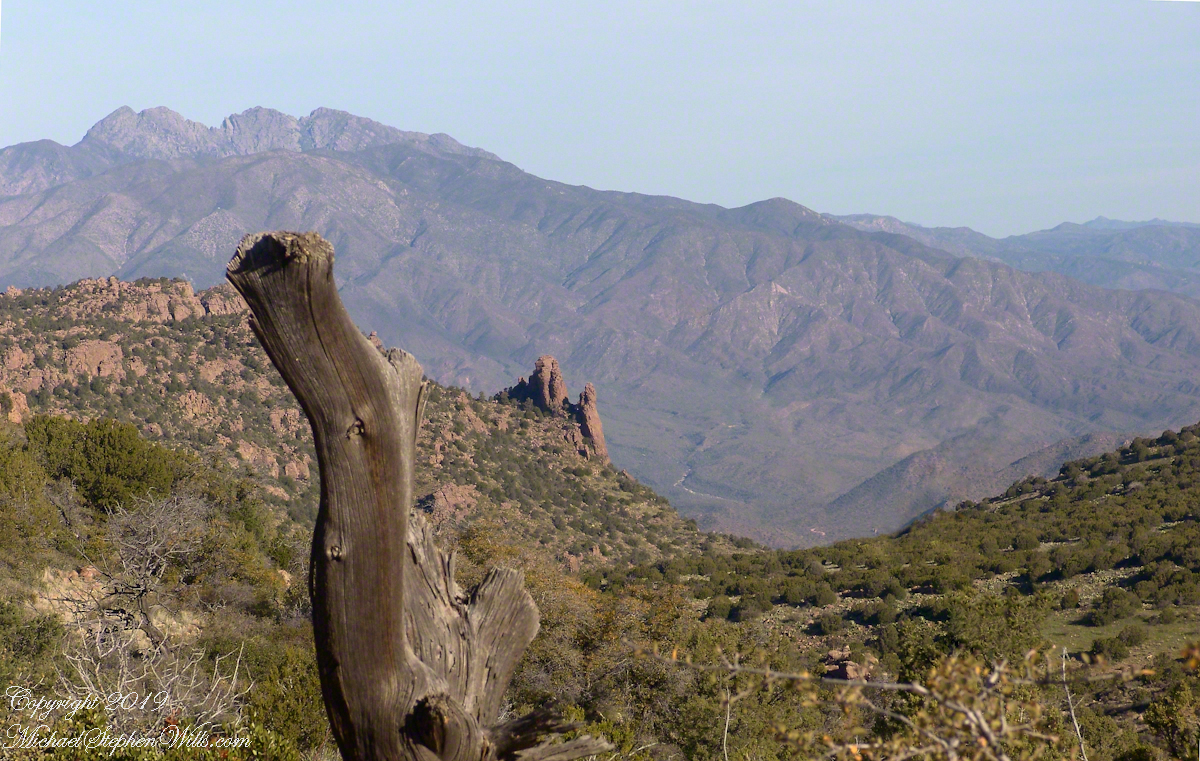
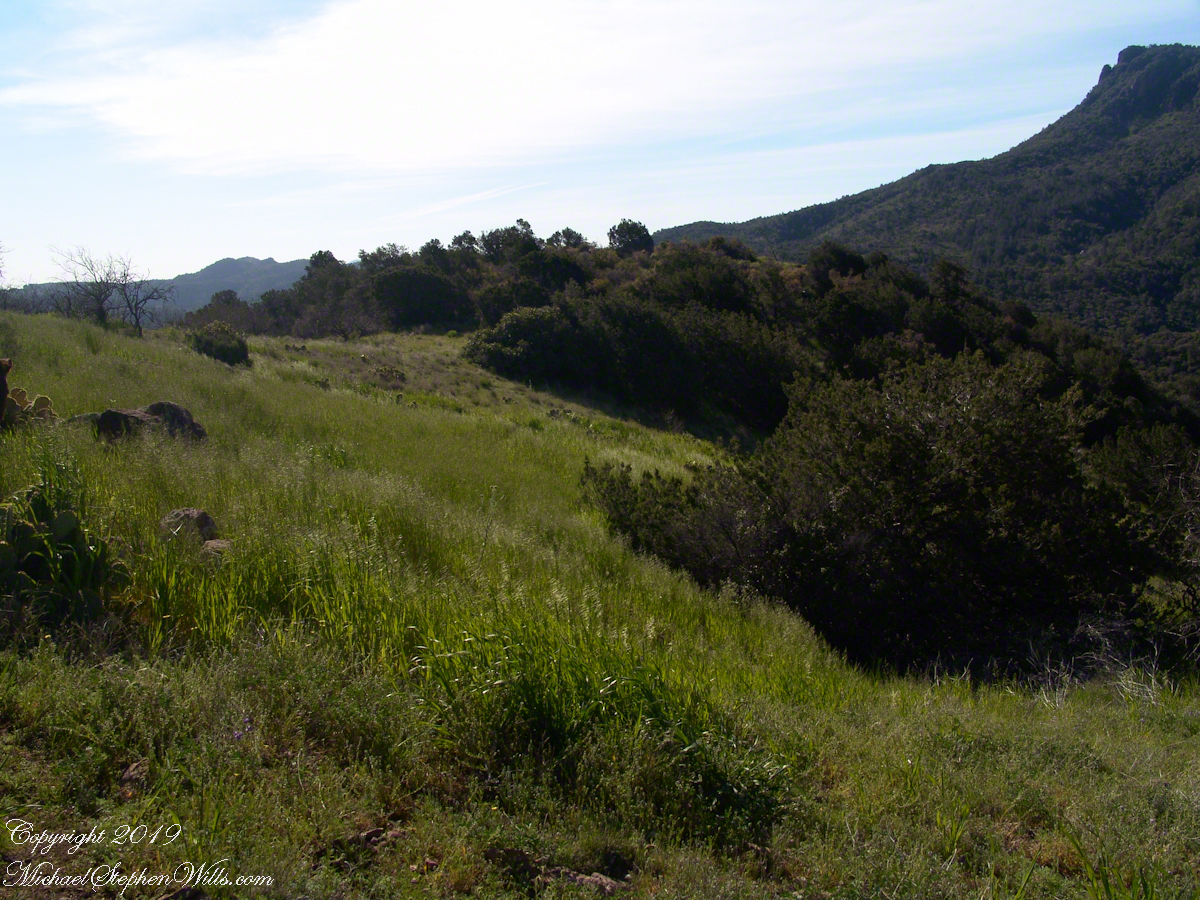
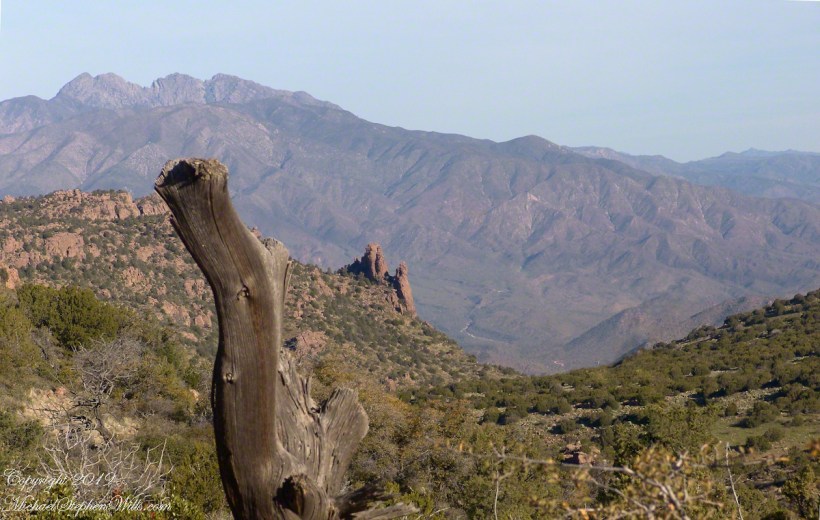
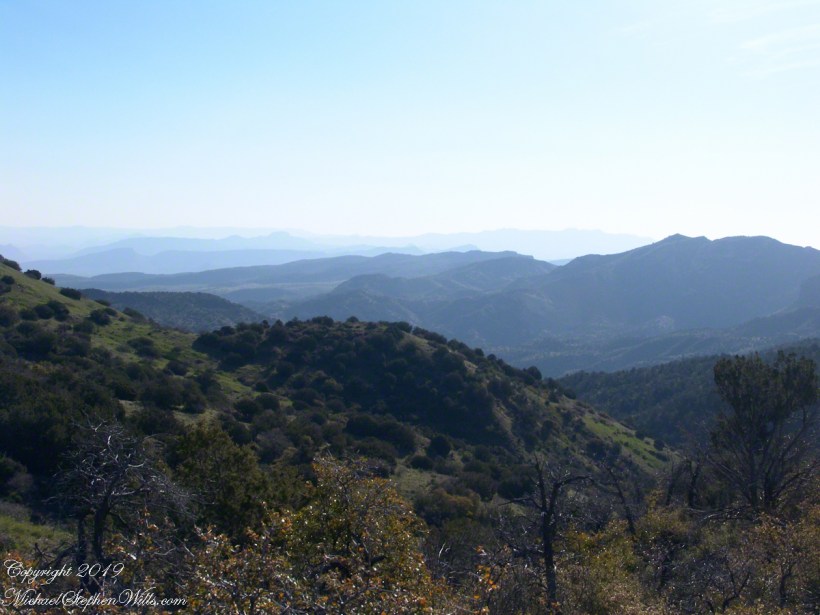
First, there was the climb to the edge of Pine Creek canyon where we, for the last time, enjoyed the view to the north of the Arizona Trail and, in the distance, the Four Peaks Wilderness.

North from Reavis Gap

At Reavis Gap we took a rest before the 1500 descent to Campaign Creek on a trail rated as so difficult backpackers go miles out of the way to access Reavis Ranch.

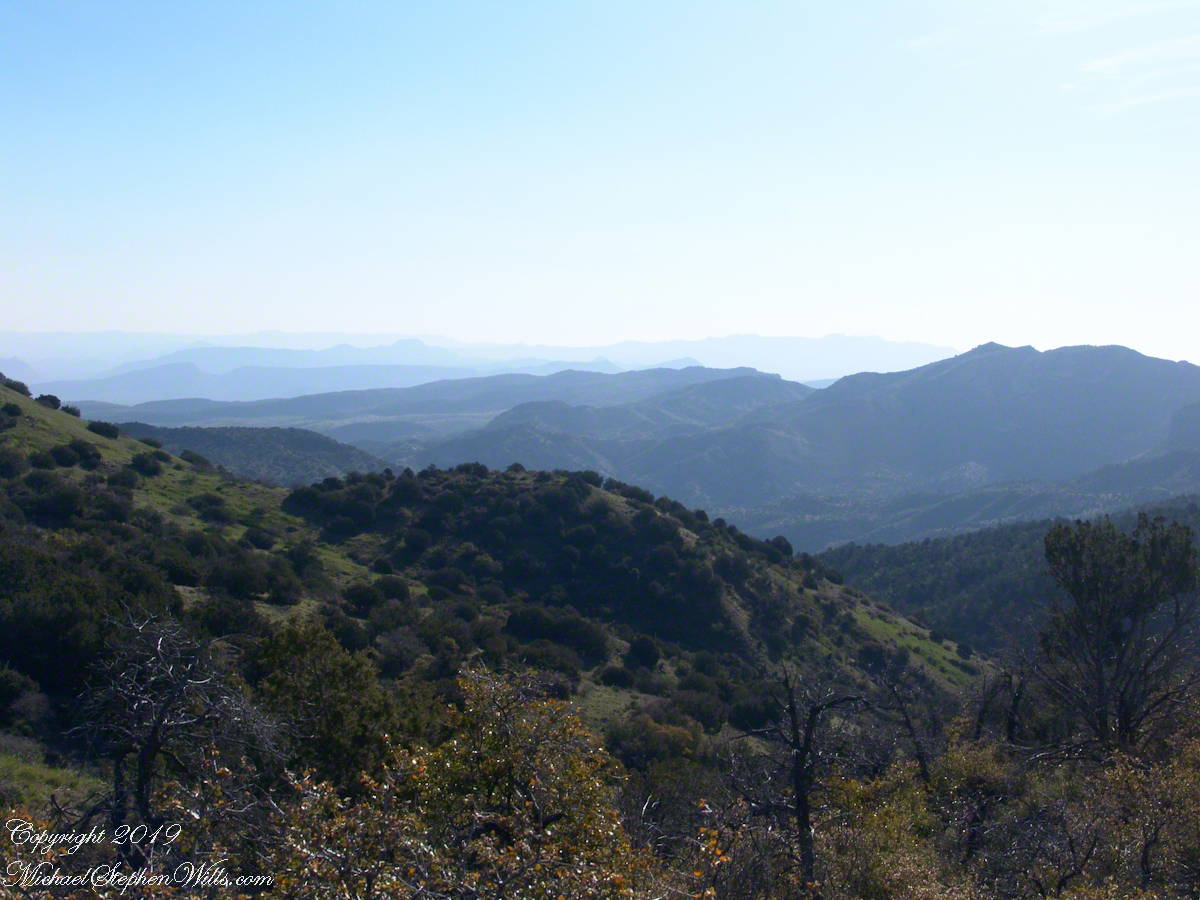
I split an energy bar and took a swig of water before setting up the tripod to capture the following view of our path. The ridge, hazy in the distance of 22 miles, is Apache Peaks, the near descending ridges an improbable green after a wet winter. In the previous photograph, “North from Reavis Gap” you can clearly see the transition from the desert to a grassland biome as the elevation increases.

Generations

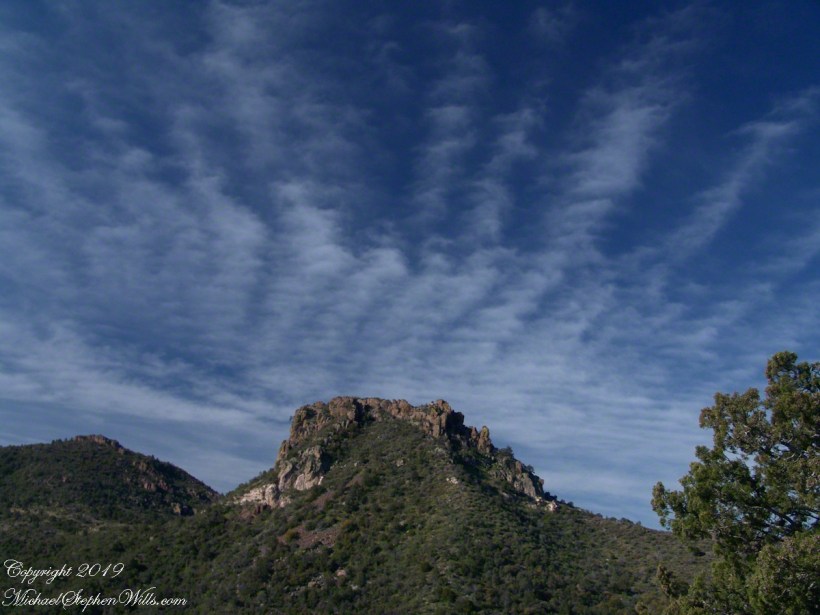
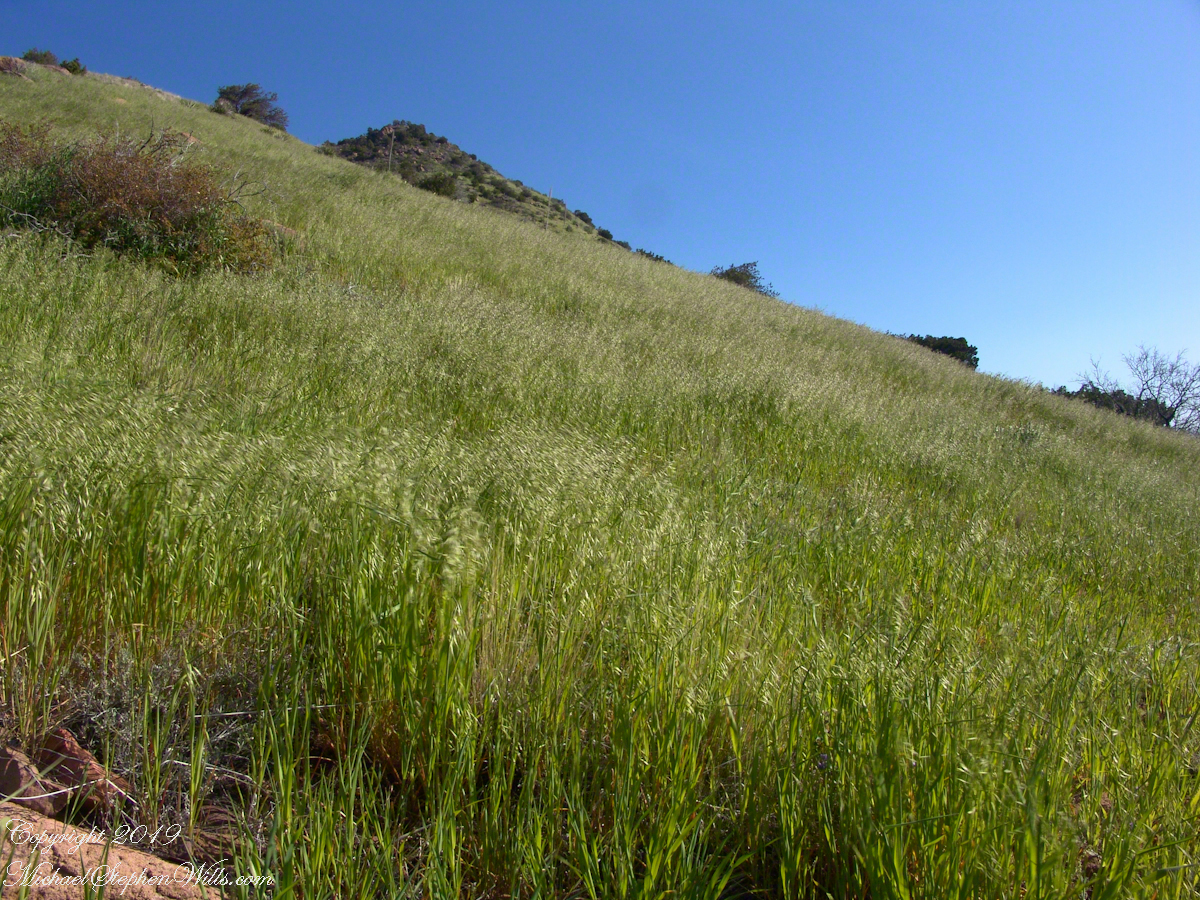
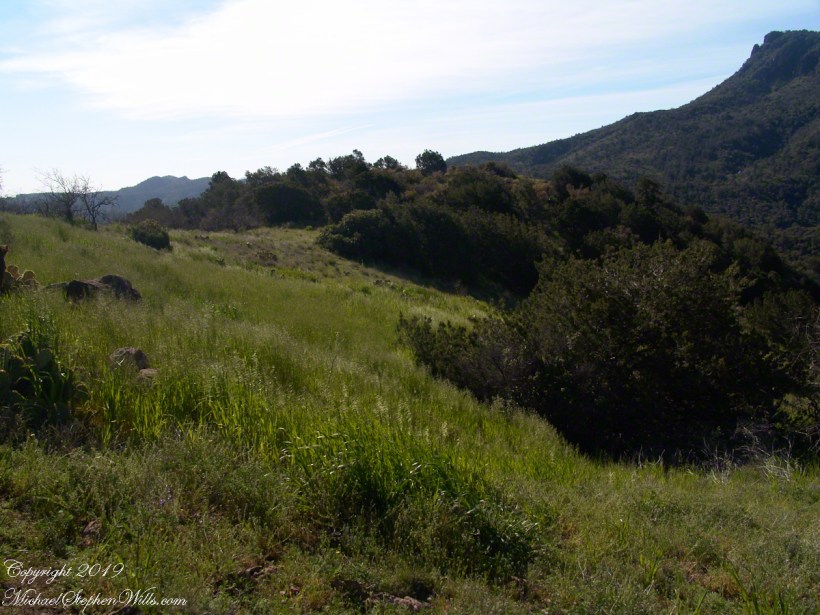
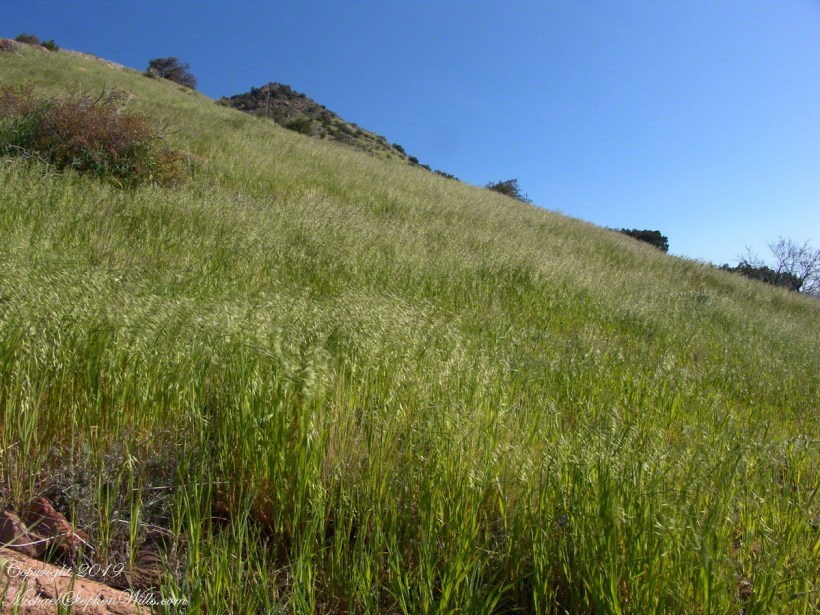
On this, the southern shoulder of Two Bar Mountain, we enjoyed desert grasslands almost the entire length, starting with this unlikely oat field. The higher, eastern Superstitions are the western and northern-most Sky Island of Southern Arizona: rising from the desert as isolated mountain systems, catchments for passing storms, with life zones progressing with altitude, the highest typical of Canada. As with oceanic islands, each is a haven for life with potential for evolution of unique species from the isolating effect of the surrounding desert.

These oats are domesticated grain spilled from a horse or donkey pack to thrive in the decades since, sprouting into this spread of light green after a wet winter, ripening, then turning gold with the summer, the grains falling to wait for the next opportunity. This green hue is my first impression of Reavis Gap, see my post “Two Meetings” for a video of the morning breezes rippling along the hillside.

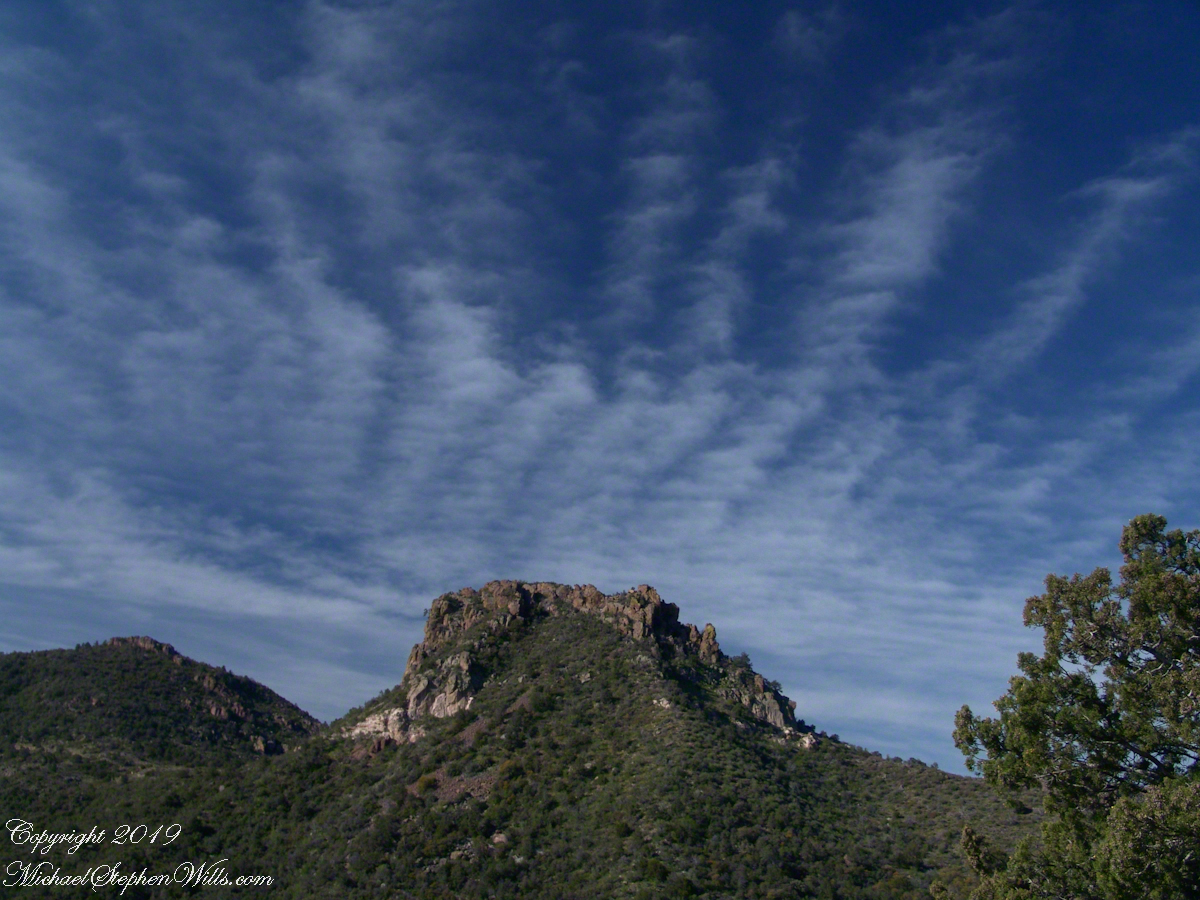
The camera sweeps 180 degrees for all the views from this spot, including prickly pear cactus among the grasses, a butte-like formation to the west, as in the following photograph.

Upper Horrell, the end of the beginning.

We passed the length of the Reavis Mountain School of Self Reliance, the Reavis Gap trail is 100 feet or so higher on the north side. The name “Upper Horrell” is attached to this location. Reavis Gap trail used to start at a ranch house, part of the “Upper Horrell Ranch.” Horrell is the family name of the former owners.

Upper Horrell is a fortunate location for the school, with the perennial Campaign Creek flowing parallel to their 13 acres on which is a large garden, many fruit trees, livestock and poultry. The school provides lodging and classes throughout the year.

The Searcher initiated his time in the Superstitions with wilderness survival classes and they allowed him to park is horse trailer and pickup outside the gates. We were loaded and out of there with a stop at Roosevelt, population 28, where we were the only customers for mesquite grilled hamburgers and french fries. We talked about the potential for future trips and I took him up on an offer to store my stuff until then. In the following years I did more Superstition Wilderness day trips, backpack expeditions, some with my sister Diane, and one horse expedition with The Searcher and a friend.

Here is a gallery of this post’s photographs, for you to flip through.
Click me for the first post of this series.