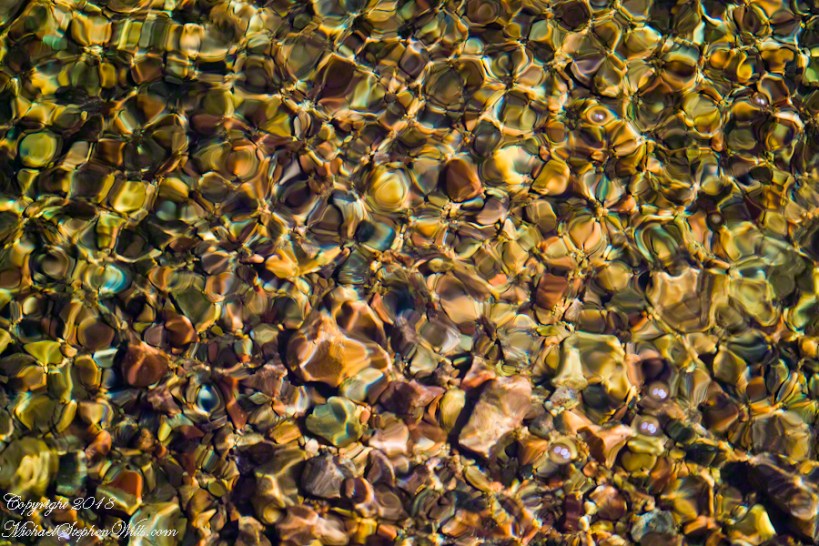
Carved by Time: Exploring the Virgin River and Cross-Bedded Sandstone in Zion’s Narrows

A quiet moment along the Virgin River reveals the artistry of nature—where water, stone, and time shape Zion’s majestic Narrows in subtle, surprising ways.

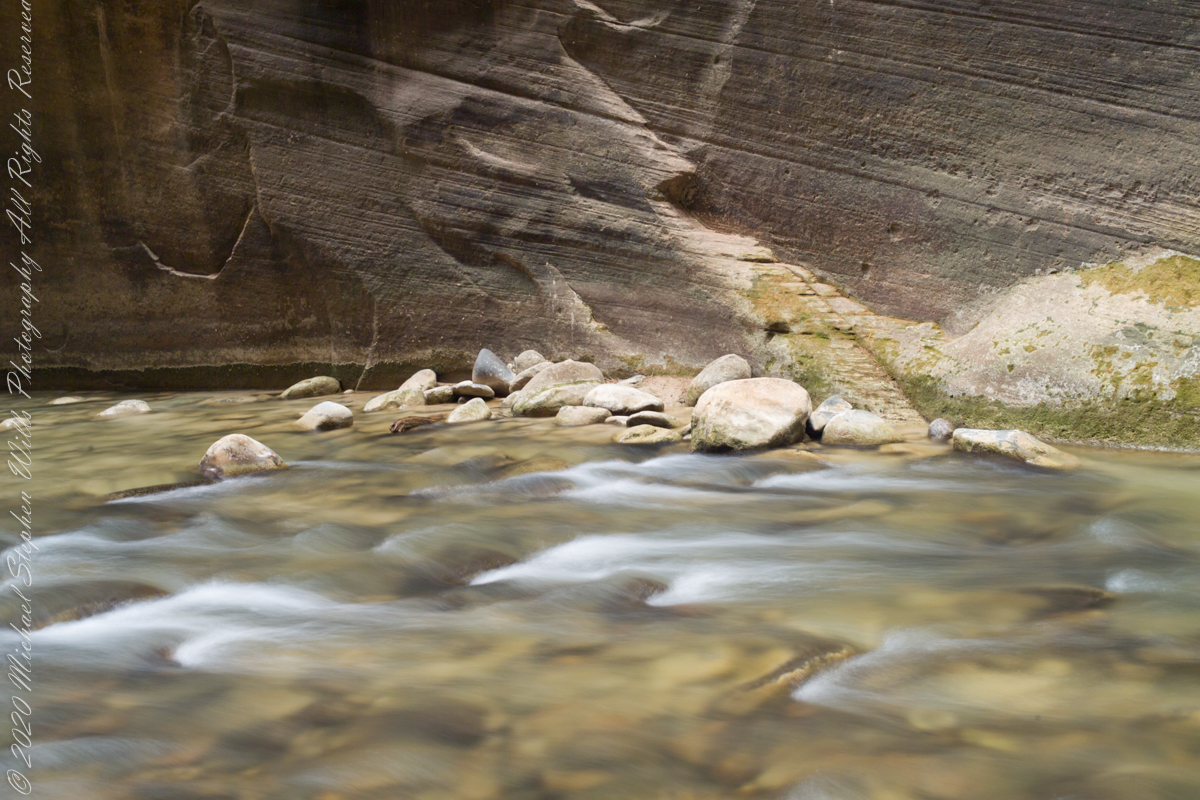
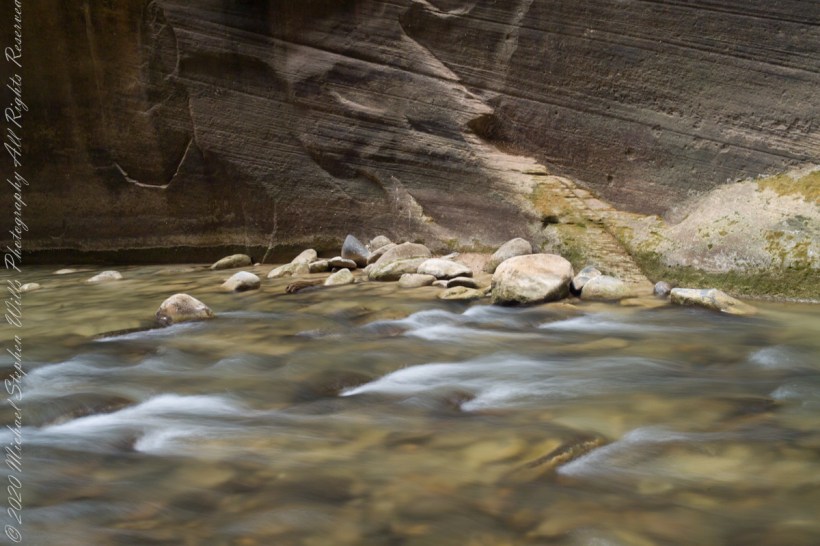
In Zion National Park, where towering sandstone cliffs rise from the desert floor, the Virgin River weaves a persistent and graceful thread through deep canyons carved over millennia. The river is the creative force behind Zion’s signature landscape, sculpting stone with a patient hand. Among its greatest achievements is the Narrows—a sinuous gorge where water and light perform a timeless duet. The two photographs shown here draw us into an intimate corner of that realm, where water flows past a rock face marked by both subtlety and drama.

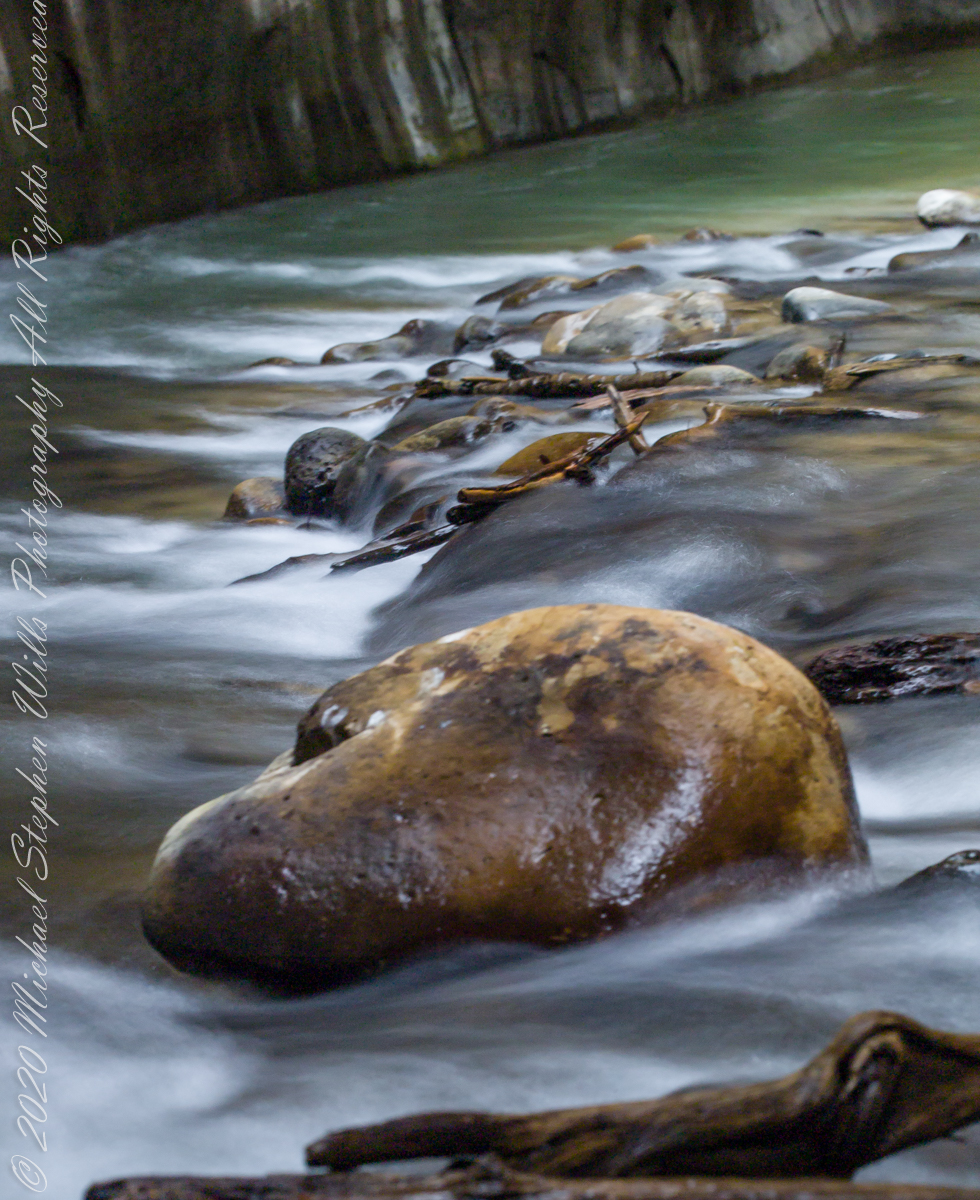
At first glance, what stands out is the unusual structure on the wall behind the river—a feature that at a distance could easily be mistaken for a man-made stairway. But closer observation reveals this to be a natural element, the result of erosion acting upon cross-bedded Navajo Sandstone. The texture and linearity of these formations are remnants of ancient sand dunes hardened into rock nearly 190 million years ago, during the Jurassic period. What looks like precision carving is, in fact, the legacy of sedimentation, lithification, and the scouring action of water over time.

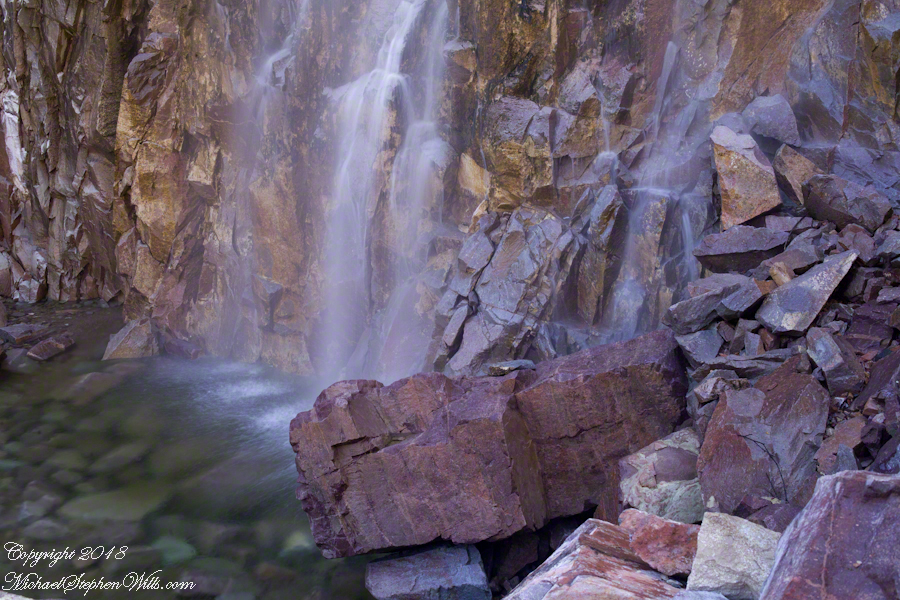
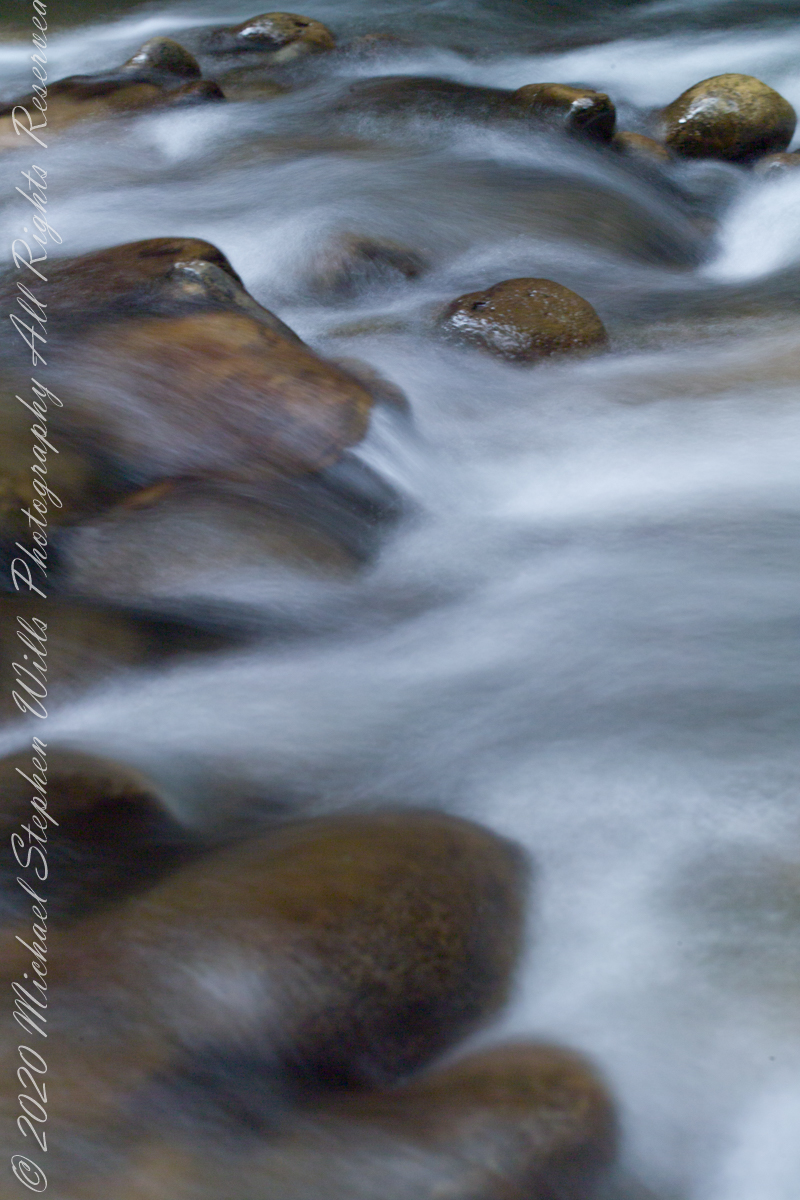
In the first photograph, the scene is bathed in soft, diffused light, lending a quiet tone to the flowing water and the weathered rock face. The surface of the Virgin River becomes a silky sheet, its motion captured with long exposure so that it seems to glide effortlessly past the cluster of smooth stones in the foreground. Here is a deep calm—the kind that can be heard in the hush of water over stone and felt in the breathless silence of a canyon morning.

Click each photo for a larger view
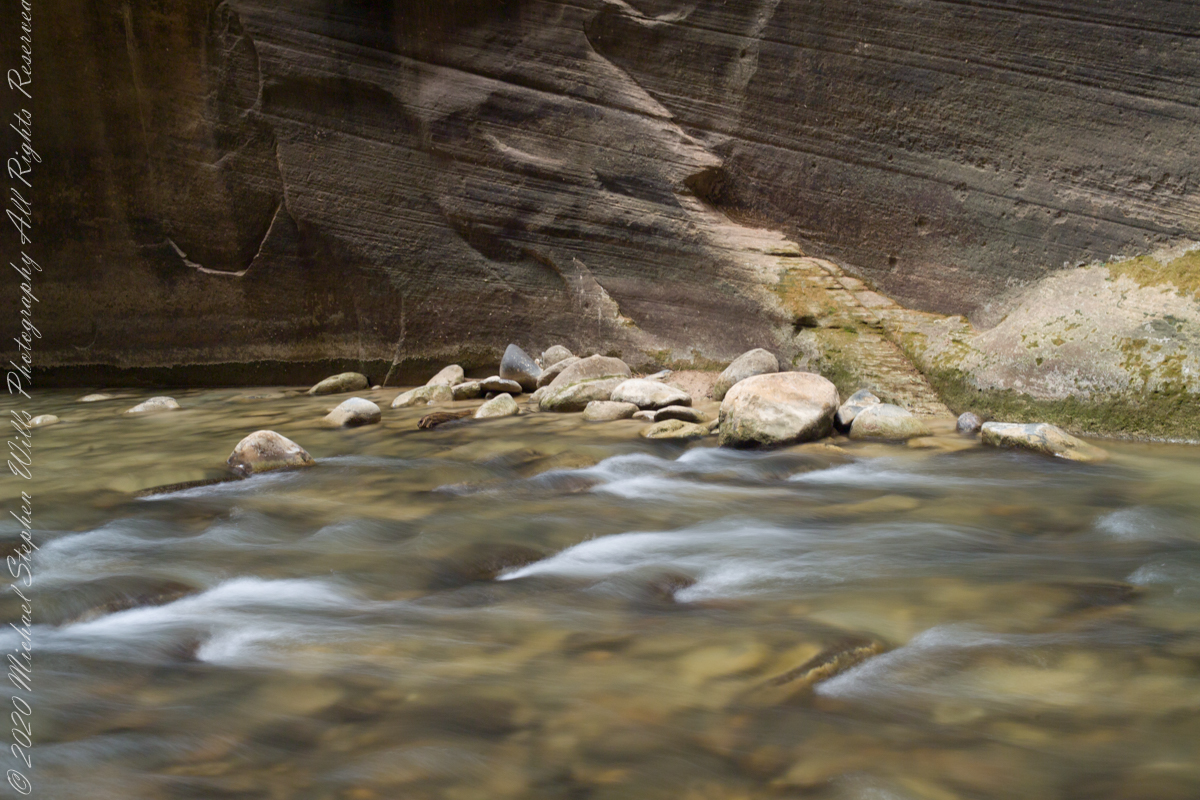
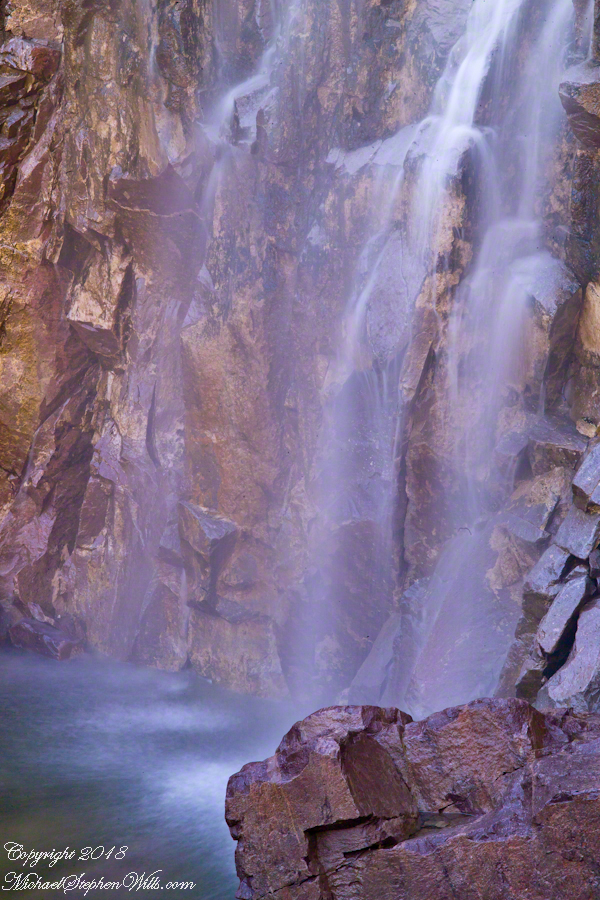
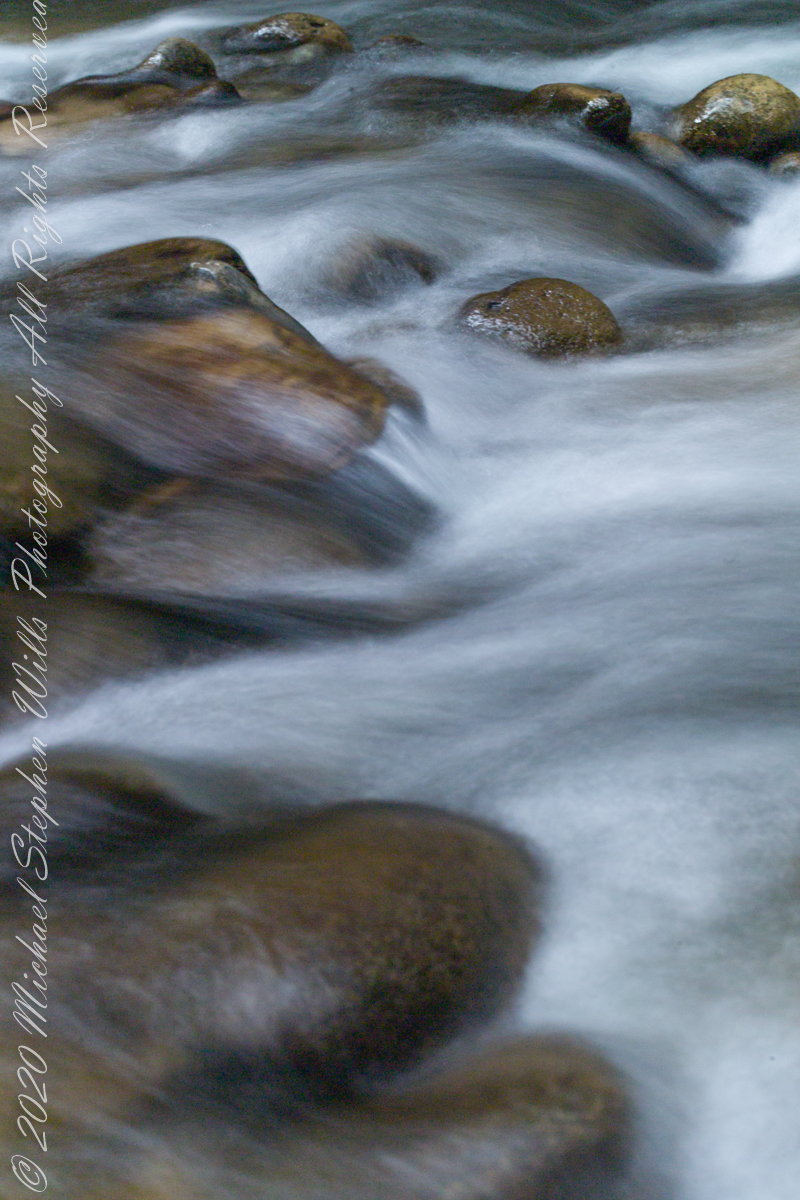
The second photograph, taken under brighter conditions, reveals the same scene with different character. The increase in light clarifies the water’s transparency, the greens of moss and lichen on the wall, and the golden tones of the sandstone. What you see is a pattern formed by layers of wind-blown sand, once part of vast dunes, now standing as a stone ledger of time. The river, its bed visible beneath the shallow flow, seems to read this text as it passes—century by century, pebble by pebble.

The Virgin River begins high in Southwestern Utah, at the Navajo Reservoir in the Dixie National Forest north of Zion National Park and travels over 160 miles to join the Colorado River, carving through layers of sedimentary rock as it descends. In the Narrows, the canyon walls rise up to a thousand feet while the corridor narrows to just 20–30 feet across in places. The intimacy of the Narrows contrasts with the vast openness elsewhere in Zion, enclosing the traveler in a world of water and stone, shadow and echo.

Walking the Narrows means walking in the river itself—an experience that engages body and spirit alike. The water is rarely still, and neither is the trail. Slippery rocks and ever-shifting current demand attention and balance. Yet, this very immersion invites a deeper kind of awareness. You are observing nature from within it, shaped by nature, and held by nature.

What the photos capture so eloquently is that Zion is a place where the work of nature can appear deliberate, even architectural. The illusion of stairways in the sandstone, carved not by hands but by wind, gravity, and time, is a reminder of how little separates the human sense of design from the forms nature produces. We recognize rhythm and repetition, elevation and flow, and are drawn to interpret meaning from these patterns.

But perhaps the meaning lies not in what we impose, but in what we receive. The Virgin River’s passage through this sculpted corridor teaches patience, resilience, and the beauty of gradual transformation. Its waters do not fight the rock; they yield, swirl, and persist—until the rock, by degrees, gives way. What results is a landscape both eternal and ever-changing.

Zion’s grandeur is easy to admire its many amazing overlooks, but its soul is found in quiet places like this—where sandstone walls, smoothed by water and time, speak not in shouts but in whispers. Here, beside a seeming stairway that leads nowhere and everywhere, we come face to face with the artistry of the Earth.

Enter your email to receive notification of future postings. I will not sell or share your email address.

Ad Astra

To The Stars

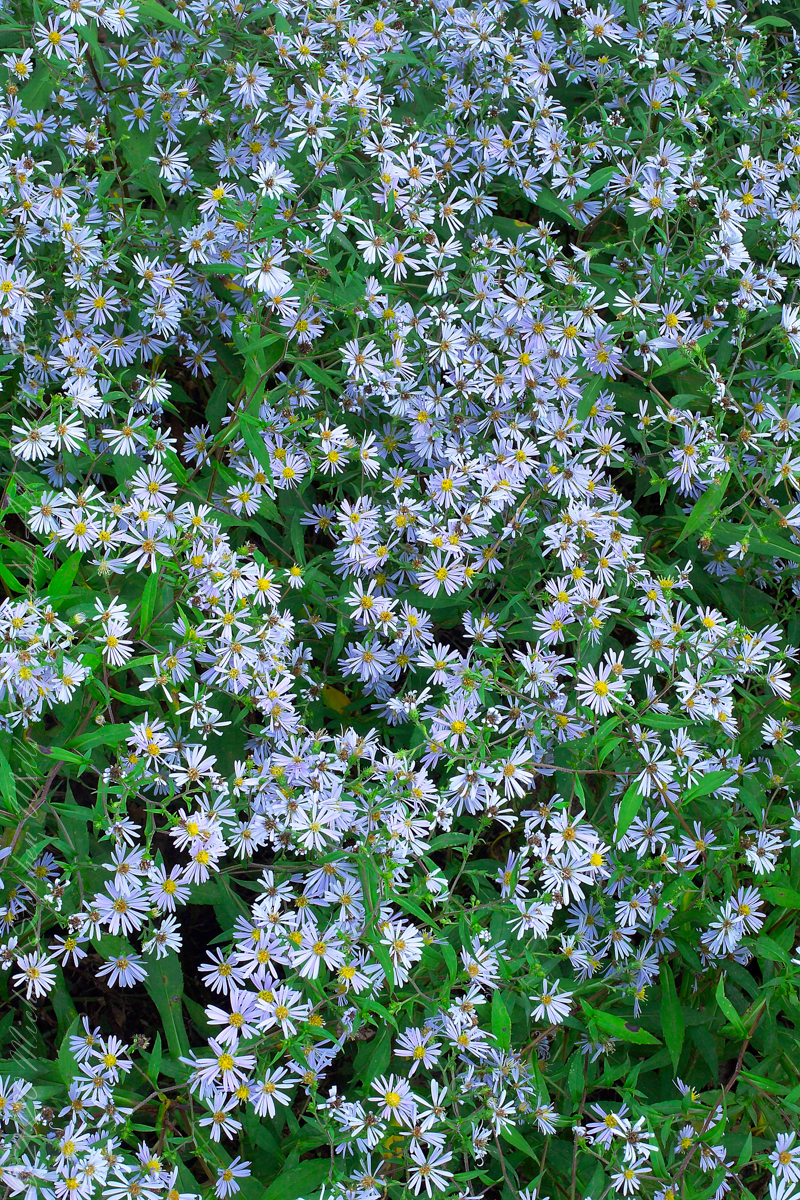
A mass of lavender asters produced for a painterly, restful esthetic. Over the years I have tended beds of these wildflowers. The sunlight of late August/early September here in the Finger Lakes is especially clear and this is when these asters bloom. This were caught on a clear September evening with the sun just behind a stand of large Ash trees.

Click Me to visit this image in my fine art gallery

Symphyotrichum novi-belgii (formerly Aster novi-belgii), commonly called New York aster. Symphyotrichum, a genus in the family Asteraceae, whose species were once considered to be part of the genus Aster. Plants in both these genera are popularly known as Michaelmas daisy because they bloom around September 29, St. Michael’s Day. The Latin specific epithet novi-belgii (literally “New Belgium”) refers not to modern Belgium, but the 17th century Dutch colony New Netherland which was established on land currently occupied by New York state (as Belgica Foederata was the Latin term for the United Netherlands at the time).

Reference: Wikipedia “Symphyotrichum novi-belgii.”

Copyright 2023 Michael StephenWills All Rights Reserved

Two Bar Mountain Views

Superstition Wilderness

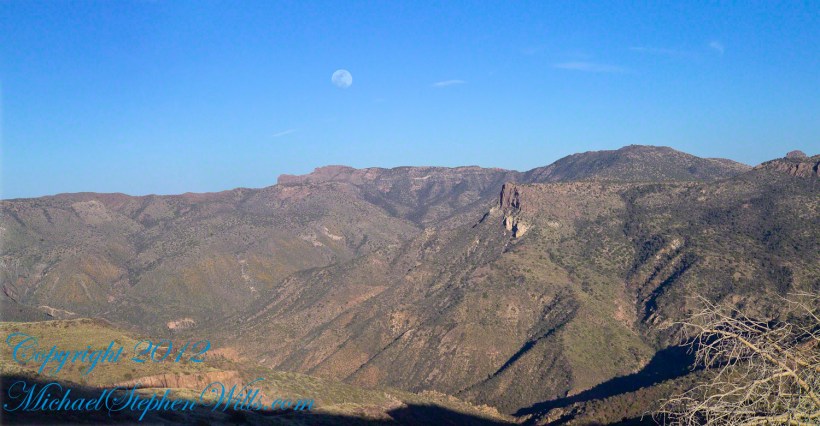
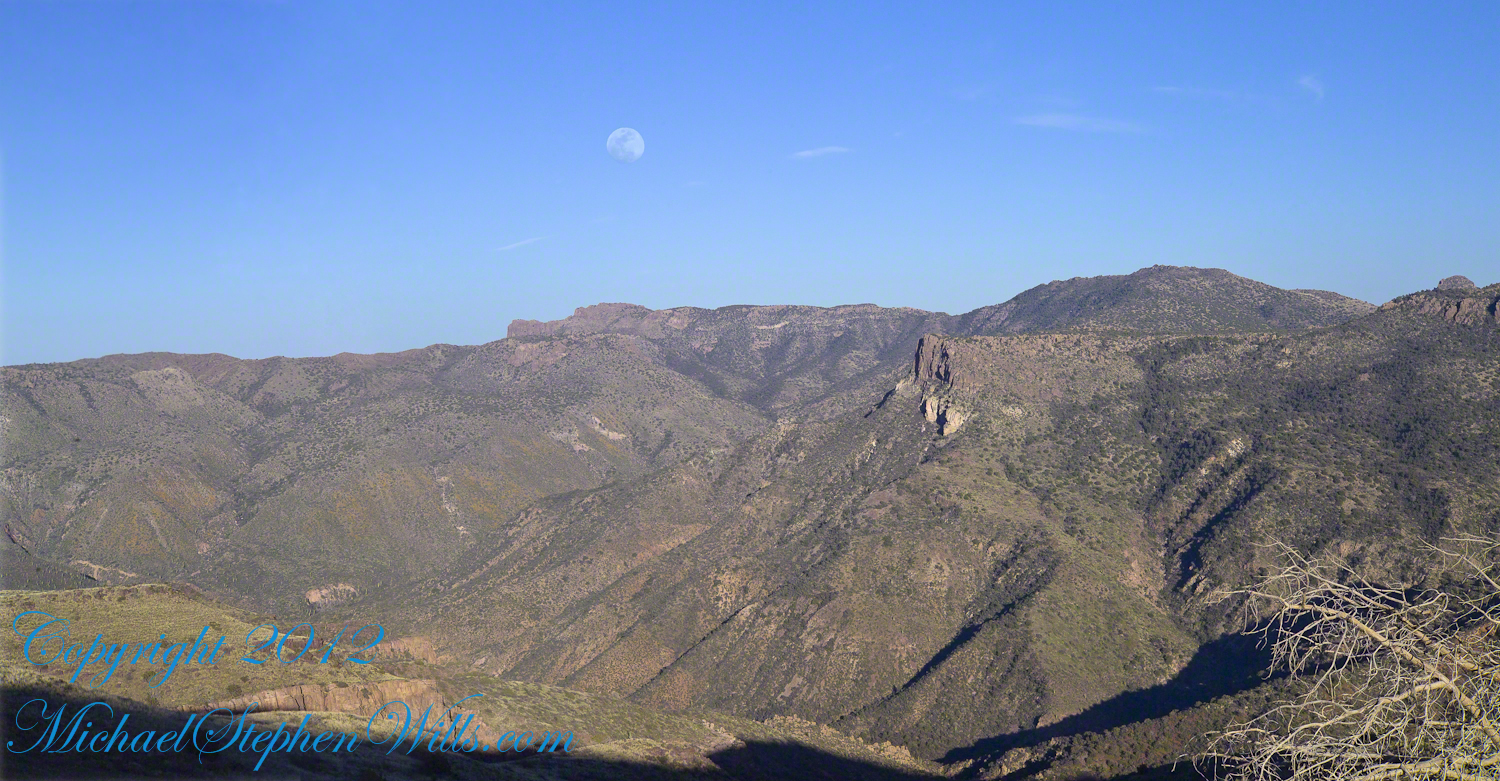
Two Bar Mountain is only part of this view taken the evening of Day Three, my solo expedition to Reavis Falls in the Superstition Wilderness of Arizona.

The view encompasses most of the four day expedition, being the climb into the lower Reavis Creek Canyon from which I camped.  I spent one entire day walking up the valley to the falls.

The patches of yellow on the far slopes to the left and into Reavis Valley are Mexican Poppy (Eschscholtzia californica) blooms.

To find lower Reavis Creek Canyon, look for the prominent cliff formation in the very center of the image.  Follow the end of the cliff down to a dark shadow.  The western canyon wall creates the heavy shadow.  As you move to the right, in the image, the shadow becomes wider because the canyon wall becomes higher.

The view also encompasses a 2005 solo expedition over Two Bar Mountain using the Tule and Two Bar Ridge trails into the Superstition Wilderness around Pine Creek.  See my blog “Racing the Sun” for an image Two Bar Mountain with the path of (most of) two days of that expedition.

An interesting feature of the full size image (lost in the small-scale reproduction of this blog) is the host of enormous saguaro cactuses marching up the sides of the canyon to the left, thinning out and ending on the western walls of the canyon (the slope directly beneath my viewpoint).  Our course, each cactus is perfectly still, casting a huge shadow, and seems very tiny.  The nearest is a mile away.  We are seeing in this thinning host the lower Sonoran in transition to the upper Sonoran life zone.

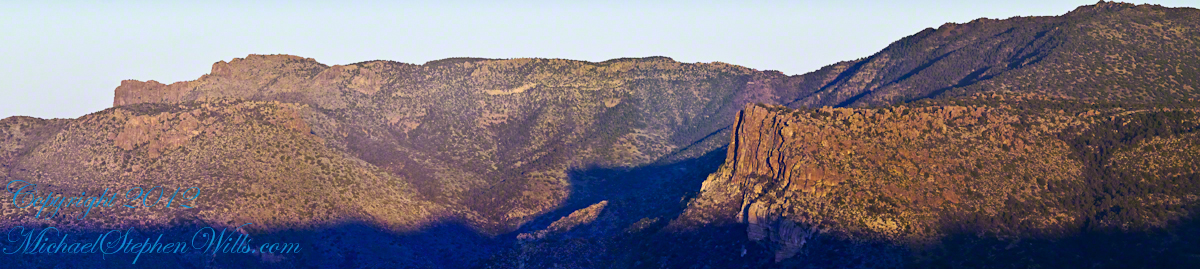
All of this in one view from Lime Mountain. Here is another, taken just as the sun set.

Copyright 2023 Michael Stephen Wills All Rights Reserved

Meadow Stream, winter 3

Meadow Idyll

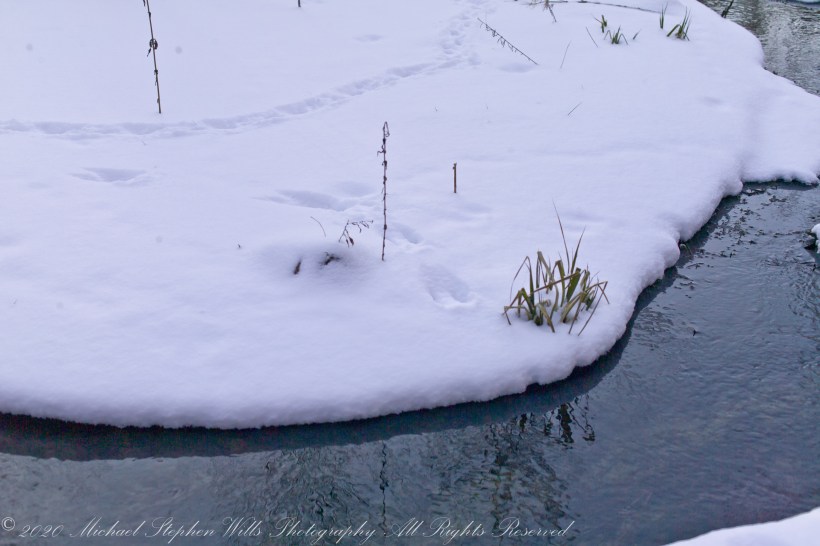
Snow under the gathering light of February, edges rounded by sunlight. Can you identify the animal tracks?

Overflow from a Kettle Pond threads through a meadow before feeding Fall Creek. The O.D.von Engeln Preserve at Malloryville.

All were from a tripod mounted Kodak DSC pro SLR-C with the Canon lens EF 50mm f/1.4 USM

Copyright 2023 All Rights Reserved Michael Stephen Wills

Meadow Stream, winter 2

Meadow Idyll

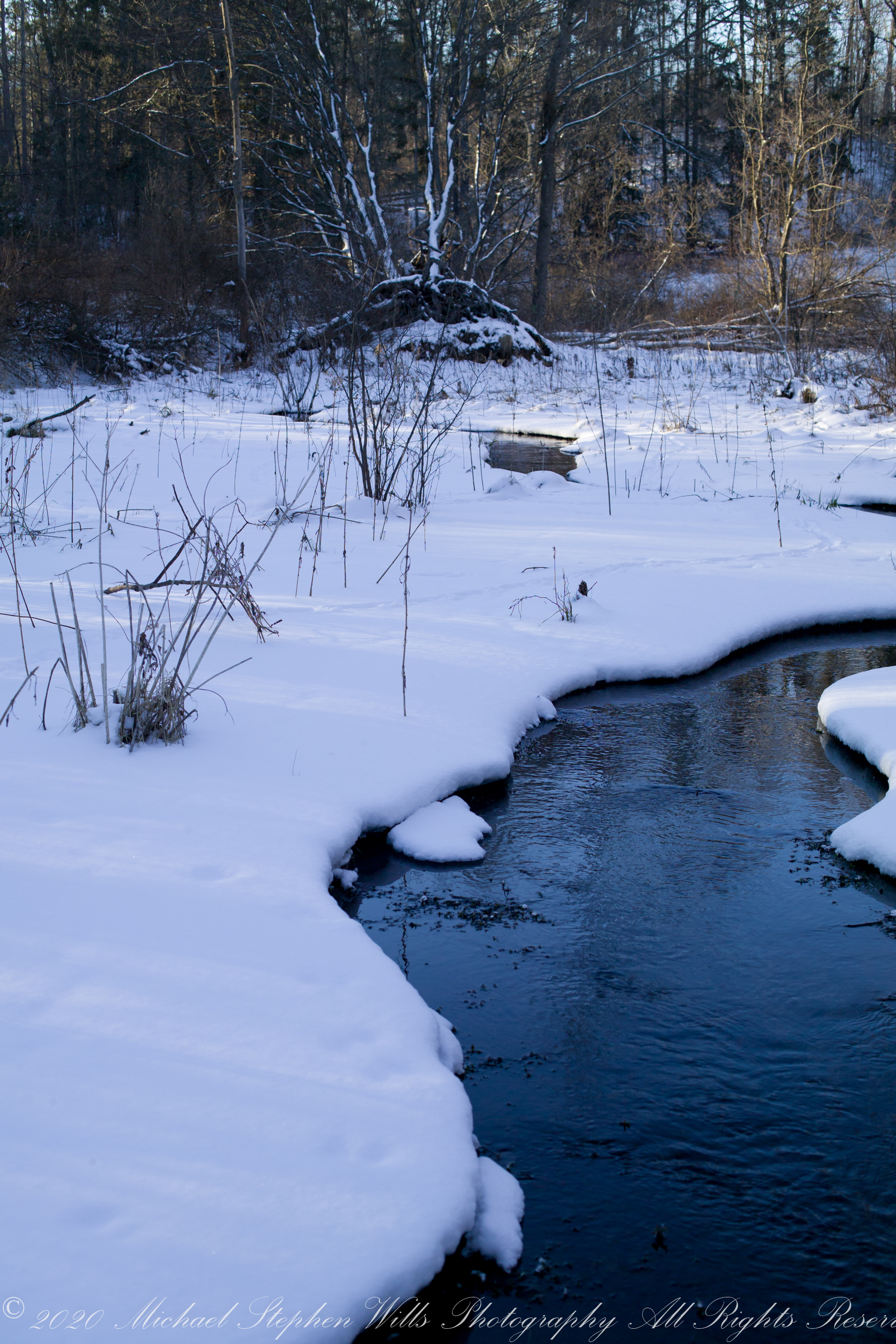
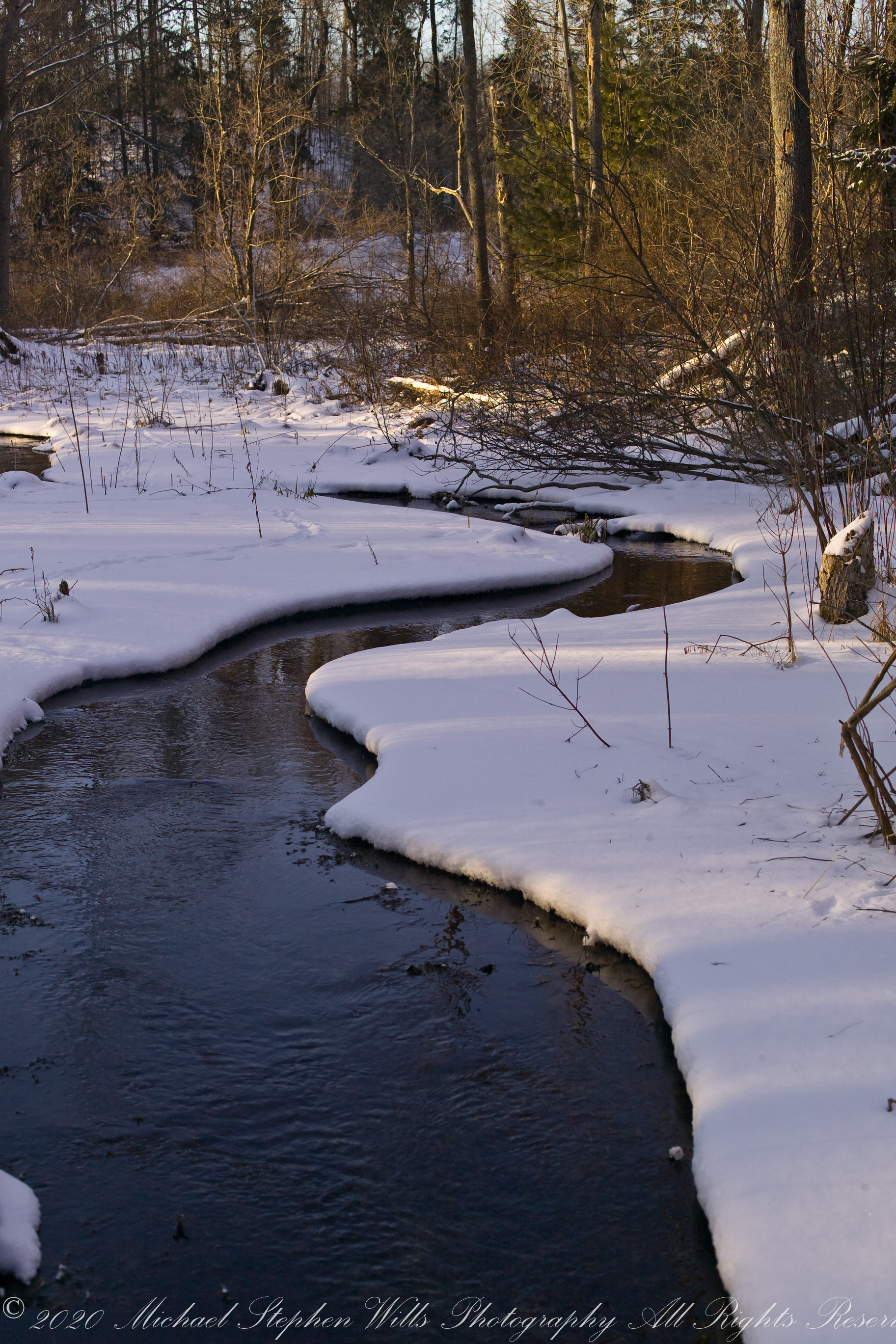
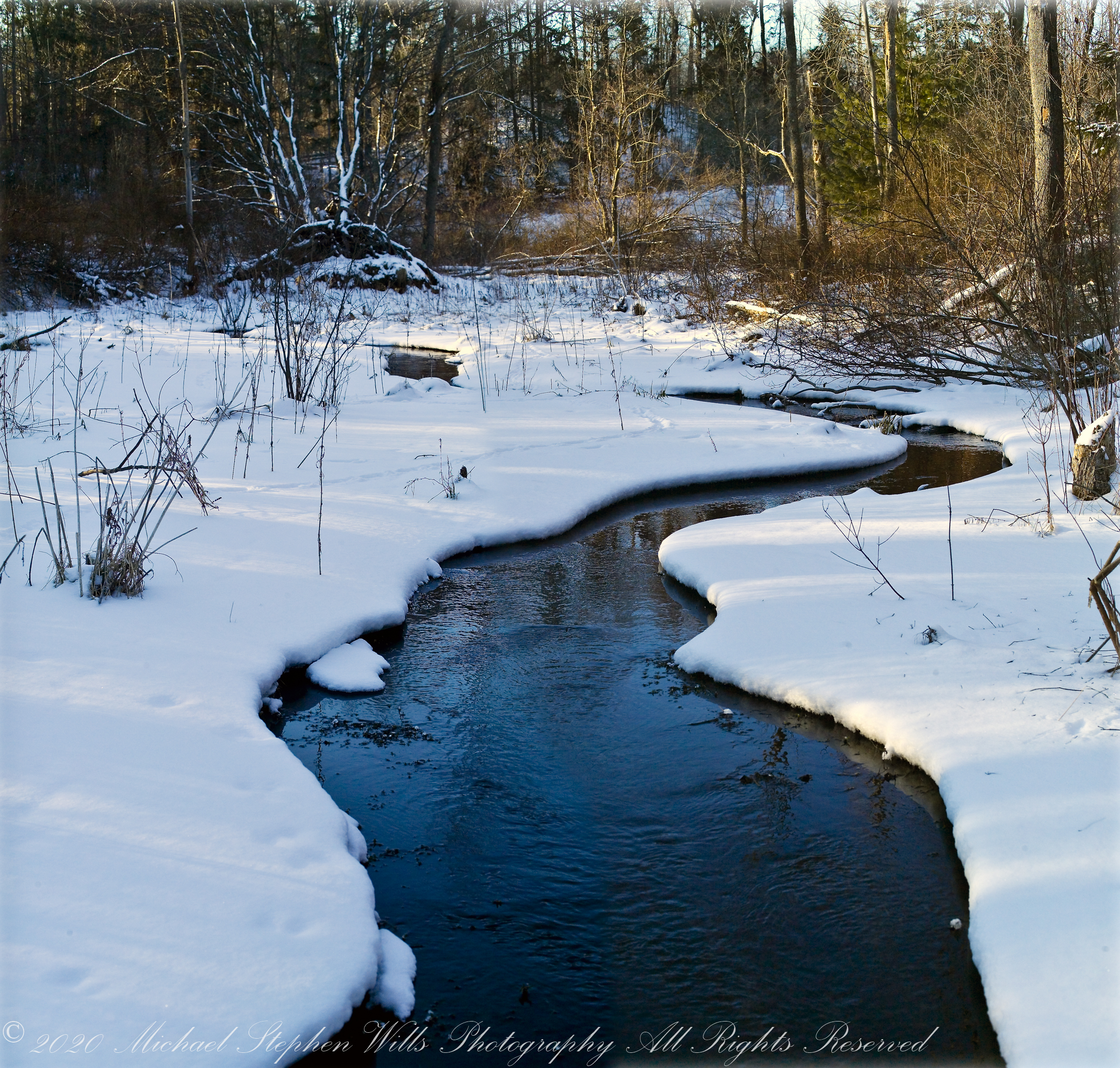
The glacial marls through which this water flows to emerge here clear and pure were under threat from development in the 1980’s and 1990. Thanks to the efforts of the landowner, the uniqueness of this environment was preserved.

The first two photographs are combined and enhanced in photoshop to yield the third, combination, photograph.

Winter Shadows
Winter Shadows

All were from a tripod mounted Kodak DSC pro SLR-C with the Canon lens EF 50mm f/1.4 USM

Winter Shadows
Copyright 2023 All Rights Reserved Michael Stephen Wills

Meadow Stream, winter

Meadow Idyll

This water emerges from glacial marls, pure and clear, before flowing into a kettle pond. Here we see it on a winter afternoon meandering across a meadow before joining the Fall Creek of the previous postings of this week.

The first two are the same photograph. One has been enhanced in Photoshop. The other was perfected in Lightroom. The third is a different photograph taken about the same time, also peracted in Lightroom.

Winter Shadows
Winter Shadows

All were from a tripod mounted Kodak DSC pro SLR-C with the Canon lens EF 50mm f/1.4 USM

Winter Shadows
Copyright 2023 All Rights Reserved Michael Stephen Wills

Gorge Wonder

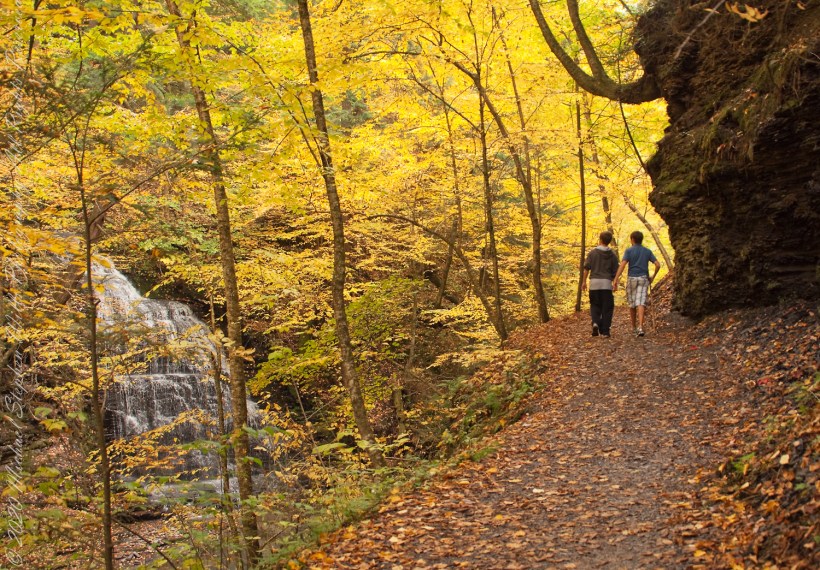
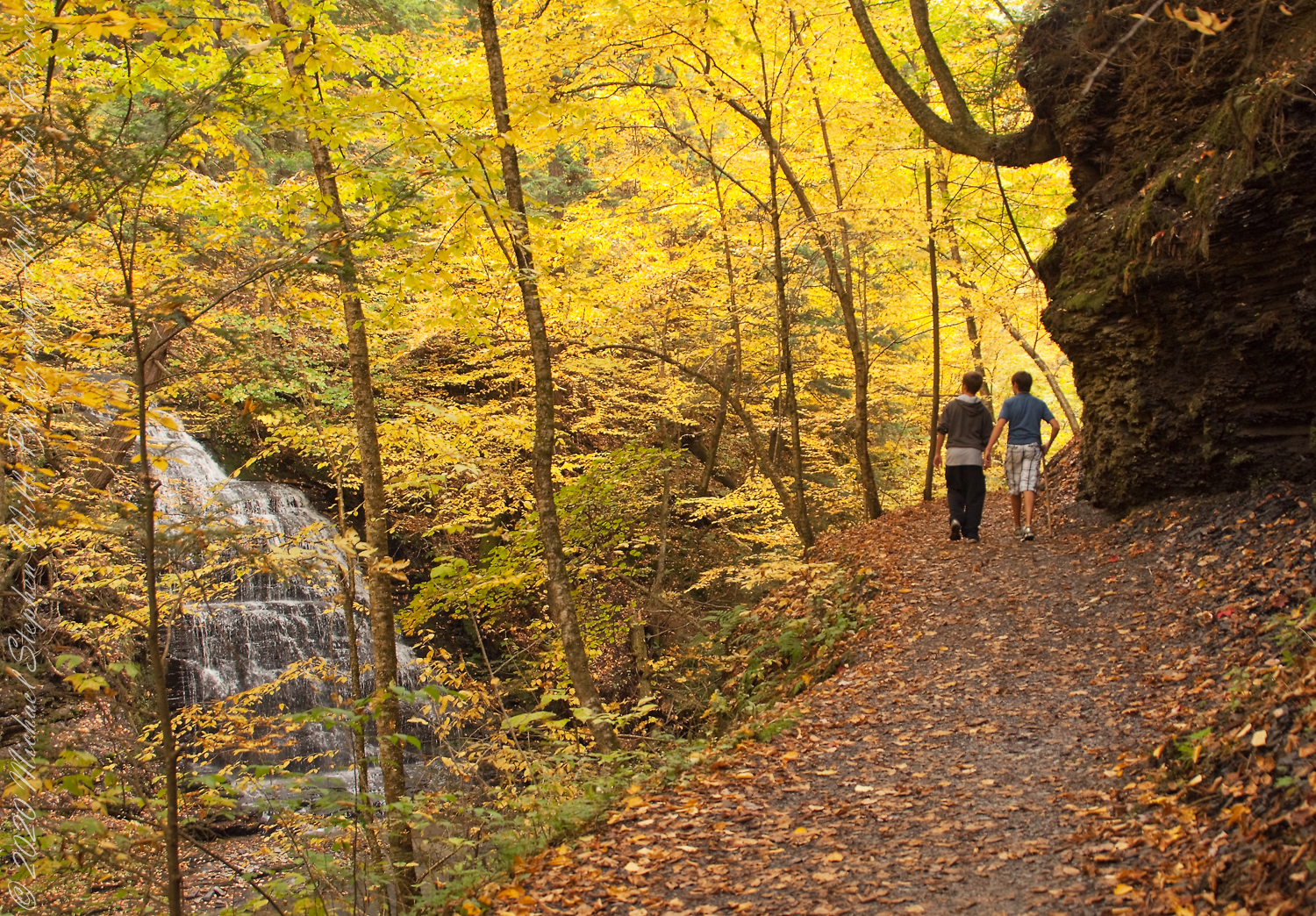
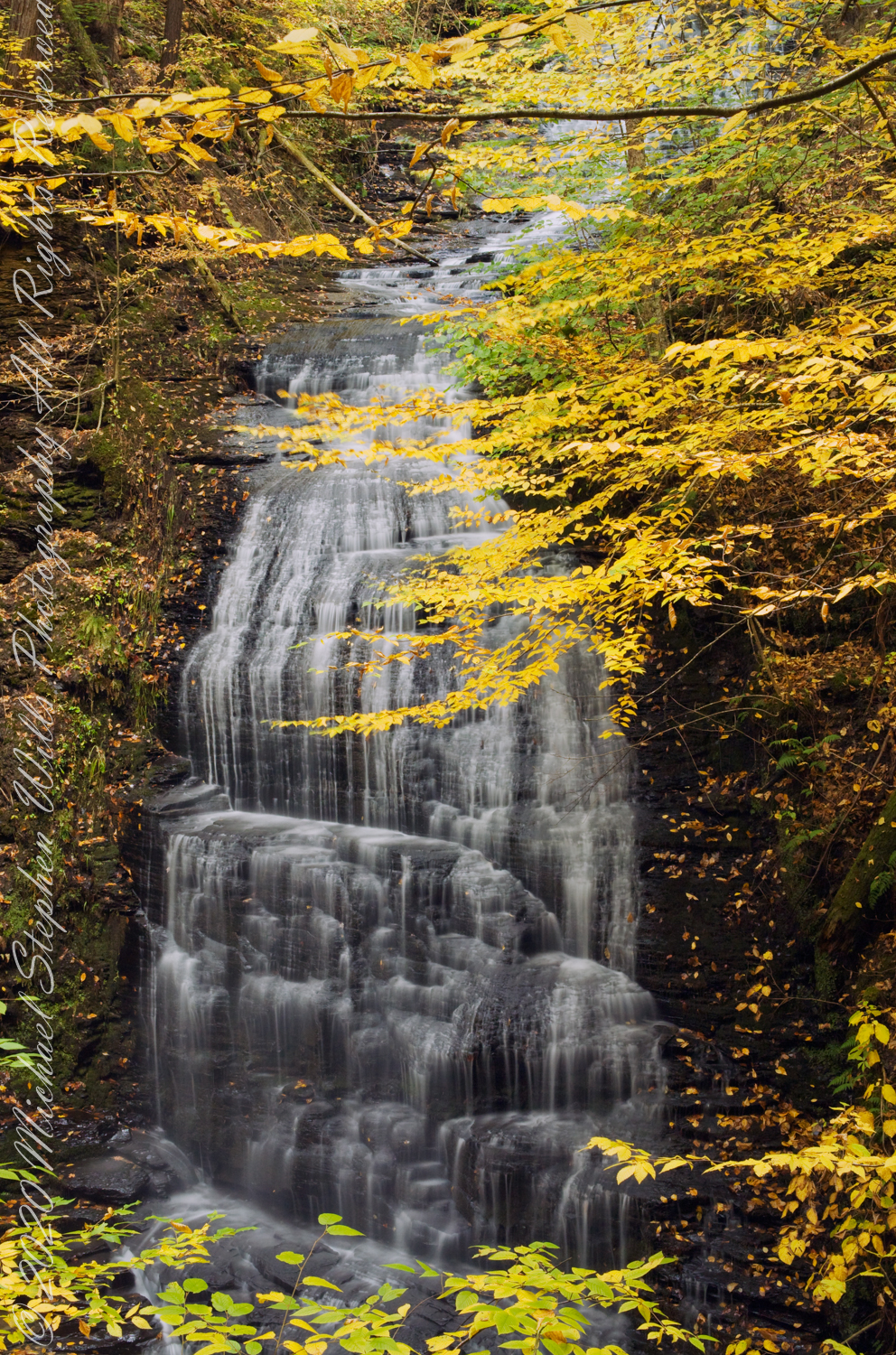
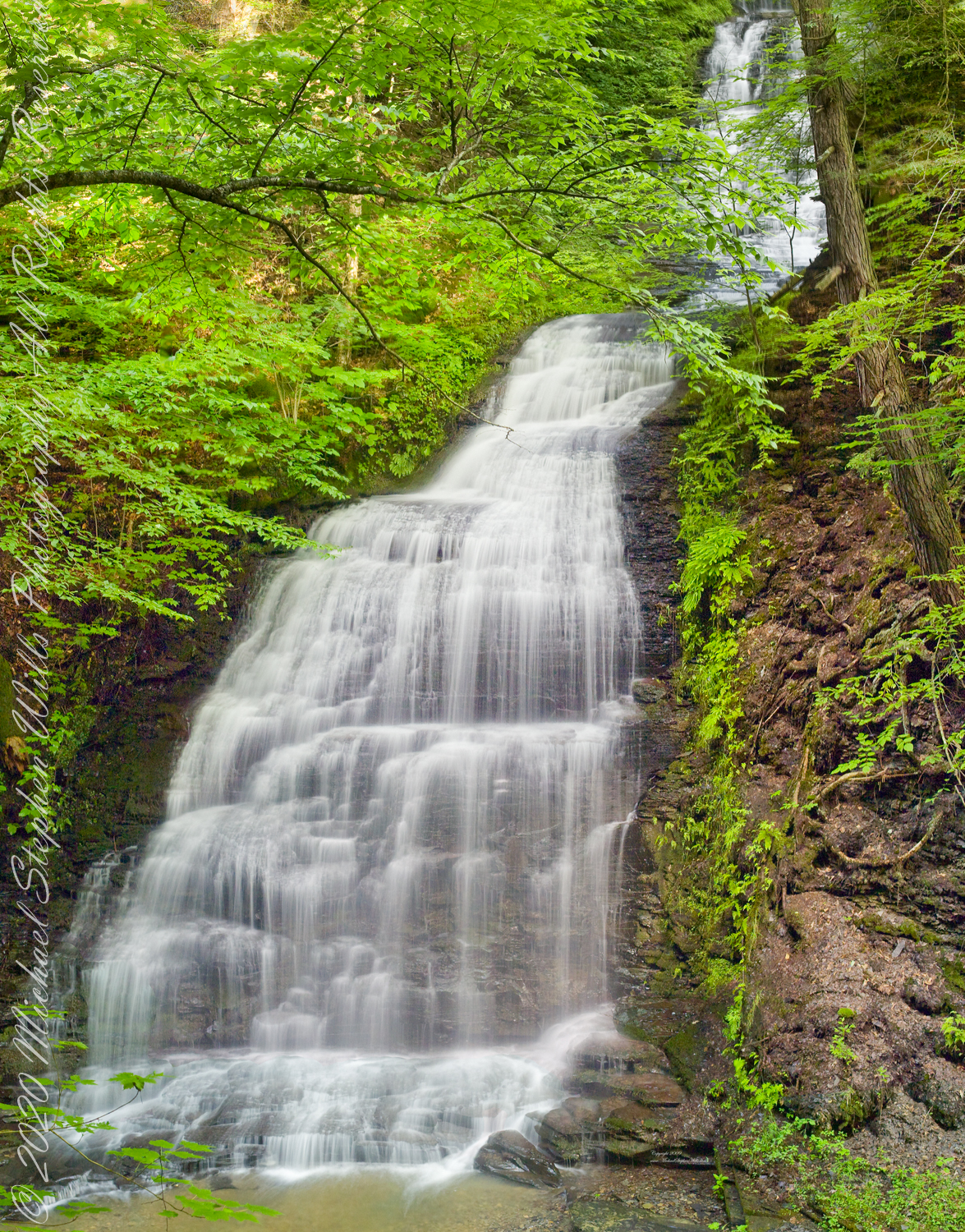
Fillmore Glen Autumn

Ephemeral Waterfall Over the Years

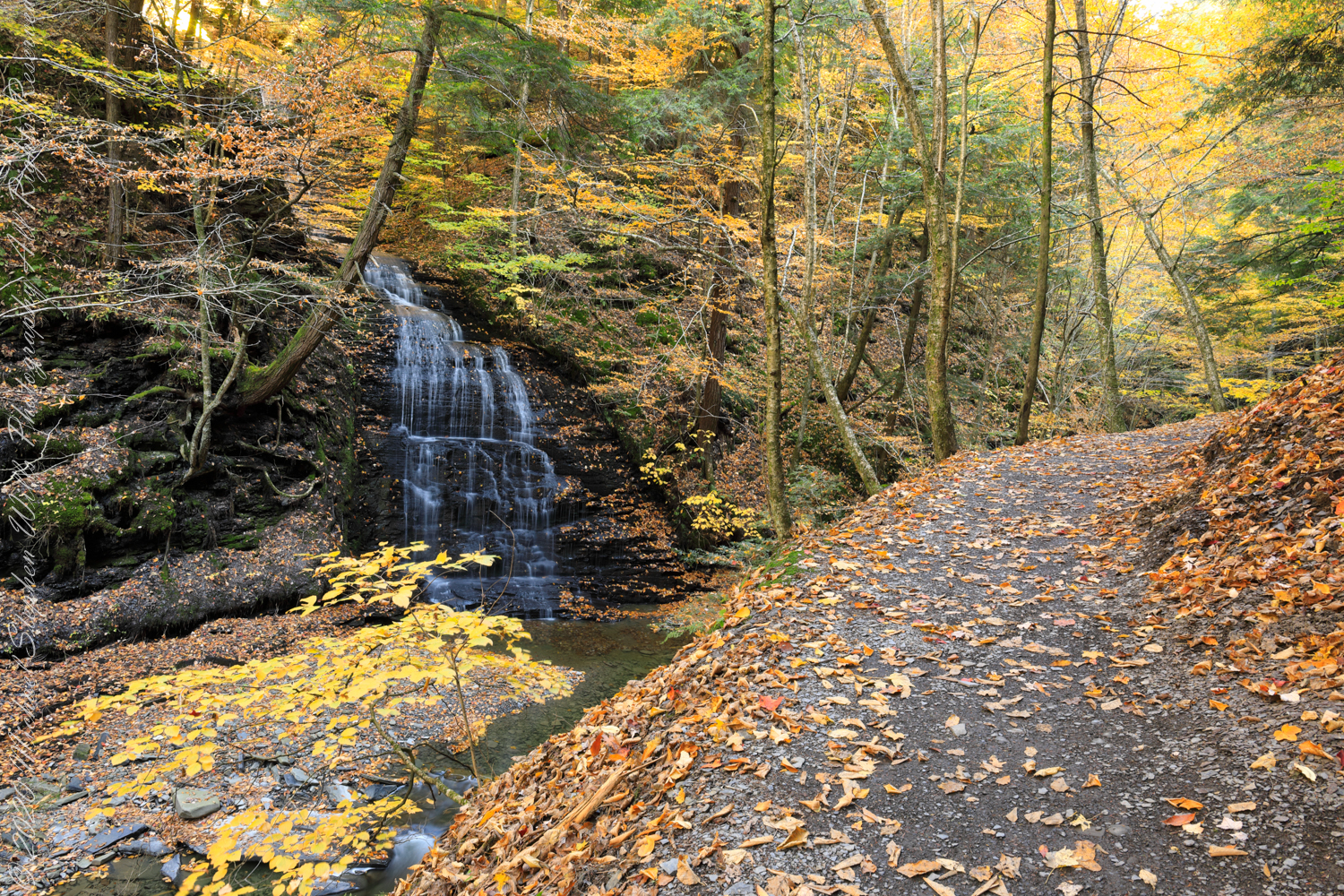
Between bridges six (6) and seven (7) on the Gorge trail a cascade comes down the canyon wall. Mid-summer this brook can dry out, the waterfall disappears leaving this spot naked of water.

Taken over a period of thirteen (13) years, the cascade was alive and well autumn-time. This year, after the summer drought our autumn rains were sparse, the flow is the lowest photographed.

Copyright 2022 All Right Reserved Michael Stephen Wills

Waterfall Textures

Unrestrained chaos at the foot of Arizona’s highest waterfall

I received notice of IStock acceptance of select photographs from my last posting, “Wilderness Textures”, was accepted.  Click to view my IStock Portfolio, including  photographs from today’s posting included in the acceptance notice.

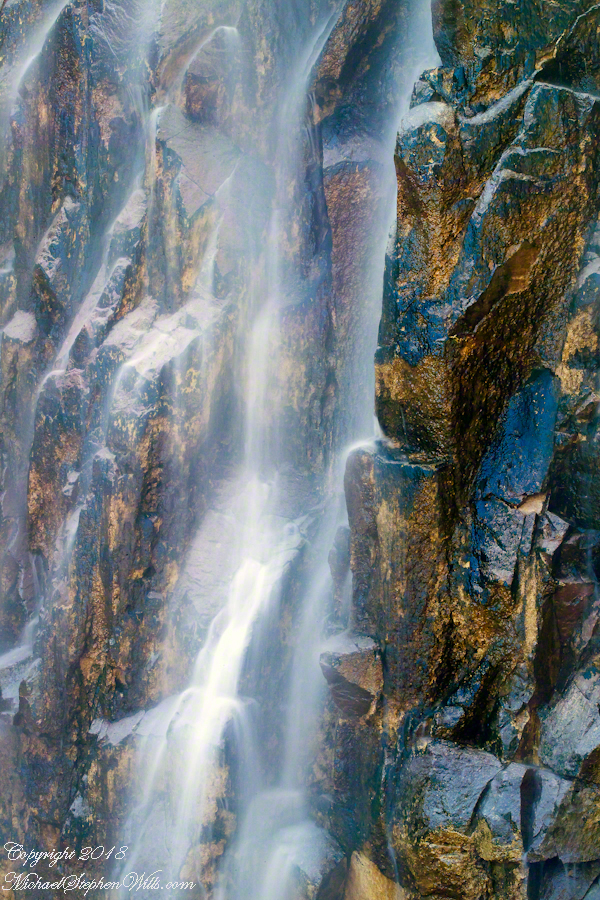
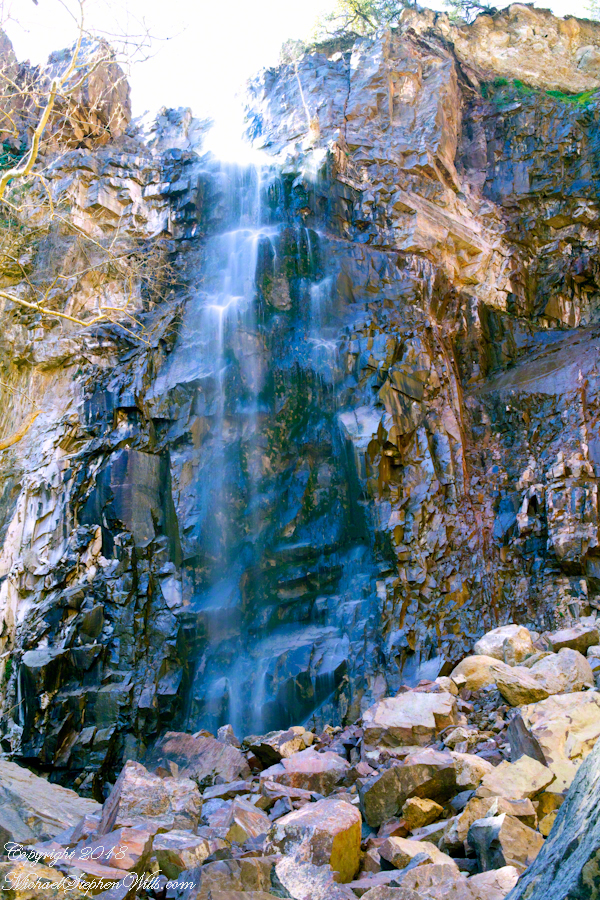
In this post I move up the Reavis Creek canyon from where the last posting, “Wilderness Textures”, was sited to the foot of Reavis Falls.  With the first photograph you look up at the falls from the head of the canyon carved by the creek over eons.  The rock wall, the canyon “head”, is thick with microorganisms, fungi, mosses.

Reavis Creek Water and Light – CLICK ME for more abstract photography.

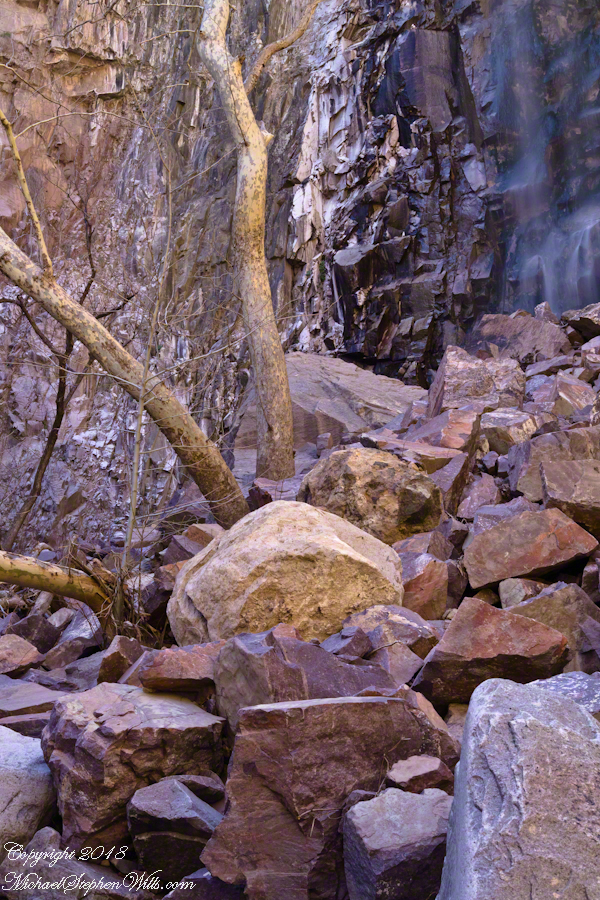
In the foreground is a jumble of boulders, some washed down at flood time, spread wide at the bottom of the falls, piled to a jumbled height of 15 feet. 

Talus is the geological term for this formation.  Derived from the Latin word for slope (talutum) the definition, from the Oxford English Dictionary, is “A sloping mass of detritus lying at the base of a cliff or the like consisting of material fallen from its face.” 


The ankle bone is also called talus, from the French word for heel, I bring it up because climbing this chaotic, unstable jumble is a way to break your ankle.  The route to Reavis Falls, a climb up one side of Lime Mountain then down the other on a non-existent (lightly marked) trail, is rated difficult and impossible with a broken leg or ankle.  I was alone and very careful to check each rock for stability before putting my weight on it.

A climb of the talus pile was necessary to view the pool at the waterfall base, for this photograph.

A more artistic vertical format version, below, captured with the Canon EF 100mm “macro” lens.  All shots are using the Kodak DCS pro SLR-c (the “c” designated Canon lens compatibility) and a Manfrotto studio tripod with a hydrostatic ball head.  The horizontal format shot was captured with a Canon EF 50mm f/1.4 USM lens.   I prefer the vertical version, artistically, because the talus jumble is all but cropped out while the upper corner of the angular basalt boulder is left as an interesting focal point.  The boulder, not being in the spray, is in focus to contrast with the basalt wall behind the water.

I captured a series of shots from this precarious vantage point, working up from the pool to the brim of the waterfall.

My goals was a composite photo of the falls.  I have yet to succeed with this project.  Maybe I will give it one more shot in spite of having learned the hard lesson the best photographs are a single moment captured in a single frame.

I find in this series the vertical aspect is more artistic.  The water volume, of the falls, at this time of year offers only the finest of sprays with most of the basalt rock wall only moist.  The 100mm “macro” lens allowed me to include only the falling water with a bit of the moist wall for contrast.

In the following version I experimented with color, moving from the narrow range of hues, to more contrast.

Please browse my reasonably priced stock photography. License a photograph, download and use it for your website or blog. Click this link to browse all my Getty IStock Photography offerings.

Or click this link or any photograph or this link to select a print with custom framing from my “Textures” Fine Art Gallery.

Here’s another of my Arizona wilderness adventures, “Racing the Sun.”

Wilderness Textures

Abstract Beauty of the Superstition Wilderness of Arizona

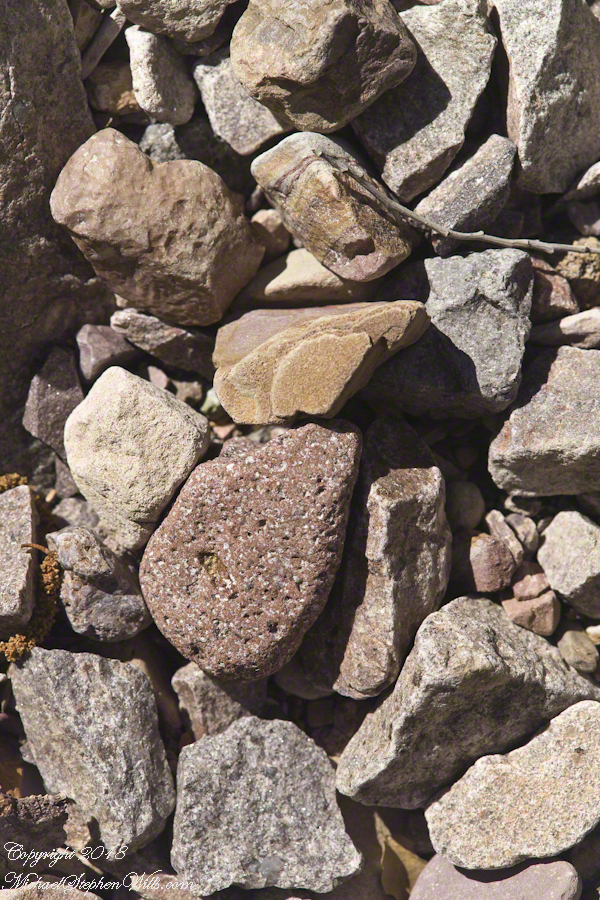
These abstracts are some of my photographic output from four days and nights spent alone in the remote eastern Superstition Wilderness.  For the first three days I met not a soul, all these images were captured on a single afternoon spent in the canyon below Reavis Falls, a jumble of landslides, flood debris and boulders.  There is no trail.  The few people who enter the canyon must negotiate around boulders, crossing Reavis Creek many times.
Reavis Creek Water and Light – CLICK ME for more abstract photography.

My backpack kit included a full sized Manfrotto studio tripod with hydrostatic ball head.  The benefits more than outweighed the effort (I was a lot younger in 2008) when the Canon EF 100mm (macro) lens is mounted on a  Kodak dSLR body, allowing me to take crisp shots.  The tripod legs can be adjusted to precise positions for stability.

Reavis Creek Water and Light – CLICK ME for more abstract photography.

I can feel the bright afternoon desert spring sunshine in this photos.  It was after the spring floods, the flow of Reavis Creek and ample still but slow.  Gathering in pools over the rough stones of the creek bed, the water absolutely clear.

Reavis Creek Water and Light – CLICK ME for more abstract photography.

I held the shot over many minutes, capturing ever changing diffraction patterns.

We see in all these photos, not a homogenous blend of stones from a shared geology.  Reavis Creek washes over diverse geologies: volcanic, ancient igneous extrusions, sedimentary and metamorphic are jumbled together.

Reavis Creek Water and Light – CLICK ME for more abstract photography.

This is a series of photographs of smooth, white igneous boulders with shadows of  still leafless sycamore and cottonwood trees.

Reavis Creek Water and Light – CLICK ME for more abstract photography.

Graceful shadows

Reavis Creek Water and Light – CLICK ME for more abstract photography.

Strong, demonstrative shadows.

Reavis Creek Water and Light – CLICK ME for more abstract photography.

A leaning cairn, not a trail marker….

Reavis Creek Water and Light – CLICK ME for more abstract photography.

A 15 foot high jumble of stones piled at the bottom of Reavis Falls, carried over by the floods.

Reavis Creek Water and Light – CLICK ME for more abstract photography.

A metamorphic conglomerate stone….

Reavis Creek Water and Light – CLICK ME for more abstract photography.

Another metamorphic conglomerate.

Reavis Creek Water and Light – CLICK ME for more abstract photography.

Please browse my reasonably priced stock photography. License a photograph, download and use it for your website or blog. Click this link to browse all my Getty IStock Photography offerings.

Or click this link or any photograph or this link to select a print with custom framing from my “Textures” Fine Art Gallery.

Here’s another of my Arizona wilderness adventures, “Racing the Sun.”

Zion Narrows IX

highwater?

Three long exposures of the Virgin River, long may it flow. The Narrows, Zion National Park, Springdale, Utah

Copyright 2021 Michael Stephen Wills All Rights Reserved