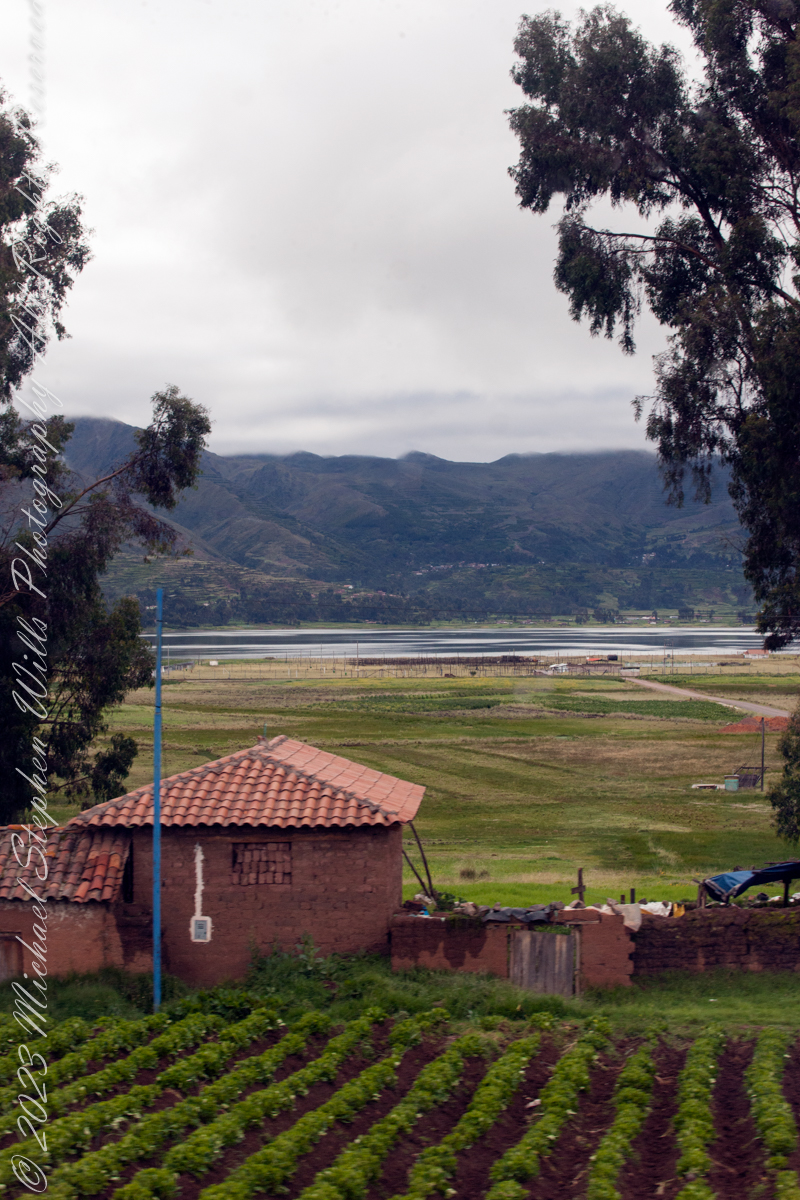
As seen from Avenue del EjércitoIts near Chinchero, Peru. Lagoon waters lap the distant, terraced andean foothills, look closely to see fish drying racks on the near shore, 11,270 feet altitude. Here, water boils at 191 degrees Fahrenheit, not 212.
Puray comes from an ancient legend narrated by the settlers, where, the Sun god asked Manco Capac that his twin sons accompany him in his sunset and when the time came, they discovered that the son who walked farther had become the Huaypo (Huaypo) Lagoon (9 miles west) and the daughter in the Piuray (Puray) Lagoon.
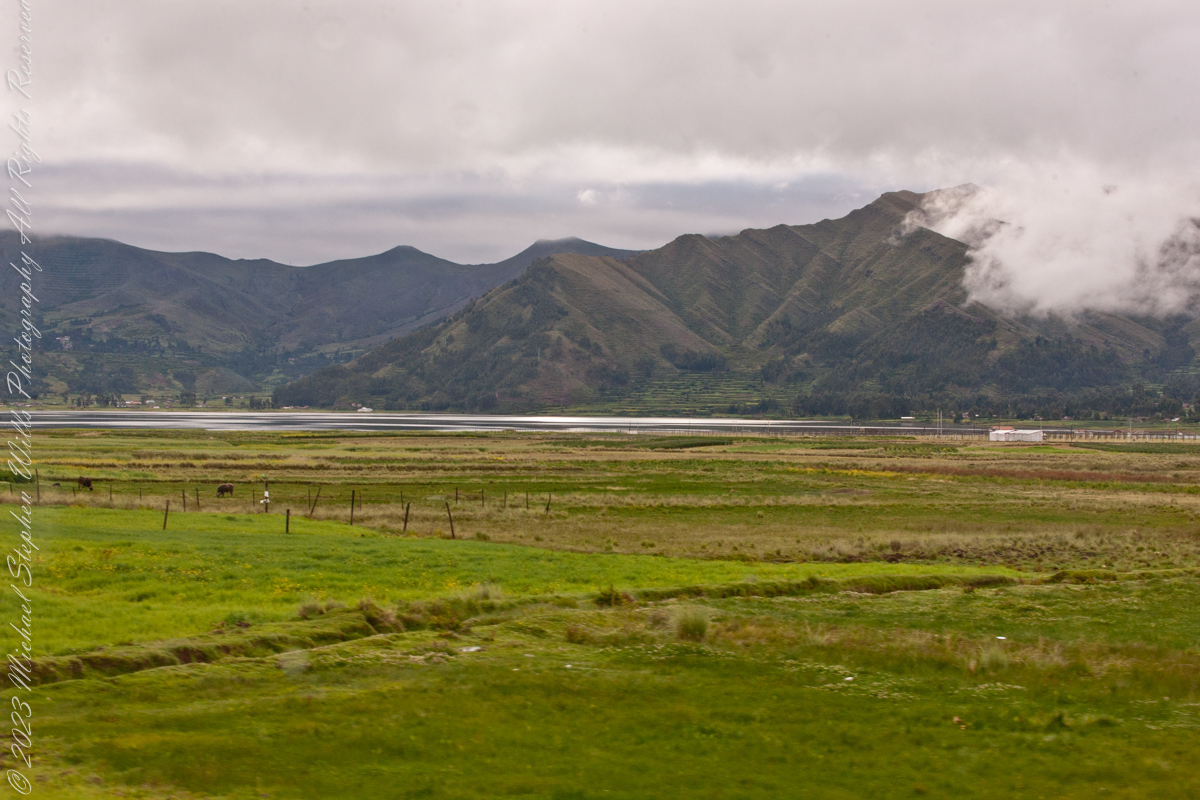
In this photograph, distant cattle graze against backdrop of the lagoon and andean foothills.
Puray lagoon is located in the upper part of the Sacred Valley of the Incas, southeast of Chinchero and 19 miles northwest of Cusco. The Piuray (Puray) Lagoon is a source of water of surface origin. It is one of the most important sources of the city of Cusco, as it supplies 42% of drinking water in the city as well as the Sacred Valley of the Incas and other provinces of the region. It was the Incas who carried Piuray (Puray) Lagoon water to the imperial city (Cusco) through underground aqueducts. Quechua natural region, Peru
Copyright 2023 Michael Stephen Wills All Rights Reserved
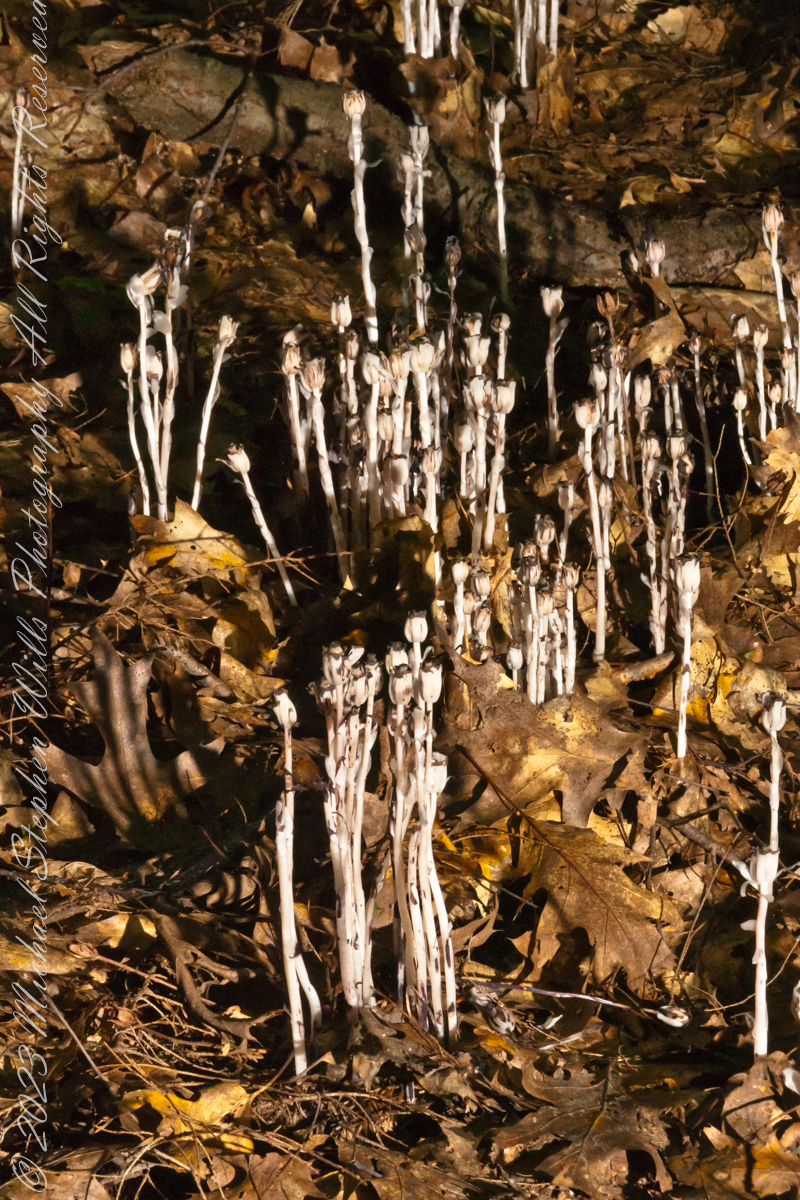
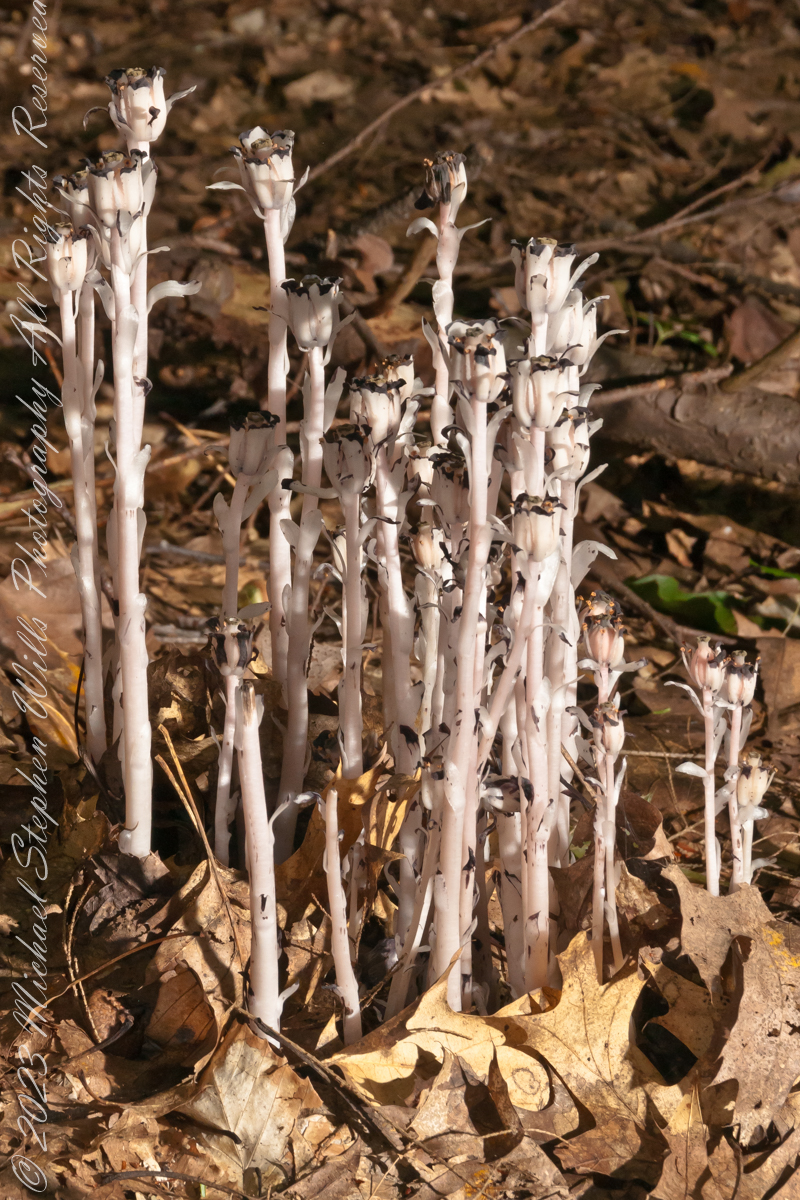
I found these popping up from leaf litter, a mixture of last year’s maple and elm, on an August morning. The dappled light, varied from bright to very dark, exceeded the dynamic range of my equipment, so I set up the Sony dslr Alpha700 with the Sony lens DT 18-200mm f3.5-6.3 on a tripod and, using the remote feature, placed the flash at an optimal angle.
“Monotropa uniflora, also known as ghost plant, ghost pipe, or Indian pipe, is an herbaceous perennial plant native to temperate regions of Asia, North America, and northern South America, but with large gaps between areas. The plant is sometimes completely waxy white, but often has black flecks or pale pink coloration. Rare variants may have a deep red color. The name “Monotropa” is Greek for “one turn” and “uniflora” is Latin for “one flowered” as there is one sharply curved stem for each single flower. It flowers from early summer to early autumn, often a few days after rainfall. The fruit, an oval capsule-like structure, enlarges and becomes upright when the seeds mature, at this point stem and capsule looking desiccated and dark brown or black. The seeds of Monotropa uniflora are small, ranging between 0.6–0.8 mm (3⁄128–1⁄32 in) in length.“
“Unlike most plants, it is white and does not contain chlorophyll. Instead of generating food using the energy from sunlight, it is parasitic, and more specifically a mycoheterotroph. Its hosts are certain fungi that are mycorrhizal with trees, meaning it ultimately gets its food from photosynthetic trees. Since it is not dependent on sunlight to grow, it can grow in very dark environments as in the understory of dense forest. The complex relationship that allows this plant to grow also makes propagation difficult.“
“The flowers of Monotropa uniflora are visited by various bee and fly species, most commonly bumblebees. Bumblebees are an important pollen dispersal agent for the plant.“
“Like most mycoheterotrophic plants, Monotropa uniflora associates with a small range of fungal hosts, all of them members of Russulaceae.“
“It is often associated with beech trees.“
“The plant contains glycosides and may be toxic to humans.“
“In addition to various reported medical uses, the plant has been used as an anxiolytic in herbal medicine since the late 19th century.“
Reference: in italics is from “Monotropa uniflora,” Wikipedia
Copyright 2023 Michael Stephen Wills All Rights Reserved
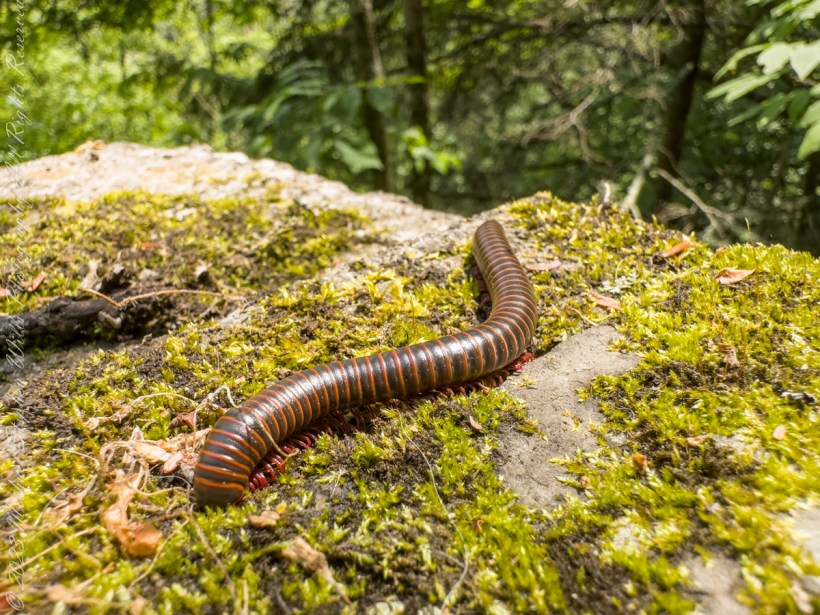
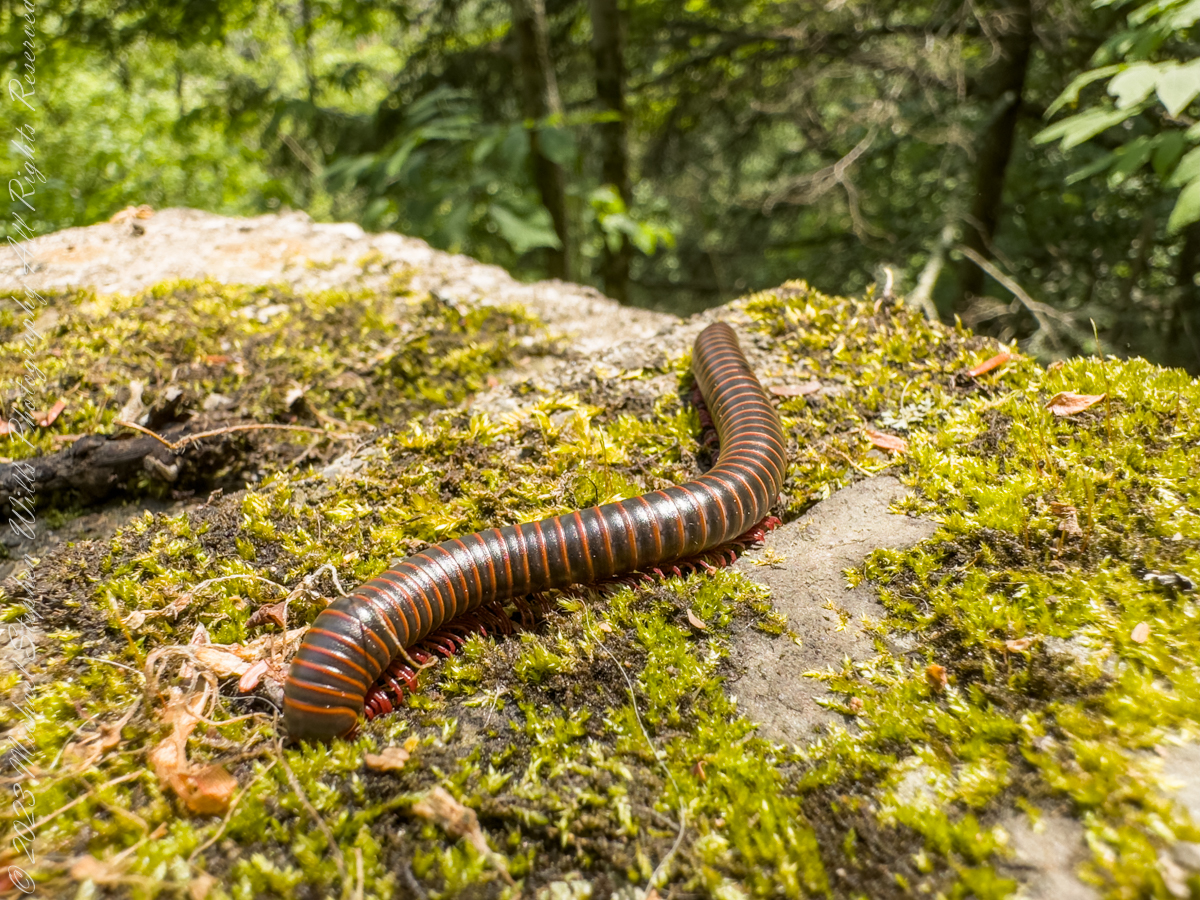
Visitors to Robert H. Treman park think nothing of crushing millipedes on the trail, it is concerning to encounter evidence of such disrespectful and boorish behavior. Here is an intact millipede I found last week. Millipedes are a group of arthropods that are characterized by having two pairs of jointed legs on most body segments; […]
Visitors to Robert H. Treman park think nothing of crushing millipedes on the trail, it is concerning to encounter evidence of such disrespectful and boorish behavior. Here is an intact millipede I found last week.
Millipedes are a group of arthropods that are characterized by having two pairs of jointed legs on most body segments; they are known scientifically as the class Diplopoda, the name derived from this feature. Each double-legged segment is a result of two single segments fused together. Most millipedes have very elongated cylindrical or flattened bodies with more than 20 segments, while pill millipedes are shorter and can roll into a tight ball. Although the name “millipede” derives from Latin for “thousand feet”, no species was known to have 1,000 or more until the discovery of Eumillipes persephone, which can have over 1,300 legs.
There are approximately 12,000 named species classified into 16 orders and around 140 families, making Diplopoda the largest class of myriapods, an arthropod group which also includes centipedes and other multi-legged creatures. Most millipedes are slow-moving detritivores, eating decaying leaves and other dead plant matter. Some eat fungi or drink plant fluids, and a small number are predatory.
Millipedes are generally harmless to humans, although some can become household or garden pests. Millipedes can be an unwanted nuisance particularly in greenhouses where they can potentially cause severe damage to emergent seedlings. Most millipedes defend themselves with a variety of chemicals secreted from pores along the body, although the tiny bristle millipedes are covered with tufts of detachable bristles. Its primary defense mechanism is to curl into a tight coil, thereby protecting its legs and other vital delicate areas on the body behind a hard exoskeleton. Reproduction in most species is carried out by modified male legs called gonopods, which transfer packets of sperm to females.
Millipedes are among the first animals to have colonized land during the Silurian period. Early forms probably ate mosses and primitive vascular plants. Millipedes also exhibit the earliest evidence of chemical defense, as some Devonian fossils have defensive gland openings called ozopores. Millipedes, centipedes, and other terrestrial arthropods attained very large sizes in comparison to modern species in the oxygen-rich environments of the Devonian and Carboniferous periods, and some could grow larger than one meter. As oxygen levels lowered through time, arthropods became smaller.
Most millipedes are detritivores and feed on decomposing vegetation, feces, or organic matter mixed with soil. They often play important roles in the breakdown and decomposition of plant litter: estimates of consumption rates for individual species range from 1 to 11 percent of all leaf litter, depending on species and region, and collectively millipedes may consume nearly all the leaf litter in a region. The leaf litter is fragmented in the millipede gut and excreted as pellets of leaf fragments, algae, fungi, and bacteria, which facilitates decomposition by the microorganisms.
Reference: “Millipede” Wikipedia
Copyright 2023 All Rights Reserved Michael Stephen Wills
Mesquite is the Sonoran Desert smell carried by distant rain, omnipresent and humble, a survivor with tap root extending 190 feet down to draw on the water table.
Prosopis is the scientific name for about 40 species of leguminous trees. Present in North America since the Pliocene era, mesquite wood has been dated to 1300 BC.
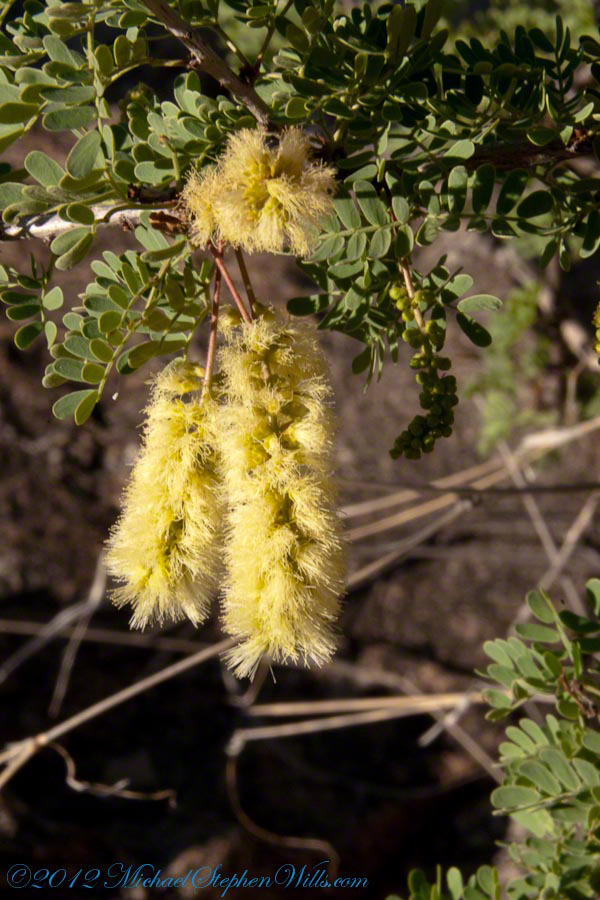
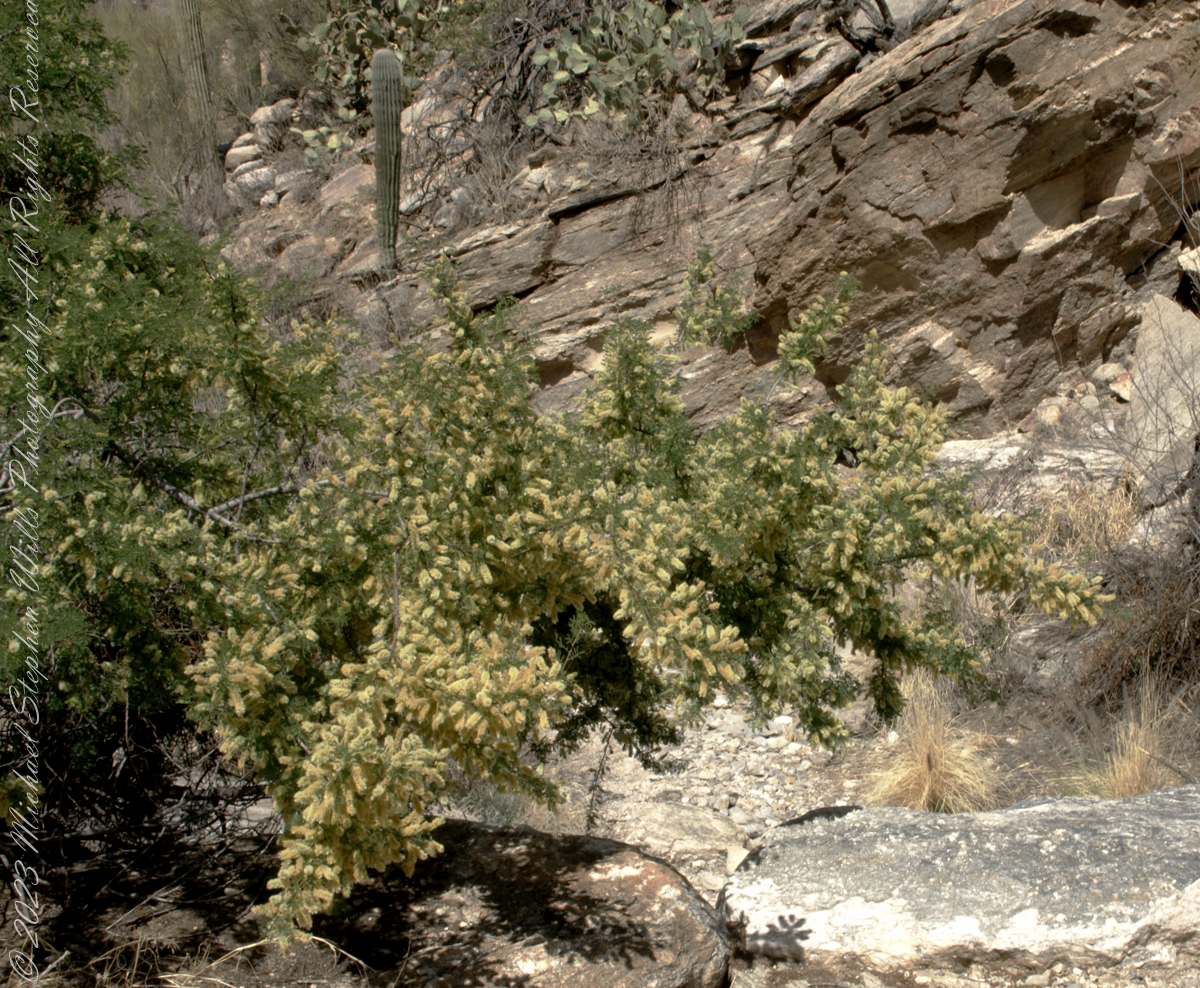
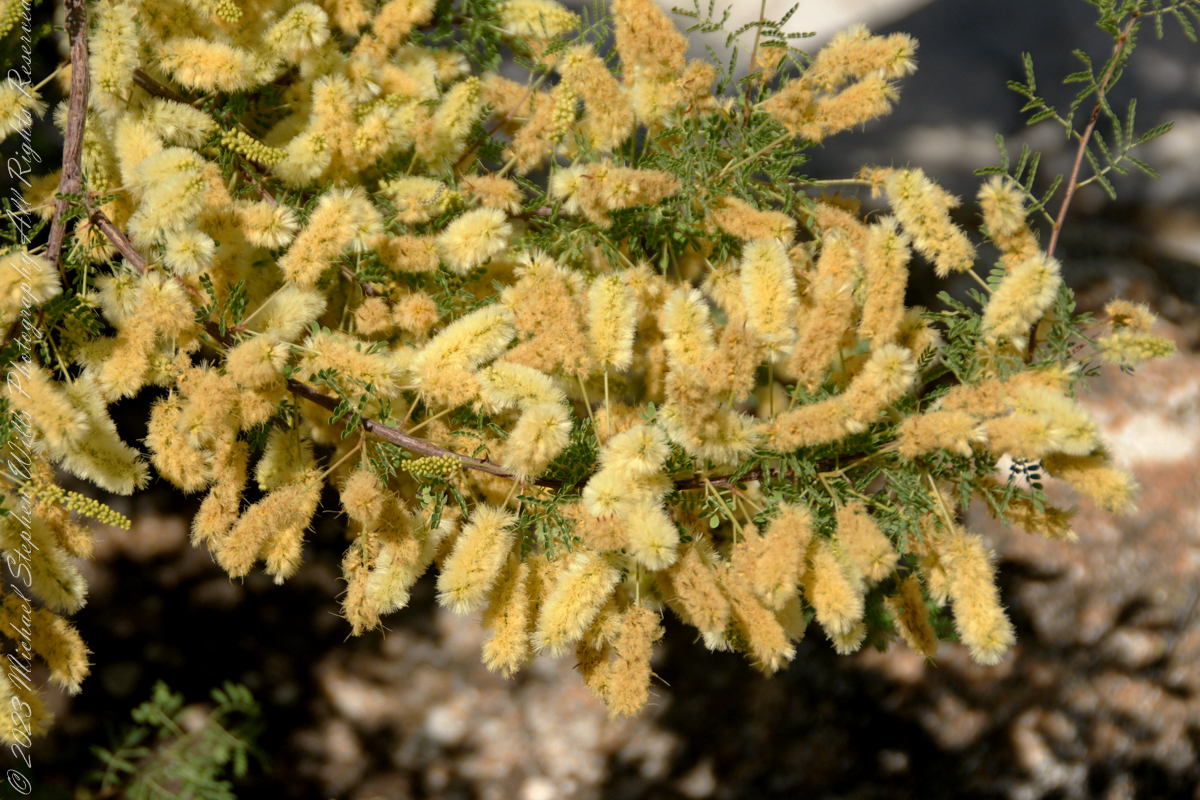
I found this flowering mesquite bush in Finger Rock Canyon of the Catalina Mountains outside Tucson, Arizona.
They are thought to have evolved with megafauna in the New World. The loss of North American megafauna at the end of the Pleistocene era gave way to one theory of how the Prosopis spp. were able to survive.
One theory is that the loss of the megafauna allowed Prosopis spp. to use their fruit pods to attract other organisms to spread their seeds; then, with the introduction of livestock, they were able to spread into grasslands.
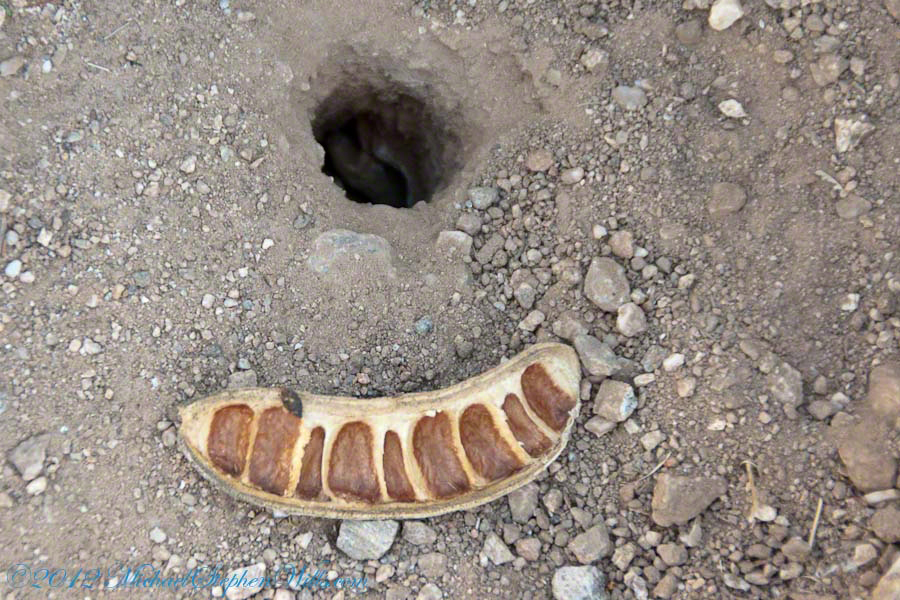
The plentiful legumes that develop from these flowers are edible when cooked. The shape and color of the seeds can be understood from this empty seed pod that happens to lie near a tarantula burrow.
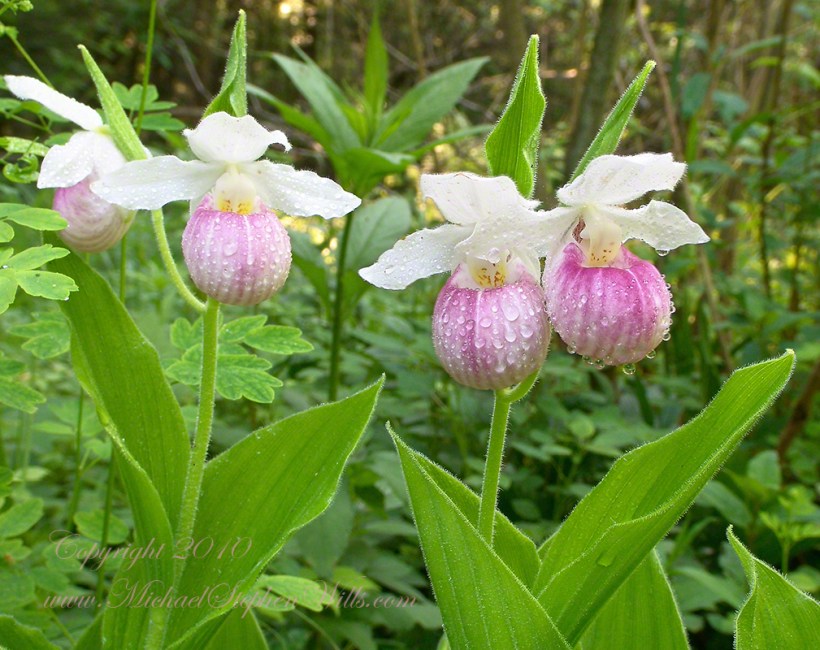
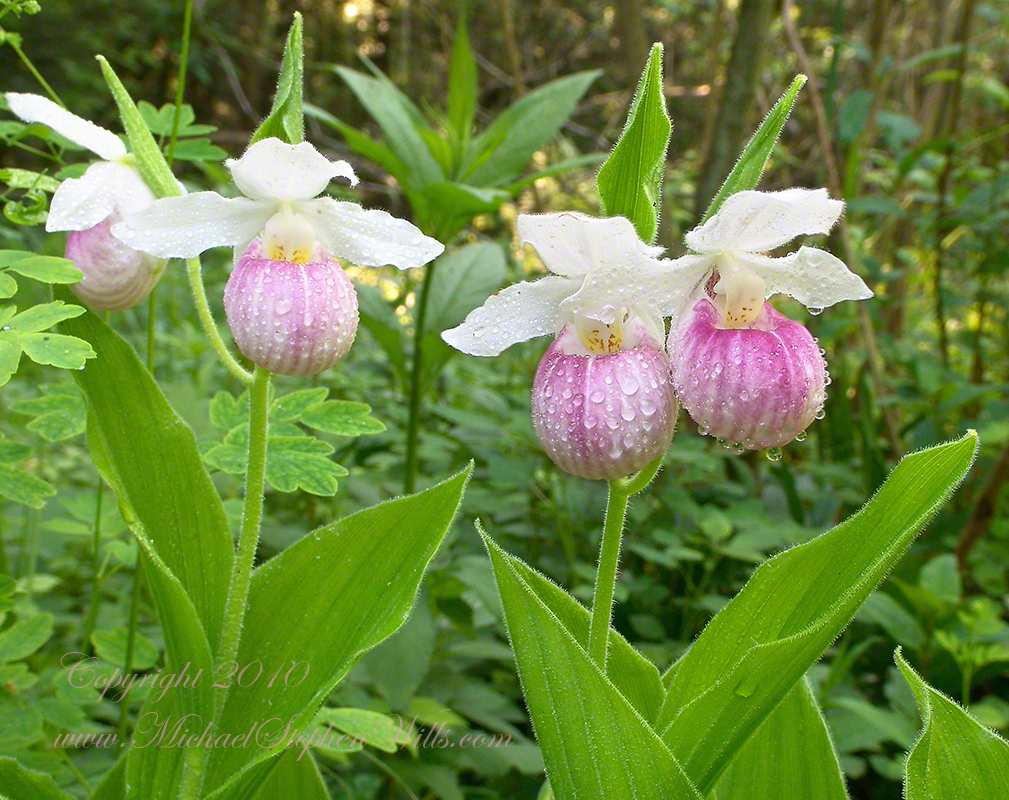
I was lucky enough to live near the site of these wild orchids back in the early 2000’s, close enough to enjoy serial visits, enough to find this perfect moment titled “After the Rain.” In recent visits there were no specimens to be found. The reasons for the disappearance are not clear.
Showy lady’s slipper, scientific name Cypripedium reginae, is also known as pink-and-white lady’s-slipper, and queen’s lady’s-slipper, is a rare lady’s-slipper orchid native to northern North America. Although never common, this plant has vanished from much of its historical range due to habitat loss. It is the state flower of Minnesota.
Cypripedium reginae grows in wetlands such as fens, wooded swamps, and riverbanks. Cypripedium reginae thrives in neutral to basic soils but can be found in slightly acidic conditions. The plants often form in clumps by branching of the underground rhizomes. Its roots are typically within a few inches of the top of the soil. It prefers very loose soil and when growing in fens it will most often be found in mossy hummocks.
It can tolerate full sun but prefers partial shade for some part of the day. When exposed to full sun, the flower lip is somewhat bleached and less deeply colored. It is occasionally eaten by white-tailed deer.
Cypripedium reginae can be found in Canada from Saskatchewan east to Atlantic Canada, and the United States from North Dakota east to the Atlantic and south to Arkansas and Tennessee.
Cypripedium reginae is quite rare. Its increasing rarity is attributable to destruction of a suitable alkaline habitat; it is sensitive to hydrologic disturbances, and is threatened by wetland draining, water contamination, habitat destruction and horticultural collectors. Browsing by an exploding deer population stunts or eliminates the plant’s growth.
Cypripedium reginae contains an irritant, cypripedin, a phenanthrenequinone. The plant is known to cause dermatitis on the hands and face. The first report of the allergy reaction was in 1875 by H. H. Babcock in the United States, 35 years before the term “allergy” was coined. The allergen was later isolated in West Germany by Bjorn M. Hausen and associates.
Reference: “Cypripedium reginae” wikipedia
Images and captions Copyright 2023 Michael Stephen Wills All Rights Reserved
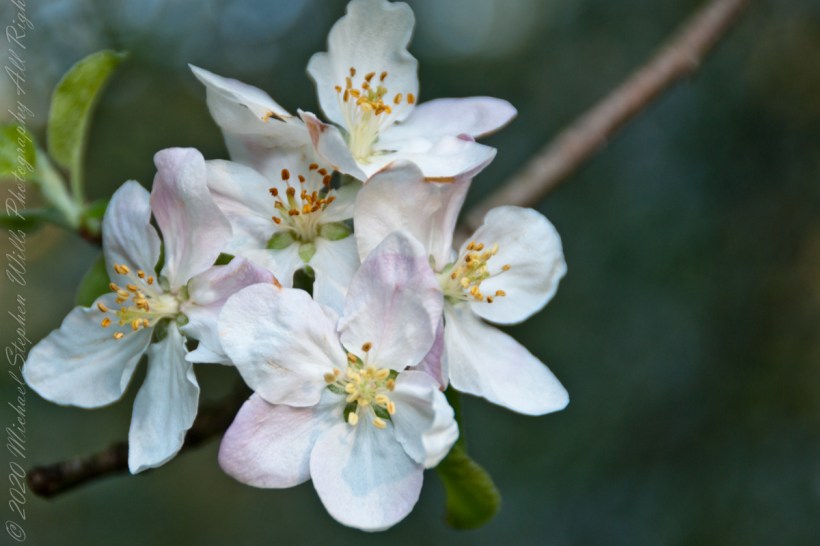
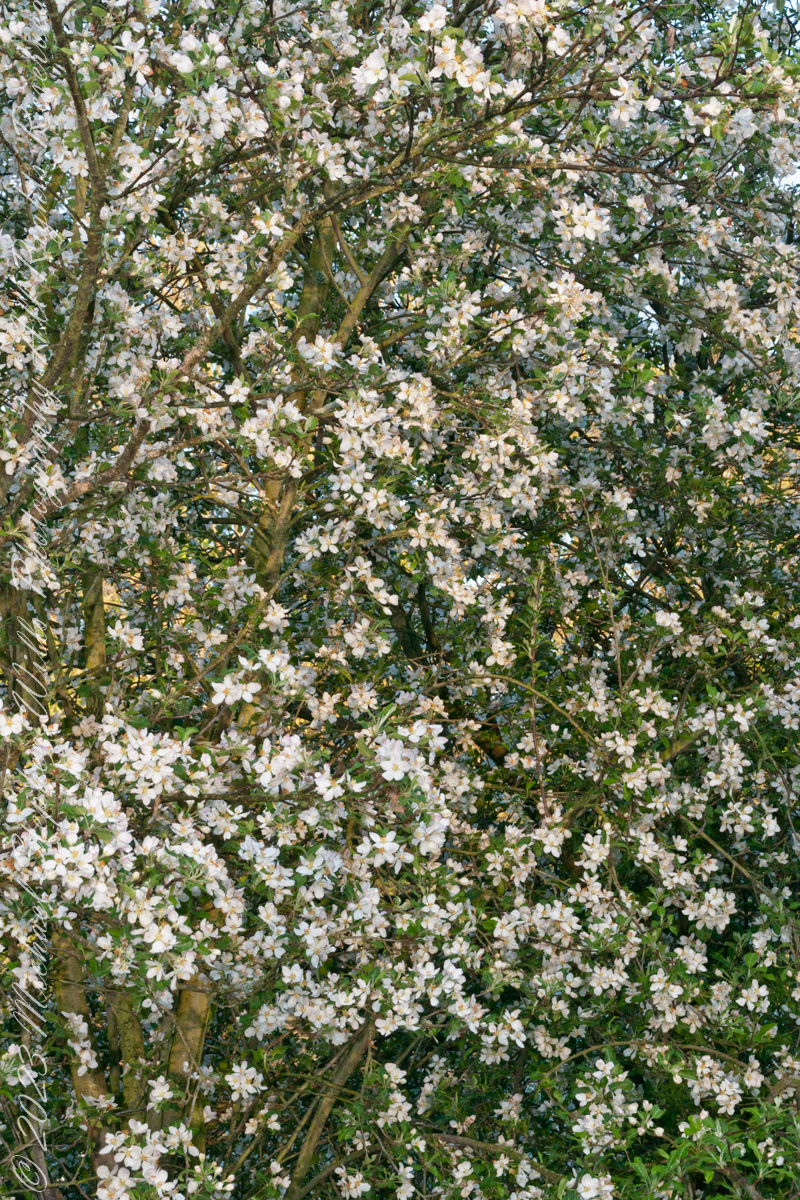
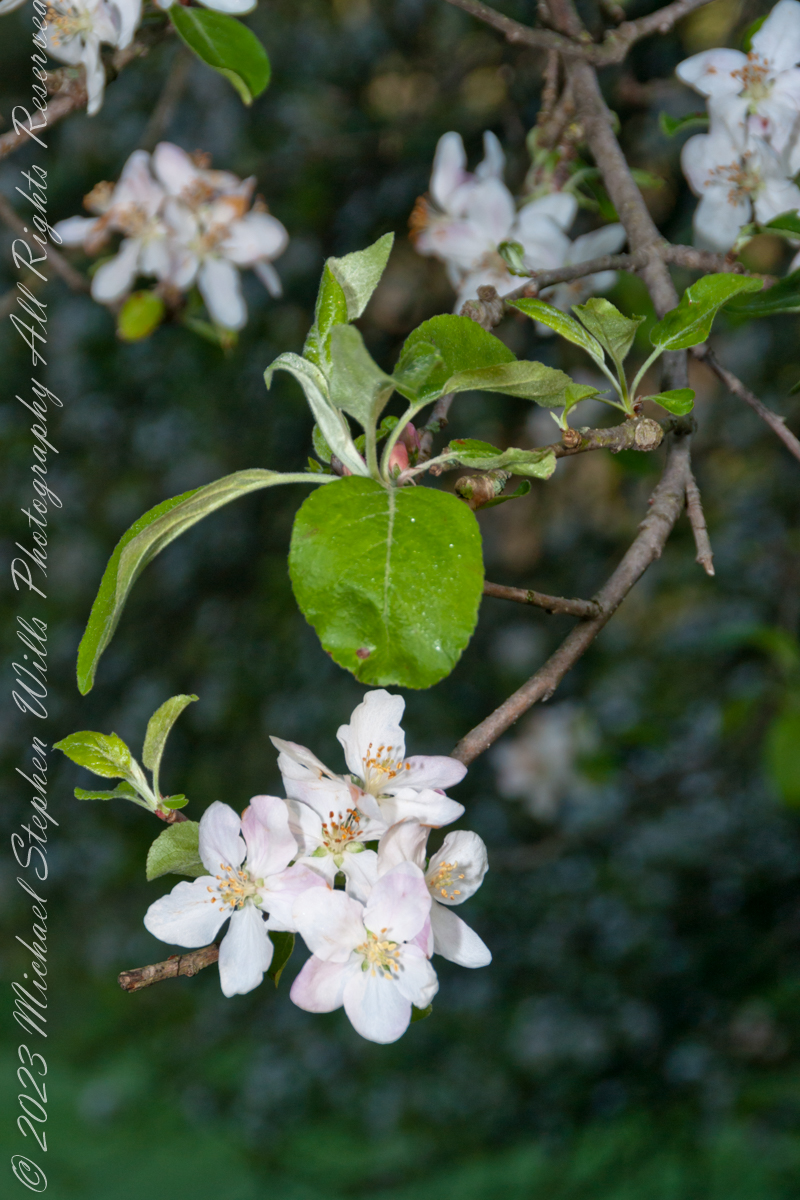
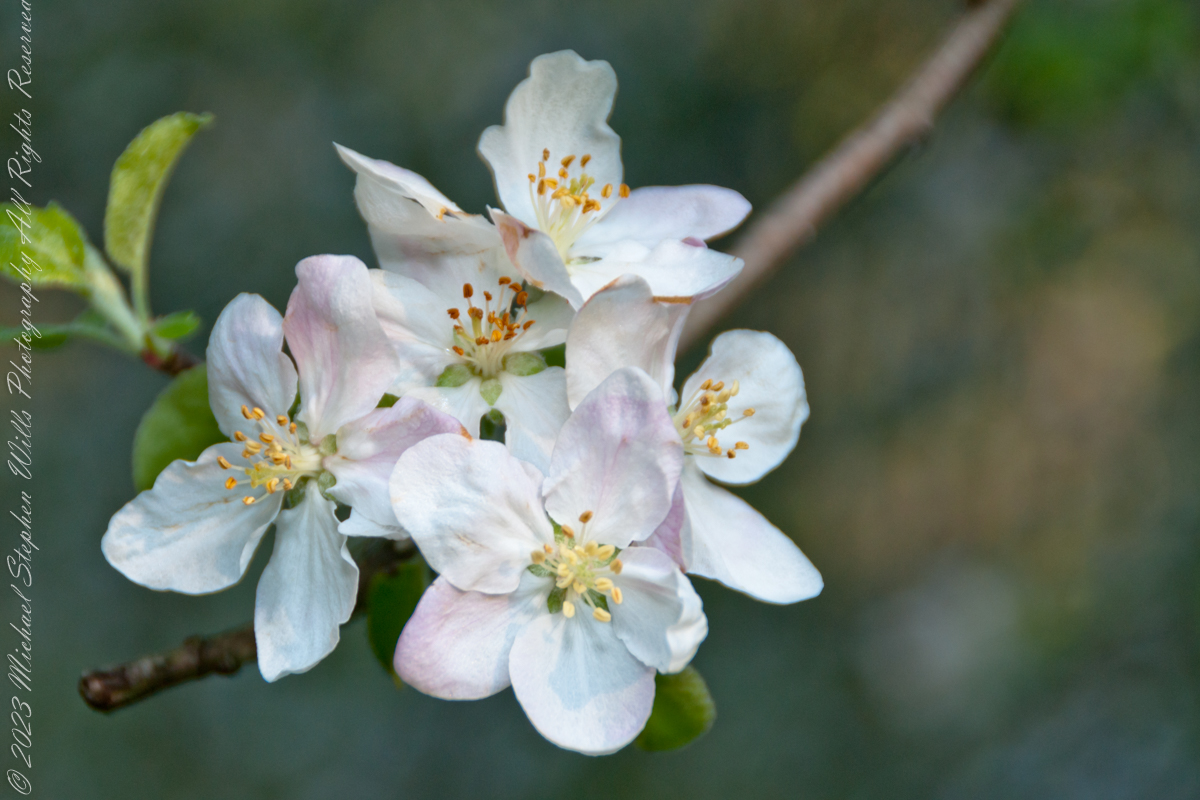
Our home at Malloryville, New York has an orchard of three apple trees, seen here on early one spring morning in the year 2010. The varieties are Delicious, Cortland and McIntosh. Freeville, Tompkins County, New York State
The original wild ancestor of Malus domestica was Malus sieversii, found growing wild in the mountains of Central Asia in southern Kazakhstan, Kyrgyzstan, Tajikistan, and northwestern China. Cultivation of the species, most likely beginning on the forested flanks of the Tian Shan mountains, progressed over a long period of time and permitted secondary introgression of genes from other species into the open-pollinated seeds.
Chinese soft apples, such as M. asiatica and M. prunifolia, have been cultivated as dessert apples for more than 2000 years in China. These are thought to be hybrids between M. baccata and M. sieversii in Kazakhstan.
Among the traits selected for by human growers are size, fruit acidity, color, firmness, and soluble sugar. Unusually for domesticated fruits, the wild M. sieversii origin is only slightly smaller than the modern domesticated apple.
At the Sammardenchia-Cueis site near Udine in Northeastern Italy, seeds from some form of apples have been found in material carbon dated to around 4000 BCE.[20] Genetic analysis has not yet been successfully used to determine whether such ancient apples were wild Malus sylvestris or Malus domesticus containing Malus sieversii ancestry. It is generally also hard to distinguish in the archeological record between foraged wild apples and apple plantations.
There is indirect evidence of apple cultivation in the third millennium BCE in the Middle East. There was substantial apple production in the European classical antiquity, and grafting was certainly known then. Grafting is an essential part of modern domesticated apple production, to be able to propagate the best cultivars; it is unclear when apple tree grafting was invented.
The proverb, “An apple a day keeps the doctor away”, addressing the supposed health benefits of the fruit, has been traced to 19th-century Wales, where the original phrase was “Eat an apple on going to bed, and you’ll keep the doctor from earning his bread”. In the 19th century and early 20th, the phrase evolved to “an apple a day, no doctor to pay” and “an apple a day sends the doctor away”; the phrasing now commonly used was first recorded in 1922.
Reference: Wikipedia “Apple”
Copyright 2023 Michael Stephen Wills All Rights Reserved
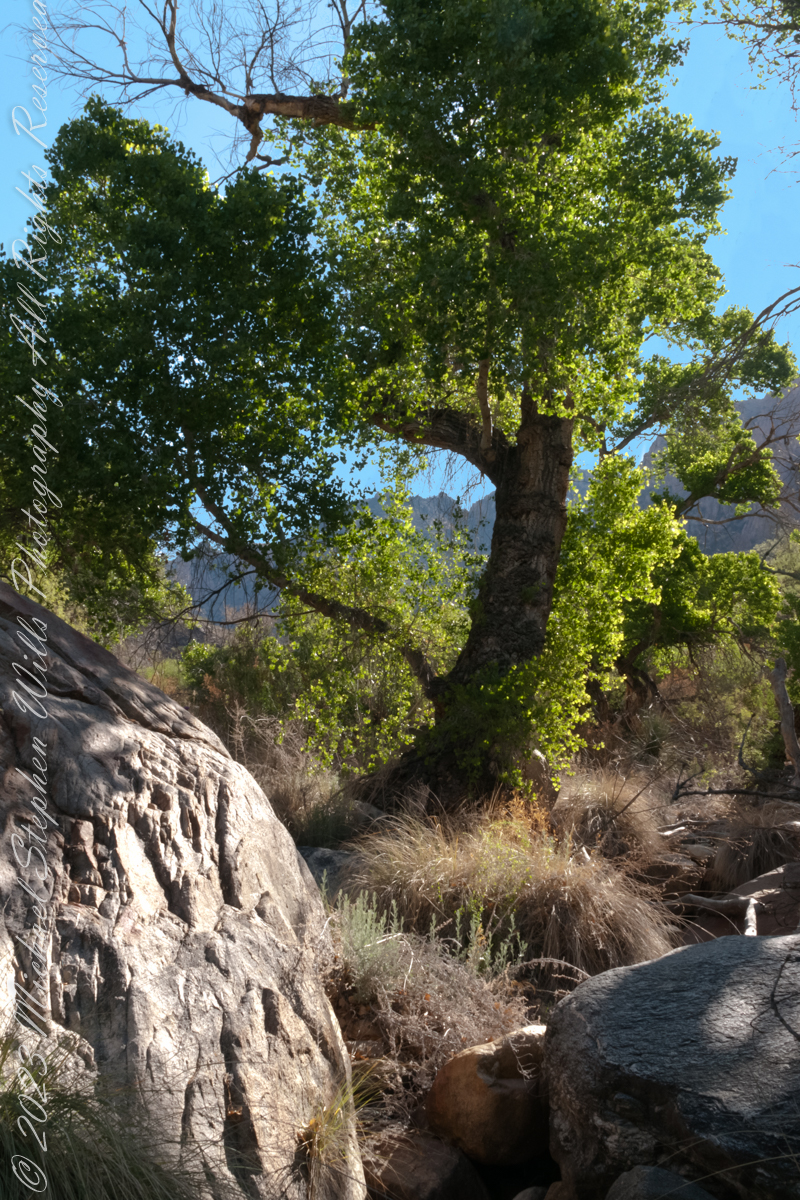
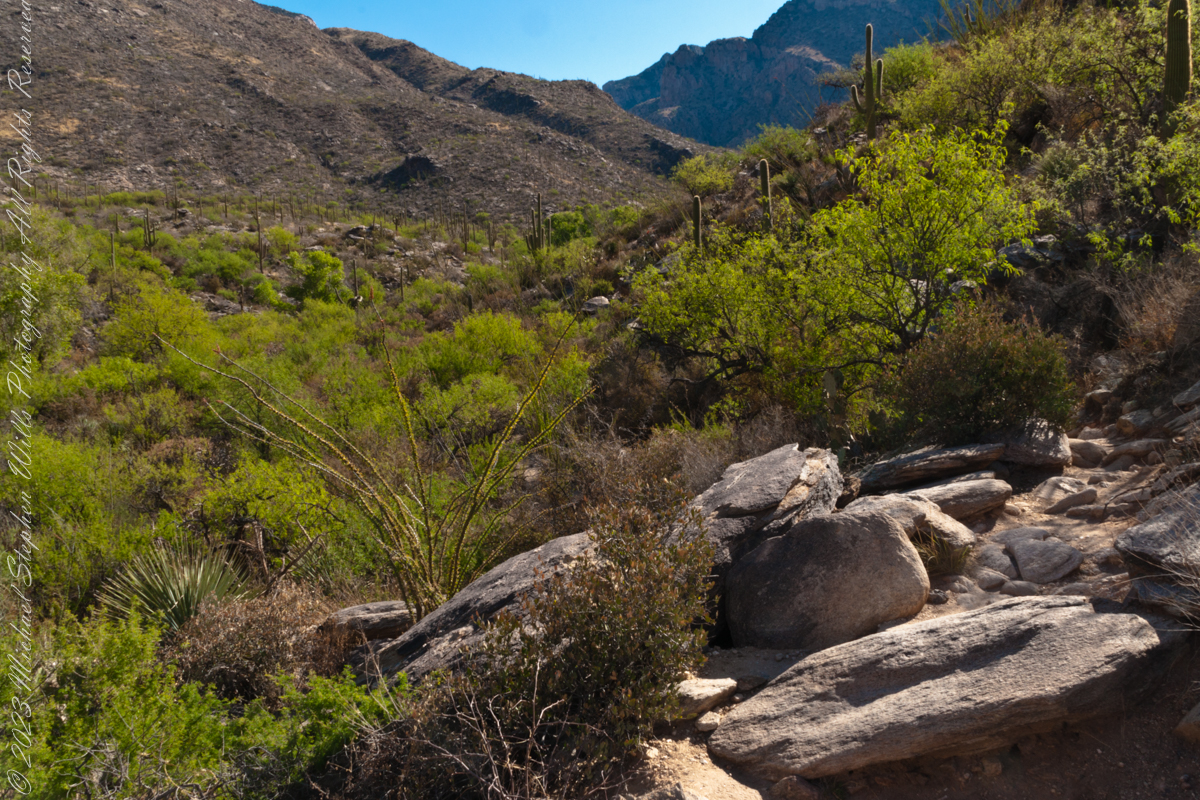
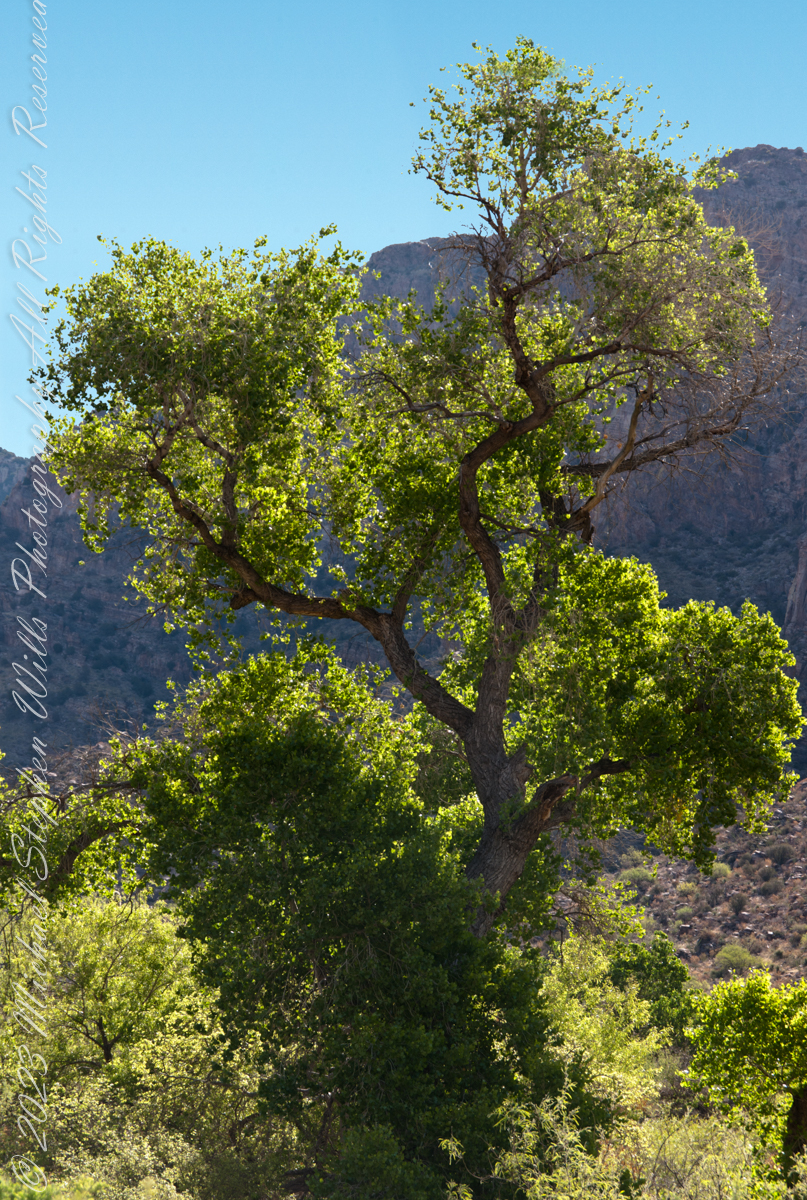
A large Fremont’s Cottonwood Offers shade and protection along the Pima Canyon Trail.
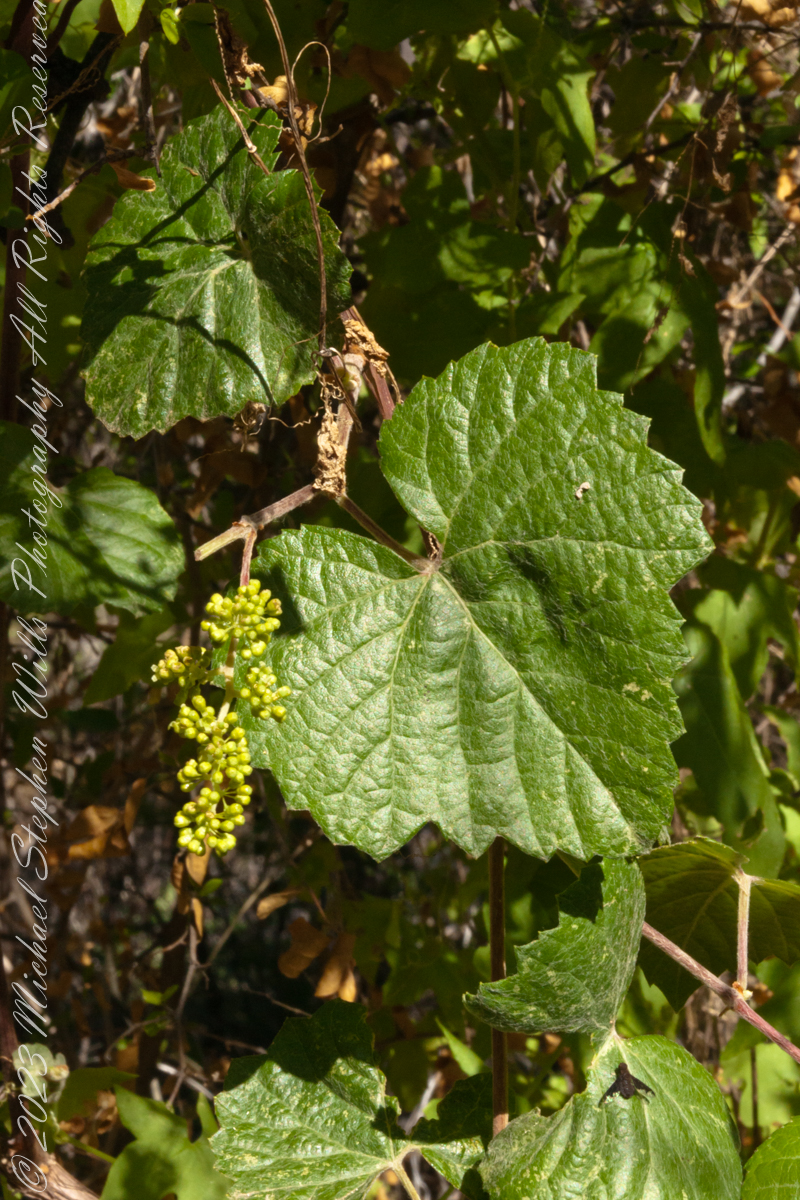
In the shade, a grapevine, offers a vain promise of grapes.
The cottonwood’s deep roots draw water from a mountain stream.
Native Americans in the Western United States and Mexico used parts of Frémont’s cottonwood variously for a medicine, in basket weaving, for tool making, and for musical instruments. The inner bark of Frémont’s cottonwood contains vitamin C and was chewed as an antiscorbutic – treatment for vitamin C deficiency. The bark and leaves could be used to make poultices to reduce inflammation or to treat wounds.
The Pima people of southern Arizona and northern Mexico lived along Sonoran Desert watercourses and used twigs from the tree in the fine and intricate baskets they wove. The Cahuilla people of southern California used the tree’s wood for tool making, the Pueblo peoples for drums, and the Lower Colorado River Quechan people in ritual cremations. The Hopi of Northeastern Arizona carve the root of the cottonwood to create kachina dolls.
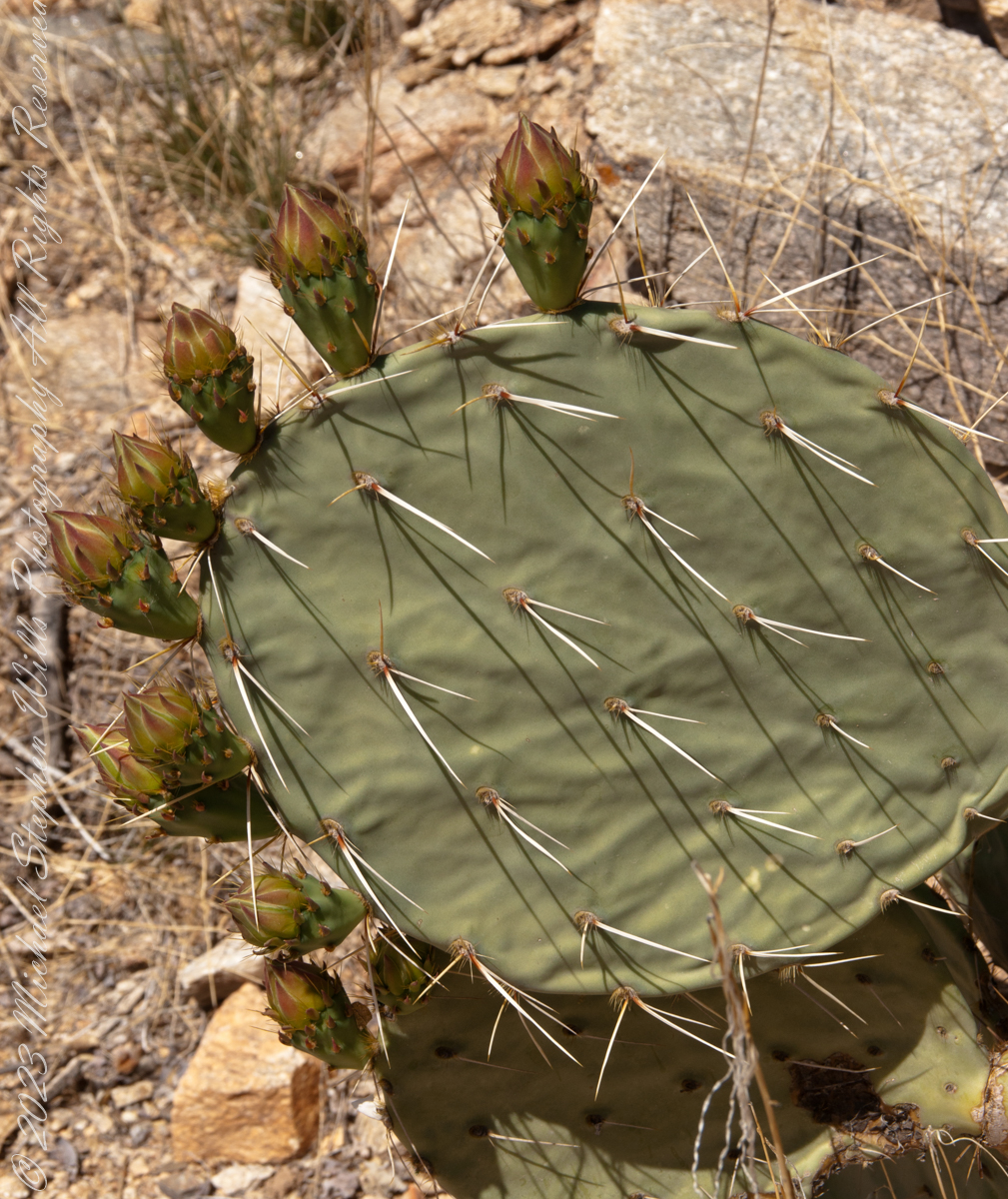
Here are 8 flower bud growing from one cladode (pad). There is a 9th bud on a second cladode. What is interesting about these pads are the needle shadows. Although thin, each provides some protection from the sun.
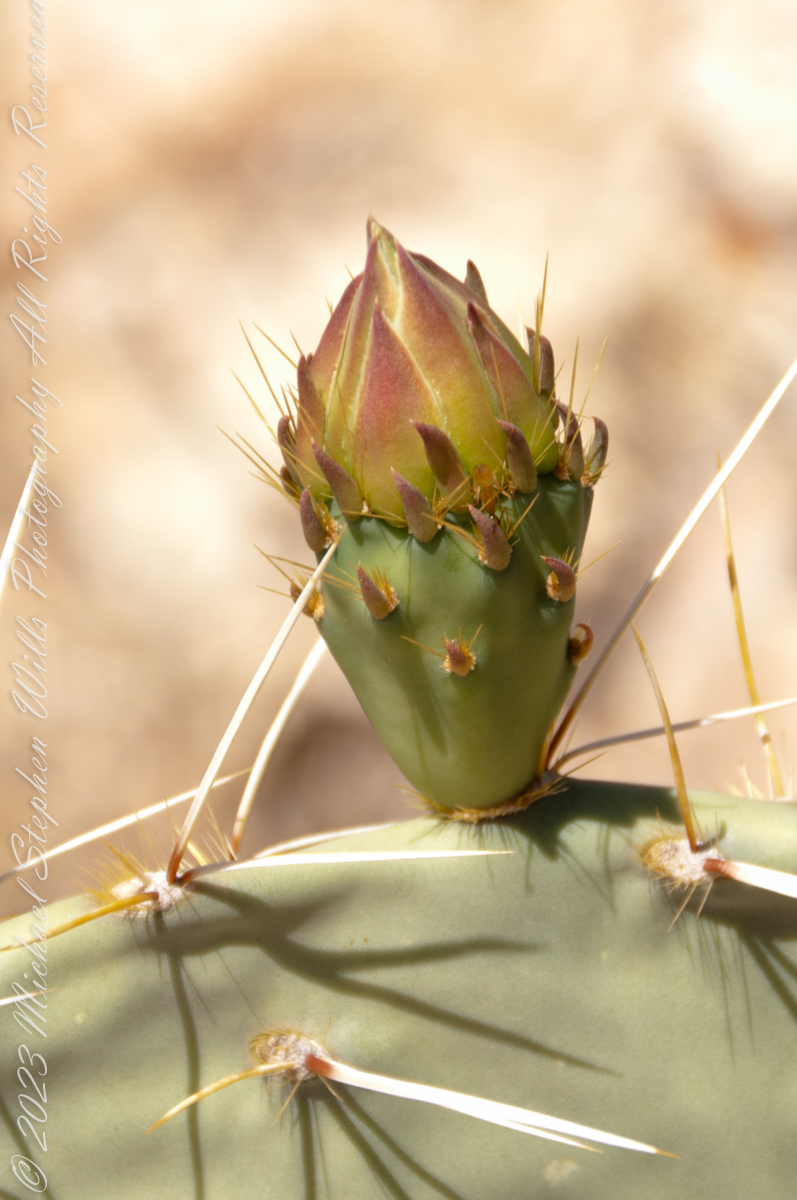
Cactus Closeup
This delicate bud will develop into a flower and, then, into a cactus fruit (in spanish, tuna). The fruit retains those tiny spines, called glochids, which detach on the smallest contact. The pads are also covered with them.
Prickly pears are known for growing into thickets. The Cuban government created a “cactus curtain” of prickly pears around the Guantanamo naval base in the 1960’s, to prevent Cubans from escaping to refuge in the United States.
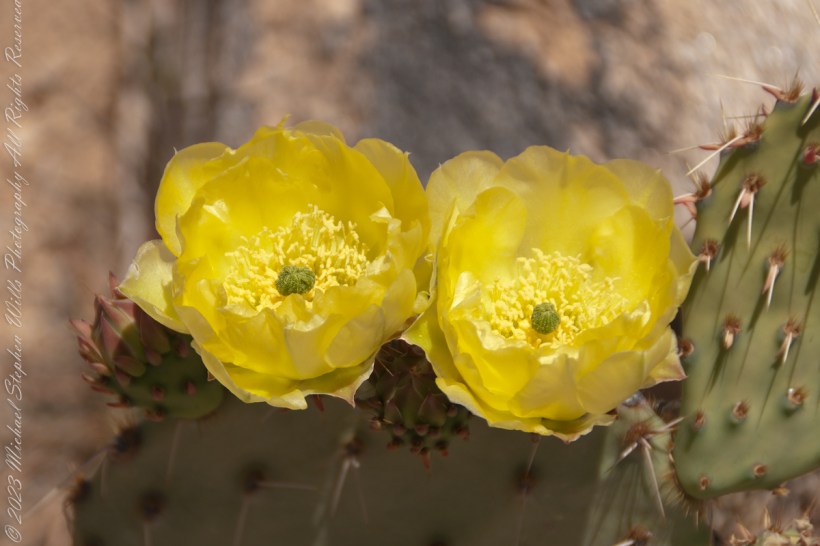
Cactus Flowers
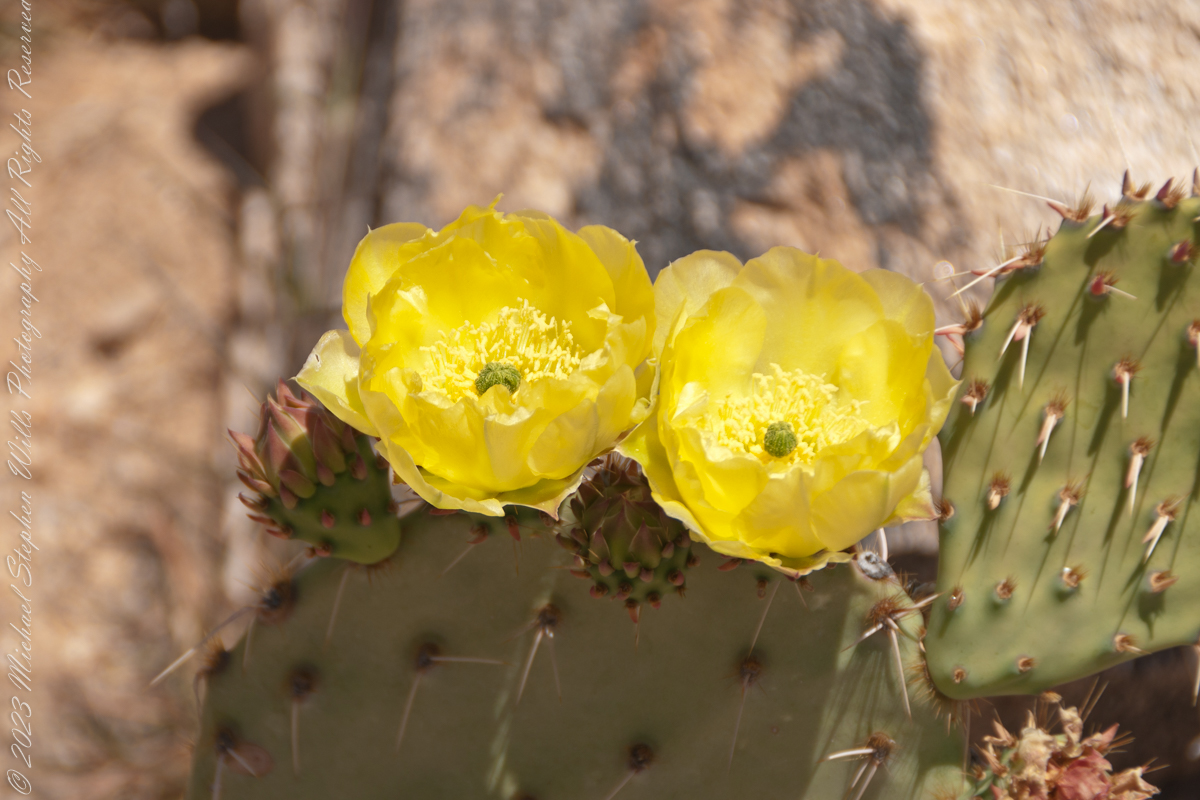
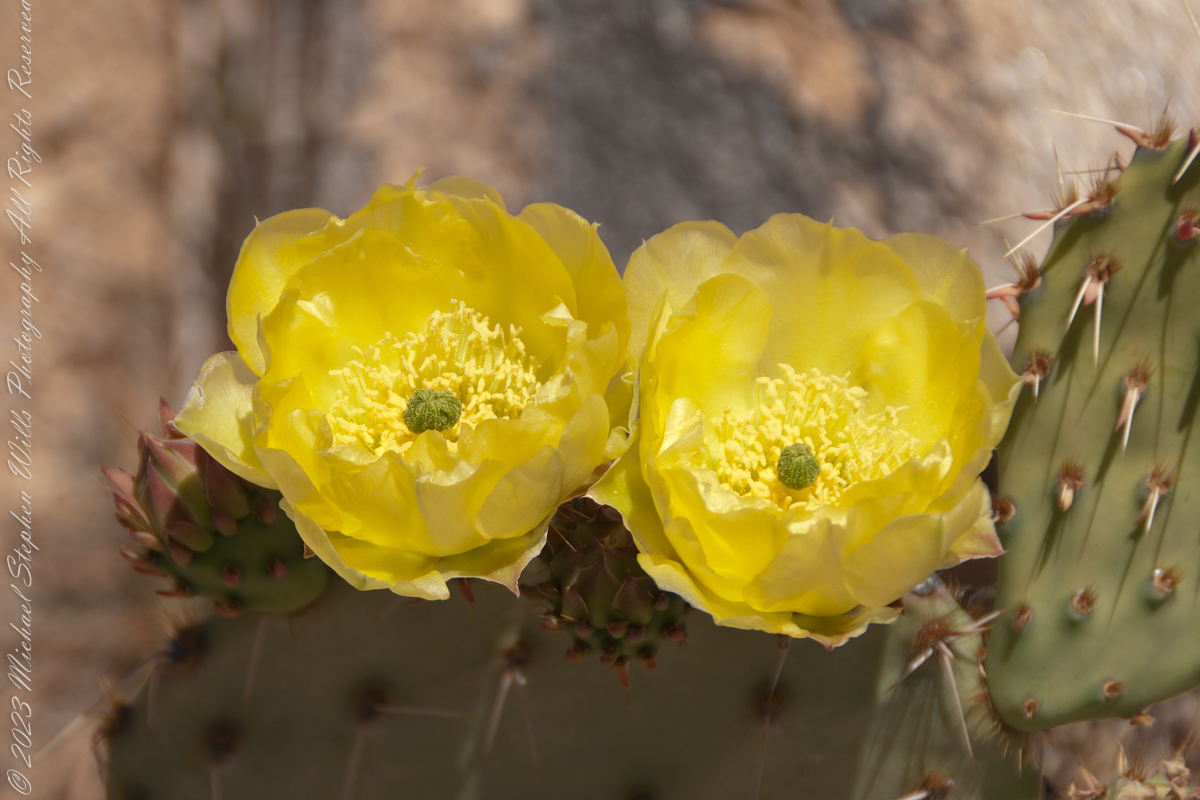
Look closely at the anthers of these flowers. Each curls over when touched, depositing its pollen. The habit of prickly pears to grow together in thickets mean there are clusters of blossoms in springtime.
The canyon below 110 foot Reavis Falls is a wild place of transcendent beauty.
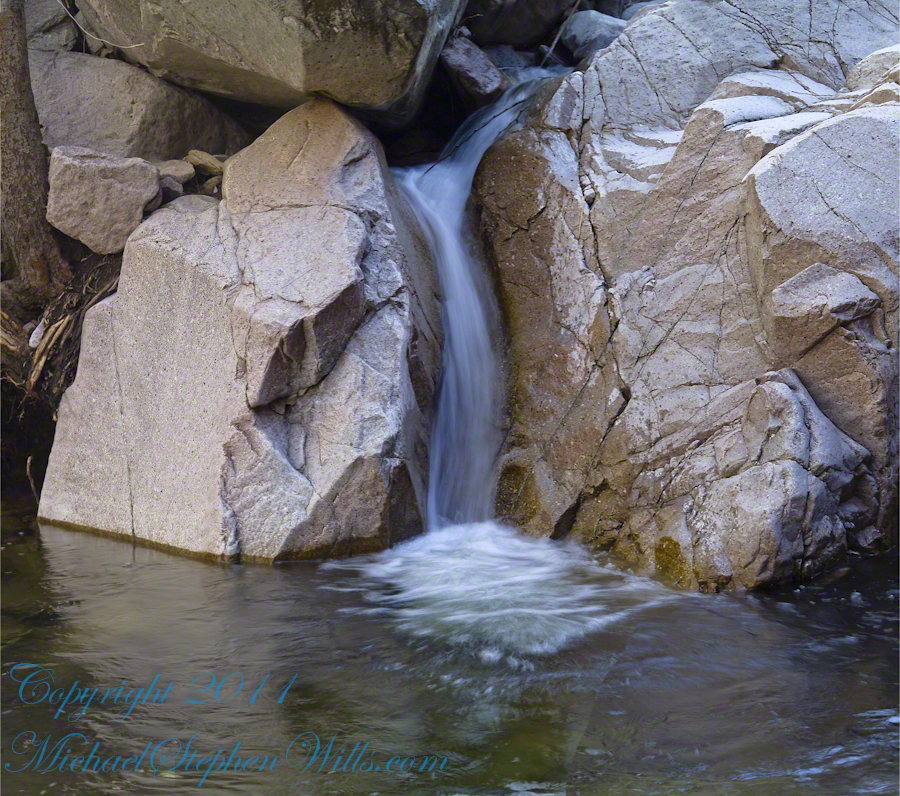
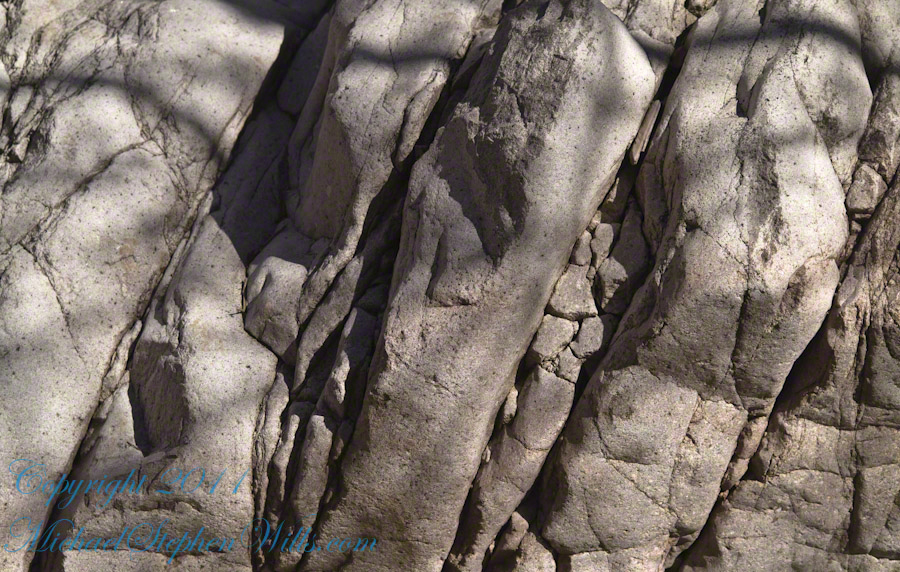
With the afternoon in front of me, the trip back to camp was a slow pleasure. On the way in, I noted several stopping points to capture photographs. Here a natural rock sluice offers a foot tall waterfall, mirroring Reavis Falls, bracketed by white igneous stone.
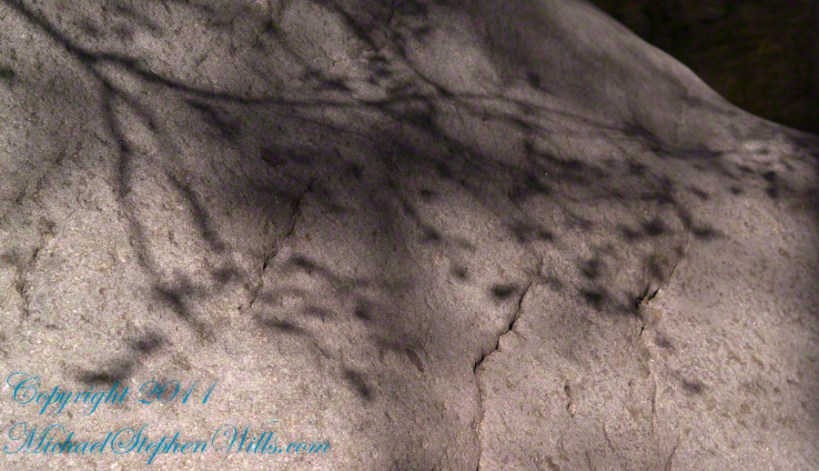
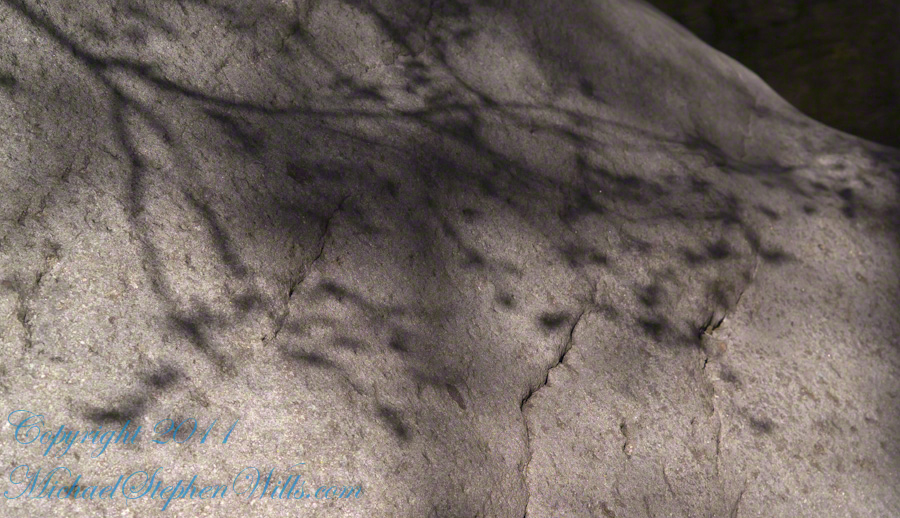
This same stone offers a screen, the bright spring sun throwing the sparse leaves into sharp relief.


 Michael Stephen Wills Photography