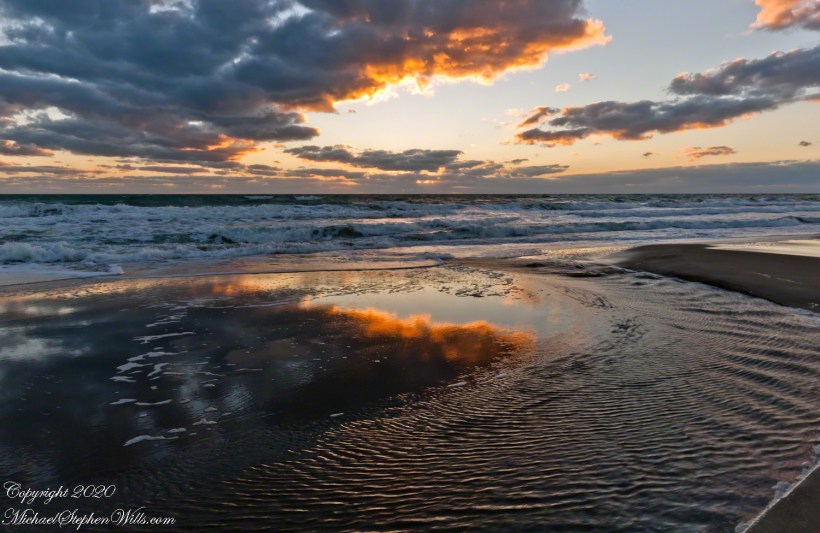
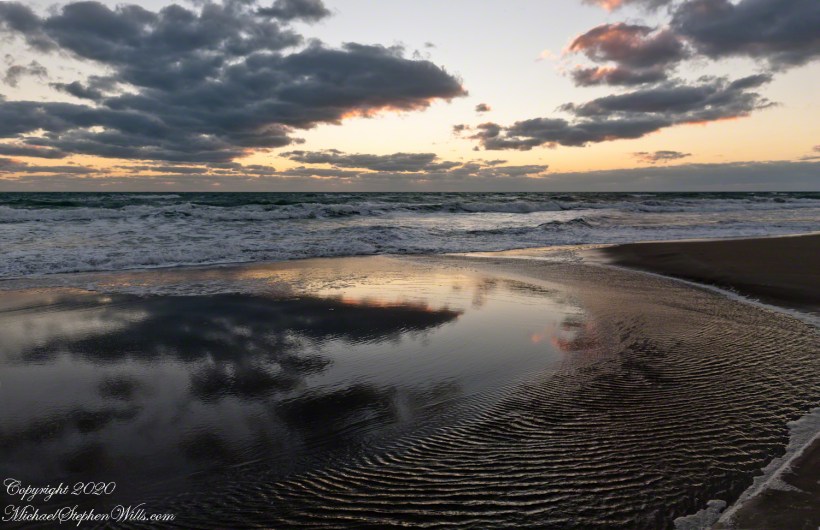
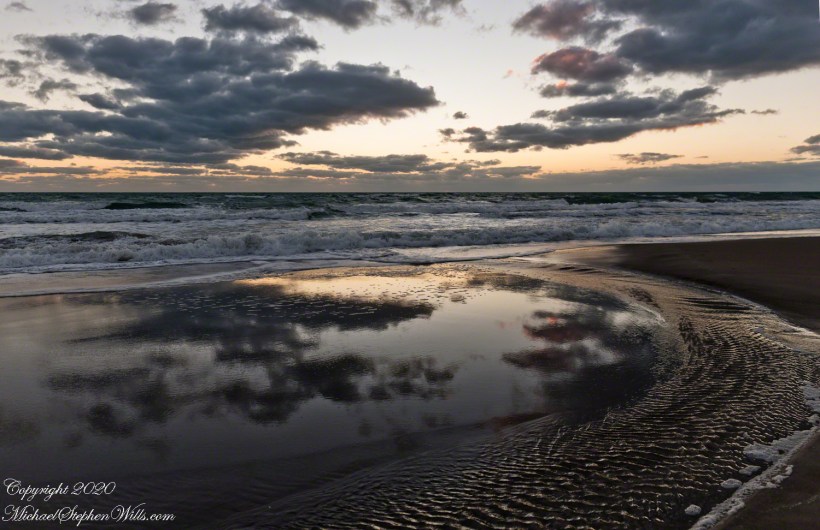
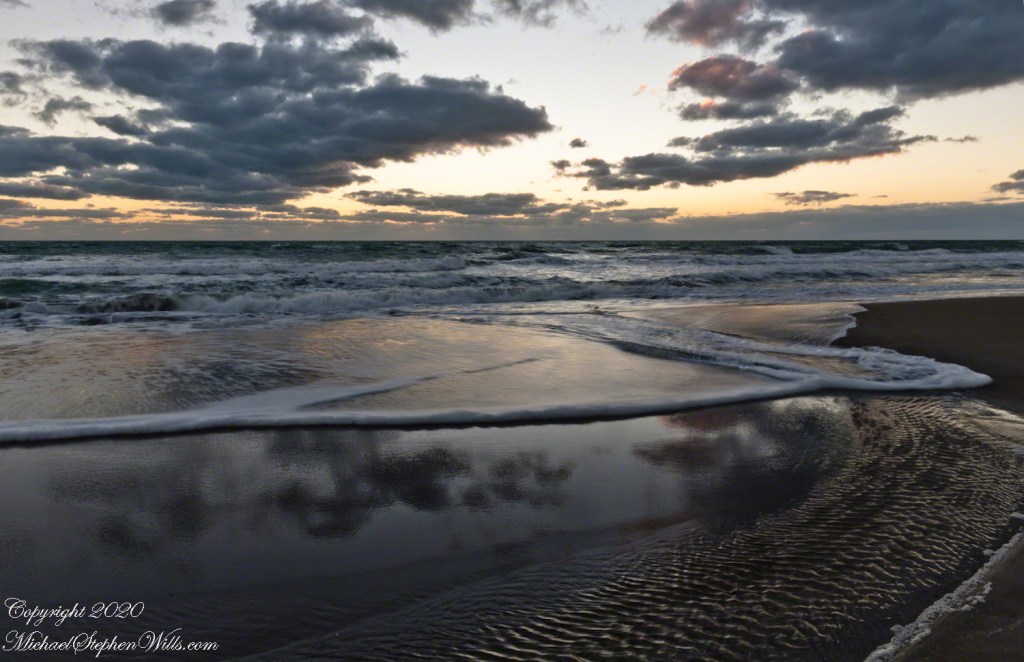
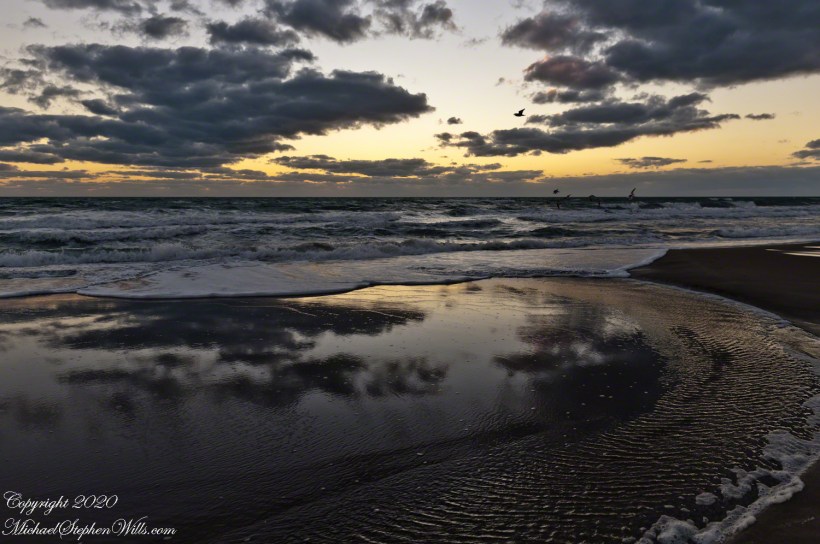
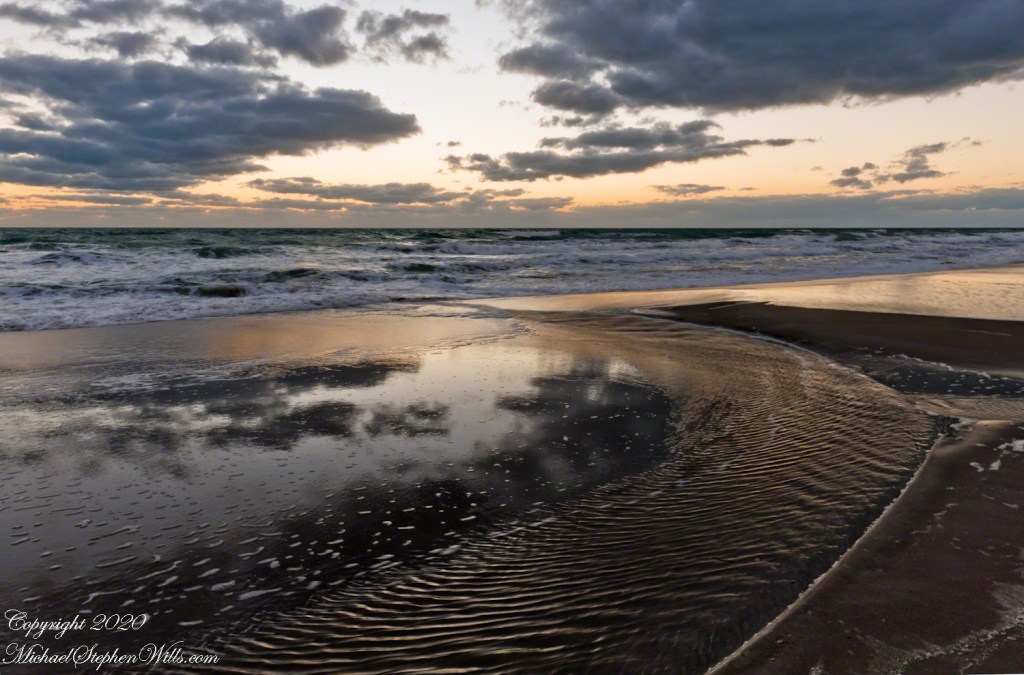
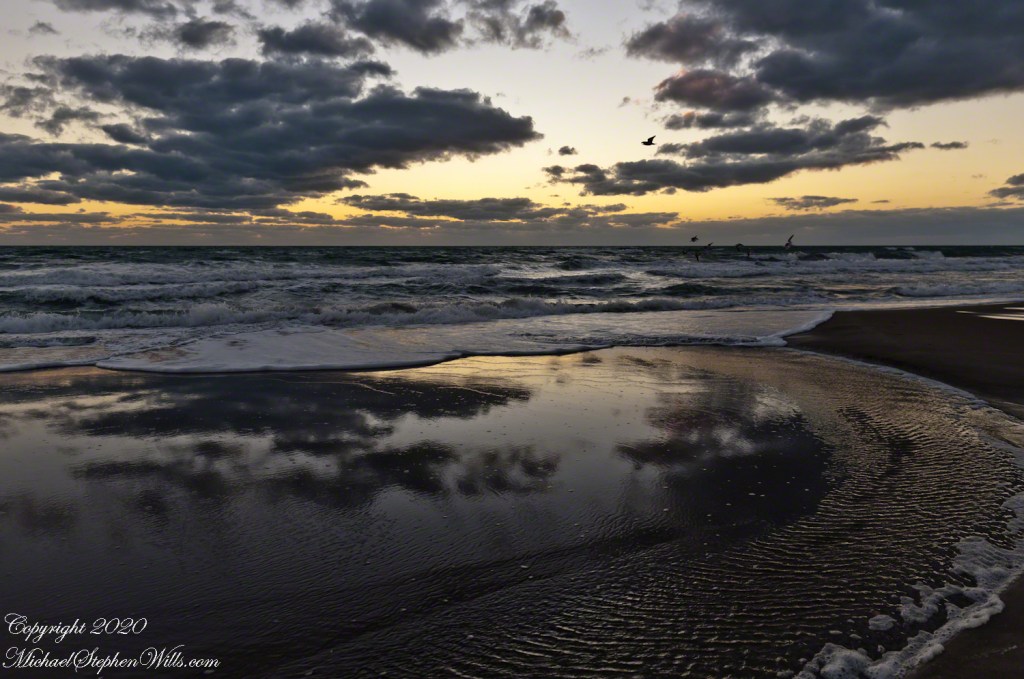
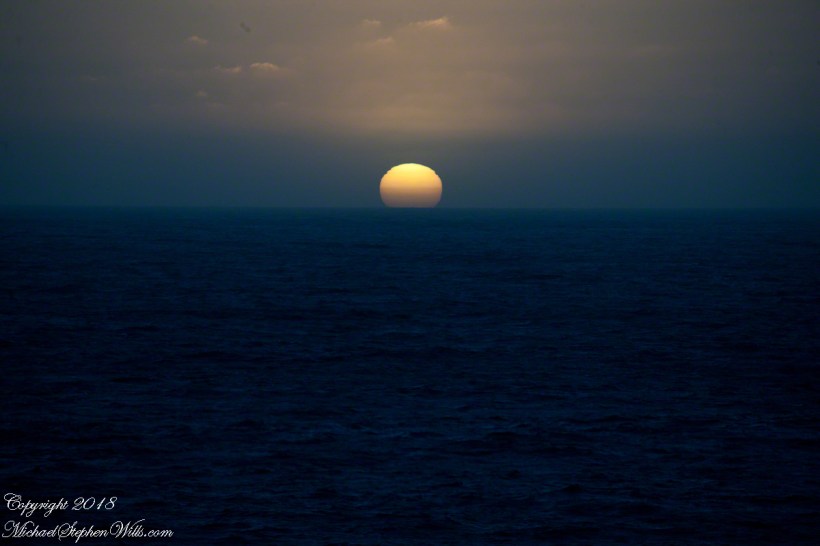
Thirty three seconds pass from Series 3, the high clouds shine less bright, the sun disk now blocked by those clouds on the horizon, the rising sun brings darkness yet a first hint of sunburst.
Seemingly, the first image foam-wave swath will erase the mirror.
Click photograph for larger image. To do this from WordPress Reader, you need to first click the title of this post to open a new page.
Exposure: 1/400 sec at f / 5.0, Focal Length: 24 mm, ISO 250
Fifty seconds later, instead of erasure the new water brings clarity.
A slide show of these images. Suggestion, for this series in a larger format, open a separate browser tab for each post. At series end you will then have eight (including the very first post a few weeks ago) landscapes to compare.
You will notice the sky changing, compared to the first set published here , Almost 6 minutes have passed, 4 minutes from the last image from Sunrise Texture Series 2. From behind the horizon, the first rays of sunlight catch the sky undersides. Unseen. the sun disk broaches the horizon.
Working fast, I used the dial to change from aperture-priority to shutter-priority with settings saved from the last use. In this way the duration is only twelve seconds between shots. The sun disk is near to/passed the horizon hidden behind those distant clouds.
Click photograph for larger image. To do this from WordPress Reader, you need to first click the title of this post to open a new page.
Exposure: 1/400 sec at f / 5.0, Focal Length: 24 mm, ISO 250
Breaking of a small wave.
Exposure: 1/15 sec at f / 22, Focal Length: 24 mm, ISO 250
A slide show of these images. Suggestion, for this series in a larger format, open a separate browser tab for each post. At series end you will then have eight (including the very first post a few weeks ago) landscapes to compare.
Exposure: 1/400 sec at f / 5.0, Focal Length: 24 mm, ISO 250
Exposure: 1/15 sec at f / 22, Focal Length: 24 mm, ISO 250
Twelve minutes, fifty four seconds separate the first and list images of this series of 16 images, starting with the first set published here fourteen days ago.
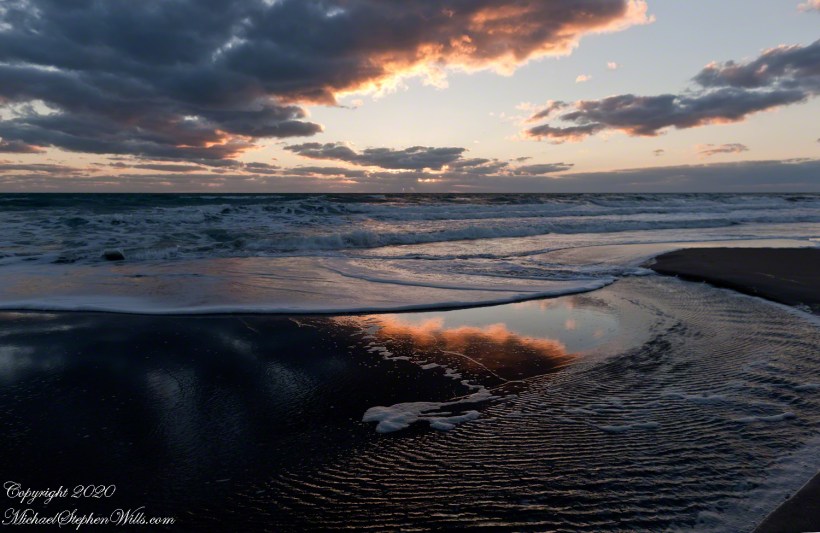
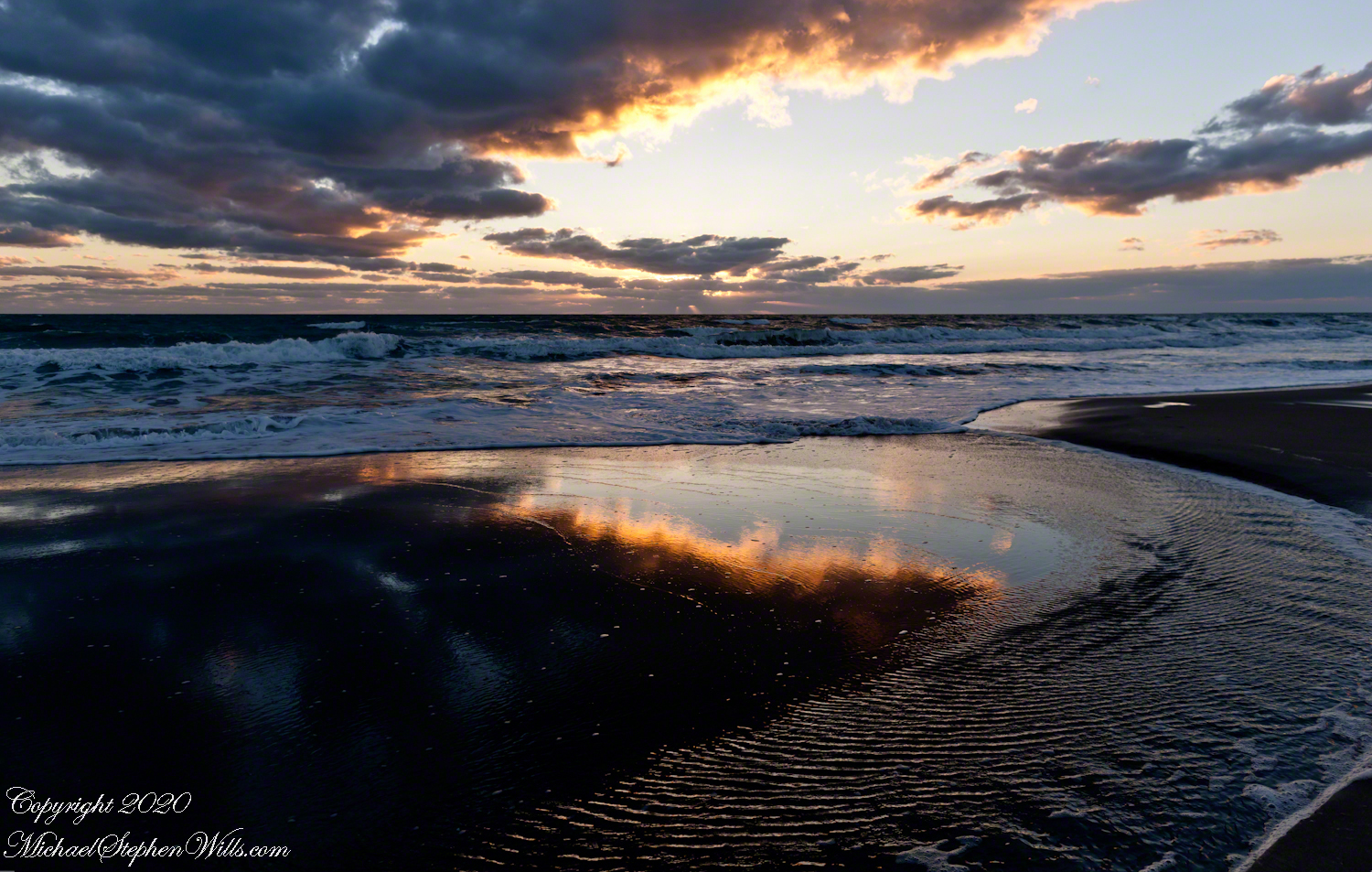
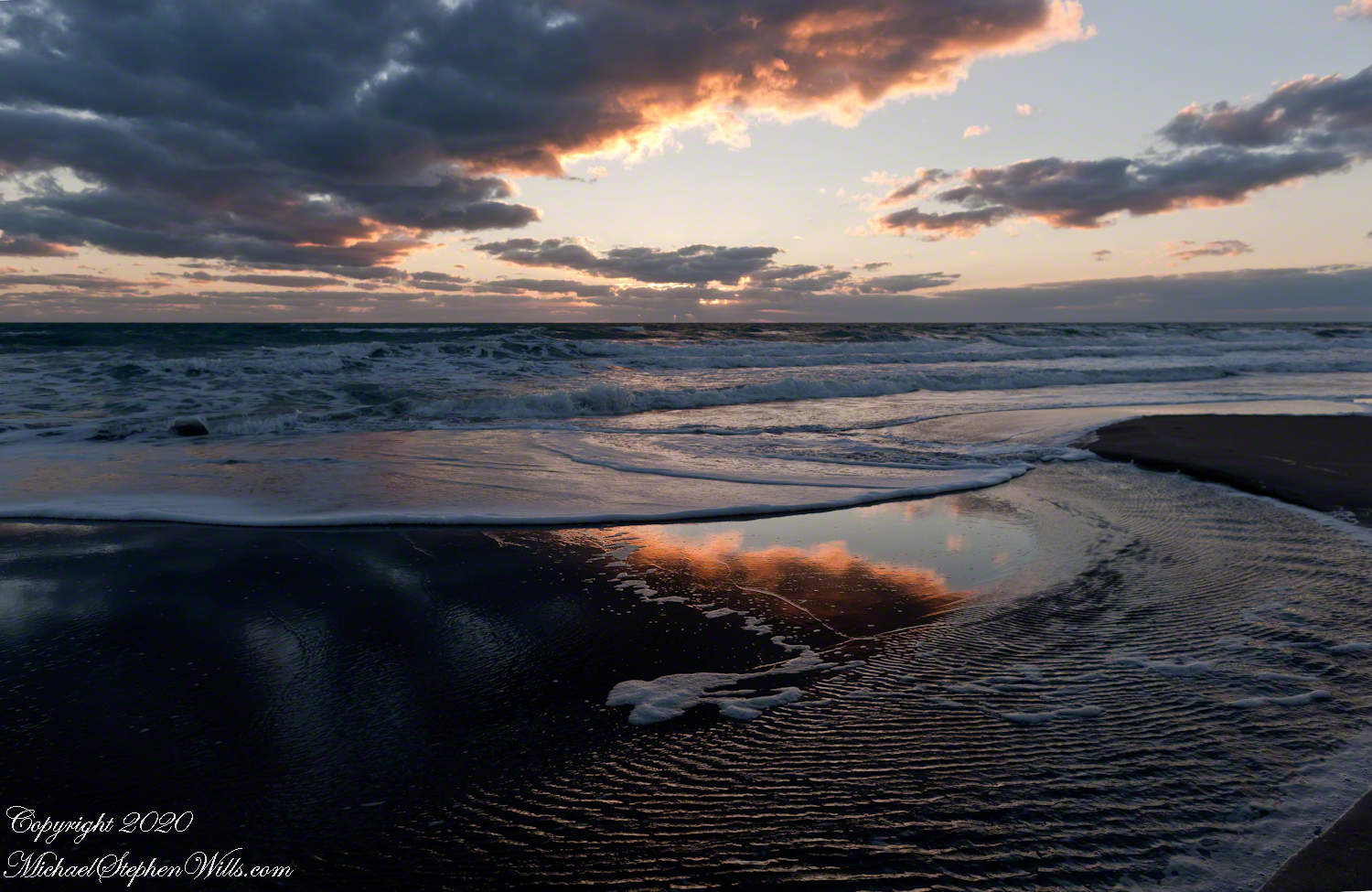
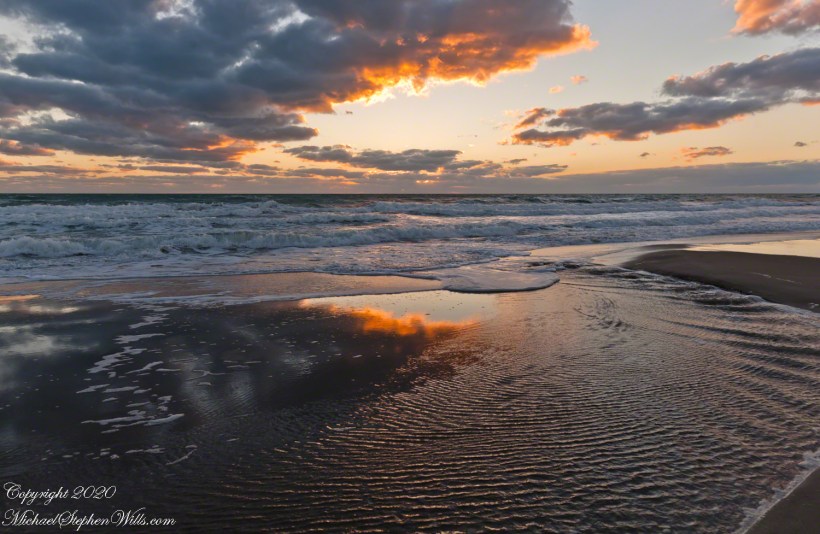
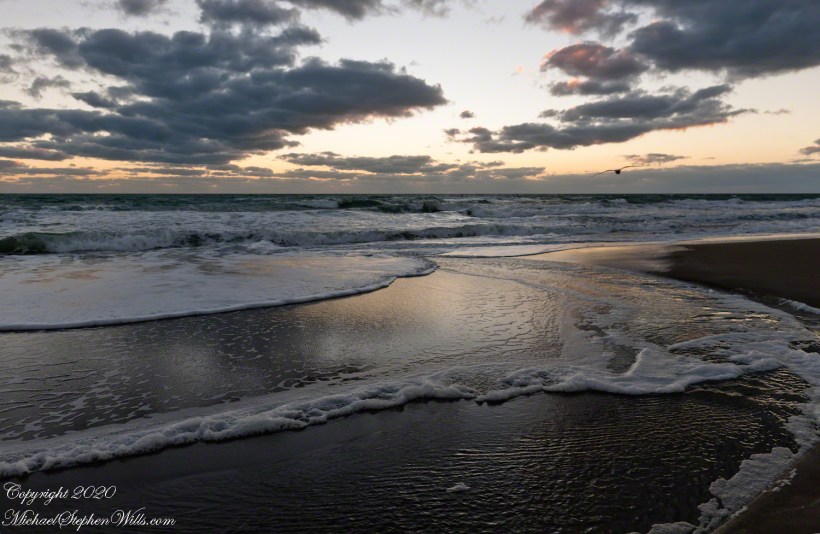
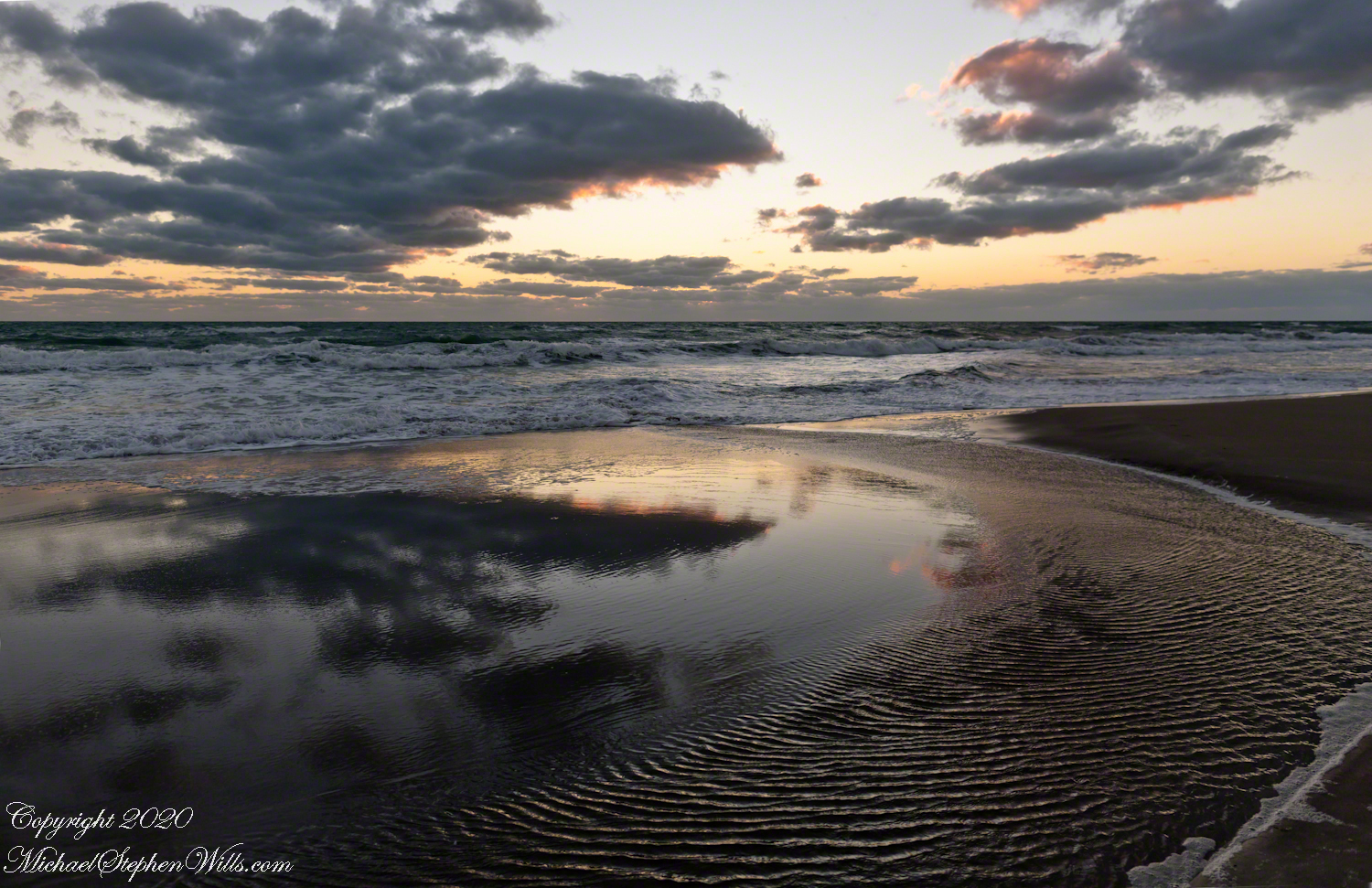
Almost a minute, fifty two seconds, separates the images of this post, enough time for a wave to sweep over a boss of sand, forming a mirror, and to start a return flow to the sea.
Happy turning of February to March.
Click photograph for larger image. To do this from WordPress Reader, you need to first click the title of this post to open a new page.
Exposure: 1/250 sec at f / 4.0, Focal Length: 24 mm, ISO 125
A sand boss held water briefly each cycle to form a mirror.
A slide show of these images.
Exposure: 1/250 sec at f / 4.0, Focal Length: 24 mm, ISO 125
Heraclitus, sometime between his beginning and end, 535 – 475 B.C., wrote “No man steps into the same river twice.” The flow of these images is more changeable, ebbing and flowing with each wave.
My habit is to time early morning walks by sunrise, stepping onto the beach well before dawn to enjoy the encounter. First days of January 2020 were notably clear and warm. Then over several days the wind rose, on the 9th were these clouds,
High tide passed a few minutes before, for whatever reason there were hollows filled with the stronger waves, the water pooling to flow back as is seen here. The pattern of sand hollows across the beach was lost across the hours and tides, not to return during our time at the beach.
Click photograph for larger image. To do this from WordPress Reader, you need to first click the title of this post to open a new page.
Exposure: 1/250 sec at f / 4.0, Focal Length: 24 mm, ISO 125
A sand boss held water briefly each cycle to form a mirror.
A sand boss held water briefly each cycle to form a mirror. In the small ripples in the return stream rising against the waves of the return flow can be seen the strong, steady southeast wind of that day.
Exposure: 1/10 sec at f / 22, Focal Length: 24 mm, ISO 125
A slide show of these images. Use is to compare the effect of longer vs shorter exposure time and f-stop.
Exposure: 1/250 sec at f / 4.0, Focal Length: 24 mm, ISO 125
Exposure: 1/10 sec at f / 22, Focal Length: 24 mm, ISO 125
Sunrise for Florida, January, is roughly a quarter past 7 am. Most mornings this year I was on the beach for a morning, pre-dawn, walk camera in hand. This day, the 9th, the clouds were promising, no to heavy on the horizon and scattered, cumulus clouds otherwise. For the promise I brought the full frame Canon EOS-1Ds Mark III, Canon lens 24 mm f/1.4L II USM fitted with a graduated .6 ND filter sitting on top of a Manfrotto BeFree Carbon fiber tripod.
A graduated neutral density filter has a portion shaded with gray to produce a “2 stop” difference in exposure between the darkest shade and clear glass with, between, a gradual feathered reduction in shade. In this way, the dark foreground and bright sky are balanced.
A carbon fiber tripod folds into a compact shape. At about 2.5 pounds it fits into a suitcase with the least weight possible for a reasonably stable platform. Using it, I am able to take a sequence of frames of the identical scene, changing camera settings as I go along.
Click photograph for larger image. To do this from WordPress Reader, you need to first click the title of this post to open a new page.
Exposure: 1/6 sec at f / 22, Focal Length: 24 mm, ISO 125
Sunlight, low in the western sky, was perfect for mirror-like reflections in the retreating surf.
Exposure: 1/250 sec at f / 4.0, Focal Length: 24 mm, ISO 125
In a few weeks, after the “Slievenaglogh View” series now underway, I will present a week of these images moving from pre-dawn to sunrise.
A slide show of these images. Use is to compare the effect of longer vs shorter exposure time and f-stop.
Exposure: 1/250 sec at f / 4.0, Focal Length: 24 mm, ISO 125
Exposure: 1/6 sec at f / 22, Focal Length: 24 mm, ISO 125
Copyright 2020 All Rights Reserved Michael Stephen Wills
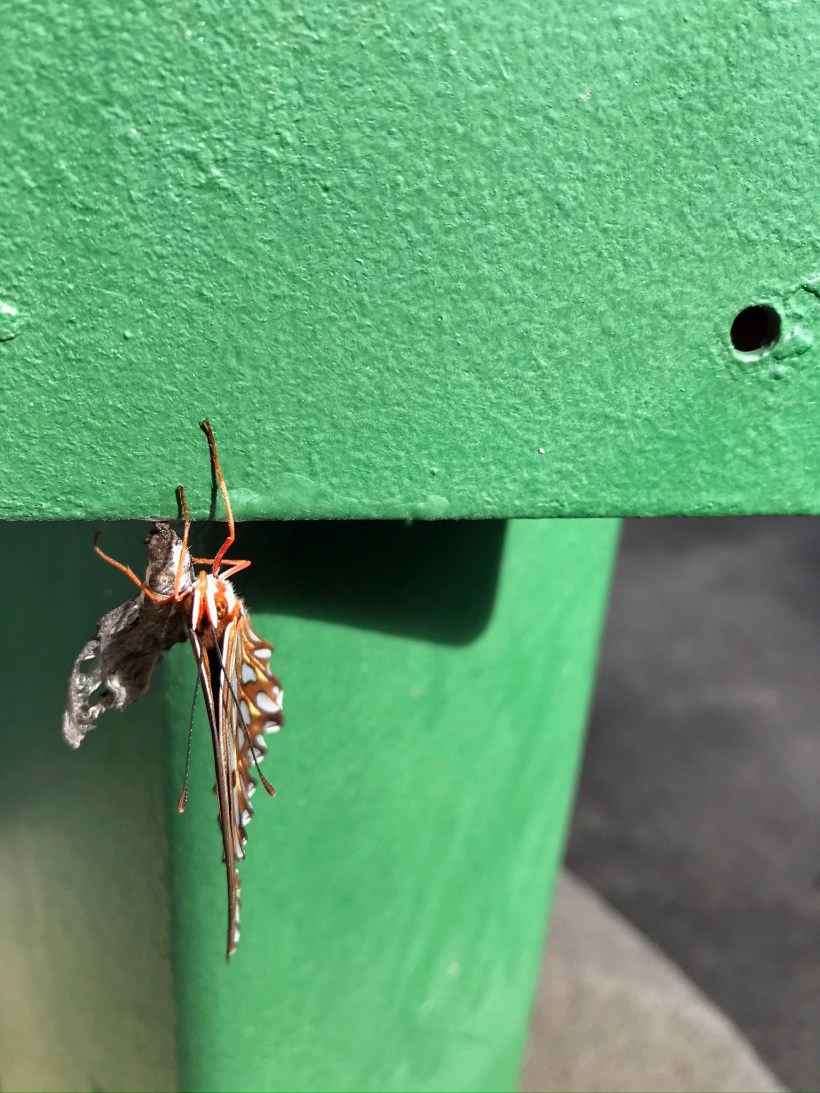
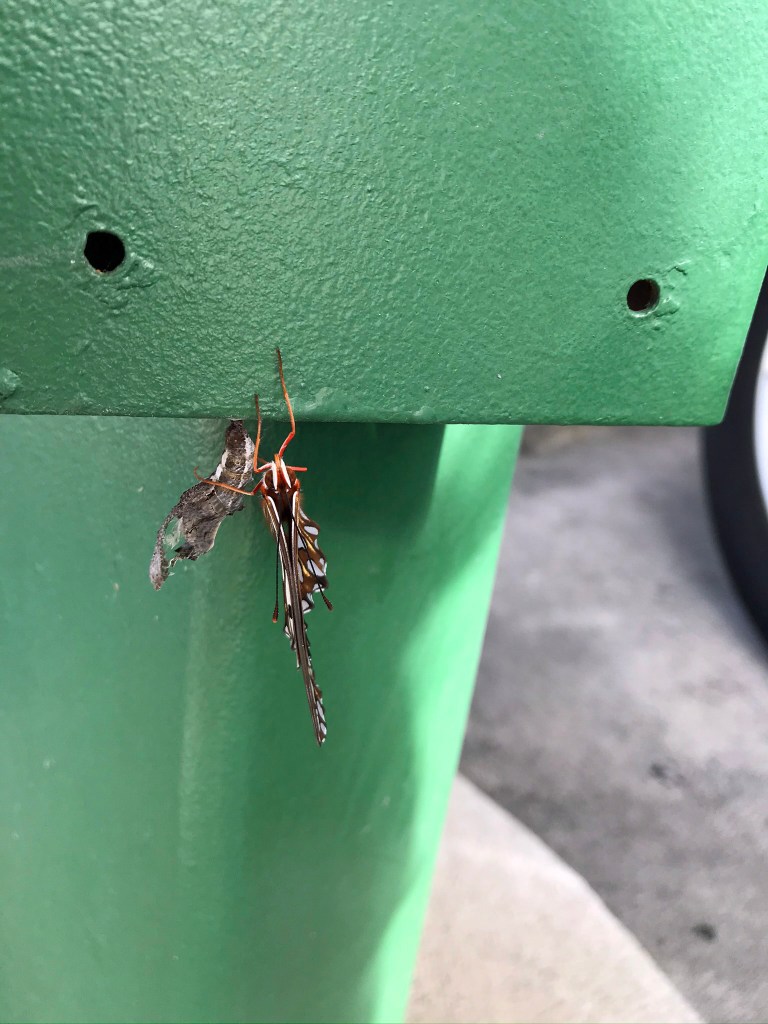
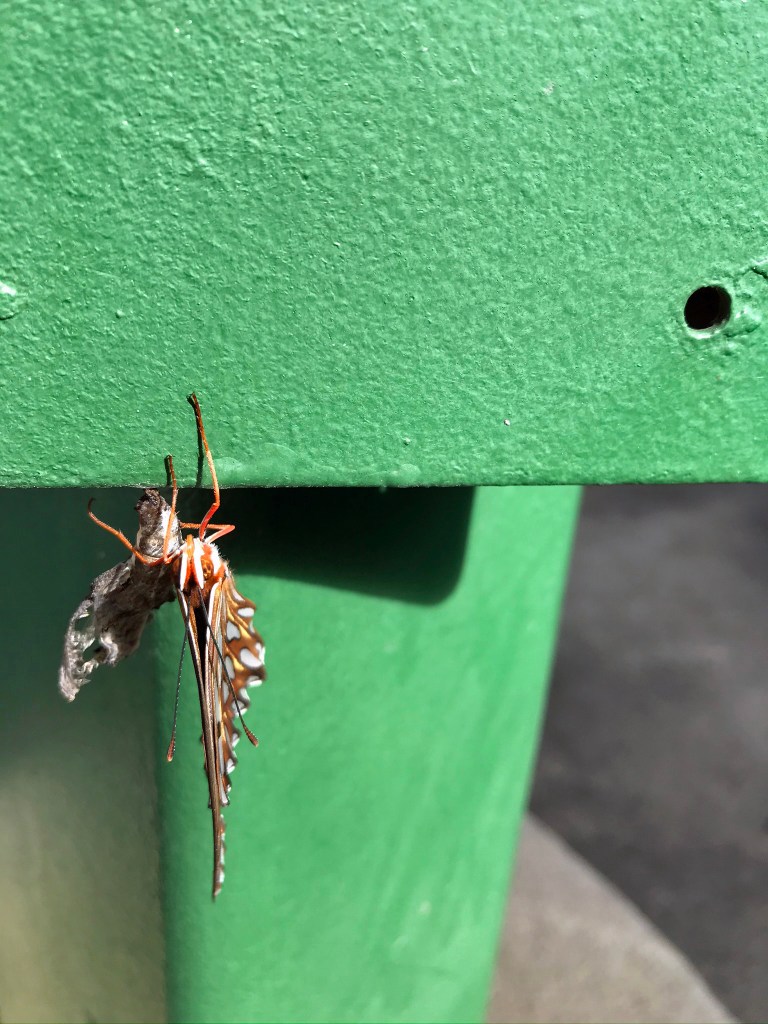
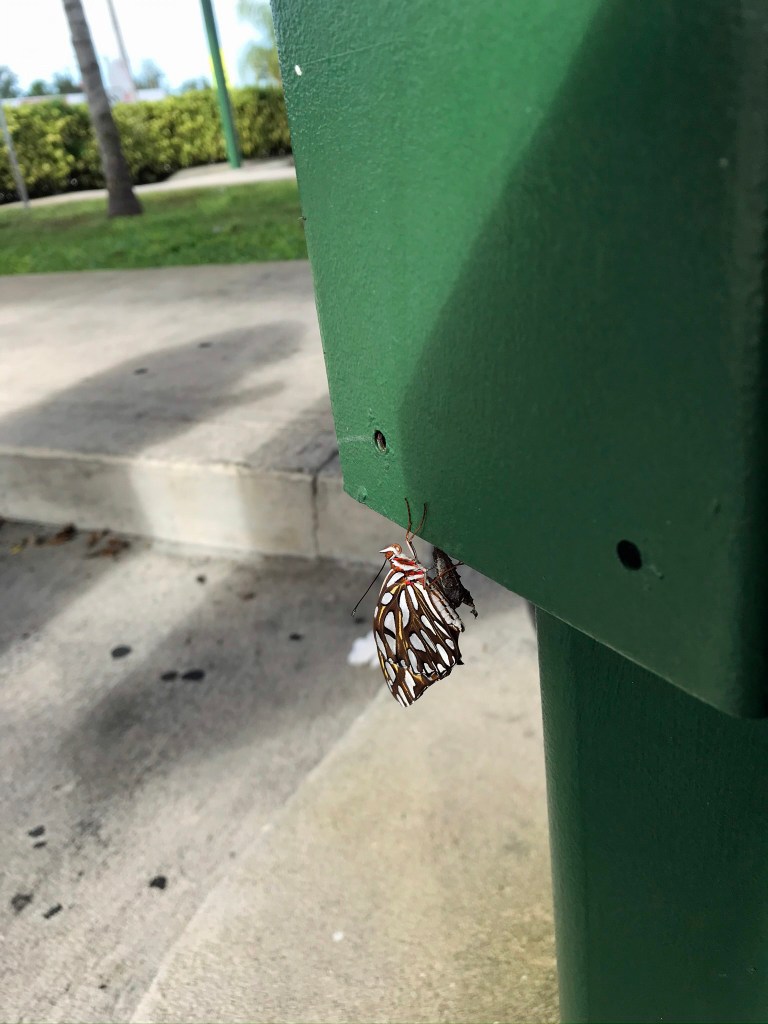
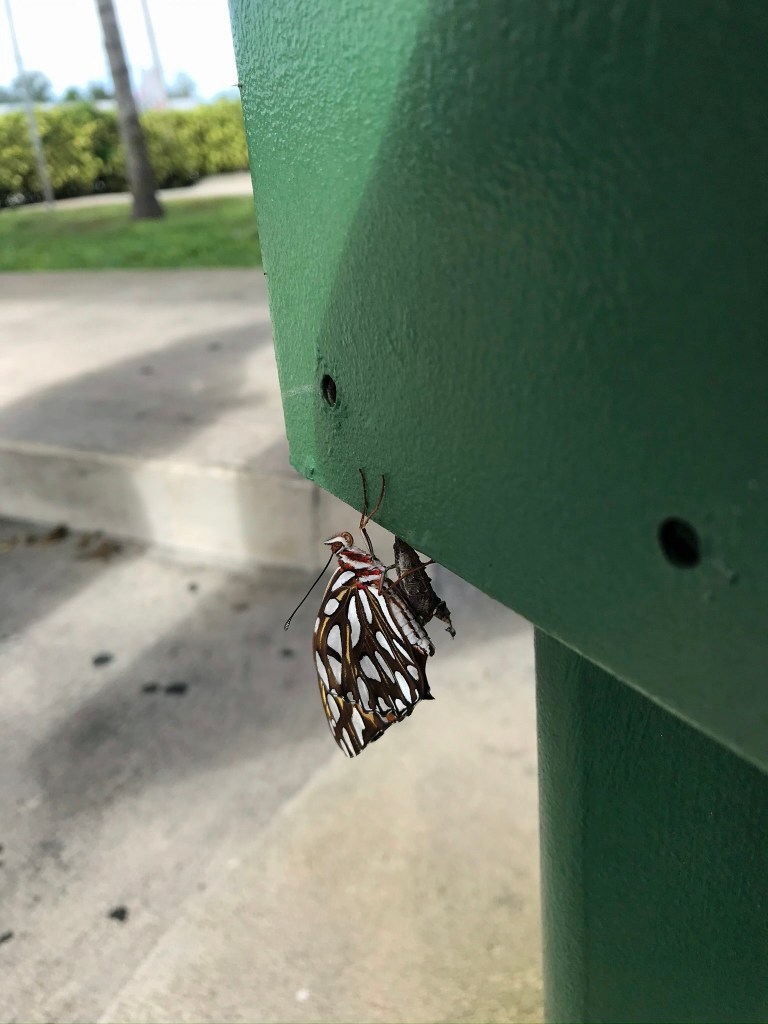
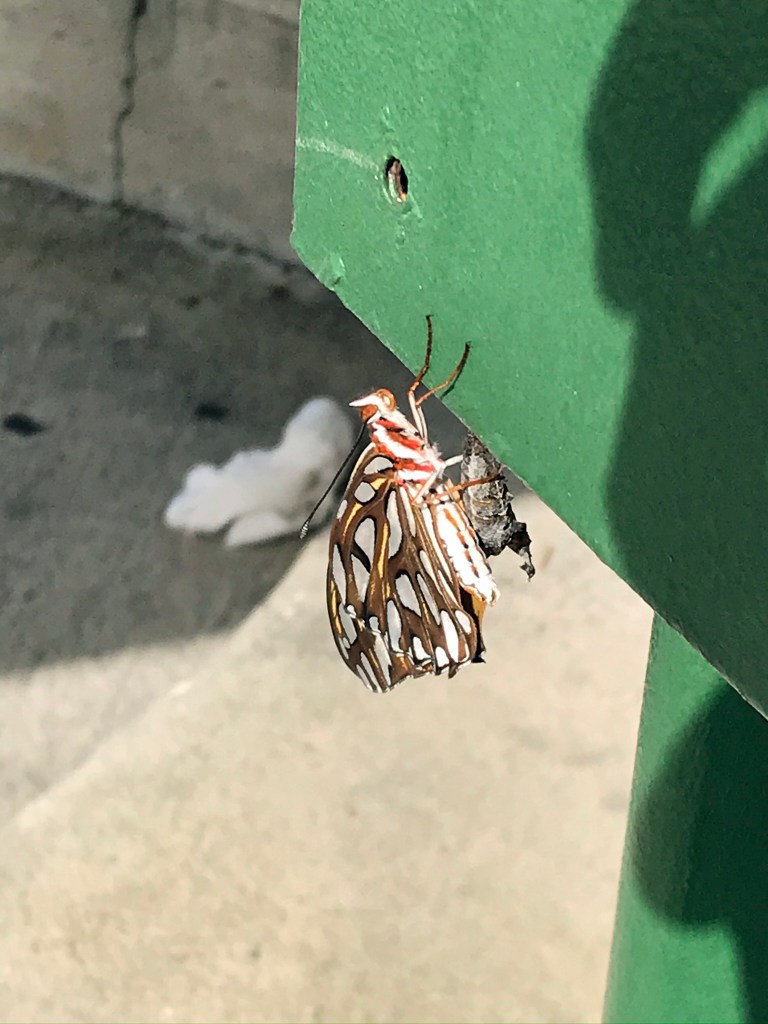
On Tuesday, December 17, 2019 a caterpillar dropped from vegetation to crawl across the parking lot of Sonic Drive-In, 2140 N Courtenay Pkwy, Merritt Island, FL 32953, crawl up an order station, affix its tail to the kelly green semi-gloss enamel, to form a chrysalis.
The afternoon of New Years Eve, 14 days later, we spied the Retro theme of this fast food business, finding it appealing, stopped for a hi-fat lunch of hamburgers, onion rings (“highly recommended, very delicious”) and (ha, ha) diet sodas, choosing this same order station where the emerged Brush-foot butterfly, of the family Nymphalidae, clung, drying in anticipation of flight.
Captured here with the Apple IPhone 8. I cannot identify the exact butterfly species this is. Source: wikipedia article on Nymphalidae.
Click photograph for the slide show. To do this from WordPress Reader, you need to first click the title of this post to open a new page.
Copyright 2020 All Rights Reserved Michael Stephen Wills
797 is the count of subscribers to this blog, an interesting number. The individual numerals sum to a prime number, 23. The first and last can be swapped to yield the same number. I appreciate each and every “1” added together, you readers. Thank You.
Here is a selection of images from post posts.
Click any photograph for a slide show. To do this from WordPress Reader, you need to first click the title of this post to open a new page.
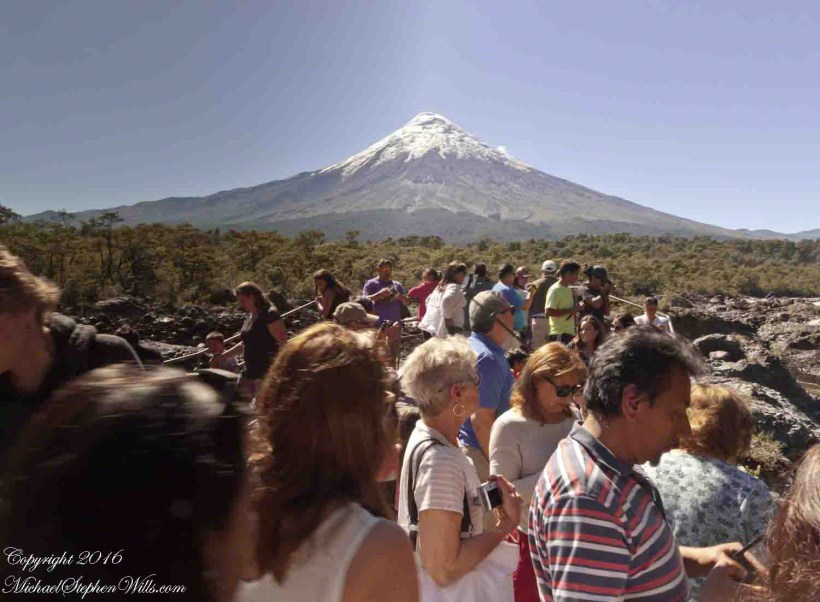
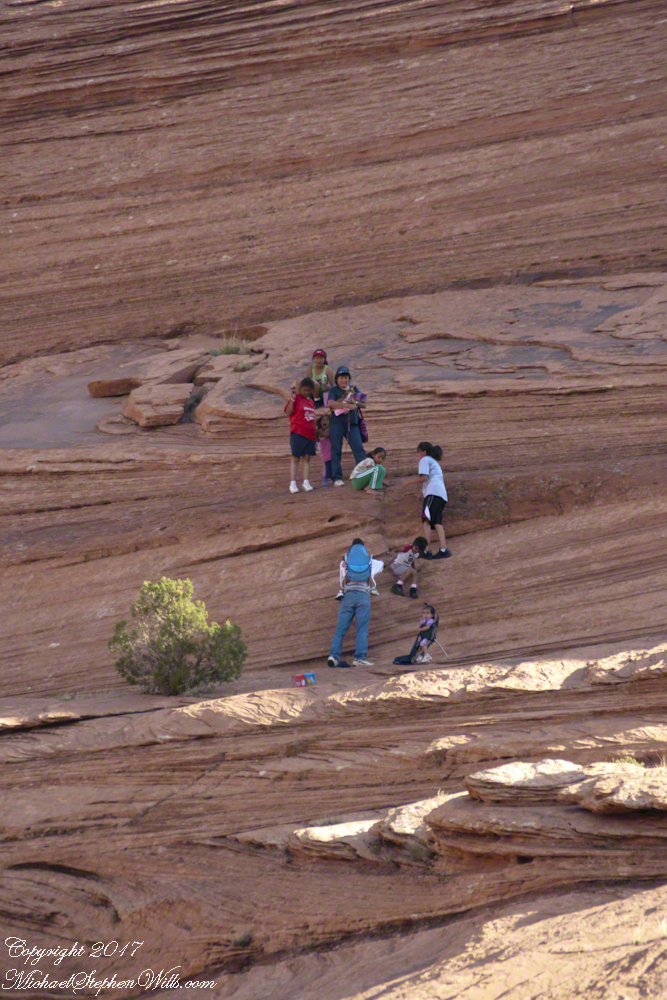
The trail at Petrohue Falls is packed with tourists on a sunny summer afternoon.
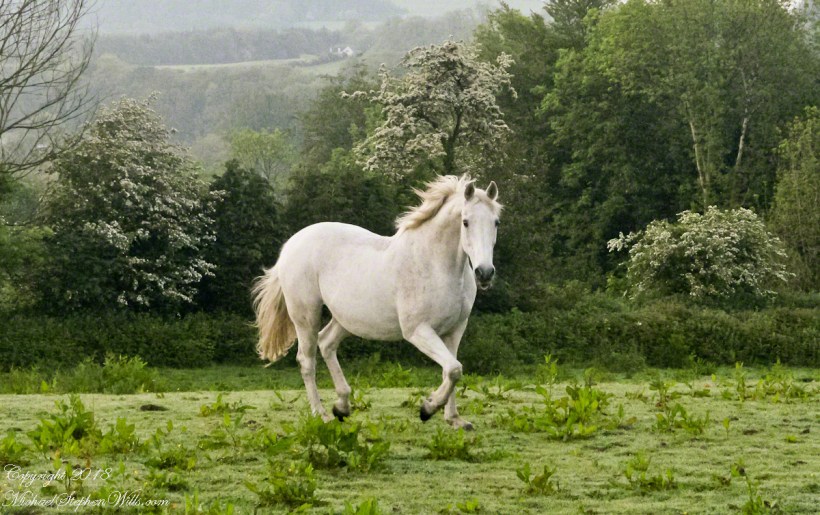
Pam and Mike Wills stayed with Marantha House B&B, during our Spring 2014 Ireland Tour. It was our base in County Cork. Our day of arrival, that evening, I visited Charlemagne and fed him an apple, saved from dinner. We learned from our hosts, Olwen and Douglas Venn, he is a retired show horse they rescued. The following morning I visited Charlemagne again with an apple and my camera. As I walked up, starting from the far end of his field, Charlemagne rewarded me with a series of astounding poses, trotting toward me in fine form. The morning mists, hawthorn in bloom, distant hills came together for this memory.
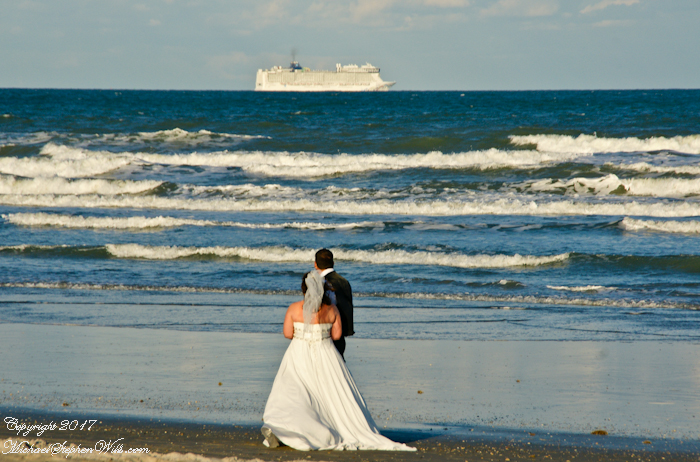
Newlyweds on Cocoa Beach waiting for the photographer in a perfect early evening light. A cruise ship departing from Port Canaveral in the distance.
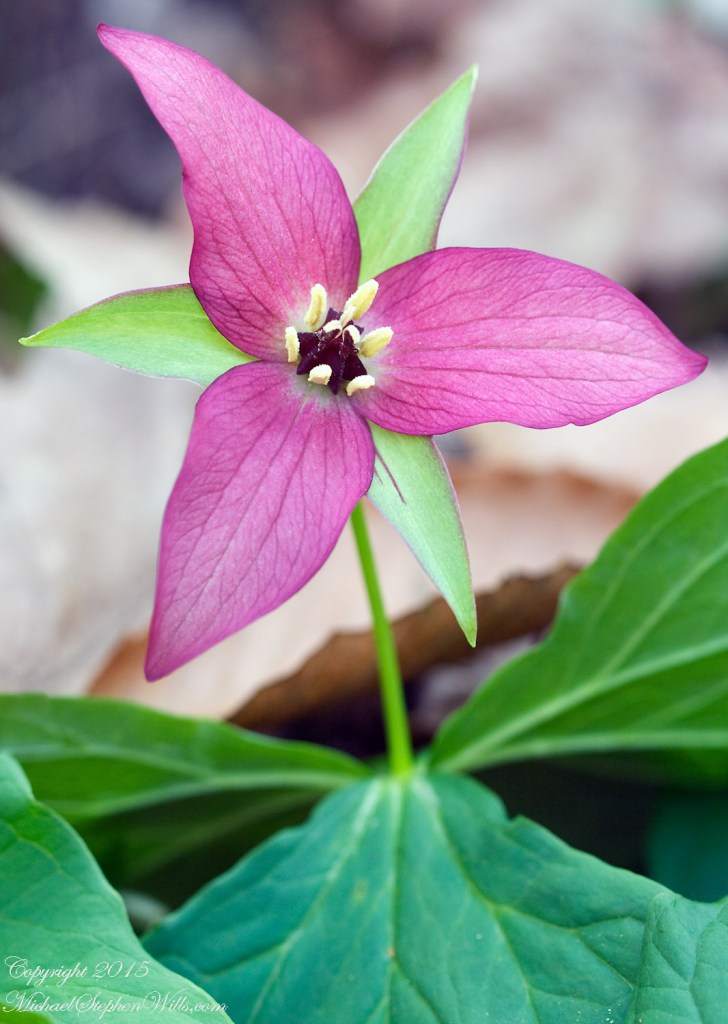
Trillium bloom April through May in central New York State. I found these blooming on the rim of Fillmore Glen near Owasco Lake and the town of Moravia.
Don Roberto is on the bow
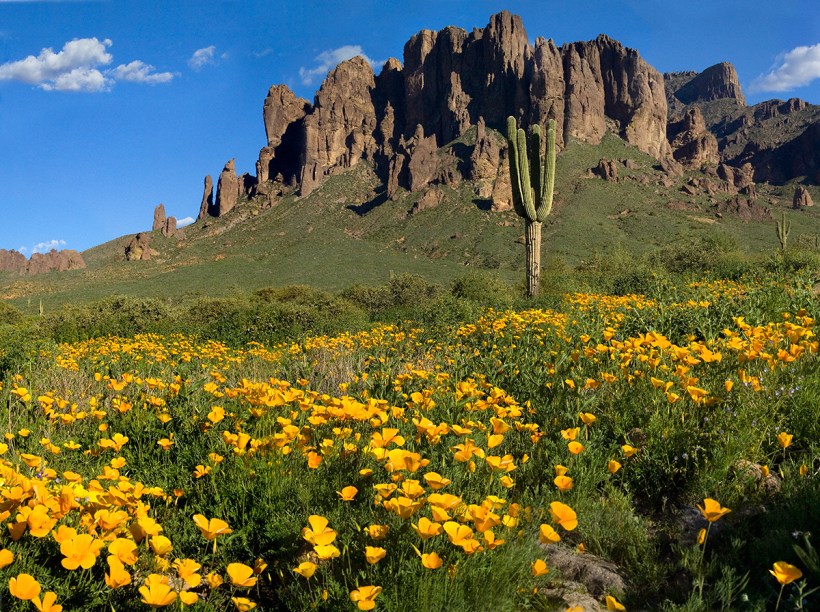
Mexican Poppies bloomed in profusion throughout the Superstitions after the plentiful winter rains of 2008.
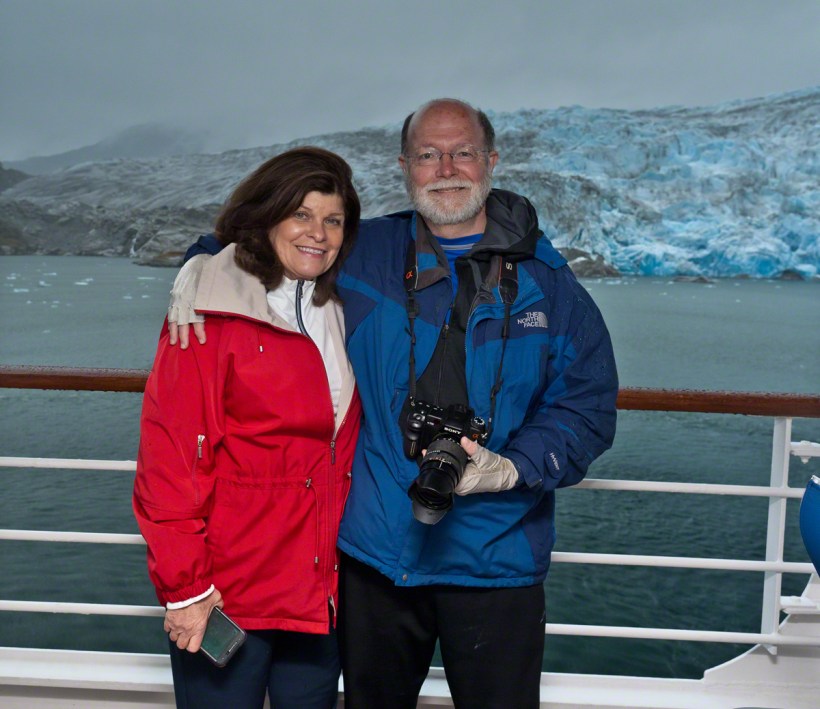
Pamela and Michael Wills with Iceberg Glacier, Bernardo O’Higgins National Park, Fjord Tempanos, Chile aboard the Oceania Regatta
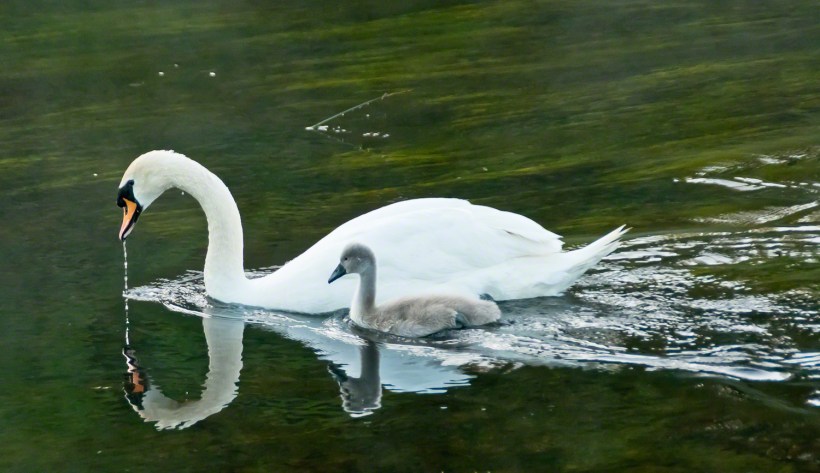
A swan and cygnet feeding from the pristine waters of the River Cong, County Mayo, Ireland. Outside the door of Ashford Castle.
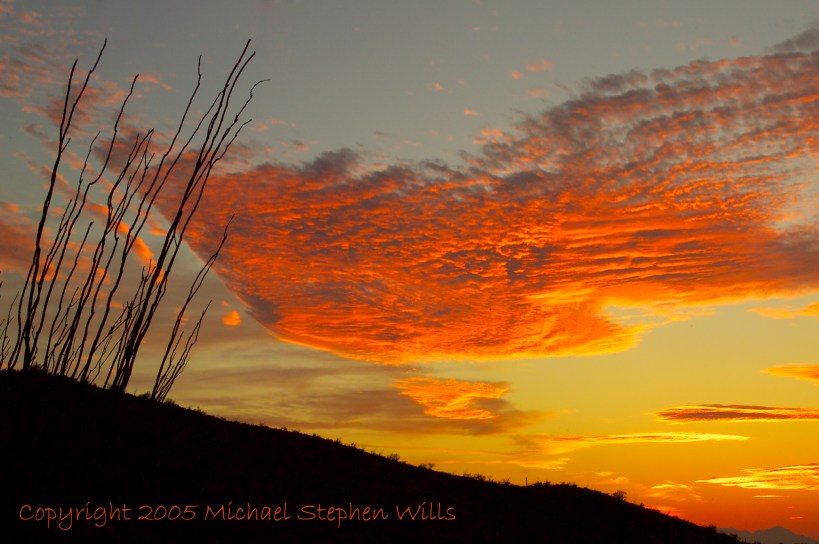
Ocotillo Sunset
My son, Sean, and I traveled to New York City for the first Saint Patrick’s Day parade after September 11, 2001. Every one there shared in the pride and resolve of the New York City Fire Department delegation. They had a huge presence. All of 5th Avenue from side to side, as far as we could see, was full of firemen. Each held a full size American flag, so there was a block of American flags up the street. I composed this image to capture the feeling of this moment.
Copyright 2019 All Rights Reserved Michael Stephen Wills
Click photograph for the expanded view. To do this from WordPress Reader, you need to first click the title of this post to open a new page.
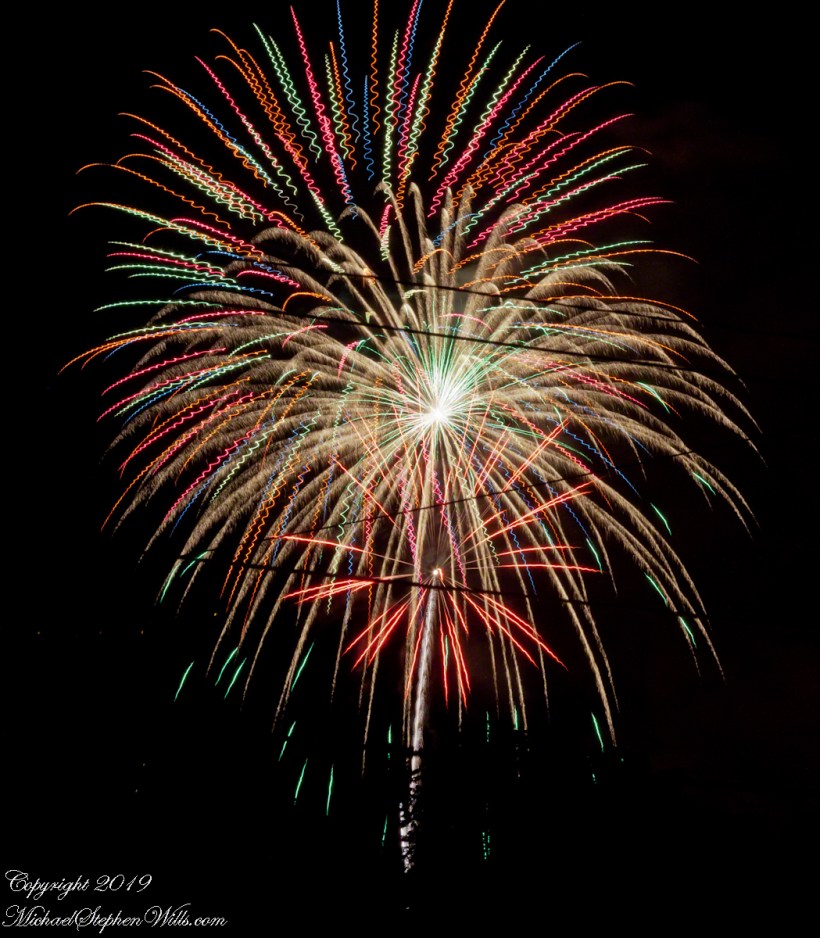
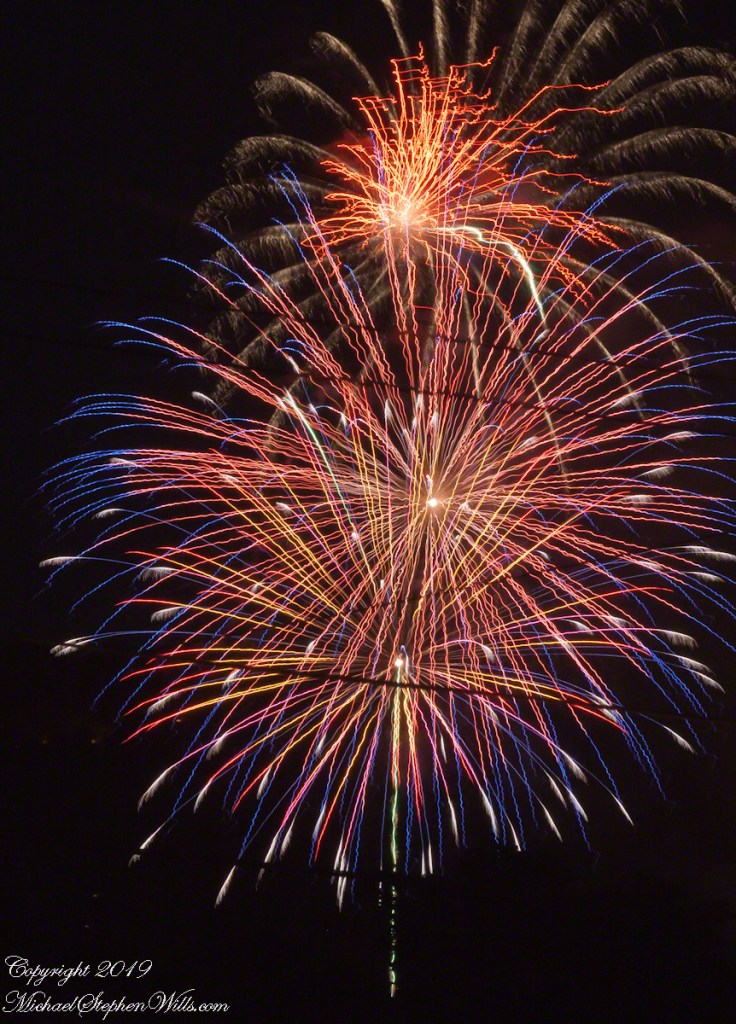
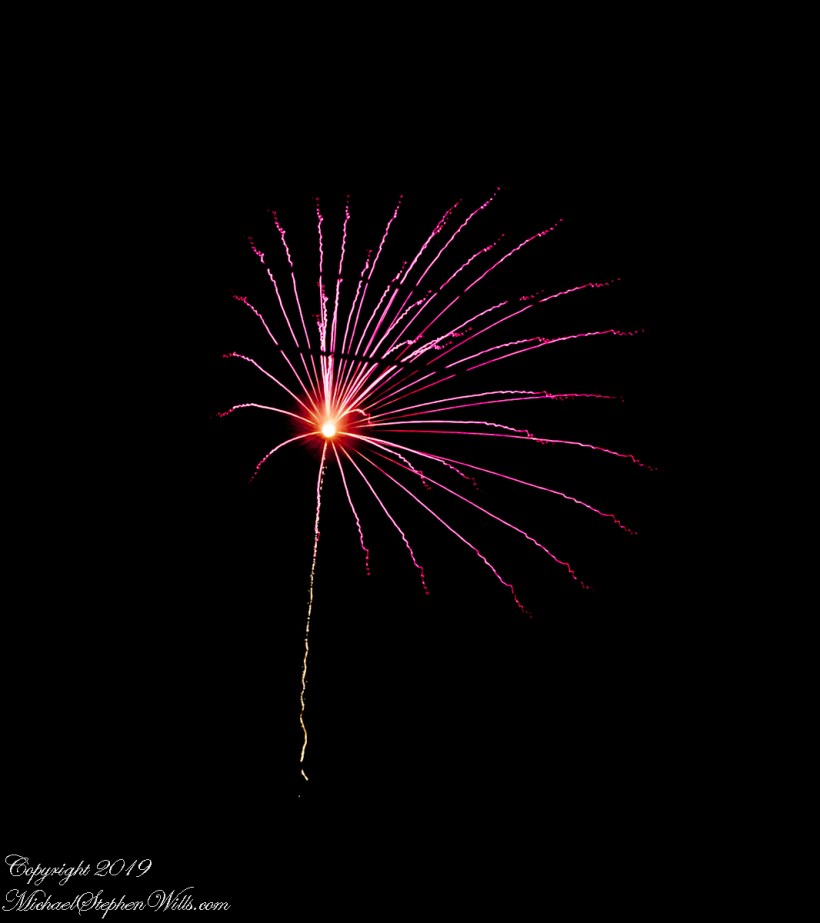
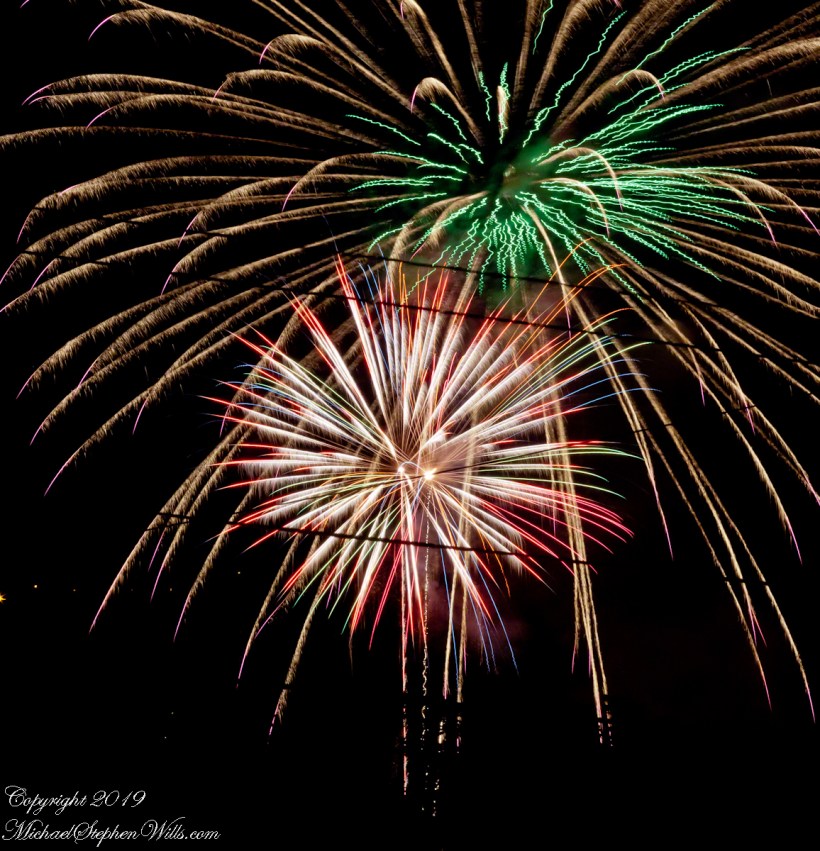
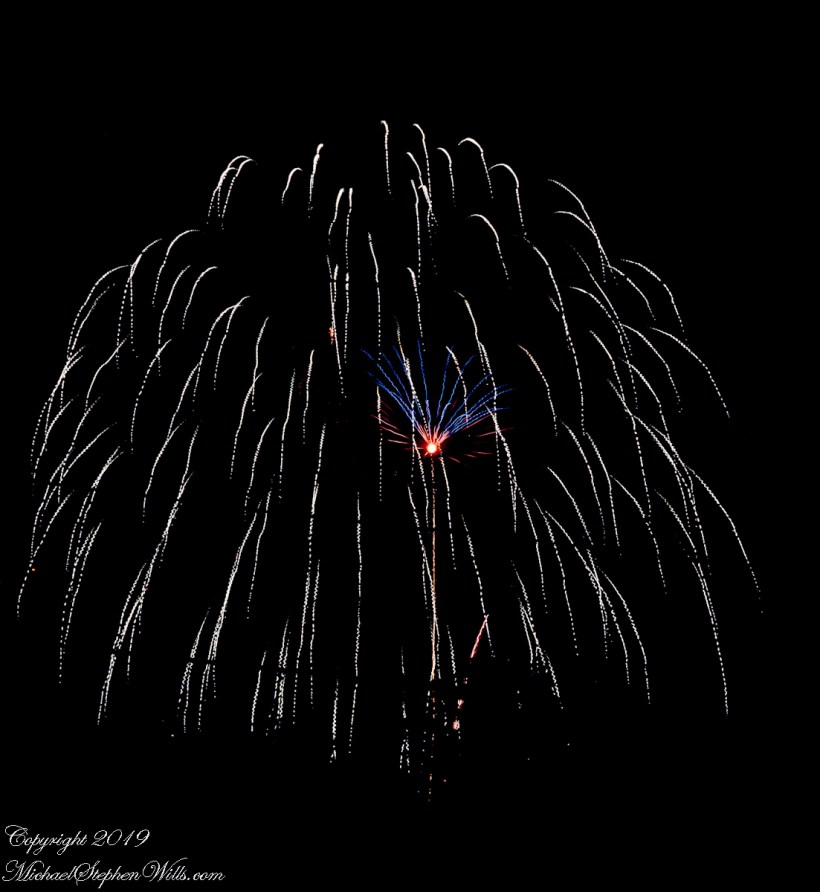
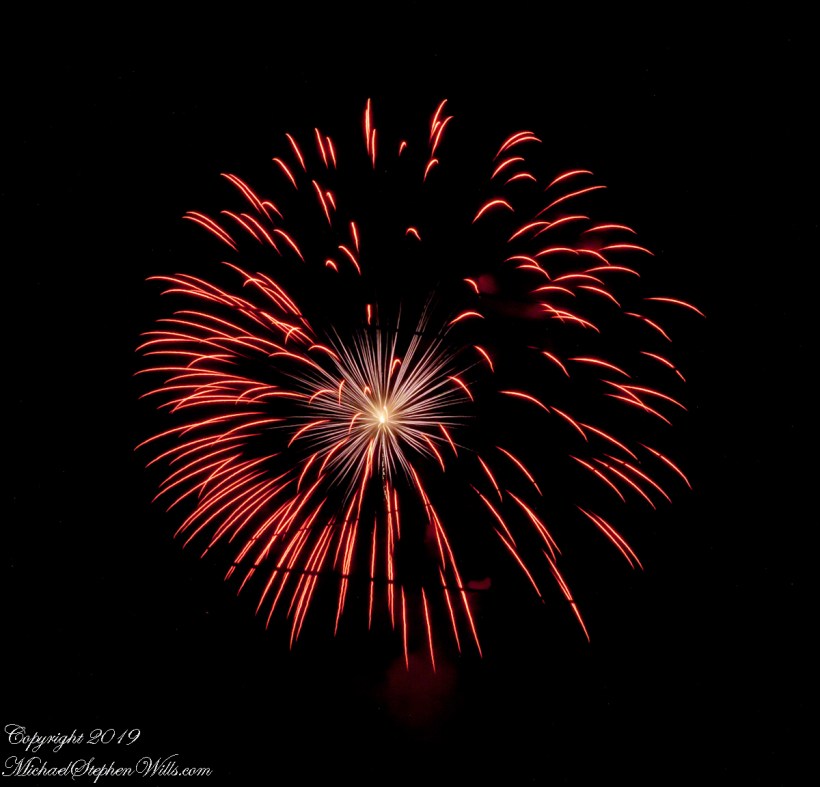
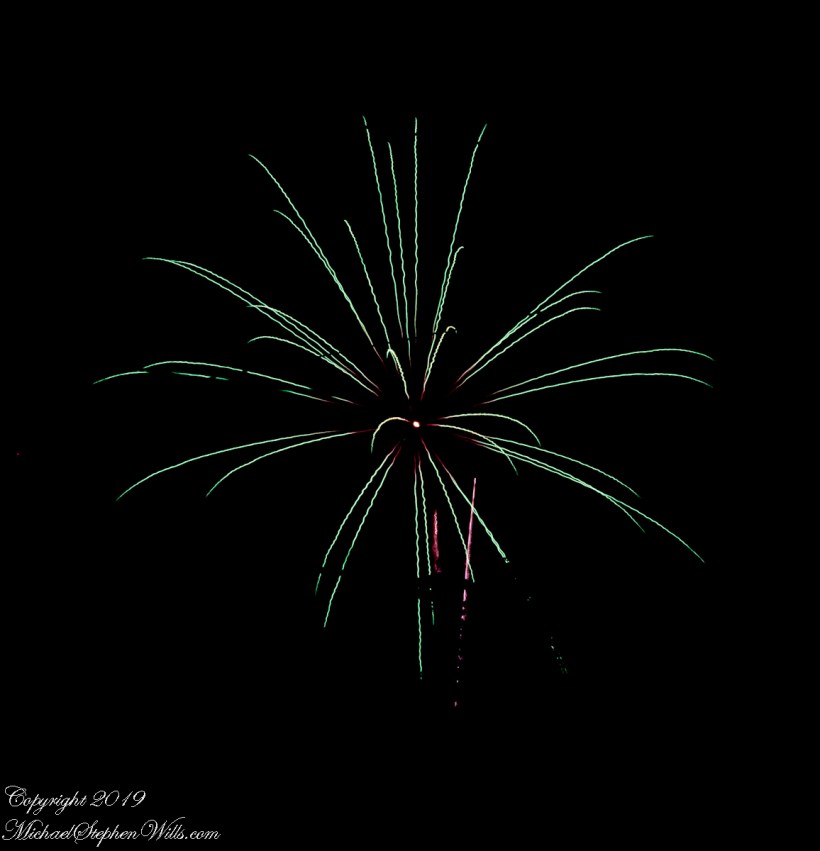
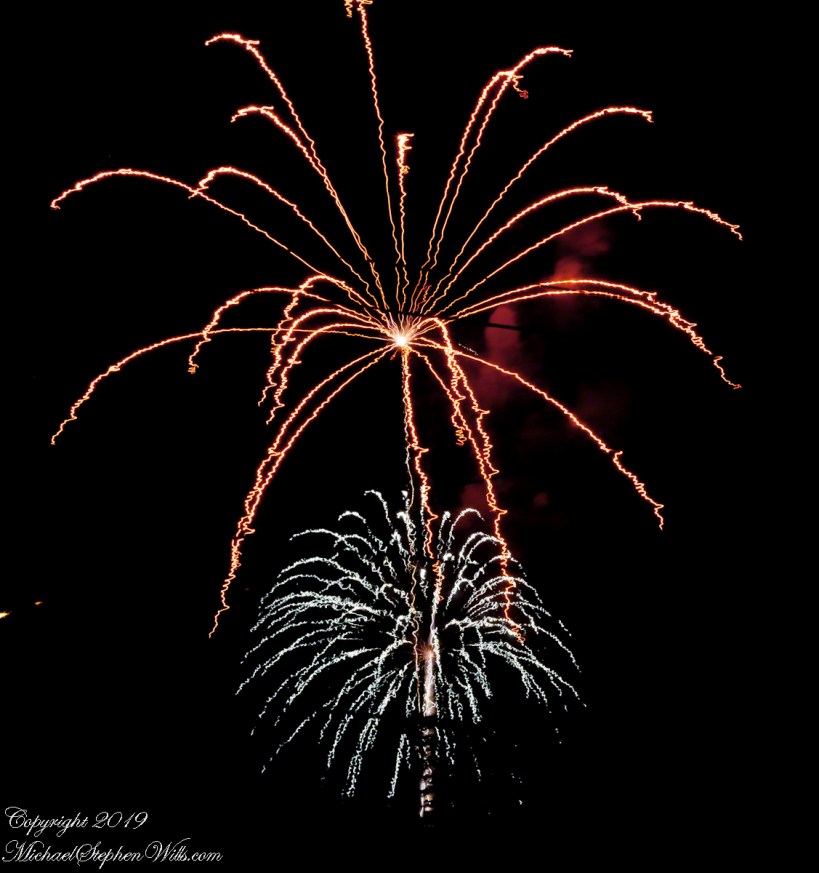
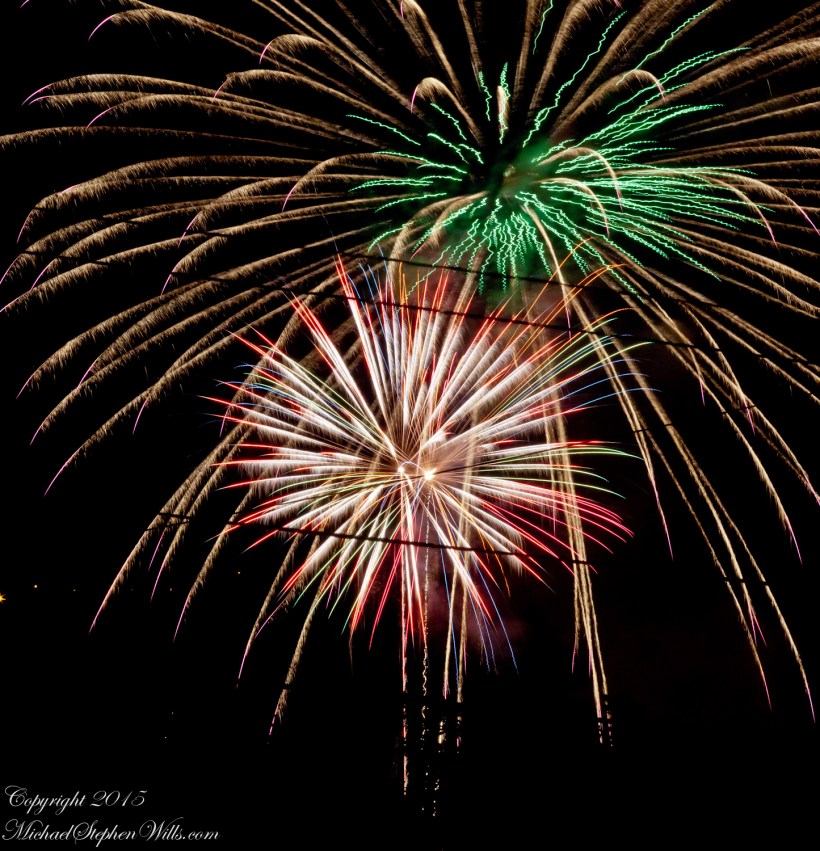
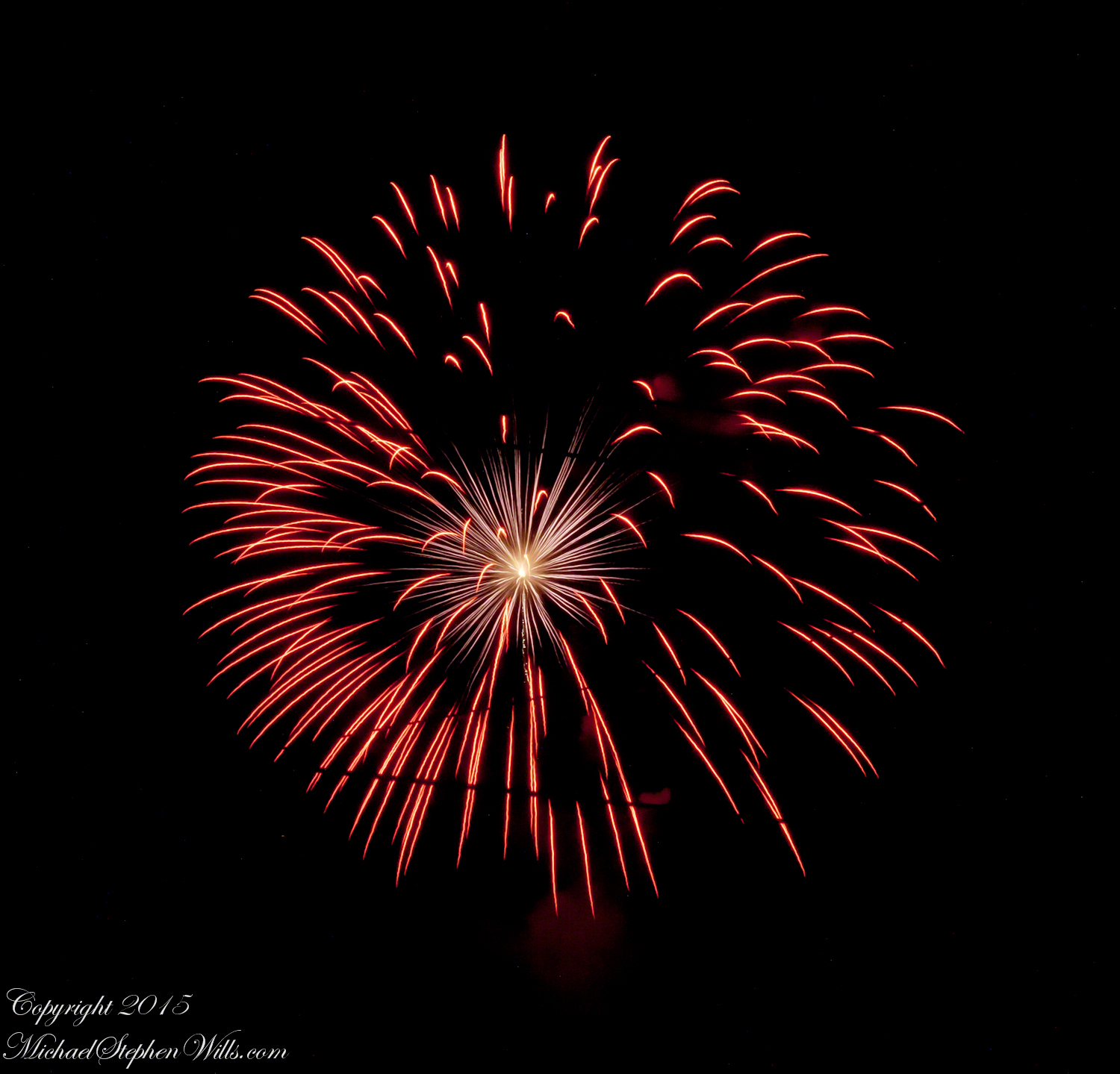
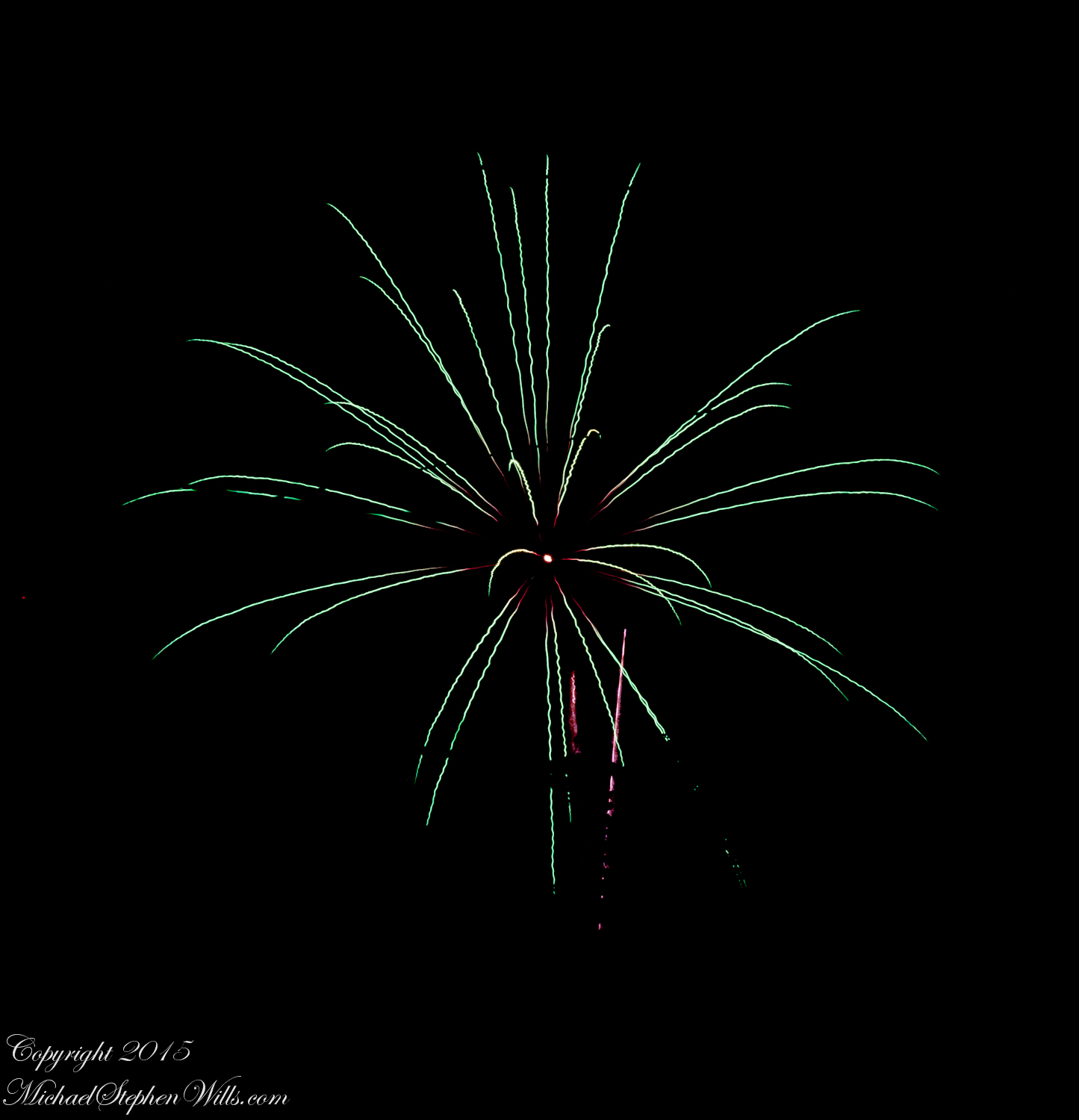
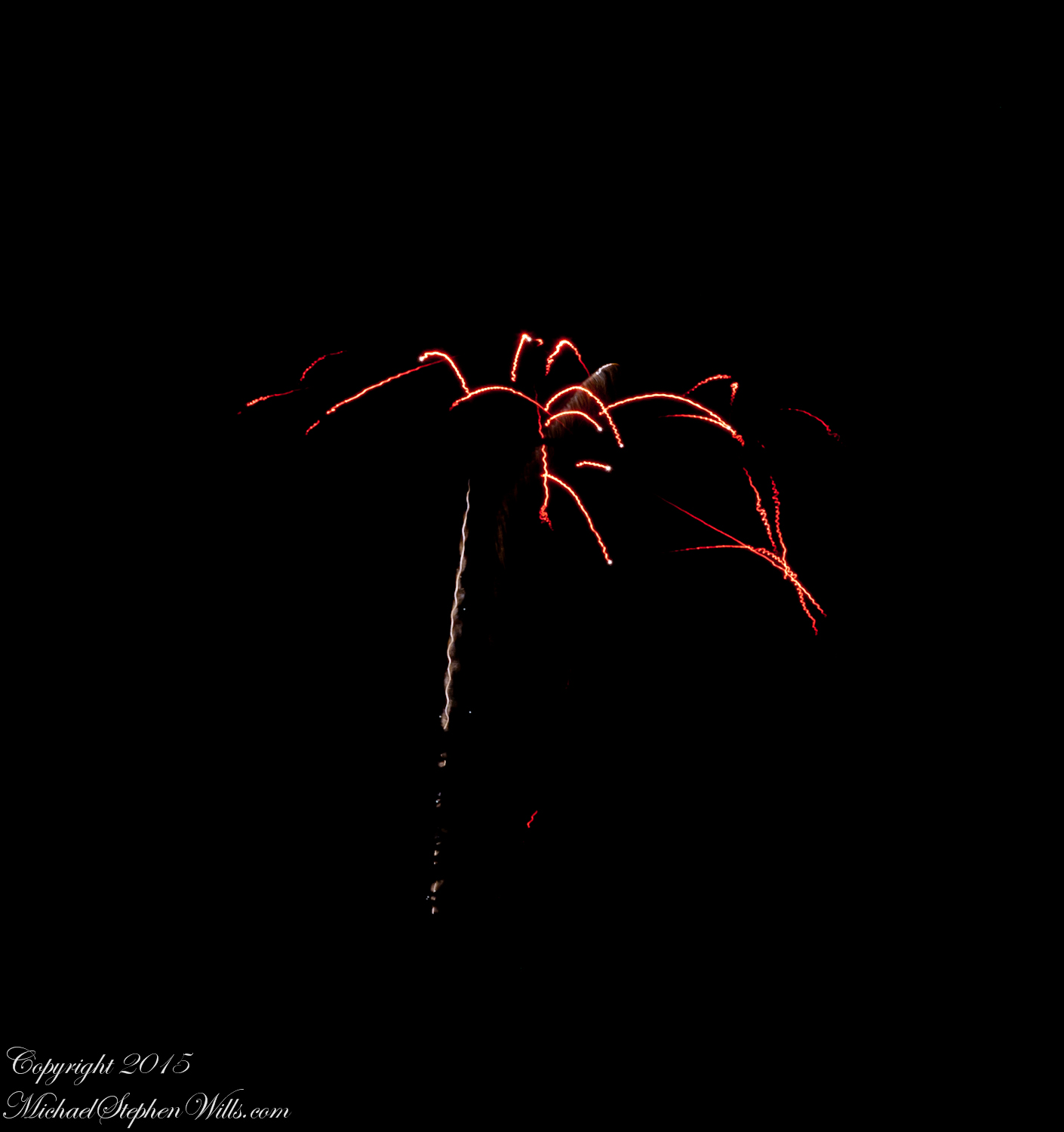
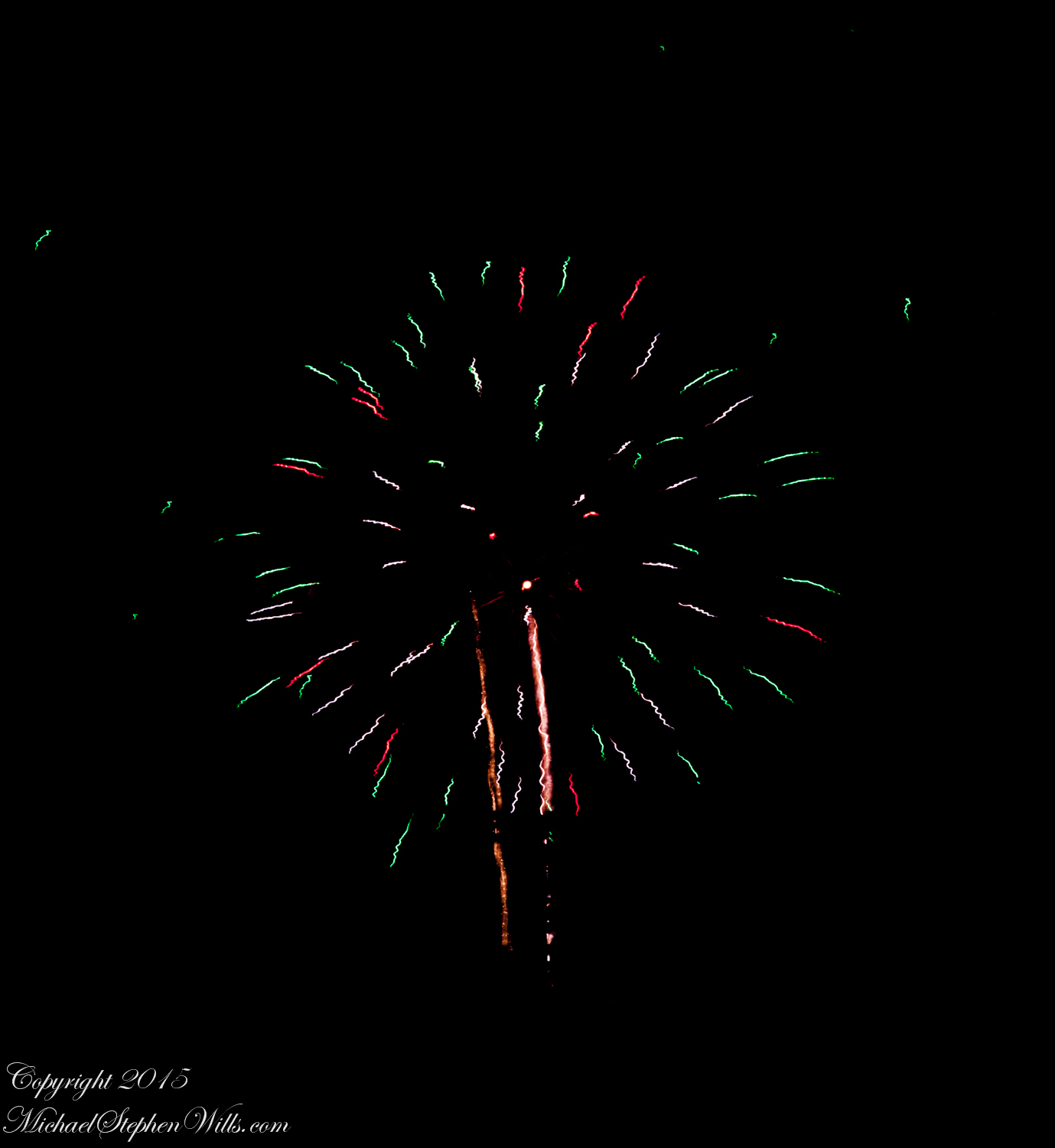
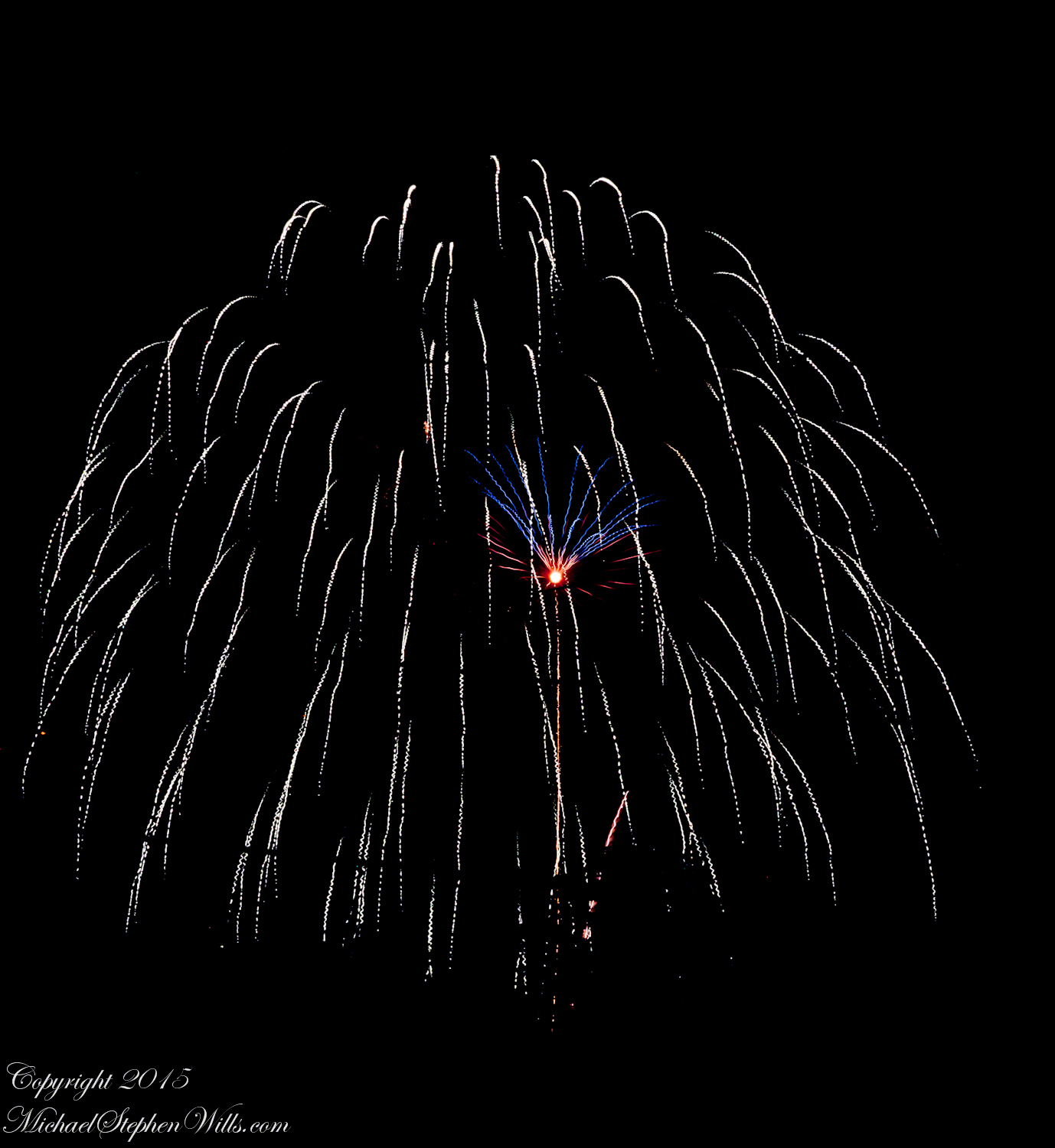
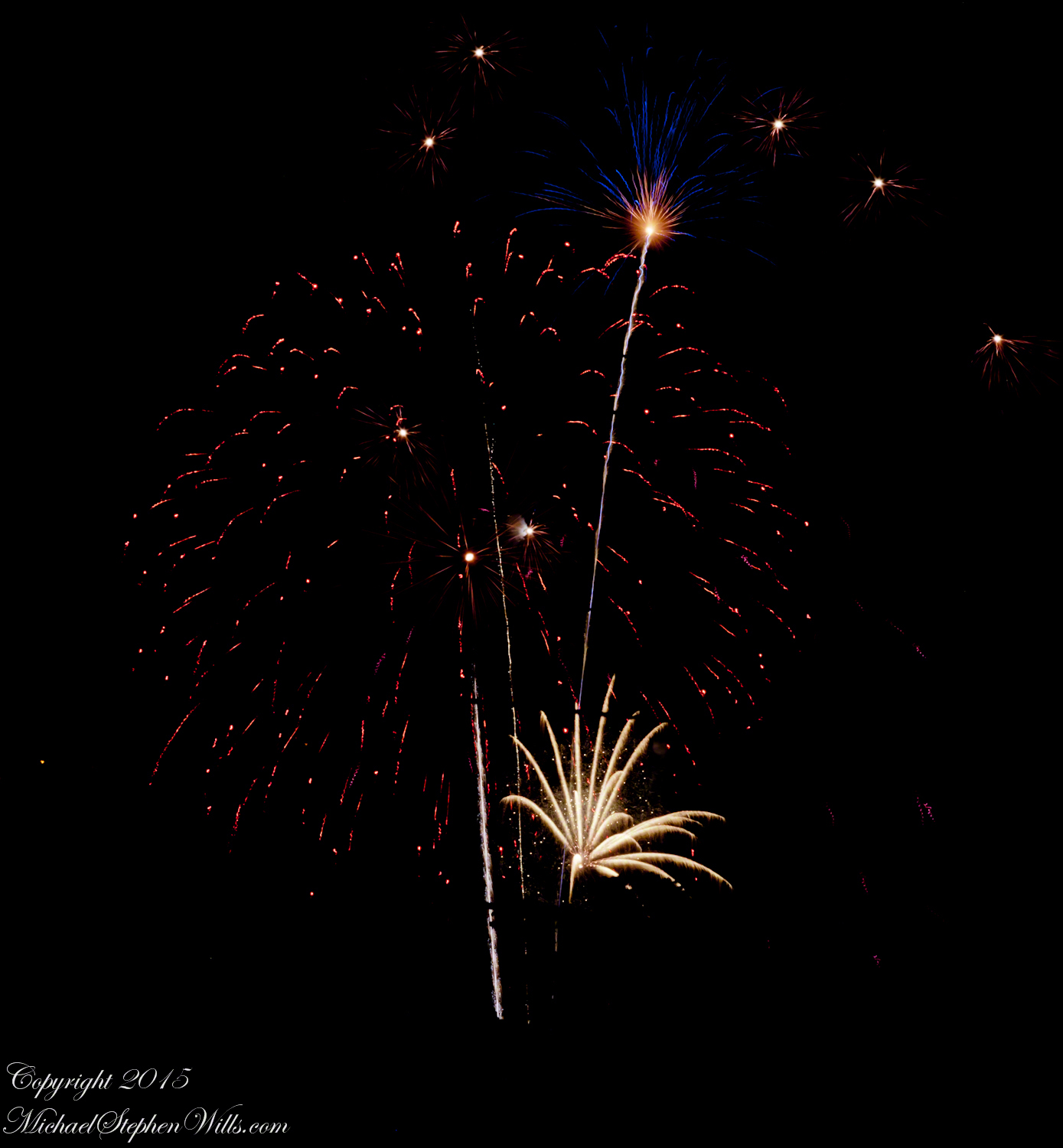
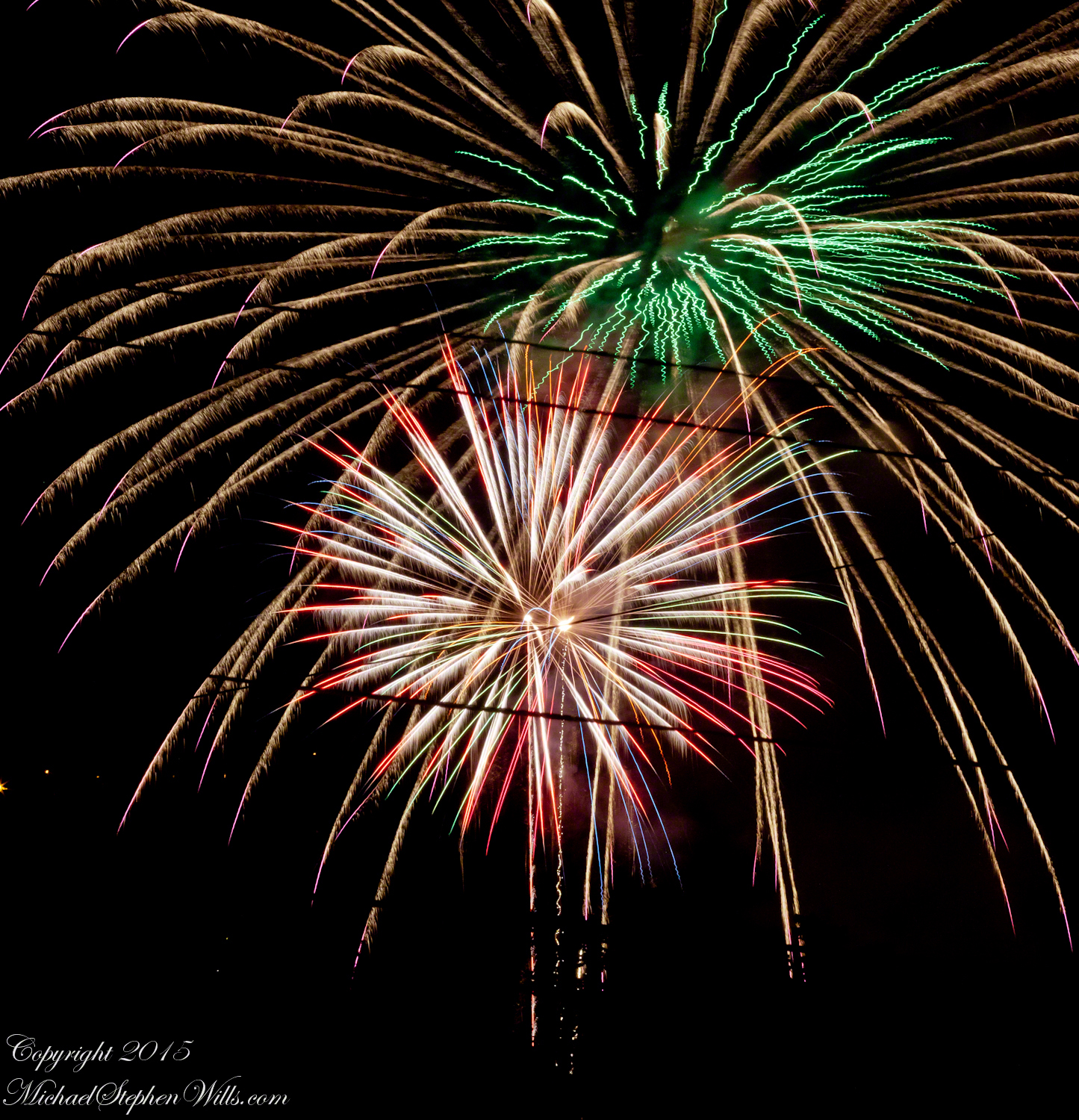
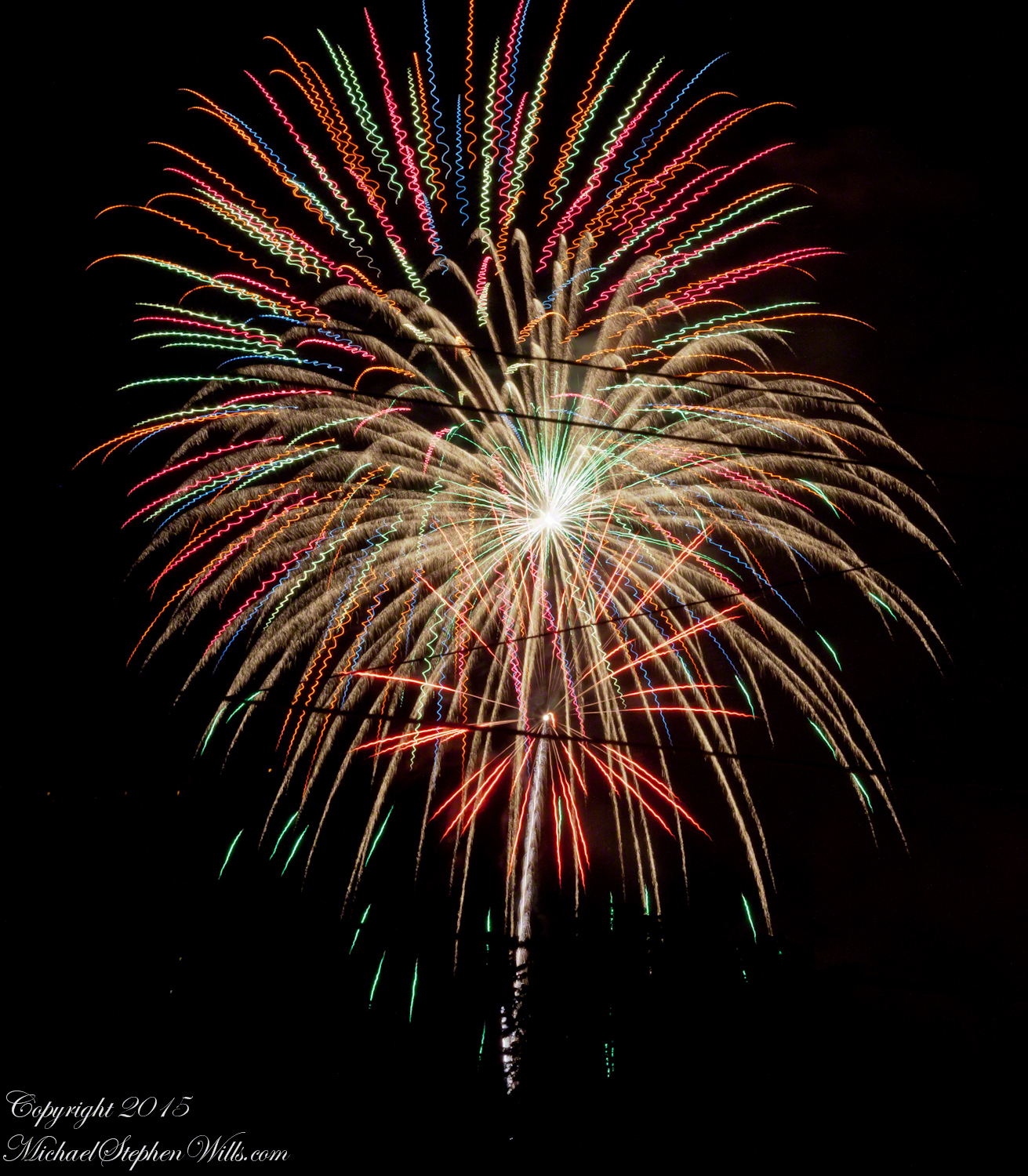
These were captured from the 2015 July Fourth fireworks at Ithaca’s Stewart Park. We have a clear view from our home’s front porch, the view is hampered somewhat by the wires, not registered when viewing but show up in photographs. The best shots, shown above, were from a Canon EF 200mm f/2.8L USM lens, the Canon EOS-1Ds Mark III mounted on a Manfrotto studio tripod with hydrostatic ball head. ISO set to 1,600 and exposure set to 5 seconds. I started each shot when I heard the very first whooosh of the rocket.
Maybe I’ll set up on the roof for the 2020 July Fourth display? If Pam will let me.
Copyright 2020 All Rights Reserved Michael Stephen Wills
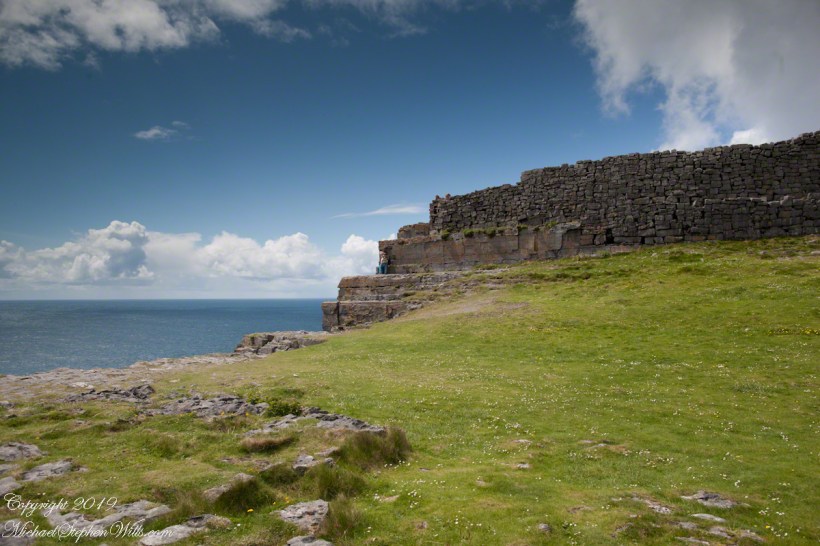
Here is the east side of the inner enclosure wall of Dun Aonghasa (Dun Aengus) where it ends at a cliff edge over the Atlantic ocean.
Visible are the last 60 feet or so of the limestone strata supporting the inner ring.
When first constructed, the inner ring was complete, the western side 1,000 feet from the cliff.. Today’s form of a semi-circle was created by nature when the force of Atlantic Ocean waves eroded the cliff, undercutting the strata.
Look close to see a fracture where the next block of limestone will fall into the waves.
Ancient fort wall with tourists and Cliff Edge of Dun Aonghasa (Dun Aengus)
Wishing a blessed All Saints Day (November 1st) for all my readers.
Here’s a fireworks display to help you celebrate the Fourth of July. Click on any image for a larger view.
Our home on west hill has a great view of the Ithaca fireworks. I had to shoot through overhead electricity wires. Some of the photographs were enhanced to remove the lines.
Click photographs to view larger images as a slide show.