Hayrolls

Haymaking, an ancient practice of harvesting and storing feed for livestock, faces modern challenges like climate change and urbanization.

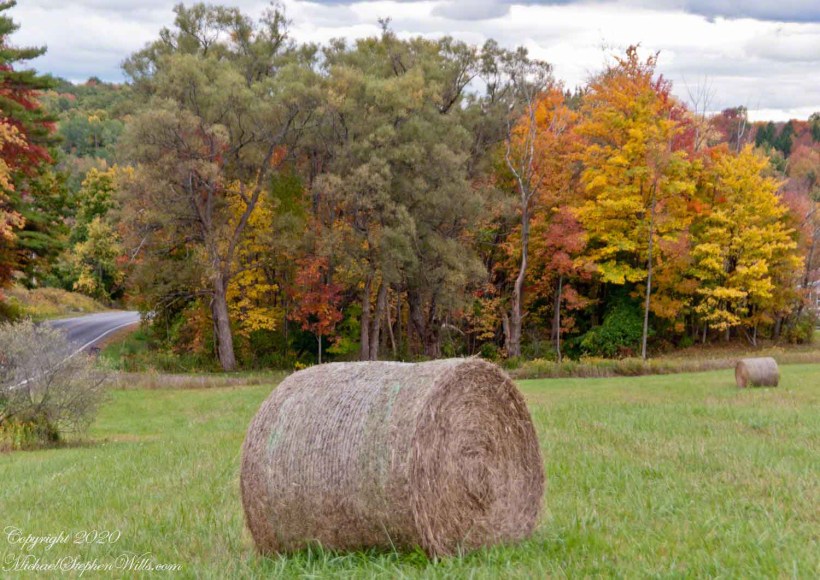
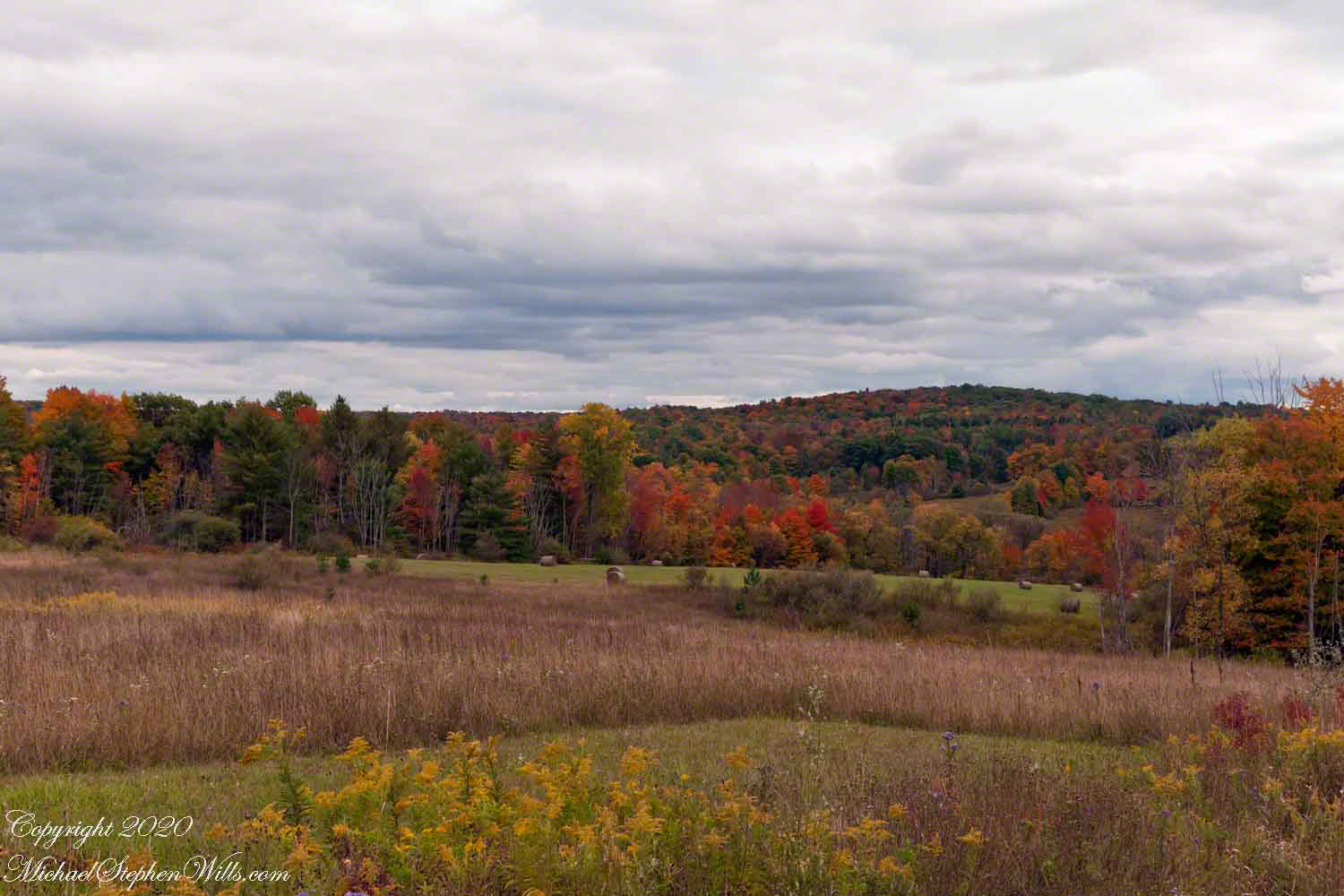
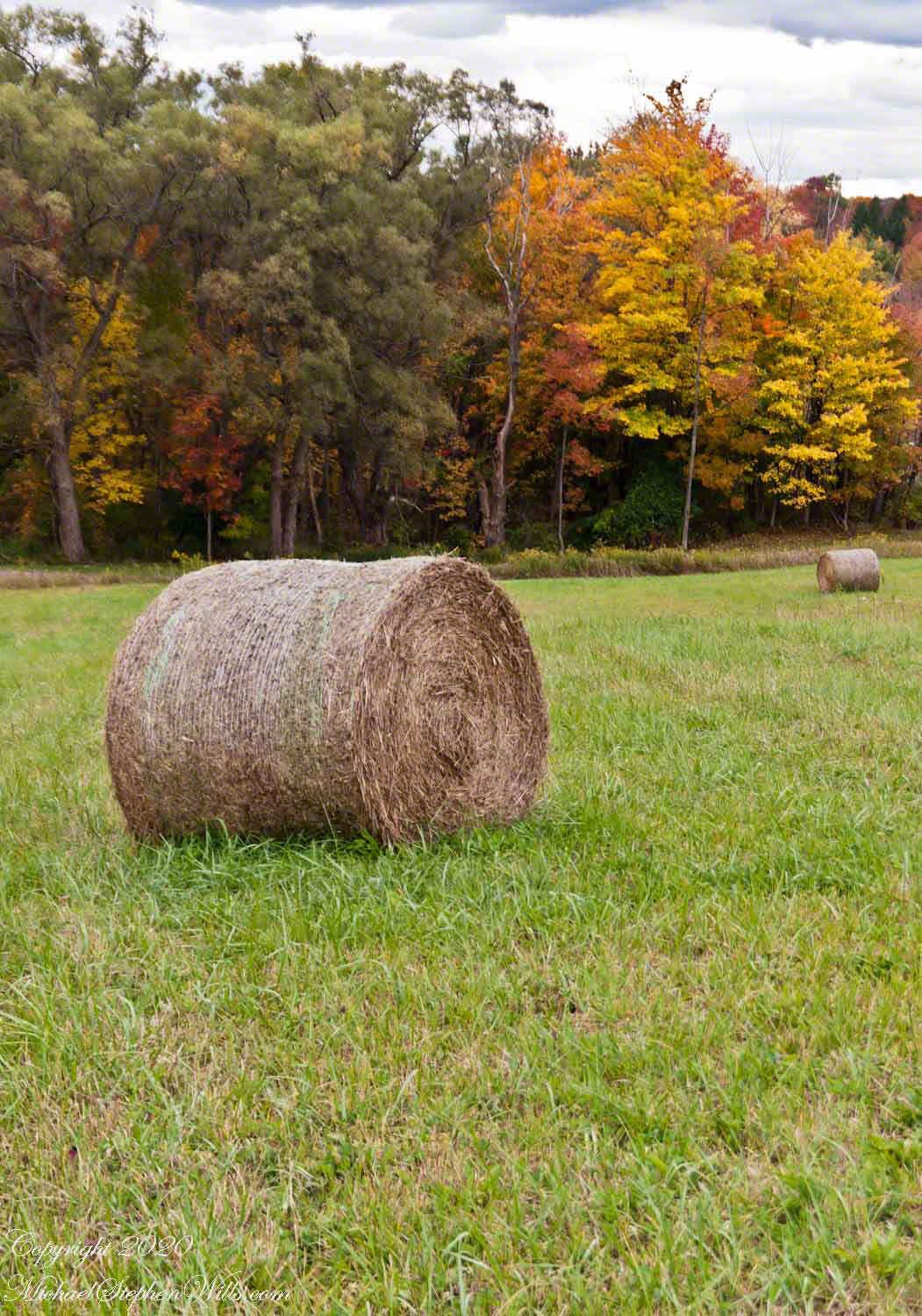
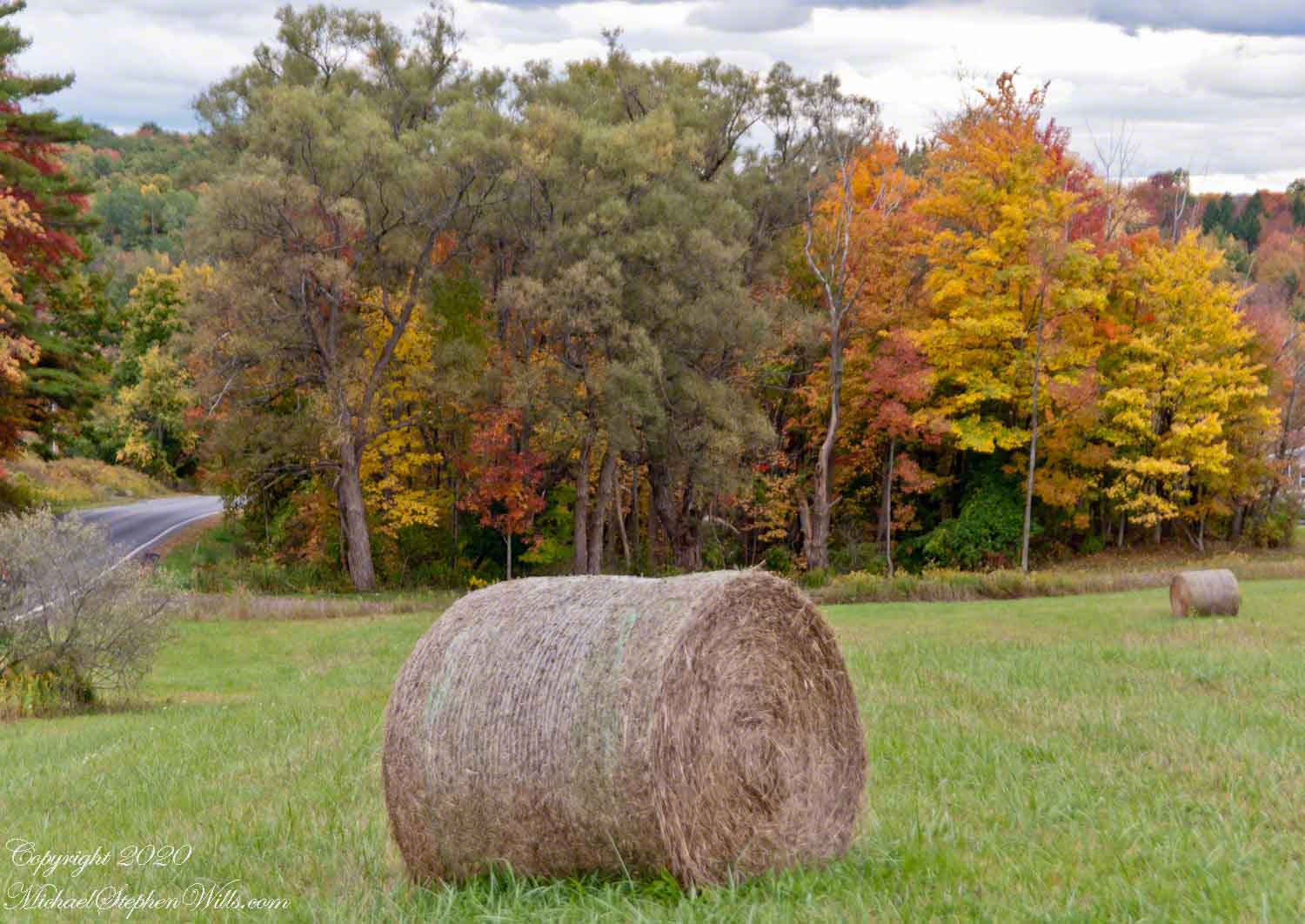
Dry grass gathered for winter feed on Durfee Hill.

Click image for a larger version.

Haymaking, the age-old agricultural practice of harvesting, drying, and storing grasses and leguminous plants, has been central to sustaining livestock throughout history, especially during seasons when fresh pasture is not available. This practice, rooted in necessity and refined by tradition, embodies the intersection of human ingenuity with the rhythm of nature.

Origins of Haymaking

The origins of haymaking can be traced back to a time when early agricultural communities recognized the need to store feed for animals during lean seasons. While the exact timeline of its inception is hard to pin down, ancient texts and artifacts suggest that the process of drying and storing grass as hay has been practiced for millennia. Early haymaking was predominantly manual, relying heavily on the natural process of sun drying.

The Process of Haymaking

Haymaking usually begins with mowing, the act of cutting down the grass when it has reached its peak nutritional value, just before or as it starts flowering. After mowing, the grass is left on the field to dry, a process known as ‘tedding’. The drying process is crucial as it prevents the growth of mold and bacteria which can spoil the hay and make it unsafe for consumption.

To facilitate even drying, the cut grass is often turned over, or ‘tedded’, using specialized equipment or manually with pitchforks. This ensures that the moisture from the bottom layers of the grass is exposed to the sun and air. Once dried, the hay is raked into rows to prepare for the final stage of baling. Baling involves compacting the dried hay into bundles, making it easier for transportation and storage. Over the years, bales have evolved from simple tied bundles to more compact and uniform shapes, thanks to modern machinery.

The Importance of Haymaking

Haymaking is more than just a routine agricultural activity; it’s a lifeline for livestock farmers. Properly made hay provides essential nutrients to animals like cattle, sheep, and horses during winter months when fresh grass is scarce. Moreover, for dairy farmers, the quality of hay can directly impact the quality and quantity of milk produced.

Furthermore, the economic implications of haymaking are significant. A successful haymaking season can mean the difference between a profitable year and financial strain, especially in areas heavily dependent on livestock farming.

Modern Advances and Challenges

With the advent of technology, the haymaking process has seen numerous advancements. Modern machinery, from mowers to balers, has made the process more efficient, reducing the time and labor required. Advances in weather prediction tools have also assisted farmers in choosing the optimal time for haymaking, maximizing the chances of getting dry weather which is crucial for the process.

However, haymaking, like many agricultural practices, faces challenges in the modern era. Climate change and its resultant unpredictable weather patterns pose significant risks. Unexpected rains during the drying phase can severely affect the quality of hay. Moreover, urbanization and changing land use patterns are reducing the available land for hay cultivation.

Conclusion

Haymaking, as an agricultural practice, exemplifies the human endeavor to harness nature’s bounty for sustenance. From its ancient origins to modern implementations, it remains a testament to the farmer’s deep understanding of the land and its cycles. In a broader sense, haymaking underscores the importance of preparedness, of looking ahead and planning for the future, a lesson that resonates well beyond the confines of agriculture. As we face contemporary challenges, revisiting and valuing such practices can offer insights into sustainable and harmonious living.

P.S. Reader BigSkyBuckeye offered this insight, “Having lived many years in rural, ranching communities, one sees the lifeline of hay for winter feeding of cattle. One important note–most ranchers separate their stacks of bails with some distance, so a lightning strike doesn’t consume every bail.”

Copyright 2023 Michael Stephen Wills All Rights Reserved

more Jennings Pond II

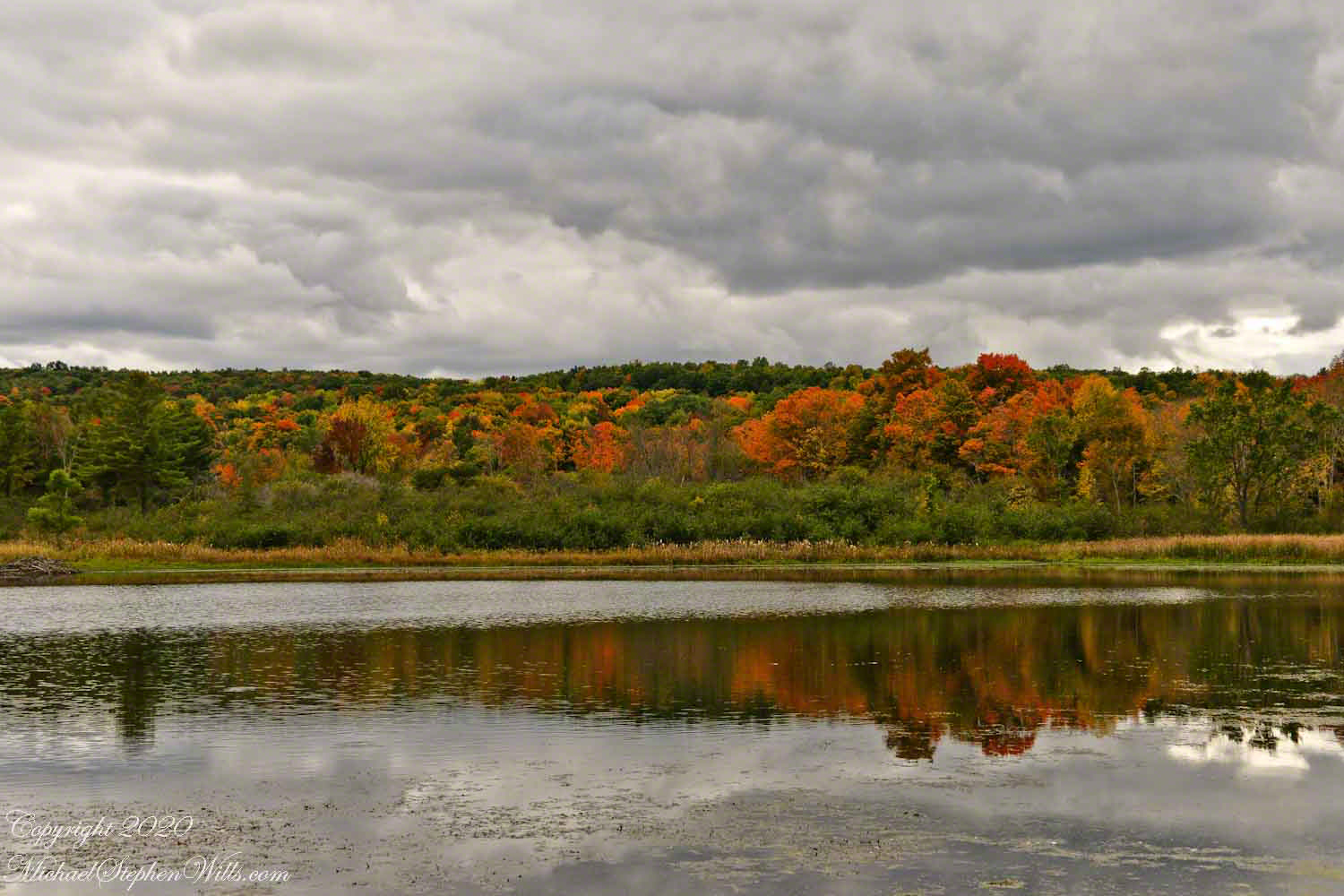
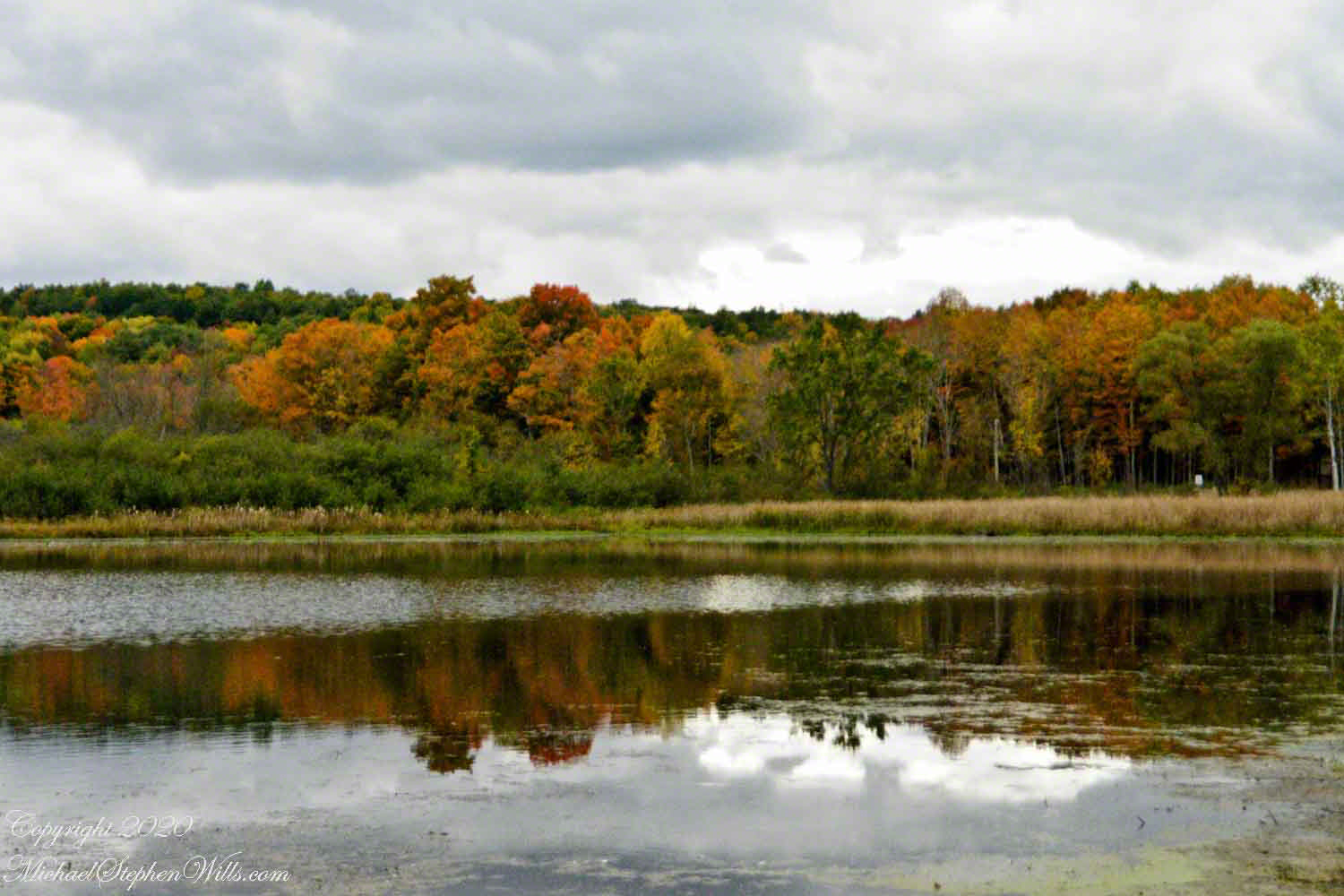
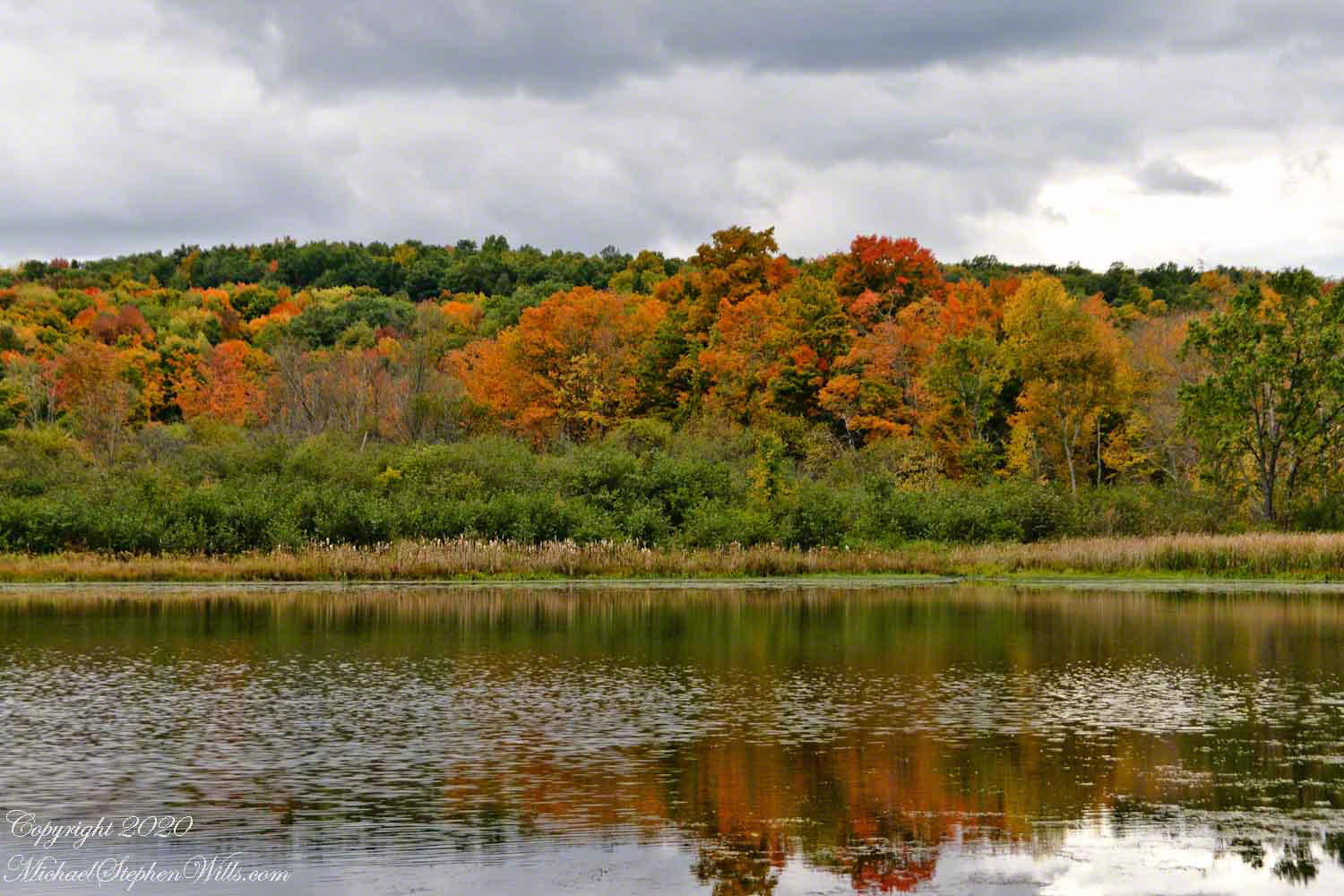
A gathering autumn glory

I described Jennings Pond to Pam and we returned together. Here is a photographic essay from that day, one of a series.

Copyright 2023 Michael Stephen Wills All Rights Reserved

more Jennings Pond I

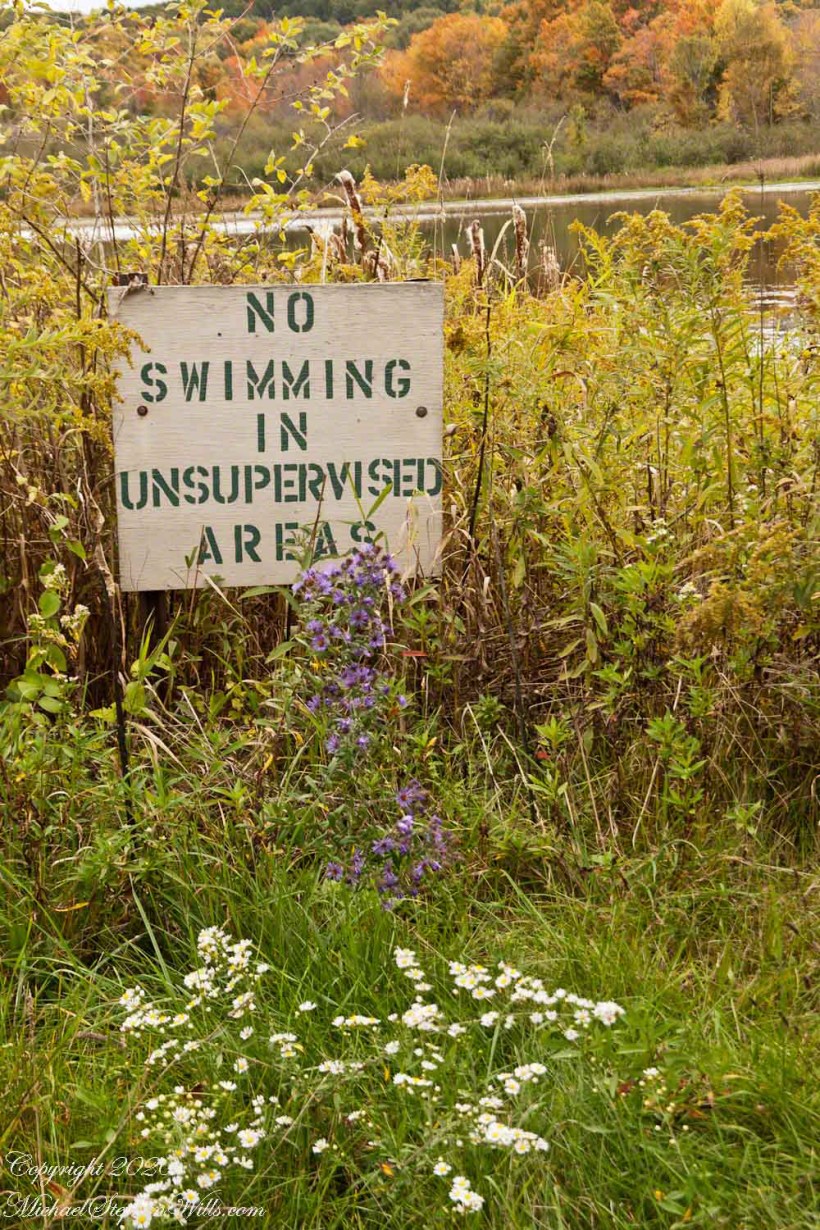
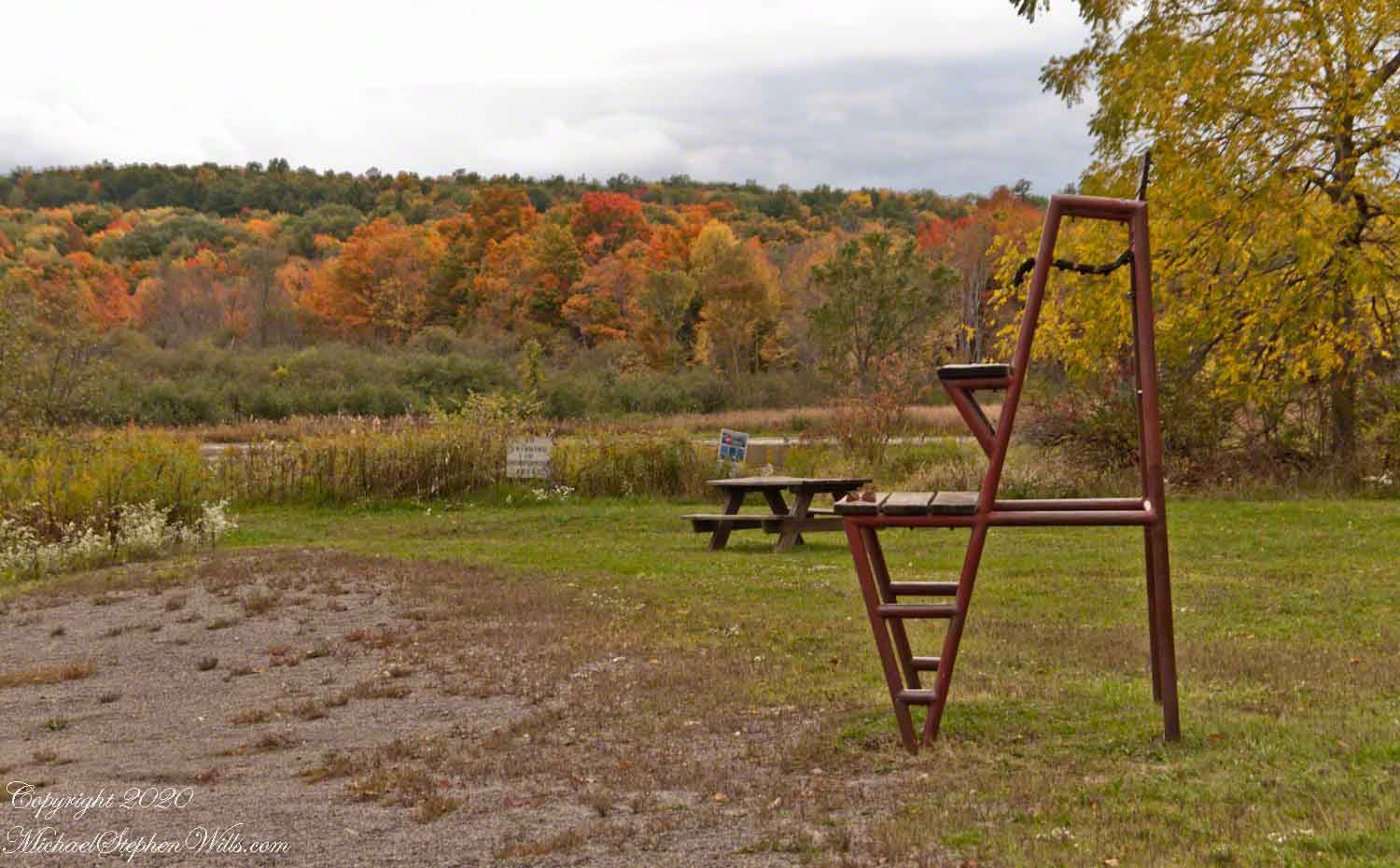
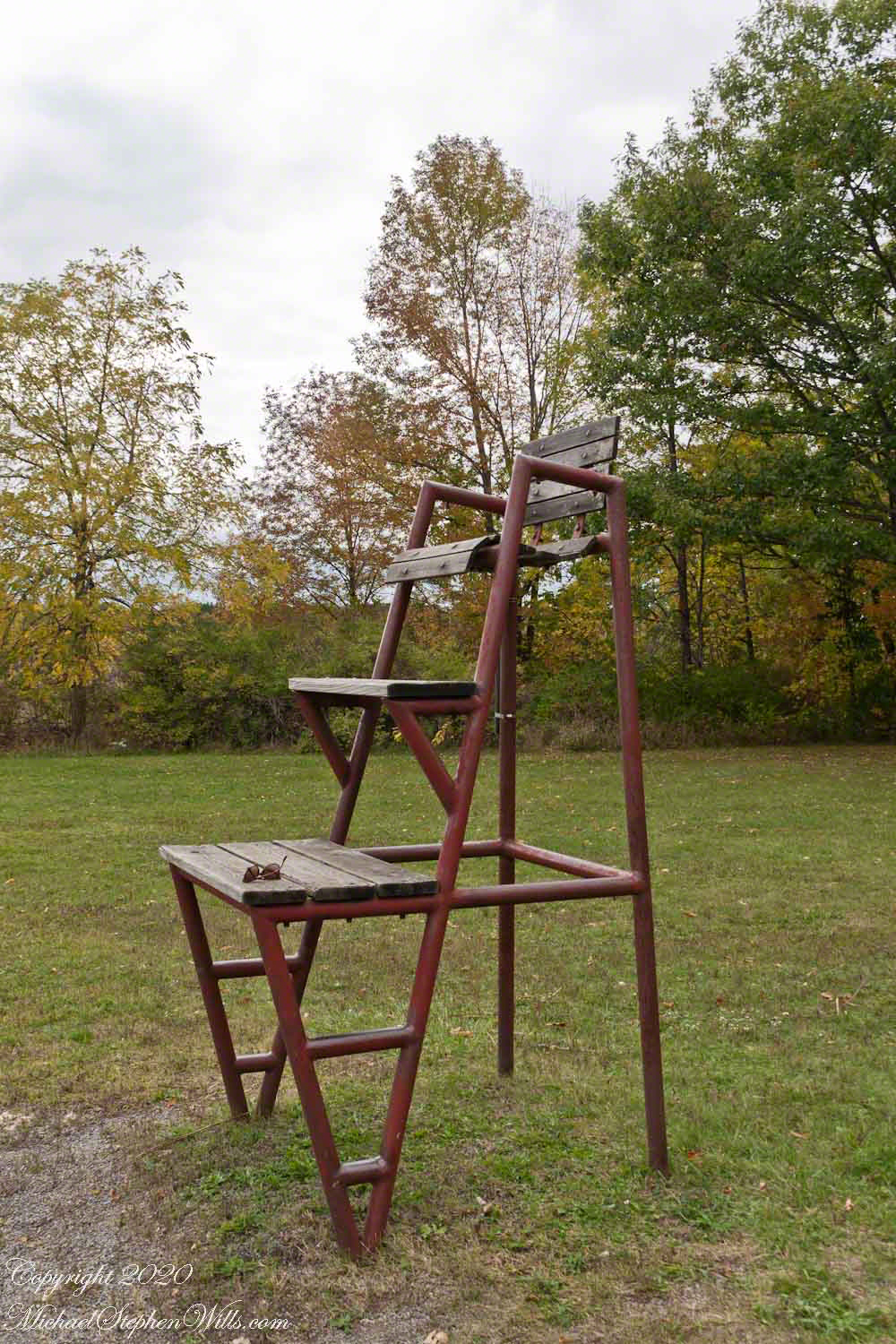
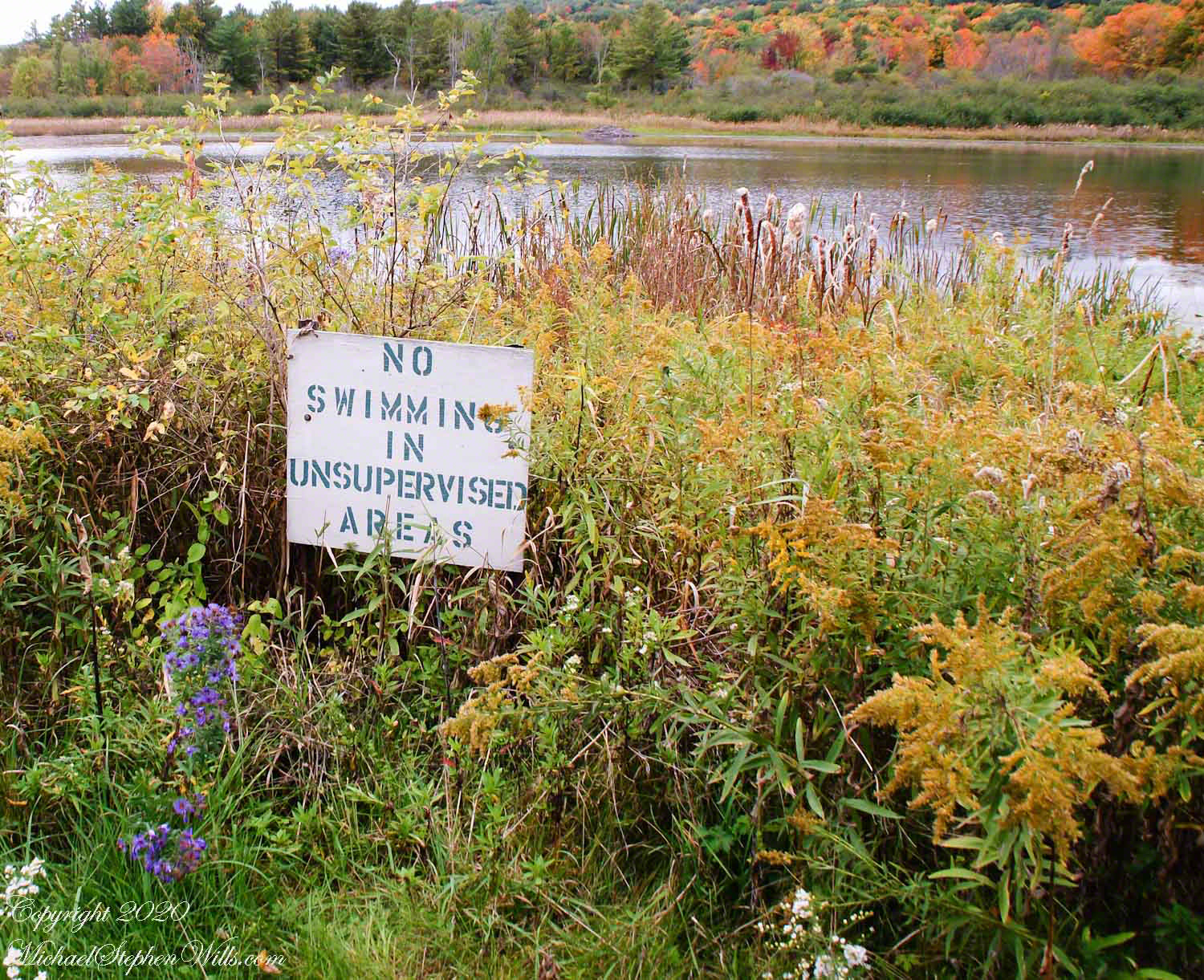
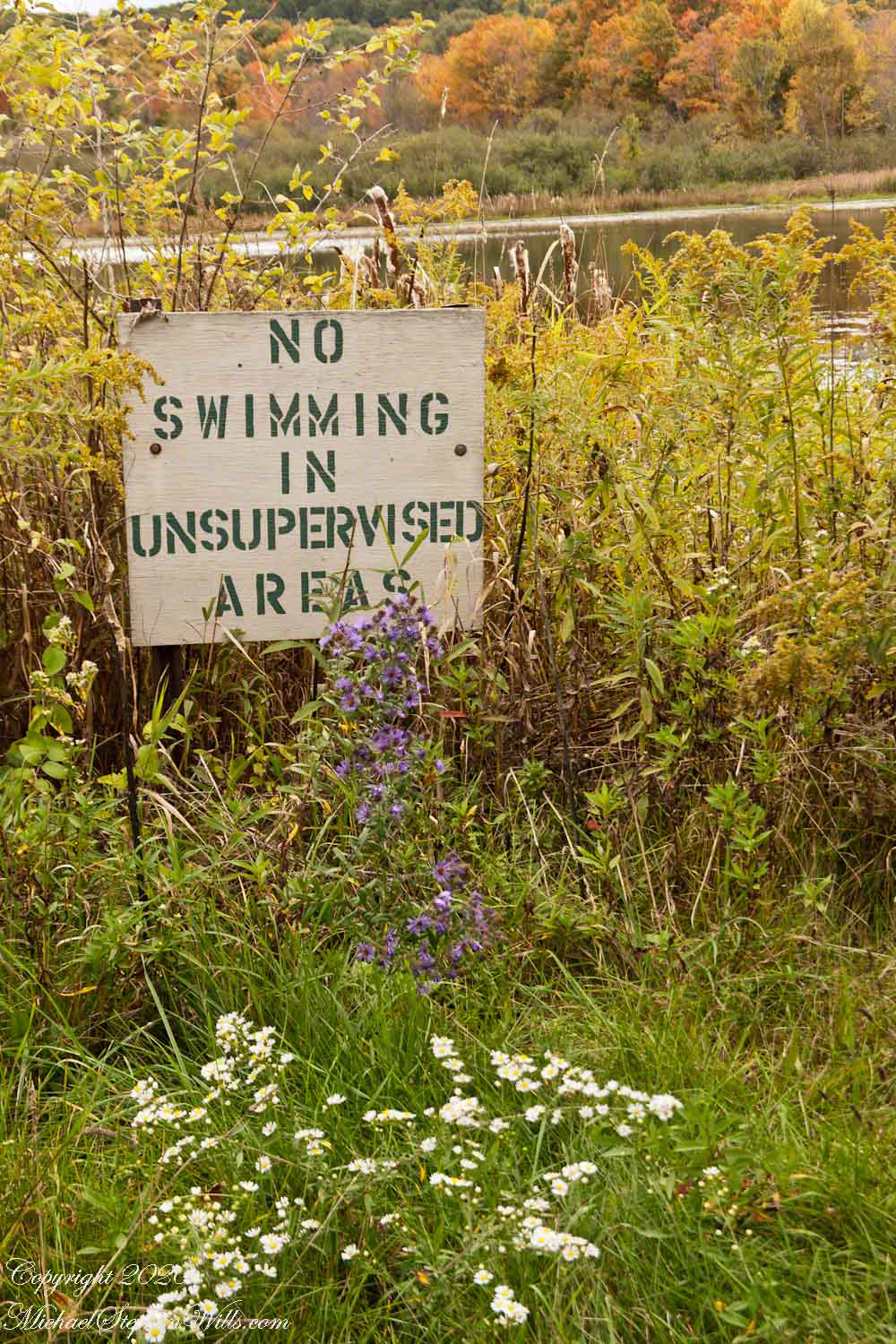
No Swimming!?

“Jennings Pond,” is a song, celebrating swimming.

Here is a photographic essay on the subject of swimming at Jennings Pond this October afternoon.

Copyright 2023 Michael Stephen Wills All Rights Reserved

Gorge Stairway

when the elms blazed a glorious yellow.

Click any photograph to visit my Online Gallery

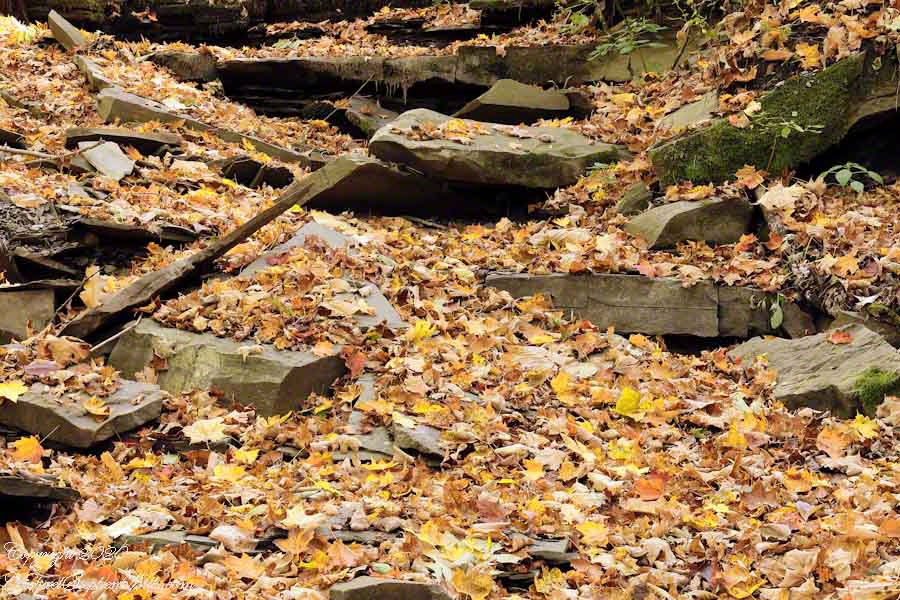
A staircase leading to the Fillmore Glen Gorge

on a perfect October evening

when the elms blazed a glorious yellow.

Filled with Golden Elms

Fillmore Gorge is full with slippery elms.

The constant infall of the gorge keeps these trees small.

Once a year, for a few days, all the elms turn at once. We were lucky to visit at the perfect moment.

The elms blaze yellow for a day or two, early October.

Copyright 2023 Michael Stephen Wills All Rights Reserved

Lucifer Falls Slide Show

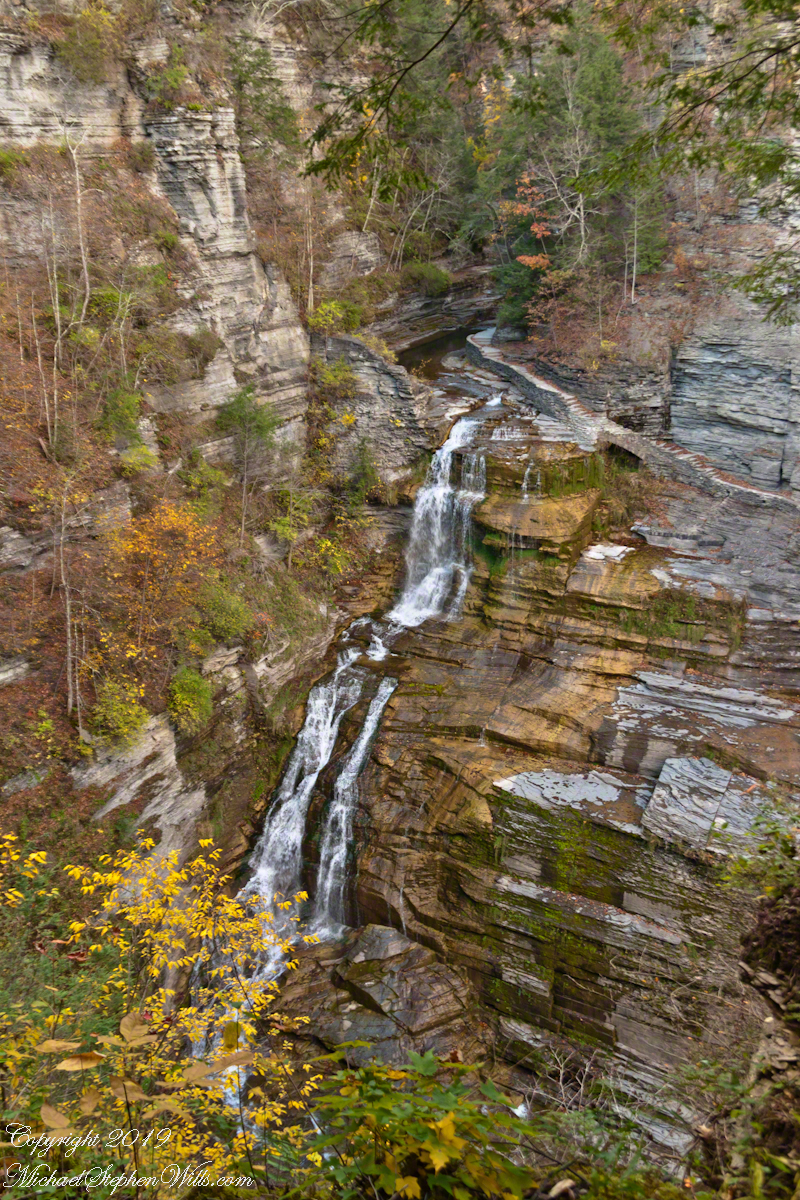
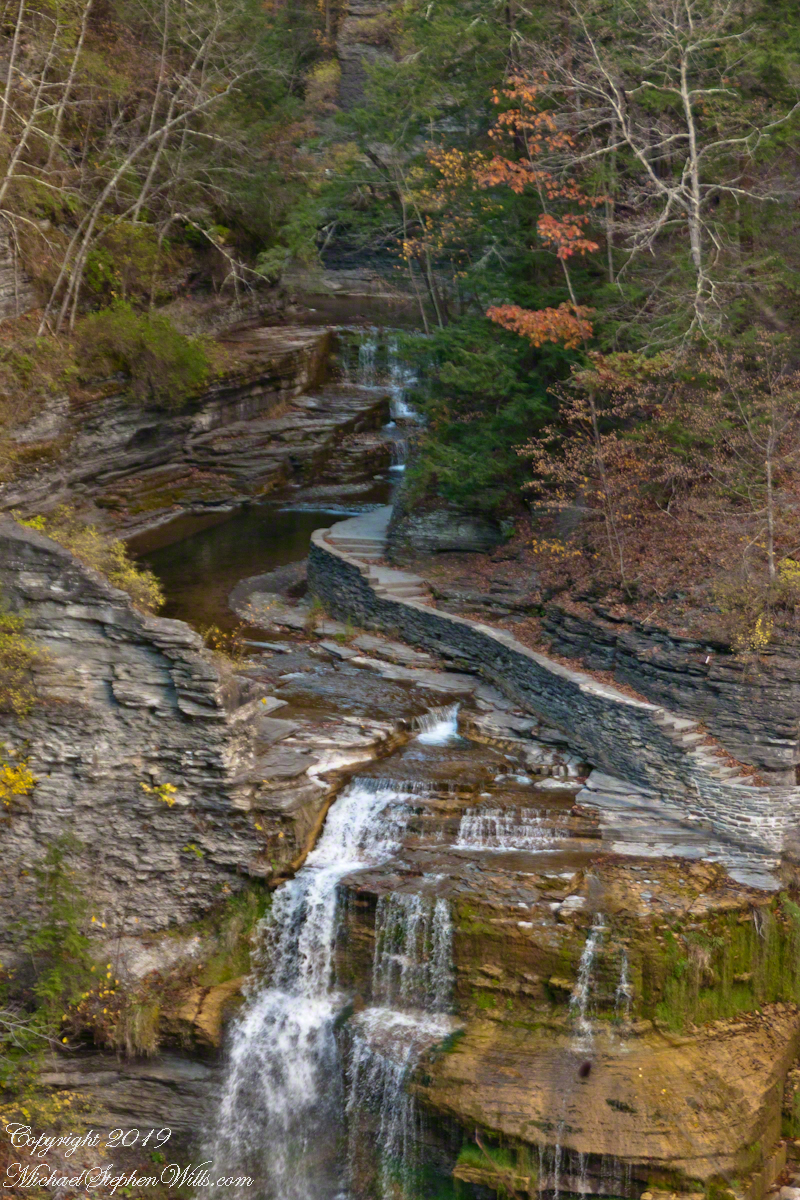
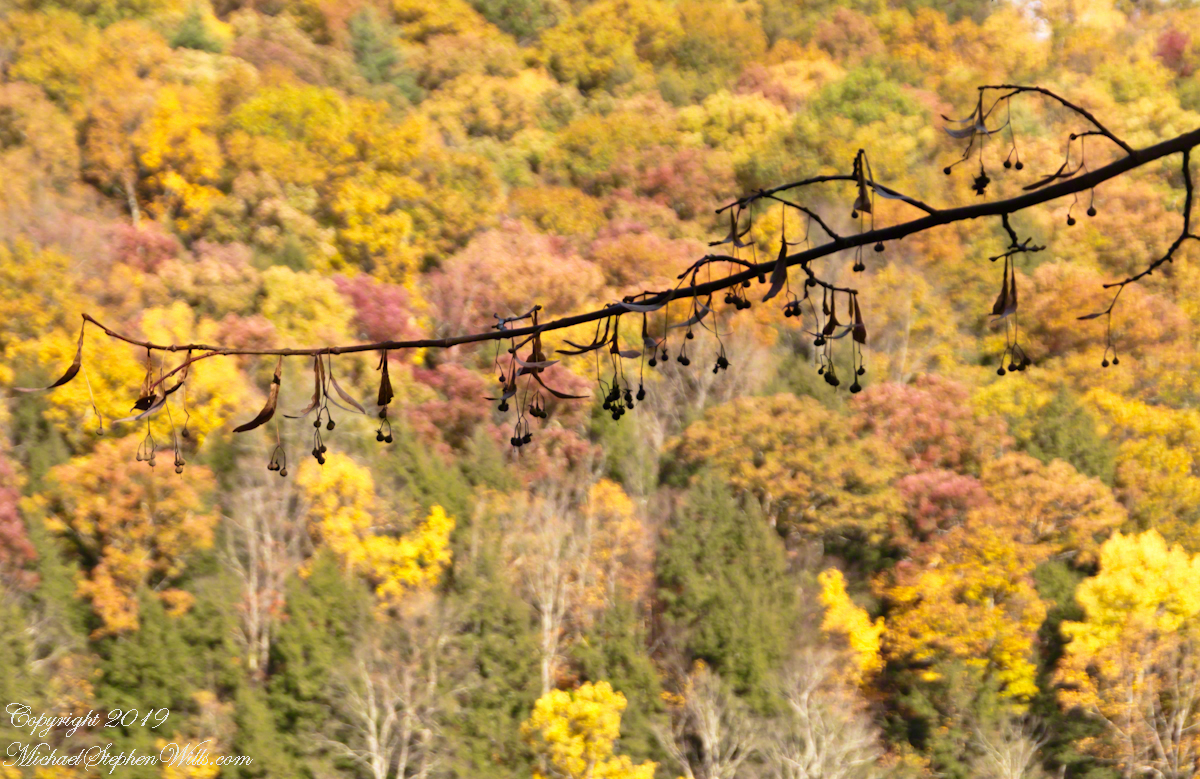
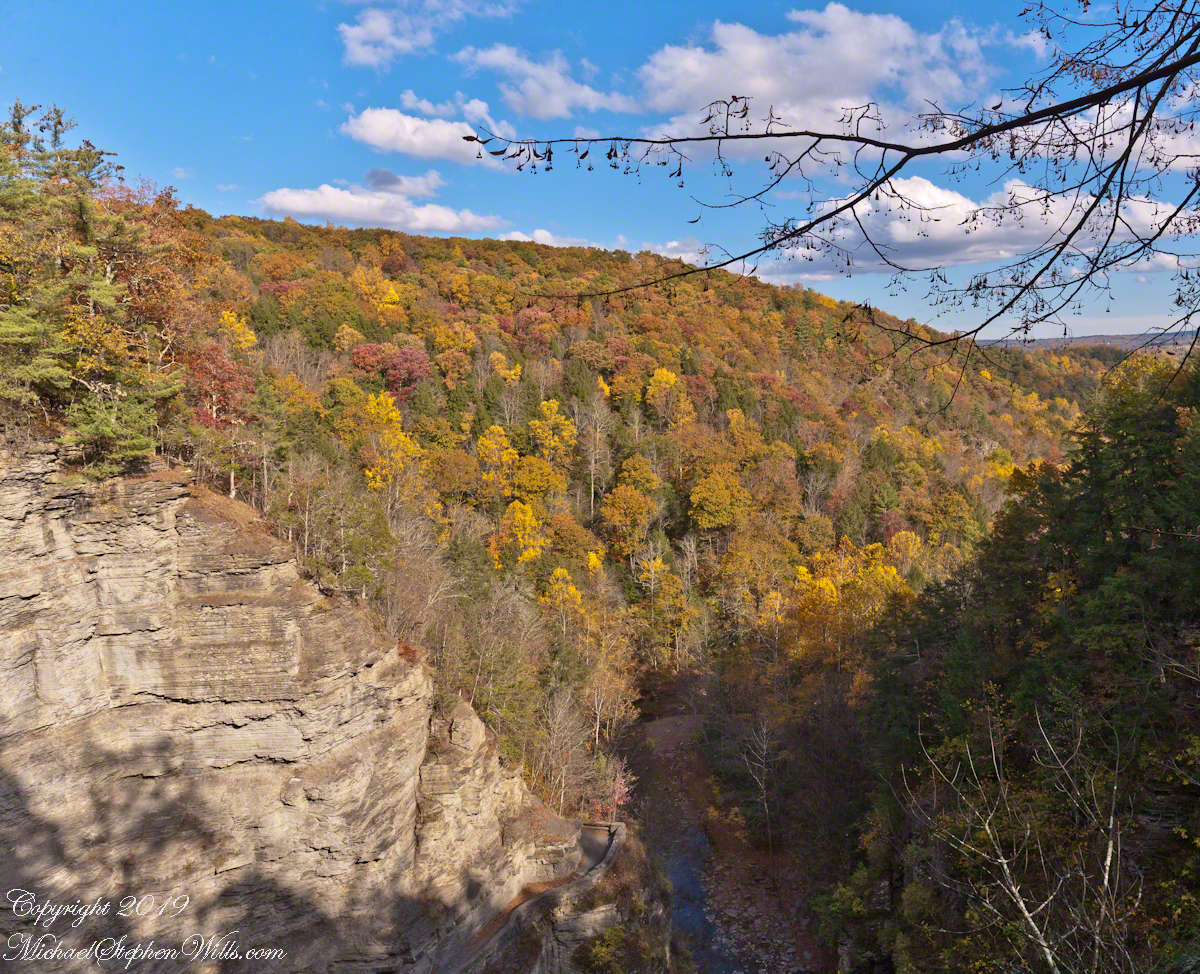
Autumn at Treman Park

Pam and I visited Treman for our last visit of 2017. It was a bright, warm October afternoon. Here is a slide show of our experience, the details shared in recent postings. Enjoy!!

Click photograph for a larger view. To do this from WordPress Reader, you need to first click the title of this post to open a new page.

In November the gorge is closed for the winter due to dangerous conditions under the steep, crumbling walls. Robert H. Treman New York State Park.

Copyright 2019 All Rights Reserved Michael Stephen Wills

History and Ghosts of the Triangle T Ranch

1975 University of Arizona alumnus recounts annual homecoming trips and an encounter with a haunted ranch.

In my Homecoming Parade 2003, I described my initial reconnection with the University of Arizona (U of A) as a 1975 graduate and alumnus.  This personal project of involvement with U of A and Arizona continued through 2011 with annual autumn trips to coincide with Homecoming.  The travel was as a CALS (College of Agriculture and Life Sciences) Alumni Board of Directors member, a primary responsibility was raising funds for scholarships.

I met, Linda Kelly, the owner of the Triangle T Guest Ranch, while camping in the Chiricahua Mountains.  I arrived a week before homecoming to photograph the landscape, nature and rock formations of the Chiricahua National Monument.  Click this link for my Arizona Online gallery, including some work from that time.  Linda and a friend were visiting that day and we struck up a conversation about the area and her Triangle T Guest ranch.  The next day I was scheduled to guest lecture a class at the U of A, as an alumnus of CALS.  The ranch was on the way and I needed a place to stay, so Linda gave me directions and I checked in.

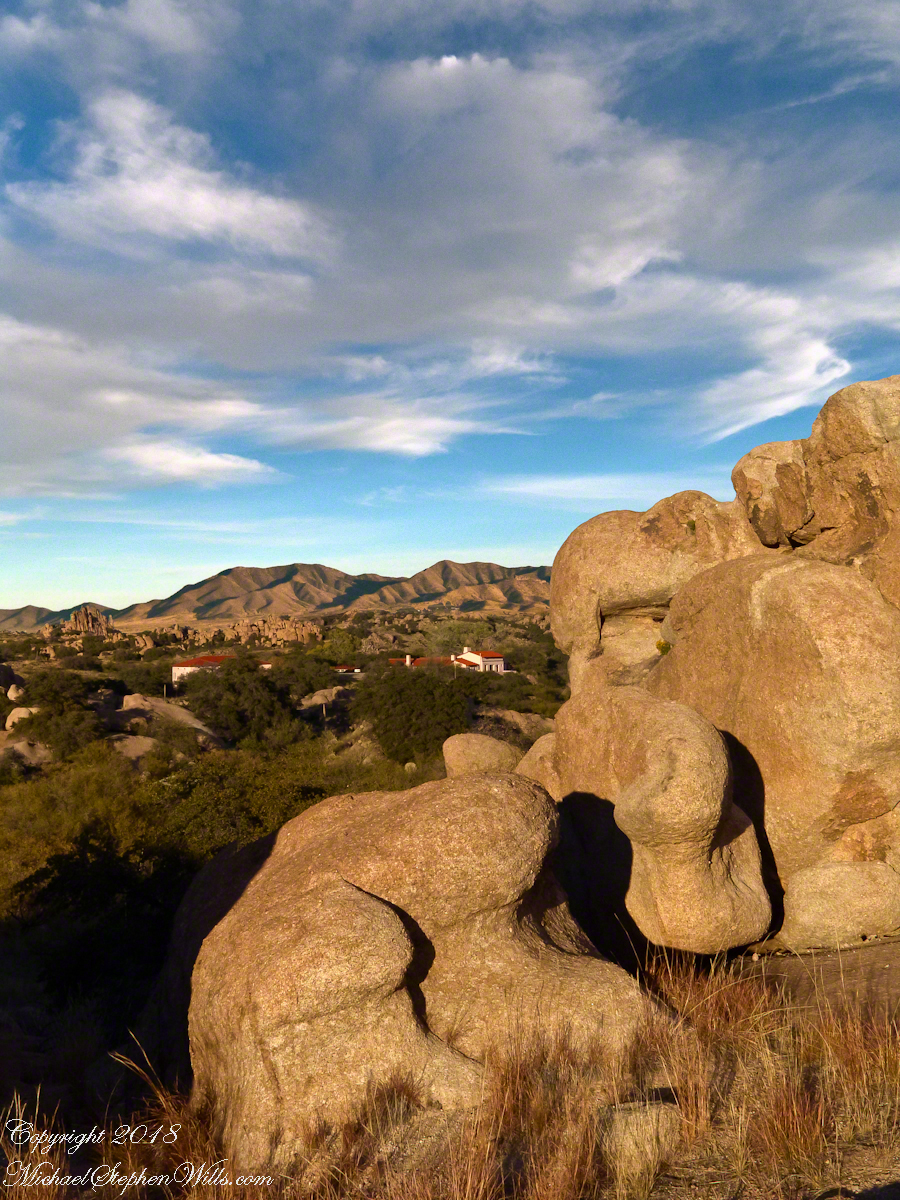
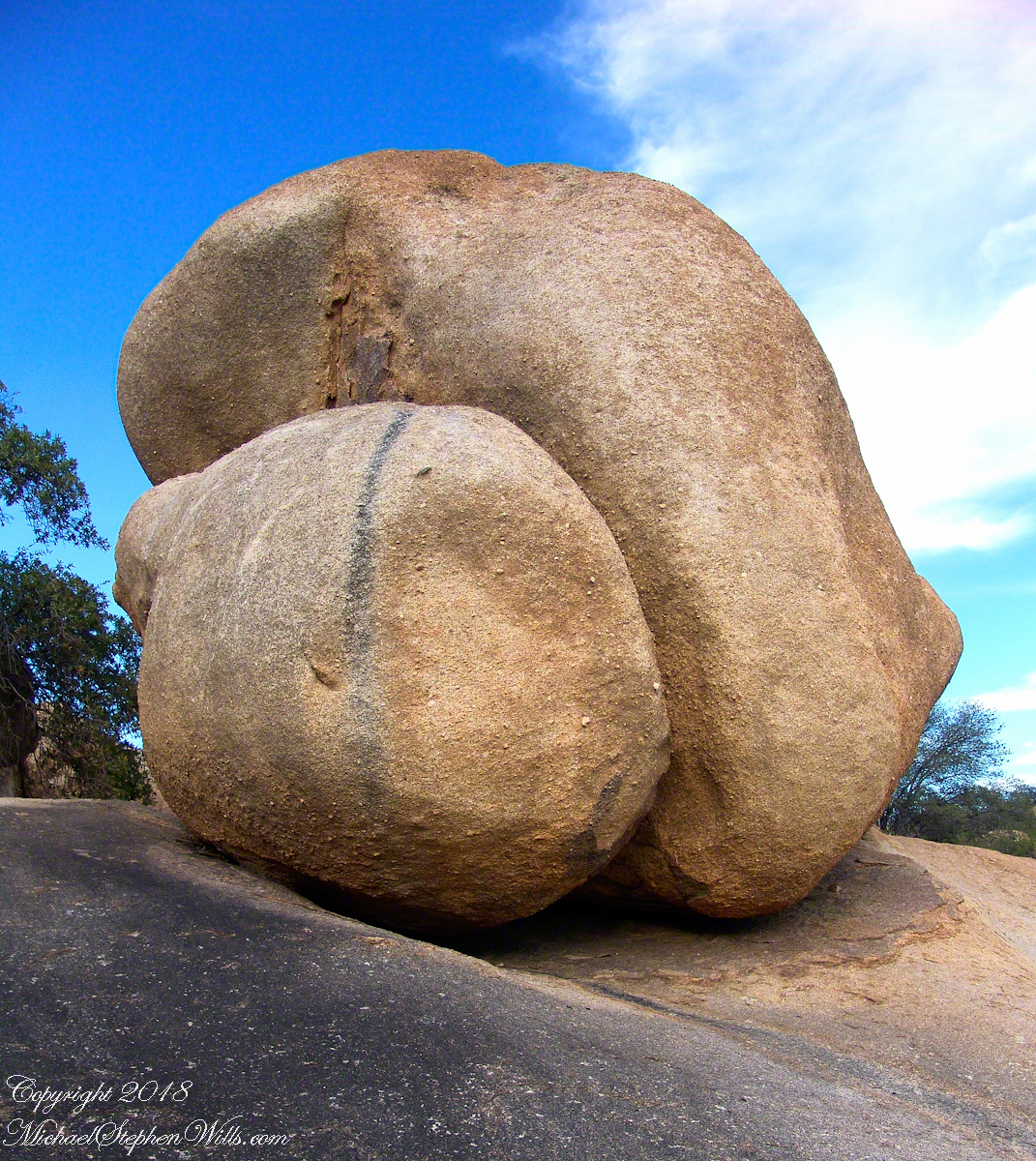
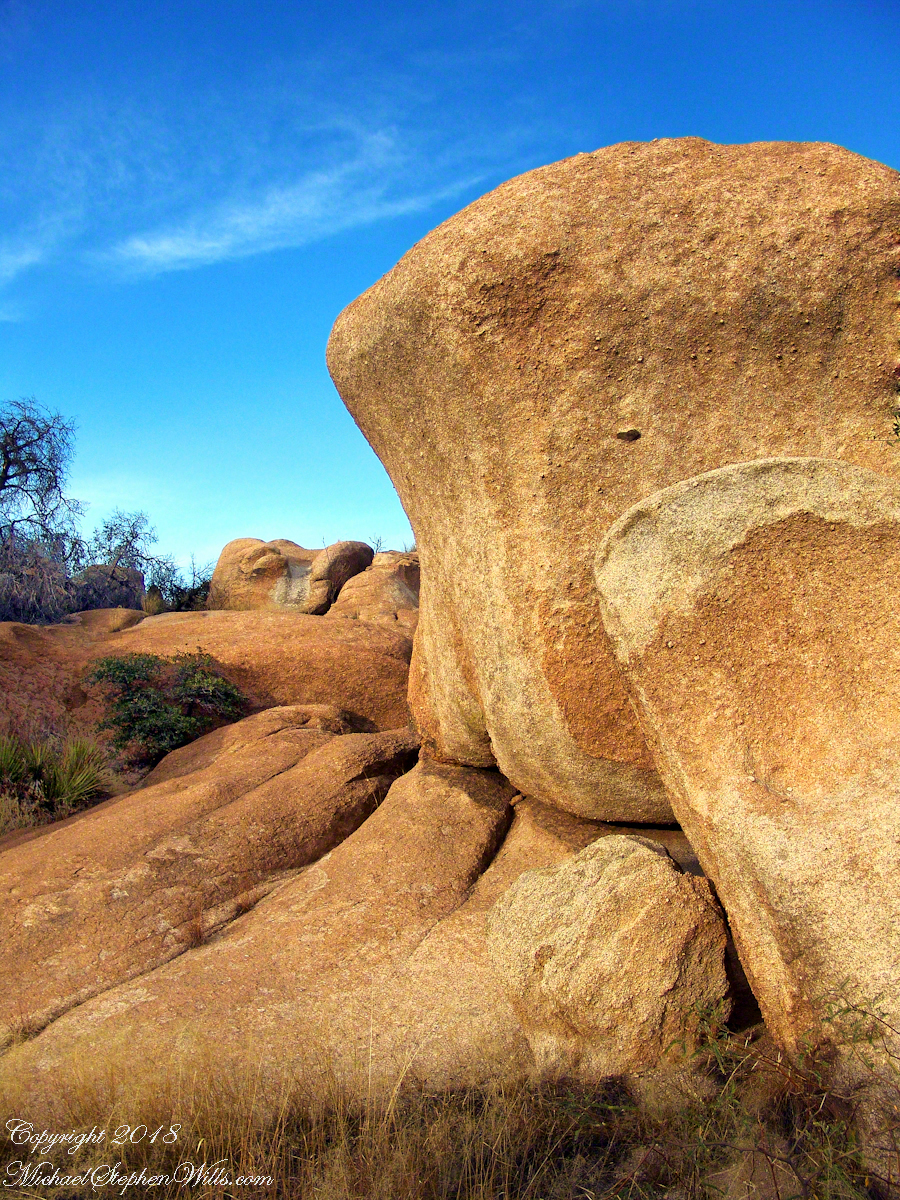
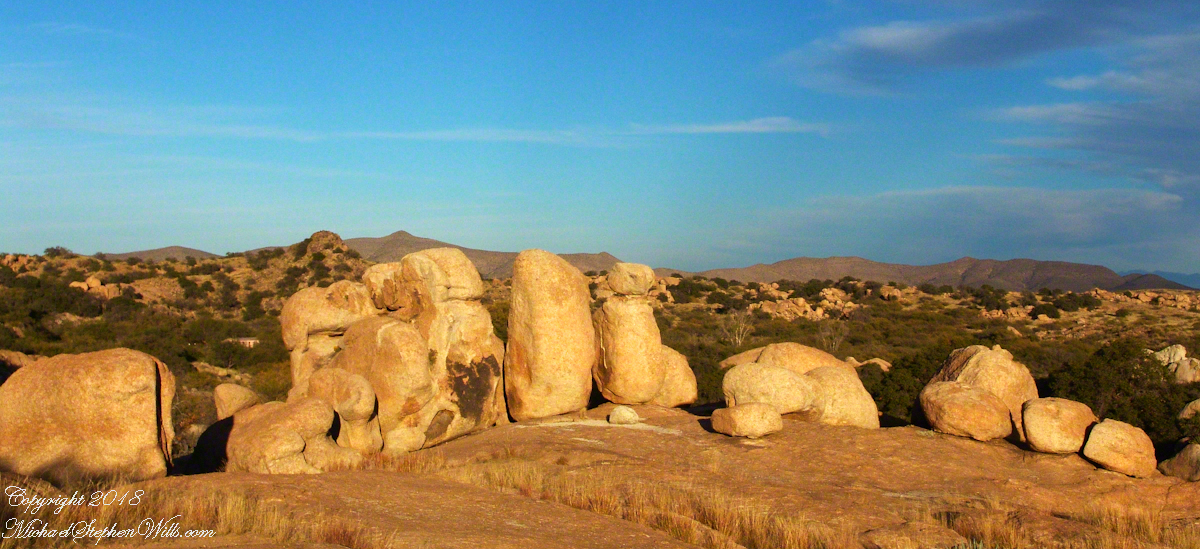
She gave me a tour of the incredible weather granite rock formations of Texas Canyon and, meanwhile, shared stories of the history of Texas Canyon.  It is appropriate for the Amerind Foundation to be here (see first photograph), the winter camp of an Apache tribe for generations.

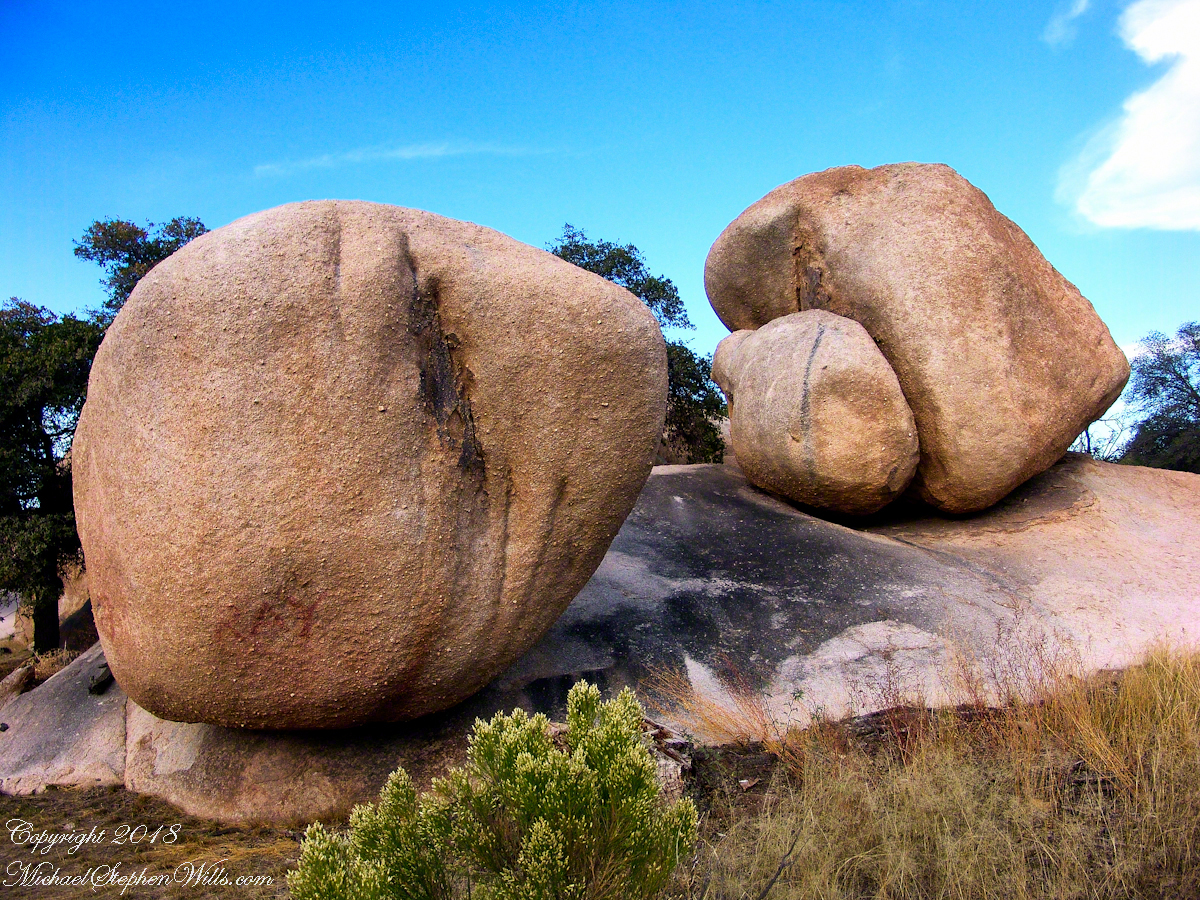
Weathered granite boulders greet visitors to the Triangle T Ranch.

That night, my request was for a room storied to be haunted by a spirit they call “Grandma,” as in when her footsteps wake you from a sound sleep you say, “It’s all right, Grandmother.”  She woke me that night, footsteps in the dark, hollow on the wood floor, the room filled with a hard cold.  I talked to her, without a response, while swinging my legs out of bed to reach the gas heater in the wall.  I turned on the heat and the sound of expanding metal heat fins lulled me to sleep.

It made a good story for the students.  They were surprised I could fall back asleep, but after all I had to be there the following morning.

I gave Linda a few of my photographs from that day and we made arrangements for the Triangle T to supply a two night package for the CALS “Dean’s Almost World Famous Burrito Breakfast” silent auction during 2008 homecoming.

Copyright 2023 Michael Stephen Wills All Rights Reserved

Treman Early Autumn Walk XIV

The post discusses the Hepatica acutiloba plant, highlighting its characteristics, growth, historical medicinal use, and its natural habitat in central eastern North America. It also includes an observation made in Robert H. Treman Park.

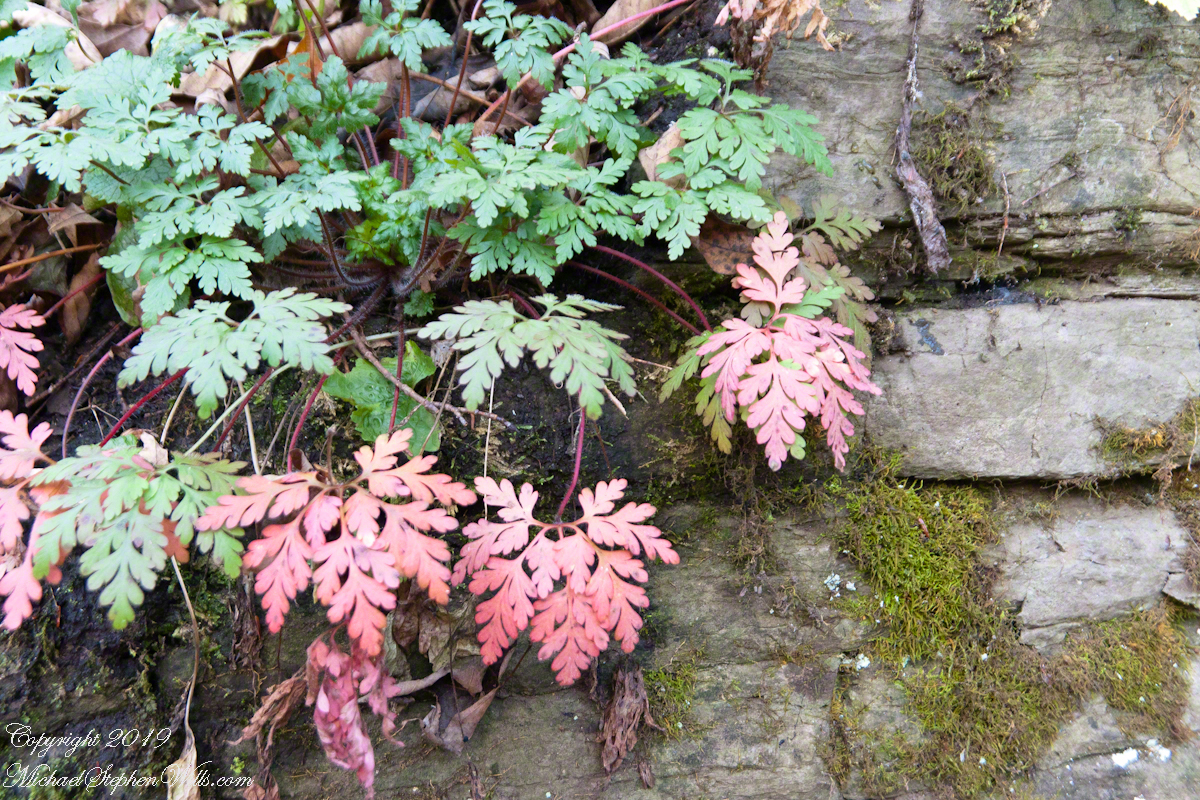
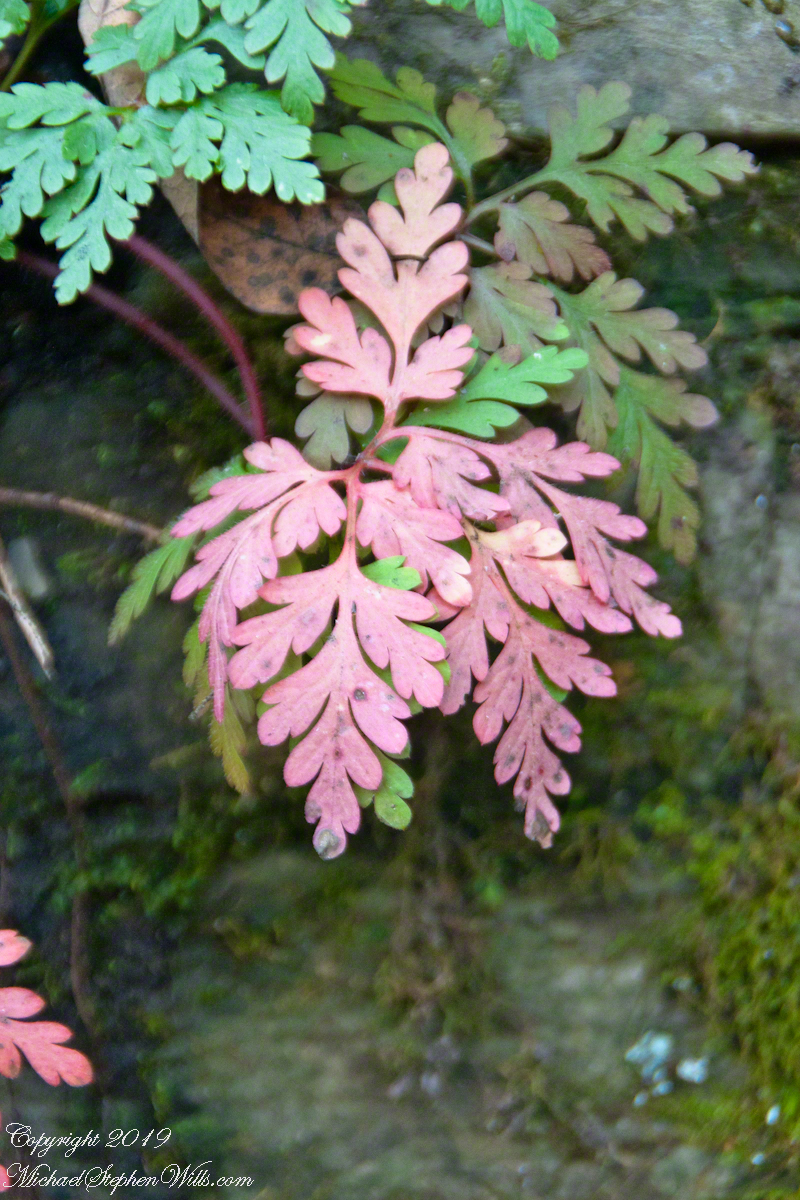
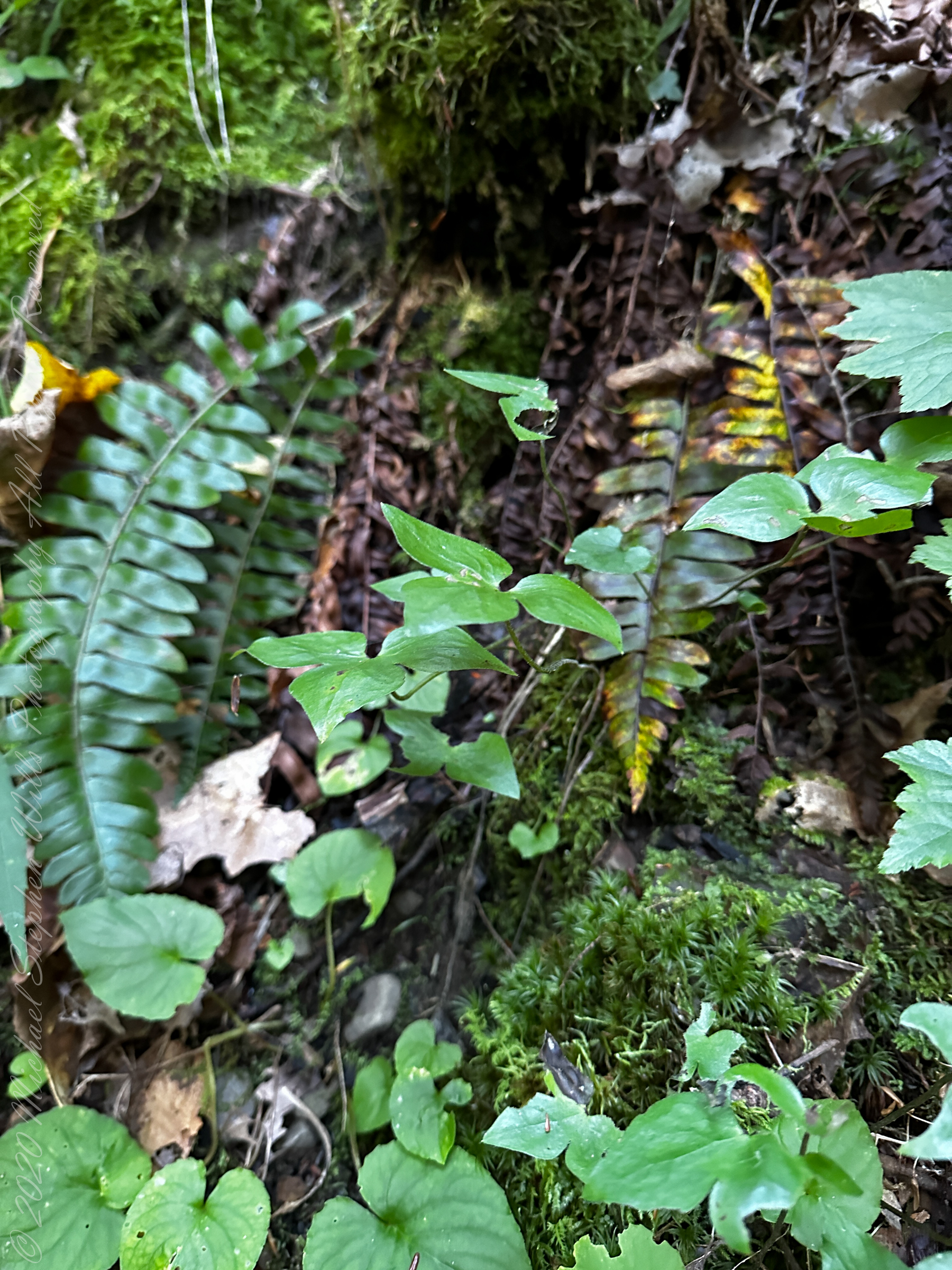
These characteristic leaves are Hepatica plants growing on the sun dappled southern rim of Robert H. Treman Park captured on a bright late September morning.

“Hepatica acutiloba, the sharp-lobed hepatica, is a herbaceous flowering plant in the buttercup family Ranunculaceae. It is sometimes considered part of the genus Anemone, as Anemone acutiloba, A. hepatica, or A. nobilis. Also generally known as Liverleaf and Liverwort.”


“The word hepatica derives from the Greek ἡπατικός hēpatikós, from ἧπαρ hêpar ‘liver’, because its three-lobed leaf was thought to resemble the human liver.”


“Each clump-forming plant grows 5 to 19 cm (2.0 to 7.5 in) tall, flowering in the early to mid spring. The flowers are greenish-white, white, purple or pinkish in color, with a rounded shape. After flowering the fruits are produced in small, rounded columned heads, on pedicels 1 to 4 mm long. When the fruits, called achenes, are ripe they are ovoid in shape, 3.5–4.7 mm long and 1.3–1.9 mm wide, slightly winged and tend to lack a beak.”

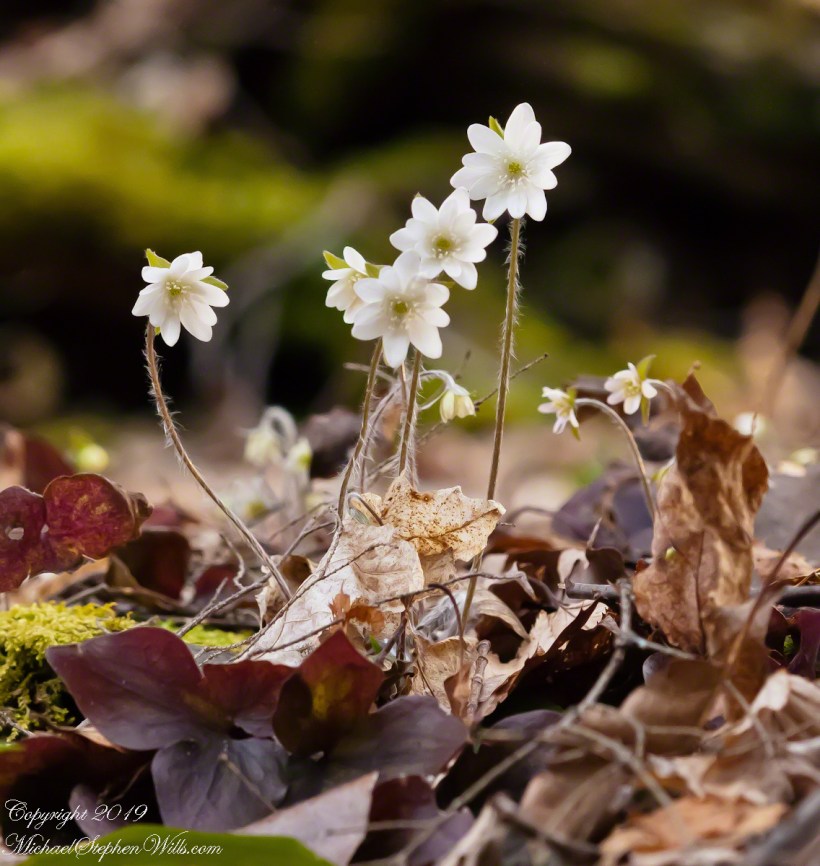
Hepatica Flowers in early spring on the Rim Trail

“Hepatica acutiloba is native to central eastern North America where it can be found growing in deciduous open woods, most often in calcareous soils. Butterflies, moths, bees, flies and beetles are known pollinators. The leaves are basal, leathery, and usually three-lobed, remaining over winter.”

“Hepatica was once used as a medicinal herb. Owing to the doctrine of signatures, the plant was once thought to be an effective treatment for liver disorders. Although poisonous in large doses, the leaves and flowers may be used as an astringent, as a demulcent for slow-healing injuries, and as a diuretic.”

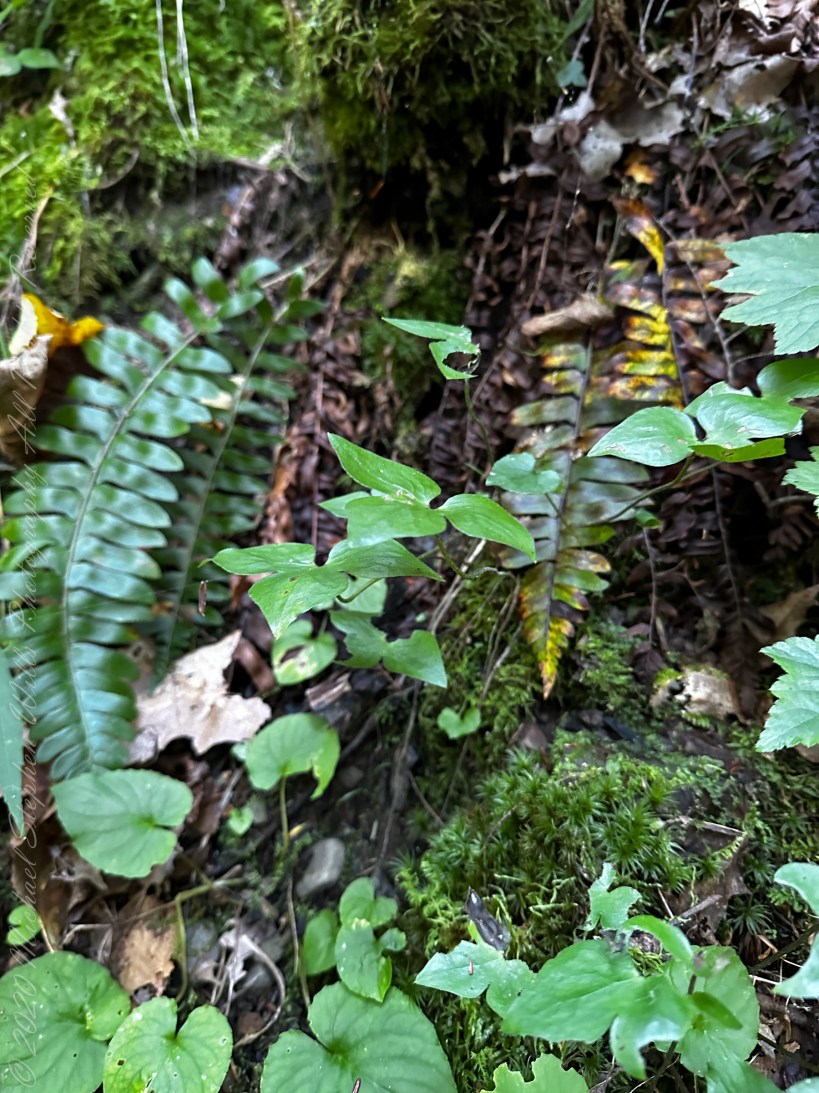
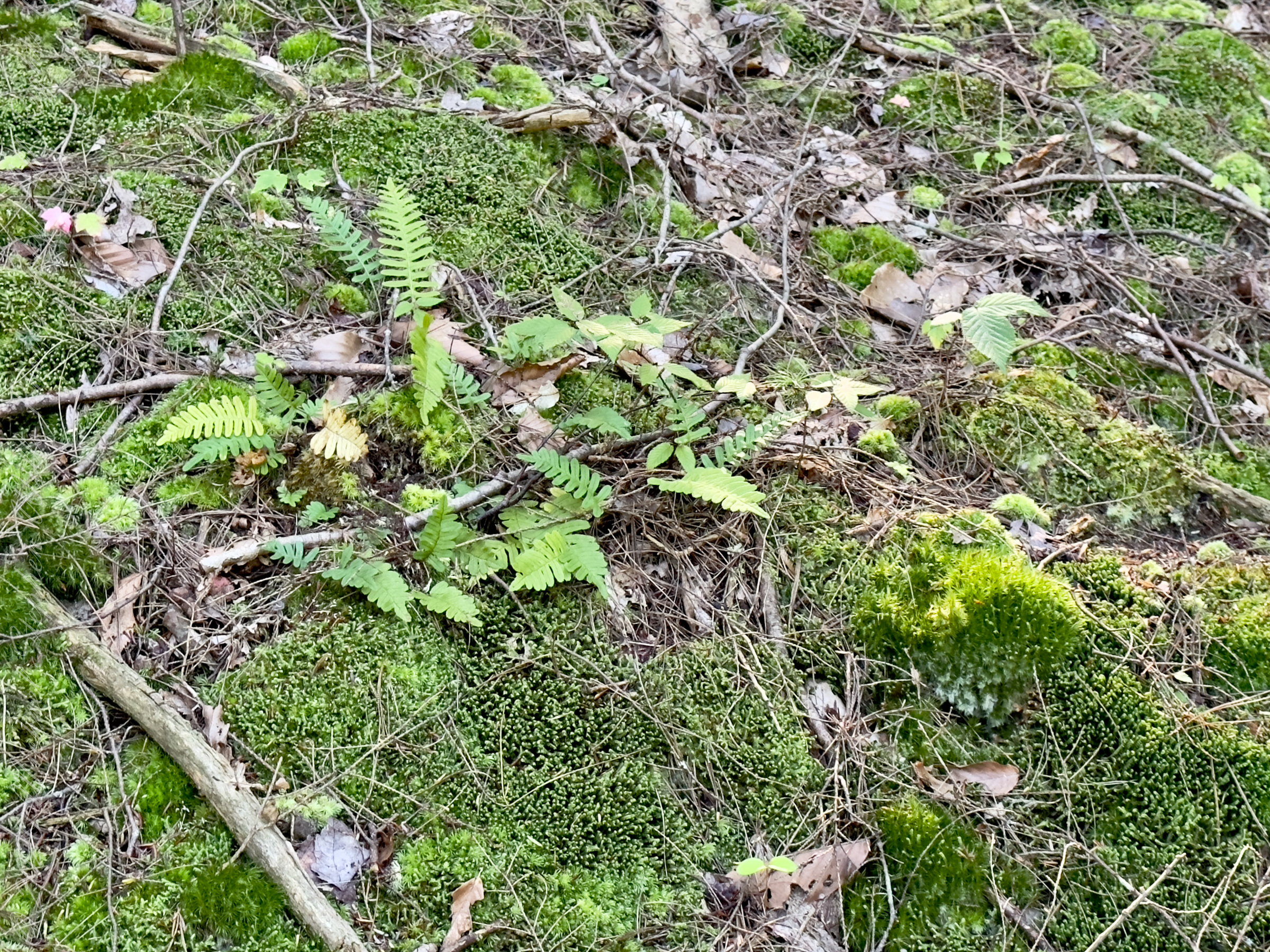
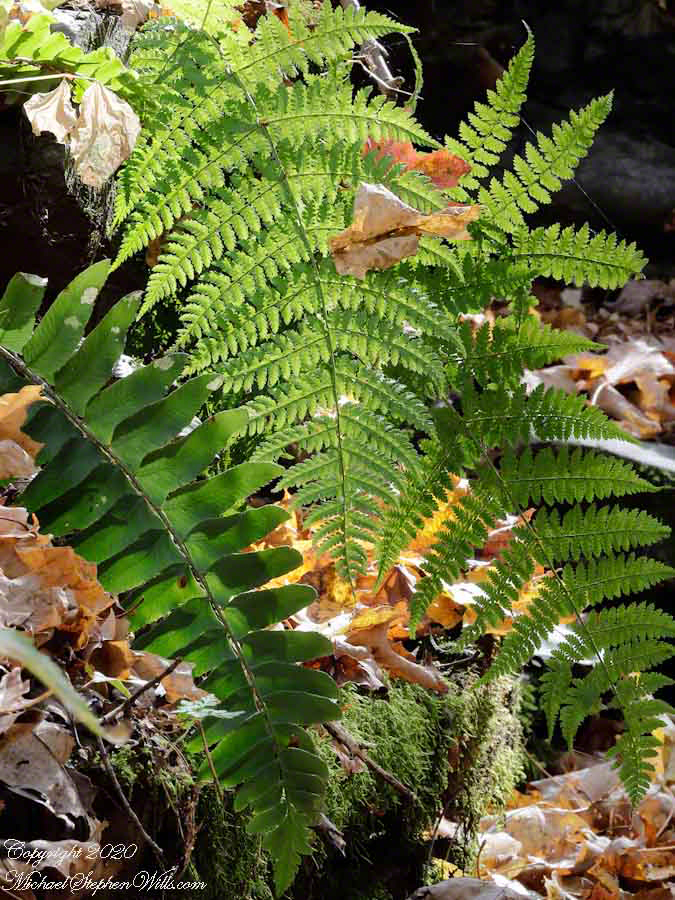
Ferns and Mosses growing beneath Red Pines

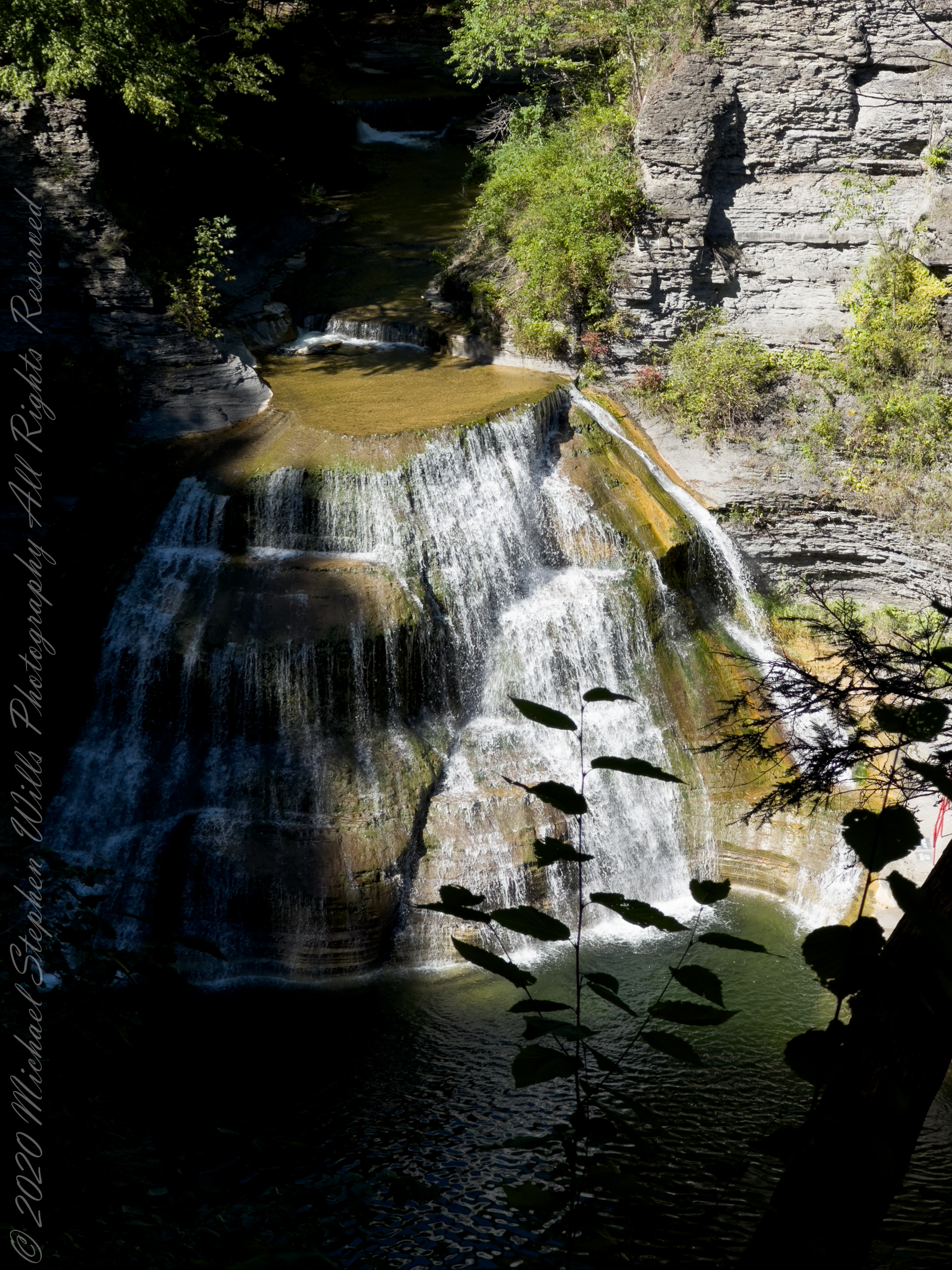
View of the lower falls and swimming hole from the Rim Trail

Click Me another post featuring Hepatica flowers

References
–text in italics and quotes is from Wikipedia, “Hepatica” and “Hepatica acutiloba.”
–“The Botanical Garden Vol II Perennials and Annuals,” Roger Phillips and Martyn Rix, Firefly Books, 2002.

Copyright 2023 All Rights Reserved Michael Stephen Wills

Treman Early Autumn Walk XIII

The Red Pine, Minnesota’s state tree, is a tall, conical, long-lived evergreen with distinctive orange-red bark.

Returning from a Rim Trail walk one April my boots were yellow from a prolific release of pollen from flowers of these tall trees that develop into the woody cones.

Pinus, the pine, is the largest genus in the family Pinaceae, with around 100 species throughout the northern hemisphere.


Red Pine (Pinus resinosa) is Minnesota’s state tree, known there as the Norway Pine. The use of the name “Norway” may stem from early Scandinavian immigrants who likened the American red pines to the Scots pines back home.


“Red pine is a coniferous evergreen tree characterized by tall, straight growth. It usually ranges from 20–35 meters (66–115 feet) in height and 1 m (3 ft 3 in) in trunk diameter, exceptionally reaching 43.77 m (143+1⁄2 ft) tall. The crown is conical, becoming a narrow, rounded dome with age. The bark is thick and gray brown at the base of the tree, but thin, flaky and bright orange red in the upper crown; the tree’s name derives from this distinctive character. Some red color may be seen in the fissures of the bark. The species is self-pruning; there tend not to be dead branches on the trees, and older trees may have very long lengths of branchless trunk below the canopy.”


“It is a long-lived tree, reaching a maximum age of about 500 years. Another member of Pinus, Pinus longaeva D.K. Bailey, the intermountain bristlecone pine, is the longest-lived tree in the world; one in the White Mountains of Nevada is estimated to be 5,000 years old, and by matching rhe rings with even older dead trees, a sequence going back 8,500 years has been established.”

“Red pine is notable for its very constant morphology and low genetic variation throughout its range, suggesting it has been through a near extinction in its recent evolutionary history. A genetic study of nuclear microsatellite polymorphisms among populations distributed throughout its natural range found that red pine populations from Newfoundland are genetically distinct from most mainland populations, consistent with dispersal from different glacial refugia in this highly self-pollinating species.”

Click Me for the first post in this series.

References
–text in italics and quotes is from Wikipedia, “Pinus resinosa.”
–“The Botanical Garden Vol I Trees and Shrubs,” Roger Phillips and Martyn Rix, Firefly Books, 2002.

Copyright 2023 All Rights Reserved Michael Stephen Wills

Treman Early Autumn Walk XII

Assistance sought for identification of a plant discovered in Robert H. Treman park, Enfield Gorge.

Can anyone identify this plant found growing on the south rim of Enfield Gorge within the Robert H. Treman park?

Click Me for the first post in this series.

Copyright 2023 All Rights Reserved Michael Stephen Wills

Treman Early Autumn Walk XI

Thomas Edison and Henry Ford innovatively used goldenrod to produce rubber, potentially counteracting rubber shortages.
Where the Rim Trail descends to an ending on the Enfield Gorge floor a perennial patch of sunlight promotes an extravagant woodland growth of Zigzag goldenrod.

Solidago flexicaulis, AKA Broadleaf Goldenrod and Ziazag Goldenrod

“Inventor Thomas Edison experimented with goldenrod to produce rubber, which it contains naturally. Edison created a fertilization and cultivation process to maximize the rubber content in each plant. His experiments produced a 12 ft-tall (3.7 m) plant that yielded as much as 12% rubber. The tires on the Model T given to him by his friend Henry Ford were made from goldenrod. Like George Washington Carver, Henry Ford was deeply interested in the regenerative properties of soil and the potential of alternative crops such as peanuts and soybeans to produce plastics, paint, fuel and other products.  Ford had long believed that the world would eventually need a substitute for gasoline and supported the production of ethanol (or grain alcohol) as an alternative fuel. In 1942, he would showcase a car with a lightweight plastic body made from soybeans. Ford and Carver began corresponding via letter in 1934, and their mutual admiration deepened after George Washington Carver made a visit to Michigan in 1937.”

“By the time World War II began, Ford had made repeated journeys to Tuskegee to convince George Washington Carver to come to Dearborn and help him develop a synthetic rubber to help compensate for wartime rubber shortages. Carver arrived on July 19, 1942, and set up a laboratory in an old water works building in Dearborn. He and Ford experimented with different crops, including sweet potatoes and dandelions, eventually devising a way to make the rubber substitute from goldenrod, a plant weed commercially viable. Carver died in January 1943, Ford in April 1947, but the relationship between their two institutions continued to flourish: As recently as the late 1990s, Ford awarded grants of $4 million over two years to the George Washington Carver School at Tuskegee.”
“Extensive process development was conducted during World War II to commercialize goldenrod as a source of rubber. The rubber is only contained in the leaves, not the stems or blooms. Typical rubber content of the leaves is 7%. The resulting rubber is of low molecular weight, resulting in an excessively tacky compound with poor tensile properties.”
References: text in italics and quotes is from the Wikipedia, “Solidago.”

Copyright 2023 All Rights Reserved Michael Stephen Wills