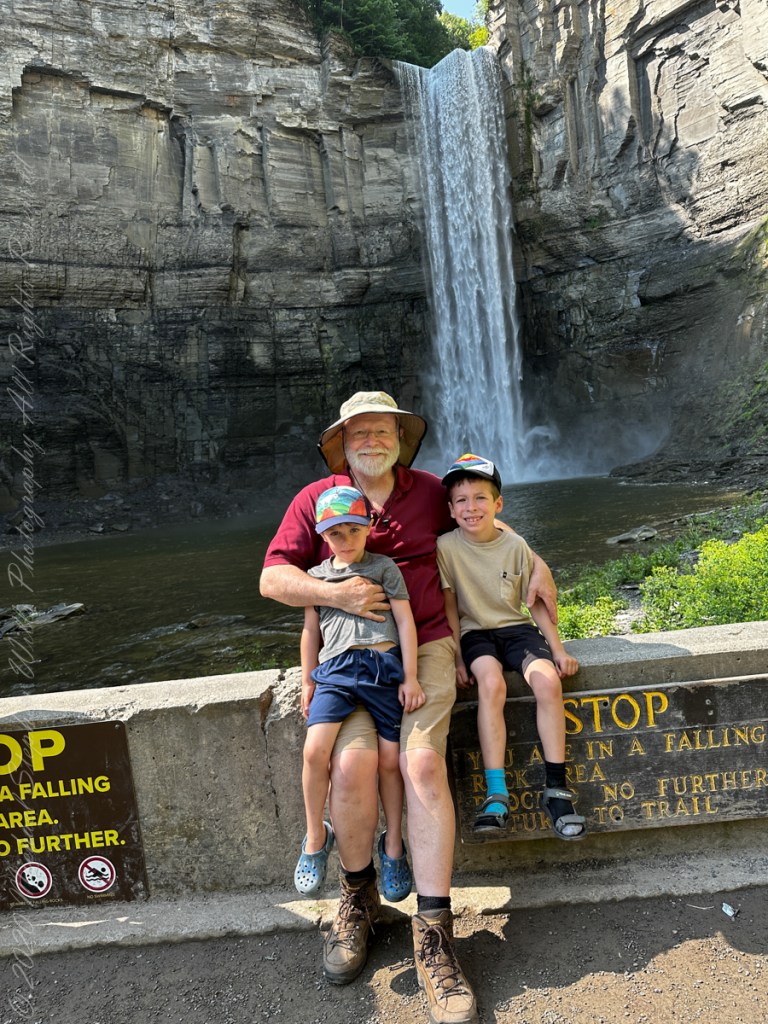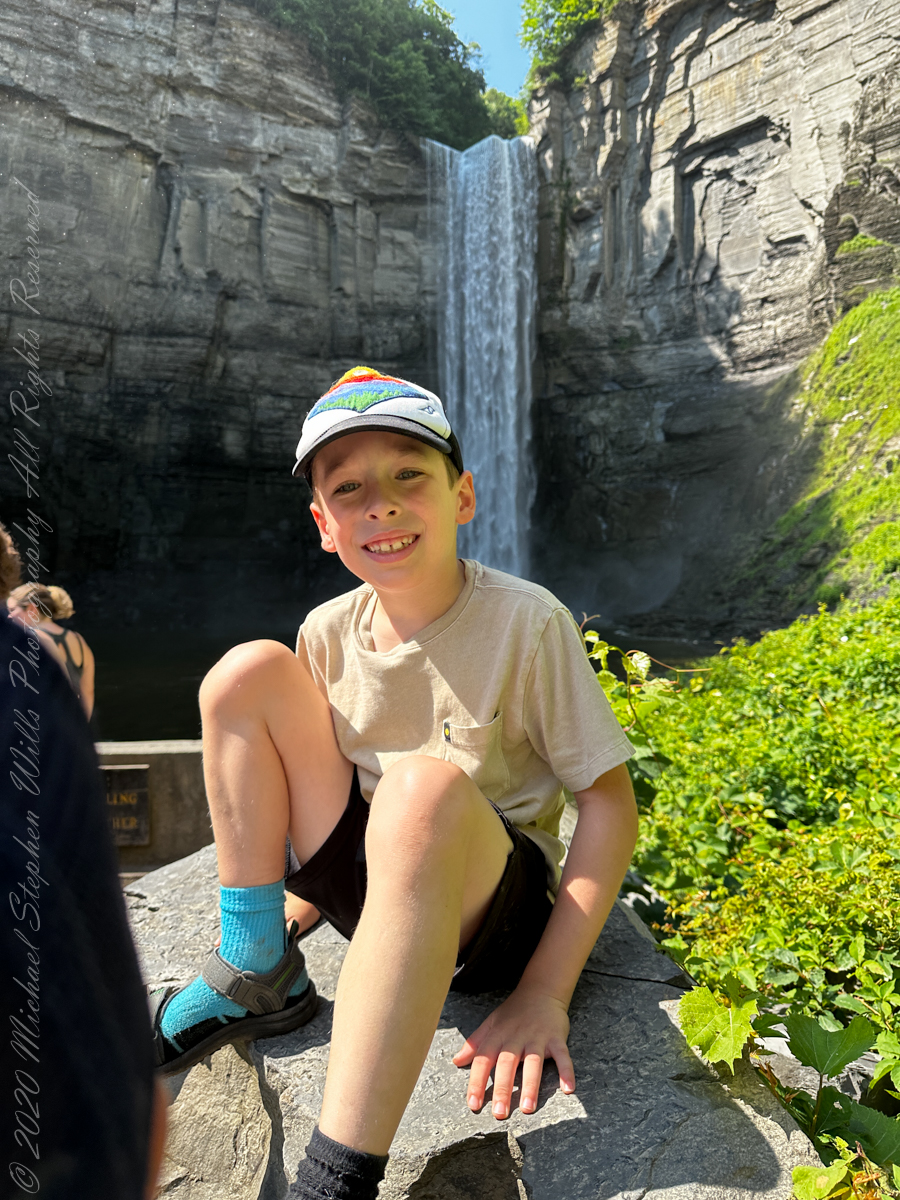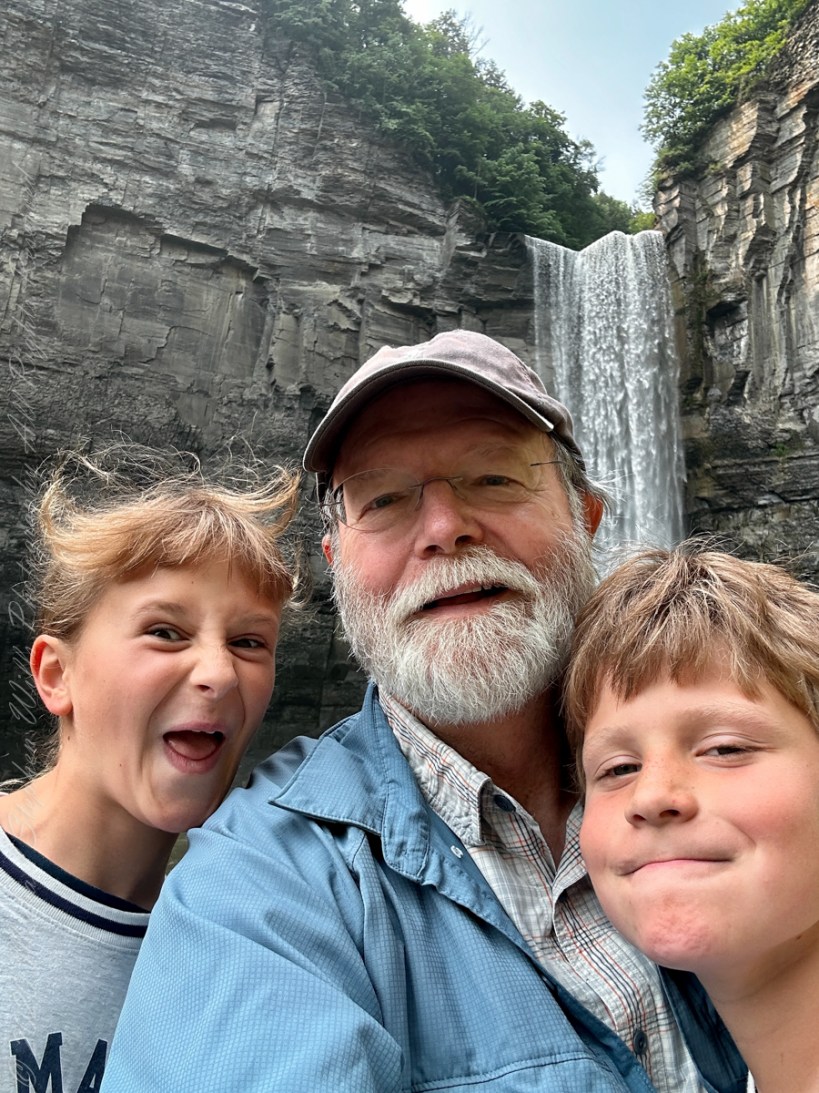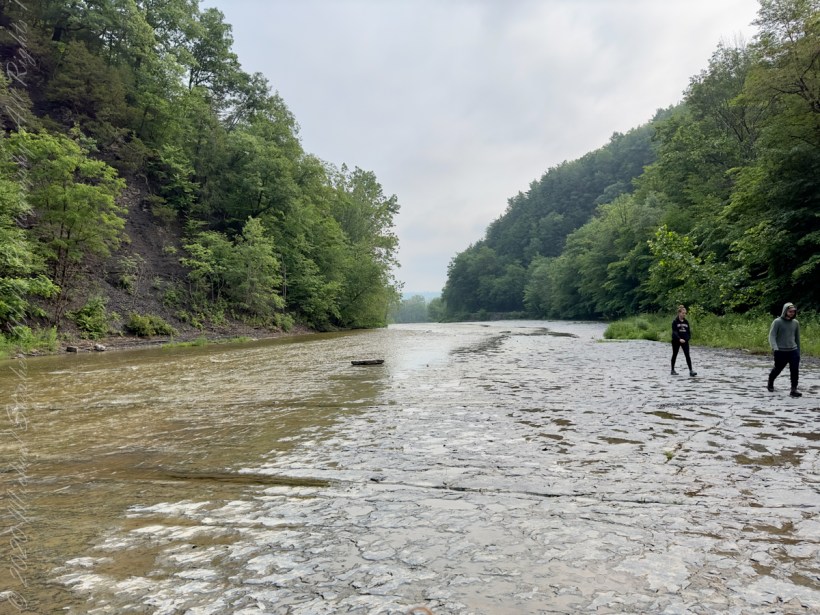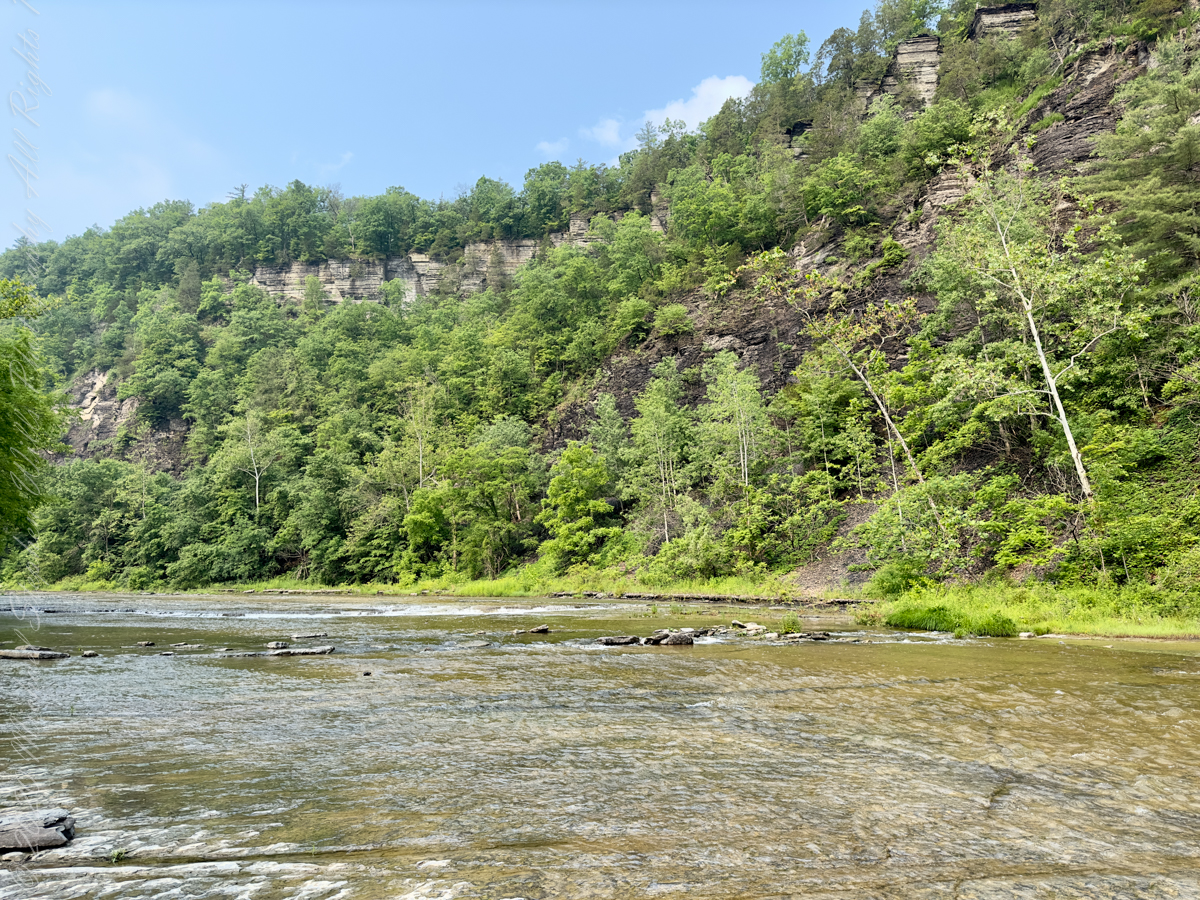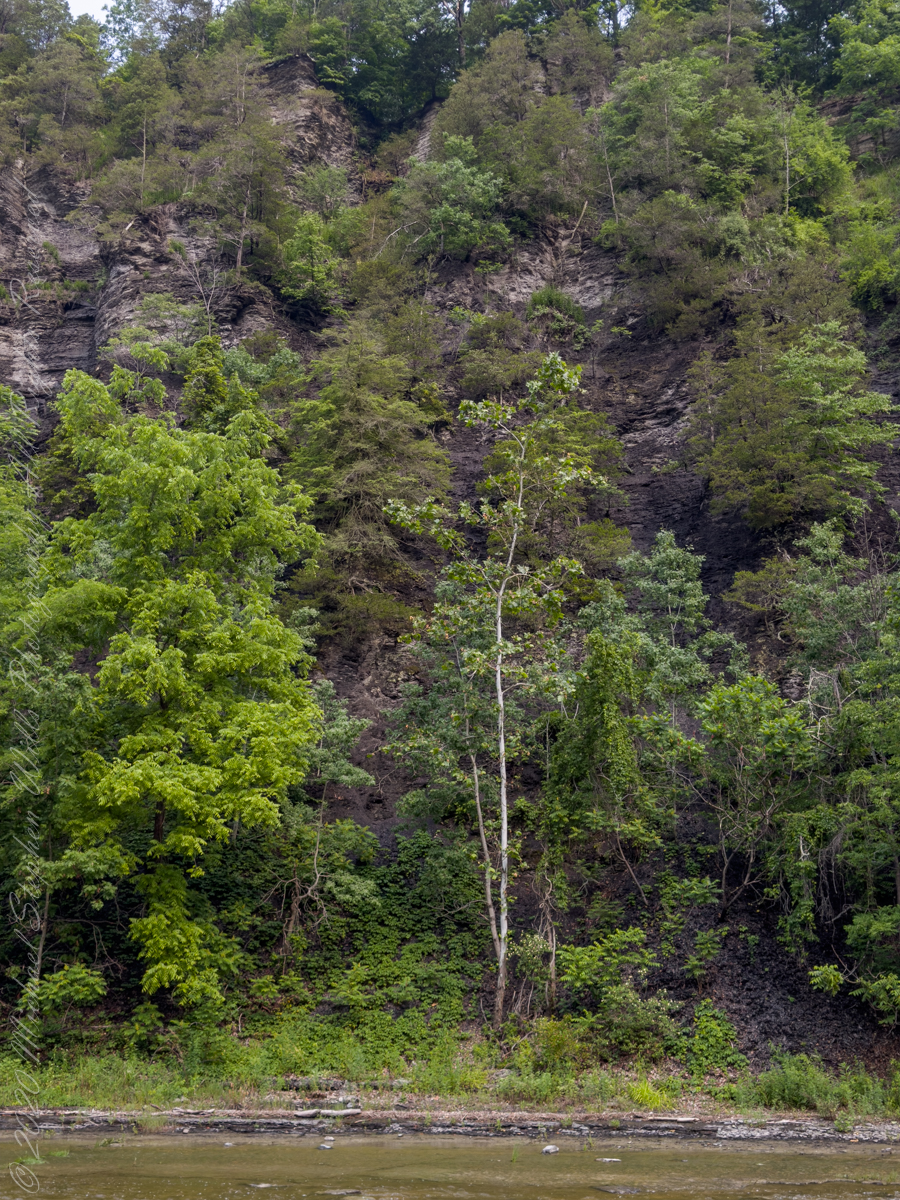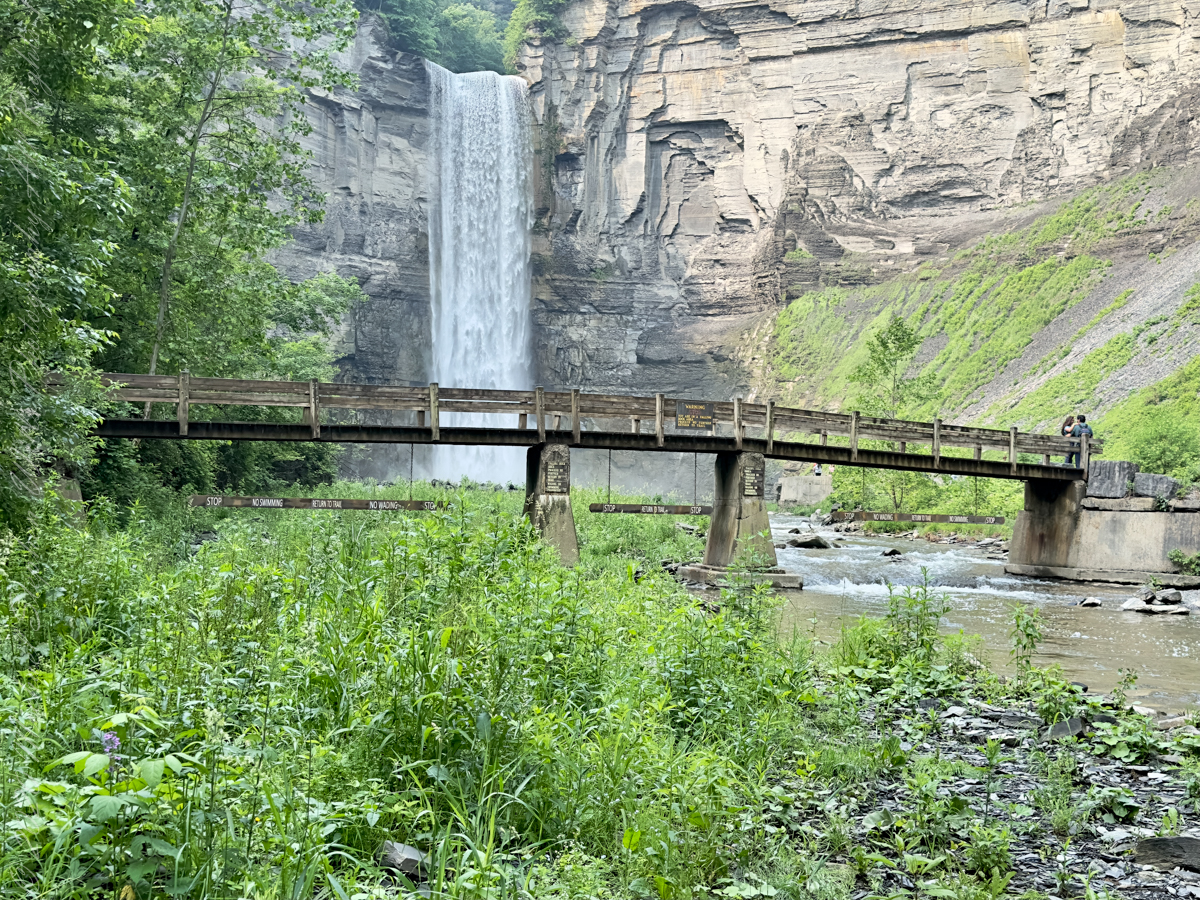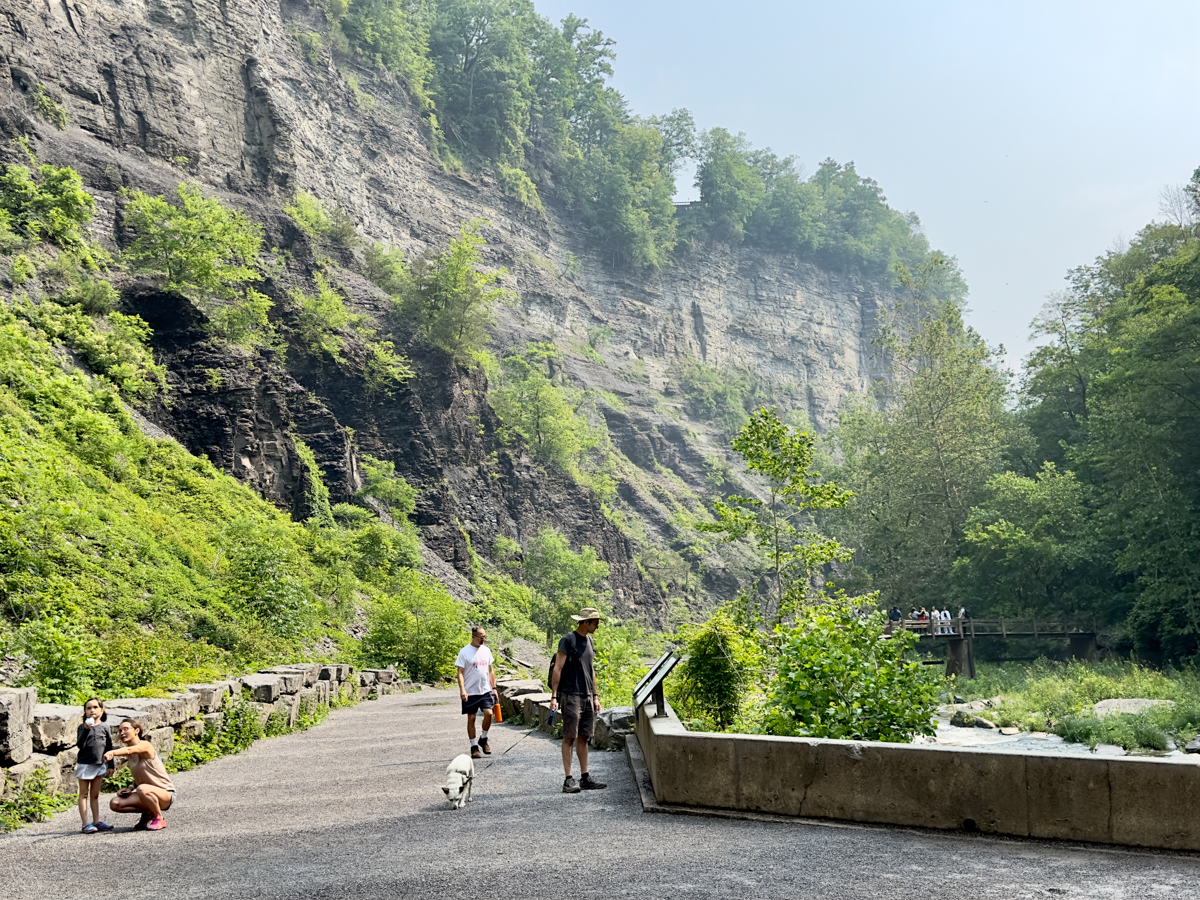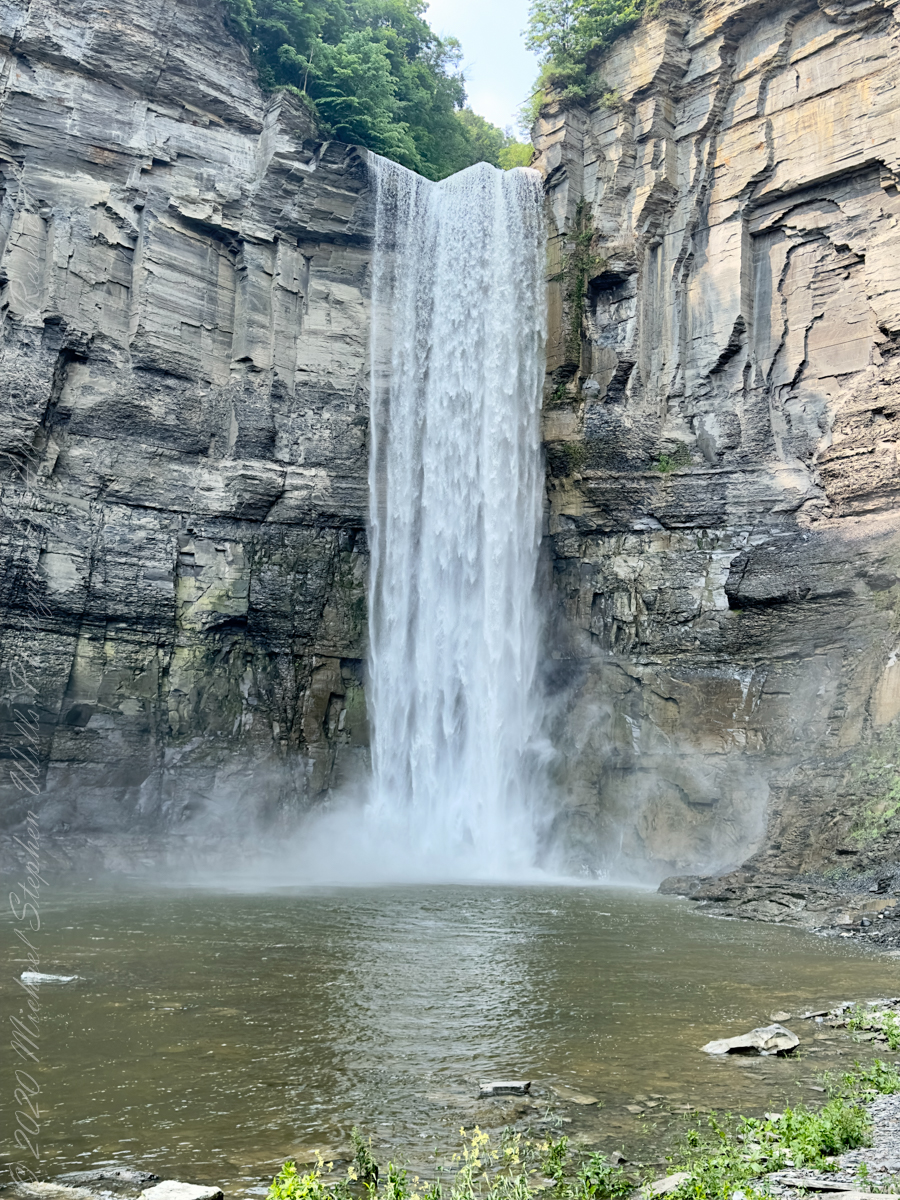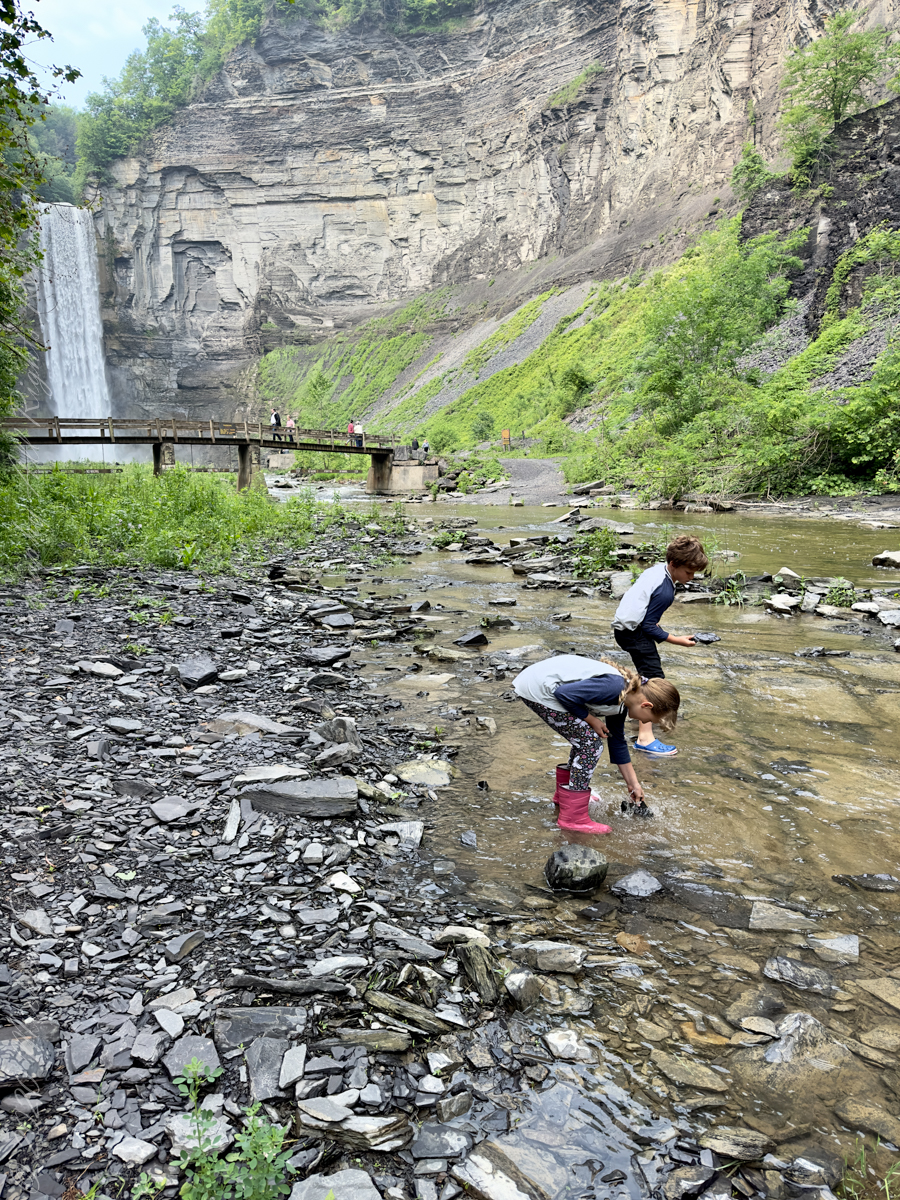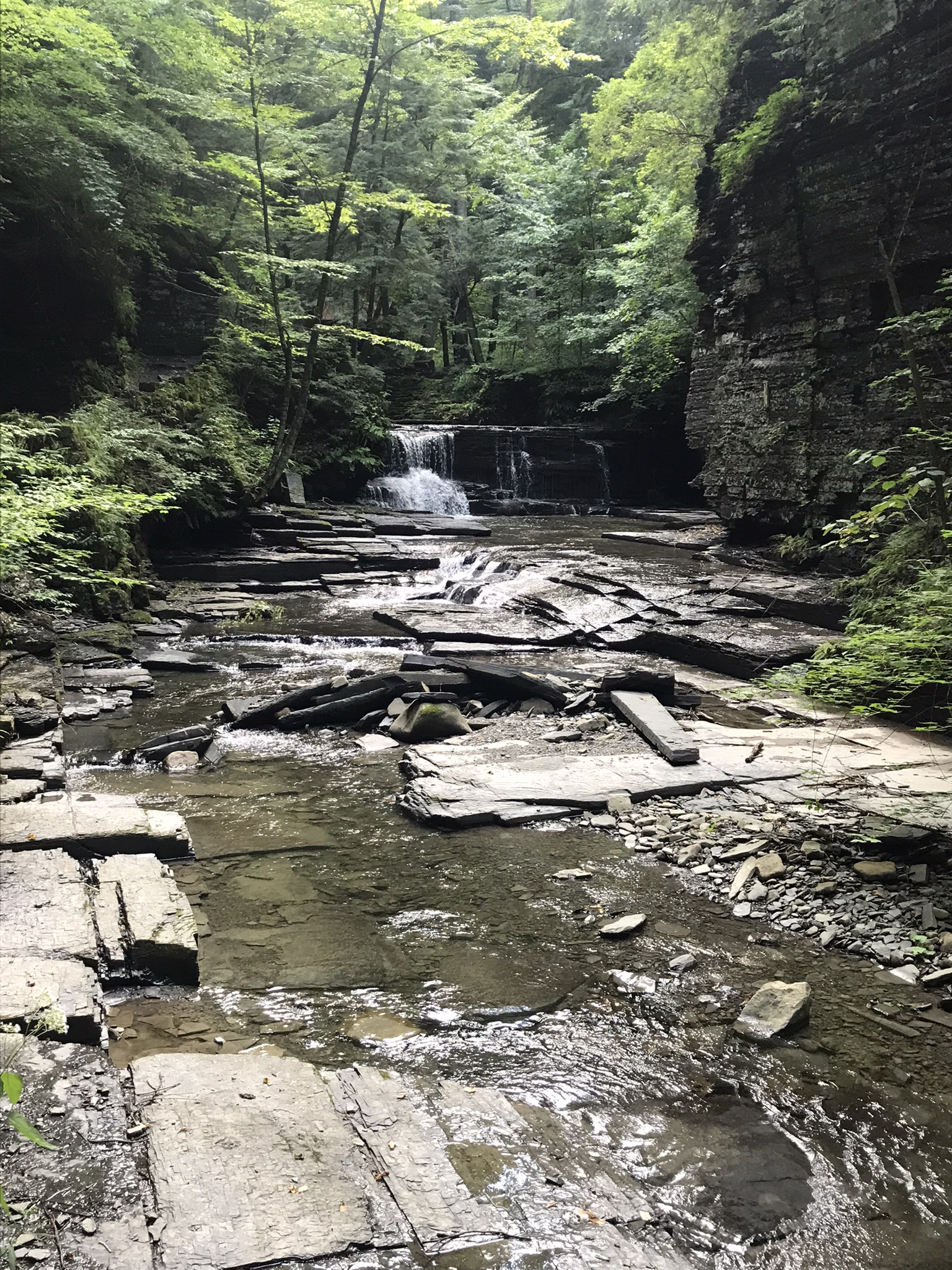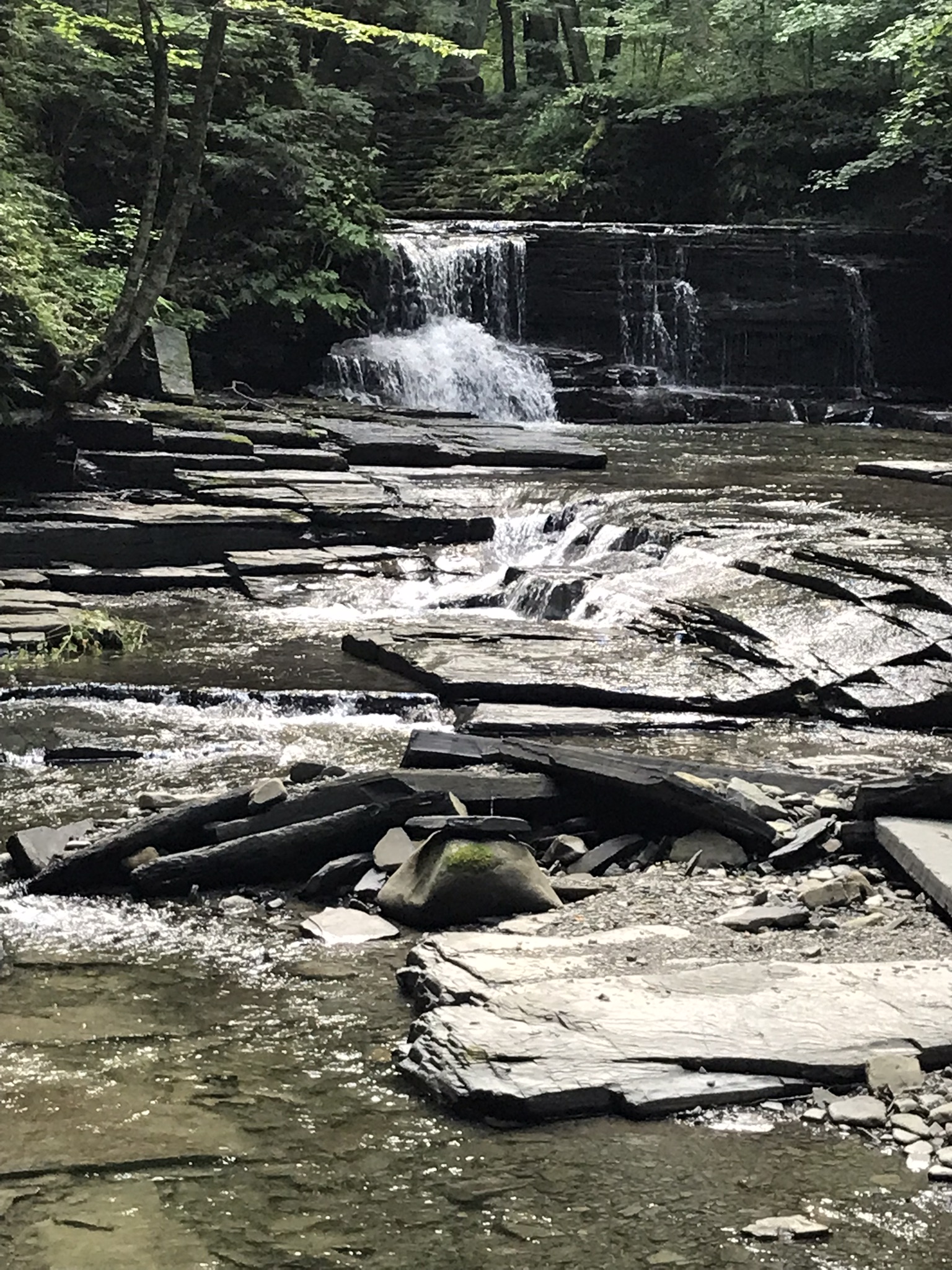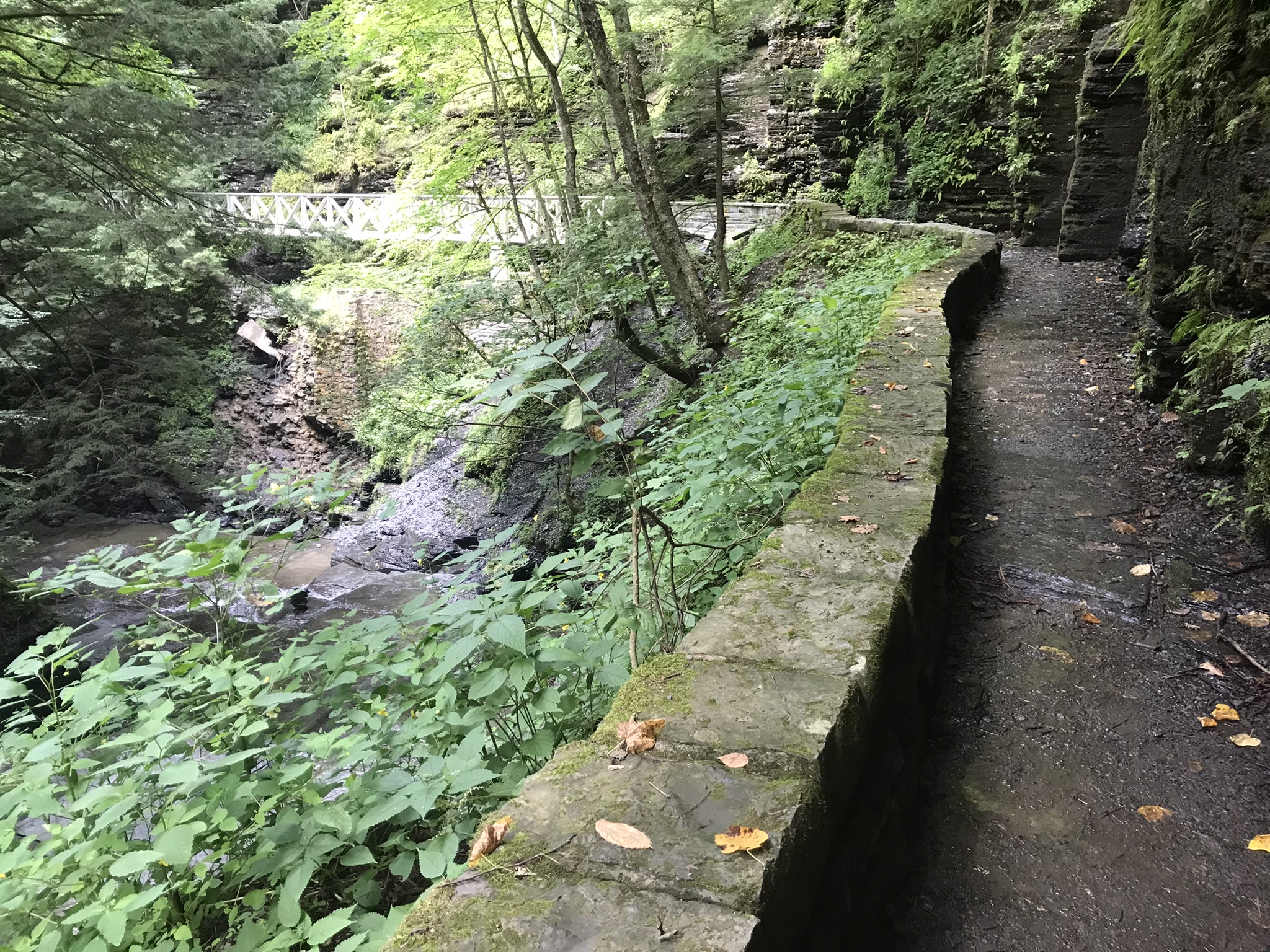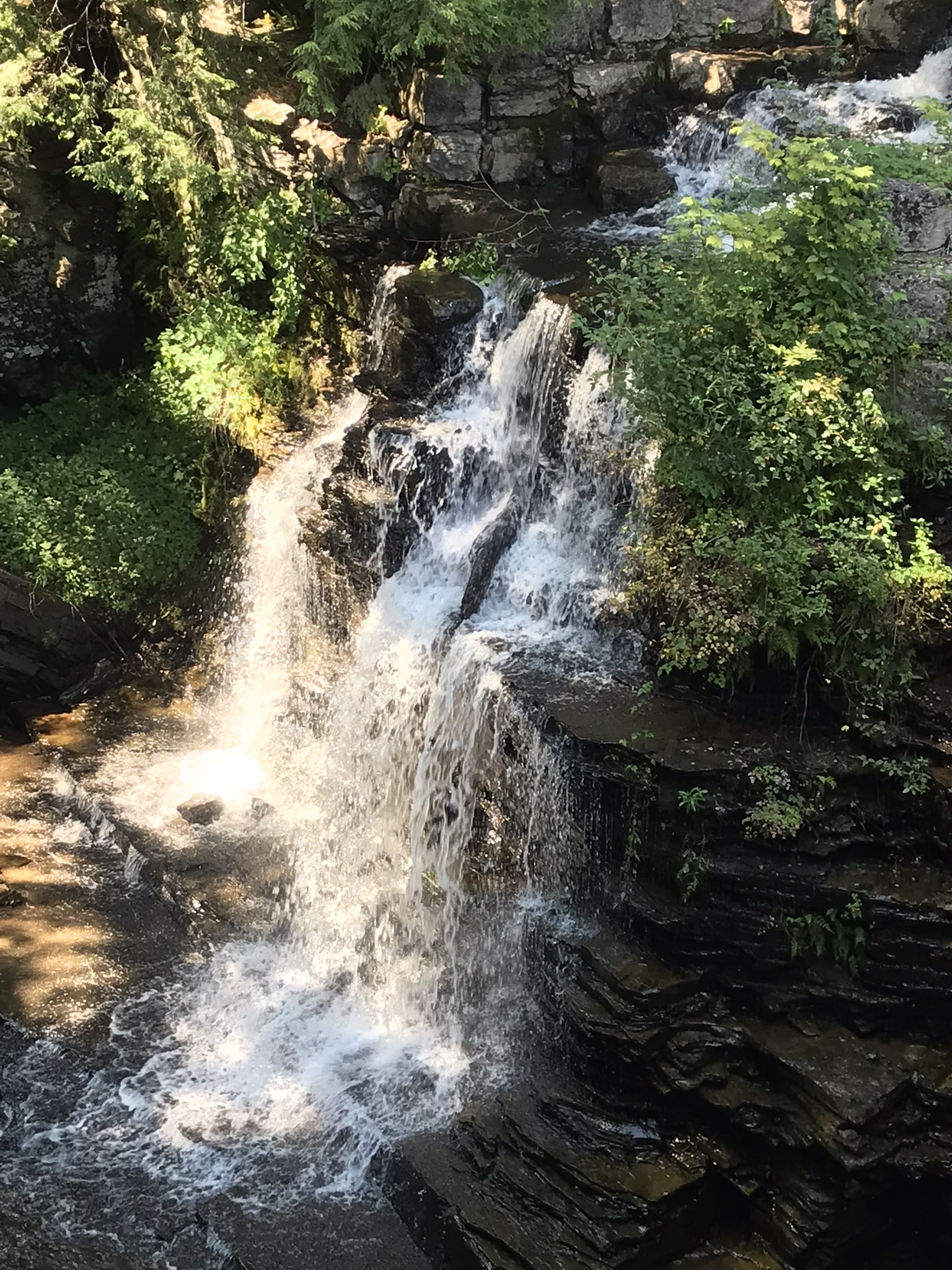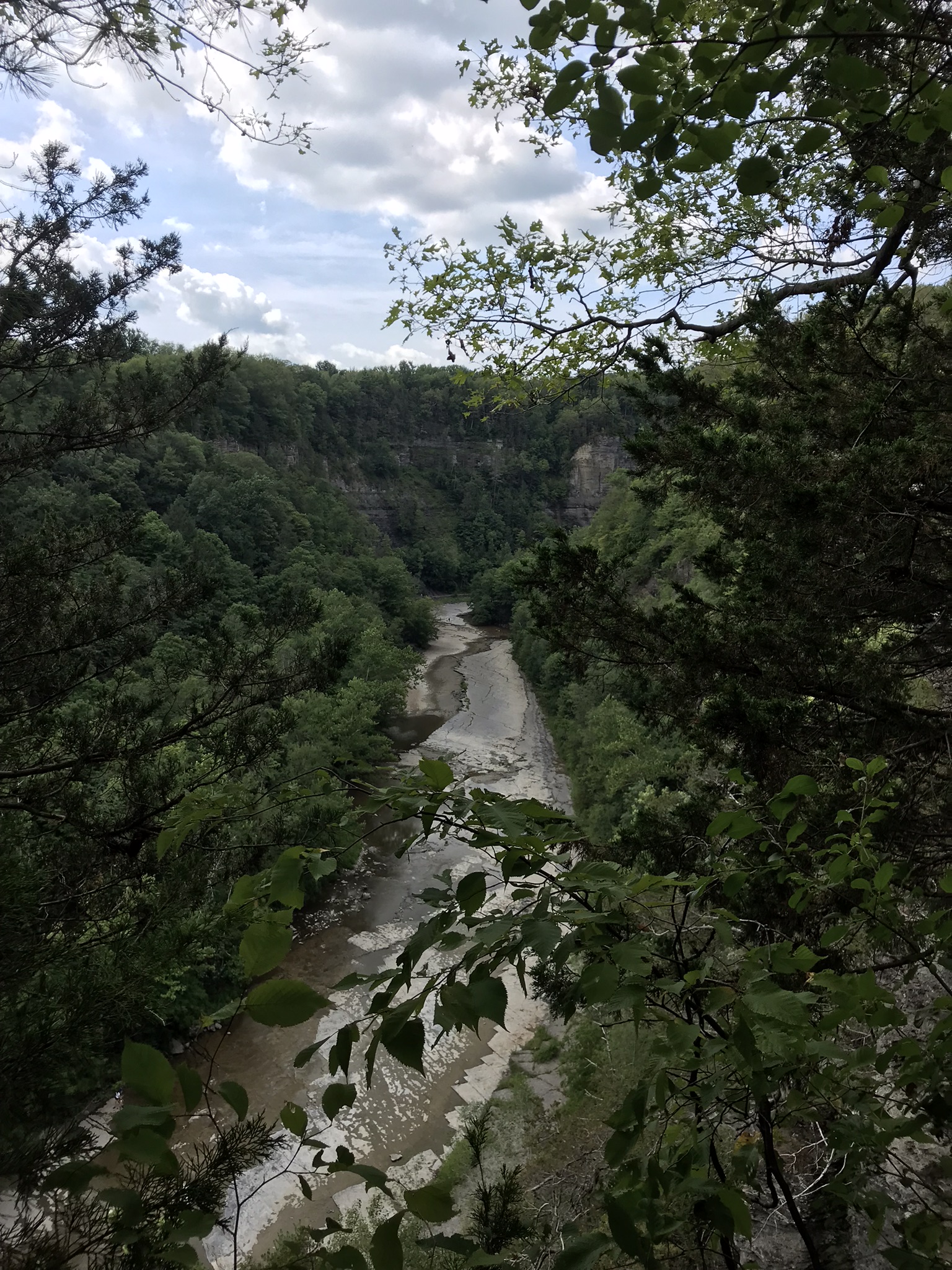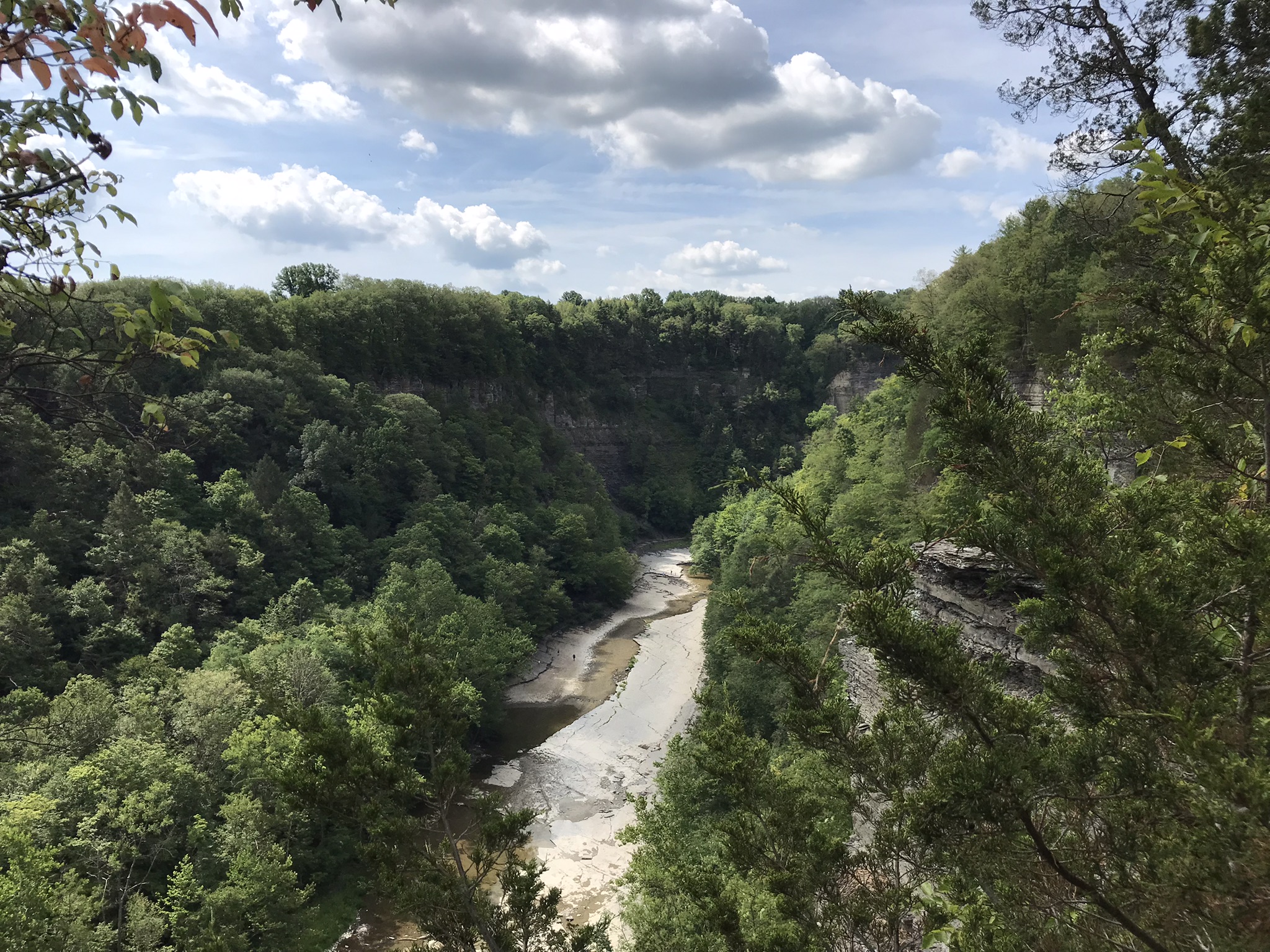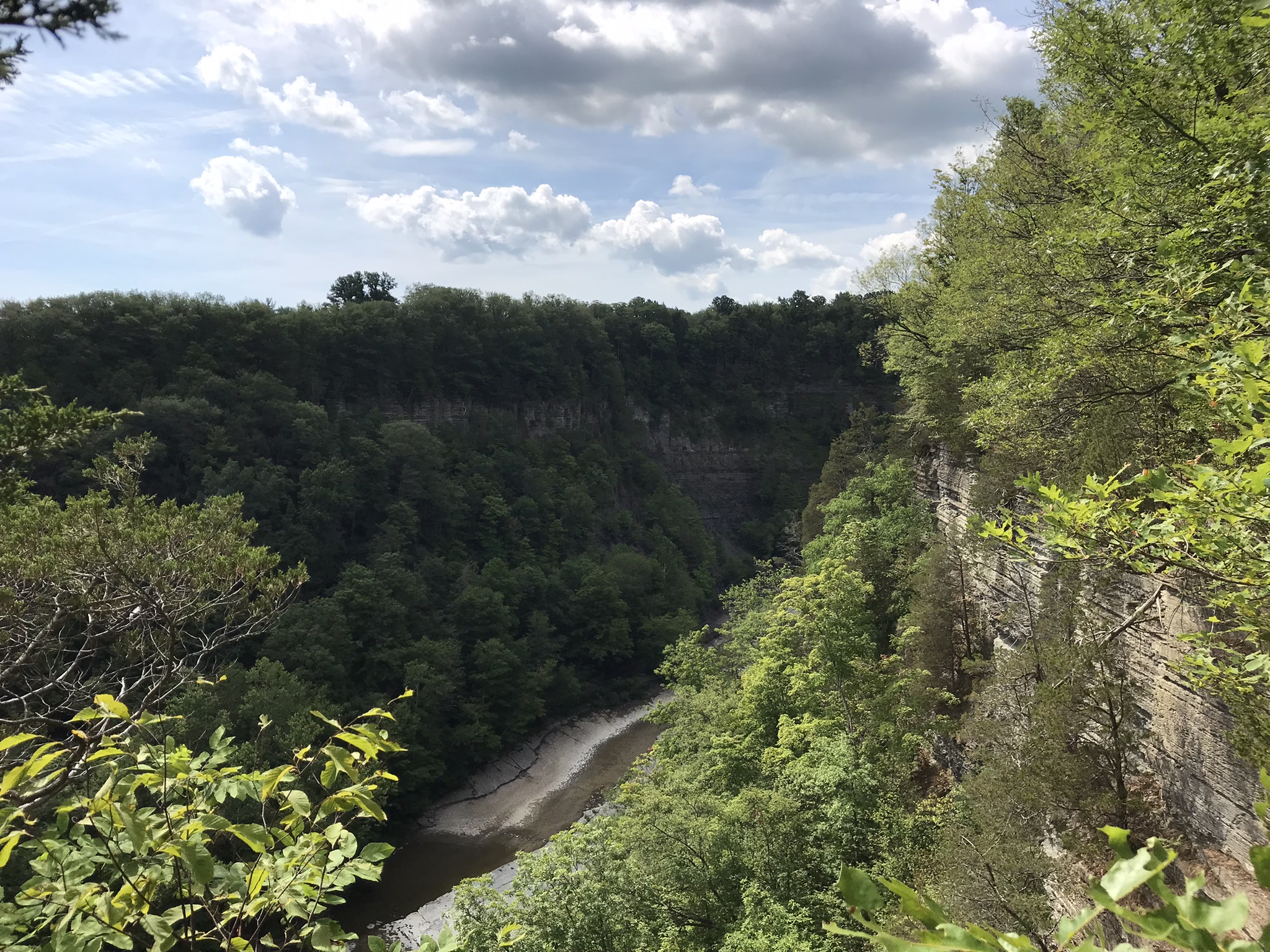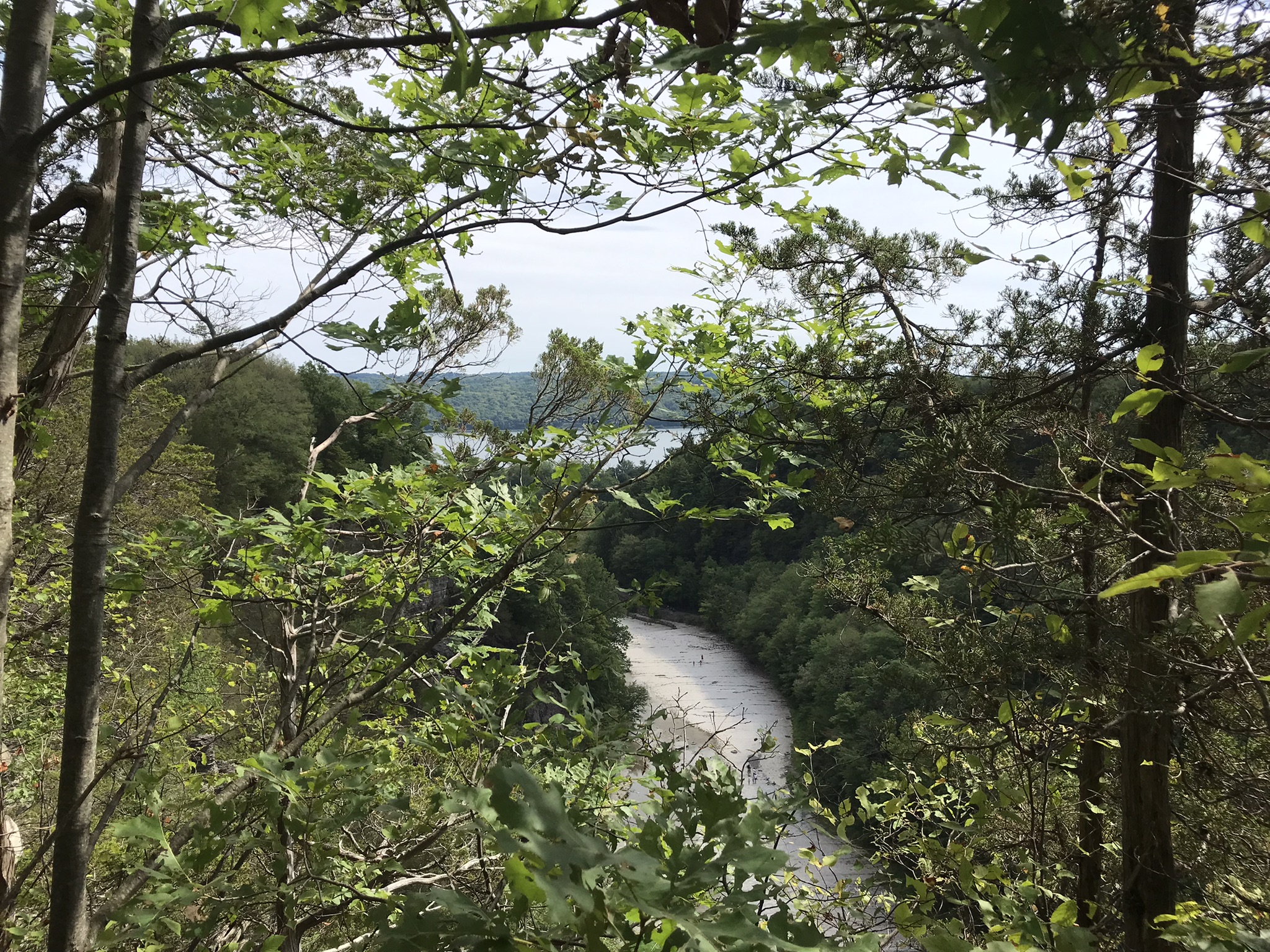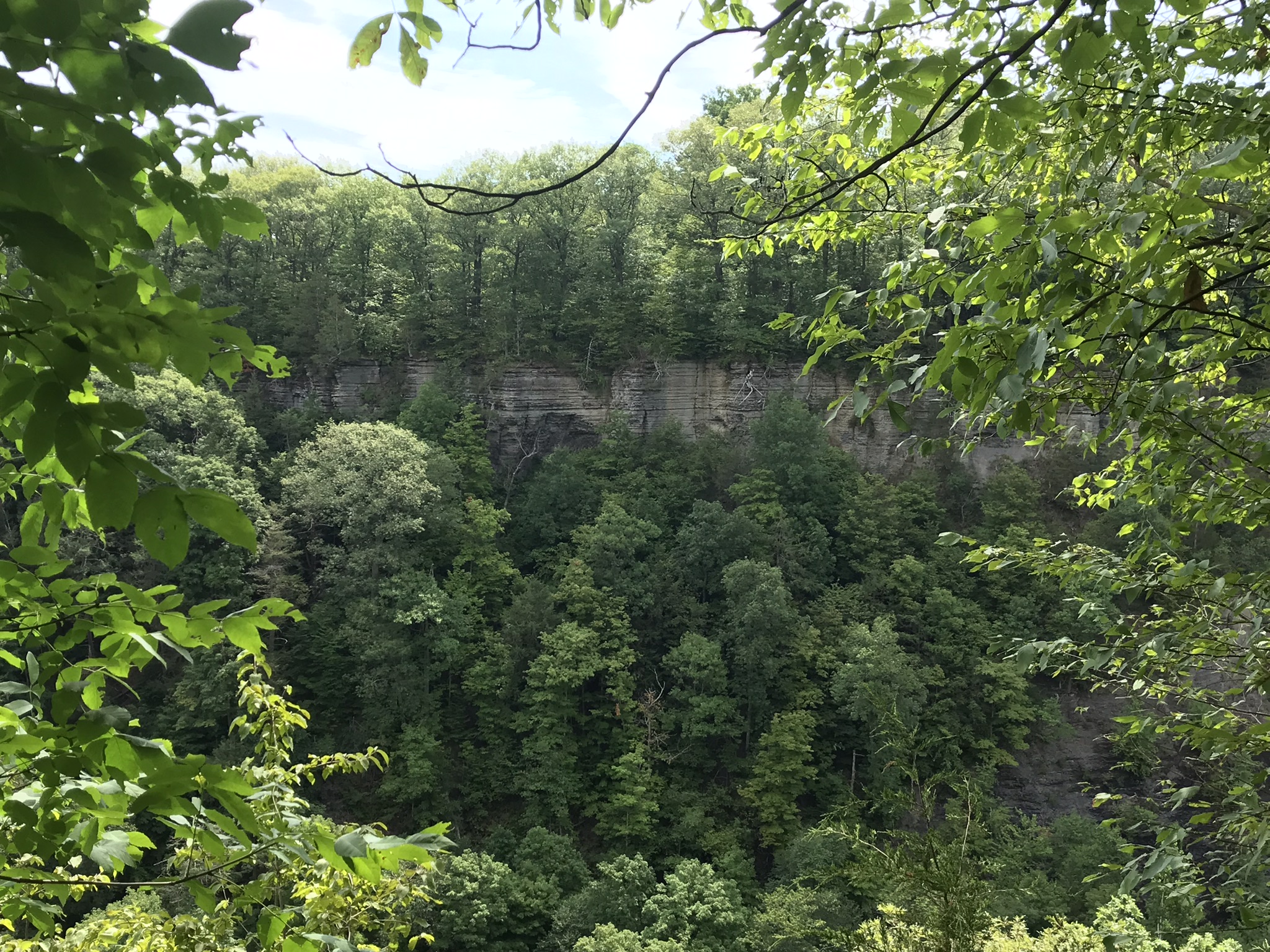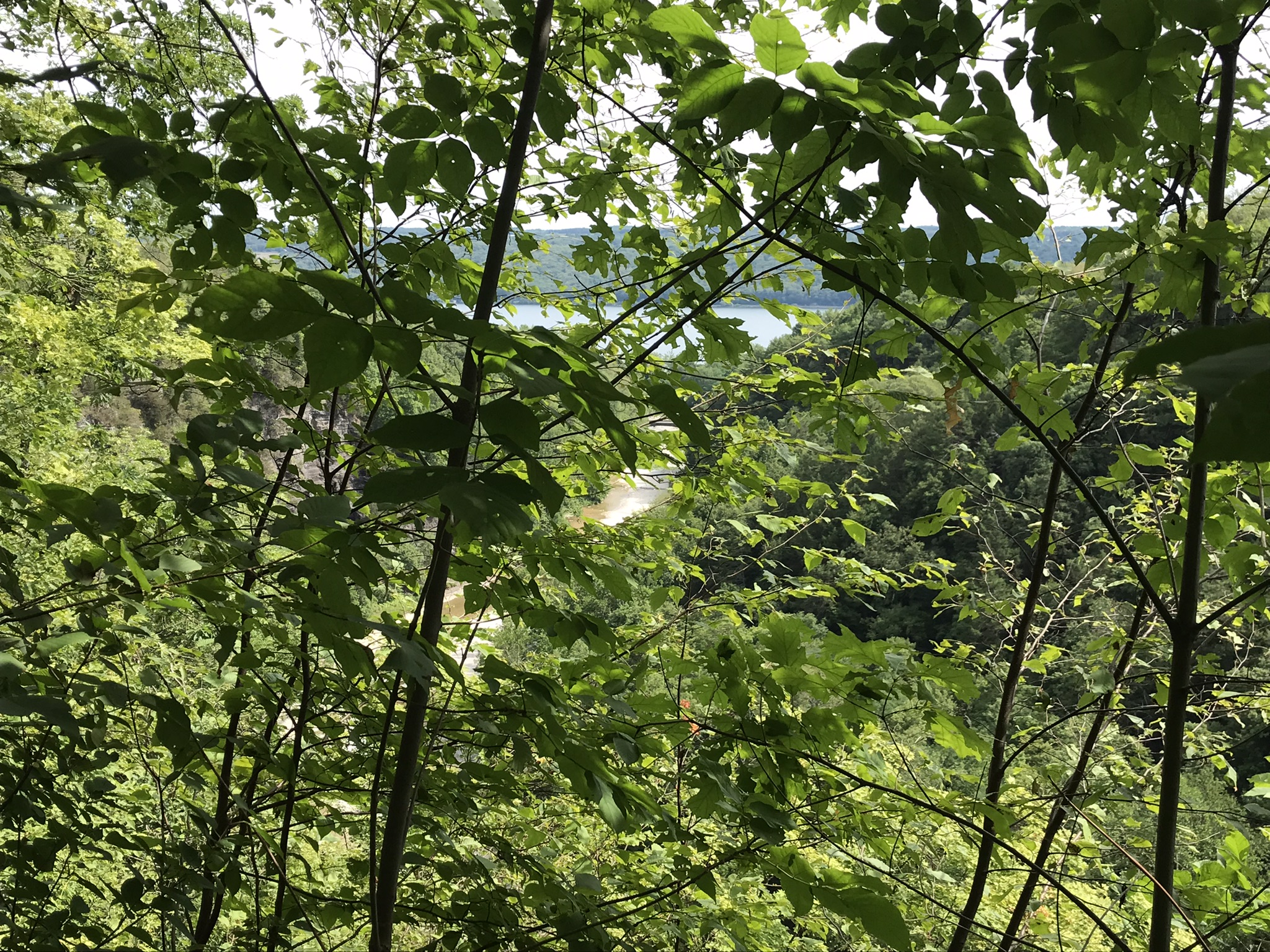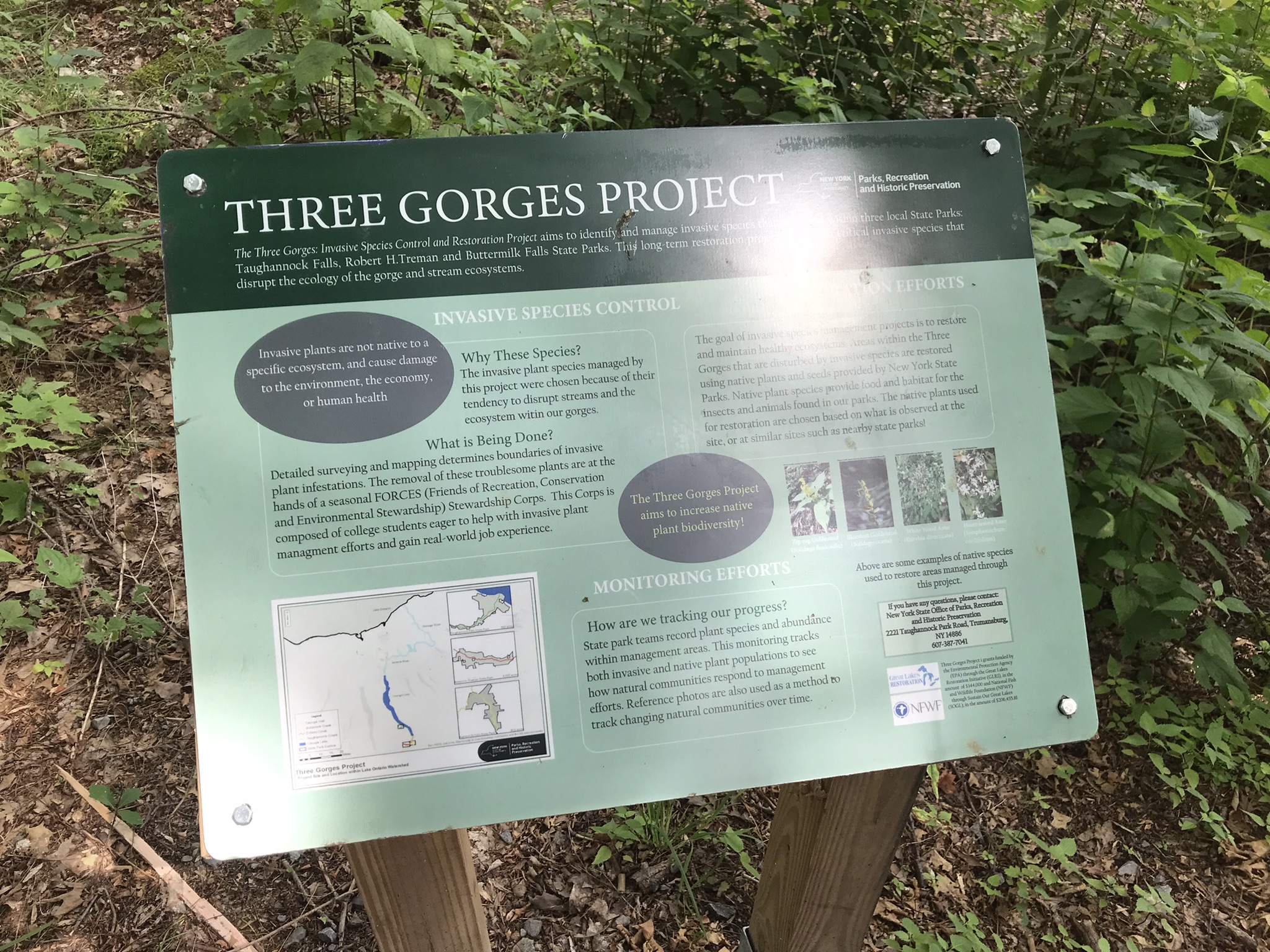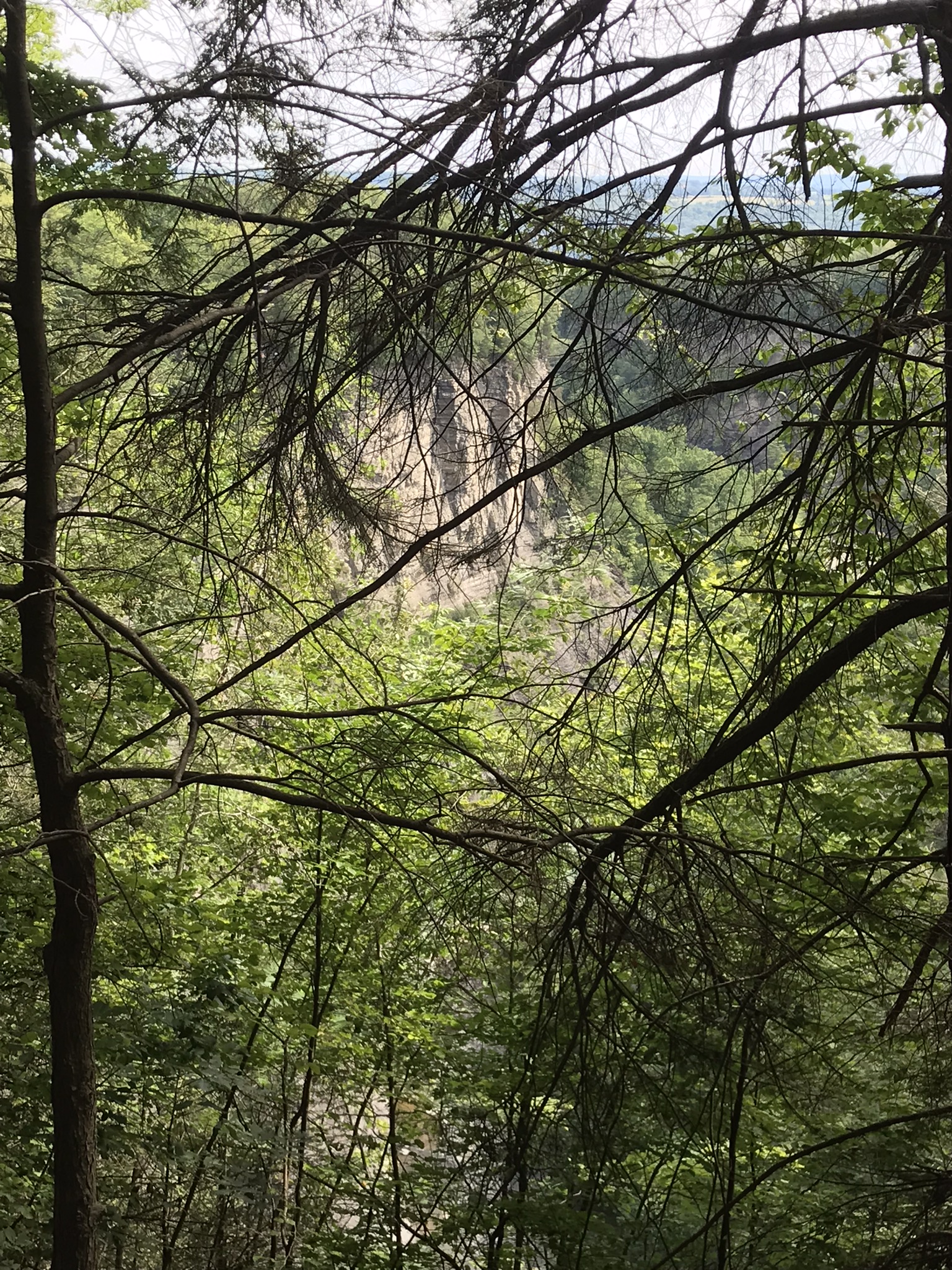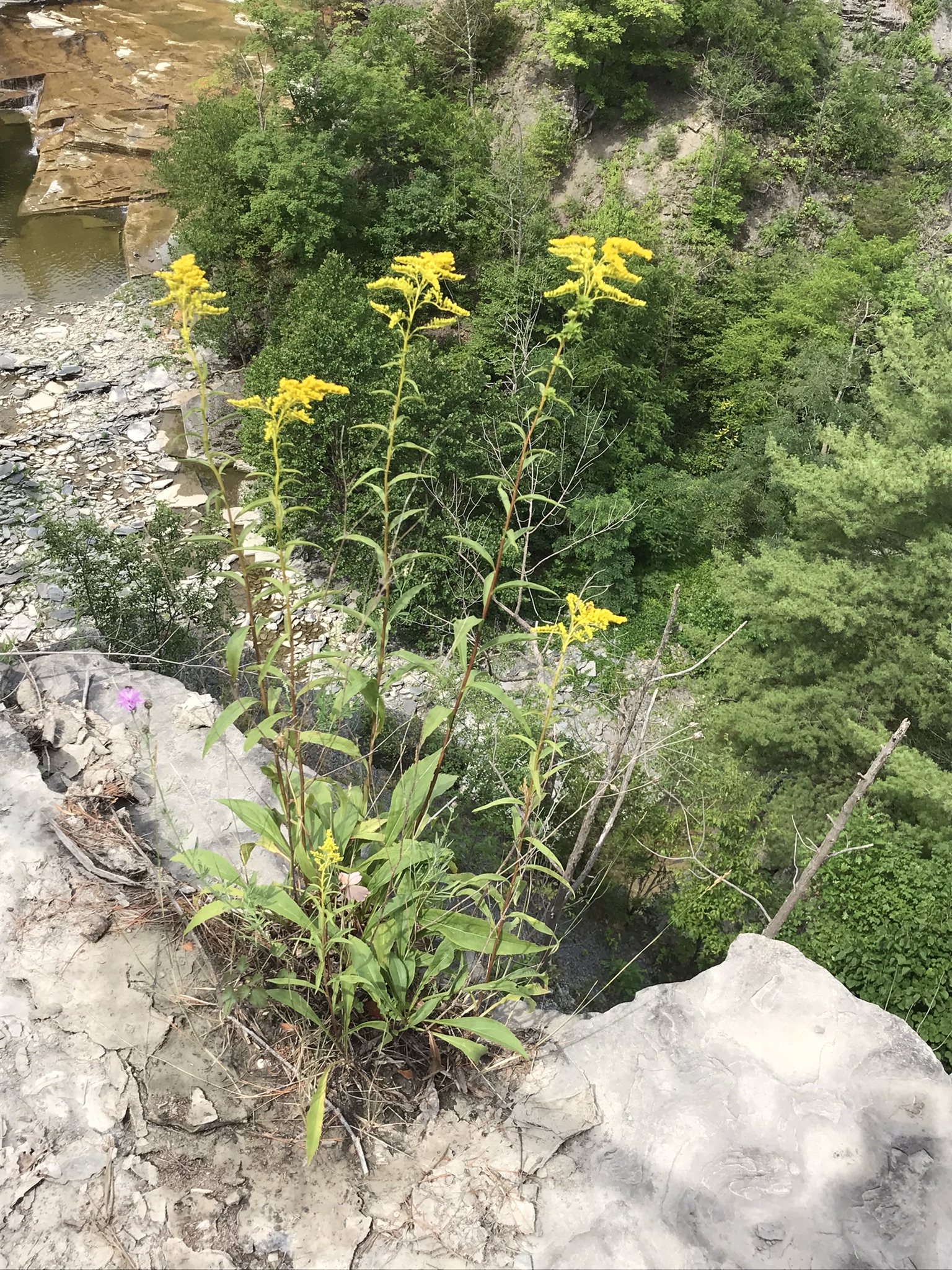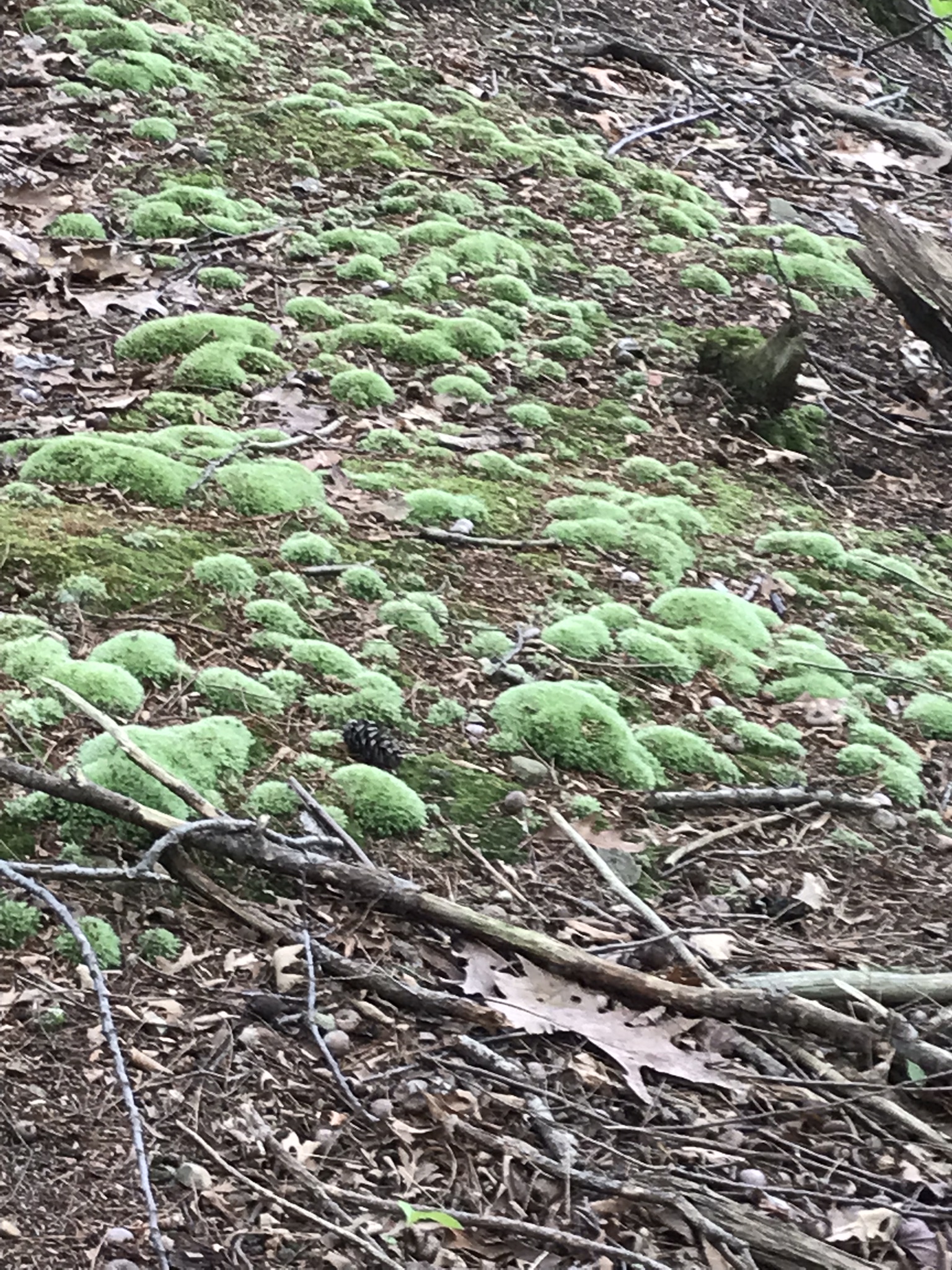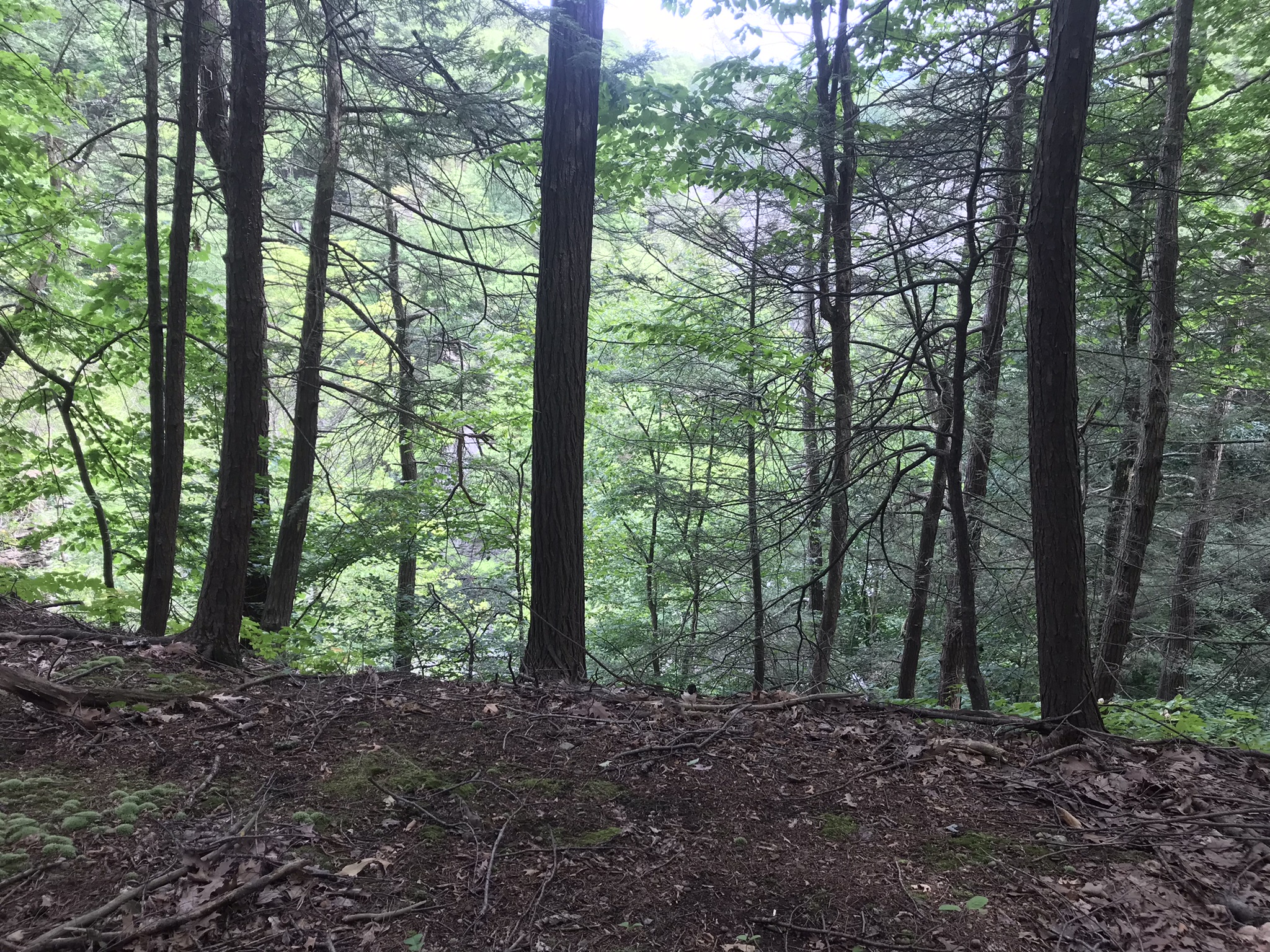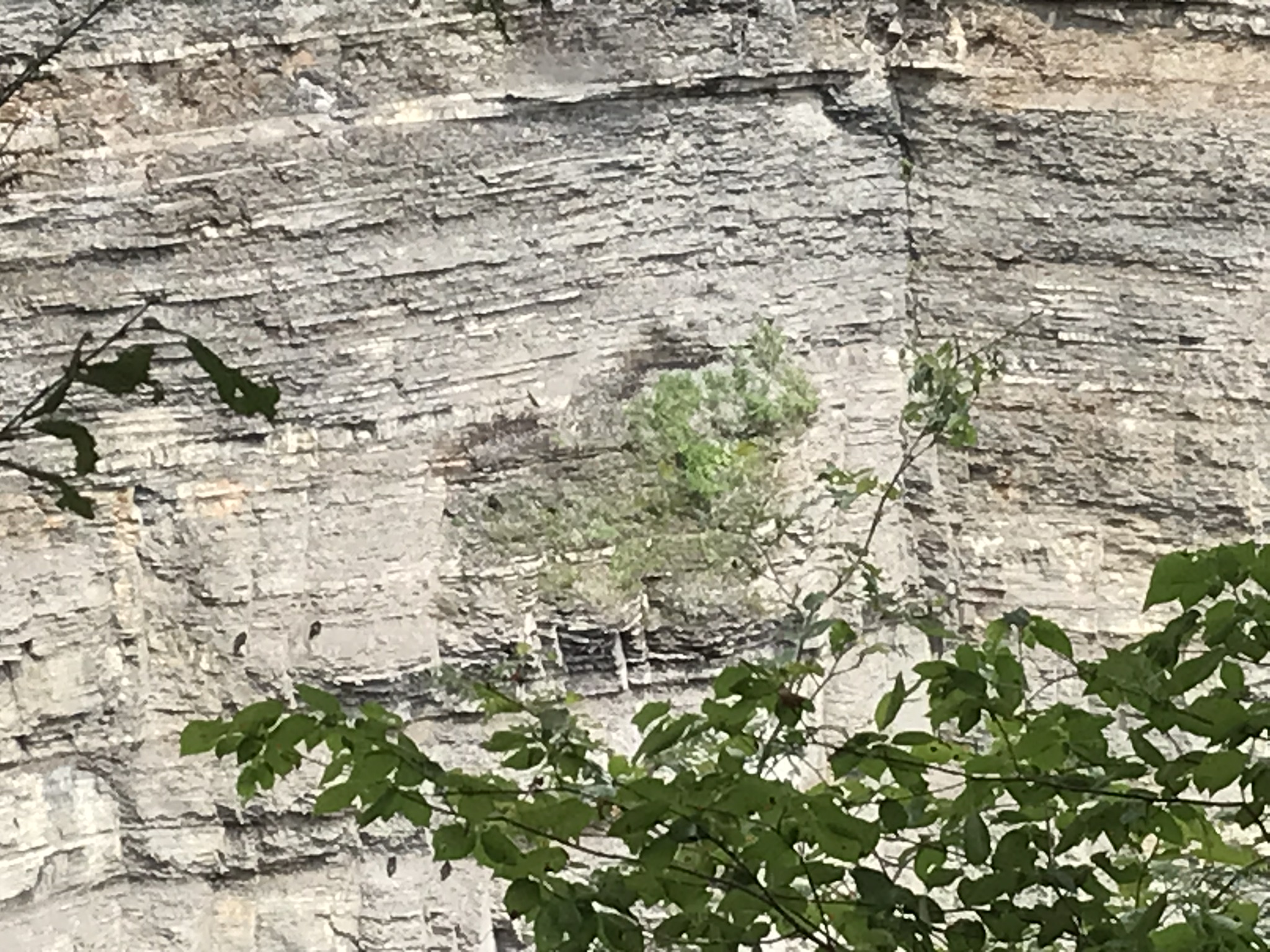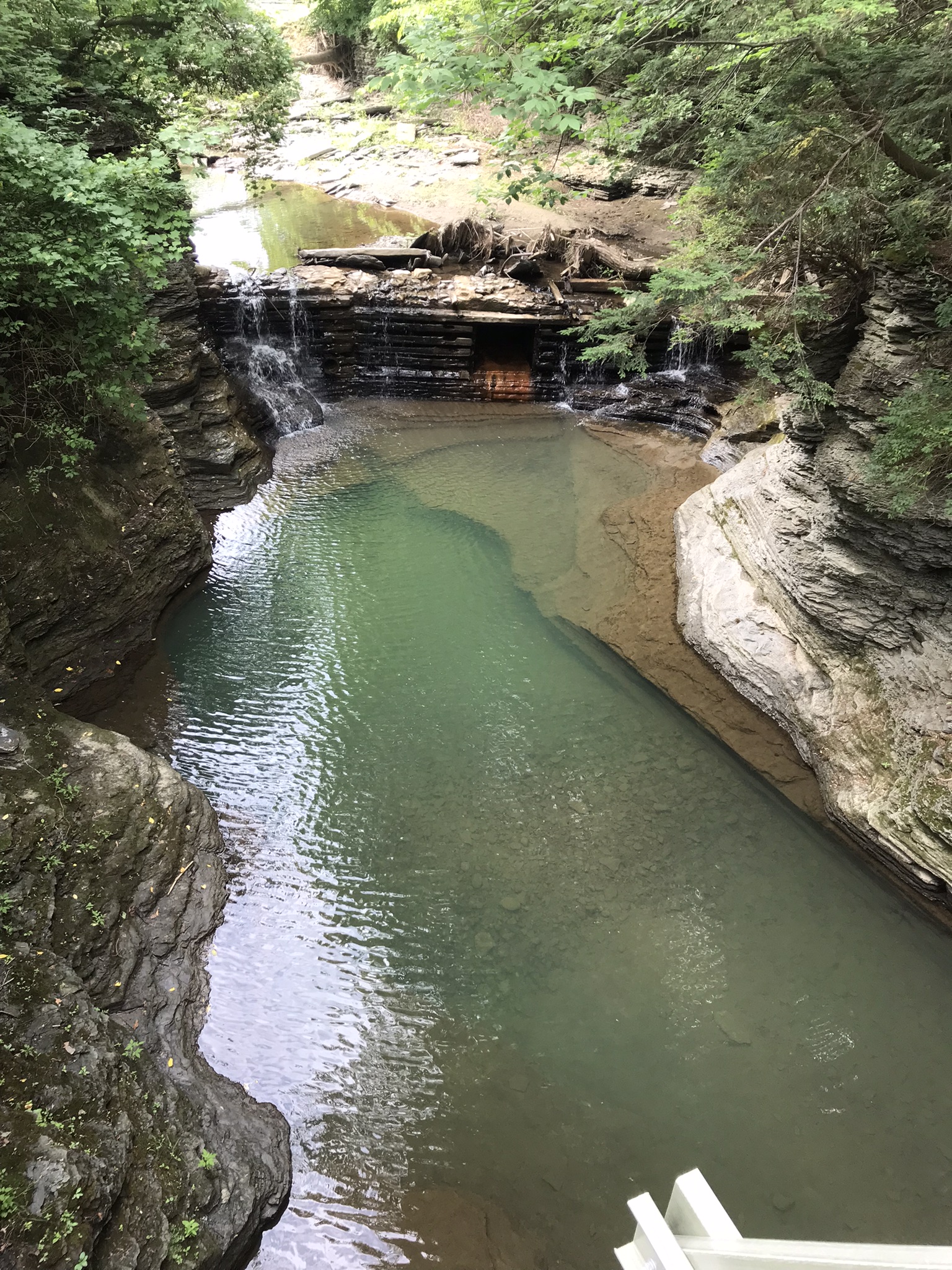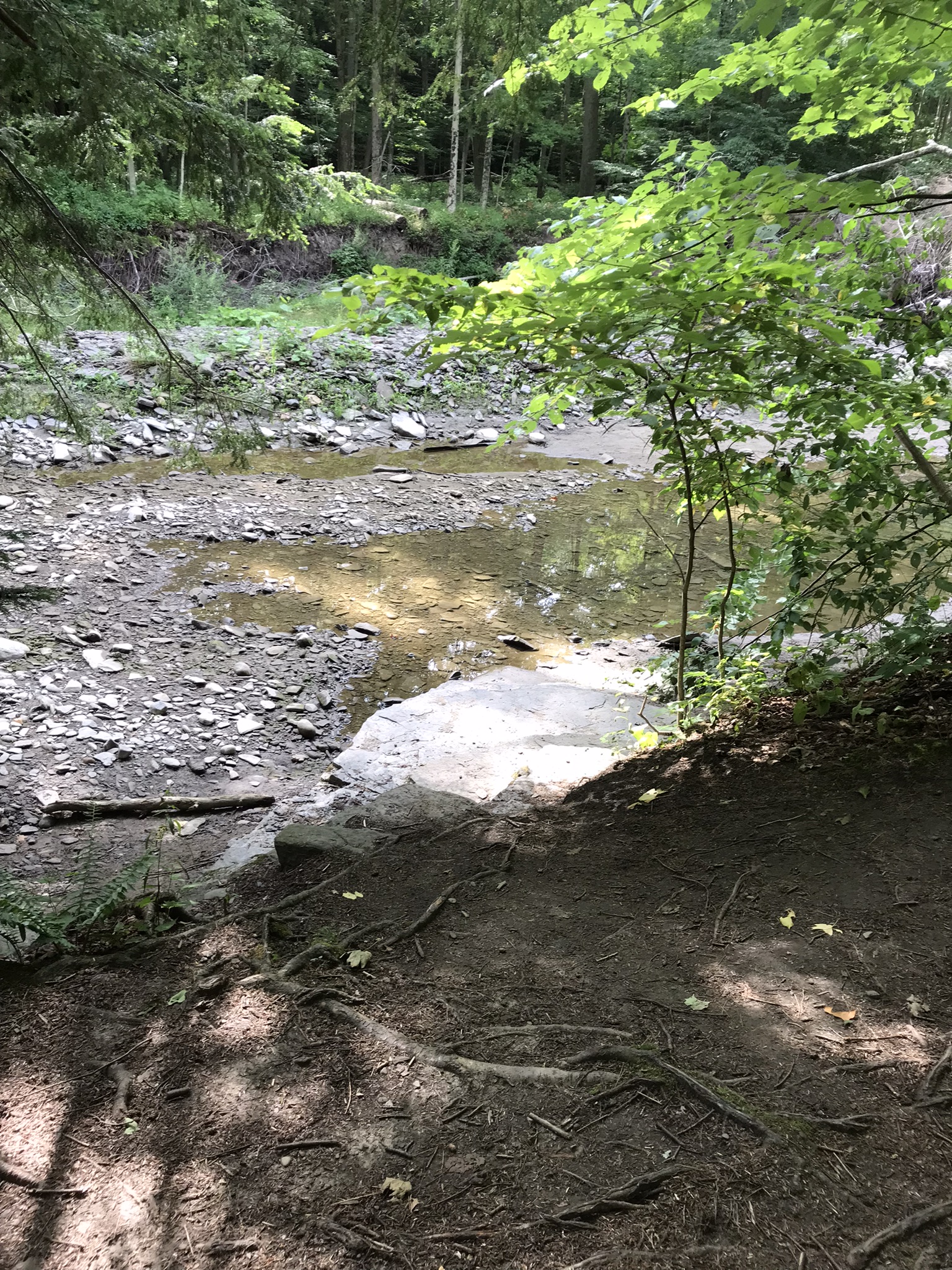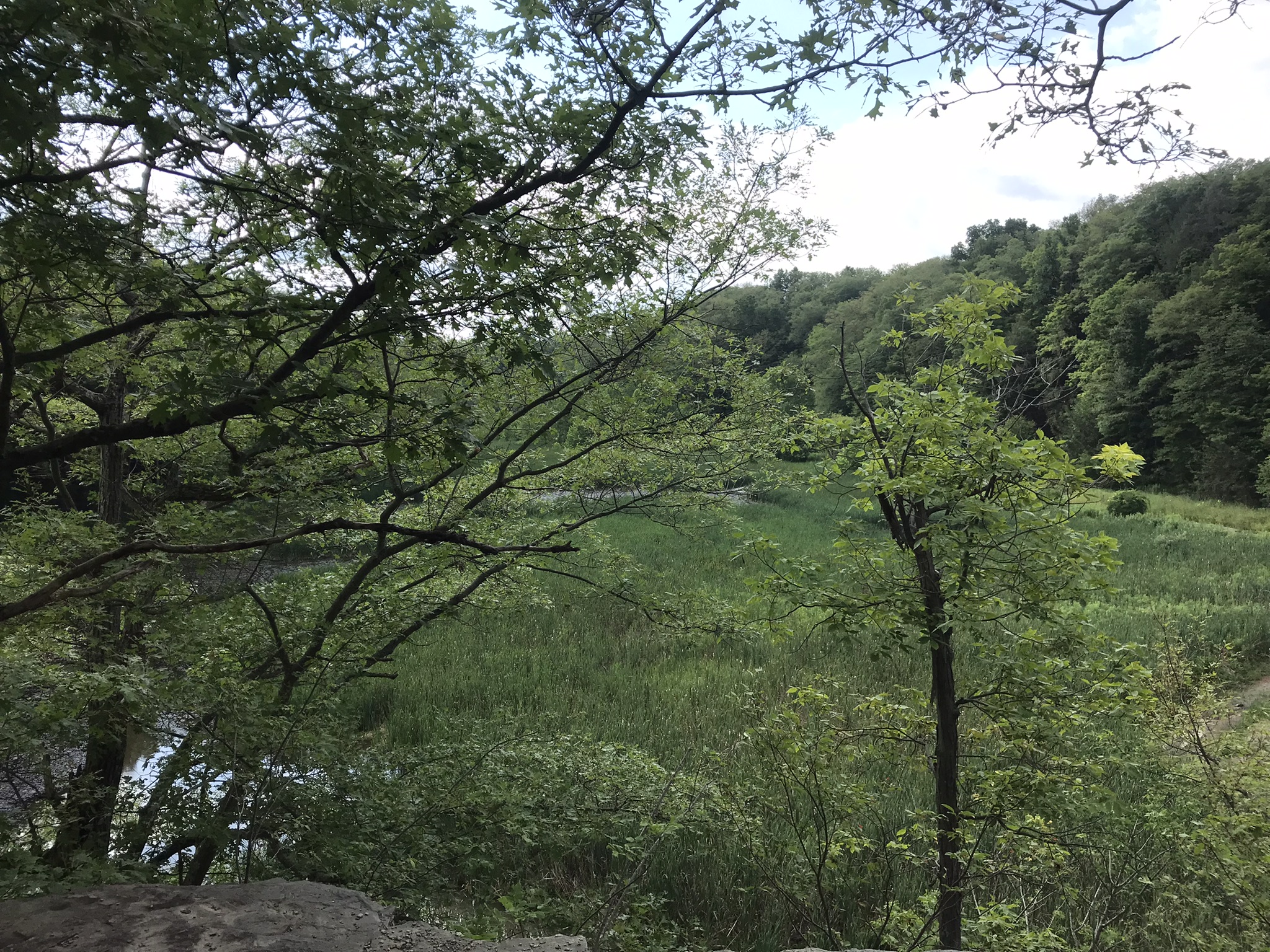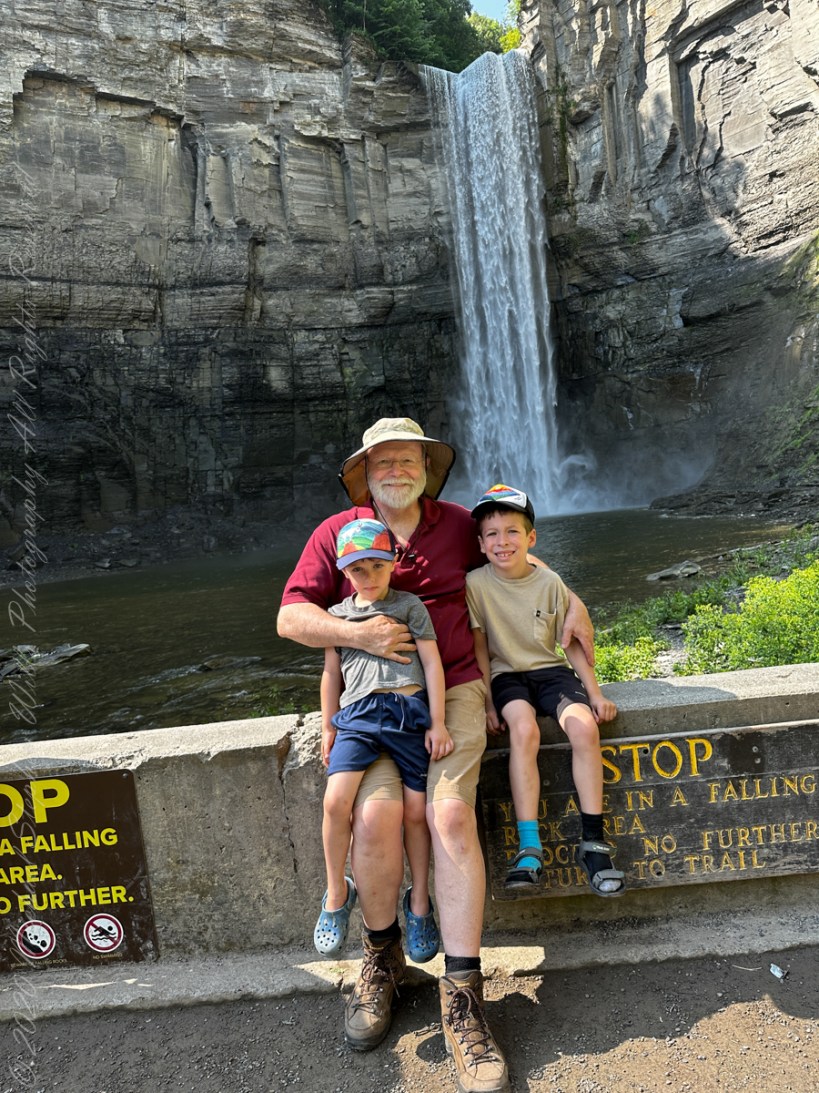
The waterfall and gorge comprise an example of a hanging valley, formed where Taughannock Creek’s stream-carved valley meets the deeper glacially carved valley that contains Cayuga Lake.
The gorge has continued to retreat westward from Cayuga Lake as easily eroded shale near the fall’s base is worn away by the stream, which supports erosion-resistant siltstone and sandstone found in the upper portions of the gorge.
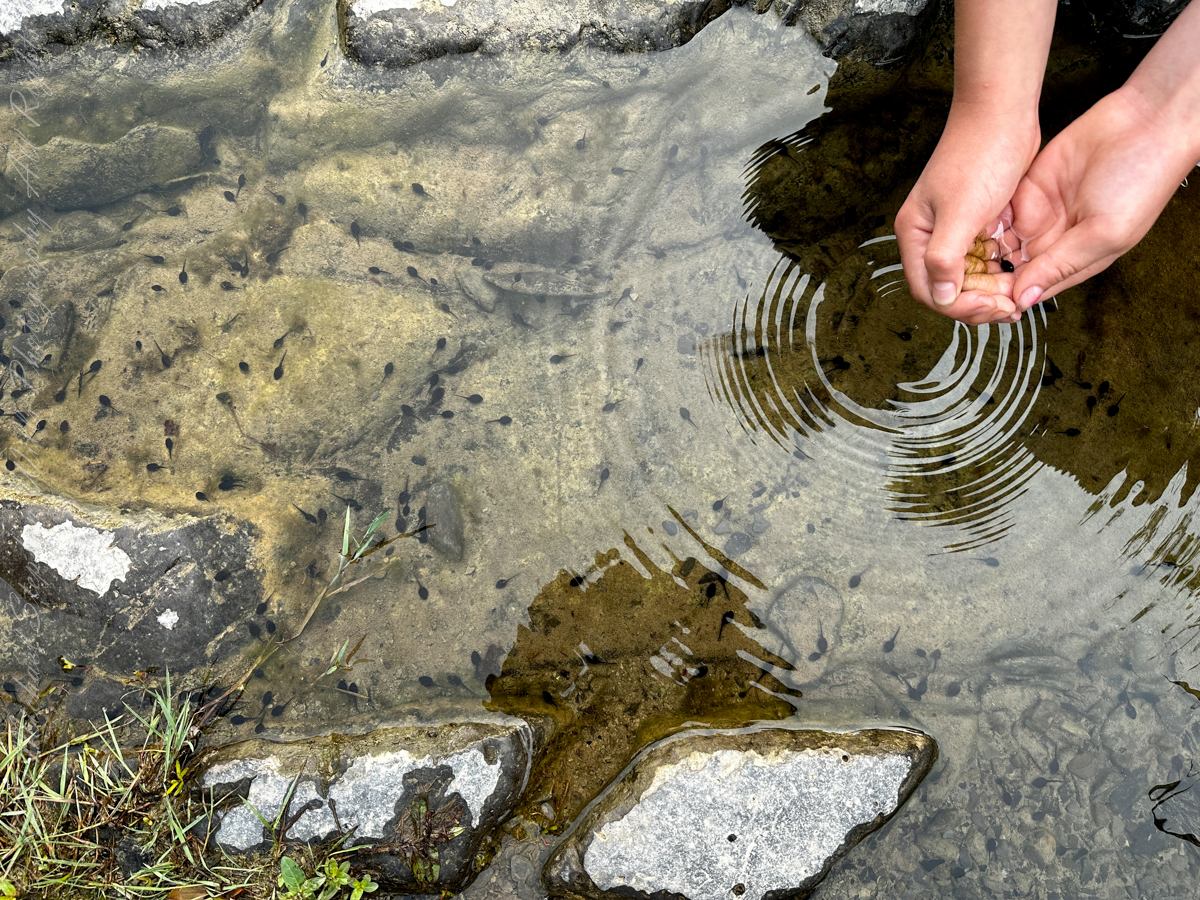
Pollywogs!! Catch and release
Annual freeze and thaw cycles also act upon small faults in the rock, causing large sections to occasionally break away, further expanding the gorge.
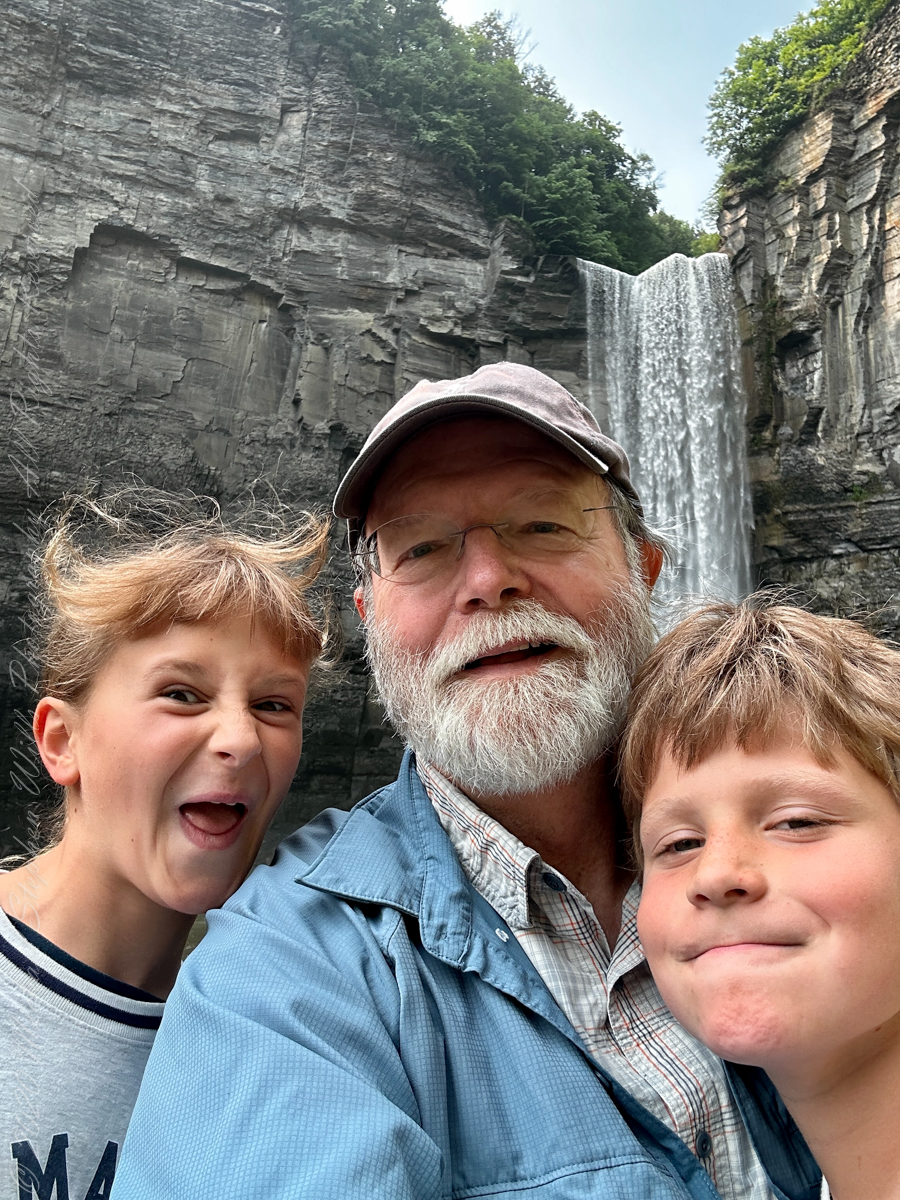
Taughannock Falls’ main cataract is a 215-foot drop (66 m), making it 33 feet (10 m) taller than Niagara Falls. It is the tallest single-drop waterfall east of the Rocky Mountains. The waterfall is located along Taughannock Creek, which flows through a long gorge with cliffs up to 400 feet (120 m) high.
Enjoy!!
Copyright 2023 Michael Stephen Wills All Rights Reserved
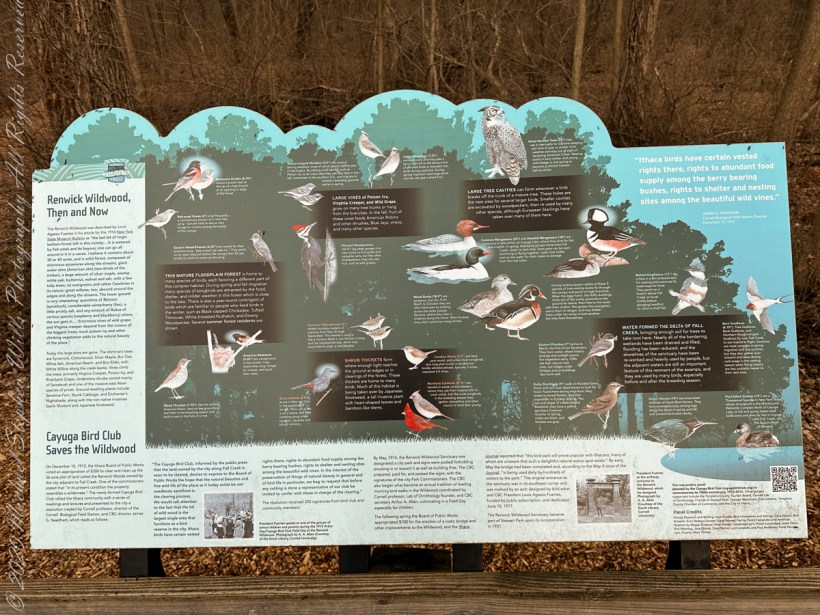
This large sign found along the Cayuga Waterfront Trial at the entrance to Renwick Woods. It provides the origin story (floodplain, delta of Fall Creek), how it came to be conserved and the importance of the place to birds.
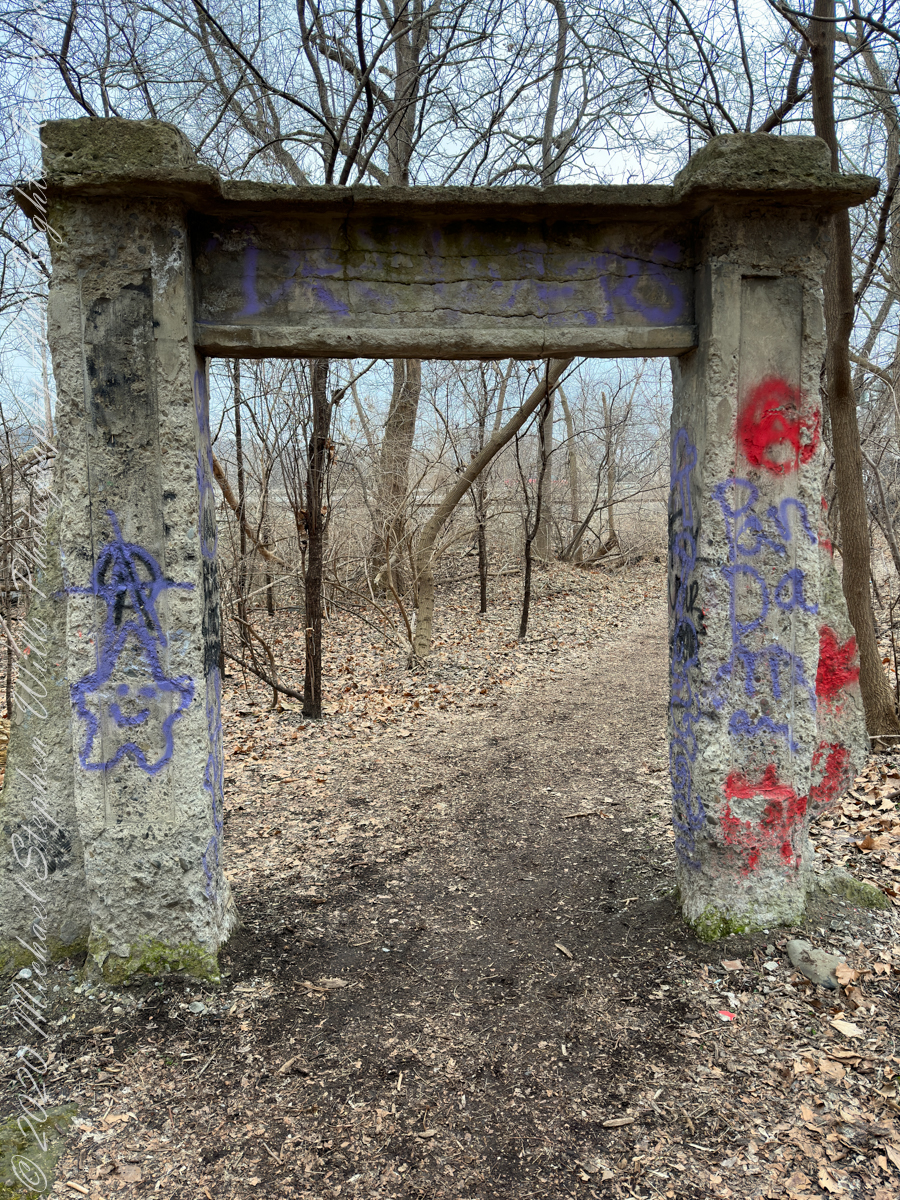
The original entrance to the Fuertes Bird Sanctuary, now called Renwick Wood, was marked by this arch, designed by Louis Agassiz Fuertes, dedicated June 10, 1917.
The professor was born February 7, 1874, at Ithaca, the son of Prof. Estevan Antonio and Mary Stone (Perry) Fuertes. He was graduated by Cornell with the degree of A.B., in 1897, and married Margaret F. Sumner of Ithaca, in 1904. Since 1898 he had been a painter of birds.
Professor Fuentes illustrated such volumes as “Birding on a Broncho,” “Citizen Bird,” Song Birds and “Water Fowls.” His permanent work included habitat groups in the American Museum of Natural History; 25 decorative panels for F.M. Brewster, at New Haven, Conn., birds of New York at the State Museum, Albany; murals in the Flamingo Hotel, at Miami, Fla., paintings for the New York Zoological Society, Bronx. (Source: Find a Grave)
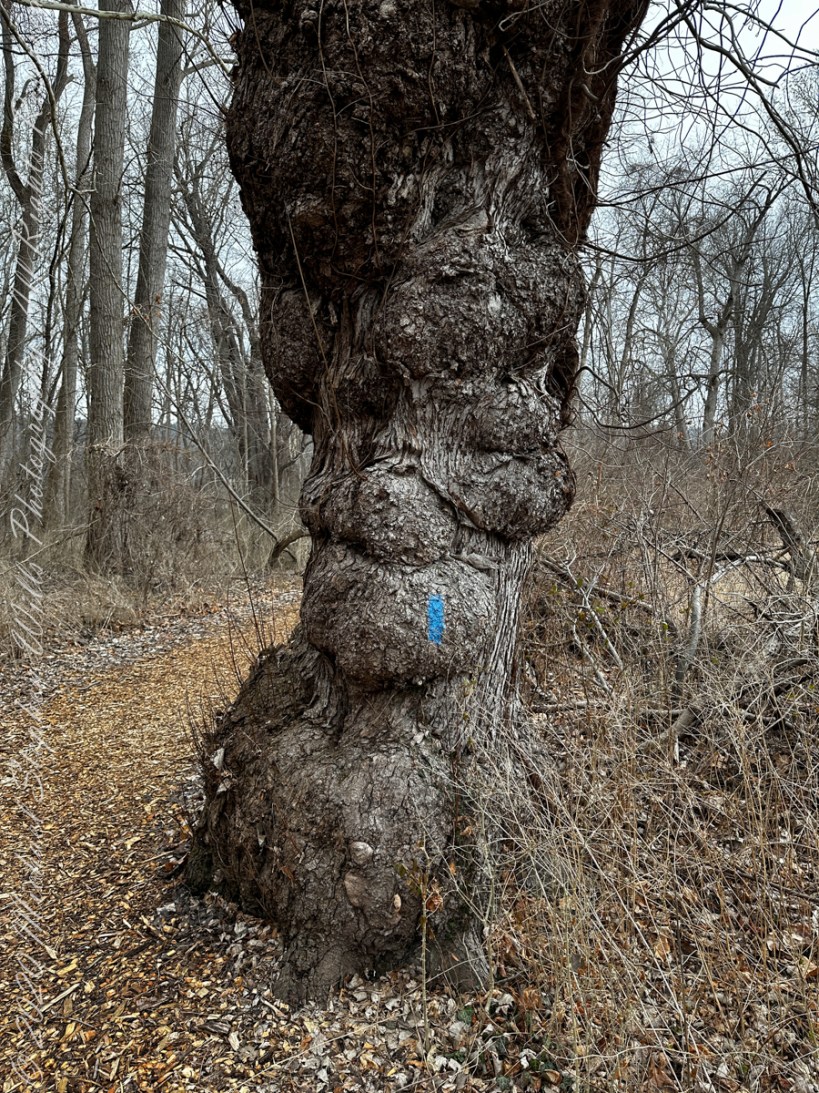
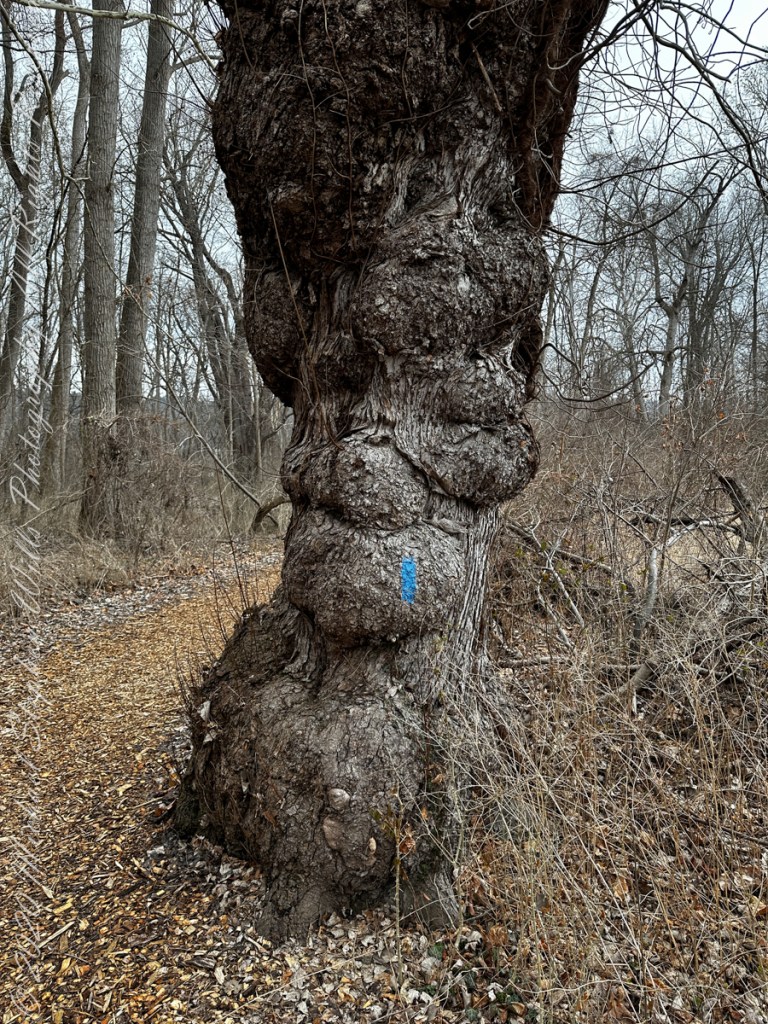
Misshapen tree trunk on the shore of Fall Creek, Renwick Woods
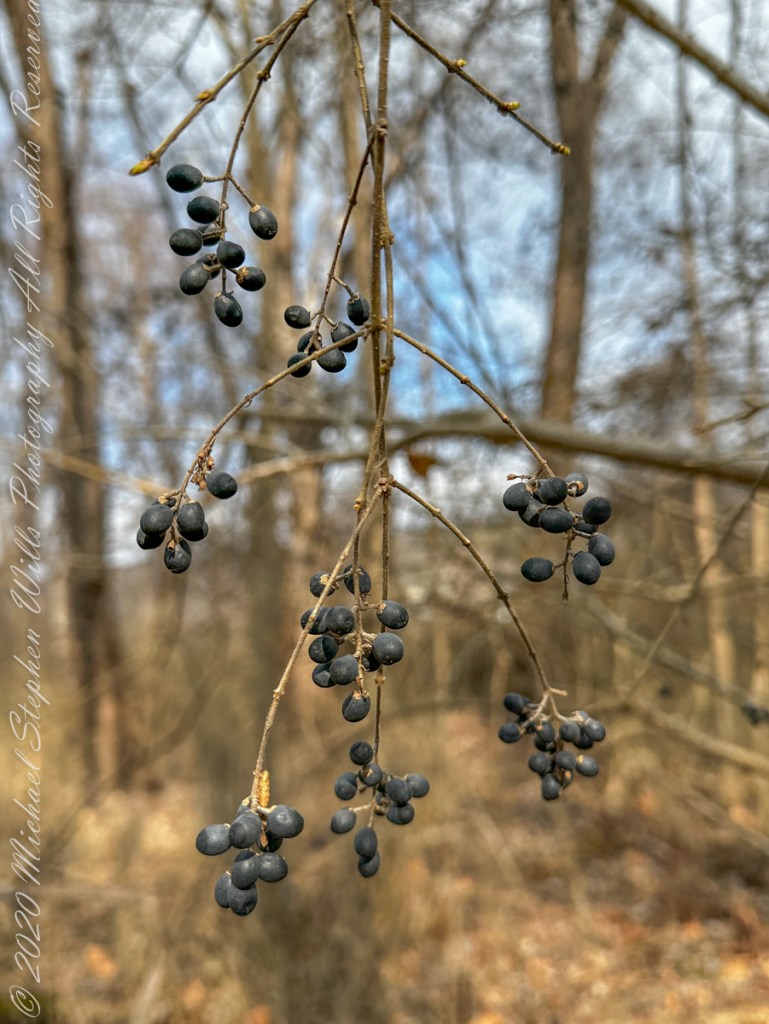
The flowers of this small shrub identify it as a member of the Rose family. The berries I captured in the following photograph are edible (non-poisonous), though astringent. Autumn time, the leaves turn red. It is native to eastern North America. I found these berrys along the Renwick Wood trail.
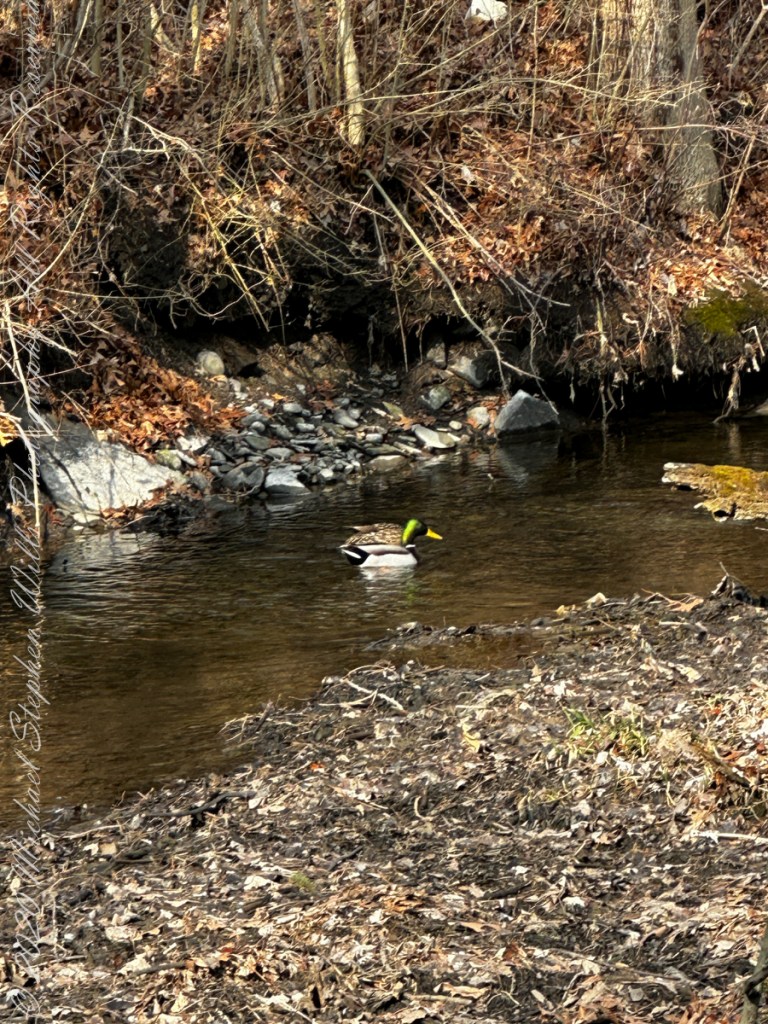
A pair of Mallard ducks foraging along a Fall Creek bayou on the edge of Renwick Woods where Stewart Park begins.
Ithaca Fire Department was training at their facility on Pier Road, next to Newman Golf Course, and across Fall Creek from Renwick Woods.
Copyright 2023 Michael Stephen Wills All Rights Reserved
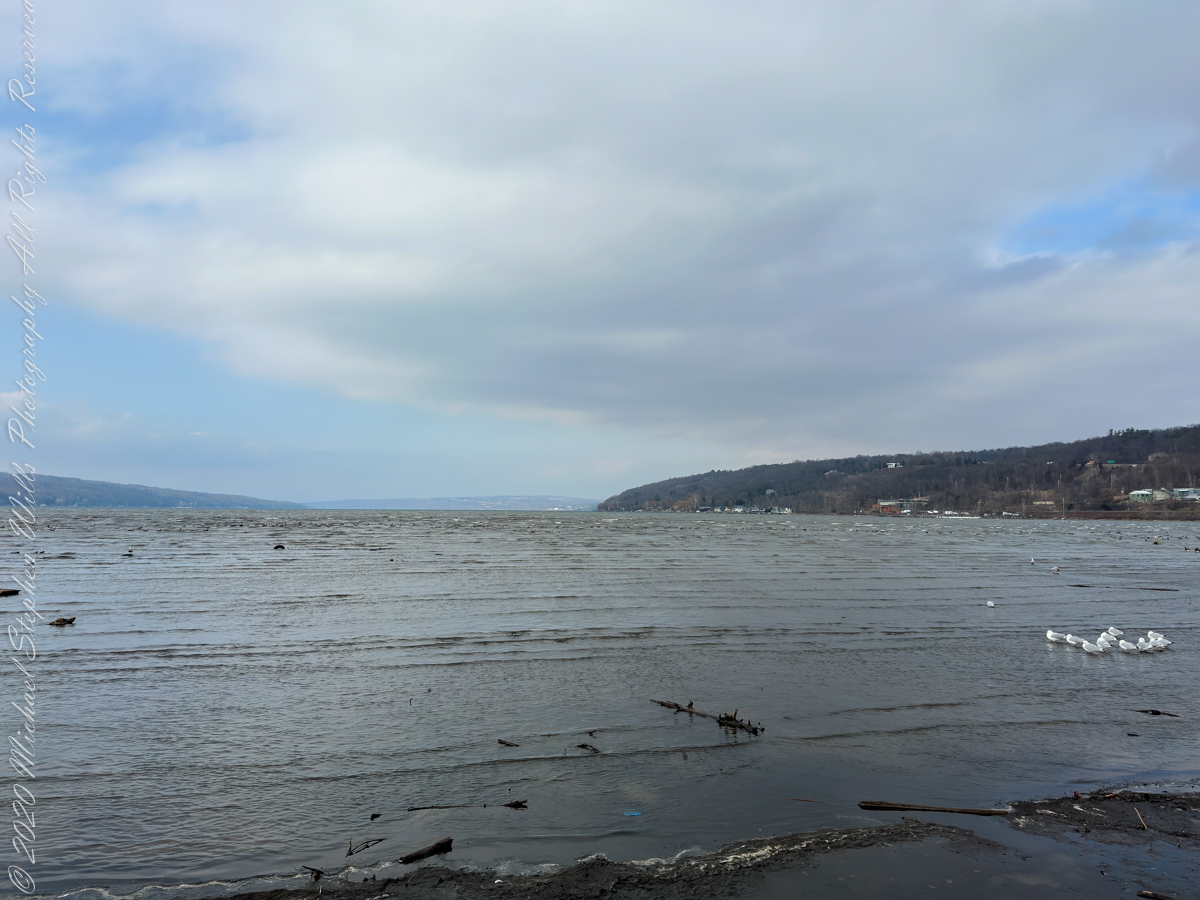
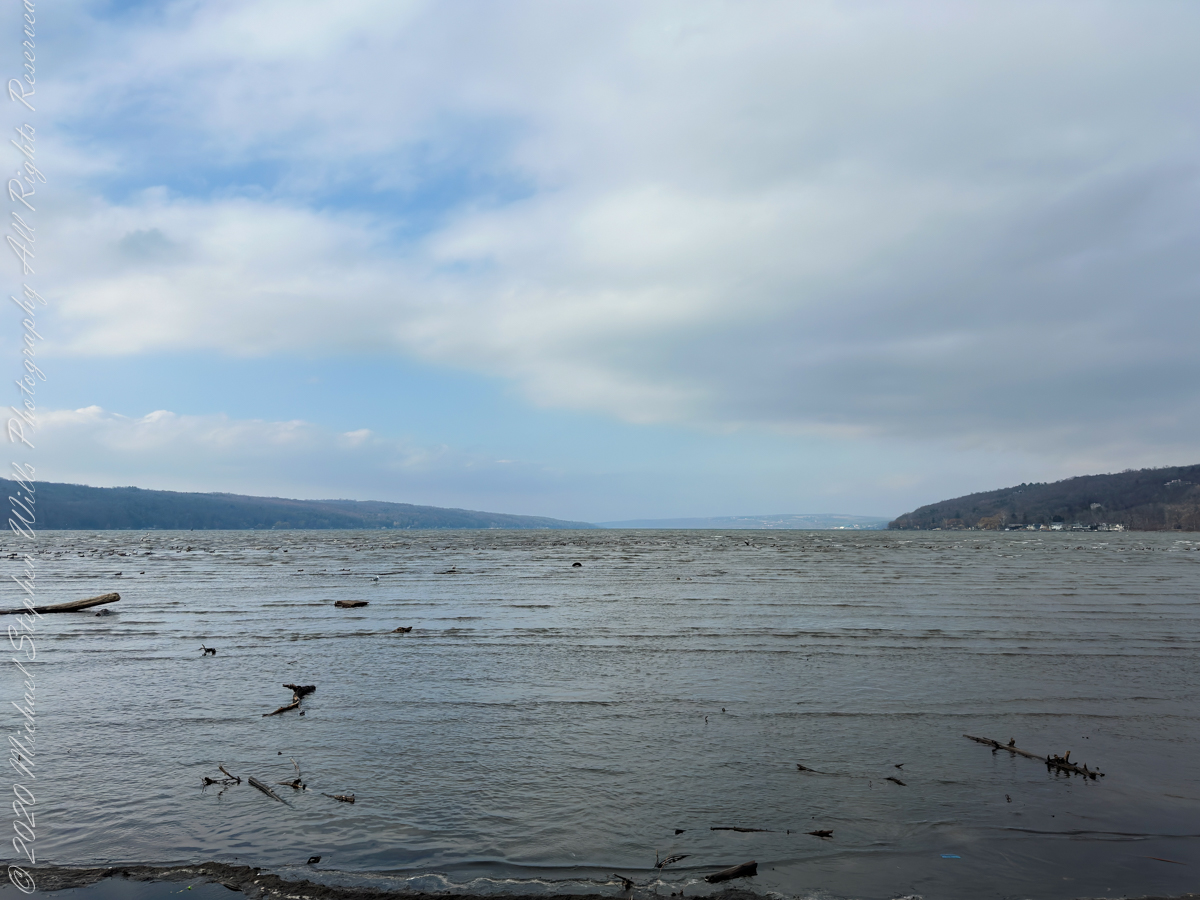
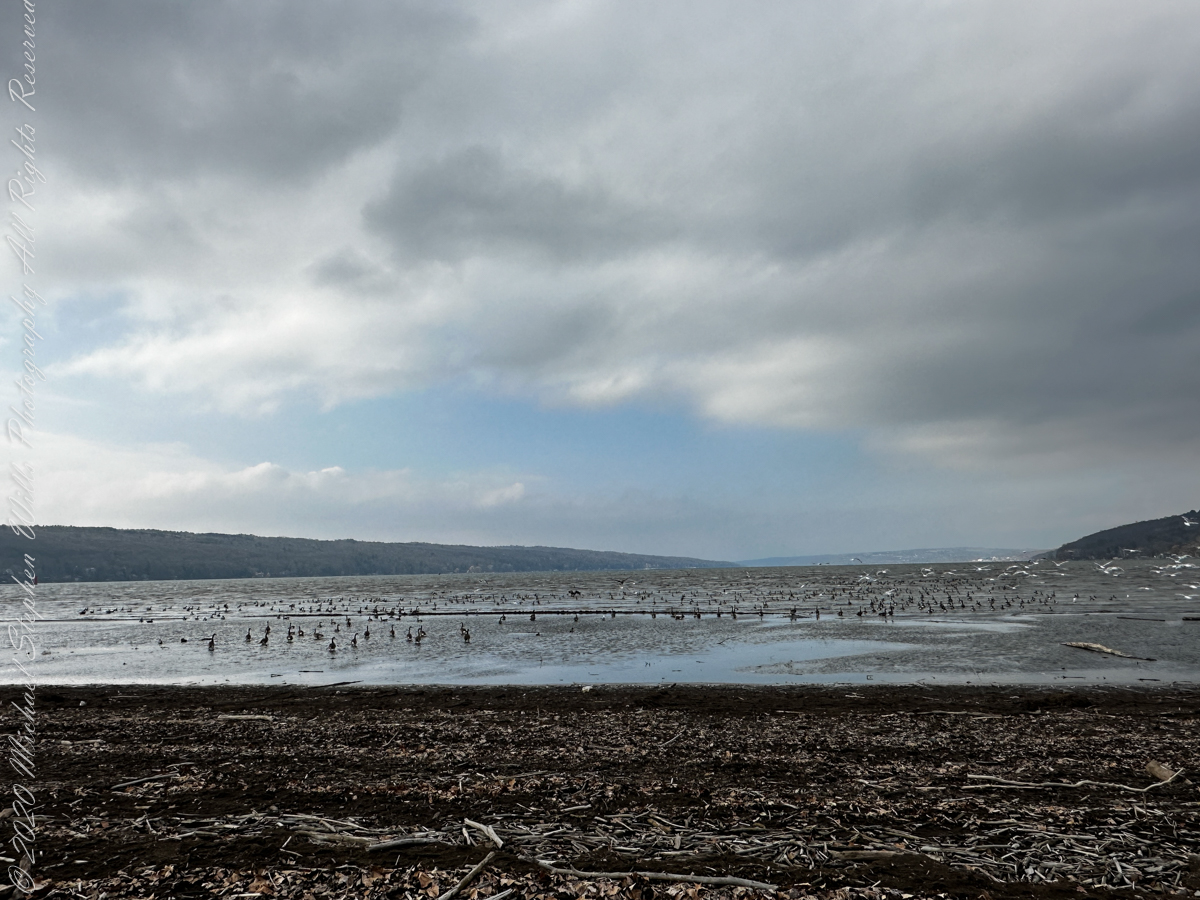
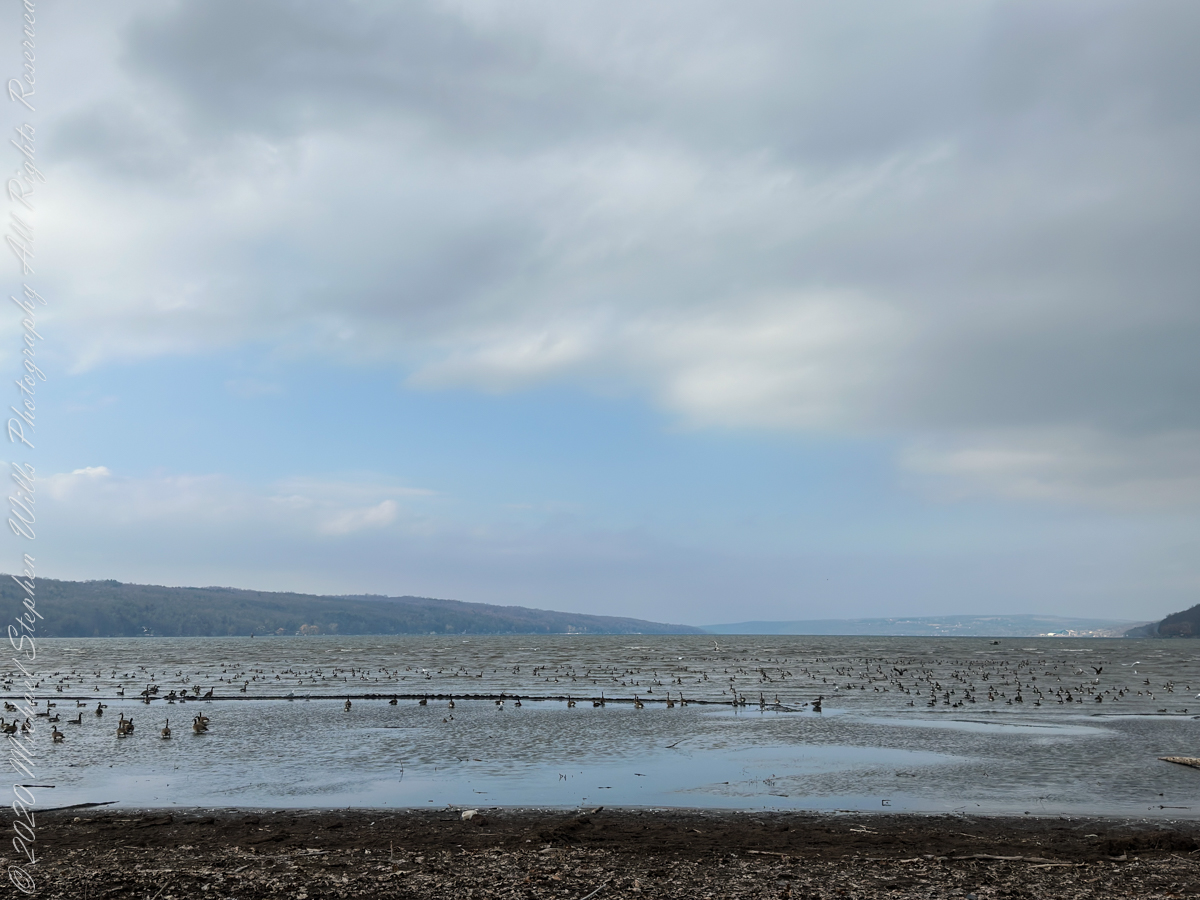
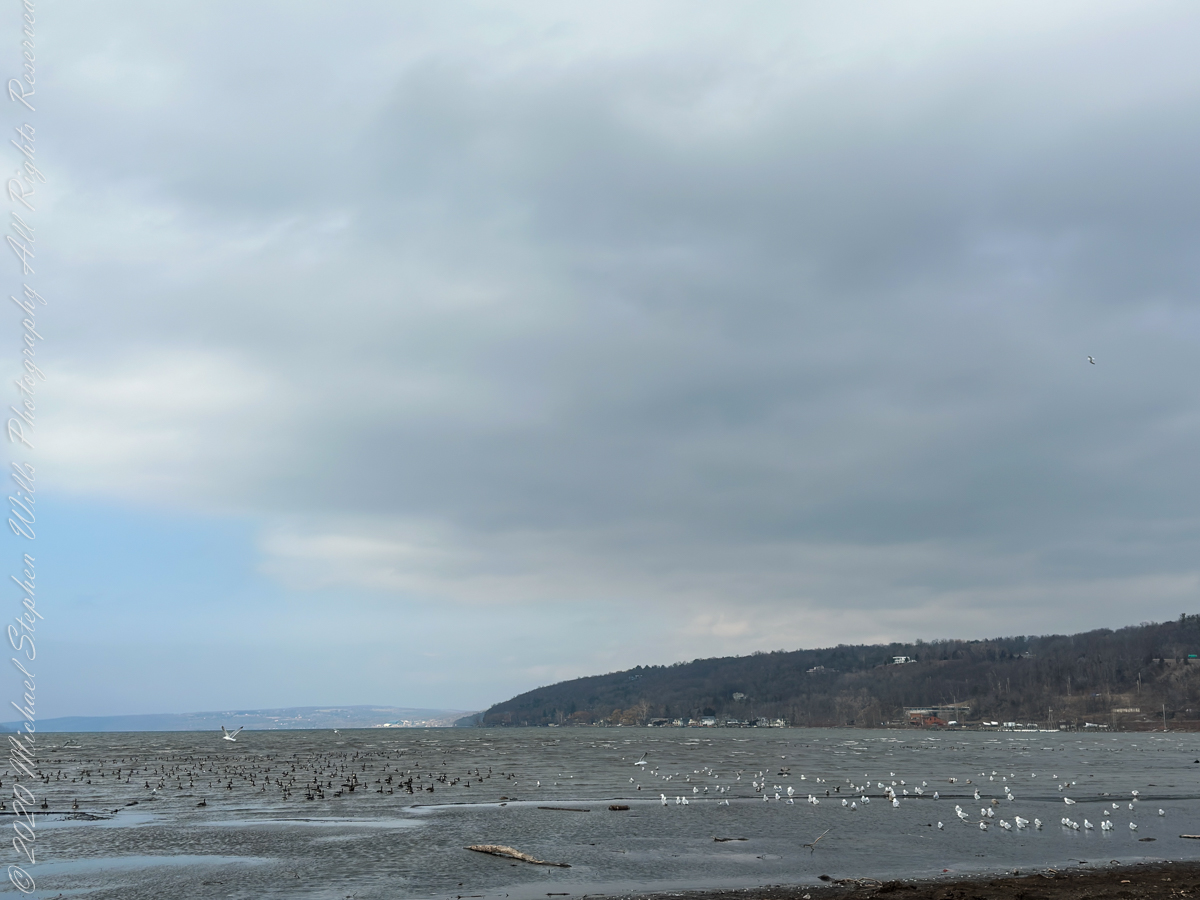
Pam and I have sailed past Crowbar Point, the arm of land projecting into the lake on left, so we know this end of Cayuga Lake well. The lake reach northward is deceiving as the bulk of the 39-mile reach is north of the headlands of the west lakeshore visible in the distance as the apparent end of the lake.
I love the pale blue of late February / early March skies.
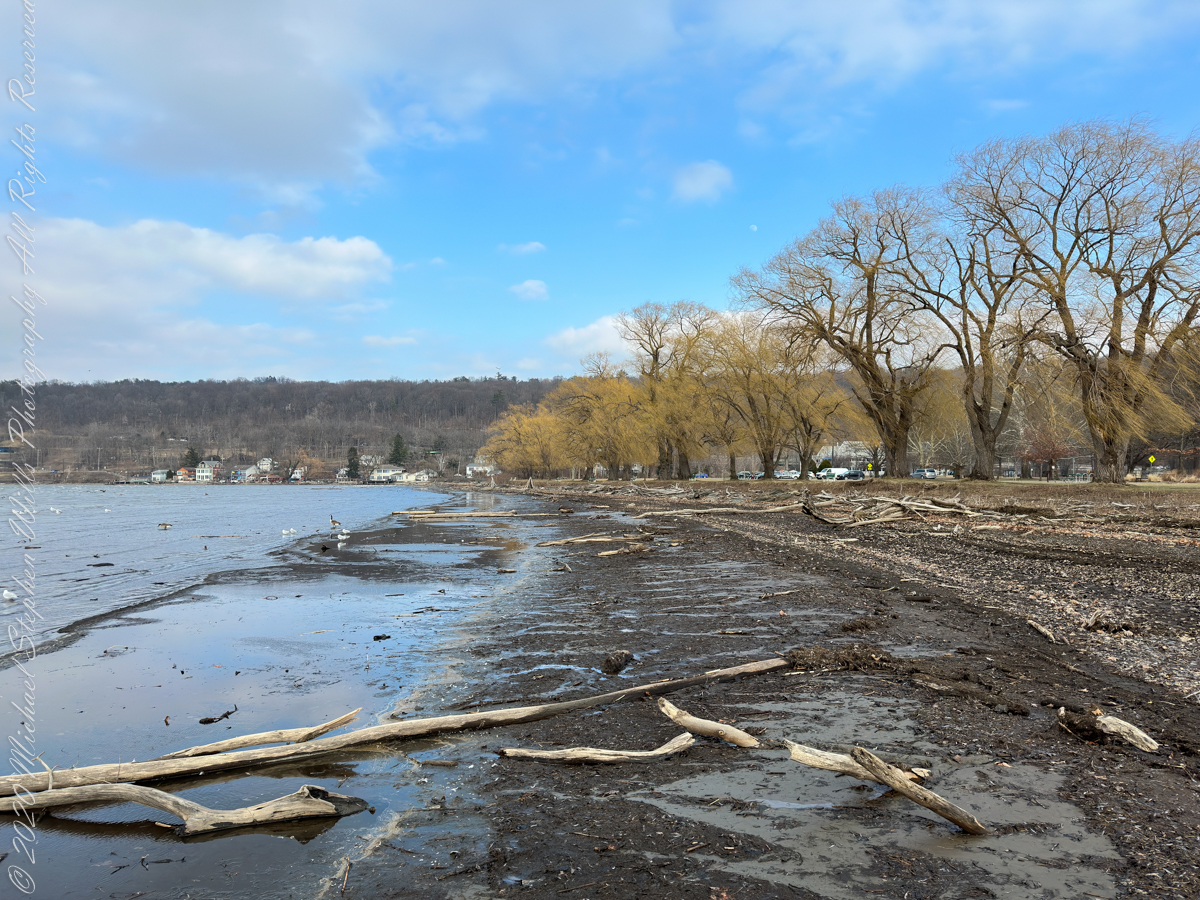
Also known as White Willow, for the white undersides of the leaves that flash in the wind. These flourish on the southernmost shore of Cayuga Lake.
Here is a video of a large gathering of Canadian Geese, multitudes landing to ride lake waves on an unsettled, windy March afternoon.
Copyright 2023 Michael Stephen Wills All Rights Reserved
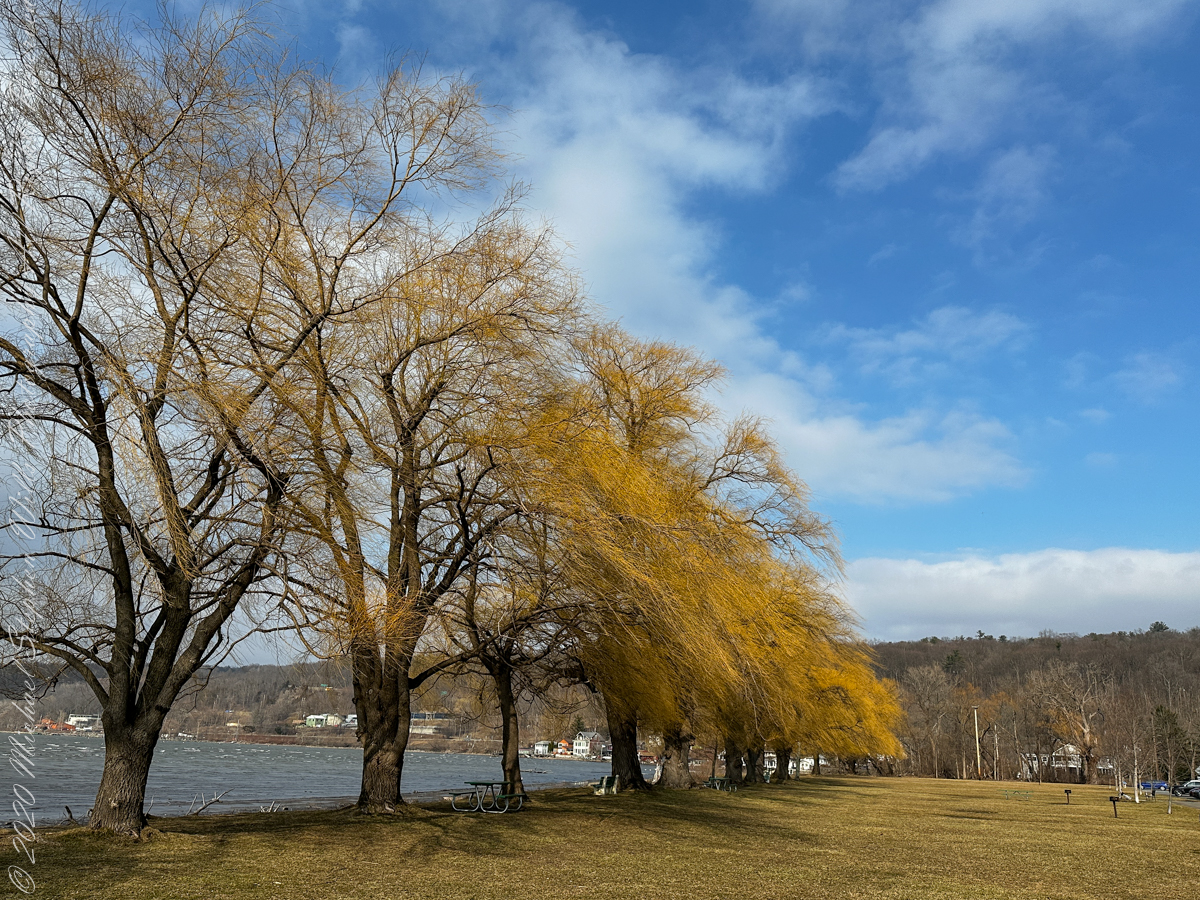
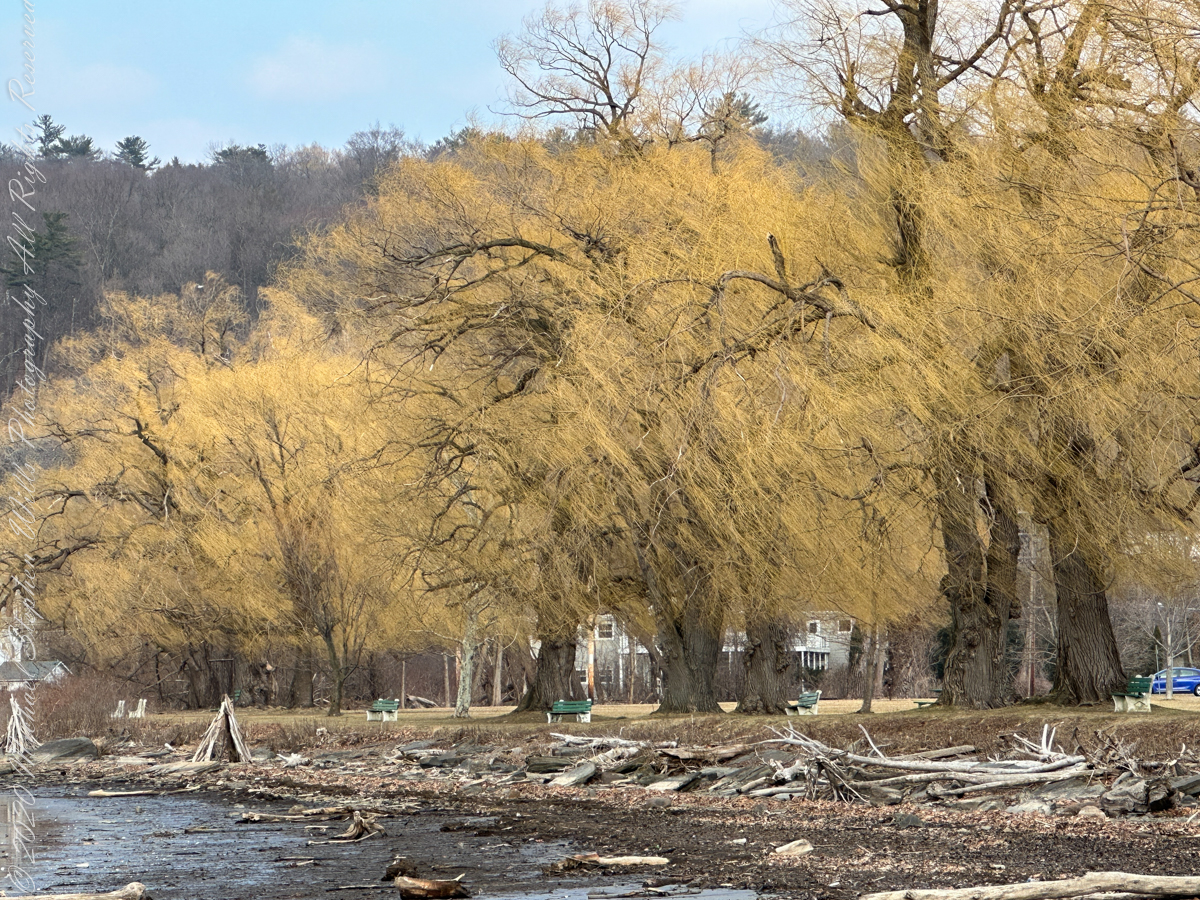
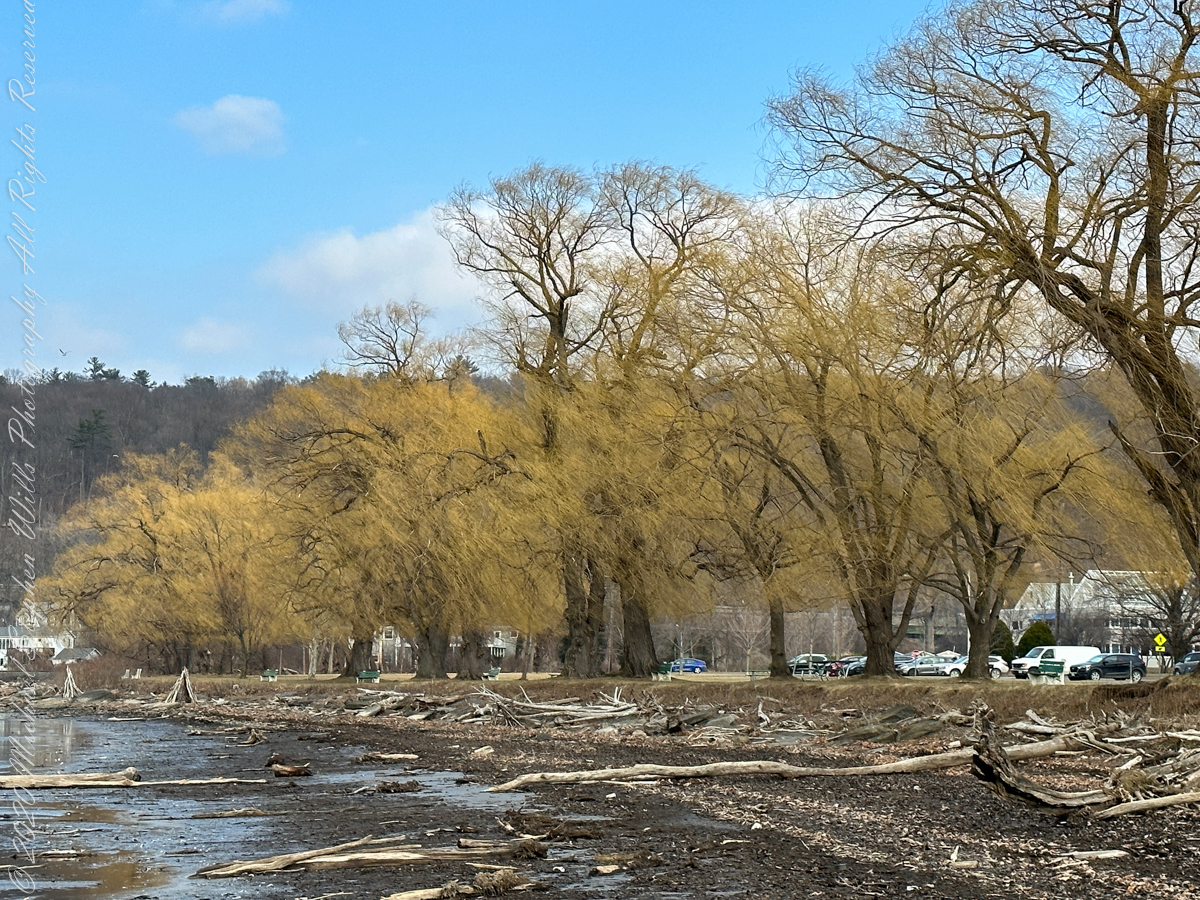
Among the earliest plants to flower, brilliant yellow willows (Salix alba ‘Tristis’) are glorious early spring as new growth sprouts.
Willows native to New York State are all shrub-like, the homeland of these large trees is Europe and Asia.
Also known as White Willow, for the white undersides of the leaves that flash in the wind. These flourish on the southernmost shore of Cayuga Lake.
Willow bark does NOT have analgesic properties. The genus name, Salix, is the root for acetylsalicylic acid (aka aspirin), a chemical that does not appear in nature, originally synthesized from salicylic acid extracted from Meadowsweet.
Movement of budding willow branches in a north wind off Cayuga Lake
Copyright 2023 Michael Stephen Wills All Rights Reserved
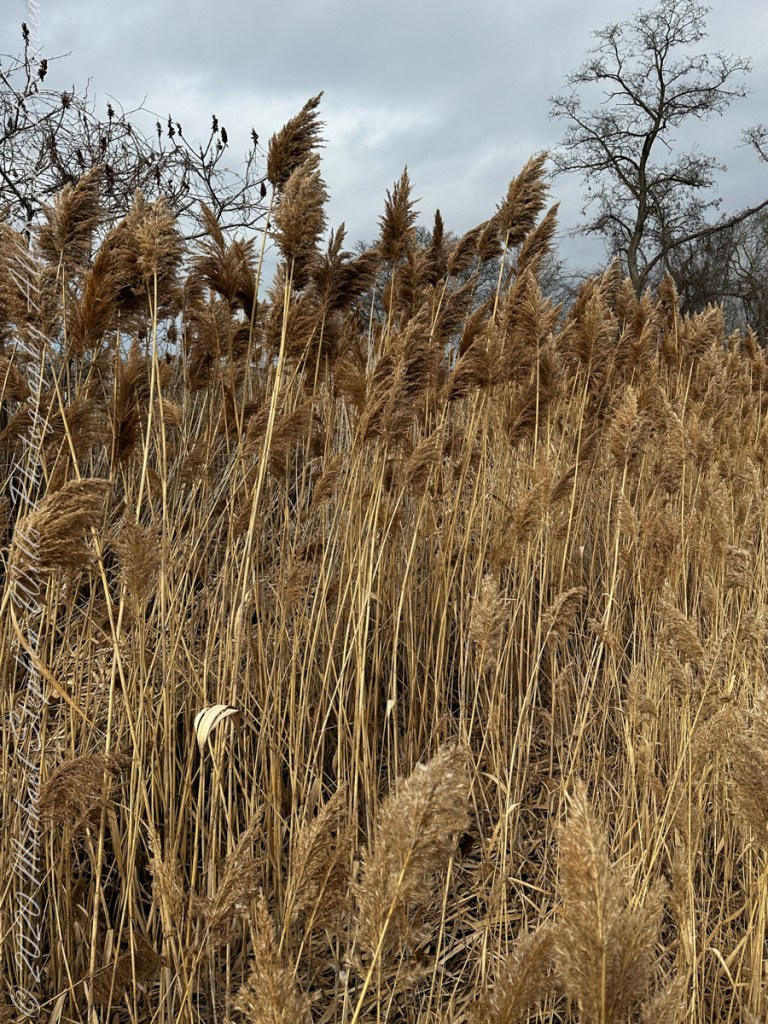
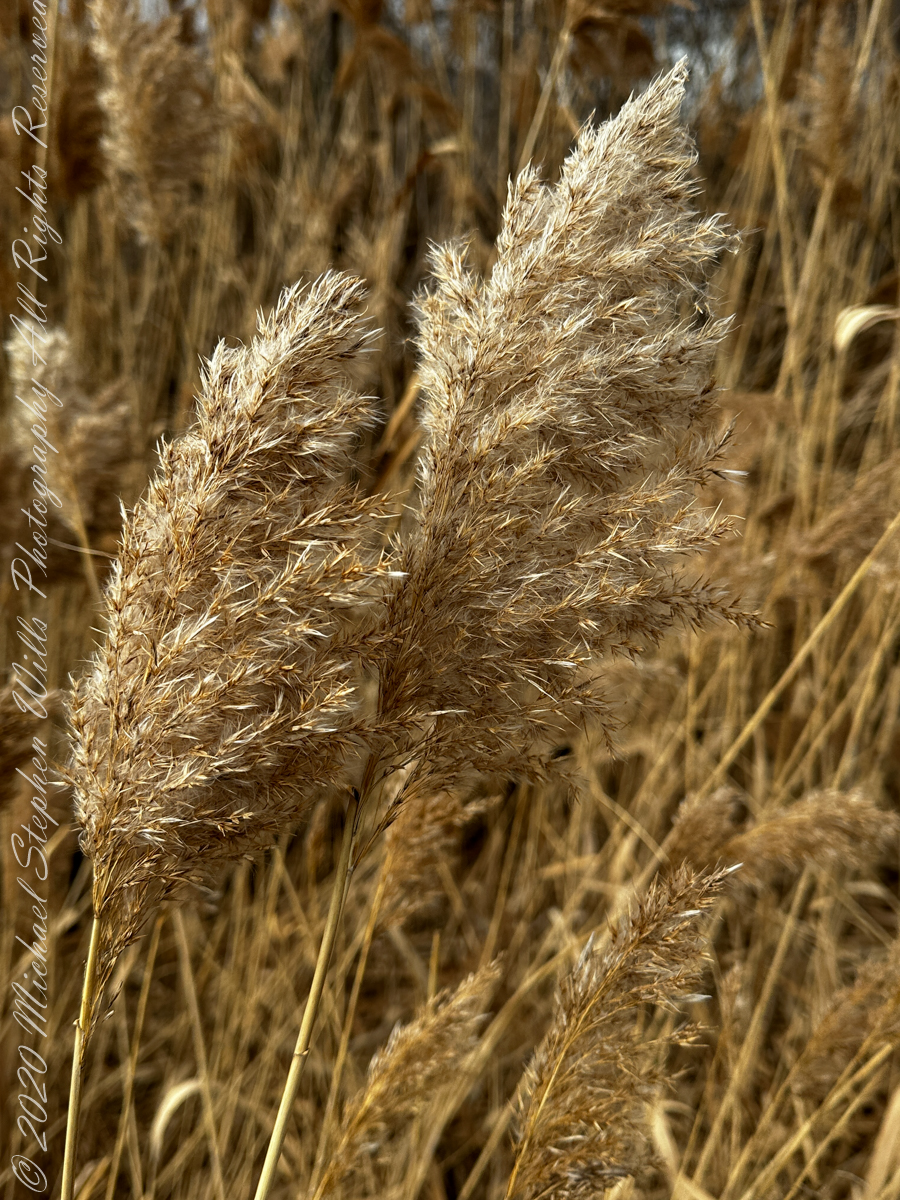
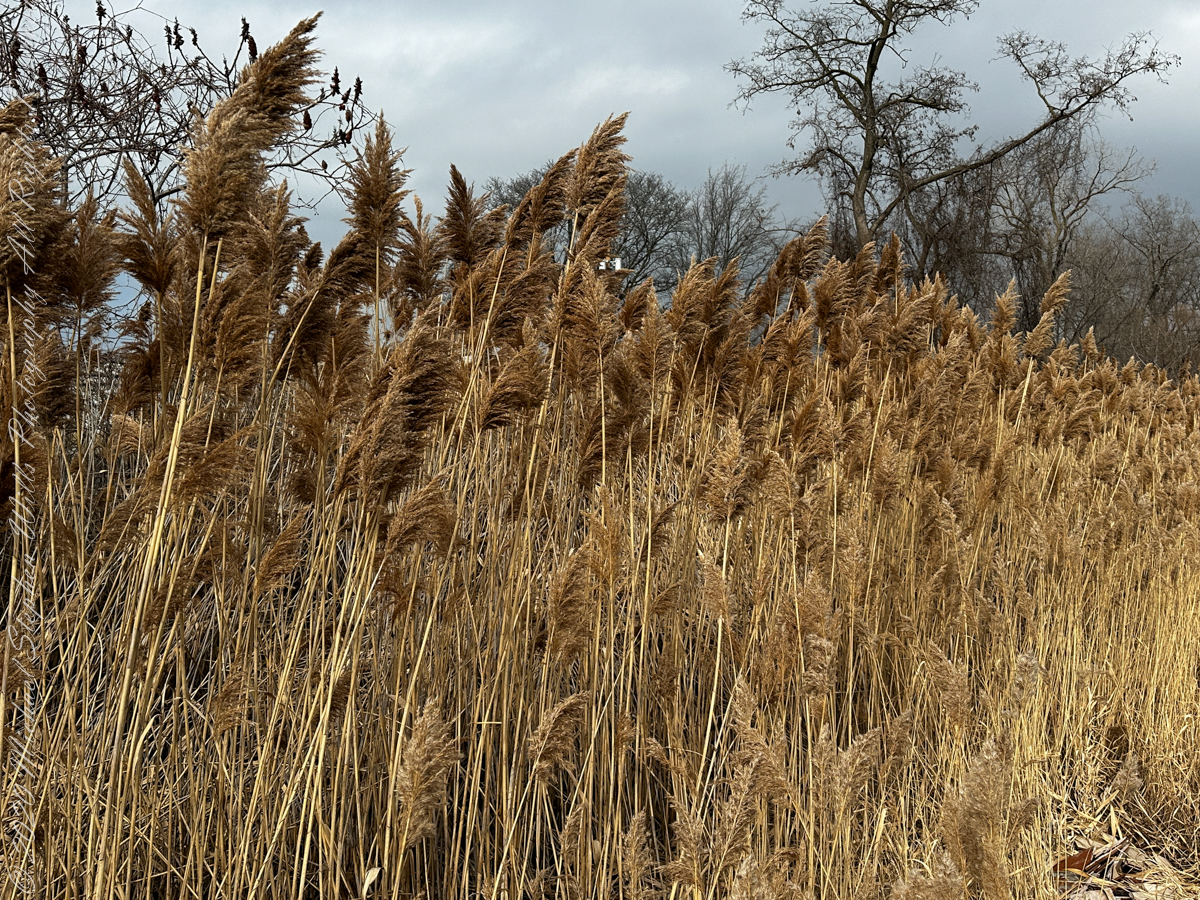
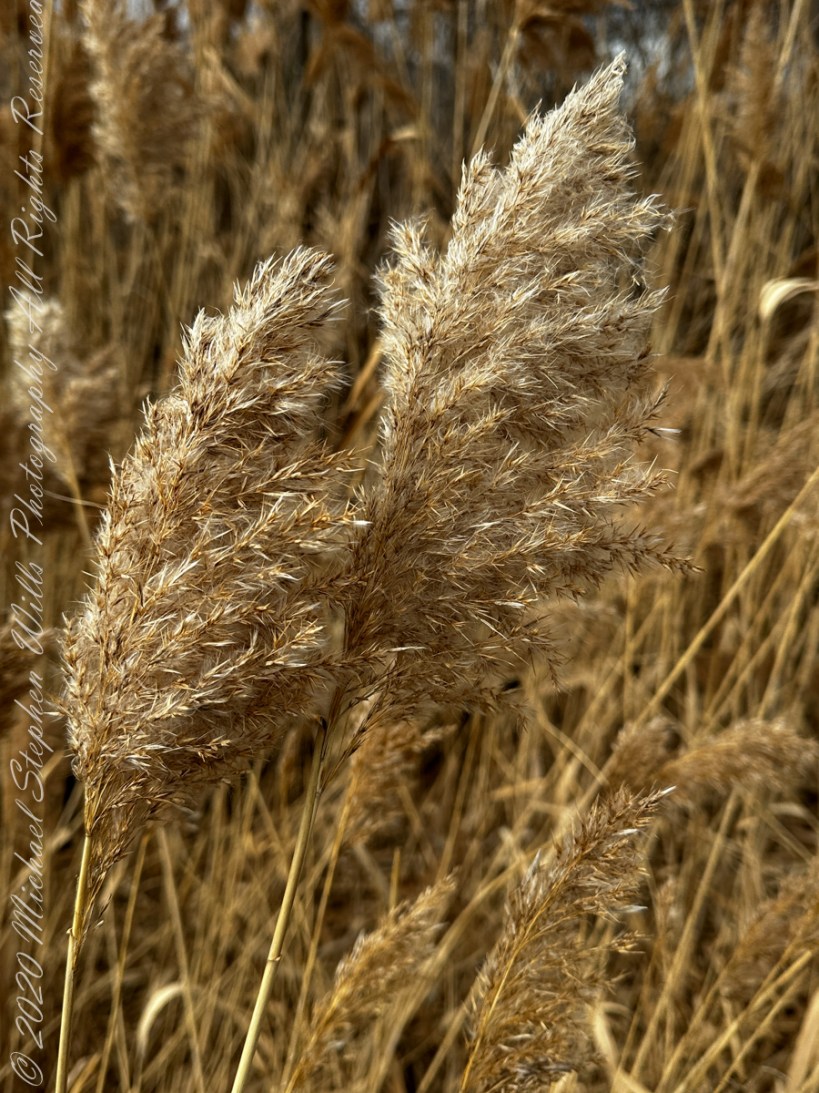
These Phragmites, aka The Common Reed, grow along Cayuga Lake shoreline. Cayuga Waterfront Trail, Ithaca, New York
A humble and fertile weed.
I learned today in China the stem of Phragmites, not this species possibly, is a common component of kites. Around our home here in Ithaca, New York, I’ve noticed the seed heads on stems used in home decoration. Some other uses Some other uses for Phragmites and other reeds in various cultures include baskets, mats, reed pen tips (qalam), and paper. Beekeepers can utilize the reeds to make nesting. In the Philippines, Phragmites is known by the local name tambo. Reed stands flower in December, and the blooms are harvested and bundled into whisk brooms called “walis”. Hence the common name of household brooms is walis tambo. Reeds have been used to make arrows and weapons such as spears for hunting game.
The movements of grace.
This is my first posting of photographs and video from the IPhone 14 ProMax.
Copyright 2023 Michael Stephen Wills All Rights Reserved
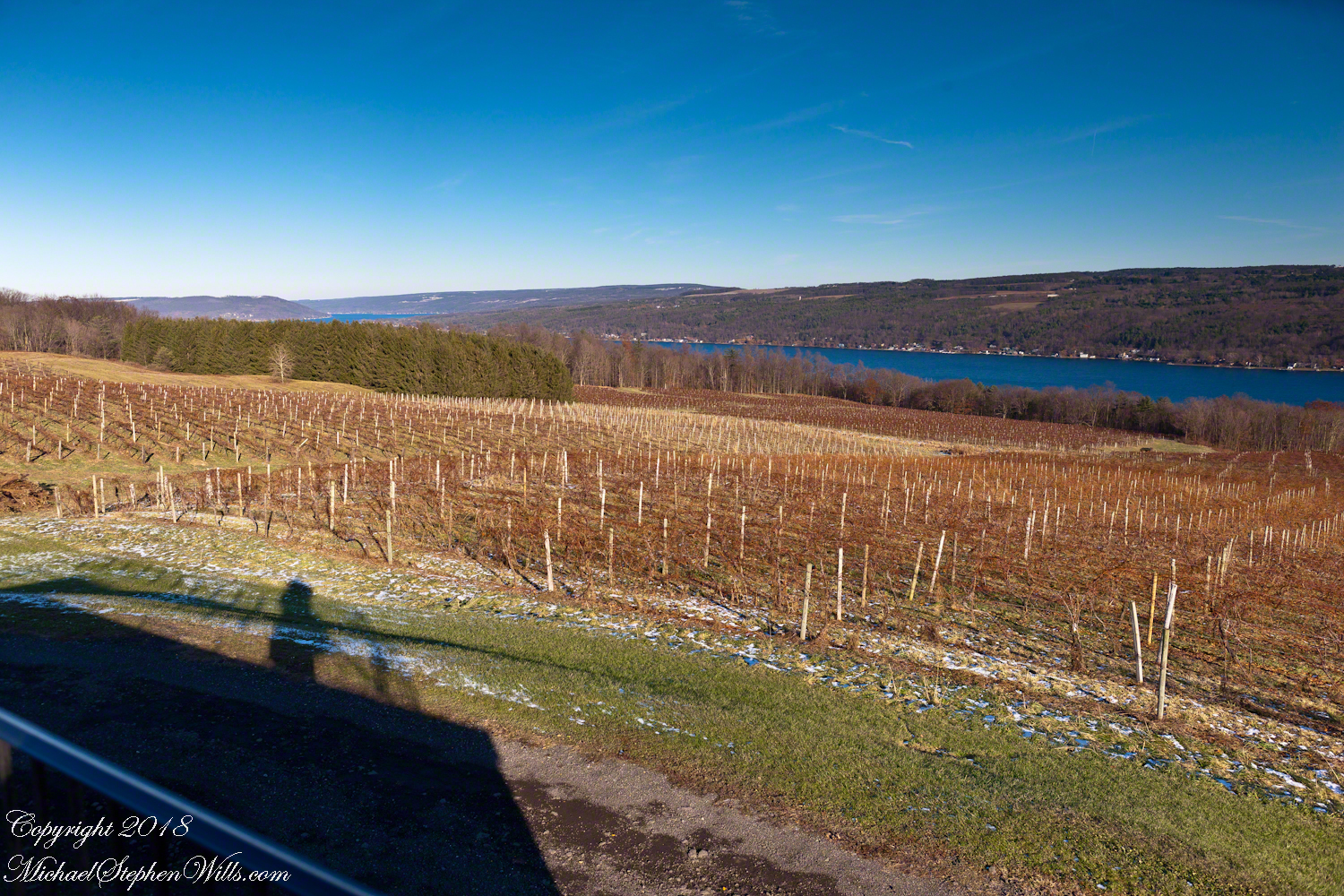
Sunday, Pam and I travelled across the peneplanes, past three Finger Lakes, to reach the Dr. Konstantin Frank winery where we subscribe to the “Wine Club,” a quarterly release of three 750 ml wines along with a newsletter with information and recipes. For 2018/2019 we elected to “pickup” our selections, looking forward to these drives through the country and villages between Ithaca and the winery perched on the west side of Keuka Lake, just below the “branch.”
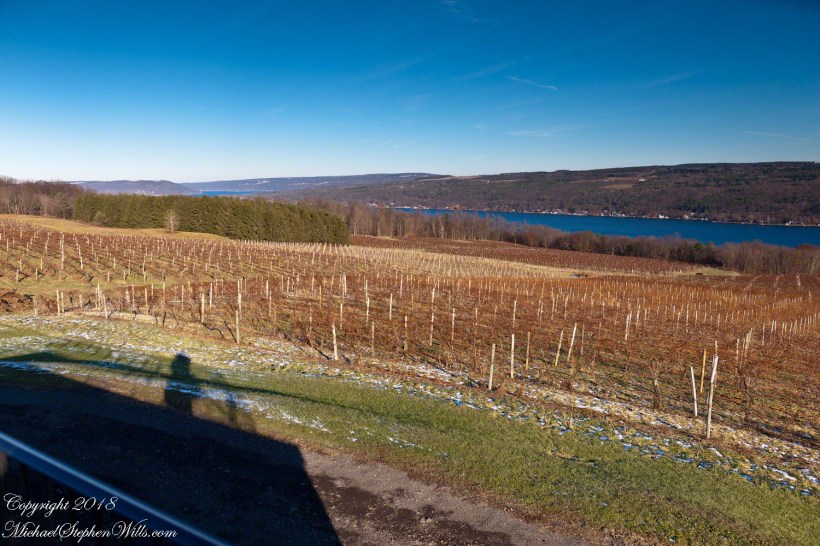
Preeviously, I posted “Glacier!!” and today there is this photograph of glacial topography 10,000+ years after the melt. Keuka Lake is shaped like a “Y” chromosome, here we are looking northeast across the “foot” of the “Y” from the west lakeside. Above the evergreens, to the left, is the headland separating the “arms” of the “Y”.
Spread out below our viewpoint are row upon row of grapevines, enjoying the microclimate surrounding the deep lake.
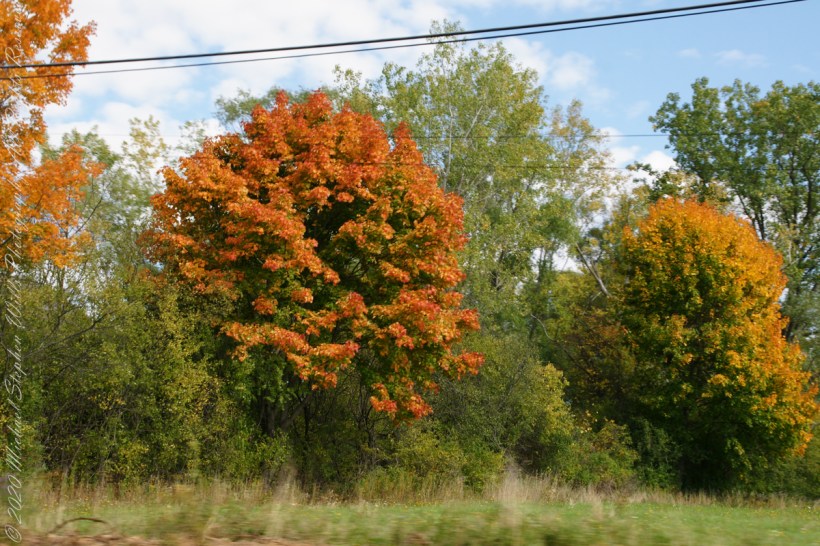
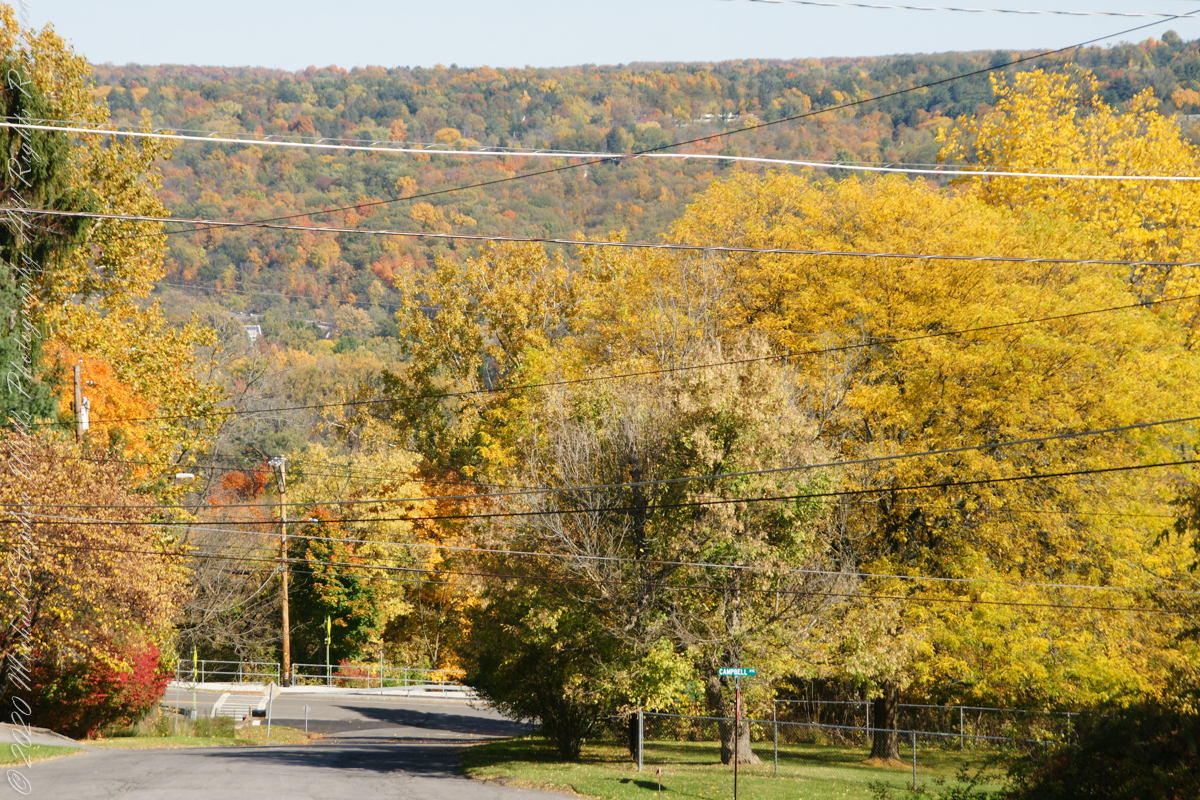
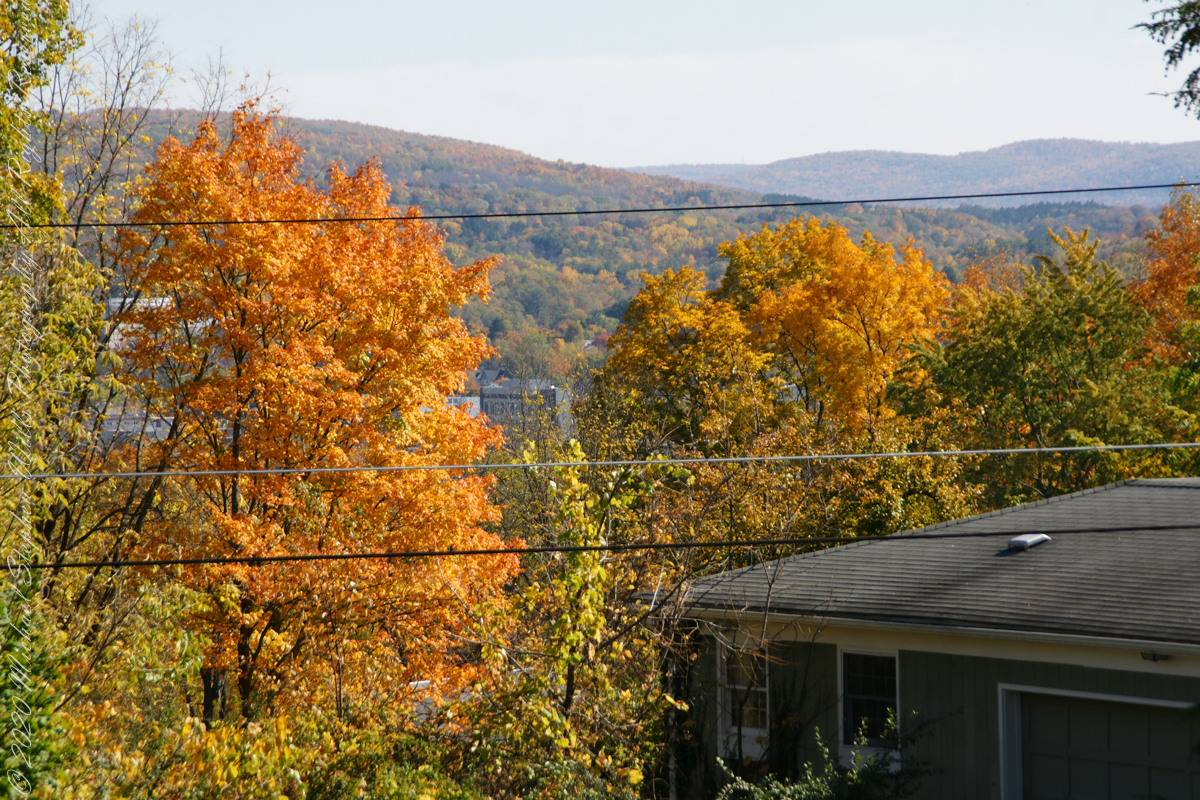
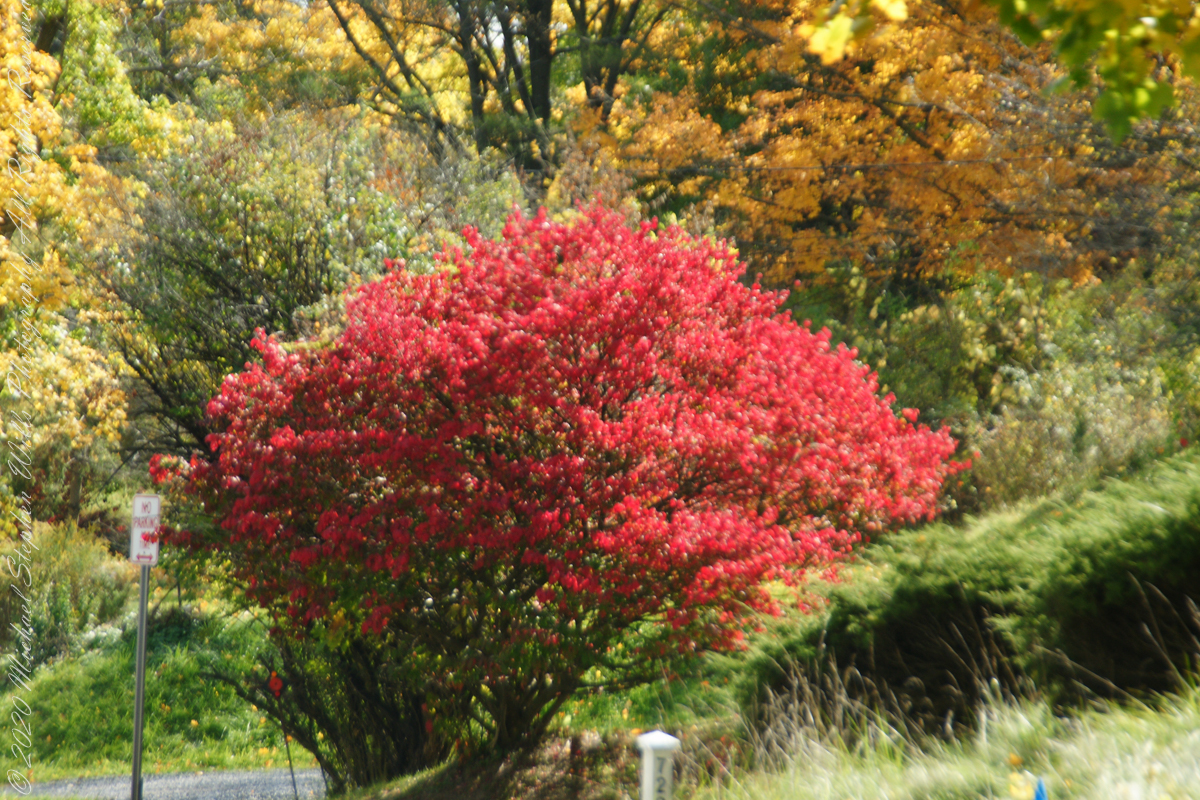
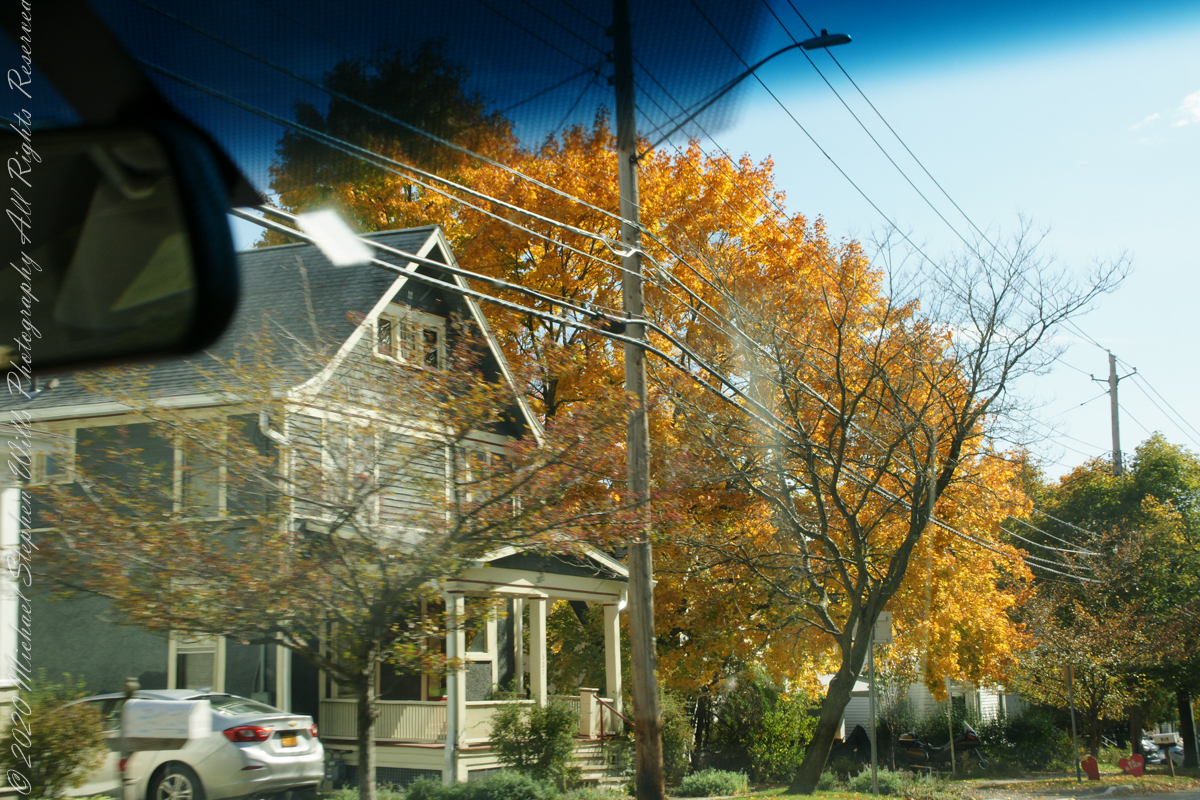
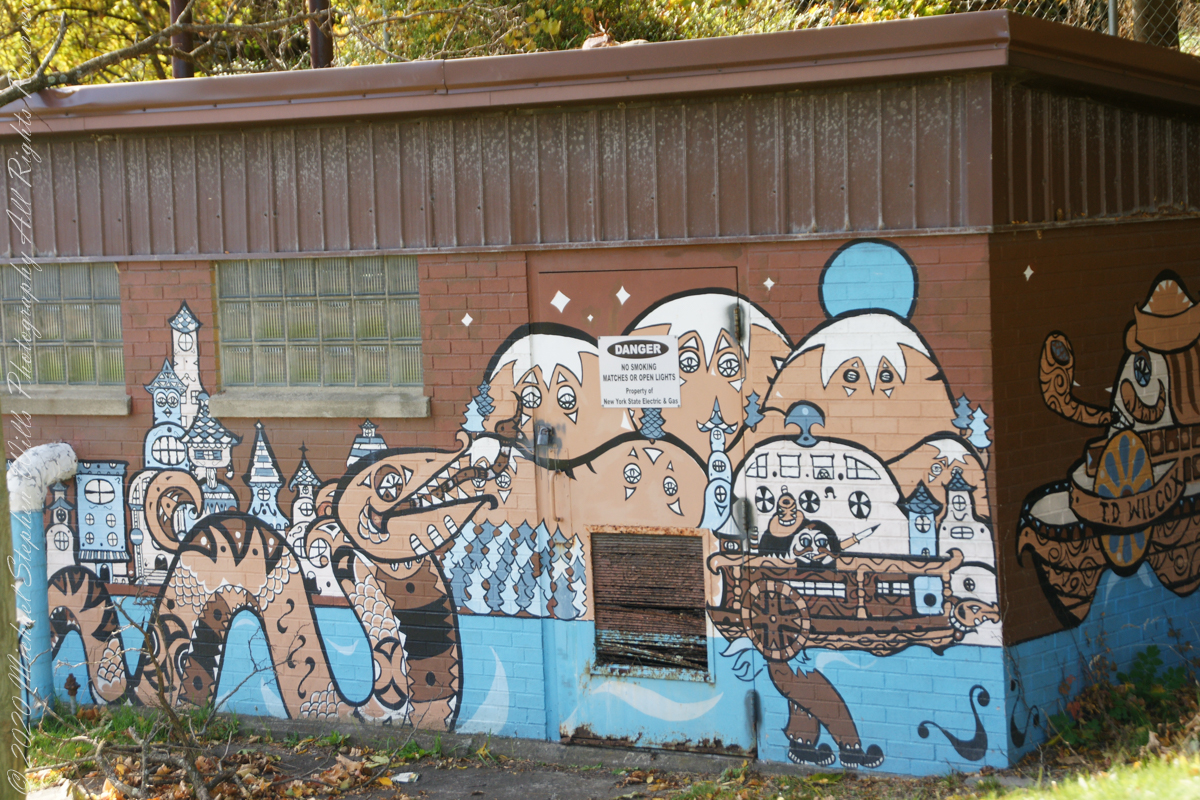
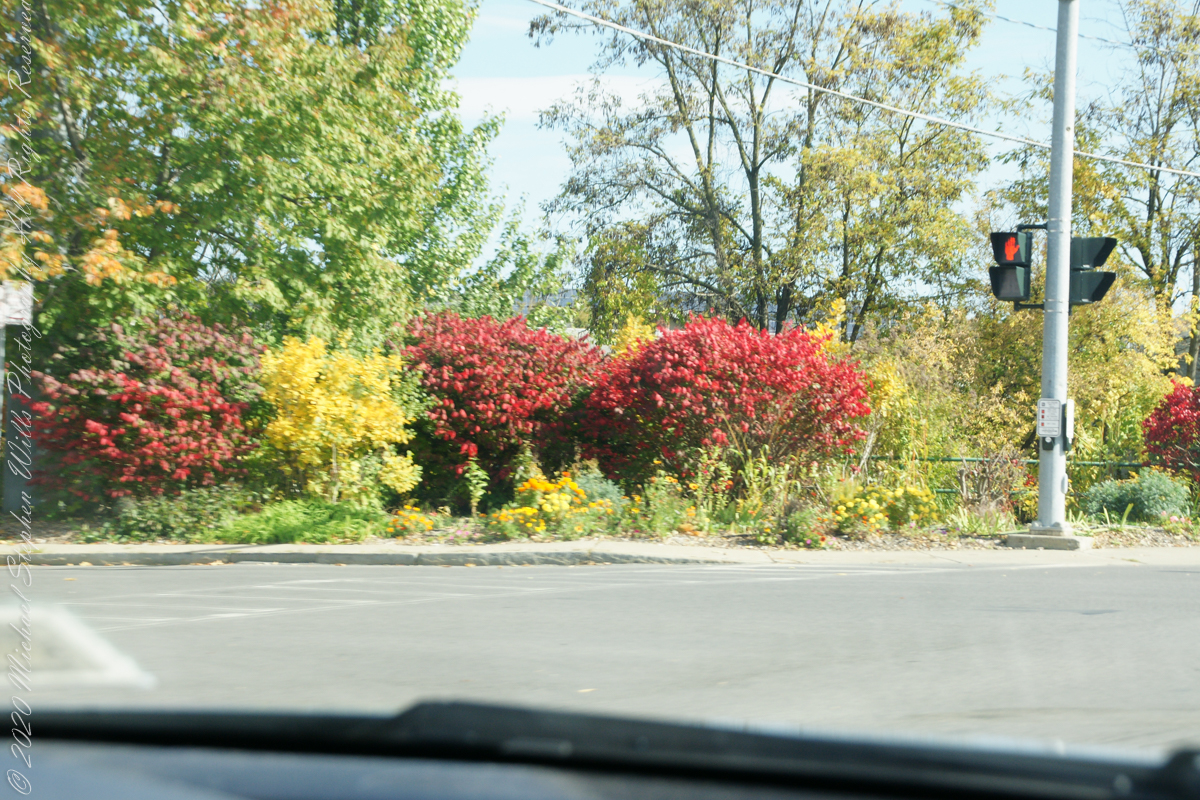
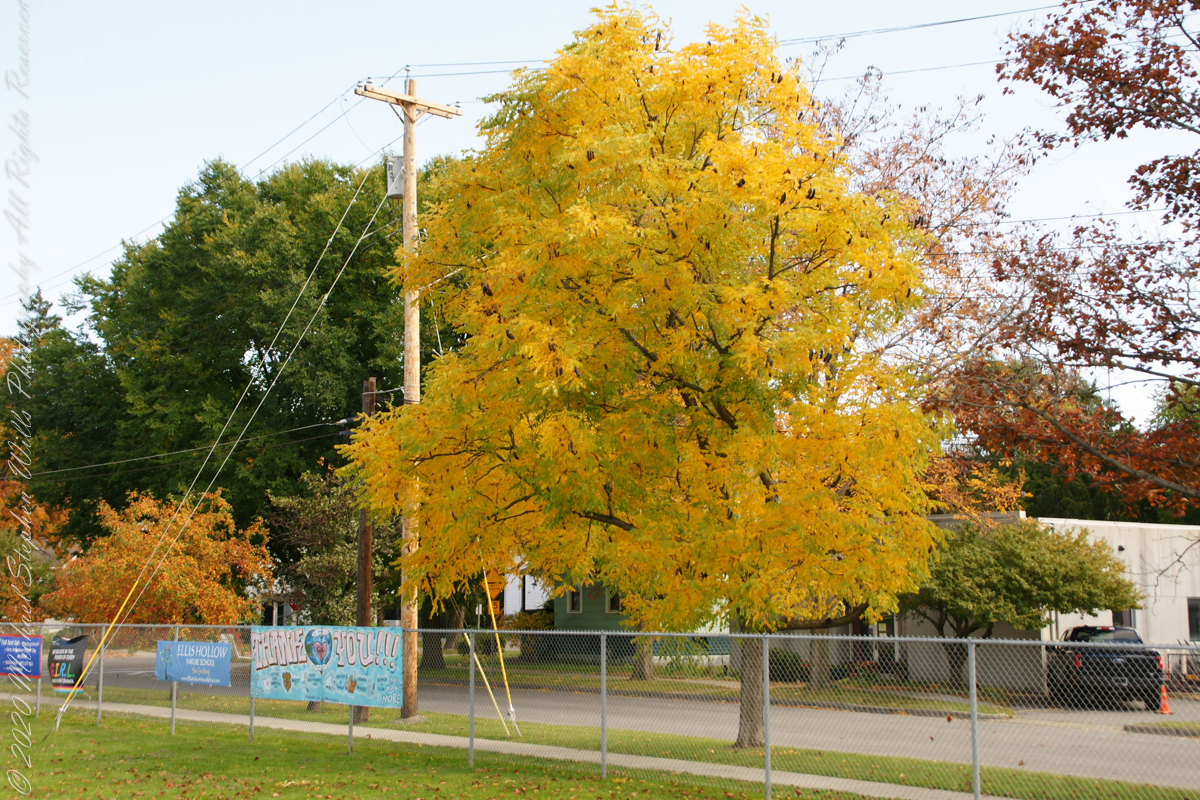
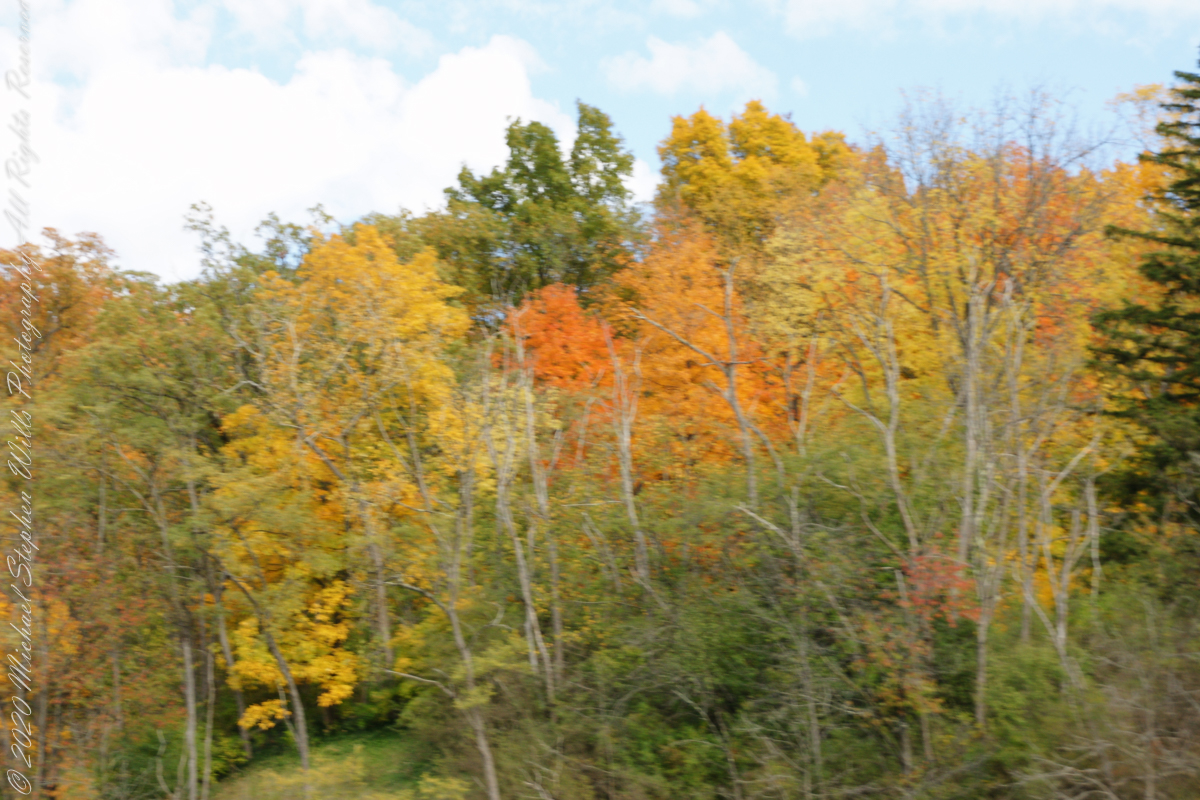
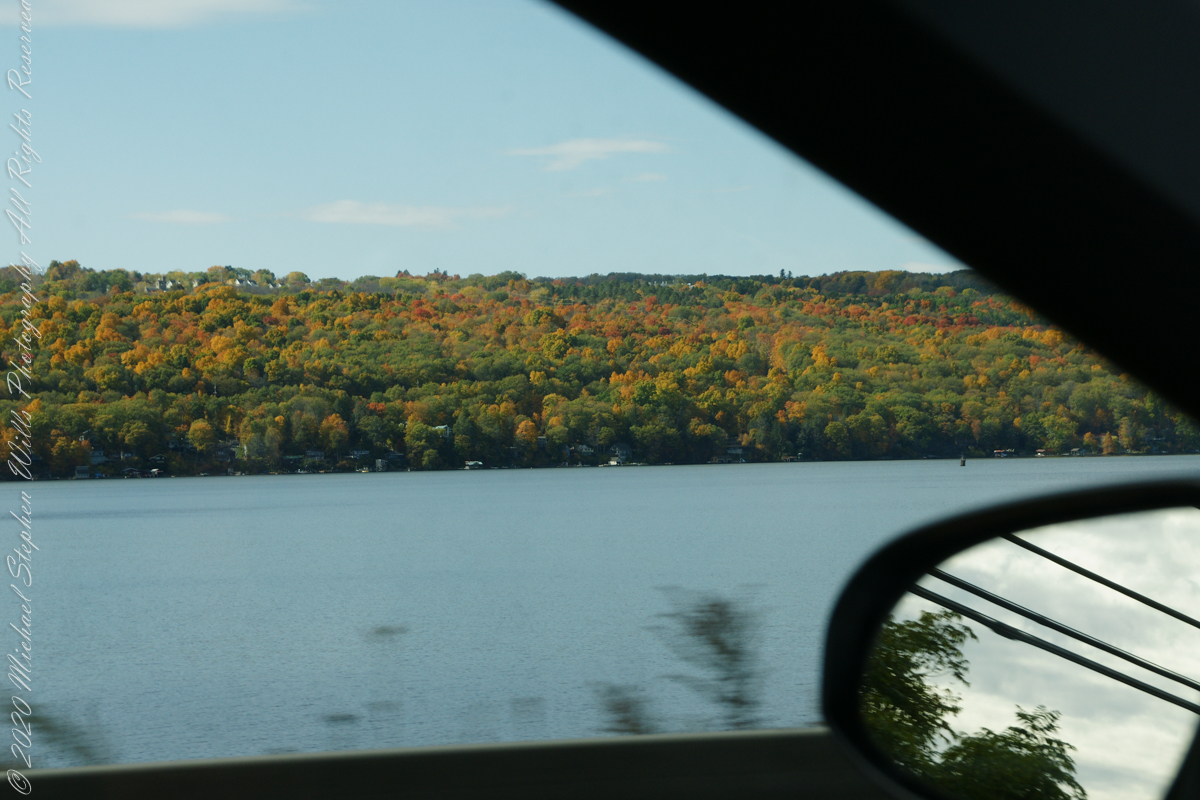
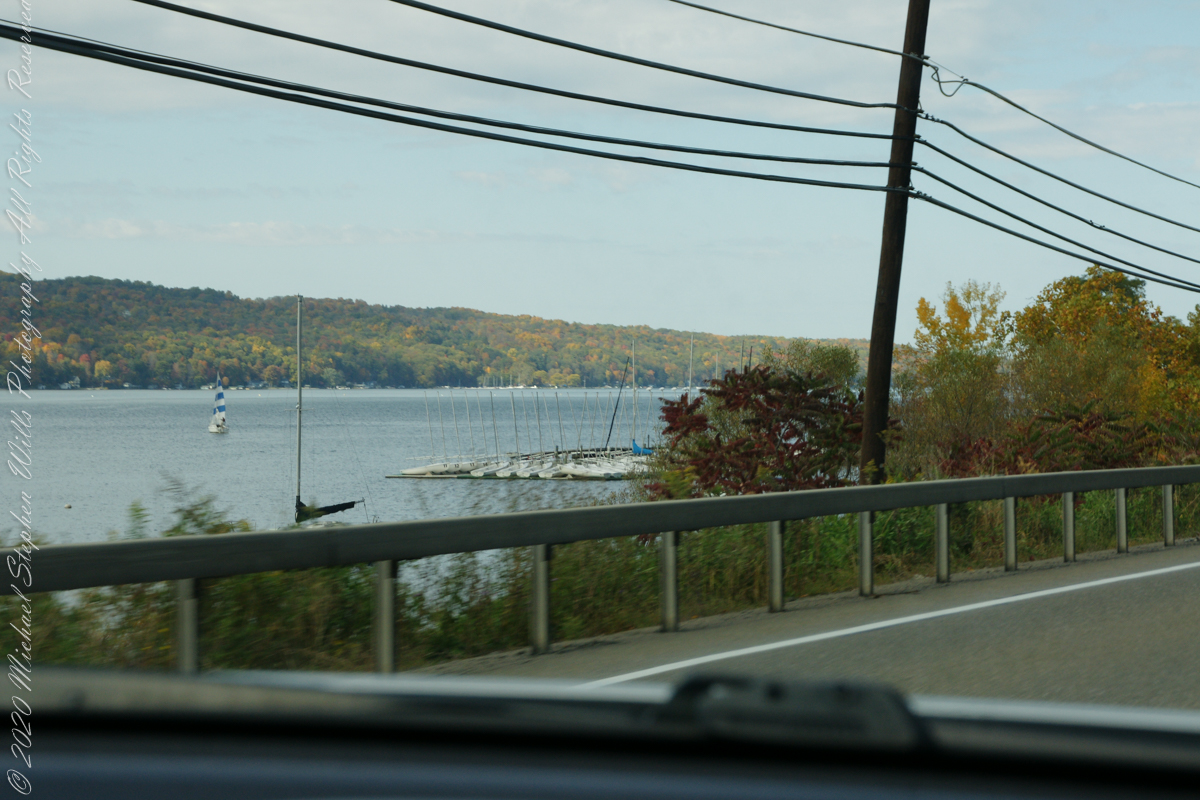
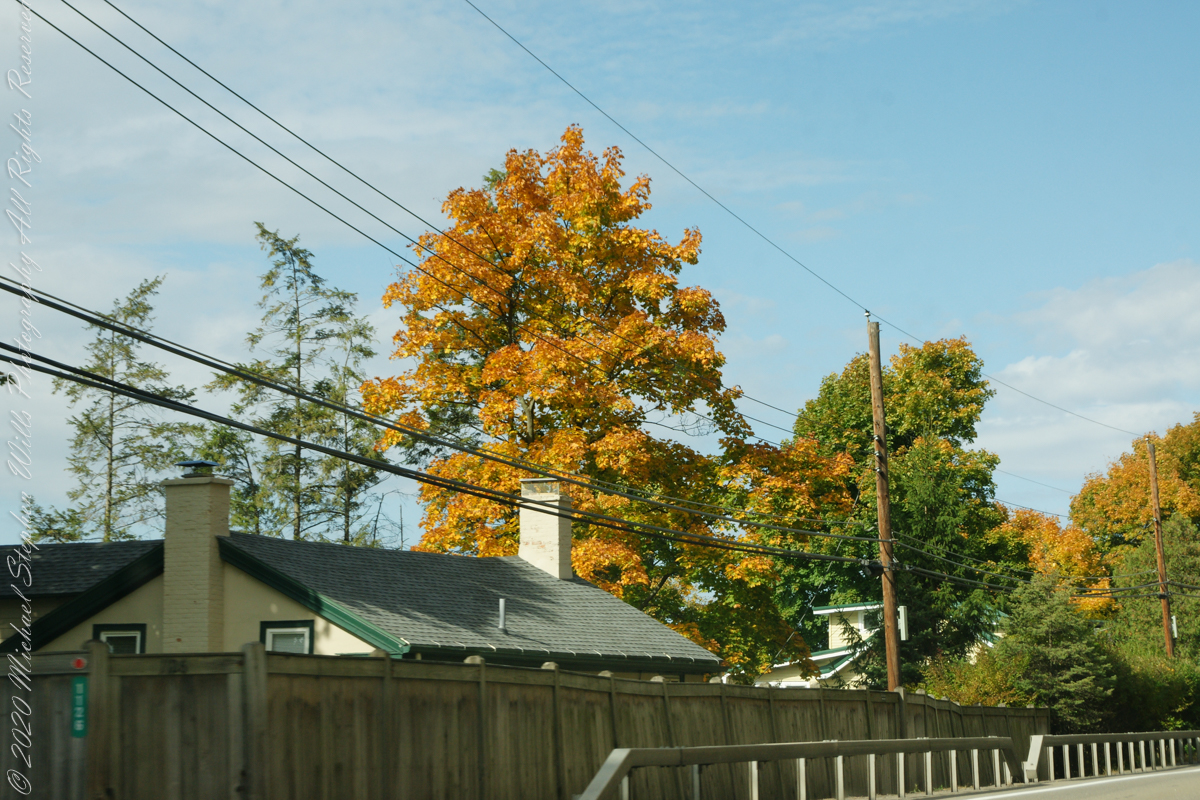
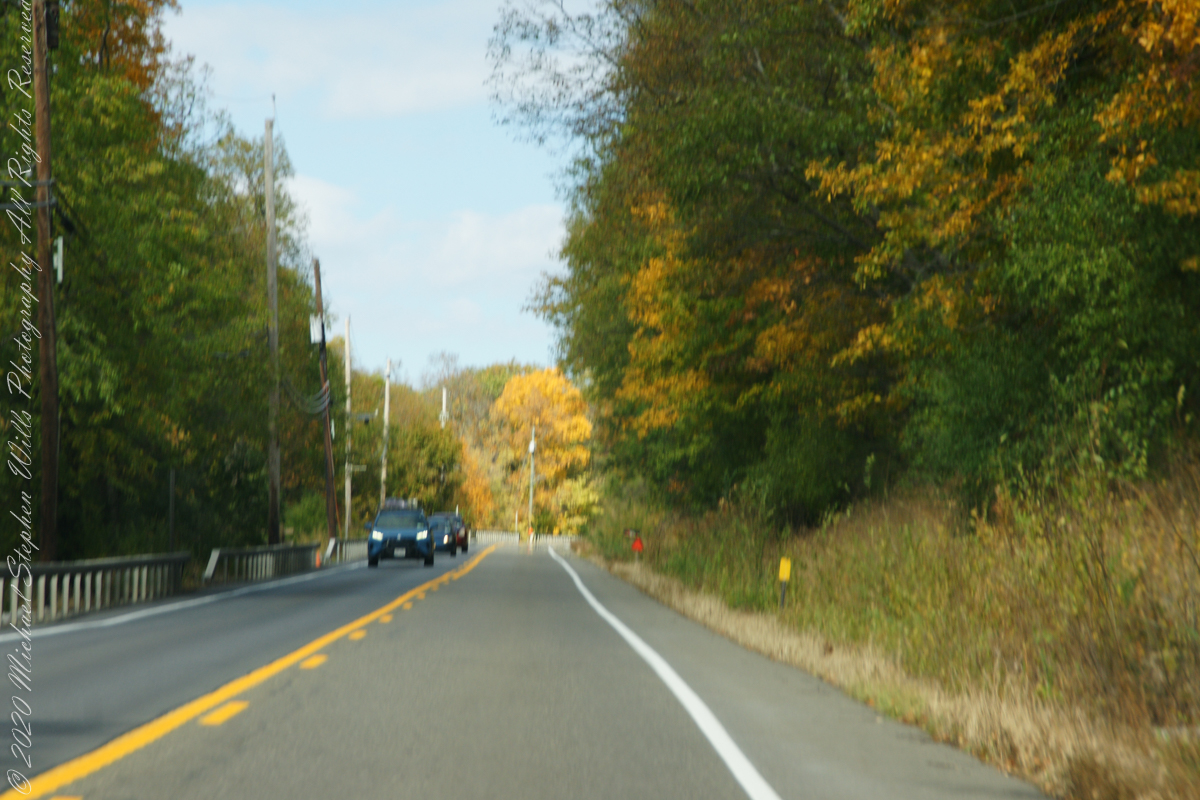
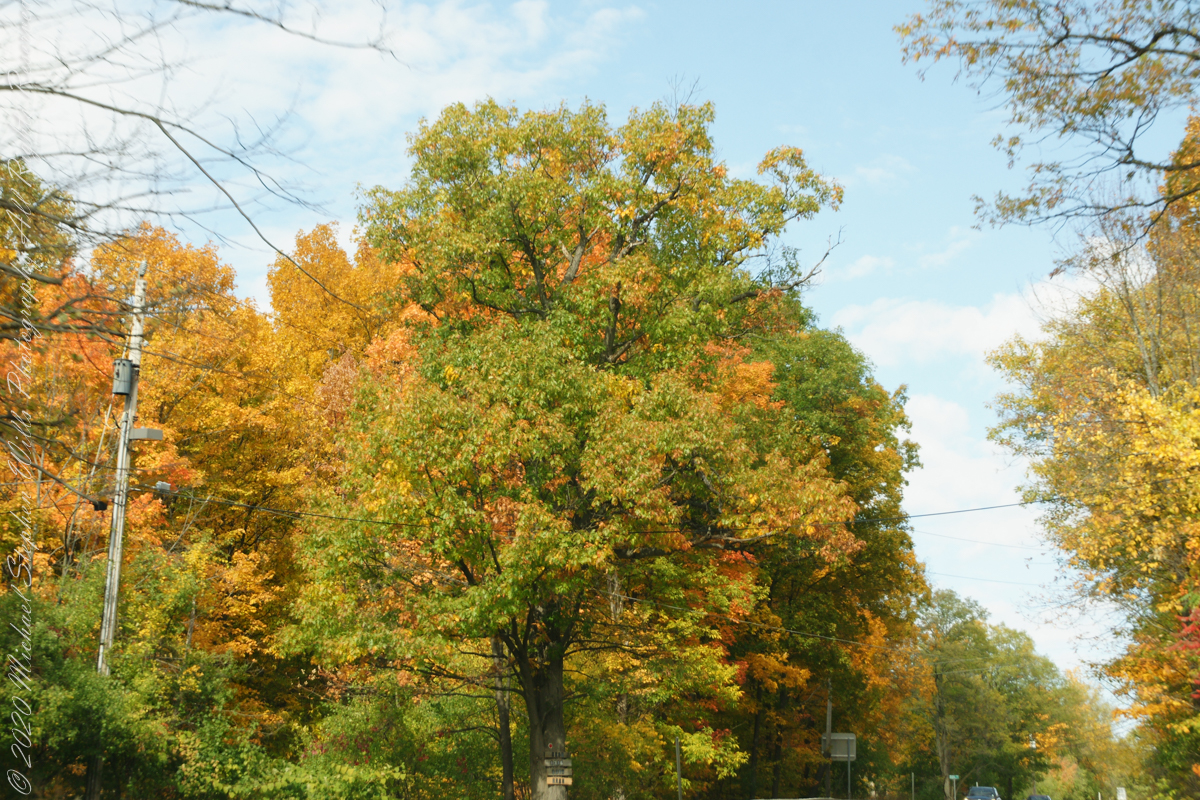
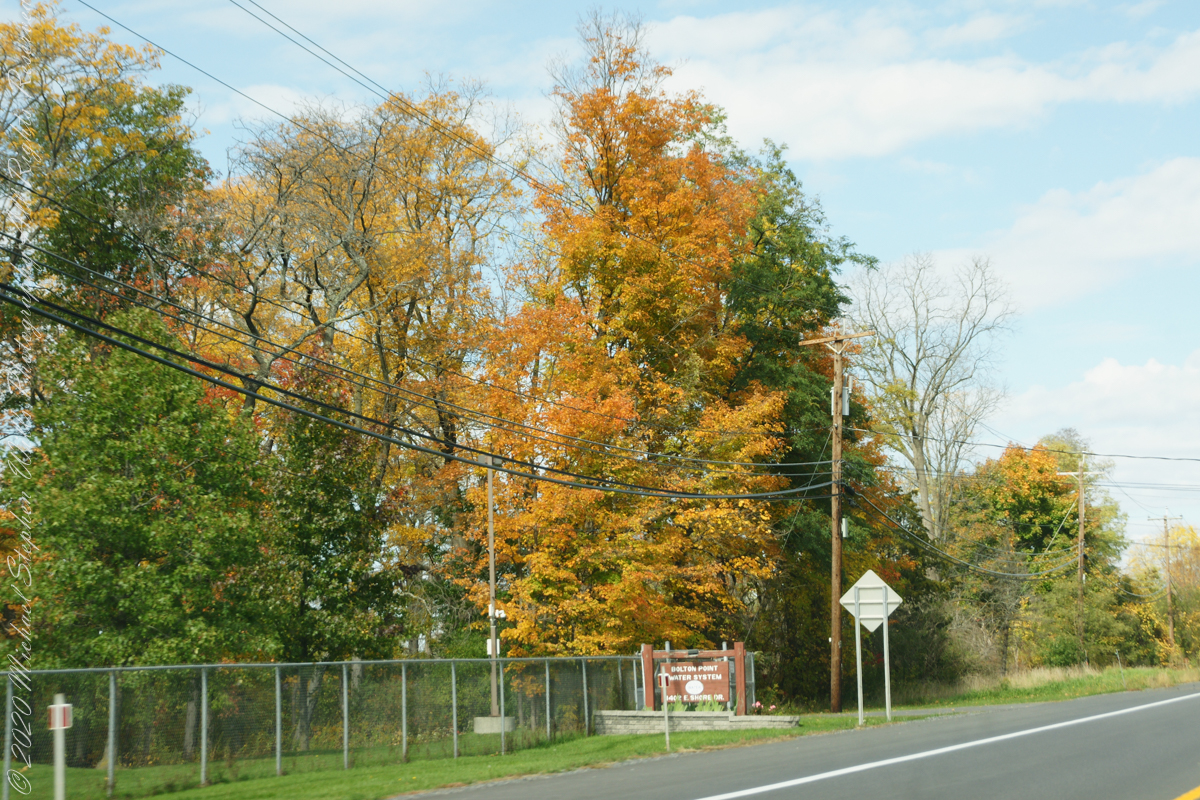
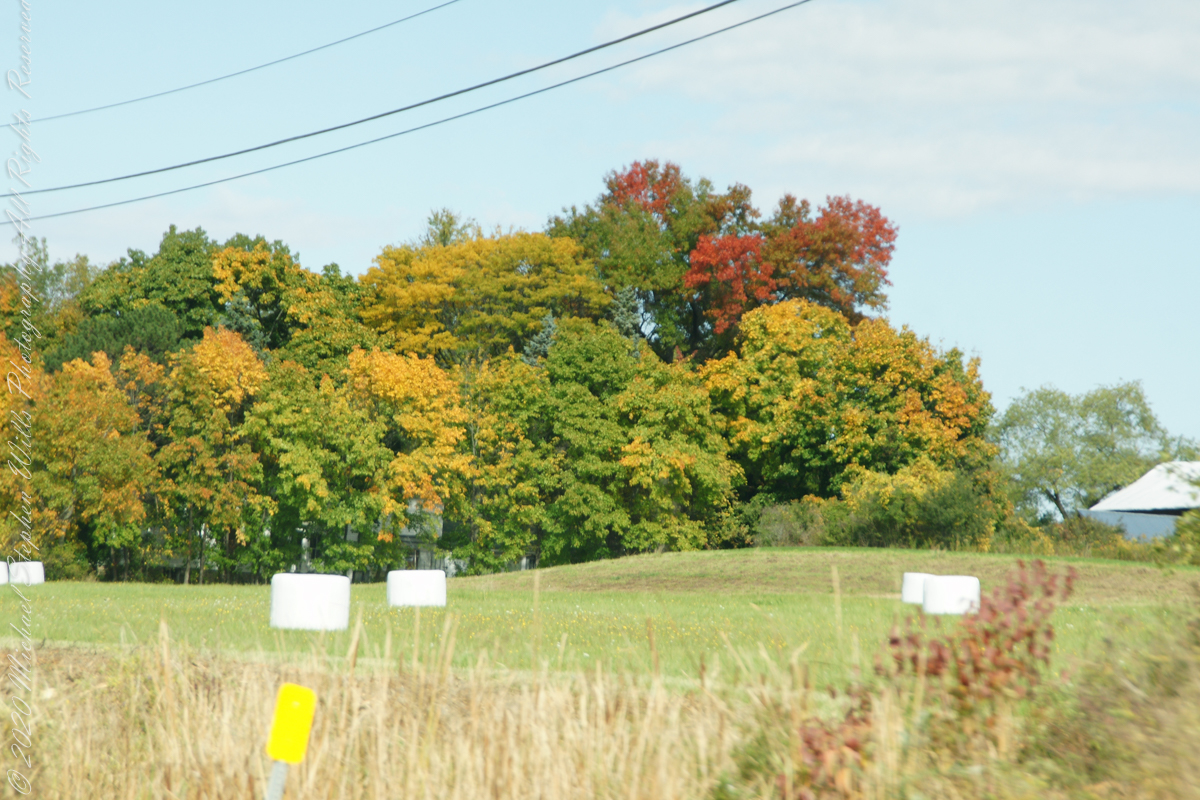
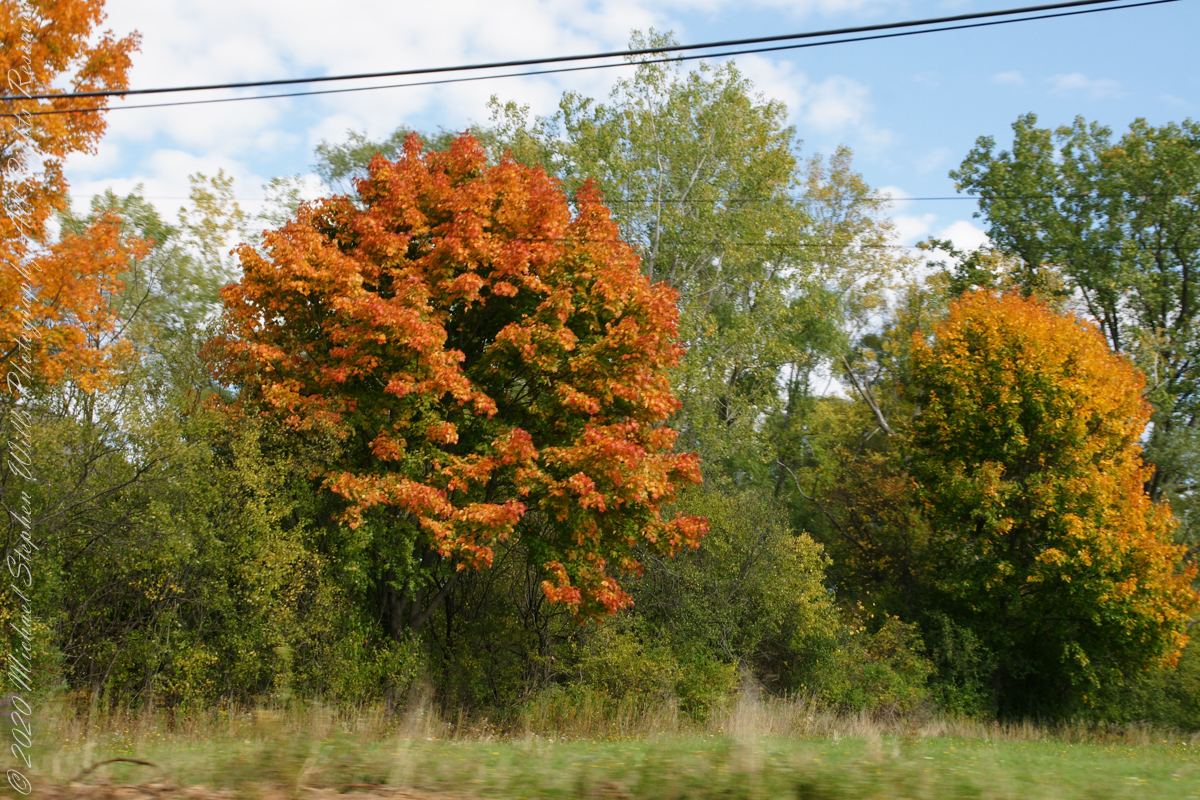
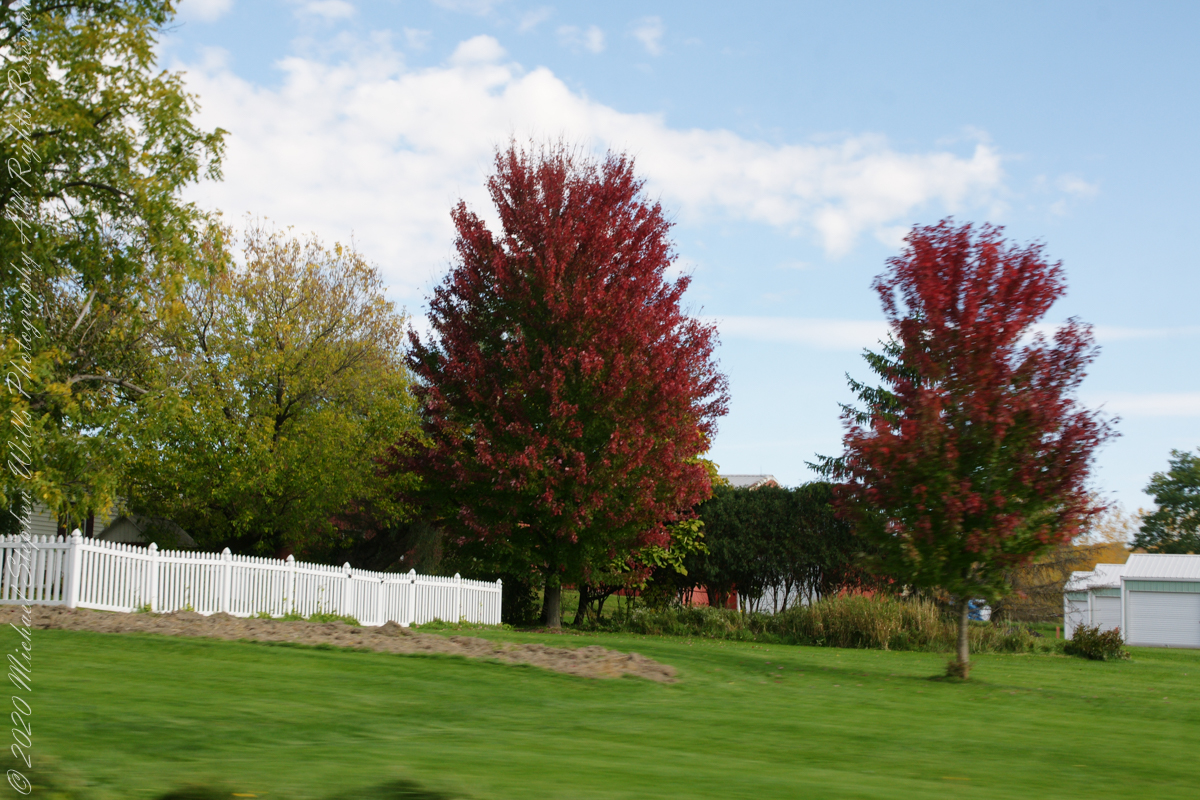
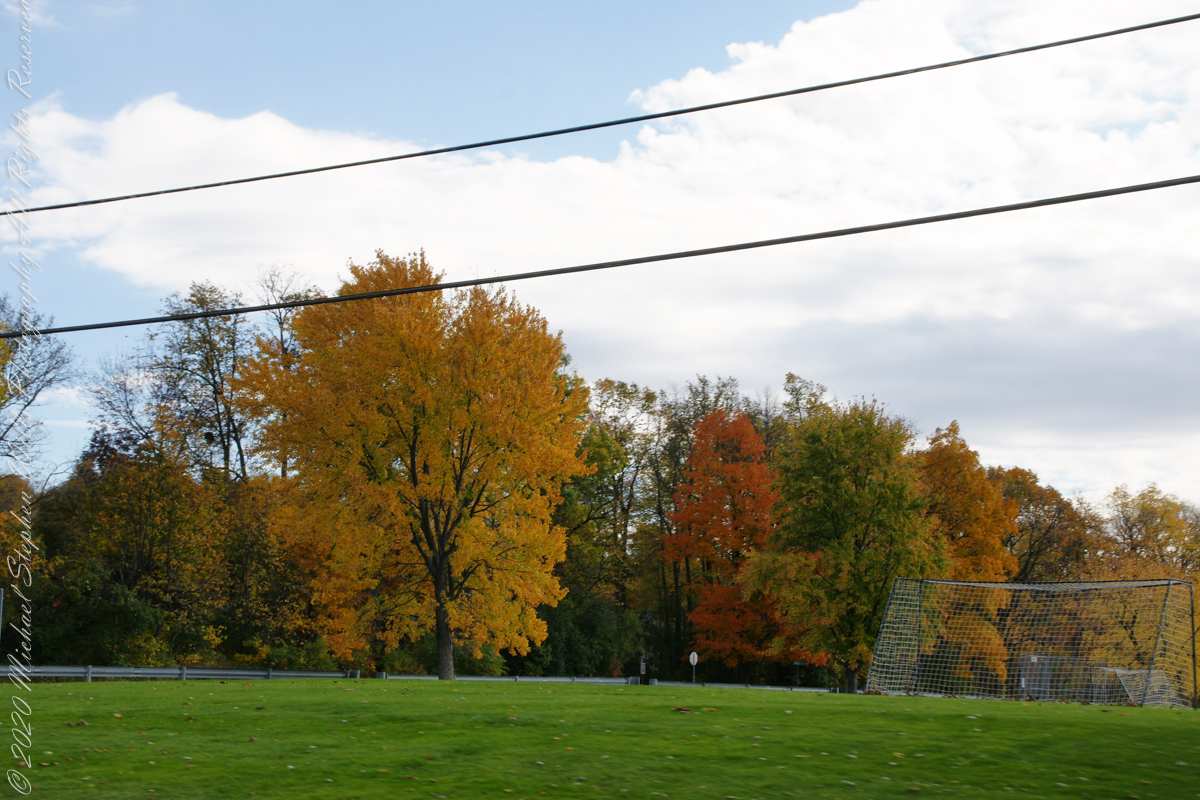
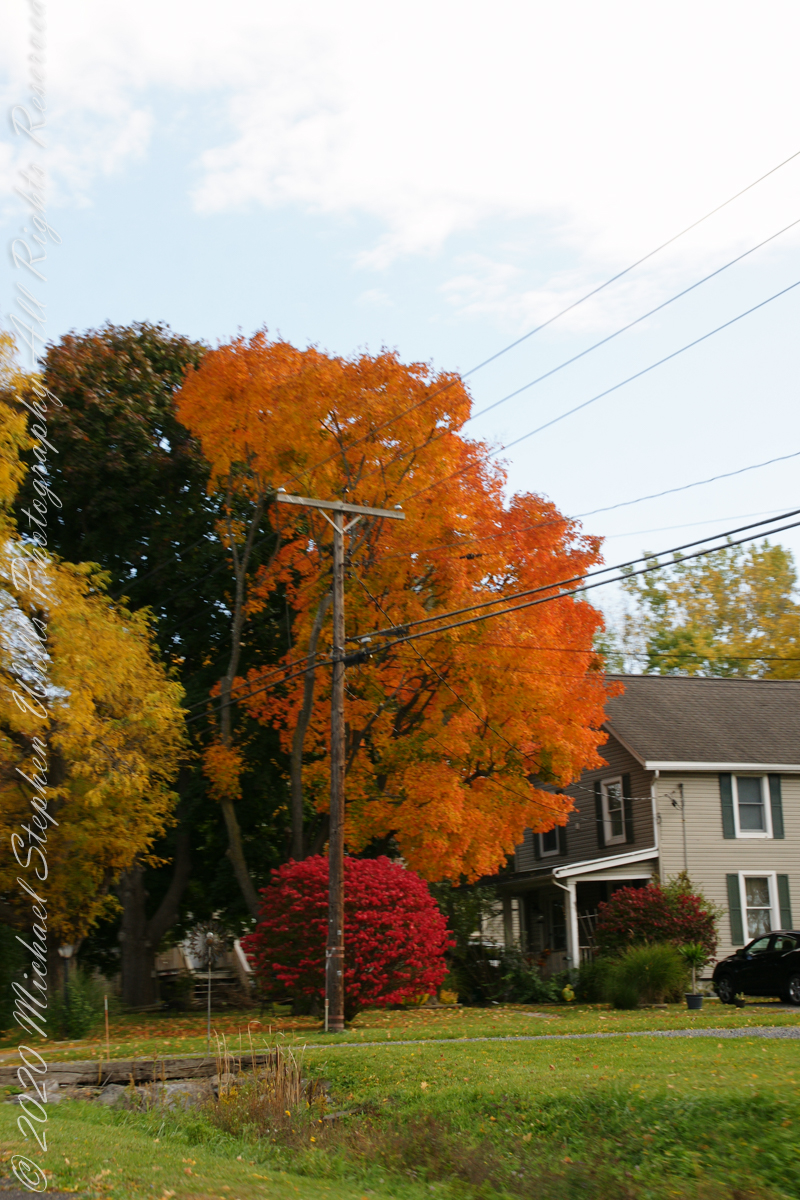
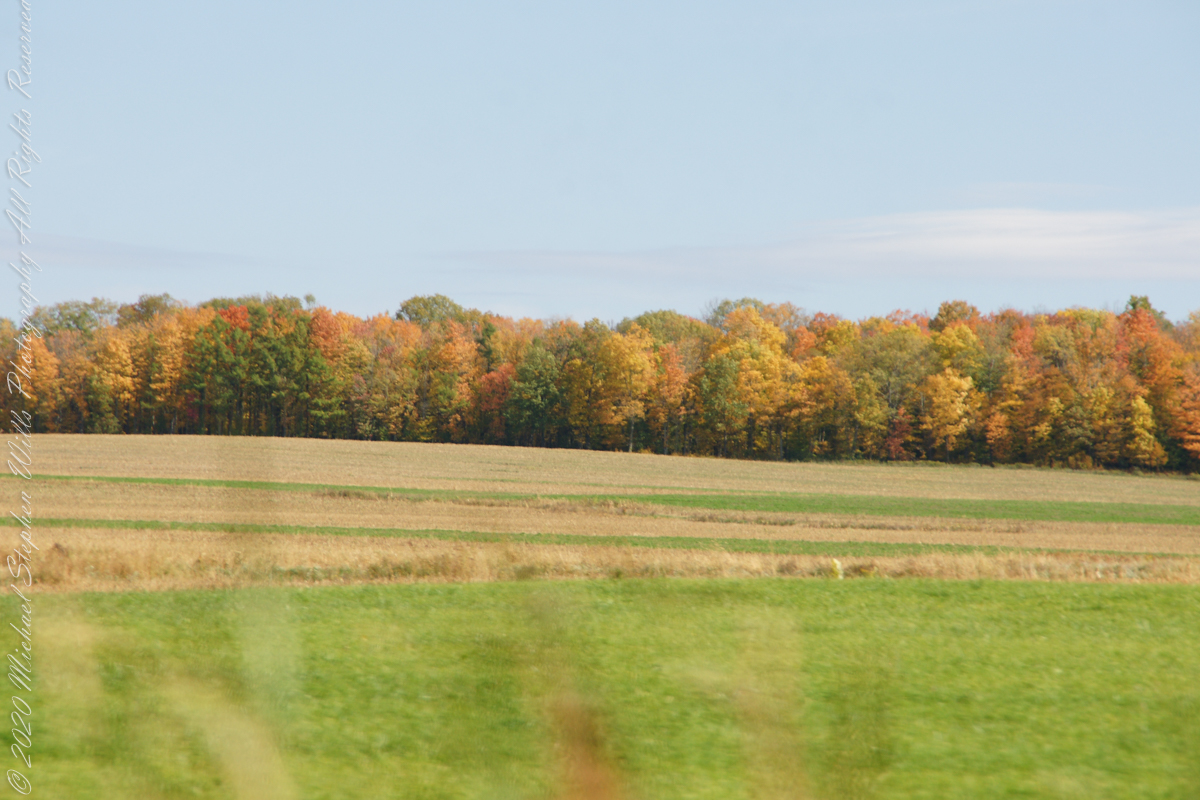
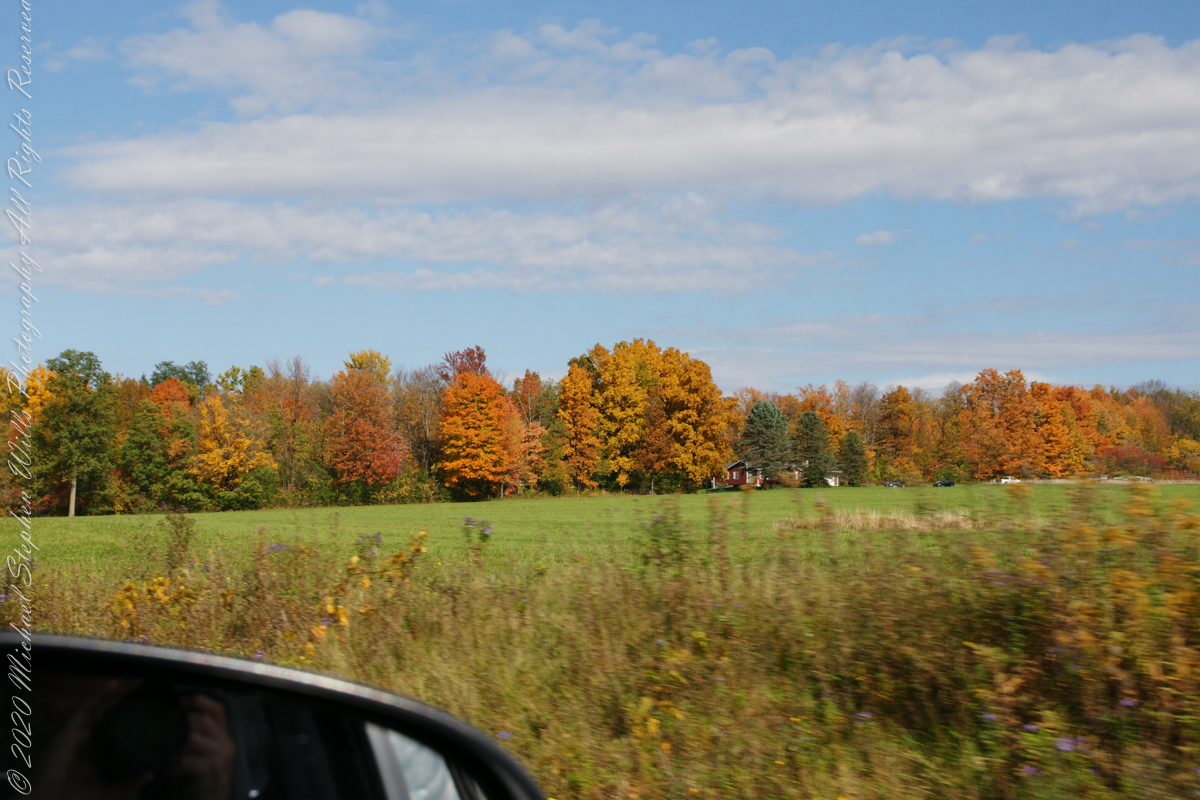
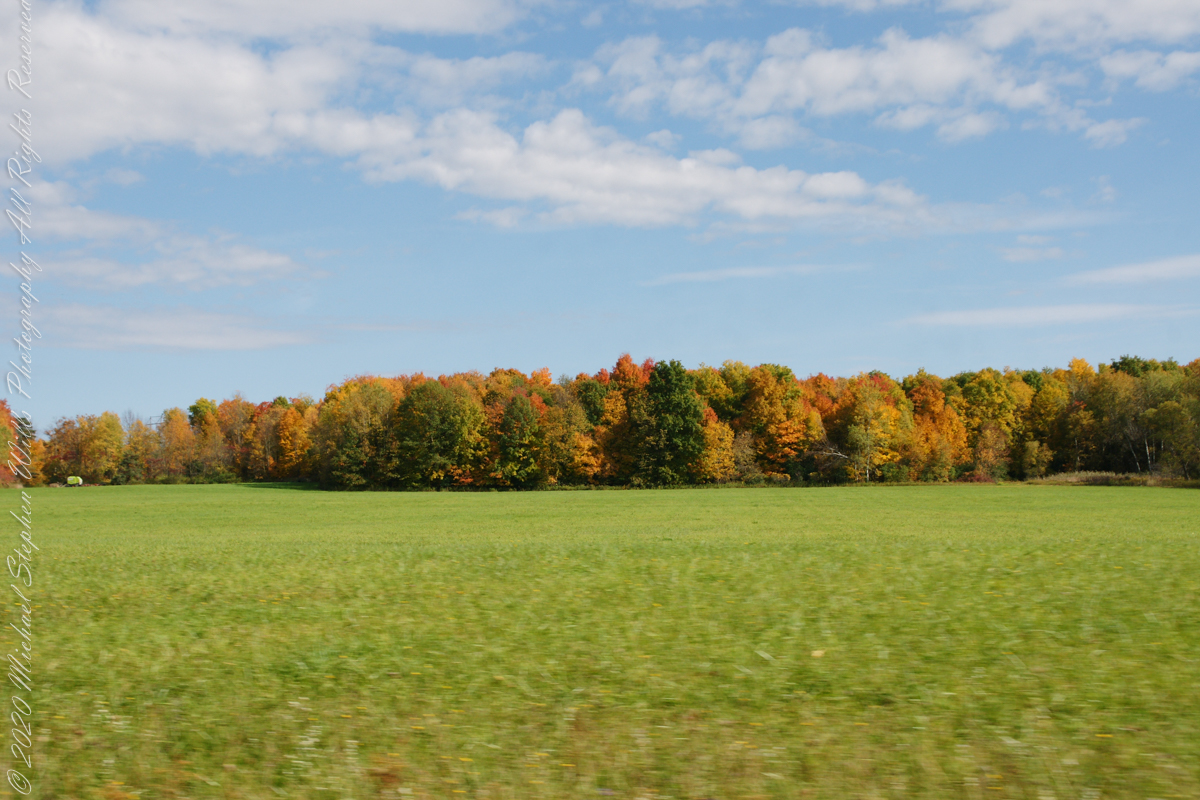
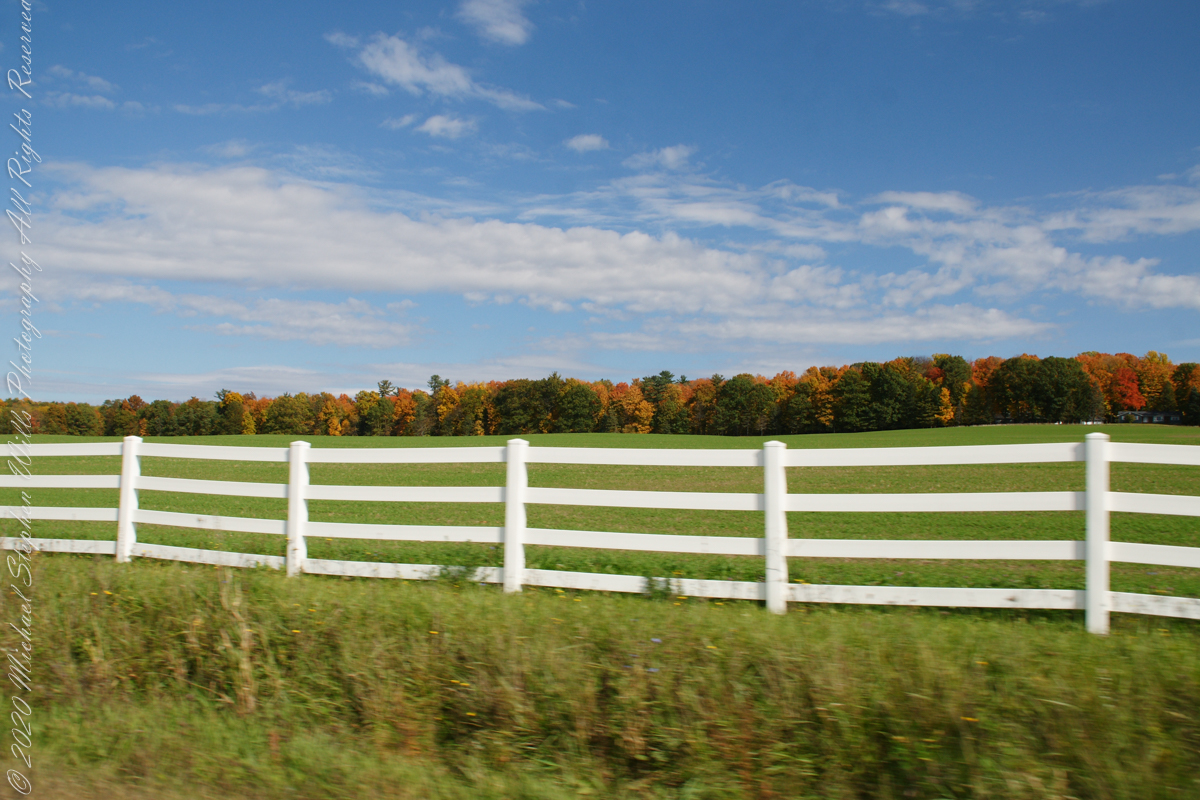
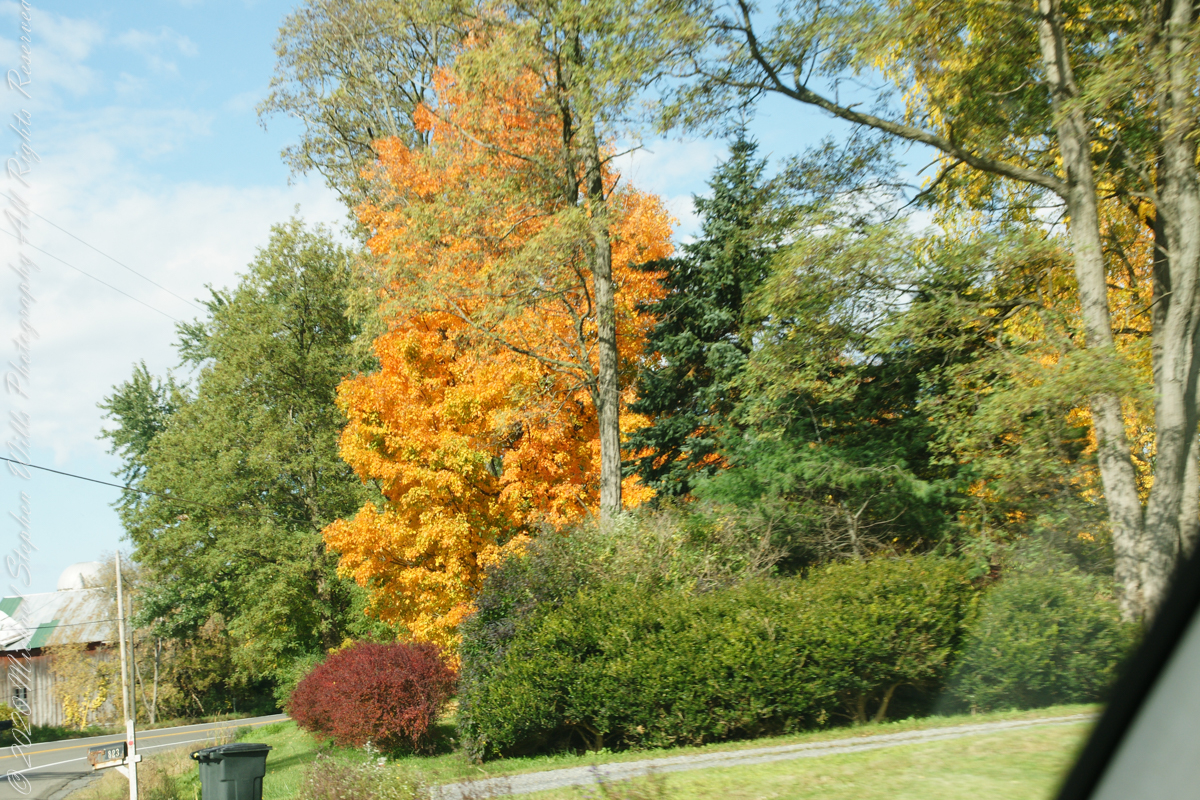
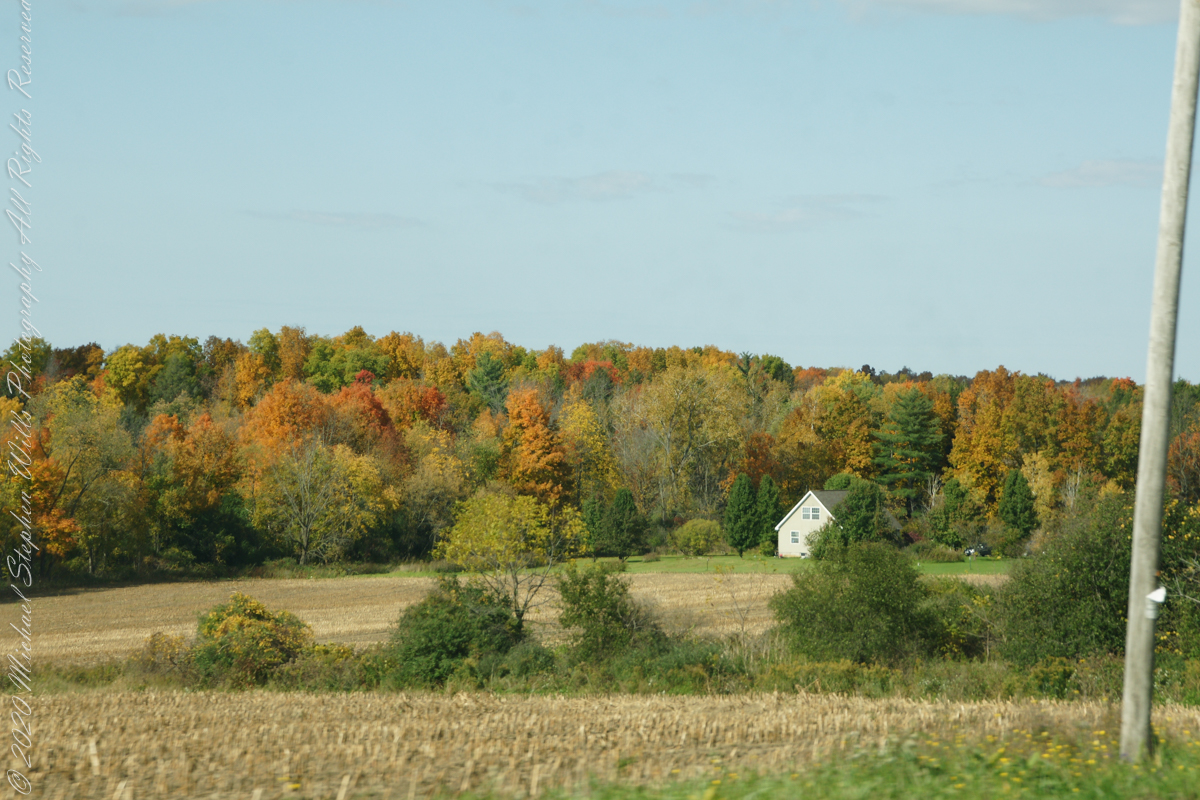
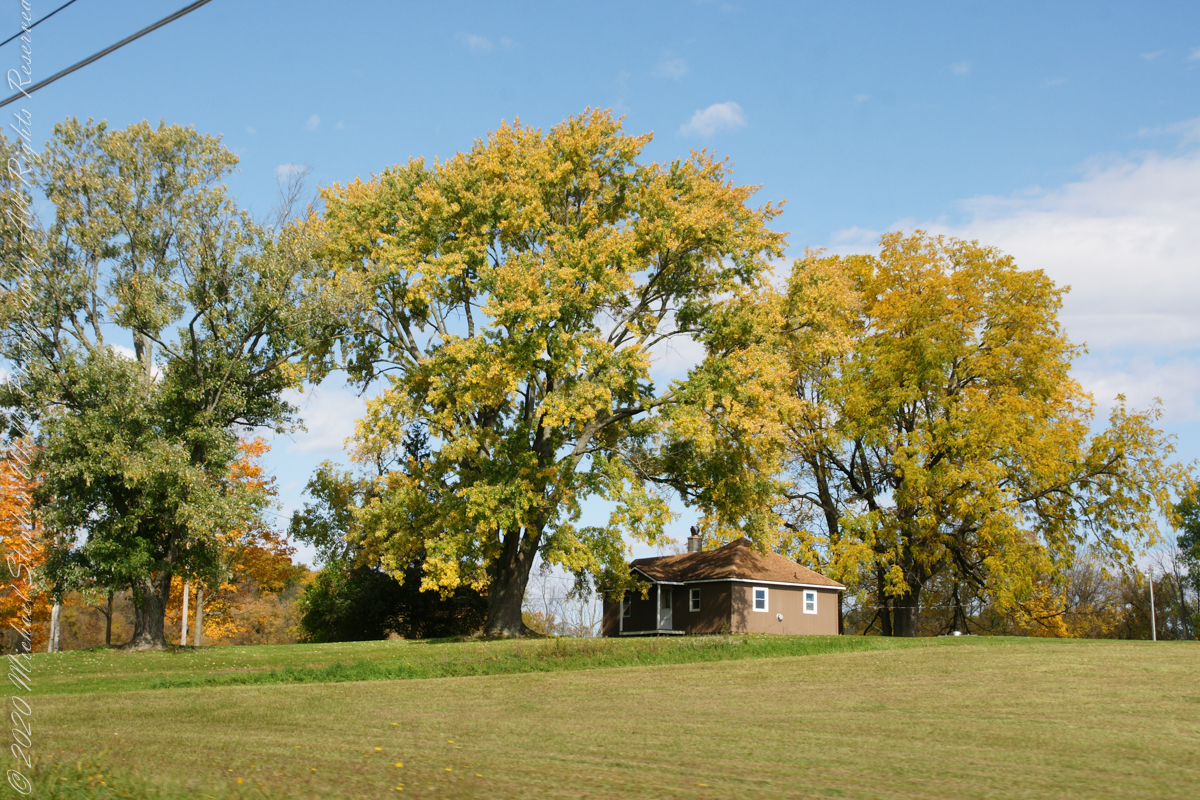
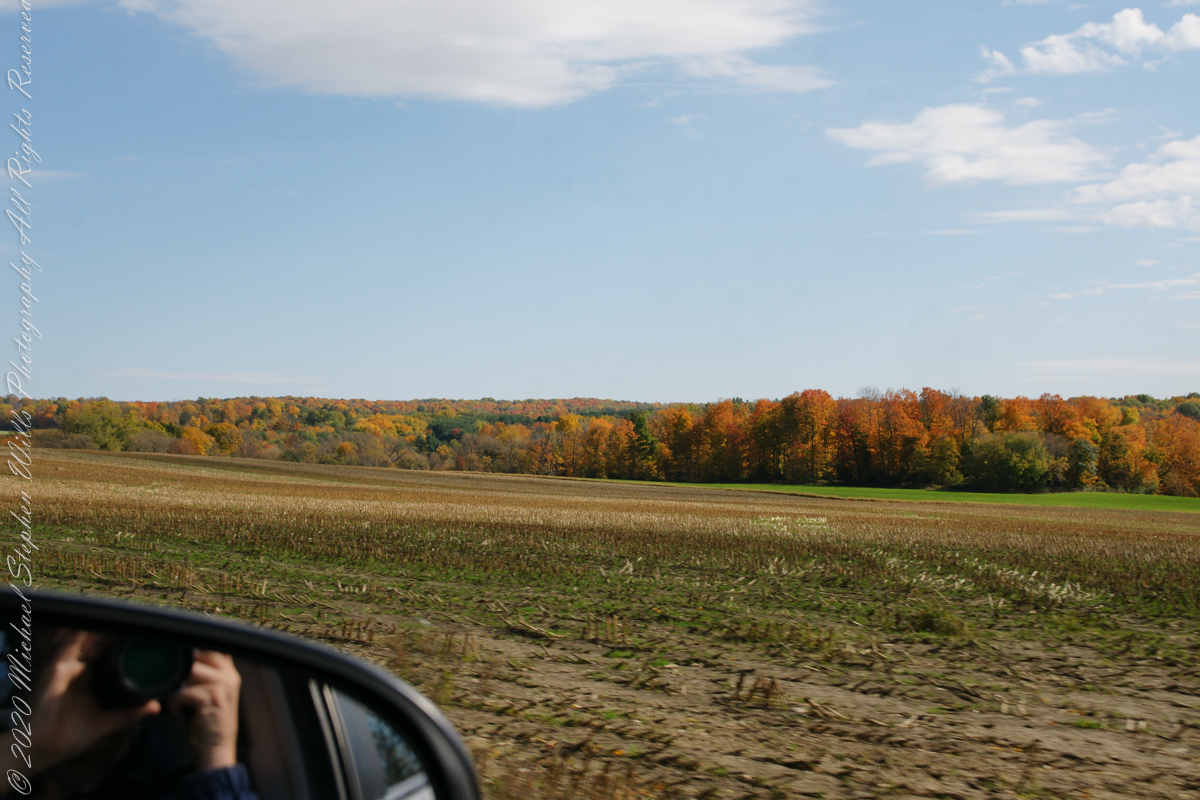
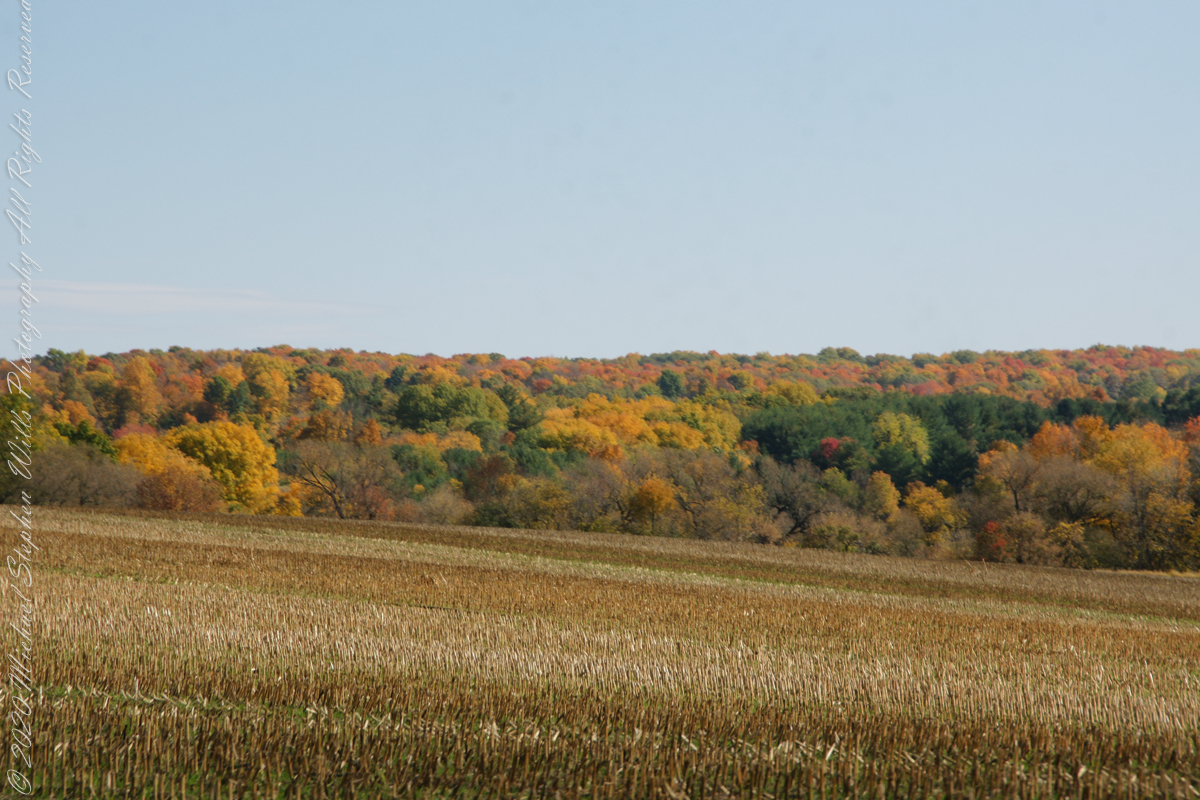
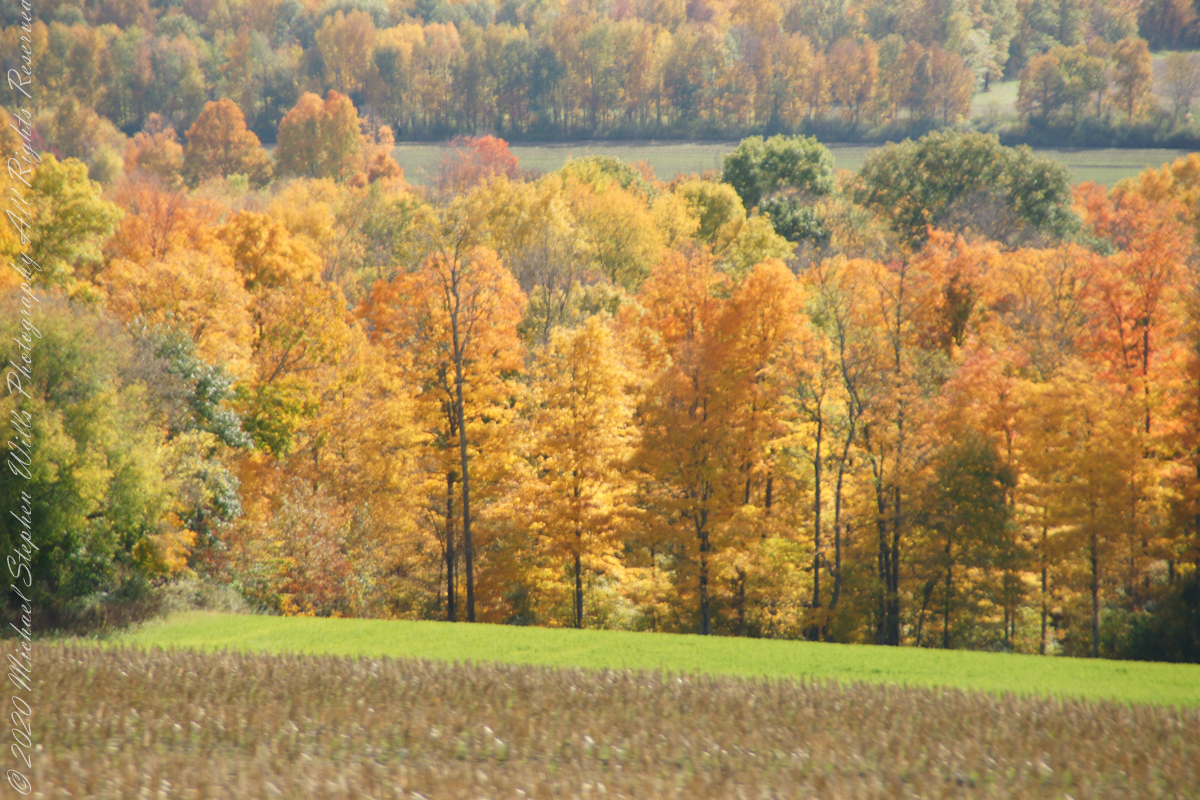
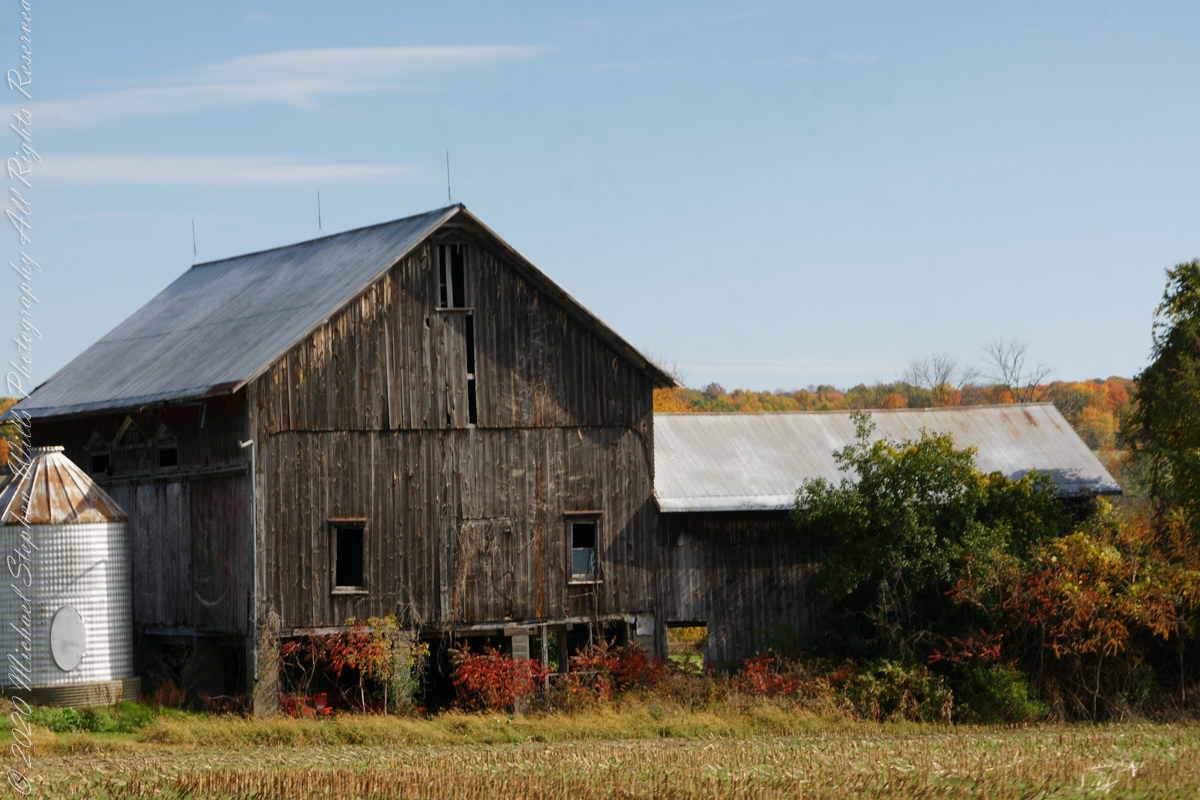
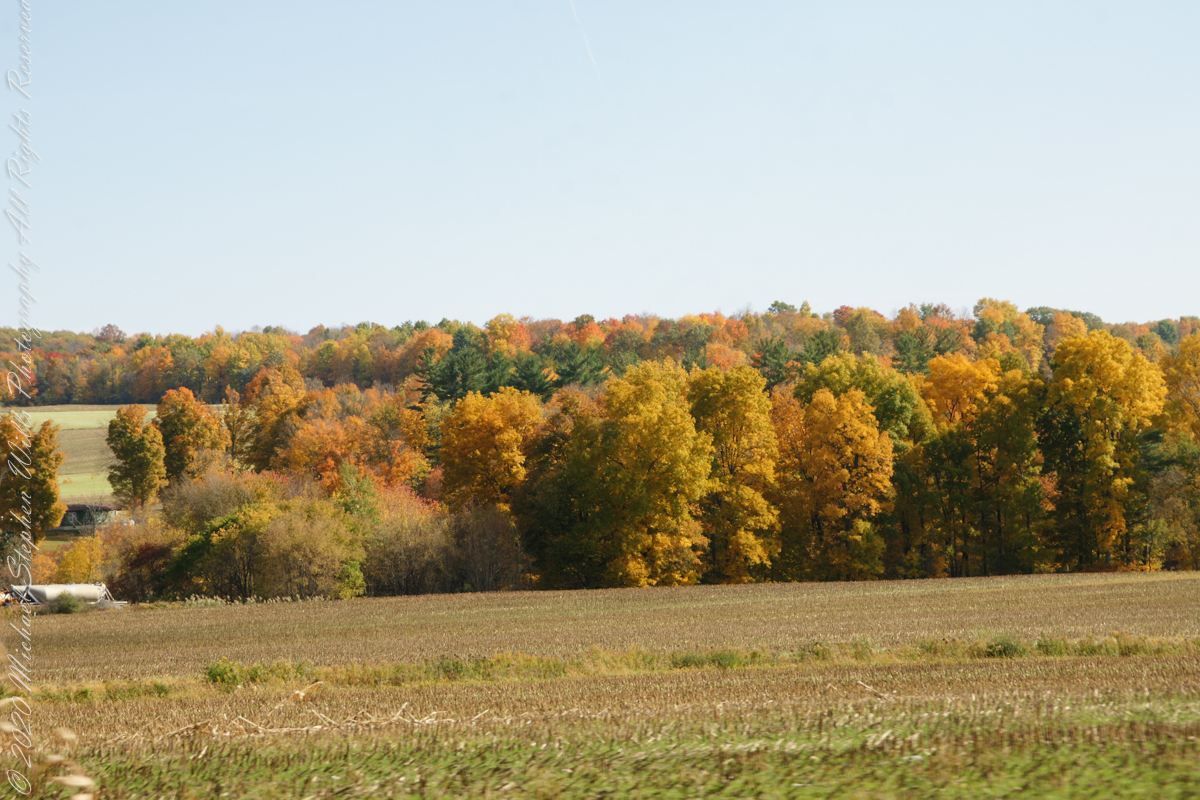
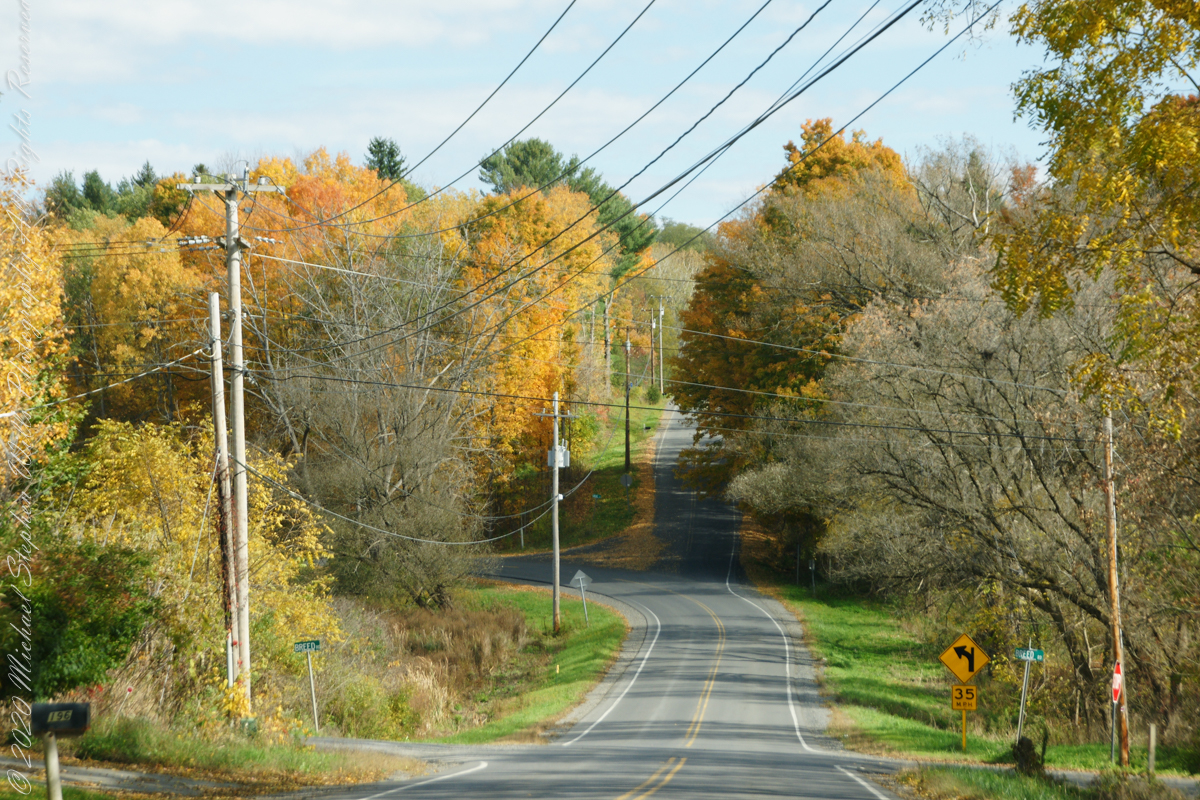
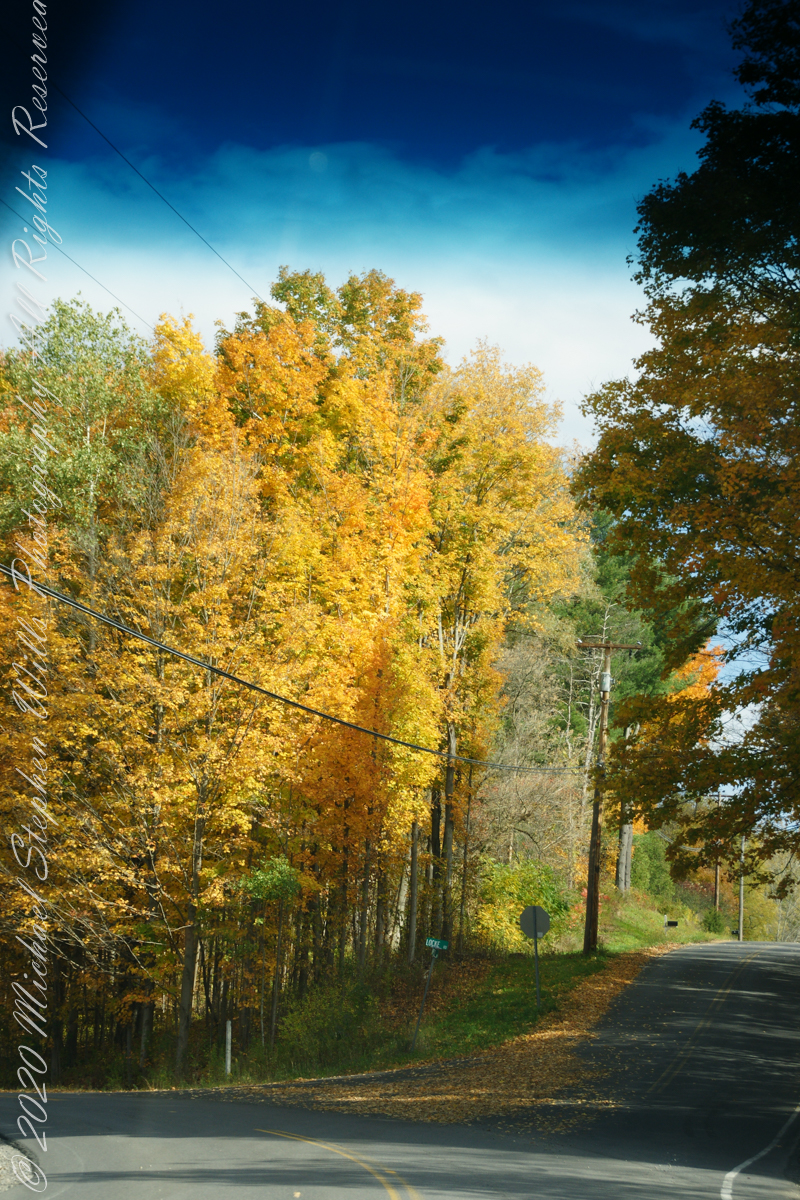
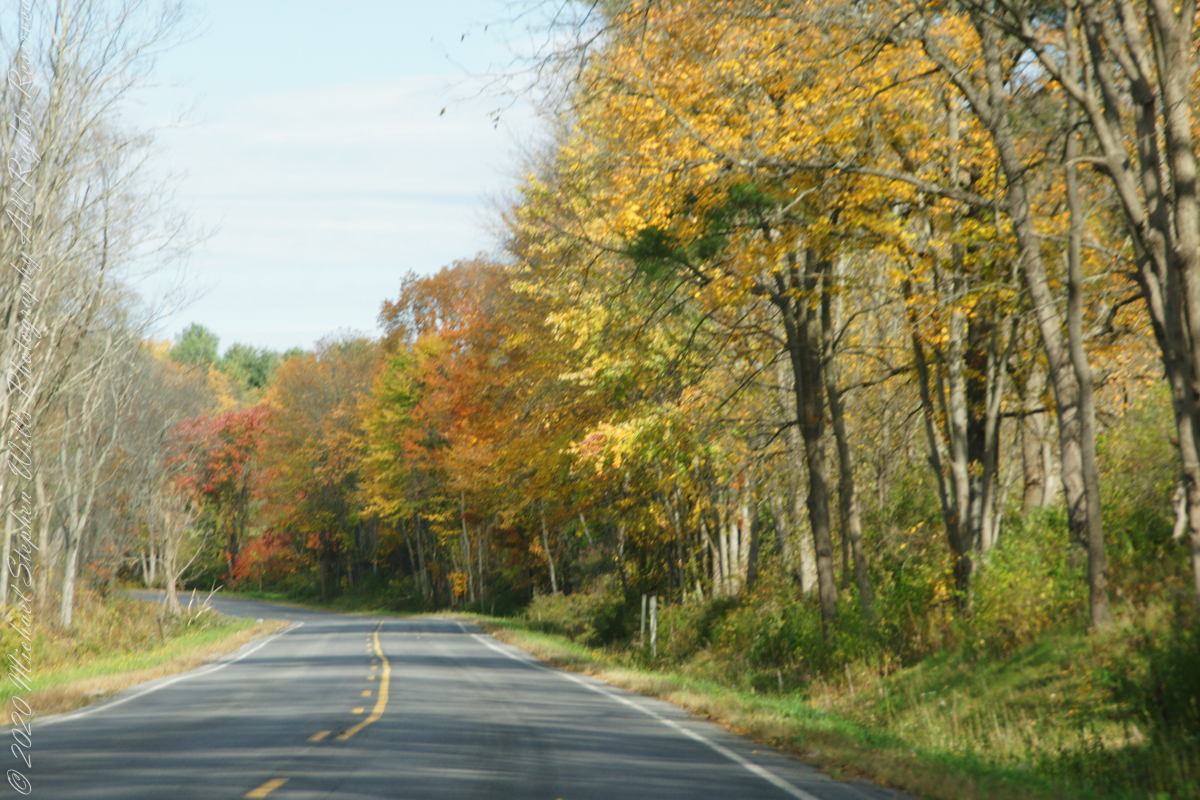
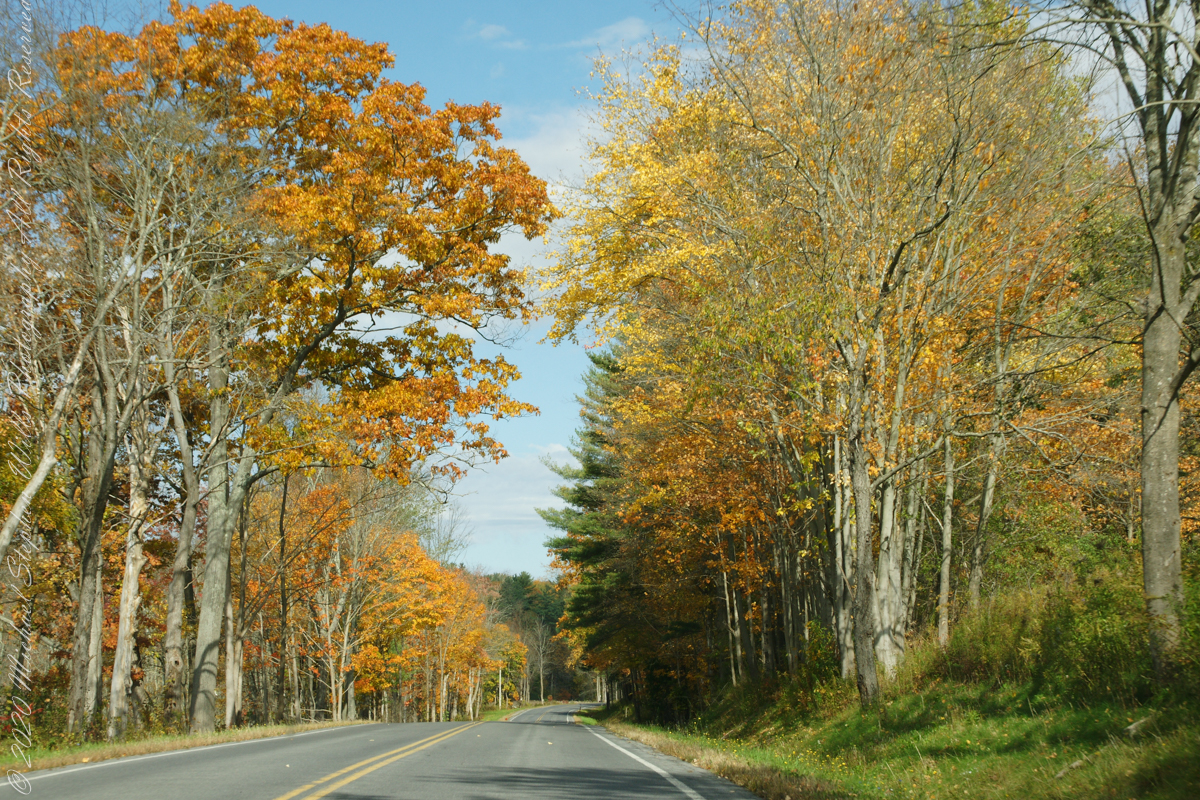
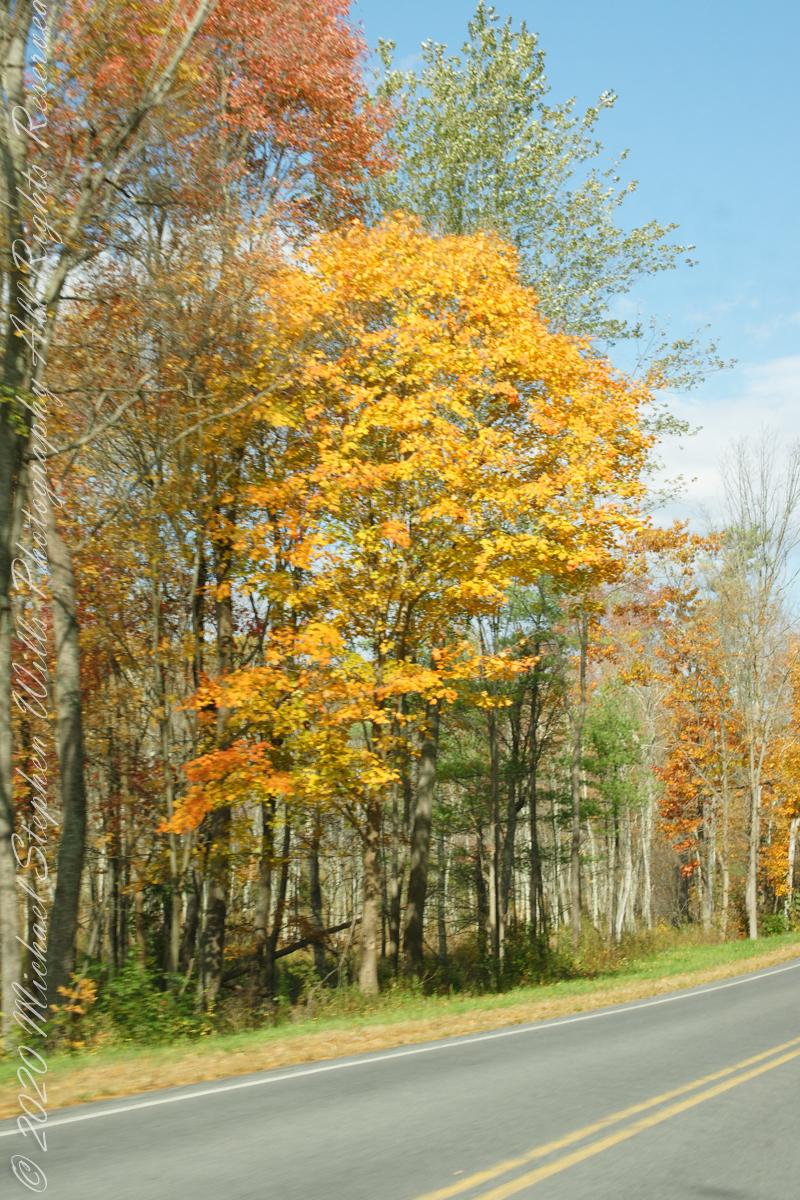
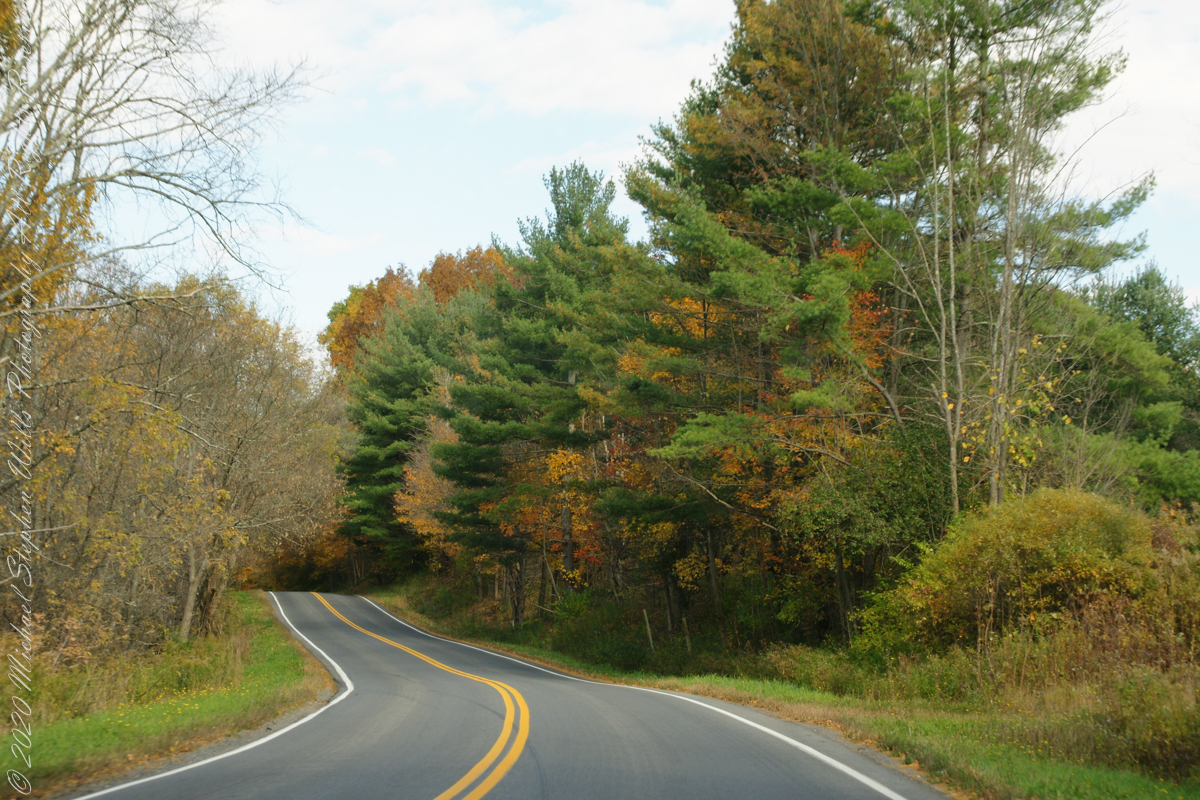
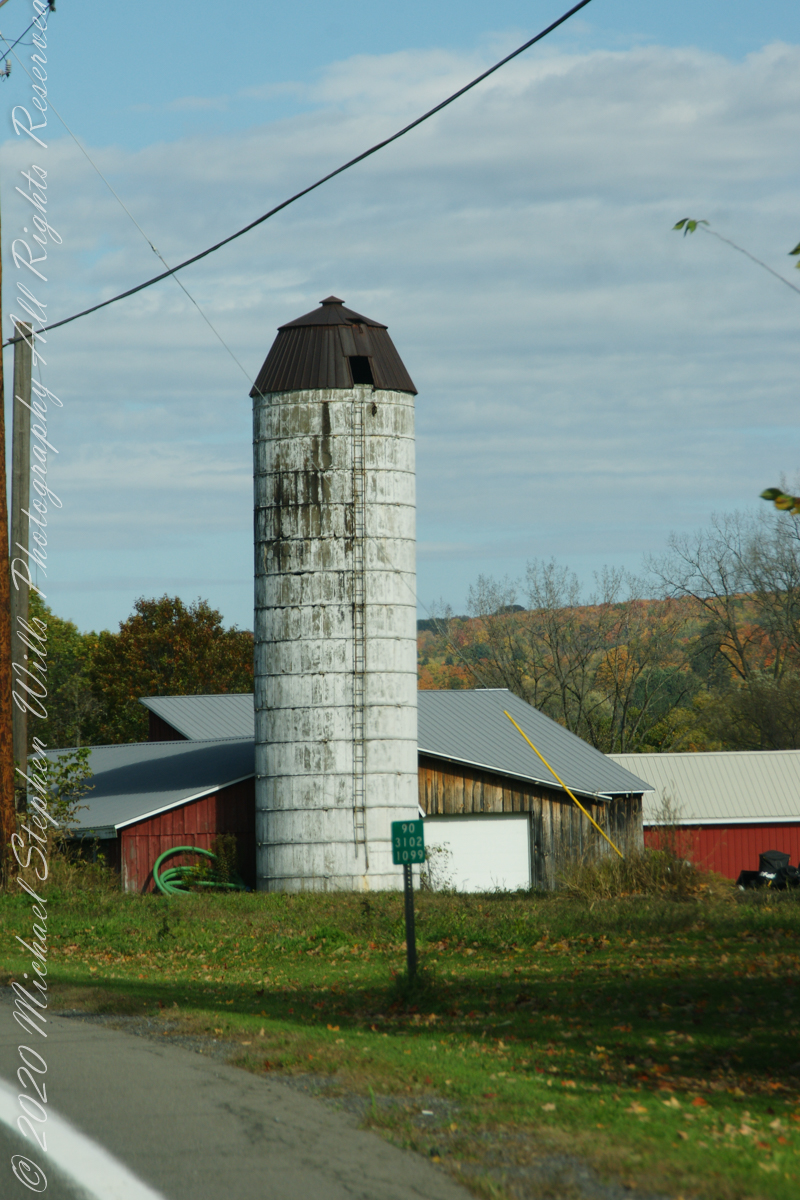
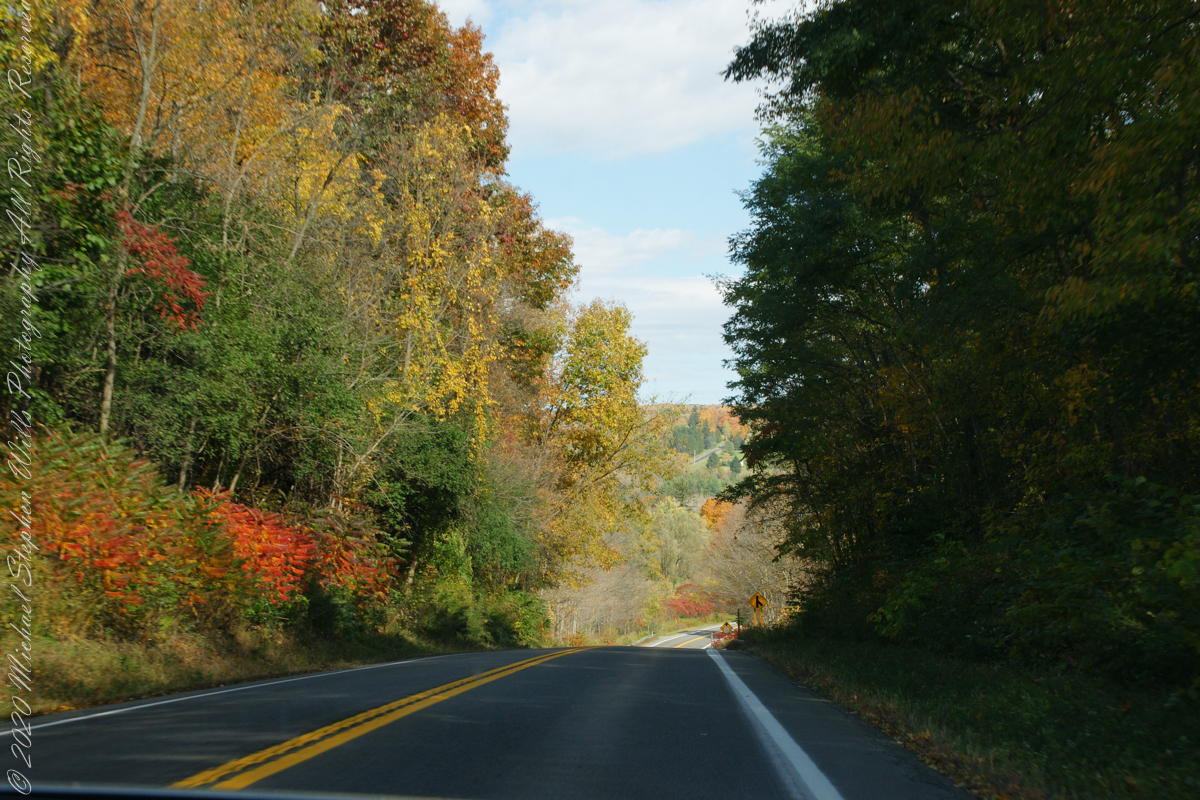
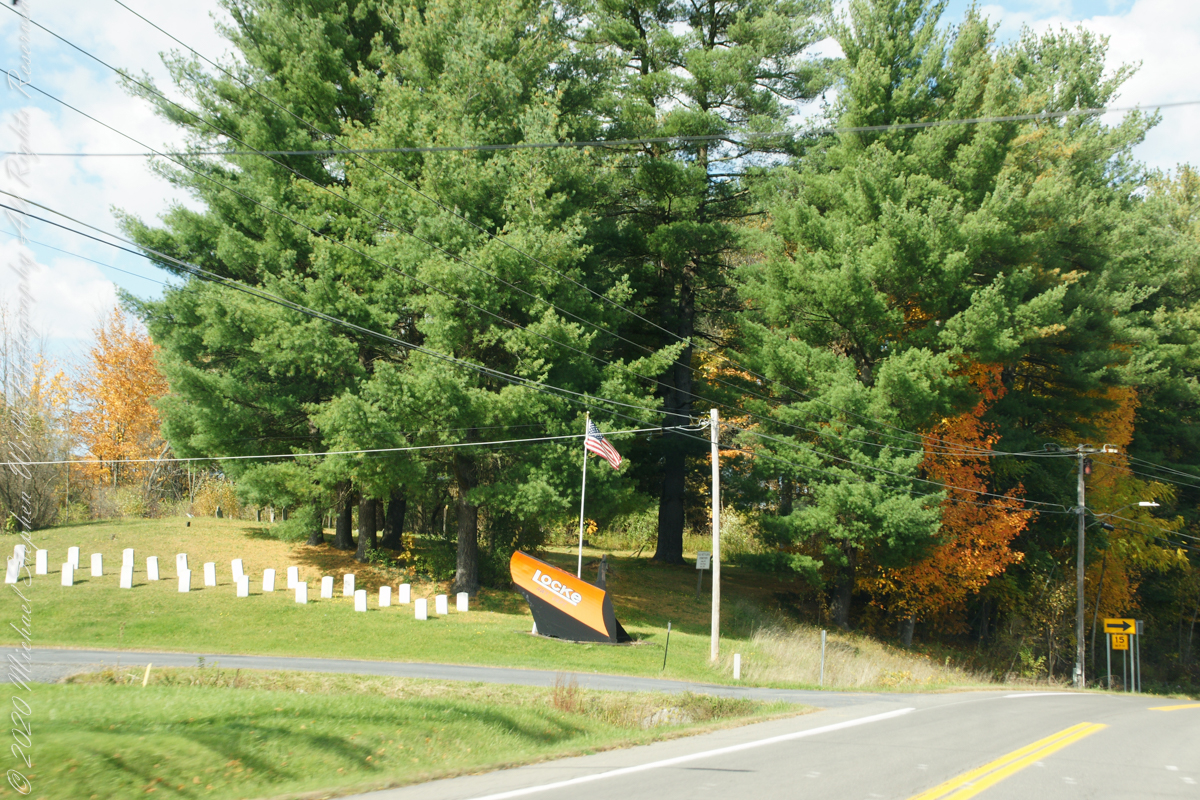
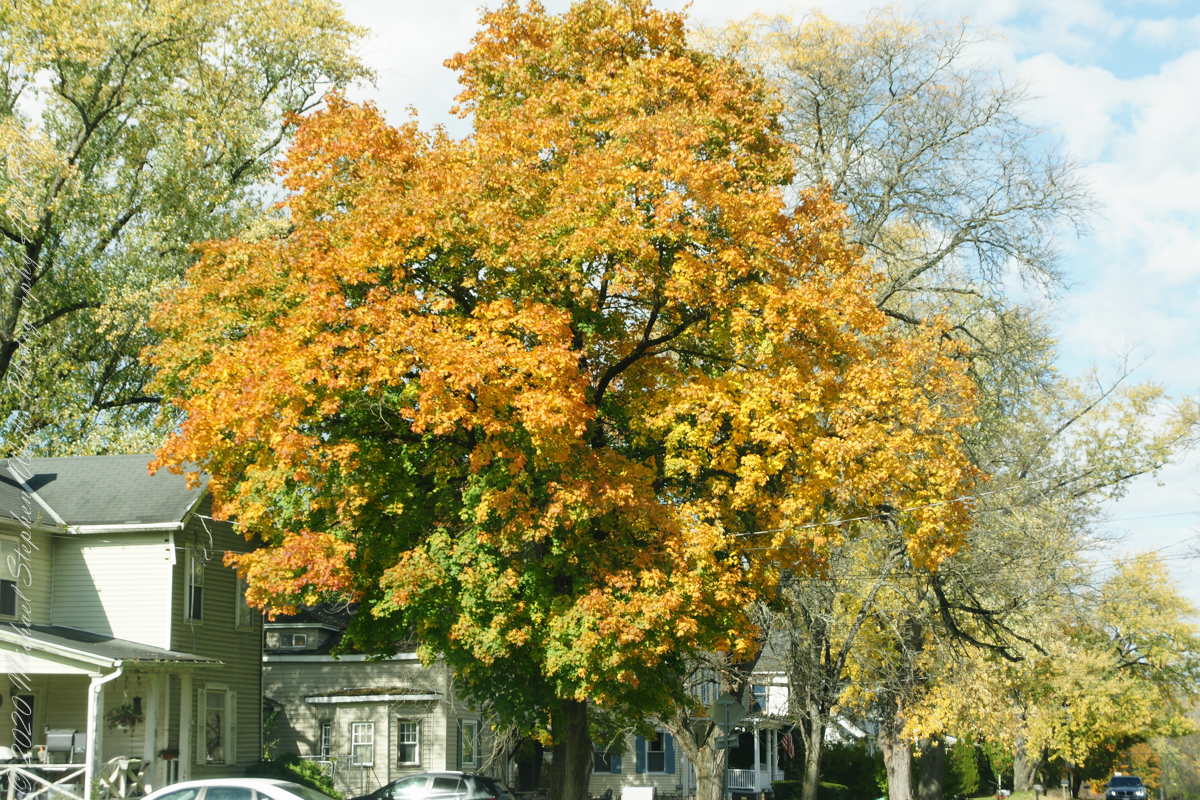
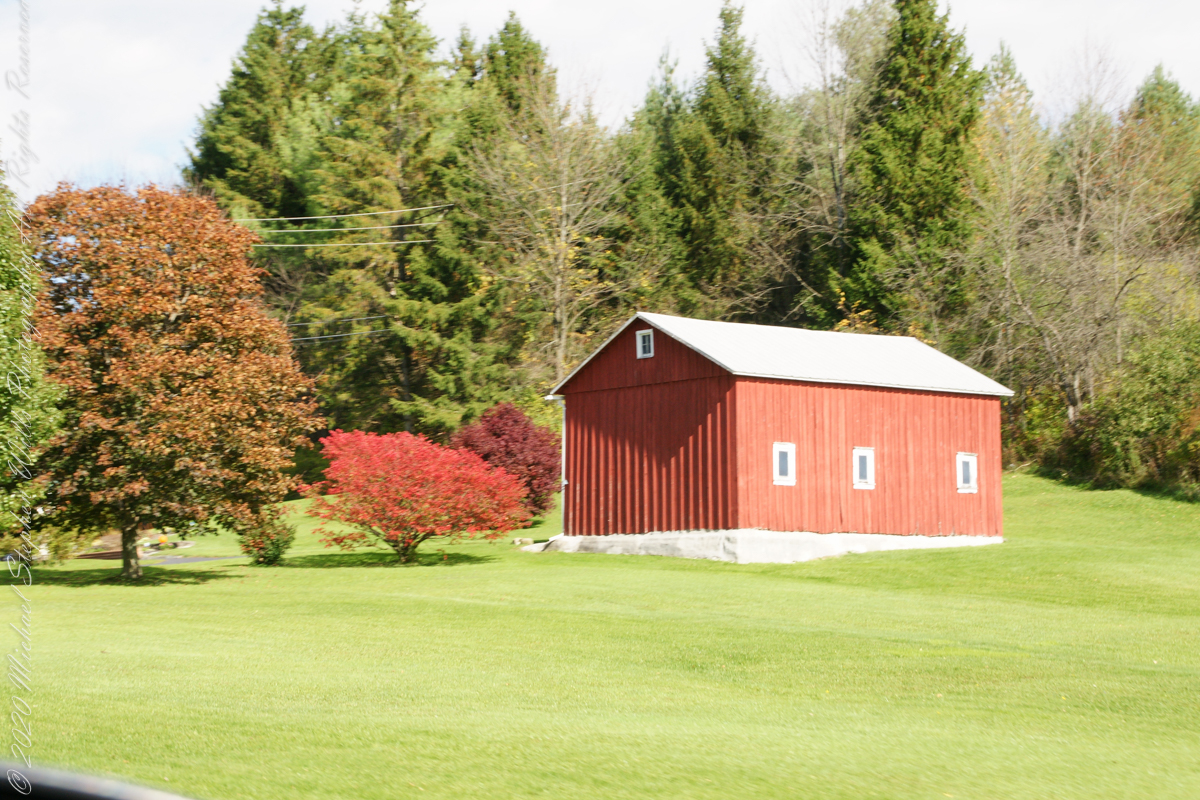
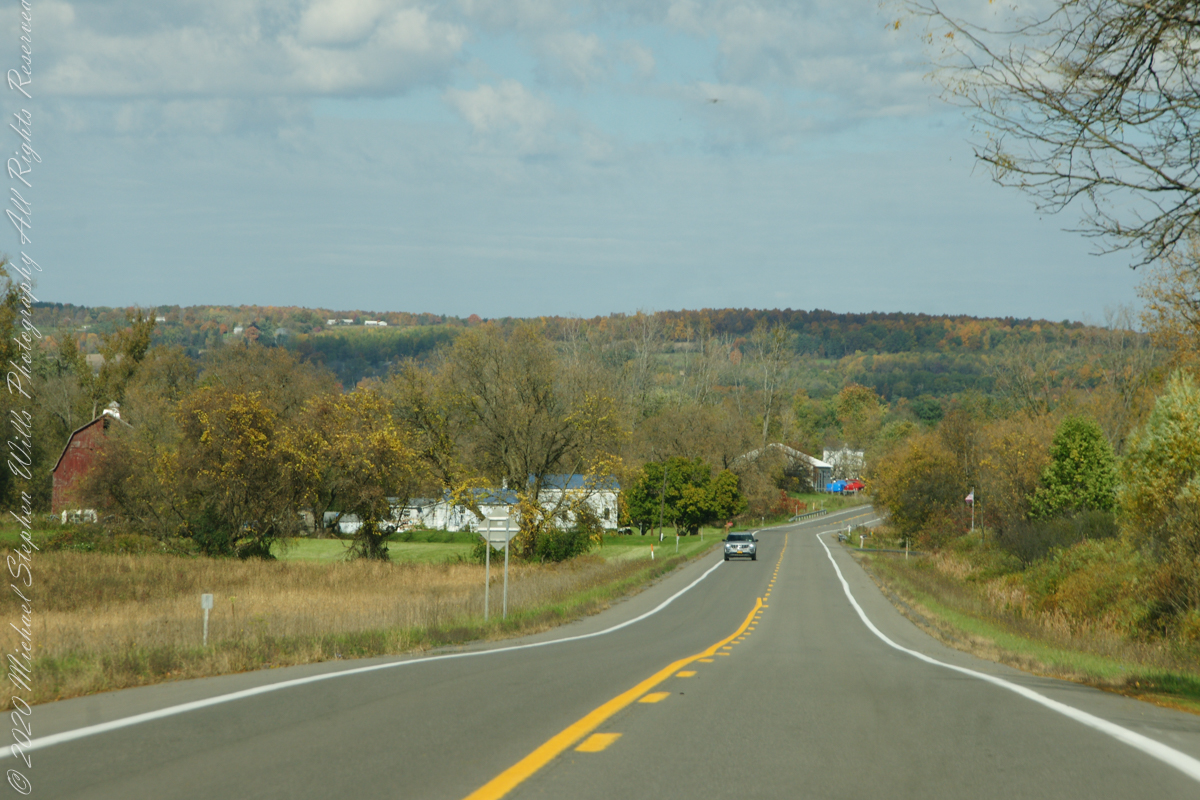
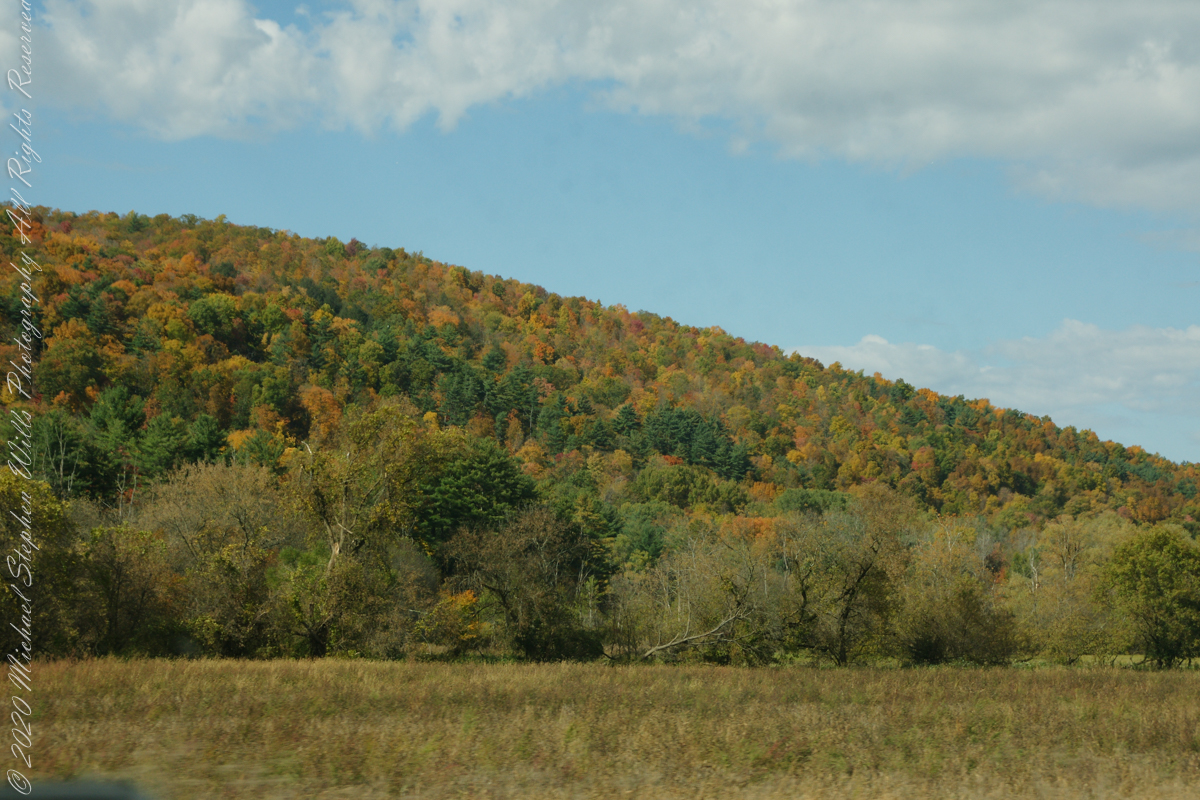
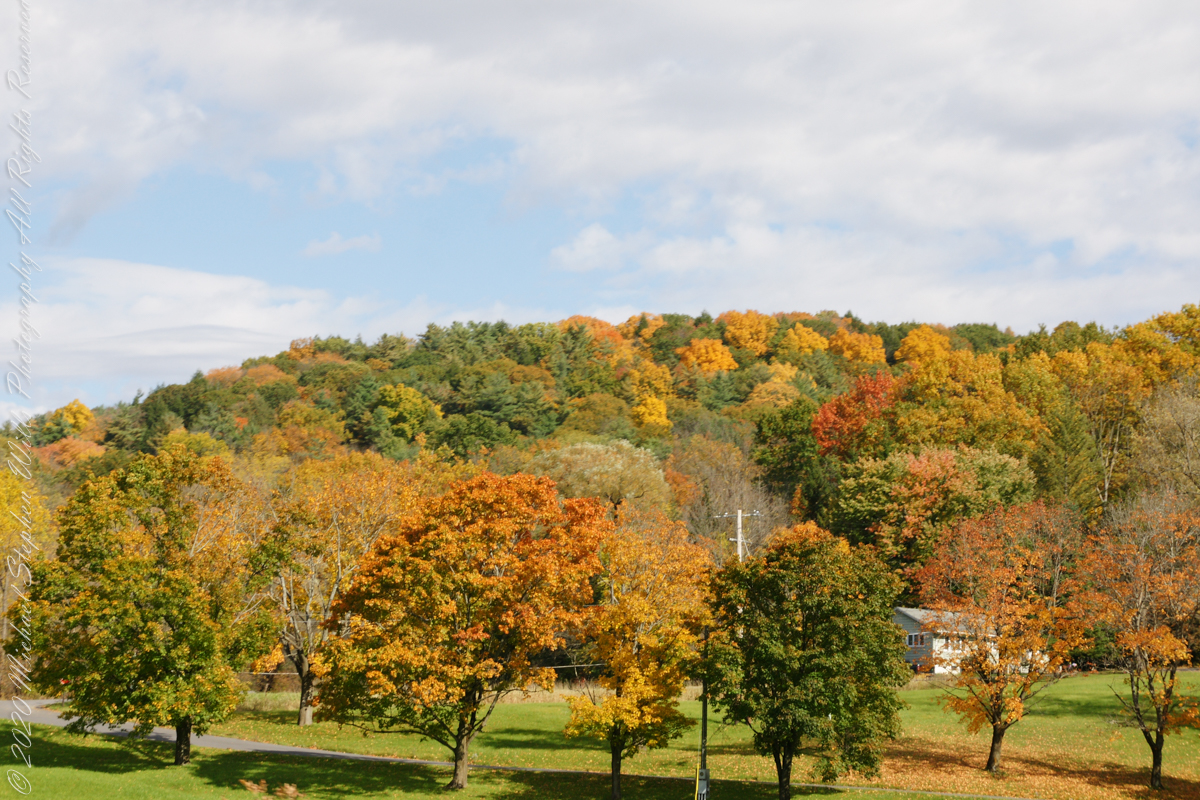
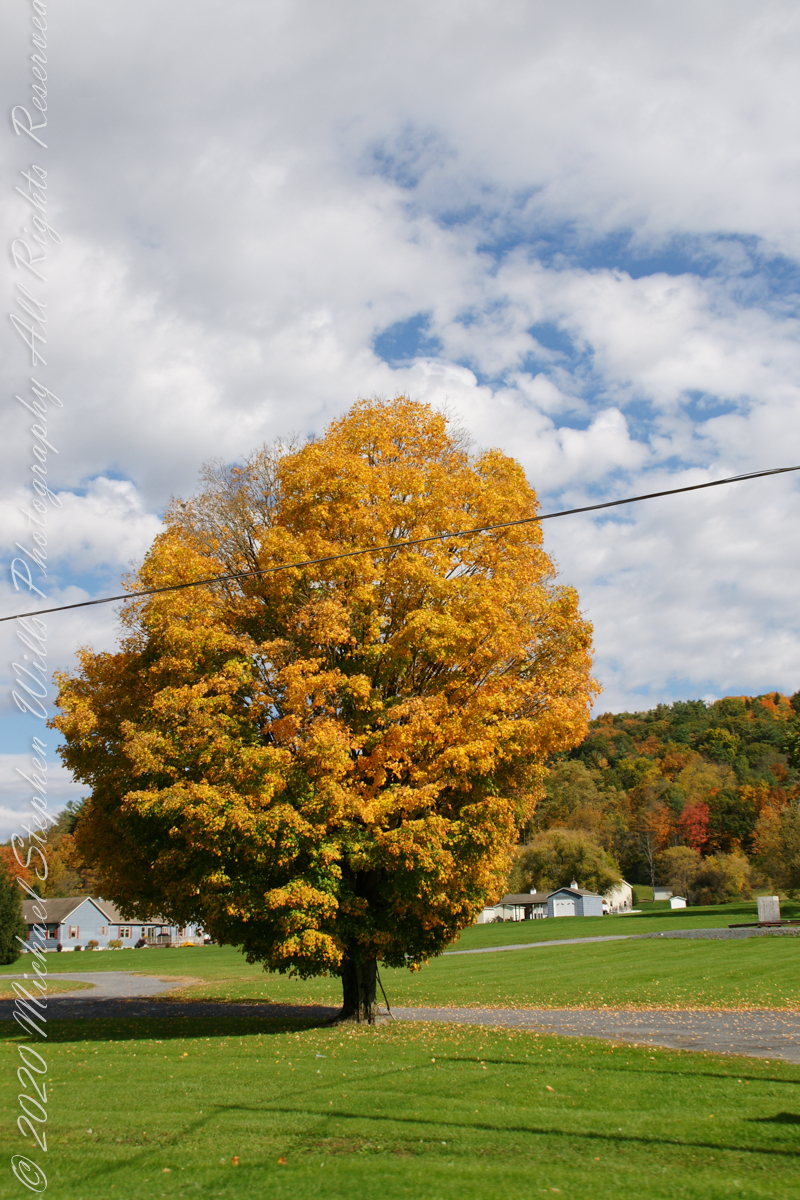
My Sony Alpha captured our October 16 drive to Fillmore Glen. As we traversed landscapes, the spectacle of Tompkins and Cayuga Counties autumn glory passed by the open passenger side window and, even, the front windshield. Thank You, Pam, for driving.
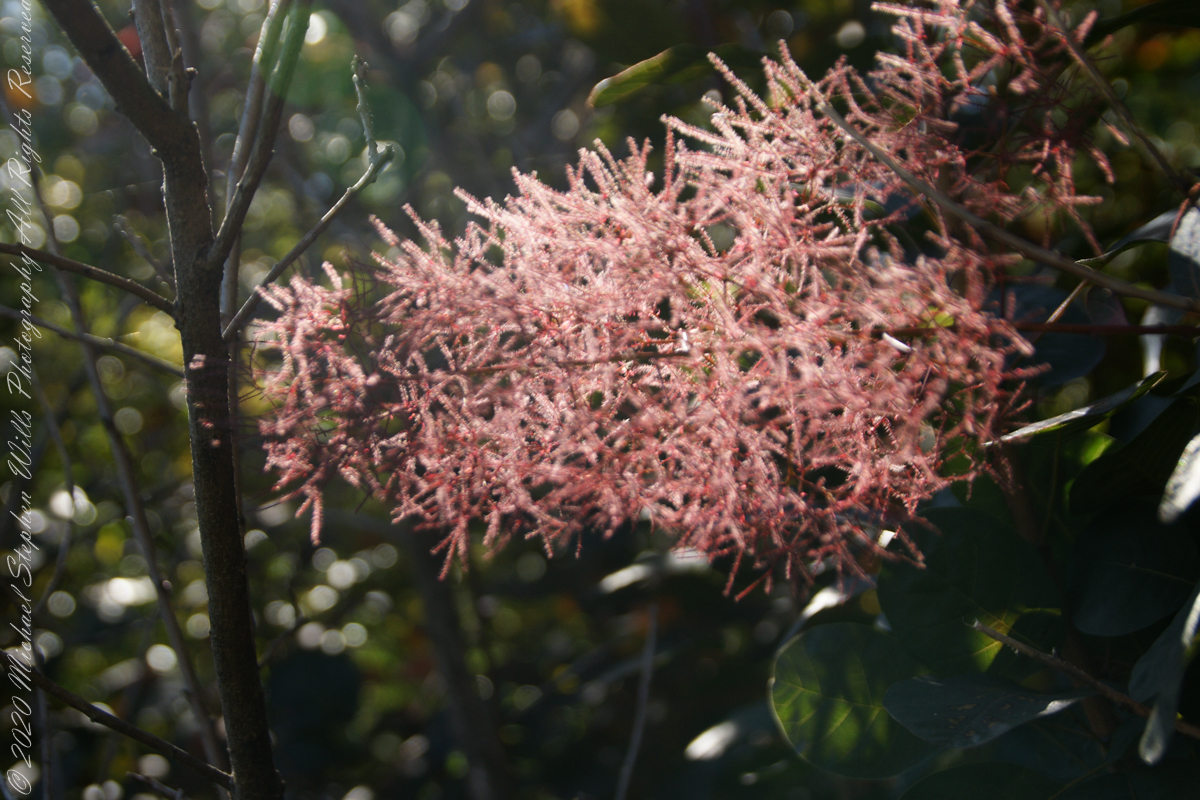
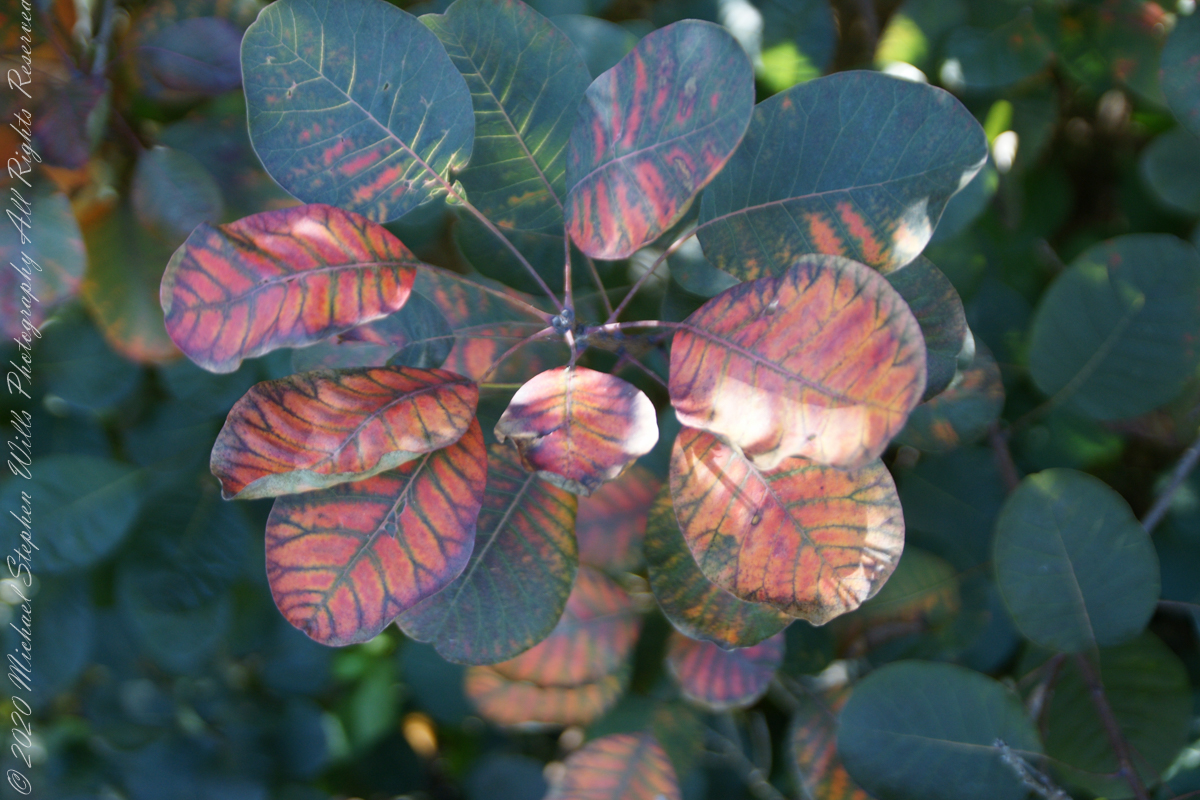
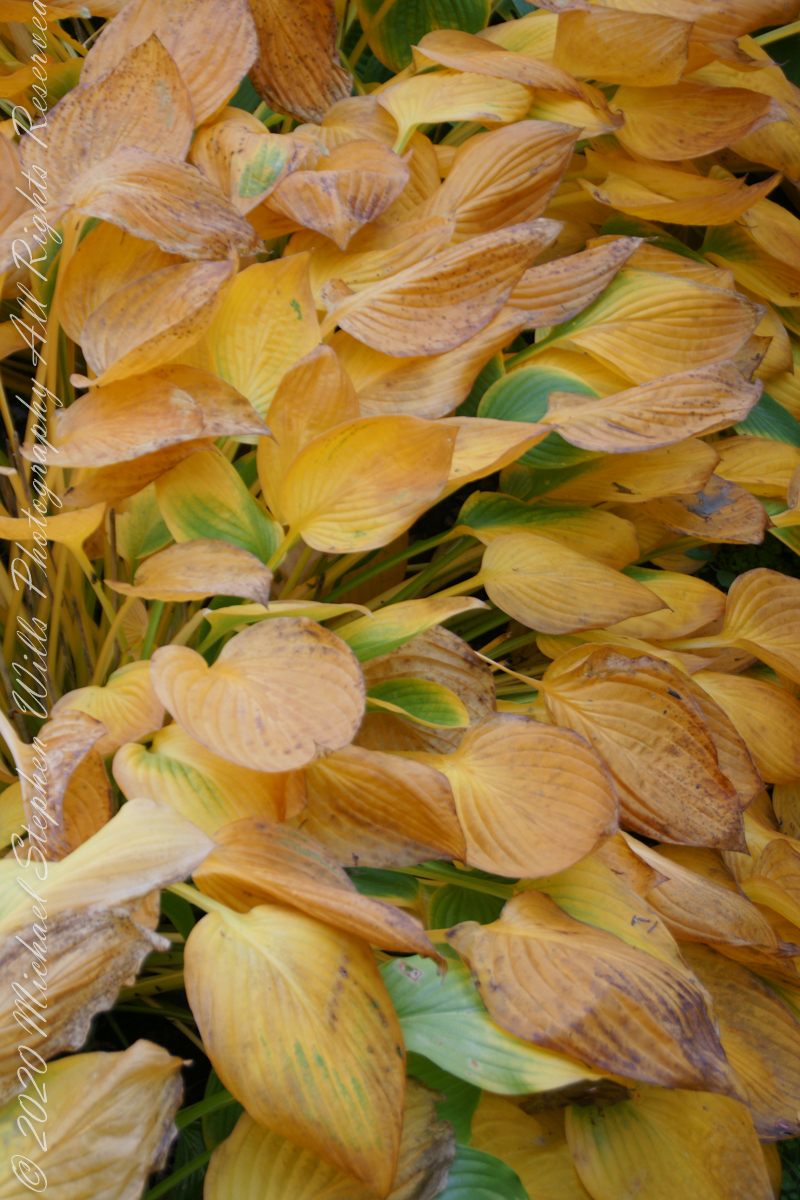
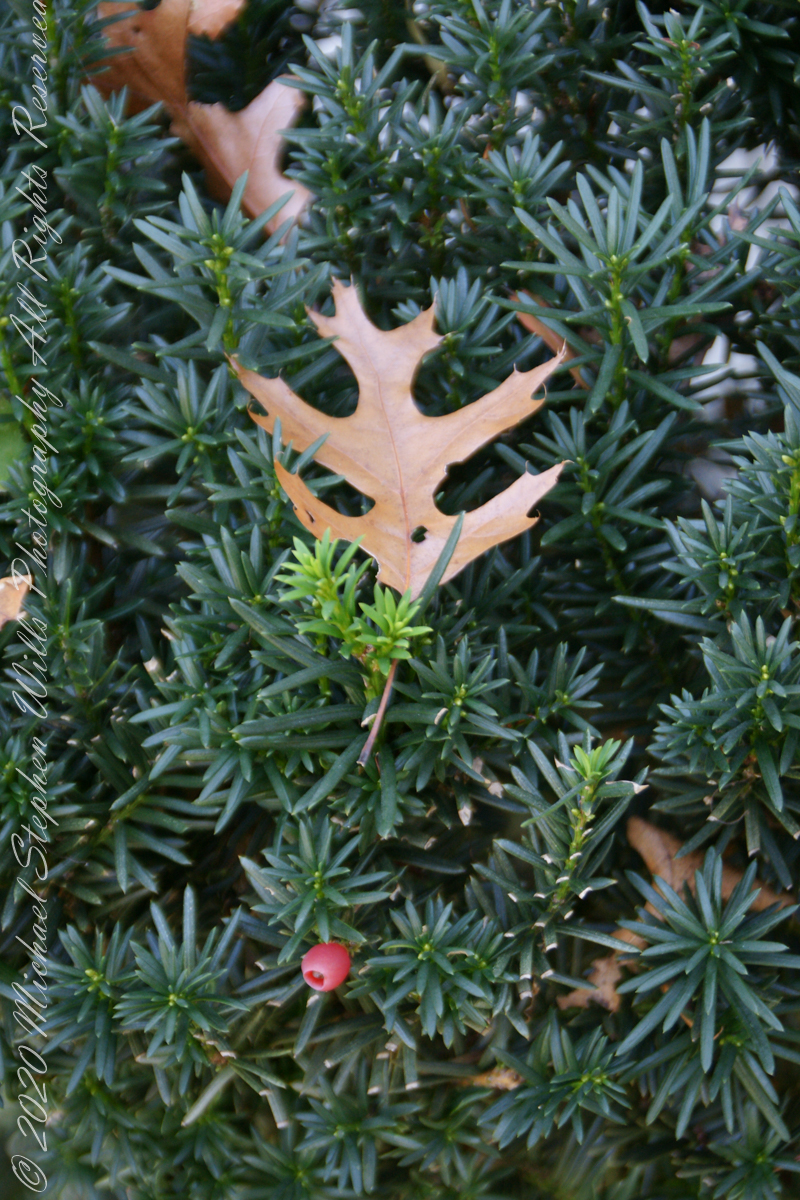
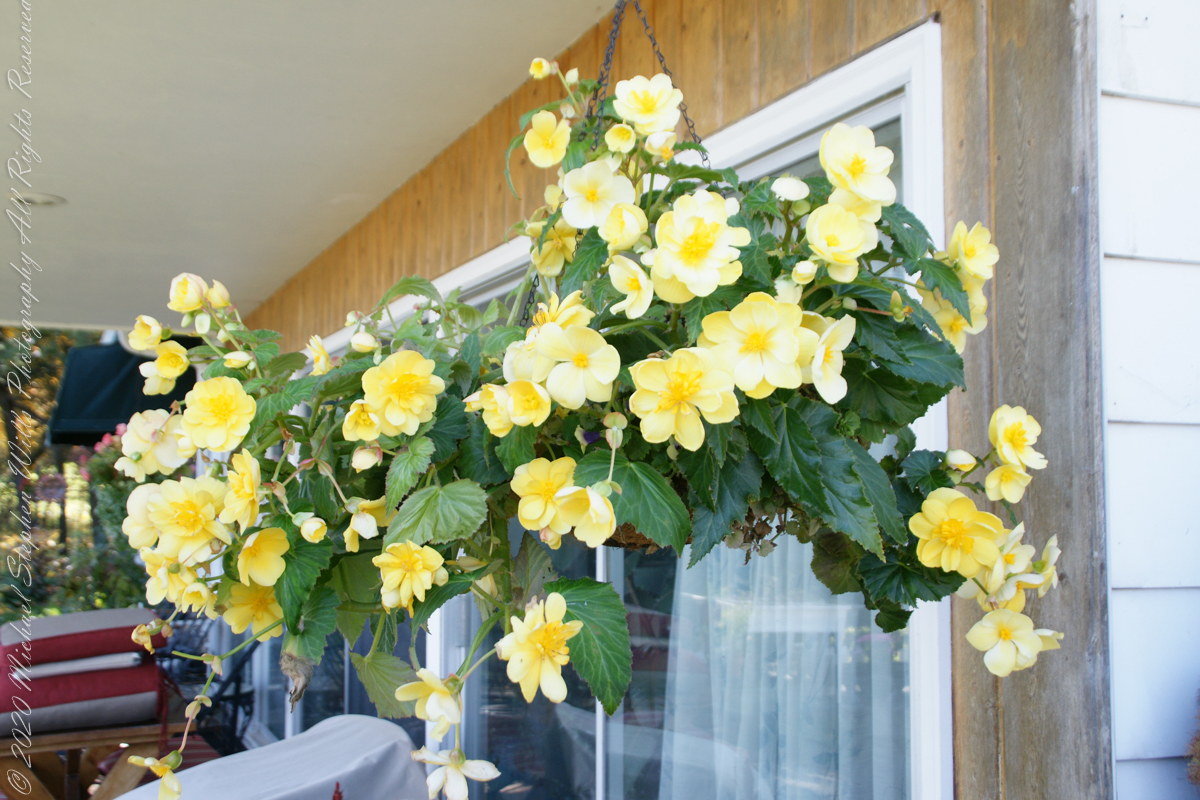
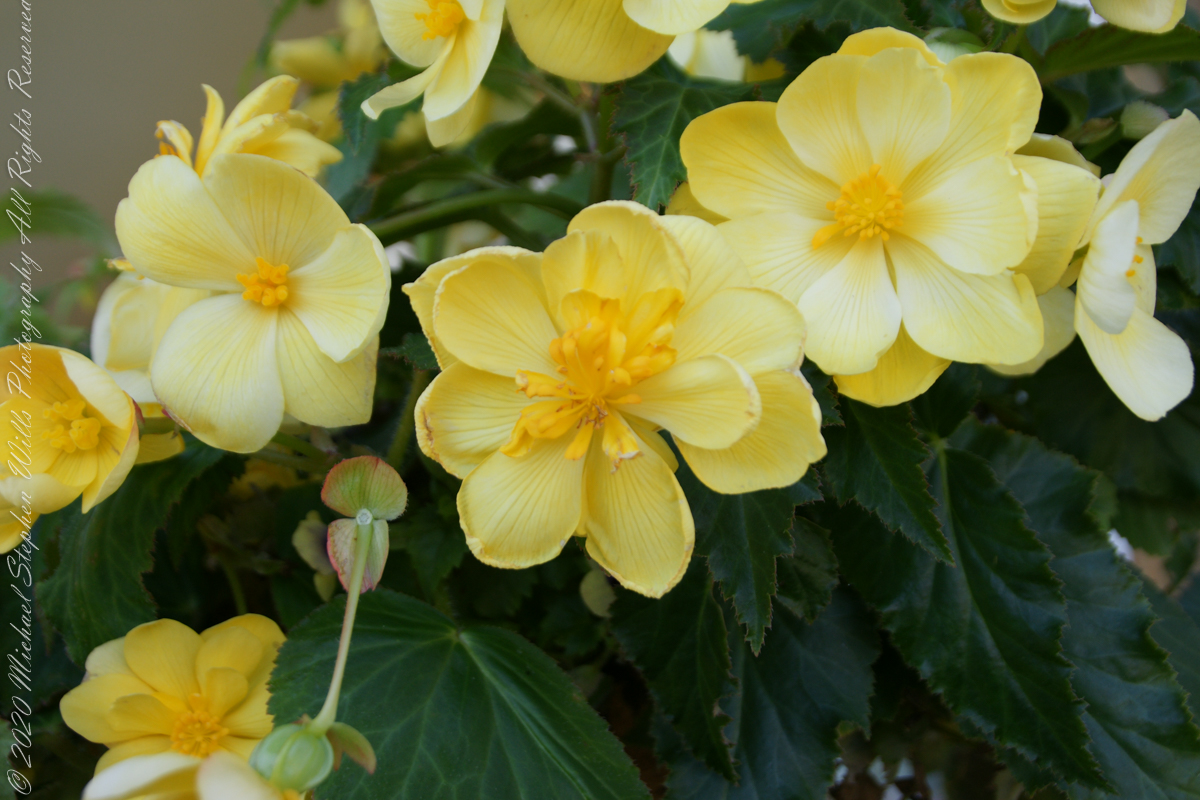
A turn around our home: Smoke tree, Japanese Maple, Pam’s flower baskets, fallen Oak leaves
.TT.
Panoramas from our front porch and on to Hector Street descending into and through Ithaca
Headed up Route 34 along Cayuga Lake, into “Farm Country”
Turning onto Locke Road and crossing from Tompkins to Cayuga County
Travelling through Cayuga County, the town of Locke, then Moravia and Fillmore Glen State Park
..
This is my farewell to “Fall” for now.
Copyright 2022 All Right Reserved Michael Stephen Wills
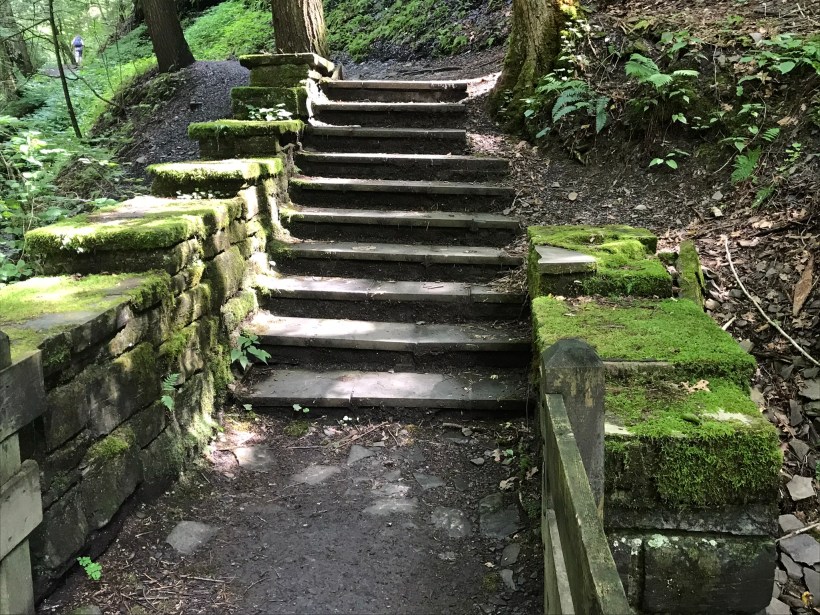
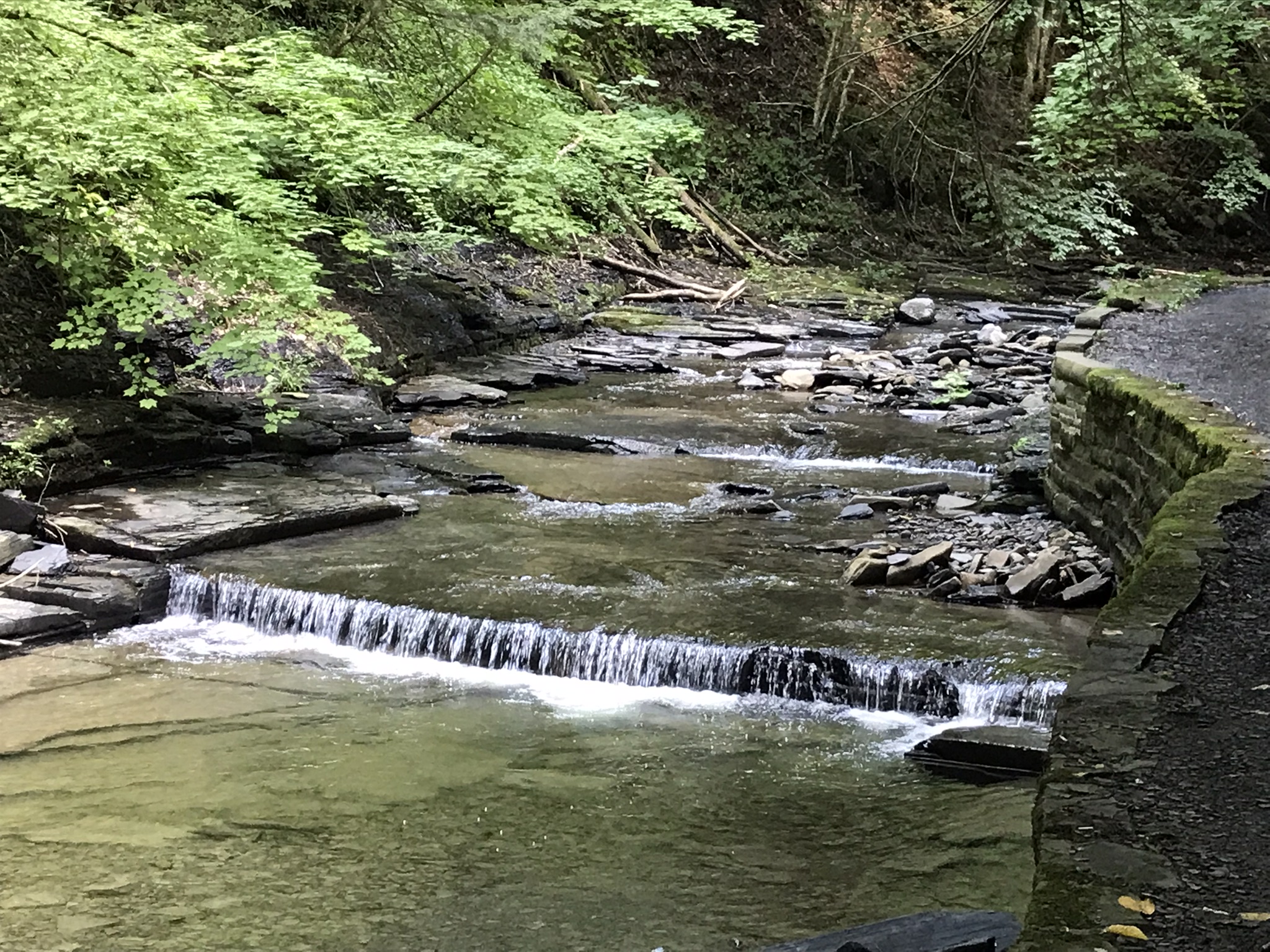
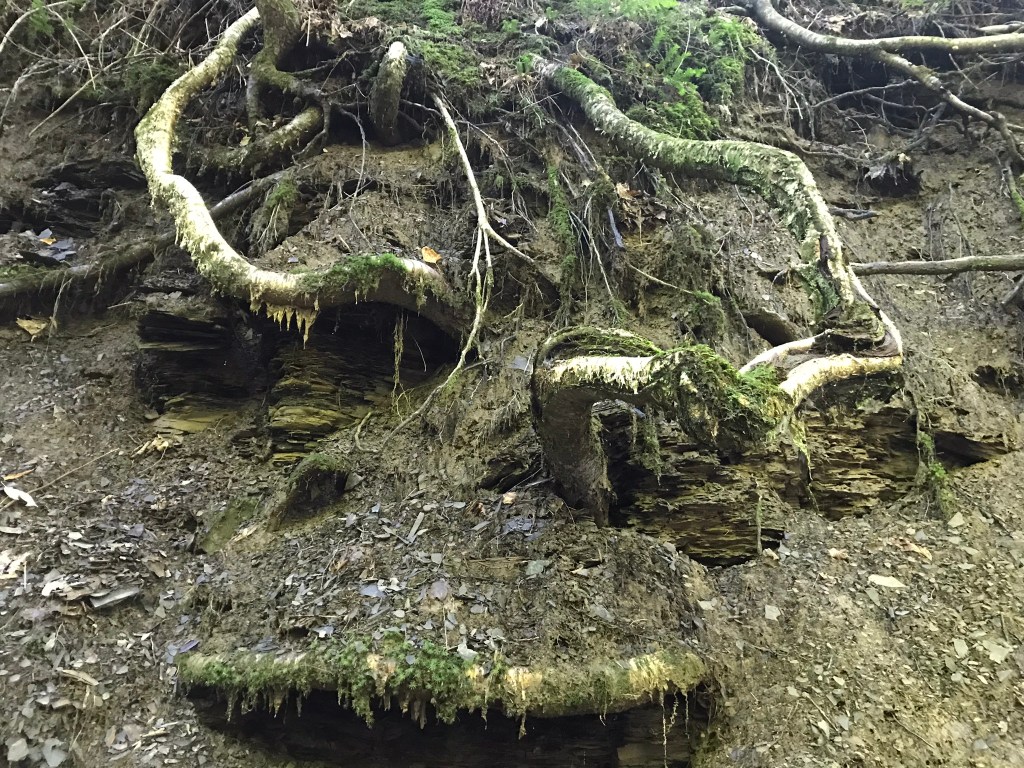
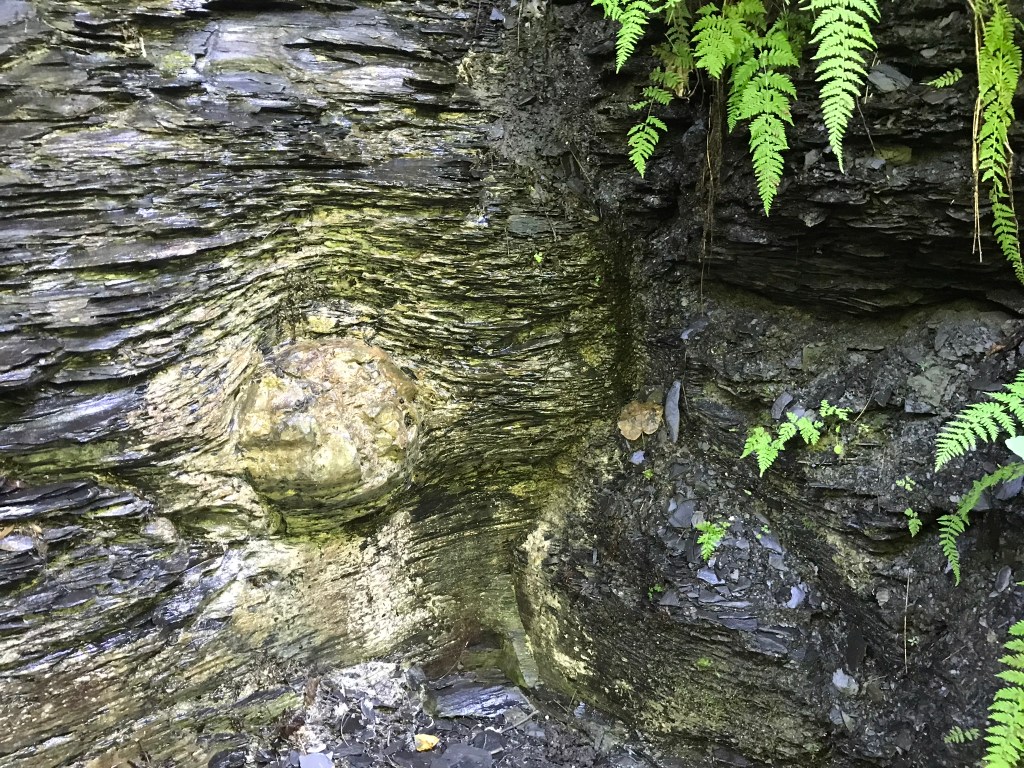
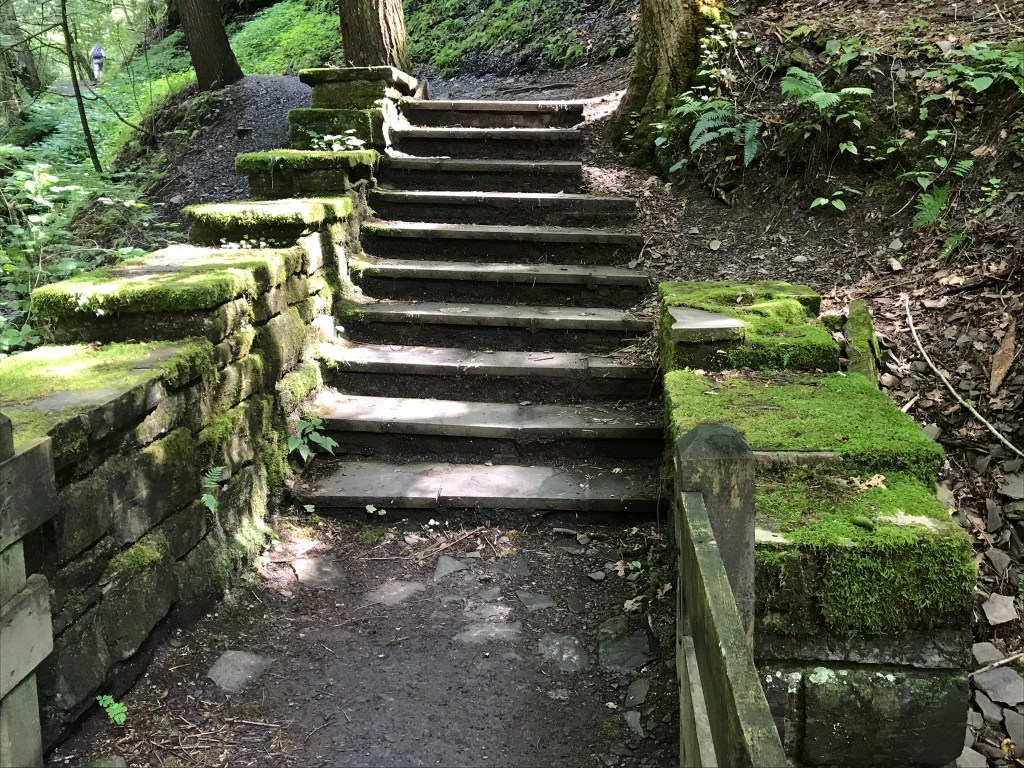
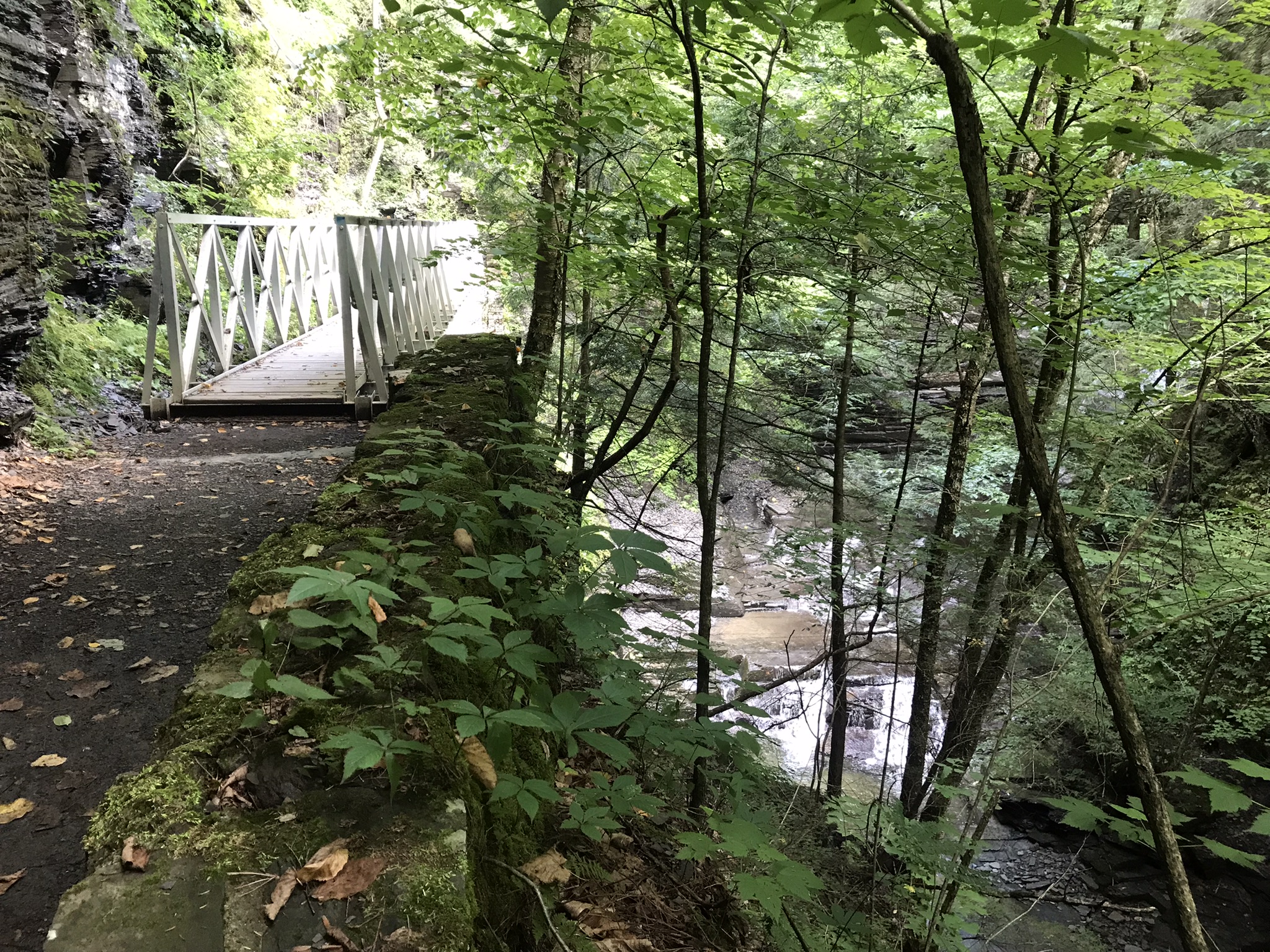
Gentle Waterfall SeriesLife Clings to Gorge WallsRoots Hold All In PlaceAncient Rockfall RememberedWelcoming Steps
Ephemeral Waterfall
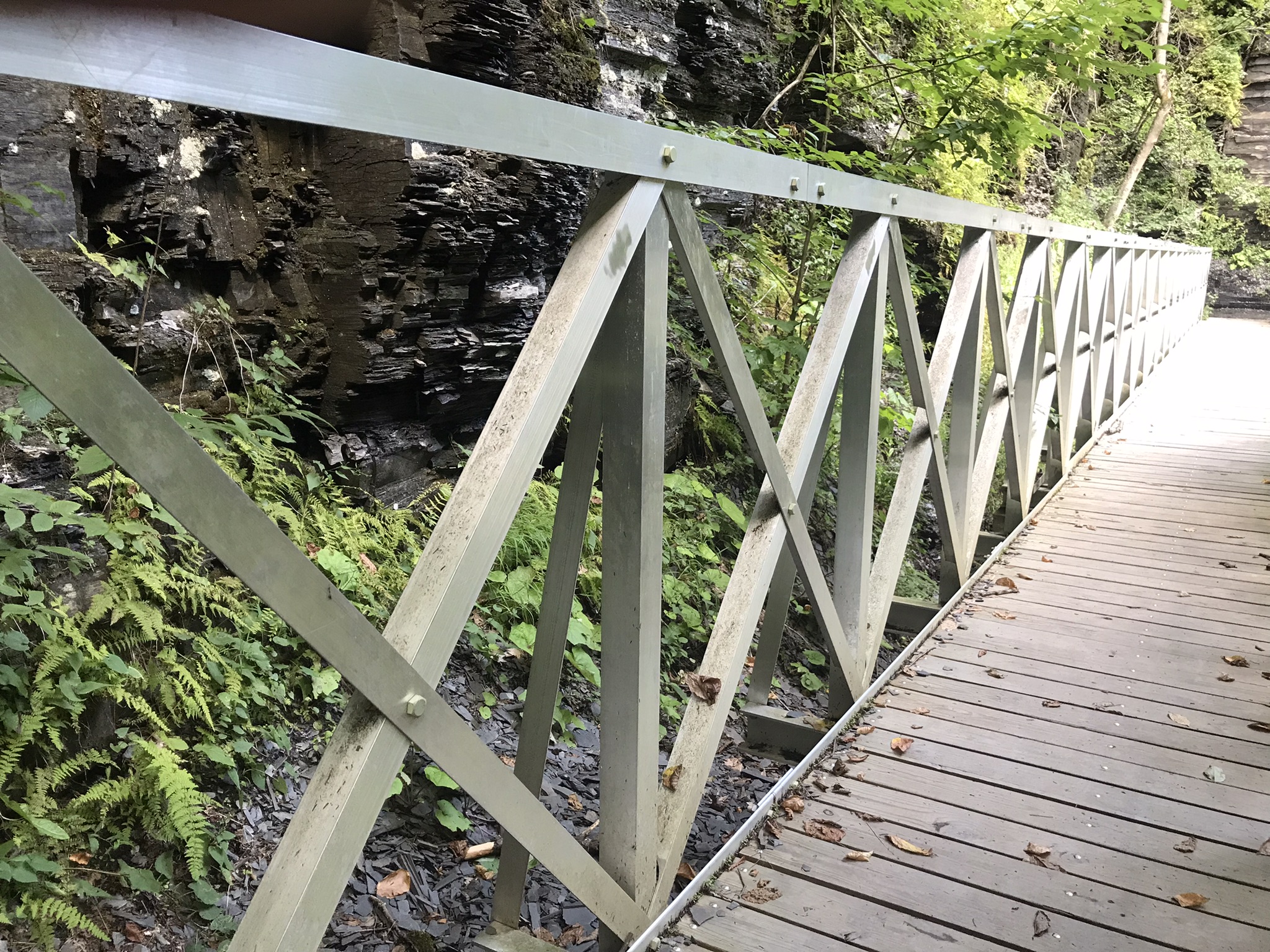
Metal Intrusion
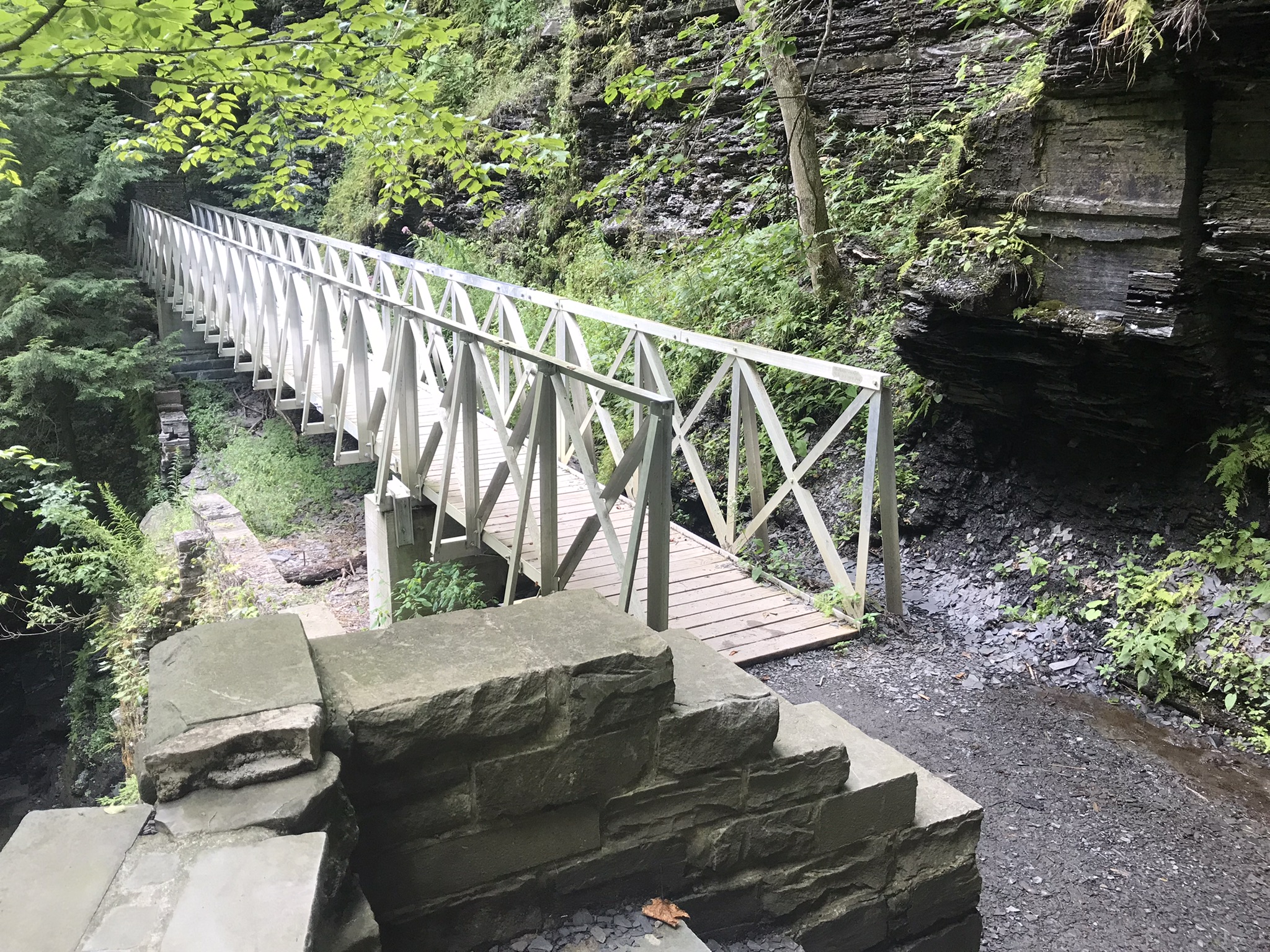
Spring thaw washed away the gorge wall, this functional metal bridge will outlast all but the most catastrophic gorge wall disruptions.
Turn Around Here for the Following ViewI call these Hermit FallsCan you ss “The Hermitage”?View Back to BridgeNew Path
Graceful Waterfall Overview
Flora
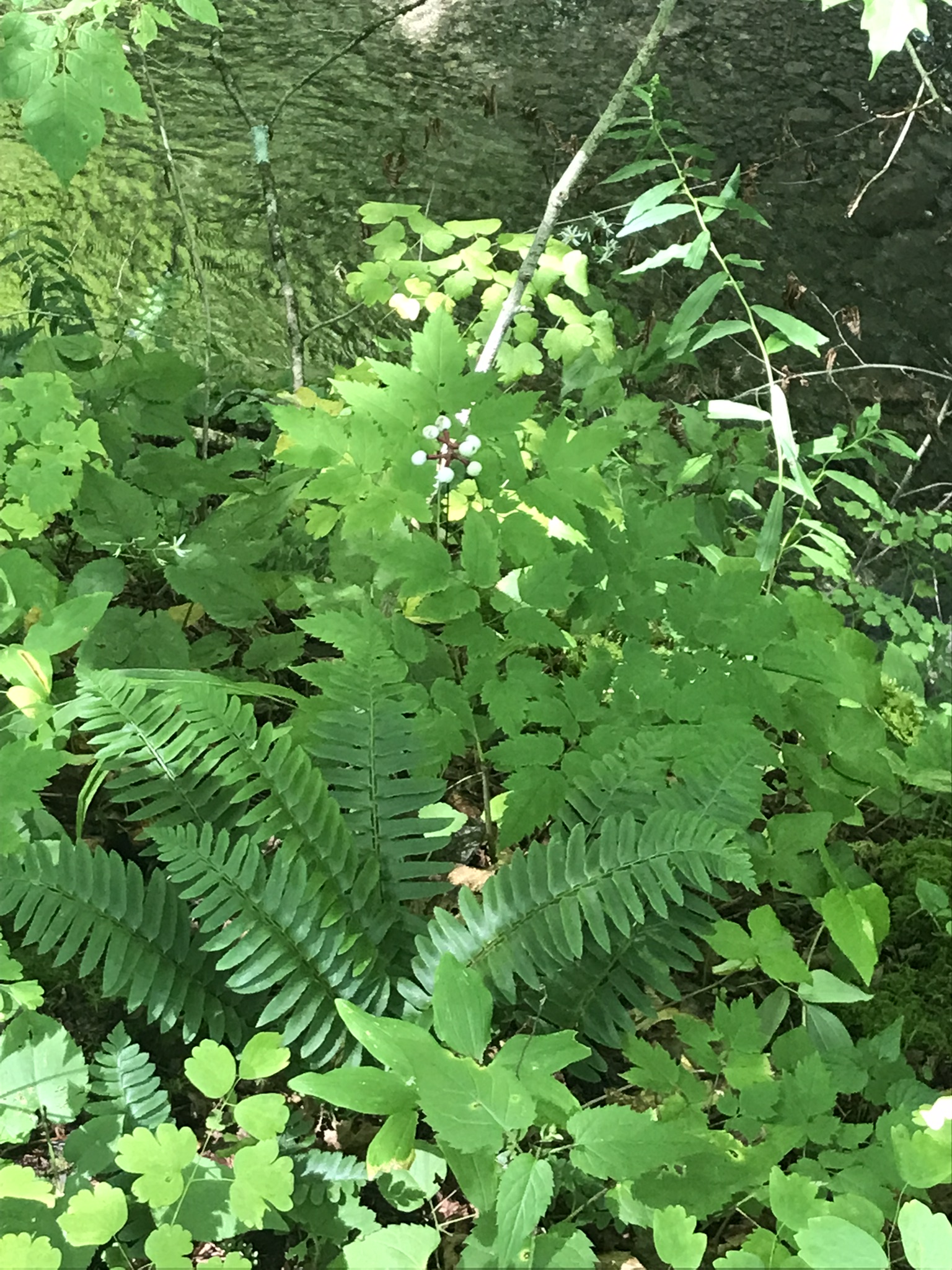
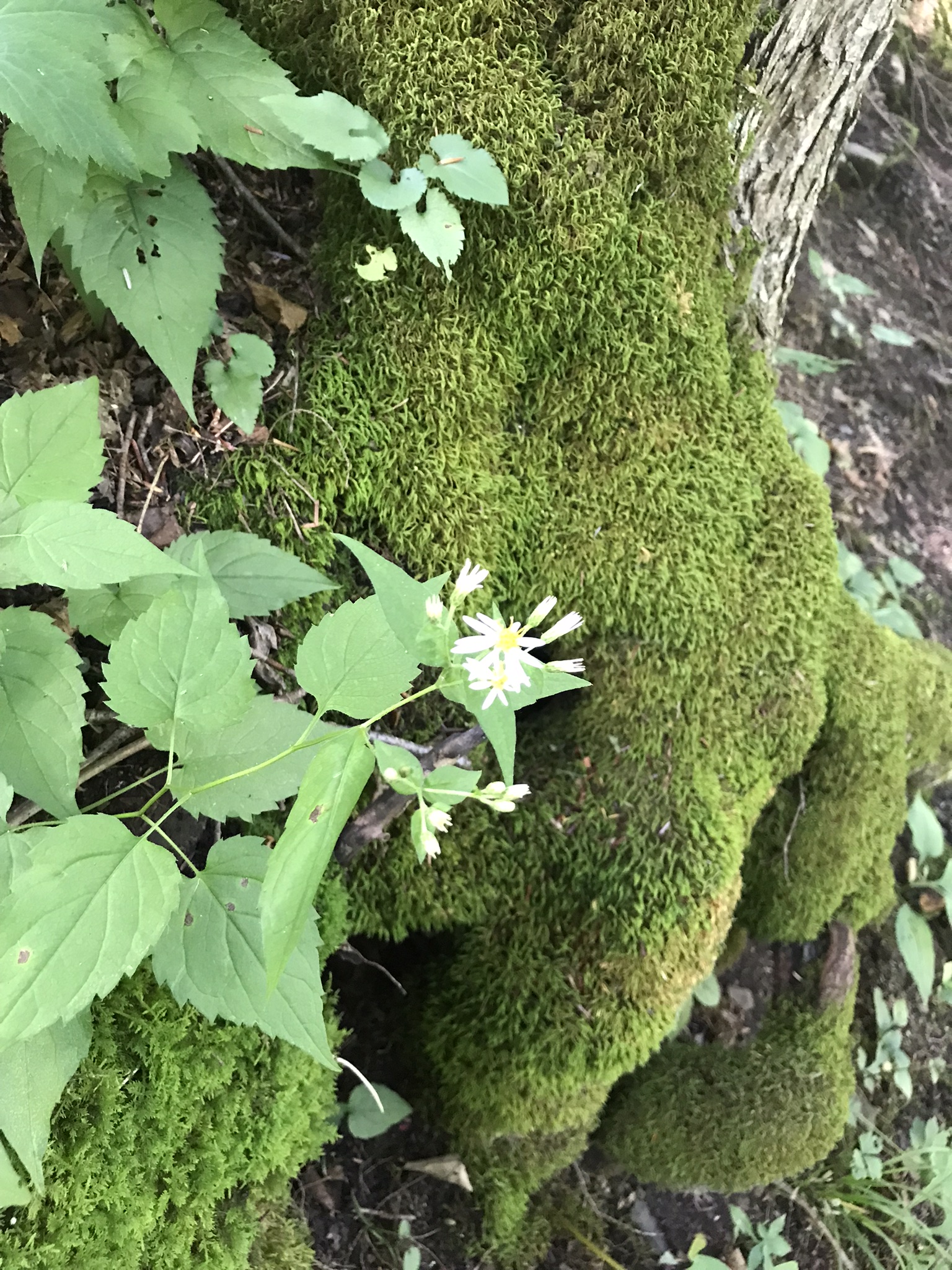
White Baneberry, aka “Dolls Eyes,” a fascinating plant, entirely poisonous.
All parts of all Baneberry varieties (red and white) are highly poisonous, the bane of Baneberry. The berries are deadly. Ingestion of as few as two berries by children will cause death from cardiac arrest. Six for an adult.
Landscape Features
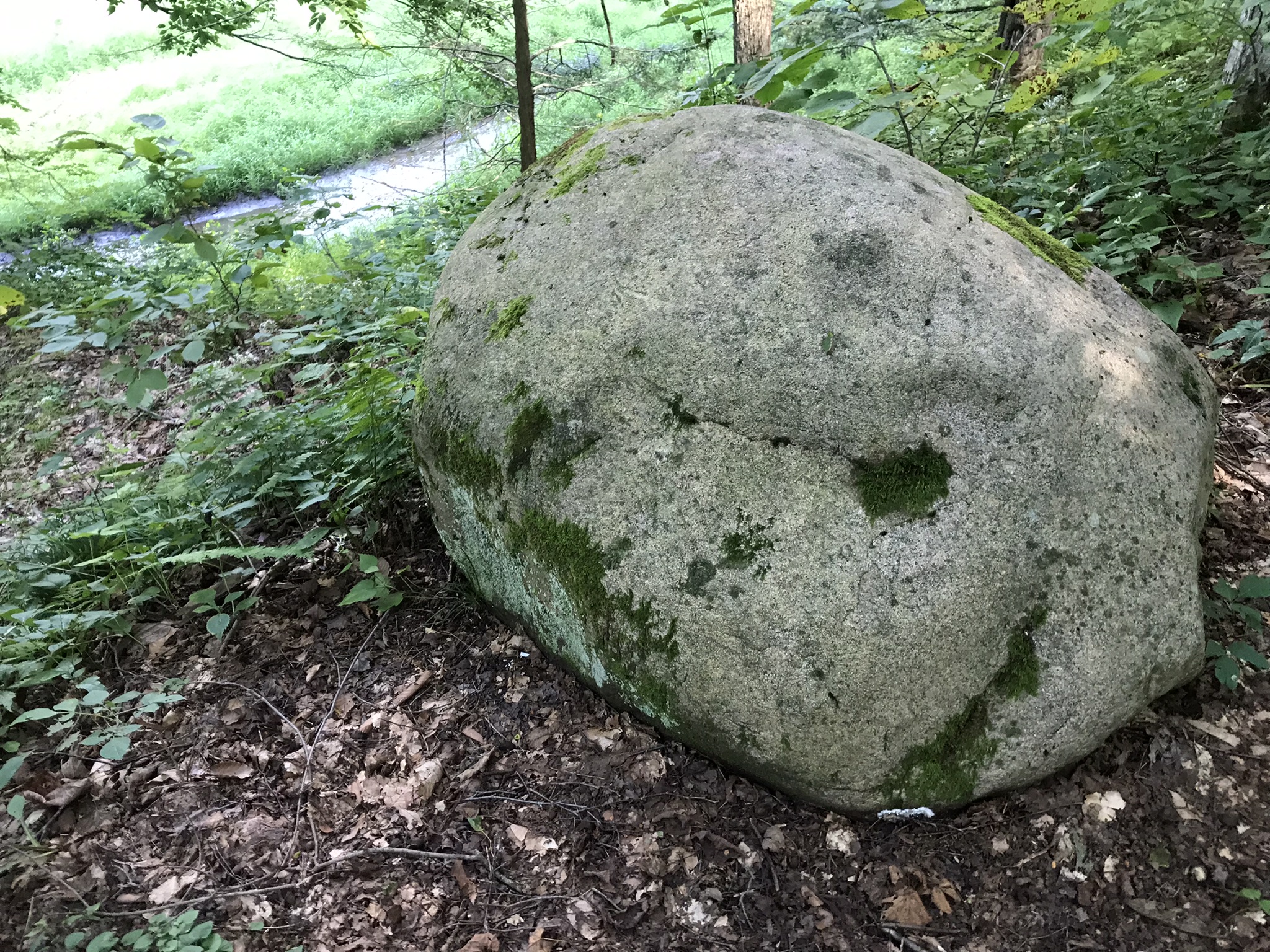
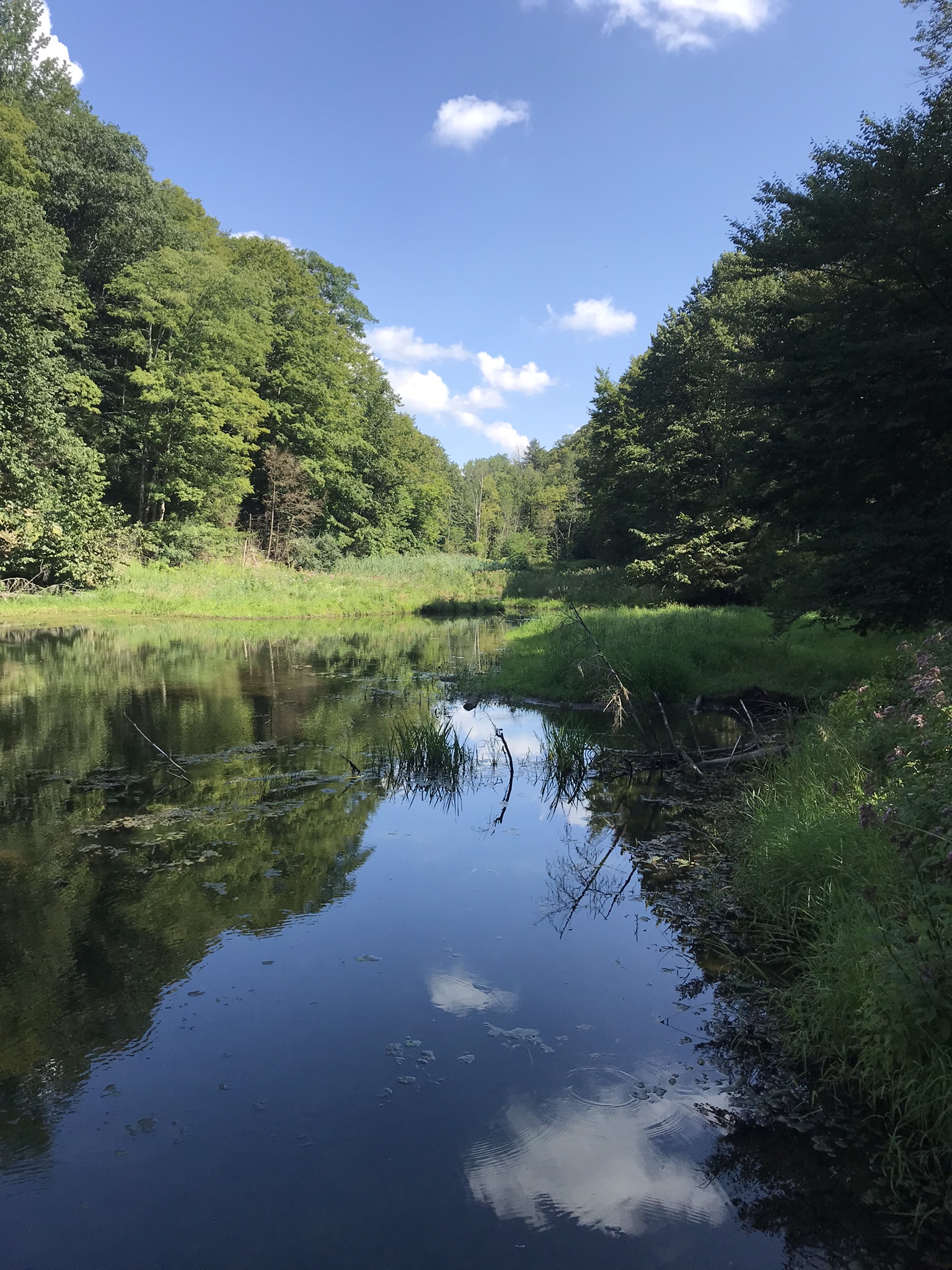
Erratic Granite BoulderSpillwayDam Pond
Overview, Spillway and Pond
Copyright 2022 Michael Stephen Wills All Rights Reserved
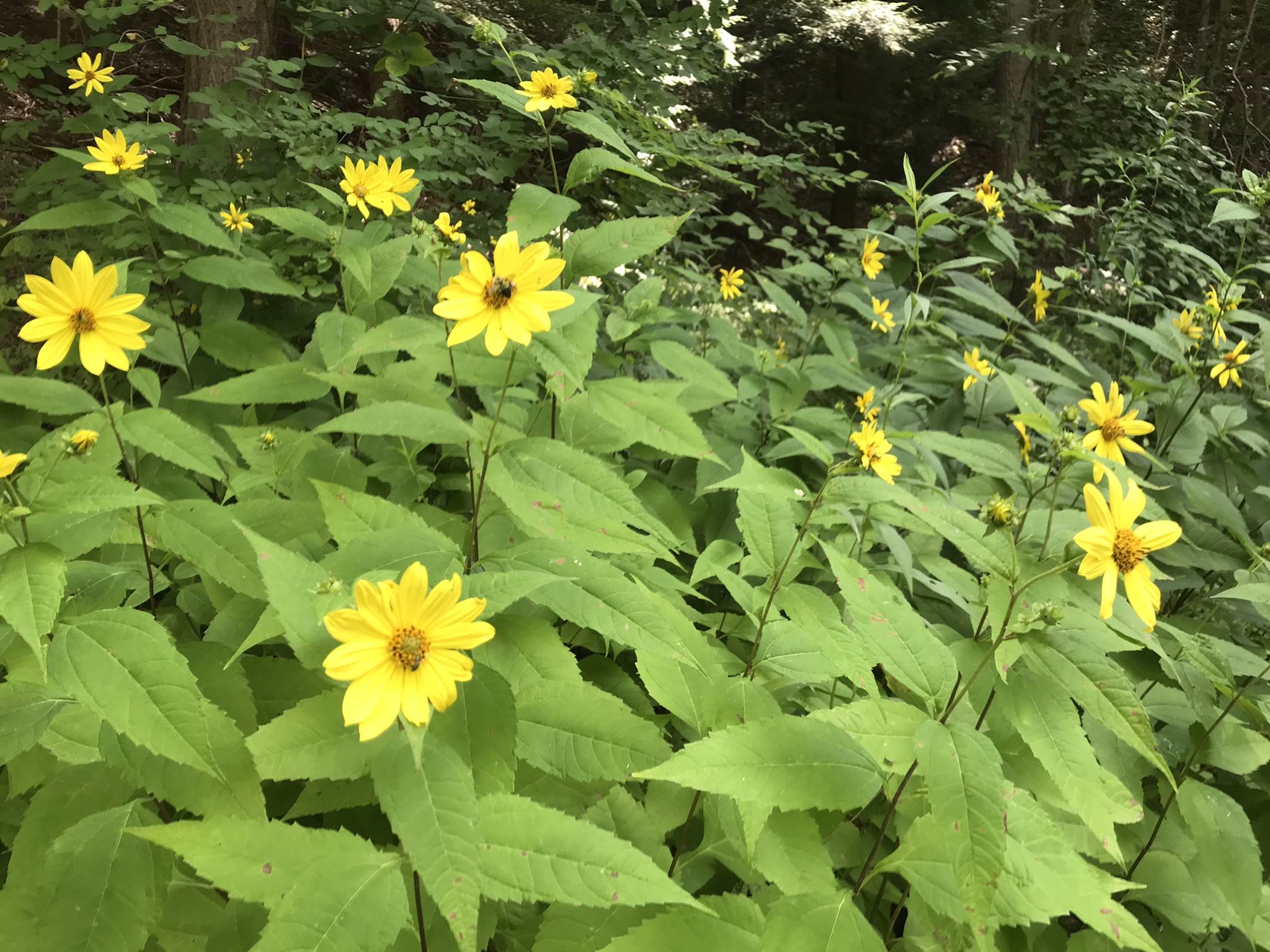
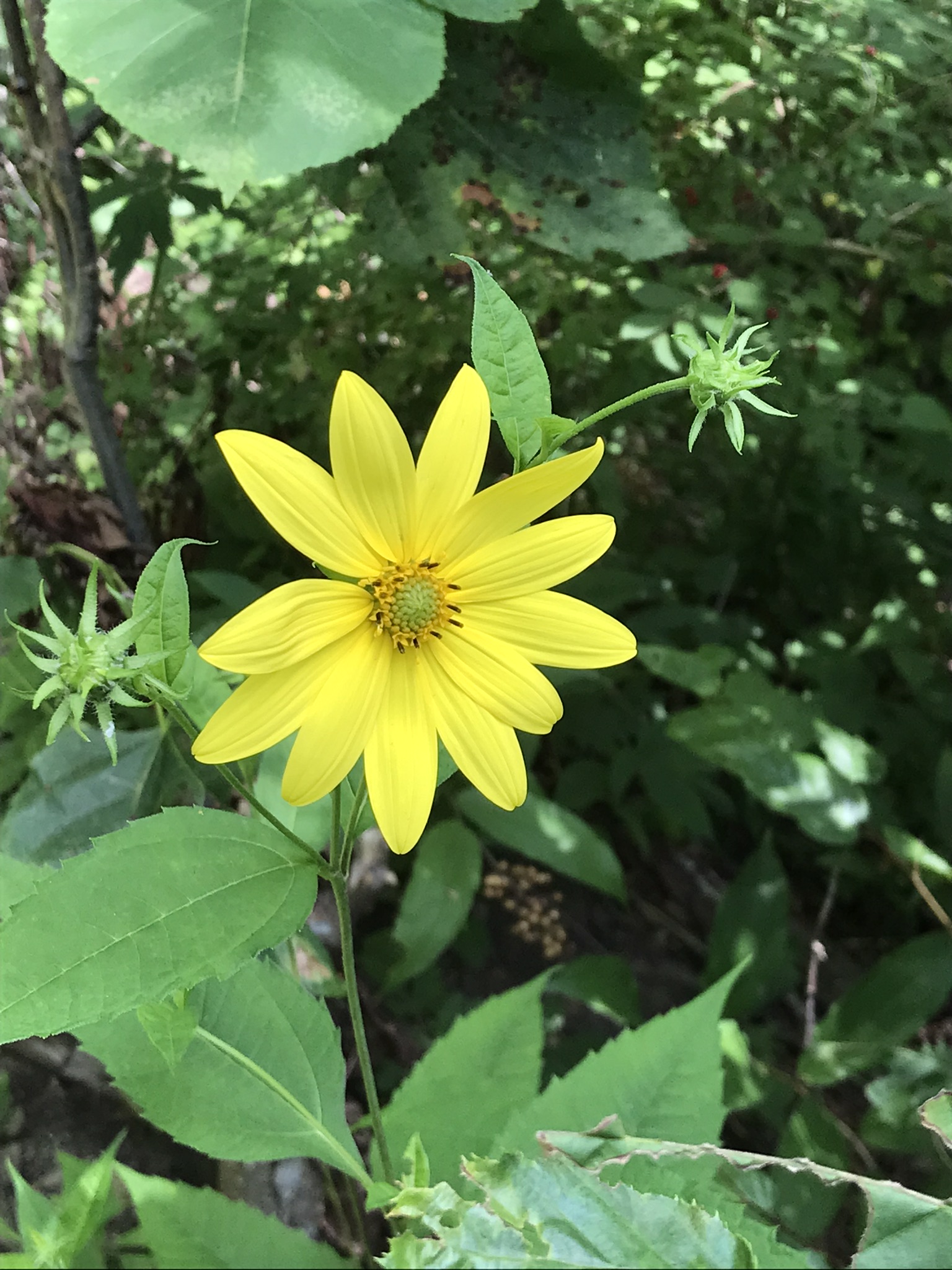
“Out in the meadow, I picked a wild sunflower, and as I looked into its golden heart, such a wave of homesickness came over me that I almost wept. I wanted Mother, with her gentle voice and quiet firmness; I longed to hear Father’s jolly songs and to see his twinkling blue eyes; I was lonesome for the sister with whom I used to play in the meadow picking daisies and wild sunflowers.”
from “Laura Ingalls Wilder, Farm Journalist, Writings from the Ozarks” edited by Stephen W. Hines”
Trail sign at starting pointBeebee LakeLily Pads flowering on the north side of Beebee LakeFall Creek Gorge flooded by Beebee Lake dam
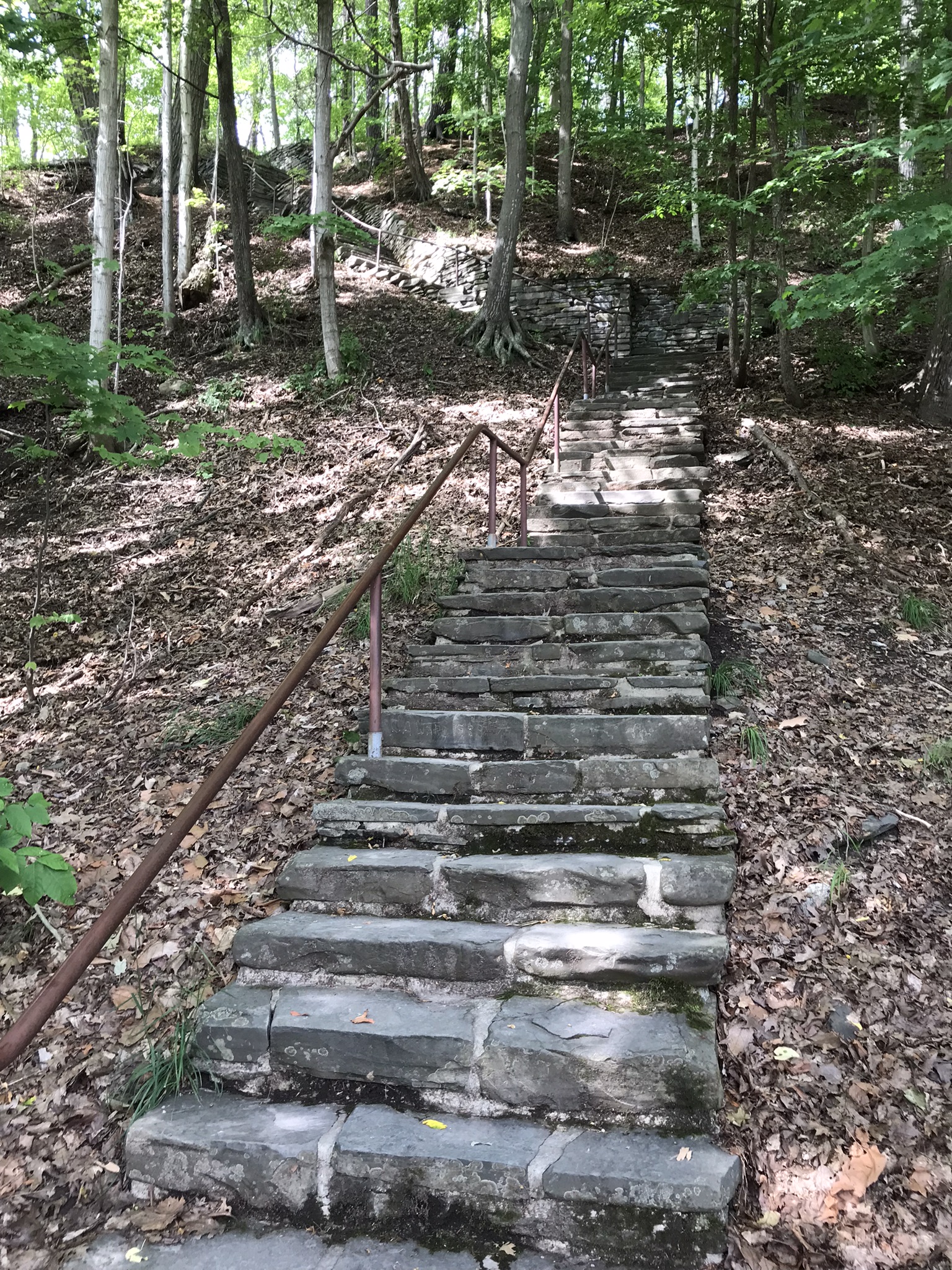
Taughannock Falls
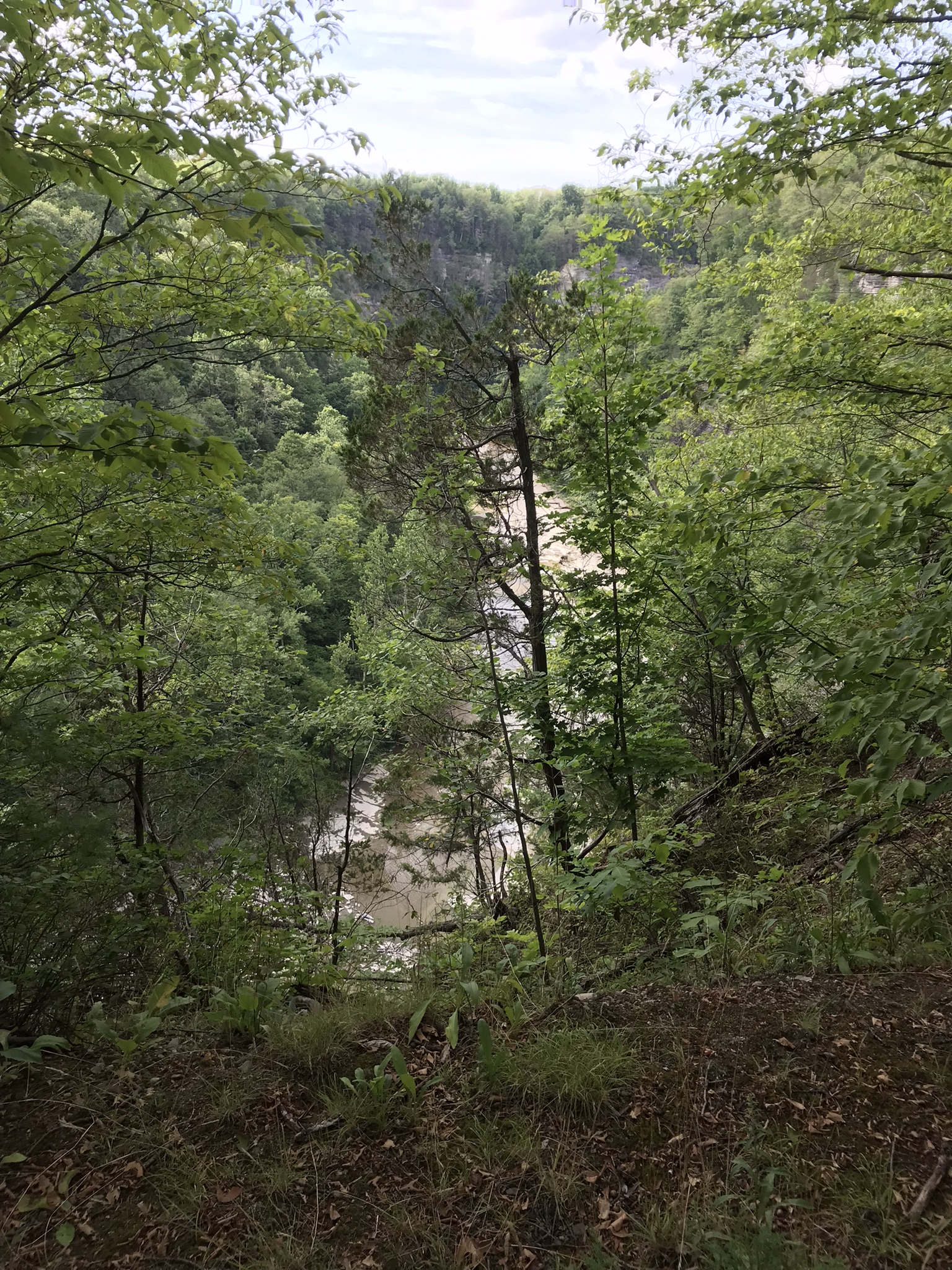
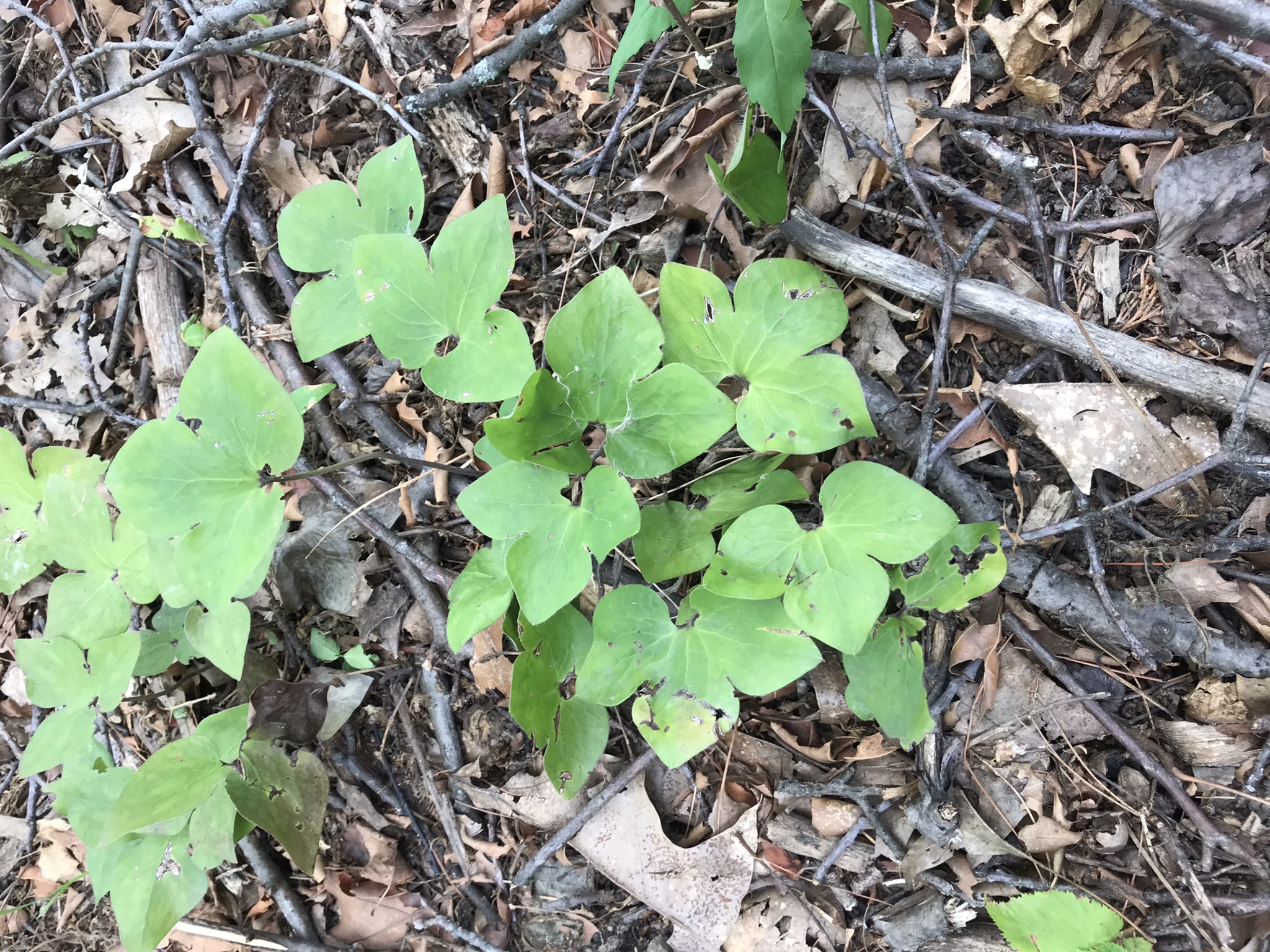
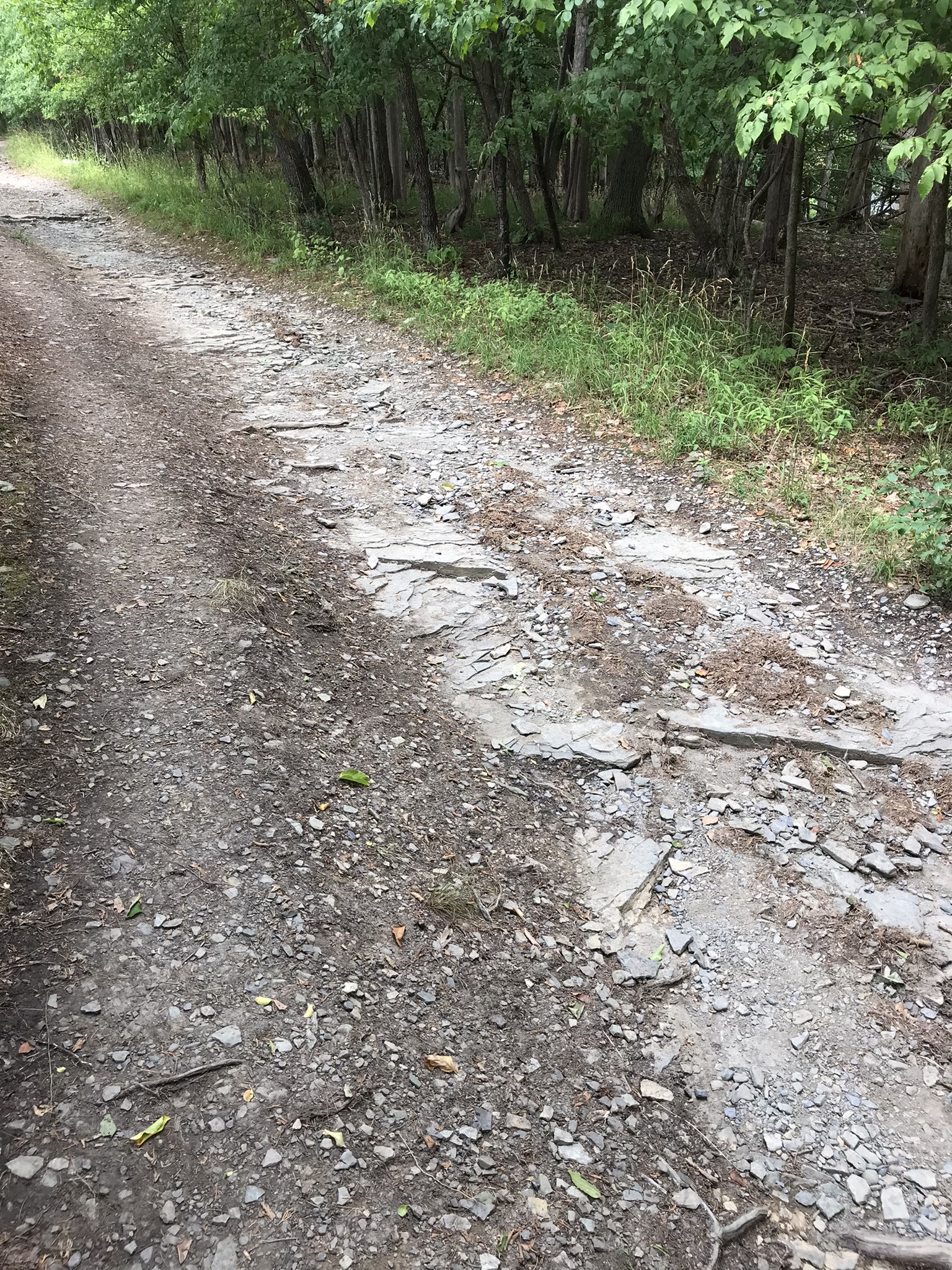
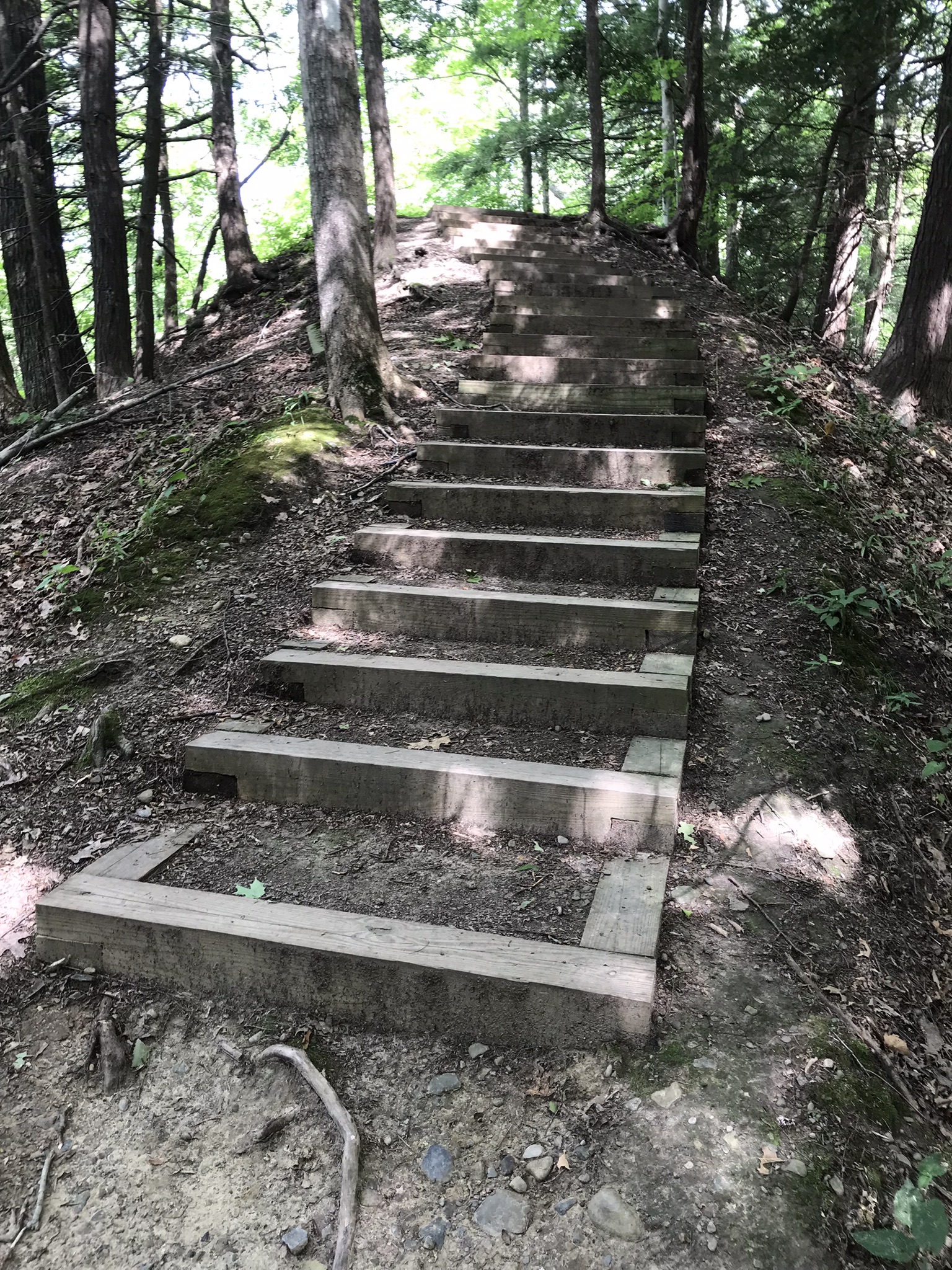
Stairs to North Rim from Cayuga Lake shoreuphill all the wayfirst view pointsecond view pointHepatica leavestrail erosionthird view pointfourth view point, northfourth view point, south with Cayuga Lake in distancefifth view point, east with only the south gorge rim visiblefifth view point, south wiht distant view of Cayuga Lakelooking into the gorge just below the fallssouth rim trail, looking into the upper gorge with native plantsmoss looking into the gorgeVultures perched on gorge walls above and around Taughannock Falls
Buttermilk Falls, upper
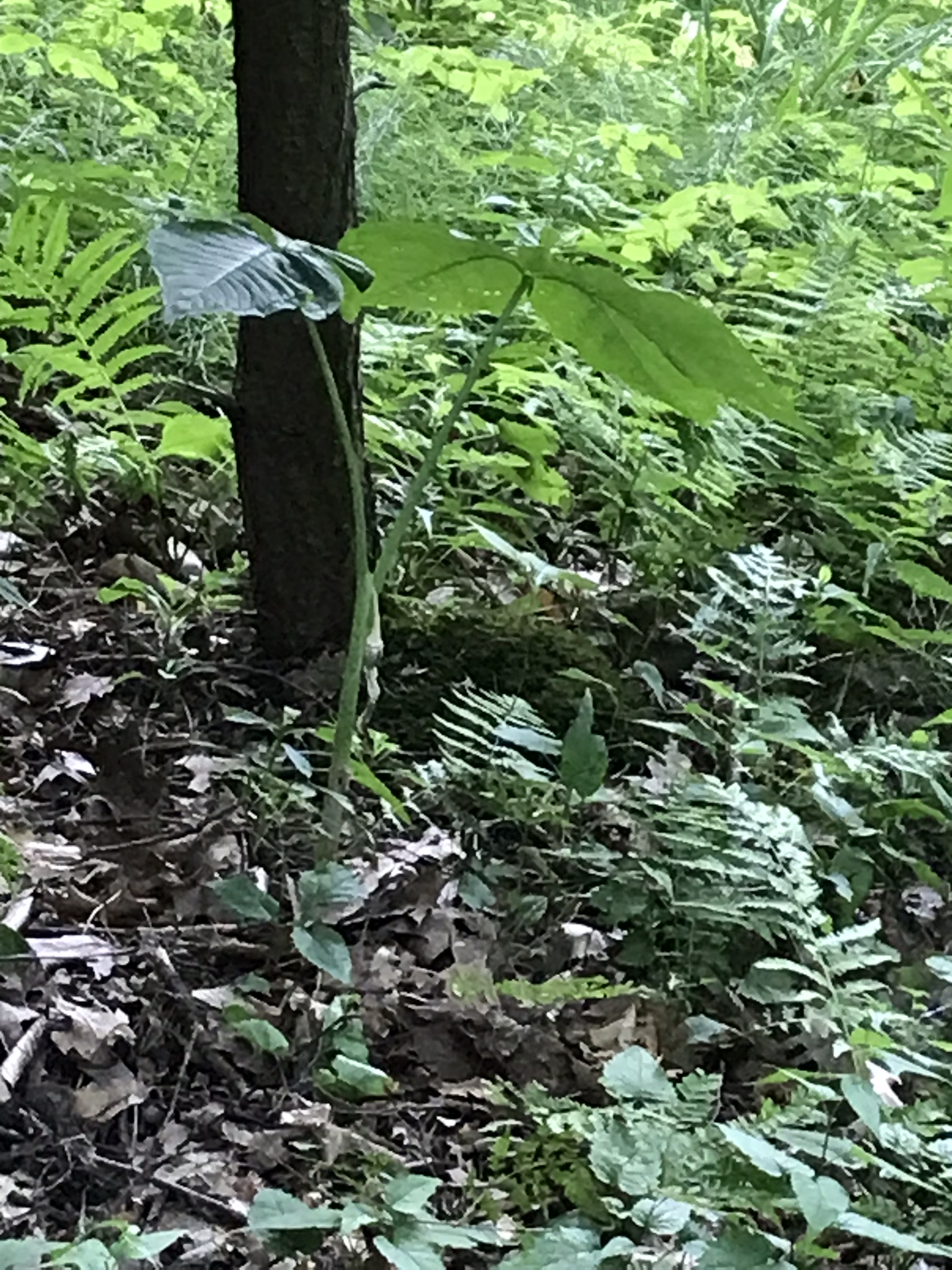
Jack in the Pulpit with spent flowerTreman Lake
A quiet moment……
Copyright 2022, Michael Stephen Wills All Rights Reserved
Friday last Pam and I joined a “James Potorti Memorial Gorge Walk” through Buttermilk Falls State Park where we learned interesting facts connected to one of my most successful photographs, “Summer Dream: Buttermilk Falls.” This is the fourth post of this series.
Starting Point
Buttermilk Falls State Park has two parks, upper and lower. Friday’s hike began at lower park. Using GoogleEarth I see the half mile trail along the lower gorge climbs 506 feet, 355 feet of this is ascended in 300 steps in the first quarter mile. Here is a view of the magnificent cascade that greets lower park visitors.
To my knowledge, nobody has ascended the creek bed at this point. The climb is not impossible, people with technical rock climbing skills and equipment can do it. We use the trail. Most often, Pam and I visit the upper park and walk down the gorge to the top of this ascent. Friday, we walk up with everyone else.
Creek Level Photographs
On a July morning 2018 I walked Buttermilk Creek from the scene of my “Summer Dream: Buttermilk Falls”, up the steps on the right of that photograph to where the water flows across a flat expanse of stone. The following three photographs from that walk were taken using a tripod mounted Canon EOS 1DS Mark III body with the Canon lens EF 24mm f/1.4L II USM w/a neutral density filter (0.6 as I recall).
Click any photograph for a larger view.
Natural steps
Low Flow
The “secret” behind my successful “Summer Dream: Buttermilk Falls” photograph is waiting for a seasonal low creek flow. For the same reason, this is a safe time to walk this part of the creek to capture the scene. See the previous post, “Walking Buttermilk Creek”, for the entry to this creek level walk. Attempting to walk the creek in other seasons can be fatal….there is a plaque along the trail memorializing an attempted rescue during a March flood where two people died: the rescued and the rescuer.
At high water the creek gouged a channel through the limestone creek bed
James Potorti was a native of Ithaca who perished at 52 years of age in New York City on September 11, 2001 were he worked on the 96th floor of 1 World Trade Center.
Copyright 2022, Michael Stephen Wills All Rights Reserved