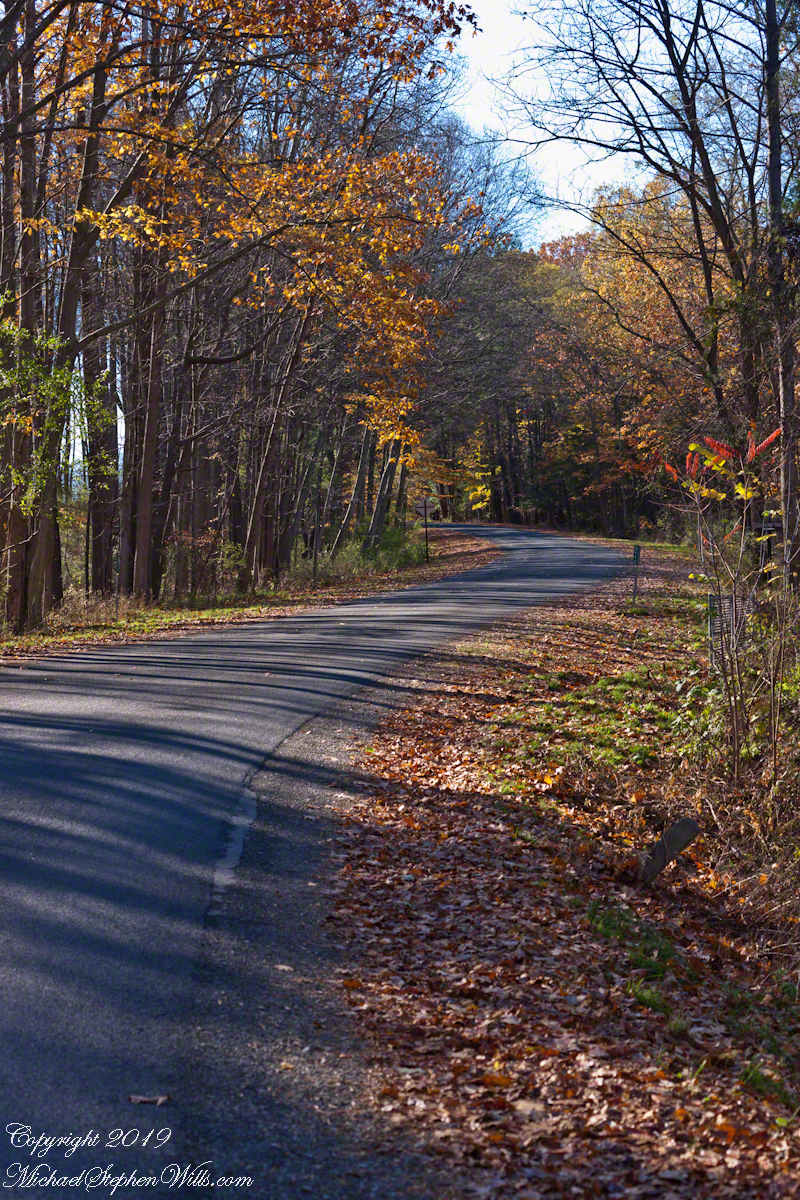
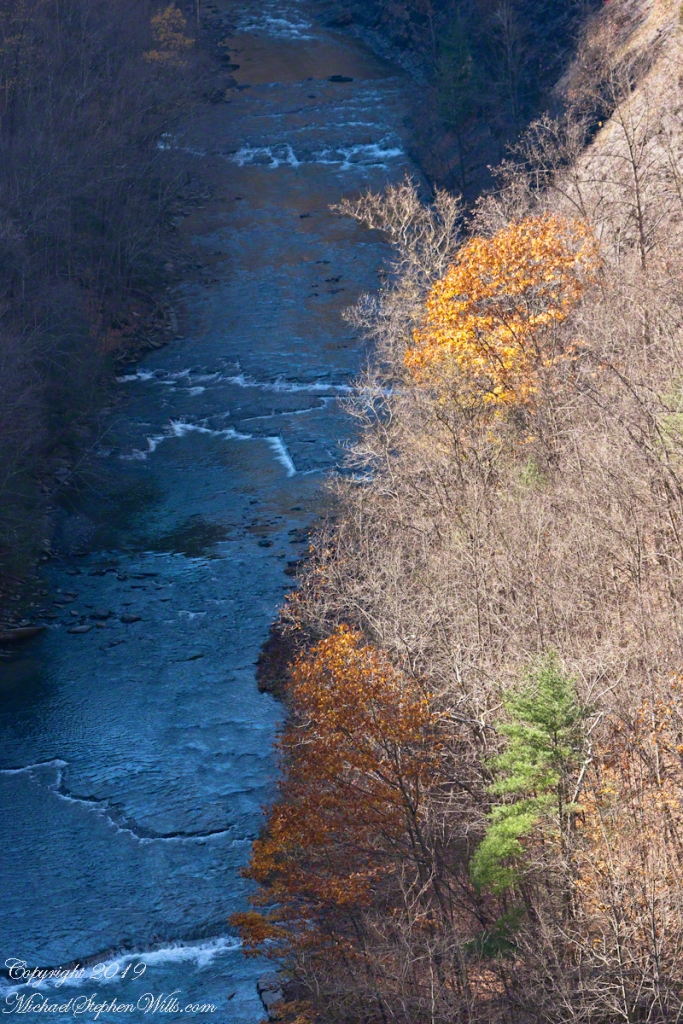
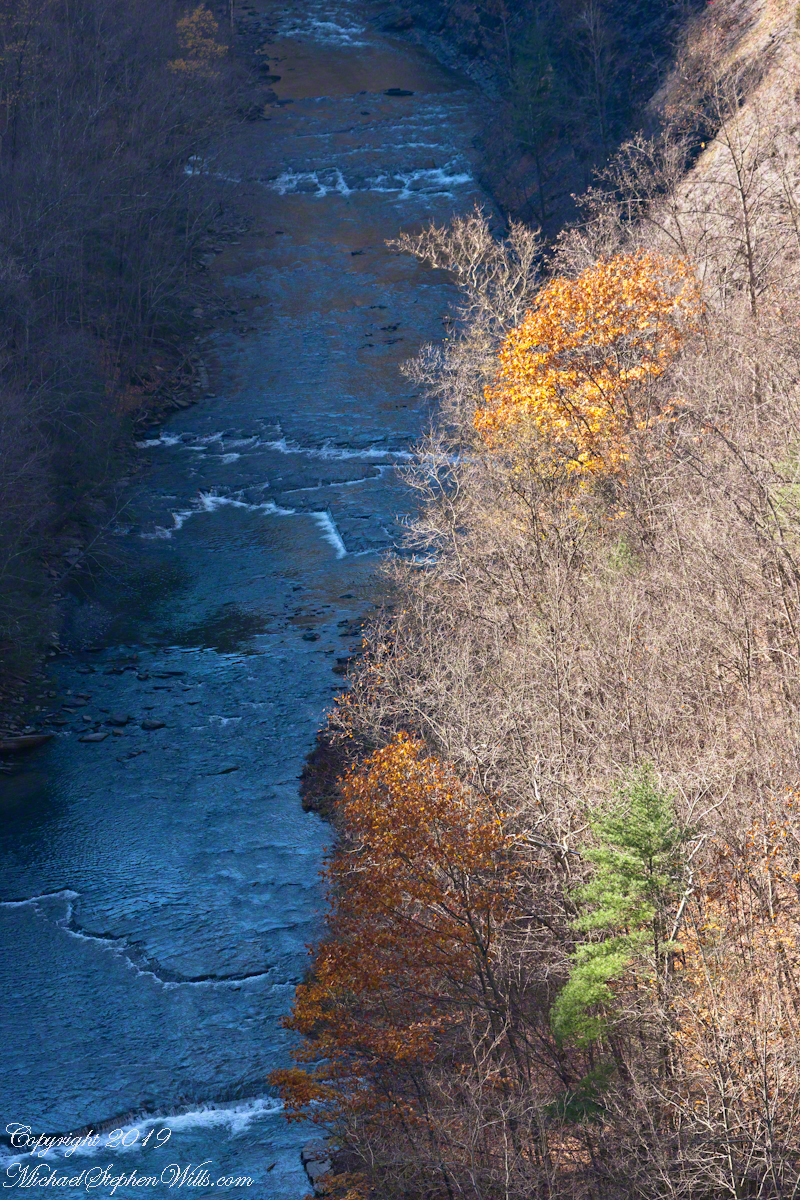
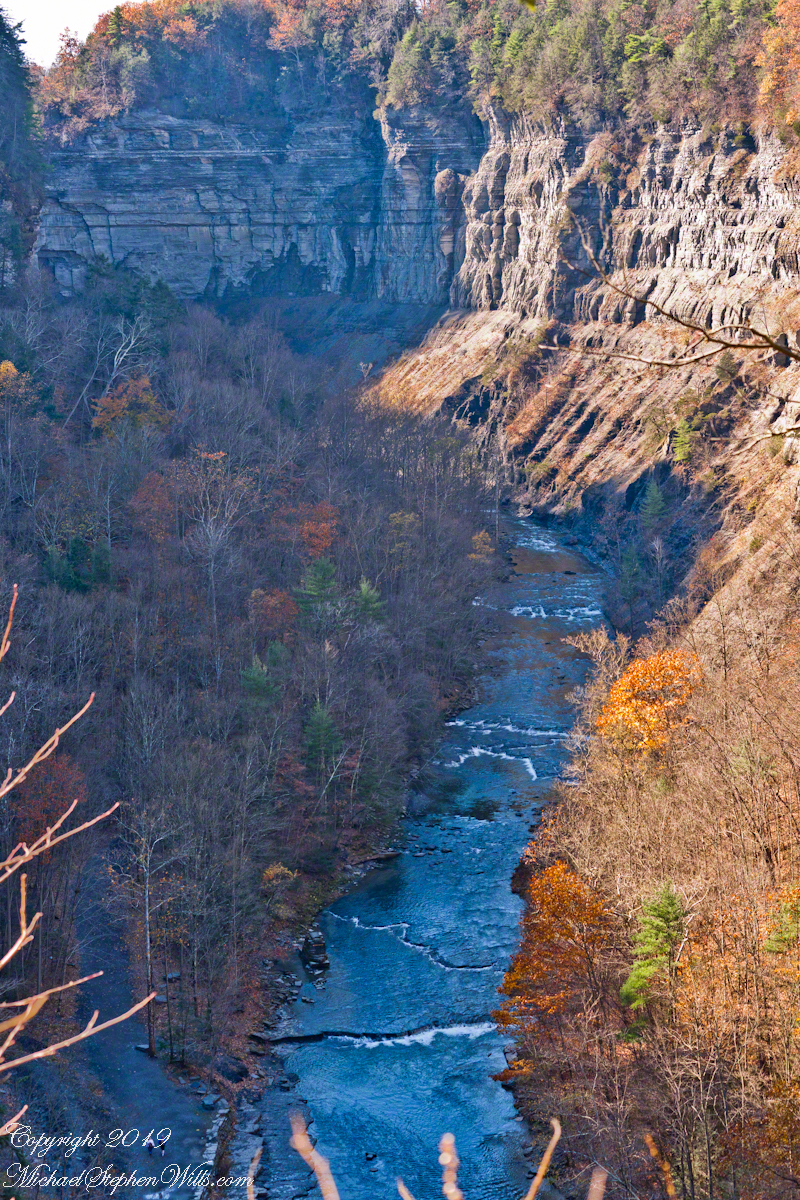
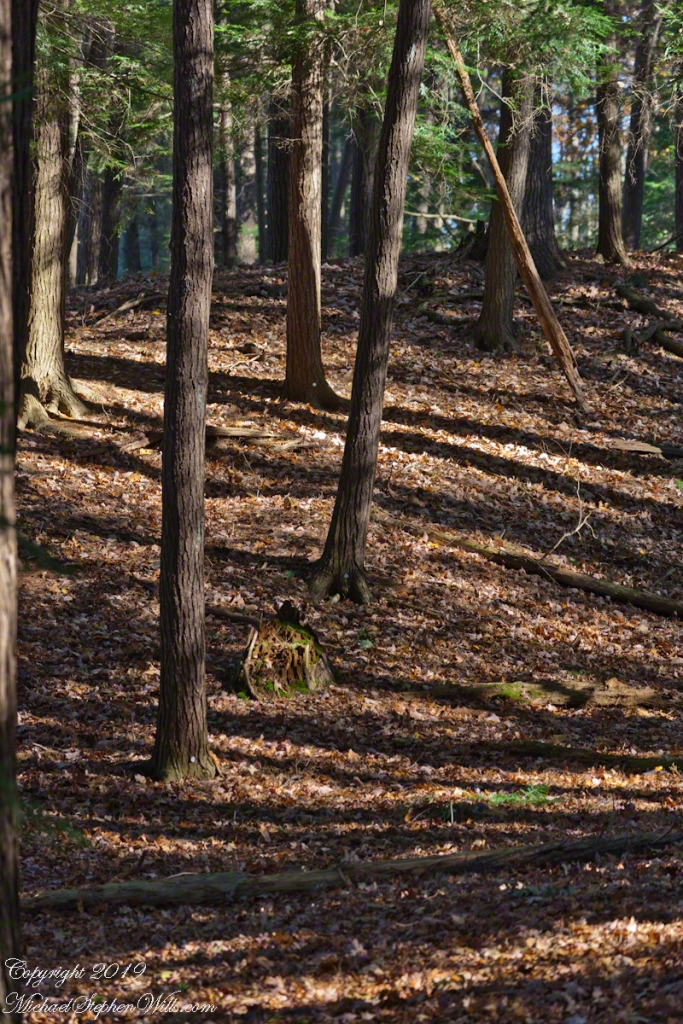
Early November on Gorge Road, Finger Lakes Region, New York State. At this month and latitude (42 north) there are long shadows throughout the day. The South Rim Trail of Taughannock Falls State Park briefly emerges from the wooded cliff to this portion of the road that parallels the gorge, descending to Cayuga Lake shores.
Click photograph for a larger view. To do this from WordPress Reader, you need to first click the title of this post to open a new page.
Gorge Road, early November
Three Views
Distant View with Hemlock
Oak and Hemlock
Gorge Road, early November
Copyright 2019 All Rights Reserved Michael Stephen Wills
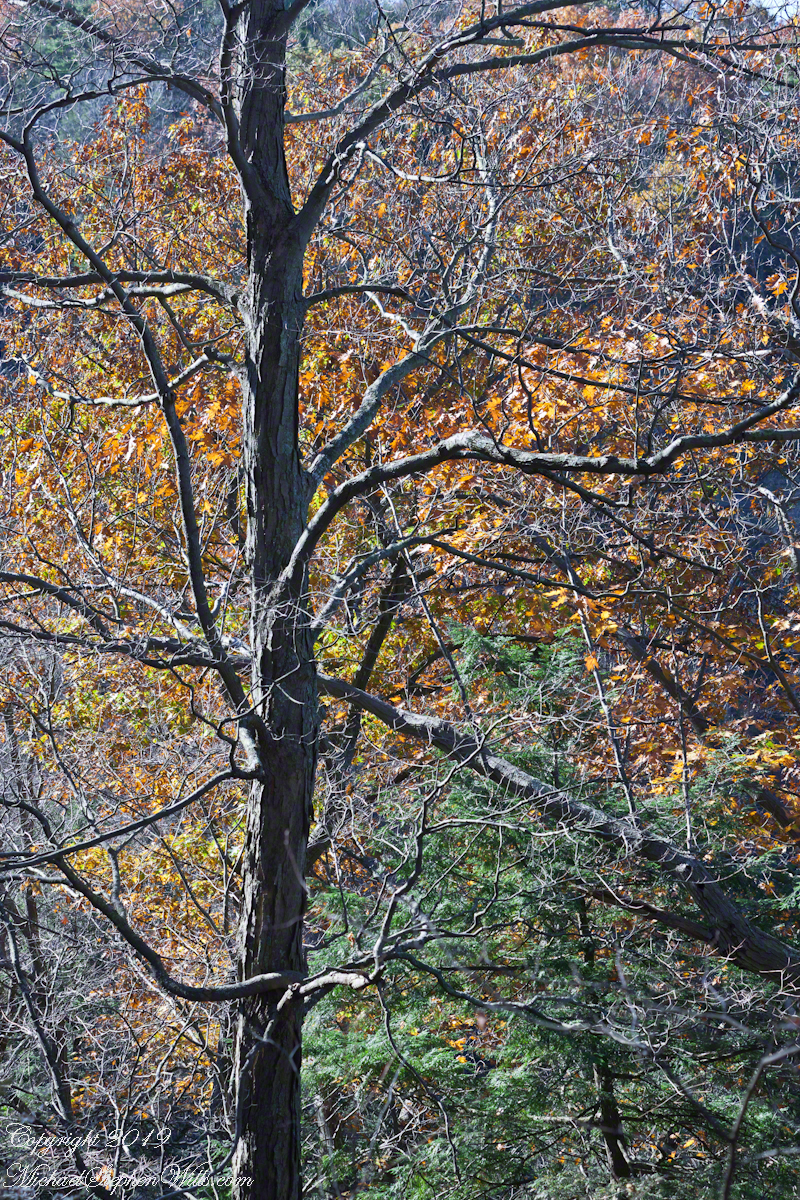
Early November trees, Taughannock Gorge, Finger Lakes Region, New York State walking the South Rim Trail we are among the upper reaches of trees clinging to the steep gorge walls.
Happy Birthday to my dear wife Pam.
Click photograph for a larger view. To do this from WordPress Reader, you need to first click the title of this post to open a new page.
Oak and Hemlock
Two Views
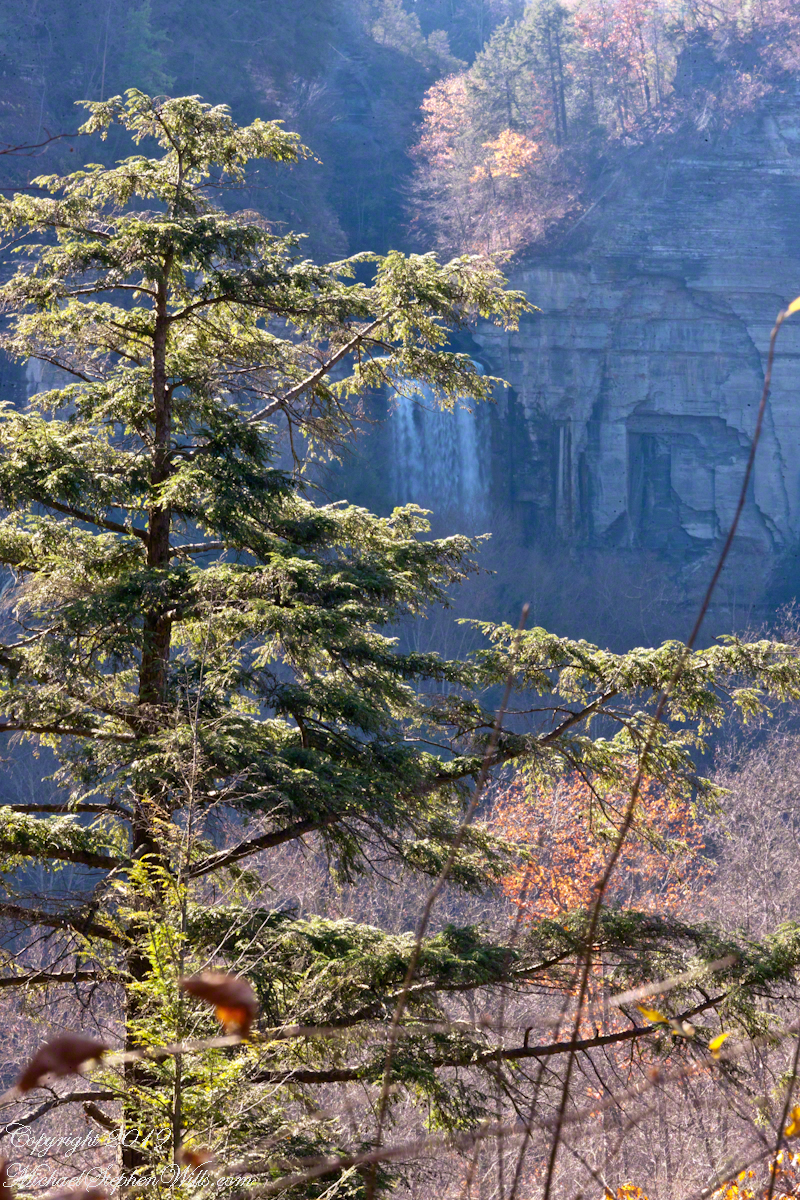
Distant View with Hemlock
Oak and Hemlock
Copyright 2019 All Rights Reserved Michael Stephen Wills
I am fascinated by this vantage from the South Rim trail. It is possible because the gorge bends almost 90 degrees, the gorge walls fall away to reveal the 215 foot waterfall.
Click photograph for a larger view. To do this from WordPress Reader, you need to first click the title of this post to open a new page.
Copyright 2019 All Rights Reserved Michael Stephen Wills
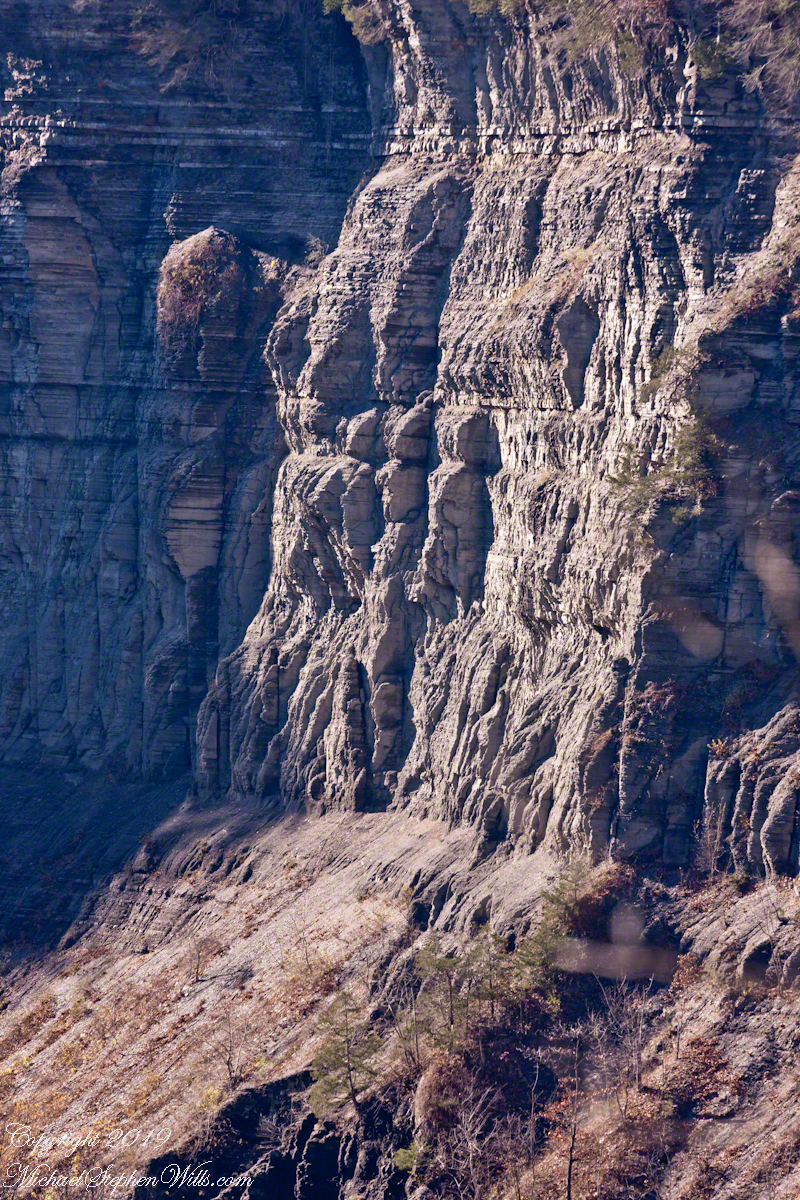
On viewing this photograph my wife, Pam, noticed the shapes eroded from the sedimentary rock of Taughannock gorge. These layers of shale, sandstone, siltstone formed at the bottom of a broad, shallow sea over 380 million years ago. Differential wearing of these rock layers, clearly visible in this photograph, resulted in these formations, including the three sisters and overhangs.
Click photograph for a larger view. To do this from WordPress Reader, you need to first click the title of this post to open a new page.
Three Sisters, Taughannock Falls gorge wall.
Three Views from The Bend
Taughannock Gorge, November
Into the Gorge
Three Sisters, Taughannock Falls gorge wall.
Copyright 2019 All Rights Reserved Michael Stephen Wills
Standing on the South Rim trail where the gorge bends almost 90 degrees, changing from a northern to eastern flow. The creek is flowing toward the camera, the falls out of view, upper left. Lower left two people walk the 3/4 mile trail of the falls.
Click photograph for a larger view. To do this from WordPress Reader, you need to first click the title of this post to open a new page.
Taughannock Gorge, November
Copyright 2019 All Rights Reserved Michael Stephen Wills
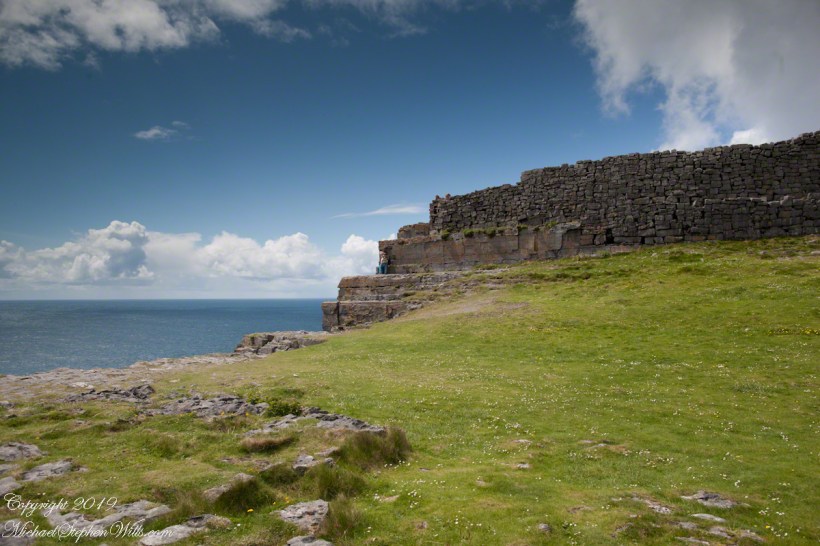
Here is the east side of the inner enclosure wall of Dun Aonghasa (Dun Aengus) where it ends at a cliff edge over the Atlantic ocean.
Visible are the last 60 feet or so of the limestone strata supporting the inner ring.
When first constructed, the inner ring was complete, the western side 1,000 feet from the cliff.. Today’s form of a semi-circle was created by nature when the force of Atlantic Ocean waves eroded the cliff, undercutting the strata.
Look close to see a fracture where the next block of limestone will fall into the waves.
Ancient fort wall with tourists and Cliff Edge of Dun Aonghasa (Dun Aengus)
Wishing a blessed All Saints Day (November 1st) for all my readers.
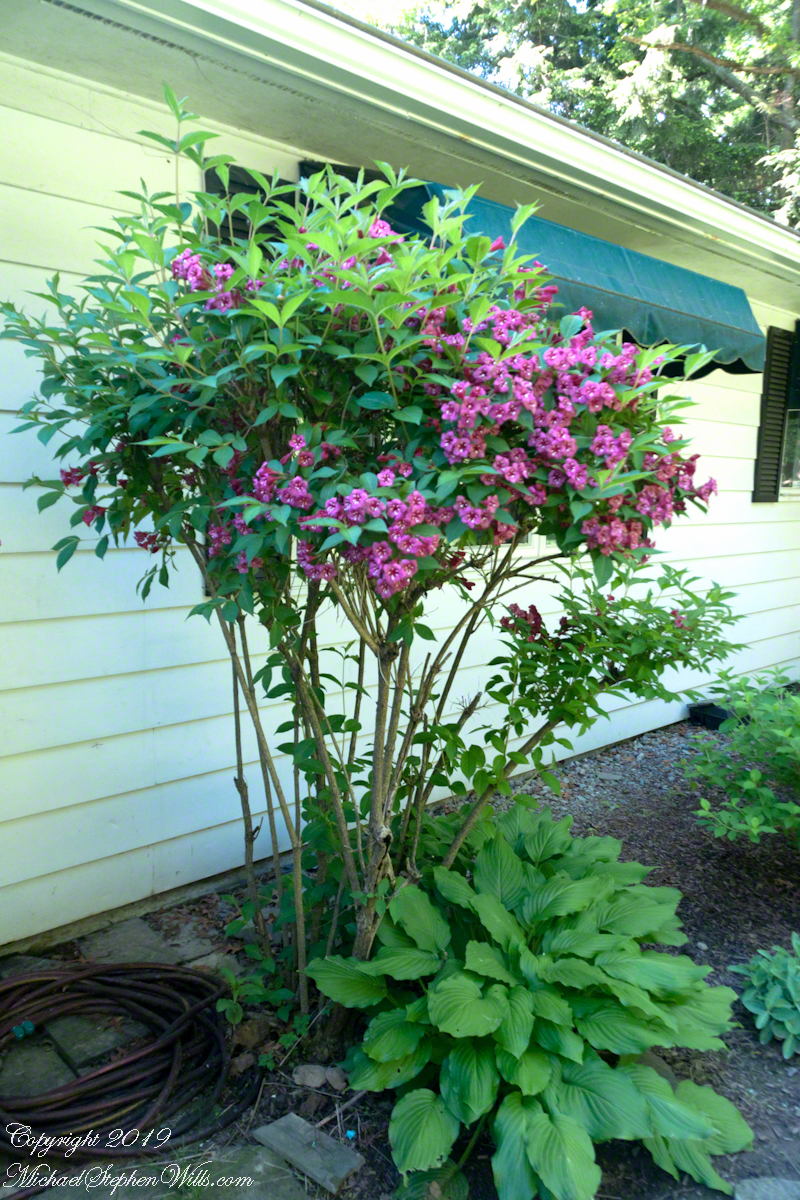
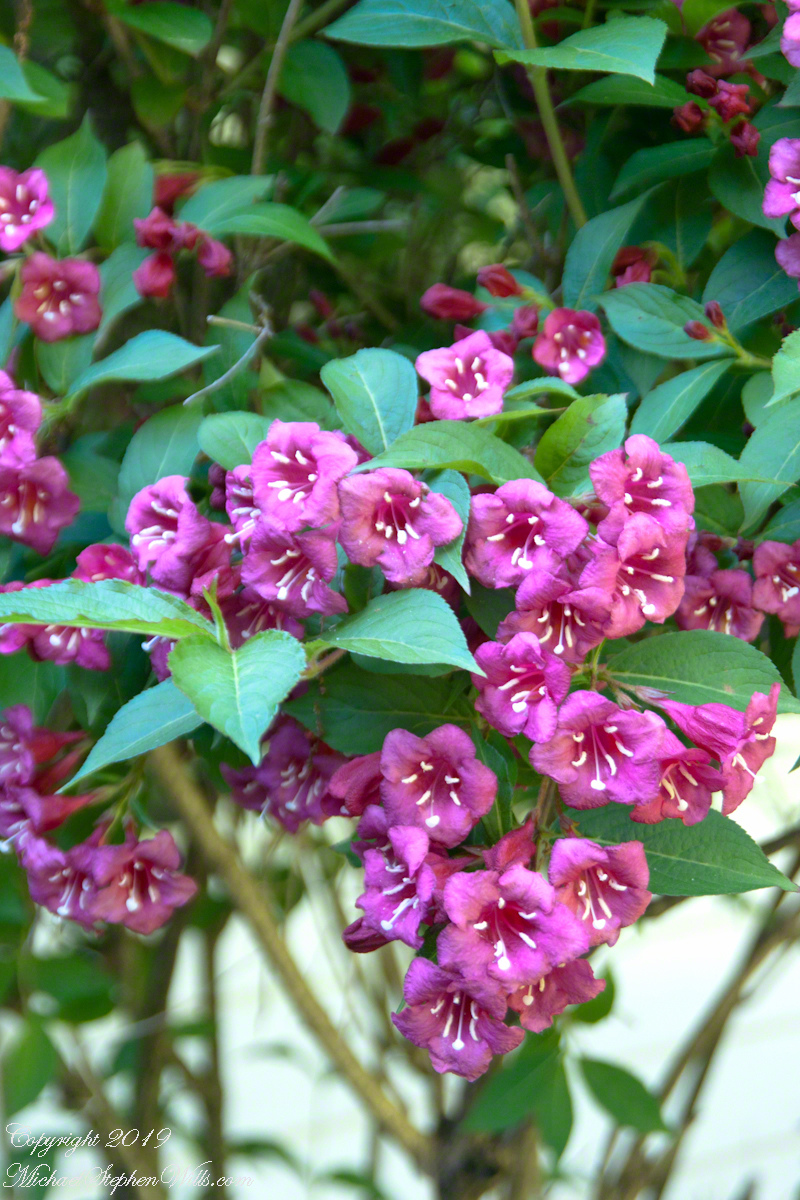
Thank you to the readers whose thoughtful responses appeared these past two days. Pam and I were caring for two grandchildren and, last evening after their Mom picked them up, I sat down with “The Botanical Garden” by Phillips and Rix, Volume I (2002, Firefly Books, Buffalo, New York and Willowdale, Ontario) and a sprig of the leaves and flowers and narrowed the choices to the genus Weigela of the family Caprifoliaceae.
Native to Asia (China, Korea, northeastern Siberia, and Japan), it was cultivated in France in the late 19th Century and is popular in cold climates, where it does well. These plants have been outside the kitchen window of our home for as long a Pam can remember (back to the 1960s).
I don’t know the exact species, it may be a hybrid of several. What identifies it is the overall growth pattern (tall, though we prune it down so the kitchen window view is not obstructed), the leaves (shape, come in pairs on opposite sides of the branch, tip is pointed and edges have teeth), the flower (tubular, 5 petals, 5 stamen shorter than the petals, 1 simple style with a capitate stigma). “Capitate” means it is round and on top of the style like a head. “Style” is an extension of the ovary though which fertilization by pollen happens. Ours is not fragrant, though some are.
SONY DSC
Weigela is the family name of a early professor of Botany (and Chemistry, Pharmacy, Mineralogy) for the university town of Greifswald on the Baltic Sea. There is a botanic garden and arboretum associated with the university and, I suppose, a specimen of the plant was collected for the garden where it is scientifically characterized by the professor.
Copyright 2019 All Rights Reserved Michael Stephen Wills
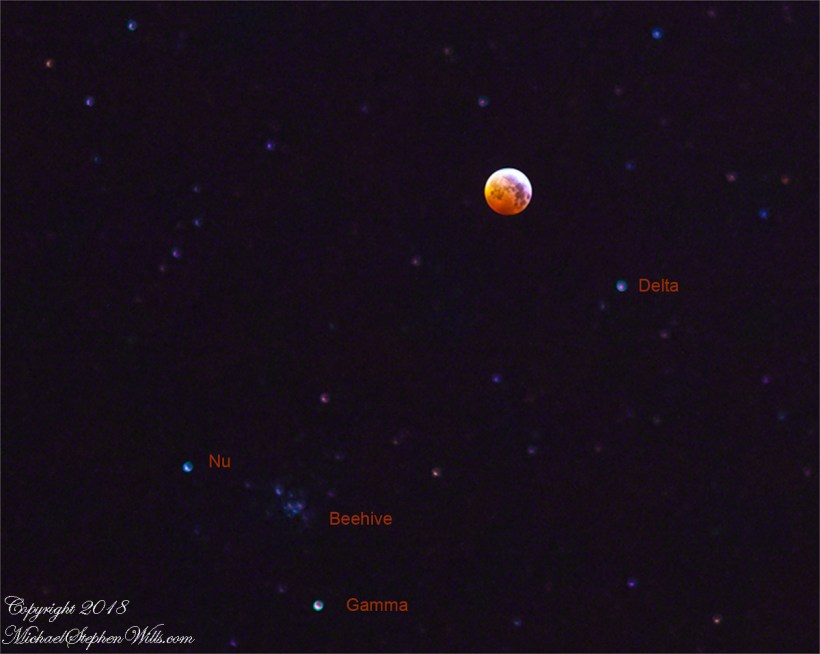
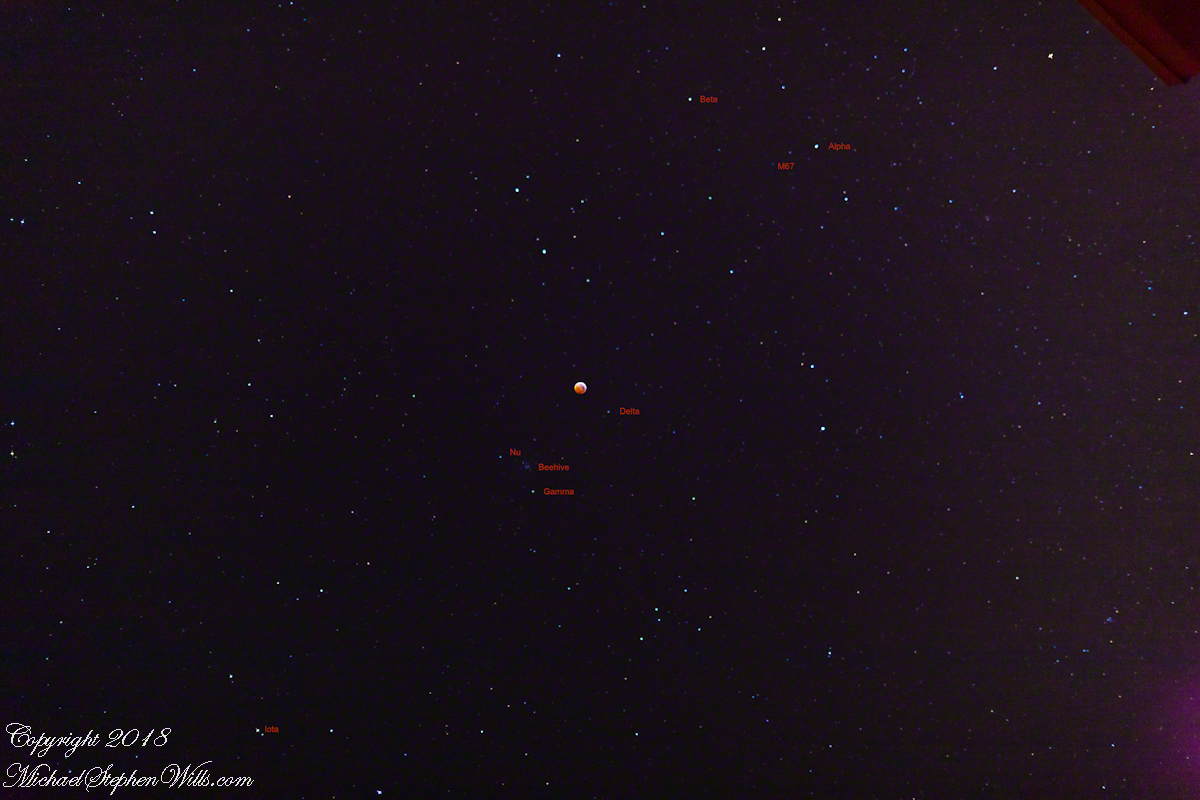
You will find I replaced photographs in the original post and well, all the major elements of Cancer are labeled. Here is an explanation of the new elements.
You can now trace the “Y” constellation pattern, with Alpha and Beta Chancri (Latin for “of Cancer”) the two claws and Iota the tail. Both elemetns of Iota, a visual binary star system, are there. They are wonderful viewed with a telescope. Near Alpha is M67 (Messier Object 67), another galactic cluster of gravitationally bound stars. It is quite faint in this photograph.
Total Lunar Eclipse and Surrounding Sky with labels for primary element of the Cancer constellation
Enter your email to receive notification of future postings. I will not sell or share your email address.
Copyright 2025 All Rights Reserved Michael Stephen Wills









 Michael Stephen Wills Photography