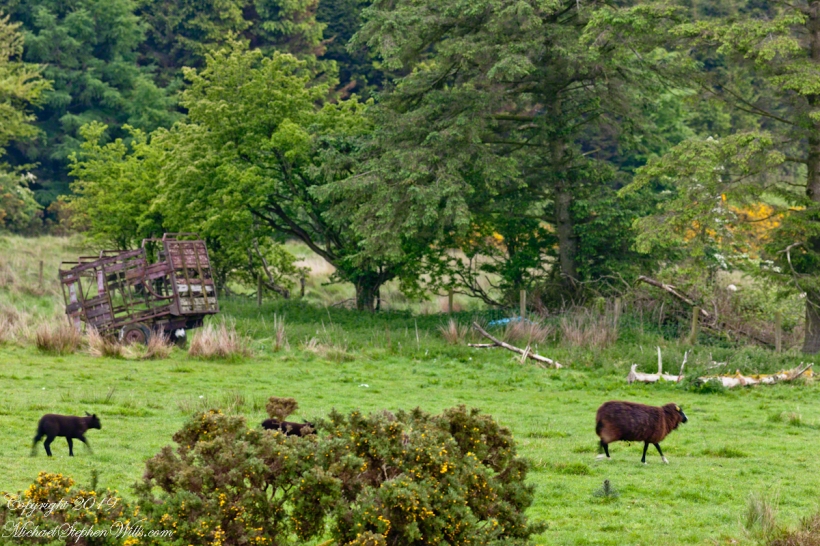
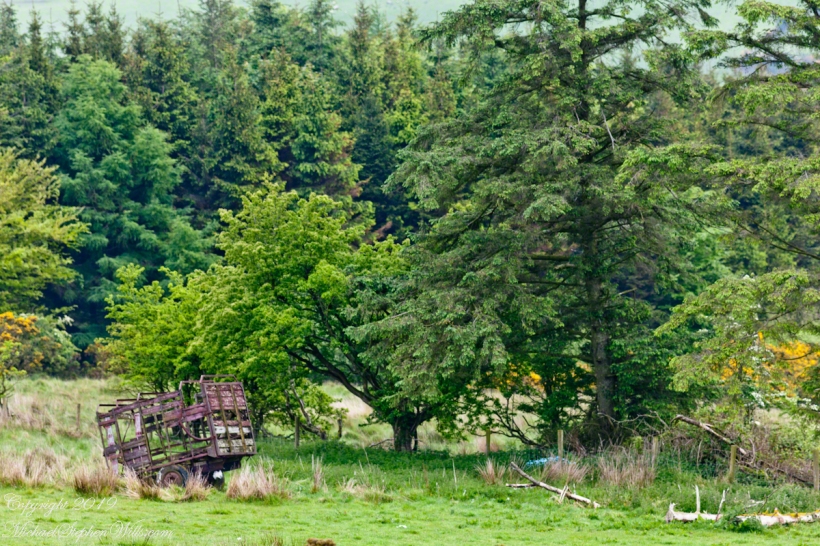
Quickly moving sheep pass the hay wagon on May morning, early. A great start to this week.
Click photograph for a larger view. To do this from WordPress Reader, you need to first click the title of this post to open a new page.
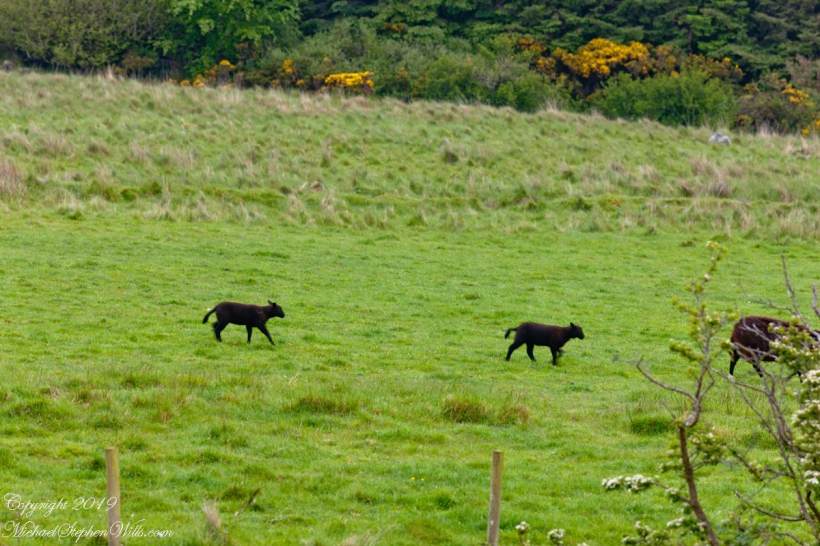
Ewe, Lambs with abandoned hay wagon.
This mountainside pasture is grazed by a flock of sheep alongside a long unused farm wagon. Slievenaglogh Townland, Cooley Peninsula, County Louth, Ireland.
This is the fifth of a series using the Canon EF 200mm f/2.8L USM lens.
Here is a recap of recent posts with the 200 and 24 mm lens. Can you tell the difference?
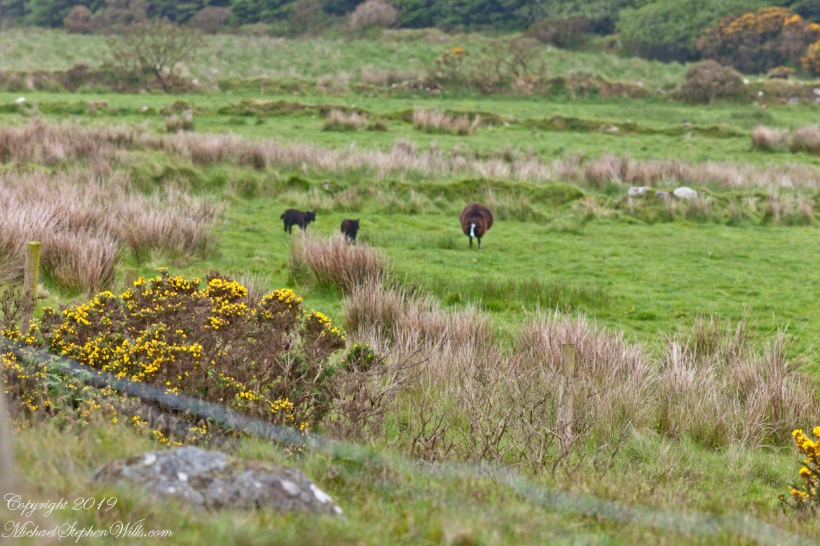
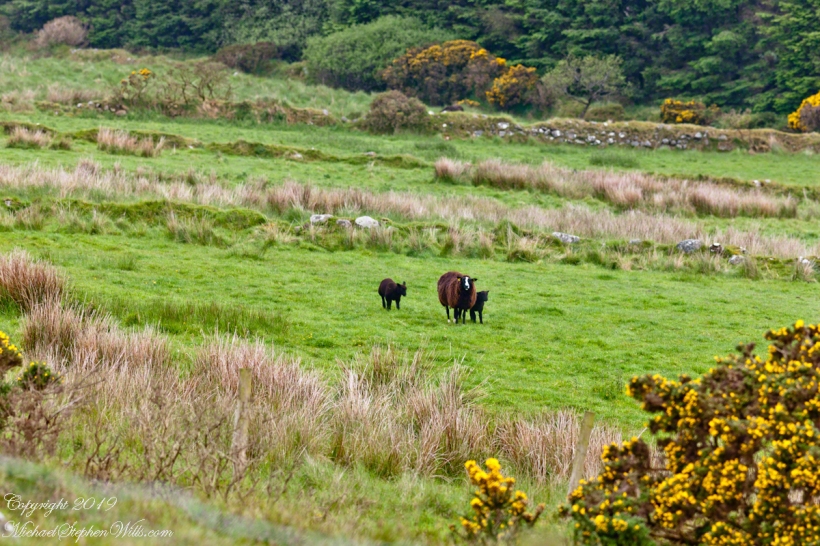
This breed may be a Balwen Welsh Mountain sheep, as it fits the description. When the ewe caught sight of me, she hightailed it for cover, the lambs followed.
Click photograph for a larger view. To do this from WordPress Reader, you need to first click the title of this post to open a new page.
Ewe and Lambs
The Balwen is bred for meat and that is the rule in this area, the lambs are sold.
The description is of a black color with a white blaze on the face, four white “socks” and white on the tail. This individual is missing a white tale, so might be a Shetland and even more so as the others of the herd are white (Shetlands are a variety of colors), Shetland is common and the other rare.
These are on the hillside of Slievenaglogh Townland, County Louth, Ireland.
This is the fourth of a series using the Canon EF 200mm f/2.8L USM lens.
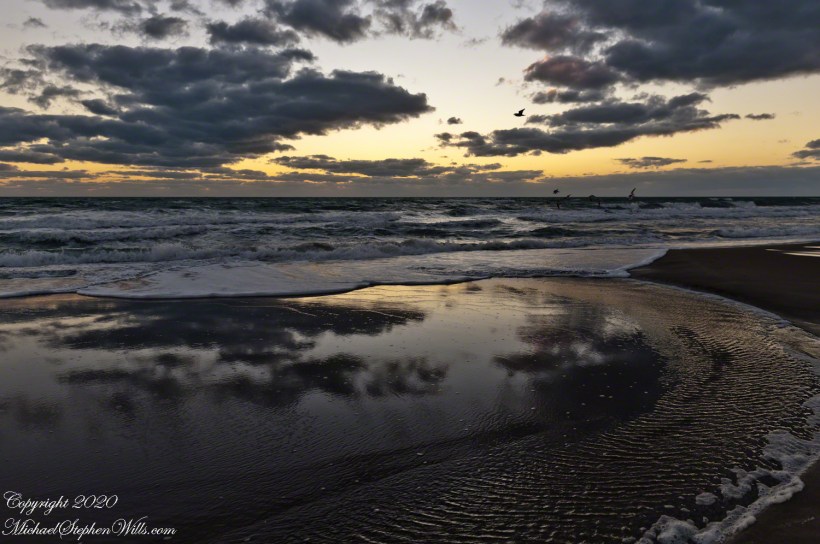
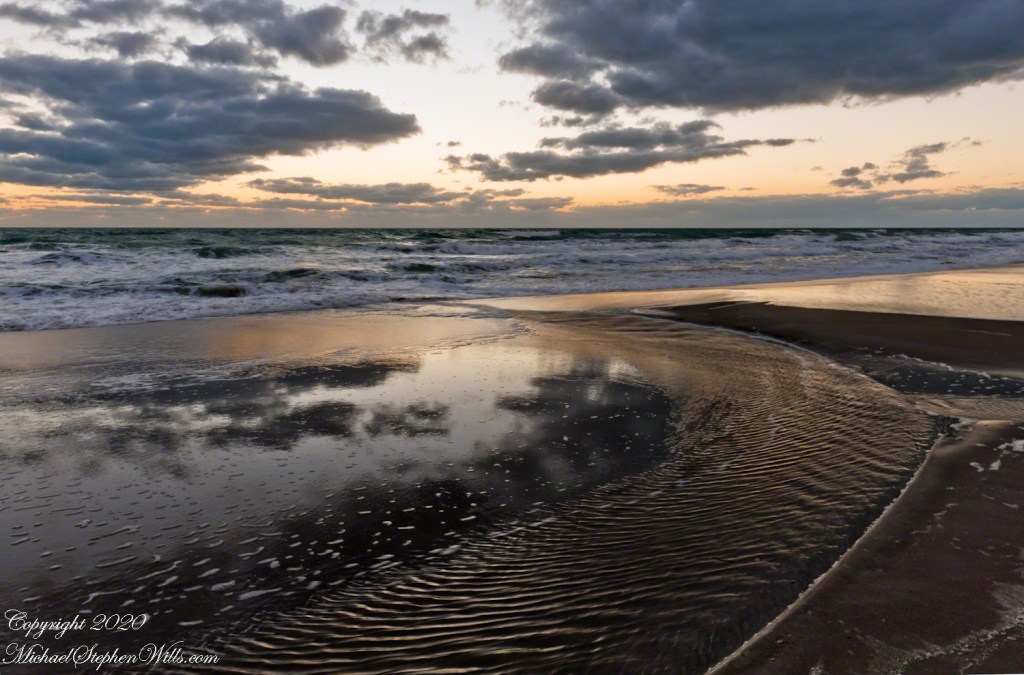
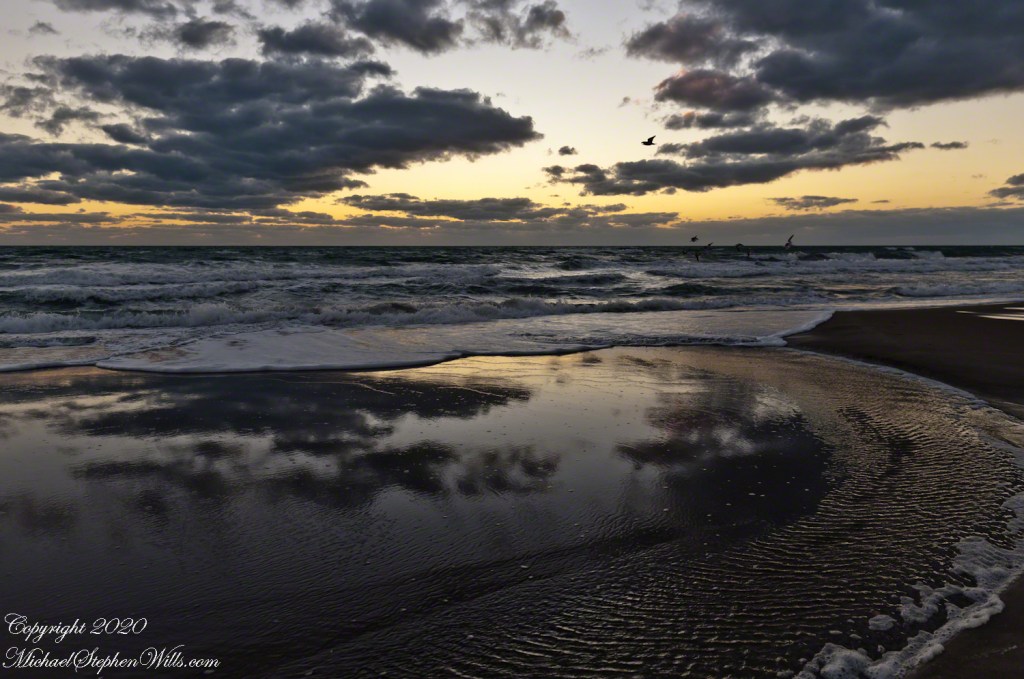
Sunrise for Florida, January, is roughly a quarter past 7 am. Most mornings this year I was on the beach for a morning, pre-dawn, walk camera in hand. This day, the 9th, the clouds were promising, no to heavy on the horizon and scattered, cumulus clouds otherwise. For the promise I brought the full frame Canon EOS-1Ds Mark III, Canon lens 24 mm f/1.4L II USM fitted with a graduated .6 ND filter sitting on top of a Manfrotto BeFree Carbon fiber tripod.
A graduated neutral density filter has a portion shaded with gray to produce a “2 stop” difference in exposure between the darkest shade and clear glass with, between, a gradual feathered reduction in shade. In this way, the dark foreground and bright sky are balanced.
A carbon fiber tripod folds into a compact shape. At about 2.5 pounds it fits into a suitcase with the least weight possible for a reasonably stable platform. Using it, I am able to take a sequence of frames of the identical scene, changing camera settings as I go along.
Click photograph for larger image. To do this from WordPress Reader, you need to first click the title of this post to open a new page.
Exposure: 1/6 sec at f / 22, Focal Length: 24 mm, ISO 125
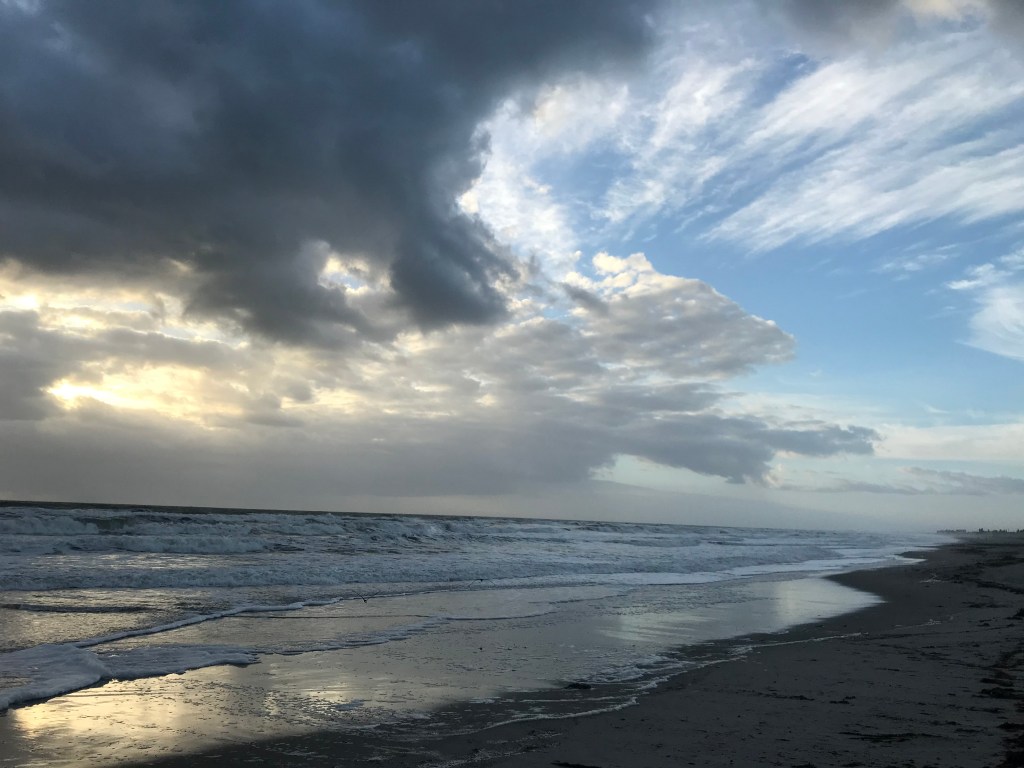
Sunlight, low in the western sky, was perfect for mirror-like reflections in the retreating surf.
Exposure: 1/250 sec at f / 4.0, Focal Length: 24 mm, ISO 125
In a few weeks, after the “Slievenaglogh View” series now underway, I will present a week of these images moving from pre-dawn to sunrise.
A slide show of these images. Use is to compare the effect of longer vs shorter exposure time and f-stop.
Exposure: 1/250 sec at f / 4.0, Focal Length: 24 mm, ISO 125
Exposure: 1/6 sec at f / 22, Focal Length: 24 mm, ISO 125
Copyright 2020 All Rights Reserved Michael Stephen Wills
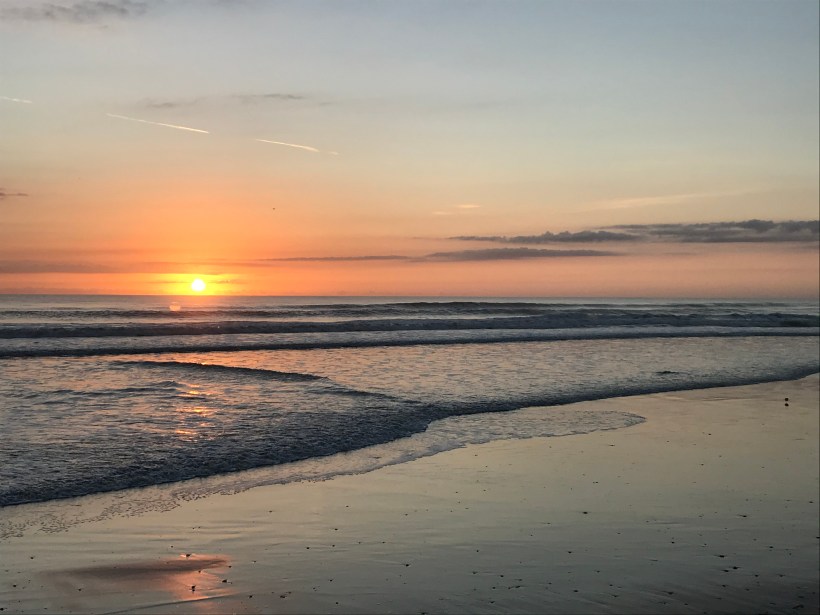
The sun disk broaches the Atlantic Ocean horizon on a clear January morning.
Click video to start. To do this from WordPress Reader, for best results first click the title of this post to open a new page. Ditto for the photograph
Copyright 2020 All Rights Reserved Michael Stephen Wills
There are limitations, certainly, to photographs from that tiny lens on the IPhone 10 (or IPhone X). It captured the moments in this series. I take mine along even with the professional camera bodies, lenses and tripod, for this reason. These images are the unprocessed files.
Click photograph for a larger view. To do this from WordPress Reader, you need to first click the title of this post to open a new page.
Copyright 2020 All Rights Reserved Michael Stephen Wills
Click photograph for the expanded view. To do this from WordPress Reader, you need to first click the title of this post to open a new page.
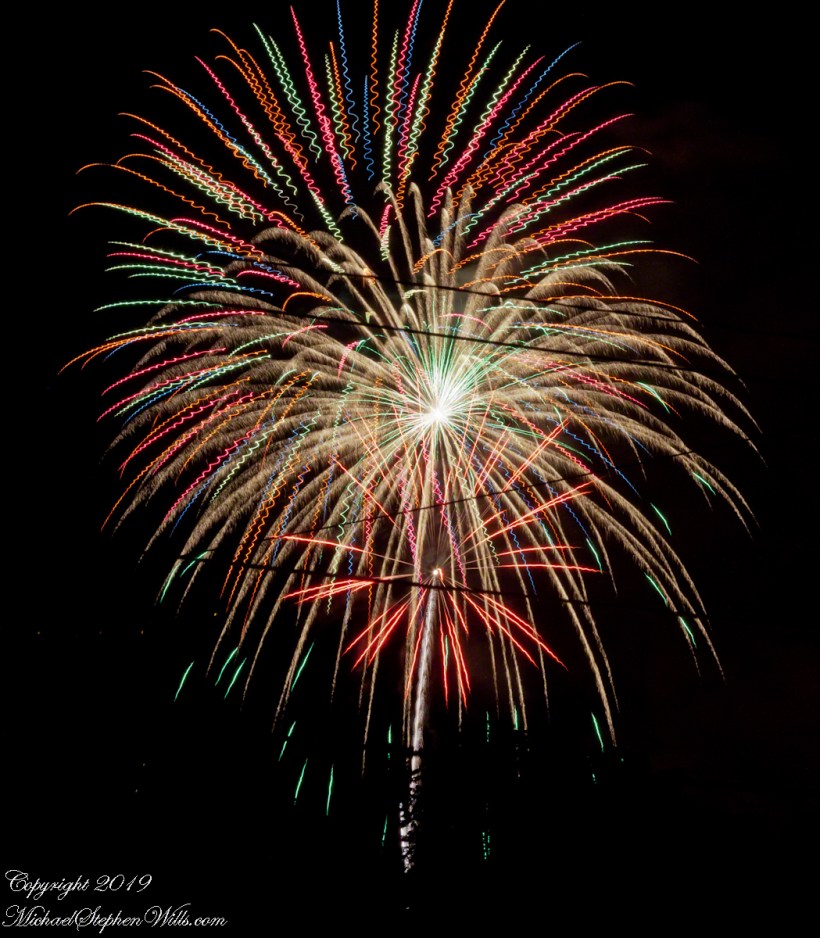
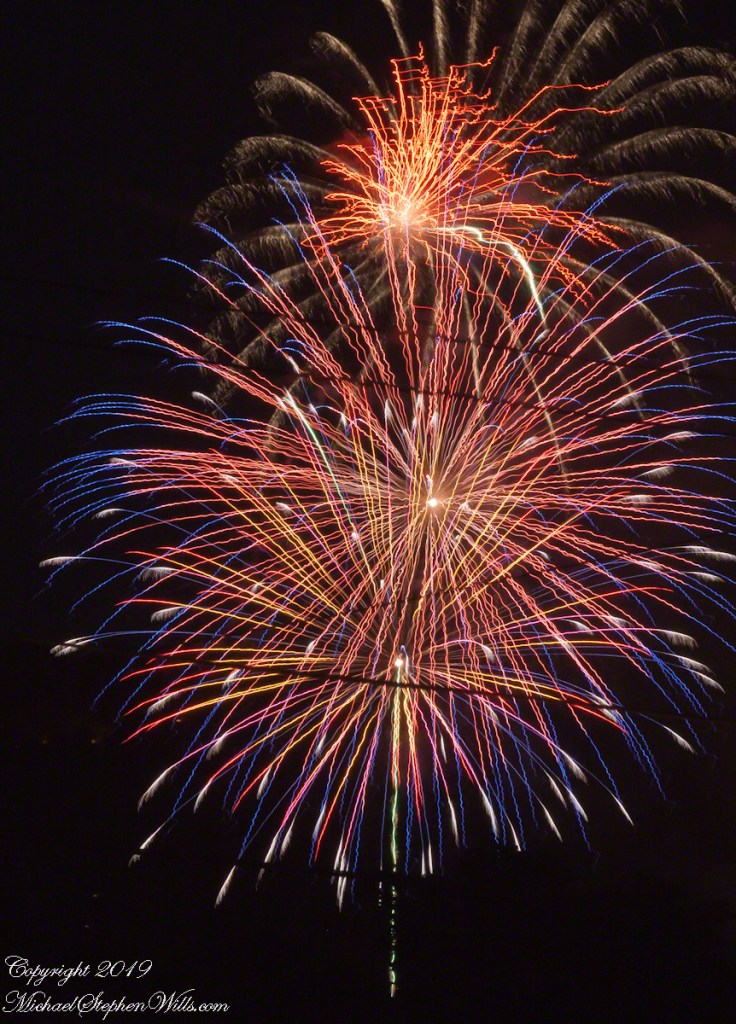
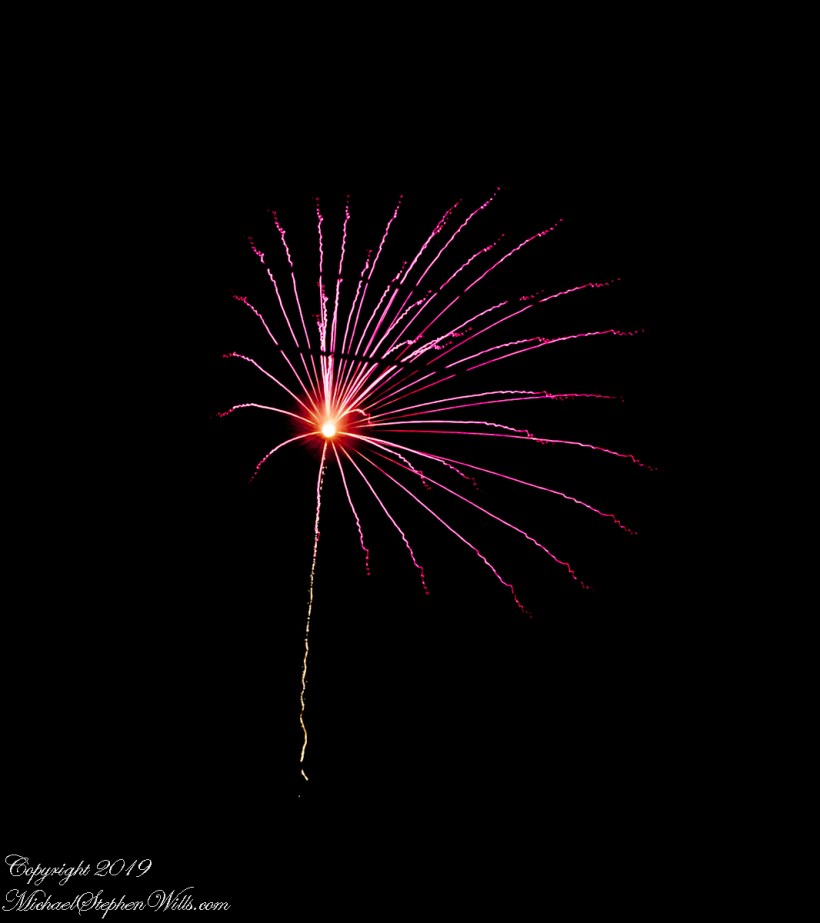
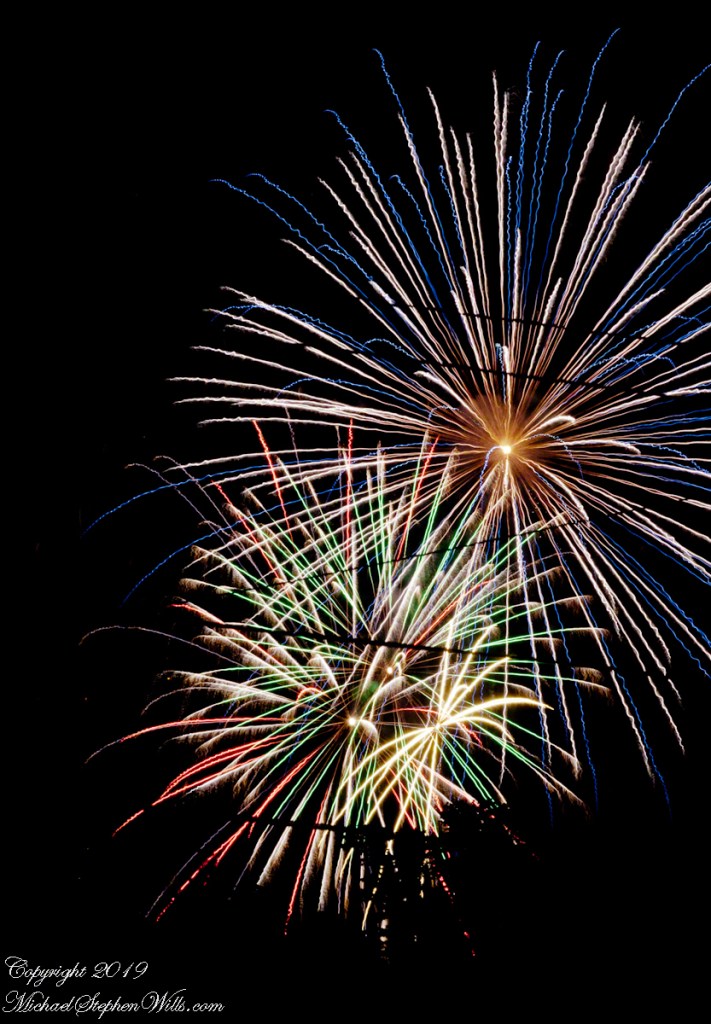
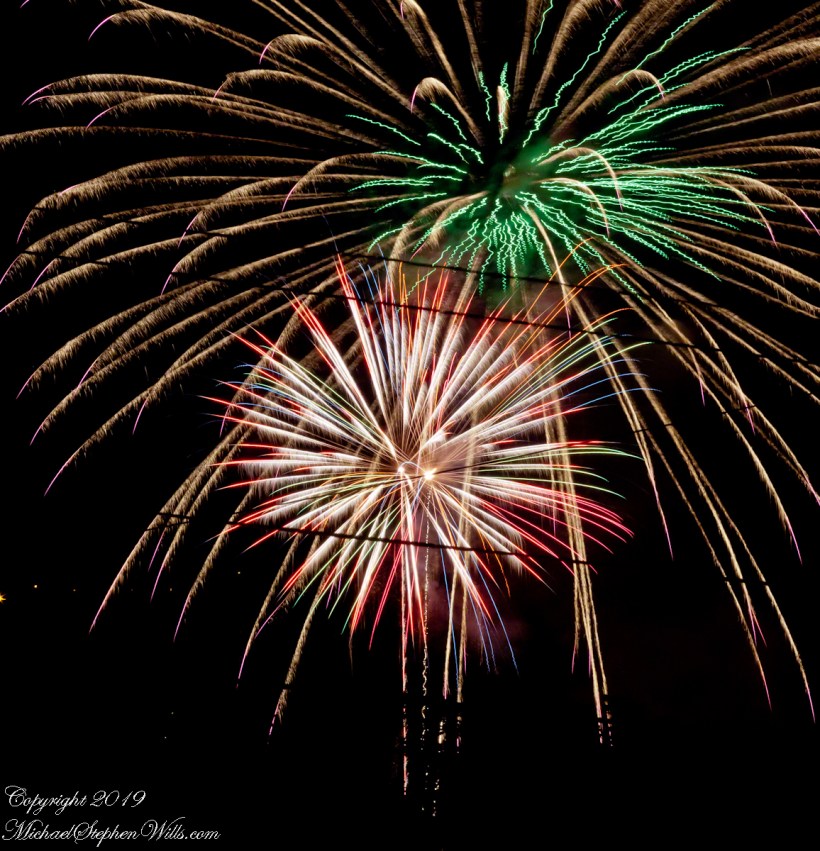
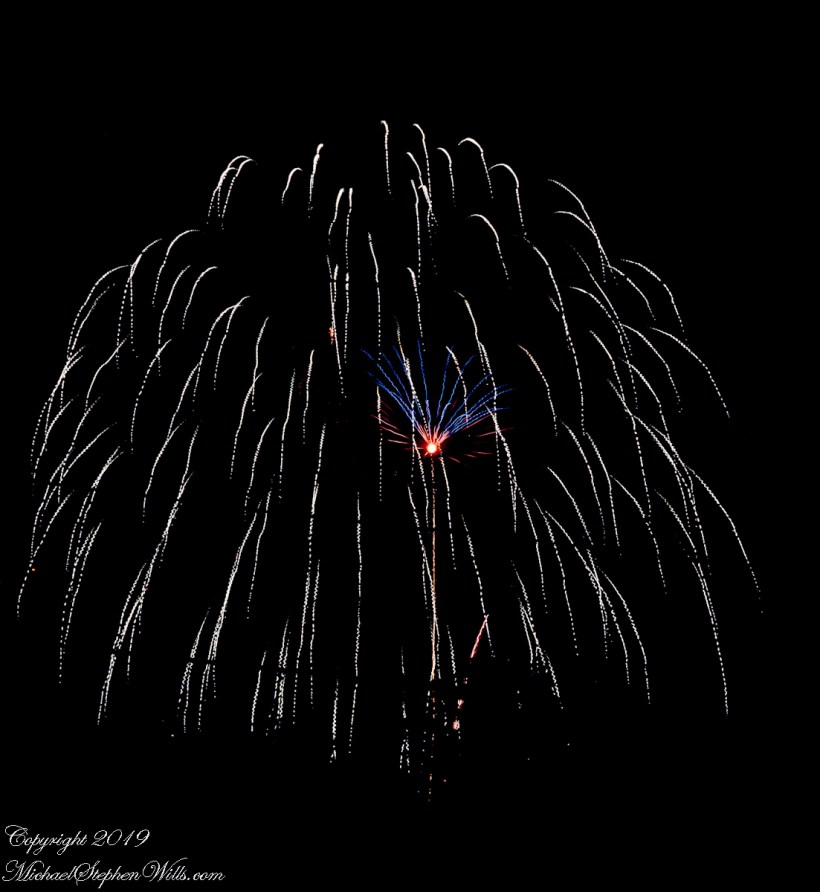
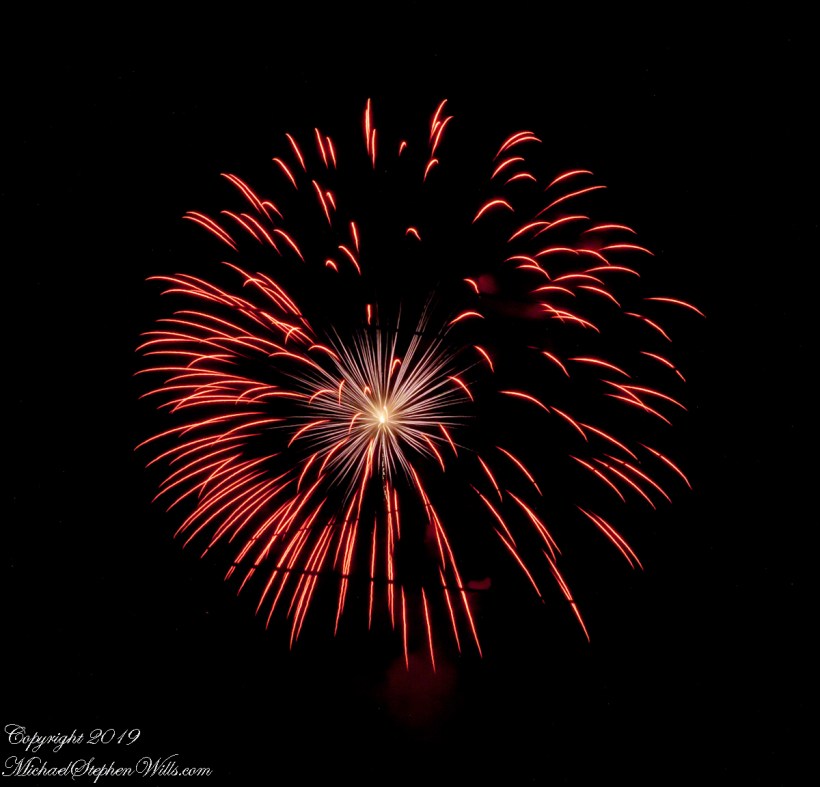
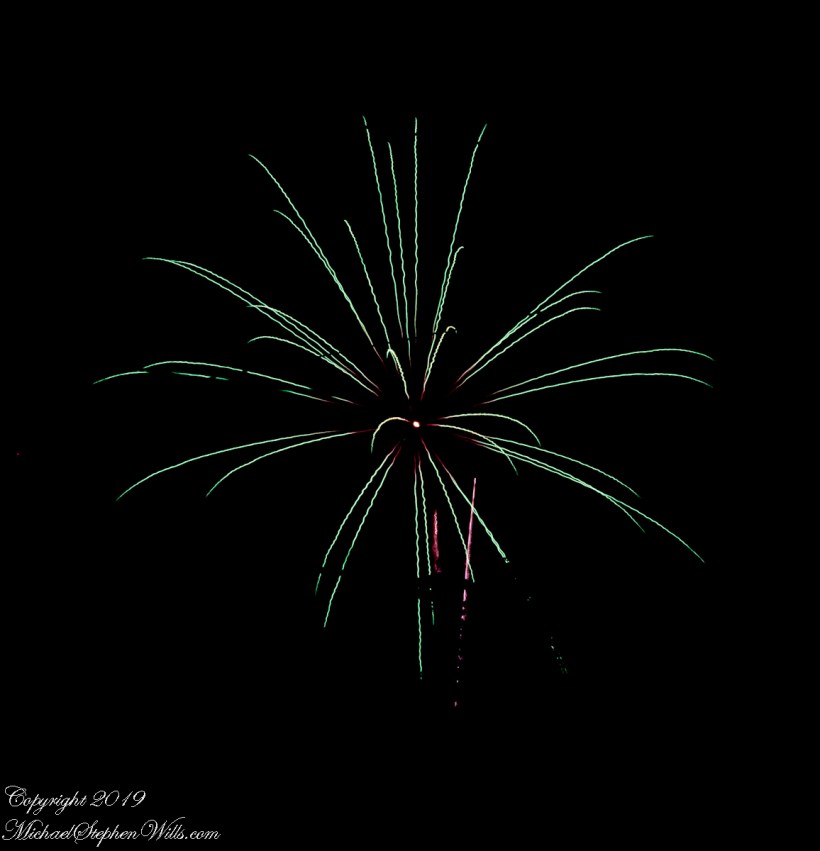
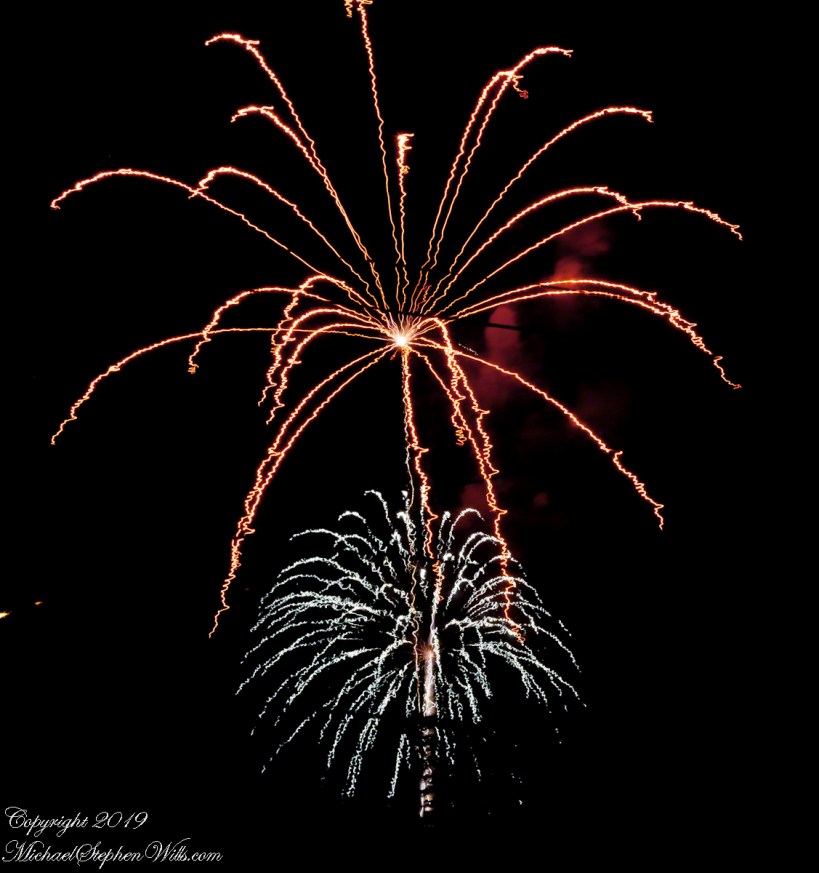
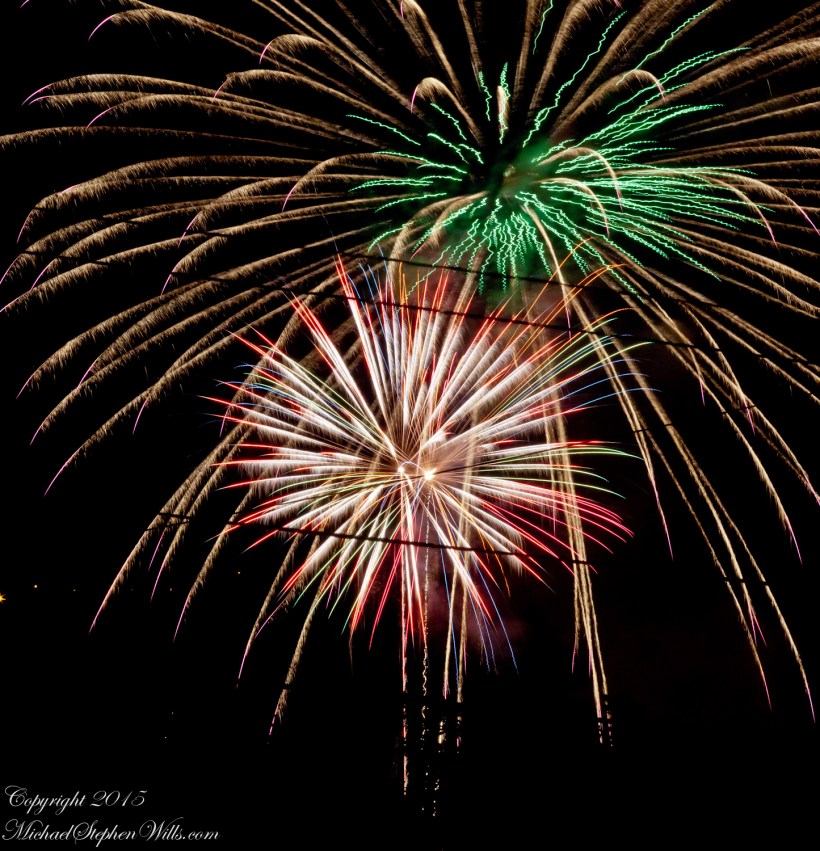
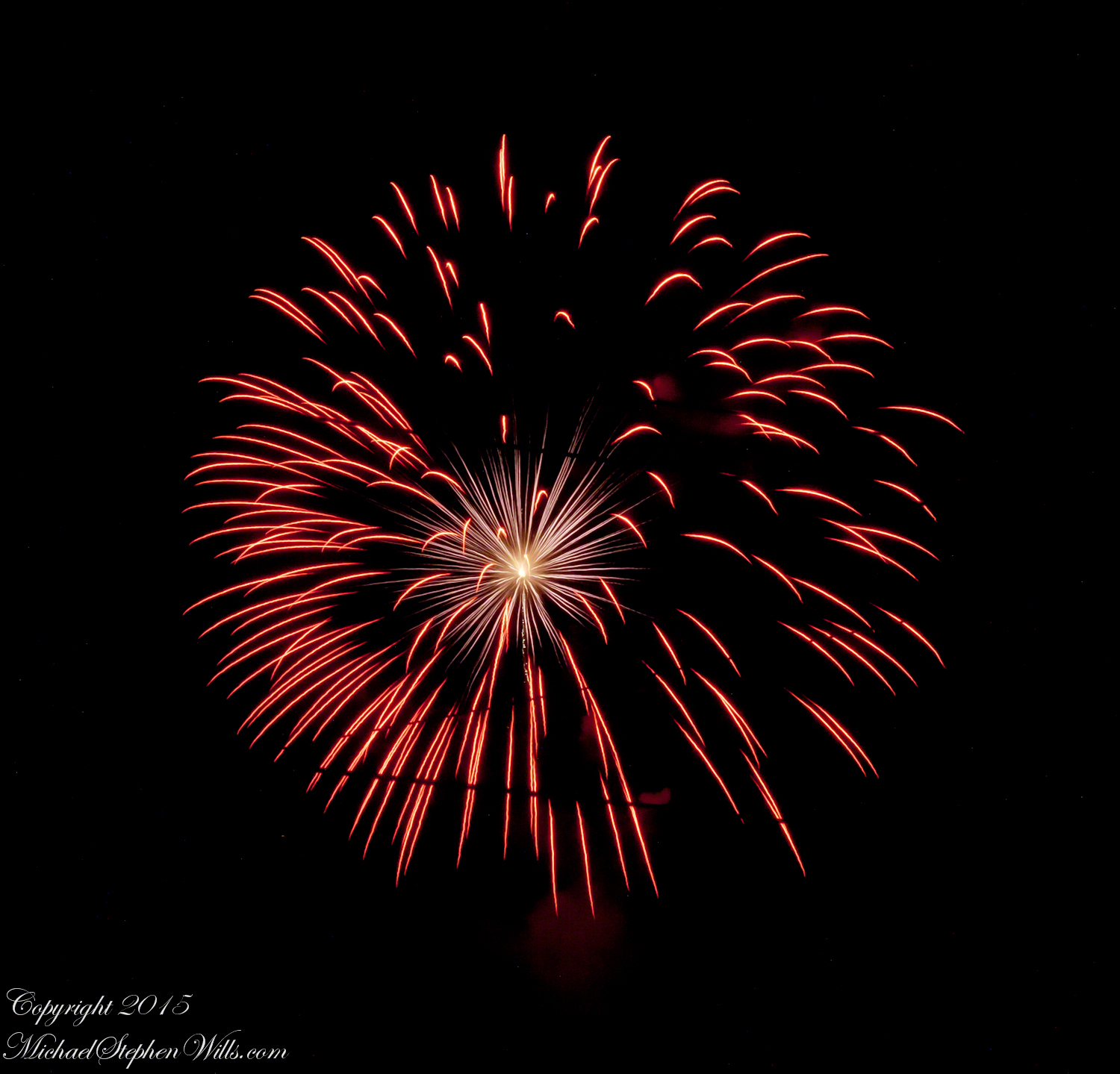
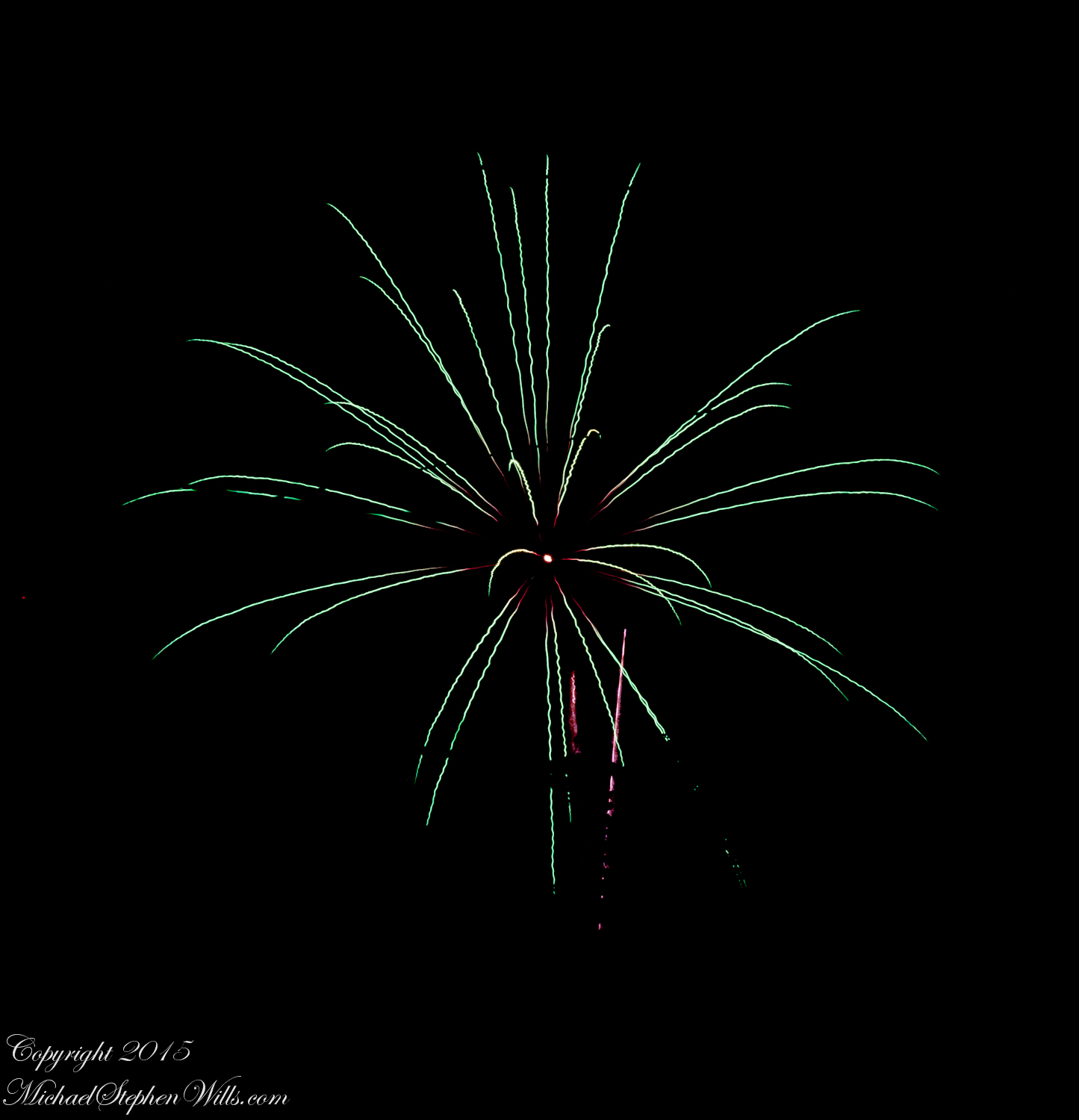
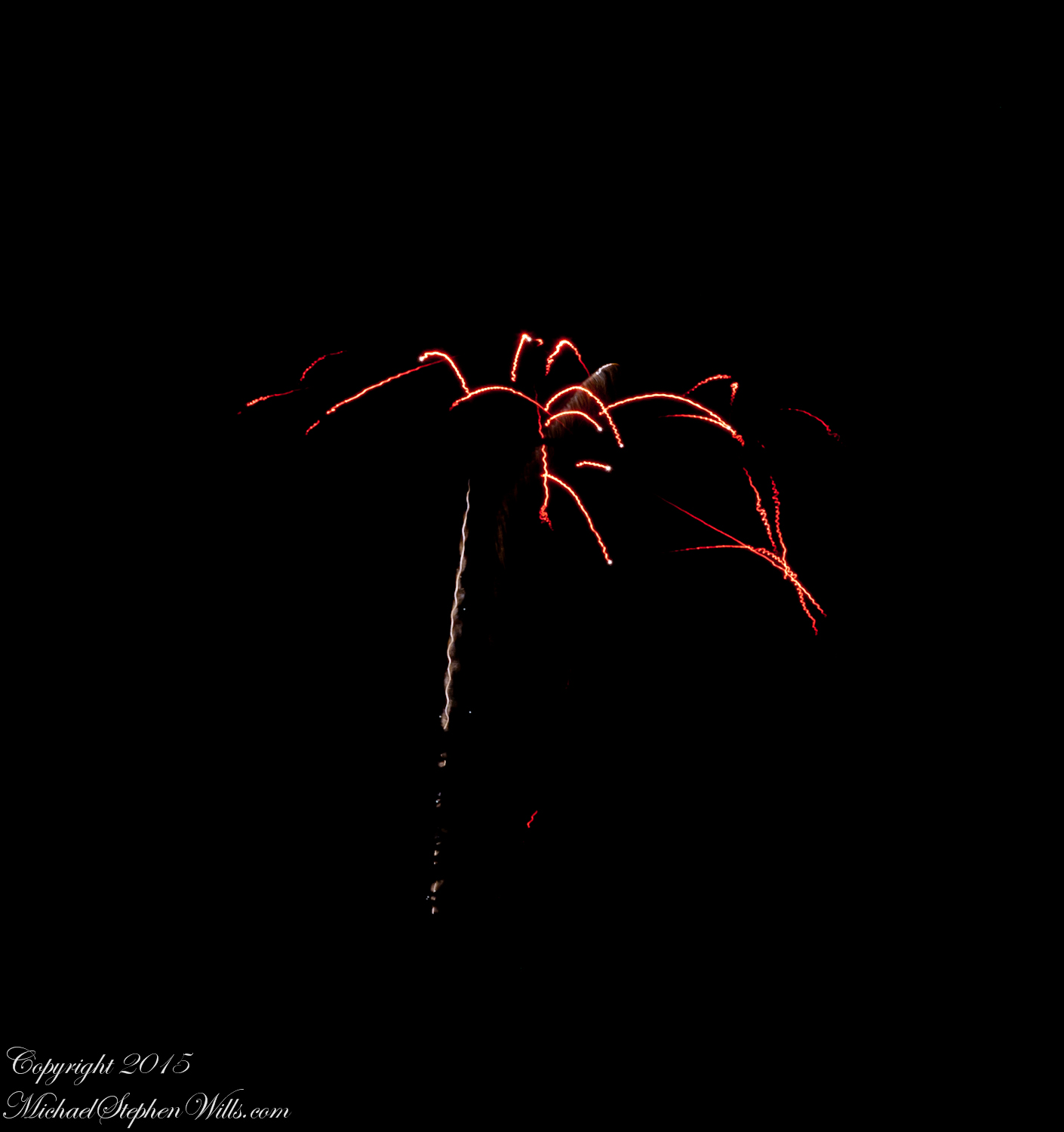
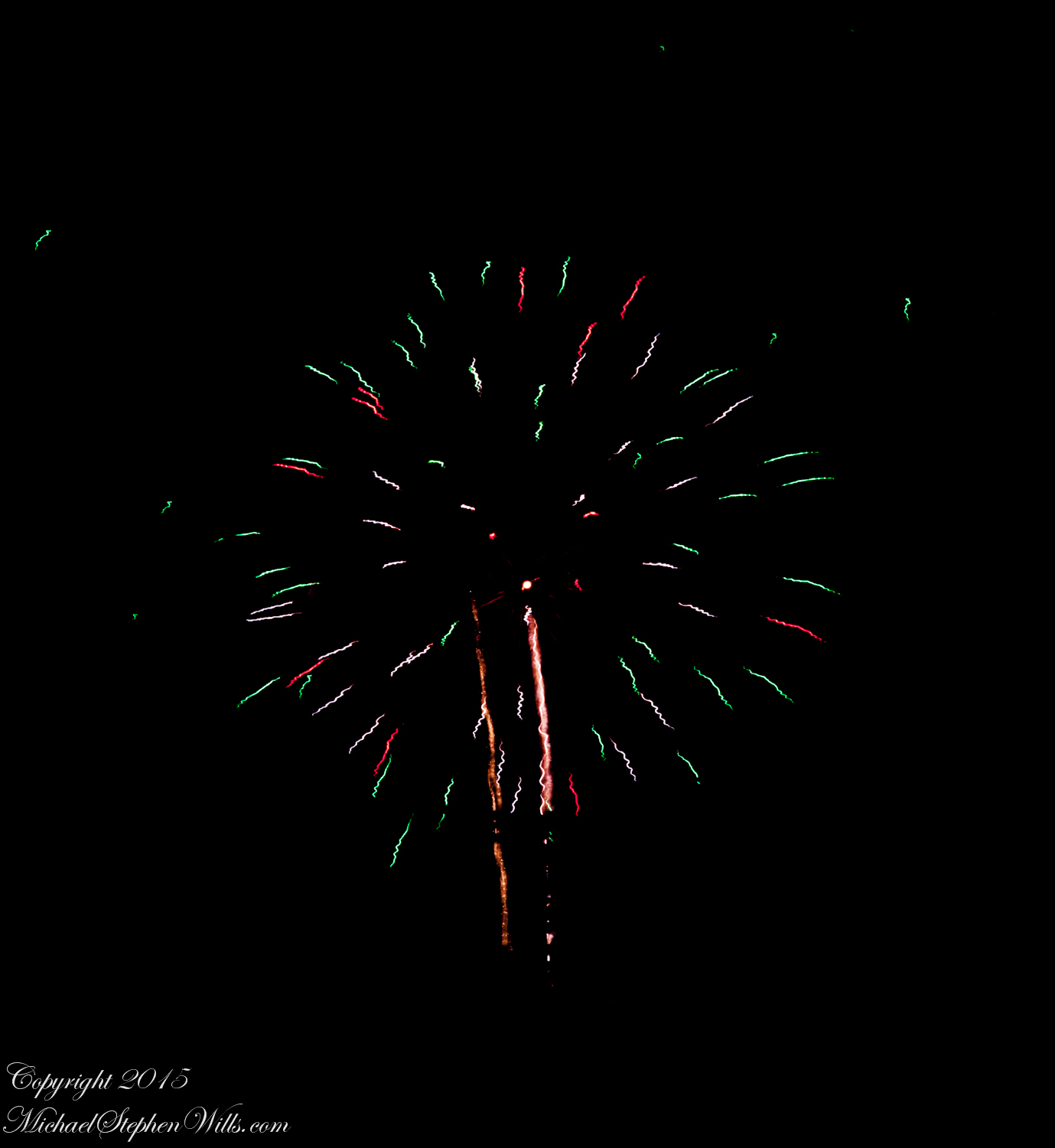
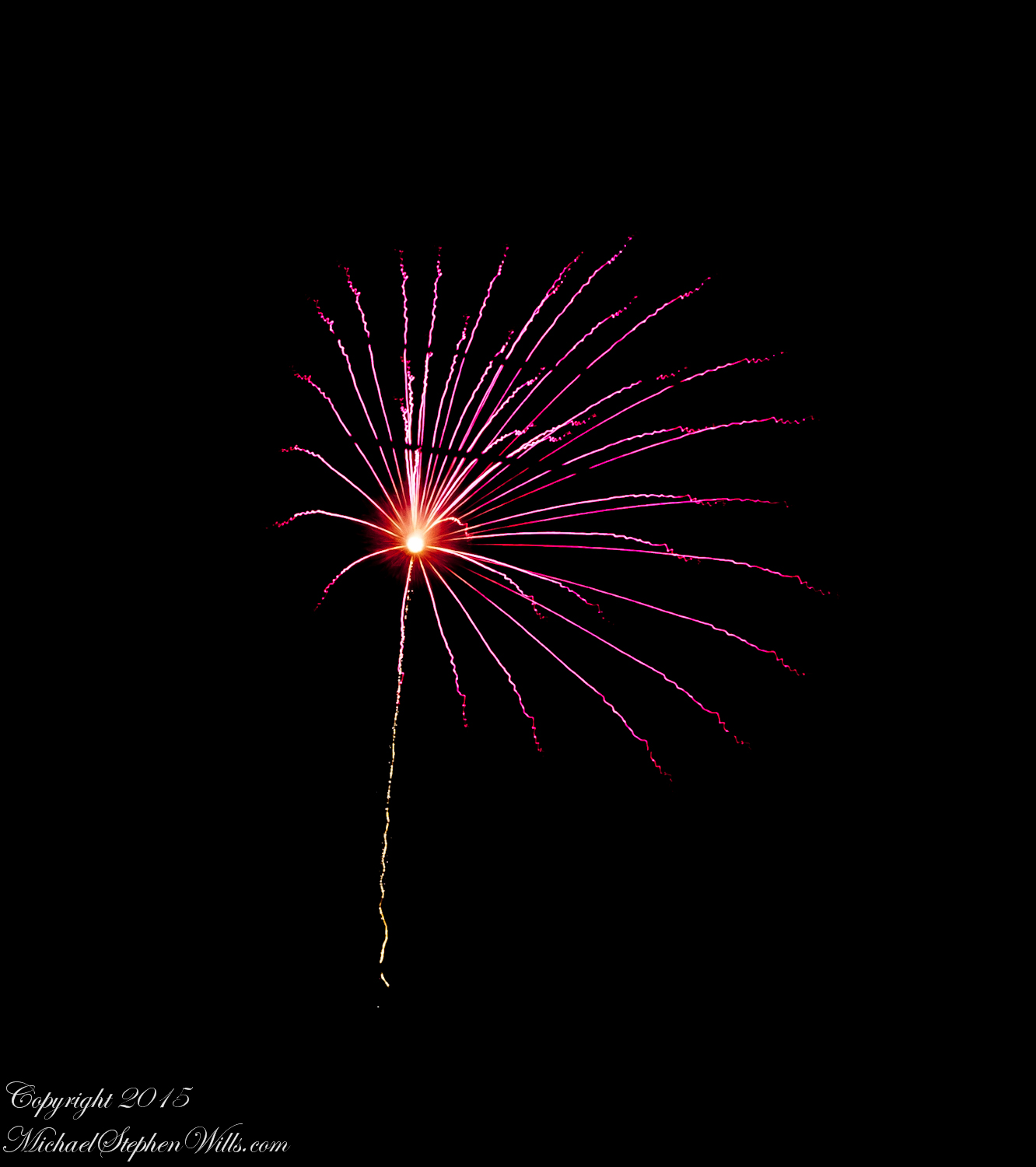
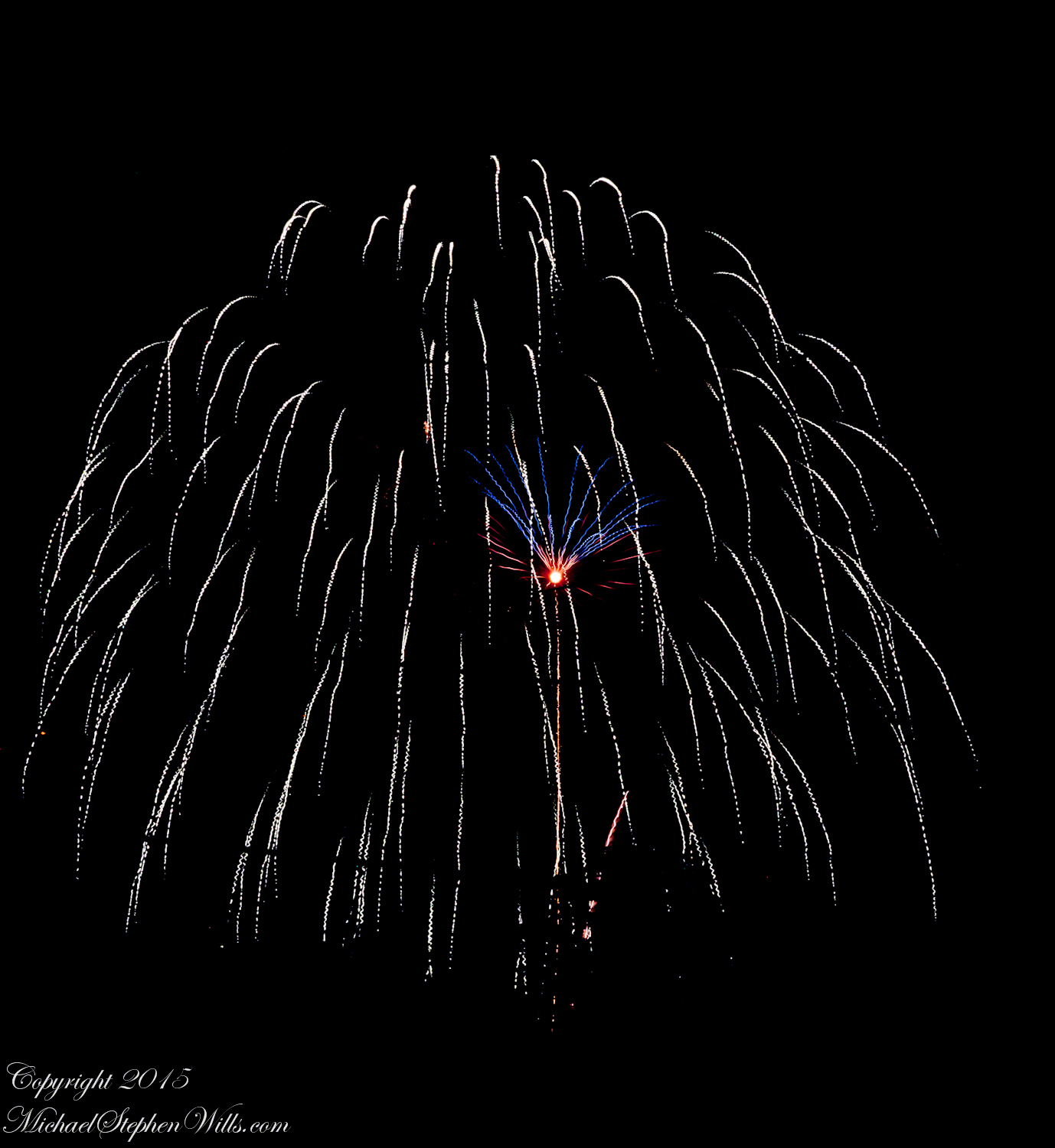
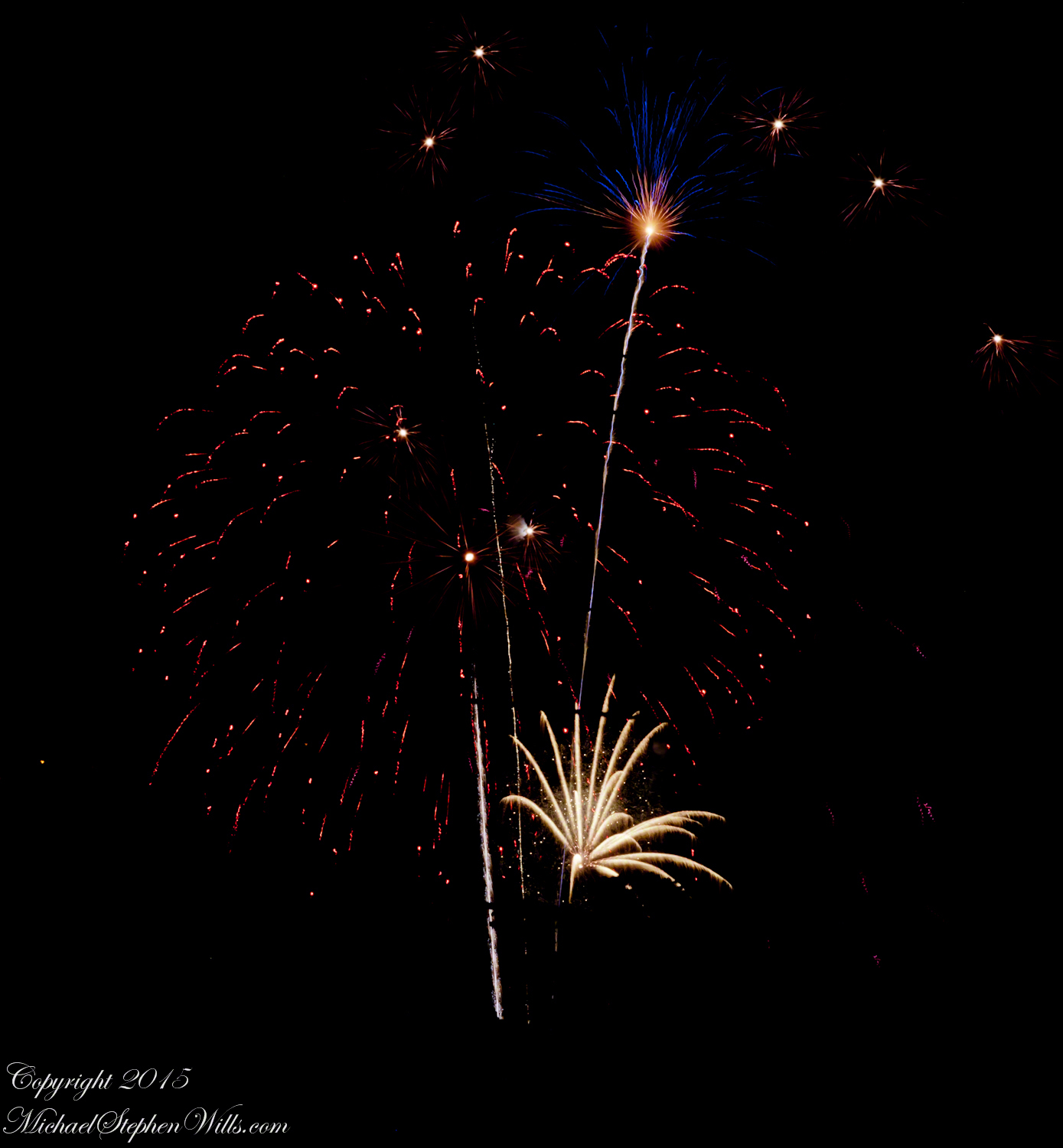
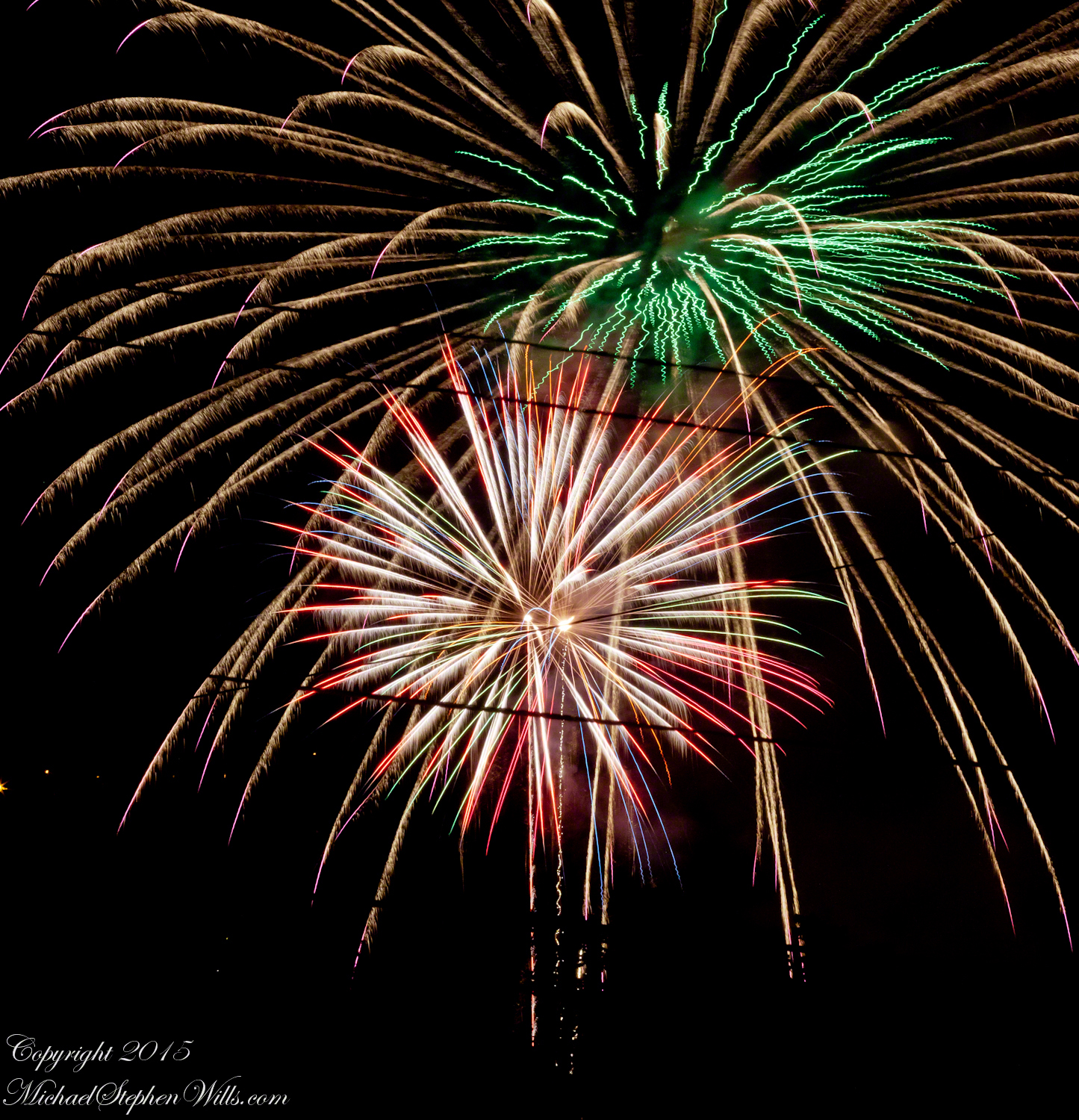
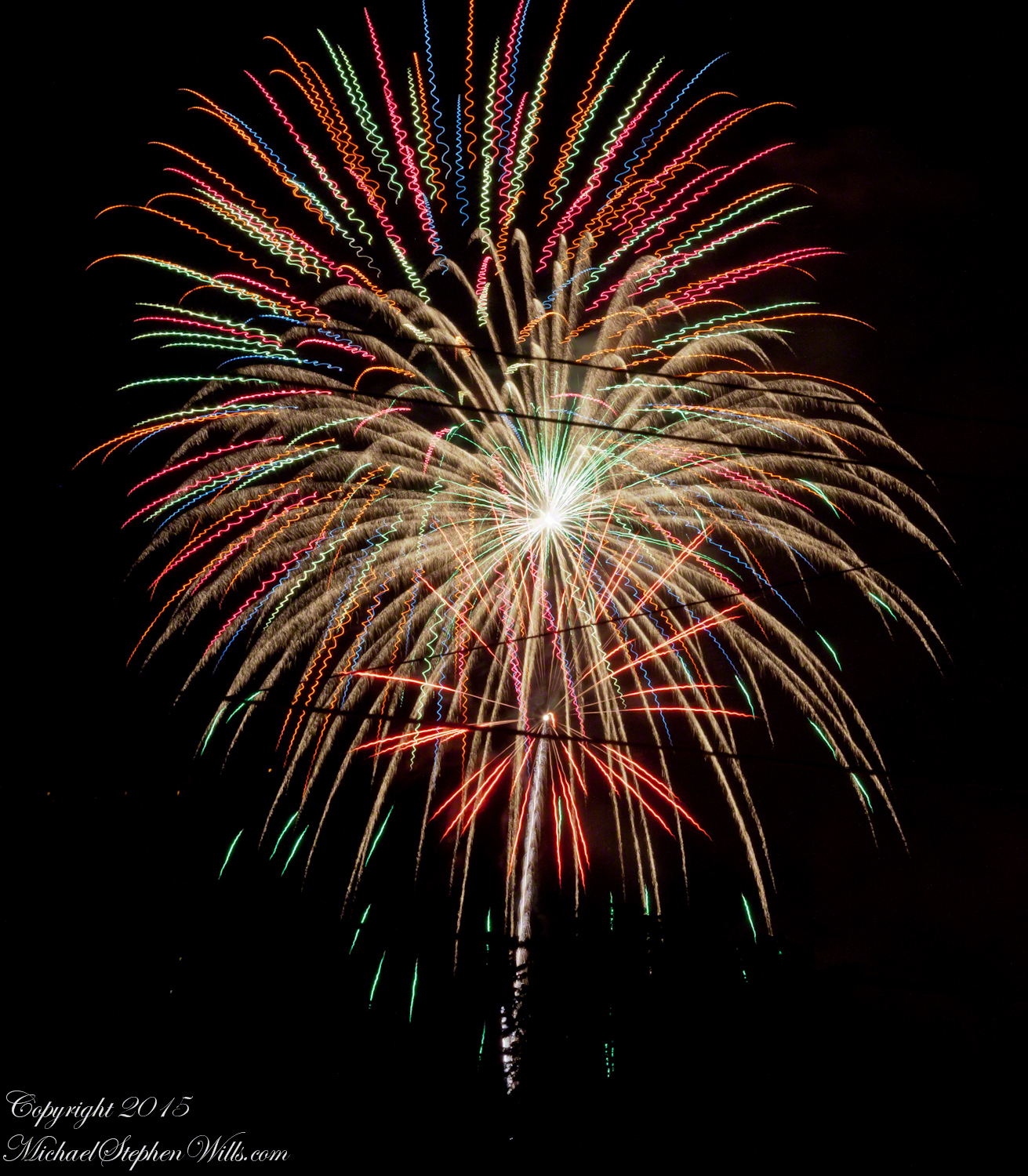
These were captured from the 2015 July Fourth fireworks at Ithaca’s Stewart Park. We have a clear view from our home’s front porch, the view is hampered somewhat by the wires, not registered when viewing but show up in photographs. The best shots, shown above, were from a Canon EF 200mm f/2.8L USM lens, the Canon EOS-1Ds Mark III mounted on a Manfrotto studio tripod with hydrostatic ball head. ISO set to 1,600 and exposure set to 5 seconds. I started each shot when I heard the very first whooosh of the rocket.
Maybe I’ll set up on the roof for the 2020 July Fourth display? If Pam will let me.
Copyright 2020 All Rights Reserved Michael Stephen Wills
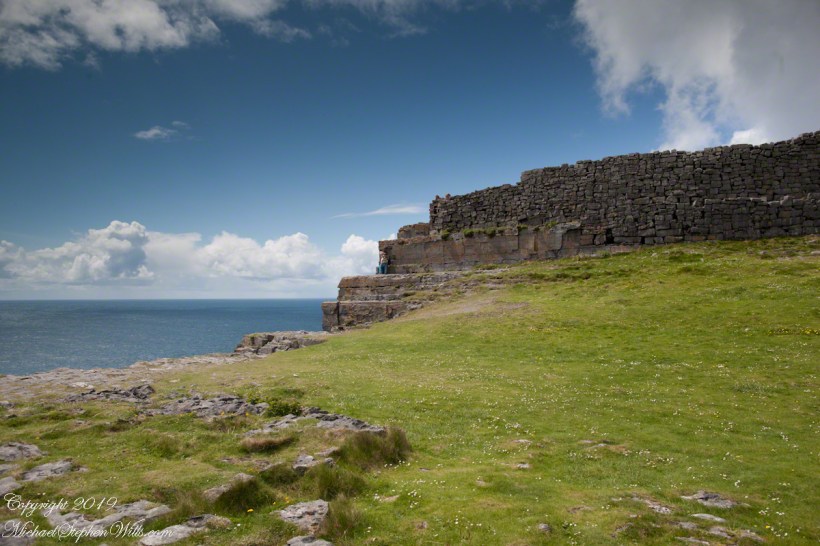
Here is the east side of the inner enclosure wall of Dun Aonghasa (Dun Aengus) where it ends at a cliff edge over the Atlantic ocean.
Visible are the last 60 feet or so of the limestone strata supporting the inner ring.
When first constructed, the inner ring was complete, the western side 1,000 feet from the cliff.. Today’s form of a semi-circle was created by nature when the force of Atlantic Ocean waves eroded the cliff, undercutting the strata.
Look close to see a fracture where the next block of limestone will fall into the waves.
Ancient fort wall with tourists and Cliff Edge of Dun Aonghasa (Dun Aengus)
Wishing a blessed All Saints Day (November 1st) for all my readers.
Here’s a fireworks display to help you celebrate the Fourth of July. Click on any image for a larger view.
Our home on west hill has a great view of the Ithaca fireworks. I had to shoot through overhead electricity wires. Some of the photographs were enhanced to remove the lines.
Click photographs to view larger images as a slide show.