Join me on a frost-kissed journey along the Rim Trail, capturing the transient beauty of falls freed from winter’s grip, where nature’s power remains untamed and vividly alive.
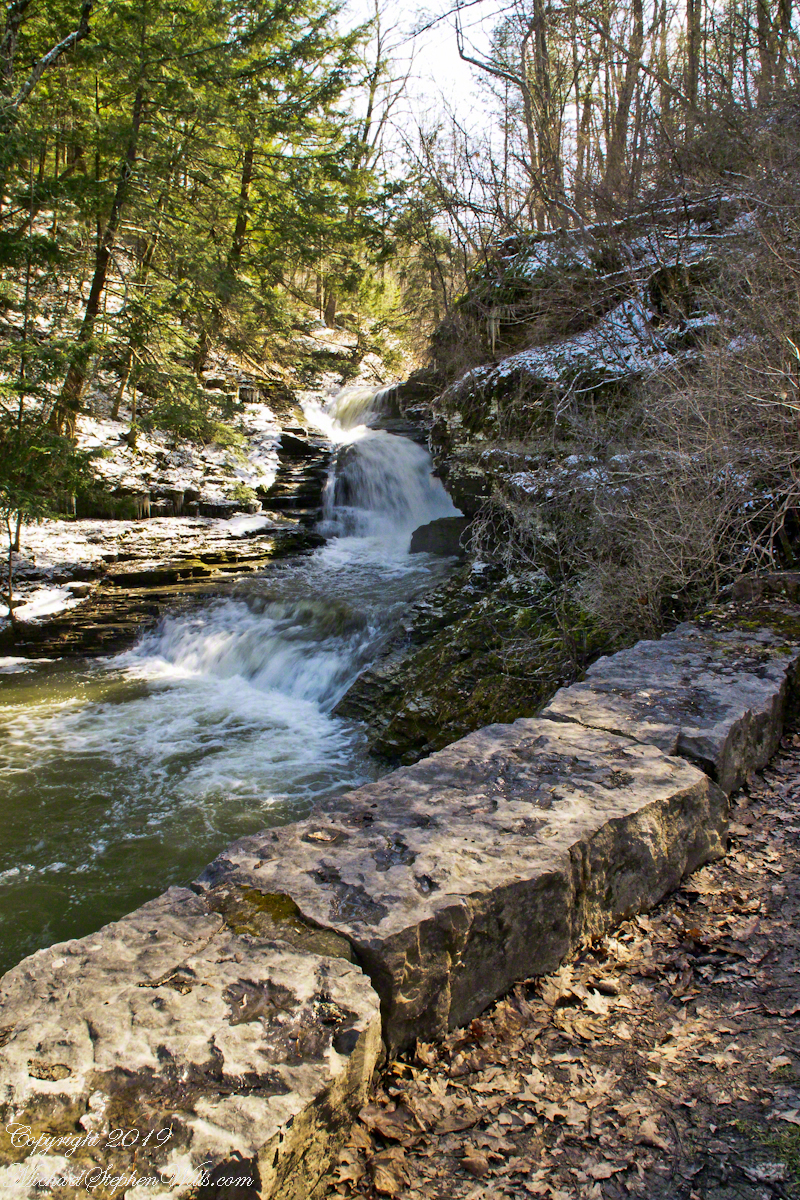
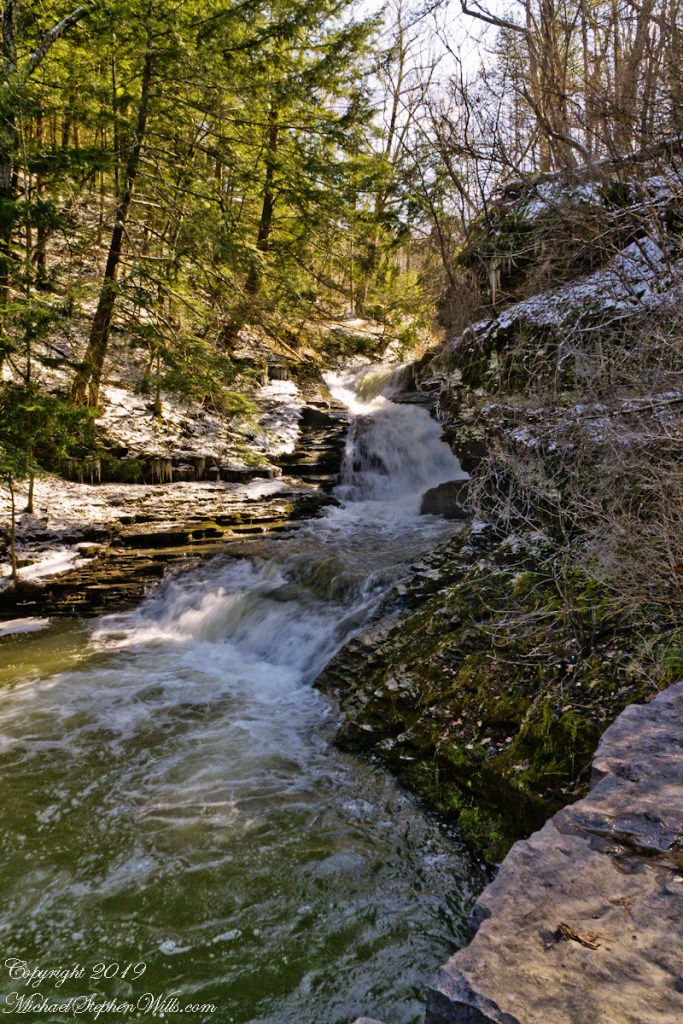
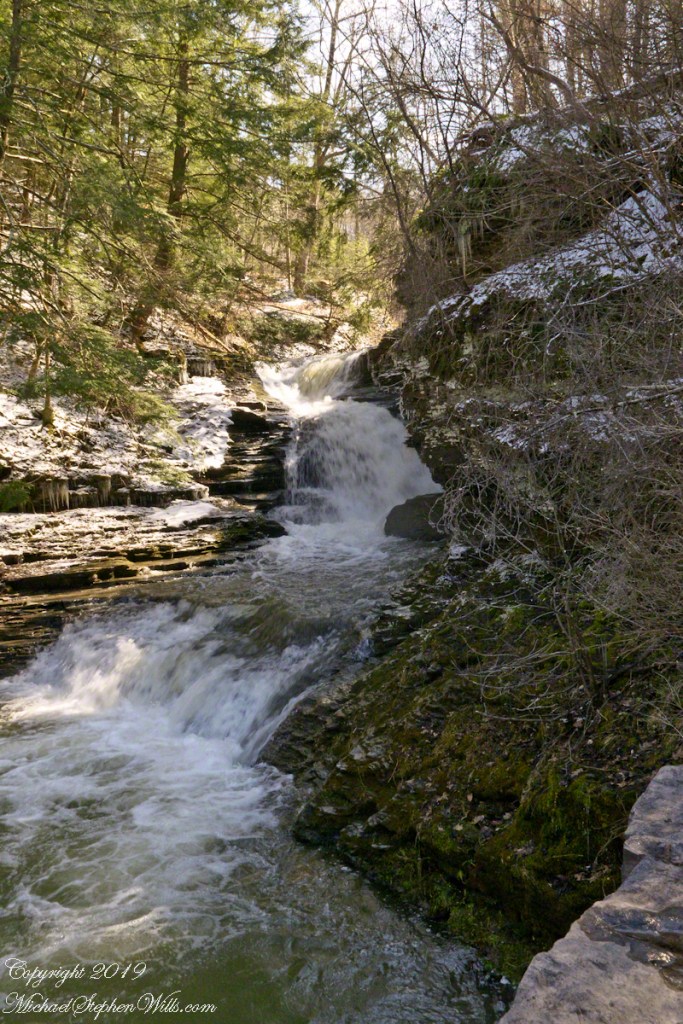
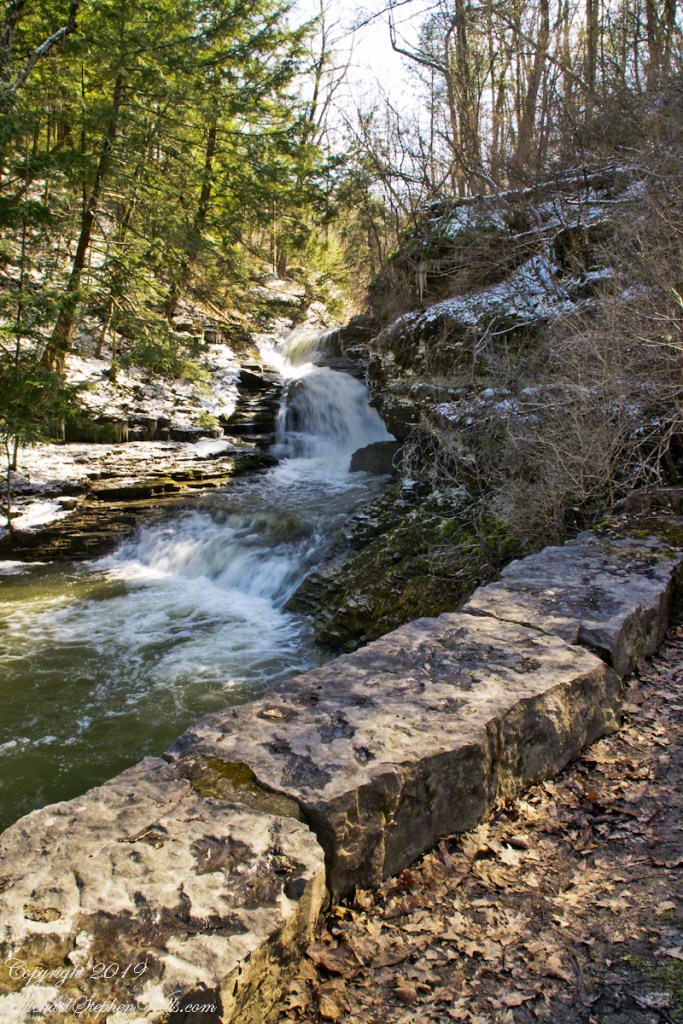
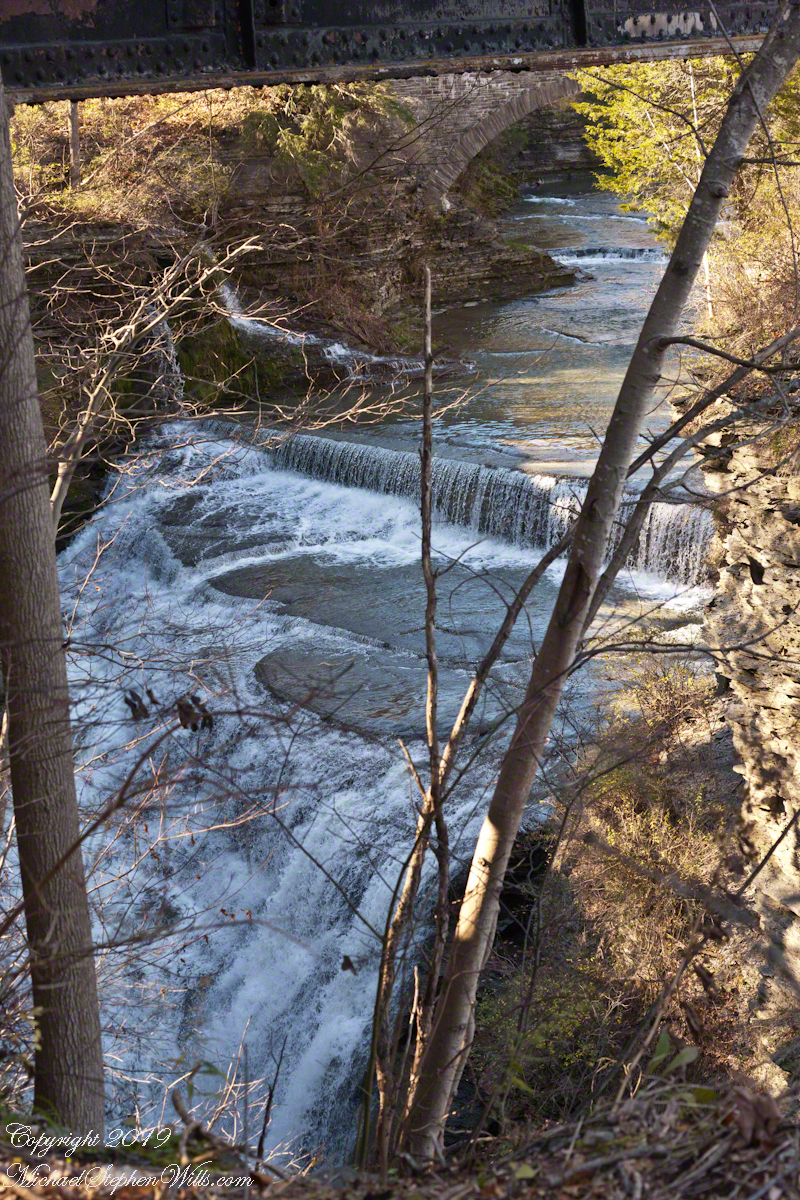
A day the falls run free of ice. On an early spring day, after a sudden frost, we walked the Rim Trail to capture the moment. Here are three captures of the same waterfall, the first visitors to the upper park encounter and the most visited and photographed right off the parking area.
Fish Kill was captured at this point to provide power to grind grain. Today neither nature nor man control the flow. Kill is the old Dutch word for creek.
Click photograph for a larger view. To do this from WordPress Reader, you need to first click the title of this post to open a new page.
Falls by the Old Mill, early spring
I have never counted the waterfalls from this one to the grand sweep of lower falls. The falls are uncountable because no two people could agree on how small a fall to credit.
Of these three versions, i prefer this one for the foreground inclusion of the enormous limestone blocks set to protect visitors from the drop. This scene is challenging photographically, bifurcated as it is by the bright sun over the fall brink. I prefer to shoot these falls early morning, for this reason, before the sun illuminates the area at all. Long exposures required demand a rock solid tripod, as it is just off the parking lot I use my studio Manfrotto for the work. Here all shots were handheld.
I used a Sony Alpha 700 dslr with a variable “zoom” lens, great for framing compositions.
Robert H. Treman New York State Park.
Click for a slideshow of this sequence of the Waterfall of the Old Mill
Copyright 2024 All Rights Reserved Michael Stephen Wills
Discover the solemn beauty of Quaker Settlement Cemetery through my lens, where intricate slate headstones whisper tales of early settlers, intertwining family lore with the artistry of marble willows
Click photograph for a larger view. To do this from WordPress Reader, you need to first click the title of this post to open a new page.
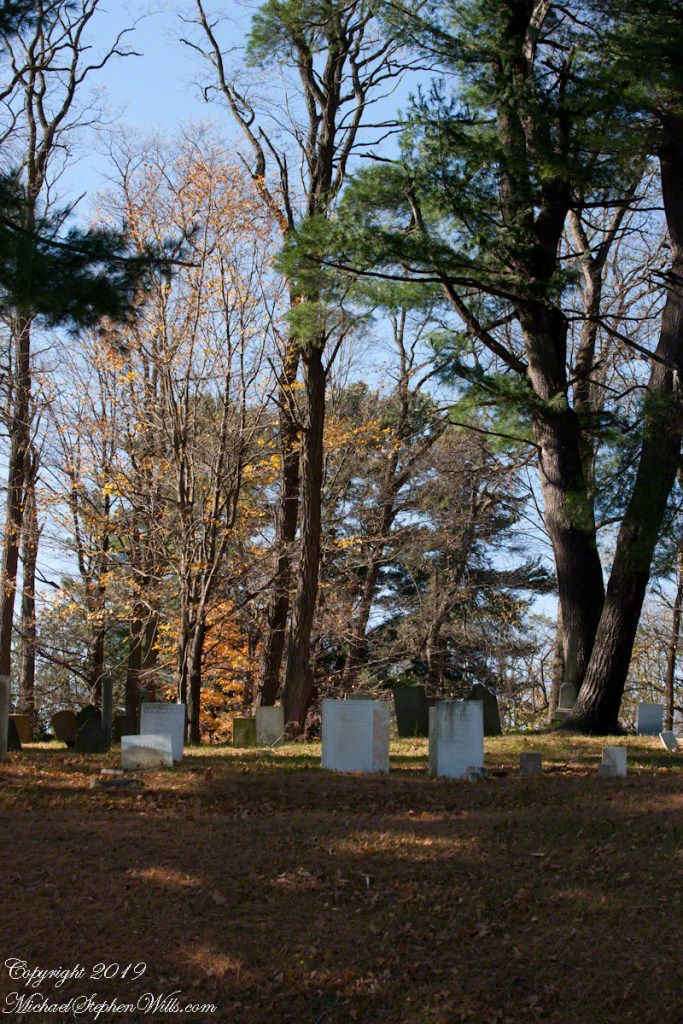
A view of the Quaker Settlement Cemetery, taken from Jacksonville Road, NYS Route 143, on an early November afternoon.
Located in the town of Ulysses, New York there is a Quaker Settlement church a few feet further west on Perry City Road. I have Quaker ancestors, so took the opportunity to peruse the family names. The stones were unusually beautiful and touching, mostly local slate, some with intricate carvings.
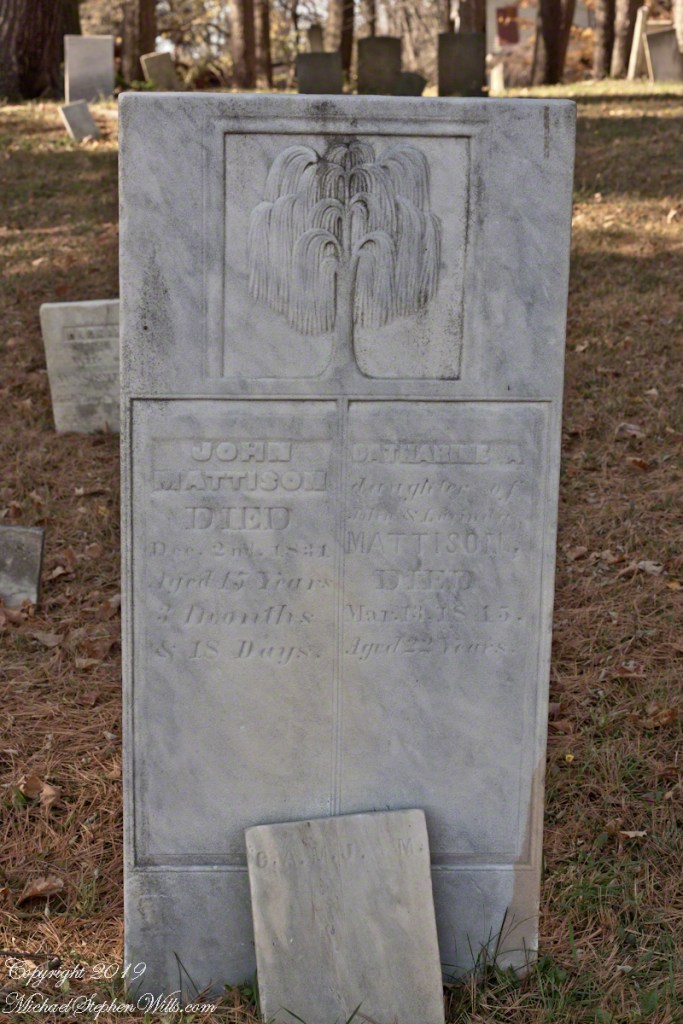
Here is a headstone for two young people of the same family name. The white marble carved in the form of a willow, from the flowing lines and, knowing how our willows green up springtime, it calls to mind the same youthful greening as appropriate for two young people who lived 22 and 15 years.
Analysis of the dates, given in the following capture, tells the story of an young woman, a baby born 5 months after her death and who followed his aunt 15 years later.
Catherine A. Mattison Born 1792/1793, Death March 13, 1815. Lived 22 years. John Mattison, Death December 2, 1831, Born August 15, 1815 (5 months after Catherine’s Death), Lived 15 years, 3 months and 18 days.
I have a great aunt who also died young with a headstone naming her mother and father. Here is the granite headstone of Mary R. Daughter of George & Margarett Wills Died Oct. 3, 1886 Aged 20 years. Saint Mary of Assumption Cemetery, Sweetwater, New Jersey. My grandfather James Edward Wills was 9 years old at his sister Mary’s passing. He must have attended her church service and internment, standing at this spot.
Copyright 2024 All Rights Reserved Michael Stephen Wills
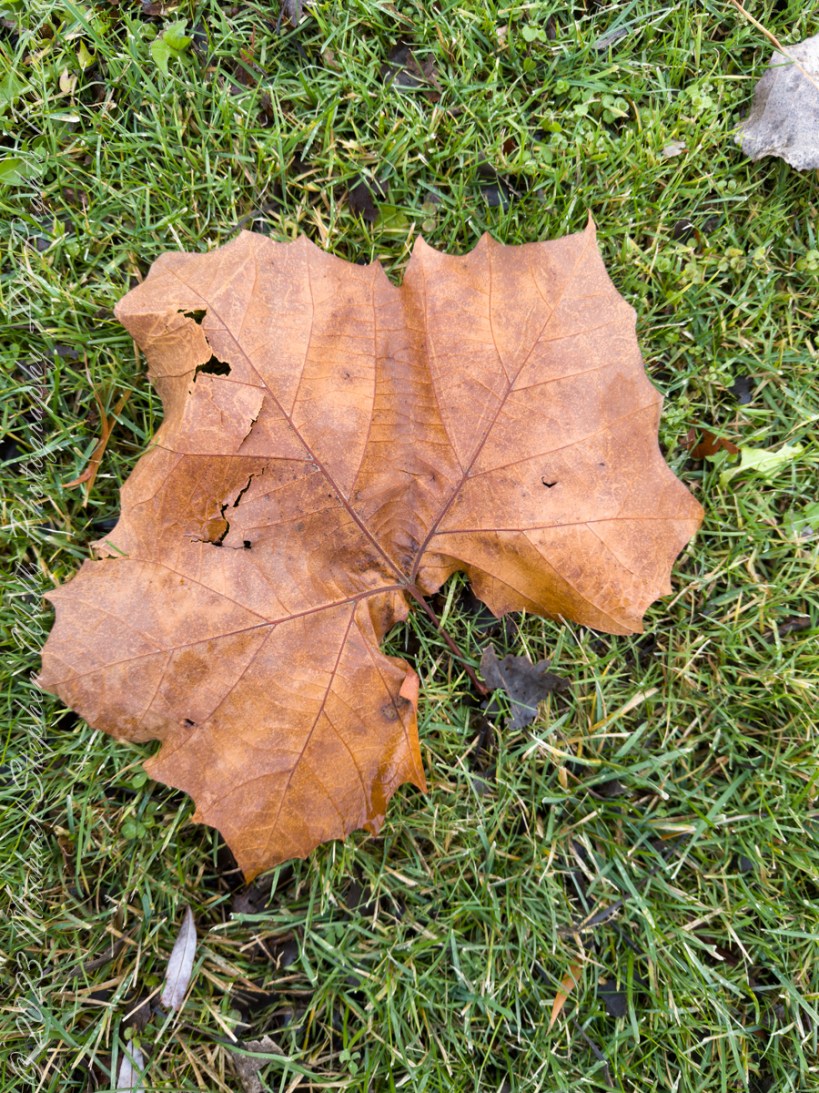
Read this blog for an understanding of how the sycamore leaf symbolizes themes such as shelter, the cycles of life and death, decay, freedom, and individuality, reflecting the intimate connection between nature and the evolving American identity.
Explore the enchanting Lick Brook in the Finger Lakes region, where the Land Trust’s conservation efforts preserve nature’s beauty. Join me to uncover this hidden gem and its ecological wonders.
Experience here the frozen beauty of Taughannock Falls in winter, the verdant revival of spring, the lush warmth of summer, and autumn’s fiery transformation. The falls symbolize the unending cycle of seasons.
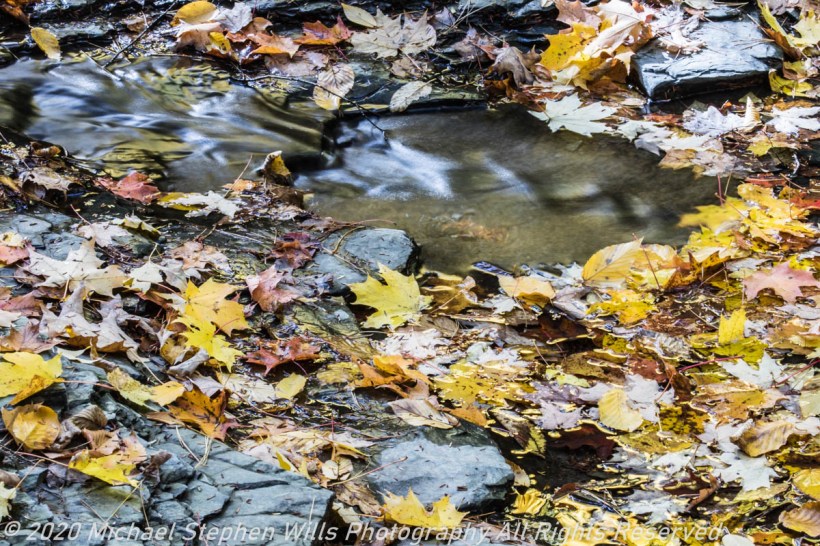
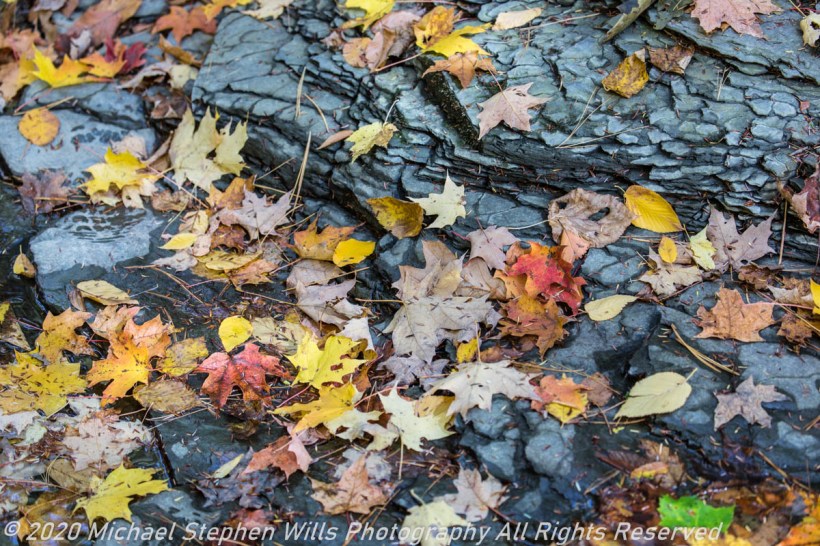
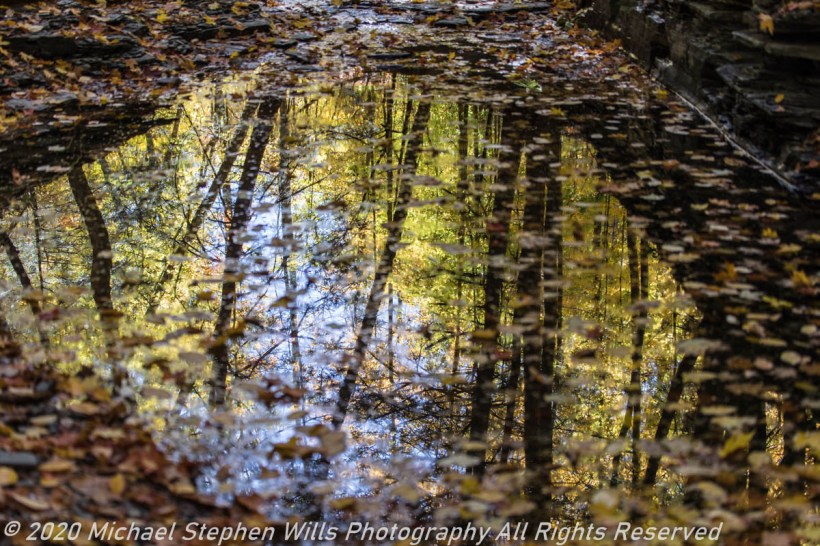
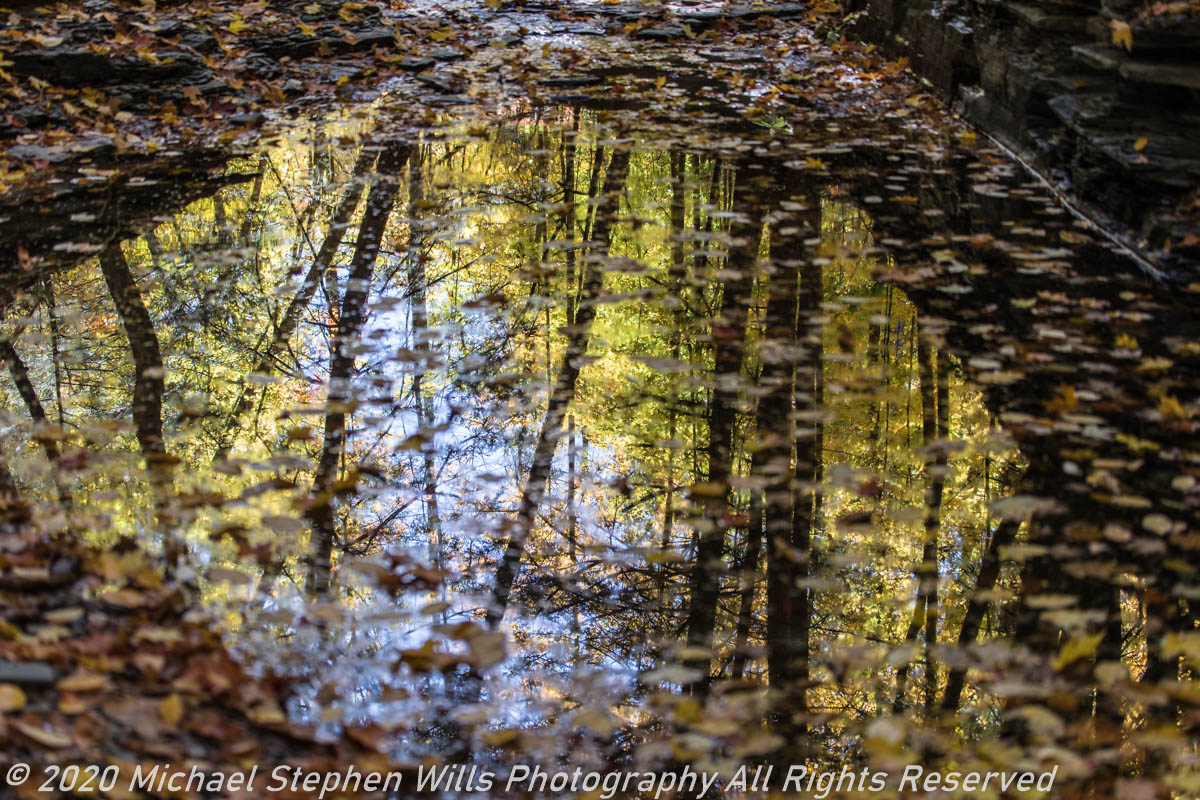
In the Thayer Preserve during a dry autumn, Lick Creek forms still pools that act like nature’s mirrors, capturing the autumnal scenery in a breathtaking display of reflection. Scattered maple leaves add depth, disrupting yet enhancing the scene’s tranquility. These pools offer a unique perspective of nature’s beauty, sketching a vivid picture of changing seasons. As the dry season progresses, the mirror-like pools shrink, encapsulating the fleeting beauty of autumn.
In Thayer Preserve, where Lick Creek meanders, a unique spectacle unfolds during a dry autumn. Here, still pools form along the creek, transforming into natural mirrors. These pools capture a moment in time, reflecting an autumnal world above.
The scene is breathtaking. A bright sky, painted in shades of blue, stretches endlessly above. Trees, adorned in brilliant yellow, stand tall, their leaves like nature’s own gold. In these pools, their reflections are so clear, so vivid, it’s as if another world lies just beneath the surface. This is nature’s artistry at its finest, a canvas where the sky meets the earth in a tranquil embrace.
But there’s a twist in this serene tableau. Maple leaves, scattered across the water’s surface, disrupt the mirror-like stillness. They are like brushstrokes on a masterpiece, adding texture and depth. These leaves, once part of the lofty canopy, now rest on the water, each one a reminder of the fleeting nature of beauty. They break the illusion, yet somehow enhance it, adding a touch of reality to this dreamlike scene.
This is a place of contrasts. The still pools contrasts with the dynamic life of the forest. The unbroken reflections contrast with the scattered leaves. It’s as if nature is playing a game of hide and seek with reality, teasing the observer with glimpses of both the real and the reflected world.
In Thayer Preserve, the story of autumn is told not just in the changing leaves but in the waters of Lick Creek. These pools are like nature’s mirrors, reflecting the season’s palette. They offer a different perspective, a view from below, where the sky and trees trade places with their watery twins.
Click photograph for larger view. Use combination keys to enlarge/reduce: Ctrl+ (Control / Plus) and Ctrl- (Control / Minus)
Lick Brook, Thayer Preserve, still pools become mirrors at low flow during a dry autumn.
As one walks along Lick Creek, the beauty of Thayer Preserve unfolds in these reflective pools. Each step brings a new image, a new blend of sky, tree, and water. It’s like walking through a gallery where nature is the artist, and each pool is a frame capturing a moment of autumnal splendor.
These pools are more than just a feature of the landscape. They are storytellers. They tell of a season of change, of a time when the world dresses in its most vibrant colors before the quiet of winter. They speak of the cycle of life, of leaves that fall to rise again in the reflections.
As autumn progresses and the dry season deepens, these pools will shrink, their reflections fading away. But for now, they are here, holding within them a world of brilliant yellows and blues, a world where the sky lies beneath your feet, and the trees grow upside-down.
This is the magic of Thayer Preserve in autumn. It’s a place where nature plays with perceptions, where reflections create a world as real as it is illusory. Here, on the banks of Lick Creek, the still pools are not just bodies of water. They are windows into another world, a world where nature’s beauty is doubled, and the ordinary becomes extraordinary.





 Michael Stephen Wills Photography