Saint Fin Barre’s Cathedral: A Marvel of Victorian Architecture

Saint Fin Barre’s Cathedral, a Gothic Revival masterpiece by William Burges, symbolizes artistry and faith in Cork, Ireland.

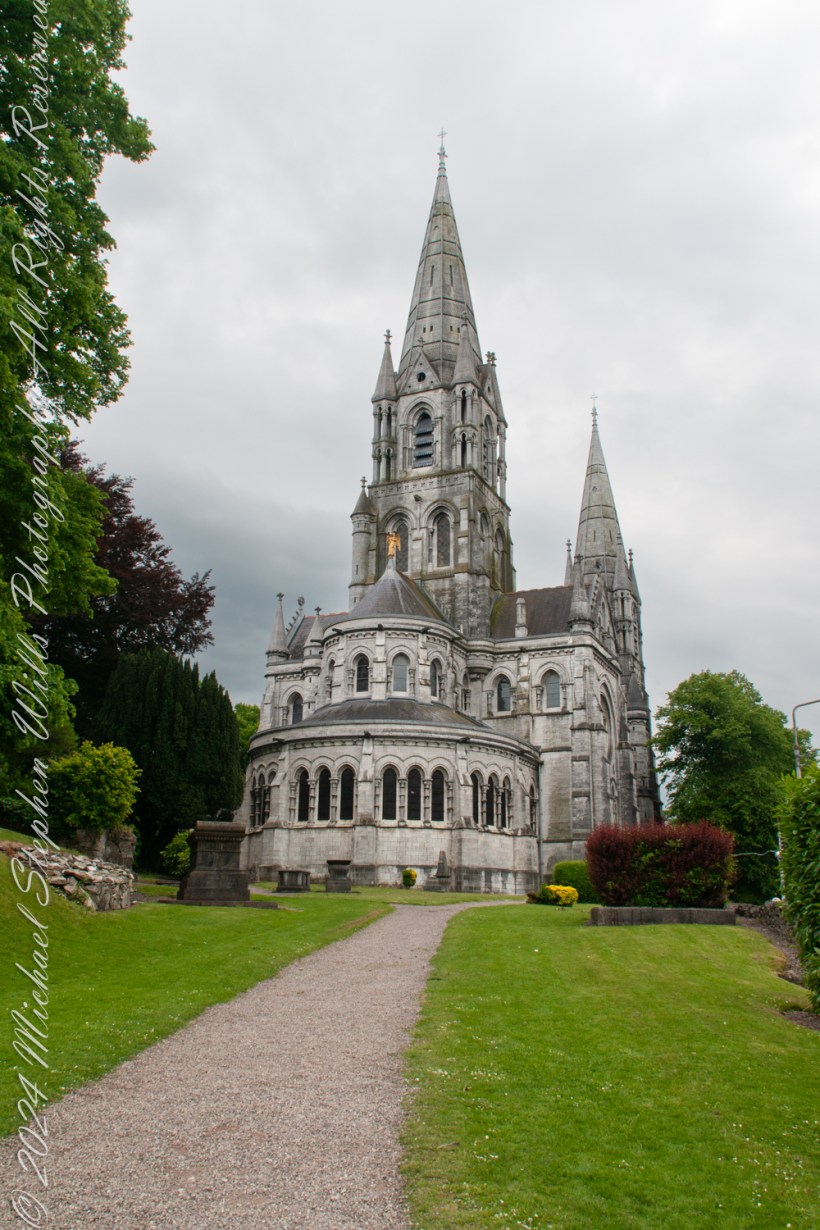
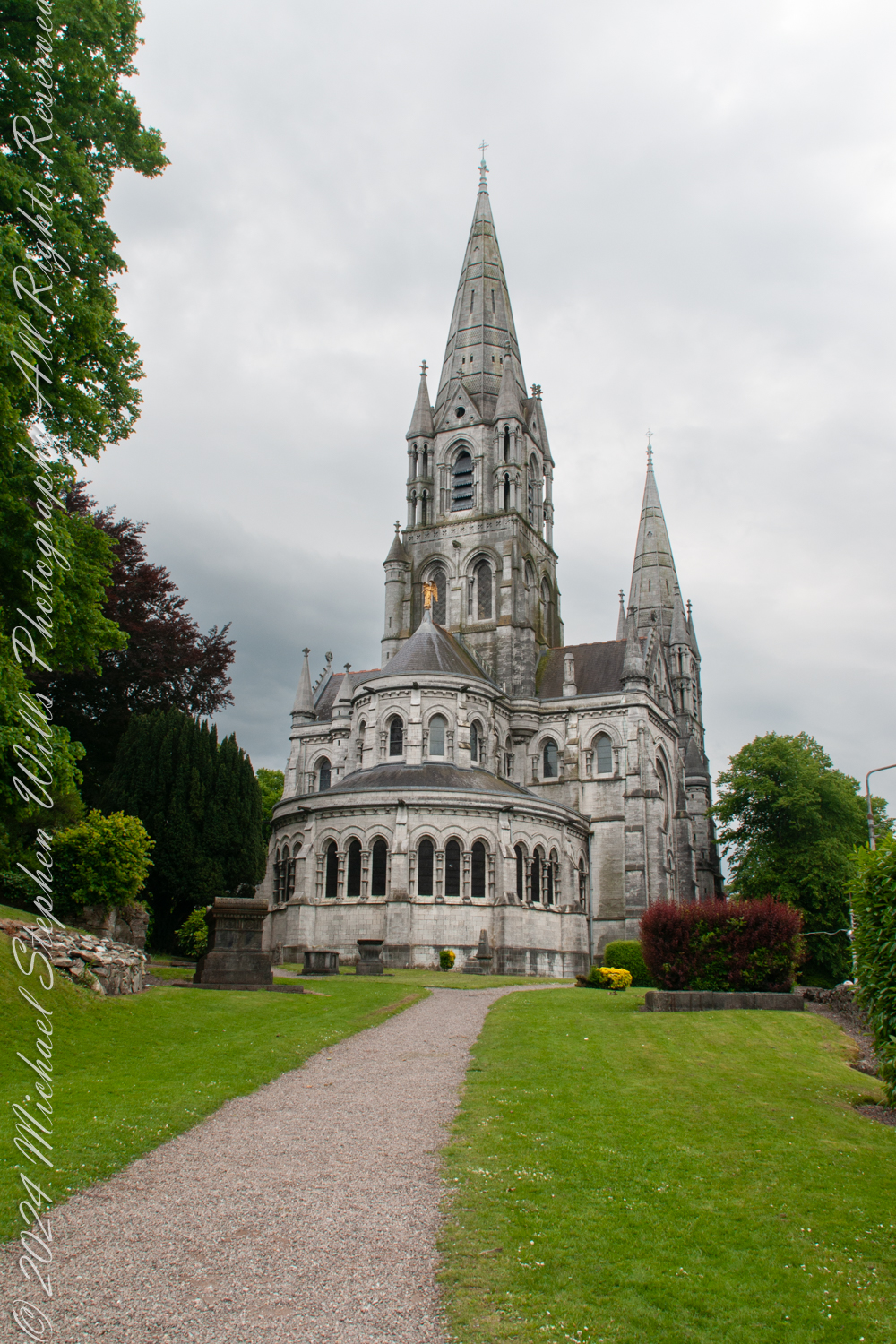
Approaching from the east, we see the polygonal apse at the eastern end houses the high altar and is a key liturgical and architectural feature. Each angular bay is delineated with tall lancet windows filled with stained glass, adding to the richness of the design. Saint Fin Barre’s Cathedral, a masterpiece of Gothic Revival architecture, stands as a beacon of faith and artistry in the heart of Cork, Ireland. Designed by the renowned Victorian architect William Burges, the cathedral is both a testament to the spiritual fervor of its time and a bold statement of artistic vision.

Approaching from the east, we see the polygonal apse at the eastern end houses the high altar and is a key liturgical and architectural feature

Commissioned in 1862, the cathedral replaced an earlier structure, marking a new chapter in Cork’s ecclesiastical history. William Burges, known for his theatrical approach to design, was the perfect choice for this ambitious project. His vision for Saint Fin Barre’s Cathedral blended medieval inspiration with Victorian ingenuity, creating a building that is as much a work of art as a place of worship.

Burges, a figure of eccentric brilliance, was deeply influenced by the principles of the Gothic Revival movement, which sought to recapture the grandeur of medieval European architecture. Drawing from this aesthetic, he designed the cathedral with meticulous attention to detail. Its three spires dominate the Cork skyline, with the central spire rising to an impressive height of 73 meters. These spires are not merely structural; they are symbolic, reaching heavenward in a gesture of devotion.

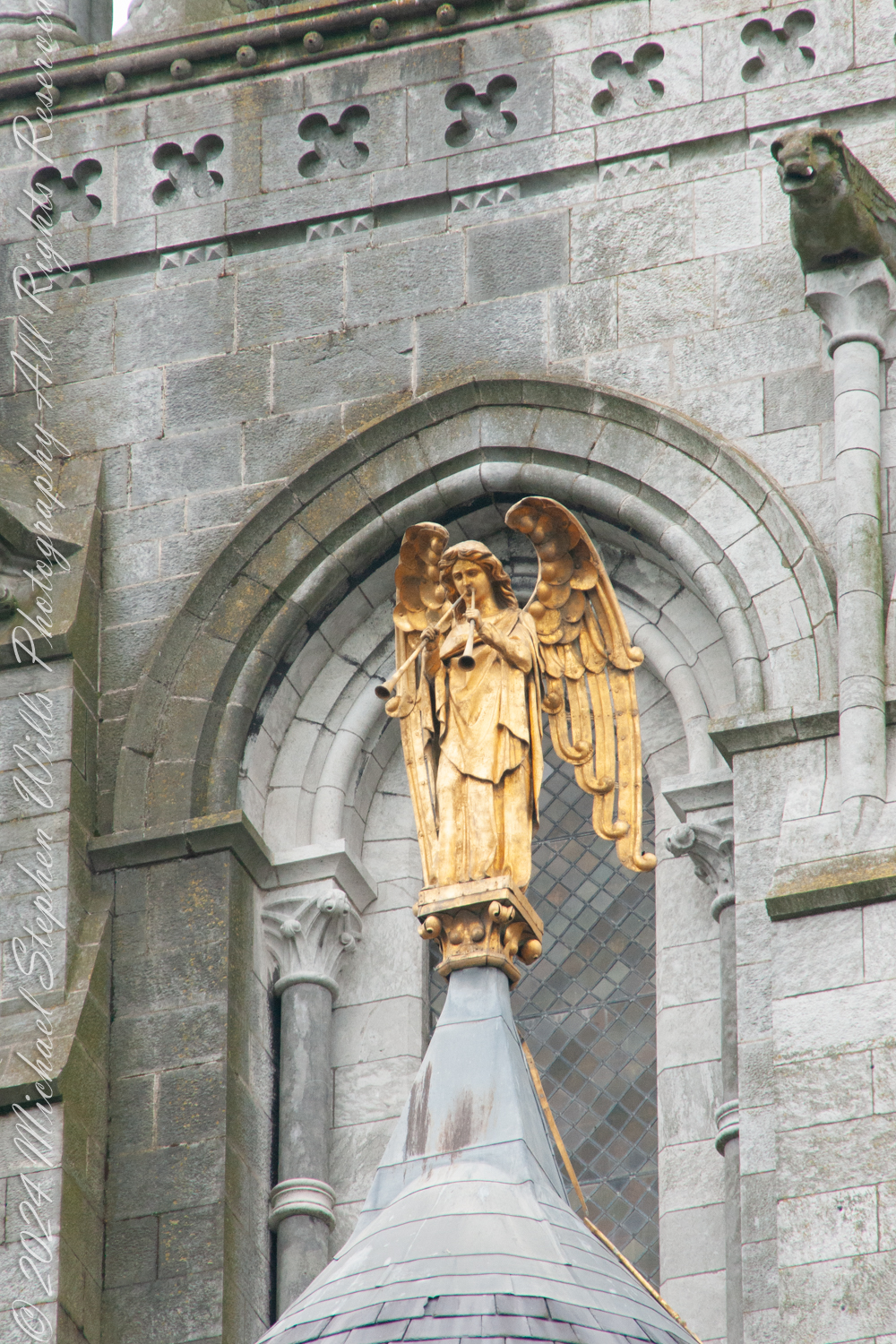
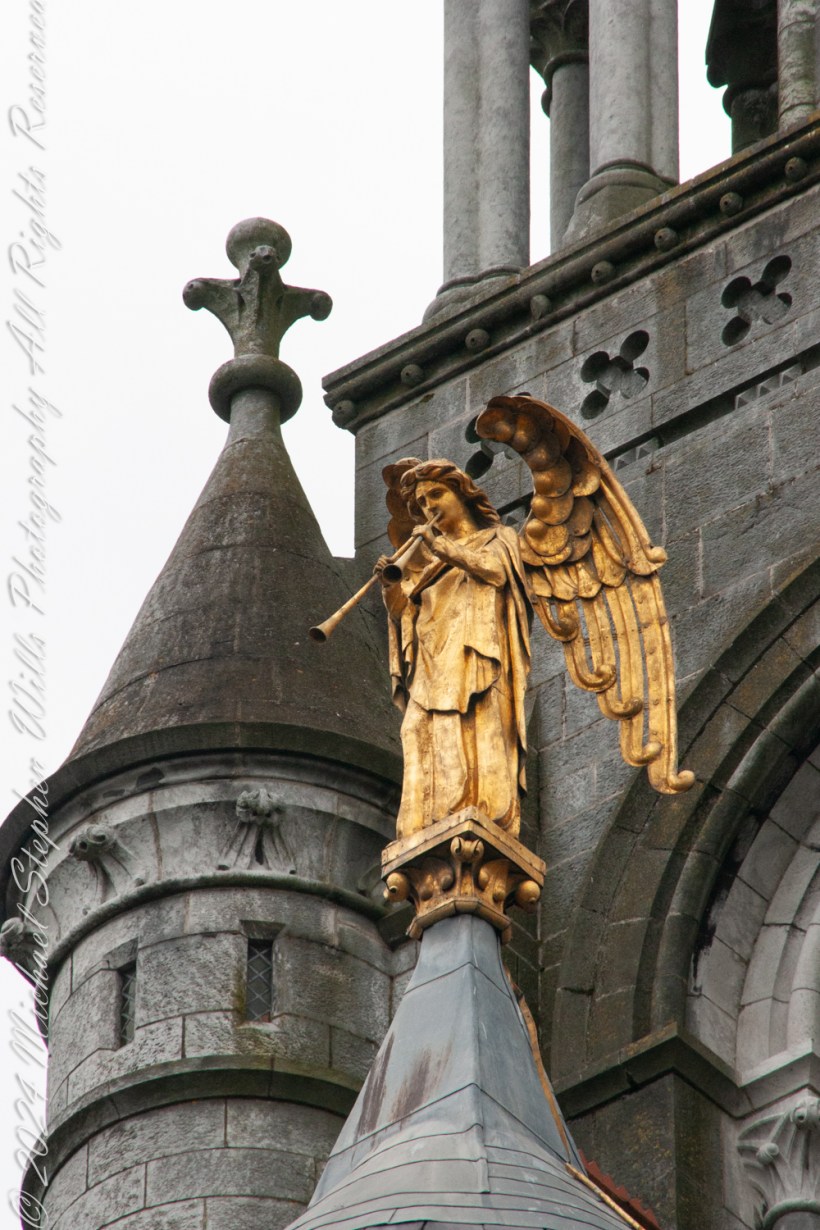
The exterior of the cathedral, constructed from Cork limestone and Bath stone, is adorned with intricate carvings and sculptures. These include depictions of biblical scenes, saints, and gargoyles, all painstakingly crafted under Burges’s watchful eye. Every detail reflects his belief that architecture should educate as well as inspire. Bishop Street, The Lough, Cork City, County Cork, Ireland

Enter your email to receive notification of future postings. I will not sell or share your email address.

Saint Patrick’s Return to the Hill of Tara

The year 2000 AD return of Saint Patrick to the Hill of Tara. Happy Saint Patrick’s Day

To continue my posting “Climb Hill of Tara” my first submission of three Hill of Tara photographs to Getty Istock had two of the photographs returned for revision.

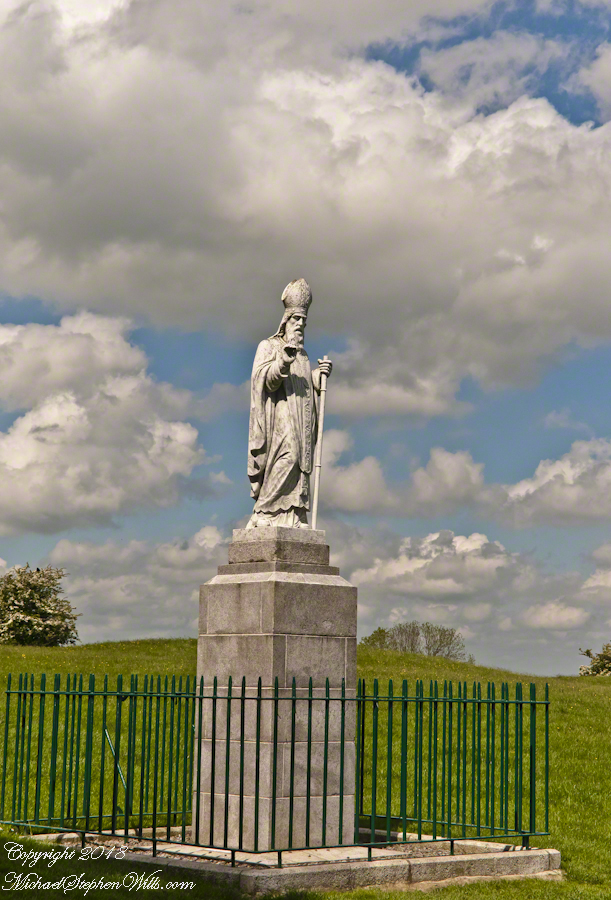
A statue of Saint Patrick fittingly welcomes visitors to the Hill of Tara, County Meath, Ireland. This statue of cast concrete was an existing statue donated by the Sisters of Charity, moved from an existing installation to the Hill of Tara in the year 2000 AD. The creator is anonymous, the is no plaque or other attribution on or around the statue.

The original statue was erected on the summit of the Hill of Tara shortly after Catholic emancipation in 1829, commemorated the events of 433AD when St. Patrick lit a bonfire on the nearby hill of Slane on the eve of Easter Sunday.

Lighting such a fire was contrary to the pagan laws of the time which dictated that the first fire lit that night be in Tara. Observing St. Patrick’s bonfire from afar, the chief druid of the ancient Gaelic capital predicted that if the flame were not extinguished that night, Christianity would never be extinguished in Ireland.
The saint’s bonfire continued burning and the next morning, Easter Sunday, St. Patrick entered Tara to convert the king and his followers to Christianity.

For the fenced statue of Saint Patrick the revieweR wrote:

Please provide a full description for the work of art featured in this image. Include the artist, date of creation, location, etc. Works of art created by someone other than yourself must be free of copyright protection to be considered. If this work of art is indeed under copyright protection, a property release signed by the copyright holder will need to be provided.

Hmmmm….What I do while capturing a photograph of a statue is take photos of any plaque, sign, whatever to acquire the name of the creator, how it came to be there, community connections. There was nothing around the statue nor the very informative Office of Public Works placards at the entrance.  I was proud to submit the statue photograph, as it turned out so well, and hoped for the best.

Last week, I put in a query to Ireland’s Office of Public Works (OPW), the agency responsible for the Hill of Tara, and did not receive a response when, for other queries, they were helpful.  This Saturday and Monday mornings, several hours of internet research revealed this history.

The original statue was placed on Tara sometime after the 1829 Catholic emancipation.  It was molded concrete, created by Thomas Curry of Navan at his own expense to honor the connection of Saint Patrick to Tara.

The OPW removed Curry’s statue 1992 for repair of a century of wear.  During the removal the statue was damaged beyond repair and, afterwards, was further damaged by vandals who decapitated and used it for target practice.

Initially, the OWP decided not to replace Saint Patrick citing the “pagan” nature of the place. After an angry meeting of local people at the Skryne Parish Hall.  In this meeting the local Rathfeigh Historical Society formed the “Committee to Restore St. Patrick to Tara.”  In turn, pressure was put on Michael D. Higgins, Minister for Arts, Culture and the Gaeltacht (and the OPW). It was decided a new statue was to be created, based on a competition, and instead of it former place at the hill summit (called Rath na Rí), it was to be near the entrance, outside the Interpretative Center, to offer a Céad Míle Fáilte to visitors and be seen on departure.

The outcome was the competition winner was rejected by locals.  The winning entry, by sculptor Annette Hennessy, did not follow competition rules that specified the statue incorporate traditional features to include shamrocks, harp, miter, a crozier and, perhaps, fleeing snakes. Hennessy’s design was of a shaven headed teenage boy in a short (“mini-skirt”) kilt, a handbag-shaped bell in hand.  She agreed hers was “not a traditional style statue” saying it “acknowledges our Pagan Celtic history.”

The rejection included a statement from Dr. Leo Curran, chairman of the Rathfeigh Historical Society, “We agreed that most of the monuments in Tara are from the pre-Christian era, but St. Patrick should be at the uppermost layer, representing Christian tradition extinguishing paganism.”

By this time, a new government and minister were in place.  The decision was made to search Ireland to find a suitable, existing, replacement statue.  By 2000 the present statue, donated by the Sisters of Charity, was in place at the Hill of Tara entrance.

At the end of this post I provide the two references from my internet research and from which many facts and all the quotes were used here.  I concluded the statue author was anonymous without copyright protection and submitted a revised image description, attaching a copy of my research.

What happened to my IStock photograph of Saint Patrick on the Hill of Tara? Getty accepted my application, published the photo and it is one of my top downloads, and earners.

Please browse my reasonably priced stock photography.  License a photograph, download and use it for your website or blog.  Click this link to browse all my Getty IStock Photography offerings.

Or click this link or any photograph or this link to select a print with custom framing from my “Ireland” Fine Art Gallery.

References :
“Should St Patrick stand again on Tara?” Independent, Dublin, Ireland March 17, 1999.
“Statue of Saint Patrick”, Meath Roots web site. The page includes photograph of the Thomas Curry statue.

Copyright 2024 Michael Stephen Wills All Rights Reserved

On the Road to Killen

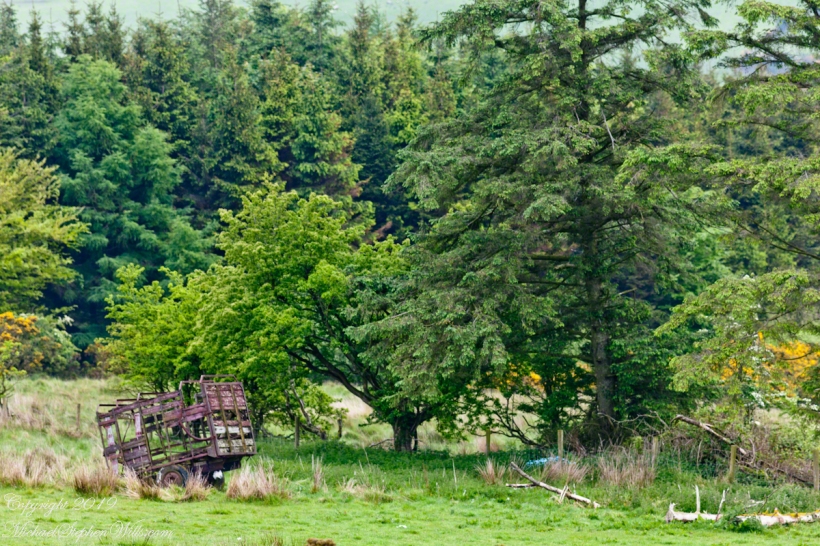
In the early dawn, I walked the path to Killen, drawn by the legacy of my mother’s Irish youth. An abandoned hay wagon stood, a relic amidst the whispers of history and myth. Join me in uncovering the roots that intertwine family and the enduring Irish land.

Continue reading “On the Road to Killen”

Arrival

Here we have a pleasant carriage rental trip, exploring and photographing the Aran Islands.

Continue reading “Arrival”

Church Ruin on Inishmore

Join me on a journey through Inishmore, Galway Bay on a horse-drawn carriage. We’ll see a ruined church, horse pasture, and iron age fort, Dun Aengus, with reflections on the word ‘riven.’

Continue reading “Church Ruin on Inishmore”

Asleep among Skelligs

a road like no other

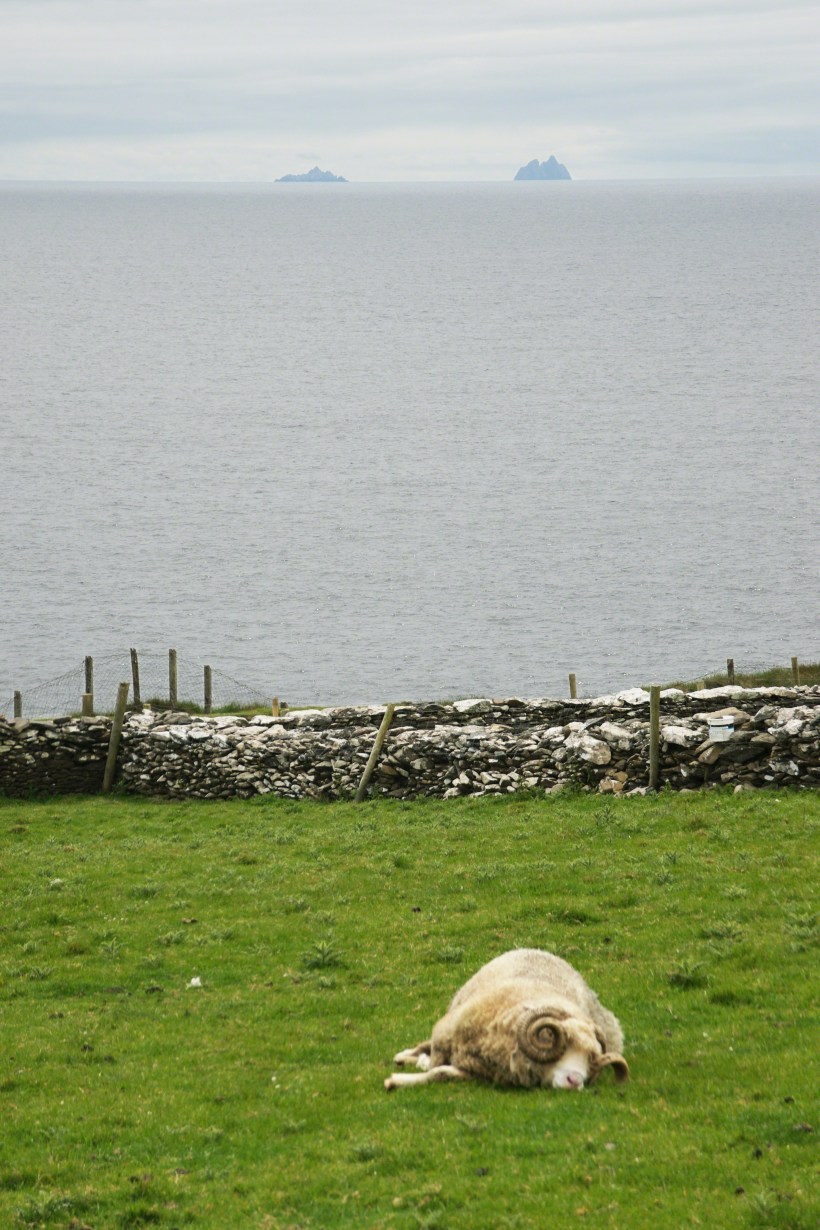
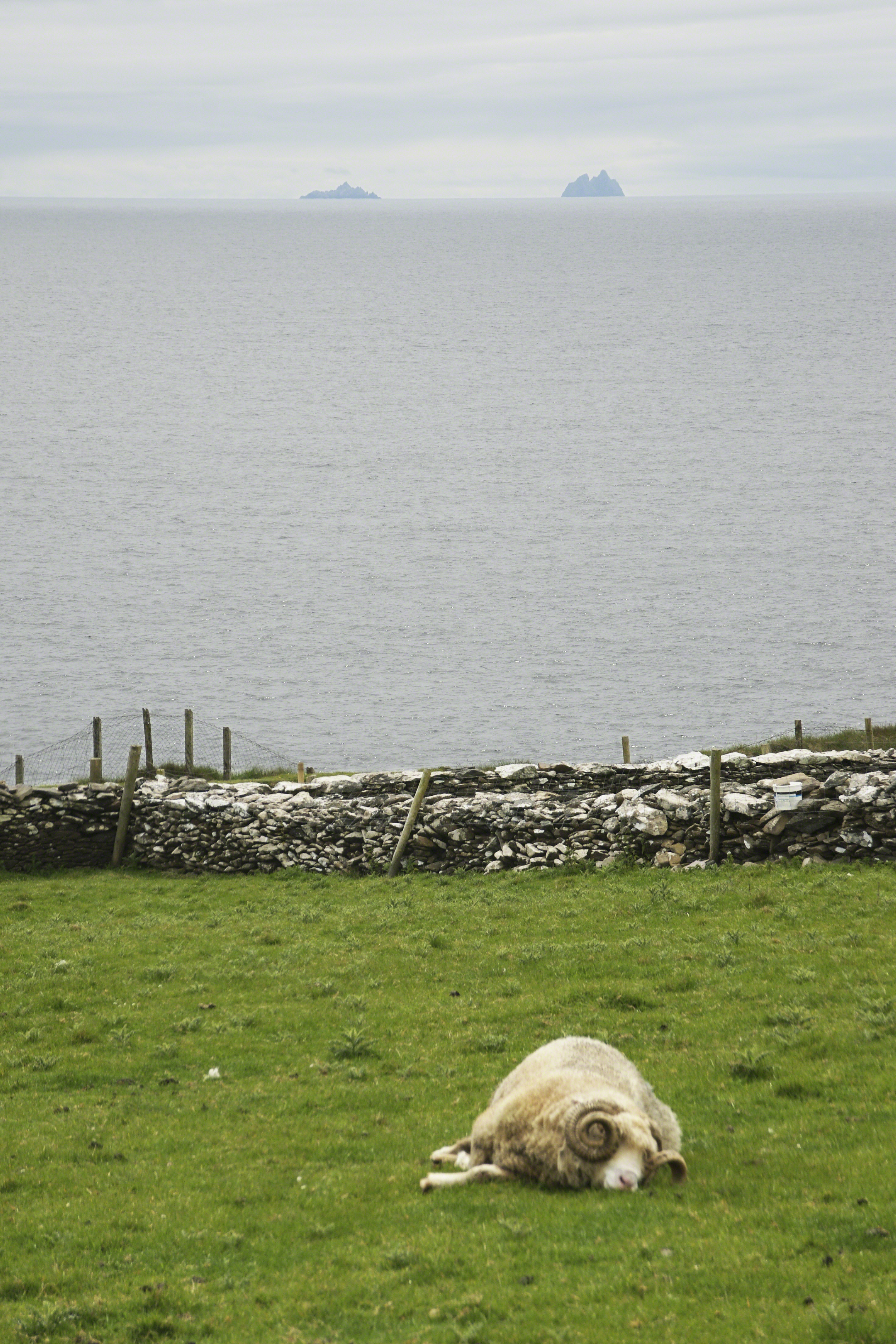
View southwest from R559 looking across pasture over the Dunberg Promontory Fort. In the foreground a large ram with curled horns rests. In the distance is the mouth of Dingle Bay and the North Atlantic Ocean with the Little Skellig and Skellig Michael Islands.

Skellig is a word for a sliver of rock. Here is another post about these islands.

Click photograph for an expanded view. To visit from WordPress Reader, you need to first click the title of this post to open a new page.

Copyright 2024 All Rights Reserved Michael Stephen Wills

Dunseverick Castle Ruin

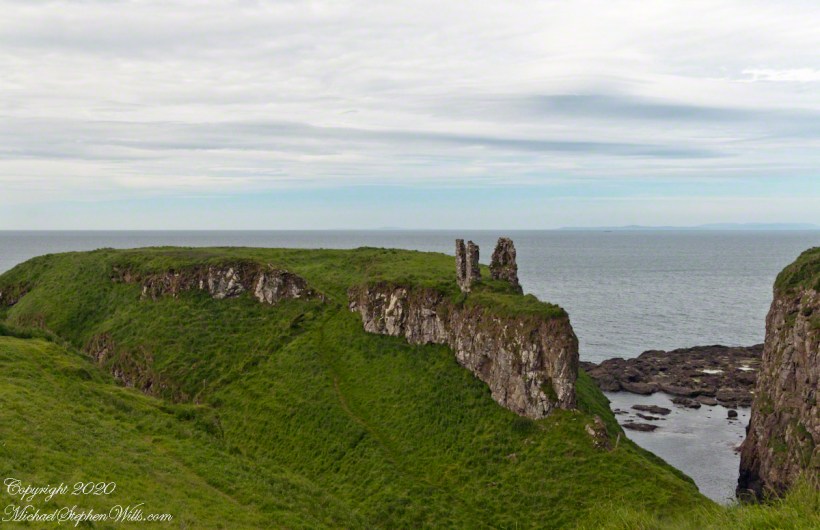
Join me in reminiscing about a memorable trip to Ireland, marked by the now-closed Breezemount House B&B and the scenic Dunseverick Castle Ruin. Dive into my journey and the advice that shaped it

Continue reading “Dunseverick Castle Ruin”

On the slopes of Slievenaglogh

One white horse

Continue reading “On the slopes of Slievenaglogh”

Farmhouse Ruin, Slievenaglogh

Two views

Continue reading “Farmhouse Ruin, Slievenaglogh”

Rose of Castlemaine

Beauty and History on the Maine River

Continue reading “Rose of Castlemaine”