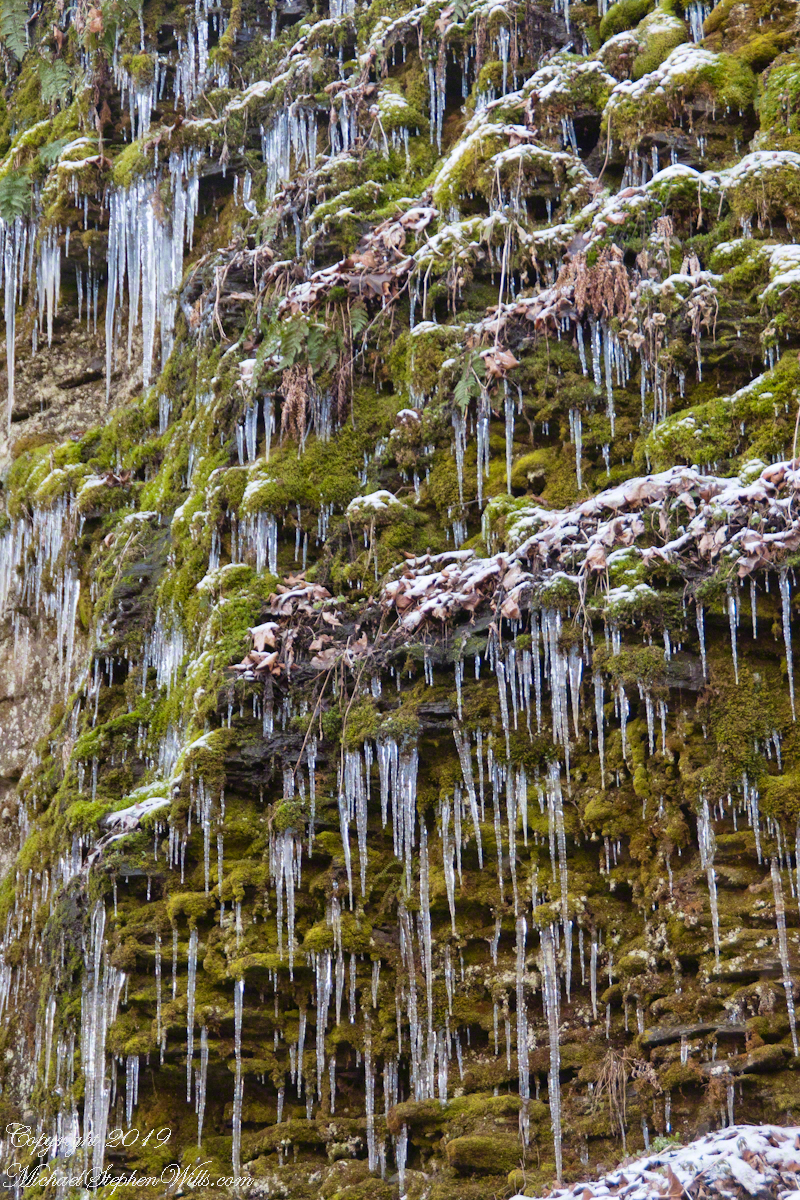
Three Sisters

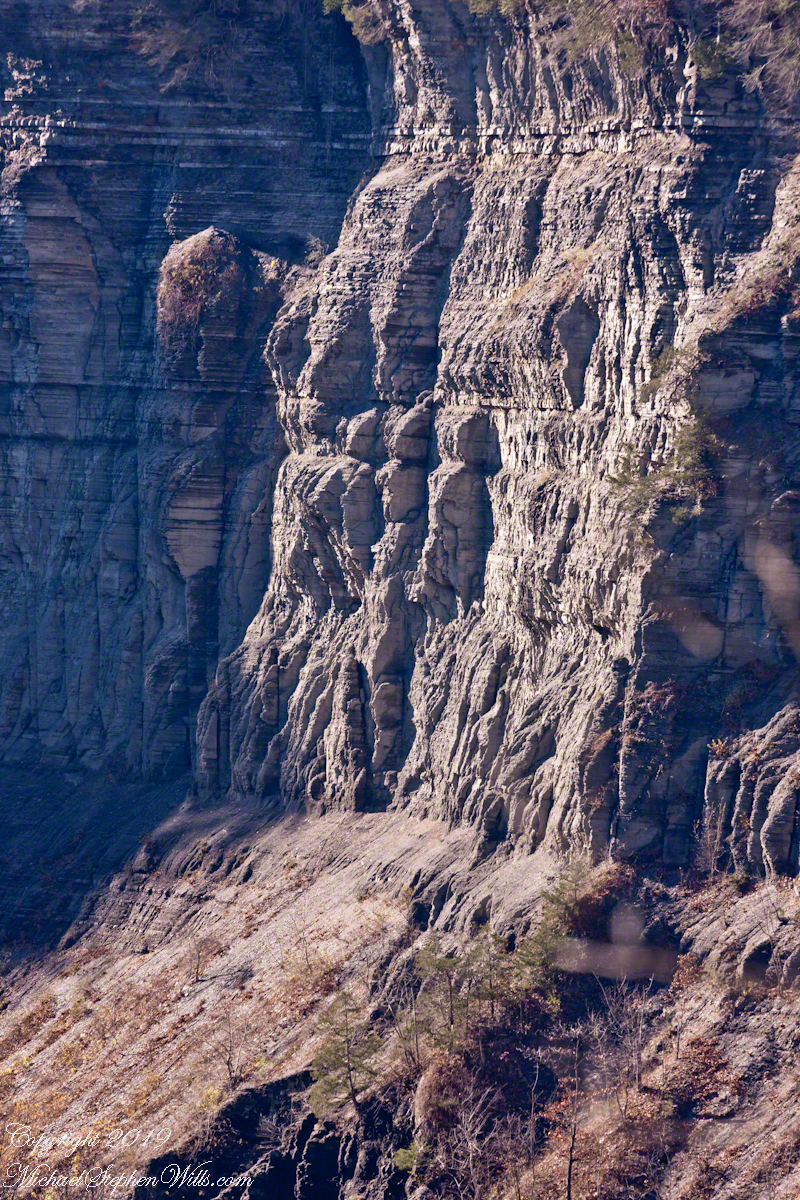
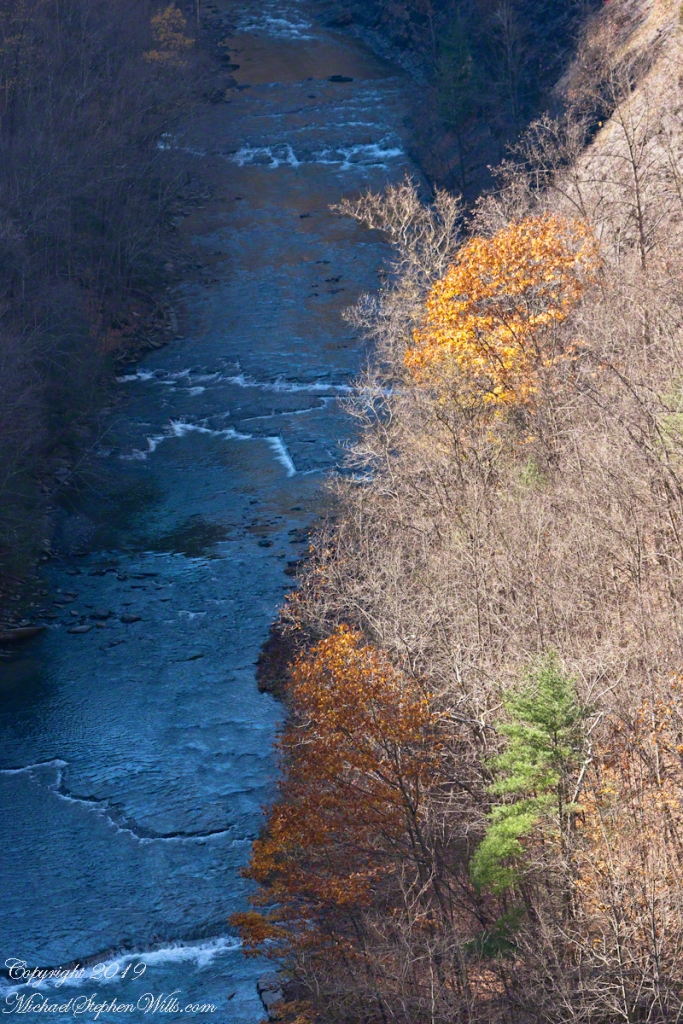
On viewing this photograph my wife, Pam, noticed the shapes eroded from the sedimentary rock of Taughannock gorge. These layers of shale, sandstone, siltstone formed at the bottom of a broad, shallow sea over 380 million years ago. Differential wearing of these rock layers, clearly visible in this photograph, resulted in these formations, including the three sisters and overhangs.

Click photograph for a larger view. To do this from WordPress Reader, you need to first click the title of this post to open a new page.

Three Views from The Bend

Copyright 2019 All Rights Reserved Michael Stephen Wills

Where a fort falls away

An abrupt emptiness

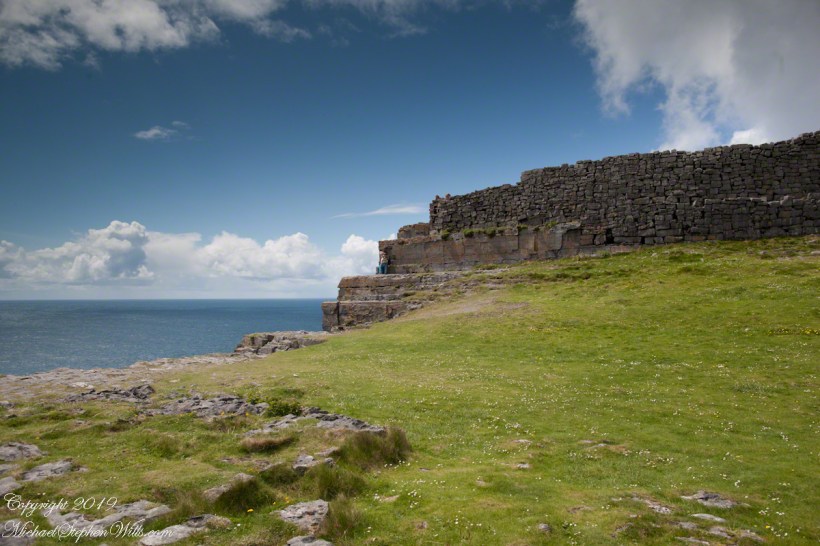
Here is the east side of the inner enclosure wall of Dun Aonghasa (Dun Aengus) where it ends at a cliff edge over the Atlantic ocean.

Visible are the last 60 feet or so of the limestone strata supporting the inner ring.

When first constructed, the inner ring was complete, the western side 1,000 feet from the cliff.. Today’s form of a semi-circle was created by nature when the force of Atlantic Ocean waves eroded the cliff, undercutting the strata.

Look close to see a fracture where the next block of limestone will fall into the waves.

Wishing a blessed All Saints Day (November 1st) for all my readers.

Click me for the first post of this series, “Horse Trap on Inishmore.”

Reference: wikipedia Dún Aonghasa, Sea Campion

Copyright 2019 Michael Stephen Wills All Rights Reserved

Reveal

SONY DSC

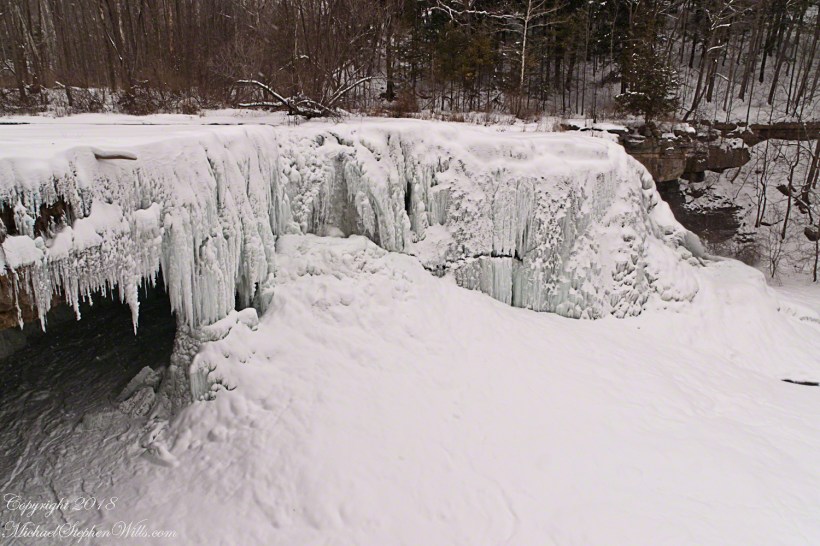
The elements come into focus, revealing Ludlowville Falls, near Lansing, New York.  On the eastern side of Cayuga Lake, Salmon Creek plunges 35 feet over this limestone shelf.  Pioneers constructed a grist mill at this site.  

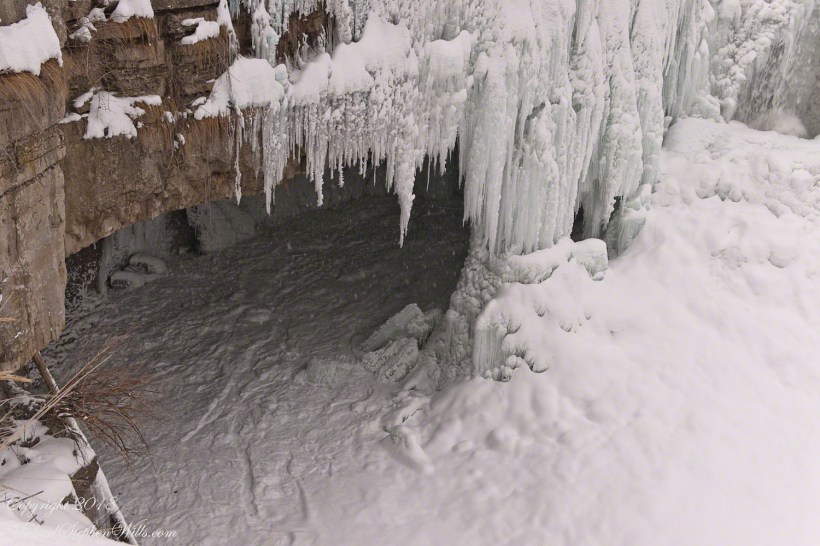
Here we see The Fang hanging over the entrance to The Cave.  There is falling water overall, but especially the center section (can you see it?).  The weight of accumulated ice fractured a portion of the frozen cascade. 

The Cave?

The Object Comes Into View

Flowing water eroded away until this durable limestone strata.  The majority of sedimentary rock is shale, only 6% is limestone.  Throughout the Finger Lakes and elsewhere, this is why when flowing water exposed the edge of a limestone strata, the underlying, soft shales are worn away to reveal a waterfall, ever deepening.  Eventually, the support of the limestone washes away to form this ledge.  Here it is an ephemeral cave behind a curtain of ice.

See “The Fang?” for the first post of this series.