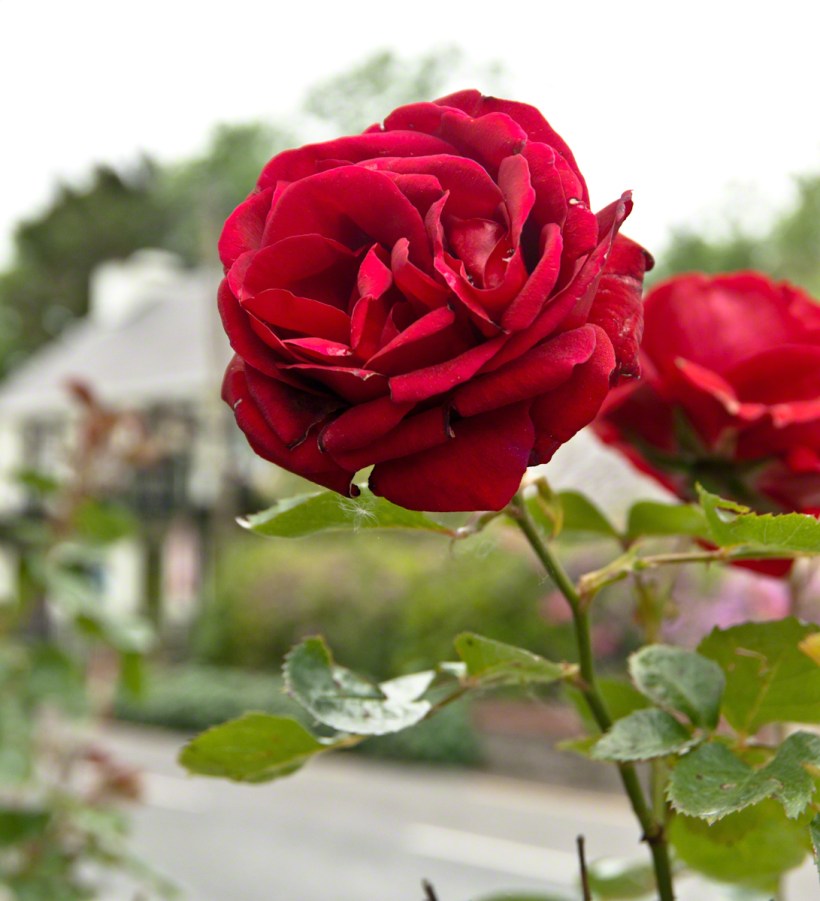
Rose of Castlemaine
Beauty and History on the Maine River
Beauty and History on the Maine River

Come in and experience how humans are dwarfed by the eons

Green Promise

The town of Ithaca evokes serene charm with its blend of history and modernity. Its community spirit is embodied in key symbols such as the local Fire Department and a public apple sculpture, a tribute to nature’s riches. Ithaca’s architectural prowess reflects generational craftsmanship, while the exuberance of local daisies exemplifies optimism. Encapsulating everyday beauty and shared experiences, Ithaca is more than a geographical location—it’s an ongoing narrative.
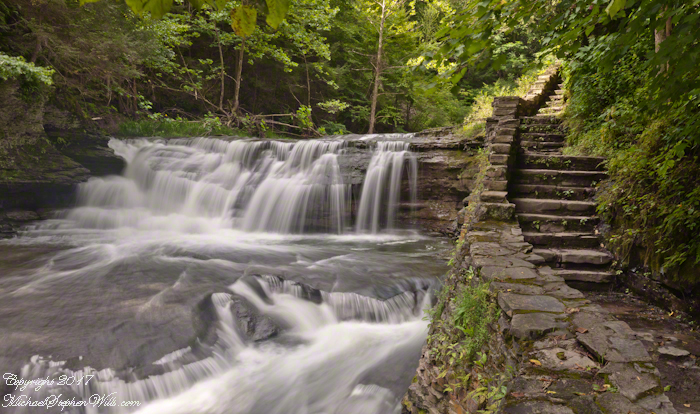
through Devil’s Kitchen to Lucifer Falls
In this third part, we continue hiking Treman gorge, approaching Lucifer Falls, viewing another waterfall further downstream and returning to the trailhead.
I have never achieved a satisfactory capture of the waterfall in the Devil’s Kitchen, a place where the creek flow is diverted south by a projecting ridge. Less than 100 feet later the easterly direction is regained where the water plummets over Lucifer Falls.
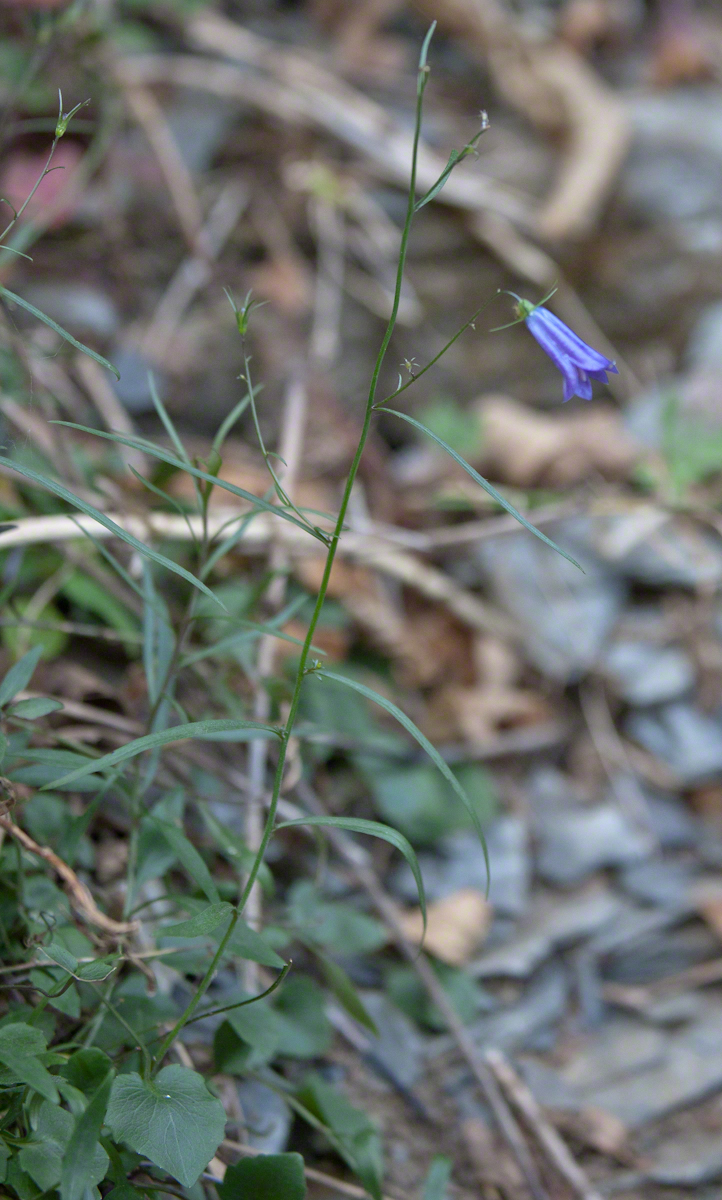
The annual in fall of rock in Devil’s Kitchen uproots and crushes plants growing there. There is scant soil, the roots of this shiny purple trumpet bloom took hold in a microscopic crack. The plant is so thin, the flower so tiny it is lucky my gaze found it.
Click link for my fine art print “After the Rain: Showy Lady Slippers.”
After searching all my plant identification references, this plan is unknown to me. Please help with identification. The bloom is 1/4 inch long.
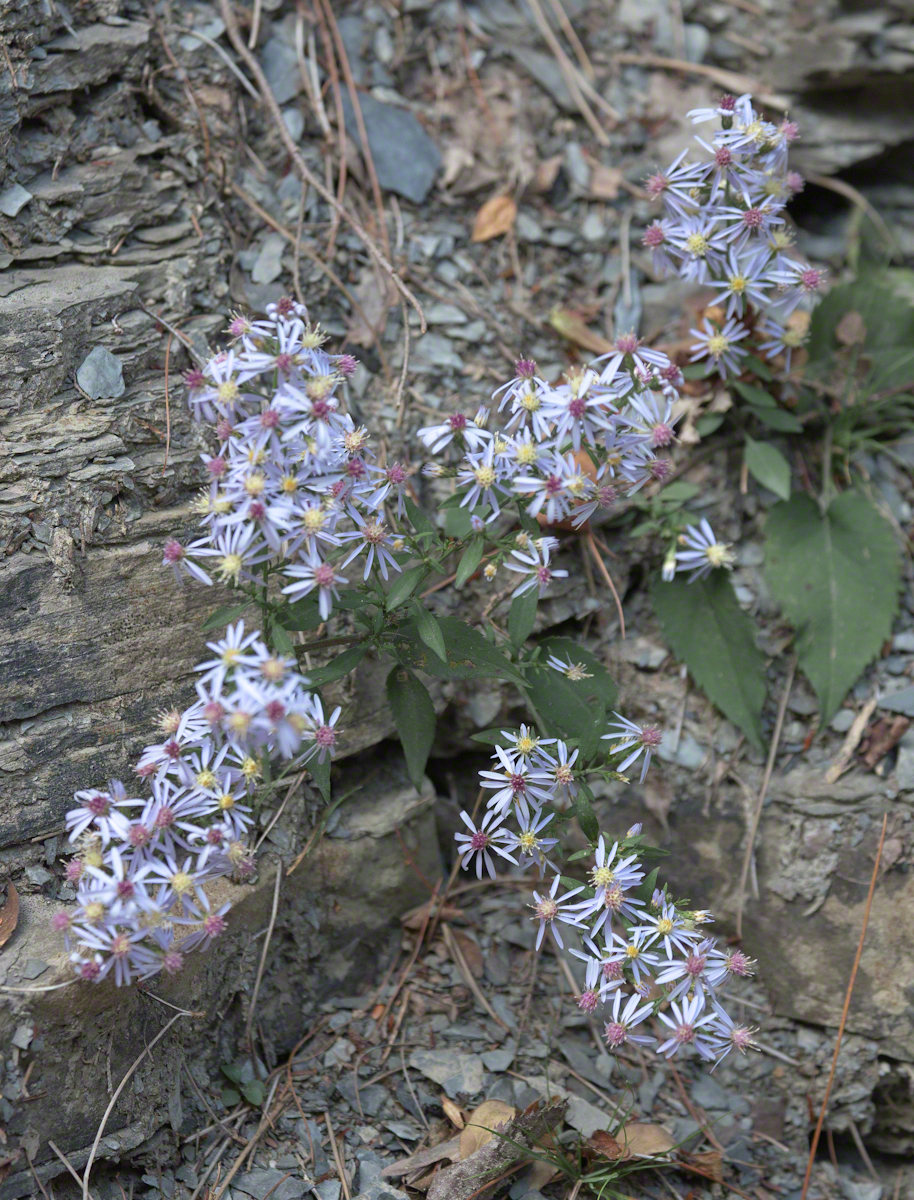
Not far away, these asters grow from a slightly wider crack. Pam pointed them out to me. I was drawn by the striking color difference of the heads growing from a single stalk.
Click link for my fine art print “Purple Asters.”
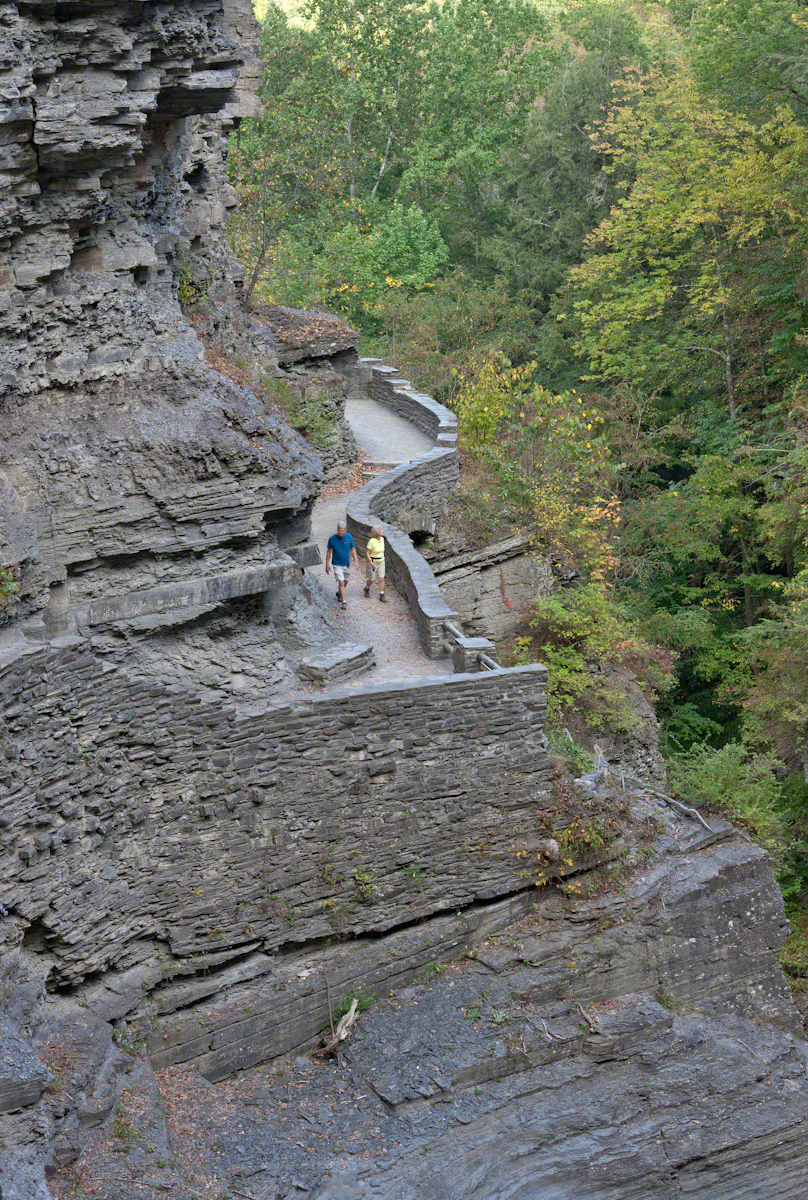
As trail winds around the ridge a stone wall rises on the right and for good reason. The stream shortly reaches the brink of Lucifer Falls, 115 feet high. Gorge walls fall away, the trail steepens. Here is the view from the trail next to the brink.
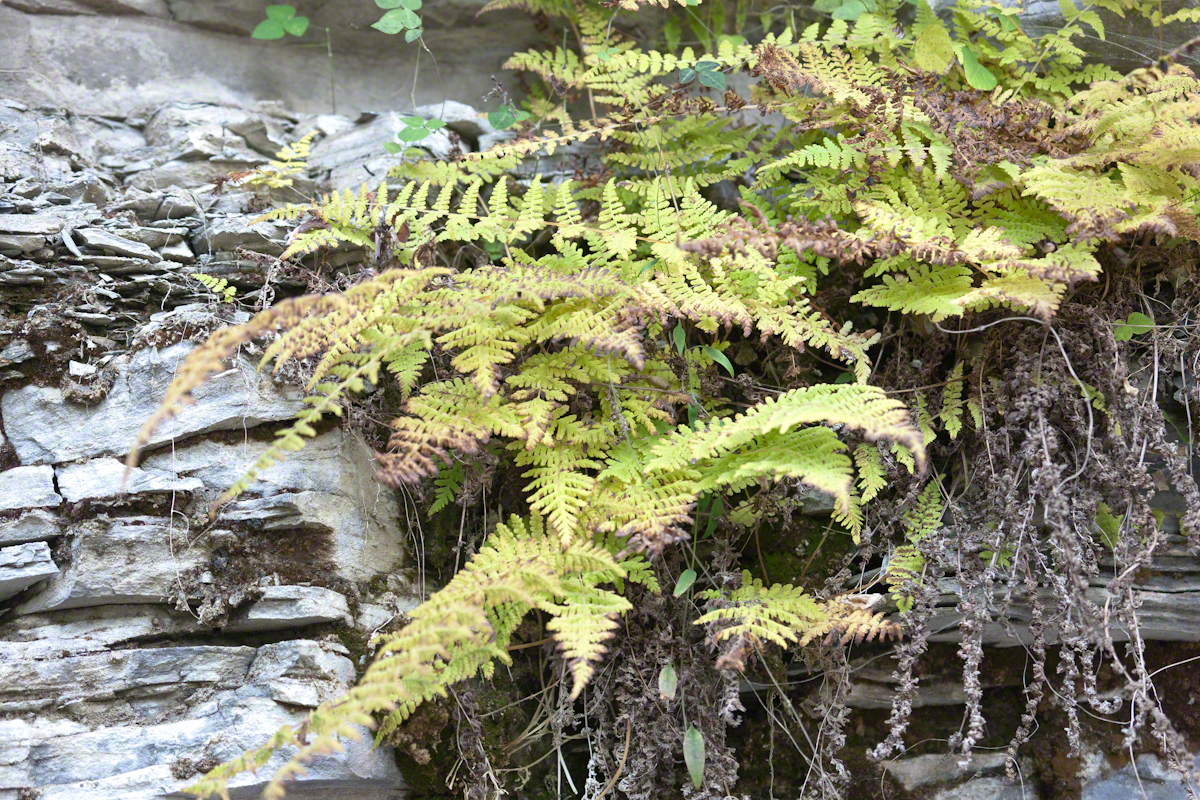
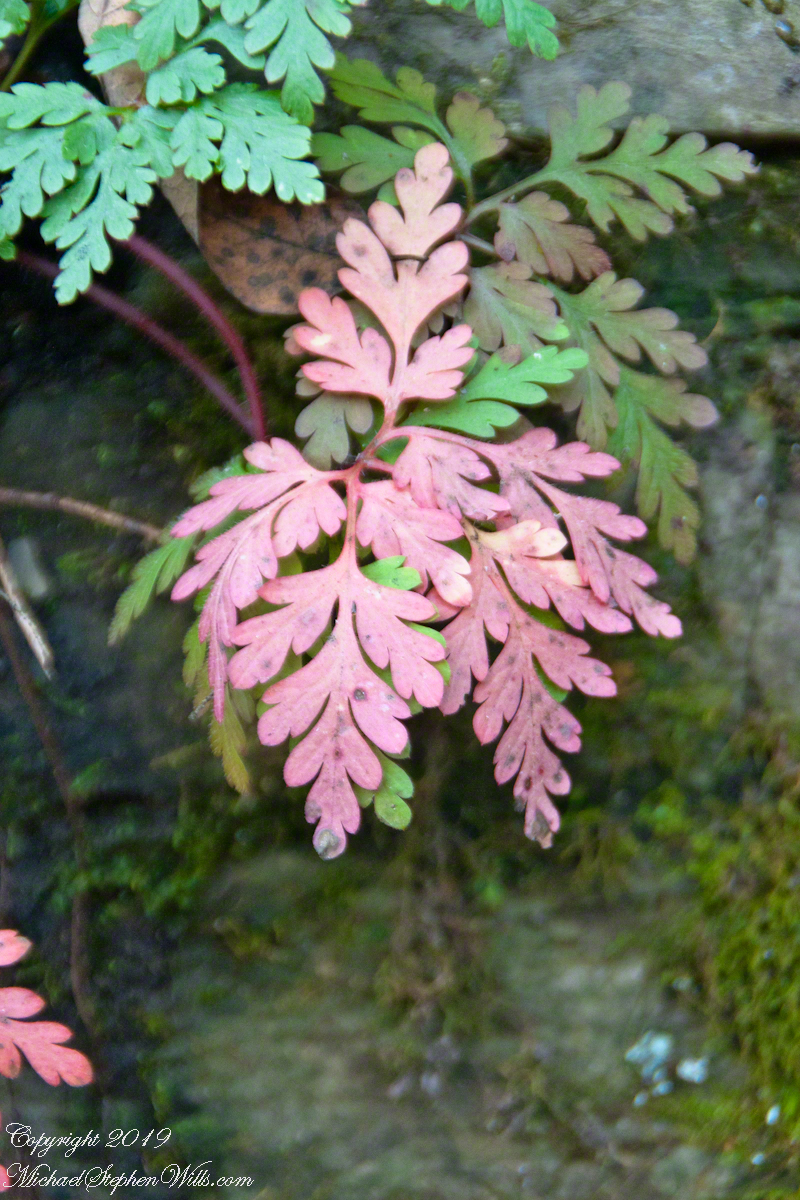
At hand, on the right, a growth of ferns has survived many seasons. Flowering plants are, in geological time (across billions of years), a relatively recent development compared to these non-flowering ferns. The first flowering plants appears 120 million years ago compared to the first ferns, 360 million years ago. Oddly enough, the spread of flowering plants affected evolution of ferns, an increase of fern speciation in parallel to the rise of flower plants.
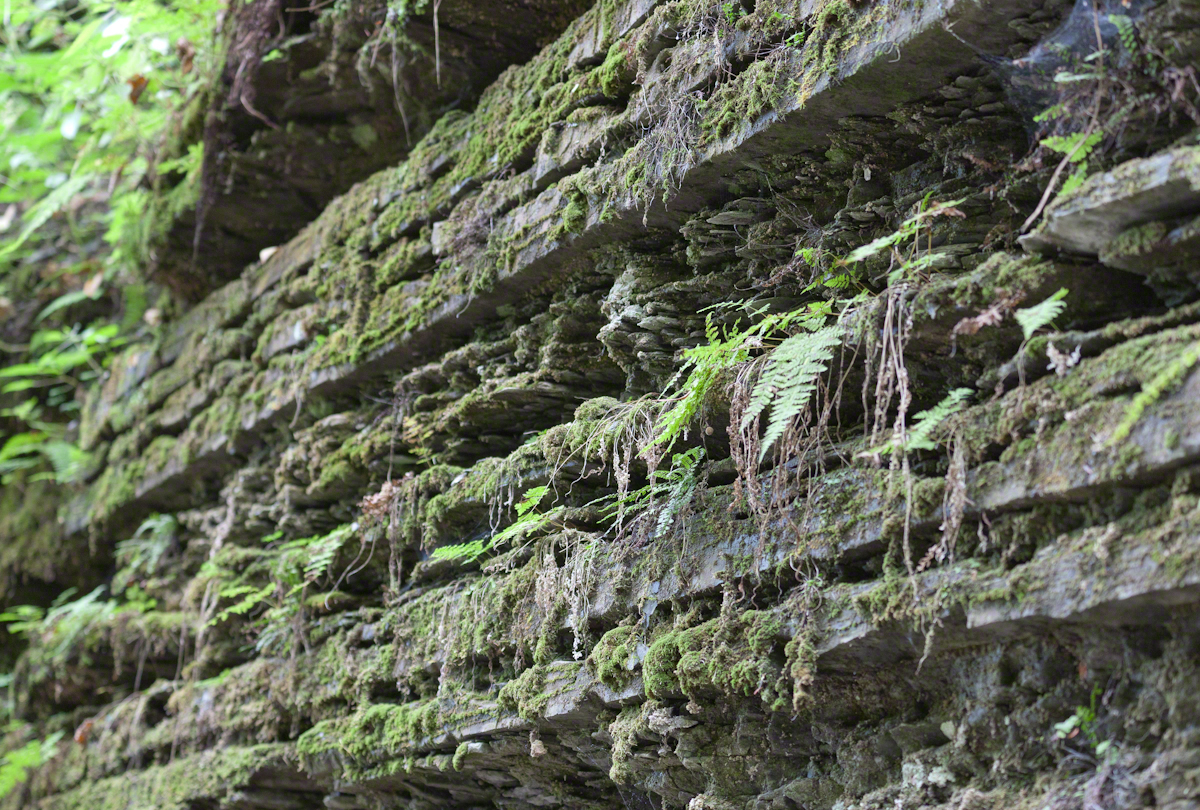
While descending the stairs next to the falls brink, look to the right to see this ecosystem, a result of water seeping from the sedimentary rock stratification.
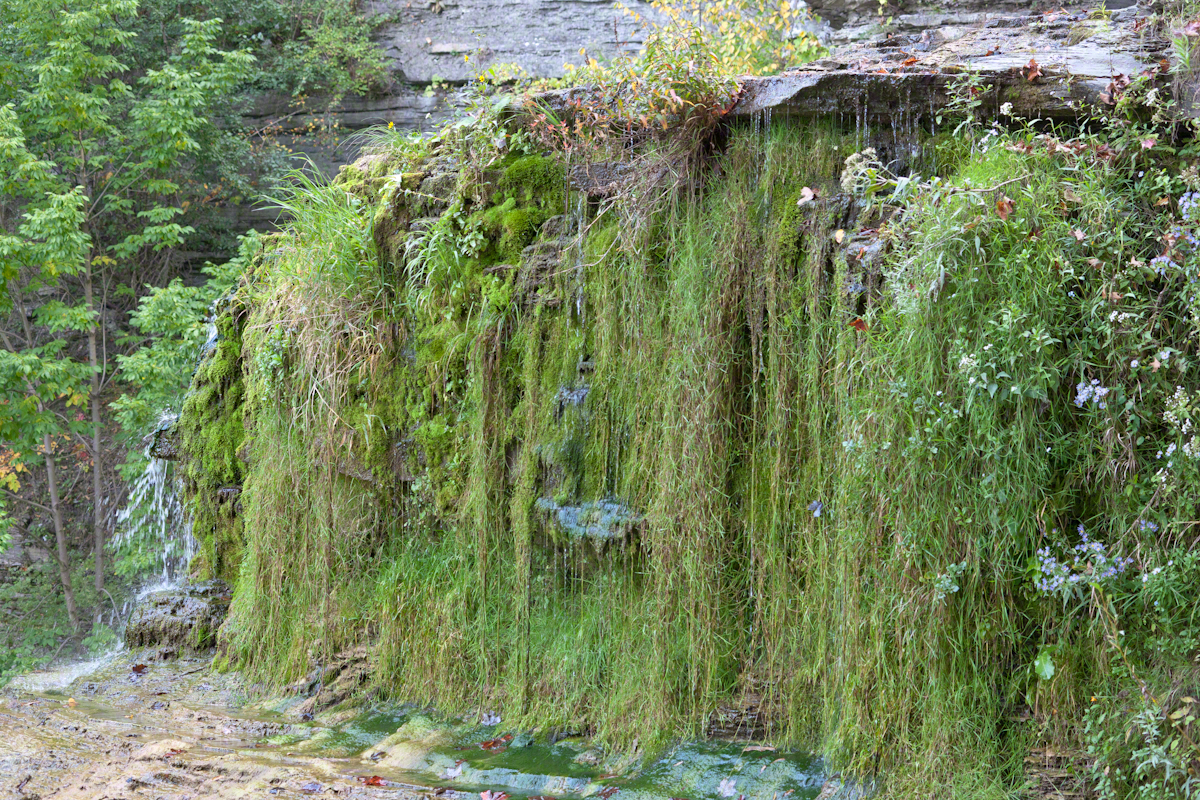
Here you can see how, at lower flow levels, the inactive sections of the fall lip become a garden. In our climate, the entire brink is active for rare and brief intervals during spring thaws. Note how, closer to the active brink, the grasses give way to mosses. Where grasses grow the brink is almost never active.
The trail wall is a lighter color than the cliff, this is how you can see, on the right, the steep trail descent.
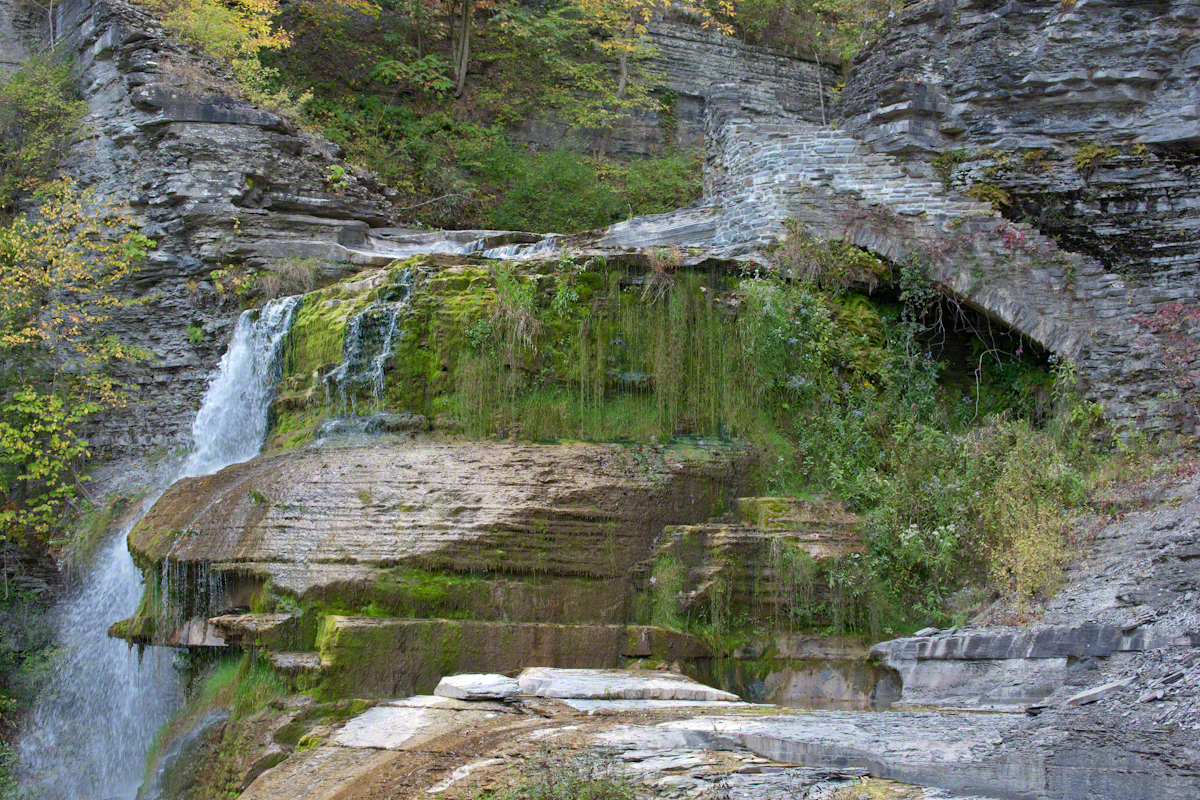
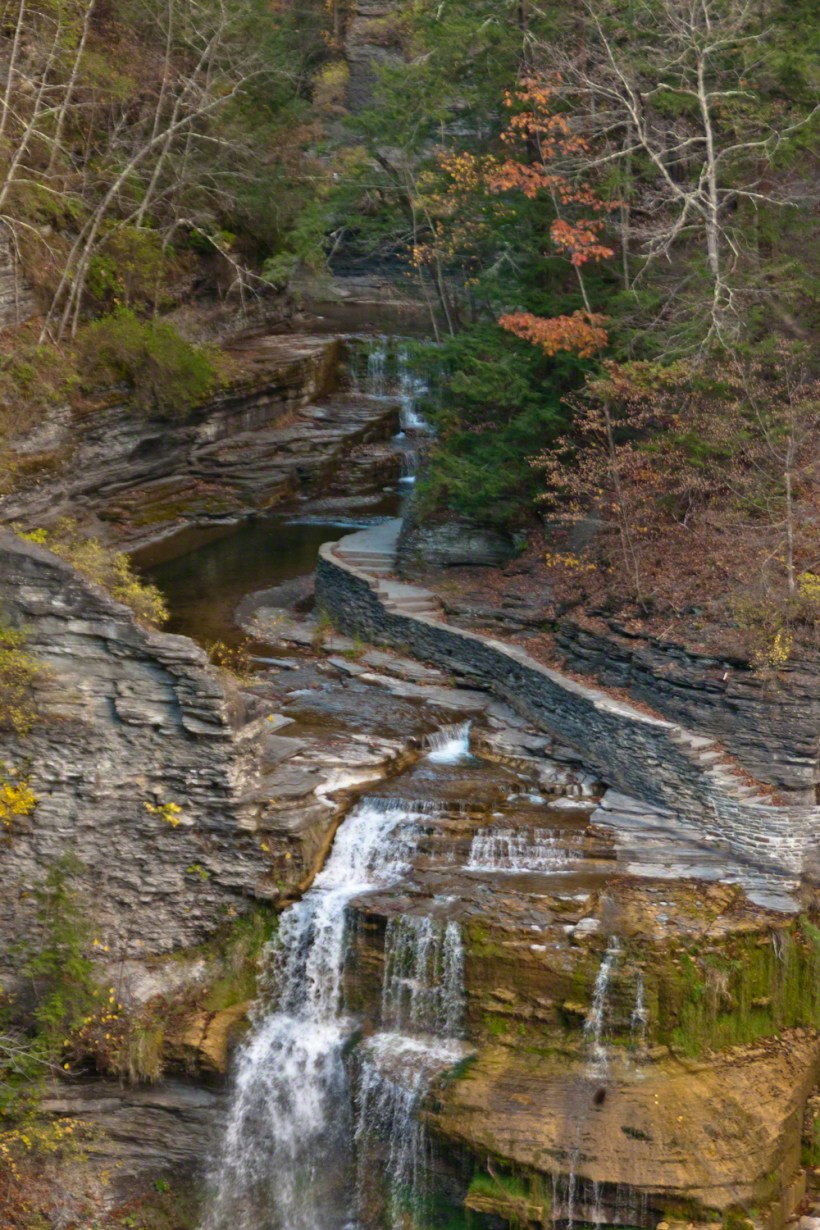
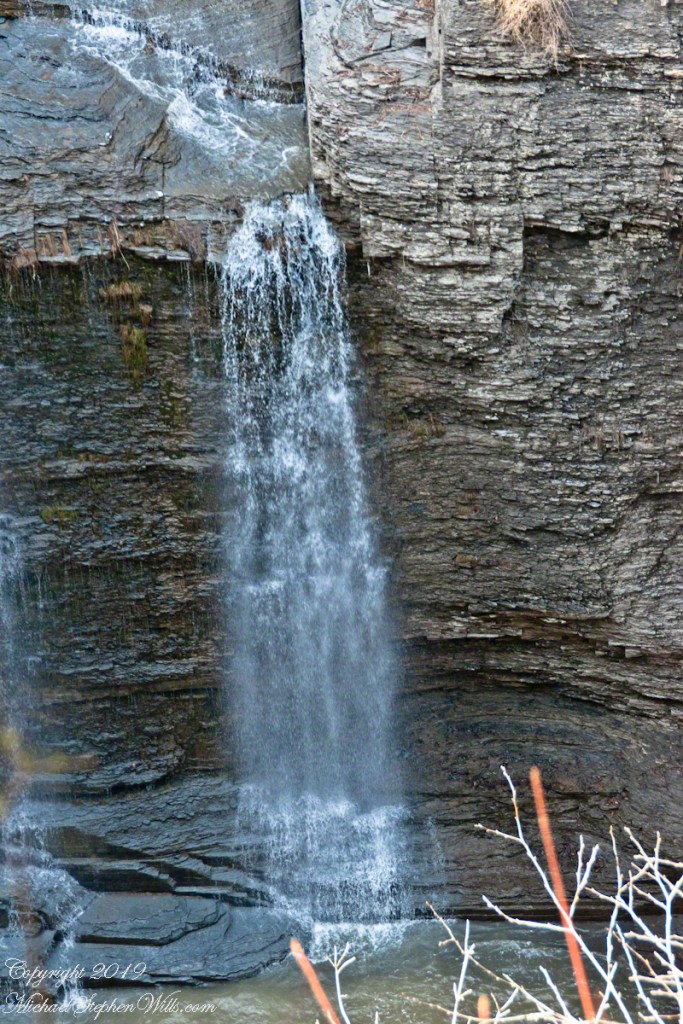
Pam and I turned around here. This is some work I did August 2014 of a notable fall downstream from Lucifer. I used the 24 mm Canon lens here, cropping the image. My goal was to include the stair, for interest, with sunlight on the upper stairs; the water in shade.
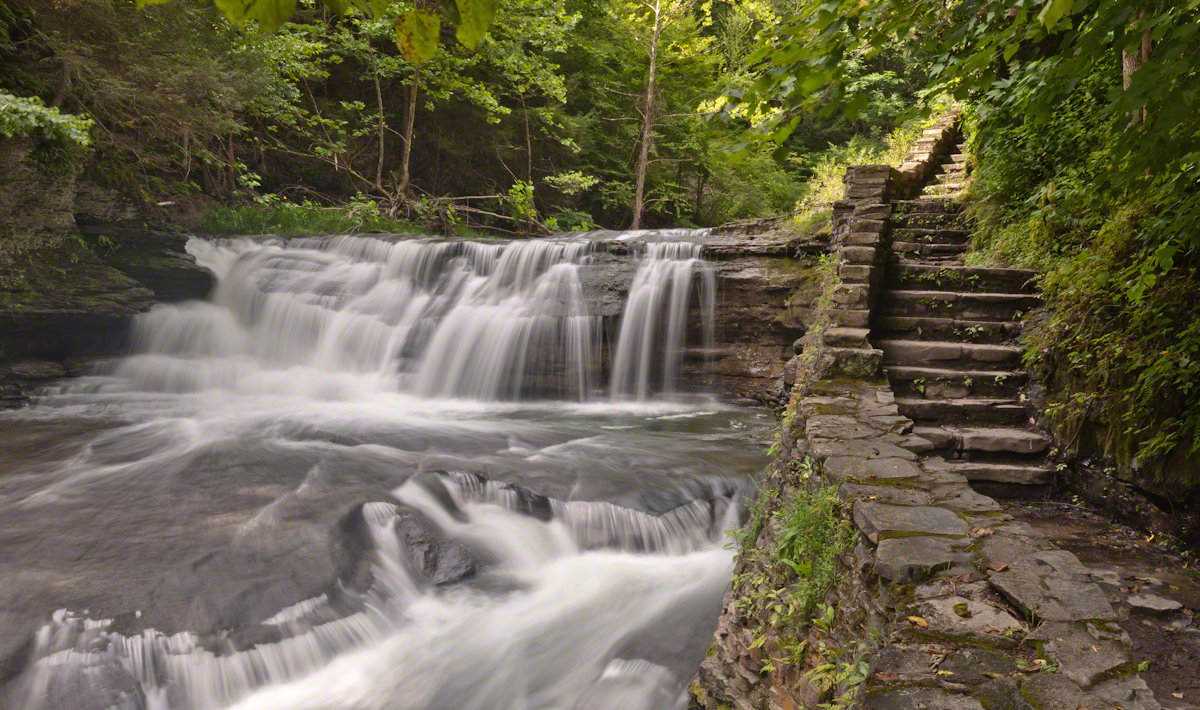
Click link for my fine art print “Woodland Falls.”
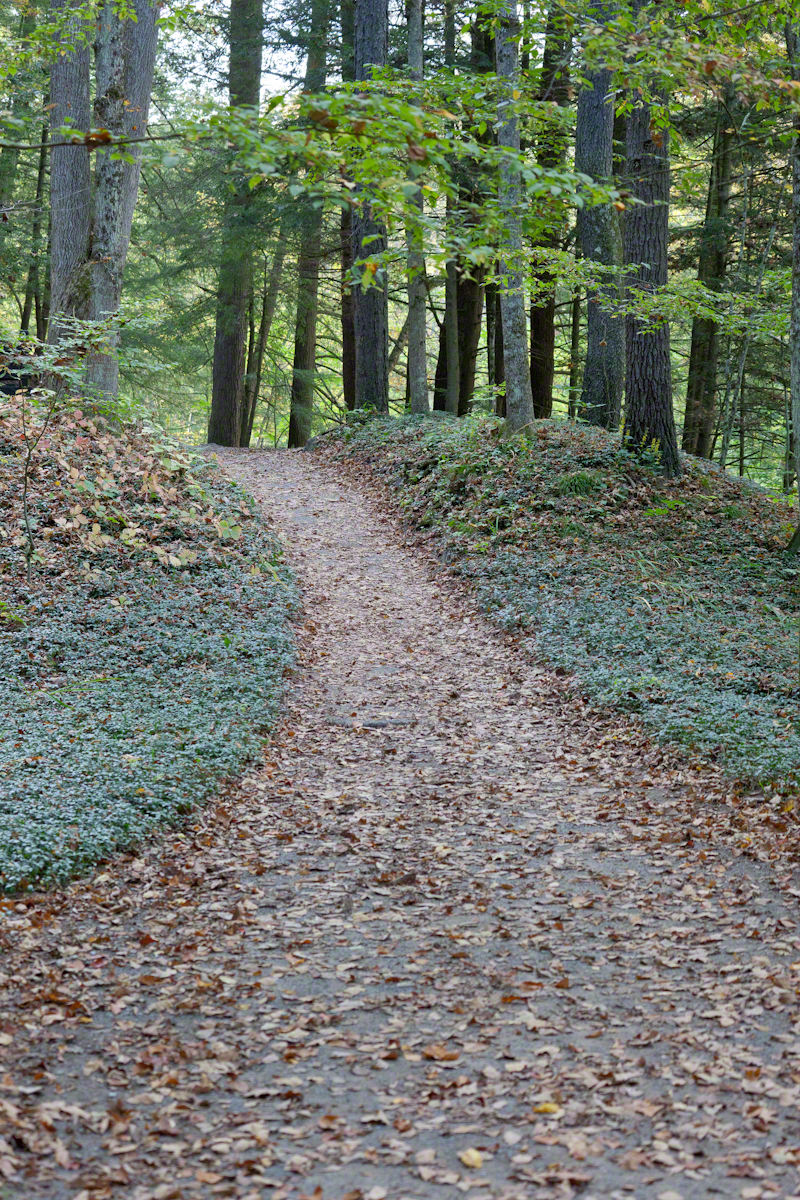
Myrtle borders the trail as it rises from the gorge entrance.
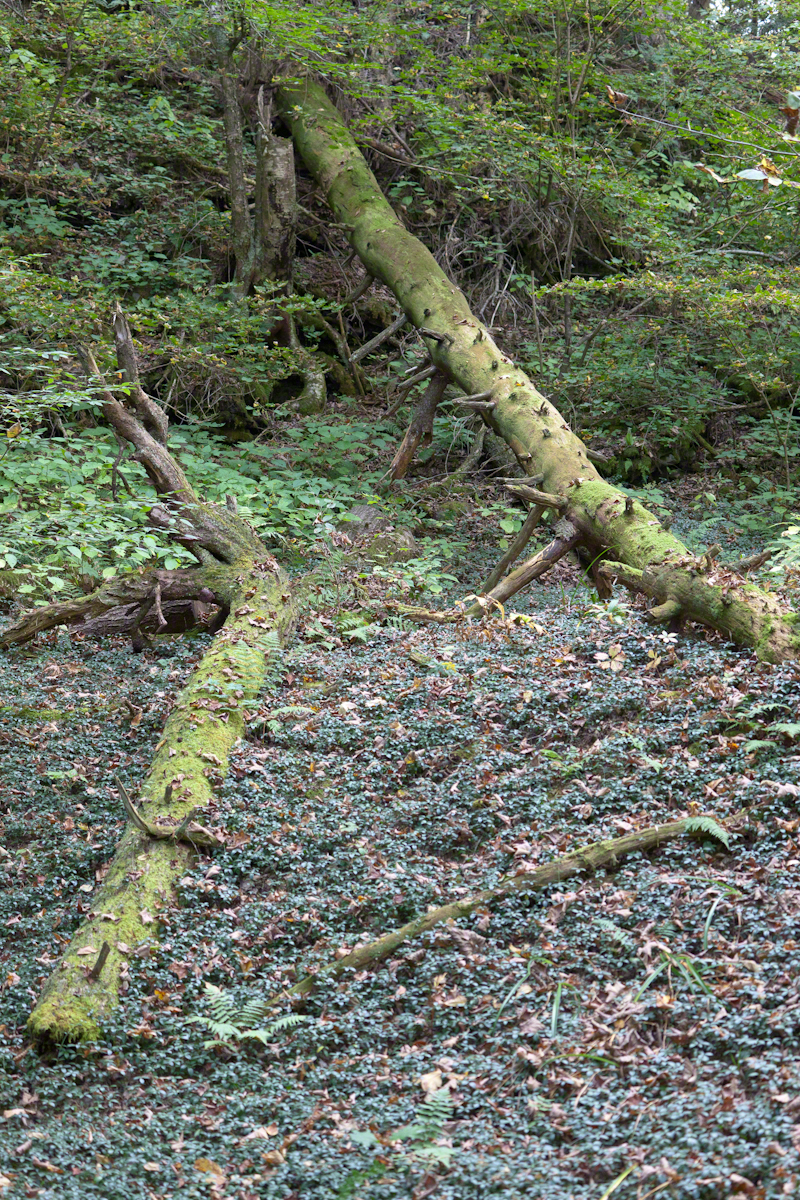
Tree trunks fallen from the gorge walls are left to decay, restoring the soil. The trunks are covered by moss among a thick growth of myrtle and a few ferns.
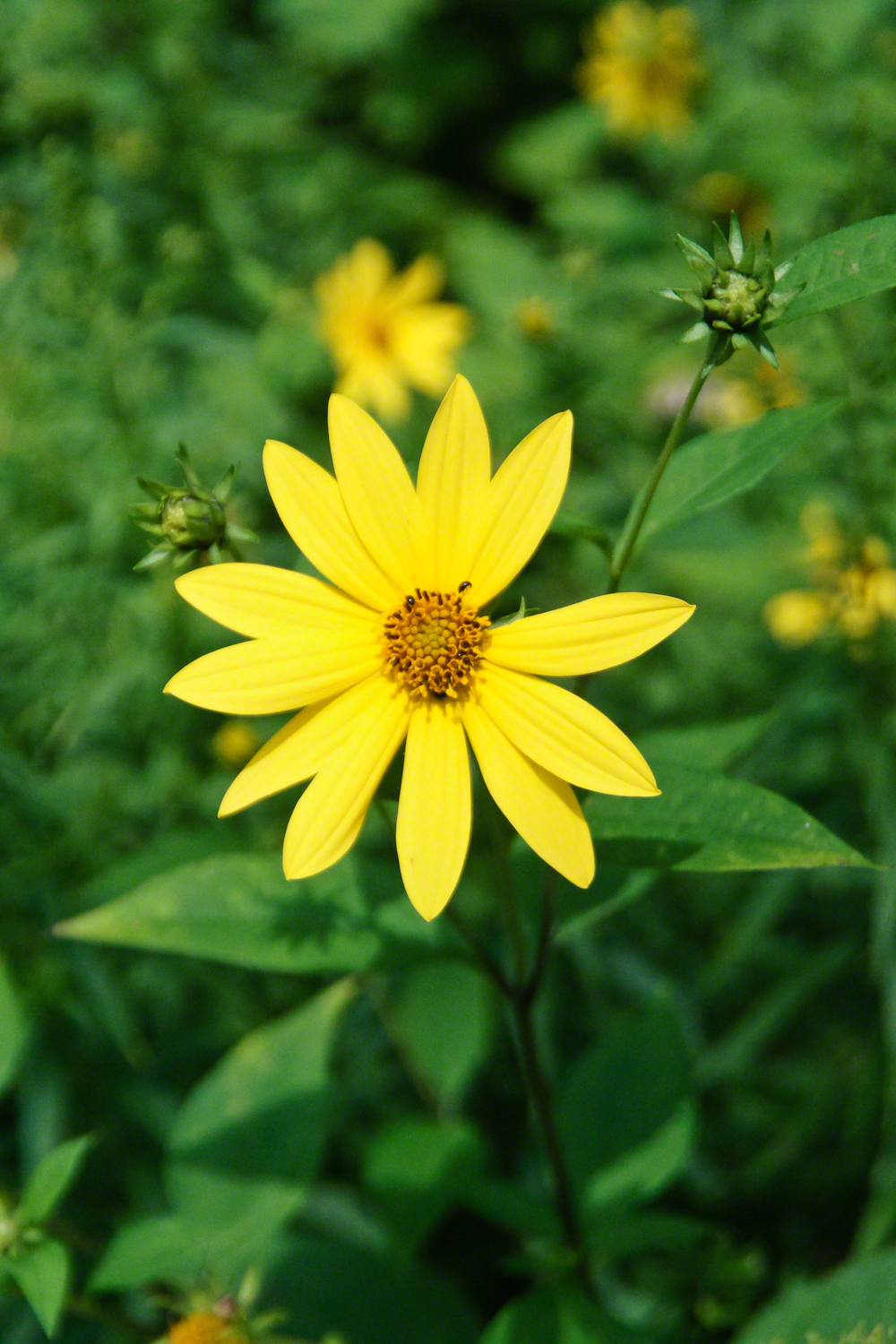
To finish, here is an image that may broaden your understanding of sunflowers. These smaller, ornamental sunflowers are, at first, difficult to place. Look carefully at the center, composed of many tiny flowers (florets). In crop sunflowers each of these becomes a seed. In this image, shiny beetles are feasting.
Click me for more postings of Autumnal Beauty
Water runs through it
In part 2 of this series, we return to the starting point. Siting of a water mill requires immediate access to the potential energy of falling water, something called “head.” Upper Treman Park was once a prosperous hamlet with the mill as the kernel. Today, the head that drove the mill is a lovely cascade behind the substantial and intact mill building. Easy walking distance from parking, this is a well-known park feature.
Here are three versions of a portrait of Mill Falls using different lenses for varying effects. All were taken in the same season and approximate time of day, being early evening.
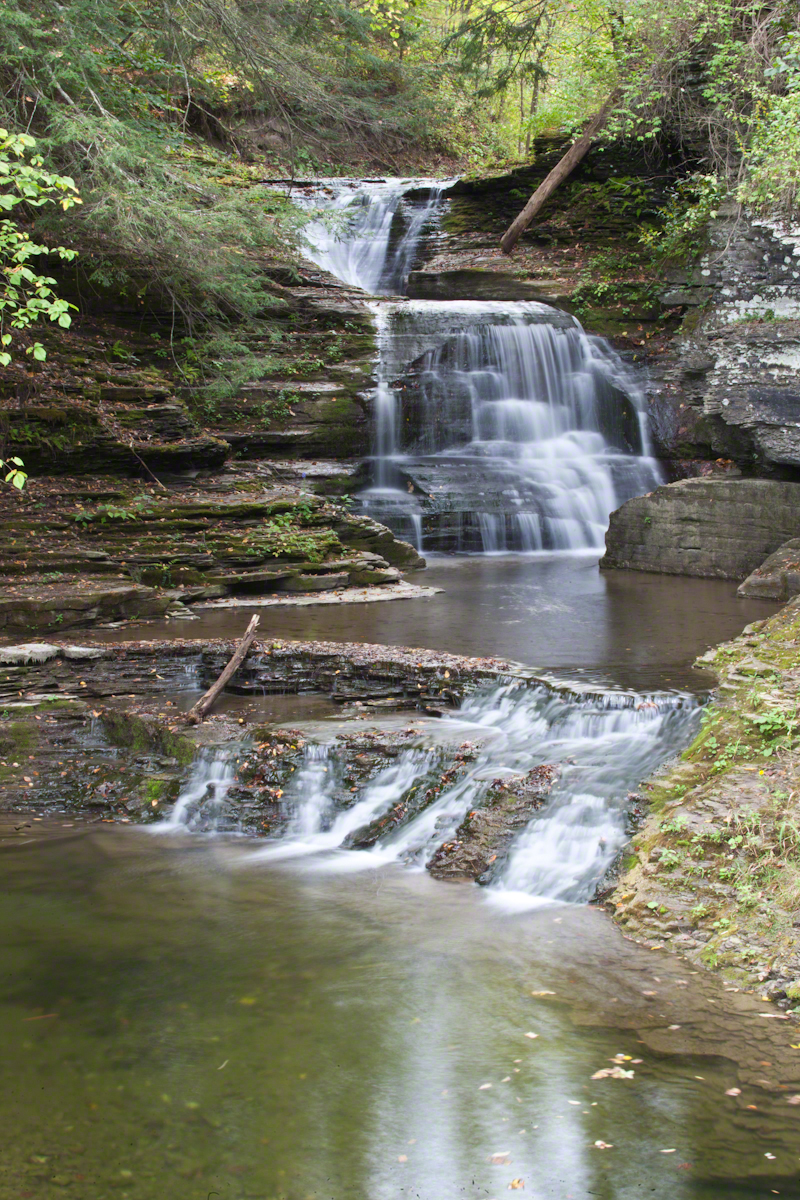
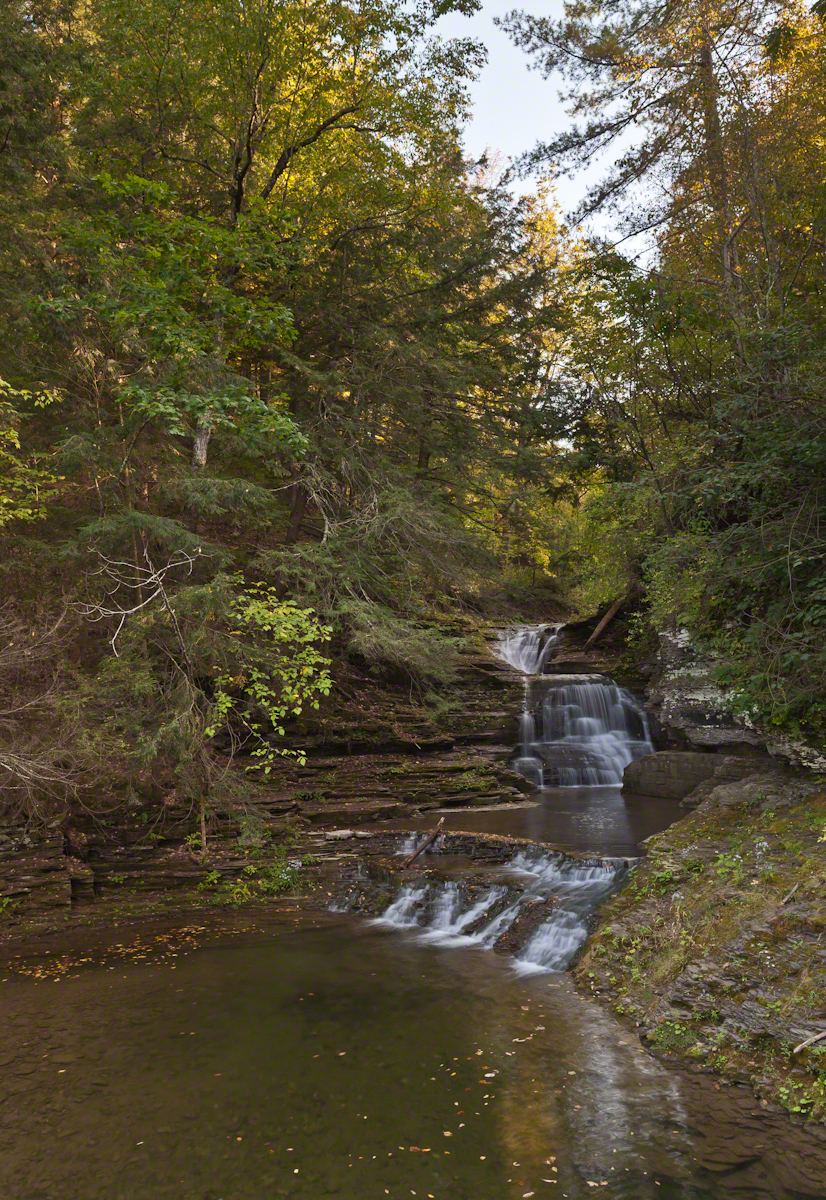
This is the uncropped image used in part 1 of this series. I found the secondary cascade a distraction. Exposure of the secondary is difficult to balance against the primary and more shaded primary.
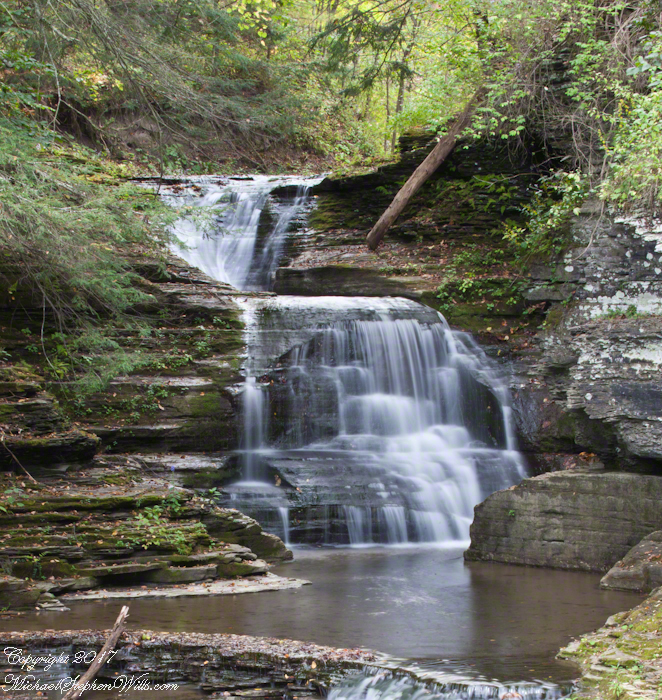
Click link for “Mill Waterfall Primary Low Flow” fine art print.
Let’s return to where part 1 left off, the stone bridge across the eastern side of the gorge entrance gallery.
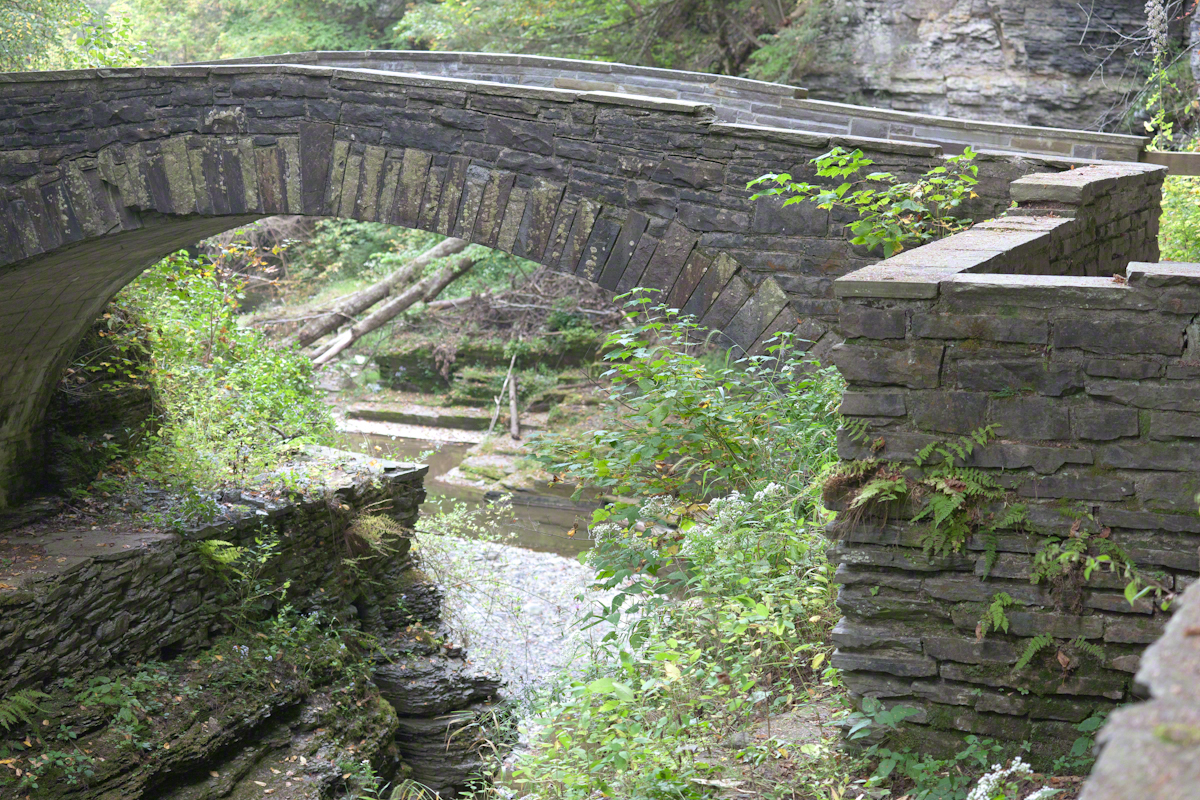
This segmental arch is an illusion, the beautiful stone work is the facing of the concrete structure that carries to load of the stone, itself and visitors.
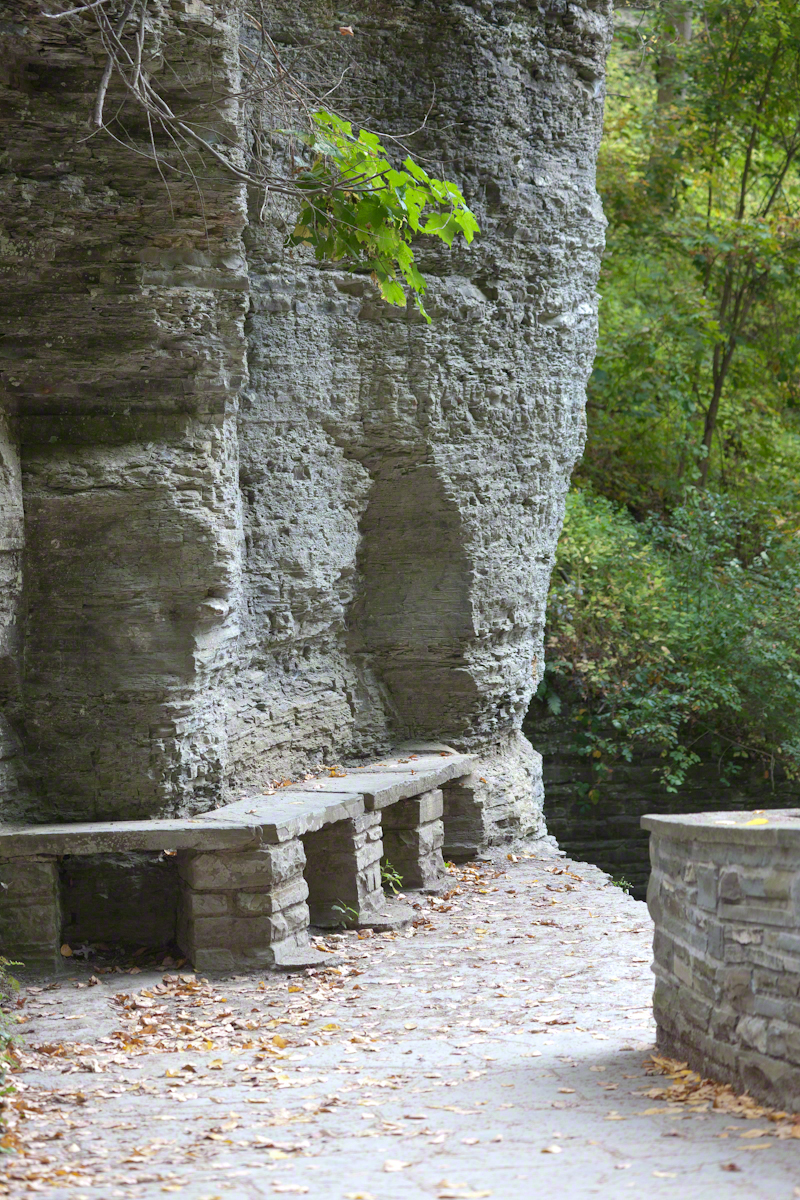
My composition emphasizes the mass of rock wall above the bench and into which it is placed. The limestone slabs are from a different source, they are not built from the material removed from the cliff.
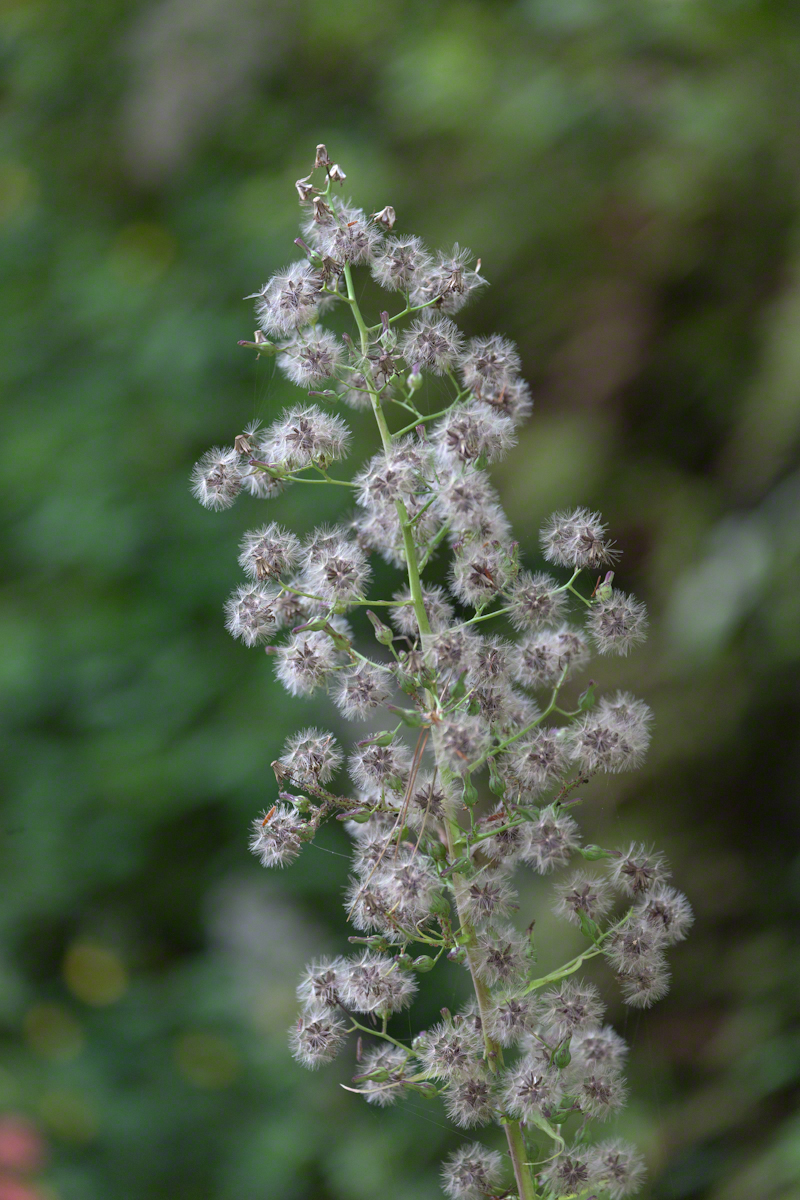
A dandelion on steroids. If you can help with identification of this plant, please post a comment.
Click Me for “Ad Astra” a fine art print, in my gallery.
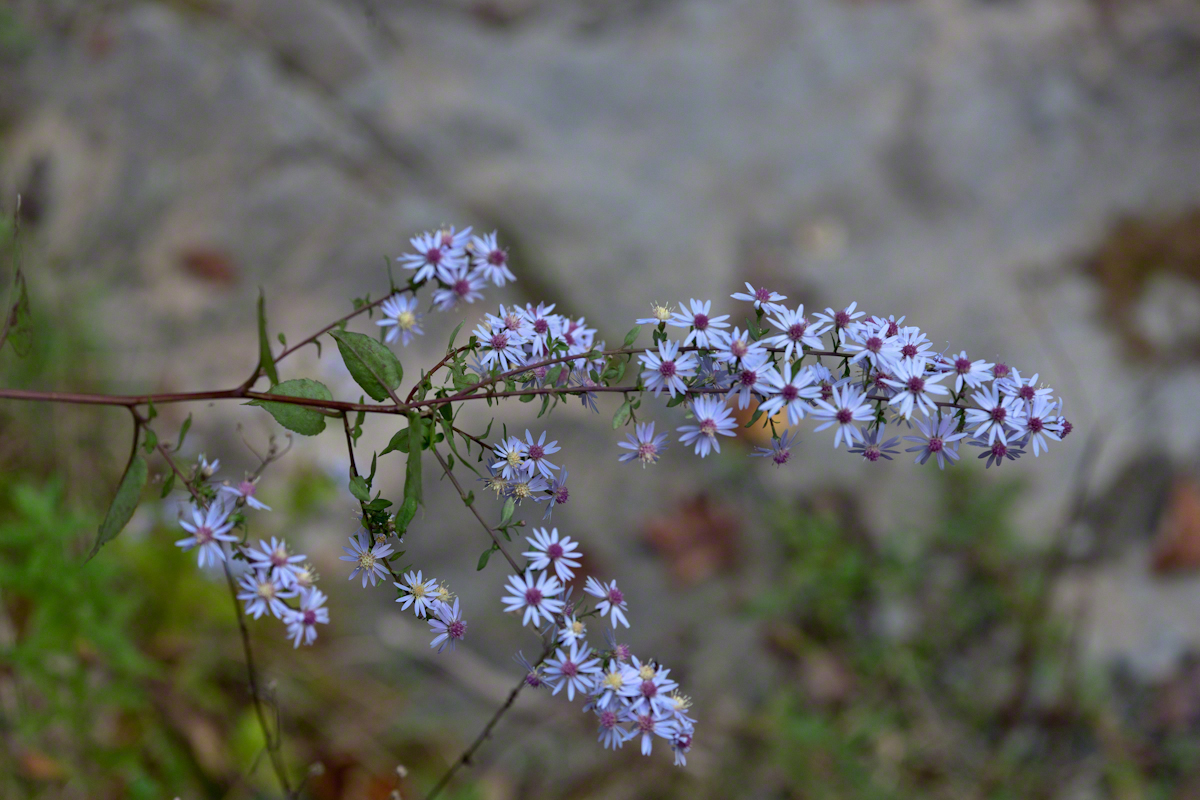
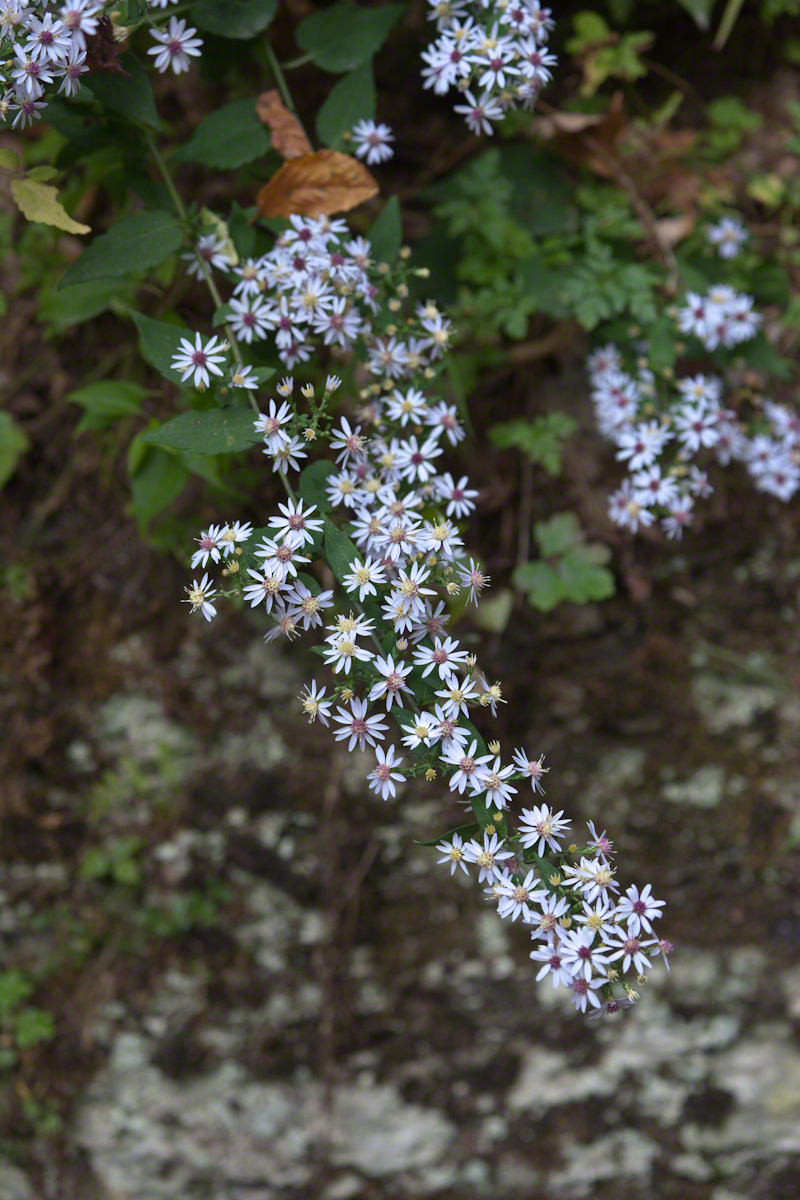
Click Me for “Purple Asters” a fine art print, in my gallery.
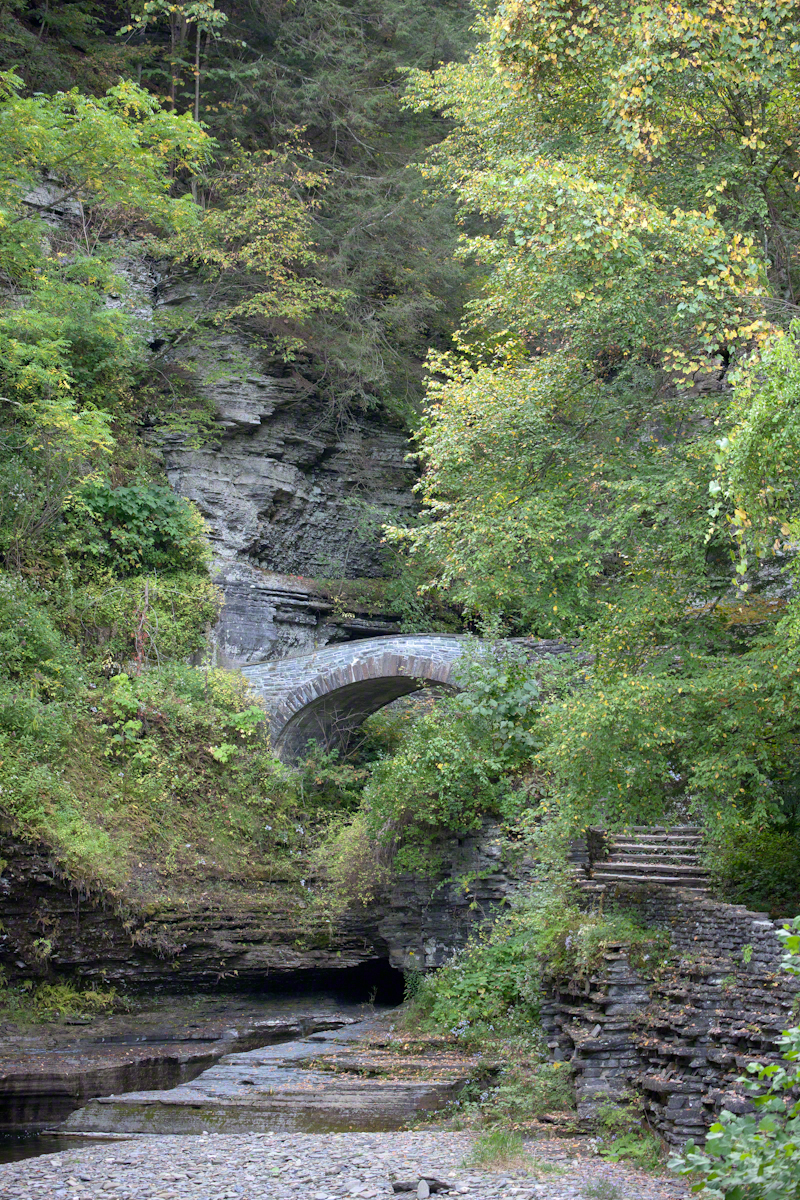
Many first time visitors do not look back to appreciate these scene. When we give advice, our recommendation is to return on the same gorge trail. The different viewpoints make for a fresh experience.
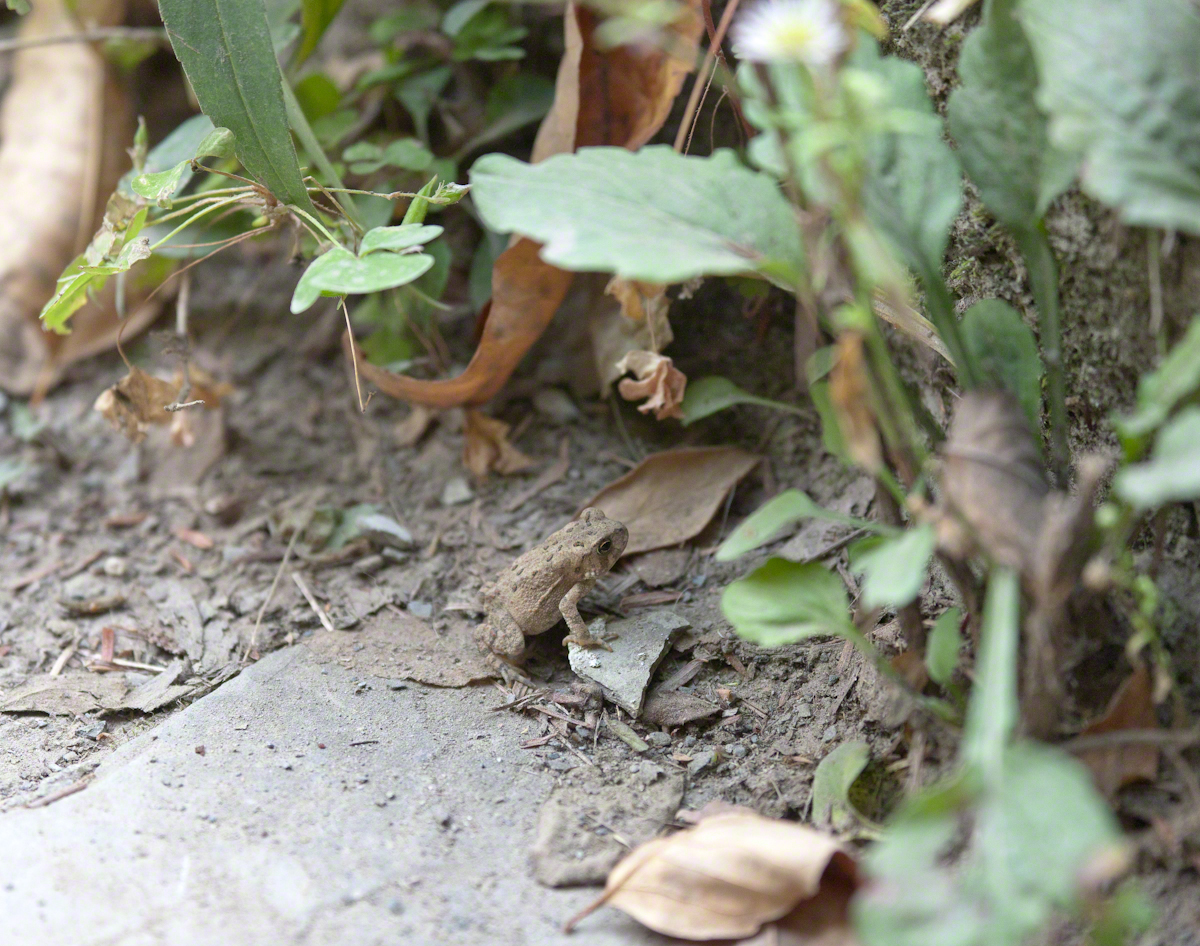
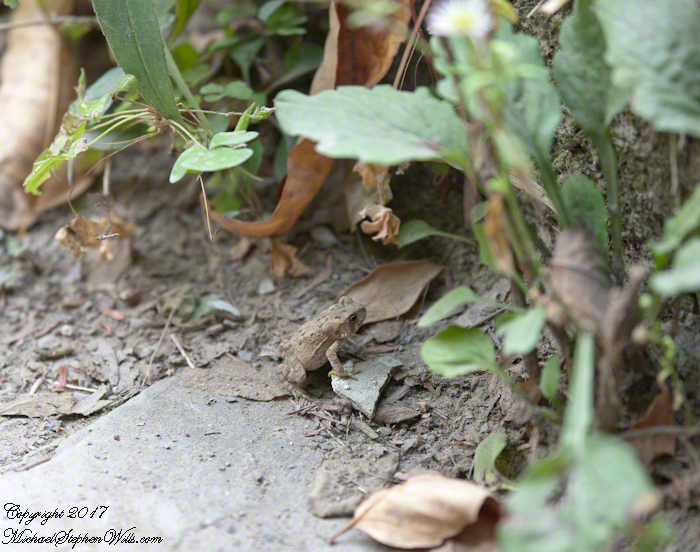
They are like people, sitting there. Kenneth Graham’s genius, in writing “Wind in the Willows”, was to recognize the likable characteristics of the toad. I find myself concerned about their survival, although they must survive. Earlier in the season they are pea sized. I resist an inclination to move them to what may be a more promising location, preferably with a stone house and chrome brilliant motor car.
It started with running water…..
Over the weekend the handle of our 60 year old Delta brand kitchen faucet broke off, since we moved here I rebuilt it once and replaced the stainless steel sphere, the central control of the mechanism. The stem of the sphere must have been faulty because it snapped. Monday, I visited Lowes and the sphere was not in stock. Just wanting to fix the faucet, I skipped the usual vetting of a new product and grabbed the exact same Delta faucet which was, just like the sphere that broke, made in China. The next step up in (questionable) quality was three times the price.
Yesterday I installed a new faucet in the kitchen sink, a straightforward and unpleasant task that took most of the day. Late afternoon, while resting up, I brought up the idea of a hike and Pam reminded me we had another clear September day. Last week, I headed out to capture the Mill Creek waterfall of upper Treman Park at the perfect time of day. It was a day such as this, warm, a cloudless sky, minimal breeze.
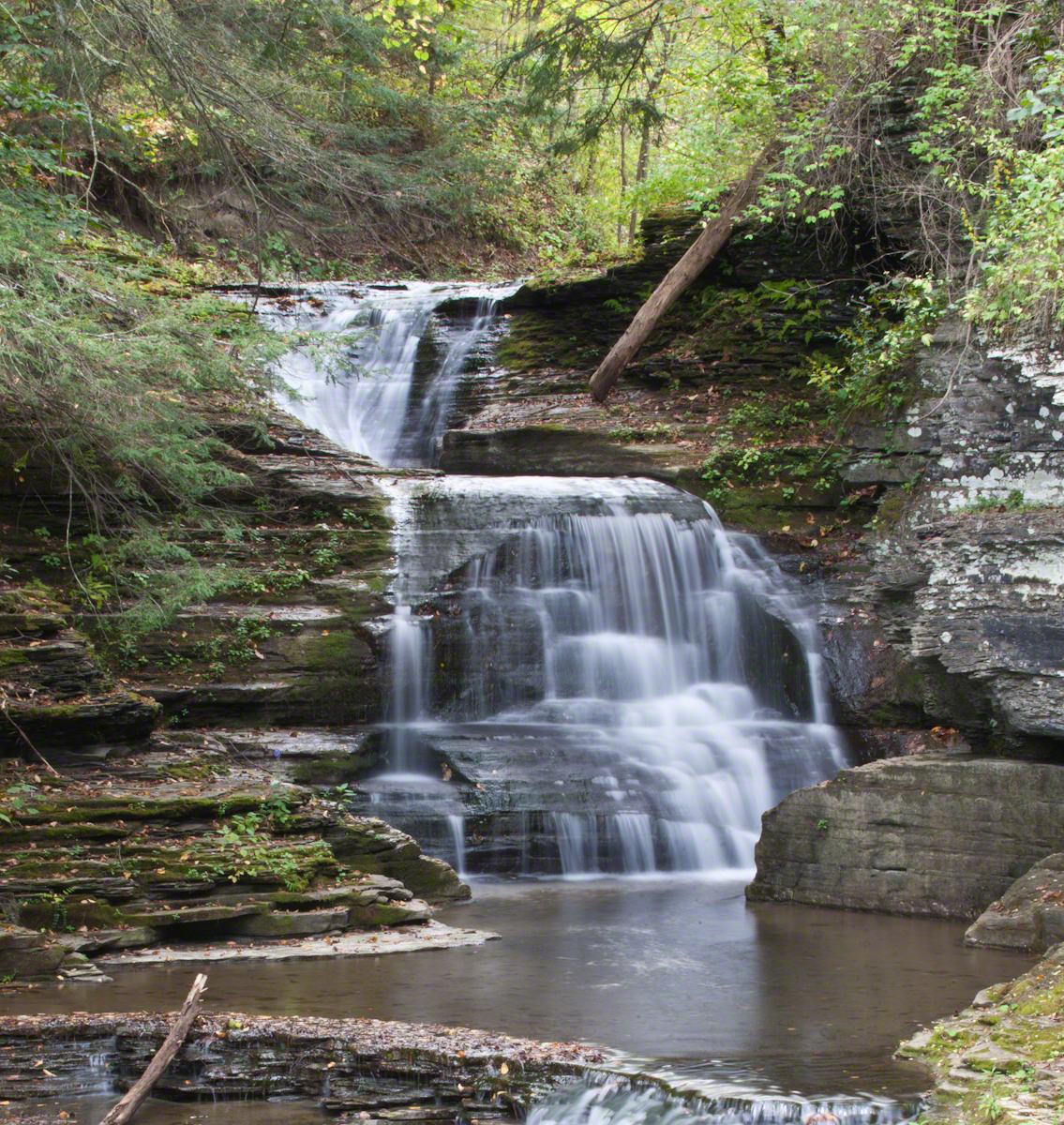
I need to get in place a bit earlier. Previously, I used a 24 mm wide angle lens and, today, mounted the EF 70-300mm f/4 – 5.6L USM lens on the Canon EOS 1DS MarkIII. Did not have time to sort through the ND filters, so left the UV on. The waterfall is in a glen, shaded from direct light at this time of day, sun low in the west. Given the low light, to save time, I decided to set ISO to a low value (125), set lens to the widest angle (70 mm), and frame the shot using the heavy Manfrotto tripod with ball head.
Needed to crop the image for the above result, still not perfect. I am seeking to full the entire pool in that glow.
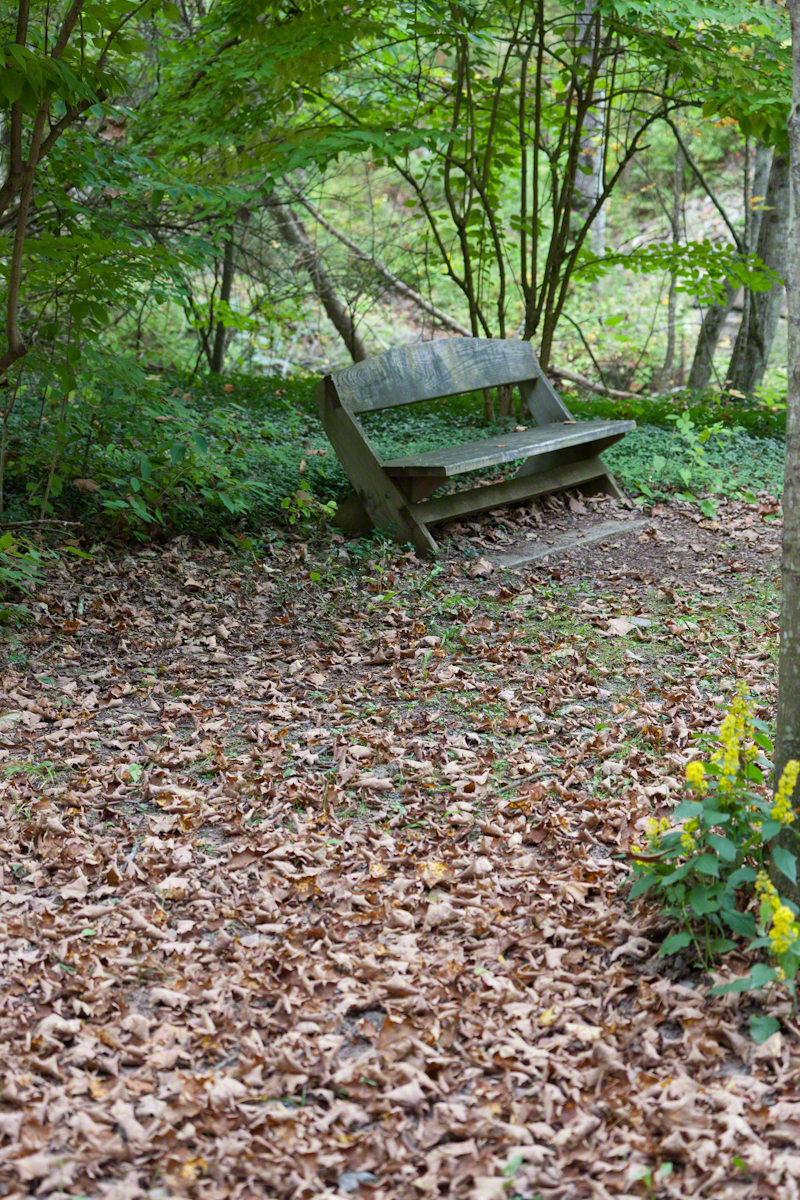
Instead of putting the gear away, I carried that heavy setup on the hike. The strap around the neck is a lot of stress if it hangs. With the gear cradled in the crook of my arm it is bearable.
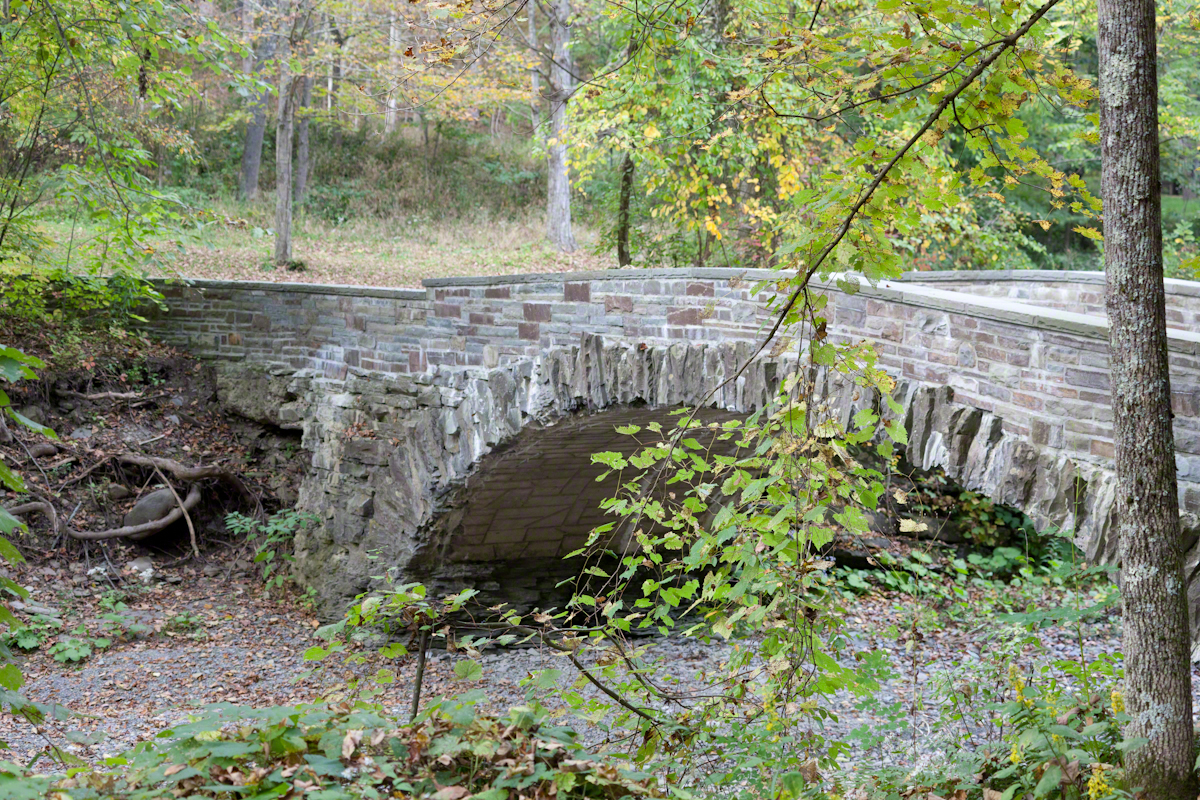
Needless to say, the pace was sedate. Pam spent most of the time walking ahead and refusing to be in any shots. These past weeks, rainfall was light, so the creek is low. This low flow is a necessary element to a perfect waterfall image.
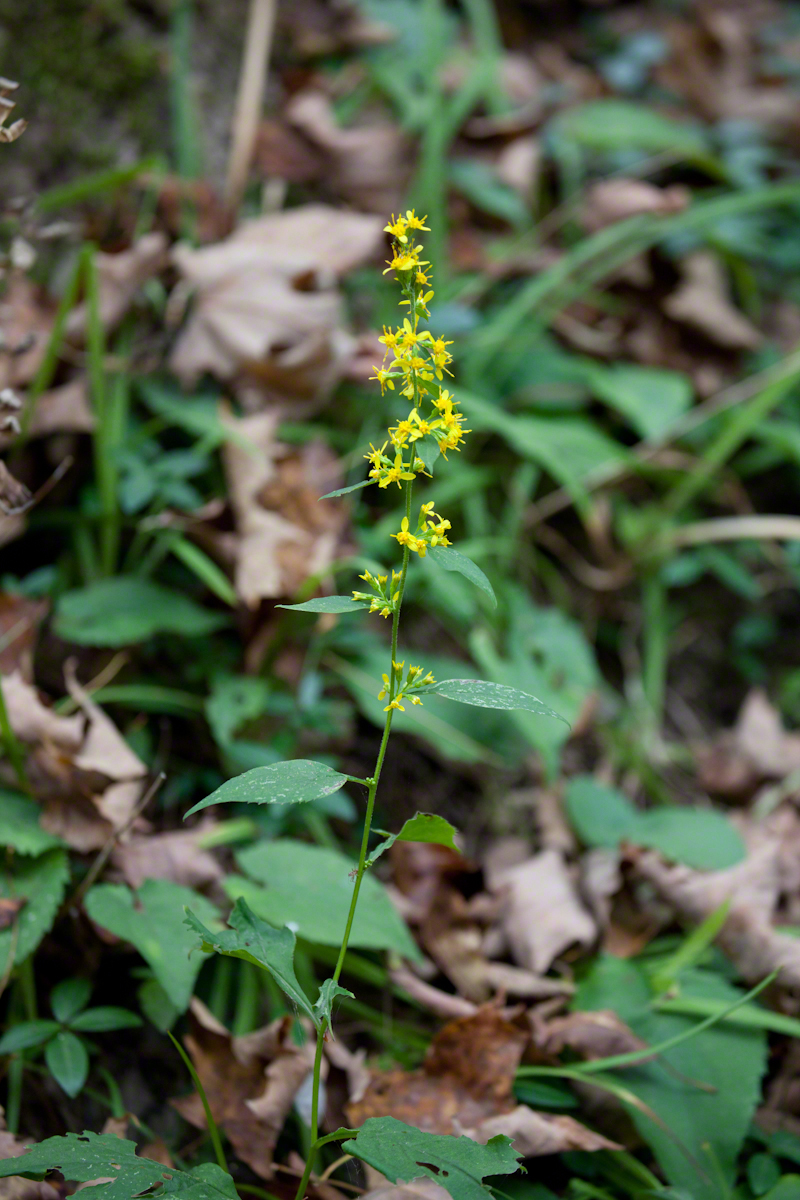
I get some great macro shots with that lens. With just the UV filter, it is quite fast.
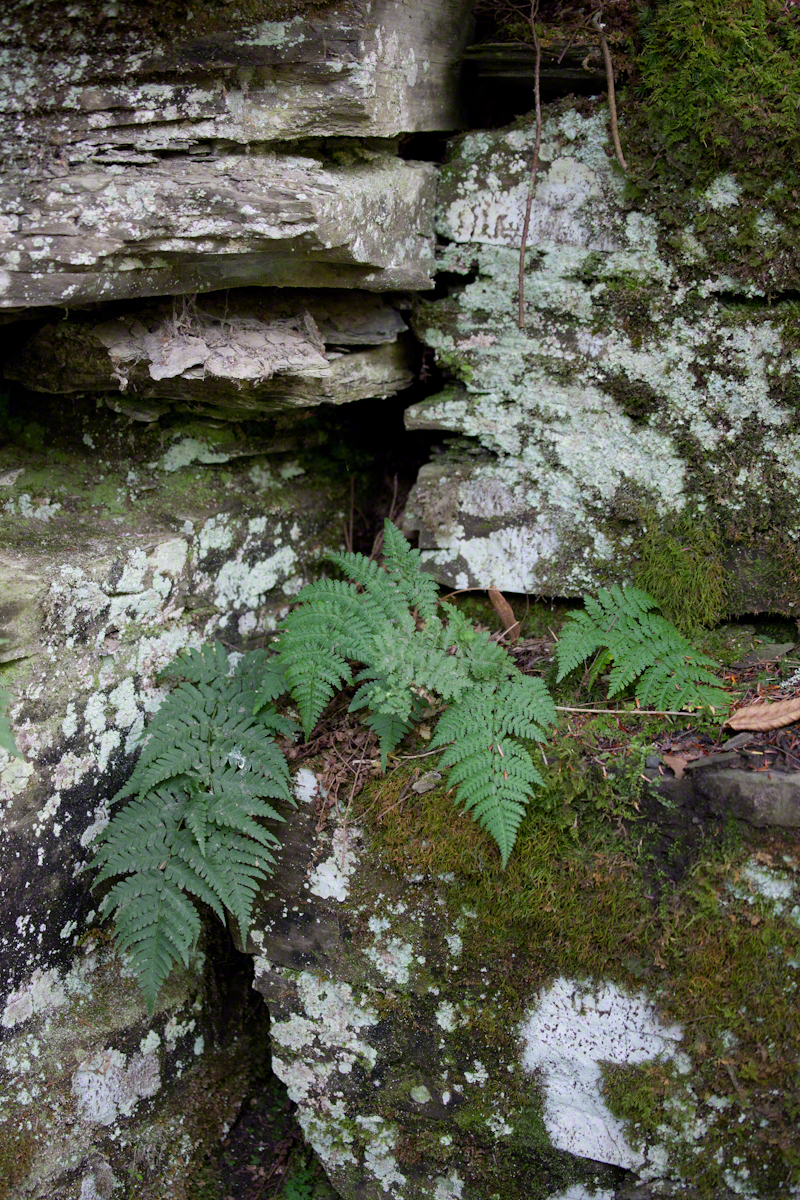
A memorable feature of upper Treman Park is the dramatic gorge entrance. When the glaciers melted, 10,000+ years ago, enough water flowed through this watercourse to wear away several hundred feed of sedimentary rock to form a gallery, or hall, with towering, crumbling, walls on either side.
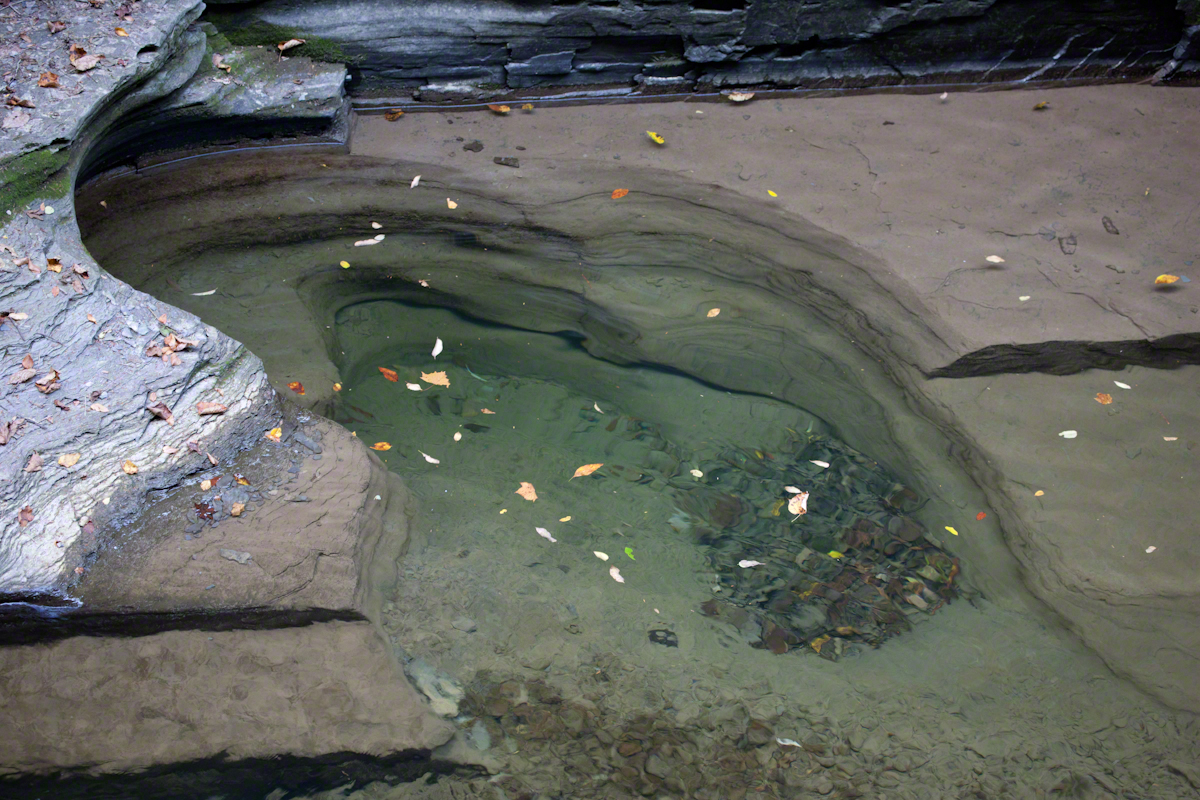
This evening the light was low, the water seemed dead in that it was clear and did not glisten or ripple. I used these conditions in the above shot to emphasize the structure this pool. Located at the foot of a waterfall, at high water, the falls fill channel and this pool is carved by river stones carried in the current. At lower water, the pool is exposed.
The footbridge, above, is most often photographed from the western side of a long gallery formed by the gorge carved by the creek. This is a shot that explores the fine stonework.
The post explores the symbolism of Lucifer and the Tiger Lily, suggesting that beauty and pride can lead to downfall, reminiscent of Lucifer’s narrative.
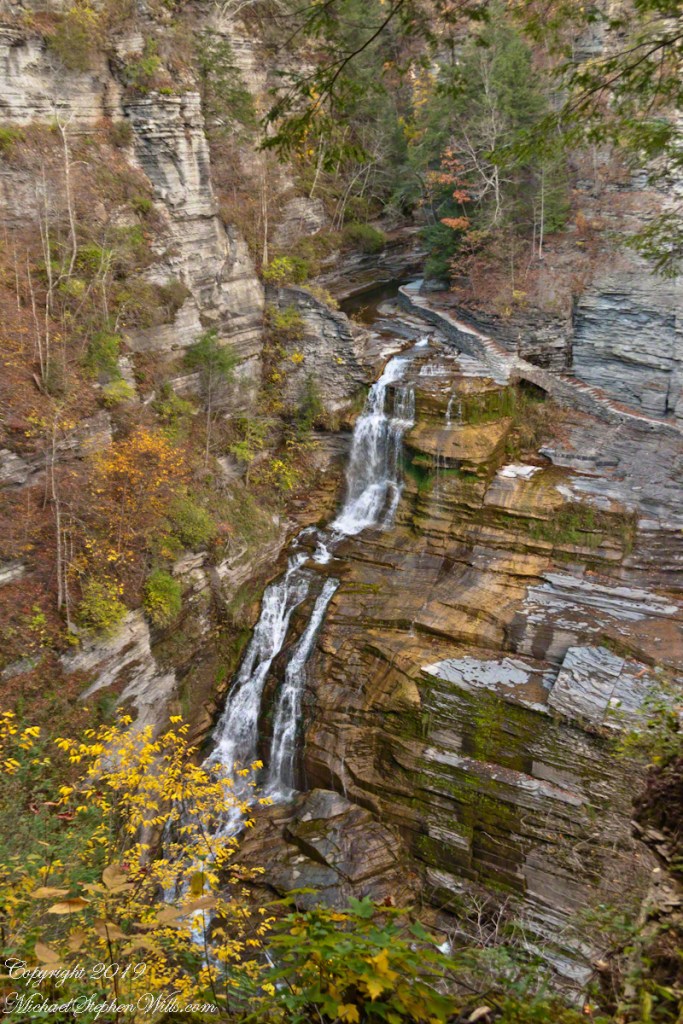
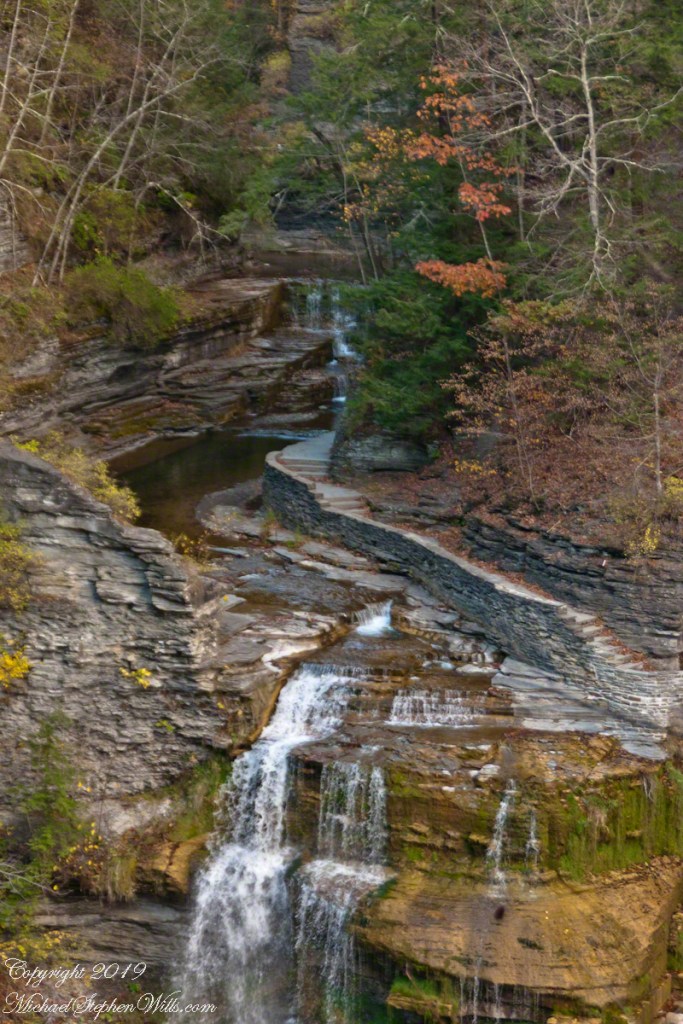
A reader’s comment to this blog, thank you “Urban Liaisons,” prompted me to explore the word, Lucifer. “Lucifer”, in Christian tradition, refers to the devil as it was in a time of glory before the fall from grace. The original, ancient meaning of Lucifer is the planet Venus as it rises just before the sun at dawn. In this sense, the name refers to the bright beauty of the spot. The effect is heightened at midday when the hiker passes from the relative gloom of Devils Kitchen to the full light and sweep of the waterfall chasm.
Standing next to the falls on the Gorge Trail, the stone wall of the Rim Trail Overlook is overpowered by the grandeur of the 300+ foot cliff. The falls photographs were taken from behind the wall.
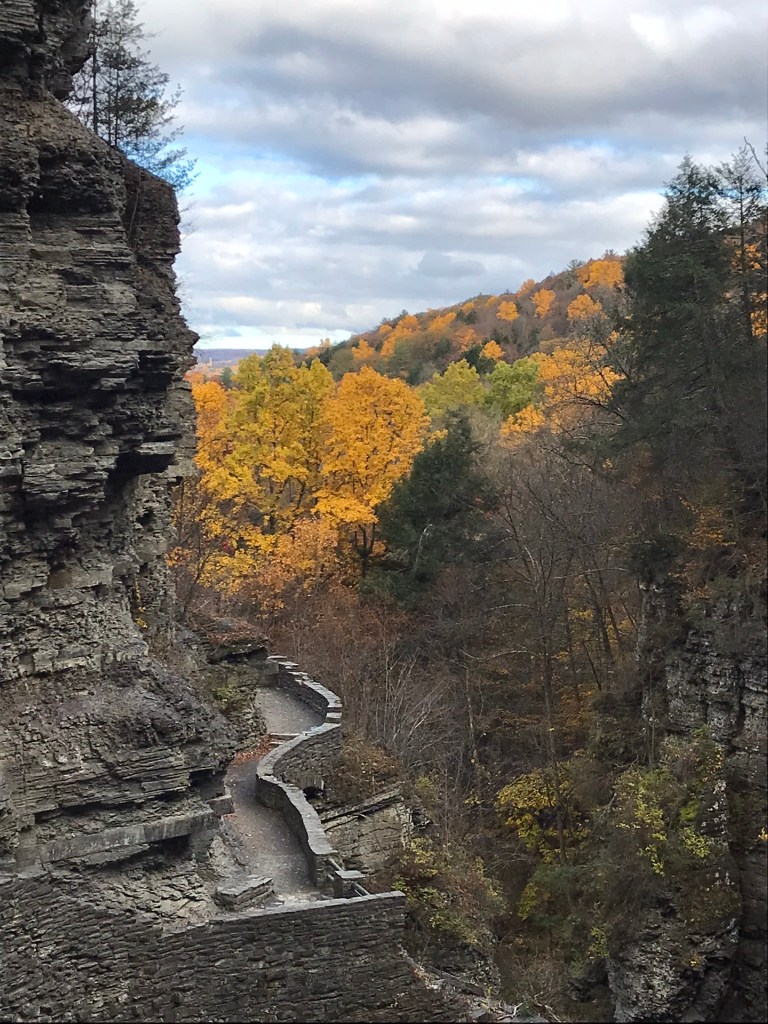
Occasionally, we have experienced individuals climbing over the wall to stand on the other side. “Why?”
Summertime thick stands of tiger lilies flourish on the cliff face. Can you find the withered leaves?
I must delve into symbolic interpretations to explore the connection between Lucifer and the Tiger Lily. Lucifer, traditionally associated with rebellion and the fallen angel in Christian theology, symbolizes a break from divine order and beauty tainted by pride. On the other hand, the Tiger Lily is often seen as a symbol of wealth, pride, and prosperity in various cultures. The connection lies in the shared symbolism of pride and beauty. Just as Lucifer was a beautiful angel before his fall, the Tiger Lily is a strikingly beautiful flower, often associated with pride. This juxtaposition creates a metaphorical link, suggesting that beauty and pride, while alluring, can lead to downfall, mirroring Lucifer’s story.
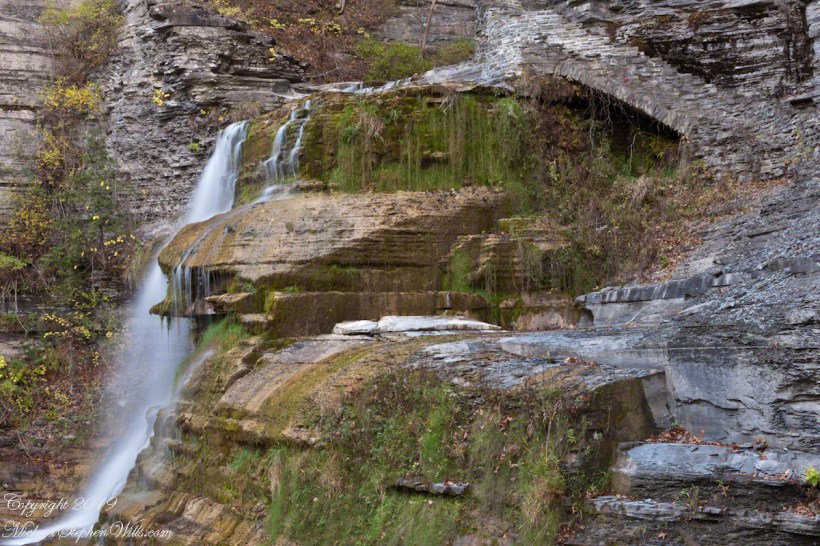
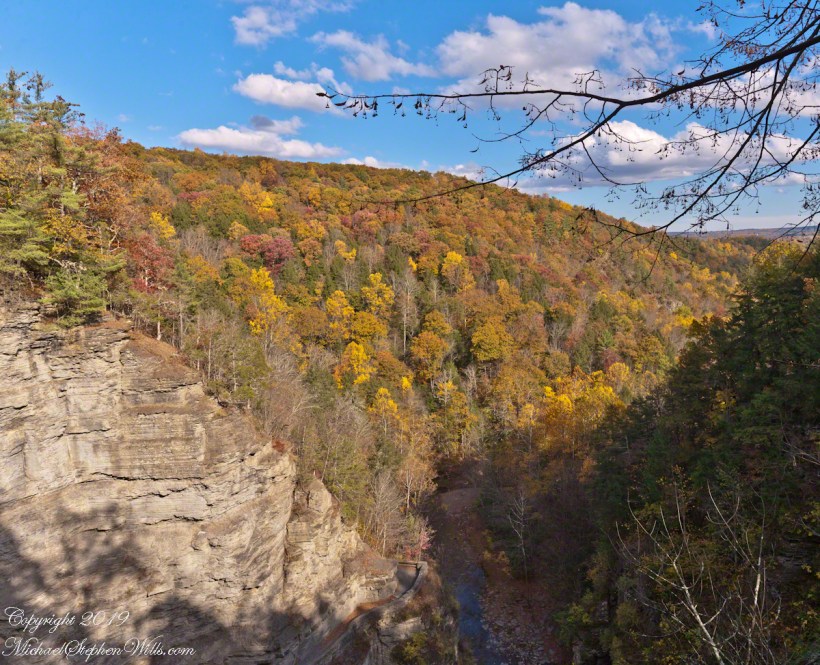
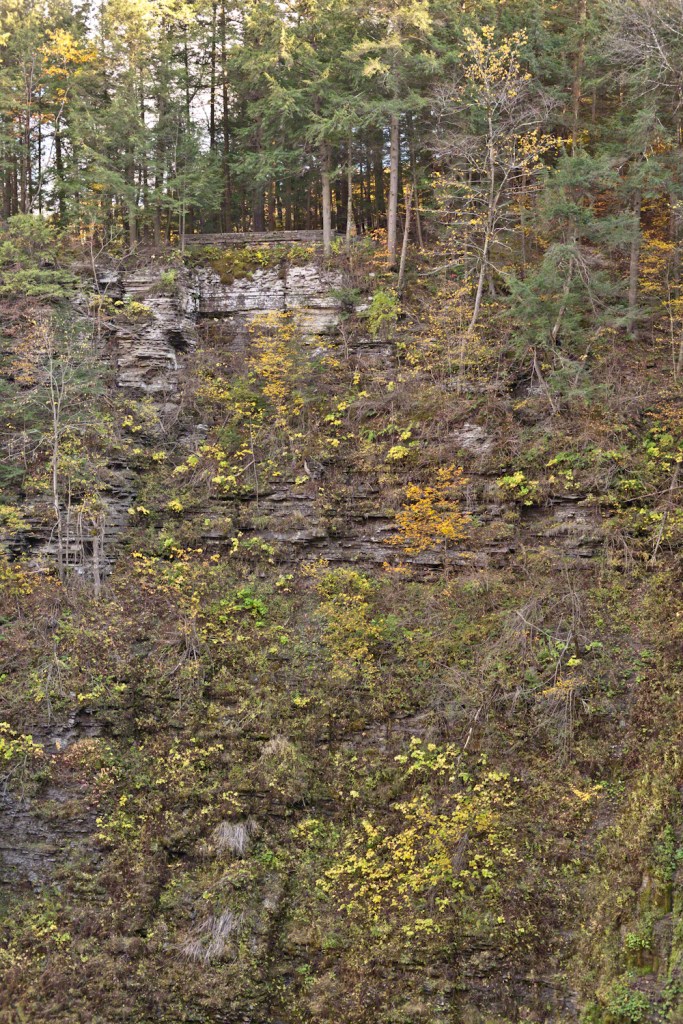
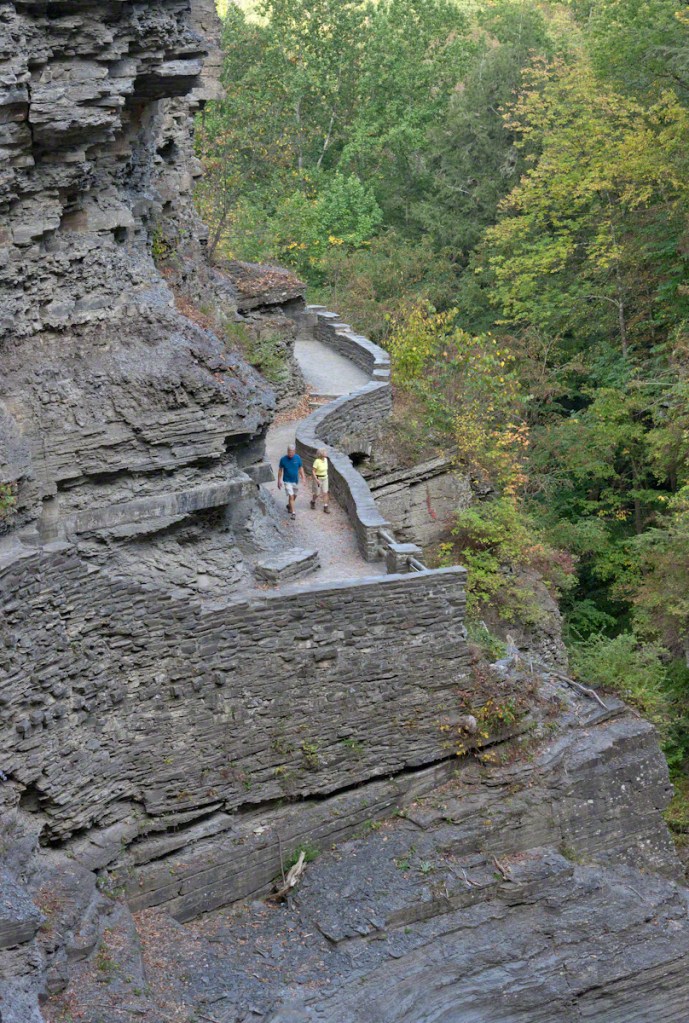
This session I finally “cracked” the puzzle of the Devil’s Kitchen Waterfall. I posted the results to the online gallery yesterday, for your enjoyment. Click the link to go there.
Click link for my fine art print “Devils Kitchen.”

The red berries of the Jack-in-the-Pulpit plant play a key role in seed dispersion, wildlife sustenance, and fueling its energy storage organ, the corm.
As the crisp air of autumn settles in and the leaves begin their spectacular transformation into hues of red, orange, and yellow, the forest floor comes alive with a myriad of hidden wonders. Among these wonders, the Jack-in-the-Pulpit (Arisaema triphyllum) stands out for its striking red berries and the role they play in the fall glory of the woodland ecosystem. In this essay, we will explore the beauty and significance of these red berries and how they are intrinsically linked to the plant’s corm.
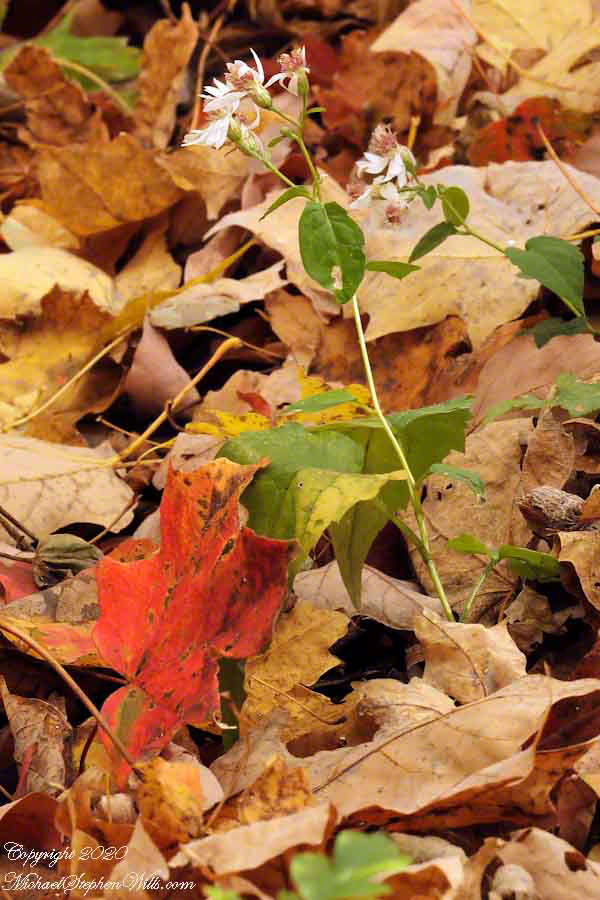
The Jack-in-the-Pulpit, a native perennial herbaceous plant of North America, is known for its distinctive appearance, featuring a hood-like structure known as the spathe and a tall, slender stalk called the spadix. It is during the fall season that the plant’s fascinating red berries make their appearance, contrasting vividly against the backdrop of autumn’s colors. These berries are the result of a process that begins in the spring, when the plant first emerges from its underground corm.
Throughout the growing season, the Jack-in-the-Pulpit devotes its energy to producing these striking red berries, which serve several important ecological functions. The red berries are not only visually appealing but also function as a means of reproduction for the plant. They contain seeds that, once mature, can be dispersed to establish new Jack-in-the-Pulpit plants. These seeds are often transported by animals that consume the berries, such as birds and rodents, which then disperse them in their droppings, contributing to the plant’s spread throughout the forest.
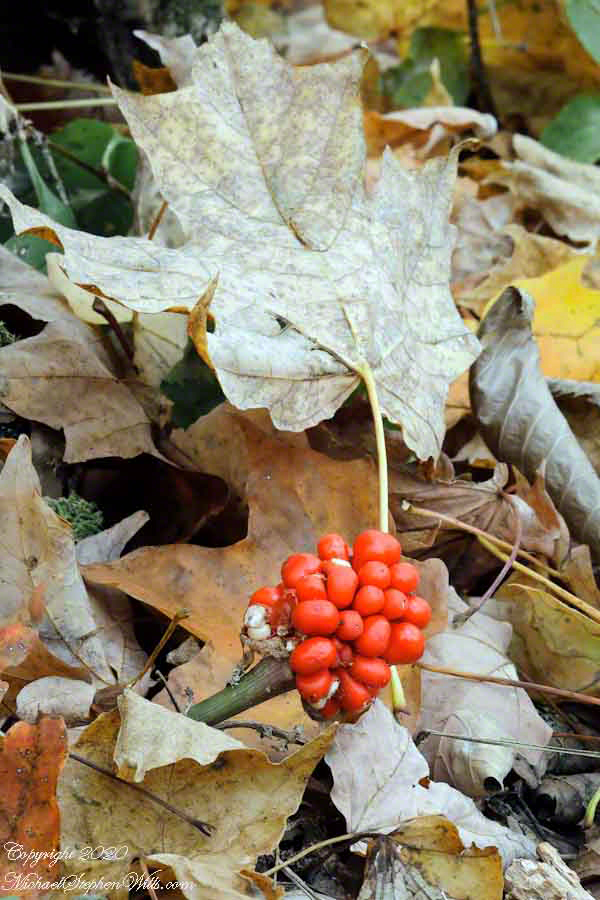
The bright red color of the berries is a key feature that attracts birds, making them an essential food source during the fall and early winter months. Birds like thrushes, cardinals, and robins are known to feed on the Jack-in-the-Pulpit berries, aiding in seed dispersal while benefiting from the nutrient-rich fruits. This mutualistic relationship between the plant and its avian dispersers showcases the interconnectedness of the forest ecosystem, where each species relies on the other for survival and propagation.
The significance of the Jack-in-the-Pulpit’s red berries extends to the corm beneath the surface. The corm serves as an energy storage organ for the plant, helping it survive through the harsh winter months when the above-ground parts of the plant wither and die. During the fall, as the plant directs its energy toward producing berries, it also transfers nutrients to the corm, ensuring its vitality and readiness for the following spring.
Furthermore, the corm itself can serve as an energy reserve for the production of future berries and the growth of new shoots. As the plant enters dormancy, it relies on the stored energy in the corm to fuel its growth when conditions become favorable in the next growing season. In this way, the corm and the red berries are intricately linked, with the berries representing the culmination of a year-long process of energy accumulation and reproduction.
In conclusion, the red berries of the Jack-in-the-Pulpit are a captivating and vital component of the fall glory that graces our woodlands. Their vibrant color and ecological role in seed dispersal highlight the plant’s contribution to the forest ecosystem’s richness and diversity. Moreover, these berries are a testament to the interconnectedness of nature, as they are not only visually stunning but also an essential food source for wildlife. As we marvel at the beauty of fall and explore the wonders of the natural world, let us take a moment to appreciate the significance of the red berries of the Jack-in-the-Pulpit and their role in the intricate web of life that surrounds us.
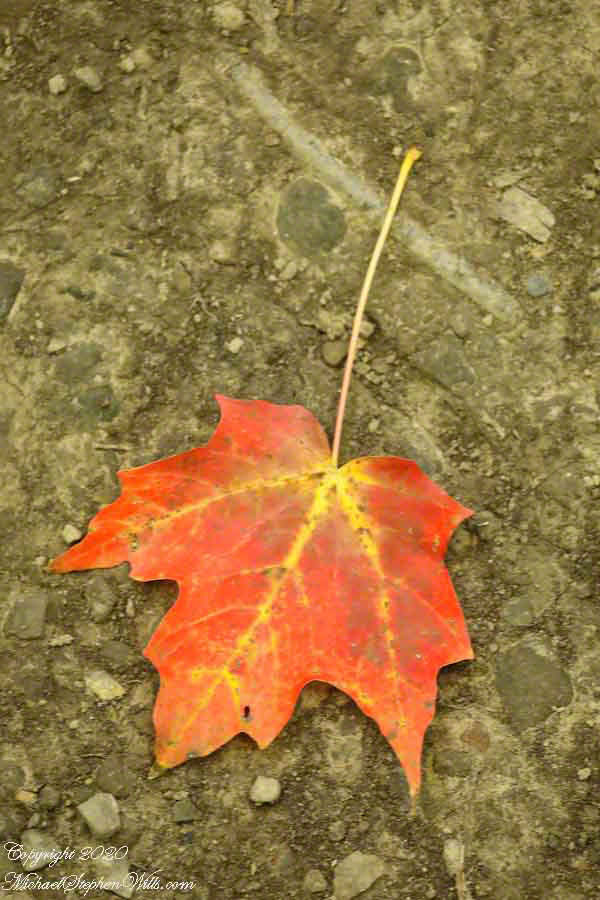
Autumn at Treman Park
Pam and I visited Treman for our last visit of 2017. It was a bright, warm October afternoon. Here is a slide show of our experience, the details shared in recent postings. Enjoy!!
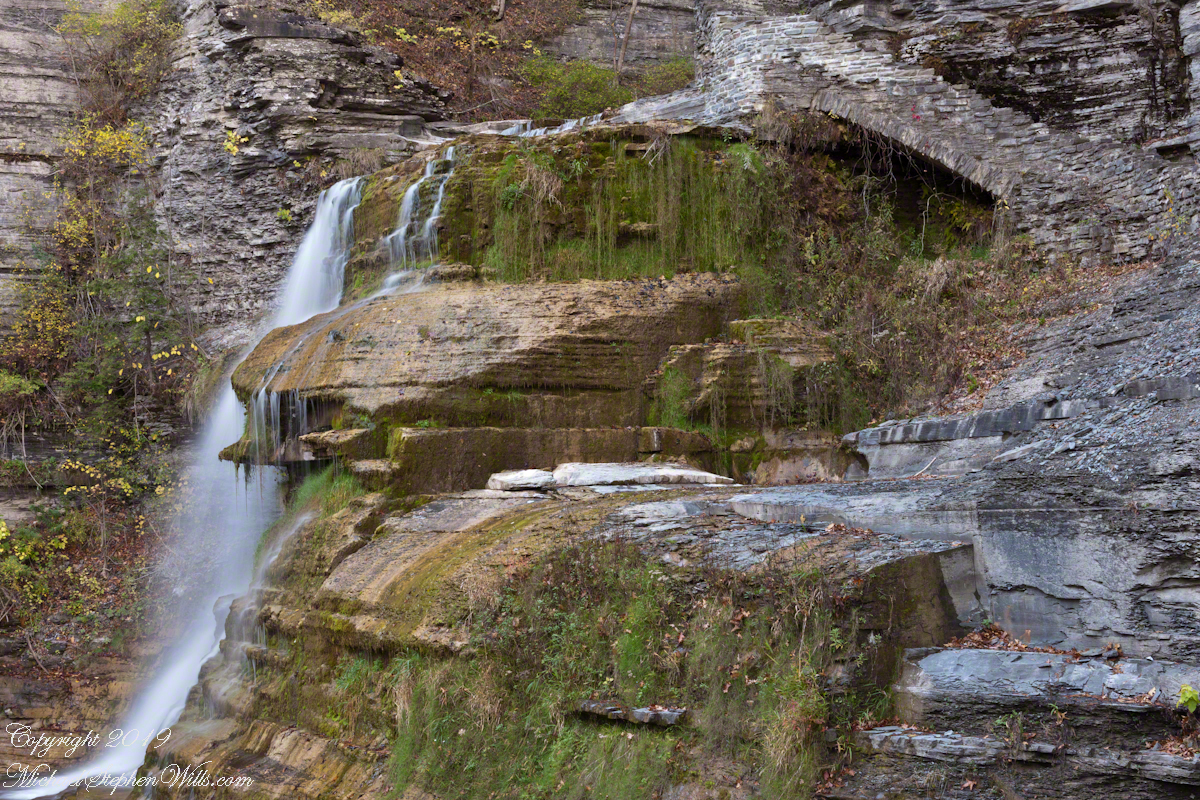
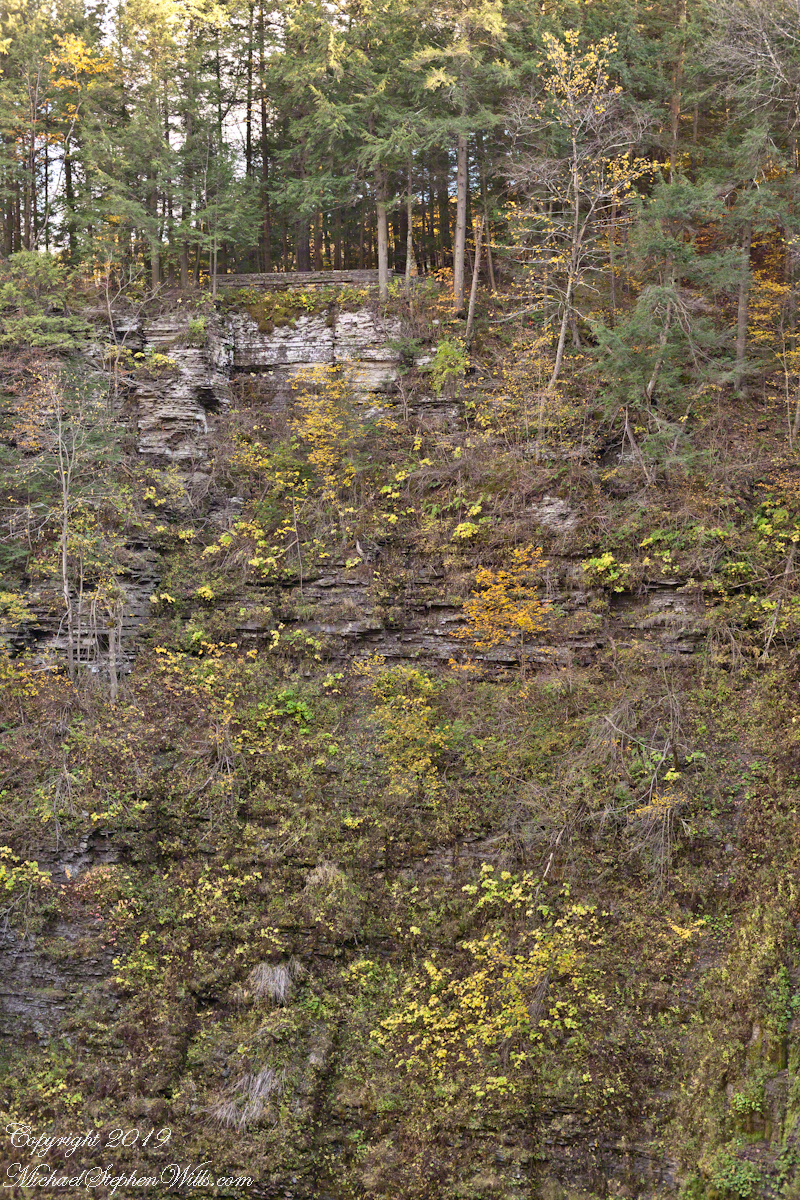
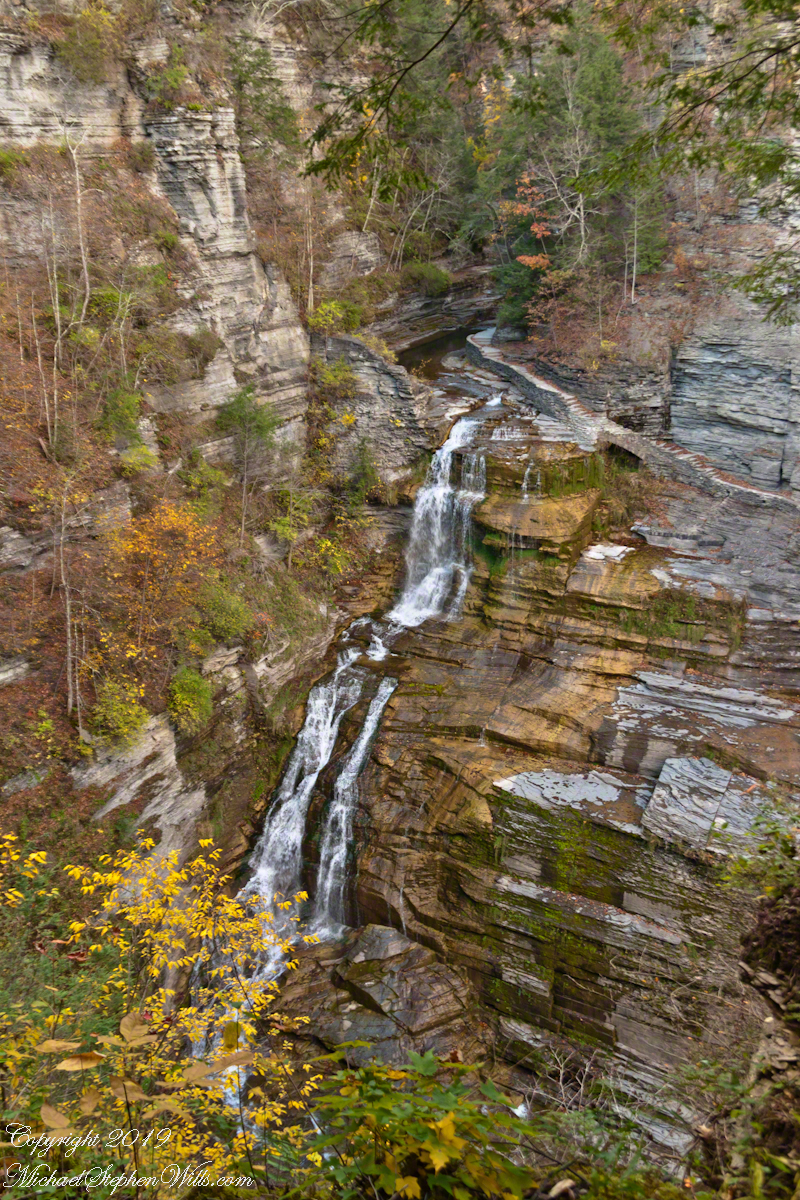
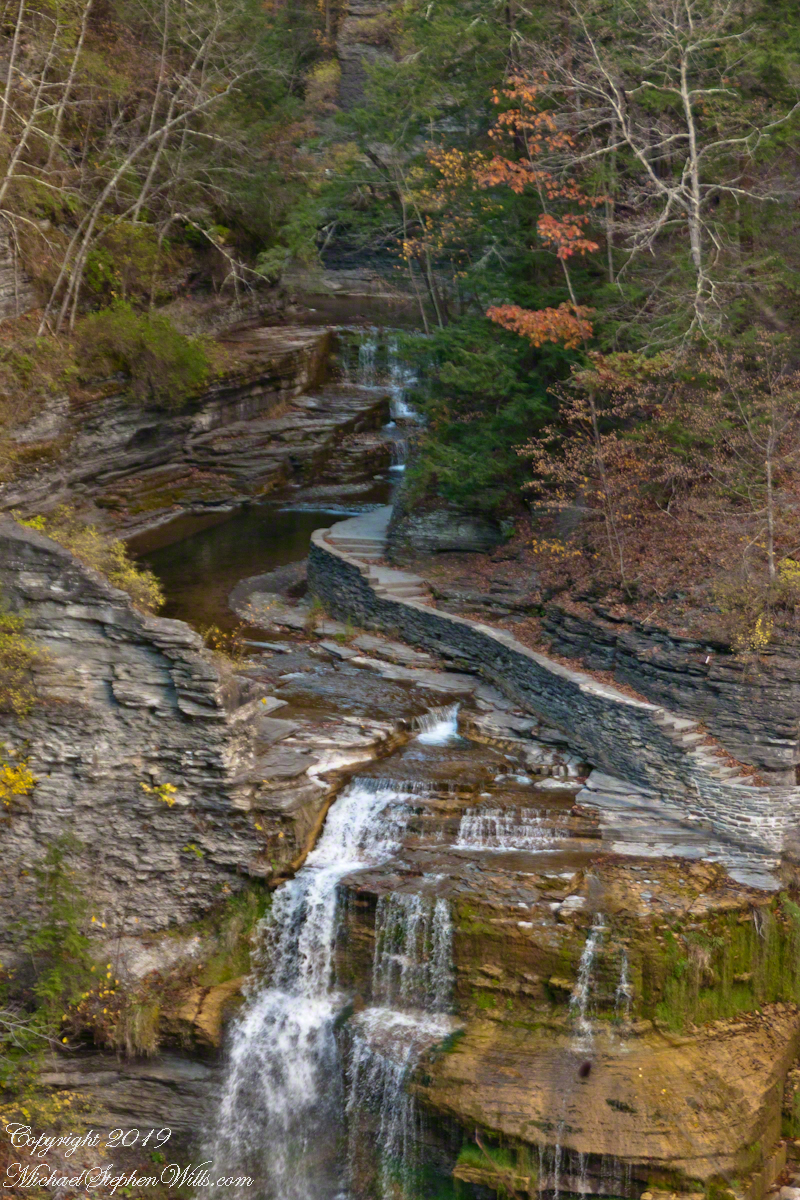

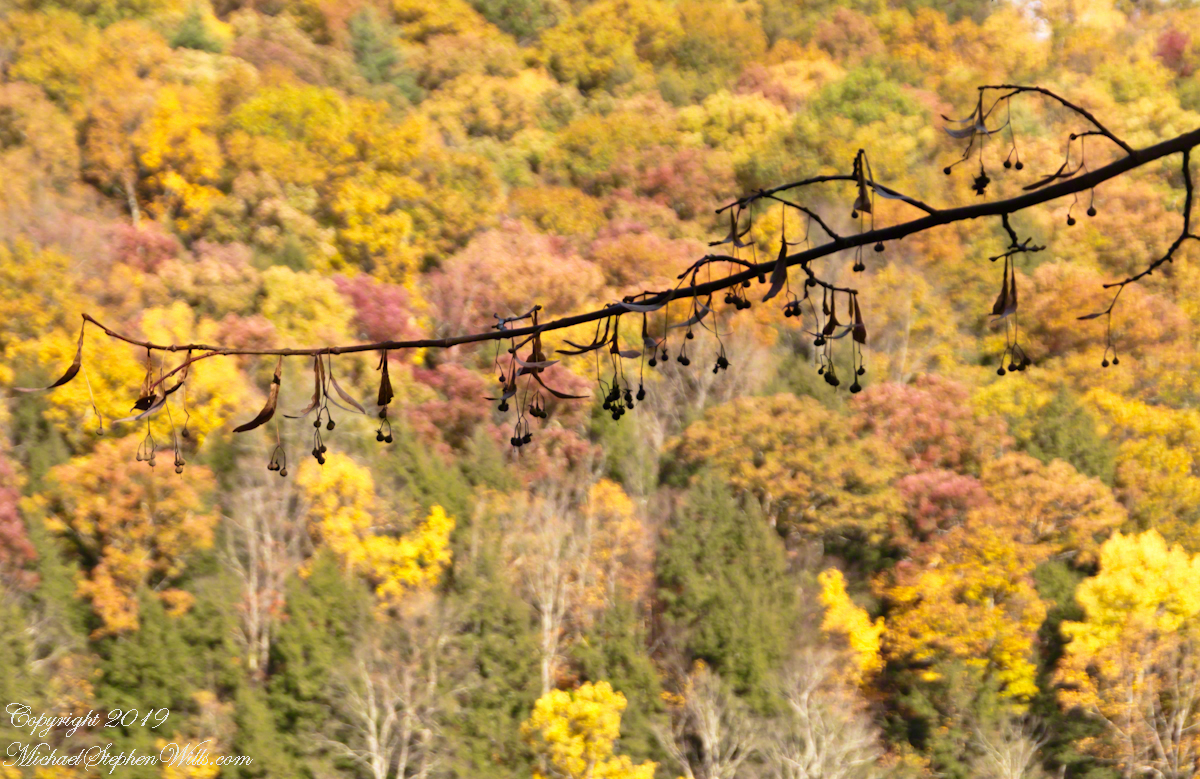
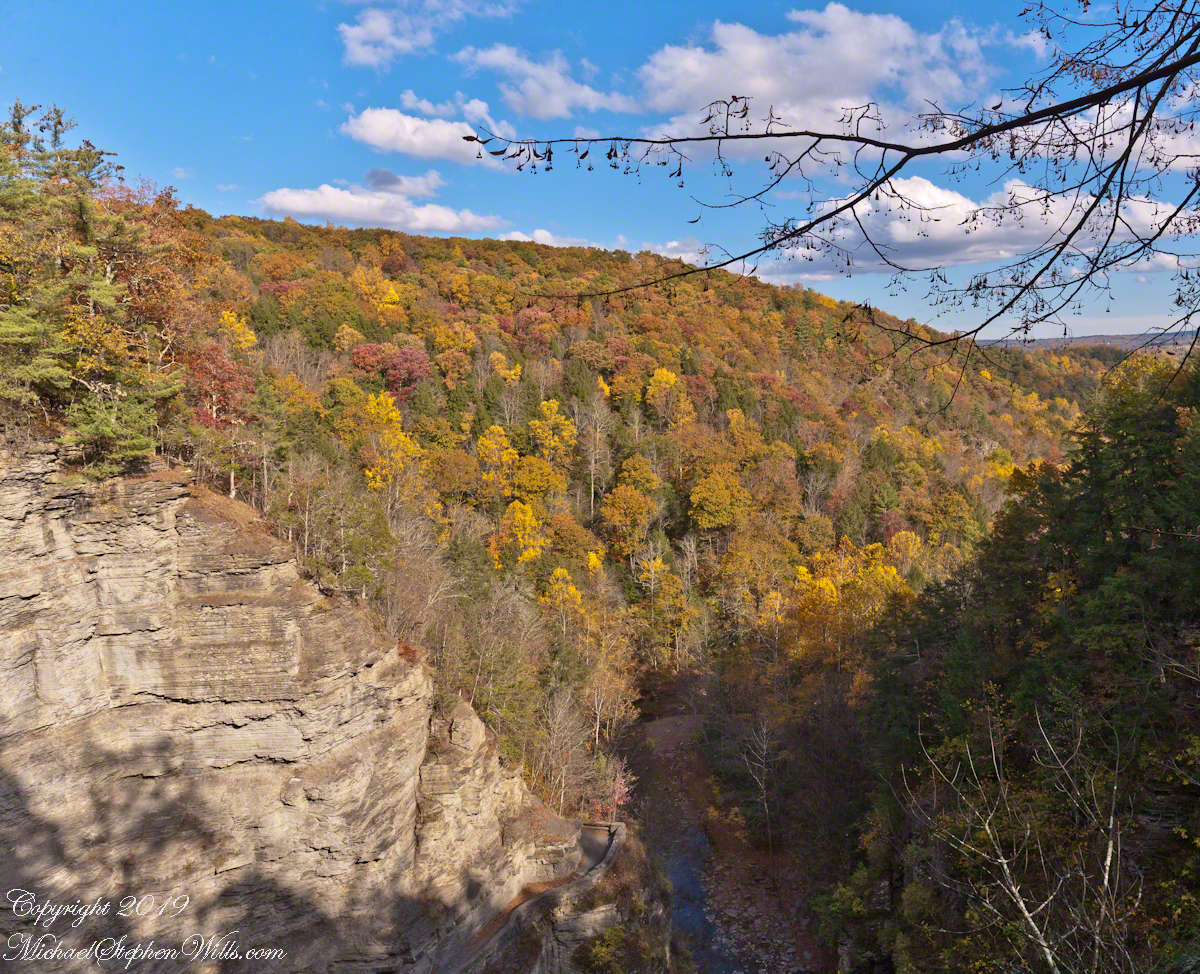
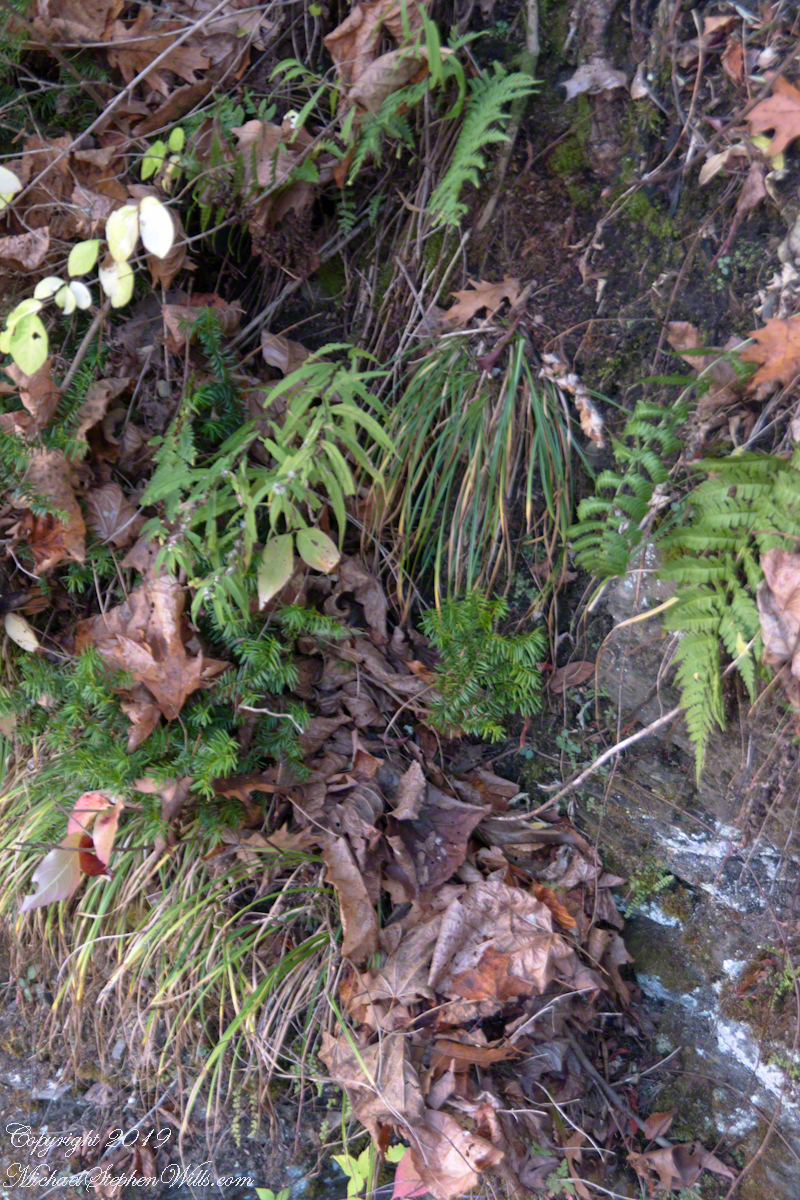
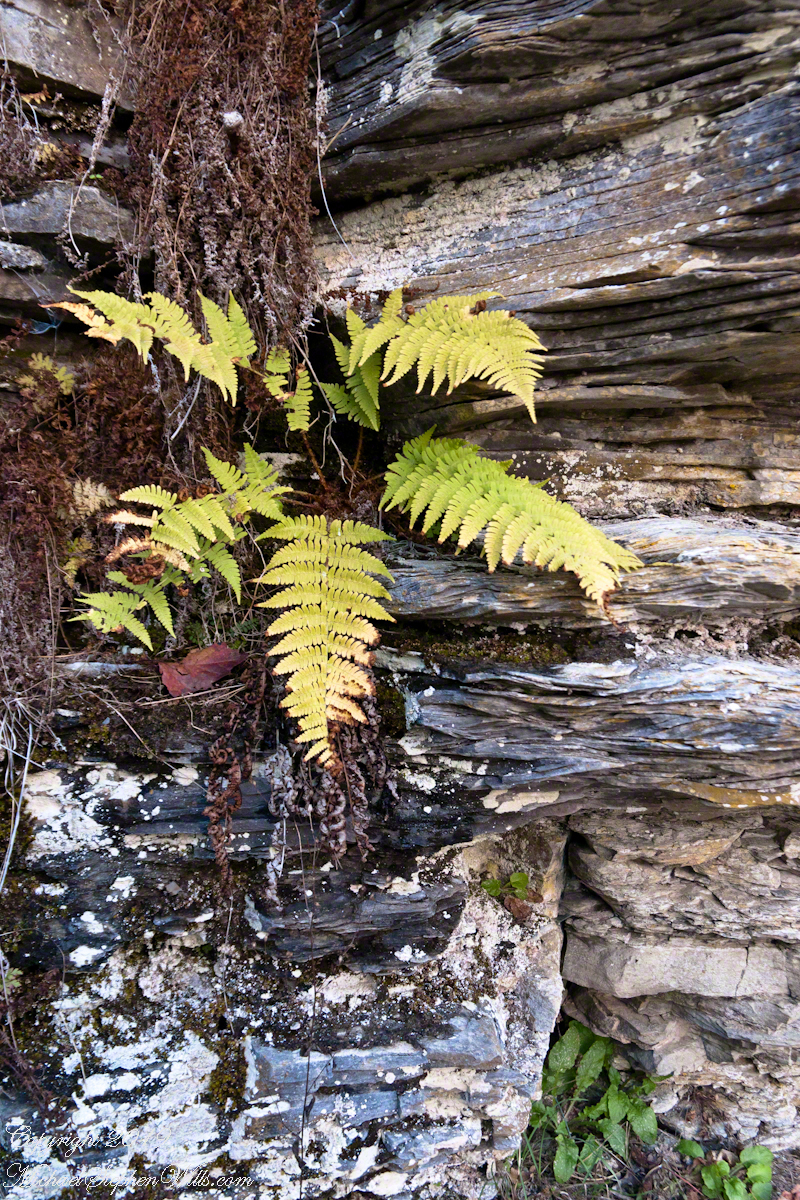
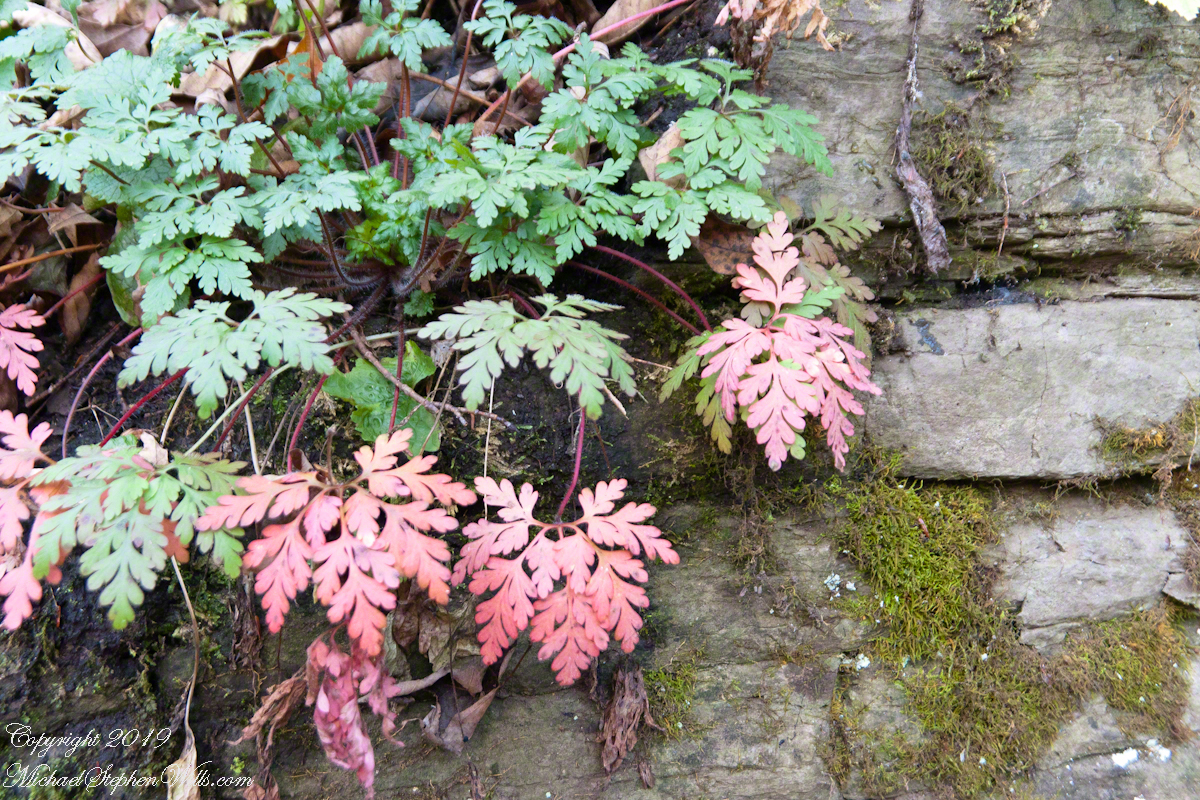
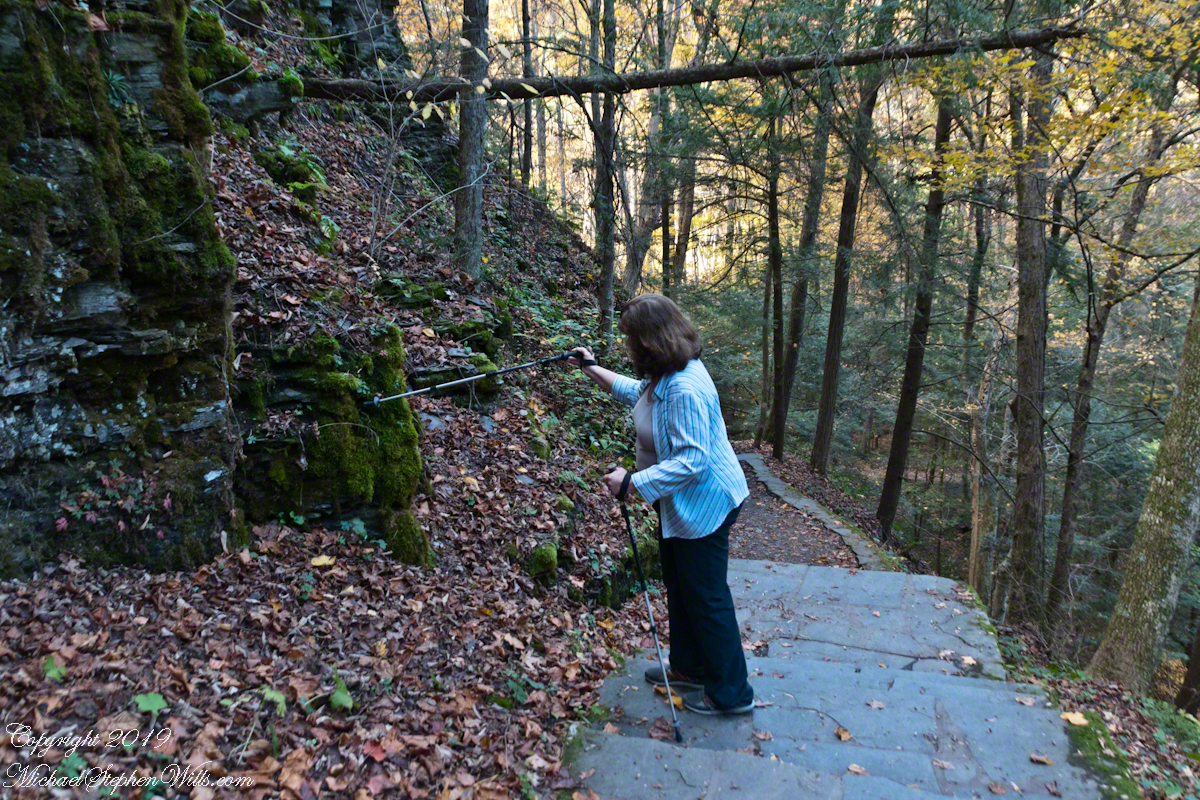
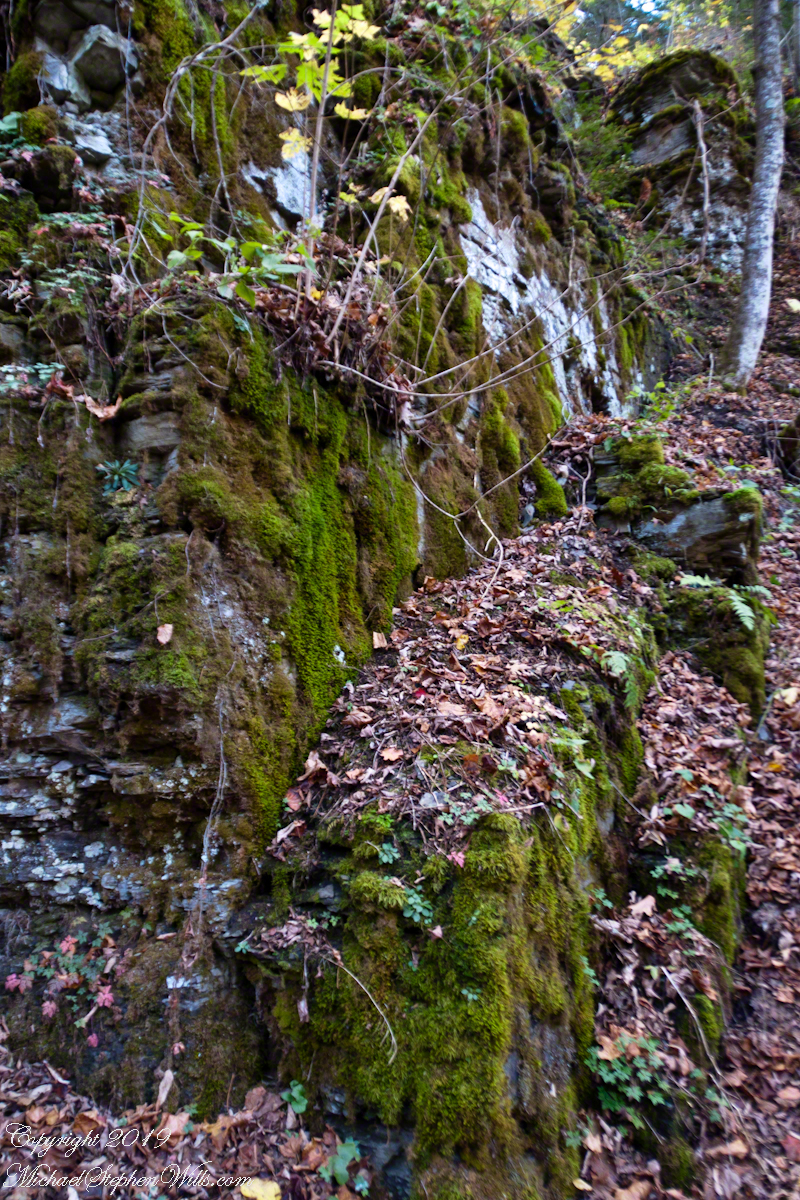
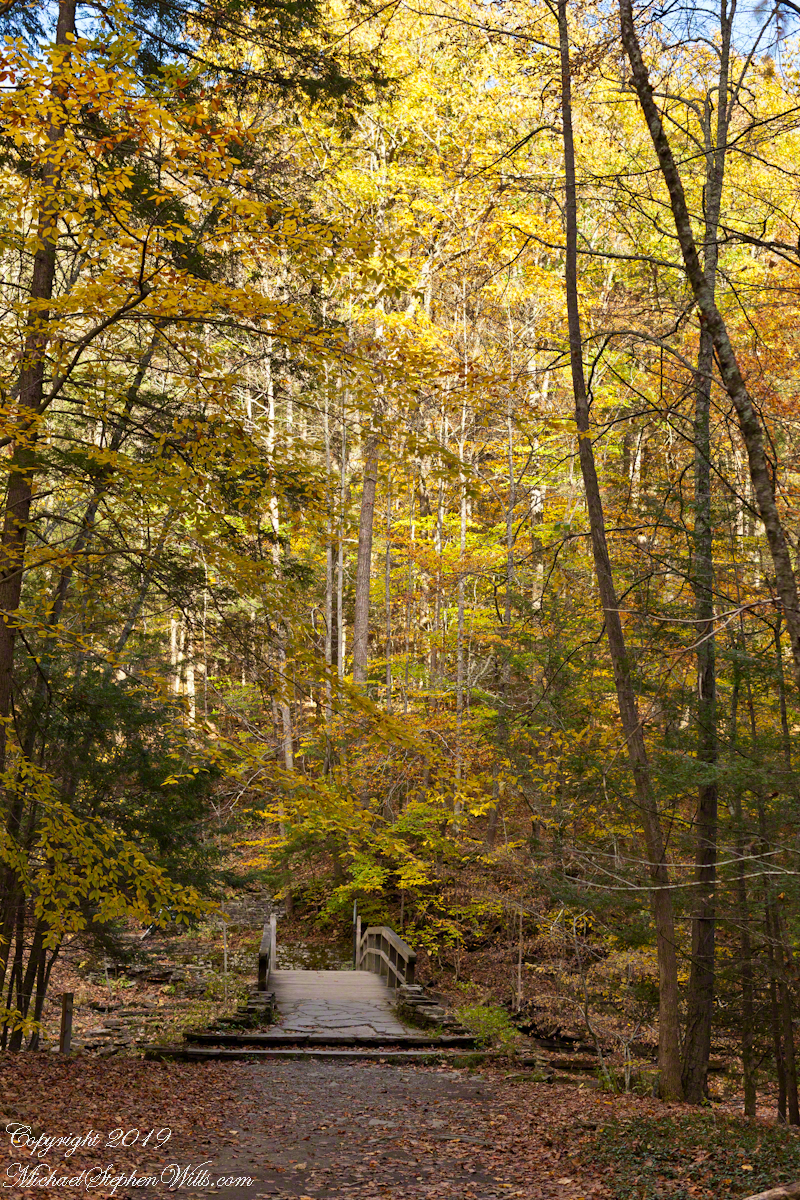
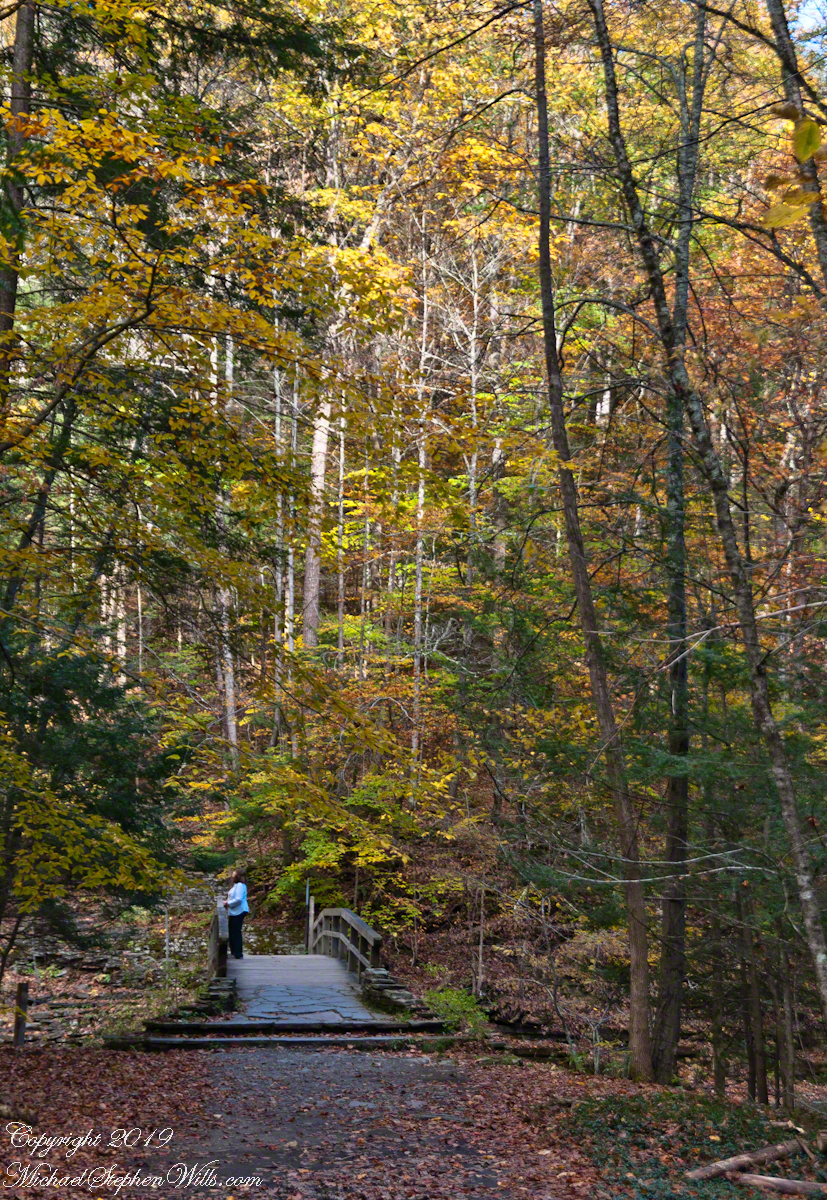
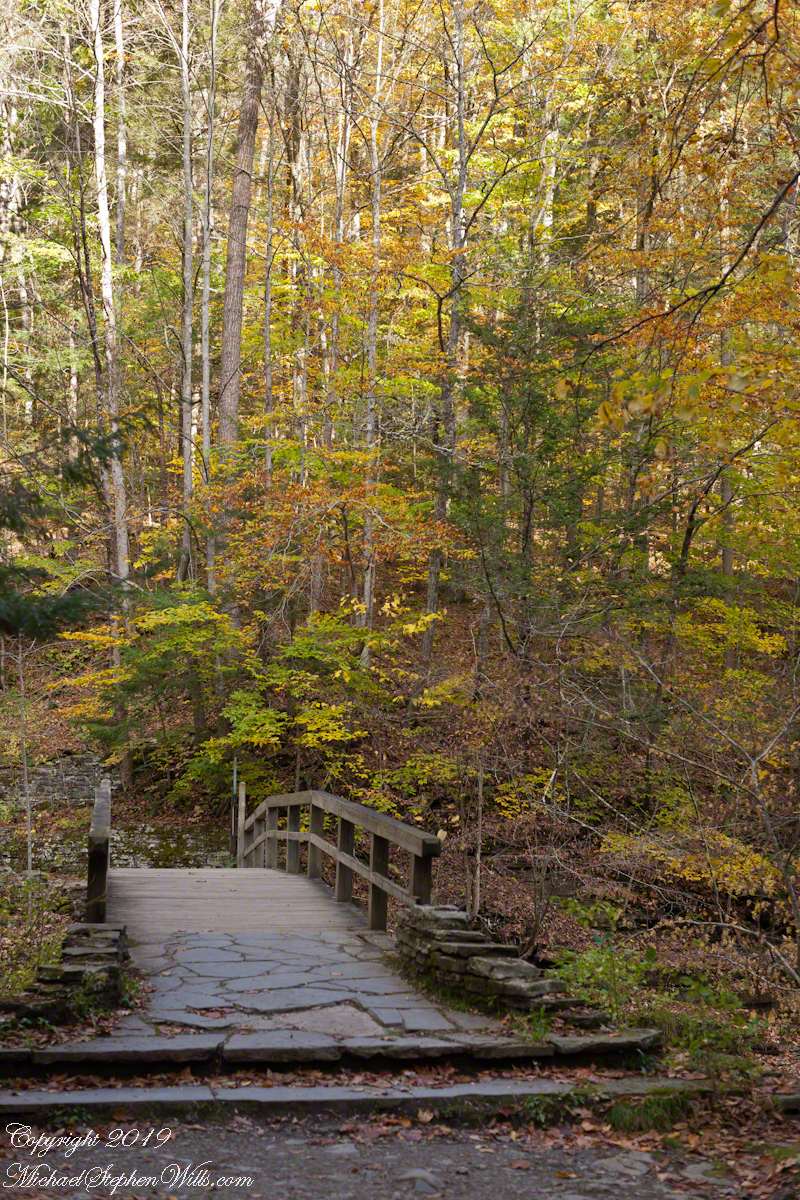
In November the gorge is closed for the winter due to dangerous conditions under the steep, crumbling walls. Robert H. Treman New York State Park.
 Michael Stephen Wills Photography