Captured outside our former Malloryville home on Fall Creek of the Finger Lakes Region of New York.
I used a Canon 100mm “macro” lens.

Cheers on this January morning.
Click this link to check out “Ice Bells” on my Fine Art Photography gallery.
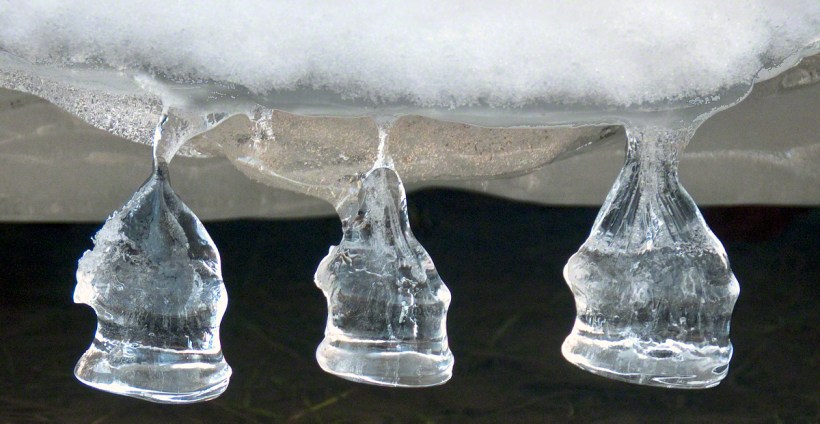
from multiple thaw-freeze cycles
Captured outside our former Malloryville home on Fall Creek of the Finger Lakes Region of New York.
I used a Canon 100mm “macro” lens.
Cheers on this January morning.
Click this link to check out “Ice Bells” on my Fine Art Photography gallery.

a exploration of logarithmic spirals and symmetry
An early thought of mine, as a child, was to wonder, “How large does a person grow?” If growth was perpetual, there was no end to how large I will become; yet, tested against observed reality, “Why was it the case this was unlikely?” Years later, when recalling this, I understood my intuition touched upon the logarithmic spiral and mollusk shell.
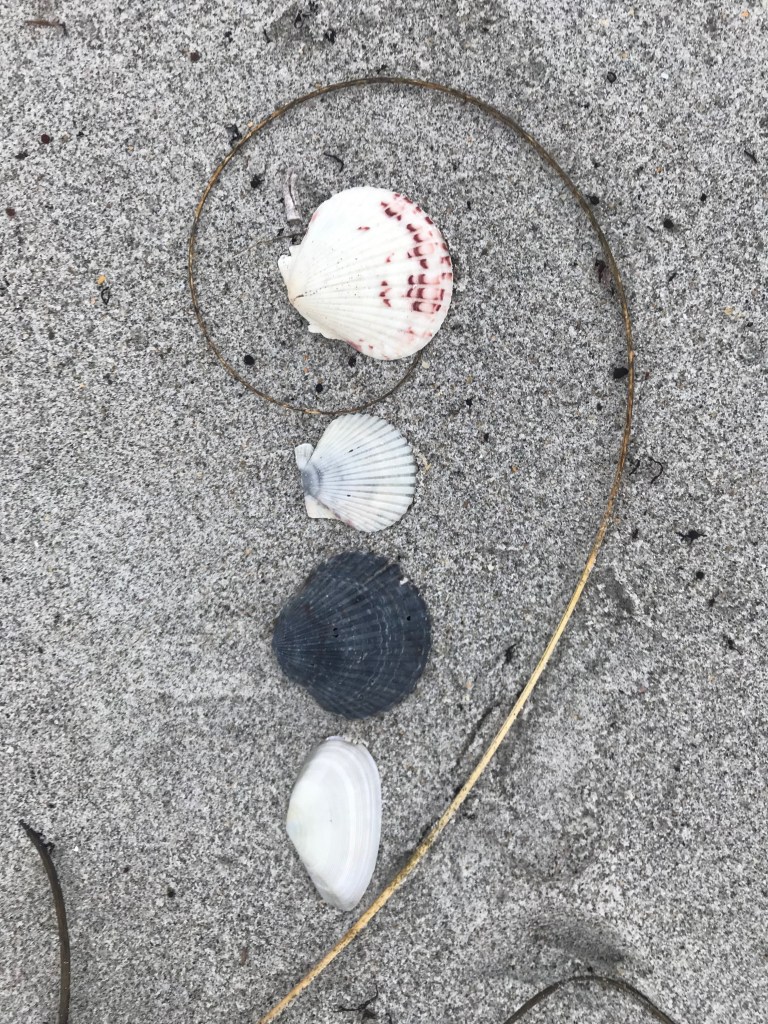
Sea Oat stalk, photographed above, after it dries slowly in the sun and wind, curls into a logarithmic spiral. One two dimensional spiral may be compared to another by measuring the rate and direction of opening, the increase in distance between the part closer to the source and the outer swirl. The growth of all shells follow a logarithmic spiral in three dimensions where the progression from a staring plane, as well as the direction, up or down from the plane, is an element.
Sea shells give evidence to my question of “how large can one grow.” The size of each of the millions encountered on a beach is an example of a life ended. Each of record of the length and character of the organism. For example, a close inspection of the bottom shell of the above photograph, a tellin of the family Tellinidae, reveals the spiral is growing toward the surface of the sand. Imagine wrapping your hand around the outer edge of the tellin with your thumb pointed down.
Each of the four shells of the above photograph had a mate, were one of a pair. Types of shells share characteristic pair symmetries. For example, a pair of tellins display a type of asymmetry called chirality, also called “handed-ness” after the same property of your right and left hands. One shell half (from the same individual) is the mirror image of the other, each unbalanced as the growth spirals toward opposite directions.
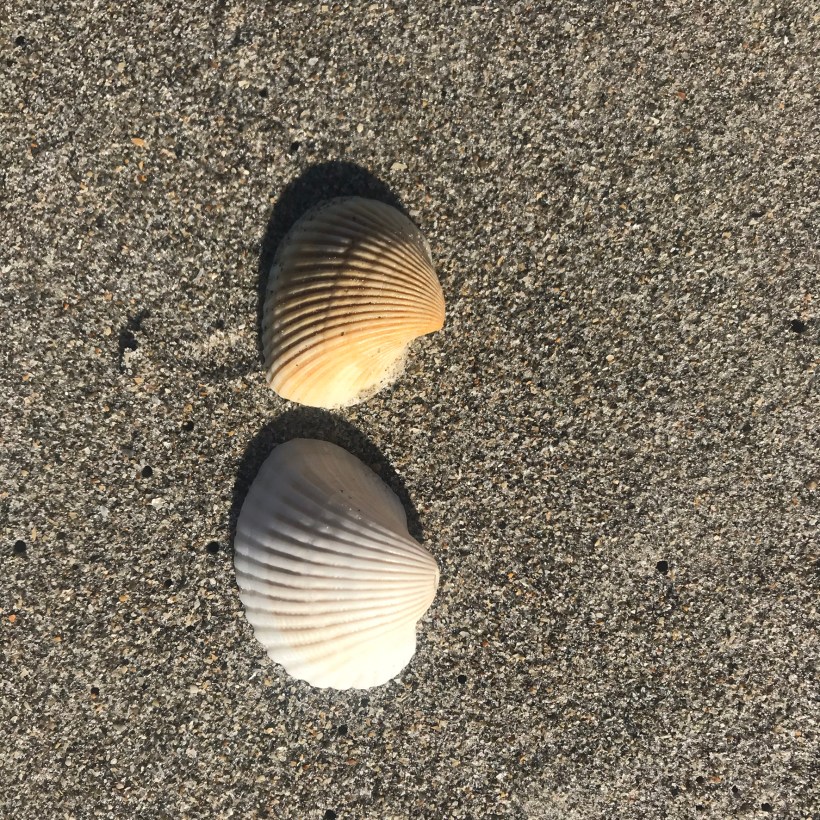
When I started beachcombing, examining collected shells I did not have a pair from the same individual and incorrectly concluded direction of growth was unique to an individual. The ribbing of the above two shells illustrate three concepts: the logarithmic spiral growth pattern, chirality, as well as how I came to that wrong conclusion: that two individuals can grow in different directions. It was a logical hop to understand how, to make two shells hinged at the source of the growth spiral, each individual requires two halves, each a mirror image of the other. That every member of the species demonstrated the same asymmetry, each half grows in the opposite direction.
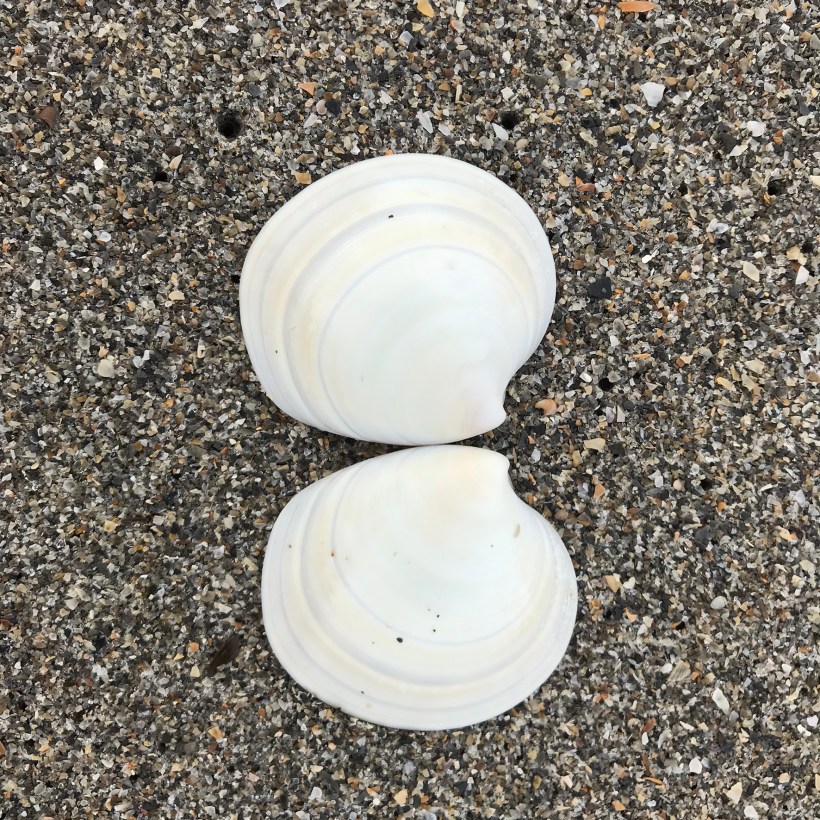
The above photograph shows attached matching halves. The attachment point was a surprise: the apparent source point is not attached to the ligament joining the halves? I have yet to understand this. Do you?
The association of beauty with scallop shells bridges thousands of years. For example, a fresco of the Roman goddess Venus, born from the ocean riding a shell, was unearthed from Pompeii. The living organism is not part of the story, just the shell. Why the scallop? My answer is, “Each half is completely, in itself, symmetrical.”
The top three shells of the first photograph are scallops. The first and last, broken by the waves, are missing parts. The middle scallop, small and off-white, is complete. Place an imaginary line down the center and each side is identical. Applying the real world (i.e., physics) to myth, a scallop shell allows the goddess to move forward in a straight line. Sailing an asymmetrical shell, she moves in an eternal circle.
An object with symmetry is visually complete unto itself, self-contained; functionality aside, one scallop does not required a partner. The paired shells are interesting in they do not match, one is deeper, it encloses more volume. The deeper side rests under the surface, allowing the top halve to present a lower profile the better to hide from predators.
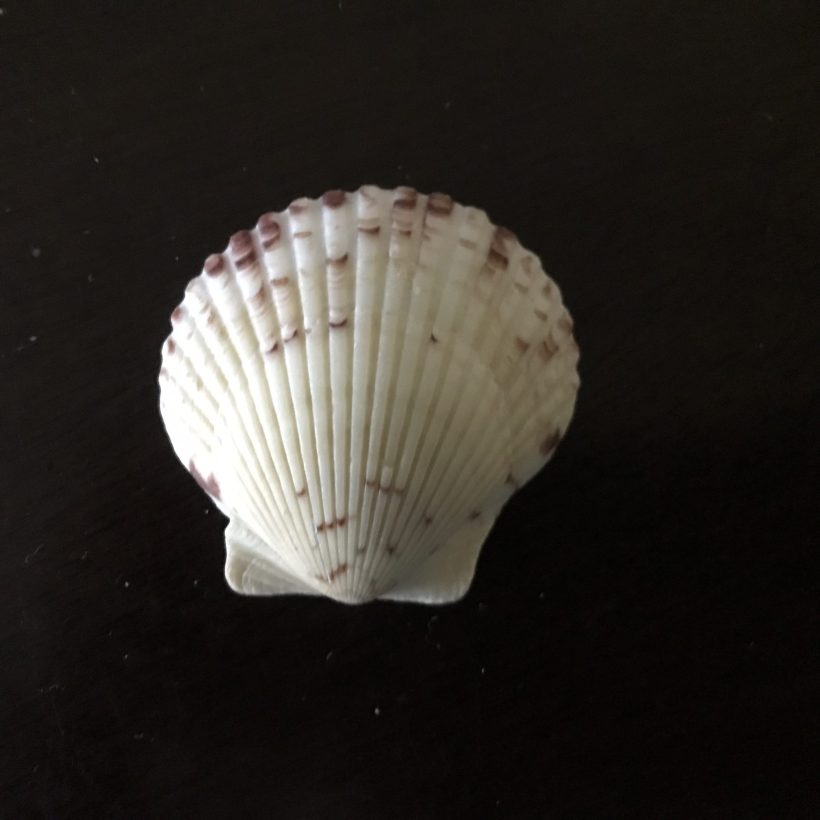
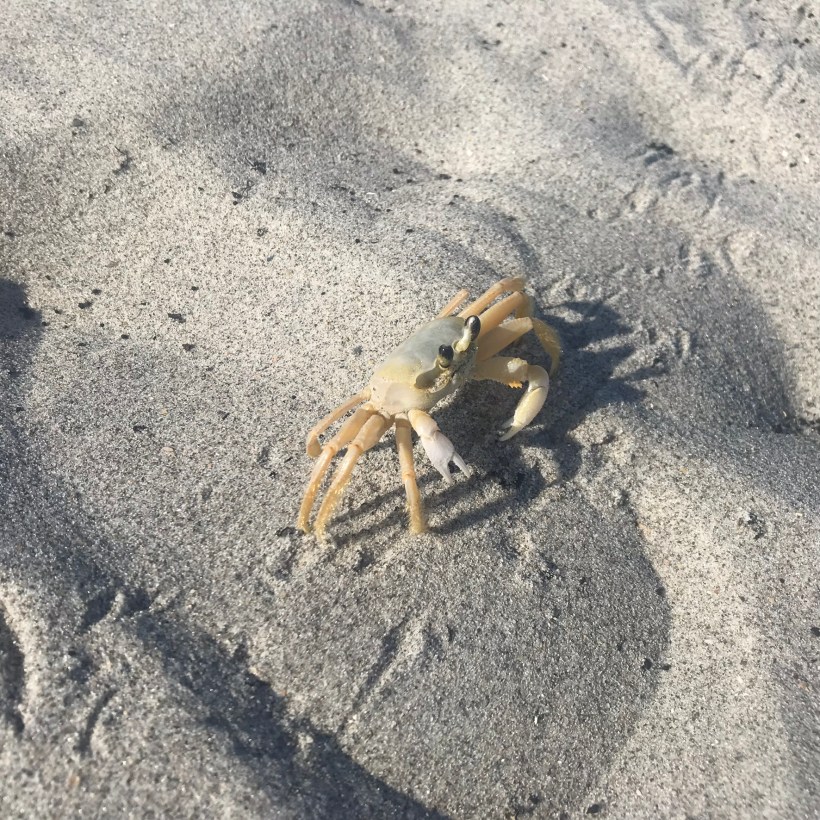
The scallop echoes the beauty of Venus. Symmetry enhances human features (earch “Venus (mythology)” for images of her face through the ages), though it does not define beauty. An overly symmetrical face seems strange. I will close with an extreme example, the other day I came upon this beach crab wandering around in the daylight. Symmetry does NOT enhance the alien eyestalks, menacing claws, a pallid, tough exterior. Safe travels, little one.

Angels I Have Known
This is part of my project to document our Christmas memories through photography. Here we explore the themes angels of the Christmas Story and in our lives.
A previous posts “Ireland on the Mind at Christmas” provides context.
The angels of our Christmas tree and home remind us of the Jesus birth stories of scripture and the force of love in our own lives.
What comes to mind with the sudden appearance of Gabriel to Mary and that astounding message? Unlike the attempt of Jonah to avoid his calling, the subtext to Mary’s ready acceptance is the risks faced by an affianced woman who becomes pregnant. The book of Deuteronomy (Chapter 22 verses 13 – 21) calls for stoning a woman who presents herself for marriage as a virgin, when she is not.
When learning of Mary’s pregnancy, Joseph’s reaction, as a follower of Mosaic Law, was to divorce her quietly to avoid exposing her to shame. It was a visit from an angel, in a dream, that convinced Joseph to accept Mary (Matthew Chapter 2, verses 18 – 24).

An angel visited shepherds, announcing “today in the city of David a savior has been born for you who is the Messiah and Lord.” Suddenly there was a multitude of the heavenly host with the angel, praising God.” Luke Chapter 2, verses 8 – 13.

Was it an angel who warned the Magi, in a dream, not to return to King Herod with news of Jesus (Matthew Chapter 2 Verse 12)? Scriptures clearly state (Matthew Chapter 2 verse 13) “the angle of the Lord appeared to Joseph in a dream and said, ‘Rise, take the child and his mother, flee to Egypt.”

People can be angelic in expressing love for others through action. I am thinking of a movie Pam and I viewed last evening, “The Theory of Everything.” Jane Wilde, in her love for Stephen Hawking, stays with him when, shortly after their romance began, he was diagnosed with ALS. The prognosis was death in two years. In all likelihood, Jane gave Stephen his life and work through loving him. He is alive and working today at 75.
The love of our parents is more common, no less precious.

A note on the photographs, I used a Canon EOS-1Ds Mark III dslr with Canon lens EF 50 mm f/1.2L, Canon Speedlite 600Ex-Rt, Manfrotto studio tripod and hydrostatic ball head. Some of the photographs were hand held. When the flash was used, it supplemented ambient light from a large north facing bay window.
Unrestrained chaos at the foot of Arizona’s highest waterfall
I received notice of IStock acceptance of select photographs from my last posting, “Wilderness Textures”, was accepted. Click to view my IStock Portfolio, including photographs from today’s posting included in the acceptance notice.
In this post I move up the Reavis Creek canyon from where the last posting, “Wilderness Textures”, was sited to the foot of Reavis Falls. With the first photograph you look up at the falls from the head of the canyon carved by the creek over eons. The rock wall, the canyon “head”, is thick with microorganisms, fungi, mosses.
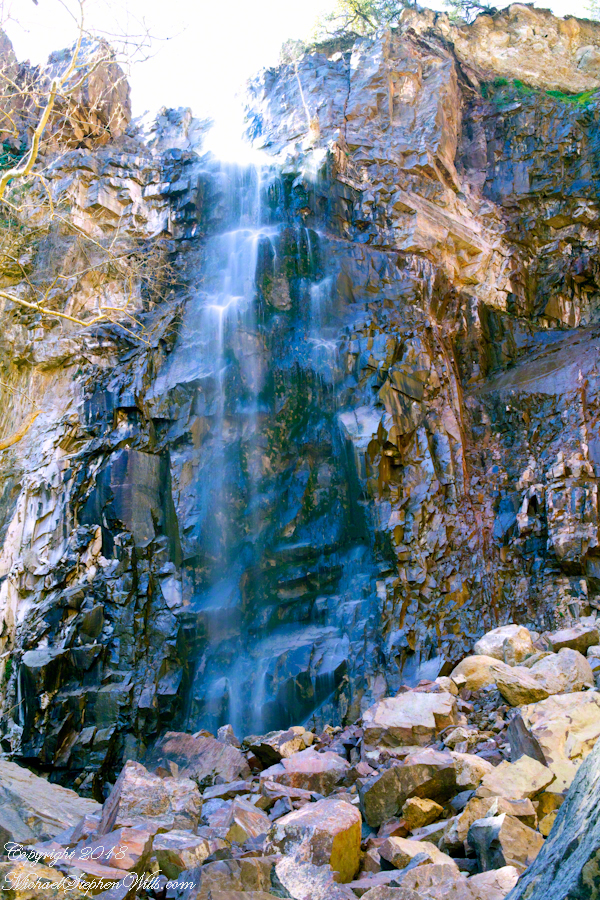
In the foreground is a jumble of boulders, some washed down at flood time, spread wide at the bottom of the falls, piled to a jumbled height of 15 feet.
Talus is the geological term for this formation. Derived from the Latin word for slope (talutum) the definition, from the Oxford English Dictionary, is “A sloping mass of detritus lying at the base of a cliff or the like consisting of material fallen from its face.”
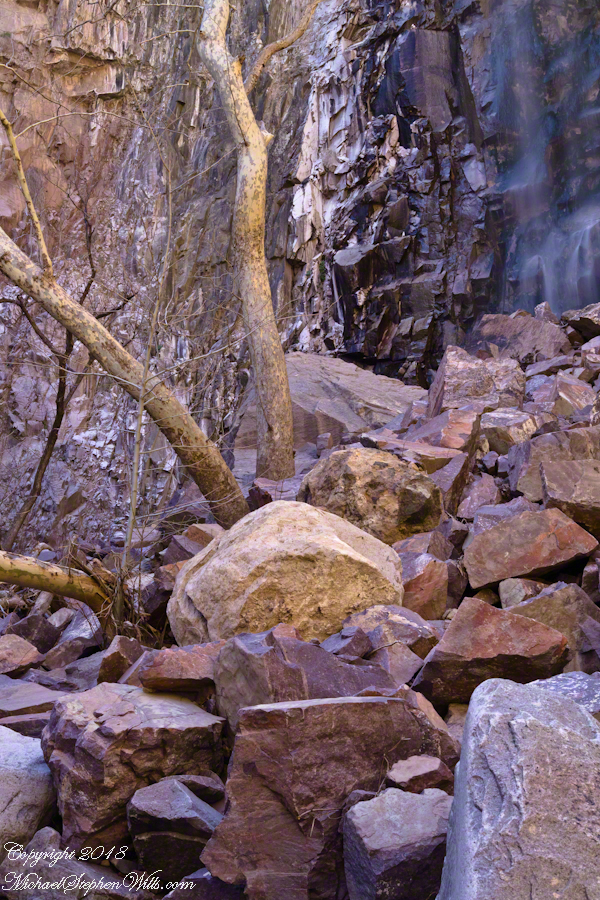
The ankle bone is also called talus, from the French word for heel, I bring it up because climbing this chaotic, unstable jumble is a way to break your ankle. The route to Reavis Falls, a climb up one side of Lime Mountain then down the other on a non-existent (lightly marked) trail, is rated difficult and impossible with a broken leg or ankle. I was alone and very careful to check each rock for stability before putting my weight on it.
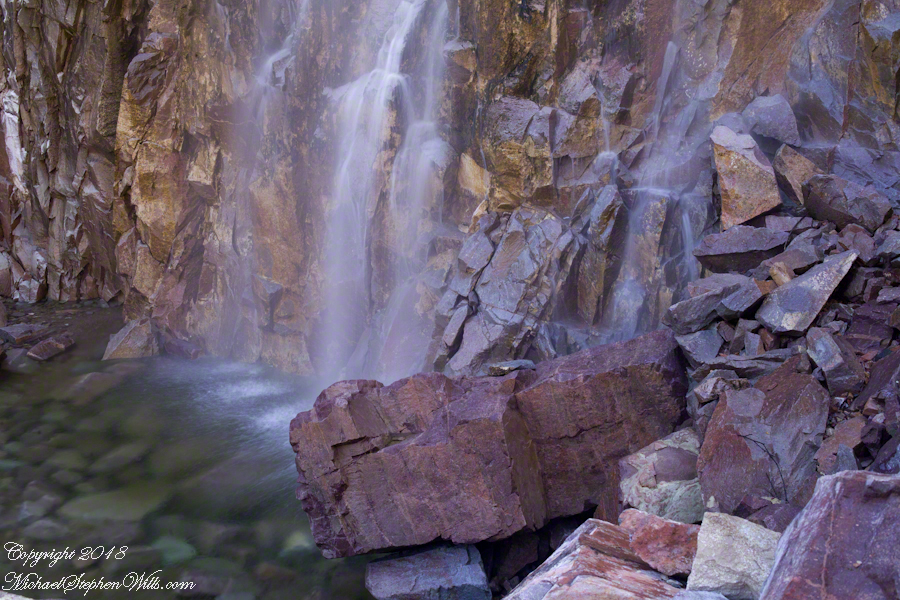
A climb of the talus pile was necessary to view the pool at the waterfall base, for this photograph.
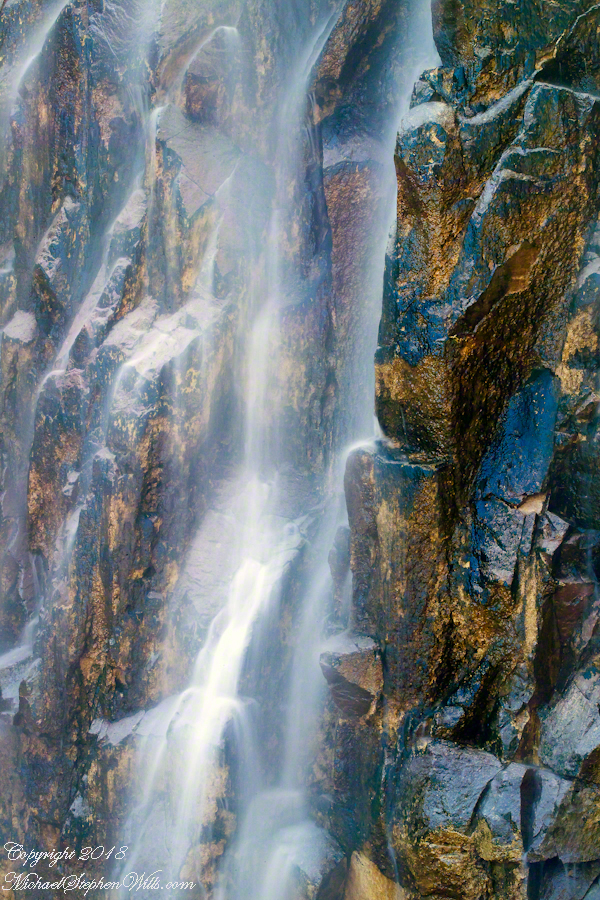
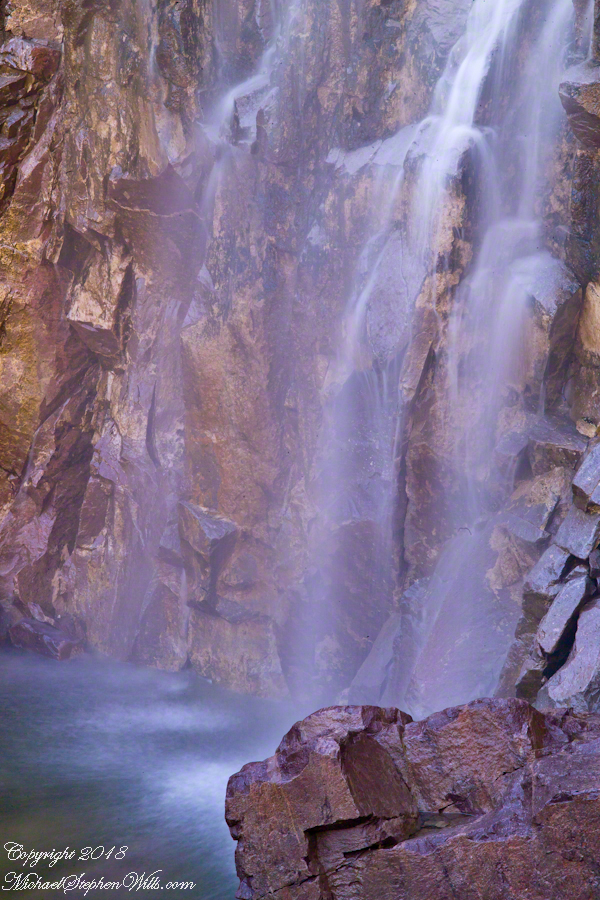
A more artistic vertical format version, below, captured with the Canon EF 100mm “macro” lens. All shots are using the Kodak DCS pro SLR-c (the “c” designated Canon lens compatibility) and a Manfrotto studio tripod with a hydrostatic ball head. The horizontal format shot was captured with a Canon EF 50mm f/1.4 USM lens. I prefer the vertical version, artistically, because the talus jumble is all but cropped out while the upper corner of the angular basalt boulder is left as an interesting focal point. The boulder, not being in the spray, is in focus to contrast with the basalt wall behind the water.
I captured a series of shots from this precarious vantage point, working up from the pool to the brim of the waterfall.
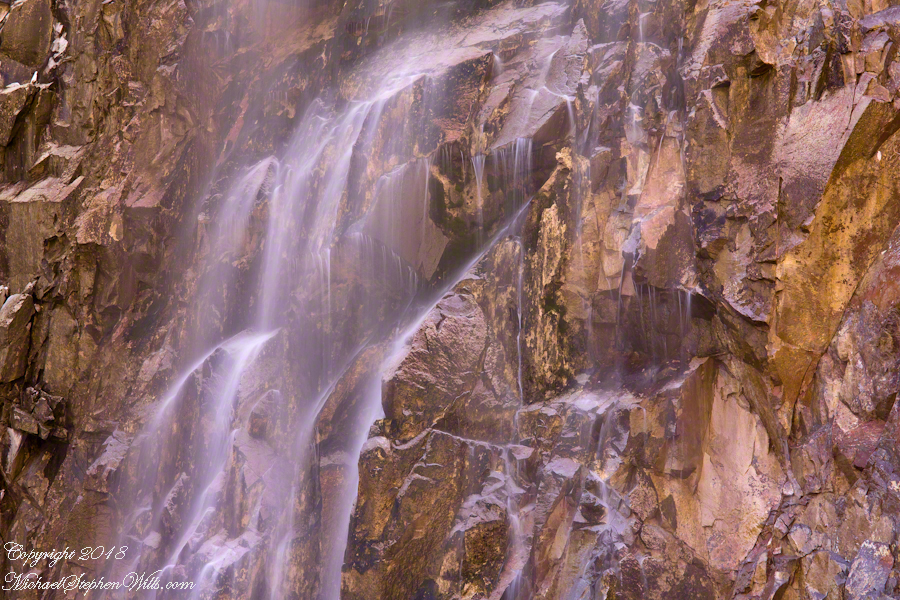
My goals was a composite photo of the falls. I have yet to succeed with this project. Maybe I will give it one more shot in spite of having learned the hard lesson the best photographs are a single moment captured in a single frame.
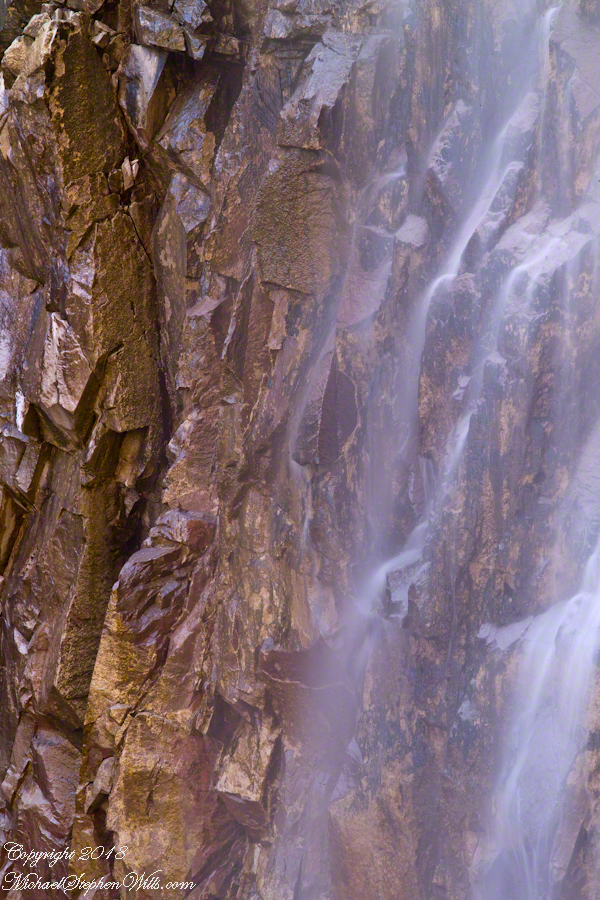
I find in this series the vertical aspect is more artistic. The water volume, of the falls, at this time of year offers only the finest of sprays with most of the basalt rock wall only moist. The 100mm “macro” lens allowed me to include only the falling water with a bit of the moist wall for contrast.
In the following version I experimented with color, moving from the narrow range of hues, to more contrast.
Please browse my reasonably priced stock photography. License a photograph, download and use it for your website or blog. Click this link to browse all my Getty IStock Photography offerings.
Or click this link or any photograph or this link to select a print with custom framing from my “Textures” Fine Art Gallery.
Here’s another of my Arizona wilderness adventures, “Racing the Sun.”
Abstract Beauty of the Superstition Wilderness of Arizona
These abstracts are some of my photographic output from four days and nights spent alone in the remote eastern Superstition Wilderness. For the first three days I met not a soul, all these images were captured on a single afternoon spent in the canyon below Reavis Falls, a jumble of landslides, flood debris and boulders. There is no trail. The few people who enter the canyon must negotiate around boulders, crossing Reavis Creek many times.

My backpack kit included a full sized Manfrotto studio tripod with hydrostatic ball head. The benefits more than outweighed the effort (I was a lot younger in 2008) when the Canon EF 100mm (macro) lens is mounted on a Kodak dSLR body, allowing me to take crisp shots. The tripod legs can be adjusted to precise positions for stability.

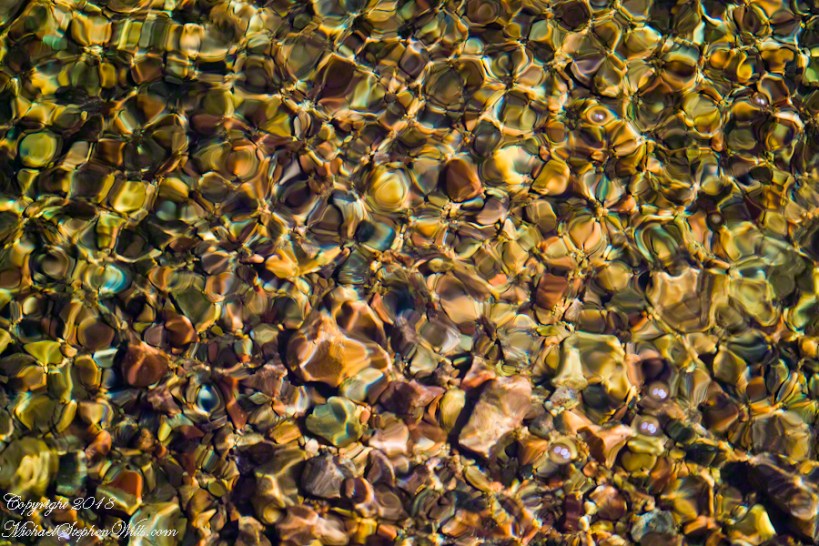
I can feel the bright afternoon desert spring sunshine in this photos. It was after the spring floods, the flow of Reavis Creek and ample still but slow. Gathering in pools over the rough stones of the creek bed, the water absolutely clear.

I held the shot over many minutes, capturing ever changing diffraction patterns.
We see in all these photos, not a homogenous blend of stones from a shared geology. Reavis Creek washes over diverse geologies: volcanic, ancient igneous extrusions, sedimentary and metamorphic are jumbled together.

This is a series of photographs of smooth, white igneous boulders with shadows of still leafless sycamore and cottonwood trees.

Graceful shadows

Strong, demonstrative shadows.

A leaning cairn, not a trail marker….

A 15 foot high jumble of stones piled at the bottom of Reavis Falls, carried over by the floods.
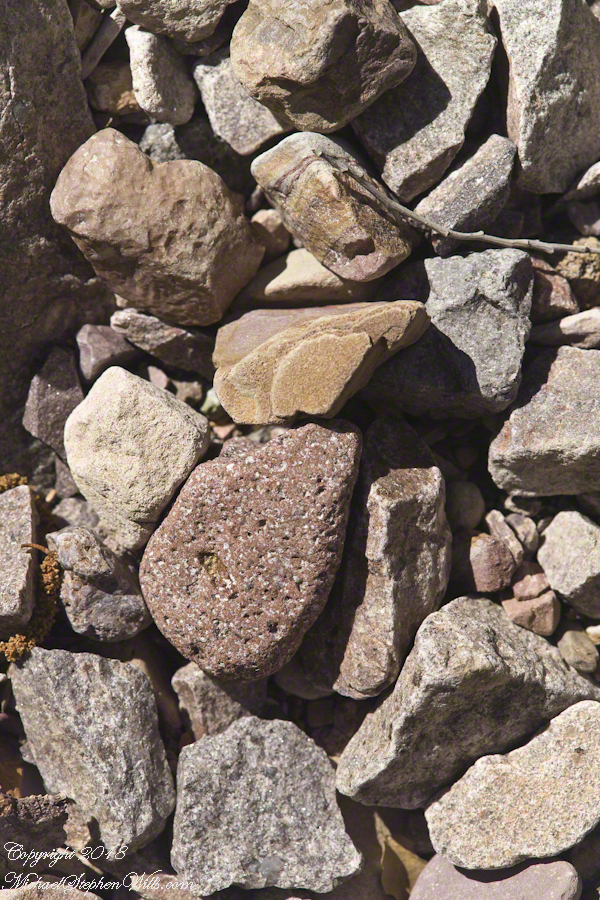
A metamorphic conglomerate stone….

Another metamorphic conglomerate.

Please browse my reasonably priced stock photography. License a photograph, download and use it for your website or blog. Click this link to browse all my Getty IStock Photography offerings.
Or click this link or any photograph or this link to select a print with custom framing from my “Textures” Fine Art Gallery.
Here’s another of my Arizona wilderness adventures, “Racing the Sun.”

A sllideshow
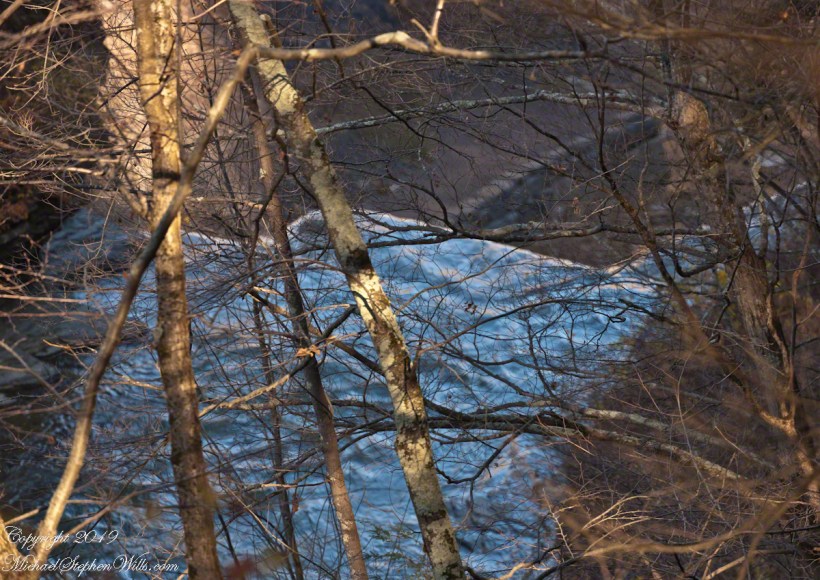
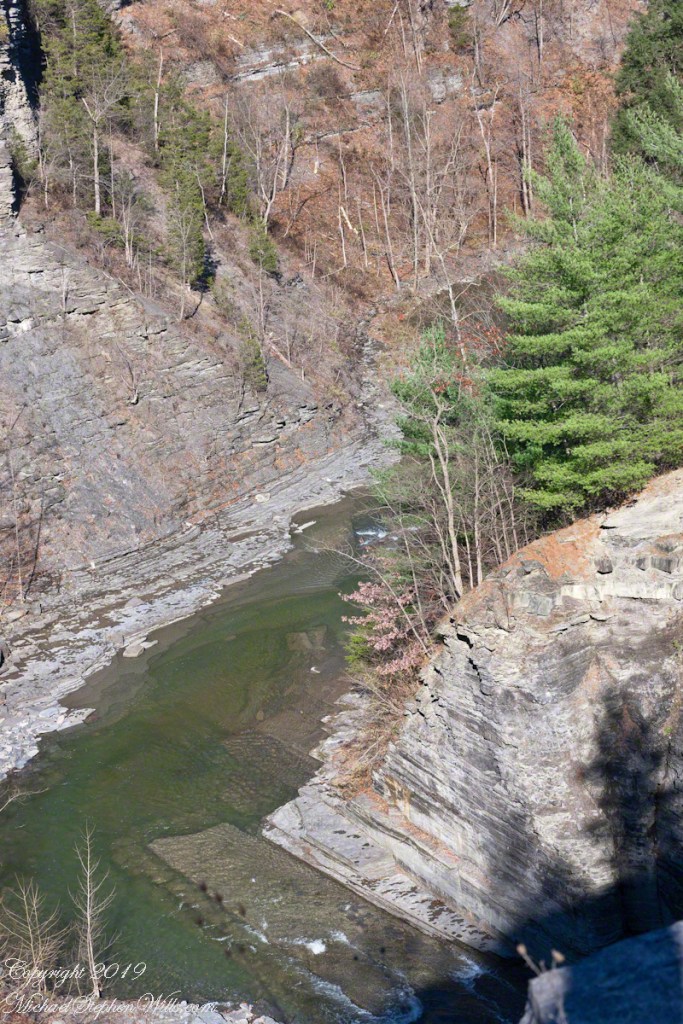
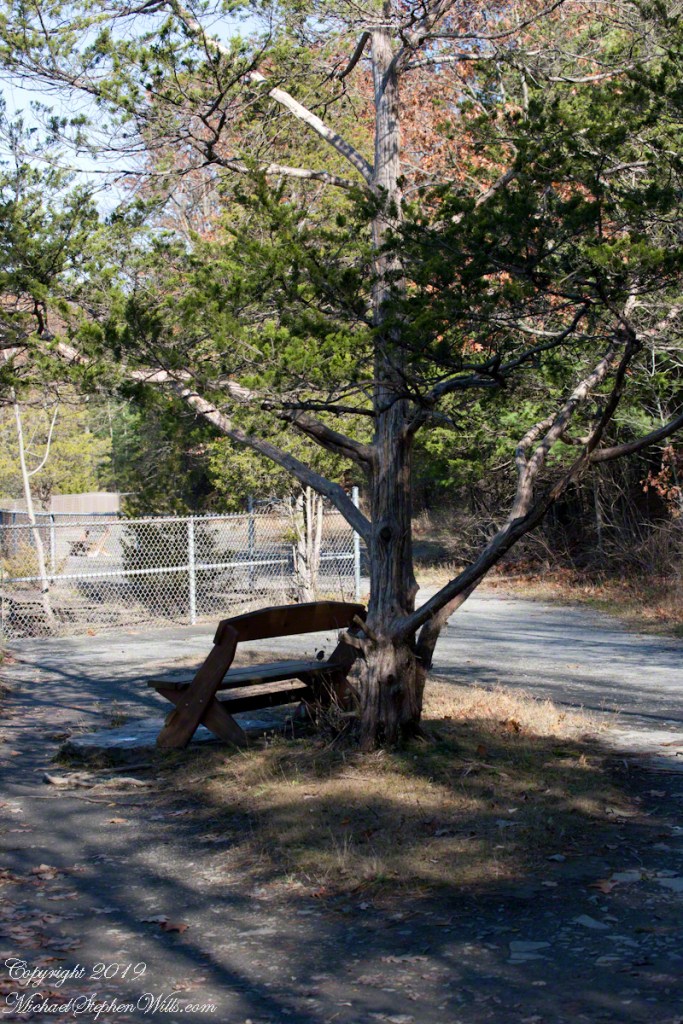
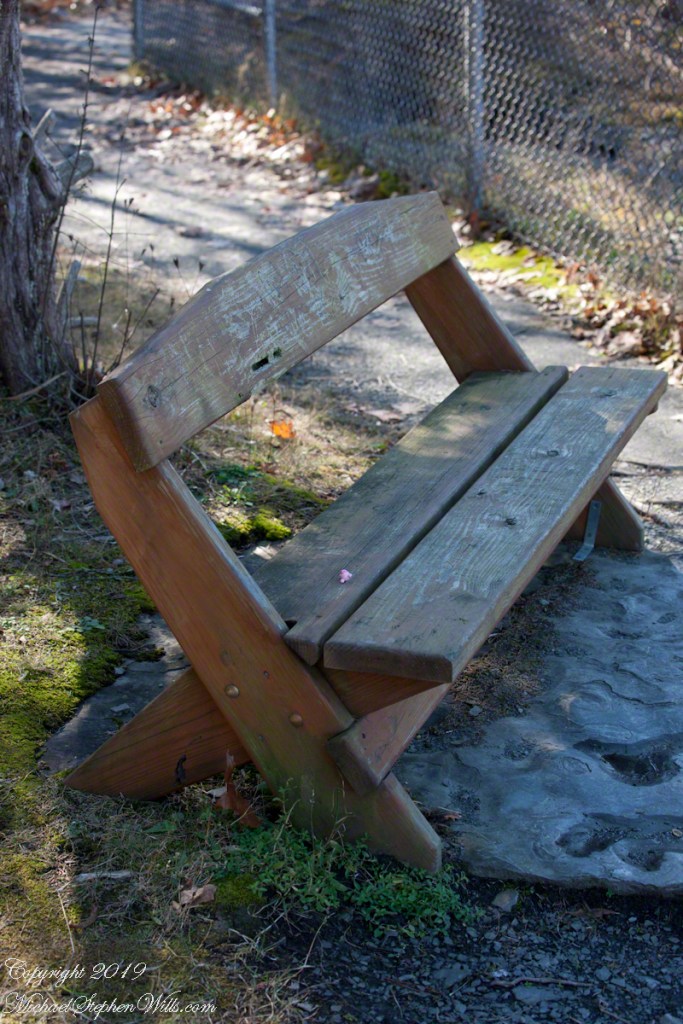
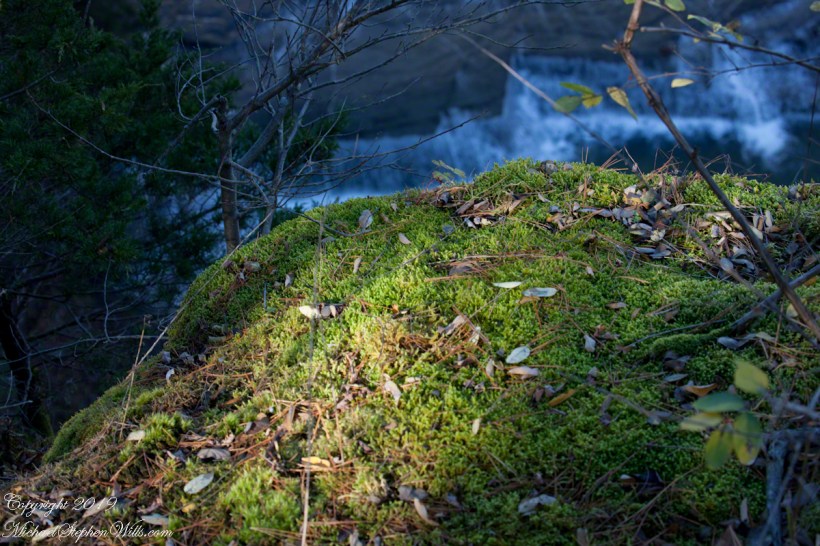
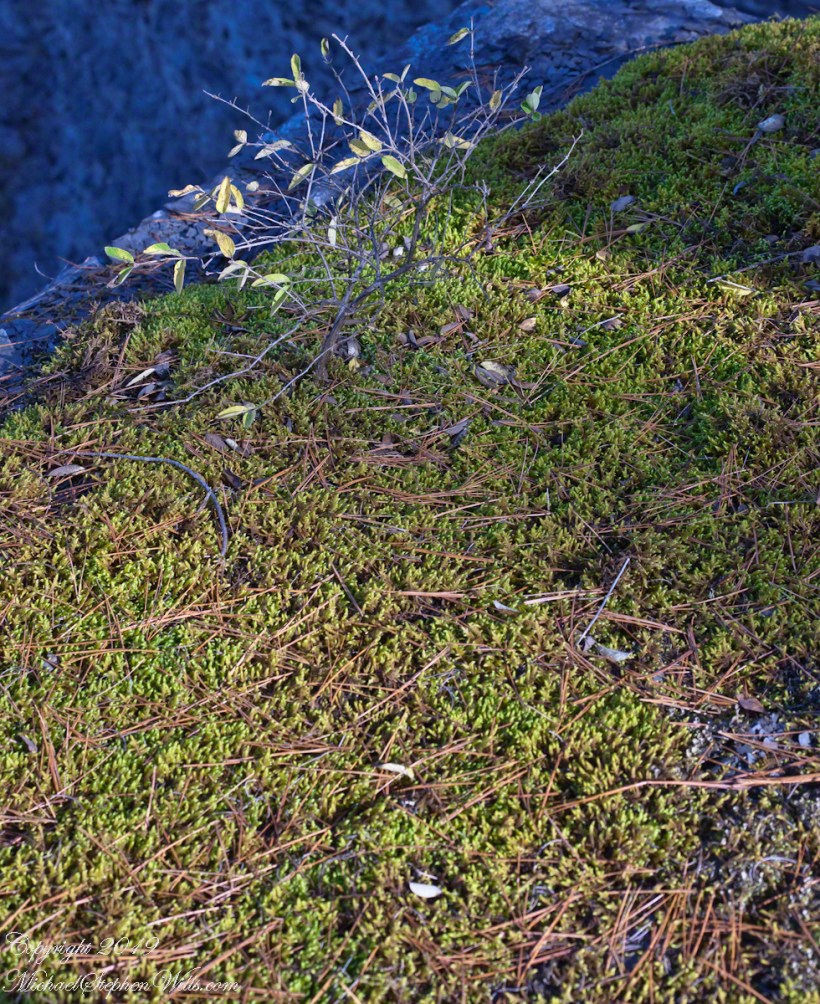
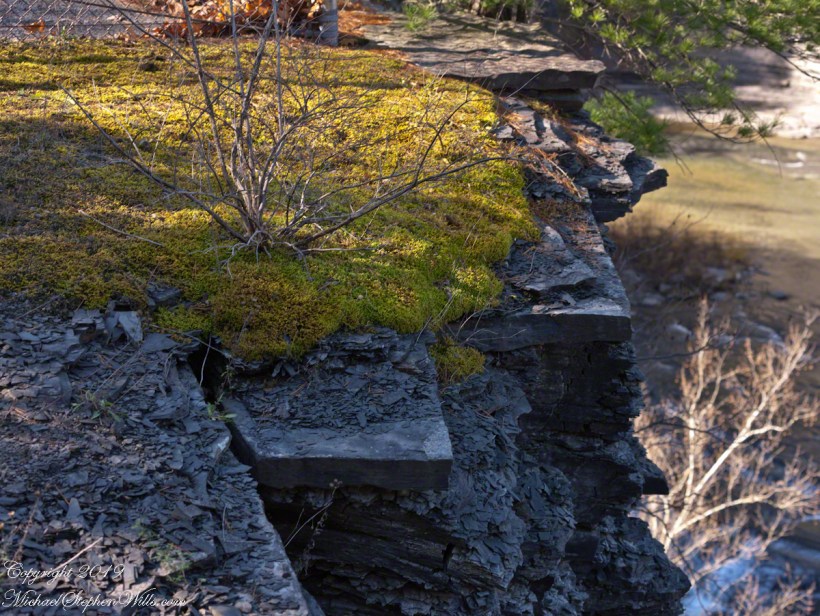
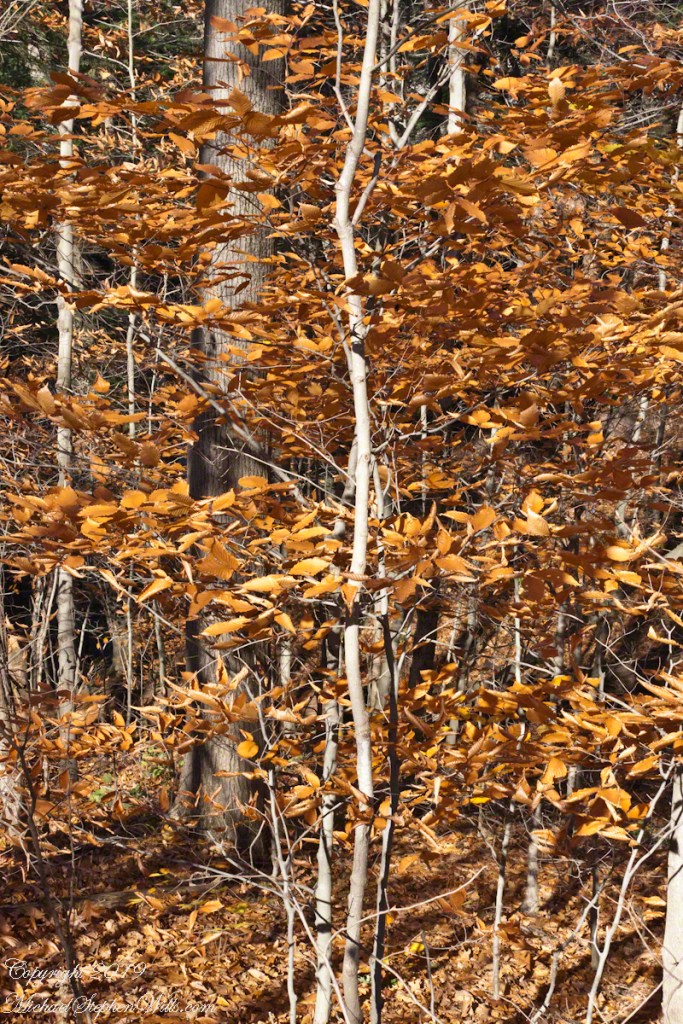
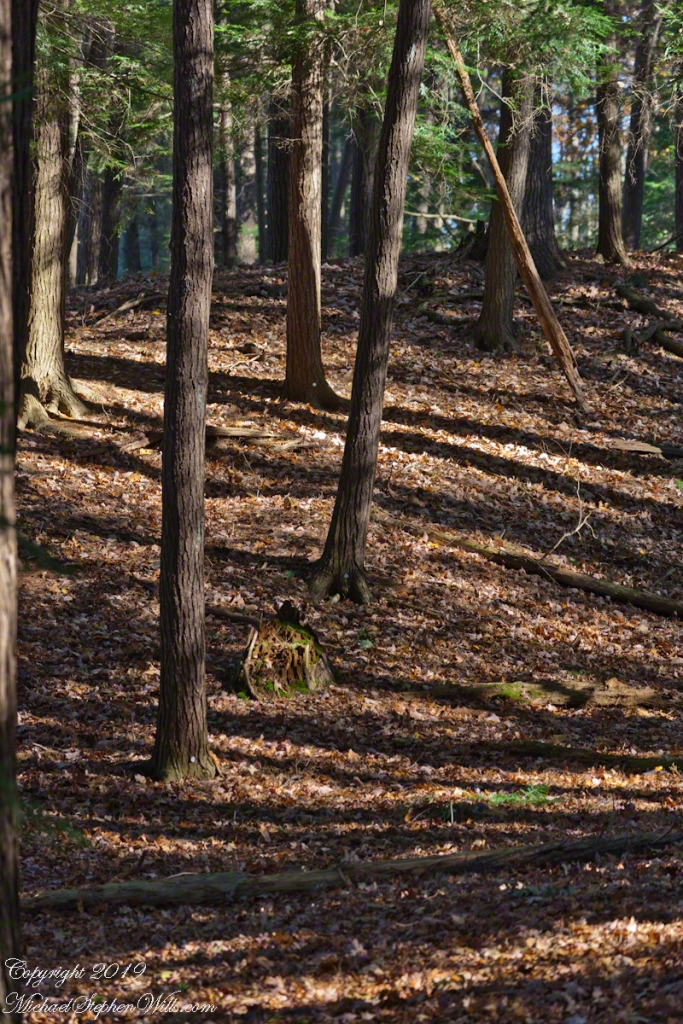
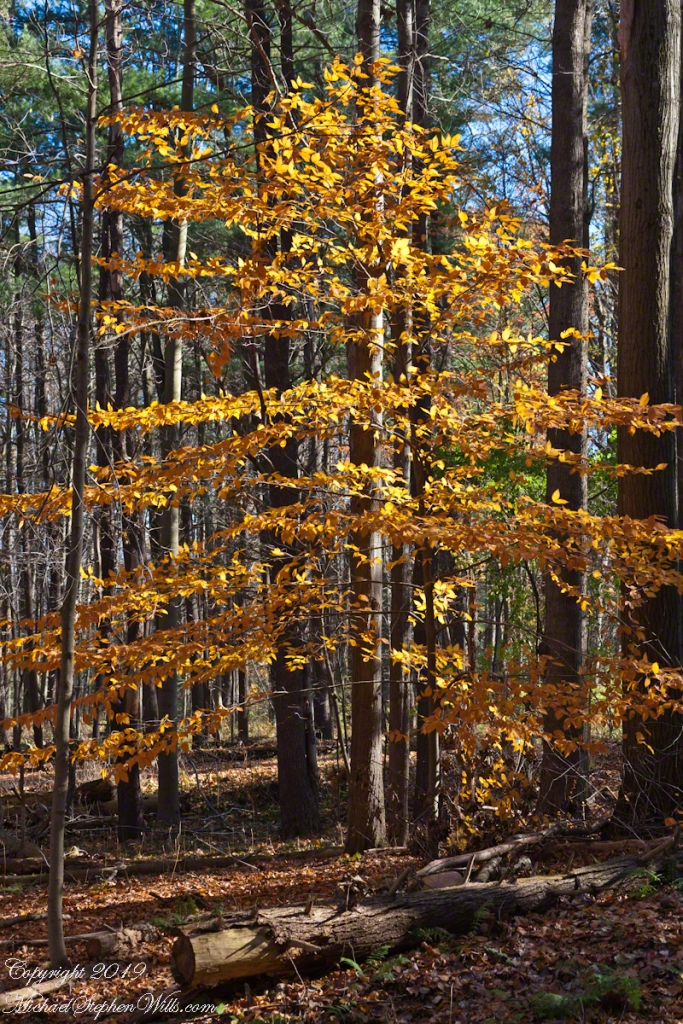
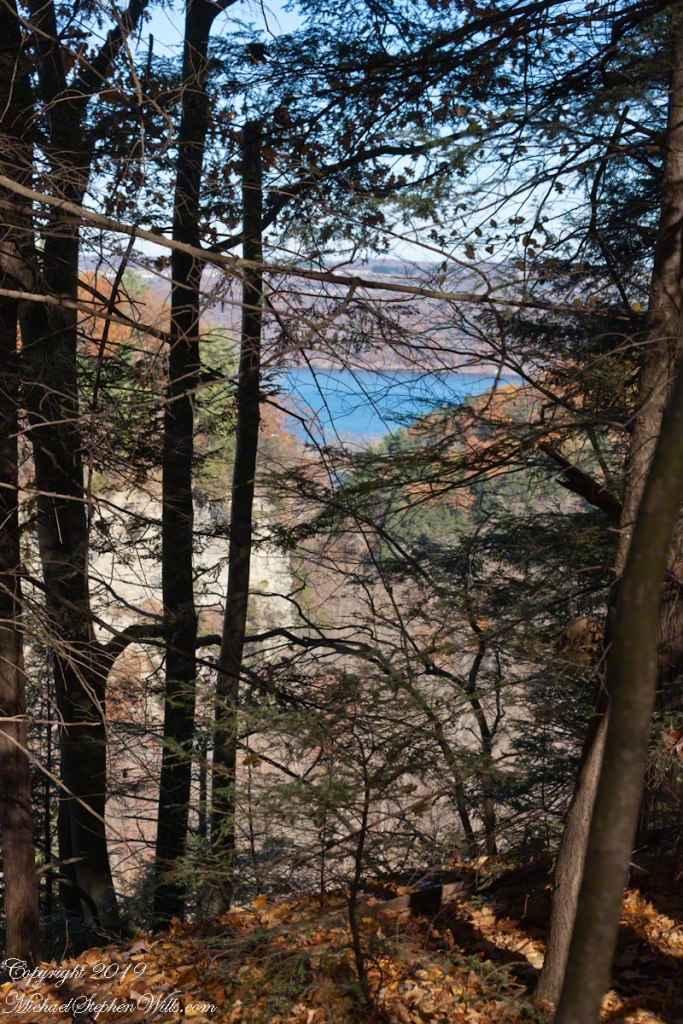
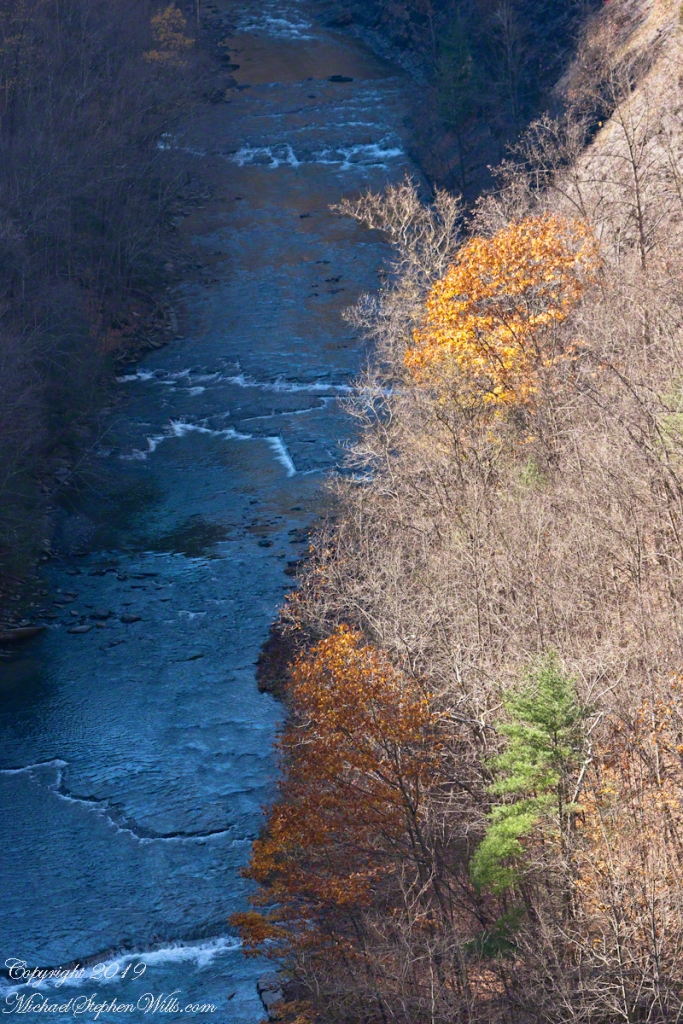
Thank You for exploring the South Rim trail of Taughannock Falls State Park on the last perfectly sunny autumn day of 2019.
A sunny November Walk









What is a Collier?
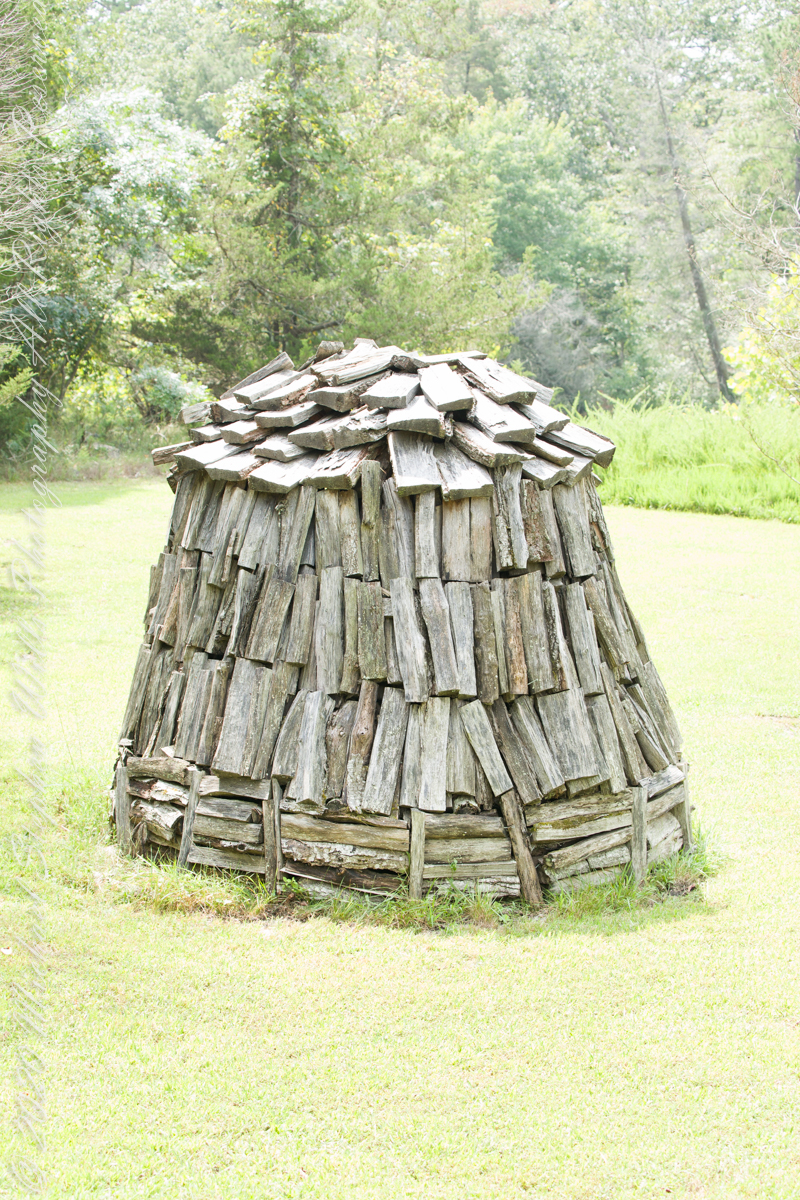
Here my exploration of Wharton State Forest, Pitch Pine Forest III, branches to the genealogical exploration of this landscape as my sister, Theresa and I, proceed along the humped, pitted sand road Goodwater through the wilderness to emerge in Batsto Village, a recreation of lives that touched my great great grandparents, James and Ann McCambridge among them. Ann saved money earned as a cook for Atsion furnace, the historical site at the start of the road to Quaker Bridge. Her husband James worked as a collier, supplying fuel for the iron furnaces at Atsion and Batsto, among other enterprises. During our Batsto Village visit we found these reproductions of charcoal clamps.
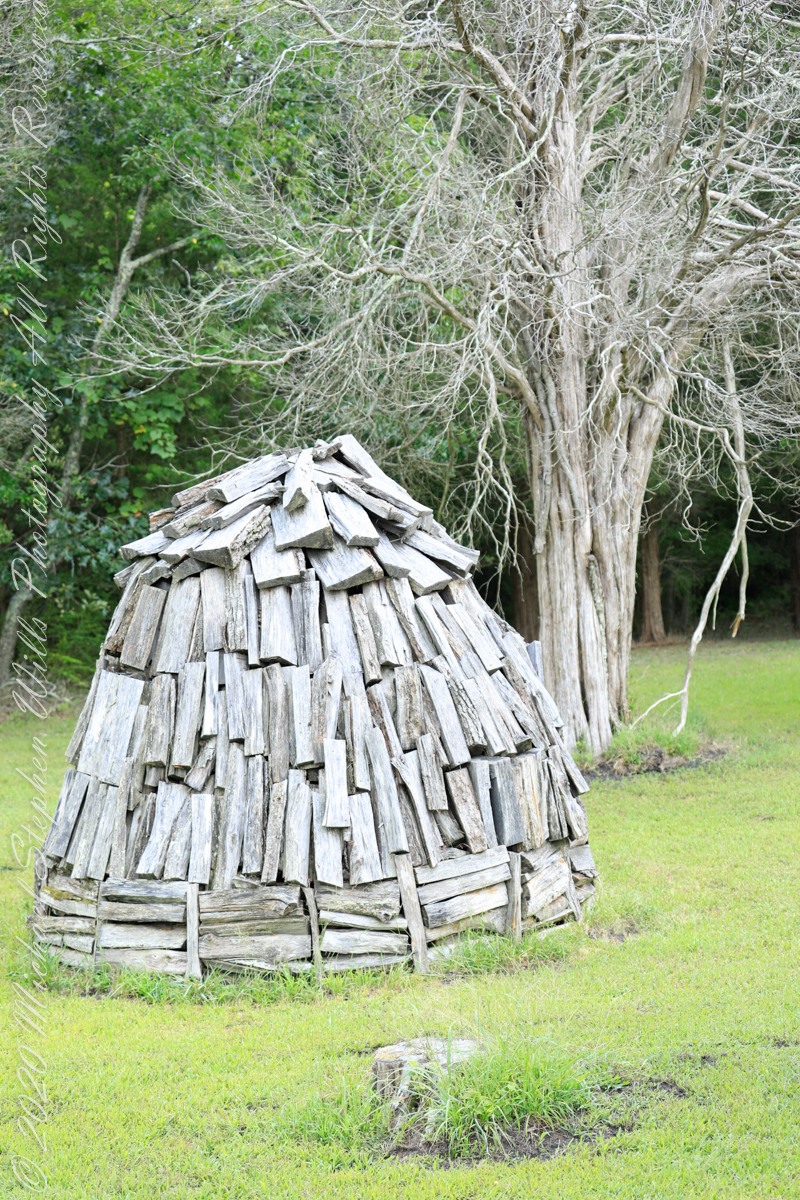
Since earliest times charcoal was used for cooking and heating. It was the best heat source for metal furnaces. Entire deforested regions are attributed to the demand for charcoal. Thomas Jefferson experimented with charcoal clamp designs, modifying air flow from the base.
James and Ann lived on the land that provided a livelihood, enough to support themselves and nine (9) children. From September 7, 1850 is the US Census for this family of my second great grandparents. Great Grandmother Margaret was 11 years. James is listed as a Collier, the value of Real Estate owned was 6,000 (a fortune for the time).

Like his wife Ann, James had a savings account…..

Copyright 2021 Michael Stephen Wills All Rights Reserved
Road to Batsto
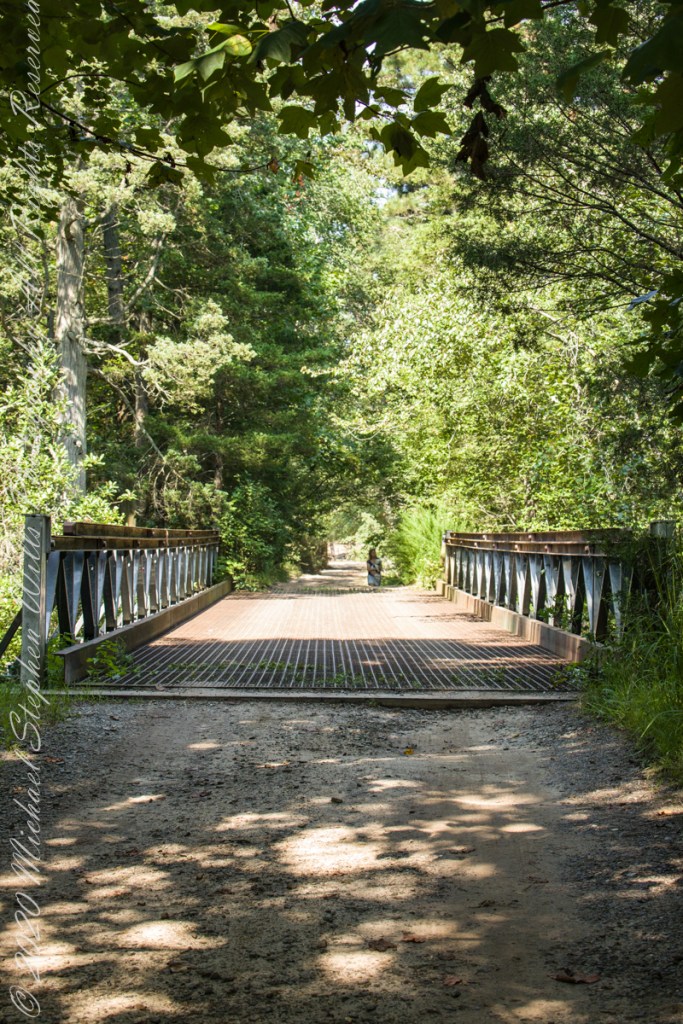
Leaving the jeep on the west side of Quaker Bridge, I walked over to inspect the structure and poke around the other side, carrying a Canon 5d Mark IV (camera body) / EF 70 – 300 mm f/4-5.6 L IMS (lens), shooting as I walked. My sister Theresa and Maxie, a little white dog, lagged behind taking in the surroundings. Here they are, in shadow, on the west side.
My work on the east side was shared in previous posts, “Pinelands Connections VIII,” I and II “Around Quaker Bridge,” and I and II “Pitch Pine Forest,” work interrupted by the sound of an approaching engine, a Humvee came into view. I waved my arm up and down, a sign to slow down, pulling alongside the driver looked up with dead eyes, no element of recognition of a fellow human, as I explained my sister was on the bridge. A stink of unfamiliar hydrocarbons, diesel fuel?, rose through the heat as they pulled forward with no acknowledgement of my request. Thankfully they slowed down as Theresa, Max in her arms, said, “hi.”
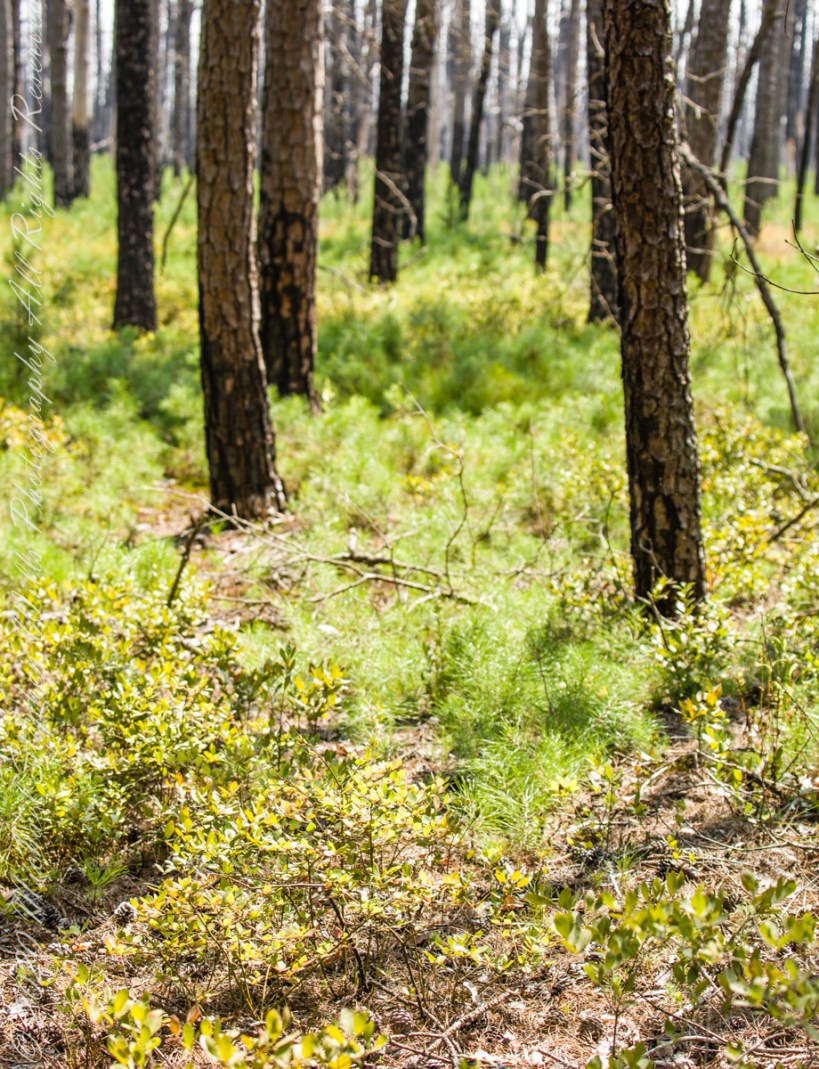
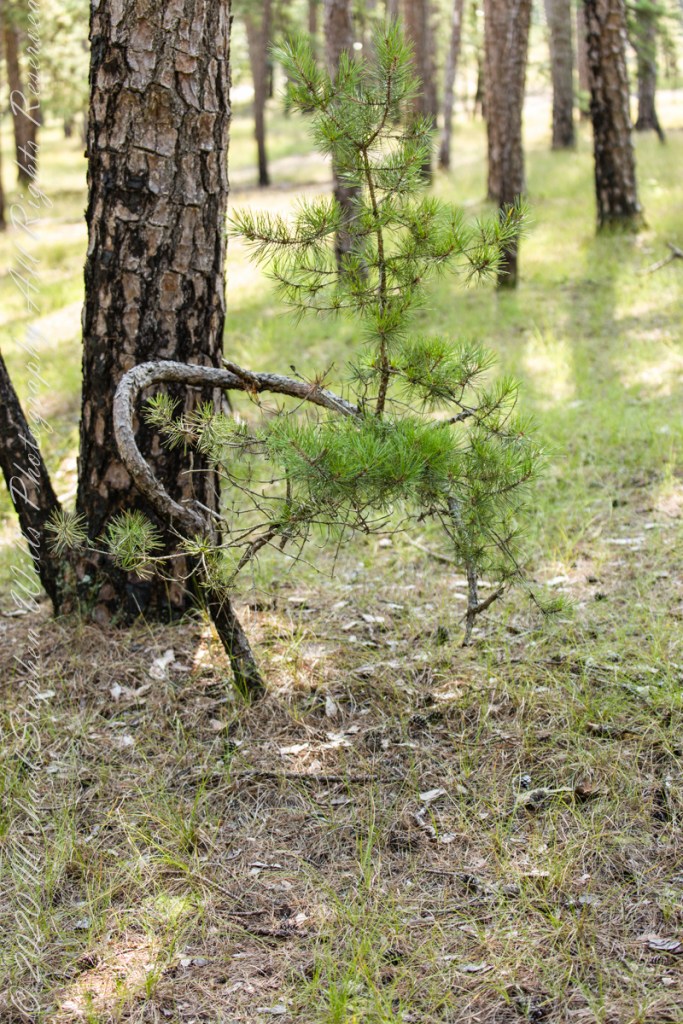
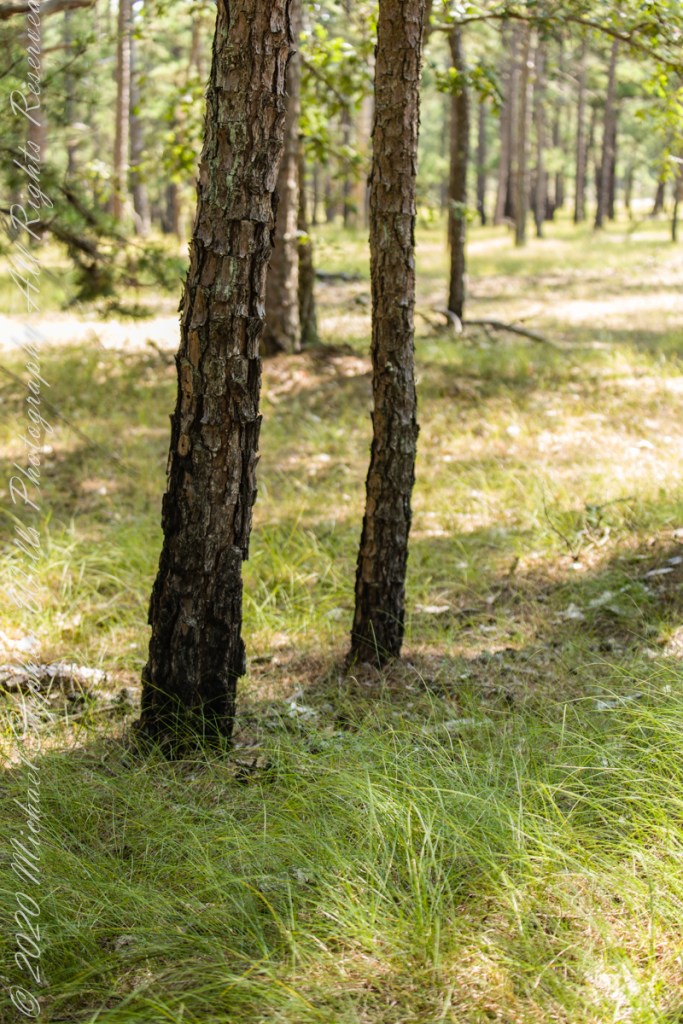
Multiple roads converge from all directions on Quaker Bridge, using GoogleMaps (surprising these unimproved, “jeep” sand roads were listed) I chose Goodwater Road as a route to Batsto Village, on the southern side of Wharton State Forest. The 6.1 mile road follows the east bank of Mullica River at a distance, a very rough passage through ancient Pitch Pine forest. Here are photographs of the enormous capacity of the pines to regrow after fire. Note a thick seeding growth among the mature pine trunks, lower portions fire blackened.
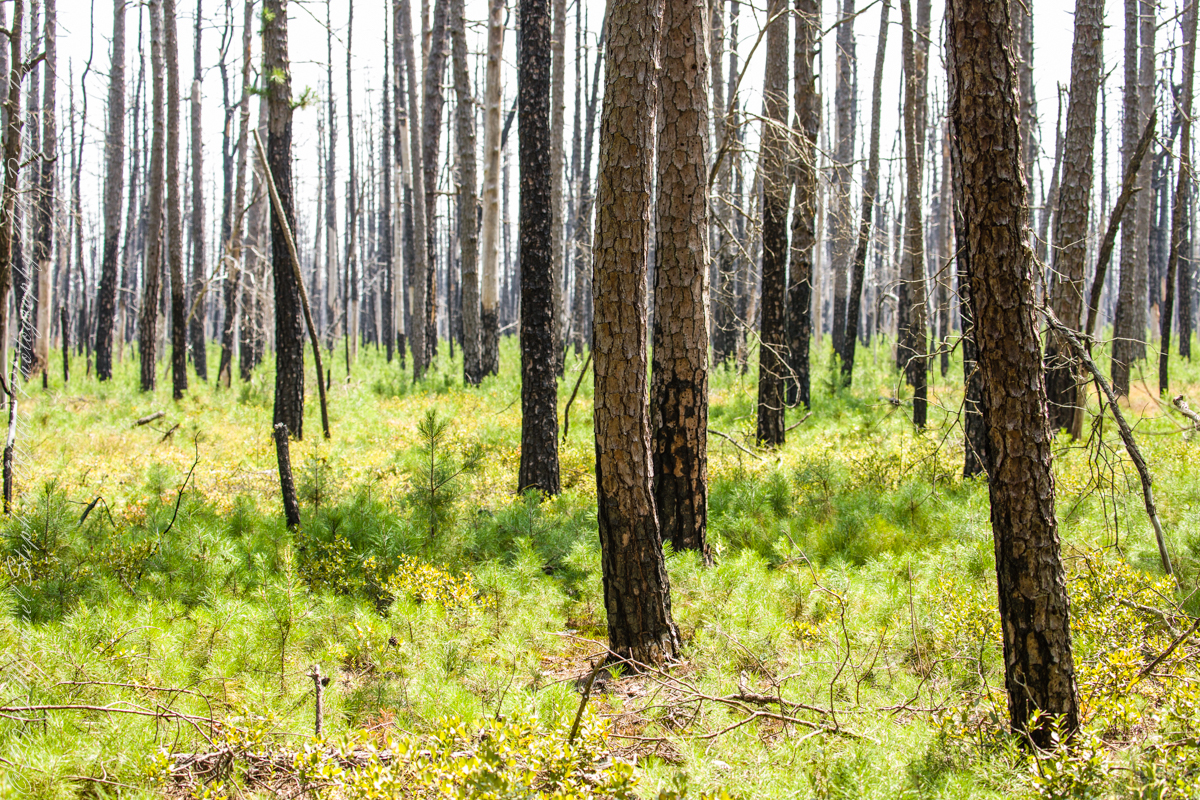
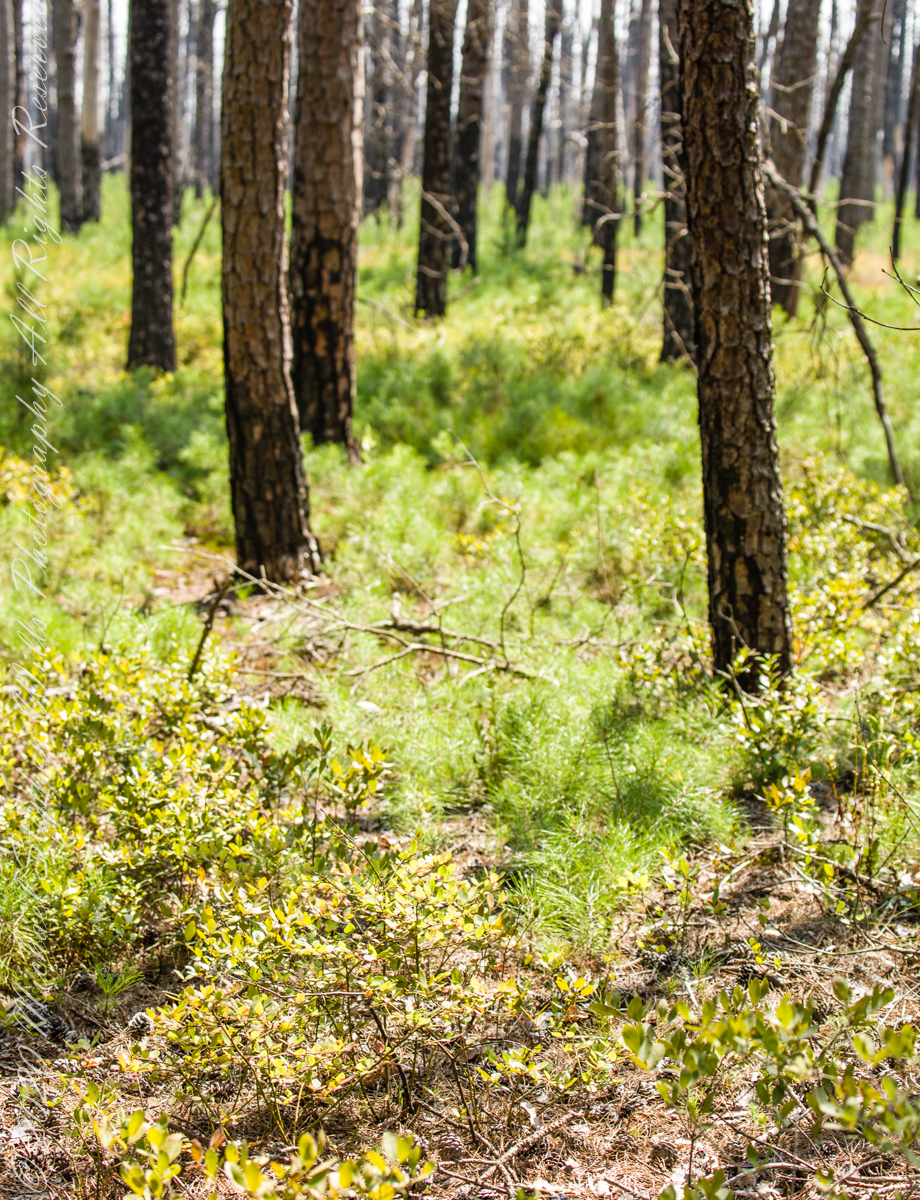
Copyright 2021 Michael Stephen Wills All Rights Reserved
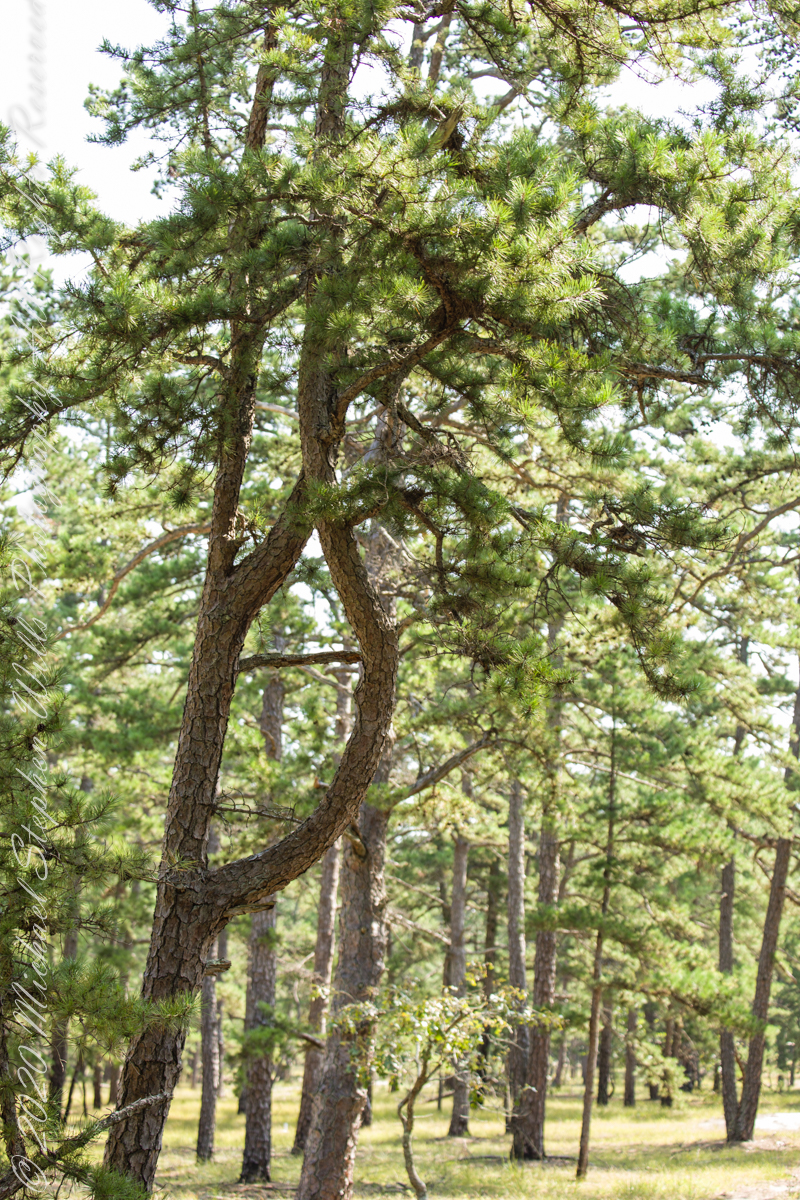
Multiple Lives
These photographs were taken deep in the wilderness of Wharton State forest, near where Quaker Bridge spans the Mullica River.
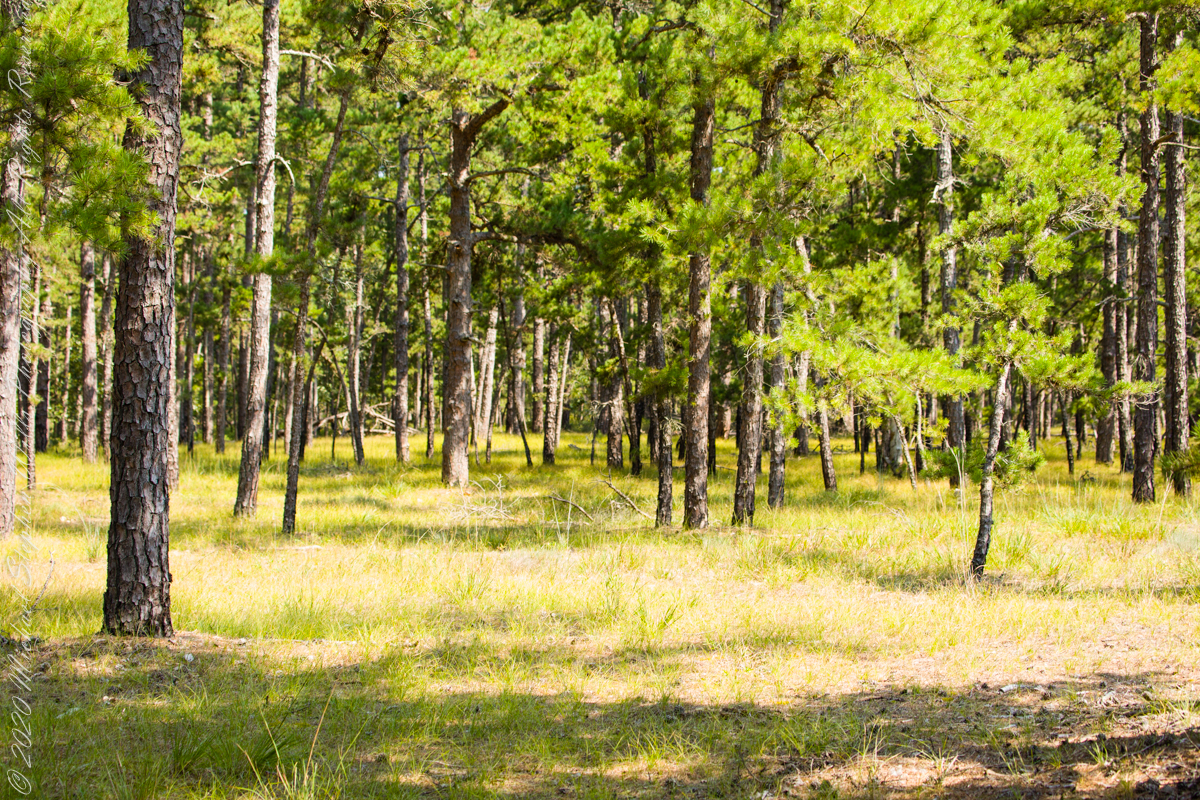
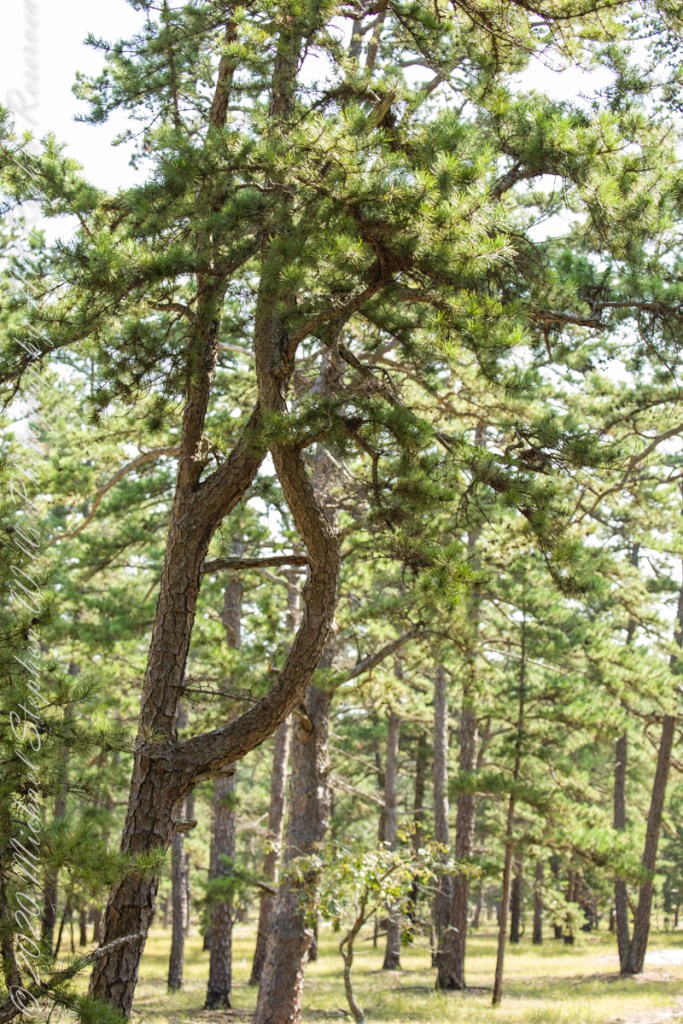
The pitch pine is irregular in shape, in these forests a mature tree typically lives through multiple cycles of fire and regrowth.
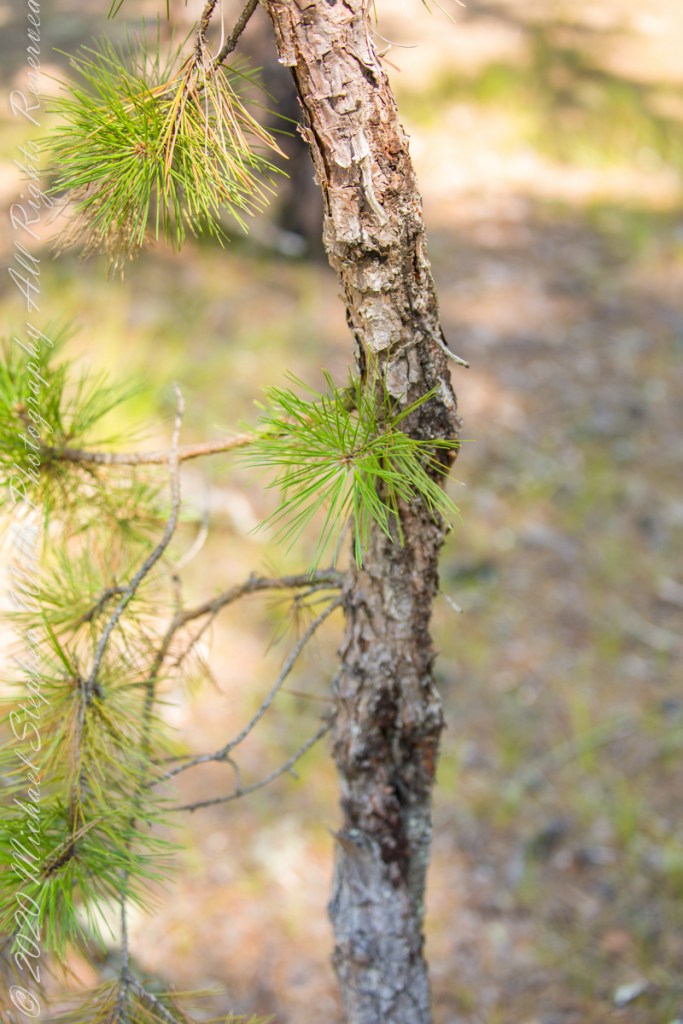
Burnt pitch pines often form stunted, twisted trees with multiple trunks as a result of resprouting. Bonsai artists exploit this characteristic for their creations.
Copyright 2021 Michael Stephen Wills All Rights Reserved
The Pinus Genera
The 115,000 acres of Wharton State Forest are predomenantly Pitch Pine, scientific name Pinus Rigida, and AKA Black Pine and Hard Pine. Climb the fire tower of Apple Pie Hill, in all directions will be a sea of these trees interspersed here and there with occasional oaks. Cedars mark water courses. These photographs, unless otherwise identified, were taken deep in the forest, near where Quaker Bridge spans the Mullica River.
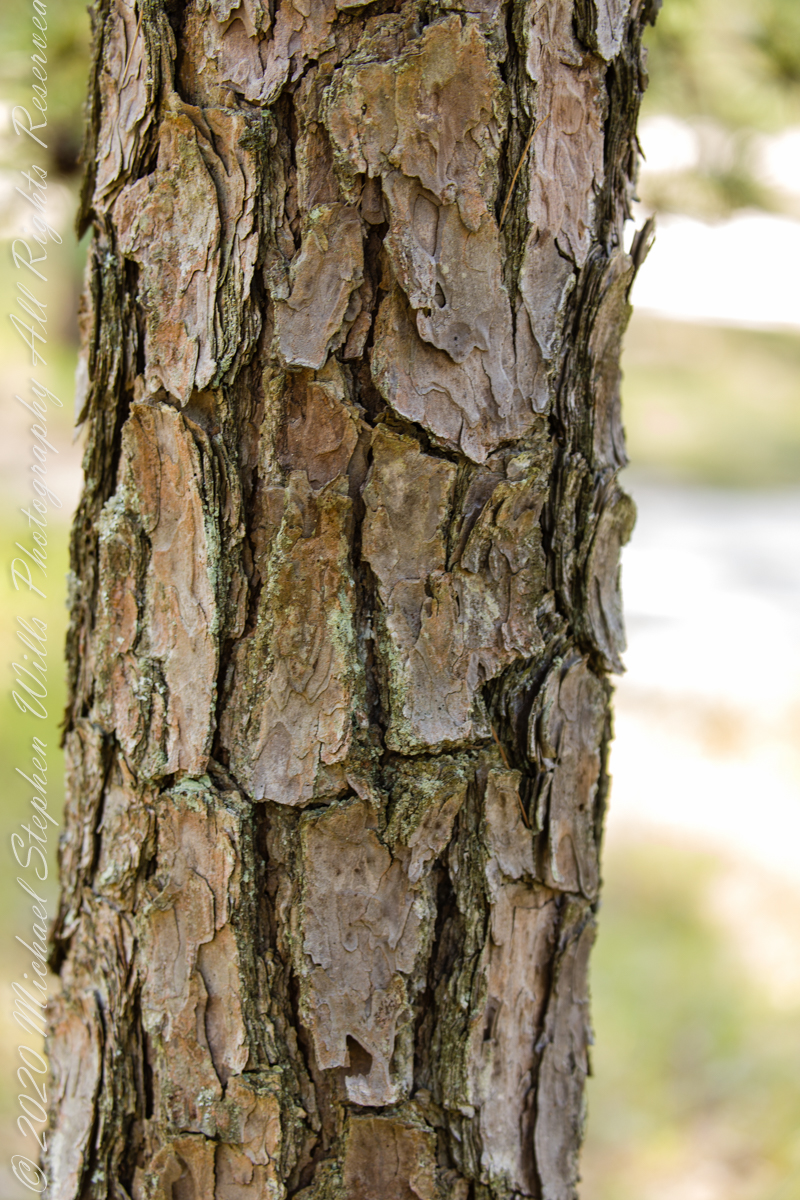
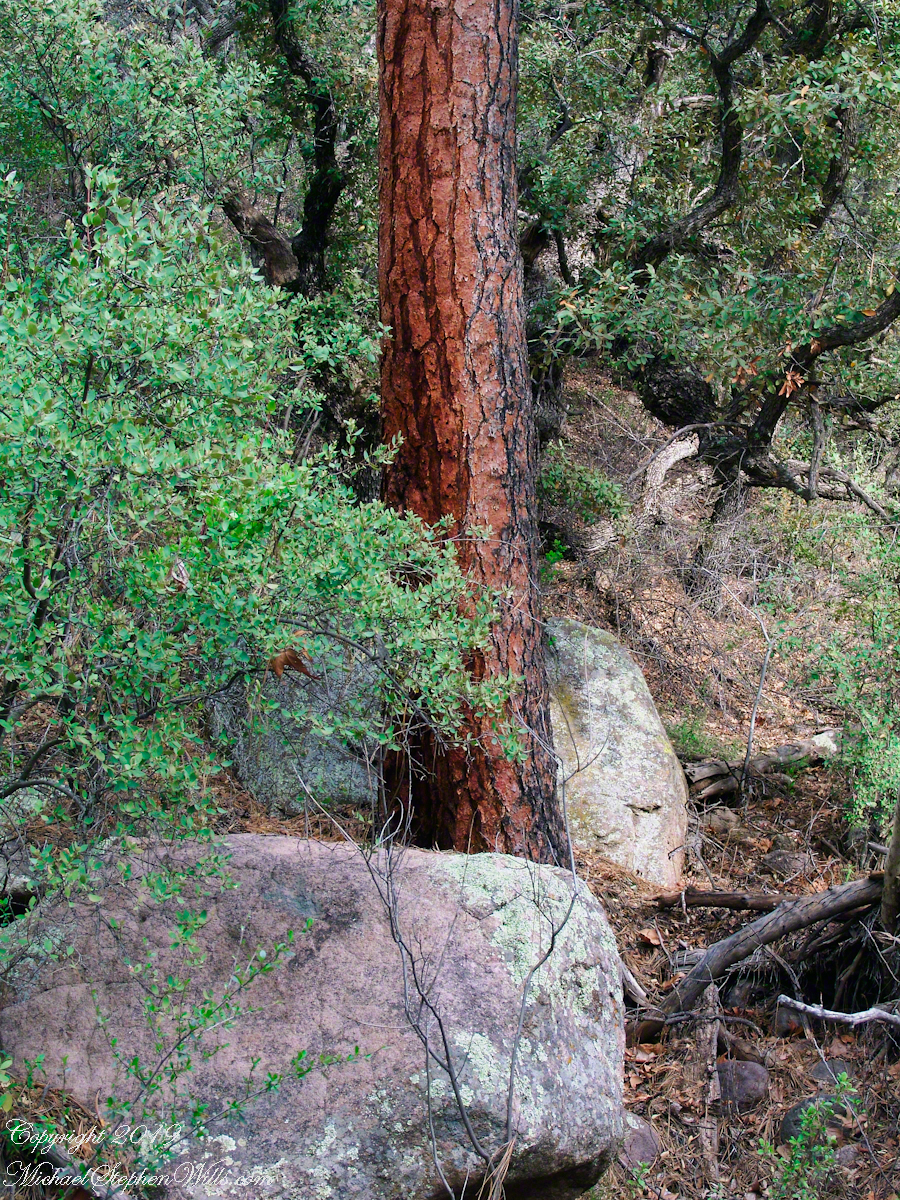
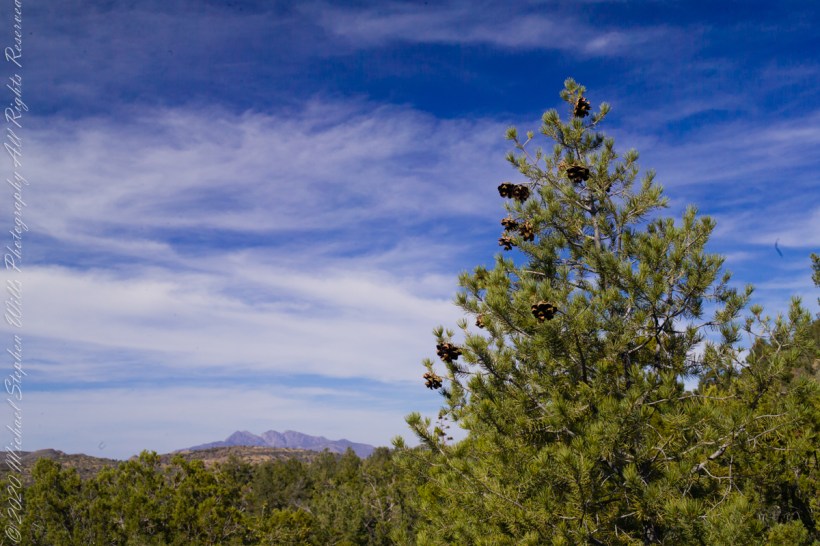
A mature Pitch Pine has bark of large, thick, irregular plates, adapted to survive forest first, similar to another member of the Pinus genera, the Ponderosa Pine.
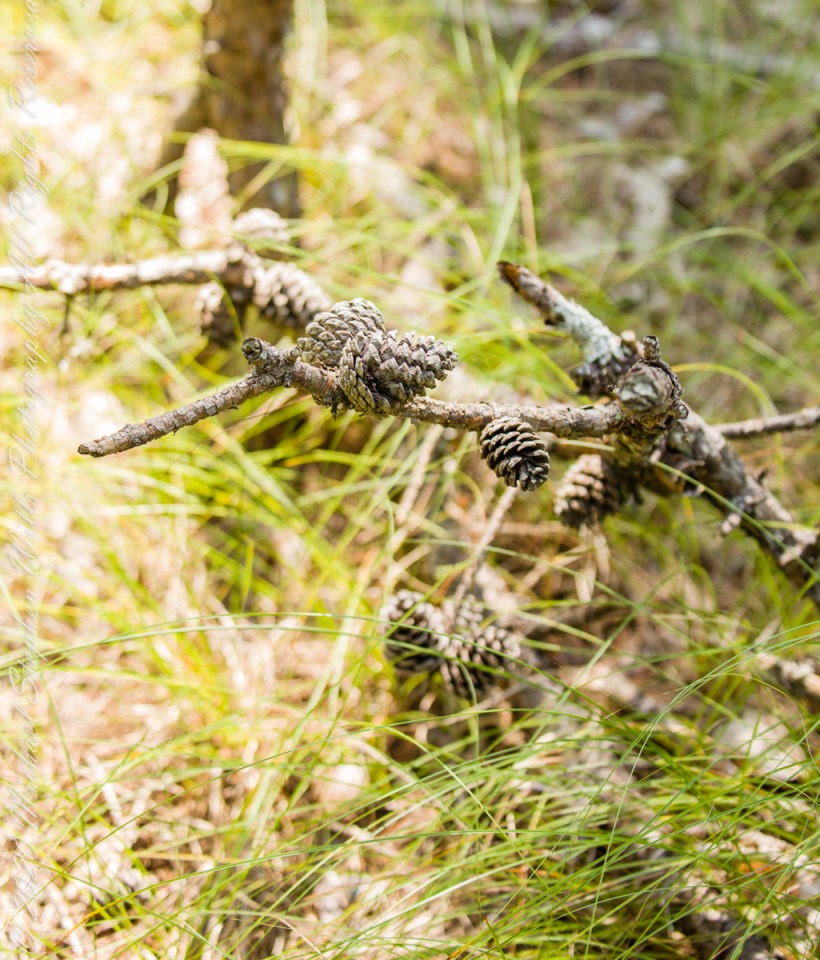
Open-growth trees begin bearing cones in as little as three years, with shade-inhabiting pines taking a few years longer. The cones are 4–7 cm (1+1⁄2–2+3⁄4 in) long and oval, with prickles on the scales. Cones take two years to mature. Seed dispersal occurs over the fall and winter.
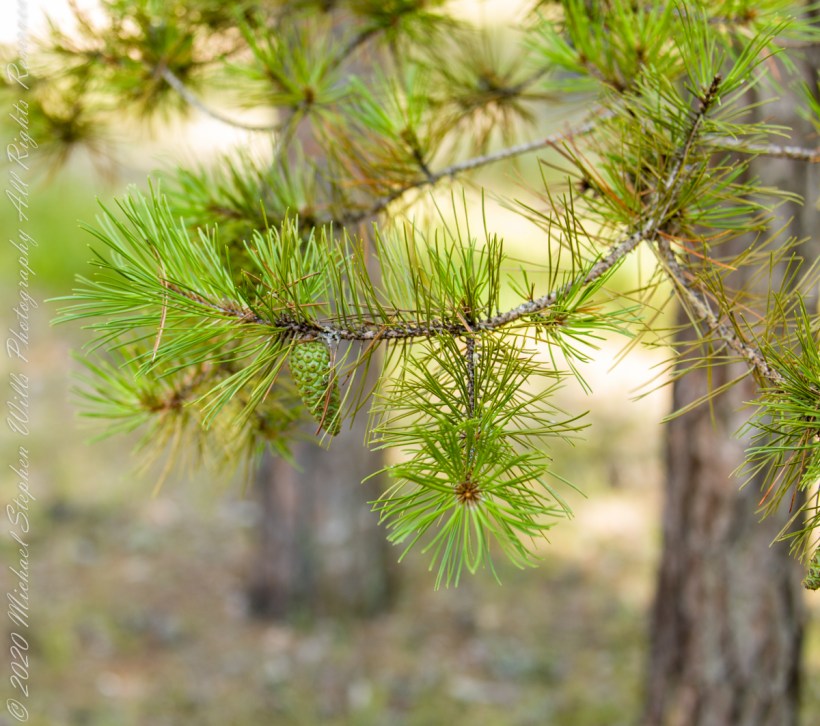
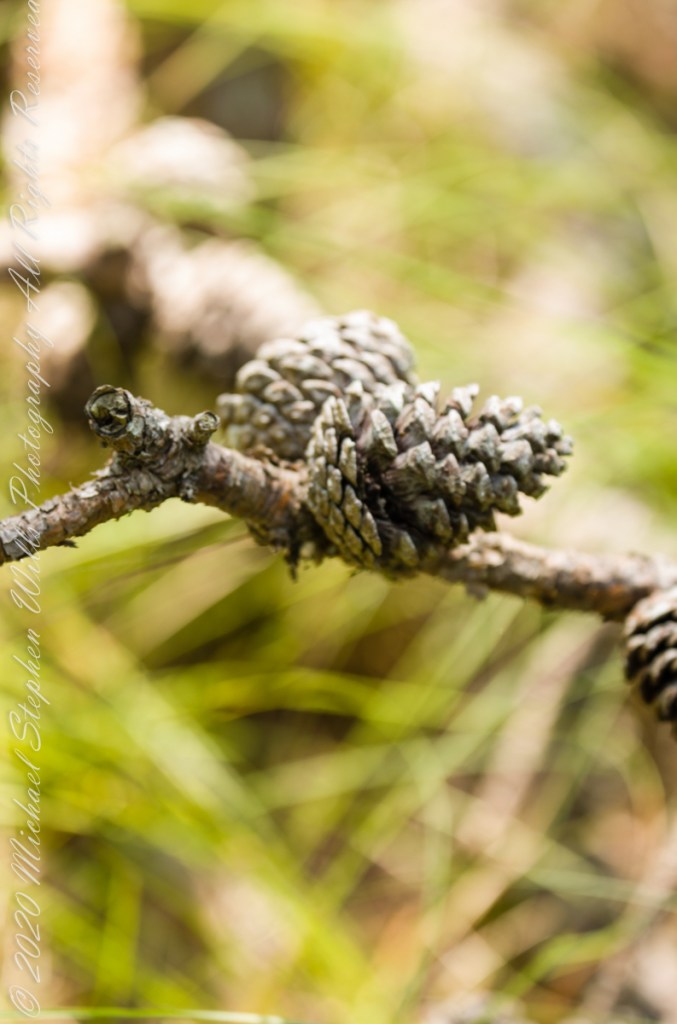
Unlike the another member of genus Pinus, the Pinyon Pine, the seeds released by Pitch Pine cones are not sought out for human consumption.
Copyright 2021 Michael Stephen Wills All Rights Reserved
 Michael Stephen Wills Photography