McMath-Pierce Solar Telescope – 2

The Mirrors

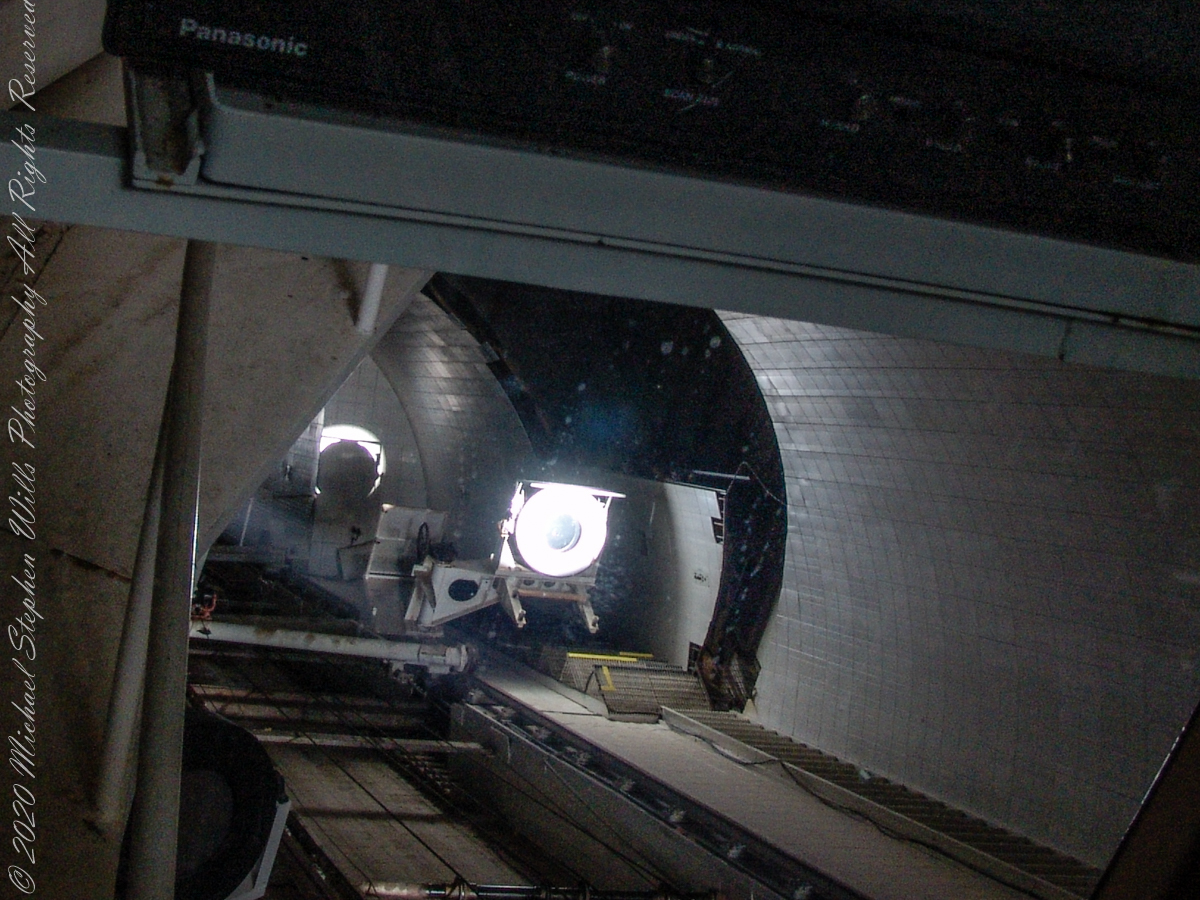
These views within the McMath–Pierce solar telescope enclosure were captured during a guided tour of the instrument, April 20, 2005. By way of orientation, think of yourself at the location labeled “4” on this model. This is the only large telescope where humans can view the interior and visually experience the light paths “bouncing” between the mirrors.
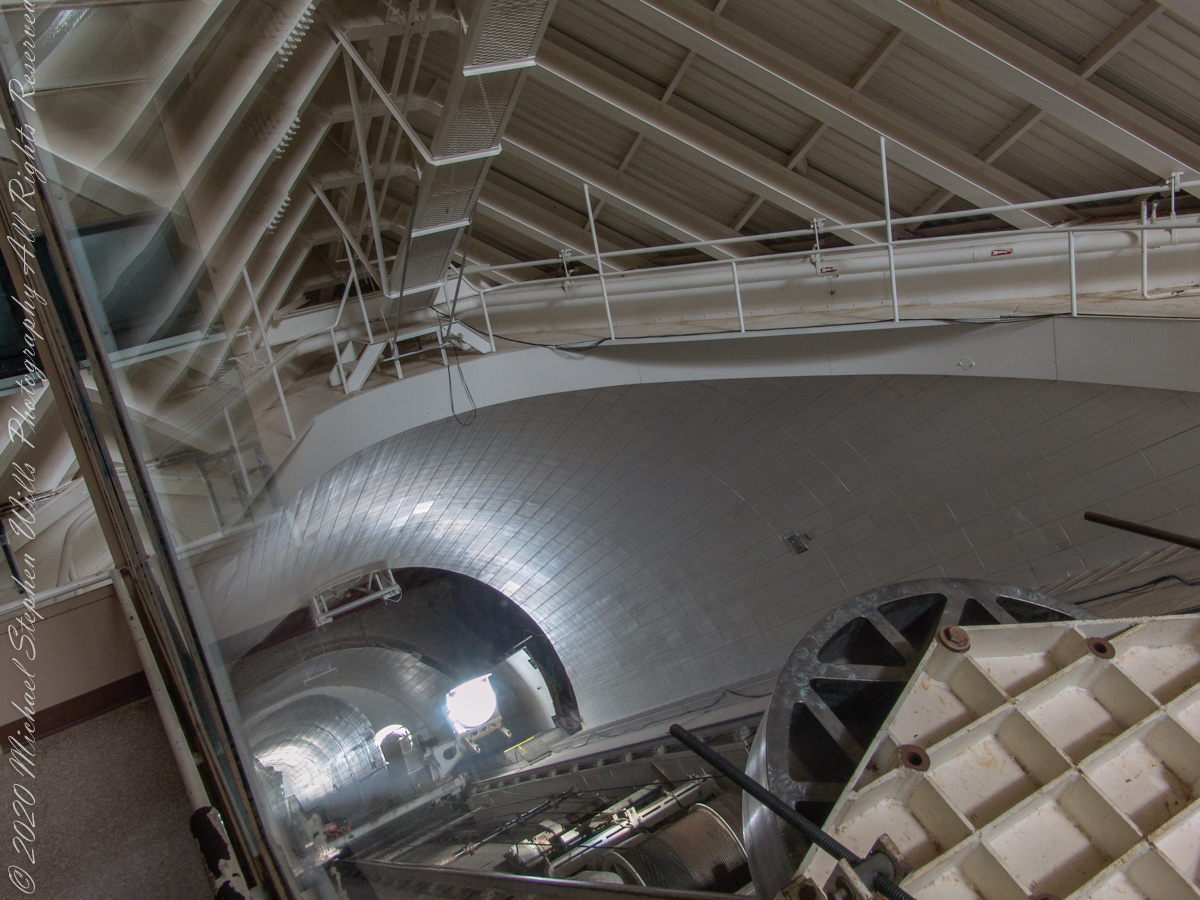
McMath–Pierce solar telescope has three heliostats mounted on a 110-foot tower adjacent to a slanted enclosure. The 2.03-meter heliostat feeds a 1.61-meter primary mirror, there are 1.07-meter and 0.91-meter primary mirrors fed by a pair of 0.81-meter heliostats. Here we are inside the slanted enclosure, looking up the shaft to the tower mounted heliostats, readily identified as the three circles, the largest at center (3.51 feet in diameter). The smaller (2.66 feet) heliostats named “East” (on left) and “West.”
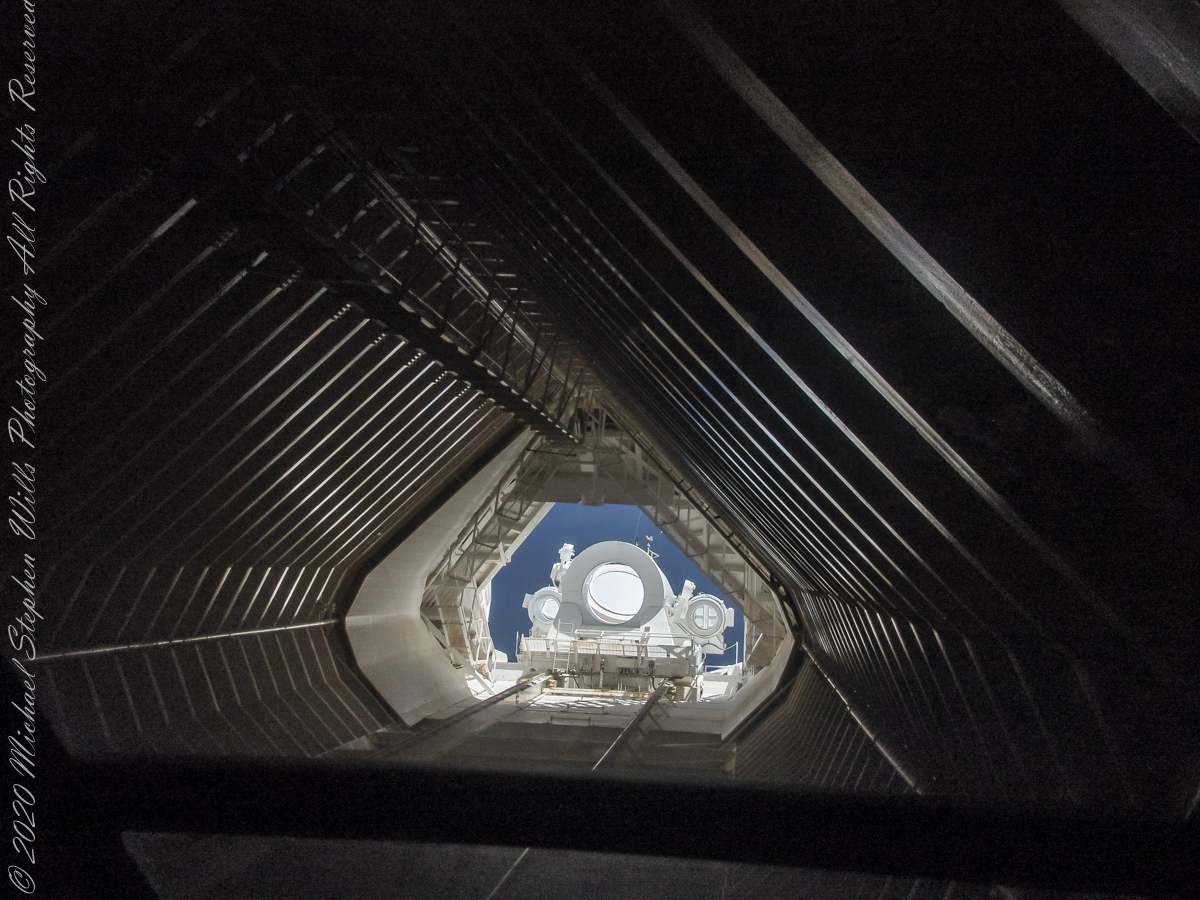
Built in 1962, the building was designed by American architect Myron Goldsmith and Bangladeshi-American structural engineer Fazlur Rahman Khan. It was the largest solar telescope and the largest unobstructed aperture telescope in the world. It is named after the astronomers Robert Raynolds McMath and Keith Pierce. Painted white to reflect sunlight to reduce heat accumulation, the enclosure is water cooled to prevent convection currents through the column of air within the slanted enclosure, keeping the air as still as possible along the light path between the mirrors.

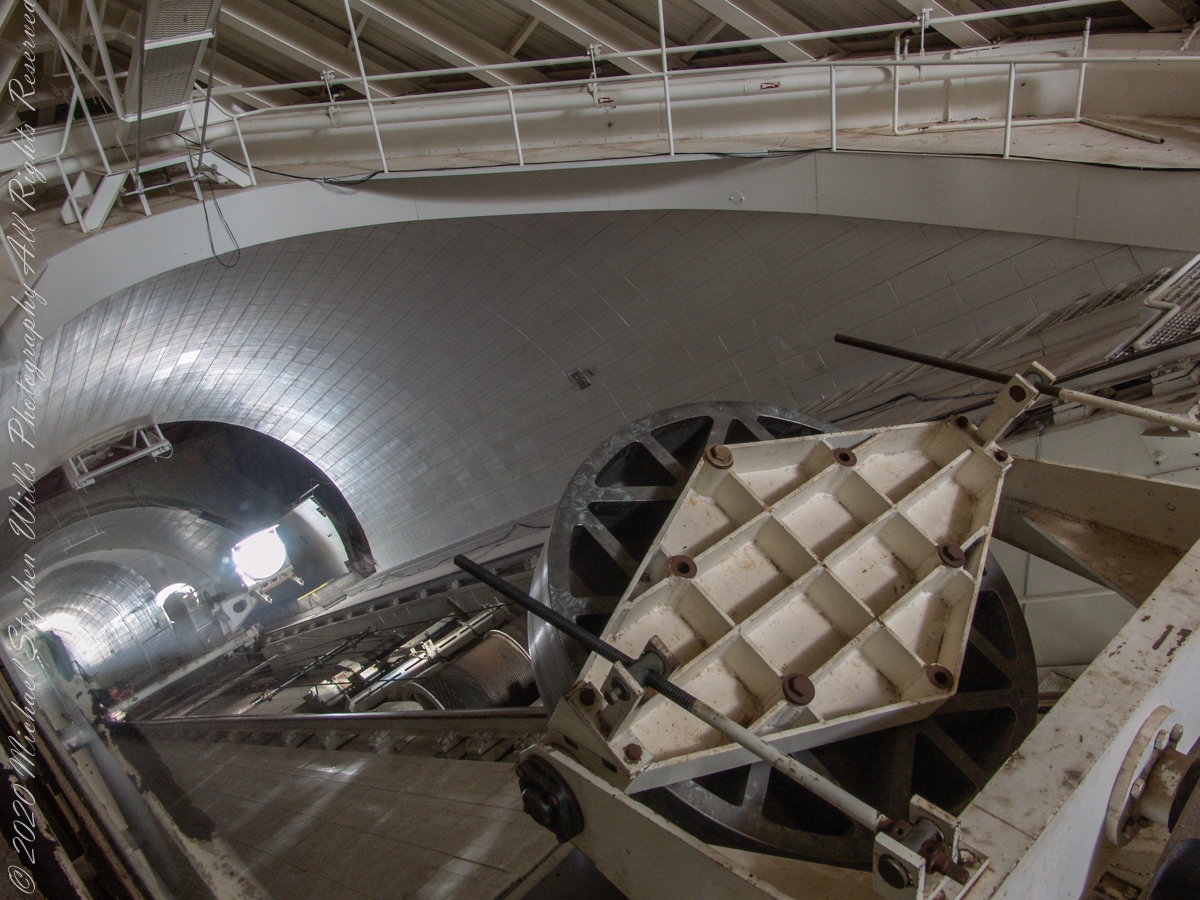
In the three photographs following, we face the underground portion of the slanted shaft and (what looks to be) the 0.91 meter (2.99 feet) primary concave mirror. I say that because in some of the photographs a beam of light, to the left of the mirror, can be seen travelling further underground, presumably to the largest primary mirror. As there is only one such light beam, I conclude the west heliostat is inactive.
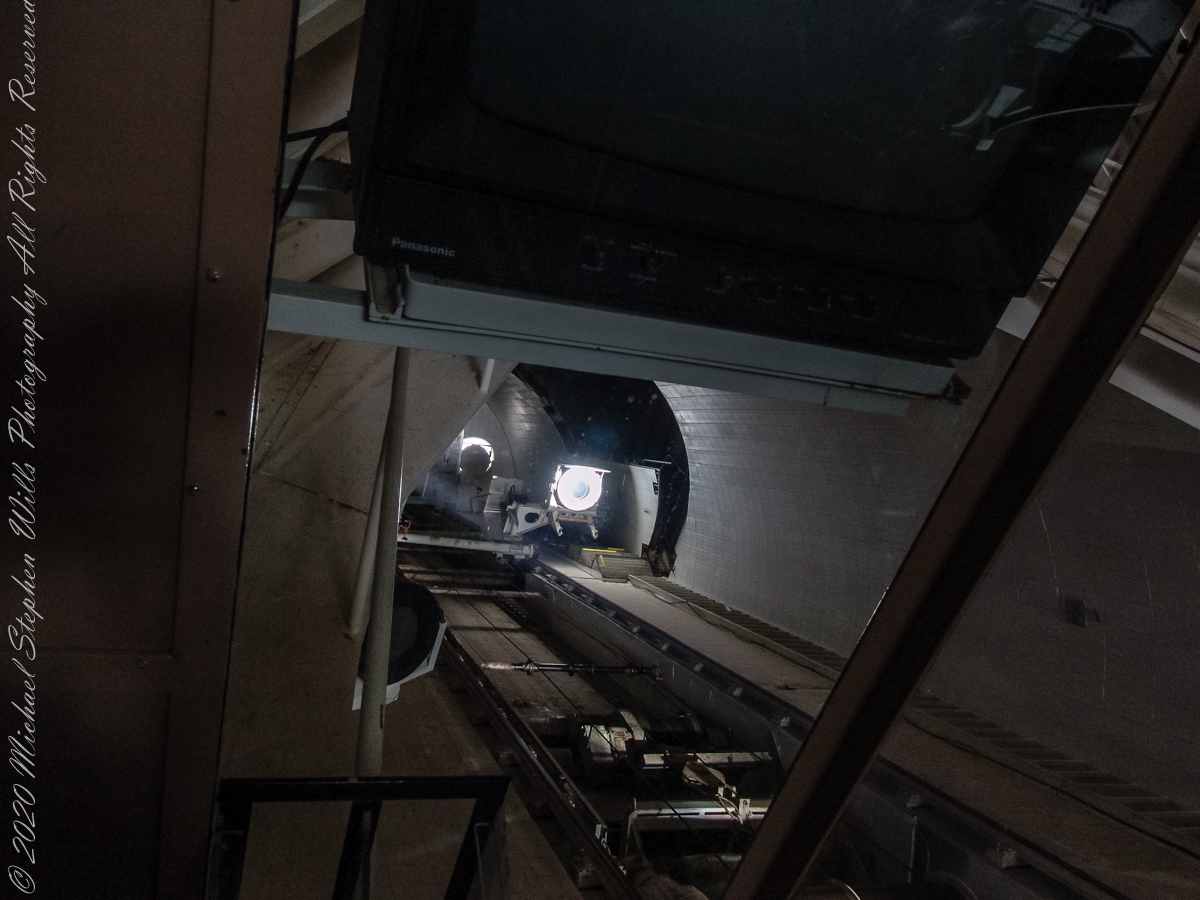
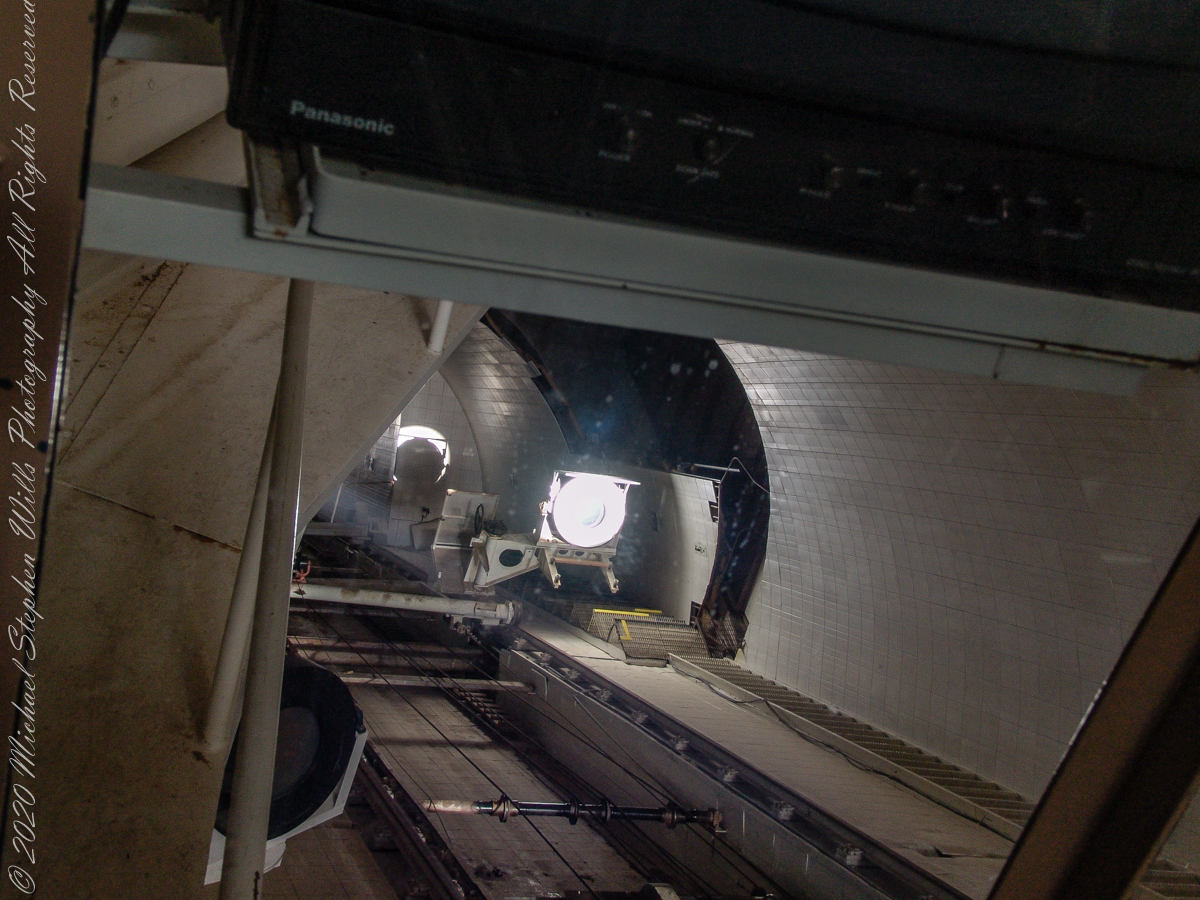
Here we looking up the slanted enclosure. Look carefully at the first photograph, below, to see reflections on the glass partition. The observation platform was separated from the light paths to maintain the stillness of the air column. The two mirrors of the first photograph are the third mirror, reflecting concentrated sunlight from the 0.91 and 1.61-meter primary mirrors into the observatory rooms. The mirror for the 1.07-meter primary is out of sight in foreground, I believe this set of three mirrors (West heliostats, primary and third) was out of service.

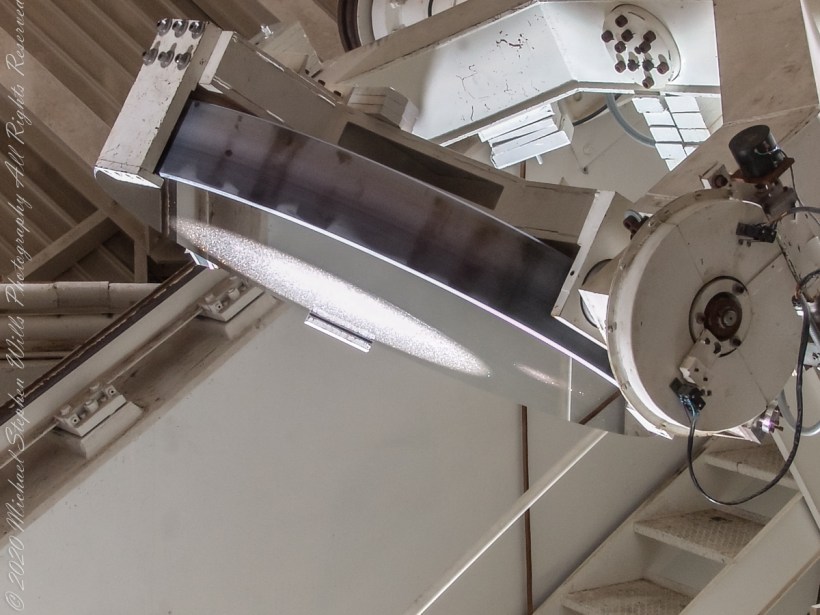
The second photograph, on right, is a close up of the third mirror for the largest primary. A foreshortened, perfectly round light disk is clearly visible.
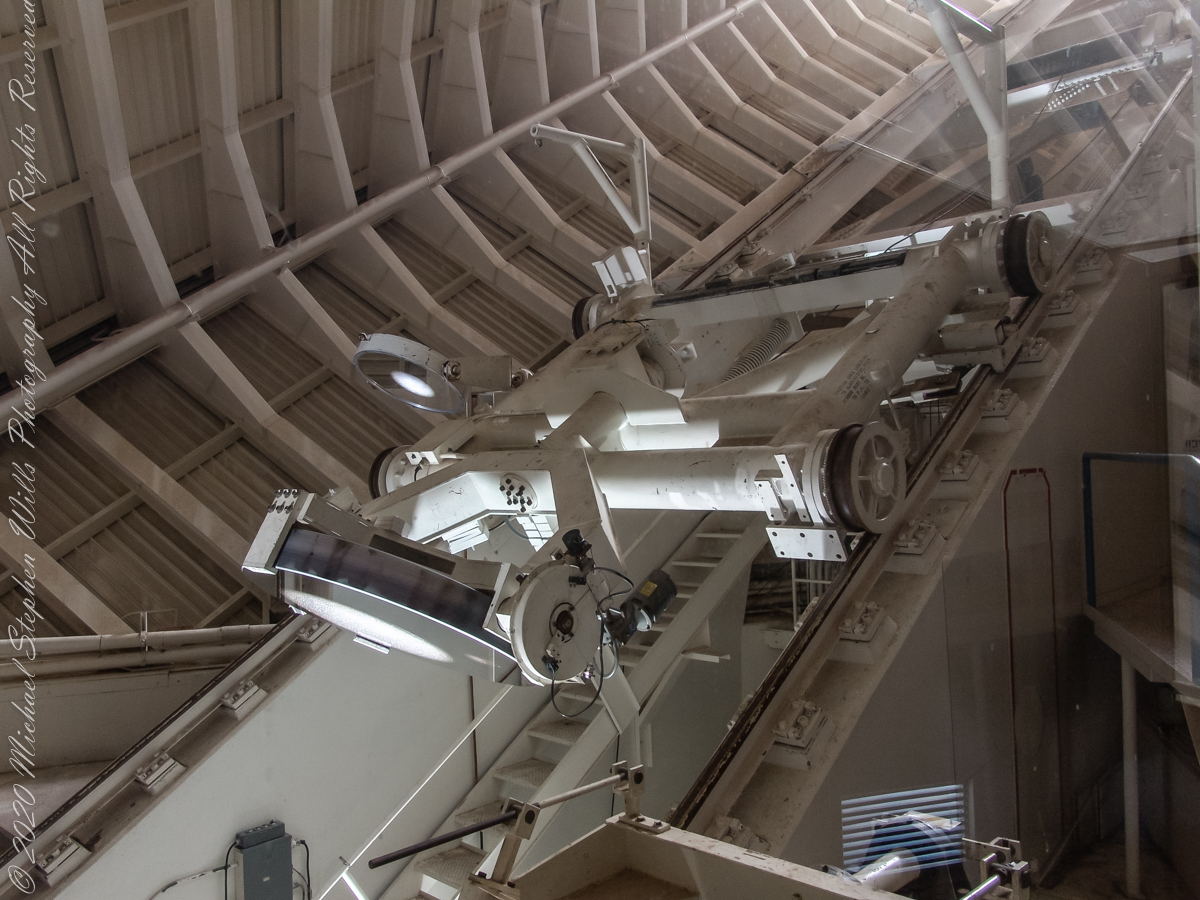
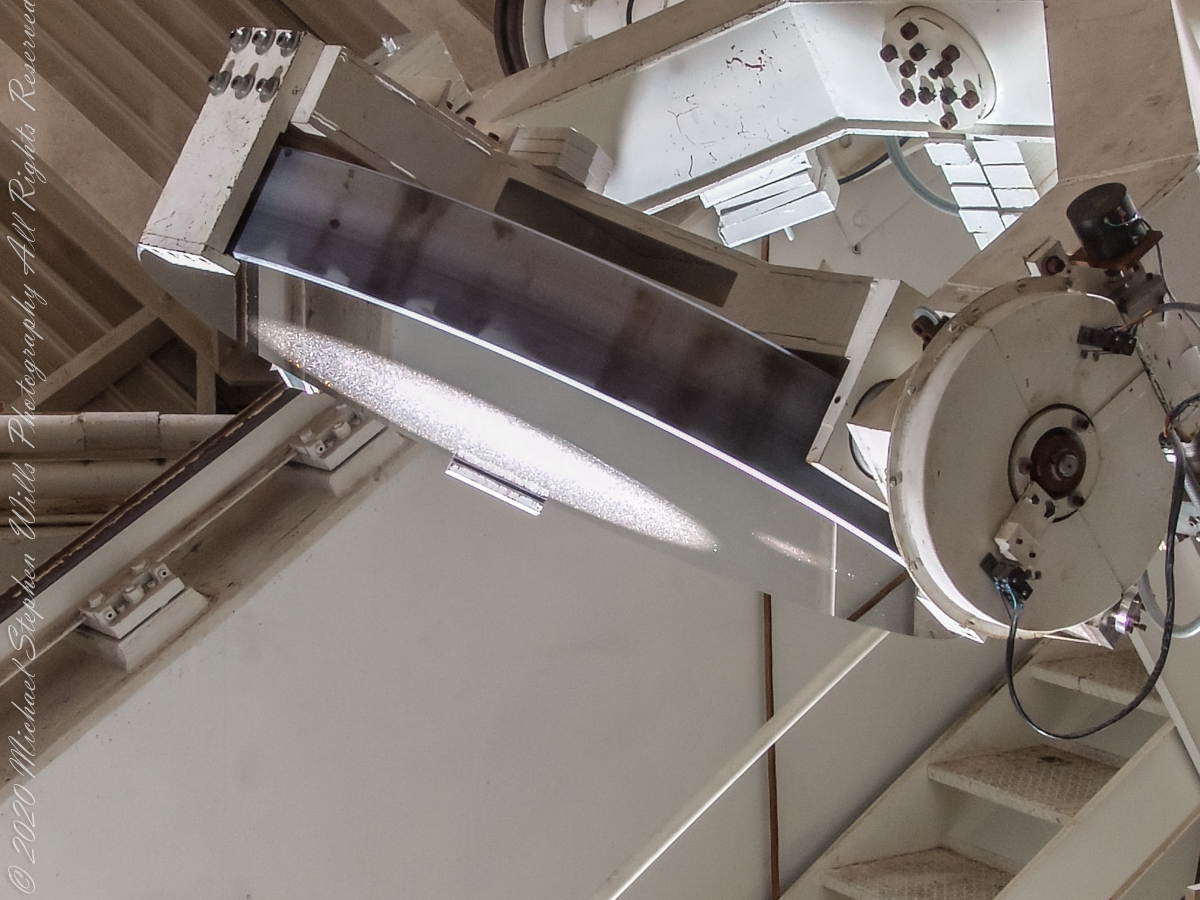
Here we are inside the slanted enclosure, facing the underground portion of the slanted shaft and (what looks to be) the 0.91-meter primary concave mirror. In the lower right corner is the reverse side of the third mirror for the largest primary mirror, the 1.61-meter.
Reference: Wikipedia “McMath–Pierce solar telescope”
Copyright 2022 Michael Stephen Wills All Rights Reserved

McMath-Pierce Solar Telescope – 1

The Exterior

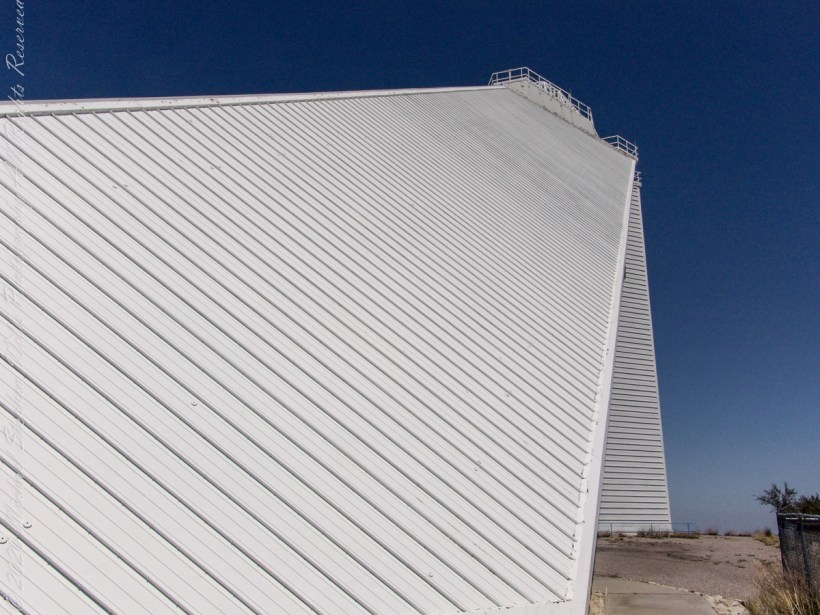
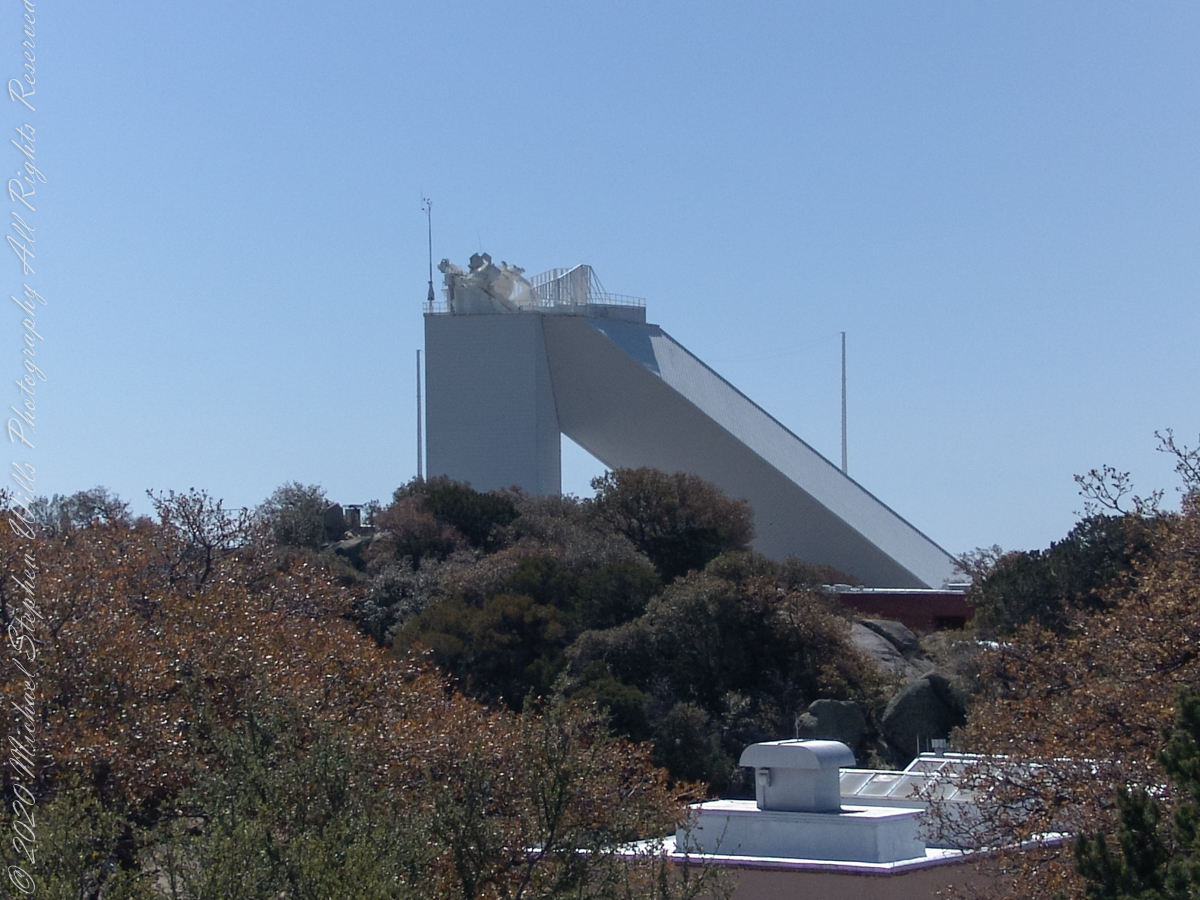
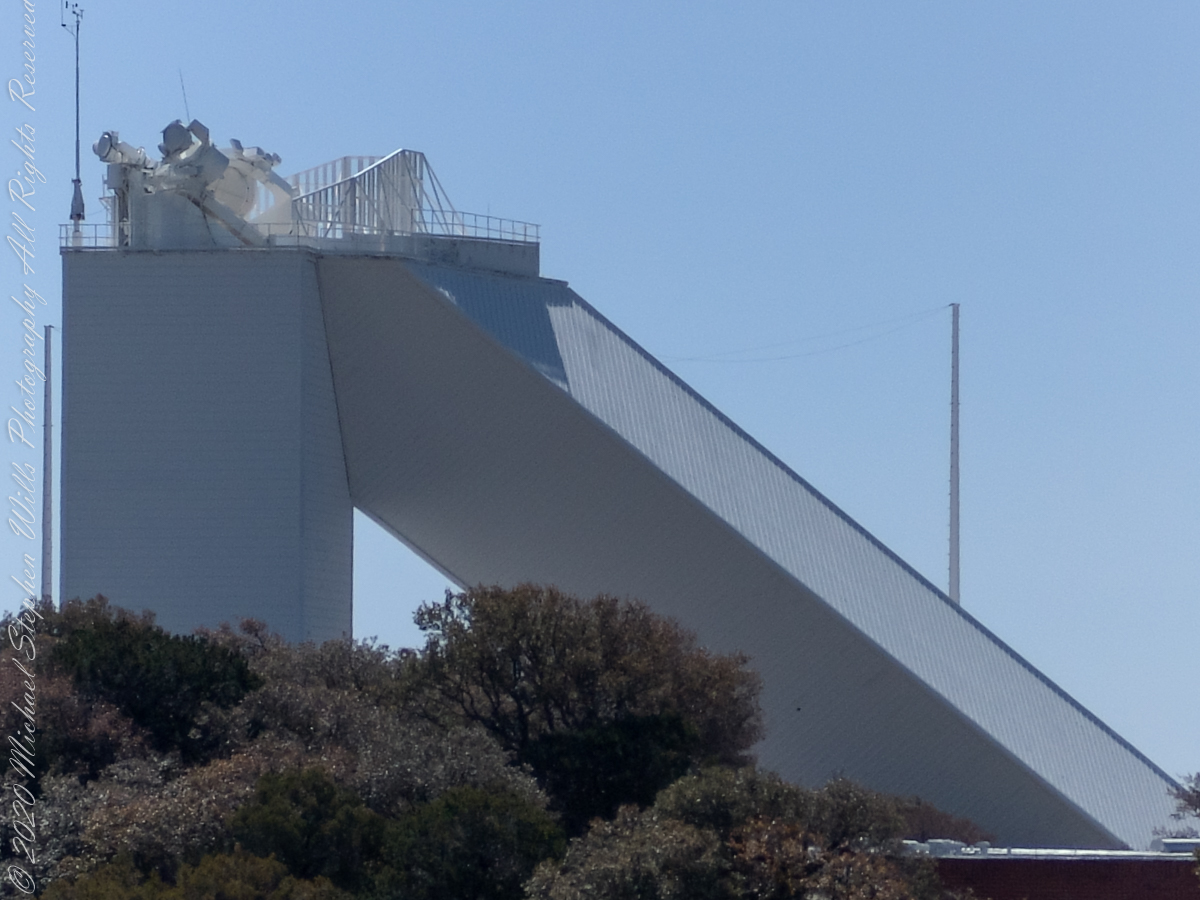
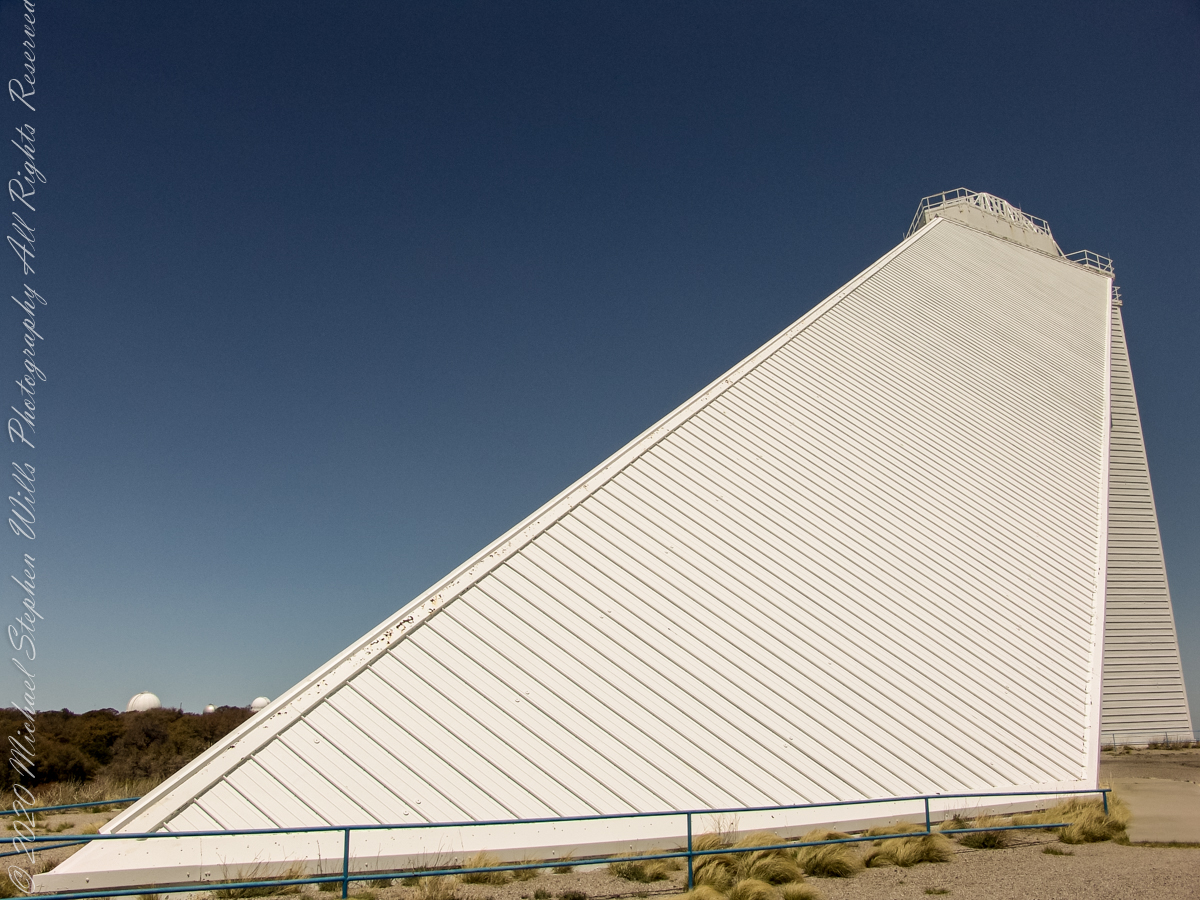
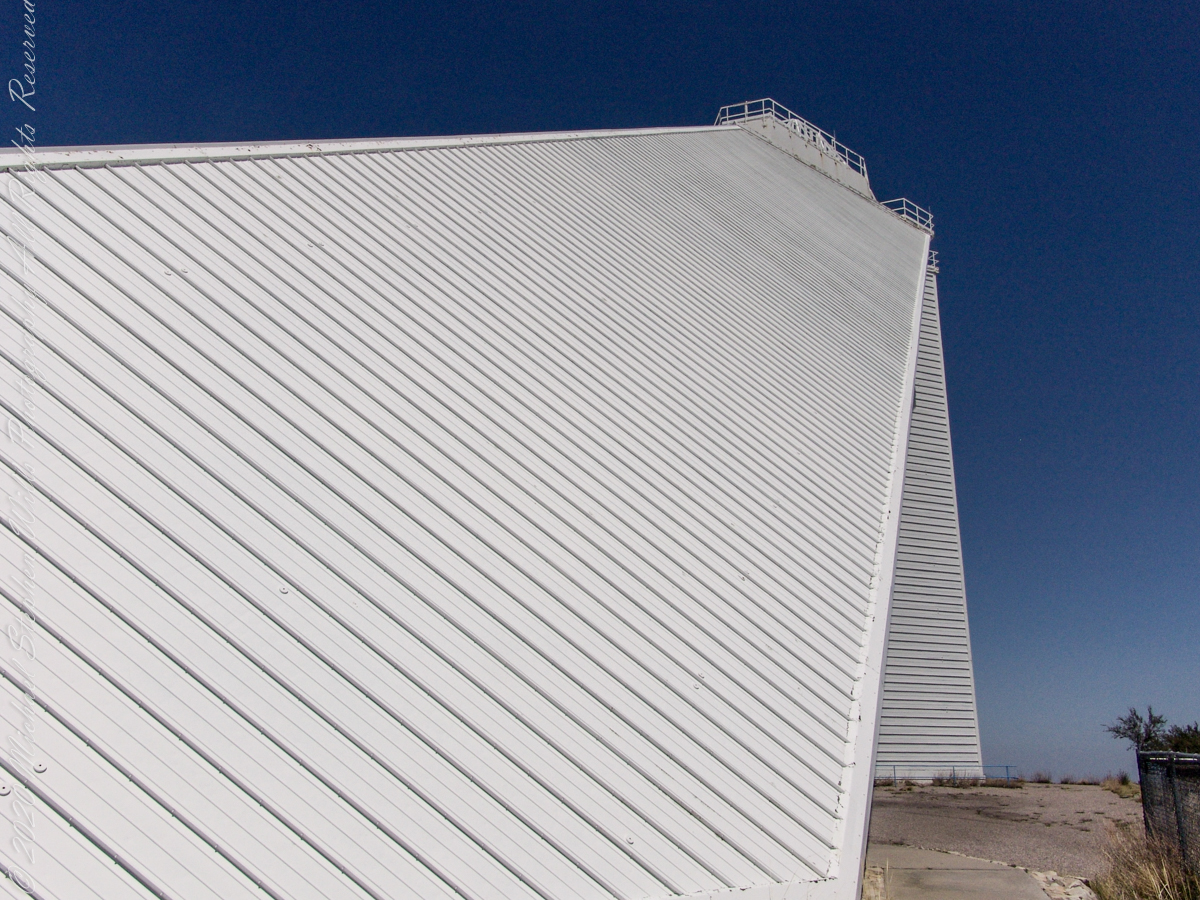
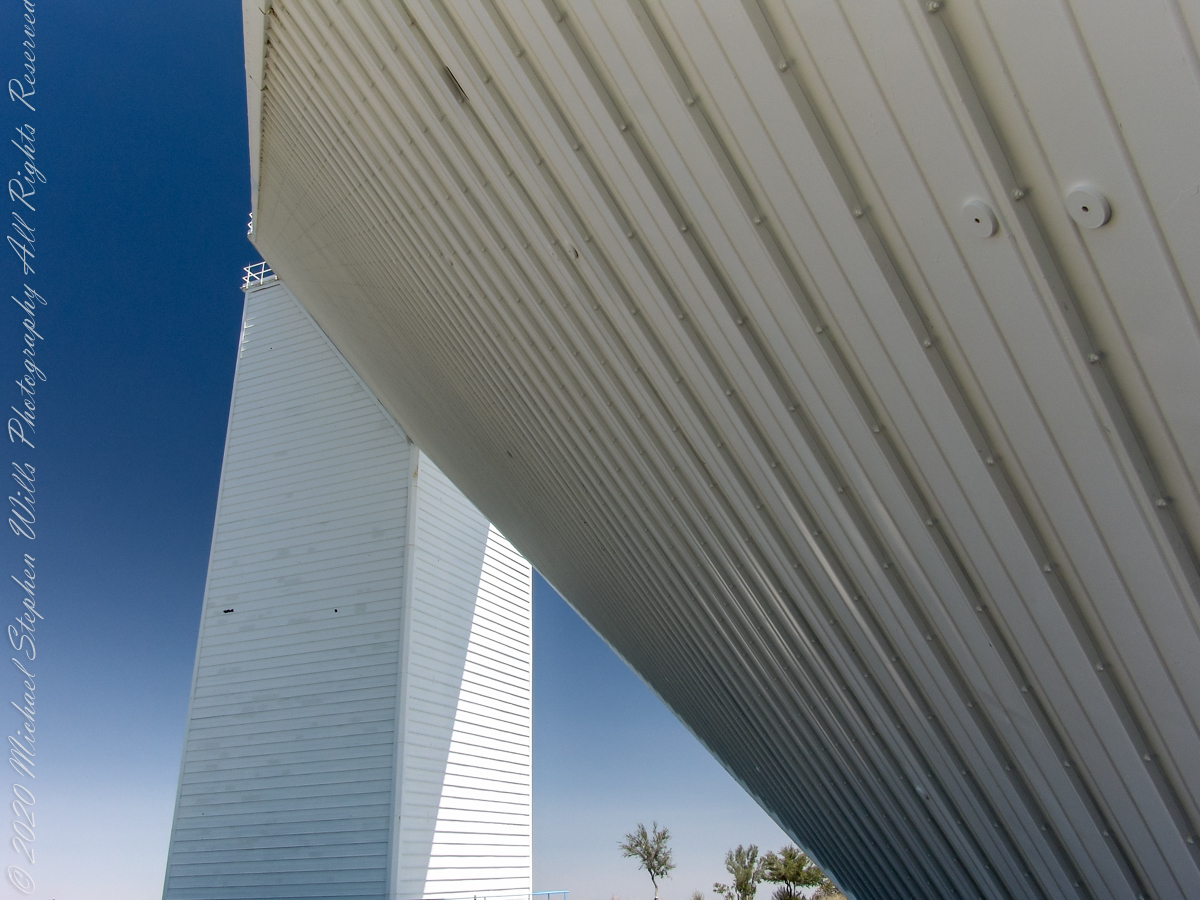
These views of the McMath–Pierce solar telescope enclosure are the preliminary to a guided tour of the instrument, April 20, 2005.

On the tower are three heliostats, plane (flat) mirrors mounted on computer-controlled platforms to follow the sun across the sky to direct sunlight to primary mirrors underground, beneath the base of the slanted shaft

Built in 1962, the building was designed by American architect Myron Goldsmith and Bangladeshi-American structural engineer Fazlur Rahman Khan. It was the largest solar telescope and the largest unobstructed aperture telescope in the world. It is named after the astronomers Robert Raynolds McMath and Keith Pierce.

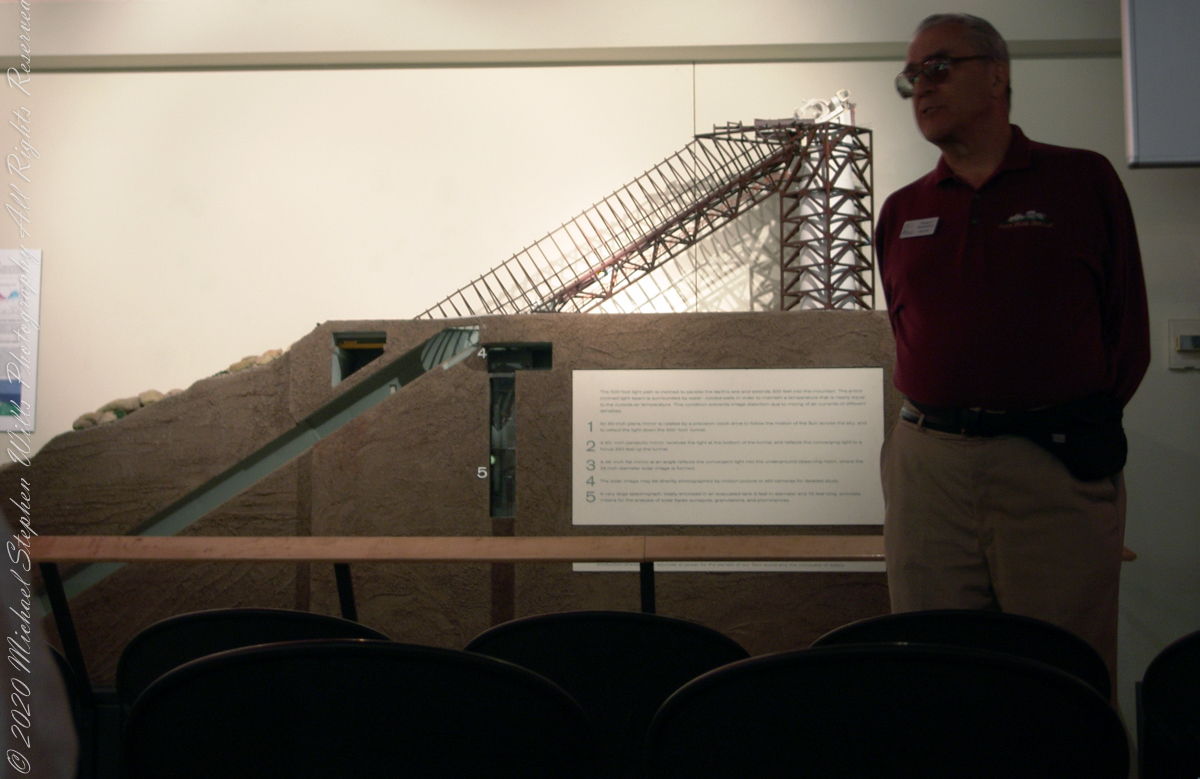
Inside the McMath–Pierce solar telescope is this keyed model of the observatory. Our docent for the morning tour stands alongside.

Reference: Wikipedia “McMath–Pierce solar telescope”
Copyright 2022 Michael Stephen Wills All Rights Reserved

Kitt Peak from below

Rocks of a complex origin

“When George J. Roskruge created the official map of Pima County in 1893, he named the range after James Quinlin, who had opened a stagecoach station in the nearby town of Quinlin in 1884.” — Wikipedia article for “Quinlan Mountains.”

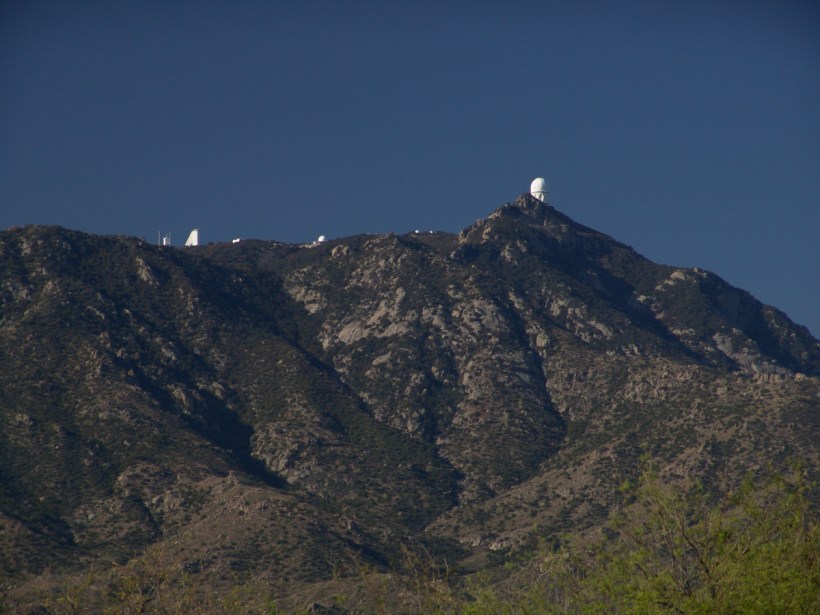
Kitt Peak is the highest point of the Quinlan Mountains, one of a series of ranges starting near the border with Mexico, the Baboquivari Mountains. Pan Tak pass separates Coyote Mountains from the Quinlans. Farther north there is even the Roskruge Mountains and a range named for a silver mine, the Silver Bells. Roskruge originally named “Kit’s Peak” for his sister, Phillippa, married to William F. Kitt. The peak was renamed to Kitt Peak William’s request.

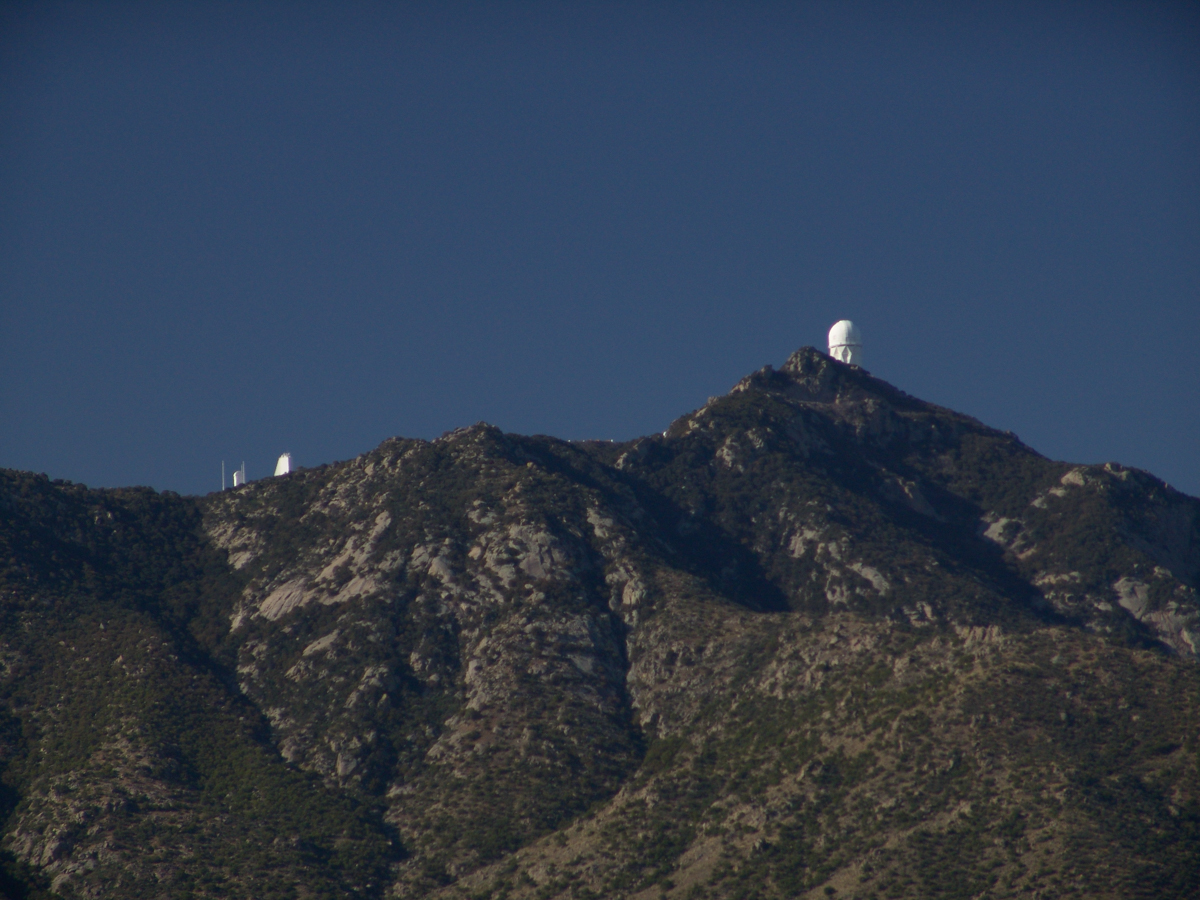
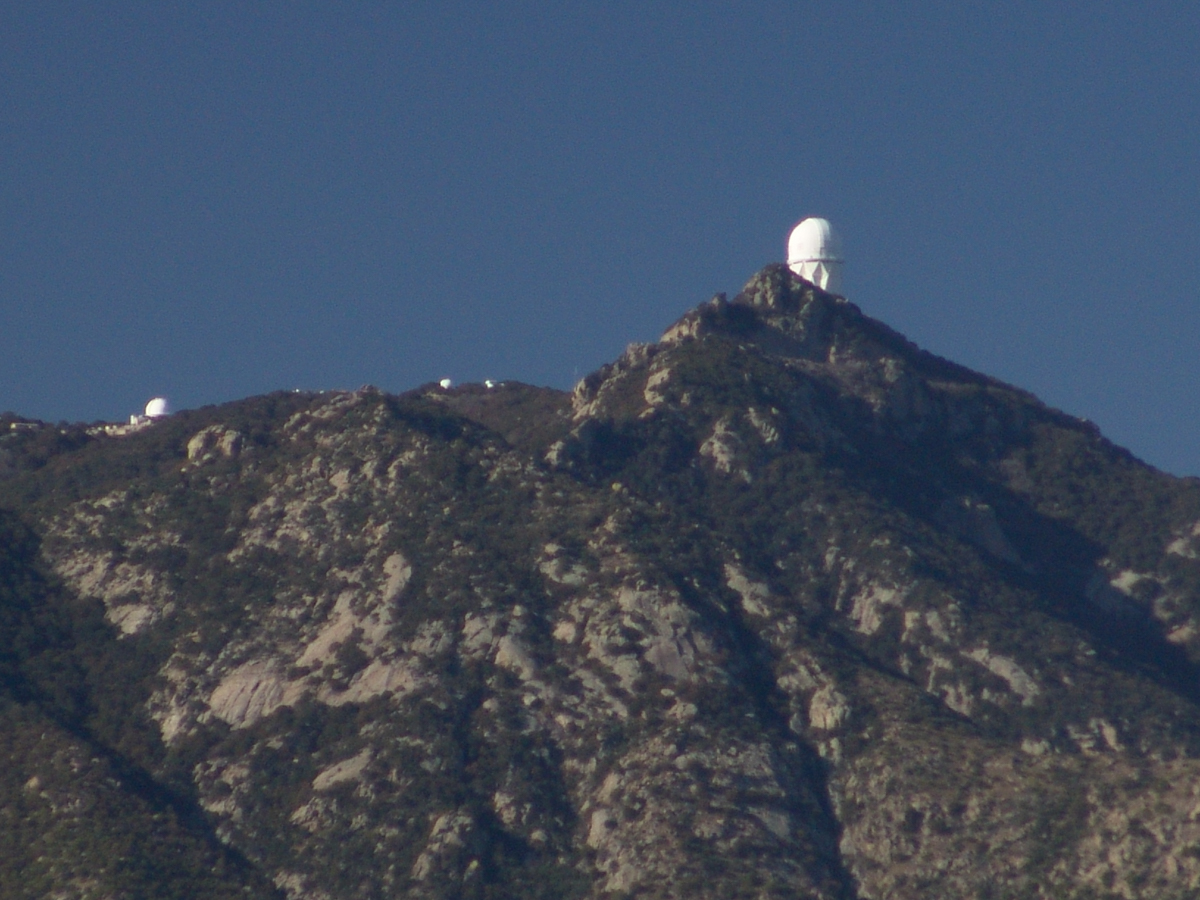
Here we see a dramatic view of Quinlan Ridge with Kitt Peak observatories, taken from the access road Arizona Routh 386. The instruments I recognize are, from left to right, McMath-Pierce Solar Telescope (second in line) and, on the end, Mayall Telescope.

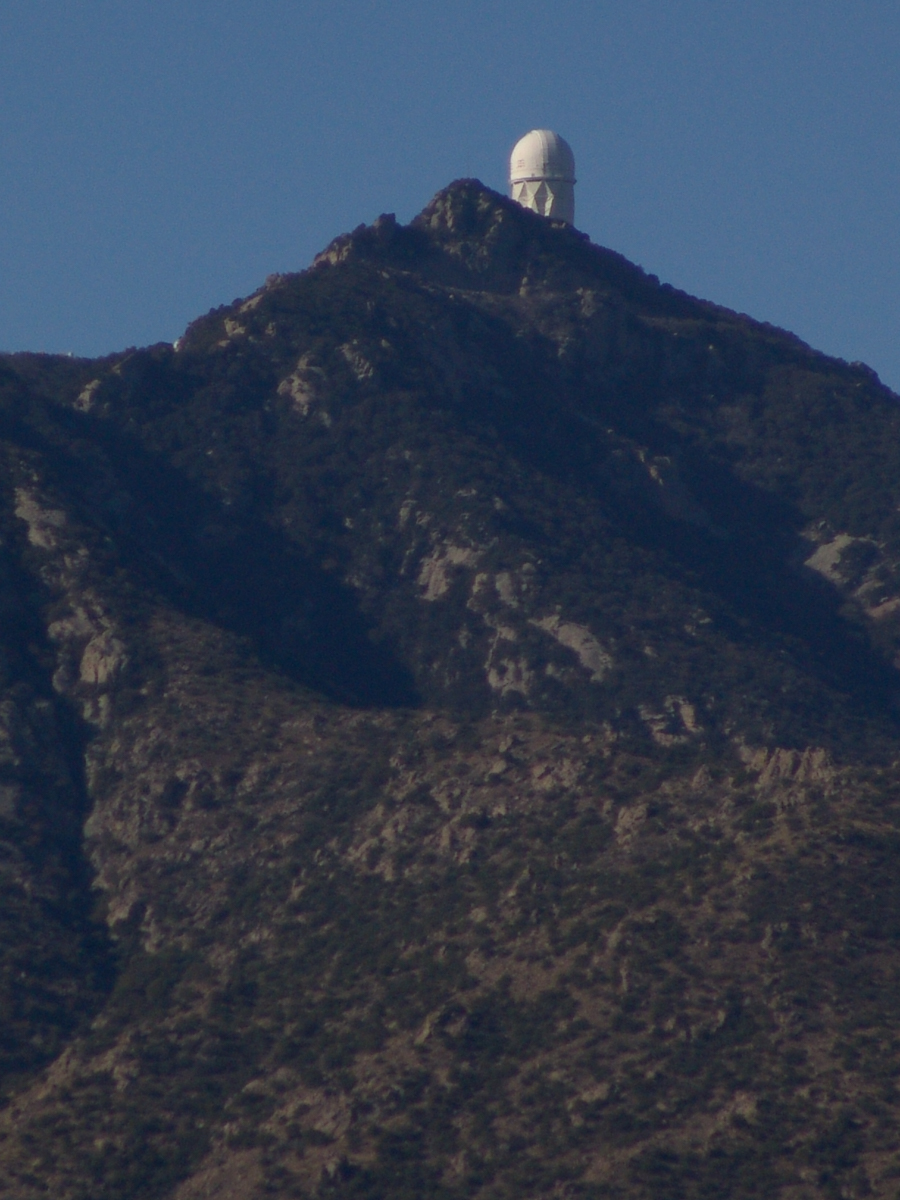
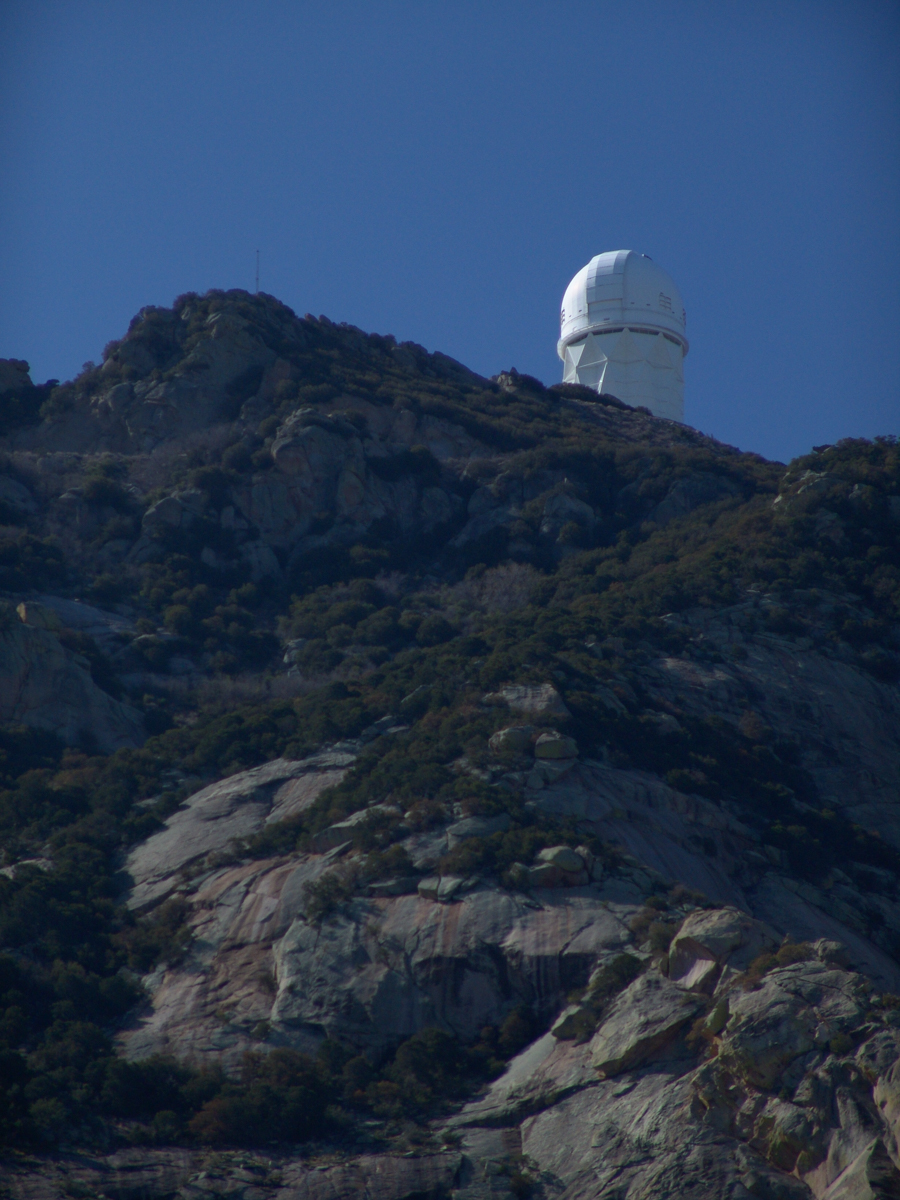
And more views as I progressed toward the top.

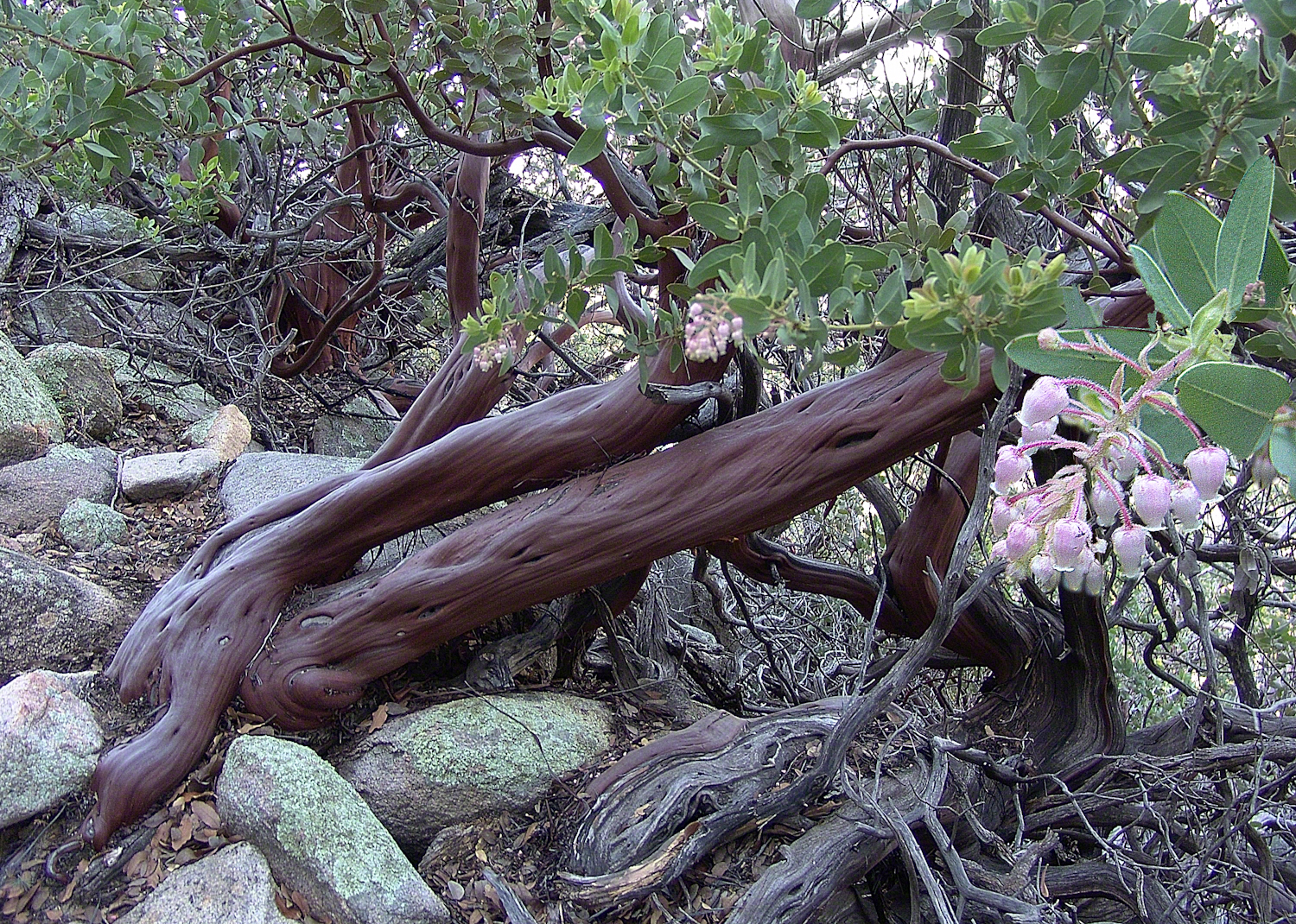
The dramatic peaks are hypothesized to be igneous intrusions into metamorphic rock, these are called “Sky Islands” for the environments supported on them, radically different from surrounding lowlands. Kitt Peak is known for the stands of Manzanita Bushes

Copyright 2022 Michael Stephen Wills All Rights Reserved

Baboquivari Peak

Approaching Kitt Peak

The Contreras fire threatening Kitt Peak last month brought to mind a spring visit of mine to the National Observatory.

From downtown Tucson get onto Interstate 10, heading “east” toward El Paso. East in quotations as the road only turns east after the fork for Interstate 19, headed south past San Xavier del Bac mission and Nogales at the Mexican border. A few miles down I19, well before the mission, a turnoff for Arizona route 86, a road you’ll follow the better part of 36 miles, passing the Tucson Mountains on the right. Most days, the Mayall Telescope of Kitt Peak shines bright white ahead, as it did the right after dawn on Wednesday, April 20, 2005.
At some point R86 enters the 4,453.307 square mile extent Tohono O’odham Nation Reservation, you pass the town Three Points where Arizona route 286 heads south to Sasabe and the Mexican border. The next turn south is the Kitt Peak access road, Arizona route 386. On that Wednesday I was so early the gate to the peak was locked, so I pulled off the road and waited. It is a lonely place on the route for migrants from Mexico. I wandered off the road, into a wash (dry, sandy stream bed), to relieve myself, where junk from migrants was scattered around. Back in the car a helicopter approached with a black SUV. A big guy got out, walking by into the wash: the border patrol.
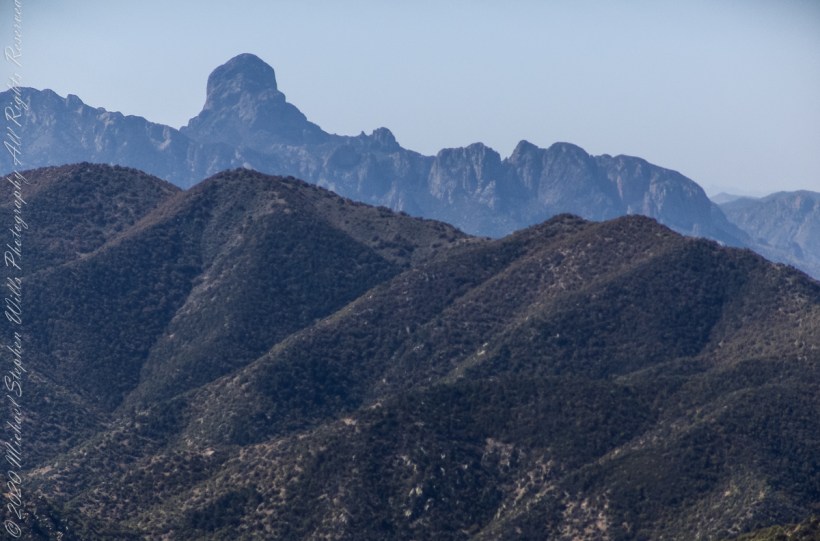
Here is a photograph from that day of Baboquivari Peak taken from Kitt Peak’

Baboquivari Peak is the most sacred place to the Tohono O’odham people. It is the center of the Tohono O’odham cosmology and the home of the creator, I’itoi. According to tribal legend, he resides in a cave below the base of the mountain. This mountain is regarded by the O’odham nation as the navel of the world – a place where the earth opened, and the people emerged after the great flood. Baboquivari Peak is also sometimes referred to as I’Itoi Mountain. In the native O’odham language, it is referred to as Waw Kiwulik, meaning “narrow about the middle”. The O’odham people believe that he watches over their people to this day. — Wikipedia

Baboquivari Peak was mentioned in the journals of Jesuit missionary Padre Kino, who made many expeditions into this region of the Sonoran Desert, beginning in 1699, establishing Spanish Missions in the area. — Wikipedia

Kitt Peak is in the sacred precinct of Baboquivari, the land just below the peak is the “Gardens of the Sacred Tohono O’odham Spirit I’itoi.” The month of my visit, the O’odham nation brought legal suit against Kitt Peak to halt construction of new telescopes in the garden. The issue was settled out of court.

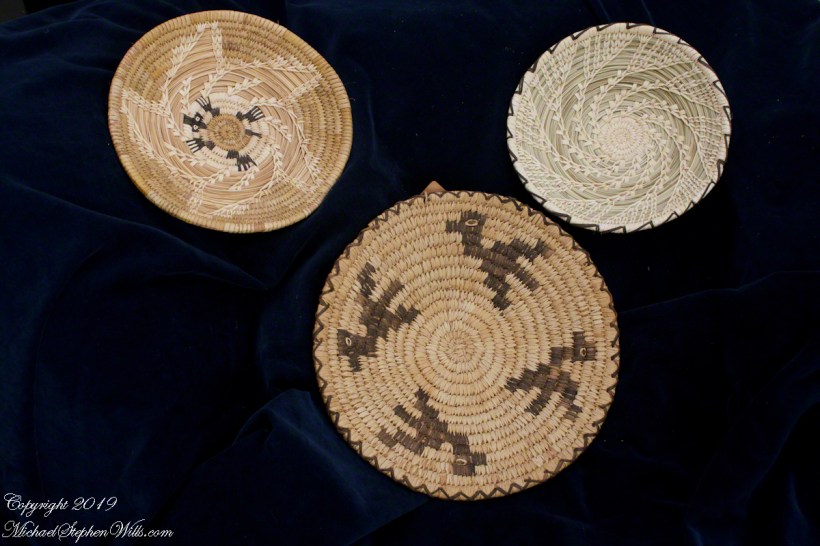
About the header photograph: From the bottom clockwise. Birds by Anmelia Juan of Geawuk (Kitt Peak 1972) – I purchased this from the Kitt Peak gift shop during my first visit; Turtle by Olvera and Simon Valenquela (Saguaro National Monument 2005); Stars by Simon Valenzuela for his daughter Pasquala Valenquela 16th Birthday (2018). Simon is of the Pascua Yaqui tribe who Learned basketmaking from his wife’s family.

Copyright 2022 Michael Stephen Wills All Rights Reserved

Introduction to the Loughan an Lochan Ruins

Romance of Ruins

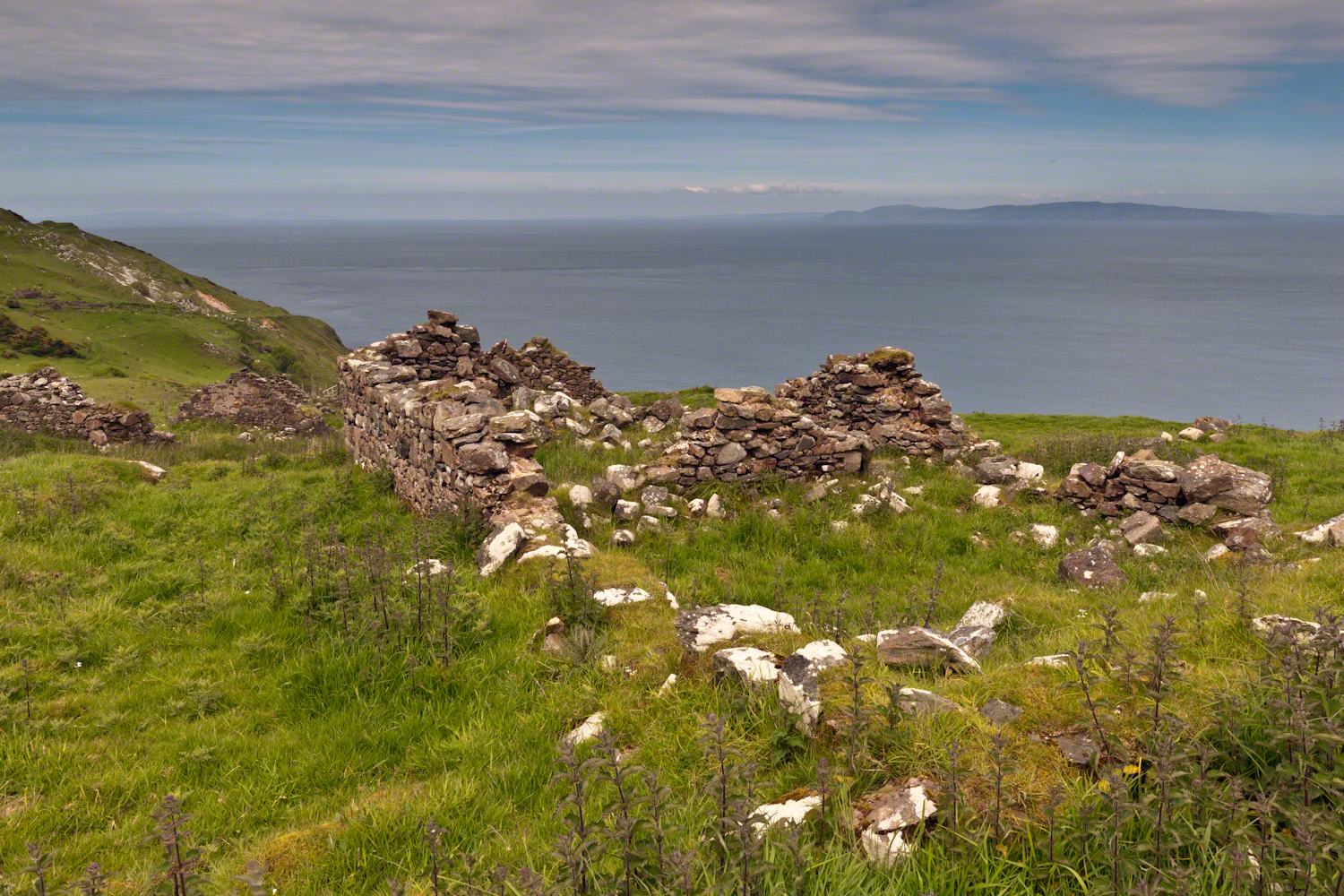
Here is a photograph from our day touring the Glens of Antrim.  While making our way up the coast to Torr Head a group of stone walls resolved into ruins. A cluster of cottages on grassy slopes above the Irish sea above Loughan Bay.  This is the townland of Loughan.  Along the road are wonderful signs providing in handsome carved letters the place name in english and gaelic.  Here a signed only provided a gaelic name: “Loughan an Lochan”…near enough to meaning “Loughan Bay” in English.  The bay is a shallow scallop shaped indentation of the coast, a margin of narrow sand strand.

Ruins are spread across the slope.  Immediately before the views are traces of a foundation above the grass.  Beyond the top of a gable, an entire gable to the left.  On the far ridge, just visible, is an entire structure with doorways, gables, walls.

Across the Irish Sea, 13 miles distant, is the Mull of Kintyre.  In faint outline, rising above the horizon, find the highlands of Islay more than 30 miles.  Both are tips of peninsulas jutting from Scotland.

Click pic for larger view in a new browser tab. If you are in WordPress Reader, open the post to use this feature.

The ruins lead to curiosity over who live here?  What were their lives like?  Why did they leave?

Want more? Click the link for my Ireland Gallery

Enter your email to receive notification of future postings. I will not sell or share your email address.

Like a Dandelion

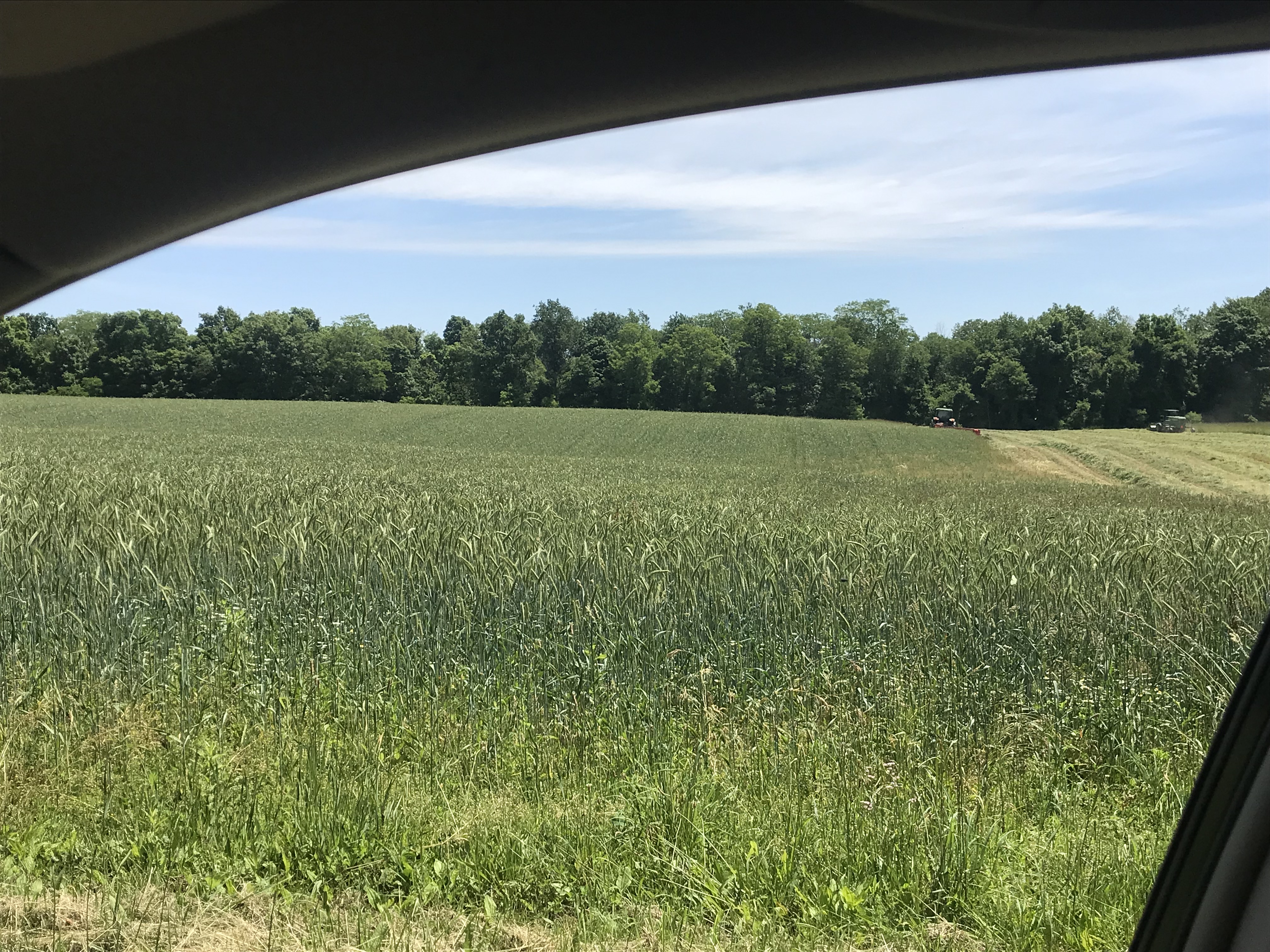
and a shifting of crops to (human) wheat from (cow) corn

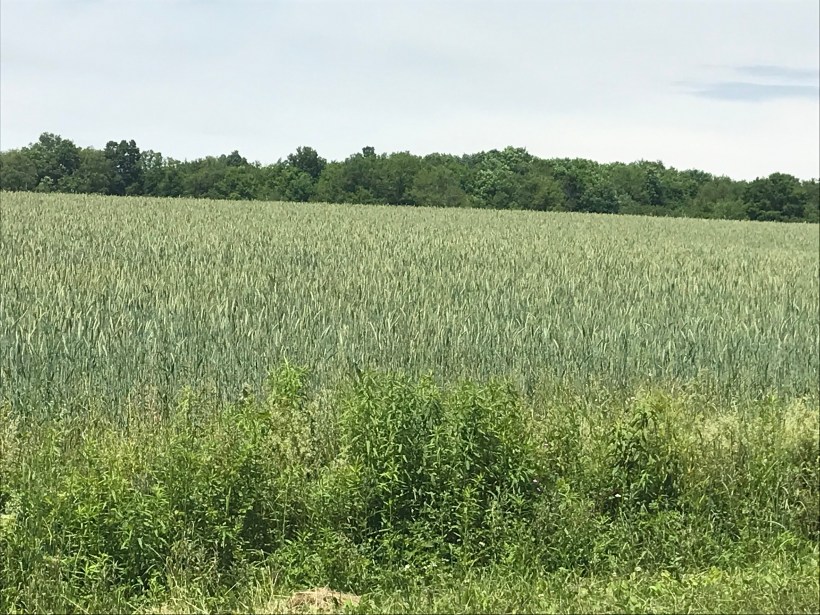
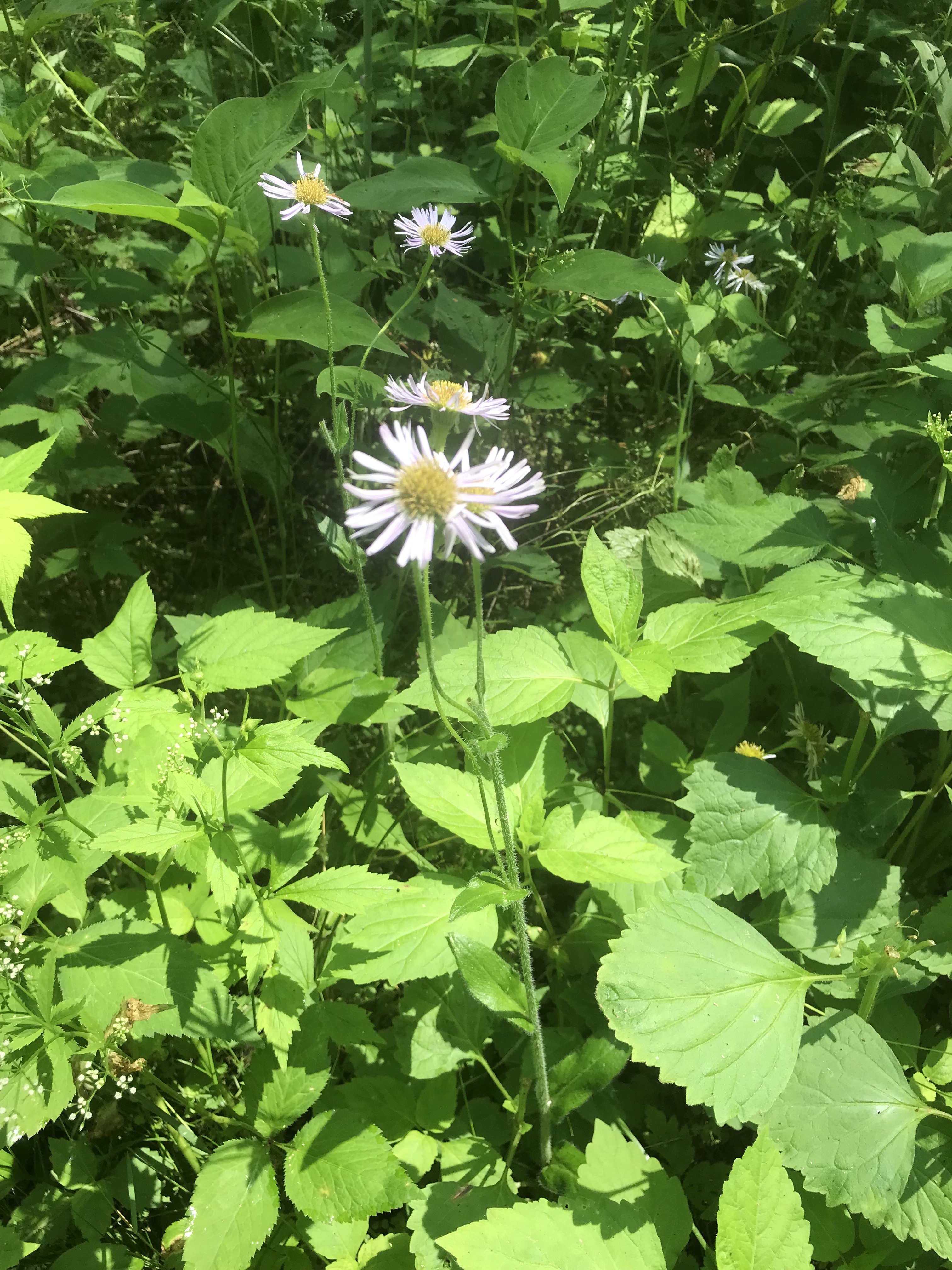
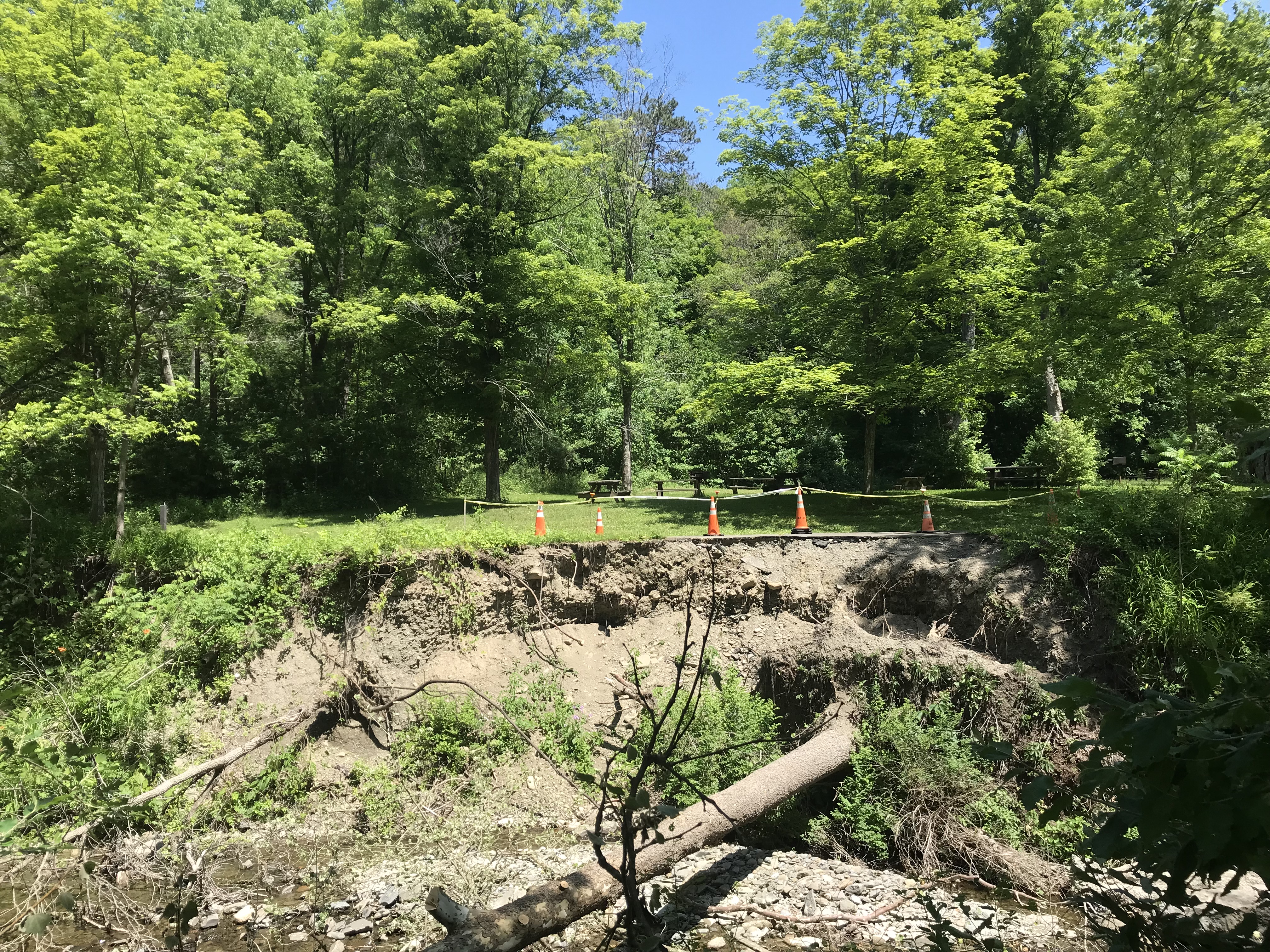
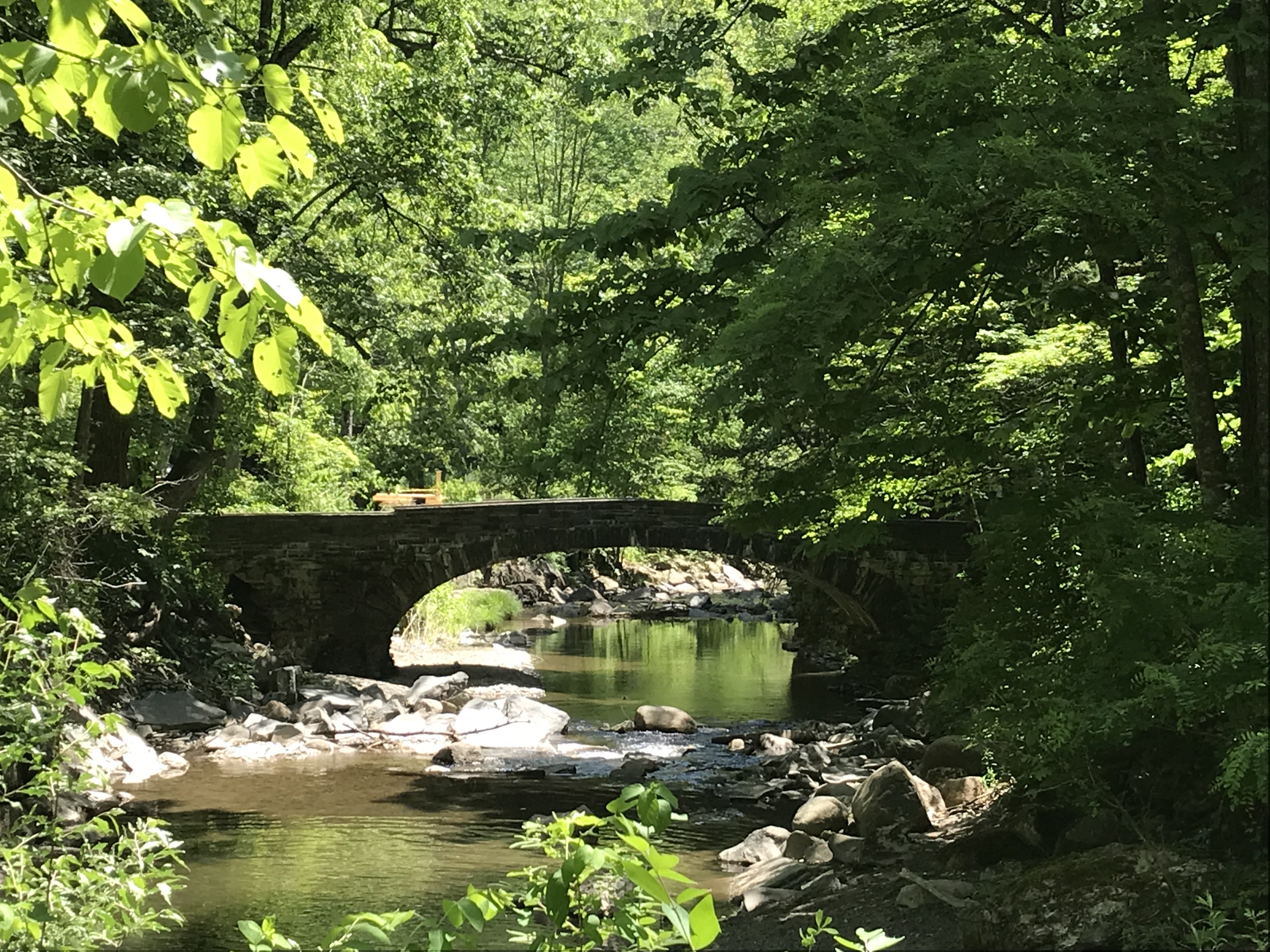
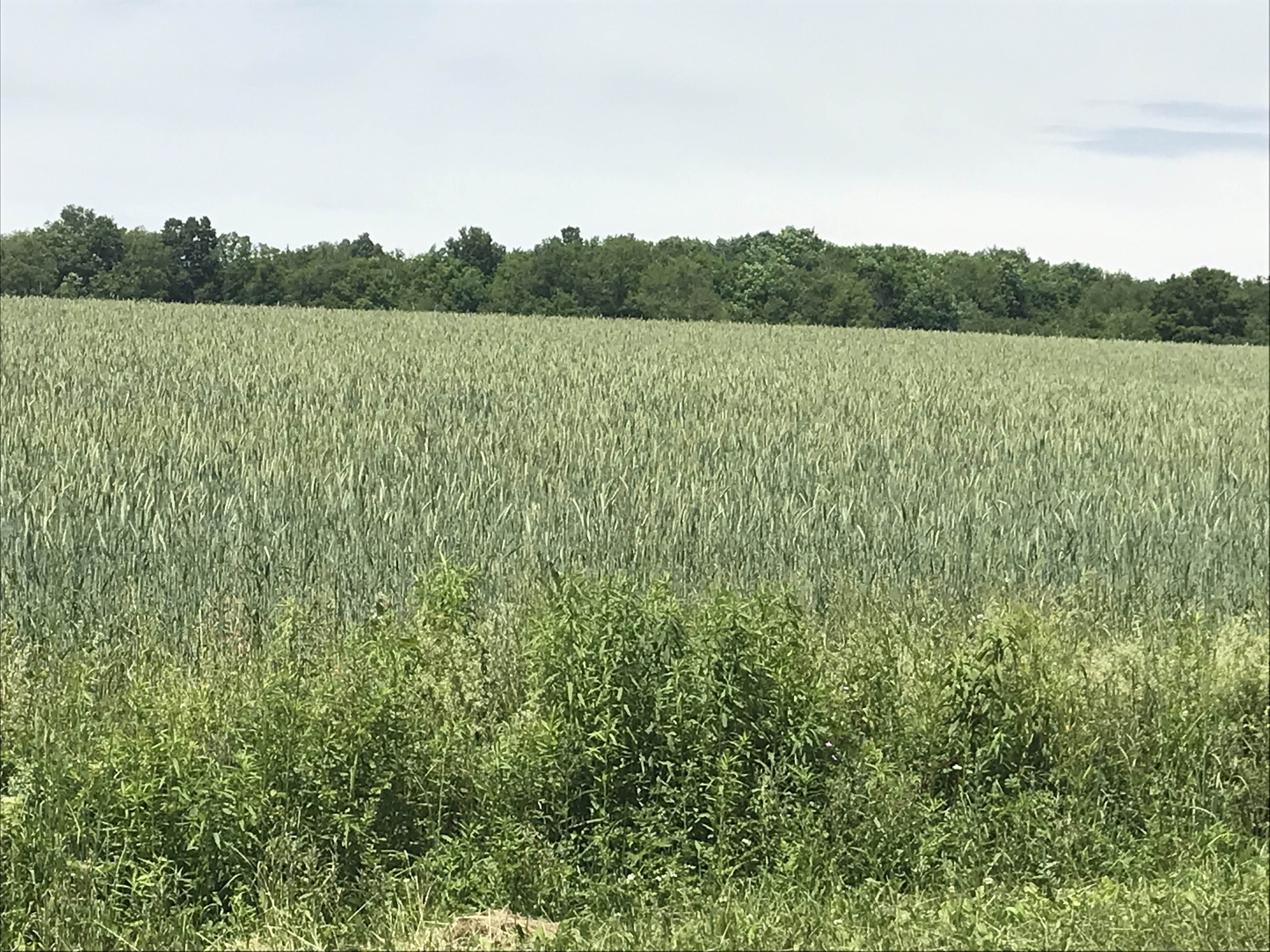
Wednesday, June 15th, we were on a turn to heat and humidity with this day of light breeze, temperature in the 70s making hiking around Tremen Park a joy.

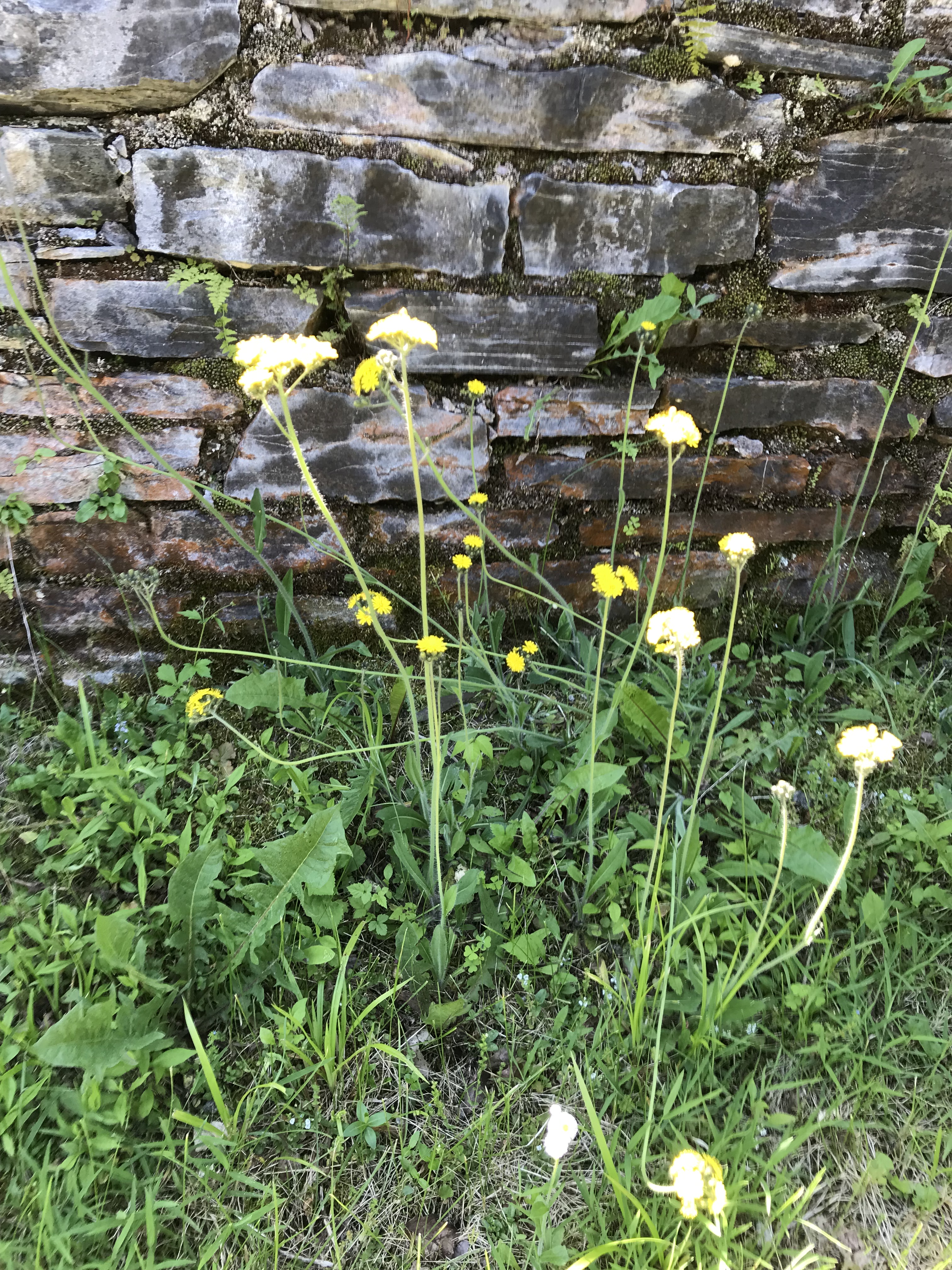
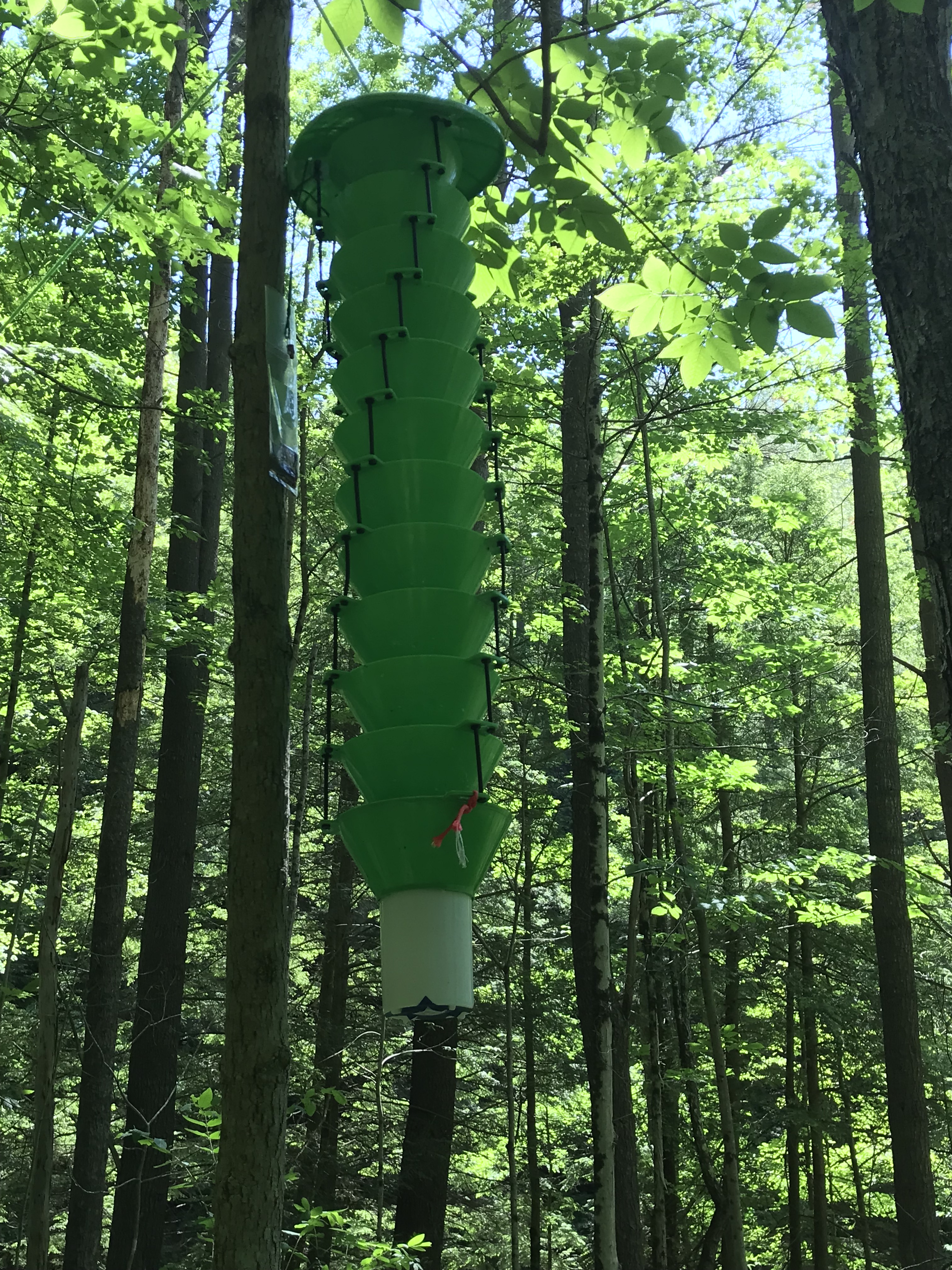
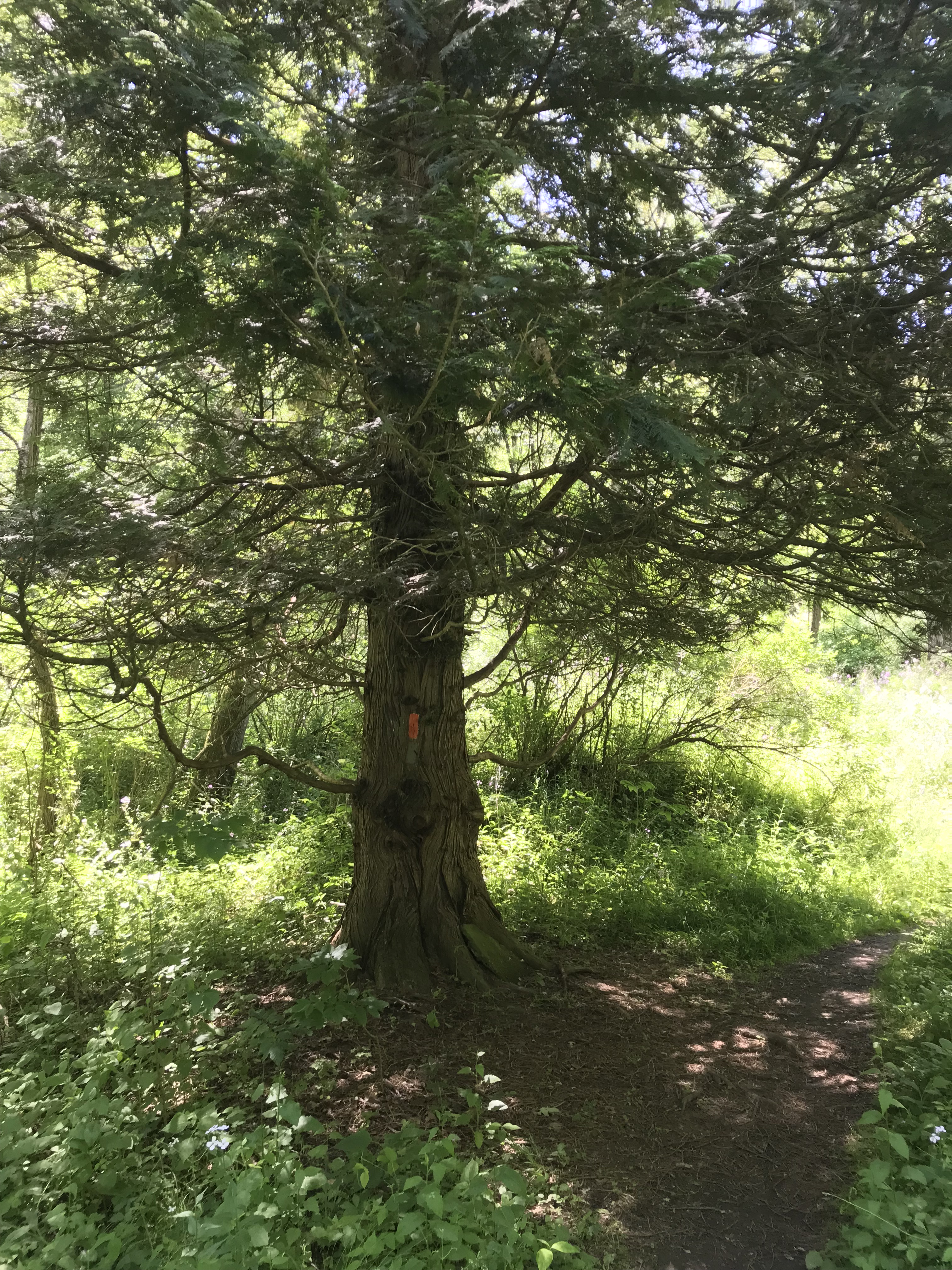
These snapshots, taken on the fly with an IPhone 7, are the high points.

The first is a dandelion look alike with yellow flowers, petals shaped like teeth, though on a long hard stem and multiple flowers on a stalk. Known as meadow hawkweed, yellow hawkweed, field hawkweed, king devil, yellow paintbrush, devil’s paintbrush, yellow devil, yellow fox-and-cubs, and yellow king-devil with two scientific names: Pilosella caespitosa and Hieracium caespitosum.

Click photograph for a larger view. To do this from WordPress Reader, you need to first click the title of this post to open a new page.

Click for slideshow.

Copyright 2022 All Rights Reserved Michael Stephen Wills

Peppermint Drops

Left for us by Pam’s Father

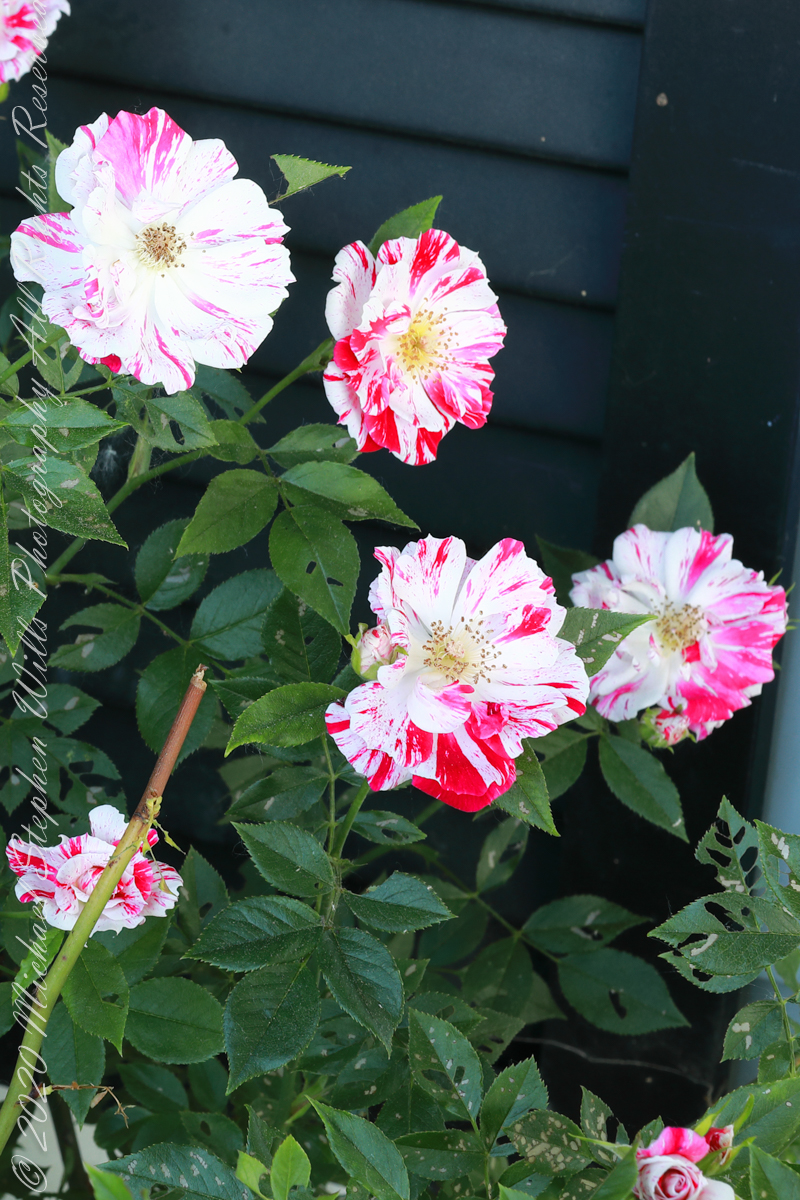
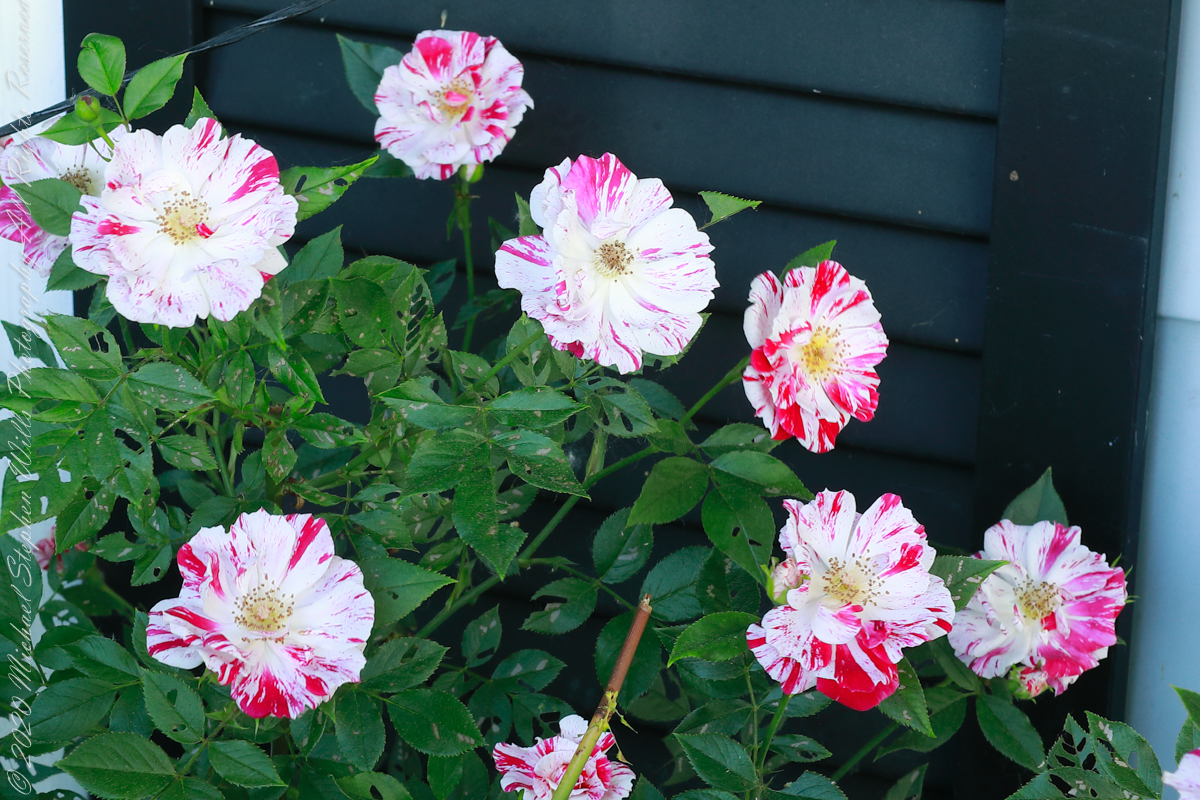
Pam’s father planted this rose on the east side where it is warmed wintertime by several hours of morning light when the sun is out. Extra attention is needed for watering as the roots are under a bay window and an awning.

It is a miniature rose, the blooms about 1.5 inch across, this and the irregular red and white coloring reminds me of peppermint candies, so we call it our peppermint rose (not to be confused with the “Peppermint Rose” branded doll). The descent from wild rose is clear in the simplicity of the form. The number of flower petals identify it as a hybrid “modern rose: there are many more than five (5) petals of the wild rose.

These photographs were taken with a Canon EOS 5D Mark IV dslr and the Canon EF 50mm f/1.2L USM lens with a “BeFree” Manfrotto tripod with ball head. f-stop was tamped down to the maximum, f16 for this lens. In spite of the light intermittent breezes I chose ISO 200. The combination of f-stop and low ISO resulted in a longer exposure that I worked around by waiting for the blooms to settle down between the breezes.

Copyright 2022 Michael Stephen Wills All Rights Reserved

Betty Boop

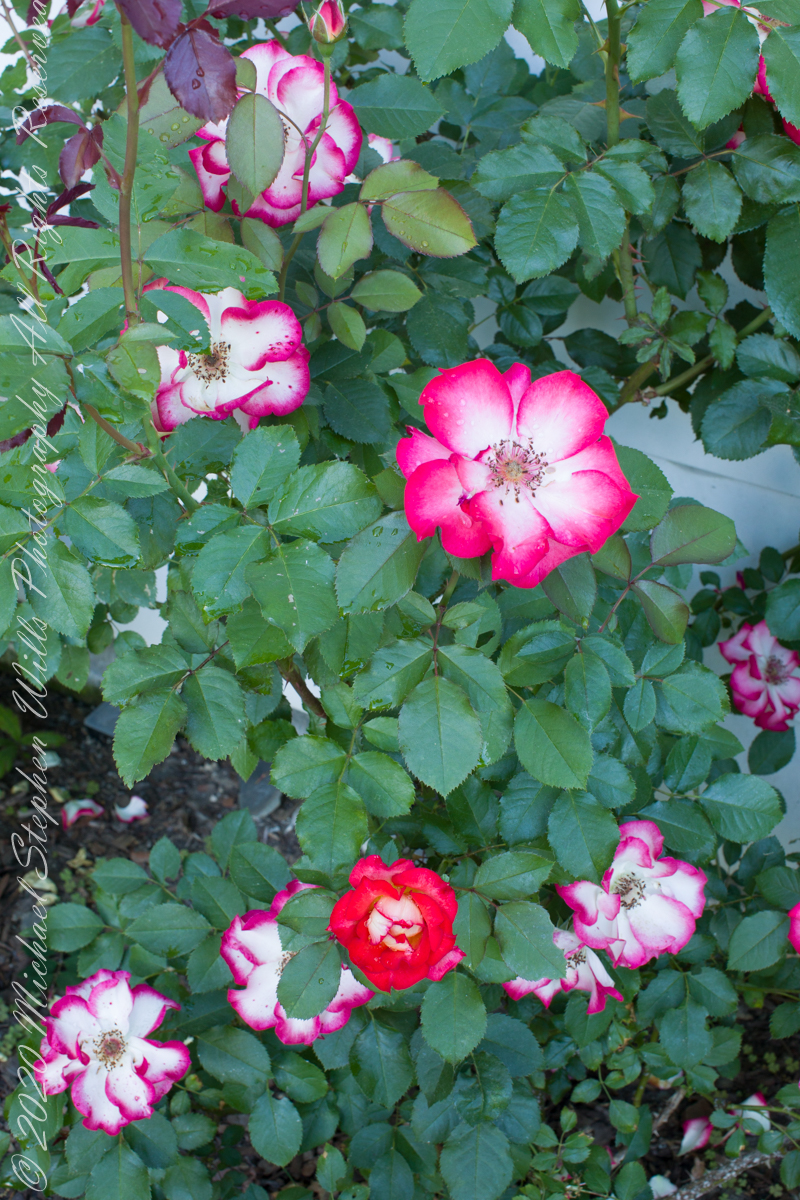
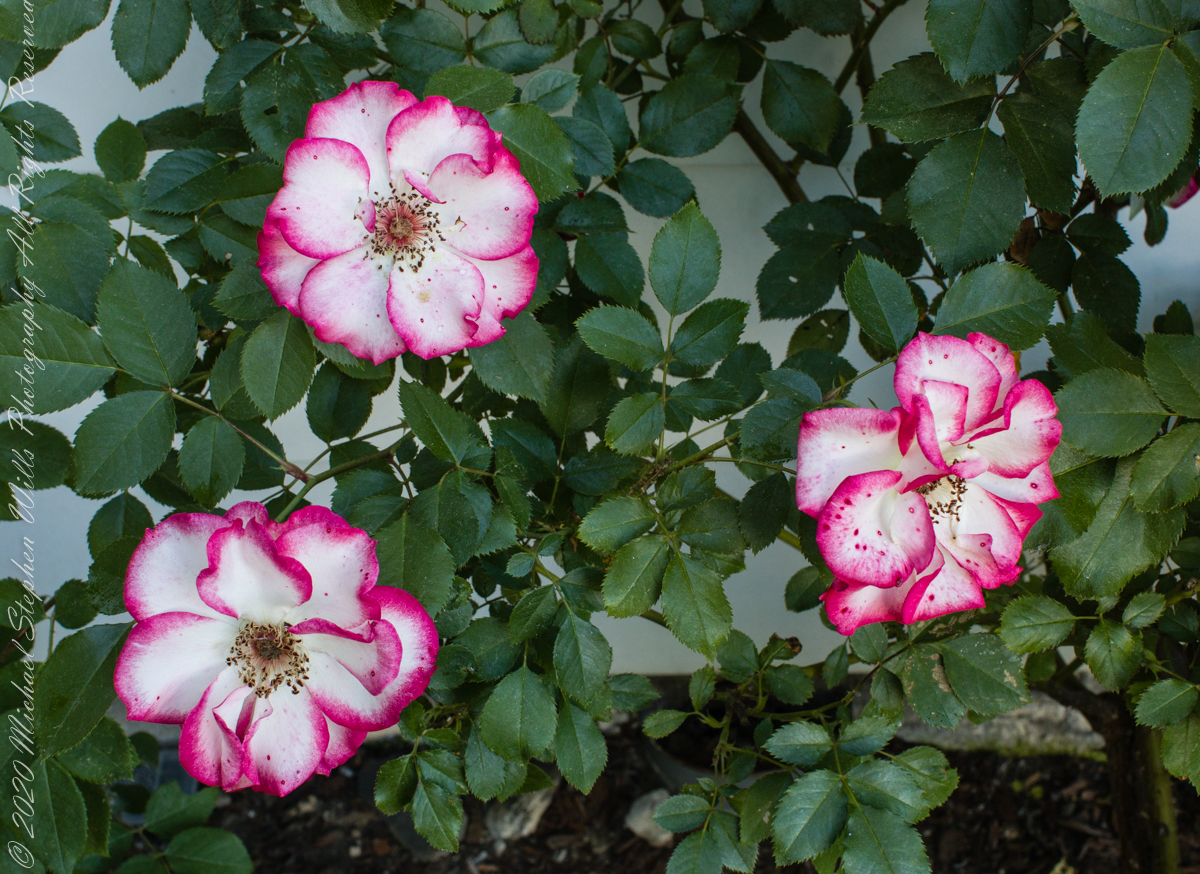
These photos feature Floribunda and double cluster roses captured on a June evening. Various stages of bloom were photographed.

These Floribunda, semi-double petaled blooms were captured along with the yellow double cluster roses of the previous post, in the evening shade of a late spring day, June 23rd.

Above is a mix of just opened (the dark red, center bottom), fully opened new (just to right of center) and aging (all the rest).

Throughout this set I used the Canon EOS 5D Mark IV dslr with the EF 50 mm f/1.2L USM stabilized with a Manfrotto 468MG tripod with Hydrostatic Ball Head.

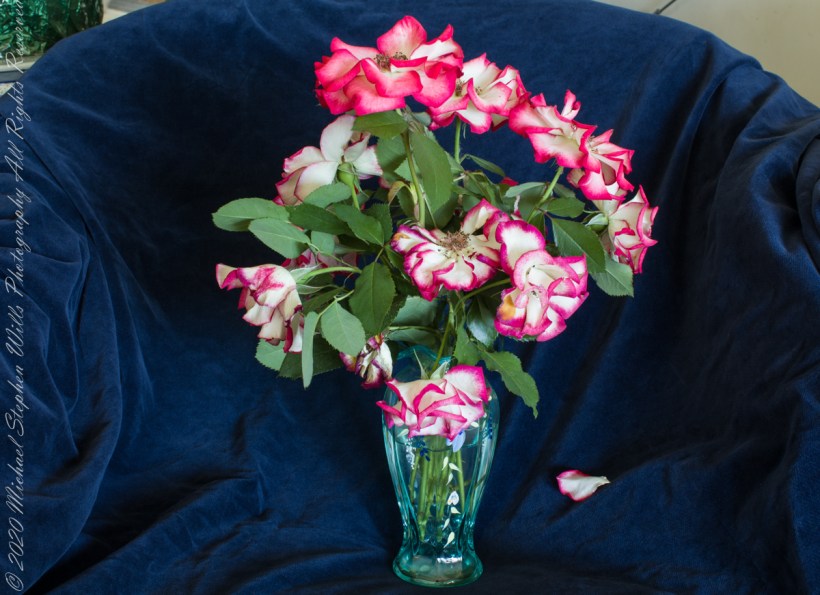
Floribundas, sometimes called cluster flowered roses, originated with Poulsen’s nursery in Denmark from crossed with Hybrid Teas with Polyantha Roses, themselves crosses between dwarf Chinas and a dwarf, repeat-flowering form of R. multiflora. Texas-based rose hybridizer Tom Carruth released Betty Boop in 1999, naming it after a cartoon character from the 1930’s. Pam found this plant around 2008 offered by the K-mart store in Cortland. She is amazed by the beauty of the Betty Boops.

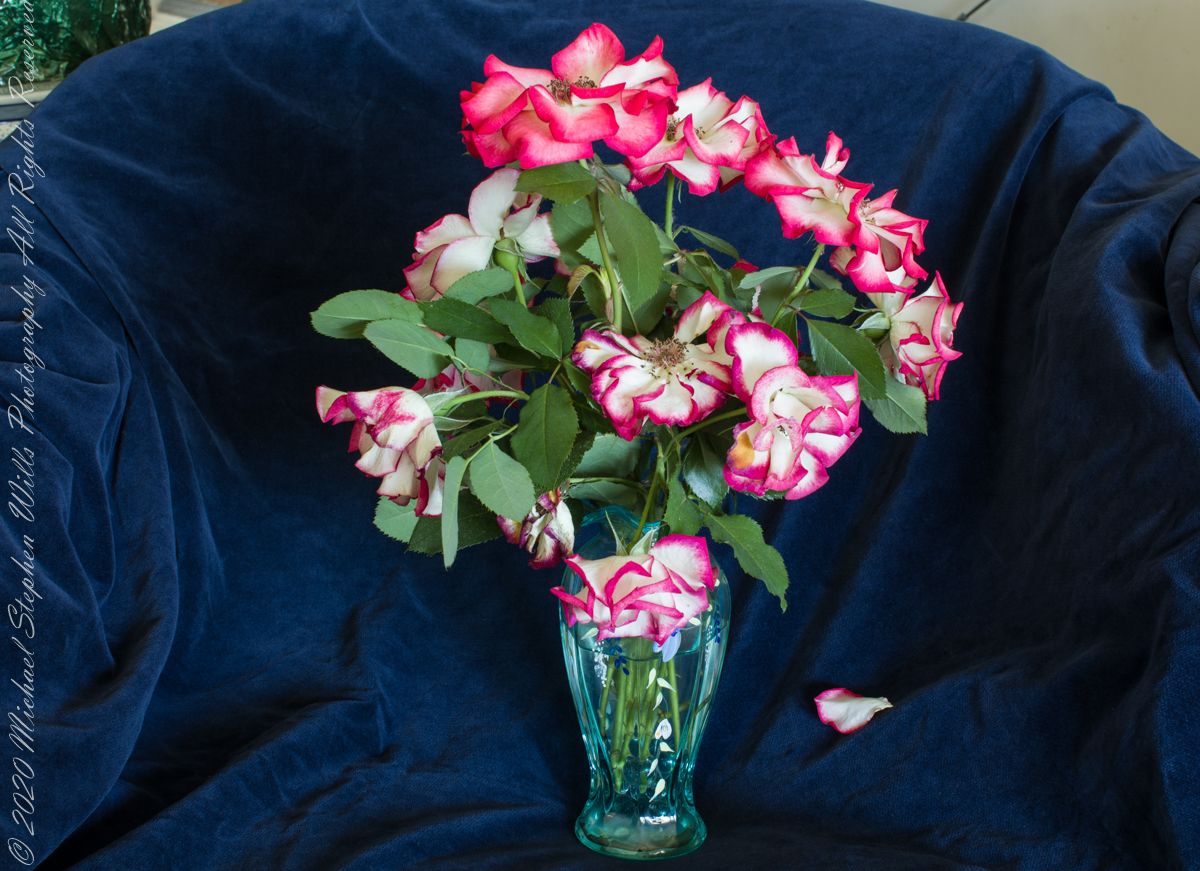
Another beloved characteristic is the longevity of the blooms. Pam collected and arranged this vase last week, for Father’s Day. I provided the setting. In this controlled environment the low ISO provides better colors and contrast with minimal digital noise.

References

“The Botanical Garden” Vol 1, Roger Phillips and Martyn Rix, Firefly Books, Buffalo, N.Y. 2002 pp 228 – 233.

Wikipedia search for “Betty Boop rose” and ” Tom Carruth rose.”

Copyright 2022 Michael Stephen Wills All Rights Reserved

Lemon Yellow

With us since ancient times

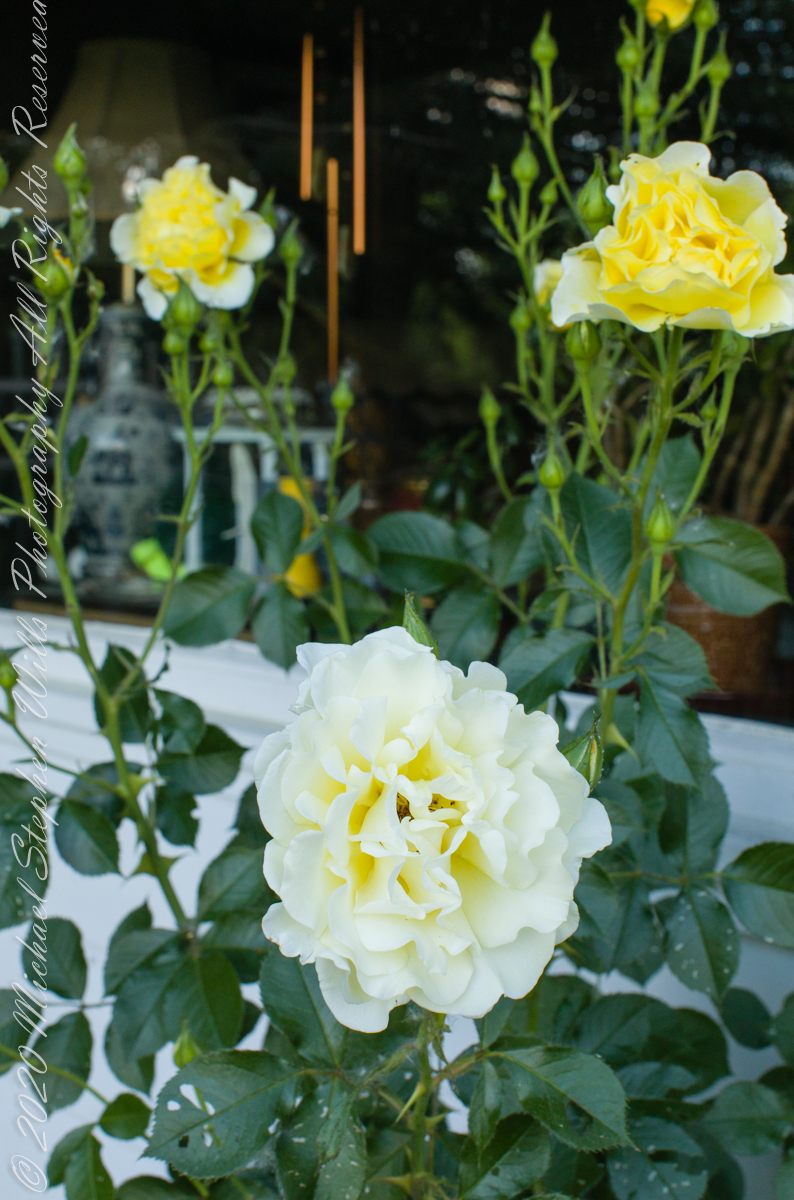
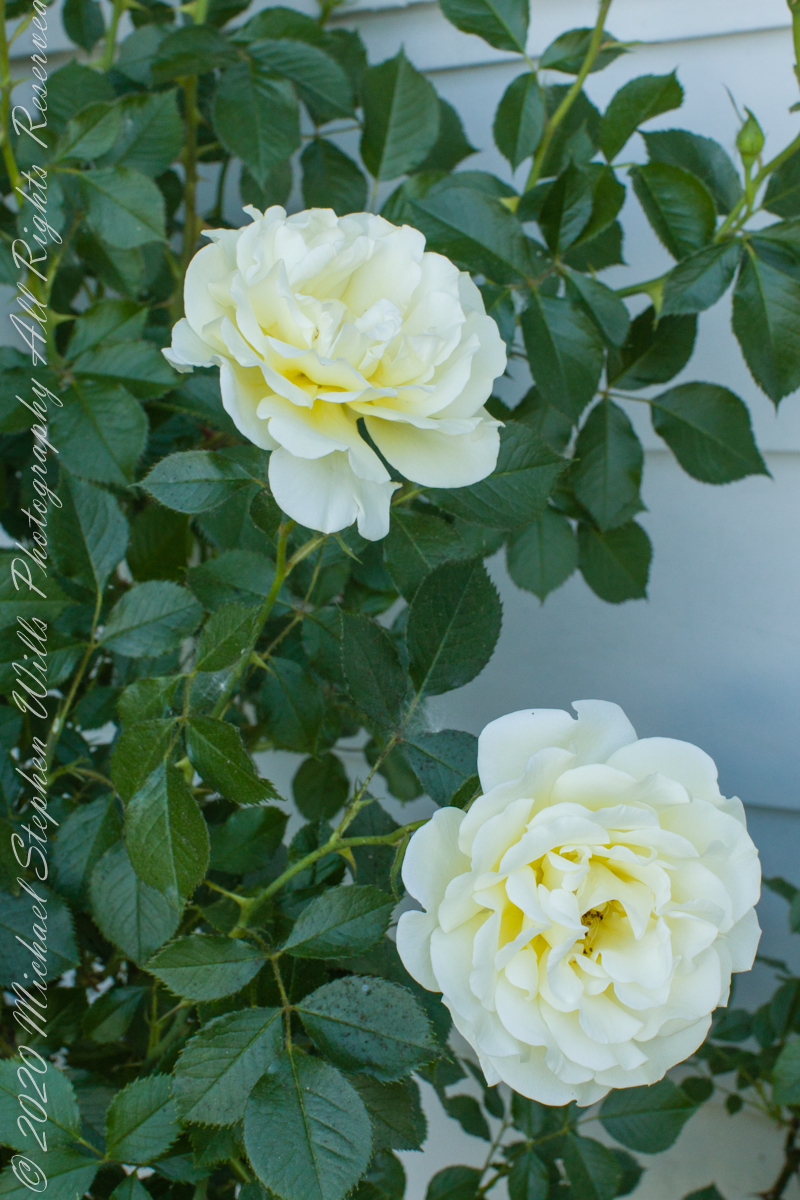
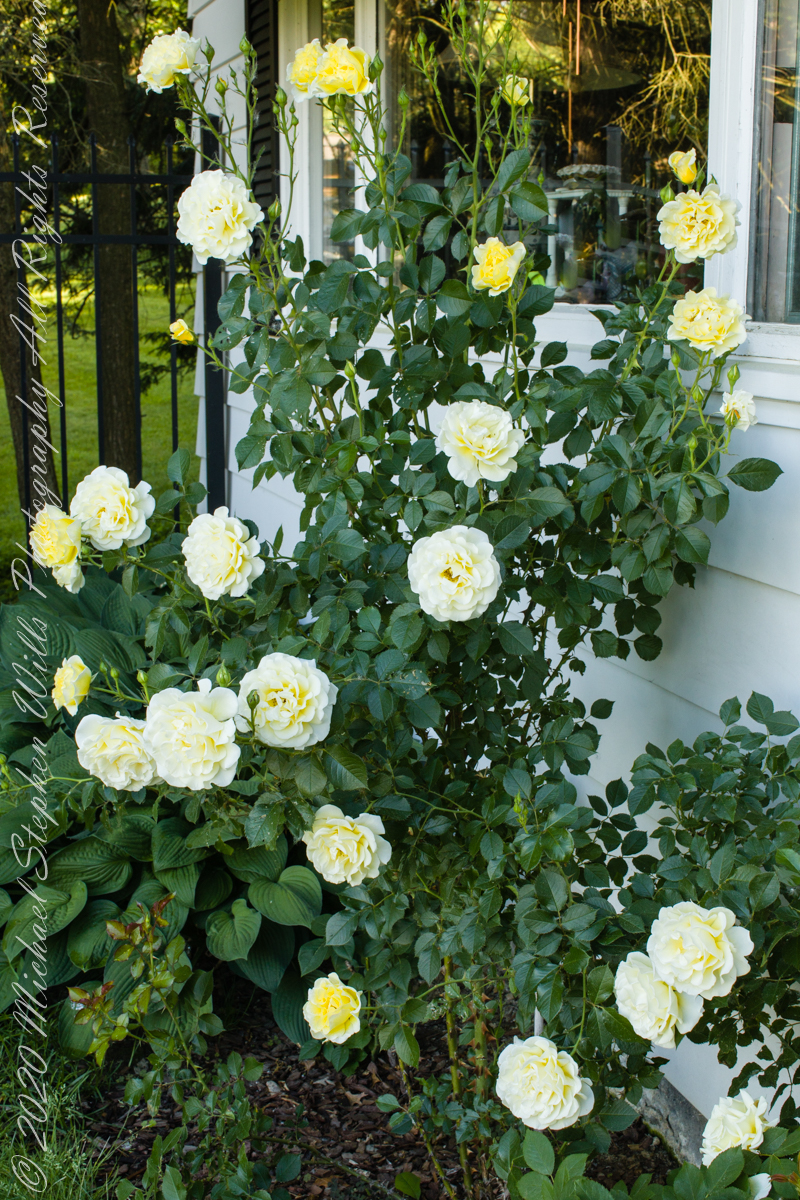
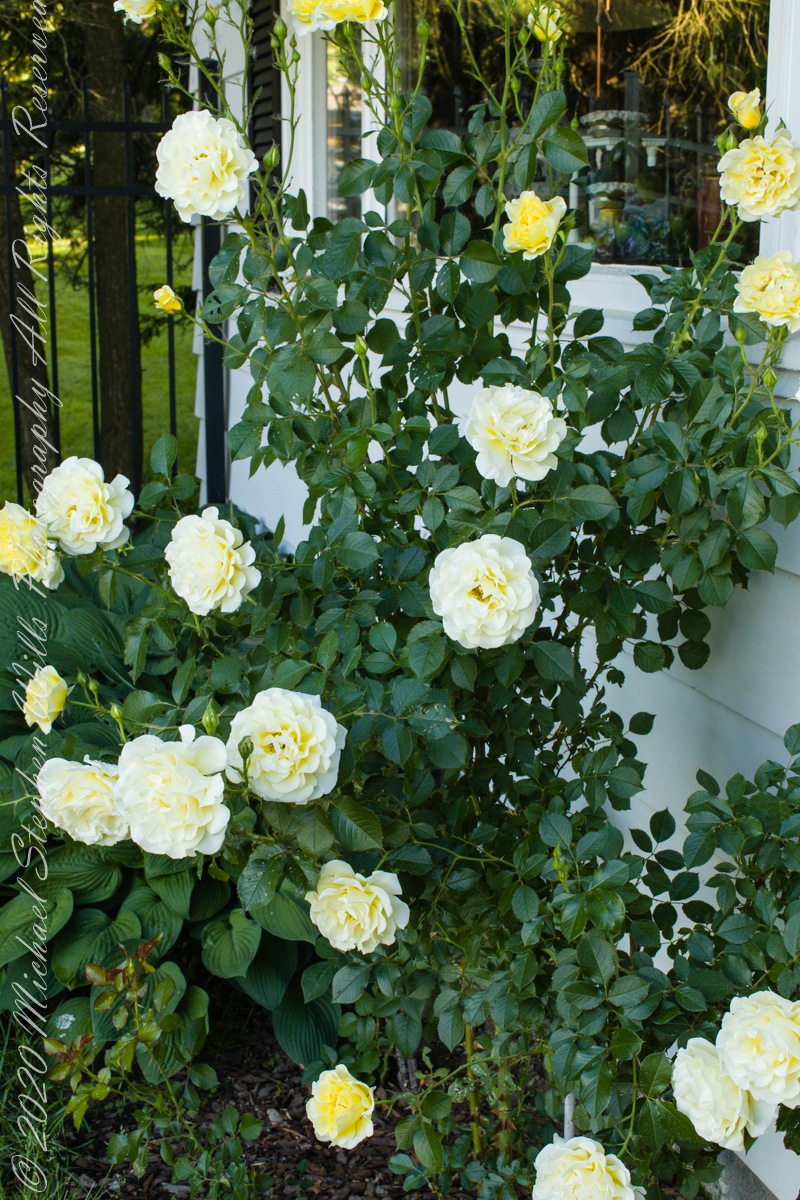
Enjoyed since ancient times throughout the Middle East and China, our European roses were cultivated from Chinese introduced in the late 18th Century. One evening this June, unusually quiet with no breeze, Pam asked me to photograph this tall shrub in full bloom. These are protected from grazing deer by a stout fence, six feet tall.

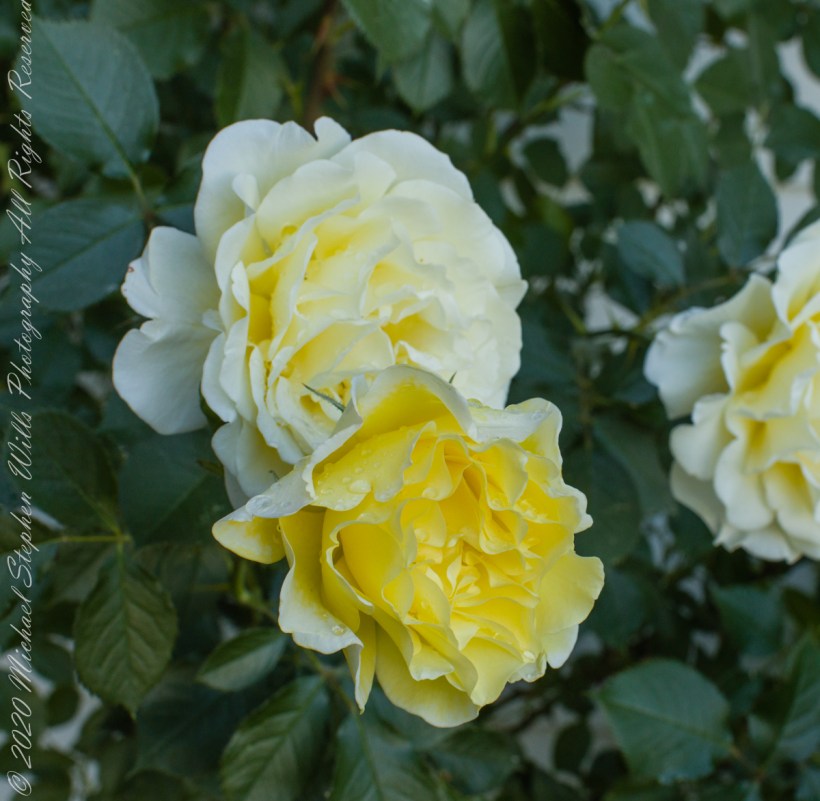
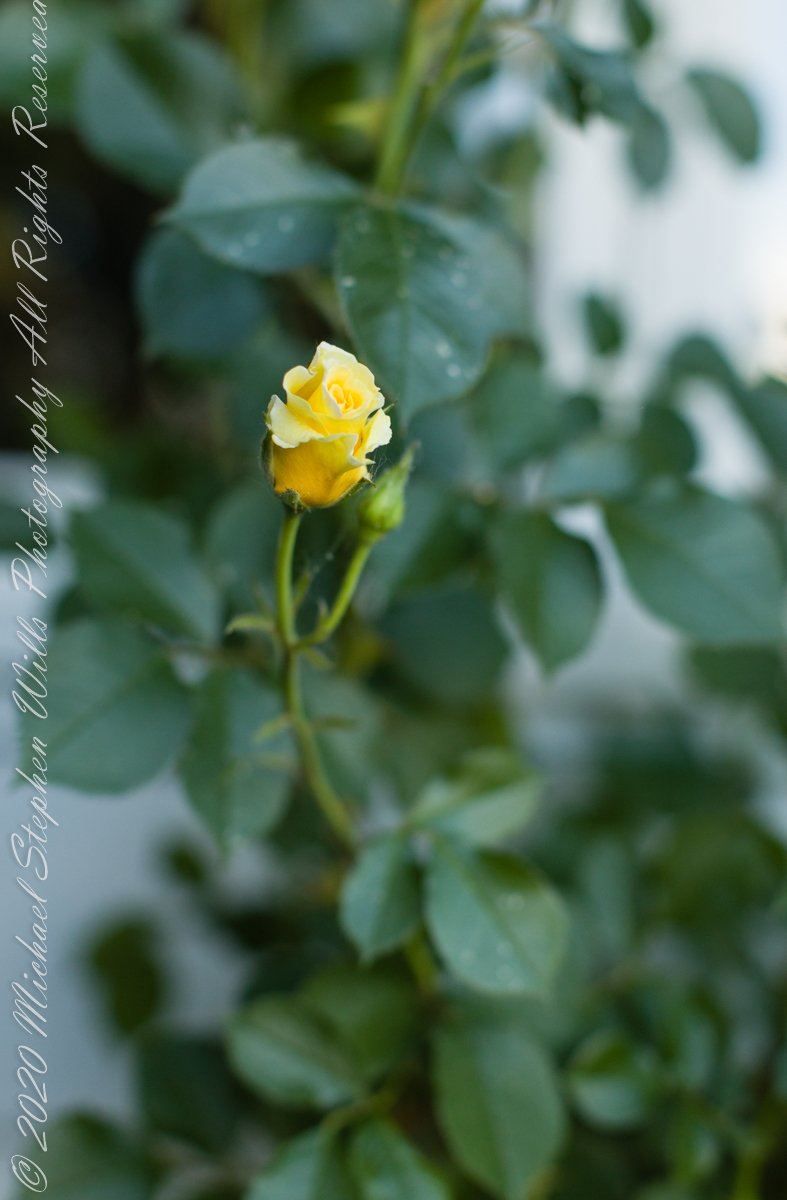
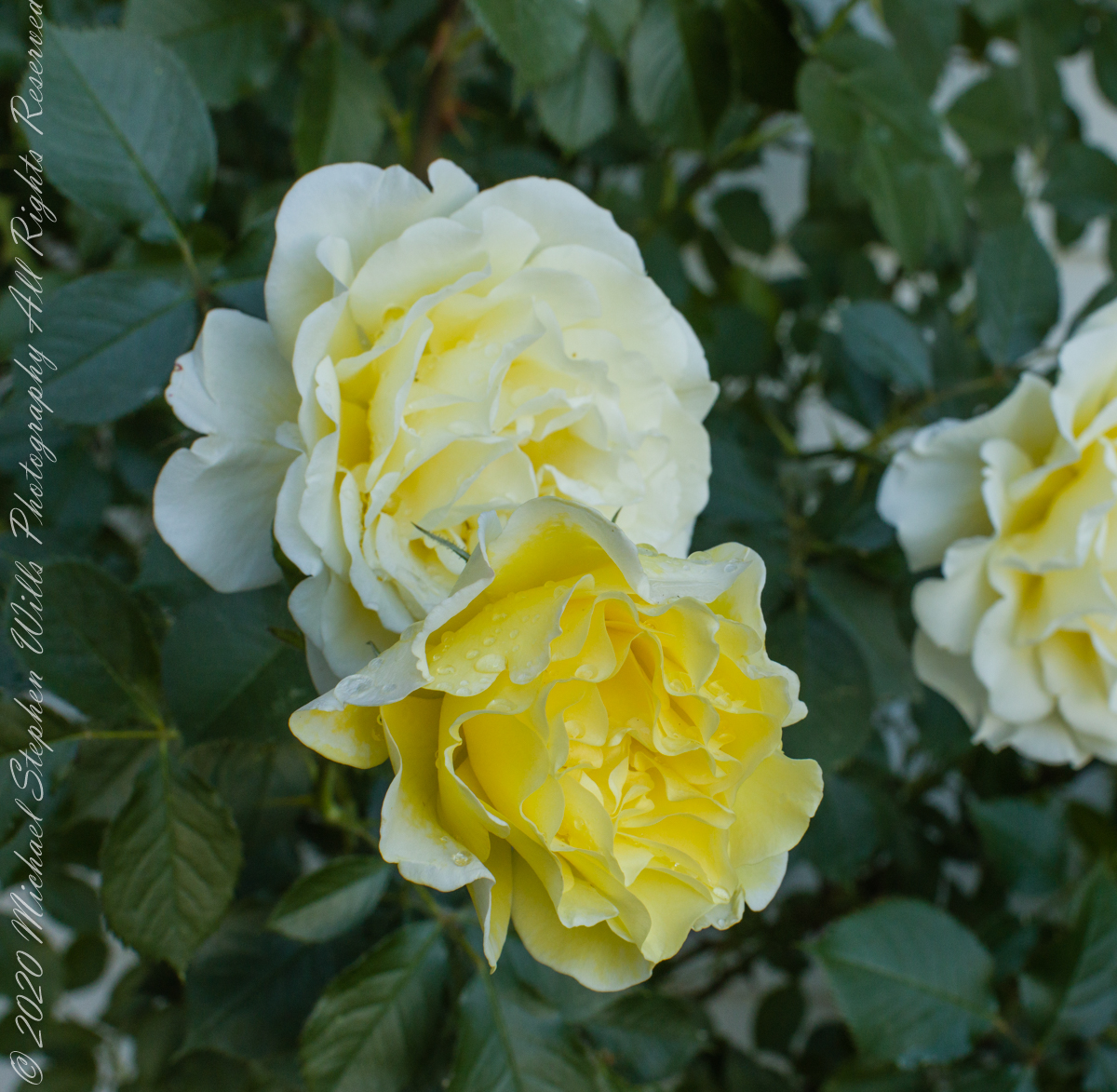
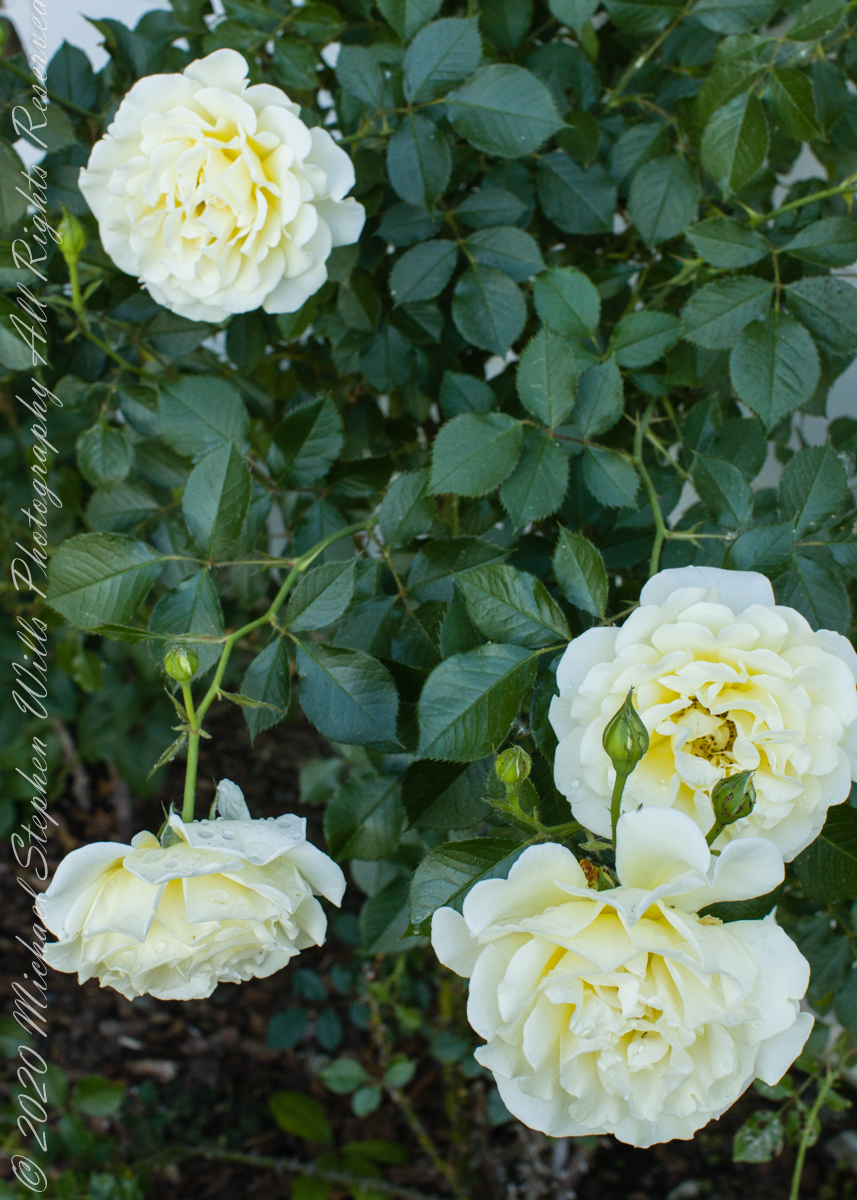
At first it appears the blooms are a mix of colors from lemon yellow to cream.

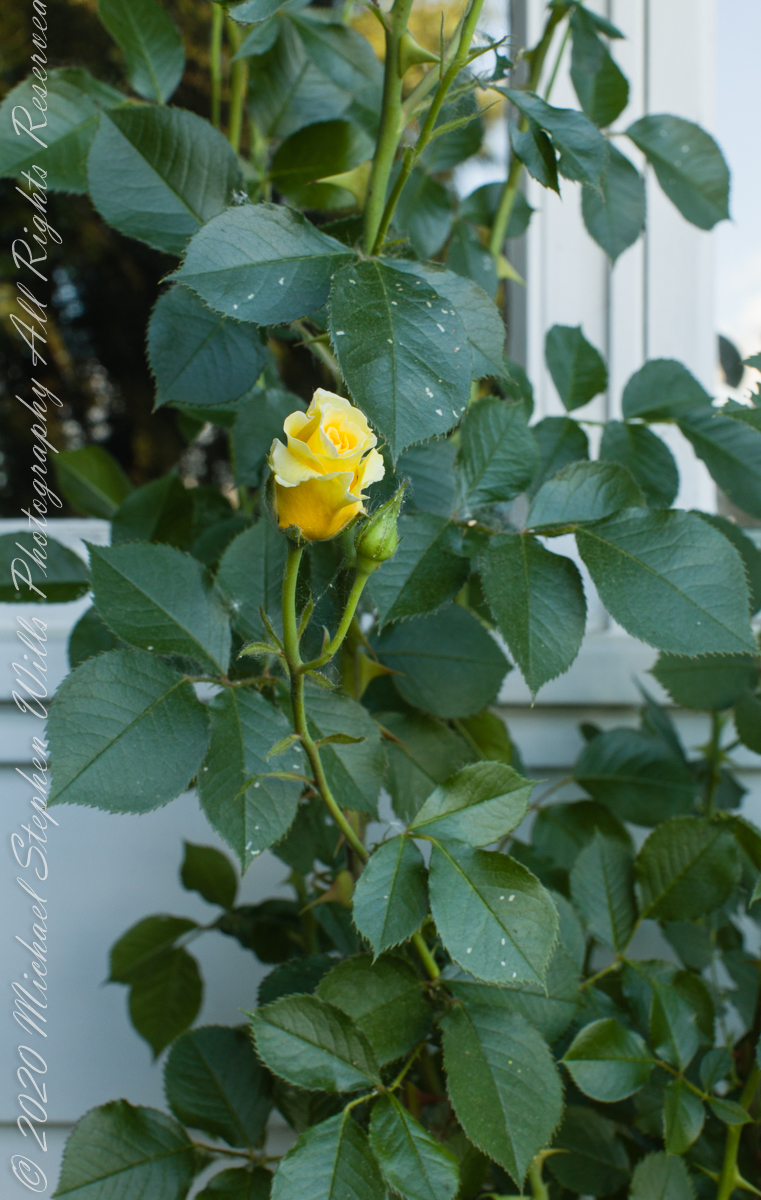
The variation is an indication of each bloom’s age since opening. At first each opens to a lemon yellow. Here is a combination of opening and tightly closed bud. Throughout this set I used the Canon EOS 5D Mark IV dslr with the EF 50 mm f/1.2L USM stabilized with a Manfrotto 468MG tripod with Hydrostatic Ball Head. The stabilization allowed me to present the following comparison, at right the very fast 50 mm lens allows the opening bud to be highlighted. Left side, the lens diaphragm is somewhat closed and the opening bud, tightly closed and leaves are all seen. The pinnate, serrated leaves have one terminal lobe and two lateral for a set of three. There are fewer thorns than some, but sharp enough to be careful.

Flowers bloom throughout the late spring, summer and fall. Pam stops fertilizing in late summer to allow the plant to harden for our Zone 4b winters. Here you can see the plentiful flower buds, compare the opening to mature flower colors.

References

“The Botanical Garden” Vol 1, Roger Phillips and Martyn Rix, Firefly Books, Buffalo, N.Y. 2002 pp 228 – 233

Copyright 2022 Michael Stephen Wills All Rights Reserved

Tower of Glass reprise

A selection of photographs from our January 2019 visit to McKee Botanical Gardens, Vero Beach, Indian River County, Florida

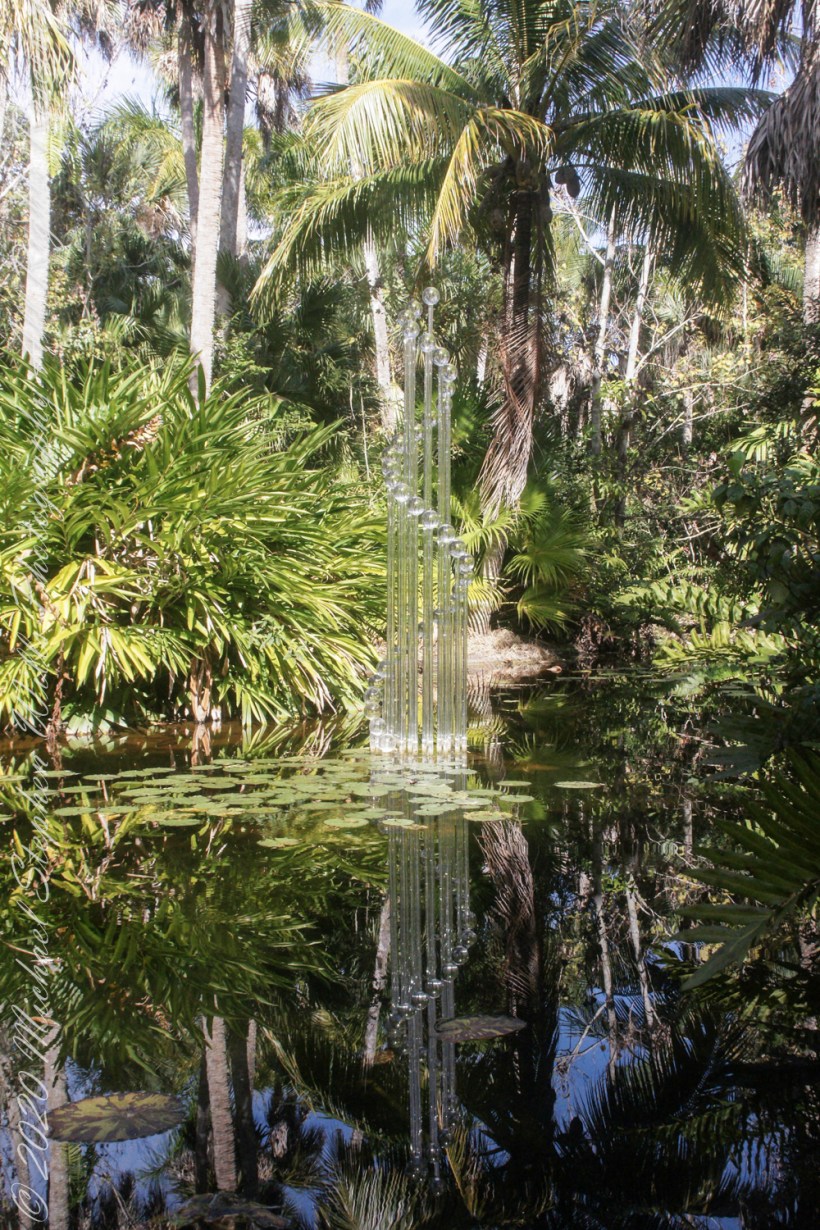
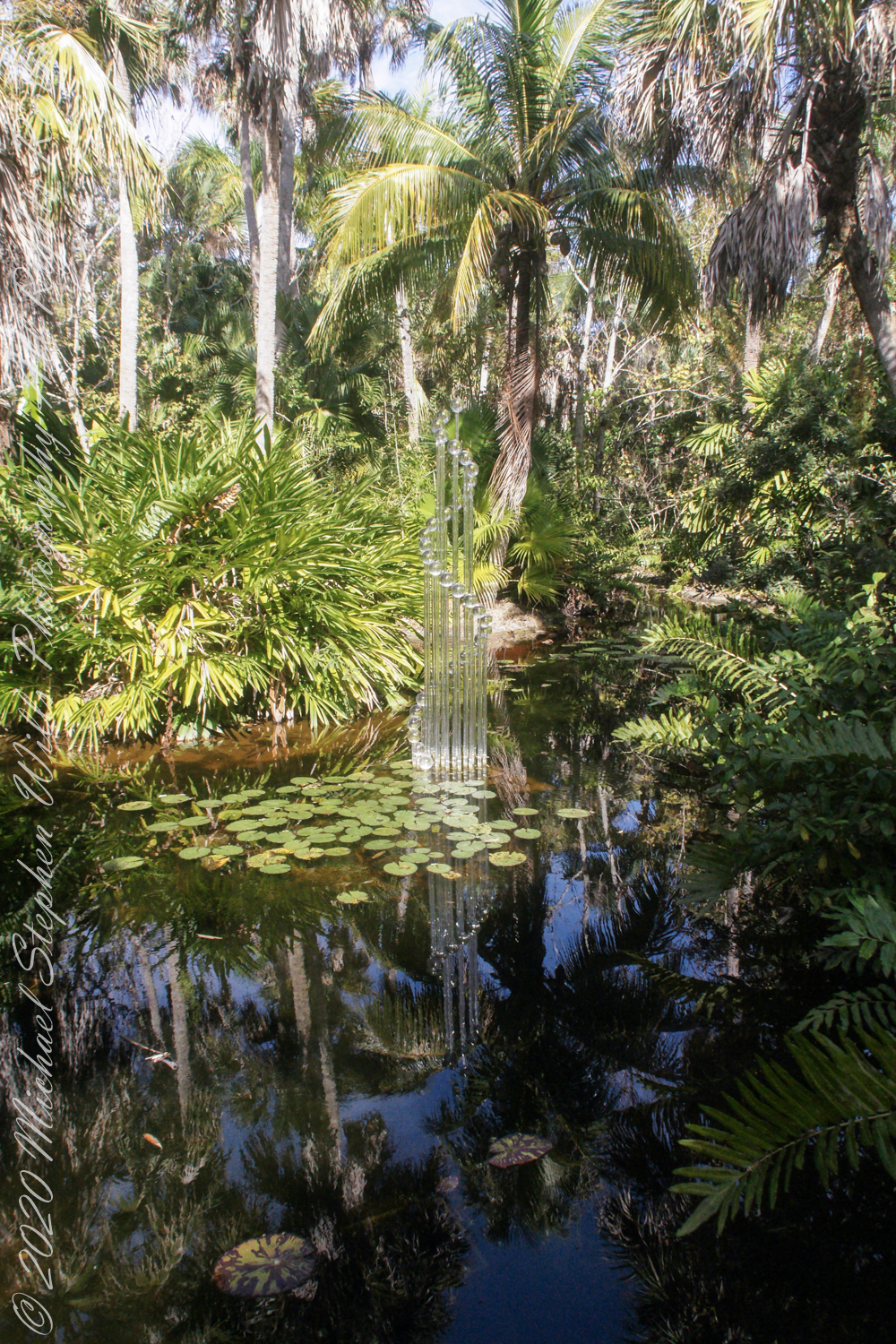
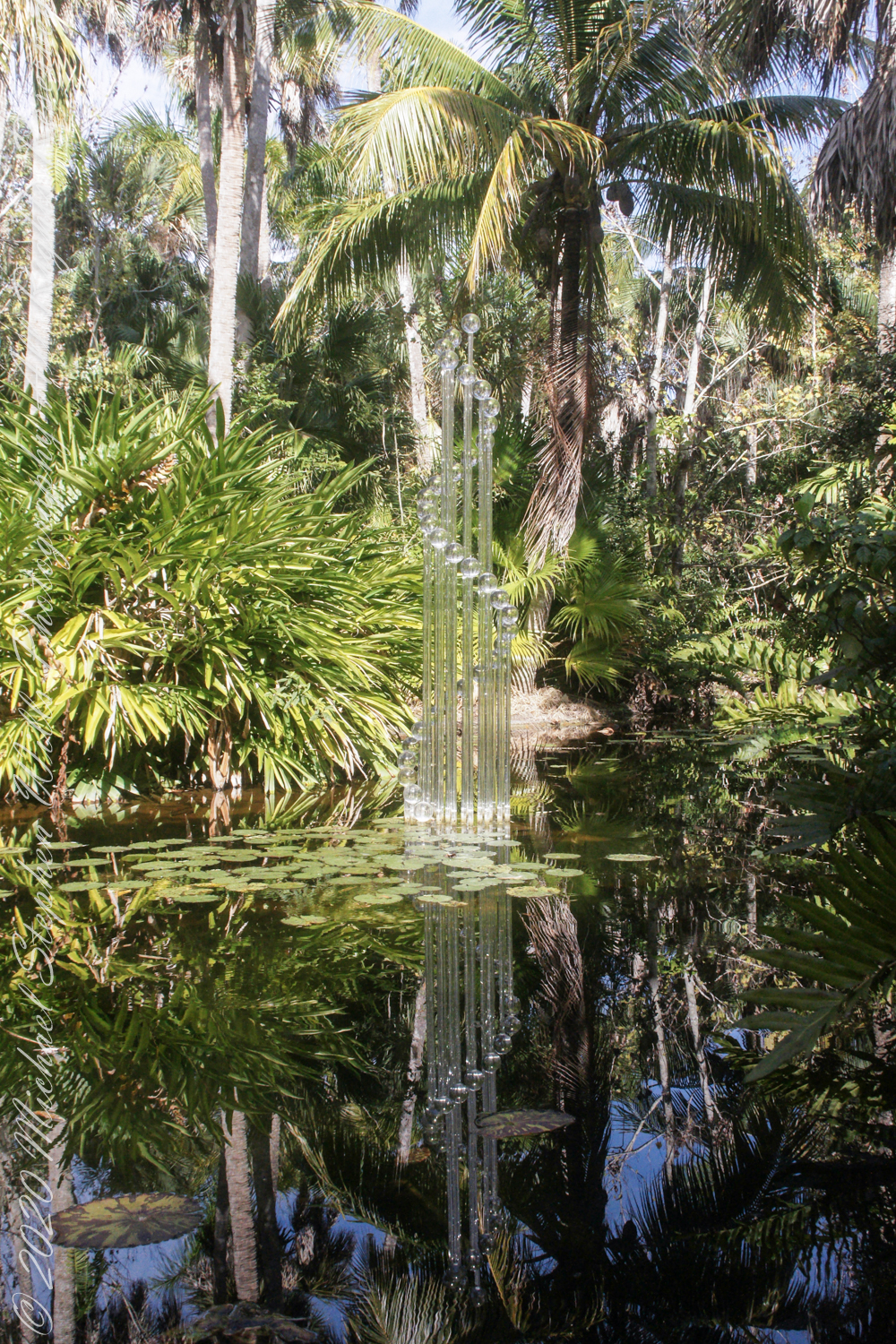
I found three more photographs of “Tower…”

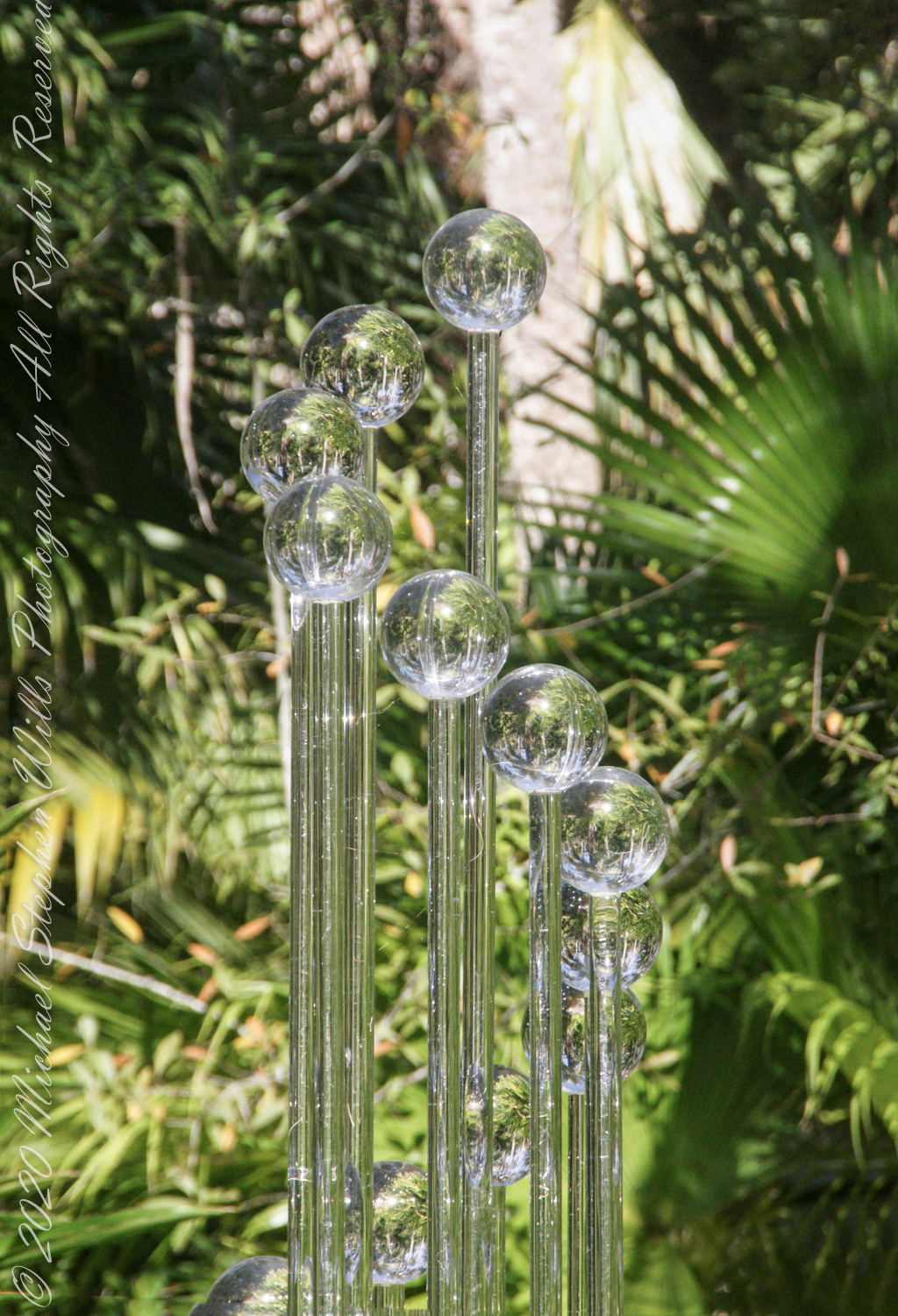
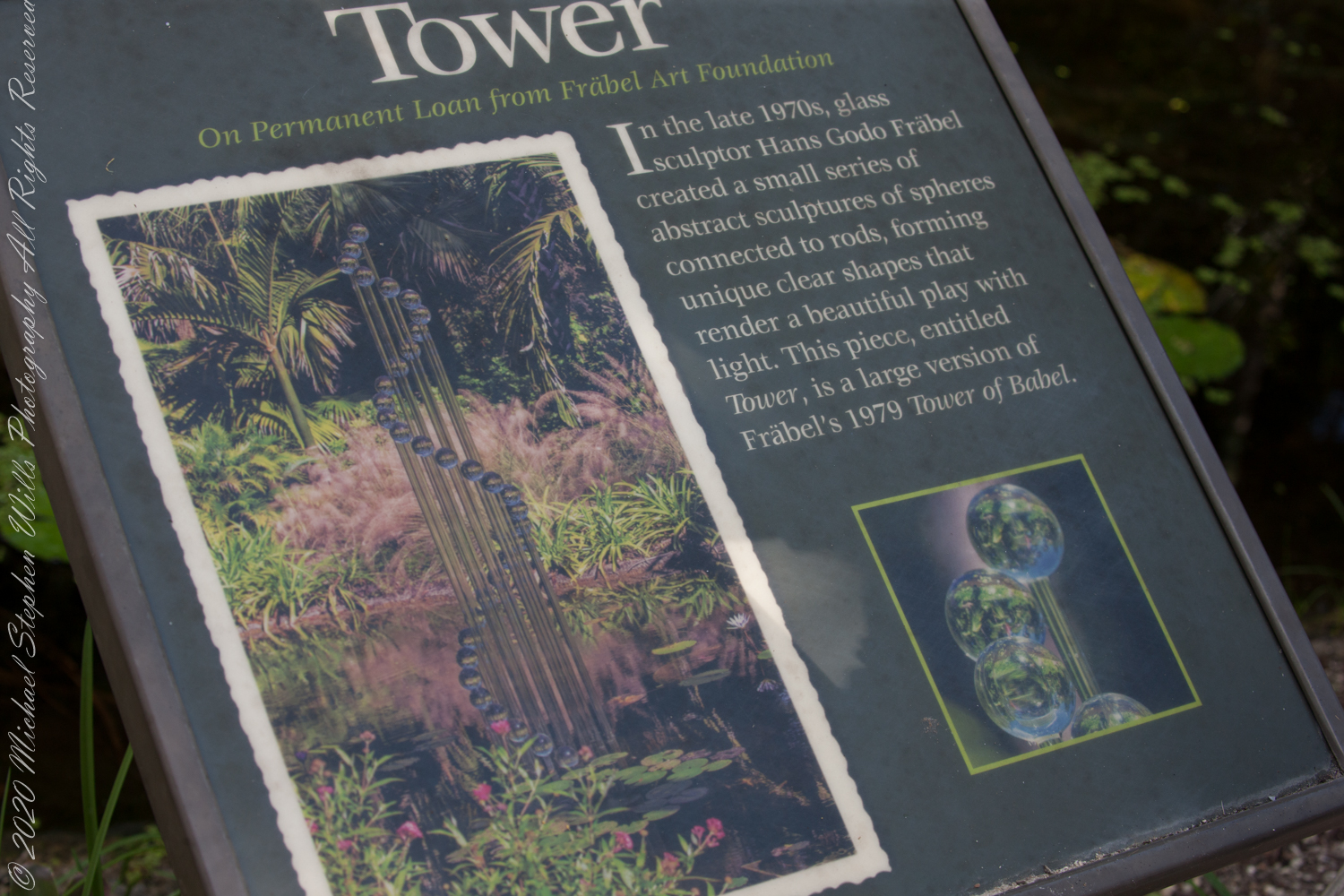
Tower is on permanent load from Frabel Art Foundation. In the late 1970s, glass sculptor Hans Godo Frabel created a small series of abstract sculptures of spheres connected to rods, forming unique clear shapes that render a beautiful play with light. This piece, entitled Tower, is a larger version of Frabel’s 1979 Tower of Babel.

Click me for a dinosaur at McKee Gardens, “Triceratops, one of the last.

References: text is from the park placard with minor edits.

Copyright 2022 Michael Stephen Wills All Rights Reserved