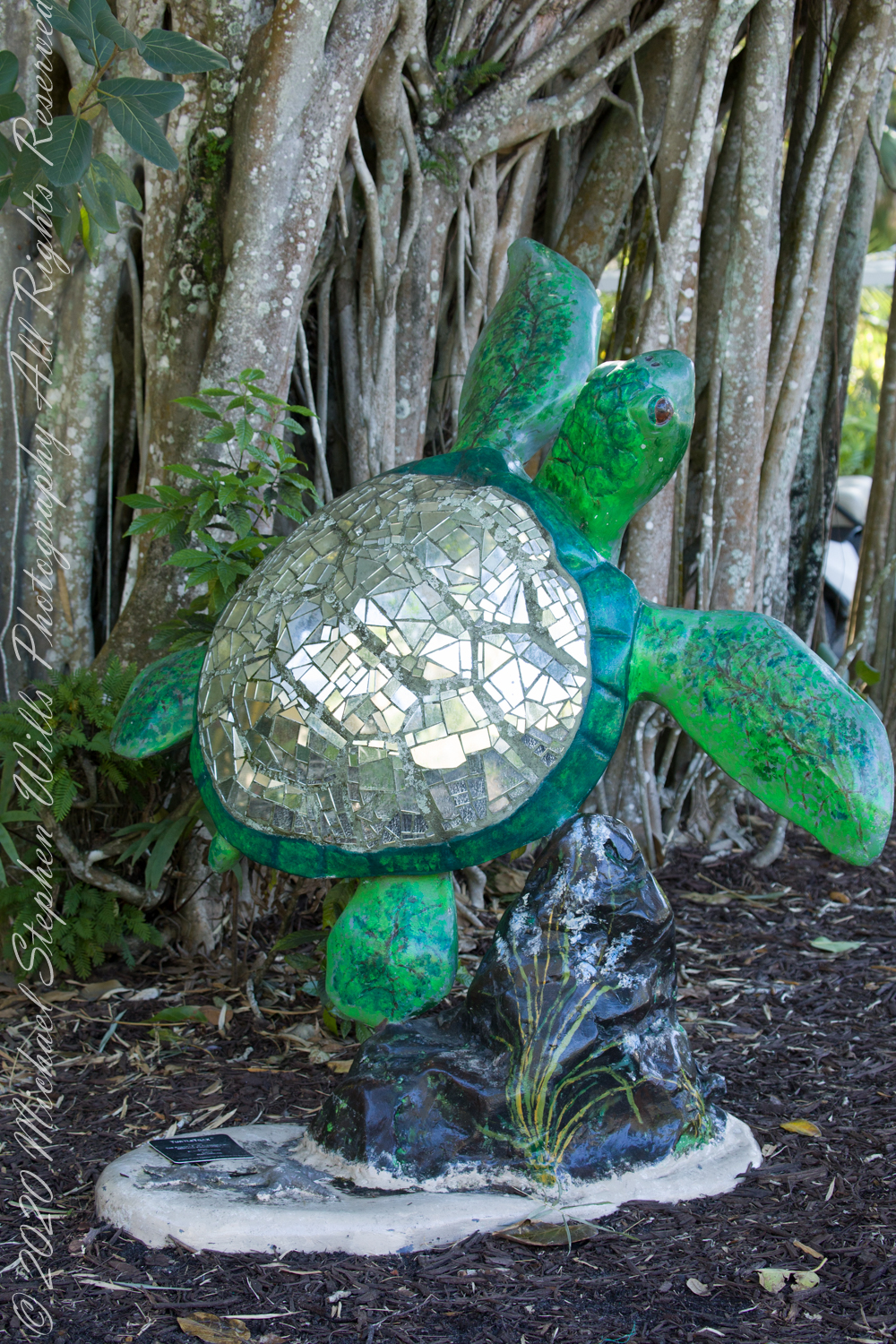
Flip Flop Sea Turtle

Light pollution from beach development is a threat to baby sea turtles; the glow from city sources can cause them to head into traffic instead of the ocean.

450 recycled flip flops were used by Ocean Sole Africa Project artists to create each sea turtle sculpture from a 2019 exhibit hosted by McKee Botanical Gardens, Vero Beach, Indian River County, Florida.
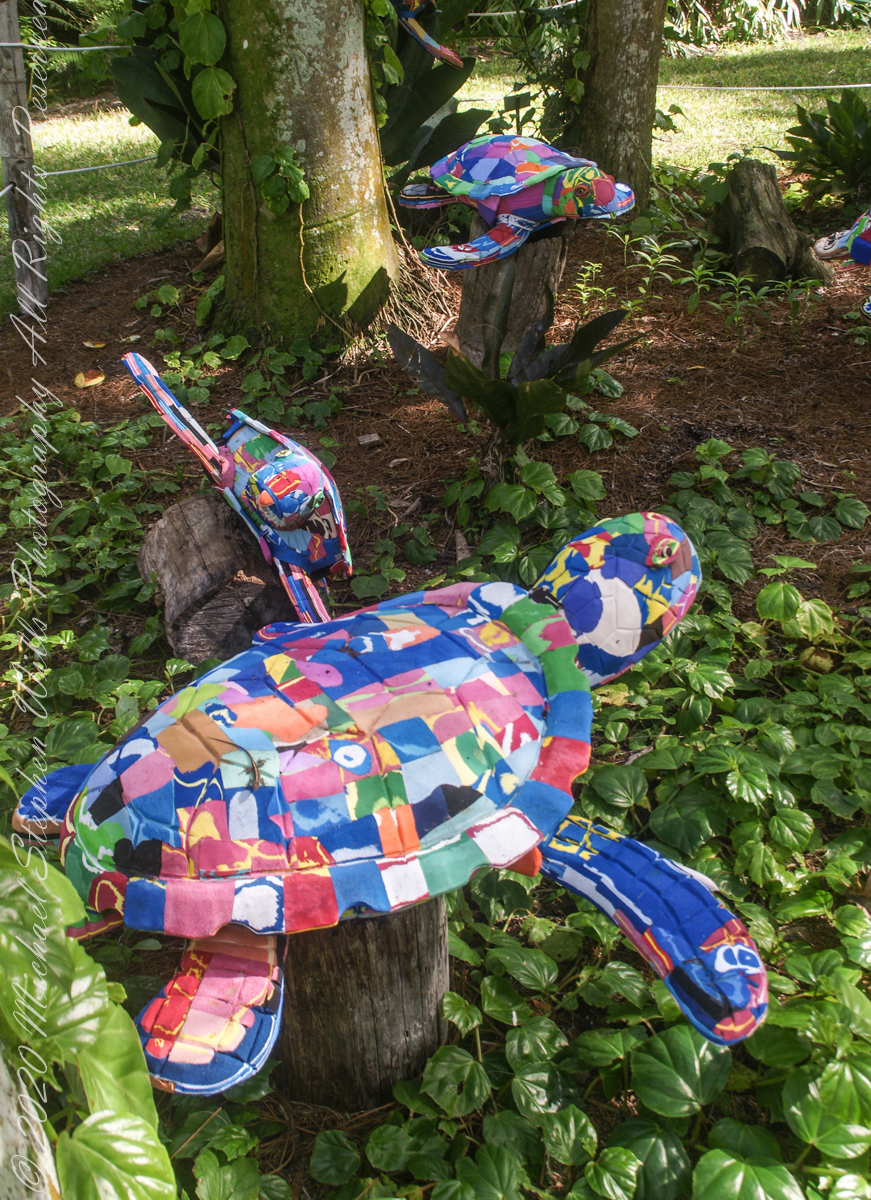
Sea turtles (superfamily Chelonioidea), sometimes called marine turtles, are reptiles of the order Testudines and of the suborder Cryptodira. Sea turtles can be found in all oceans except for the polar regions. Sea turtles are generally found in the waters over continental shelves.

During the first three to five years of life, sea turtles spend most of their time in the pelagic zone floating in seaweed mats. Once the sea turtle has reached adulthood it moves closer to the shore. Females will come ashore to lay their eggs on sandy beaches during the nesting season. Sea turtles migrate to reach their spawning beaches, which are limited in numbers. Living in the ocean therefore means they usually migrate over large distances.

All sea turtles have large body sizes, which is helpful for moving large distances. Large body sizes also offer good protection against the large predators (notably sharks) found in the ocean. Light pollution from beach development is a threat to baby sea turtles; the glow from city sources can cause them to head into traffic instead of the ocean. There has been some movement to protect these areas. On the east coast of Florida, parts of the beach known to harbor sea turtle nests are protected by fences.

This Sea Turtle sculpture graces the entrance of McKee Gardens as a permanent exhibit.
Conservationists have monitored hatchings, relocating lost baby sea turtles to the beach. Hatchlings find their way to the ocean by crawling towards the brightest horizon and can become disoriented along the coastline. Lighting restrictions can prevent lights from shining on the beach and confusing hatchlings. Sea turtle-safe lighting uses red or amber LED light, invisible to sea turtles, in place of white light.
Copyright 2022 Michael Stephen Wills All Rights Reserved

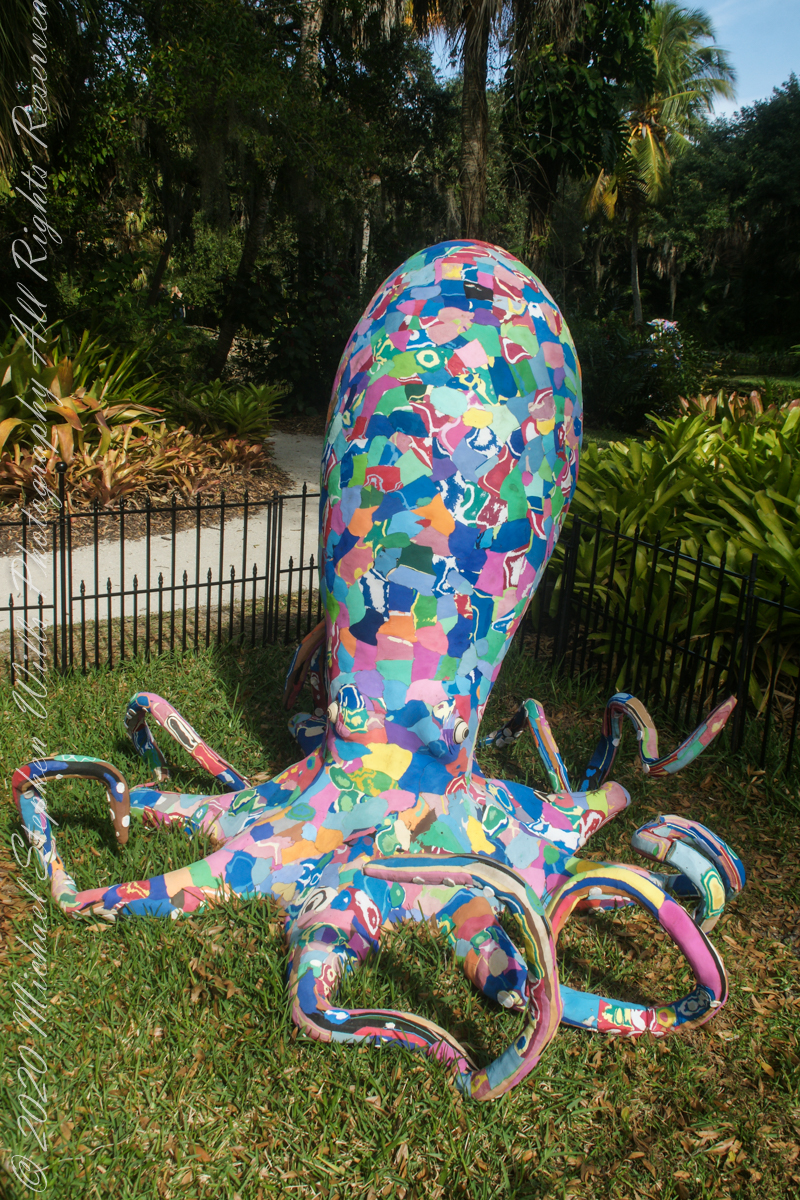
Flip Flop Octopus

890 recycled flip flops were used in this sculpture

This common octopus (Octopus vulgaris) specimen was created by artists of Ocean Sole Africa. 890 recycled flip flops were used in this sculpture. from a 2019 exhibit hosted by McKee Botanical Gardens, Vero Beach, Indian River County, Florida.

Octopuses are adaptable and intelligent 8-limbed creatures known live in and around ocean reefs, deep ocean and intertidal zones. Invertebrate, without a skeleton an octopus can hide in tight spaces. Maneuvering and hunting, each tentacle is lined with suckers that grab rocks and prey. Existing solely on meat, these carnivores prey on crabs and shellfish, finding them with sharp binocular eyesight and devouring with a sharp parrot-like beak. Their defenses include camouflage, changing skin color to made surroundings, ejection of thick black ink to distract a predator and escape. A last line of defense is sacrificing an arm that can grow back over time. These blue-blooded aristocrats have three hearts!

Copyright 2022 Michael Stephen Wills All Rights Reserved

Sunset Visions of Kite Surfing

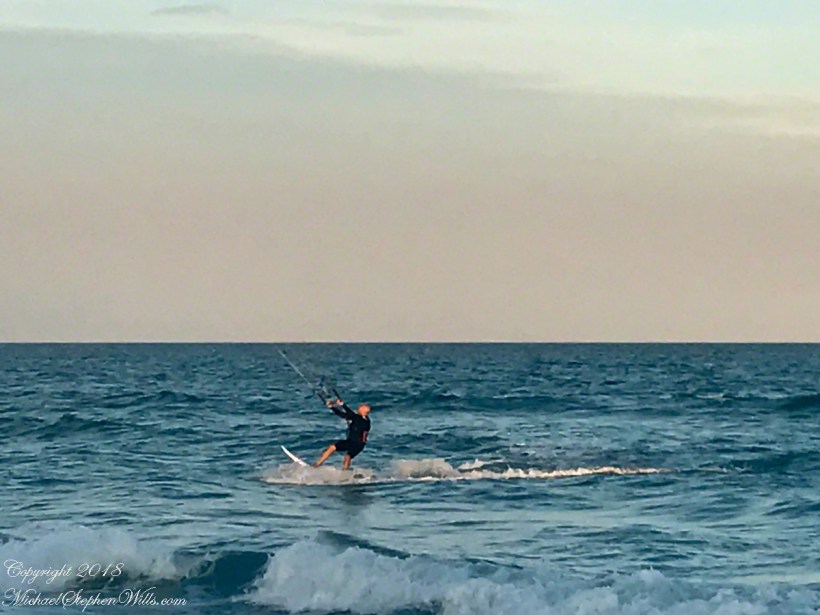
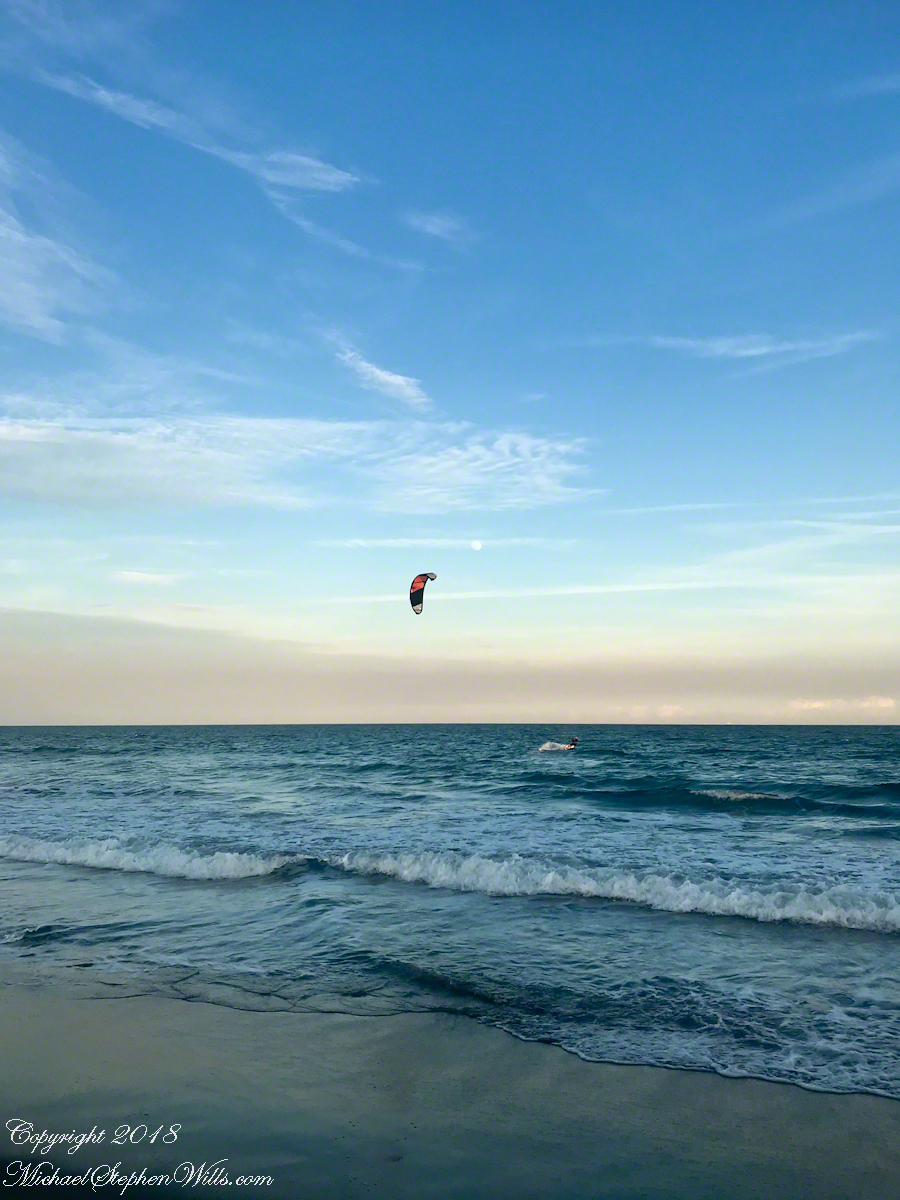
One day before the 2019 Total Lunar Eclipse a full moon rose 4:25 pm above the Atlantic Ocean off Cocoa Beach, the “Space Coast” of Florida. We saw a power kite to the south, with the southerly winds there was time before he was on us. I took the following photographs with what was at hand, an iPhone 8.

Risen Full Moon and Surf Boarder at Sunset

Click any photograph to visit my Online Fine Art Photography Gallery

At 50 minutes post moonrise, I included the orb in this frame as the rider tacked, rising a water crest.

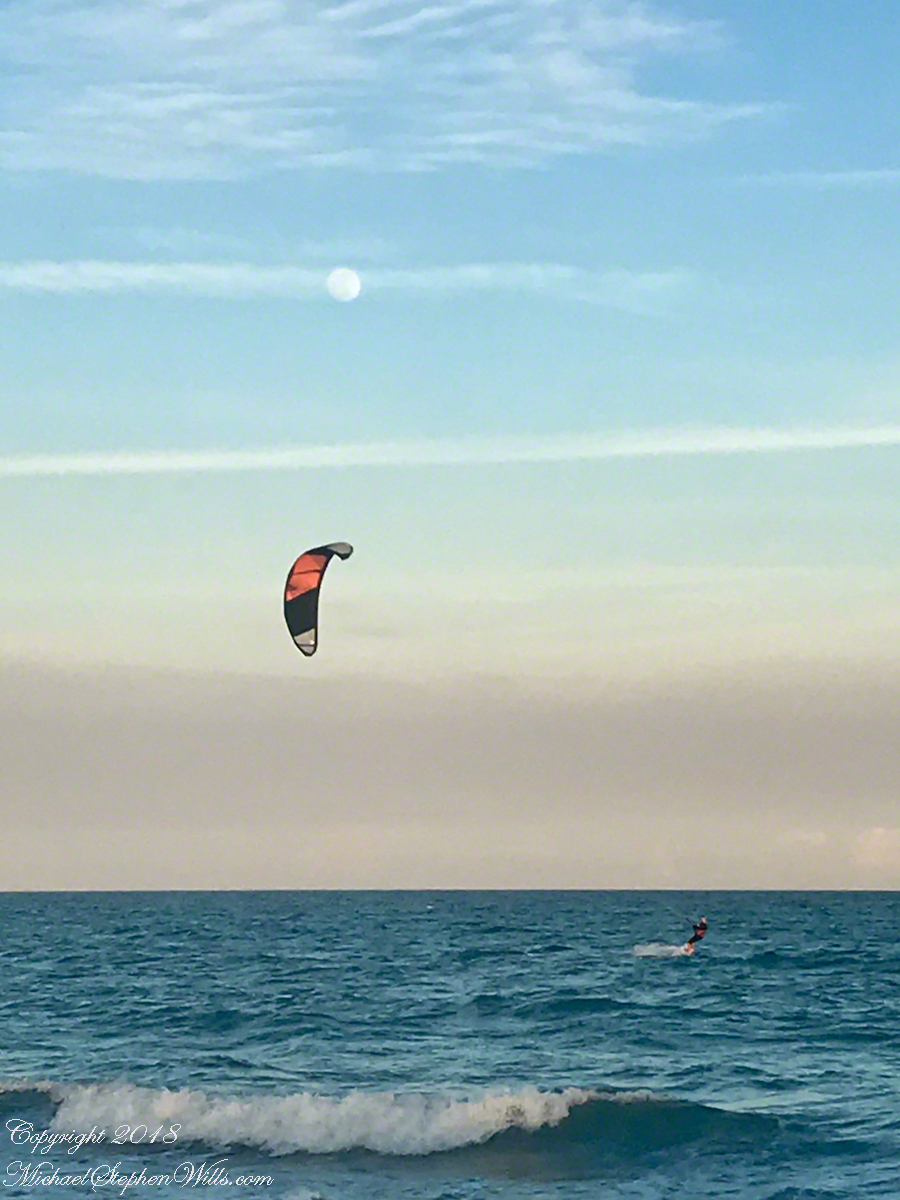
Risen Full Moon and Surf Boarder at Sunset

A flick of the fingers to zoom in, the moon and rider are together as he rides toward shore.

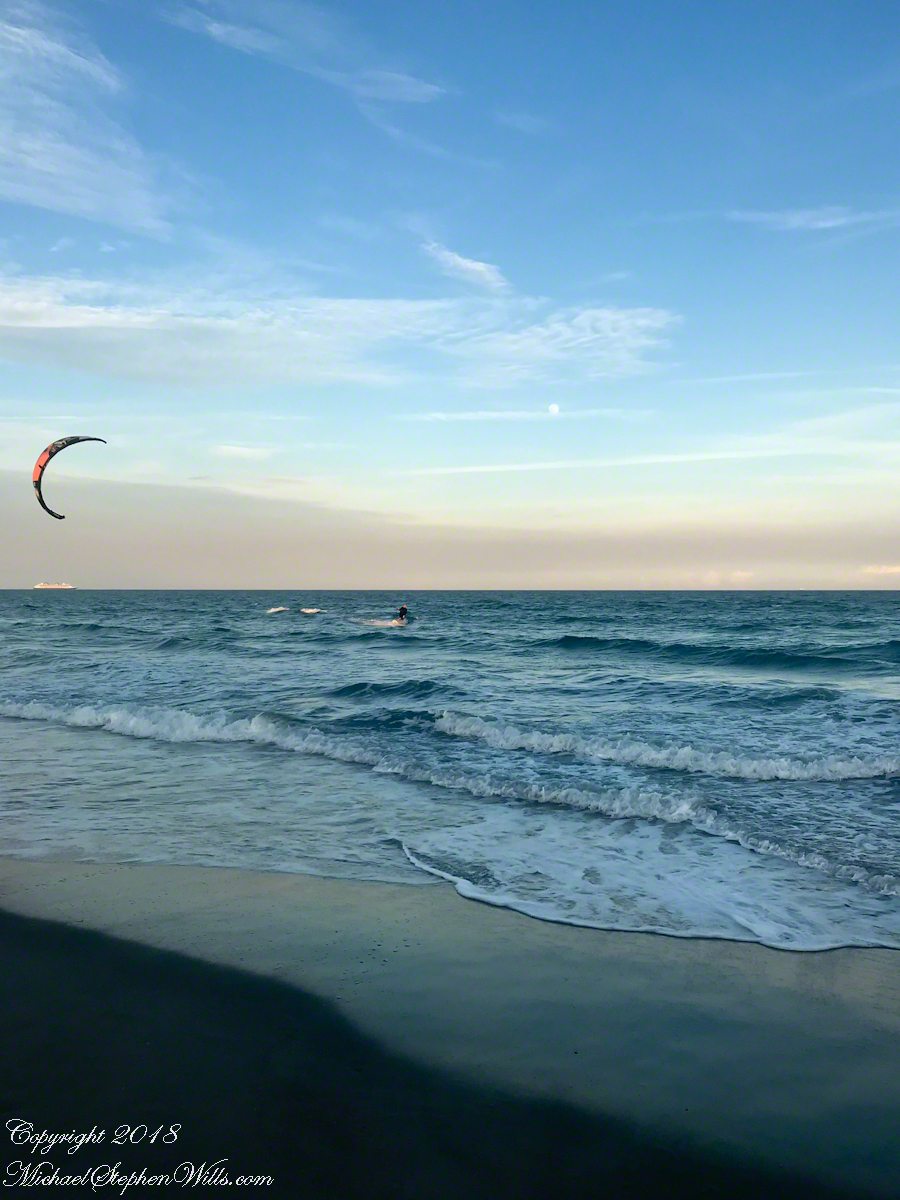
Risen Full Moon and Surf Boarder at Sunset with cruise ship

This time of, Saturdays, the cruise ships depart Cape Canaveral Port. The kite is above the distant ship. It is amazing the kite allows sailing into the wind, his heading is southwest. The shore limits his progress, forcing a tack towards a southeast heading.

Kite Surfer coming to shore at sunset.

Or not, it seems he plans to tack to the northeast, continuing progress north up the coast. I have to wonder how he will return to the starting point?

Copyright 2022 All Rights Reserved Michael Stephen Wills

Kite Surfing Action Series

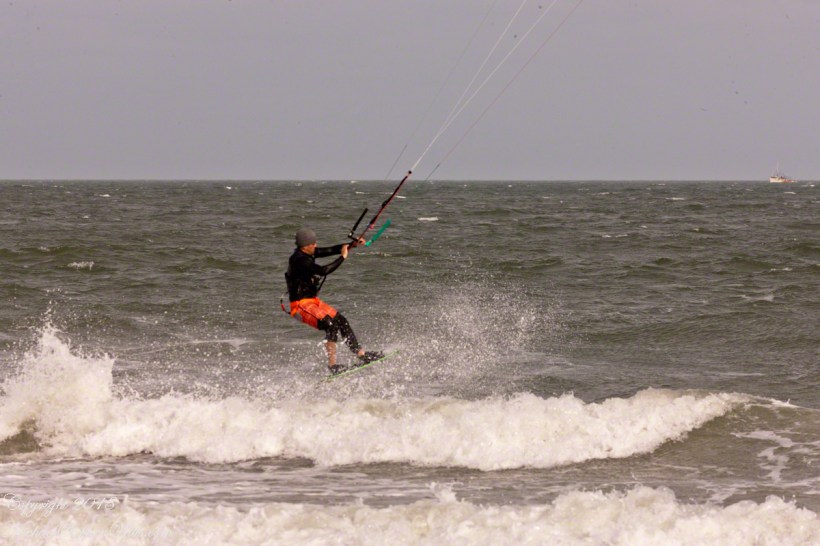
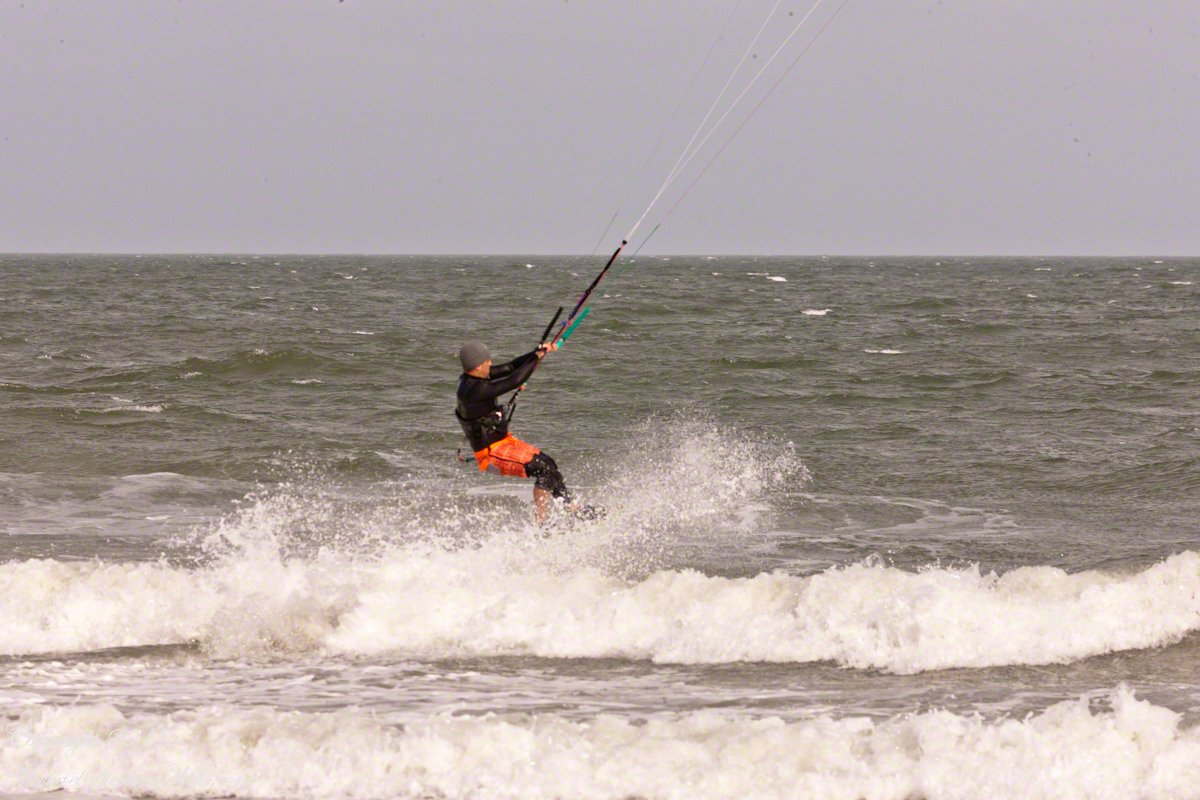
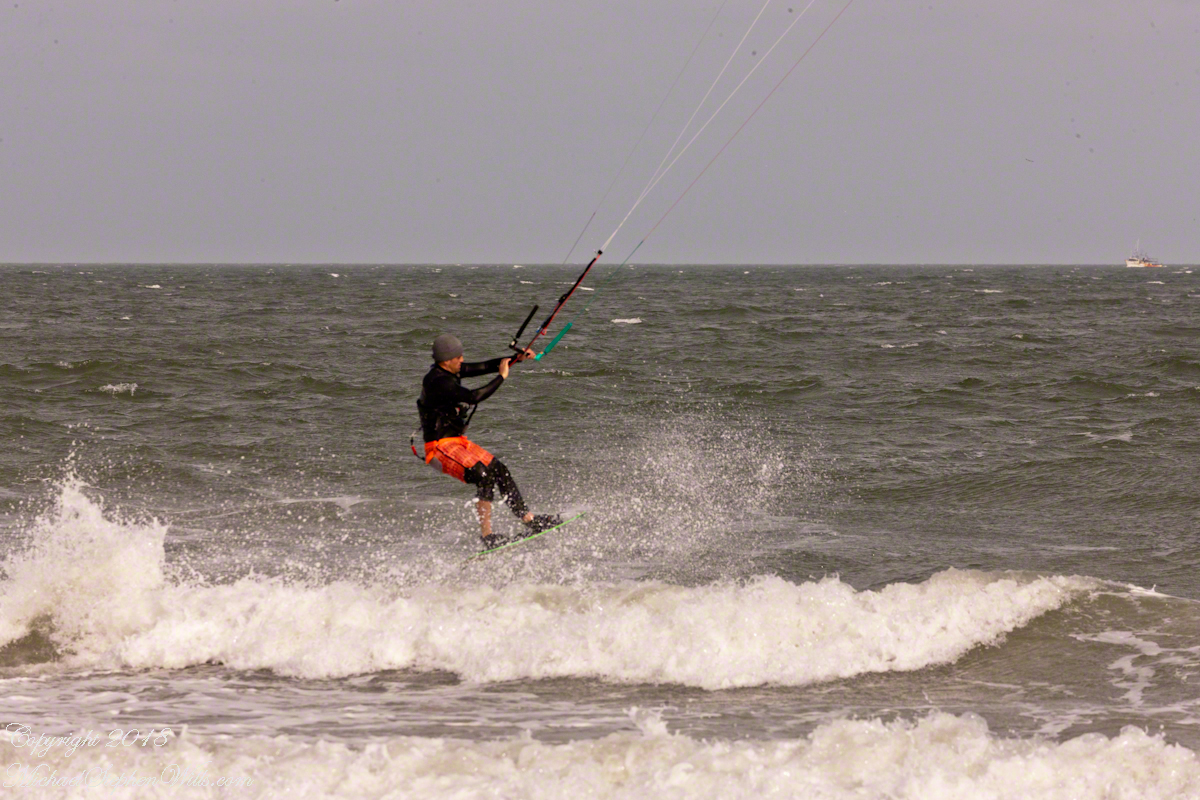
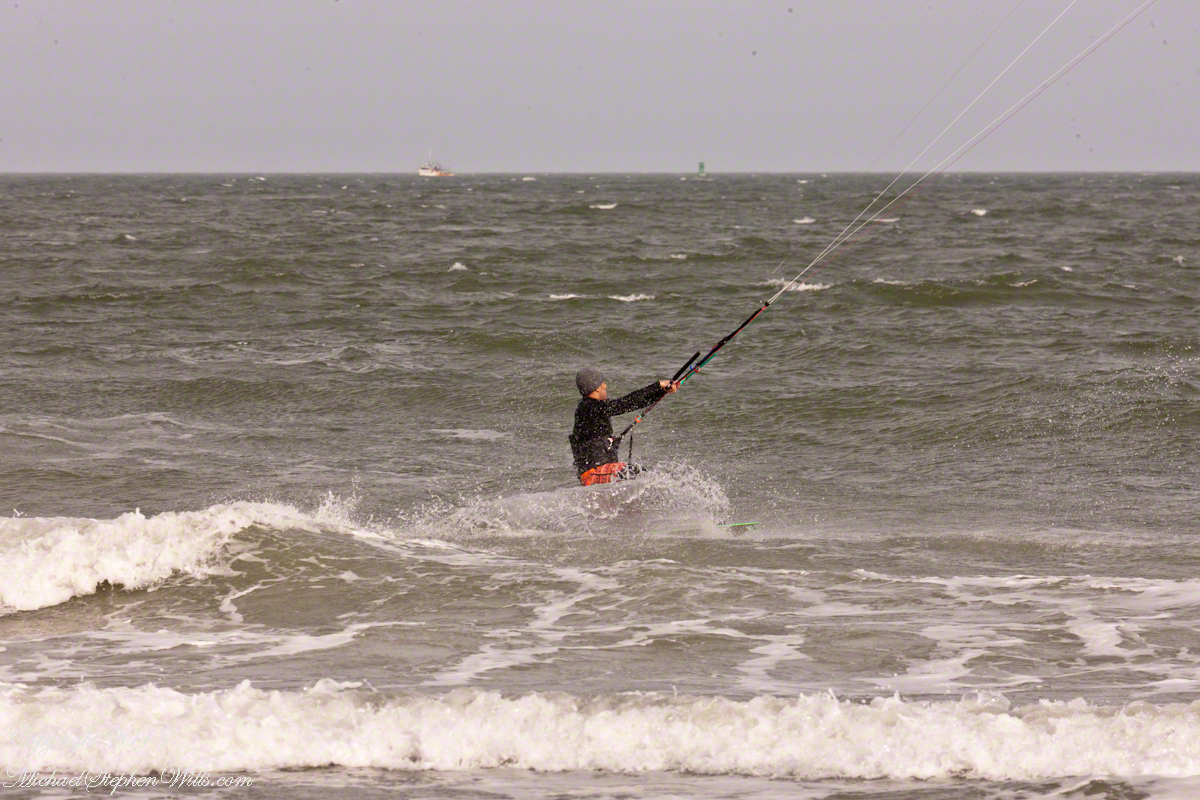
three shots in one second

For a change of scene we visited Cape Canaveral, the beach at Cherie Down Park were an informal gathering of Kite Surfers was underway. Here is a series of action shots, one second elapsed from first to last.

Click the photograph for my Online Galleries
Click any photograph for my Online Galleries

Conditions were excellent: good northerly wind, the sun overcast and, it being afternoon, in the west. Surfers stayed relatively close to shore, near their starting point. I had packed the “heavy gun” camera with a tripod.

Click the photograph for my OnLine Galleries

Panning the scene (swiveling on the tripod), the camera in rapid exposure mode, I pressed the shutter release and held it down.

Click the photograph for my Online Galleries

The surfer was captured mid-jump to landing.


Copyright 2022 All Rights Reserved Michael Stephen Wills

Cocoa Beach Kite Skating

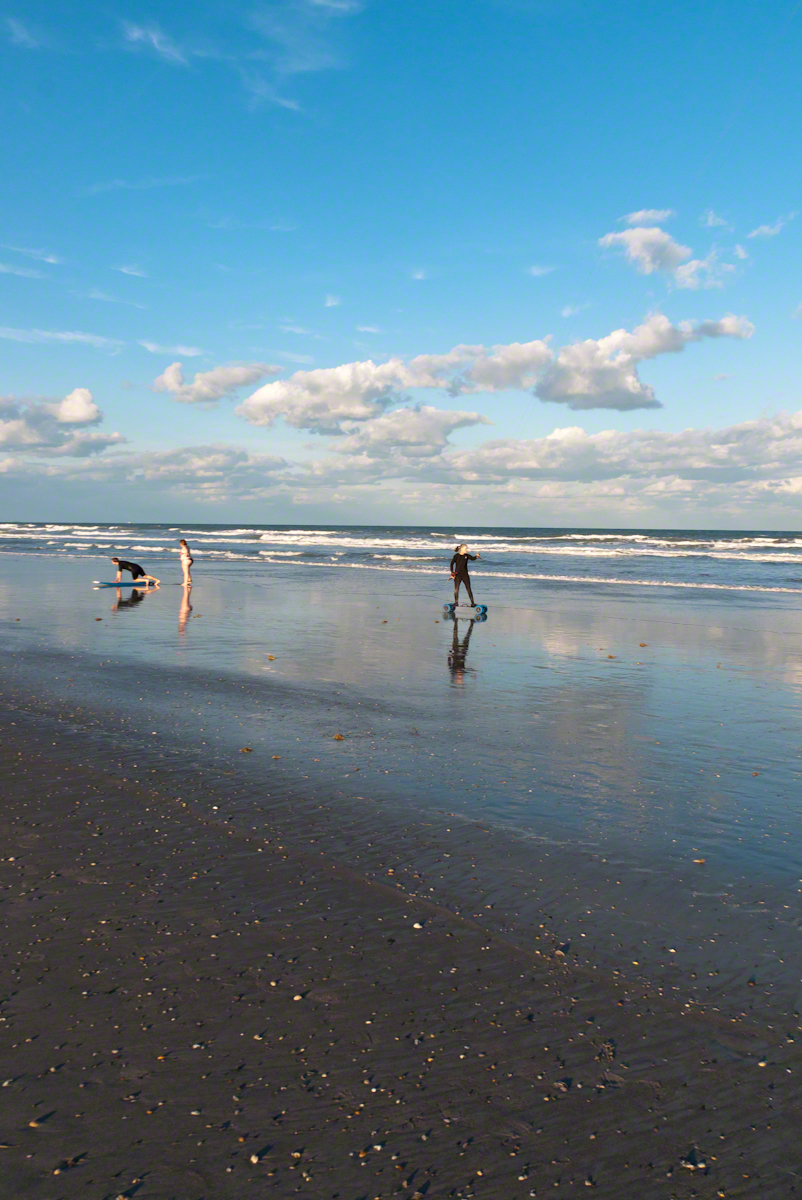
Kiteskaters and Cruise Ships

In the early morning hours of Sunday, September 10, 2017 as Hurricane Irma approached the Florida Keys, I cannot sleep, worried about family members north of Miami and in Daytona Beach. To pass the time, I returned to the golden hours of March 4, 2017 evening.  On vacation, Pam and I walked Cocoa Beach starting from Lori Wilson Park, headed north.

The light was perfect when I decided to switch to Raw-Jpeg mode, feeling the extra space was worth it.  I don’t know why I don’t shoot Raw 100% of the time, as always, in retrospect, I regret using jpeg only. The camera was the Sony Alpha 700 dslr with a DT 18-200mm f3.5-6.3 lens purchased 2008 after an expedition to the Superstition Wilderness.

After capturing a wedding photo shoot and surfers there was this set of two Kite Skaters going at least 20 miles an hour. The Sony Alpha was quick enough to capture some of the action in raw mode, I am not satisfied with the sharpness of the images as the lens was not fast enough.

Click this link or a photo for my Online gallery
My Online Gallery– CLICK ME!!!!
Overview, Approaching Kite skater

We had never watched kite skaters before and were prepared to understand the vision from watching distant kite surfers out beyond the breakers. North winds are the best for any type of kiting on Cocoa Beach and, that day, the wind was northeast. These riders zipped by in less than a minute. The sport is low key, it does not exist on Wikipedia. Image that. These two are having a fantastic time and stayed upright, going on and on and on down the miles long beach.

My Online Gallery– CLICK ME!!!!
Sailskater Dreamview with Cruise Ship

1990 KiteSkate pioneers on the USA east coast experimented with four-line controllable parafoil kites powering in-line skates for exciting rides on asphalt surfaces.

My Online Gallery– CLICK ME!!!!
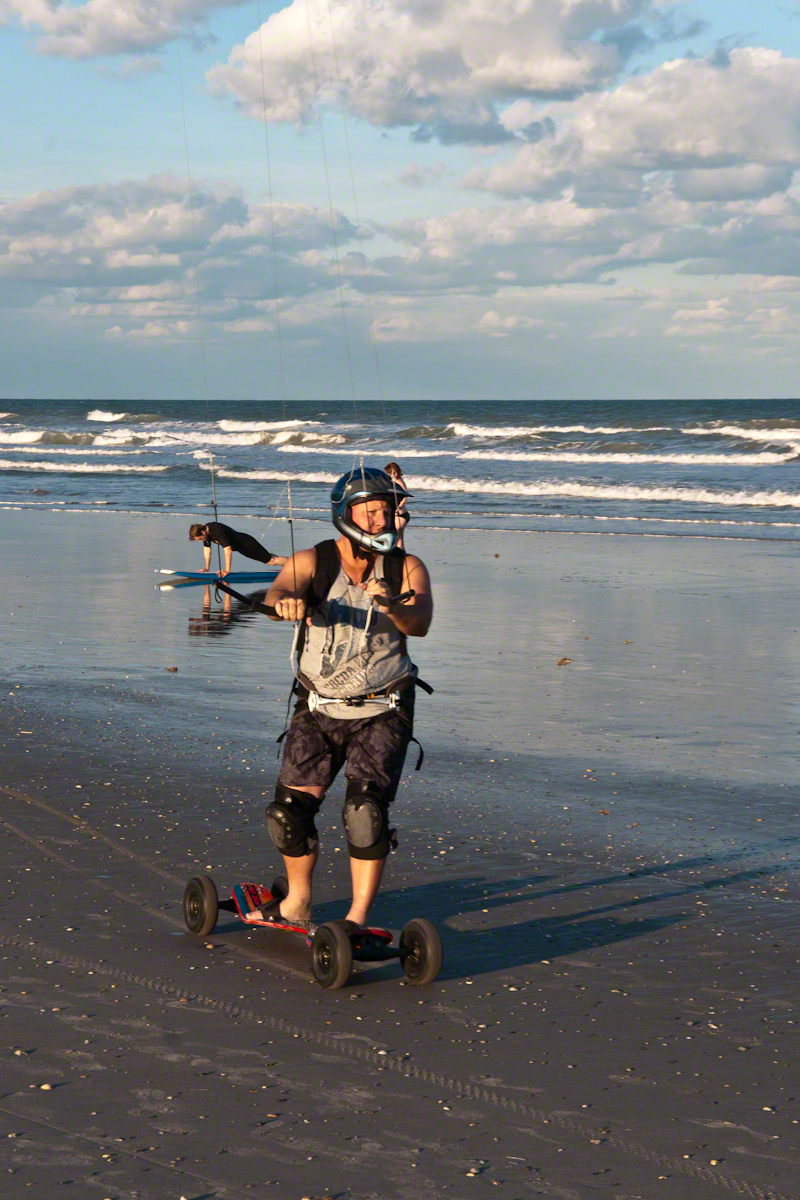
Her partner approaches

The name “Wheels of Doom” suggest the danger of going this fast over a hard, rough surface.

My Online Gallery– CLICK ME!!!!
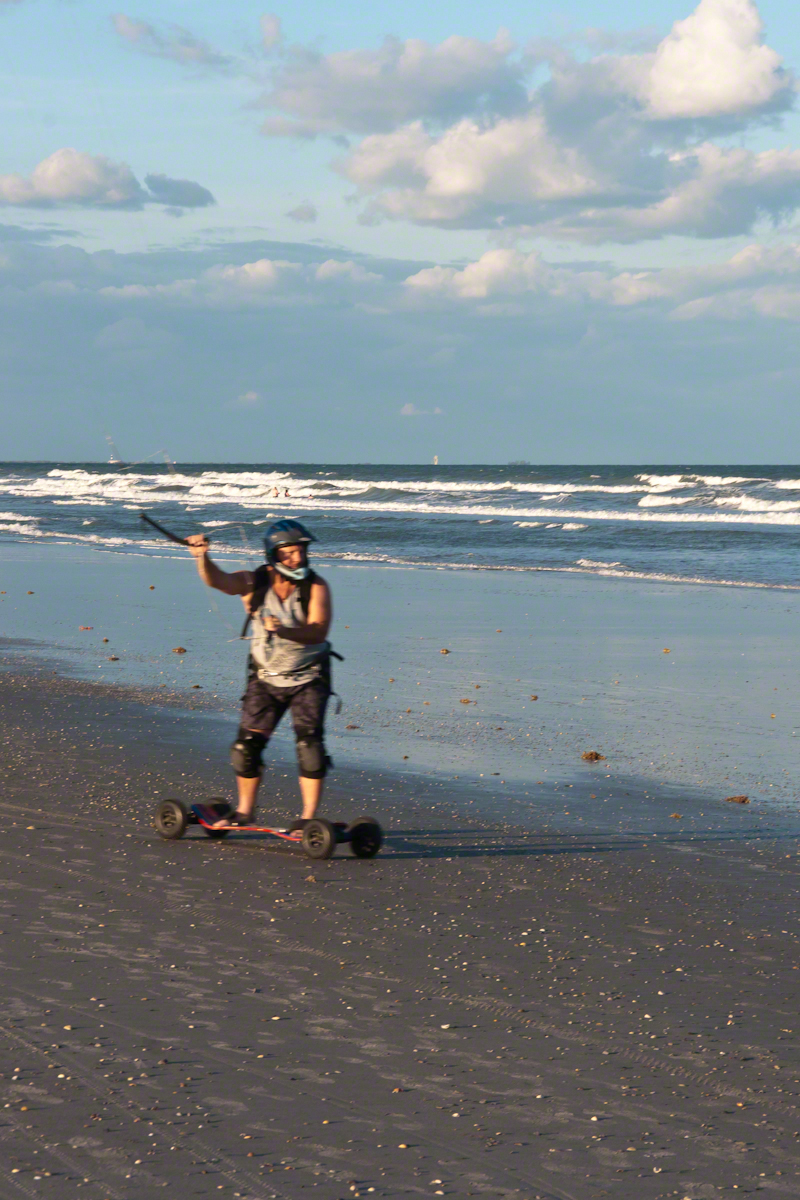
He makes it look easy

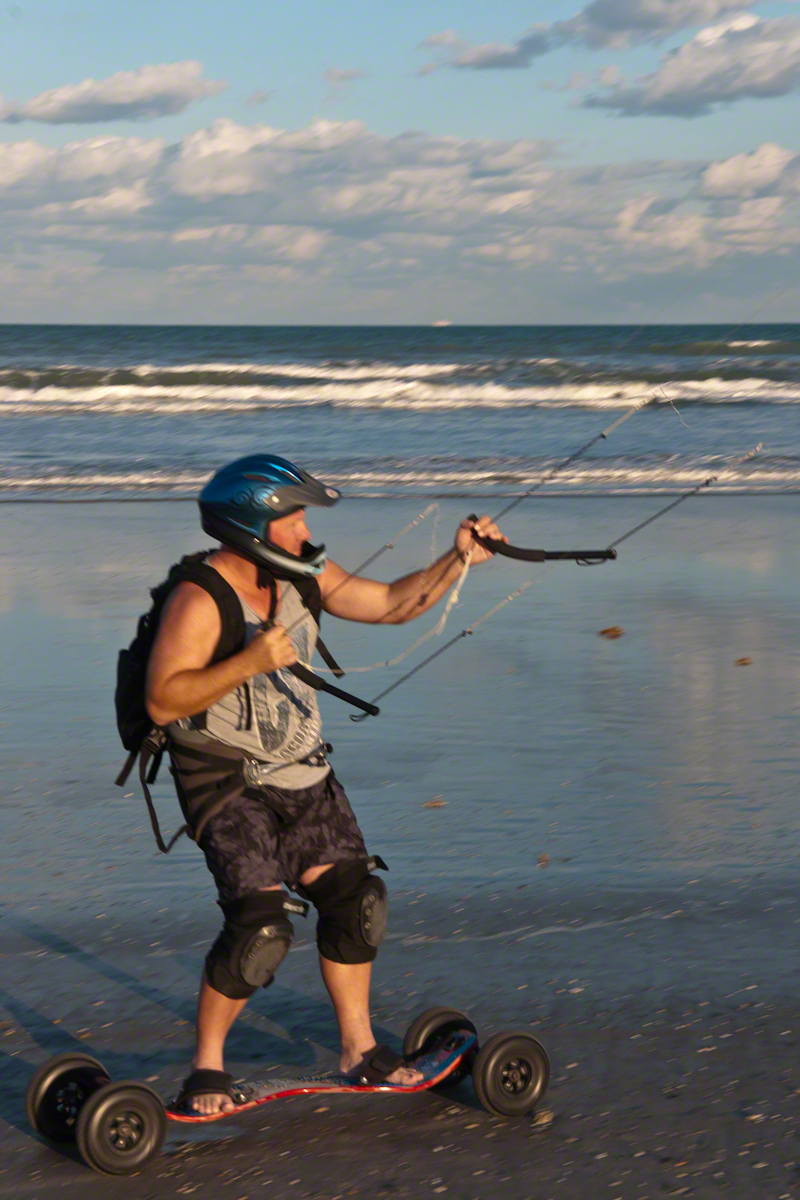
These Cocoa Beach riders are outfitted for speed and safety: pads, helmets.

My Online Gallery– CLICK ME!!!!
He maneuvers kite overhead to slow down.

Barefeet?? Unprotected skin? They must know how to dress, though maybe not.  He has never fallen?

My Online Gallery– CLICK ME!!!!
Full speed ahead with the kite positioned forward.

The beach within the tide line is solid, the pebbles, broken shells and such unforgiving as asphalt.

Click this link for another Cocoa Beach post
Click this link for a Kite Surfing post

Copyright 2022 Michael Stephen Wills All Rights Reserved

Mercury 7 Pre-Launch Facilities

Hosting Astronaut ZZZZZZZ’s and much more

Here is the sixth in a series of photographs centered on the early history of space flight on Cape Canaveral mostly taken during a tour organized by the Cape Canaveral Lighthouse Foundation. “Google” the foundation for details of future tours. Here we explore pre-launch support for the Mercury program, including the first USA Orbital Launch of John Glenn from Launch Complexe 14 (LC 14).

Overview

Leaving LC 1 – 4 (see Post WWII Launch Complexes”), our bus turned onto Central Control Road passing construction on Launch Complex 36 (LC36). In 2015 Blue Origin (Amazon money) leased LC36 where it planned to launch the “New Glenn” vehicle after 2020. I snapped the churned-up sand and construction equipment, not interesting at all IMHO.

Click Any Image for a larger viewe
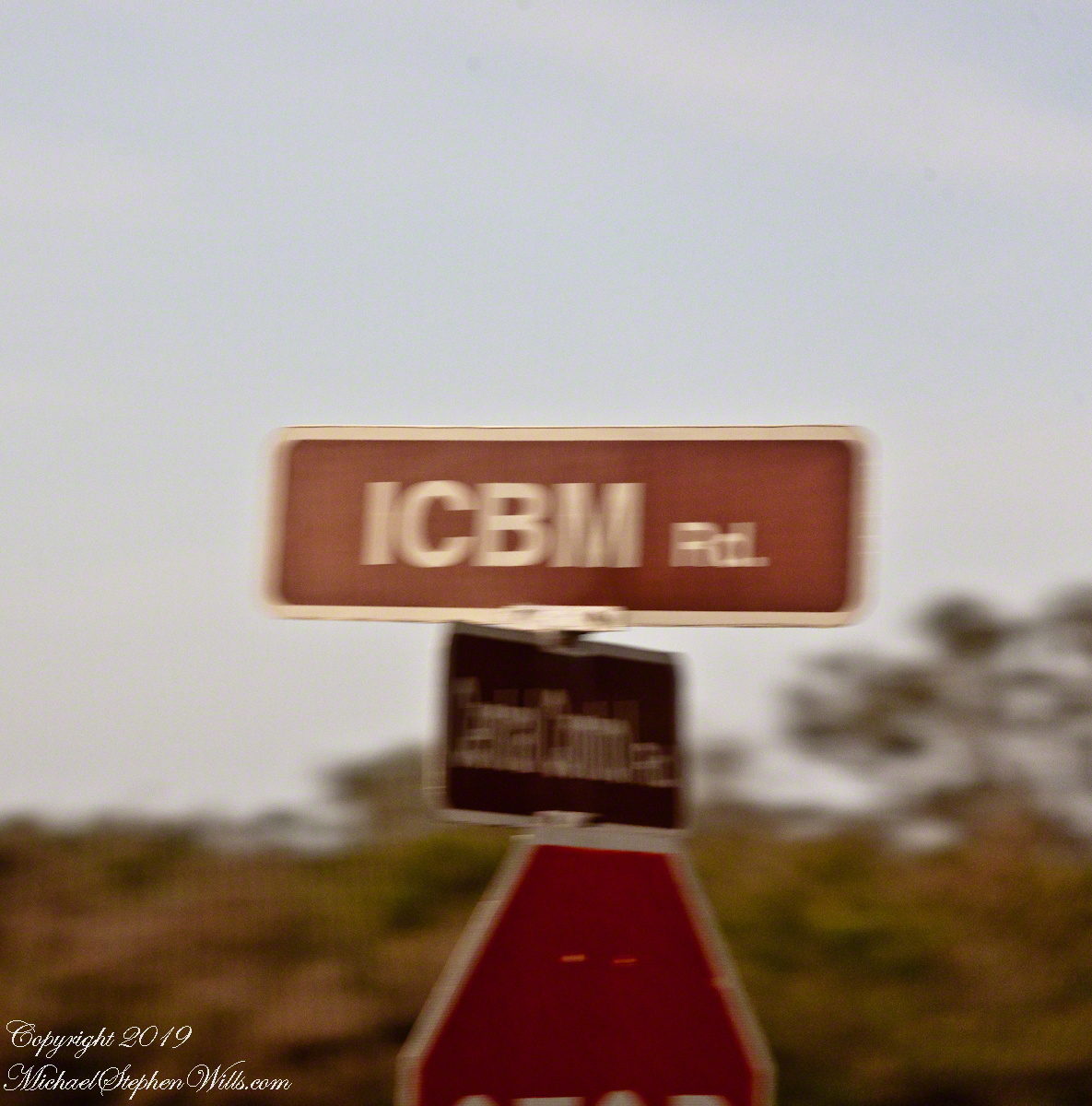
Corner of Central Control and ICBM Roads. Cape Canaveral Air Force Station.

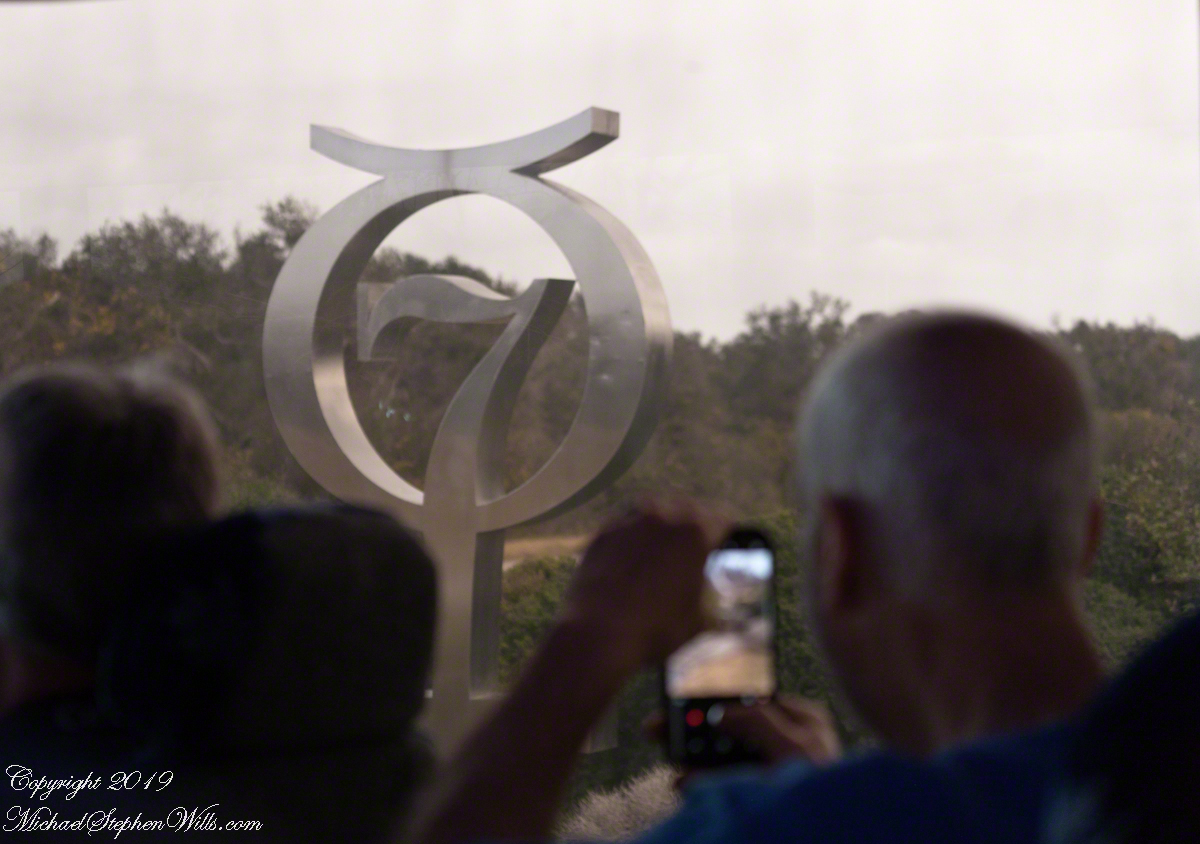
The “New Glenn” was named in homage to John Glenn, the first American to orbit the earth in 1962. We turned right onto to ICBM Road, headed generally north, following a string of launch complexes along the Altantic shore toward Launch Complex 14 (LC14). A dissapointment was not stopping to walk the Mercury 7 Memorial at the corner of ICBM Road and LC14. Our bus stopped briefly enough for the following snap. It is a memorial because John Glenn, the surviving member of Mercury 7, passed away December 8, 2016 at the age of 95.

Mercury 7 Memorial, just off ICBM Road

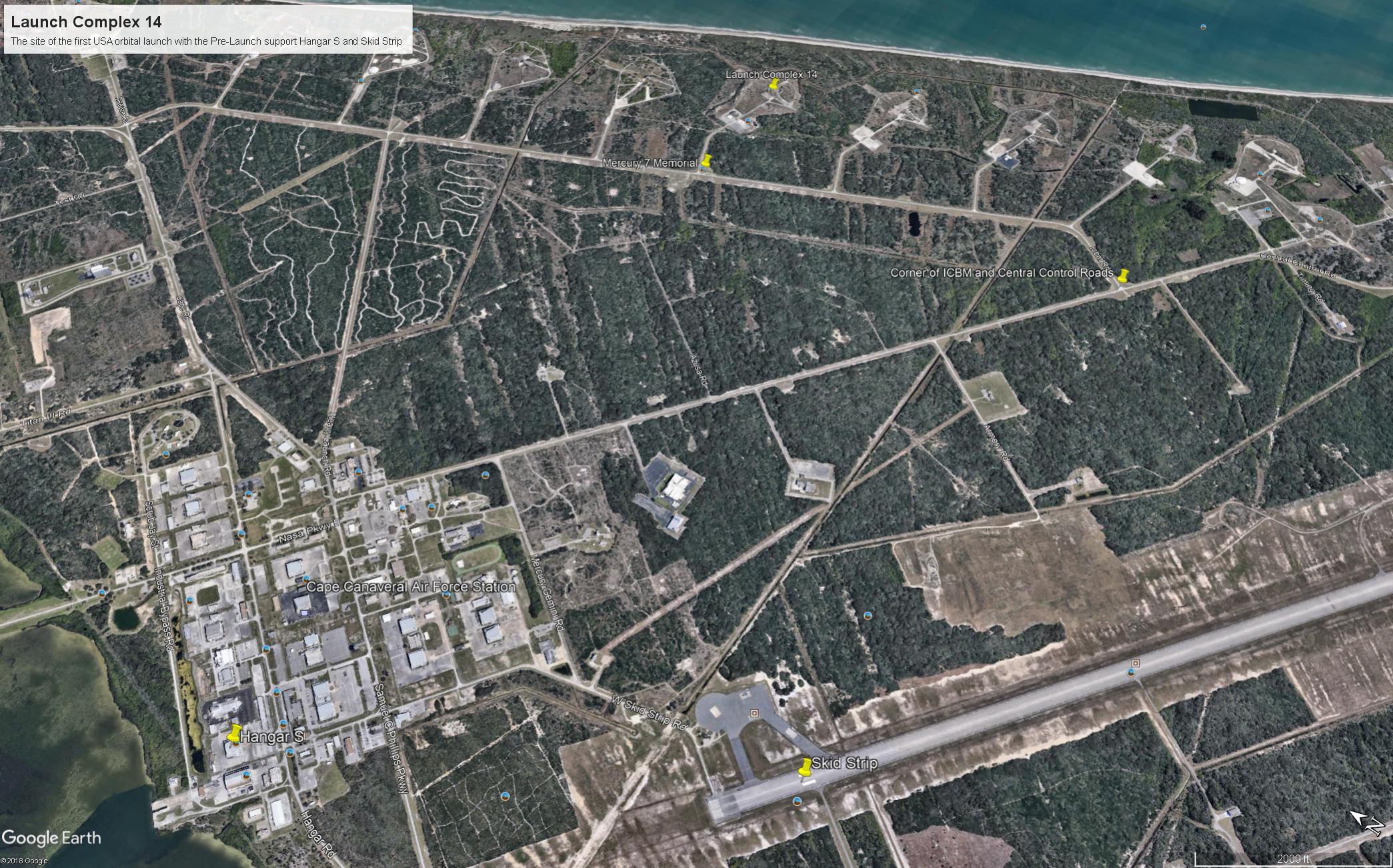
I will cover at length the Mercury-Atlas vehicle that powered John Glenn into orbit February 20, 1962. The tie-in between ICBM road and this series of launch complexes is the early space missions were on re-purposed Intercontinental Ballistic Missles (thus, ICBM). “Atlas” is the name of the ICBM used for Colonel Glenn’s 1962 flight. Click on the following image to find labled pushpins for the corner of Central Control and ICBM Roads (upper right), the road to LC14 and Mercury 7 Memorial.
You will also find a pushpin for the Skid Strip, bottom just to right of center. The earliest cruise missle tests (see “Cruise Missles” and Post WWII Launch Complexes” ) included navigation to a landing on non-wheeled “skids.” The strip was maintained in support of the manned and later missions when cargo planes delivered the early space capsules, landing, not skidding hopefully, for transfer to a Pre-Launch facility, Hangar S.

Cape Canaveral Launch Complex 14 and Pre-Launch Support: Hangar S and the Skid Strip

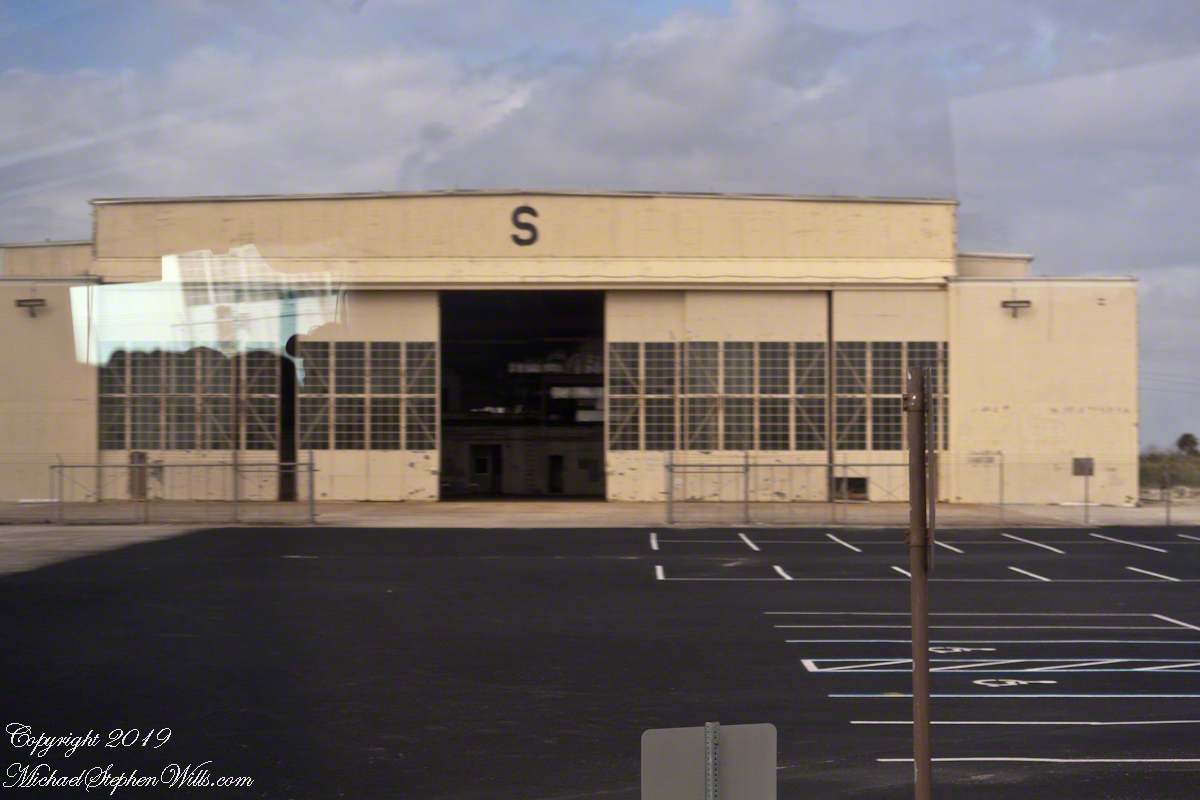
Hangar S is seen below as we passed later in the tour. Built 1957 by the military the 61,300 square feet were acquired by NASA in 1959. The early space capsules were tested here in an vacume chamber to ensure the vehicle supported an breathable atmosphere for the occupants.

The first American space voyager was Ham, a chimpanzee. Ham lived in a residential area on the second floor of Hangar S. For a period of time the Mercury 7 shared the spartan second floor quarters. “The Right Stuff” (a 1984 film from a Tom Wolfe book) included scenes from this episode of the program.

Constructed in 1957, Hangar S served for pre-flight processing from Mercury through the final flight of the Space Shuttle. This is where the Mercury 7 astronauts were first quartered on the second floor and later, is where they stayed prior to flight. The Lunar Orbiter was prepared here.
Comfortable Quarters

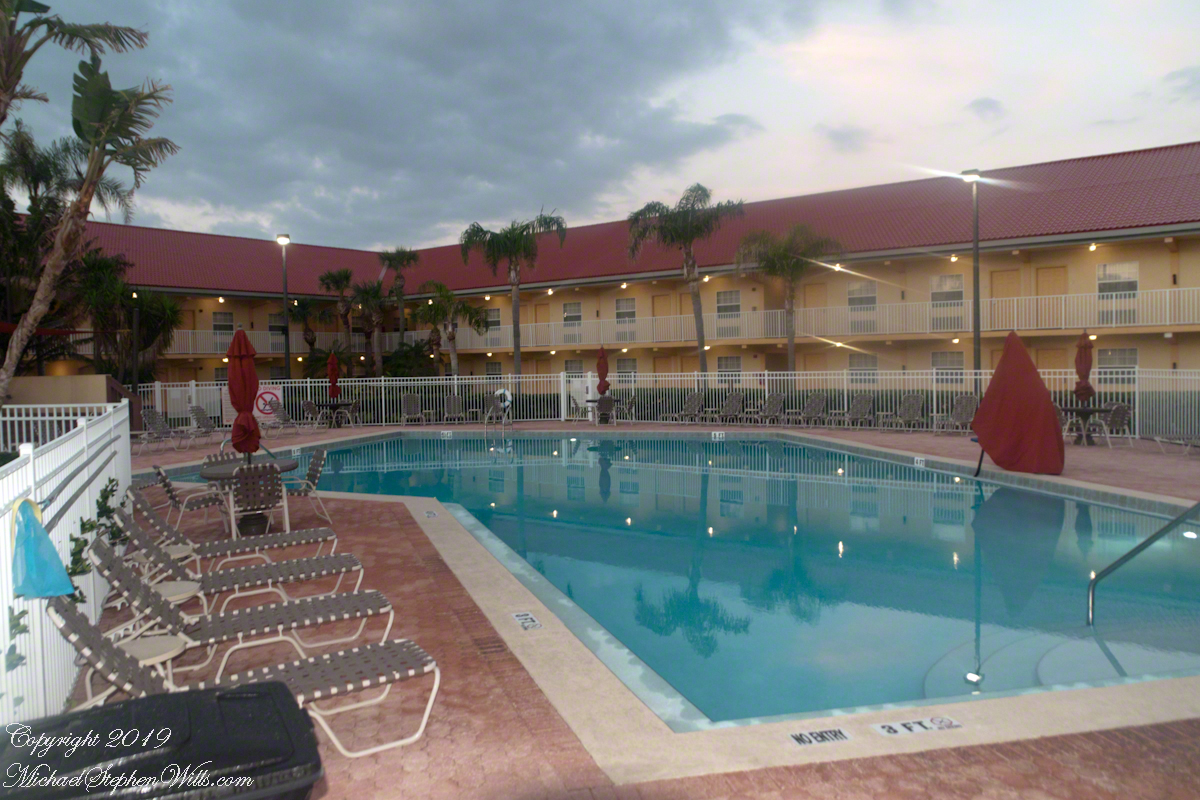
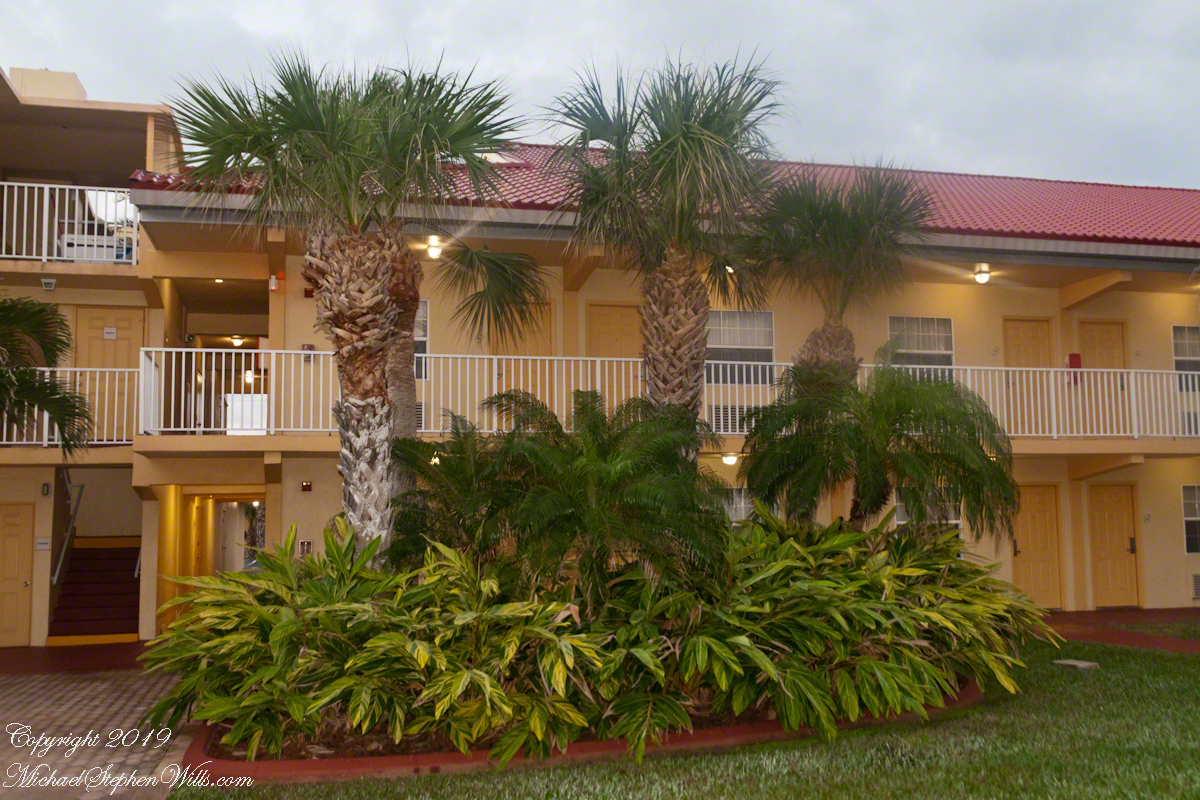
In short order arrangements were made for more comfortable quarters, just off the ocean in Cocoa Beach. It was a new hotel given over entirely to the Mercury 7. Pam and I stayed there in 2018 while taking this tour, it is the La Quinta across from the International Palms. We recommend it a clean, comfortable, reasonably price and a great story to share afterwards. The Atlantic Ocean is a five minute walk.

La Quinta Inn was the home of the Mercury 7 Astronauts, 1275 N Atlantic Avenue Cocoa Beach, Florida 32931

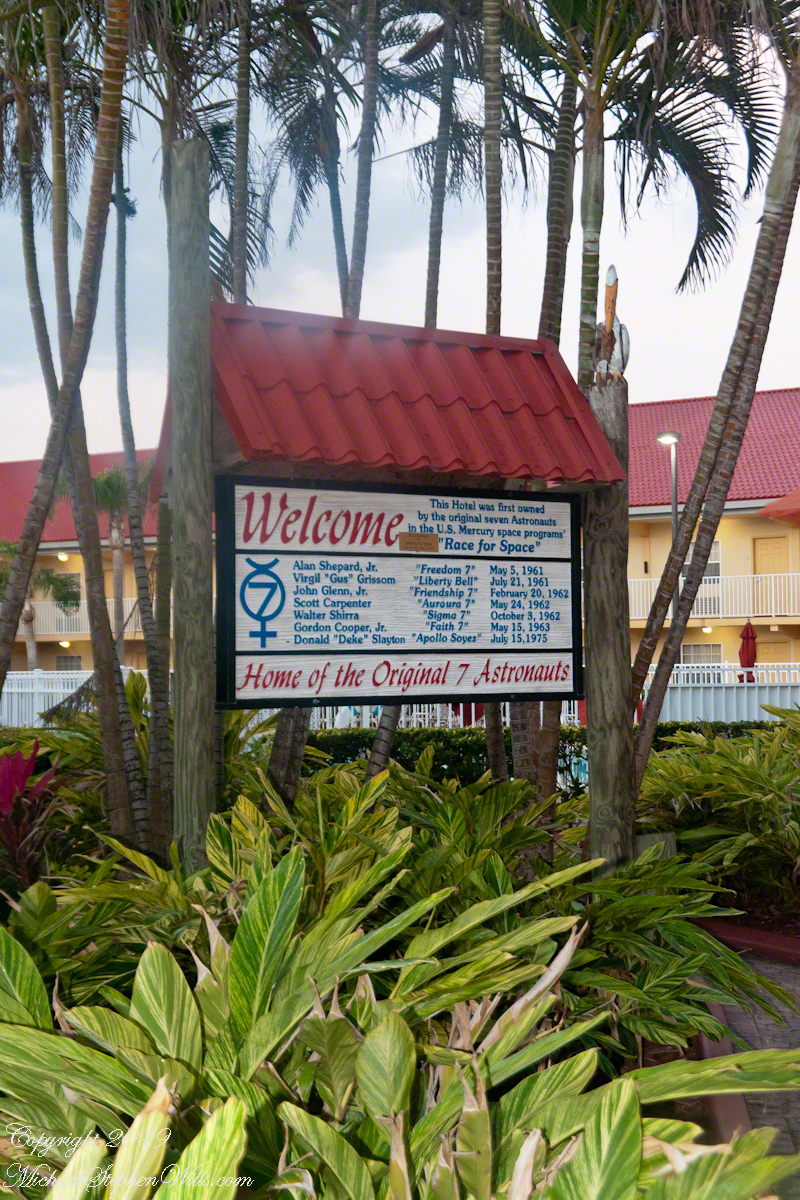
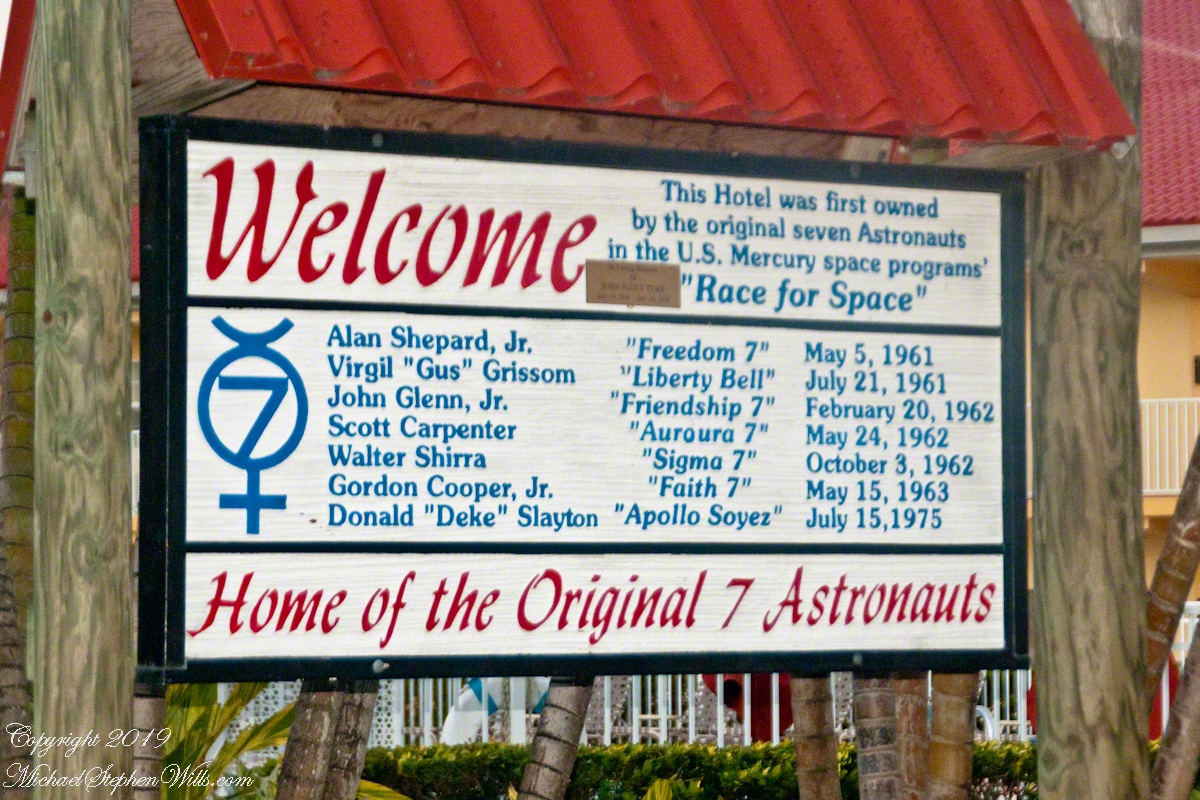
I learned from the tour how the hotel was donated to the Mercury 7 by a private individual. They owned the hotel. Here is a very informative sign just off the La Quinta lobby with their names. Each first mission, as named by the astronaut, is listed.

La Quinta Inn was the home of the Mercury 7 Astronauts, 1275 N Atlantic Avenue Cocoa Beach, Florida 32931
View of the hotel built for and first owned by the Marcury 7 astronauts. They lived here in the early days of the USA space program.

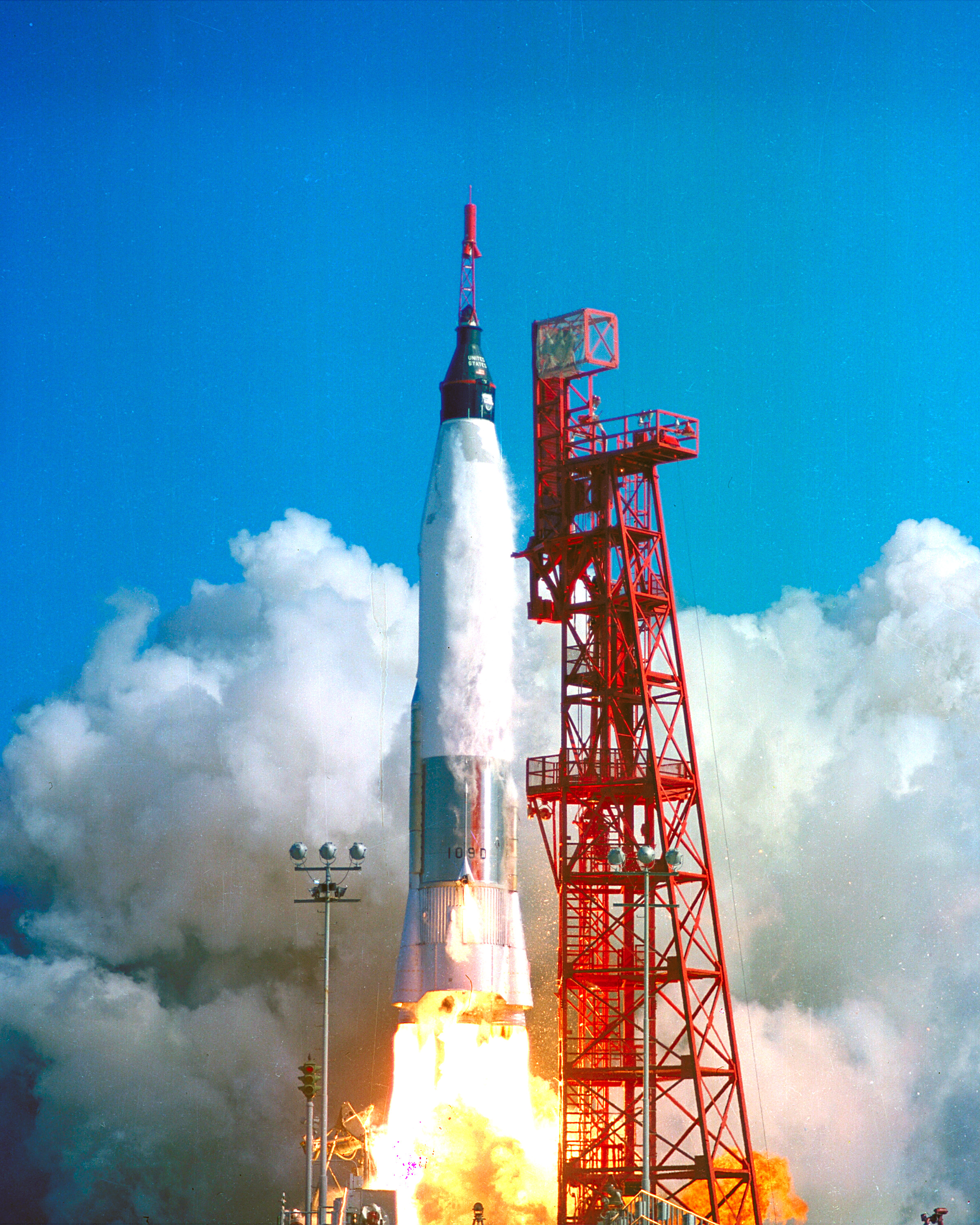
Blastoff!!

Next post will feature images of LC14 from 2018.

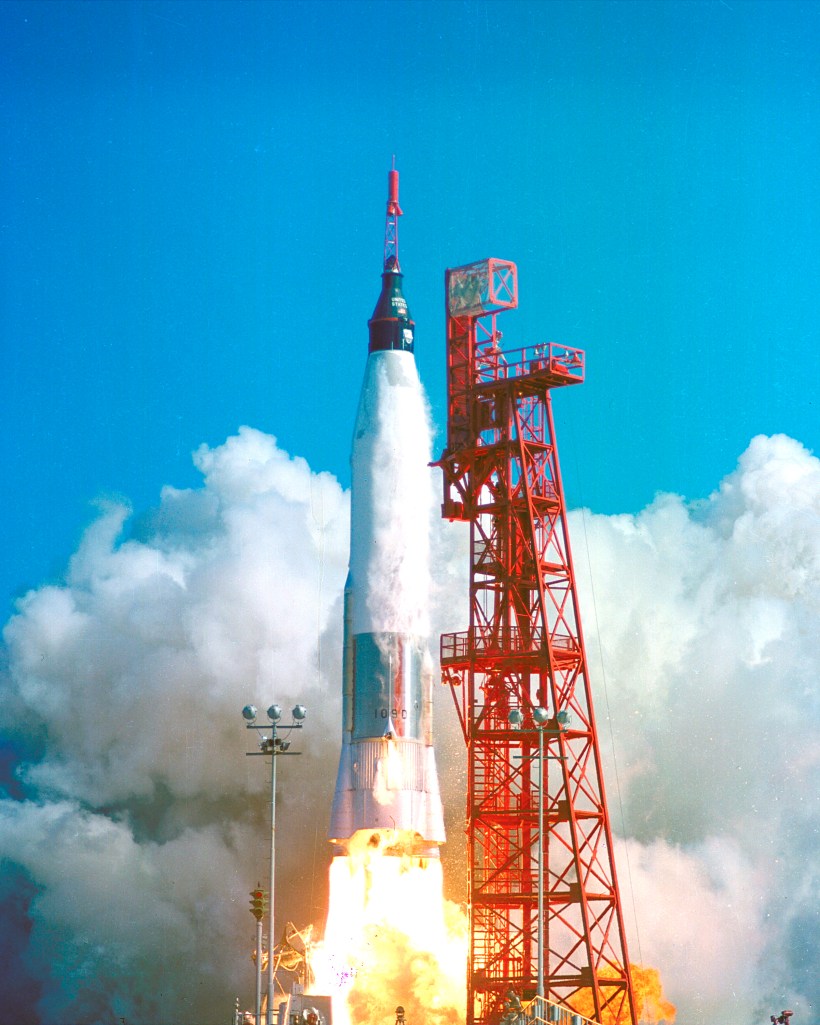
Launch of Friendship 7, the first American manned orbital space flight. Astronaut John Glenn aboard, the Mercury-Atlas rocket is launched from Pad 14. Public Domain Photograph by NASA.

ClickMe for the next post in this series, “Launch Complex 14 Today.”

ClickMe for the first post in this series, “Cape Canaveral Lighthouse.”

Sources of information for this post: I used information from the Wikipedia site for the key words John Glenn, Launch Complex 14, Mercury-Atlas, Launch Complex 36. Plus a “google” on “Hangar S History” that found an excellent page hosted on the NASA site. Cover photo of Friendship 7 Launch my be found on Flickr in “NASA on the Commons” photostream.

Copyright 2022 Michael Stephen Wills All Rights Reserved.

A Secretive and Failed Zuma SpaceX Mission

Driving to Cocoa Beach from Ithaca, Pam and I missed a horrendous storm because we did a side trip to Louisville, Kentucky, avoiding I95 January 4th and 5th and a rare and treacherous ice storm.

We met people who were stranded overnight near Savannah, Georgia while, on the same days, we drove Kentucky Hill Country for an overnight at Macon, Georgia all in excellent, dry, cold weather.
The storm itself, was a stroke of luck.  The first Space X launch of 2018 was delayed by the weather until the evening of Sunday, January 7th.
I was in place, in the dark, on Cocoa Beach with my Canon DSLR on bulb mode, securely mounted on a travel tripod.  My choice of lens was the 24 mm “wide angle.”

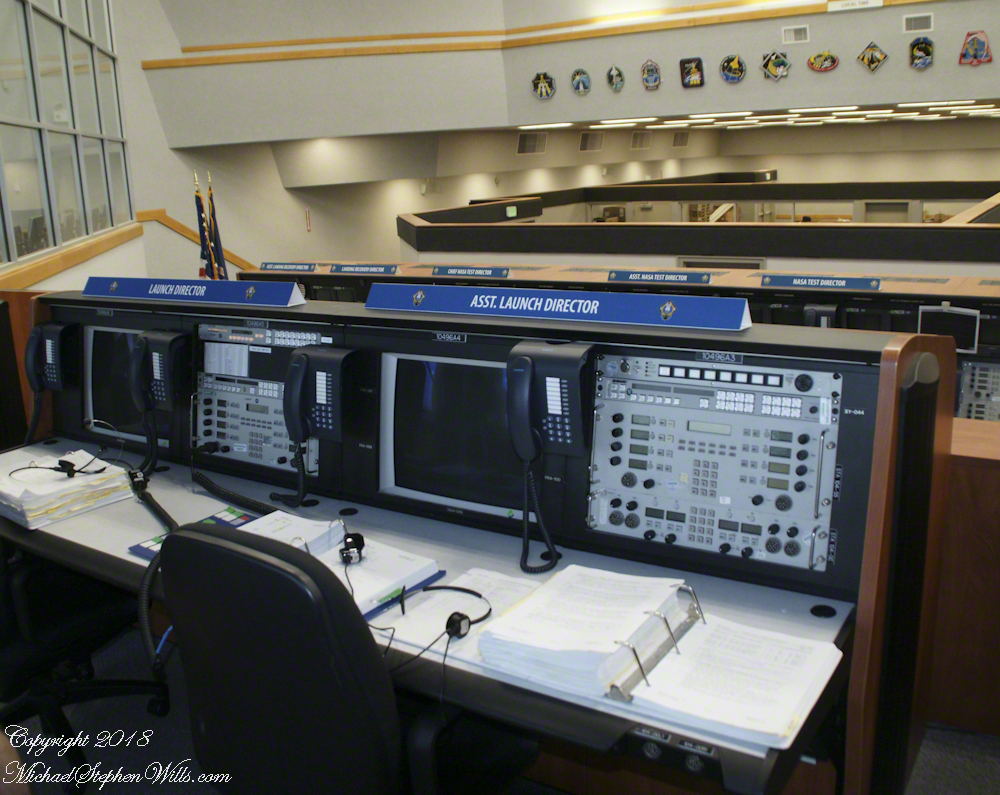
Proximity to the Kennedy Space Center is a reason we return to Cocoa Beach.  A year ago, March 2007, we did the “Launch Director Tour” offered once a month (if at all) and had a fantastic day. I’ll need to blog about it.

For now, here is a shot from the former Space Shuttle launch room.

Launch Control Center

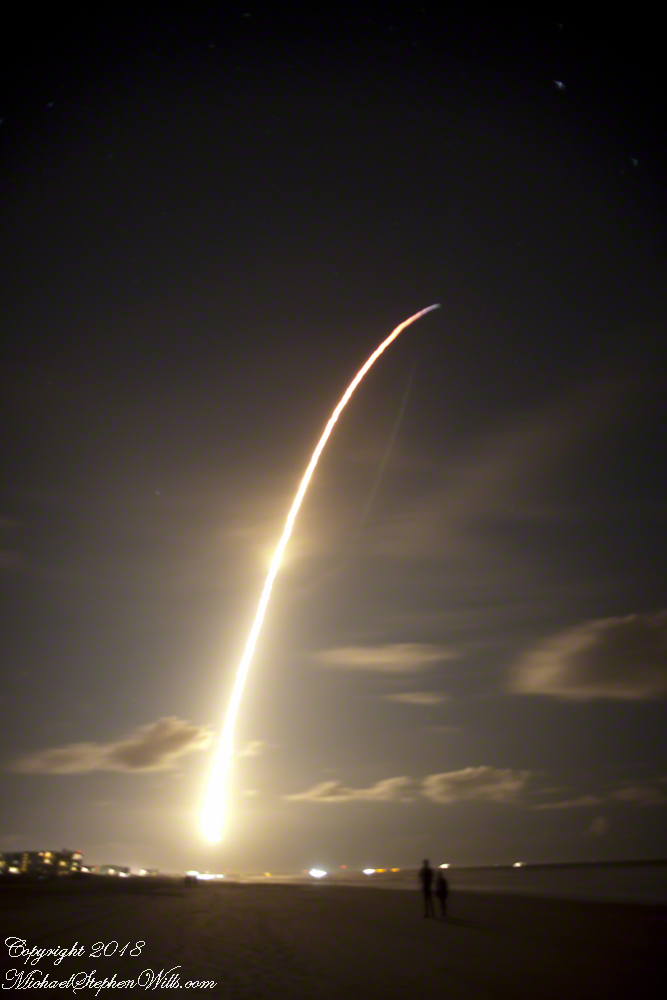
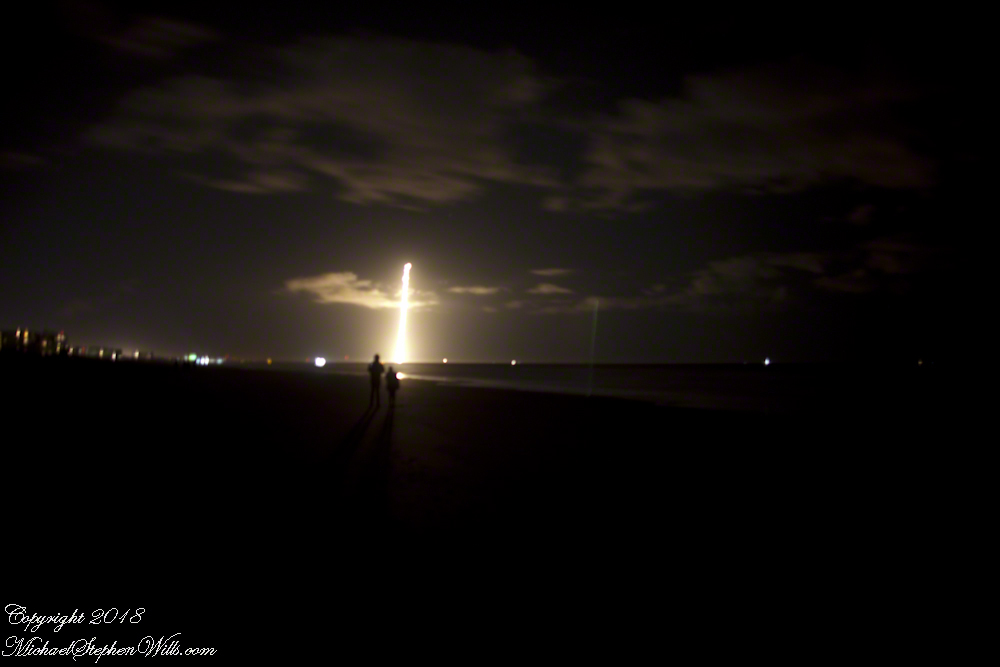
I planned camera placement well for this night launch.  The view held the entire parabola of the trail. Camera placement was based on researching the launch complex, finding it on Google Earth, using the line feature to determine the orientation of the complex from my location on Cocoa Beach.

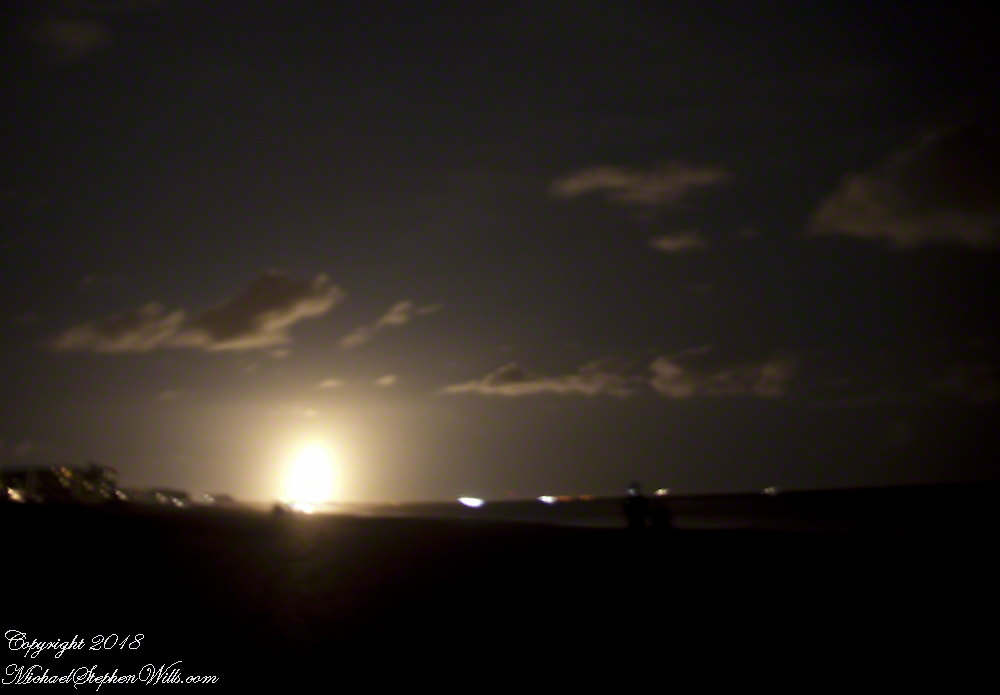
Live, the start of the launch is like a dawn in the northern sky.  I broke off the exposure to somewhat capture the effect.

Secretive and Failed Zuma Mission

The human eye, only the Falcon 9 flame is visible, as a single point of bright light ever rising, lighting the beach and clouds in a soft glow.

Secretive and Failed Zuma Mission

The long exposure blends the flame into a bright parabola, at one point the rocket engines throttle back, eventually the color changed to reddish from bright white.  I held the exposure until the rocket flame, in the image, turned to blue and faded away.

We waited for six (6) or so minutes, the camera mount and orientation unchanged, and then the incredible returning booster briefly lit up to land at Cape Canaveral Air Force Station. I missed the beginning of the burn.  In retrospect, I should have timed the launch and opened the shuttle 5 minutes or so after “blast off.”

Secretive and Failed Zuma Mission

Followed by a TWO sonic boom finale. Kabooom….Kabooom.

We read in the news the secret military satellite, named “Zuma”, on top of the Falcon crashed into the Indian Ocean.  SpaceX claimed the launch was a success (??), that the protective fairing jettisoned successfully.  No mention was made of the secret payload. The failure was with the Northup Grumman built “Zuma” satellite?  Hmmmmm.

Copyright 2022 Michael Stephen Wills All Rights Reserved.

Island Shrine

part of the Irish landscape

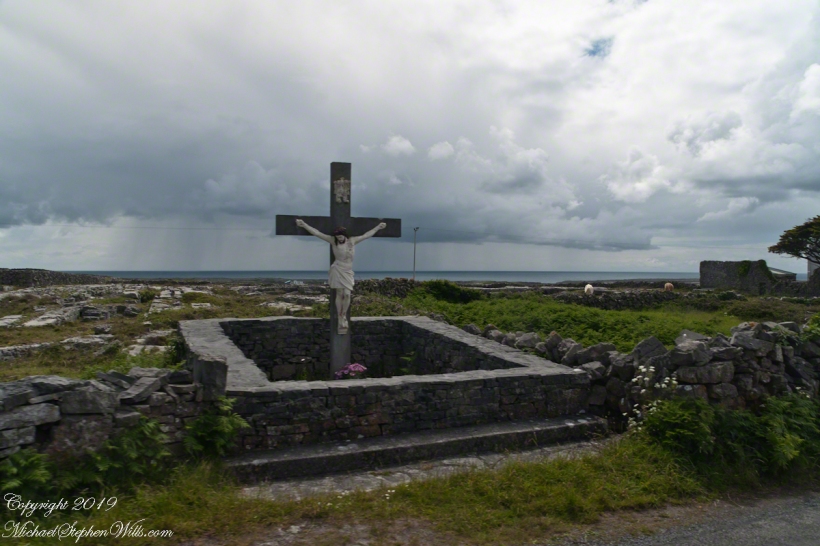
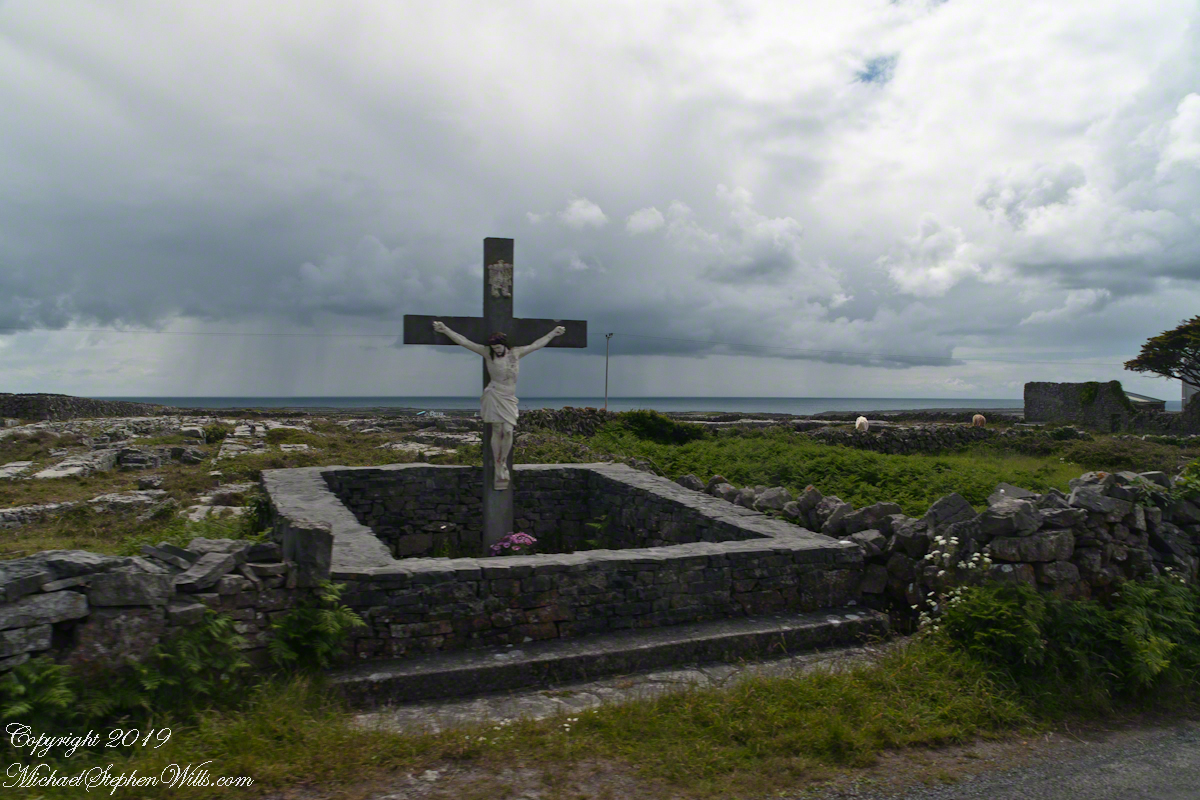
A roadside shrine on Cottage Road, Inishmore. The faith brought by the saints has deep roots here.

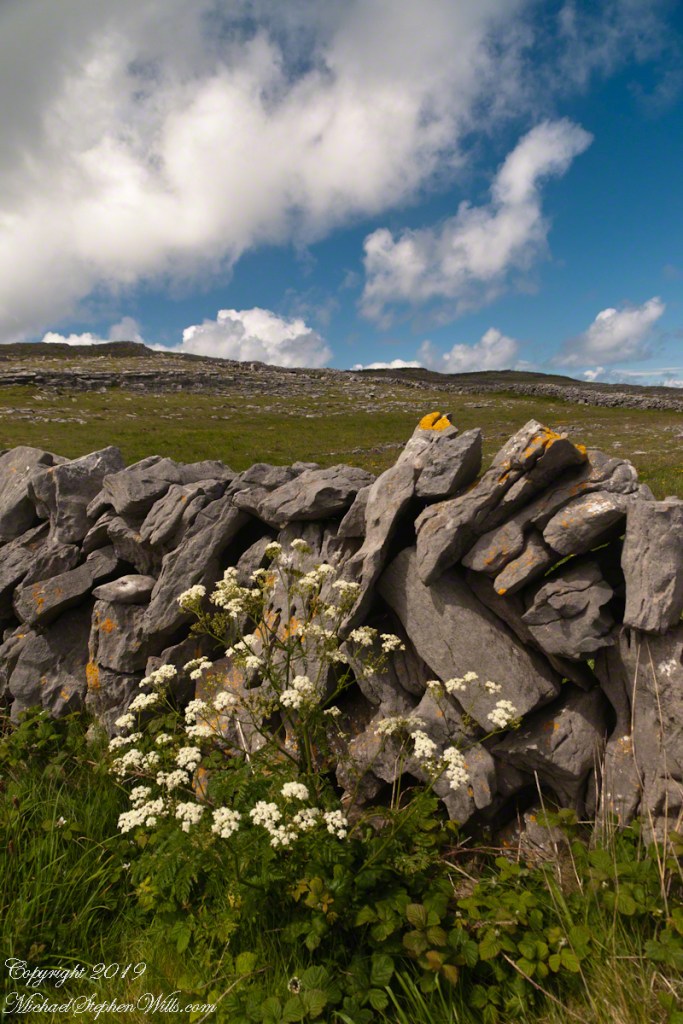
A large crucifix set with wet stone walls with cut flowers. The walls are the native limestone.

It is a spring (early June) afternoon and there are fern and wildflowers. The white flowers are Greater Burnet saxifrage (Scientific Name: Pimpinella major).

Click Me for Getty IStock photography of the Aran Islands

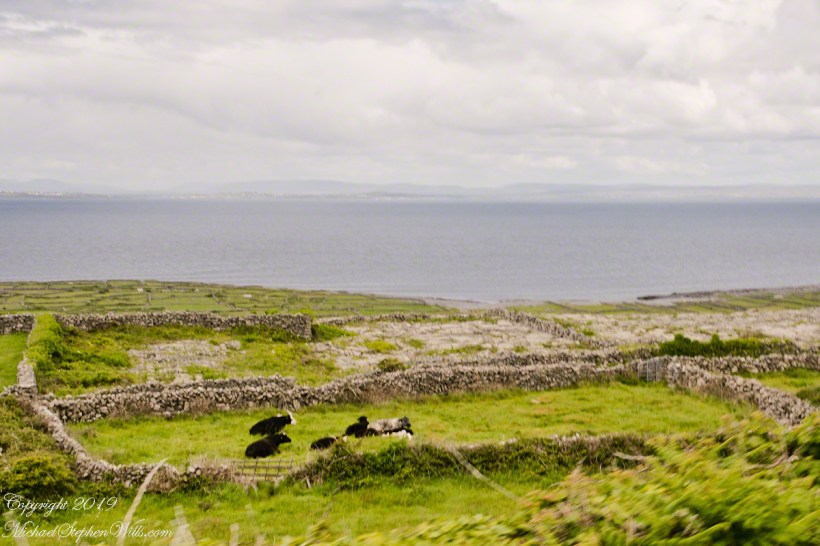
The existing dry stone wall was interrupted by the shrine. In the distance are dry stone walls around fields, a stone shed, feeding horses and the sea, being Galway Bay, storm clouds with distant rain.

Aran Islands, County Galway, Ireland.

Click me for the first post of this series, “Horse Trap on Inishmore.”

References: search google “Wet Stone”

Copyright 2022 Michael Stephen Wills All Rights Reserved

Inishmore Slideshow

An Aran Island Revel

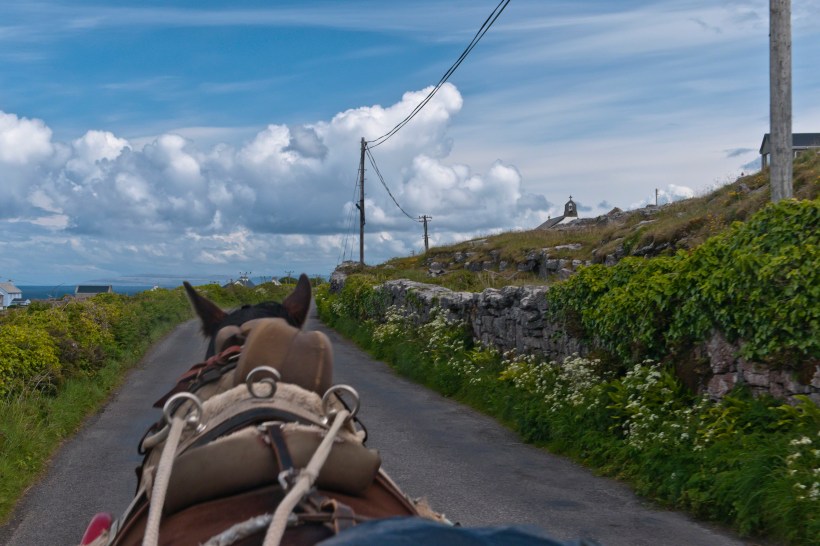
Imagine yourselves in an open cart exploring the island. Here are the photographs from my Inishmore exploration posts. Enjoy!!

Click for another great Island post, “Inisheer Welcomes the 2014 Gaeltacht Irish Football Champions.”

Cliff Edge II

Flowers on the edge

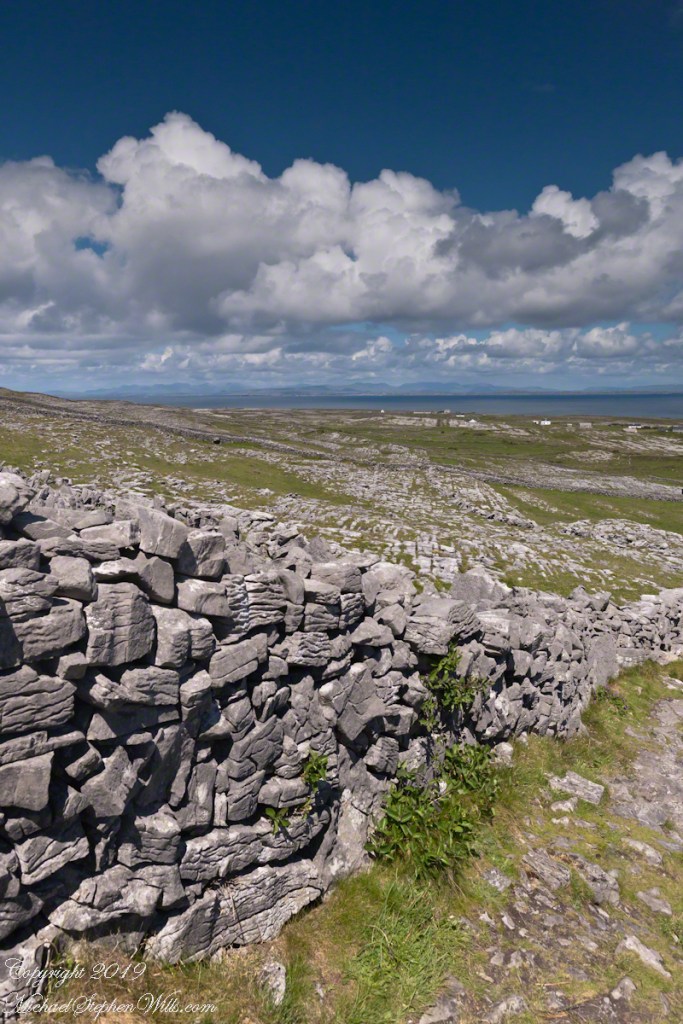
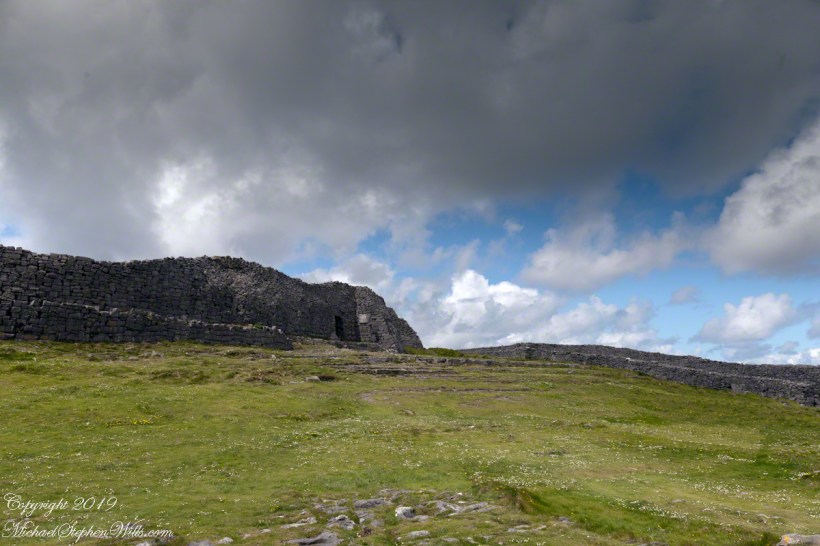
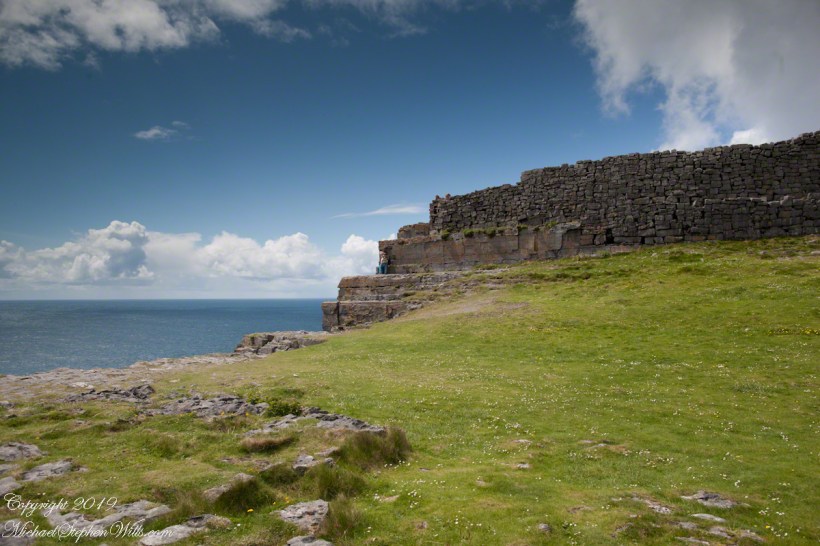
From the commanding location of Dun Aonghasa, looking northeast across Inishmore island, we can understand why the ancient builders chose this location.

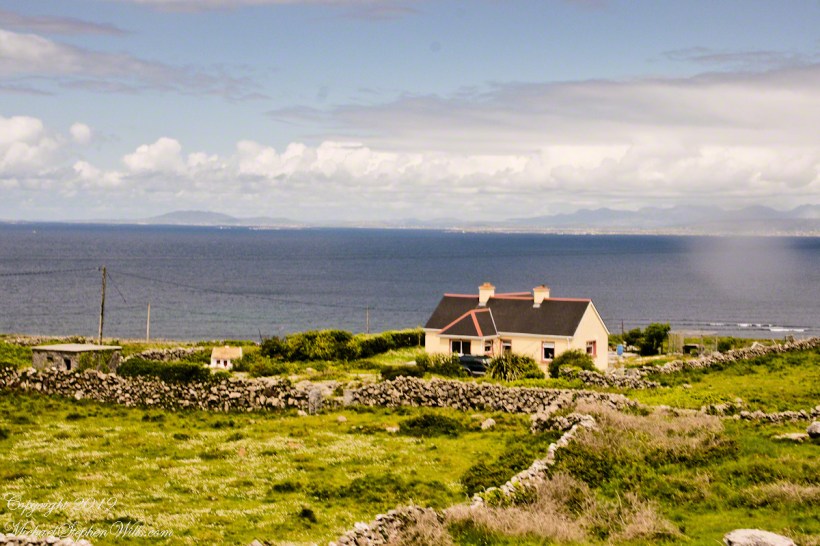
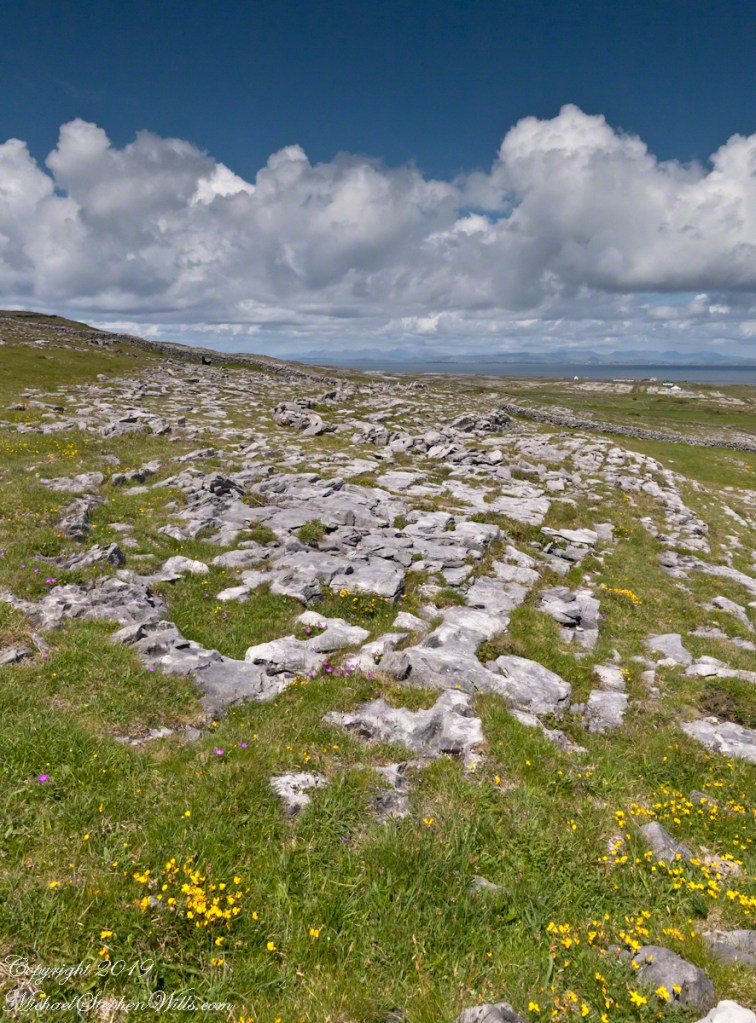
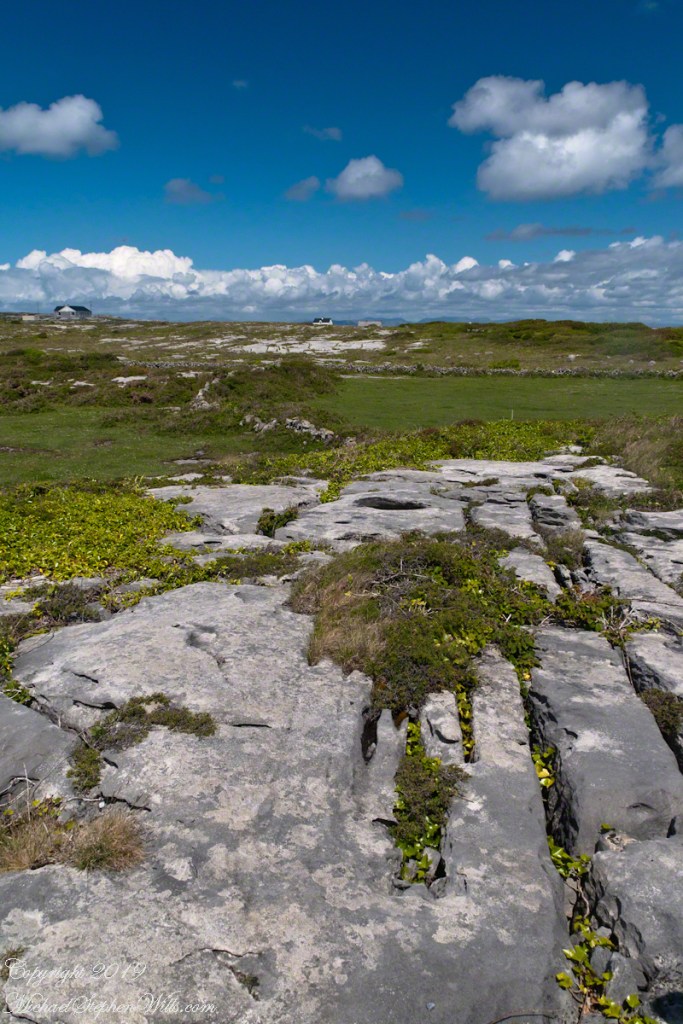
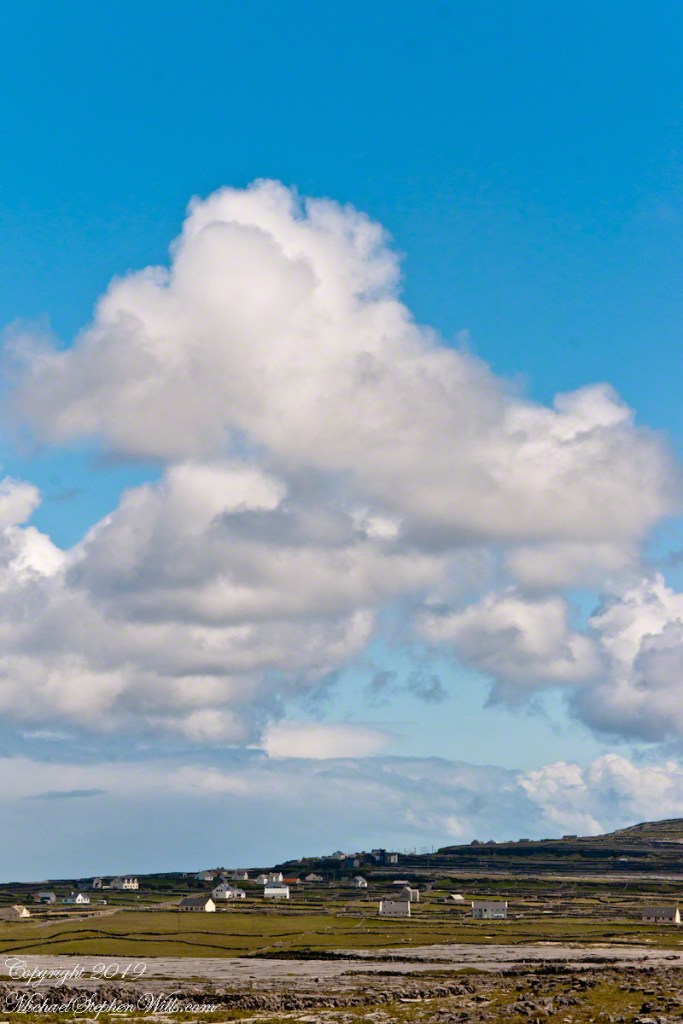
We also see the transition from exposed limestone to the fields built literally from the ground up (see my post “The How of Soil”).  For a closer view of island houses see my posts “Settled In” and “Cottage Road Cottage.”

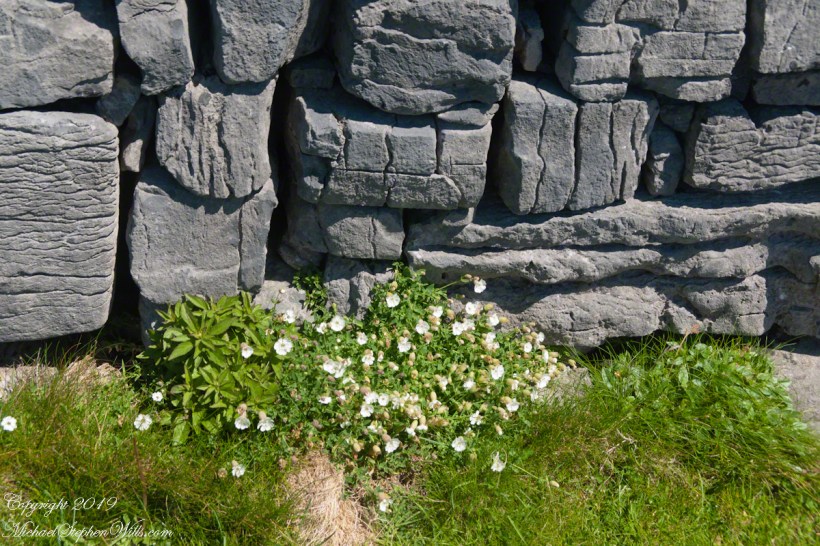
The field walls are described in my posts, “What is a rock, what is a stone?” and “Stone on Stone.”

Click the photograph for a larger view.  Enjoy!!

Click the link for my Getty IStock photography of the Aran Islands

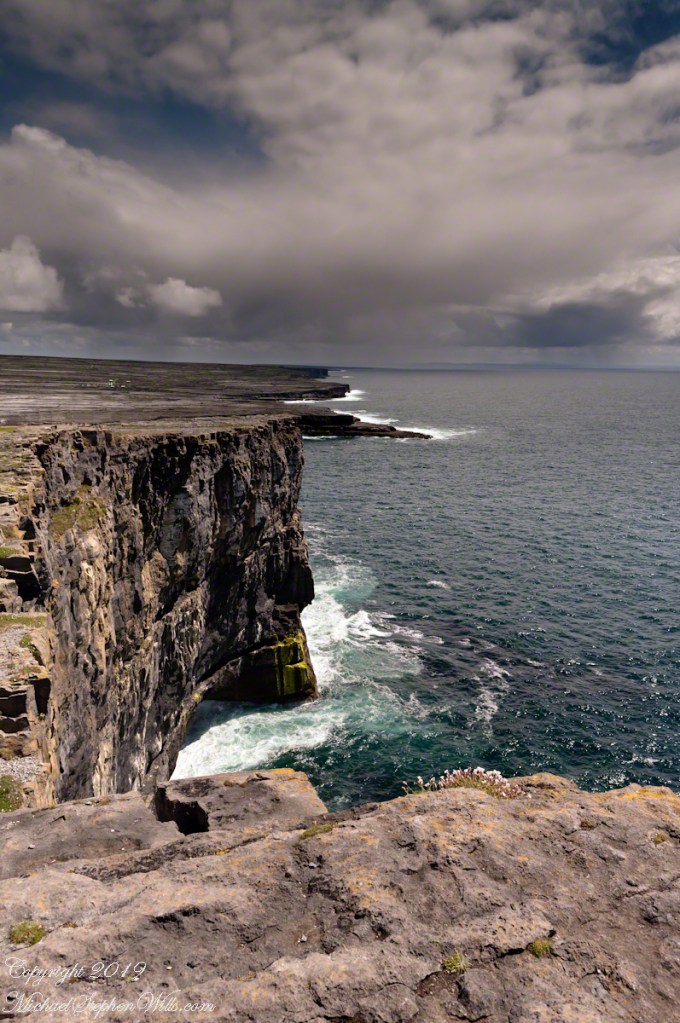
Breaking waves, turquoise sea below the dramatic cliffs of the ancient fort Dun Aonghasa (Dun Aengus),

in the distance the karst landscape of Inishmore with clouds of an approaching storm over Galway Bay.

Sea Campion (scientific name: Silene uniflora) (irish name: Coireán mara) clings to the edge.

Inishmore, Aran Islands, County Galway, Ireland.

Click me for the first post of this series, “Horse Trap on Inishmore.”

Copyright 2022 Michael Stephen Wills All Rights Reserved