Breezes and Memories: Pam’s First Walk and Reflections at Stewart Park

As Pam took her first therapeutic steps through Stewart Park after hip surgery, the wind off Cayuga Lake carried memories of our sailing days. This walk, a milestone along a journey of strength and reflection.

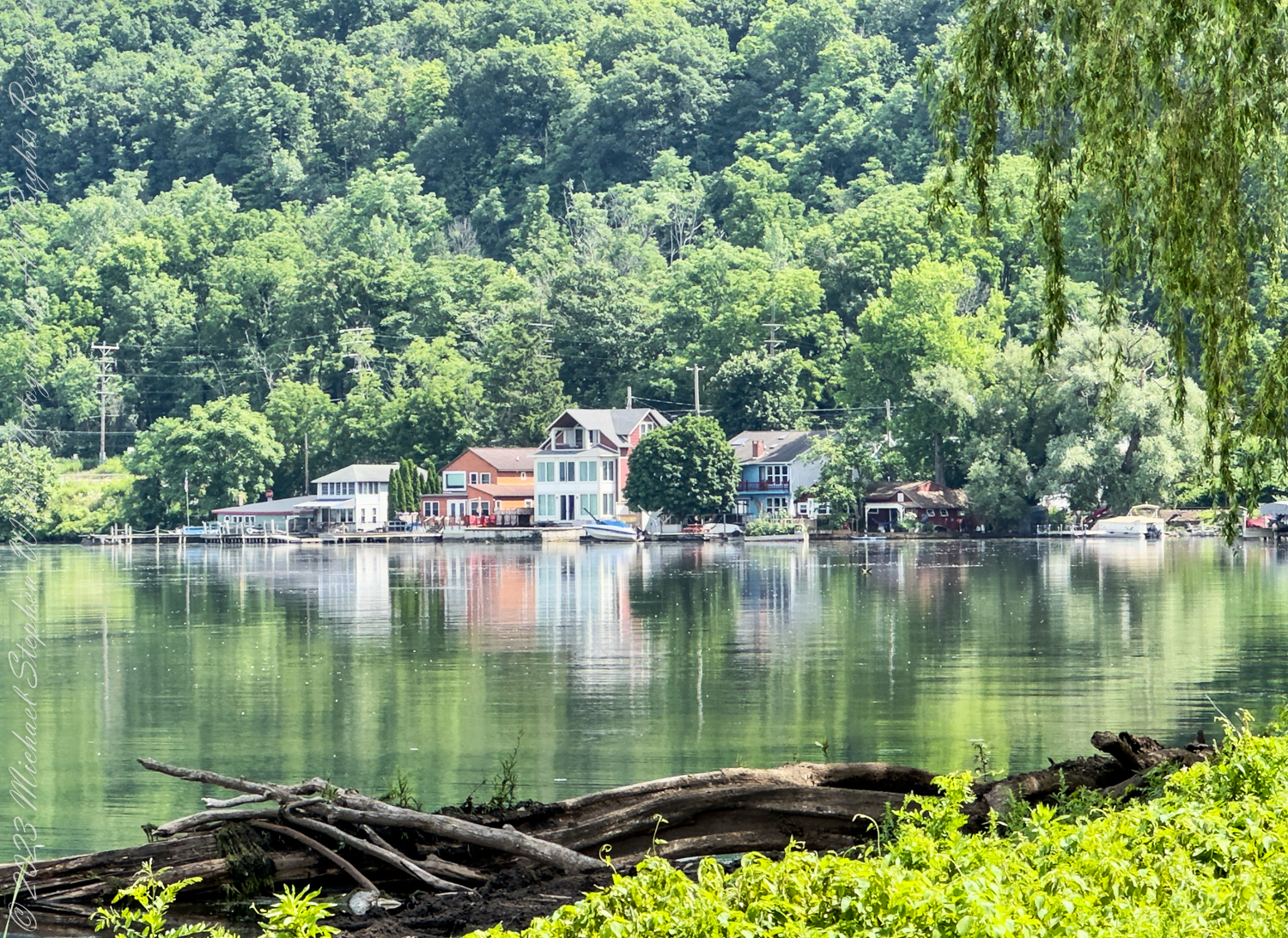
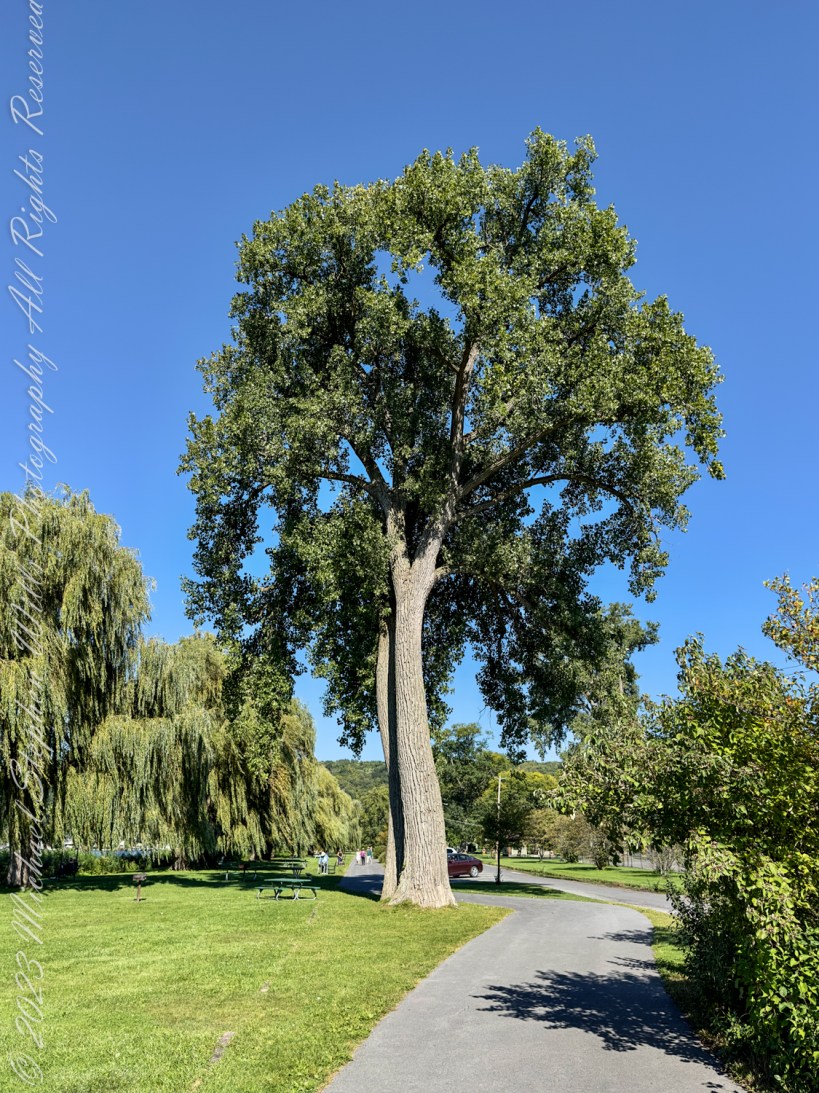
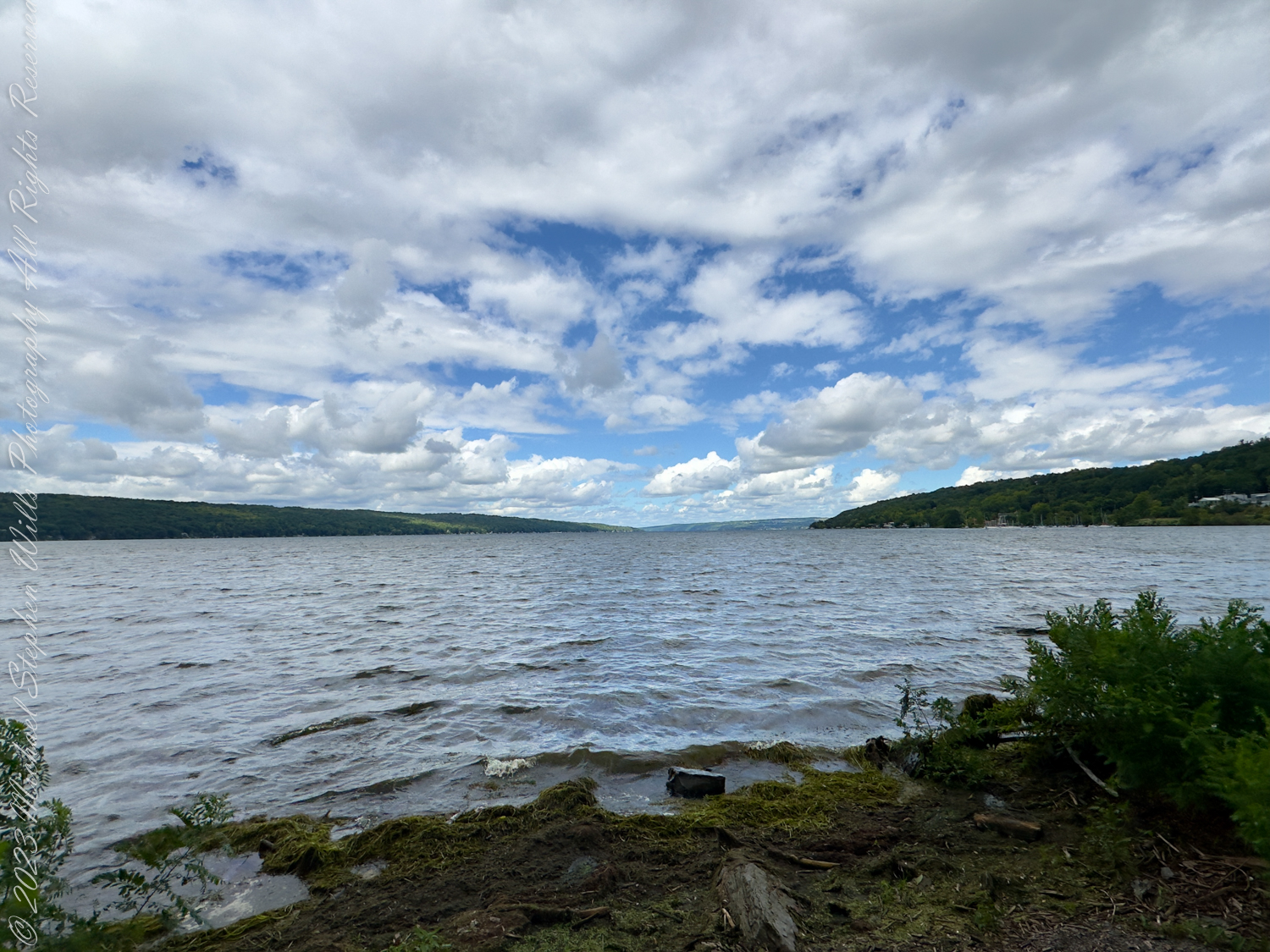
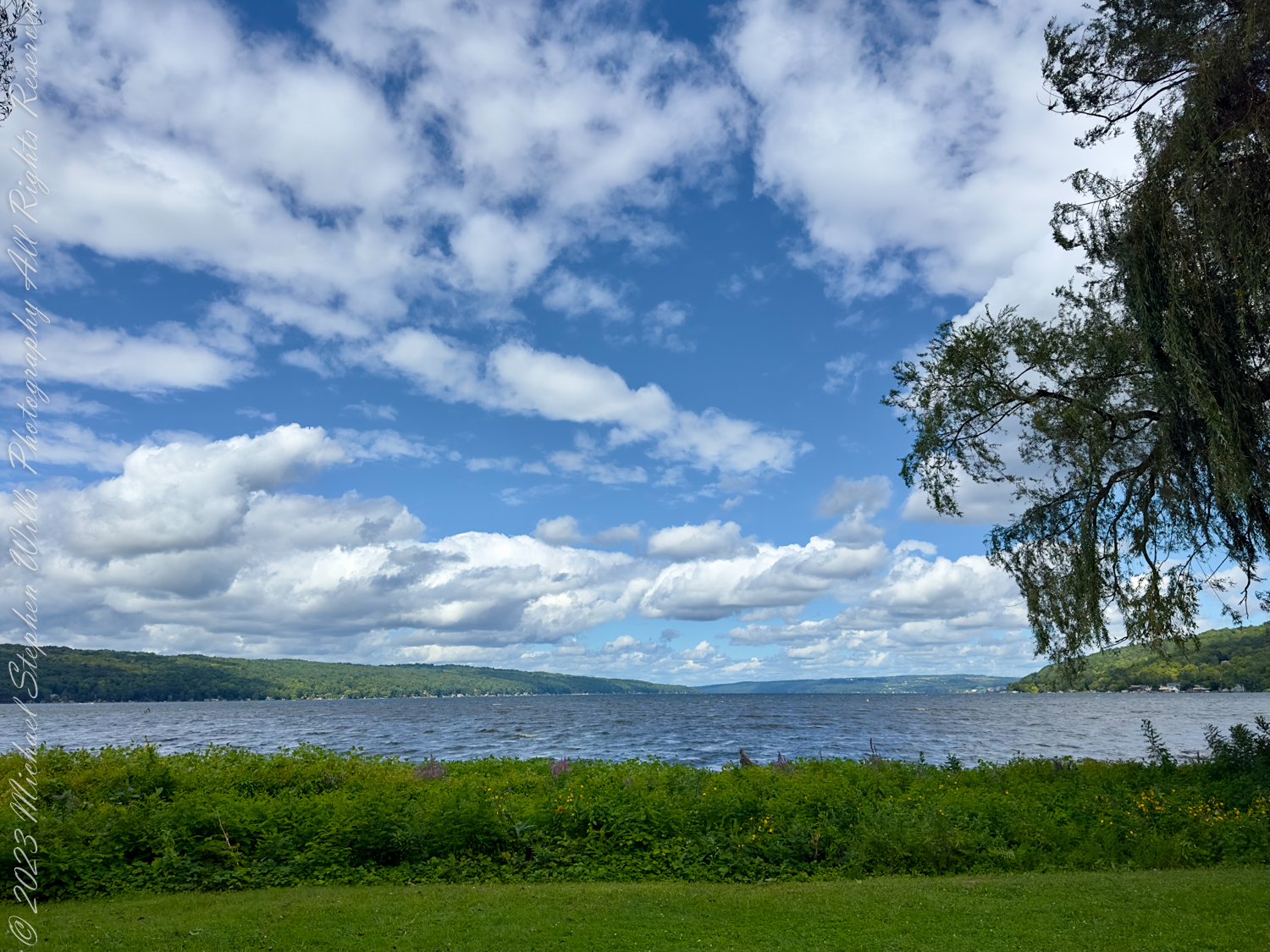
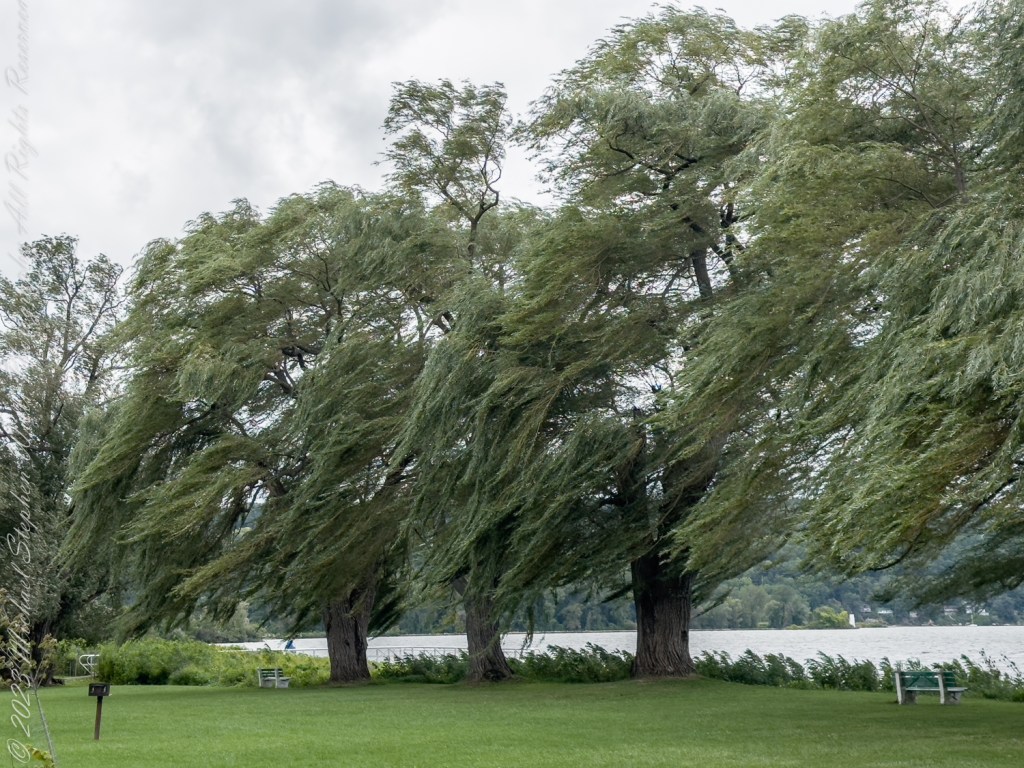
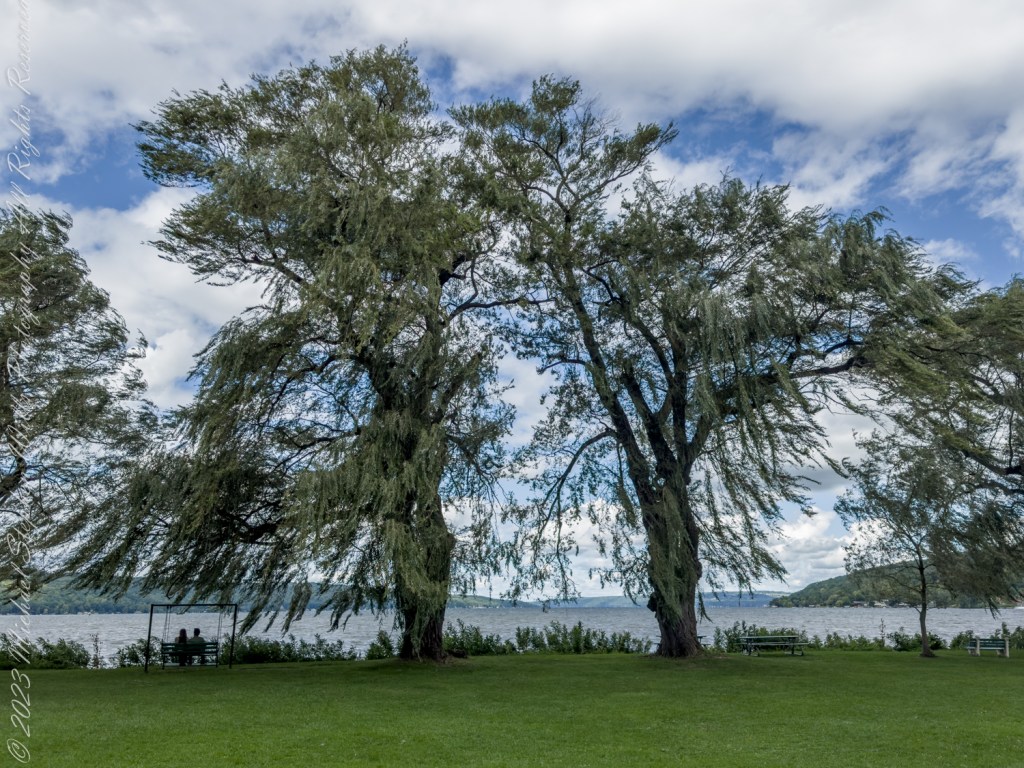
The breeze off Cayuga Lake was lively, stirring the willows and creating waves that rippled across the water’s surface as we arrived at Stewart Park. For Pam, this day marked a significant milestone: her first therapeutic walk since undergoing total hip replacement surgery. The park, located on the outskirts of Ithaca, New York, had long been a place of peaceful walks and scenic reflection for us, but on this day, it took on new meaning. The pathways and views we had enjoyed over the years now served as the backdrop for Pam’s journey of recovery.

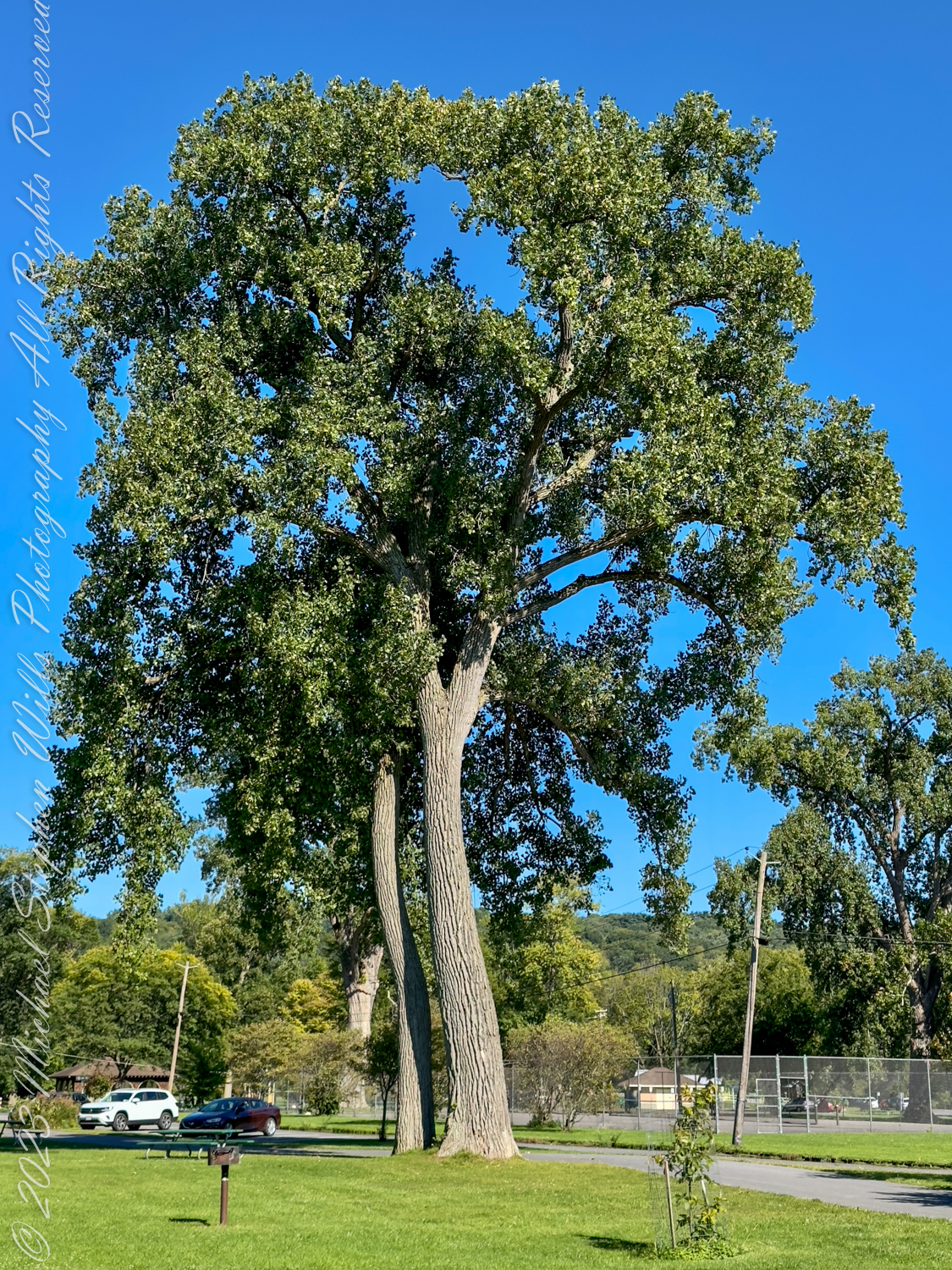
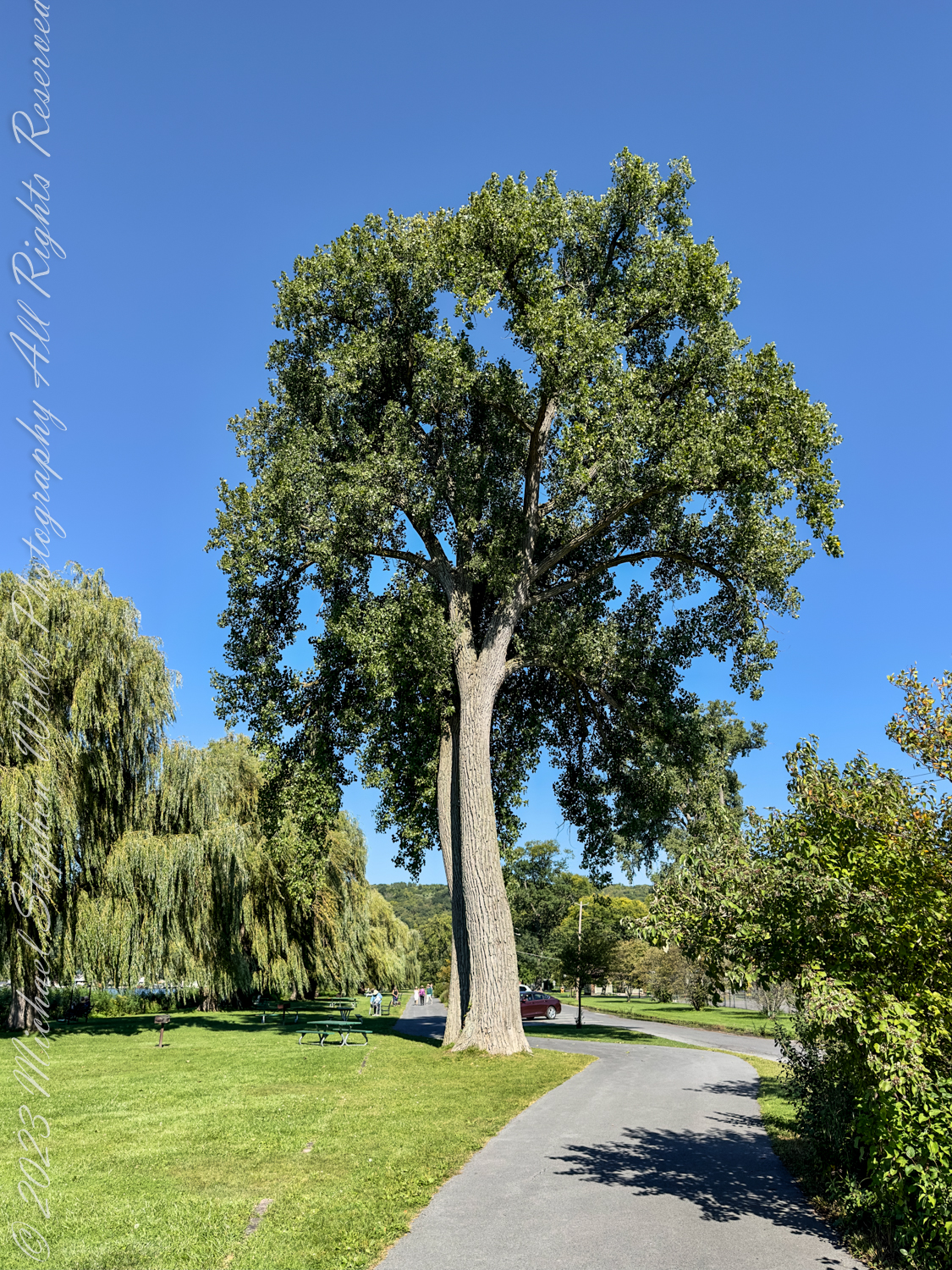
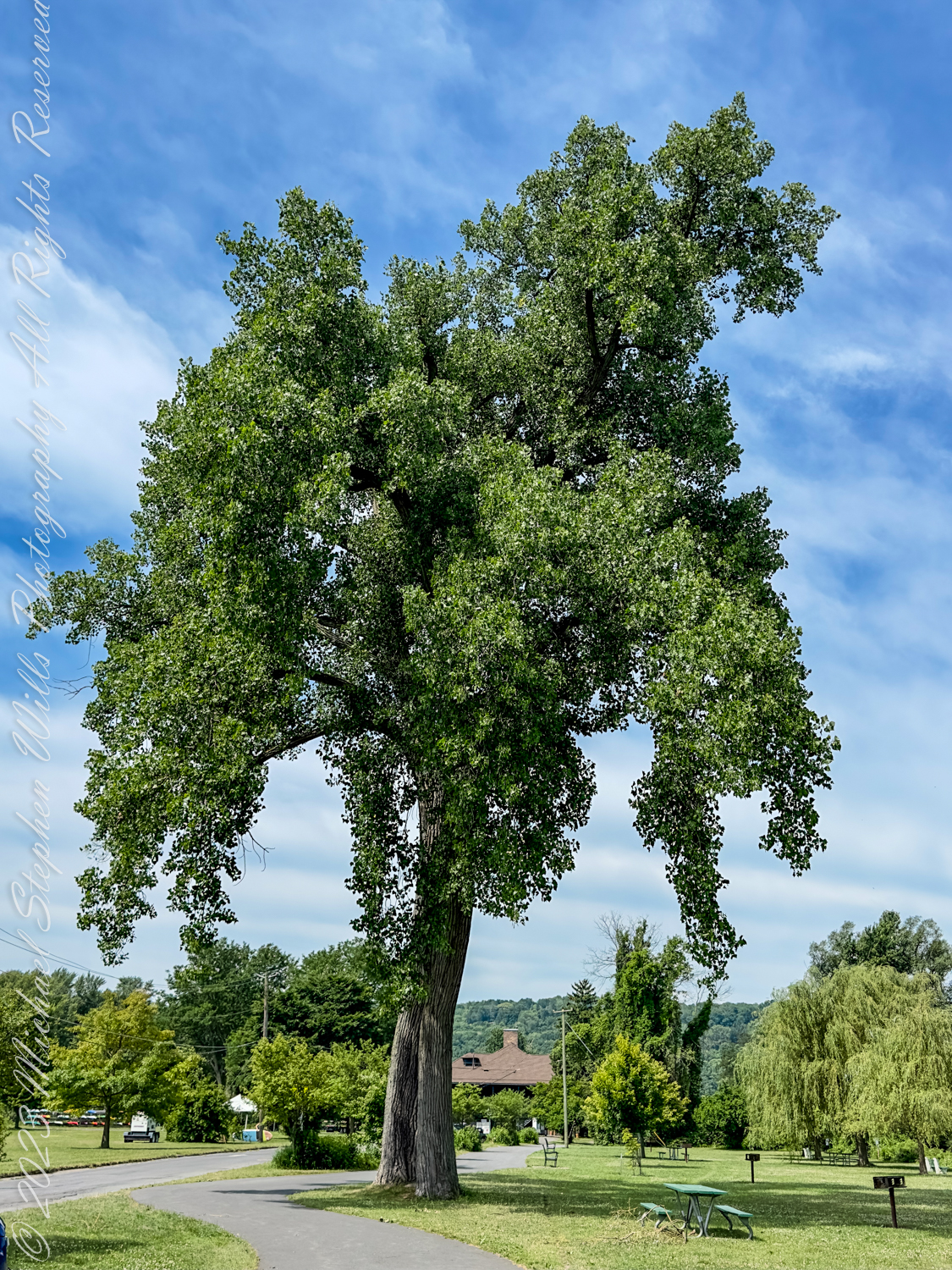
As Pam began her walk, using her walker for support, the air felt crisp with the late-summer breeze. She moved carefully along the paved path, her steps steady but measured. The sight of her, framed by the grand trees lining the park, was a testament to the resilience and strength she had displayed throughout the weeks following her surgery. The park’s beauty offered a sense of calm that seemed to support her determination, as though nature itself was encouraging her every step.

Stewart Park, with its sweeping views of Cayuga Lake and towering willows, had always been a special place for us. Over the years, we had spent afternoons such as this sailing the lake’s expansive waters. We ventured out to let the wind carry us across the lake. As Pam walked, we reminisced about those times—how we would navigate the gusty winds that filled our sails, steering into the waves with a sense of adventure. “This wind reminds me your calls to ‘control the jib!!’,” Pam said, smiling as we remembered the thrill of maneuvering the boat to dock.

On days like those, the lake was unpredictable, much like Pam’s journey through recovery had been. Yet, whether on the water or facing the challenges of healing, Pam had always shown a quiet, steadfast determination. Just as we had learned to adjust the sails to accommodate the changing wind patterns, Pam had adapted to her new circumstances, tackling each step of her rehabilitation with grace.

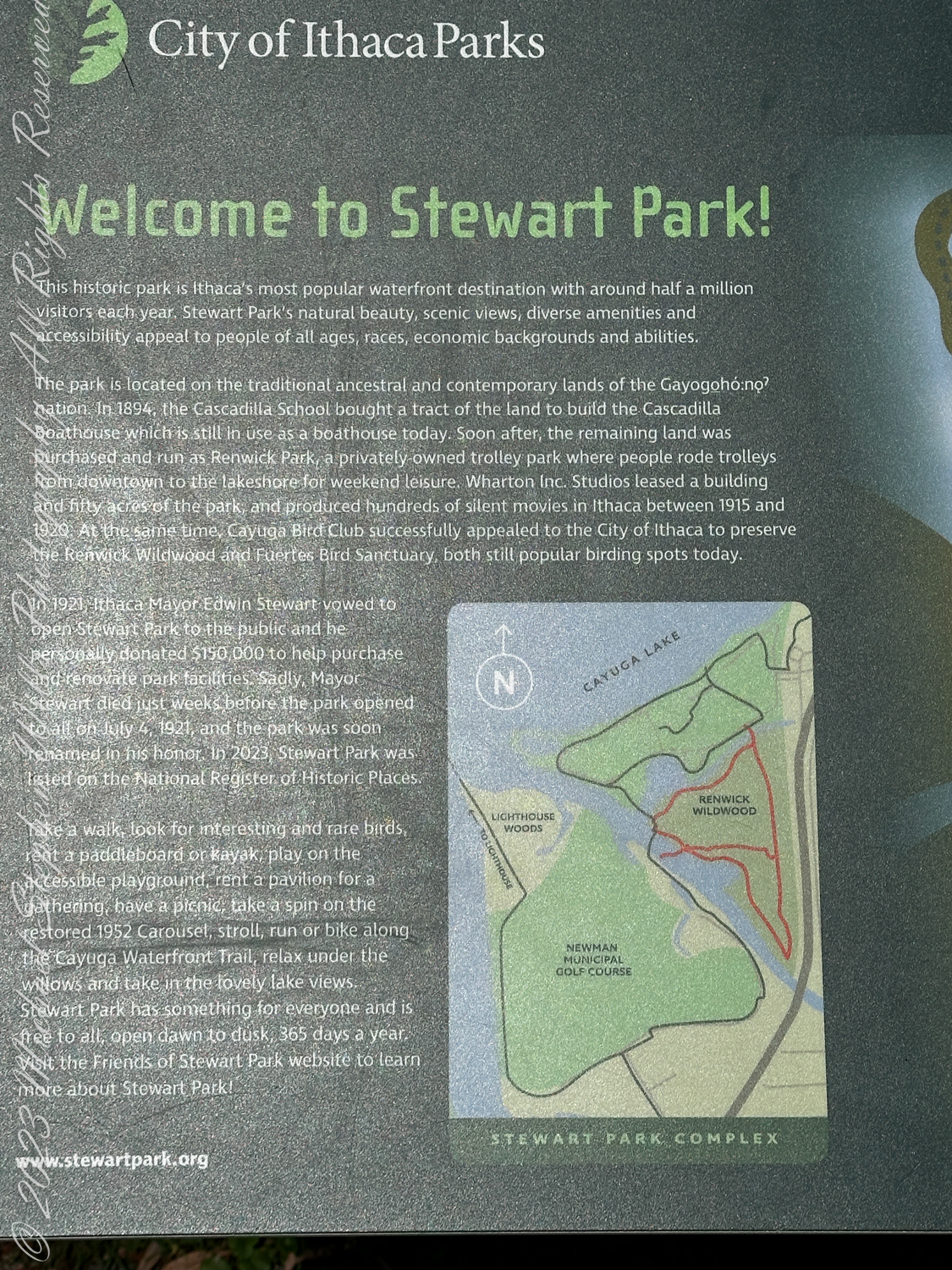
We paused at one of the informational signs along the path. The sign detailed the park’s history, noting that it sits on the ancestral lands of the Gayogo̱hó꞉nǫ’. Originally developed in 1894 for the Cascadilla School’s boathouse, the park had undergone many transformations before becoming the public space it is today. The sign spoke of Mayor Edwin Stewart, who had donated $150,000 to help purchase and renovate the park’s facilities, only to pass away weeks before its official opening in 1921. In 2021, the park was listed on the National Register of Historic Places, a testament to its enduring role in the community.

City of Ithaca Parks Welcome to Stewart Park! This historic park is Ithaca’s most popular waterfront destination with around half a million visitors each year. Stewart Park’s natural beauty, scenic views, diverse amenities and accessibility appeal to people of all ages, races, economic backgrounds and abilities. The park is located on the traditional ancestral and contemporary lands of the Gayogo̱hó꞉nǫʼ nation. In 1894, the Cascadilla School bought a tract of the land to build the Cascadilla Boathouse which is still in use as a boathouse today. Soon after, the remaining land was purchased and run as Renwick Park, a privately owned trolley park where people rode trolleys from downtown to the lakeshore for weekend leisure. Wharton Inc. Studios leased a building and fifty acres of the park, and produced hundreds of silent movies in Ithaca between 1915 and 1920. At the same time, Cayuga Bird Club successfully appealed to the City of Ithaca to preserve the Renwick Wildwood and Fuertes Bird Sanctuary, both still popular birding spots today. In 1921 Ithaca Mayor Edwin Stewart vowed to open Stewart Park to the public and he personally donated $150,000 to help purchase and renovate park facilities. Sadly, Mayor Stewart died just weeks before the park opened to all on July 4, 1921, and the park was soon renamed in his honor. In 2021 Stewart Park was listed on the National Register of Historic Places. Take a walk, look for interesting and rare birds, rent a paddleboard or kayak; play on the accessible playground, rent a pavilion for a gathering, have a picnic, take a spin on the restored 1952 Carousel, stroll, run or bike along the Cayuga Waterfront Trail, relax under the willows and take in the lovely lake views. Stewart Park has something for everyone and is free to all, open dawn to dusk, 365 days a year. Visit the Friends of Stewart Park website to learn more about Stewart Park!

CAYUGA LAKE AND THE ERIE CANAL: ITHACA’S WATERWAY TO THE WORLD

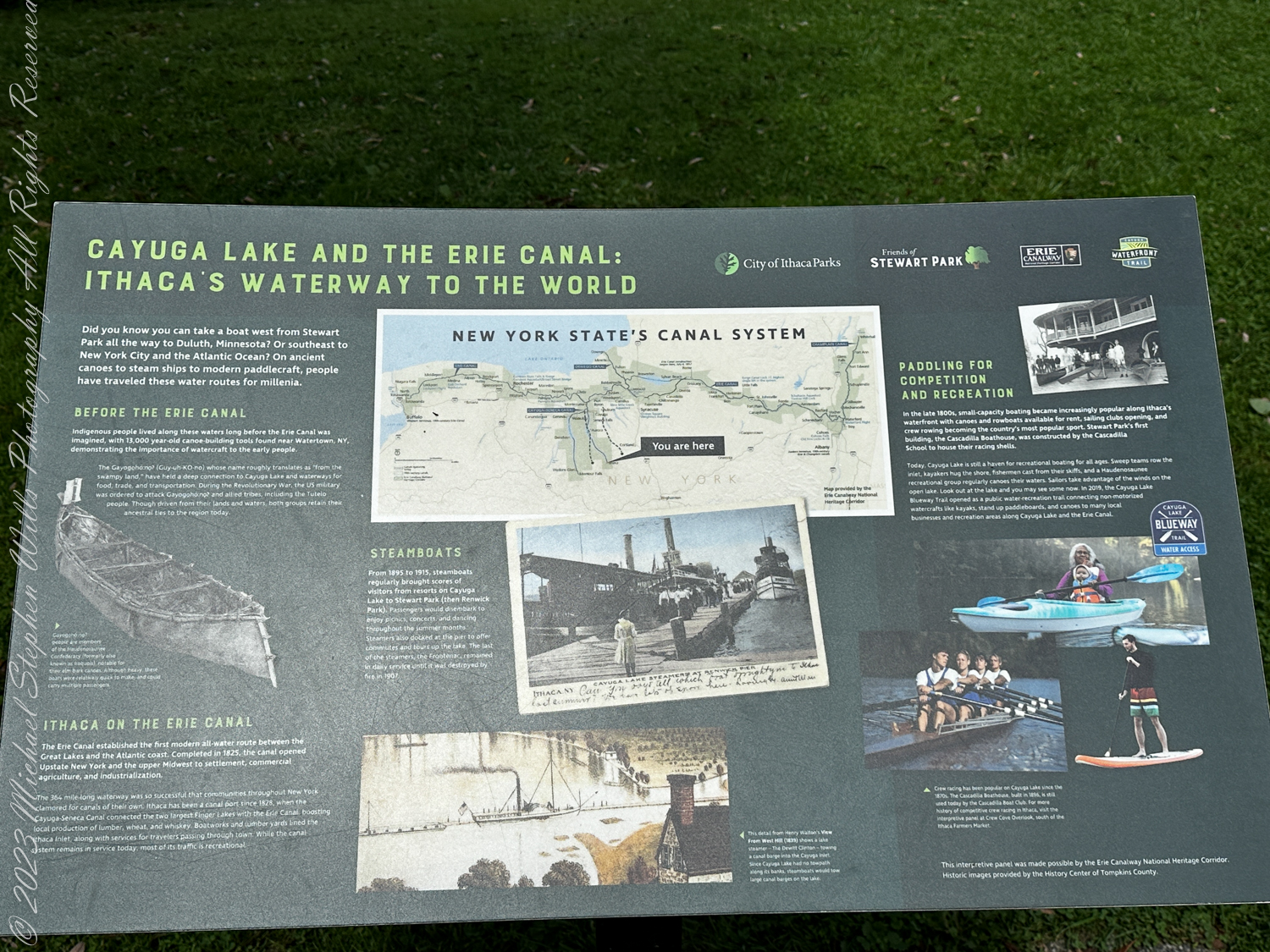
Did you know you can take a boat west from Stewart Park all the way to Duluth, Minnesota? Or southeast to New York City and the Atlantic Ocean? On ancient canoes to steam ships to modern paddlecraft, people have traveled these water routes for millenia.

Before the Erie Canal

Indigenous people lived along these waters long before the Erie Canal was completed in 1825. In 1790, a dugout canoe was found near Elmira, NY, demonstrating the importance of waterways to the early people.

The Cayuga/Seneca Gayogo̱hó꞉nǫʼ who lived here for nearly a thousand years used the lake and rivers to transport people and goods. In the 1600s, French explorers reported meeting the Gayogo̱hó꞉nǫʼ as they traveled east along these waterways. Canoes and later watercraft helped settlers move people, goods, and ideas, transforming upstate New York. With only one lock, the lake’s water level would rise and fall, but goods still needed to be portaged, or moved over land. As the first commercial waterway in the US, the Erie Canal used river systems, canal channels, and lakes to connect New York’s inland towns to world markets.

ITHACA ON THE ERIE CANAL

The canal established the first modern all-water route between the Great Lakes and the Atlantic. Completed in 1825, the canal opened Upstate New York and the upper Midwest to settlement, commercial agriculture, and industry.

The southernmost port of the canal was at Cayuga Lake, near present-day Route 90, where steamboats ferried passengers and freight to and from Ithaca. Products like salt from Syracuse, wood from the region, and coal from Pennsylvania were loaded onto canal boats for shipment to New York City or via Buffalo, to the upper Midwest.

After more than 200 years of service, the canal has evolved into a water route that is primarily used by small boats for recreation. In 2017, the NYS Canal Corporation rebranded the canal as a recreation destination.

As Pam read the sign, she reflected on how the park’s evolution mirrored her own journey. Like Stewart Park, which had undergone multiple transformations over the years, Pam was in the midst of her own renewal. Her new hip, like the park’s renovations, represented a fresh start, a return to activity, and a promise of more days spent outdoors, enjoying the natural beauty that had always brought us peace.

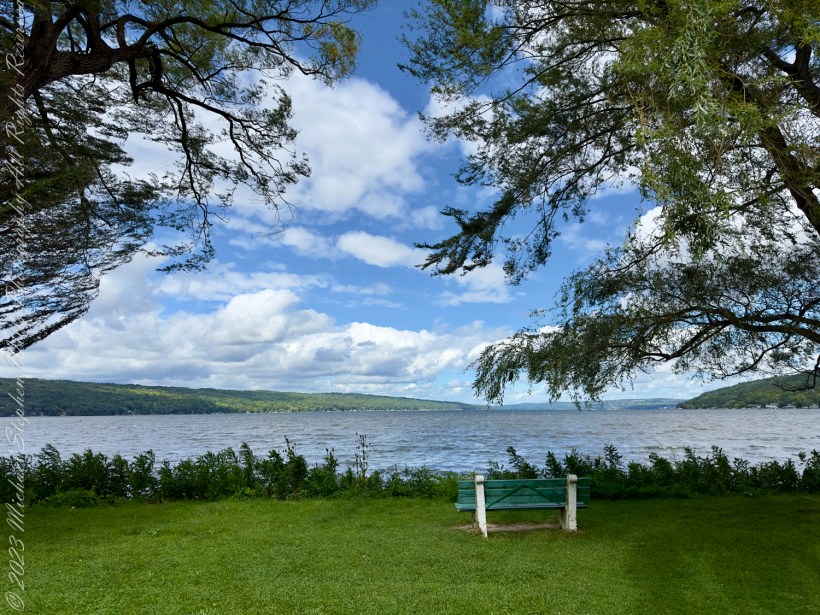
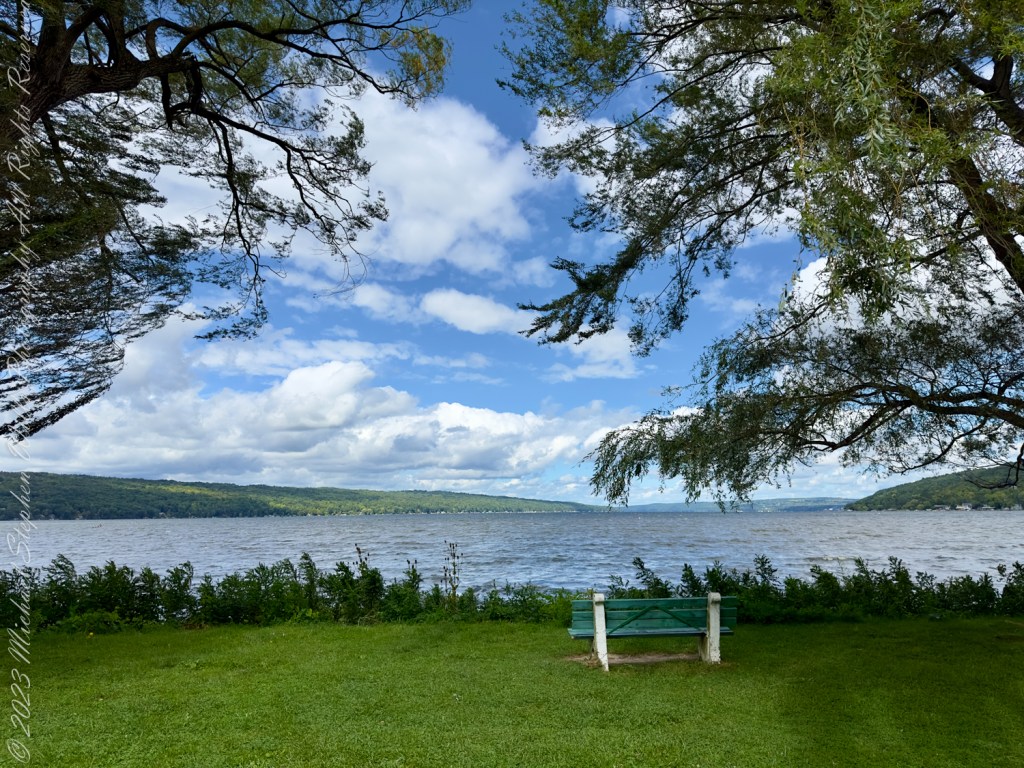
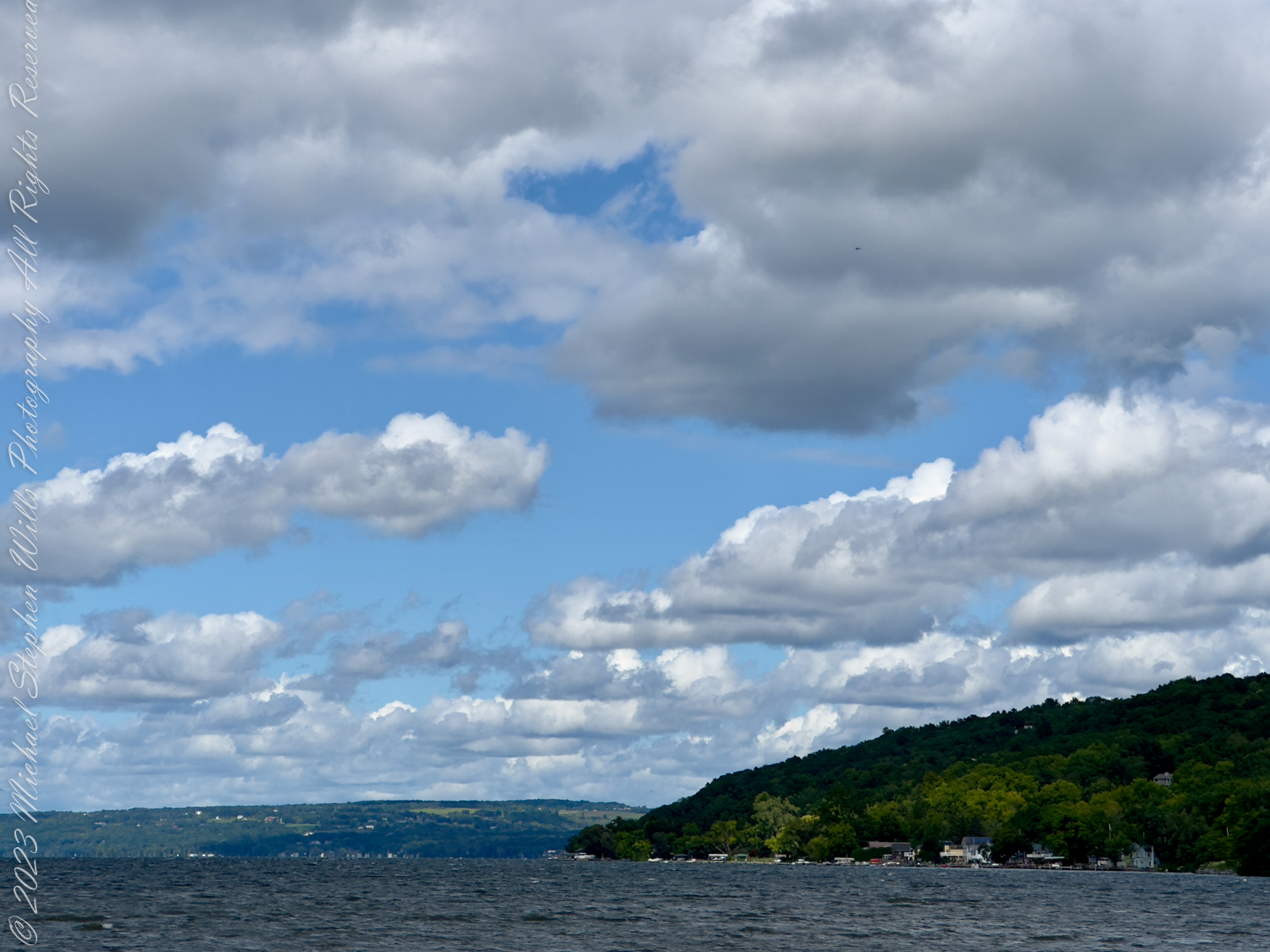
Continuing along the path, we passed several benches nestled beneath the graceful willows, their branches swaying gently in the breeze. Pam took a moment to rest on one of the benches, her eyes focused on the vast expanse of Cayuga Lake. The view stretched toward the distant hills, where the clouds and sun played together, casting ever-shifting patterns of light across the water. For a brief moment, it felt like we were back on our sailboat, riding the waves and allowing the wind to guide us toward new horizons.

As we made our way back along the path, the tall willows swaying and the sound of the waves lapping at the shore, I couldn’t help but feel gratitude. Stewart Park had always been a place of calm and reflection, but on this day, it became a place of healing. Pam’s steps, though slow and deliberate, were filled with the same strength and grace she had shown throughout her life.

The park’s beauty, the history we had shared here, and the memories of our time spent sailing on Cayuga Lake all came together to create a sense of peace. Pam’s recovery journey was far from over, but her progress was undeniable. As we looked out over the lake one last time before heading home, the water shimmered in the sunlight, promising more adventures to come.

Stewart Park, with its windswept trees and timeless views, would forever be tied to this day—Pam’s first steps toward reclaiming her mobility, set against the backdrop of a place that had long been part of our shared story. It was a day filled with hope, strength, and the quiet knowledge that, like the wind, life would continue to move us forward, no matter the challenges.

Copyright 2024 Michael Stephen Wills All Rights Reserved

A Saint’s Origins: How Famine and Faith Shaped Marianne Cope

While exploring Saint Marianne Cope’s early life, I uncovered the hardships her family faced during Germany’s devastating 1816 famine. Their struggles and eventual emigration shaped the resilient spirit of this future saint. Read more about their journey in my blog.

While my wife was recovering from major surgery at Saint Francis Hospital in Syracuse, New York, I spent a morning at the nearby Shrine and Museum of Saint Marianne Cope. There, I delved into the early life of this remarkable saint, born Barbara Koob. As I explored her story, I found myself drawn to the experiences of her parents, Peter and Barbara Wirzenbacher Koob, who endured some of the most challenging times in early 19th-century Germany. Their struggles, shaped by the economic and social crises of the time, played a pivotal role in the Koob family’s eventual emigration to the United States, setting the stage for their daughter’s life of service.

Saint Marianne Cope Shrine and Museum, adjacent to Saint Joseph’s Hospital, Syracuse, New York. Captured from a street view of Google Maps.

The story begins in Heppenheim, a small town nestled in the southern part of Hesse, Germany. Like many other towns in the region, Heppenheim was reliant on agriculture for survival. However, the year 1816 brought unprecedented hardship. Known as the “Year Without a Summer,” this period was marked by extreme cold and wet conditions, caused by the catastrophic eruption of Mount Tambora in Indonesia. The volcanic ash released into the atmosphere blocked sunlight and disrupted weather patterns across the globe.

Heppenheim is the seat of Bergstraße district in Hesse, Germany, lying on the Bergstraße on the edge of the Odenwald. This photograph is from Google Maps.

For the people of Heppenheim, this meant crop failures on an unimaginable scale. Rye and wheat, staples of their diet, rotted in the fields. Food became scarce, and prices soared. The ensuing famine left families, including the Koobs and their ancestors, struggling to survive. As hunger gnawed at them, they faced a bleak future. This economic strain was compounded by broader challenges: industrialization was beginning to transform the German economy, leaving traditional agrarian lifestyles in its wake, while political unrest simmered as the fragmented German states wrestled with issues of governance and unity.

These hardships were not unique to Heppenheim. Across Germany, the “Hunger Years” of 1816-1817 prompted widespread despair. For many, including the Koob family, the promise of a better life beckoned from across the Atlantic. The United States, with its vast expanses of fertile land and burgeoning economy, seemed to offer a way out of the grinding poverty and instability that had taken hold in their homeland.

A home in Heppenheim. Photograph from Google Maps and taken around 2022.

Barbara Koob was born on January 23, 1838, into a family deeply rooted in their community. Peter Koob was identified as a “Citizen and Farmer,” and shortly after her birth, Barbara was baptized at St. Peter’s Church, marking the beginning of her journey in a devout Catholic family.

Heppenheim, where Barbara Koop (Saint Marianne Cope) was born here January 23, 1838 and baptized as a Catholic shortly after this church, Saint Peter’s. Google Maps Photograph taken around 2022

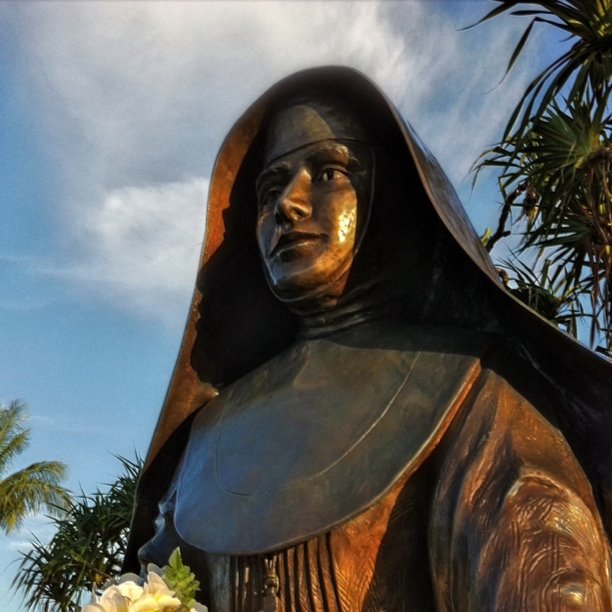
By 1839, Peter and Barbara Koob, like many others from their region, made the difficult decision to leave Heppenheim behind. With their young daughter Barbara, they embarked on a journey to the United States. They settled in Utica, New York, where the opportunities for a new beginning were more promising, even though the bustling industrial town was a far cry from the rural life they had known. In 1862, Barbara committed herself to the Sisters of the Third Order of St. Francis in Syracuse, New York, taking the name “Marianne Cope.”
Mother Marianne Cope statue dedicated January 23, 2010, in Honolulu.
Attribution: billsoPHOTO, CC BY-SA 2.0 , via Wikimedia Commons

Reflecting on these events, it becomes clear how deeply the early experiences of famine and economic hardship must have influenced the Koob family’s decisions and, ultimately, the life of their daughter. The struggles of her parents during those hard years in Germany laid the foundation for Marianne Cope’s own resilience and dedication to serving those in need. Their story is a testament to the strength of the human spirit in the face of adversity and the powerful role that faith and hope can play in guiding one’s path.

Copyright 2024 Michael Stephen Wills All Rights Reserved

Sunrise at Cocoa Beach: A Symphony of Colors on the Space Coast

Experience the breathtaking sunrise at Cocoa Beach, where the sky and sea blend in a symphony of colors. Discover the tranquility and beauty that awaits as the day dawns on Florida’s stunning Space Coast.

Click this link for my Online gallery

Cocoa Beach, nestled in Brevard County, Florida, is renowned for its pristine sandy shores and the rhythmic lullaby of the Atlantic Ocean. It’s a place where the day often begins with an awe-inspiring sunrise. On the Space Coast, the first light of day is a daily masterpiece, a silent symphony of colors that paints the sky and reflects off the water.

As dawn approaches, the eastern horizon begins to glow with a soft, pre-dawn light. This quiet time, when the world is still asleep, offers a unique tranquility. The beach, usually bustling with surfers, sunbathers, and families, is calm and serene. The sand, cool underfoot, stretches out like a vast canvas, waiting for the sun to begin its artwork.

The first hues of sunrise start as a gentle blush, a hint of pink that softly caresses the sky. As the moments pass, this blush deepens into shades of orange and red, reminiscent of a painter’s palette. The ocean mirrors these colors, creating a breathtaking scene where sky and sea blend into one continuous expanse. It’s a moment that feels almost sacred, as if nature itself is preparing for a grand reveal.

The sun finally peeks above the horizon, a fiery orb that illuminates the world in golden light. This is the crescendo of the sunrise, a moment that seems to hold the breath of the world. The rays of light stretch out across the water, casting a shimmering path that invites the eyes to follow. It’s a path that feels both real and ethereal, leading not just across the sea, but into a day full of possibilities.

As the sun rises higher, the colors in the sky shift and change. The deep reds and oranges give way to softer yellows and then to the clear, bright light of morning. The ocean, too, transforms, taking on a deeper blue as the sunlight penetrates its depths. The waves, which had been gentle ripples in the pre-dawn light, now dance and sparkle, as if celebrating the arrival of the new day.

For those fortunate enough to witness it, a sunrise at Cocoa Beach engages all the senses. The cool breeze carries the fresh scent of saltwater, a reminder of the ocean’s vastness and power. The sound of the waves, steady and rhythmic, provides a soothing background score, while the occasional cry of a seabird adds a touch of the wild to the scene.

Click on a photo for a closer look.

There is a sense of community among the early risers who gather to watch the sunrise. Strangers often share nods and smiles, united by the shared experience of witnessing something so beautiful and ephemeral. It’s a reminder that, no matter our differences, moments of natural beauty can bring people together, fostering a sense of connection and shared humanity.

Cocoa Beach, known for its proximity to the Kennedy Space Center and its surf culture, offers much more than meets the eye. The sunrise is a daily reminder of the simple yet profound beauty of nature, a beauty that exists beyond the man-made attractions and the hustle and bustle of everyday life. It’s a call to pause, reflect, and appreciate the world around us.

In a place where rockets soar into the sky, touching the very edge of space, the sunrise at Cocoa Beach brings us back to Earth, grounding us in the timeless rhythm of the natural world. It’s a moment of peace and renewal, a gift from the universe to start the day with a heart full of wonder and gratitude.

So, whether you’re a local or a visitor, taking the time to watch the sunrise at Cocoa Beach is an experience not to be missed. It’s a chance to witness the world waking up, to feel a part of something larger than oneself, and to start the day with a renewed sense of awe and possibility.

Copyright 2024 Michael Stephen Wills All Rights Reserved

Face-to-Face with Florida’s Ancient Predator

Discover the world of Florida’s ancient predators through the eyes of the formidable Smilodon fatalis. Step back in time to the Pleistocene epoch and explore the life, habits, and social bonds of the iconic sabertooth cat.

I examined an unusual map of Florida, the contours of its familiar modern shape overlaying a vast, green expanse. The state as we know it today is crisscrossed by highways and dotted with bustling cities, but this map transported me back in time to a very different era. During the Pleistocene epoch, Florida was a wilder, untamed land, teeming with life and dominated by creatures long extinct.

The representation of the land area of Florida state during Pleistocene epoch glaciation is the green shading with the current map of Florida within.

Exploring Brevard (county) Museum of History and Natural Science of Cocoa Florida, I moved to the next exhibit. The air hummed in my imagination with the whispers of an ancient world. A skeletal figure loomed within a glass case – the mighty Smilodon fatalis, the sabertooth cat. Its fearsome fangs curved downward, I imagined standing face-to-face with this apex predator, feeling both awe and a primal fear.

Florida, some 11,500 years ago, was a place of significant climatic shifts. The Pleistocene epoch was characterized by repeated glaciations; however, Florida itself remained unglaciated. The climate was cooler and drier than today, and sea levels were much lower, extending the coastline outward. This ancient Florida was a mosaic of grasslands, savannas, and woodlands. Giant sloths, mammoths, and mastodons roamed these lands, sharing the territory with the formidable Smilodon.

The attendant palque described Smilodon fatalis was about a foot shorter than modern lions but nearly twice as heavy. Its stocky build and powerful limbs suggested immense strength. Unlike the cheetahs and lions of today, Smilodon had a bobtail, indicating that it relied less on speed and more on ambush tactics. I could almost see it now: crouching low in the underbrush, muscles coiled, waiting for the perfect moment to spring upon its unsuspecting prey.

In the reconstructed display, the sabertooth cat’s lethal precision was evident. Its elongated canines were deadly tools designed to pierce and hold onto struggling prey. The lack of a long tail, which modern big cats use for balance during high-speed chases, suggested that Smilodon was an ambush predator. It would have hidden in the dense foliage, its mottled coat blending seamlessly with the shadows, until it launched a surprise attack.

Smilodon was not just a solitary hunter. Unlike modern cats and tigers, which often lead solitary lives, evidence suggests that Smilodon was a social creature. The plaque mentioned the structure of its hyoid bone, implying that it could roar, perhaps using vocalizations to communicate with other members of its group. I envisioned a family of Smilodon, working together to take down a mammoth or defend their territory from rivals. Their social bonds might have been strong, much like those of modern lions.

I was particularly struck by the evidence of healed wounds found on many Smilodon skeletons. These injuries had healed and remodeled over time, suggesting that these cats cared for each other. In a world where every day was a battle for survival, these acts of care and compassion spoke volumes about their social structure. Injured members were not left to fend for themselves but were likely allowed to feed off the kills of others and to be protected by their group until they recovered.

The exhibit painted a vivid picture of an ancient ecosystem. The Pleistocene flora of Florida was diverse, with vast grasslands interspersed with stands of pine and oak. The fauna was equally rich: herds of herbivores grazed the plains, while predators like Smilodon and dire wolves stalked them. This was a land of giants, where every creature had to be strong, fast, or cunning to survive.

As I stepped away from the exhibit, I felt a deep connection to this ancient world. The Smilodon fatalis was a predator and is a symbol of an era that shaped the natural history of our planet. Its bones told a story of survival, community, and the ever-changing dance of life and death.

In the quiet of the museum, surrounded by the echoes of the past, I was reminded of the fragility and resilience of life. The sabertooth cat, with its fearsome fangs and powerful build, was a testament to the incredible adaptability of life on Earth. Though it has long since vanished from our world, the spirit of Smilodon fatalis lives on in the bones it left behind and in the stories we tell about the ancient world it once ruled.

Copyright 2024 Michael Stephen Wills All Rights Reserved

The American Basswood: A Journey of Discovery

Discover the rich history and ecological significance of the American Basswood, a majestic tree that intertwines nature, culture, and human history. Uncover its beauty, versatility, and the fascinating pollinators that bring it to life.

As I strolled through the sun-dappled glade, my eyes were drawn to a magnificent tree standing sentinel at the edge of the clearing. Its broad canopy spread like a green umbrella, casting a generous shade over the picnic bench below. Intrigued by its commanding presence, I approached, eager to unravel the secrets of this arboreal giant. Little did I know that this encounter would lead me on a journey through history, etymology, and the myriad uses of the American Basswood.

This photograph features the growth pattern for which the Basswood is known. Buttermilk Falls State Park, Ithaca, Tompkins County, New York State. The Finger Lakes Region.

The American Basswood, or Tilia americana, is a tree steeped in history and lore. Its name, “Basswood,” is derived from the word “bast,” referring to the inner bark of the tree, which is known for its fibrous and pliable nature. This etymology hints at the tree’s historical uses, which I would soon discover are as rich and varied as the foliage above me.

As I examined the leaves, I was struck by their heart-shaped form, a feature that has made the Basswood a symbol of love and romance in various cultures. The leaves were smooth and slightly serrated at the edges, with a deep green hue that seemed to capture the essence of summer. Hanging delicately from the branches were clusters of small, round buds, hinting at the tree’s flowering potential. These flowers, I would later learn, are not just beautiful but also aromatic, attracting bees and other pollinators with their sweet fragrance.

These are leaves from a branch broken by spring storms and fallen across the Finger Lakes Trail that follows the southern side of Treman Park above the South Rim Trail. Robert H. Treman New York State Park, Tompkins County, Ithaca. June 27, 2024

The history of the American Basswood in America is intertwined with the lives of indigenous peoples and early settlers. Native Americans valued the Basswood for its soft, easily worked wood and its inner bark, which they used to make ropes, mats, and other essential items. The tree’s wood, known for being lightweight and finely grained, was perfect for carving and crafting tools, utensils, and even ceremonial masks. This versatility made the Basswood an integral part of daily life and cultural practices.

With the arrival of European settlers, the uses of Basswood expanded. Settlers quickly recognized the tree’s potential, using its wood for a variety of applications. The soft, yet sturdy wood was ideal for making furniture, musical instruments, and even crates and boxes. Its workability and smooth finish made it a favorite among craftsmen and artisans. I imagined the hands of these early Americans, shaping and molding the wood, breathing life into their creations.

As I continued to explore the tree, I was drawn to the small, green fruits hanging from slender stems. These fruits, known as nutlets, are encased in a leafy bract that aids in their dispersal by wind. This ingenious natural design ensures the propagation of the species, allowing new generations of Basswoods to take root and flourish.

Curious about the tree’s name, I delved into its etymology and discovered an interesting linguistic journey. In England and Ireland, the Basswood is commonly referred to as the “Lime Tree.” This name does not relate to the citrus fruit tree but instead comes from the Old English word “Lind,” related to the German word “Linde.” Both terms historically referred to trees of the Tilia genus. Over time, “Lind” evolved into “Lime,” influenced by phonetic changes and regional dialects, solidifying the term “Lime Tree” for Tilia species in these regions. Despite sharing the same common name, the Tilia “Lime Tree” and the citrus “Lime Tree” belong to entirely different plant families.
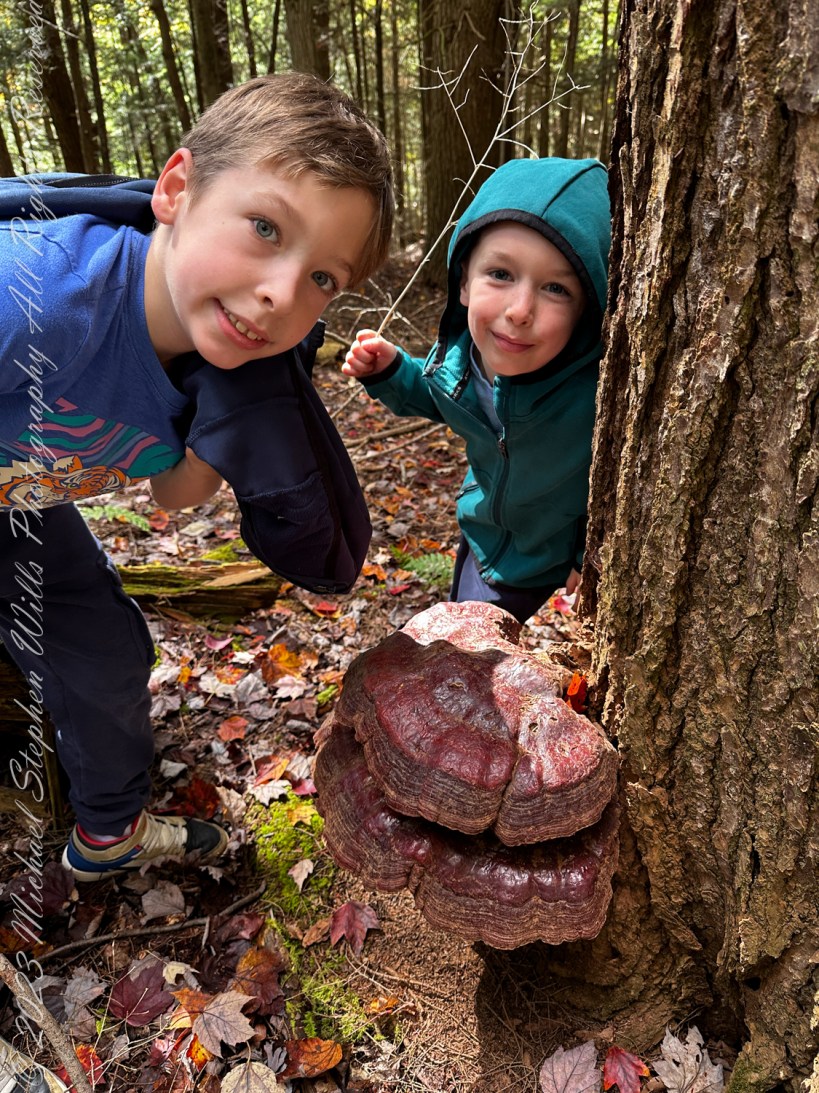
The American Basswood’s significance extends beyond its practical uses. The tree has found a place in American culture and literature, often symbolizing strength, resilience, and longevity. Its towering presence and expansive canopy make it a popular choice for parks and public spaces, where it provides shade and beauty. I thought of the many people who must have sought refuge under its branches, finding solace and inspiration in its quiet strength.

In addition to its cultural and historical significance, the Basswood also plays a crucial ecological role. Its flowers are a vital source of nectar for bees, making it an essential component of local ecosystems. Beekeepers, in particular, value the Basswood for the high-quality honey produced from its nectar, known for its delicate flavor and aroma. The tree’s leaves and bark also provide habitat and food for various wildlife, contributing to the biodiversity of the area.

Pollination is a critical aspect of the American Basswood’s lifecycle, and a variety of insects are drawn to its fragrant, nectar-rich flowers. Honeybees (Apis mellifera) are among the most significant pollinators, their presence around the Basswood a testament to the tree’s importance in the ecosystem. These industrious bees not only gather nectar but also facilitate the pollination process, ensuring the production of seeds. Bumblebees (Bombus spp.) also play a crucial role, utilizing their unique buzz-pollination technique to effectively transfer pollen within the flowers.

These are leaves from a branch broken by spring storms and fallen across the Finger Lakes Trail that follows the southern side of Treman Park above the South Rim Trail. Robert H. Treman New York State Park, Tompkins County, Ithaca. June 27, 2024

Additionally, native bees such as sweat bees (Halictidae), mining bees (Andrenidae), and leafcutter bees (Megachilidae) are frequent visitors, drawn by the abundant nectar and pollen. Butterflies, while not as significant as bees, contribute to the pollination process, adding a touch of grace as they flutter from flower to flower. Moths, particularly those active in the evening, are another group of pollinators, their nocturnal activity complementing the daytime efforts of bees and butterflies. Hoverflies (Syrphidae), also known as flower flies, are attracted to the nectar and aid in the pollination, showcasing the diverse array of insects that rely on the Basswood.

Reflecting on my discovery, I realized the American Basswood is a living testament to the interconnectedness of nature and human history. Its presence in the landscape is a reminder of the many ways in which plants and trees shape our lives, providing resources, inspiration, and a connection to the natural world.

As I left the shade of the Basswood and continued my walk, I felt a deep sense of gratitude for the opportunity to learn and connect with this remarkable tree. Its story is a reminder of the importance of preserving and cherishing the natural world, ensuring that future generations can continue to discover and appreciate the wonders of the American Basswood.

Copyright 2024 Michael Stephen Wills All Rights Reserved

Discovering Nature’s Secrets: A Grandfather’s Tale at Comstock Creek

Join me on a heartwarming adventure at Comstock Creek with my grandchildren, Sam and Rory, as we explore the wonders of nature, create lasting memories, and celebrate the legacy of the Comstock family.

The morning sun filtered through the lush canopy of trees as I guided my grandchildren, down the familiar path towards Comstock Creek of the Cayuga Nature Center. The children were familiar with the creek from time spent in summer camp. This little haven of nature is a favorite spot of theirs. Comstock Creek, named after the Comstock family, stands as a testament to their significant contributions to entomology and nature education. John Henry Comstock, a renowned entomologist, and his wife, Anna Botsford Comstock, a pioneering figure in nature study, left an indelible mark on the Ithaca area and beyond. Their legacy lives on, not just in the academic world, but in these very waters where my grandchildren now play.

As we reached the creek, the children wasted no time kicking off their shoes and wading into the cool, shallow water. My grandson, in his red shirt, and granddaugter, in her green one, both radiated joy and curiosity. The sunlight danced on the water’s surface, casting shimmering reflections that seemed to animate the entire scene.

The youngest was the first to discover a small pool where the water had carved out a deeper spot. “Look, Grandpa!” he exclaimed, his voice full of excitement. He crouched down, peering intently at the tiny fish darting around his feet. His sister joined him, her initial apprehension giving way to a wide-eyed fascination as she watched the underwater ballet.

Their time was spent turning over rocks to find little aquatic creatures and marveling at the delicate balance of nature. The children’s laughter echoed through the woods, blending with the sounds of rustling leaves and the gentle babble of the creek. Their sense of wonder reminded me of the Comstocks’ passion for nature, a passion they had so fervently shared with the world.

After a while, we decided to take a break and walked through the meadow past where tall reeds swayed gently in the breeze. He knew of a small, tranquil pond that reflected the sky like a mirror. He leaned the water’s edge,hoping to grab a frog. I stood back, capturing this peaceful moment with my camera, knowing that these images would become treasured memories.

As noon approached, we travelled back to Ithaca for an ice cream treat, promised them as a reward for their adventurous spirit. Their faces lit up with delight as they savored their treats, their expressions reflecting pure contentment.

The day wouldn’t have been complete without a splash in the pool. Back home, grandmother set up the inflatable volleyball net while the kids changed into their swimsuits. The pool became a hub of activity as they splashed around, their laughter blending with the sound of the water.

Reflecting on the day, I felt a deep sense of gratitude. The Comstock family’s dedication to nature education had inspired generations, including my own. Their legacy was evident not just in the academic institutions of Ithaca, but in the simple, joyous exploration of nature that I shared with my grandchildren. I hope this day at Comstock Creek will be remembered fondly, a chapter in our family’s ongoing story of discovery and connection with the natural world.

Copyright 2024 Michael Stephen Wills All Rights Reserved

Experiencing the Cocoa Beach Kite & Beach Fest

Experience the magic of the Cocoa Beach Kite and Beach Fest! From giant dinosaur kites to whimsical octopuses, this vibrant event brings joy to all ages. Dive into the excitement and watch the kites soar!

The air was electric with excitement as I arrived at Cocoa Beach for the Kite and Beach Fest on January 21st, 2024. A stiff wind greeted me, carrying the scent of saltwater and the promise of a day filled with wonder. The beach was bustling with families, kite enthusiasts, and curious onlookers, all eager to witness the spectacle that awaited them.

As I strolled towards the shoreline, I was immediately captivated by the sight of an apparently massive dinosaur kite soaring high, filled with the wind, against the backdrop of the overcast sky. Its fierce red eyes and sharp teeth contrasted sharply with the playful atmosphere below, yet it seemed to be enjoying its flight as much as the spectators enjoyed watching it. I couldn’t help but snap a photo, capturing the moment when the dragon seemed to float majestically above the waves.

Further down the beach, a cluster of giant octopus kites waved their tentacles gracefully in the wind. Their vibrant colors stood out against the gray sky, each one a mesmerizing dance of fabric and air. The way they undulated with the breeze was hypnotic, as if they were alive, drawing me closer to their whimsical beauty. I watched as children ran underneath, their laughter mingling with the sound of the surf, creating a symphony of joy that filled the air.

Among the kites, there were also enormous land crabs with their claws extended, bobbing and weaving in the breeze. They were a crowd favorite, with people gathering to marvel at their intricate designs and lifelike movements. It was as if the beach had been transformed into a surreal landscape where dragons, octopuses, and crabs coexisted in perfect harmony.

As I walked along the beach, I took in the lively atmosphere. I grabbed a cold drink and found a spot to sit, taking in the view of kites of all shapes and sizes dotting the sky like a colorful mosaic.

The festival wasn’t just about the kites, though. It was a celebration of community and creativity. I watched as seasoned kite flyers shared tips with newcomers, and children learned to fly their own kites for the first time. There was a sense of camaraderie in the air, a shared joy that transcended age and background.

As the afternoon wore on, I found myself reflecting on the magic of the day. The kites, with their bold colors and imaginative designs, reminded me of the limitless possibilities of creativity. The festival was a testament to the power of imagination, bringing people together to celebrate art, nature, and the simple pleasure of watching something soar.

As the sun began to set, casting a golden hue over the beach, I took one last look at the dinosaur, still bravely battling the wind. It seemed fitting, a symbol of resilience and wonder, and a reminder of the enchanting day I had spent at Cocoa Beach. With a heart full of joy and a camera full of memories, I headed home, already looking forward to next year’s festival.

Copyright 2024 Michael Stephen Wills All Rights Reserved

Our Day at Cayuga Nature Center and Finger Lakes Beekeepers Club Learning Apiary

Join us on a captivating adventure at the Cayuga Nature Center’s Treetops Treehouse and the Finger Lakes Beekeepers Club Learning Apiary. Discover the wonders of the forest canopy, marvel at the intricate world of honeybees, and meet a tiny land snail that sparked the curiosity of two young explorers. Dive into a day filled with discovery, learning, and unforgettable moments in nature.

The morning air was crisp and filled with the promise of adventure as we set off for the Cayuga Nature Center, a hidden gem nestled in the heart of Ithaca. The destination: the Treetops Treehouse, a magical structure that promised an immersive experience in nature for me, my sister Diane and two grandsons, Sam and Rory.

As we approached the treehouse, the boys’ excitement was palpable. The Treetops Treehouse is a marvel of rustic architecture, a multi-level structure that blends seamlessly with the surrounding forest. It was designed to give visitors a bird’s-eye view of the forest canopy, allowing for a unique perspective on the local flora and fauna.

Exploring the Treetops

Upon arrival, we were greeted by the gentle rustle of leaves and the chorus of bird songs. The boys raced ahead, eager to explore the winding pathways and hidden nooks of the treehouse. The structure is constructed entirely of wood, with sturdy railings and wide platforms that offer panoramic views of the forest.

We were particularly fascinated by the various interpretive signs that explained the local ecosystem. We learned about the different species of trees, the birds that nested in the canopy, and the small mammals that scurried along the forest floor. It was a delight to sparked their curiosity of the natural world.

Discovering a Land Snail

Meadow Trail

Afterwards, walking along a meadow trail, Rory’s keen eyes spotted something unusual on the ground. Nestled among the fallen leaves was a small land snail, its delicate shell glistening in the dappled sunlight. The boys and I gathered around to observe this tiny marvel of nature.

The snail appeared to be from the genus Triodopsis or Neohelix, possibly Triodopsis albolabris or Neohelix albolabris, known for their white-lipped shells. These snails are common in moist, forested environments and play a crucial role in the ecosystem as decomposers. They feed on decaying plant material, helping to recycle nutrients back into the soil.

The Learning Apiary

Further along the meadow trail, we made our way to the Finger Lakes Beekeepers Club Learning Apiary. The apiary is a place of learning and discovery, where visitors can gain insight into the fascinating world of honeybees and beekeeping.

The apiary is composed of several beehives, each carefully maintained by members of the Beekeepers Club. We were careful to keep our distance from the electrified fence, protection against marauding bears and humans.

“ever-busy bees”

Wildflowers in Bloom

Narrow Leaved Sundrops

As we walked back from the apiary, the trail was lined with a vibrant display of wildflowers. The late spring bloom painted the landscape with splashes of color, from the golden yellows of evening primrose to the delicate whites of daisies.

Large Yellow Loosestrife

One particular cluster of bright yellow flowers caught our attention. It was the Lysimachia punctata, commonly known as yellow loosestrife. These star-shaped flowers grow in dense clusters and are a favorite among pollinators. The boys marveled at the intricate patterns and vibrant colors, adding another layer of wonder to our day.

Reflections on a Memorable Day

As the day drew to a close, we found a quiet spot to sit and reflect on our adventures. The boys were bubbling with stories to tell their parents—of the towering treehouse, the tiny snail, the bustling beehives, and the fields of wildflowers. It was a day filled with discovery and learning, one that brought us closer to nature and to each other.

The Cayuga Nature Center and the Finger Lakes Beekeepers Club Learning Apiary provided a perfect setting for an outing that was both educational and exhilarating. The experiences we shared will undoubtedly leave a lasting impression on Sam and Rory, nurturing their love for the natural world and the myriad forms of life that inhabit it.

Meadow View

As we packed up and headed home, the boys already began planning our next adventure. The allure of the natural world, with its endless mysteries and wonders, had woven its spell, and we were eager to explore more of what it had to offer.

Copyright 2024 Michael Stephen Wills All Rights Reserved

A Late Winter Walk Through Cornell University Campus

Explore a late winter walk through Cornell University’s scenic campus, discovering blooming snowdrops, historic landmarks, and the striking “Magna Dancer” sculpture. Uncover the beauty and heritage captured in each step of this serene journey.


On the late winter afternoon of March 1, 2024, I decided to take a long walk starting from Cascadilla Park Road, making my way up through the Cornell University campus, and ending at Fall Creek near the Mundy Wildflower Garden before returning to my starting point. The sun was shining brightly, casting long shadows, and the crisp air was filled with a hint of spring. Carrying an Apple IPhone 14 Pro Max smartphone, I set off to capture the beauty and essence of this serene day.

Starting Point: Cascadilla Park Road

The walk began on Cascadilla Park Road, where I was greeted by a delightful patch of snowdrops (Galanthus nivalis) nestled among the glossy green leaves of periwinkle (Vinca minor). These delicate white flowers, blooming despite the chill, were a hopeful sign of the approaching spring. Their pristine petals contrasted beautifully with the dark, shiny leaves, creating a picturesque start to my journey.

These flowers were found in a garden on Cascadilla Park Road, Ithaca, March 1, 2024. Snowdrops (Galanthus nivalis) are among the first flowers to bloom in late winter and early spring, often pushing up through the snow. These plants are known for their nodding, white, bell-shaped flowers and are a common sight in gardens during this time of year. The glossy green leaves belong to a plant known as Periwinkle (Vinca minor). Periwinkle is a popular ground cover plant, often found in gardens due to its ability to spread quickly and form a dense mat of evergreen foliage. It typically has glossy, dark green leaves and produces small, blue or purple star-shaped flowers in the spring.

Climbing the Steps to Steps to Myron Taylor Hall

My path led me up flights of granite steps toward Myron Taylor Hall. As I climbed, I could feel the history and tradition of Cornell University enveloping me. The McGraw Tower bells chimed softly, adding a melodic backdrop to my ascent.

Steep steps leading from a parking lot off West Avenue to the Cornell Law School (Myron Taylor Hall).

Discovering “Magna Dancer”

Reaching the top of the steps, I encountered, at the entrance to Hughes Hall museum, the striking “Magna Dancer” sculpture by Arline Peartree. Its bold red forms stood out vividly against the backdrop of the historic stone buildings. The plaque at the base provided a glimpse into its significance, commemorating the contributions of Cornell alumni. The sculpture’s dynamic lines and vibrant color injected a sense of modernity into the historic setting.

“Magna Dancer” steel and enamel sculpture, 1992 by Arline Peartree. Plaque on the sculpture plinth located outside Hughes Hall (behind Myron Taylor Hall – Cornell Law School), 241 Campus Road

Winter Buds and the Robinson Herb Garden

Here, I passed through the Robinson Herb Garden, where the late winter buds of a Cornelian Cherry Dogwood (Cornus mas) were beginning to unfurl. These bright yellow clusters heralded the arrival of spring, standing out against the bare branches and muted tones of the garden. It was a reminder of the cyclical nature of life and the resilience of the natural world.

The tree in the photograph with the yellow buds is a Cornelian Cherry Dogwood (Cornus mas). It is one of the first trees to bloom in late winter to early spring, producing clusters of small, bright yellow flowers before the leaves emerge. Cornelian Cherry Dogwood is often used in landscapes and gardens for its early bloom and attractive appearance. This tree grown in the Robinson Herb Garden, Cornell University

Mundy Wildflower Garden and Fall Creek

At Mundy Wildflower Garden, a hidden gem nestled beside Fall Creek, the landscape transformed into a tranquil haven, with the gentle sound of water flowing nearby. Though it was still early in the season, the promise of blooming wildflowers lingered in the air. The garden’s carefully maintained paths and rustic benches invited quiet contemplation.

These steps lead from the Robison New York State Herb Garden to Judd Falls Road and the Mundy Wildflower Garden

Exploring the Common Ferns Display

As I ventured further, I came across a display showcasing common ferns. The display included photographs and names of various ferns, such as the Christmas Fern (Polystichum acrostichoides) and Goldie’s Fern (Dryopteris goldiana). This educational exhibit was both informative and visually appealing, highlighting the diverse flora found on the campus.

Displayed on a display in the Mundy Wildflower Garden, part of Cornell (University) Botanical Gardens.

Observing the Weather Station

Nearby, a weather station stood tall, equipped with various sensors to monitor climate conditions. A sign explained its purpose: to help understand how climate change is affecting plants in the area. The data collected here would provide valuable insights into the phenological changes occurring within the garden.

Traversing the Slope to Olin Library

Returning, I made my way toward Olin Library. The path took me along a steep incline, “Lib Hill,” where I could see the stark branches of deciduous trees reaching toward the sky. The steps seemed to stretch endlessly upward, mirroring the journey of knowledge that students undertake within the library’s walls. The modern architecture of the library contrasted sharply with the surrounding natural landscape, symbolizing the intersection of nature and human achievement.

Approaching McGraw Tower

As I neared the heart of the campus, the McGraw Tower stood tall and prominent, albeit encased in scaffolding for restoration work. The historic building, with its distinctive clock face, was an emblem of Cornell’s rich heritage. Despite the scaffolding, the tower retained its majestic presence, a testament to the ongoing efforts to preserve its legacy.

This view is from Central Avenue. Morrill Hall is on the left. The tower is part of Uris Library. Cornell University, Ithaca, Tompkins County, New York State

Returning to Cascadilla Park Road

As descended the hill, following Cascadilla Creek, reflecting on the six mile journey, I felt a profound connection to the enduring beauty and resilience of both nature and human creativity. The walk had taken me through time and space, from historic landmarks to natural wonders, each step revealing a new facet of the Cornell University campus.

Reflecting on History

My walk took me past a plaque commemorating the site of the first settlers’ log cabin in Tompkins County, built in 1788. The plaque, erected by the Cayuga Chapter D.A.R. in 1927, was a poignant reminder of the area’s deep-rooted history and the pioneering spirit that shaped it.

This plaque on the corner of University Avenue and Cascadilla Park Road Road, “Near this spot in 1788 a log cabin was built by the first settlers of Tompkins County — Peter Hinepaw, Isaac Dumond, Jacob Yaples. Erected by Cayuga Chapter Daughters of the American Revolution 1927

This late winter walk, captured through my lens, was a celebration of the quiet splendor of the season and the enduring spirit of a place that thrives on discovery and growth.

Copyright 2024 Michael Stephen Wills All Rights Reserved

Discovering the Beauty of White Bluebells: An Exploration of Hyacinthoides non-scripta (alba)

Discover the enchanting white bluebells blooming around our home! Explore their natural history, ethereal beauty, and fascinating folklore. Uncover the wonders of Hyacinthoides non-scripta (alba) in our latest blog post.

The surprise of finding white bluebells blooming around our home this spring was nothing short of magical. Known scientifically as Hyacinthoides non-scripta (alba), these delicate flowers add a touch of elegance and tranquility to our garden. As I delved into the history, etymology, and folklore of these enchanting blooms, I discovered a world rich in cultural significance and natural wonder.

Bluebell Natural History

White bluebells, a variant of the common bluebell, belong to the Asparagaceae family. Native to the woodlands of Western Europe, these perennials are renowned for their striking appearance and pleasant fragrance. The white bluebell, though less common than its blue counterpart, is equally captivating with its pure white, bell-shaped flowers that hang gracefully from slender stems.

Hyacinthoides non-scripta thrives in shady, moist environments, often forming dense carpets that transform forest floors into a sea of blossoms in spring. These plants are well-adapted to their woodland habitats, where they bloom before the canopy closes, taking advantage of the early spring light.

White Bluebell (Hyacinthoides non-scripta (alba)) growing around our home, May 2024

Etymology of the Scientific and Common Names

The scientific name “Hyacinthoides” is derived from the Greek word “hyakinthos,” referring to the mythological youth Hyacinthus, who was transformed into a flower. “Non-scripta” means “unmarked” or “not written,” distinguishing it from the classical hyacinth described by ancient authors. This epithet underscores the plant’s unique identity in the botanical world.

The common name “bluebell” comes from the flower’s resemblance to small bells and its predominant blue color. The “white” prefix simply describes this particular variety’s color, adding to its distinction.

White Bluebells in Folklore and History

Bluebells, including their white variants, are steeped in folklore and myth. In England, bluebells are often associated with fairy enchantments and woodland magic. Folklore suggests that bluebells ring to summon fairies, and to disturb a bluebell patch was to risk falling under a fairy spell. The white bluebells, with their ethereal appearance, add an extra layer of mystique to these tales.

Historically, bluebells were used for practical purposes as well. The sticky sap from the bulbs was employed to bind pages in books and to glue feathers onto arrows. However, it’s important to note that all parts of the plant are toxic if ingested, a fact that has also contributed to its aura of cautionary folklore.

The Surprise and Wonder of White Bluebells

Discovering white bluebells around our home has been a source of immense joy. These flowers, with their serene beauty and historical significance, connect us to the past and the natural world in a profound way. The surprise of seeing them bloom each spring reminds us of nature’s unpredictability and generosity.

Their presence in our garden brings a sense of peace and wonder, inviting us to pause and appreciate the small miracles that surround us. The delicate white bells, swaying gently in the breeze, create a visual symphony that enchants the senses and uplifts the spirit.

White bluebells serve as a testament to the rich tapestry of life that thrives in our gardens, often unnoticed. They remind us to look closely, to explore, and to cherish the natural beauty that graces our lives. As we continue to nurture our garden, the white bluebells stand as a symbol of purity, resilience, and the timeless charm of nature’s wonders.

Copyright 2024 Michael Stephen Wills All Rights Reserved